
Short hair is the length I find easiest to plan for and the hardest to fake. There’s nowhere to hide a pin, no bulk to build a shape from, and the cut itself does most of the work, so the haircut you walk in with matters more than any product I bring. The upside is real: a good bob or pixie holds its line for hours, leaves your earrings and neckline visible, and rarely collapses the way heavy curls on long hair do by the speeches. Below are 25 short styles I’d genuinely offer a bride, from a cropped pixie to a shoulder-grazing lob, with notes on what each one needs from your hair and where it can let you down.
Timing Your Final Trim Around the Wedding Date
On short hair, a few weeks of growth changes the whole shape. A pixie that looked sharp at the trial can look shaggy a month later, and a blunt bob loses its line as the back grows faster than the front. So the date of your last cut matters as much as the style itself.
- Pixie cuts: I like the last trim seven to ten days before the wedding, so the edges have softened slightly but the shape is still crisp.
- Bobs and lobs: about two weeks before, which gives ends time to settle if the cut was a touch too short.
- Blunt fringes: trim them three to five days out, since a fringe grows into the eyes faster than you’d expect.
- Colour: book it a week or so before the cut, so the trim removes any dry ends the colour left.
I’d avoid a dramatic new cut in the final month. If the change doesn’t suit you, there’s no time to grow it back, and your trial photos will no longer match the hair you’re bringing on the day.
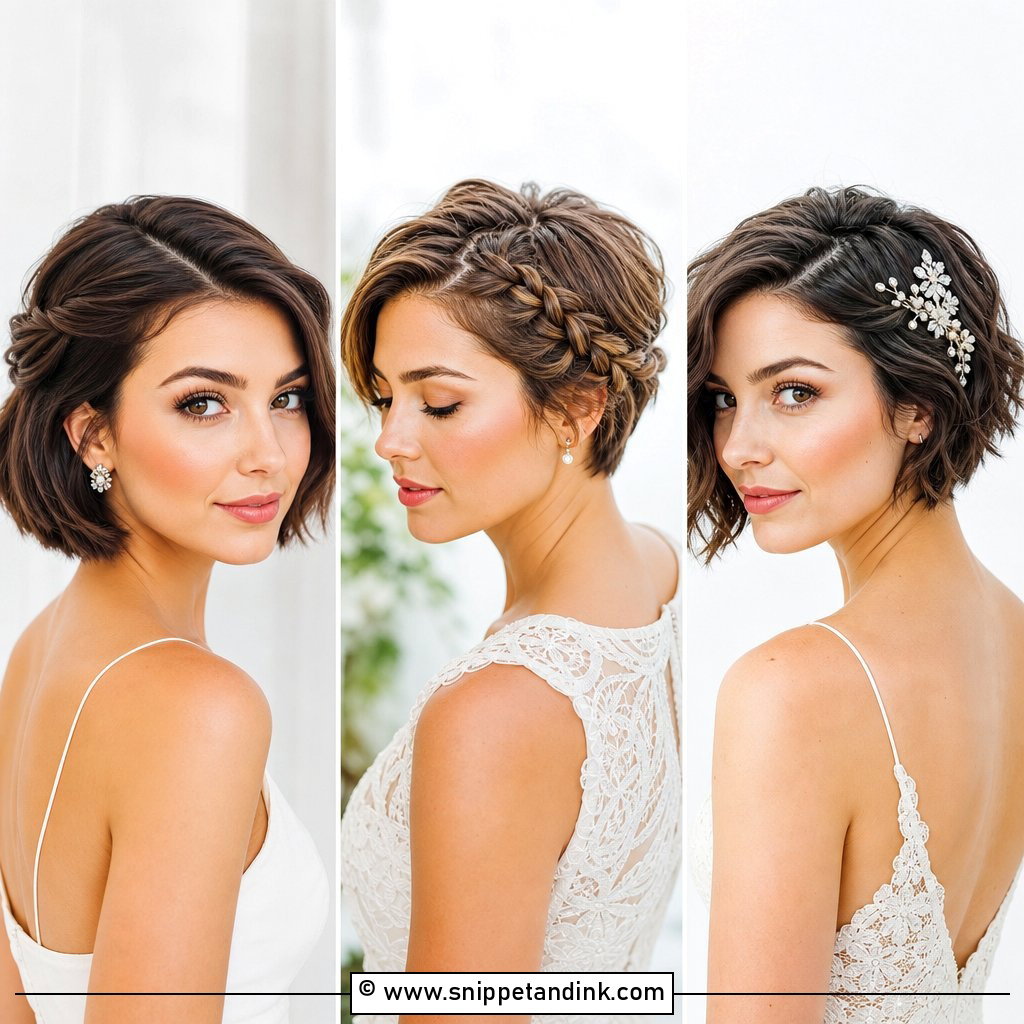
1. Short Wavy Bob With Curtain Bangs
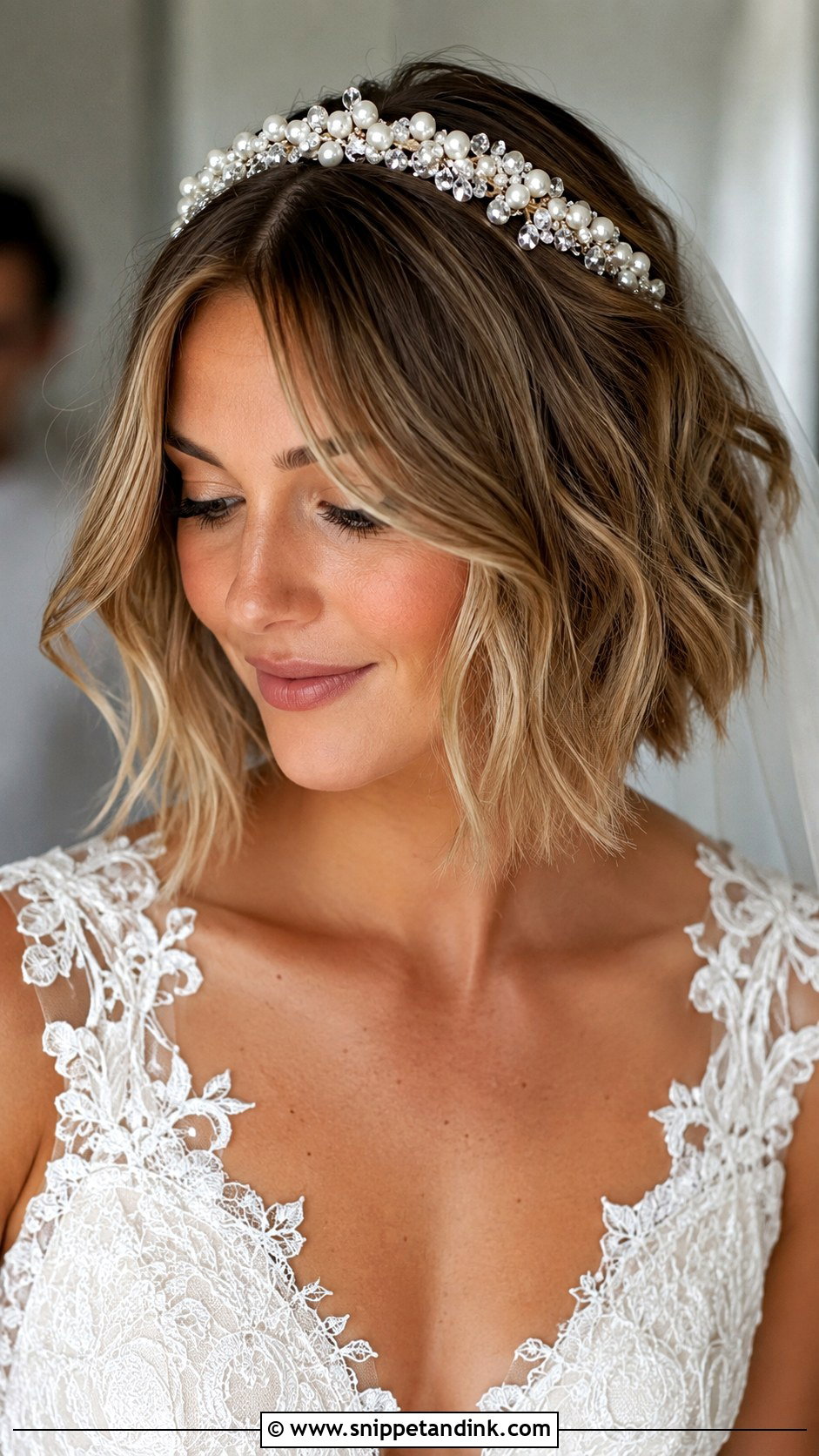
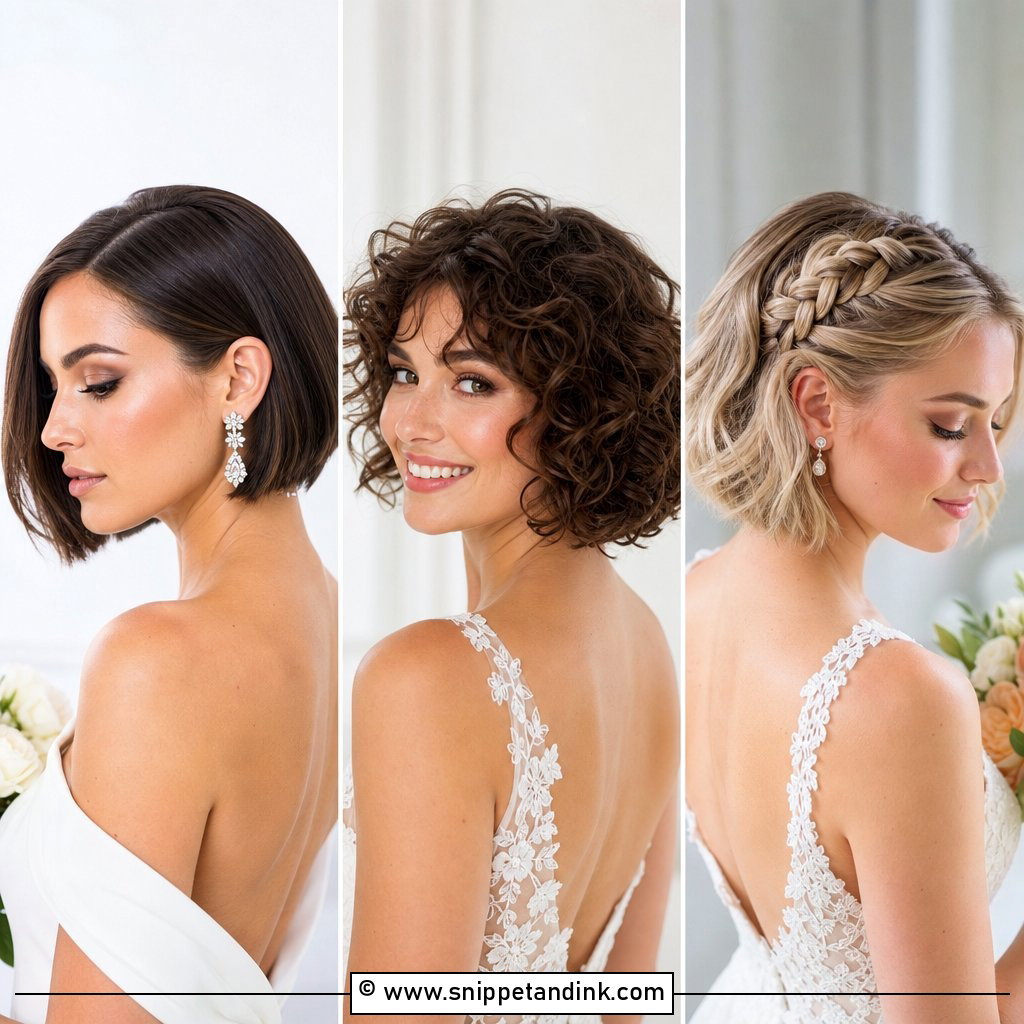
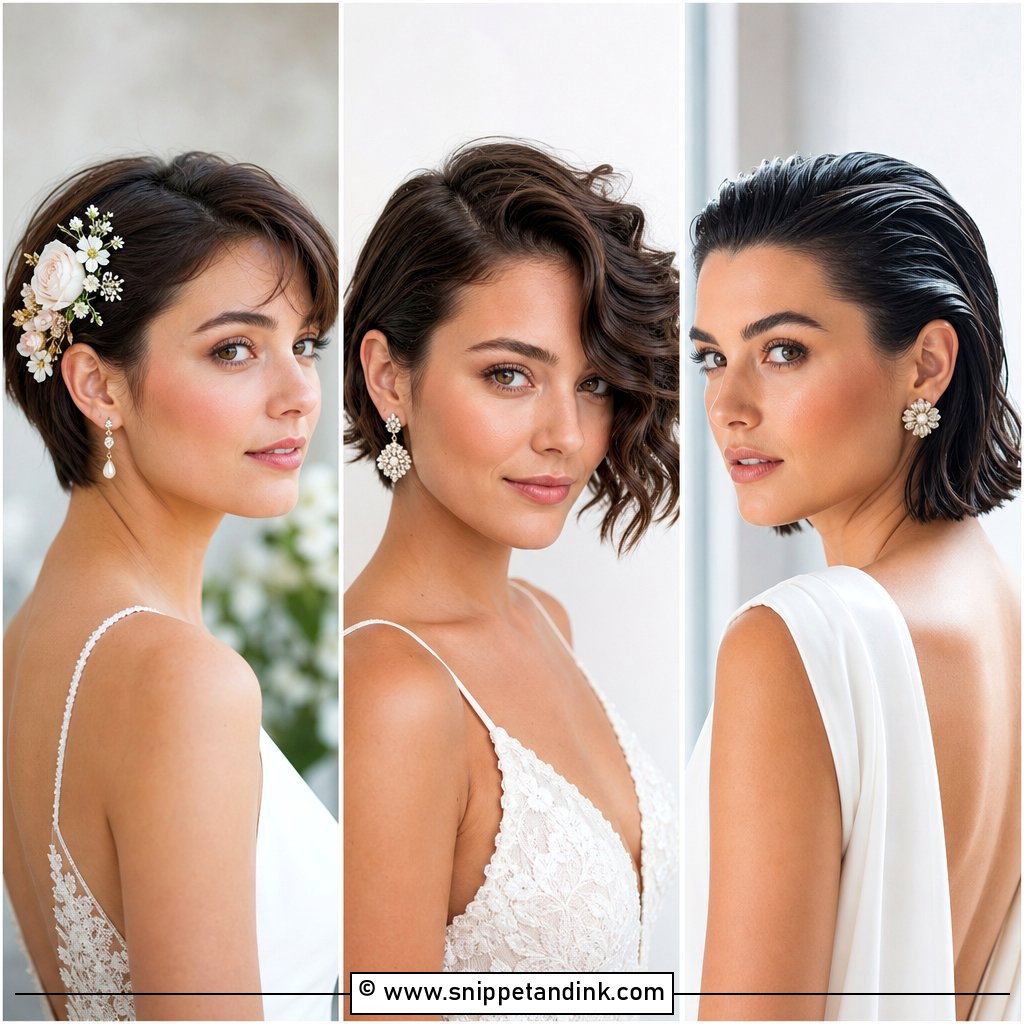
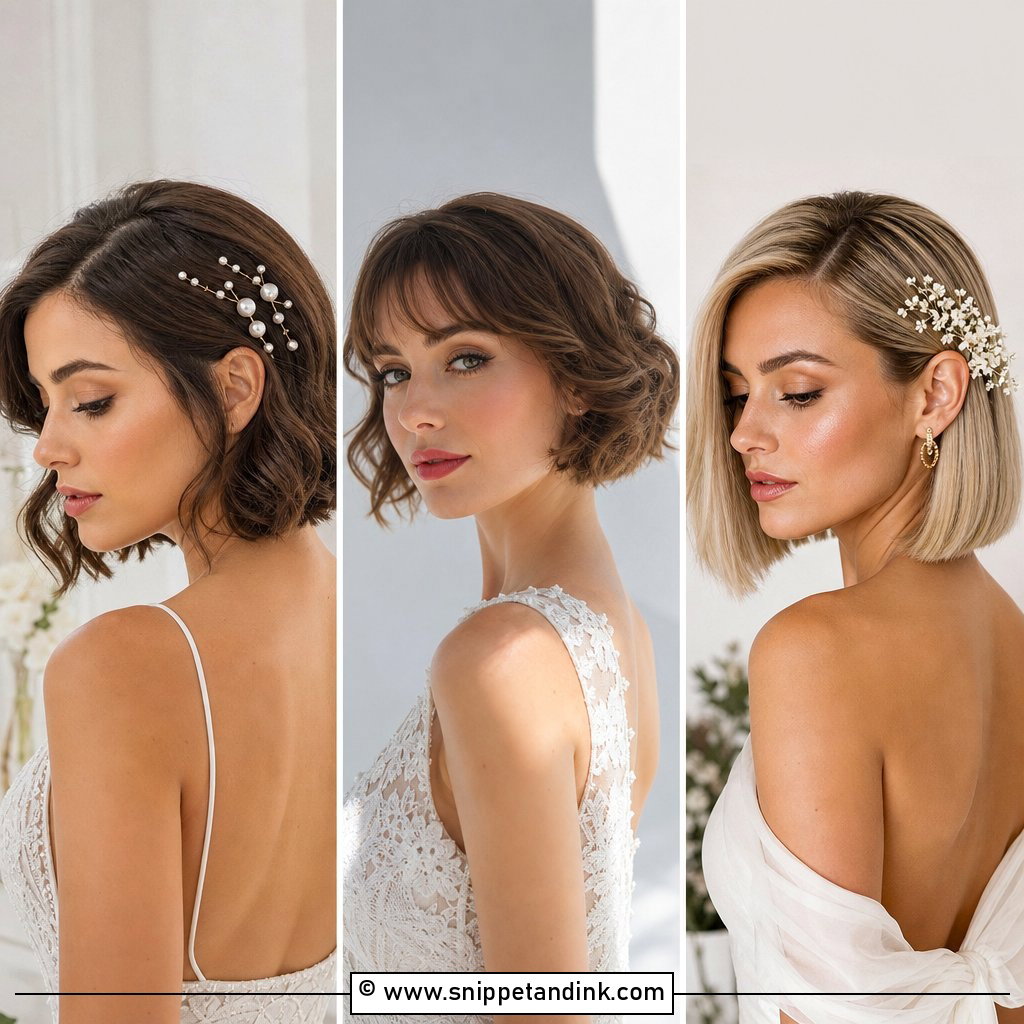
Curtain bangs on a wavy bob only behave if they were cut for you, not grown out into something that resembles them. I set the fringe on a large round brush so it splits at the centre and falls away from the eyes, then wave the length with a flat iron rather than a wand, which keeps the ends from flipping up. Fine to medium hair gets the most from this, because the bend reads as fullness. A pearl headband sits nicely just behind the fringe, and a veil comb can slide in under the waves at the back without disturbing them.
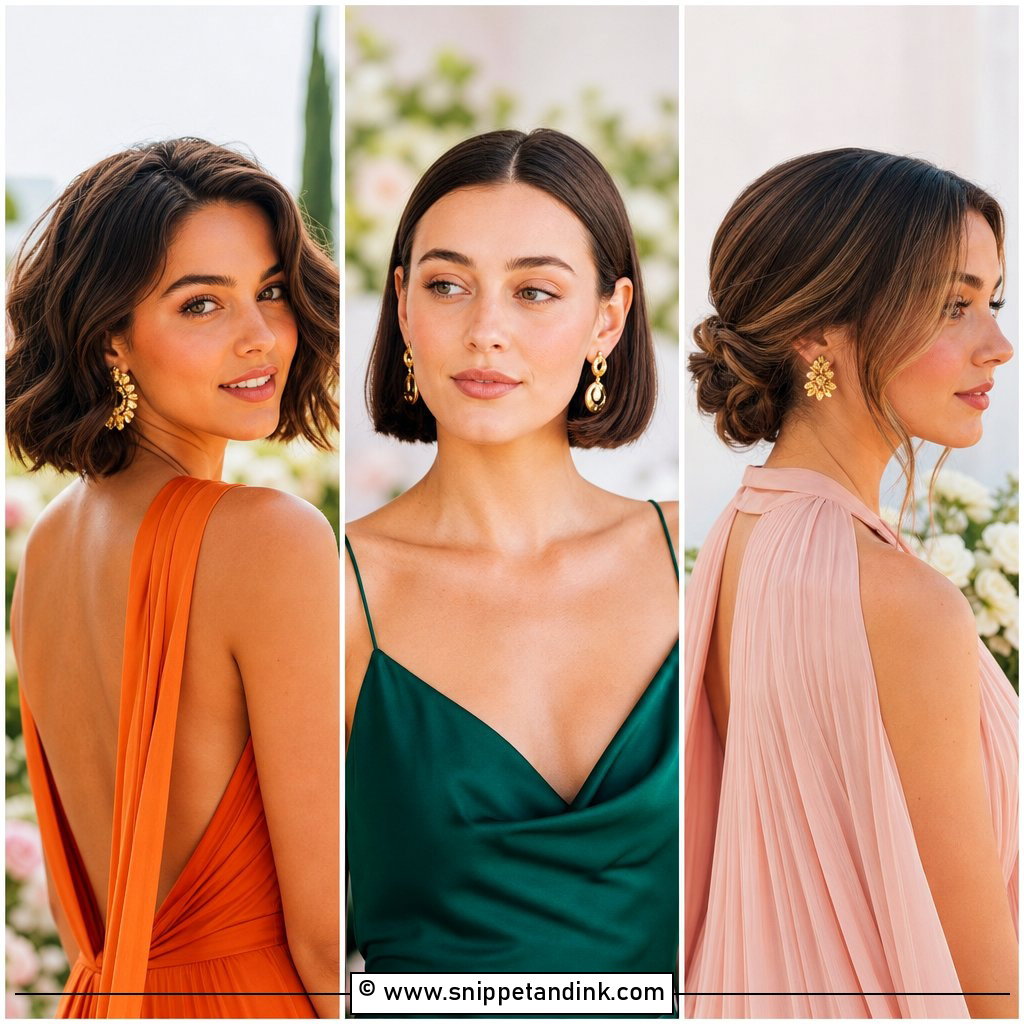
2. Sleek Straight Bob for Brides
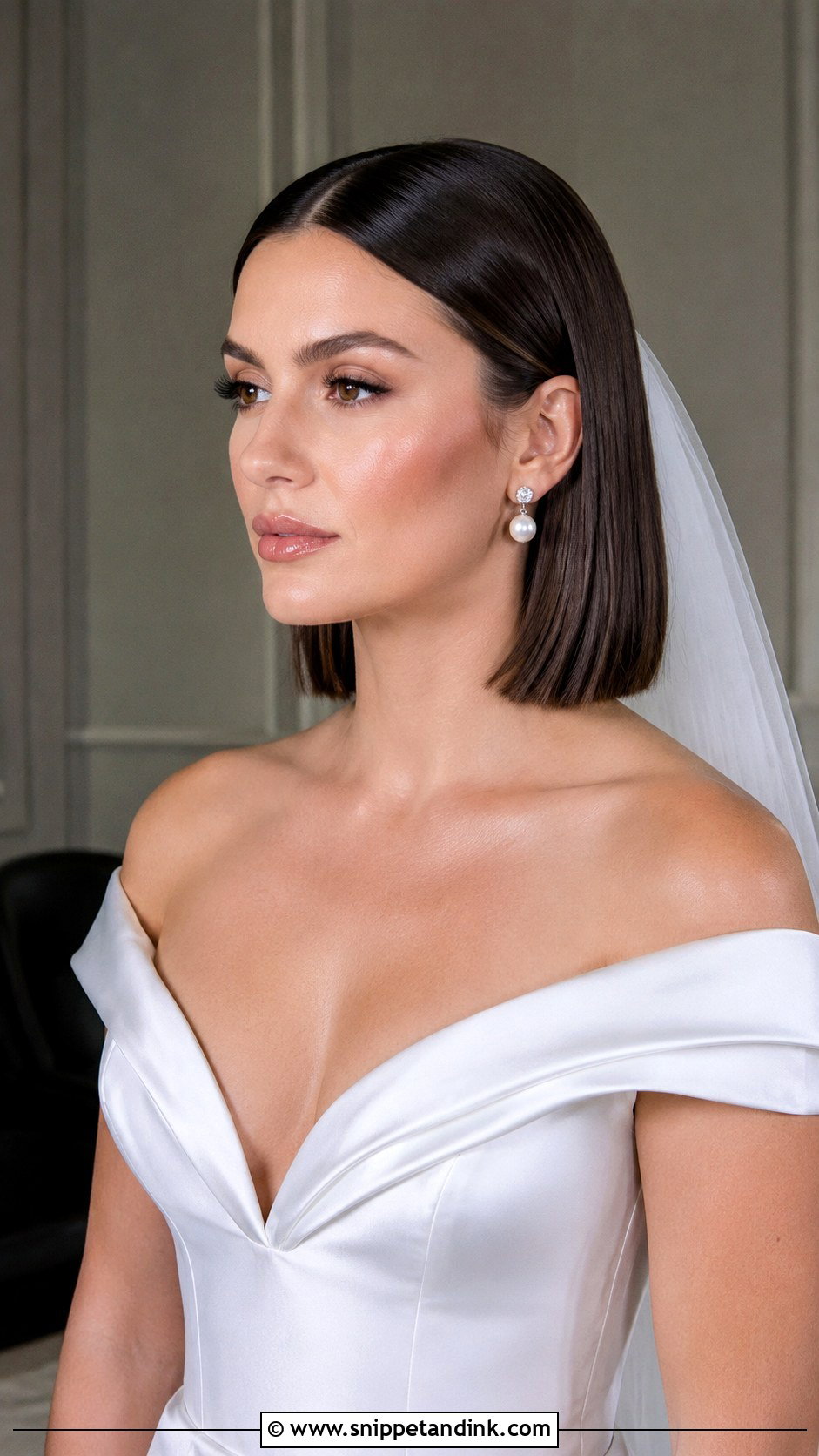
A sleek straight bob is unforgiving: one kinked end or a frizzy halo and the whole idea is gone. I blow it out section by section with a paddle brush, finish with a flat iron only on the last inch, and keep the serum to the mid-lengths so the roots don’t go flat by evening. It shows off big earrings and a strong lip better than any other cut here. Tucking one side behind the ear with a jeweled pin breaks up the symmetry, and I’d suggest it for indoor or city venues more than anywhere damp, because humidity is what turns this cut puffy.
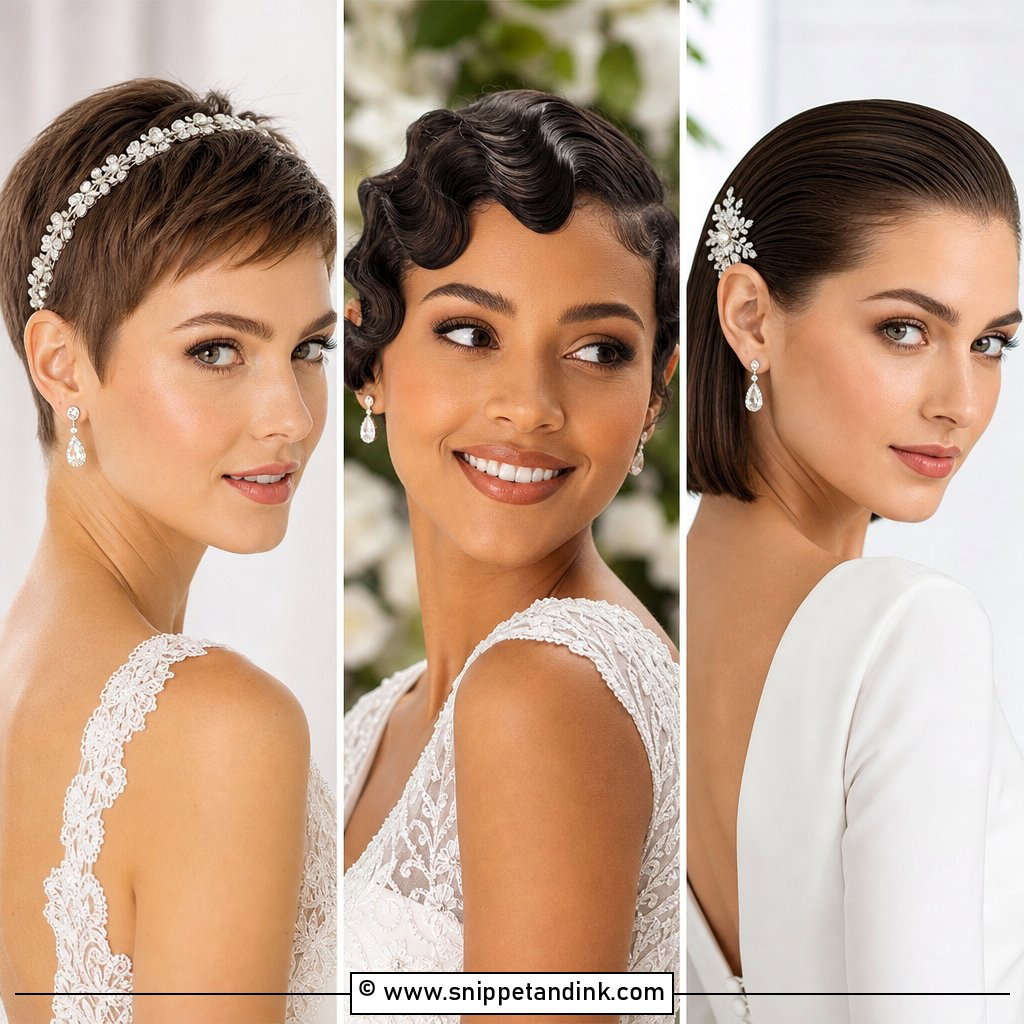
3. Pixie Cut With Side Swept Bangs
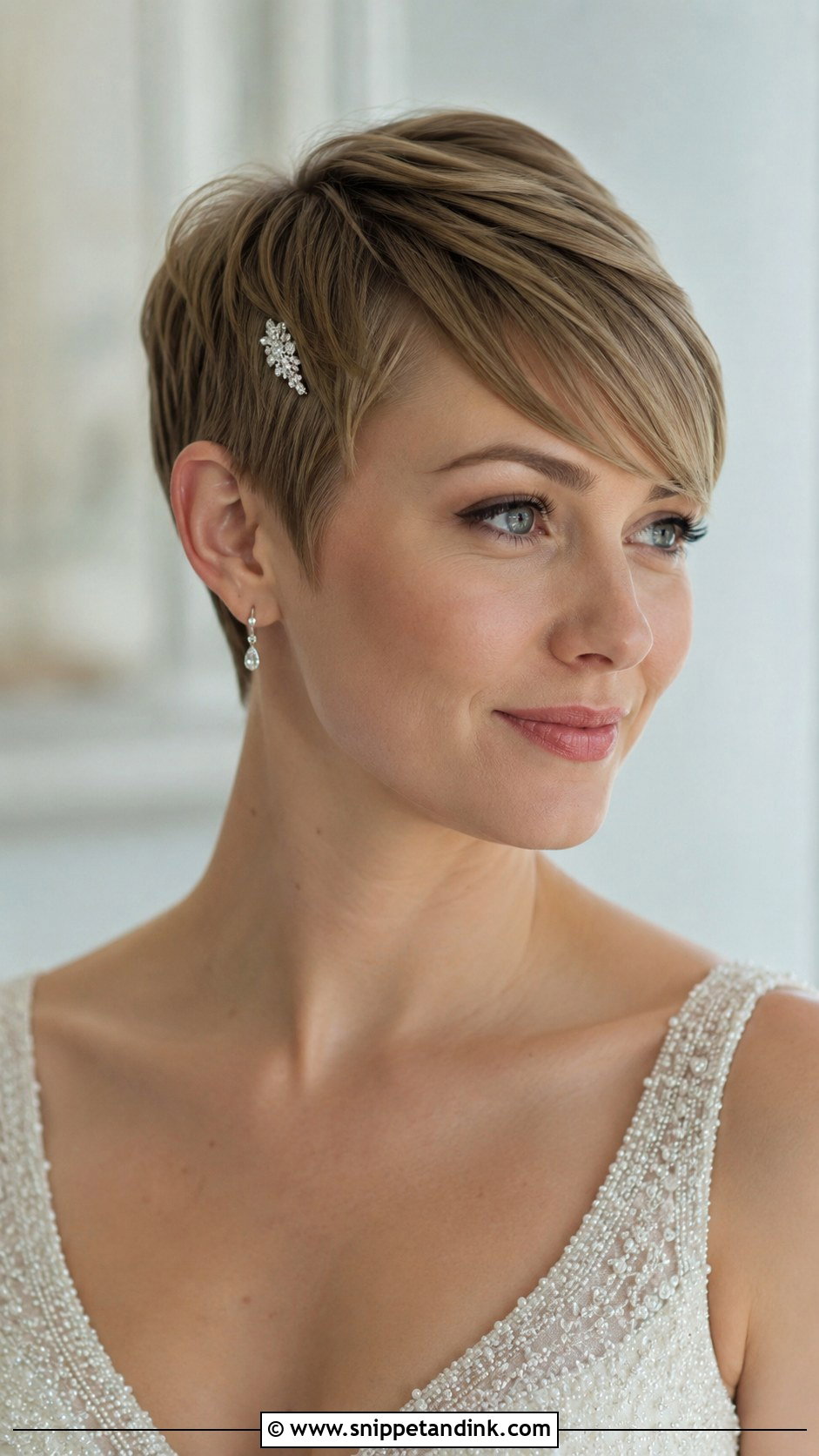
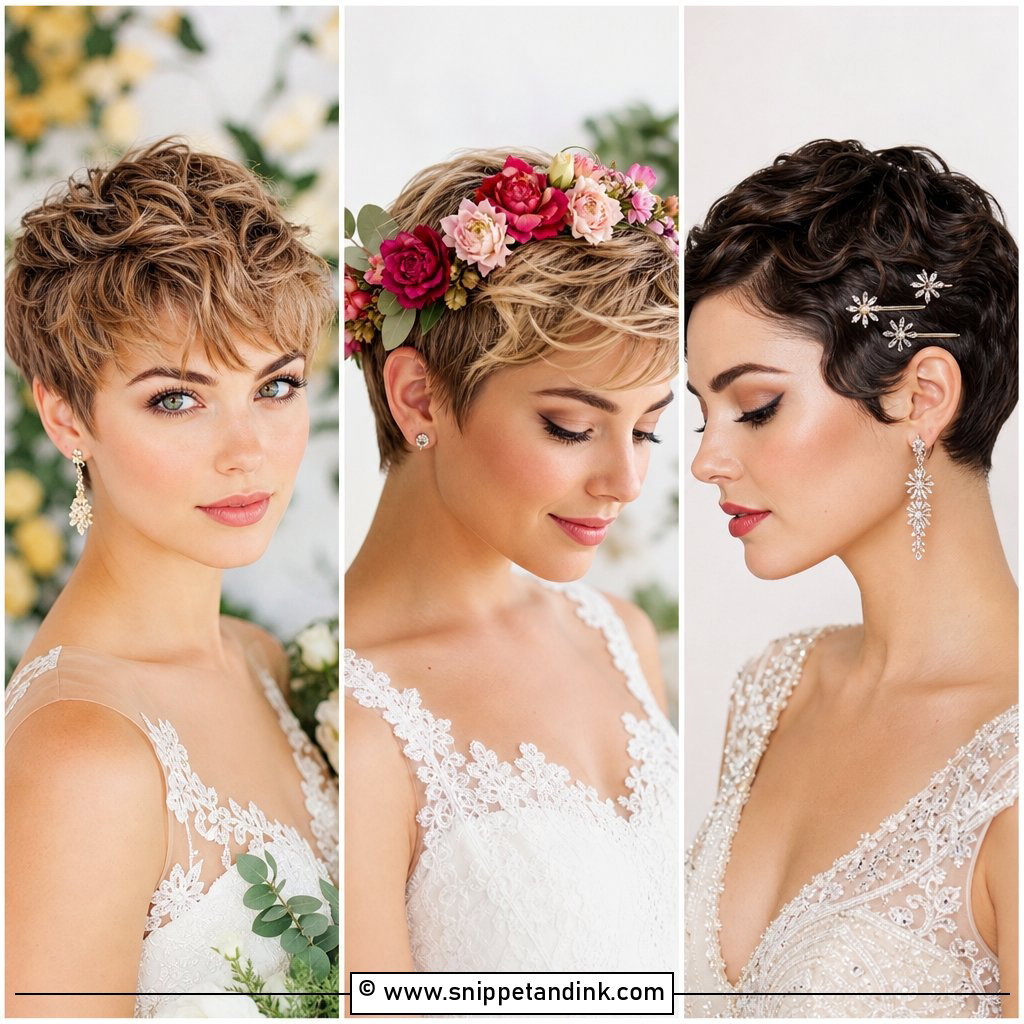
Side-swept bangs soften a pixie without hiding the face, and that’s why I like them for brides who are nervous about how cropped hair will look in close-ups. I blow the fringe across with the nozzle pointed down the hair shaft, then press in a small amount of texturizing paste at the crown so it doesn’t sit like a helmet. A tiny barrette at the temple keeps the sweep from falling into one eye during the vows. Add a tiara only if the crown has enough height to sit it on; otherwise it reads flat.
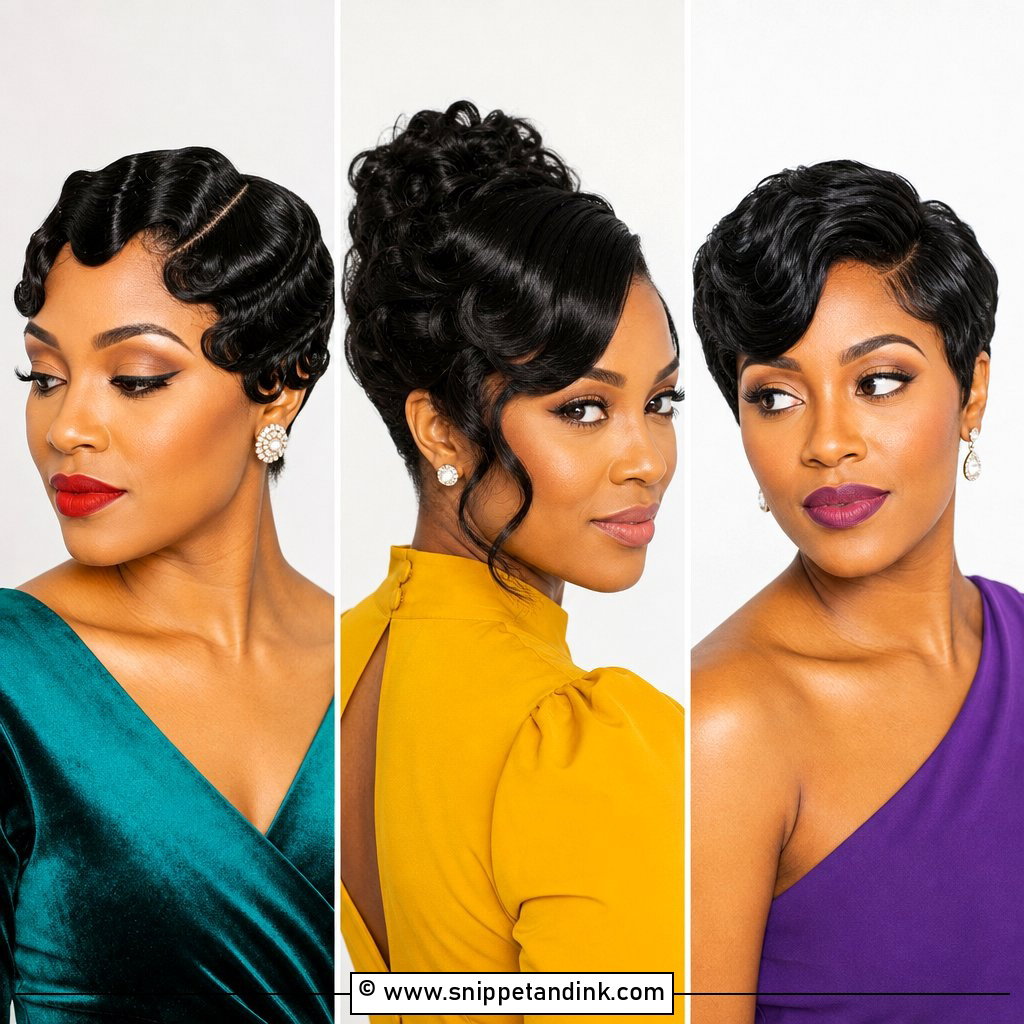
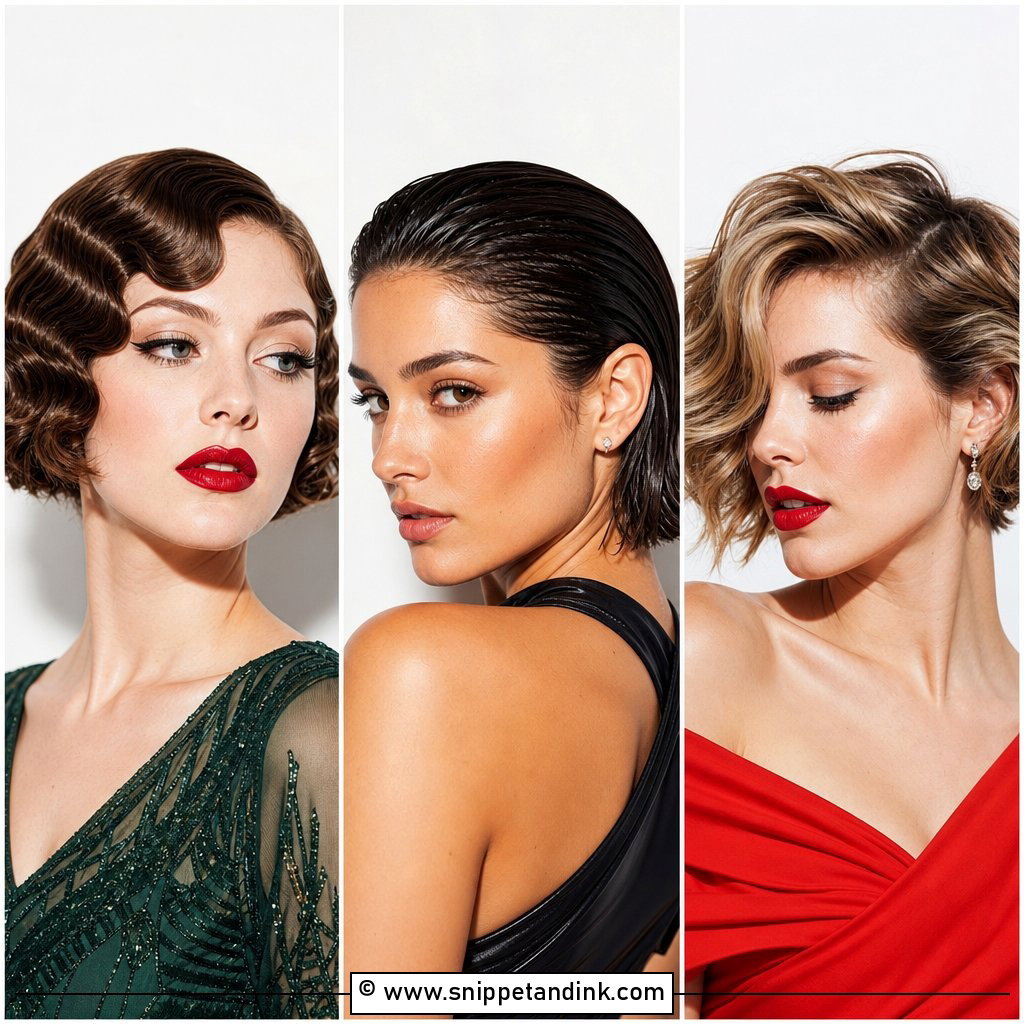
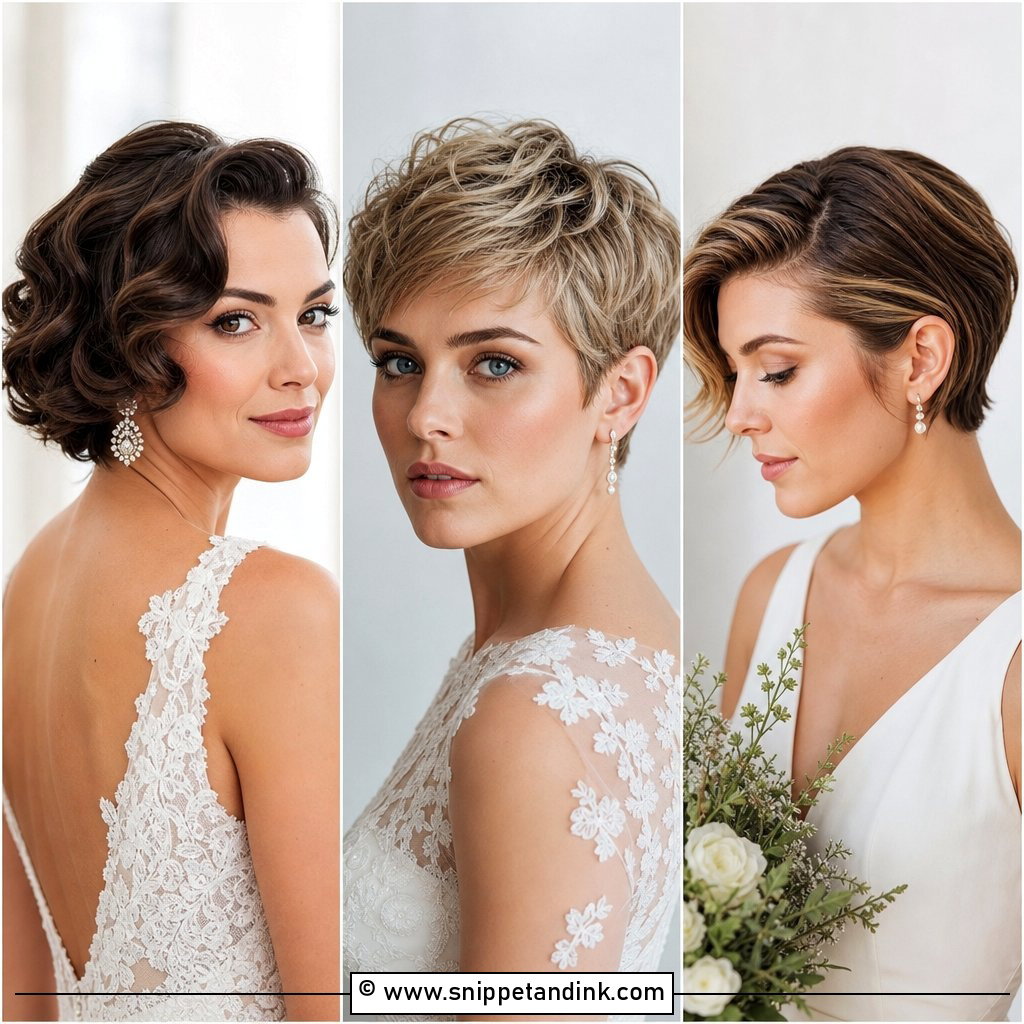
4. Romantic Finger Waves Bob
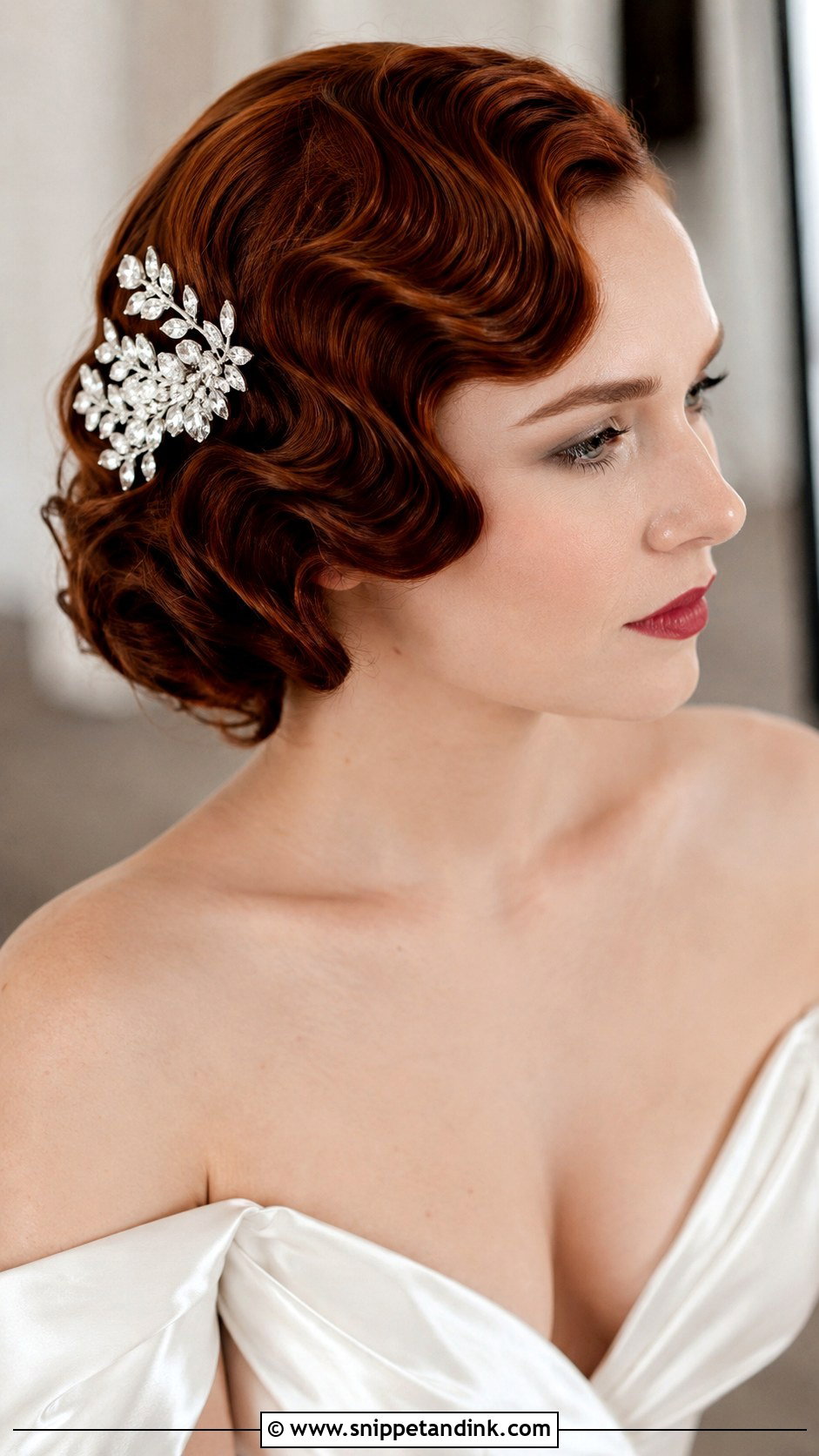
Real finger waves on a short bob are a set, not a curl, and they take time. I shape them into wet hair with gel and a fine comb, clip each ridge, and let it dry fully under a hood dryer or with a diffuser on low before touching anything. Rush that drying and the ridges collapse into frizz. Once set, they’re the most durable style on this list, which is why I steer brides with long days and dancing towards them. They pair naturally with a bias-cut satin gown or a feathered hairpiece, and a crystal comb tucked behind one ear finishes the 1920s line.
5. Short Hair Low Bun Updo
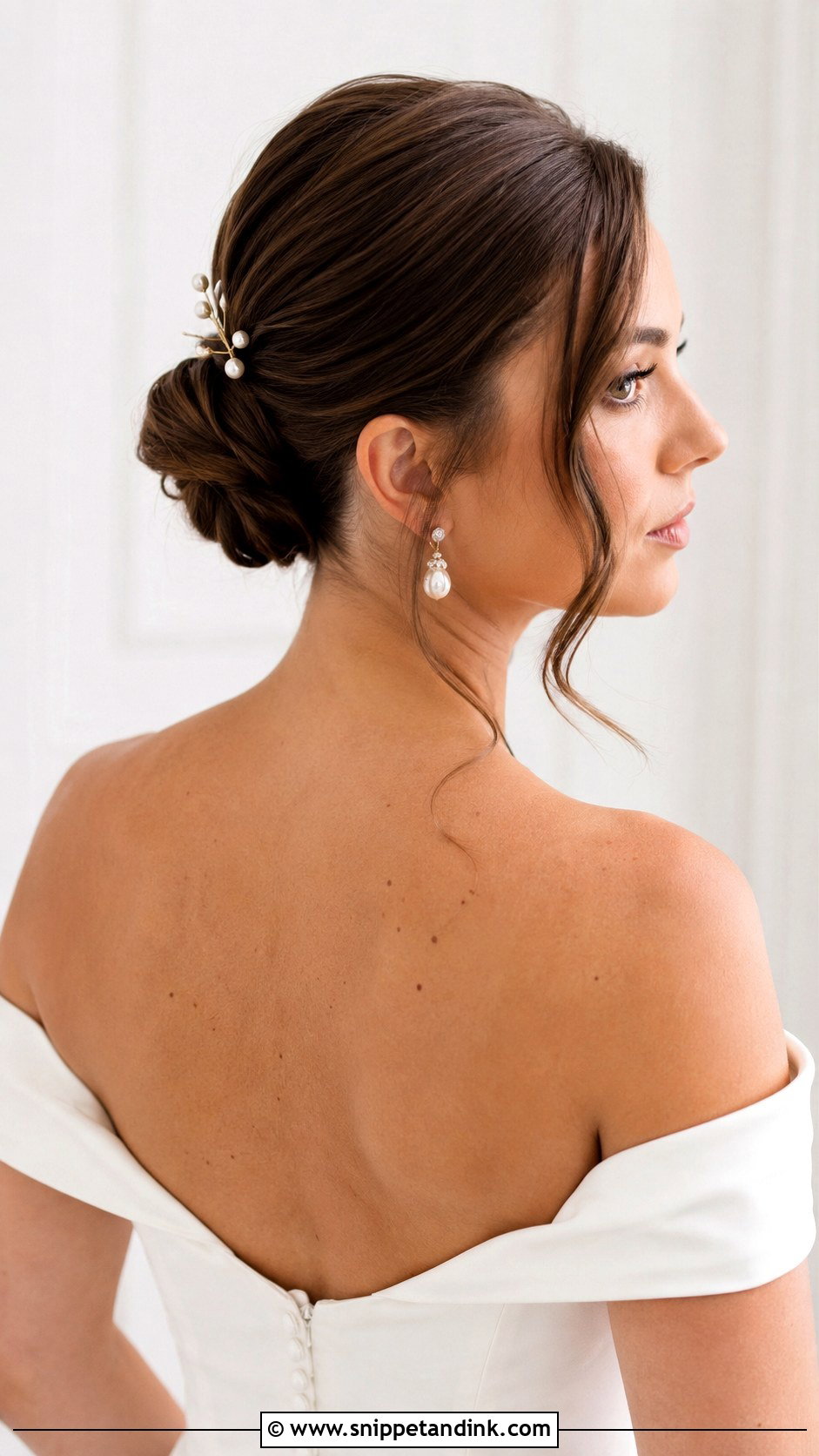
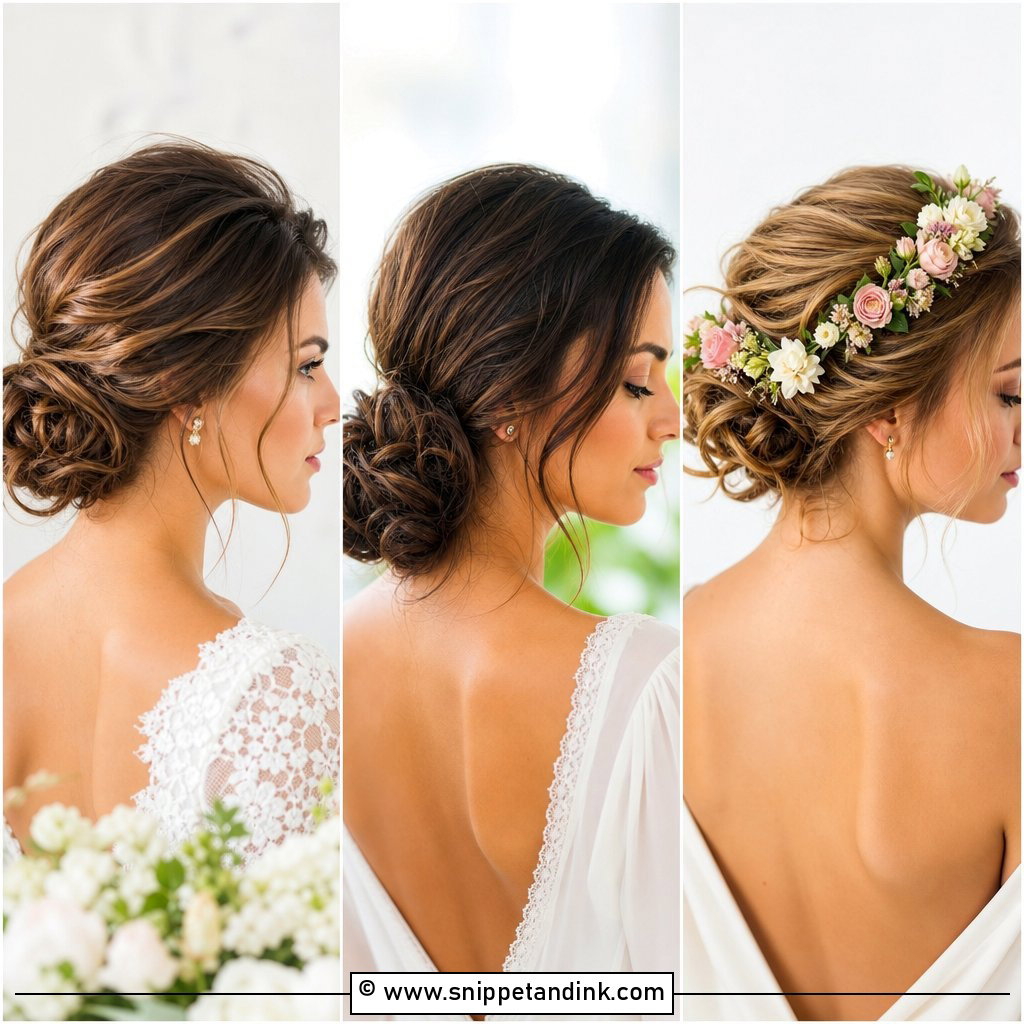
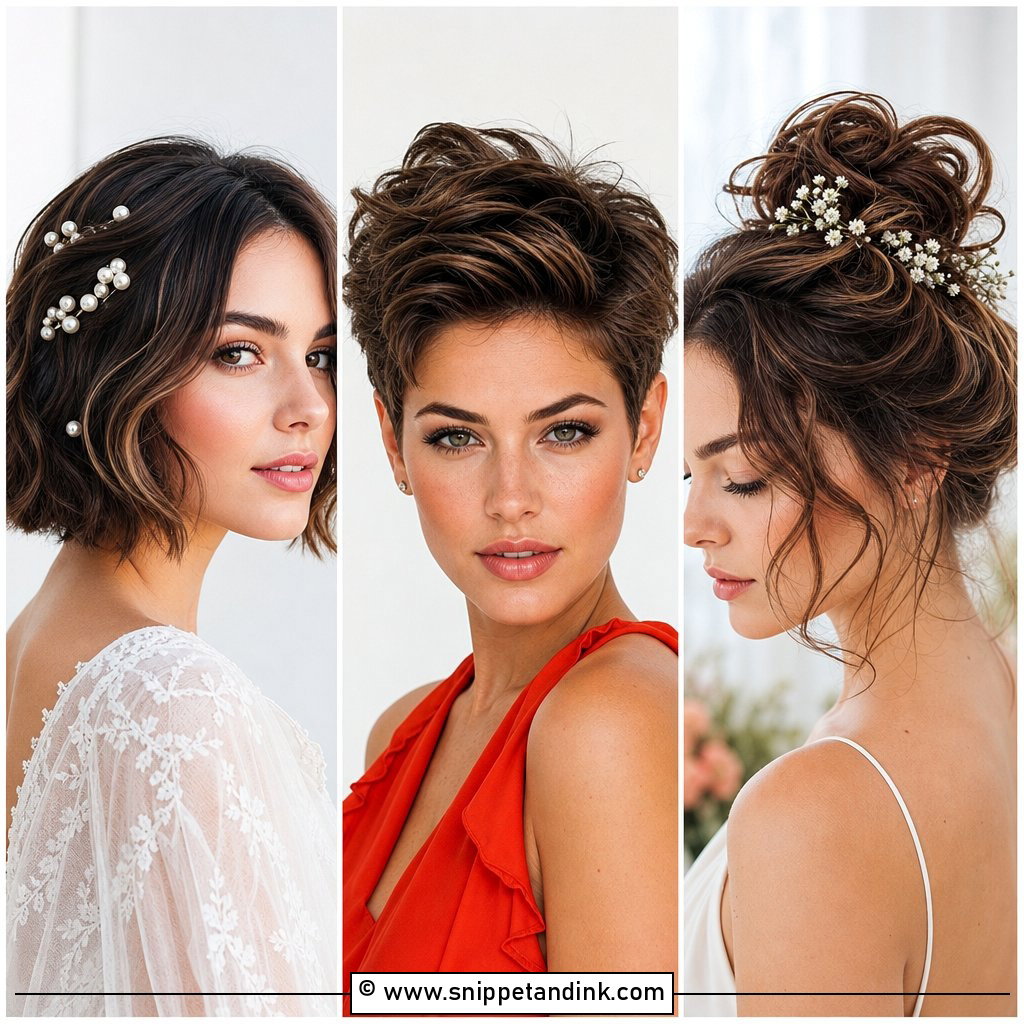
A low bun on short hair is mostly an illusion built from pins. If the length reaches the nape, I gather it into a small elastic, wrap and pin the ends, and pad it with a mesh donut or a bit of matching hair if it needs more size. The pieces that won’t reach get crossed and pinned under the knot rather than left to poke out. I leave two or three tendrils at the face so it doesn’t look severe. It suits bobs and shoulder-length cuts, and a pearl pin or a few flower heads hide the join where the pins meet.
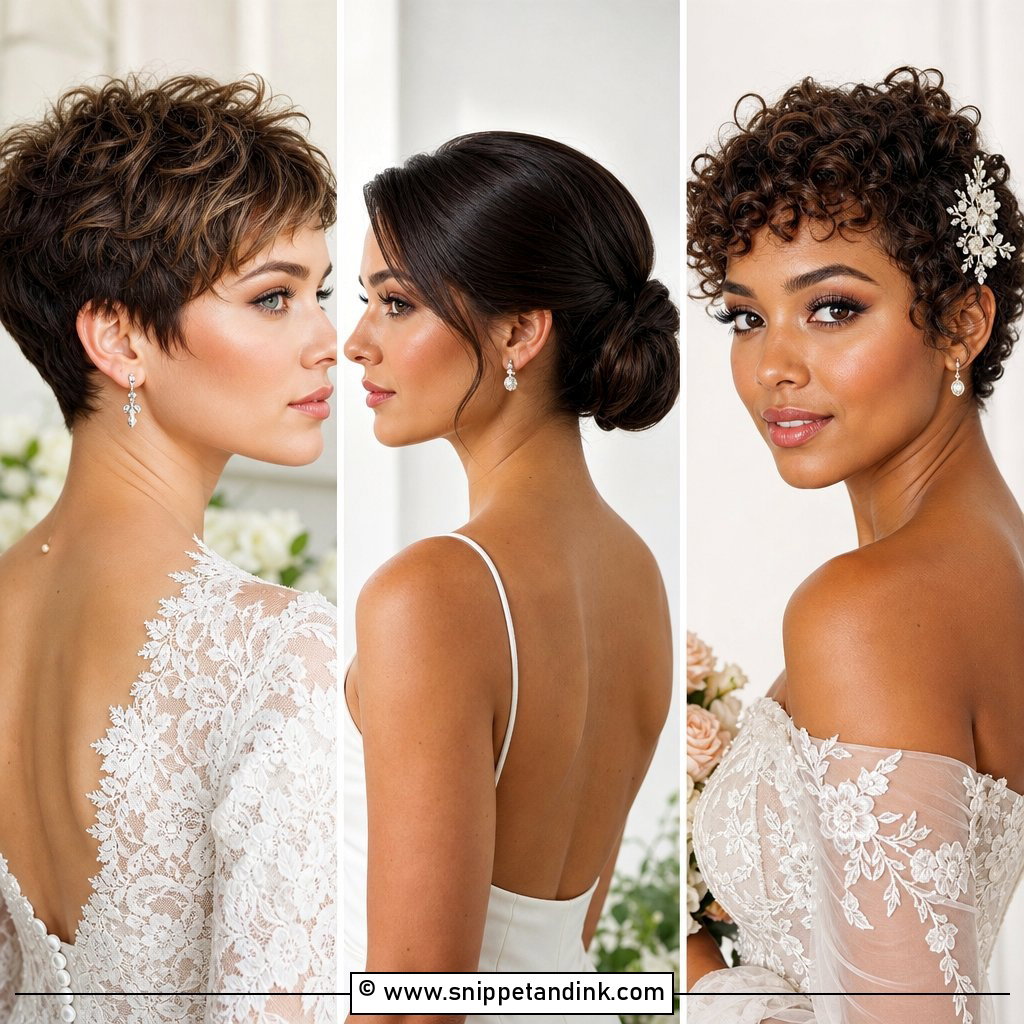
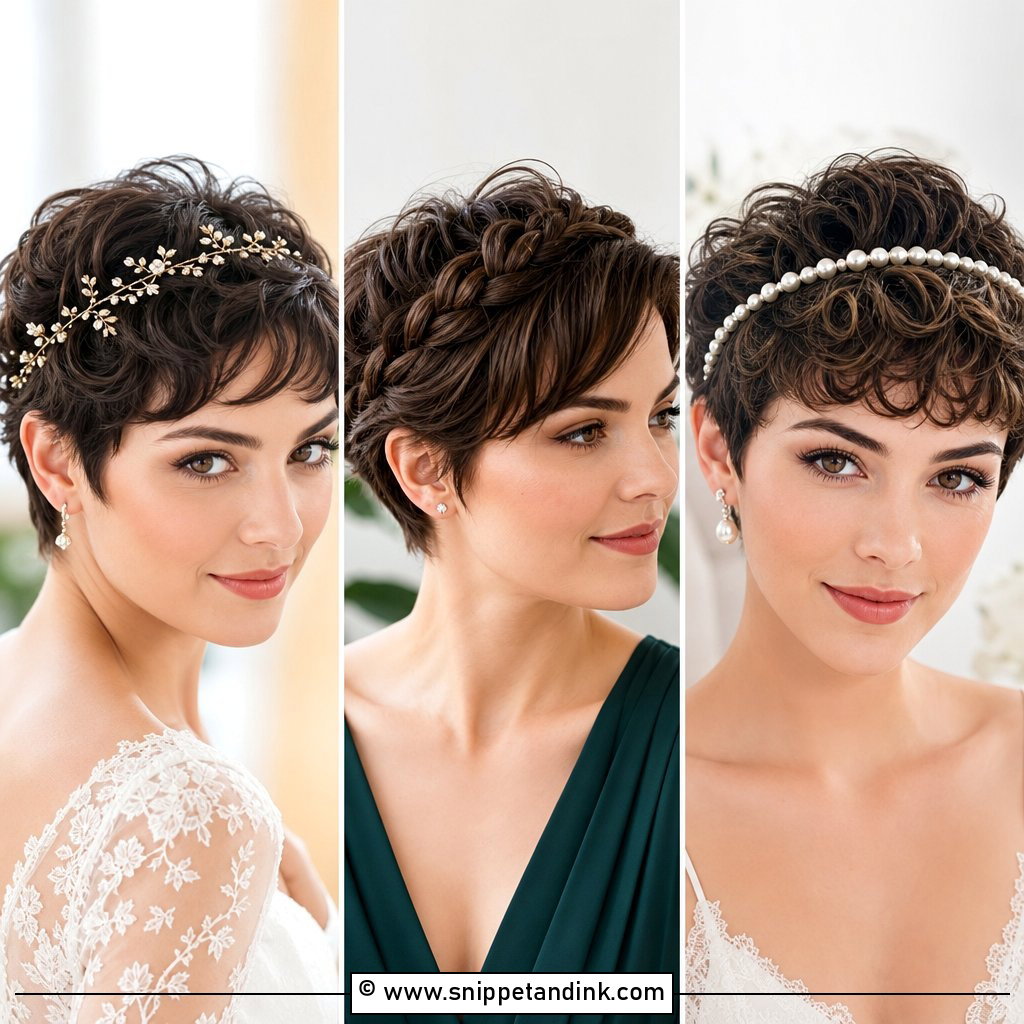
6. Curly Pixie Cut With Headband
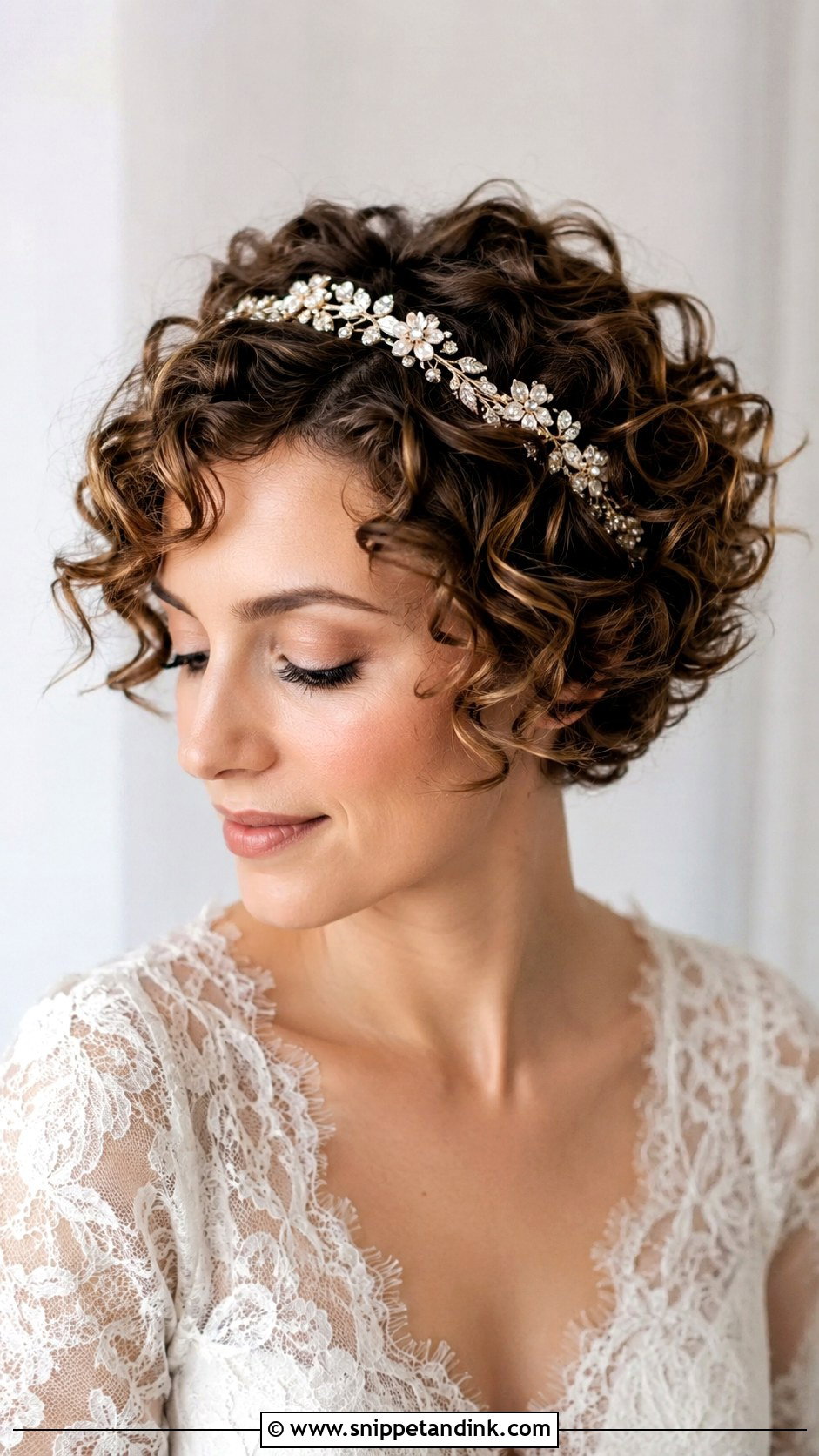
Curly pixies need moisture, not hold. I work a lightweight cream through damp curls, then scrunch in mousse and diffuse without touching, because every brush stroke after drying turns ringlets into fluff. The headband goes on last, just behind the hairline, and I pick one with small teeth or silicone lining so it grips curls without dragging them flat. Garden and outdoor weddings suit this well, though I’d keep an anti-humidity spray in the touch-up bag for a hot afternoon.
7. Textured Lob With Loose Waves
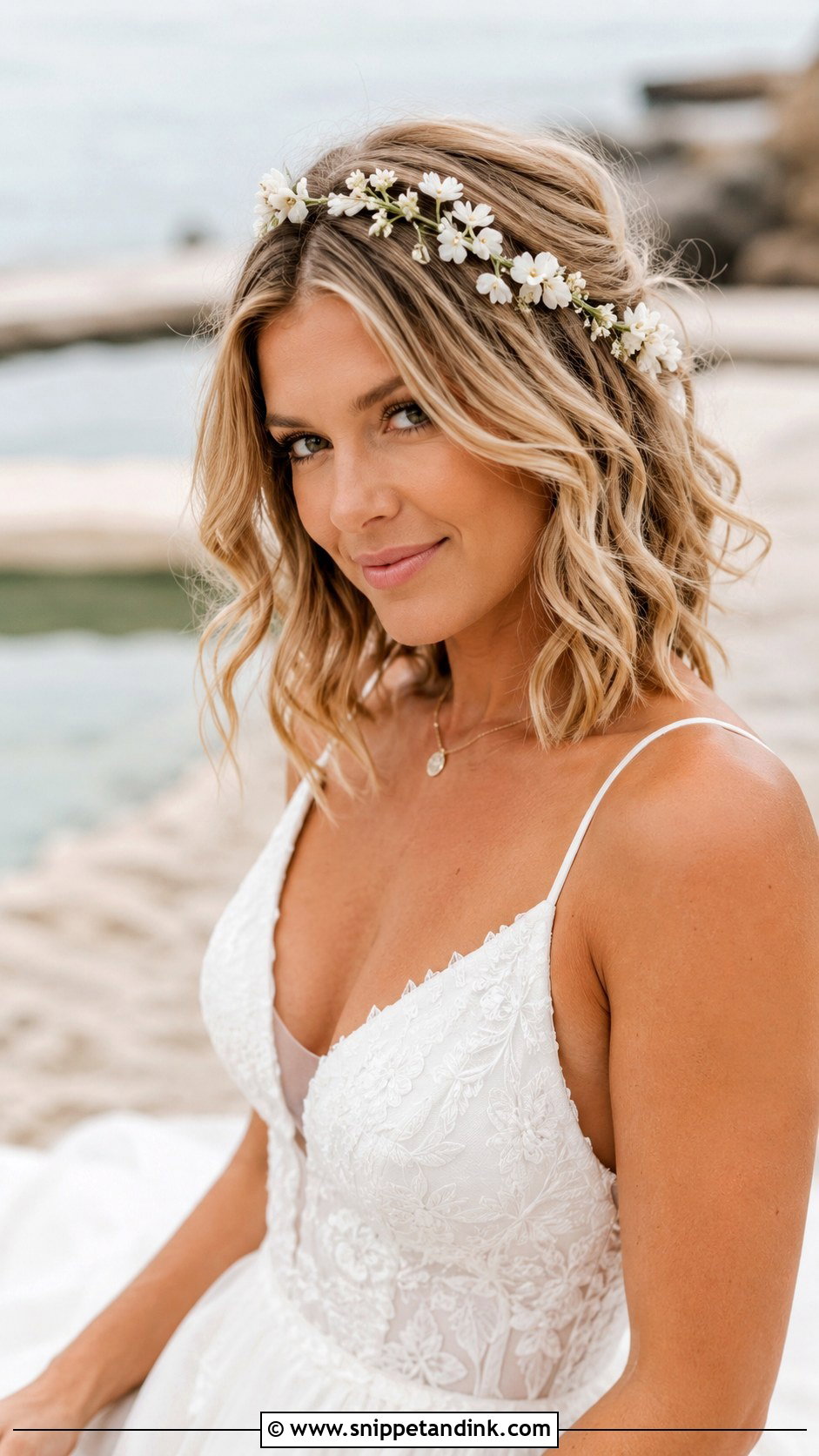
The long bob, or lob, gives me just enough length to curl, pin and tuck, which is why it’s often the most flexible short cut a bride can bring to a trial. For loose waves I use a 1.25-inch wand, leave the last inch straight, and alternate direction so the waves don’t clump into one sausage curl. Brush them out with fingers only. A side part helps on rounder faces. On a beach, wind will undo the shape within an hour, so I’d add a small vine of flowers or a clip that holds the front section back.
8. Short Hair With Braided Crown
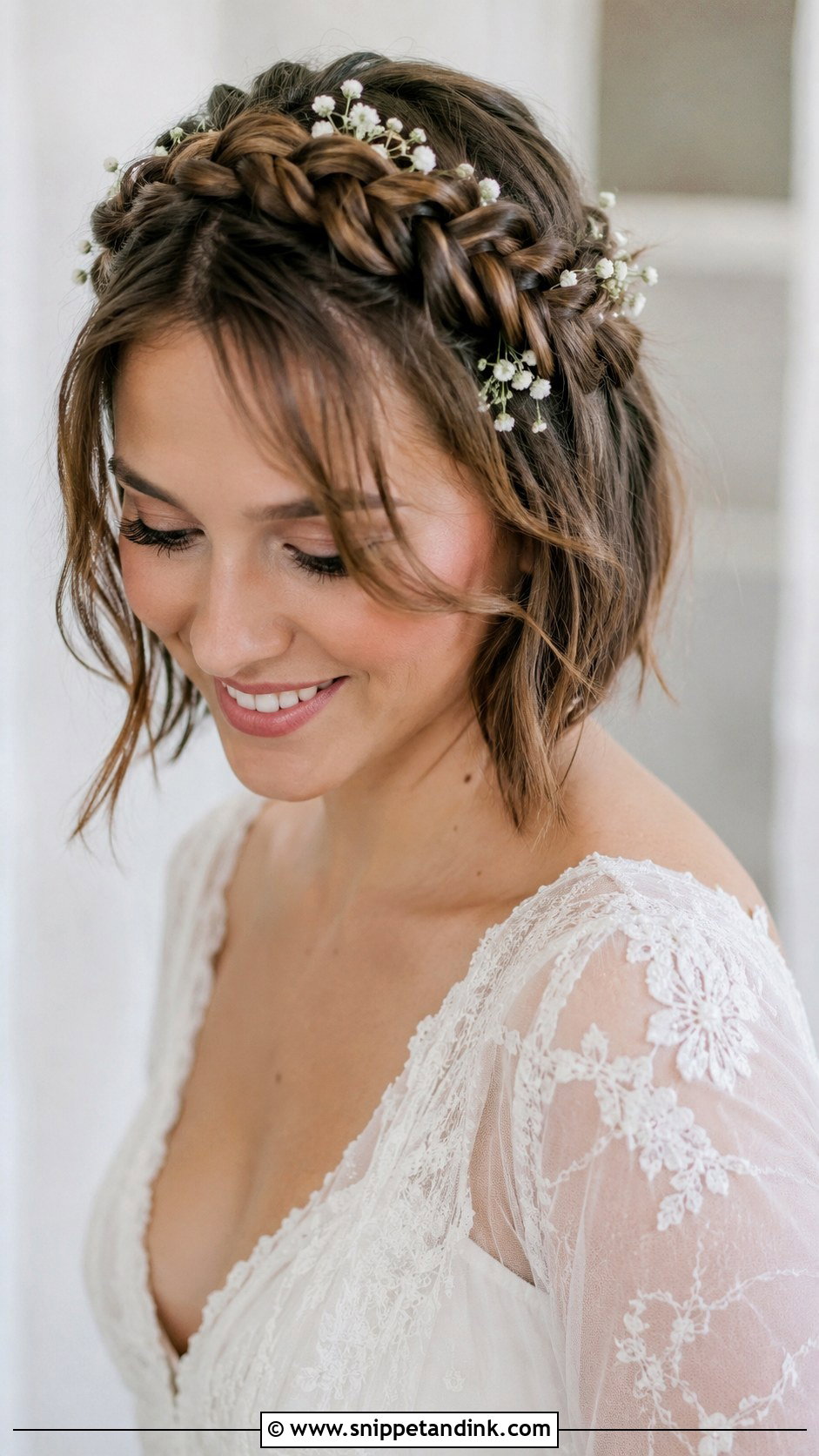
A full braided crown needs hair that reaches around the head, and most bobs don’t. What I do instead is braid two small sections from the temples along the hairline and pin them to meet at the back, which reads as a crown from the front. Shorter layers will pop out of the braid, so a bit of pomade on the fingers before plaiting keeps them in. Tiny blooms or baby’s breath tucked into the plait hide pins and suit flowing gowns and outdoor settings.
9. Pixie Cut With Jeweled Pins
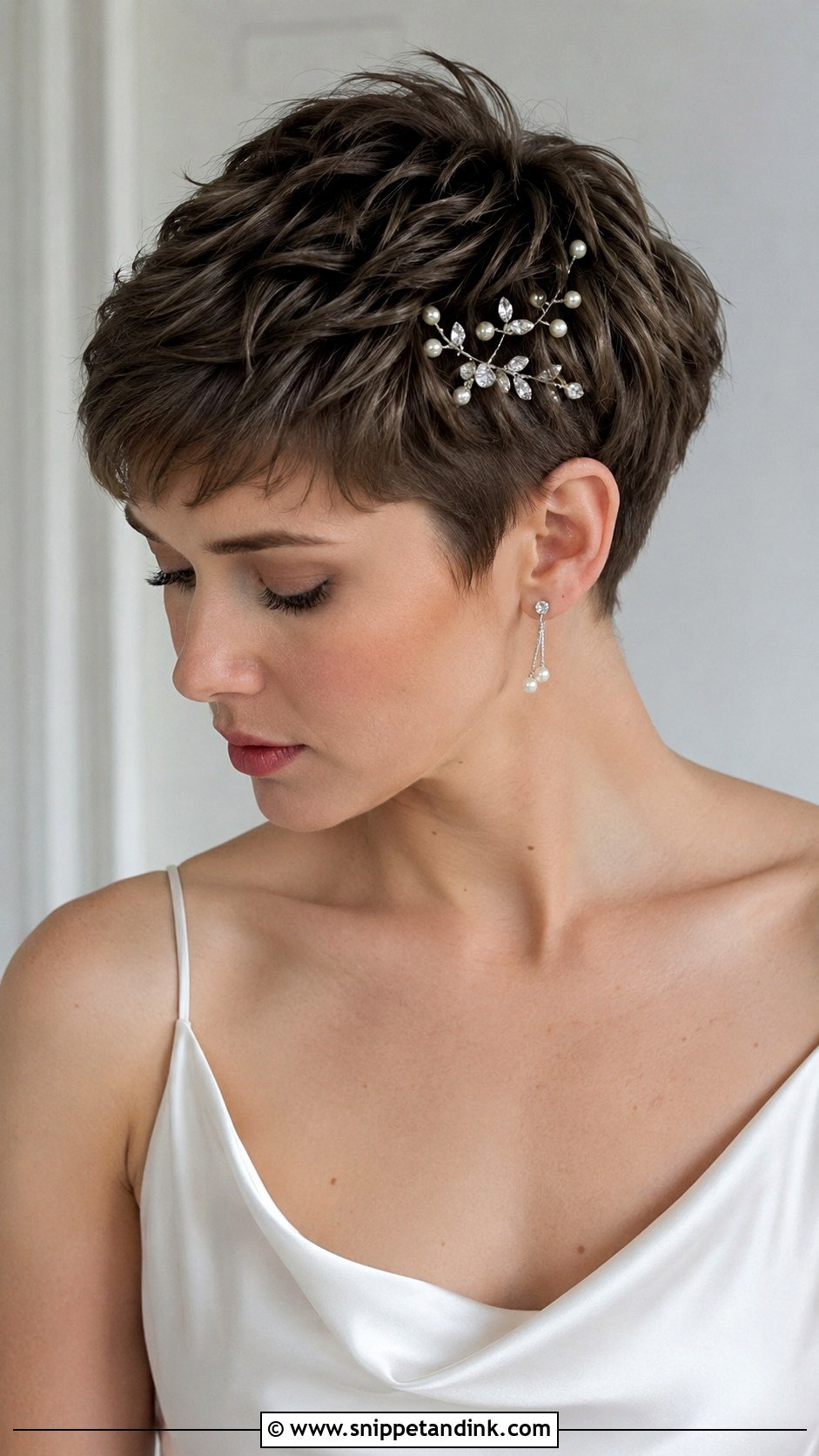
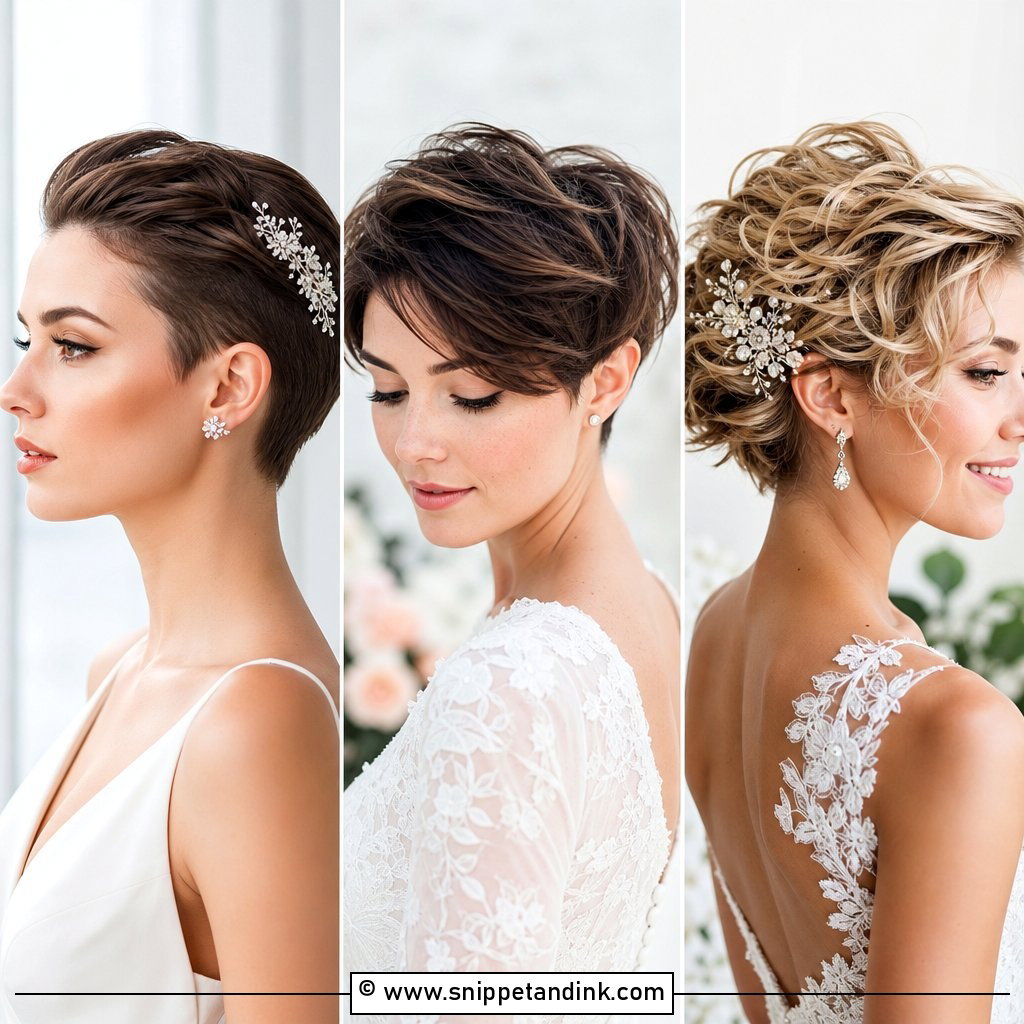
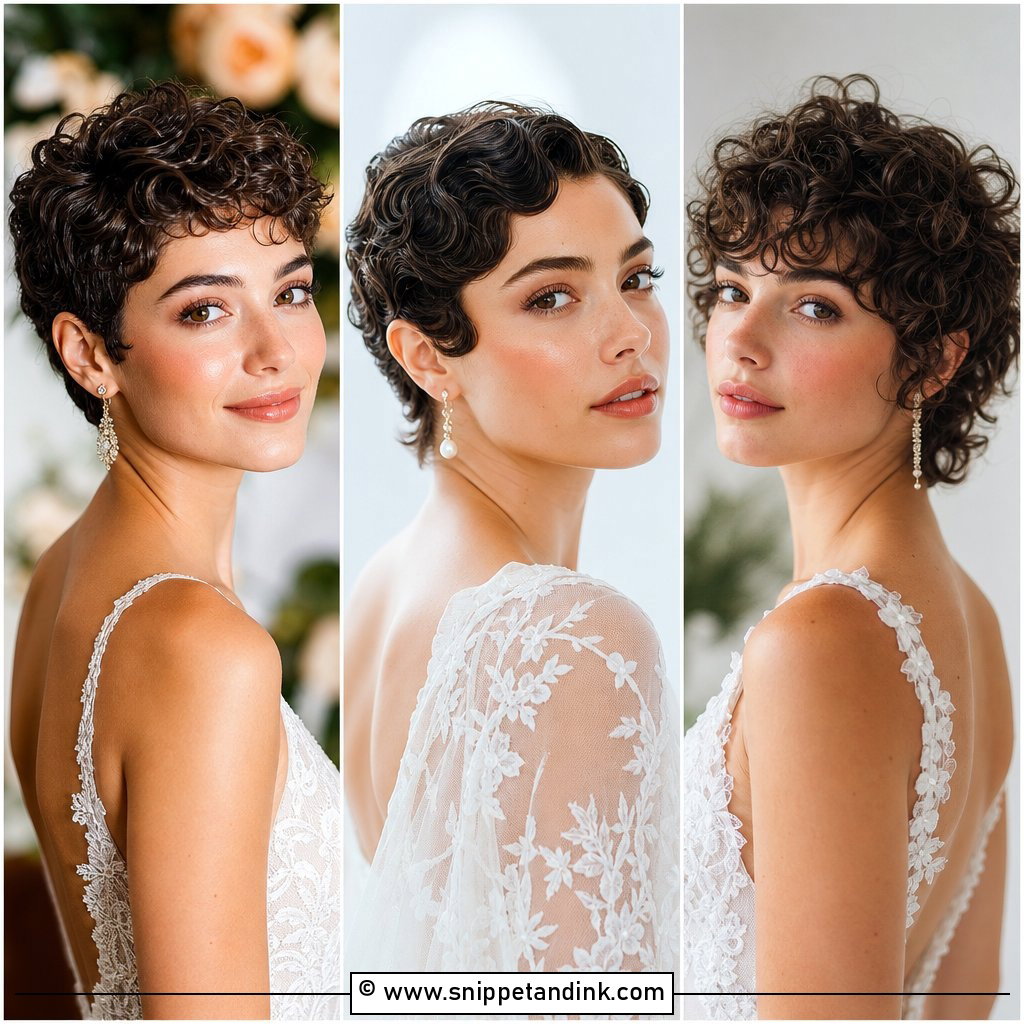
Jeweled pins on a pixie are where restraint pays. Three or five pins along one side catch more light in photos than a scatter across the whole head, which tends to look busy. I slide each pin in against the direction the hair grows so it grips the short strands, and I always cross a plain bobby pin underneath the heaviest ornament. Style the pixie with some texture first; on a completely flat crop, pins just slide down. For minimalist brides this is the quickest bridal finish I know.
10. Short Hair Half Up Half Down
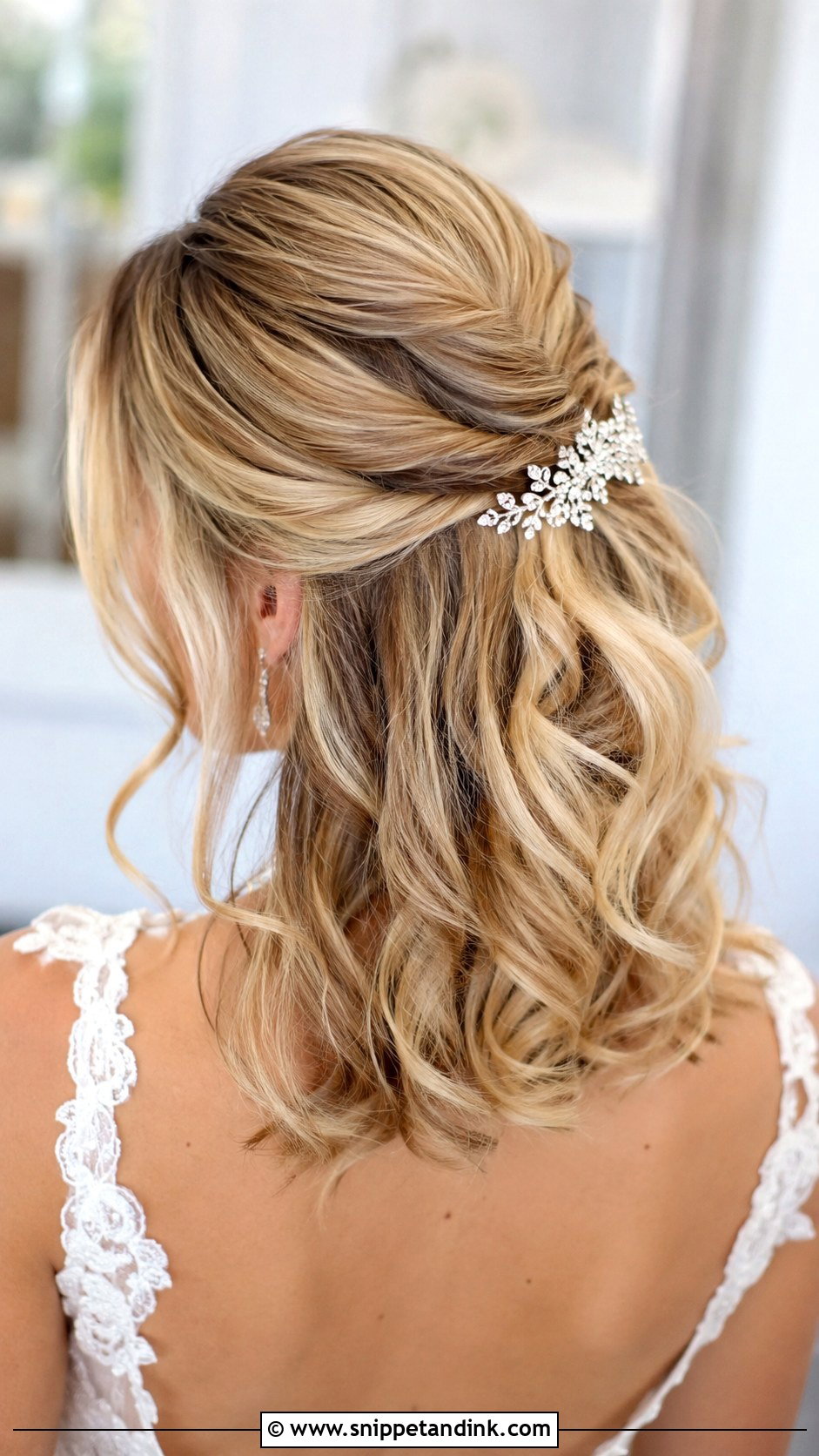
Half up on a bob only works if the top section is long enough to meet at the back. I check this at the trial by gathering the hair above the ears: if it reaches without strain, I twist it into a small knot or secure it under a decorative clip, then curl the loose ends. If it barely meets, the clip pops open by mid-afternoon. On a lob it’s one of the most comfortable looks you can wear, and a veil comb slots in right above the knot.
11. Sleek Side Part Bob
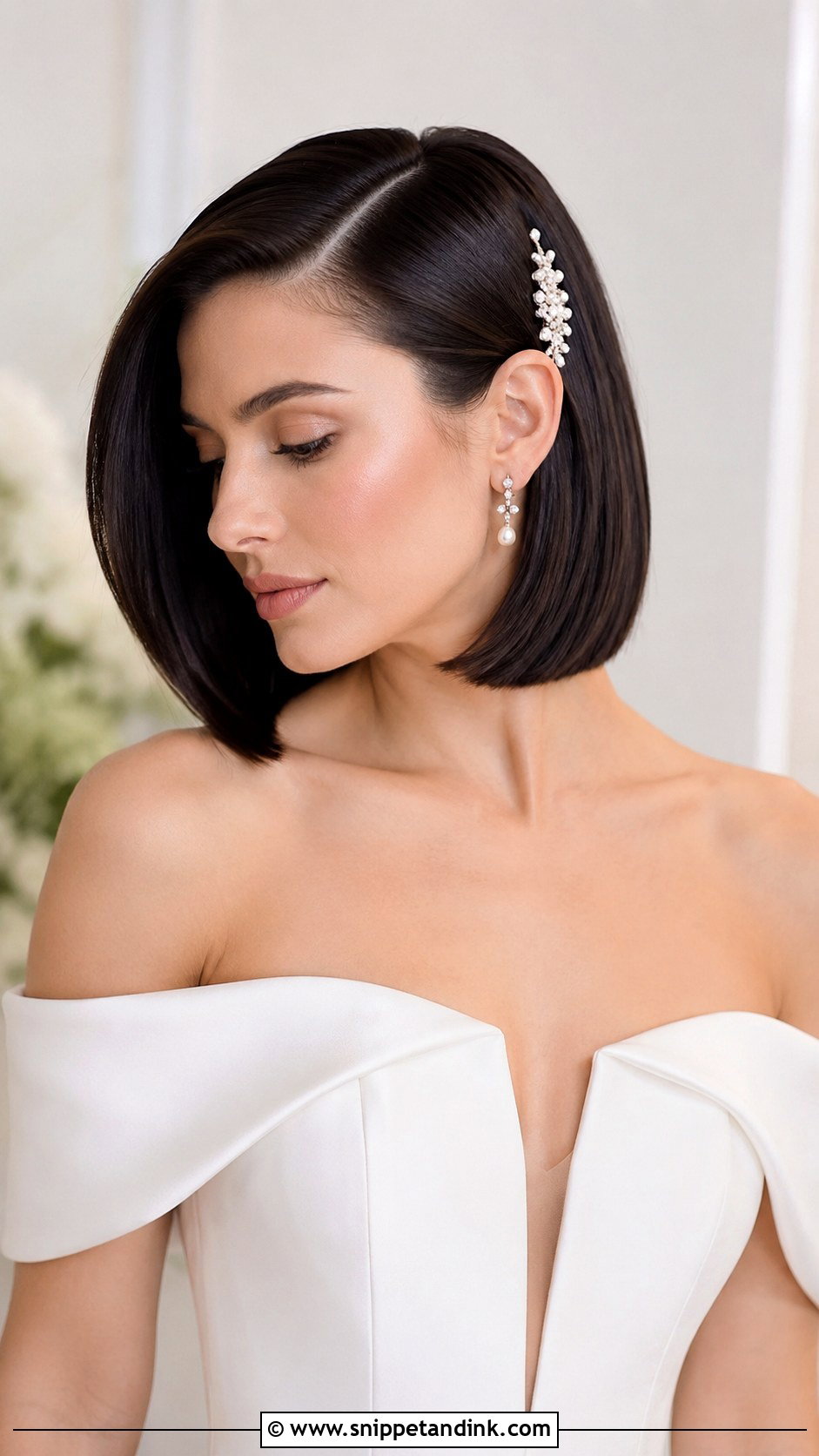
A deep side part on a classic bob creates asymmetry that gives a simple cut some drama. I find the part by pushing the hair forward and seeing where it naturally splits, then move it about an inch further over, no more, or the hair starts to fight back. Flat iron for smoothness and a jeweled pin sweeps the shorter side away from the face. It’s a good partner for statement earrings and a bold lip, and it holds its line all day if the hair has been blown out properly, not just ironed.
12. Short Hair With Fresh Flowers
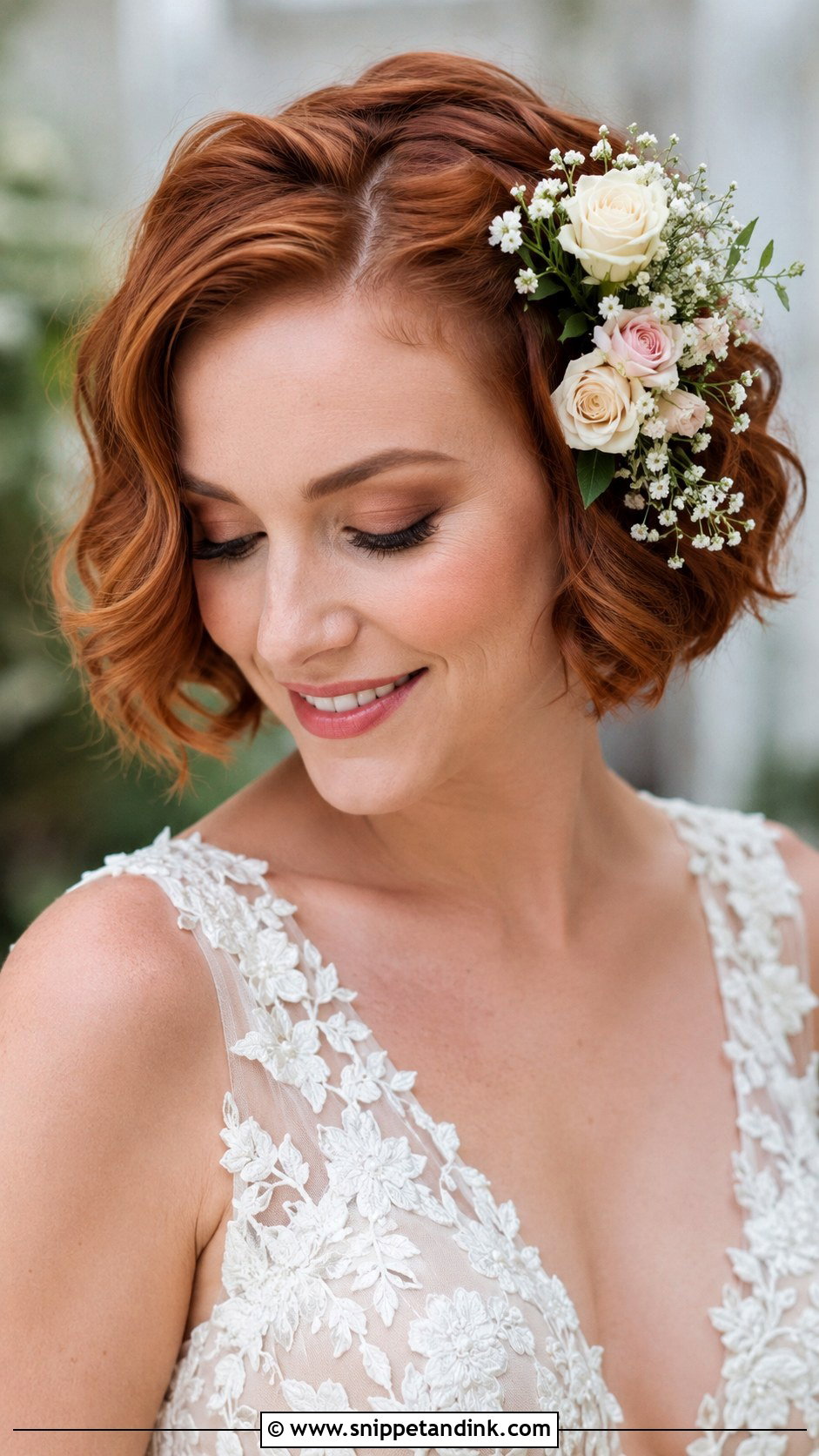
Pinning fresh flowers into short hair needs a base to attach to, which is the part most people miss. I build a small pinned section or a tiny braid first, then wire each stem and push the wire into that anchor. Baby’s breath, spray roses and wax flower last well out of water; gardenias and peonies bruise and brown within hours. Clustered to one side looks deliberate on a pixie, while a scattered placement suits a wavy bob. Ask your florist for the hair flowers separately so they arrive conditioned and in a box, not cut from the bouquet.
13. Vintage Pin Curls Bob
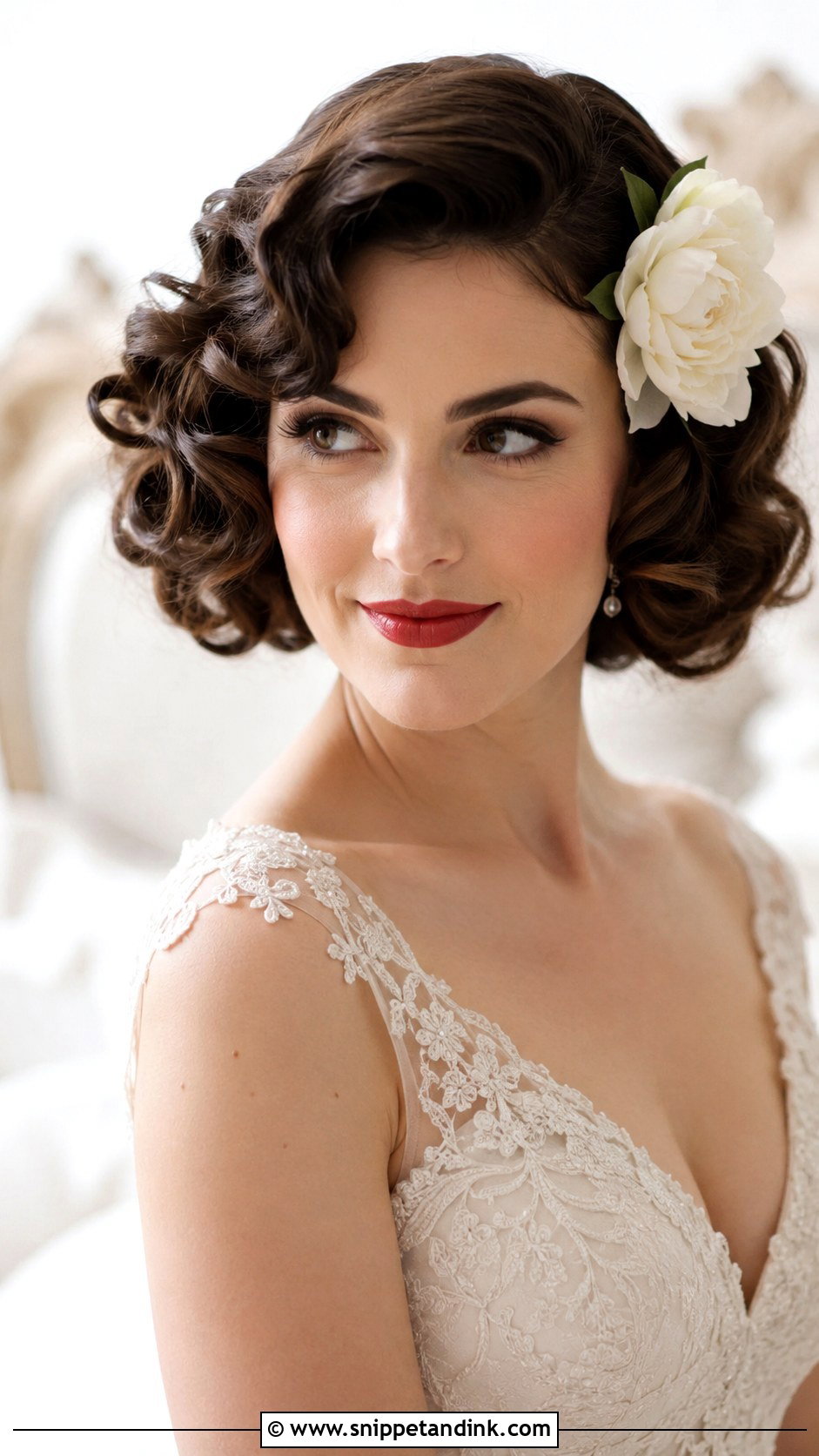
Vintage pin curls are wound flat, pinned while damp or with setting lotion, and left to cool completely before I brush them out. That cooling stage is non-negotiable; brushed too early, they relax into ordinary waves. A boar bristle brush turns the tight curls into the soft, sculpted bounce you see in old studio portraits. This one asks for patience at the start, so I’d book an earlier slot than a simpler style needs. It looks right with a fitted gown and a red lip, and a single flower or sparkling comb at the side is all it needs.
14. Short Hair Twisted Updo
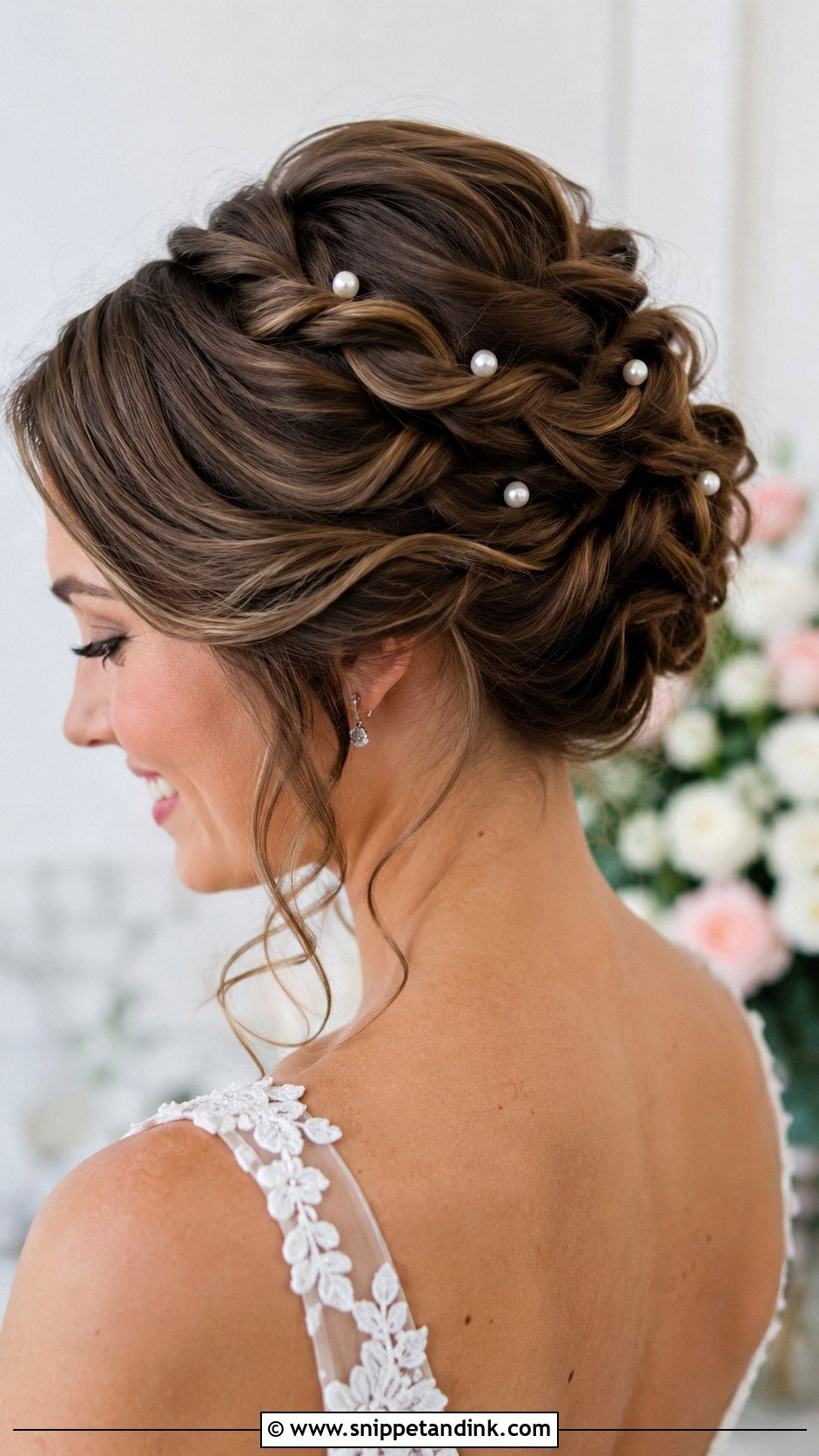
Twisting short sections, then pinning each twist up, creates texture without needing length for a bun. I work from the nape upward in small rows, crossing two bobby pins into an X over each twist so it locks rather than slides. On very short pixies, there’s not enough hair to twist, so this suits bobs and longer layers better. It holds well under a veil, and pearl pins or tiny flowers can sit in the gaps between twists to hide the hardware.
15. Tousled Pixie With Volume
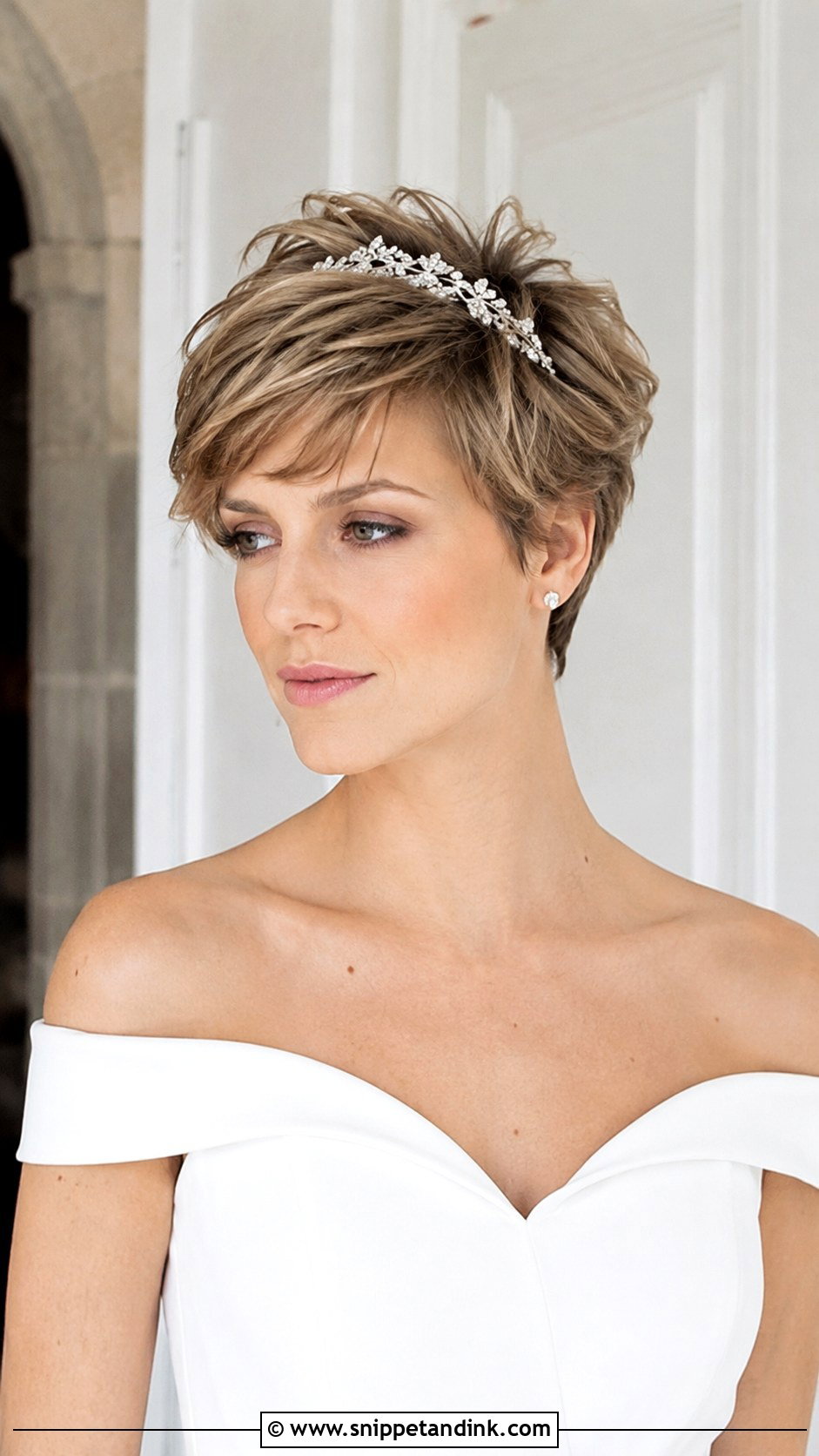
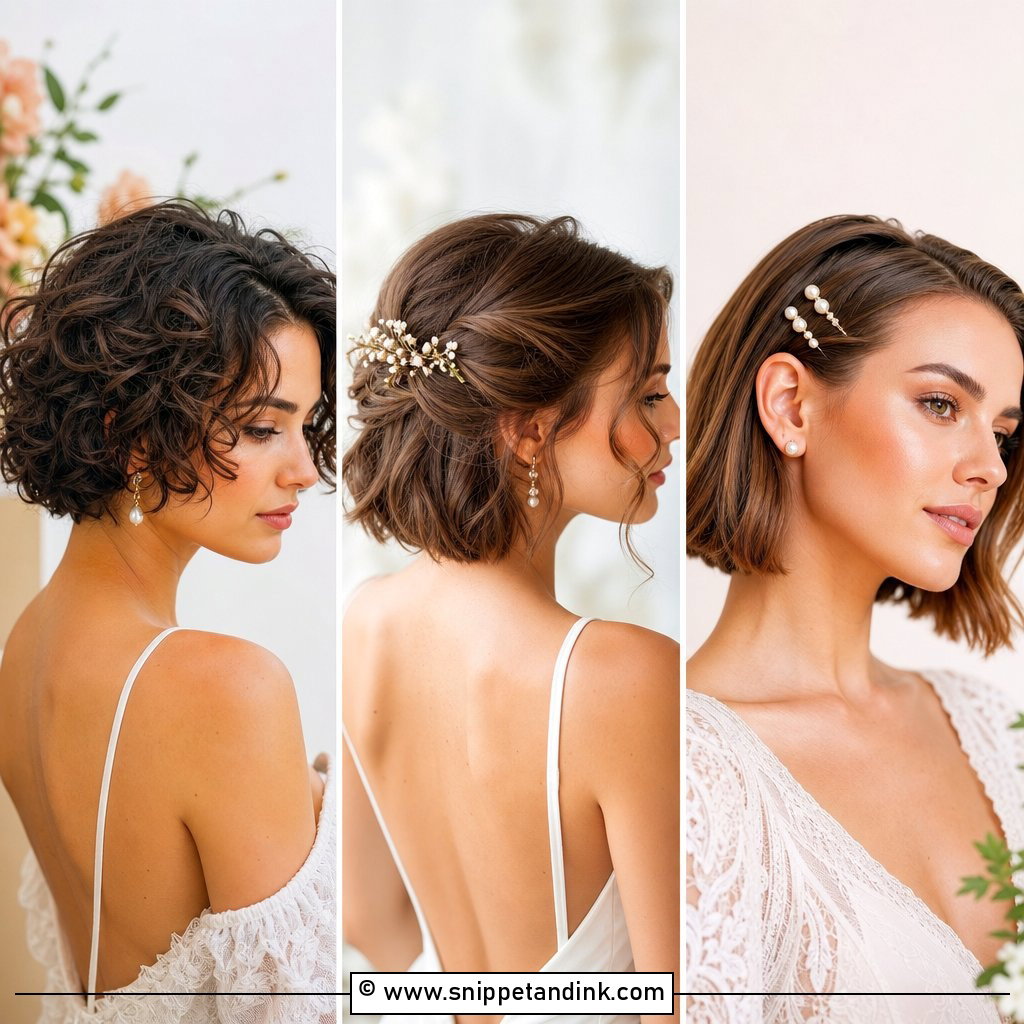
A tousled pixie is about building height at the crown and then roughing it up deliberately. I blow-dry the top upward with a root lift spray, then pinch pieces with a matte texture spray between my fingers. The trick is leaving the sides tighter so the volume reads as intentional rather than messy. It suits brides who want to look like themselves on the day. A delicate hairpin or small tiara works only if it’s pinned into a firm base, since texture spray makes the surface slippery.
16. Short Hair Slicked Back Look
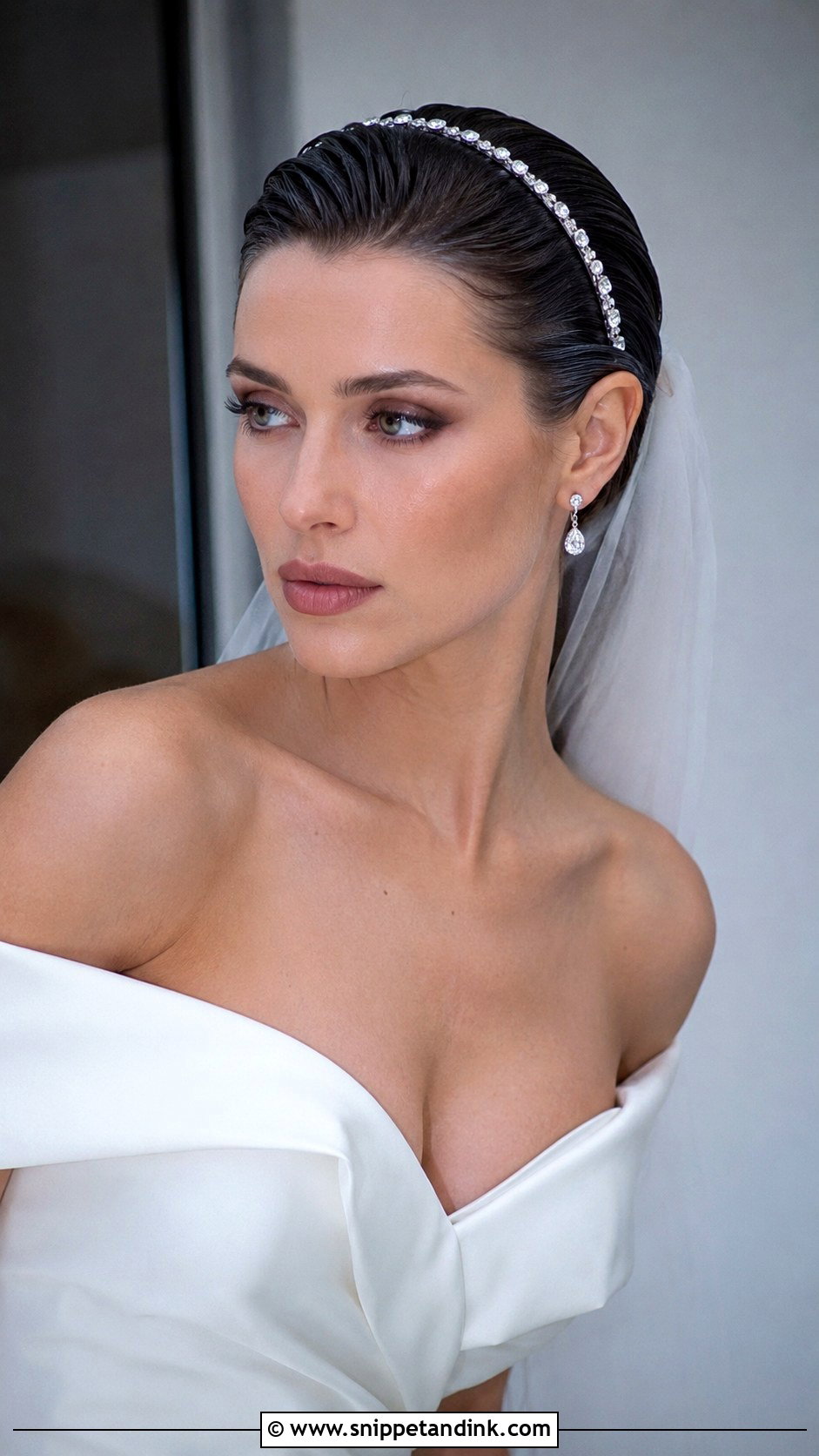
Slicked-back short hair is graphic and modern, and it lives or dies by the product. I use a strong-hold gel combined with a little shine cream so it doesn’t go crunchy and dry-looking by the reception. Comb it straight back while damp, then let it set without touching. It’s the right call for structured gowns and city venues, but I’d be honest: it can feel severe on brides who rarely wear their hair off the face, so try it at a trial and live with it for a day. A thin jeweled headband softens the line.
17. Bob With Soft Side Braid
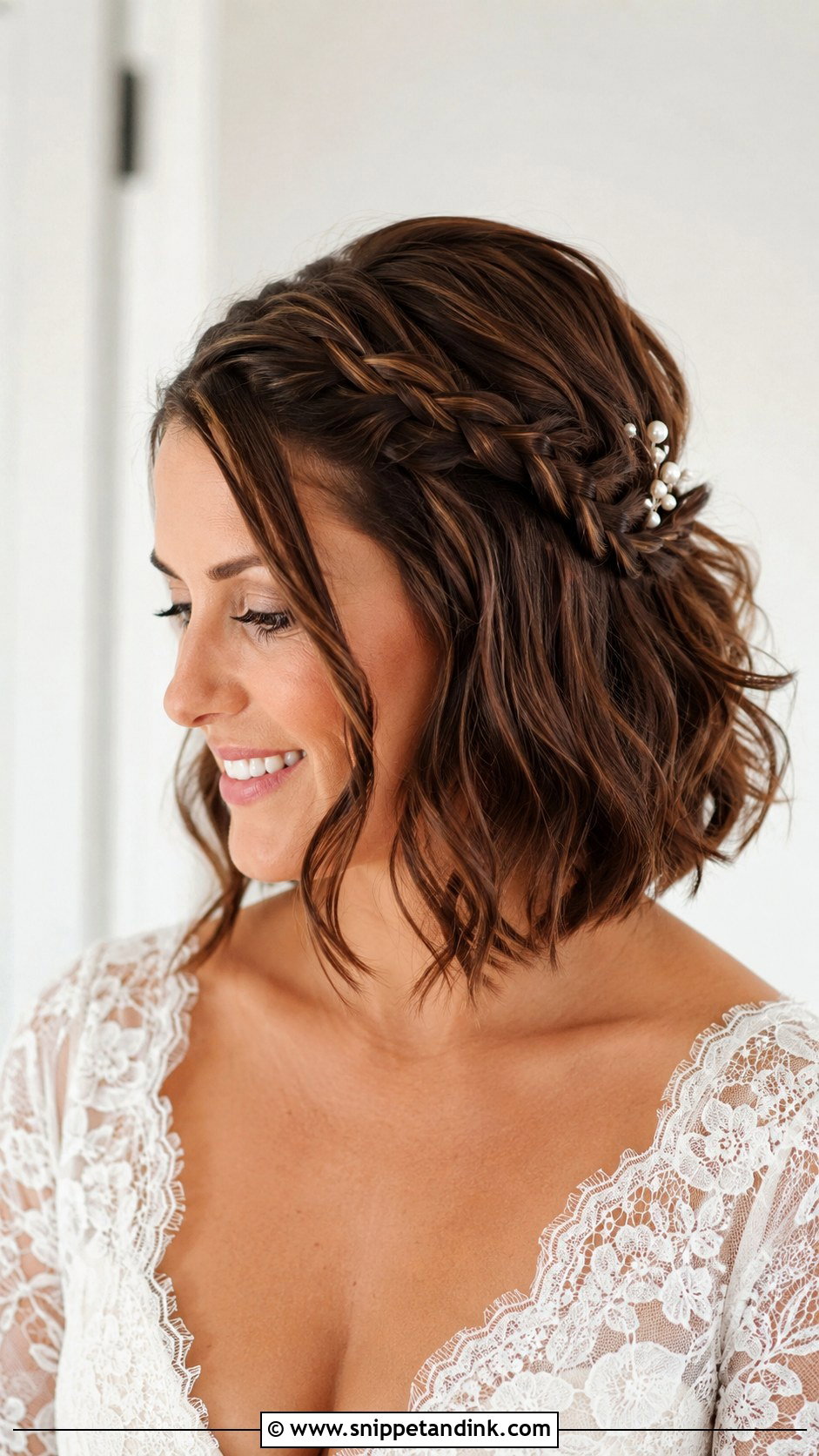
A soft side braid on a bob is one small plait from the part down toward the ear, pinned under the length behind it. I keep it loose by pancaking the braid, gently pulling the edges outward, so it reads wider than the hair actually is. The rest gets loose waves. Tiny pearl pins or flower heads along the braid hide where layers have escaped. On blunt cuts it’s lovely; on very layered bobs, ends stick out of the braid within an hour unless I set them with pomade first.
18. Short Hair With Pearl Accessories
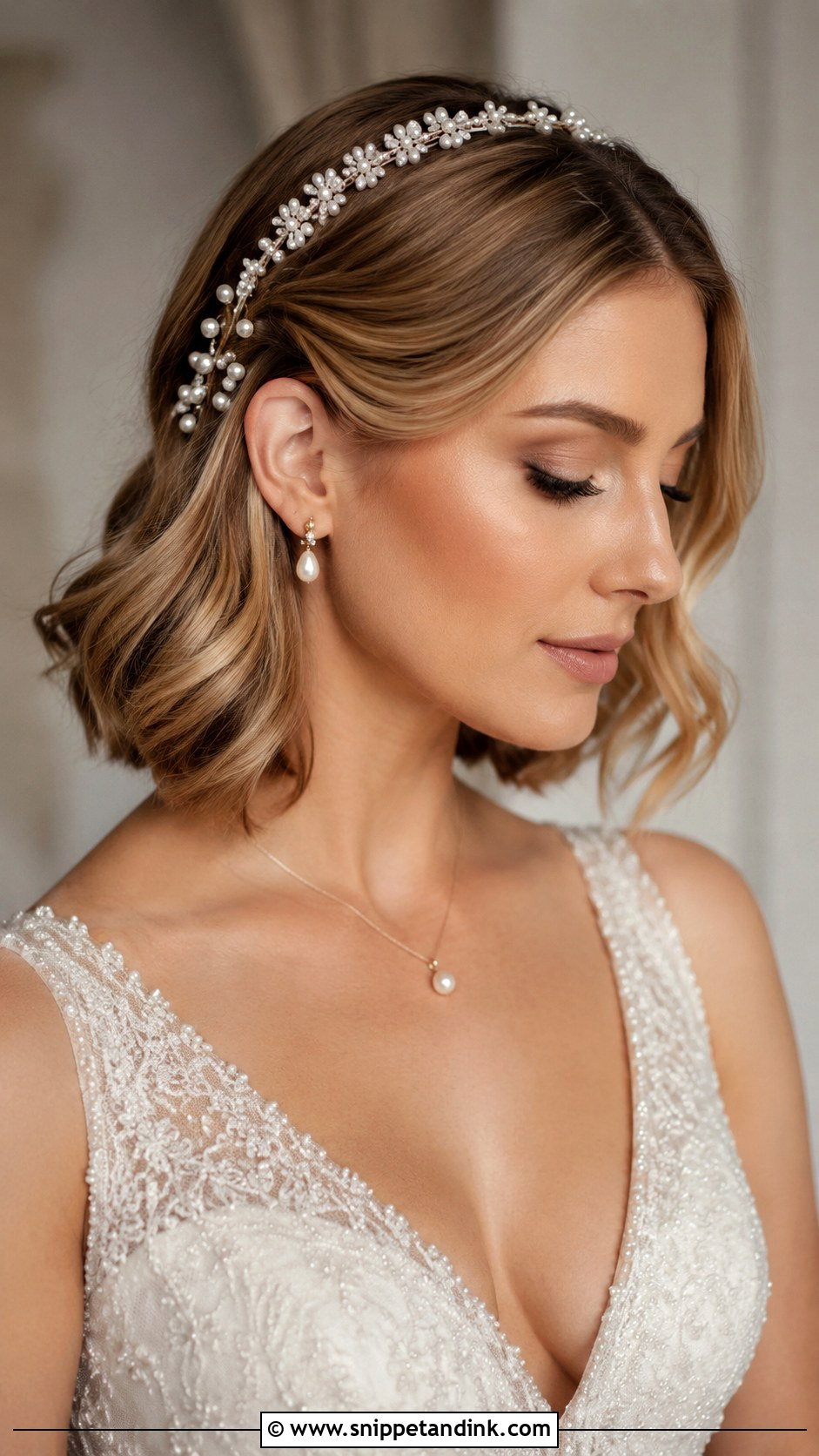
Pearls are forgiving on short hair because they add brightness without needing much hair to hold onto. I’d choose either a few pins clustered at the crown or a slim headband, not both. Pearl combs need some length to grip, so on a pixie I use pins only. Their soft sheen picks up an ivory gown better than crystal does. They suit sleek and wavy finishes equally, and if your earrings are pearl too, I’d keep the hair pieces smaller so the two don’t compete.
19. Wavy Lob With Deep Side Part
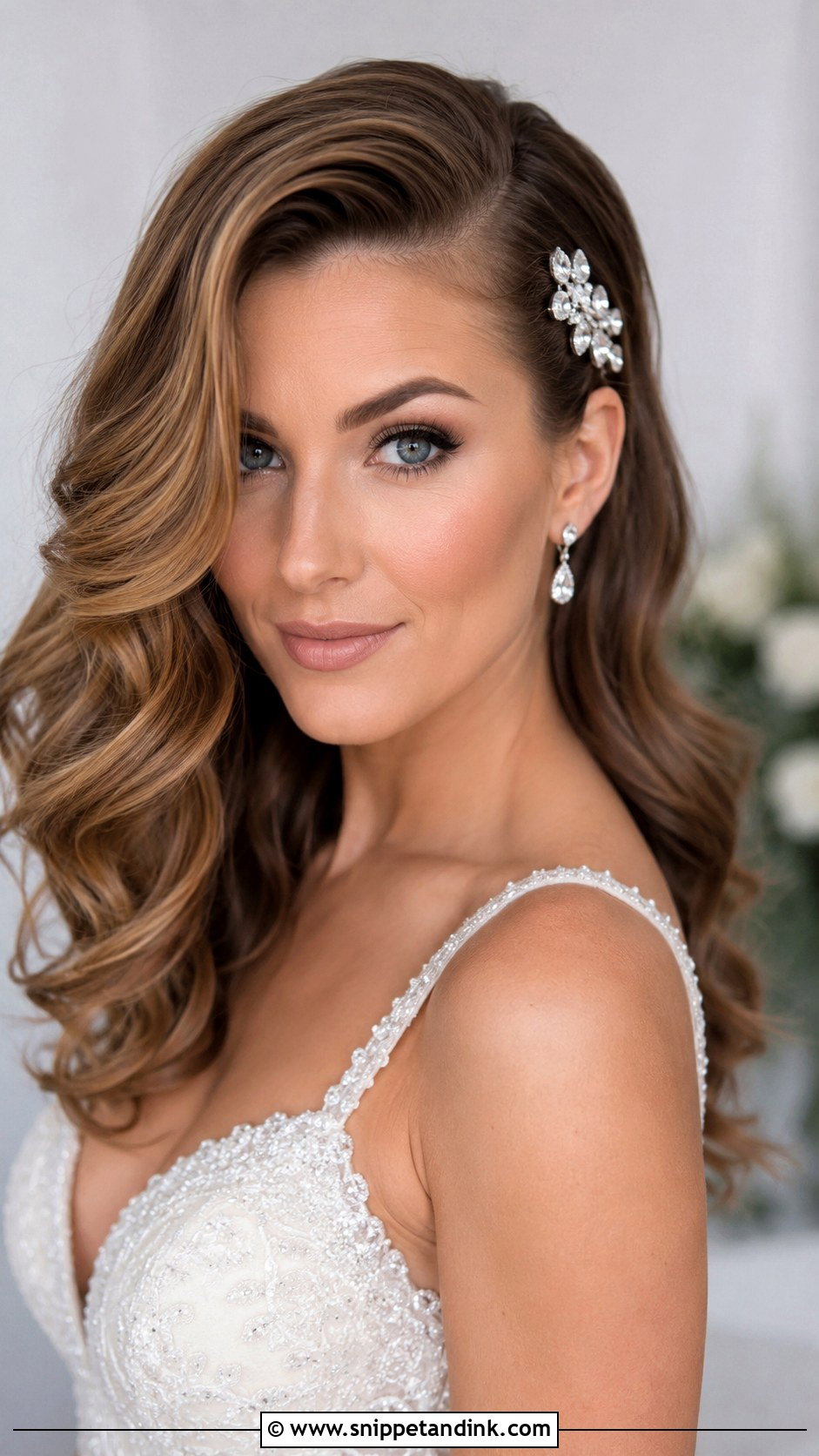
A wavy lob with a deep side part gives the most volume of the bob family, which makes it a good choice for brides with fine hair who want fullness in photos. I curl away from the face on the heavy side and toward it on the lighter side, then sweep everything over and pin a jeweled clip just above the part to hold the weight. Without that clip, the hair slowly falls back to centre during the day. It sits well with every neckline, though off-the-shoulder gowns show it best.
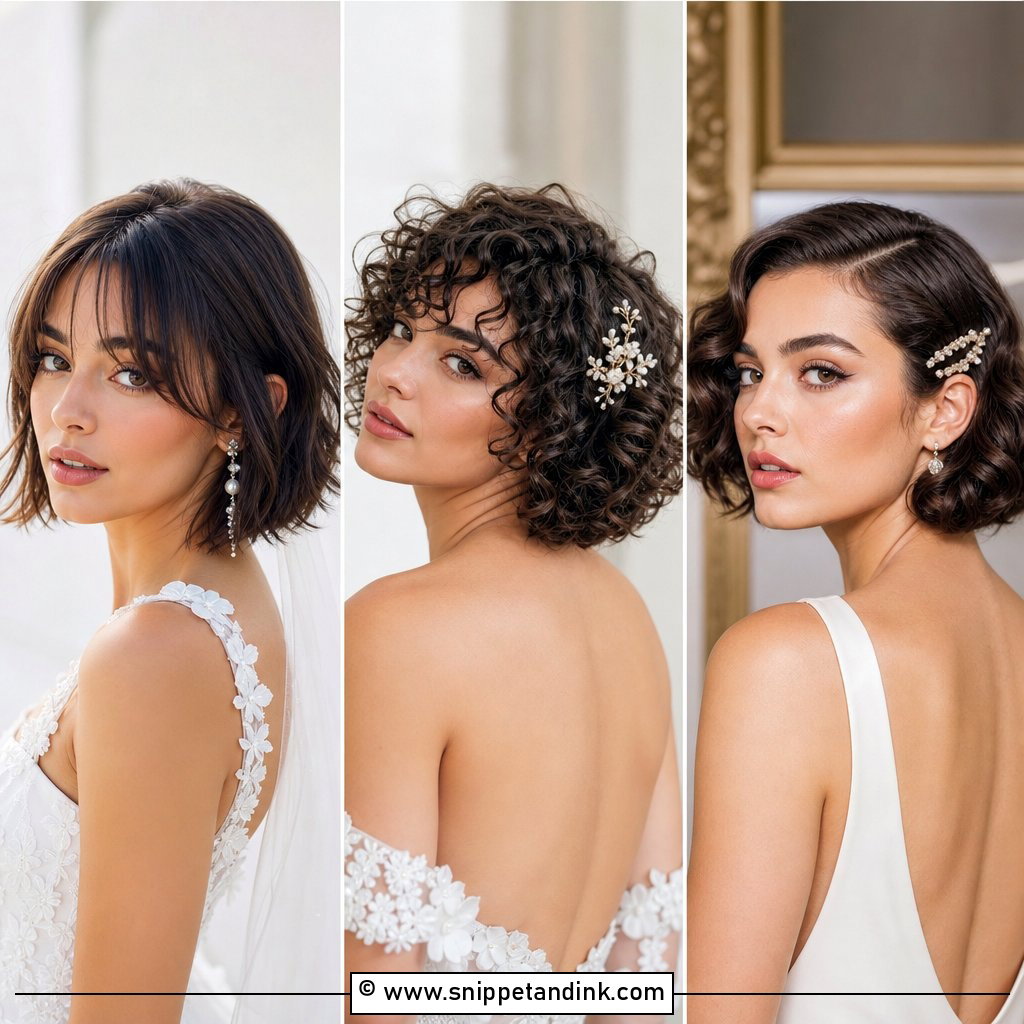
20. Short Hair Chignon With Flowers
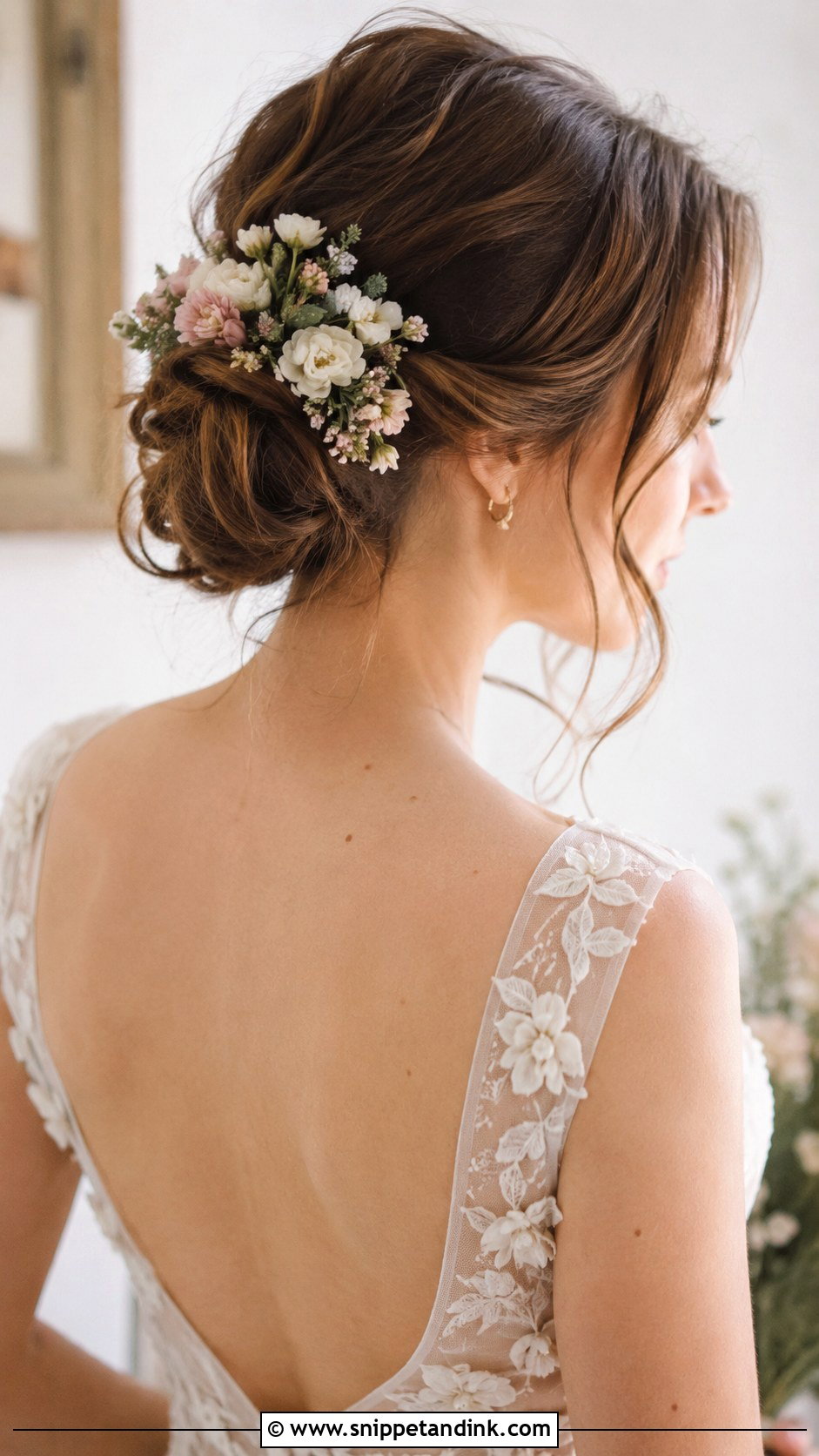
A textured chignon at the nape is my go-to when a bride with shoulder-length hair wants it off her neck for a summer ceremony. I tease the base lightly to give the pins something to grip, roll the hair into a loose knot, and pin the short pieces under it. Fresh flowers then go into the gaps rather than on top. This works under almost any veil because the comb can sit just above the bun. If your shortest layers sit above your ears, though, expect a few pieces to fall loose, and I’d plan for them rather than fight them.
21. Pixie Cut With Blunt Bangs
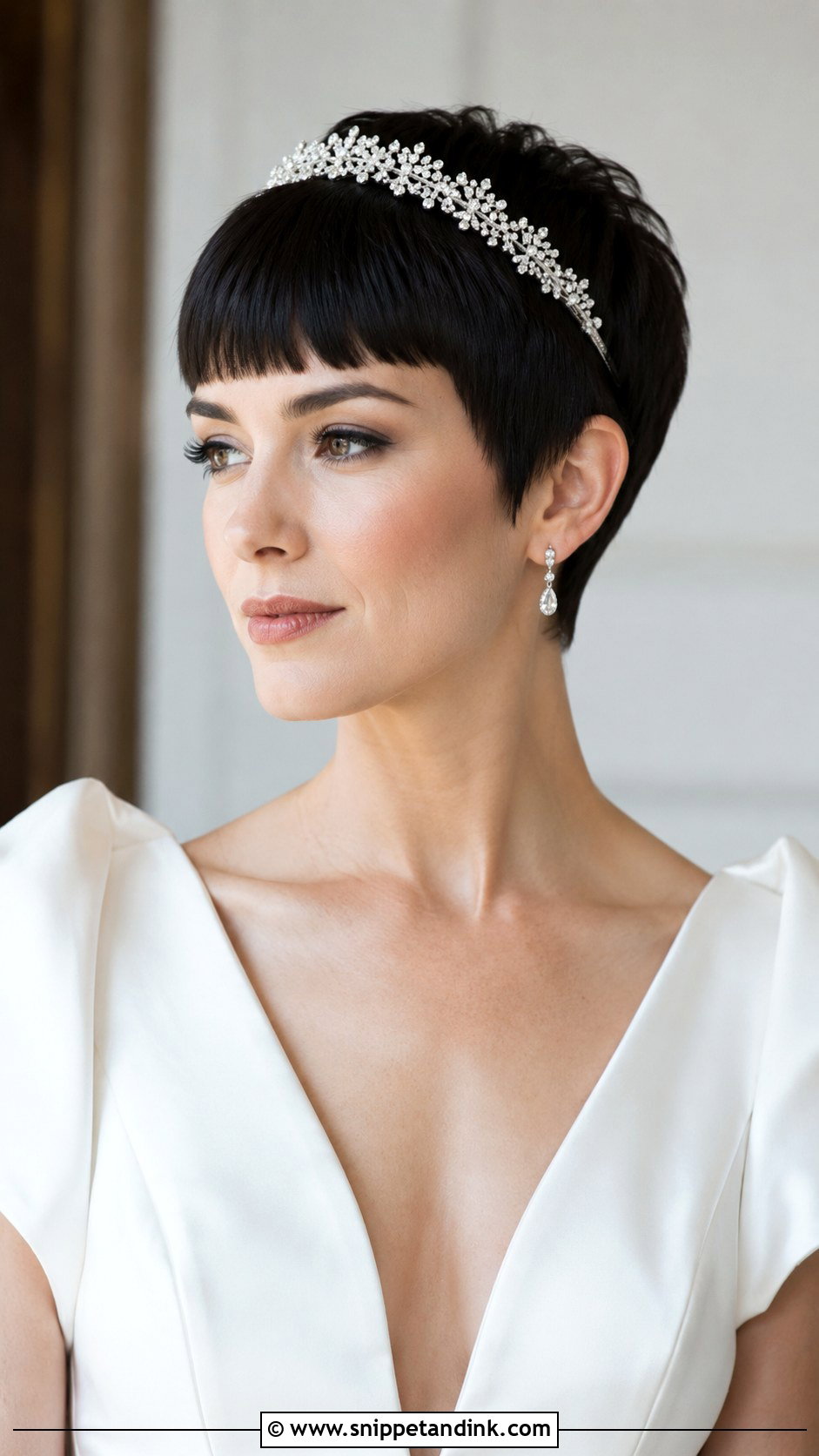
A pixie cut with blunt bangs puts all the attention on the eyes. The fringe has to be cut within two weeks of the wedding to keep its line, and it should be smoothed with a little serum and blow-dried flat with a paddle brush, not ironed, which can make it kink. I add texture at the crown so the shape isn’t one solid block. A slim tiara or one sparkling pin is enough. It’s strong with statement earrings, though I’d keep makeup on the eyes a little softer, since the fringe already frames them.
22. Short Hair Faux Bob Updo
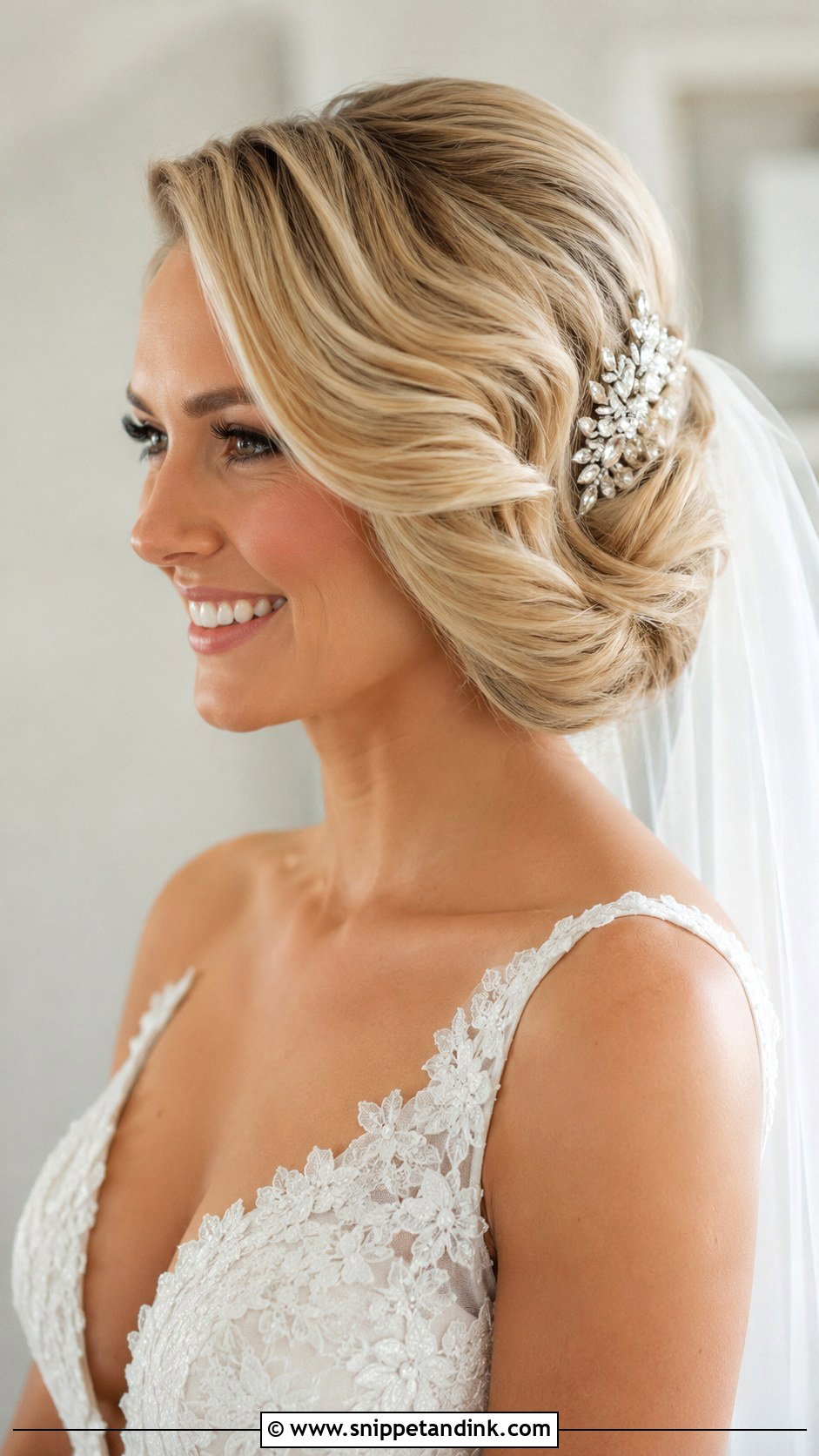
A faux bob updo lets a bride with longer hair borrow a short shape for one day. I split the hair into two sections, roll the ends under toward the nape, and pin them along the line where a bob would end, with the top section brushed smooth over the roll. Thick hair needs more pins than you’d think. Medium-length hair, around collarbone, works best; very long hair makes the roll too bulky to pass as a cut. A jeweled clip at the side hides the transition, and a veil can sit just above it.
23. Short Hair With Sparkling Tiara
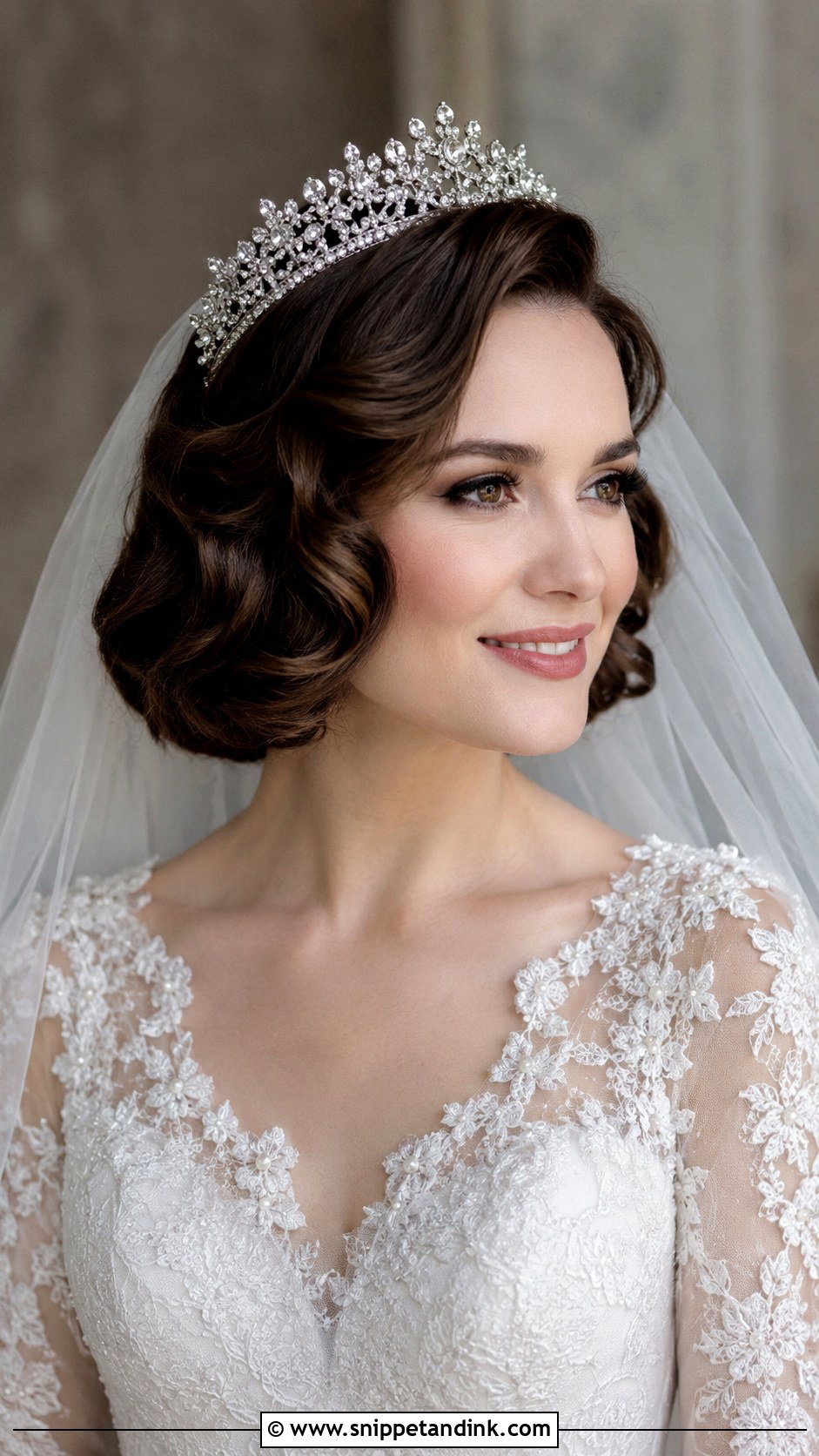
A crystal tiara on short hair needs a structure to sit on, which is why I tease a little height at the crown before placing it. I set it about an inch behind the hairline, then thread bobby pins through the tiara’s loops and cross them into the hair, two per side. Without loops, a tiara on a pixie simply slips. Soft waves or a sleek finish both suit it. I’d reserve this for formal and traditional weddings, and keep earrings small so the sparkle has one focus.
24. Bob With Soft Curls and Veil
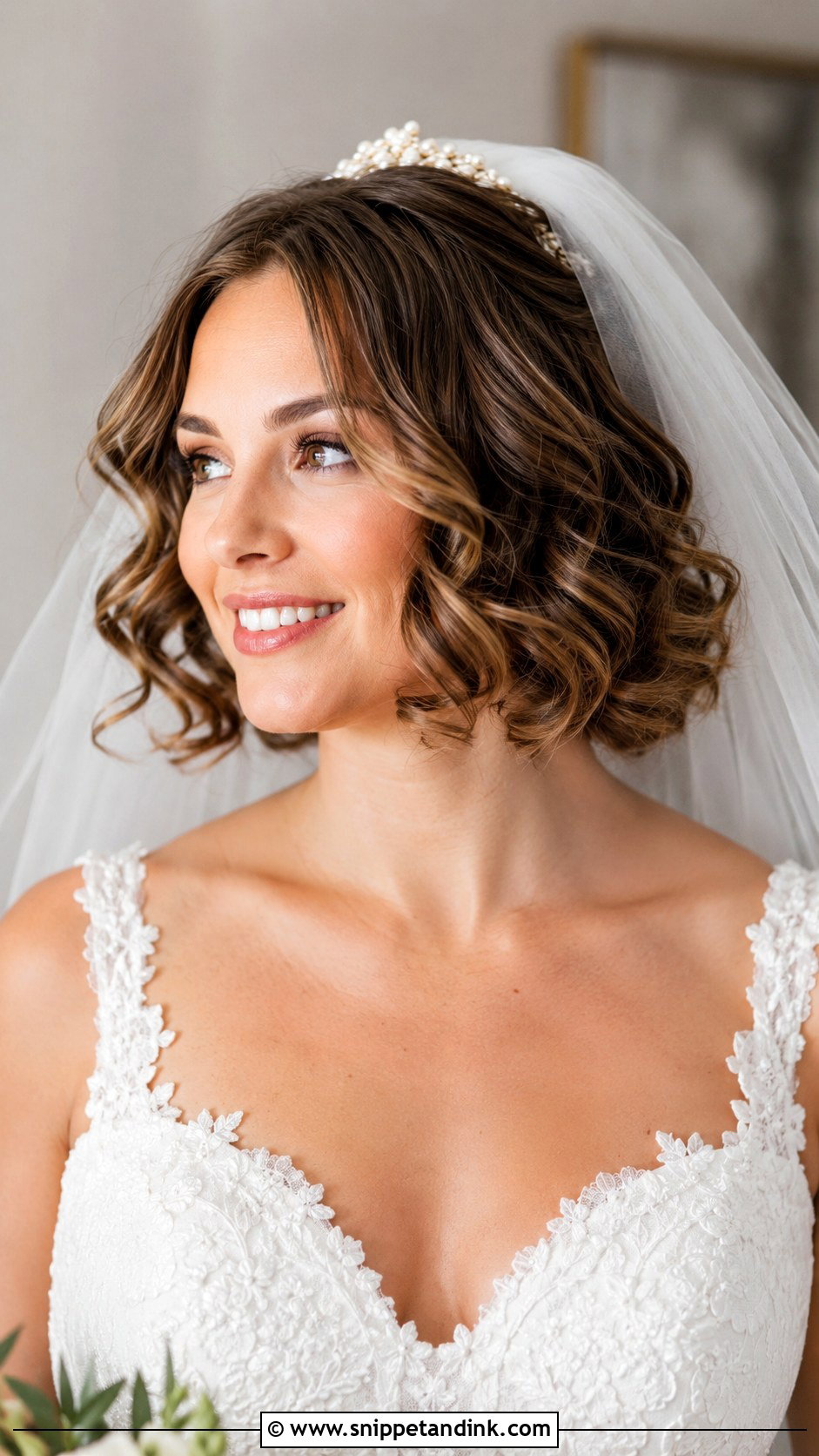
Soft curls under a veil on a bob need to be set firmly before the veil goes in, or the comb flattens them. I curl with a 1-inch wand, pin each curl in a loop to cool, then release and brush lightly. The veil comb goes in at the crown, with a hidden criss-cross of bobby pins underneath for it to grip. It works with any veil length, although a cathedral veil is heavy on short hair and pulls; I’d use a lighter tulle for a bob. A pearl comb can mark the spot after the veil comes off for the reception.
25. Short Hair Boho Braided Style
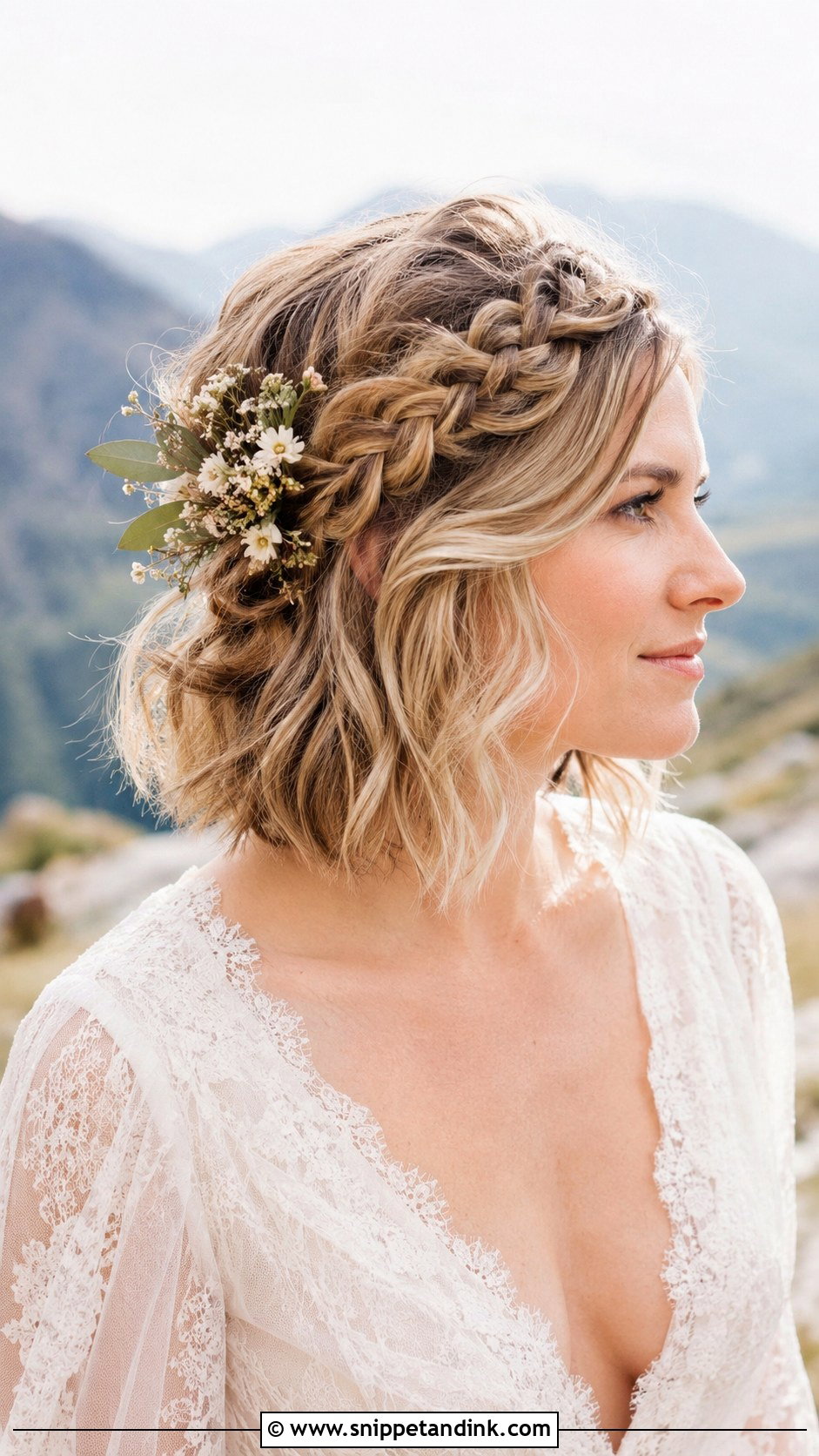
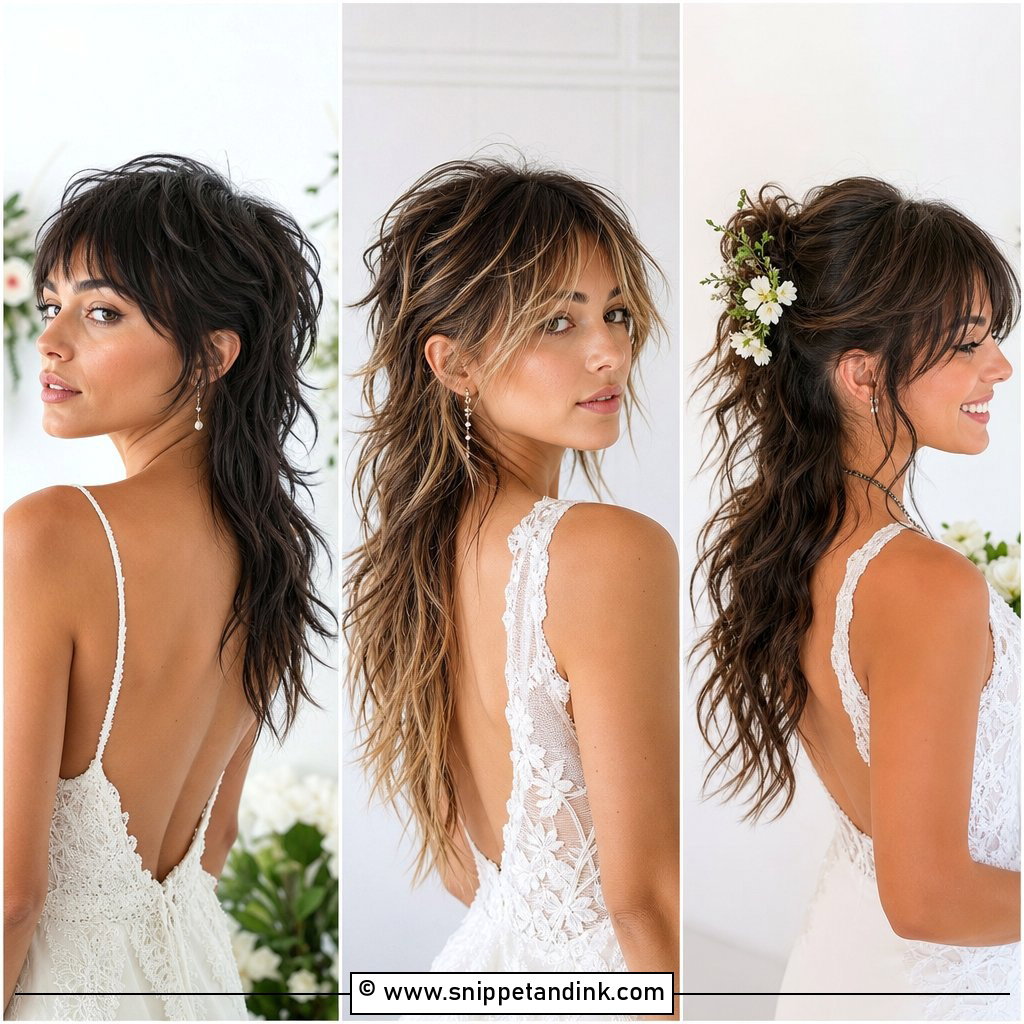
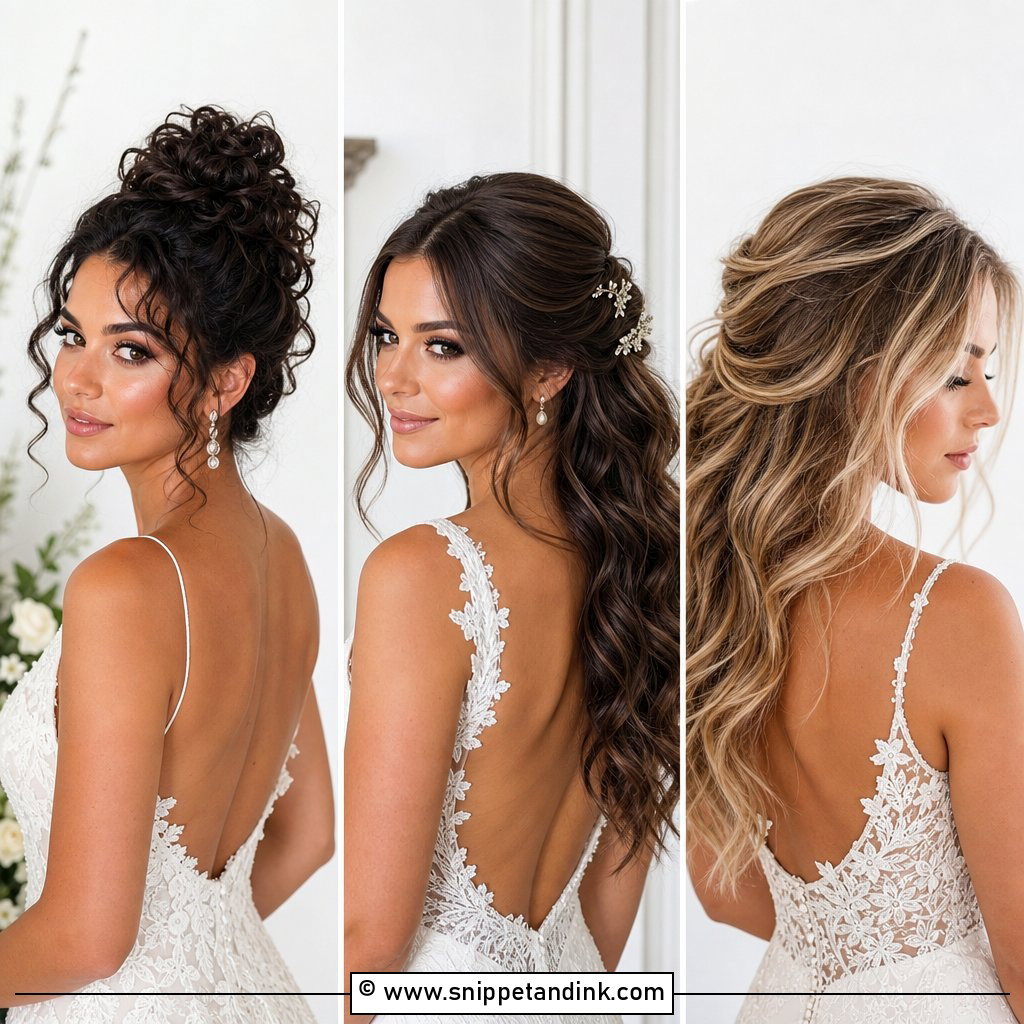
Boho braids on short hair are small and scattered, not one big plait. I take two or three thin sections near the face, braid them loosely and pin them toward the back, then loosen the waves in the rest of the hair with fingers. Wildflowers, baby’s breath or greenery go in last, wired to the braids. The finished look sits naturally with flowing gowns and outdoor venues. Wind is the one risk: if you’re marrying on a hilltop or beach, I’d pin the braids tighter than you think necessary.
Giving Veils and Hair Pieces Something to Grip
The most common short-hair problem I see on the day isn’t the style but the accessories sliding out. Veil combs, tiaras and heavy clips are designed for a bun or thick length to grip, and a pixie or blunt bob gives them almost nothing.
What I do at the trial
I create a small anchor: two bobby pins crossed into an X, or a mini braid hidden under the top layer, right where the comb will sit. The comb then slides into the pins rather than the hair. For lighter pieces, a small clear elastic around a section works as a hook.
- Bring every hair piece to your trial, including the veil, so the weight can be tested.
- Choose single-tier, lightweight tulle over heavy lace for a cropped cut.
- Ask whether the veil comb can be sewn onto a thin headband, which grips short hair far better.
- Use pins that match your hair colour, and keep a few spares with your bridesmaid.
If a piece still slides after anchoring, I’d rather swap it for a smaller one than spend the reception adjusting it.
Wearing Your Short Cut Exactly as It Is
Short hair doesn’t need to pretend to be long on a wedding day. The bob, pixie or lob you already wear can be polished, waved, pinned or decorated, and in my experience the brides who look most like themselves are the ones who chose a style that fits the cut they have. Bring photos of your hair on a good day to your trial along with the inspiration shots, and pick the accessory last. Pearls, flowers or a tiara all work, but only once the base style holds.
You'll Like These Ideas:


Leave a Reply