
Curly hair arrives at a bridal trial already holding a shape, and that is a head start most straight-haired brides don’t get. My job is rarely to change the pattern. It’s to decide where the volume should sit, how much of it the pins can carry, and how the curls will look after a full day of heat and hugging. The twenty styles below run from loose half-up sets to sculpted buns, afros and short tapered cuts, and I’ve added notes on how each one behaves on different textures. Read them with your own curl in mind, not the curl in the photo.
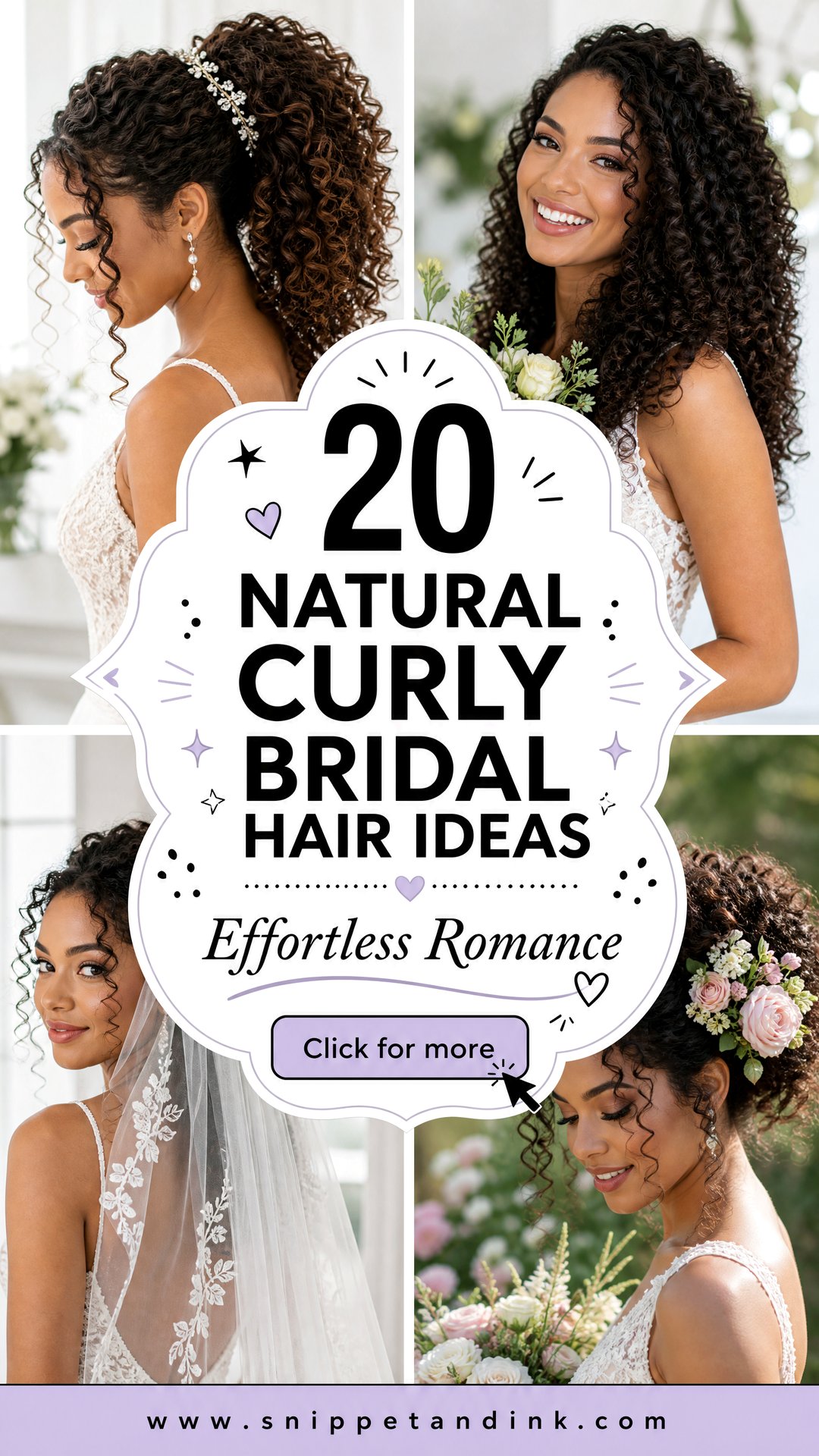
Loose Waves to Tight Coils, and What Each Texture Holds Best
At a consultation I look at three things before any photo: how tight the curl is, how dense the hair is at the crown, and how much it shrinks when dry. Those decide which styles on this list will hold and which will fight you all day.
Looser curls and waves
Loose curls drop the fastest, especially in heat. They look lovely worn down at the trial and can lose half their spring by the speeches. Half-up styles, side-swept looks and low buns give them structure, because pins carry the weight instead of the curl itself. I usually set them with a little more hold than you’d wear day to day.
Springy curls and ringlets
This is the most forgiving texture. It holds a pin well, packs into a high bun without much padding, and keeps its shape worn down if the cut is right. The usual risk here is frizz from too much touching, so I handle the hair as little as possible once it’s set.
Coils and tightly textured hair
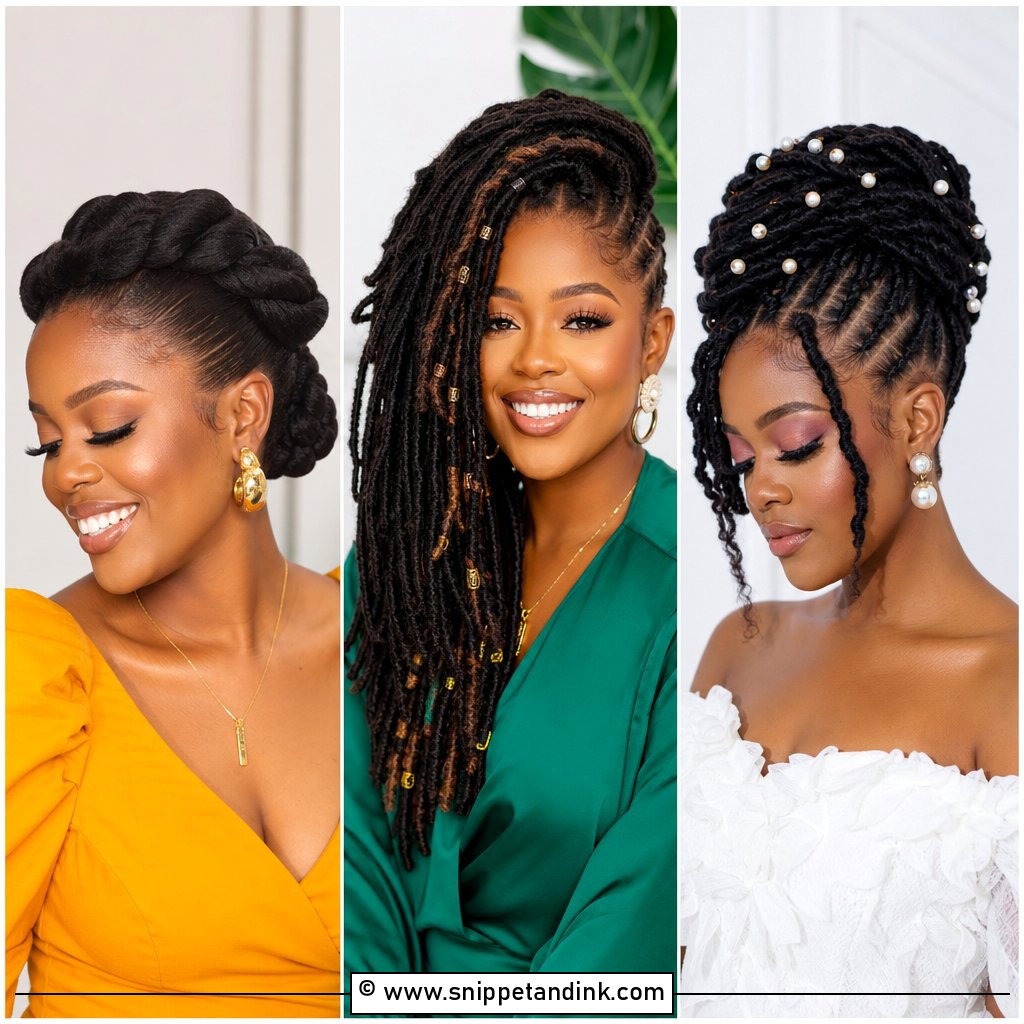
Coily hair can shrink by a large share of its stretched length, so a style planned on stretched hair may look much shorter on the day. Twist outs, knot outs, puffs, afros and sculpted updos all work well here. Moisture is the priority. I would rather layer a leave-in and a sealing oil the night before than add heavy product in the morning, because product build-up dulls coils in photographs.
1. Natural Curly Bridal Half Up Half Down
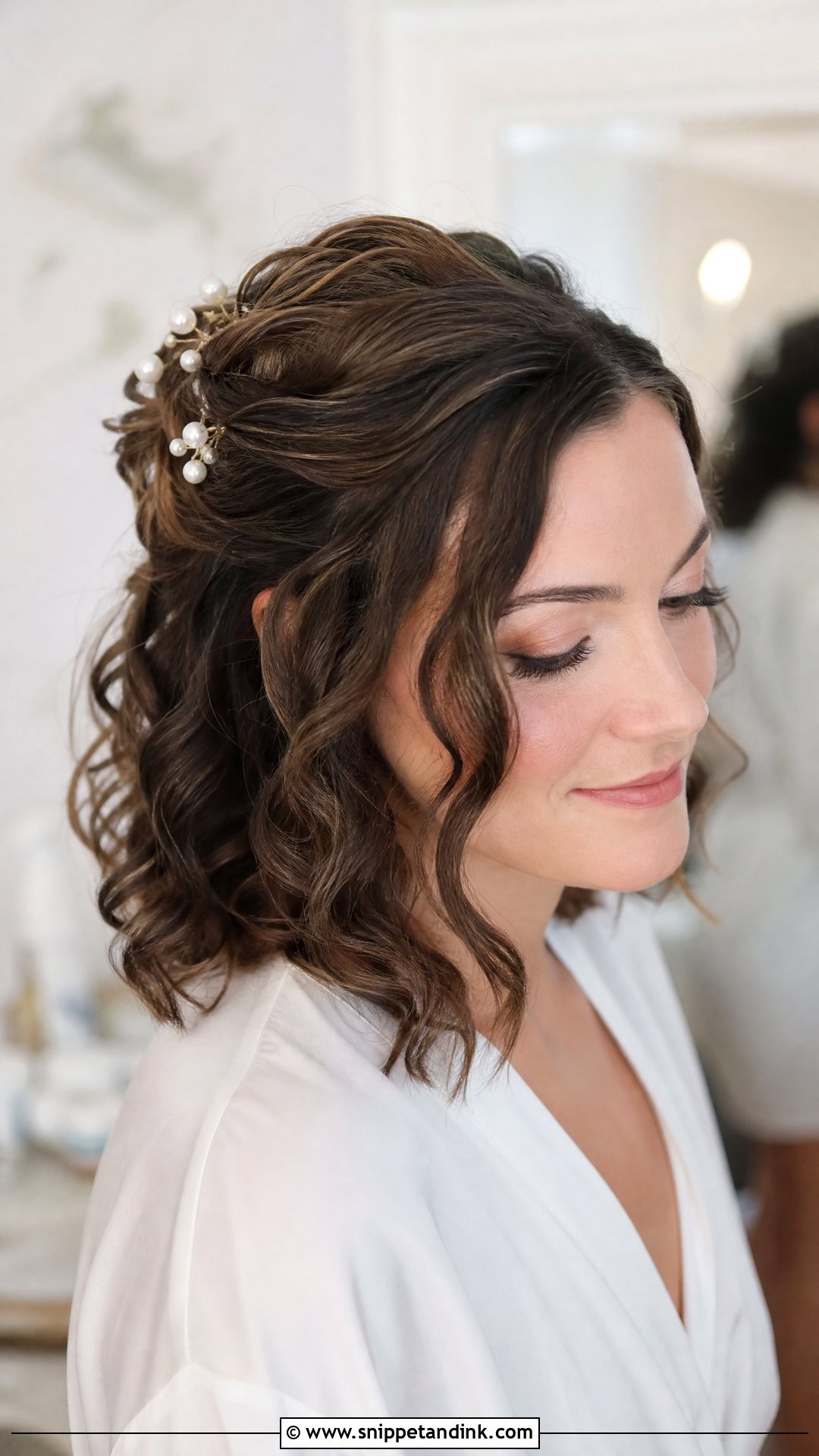
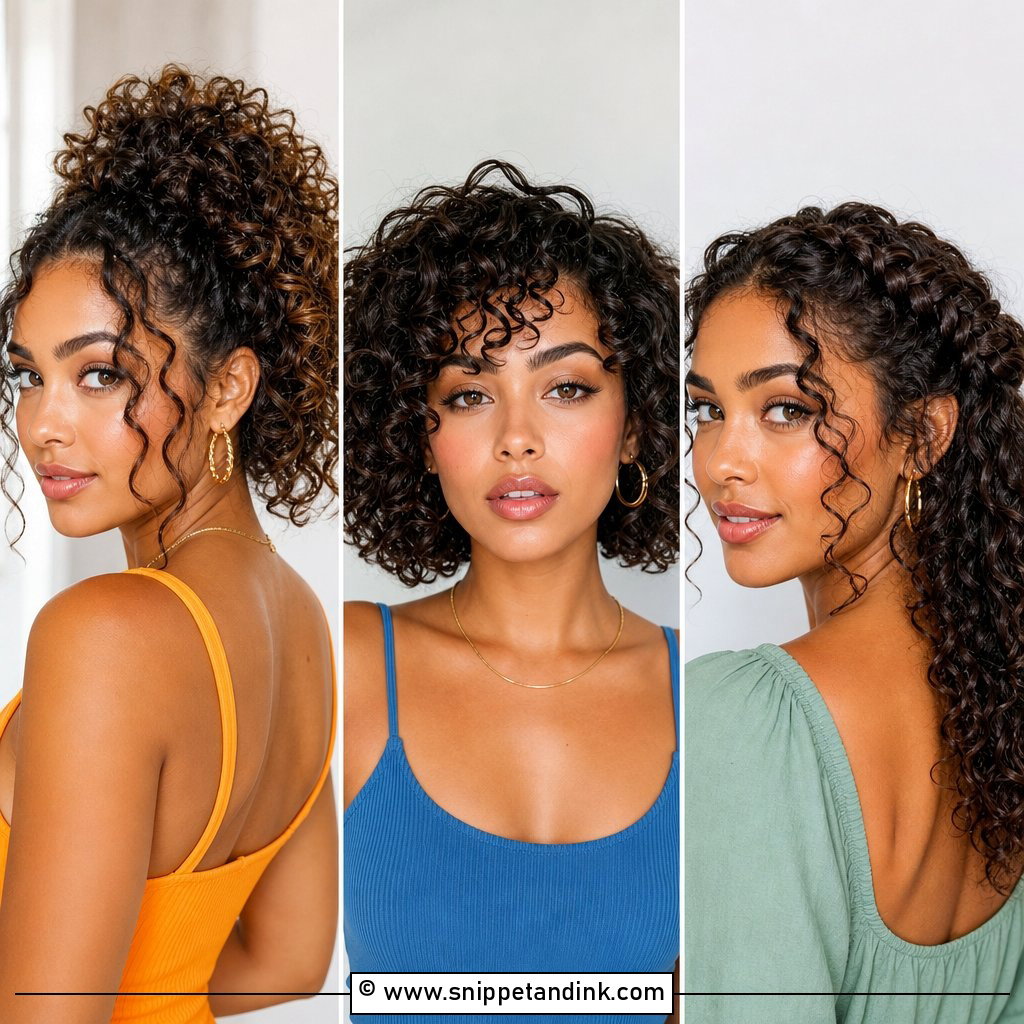
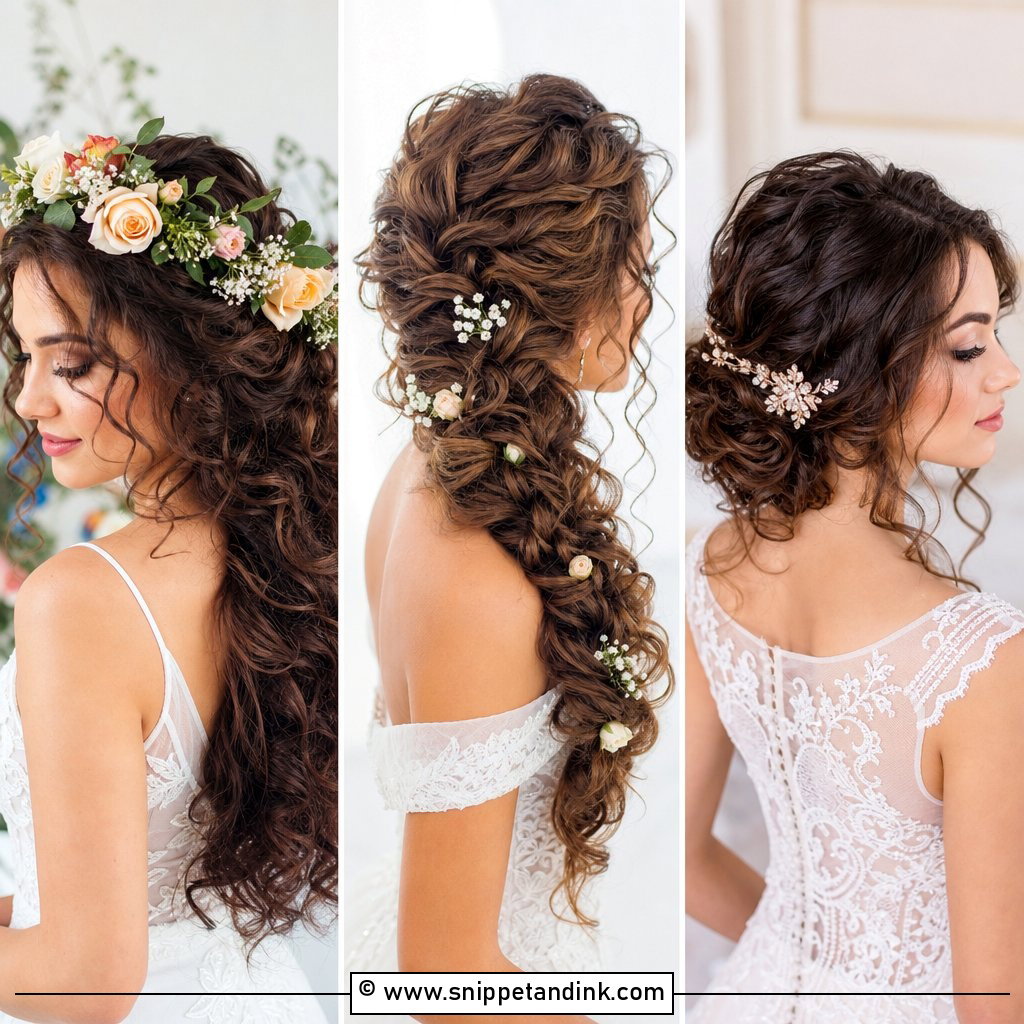
Half up, half down is where I start most curly brides who aren’t sure yet, because it keeps the face clear for vows and still shows length. I define the curls first and only then section the crown, since pinning wet or half-set curls flattens the pattern at the root. The top gets twisted loosely and anchored with crossed bobby pins under the twist, which also gives a veil comb something solid to grip. On very fine curls I’ll add a small padded base so the crown doesn’t sink by the reception.
2. Natural Curly Bridal Low Bun
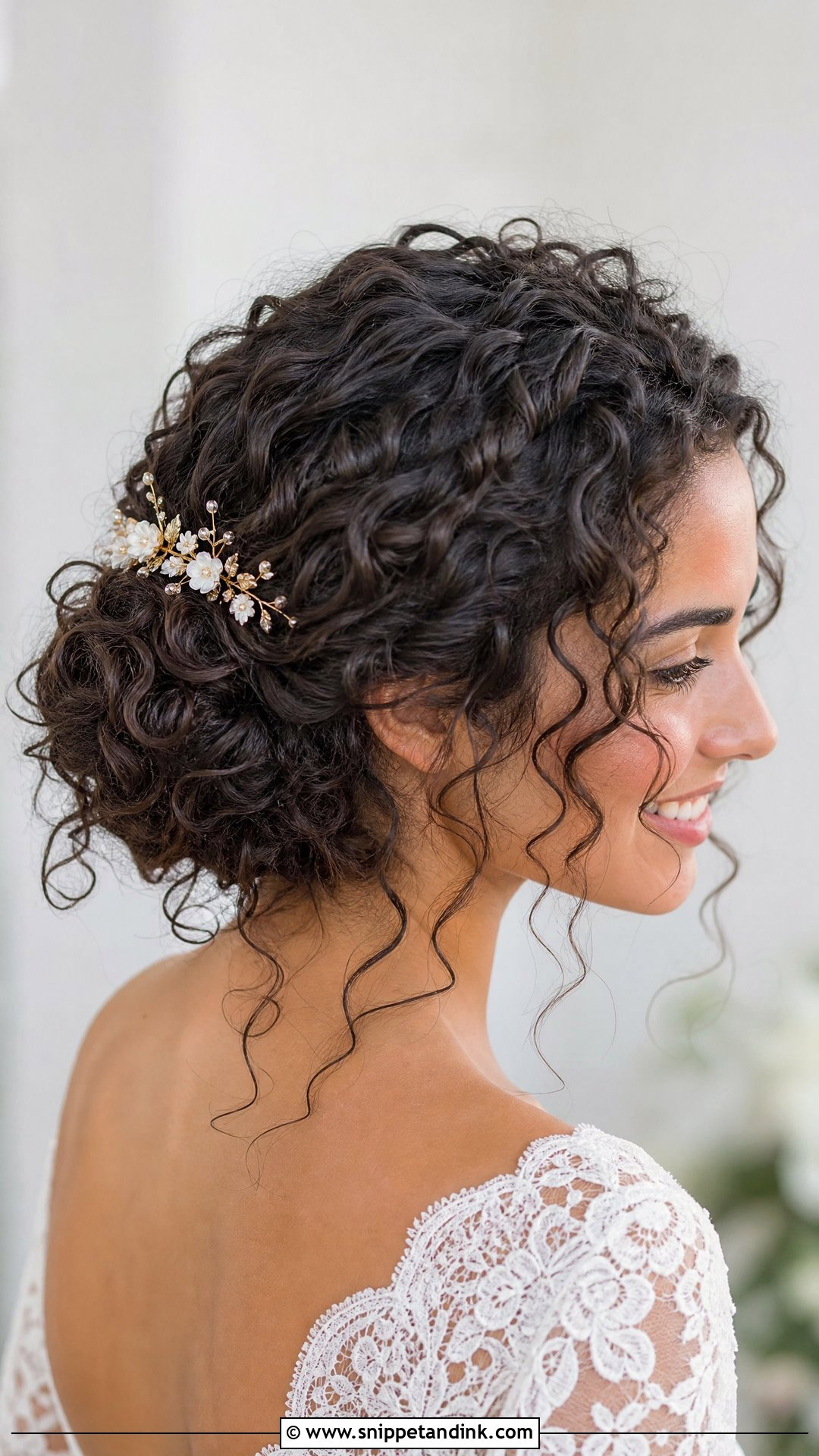
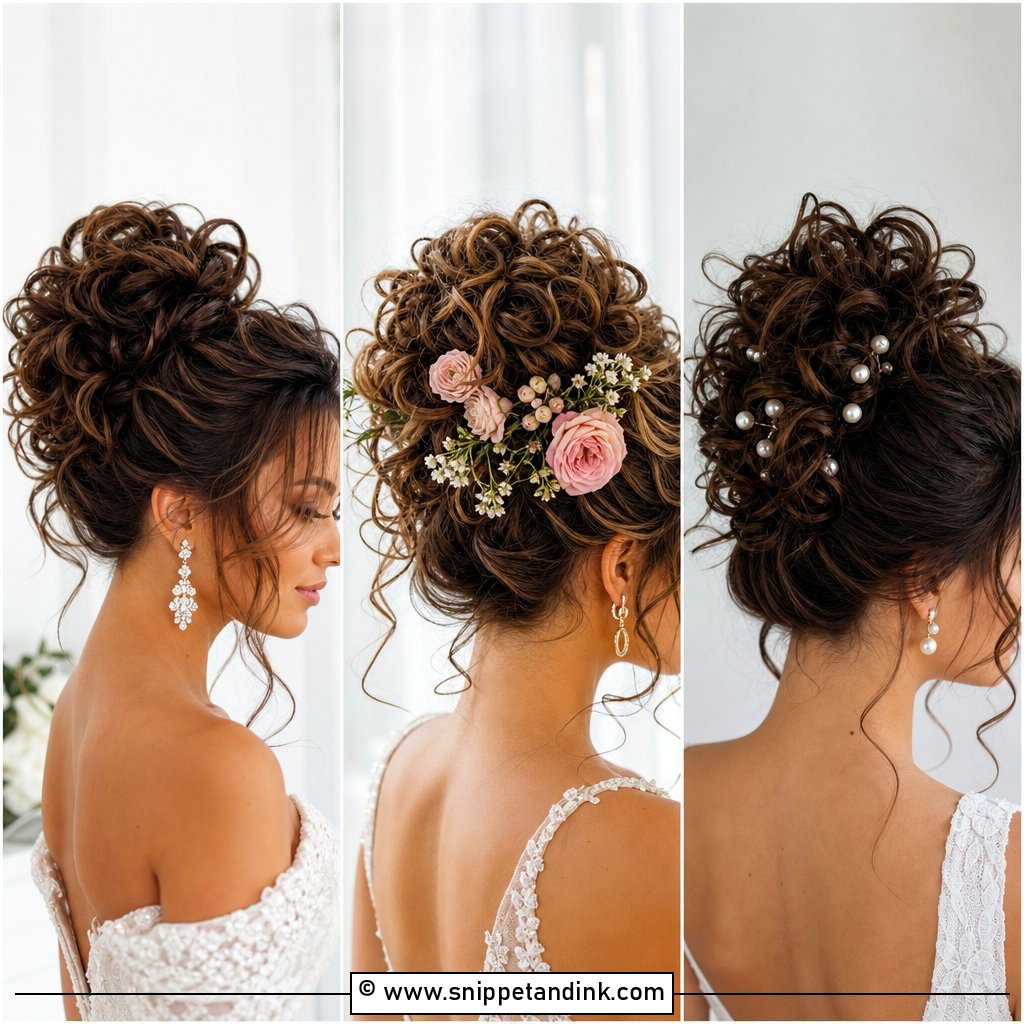
A low bun at the nape is the style I trust most for humid days, because the bulk of the curls is tucked away where moisture can’t swell it. The mistake I see is smoothing every curl into it with gel until it reads as a sleek bun on straight hair. Leave the bun airy and let the texture show on the surface. A few tendrils at the temples soften it, and a small pearl comb or floral pick slides in neatly just above the bun.
3. Natural Curly Bridal High Bun
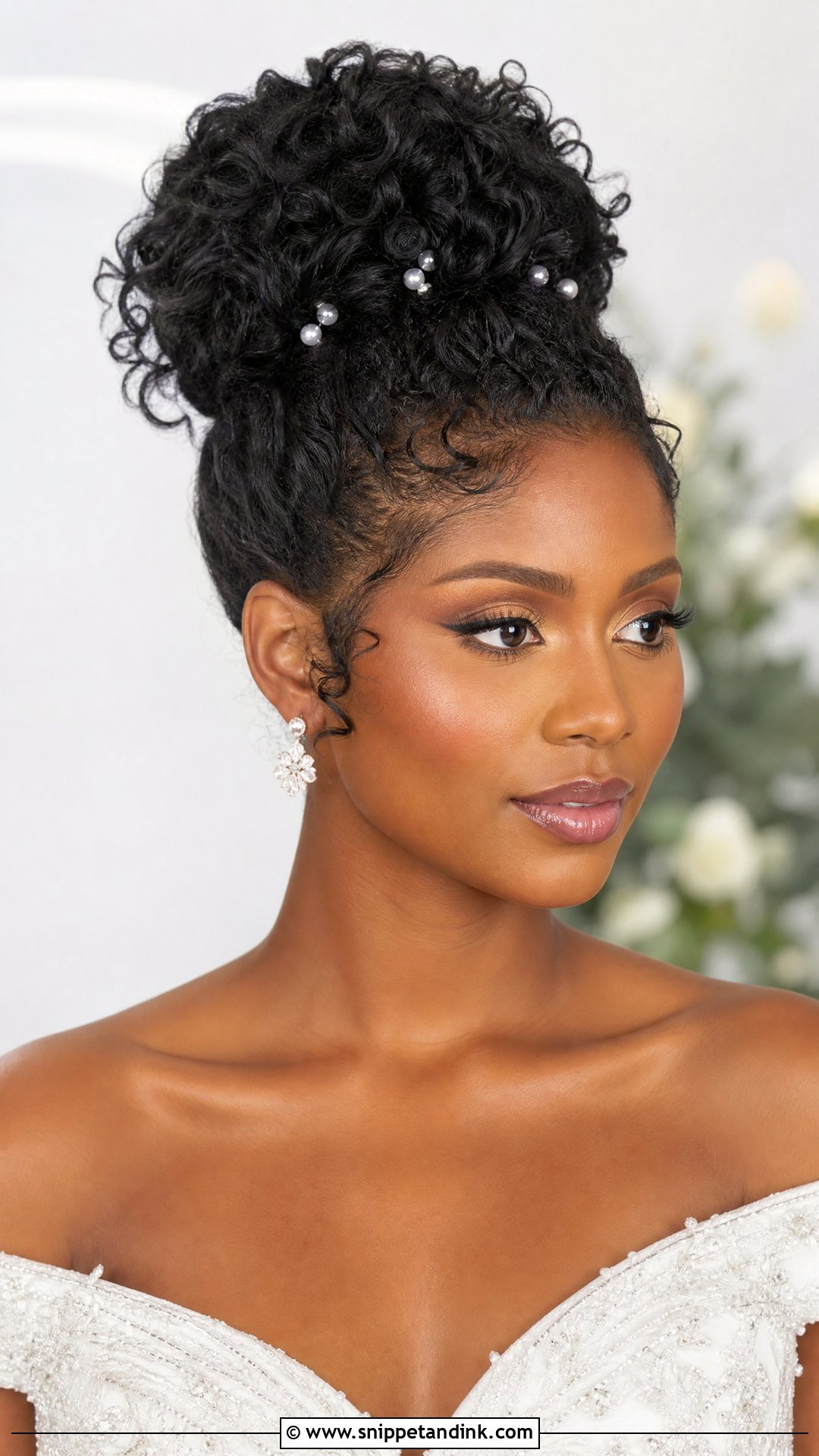
High buns need density. On thick curls, coils and ringlets the hair packs into a full round shape with very little padding, and that height looks right with strapless, square and high necklines because it clears the neck completely. Finer curls usually need a donut or a hidden fill to reach the same size, and I’d warn you that a heavy high bun can pull at the scalp by evening if it isn’t anchored in two places. The veil tucks under or behind the bun. Leave out a couple of face-framing curls so it doesn’t turn severe.
4. Natural Curly Bridal Updo With Pearls
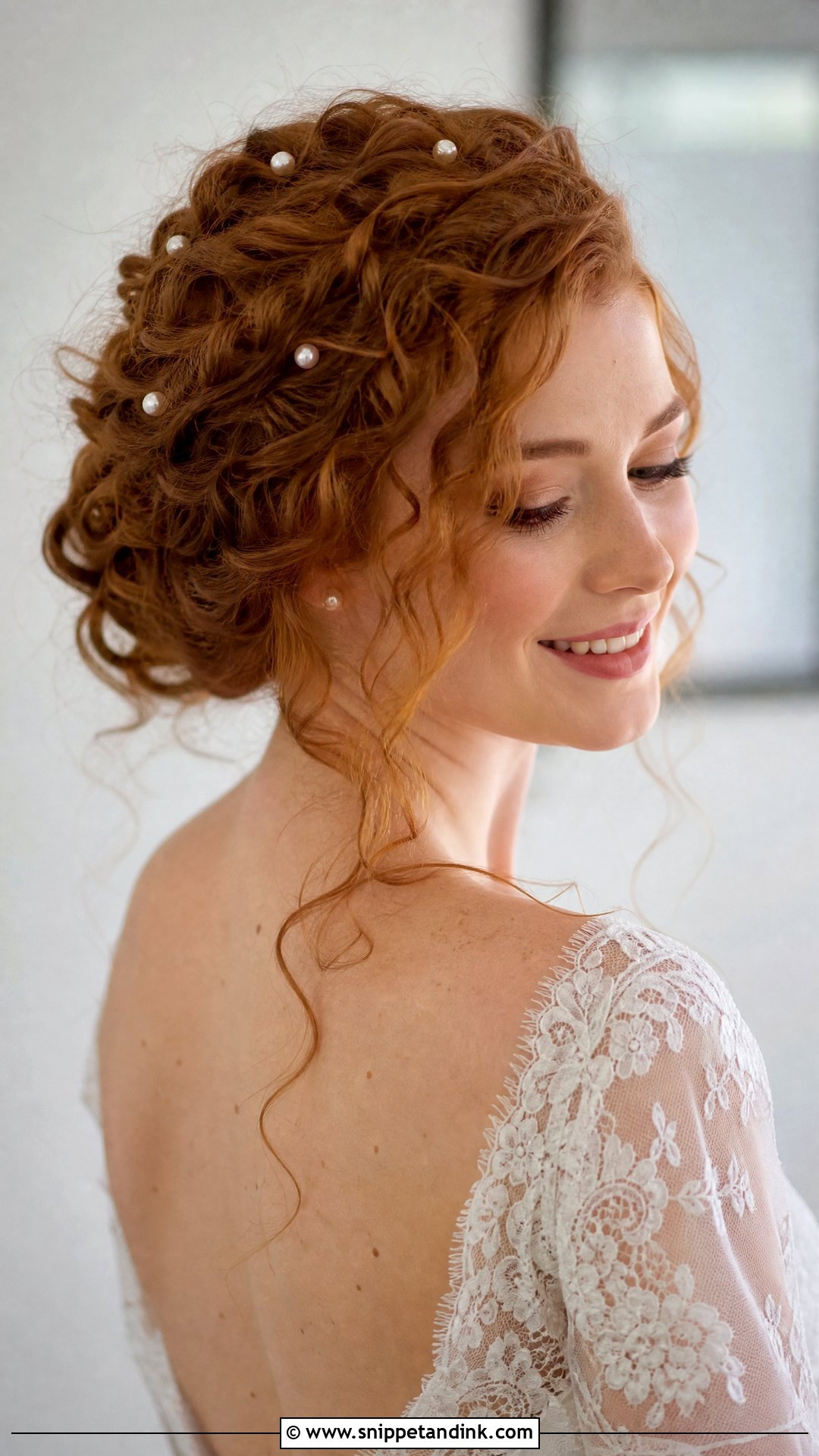
Pearls sit well in curly hair because they catch light without competing with the pattern. I pin the updo loosely at the back first, then place pearl pins last, scattered rather than lined up, and angled into the curl so the pin shaft disappears. Too many pearls and the texture vanishes under them, so I usually stop at five to nine. Lace, satin and plain crepe gowns all suit it, and it reads correctly in a church or a ballroom.
5. Natural Curly Bridal Ponytail
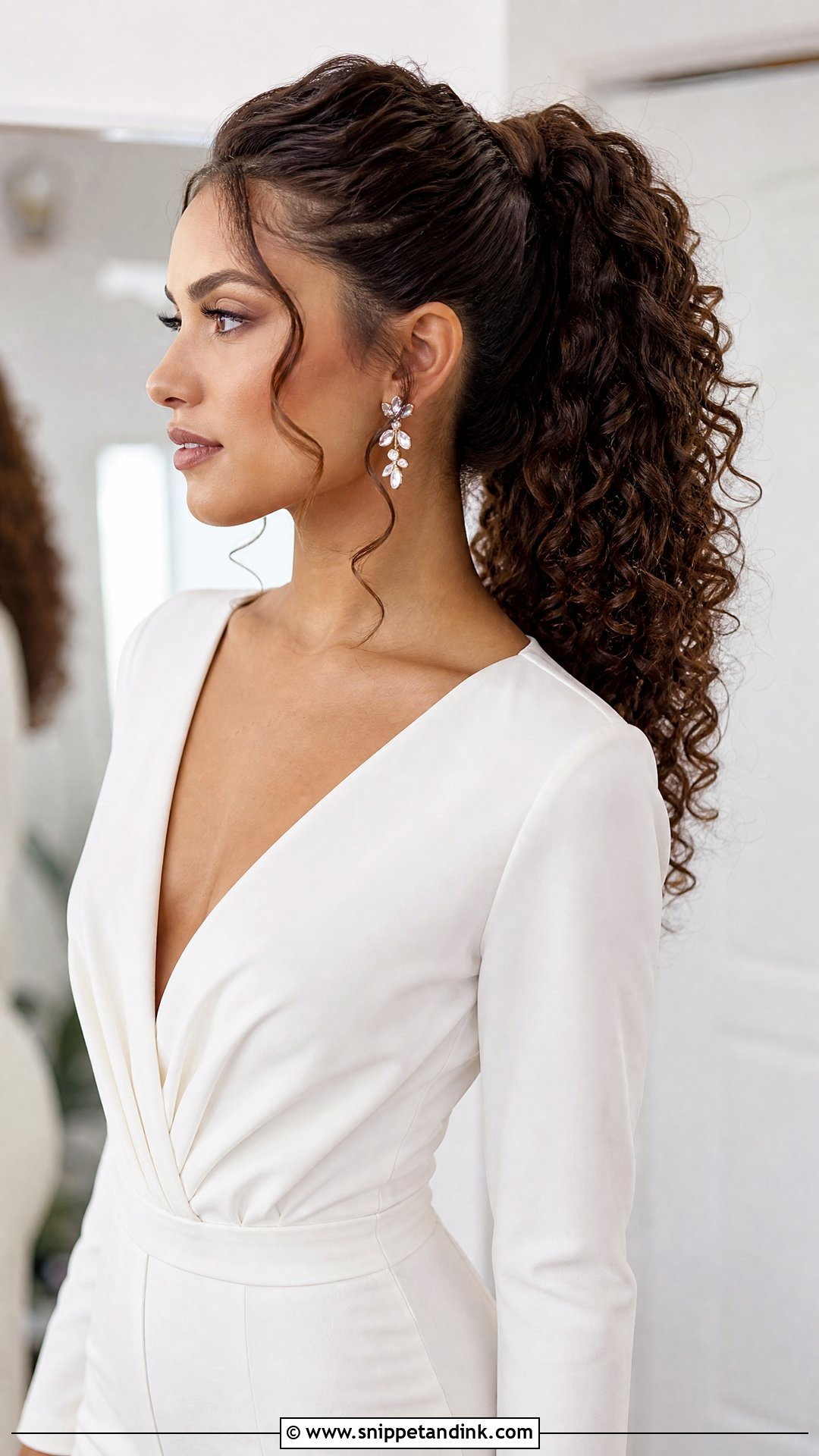
The ponytail is the most comfortable style on this list, and dancing brides tend to thank me for it later. Height changes the mood: high is bold, mid-height is balanced, low is softer. I wrap a section of hair around the base to hide the elastic, then set two pins through the wrap into the ponytail itself so it doesn’t unwind. With the hair pulled back, statement earrings get space, and the curls still give fullness from behind.
6. Natural Curly Bridal Hair Down
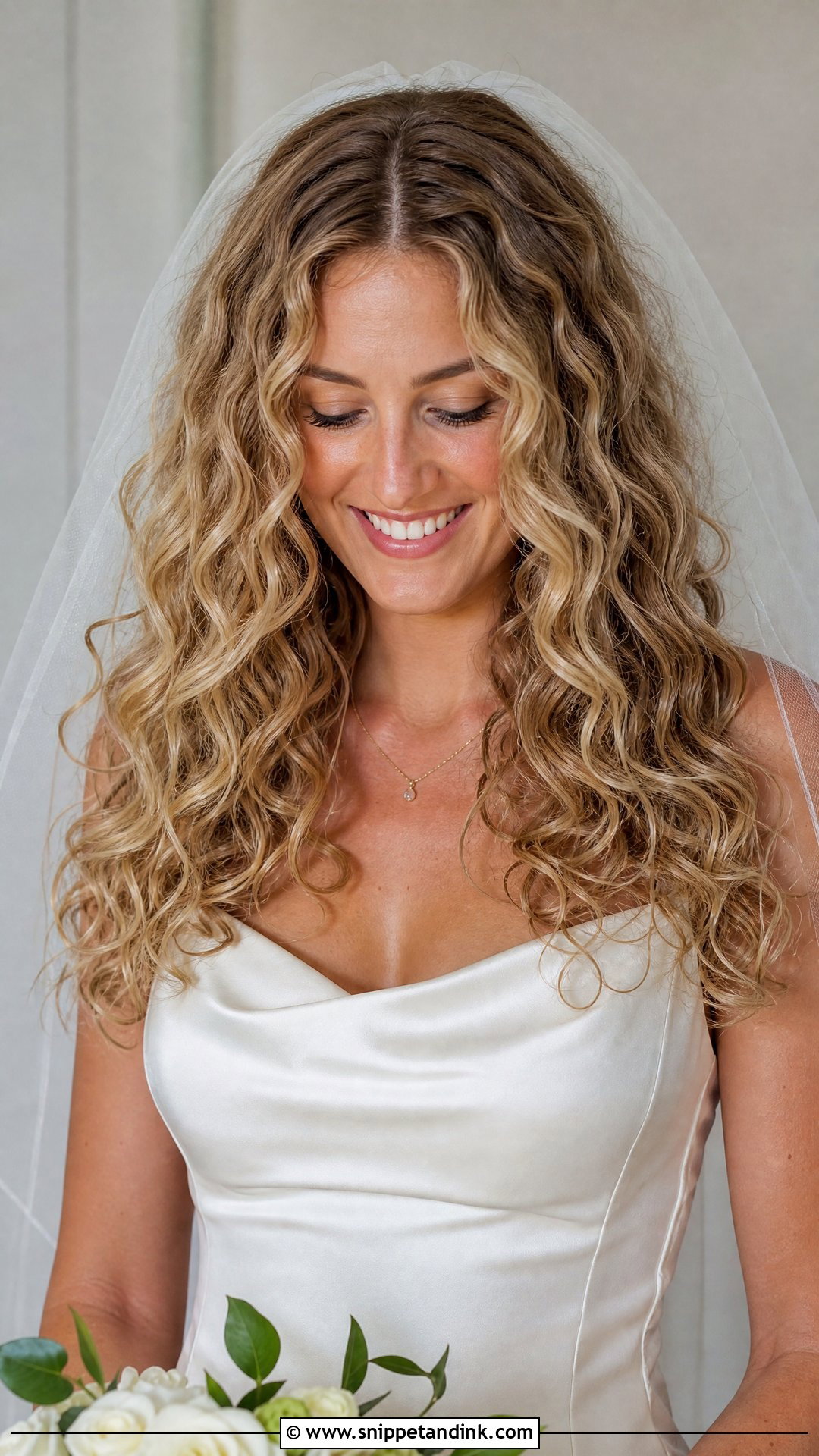
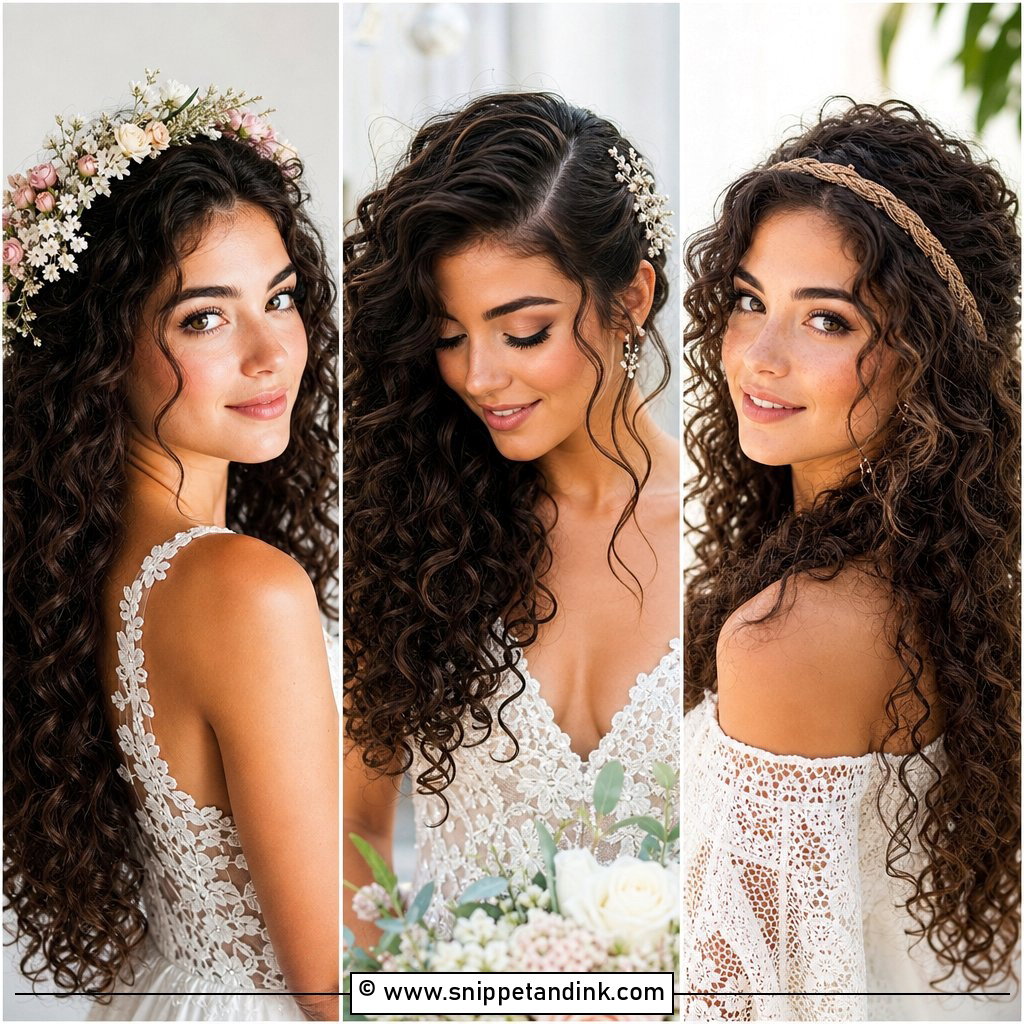
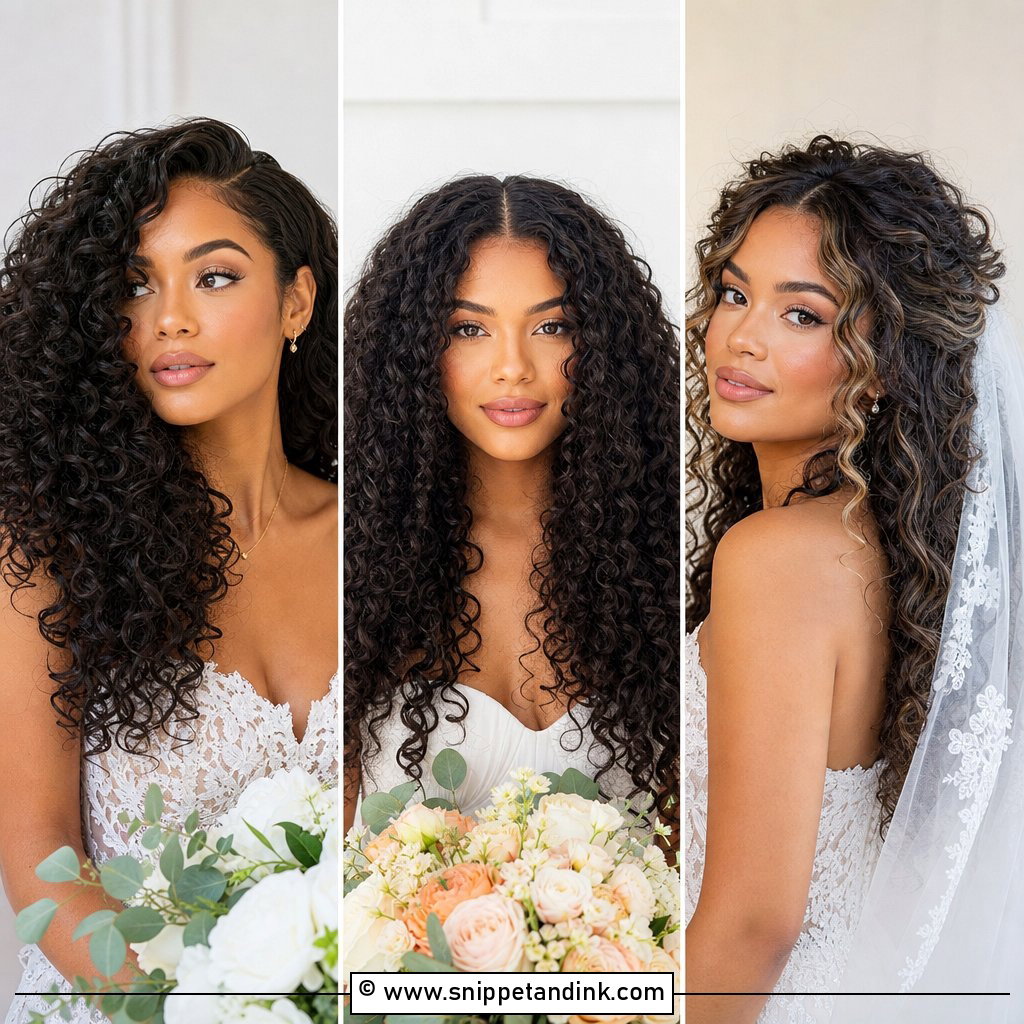
Wearing curls fully down asks the most of the preparation and the least of the pins. What I check first is the haircut, because loose curls on a heavy, one-length cut drop and widen at the bottom by the afternoon. A good set with light hold and a deliberate part does most of the work. Then a veil, a few small clips or one side comb adds the bridal detail. Honest warning: in high humidity, fully down is the least predictable choice.
7. Natural Curly Bridal Side Part
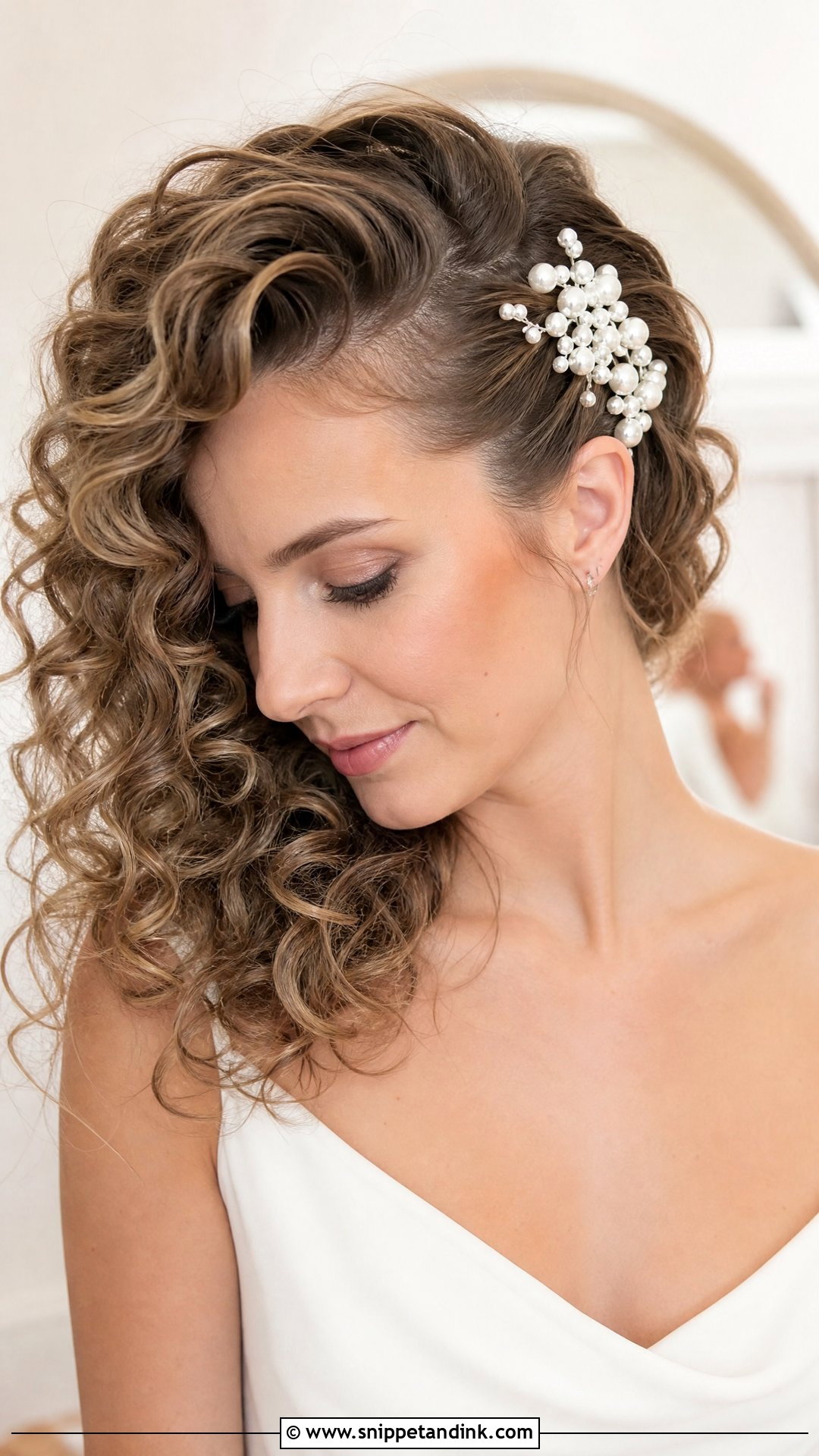
A deep side part gives instant lift at the crown and sends the curls sweeping across one side, which adds shape without an updo. I set the part with a little curl cream or gel at the root while the hair is damp, because trying to move a part on dry curls only frizzes it. It flatters most face shapes thanks to the asymmetry. Worn down, half-up or pinned to one side with a comb, the finish should stay smooth at the root and full through the ends.
8. Natural Curly Bridal Side Swept Hair
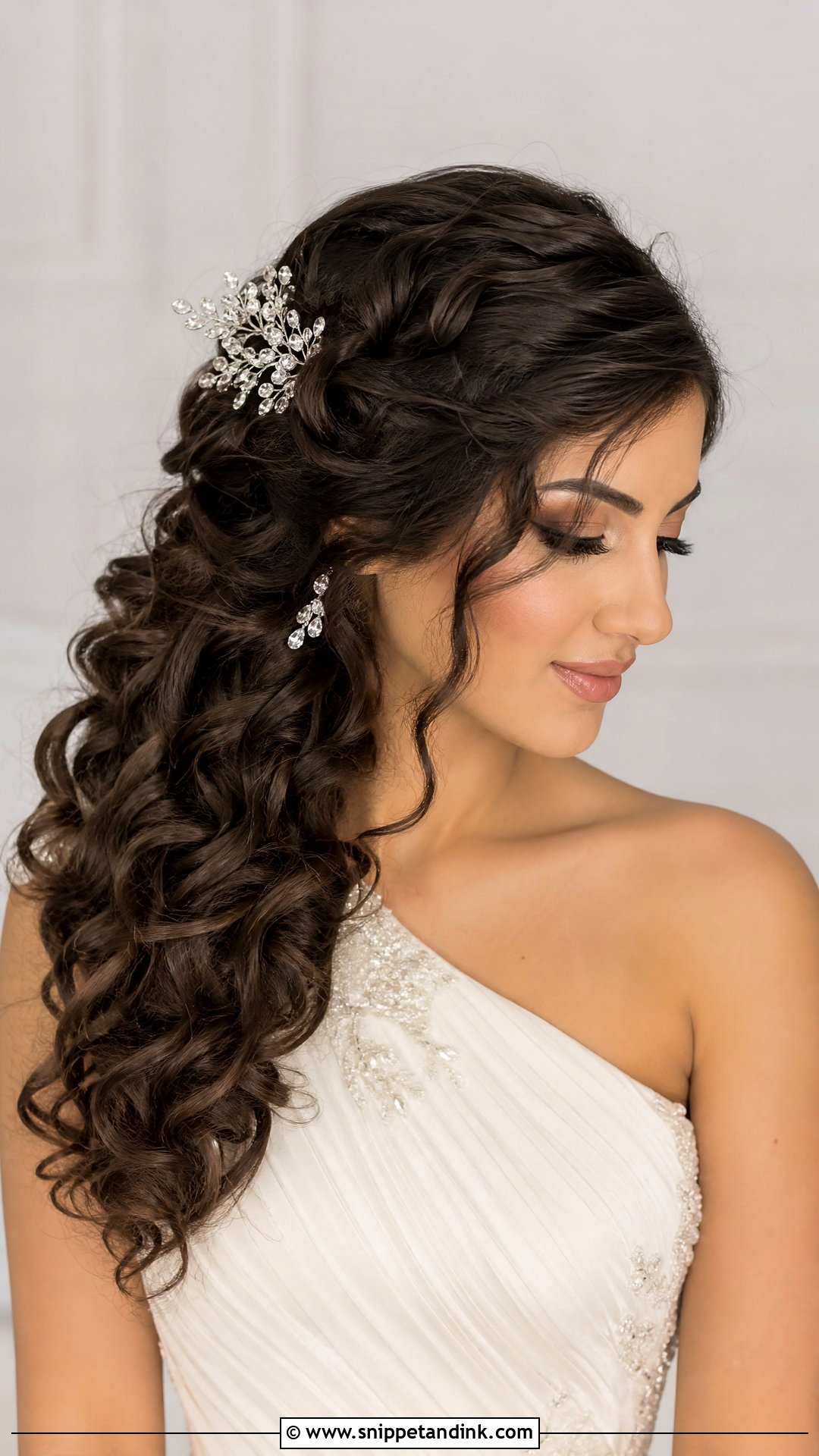
Sweeping the curls over one shoulder needs a hidden foundation on the opposite side, or the hair slowly migrates back by the first dance. I build a row of crossed pins behind the ear and pin the curls over it, then cover the pins with a comb or a few small flowers. One-shoulder and off-the-shoulder gowns suit this best, with the veil placed low at the back. The curls come forward, so definition matters more here than anywhere else.
9. Natural Curly Bridal Crown Braid
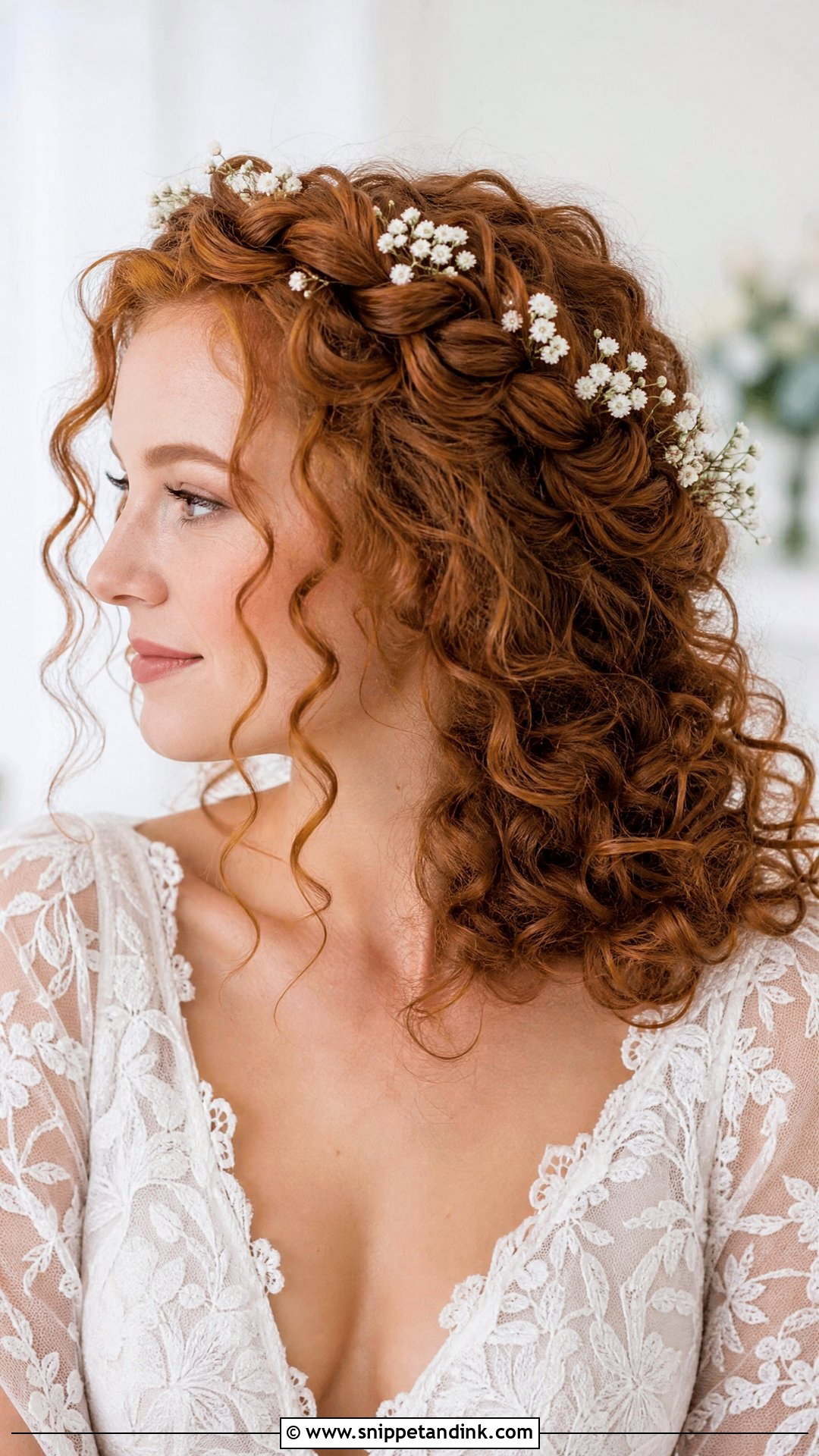
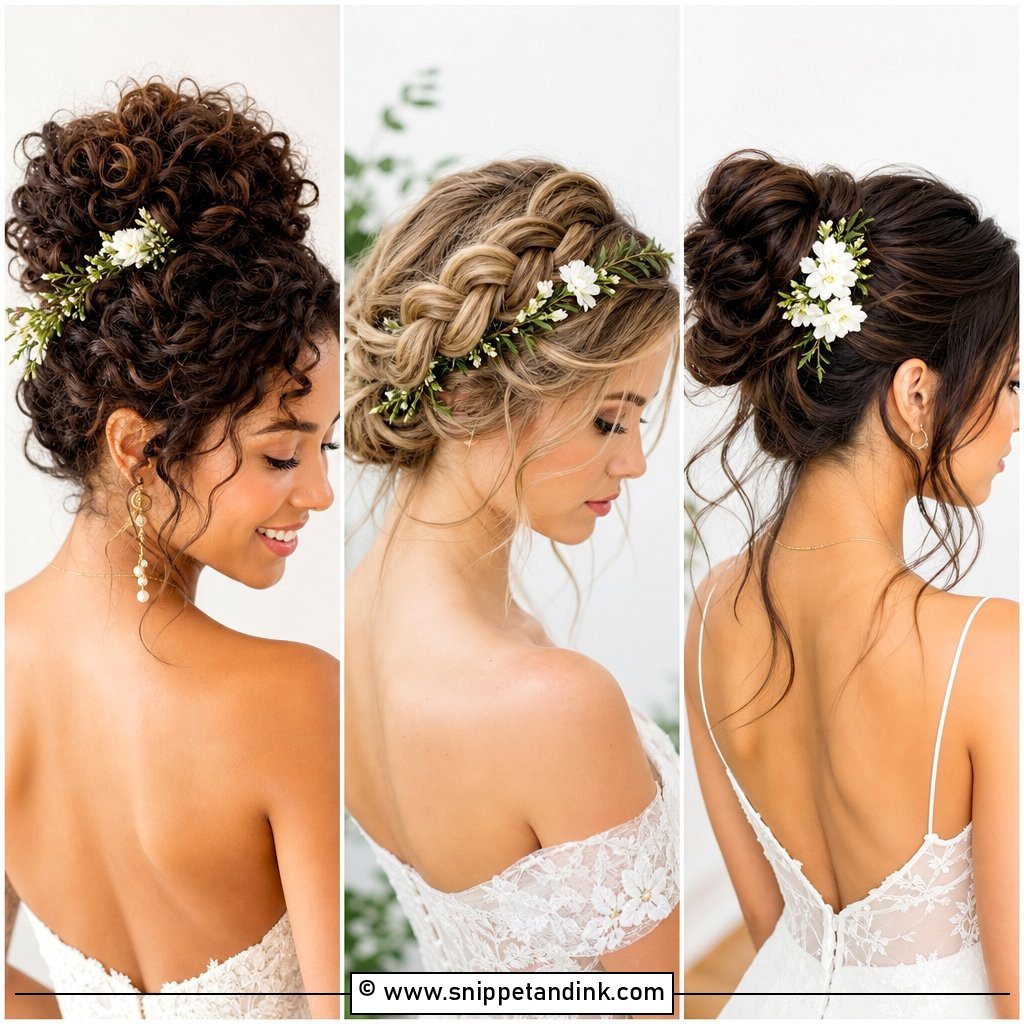
A crown braid keeps curls controlled around the face while the rest stays loose, pinned low or gathered into a textured bun. On curly hair I braid with the texture slightly stretched, then pancake the braid gently so it blends instead of looking like a separate rope laid on top. It can wrap across the front, around the sides or sit as a halo. Garden and rustic weddings suit it, and it gives detail without needing sparkle.
10. Natural Curly Bridal Afro
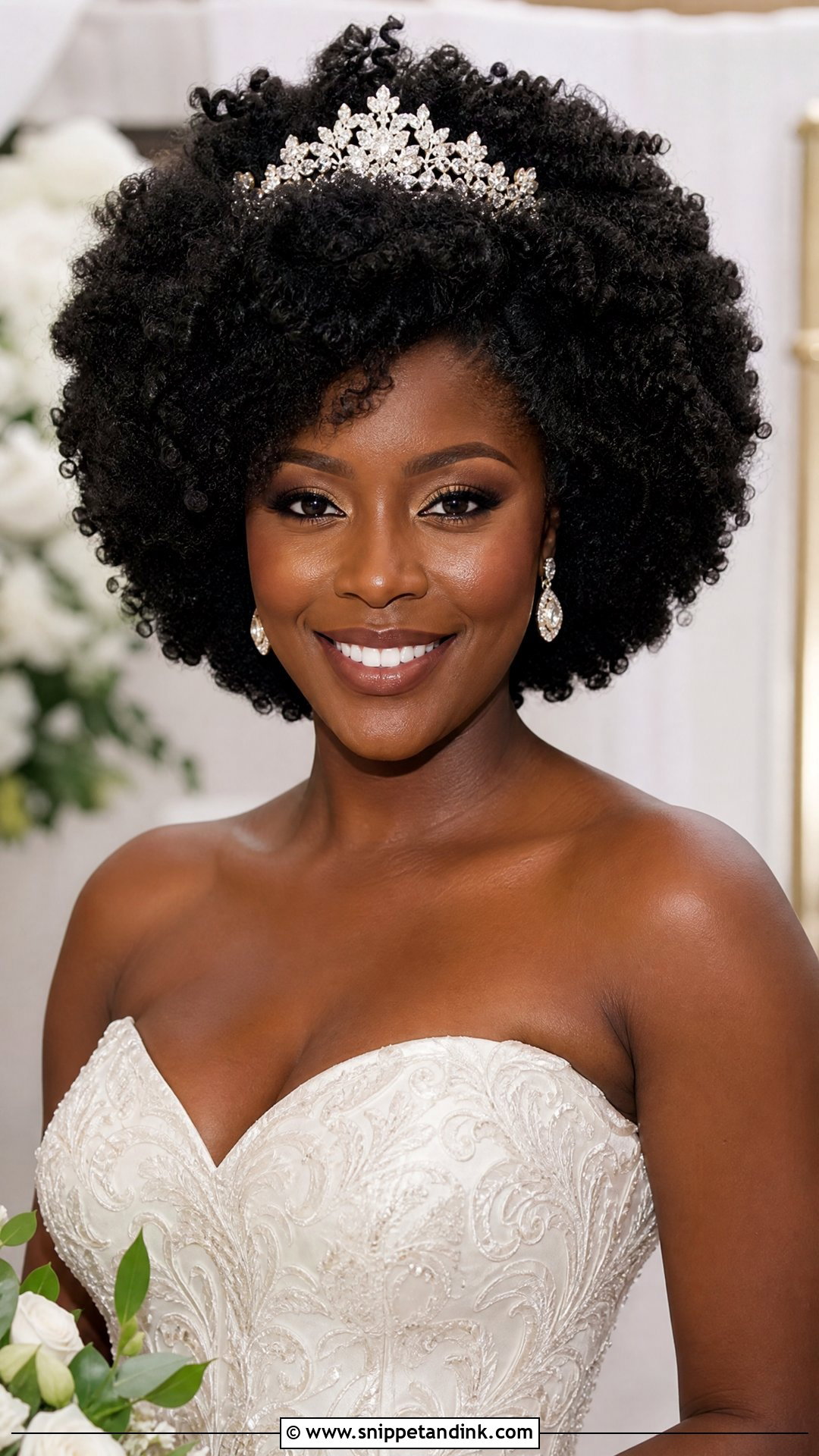
A natural curly bridal afro has real presence, and shaping it is a cutting decision first. I want the shape trimmed or tapered a couple of weeks ahead so the silhouette is balanced, then on the day I hydrate, define and pick it out until the outline is even from every side. A veil sits at the back, and a tiara or pearl pins frame the top. Keep the finish airy, since an afro that’s been weighed down with product loses the shape that makes it so strong in pictures.
11. Natural Curly Bridal Puff
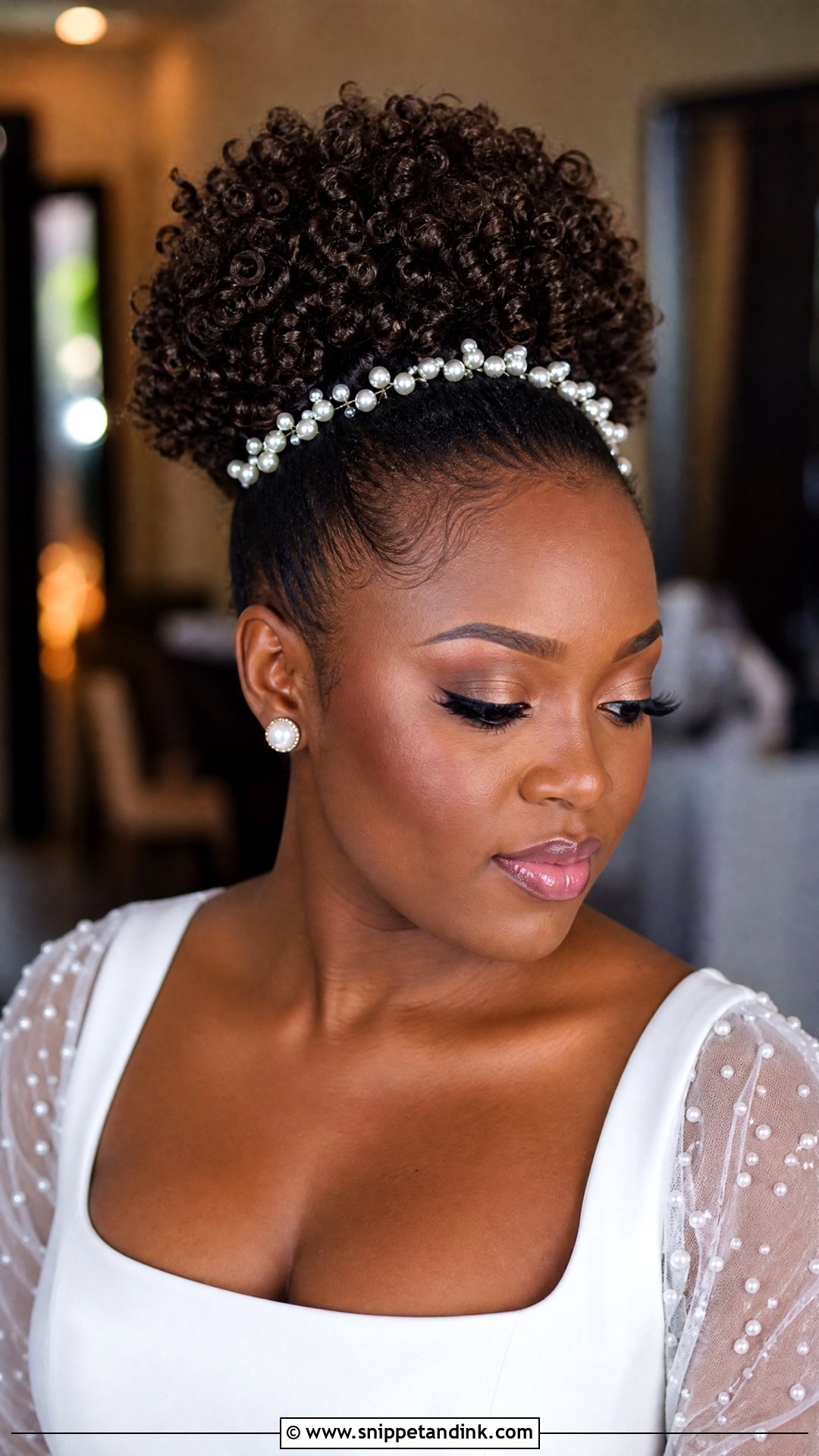
The puff gathers the curls upward into a round, full shape and keeps the face clear, which is why I like it for warm weather. The base can be sleek or softly gathered. I use a wide fabric band or a stretched elastic rather than a thin one, because thin elastics snap or cut into dense hair over a long day. A veil goes behind the puff, or a line of pearl pins along the front.
12. Natural Curly Bridal Twist Out
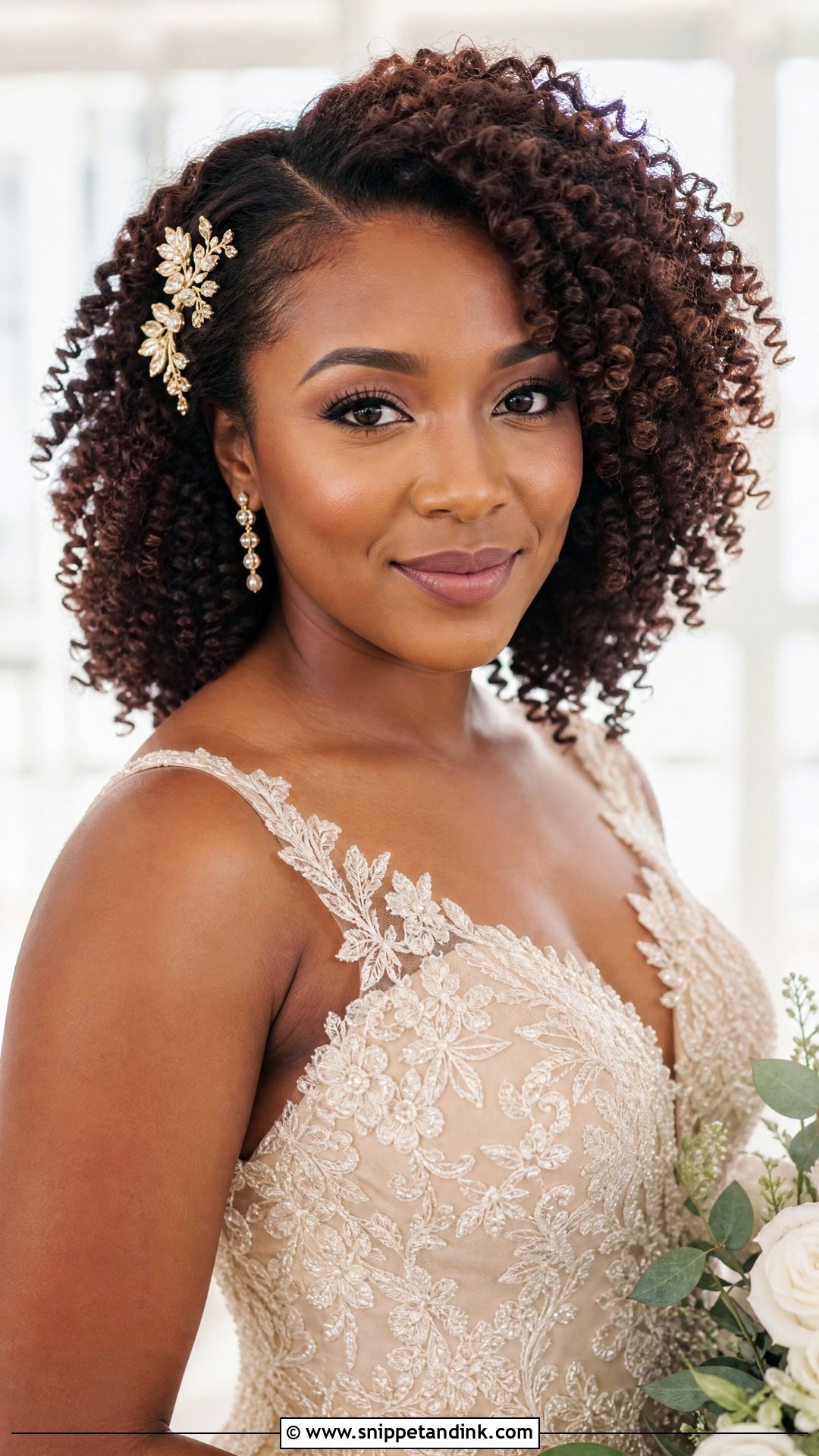
A twist out stretches the curls and makes them fuller and more uniform than a wash-and-go, so it suits brides who want their hair down with more control. Timing is the catch: the twists need to dry completely, ideally overnight, and unravelling damp twists gives frizz instead of definition. Separate less for crisp curls, or fluff a little for a fuller outline. It sits nicely on shoulder-length to long hair with a center or side part, a floral comb or a veil.
13. Natural Curly Bridal Bantu Knot Out
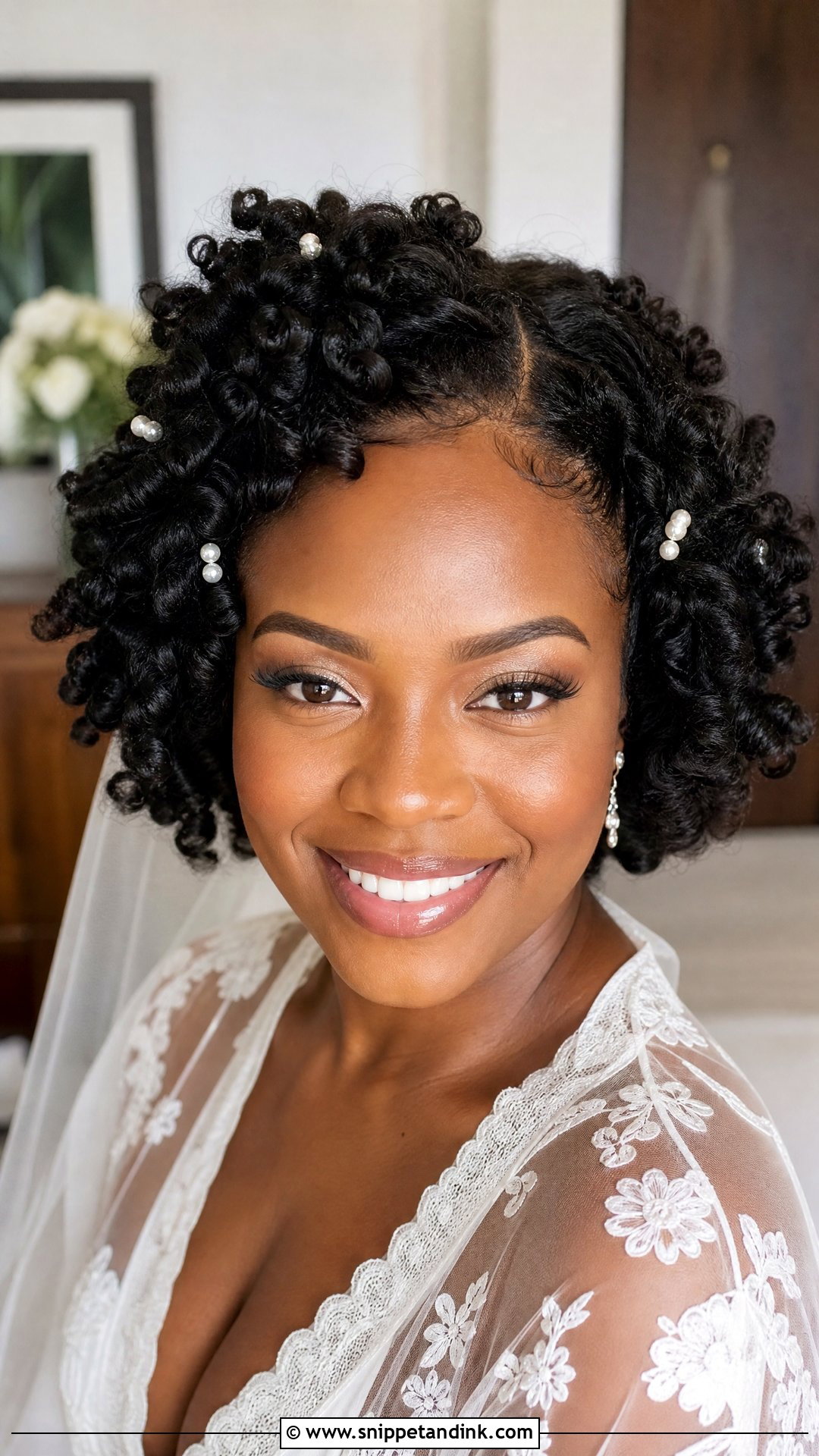
A natural curly bridal Bantu knot out gives springy, sculpted curls without heat. The size of each knot sets the size of the curl, so I map smaller knots around the face and crown where the camera looks first and larger ones at the back. Like a twist out, the knots must be fully dry before they come down. Wear it loose, swept to one side or pinned into a soft updo, with a hair vine or a few pearl pins.
14. Natural Curly Bridal Wash And Go
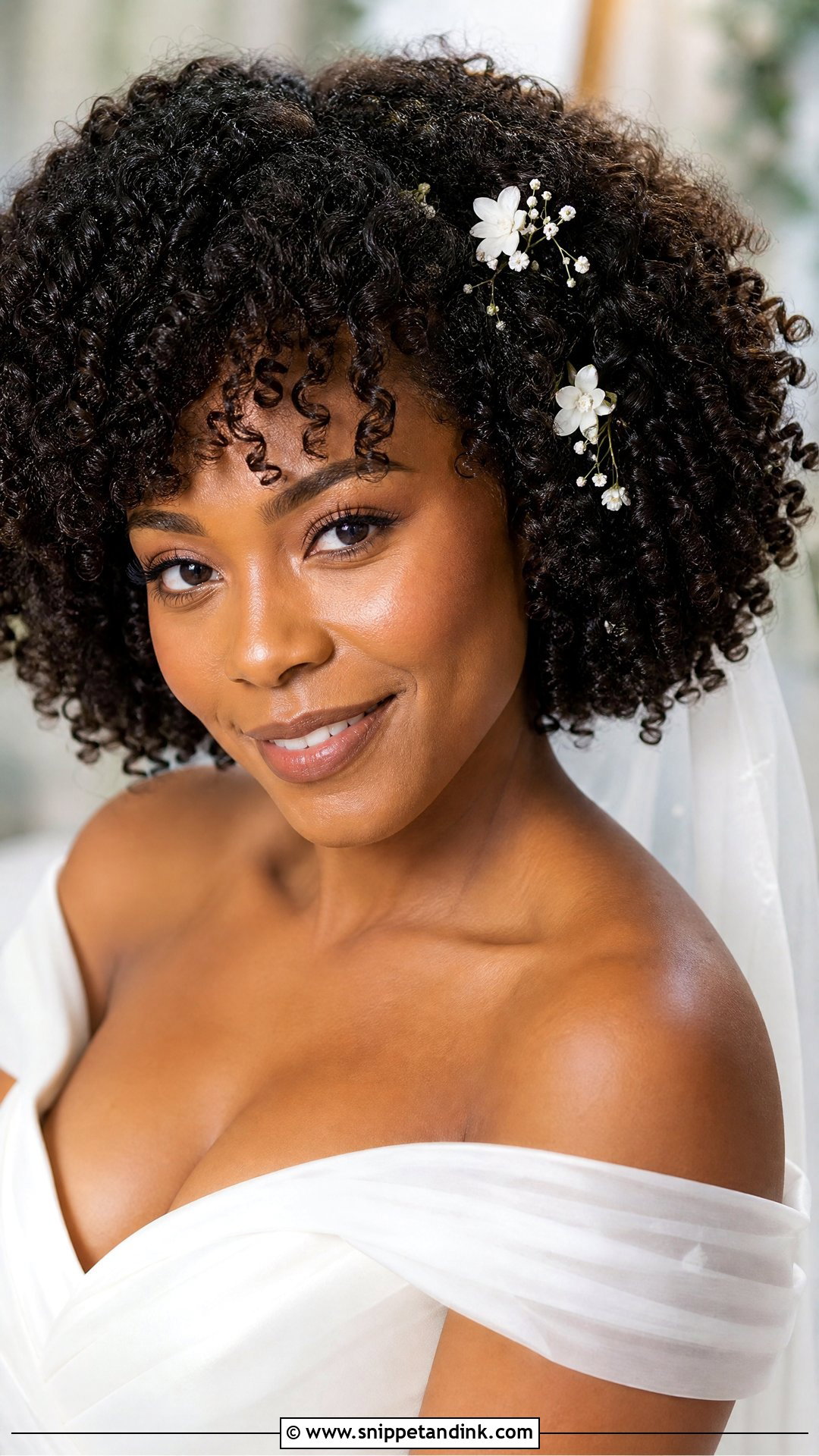
A natural curly bridal wash and go is your everyday pattern done with more care, and for many brides that’s the point. The difference is in the drying. Curls have to be hydrated, defined and left fully dry before I touch them, because shaping damp curls breaks the clumps apart. Once dry, I lift and place sections so the overall silhouette is balanced. Finish with a veil, flower pins or a slim headband, and you still look like the person your partner sees every morning.
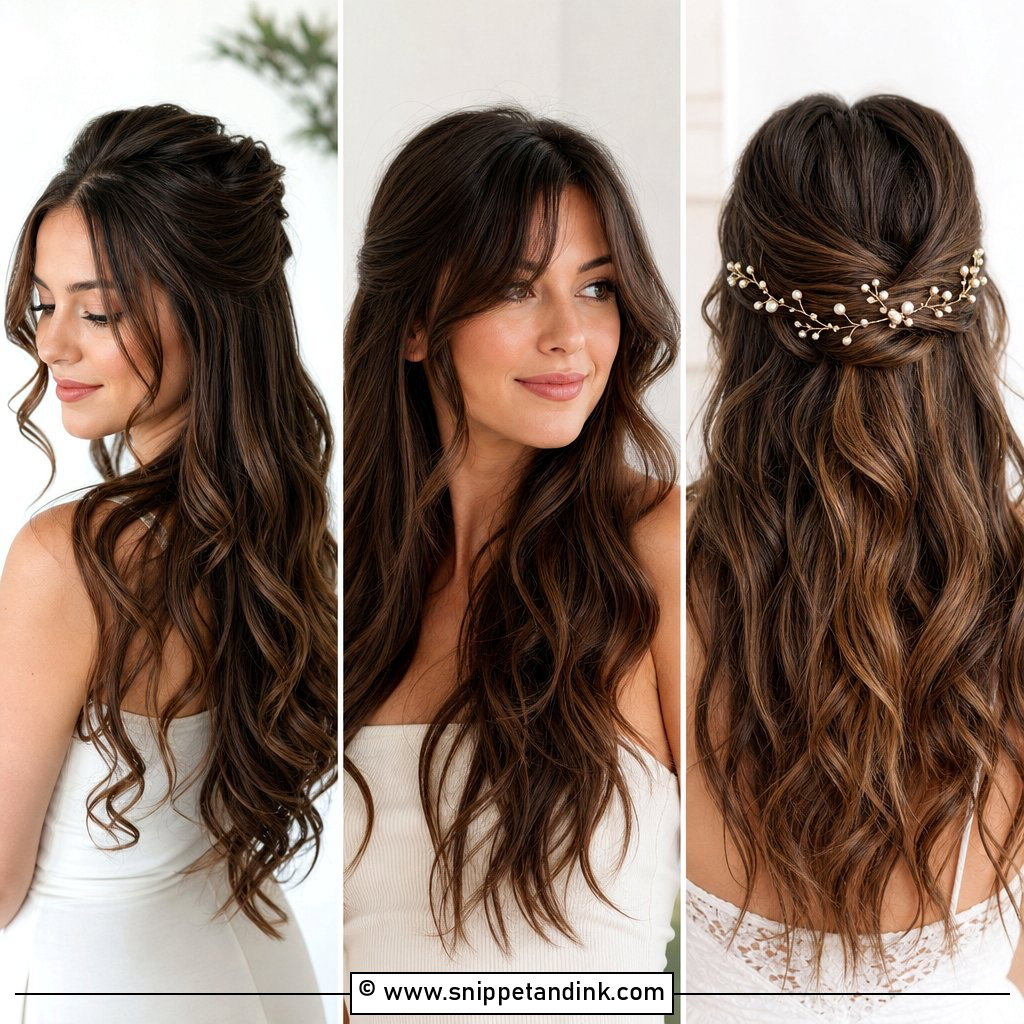
15. Natural Curly Bridal Tapered Cut
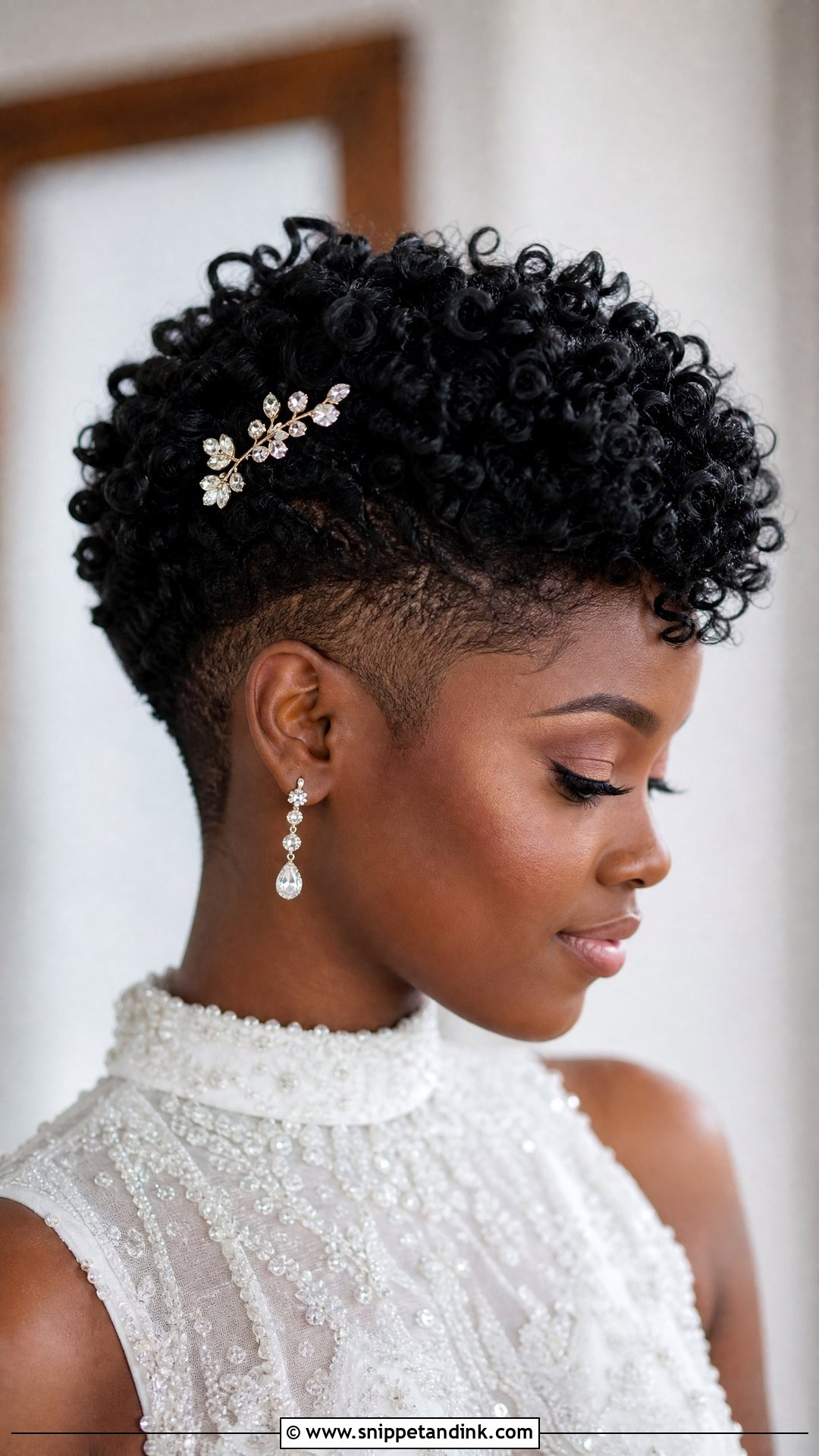
A natural curly bridal tapered cut lets the haircut do most of the styling. Shorter sides or back give structure and the fuller top carries softness and height. I book the cut about one to two weeks before the wedding, so the edges are fresh but not raw. On the day it’s mostly shine and definition, plus a small tiara, jeweled clip or veil comb at the crown. Statement earrings and strong necklines look sharp next to it.
16. Natural Curly Bridal Bob
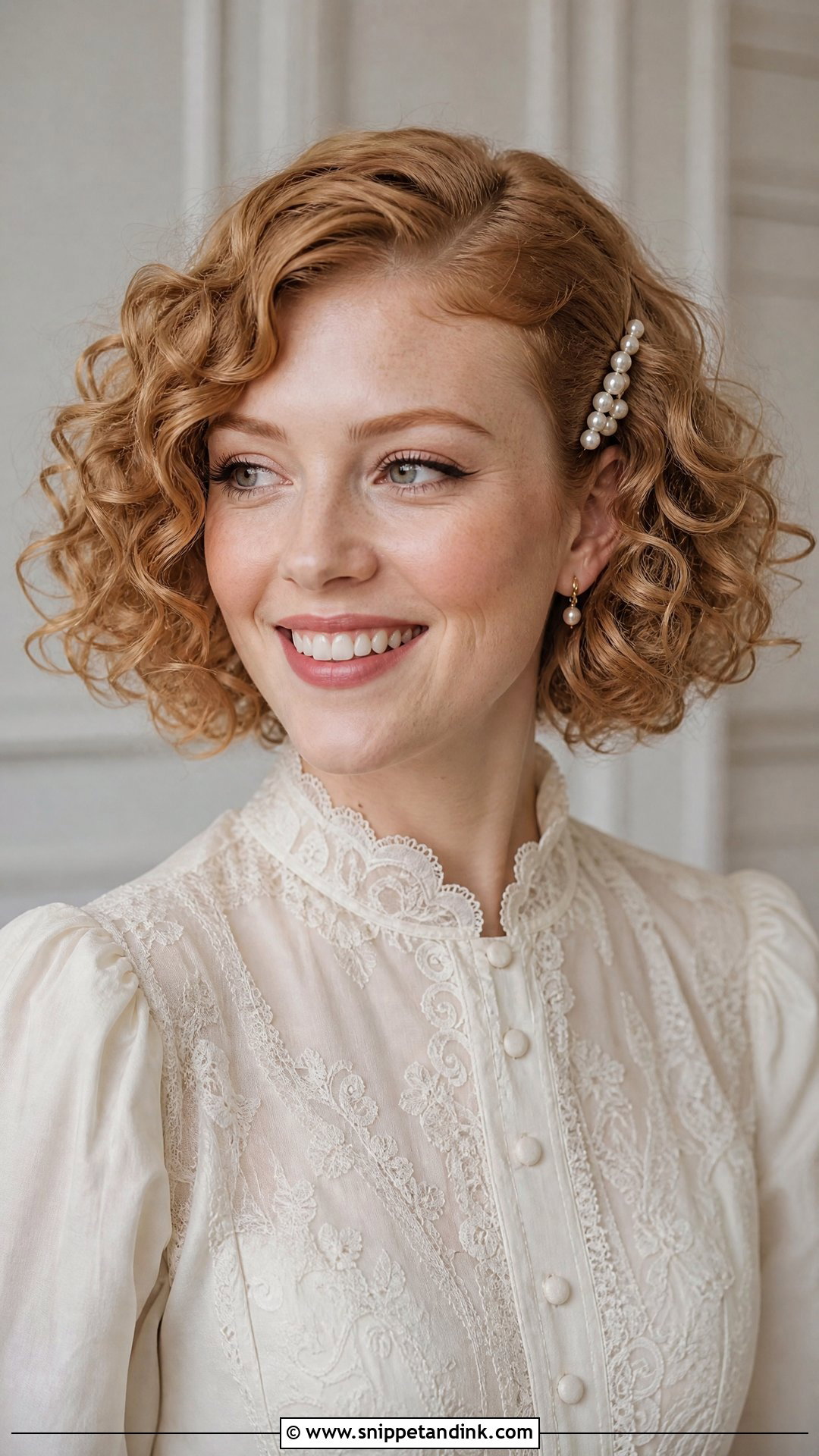
A curly bob can sit at the chin, at the jaw or just above the shoulders, and the cut decides how it frames the face. Curly bobs often grow into a triangle, wide at the bottom, so I ask whoever cuts it to remove weight from underneath rather than just taking length. Then a little crown volume and defined ends make it formal. Pearl clips, soft bangs or a short veil all suit it, and no extensions are needed.
17. Natural Curly Bridal Short Hair
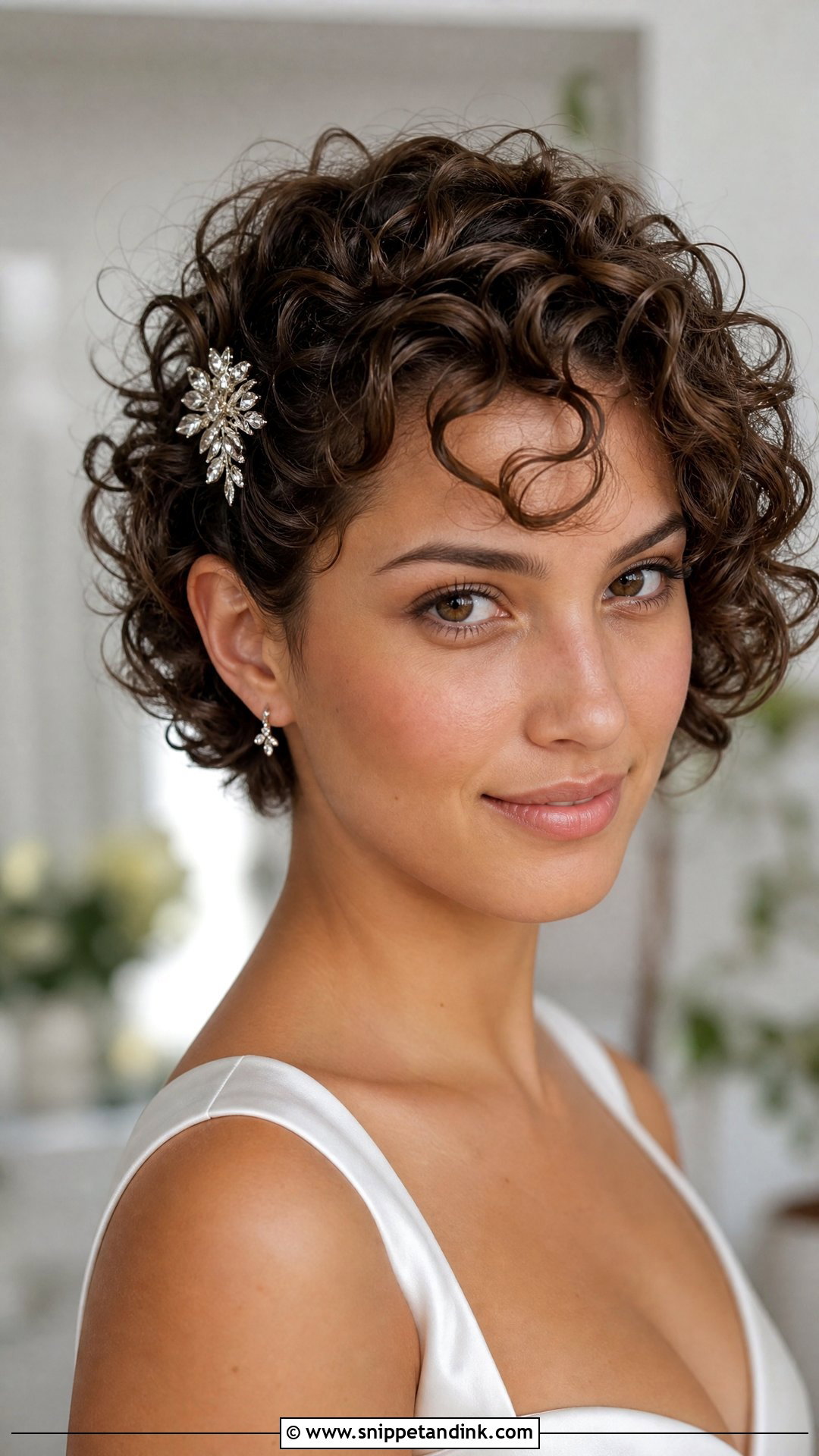
Short curls can be finger-defined, softly picked, side-parted or pinned with one small accessory, and they last all day better than almost anything else here. There’s simply less hair for gravity and humidity to pull on. I focus on shine and curl separation so the texture reads clearly on camera. A delicate headband, a mini veil or a sparkling clip adds the bridal note, and bold earrings or a lace neckline pair well with it.
18. Natural Curly Bridal Hair With Veil
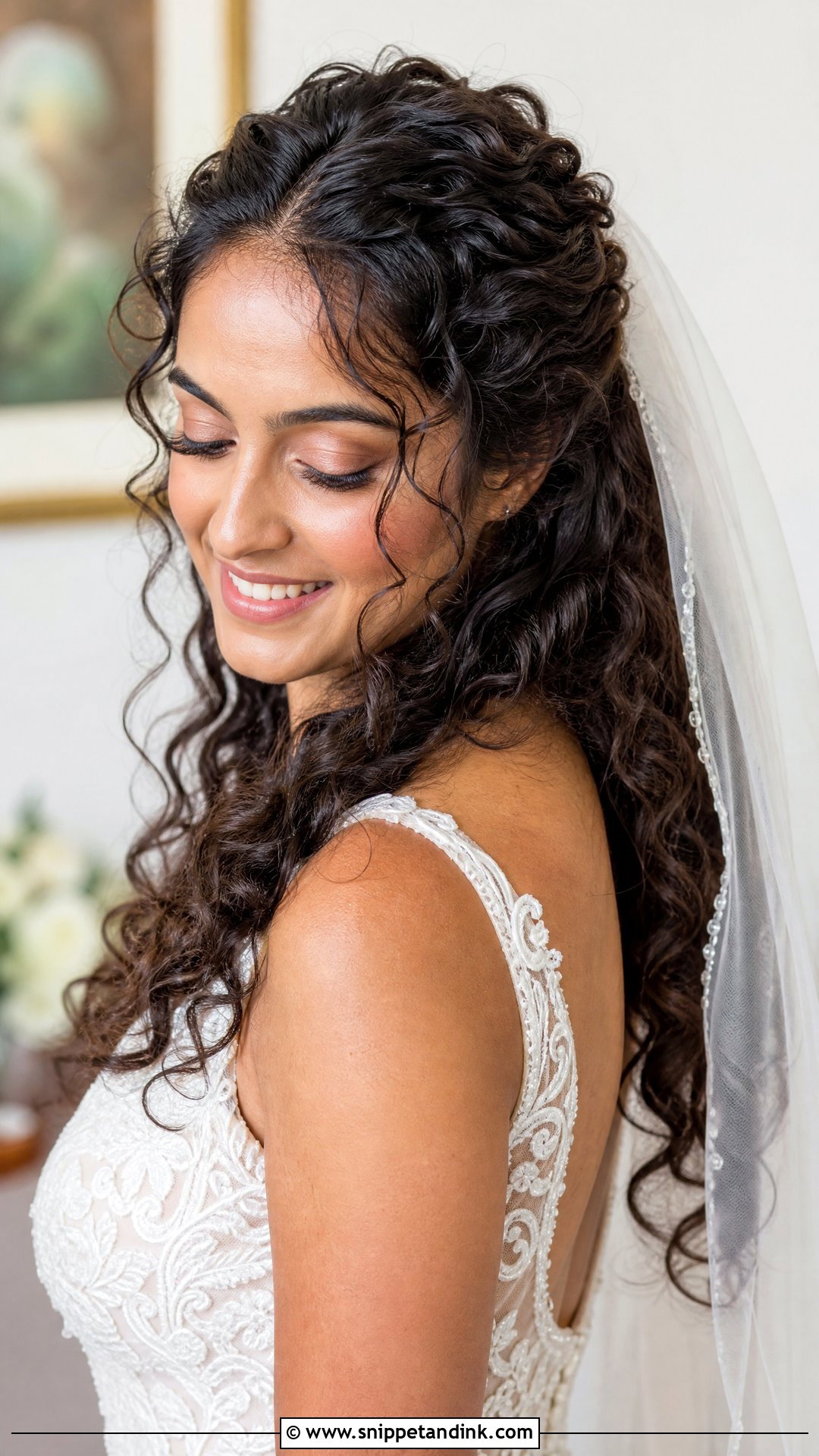
Veils are where curly hair needs the most planning. The comb can sit above a low bun, under a high puff, behind a half-up section or tucked into pinned curls, and the right spot depends on how dense your curls are and how heavy the veil is. Combs slide out of curls more easily than out of straight hair, so I build a small anchor of crossed pins first and slide the comb into it. That works for loose curls, tight curls, and coils alike. Bring the actual veil to the trial, not a stand-in.
19. Natural Curly Bridal Hair With Flowers
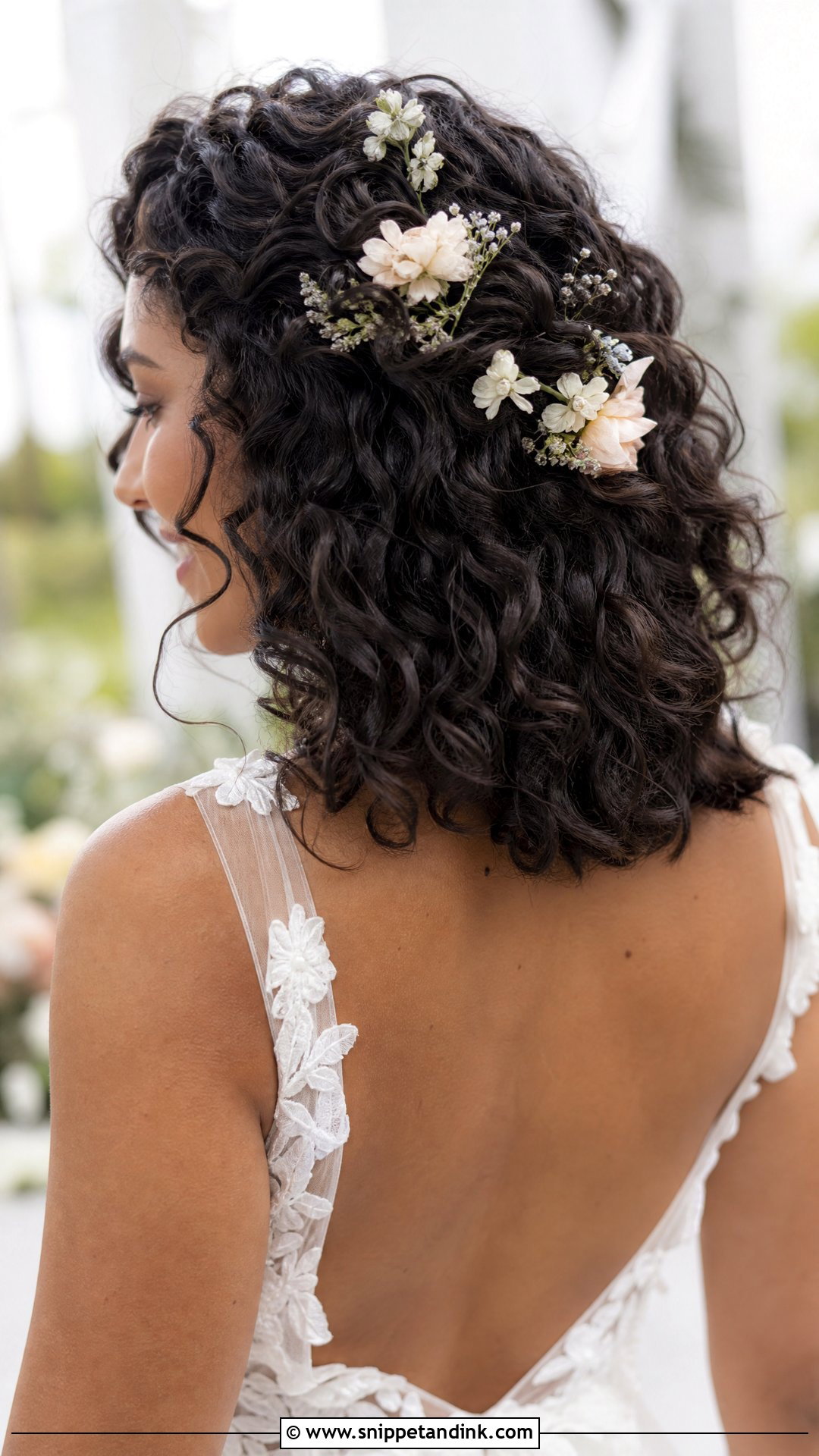
Fresh or faux flowers add color without taking over, tucked into a bun, a half-up style, a crown braid or loose curls. The practical limit is weight. A large single bloom drags in textured hair, so I prefer small clusters wired onto pins, placed to follow the shape of the style. Ask your florist for blooms that hold out of water for hours, since soft petals wilt fast against a warm scalp. White, blush, ivory and muted pastels sit naturally against curls.
20. Natural Curly Bridal Hair With Tiara
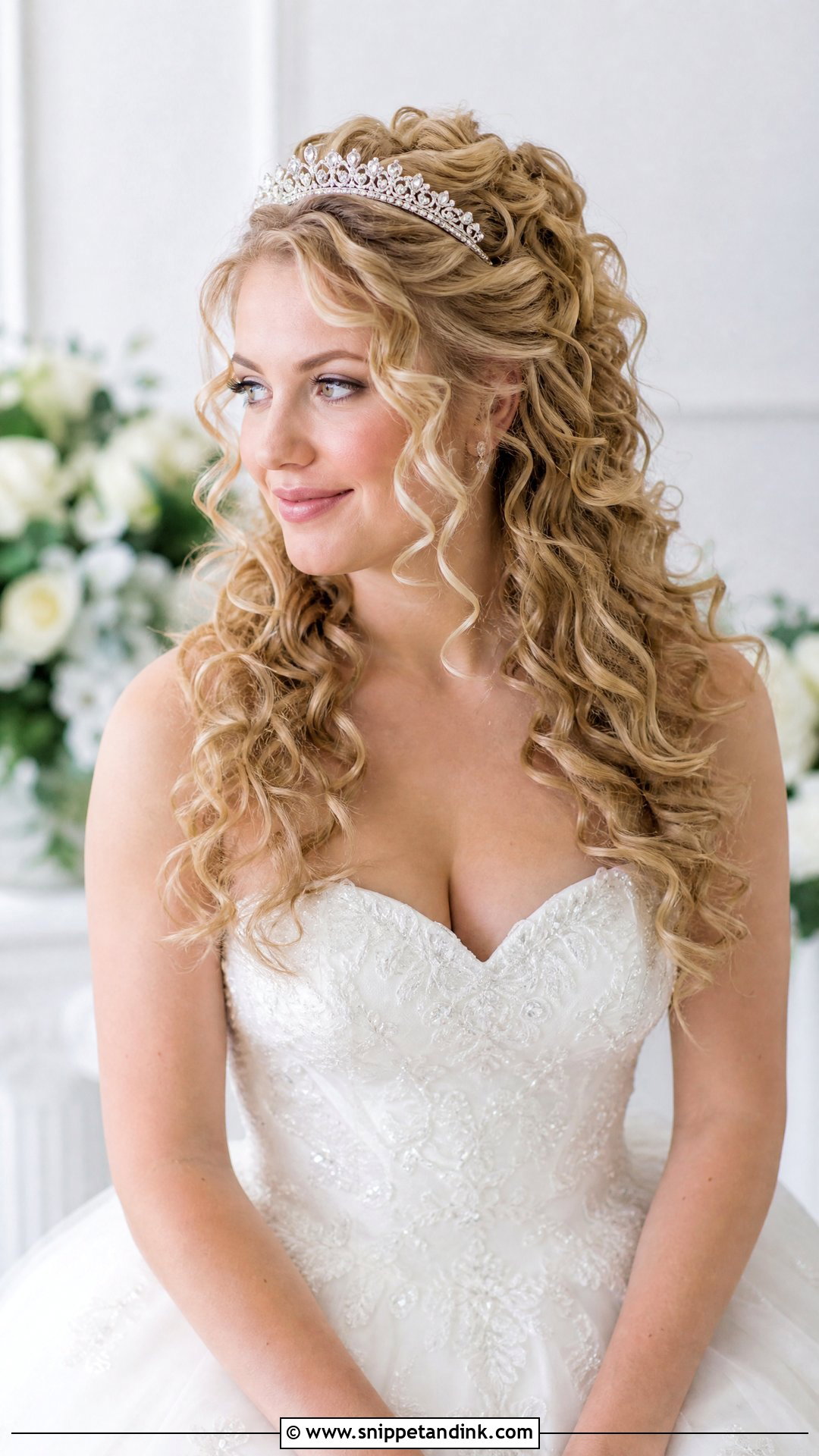
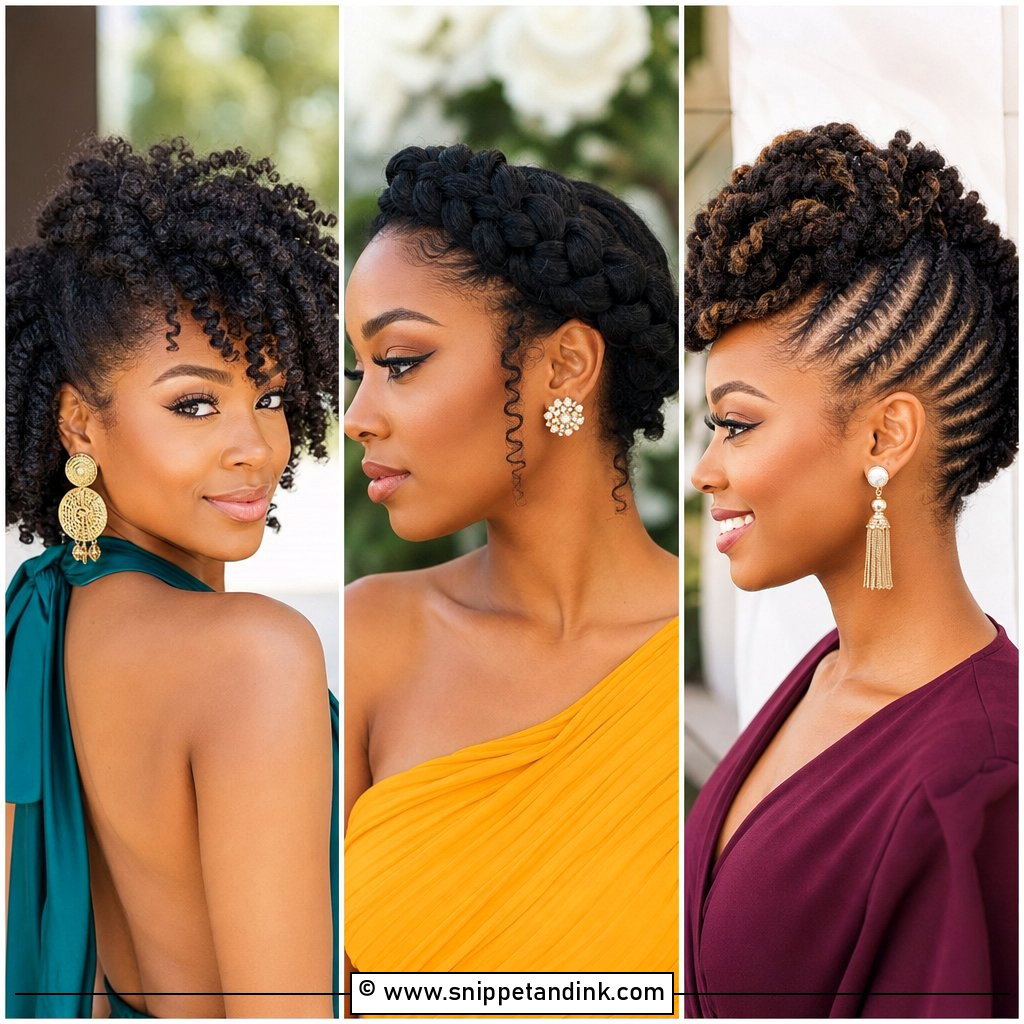
Natural curly bridal hair with a tiara works when the tiara follows the curl shape instead of fighting it. It can sit above a defined afro, in front of a high bun, over loose curls or at the crown of a half-up style. A delicate band suits fuller curls, while a taller tiara stands out on longer hair. I sew or pin the tiara’s end loops into small braids hidden underneath, because curls give a tiara comb very little to grip. Keep curls soft around the face so the metal doesn’t look stiff.
A Curly Bride’s Countdown From the Last Trim to the Ceremony
Most of the wedding-day result is decided in the weeks before. Here is the schedule I give curly clients, and it works for nearly every style above.
- Eight to twelve weeks out: book the trial, and wear the style for a whole afternoon afterwards. Note when it starts to drop or puff.
- Six weeks out: stop any big color or chemical change. A new color can alter how curls clump and how much they frizz.
- One to two weeks out: the final trim or shape-up, so ends are clean without looking freshly cut.
- Two or three days out: a deep conditioning treatment, then leave the hair alone. Avoid testing new products this week.
- The night before: wash, define and set, whether that means twists, knots or a plain wash-and-go, then sleep on a silk or satin pillowcase or in a bonnet.
- The morning: arrive with fully dry hair unless your stylist asked otherwise, and wear a button-up top so nothing gets pulled over the finished hair.
Shrinkage, Humidity and the Small Kit That Rescues a Curly Set
Curls change as the day goes on. Moisture in the air makes them swell and lose definition, while a dry, air-conditioned hall can leave them looking crunchy where the gel sits. Neither means the style failed. It just needs a light touch-up around the face before the evening photos.
Hand your maid of honor a small bag with a spray bottle of water mixed with a little leave-in, a pick, a few matching bobby pins and a satin scarf for any car ride. A quick mist and a gentle scrunch revives curls far better than adding more gel, which tends to flake by night. And if a section goes flat, pinning it up into the style is nearly always cleaner than trying to recurl it.
Your Curl Pattern Is Already Half the Hairstyle
None of these is a single fixed look. The right one depends on your curl pattern, your cut, the neckline, the veil and the weather on the day. A trial tells you more than any photo, because it shows how your curls actually behave after four or five hours, so wear it home and watch it. Bring pictures of curls that match your real texture, not wand curls. And pick the version that still feels like you when you catch yourself in a mirror at midnight.
You'll Like These Ideas:


Leave a Reply