
Down hair looks like the easy option, and it’s actually the one I prepare for most carefully. An updo is pinned in place; loose curls have to survive hugs, wind, a veil and ten or more hours of you moving around. Done well, though, it’s the style brides feel most like themselves in. The ideas below cover the range, from glossy Hollywood shapes and beachy waves to half-up looks with braids, flowers and pearls. For each one I’ve added what I actually do in the chair to make it last, and who I’d gently steer toward something else.
Will Your Hair Actually Hold a Curl All Day?
This is the first question I ask at every consultation for down hair, and most brides don’t know the answer. Hair that’s very fine, freshly conditioned or very straight tends to drop curls within a few hours. Thick, coarse or naturally wavy hair holds them longer, though it can puff in humidity. A simple test: curl your hair one morning a few weeks before, go about your day and look at it at dinner. That’s roughly what you’ll see in your reception photos.
If the curls fall flat, it doesn’t rule you out. It just changes the plan.
- Fine hair: ask about clip-in extensions for weight and volume, and lean toward half-up so the top section is pinned.
- Silky, straight hair: wash the night before and skip heavy conditioner at the roots, so the hair has grip.
- Humid or outdoor weddings: choose a style with structure, such as pinned waves or a half-up base, over loose tousled curls.
- Very thick hair: allow extra time in the chair, as each section takes longer to curl and cool.
Also consider your dress. A low or detailed back can disappear under long hair, so either sweep it over one shoulder or bring part of it up. A high neckline and lots of loose hair can feel crowded.
1. Hollywood Glamour Waves
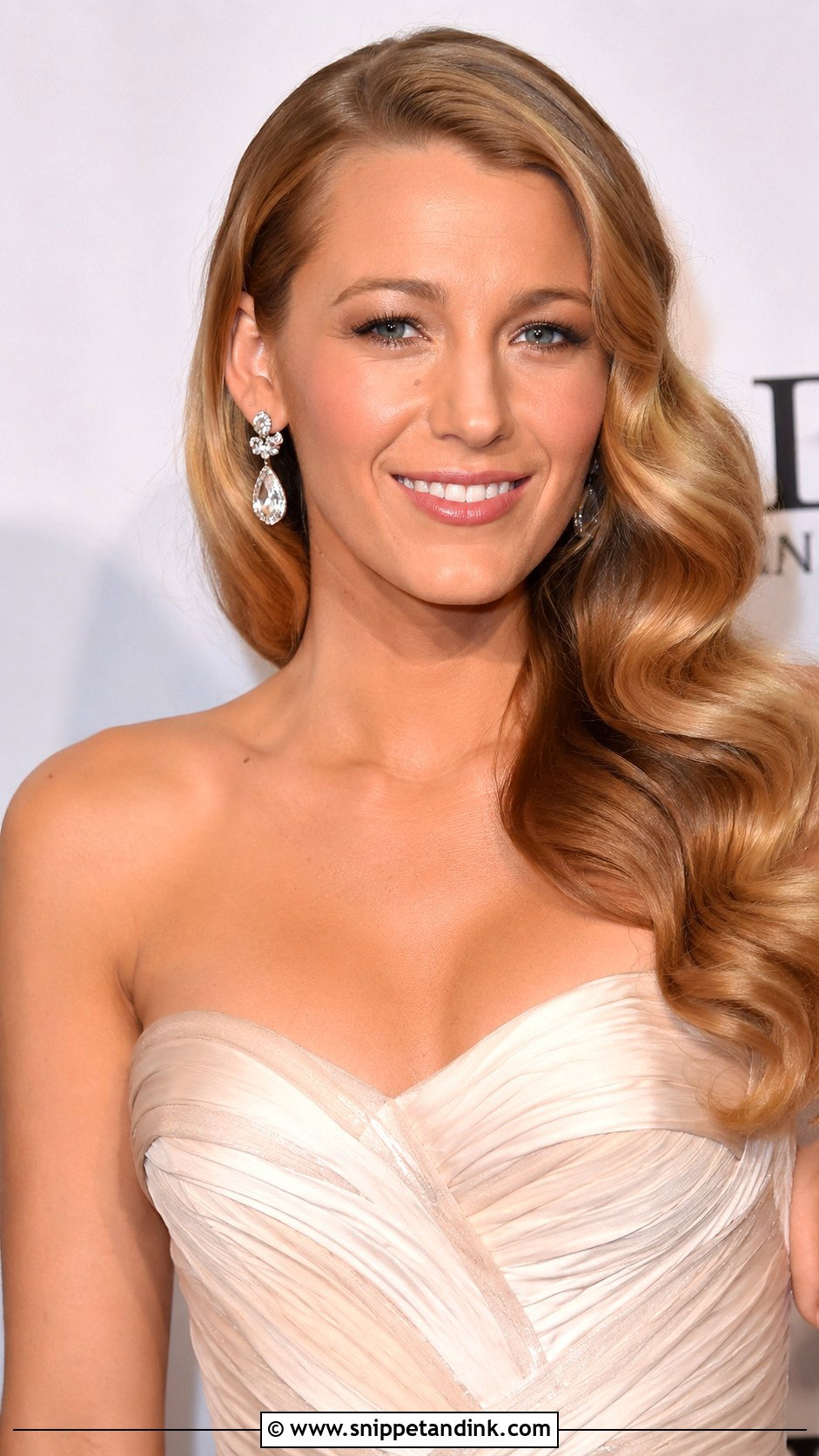
These are the most demanding waves on the list, and the most rewarding. I set every section in a pin curl, let them cool fully, then brush them out into one continuous S-shape and press the ridges in with clips while the spray dries. That cooling time is what keeps the pattern from dropping. They need one shoulder to fall over, so they suit a strapless or sweetheart neckline best; a high neck crowds them. Statement earrings on the open side finish it. With a veil, I anchor the comb low behind the part so it doesn’t flatten the wave at the crown.
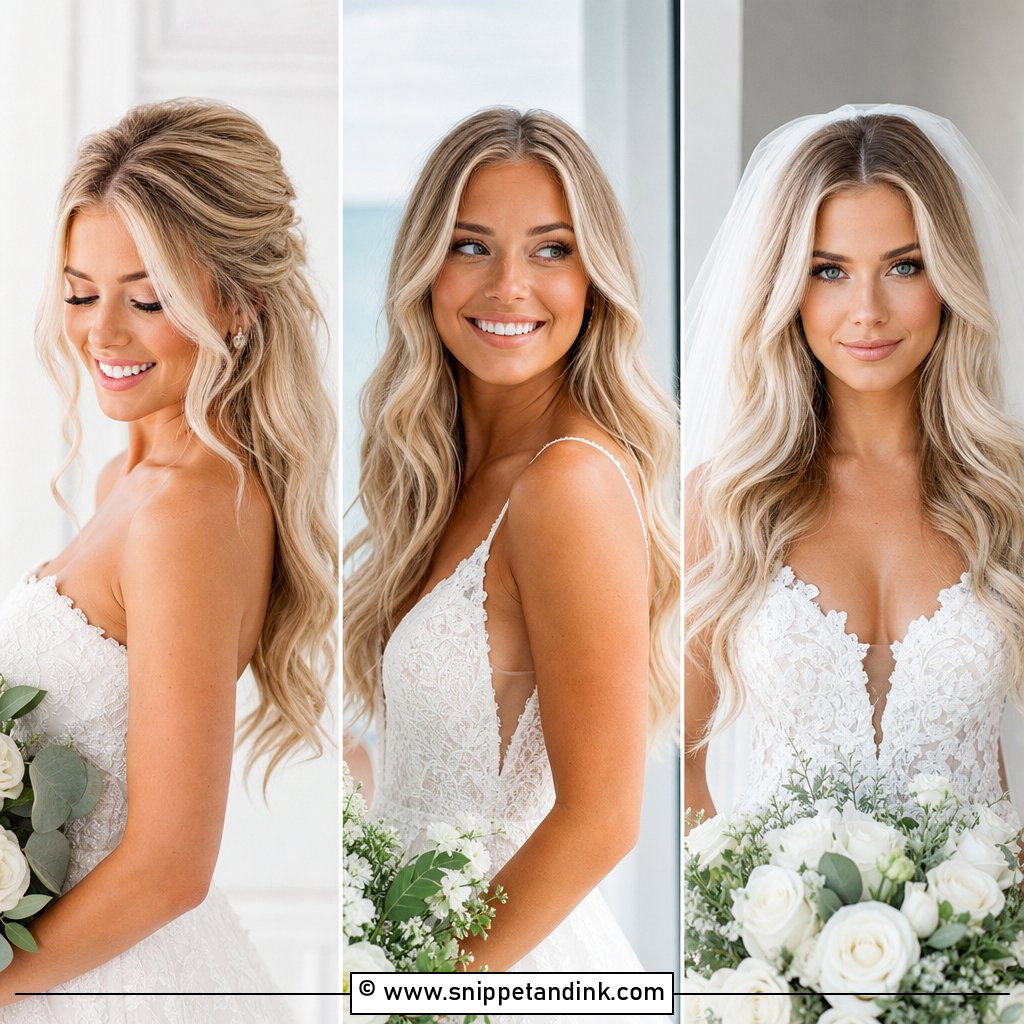
2. Cascading Loose Waves
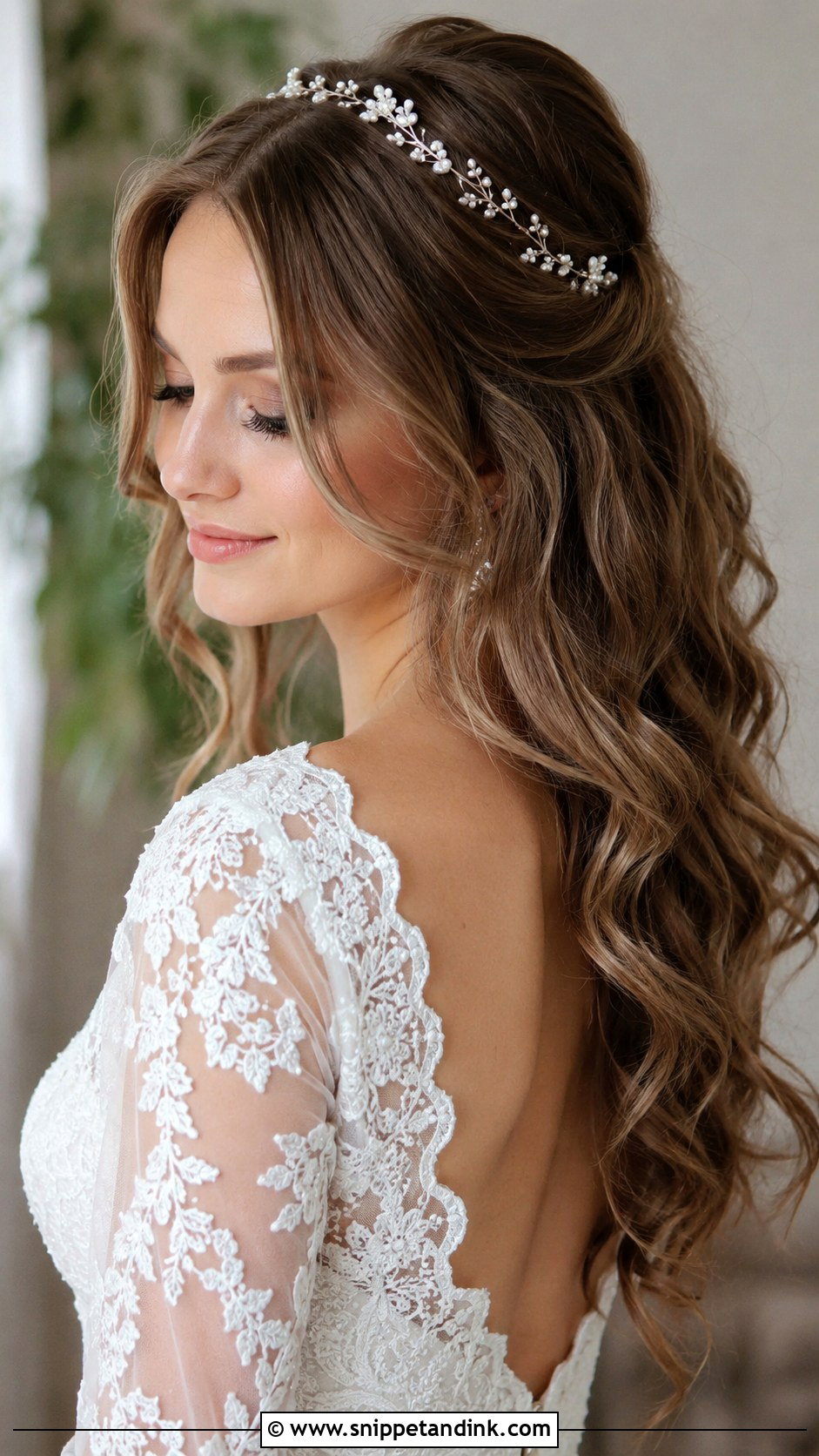
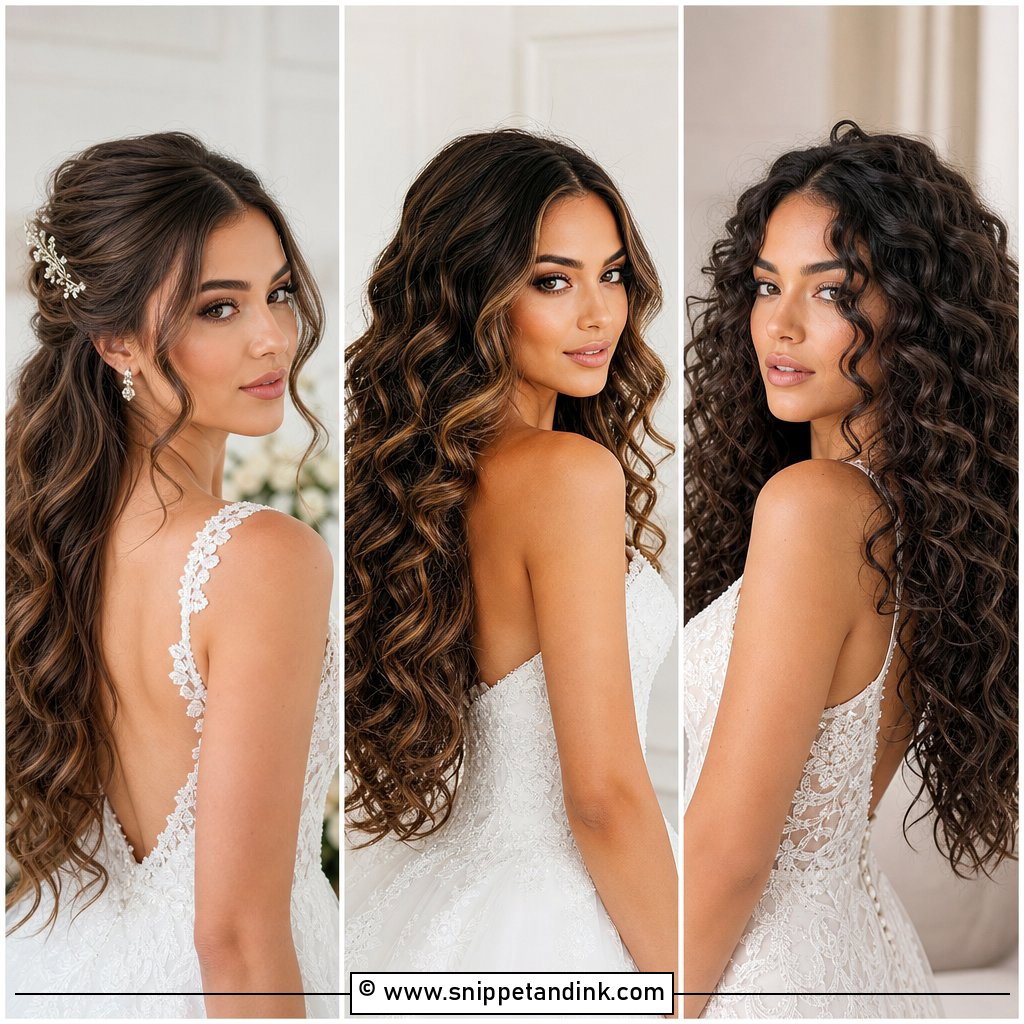
Loose waves are where I see the most disappointment, because they’re often curled too softly in the morning and gone straight by the speeches. I curl in small sections with a 1.25-inch iron, pin each curl to cool and only brush them out right before the dress goes on. Root lift comes from a volumizing product at the scalp while blow-drying, not teasing. Face-framing pieces get curled away from the face. If your hair holds a curl poorly, this is the style to test hardest at your trial.
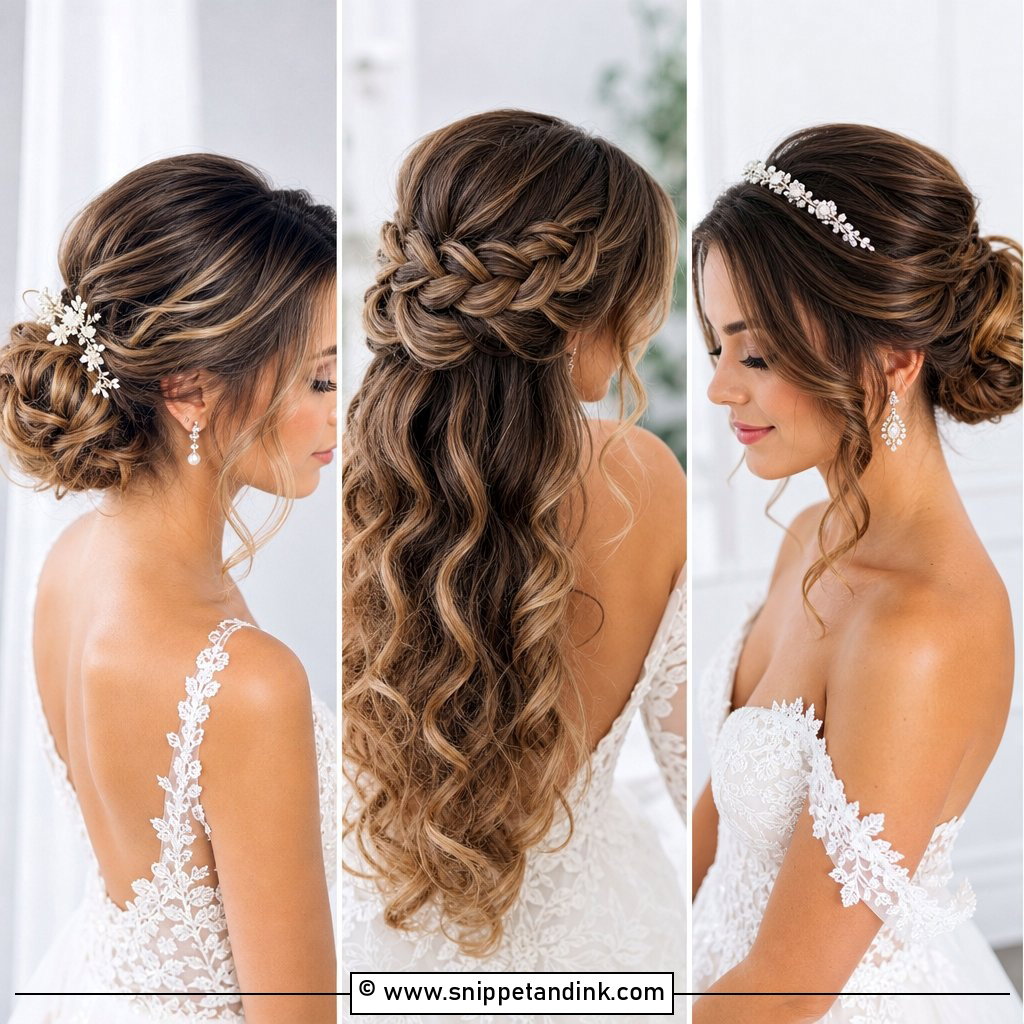
3. Half-Up Half-Down With Curls
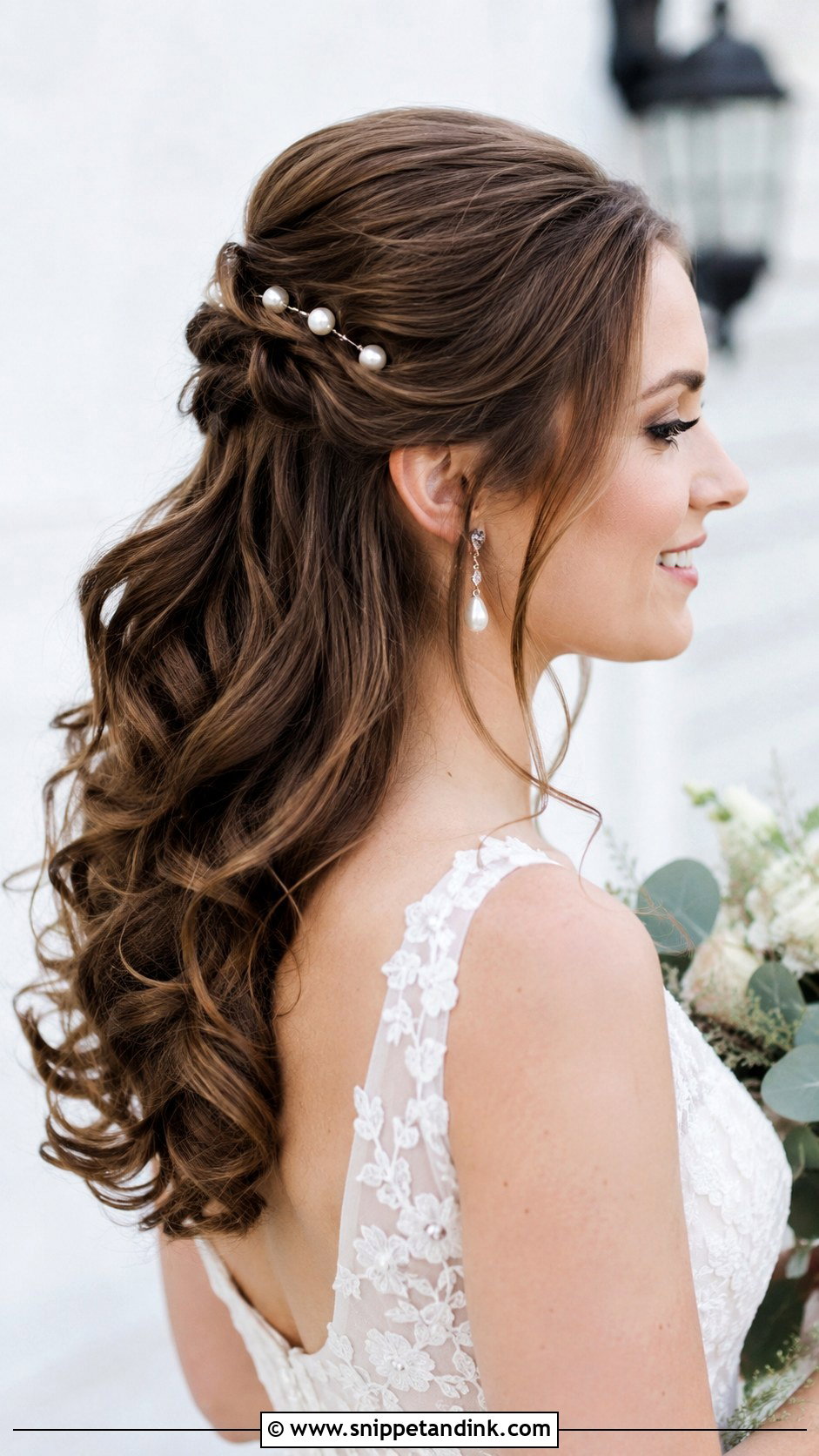
Half up half down suits more brides than any other shape I do, mainly because it solves the hair-in-the-face problem without hiding your length. I tease the top section lightly before pulling it back, so it doesn’t sit flat, and secure it with crisscrossed pins under a small elastic for grip. The lengths are curled and left loose. Pearl pins or a clip go over the join. It flatters most face shapes and it’s the easiest way to show off a back detail while keeping some hair down.
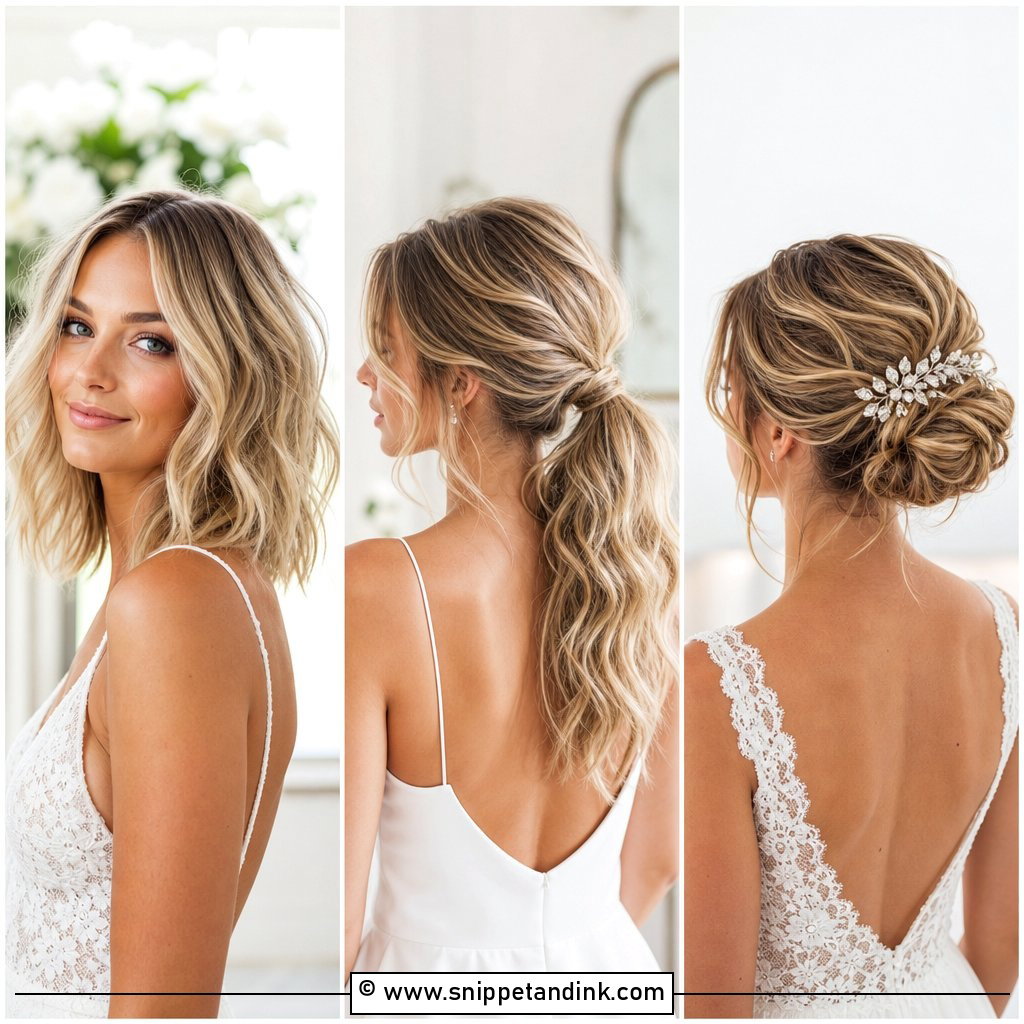
4. Beachy Waves With Balayage
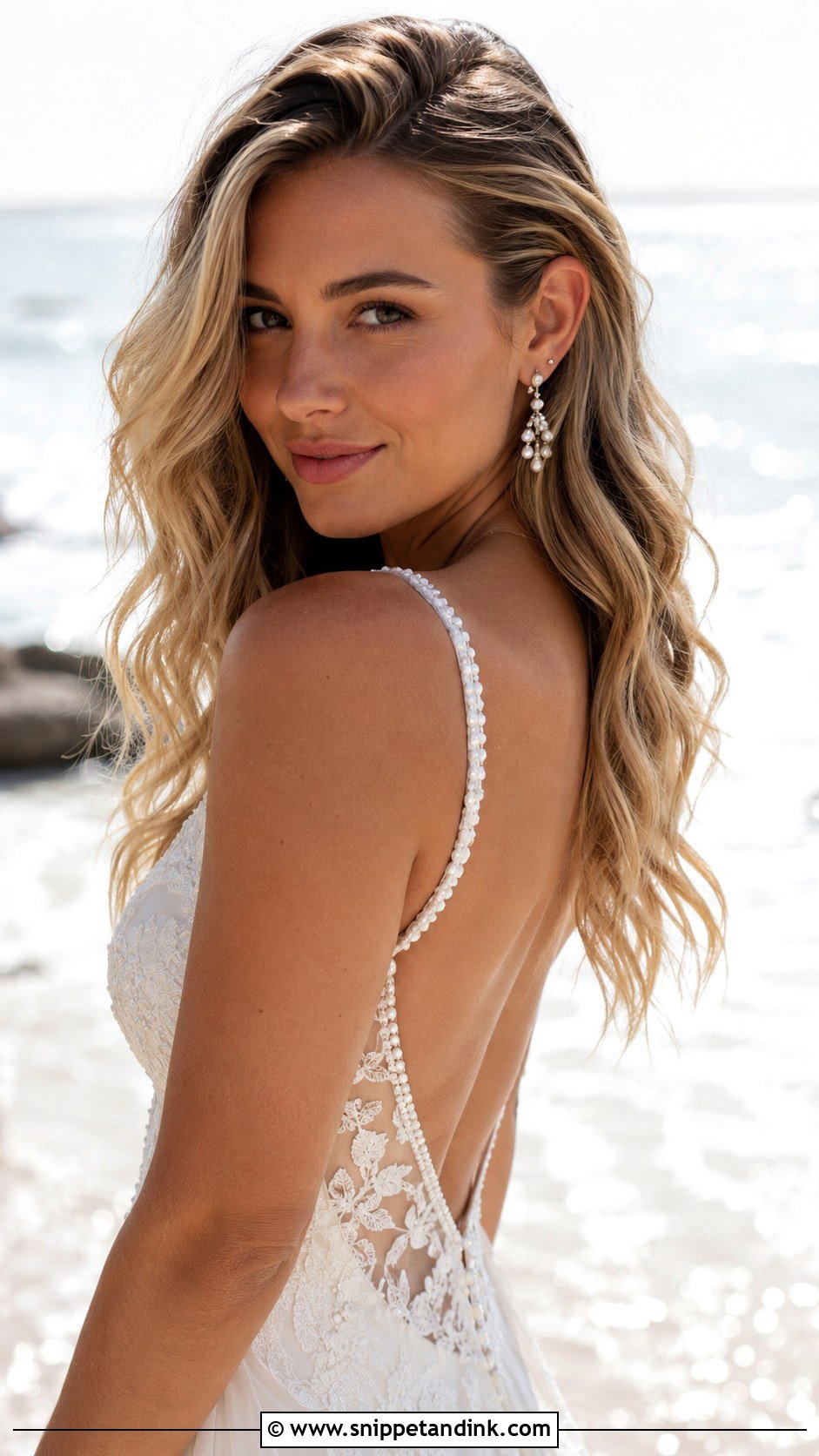
Beachy waves are meant to look like you just came in from the sea, but salt spray alone dries some hair out and makes it frizz. I mix a lighter texture spray with a flat iron bend rather than a curl, leaving the ends straight for that lived-in finish. Sandy blonde balayage gives the texture extra dimension in sunlight, since the lighter pieces catch the light. Schedule any color at least two weeks out so it has time to settle. Expect a little frizz at a seaside ceremony; for a beach wedding I see that as part of the look.
5. Boho Waves With Braids
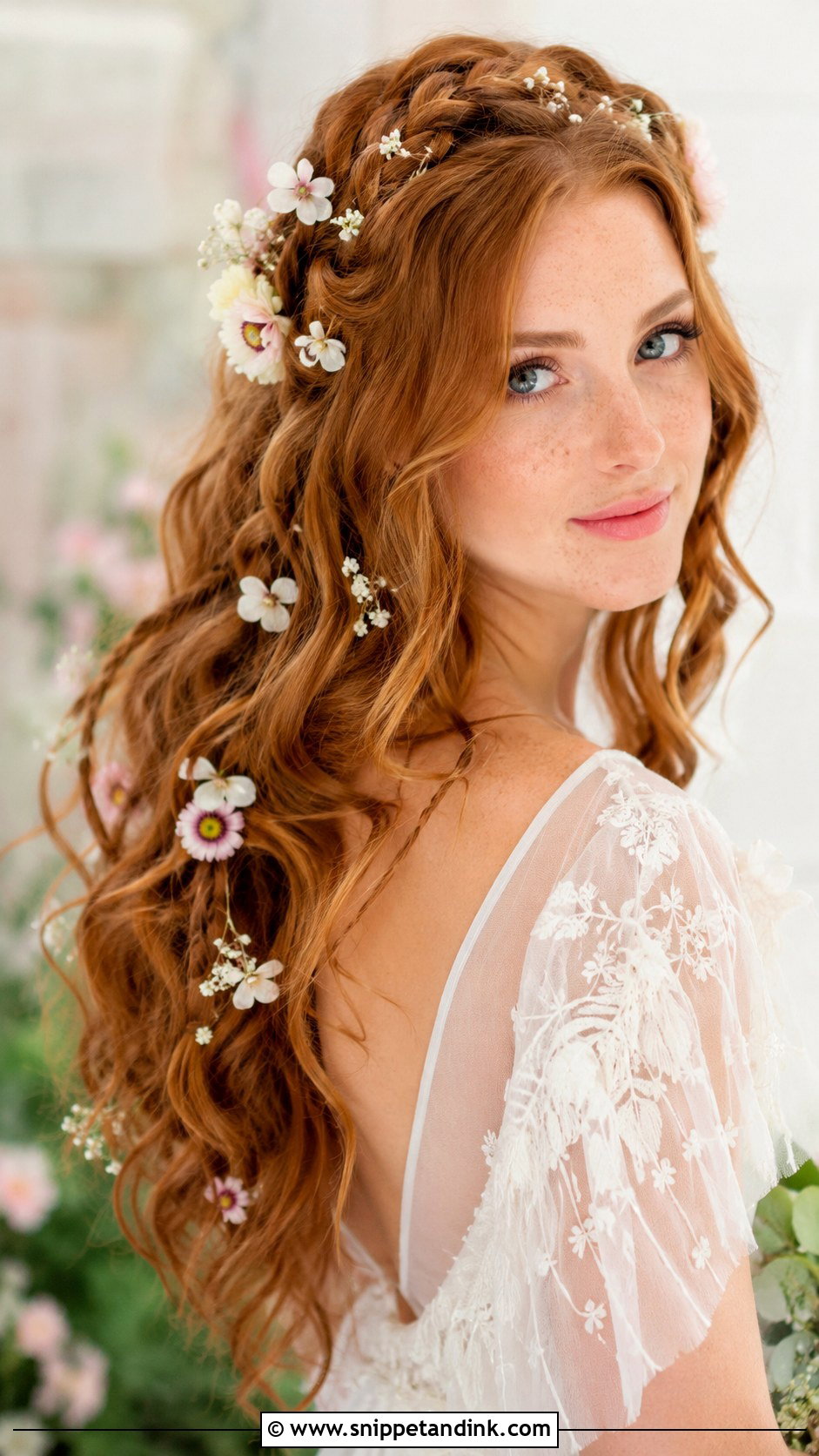
This look relies on contrast: tight little braids against loose, airy waves. I braid before curling so the braids stay neat, then curl everything else and pull the braid edges gently for texture. Where you put them matters. A couple near the temple, swept back, keep hair off the face; a cluster at the back adds interest for the ceremony from behind. Fresh flowers need to be wired, not just tucked, or they’ll fall out on the dance floor. It suits a flowing gown at a rustic or garden venue.
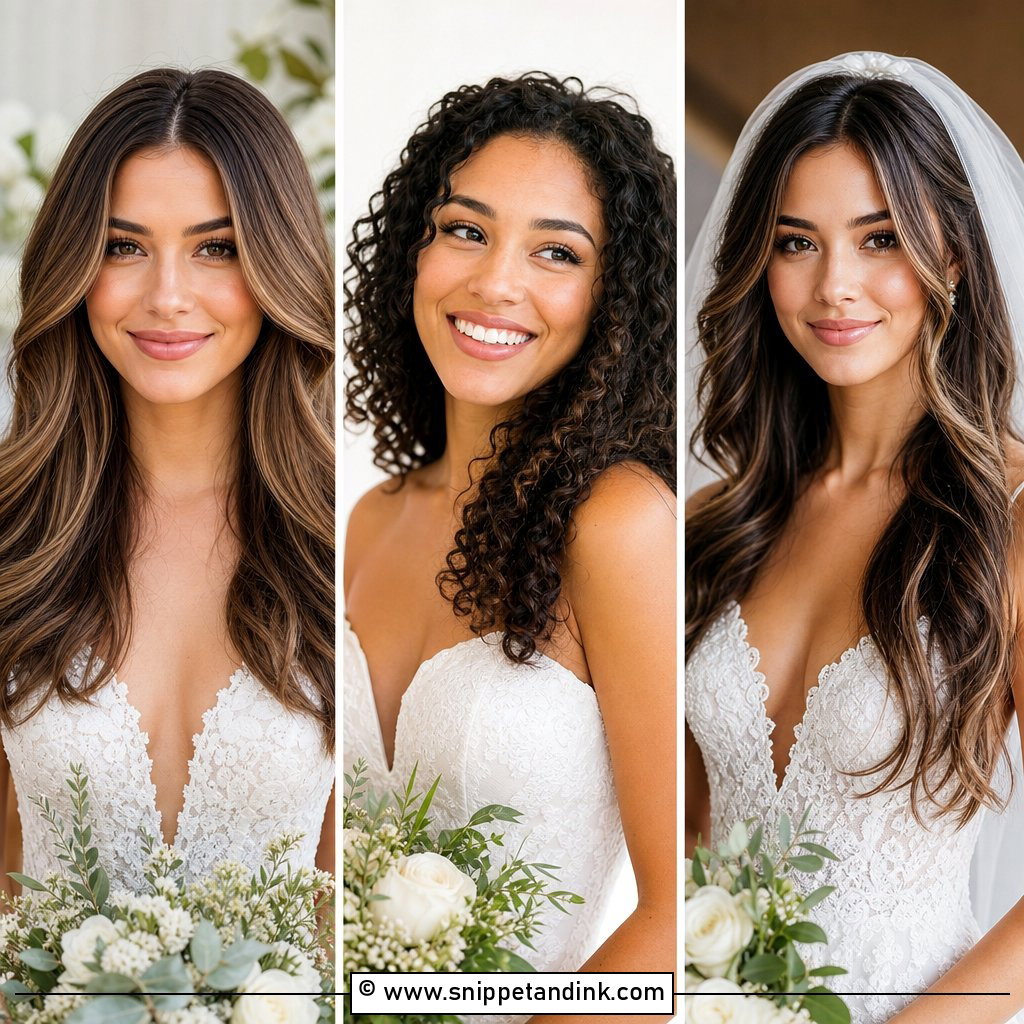
6. Sleek Straight Bridal Hair
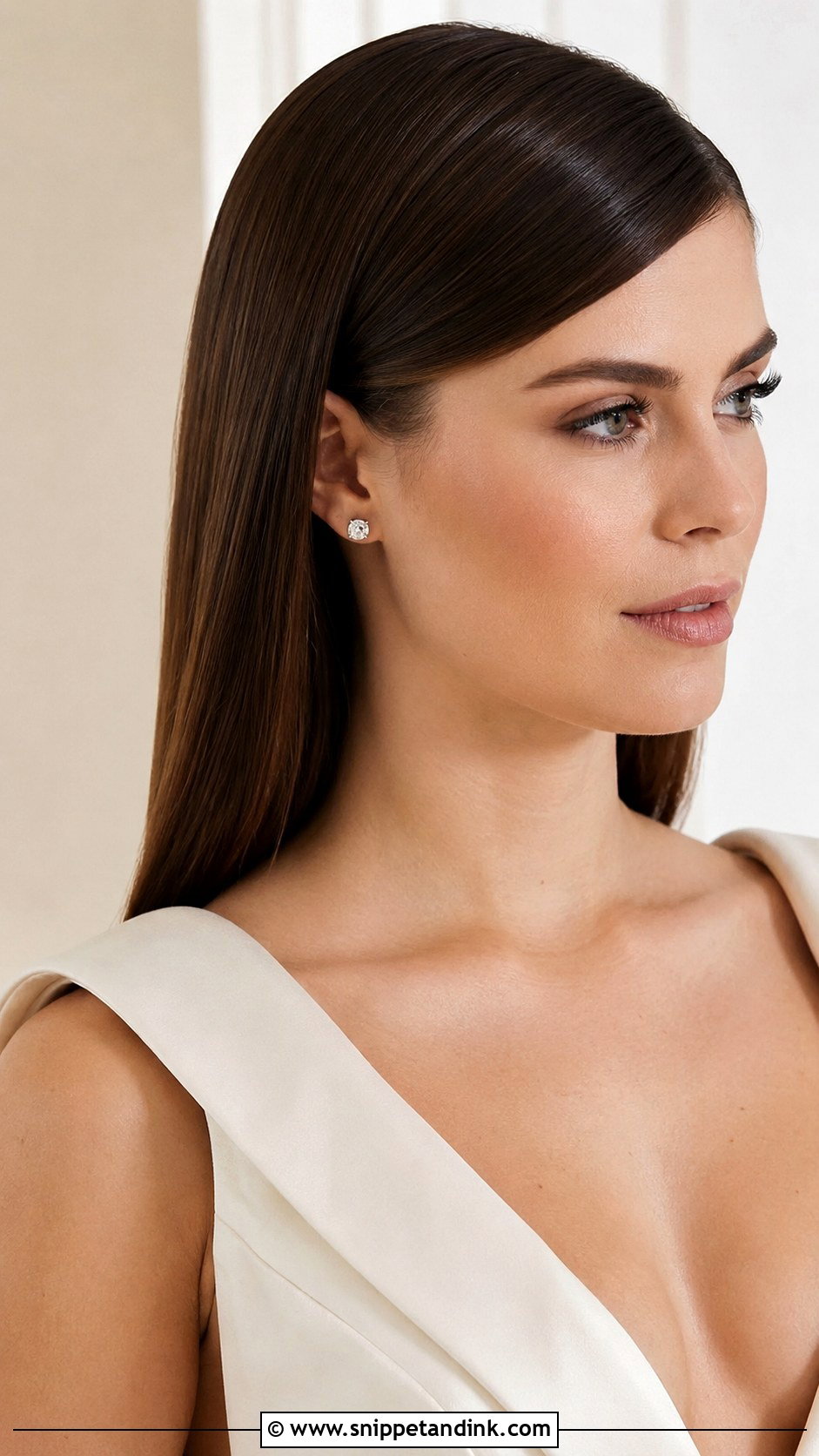
Sleek straight hair hides nothing, and that’s both its appeal and its risk. Every kink and flyaway shows. I blow-dry with a round brush first, then flat iron in thin sections at a moderate heat, and finish with a drop of serum through the lengths only, never at the root. Humid venues are hard on it, so I’d only recommend it indoors or for hair that’s naturally smooth. A center or deep side part, a structured gown and a slim clip are all it needs.
7. Soft Chignon With Face-Framing Pieces
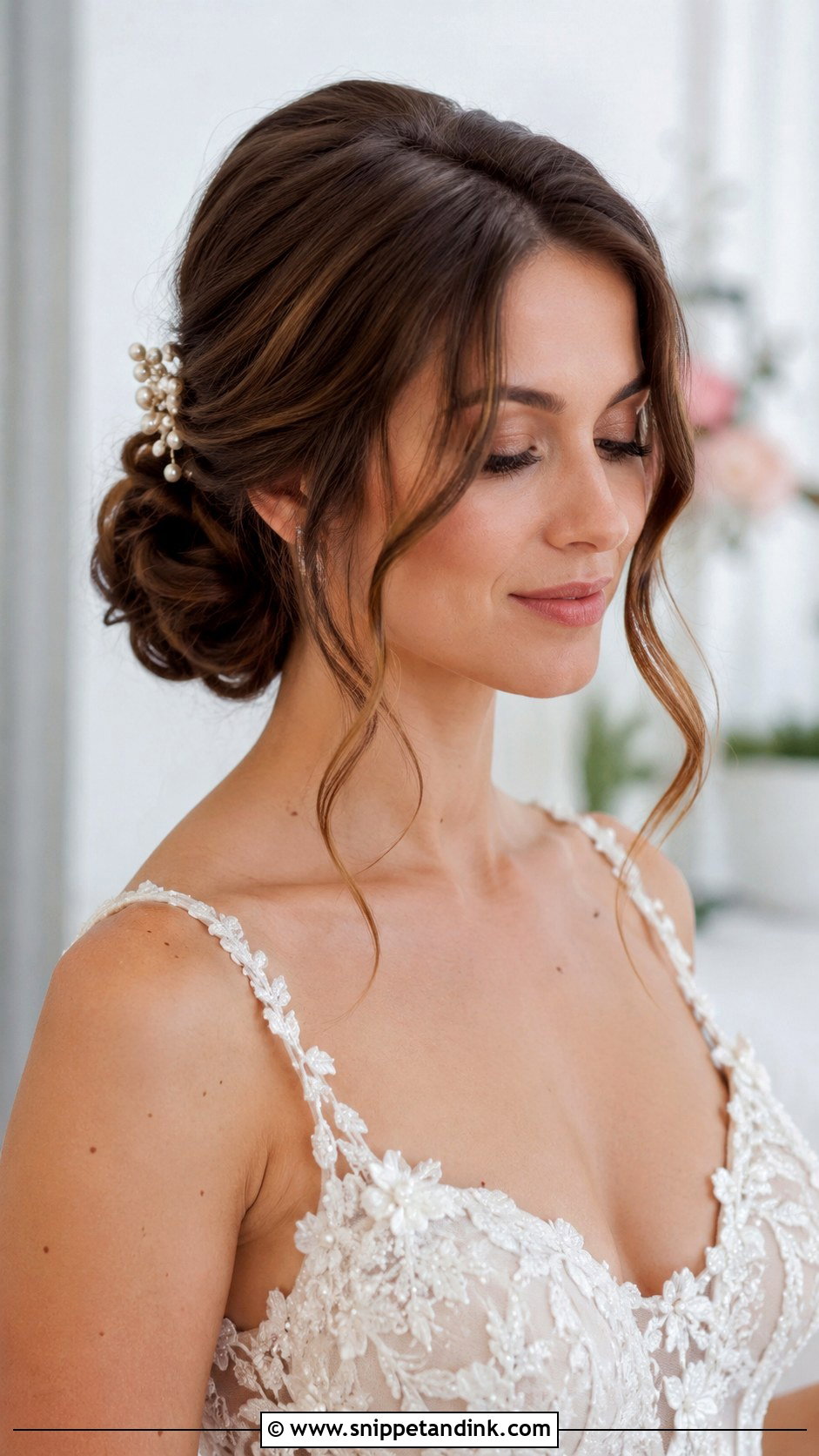
Not every bride wants hair fully down. This one is a compromise: the softness of loose hair with a clear neck. The hair is gathered into a loose, low twist at the back, with gentle tendrils pulled free around the face. I curl those tendrils separately, so they hold their shape instead of hanging limp. It’s a smart fallback if you want the look of down hair but you’re worried about heat or a hot dance floor. Pearl pins add detail without weight.
8. Half-Up With a Twisted Crown
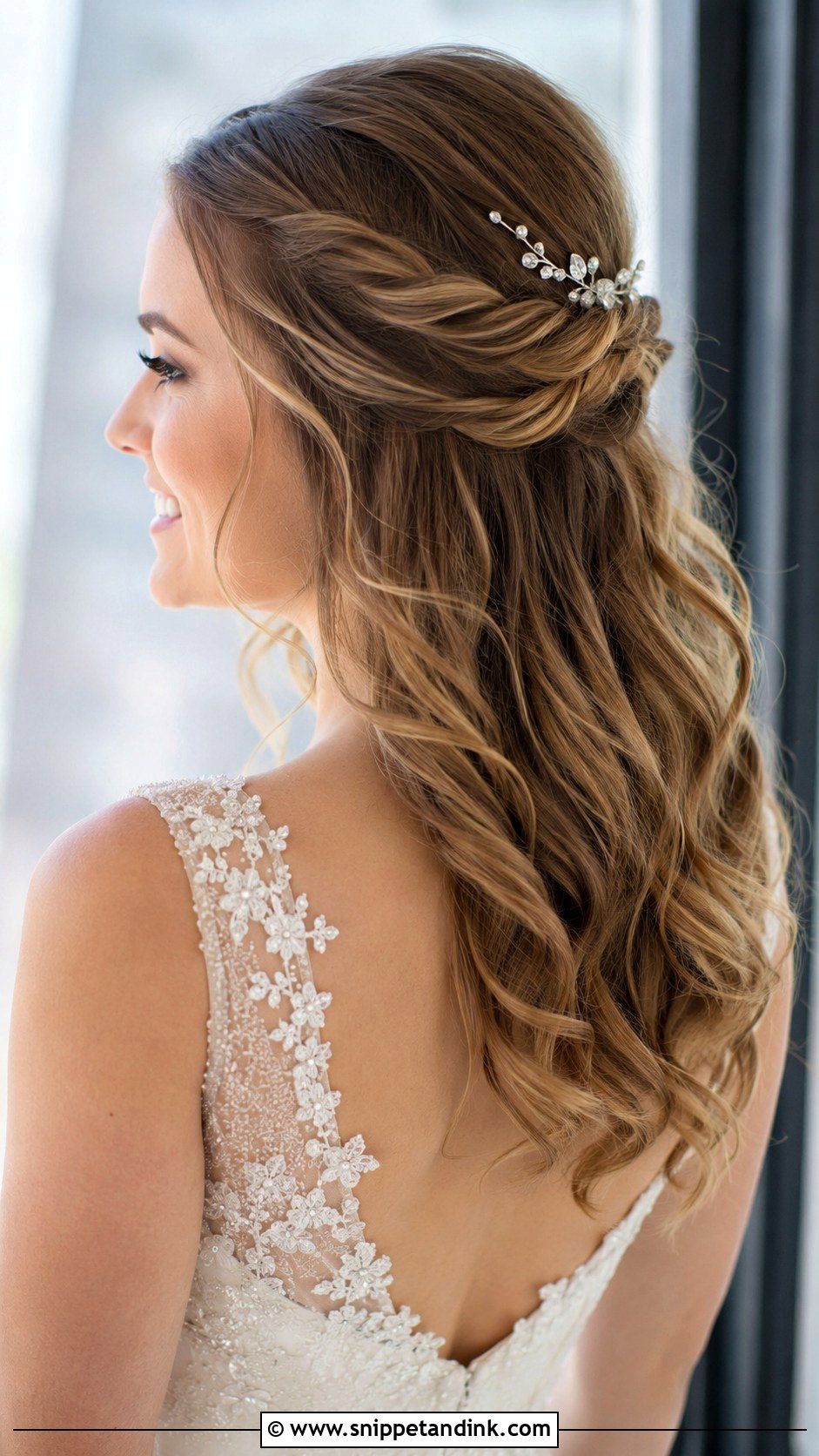
Twisted half-up crowns take time to build, so I always budget an extra fifteen minutes for them. I take two sections from each side, twist them back loosely and pin them where they meet, then pancake the twists to make them look fuller. The rest of the hair is curled and falls loose. Fine hair can look thin in twists, so on fine hair I’ll add a few clip-ins underneath for body. A veil comb tucks neatly under the join of the twists.
9. Curtain Bangs With Long Waves
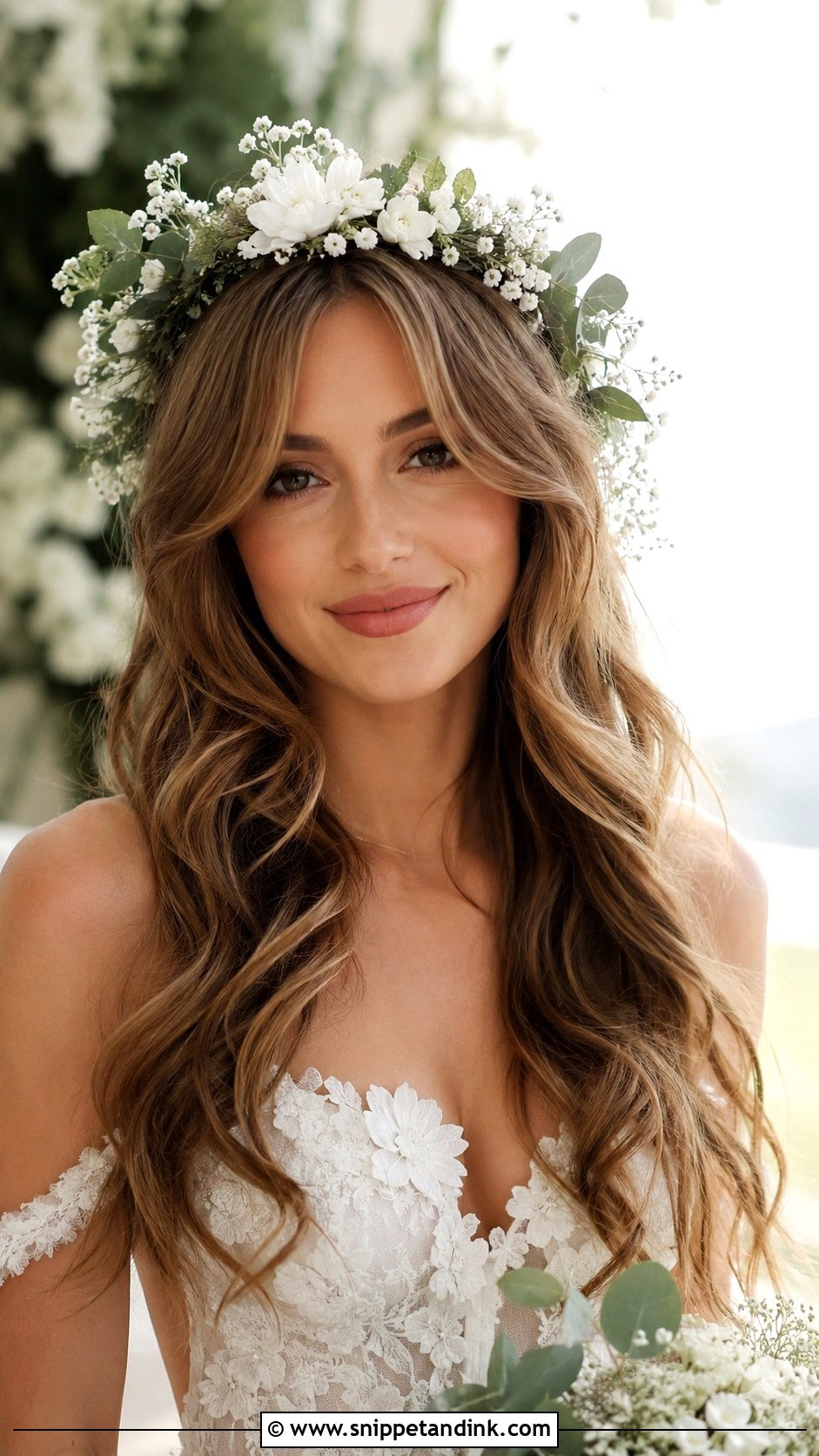
Curtain bangs are lovely with long waves, but I don’t recommend cutting them for the wedding if you’ve never had them. Bangs take weeks to settle into a natural fall, and a new fringe can surprise you in photos. If you already wear them, I blow-dry them over a round brush so they part in the center and sweep out to each side. A light curl at the ends of the fringe blends them into the waves. Humidity makes bangs separate, so a tiny dab of dry shampoo on the underside of the fringe helps.
10. Deep Side Part With Glam Waves
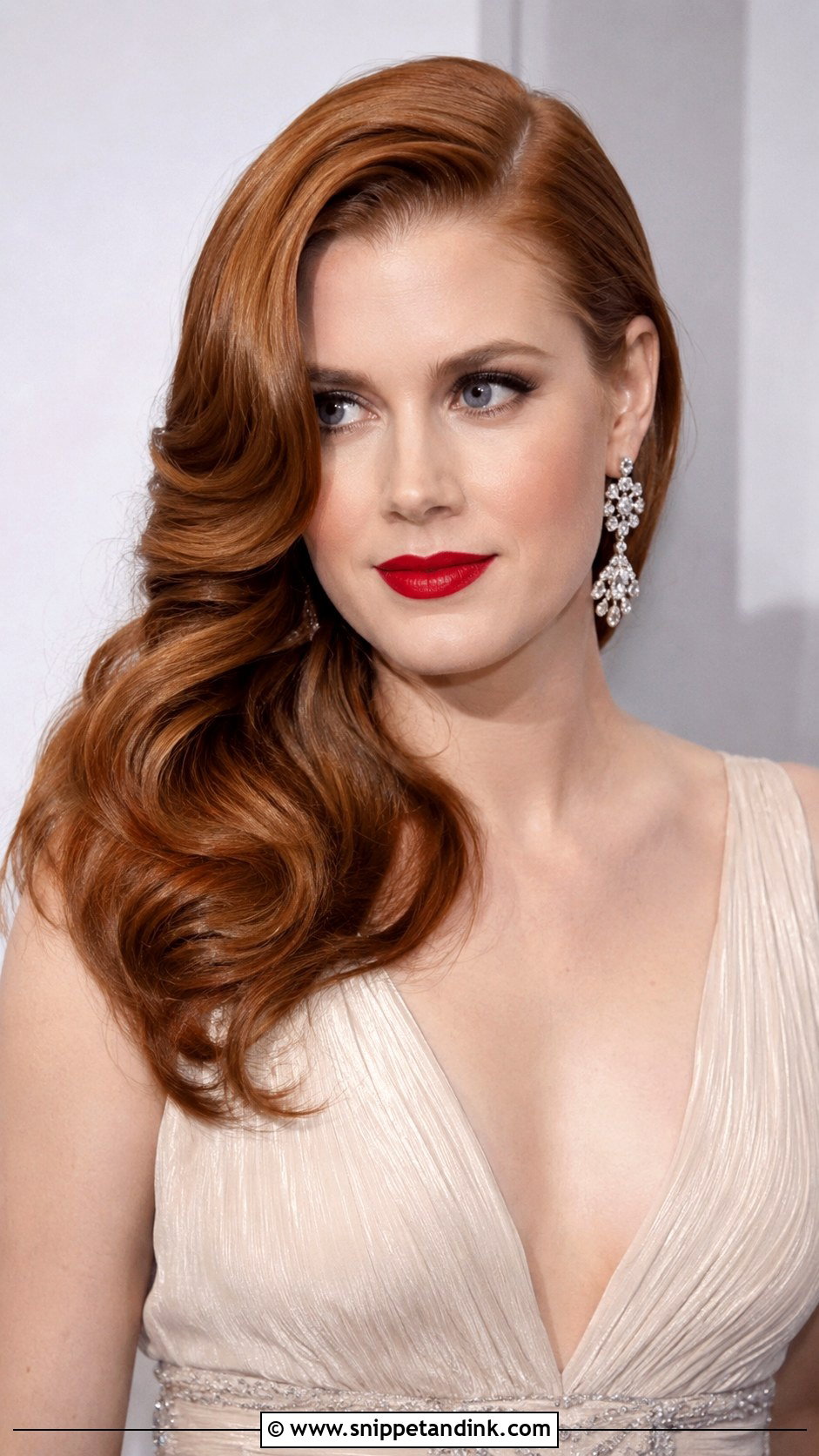
A deep side part shifts all the weight to one side, which gives instant volume at the crown and a strong frame for the face. I set the part an inch or two further over than you’d usually wear it, then blow-dry the root in the opposite direction first so it stands up. Glossy waves finish the look. The shorter side can be tucked behind the ear with a jeweled pin to show off your earring. It flatters round and square faces especially, and it holds up well in photos because the shape doesn’t rely on curls staying perfect.
11. Half-Up With Fresh Flowers
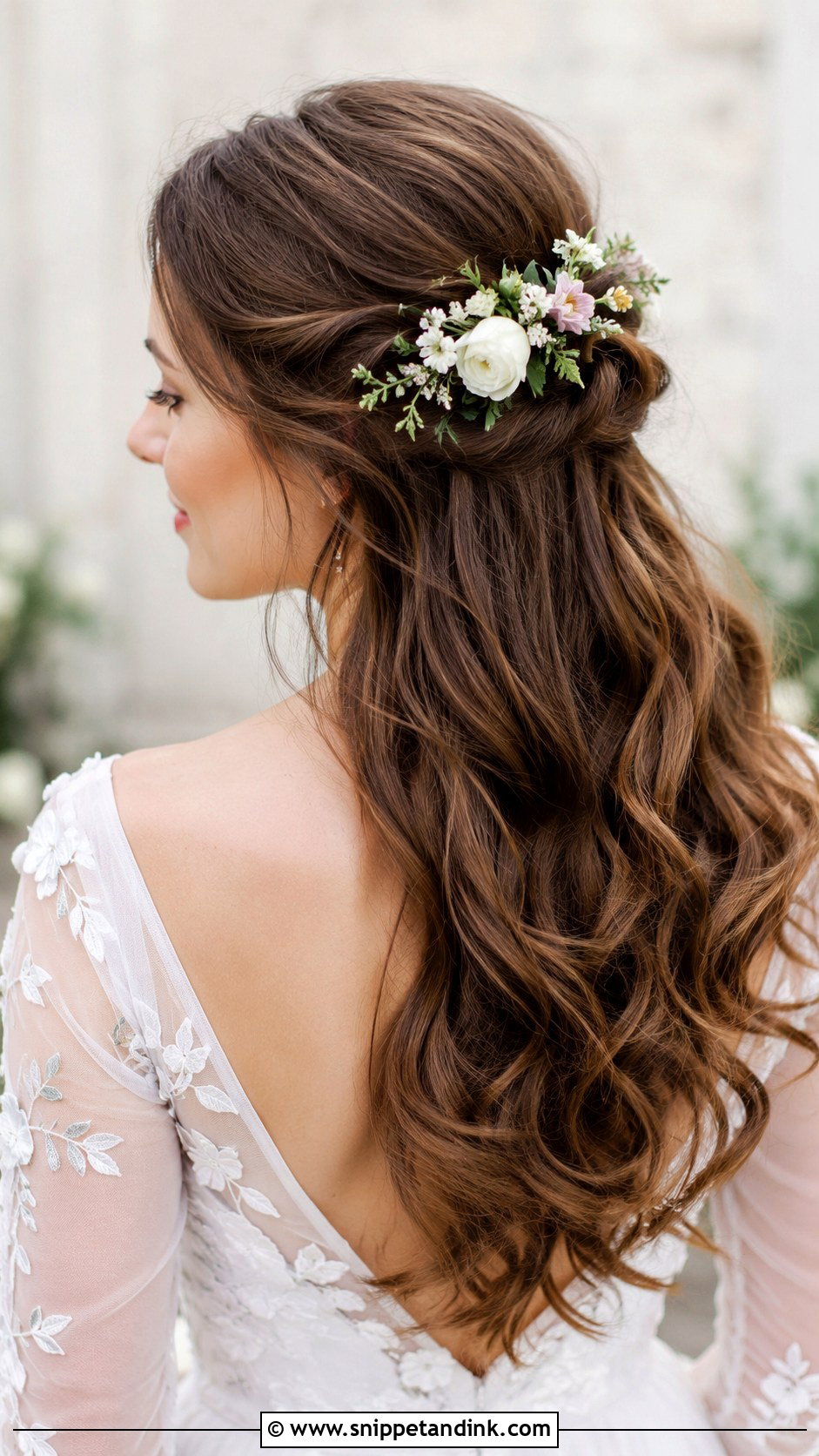
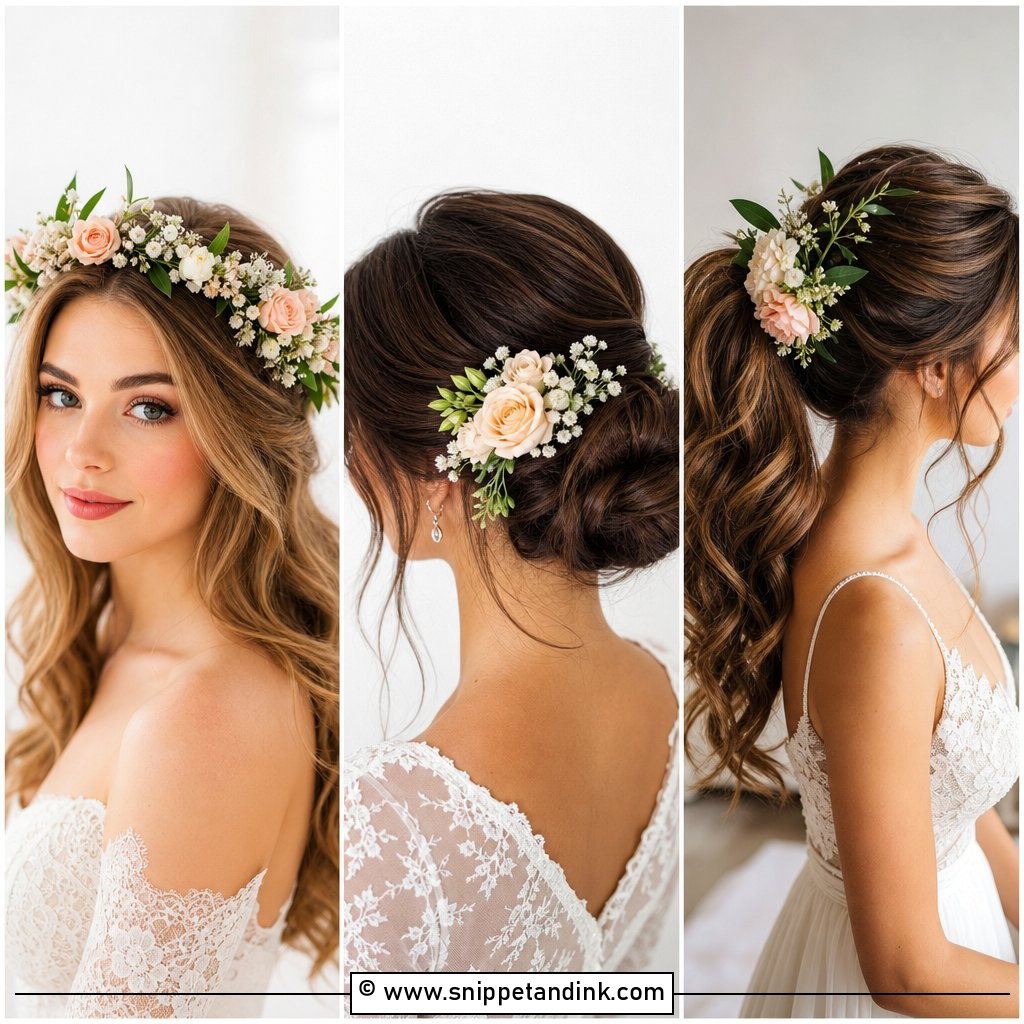
Fresh flowers wilt, so the type of bloom matters as much as the style. Baby’s breath, spray roses and waxflower last well out of water; peonies and gardenias bruise and brown within hours. I ask your florist to wire and tape the stems into small clusters the morning of the wedding, then pin them into the half-up section. The curls below stay loose. If your ceremony is outdoors in summer heat, choose sturdier blooms or silk ones that match your bouquet.
12. Long Layers With Soft Curls
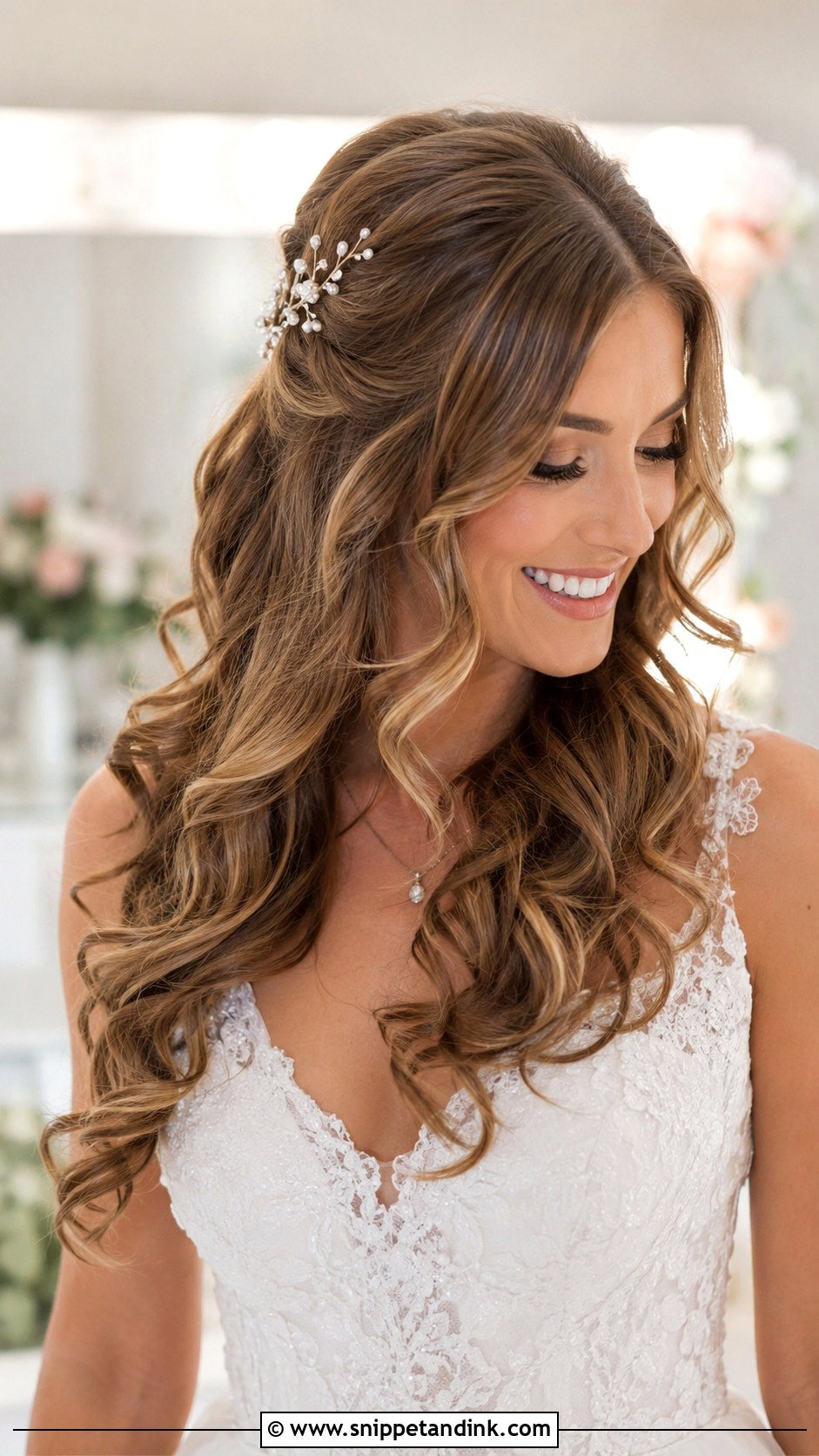
Long layers give curled hair natural bounce, because shorter pieces sit on top of longer ones. They work best on thick or medium-density hair. On fine hair heavy layering can make the ends look thin. I curl the face-framing layers away from the face and the back layers in alternating directions so they don’t clump together. Get your trim two to three weeks before the wedding, not the week of, so the layers soften. A little shine spray at the end keeps the curls from looking dry.
13. Vintage Finger Waves
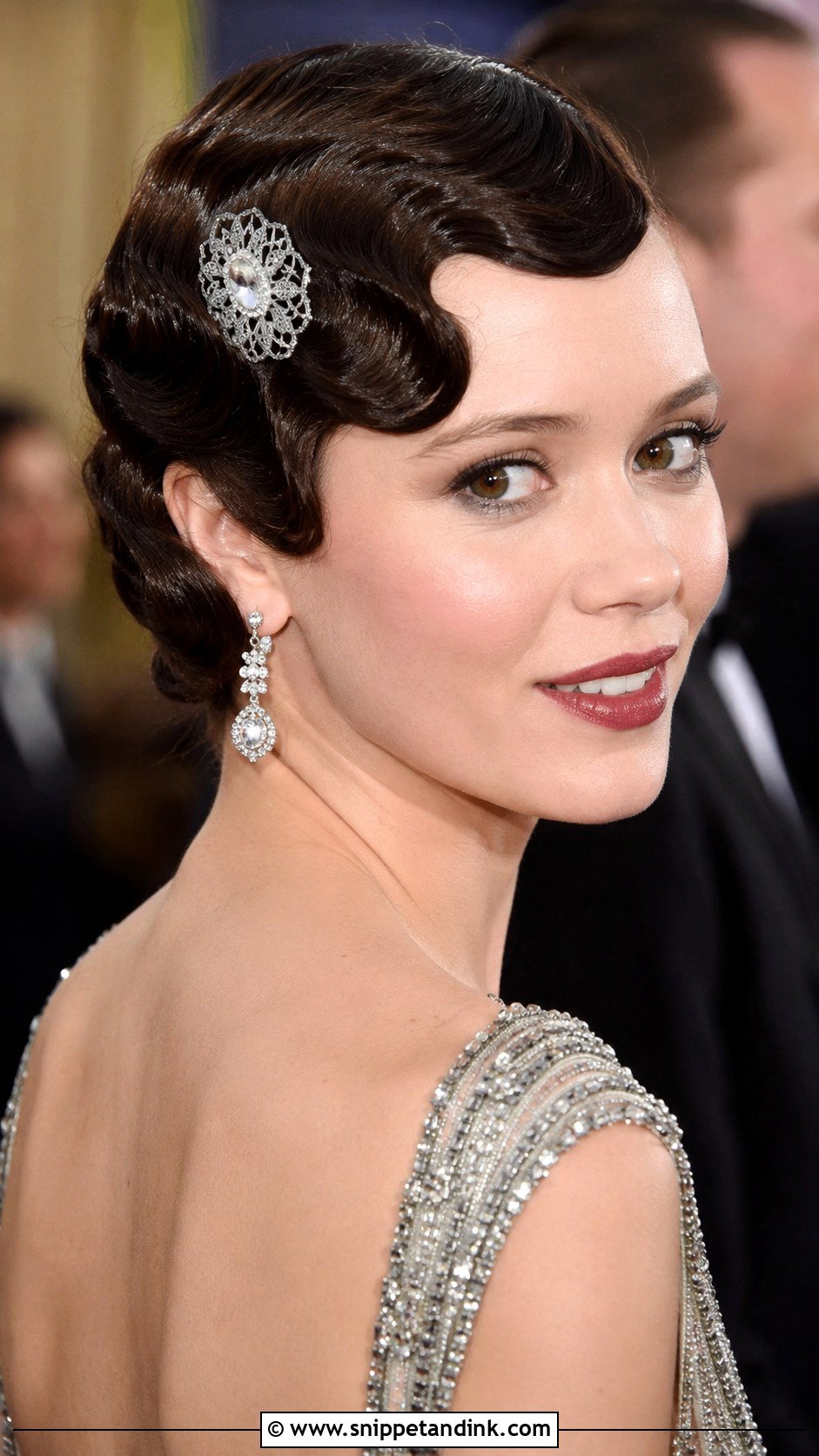
True finger waves are sculpted wet with gel and a comb, then left to dry completely. Under a hood dryer that’s a long process, so I schedule them first. They’re strongest on short to medium hair; on very long hair I’ll do finger waves only at the front and let the rest fall in pin-curl waves. The finish is crisp, sculpted and very retro, so it suits an art-deco gown and statement jewelry. Once set, it barely moves, which makes it one of the more weatherproof styles here.
14. Half-Up Braided Bridal Hair
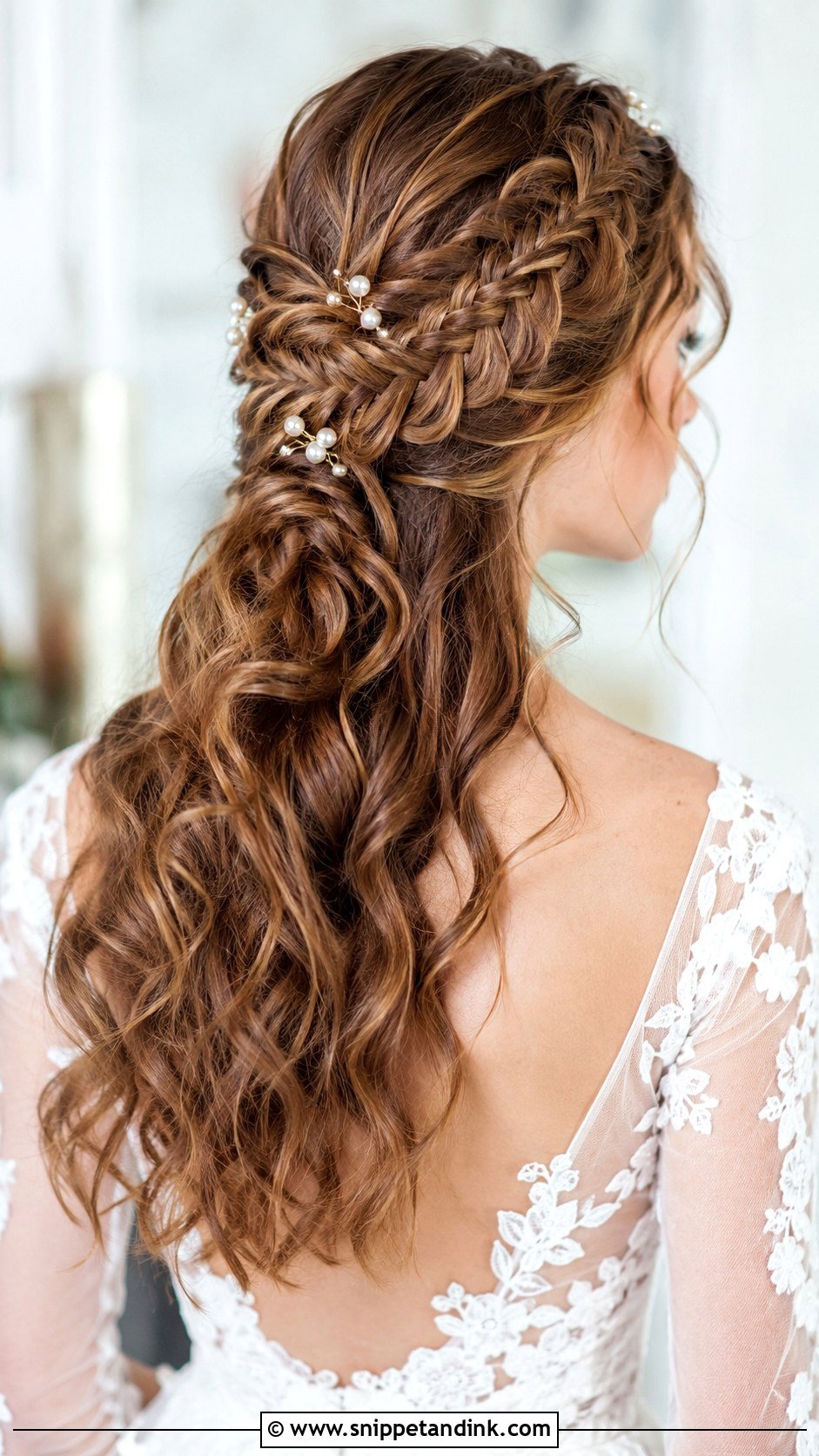
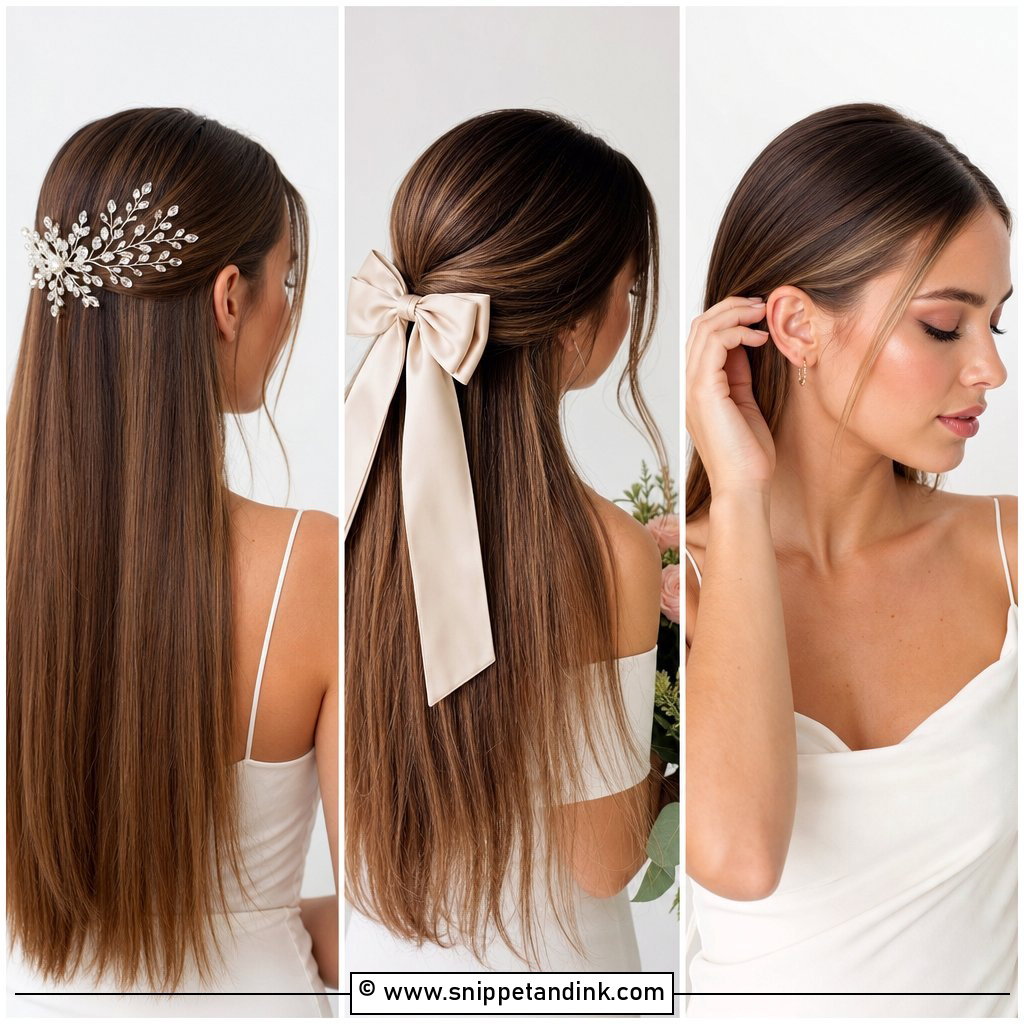
Braided half-ups suit almost any hair type, which is why I suggest them so often. A Dutch braid sits on top of the hair and reads clearly in photos; a French braid is subtler; a fishtail adds texture. I braid the sections back toward the crown and secure them at the center with a small elastic and pins. Loose curls fall below. Pearl pins tucked into the braids add detail. If your hair is layered, a light texture spray first keeps short pieces from poking out.
15. Tousled Waves With a Center Part
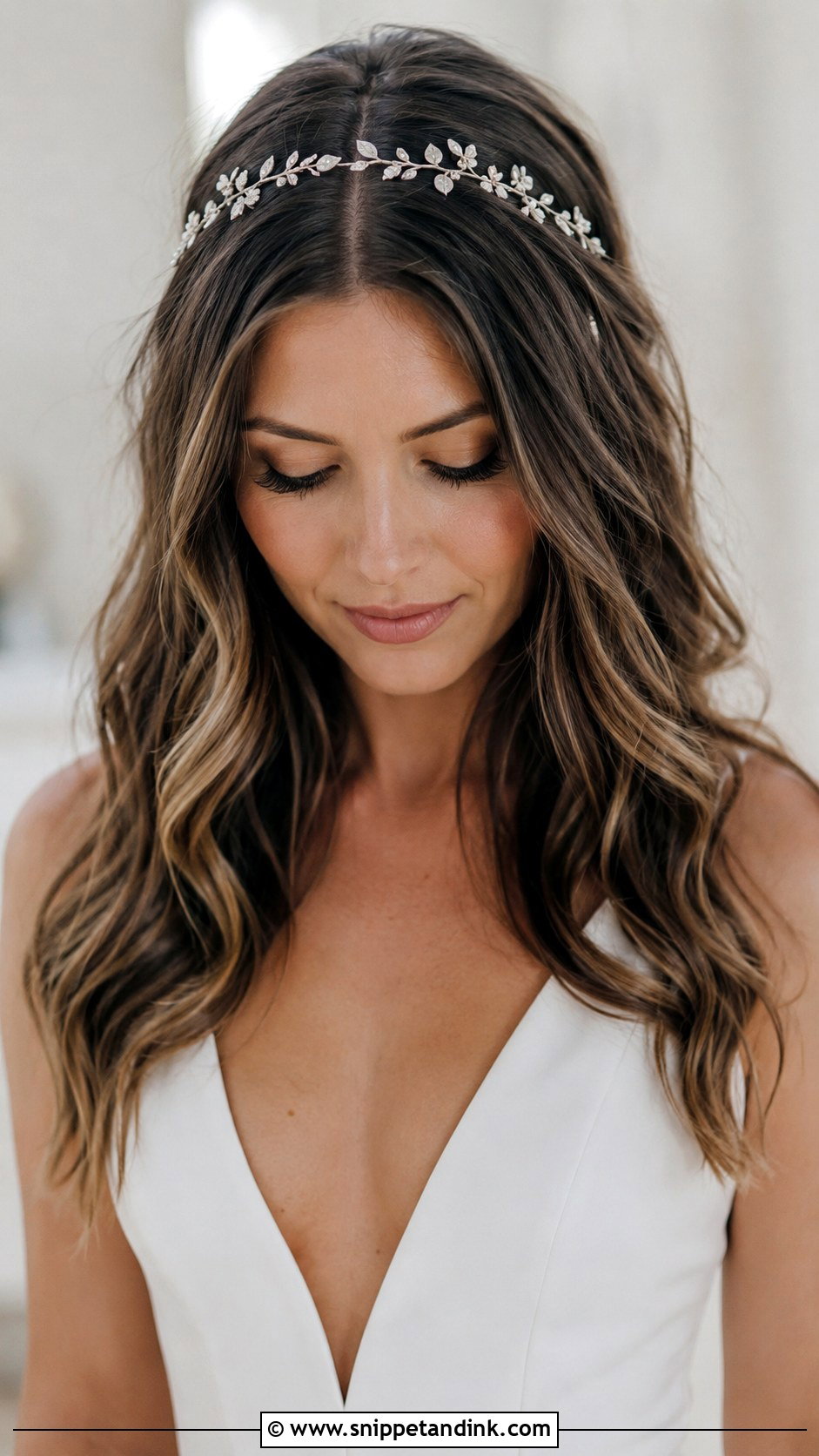
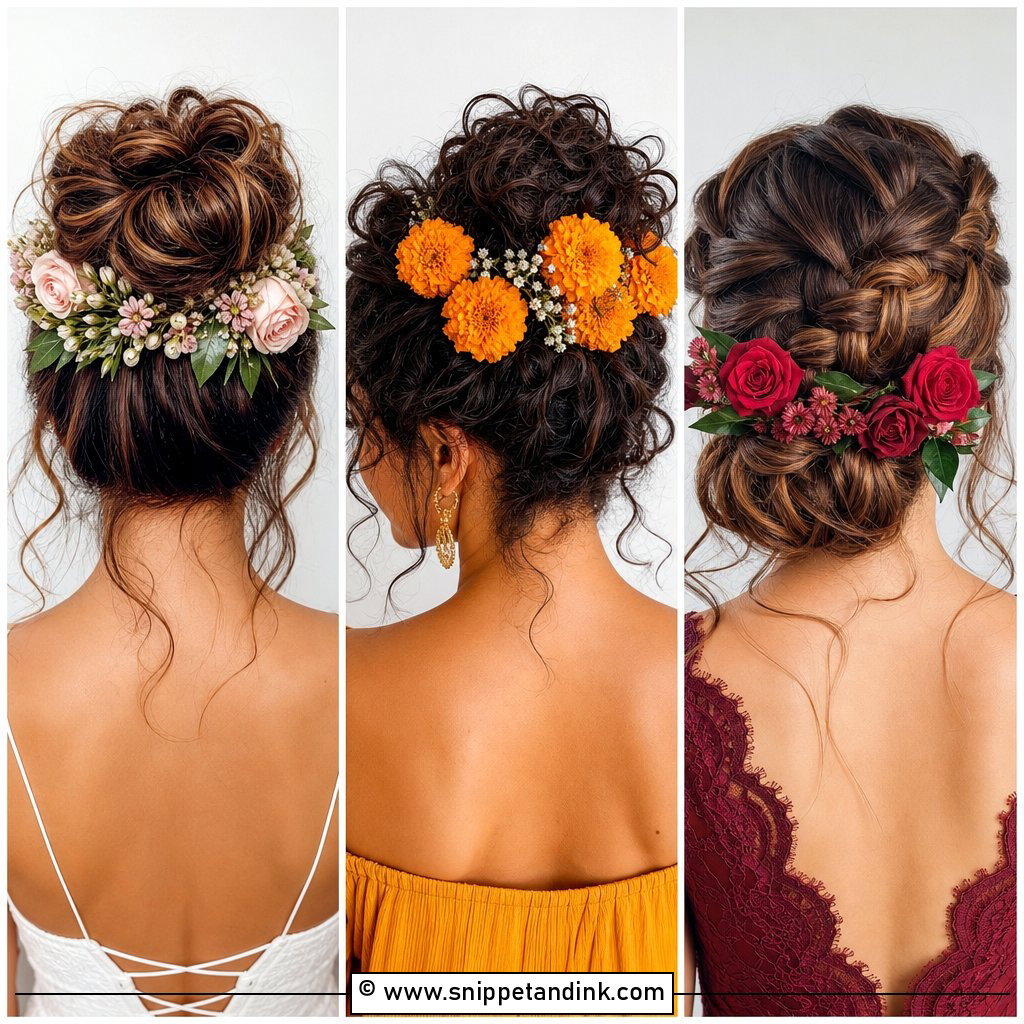
A center part feels modern and clean, and it’s symmetrical, which makes it honest: it shows your face as it is. It suits oval and heart shapes most easily. I keep the waves tousled, curling vertical sections and raking them out with my fingers rather than brushing, so they look lived-in. A thin hair vine across the back is a nice detail. It looks its best in natural light, so it works well for an outdoor or daytime ceremony.
16. Half-Up With a Pearl Hair Vine
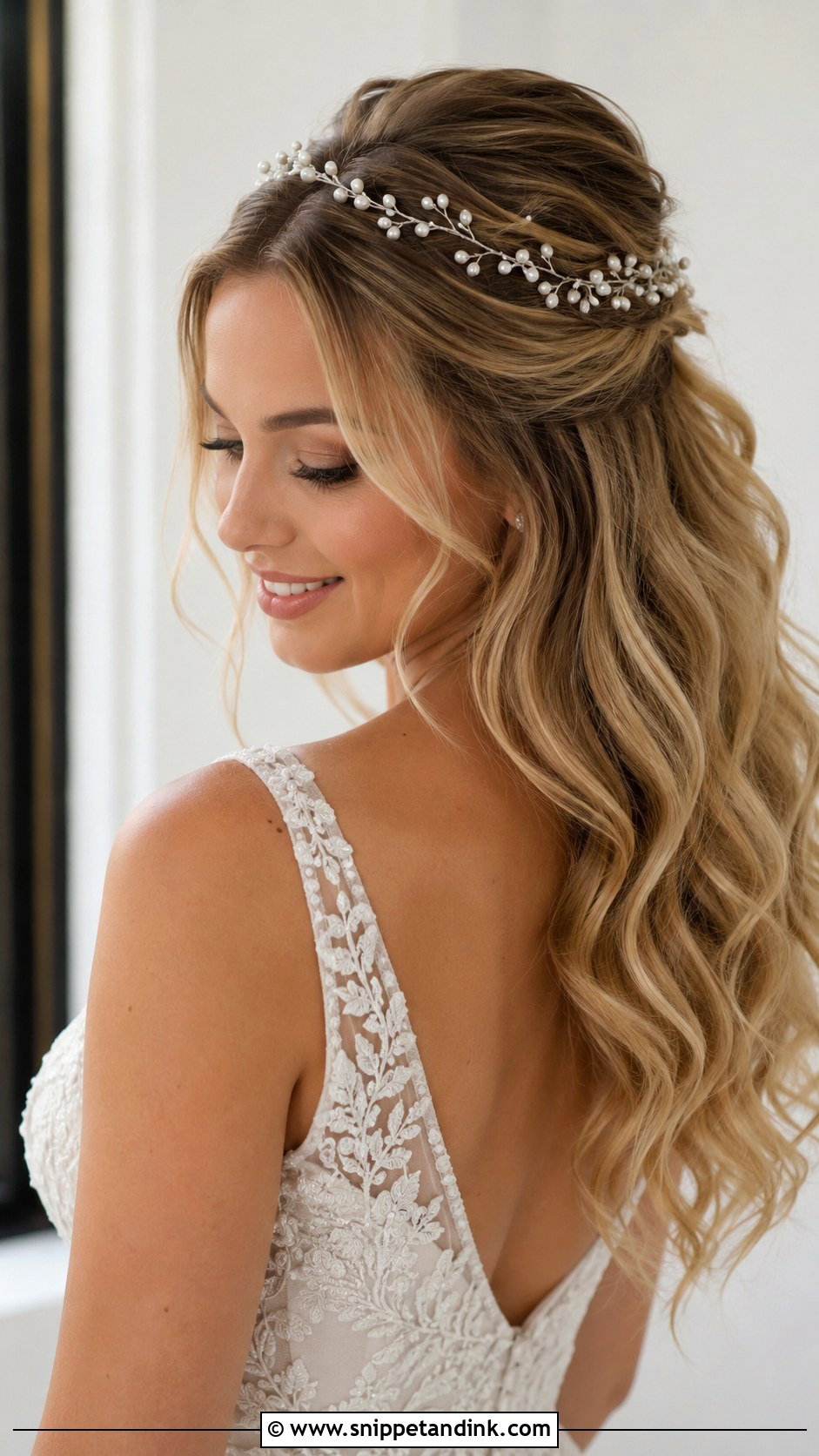
A pearl vine is flexible enough to follow any shape, and it can be wound through the twist or laid across the crown. I wire it into the pulled-back section with small pins at each end and every few inches along the length, so it doesn’t slide when you turn your head. Match the pearl tone to your jewelry; bright white pearls can look stark against an ivory dress. It works on most hair textures and doesn’t add much weight.
17. Voluminous Bouncy Curls
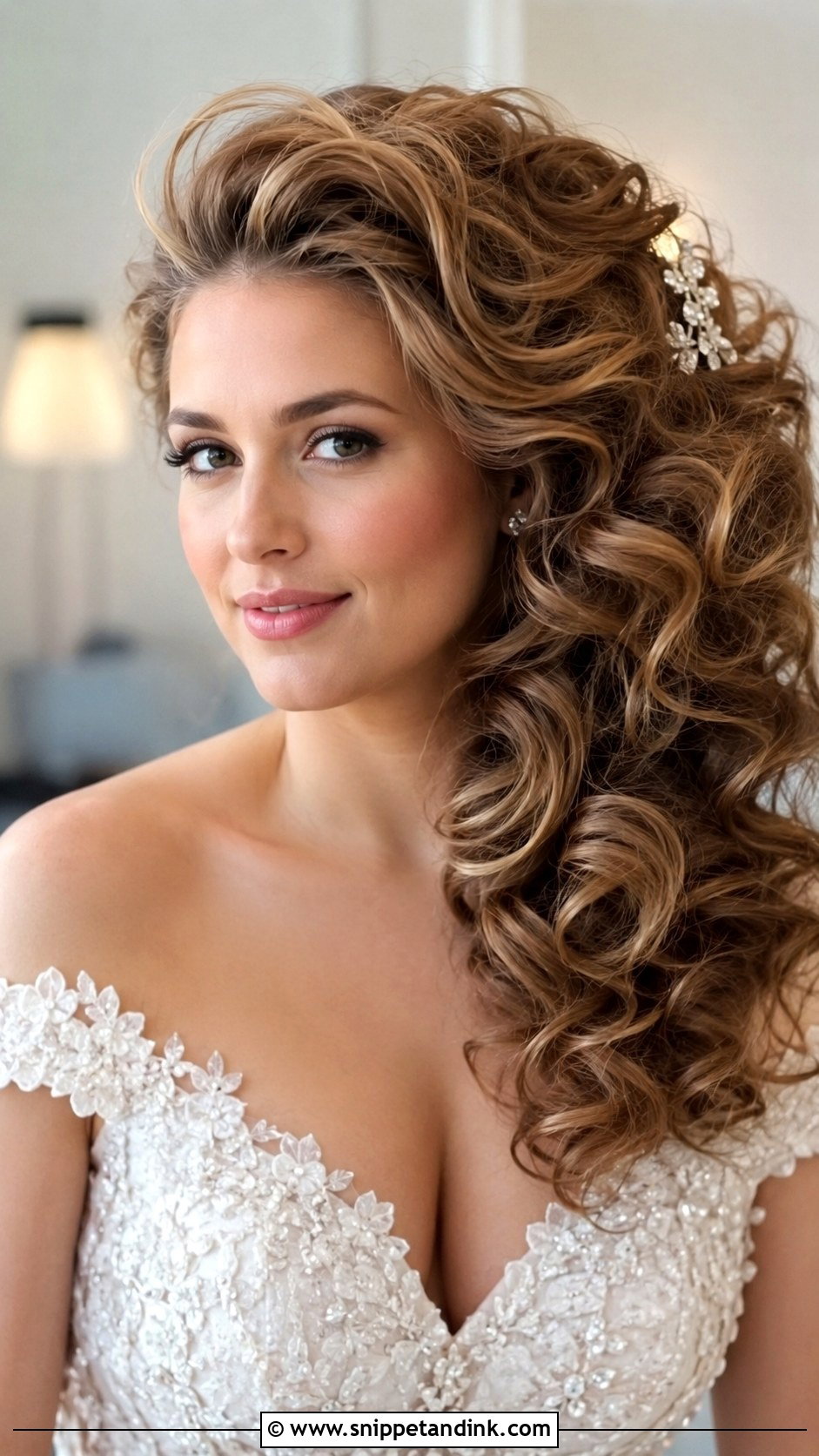
Big, bouncy curls are a good answer for fine or thin hair, because the curl itself adds volume. I use a volumizing mousse at the root and a larger barrel iron, pinning each curl to cool. Fine hair often drops curls fast, so I curl a little tighter than the final look and brush them out just before the ceremony. They suit a princess silhouette. One side swept back with a pin keeps them from overwhelming your face.
18. Side-Swept Waves Over One Shoulder
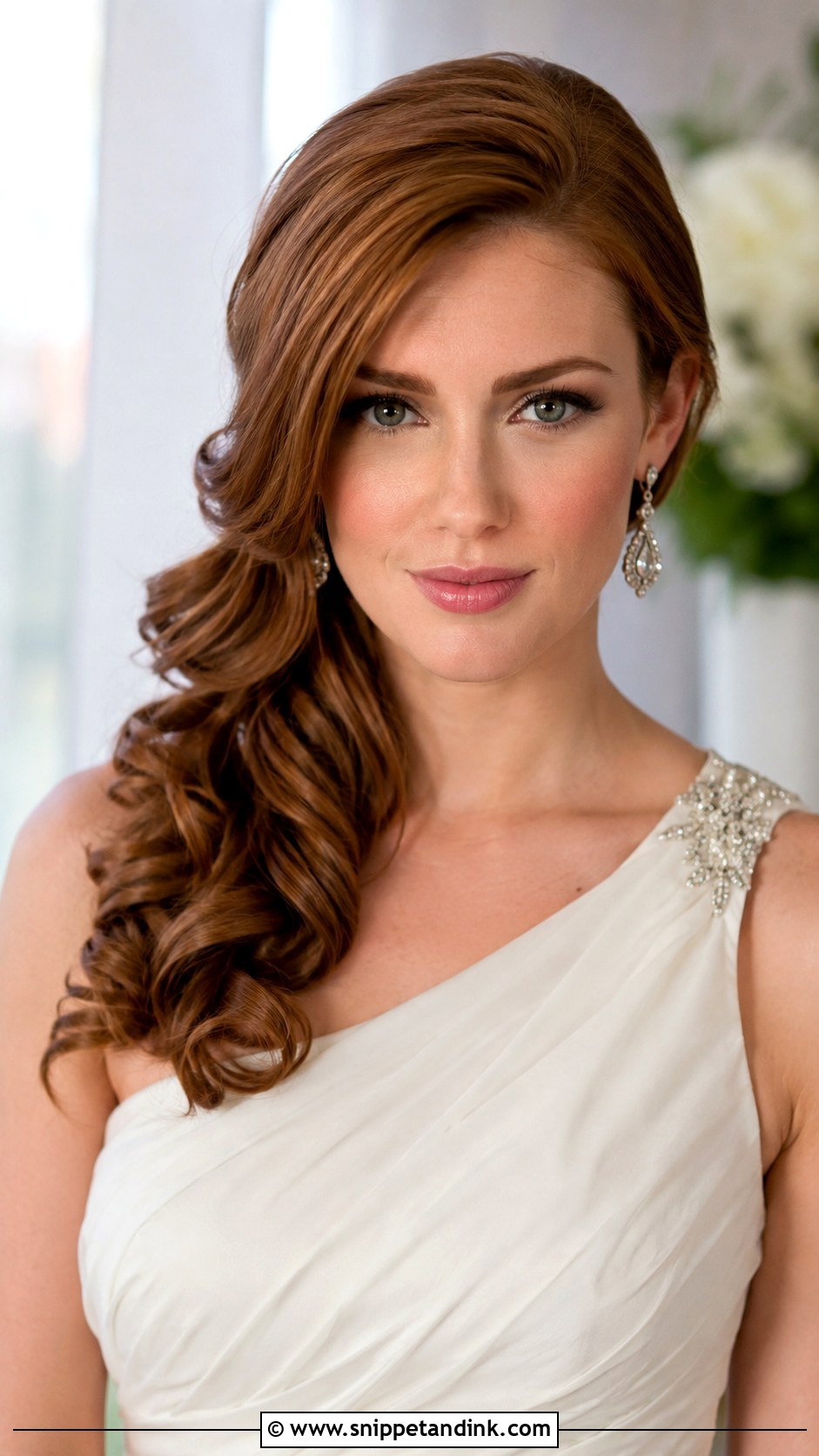
Sweeping everything over one shoulder shows off your earrings and the neckline on the open side. I pin the hair at the nape behind the ear, hidden under the waves, so it doesn’t swing back as you move. It’s a natural match for a one-shoulder or off-the-shoulder gown, with the hair falling on the bare side. The other side can be pinned back with a jeweled clip. It gives you an elegant profile in side shots and during the walk down the aisle.
19. Half-Up Bubble Ponytail With Waves
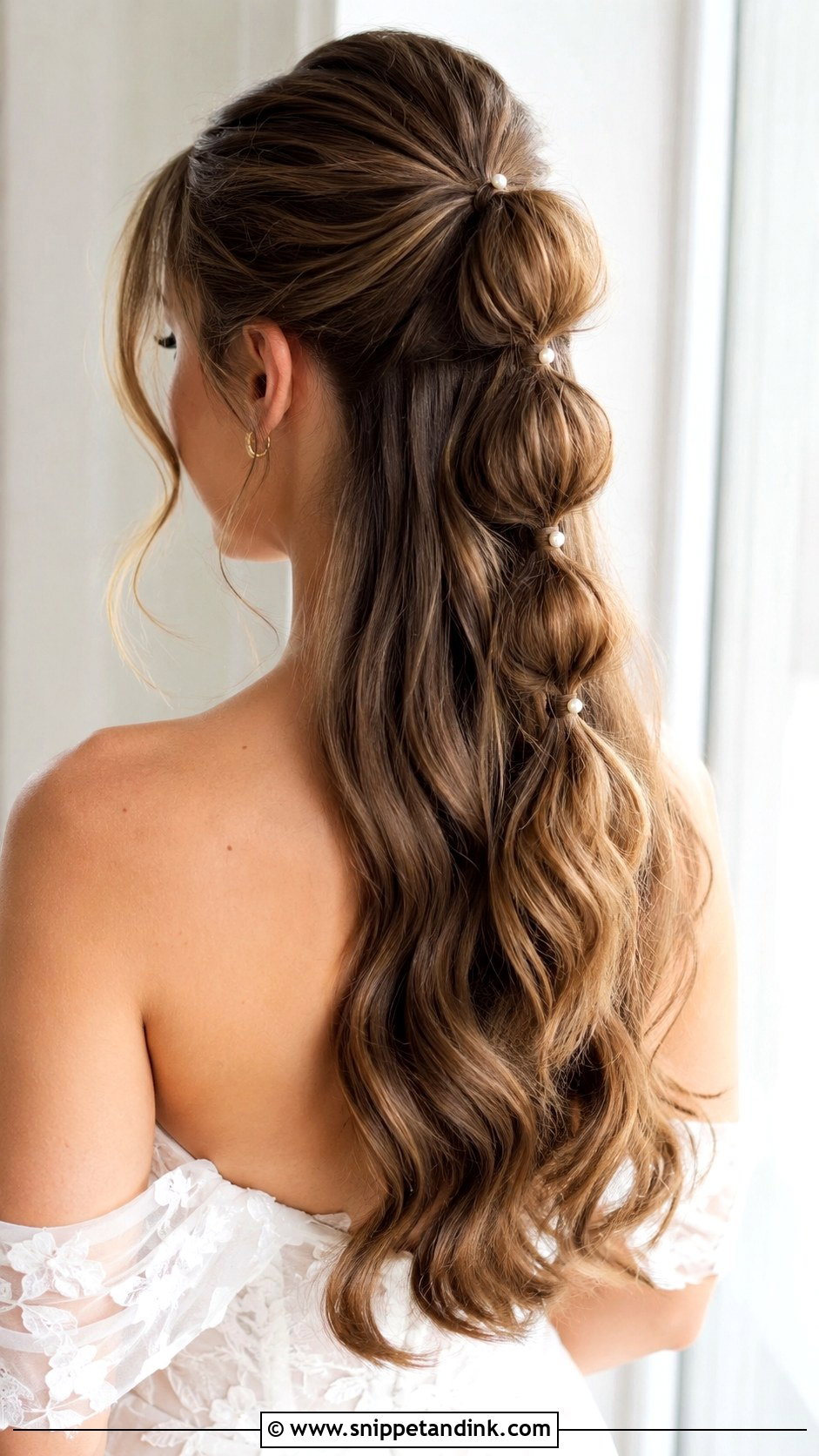
A half-up bubble ponytail is the most playful option here. I tie off the pulled-back section with small clear elastics at intervals, then gently pull each segment wider to make the bubbles. Space them evenly; uneven bubbles look accidental. The rest of the hair is waved. It suits a relaxed or modern wedding and holds well because the elastics do most of the work. Tiny pearls on each tie can make it look more bridal.
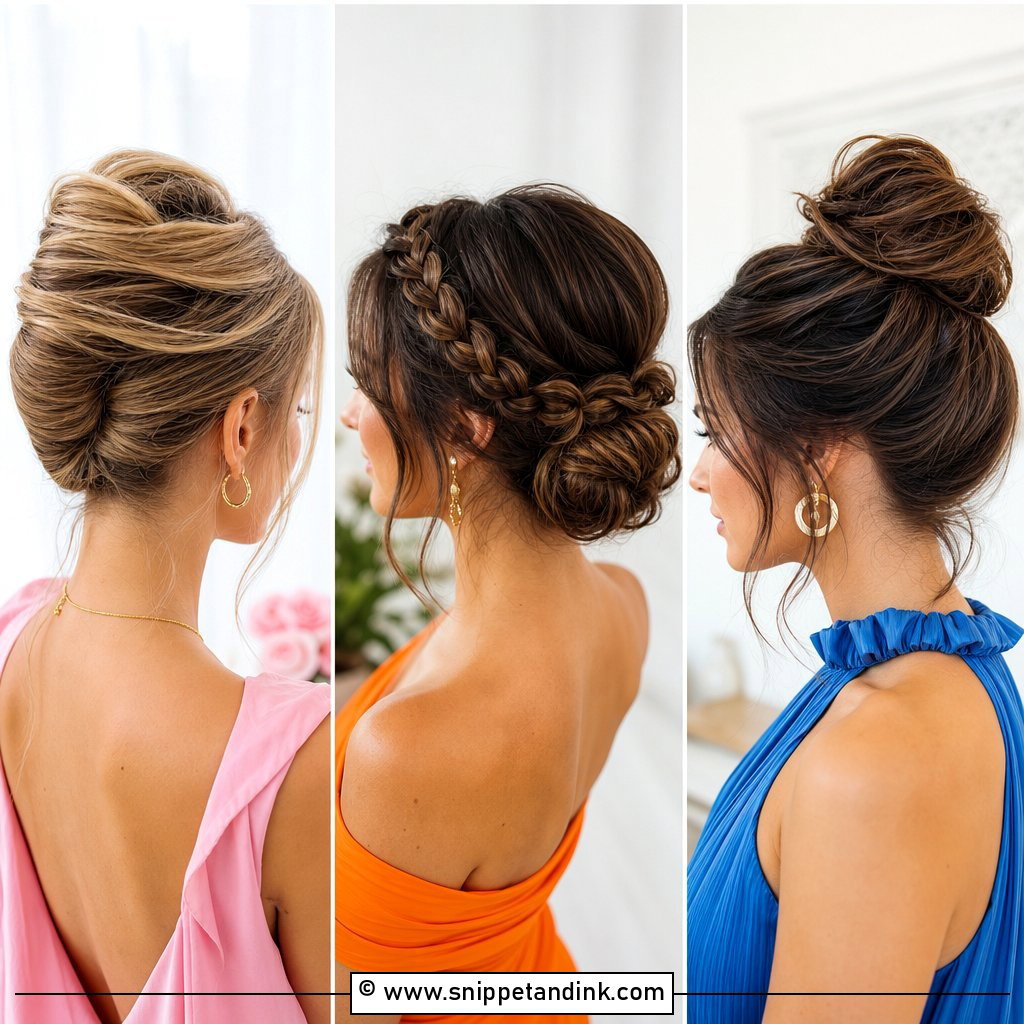
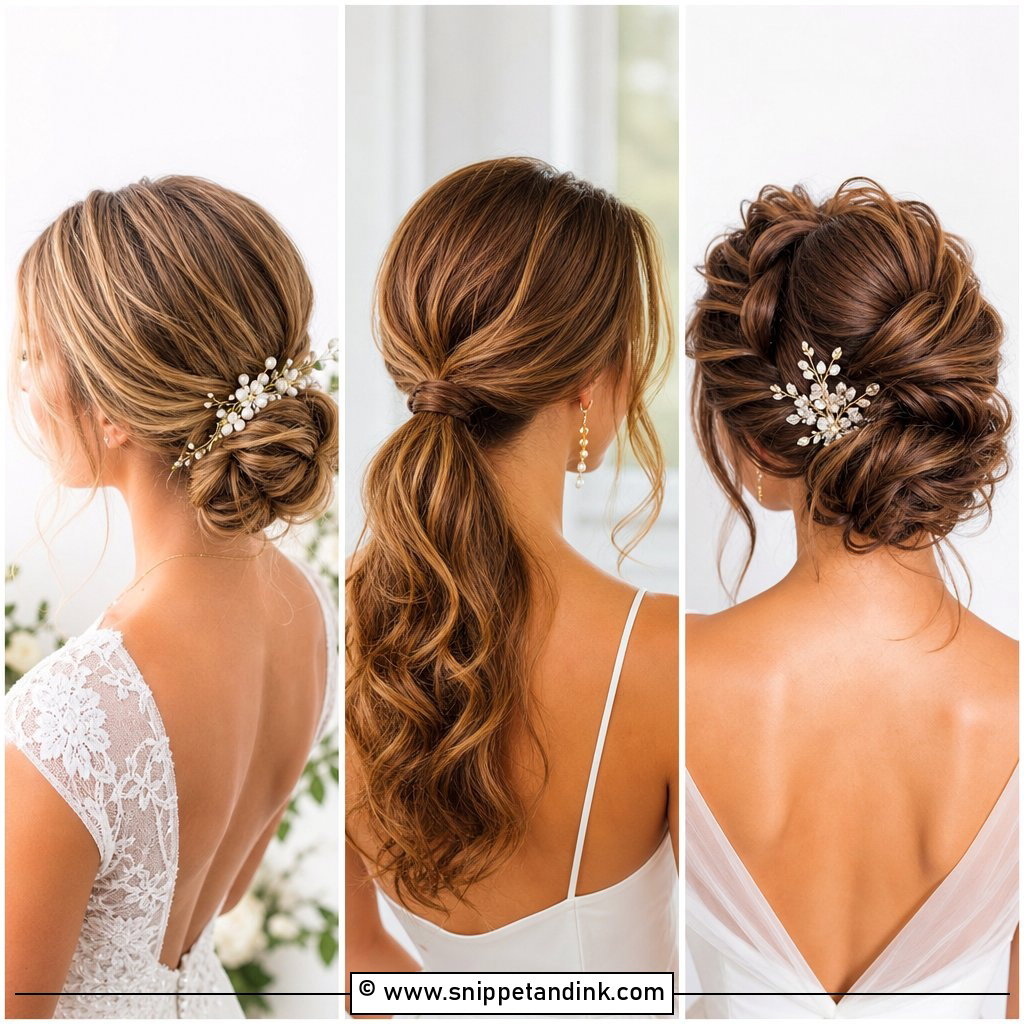
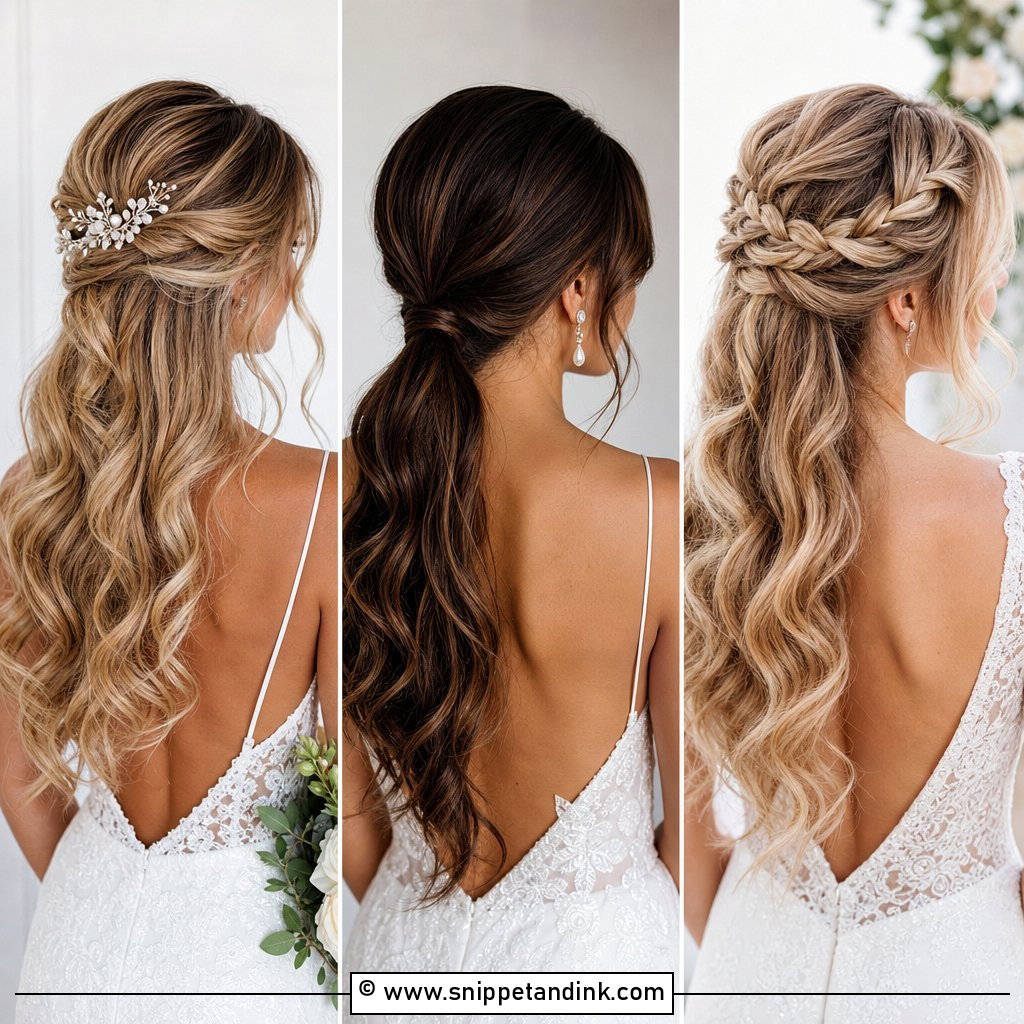
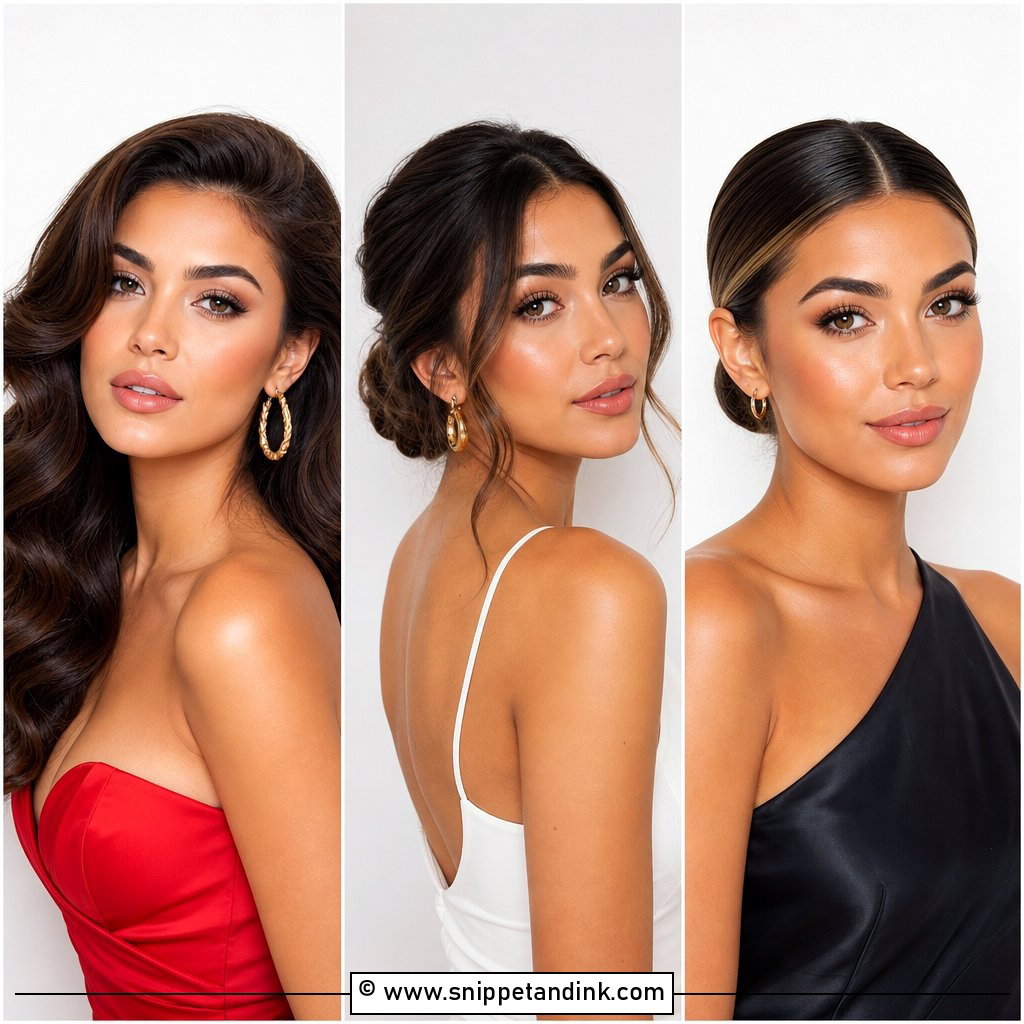
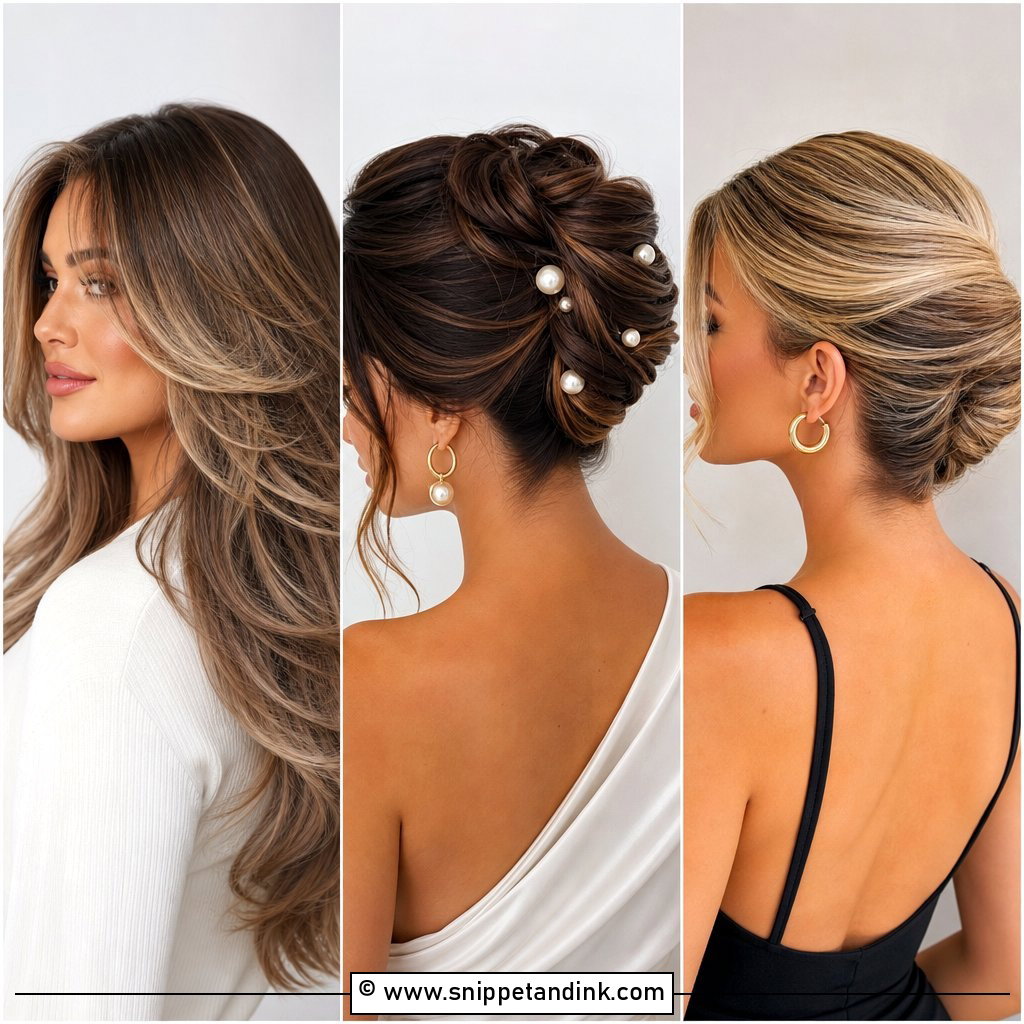
20. Wavy Hair With a Floral Crown
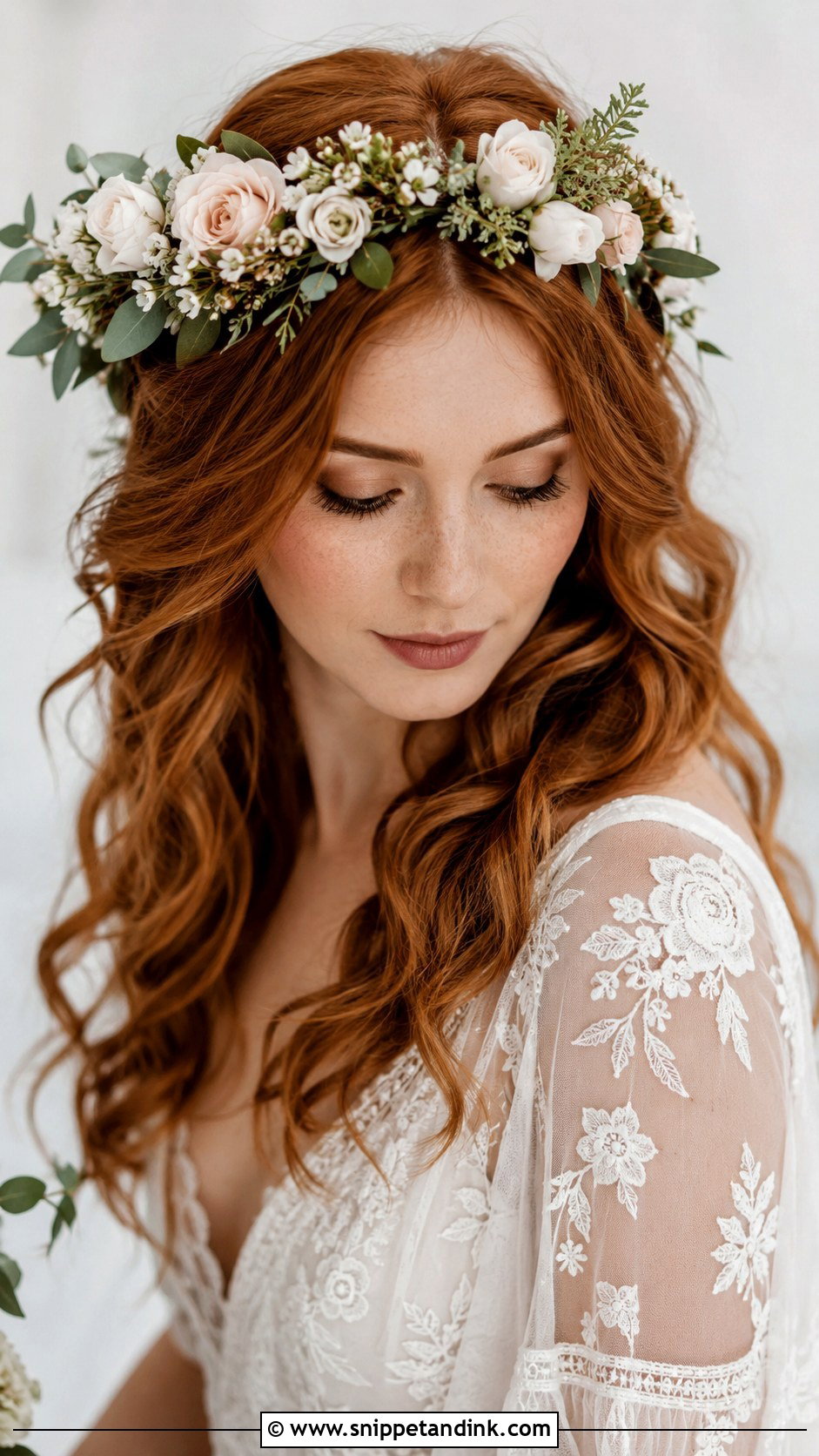
A floral crown needs a firm base, so I braid or twist a small band of hair underneath it and pin the crown to that. Otherwise it slides back as the day goes on. Waves fall freely below. Match the flowers to your bouquet or use hardy wildflowers and greenery that hold up in sun. Wavy hair with a floral crown suits a spring or outdoor ceremony, and it’s easy to take the crown off for the reception if it starts to feel heavy.
What Happens to Loose Hair Between Ceremony and Last Dance
Down hair changes throughout the day, and knowing what to expect makes it less stressful. By the time the ceremony is over, curls have usually relaxed into soft waves, which is often when they look best. During photos, wind and the veil can tangle the lengths. By the reception, hugs and the heat of the dance floor flatten the crown and frizz the ends.
Small Fixes That Work
- Keep a wide-tooth comb, a few bobby pins and a travel-size hairspray with a bridesmaid.
- To revive flat curls, twist a section around your finger, spray lightly and hold for a few seconds.
- Lift a flat crown with your fingertips at the roots, then mist with spray from a distance.
- If the ends start to frizz, a tiny drop of hair oil smoothed between your palms tames them without weighing hair down.
- After the veil comes off, check the back in a mirror; veil combs sometimes leave a dent you can fix with one pin.
Plan a Backup
If it’s hot, ask your stylist to show you a quick way to pull your hair into a low twist or half-up with a couple of pins. Practice it once after your trial. It takes two minutes and saves the evening if your neck gets hot under a full head of curls.
How Much Hair Comes Up Is the Real Decision
Most of these looks differ in one way: how much hair is pinned back. Fully down shows off length and movement but needs the most care to hold. Half-up keeps hair out of your face and gives your veil and accessories something to sit on. A loose low twist clears the neck for heat or a detailed neckline. Start with that choice, then pick the texture: sleek, waved or curled. Take your veil and accessories to your trial and wear the look for a few hours before you decide.
You'll Like These Ideas:


Leave a Reply