
Sweeping the hair to one side does three jobs at once: it frames the face, puts one earring fully on show and gives a veil a natural place to fall. That’s why it works with both a soft garden gown and a sleek satin column. The current mood in bridal hair is touchable texture and glossy waves rather than stiff, heavily sprayed sets, and a side sweep suits that well. It also travels across styles. Down, braided, pinned, curled or gathered into a low bun, you keep the same elegant asymmetrical effect. I’ve noted below what each version needs from your hair and your dress.
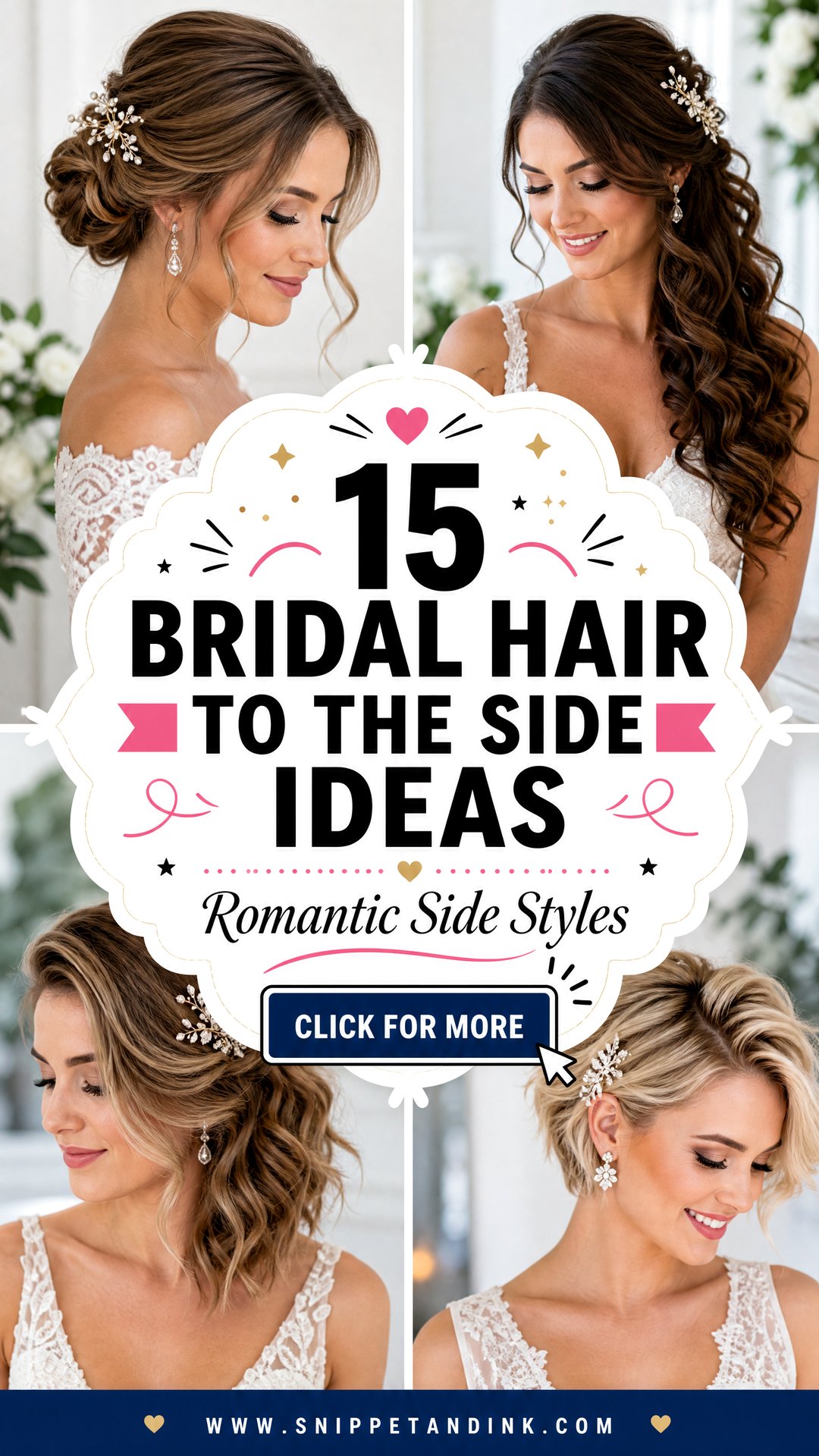
Left or Right? Settle the Side First
It sounds trivial, but the side you sweep toward shapes everything else, from where the veil goes to which earring you’ll see in photos. A few things usually decide it, and I go through them at the start of every trial.
- Your natural part. Hair falls most easily away from the side it grows from. Forcing a sweep against your part is possible, but it needs more product and tends to drift back by evening.
- Your better side. Most of us have one. Take a few selfies with your hair pushed each way and pick the one you instinctively prefer.
- The dress. With a one-shoulder gown or an asymmetric neckline, the hair usually falls over the bare shoulder so it doesn’t bunch up against fabric or straps.
- Where you’ll stand. Ask your officiant or planner which side you’ll be on during the ceremony. Many brides like the sweep facing the guests, so the open side of the face is toward their partner.
Once you’ve chosen, keep it consistent. Use the same part for your makeup trial too, since contour and highlight sit slightly differently on the uncovered side.
1. Side Swept Bridal Waves
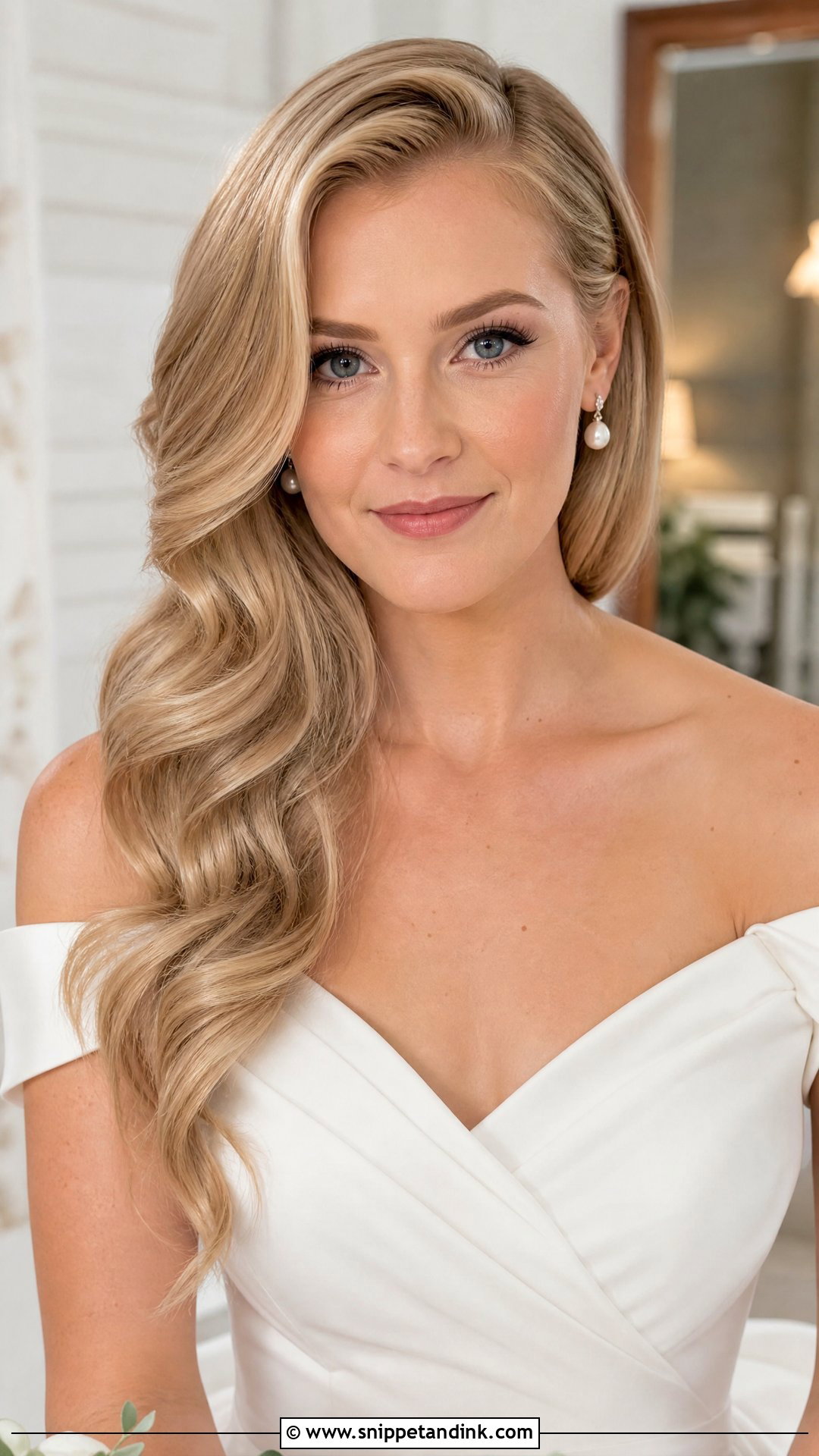
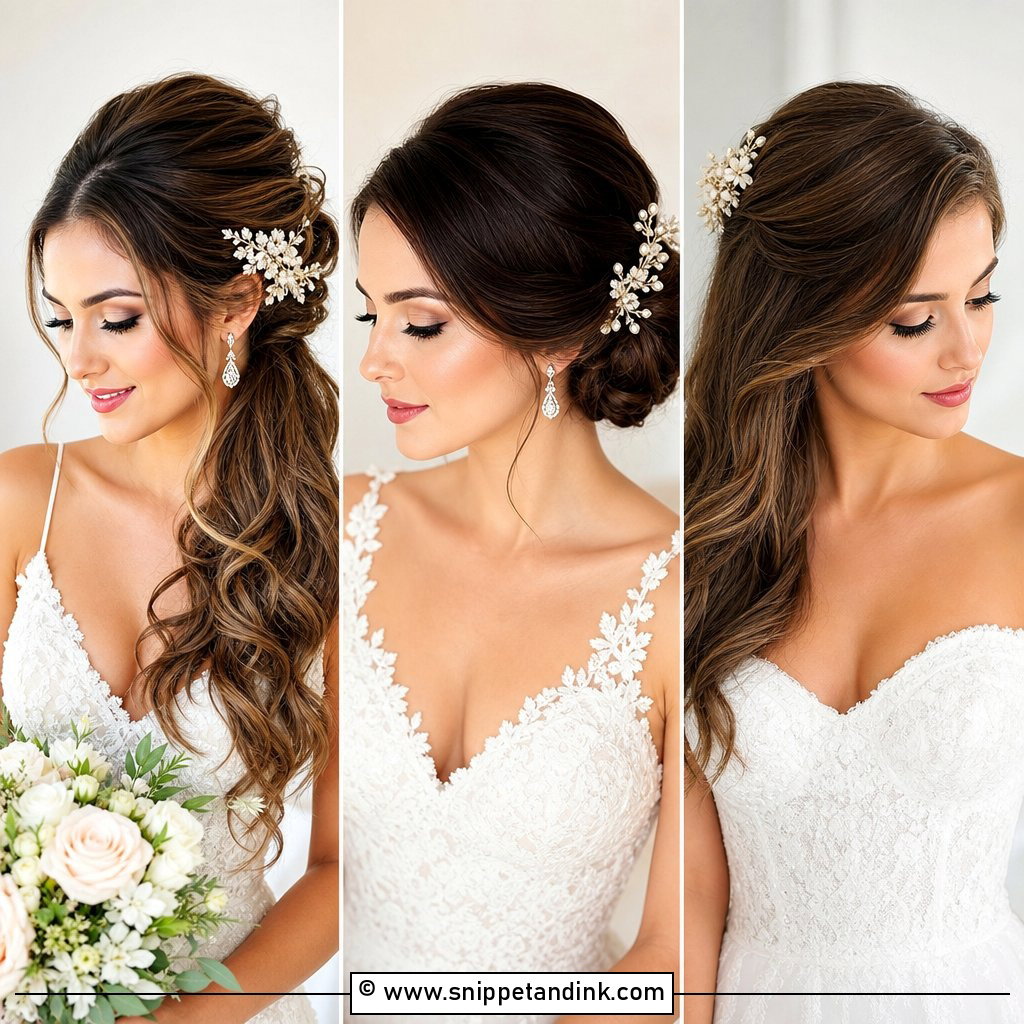
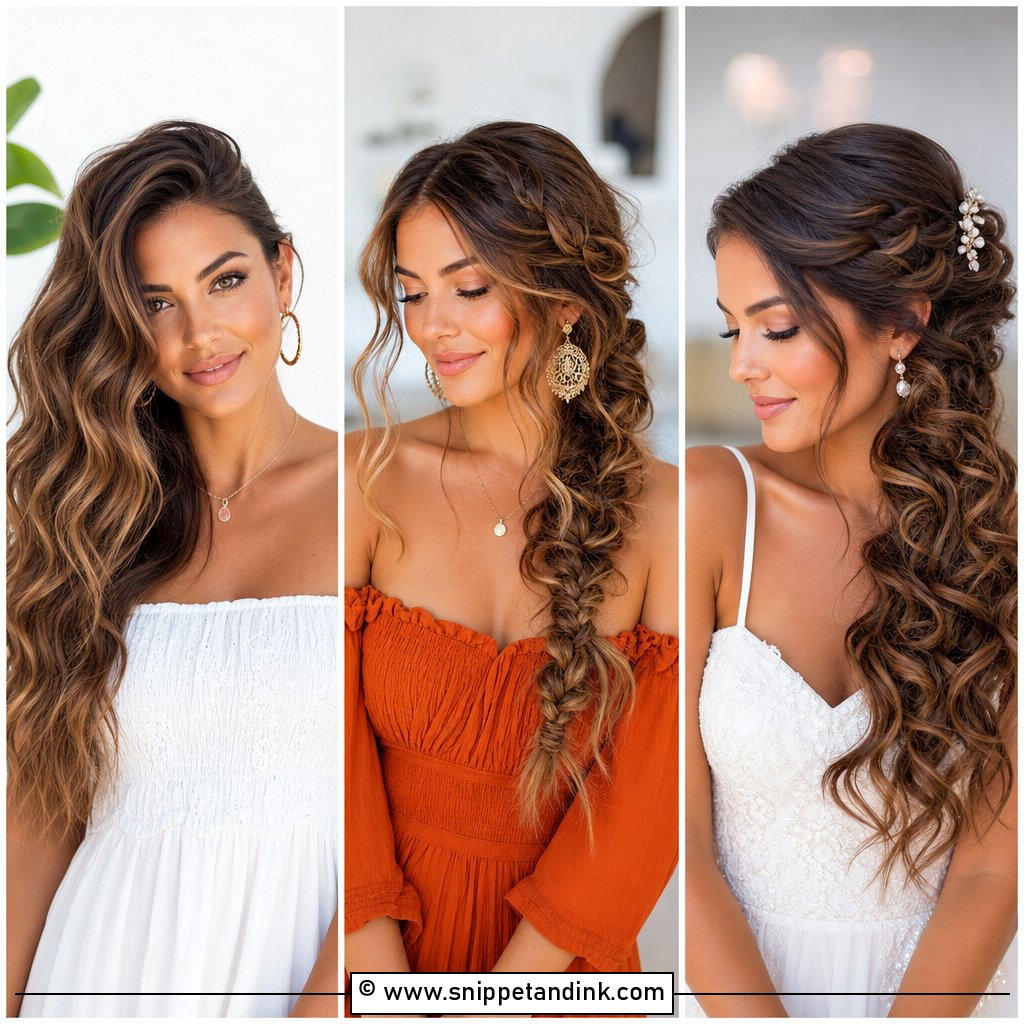
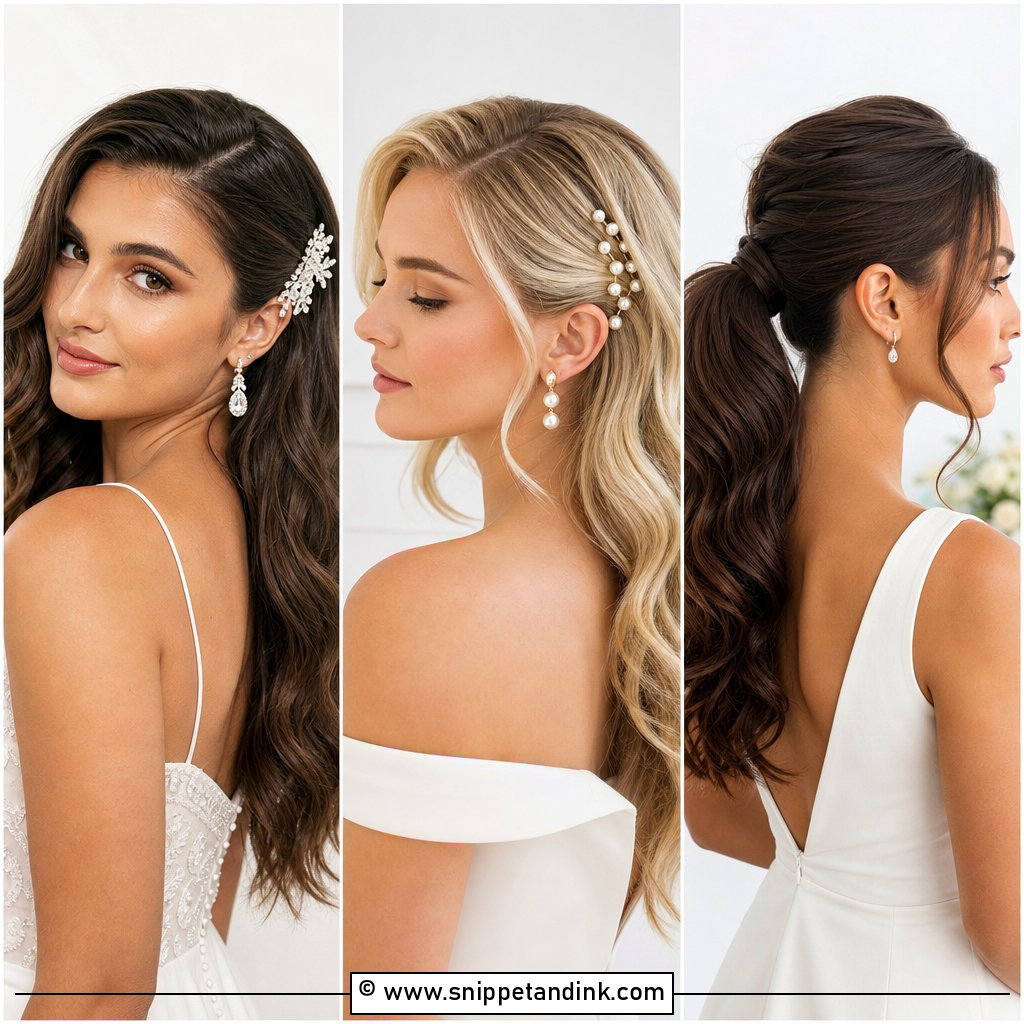
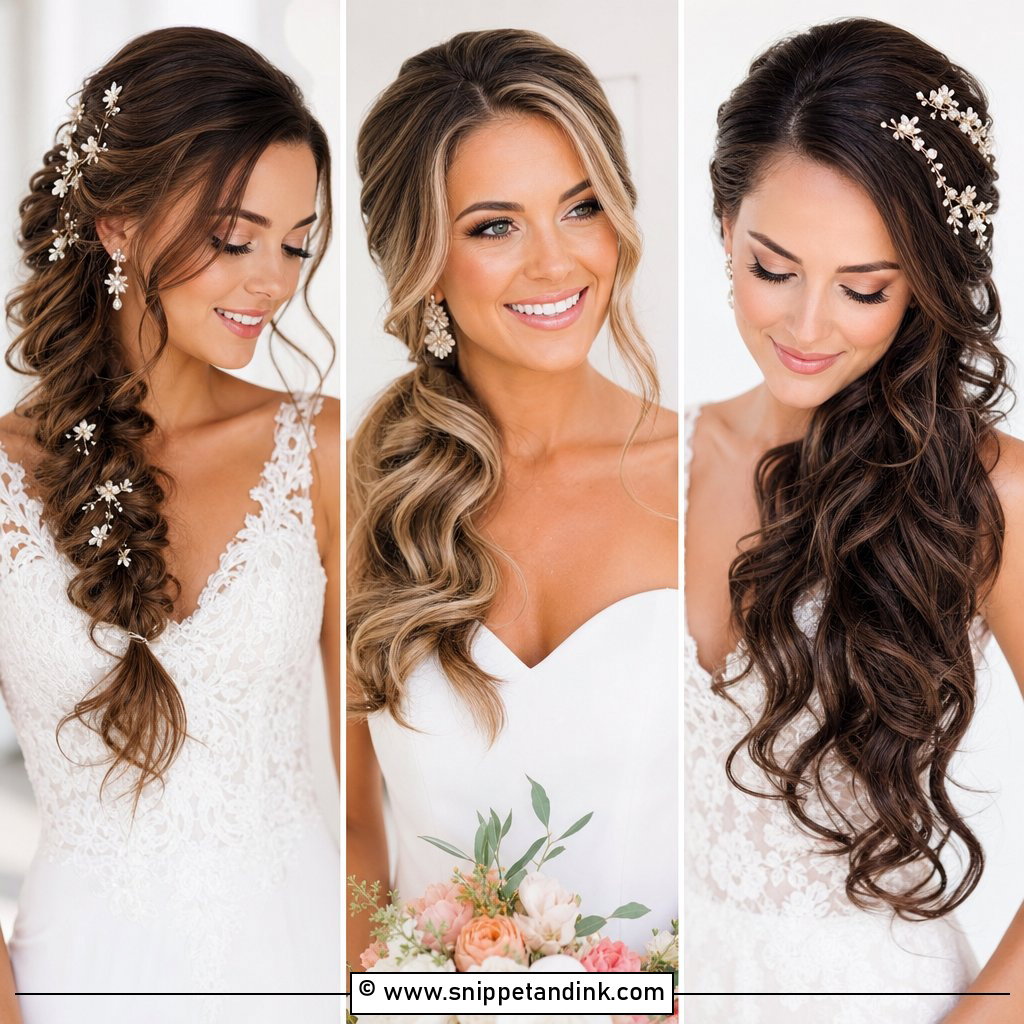
Waves over one shoulder are the version I’m asked for most. The part goes deep, and the curls are set and brushed so they fall in one direction toward the open side of a strapless or off-the-shoulder neckline. The swept side needs an anchor, or it slides back by the speeches; I set a couple of crossed pins under the top layer behind the ear, sometimes with a little backcombing at the root. Ask for flexible hold, not crunch. If your hair is fine, clip-ins add the thickness the photos show.
2. Side Swept Hollywood Waves
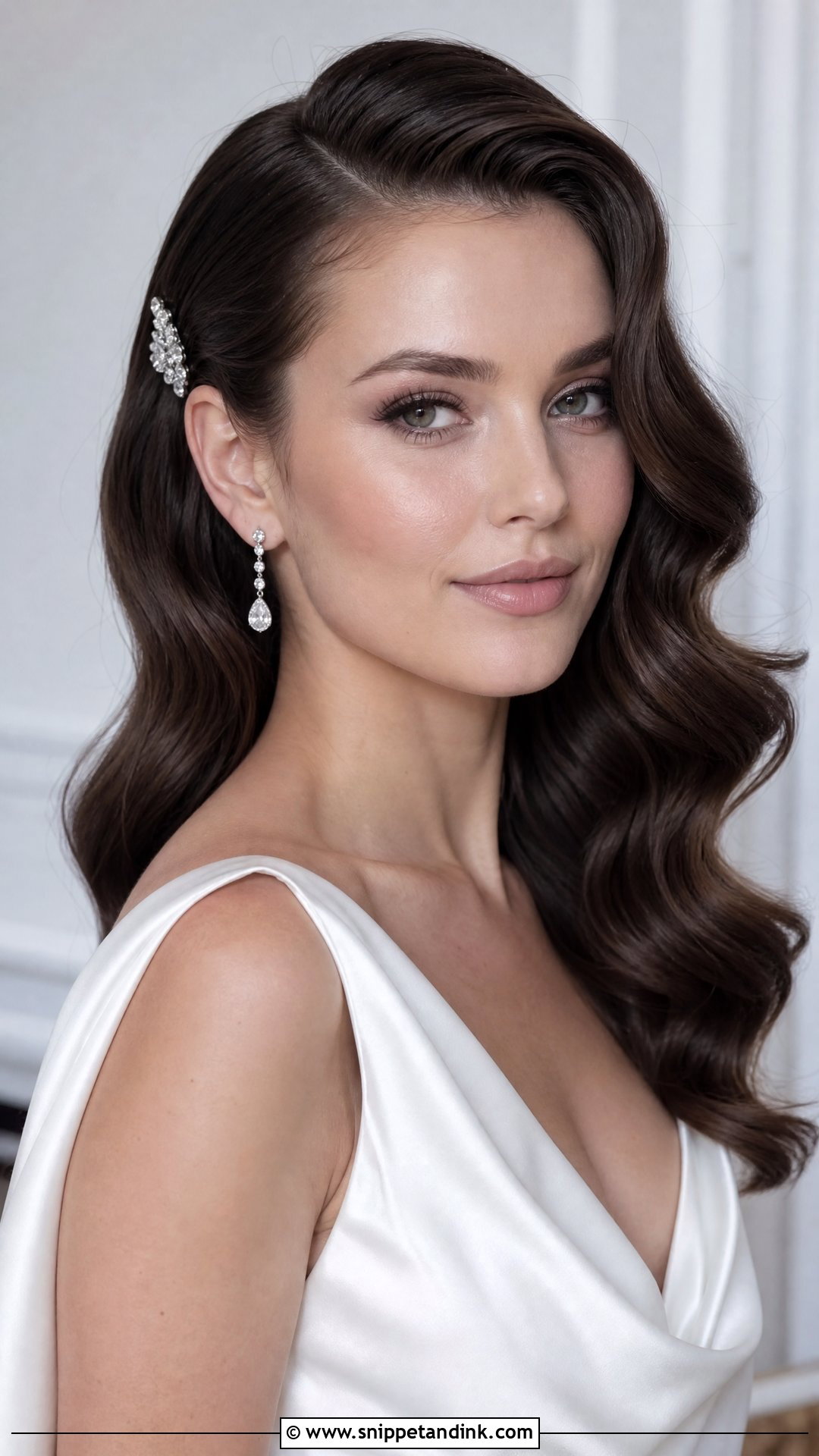
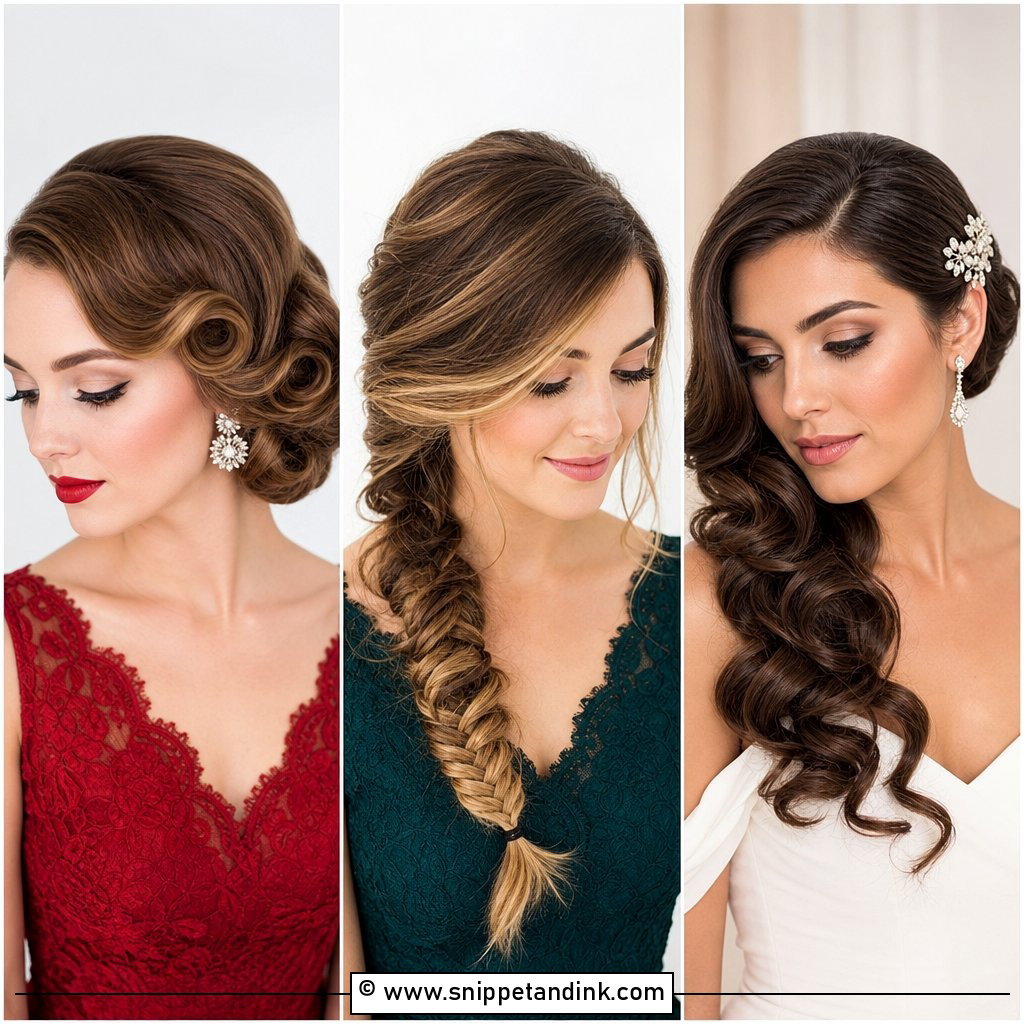
Hollywood waves are sculpted rather than loose. Every curl is wound in the same direction, pinned to cool, then brushed into one continuous S-shape that runs from the deep part to the ends. That precision suits black-tie venues and sleek gowns. A pearl earring or a single comb behind the ear is all it needs. Go easy on shine spray: a light mist gives gloss, but a heavy one makes the ripple look wet and flattens it within the hour.
3. Side Swept Bridal Curls
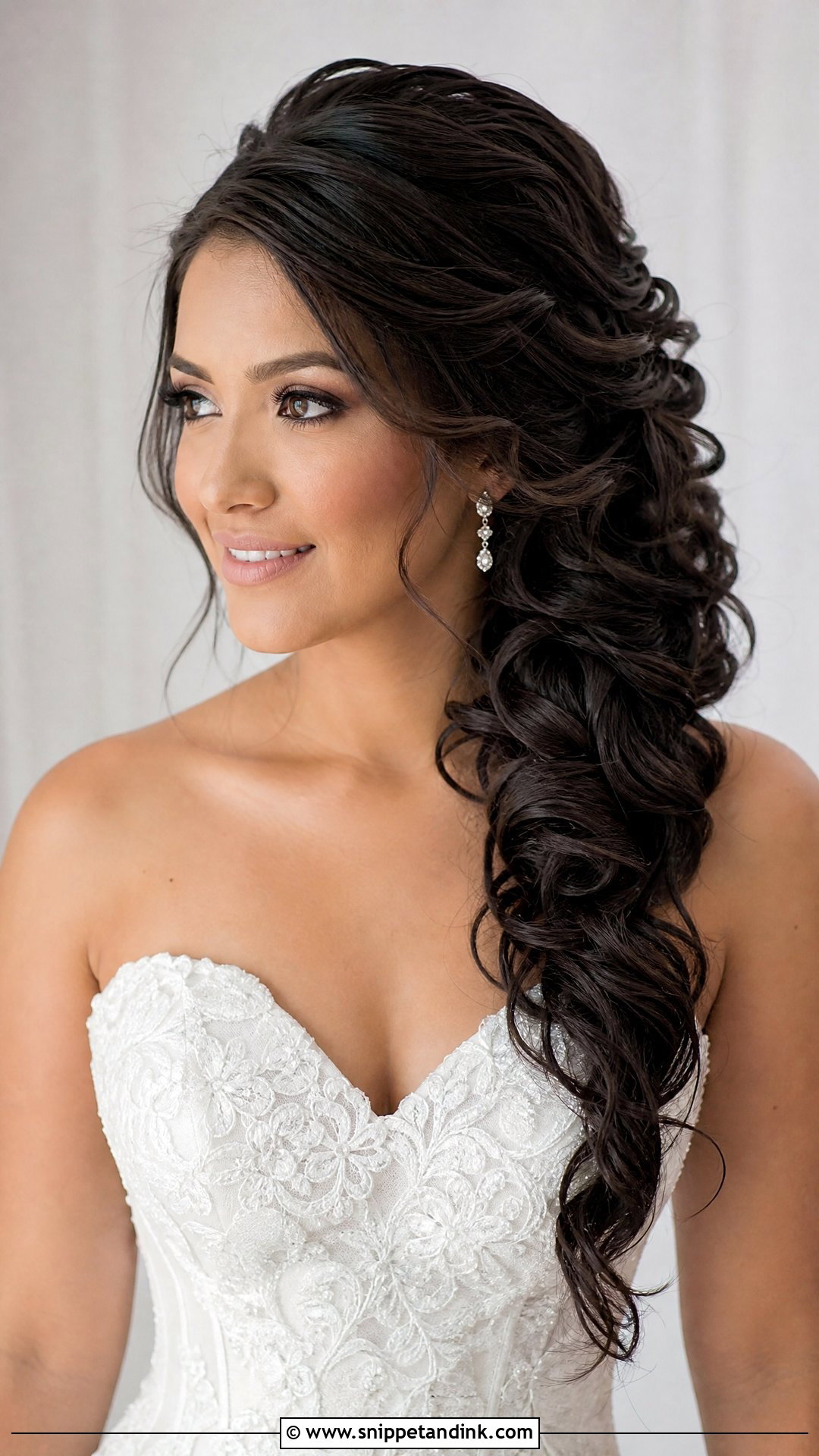
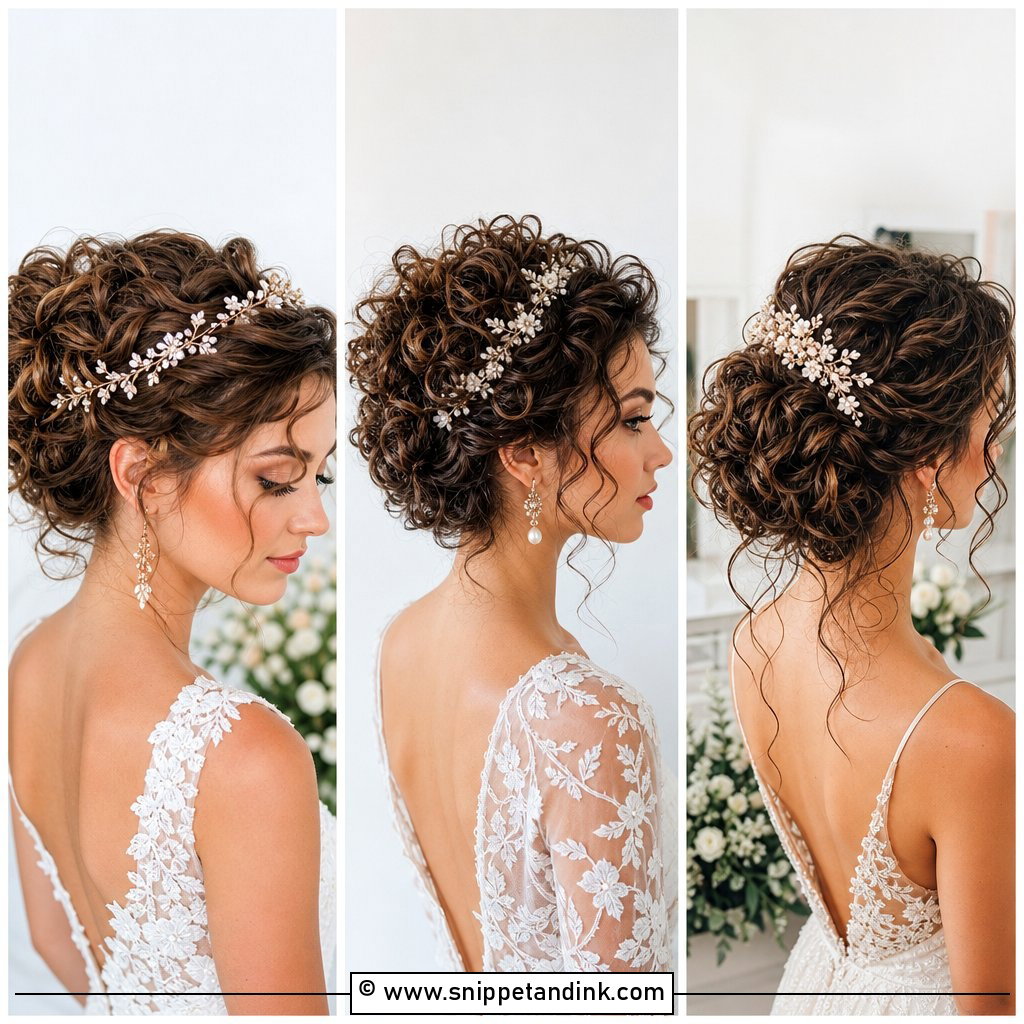
Curls hold more volume than waves, so a side-swept curl look reads fuller from the front and in profile. I set medium curls, brush them out slightly and pin the hair on the opposite side so they cascade over one shoulder. It suits lace gowns and sweetheart necklines. Some hair drops a curl within an hour; if that’s you, I’ll set a smaller curl at the trial than you want for the photos, because it relaxes into the right size by the ceremony.
4. Side Swept Half Up Bridal Hair
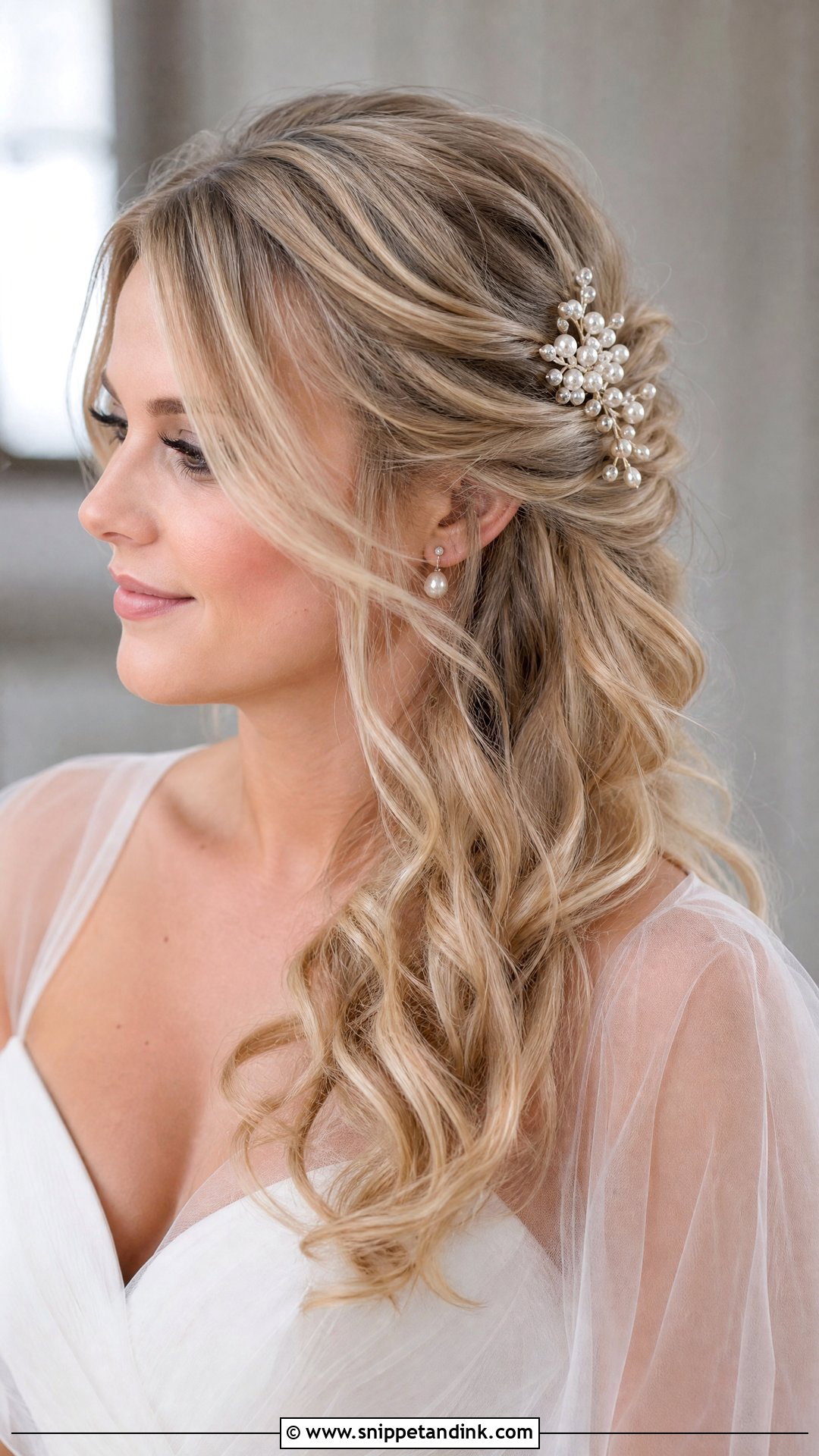
Half up and swept to one side is the most secure way to keep loose hair in a side shape. The top section is lifted and pinned or twisted back, and the curls below are swept over one shoulder. Face-framing pieces stay, but the rest won’t fall forward during the vows. The pinned section doubles as the veil’s anchor. A small comb or a few pearl pins at the point where the hair gathers hides the pins underneath.
5. Side Swept Bridal Braid
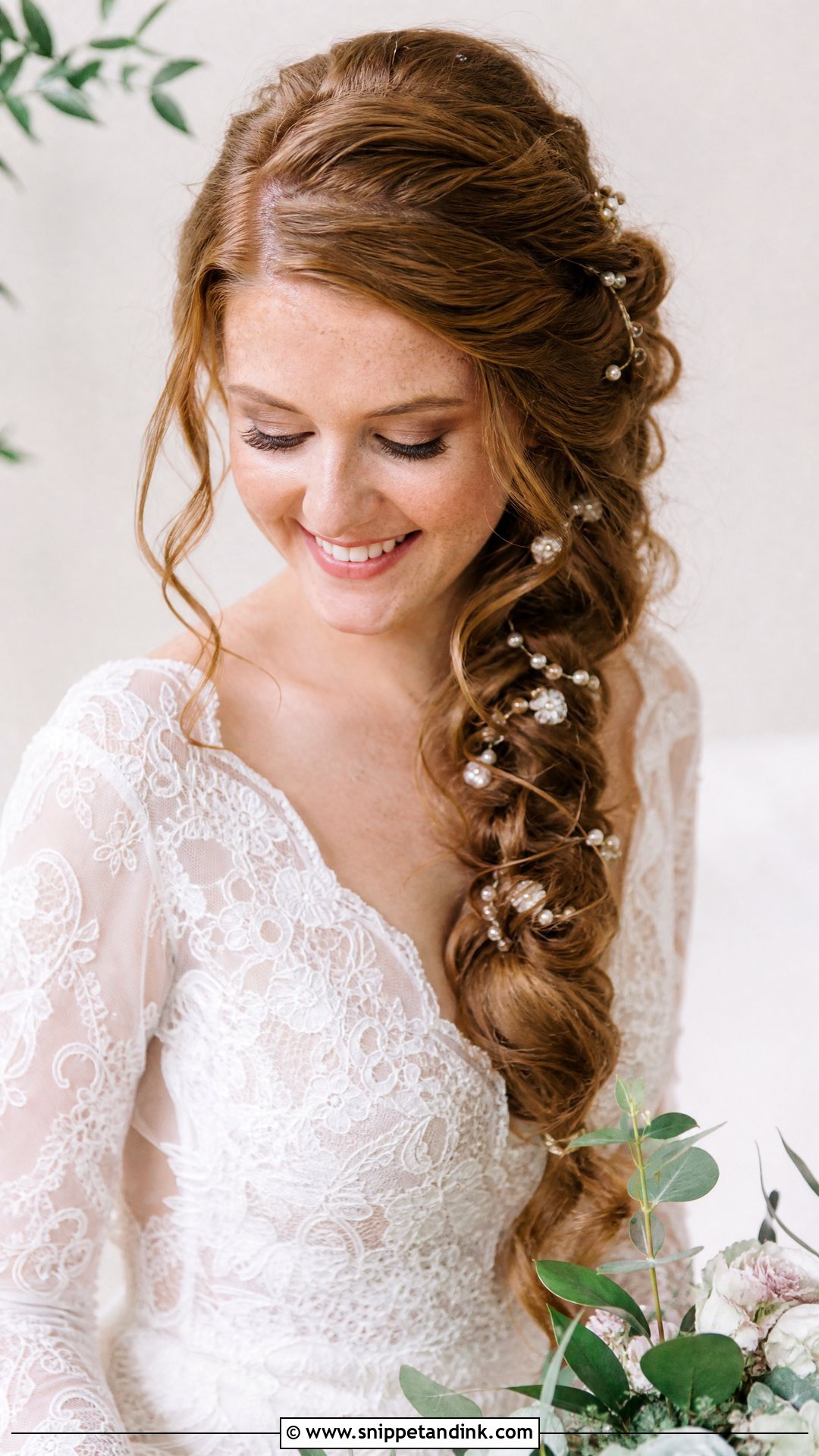
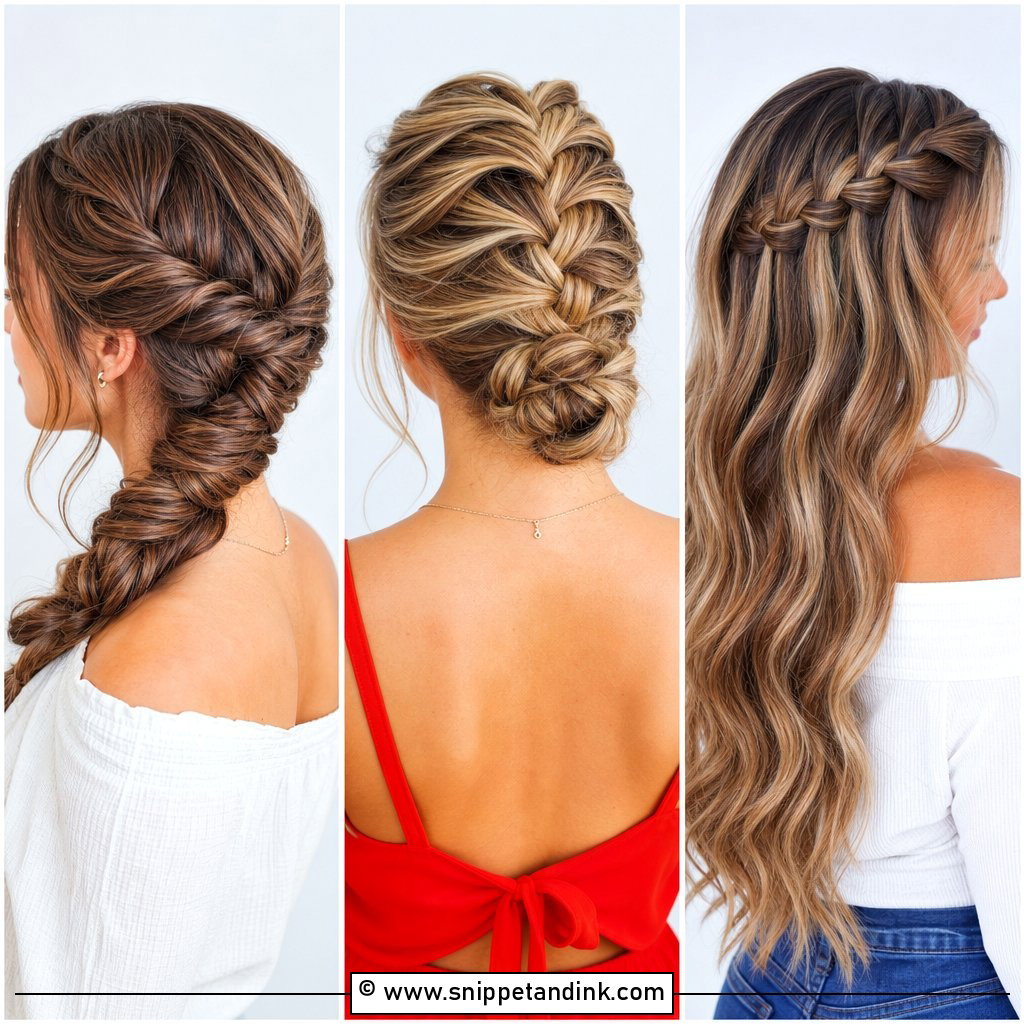
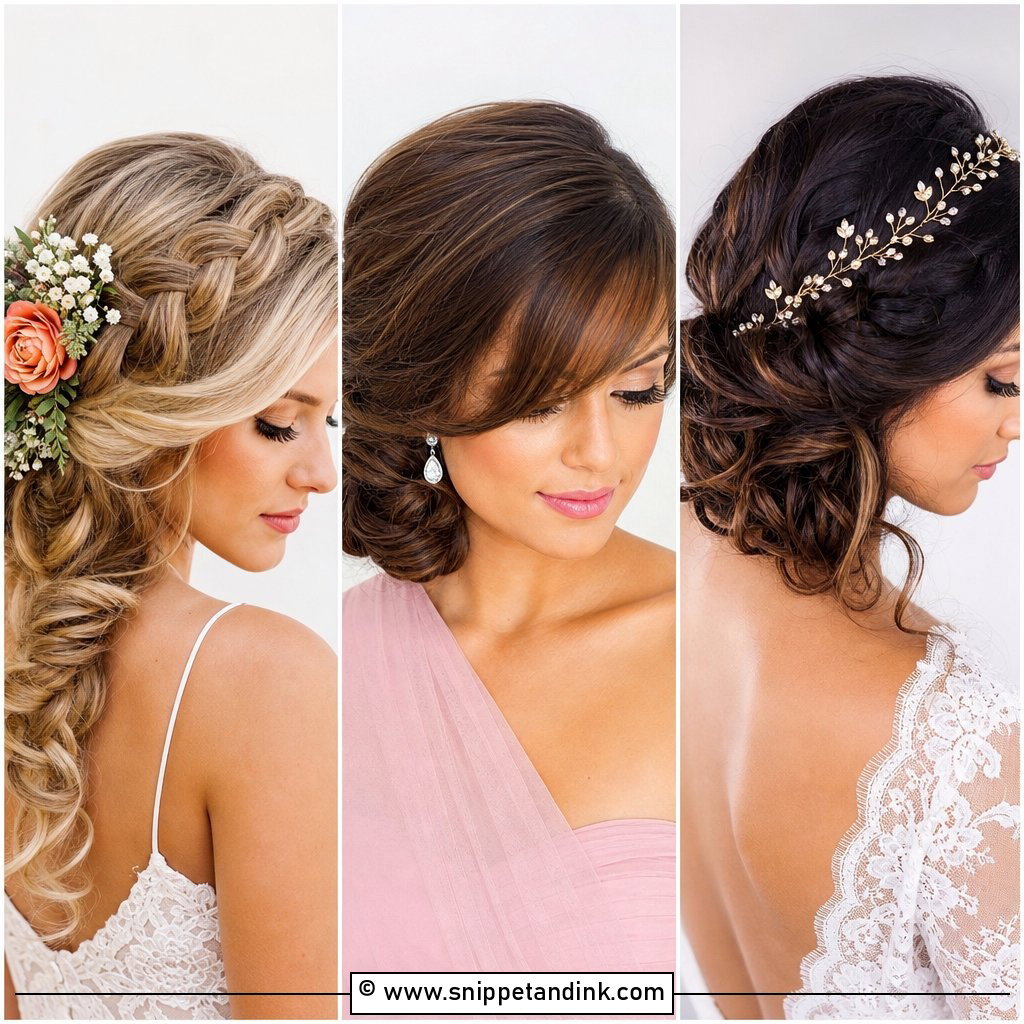
A loose side braid has a slightly boho feel and is comfortable to wear for hours. I pull each section apart gently after braiding, so it looks soft rather than school-neat, and leave curls at the front. It needs density to look balanced, so it suits long or thick hair, or hair with extensions braided in. On windy outdoor sites it holds better than loose curls. Small flowers, pearl pins or a dainty vine can be woven through.
6. Side Swept Fishtail Braid
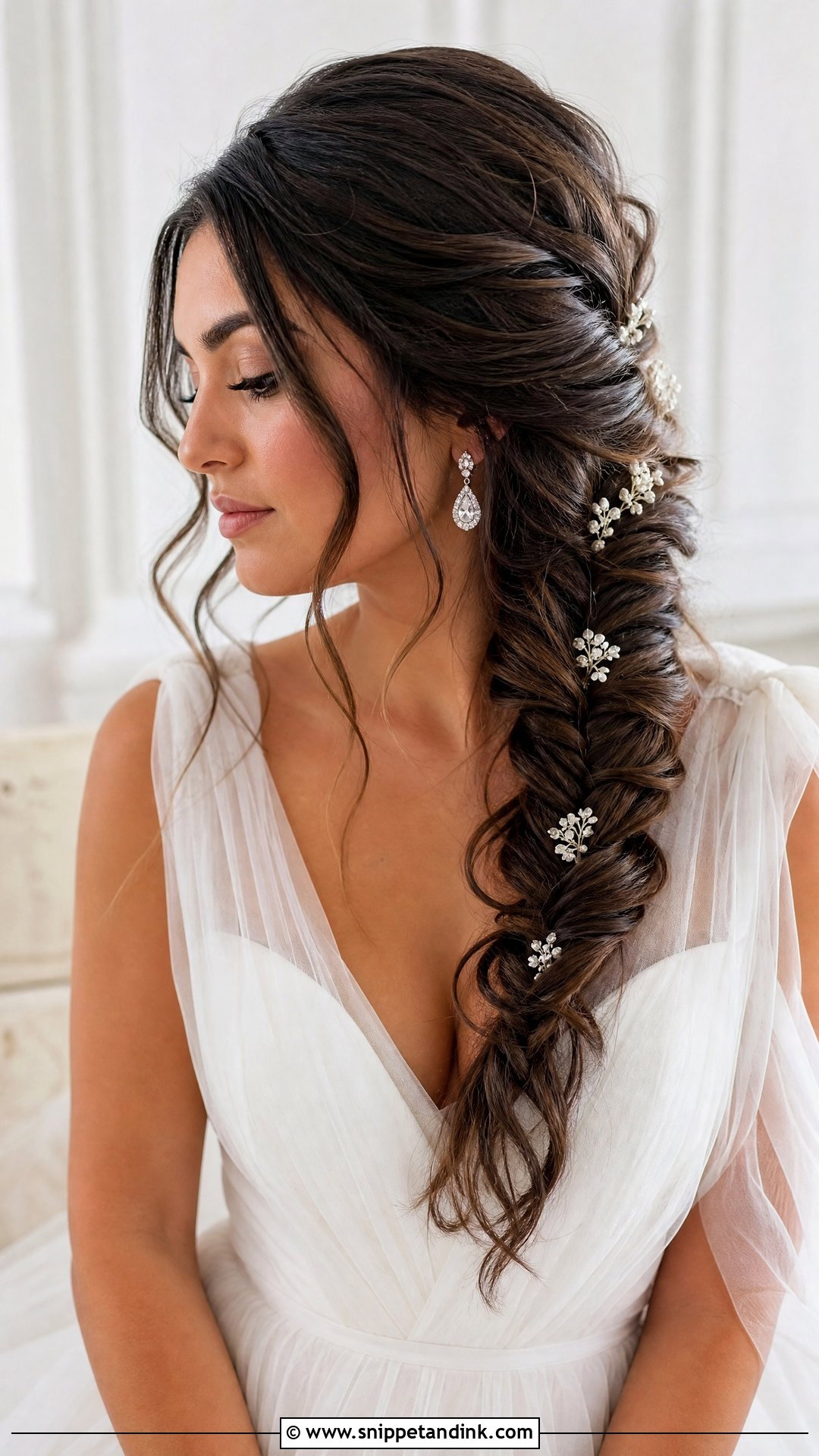
A side swept fishtail braid has a finer, woven texture than a classic braid, which close-up photos pick up well. Loosened for width, it looks more current. It needs medium to long hair, and extensions make it noticeably fuller. The common mistake is a flat crown: I lift the top before starting the braid and leave a few curled pieces around the face. Beach and garden settings suit it, with a few pearl pins as the only accessory.
7. Side Swept Bridal Bun
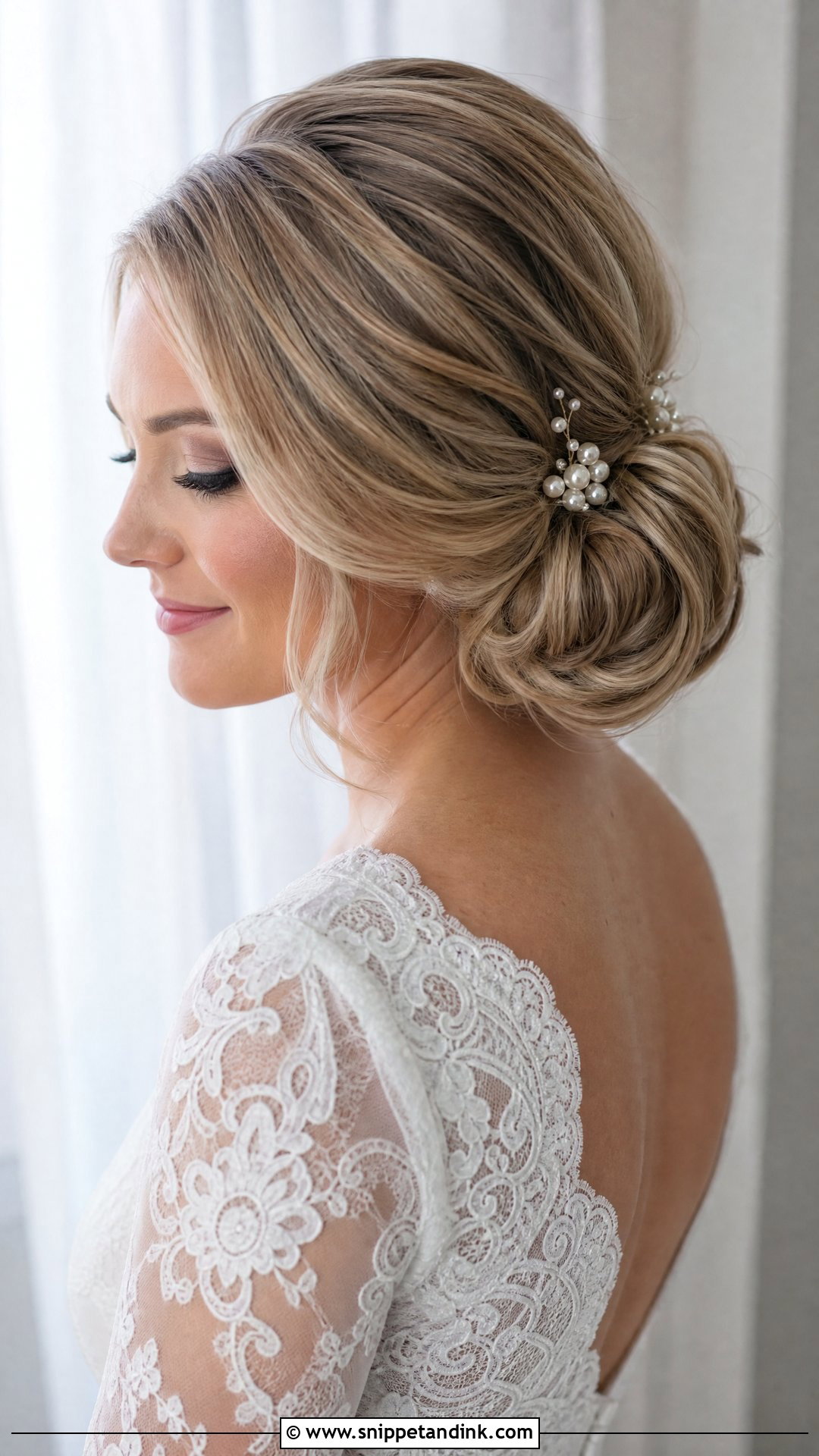
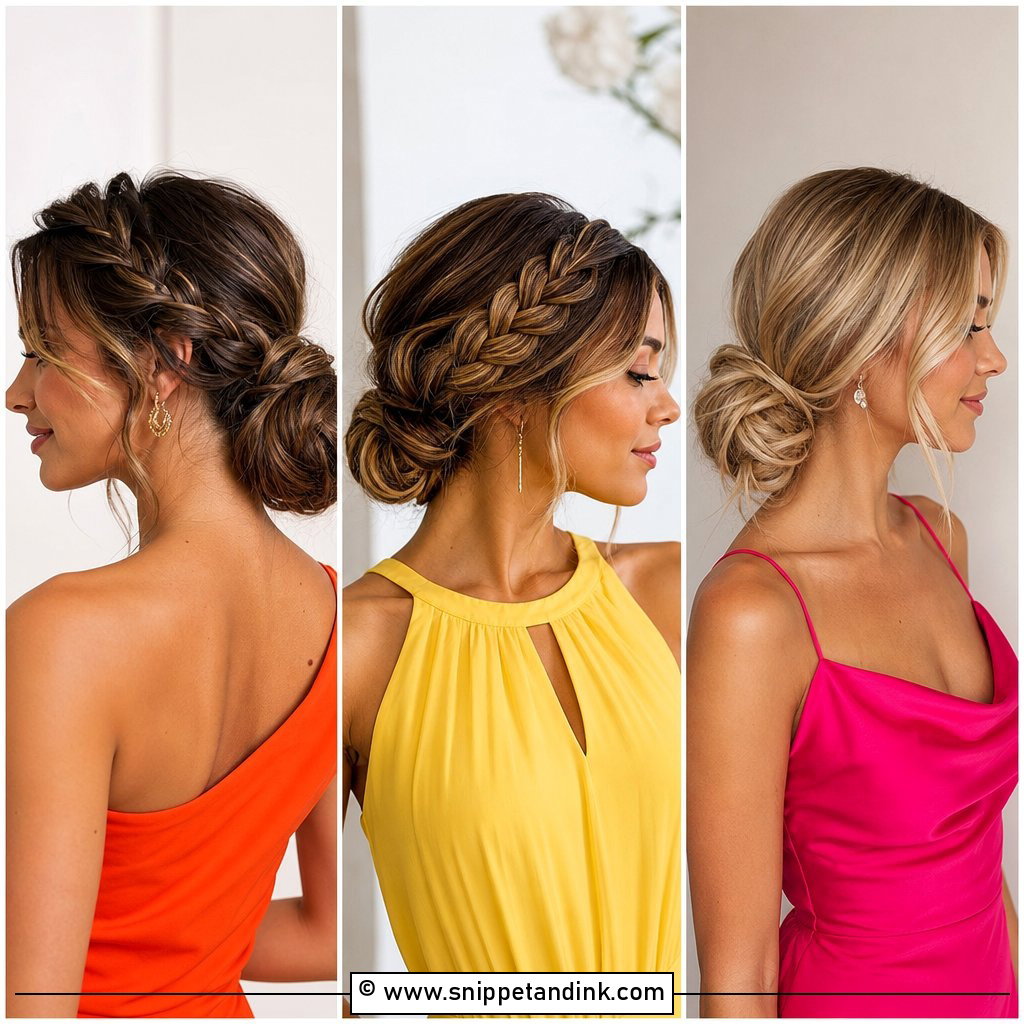
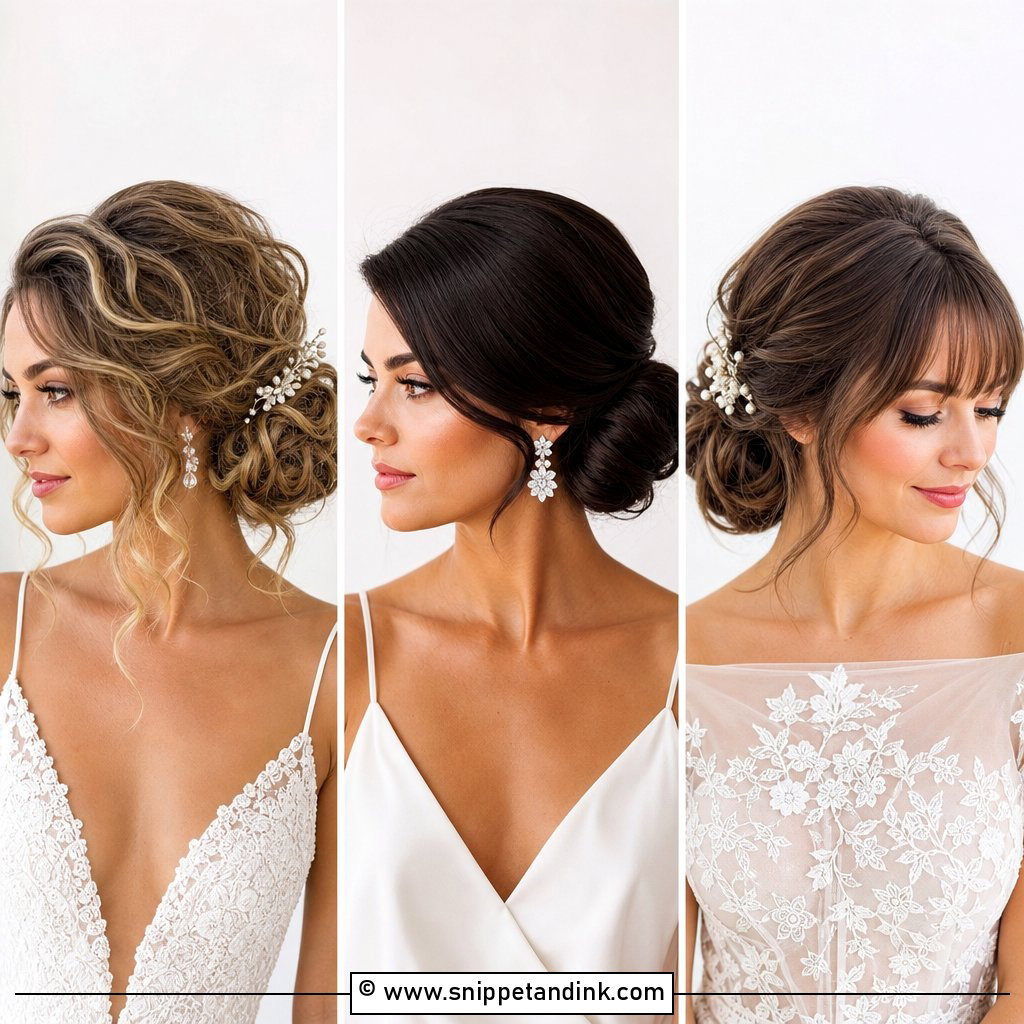
A low bun set to one side of the nape keeps everything controlled while still looking soft. The front can be swept across the forehead or brushed back with gentle volume. It’s the side-swept option I’d choose with a detailed back, a high neckline or long sleeves, because nothing touches the fabric. Smooth reads classic; texture reads romantic. The veil can sit above or below it. Pearl pins finish it quietly.
8. Side Swept Low Chignon
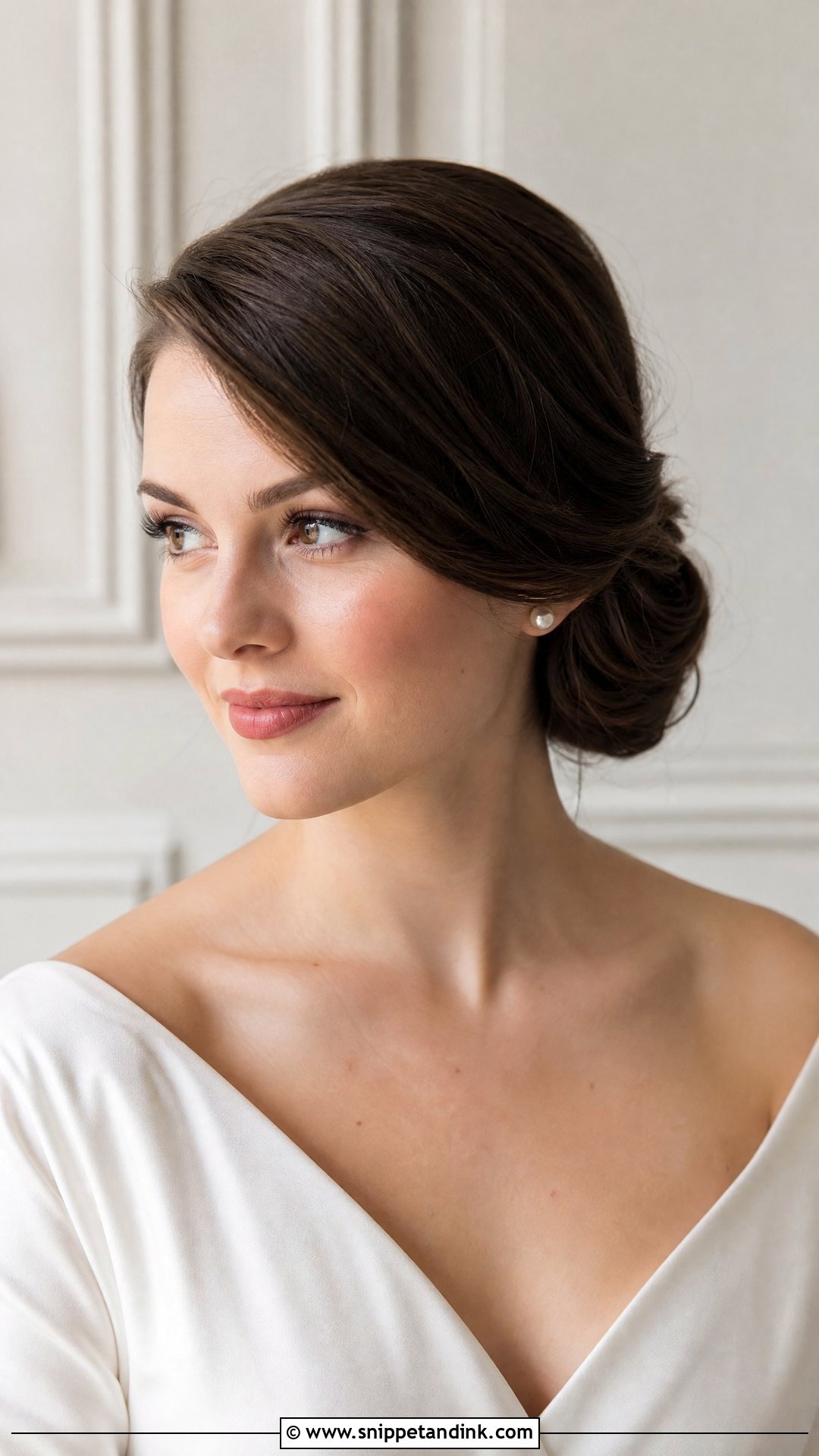
An off-centre chignon gives a softer outline than a bun at dead centre, a graceful asymmetrical line that suits satin, lace and minimal bridal looks. The front can be deeply parted, waved or tucked behind one ear. Fine hair struggles to fill a chignon, so I use a small mesh pad or a clip-in piece inside the roll. Keep the crown smooth and the roll lightly textured.
9. Side Swept Ponytail Bridal Hair
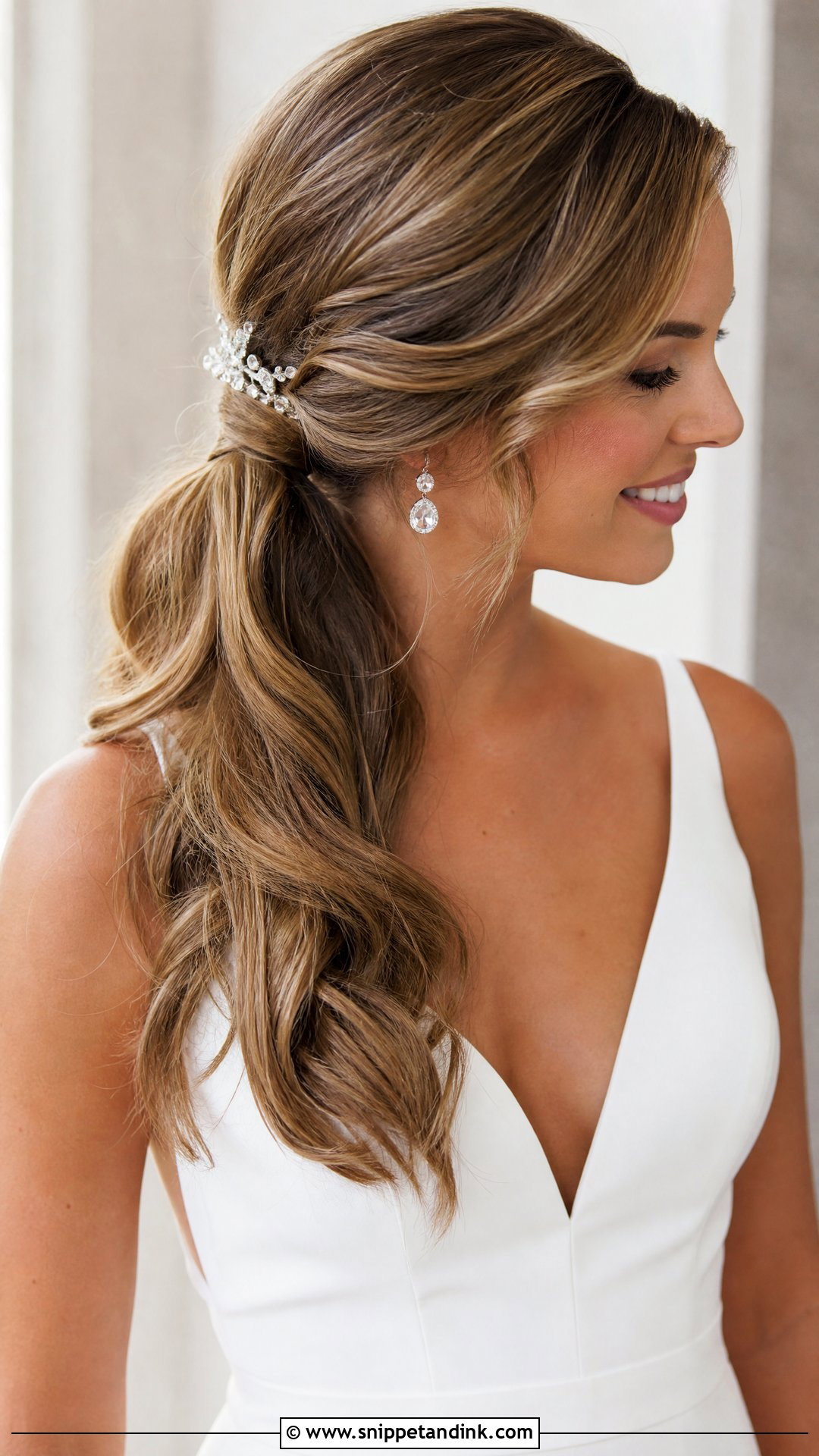
A ponytail set at the nape and pulled over one shoulder is comfortable and keeps the hair visible in front-on portraits, which a centred ponytail doesn’t. It can be loose and curled or sleek and polished. I hide the elastic under a wrapped strand of hair pinned underneath. One practical point: put the ponytail on the shoulder away from your bouquet arm, or it gets crushed in every walking shot. A pearl clip or ribbon at the base finishes it.
10. Side Swept Bridal Hair With Veil
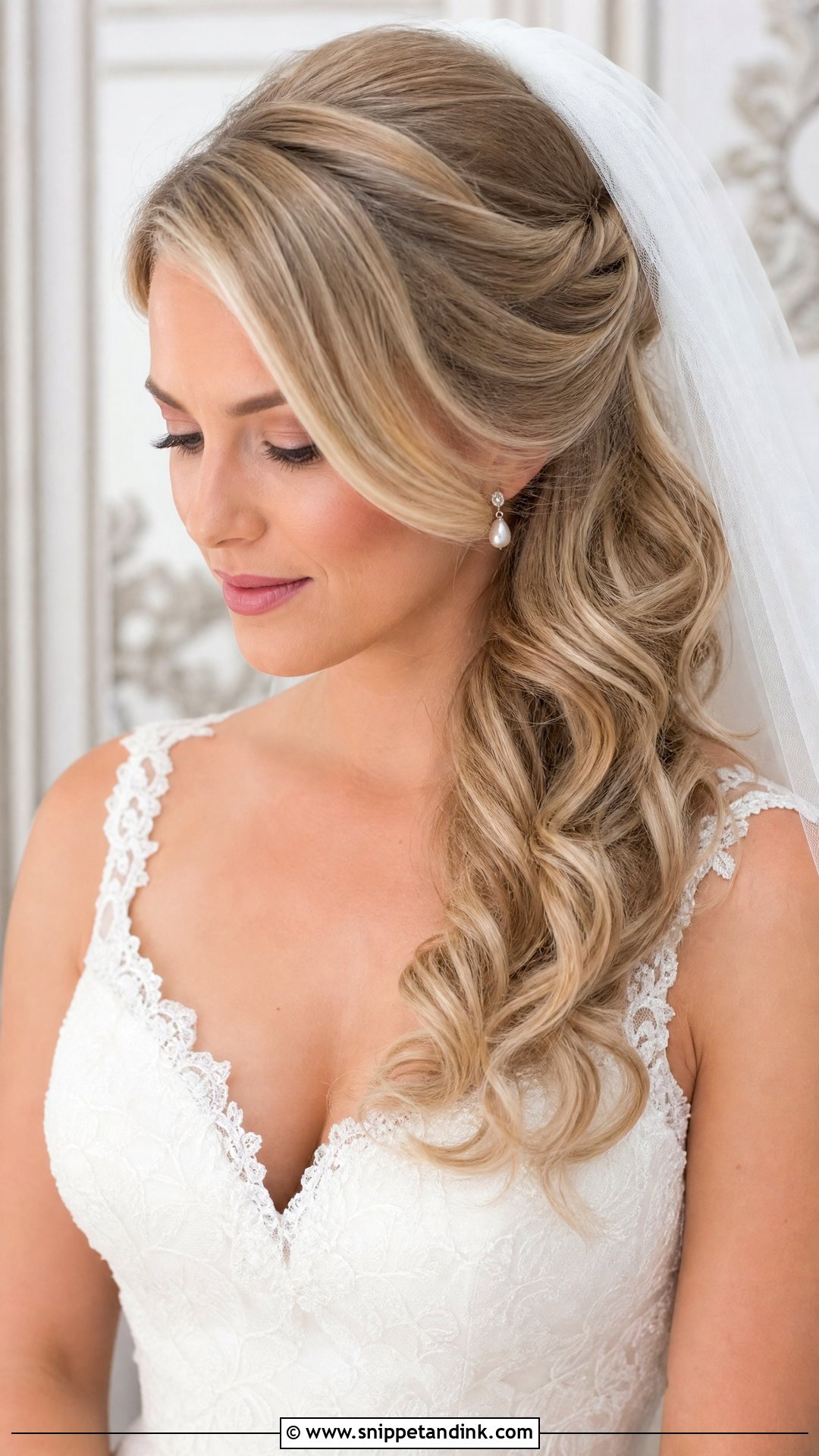
Adding a veil to a side sweep comes down to one question: where does the comb go? Loose waves, curls, low buns and half-up styles all take a veil, but each needs a different spot. At the crown it feels classic; lower, near a bun, it feels softer. With mostly loose hair, I build a hidden anchor first, crossed pins or a small braid under the top layer, so the comb grips without flattening the volume on the swept side.
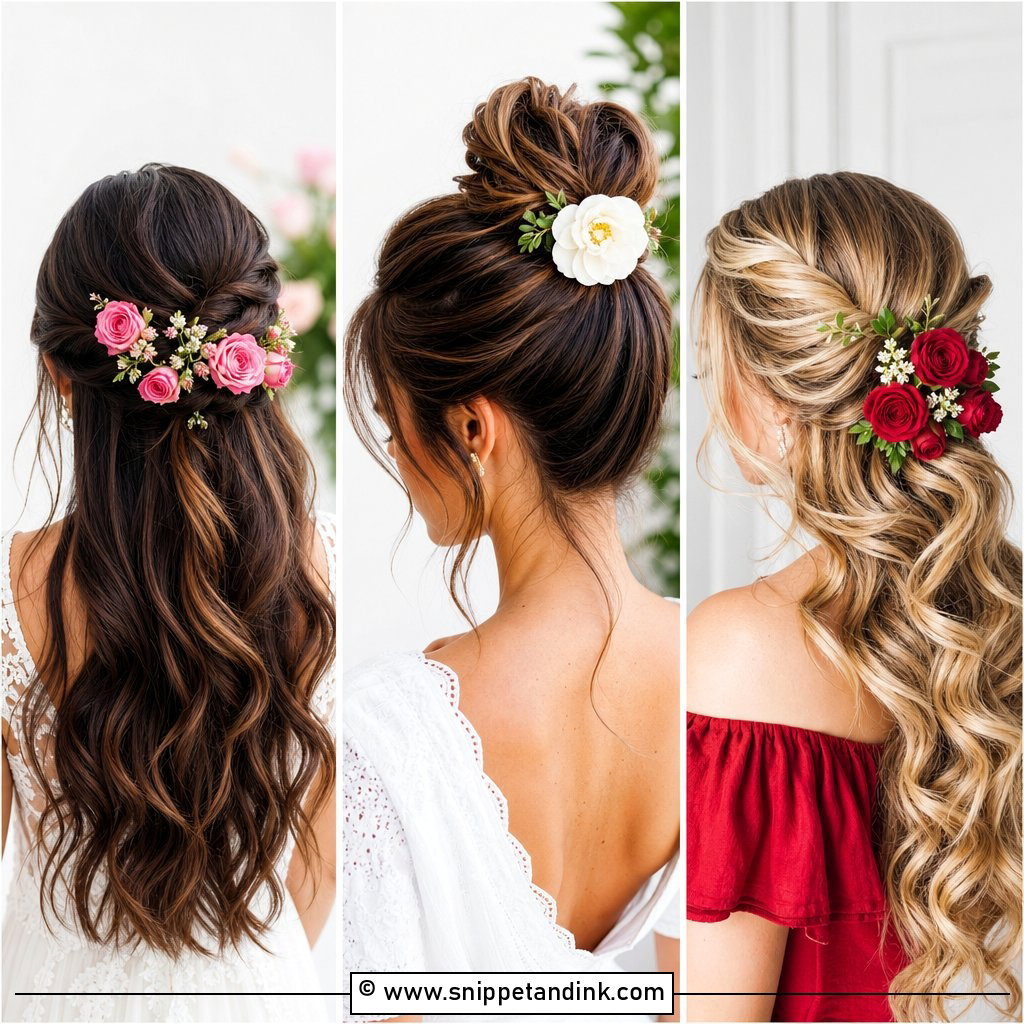
11. Side Swept Bridal Hair With Flowers
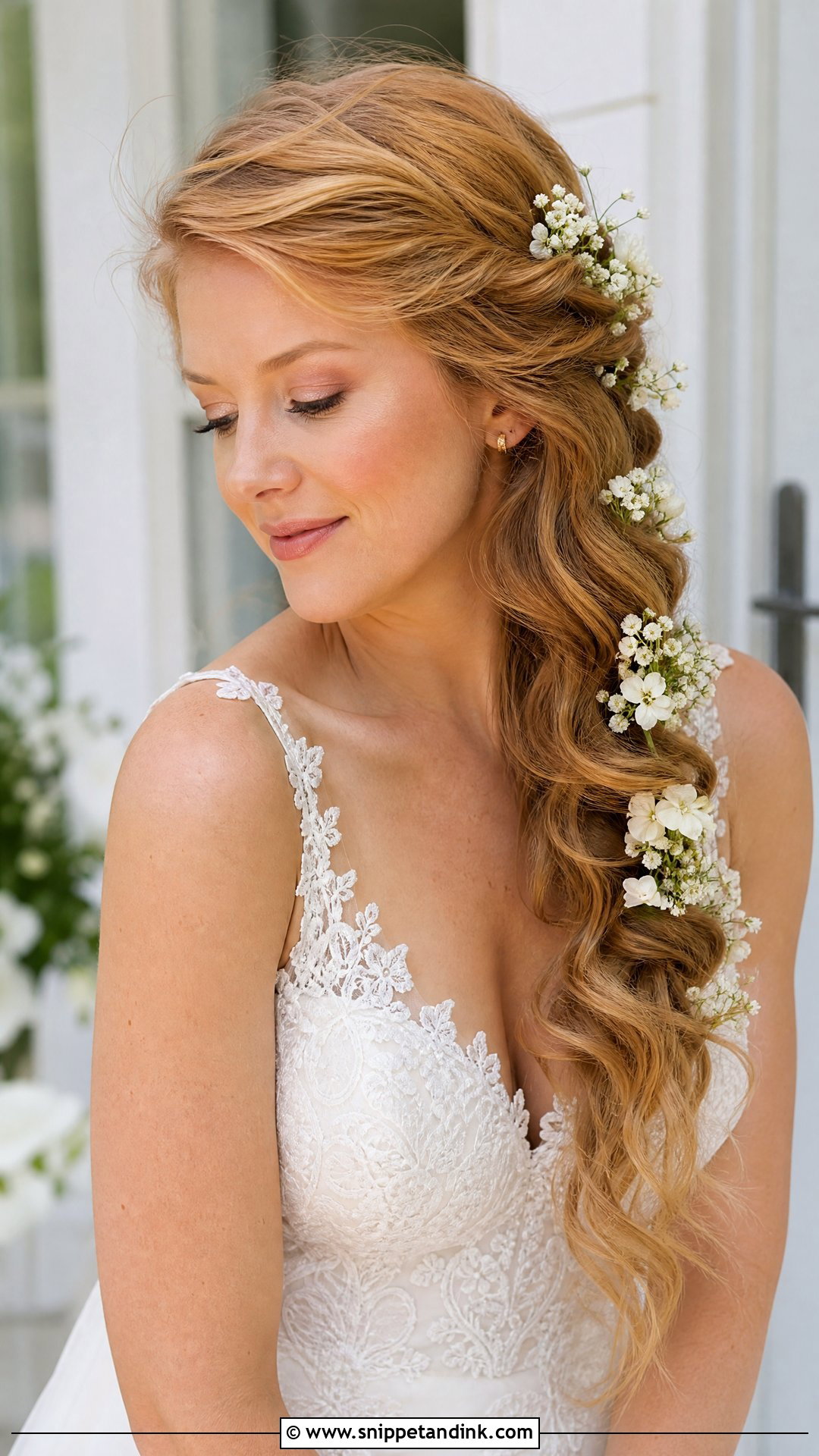
Flowers suit side styles at garden, beach and spring weddings. They can go into a braid, above a side bun or through loose curls. Match the scale to the hair: tiny blooms in soft waves, larger ones against a full braid or textured updo. Fresh flowers should come from your florist, wired and conditioned to last out of water. If you’d rather not worry about wilting in heat, good silk flowers or floral pins give the same look and survive the dance floor.
12. Side Swept Bridal Hair With Pearl Pins
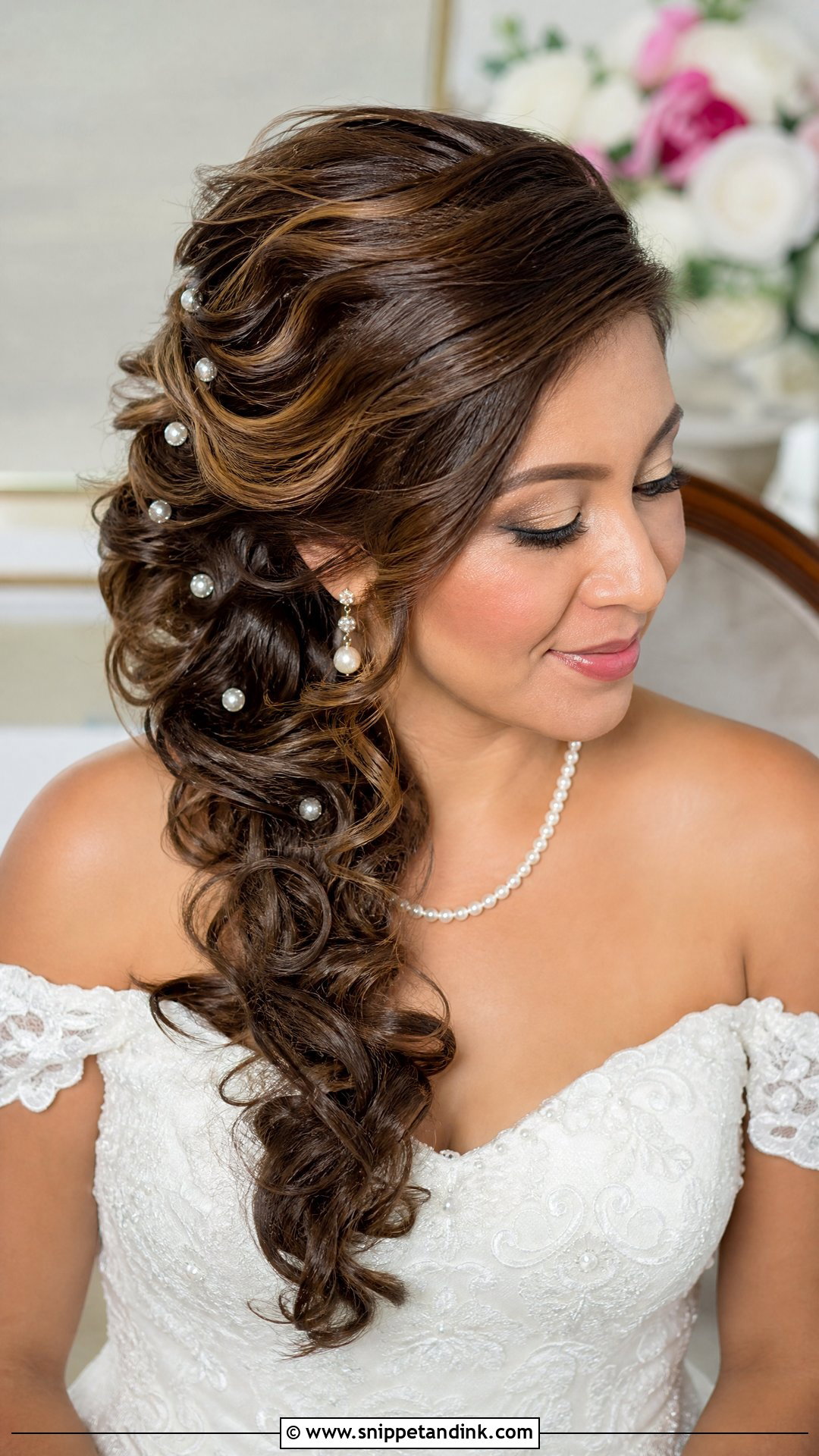
Pearl pins are the easiest accessory to add to a side style because they fit waves, curls, buns, braids and half-up looks equally. I place them along the pinned side, through a side braid or around a low chignon. The rule I follow is uneven spacing: scattered in a loose cluster they look natural, lined up evenly they look like a row of buttons. Mixing two pin sizes adds depth. Lace gowns and pearl jewelry suit them.
13. Side Swept Bridal Hair For Long Hair
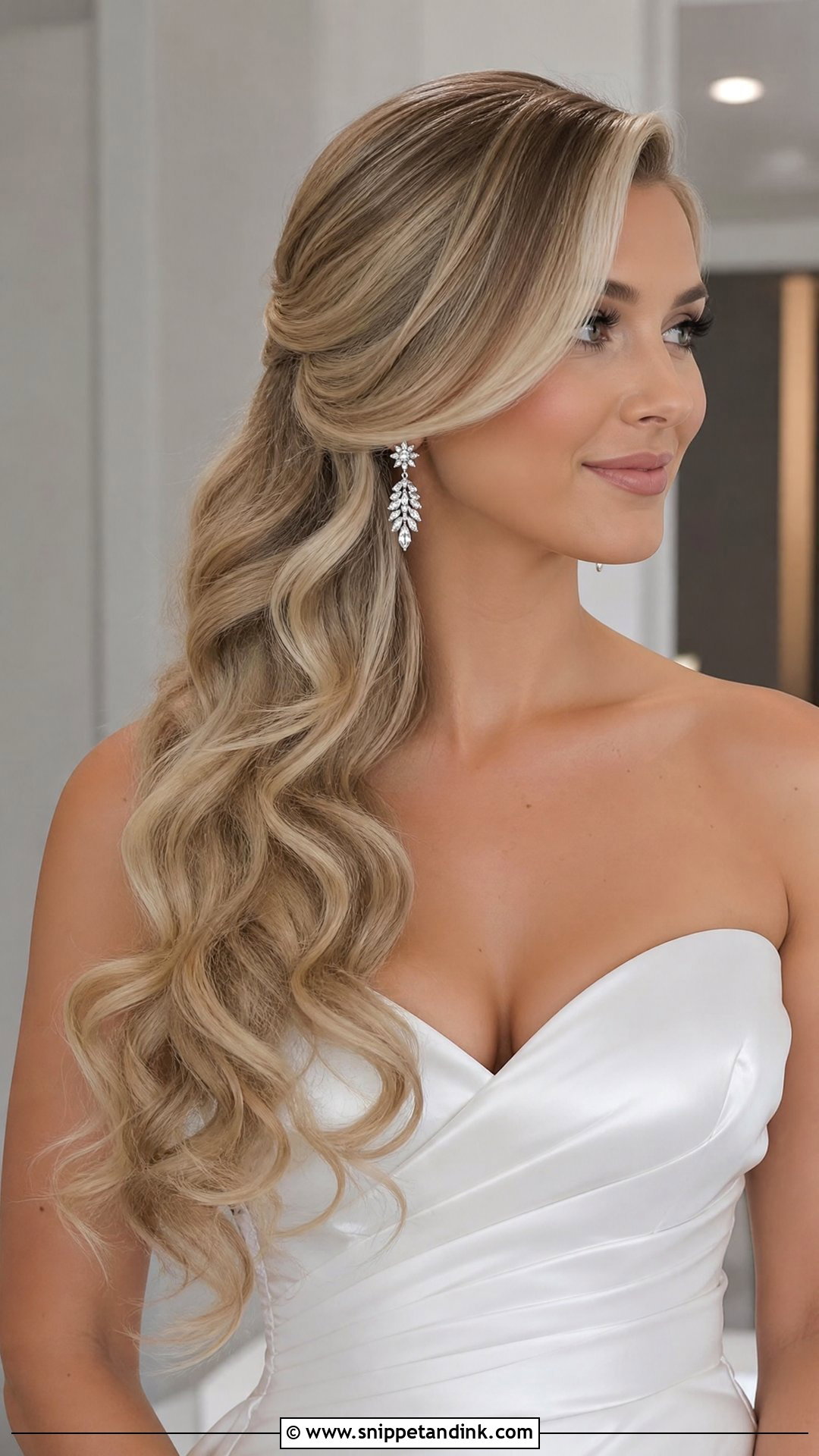
Long hair swept to the side creates the most dramatic cascade on this list. Waves, curls, braids and ponytails all work. The weight is the challenge: a lot of hair on one side pulls the style off the pinned side within hours. I usually build a small foundation braid behind the ear to anchor it, and use light products so nothing feels heavy. Very long hair looks softer with a few layers at the front. Open necklines and simple bodices let it lead.
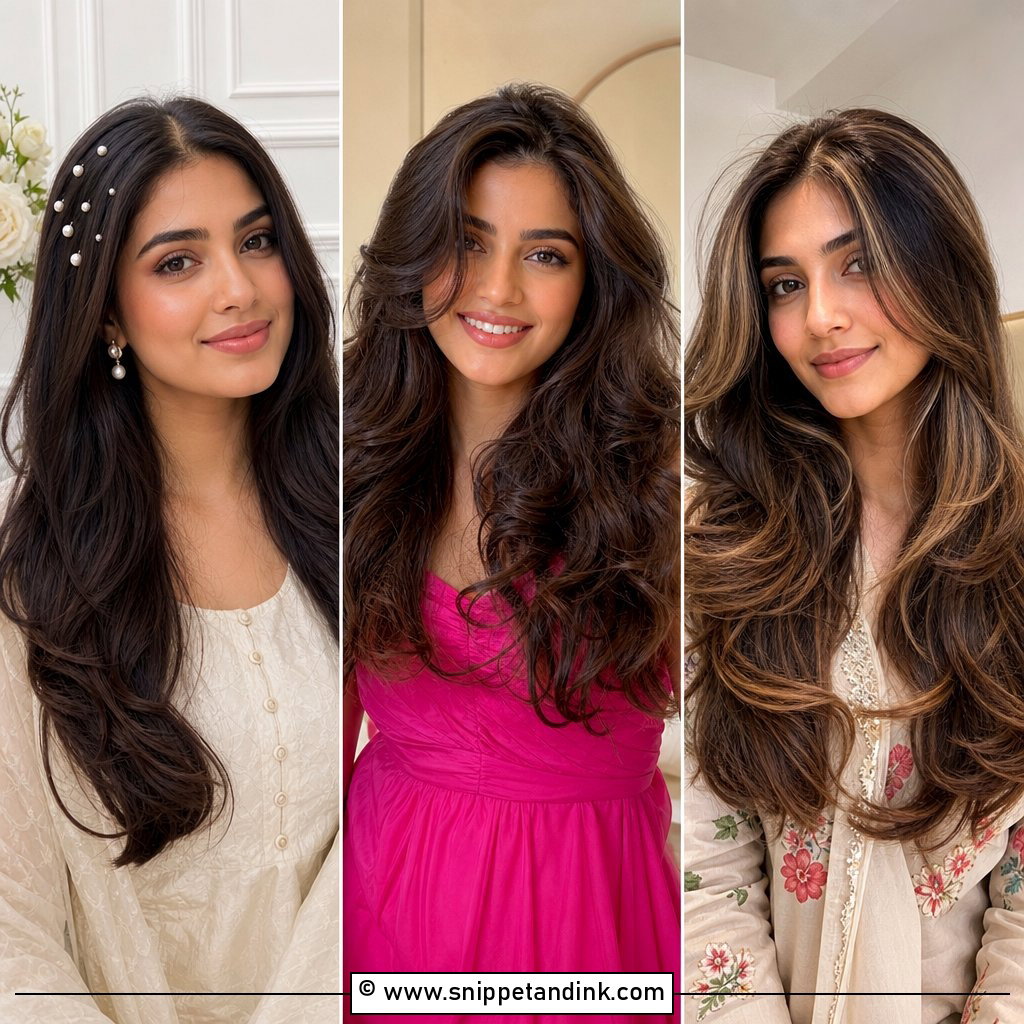
14. Side Swept Bridal Hair For Medium Hair
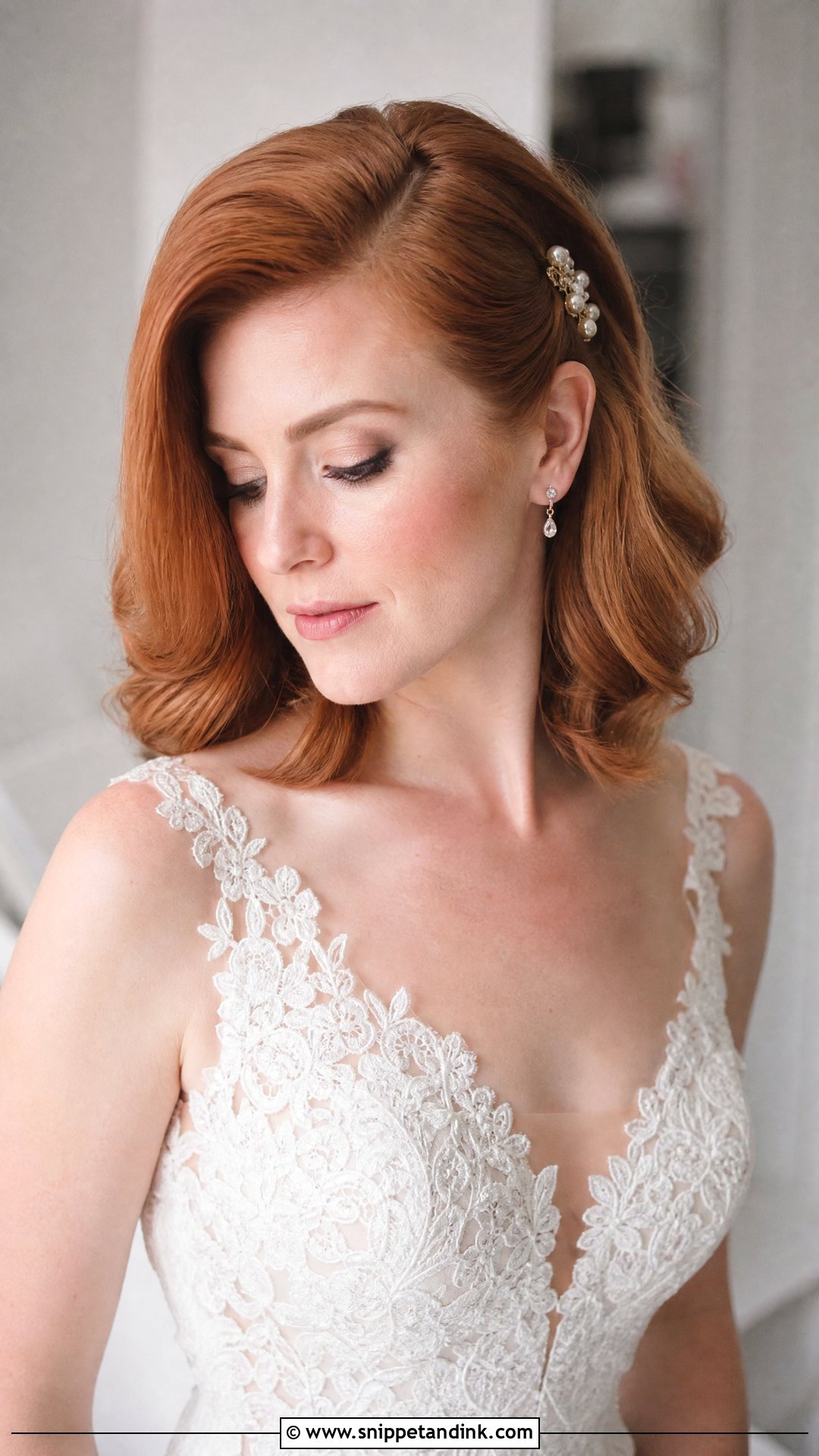
Shoulder- and collarbone-length hair sweeps well, but it needs volume built in or it collapses flat against the neck. I work in a root lift at the crown and curl the ends away from the face. Soft curls, brushed waves, low side buns and half-up shapes all suit this length. A deeper part makes it look fuller instantly. Extensions can add a longer cascade for the day, though they aren’t necessary. This length is also the most comfortable to wear through a long reception.
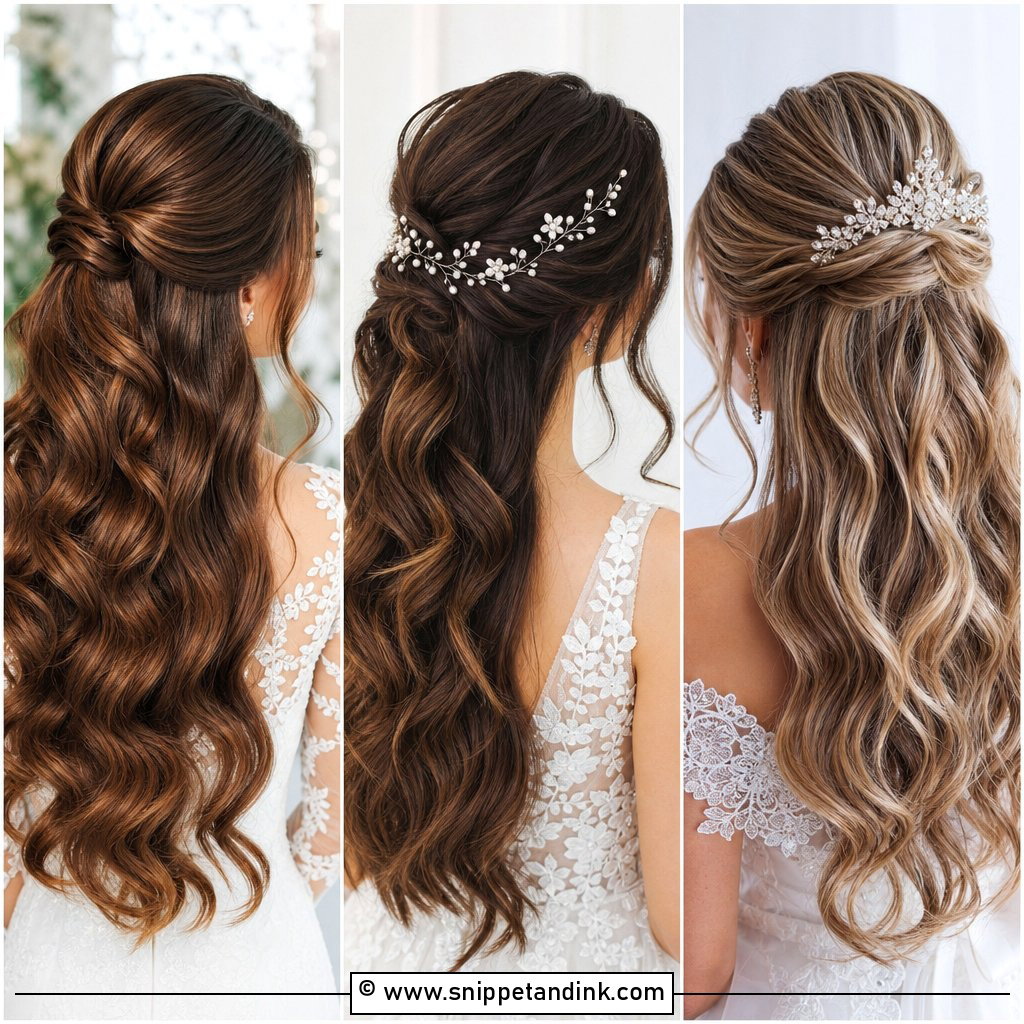
15. Side Swept Bridal Hair For Short Hair
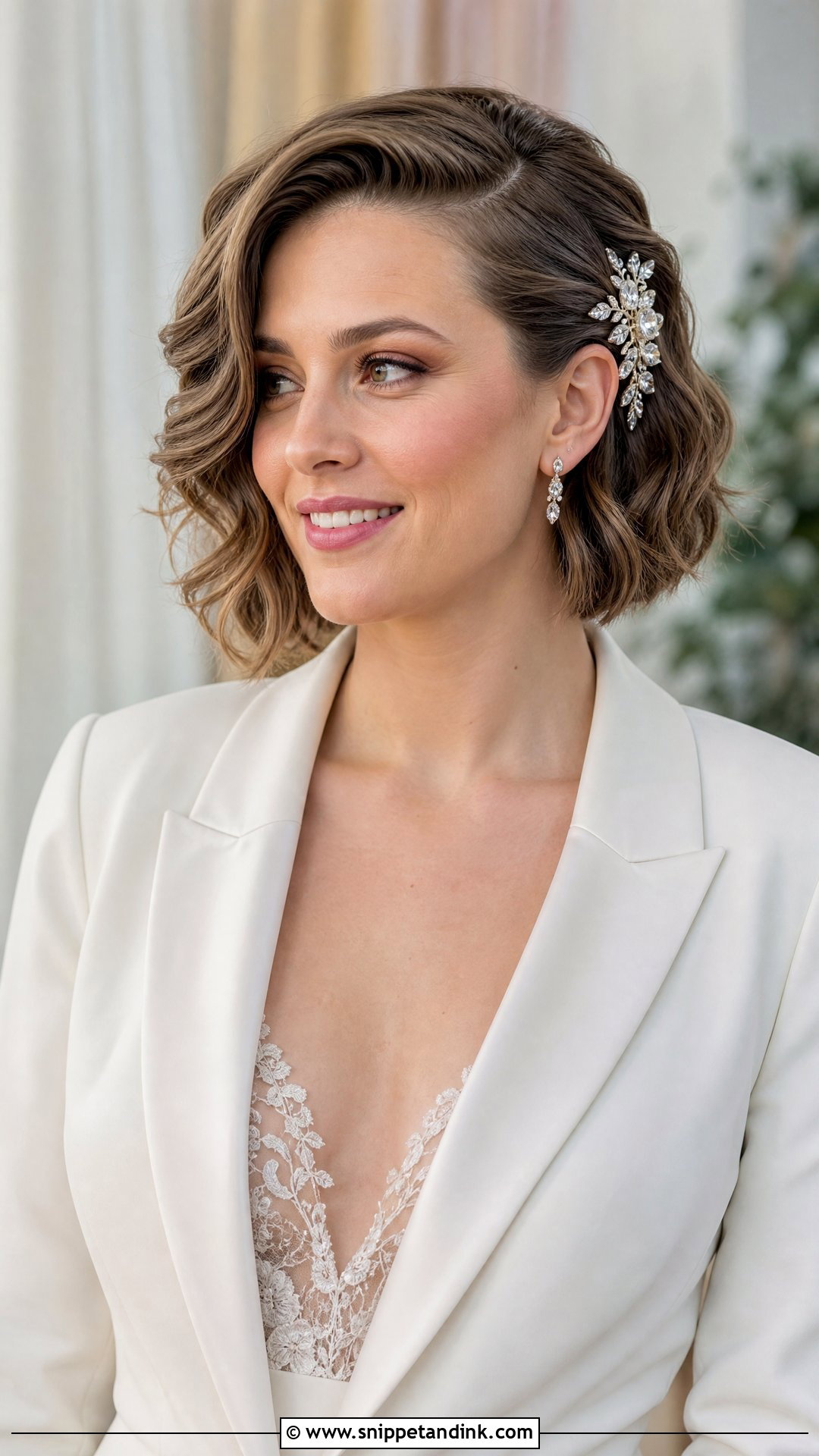
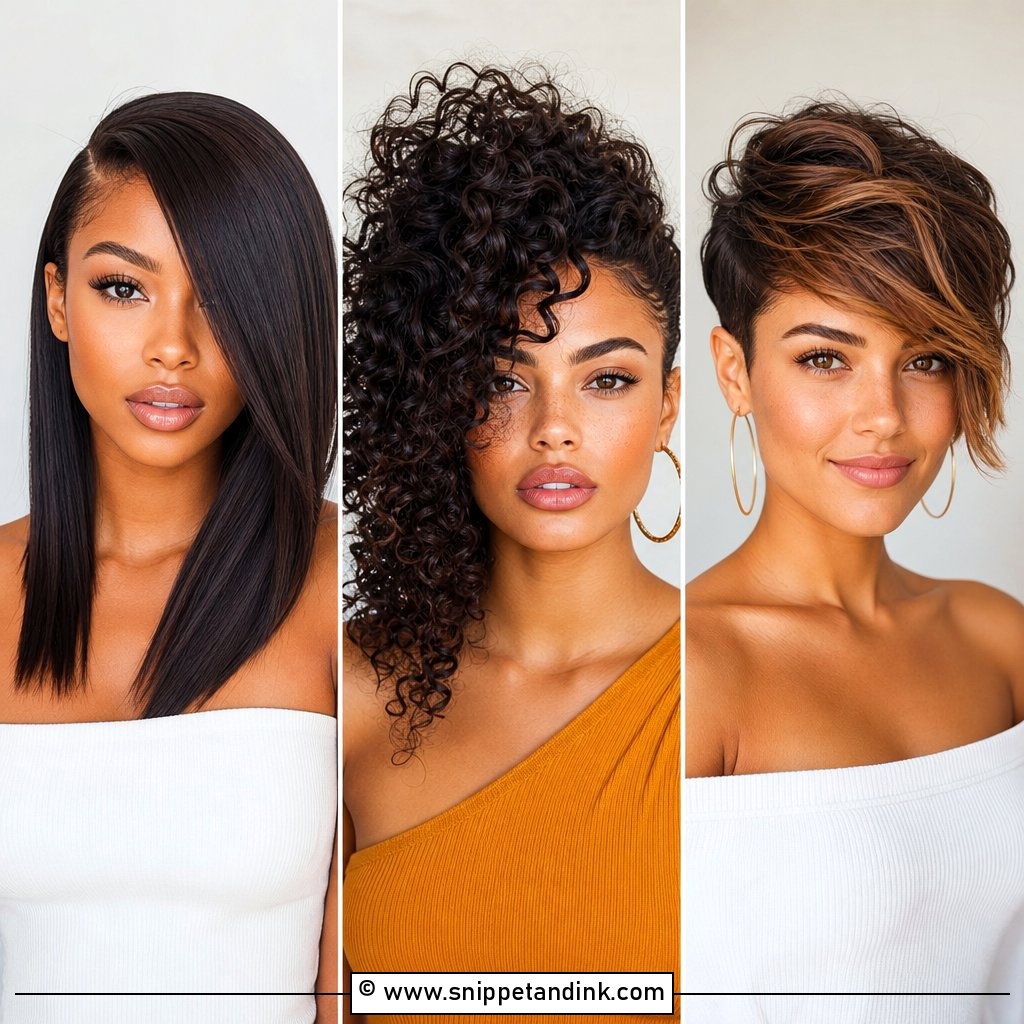
Short bridal hair sweeps to the side easily with a deep part and a little texture. A bob, lob, pixie or crop can carry smooth volume on one side and a tucked or pinned finish on the other. Finger waves feel vintage; tousled texture feels modern. On short cuts I use a pomade or light wax rather than spray, so the sweep can be reshaped by hand later. A crystal barrette or pearl clip on the tucked side adds the bridal detail.
Living With All Your Hair on One Shoulder
A side sweep looks easy in a portrait, but in real life it means one shoulder carries all the hair for ten hours or more. That brings a few small headaches I’d plan around.
- Heat. In a summer garden or on a packed dance floor, a thick curtain of hair against the neck gets warm. A braid or a low side bun keeps the shape with less contact.
- Arms and bouquets. Your partner’s arm in portraits, your bouquet arm and a hug from every aunt all press on the swept side. Curls on that side flatten first, so I set them a little firmer.
- Fabric. Hairspray and shine products can mark delicate satin or silk where the hair rests. Let products dry fully before you step into the dress, and spray away from the gown afterwards.
- Necklaces. Fine chains catch in loose curls. If you love a statement necklace, a pinned sweep or a side bun is kinder than fully loose waves.
A five-minute reception switch
If the curls have dropped by the evening, gather the lengths at the nape on the same side, twist them once and pin them into a loose low knot. The front and the part stay as they were, so it still looks like the same hairstyle, just ready for dancing. Have a bridesmaid keep a few pins and a small clip in her bag for exactly this.
Your Stylist Will Spot Things a Photo Can’t
A side sweep flatters most faces, adds movement and gives the whole look a single focal point. Hollywood waves, loose curls, a braid, a side bun or a ponytail can all carry it, adjusted to your dress, length, texture and venue. Bring a few saved photos to your trial, but listen when your stylist talks about hold, volume and where the veil should sit; those are the things a photo can’t tell you. It should photograph well, feel secure in real life and still look like you.
You'll Like These Ideas:


Leave a Reply