
A side-swept style is the one I suggest most often to brides who can’t settle between hair up and hair down, because it gives you a bit of both: one side clean enough to show an earring and the line of your neck, the other full and soft. It is also more forgiving than people expect. A deep part lifts flat roots, the sweep hides the weaker side of a haircut, and the weight resting on one shoulder frames a V-neck or a one-shoulder gown better than hair split evenly down the back. Below are twenty versions I’d happily put on a bride, from sculpted Hollywood waves to a loose braid, with notes on what each needs from your hair and where it tends to fail. Save the ones you like and take them to your trial.
Left Shoulder or Right? Settle It Before Your Trial
The first thing I ask a bride who wants a side sweep isn’t which picture she likes. It’s which way her hair already wants to go. Most people have a natural part and a crown whorl that pushes hair to one side, and while I can fight that, the sweep lies flatter and stays put far longer when it follows the growth.
What decides the side
- Your natural part. I usually sweep toward the heavier side of the part, so the fullness lands where the hair already has the most of it.
- The ceremony. For most of the vows, guests and the photographer see one profile. Ask your photographer where they’ll stand and decide whether that view should be the open side with the earring or the full side with the hair.
- Your neckline. With a one-shoulder or asymmetric gown, I generally put the hair over the bare shoulder so the strap stays visible and the two sides balance.
- Anything you’d rather cover or show: a favourite earring, a scar, a birthmark, a hearing aid.
What to bring so we can test both
Wear a top with a similar neckline to your gown, and bring the earrings and the veil if you have them. I’ll pin the sweep one way, take a photo, then switch it. The right side is often obvious in the photo even when it isn’t in the mirror, because a mirror flips you and a camera doesn’t.
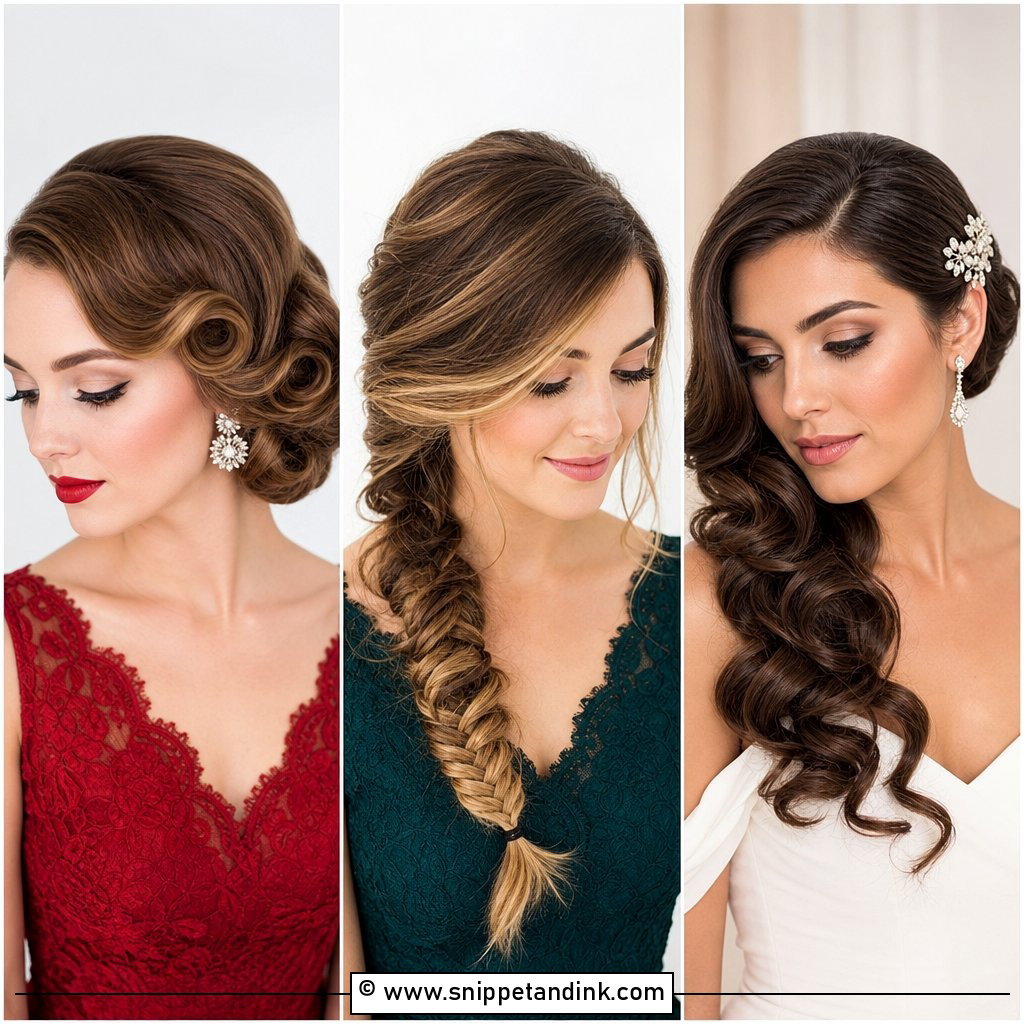
1. Side Swept Hollywood Waves
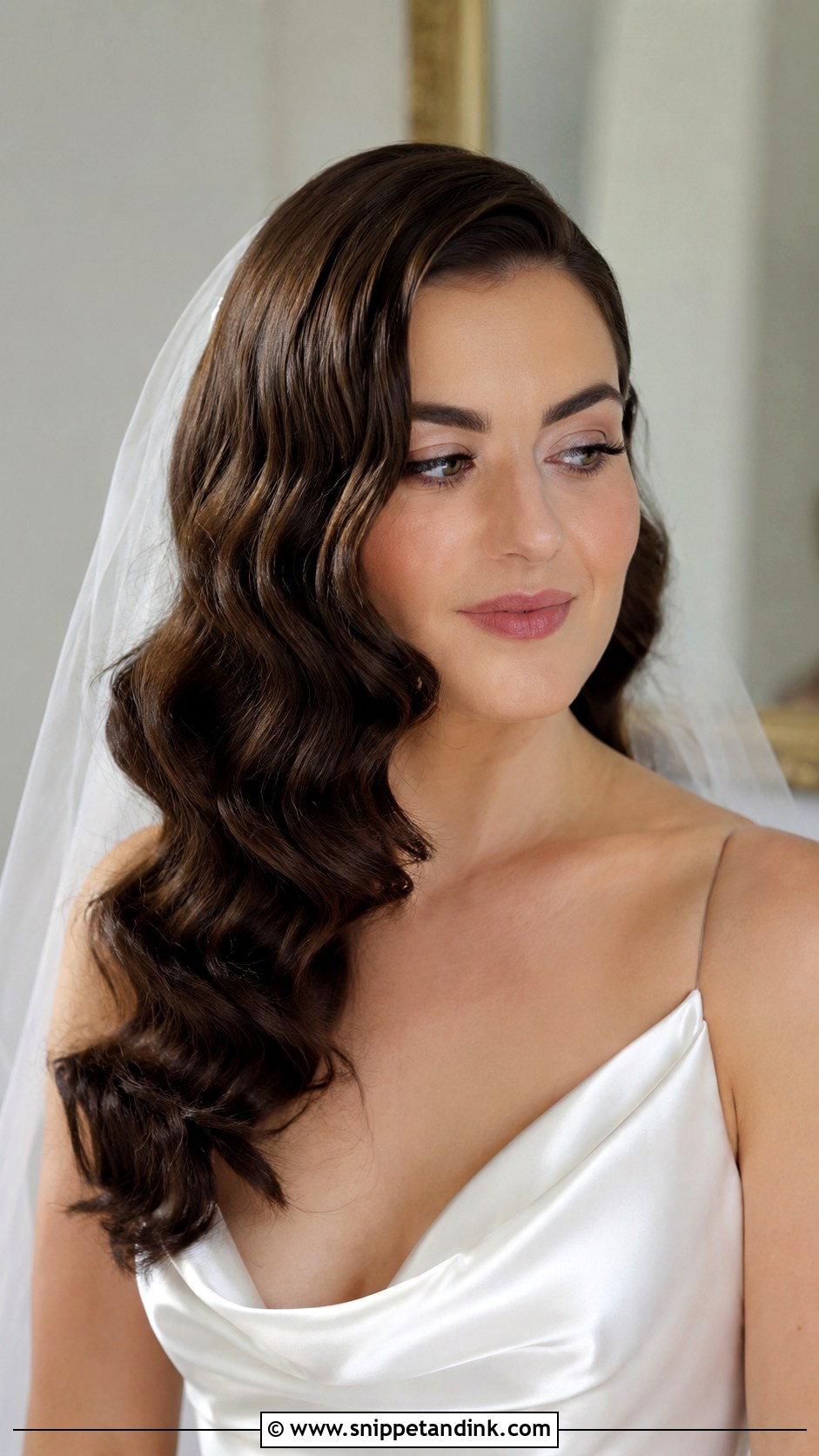
These are the waves I plan most carefully, because the shape depends on every curl being set in the same direction and left to cool completely before a brush touches it. I set them with a large iron, pin each curl flat while it cools, then brush through with a boar bristle brush until the ripples join into one continuous S. A deep side part is non-negotiable; without it the wave has nowhere to fall. Very fine or freshly washed hair can lose the pattern within a few hours, so I ask those brides to come in with second-day hair. Pair it with satin or crepe for a red-carpet feel. With a lace boho dress it can look like a costume.
2. Side Swept Loose Curls
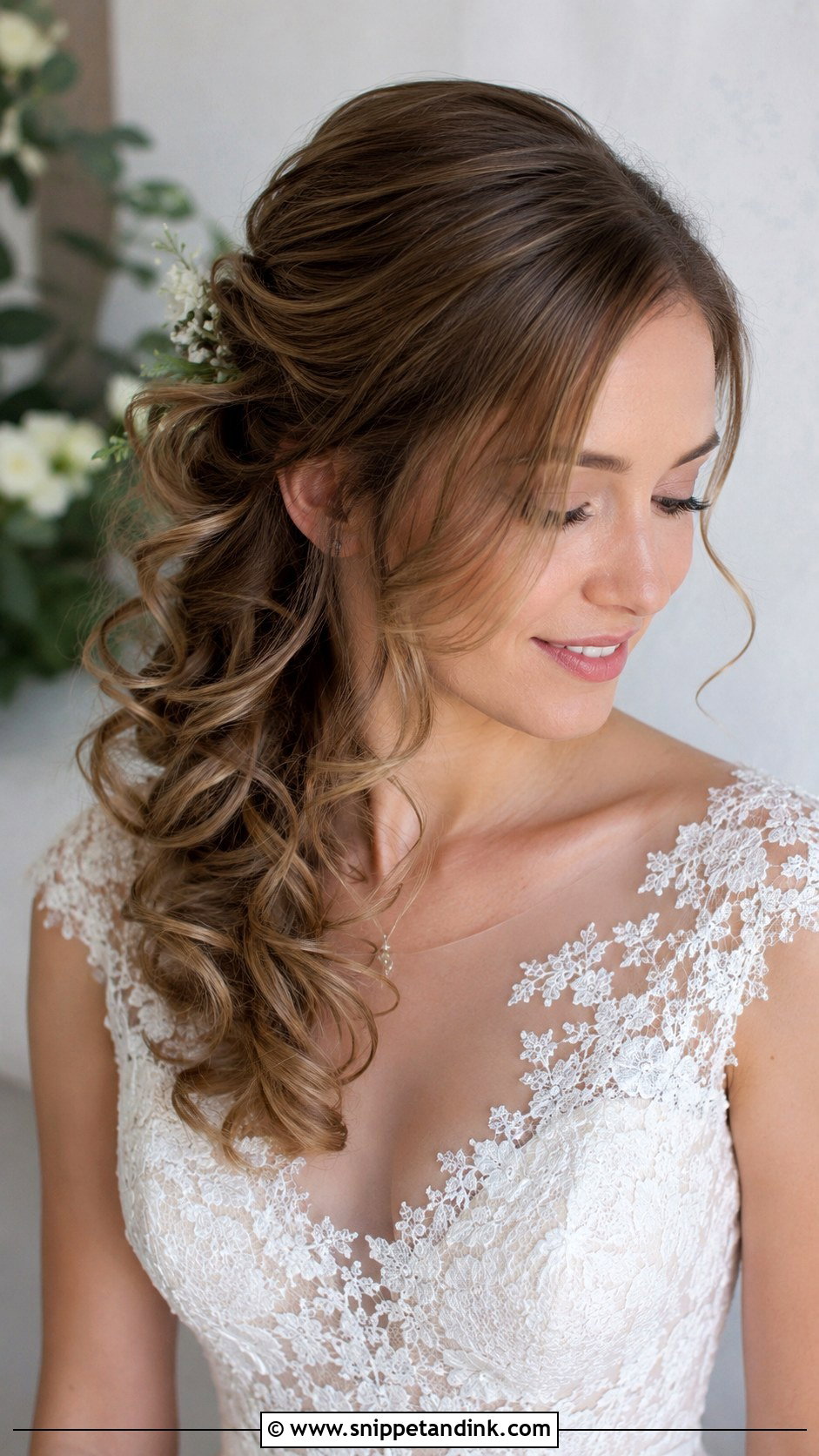
Loose curls over one shoulder are the most relaxed look here, and they need the most hold built in underneath, since a curl that looks undone at ten in the morning can be nearly straight by the first dance. I curl smaller than the finished result, pin every curl to cool, and only break them apart at the very end. Medium and long hair carry this well; above the shoulder there isn’t enough length for the curls to drape. A small pin or a sprig of flowers at the part keeps the sweep from looking accidental. For a garden ceremony, this is where I’d start.
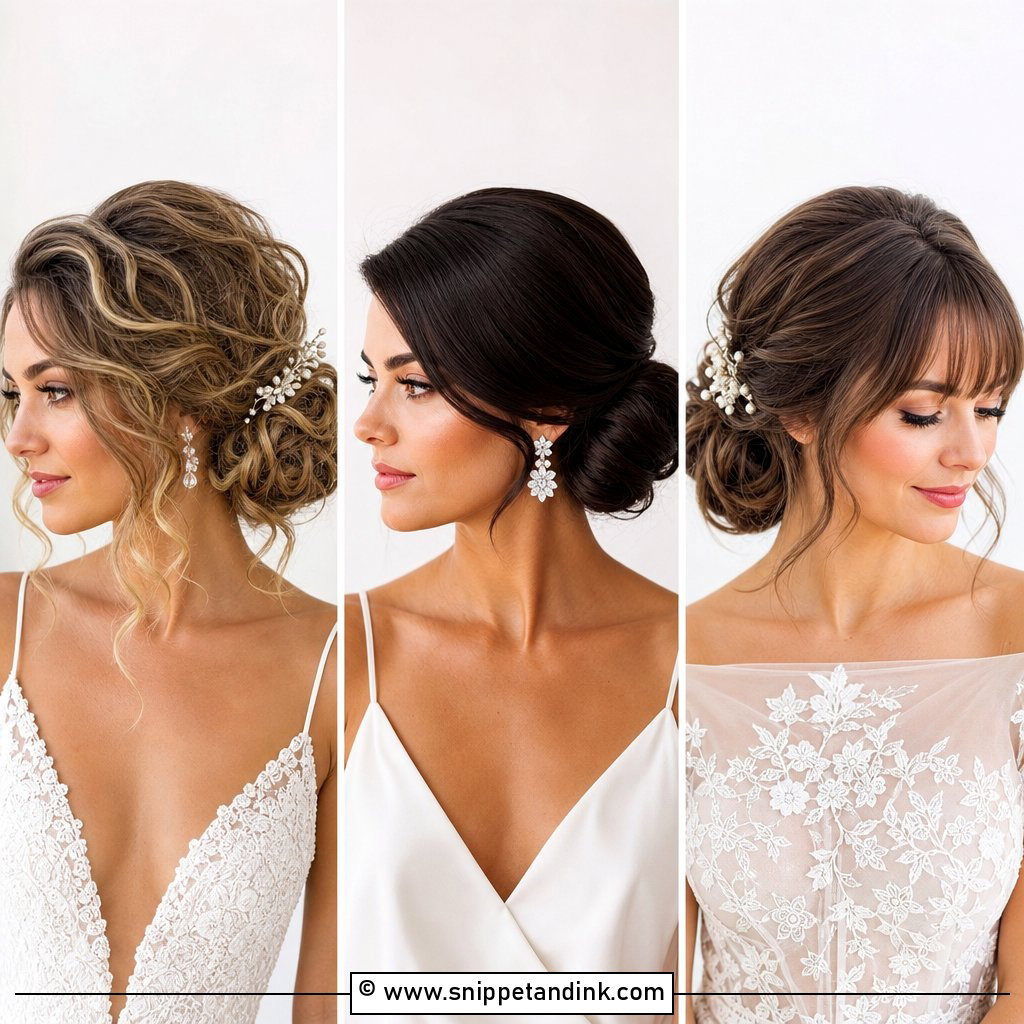
3. Side Swept Low Chignon
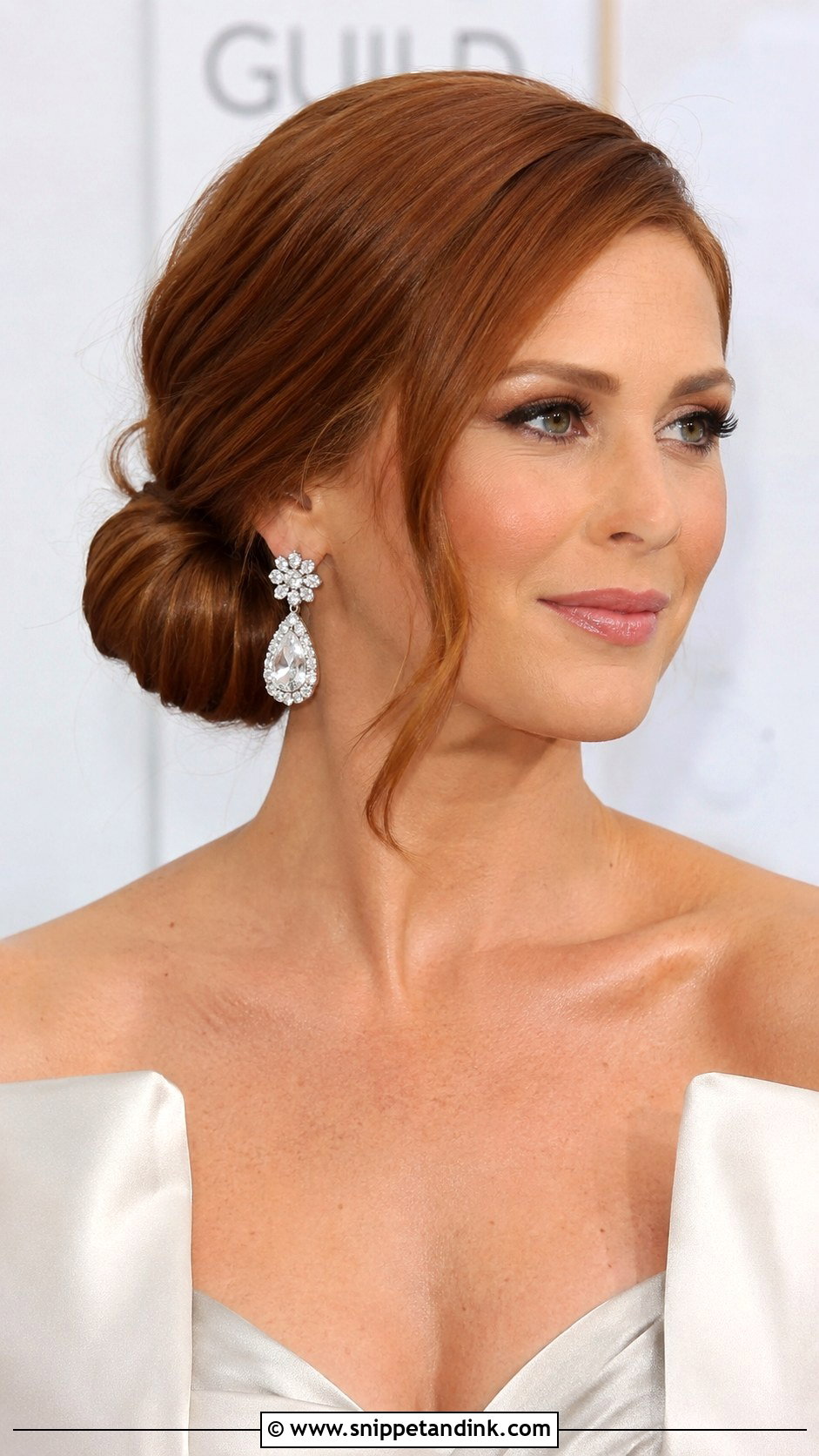
Set off-centre, just behind one ear, a chignon gives you a cleaner neckline than almost anything else here, which is why I suggest it for structured gowns and statement earrings. I build it on a low ponytail base so it can’t drift toward the middle of the neck as the day goes on, then wrap the hair around that base with pins pointing inward. Pulling a couple of soft pieces at the temple stops it reading severe in photos. A veil comb slides in just above the bun and grips the base rather than loose hair. Short layers that won’t reach the nape are the one thing that makes this hard.
4. Side Swept Fishtail Braid
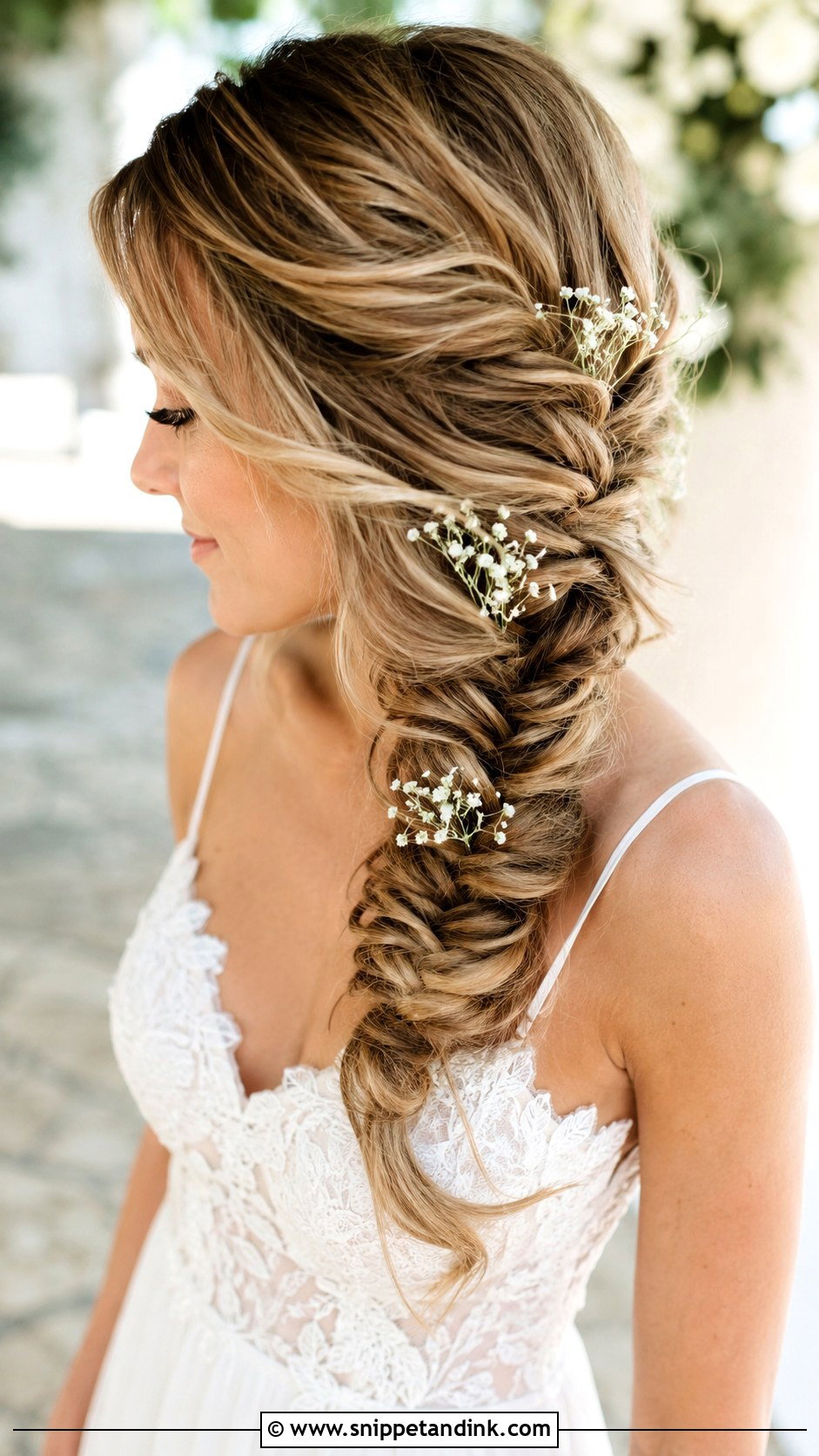
A fishtail looks complicated, but it is only two sections crossing small pieces over and over, which is exactly why it holds so well outdoors. The finer the pieces, the more detailed the pattern looks. I secure the end with a clear elastic before I gently pull the edges wider, never after, or the braid slips. It needs length past the collarbone to drape over the shoulder properly. Small wildflowers or baby’s breath tuck between the crossings without a single pin. Lots of short layers will pop out by evening, so plan to call that texture.
5. Side Swept Soft Brushed Waves
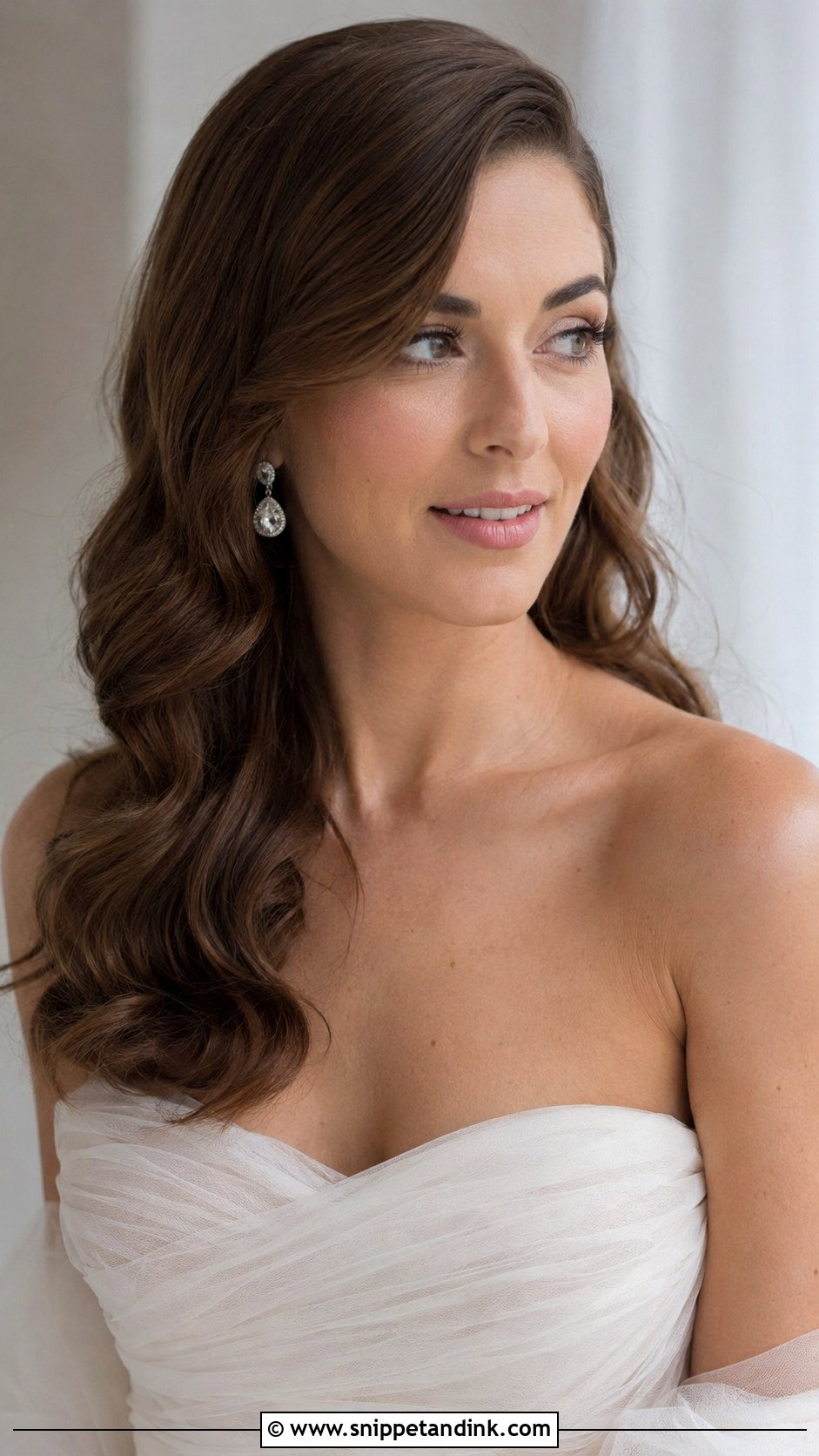
Brushed-out waves are curls I’ve taken apart on purpose. I set a full head of curls, let them cool, then work a paddle brush through until the ringlets merge into soft, wide waves. That smooth surface is what makes them so good with strapless gowns, because the hair lies against the collarbone rather than bouncing around it. Overbrushing is the risk; it turns waves into frizz. I stop sooner than feels finished and set the shape with a light, flexible spray. Of everything on this list, it moves most easily between a modern dress and a vintage one.
6. Side Swept Low Ponytail
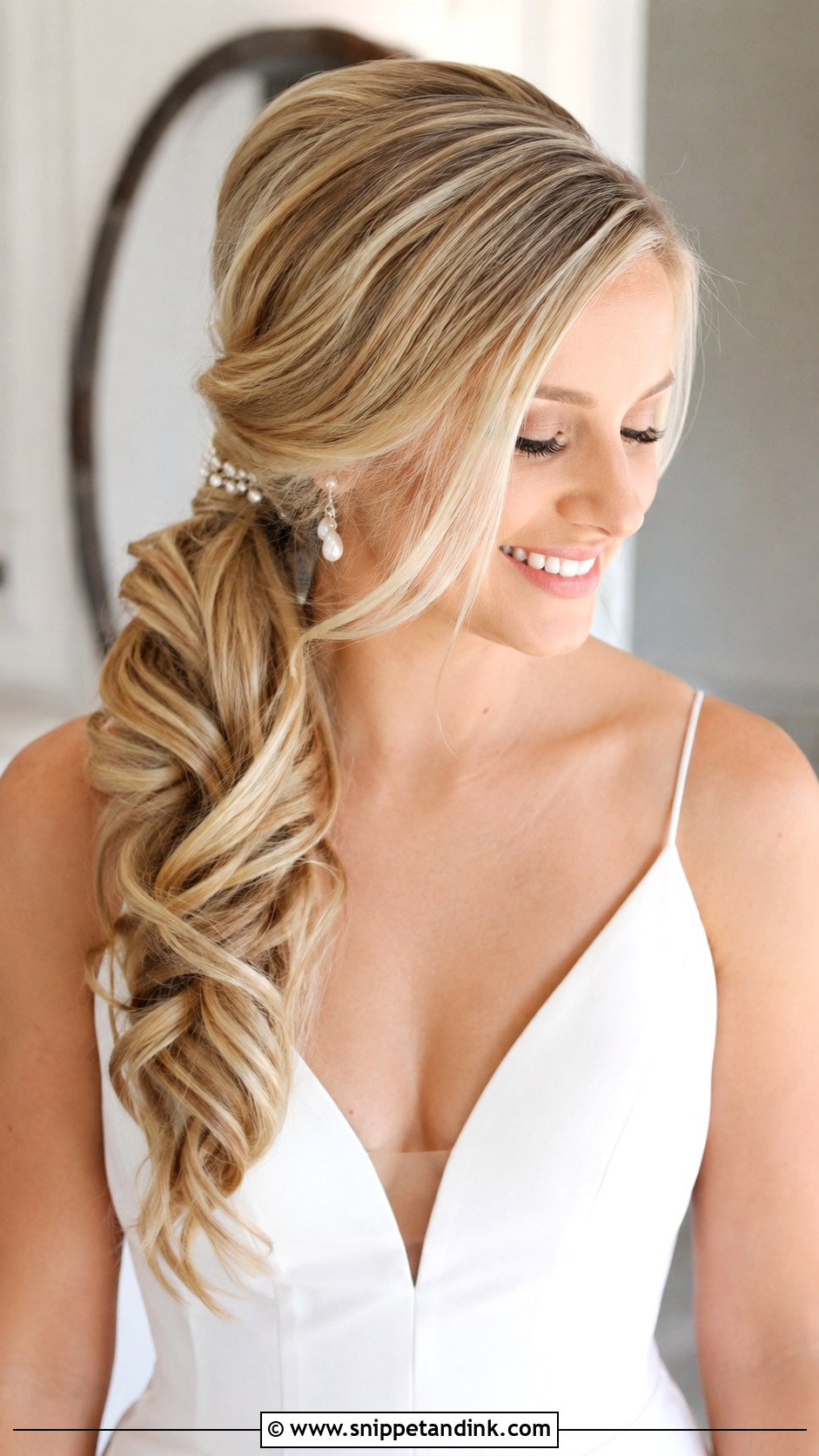
People underestimate a side ponytail until they see one with a smooth crown and a wrapped base. I place the elastic just behind and below one ear, wrap a strand around it and pin it underneath so no band shows, then give the length a loose curl so it has shape against the gown. It is the most comfortable style here for a twelve-hour day; nothing presses on your head when you lean back in a chair. A pearl pin at the wrap adds detail. On very thick hair I stack two elastics, one just above the other, so the weight doesn’t drag the base loose.
7. Side Swept Curls With Hair Clip
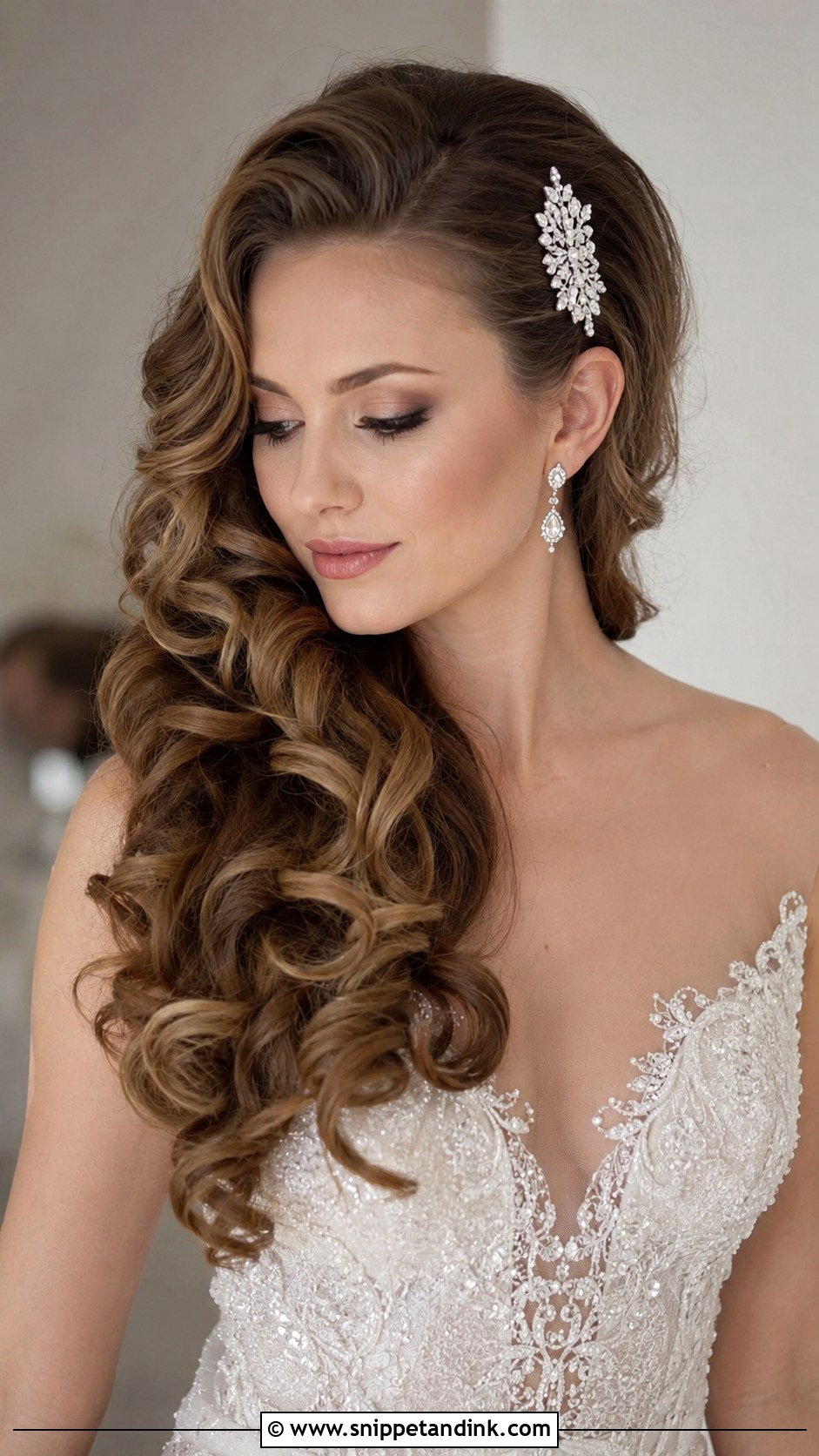
One clip changes how this whole look reads. I twist a section back from the part and fix the clip just above the exposed ear, where it catches light each time you turn your head. Choose rhinestone or pearl by matching the metal and beading on your dress, not by what looks nicest on its own. A heavy clip on silky hair needs crossed bobby pins under it to bite into, otherwise it slides by the reception. The rest of the curls hang loose over the other shoulder, and the clip goes home with you as a keepsake.
8. Side Swept Boho Braid
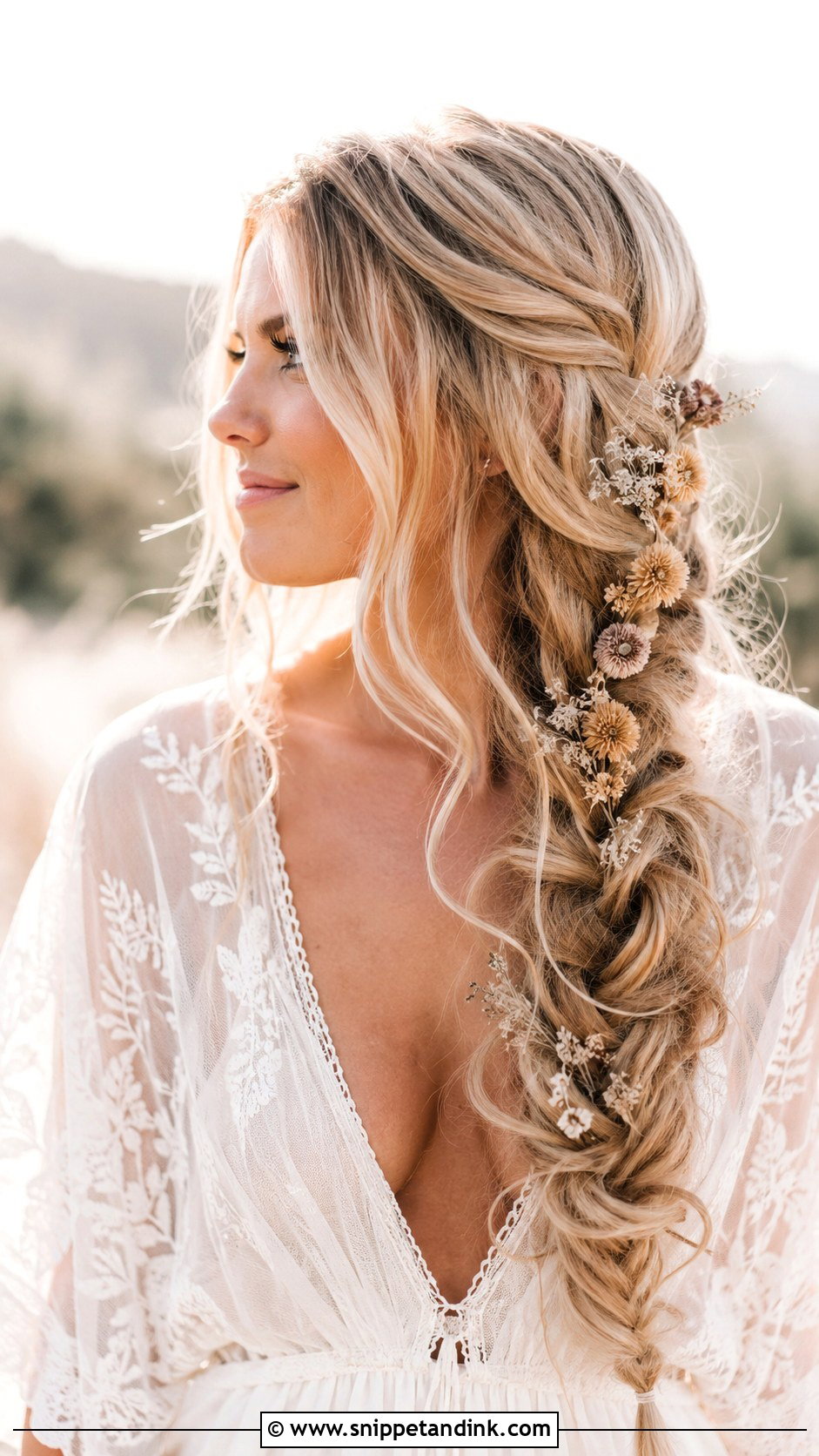
This braid is meant to look a little imperfect. I mix a loose three-strand braid with waves left out around it, then pull the edges of each section to widen it before draping it over one shoulder. Greenery and dried flowers tuck straight into the plaits. Fresh blooms wilt in heat, so for beach or high-summer ceremonies I lean toward dried stems. Face-framing tendrils finish the soft, dreamy aesthetic. It belongs with a flowing bohemian gown, and since nothing is pinned tight to your scalp, it’s easy to wear all night.
9. Side Swept Updo With Tendrils
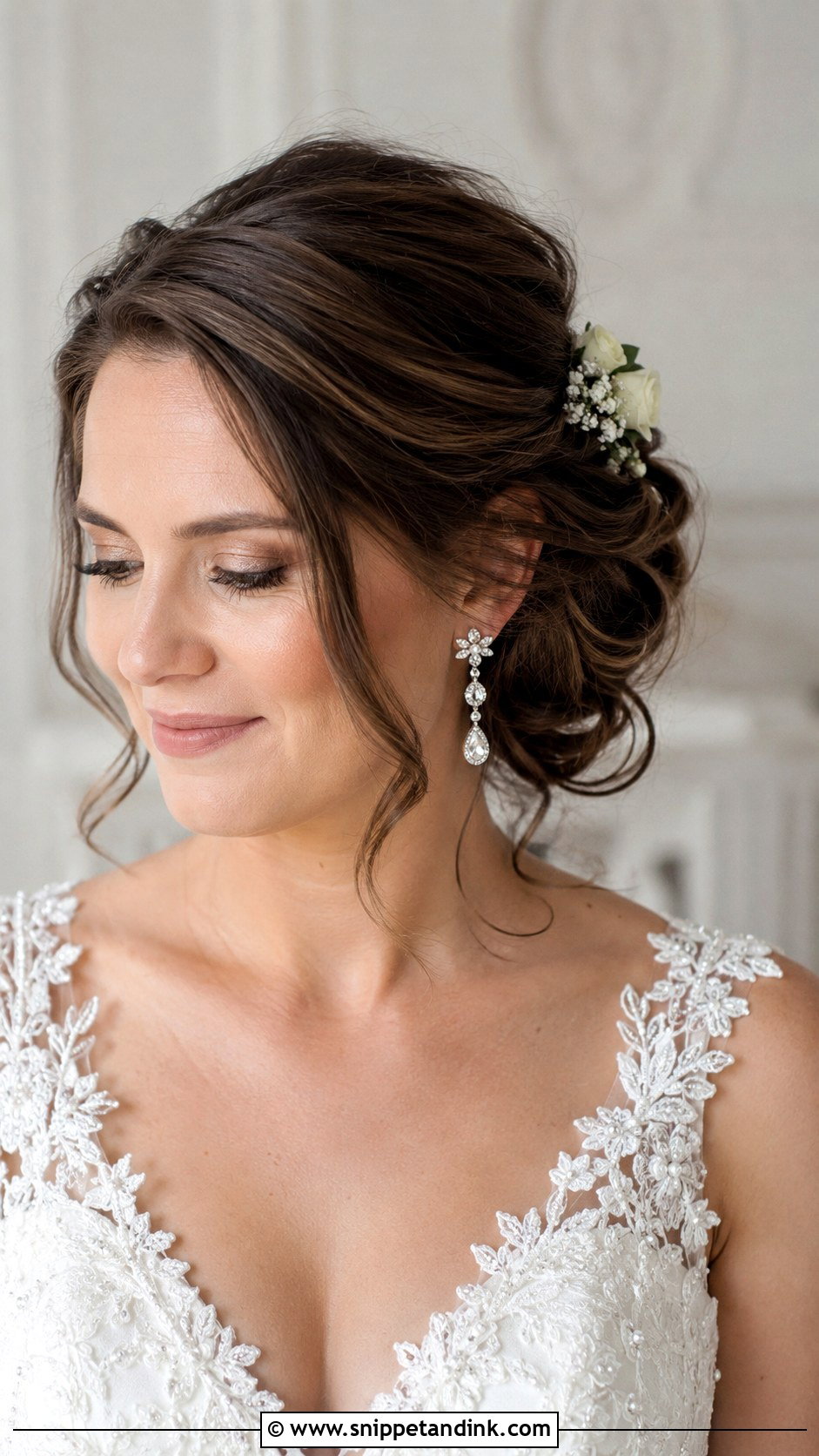
Most of the hair goes up and to one side, with a few pieces left out around the face as loose tendrils. Those pieces are where this look succeeds or fails. I separate them before pinning anything and curl them on their own; pieces tugged out afterward come out frayed and uneven. Two or three per side is plenty. Any more and the updo starts to look like it’s coming down. It shows off earrings and a detailed gown back, and it’s secure enough for wind and dancing.
10. Side Swept Waves With Veil
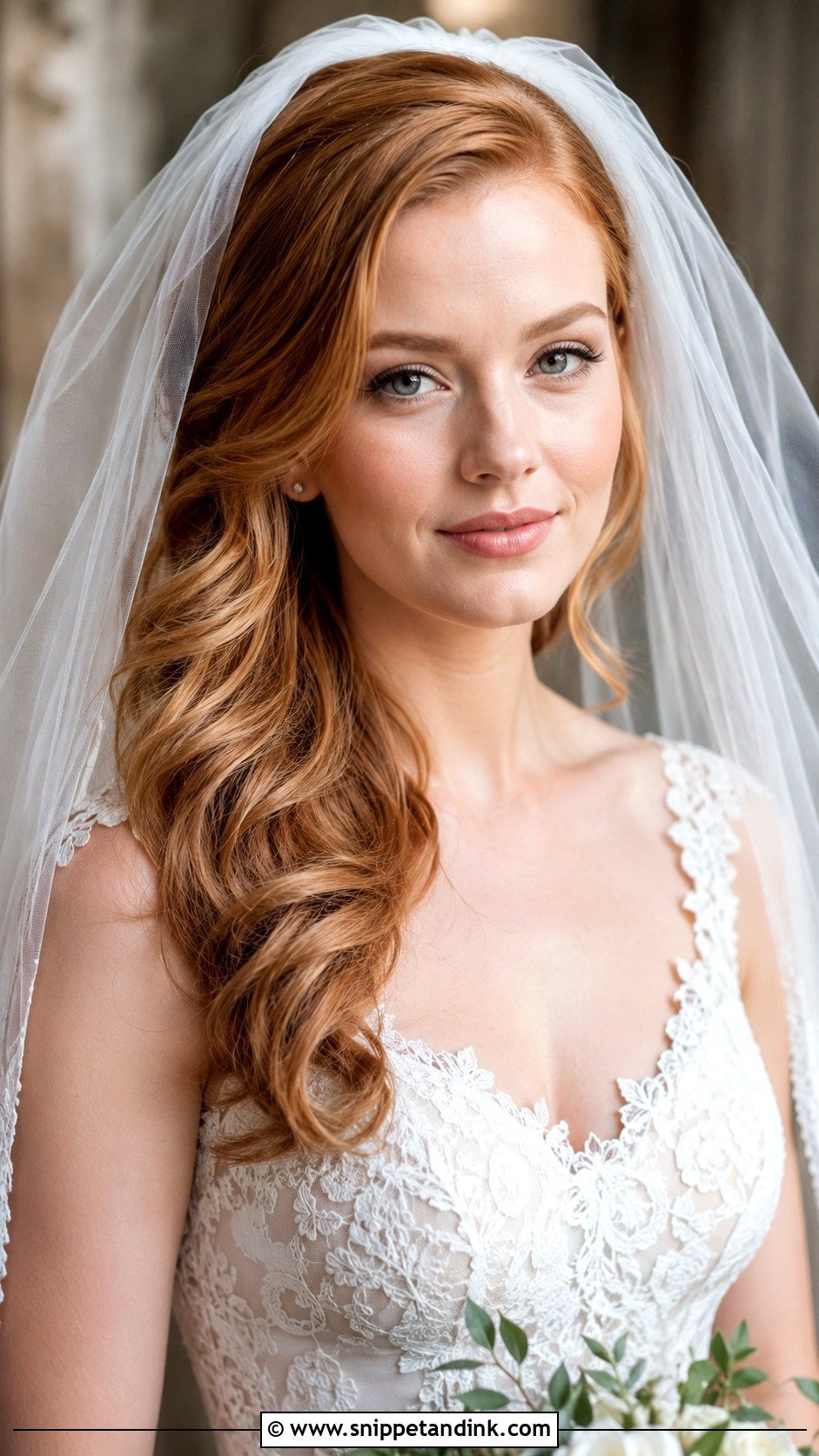
Veils and side-swept waves need a little planning because the comb has to sit on something solid. I place it at the crown or just beneath it, into a small hidden twist or a pair of crossed pins, never straight into loose curls, which it would drag flat. With the comb behind the part, the veil falls down your back while the waves sit forward on one shoulder, so neither hides the other. Once the veil comes off, I lift the crown with my fingers and a quick mist of spray, and the waves carry the reception on their own.
11. Side Swept French Braid
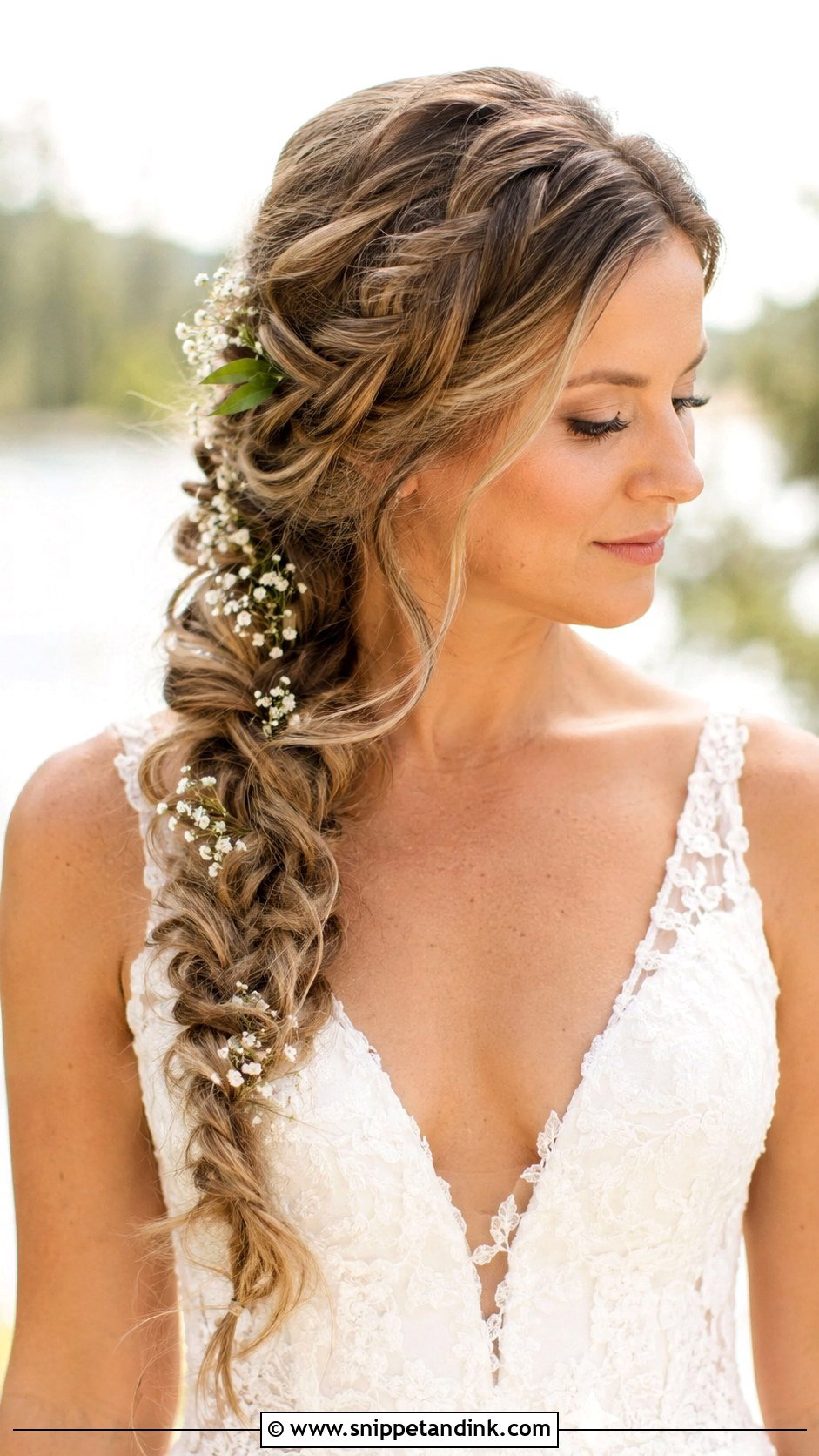
This braid starts at the part on one side and travels diagonally across the back of the head, finishing over the opposite shoulder. Because every section is woven close to the scalp, it is one of the most secure styles here for dancing. I braid it slightly tighter than the final look and loosen the edges with my fingertips afterward, which softens it without weakening the hold. Pearl pins can follow the braid line. You’ll want medium to long hair; shorter layers poke out along the side of the head unless I smooth them down with a little pomade.
12. Side Swept Sleek Straight Hair
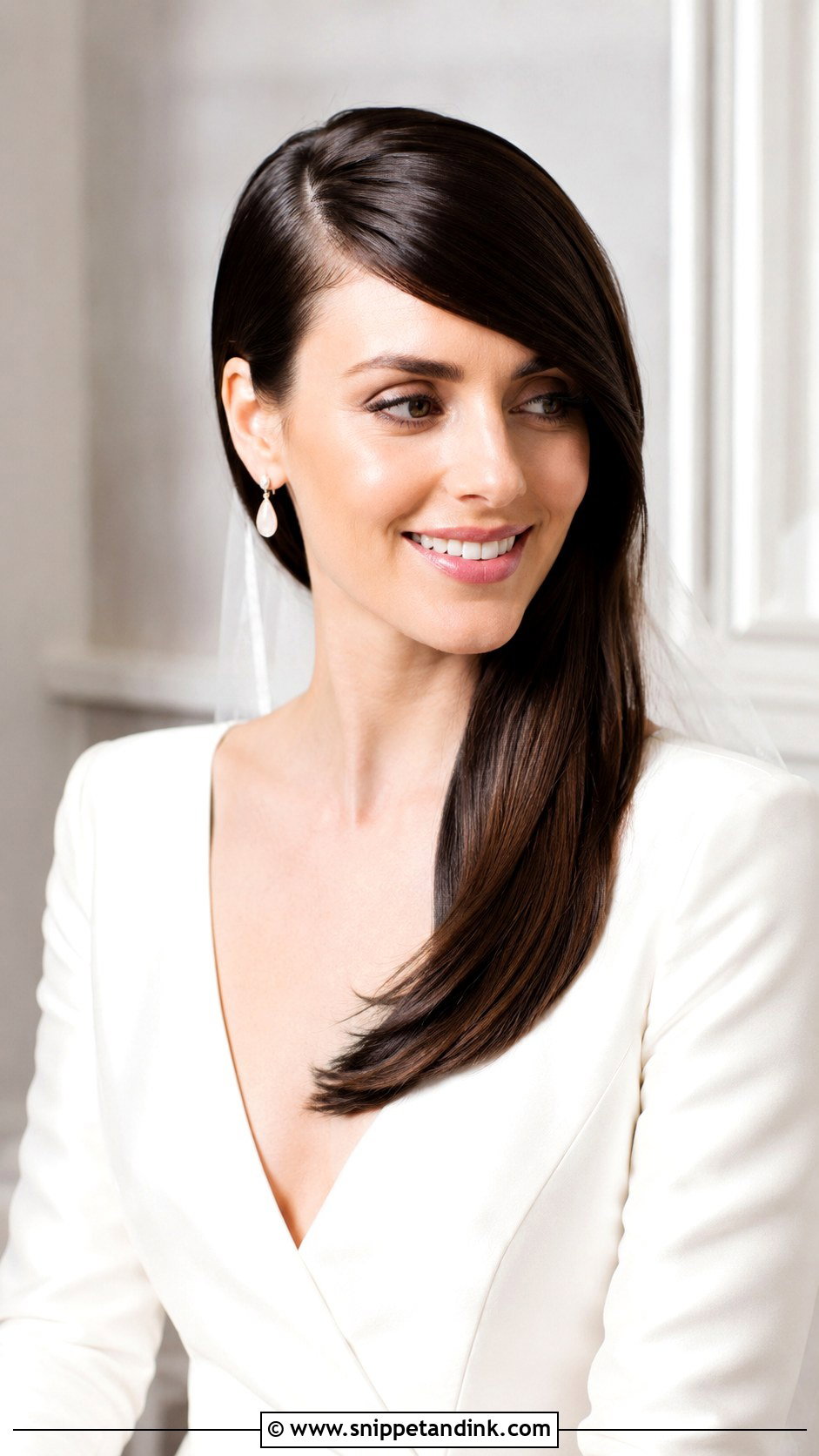
Not every bride wants curls, and straight hair swept to one side is the most modern option on this list. The catch is that sleek hair shows everything: flyaways, a crooked part, a dent from an elastic worn the night before. I flat-iron in small sections, put a few drops of serum on the lengths only, and keep the roots matte so the hair doesn’t separate into strings. In humid weather I’d talk you out of it, because straight hair with a halo of frizz looks unfinished while curls disguise it. With a minimalist gown and strong jewelry, though, it’s hard to beat.
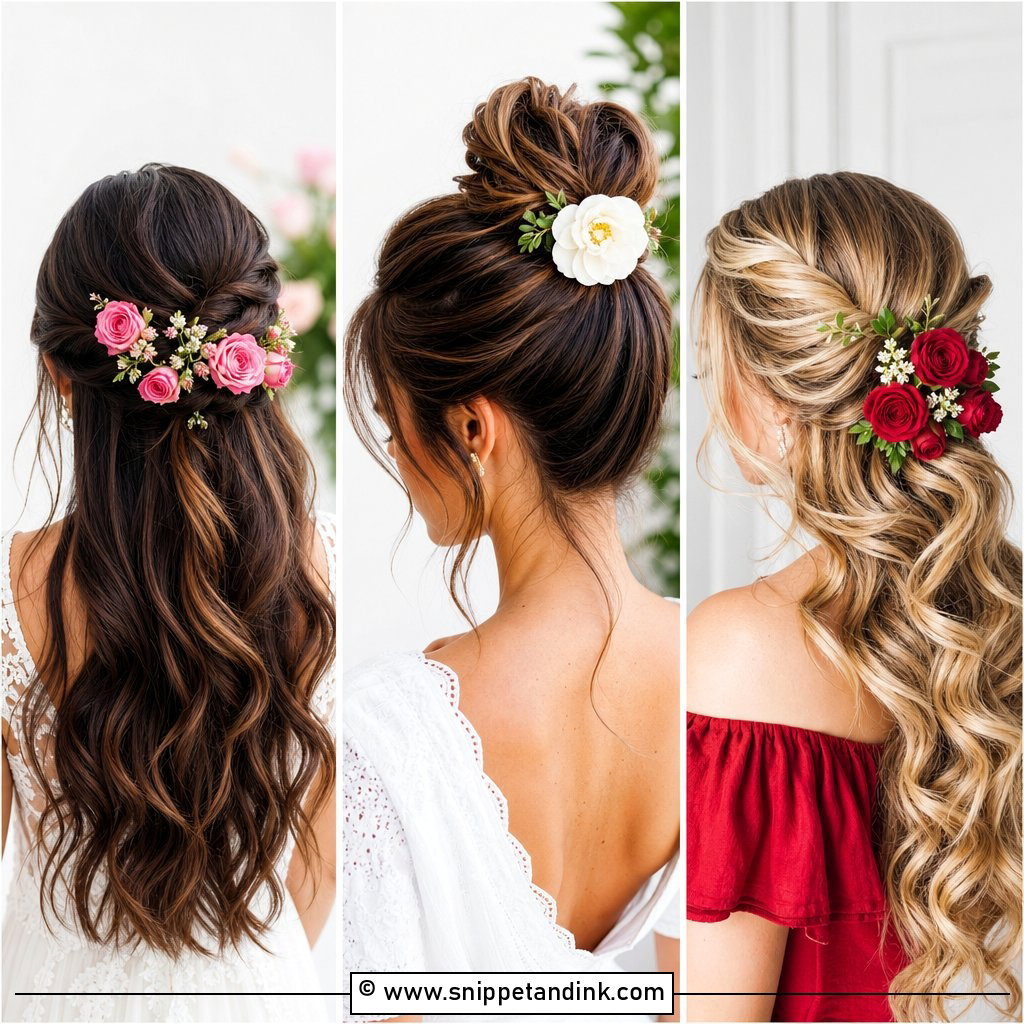
13. Side Swept Half Up Half Down
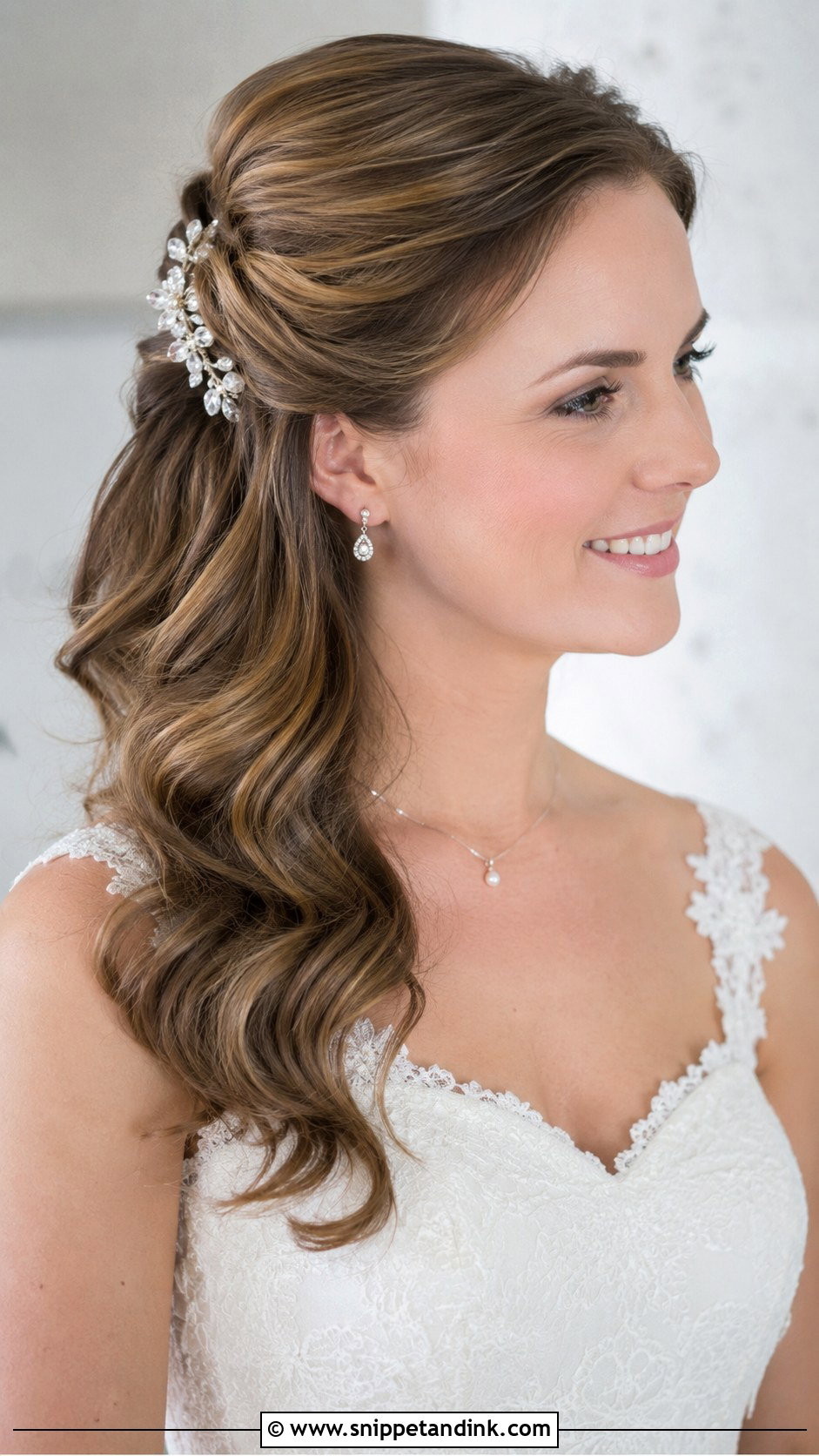
I suggest this one when a bride truly can’t choose between an updo and hair down. The top section is pulled back and twisted toward one side, and everything else falls over one shoulder in waves. The twist carries the weight of the top section, so I anchor it with crossed pins rather than relying on a single clip, then add a decorative clip, small braid or flower over it. Your face stays clear for the vows and the length still shows. Veils work too, since the twist gives the comb something to grip.
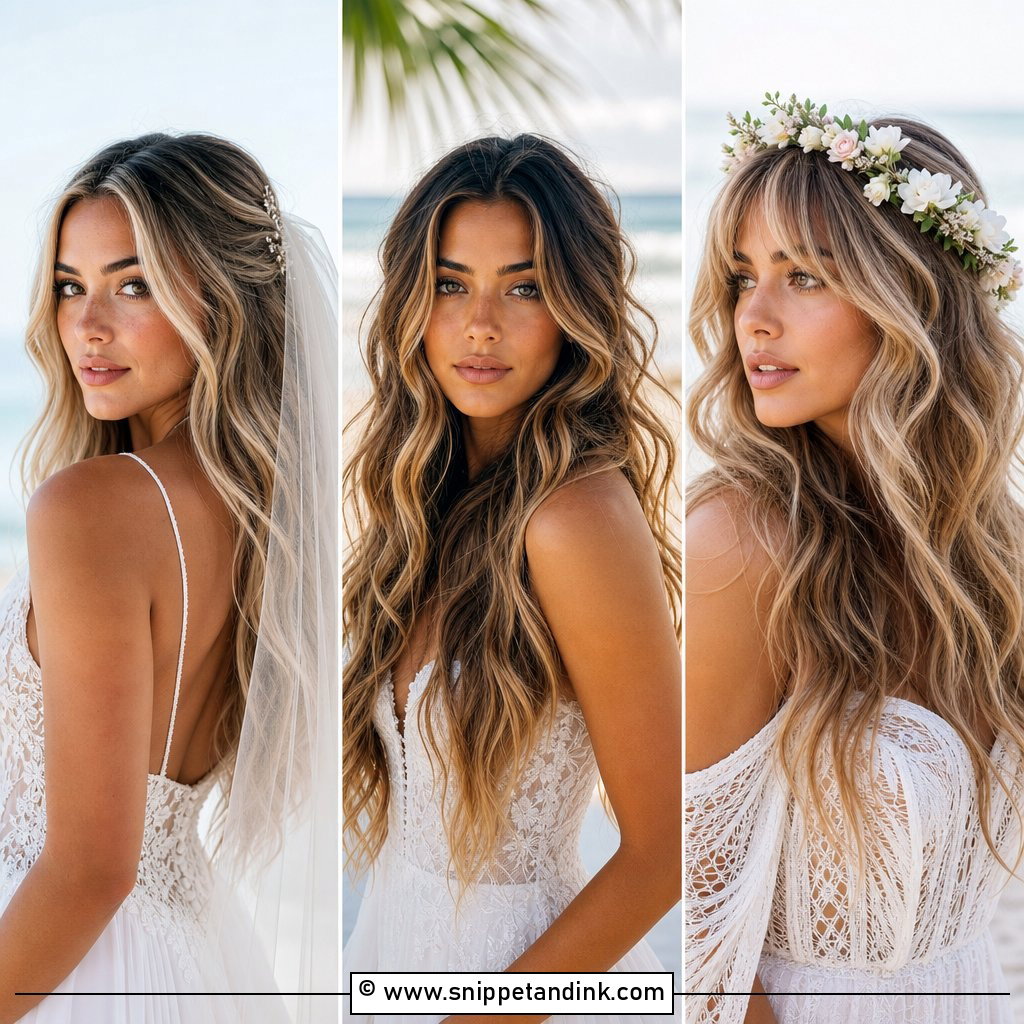
14. Side Swept Curls With Flowers
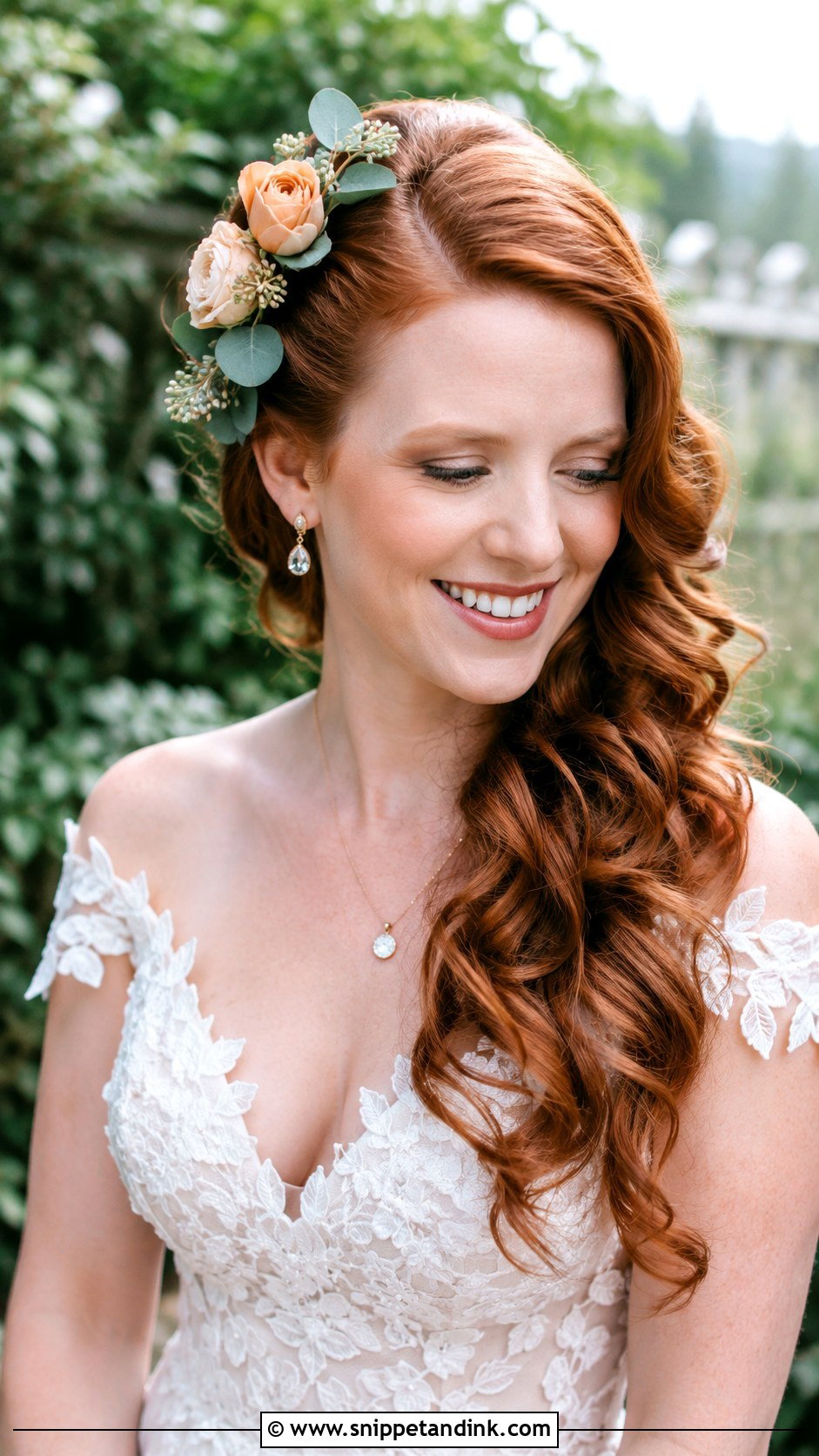
Flowers for hair should be picked for how long they last out of water, not just colour. Baby’s breath, wax flower and eucalyptus hold up for hours; small roses are fine if the florist wires them; anything with soft, thin petals droops by the speeches. I ask the florist to wire and tape the stems so I can pin them straight into the curls near the part. Matching the bouquet ties everything together. I always keep a few spare stems back for a touch-up after the portraits.
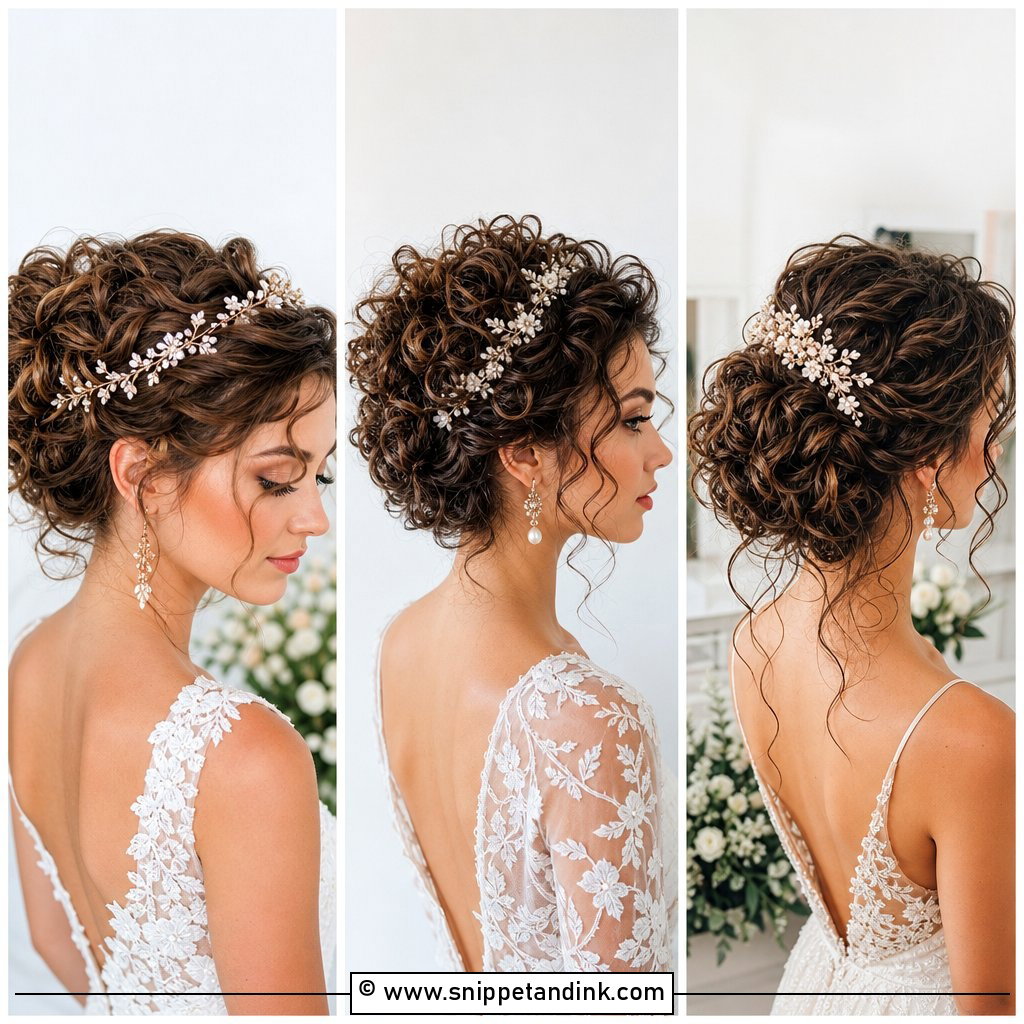
15. Side Swept Vintage Pin Curls
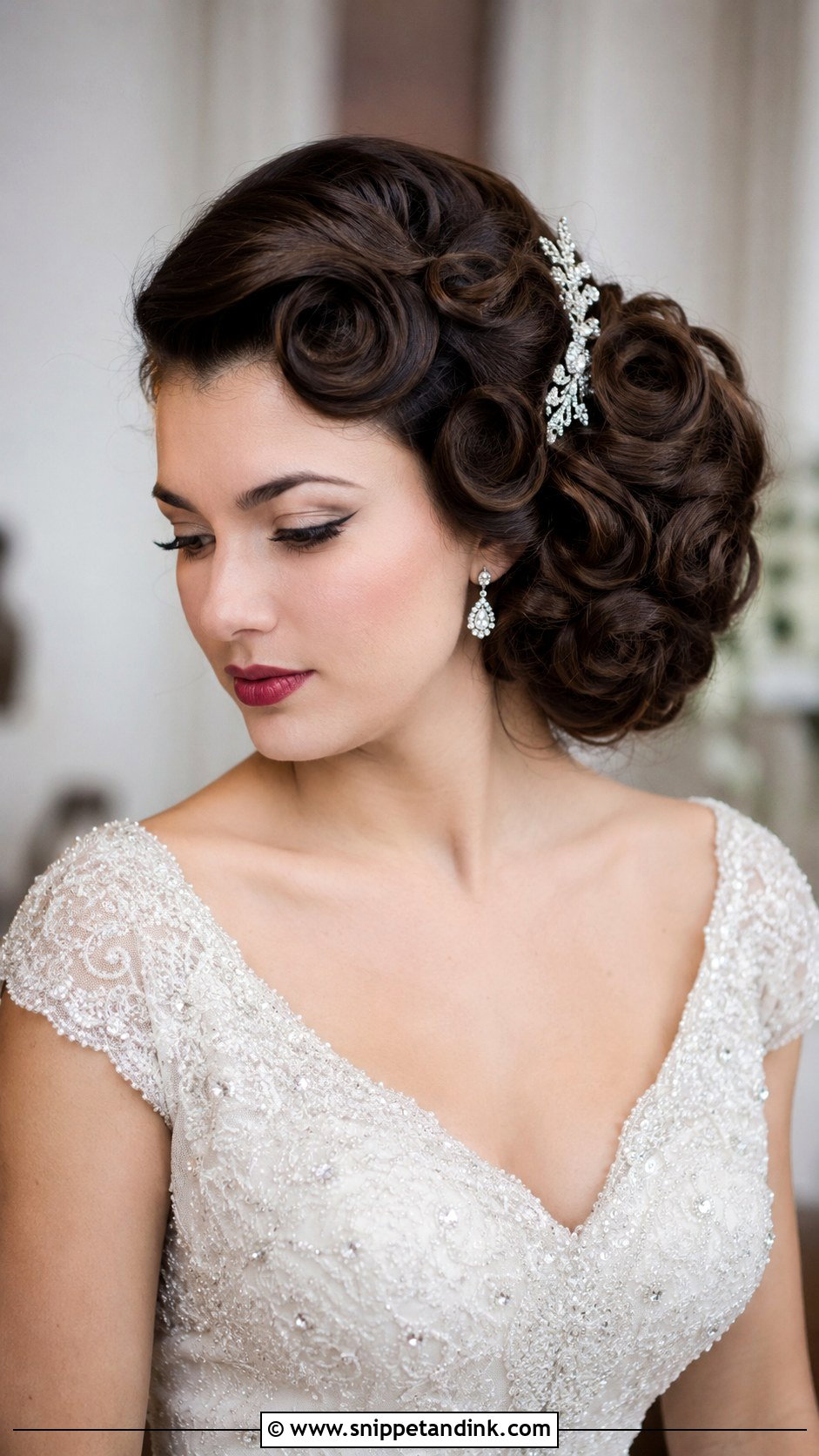
Pin curls are a setting technique as much as a style. Each section is wound flat, pinned while warm, and left to set fully before I brush it into the retro sweep. Brushing too early collapses the pattern, so patience matters more than skill here. The result has real structure and depth, which suits classic gowns and themed weddings with a nostalgic feel. I finish with a firm spray and a vintage comb or jeweled clip on the swept side. Heavy, very straight hair tends to drop sculpted curls faster than finer hair, so let the trial tell you how long yours holds.
16. Side Swept Bob Hairstyle
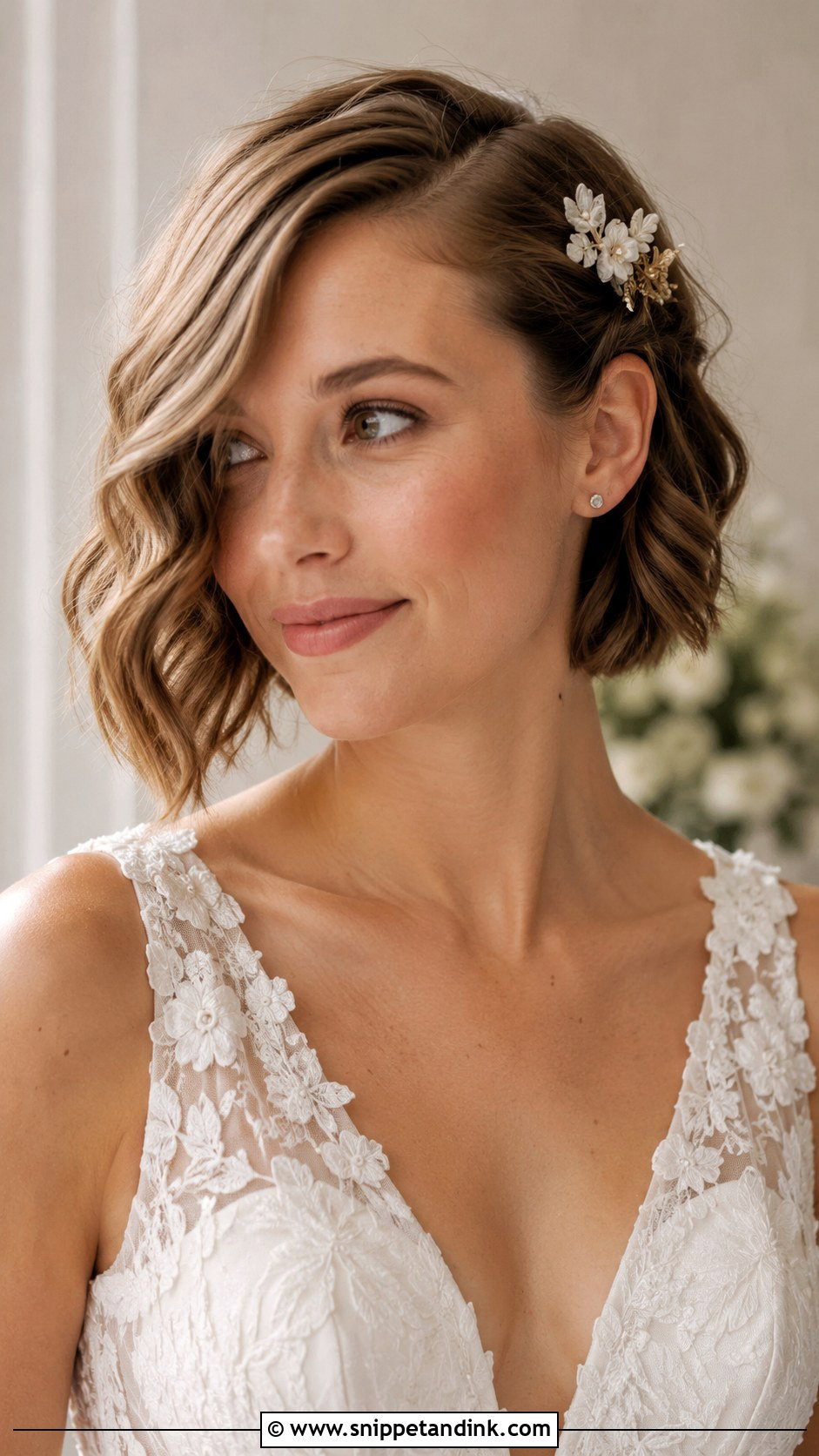
Short hair can carry a sweep perfectly well. A bob swept to one side just needs a deeper part than you normally wear and a bend in the ends, curled away from the face on the longer side. I tuck the short side behind the ear and fix it with a hidden pin, or a clip or small floral pin if you want detail there. Have your cut a week or two before the wedding rather than the day before so the ends have time to settle. No extensions needed.
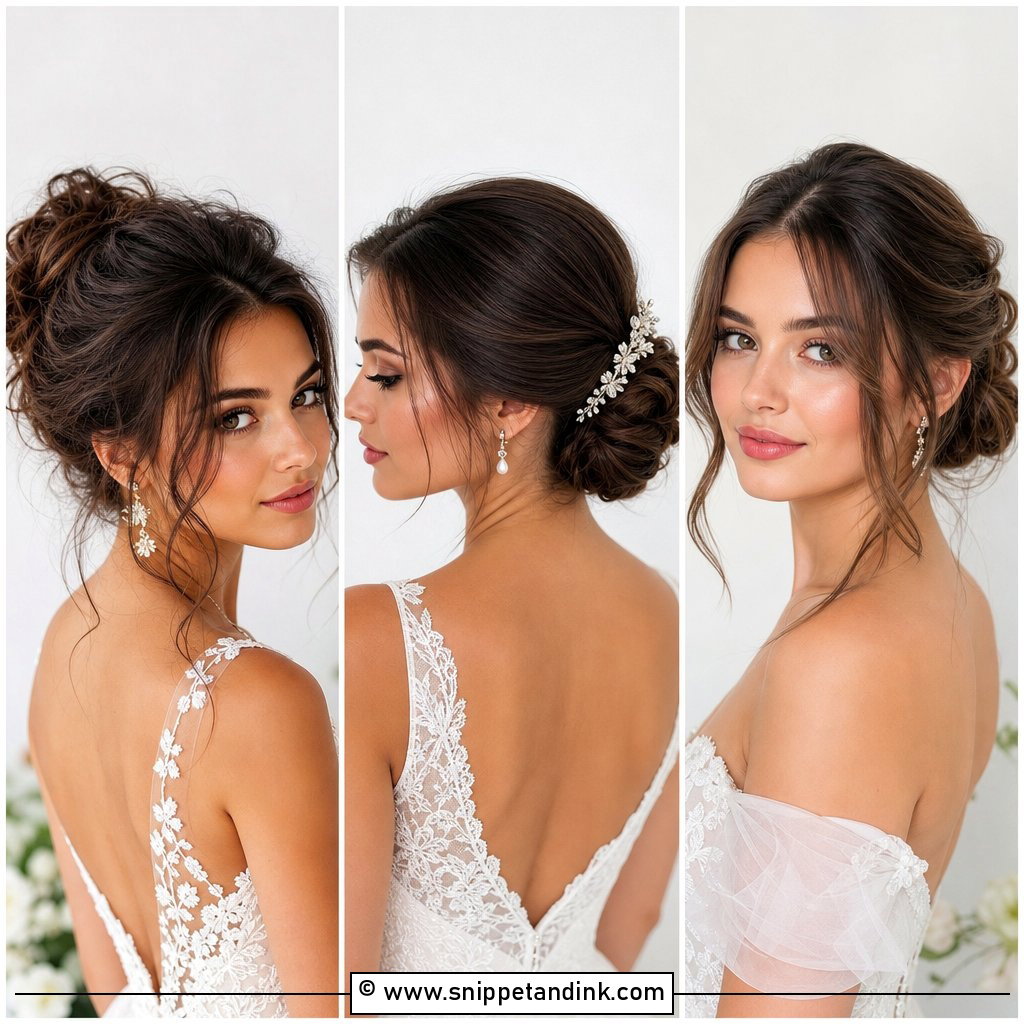
17. Side Swept Twisted Updo
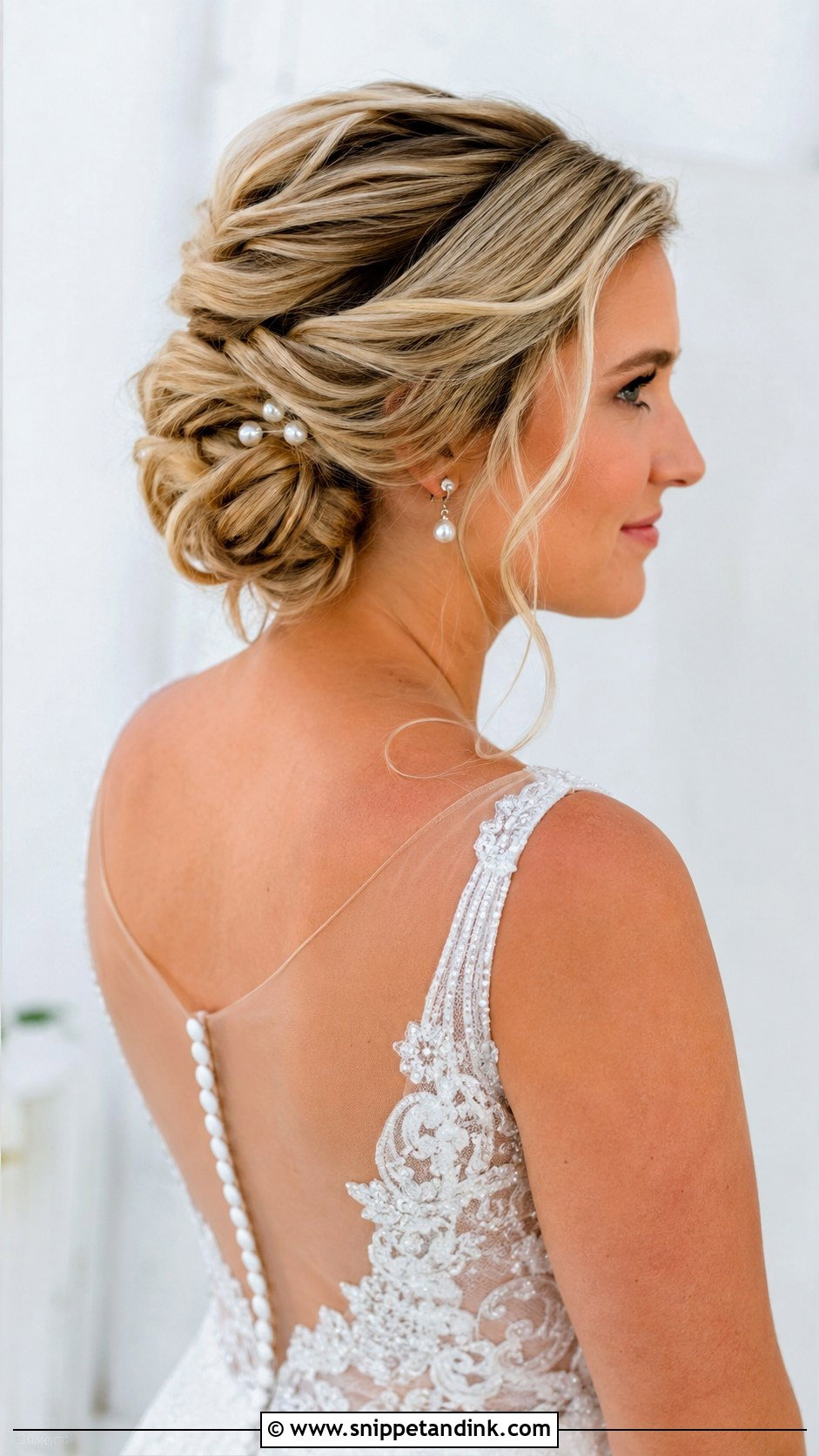
Twisted updos are built piece by piece. I twist each section toward one side and pin it right at the twist, so the texture comes from the hair itself rather than from backcombing, which keeps it secure while still looking soft. It suits formal weddings and gowns with open or detailed backs, since the whole nape stays clear. A few tendrils at the face keep it from looking stiff, and pearl pins threaded through the twists add a little shine. Fine hair needs volume powder at the roots first, or the twists look thin and you can see scalp between them.
18. Side Swept Beach Waves
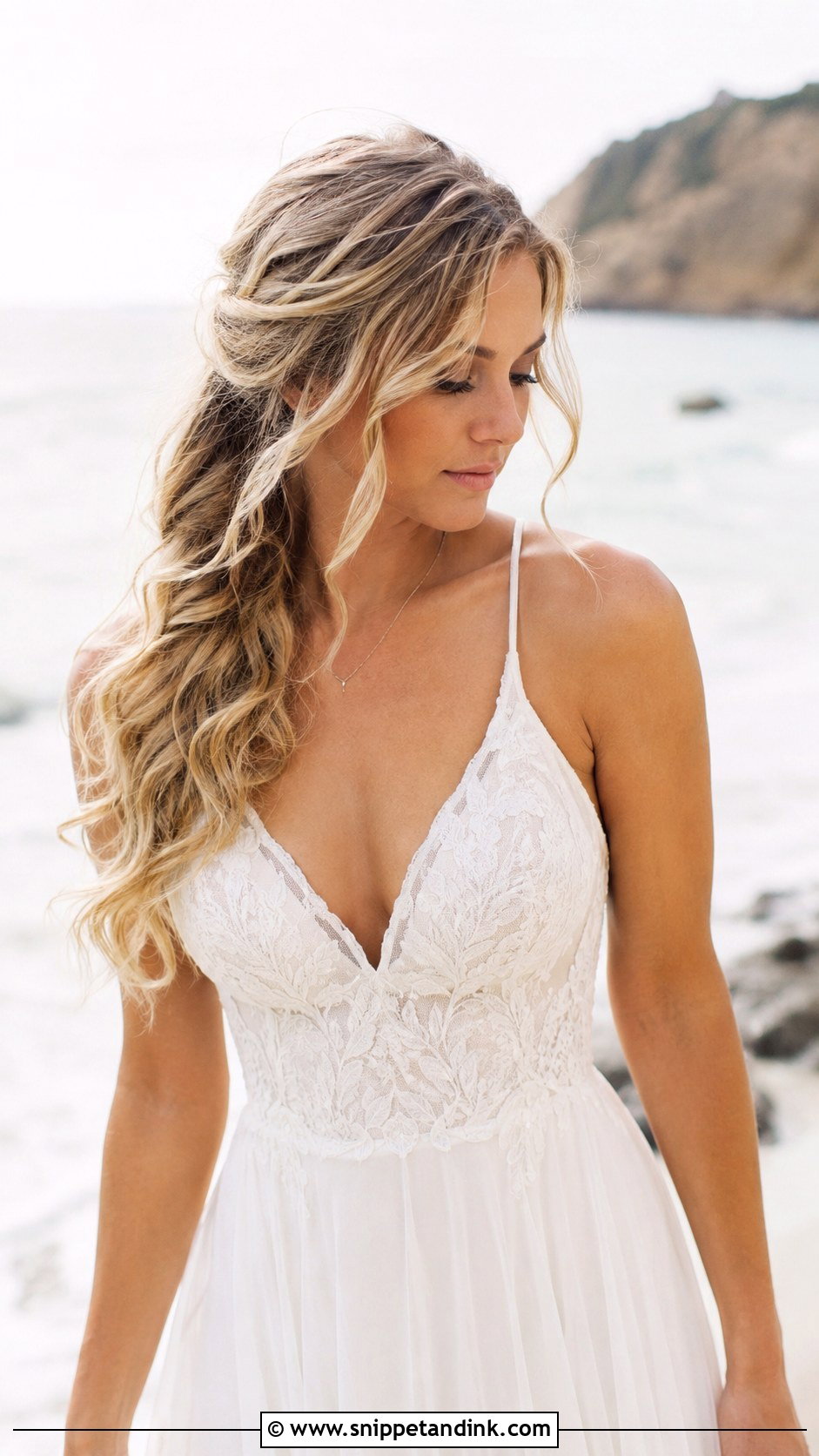
Beach waves should look like hair that dried in sea air. I make them with a flat iron or a wand, leave the last inch of the ends straight, then rake in texture spray and scrunch rather than brush. That’s what keeps the finish airy. Face-framing pieces stay out. On an actual beach, wind is as much of a problem as humidity, and sweeping everything to one side with pins behind the opposite ear gives it less to grab. It’s low maintenance and comfortable, and a natural match for flowing gowns and barefoot ceremonies.
19. Side Swept Updo With Tiara
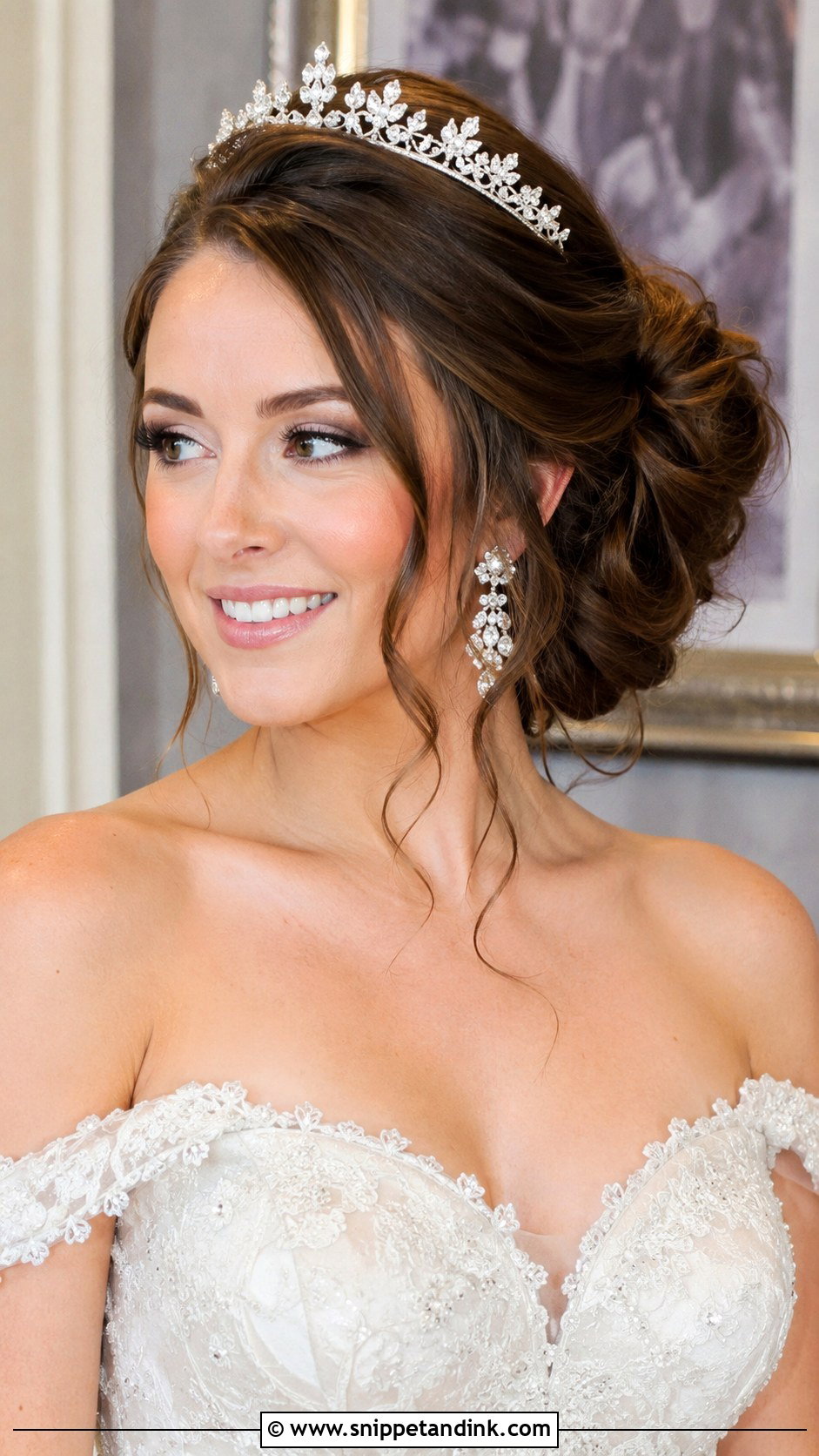
A tiara changes how a side updo has to be built. I set the updo first, a little lower and fuller than usual, then place a sparkling tiara a couple of inches behind the hairline and pin through its loops into a hidden base. That base matters, because a tiara pinned into soft hair alone starts tilting within hours. Tendrils at the face soften the formality. It belongs at formal and fairytale-themed weddings in grand venues, with statement earrings. Wear the tiara for an hour after your trial, since some bands press behind the ears.
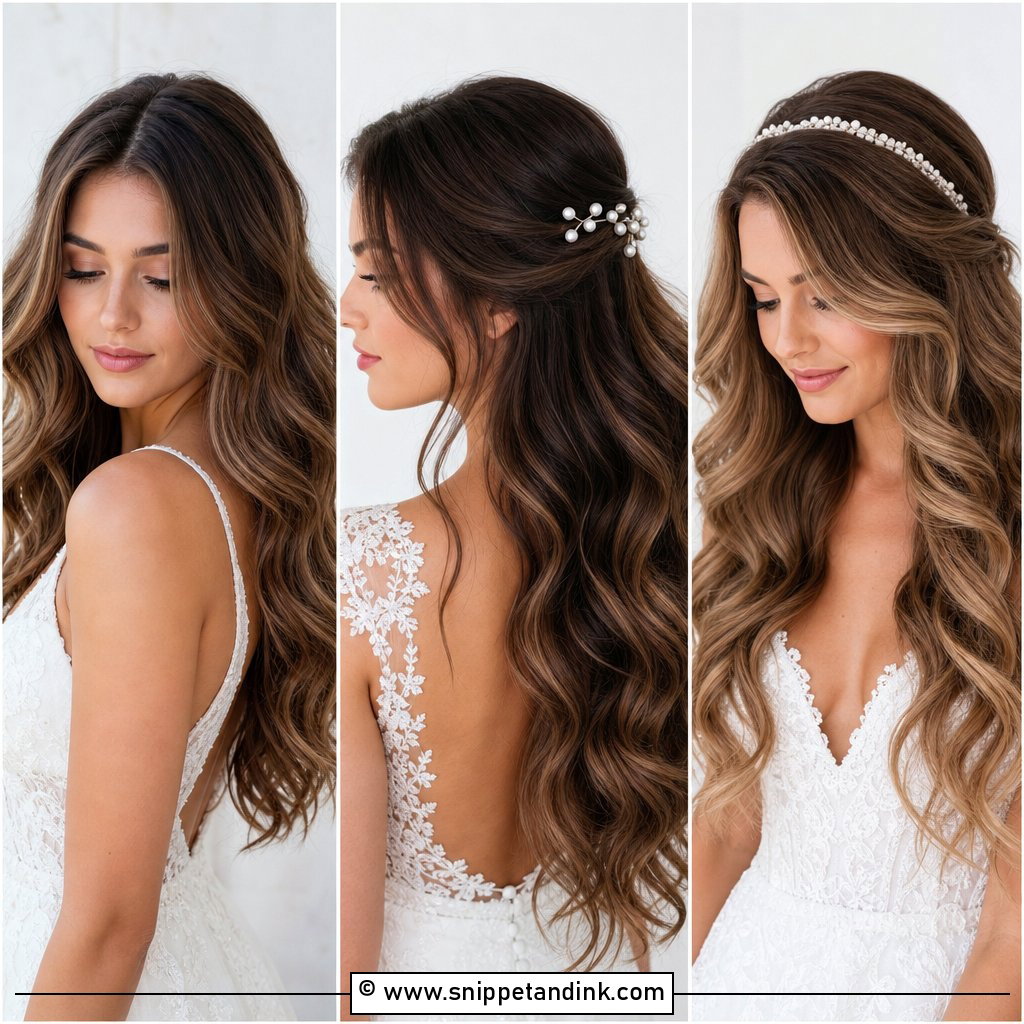
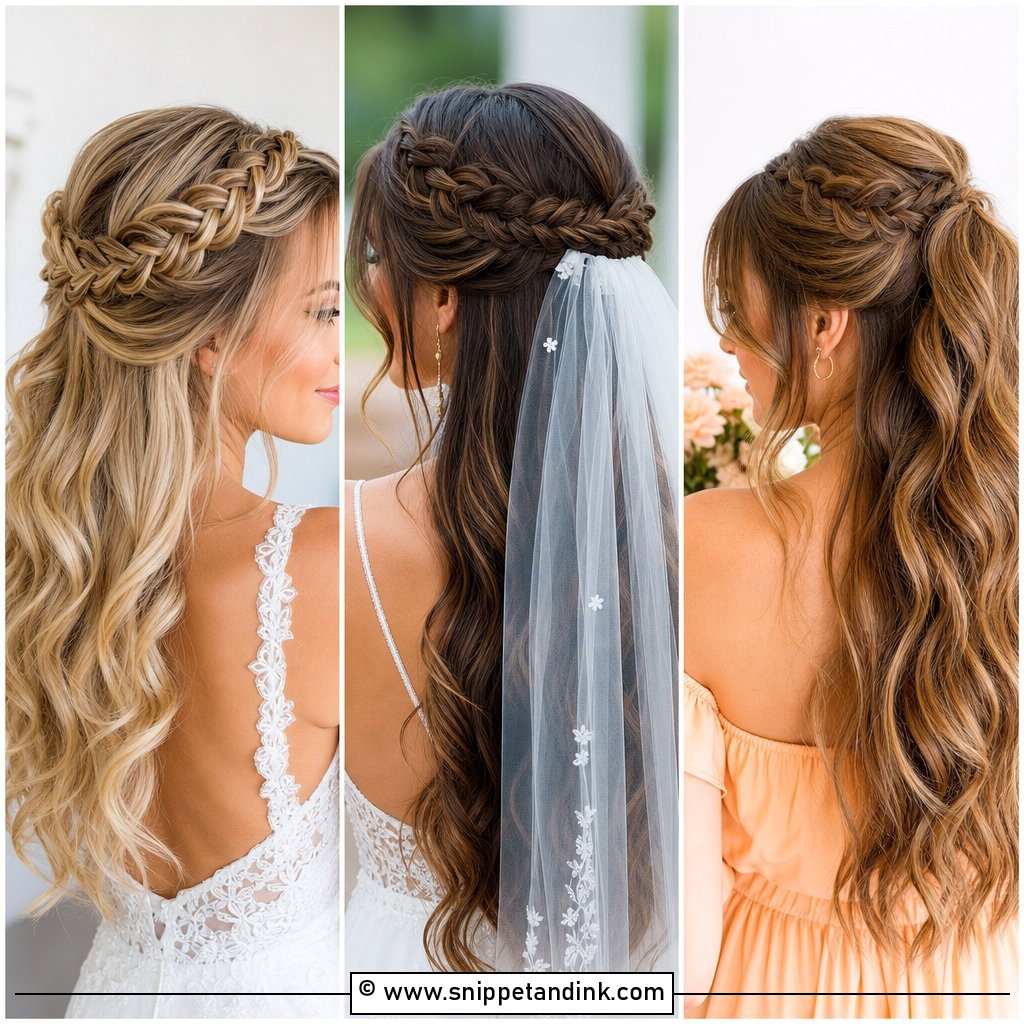
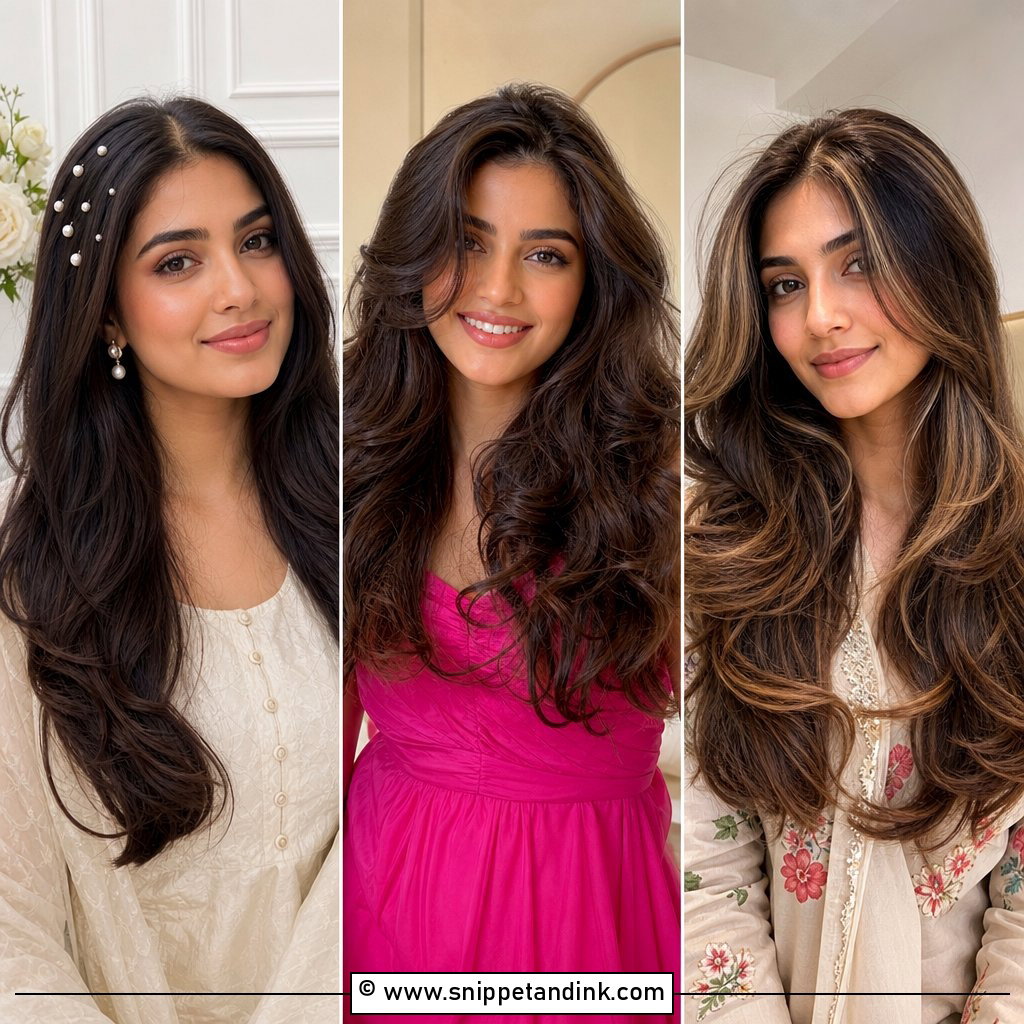
20. Side Swept Curls With Deep Part
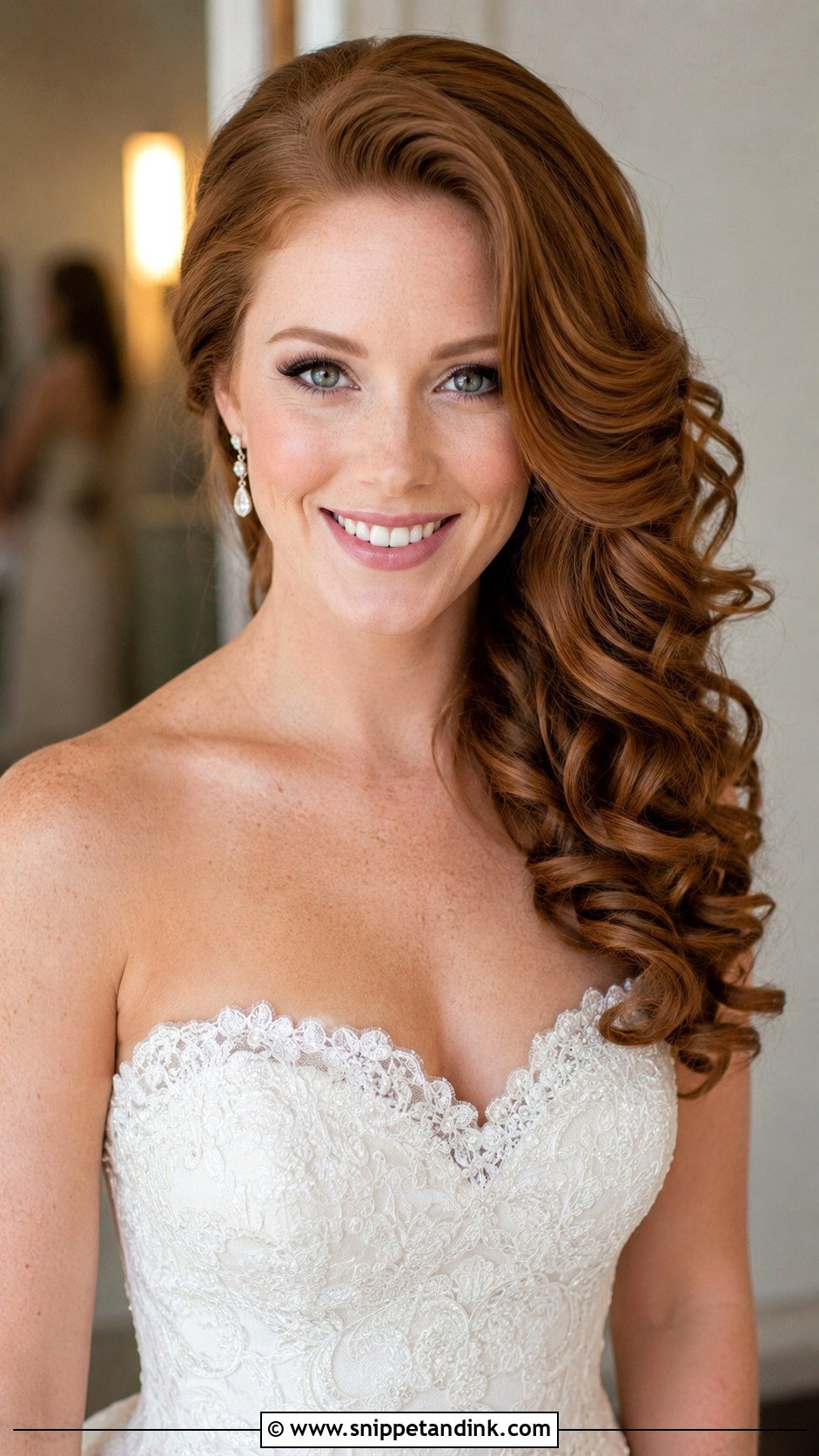
Moving the part far to one side is the quickest way to get height at the crown, because the hair has to arch over the top of the head to get there. That’s why I’d suggest this for flat roots and fine hair. I curl with a large iron, pin each curl to cool, then sweep everything over the opposite shoulder and finish with a little shine spray. If your part naturally falls the other way, comb it into the new part for a few days before the wedding and it will sit far more willingly.
Why the Sweep Slides Back by the Reception, and How I Stop It
A side style puts most of your hair on one shoulder, and gravity, hugs and leaning back in a chair all pull it toward the centre. This is the work that goes in underneath so it stays where it was set.
- A hidden anchor behind the ear. I make a small flat twist or a row of crossed bobby pins behind the ear on the empty side, and the swept hair is pinned to that rather than to loose strands.
- Hair with some grip. Freshly washed, silky hair slides. I prefer hair washed the day before, with dry texture spray worked into the roots.
- Curls that cool before they move. Every curl is pinned up until it’s cold. Hot curls brushed out straight away are the first to drop.
- Light spray in layers. Several fine passes hold better than one heavy coat, and the hair can still move.
A few habits on the day help too. Hold the bouquet on the open side so your arm doesn’t brush the hair back, and ask a bridesmaid to carry four bobby pins, a travel spray and a tail comb. If the sweep does drop, the fix is two crossed pins behind the ear and a push forward with your fingers. It takes about a minute in the bathroom, and nobody will notice it happened.
One Shoulder, Twenty Ways to Fill It
Side-swept hair adapts to nearly any length, texture or theme, from sculpted waves and polished chignons to a loose braid or beach waves. What makes any of them last is the work you never see: the anchor under the sweep, curls that cooled before they were touched, pins that cross. Book a trial, keep the style in for a few hours afterward, and watch how it behaves before you commit. Take the photos you saved, tell your stylist which way your part falls, and you’ll end up with a style that genuinely feels like yours.
You'll Like These Ideas:


Leave a Reply