
Asymmetry is the whole point of a one side bridal style: the hair gathers on one side, and the other side of your face, neck and shoulder stays bare. That opening shows off an earring, a one-shoulder strap, a strapless neckline or a detailed back. The shape can be curls, a bun, a braid, a ponytail or old film waves. What all fifteen looks below share is a hidden anchor on the bare side, and that anchor decides how long the style lasts. I’ve added notes on where each look tends to slip and how I prevent it.
The Hidden Anchor Behind the Bare Ear
Every one side style has the same structural problem. All the hair is pulled toward one shoulder, so gravity and movement keep trying to drag it back toward the center of your back. When a one side style fails, it usually fails there.
I build a tight anchor on the bare side before anything else: a small flat braid or twist running behind the ear, pinned with crossed bobby pins. Every curl or section brought across is pinned into that line. It sits under the hair, so no one sees it, and it gives the swept side something solid to hang from.
- Fine or slippery hair: dry texture spray along the anchor line before pinning, so the pins grip.
- Very thick hair: split the weight, pinning half the lengths low at the nape and sweeping only the top half forward.
- Extensions: place more wefts on the swept side than the bare side to keep the volume balanced.
At the trial, I ask brides to shake their head gently and look over each shoulder. If the swept side moves as one piece, the anchor is doing its job.
1. Side Swept Bridal Curls
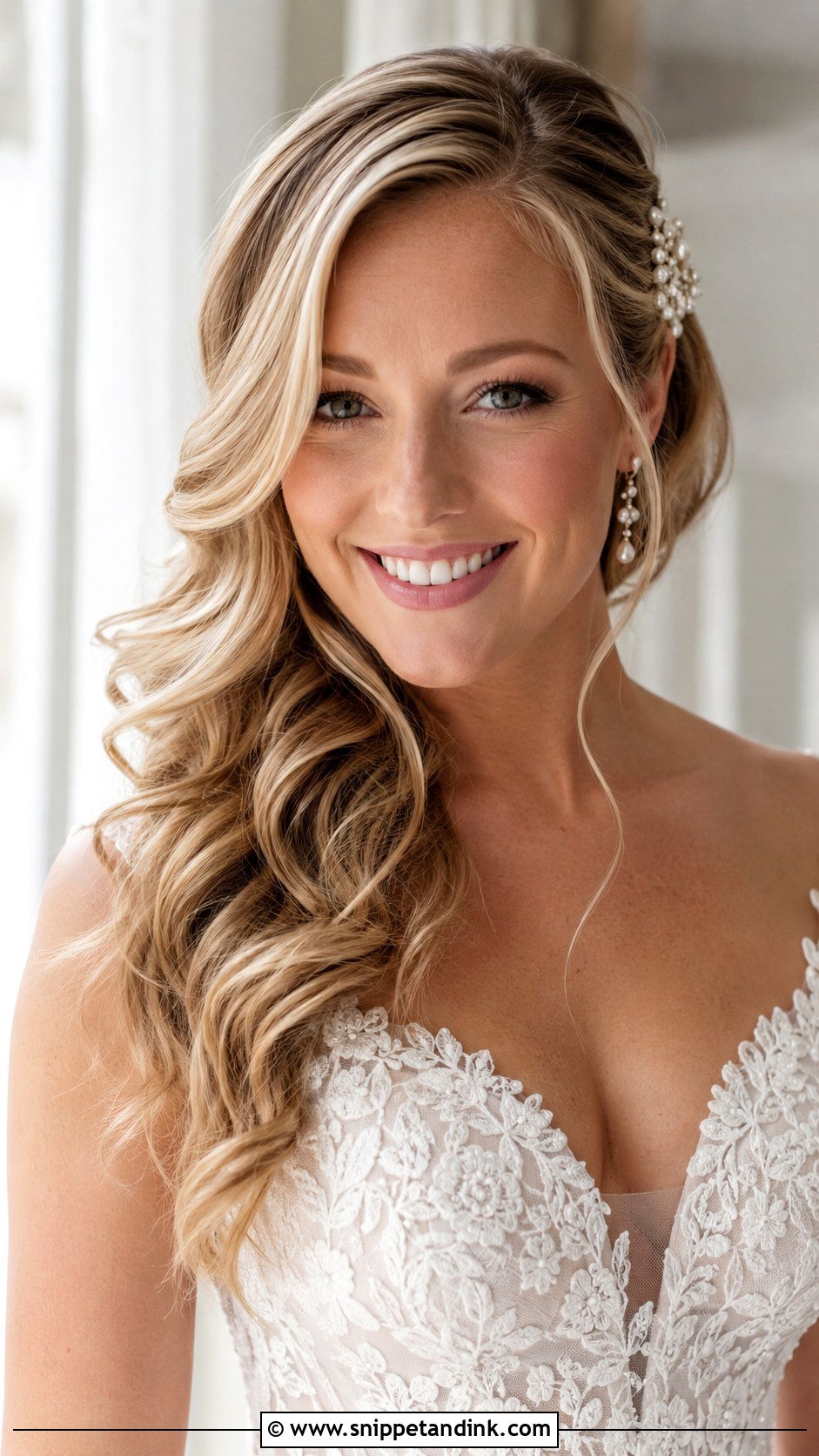
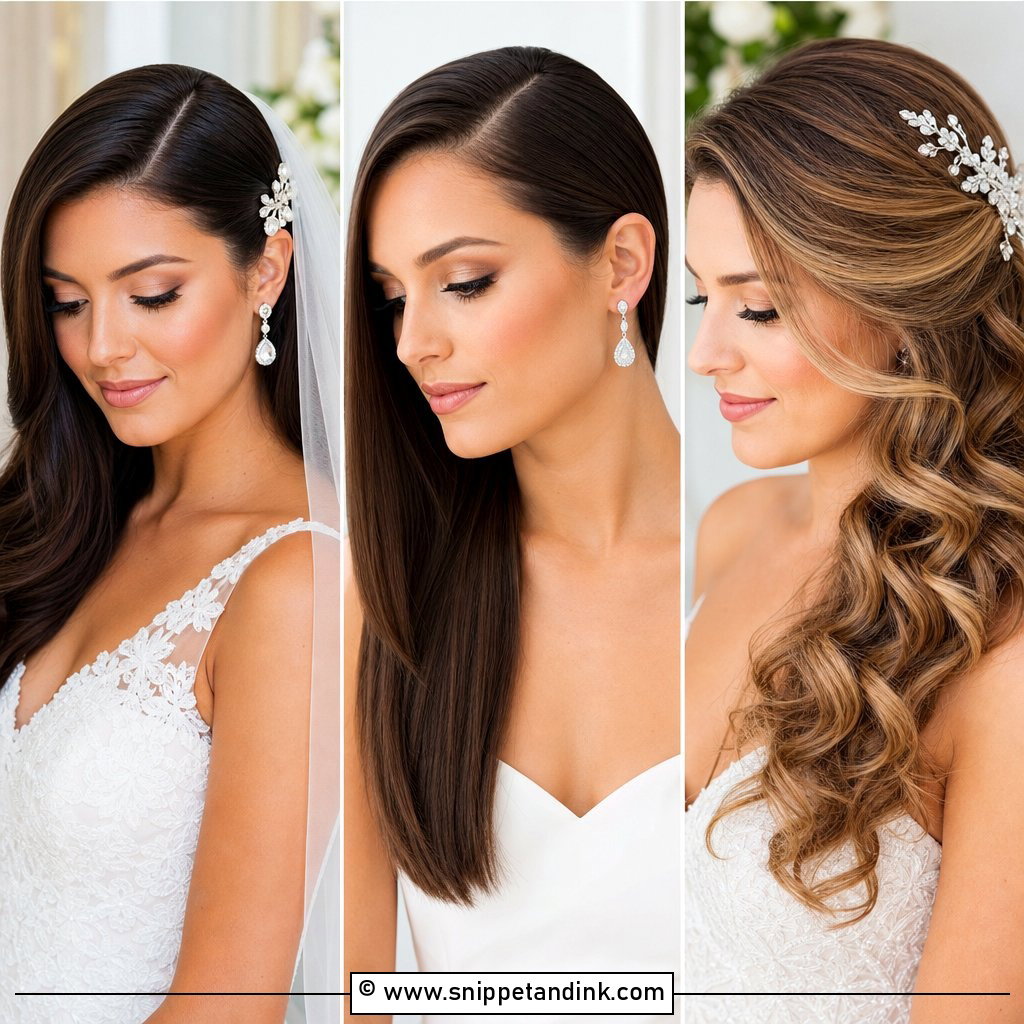
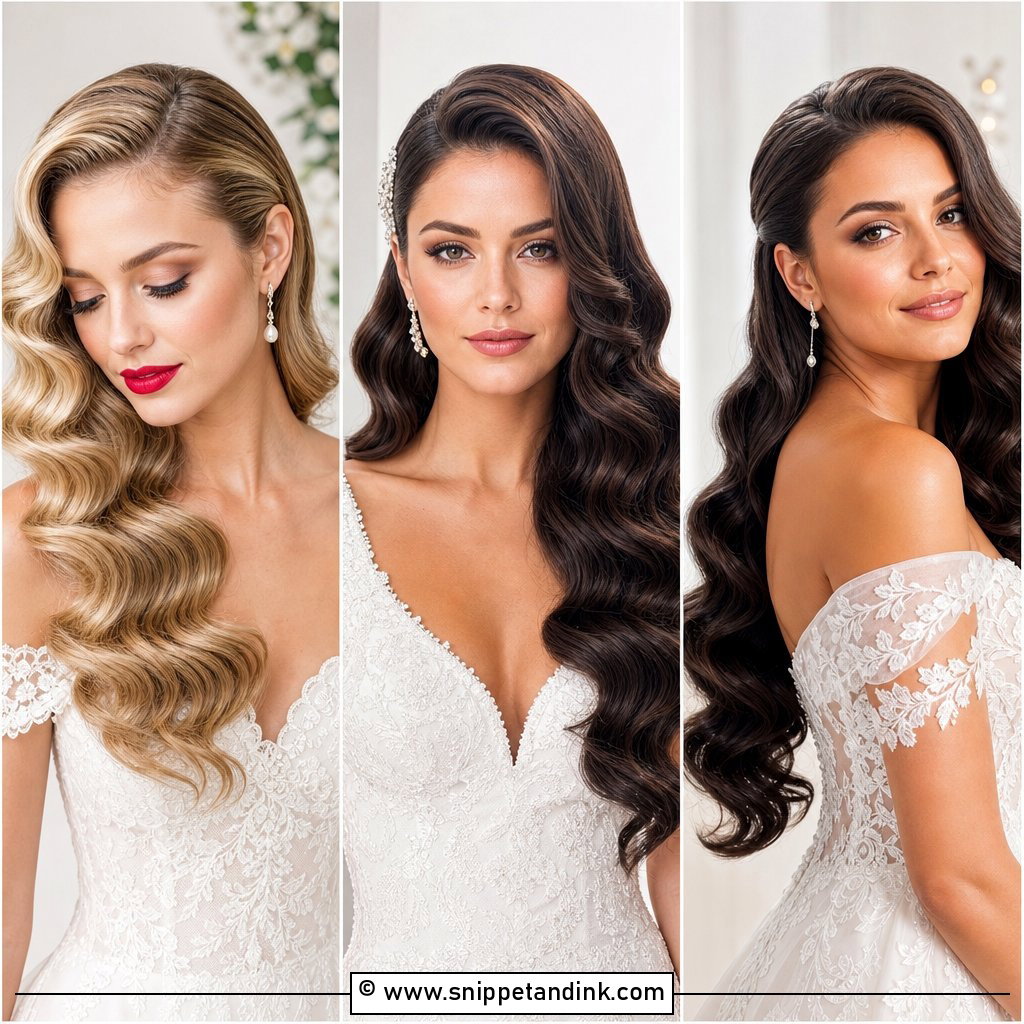
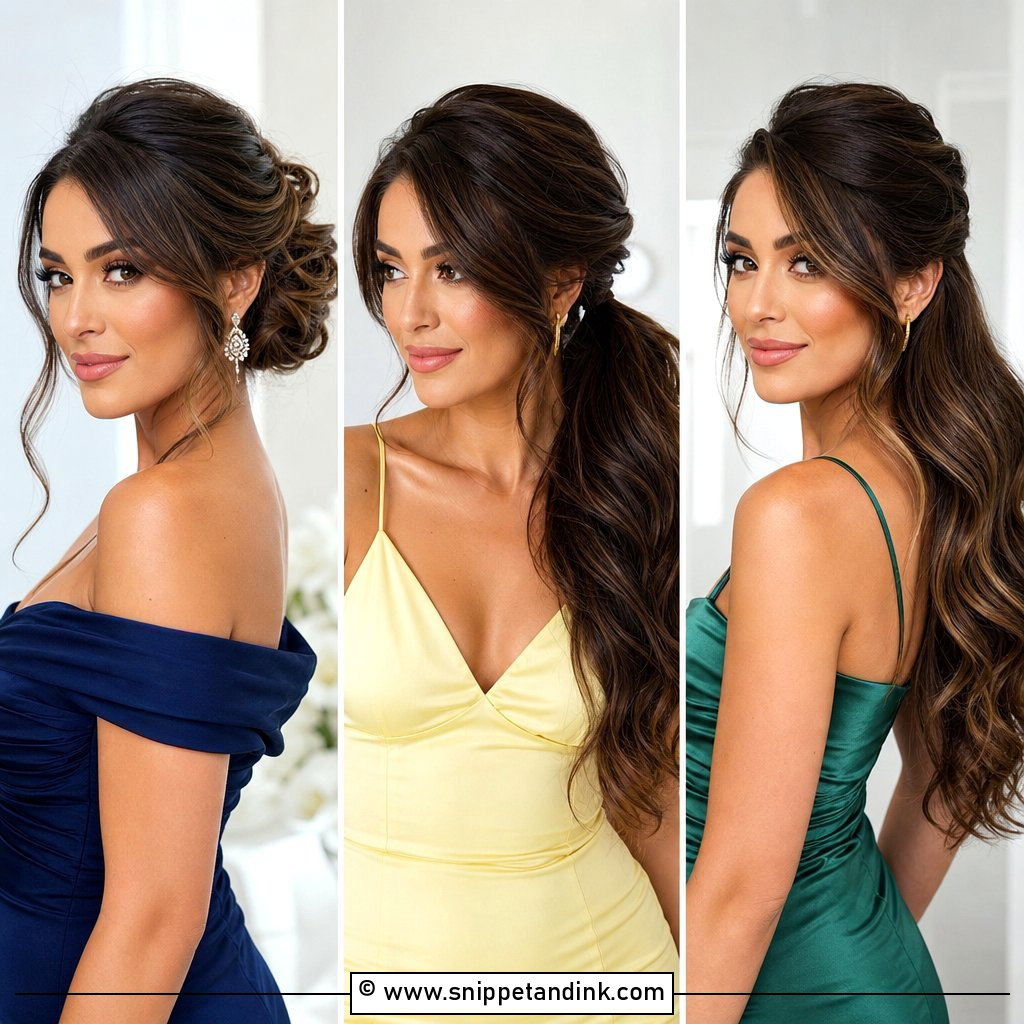
Most brides picture this one first: a deep part, big curls, and everything gathered over one shoulder. It is softer than it is secure, though. Curls brought forward tend to slide back toward the spine as you move. I lock them with a row of crossed pins at the nape, just behind the ear, before brushing anything out. It suits long hair and medium-length hair with extensions. Pearl pins and drop earrings go well with it, especially above a strapless dress.
2. Side Swept Bridal Waves
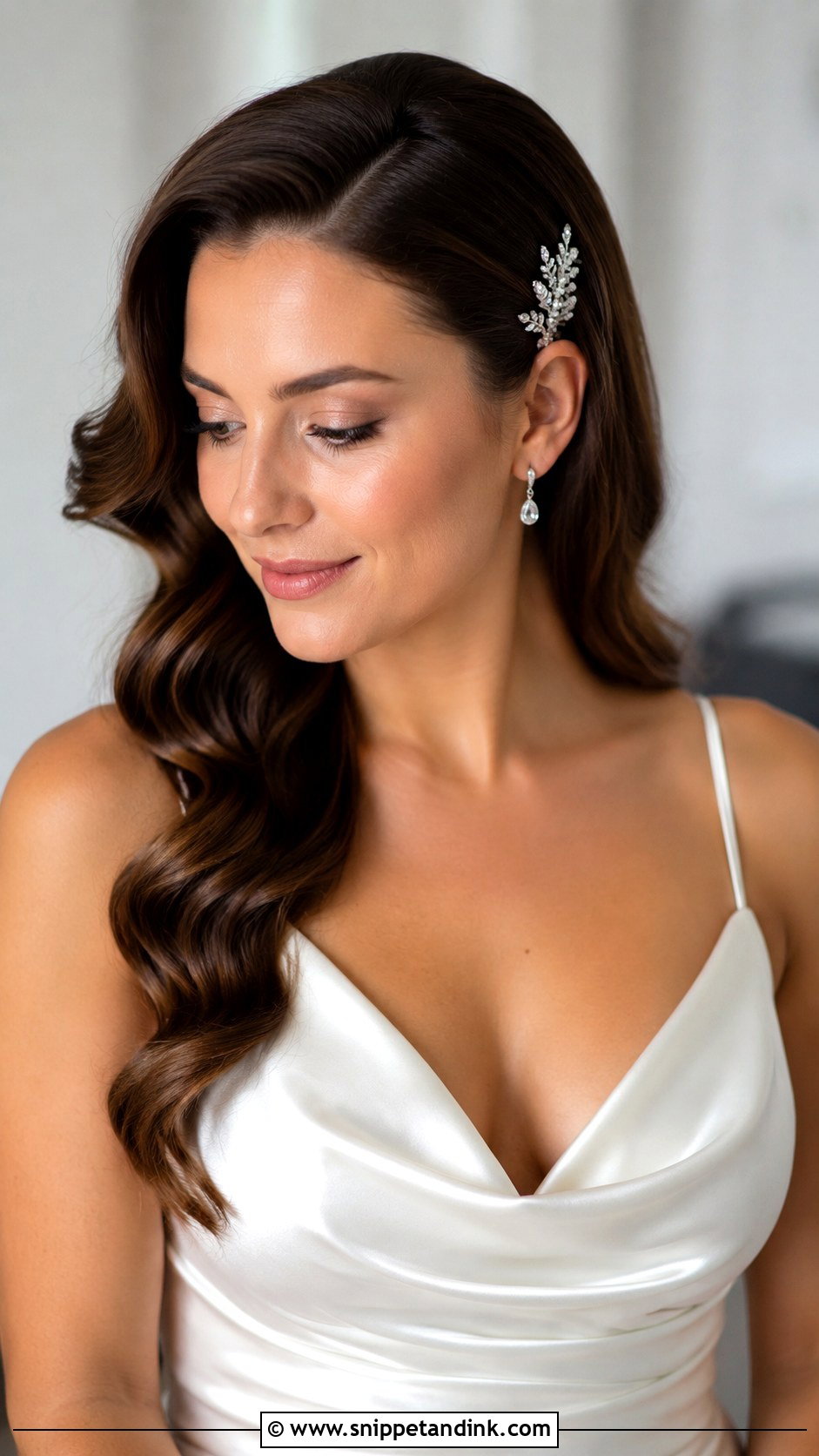
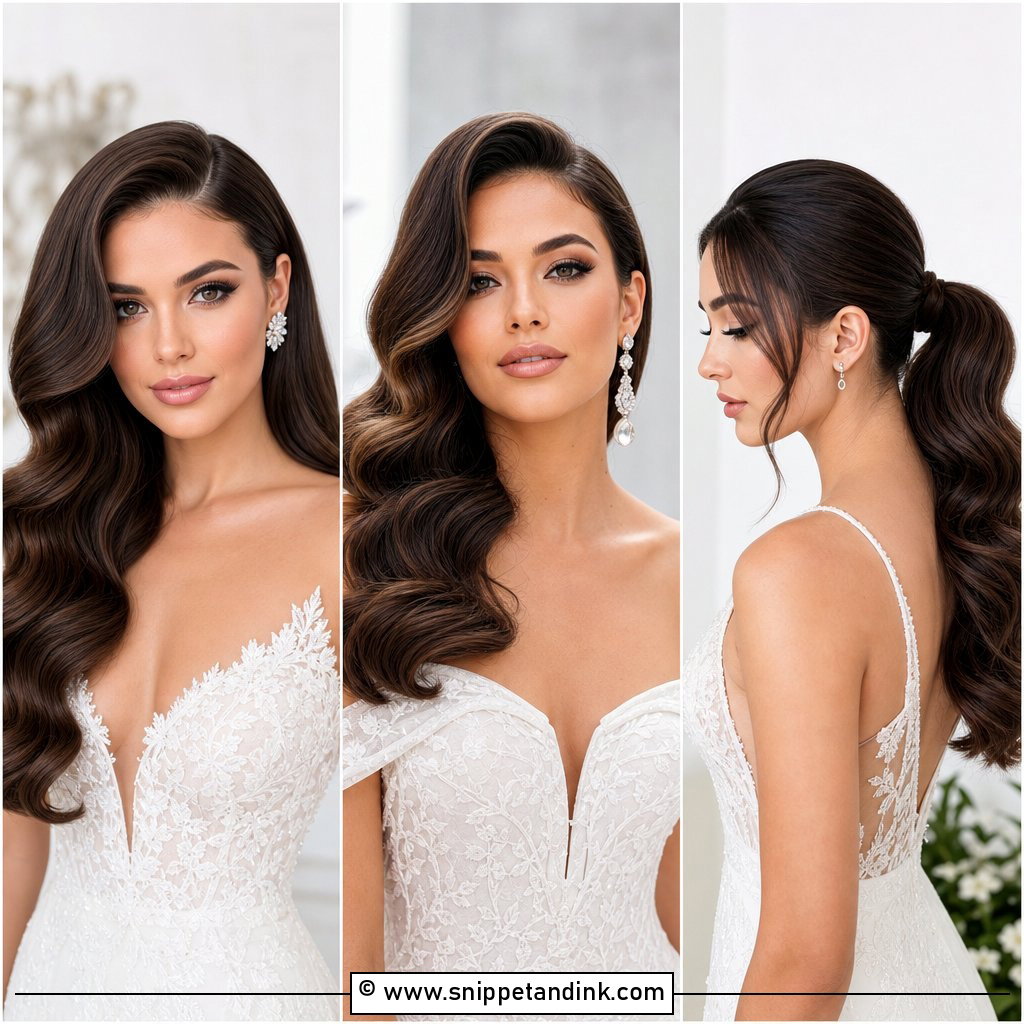
Waves give a looser, more lived-in finish than curls. I start with a deep side part, wave away from the face, then sweep everything over one shoulder. Mousse at the roots before blow-drying is what gives the waves memory; without it, straight hair tends to relax by the reception. If you already wear your hair down most days, this will feel the most like you. A small comb on the tucked side adds a little sparkle without interrupting the sweep.
3. Side Swept Bridal Updo
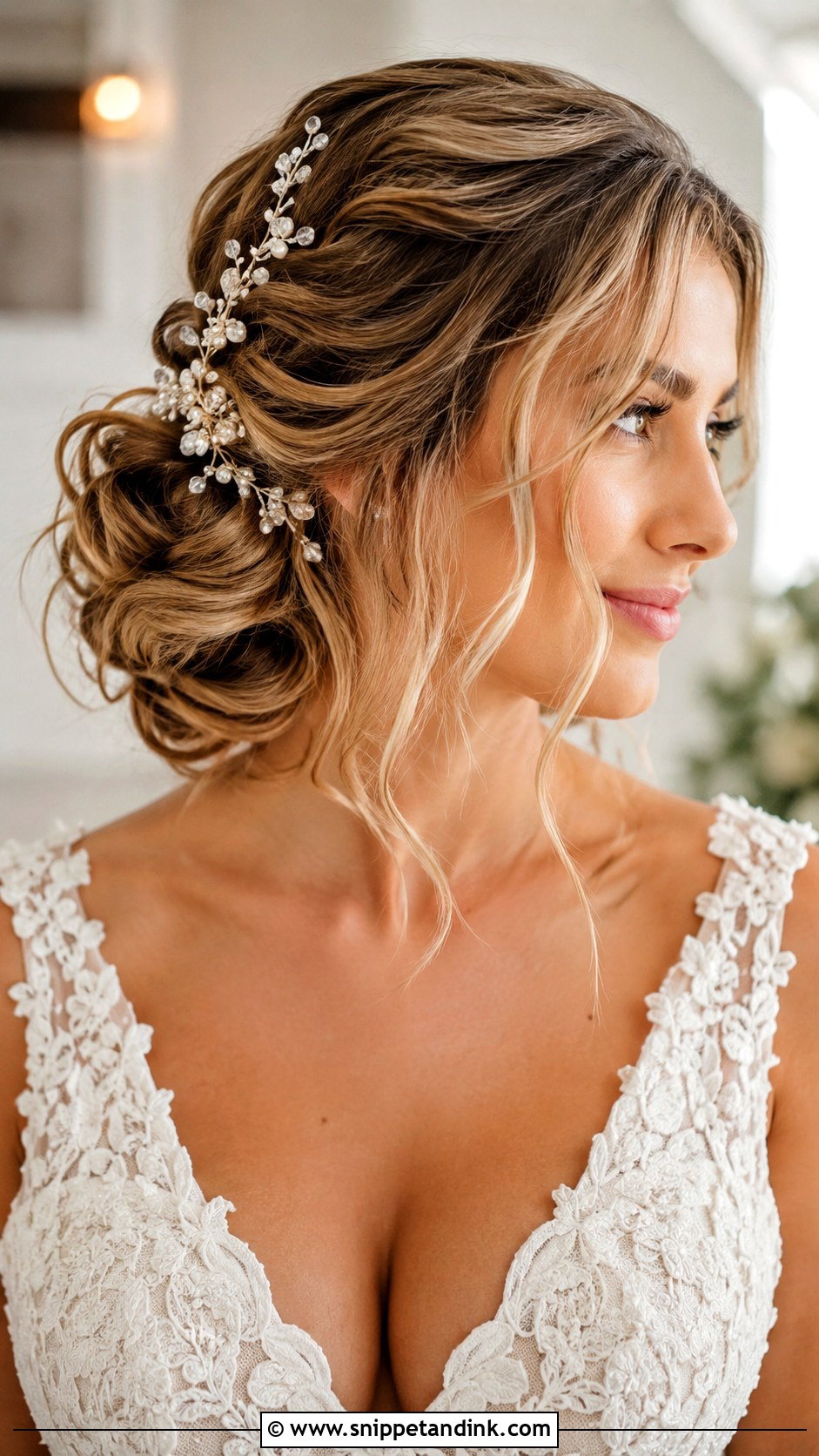
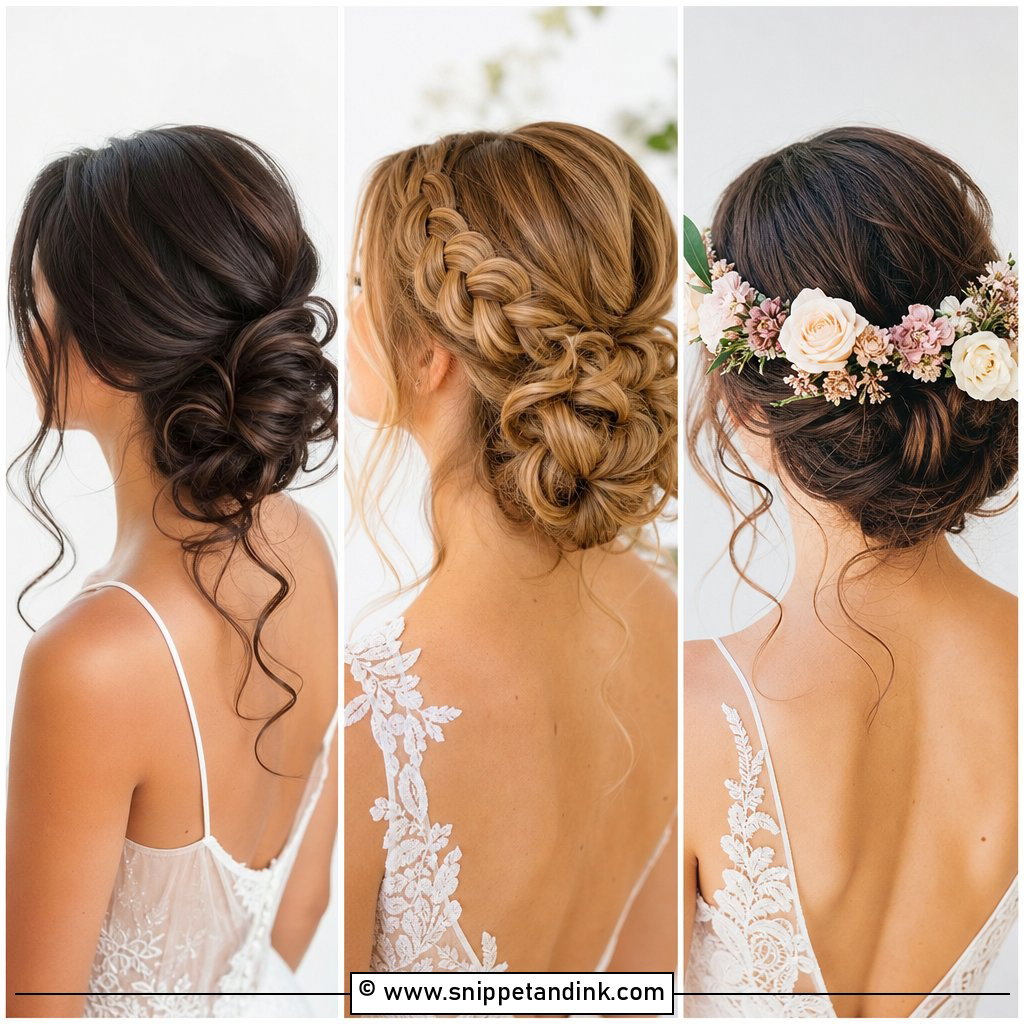
Here the bun moves off center, pinned low near the nape on one side. You get the security of an updo with a softer, asymmetrical line, which matters in heat or wind at an outdoor wedding. Leave a few pieces loose for a relaxed feel, or none for formal. A veil sits best above the updo rather than tucked under it. I’d suggest this over loose curls for anyone with hair that drops curl quickly.
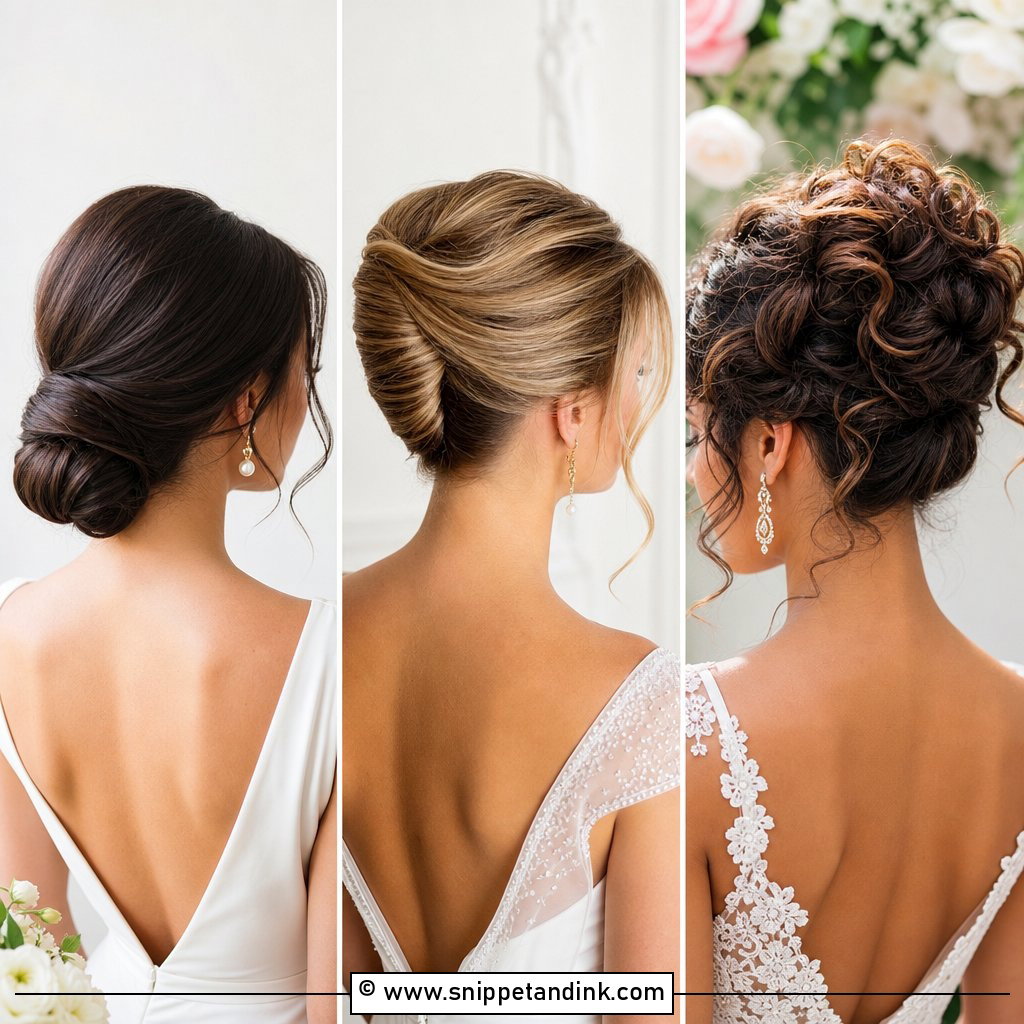
4. Side Bridal Bun
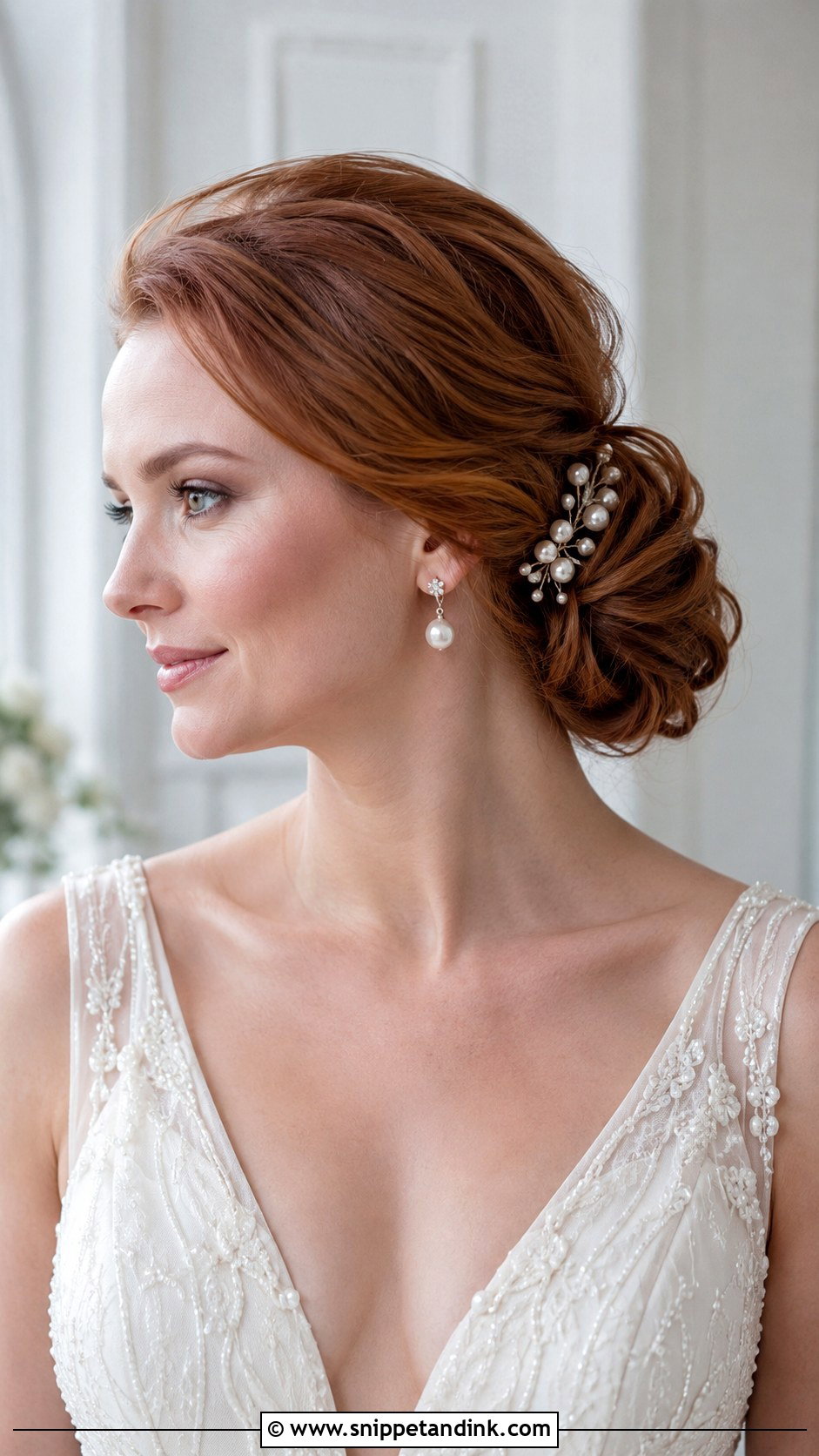
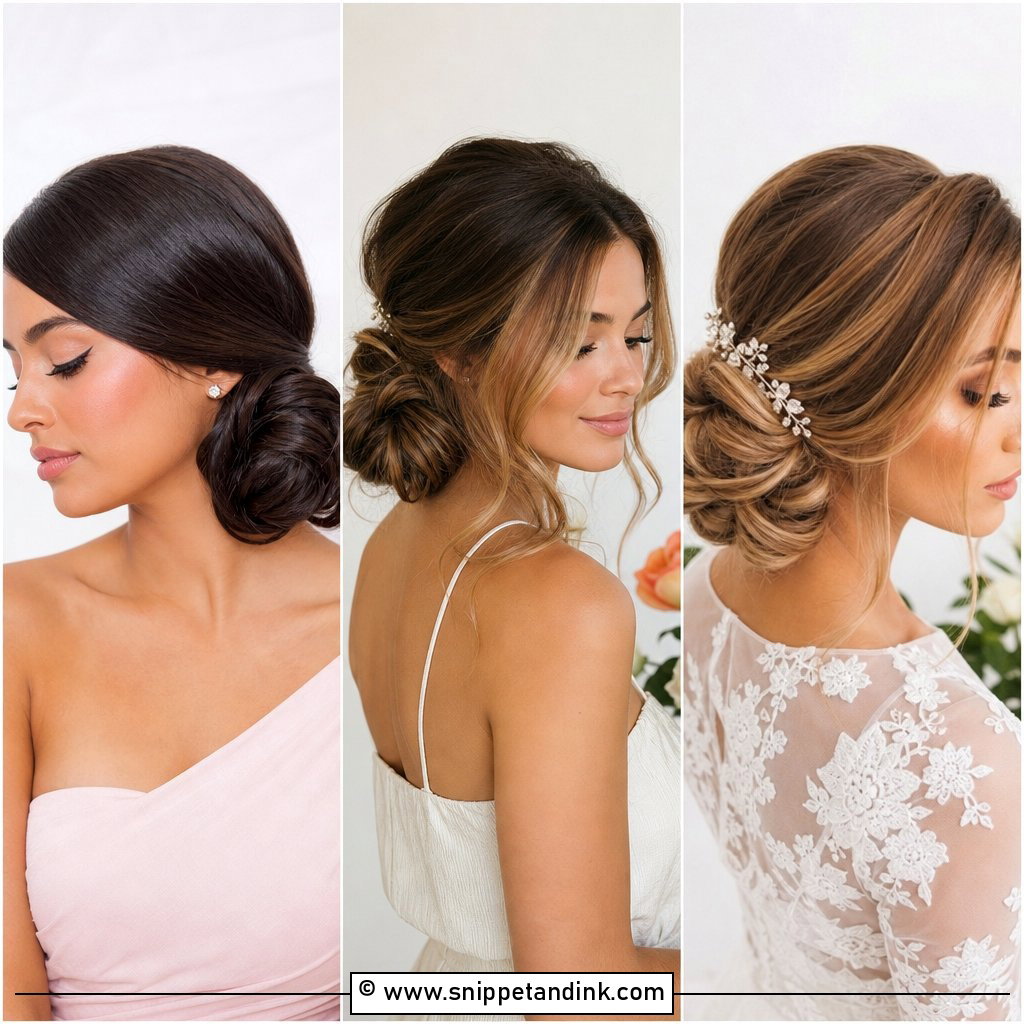
A side bun sits low near the jawline or just behind the ear. The placement matters more than the bun itself. Too far forward and it touches the shoulder when you turn your head; too far back and from the front it looks like an ordinary low bun. I usually check it in a mirror from the photographer’s angle before pinning it down. Fine hair benefits from a small padding donut. Thick hair needs more pins than you’d expect, because the weight pulls the bun toward the neck. Smooth reads classic; textured suits a garden or beach.
5. Side Bridal Chignon
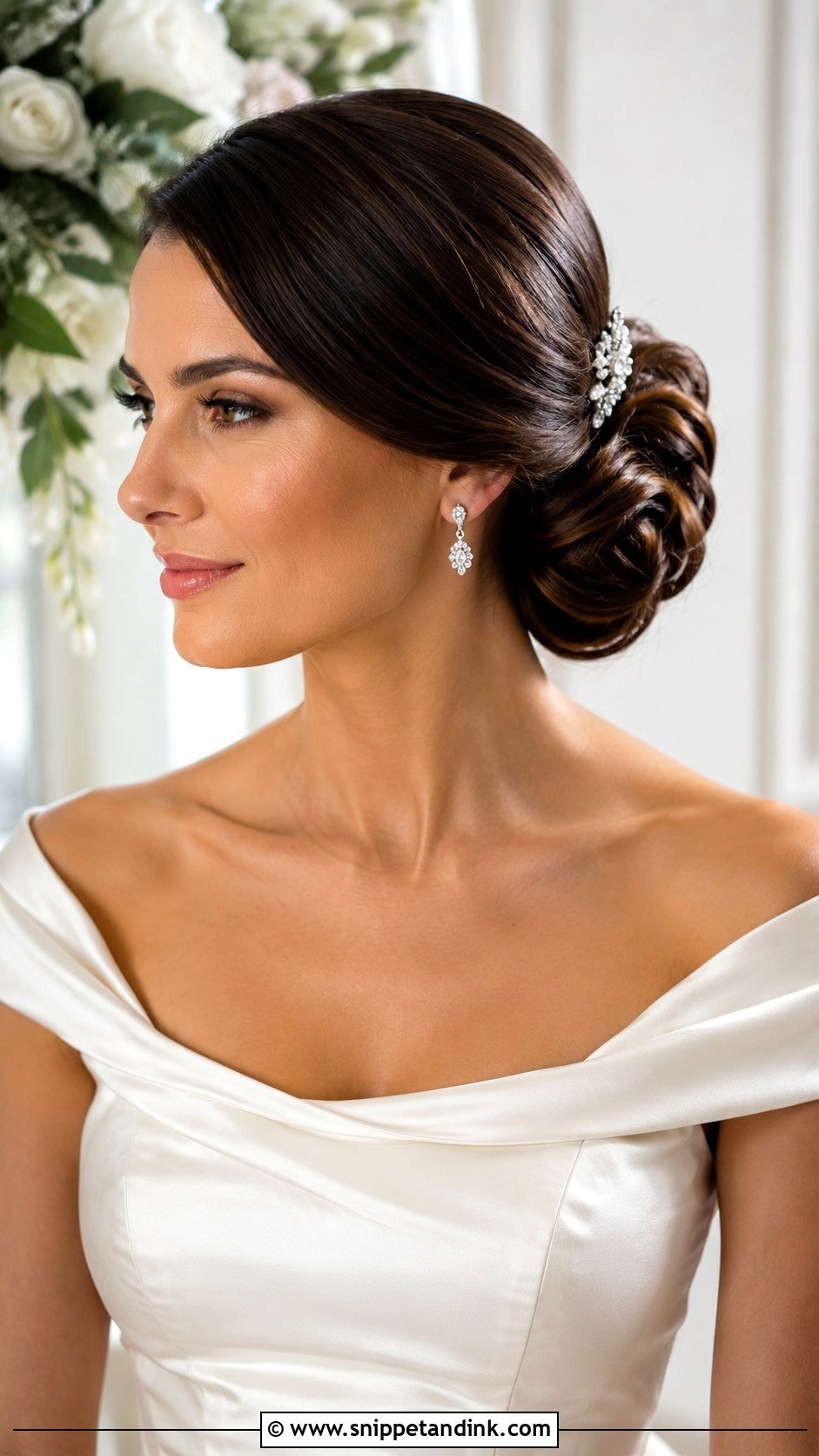
A chignon is more structured than a loose side bun: the hair is folded or twisted into a compact shape low on one side. That makes it a good match for ball gowns and formal indoor venues. A deep part softens it; a center part looks cleaner and more modern. I keep some lift in the front so the head doesn’t look flat in profile photos. It works with a sleek veil or a small crystal barrette.
6. Side Braid Bridal Hairstyle
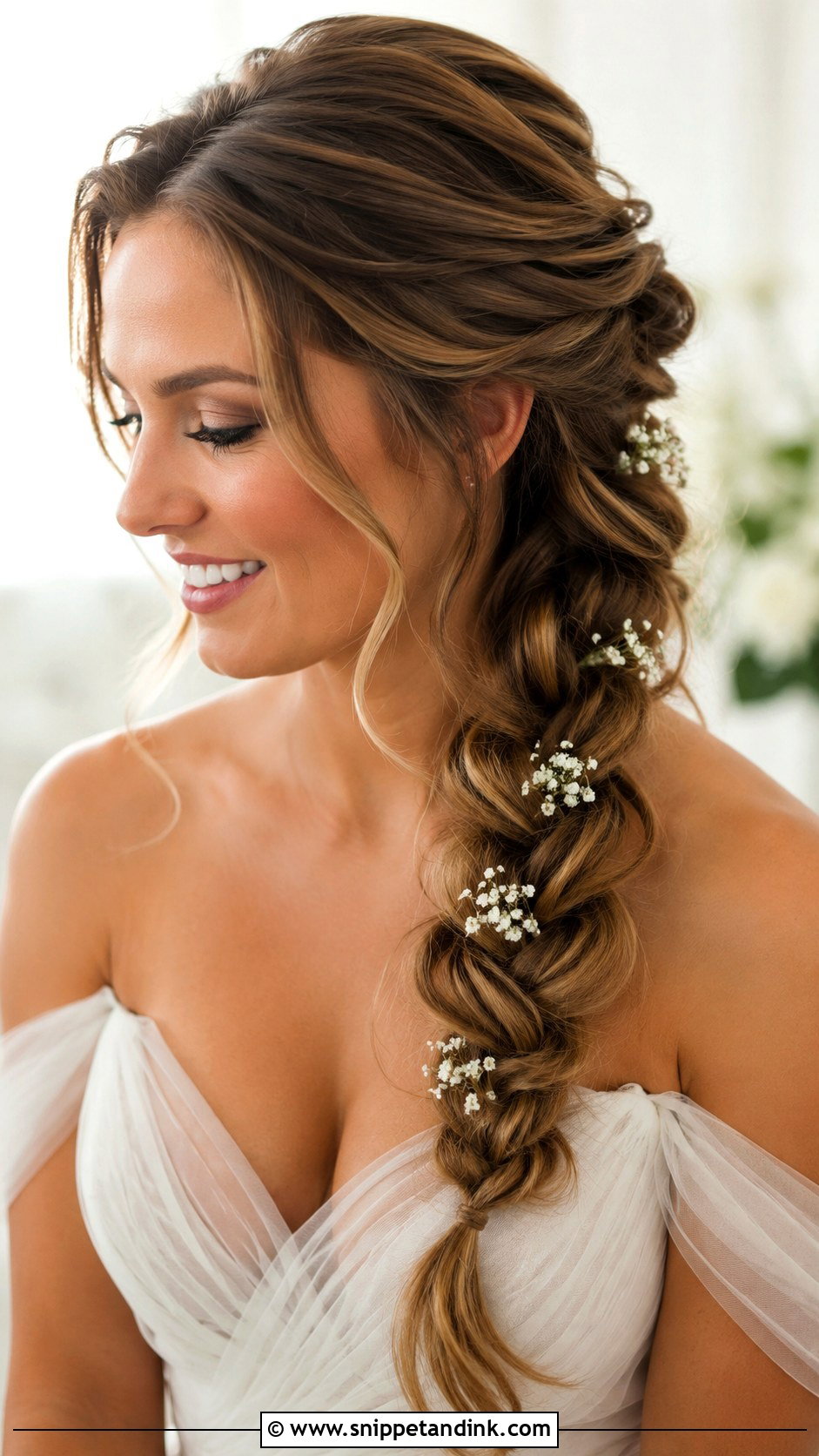
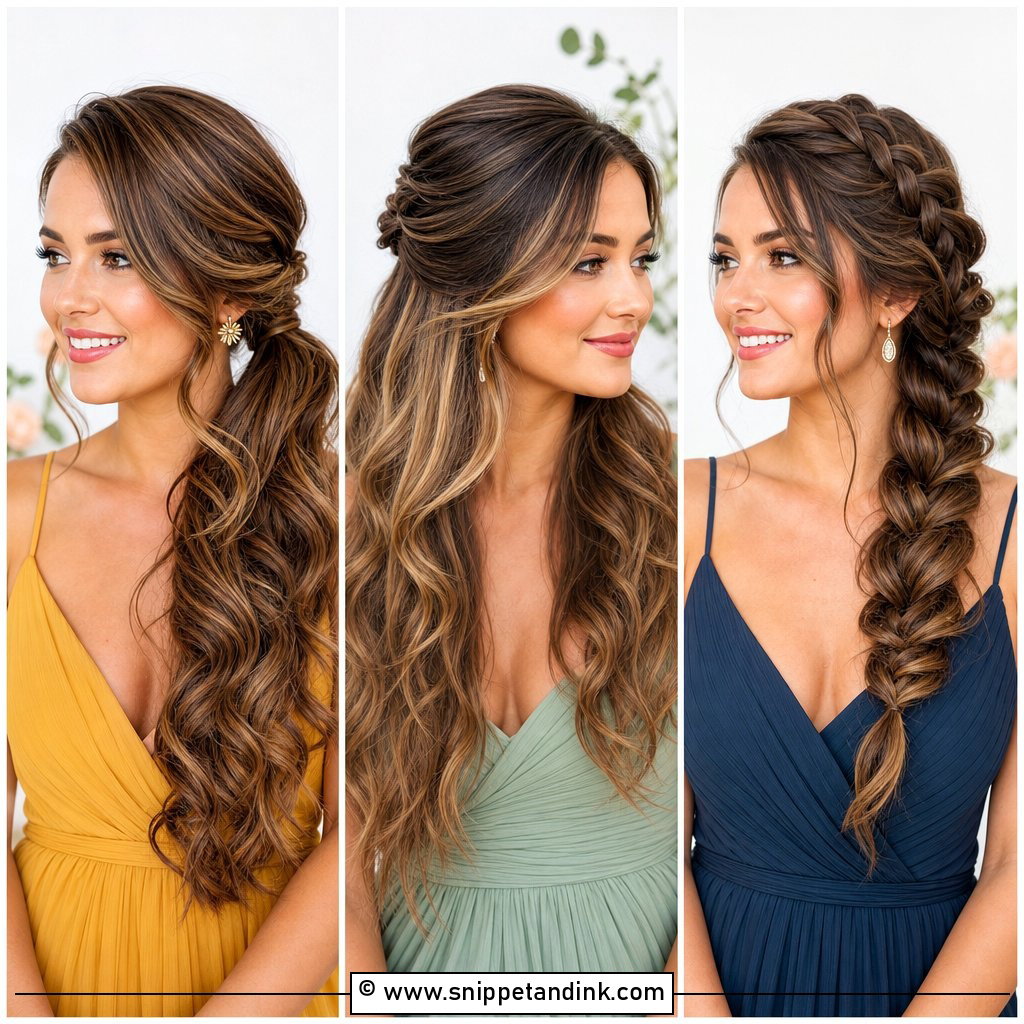
The braid can be a loose three-strand, a French braid, a Dutch braid or a pull-through, and over one shoulder it’s visible from the front, which a back braid never is. Long hair shows it off best. A Dutch braid that starts at the far temple and runs across the head holds better than one that begins at the nape, because it is anchored the whole way. I add crown volume and curl a few face pieces. A ribbon or tiny flowers woven in keep it personal.
7. Side Fishtail Braid Bridal Hairstyle
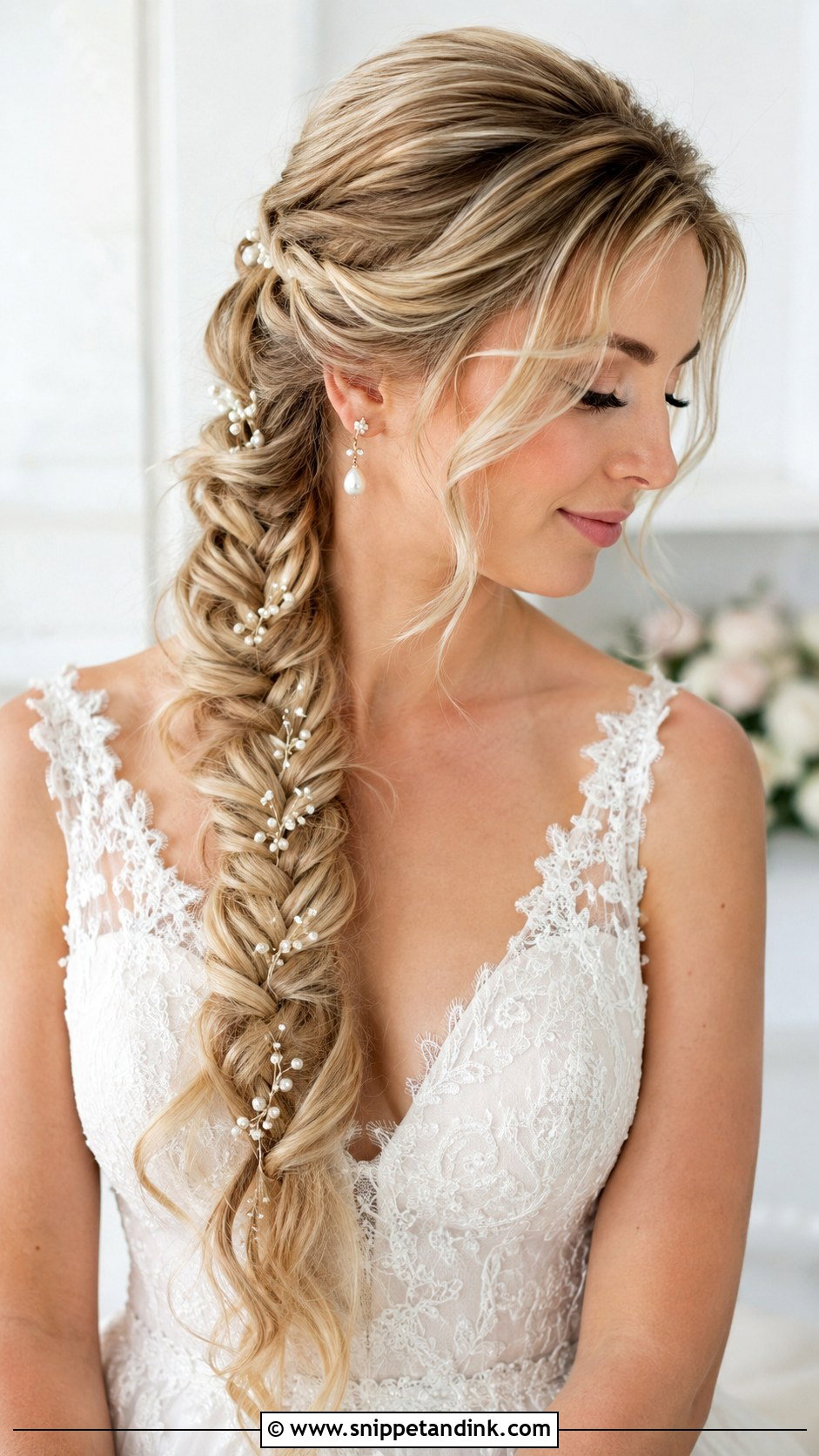
Fishtails look fine and detailed up close, which is why I like them for the close-up shots. The pattern needs length, so long hair or extensions are a must. I braid it tight, secure the end, then loosen it gradually from the bottom upward. Loosening from the top first tends to collapse the shape. Pearl pins or baby’s breath work on a plain dress; skip them on a heavily beaded gown, where the braid itself is enough detail.
8. Side Ponytail Bridal Hairstyle
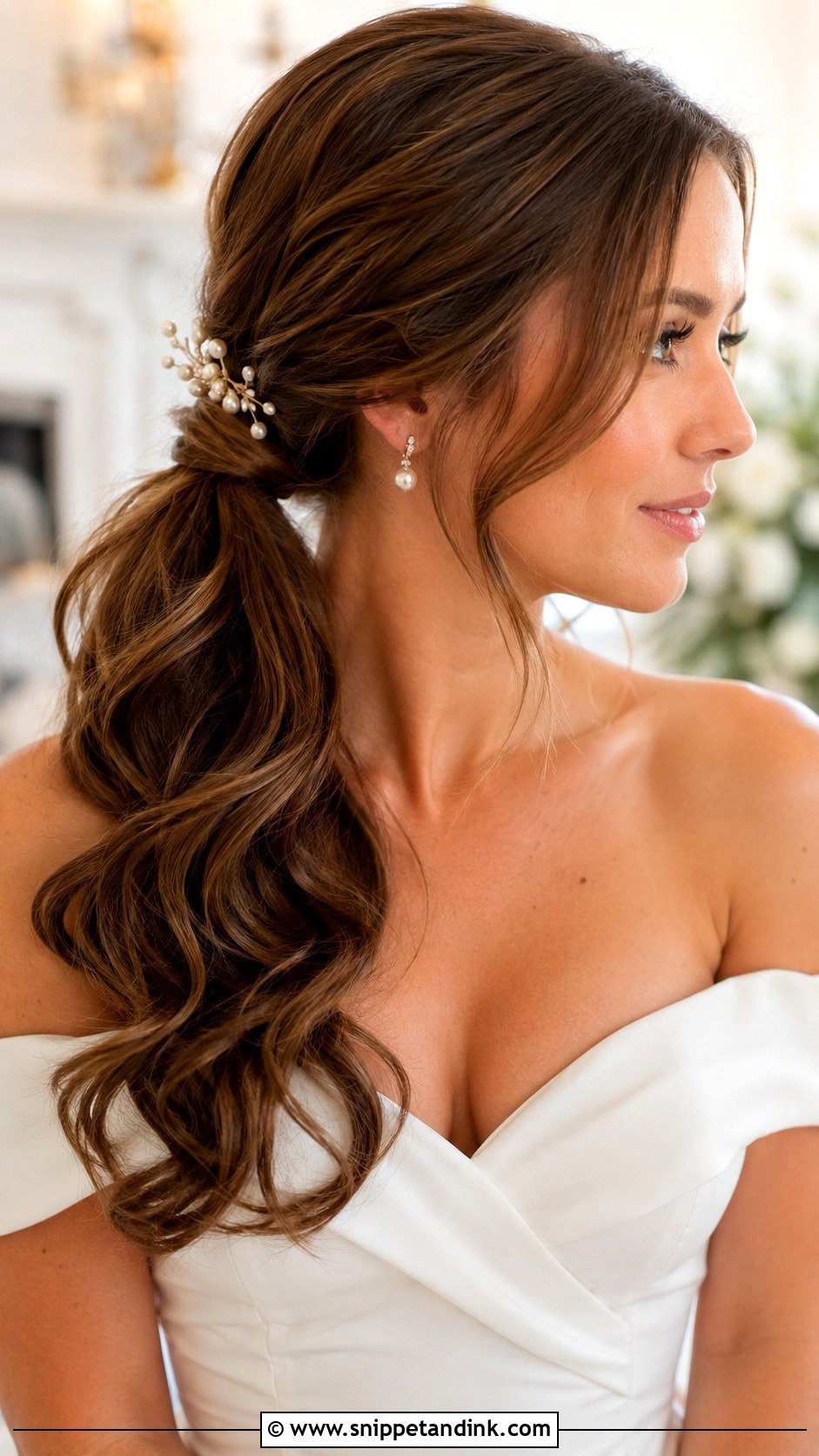
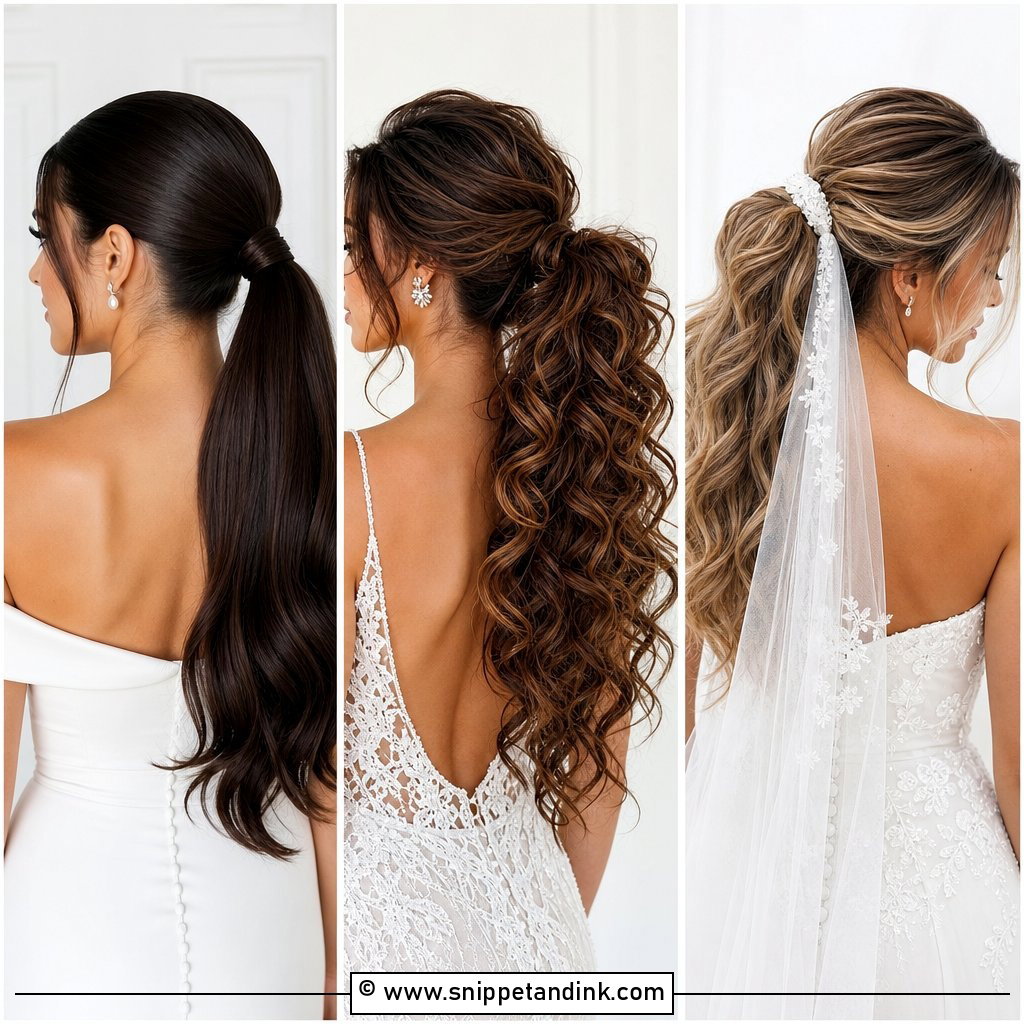
A low side ponytail moves when you do, which makes it a strong pick for a dance-heavy reception or a destination wedding. It looks relaxed but is far more secure than loose curls. I wrap the elastic with a strand of hair, or cover it with a bow or pearl clip. The elastic should sit just behind the ear, not under it, or it presses on the jaw when you turn. Keep the crown lifted so the top doesn’t look flat in photos.
9. Side Swept Half Up Bridal Hair
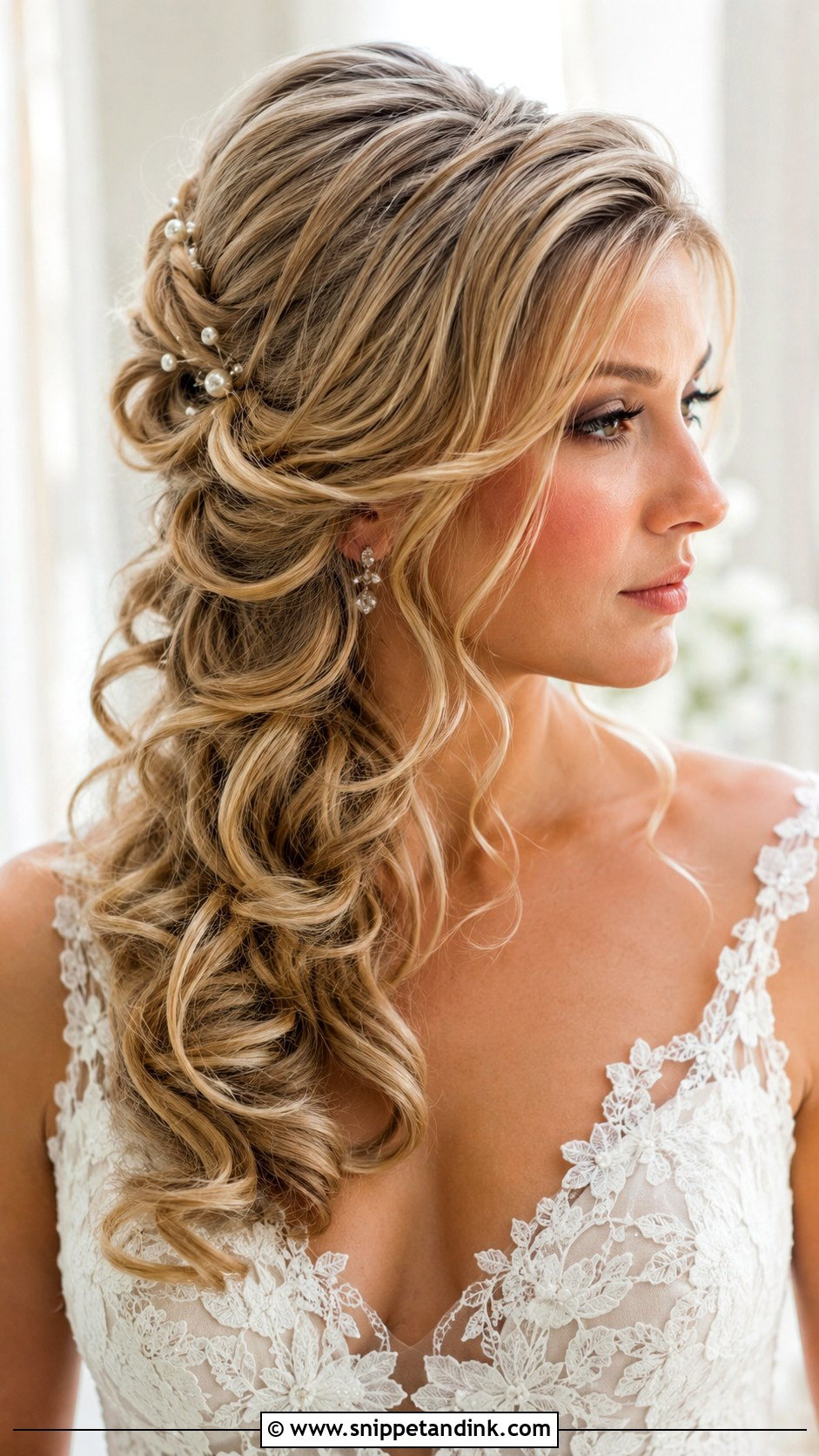
The pinned top section gives this style its stability. The lengths flow over one shoulder in curls or waves, and the hair stays off your face. A veil comb anchors well into that pinned area, which is why I often recommend this look when someone asks for a long veil and loose hair at the same time. The half-up section can be twisted, braided or just smoothed back. Have your stylist keep the sweep visible from the front so it reads clearly in ceremony photos.
10. Side Part Bridal Waves
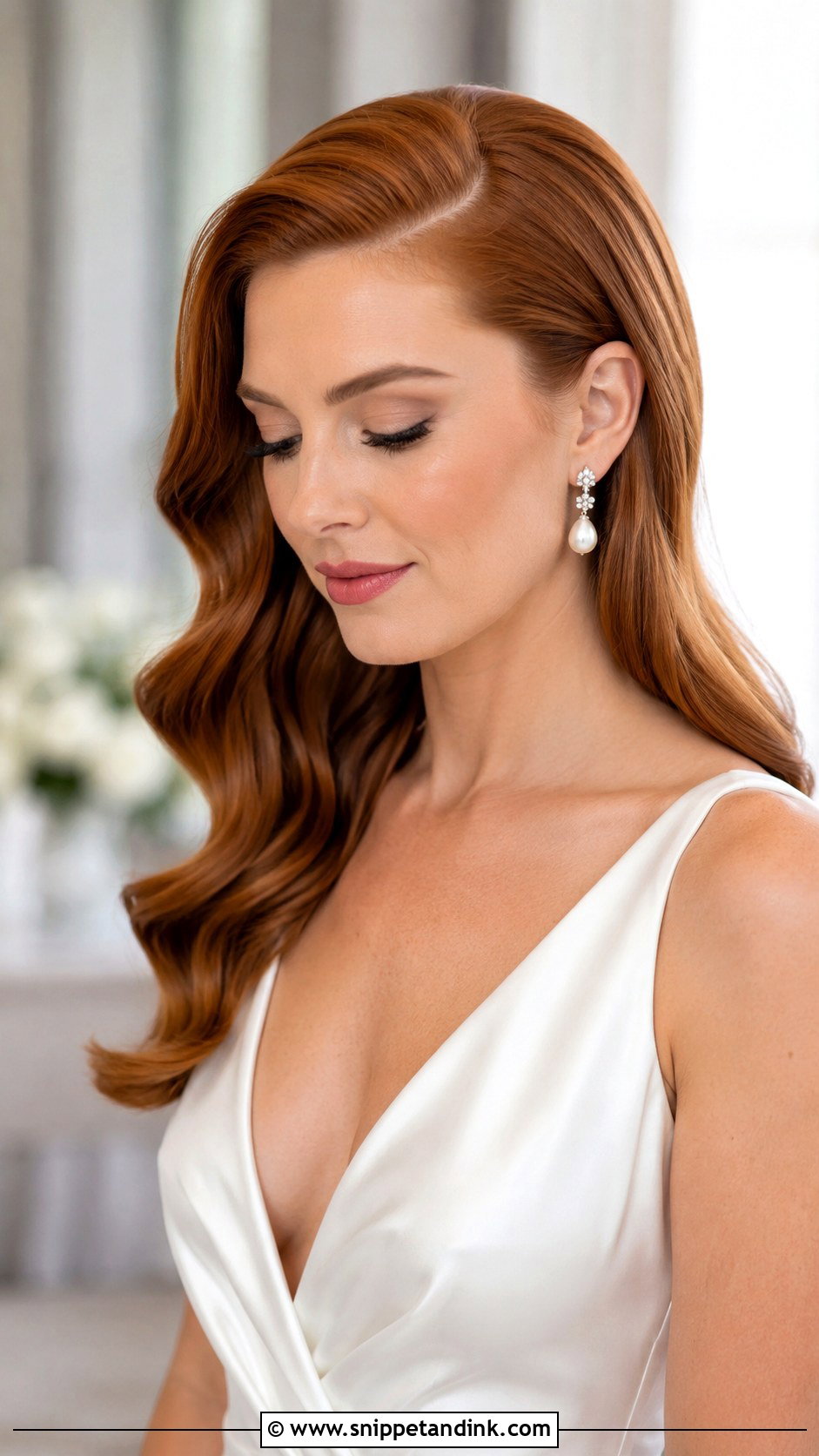
A deep side part is the simplest one side look, and it gives the face shape instantly. Hollywood, brushed or glossy waves all work. Tuck one side behind the ear to show a statement earring. Part placement is personal: I usually find it by combing the hair straight back and letting it fall, then deepening that natural break by a finger width. Fine hair needs root spray at the part to stop it collapsing; thick hair needs smoothing cream so the waves stay controlled.
11. One Side Bridal Hair With Veil
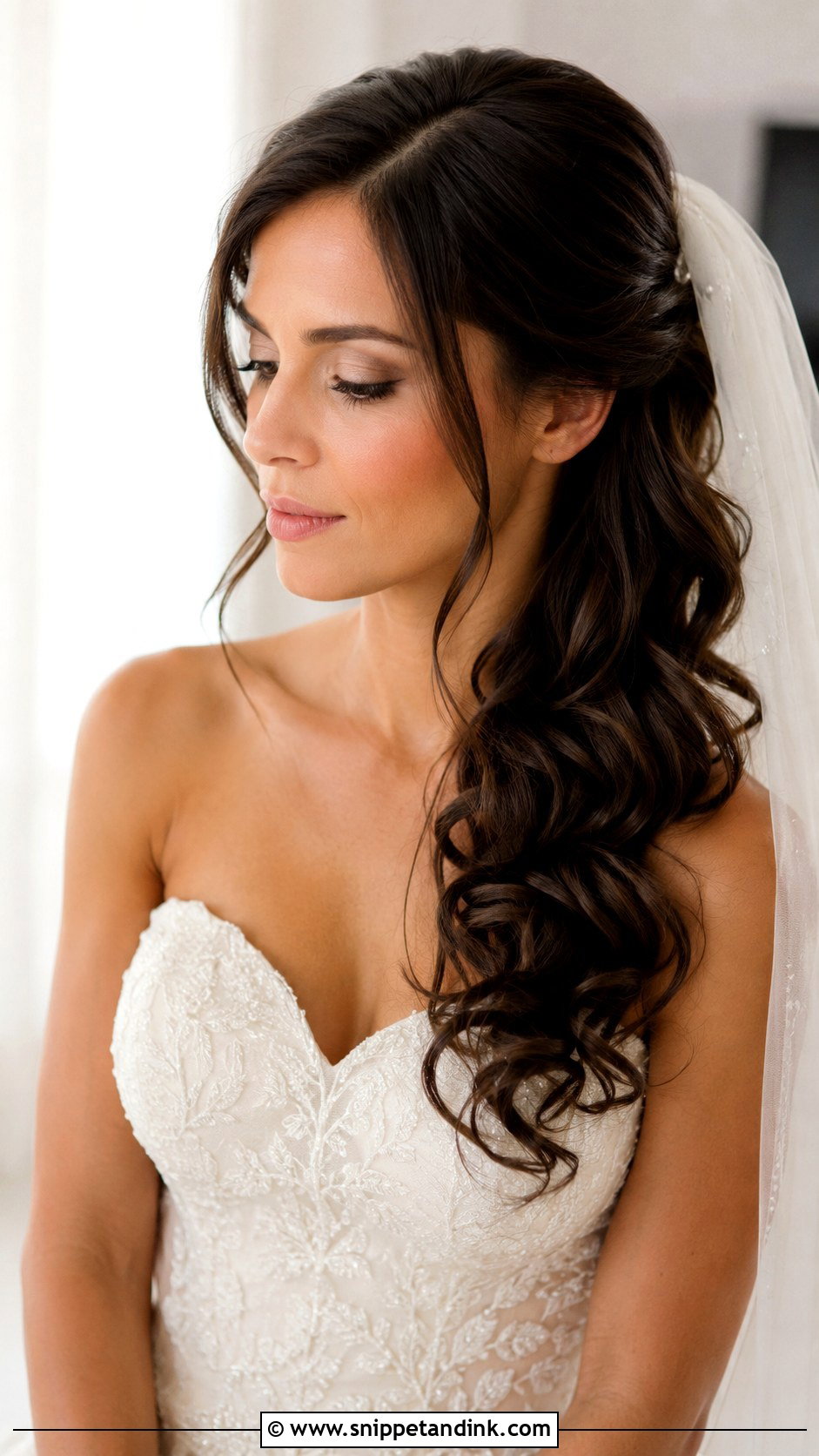
Veil placement is the tricky part of one side hair. The veil can sit above the crown, under the pinned section or behind the sweep, and each choice changes what is covered. My rule is that the veil should never land on top of the swept side, where its weight crushes the curls. At the trial, walk, turn and hug with the veil on. The veil softens the shoulders while the open side keeps the face bright, which is a combination I really like for ceremony photos.
12. One Side Bridal Hair With Flowers
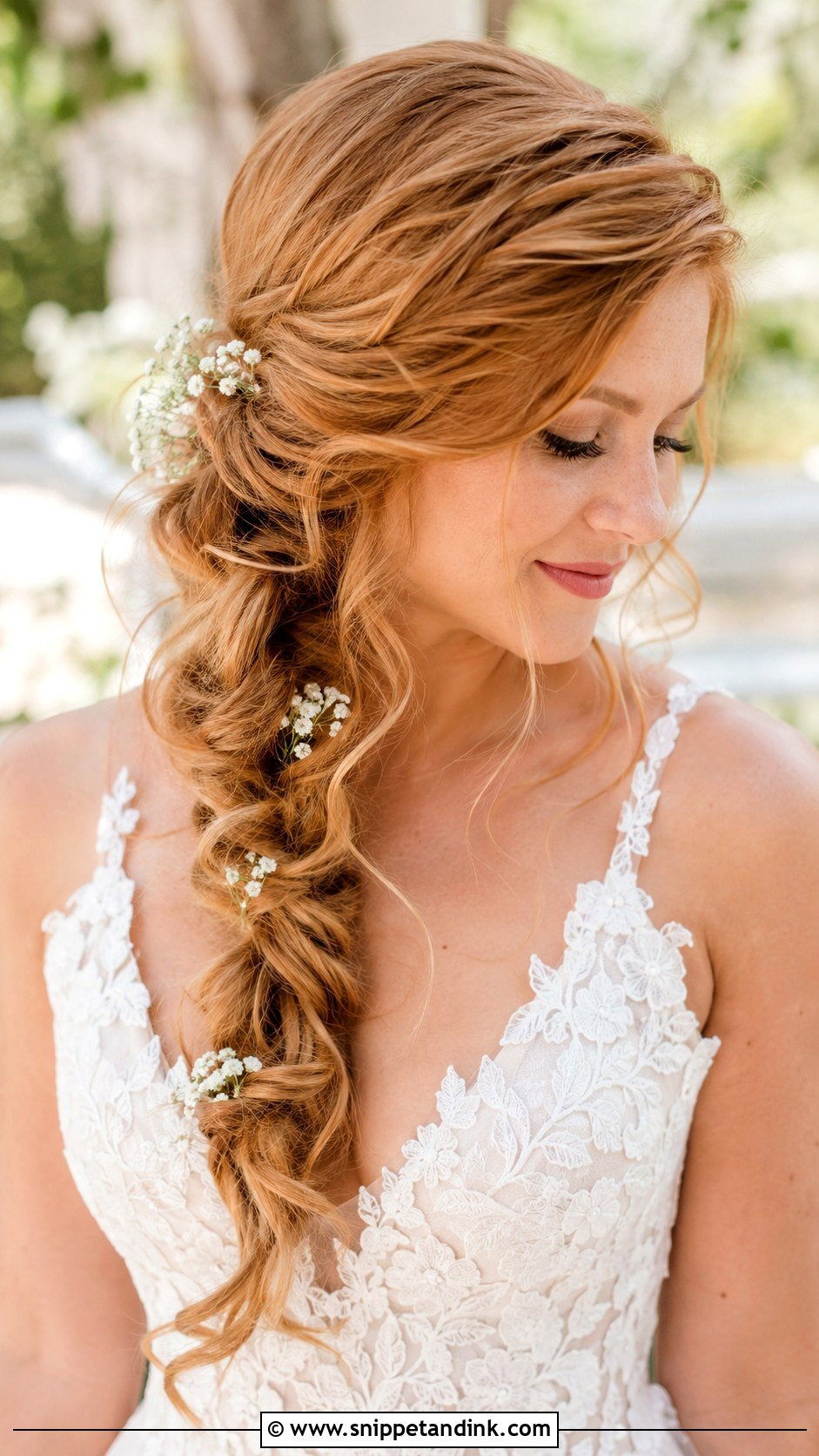
Flowers along a side braid, tucked into a side bun or pinned on the gathered side of waves suit garden, beach and outdoor weddings. Keep them light: a cluster on one side adds weight the opposite side doesn’t have, and heavy blooms pull the style toward the shoulder. Ask your florist to wire and prepare them so they last into the reception. Good faux flowers are a reasonable choice for a hot day, and they don’t wilt. Keep the hairstyle textured so the flowers sit naturally.
13. One Side Bridal Hair With Pearl Pins
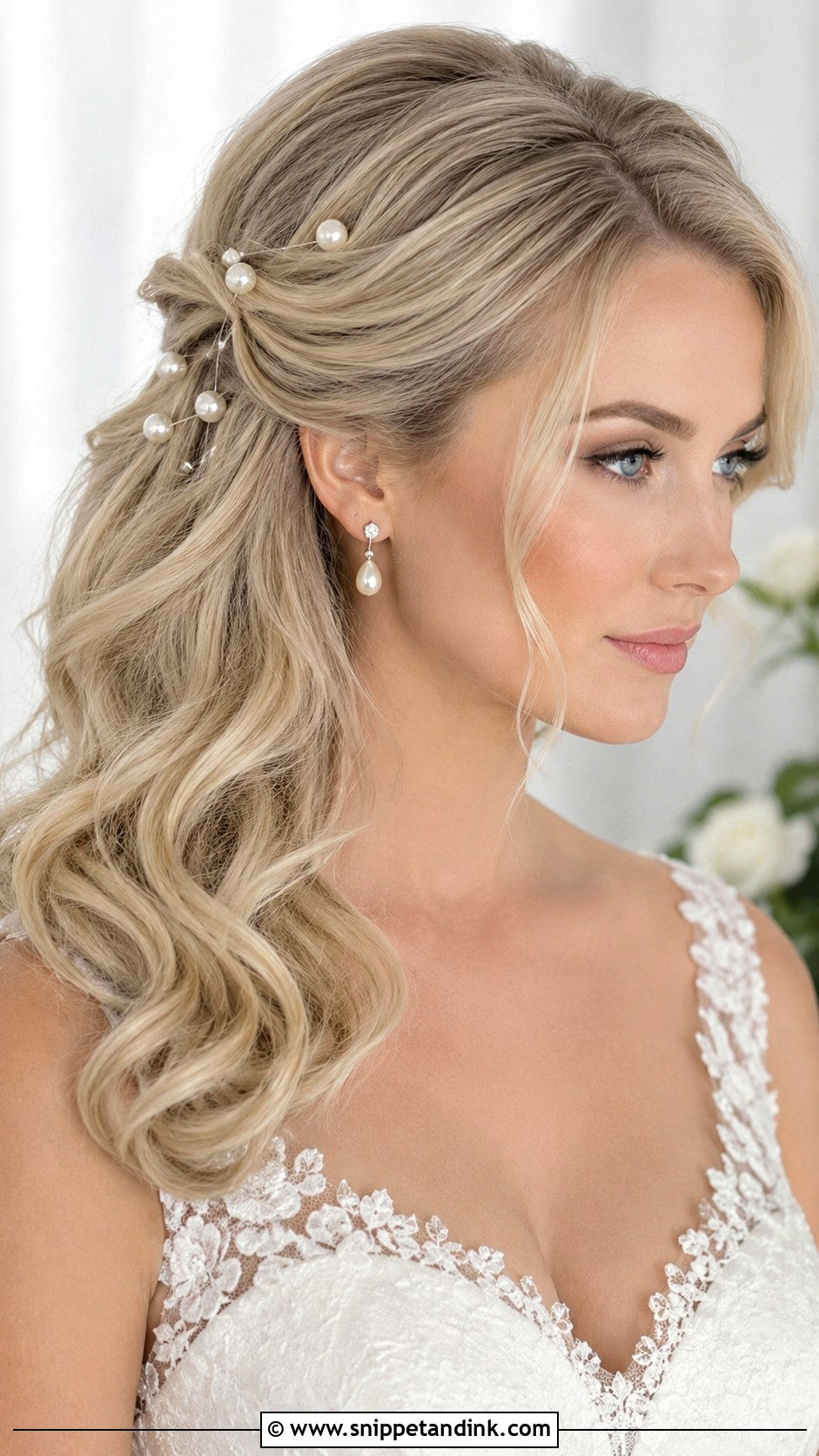
Pearl pins add detail without competing with the style. Scatter them through curls, line them along a side braid or cluster them near a side bun. Spacing is the trick. A few well-placed pearls look intentional; a dozen look crowded. They show against most hair colors, from blonde to very dark. I place them last, after the final shape is set and sprayed, since pins added early get buried as the hair moves.
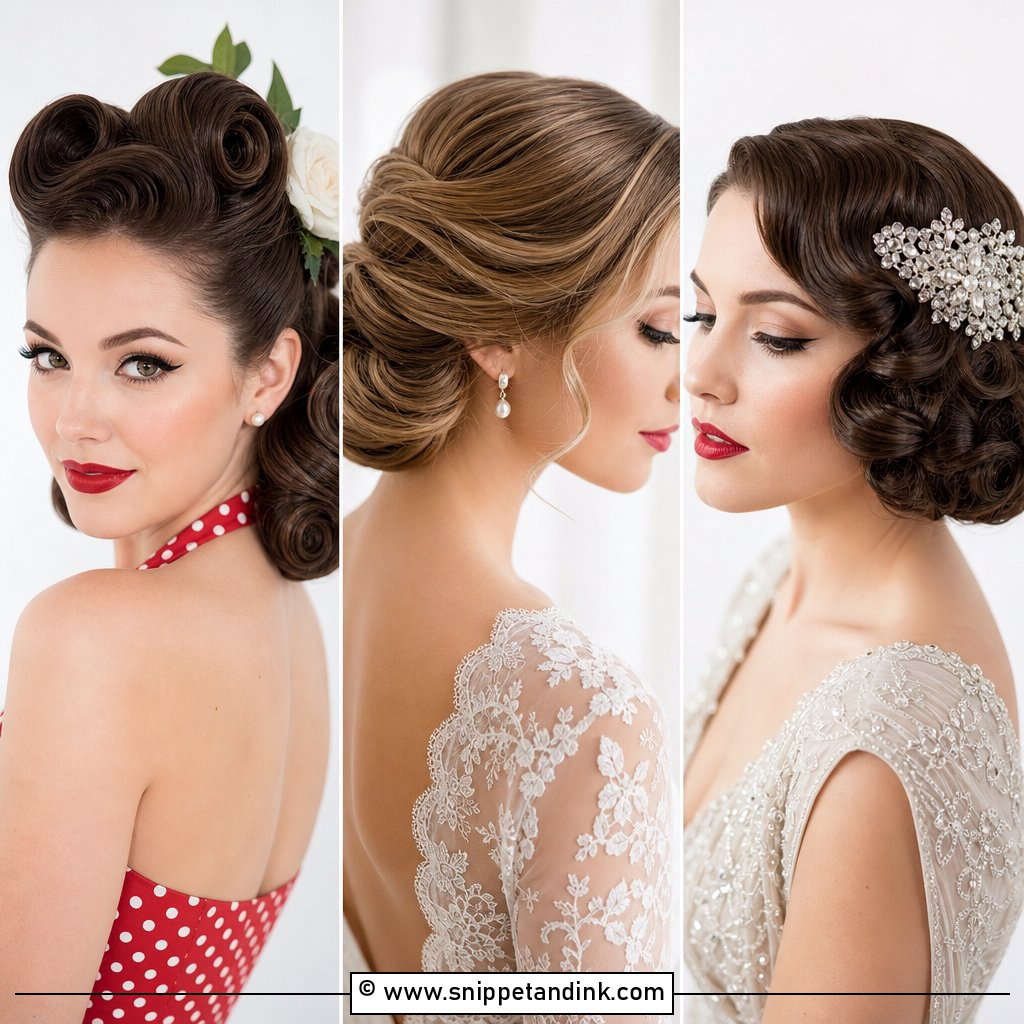
14. Vintage Side Swept Bridal Hair
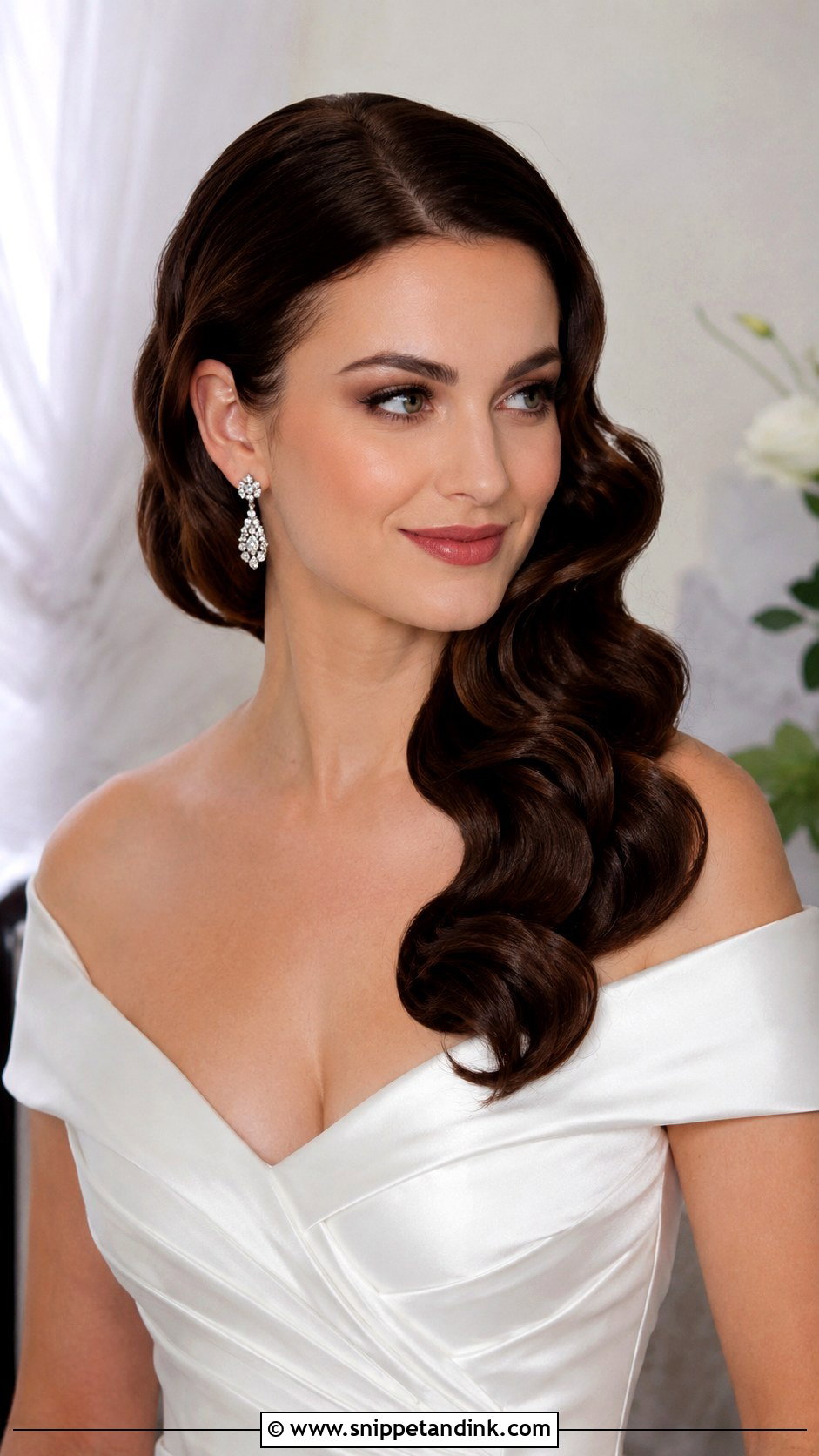
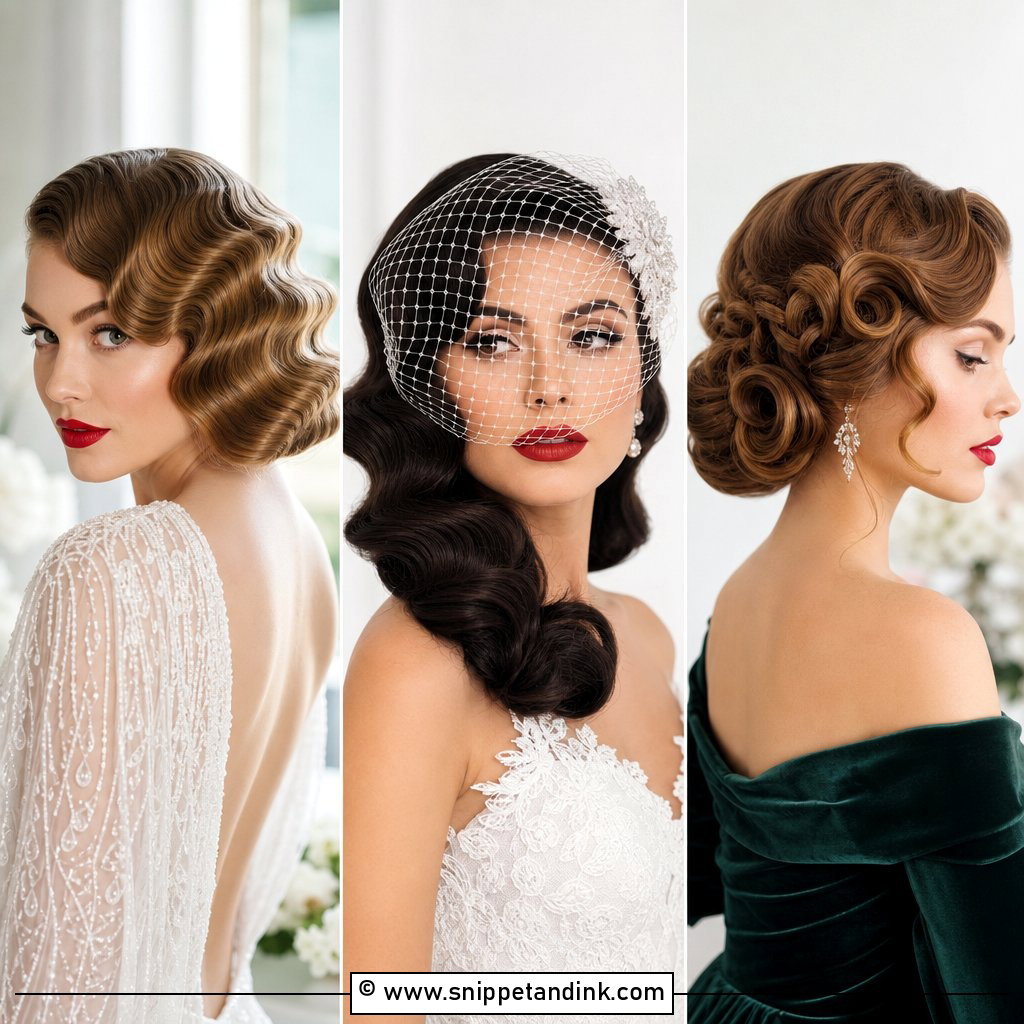
Vintage side swept hair is the most glamorous look here: deep part, smooth roots and sculpted S-shaped waves pinned to one side for an old-Hollywood effect. It suits satin gowns, red lips, winged liner and dramatic earrings. The waves get their definition from setting clips while each curl cools, then a careful brush-out. I finish with a light spray rather than a hard one; these waves should move a little when you turn.
15. Curly Side Bridal Hairstyle
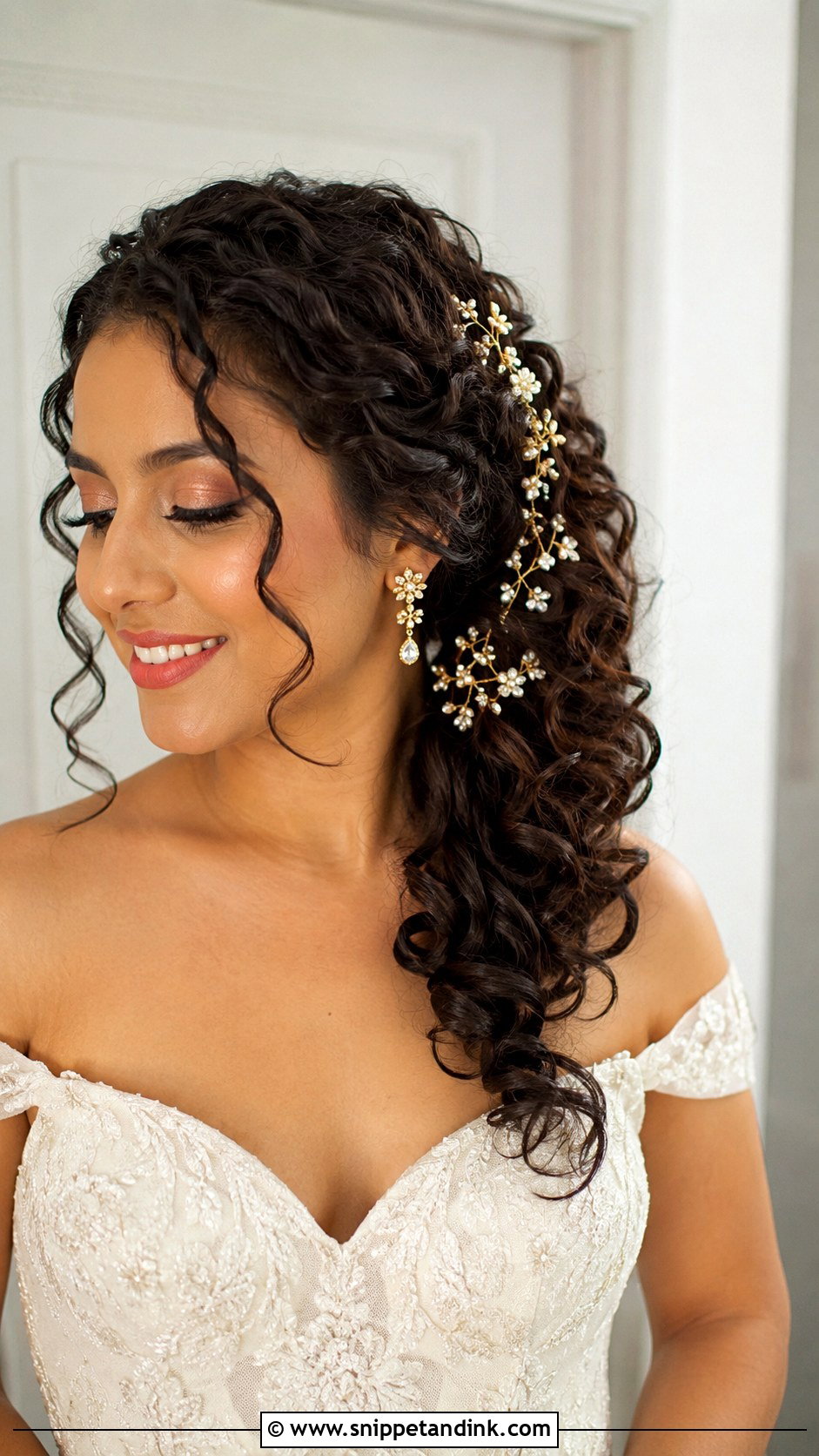
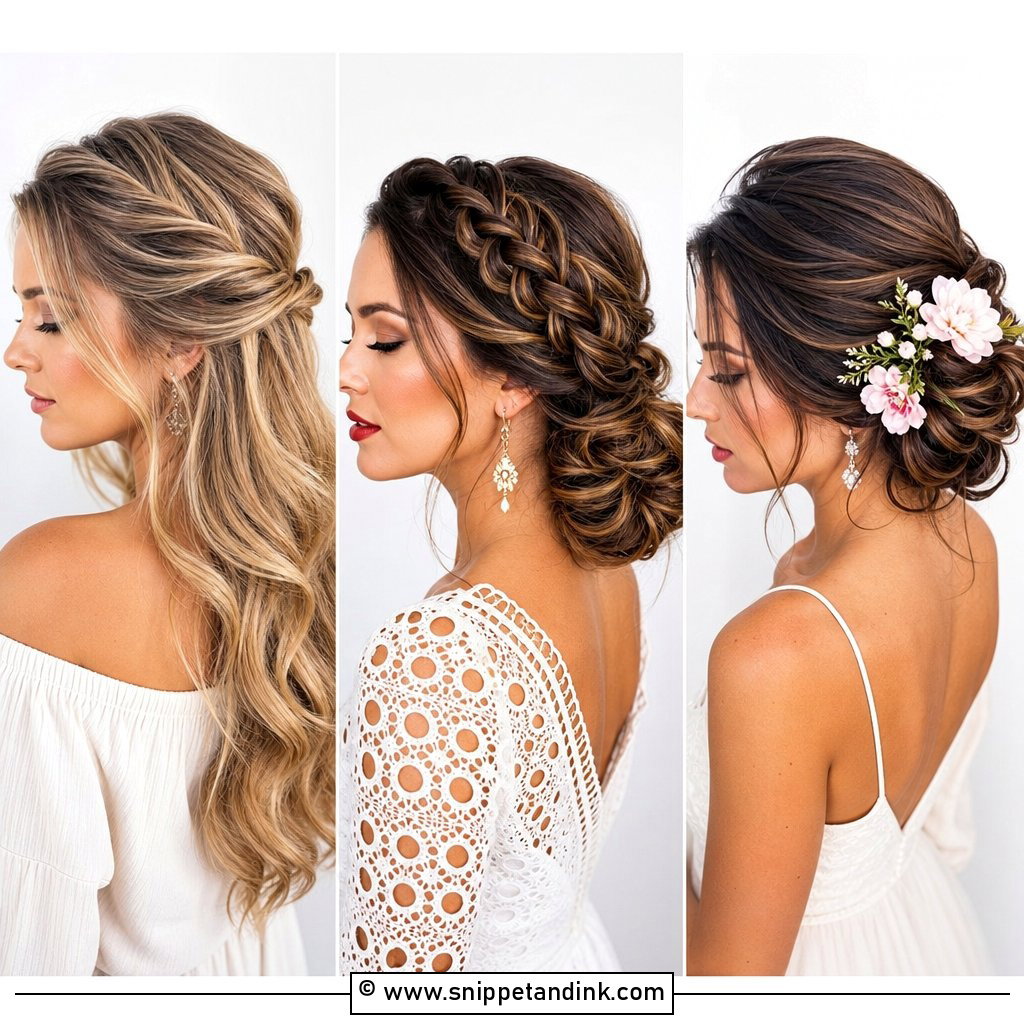
Natural texture can be the whole style. Curls are defined, lifted and gathered toward one side, using your own pattern, wand-enhanced curls or a mix. Moisture prep matters in humid or outdoor weddings, where dry curls frizz first. I use curl cream, a gel for hold and a light finishing spray that won’t make the hair hard. Gathering curls to one side needs more pins than straight hair, set by section, because curls compress as they are moved. Floral pins, gold accessories or a veil behind the crown all fit.
Where You Stand at the Ceremony Should Pick the Side
Most brides pick a side based on their best profile or their natural part. Those reasons matter, but I always ask one more question: where will you be standing during the vows?
Guests and the photographer usually see one side of you through most of the ceremony. If the swept hair faces them, they see the full style. If it faces your partner, guests see only your bare neck and ear, which can look plain from the seats. Ask your planner or officiant which side you’ll stand on, and tell your stylist before the trial.
The first dance and the hug line
Hair swept over one shoulder rests right where your partner’s hand lands during a first dance. If that’s on the swept side, the curls get crushed in the first minute. I usually keep the sweep on the side away from where an arm will go, and I tell brides to lean into hugs from the bare side when they can.
Part Placement Changes More Than You Think
A one side style suits brides who want the dress, the jewelry and the neckline to stay visible. Loose curls, a chignon, a braid, a ponytail or vintage waves can all work; the right one depends on your texture, venue and how much you’ll move. Bring inspiration photos to your trial, and listen when your stylist suggests a different side or a deeper part. Those small decisions about part, face pieces, accessories and veil position change the final look more than the style name ever does.
You'll Like These Ideas:


Leave a Reply