
Most of the full, glossy wedding hair you’ve been saving has help in it. Bridal hair with extensions gives fine, layered, short or slippery hair the length, density and grip it needs to hold a style for twelve hours. I use them far more often than people assume, and the goal is always that nobody can tell. Below are fifteen styles that benefit from extra hair, from waves and low buns to braids and ponytails, with notes on which extension type suits each and where the joins tend to show.
Clip-Ins, Tapes, a Halo or a Sewn Weft for the Day
The style you want usually decides the type of extension, not the other way round. These are the honest differences I explain at consultations.
Clip-ins
The most common wedding choice, because they go in on the morning and come out at night. I can place each weft exactly where a bun, braid or half-up style needs it. The catch: clips can show at the nape in a sleek updo, and a full set feels heavy on very fine hair.
Tape-ins
Flat and light, so they vanish in sleek ponytails and straight hair. They need a salon install and settle best after a few washes, so have them fitted a couple of weeks before the wedding, not the day before. Very high updos can expose the tabs.
Halo pieces and sewn wefts
A halo sits on a clear wire and works for hair worn down, but it can’t go into an updo. Sewn-in wefts suit thick or textured hair and last for weeks, which is handy if you also want fuller hair for the honeymoon. Try either at the trial before you commit.
1. Bridal Hair With Extensions For Soft Waves
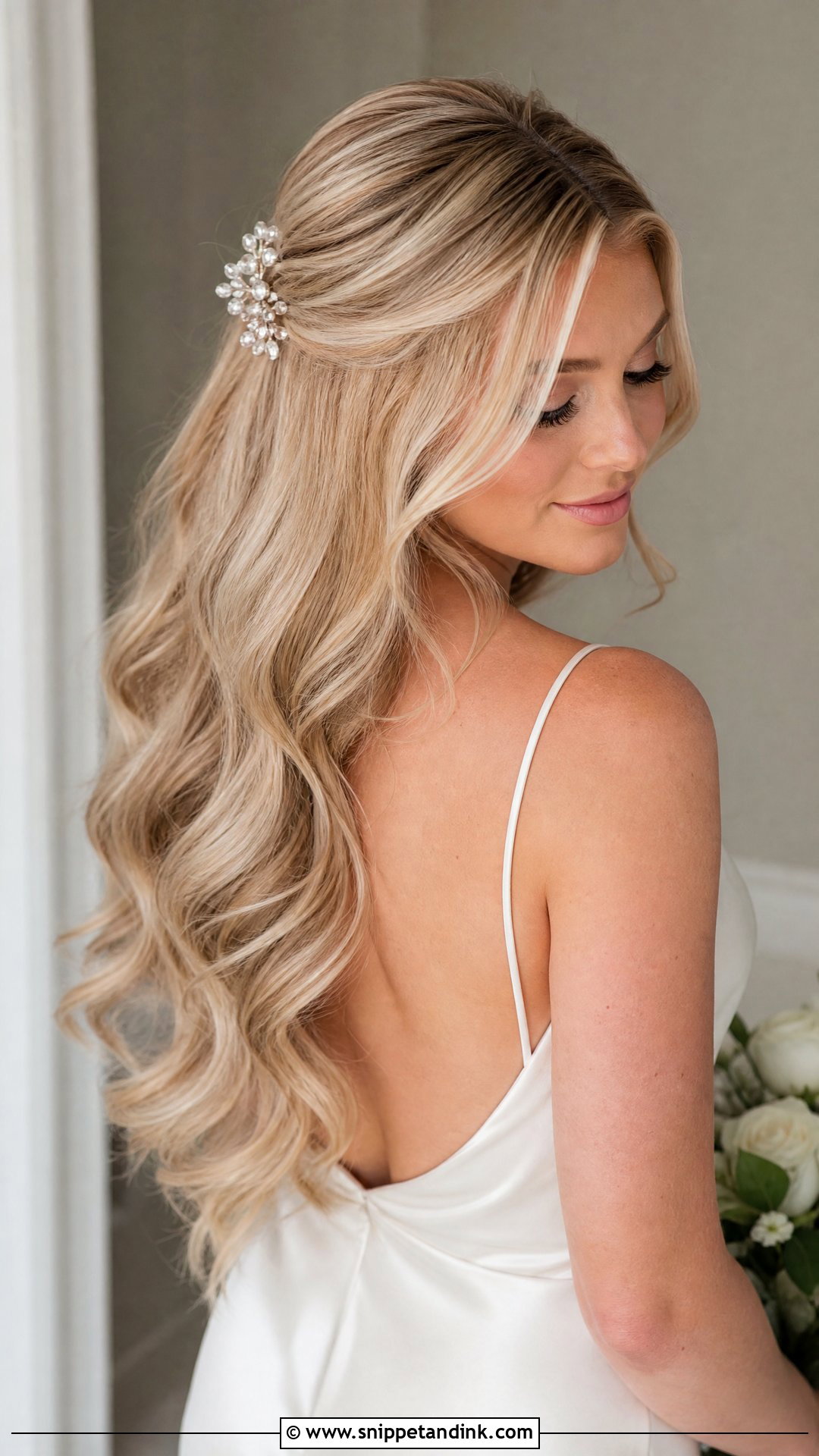
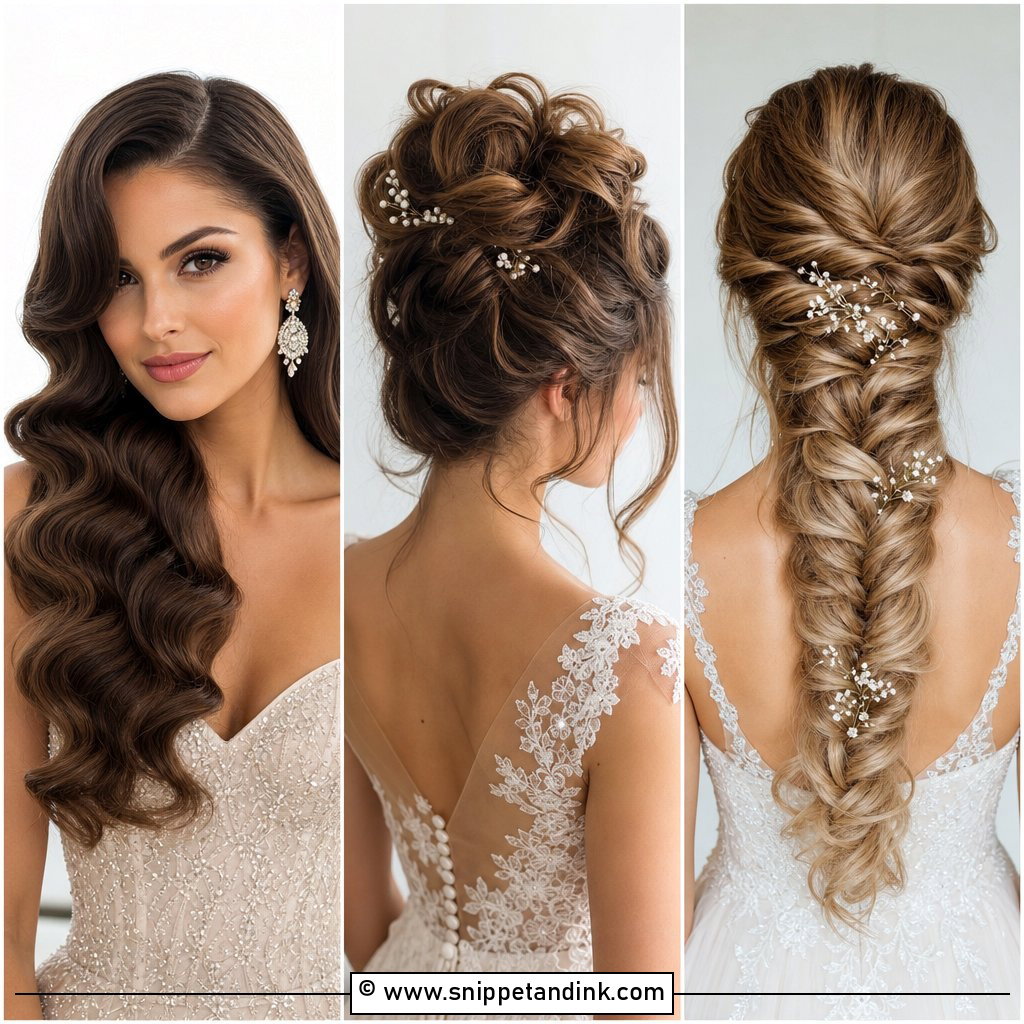
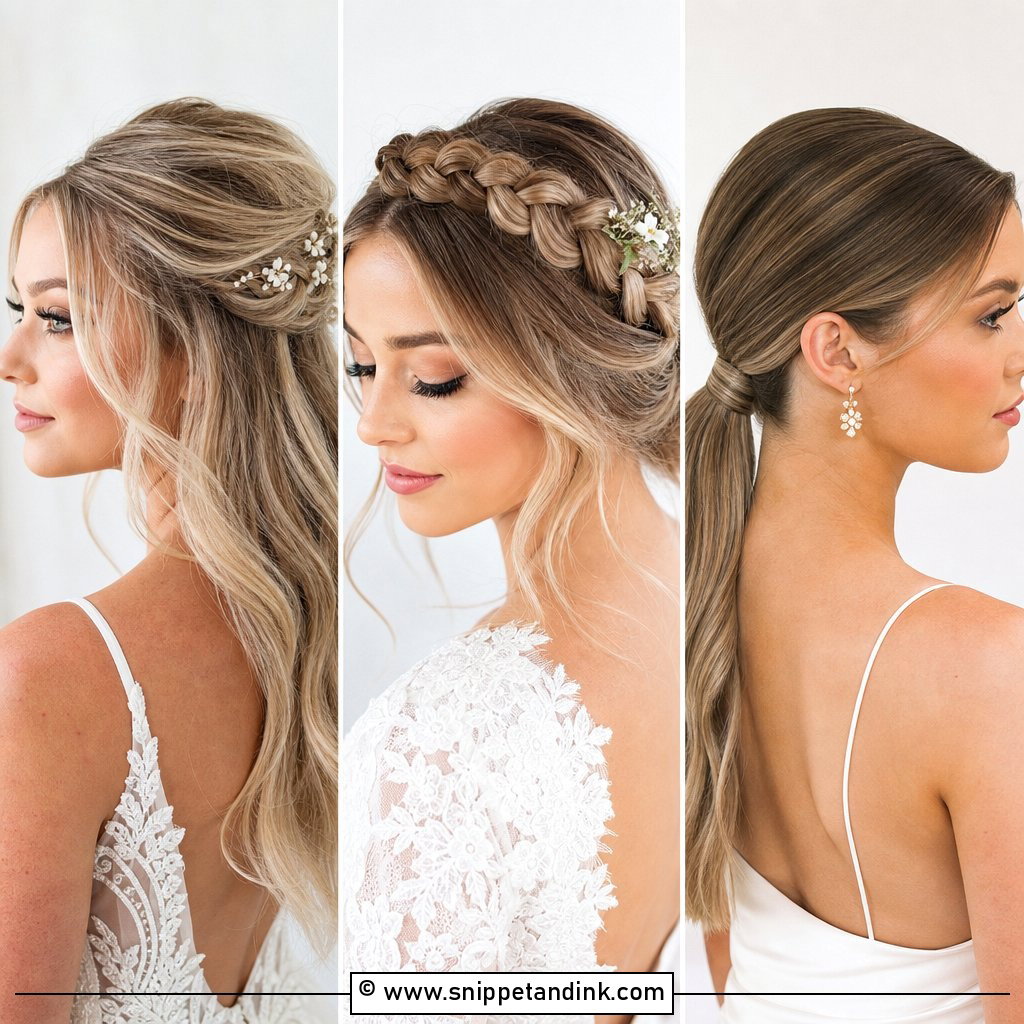
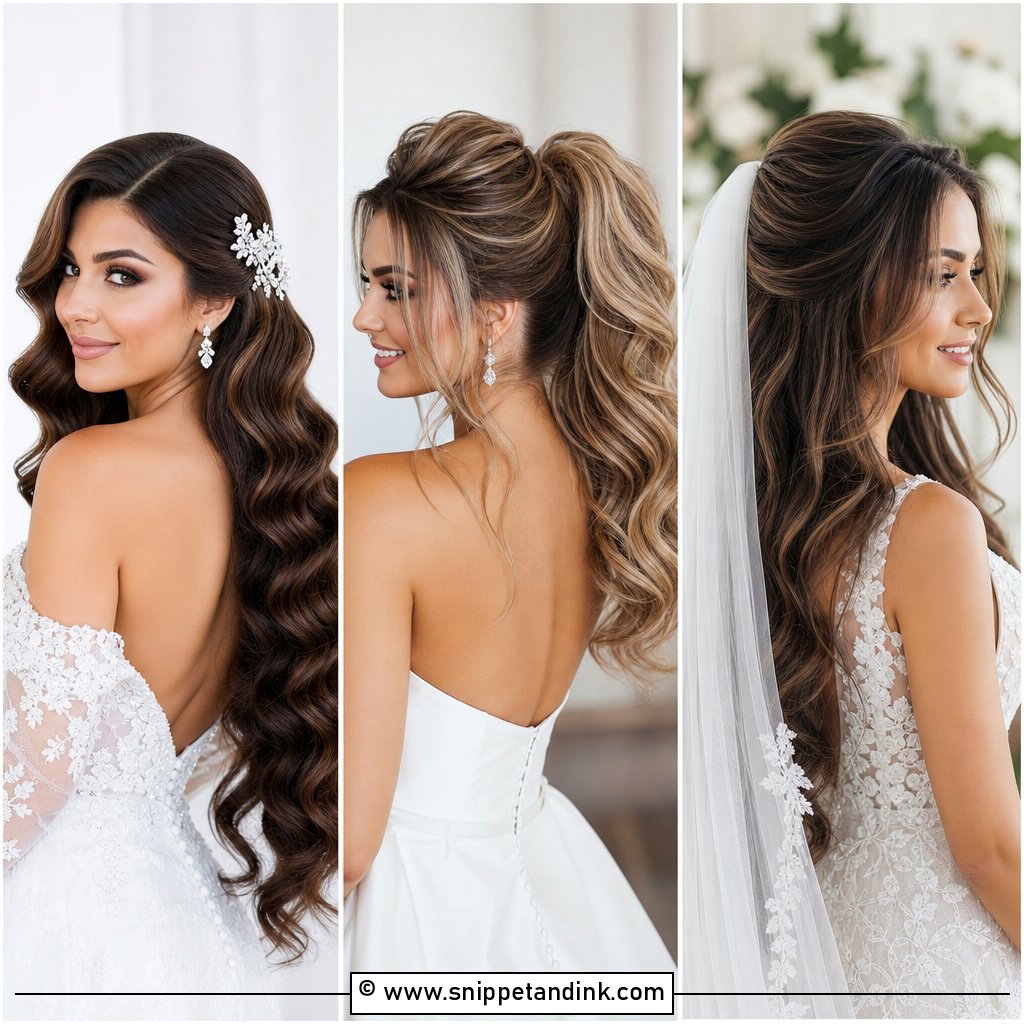
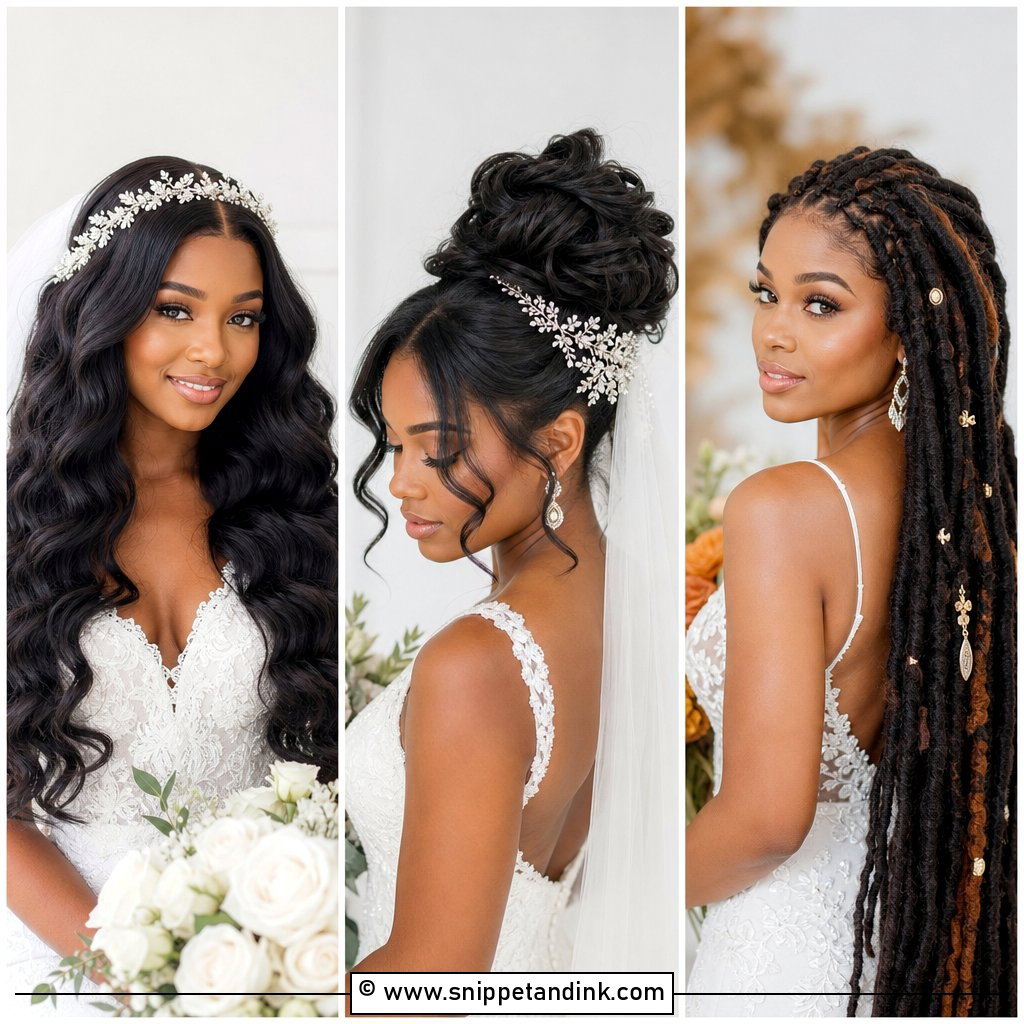
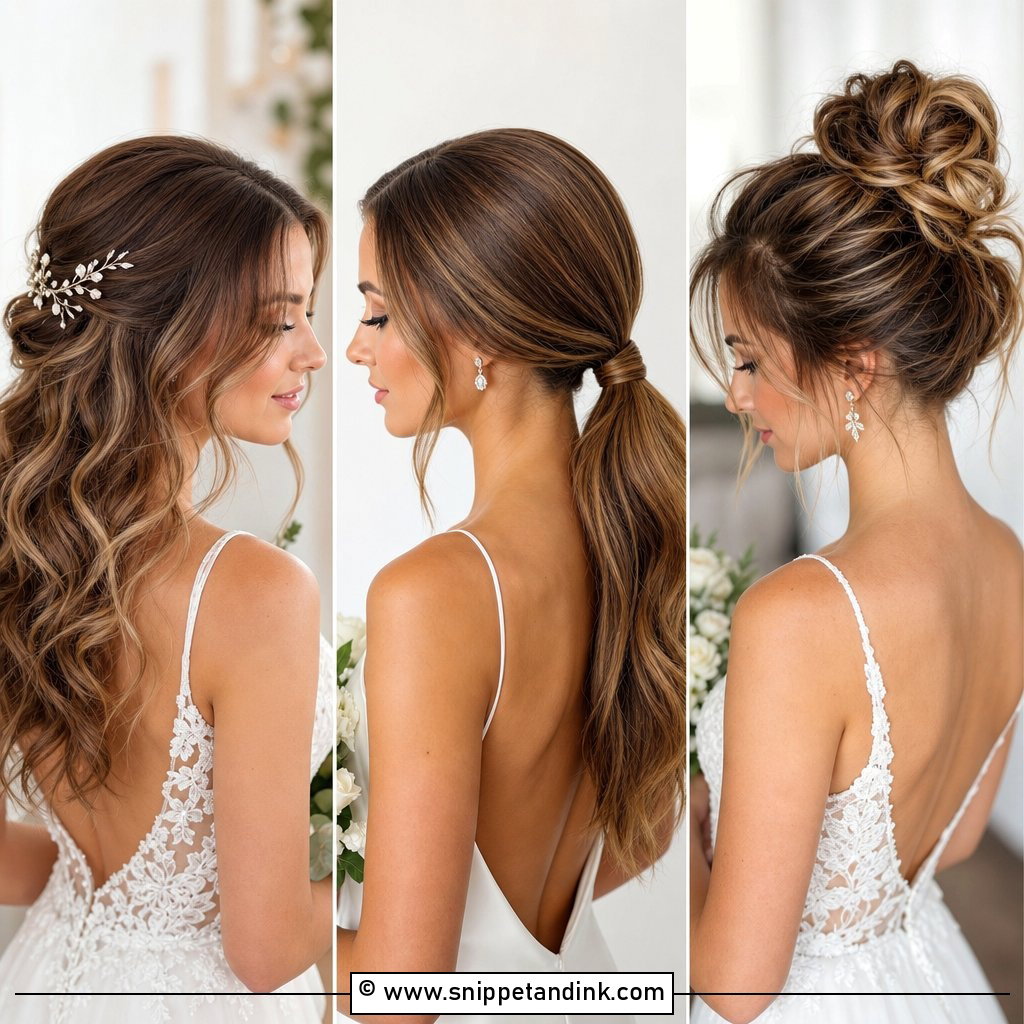
Waves are where fine hair struggles most, because thin ends separate into strings by the evening. Adding clip-in or tape-in extensions fills the lower half so the wave pattern reads as one shape. I curl your hair and the wefts together, in the same sections, so the bends line up. Brushed-out curls look more current than tight ringlets. A veil, pearl pins or a comb all sit well on top.
2. Bridal Hair With Extensions Half Up Half Down
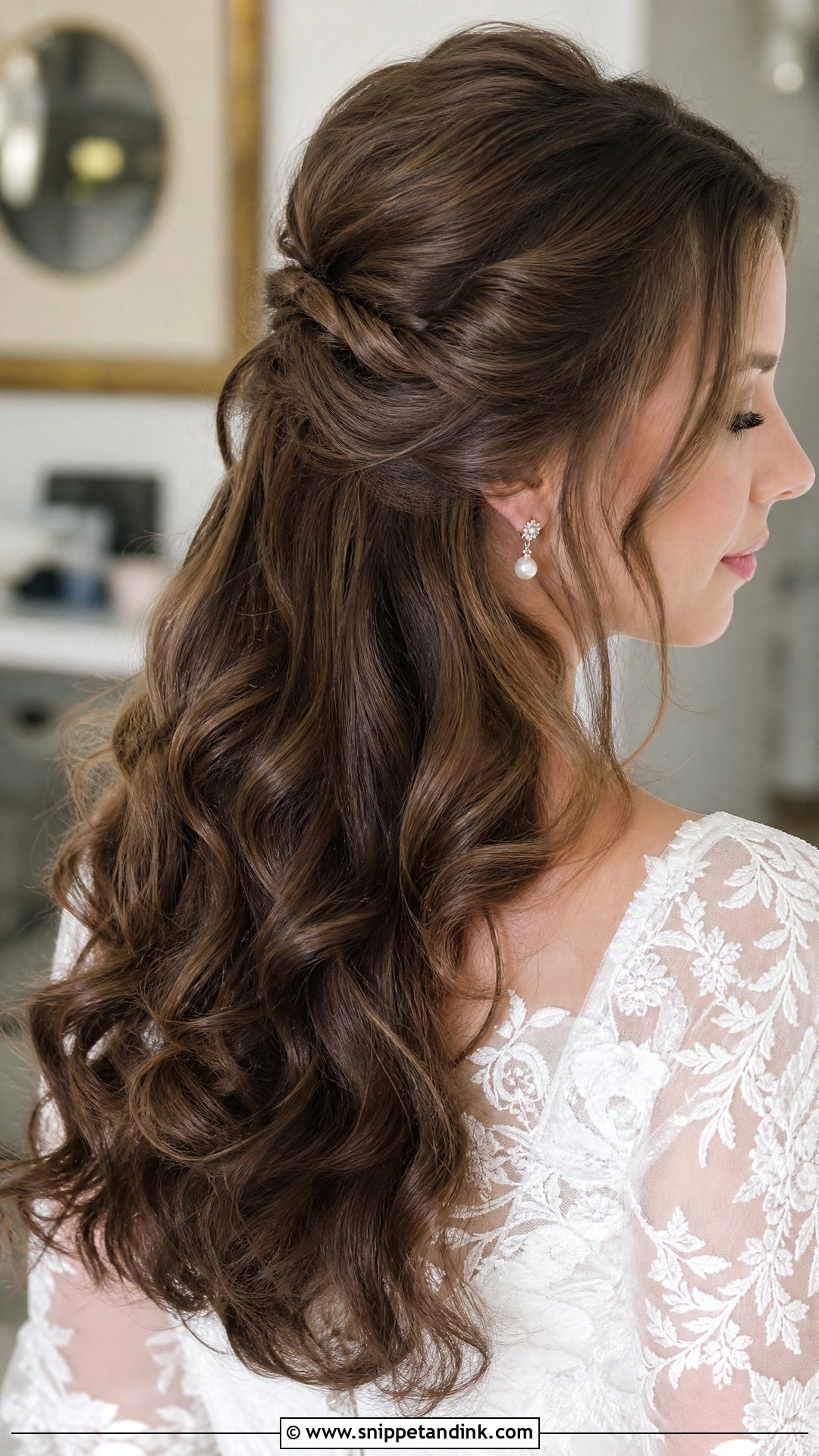
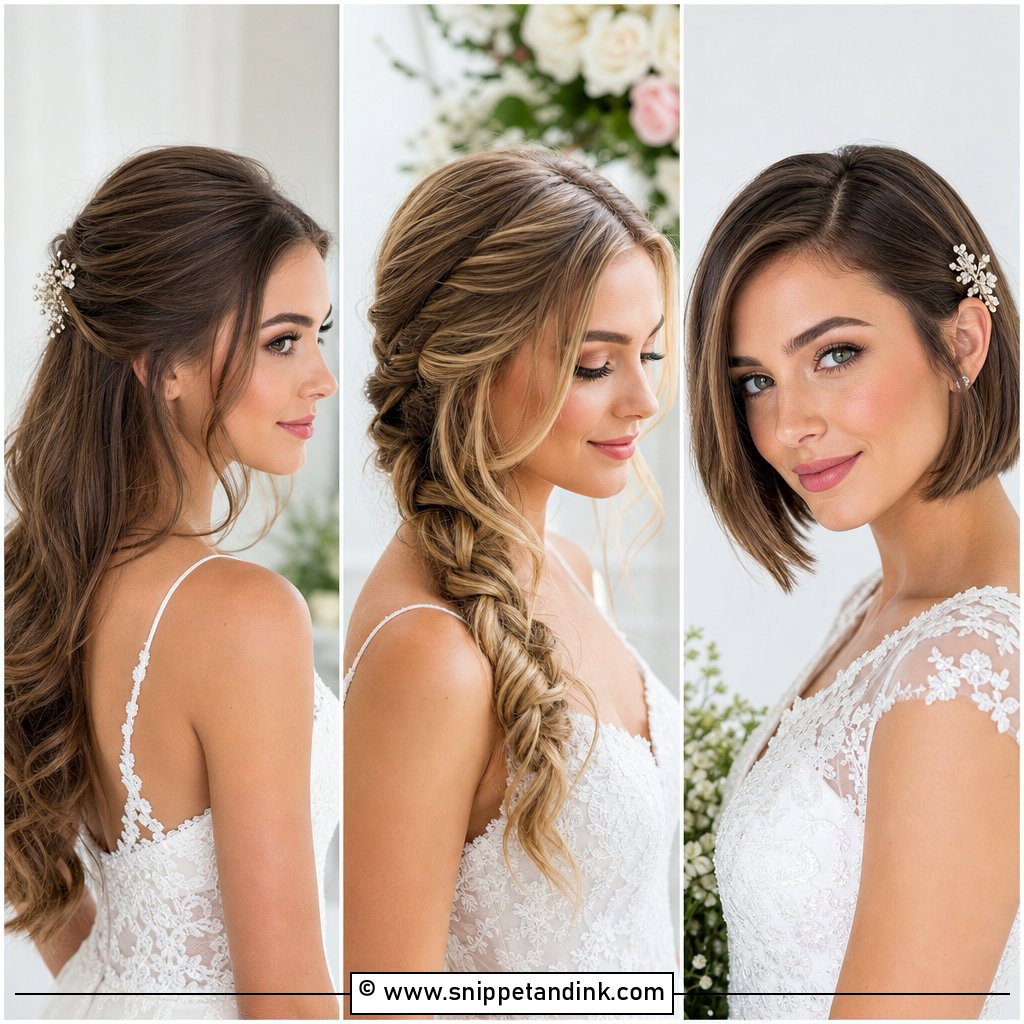
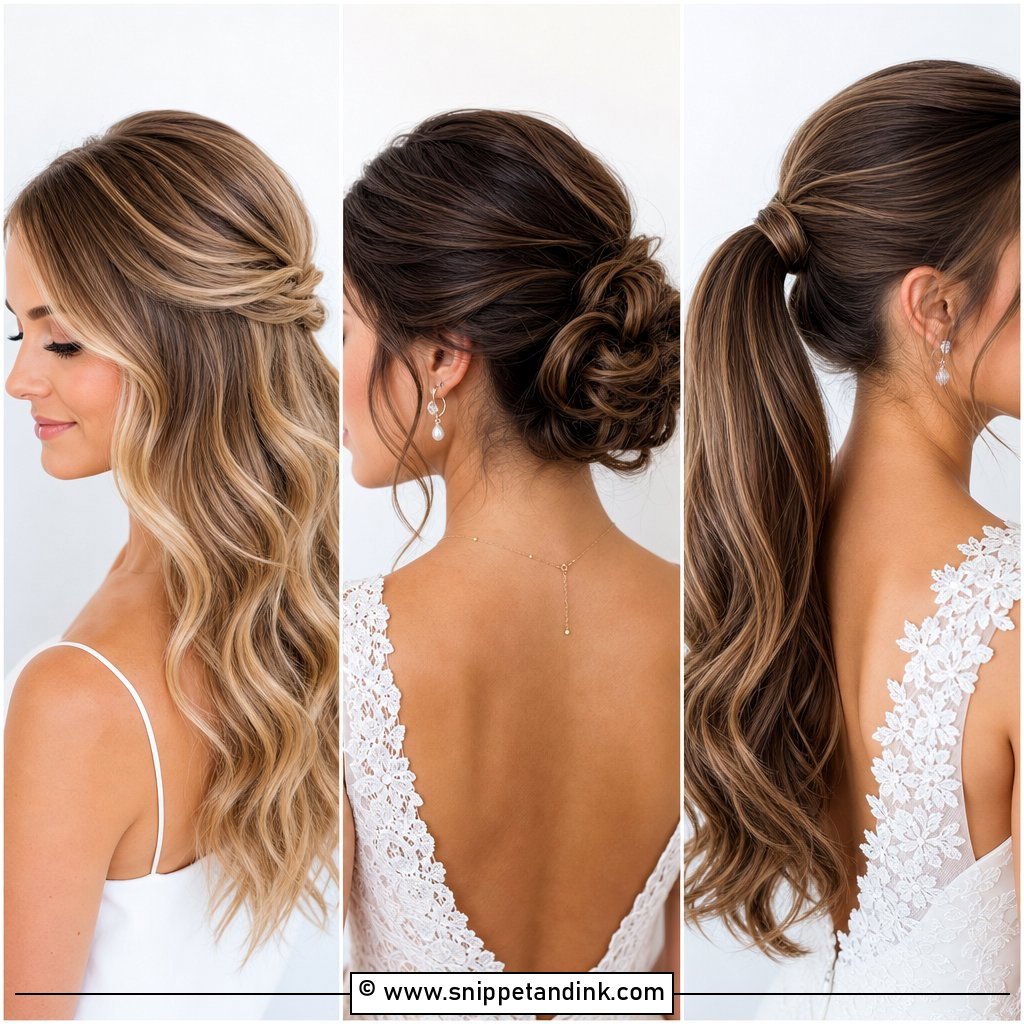
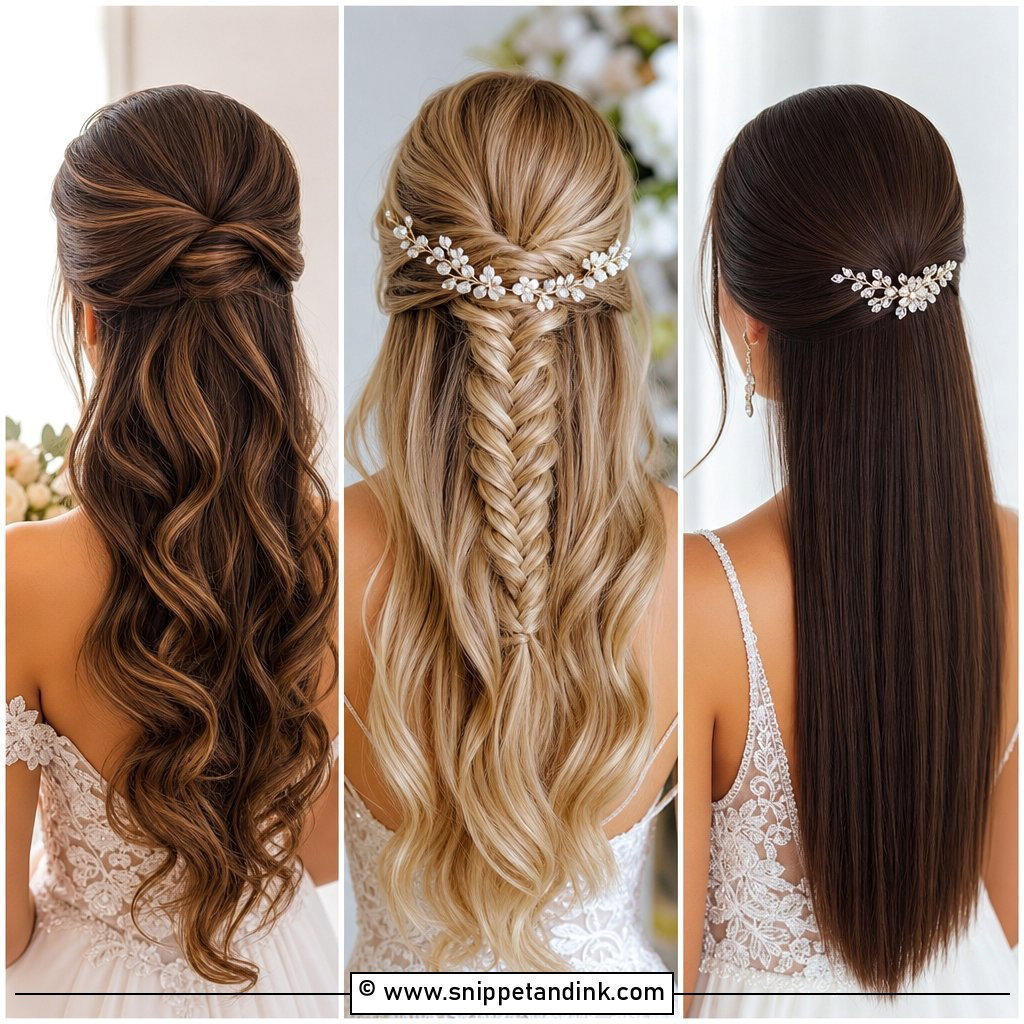
Half up half down is the style that most often needs extensions and least often gets them. Lifting the top section halves the hair left hanging, so the bottom can look thin under a full crown. I place two or three wefts below the parting line where the top section will cover the clips. The crown can be softly teased, twisted or braided. Leave the front pieces soft so it doesn’t look scraped back.
3. Bridal Hair With Extensions Low Bun
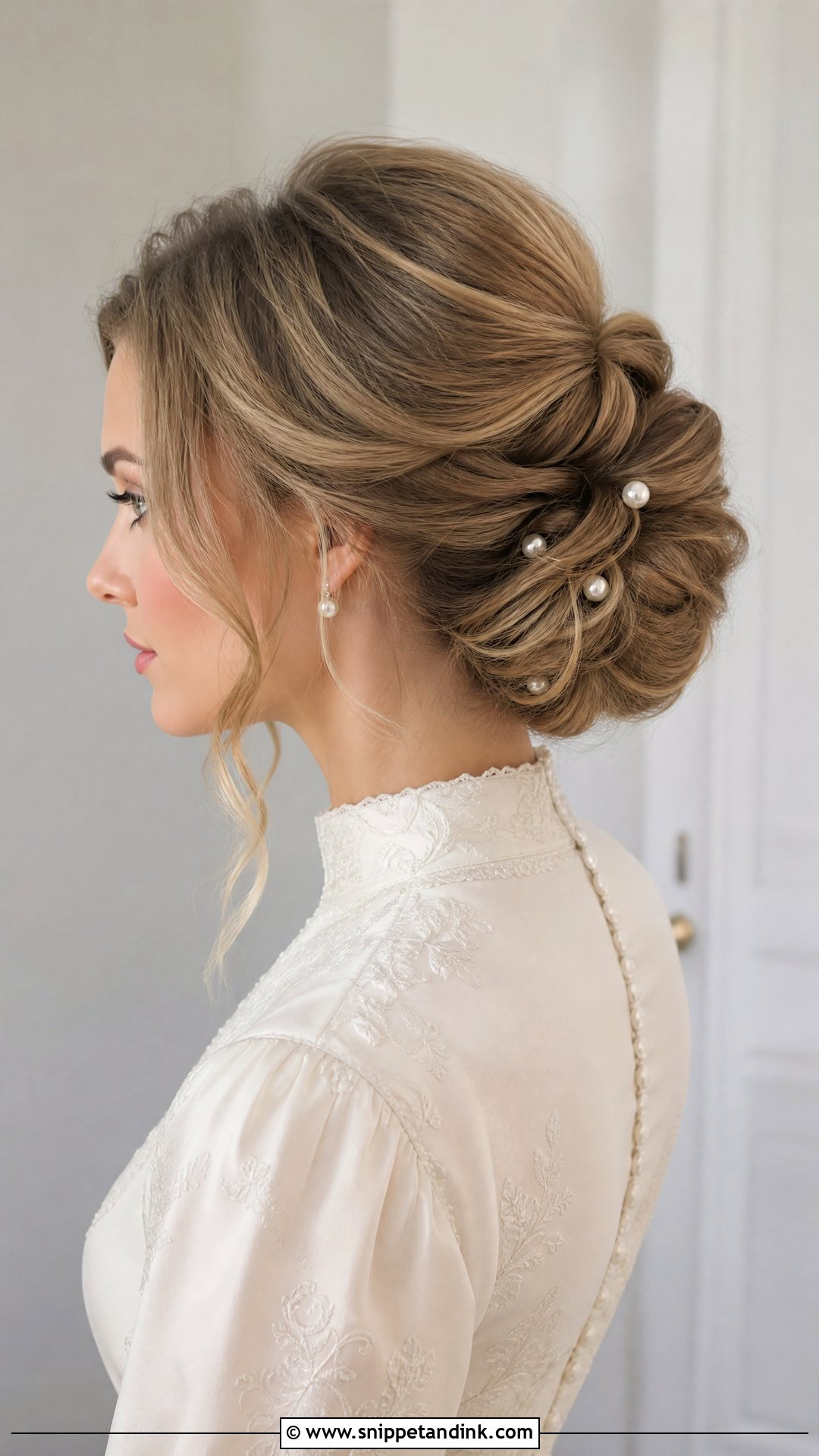
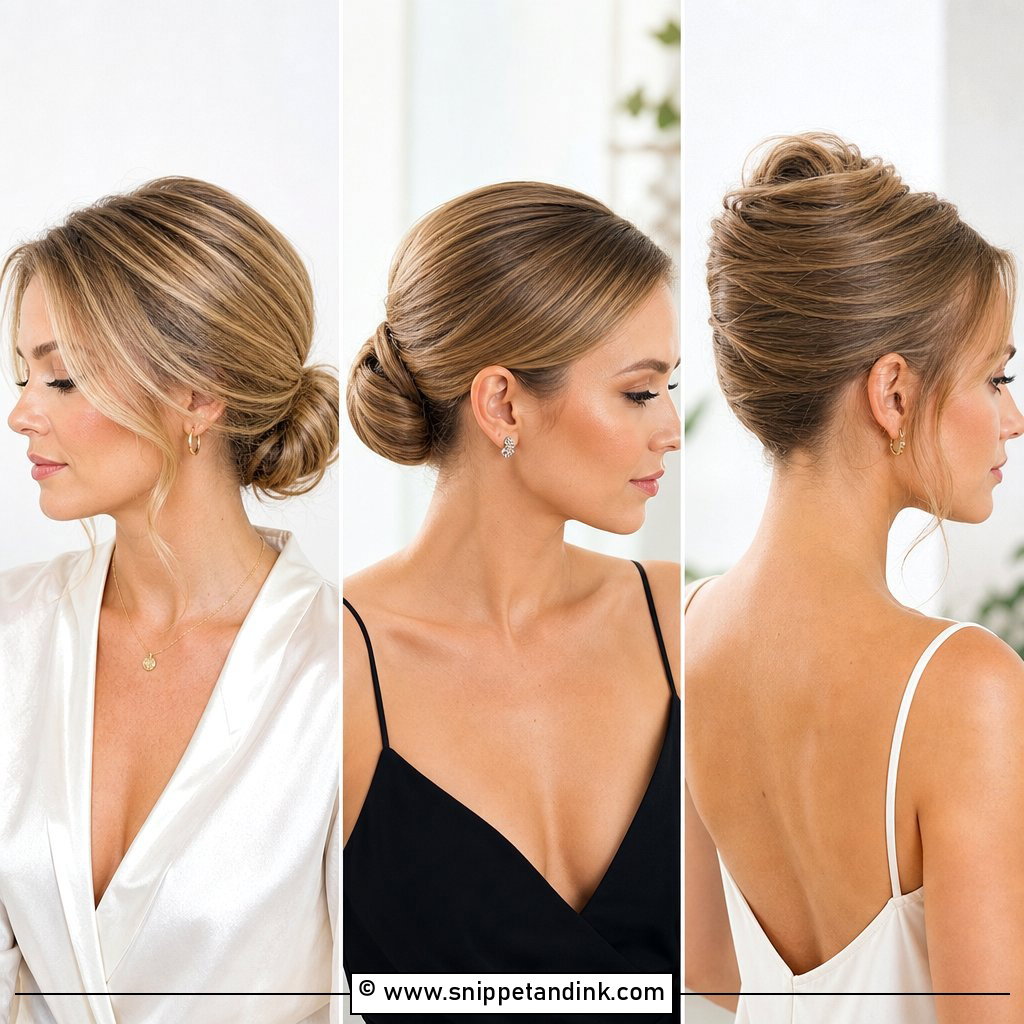
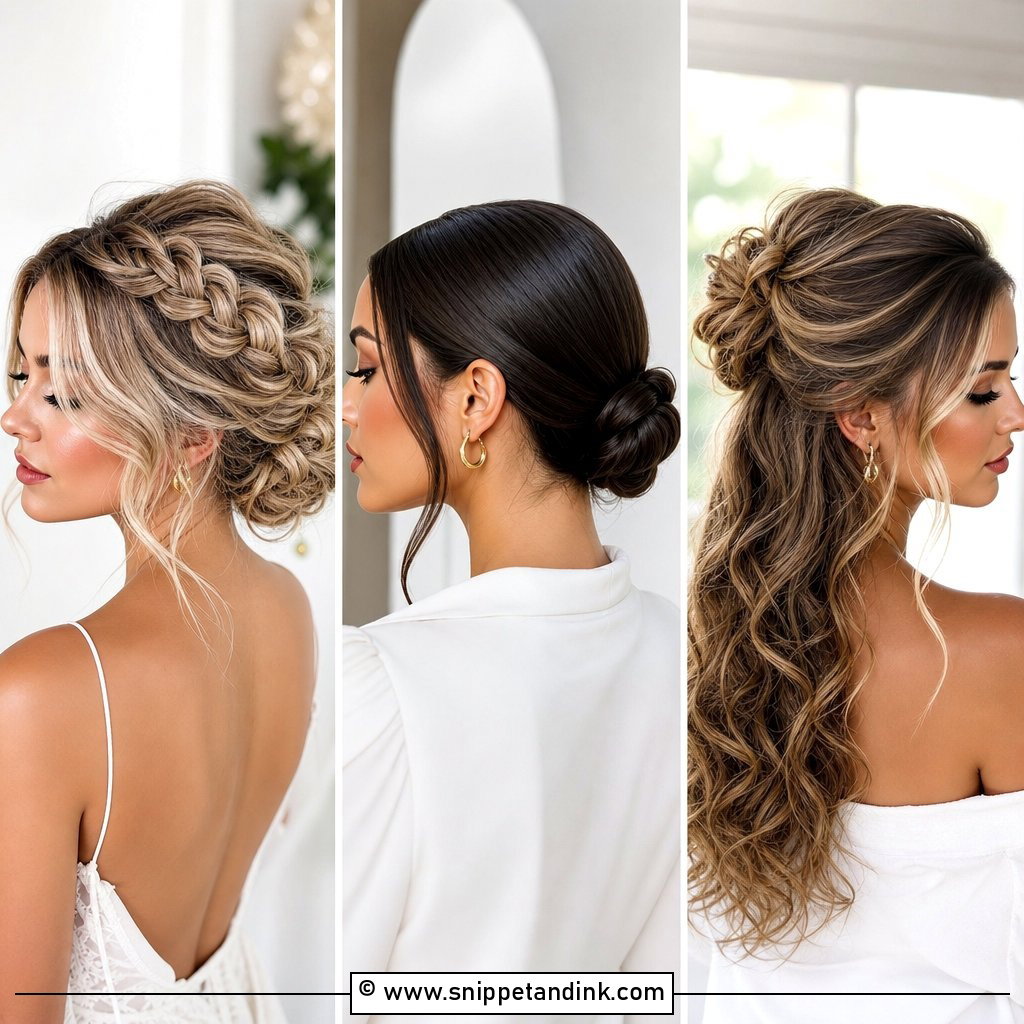
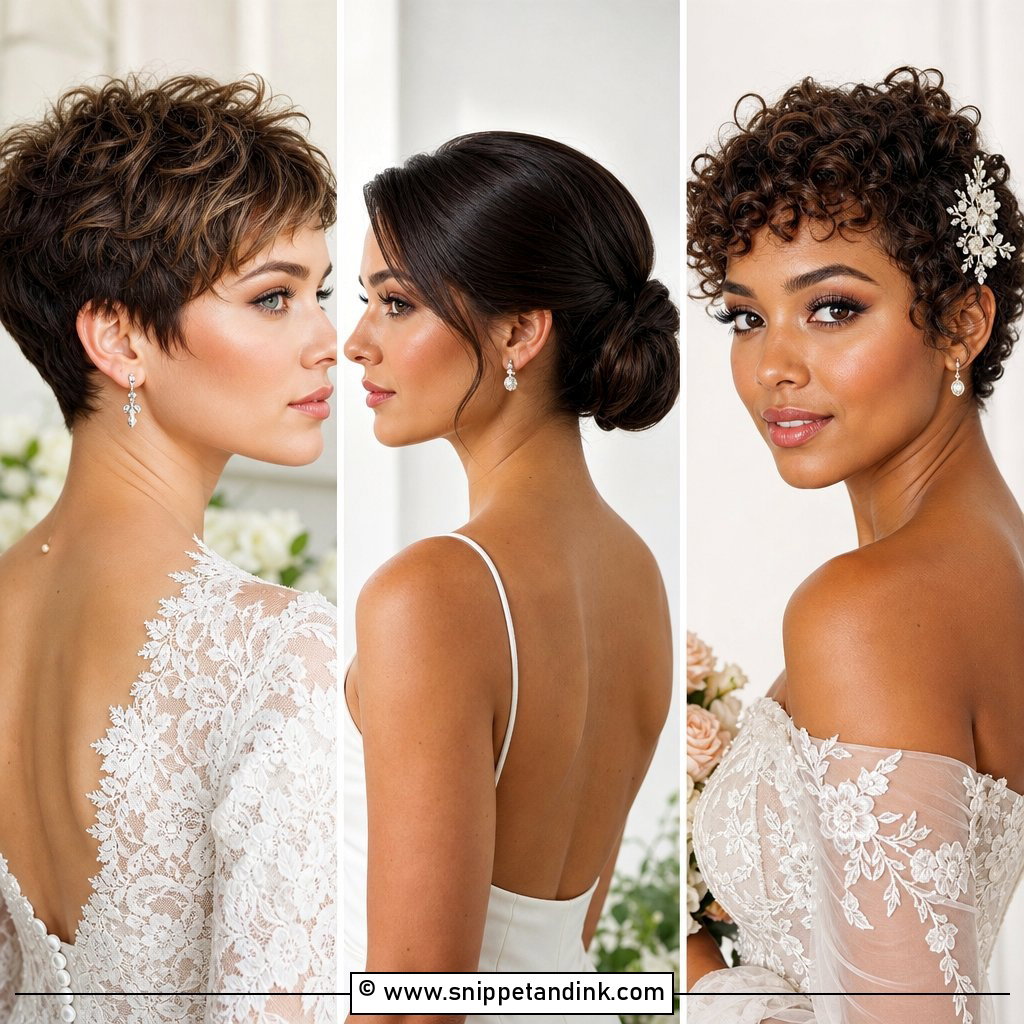
When a bride with thin or layered hair asks for a full low bun, this is how I get there. Clip-in wefts go in a horseshoe around the back, then everything gathers at the nape. If the bun still needs shape, a small mesh padding underneath does the rest without extra weight. It sits under a veil, shows off a backless dress and doesn’t compete with detailed earrings. Smooth reads classic; a few loose pieces read softer.
4. Bridal Hair With Extensions High Bun
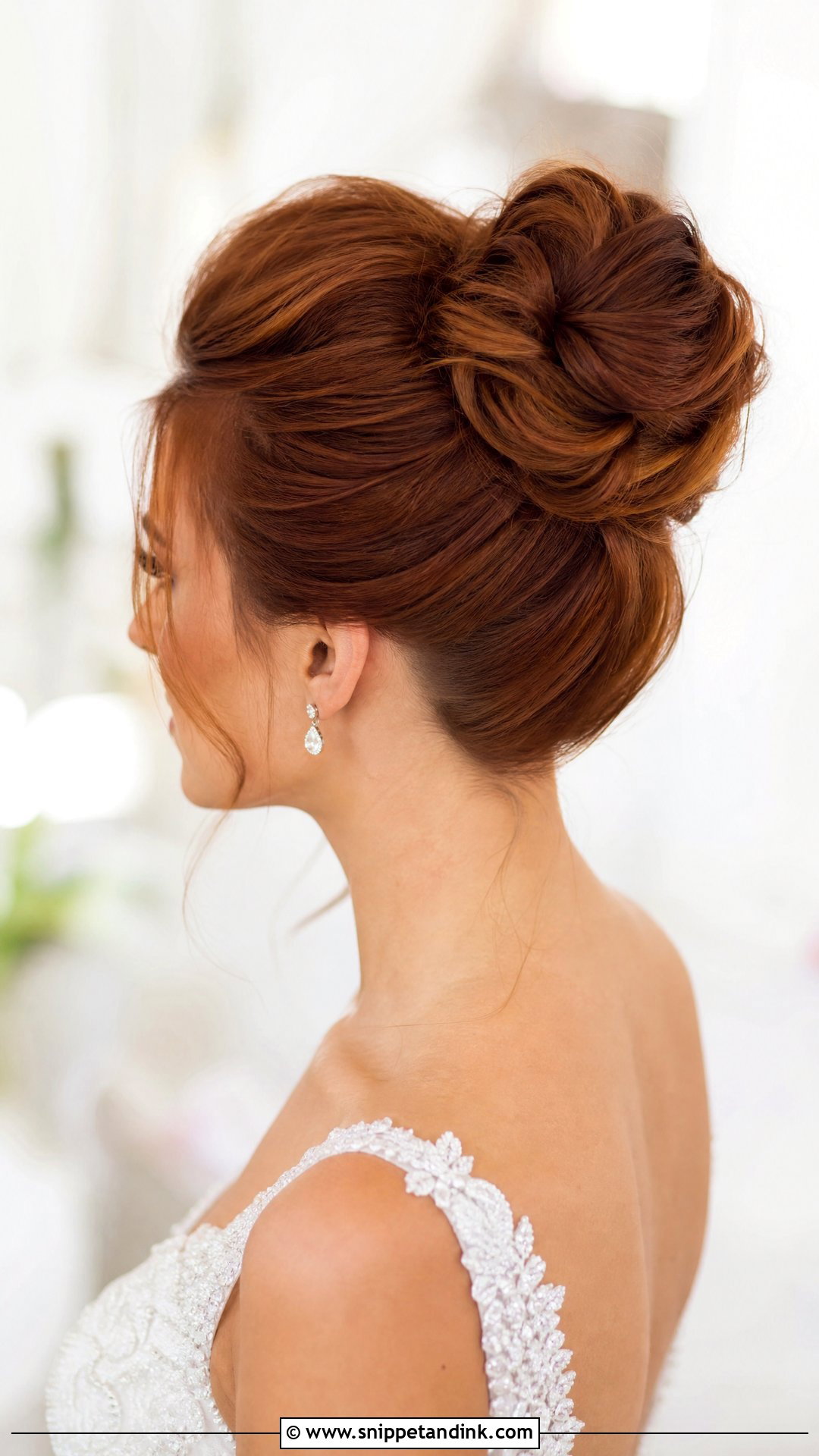
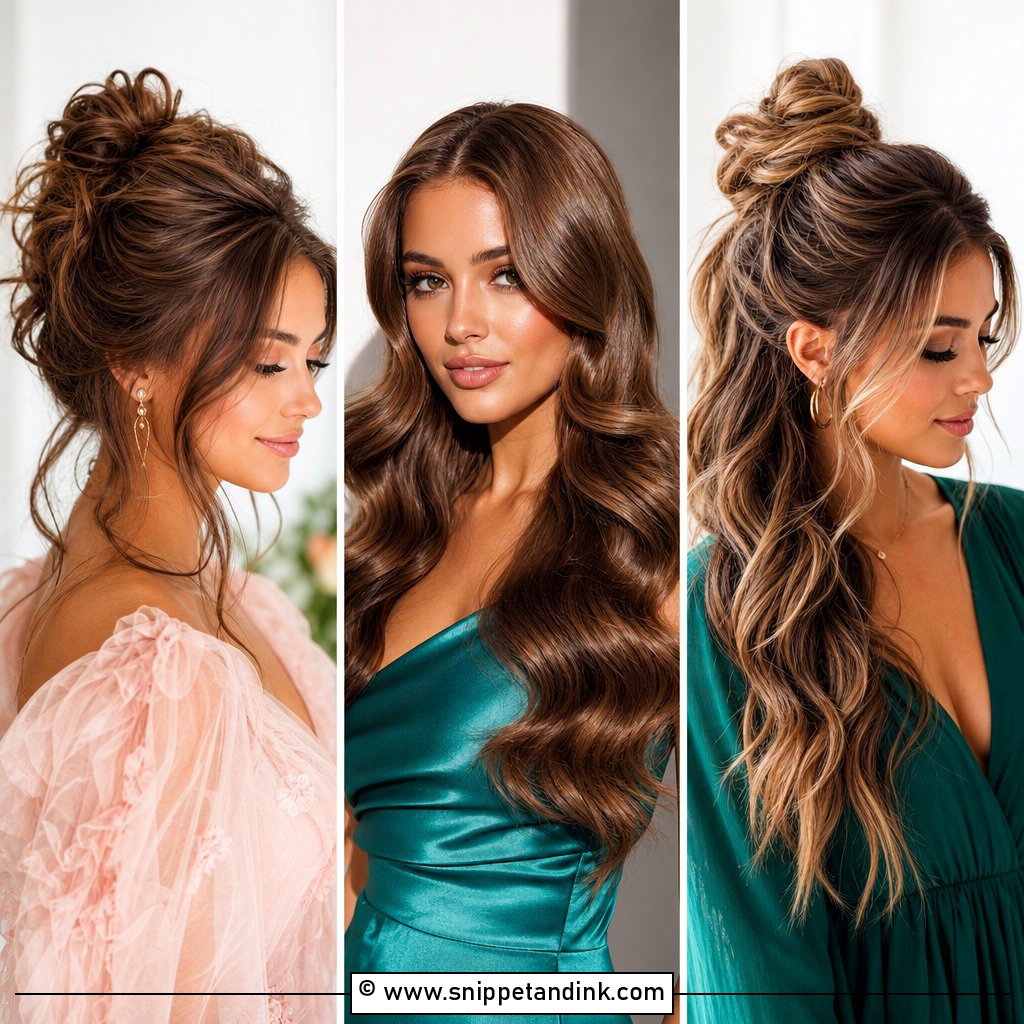
A high bun puts the most strain on your own hair, which is exactly why I add extensions to it. Pulling short or fine hair all the way up to the crown stretches it tight and gives you a headache by the toast. Wefts add bulk to the bun so your natural hair can sit more loosely. Clips placed high can peek out at the nape, so I keep them lower and let the lengths travel up. It’s cool for summer weddings, with the veil set under the bun.
5. Bridal Hair With Extensions Hollywood Waves
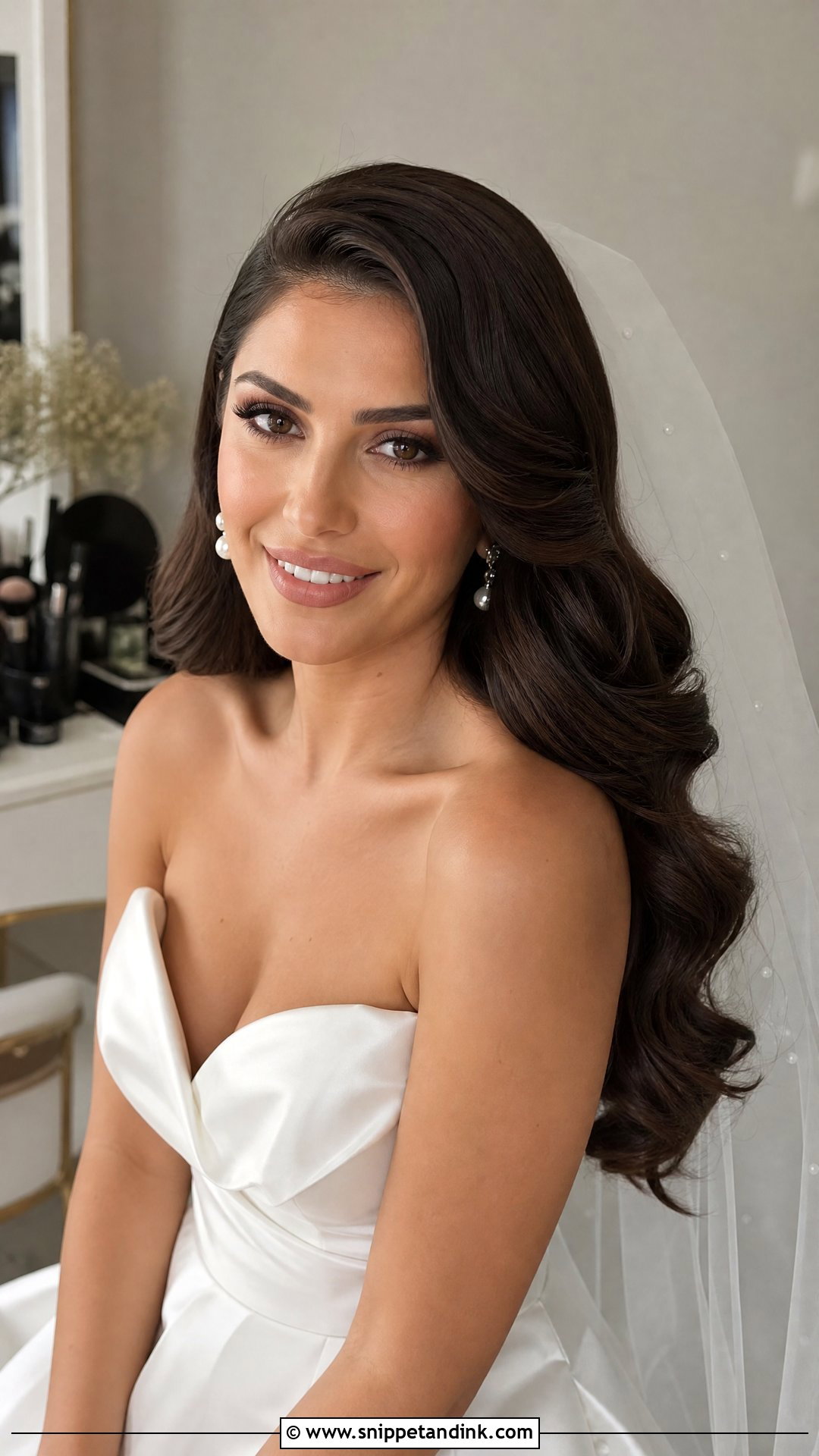
Hollywood waves need even thickness from root to tip; if the ends are thinner than the mid-lengths, the sculpted S breaks apart into separate curls. Extensions solve that, but only if the color match is exact, because a glossy wave shows every shade change. Longer wefts and a deep side part give the classic shape. I’d always test this one at the trial and wear it for several hours to see how the pattern drops.
6. Bridal Hair With Extensions Loose Curls
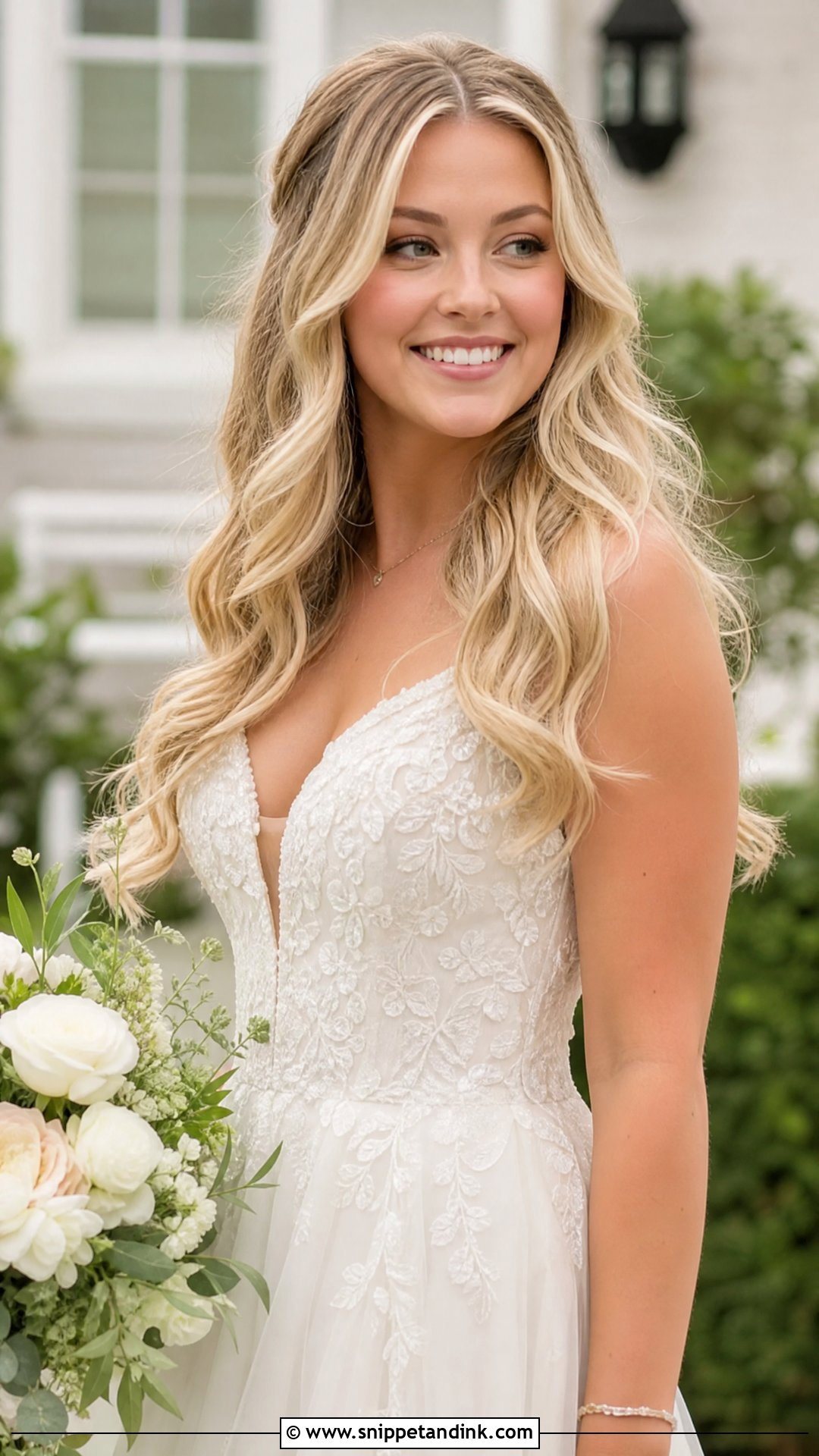
Loose curls are more forgiving than waves, which makes them a good first try with extensions. The added hair gives body from the front, side and back, and loose texture hides the joins well. I curl natural hair and wefts together, then brush lightly so they blend. Flexible spray matters here; a stiff hold makes extension hair feel coarse to touch. Garden and beach weddings suit this relaxed shape.
7. Bridal Hair With Extensions Braided Updo
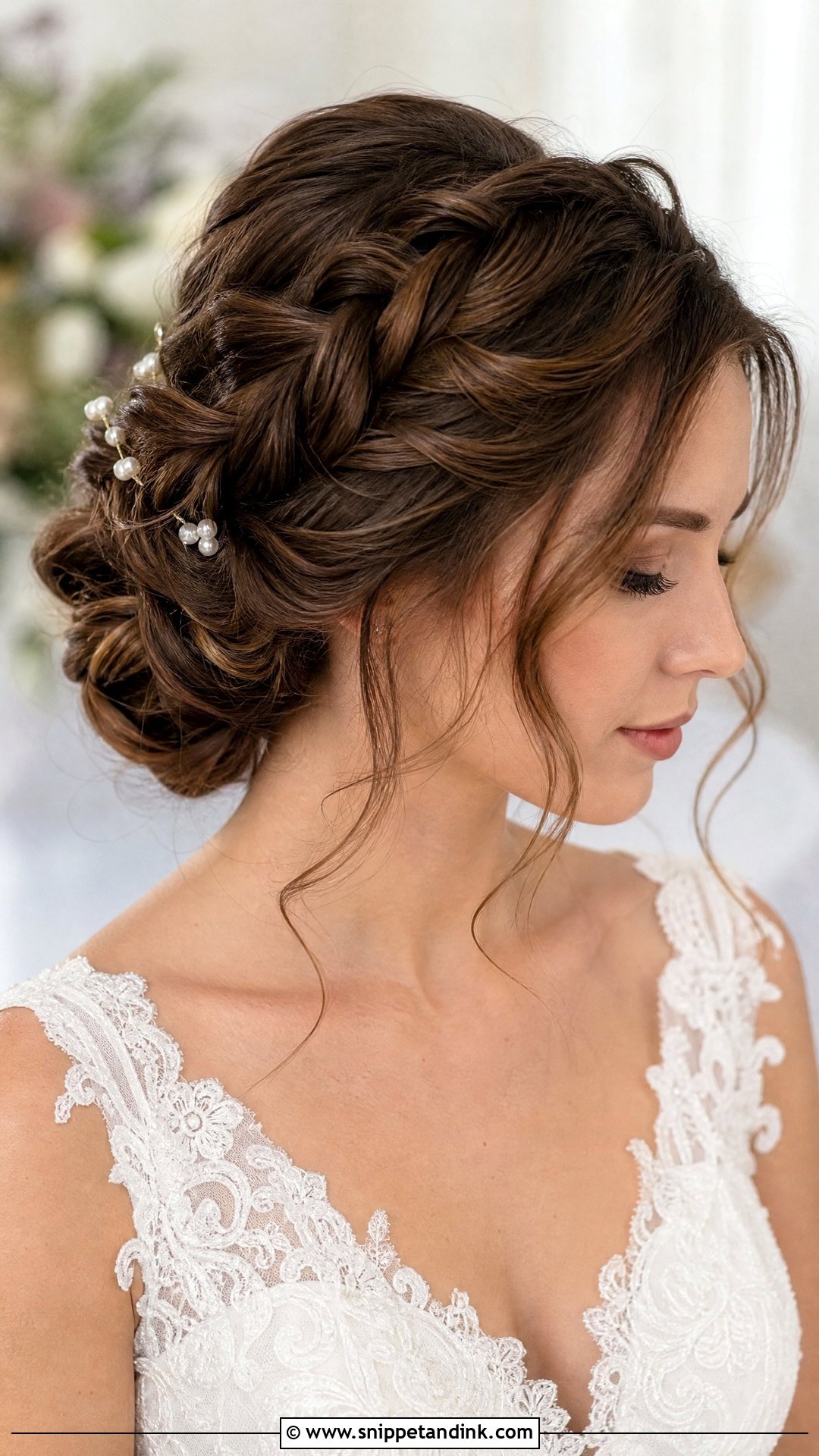
Braids are the strongest argument for extensions I know. A thin braid looks sparse in photos, while a braid with a weft woven in reads full from across a room. I usually braid the extensions in from the first crossing so the color runs through evenly. The braid can wrap into a low bun, crown the head or blend into twists at the back. Small pearl or floral pins sit nicely in the gaps.
8. Bridal Hair With Extensions Side Braid
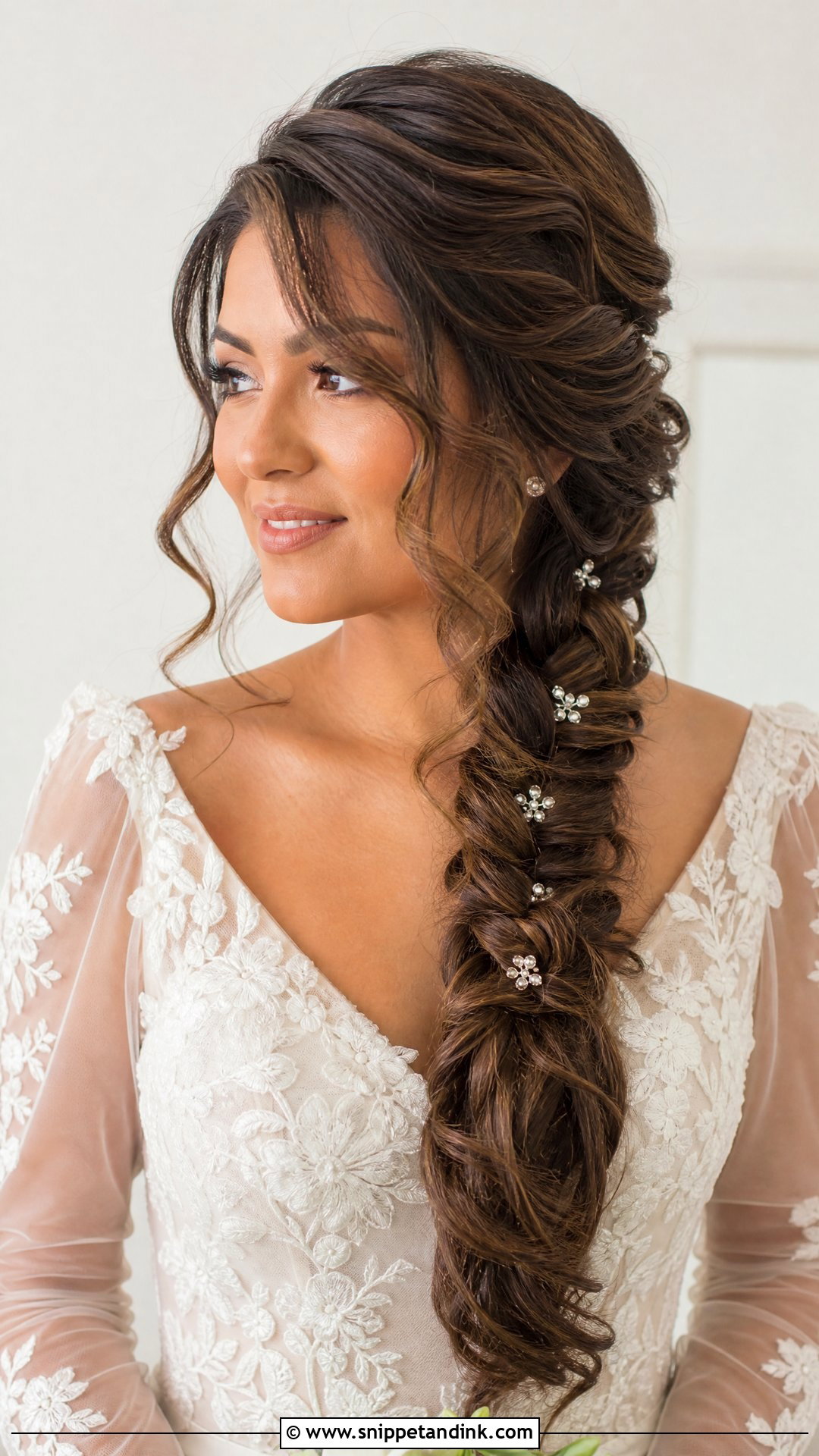
A side braid lands over one shoulder, so it needs length and fullness most brides don’t have naturally. Extensions give enough hair for a loose fishtail, a soft three-strand or a textured braid with curls woven through. Hide the clips on the side the braid sweeps away from; the opposite side is fully visible from behind. Pancake the braid gently for width. It’s a natural fit for open-back dresses.
9. Bridal Hair With Extensions Sleek Ponytail
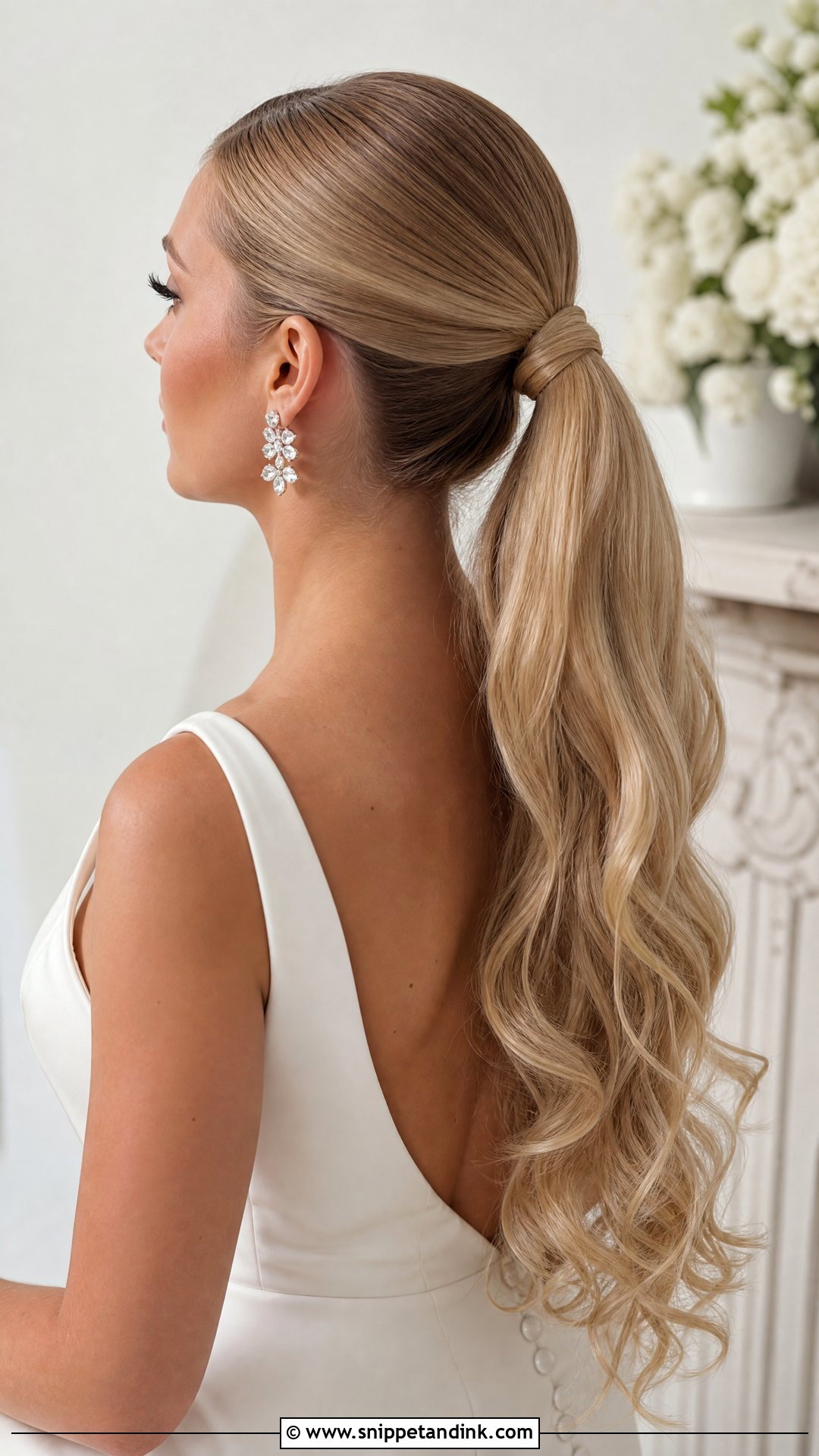
A thin ponytail is the one thing I can’t disguise with curling, so this is where extensions do the heavy lifting. A wrap-around ponytail piece or a few wefts under the base gives length and thickness that look expensive. The crown has to be smooth, and the elastic gets hidden under a wrapped strand. The length can fall in waves, curls or glossy and straight. Minimal gowns and city venues suit it, and your hair stays put all night.
10. Bridal Hair With Extensions Curly Ponytail
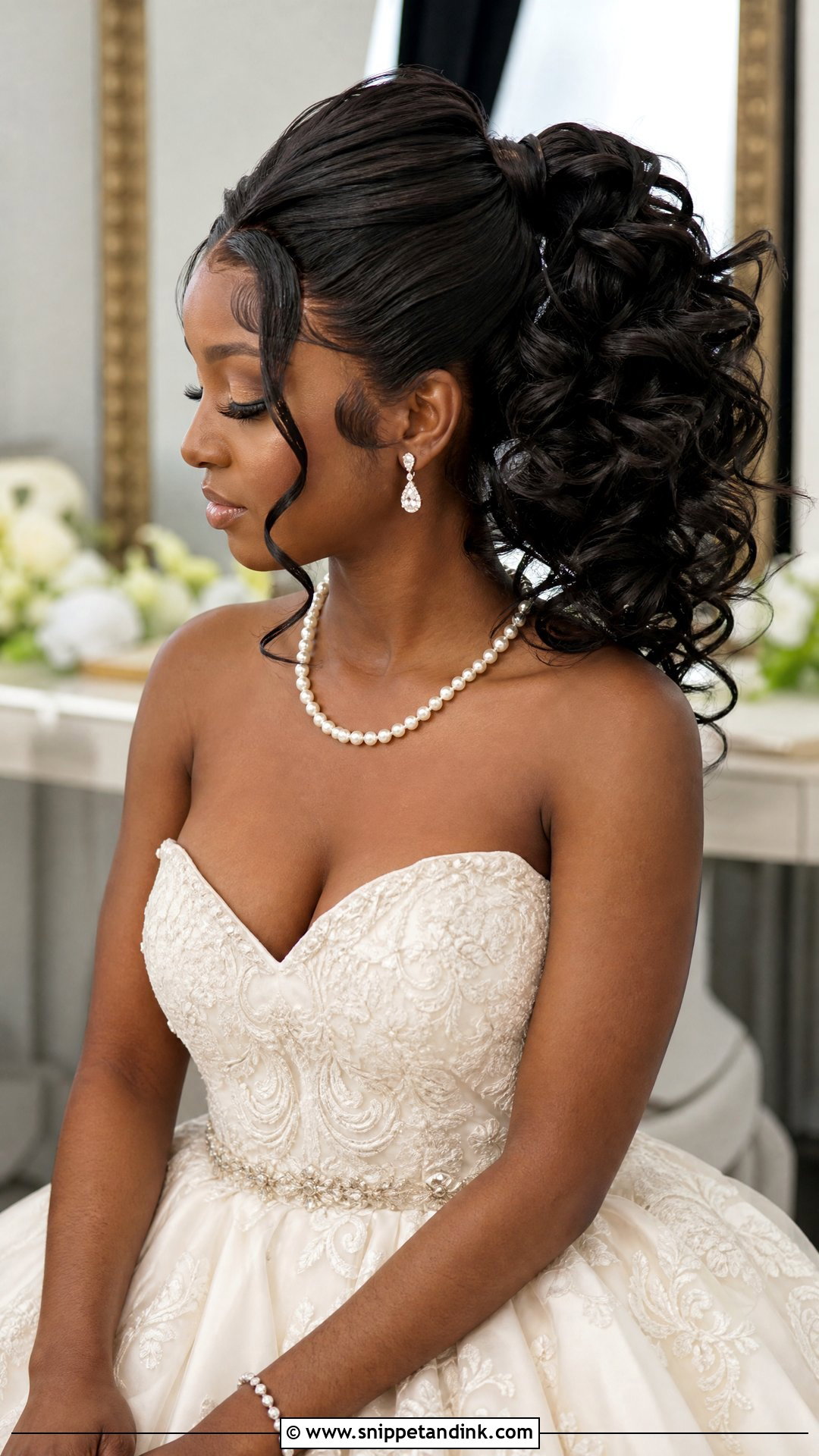
Curly ponytails are heavy once extensions go in, so I secure them with two elastics rather than one and pin the base flat to the head. That stops the ponytail from swinging loose by midnight. The extra hair lets the curls hold their spring from the back. The crown can be smooth, slightly lifted or finished with a twist. Keep the curls loose; tight spirals on extension hair can look like a costume piece.
11. Bridal Hair With Extensions Messy Bun
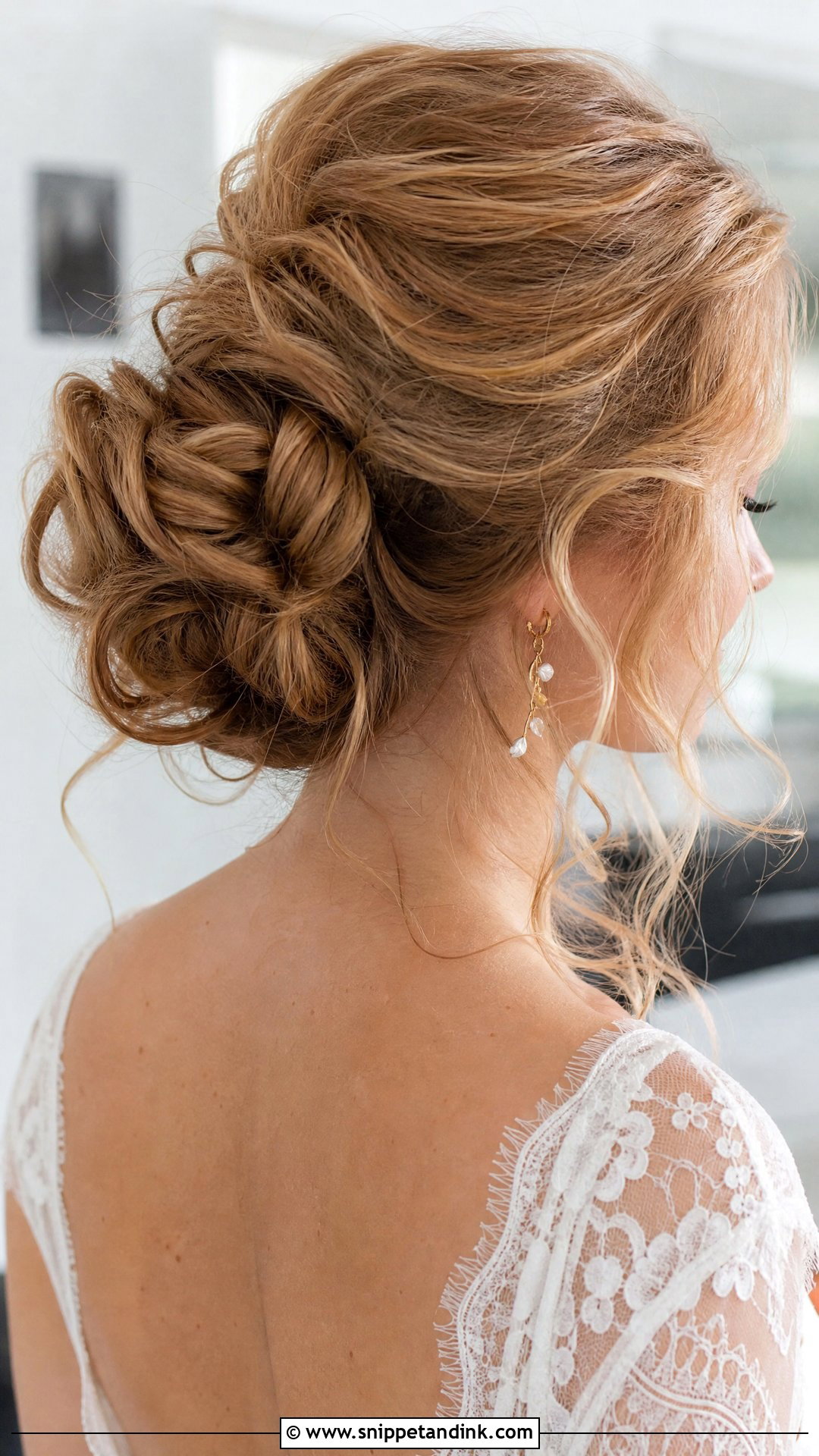
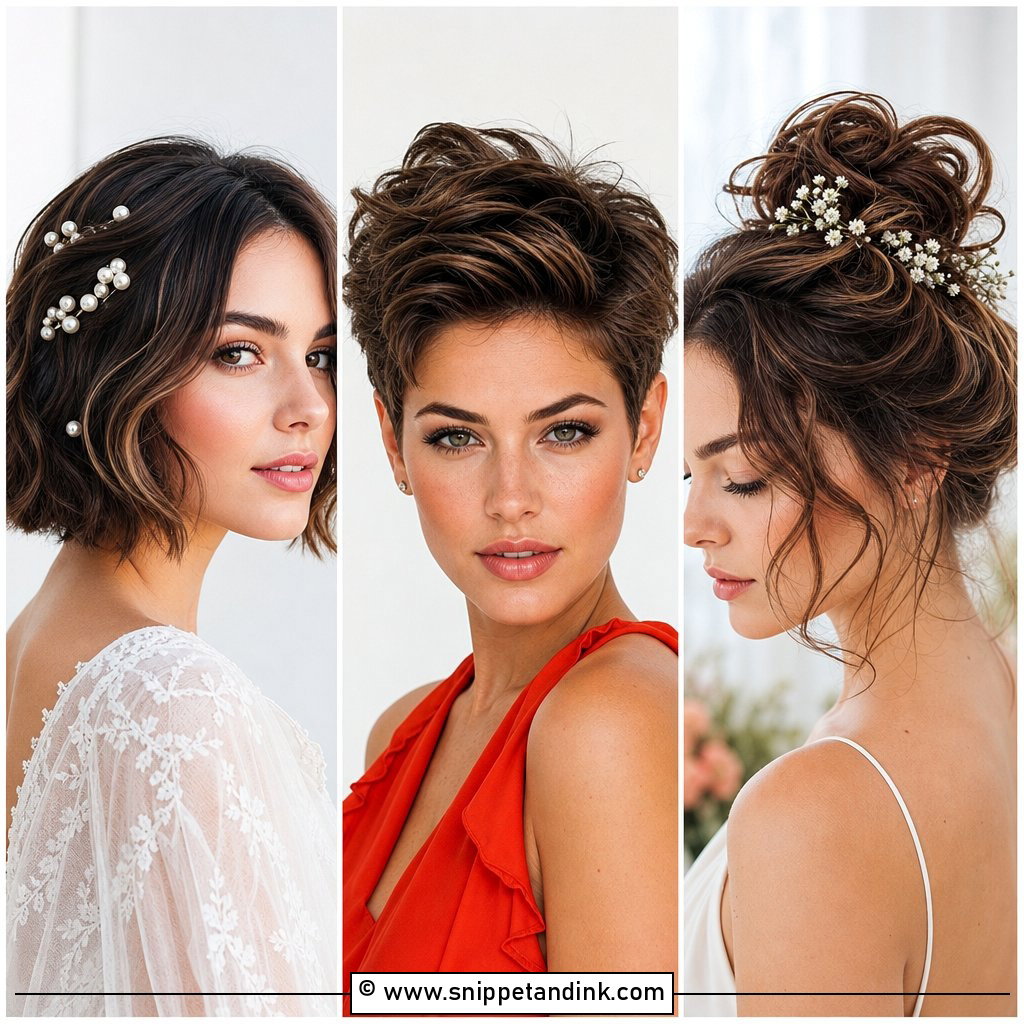
Messy buns made from fine hair often end up small and tight, which is the opposite of the soft shape brides want. A couple of wefts give enough volume to pull pieces out without the bun collapsing. It suits boho weddings, outdoor ceremonies and lace gowns. Loose tendrils around the face and neckline soften it. I pin the core of the bun firmly and keep only the surface airy, so it survives hugs and dancing.
12. Bridal Hair With Extensions Crown Braid
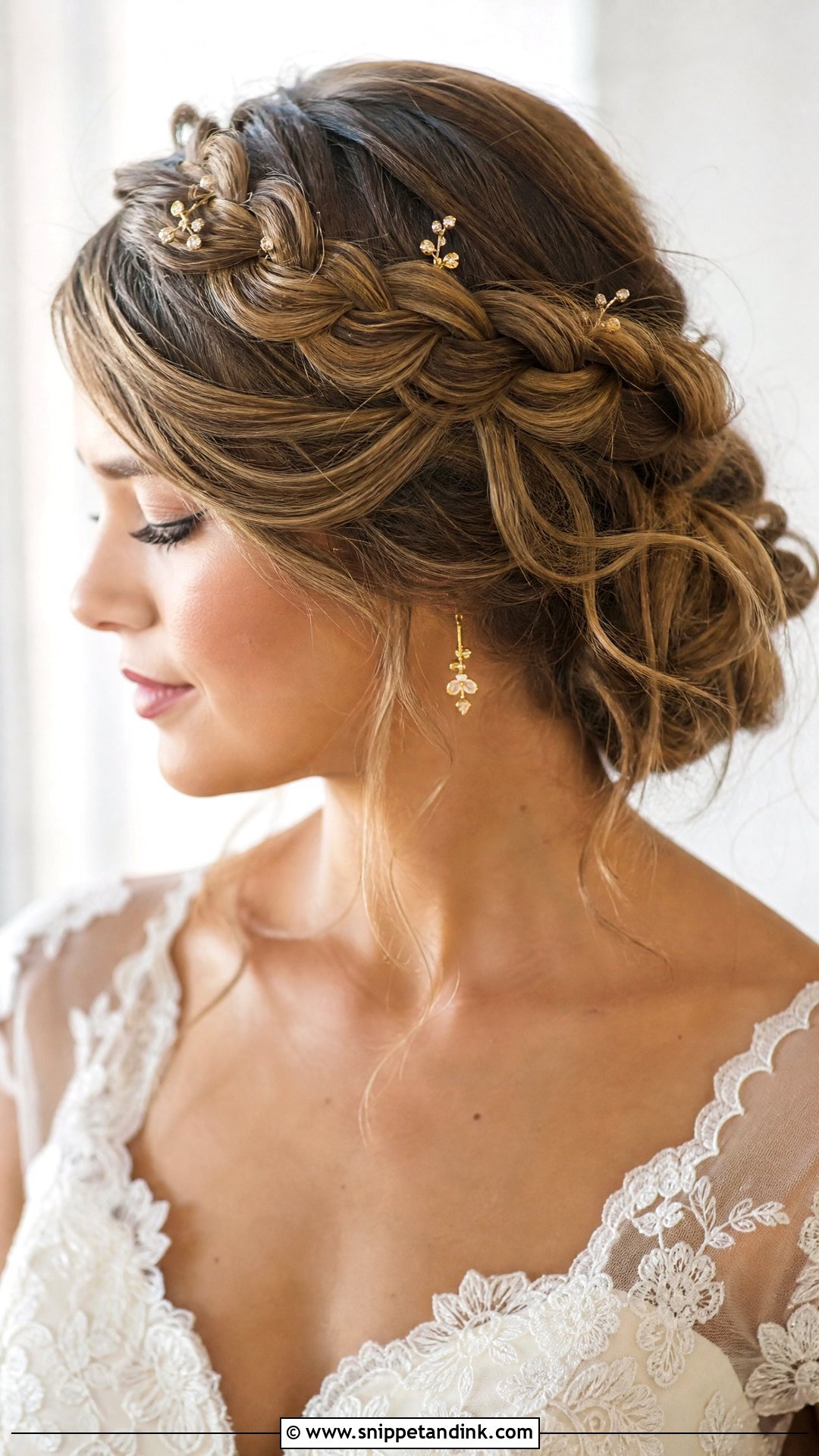
Wrapping a braid around the head takes more hair than people think, and a short braid simply won’t meet in the middle. Extensions give enough length and thickness for a crown braid that looks full rather than sparse. The front stays soft, so the effect is mostly up without being severe. It’s practical outdoors because nothing moves. Tiny pearl pins or gold accents fit into the braid without hiding it.
13. Bridal Hair With Extensions Long Straight Hair
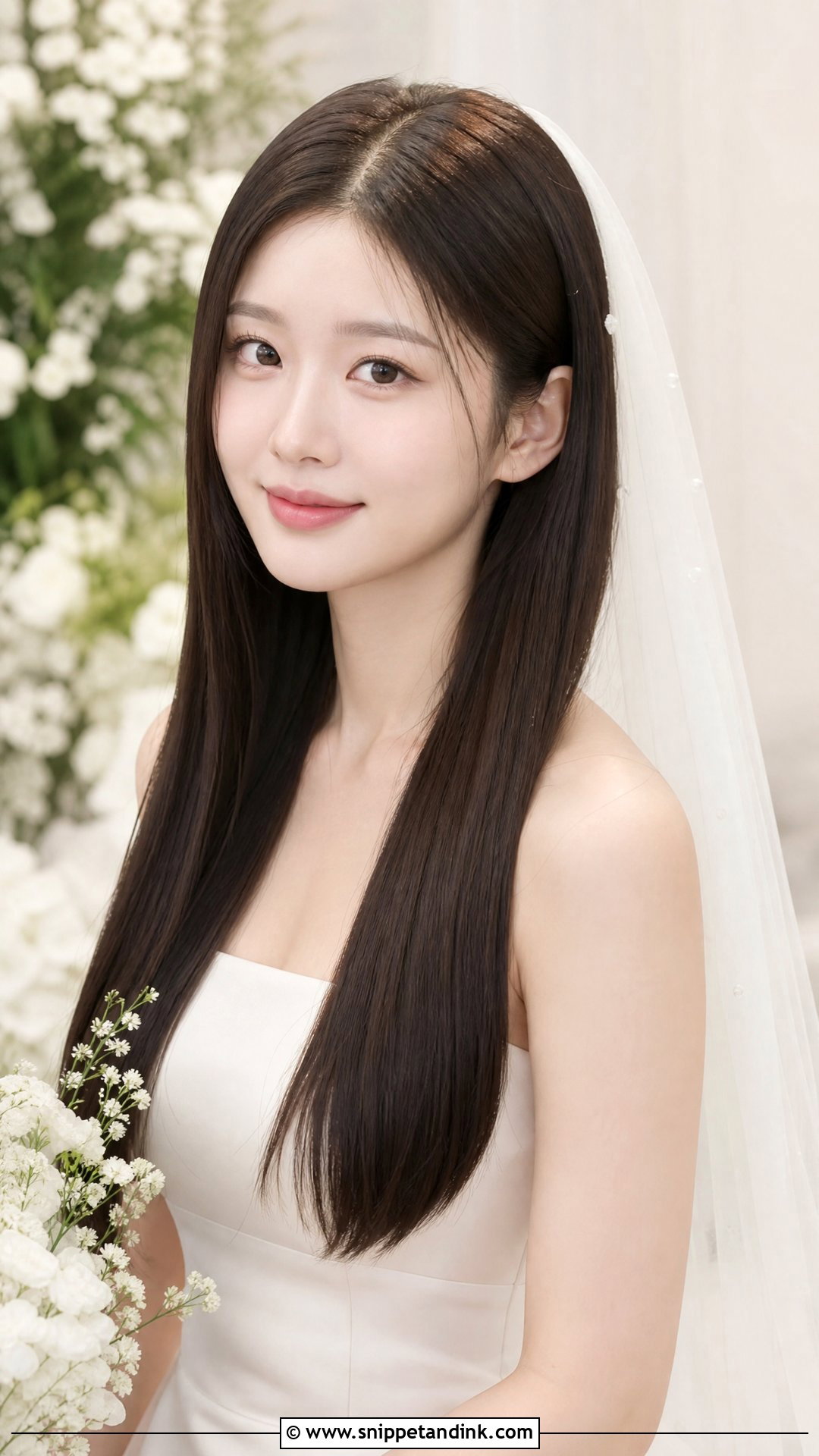
Straight hair is the hardest place to hide extensions. With no curl to blur the joins, the color match and blending have to be close to perfect, and the clips must sit well under the top layer. Tape-ins usually work better than clips here because they lie flat. Your natural ends should be trimmed so they don’t stop abruptly partway down. A center part looks fashion-forward, a side part more classic.
14. Bridal Hair With Extensions Textured Updo
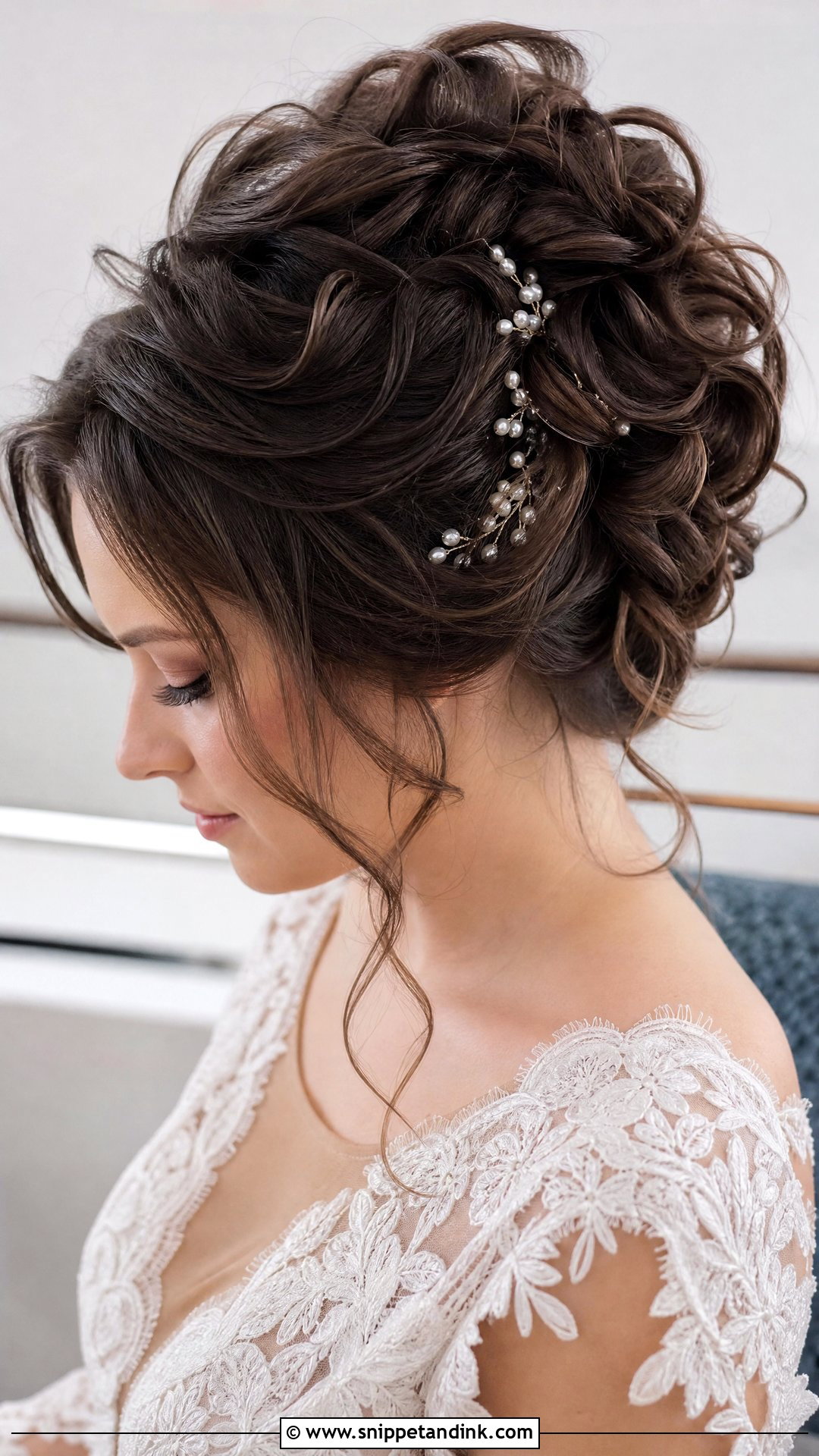
This updo sits between a sleek bun and a messy one: curled sections pinned into a full, dimensional shape. For medium-length hair it’s my favorite use of extensions, because a few wefts let me build height and depth without needing long hair at all. The added hair supports the structure while keeping it airy. Veils, combs and pins all attach easily. Plan a trial, since placement of the wefts changes the final outline.
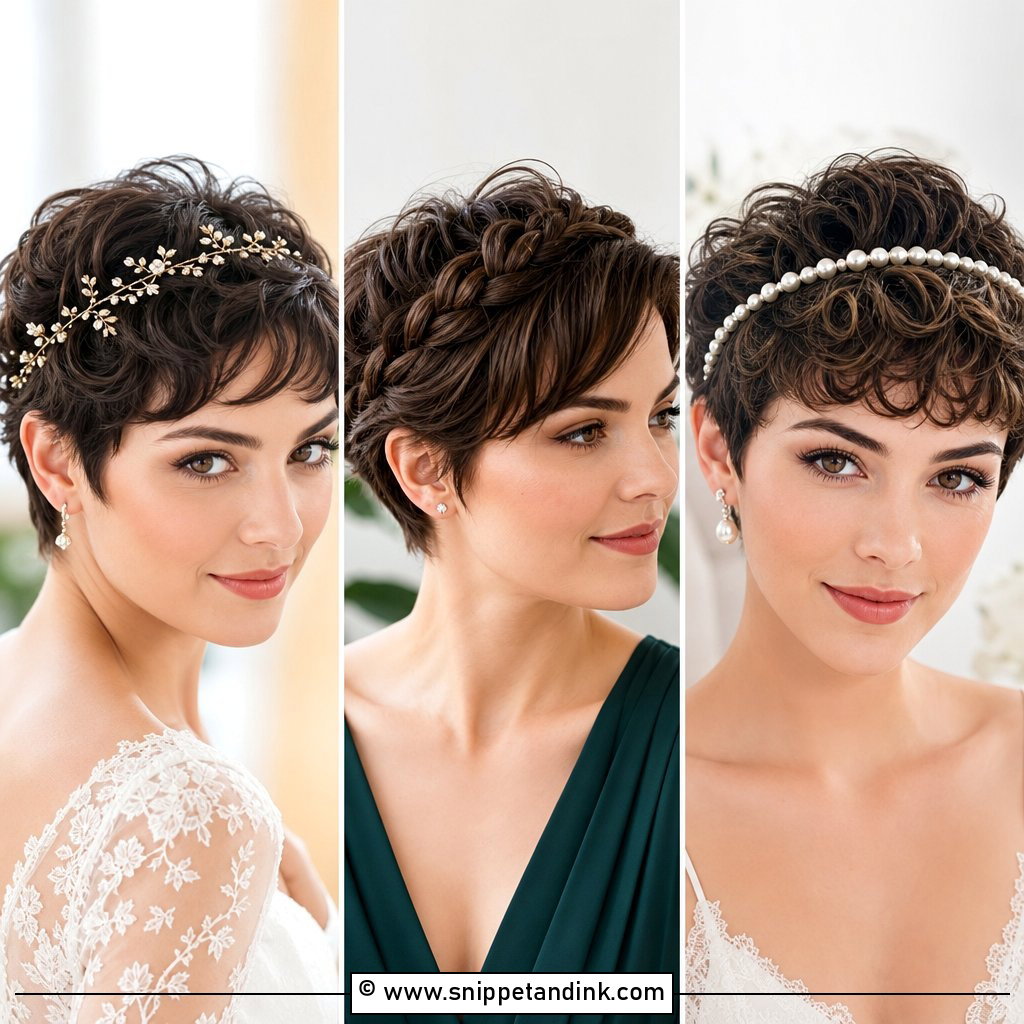
15. Bridal Hair With Extensions Veil Hairstyle
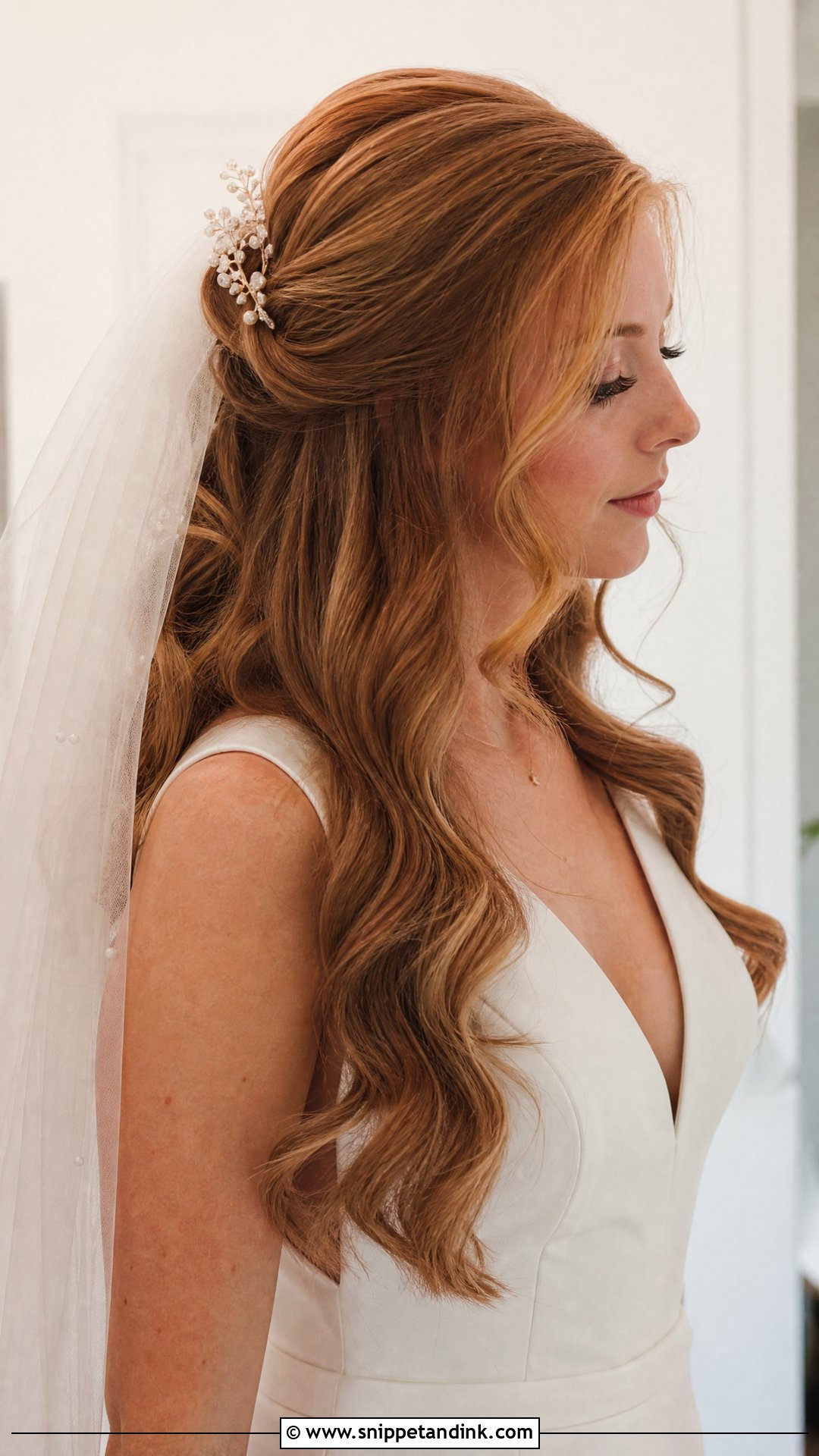
A veil adds weight right where clips sit, so I plan the comb and the wefts together. Extensions keep the crown, back and ends full under the tulle, but a comb slid straight into a clip can pull it loose. I set the comb into a crossed-pin base just above or below the top weft. Waves, low buns, half up looks and textured updos all work. Bring the veil to your trial so we can test the hold and see the silhouette once it comes off.
Matching the Shade When Your Ends Are Lighter Than Your Roots
Color is where extensions give themselves away, usually in a back-of-the-head photo taken in daylight. Most hair isn’t one color, so matching to your roots alone leaves a darker band at the ends. I match to the mid-lengths and ends, where the added hair will sit, and check the shade by a window rather than under bathroom lights.
- If you color your hair, do it before ordering extensions. A fresh gloss can shift the tone enough to make a perfect match look off.
- Blended or ombre wefts are worth the extra cost if you have highlights or balayage.
- Choose human hair for any style that needs a curling iron. Most synthetic hair can’t take heat and will frizz or melt.
- Curl the extensions together with your own hair so the pattern matches all the way down.
One thing almost nobody mentions is weight. A full set clipped into an updo can start to pull by evening, and that dull ache shows in late photos. At your trial, keep the extensions in for at least three hours. If they nag, I’ll use fewer wefts placed lower and let a little padding do some of the work.
Nobody Should Guess Where Your Hair Ends
Extensions aren’t about hiding your real hair. They give your style the support it needs to last, photograph well and match your dream look. Waves, a sleek ponytail, a low bun or a braided updo can all look finished with the right amount of added hair. Plan early, match the color in daylight and do a full trial wearing the extensions for a few hours. If they feel comfortable at hour three, they’ll be fine on the day.
You'll Like These Ideas:


Leave a Reply