
Fine hair is the hair I plan around most carefully, because the usual bridal techniques that work on thick hair simply slide out of it. The upside is that fine hair is light, so it can be built up with backcombing, padding and texture in ways heavy hair can’t. The twenty styles below were picked for exactly that: each one either fakes density or hides the places where fine hair shows through. I’ve added what I’d actually do in the chair for each, and where a style is likely to disappoint.
Fine Strands and Thin Density Are Two Different Problems
Brides tell me they have fine hair when they actually have thin hair, or the other way round. Fine means each strand is narrow. Thin means there aren’t many strands. Plenty of people have both, and the fix is different for each.
- Fine strands, normal density: the hair slips and won’t hold a curl. I need grip more than volume, so texture spray, a day-old wash and smaller curling irons do the job.
- Normal strands, low density: curls hold, but the scalp shows through. That calls for padding, backcombing at the root or clip-in wefts.
- Both: I plan for a textured updo with hidden padding, and I’d rarely recommend wearing it fully down.
A quick test at home: pull your hair into a ponytail and look at how thick it is at the elastic. If it’s barely wider than your finger, density is your main issue. If it’s thicker but feels silky and flat, the strand width is what we’re working against.
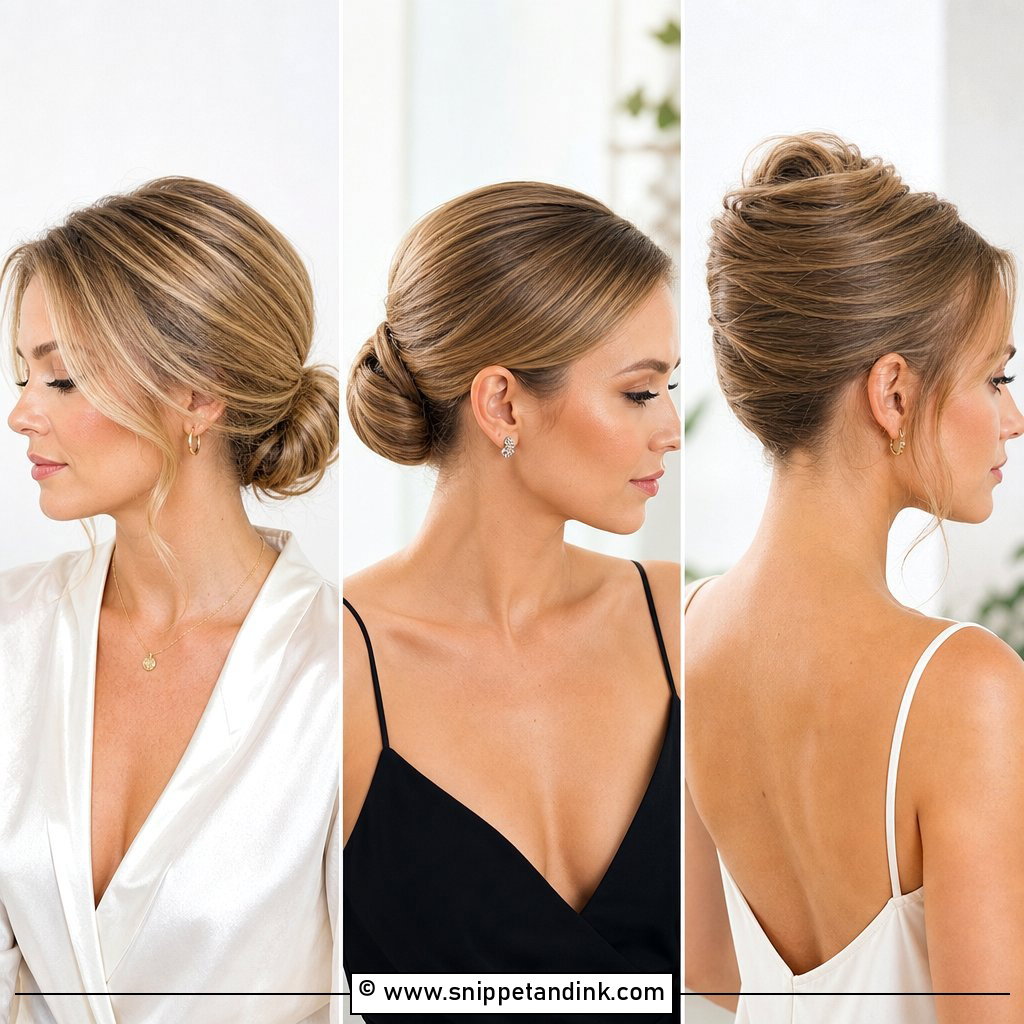
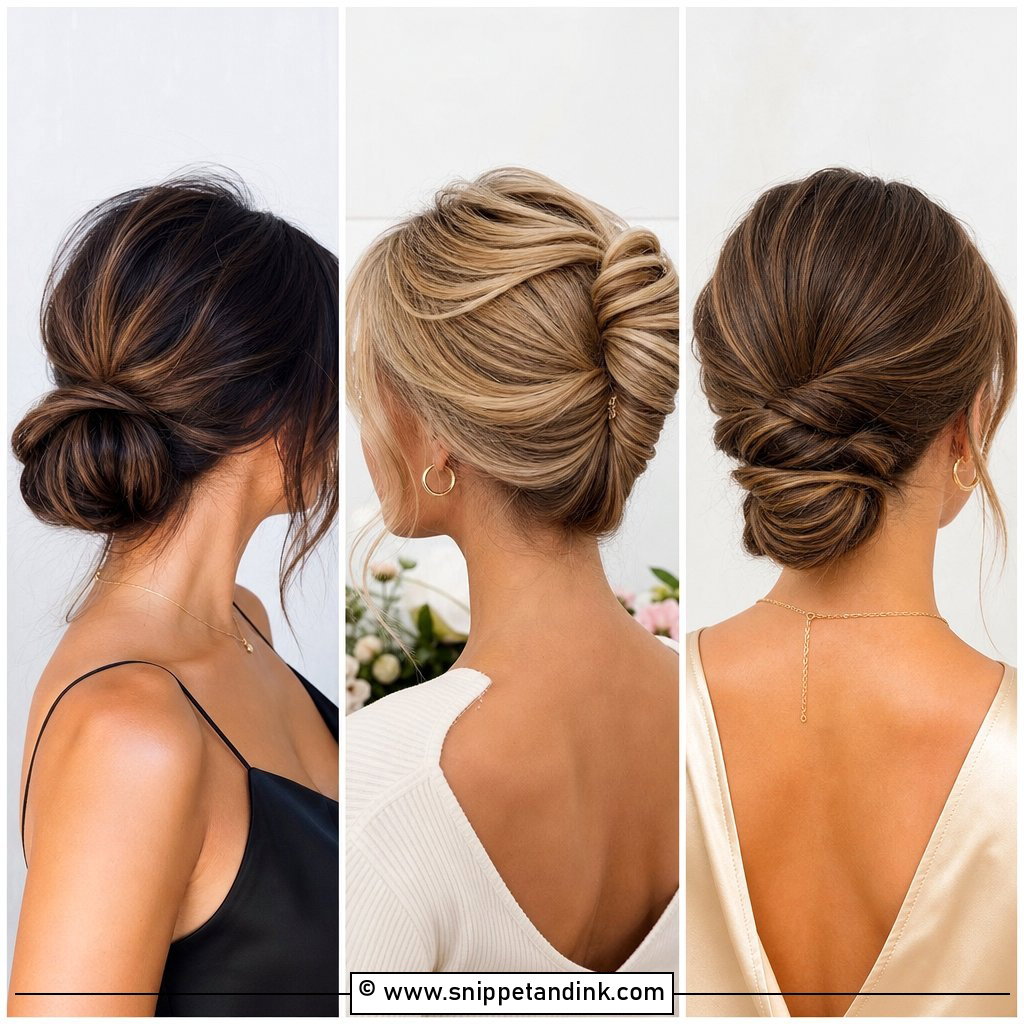
1. Textured Low Bun for Fine Hair
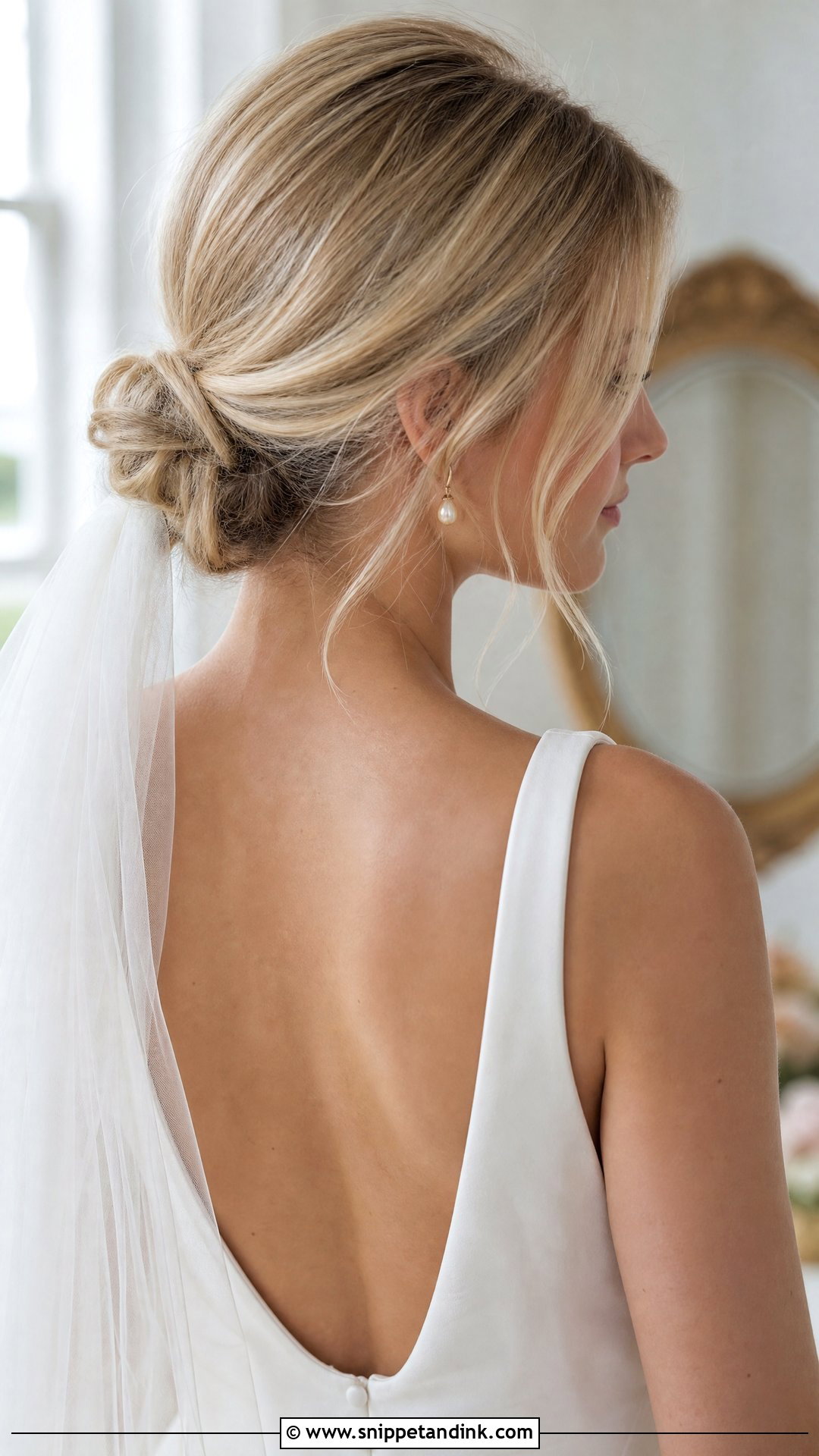
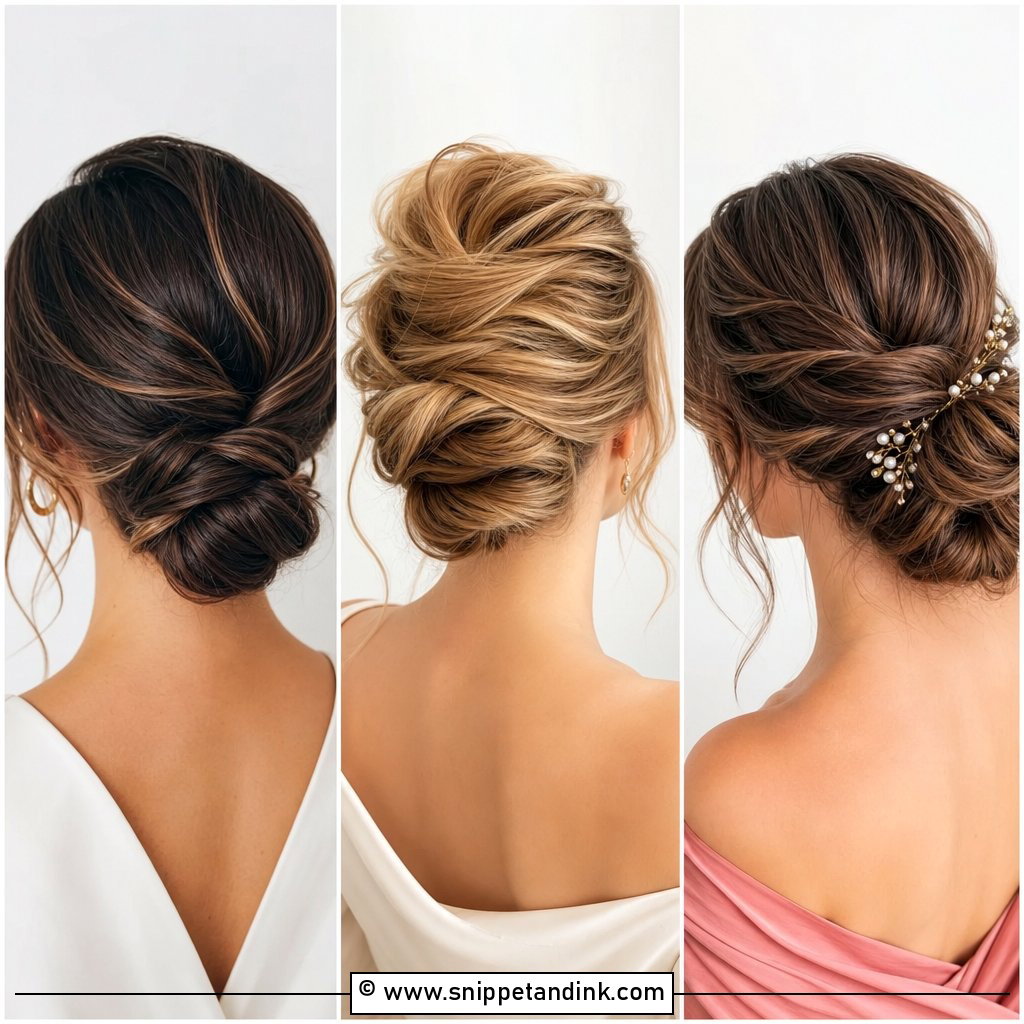
When a bride with flat, fine hair asks for a low bun, I almost always build it textured rather than sleek. I prep with a dry texture spray, then pancake the bun by pulling small pieces outward so it looks twice its real size. A small backcombed section at the crown stops the top from looking pressed down against the head. It suits shoulder-length hair too, and sits neatly under a veil comb. Leave two thin pieces at the face, not chunky ones, or they’ll separate into strings by evening.
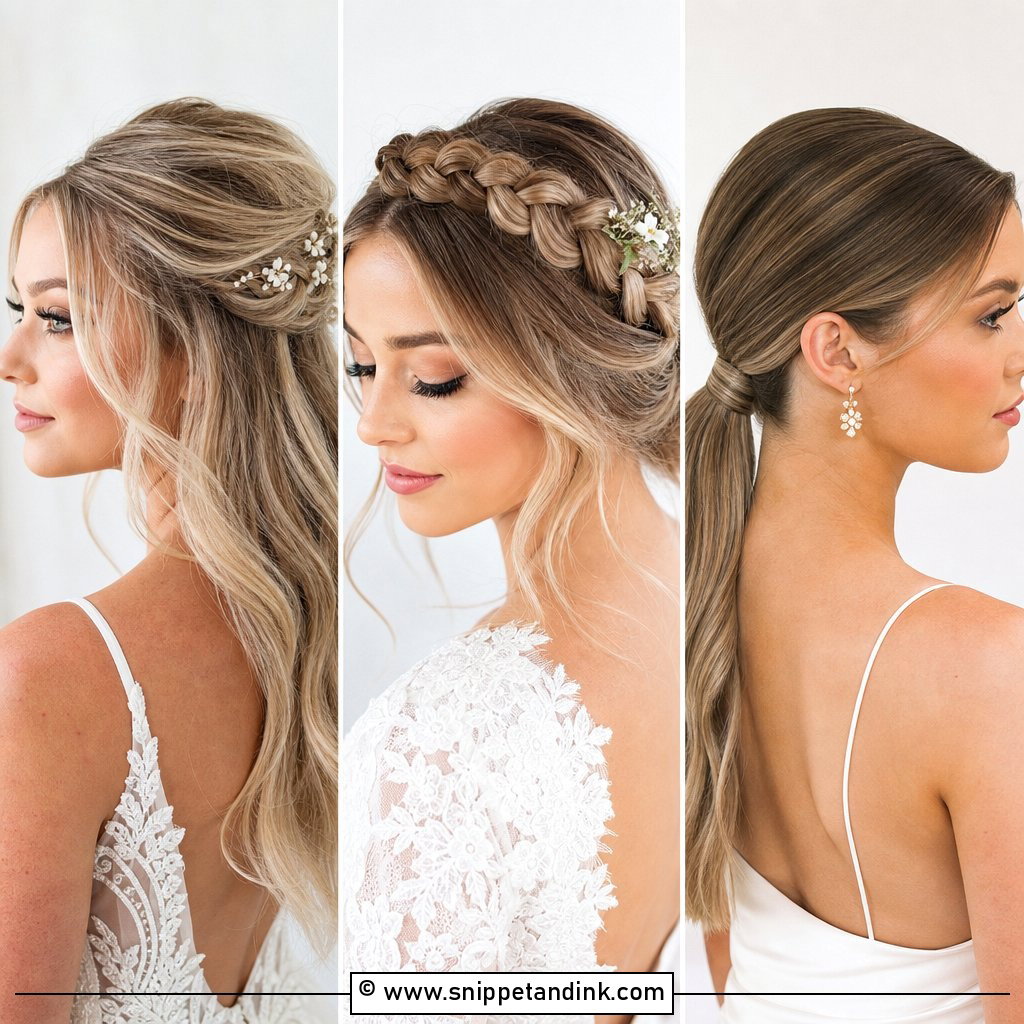
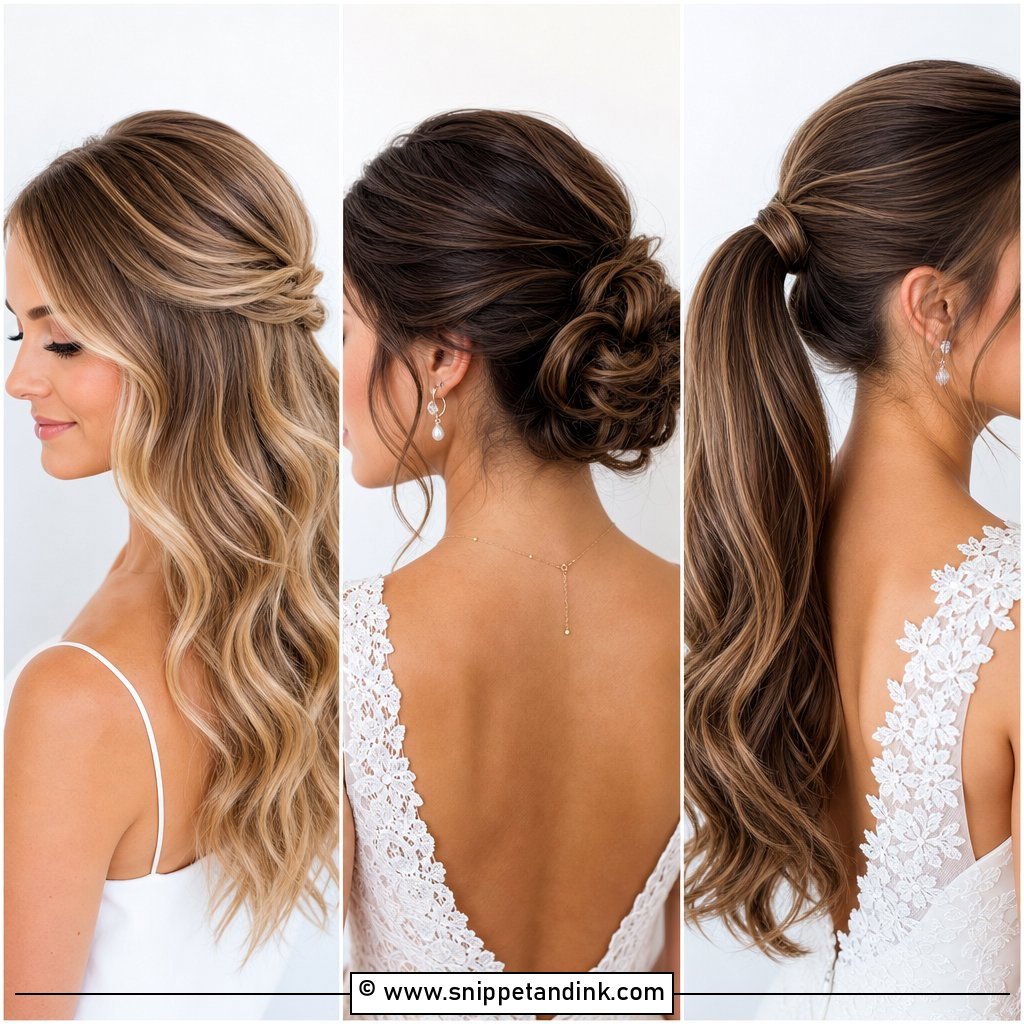
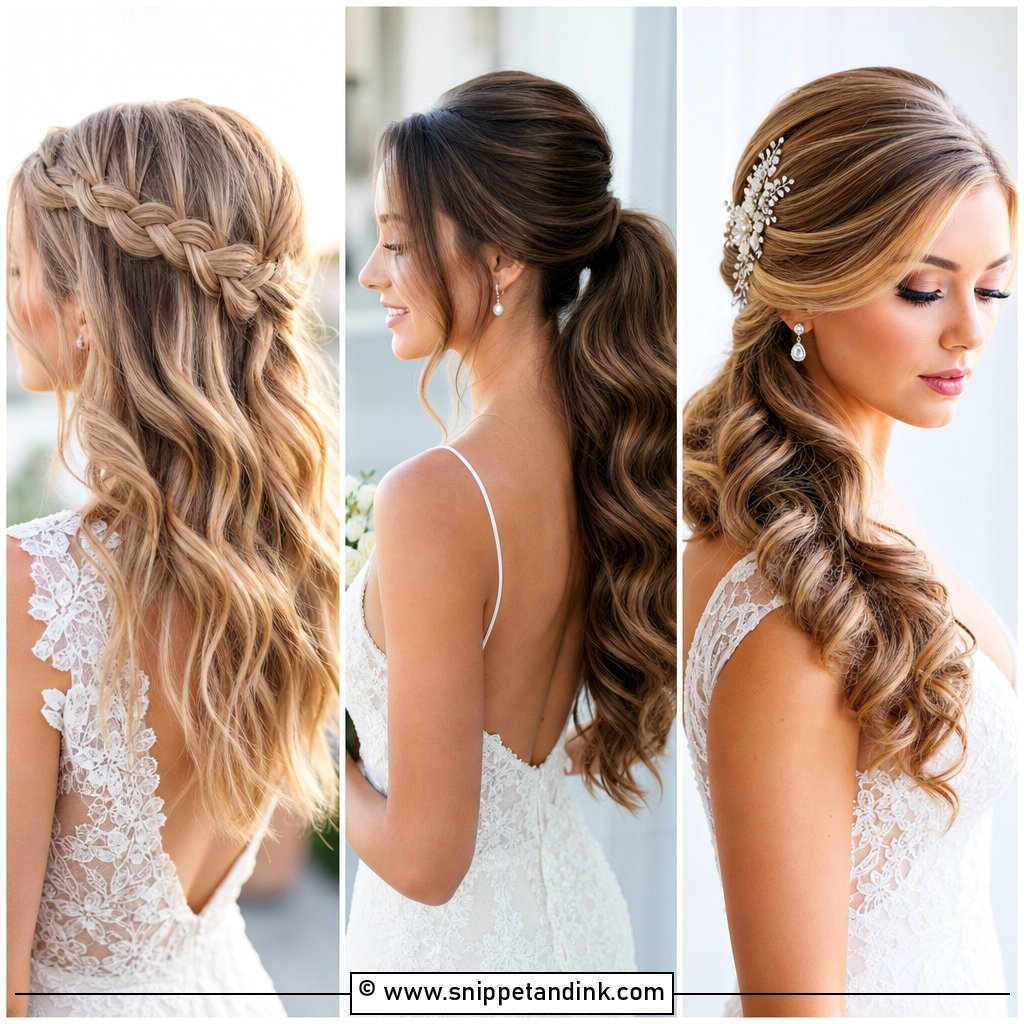
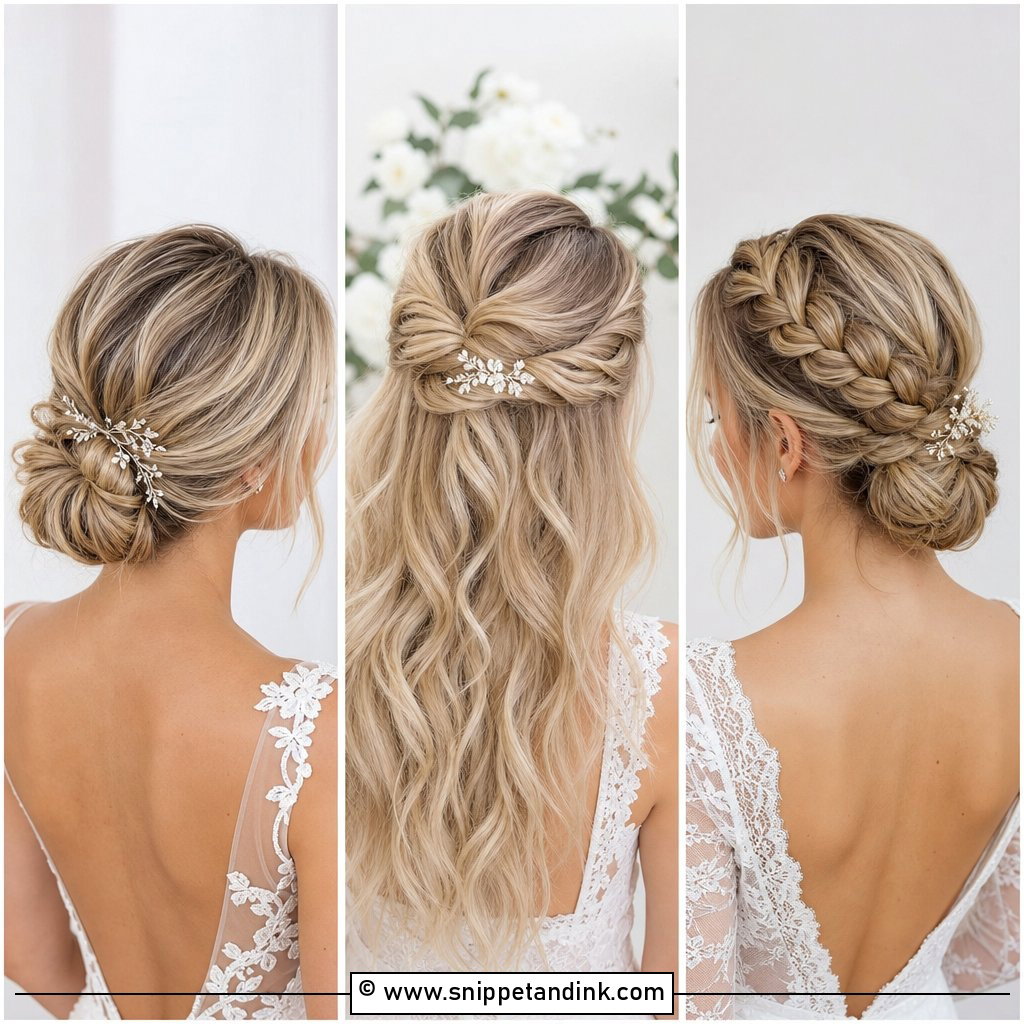
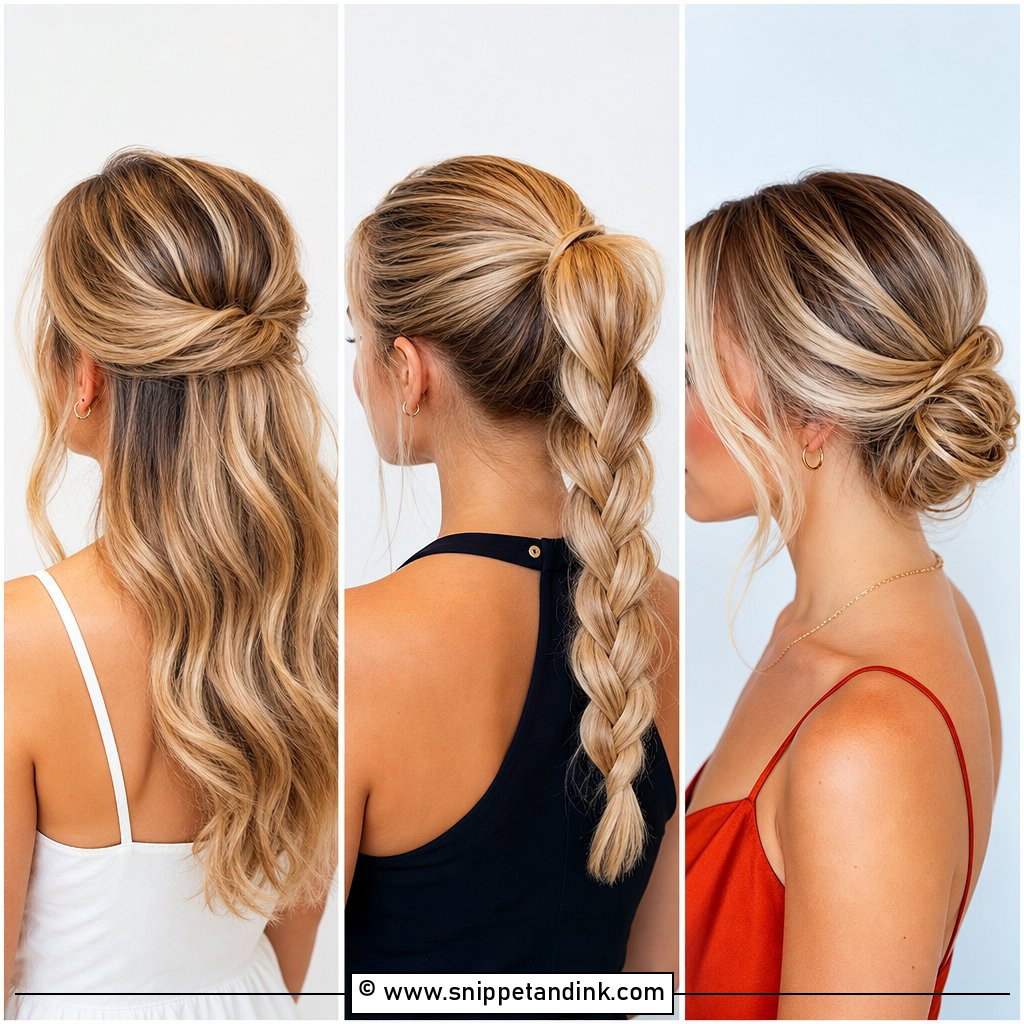
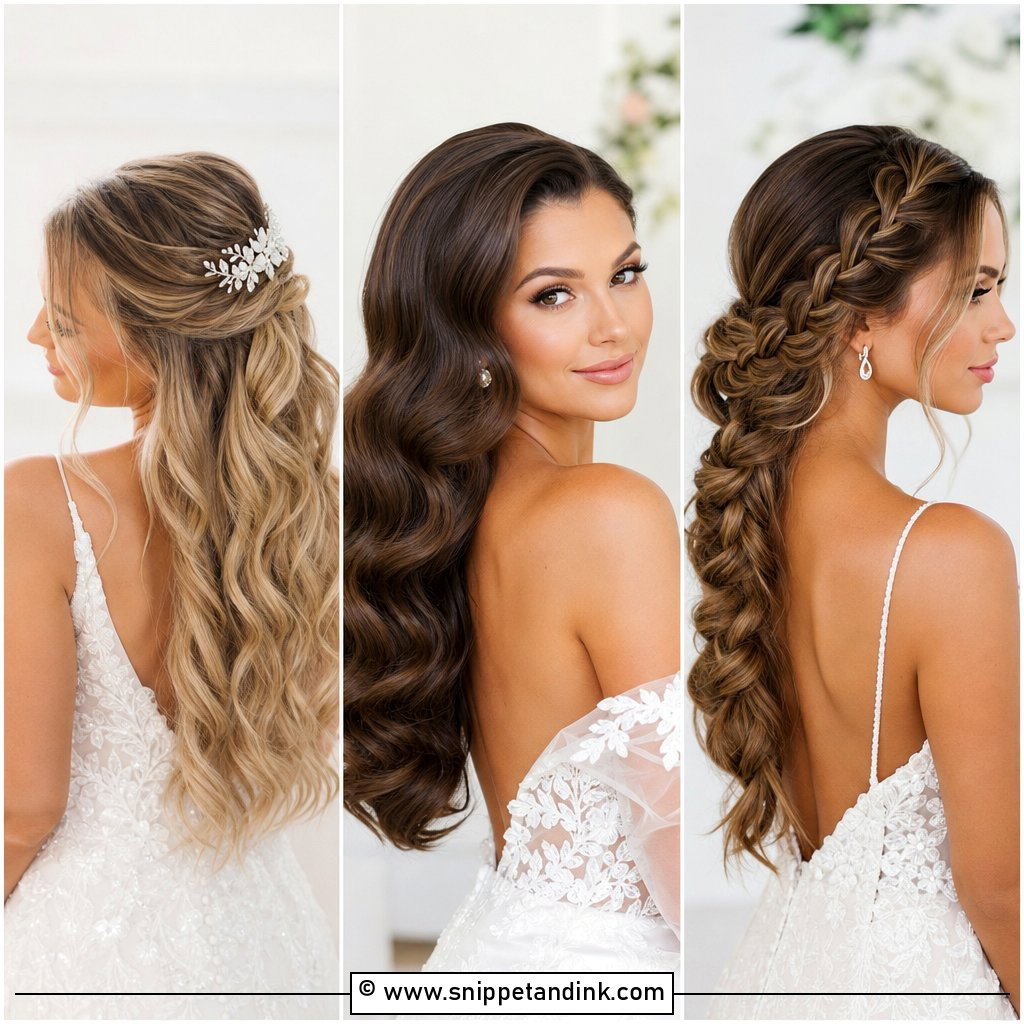
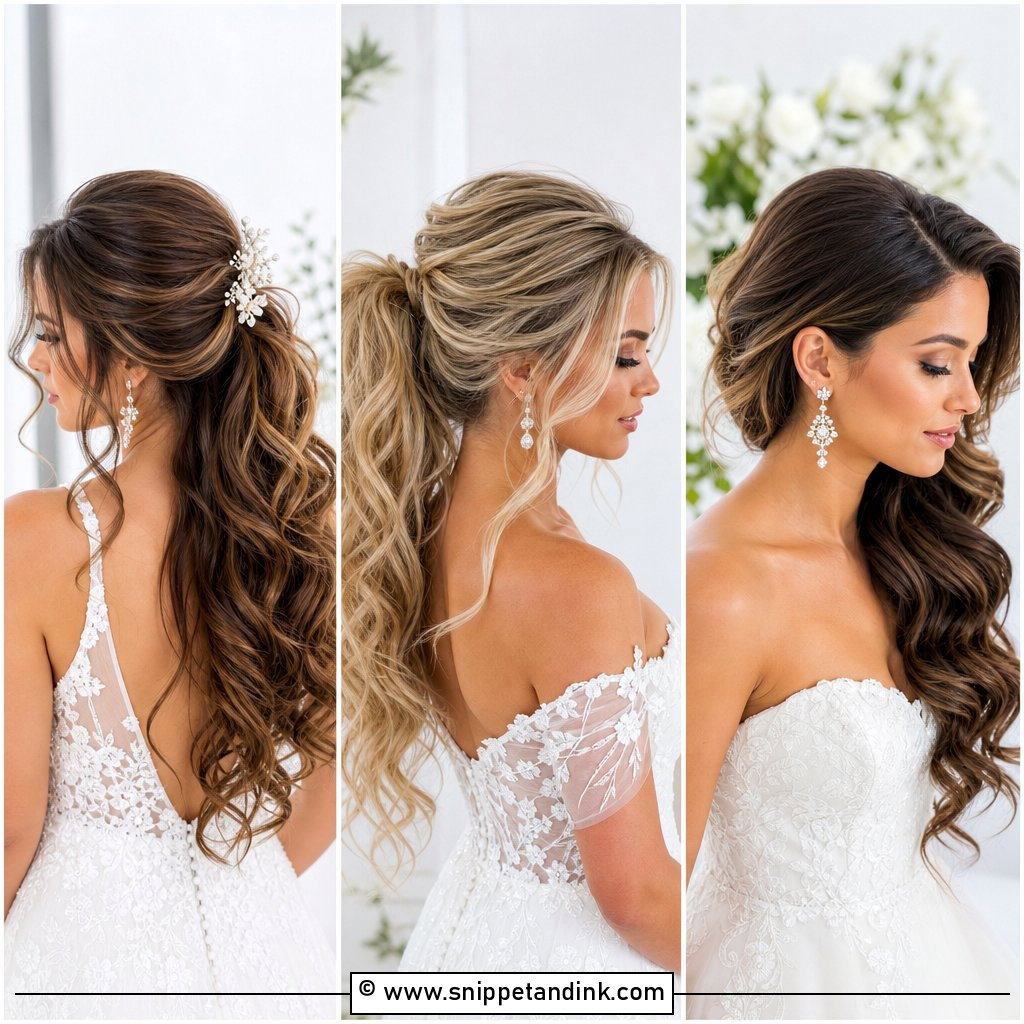
2. Half Up Half Down With Soft Waves
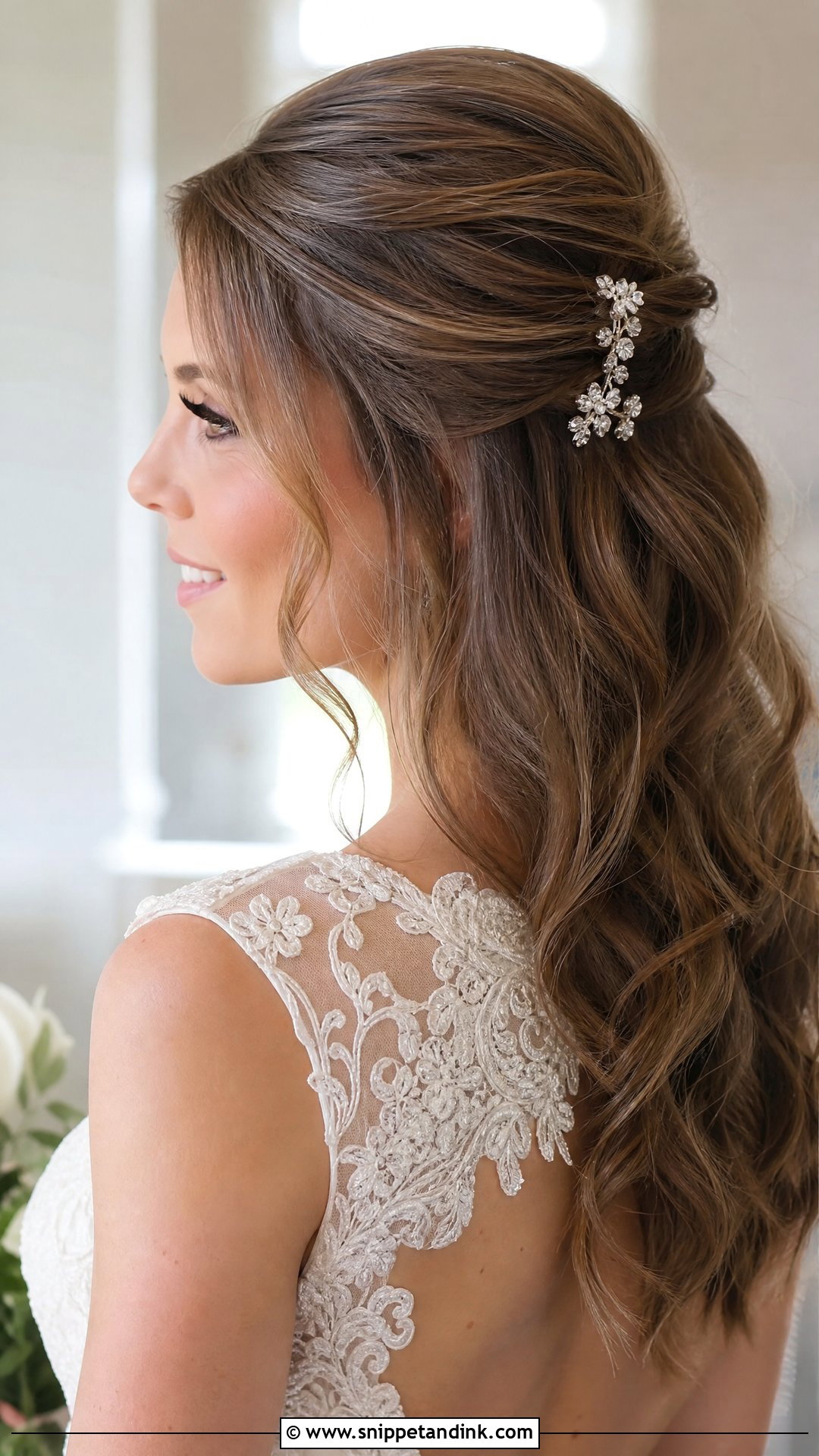
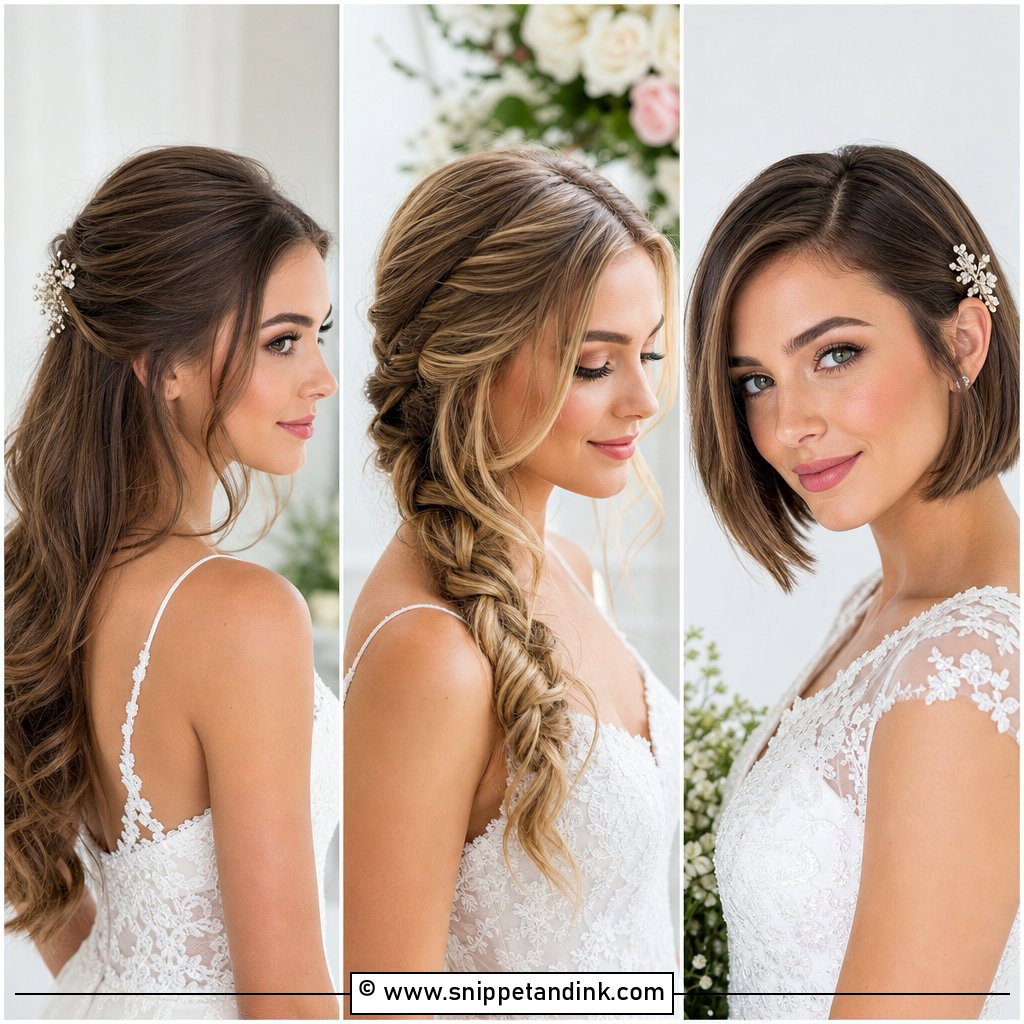
Half up, half down hides fine hair’s weak point, which is the crown. I backcomb just behind the hairline, smooth the top layer over it and secure the top section with a small elastic first and a decorative clip second, because a clip alone slips on fine strands. Waves on the lengths add movement. Use a smaller barrel than you’d think: fine hair loosens fast, and a 1-inch iron holds better than a 1.5-inch. Veils and fresh flowers both sit happily in the pinned section.
3. Braided Chignon for Thin Hair
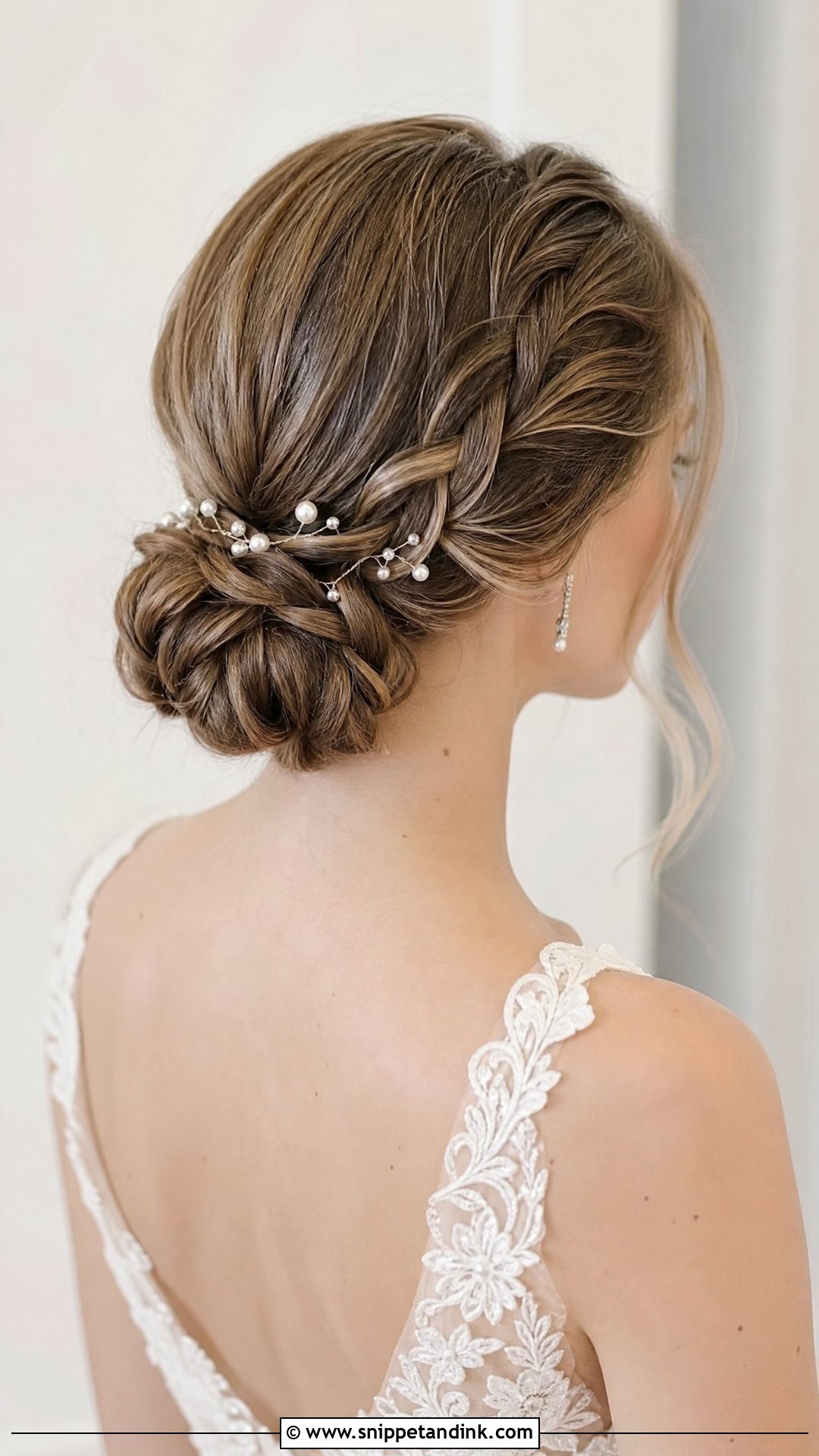
Braids are my favorite trick for fine hair, because once a braid is pinned you can pull every loop outward and double its width without it falling apart. For a braided chignon I braid loosely, pancake the braid, then coil it low and pin through the braid itself rather than around it. That grip is why it survives dancing and hugs. A few pearls or tiny flowers pushed into the braid sit securely. It’s polished but relaxed, and probably the most reliable updo on this list for very fine hair.
4. Loose Romantic Updo With Tendrils
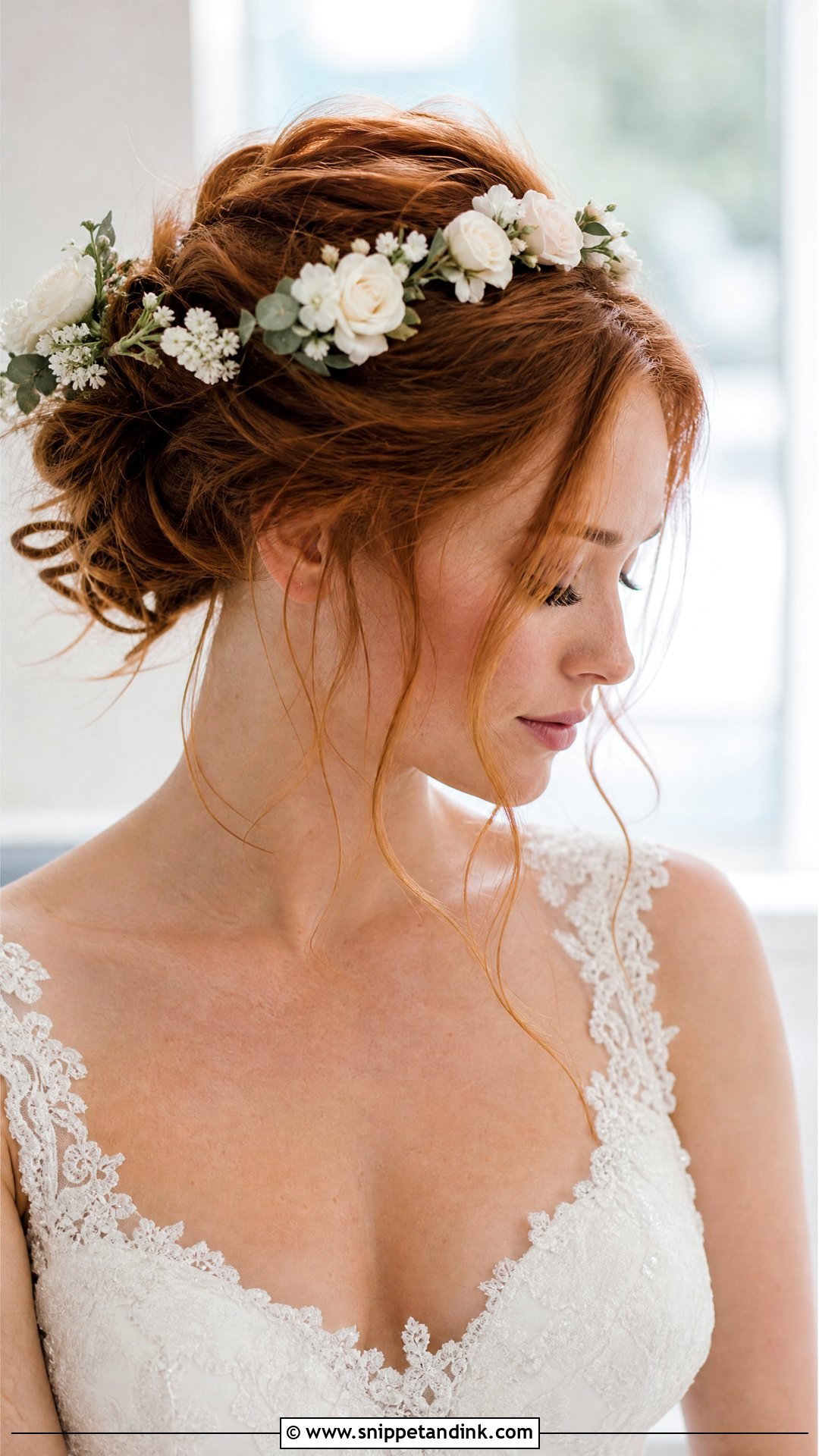
A loose updo with tendrils has a hidden structure in fine hair. I curl everything first, backcomb lightly at the back, then pin it up in loose loops with crossed pins so the softness isn’t actually loose at all. The tendrils should be curled and kept thin. Thick tendrils on fine hair separate into wispy strands after a few hours. It suits a long veil or a flower crown, and works as well in a ballroom as in a garden.
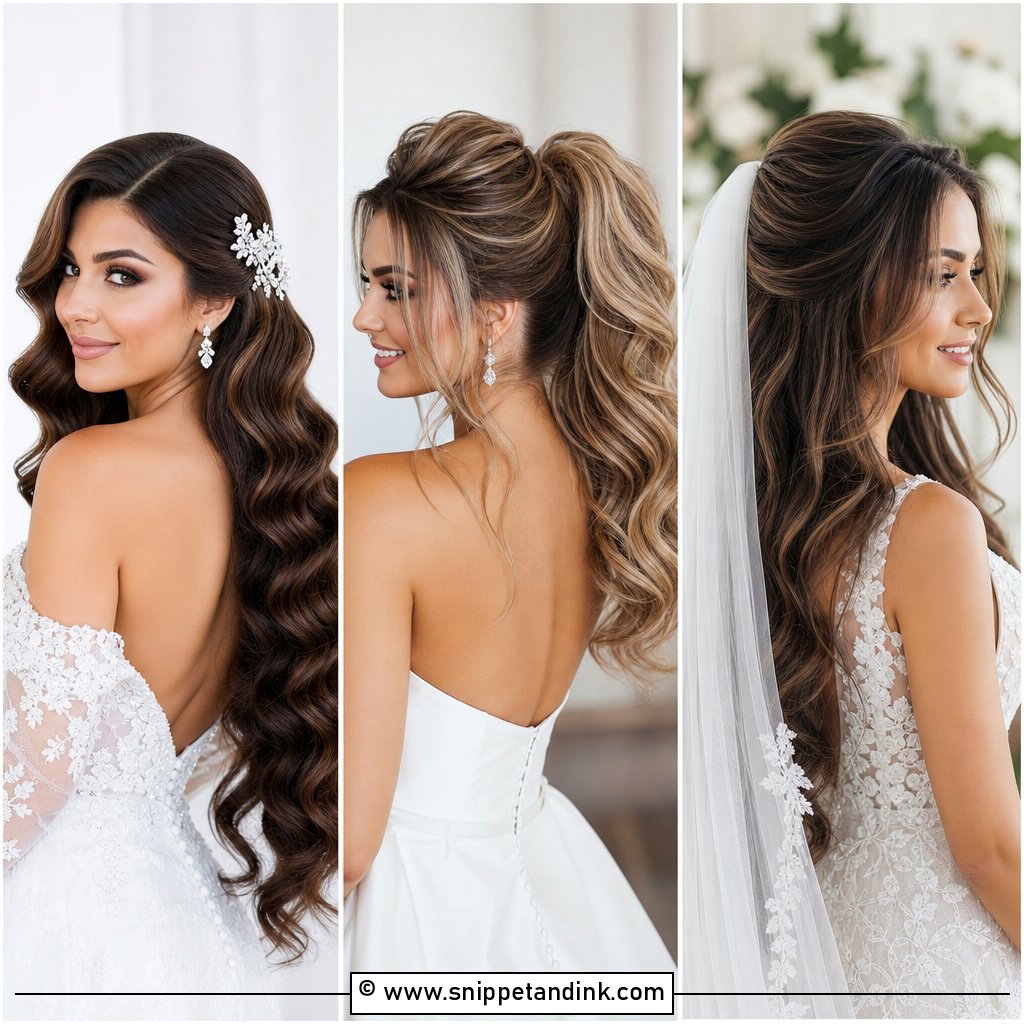
5. Sleek Hollywood Waves
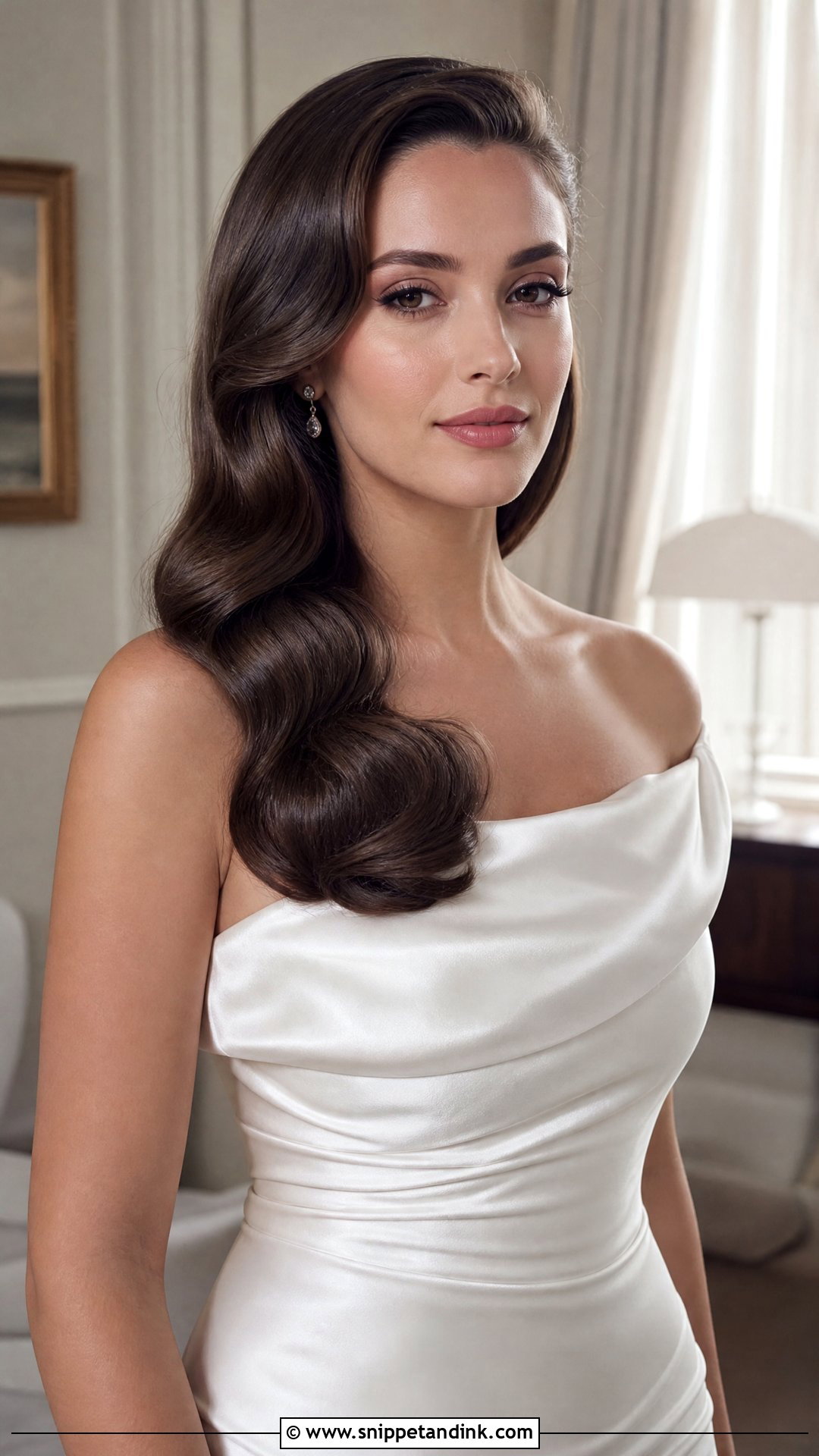
Hollywood waves do something unusual for fine hair: the shine makes it look healthier and thicker than it is. I curl every section in the same direction, let it cool pinned, then brush it into one smooth ripple worn to one side. If you want extra body, Extensions can boost thickness, and the polished finish hides the wefts well. On its own, fine hair still carries the shape if it’s long enough. I’d mist a lightweight shine spray from a distance, since heavy oils collapse fine waves within an hour.
6. Low Twisted Bun With Accessories
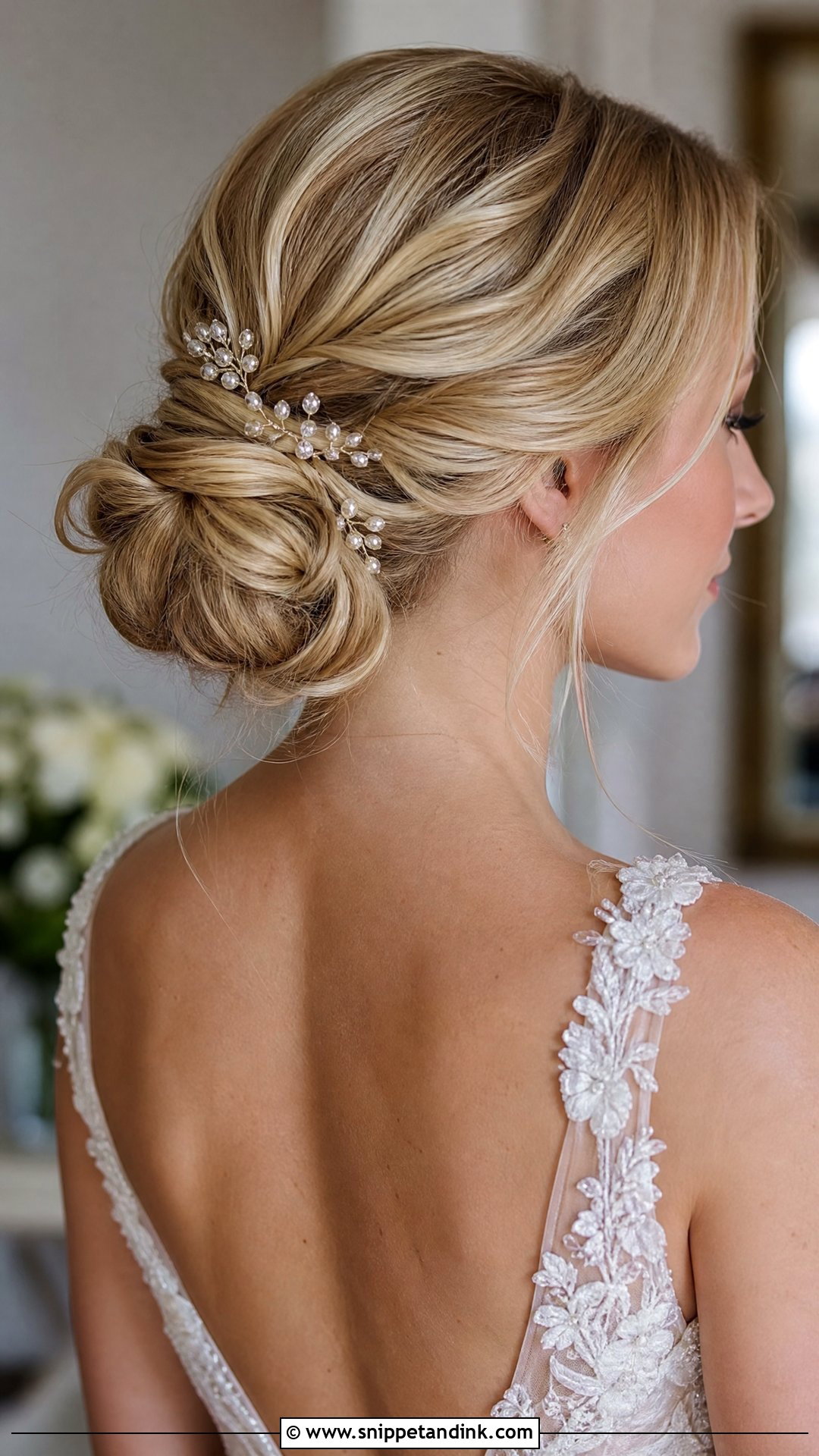
Twisting sections instead of making one knot gives fine hair more surface and catches light along each twist. I take four or five sections, twist each one, loosen it and pin them in an overlapping cluster at the nape. The cluster makes a good base for sparkly pins, pearl combs or fresh blooms, and accessories placed there add volume where you lack it. Because each twist is pinned separately, nothing unravels when you dance.
7. Tousled Side Swept Curls
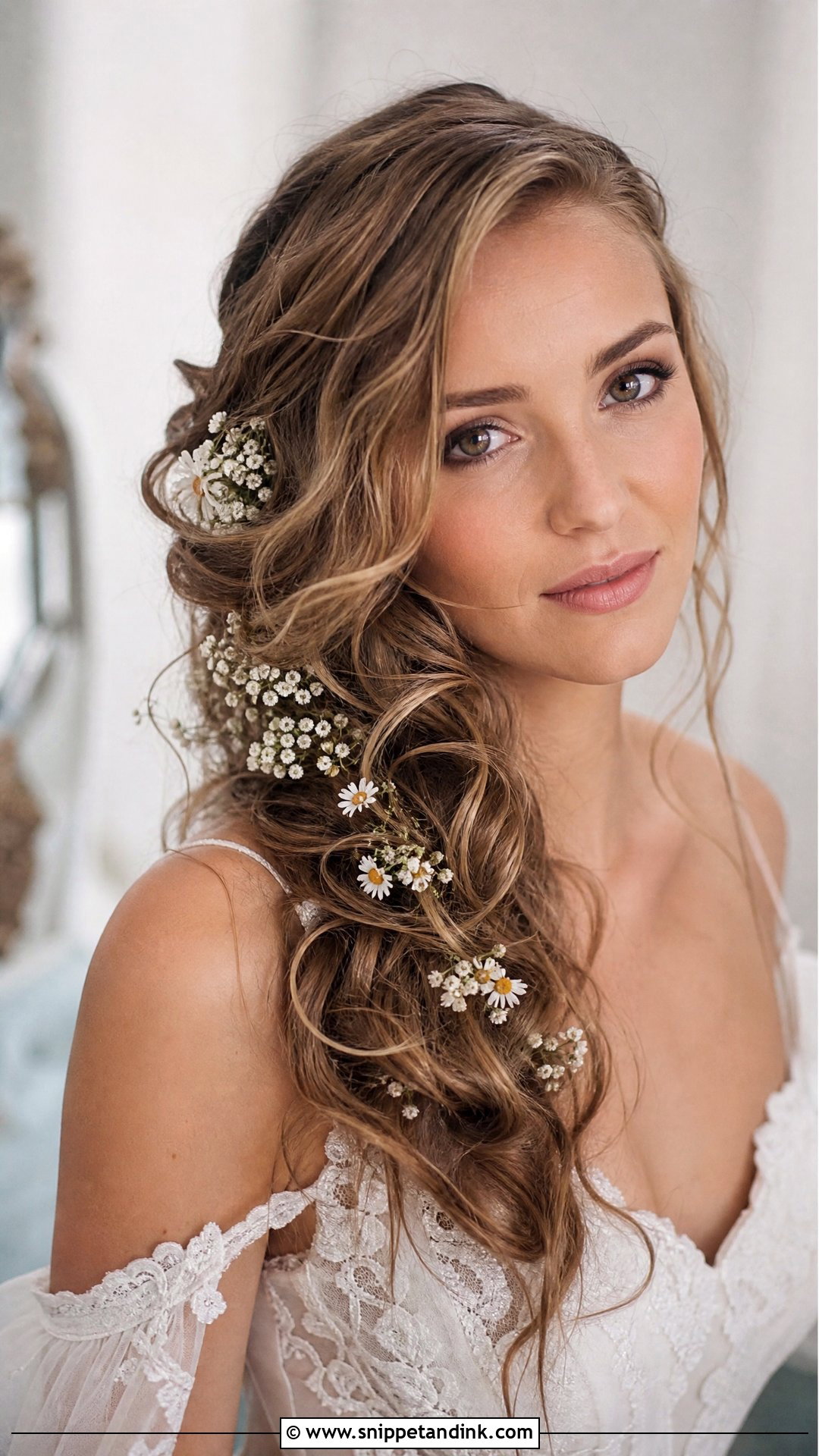
Side-swept curls give fine hair one full side instead of two thin ones, which is half the reason they work. I curl loosely, rake my fingers through, sweep everything over one shoulder and pin a hidden anchor behind the opposite ear. Without that anchor, the hair drifts back to center within the hour. Beachy and bohemian weddings suit it, and a few small flowers near the sweep cover the pins.
8. Classic French Twist
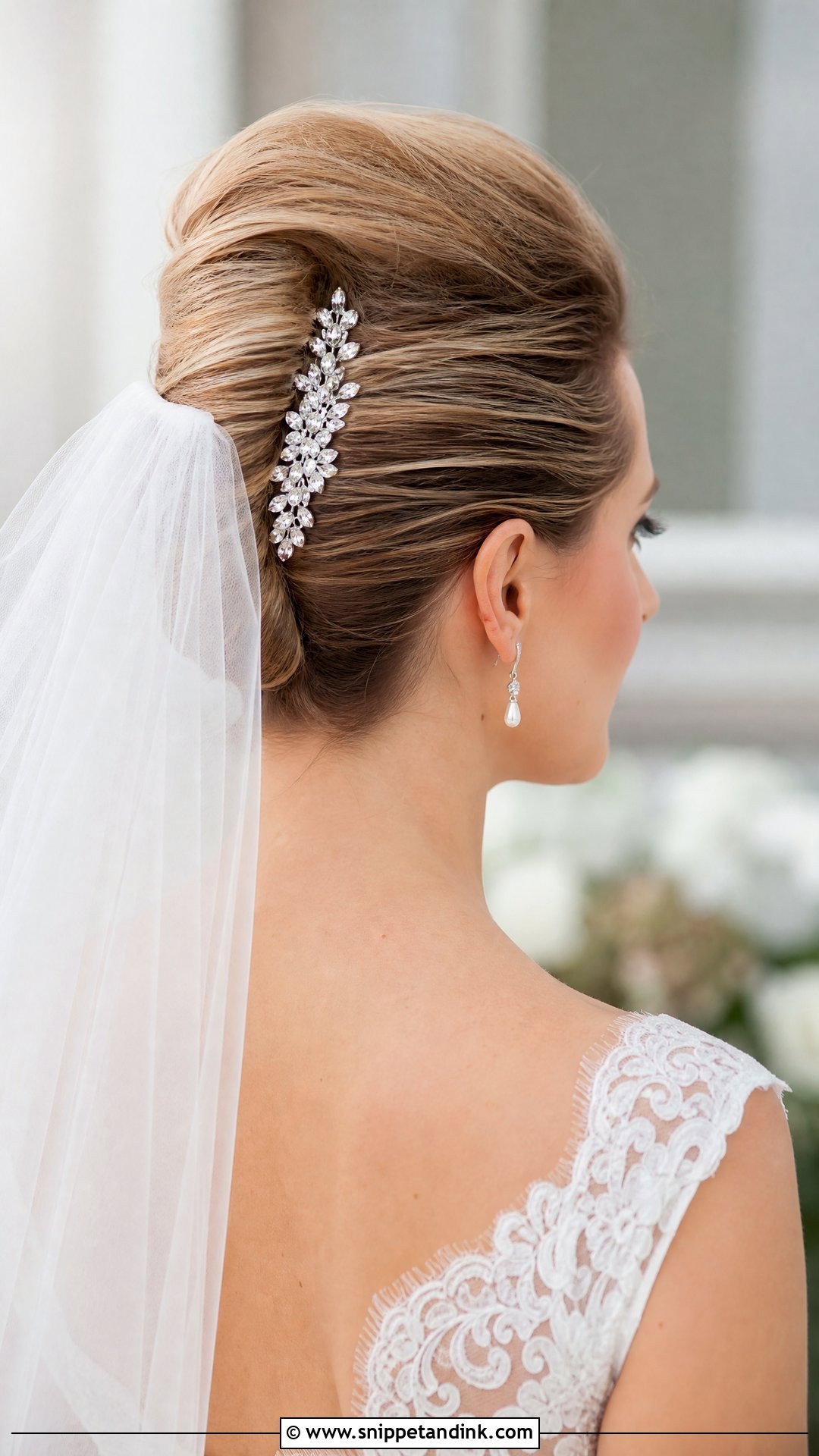
The French twist is a classic, but on fine hair it needs help. I backcomb the crown and the back of the head before twisting, because a twist made from flat fine hair looks like a narrow stripe. Pinning is done with long pins pushed vertically into the roll, catching the base underneath. A veil slides in beneath the twist or a comb goes on the side. It holds all night and belongs at formal, traditional weddings.
9. Boho Braided Half Up
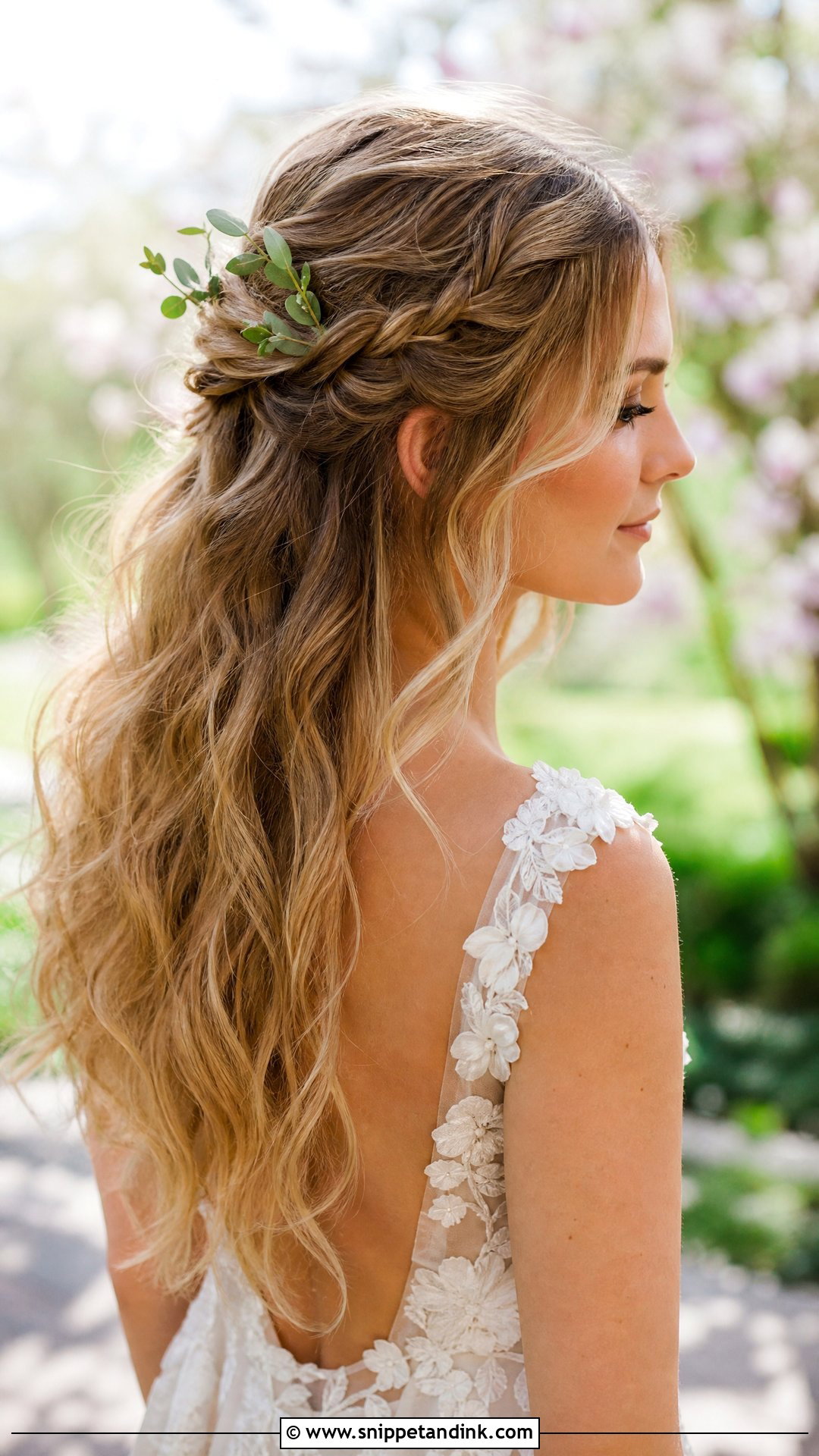
A boho half-up with braids is a smart way to add density at the sides, where fine hair usually looks thinnest. I braid two thin sections from each temple, pull them apart, and pin them together at the back, then wave the rest. The braids add body and also stop the waves from falling forward. Tiny flowers or greenery tucked into the braids hold nicely. It’s an outdoor and garden style first.
10. Pinned Back Curls With Volume
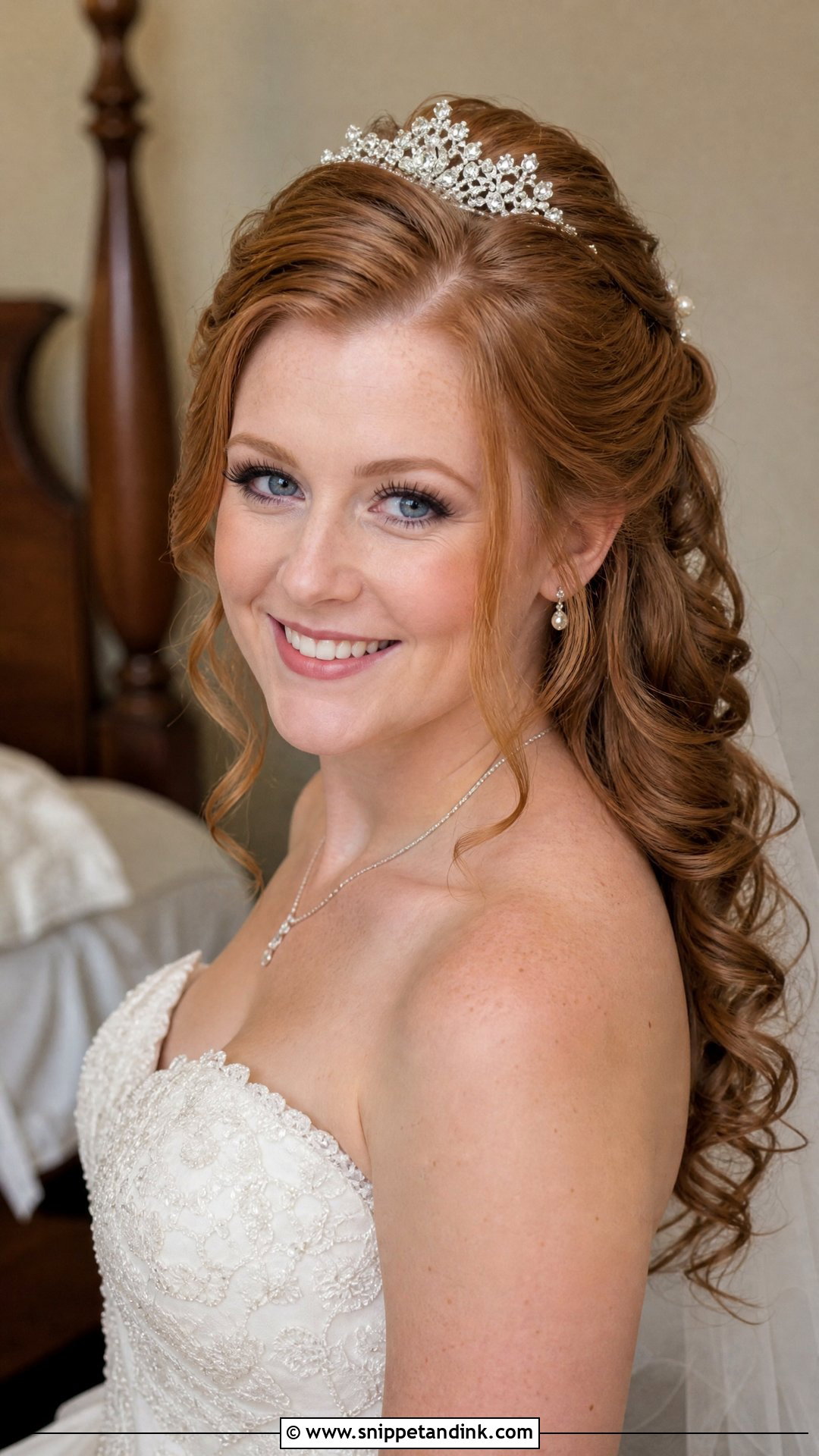
This one depends almost entirely on crown height. I curl the hair, backcomb a section at the crown, smooth it and pin the sides back with crossed pins behind the ears so they meet the volume rather than pulling it flat. That shows off the voluminous texture at the back. Decorative pins or a small tiara sit well there. It opens up the face, and the loose curls keep it soft whichever way your wedding leans, formal or relaxed.
11. Low Ponytail With Wrapped Detail
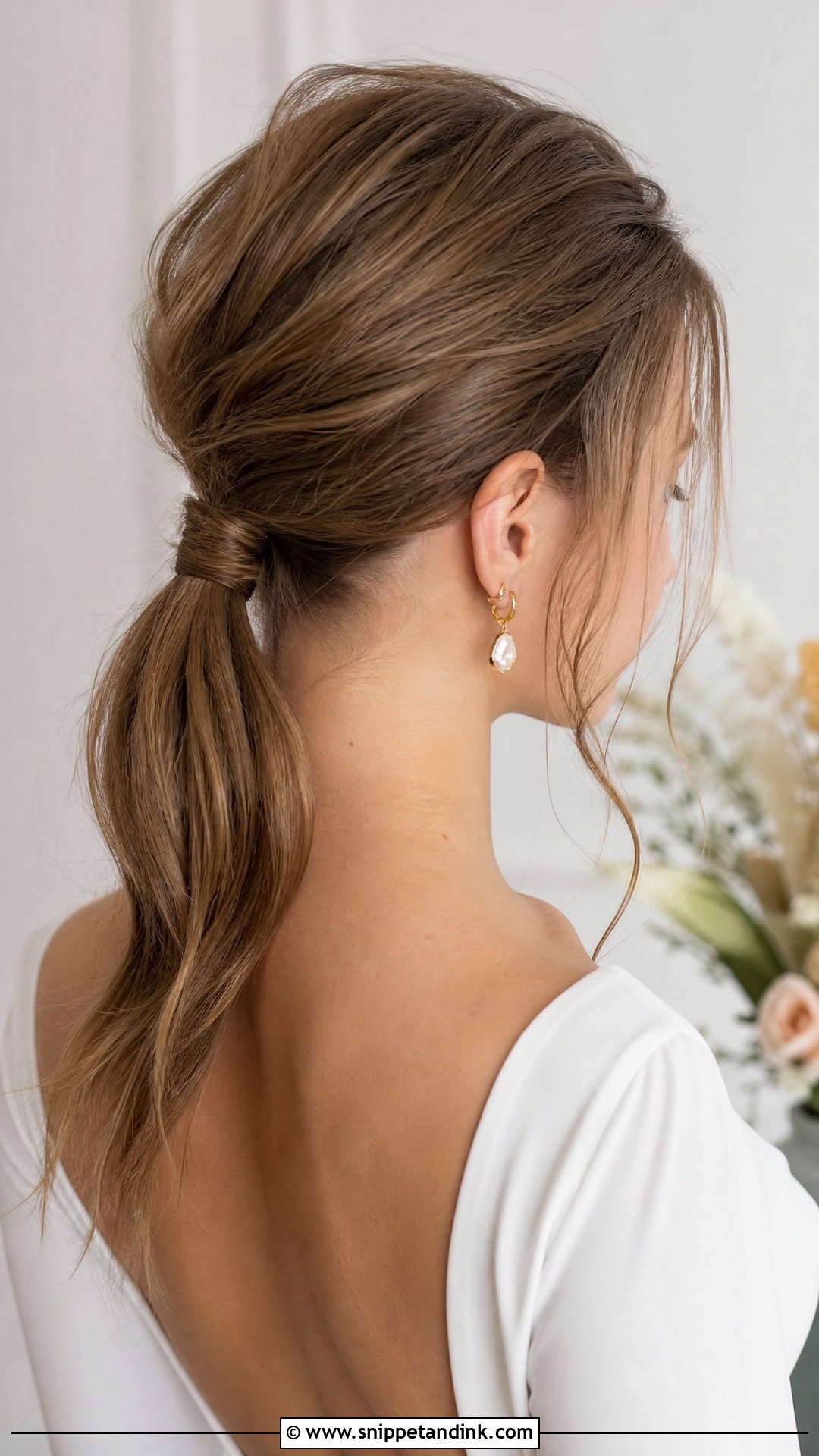
A low ponytail looks simple and exposes fine hair more than any other style, so the details matter. I tease the crown, secure the ponytail with a small clear elastic and wrap a strand around it, pinning the end underneath. To thicken the tail itself, I either curl it or add a clip-in weft under the top layer. Leave just a few pieces at the face. The wrapped base detail is what keeps a ponytail from looking like everyday hair, and it suits a sleek city wedding.
12. Soft Curled Bob for Fine Hair
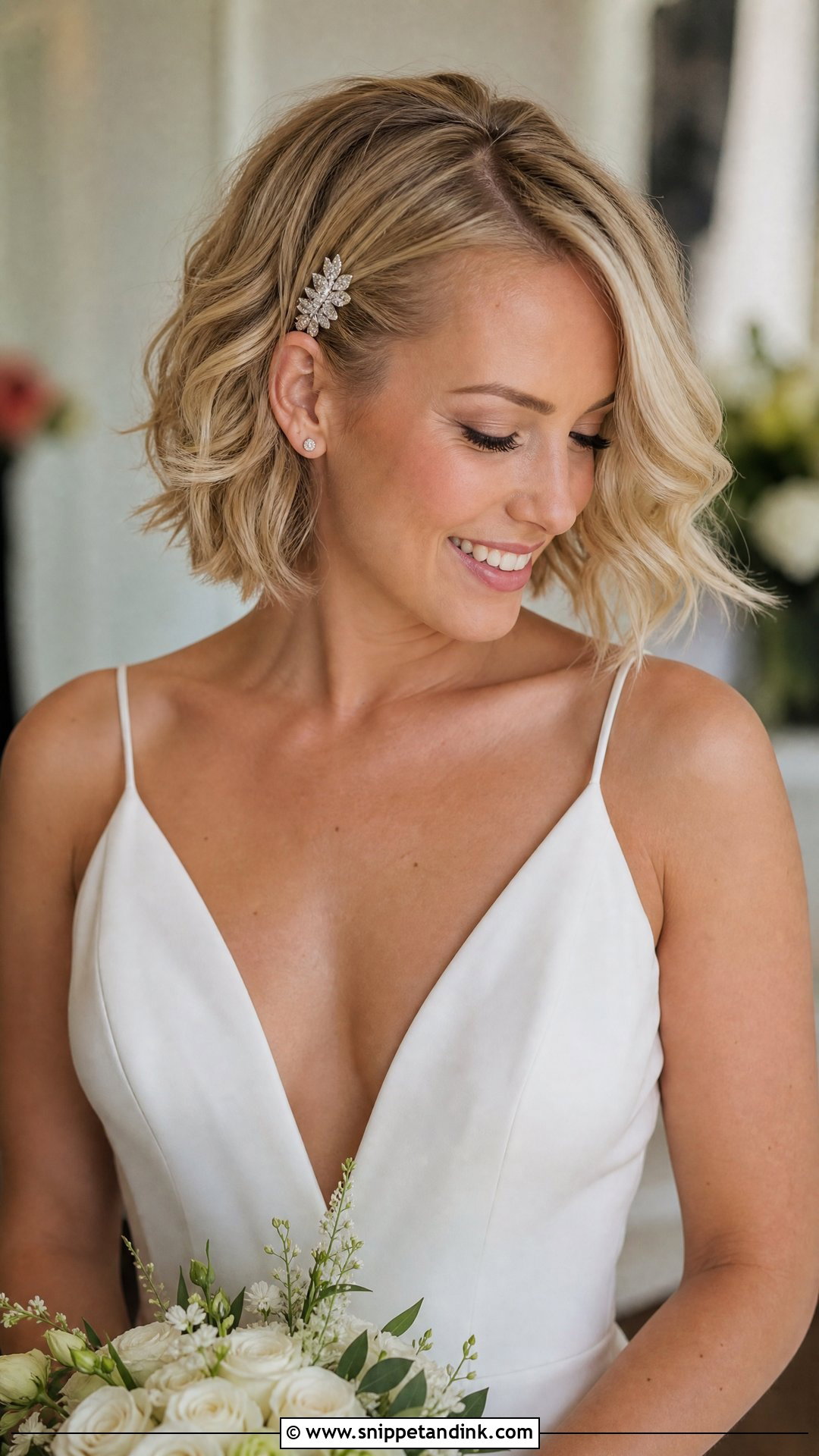
Shorter fine hair has one big advantage: it’s light, so curls actually stay. A soft curled bob needs a smaller iron, about 1 inch, curled away from the face and then broken up lightly with fingers. Tucking one side behind the ear with a sparkly clip adds a bit of structure, and I’d add a touch of root lift at the crown. A headband or a fresh flower sits well on this length. Short fine hair is honestly one of the easiest textures I style for a wedding.
13. Twisted Crown Updo
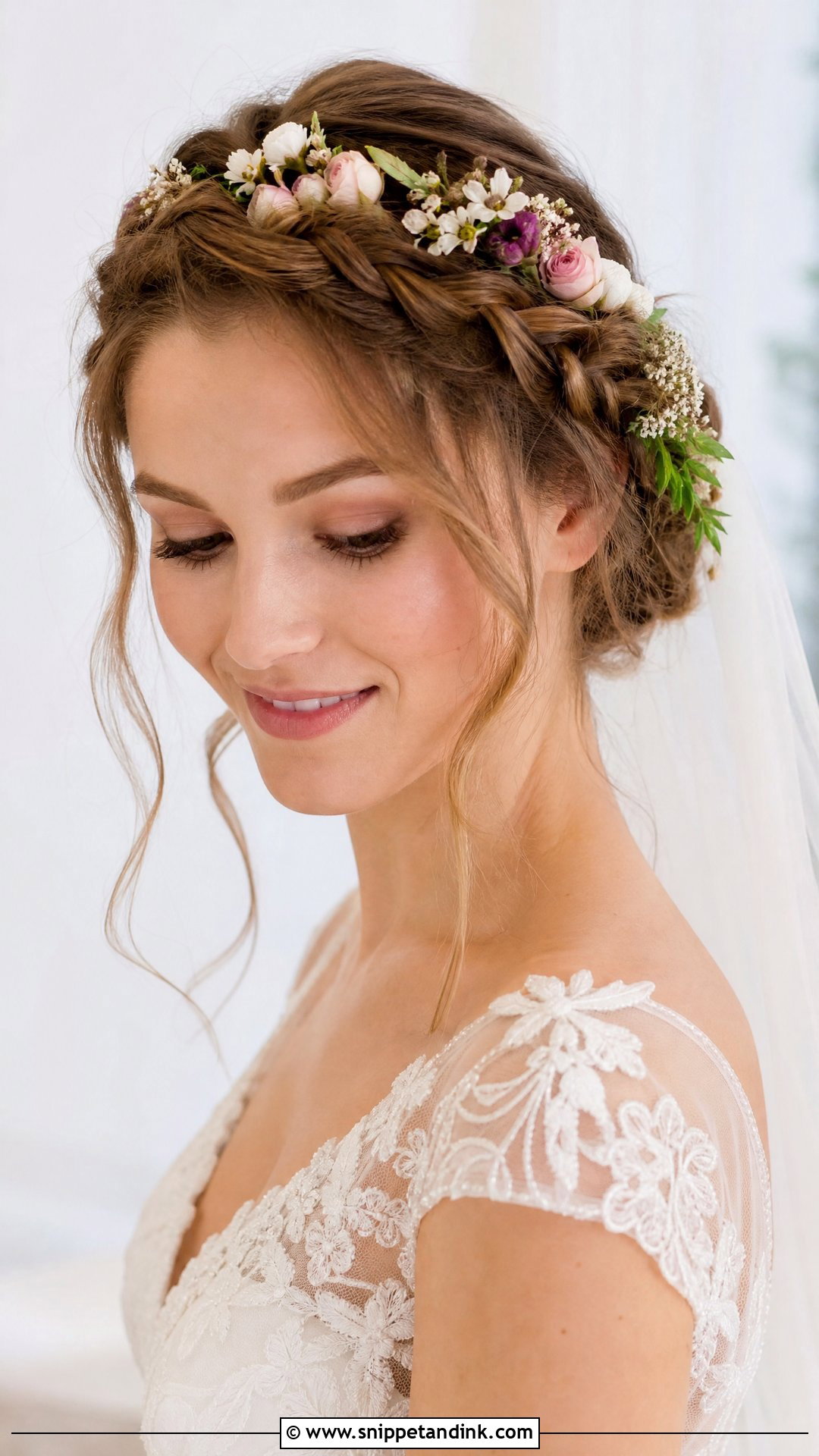
A twisted crown is easier on fine hair than on thick hair, because thick twists get bulky. I twist sections from each side around the head and pin them along the top, then loosen each twist with my fingertips so it reads as a full halo. It keeps hair off the neck, which matters at a hot summer wedding. A flowing veil sits just below it, or fresh flowers go along the twist. The crown shape pulls the eye upward.
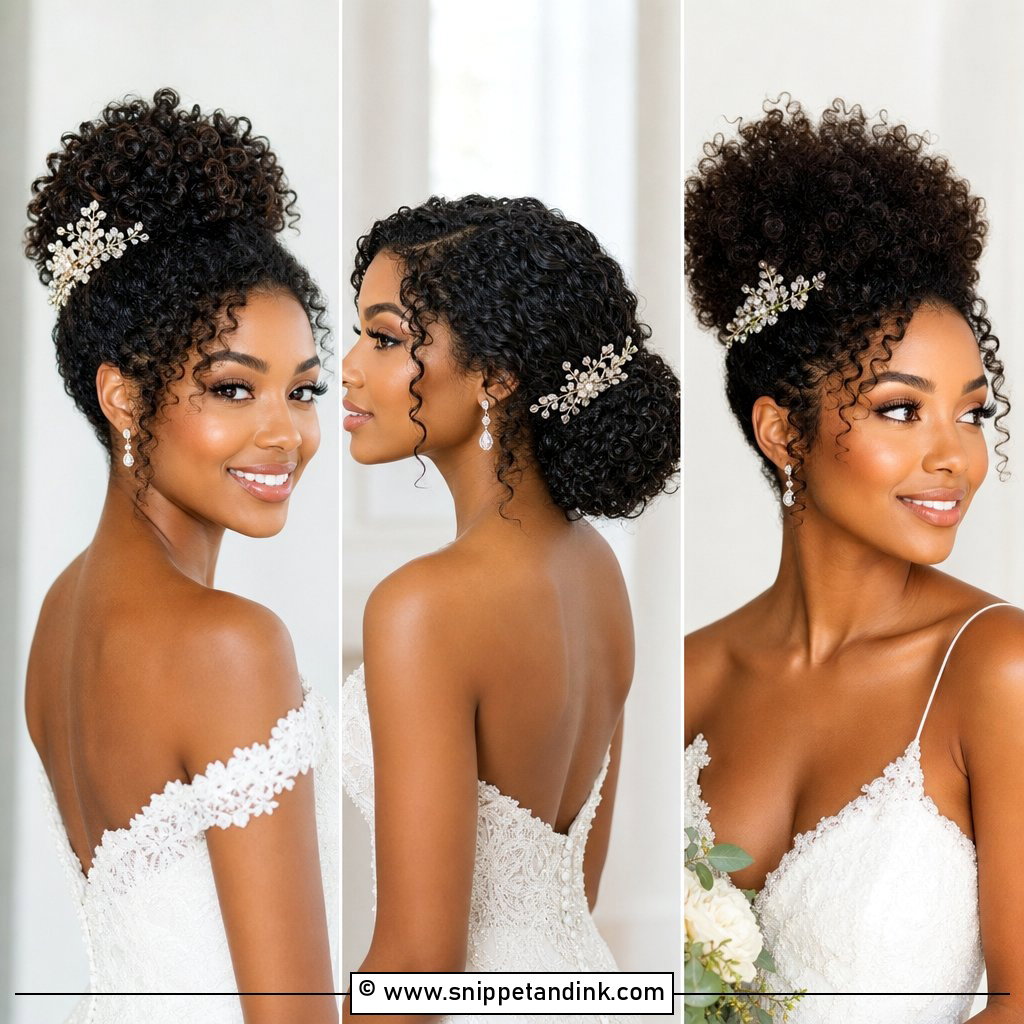
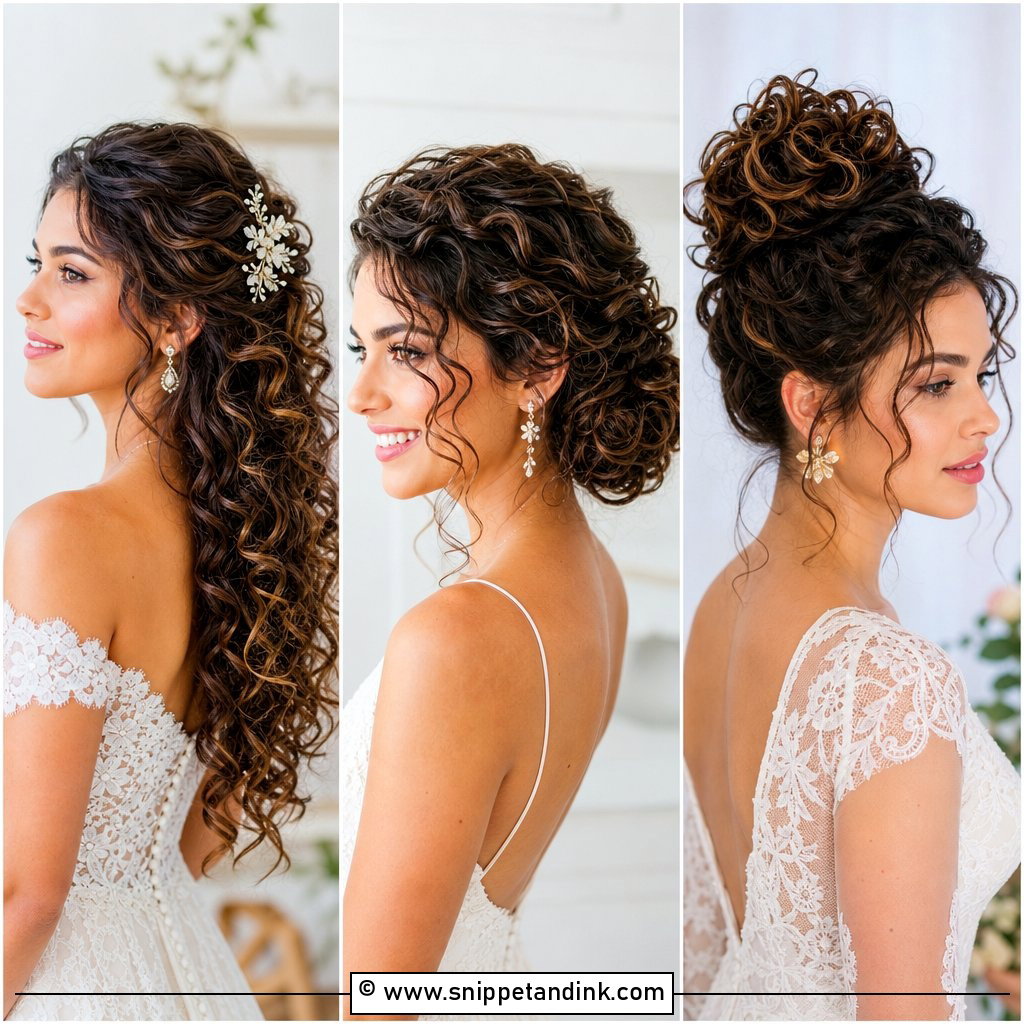
14. Messy Bun With Loose Strands
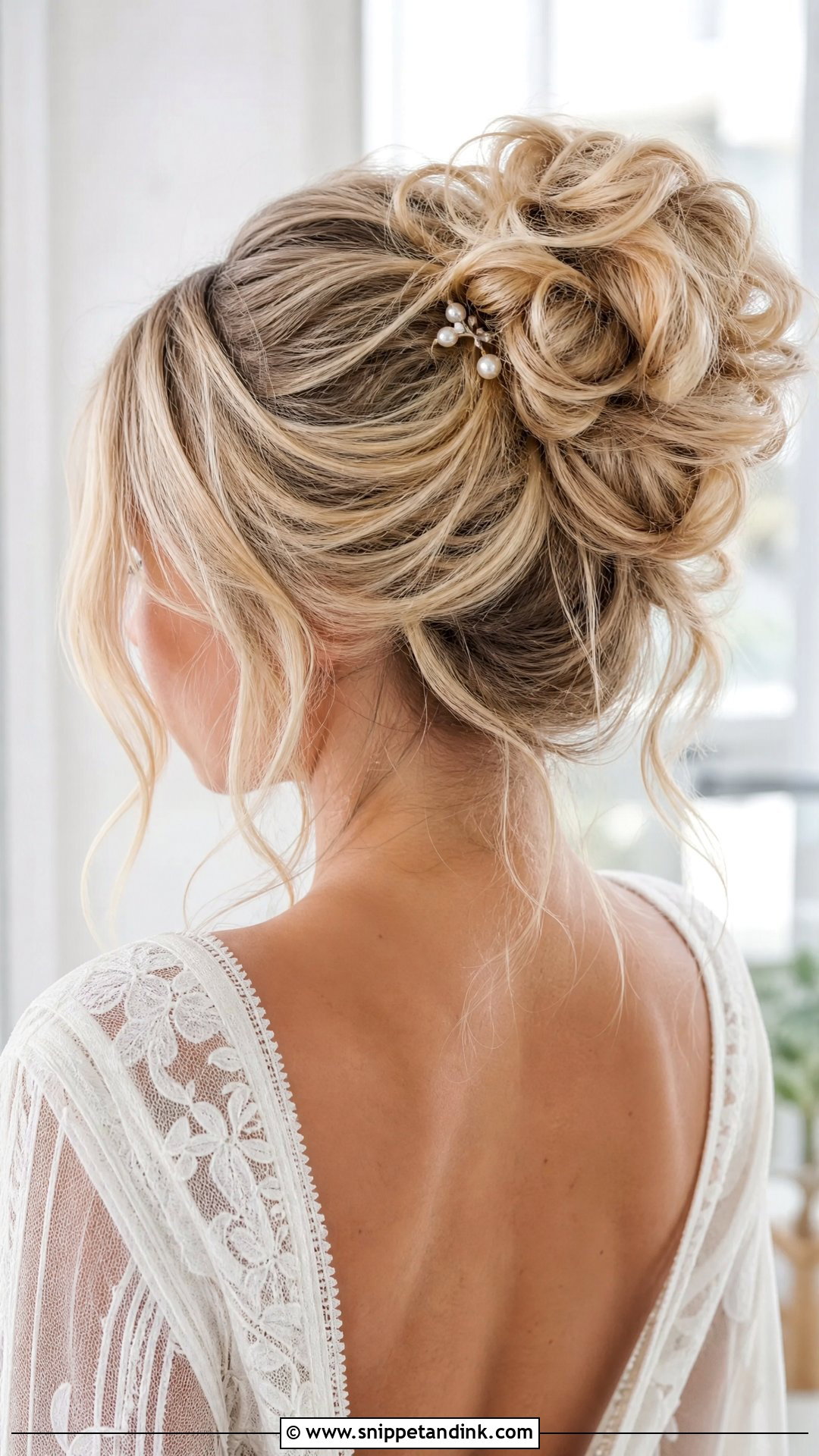
A messy bun on fine hair is usually more planned than on thick hair. I backcomb the crown, gather the hair loosely, then pull the bun apart in small pieces until it looks full. Wispy face pieces stay thin. Small flowers or pearl pins add detail. Outdoor and boho weddings are its home, and if you’re worried that ‘messy’ will read as unfinished, I’d add more pins rather than less polish.
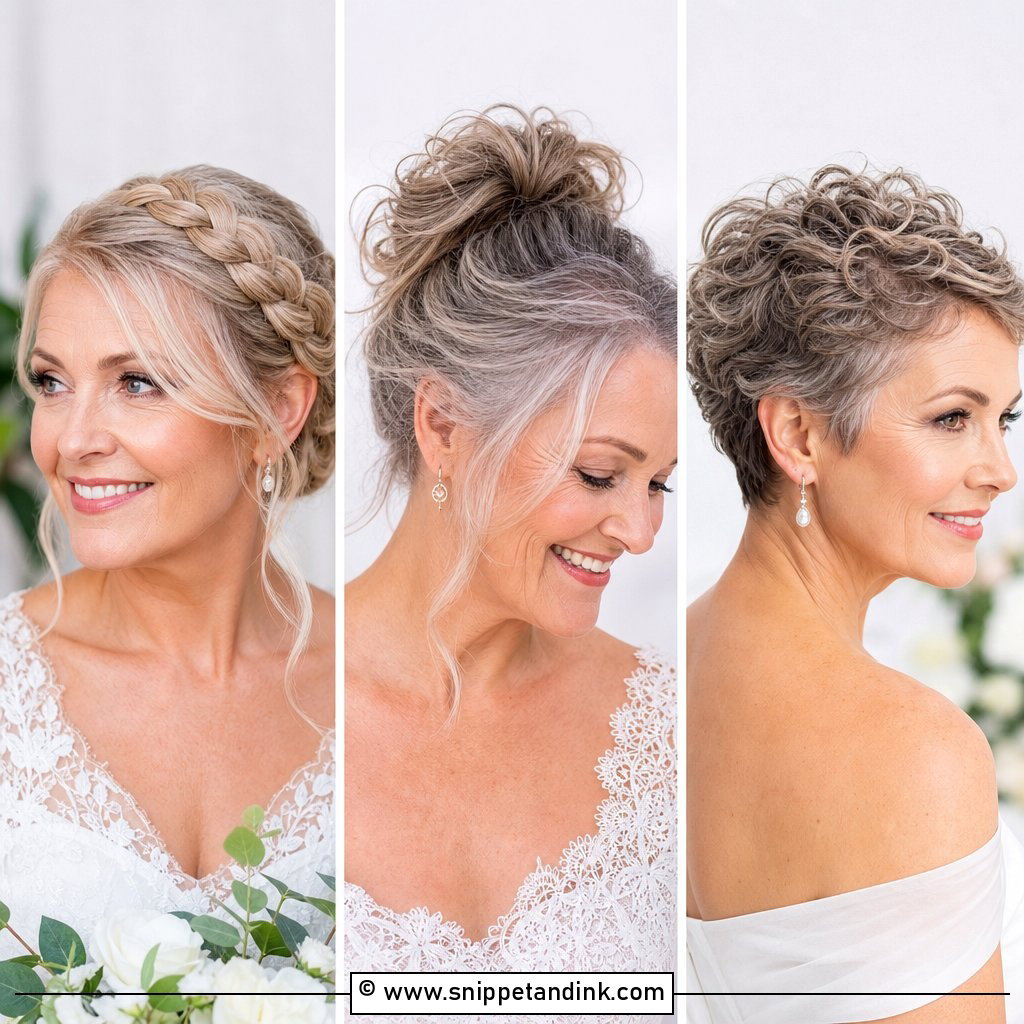
15. Side Braid With Soft Waves
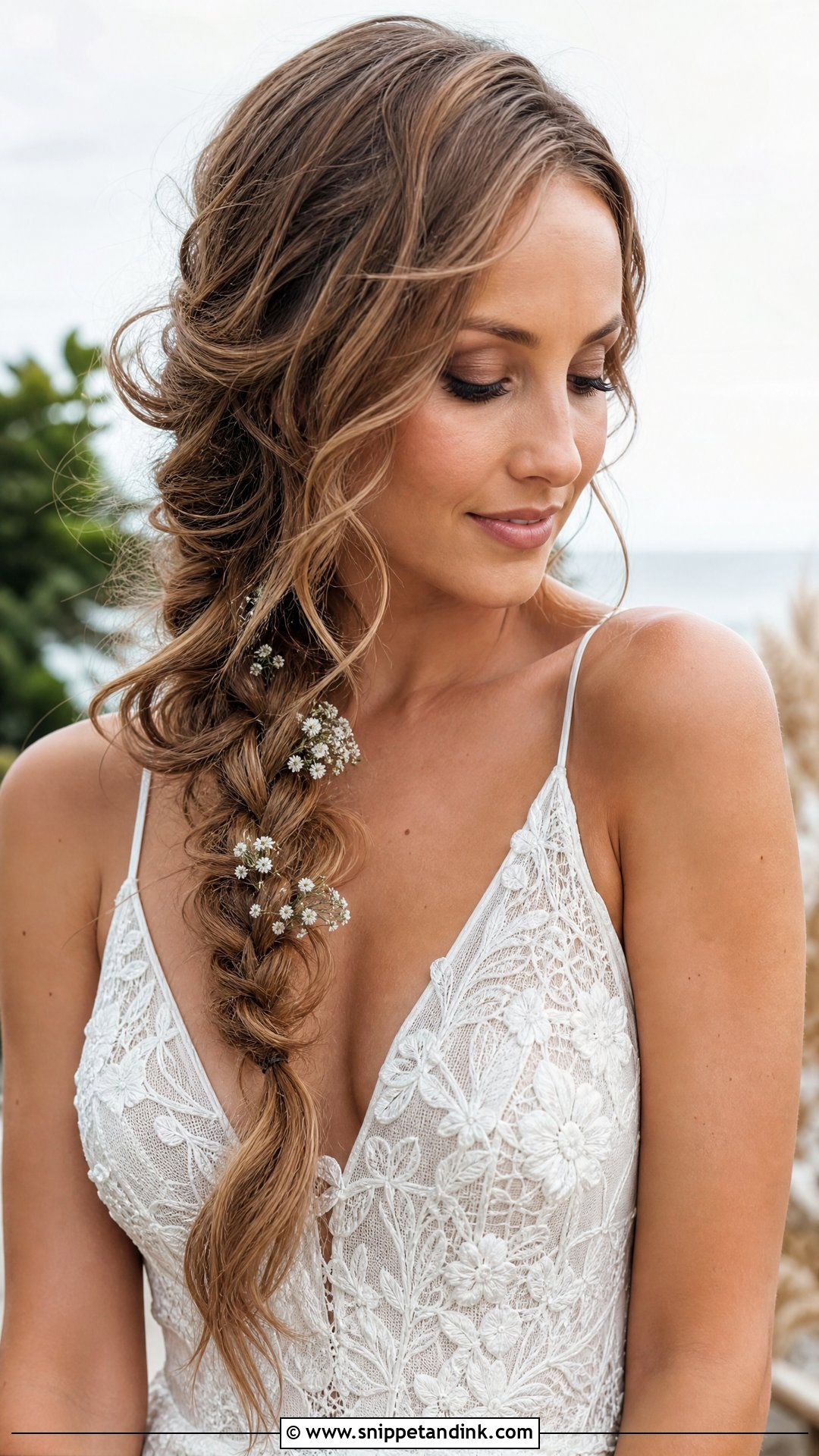
A side braid with soft waves works because the braid adds density where the waves can’t. I wave everything first, then braid loosely down one side and pull each loop outward; pancaking a braid made of fine hair can nearly double its width. Tiny flowers along the braid add color. Garden, beach and festival-style weddings suit it, and it keeps hair off your back on a hot day.
16. Vintage Pin Curls Updo
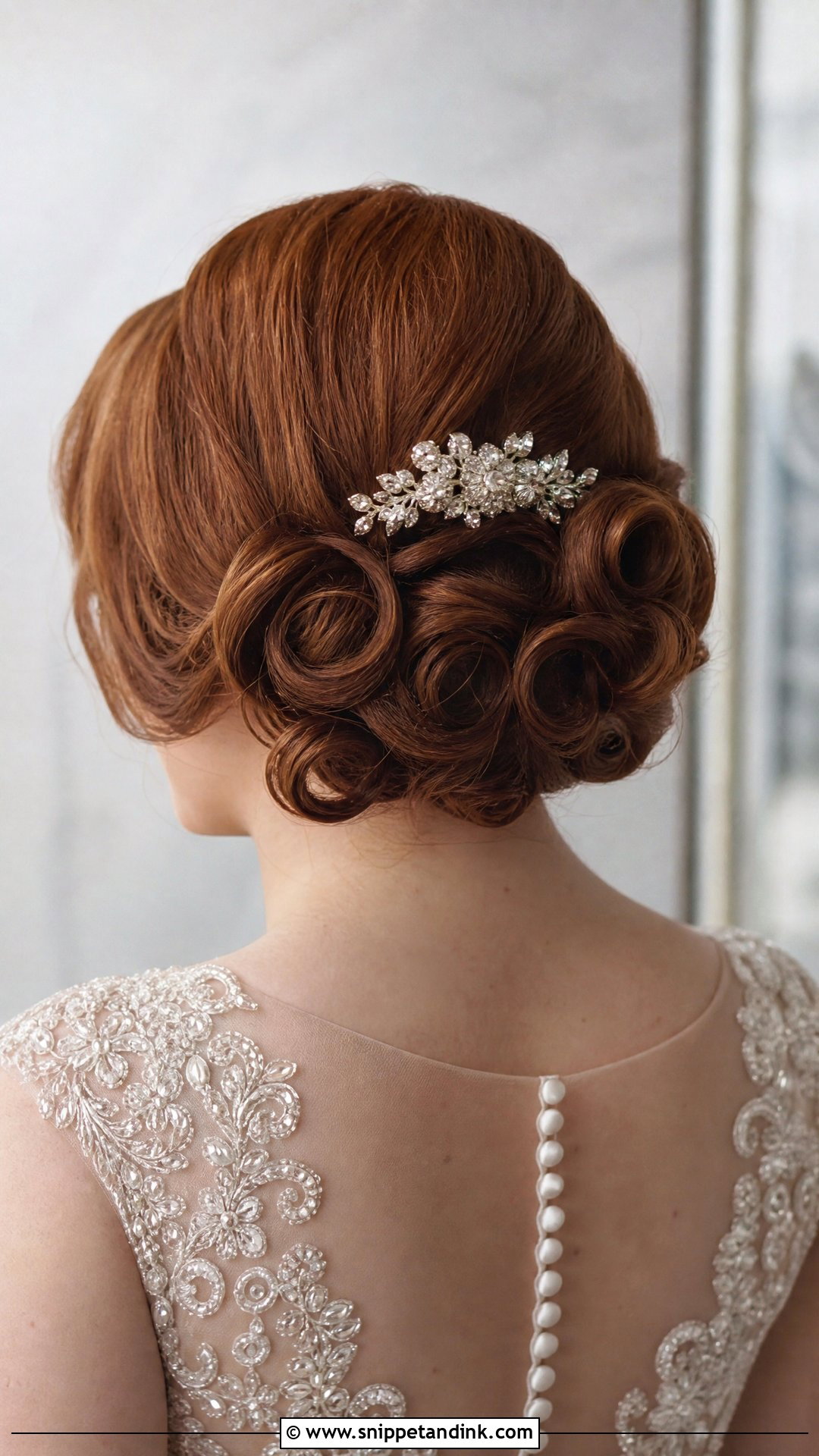
Pin curls are a good match for fine hair because each curl is small and pinned flat, so it doesn’t need weight to hold its shape. I set them while the hair is still slightly damp with setting lotion, let them dry, then arrange and pin them into an updo at the back. The sculpted curls add structure and catch the light. A jeweled comb or a birdcage veil completes the period look, and it holds very well all night.
17. Half Up Bun With Volume
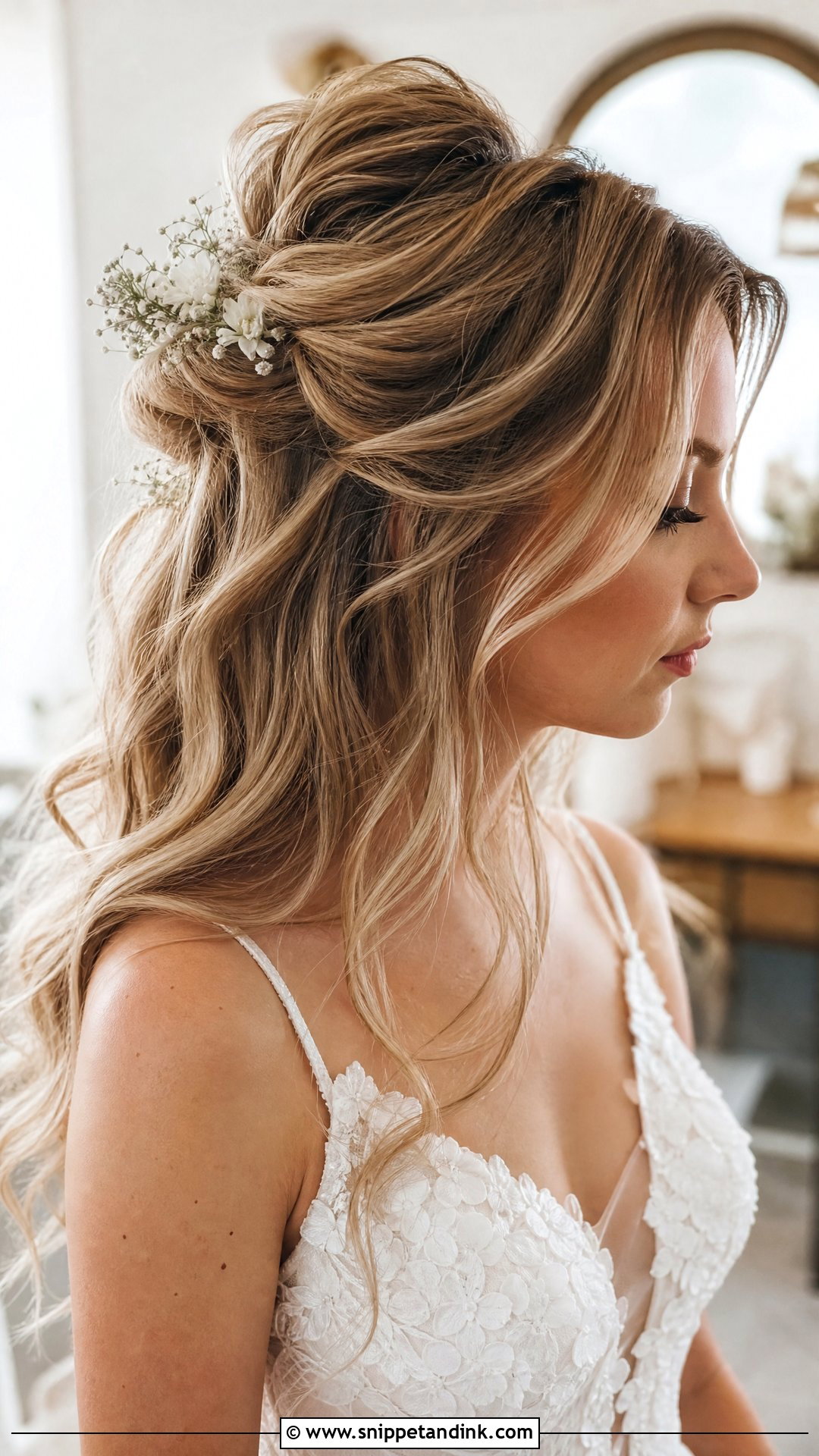
A half-up bun gives fine hair height without needing much hair. I backcomb the crown, then twist the top section into a small bun and pin through it. Waves below add movement. Make the bun slightly loose so it reads as fuller. A small hairpin or tiny flowers around the bun finish it. It has a playful, youthful feel, so I’d save it for relaxed weddings rather than formal ones.
18. Low Chignon With Face Framing Pieces
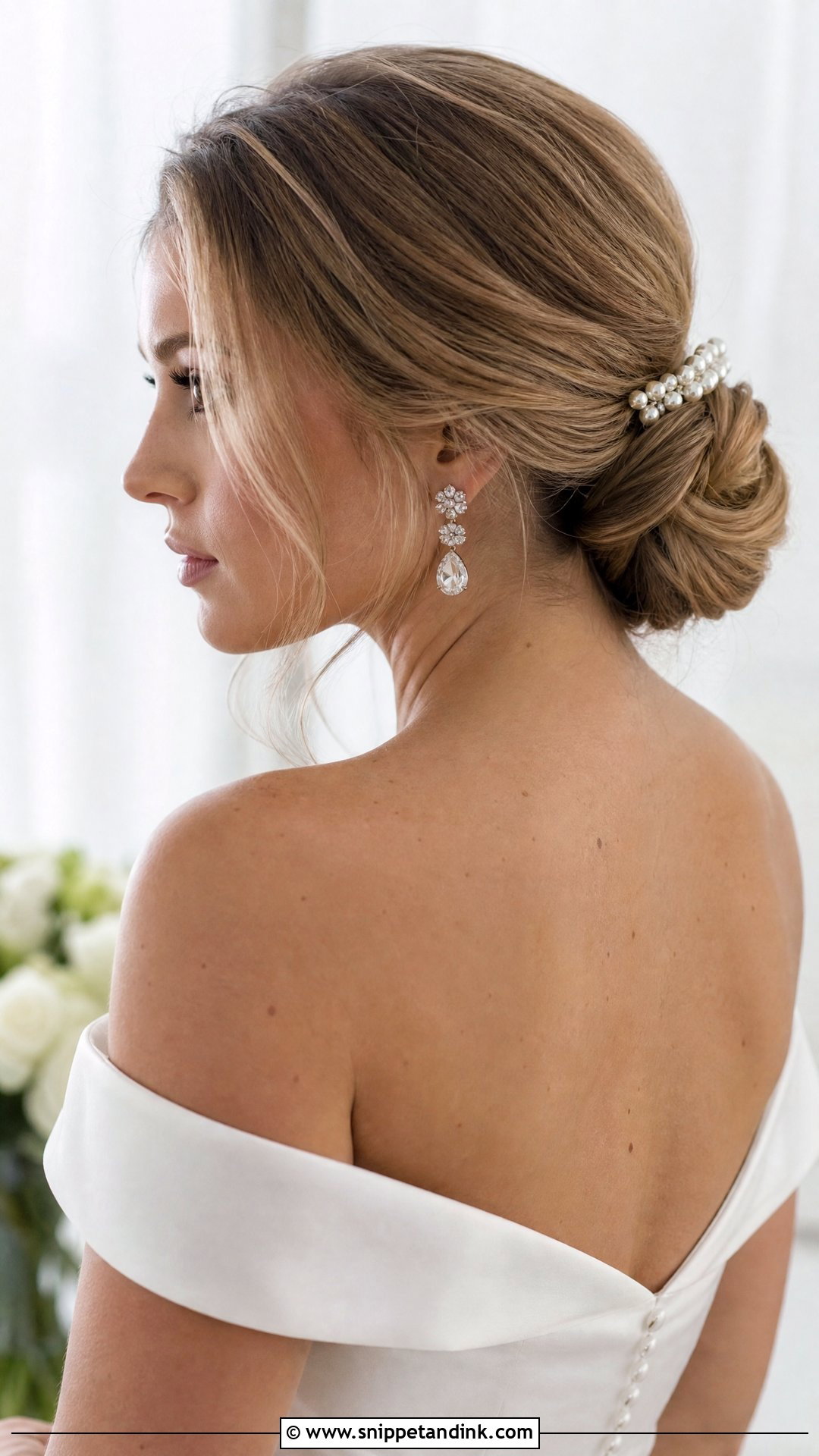
A low chignon on fine hair works best when it’s not perfectly smooth. I tease underneath, roll the chignon low and then loosen it slightly with my fingers. I leave soft tendrils at the face to soften it, curled rather than straight. A pearl comb or sparkly pins fit the side. The clean outline shows off statement earrings and stays neat from ceremony to reception.
19. Wavy Lob With Crown Volume
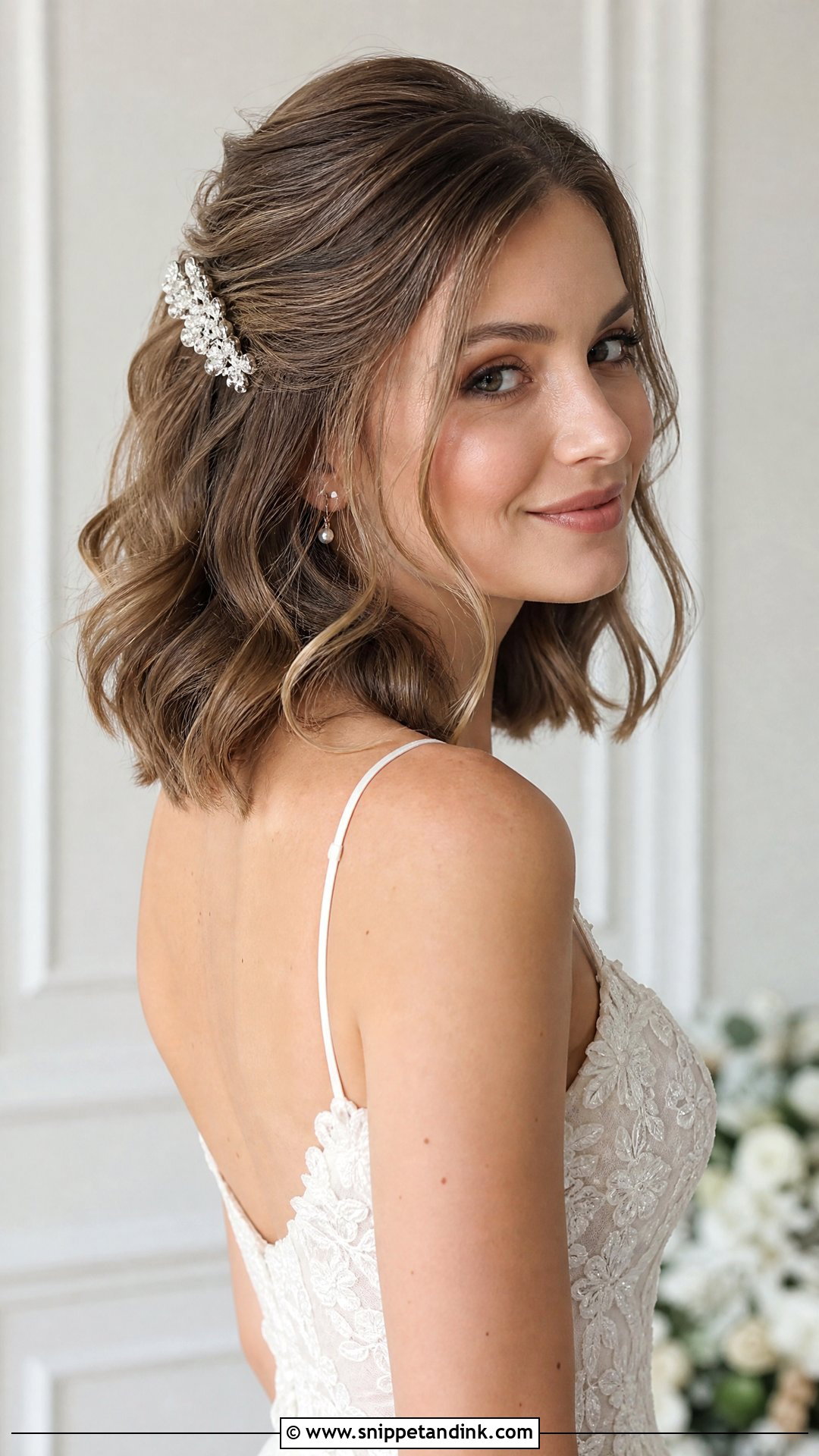
The wavy lob, a longer bob, is one of the best cuts for fine hair, because the shorter length means less weight pulling the waves out. I wave with a 1-inch iron, lift the crown with a little backcombing and leave the ends slightly straight so they don’t look like ringlets. Tuck one side behind the ear with a clip for a polished touch. If you want to wear your hair down, this is the length that holds it longest.
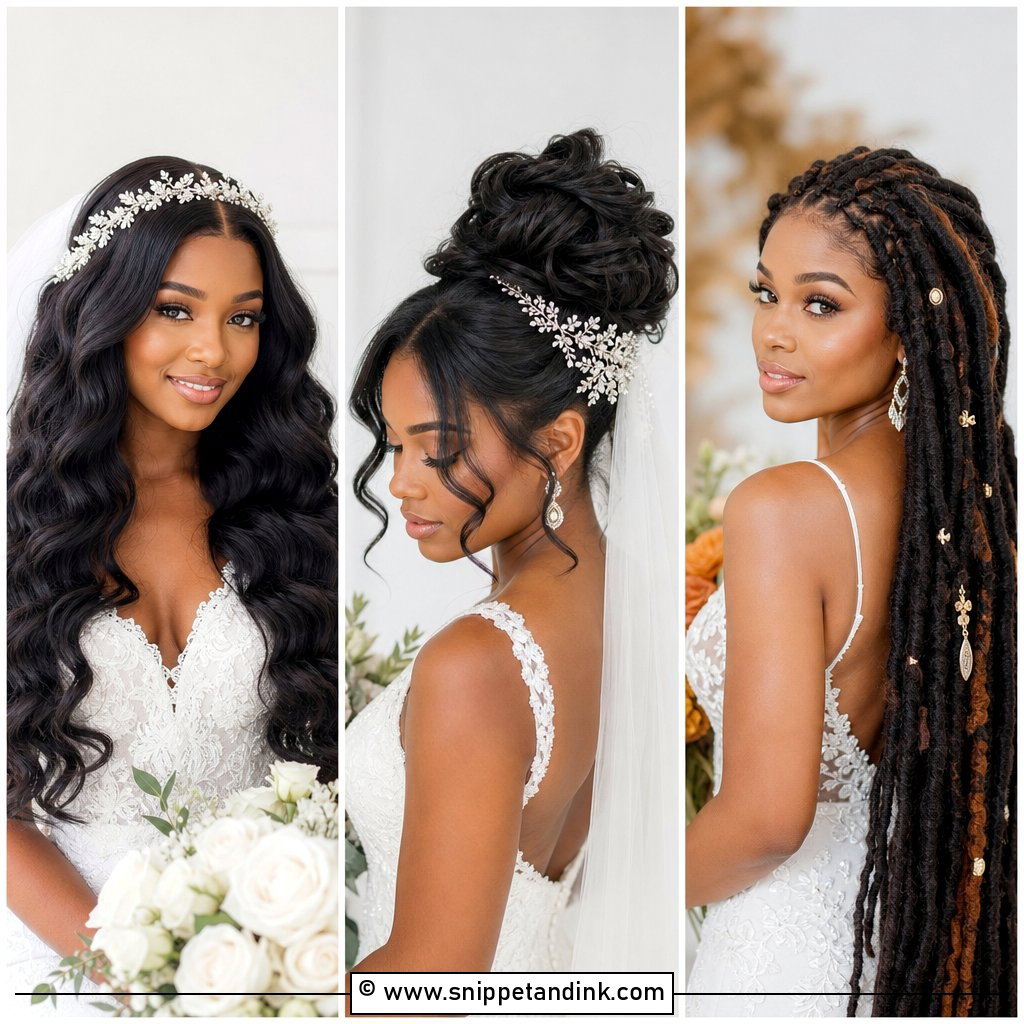
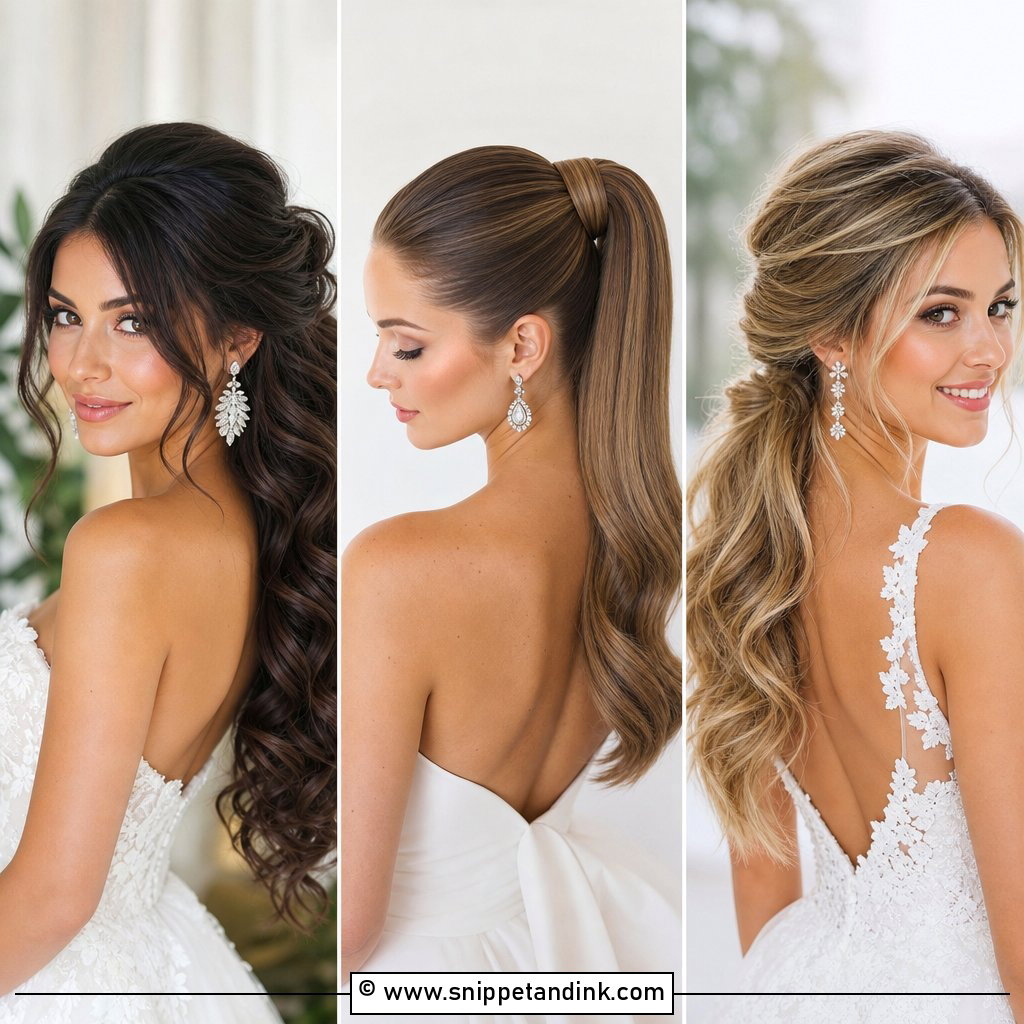
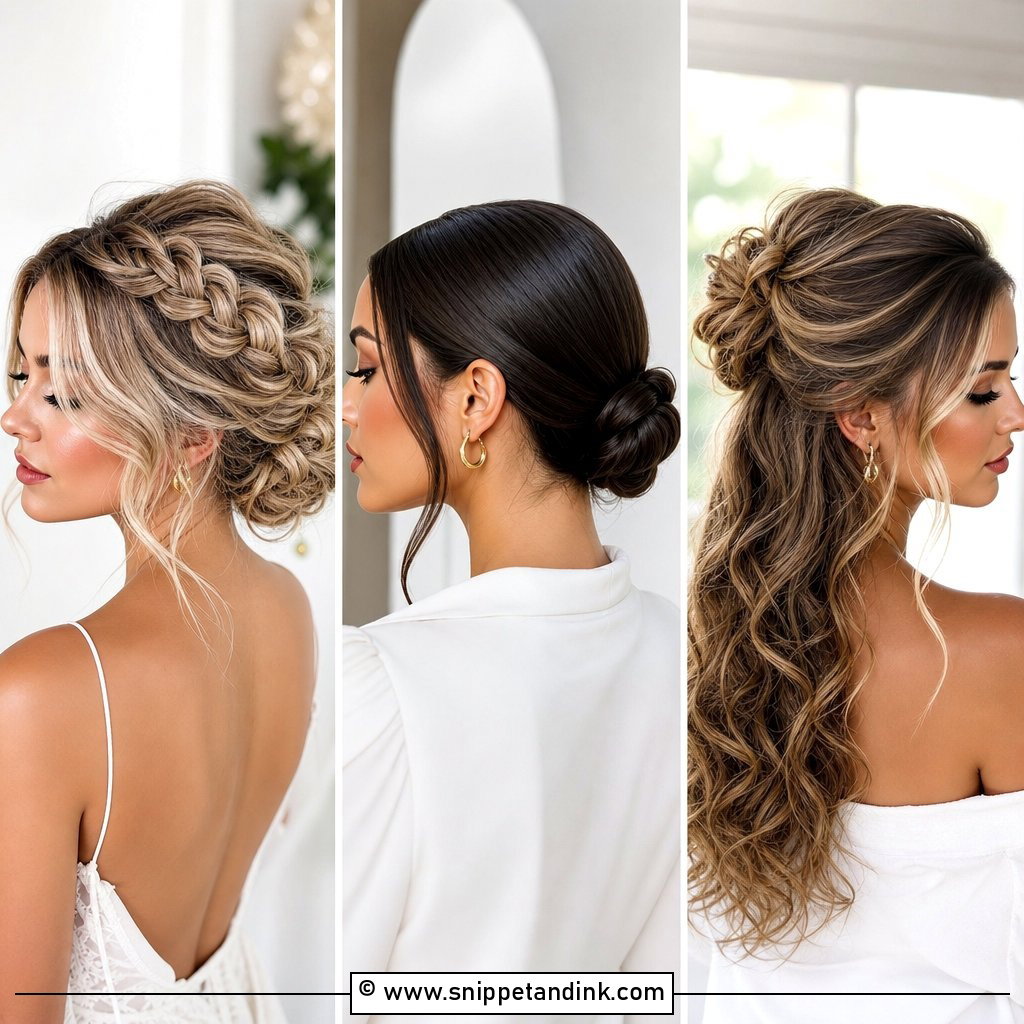
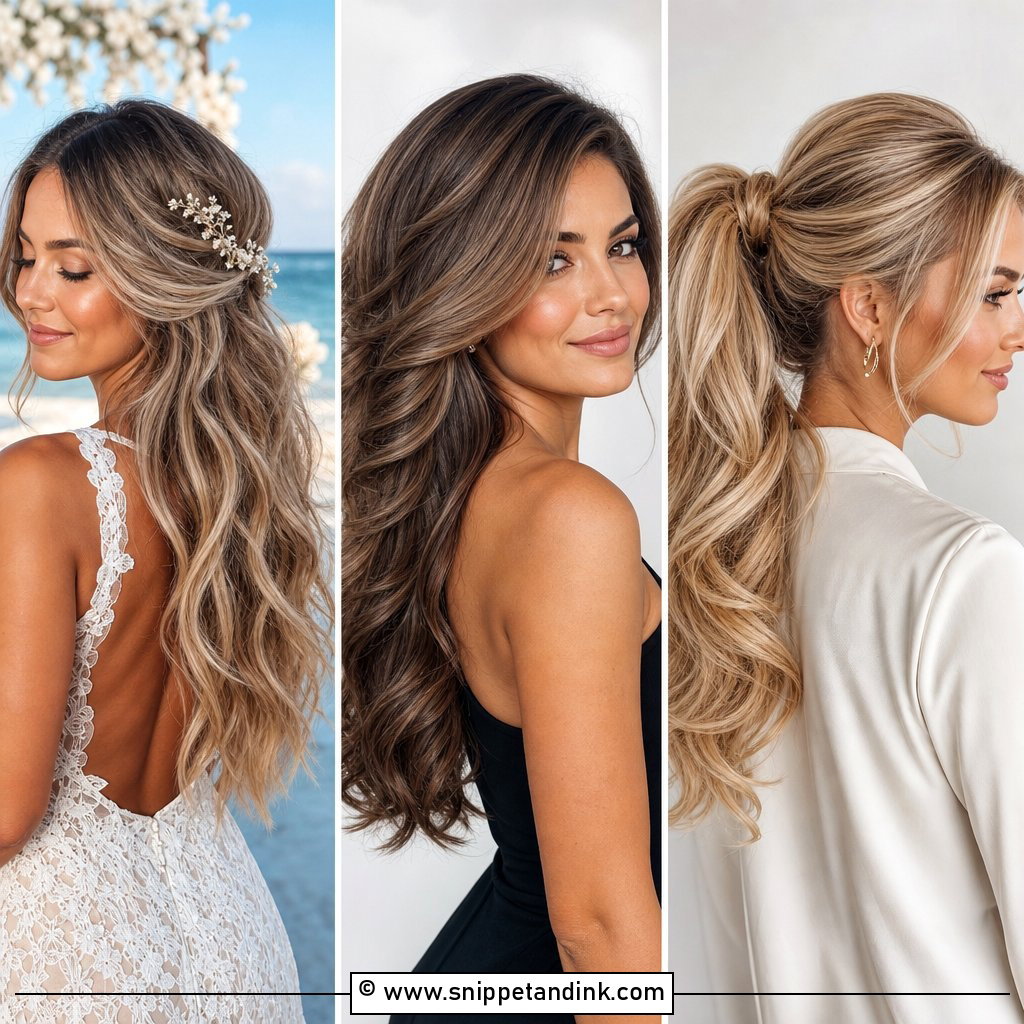
20. Accessorized Updo With Pearls
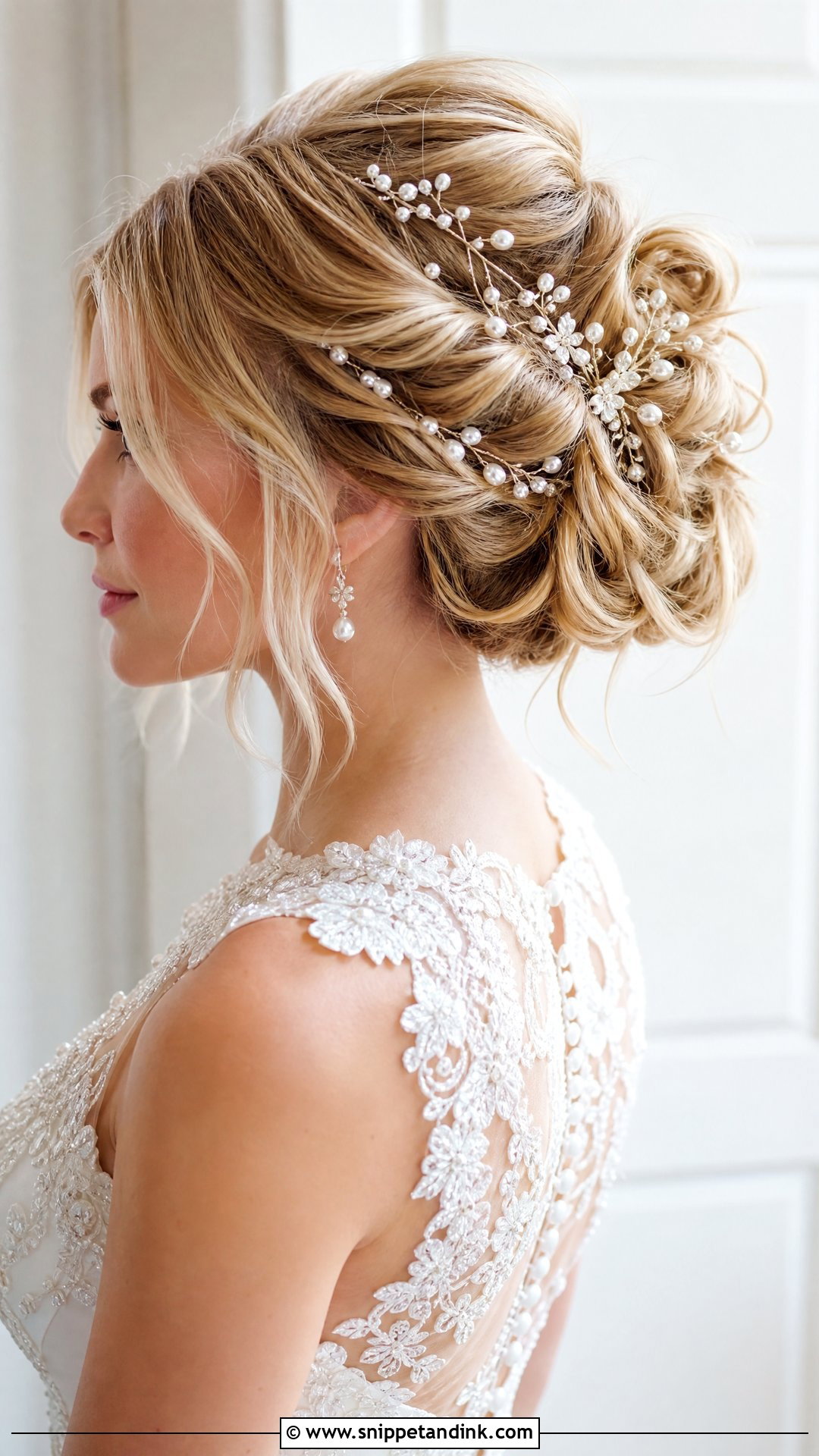
Pearls do a lot of work on fine hair. Scattered through a loose updo, they add visual density and draw attention away from any thin areas. I start with a loose, teased updo, then push pearl pins in at different depths so they don’t all sit on the surface in a line. A pearl vine woven through works too. It pairs well with classic gowns and simple jewelry, and the pearls catch the light in photos.
Hidden Helpers Inside a Fine-Hair Updo
Most of the full-looking fine-hair styles you see in photos have something tucked inside them. None of it shows if it’s color-matched and placed well.
Clip-In Wefts
One or two wefts at the back add weight and grip. I always ask you to bring them to the trial, since their color and texture must be blended before the day.
Padding and Bun Forms
A small mesh form or a soft donut in your hair color gives a bun size it can’t get on its own. I wrap your own hair around it, so it is completely hidden.
Crimping Underneath
A few passes of a small crimper on the under layers at the crown lift the top without visible texture. It’s an old trick that still works very well.
The Last Six Weeks for Fine Hair
Have your last trim about two weeks out, so the ends are blunt but the shape has settled. Avoid trying a new color or a keratin treatment in the final month; smoothing treatments make fine hair even more slippery to pin. On the day, arrive with hair washed the evening before, completely dry, and with no conditioner at the root. I’d rather work on slightly lived-in hair than freshly washed hair every time.
The Volume Is Built Before the First Pin Goes In
Fine hair can carry almost any bridal style once it has been prepped for grip and given some hidden help. Teasing, texture, padding and a few well-placed accessories do the heavy lifting, and the styles here are the ones I trust most. Bring your favorites to a trial with a stylist who works with fine hair often, and ask to see the back in a mirror before you leave. If it holds through the trial evening, it will hold on the day.
You'll Like These Ideas:


Leave a Reply