
Bridal ponytails get requested in my chair far more often than they used to, and I understand why. Hair stays off your neck, your earrings and neckline actually show, and you still get movement every time you turn your head. The same basic gather can go glossy and tight for a city wedding, loose for a garden ceremony or big for a ballroom. Below are 15 versions, with what I’d watch for on each, plus the structural work that keeps any of them sitting where it started by the last dance.
Why Ponytails Slide Down by the Speeches
The complaint I hear most about wedding ponytails isn’t frizz. It’s the slow slide. A tail that sat at the crown in the early afternoon can be resting near the nape by the speeches, because one elastic is carrying the full weight of curled, sprayed hair through hugs, dancing and a veil going on and off.
I build the base in layers instead of trusting one band. Ask your stylist about these at your trial:
- Two anchors: a small elastic first, then a second band or two crossed bobby pins locked into it so the weight is shared.
- Second-day hair or a dry texture spray at the root, so the elastic grips instead of slipping on freshly washed strands.
- A section of hair wrapped around the base and pinned underneath, which hides the elastic and adds another anchor.
- Curls set and fully cooled before brushing out. Warm curls drop fast and pull the whole tail with them.
Height costs comfort, too. A high ponytail pulls on the hairline, and soreness that starts after an hour at the trial only gets worse over ten. I’d rather lower it slightly now than watch a bride wince through her reception.
1. Low Bridal Ponytail
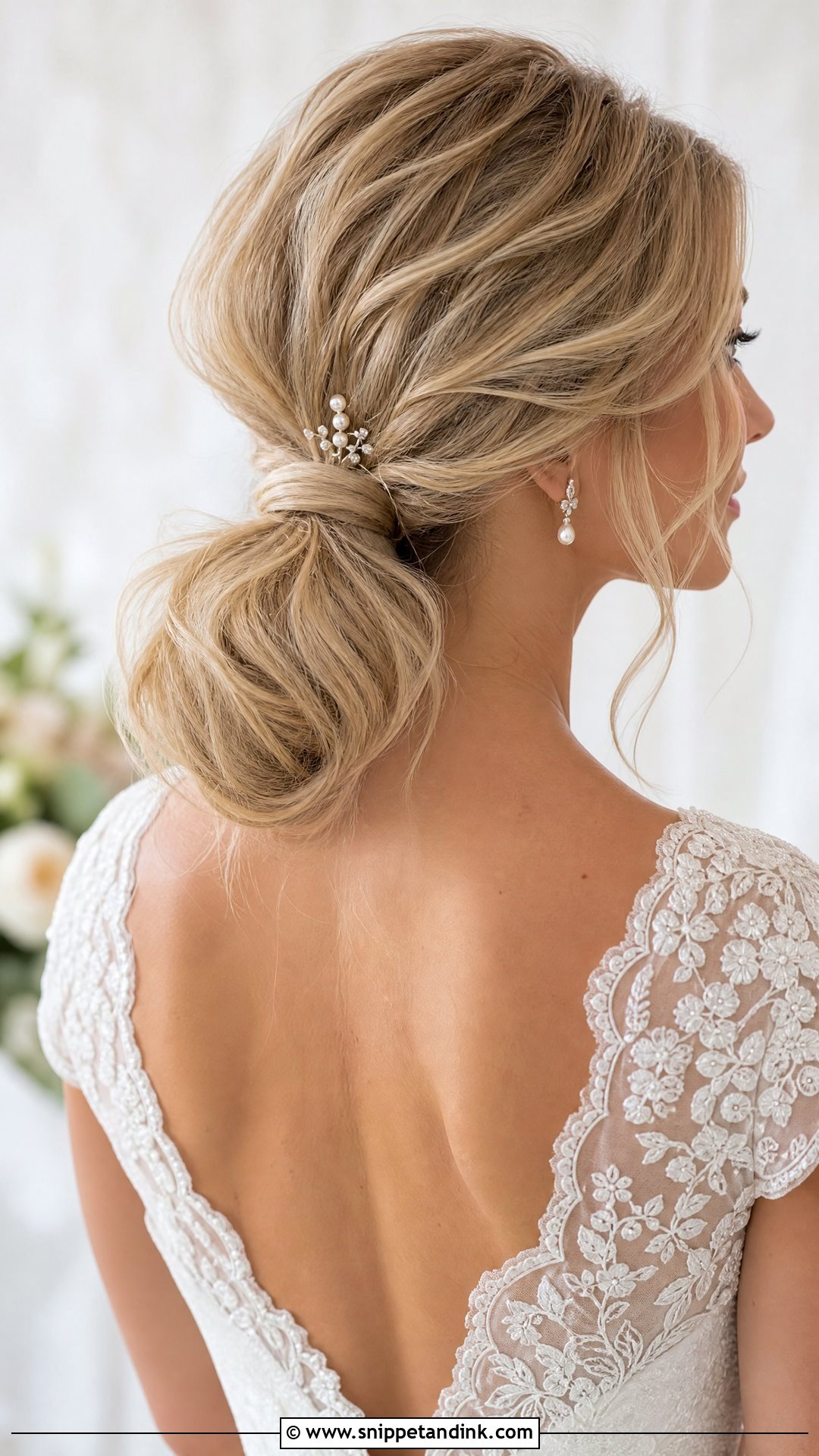
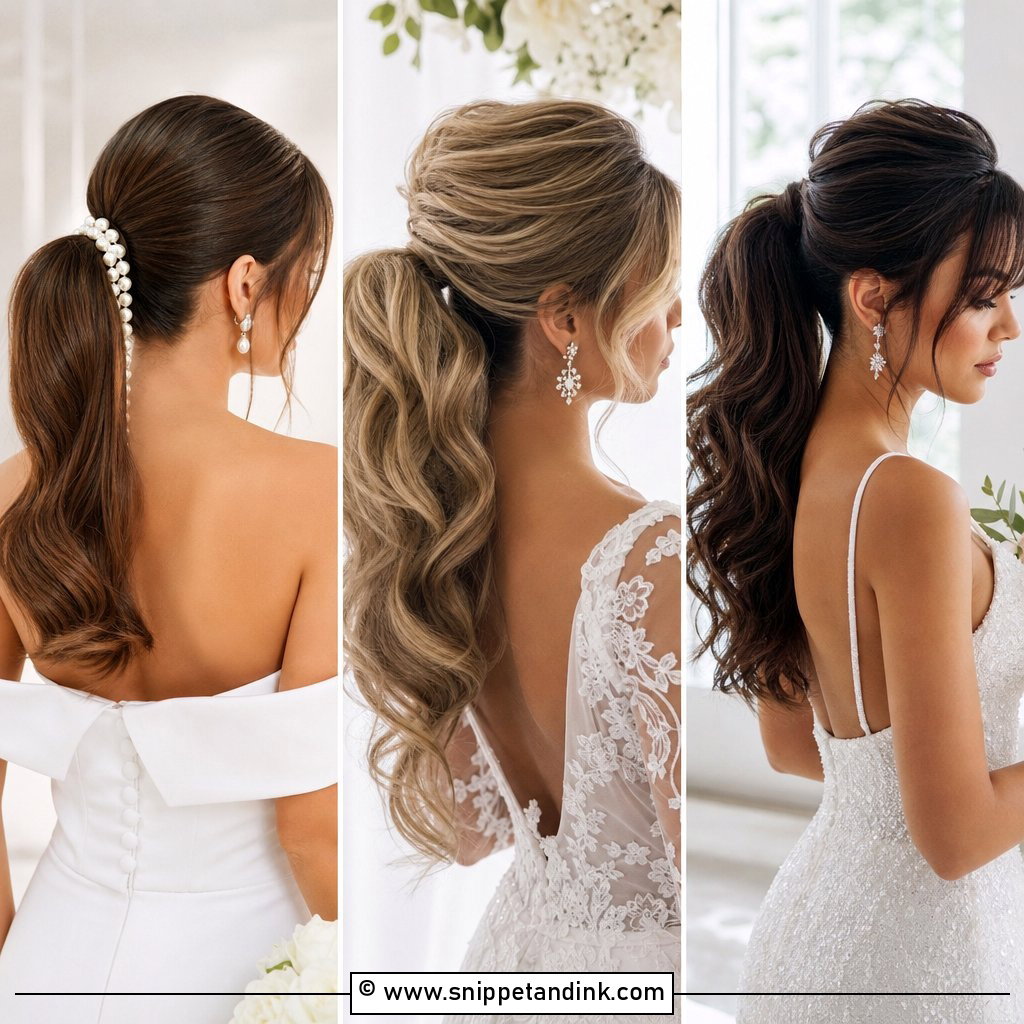
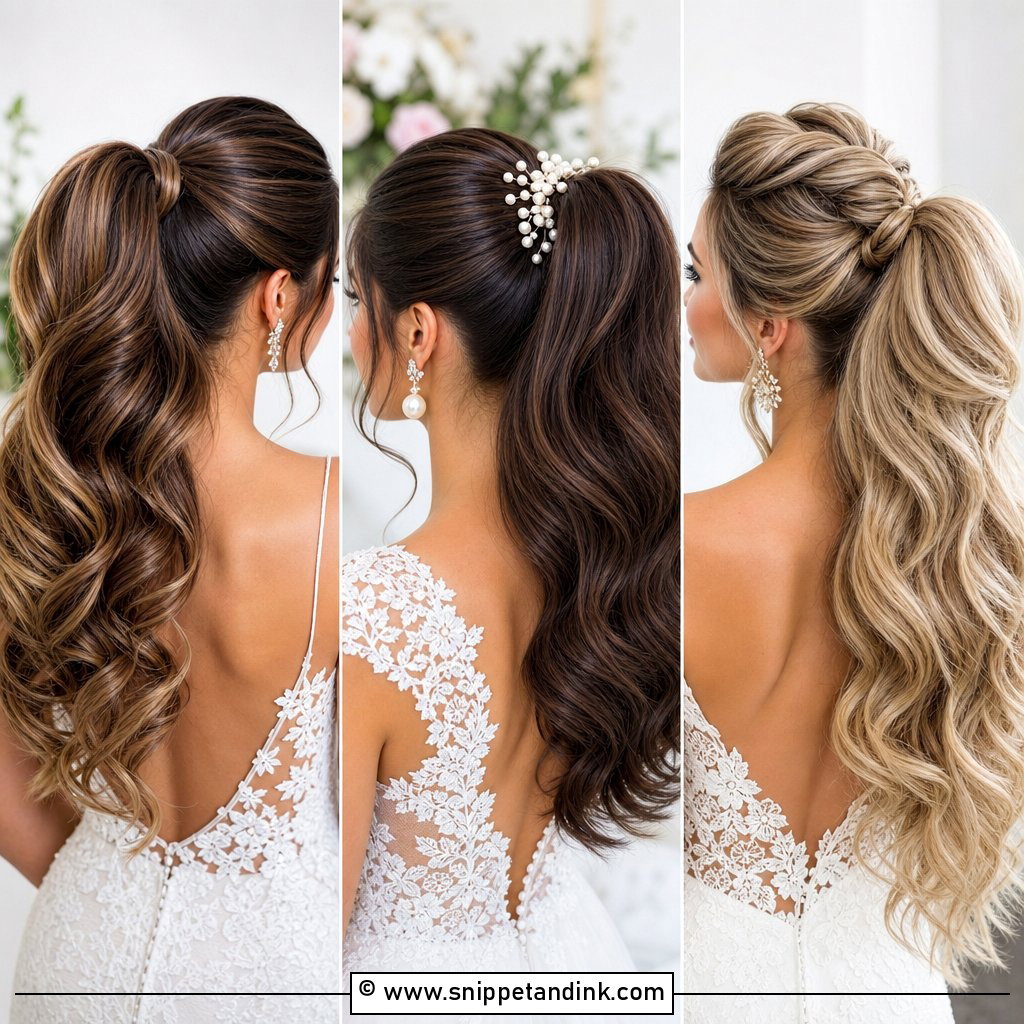
Low ponytails are the easiest to wear with a veil, because the comb can slide in just above the base without fighting for space. I add a little lift at the crown first; without it, a low tail on fine hair can look flat from the front, as if the hair was simply pulled back. Soft waves through the length stop it reading too plain. A wrapped hair base hides the elastic and gives me a second anchor point to pin into. It sits well with lace and off-the-shoulder necklines.
2. High Bridal Ponytail
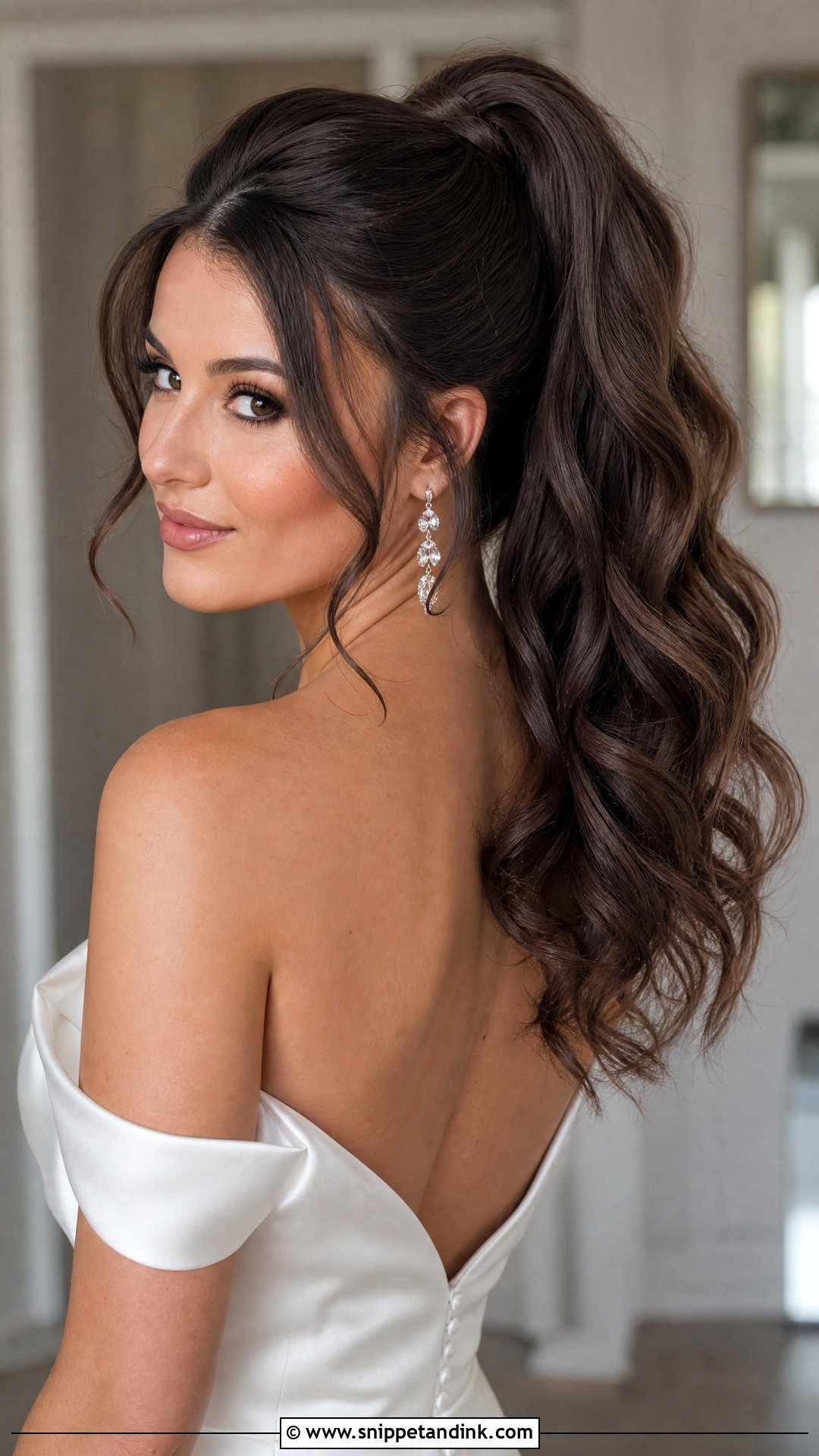
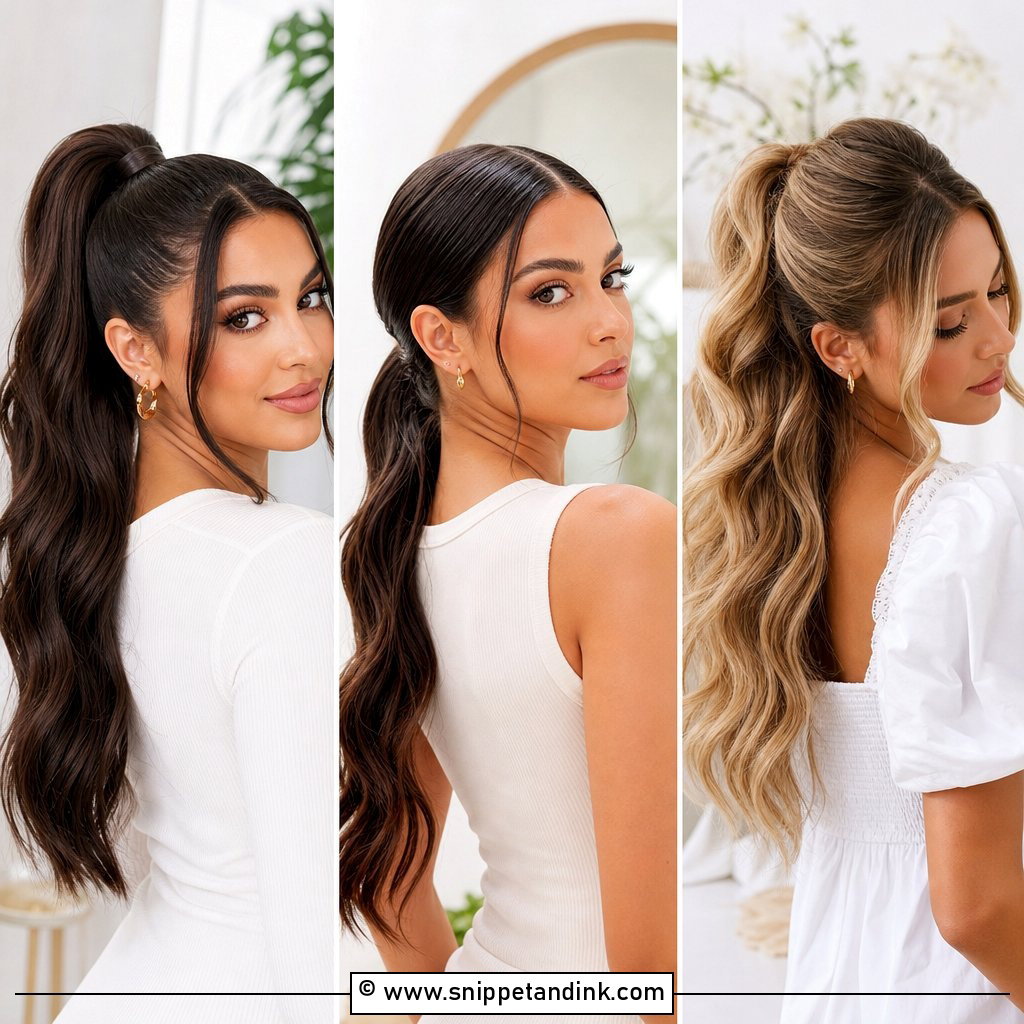
A high ponytail lifts the whole face, but it is the hardest of these to make last. All the weight hangs from one point at the crown, so I secure it with two elastics and lock pins across the base, and I always ask the bride how her scalp feels after twenty minutes. If it already aches at the trial, I bring it down a few centimetres. Curls or waves in the tail give it movement, and it shows off a detailed bodice. For a sharper version, keep the hairline smooth and add a jeweled band around the base; for a softer one, leave out two curled pieces at the temples.
3. Sleek Bridal Ponytail
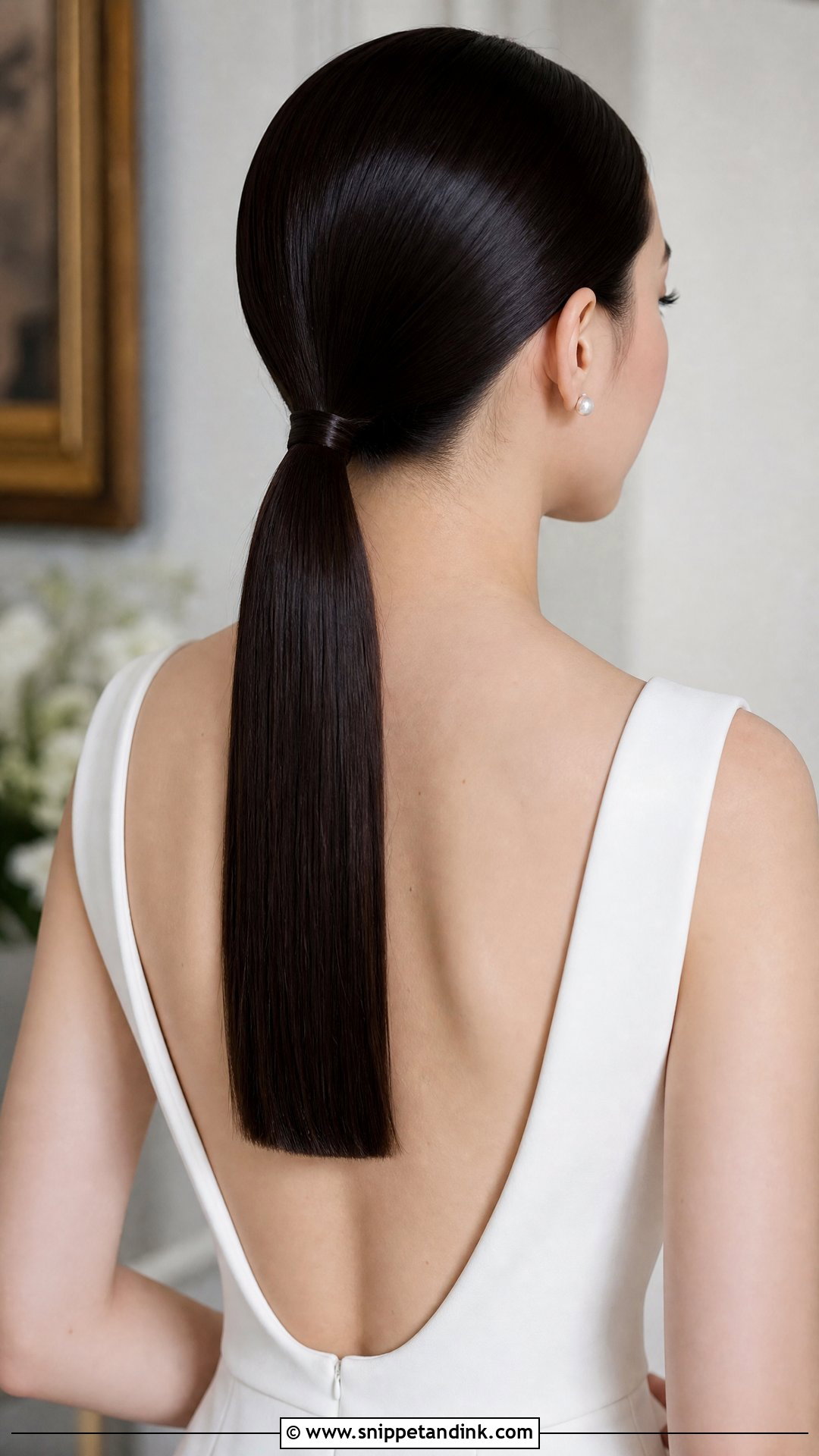
Sleek is the least forgiving finish on this list. Every bump, every flyaway and every uneven part shows, especially in flash photos, so I flat-iron the crown in small sections and use a fine-tooth brush with a light gel or wax stick before gathering. On very thick hair, I thin out the bulk under the base so it doesn’t bulge. The payoff is a clean line that balances a heavily beaded dress or dramatic sleeves rather than competing with them. Pair it with glowing skin and keep accessories minimal.
4. Curly Bridal Ponytail
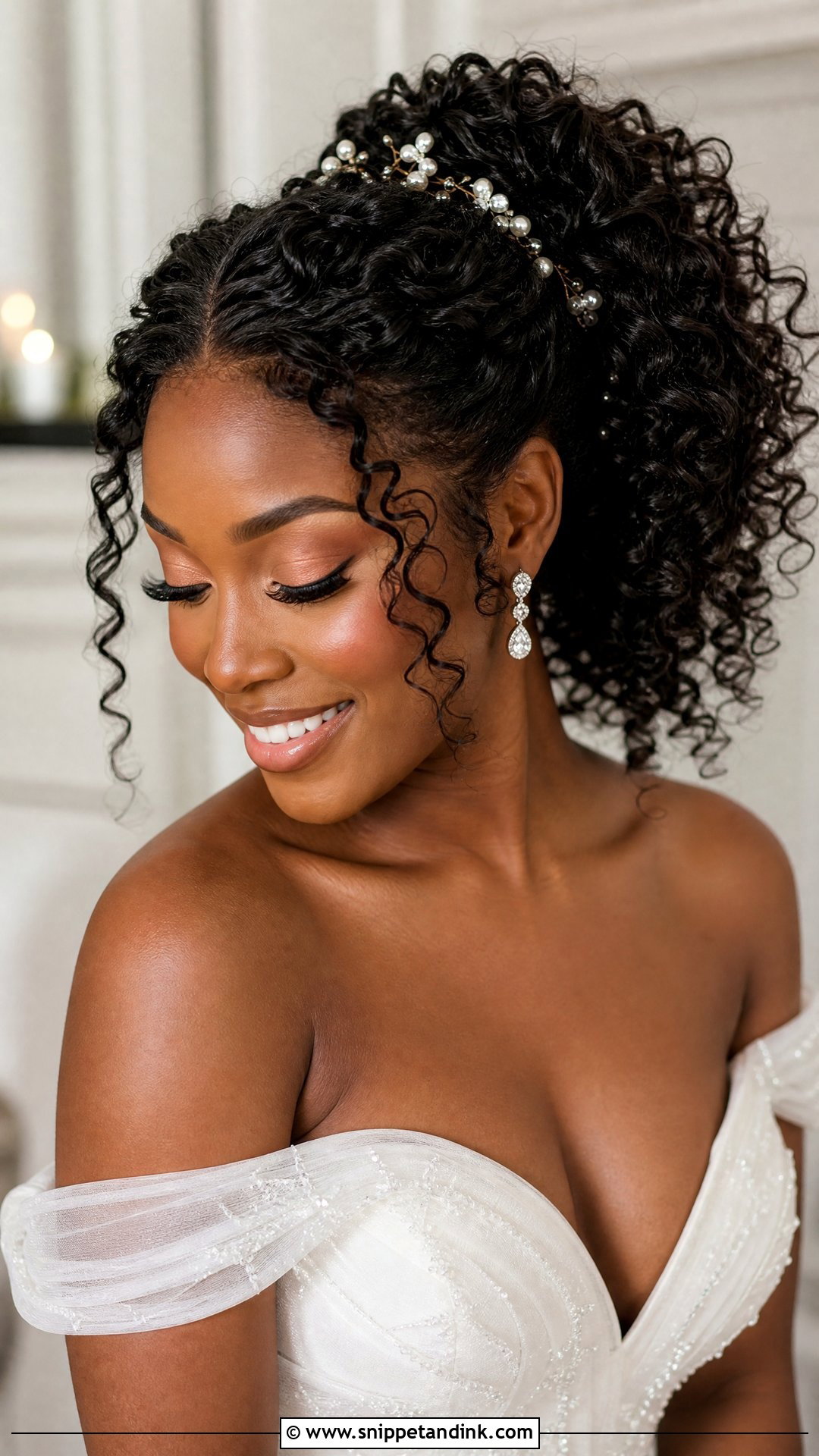
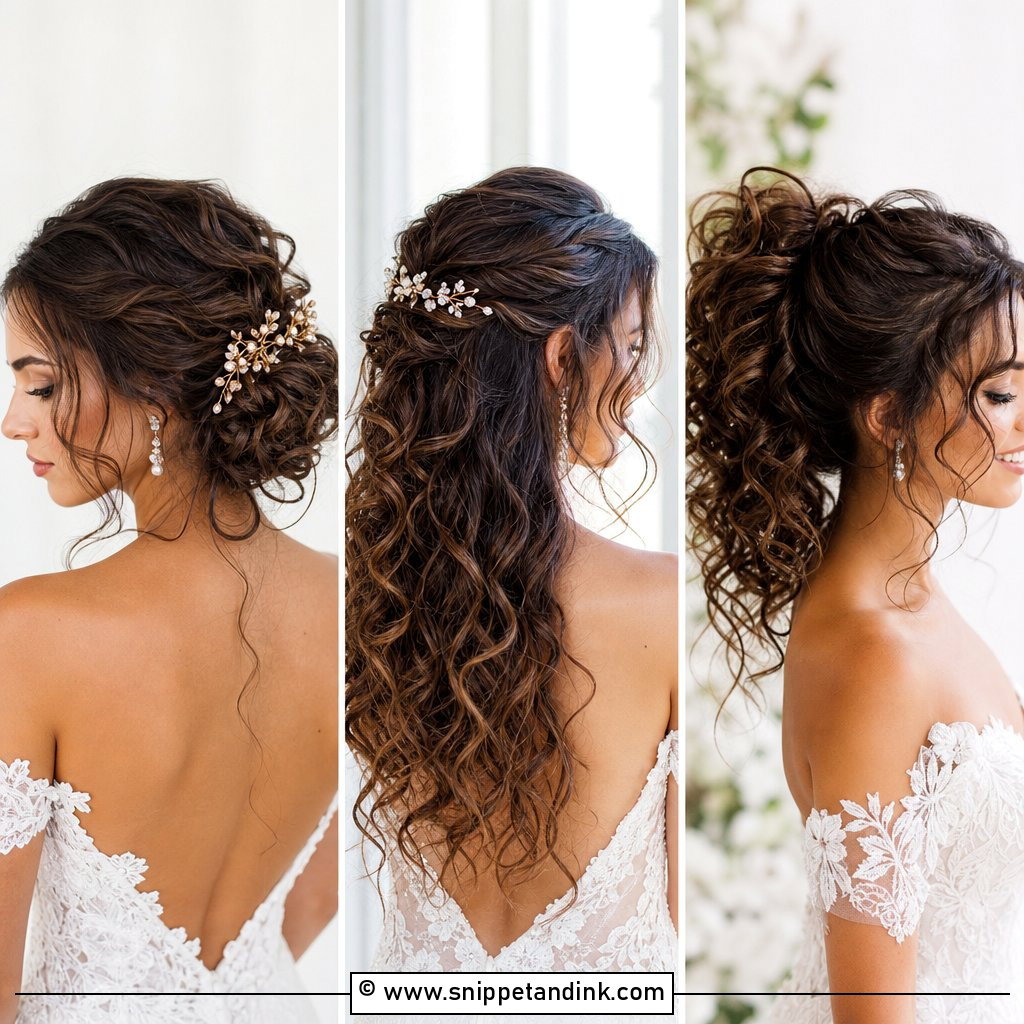
With natural curls, my job is mostly to stay out of the way. I gather the hair while it’s still lightly damp with a curl cream, so the pattern stays defined, and I never brush through it once it’s set, because brushing turns ringlets into a frizzy cloud. The ponytail can sit high or low depending on the neckline. Pearl pins or a small floral comb near the base show up well against curls. If your curls shrink a lot, test the height at the trial, since a tail that looks long wet can end up much shorter by evening.
5. Wavy Bridal Ponytail
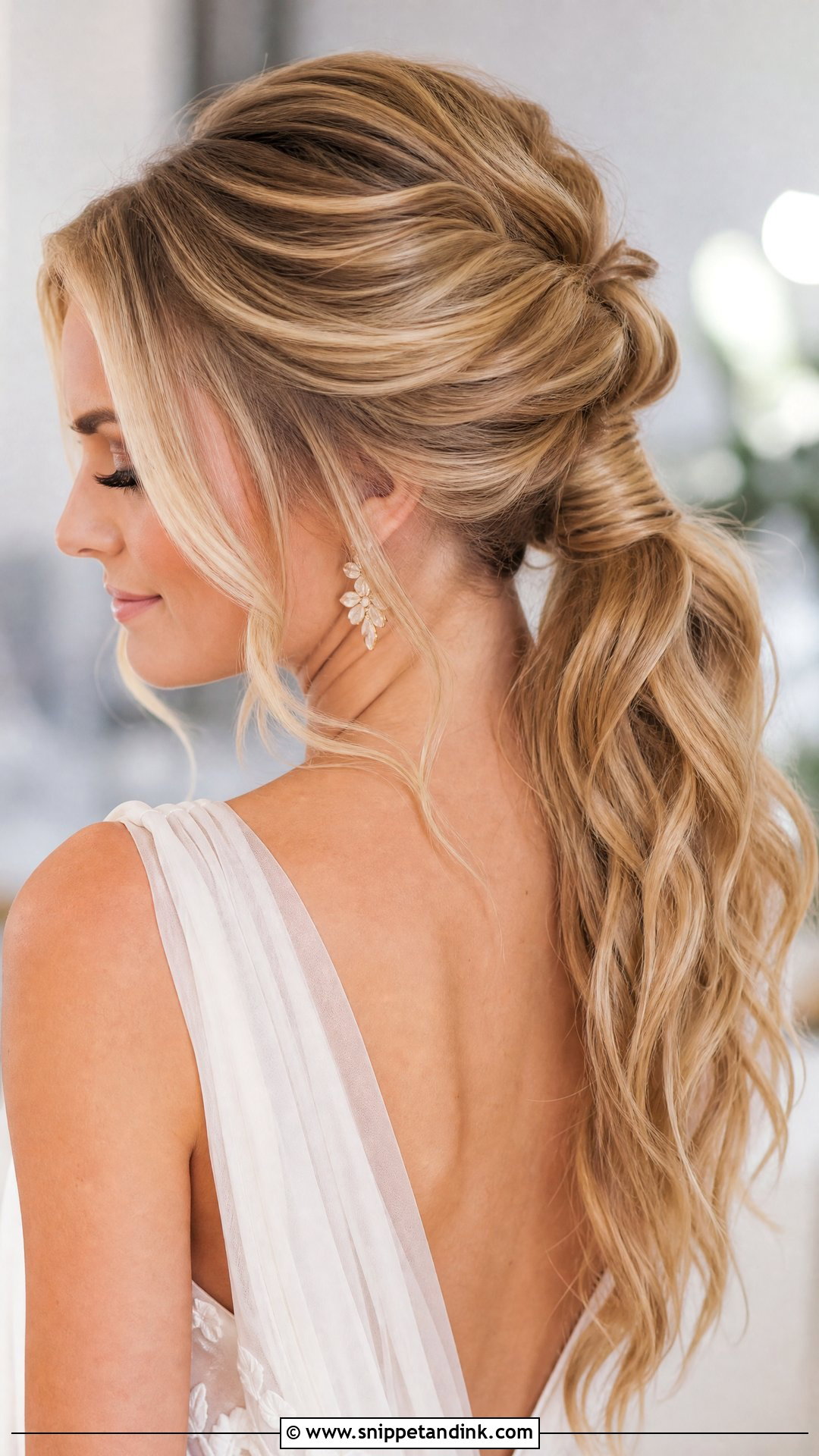
Waves make this the most adaptable ponytail I do. I set them with a large barrel, pin each wave to cool, and only then brush them out, which is the difference between waves that last until the cake cutting and ones that are gone by the first dance. A teased crown gives height; a smooth crown reads cleaner. Face-framing pieces near the cheekbones soften it. In humid outdoor venues, expect the waves to relax by evening, so I build them a little tighter than the final look.
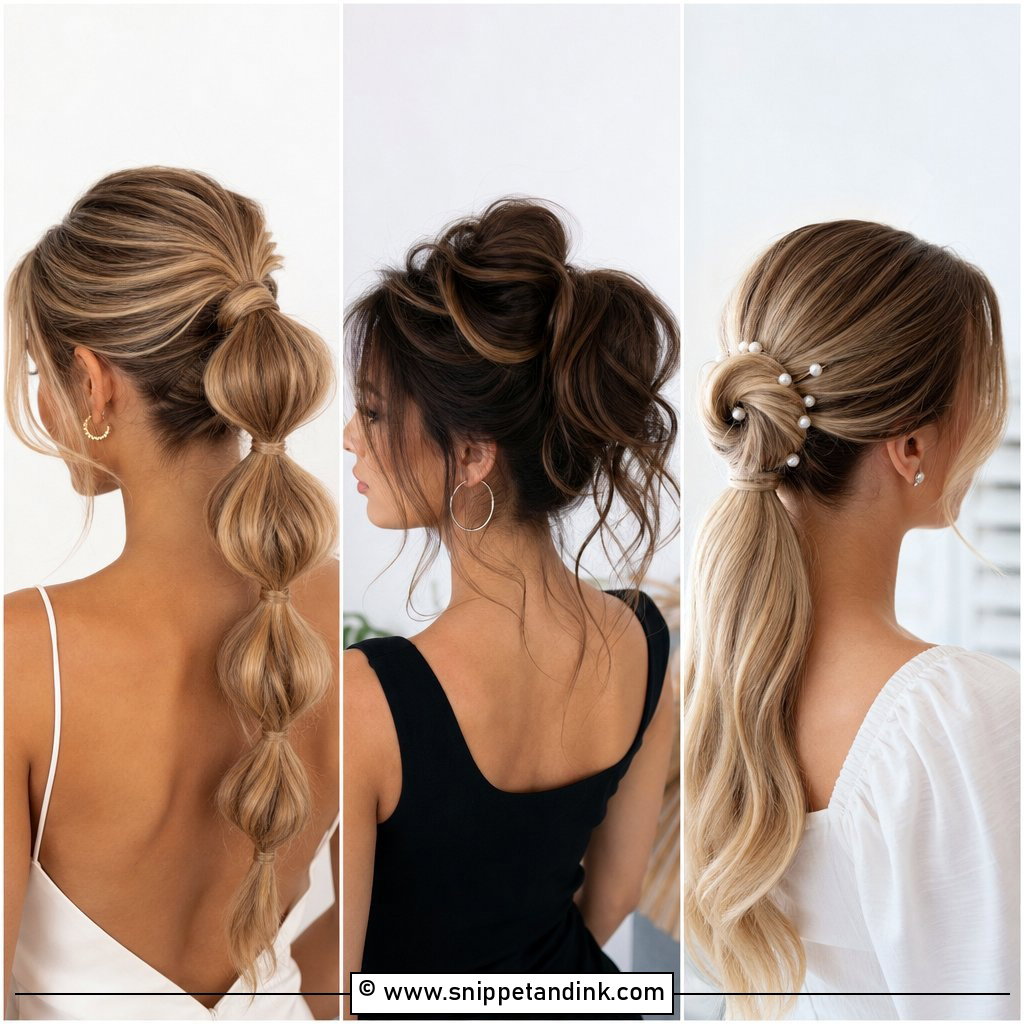
6. Bubble Bridal Ponytail
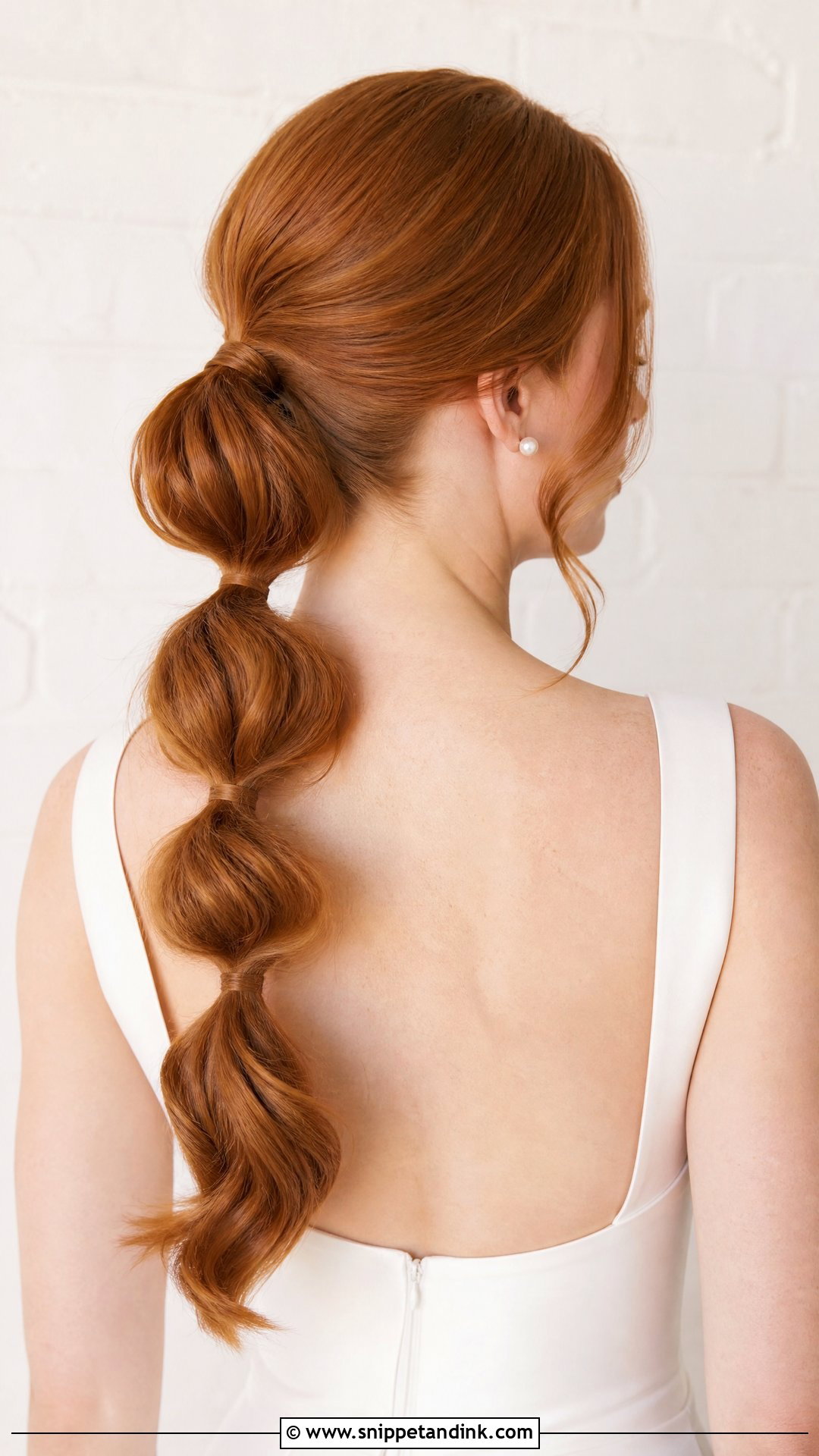
A bubble bridal ponytail is built in sections: gather the tail, then add small clear elastics every few inches and gently pull each segment wider. Because the weight is broken up, it holds up well through dancing. I tease the inside of each bubble lightly so it keeps its round shape rather than collapsing. It reads best from behind, so it suits open backs and long veils. Keep the bubbles smooth for glam or pull them slightly loose for a boho feel; just remember that very fine hair makes small, thin bubbles.
7. Braided Bridal Ponytail
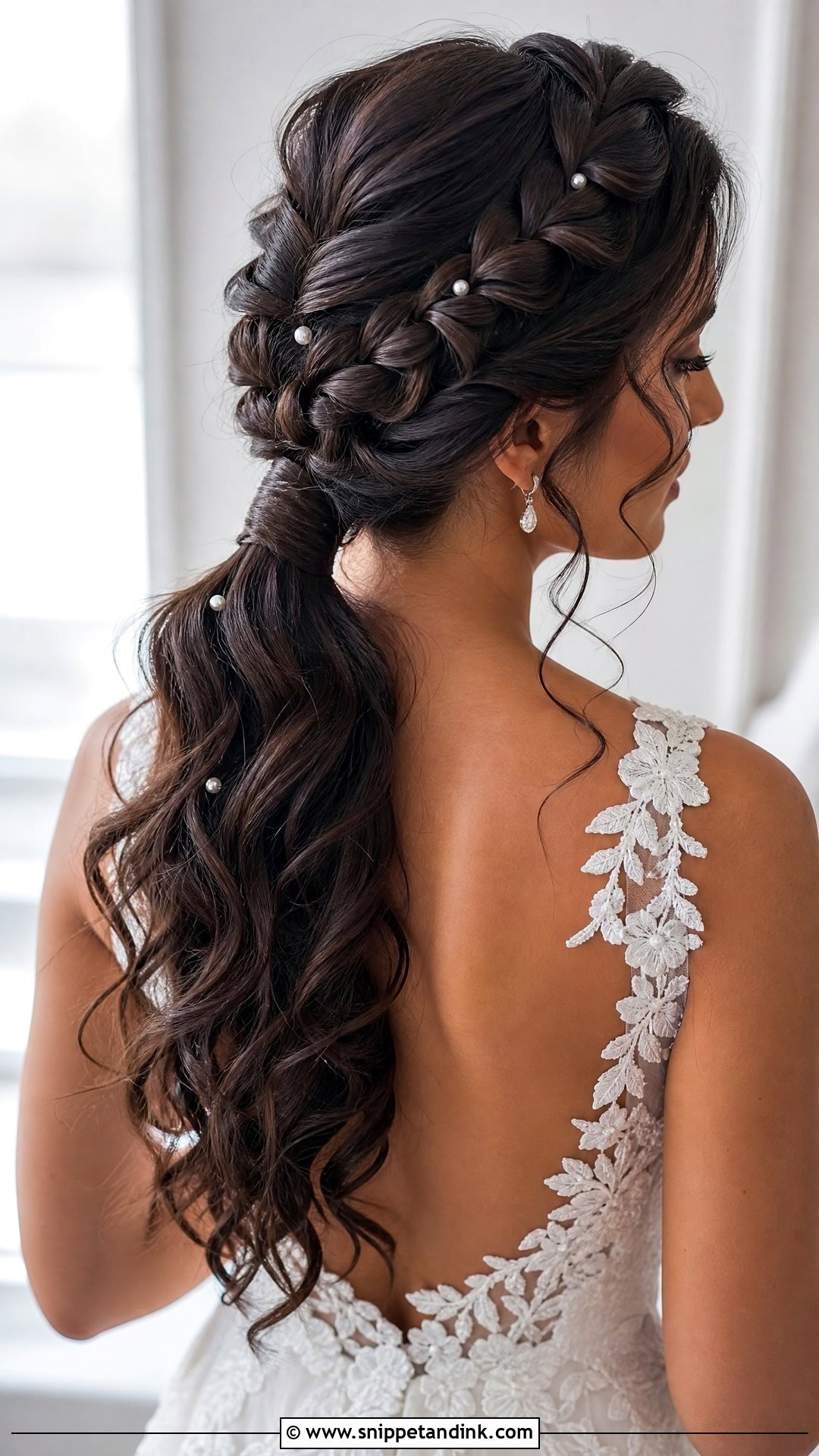
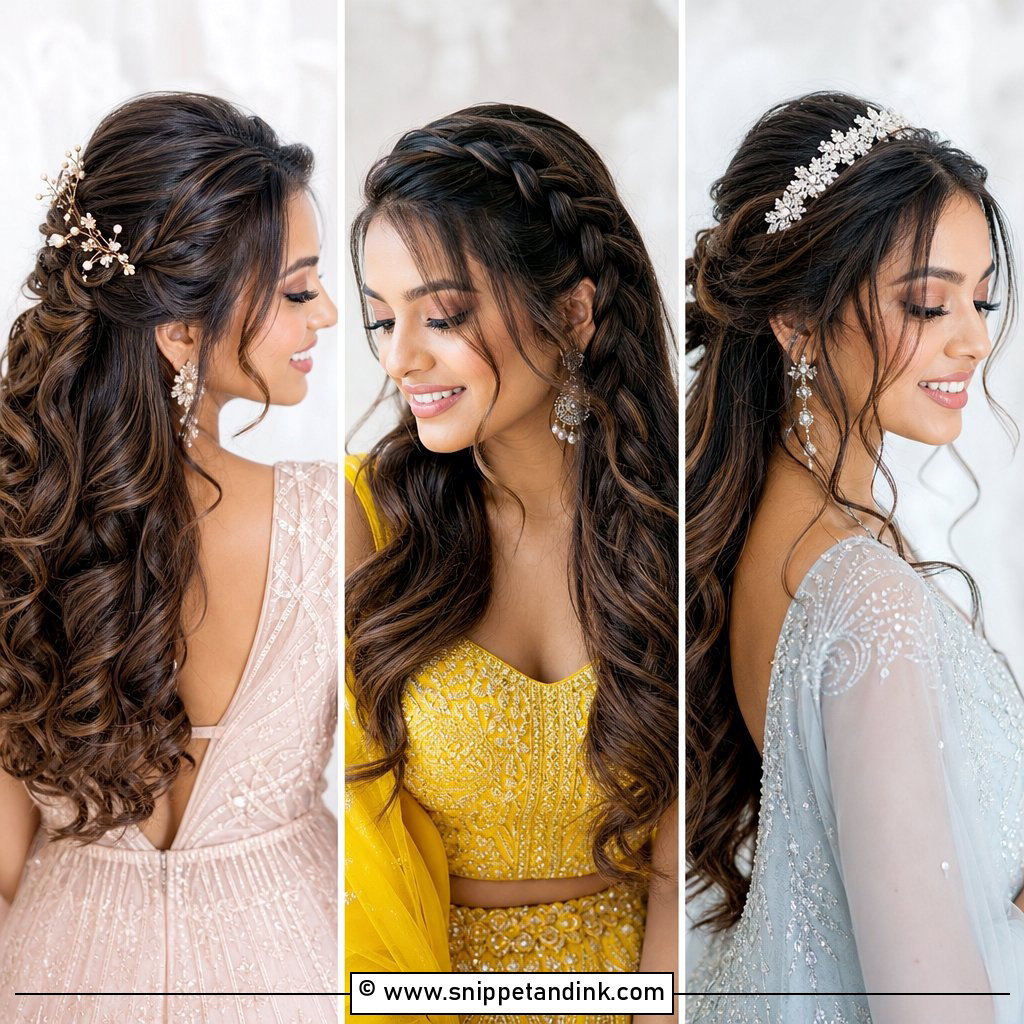
Braids add texture without much added risk, since they grip and hold pins better than loose hair. The braid can start at the crown, wrap the base or run down the tail itself. I pull the edges loose for a romantic finish and leave it tight for a cleaner, modern line. Tiny pearl pins along the braid catch the light. It works best on long or thick hair; with extensions, I braid them in with your own hair so the joins disappear.
8. Side Bridal Ponytail
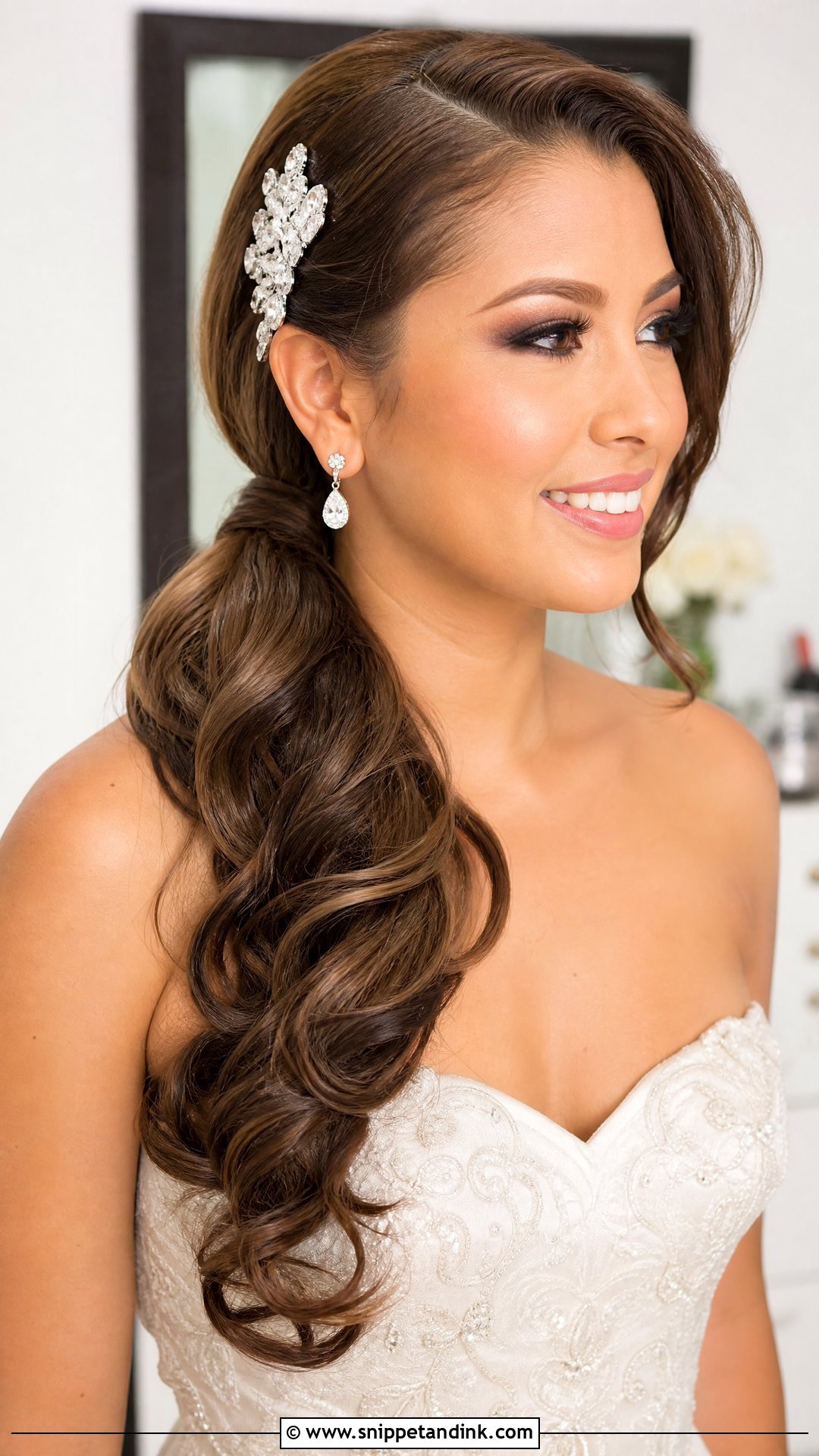
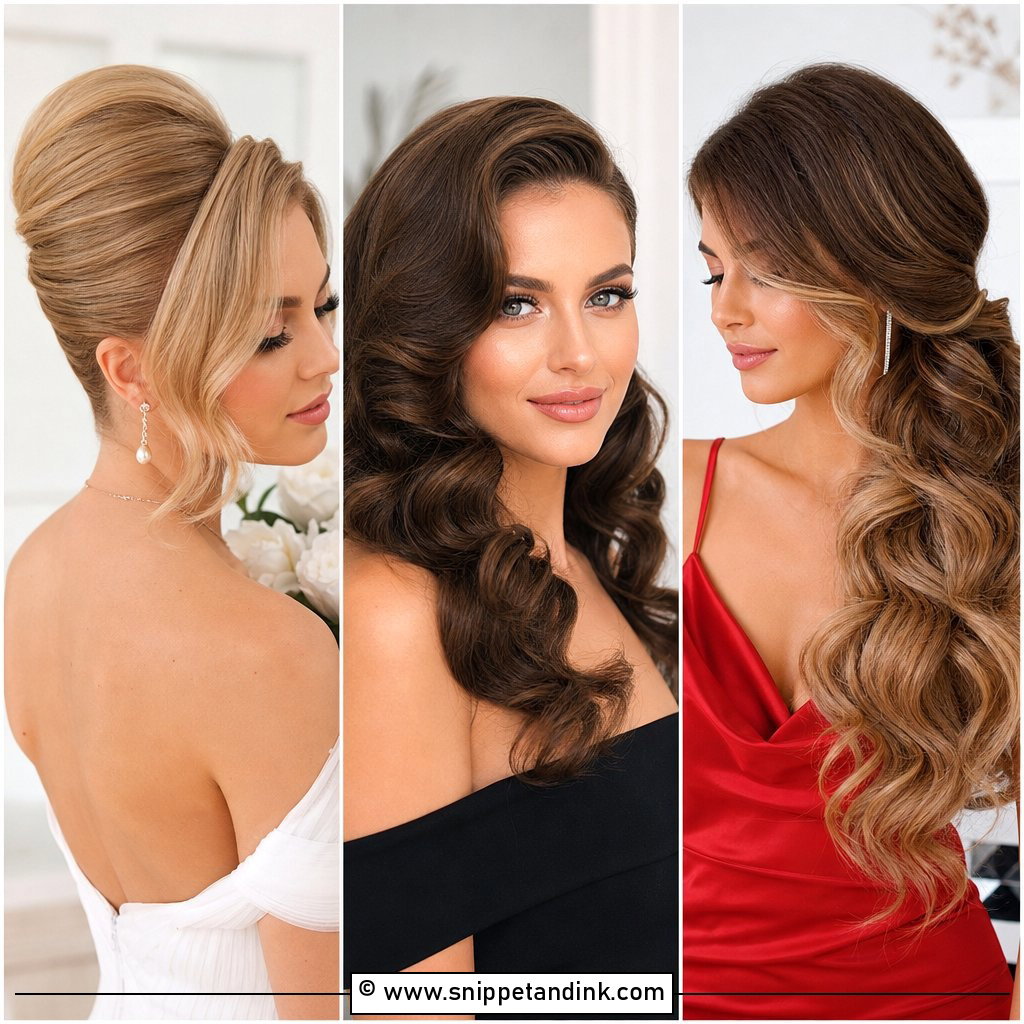
Pulling the ponytail over one shoulder shows off length and curls, and it suits strapless and one-shoulder gowns. The catch is weight: everything sits on one side, so I anchor the base behind the ear rather than right at the side, which stops it sliding forward during the day. A deep side part gives it a vintage note. Put the comb or crystal pin above the base so the asymmetry looks deliberate. If you’ll hug a lot of guests on that side, warn me, because shoulders crush curls.
9. Voluminous Bridal Ponytail
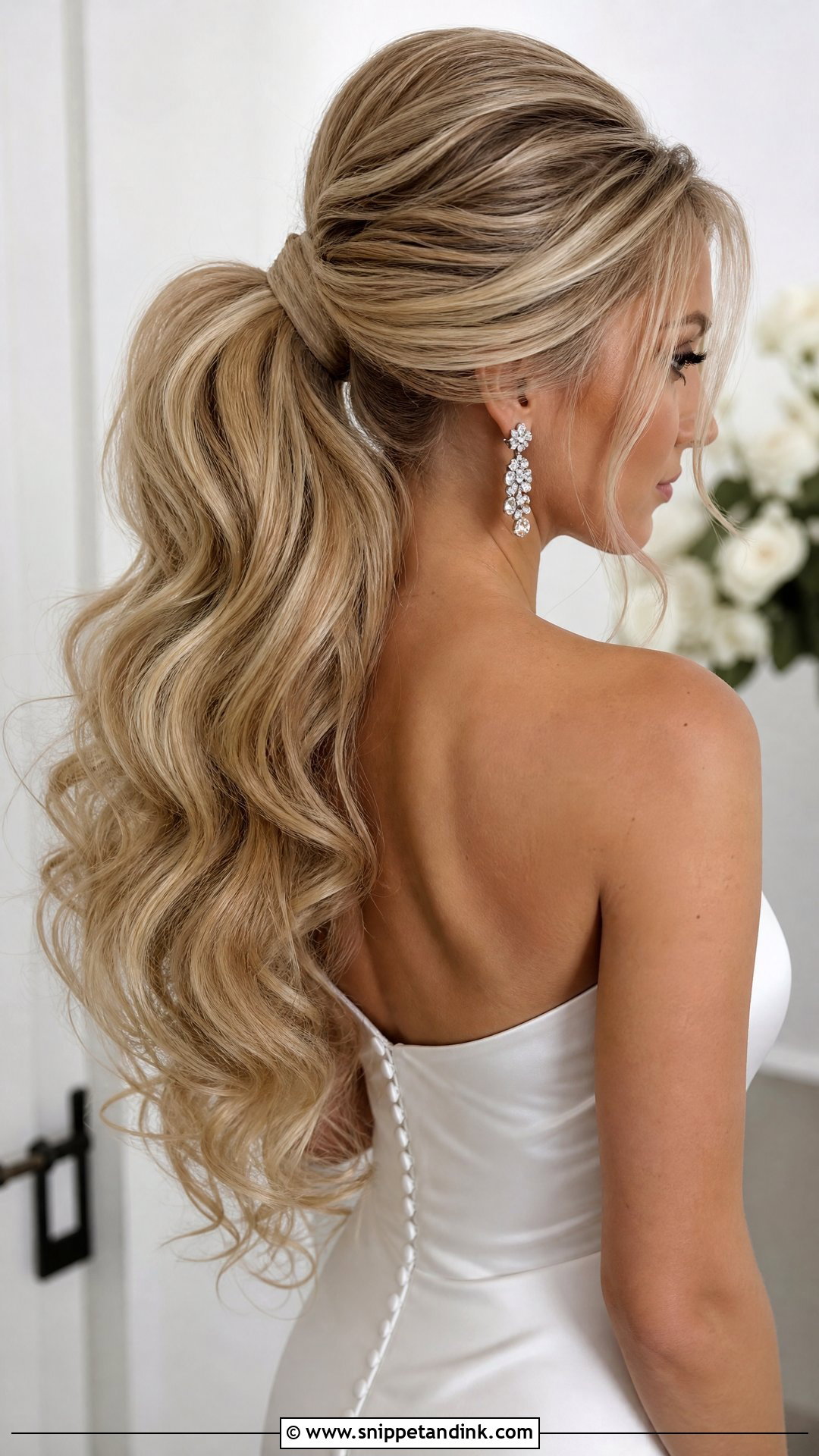
A voluminous bridal ponytail almost always involves teasing or a small padding piece at the crown, plus extensions in the tail. Most of the full versions you see in photos use added hair, and I’d rather a bride knows that before she falls for one. It holds its own in a ballroom next to a dramatic gown. Keep the front smooth so the height sits behind the face instead of on top of it, and finish with a wrapped base or a crystal piece.
10. Half Up Bridal Ponytail
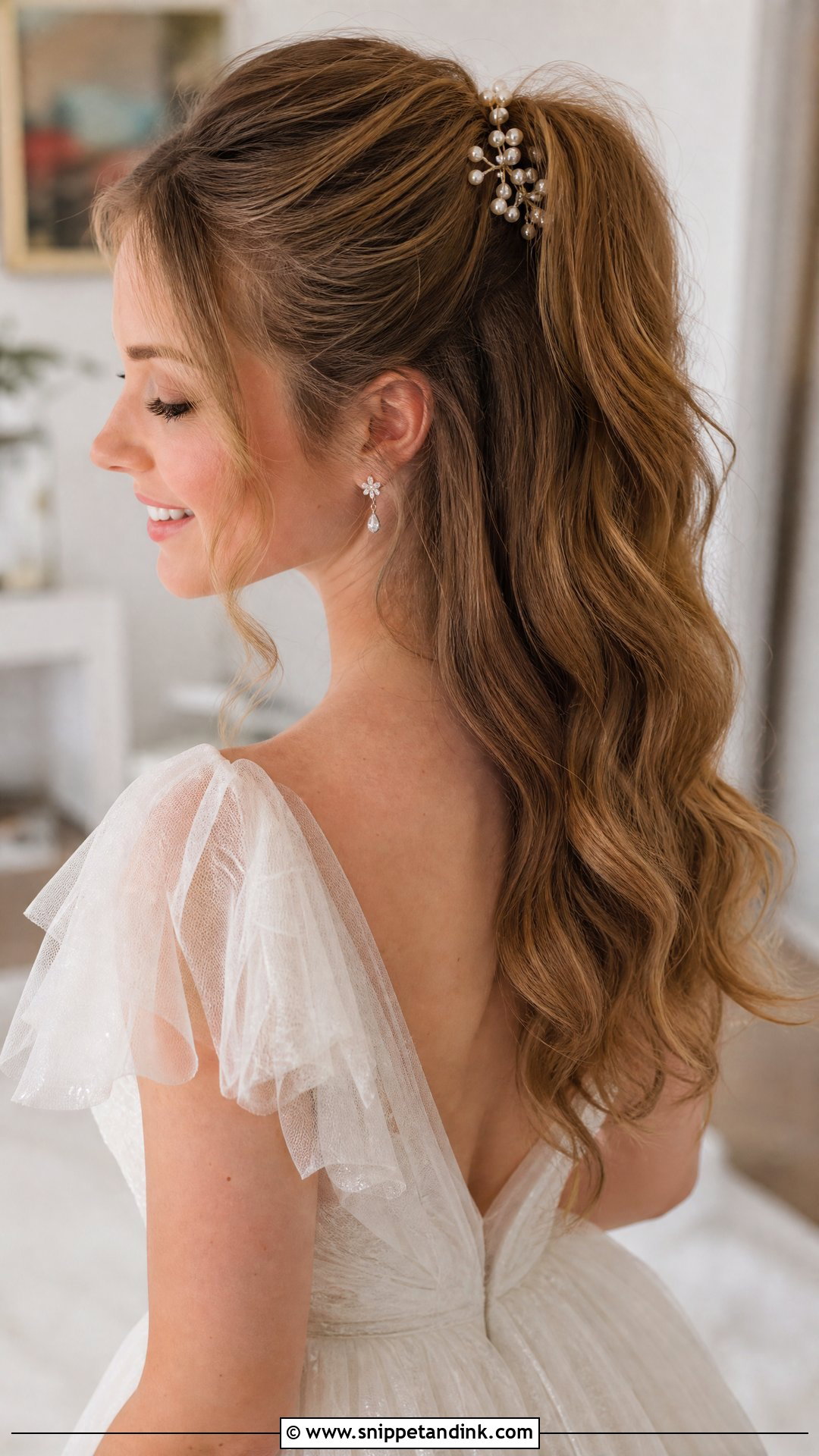
If your hair is shoulder length or has heavy layers, a half up ponytail is often the honest answer, because shorter pieces don’t have to reach a full gather. Only the top section is tied, so the rest falls loose down the back, and the tie point gives a veil comb something solid to grip. I curl the lower section first, then build the ponytail so the curls stay intact. Bows, pearl clips and small flowers all sit naturally at the tie point.
11. Pearl Bridal Ponytail
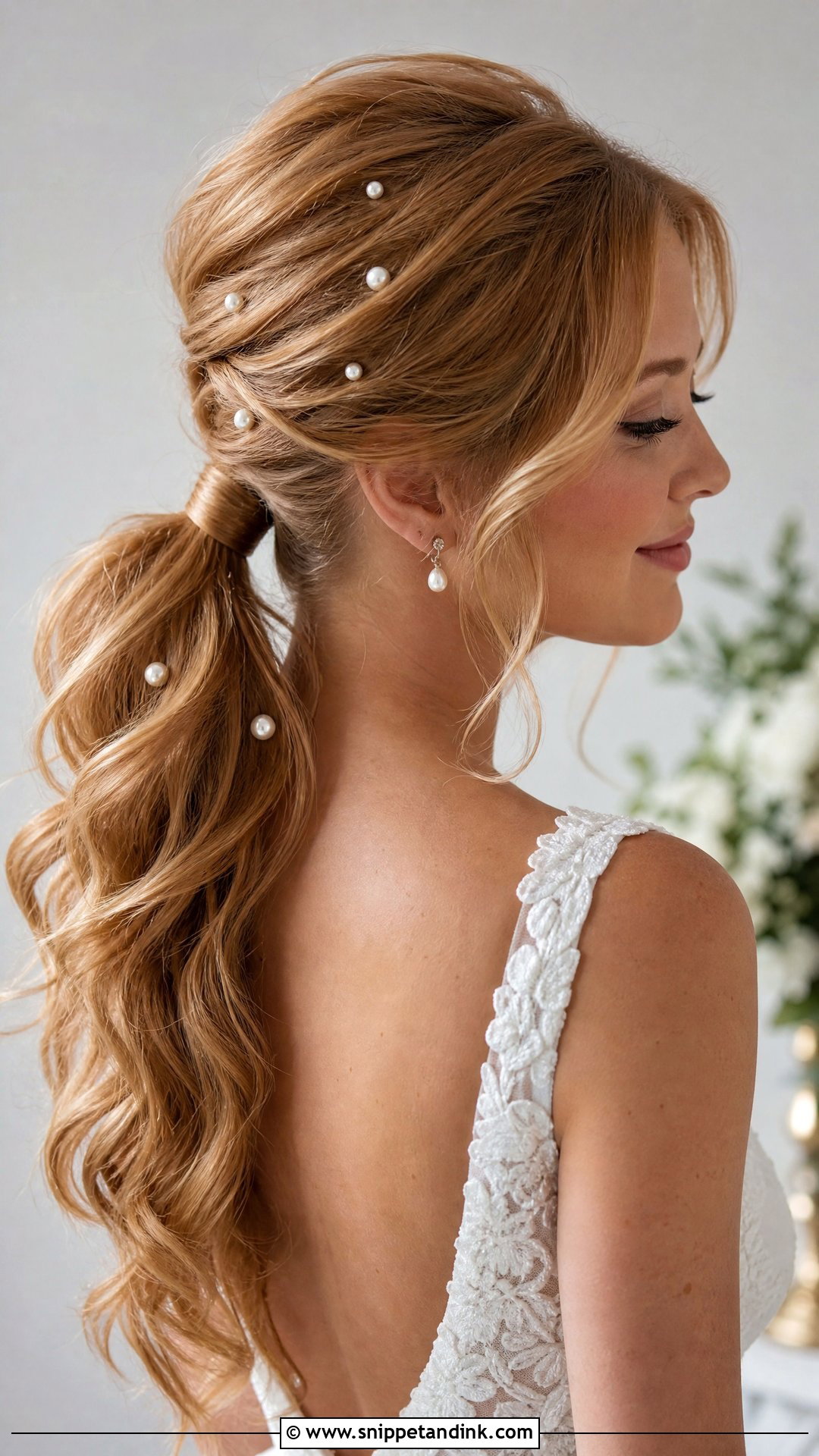
Pearls look better in small groups than scattered evenly; three or four pins clustered around the base read as intentional, while a dozen spaced out can look like polka dots. I place them after the hair is fully set and sprayed, angling each pin into the elastic so it can’t migrate. They work at any height and pair well with lace sleeves and pearl earrings. Keep the texture in the tail simple, loose waves rather than tight curls, so the pearls aren’t lost.
12. Ribbon Bridal Ponytail
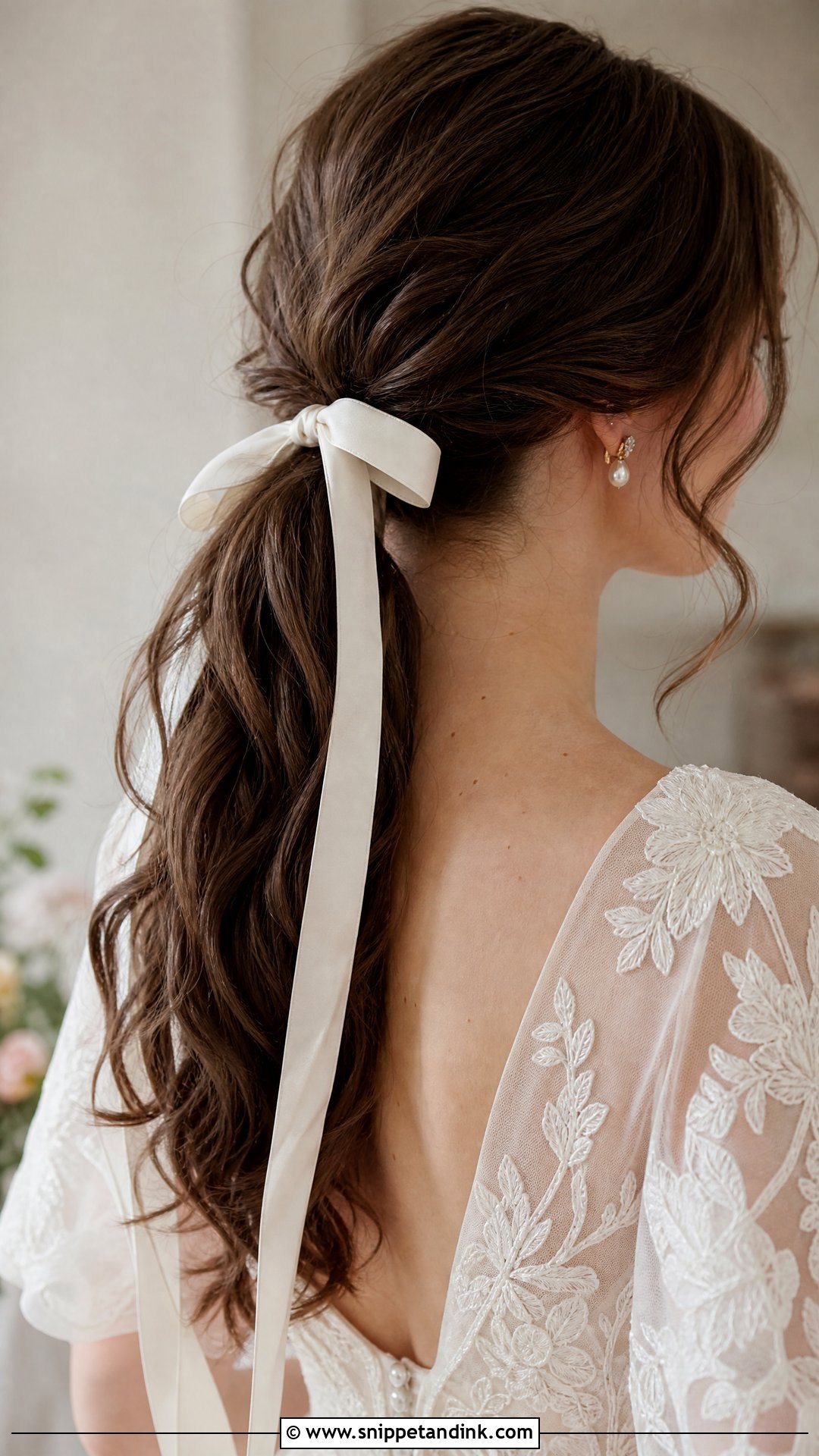
Ribbon is the gentlest accessory here and reads clearly from the back of the aisle. A satin, silk or velvet ribbon tied around the base softens the whole style, and long tails falling into loose waves suit a garden or courthouse wedding. I tie the ribbon over a hidden elastic, never as the only fastening, and pin the knot in place so it doesn’t slip. Bring the actual ribbon to your trial; a color that looks right next to the gown can look yellow against your skin in daylight.
13. Veil Bridal Ponytail
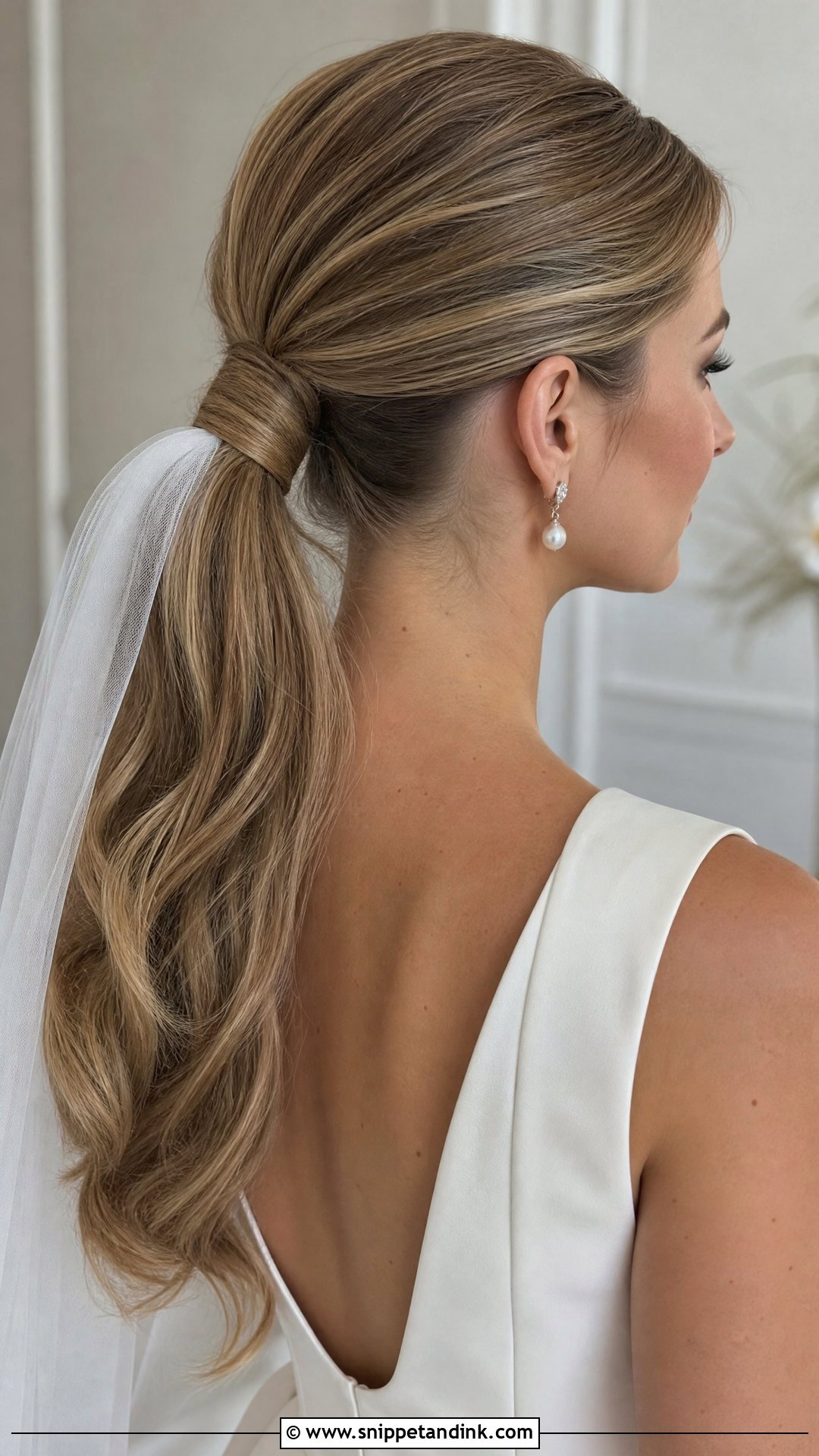
Veil placement decides this one. Above the ponytail looks traditional and frames the tail; tucked underneath, the veil seems to float out from the hair. Low ponytails take a veil most easily. Mid-height ones need the comb angled downward into the base, or the veil’s weight will drag the ponytail backward. I build in a way to remove the veil after the ceremony without loosening anything, so the reception look stays the same style, just lighter.
14. Boho Bridal Ponytail
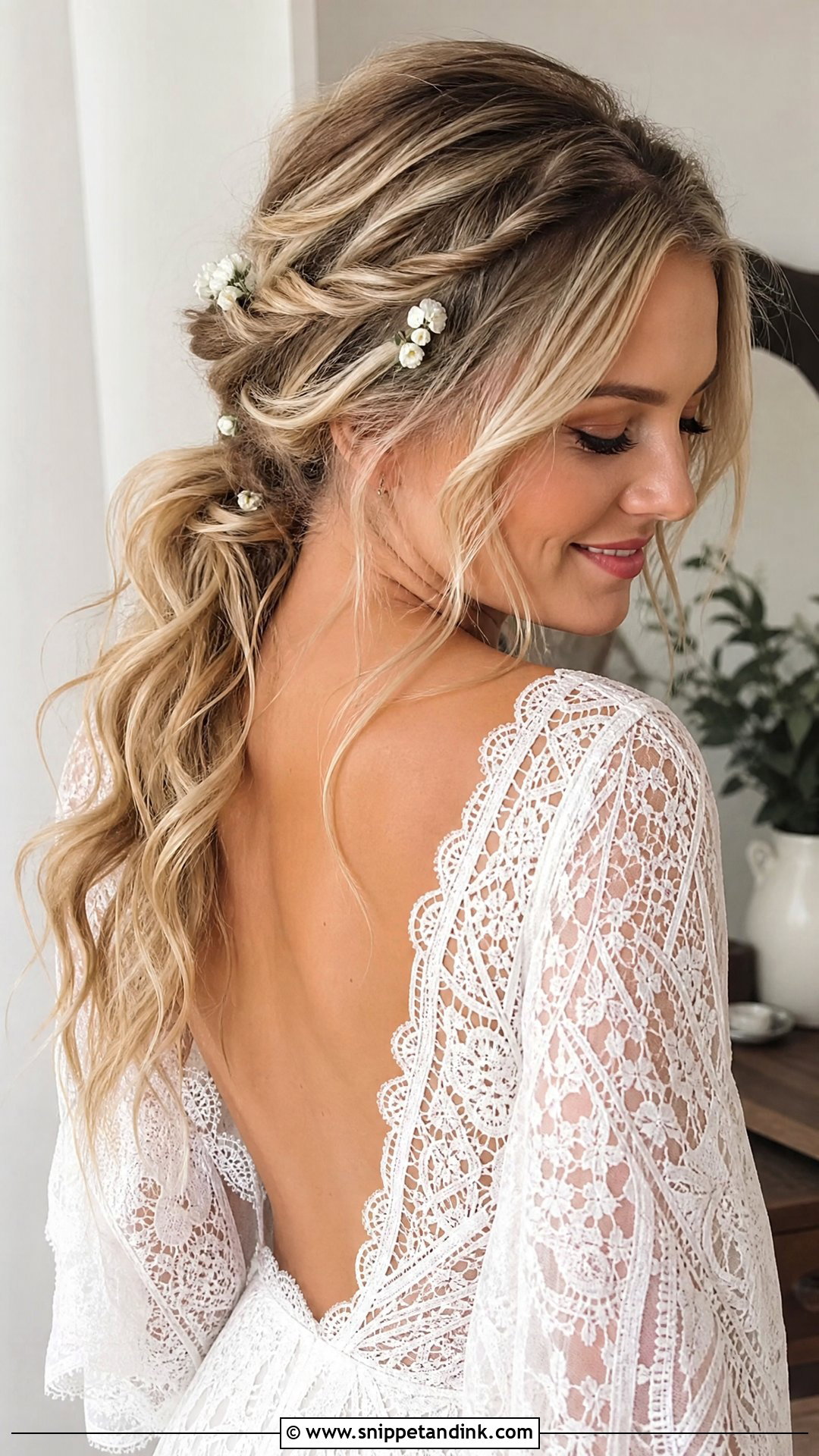
Boho works when it looks unfussy but is actually well secured. I use loose waves, a couple of twisted sections and a pulled-apart braid, then pin each piece into the base so nothing drifts loose as the evening goes on. It suits rustic venues, beaches and chiffon or lace dresses. Small flowers, greenery or a soft hair vine complete it. Don’t let anyone make the crown too tight or the curls too uniform; the texture is the point.
15. Hollywood Wave Bridal Ponytail
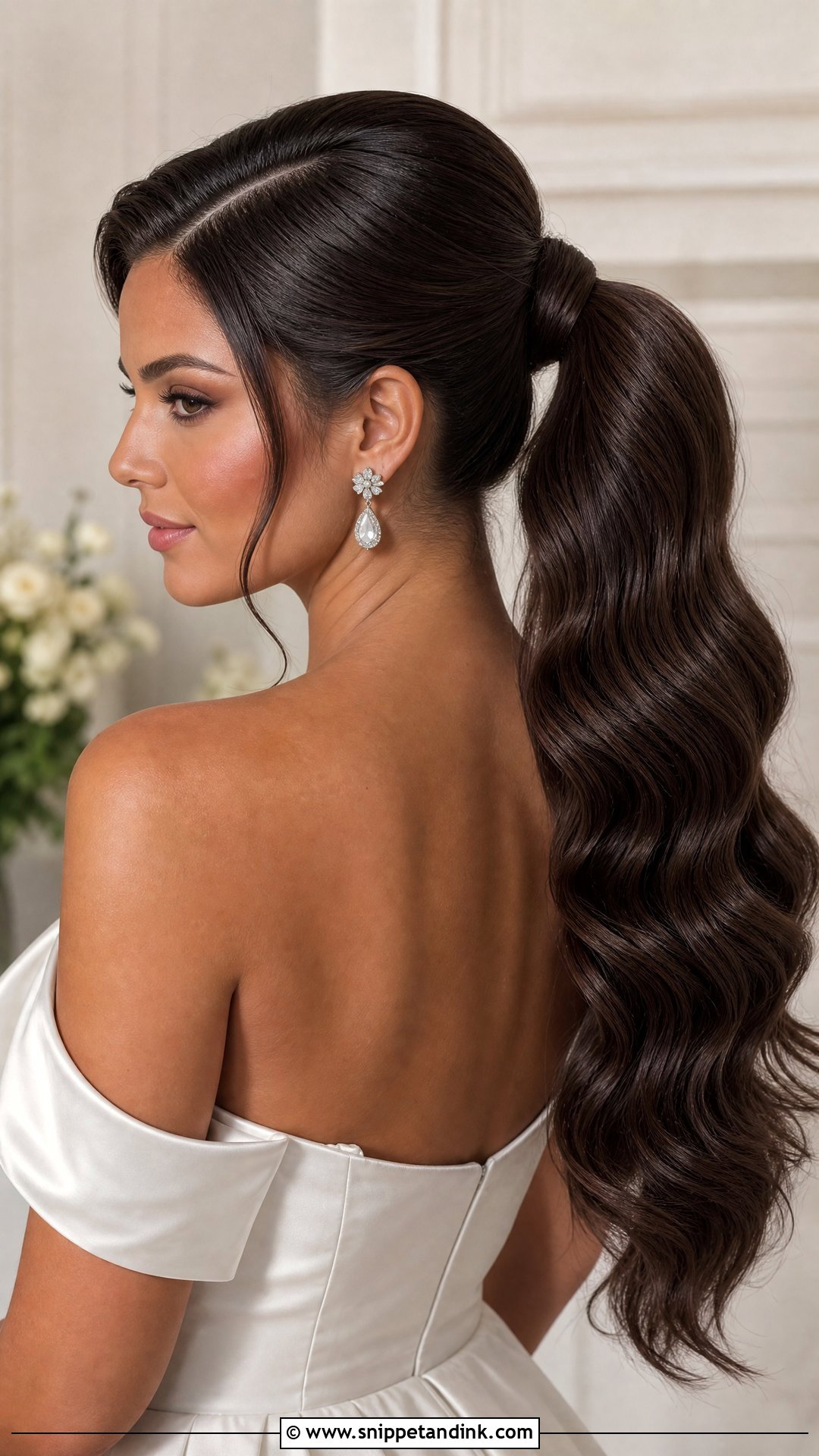
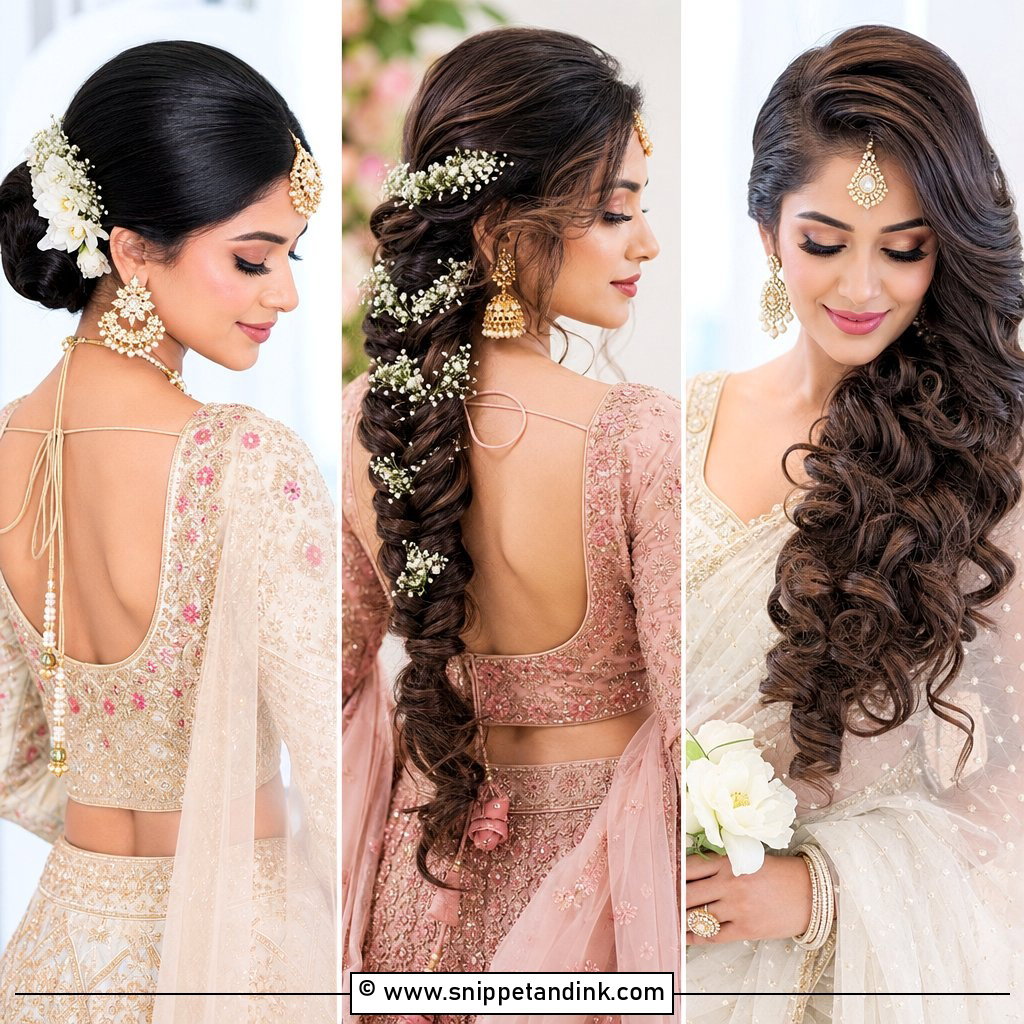
These large, uniform waves come from old pin-curl technique: each section curled in the same direction, set, then brushed into one continuous S-shape. It takes longer than any other version on this list, so allow extra time on the morning. A deep side part and smooth crown give the classic version; a little lift gives more drama. It shines under evening light and pairs with satin gowns and statement earrings. I finish with a firm but brushable spray so the waves hold their shape and still move.
Not Enough Hair for the Ponytail in Your Photos?
Many inspiration pictures, especially the voluminous and Hollywood wave versions above, use extensions. Fine or shoulder-length hair usually gives a smaller tail than the photo suggests, and that’s not a styling failure.
- Clip-in wefts placed under the ponytail before it’s gathered, so the clips hide inside the base.
- A wrap-around ponytail piece fixed over your own short tail, which suits low and sleek styles.
- A half up or braided version, both of which look full with far less hair.
- Color checked in daylight. Extensions that match under salon lights can show a clear band outdoors.
Buy them early and bring them to the trial so they can be cut and blended into your own ends. A brand new pack opened on the wedding morning is how you get a visible line where your hair stops and the extension begins.
A small rescue kit for a bridesmaid’s bag
Spare clear elastics, six bobby pins in your hair color, a travel hairspray and a small smoothing brush are enough to tighten a loosened base in a couple of minutes. Before I leave, I show that bridesmaid exactly how the base was secured so she isn’t guessing later.
Shake Your Head at the Trial Before You Commit
Every one of these starts from the same question: what is the back of your dress doing, and how much hair do you really have to work with? Sleek versions read modern, waves and curls read softer, and ribbon, pearls or a braid make the style yours. Wear the veil at your trial and shake your head hard before you leave the chair. If the base stays put and nothing pulls, you’ve got a ponytail that will still look right in the last photos of the night.
You'll Like These Ideas:


Leave a Reply