
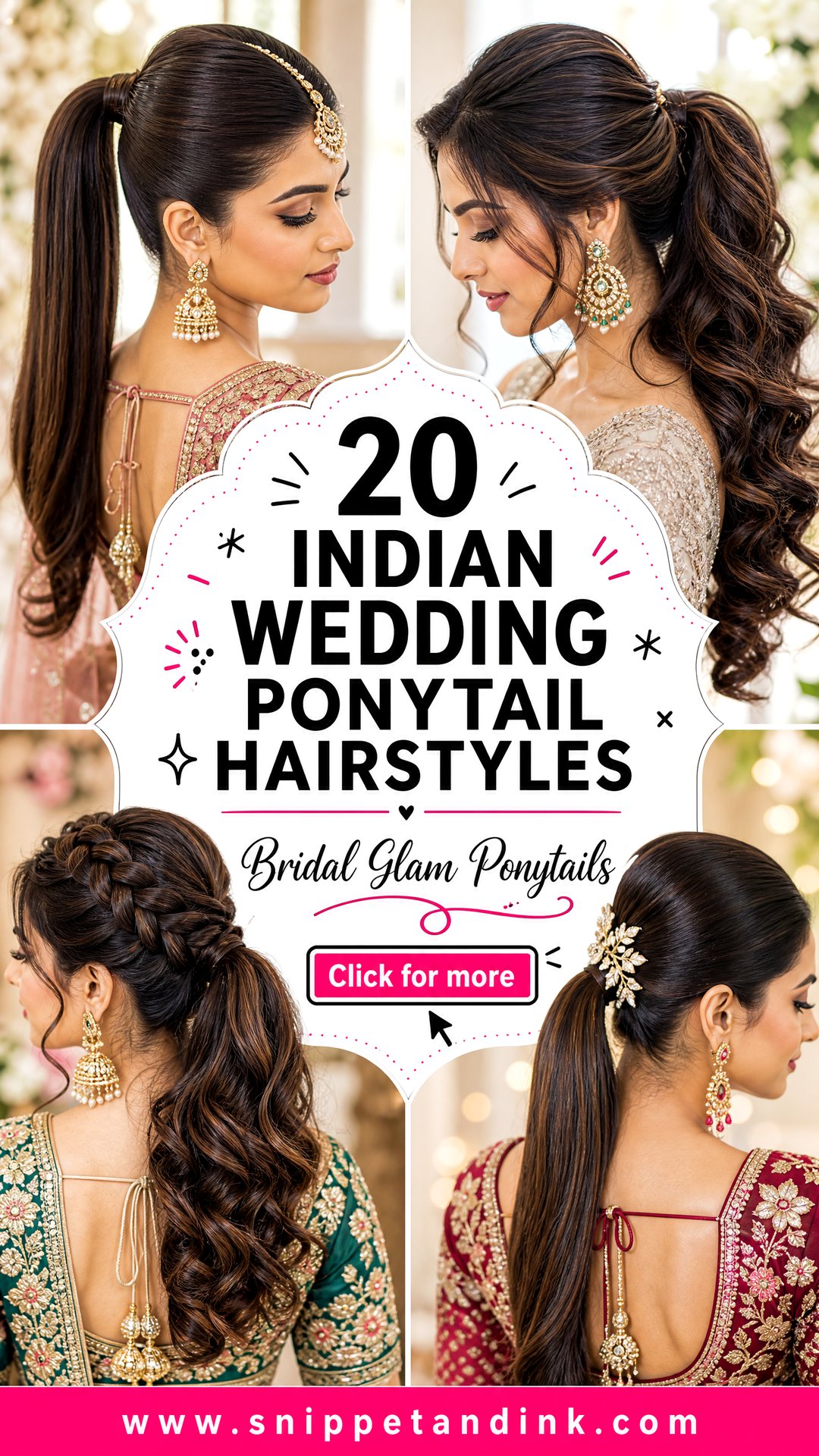
A ponytail at an Indian wedding used to be the guest’s option. Now I’m asked for it by brides too, especially for the sangeet, mehndi and reception, because it shows off blouse backs, statement earrings and hair jewelry in a way an updo can’t. It also keeps hair off the neck through hours of heat and dancing. The trade-off is that a ponytail is honest: every bump, every elastic and every patch of thin hair at the nape is on display. Below are twenty I build regularly, from a sleek high pony to a low one wrapped in gajra, with notes on the hair type each suits and how I make it last.
Where the Elastic Sits When a Dupatta Goes Over Your Head
The question I ask first isn’t which ponytail you like. It’s whether a dupatta will be draped over your head at any point. A high pony and a head-draped dupatta don’t work together: the fabric sits on the bump and slides off. For ceremonies where the dupatta covers the head, I place the pony low at the nape, and I pin the dupatta just above it so the weight of the fabric rests on secure hair.
- High at the crown: best for the sangeet or reception, when the dupatta is draped over the shoulder.
- Mid-height, at the back of the head: suits most outfits and frames earrings without fighting a light dupatta.
- Low at the nape: the most practical choice for ceremonies with a head-draped dupatta or a heavy maang tikka.
Bring the dupatta to your trial, not just a photo. I’ll drape it and pin it, and we’ll see how the pony and the fabric move together while you sit, stand and turn your head.
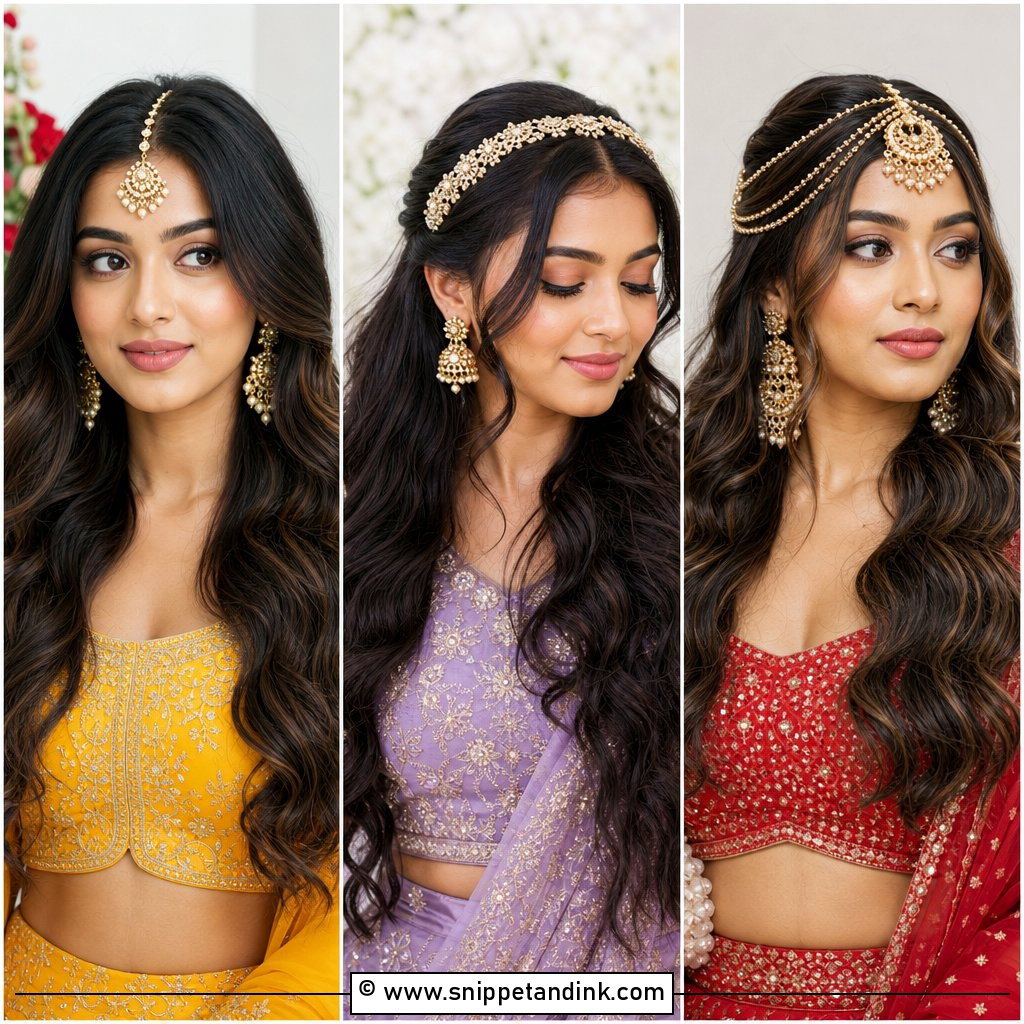
1. Sleek High Ponytail With Maang Tikka
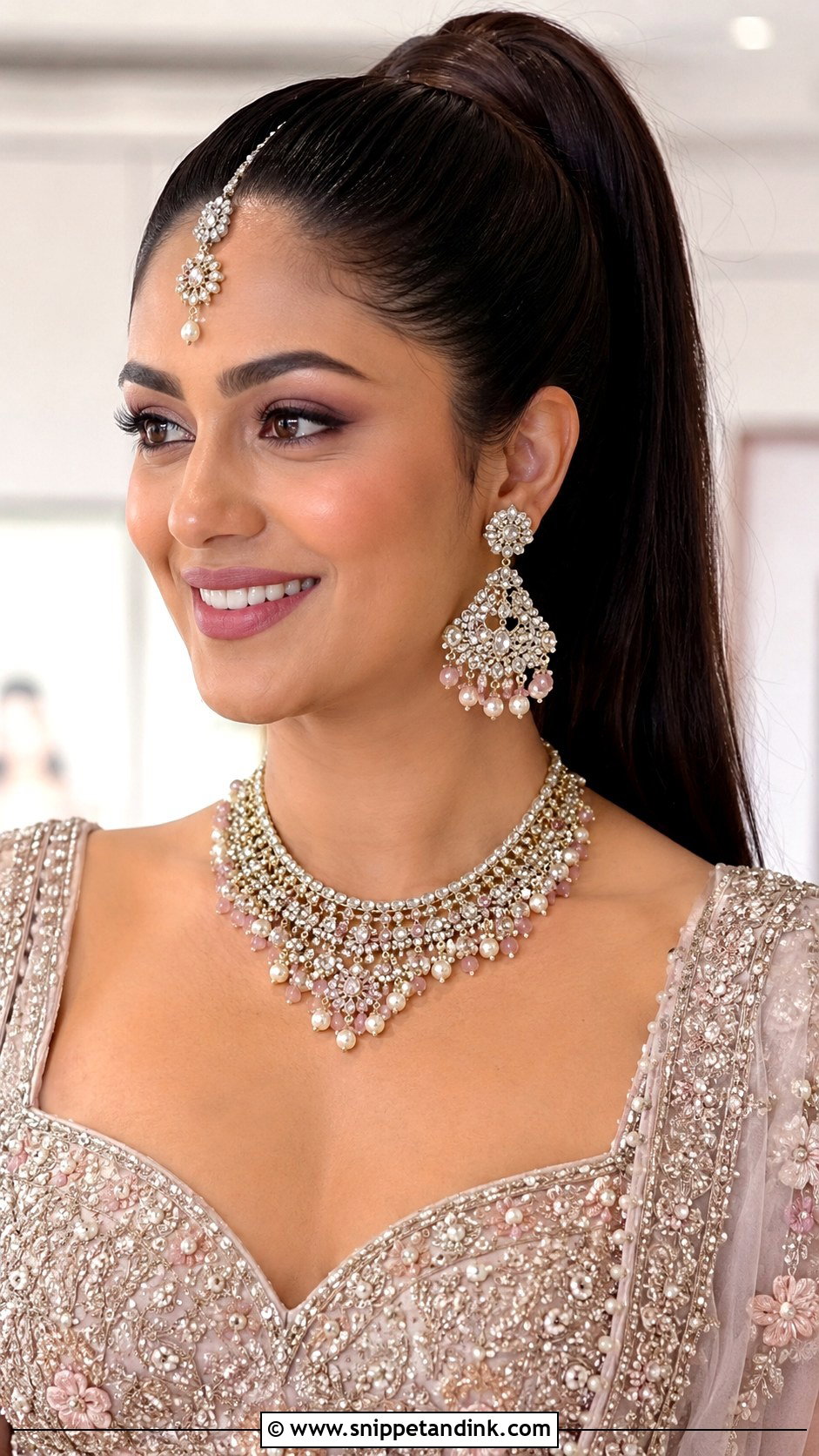
Drama comes from height and tension. I pull every strand up to the crown, smooth it until it’s mirror-flat, and place the maang tikka along the centre so it sits in line with the pony. A high pony lifts the face and frames heavy earrings, and it suits the sangeet or cocktail night, when you’ll be moving a lot. I wrap a section of hair around the base to hide the elastic and finish with shine spray. If you get tension headaches, tell me at the trial. A very tight high pony worn for eight hours can ache, and I’d drop it an inch to take the pull off the scalp.
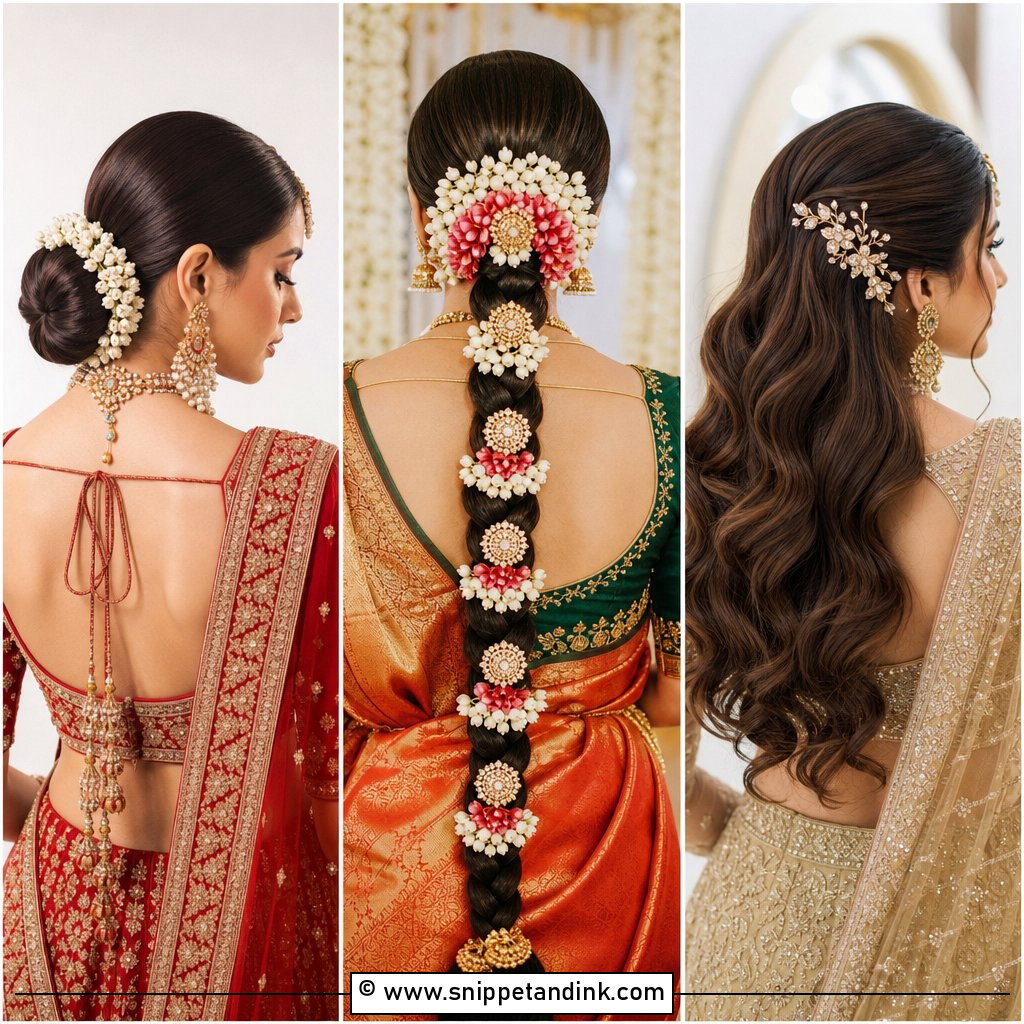
2. Low Ponytail With Gajra
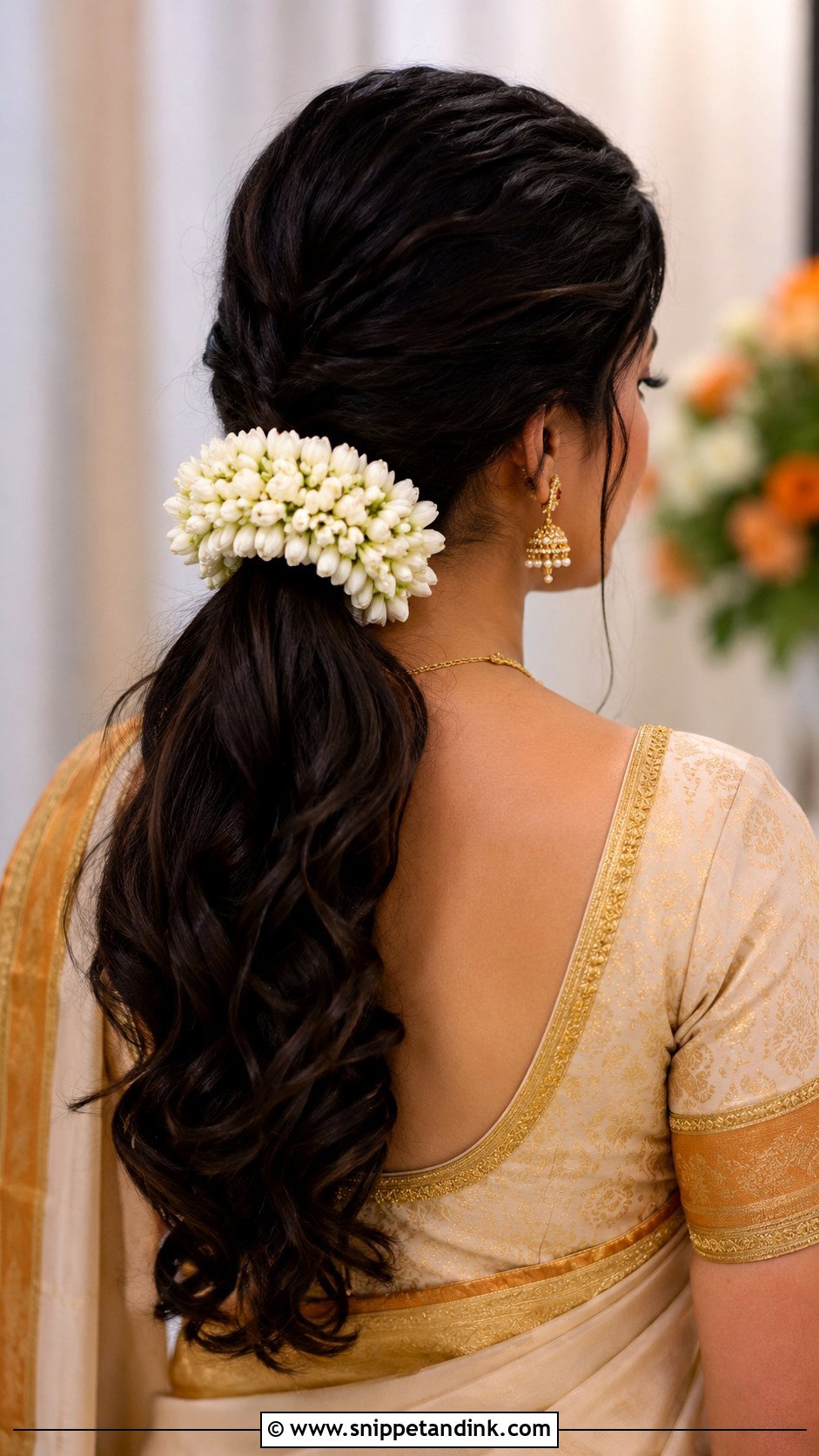
Few things feel as classic as a low ponytail wrapped with fragrant gajra. I gather the hair at the nape, secure it gently and coil the jasmine around the base, pinning the string every few centimetres so it doesn’t slide. The white flowers sit well with sarees and lehengas at daytime ceremonies and temple weddings. Fresh jasmine wilts in direct heat, so I keep the gajra in a cool box until the last moment and bring a spare for the evening. The pony can stay straight or take soft waves for more fullness.
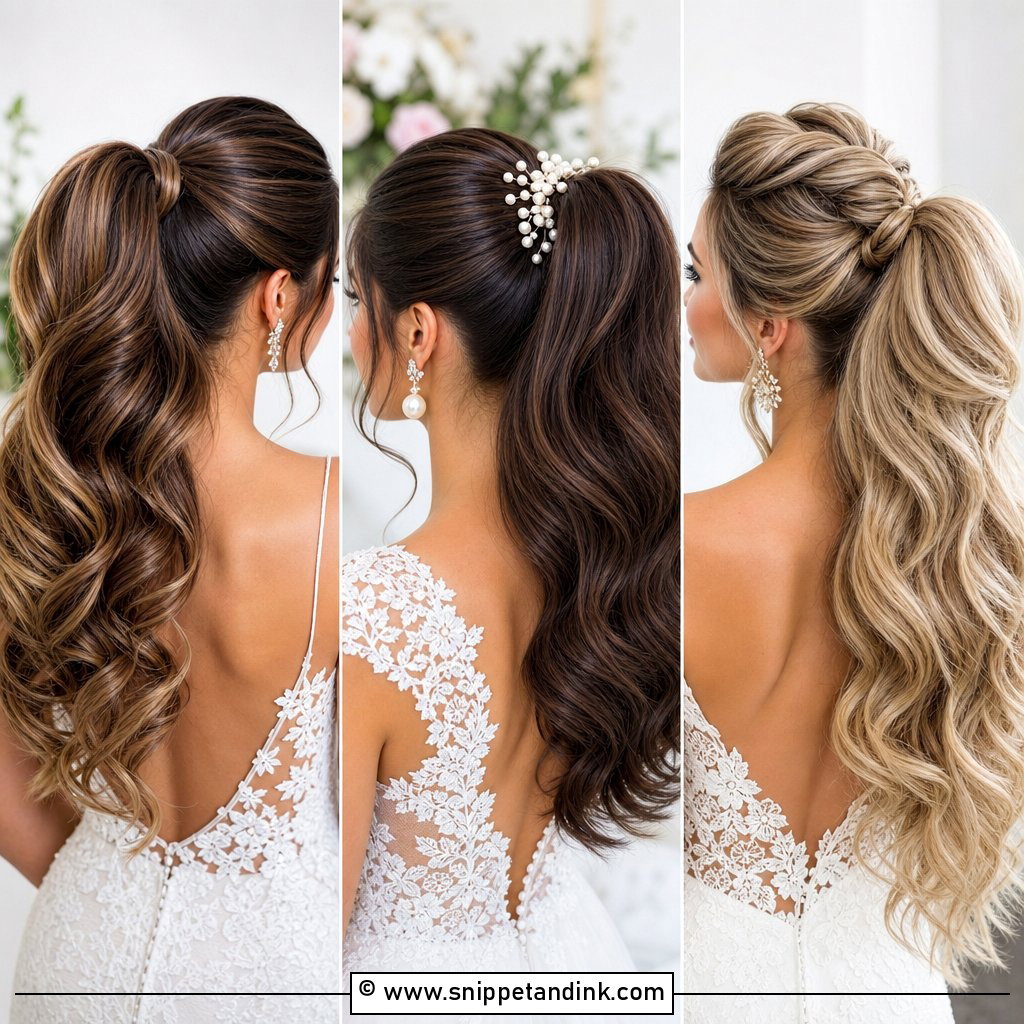
3. Voluminous Curled Ponytail
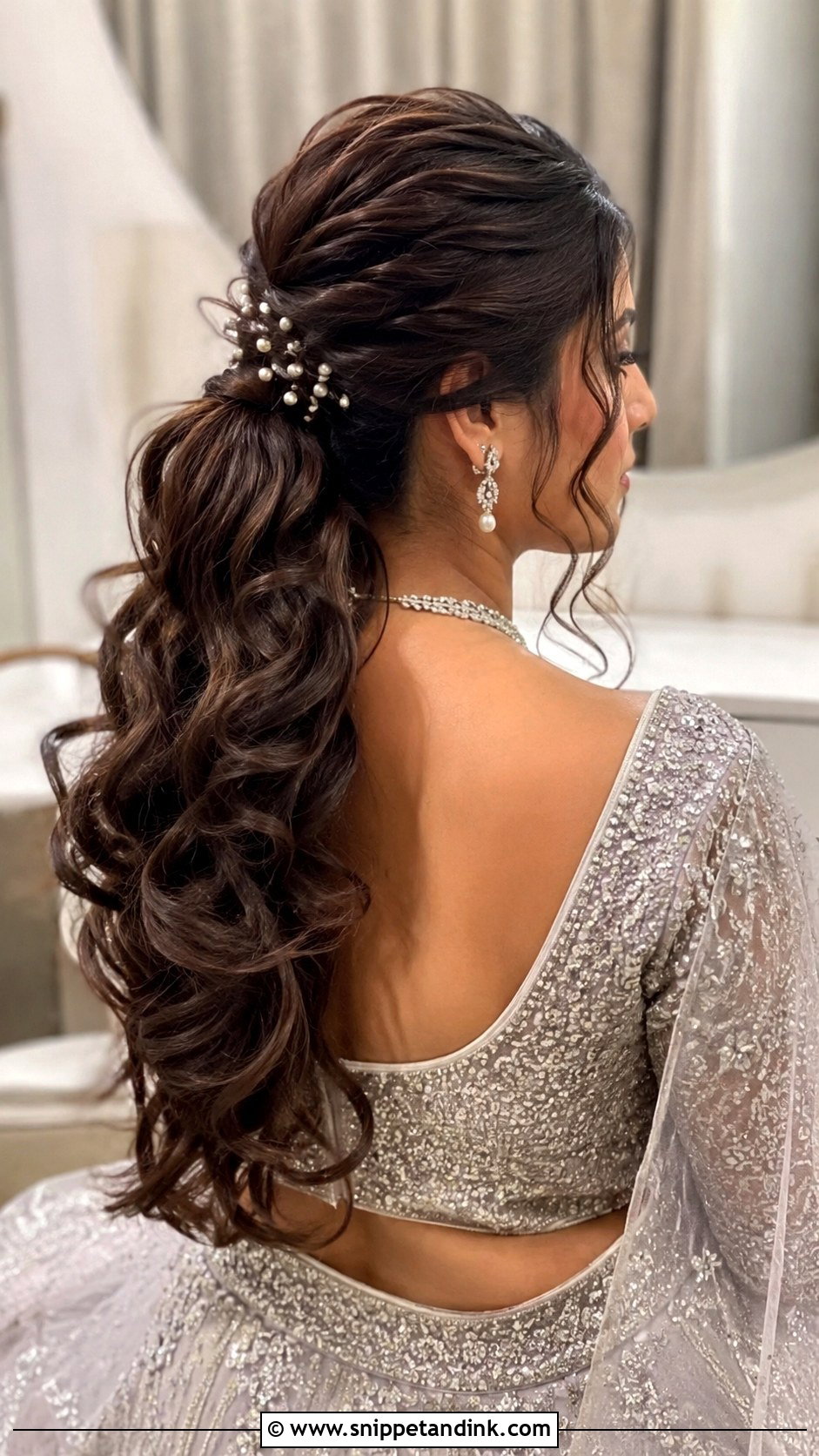
For a reception, a full curled pony gives that big, soft finish. Most brides need help with volume here, so I usually add a ponytail extension or a couple of clip-in wefts underneath. I tease the crown slightly for lift, gather everything back, then curl the length in loose sections and let the curls cool fully before brushing them out. Set with a flexible spray, they keep their bounce through dancing. A few pearl pins at the base finish it. On very straight, silky hair, I’d use a hot tool at a higher heat and a texture spray first, or the curls drop within an hour.
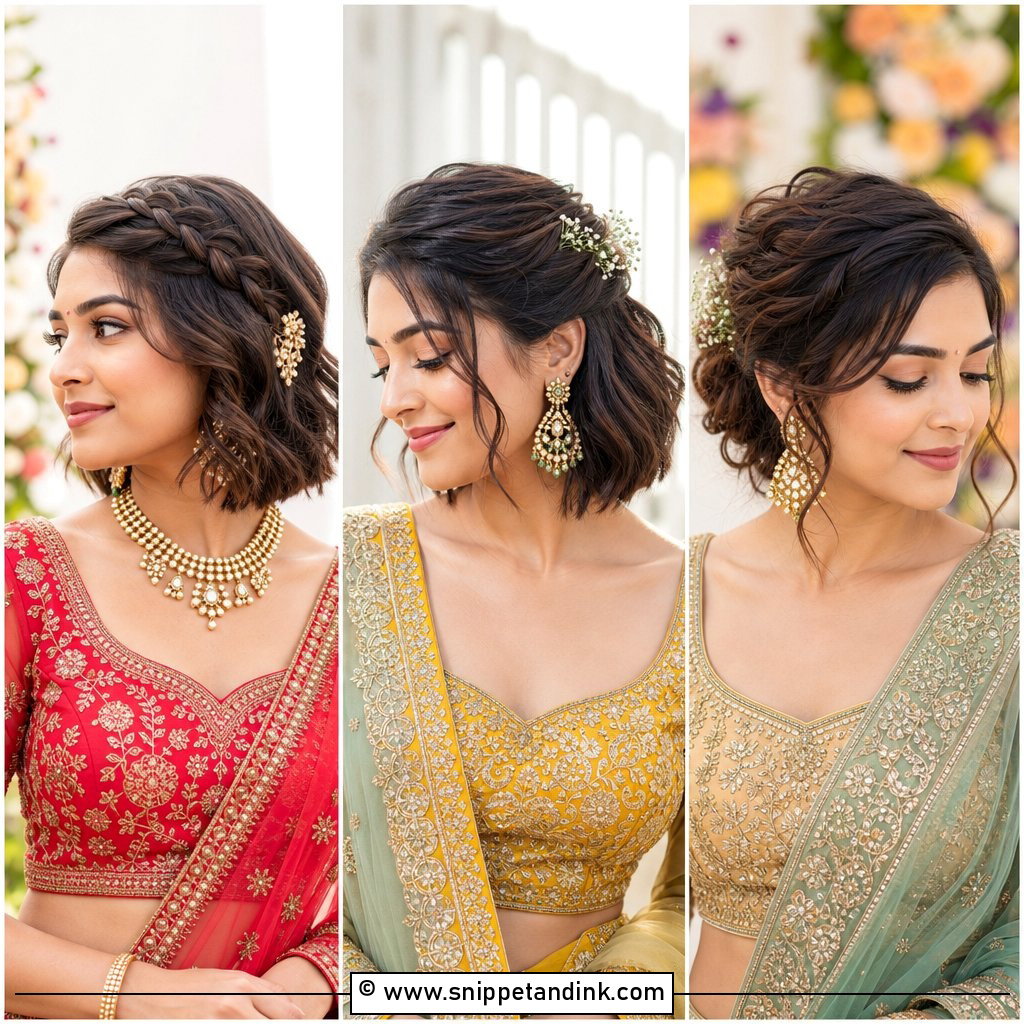
4. Messy Low Ponytail With Baby’s Breath
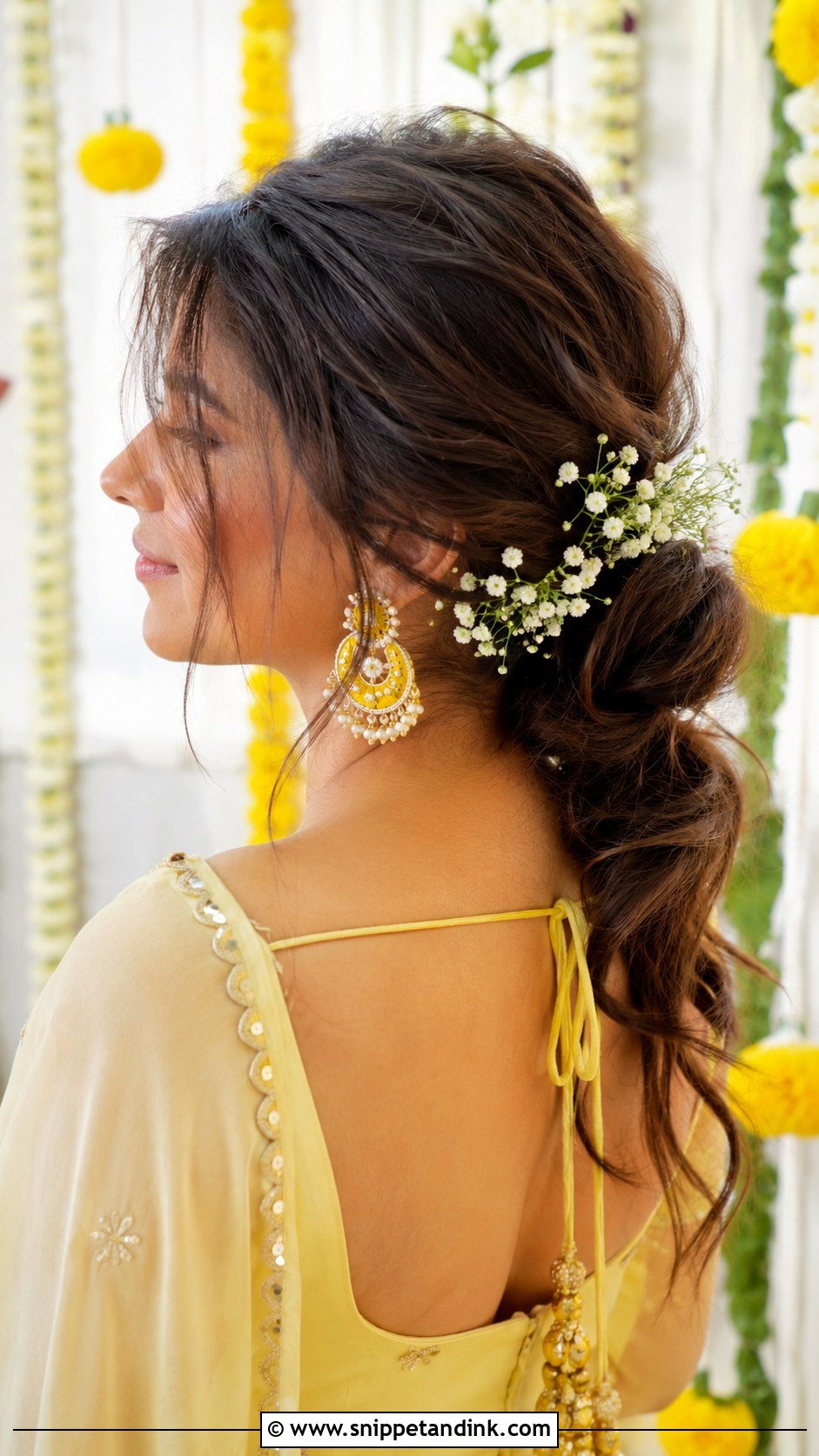
A messy low pony with baby’s breath is a soft, modern option for intimate ceremonies, haldi and boho-themed celebrations. I gather the hair loosely at the nape, leave a few pieces out around the face, and tuck small sprigs of baby’s breath around and over the knot. The flowers are light and hold up better in heat than jasmine. The secret to ‘messy’ that still looks bridal is that it’s built from secure foundations: I set a firm pony first, then pull out texture, never the other way round. Loose waves through the length finish it.
5. Pearl Embellished Ponytail
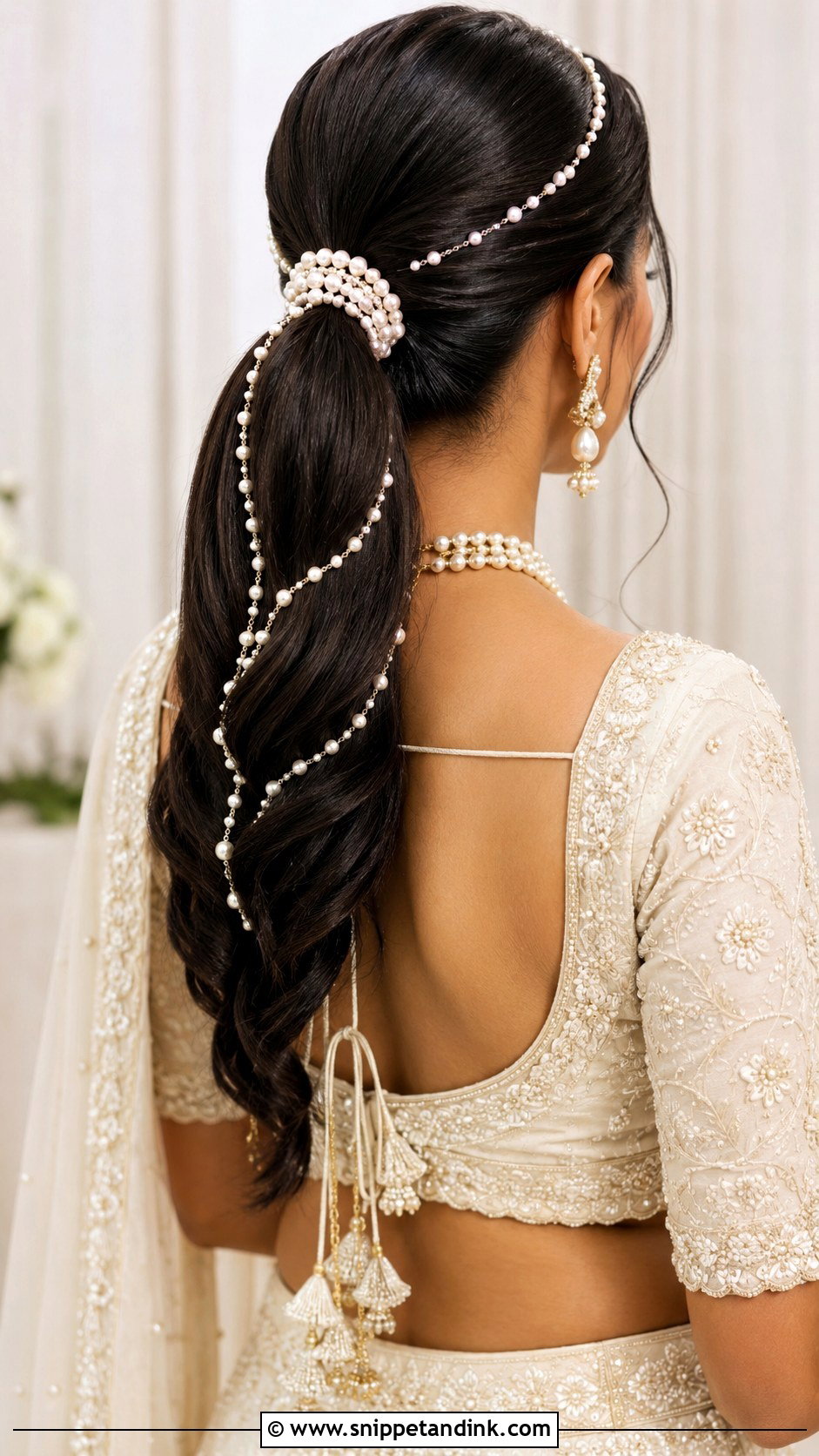
Pearls turn a plain ponytail into something formal. I wrap dainty strands around the base and weave pearl strings through the length, anchoring each loop with a hidden pin so the weight doesn’t drag them down. It’s a good choice if you’d rather skip fresh flowers, and it ties in naturally with a pearl jewelry set. High or low both work, depending on the outfit’s neckline. I pair it with a soft maang tikka to balance the shimmer at the back. Under reception lights the pearls catch a quiet glow without competing with the jewelry.
6. Braided Crown Ponytail
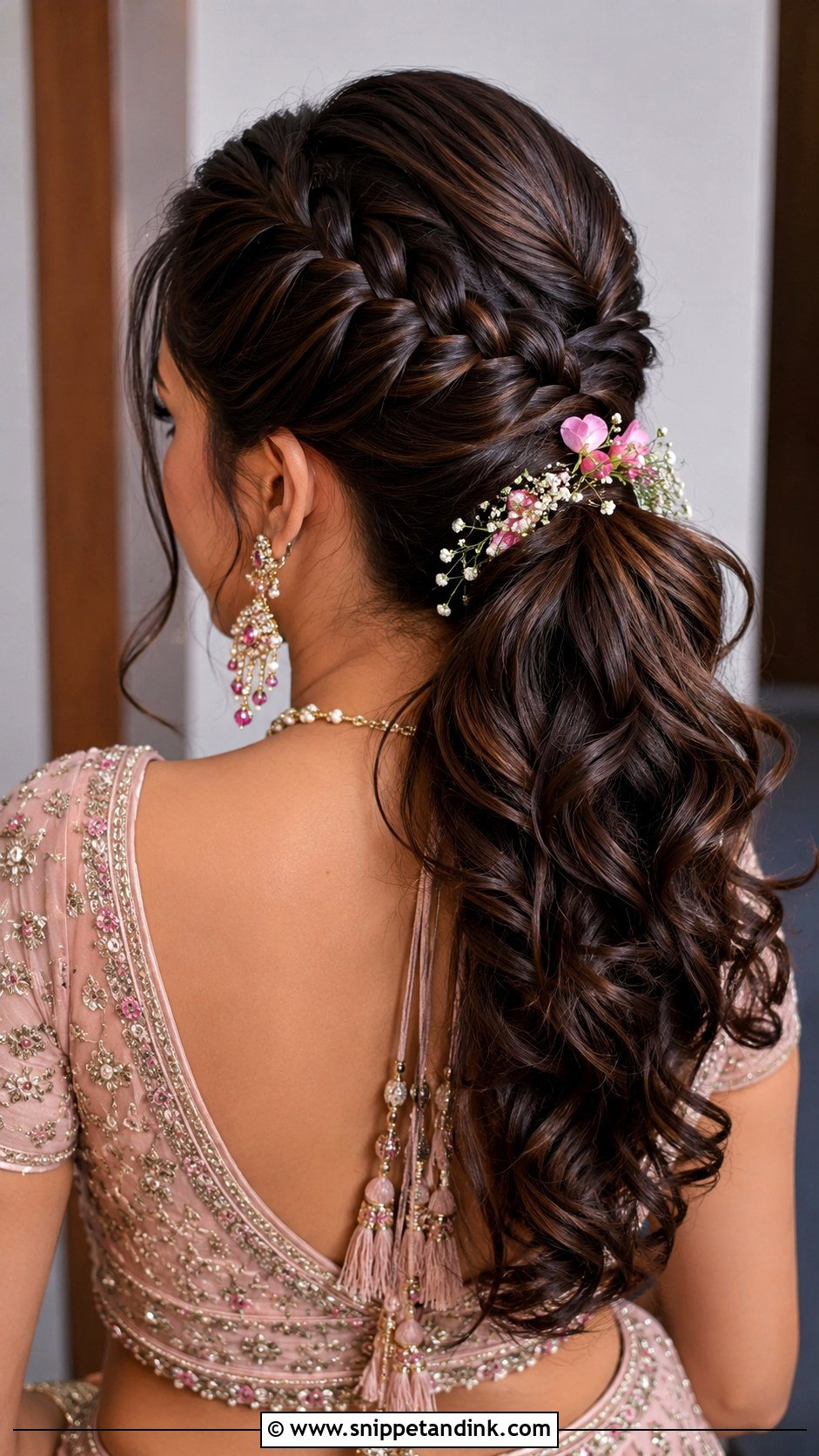
Braiding the top section first gives a ponytail detail and grip. I braid a neat crown or a centre braid across the head, then gather everything into a pony at the back, which keeps the front locked down all day. It works for sangeet and shagan ceremonies when you want something fun but secure. The length can be curled or left straight. Small flowers or tiny pins along the braid add charm. On fine hair I pancake the braid, gently pulling its edges wider, so it reads clearly in photos.
7. Side Swept Ponytail
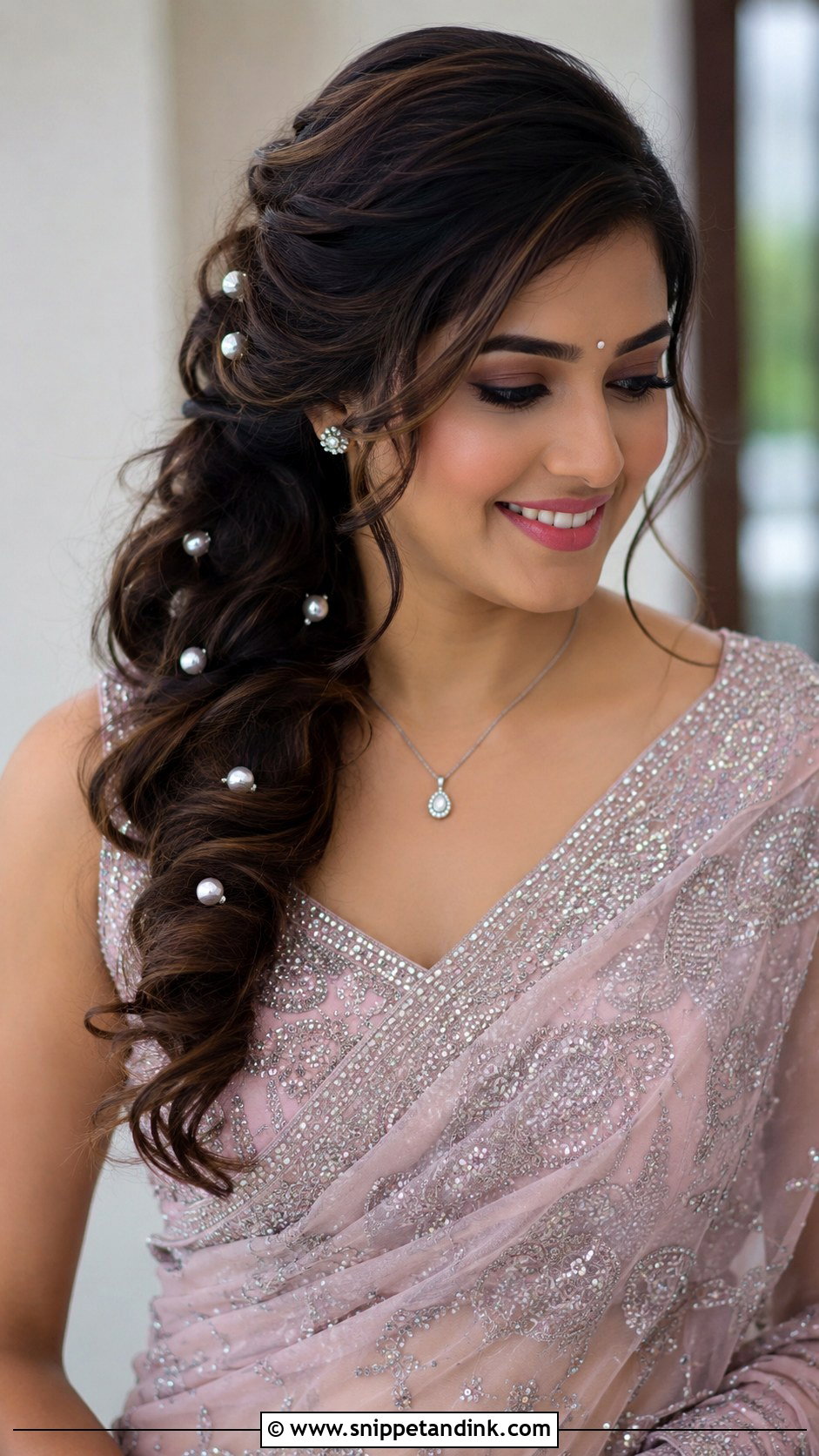
Sweeping everything to one shoulder gives soft asymmetry. I secure the pony low on the side, usually the side opposite the dupatta drape, so the hair and the fabric don’t fight. It draws the eye to your earrings and the shape of the saree pleats, and suits engagement parties and receptions. Loose curls cascade over the shoulder, and a few flowers or pearl pins where the pony meets the head finish it. A side pony needs a cross-pinned anchor behind the ear; without that, it slides toward the back by the end of the night.
8. French Braid Ponytail
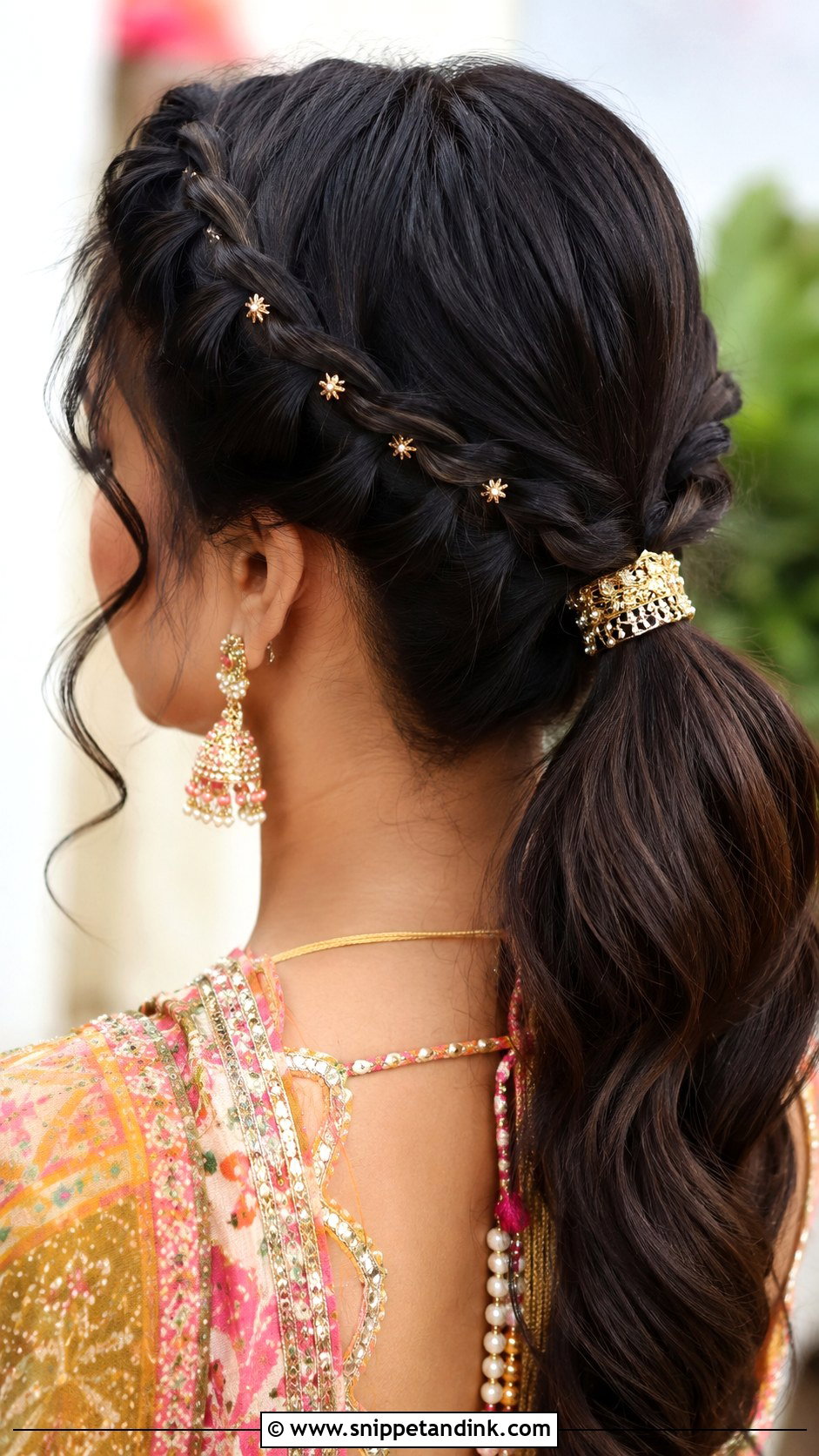
Two French braids along the sides, joined into a pony at the back, give structure and flow at once. They hold the front neatly through long celebrations and add volume at the crown. I use this for mehndi and haldi events when the hair needs to stay put while you’re sitting for hours or getting covered in turmeric. The length can be curled or straight. Tiny flowers or gota patti accents tucked into the braids keep it festive. If you have layers, short pieces will poke out of the braids, so I set them with a little gel as I go.
9. Bubble Ponytail With Flowers
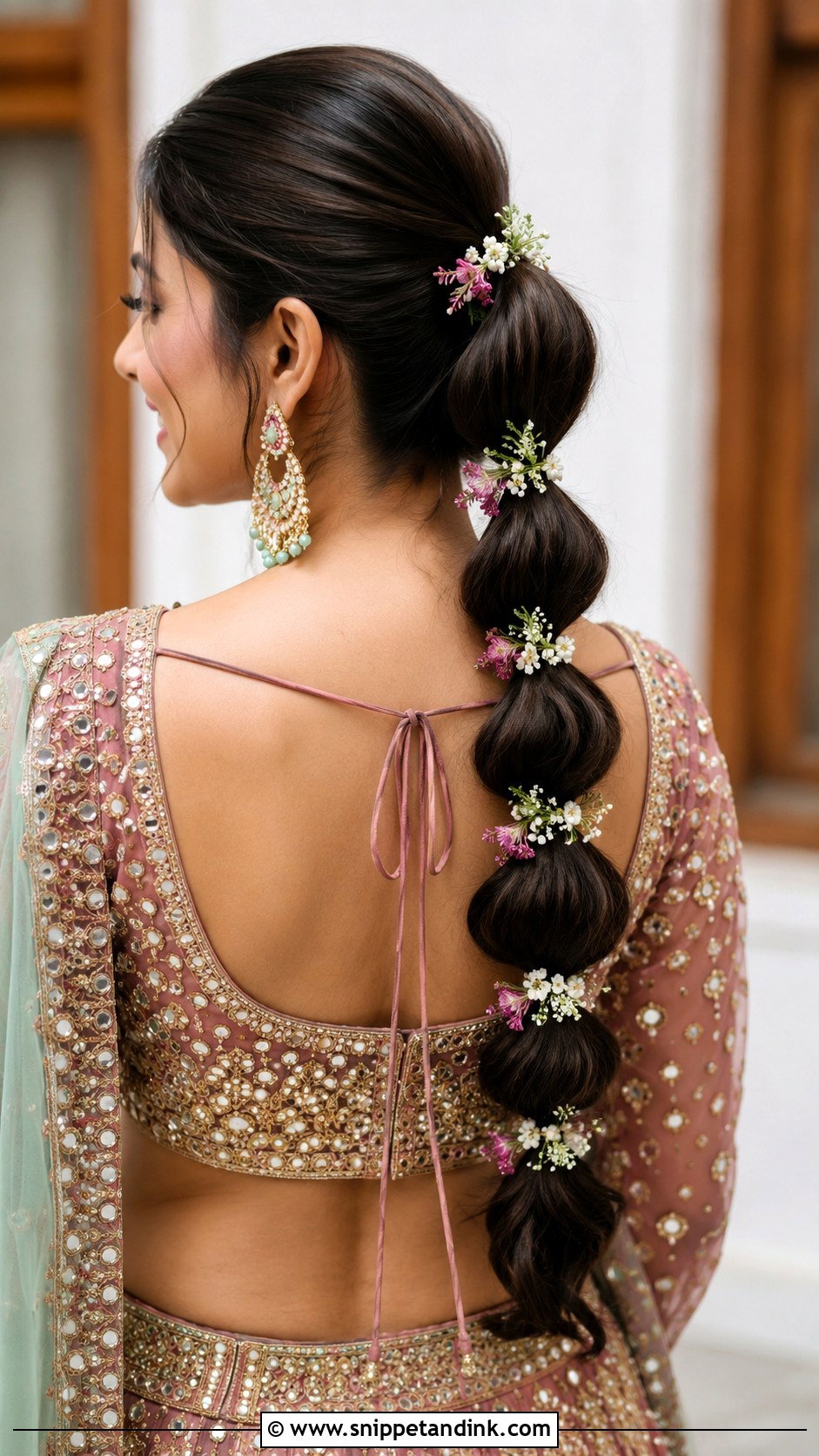
A bubble pony is playful and modern, best for younger brides and bridesmaids. I tie small elastics at intervals down the length and gently puff each section into a bubble, tucking little flowers between them. It suits a sangeet or cocktail night and photographs with real personality. The elastics should match your hair colour, and I go for the thin, snag-free kind. Thick hair holds the shape well; thin hair needs a little backcombing inside each bubble so it doesn’t collapse. Statement earrings and a bold lip suit it.
10. Sleek Low Ponytail With Headband
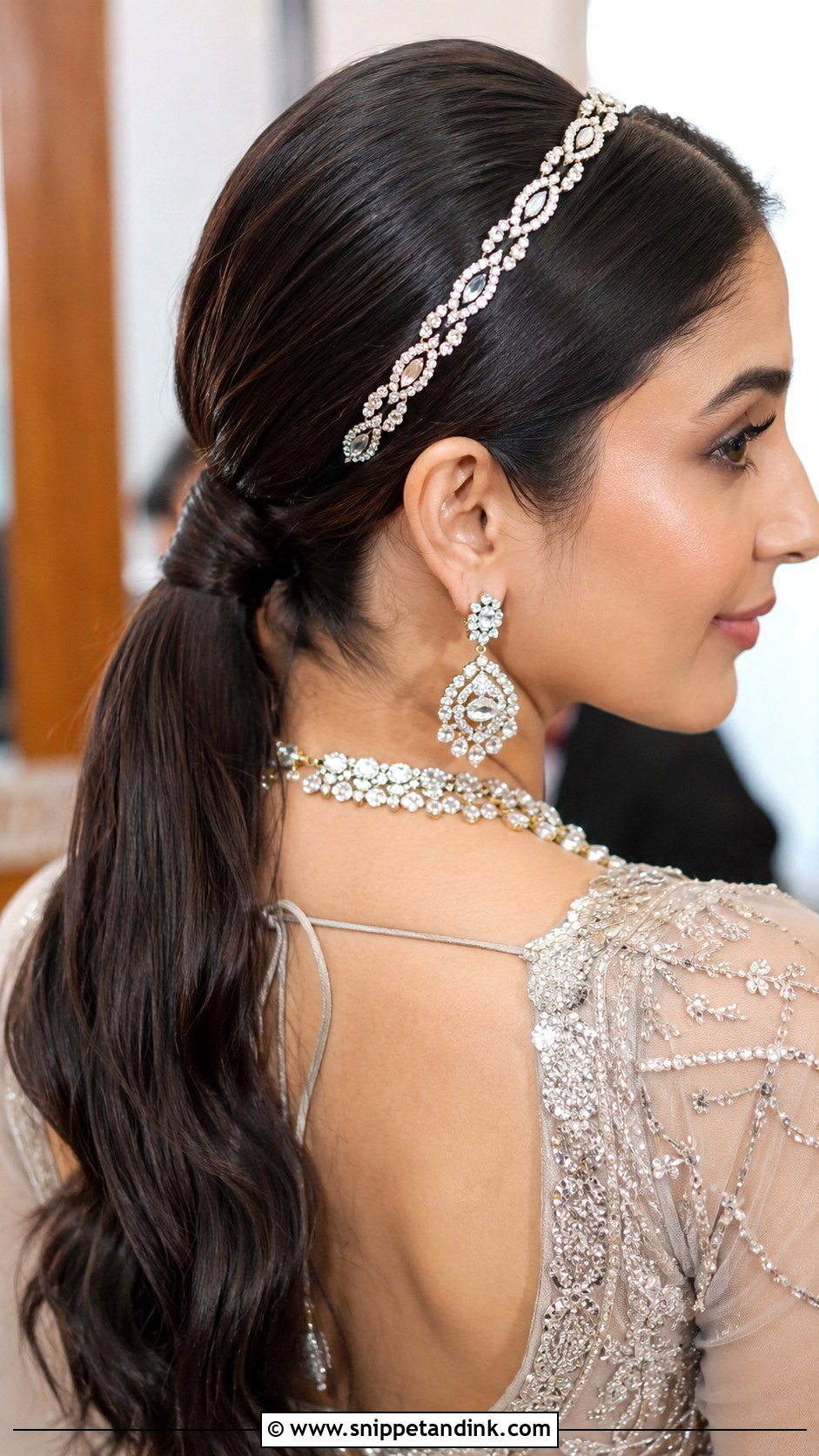
If you want polish without florals, a sleek low pony with a crystal or pearl headband does it. I smooth the hair into a low, glossy pony at the nape, wrap the base with a strand of hair, and slide the headband on last so it sits in line with the hairline. It frames the face and pairs well with heavy jewelry at a reception or engagement. A headband pressing on the same spot behind the ears all evening can ache, so I always check the fit at the trial and pin it lightly rather than relying on grip alone.
11. Fishtail Ponytail
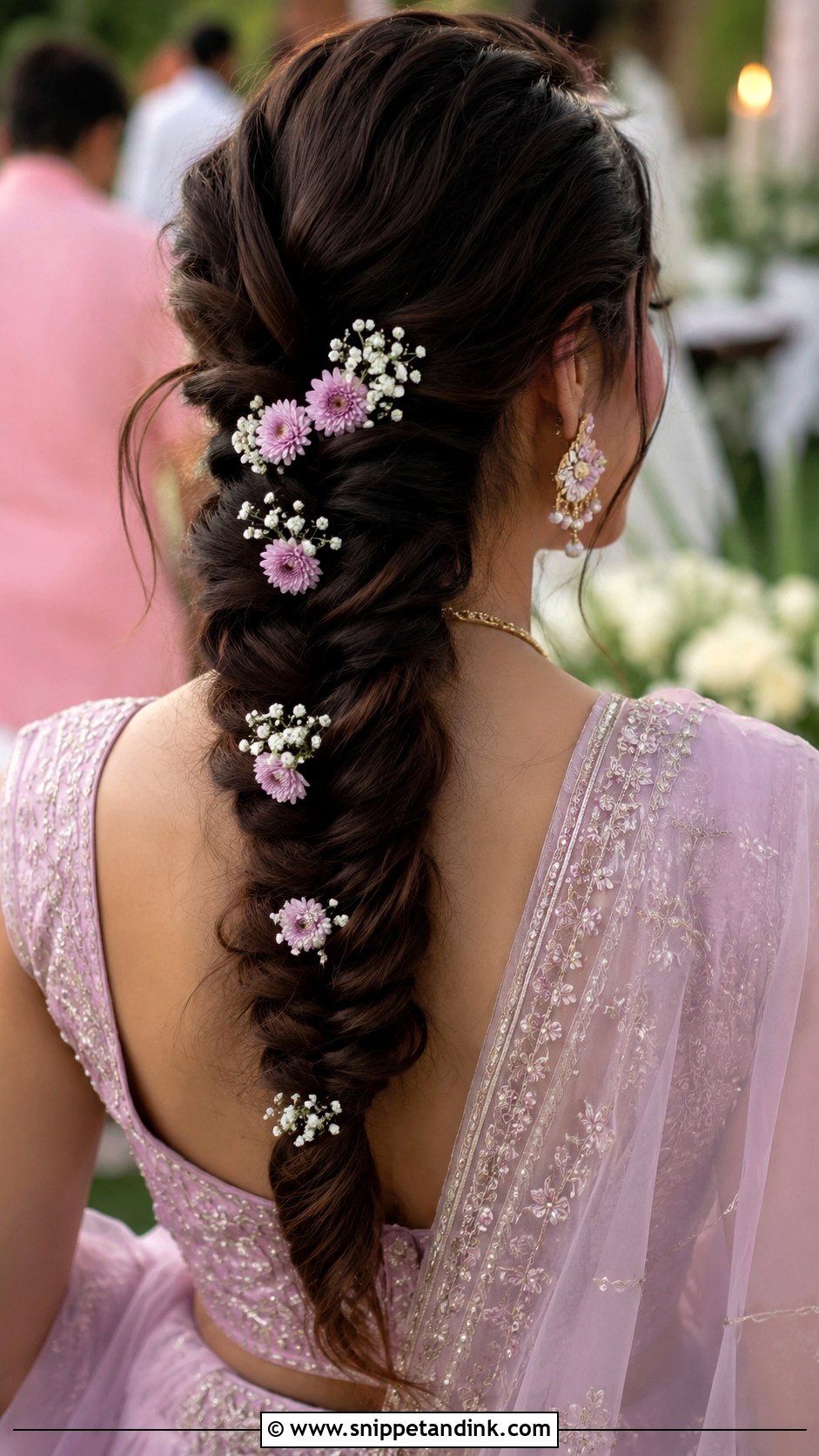
A fishtail looks far more complex than it is. I gather a pony first, then weave the length into a fishtail and gently loosen it for a fuller effect. It suits boho weddings, mehndi and daytime ceremonies, and the woven texture catches the light in photos. Tiny flowers or pearl pins along the braid add charm, and a few face-framing strands soften it. Fishtails hold up well in warm weather because the weave grips itself, which makes it a reliable choice for an outdoor event.
12. Twisted Rope Ponytail
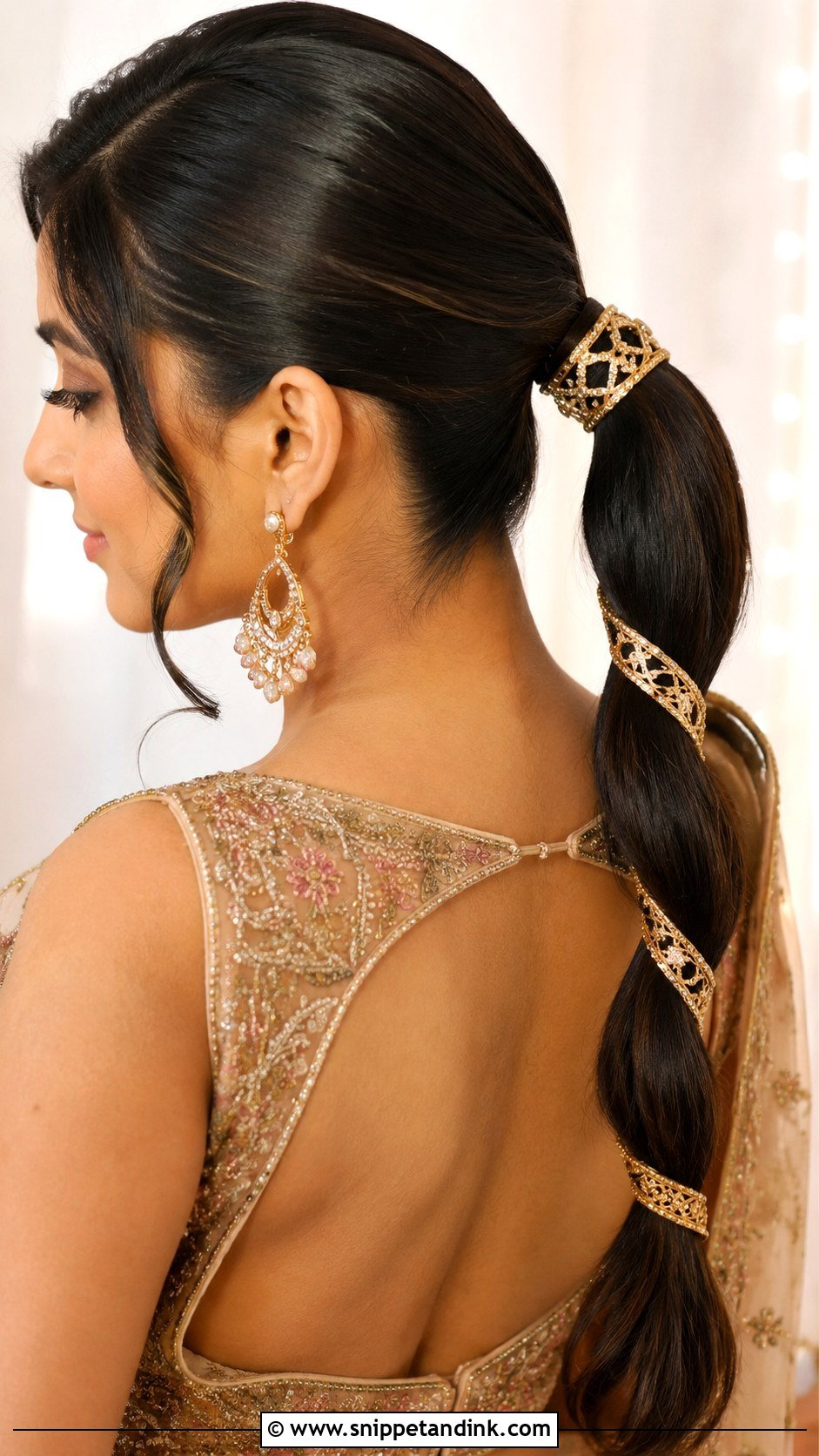
The rope is the braid alternative for hair that won’t braid neatly. I split the pony into two sections, twist each in the same direction, then wrap them around each other in the opposite direction. That counter-twist is what stops it unravelling. It gives dimension and stays secure through dancing at the sangeet or reception. Small flowers, pearls or gold accents add the bridal touch. Keep the crown sleek or add slight volume to balance it. A fine elastic at the end, hidden under a curl, holds everything.
13. Half Up Ponytail With Puff
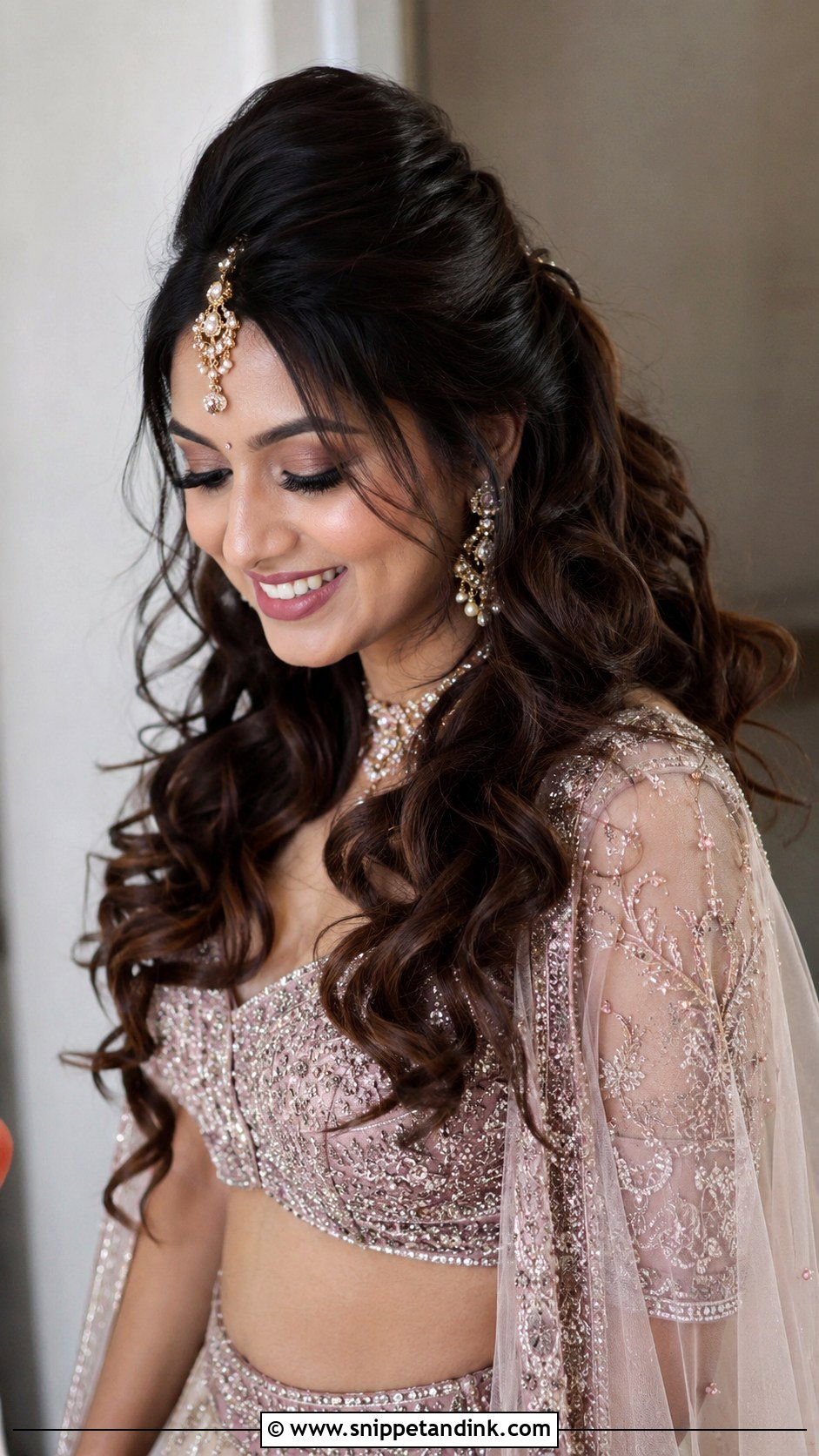
The puff gives height and frames the face, which balances heavy earrings and a maang tikka. I backcomb the crown at the roots, smooth the top layer over it, and gather the top half into a pony while the rest of the hair falls loose. It suits engagement, sangeet and reception events. The puff needs to be pinned from underneath with criss-crossed pins, or it flattens once the dupatta is draped. Curls through the loose length give movement, and a maang tikka or small flowers near the crown finish it.
14. Sleek Ponytail With Hair Accessory
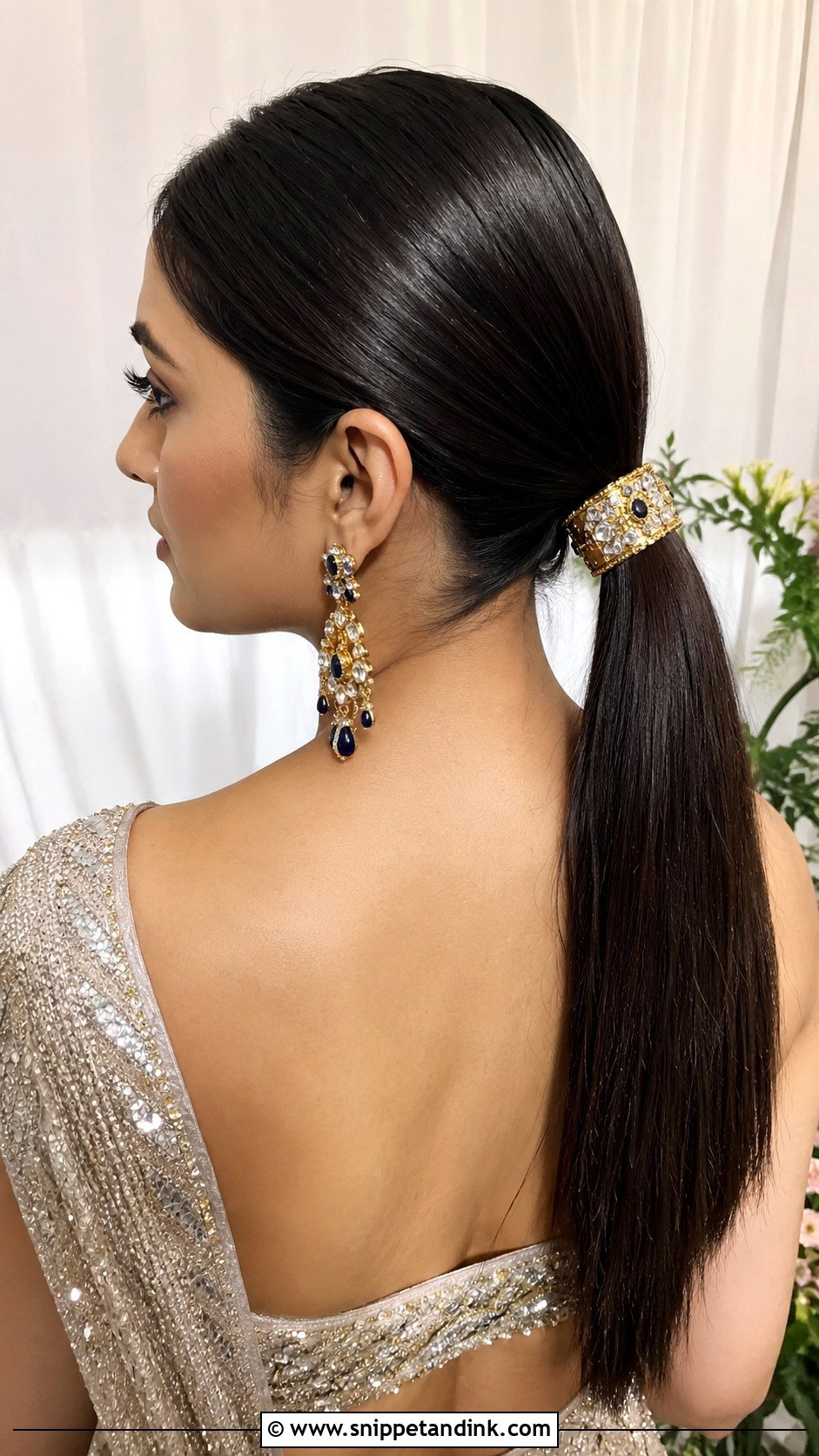
A sleek pony becomes regal with a single statement piece at the base: an ornate clip, a jeweled brooch or a gold cuff. I smooth the hair back tightly, wrap the elastic with hair, then slide the cuff on or pin the brooch so it covers the join. It’s a reception or cocktail look that keeps the focus on the jewelry. The weight of a metal cuff can pull a pony downward, so I secure it with a second hidden elastic just under the piece. Keep the length straight and glossy.

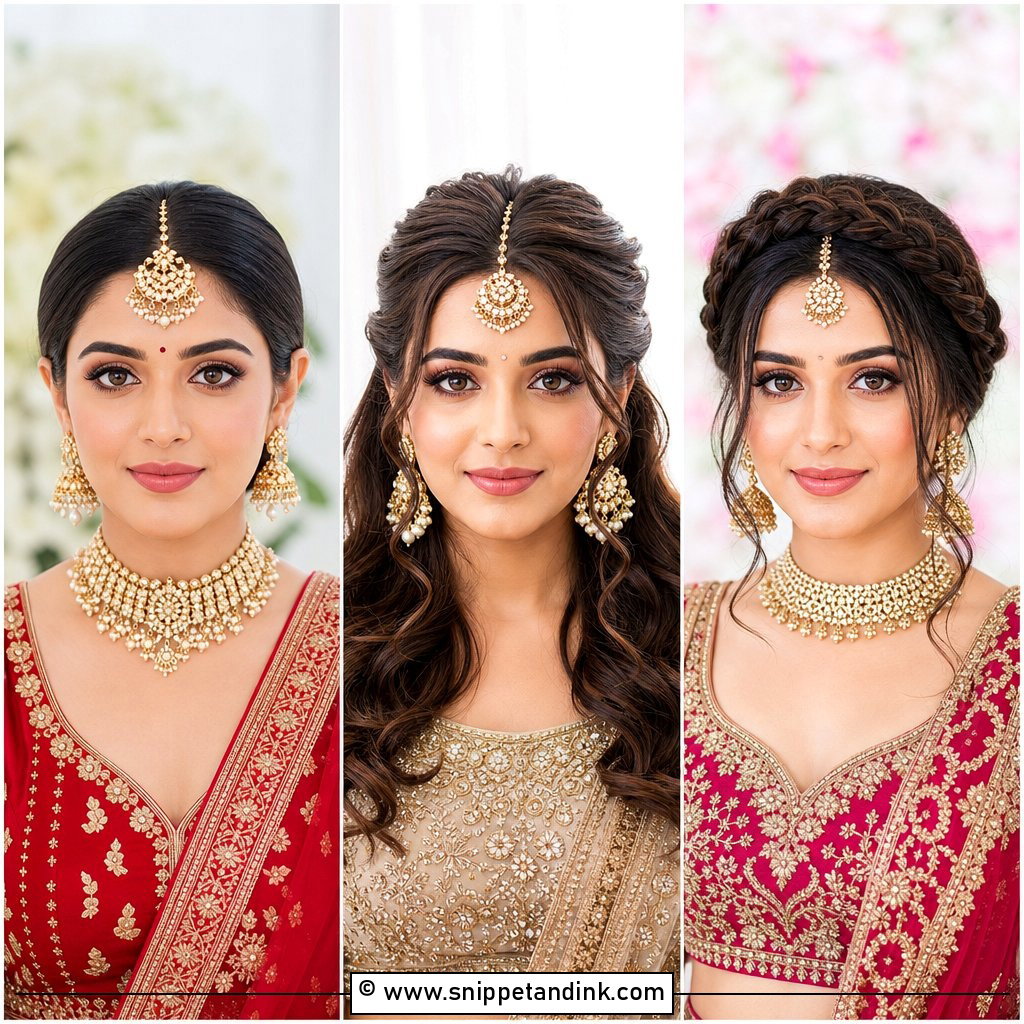
15. Curly Ponytail With Maang Tikka
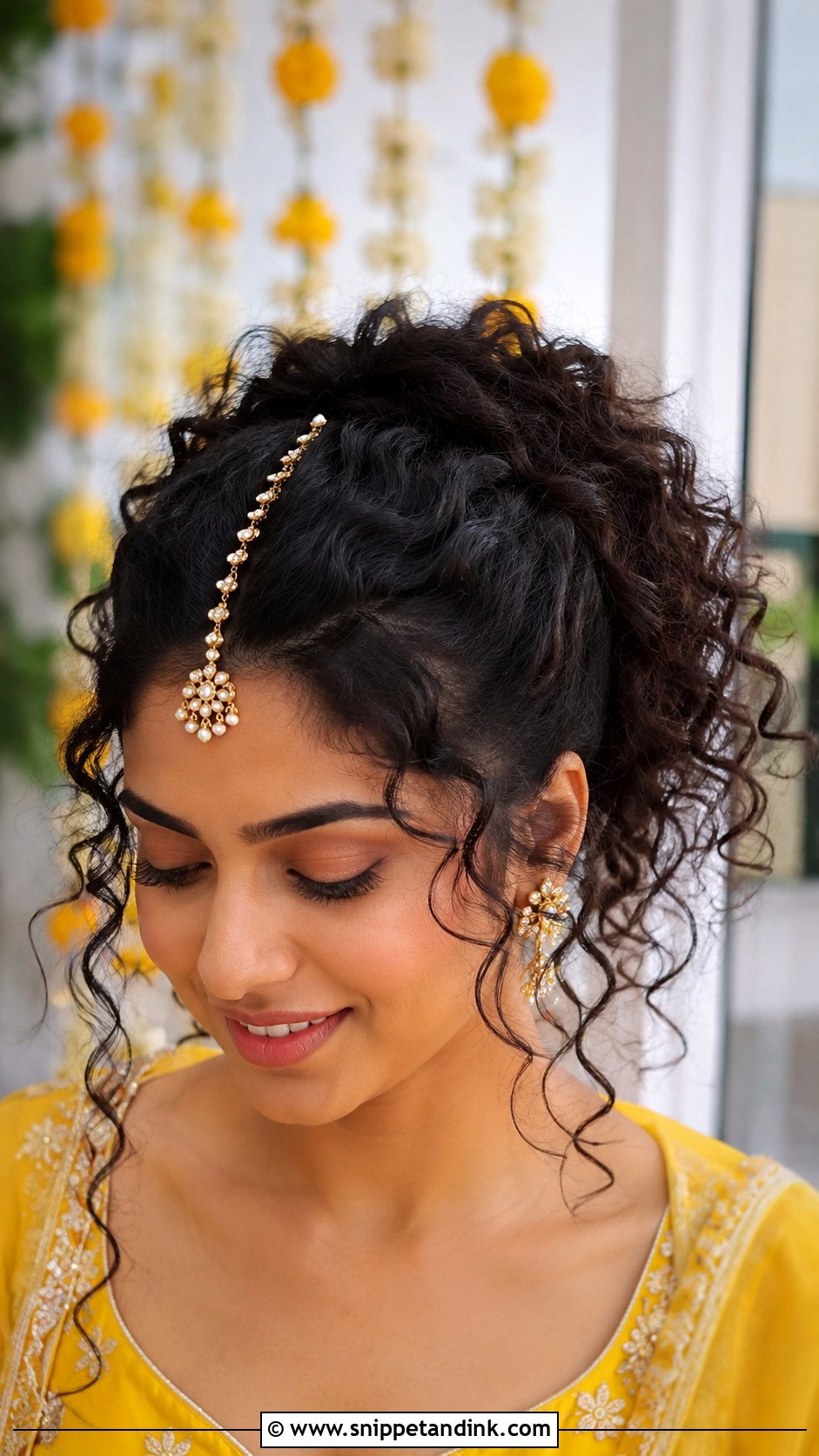
Natural curls make a gorgeous ponytail with almost no extra volume needed. I gather them high or low, letting the texture lead, and add a delicate maang tikka along the part. It suits haldi, mehndi and daytime ceremonies. The thing I never do with curly hair is brush it out dry. I define with a light cream while the hair is damp, let it set, and only touch the curls with my fingers. A few curly strands around the face soften it. The look celebrates your own texture rather than fighting it.
16. Gota Patti Ribbon Ponytail
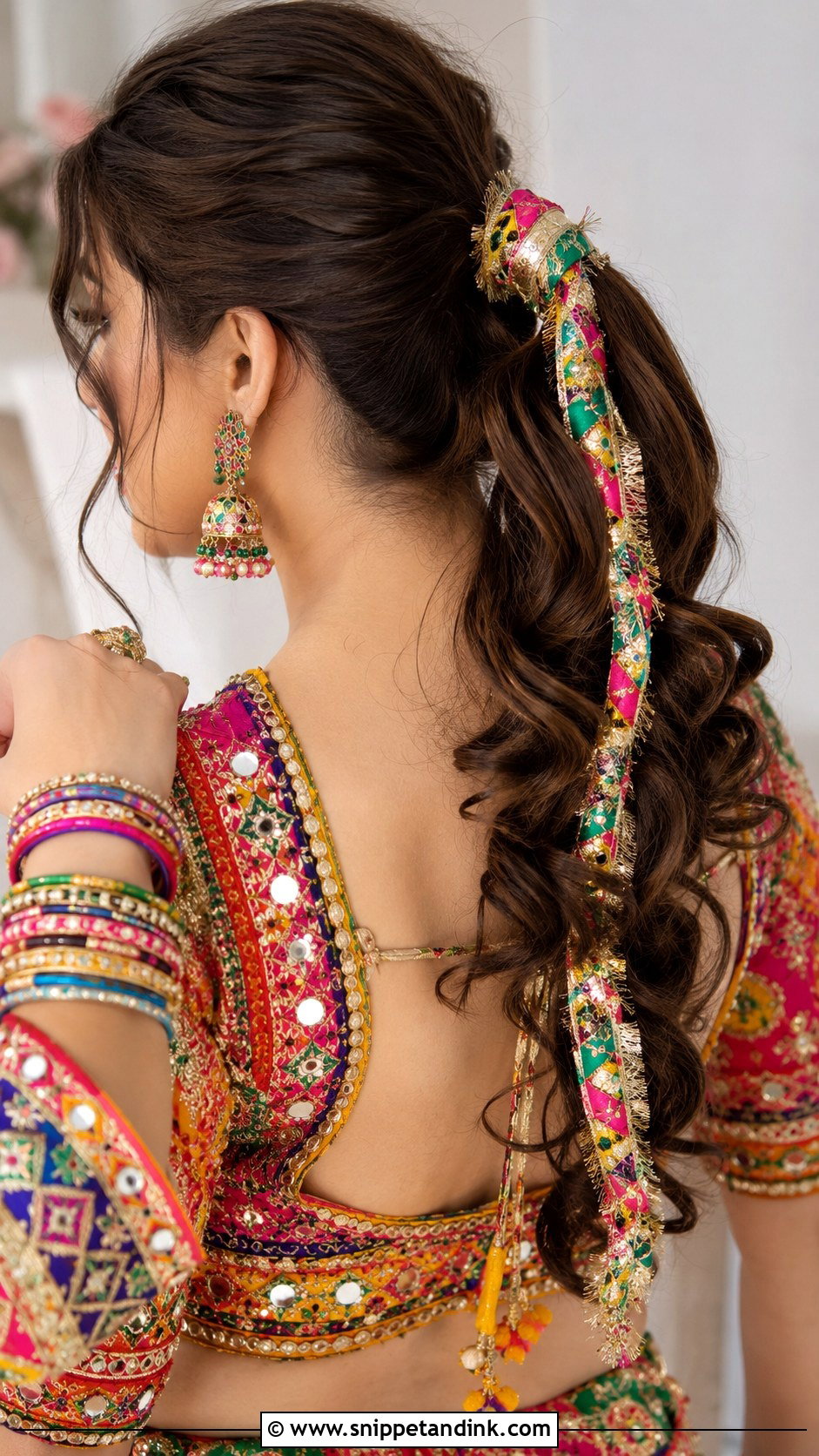
The gota patti ribbon ponytail brings Rajasthani colour into the hair. I wrap the ribbon around the base and weave it through the length, which suits ornate lehengas at the mehndi, haldi and sangeet. The shimmer catches the light. The pony can be curled or braided. Gota ribbon is stiff, so I braid it in with the hair instead of just wrapping it around the outside, which stops it from springing loose. Matching bangles and earrings tie it together.
17. Wavy Low Ponytail With Side Braid
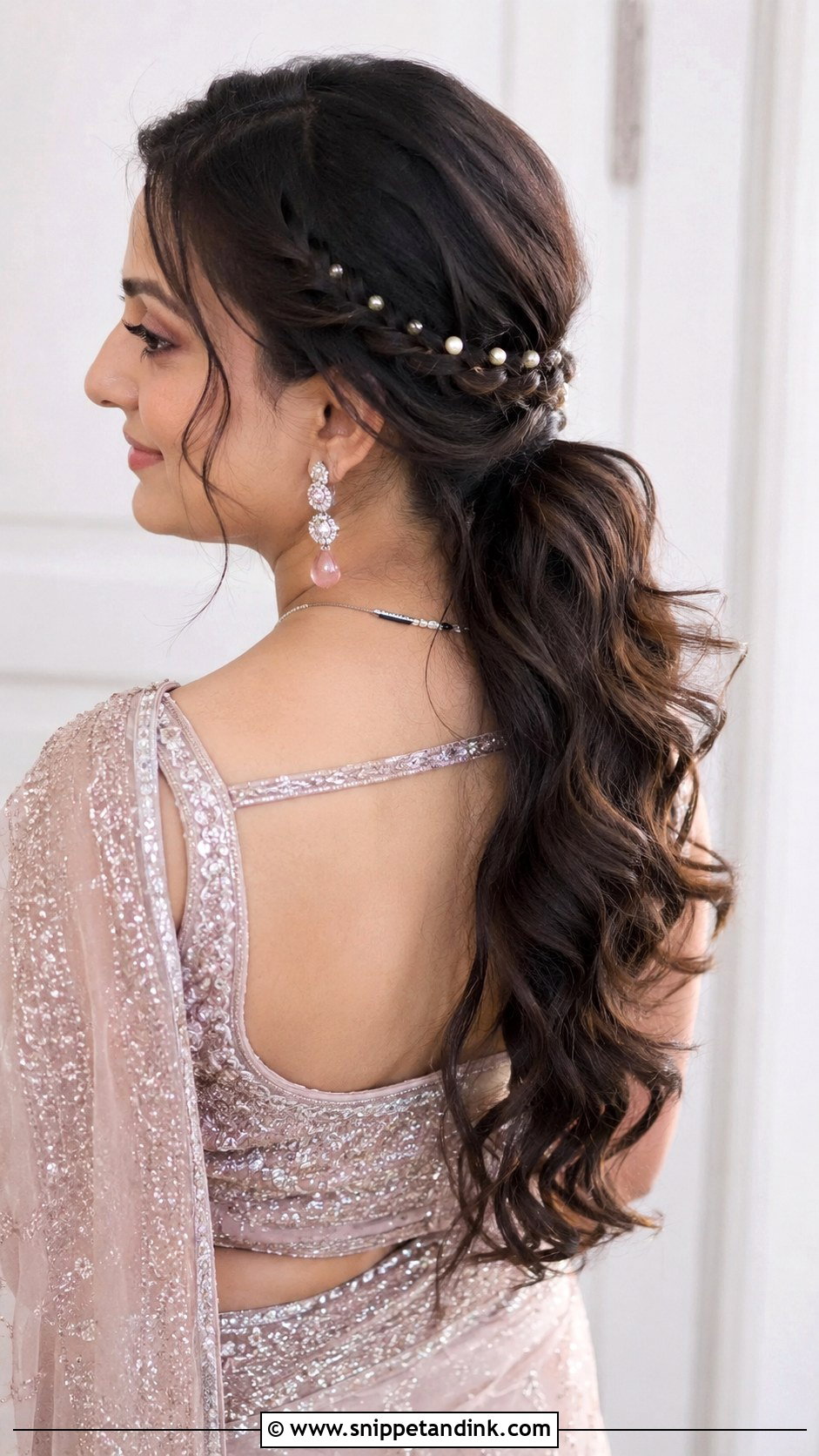
A thin braid along one side, blended into a low wavy pony at the nape, adds detail without weight. I braid it close to the scalp so it won’t loosen, then join it into the pony and wave the length. It suits receptions, engagements and smaller ceremonies, with both sarees and lehengas. Face-framing strands soften it around the cheeks, and tiny flowers or pearl pins along the braid add detail. I place the braid on the side you favour in photos, which I usually ask about at the trial.
18. High Ponytail With Hair Extensions
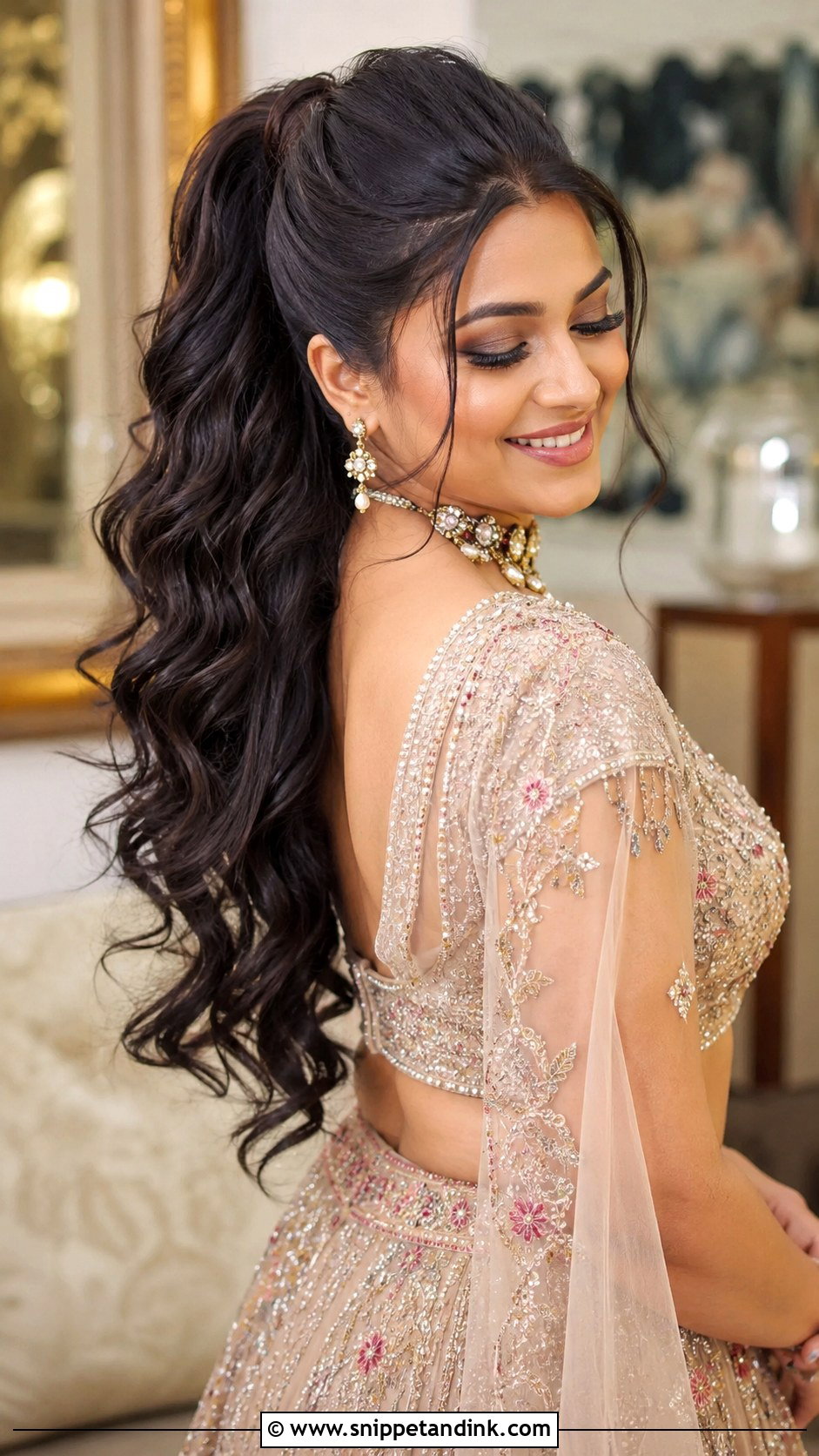
For maximum length and drama, I add extensions to a high pony. The real hair is gathered high on the crown, the extension is attached, and a strand of your own hair wraps the base to hide the join. Curling or waving the length gives a cascading effect. It’s a sangeet or cocktail style, and the extra volume balances heavy outfits and statement jewelry. The extension must match your colour and texture, and it adds weight to the crown. If you’ve never worn one, wear it for a few hours at the trial before committing to it for the night.
19. Boho Ponytail With Loose Strands
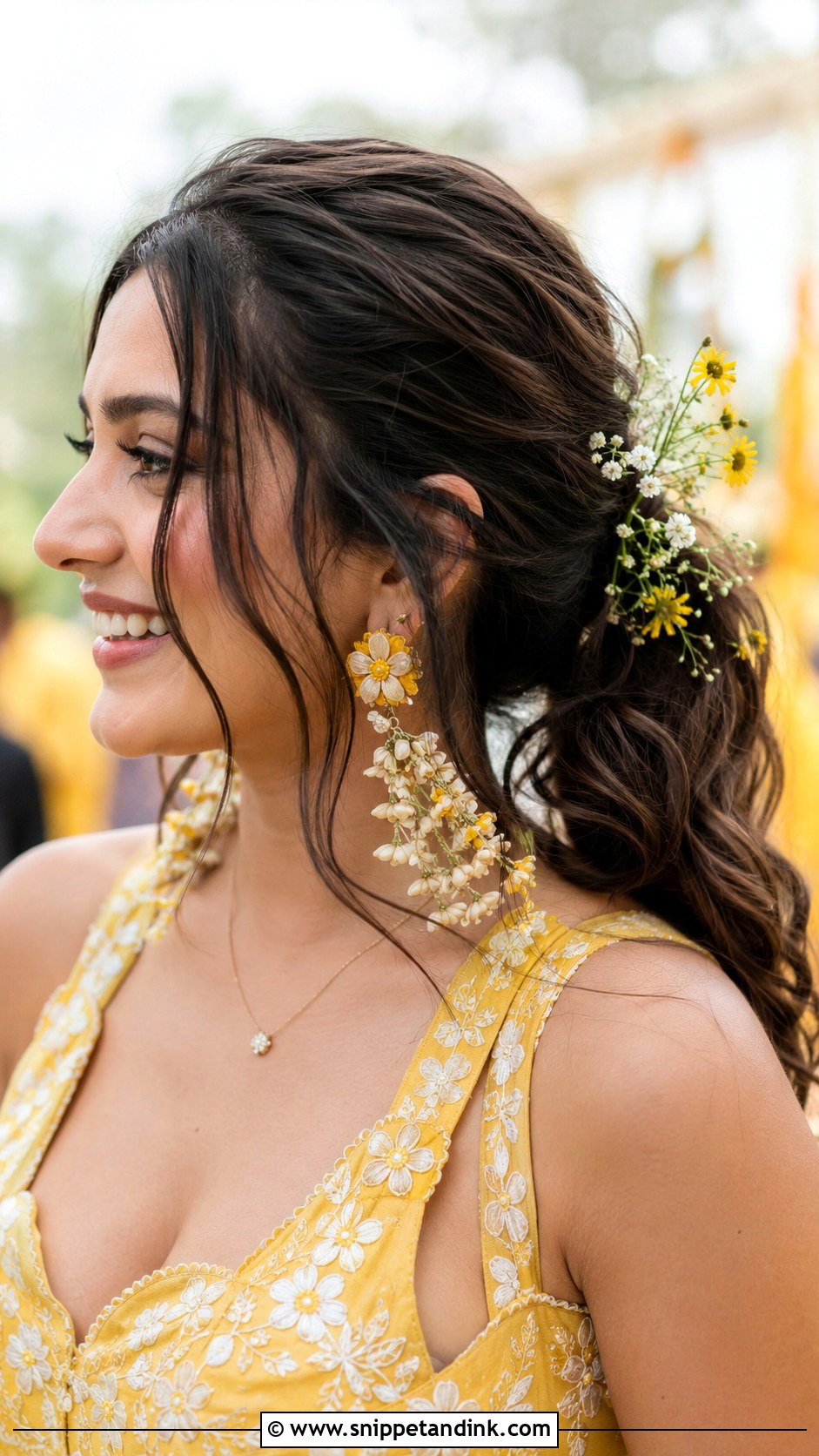
A boho pony is meant to look relaxed. I gather the hair into a low, slightly loose pony, pull out face-framing pieces, wave the length and tuck in small wildflowers or baby’s breath. It suits haldi, mehndi and outdoor ceremonies, and it’s comfortable in warm weather. Undone is still deliberate: I pull the pieces out after the base is firmly secured, so it looks soft without falling apart. Delicate jewelry and natural makeup suit it.

20. Sleek Ponytail With Center Part
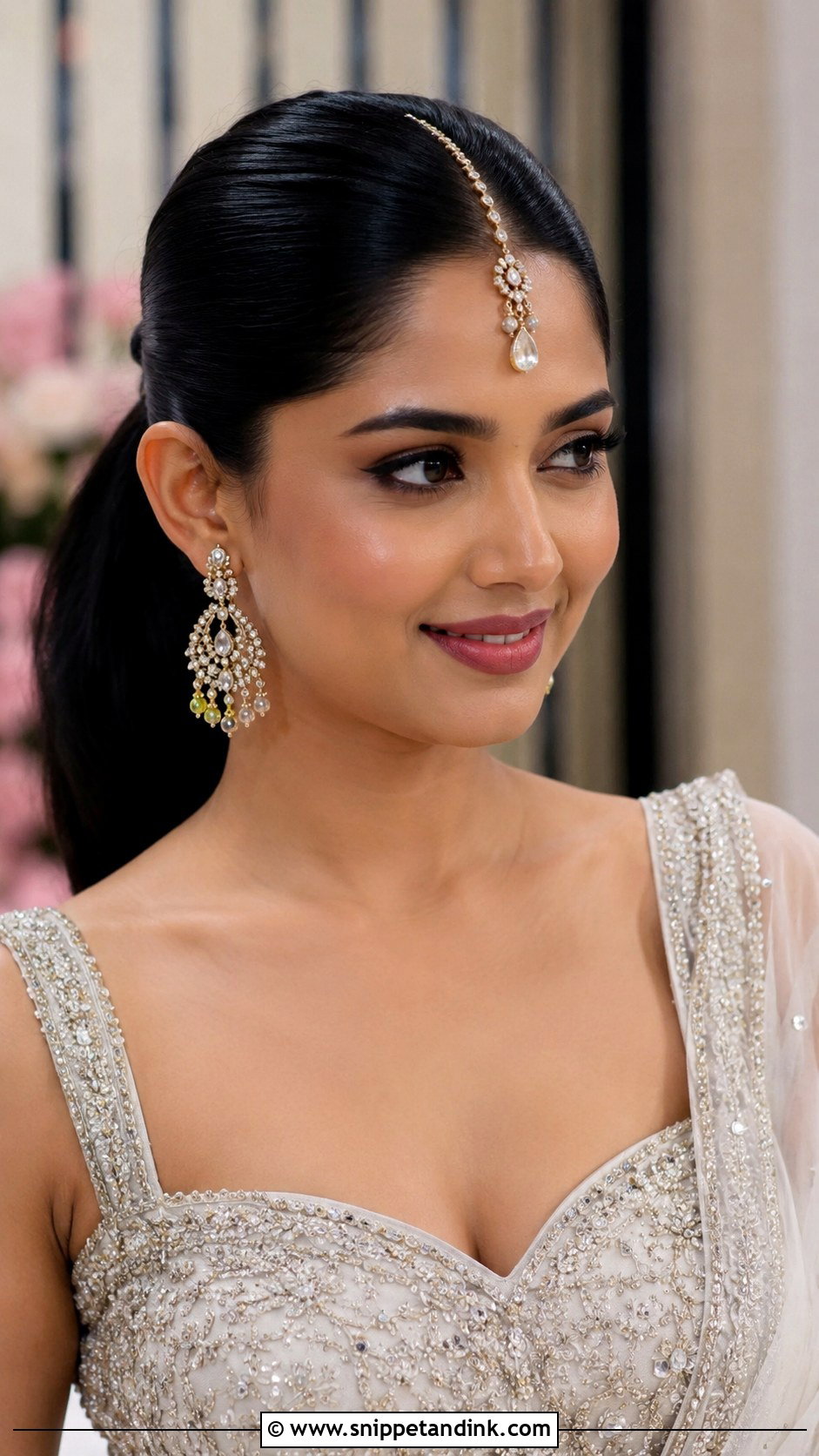
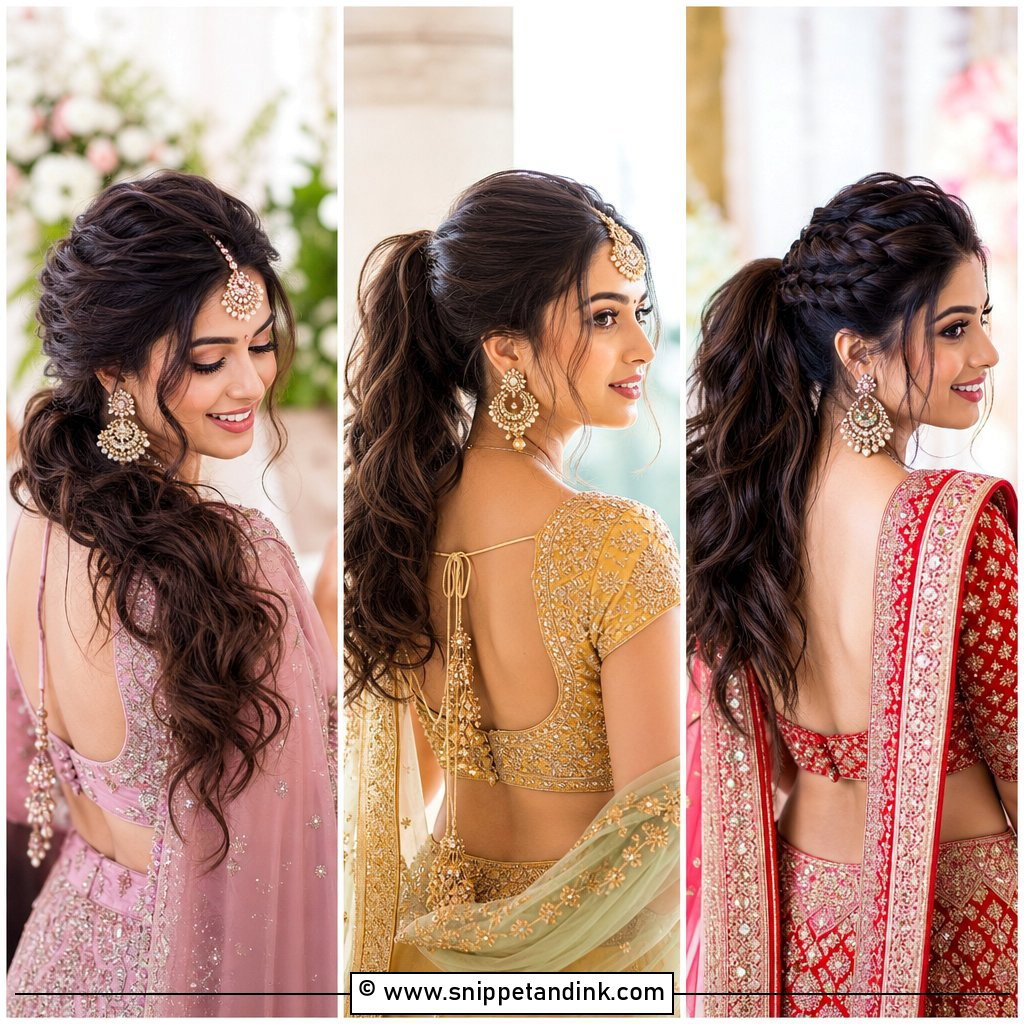
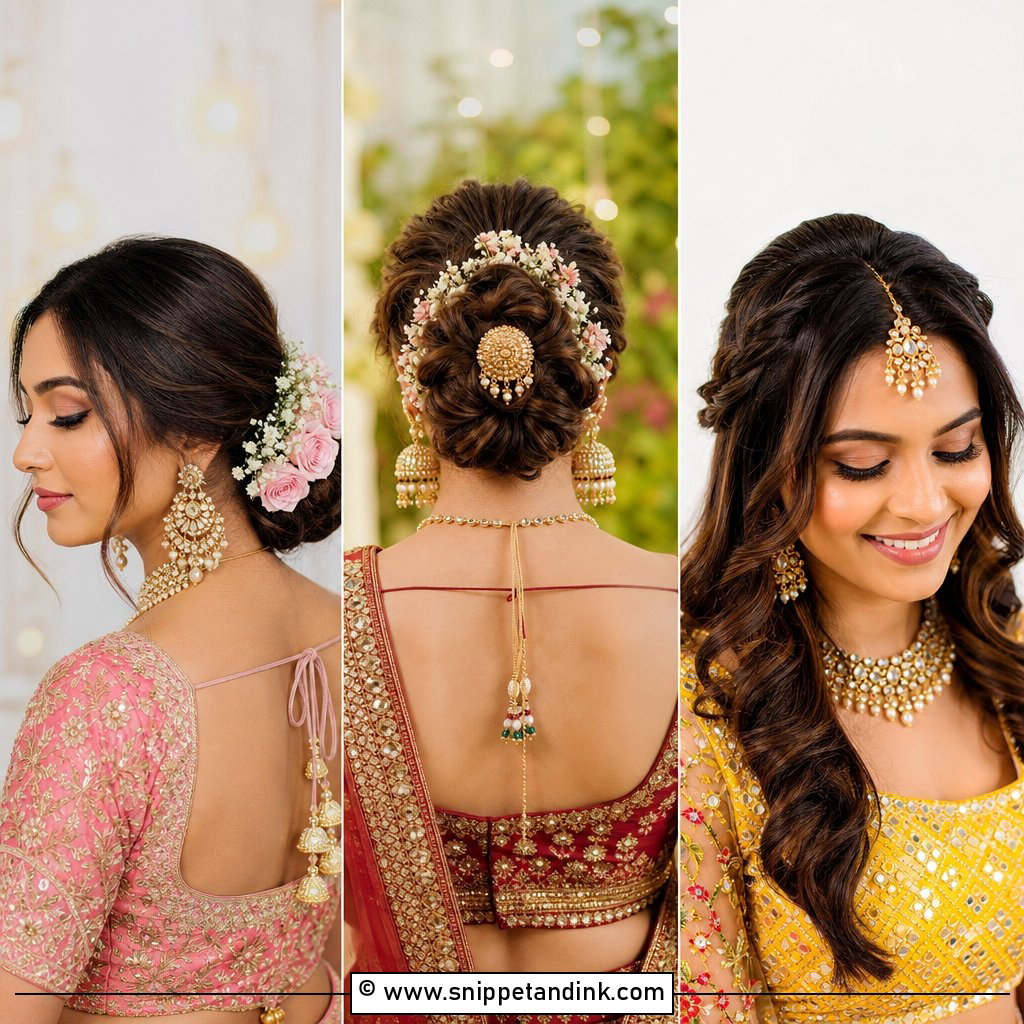
A sharp centre part with a sleek pony is the most minimal look on this list, and also the hardest to get right. The part has to be precisely straight, and the hair smoothed back without a single bump. It suits reception and engagement events and frames most face shapes evenly. I add a delicate maang tikka along the part for a traditional touch, keep the length straight and glossy, and wrap the base with hair. A centre part shows any unevenness in the hairline, so I check it in a mirror from the front before I fix the pony.
Stopping a Wedding Ponytail From Sagging by the Reception
A ponytail looks perfect at the mirror and droops by evening because the elastic slips down the hair. Gravity and heavy hair, extensions and accessories all pull it. I build every bridal pony to fight that from the start.
How I anchor it
- I use a hooked bungee elastic instead of a regular one, which grips tighter without needing to be pulled through.
- Two bobby pins cross under the base, pushing upward into the gathered hair, to prop the pony at the right angle.
- Heavy hair or extensions get a second elastic hidden under the wrap, about an inch below the first.
- A light texture spray at the roots before gathering gives the hair grip, especially if it’s freshly washed and silky.
Second-day hair helps
I usually ask brides to wash their hair the night before rather than that morning. Hair washed hours earlier holds a pony better than squeaky-clean hair, and it takes curl more readily. If your scalp gets oily fast, a little dry shampoo at the roots fixes that without making the hair slippery.
Which Event Gets Which Ponytail
A ponytail for your Indian wedding can be as traditional or as modern as you like. Sleek high ponies with a maang tikka carry the sangeet, soft boho styles suit the haldi, and a low pony with gajra belongs at a daytime ceremony. All of them keep you comfortable through long events while showing off your jewelry and blouse details. Personalise with gajra, pearls, gota patti or a statement accessory. Then book a trial and wear the style for a few hours, so you know it’ll hold before the day itself.
You'll Like These Ideas:





Leave a Reply