
A ponytail used to be the hair you wore to the gym. At weddings now it’s one of the styles I’m booked for most, and for good reason: it keeps hair off your neck, it’s comfortable to dance in, and it shows a dress back clearly. It’s also less simple than it looks. A ponytail that’s built carelessly sags, dents or pulls on your scalp long before the evening ends. The 25 versions below cover every height and texture, and with each I’ve noted how I’d build it and when I’d suggest something else.
Why Ponytails Sag by Dinner, and How I Stop It
A single elastic holding all your hair at one point slowly loosens under its own weight. By dinner, a high ponytail can slip an inch and a low one starts to look flat. Most of what I do when building a wedding ponytail is about preventing that.
- Prep with grip: texture spray or dry shampoo at the roots, never conditioner-slick hair.
- Use two elastics, one just above the other, or build two stacked ponytails for a high pony.
- Push two bobby pins up under the base, crossing them, to prop the tail and stop it drooping.
- Finish with a wrap of hair around the base, pinned through the elastic.
When a ponytail gives you a headache
Tension headaches from a tight, heavy ponytail are common. If you know you get them, tell your stylist at the trial. A slightly lower position, less teasing, or splitting the weight into two stacked ponytails all reduce the pull.
Curly and coily hair in a ponytail
With textured hair I skip the tight brush-back entirely. I smooth the edges gently with a soft brush and a little gel, gather the hair with a wide fabric band or a stretchy loop rather than a thin rubber elastic, and leave the curl pattern in the tail alone. Pulling the hairline hard for a sleek finish stresses the edges, and over a twelve-hour day that is exactly where breakage starts.
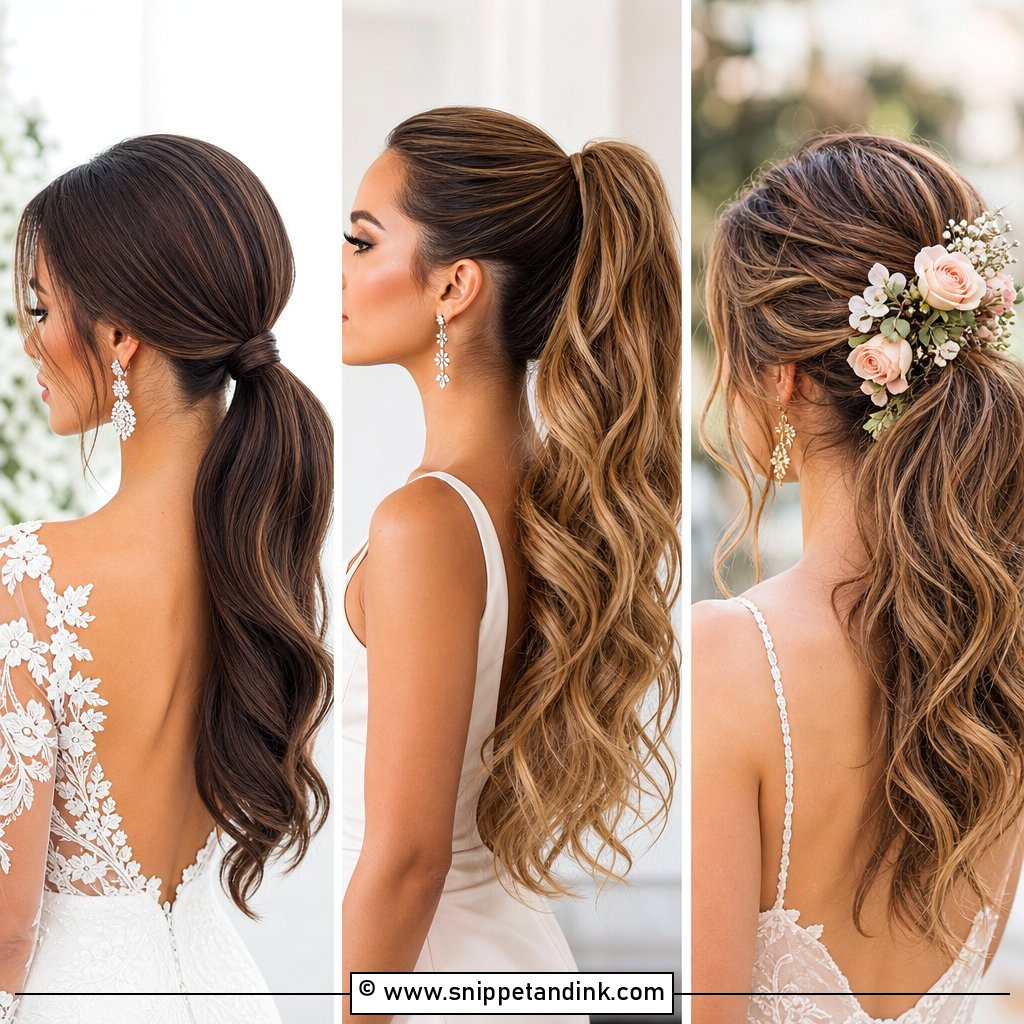
1. Sleek Low Wedding Ponytail
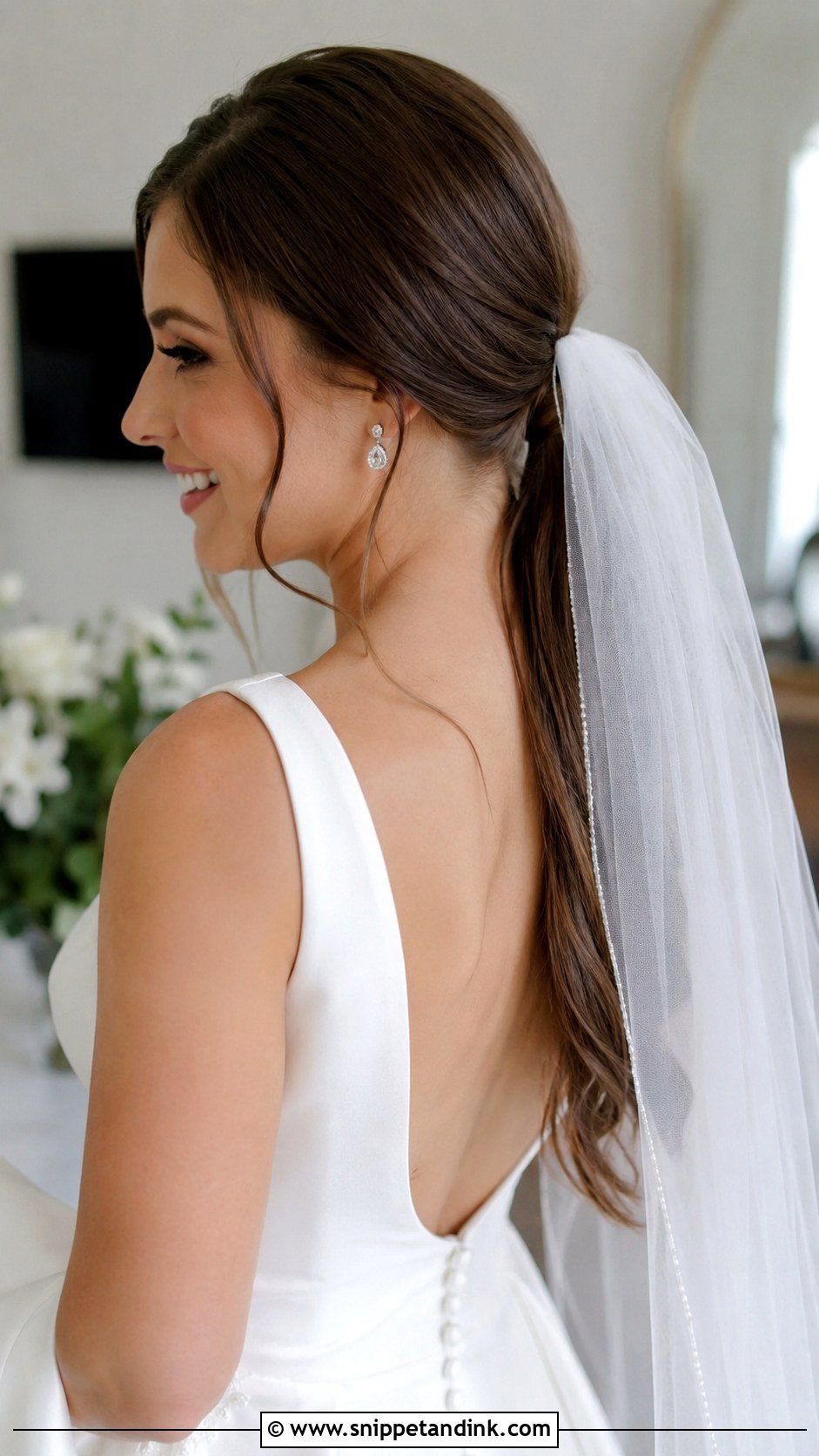
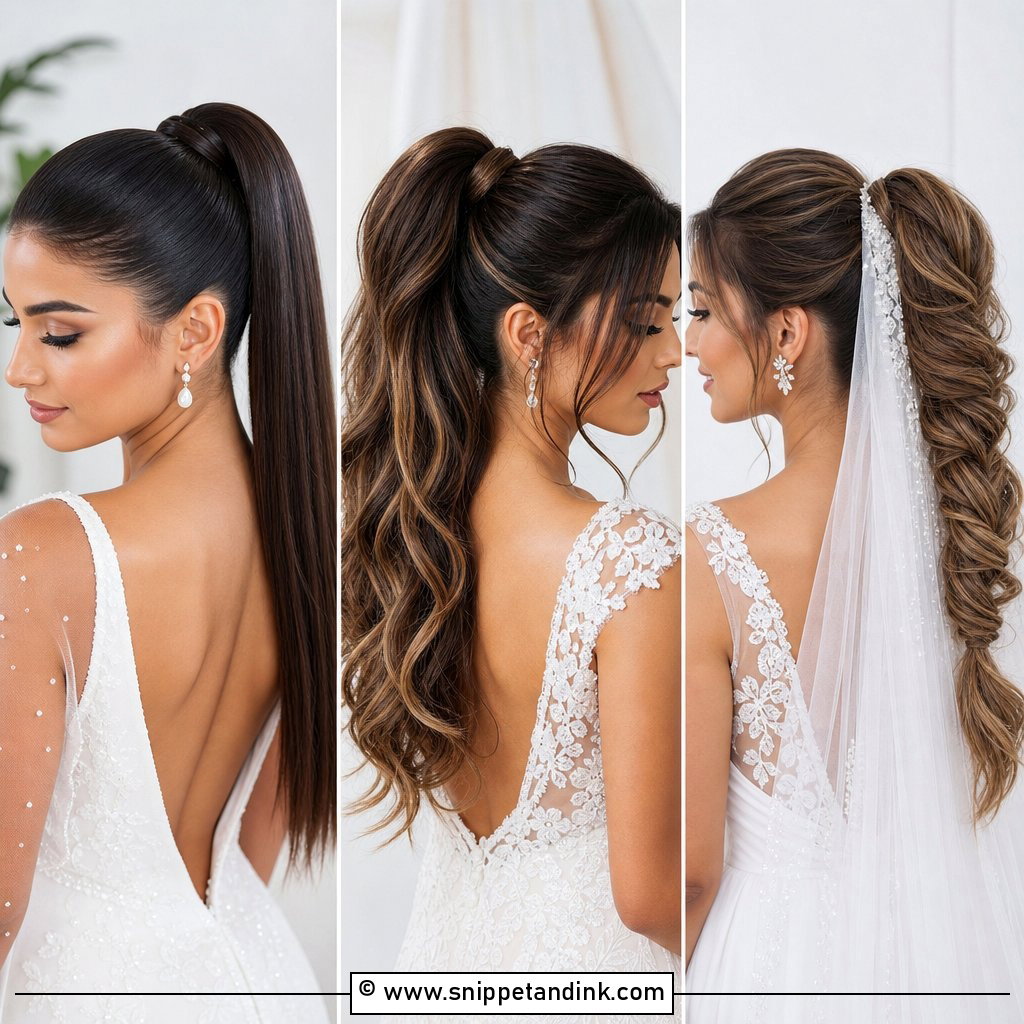
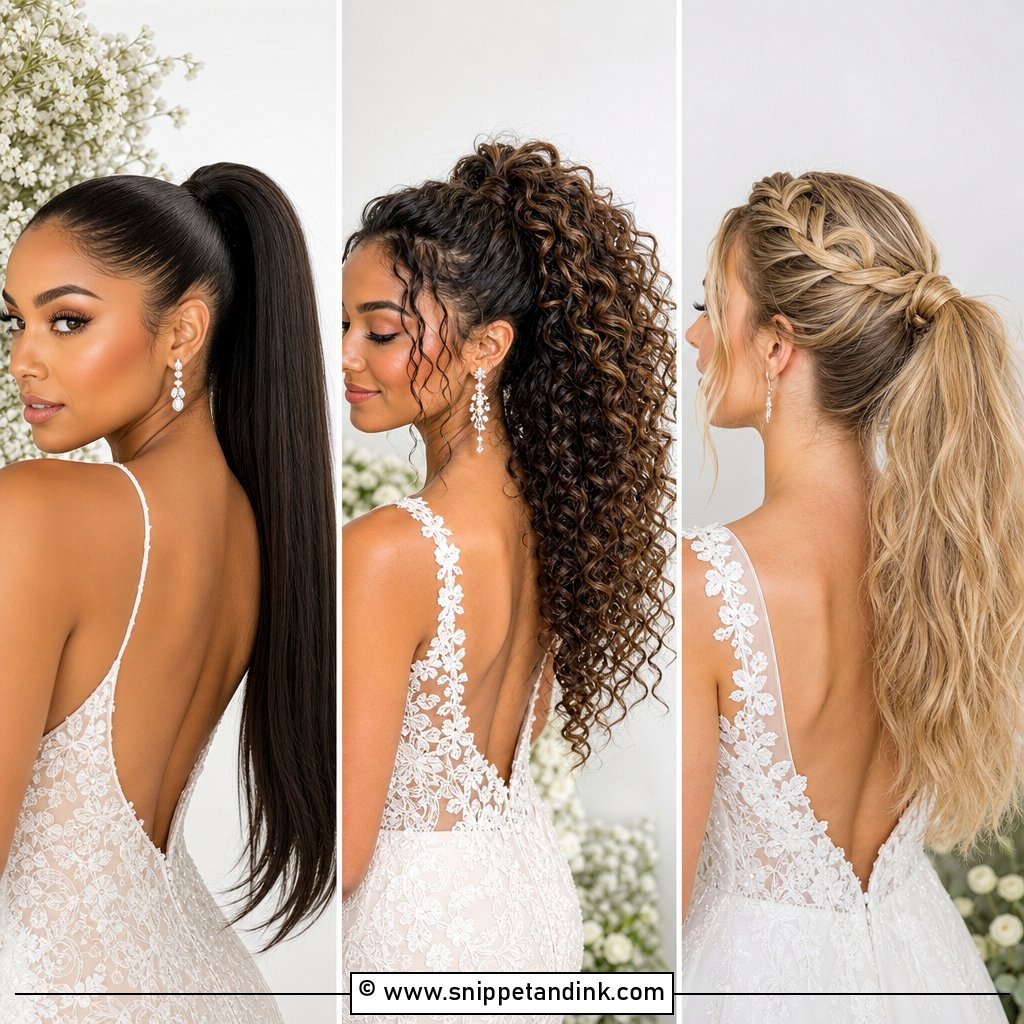
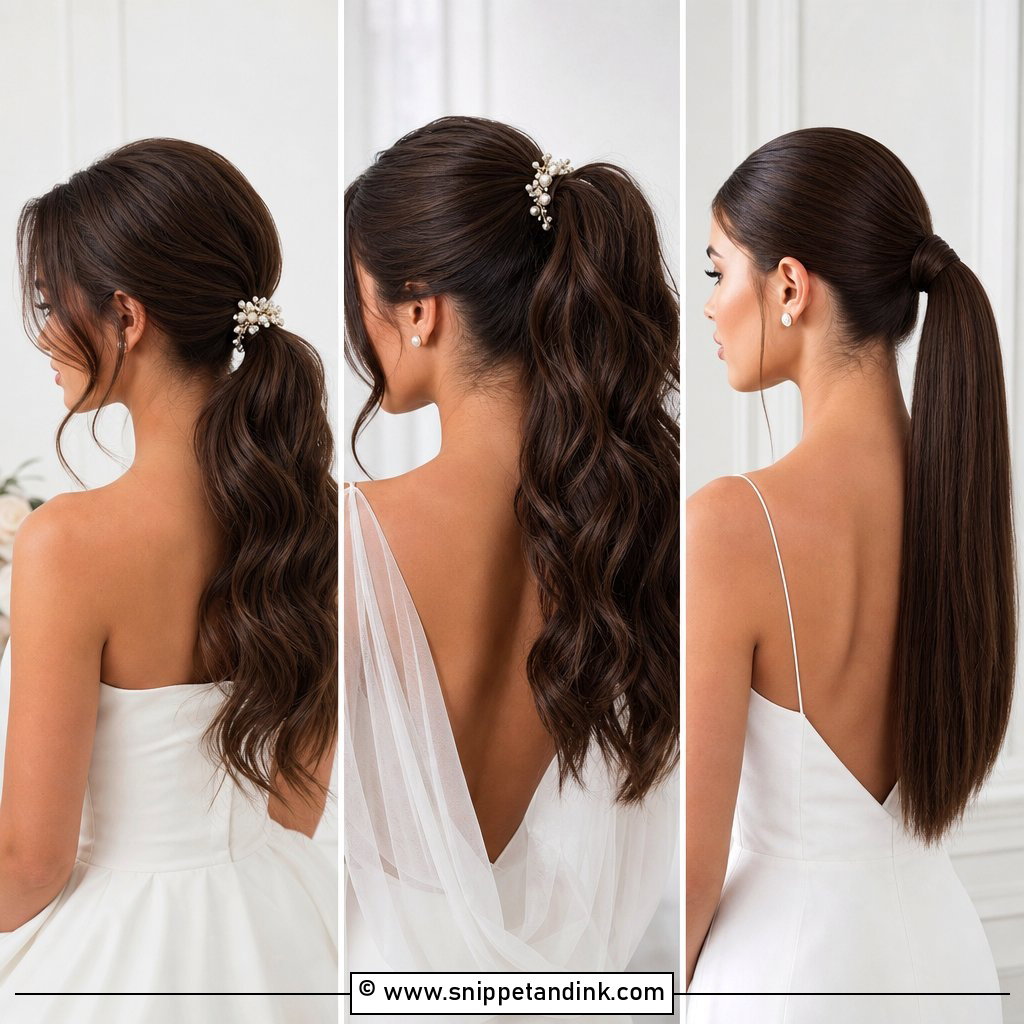
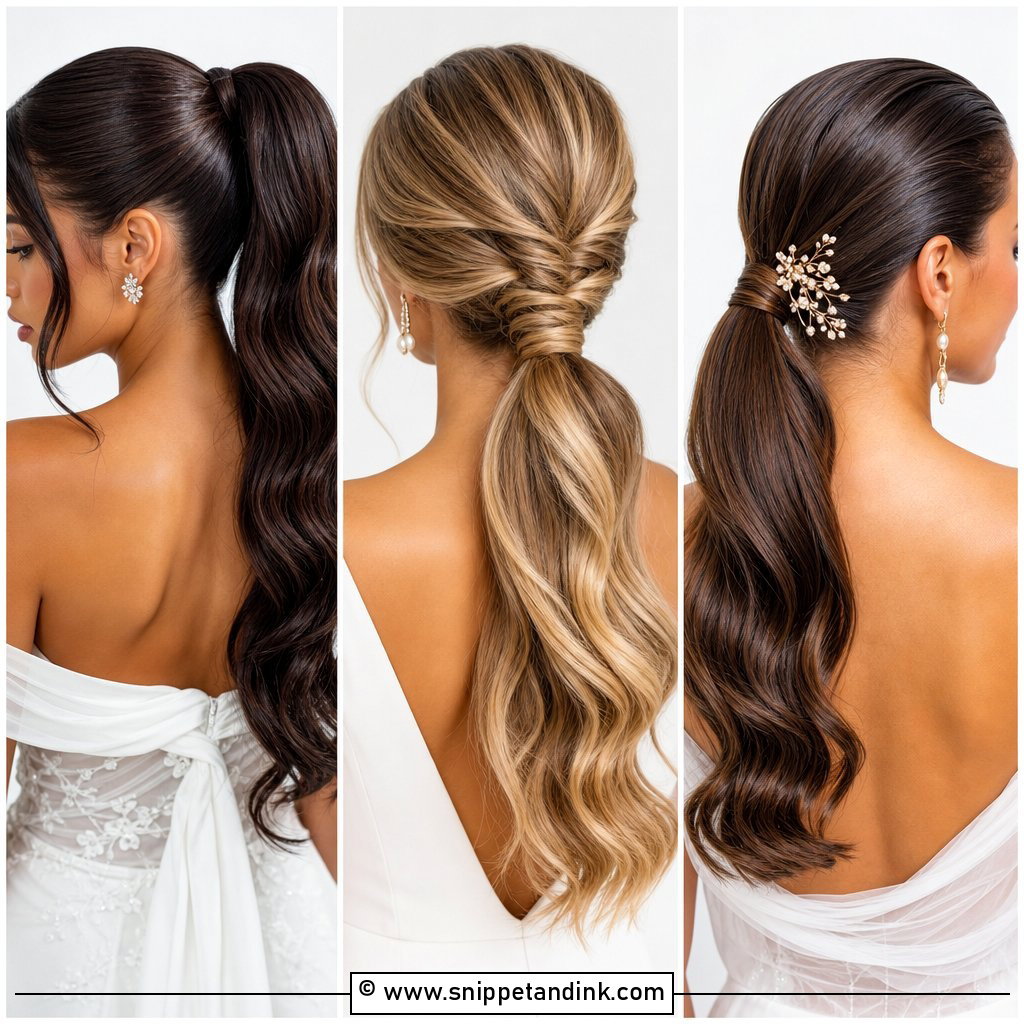
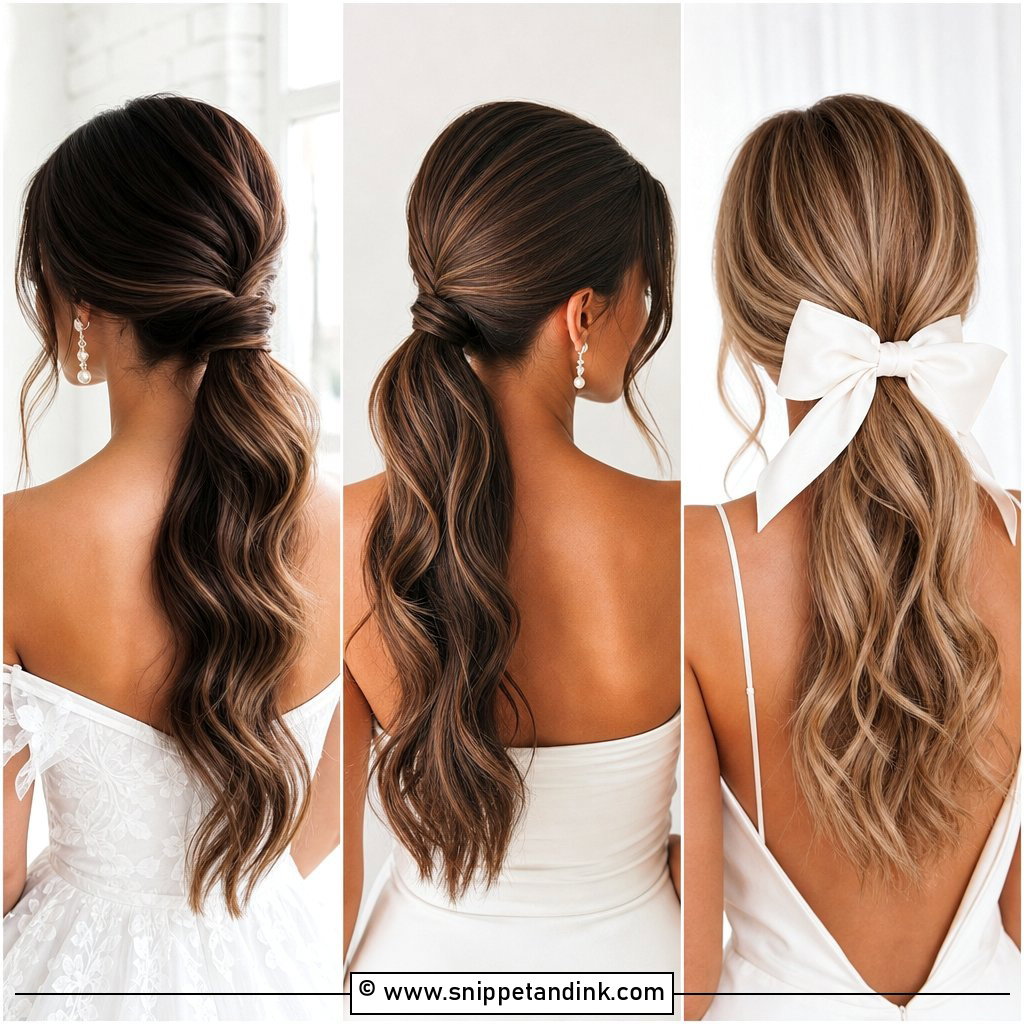
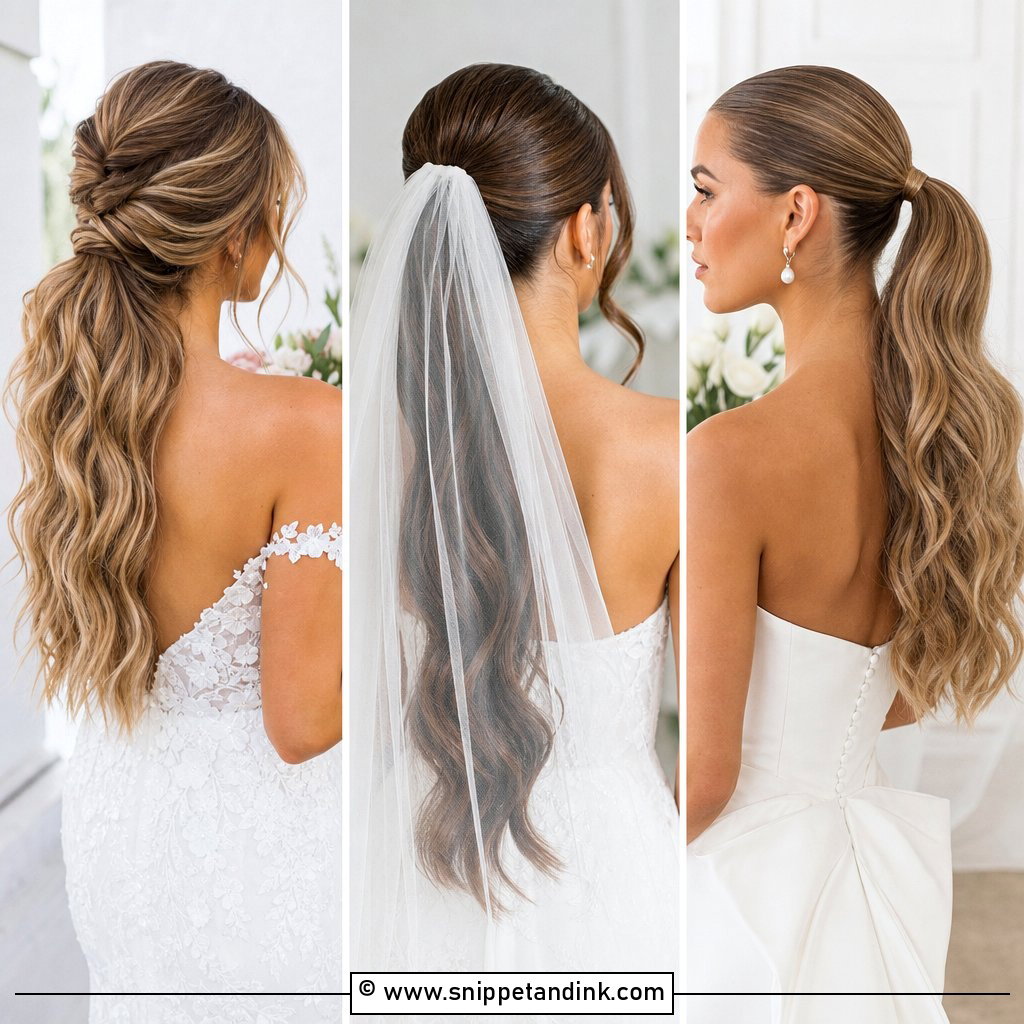
The sleek low ponytail lives or dies on the blow-dry. Any kink left at the roots shows the moment the hair is pulled back, so I dry it completely smooth with a paddle brush, then flat-iron the length. I gather it just above the nape, secure it with a thin elastic and finish with a drop of shine serum on the length only. It shows a necklace or an open back clearly. In profile, the line from crown to tail is the whole point, so I check it from the side before I’m done.
2. High Wedding Ponytail With Waves
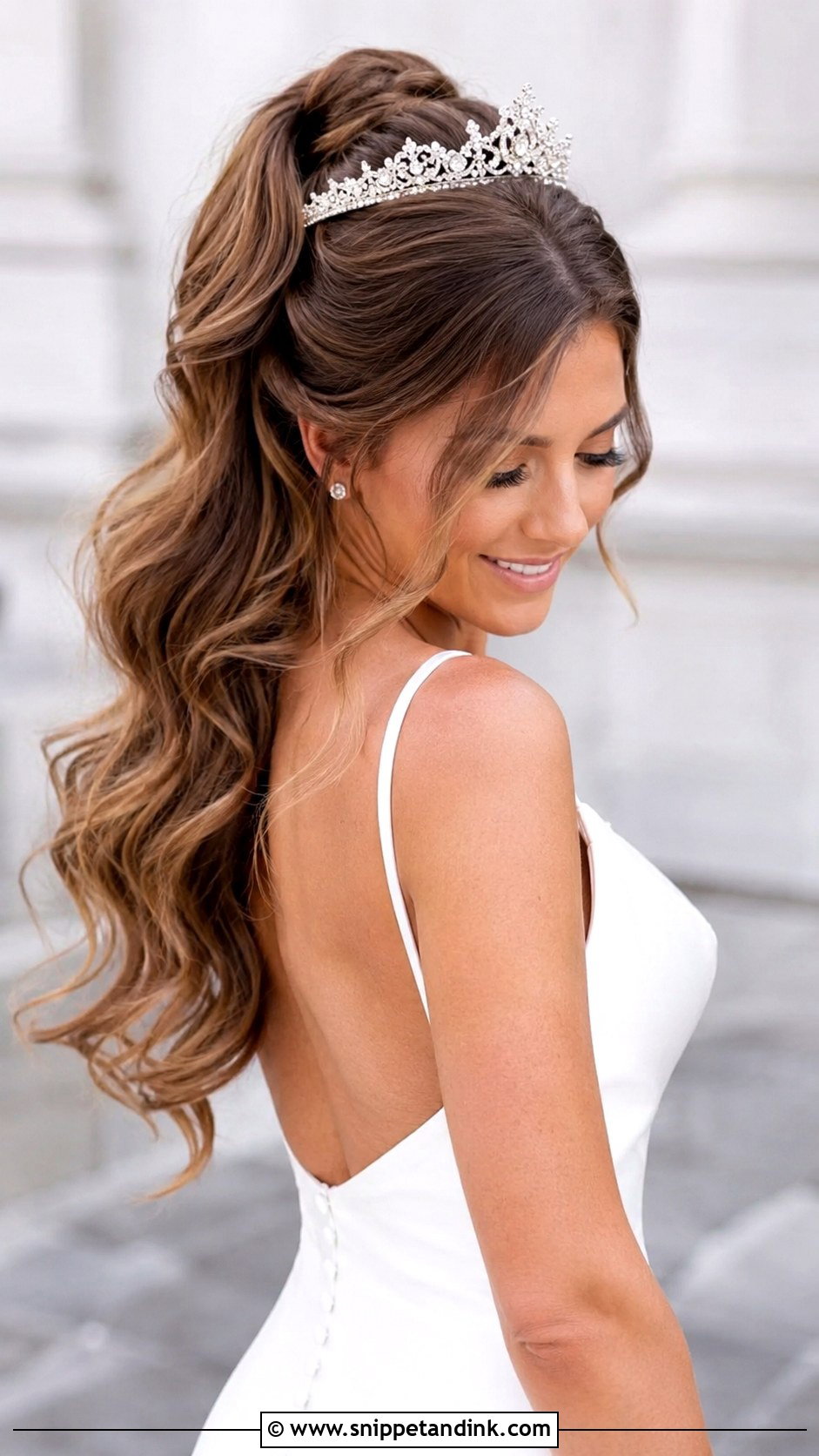
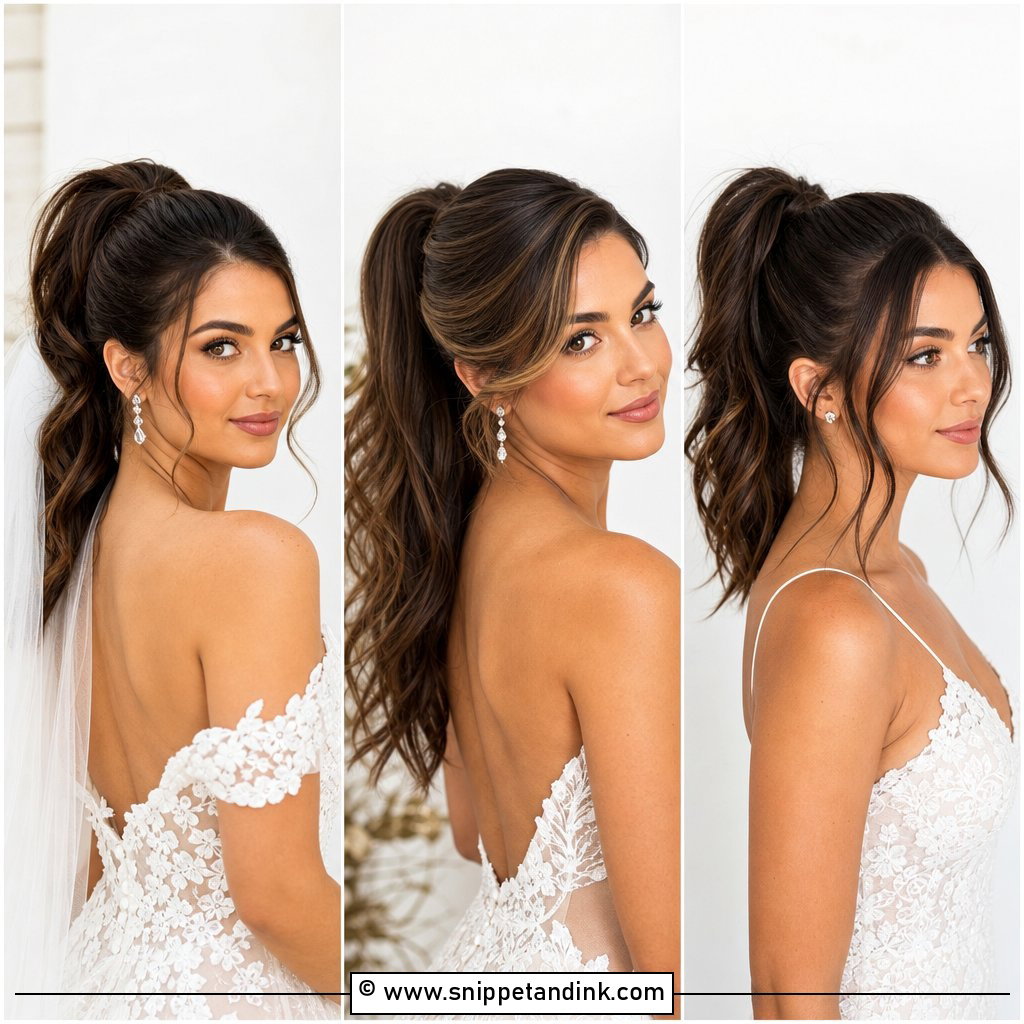
Want height? A high ponytail lifts everything. I brush it up from the nape with a firm bristle brush, then use two elastics instead of one, or even two stacked ponytails, so it doesn’t droop. Soft waves through the length keep it from looking too stiff. It shows off the neck and jawline, and it stays off your shoulders in warm weather. The downside is weight: a heavy high pony can pull on the scalp after several hours, so if you’re prone to headaches I’d go a little lower.
3. Braided Wedding Ponytail
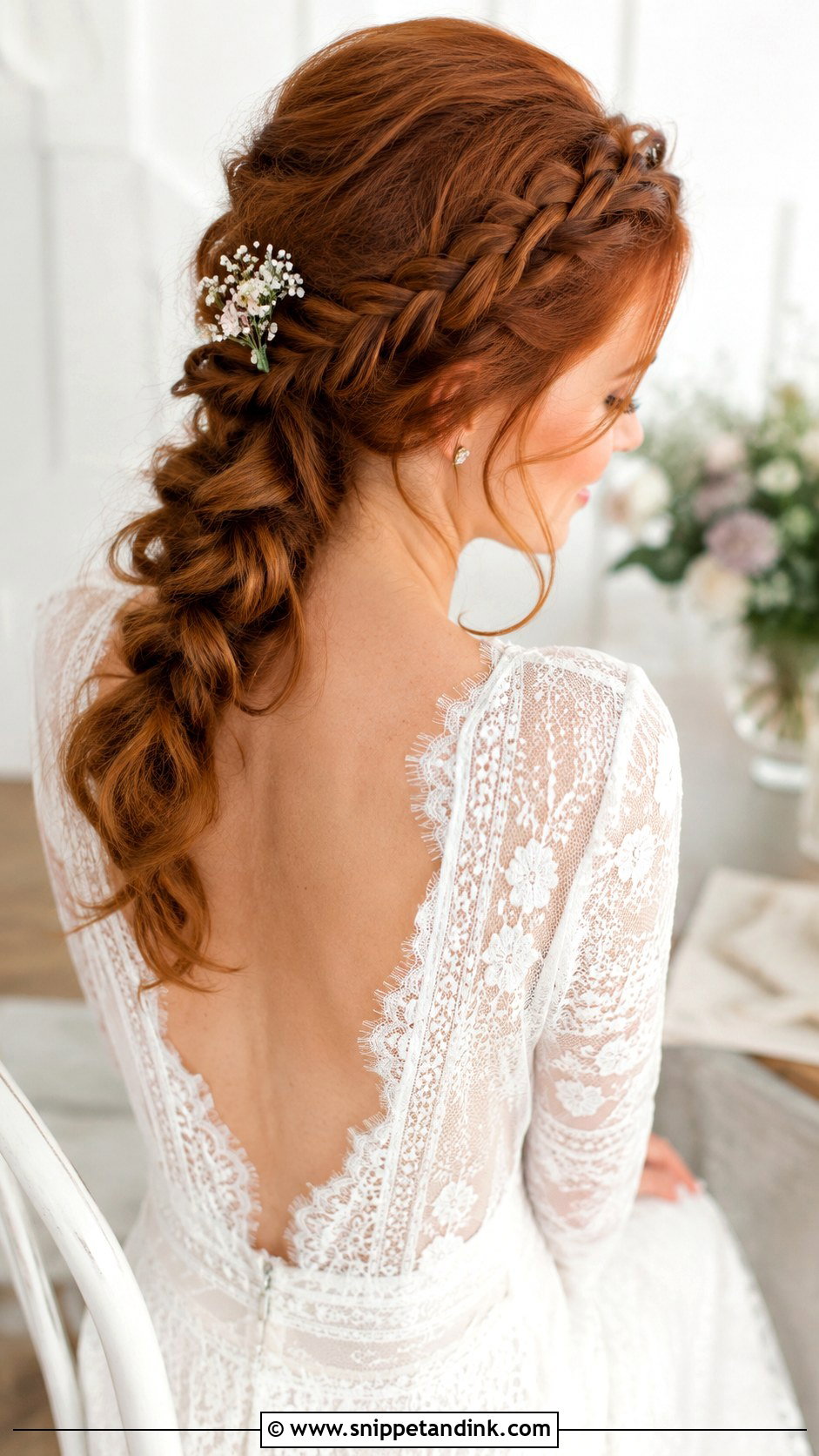
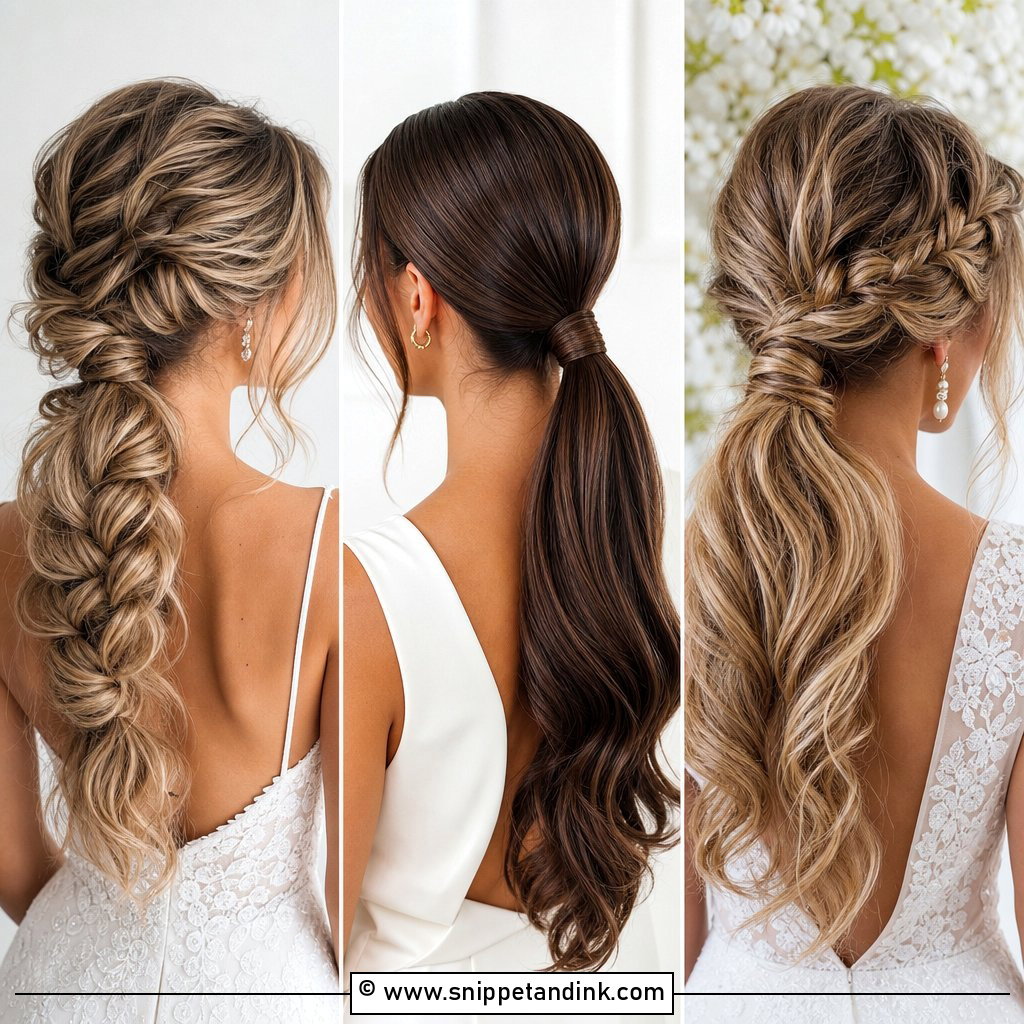
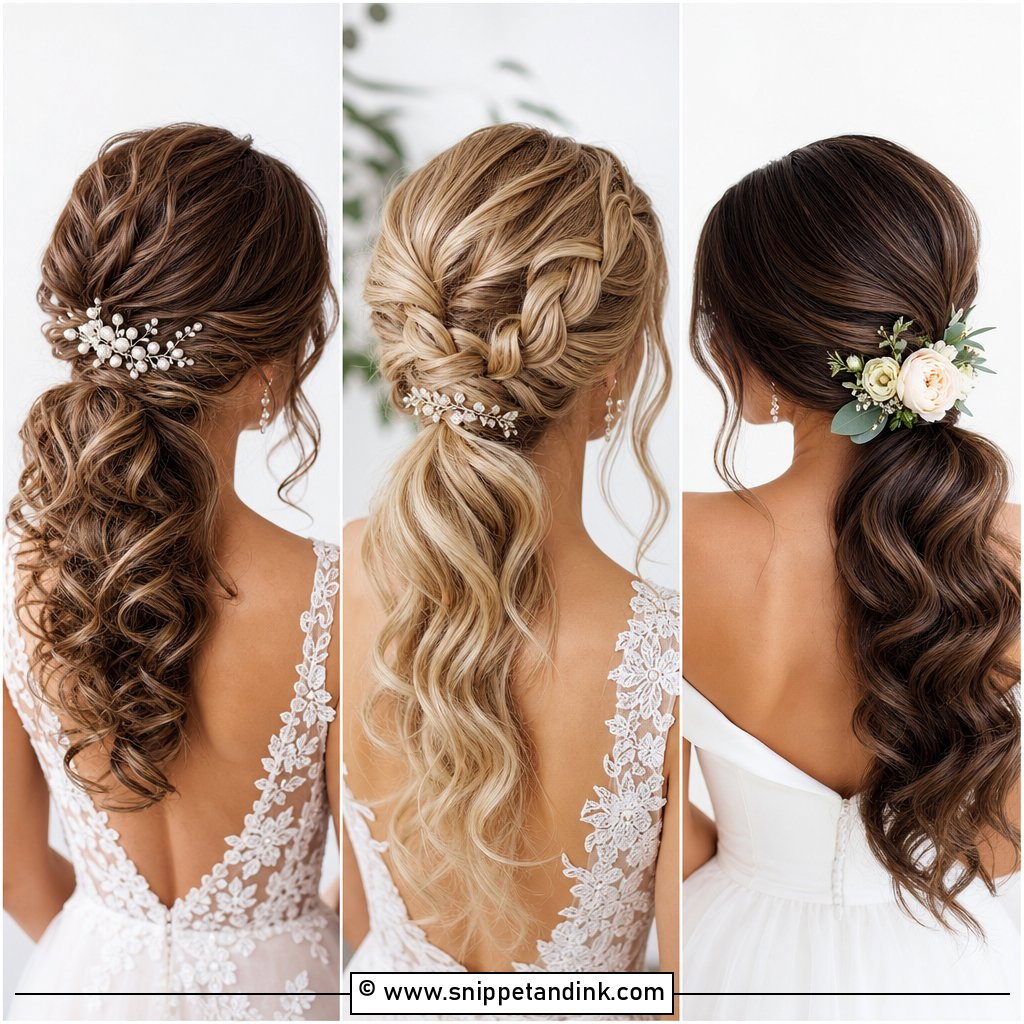
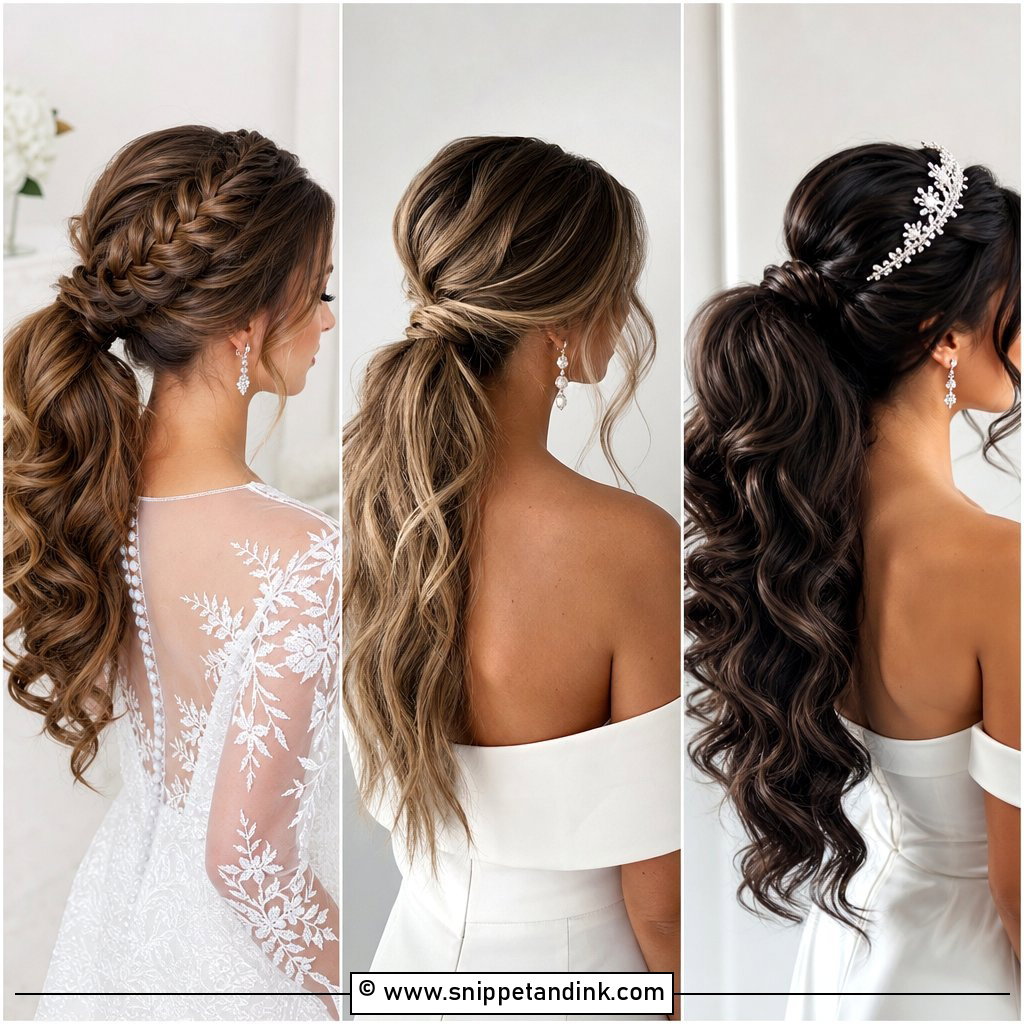
A braid leading into the ponytail adds detail and grip at the same time. I braid from the hairline or one side, French for flat and neat, Dutch for raised and chunky, then gather the end into the tail. The braid locks loose hairs in place, so it’s one of the better choices for a long day of dancing. Small flowers can be tucked into the stitches. On fine hair I pancake the braid gently so it looks fuller in photos.
4. Bubble Wedding Ponytail
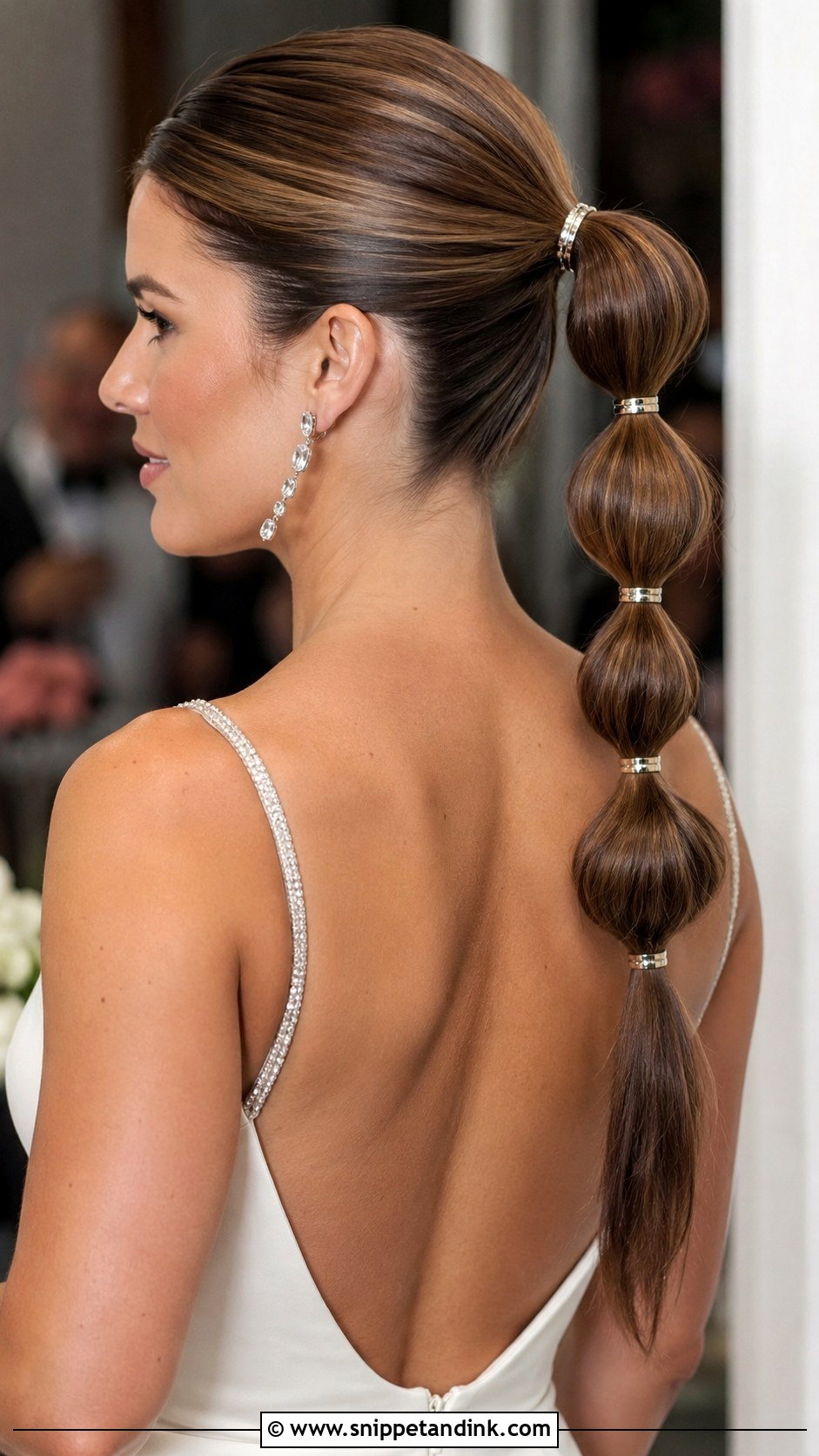
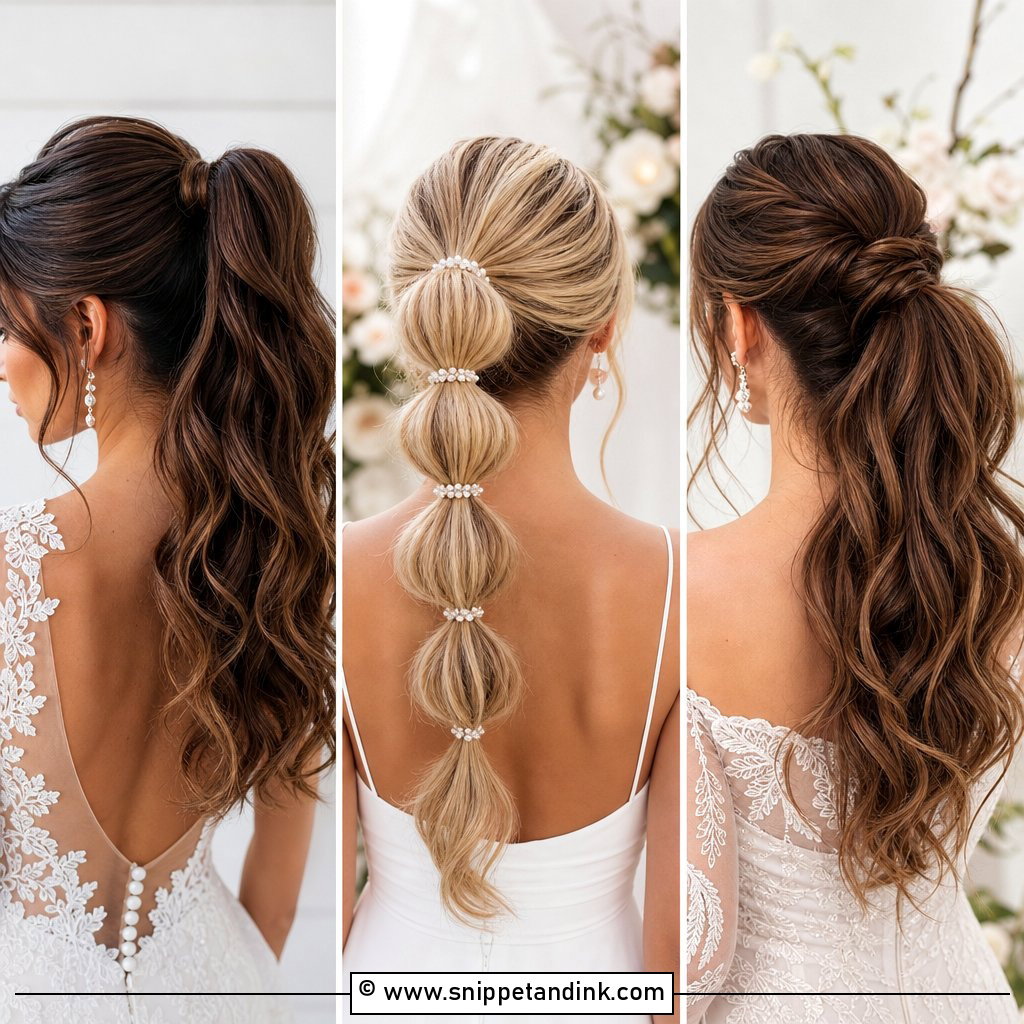
Bubbles are made by spacing small elastics down the length, then gently pulling each section wider. I use clear or hair-matched elastics for a quiet version, and metallic ties when the bride wants them to show. It needs longer hair, ideally past the shoulders, so the bubbles have room. The finished look reads playful and modern, and it’s very secure. Pull too hard when widening and the sections look patchy, so I tug gently and evenly, checking it in the mirror.
5. Low Ponytail With Curtain Bangs
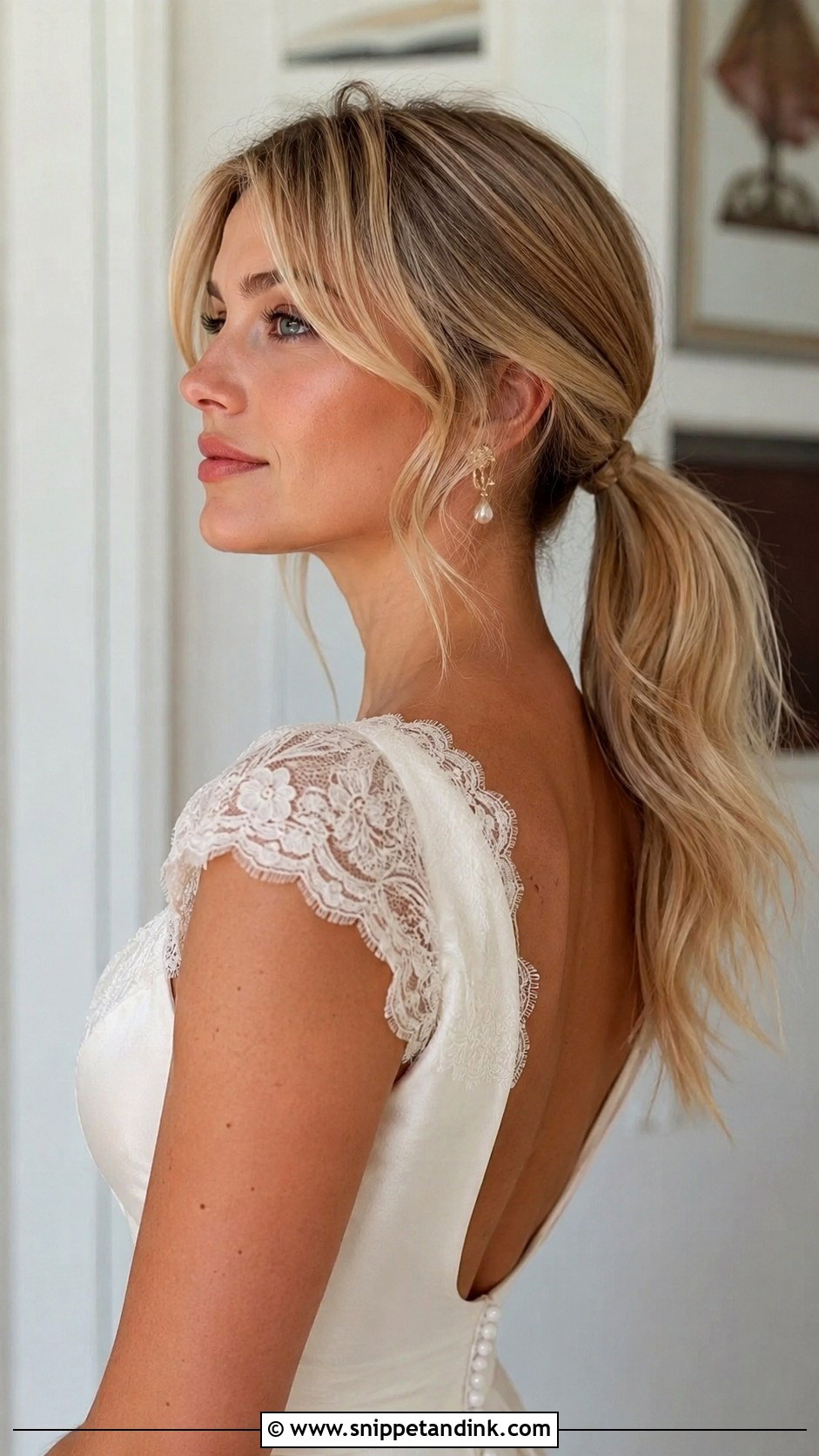
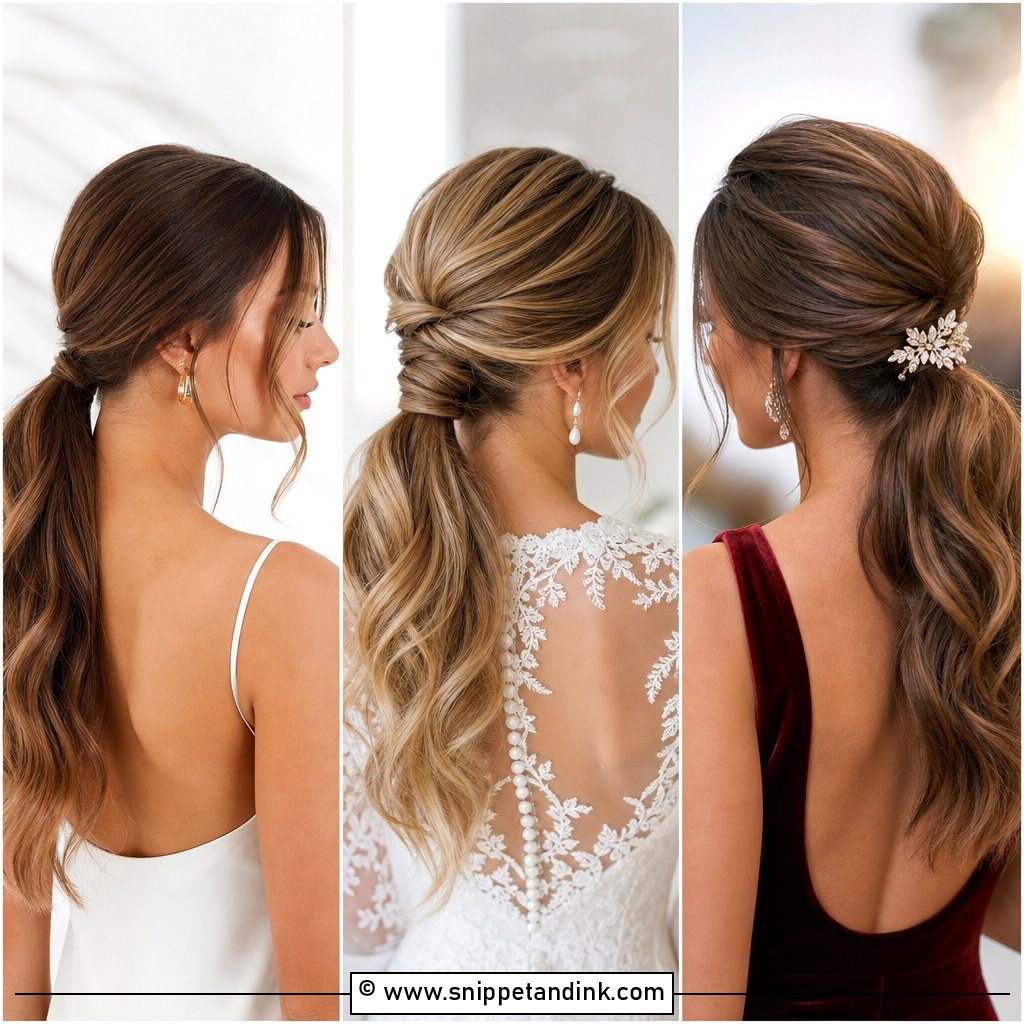
Curtain bangs soften a low ponytail more than any other detail. I blow-dry the curtain bangs over a round brush so they sweep away from the face, then gather the rest into a low tail with a slight curl at the ends. It suits round and heart-shaped faces well and works for classic or vintage-feeling weddings. Fresh bangs can be unruly, so if you’re planning to cut them, do it a few weeks before the trial, not after.
6. Wedding Ponytail With Pearl Accessories
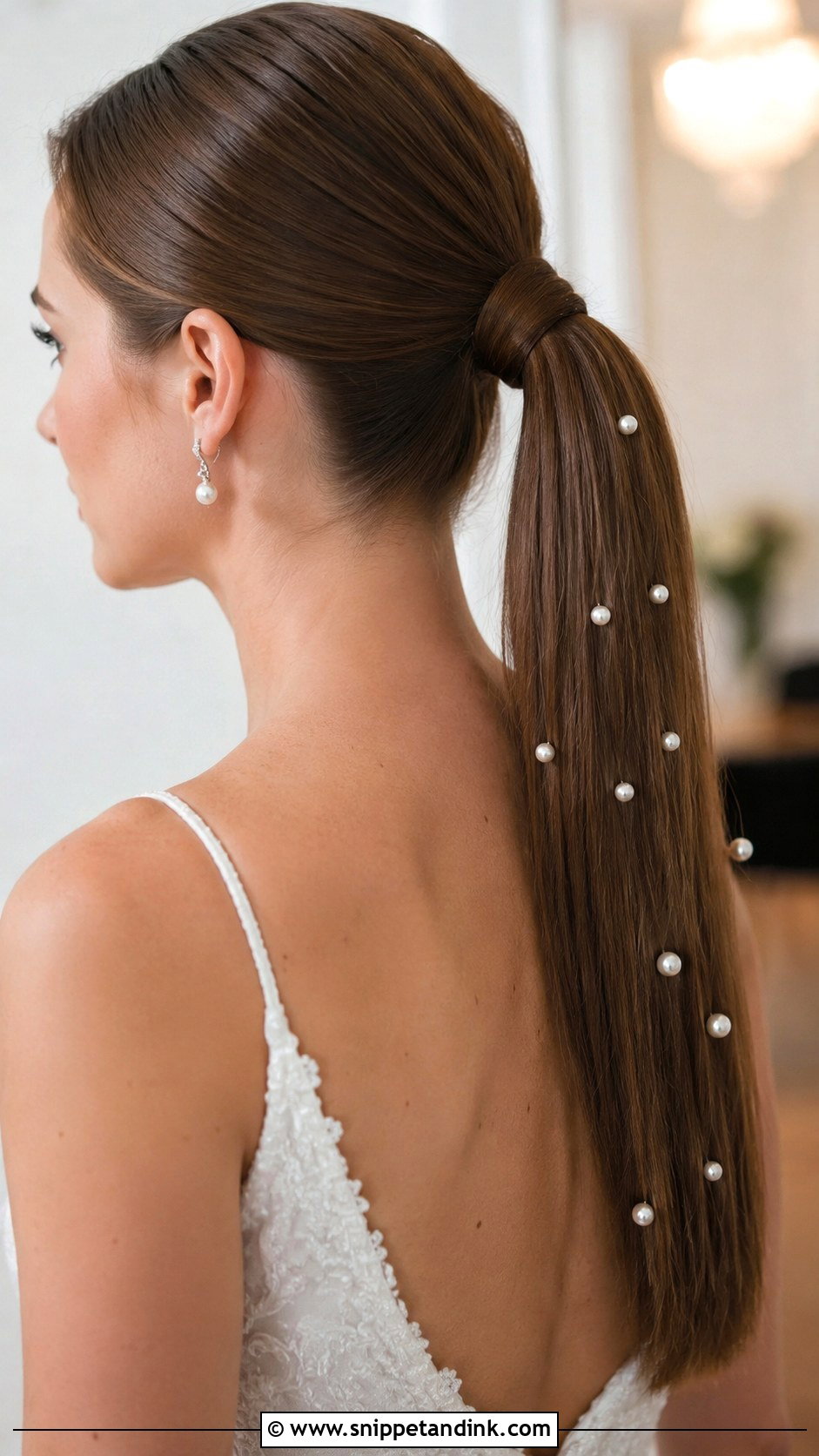
Pearls turn a plain ponytail into something formal without changing the shape. I either use a pearl-covered tie at the base or scatter pearl pins along the length. Each pin needs a bobby pin locked underneath it, because pearls are heavier than crystals and slip out of a smooth tail. It works at any height. Match the pearls to your earrings rather than adding a third white tone.
7. Side-Swept Wedding Ponytail
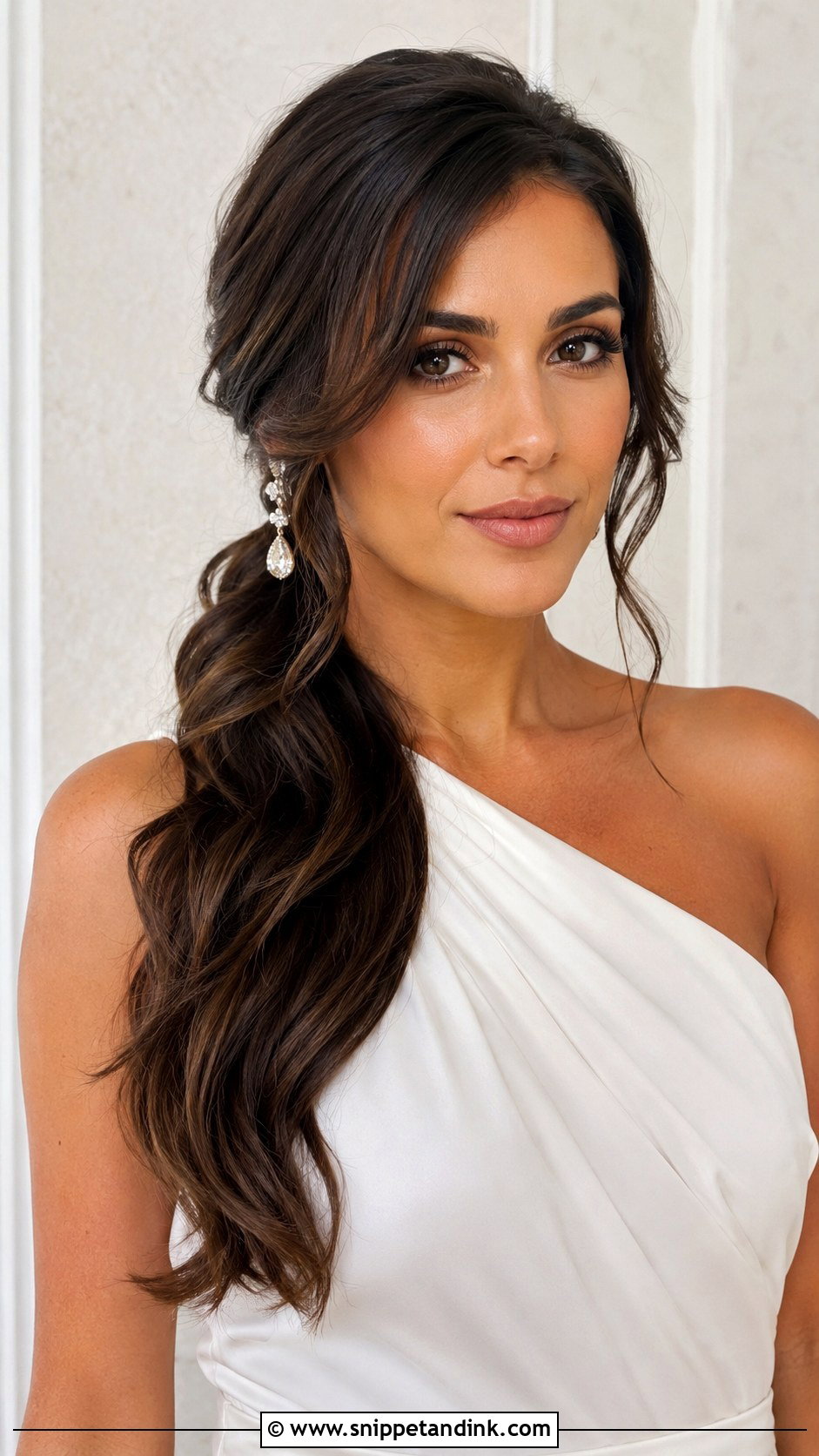
A side ponytail drapes over one shoulder and opens the other side. I secure it low behind the ear and pin the hair across the back of the head so it doesn’t pull loose as you turn. Gentle waves in the tail soften it. It suits one-shoulder gowns and sleeves with detail on one side. The pins are the part people forget: the weight of all your hair hangs from one point, so I use more than you’d expect.
8. Textured Low Ponytail
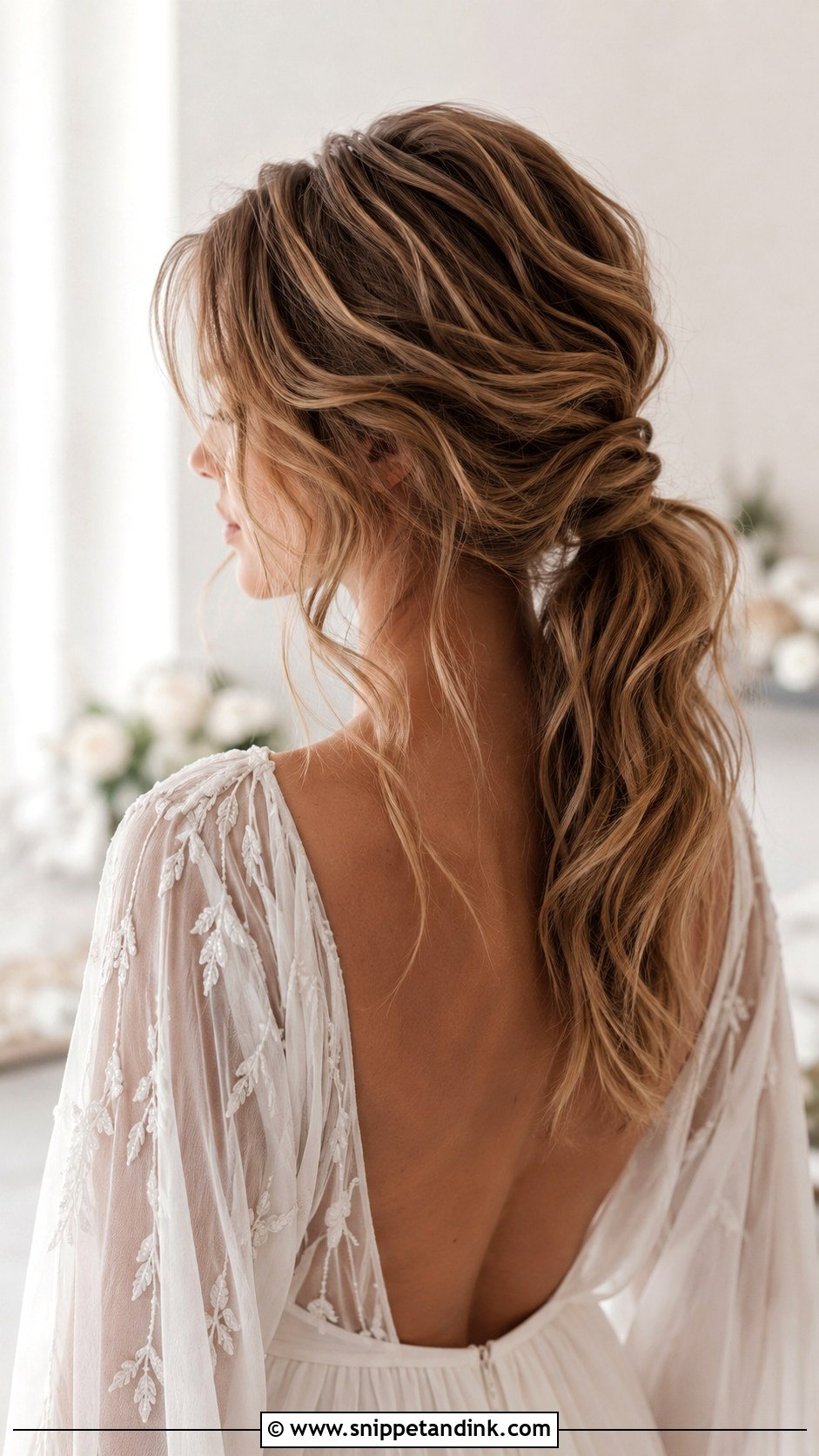
A textured low ponytail is relaxed by design. I curl the hair loosely, rough it up with my fingers and a texture spray, and gather it low without smoothing the top. A few face-framing pieces come loose. It suits boho, beach and garden weddings and hair with natural wave or curl. It’s forgiving, too: if a piece escapes during the evening, it simply blends in.
9. Wedding Ponytail With Veil
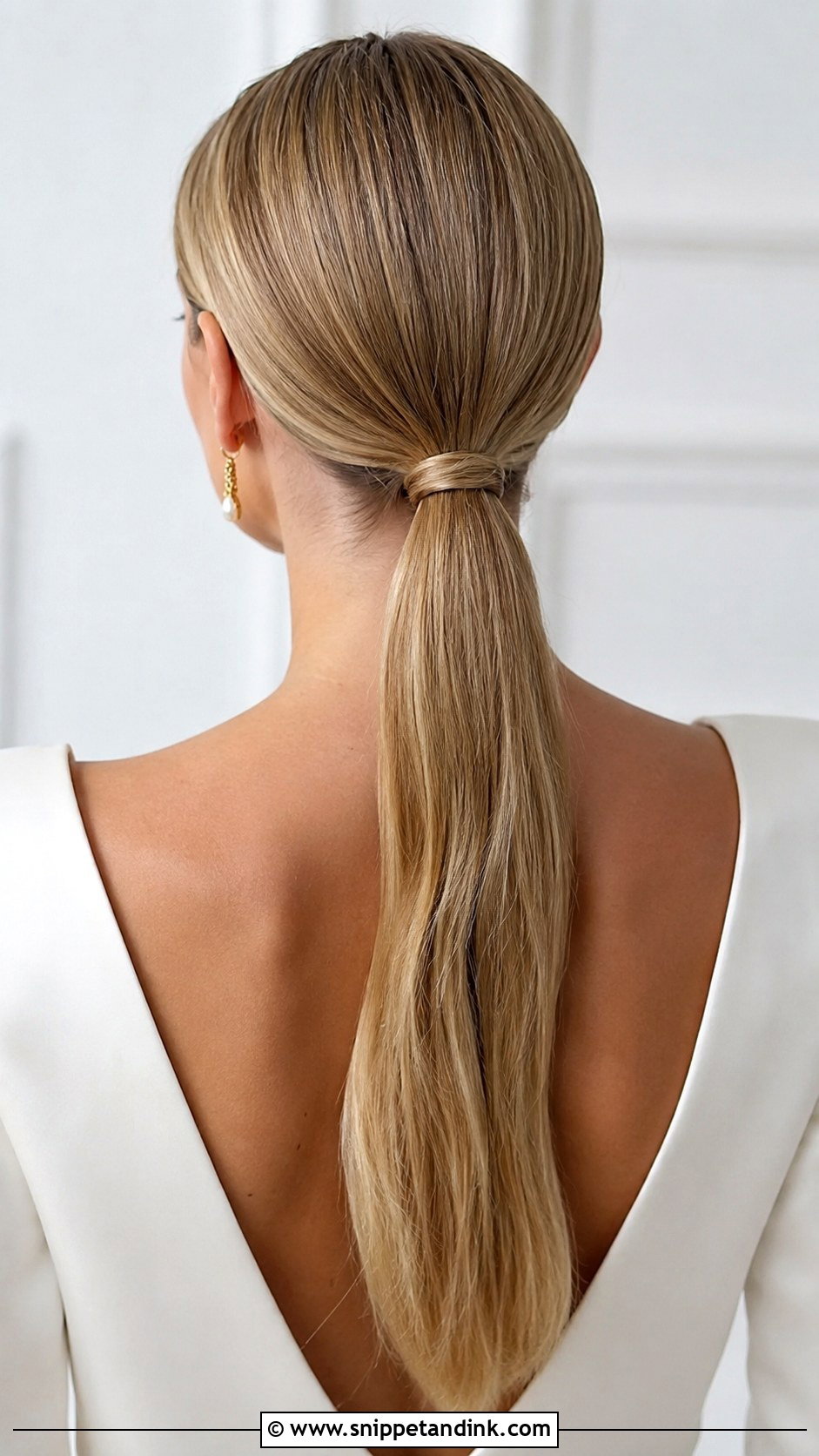
Worried a veil won’t work with a ponytail? It does, if the comb has something to grip. I place the comb either just above the ponytail base, which looks traditional, or underneath it, which lets the veil fall behind the tail. Two crossed bobby pins under the comb keep it from sliding on smooth hair. After the ceremony, the veil comes out without disturbing the ponytail, and you’re ready for the reception.
10. Voluminous Curly Wedding Ponytail
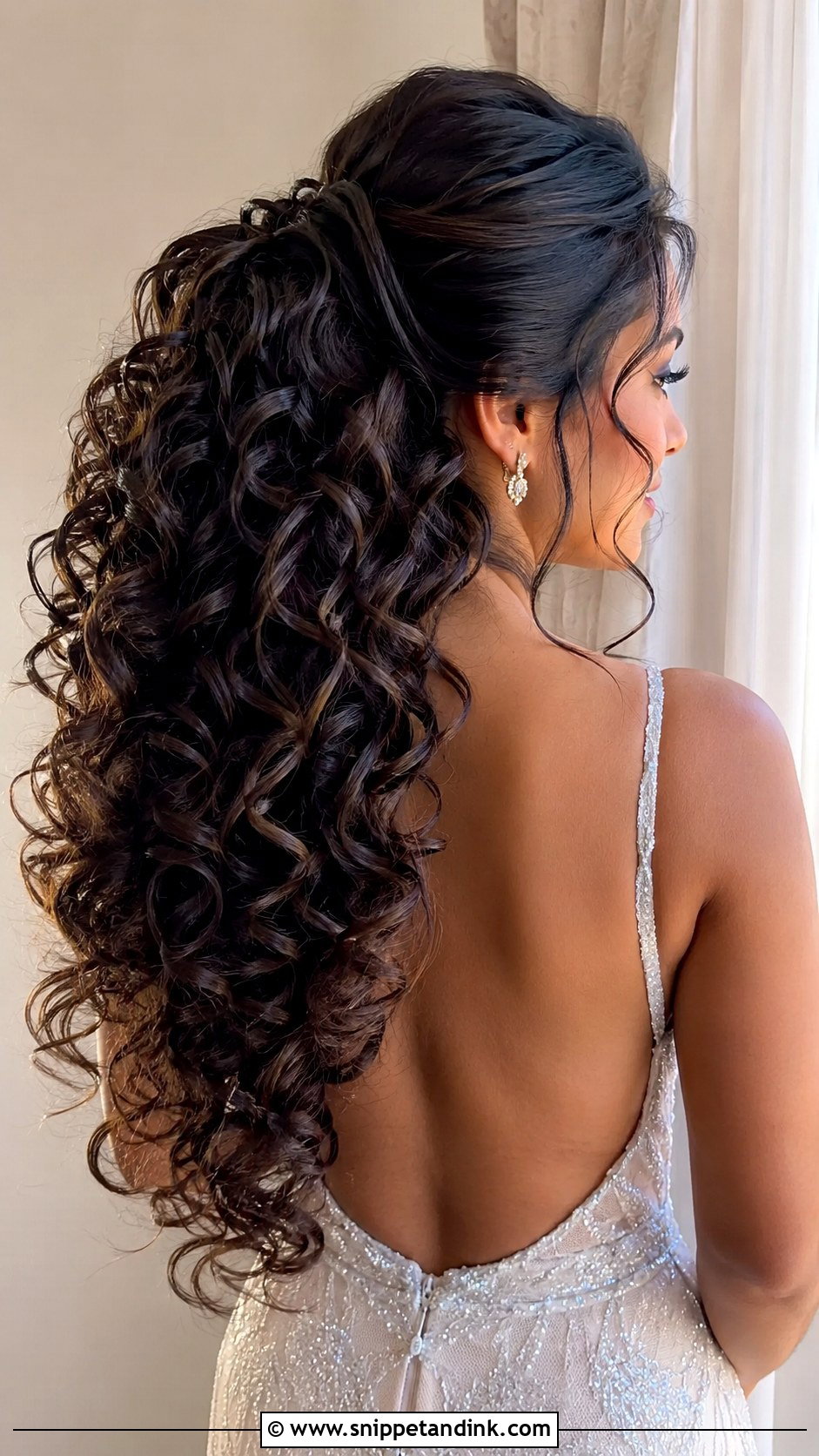
Big curls need a ponytail strong enough to carry their weight. I curl the length into full, bouncy curls, then secure the base with two elastics so the volume doesn’t drag it down. Naturally curly hair can stay as it is, with a curl cream to define it. High looks dramatic; low feels softer. Sparkling pins sit securely inside curls because the texture holds them. Expect the curls to grow a little in humid air.
11. Twisted Wedding Ponytail
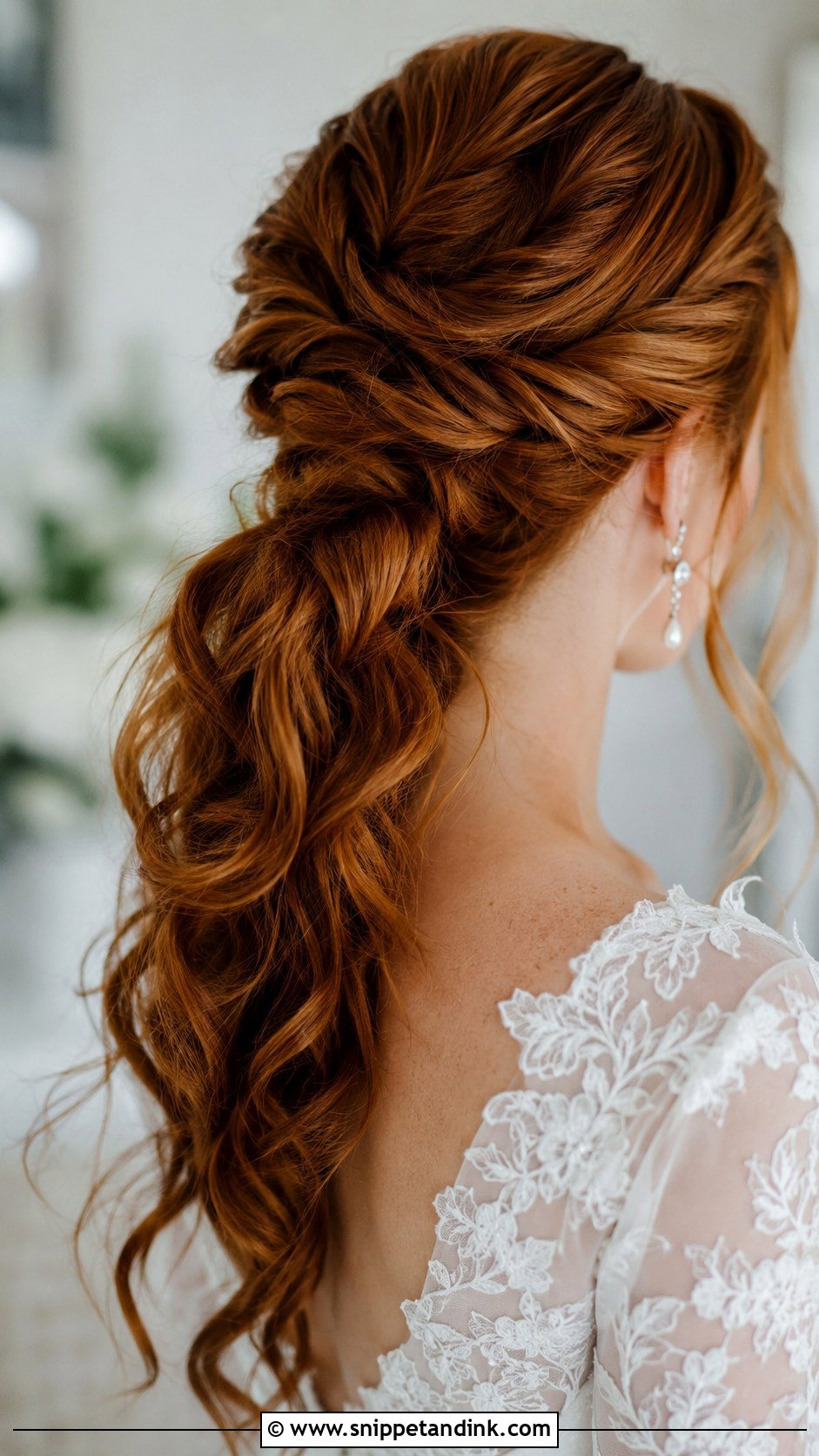
Twists are an easier alternative to braids. I take sections from the front or crown, twist them back toward the ponytail base, and pin each one as I go. It looks refined with a sleek tail and relaxed with a textured one. I like a few delicate hairpins tucked into the twists. The twists need pinning, or they unwind over the evening.
12. Wedding Ponytail With Crystal Hair Chain
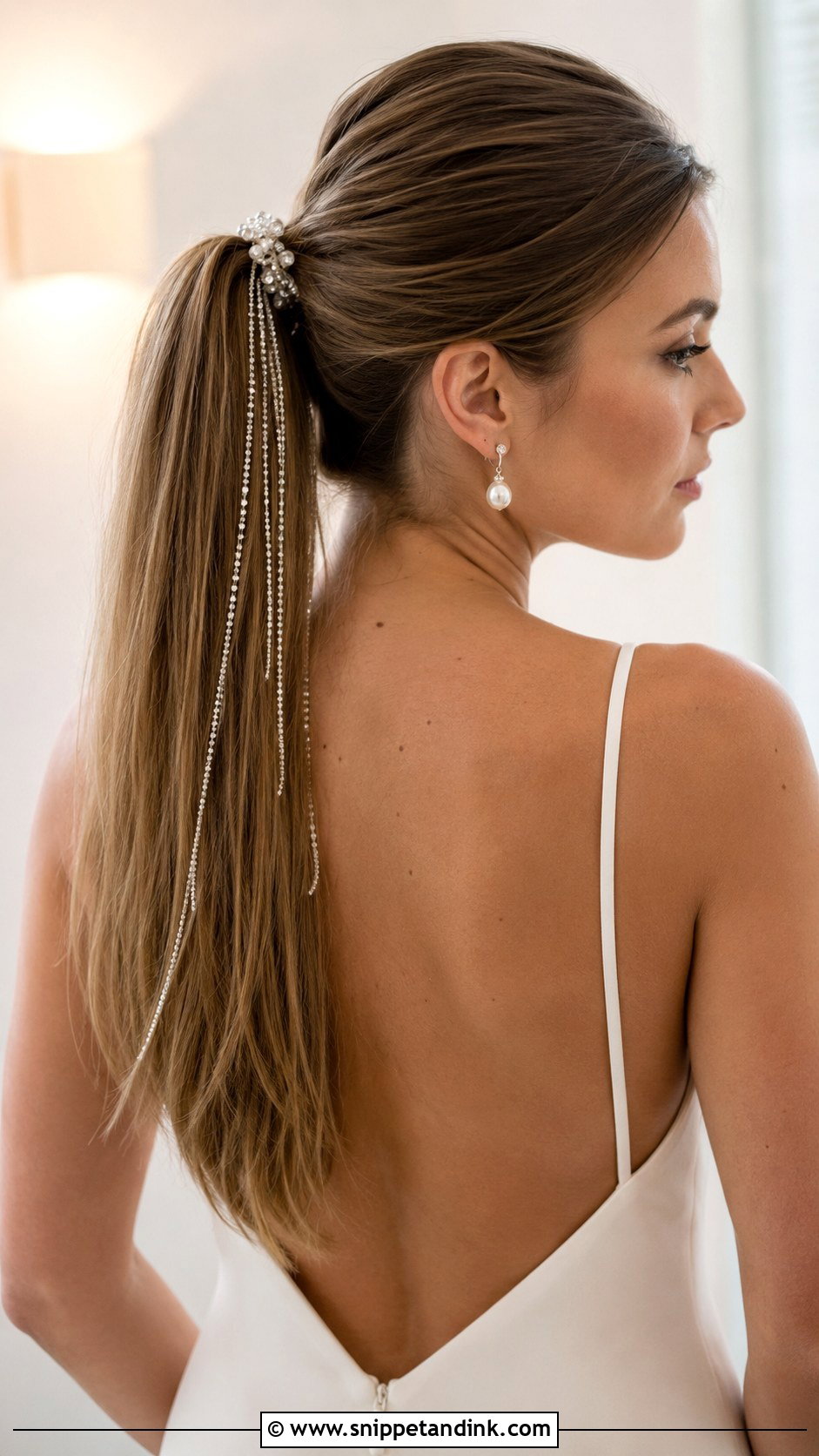
Crystal hair chains drape through the length of the ponytail and catch light under reception lighting. They’re best with a high pony, where the chains hang visibly. I anchor each end with a bobby pin locked under the hair, as chains can shift with movement. Keep your earrings simple so the chain is the main detail. Very fine chains can tangle in loose hair, so I suggest a sleek tail rather than a messy one.
13. Bridal Ponytail With Face-Framing Layers
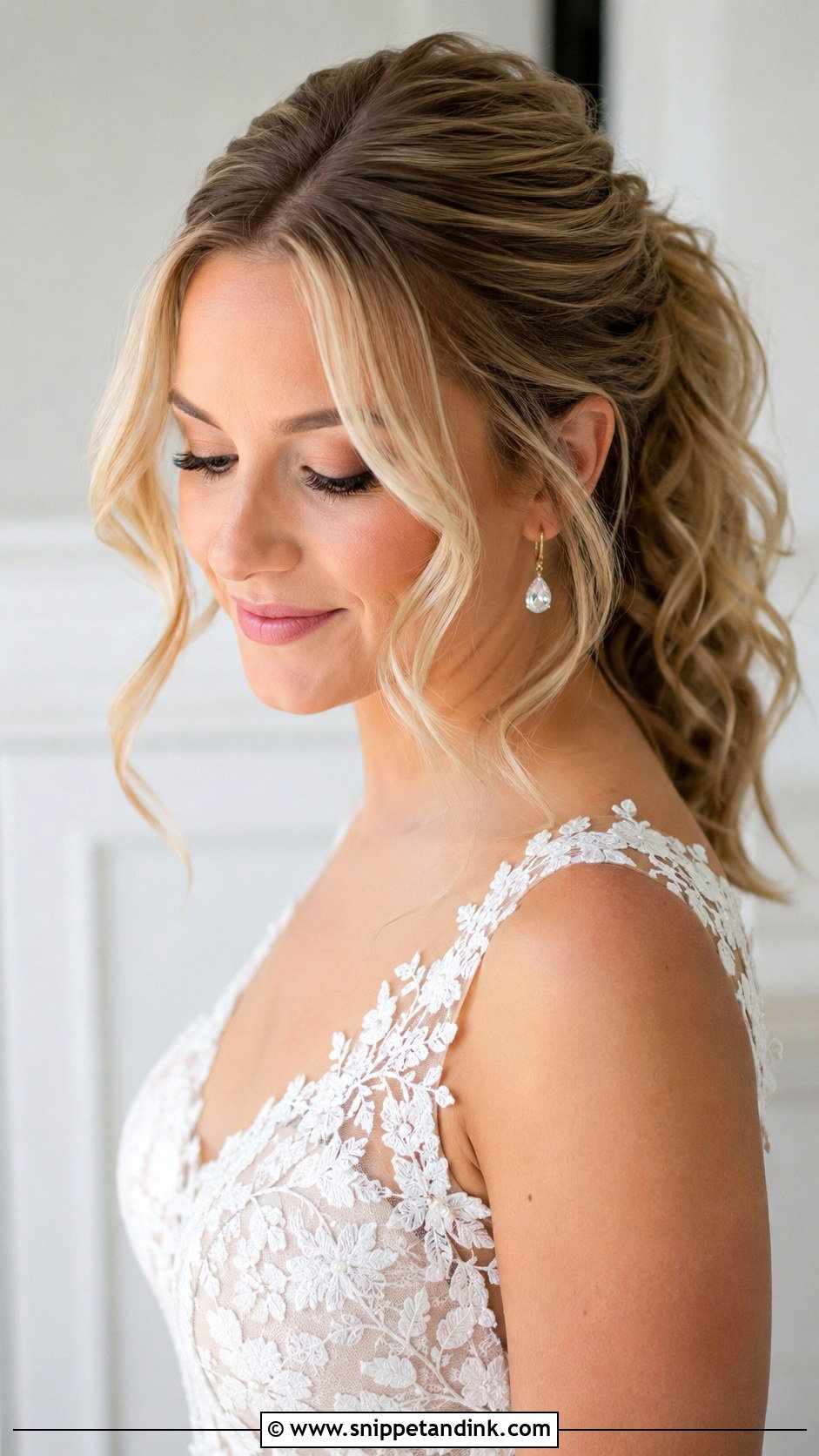
Face-framing layers keep a ponytail from feeling severe. I pull out the front layers before securing the pony, then curl them gently away from the face. They soften a strong jawline and draw attention to the eyes. It works with high and low ponies. The main thing is length: the layers need to reach at least the chin, or they can look like stray hairs rather than intentional framing.
14. Long Wedding Ponytail With Extensions
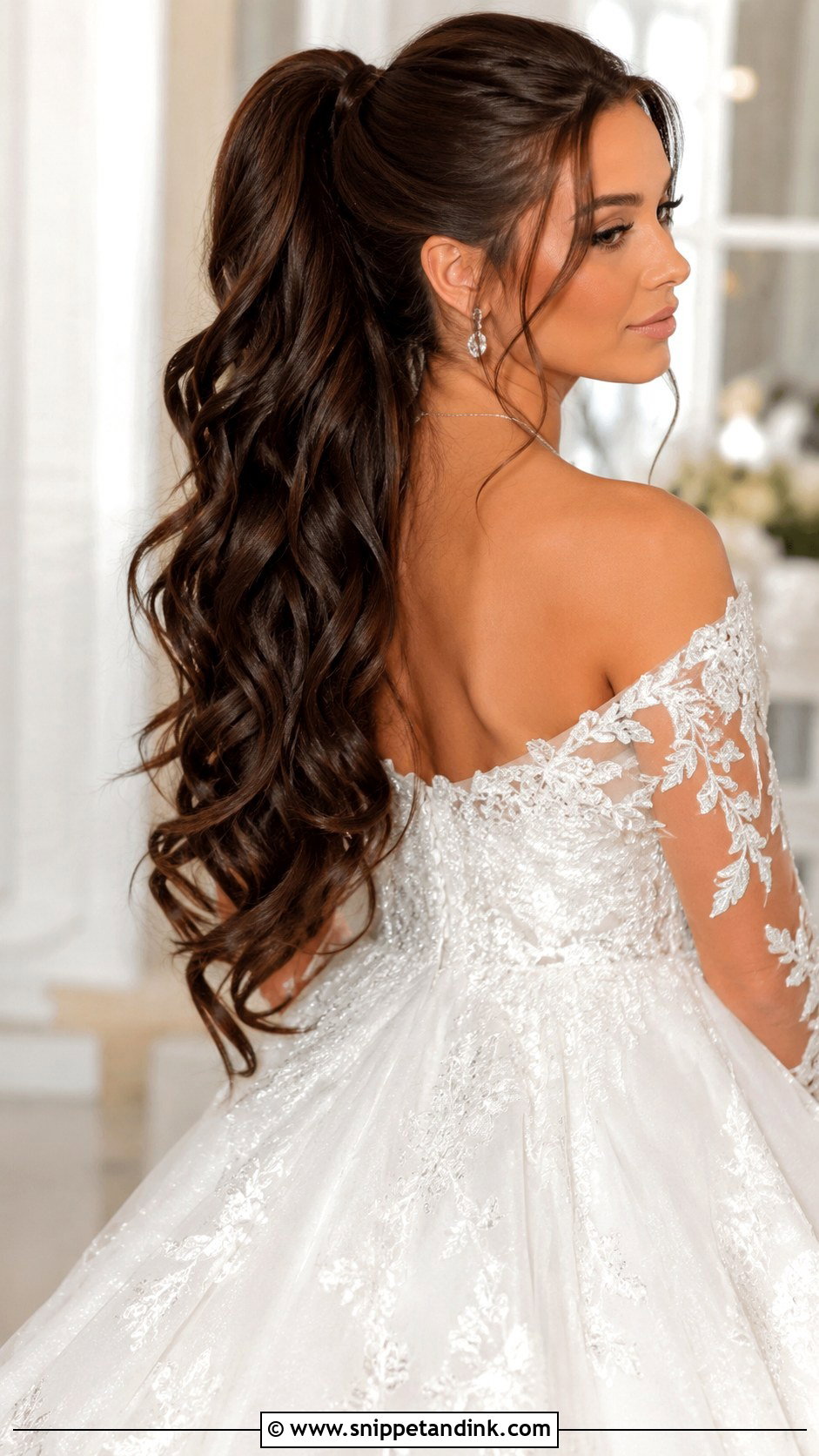
Extensions are what make a long, full ponytail possible for many brides. They’re especially useful for shorter or thinner hair. I attach a clip-in ponytail or individual clip-in wefts underneath the base, then blend the colors by curling everything together. Bring the extensions to your trial so the color can be checked in daylight. They add weight, so a lower position is often more comfortable over a long day.
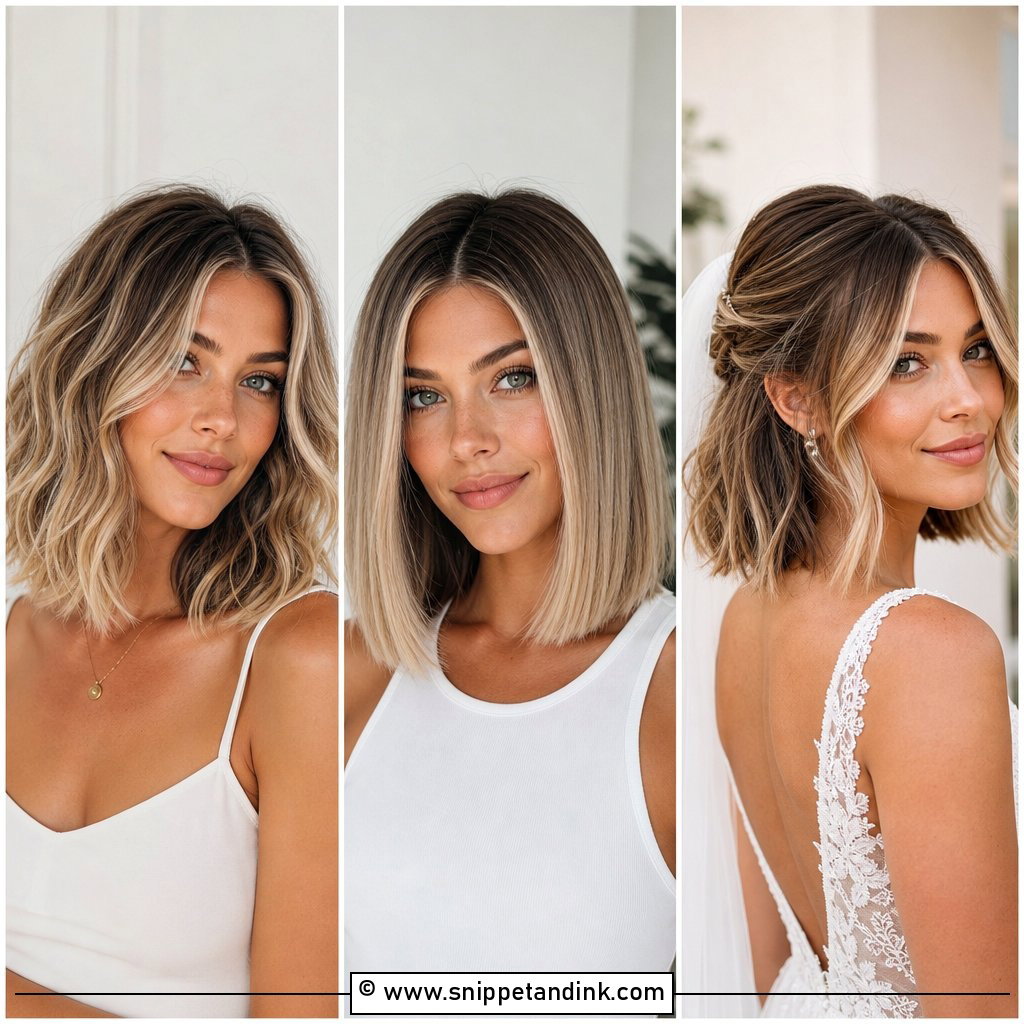
15. Wedding Ponytail With Ribbon
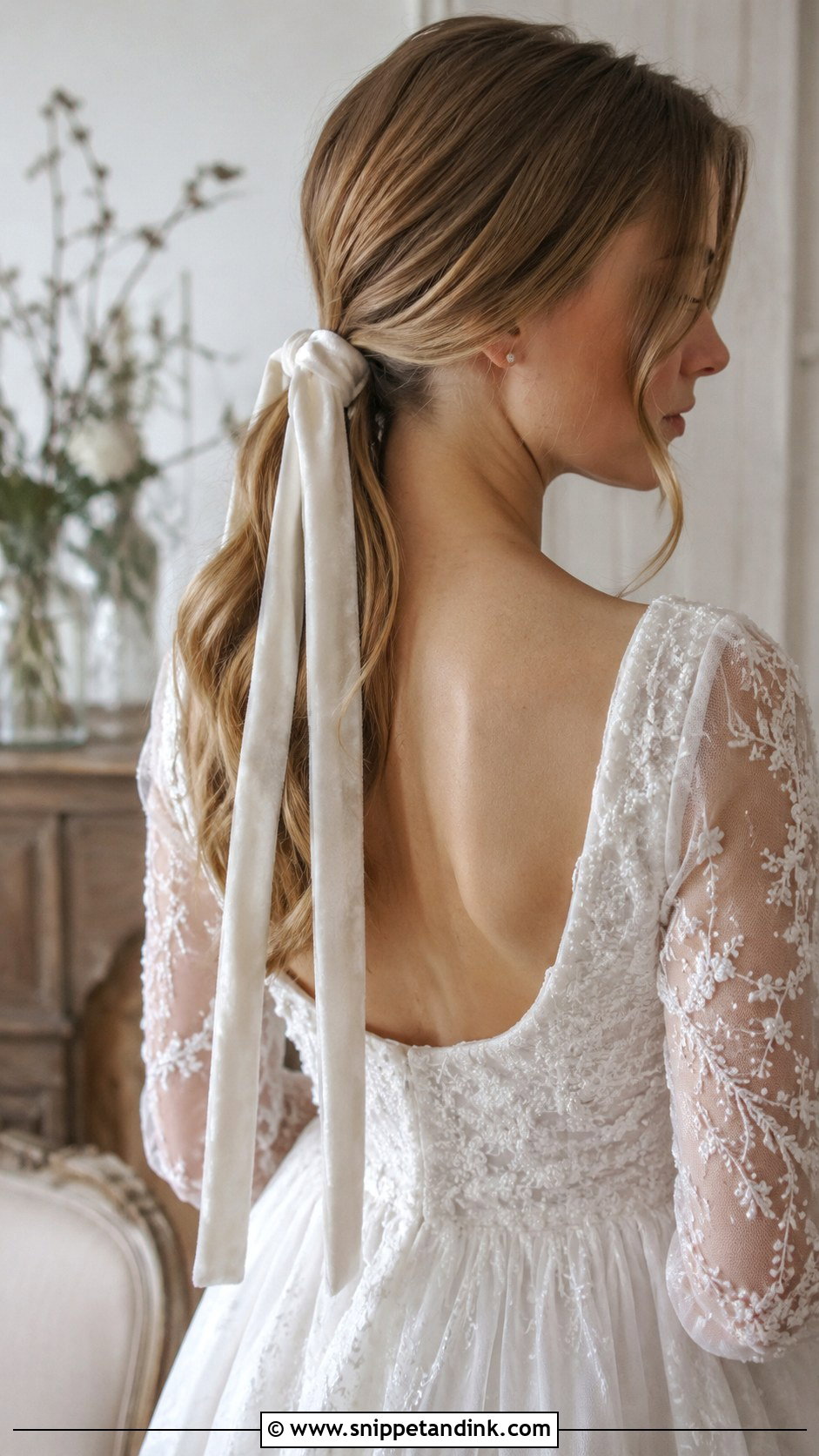
A ribbon tied at the base adds a soft, vintage feel. I wrap velvet or silk once or twice around the elastic, then tie it into a soft bow or let the ends hang. White, blush or a pale metallic work with most dresses. It suits vintage and garden weddings. Silk ribbon can slip, so I pin it through the knot to keep the bow from sliding down.
16. Half-Up Wedding Ponytail
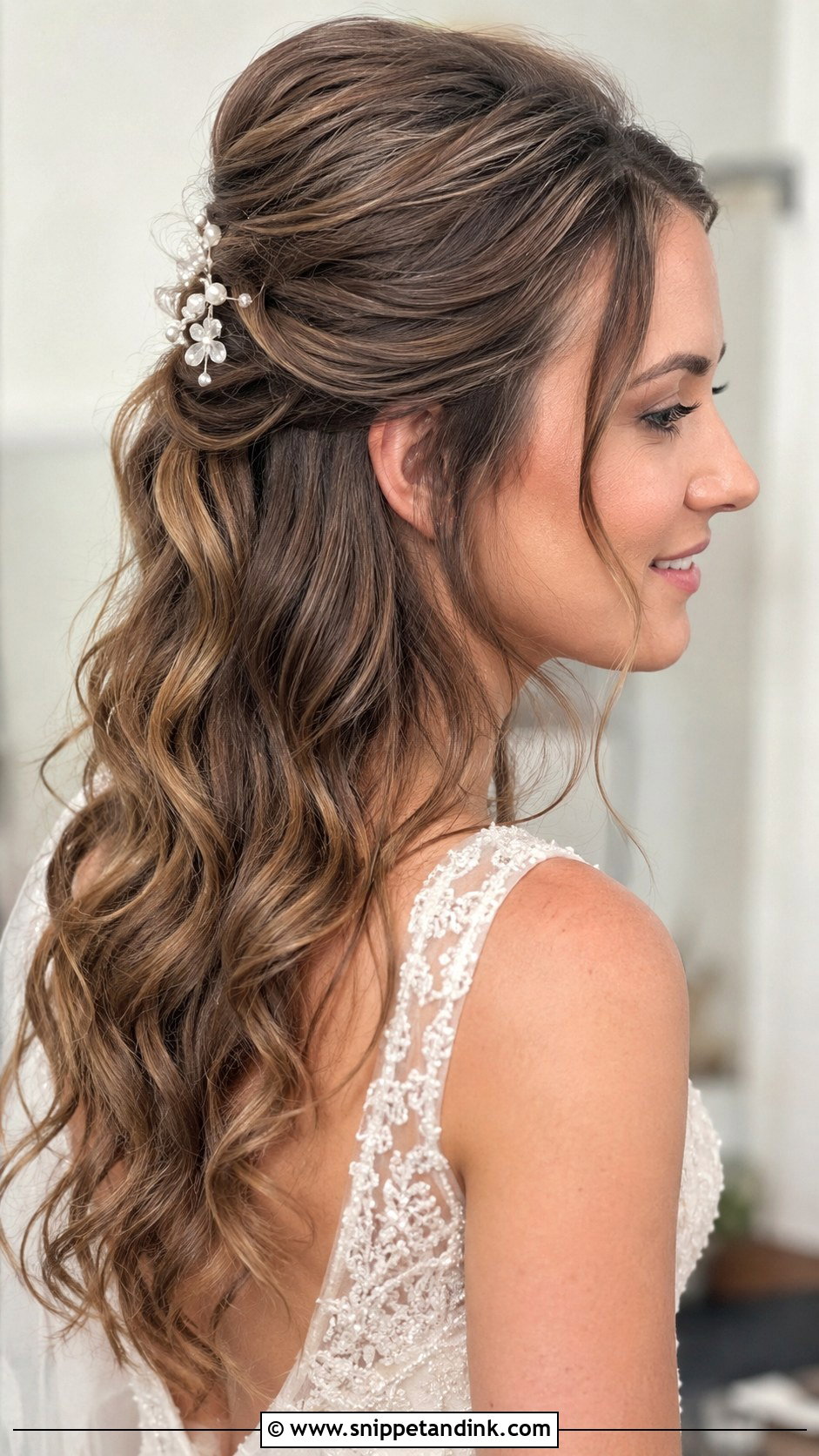
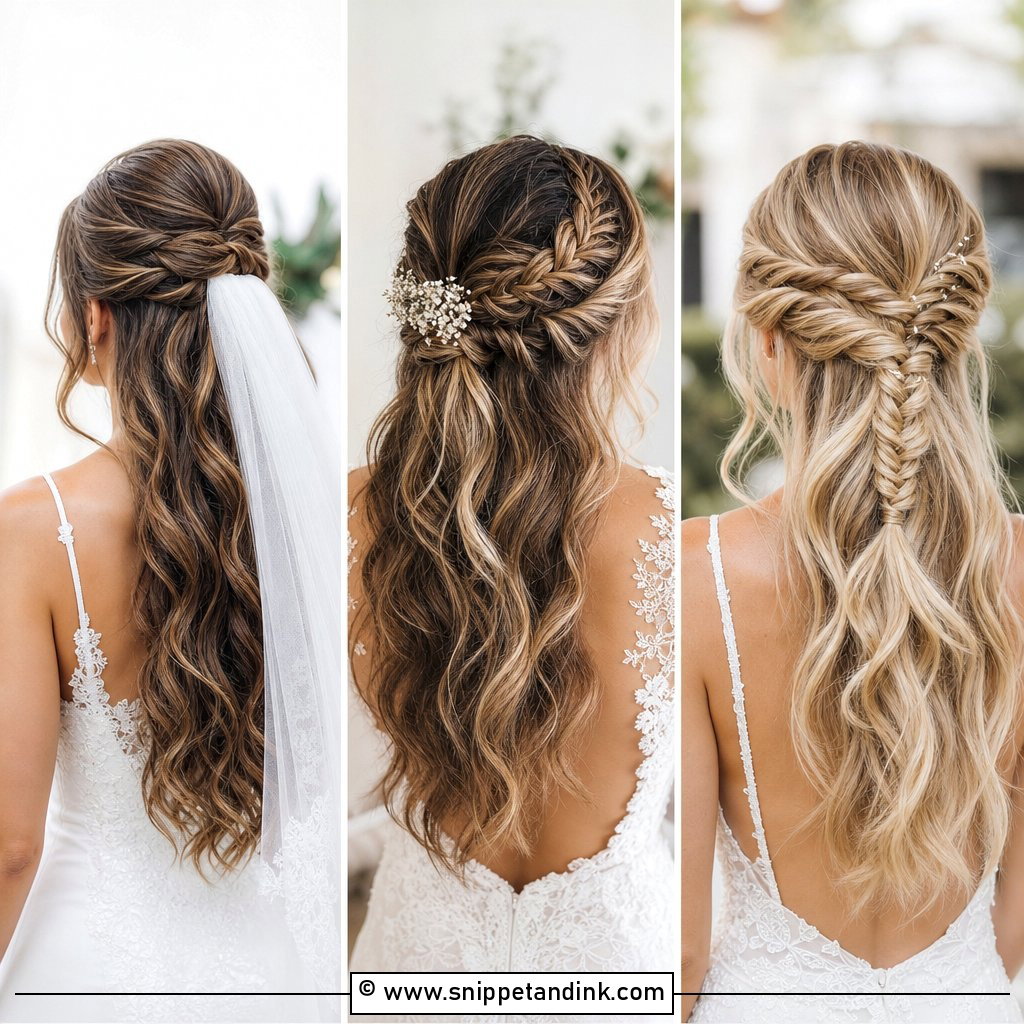
Half-up ponytails keep the top off your face and leave the rest loose. I tease the crown slightly for lift, then gather the top section into a small ponytail and secure it. The loose length below gets soft curls or waves. Small pins or a few flowers can sit at the base of the half pony. It suits boho and romantic weddings and medium to long hair.
17. Sleek High Wedding Ponytail
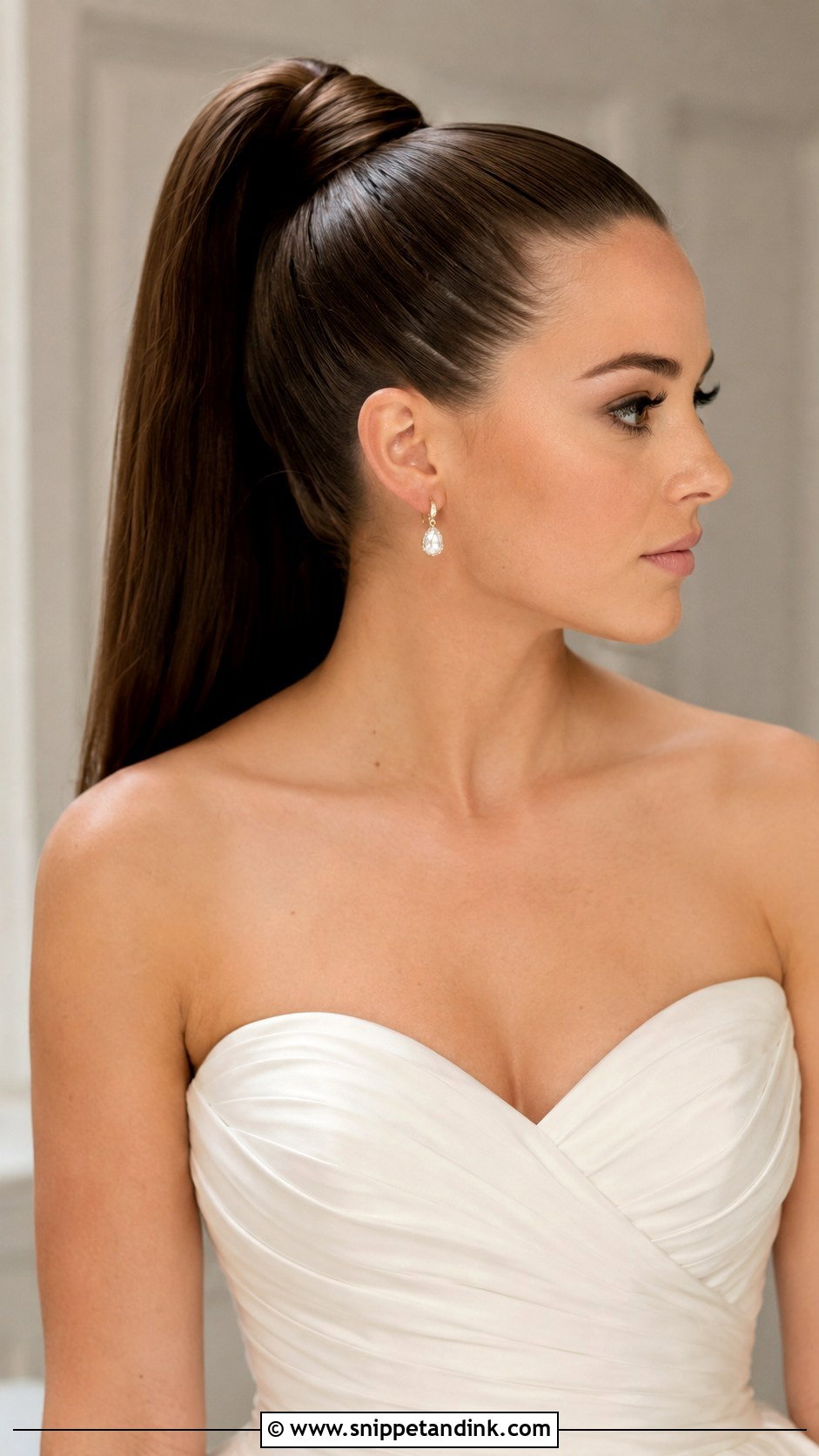
A sleek high ponytail is dramatic. I brush everything up with a smoothing cream, secure it high on the crown with two elastics, then wrap a section of hair around the base to hide them. It elongates the neck. It pairs with sleek gowns and statement jewelry. The headache warning applies here too: if you’re sensitive to tension, a slightly lower position is more comfortable after six or seven hours.
18. Wedding Ponytail With Fresh Flowers
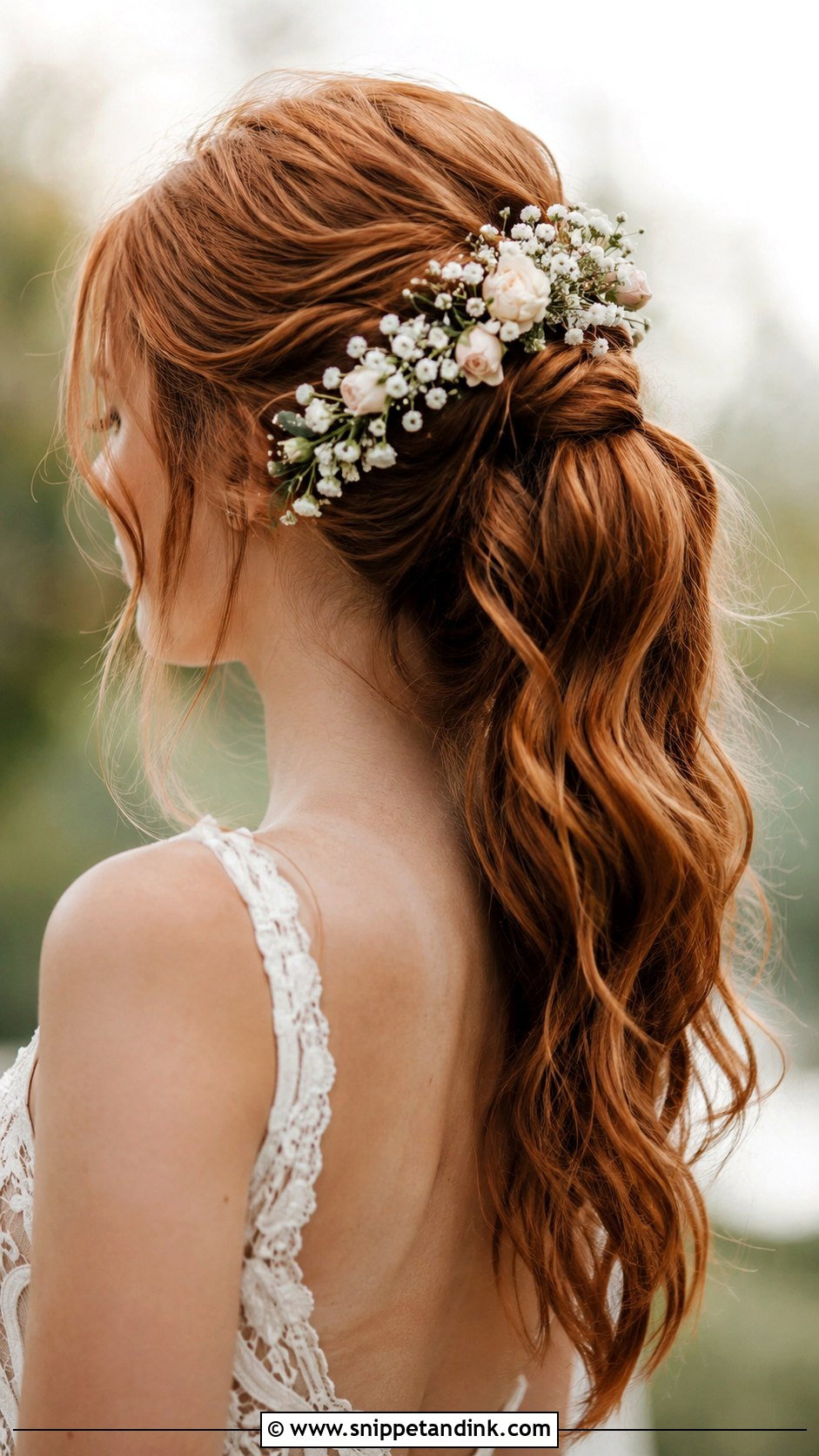
Flowers around a ponytail base look fresh and natural. I wire small blooms like baby’s breath and spray roses onto bobby pins, then place them around the base or along a braided section. Fresh flowers wilt in warm weather, so ask your florist for hardy stems delivered that morning. Coordinate them with your bouquet. It suits outdoor and spring weddings.
19. Low Wedding Ponytail With Soft Waves
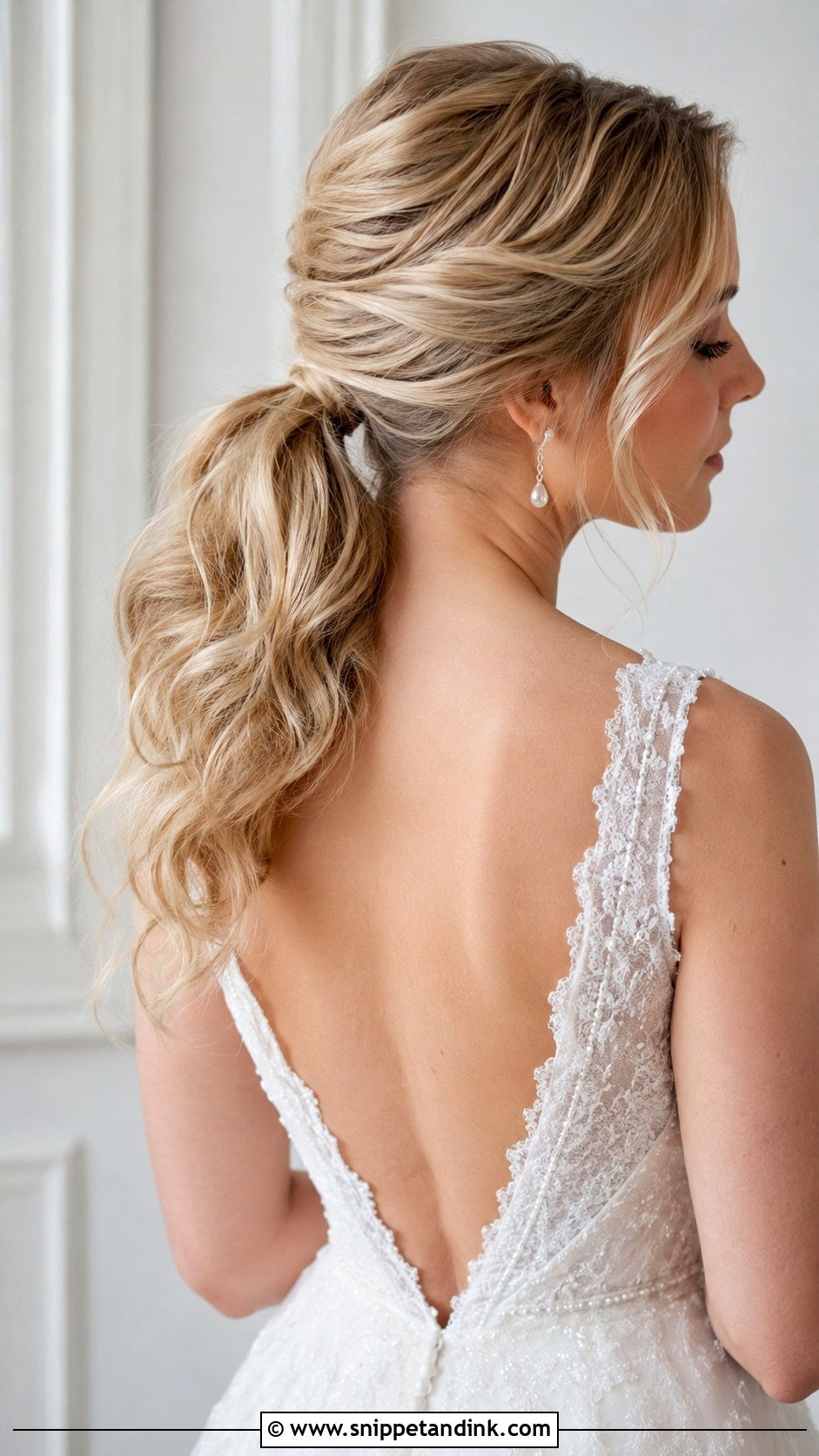
A low ponytail with soft waves is the one I’d suggest if you’re unsure. I curl the hair loosely, brush it out, then gather it gently at the nape. It’s comfortable, and it suits classic and vintage gowns. A pearl pin or a small clip adds detail. It doesn’t need touch-ups between ceremony and reception, and it suits most hair types and face shapes.
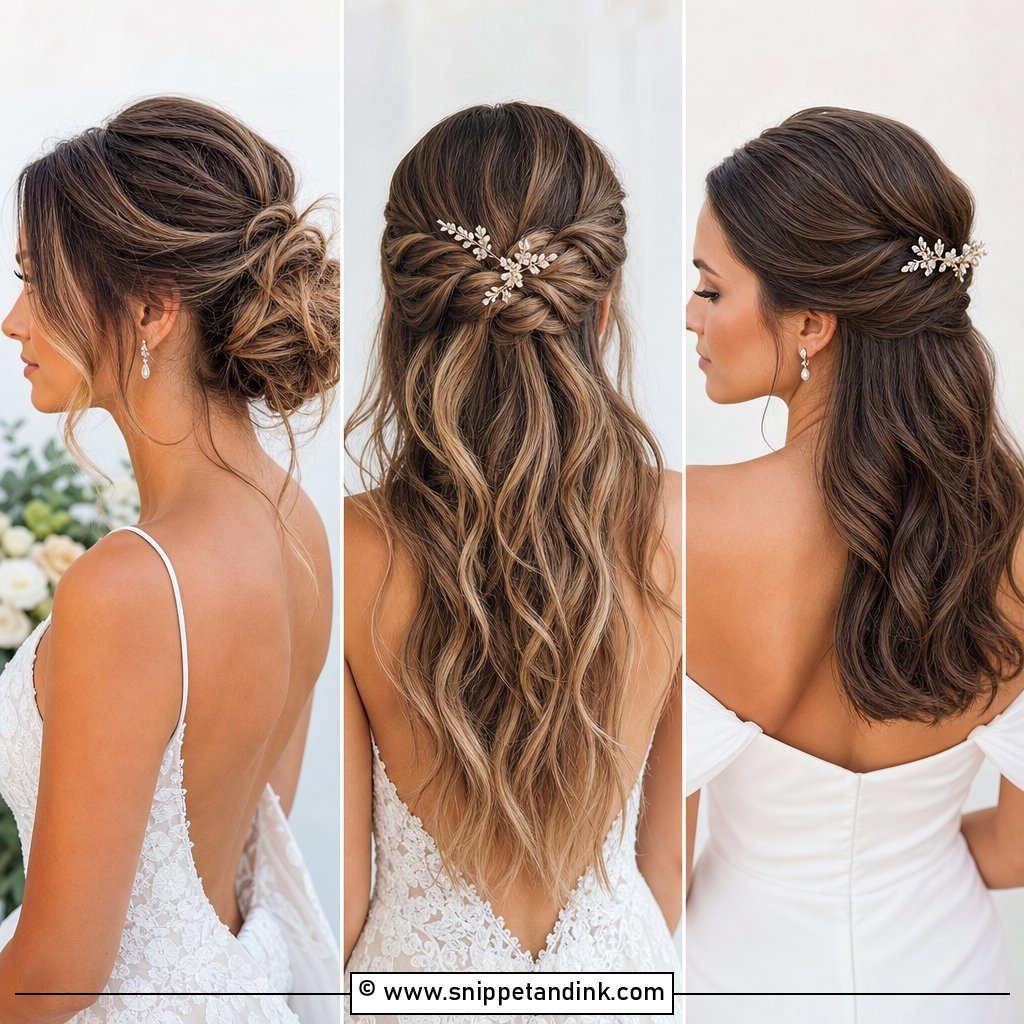
20. Braided Crown Ponytail
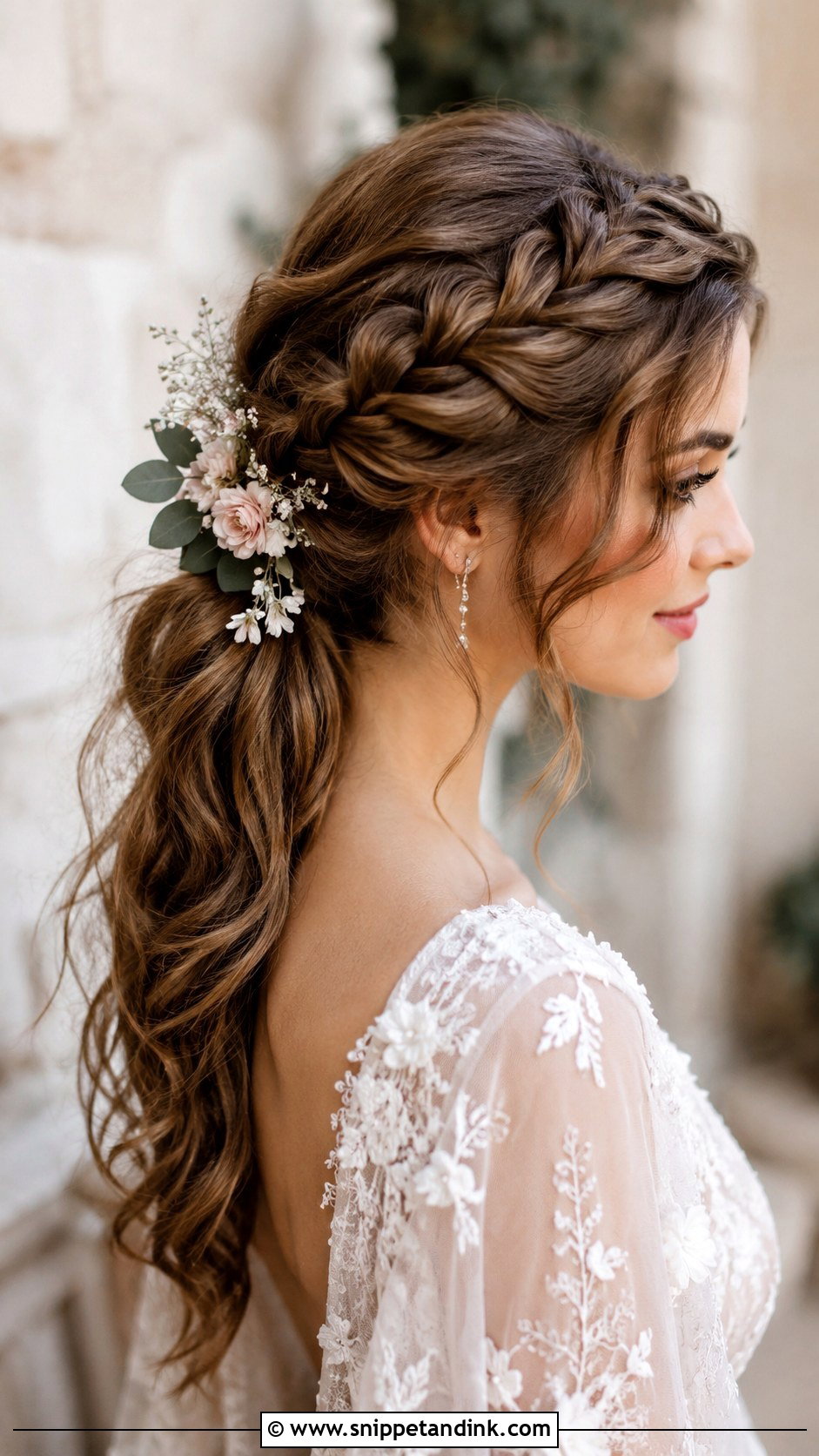
A braid around the crown flowing into a ponytail looks detailed but holds well. I braid from one temple across the top of the head to the other side, then gather the end with the rest of the hair into a ponytail. Small flowers or pins add detail. It works with sleek and textured tails. On fine hair I pancake the braid to make it look fuller.
21. Wedding Ponytail With Tendrils
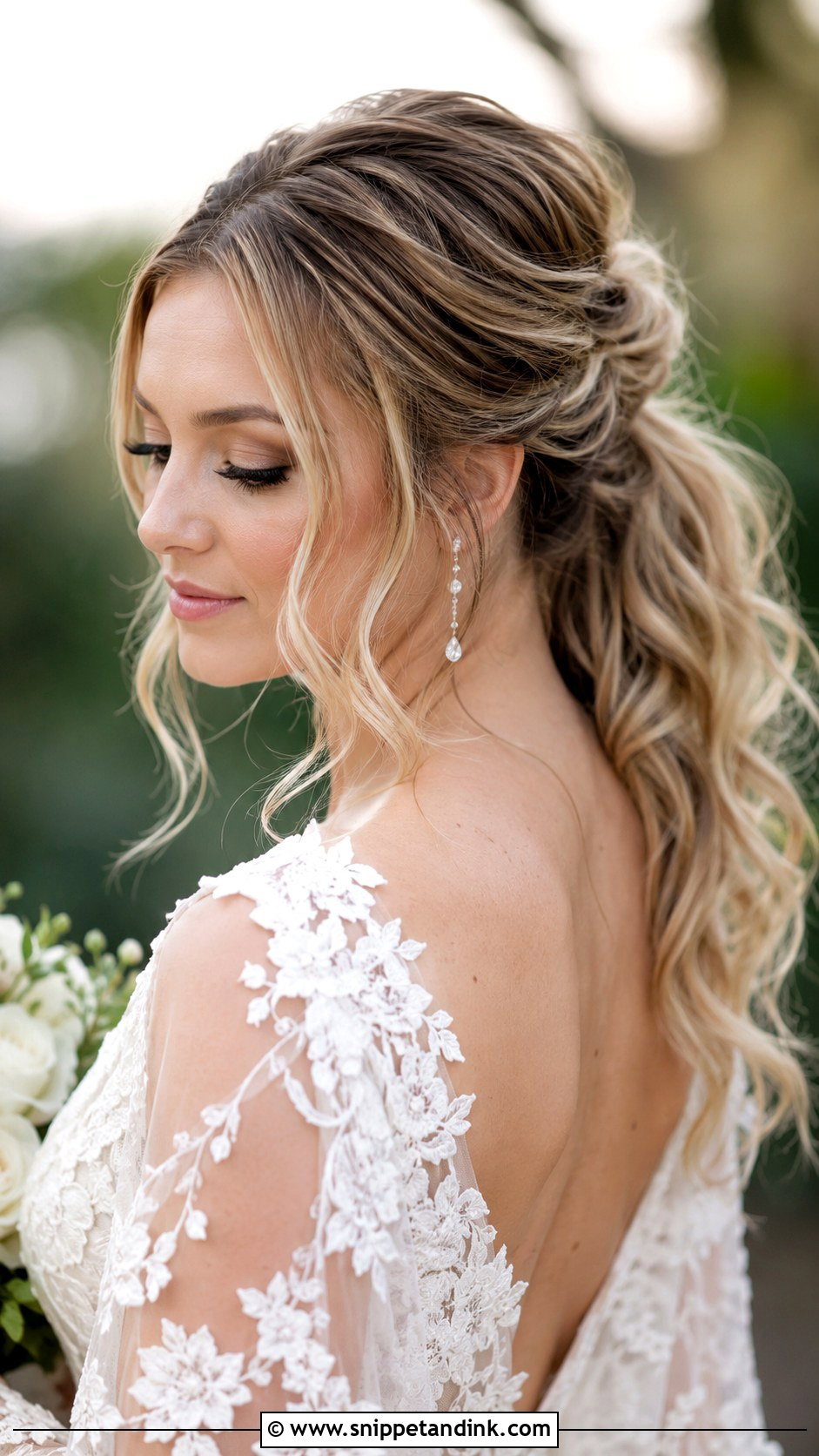
Tendrils soften a pony, but they can easily look messy if overdone. I pull out only two or three thin pieces at the temples and nape, then curl them separately with a small iron. They suit boho and garden weddings. In humid weather, tendrils flatten quickly, so I curl them slightly tighter than they’ll end up.
22. Glamorous Bridal Ponytail With Volume
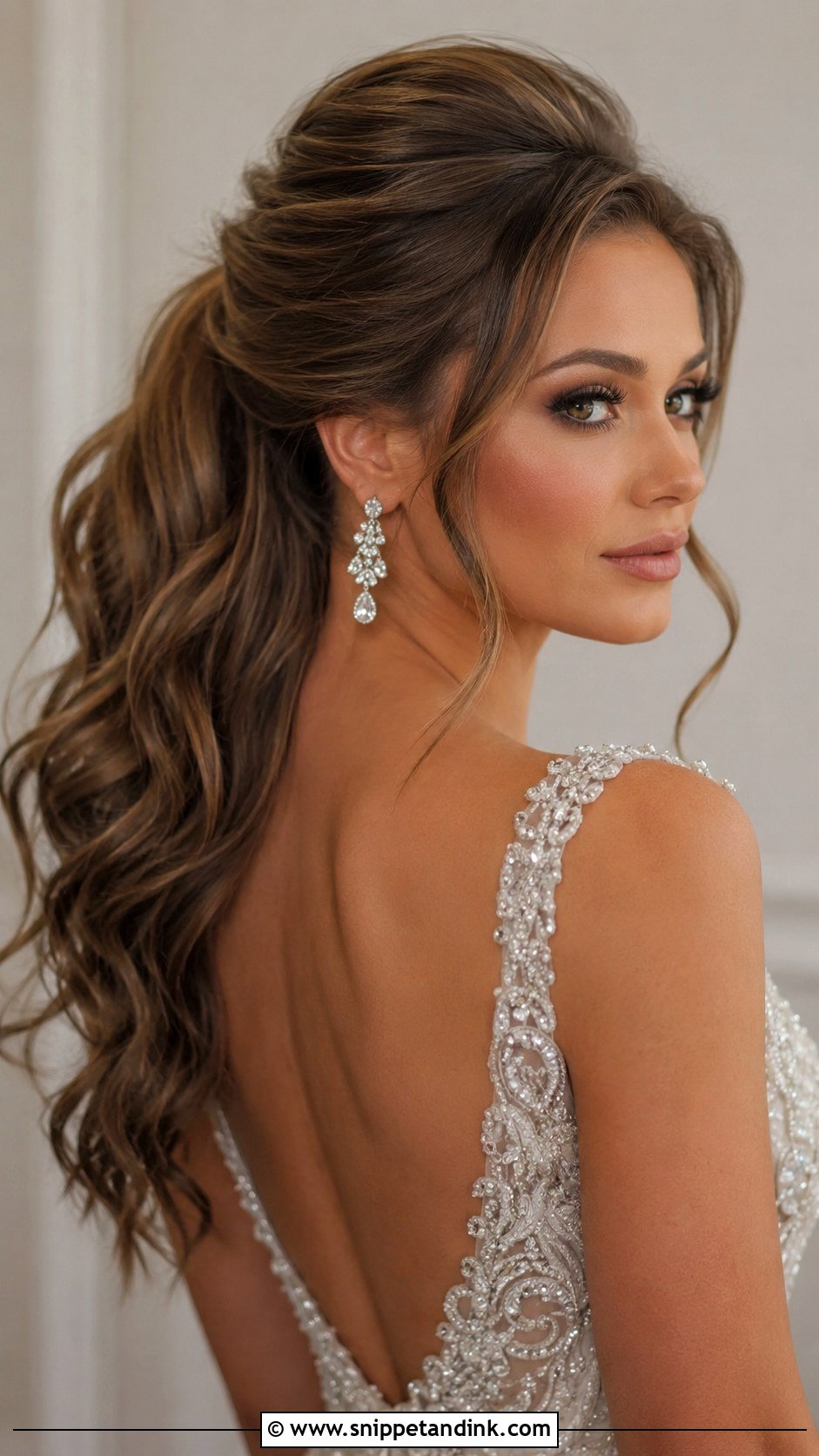
Volume at the crown gives a ponytail a 1960s feel. I tease the crown lightly, smooth the top layer over it, and secure the ponytail high or at the back of the head. It suits statement gowns and evening weddings. The teasing needs to be gentle, as heavy backcombing is hard to brush out and can damage fine hair.
23. Wrapped Wedding Ponytail
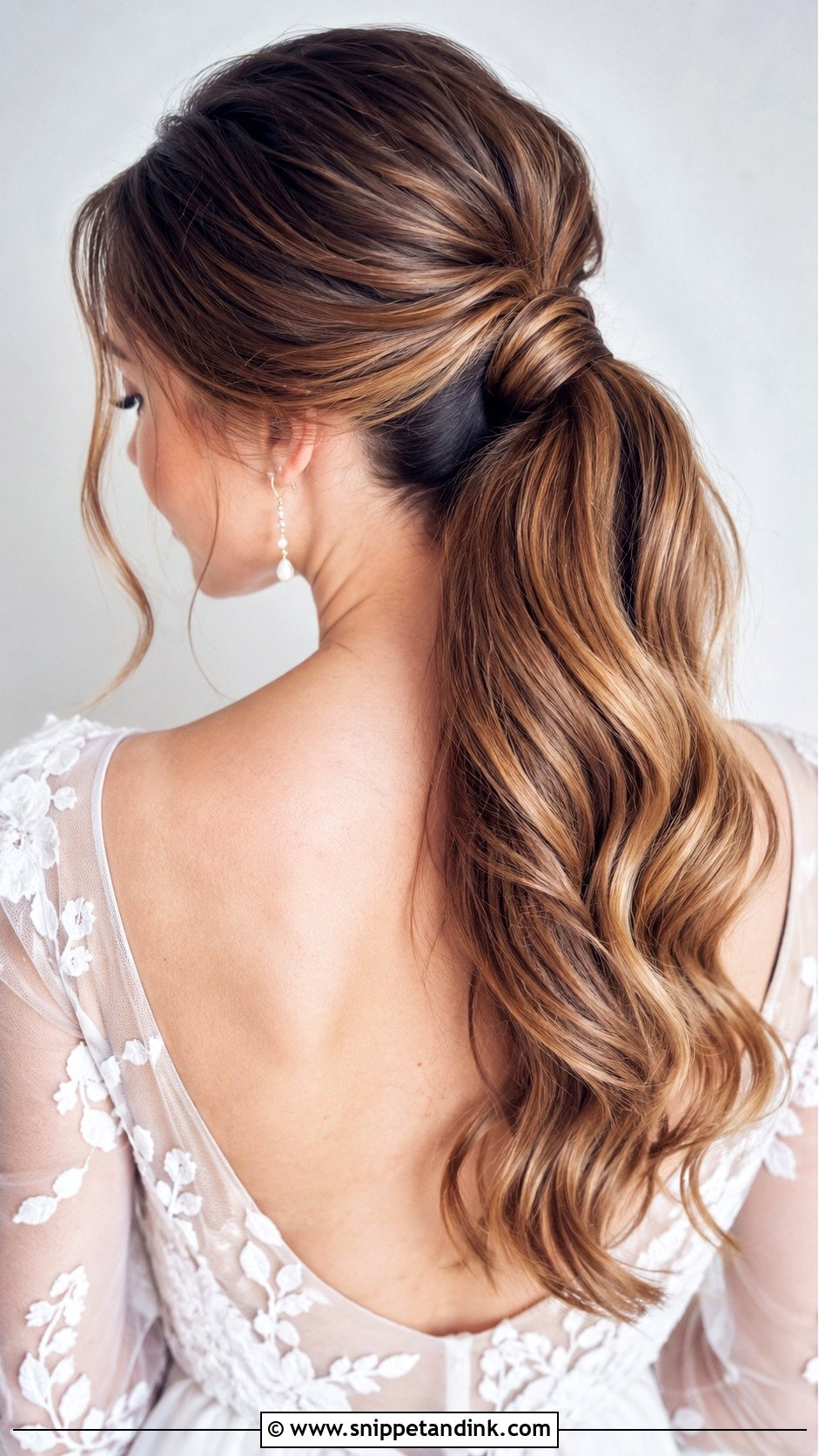
Wrapping a section of hair around the base hides the elastic and makes the ponytail look finished. I take a thin section from underneath, wrap it around the elastic and pin it underneath. It’s a small detail that suits most ponytail styles. Smooth or textured, it works. The pin needs to go in firmly, or the wrap unravels as you dance.
24. Boho Wedding Ponytail
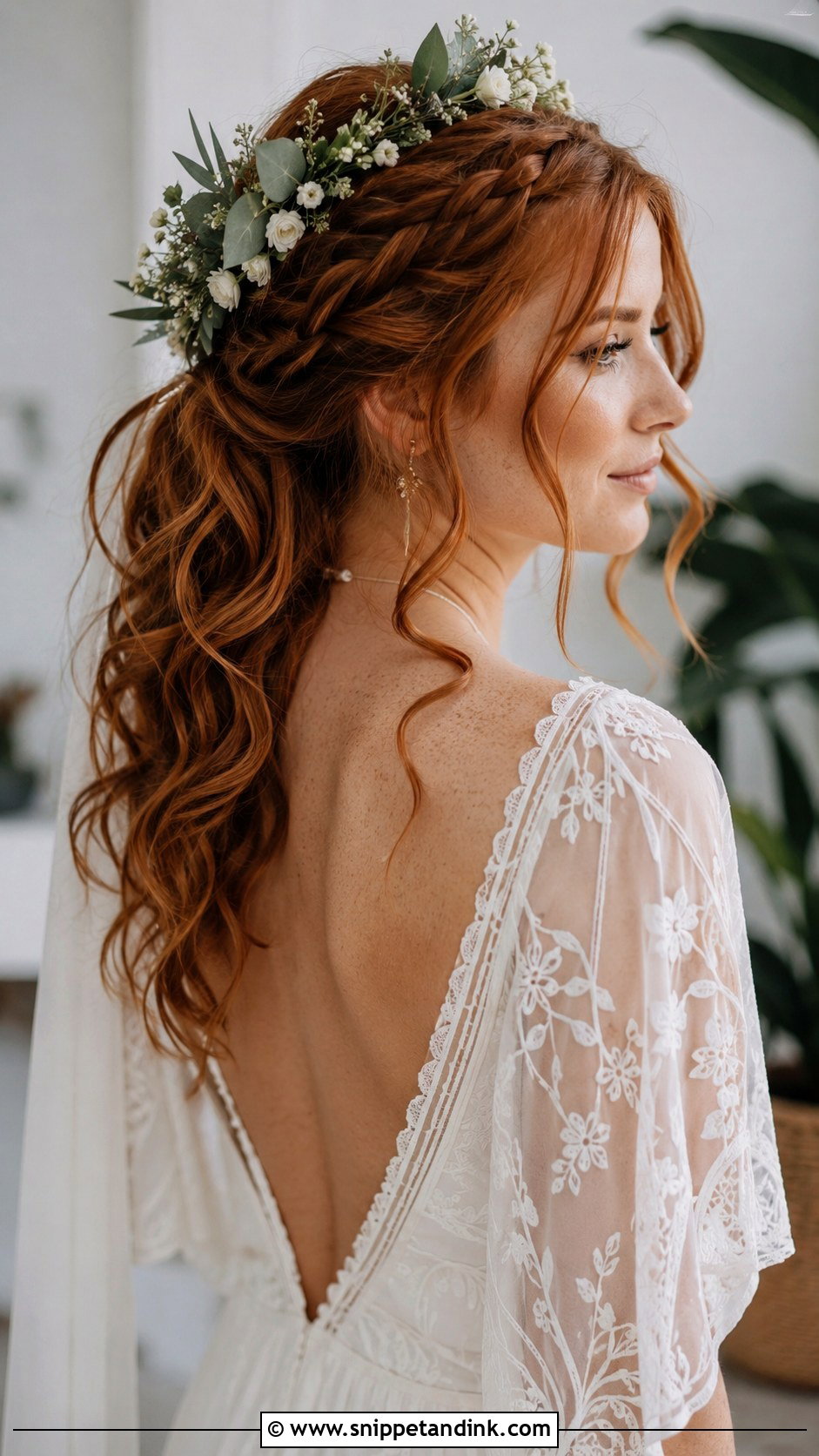
A boho ponytail is relaxed, with loose texture and small braids or twists. I curl the hair loosely, add a braid or two at the sides, then gather it into a soft ponytail and pull pieces loose. It suits flower crowns and flowy gowns. Face-framing pieces add softness. It’s comfortable to wear and forgiving if a few strands escape.
25. Vintage-Inspired Wedding Ponytail
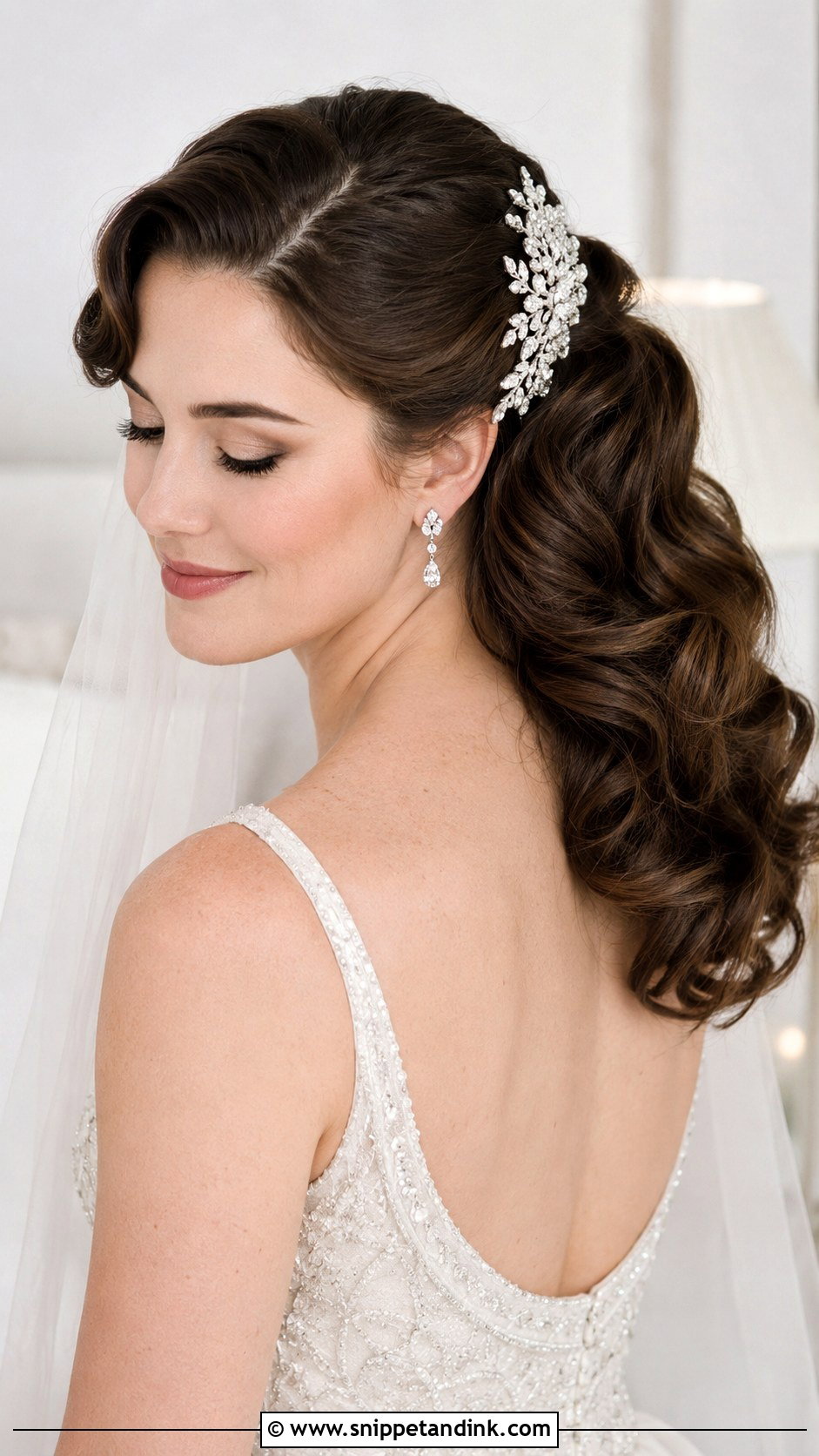
Vintage ponytails take retro curls or finger waves at the front and gather the length behind. I set the waves first, then secure the ponytail low, adding a sparkling clip or a vintage comb at the base. It suits classic and themed weddings. The waves need time to set properly, so allow for that in your schedule.
A Long Tail Against Beaded Lace Will Snag
Ponytails swing, and anything they swing against matters. Long tails catch on beading, sequins and open lace, especially at the back, and a few hours of rubbing can pull hairs loose and damage the fabric. If your dress has a heavily embellished back, I’d keep the tail shorter, wrap it smoothly or choose a side ponytail that falls in front.
Switching from an updo to a ponytail
Many brides wear an updo for the ceremony and want something lighter for dancing. A ponytail is an easy change, as long as the updo was built with it in mind. I ask the bride where she wants the ponytail before I start, then build the updo around that base. Later, removing a few pins releases the hair, and an elastic and a quick brush turn it into a ponytail in about ten minutes.
Is a Ponytail Formal Enough? Mostly, Yes
Ponytails are comfortable, practical and formal enough for most weddings. Pick the height that suits your dress and comfort, then decide on the detail: braids, pearls, ribbon, flowers or nothing at all. Take your favorite two or three to a trial and wear your dress neckline if you can. Once your stylist has built it properly, a ponytail usually looks as good at the end of the night as it did in the morning.
You'll Like These Ideas:


Leave a Reply