
Anything that sits at the nape counts as a low style, and that covers more than buns. Chignons, ponytails and half-up styles all belong here, and each handles a long wedding day differently. What they share is placement: low hair leaves the crown free for a veil, stays clear of a high neckline, and rests where the neck carries the weight. Which one suits you depends on your dress, the density of your hair, and how much movement you want once the ceremony is over. I’ve written each one up the way I’d explain it to a bride at her consultation.
Bun, Ponytail or Half Up? Sorting It by How Your Day Runs
These styles fall into three families, and I sort brides into one before we talk about details. The family matters more than the exact shape.
A bun or chignon
Choose this if you’re wearing a long or heavy veil, a high or detailed neckline, or you’re getting married somewhere hot. All the hair is off the neck and it holds the longest.
A low ponytail
Best for long, healthy hair you want people to see, and for modern or minimal dresses. It’s light on pins and comfortable, but the length sits on your back and shoulders all day.
Half up
For brides who can’t picture themselves with hair up. It works with a short or light veil. In humidity or wind the loose lengths are the first thing to give, so plan on some movement by evening.
1. Low Wedding Chignon
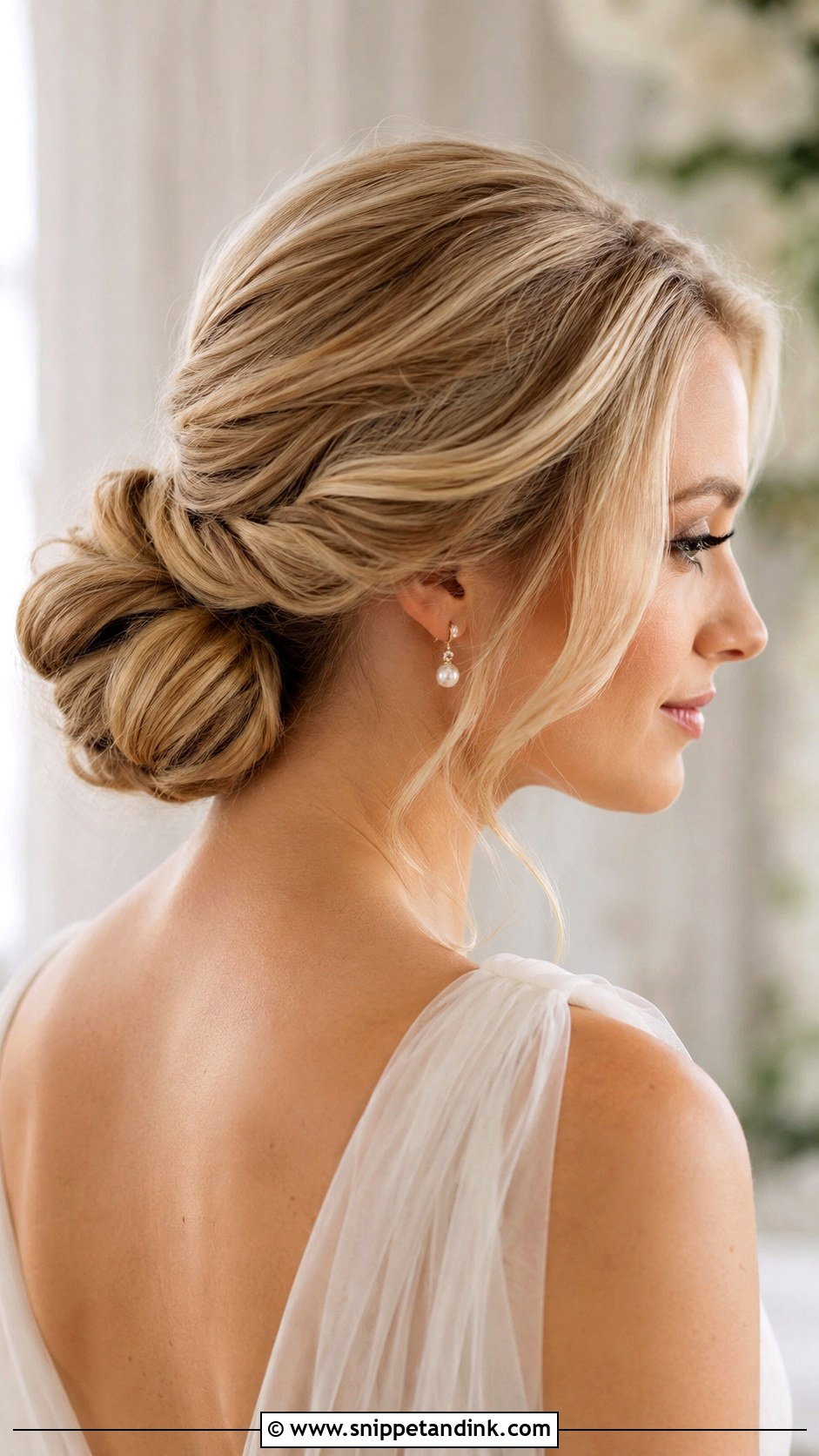
The chignon is my default when a bride says she wants something classic but not stiff. Hair is gathered at the nape, then tucked, rolled, or pinned into a rounded shape that sits close to the head. That compact shape gives a veil comb solid footing and reads cleanly from behind as you walk up the aisle. I add a little lift at the crown and keep the sides smooth. A few loose strands at the face take it from formal to soft, so decide at your trial which you prefer.
2. Low Wedding Bun
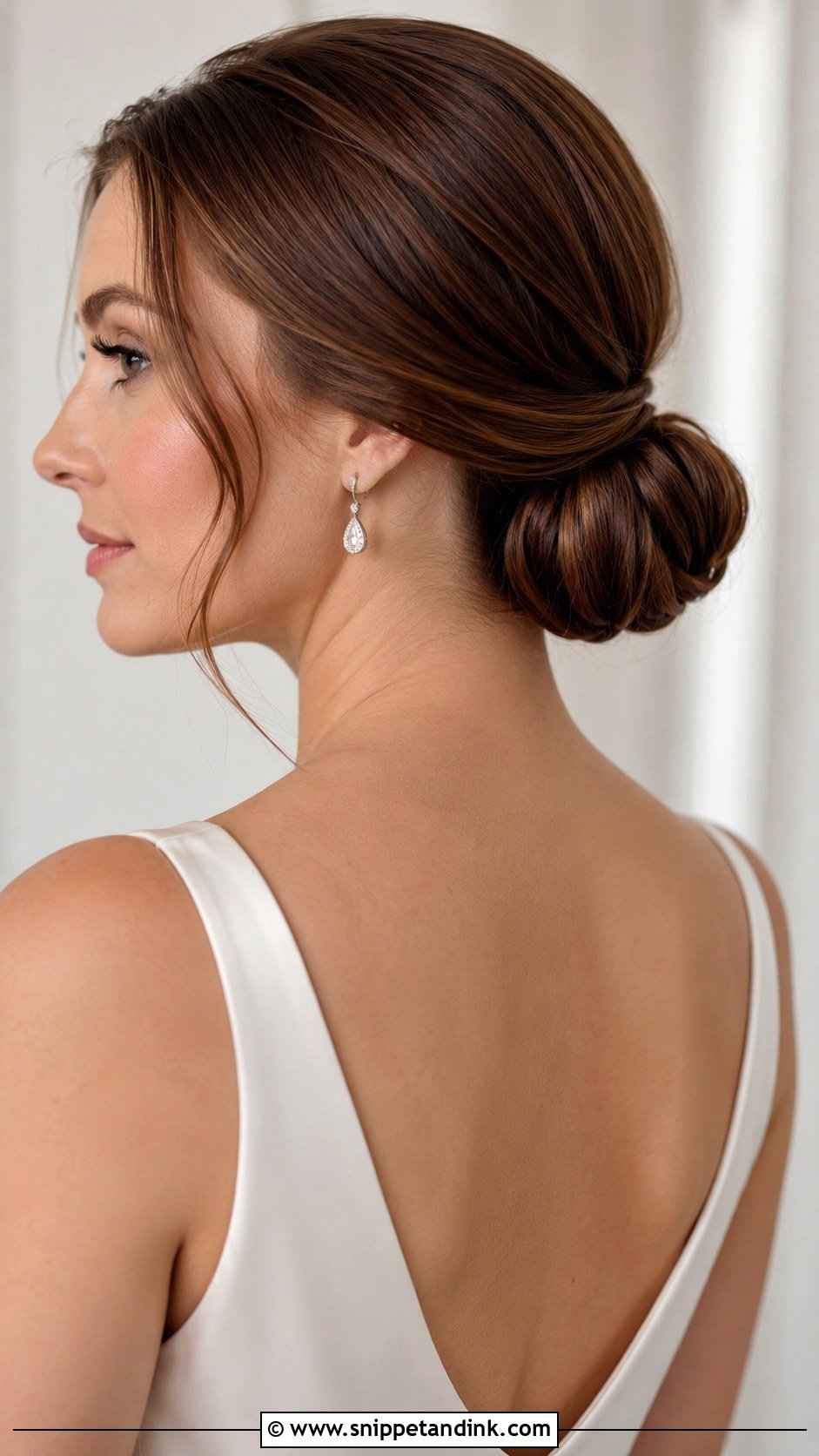
A plain low bun is the base most other styles on this list are built from. Smooth, it suits a modern gown; loosened, it works in a garden. Because it sits just above the neckline, the neck stays clear and earrings get room. In heat, it keeps hair off the shoulders, which matters more than people think by mid-afternoon. If your hair is fine, a small padding piece or a few clip-ins will give it a rounder outline. I’d rather add support than tease fine hair hard, because heavy backcombing is what makes a bun look matted at the end of the night.
3. Low Messy Wedding Bun
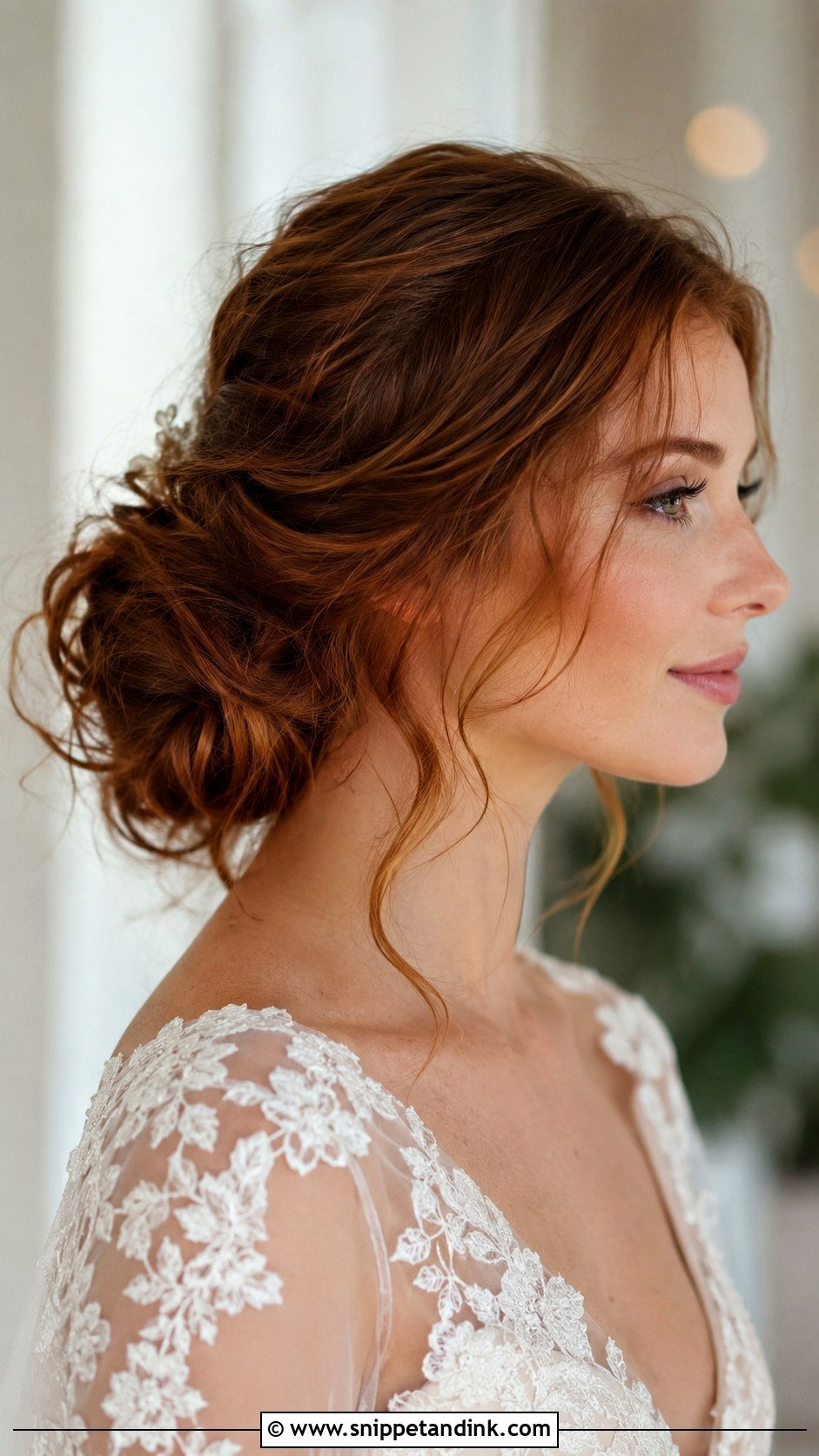
Nothing about a good messy bun is accidental. I curl the hair, build a secure base, then pin the bends and loose pieces one by one so they look relaxed but can’t fall out. The part and hairline still need to be tidy; frizz there reads as unfinished in close-ups even when the bun itself is loose. Lace gowns and outdoor venues suit it, since a little movement from the wind just adds to the look. Avoid it if a strand on your face all day would drive you mad.
4. Low Sleek Wedding Bun
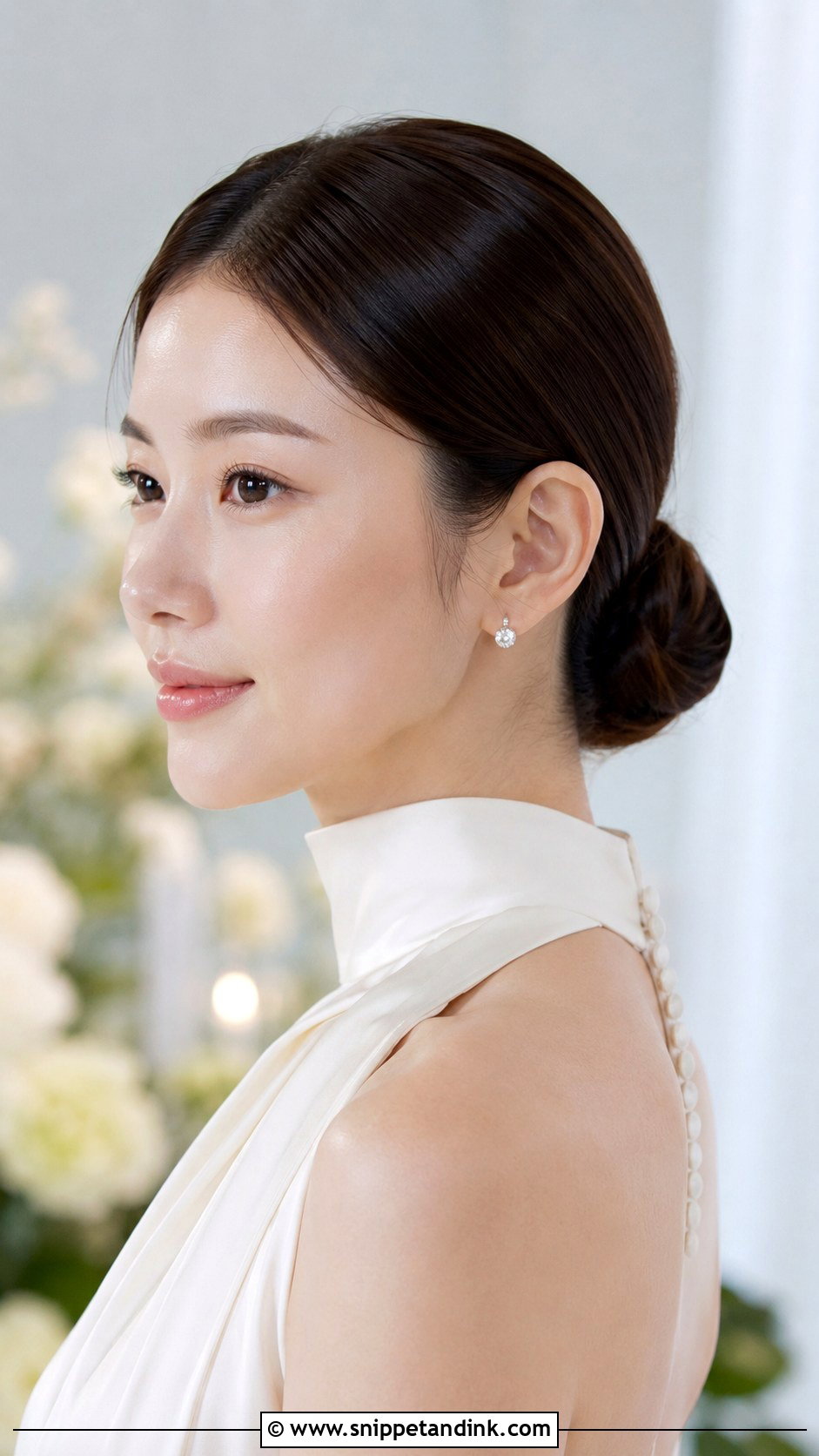
A sleek bun lives or dies on the blow-dry. Hair is smoothed flat to the head with a centre or deep side part, then wrapped at the nape. Straight hair, or hair that can be blow-dried smooth and stay that way, gets the cleanest result. Use a flexible cream so it looks glossy rather than lacquered, and keep the bun shape plain. Satin gowns, high necklines and bold earrings all suit it. Natural texture that reverts in humidity will fight this style all day, so I’d only book it for an indoor or air-conditioned venue.
5. Low Textured Wedding Bun
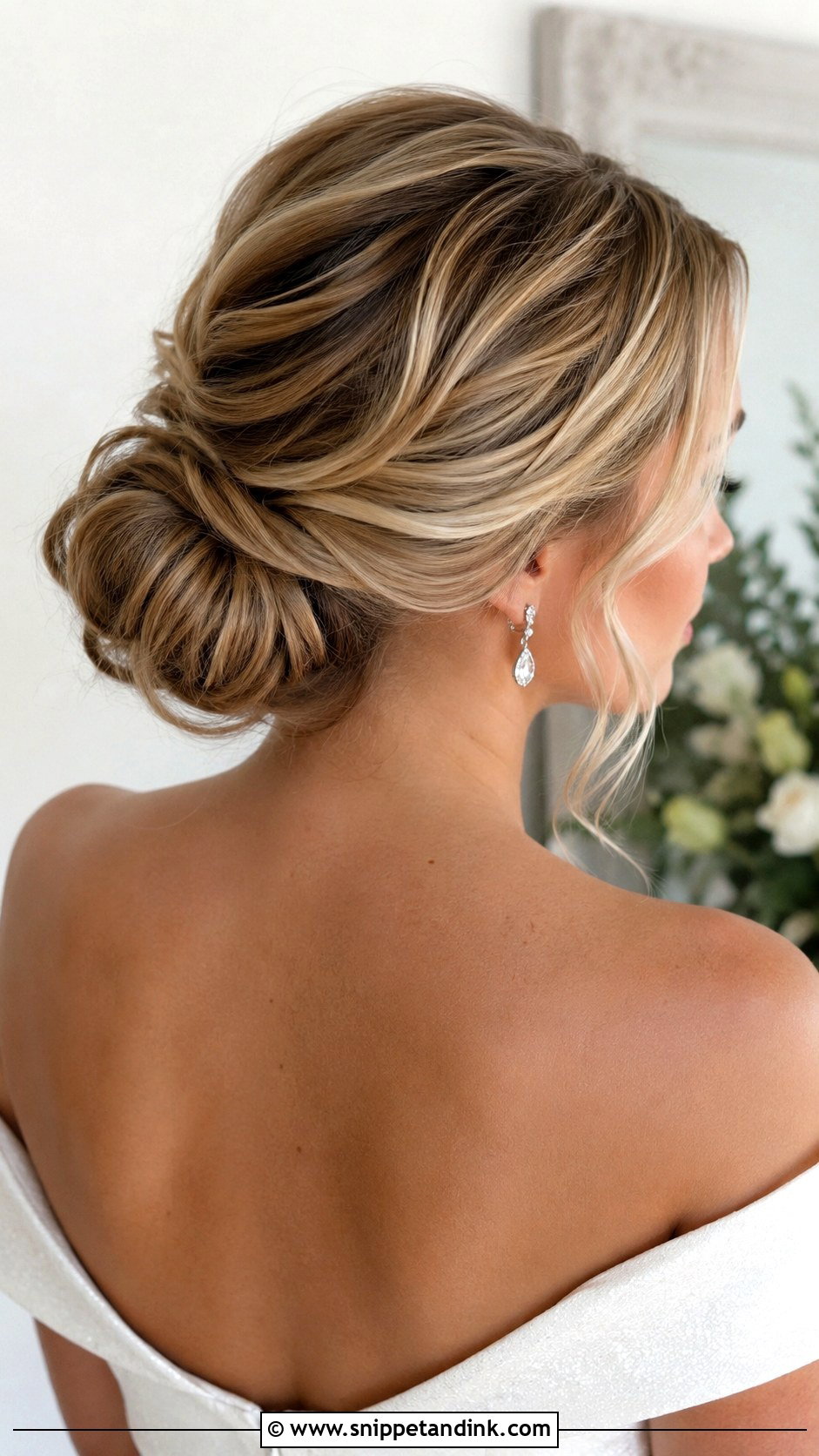
Curling or waving the hair before it goes into the bun gives it volume and visible shape. Highlights, balayage and natural waves show through well, because the different tones trace each section. I suggest it when a bride wants her hair up but finds a smooth bun too severe. The texture also hides pins well, so a comb or veil can be added late without redoing anything.
6. Low Braided Wedding Bun
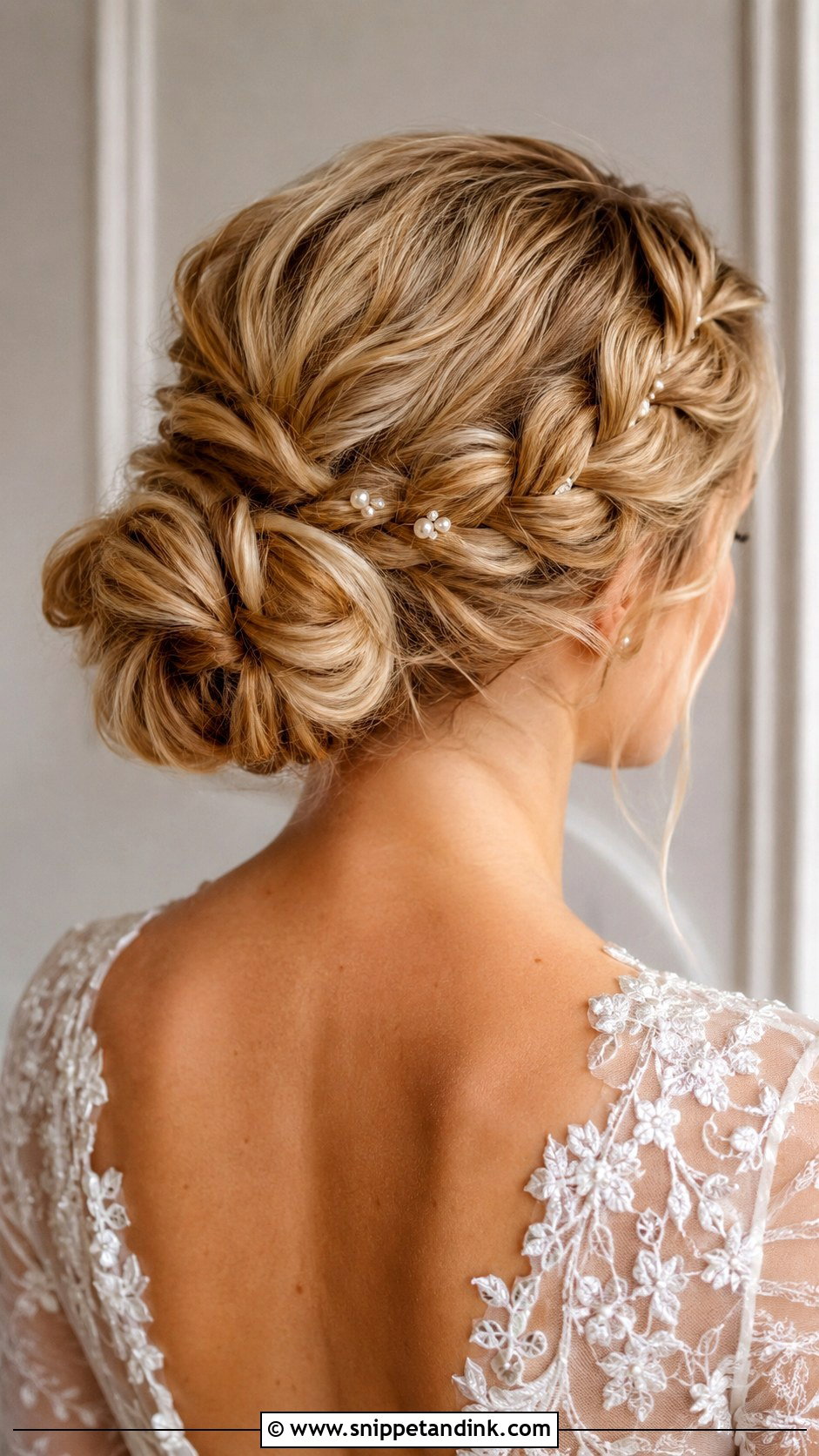
A braid is the most efficient way I know to tame thick hair in an updo. It compresses a lot of length into a narrow rope, which then wraps or sweeps neatly around a bun. On fine hair it works the other way: pancaking the loops (pulling the edges out gently) makes the braid look twice as wide. It suits rustic, beach and classic weddings equally. Keep the plait loose enough that it doesn’t tug at your scalp; a tight braid that’s comfortable at ten in the morning can ache by evening.
7. Low Side Wedding Bun
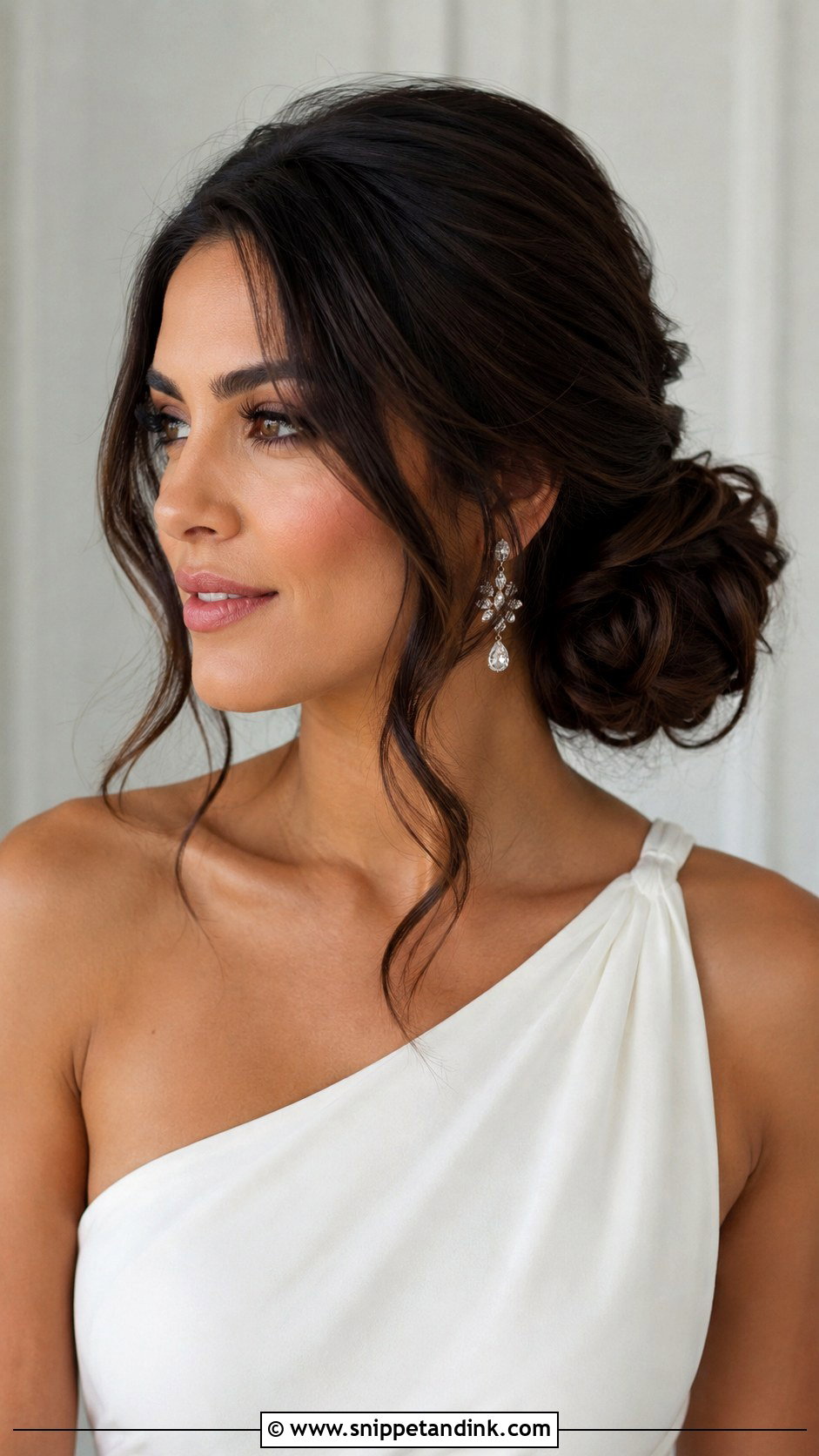
Placing the bun just off-centre lets it show in front-facing photos, which a centred low bun barely does. I match it to the neckline: with a one-shoulder dress, it goes on the bare side so hair and dress balance each other. Soft waves and a few face-framing pieces suit the shape. The thing to watch is balance. One heavy side drags the bun down and pulls on your scalp, so if you’re adding a veil or decorative hairpiece, pin it on the opposite side to the bun or keep it light.
8. Low Wedding Ponytail
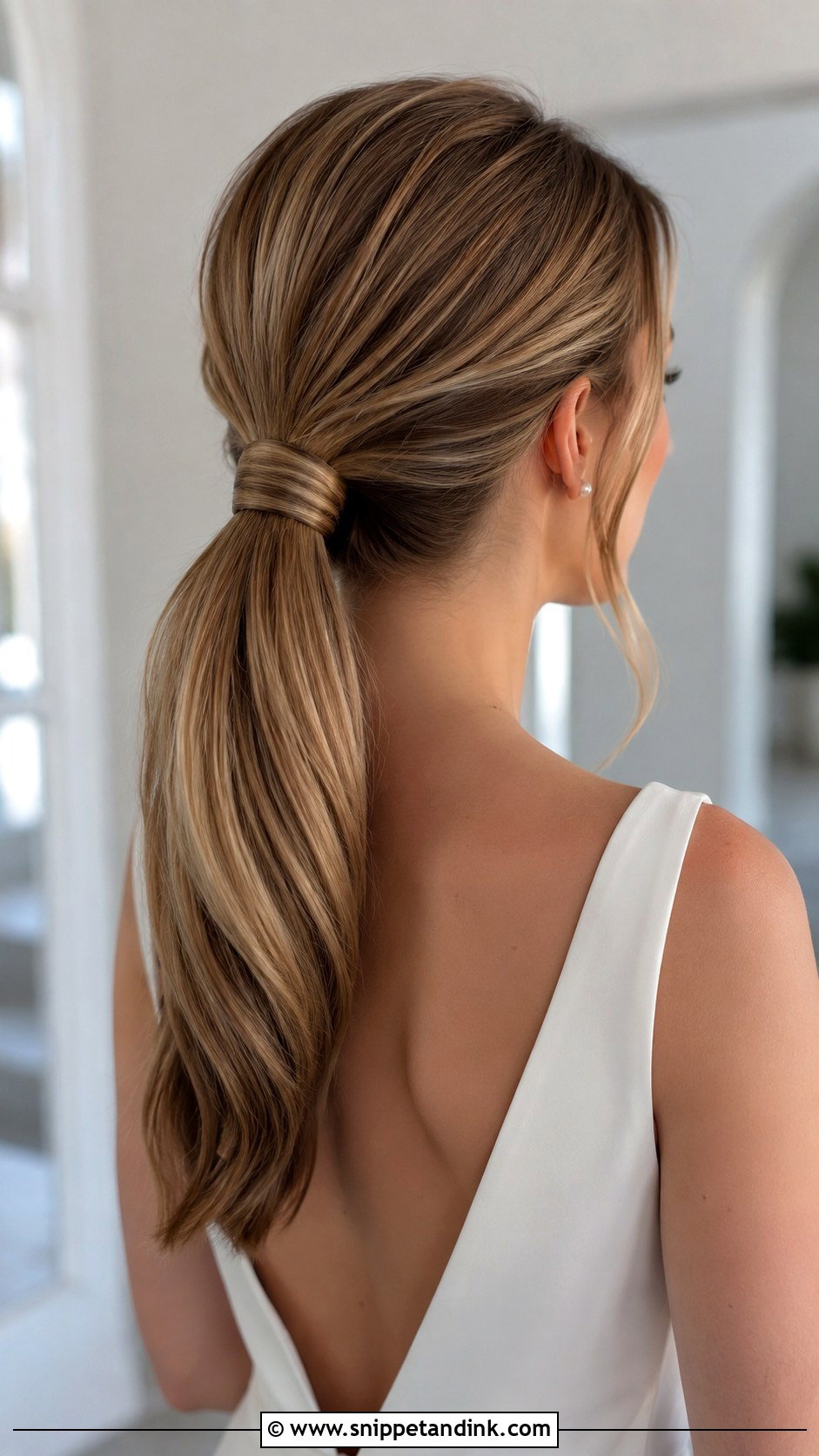
A low ponytail is the easiest thing to wear on this list, and the brides who choose it usually never wear a bun. The length can be smooth, waved or curled, with a strand wrapped at the base to hide the elastic. Long hair suits it best, since the length is the point. It pairs naturally with minimal gowns and bridal jumpsuits. I add volume at the crown and use two elastics, one tight and one over it, because a single band slips over a long day as the hair’s weight swings.
9. Low Wavy Wedding Ponytail
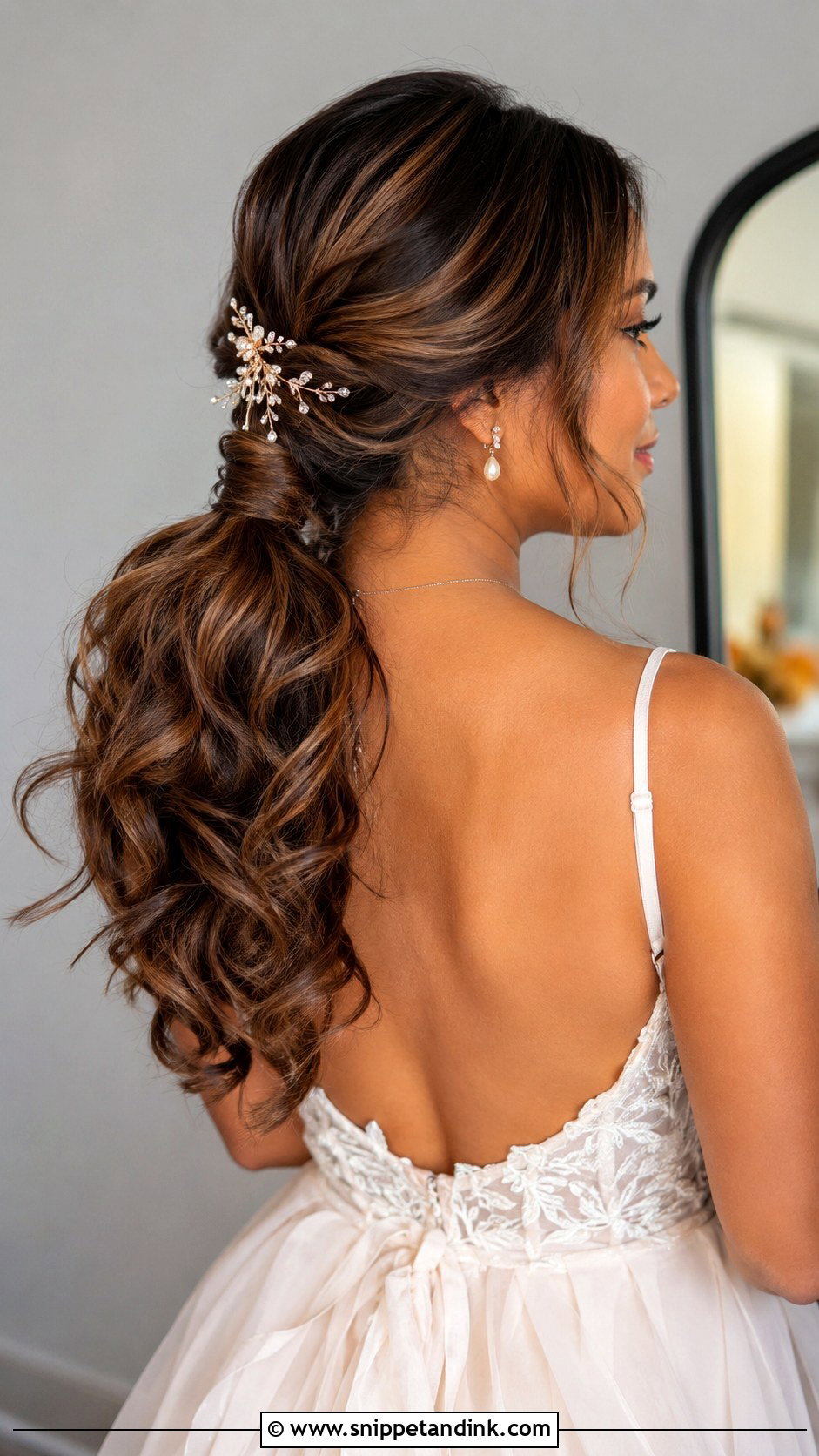
Waves give the ponytail movement down the back, and the low base keeps it controlled. It’s what I offer brides who would wear hair down if they trusted it to last. Set the waves with a larger barrel than you think, since they’ll drop and loosen through the day. Dimensional colour shows off the bends. A pearl pin, a satin ribbon or a small comb above the elastic is enough detail. The one complaint brides have about ponytails is wavy ends sticking to sweaty shoulders on a hot evening, so think about your neckline.
10. Low Twisted Wedding Updo
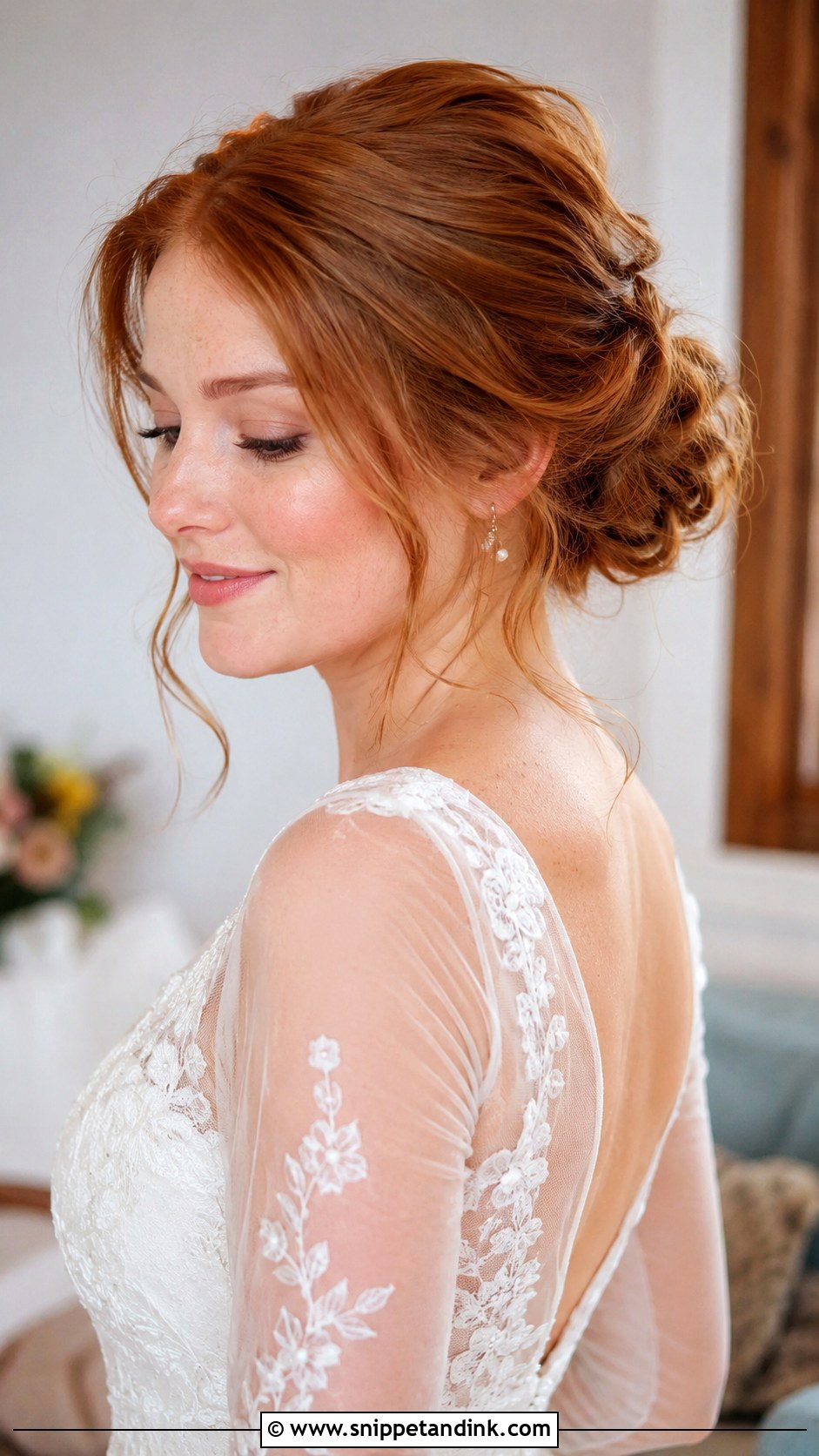
Twists hold short layers that would escape a smooth chignon, which makes this the style I reach for with layered cuts. Each section is twisted and pinned toward the nape, then the ends are gathered into a soft low shape. It also works for medium-length hair that isn’t long enough for a large bun. Don’t overtwist; a loose twist shows more texture and sits more comfortably than a tight one. Leave soft pieces at the temples if you want the face framed.
11. Low Curly Wedding Updo
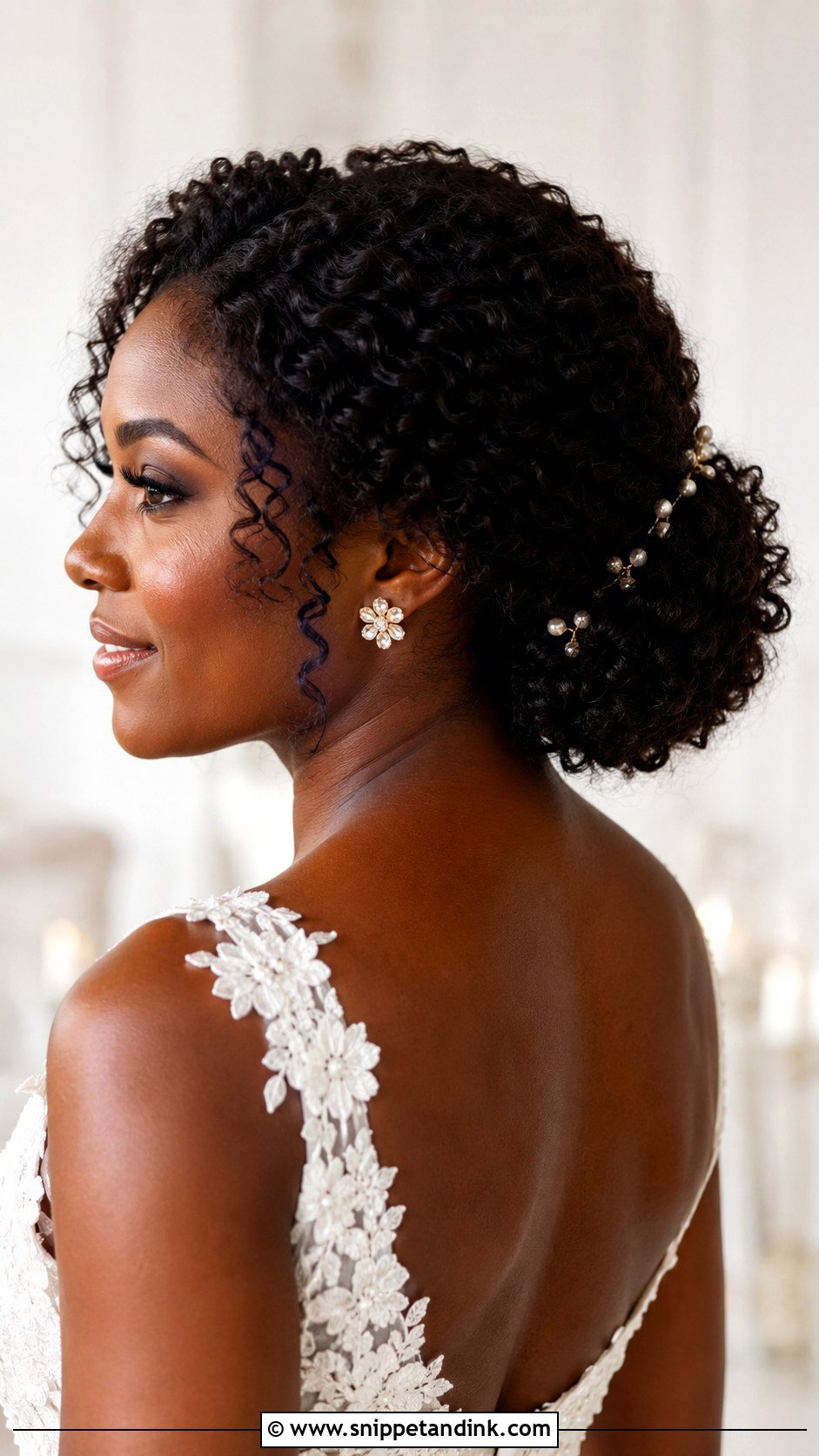
With curly hair I don’t change the curl, I place it. Curls are defined first, gathered low, and pinned into shape with U-pins that slide through without pulling them straight. Never brush them. A lightweight hold keeps the style touchable instead of crunchy. Floral pins, pearl accents and a veil set above the updo all work. Book your trial on a day your curls are behaving like they will on the wedding, ideally the same days after washing.
12. Low Wedding Bun With Veil
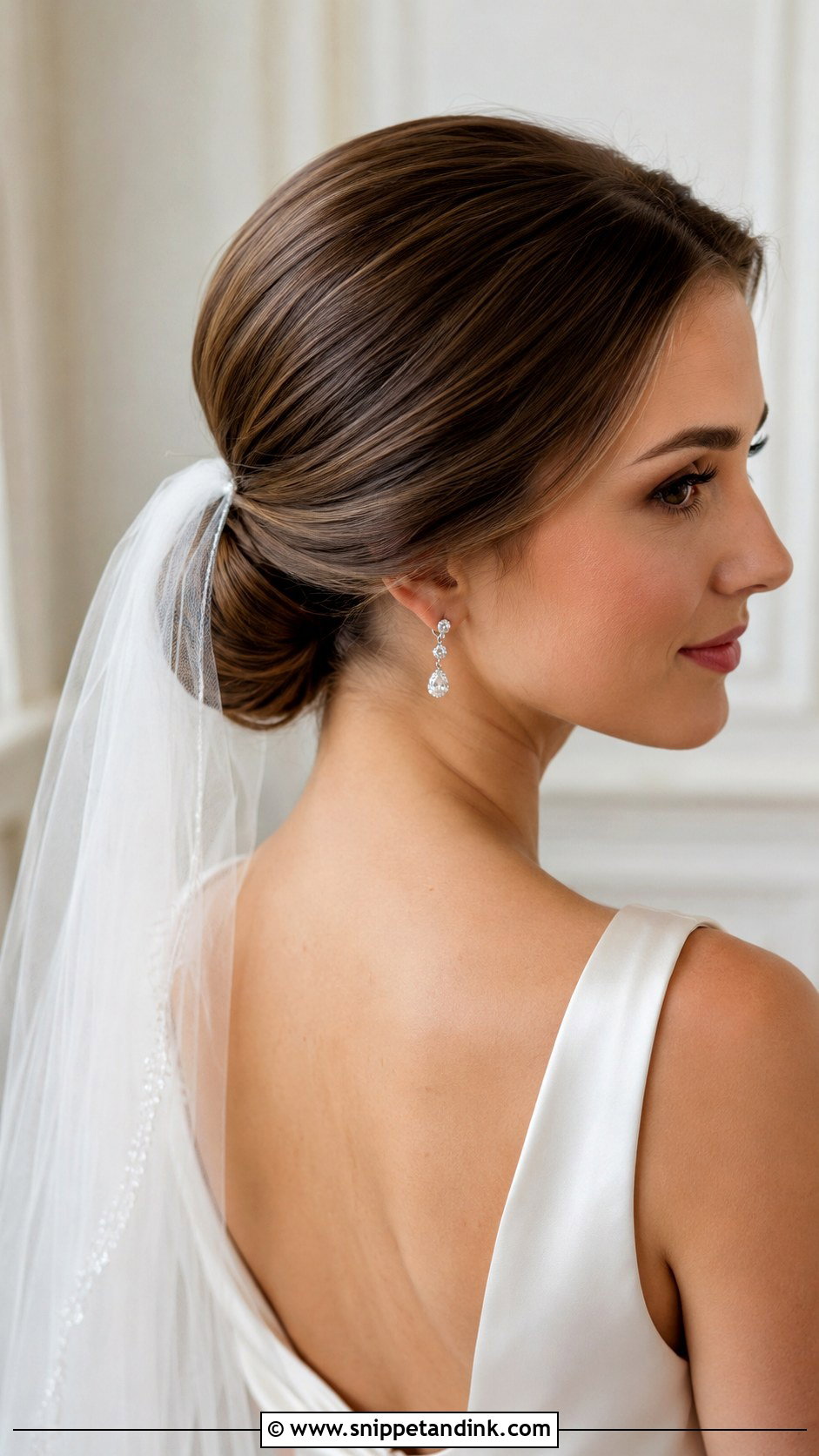
A bun gives a veil the firmest anchor I know. Above the bun gives the traditional outline; beneath it, the veil falls from the nape; tucked into the centre, it balances both. Sleek, textured, braided and chignon buns all work. Bring the actual veil to your trial, not a picture, because weight varies so much between a single layer of tulle and lace-edged cathedral length. I test placement by having the bride turn her head and walk a few steps. A low bun also leaves most of the hairstyle visible beneath sheer tulle in back photos.
13. Low Wedding Bun With Pearls
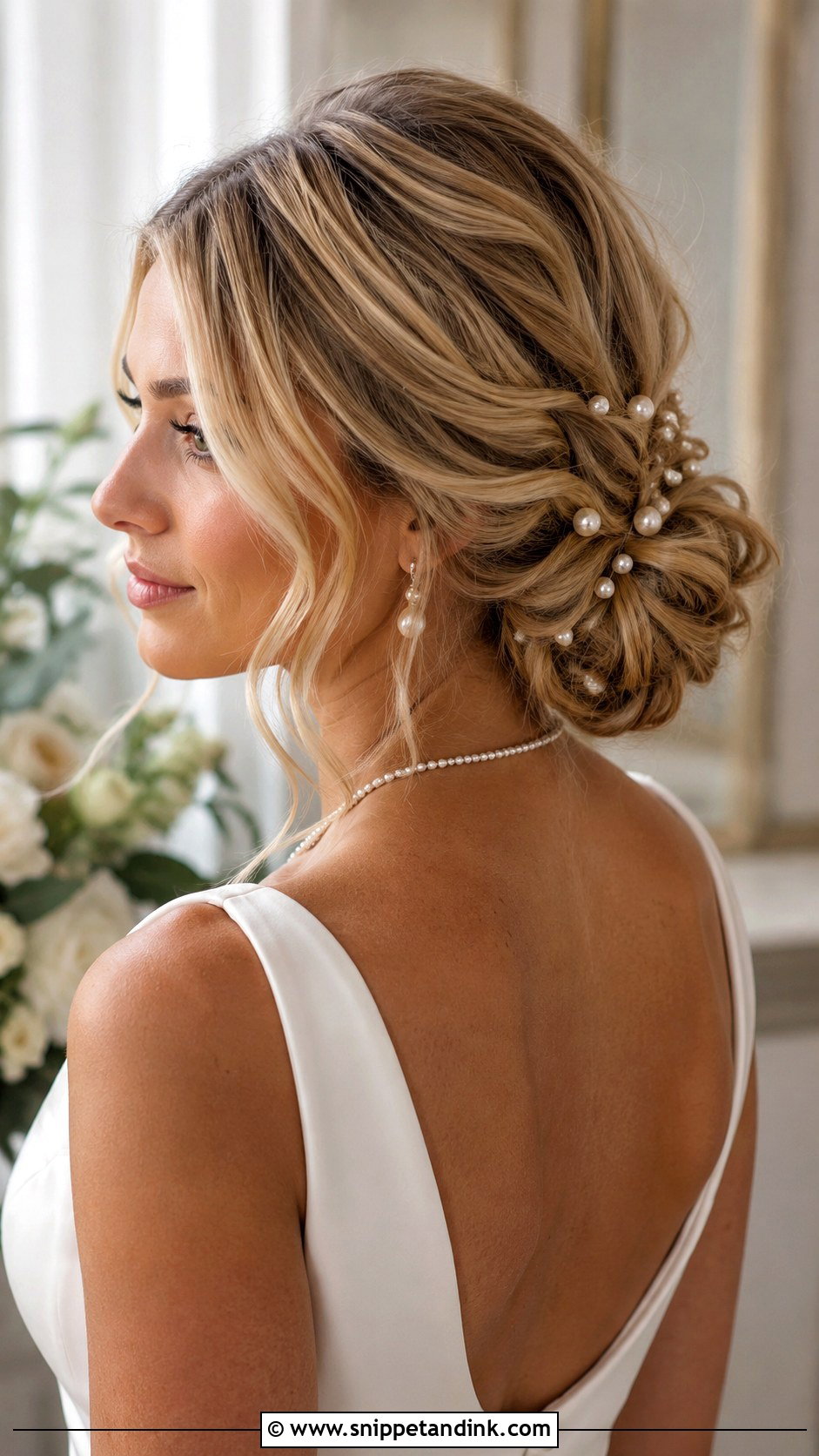
Pearl pins are an easy accessory because there’s nothing to balance or wire. They can be scattered through a textured bun, run along one side of a chignon, or grouped at the base. A few placed well look intentional; a dozen looks crowded, especially near lace. I match the pearl tone to the dress (ivory pearls against ivory silk, whiter pearls with bright white) because mismatched whites look yellow in photos. Push each pin into a section of hair so it doesn’t slide out at the first hug.
14. Low Wedding Bun With Flowers
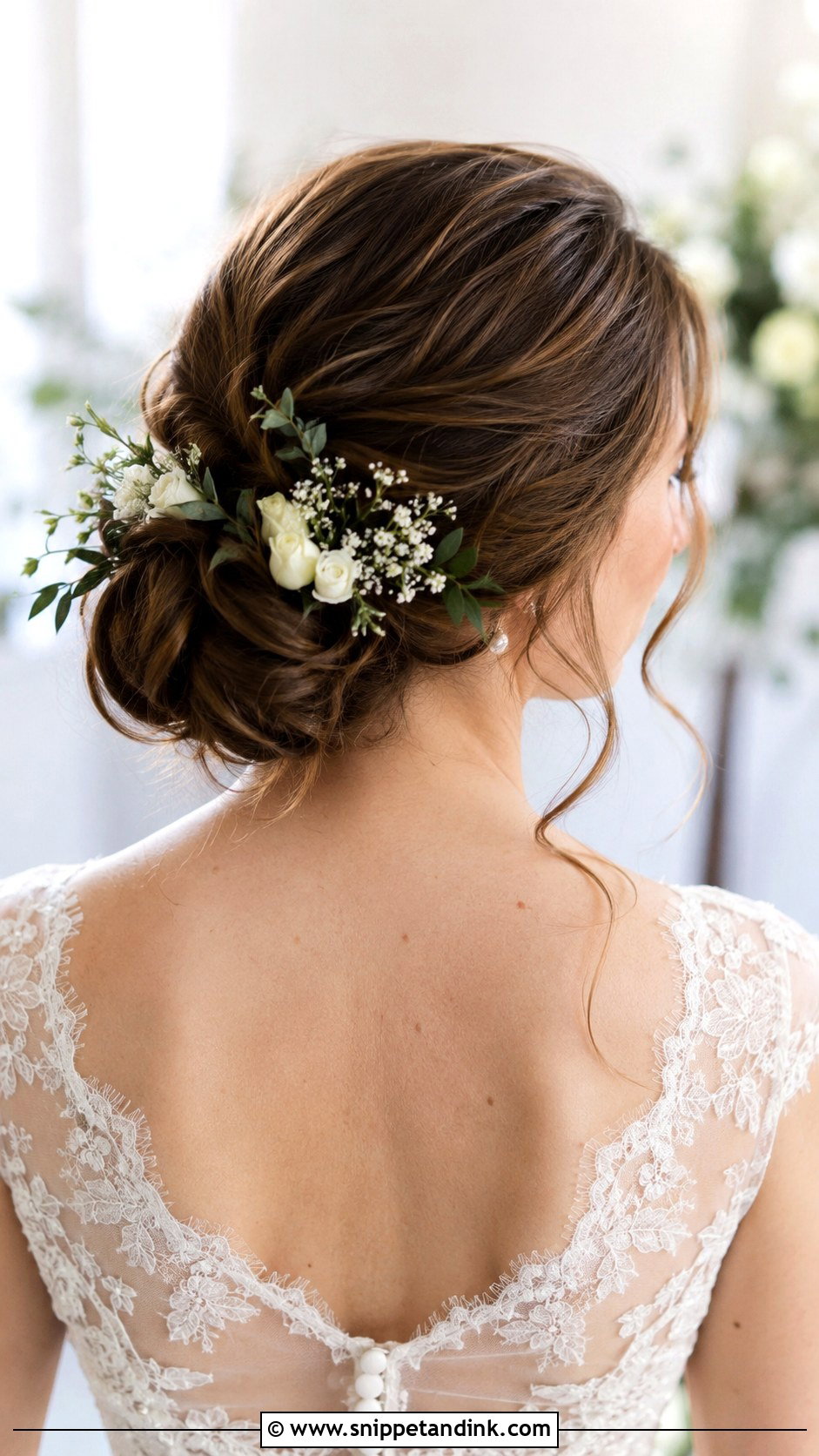
Fresh flowers suit outdoor and warm-weather weddings, and they need planning between florist and stylist. Small blooms, baby’s breath, or greenery tucked around the bun stay light and comfortable. Large heads pull the style down. Textured buns, loose chignons and braids hold stems best because pins disappear into the texture. Ask your florist for wired, taped stems from the same flowers as your bouquet, and keep them refrigerated until the last minute. Delicate blooms like gardenia bruise if handled much, so I pin those in once and leave them.
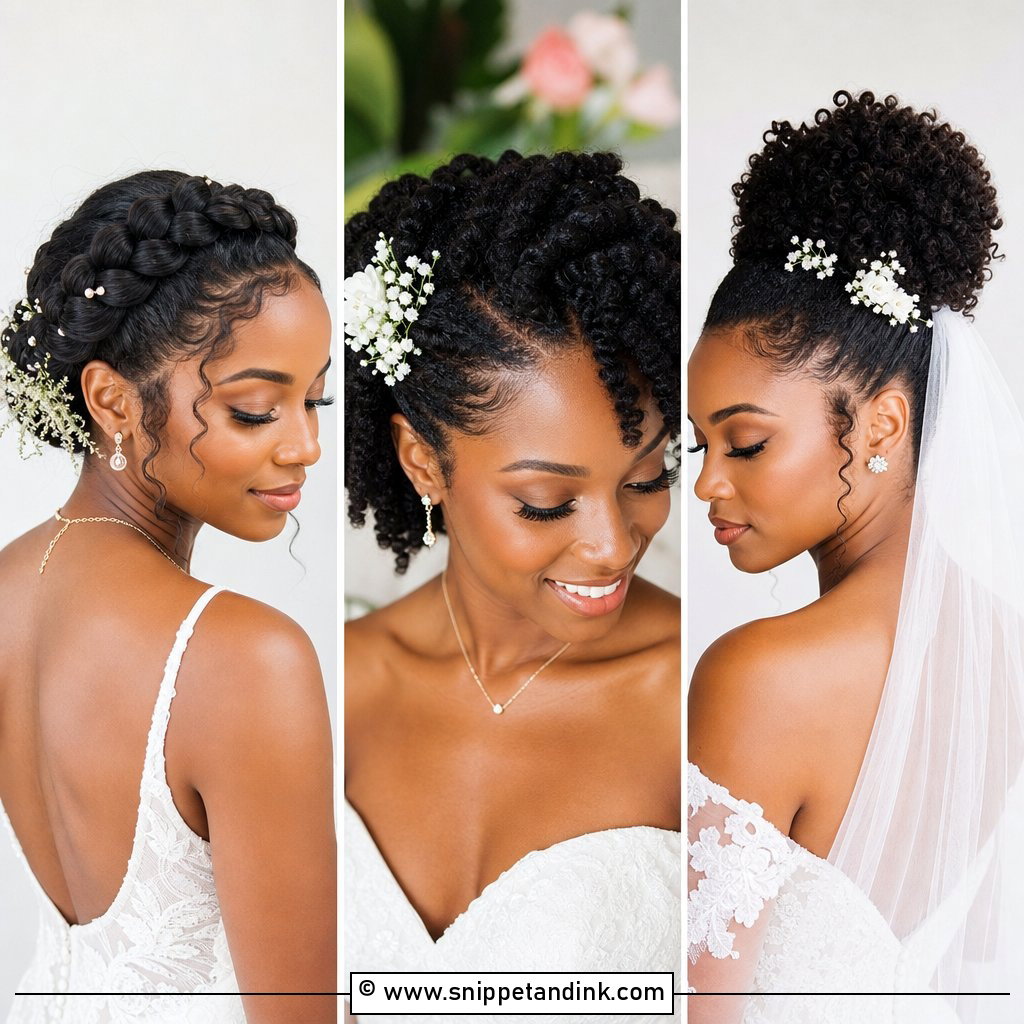
15. Low Half Up Wedding Hair
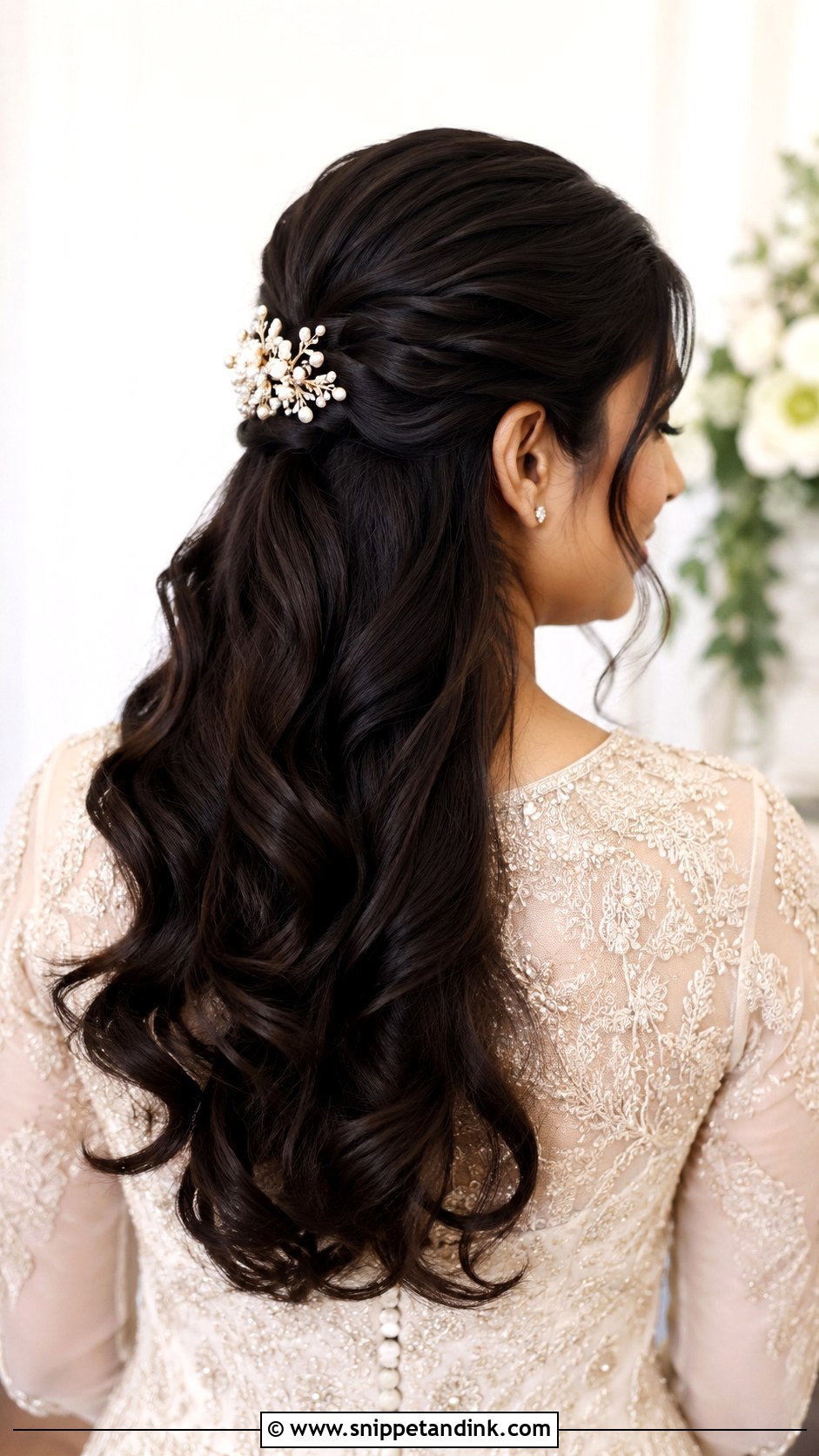
Half-up is for the bride who usually wears her hair down and doesn’t want to feel like someone else. The top sections are pulled back and secured low behind the head, and the rest falls in waves or smooth bends. Keep the crown softly lifted and the pinned section neat, so it reads bridal rather than everyday. Combs and lightweight veils sit nicely at the join. Loose lengths do drop over hours, so if curls matter to you, set them well and pack a little spray for touch-ups.
Heat, Sweat and Hair Sitting on the Back of the Neck
Low styles sit exactly where you sweat most when you’re dancing or standing in the sun for photos. Damp skin under a bun loosens the pins around the base, and a ponytail clings and flattens at the nape. A bit of planning keeps that from undoing the style.
- Set curls fully and let them cool before pinning. Hair pinned while still warm loses its shape fastest in heat.
- Use a light hold spray under the bun before shaping it, not only on top. That holds the base pins.
- For a summer ponytail, wrap the base with a section of your own hair and pin it with a U-pin through the elastic. It stops the wrap from unravelling as your neck gets damp.
- Keep a small fan or blotting paper for the nape as well as the face. A quick dry on the back of the neck between photos saves the edges of the style.
If your ceremony is outside in summer and you have thick hair, I’d lean toward a bun over a ponytail. All that hair on the back of the neck in the heat is the thing brides regret most.
Front, Side and Back Should All Look Finished
Low styles hold up because they sit where the neck supports them, and every option here can be made sleeker or softer. A sleek bun reads modern, a chignon or braid reads romantic, and ponytails or half-up styles give movement without leaving hair fully loose. Go with the one that feels like you and stays comfortable for twelve hours. At your trial, bring your veil and pins, and look at the result in a mirror from the side and back as well as the front.
You'll Like These Ideas:



Leave a Reply