
The front of the hair is the part of a bridal style that ends up in almost every photograph: during the vows, in the close portraits, in the candid shots across the table. The back gets one or two frames. So when I plan a bride’s hair, I usually design the hairline first and fit the rest around it. These twenty front styles run from barely-there tendrils to slicked-back and full braided crowns, and for each one I’ve noted who it suits, how it’s built and what tends to collapse by the evening.
Your Hairline, Cowlicks and Bangs Decide More Than the Updo Does
Before I suggest any front style, I look at where the hair actually grows. A cowlick at the crown or the front hairline decides which way a part wants to fall, and fighting it with heat usually lasts about an hour. A strong widow’s peak pushes curtain bangs apart. Fine baby hair around the temples will frizz up in humidity no matter what you do, so I’d rather style it into the look than pretend it isn’t there.
Cutting or growing bangs before the date
New bangs need at least three weeks to settle, so a first cut the week of the wedding is a gamble. If you already wear a fringe, get it trimmed about seven to ten days before, which gives it time to soften. If you’re growing bangs out, they’re often at an awkward cheekbone length; I’d plan a front style that twists or pins them back rather than forcing them down.
- Show your stylist your natural parting at the consultation, not a styled one.
- Point out any spot where your hair stands up after sleeping. That’s your cowlick.
- Wear your earrings to the trial; heavy drops change how far tendrils can fall.
- If your foundation is dewy, mention it: tendrils stick to glowy skin and lip gloss.
1. Face-Framing Curtain Bangs for Brides
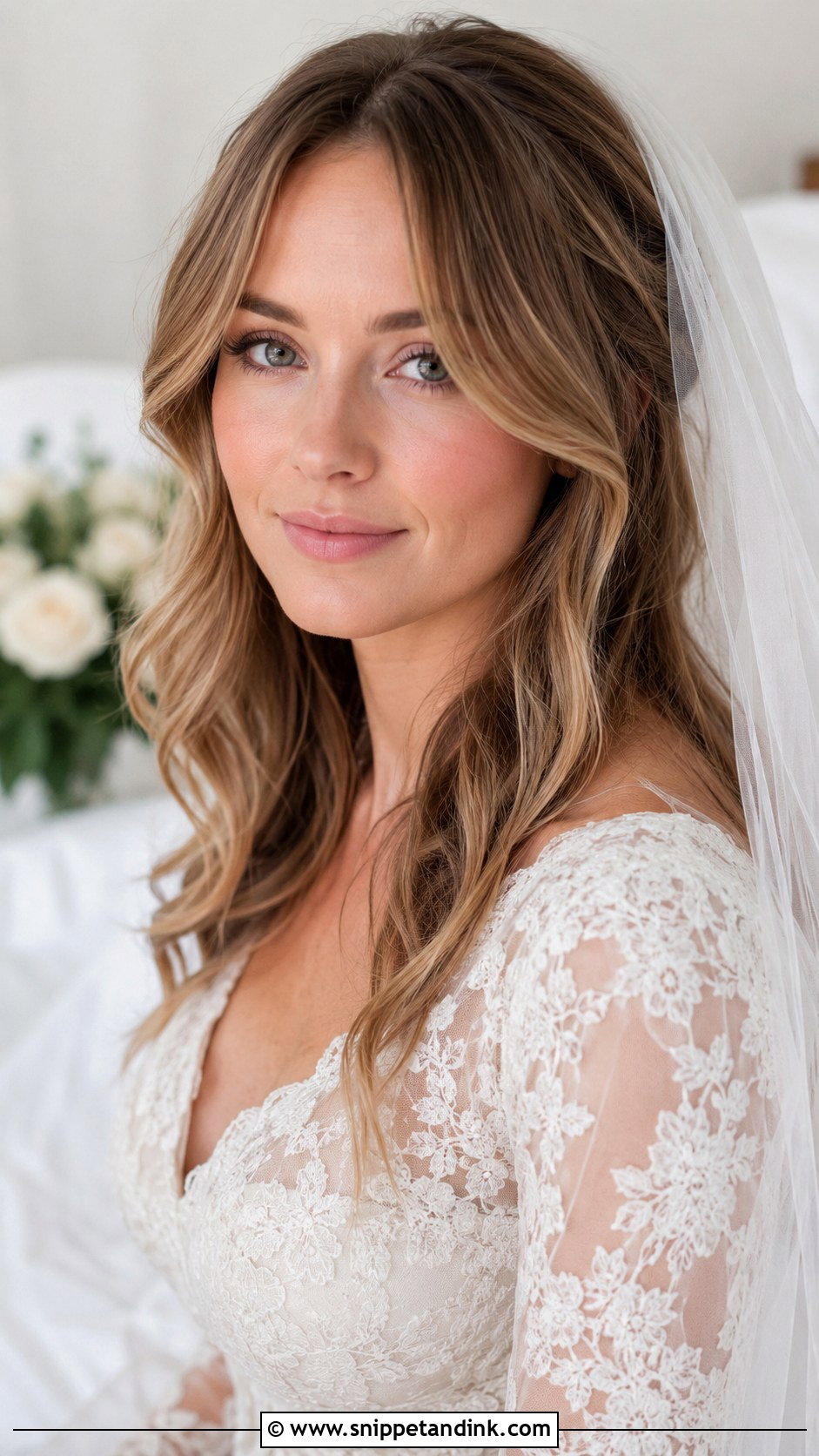
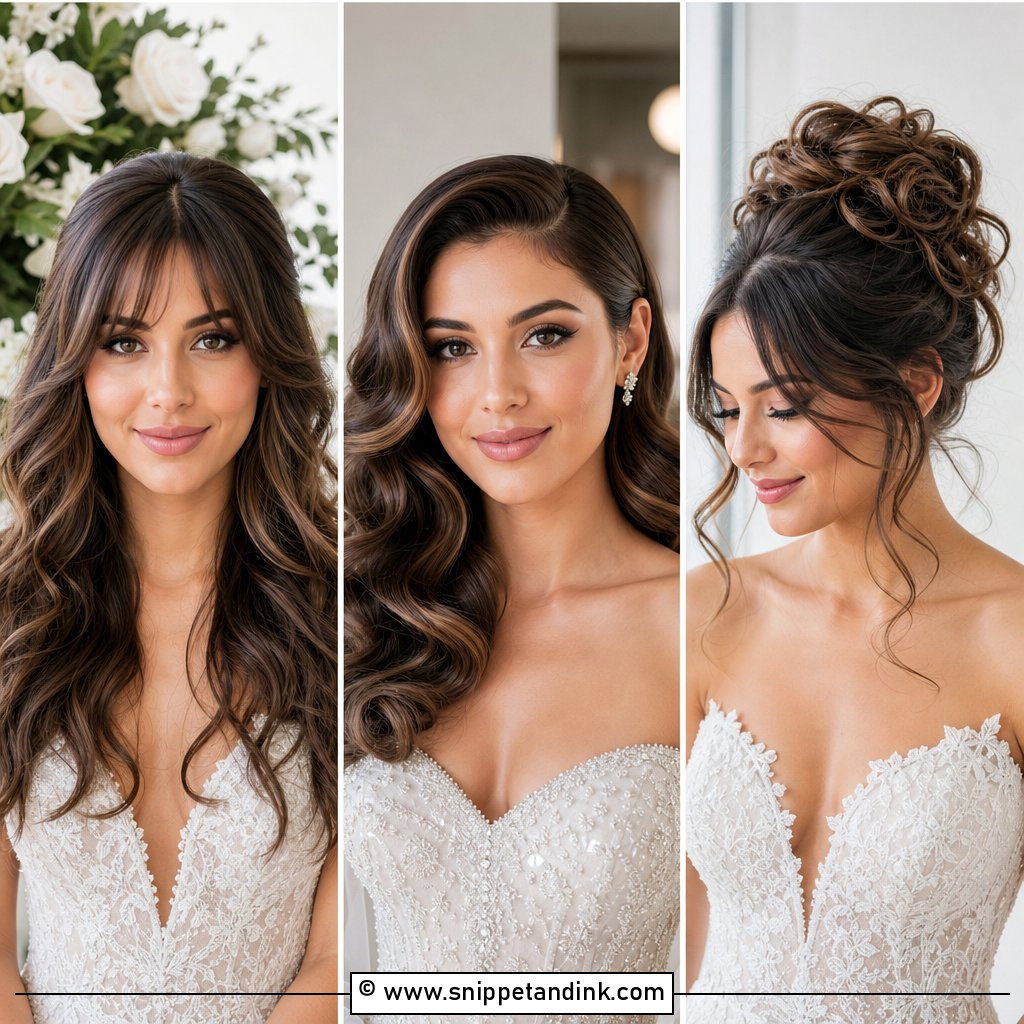
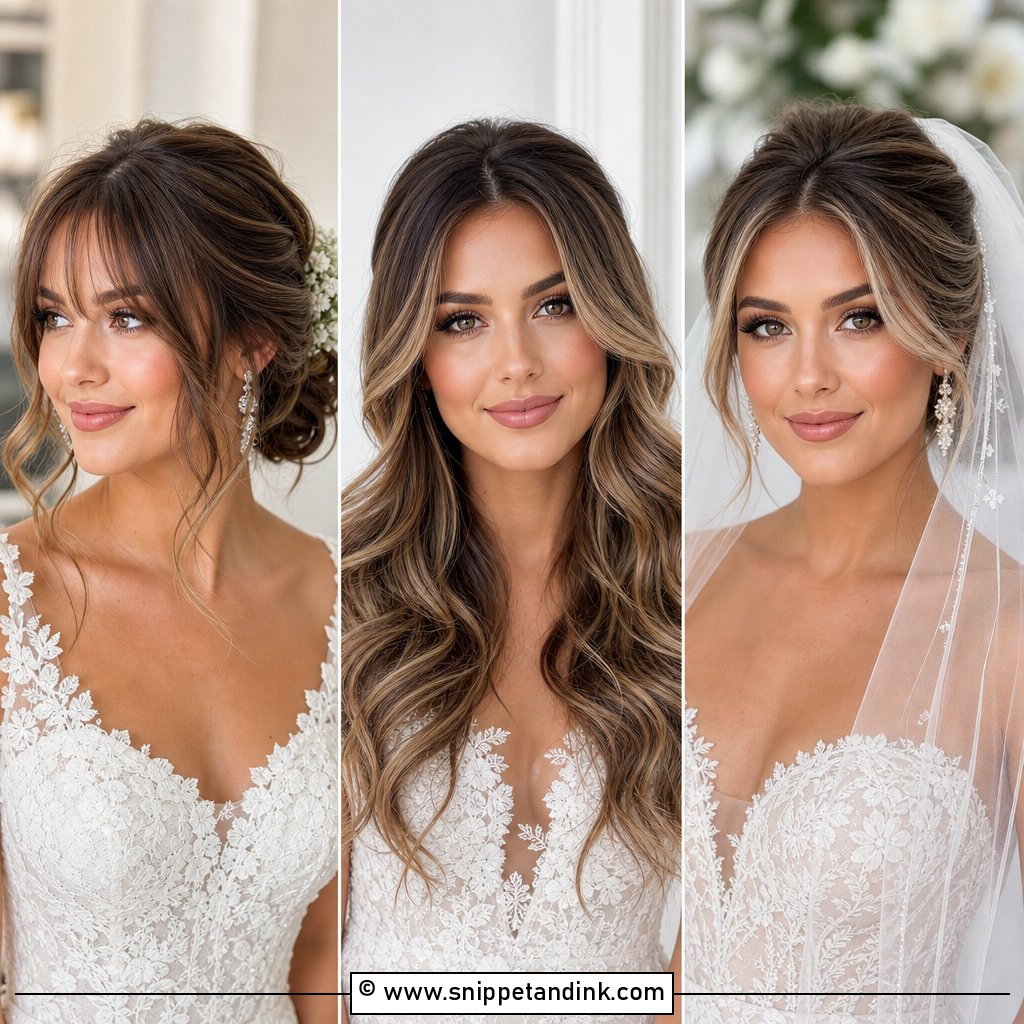
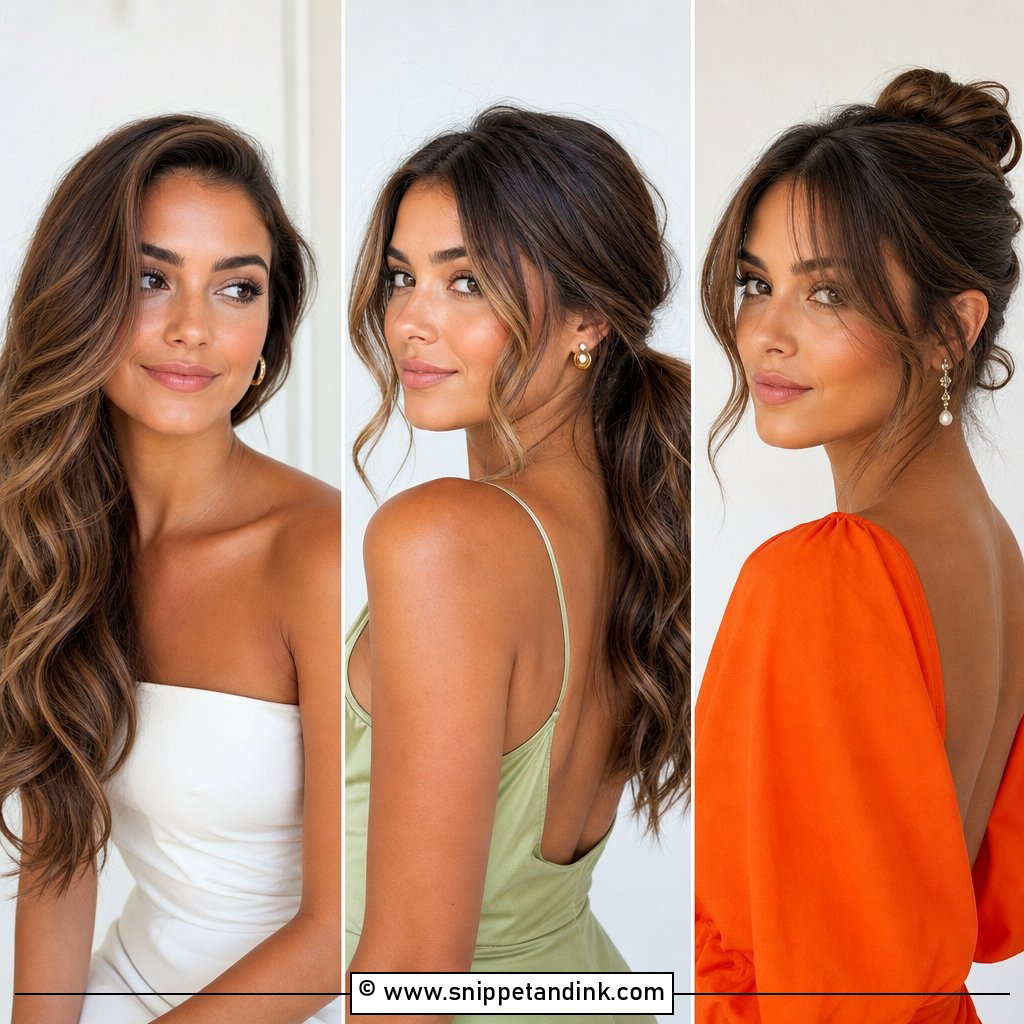
Curtain bangs are the front style I’m asked for most at trials right now. They part at the centre and sweep outward, framing the eyes and cheekbones, and they sit well with a low bun or loose waves. The styling matters more than the cut: I round-brush them away from the face, then set them with a large barrel turned outward so they don’t fall flat into the eyes. They soften round and heart-shaped faces. If you don’t already have them, ask for the cut at least three weeks out, never the week of the wedding.
2. Soft Tendrils Around the Face
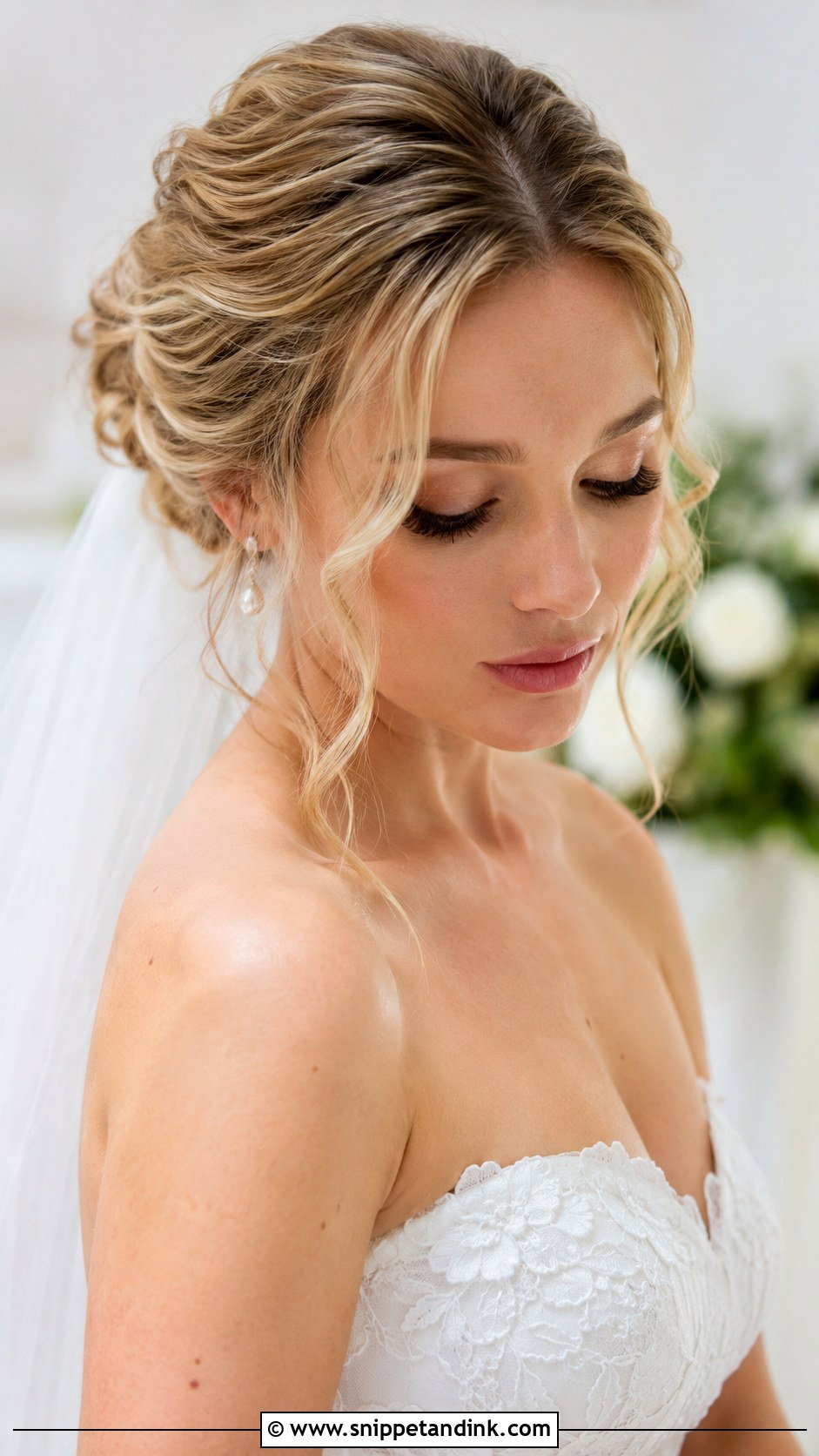
Tendrils look simple, but they’re where most bridal hair either works or looks unfinished. I pull them out of an updo or half-up style before I pin anything, so I can choose pieces that follow your natural hairline rather than random strands. Fine, wispy sections curl and drop quickly; slightly thicker ones hold a bend for hours. Leave them straight, curled or gently waved. For garden and outdoor weddings, soft face-framing tendrils stop a structured updo looking too formal.
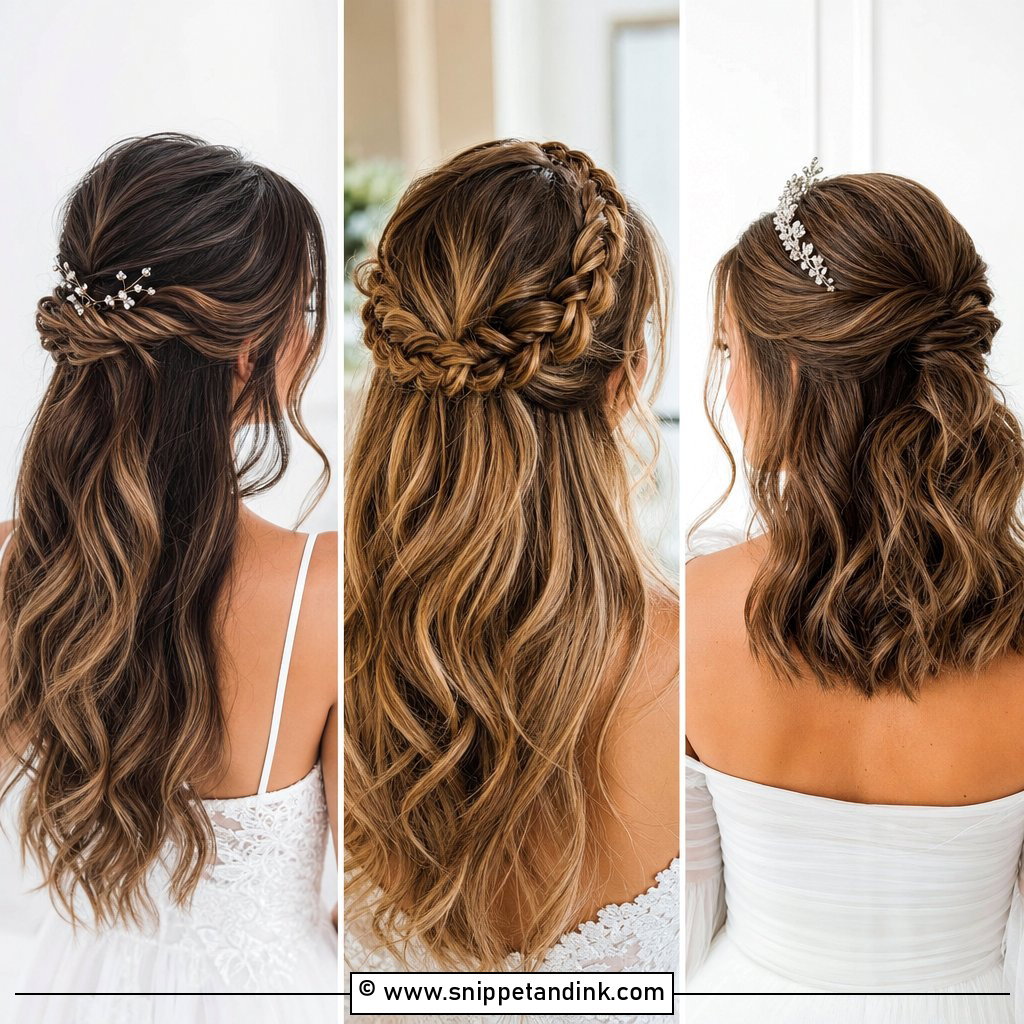
3. Half-Up Half-Down With Front Twists
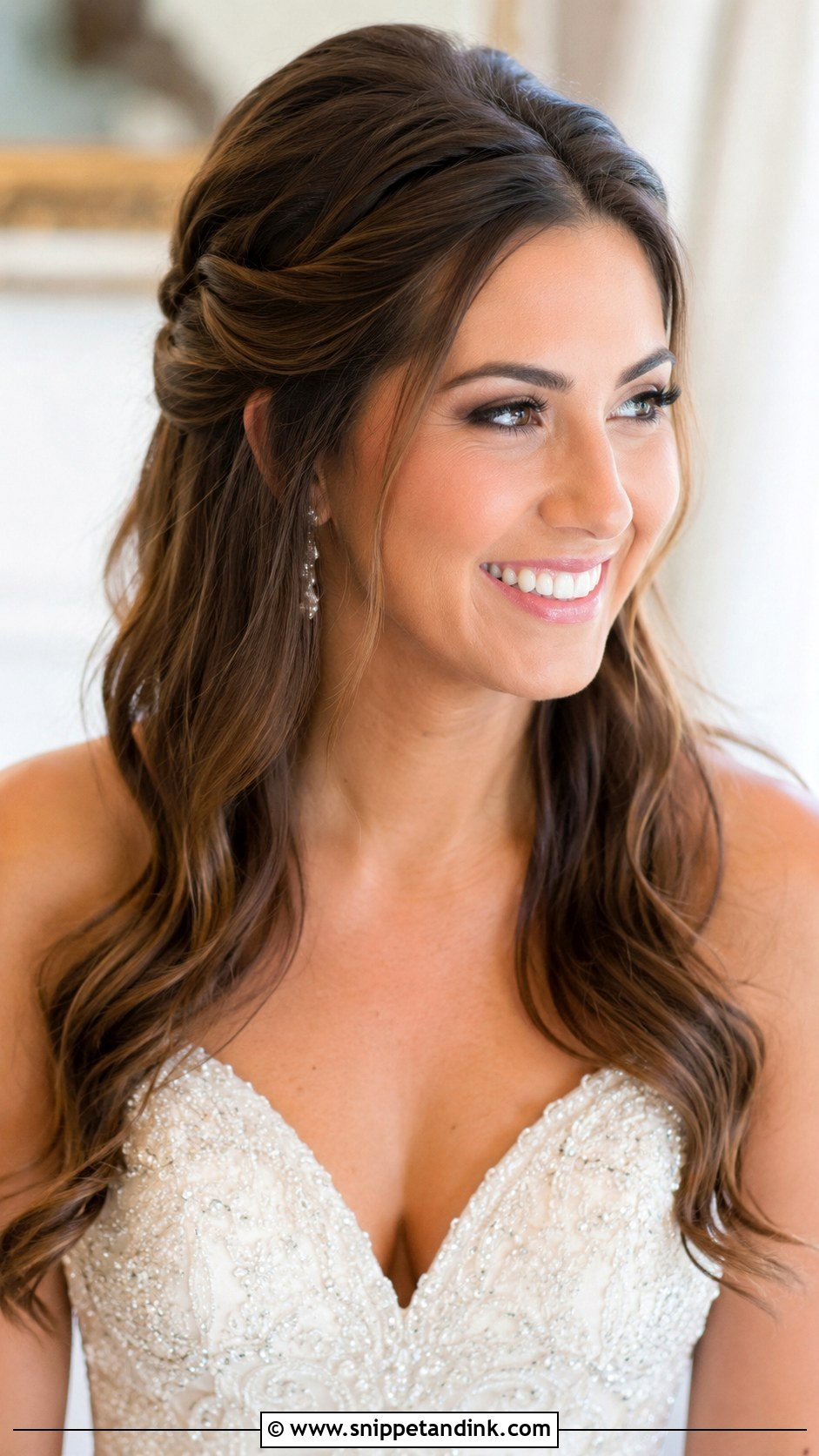
Two small sections are twisted back from the temples and pinned at the crown, and that’s what lifts an ordinary half-up half-down into something deliberate. It keeps hair off your face for the ceremony while the lengths stay loose. Medium to long hair works best. I cross my pins in an X under each twist so they don’t slide when the veil comb goes in. Tight twists look polished; loosened ones lean boho. A couple of loose face pieces stop the hairline looking scraped.
4. Front Braided Crown for Brides
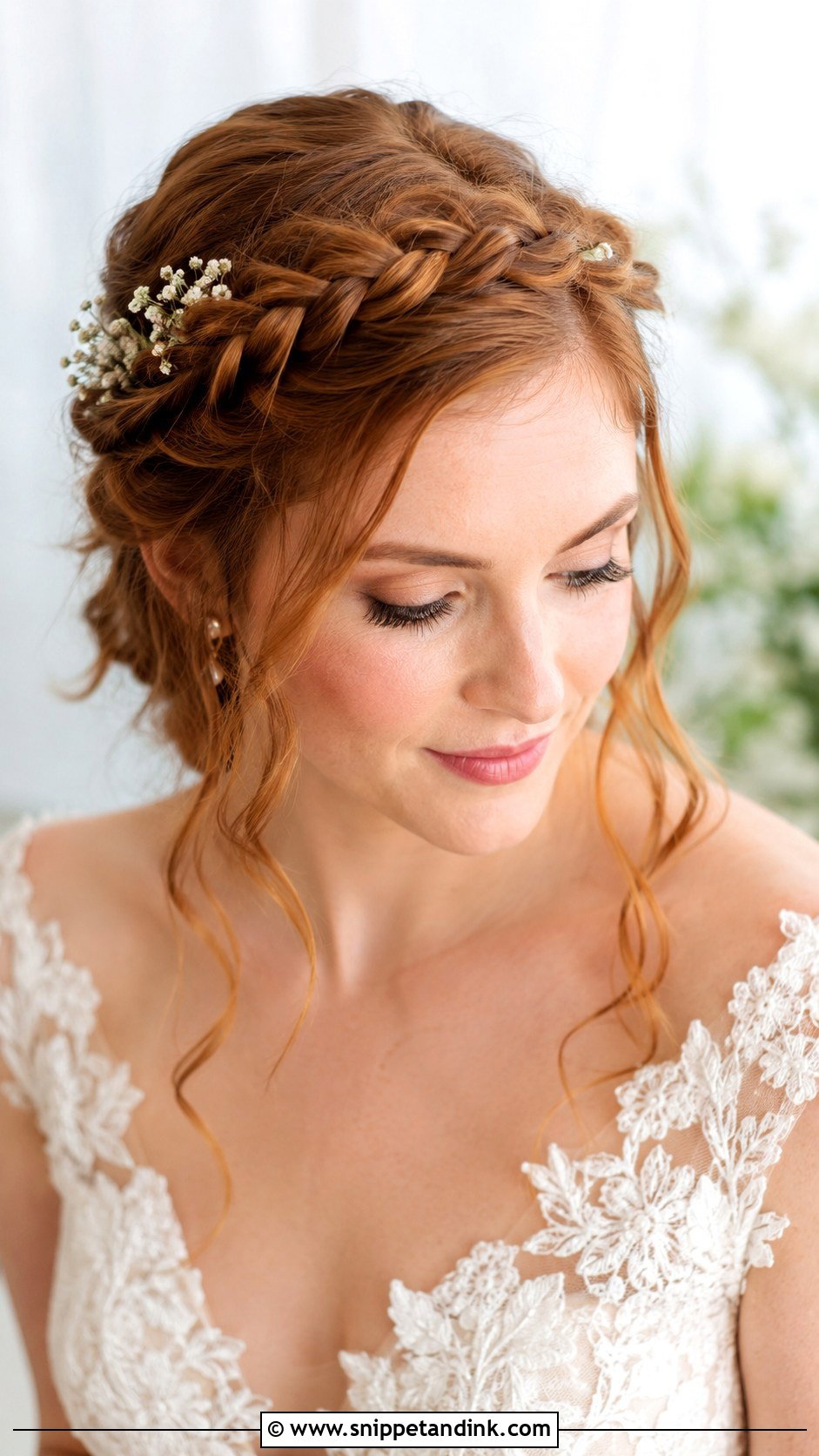
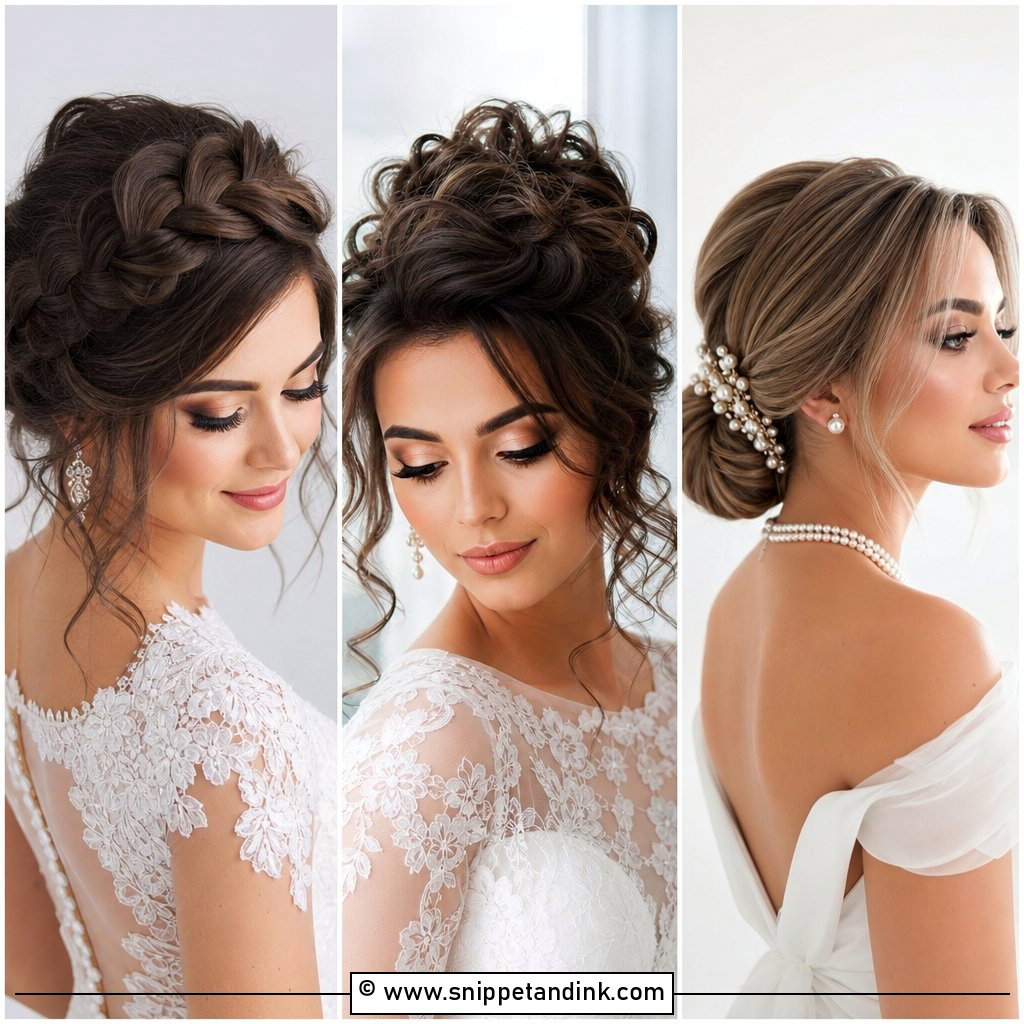
A braided crown wraps across the hairline like a halo and suits boho and rustic weddings especially. A thick Dutch braid reads boldly, while thin braids give finer detail. The honest limit is length and density: on short or fine hair I often add a clip-in braid, because a thin natural braid sits too close to the scalp to read in photos. Leave a few soft pieces at the temples. Once pinned, a crown is one of the most secure styles I do, which matters for long receptions.
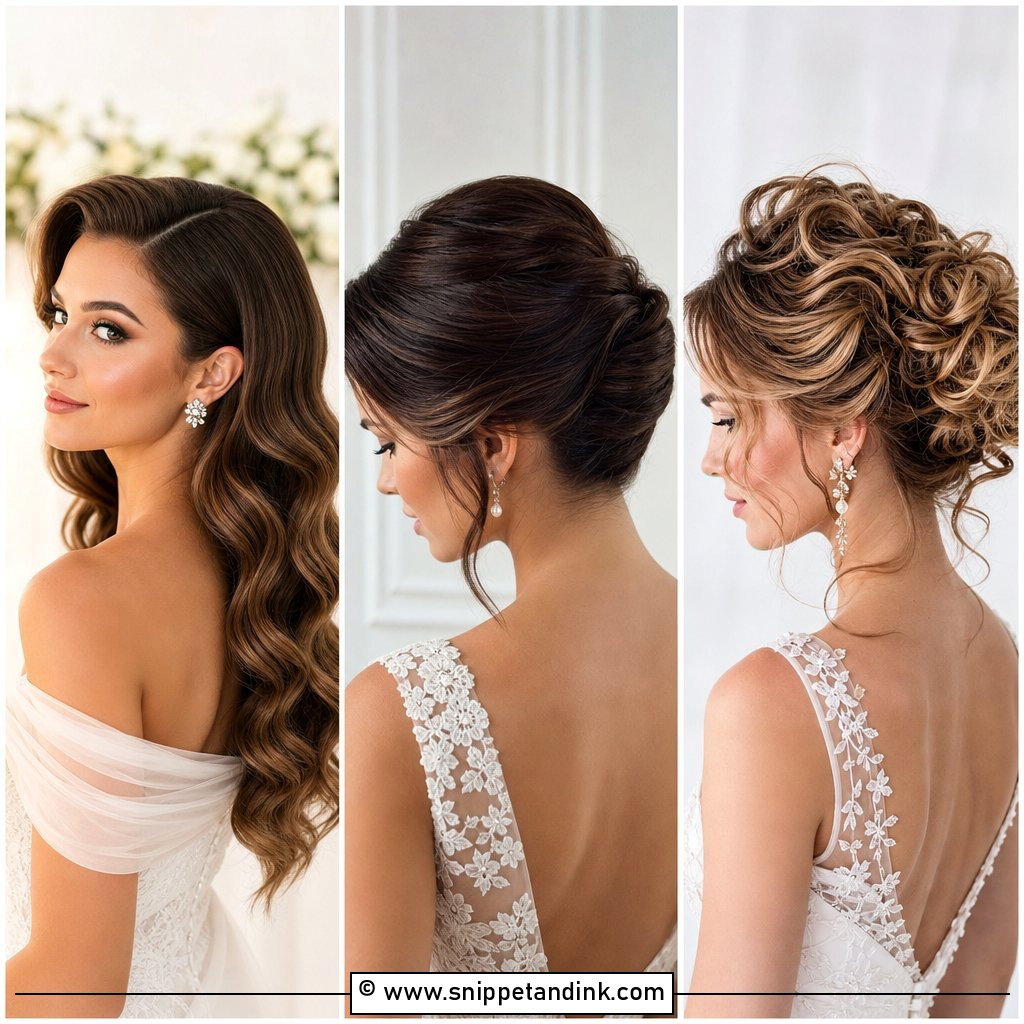
5. Sleek Middle Part With Loose Waves
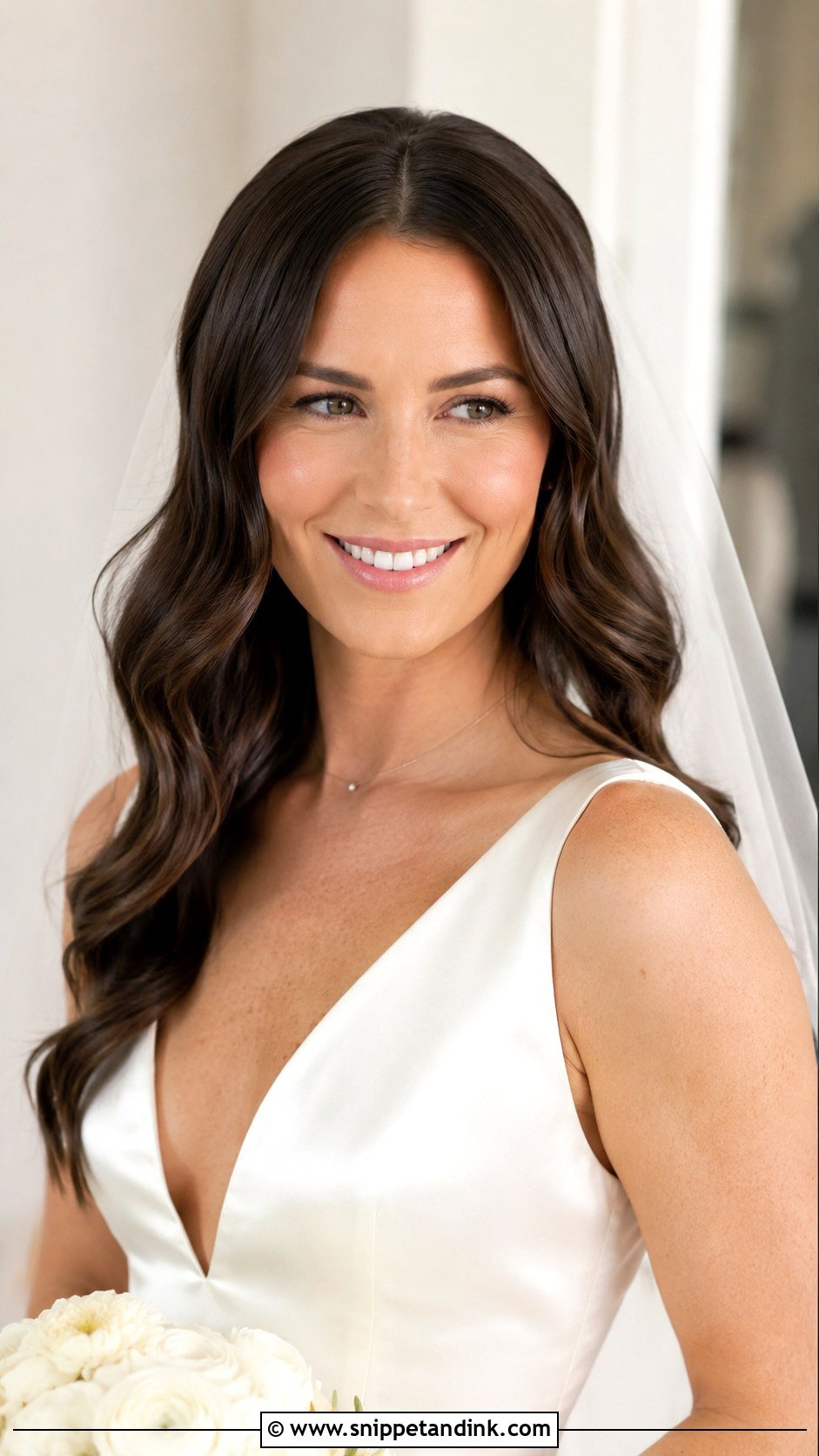
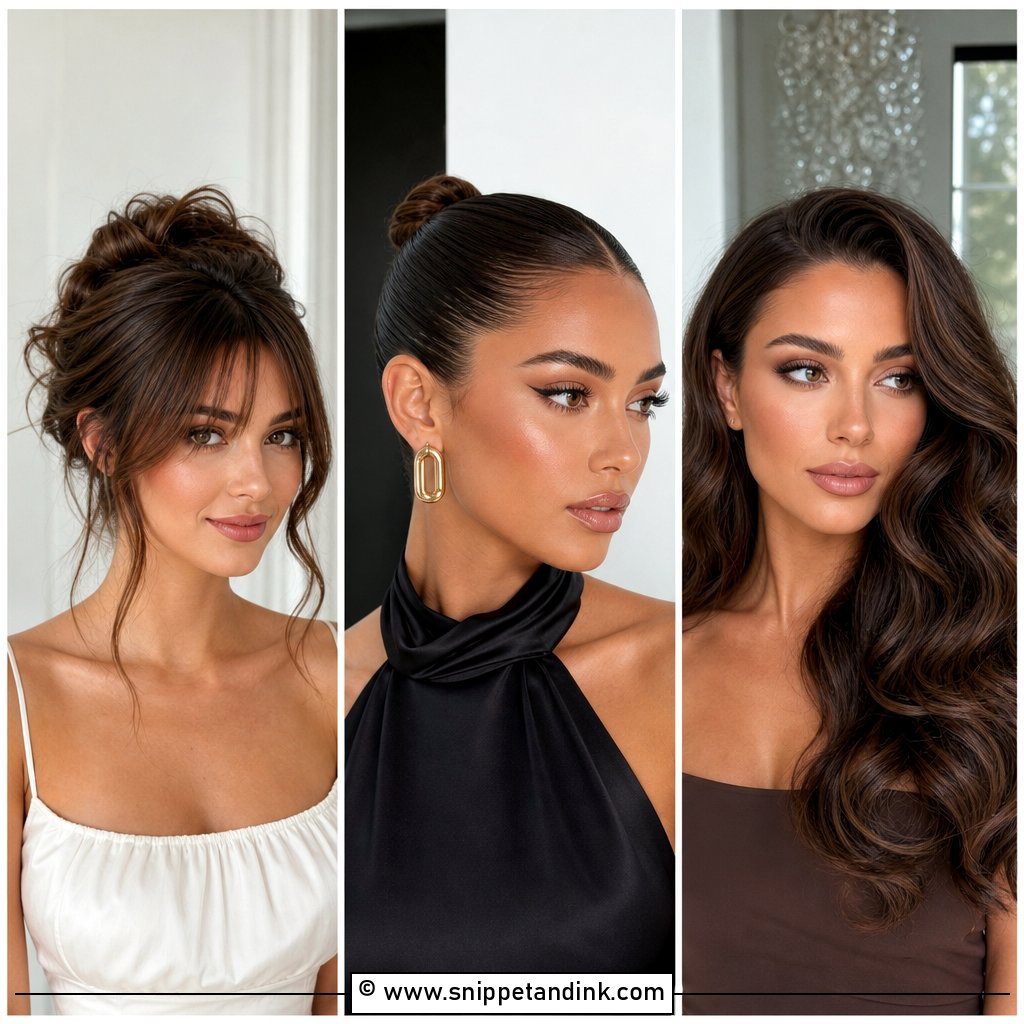
A sleek middle part is less forgiving than it looks. Any cowlick, regrowth line or uneven parting shows straight away, so I blow-dry the roots flat in two directions before I set the waves. The lengths get loose, brushed-out waves so the polish at the top doesn’t look severe. It suits oval and heart-shaped faces and minimalist or contemporary gowns, and it can be worn down or tucked into a low knot later in the night.
6. Side-Swept Front With Hollywood Waves
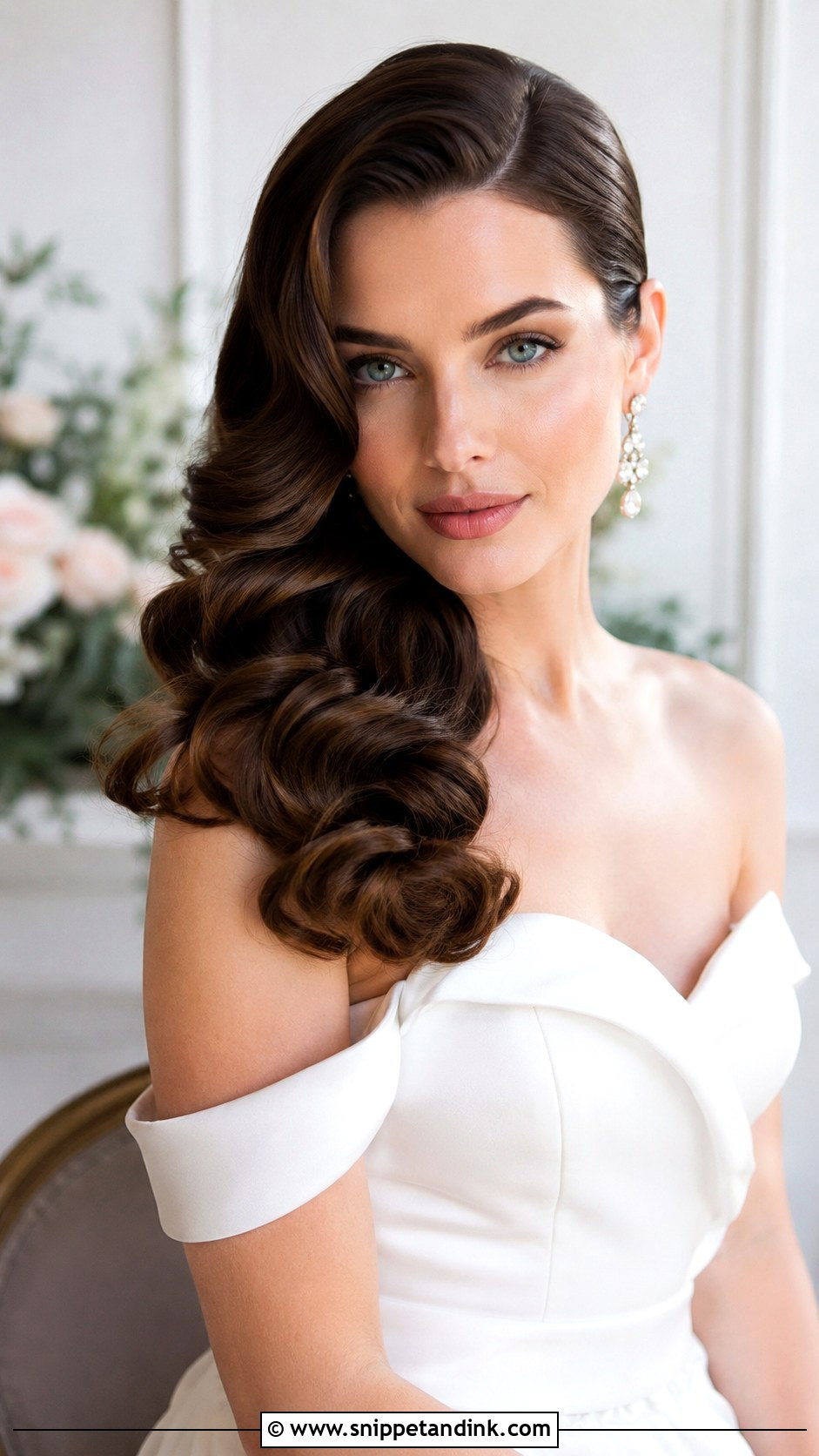
Hollywood waves start with a deep side part and a sweeping front wave that falls over one side of the face. The finish depends on setting: I pin each curl in place while it cools, then brush them out into one glossy wave and press in the ridges with clips. It suits structured gowns and statement earrings on the open side. Be aware that the falling side will touch your face all day, which some brides find distracting during dinner and dancing.
7. Boho Front Braids With Loose Hair
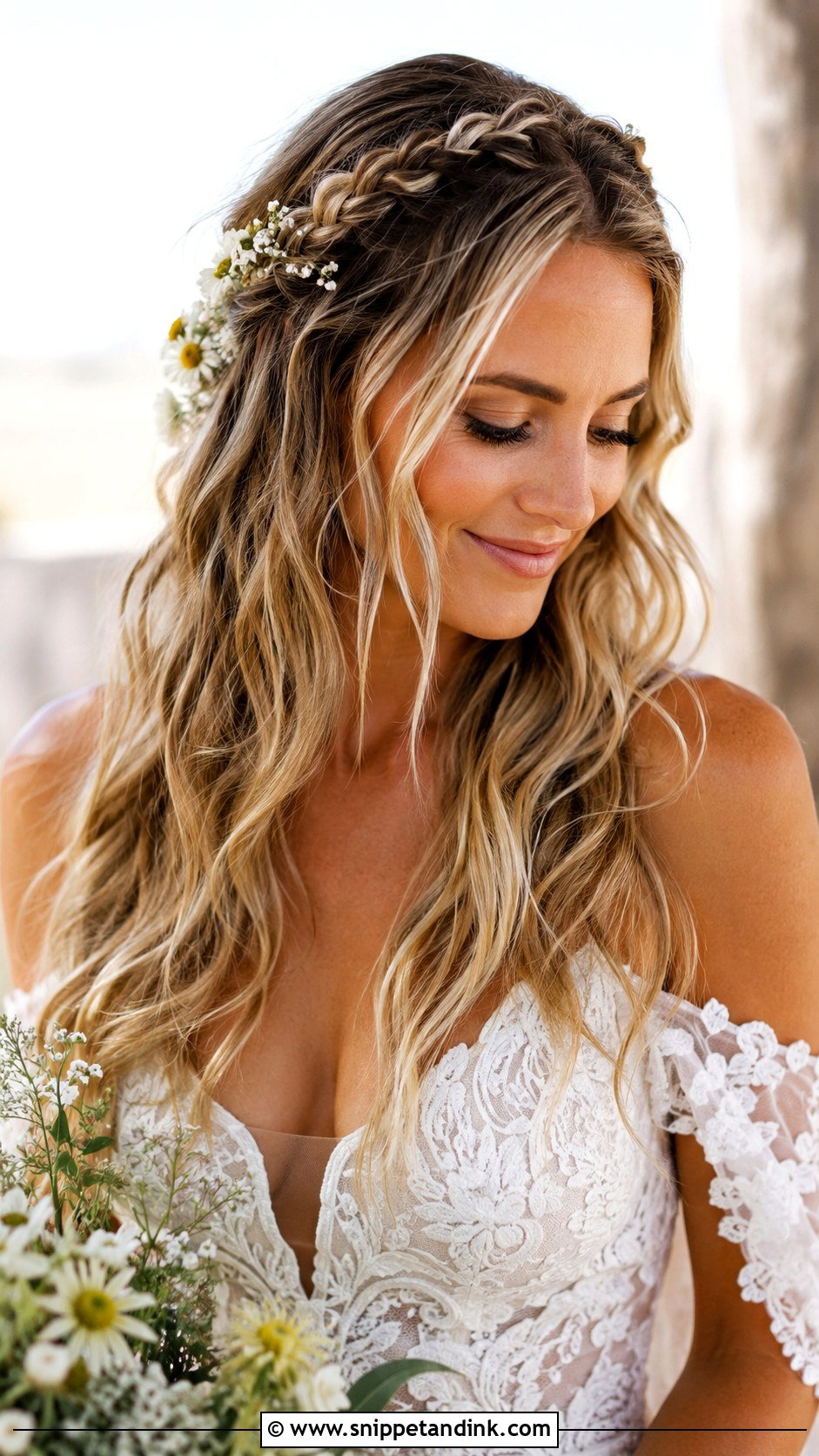
Small braids start at the hairline and dissolve into loose waves, which keeps hair off the face without making it look styled. One accent braid is enough for some brides; others want two or three a side. This works well at beach, garden and festival-style weddings. The loose sections need texture spray and some grip, otherwise the braids slip out within the first hour on silky hair. Tiny wildflowers or beads can be tucked into the plaits.
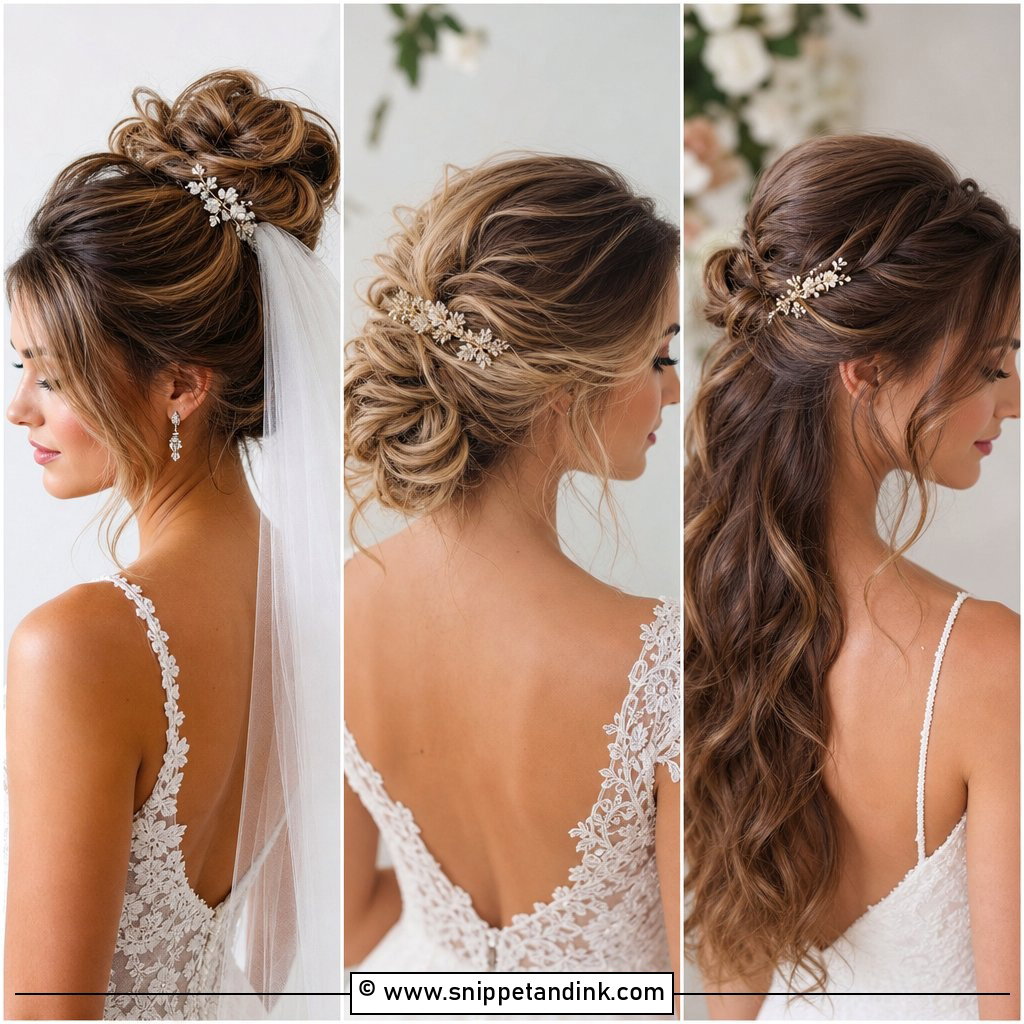
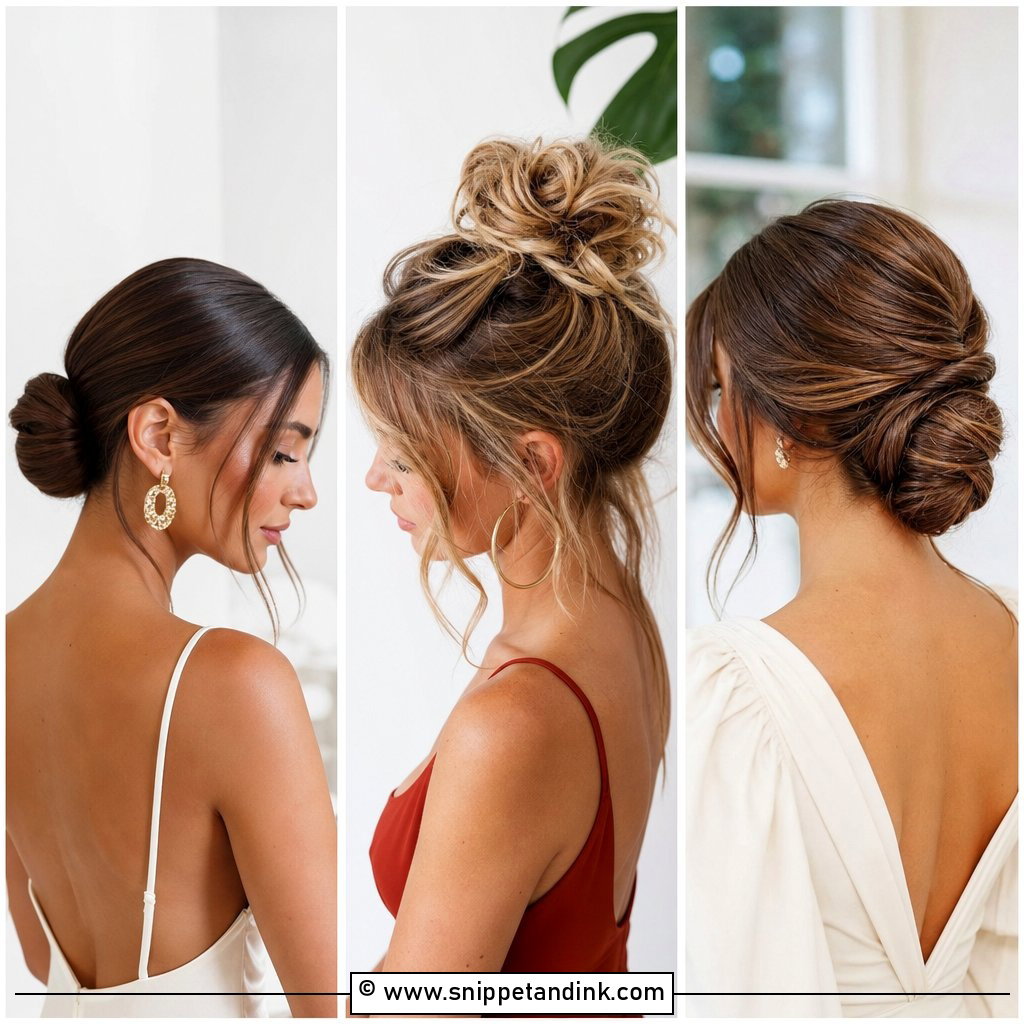
8. Low Chignon With Face-Framing Pieces
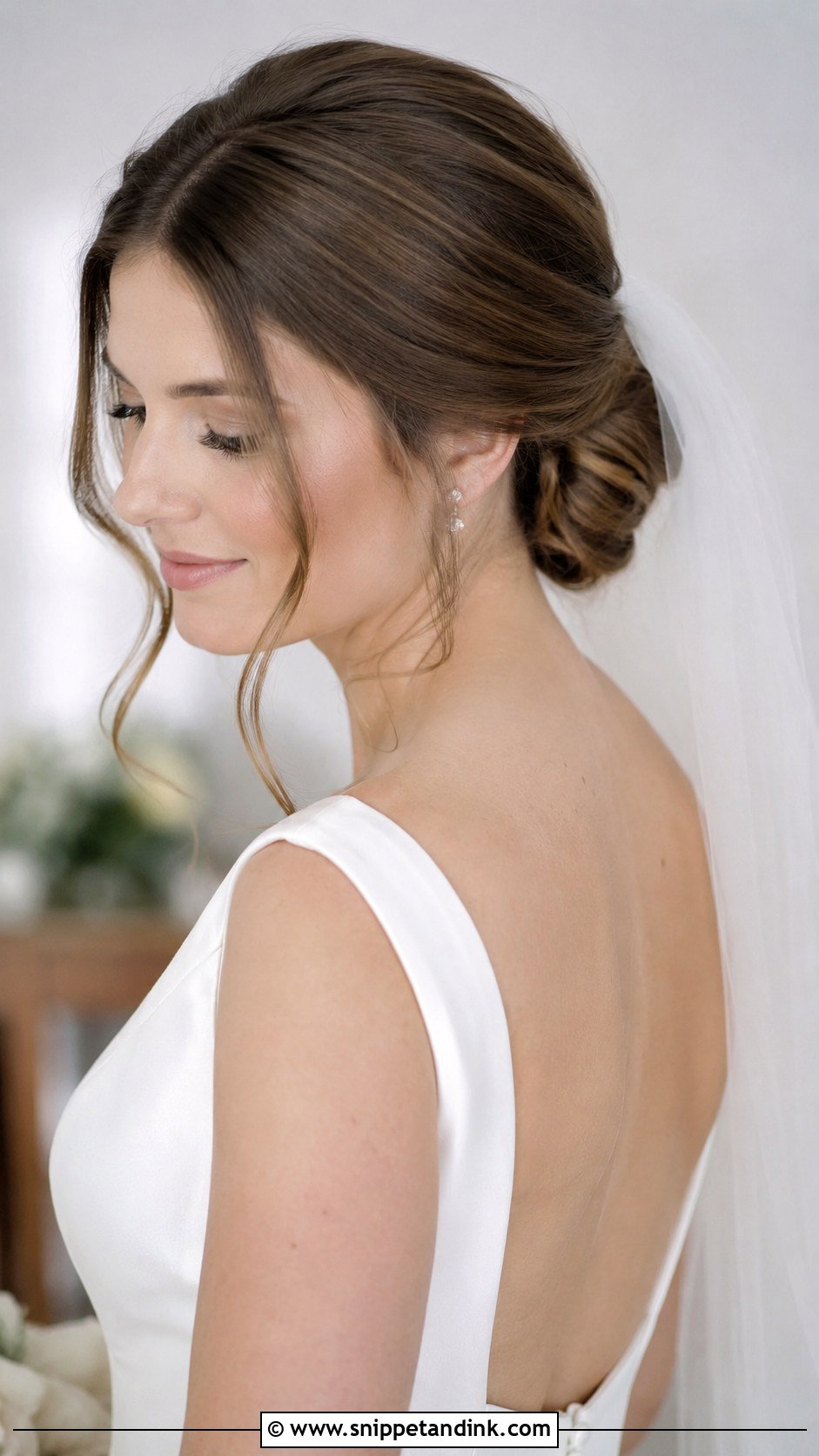
The low chignon sits at the nape, so it leaves room for a veil, a tiara or a high-neck dress. Leaving a few front pieces loose keeps it from looking severe and lets you adapt the softness to your face. I curl those framing strands with a small barrel and brush them out so they lie flat against the cheek rather than springing out. It suits classic and formal weddings at any age. Long or thick hair builds the fullest bun; shorter hair may need a padded form.
9. Front Twisted Halo Updo
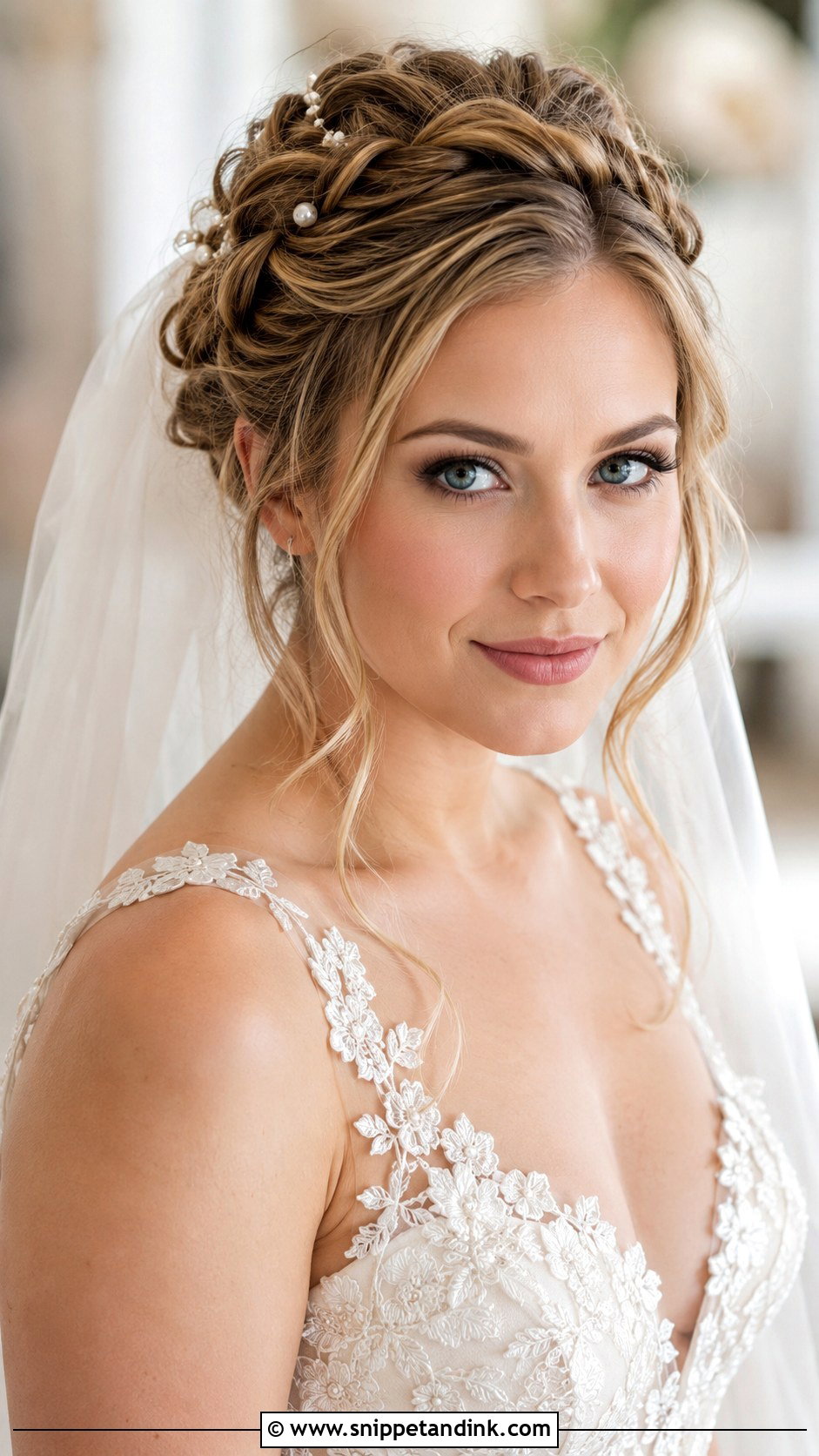
The twisted halo wraps rope twists around the front and crown, drawing the eye up and outlining the face. It’s a formal, polished style that still looks soft at the edges. Long hair is really a requirement, because each twist needs length to reach around the head. The twists give texture that reads well in photographs. Leave tendrils loose if your features suit it, and decorate with pearl pins or small florals.
10. Wispy Bangs With a Bridal Bun
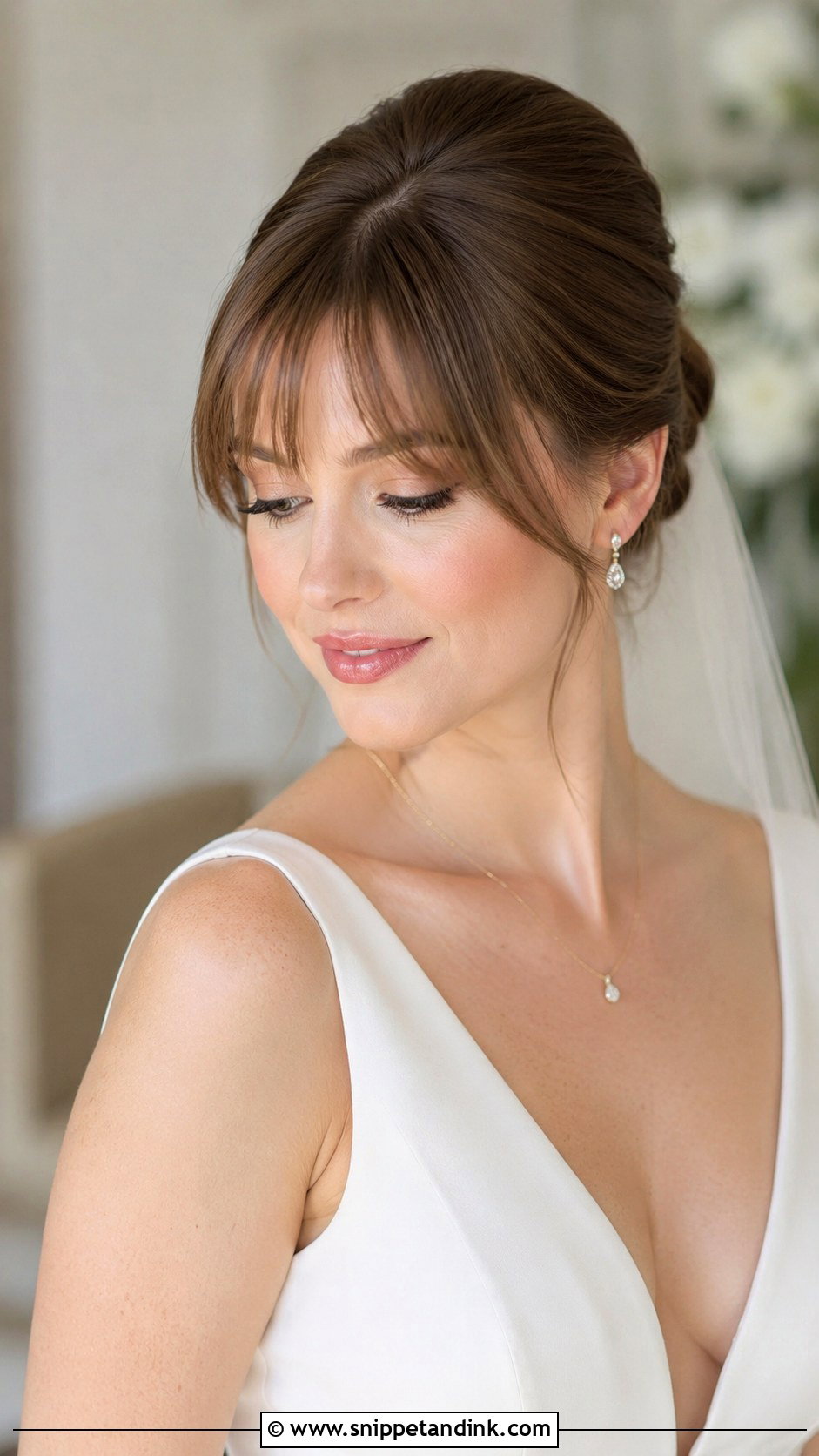
Wispy, feathered bangs and a smooth bun make a good contrast: the fringe keeps the style young and the bun keeps it tidy. The fringe should be light enough that you can still see your brows through it, or it hides your expression in photos. It suits round and oval faces particularly well. Wispy bangs also separate and stick to the forehead as you get warm, so a tiny amount of dry shampoo along the hairline at the trial will tell you how they’ll last.
11. Deep Side Part With Front Volume
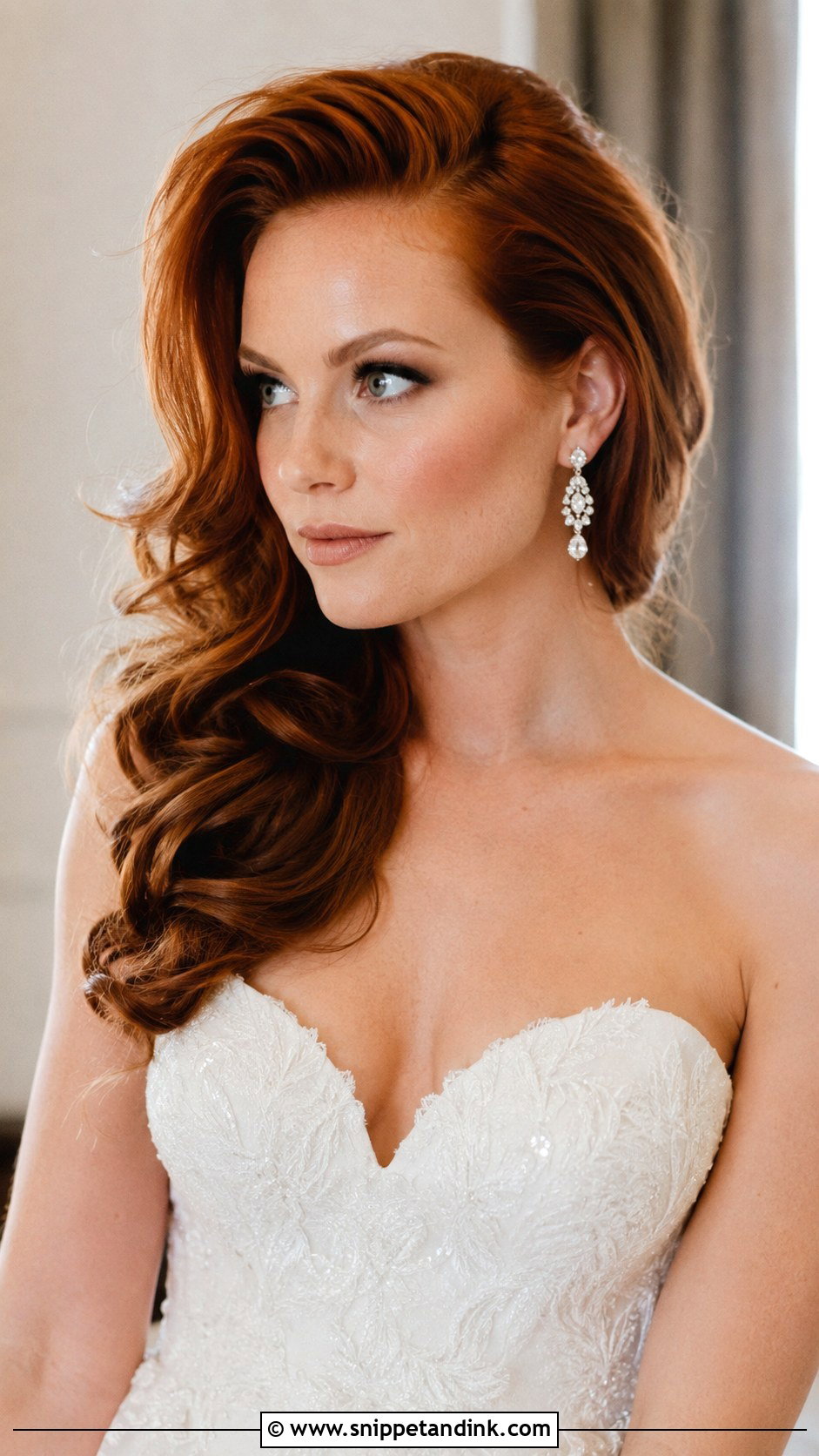
Volume at the front plus a deep side part gives the most glamorous silhouette on this list. Hair sweeps to one side with lift at the crown, which elongates the face. I build the lift with velcro rollers rather than backcombing alone, because backcombing on its own collapses as soon as you hug anyone. Waves, curls or a sleek finish all work underneath. It suits formal weddings and works at most lengths, though very short hair struggles to sweep far enough.
12. Front French Braid Into Updo
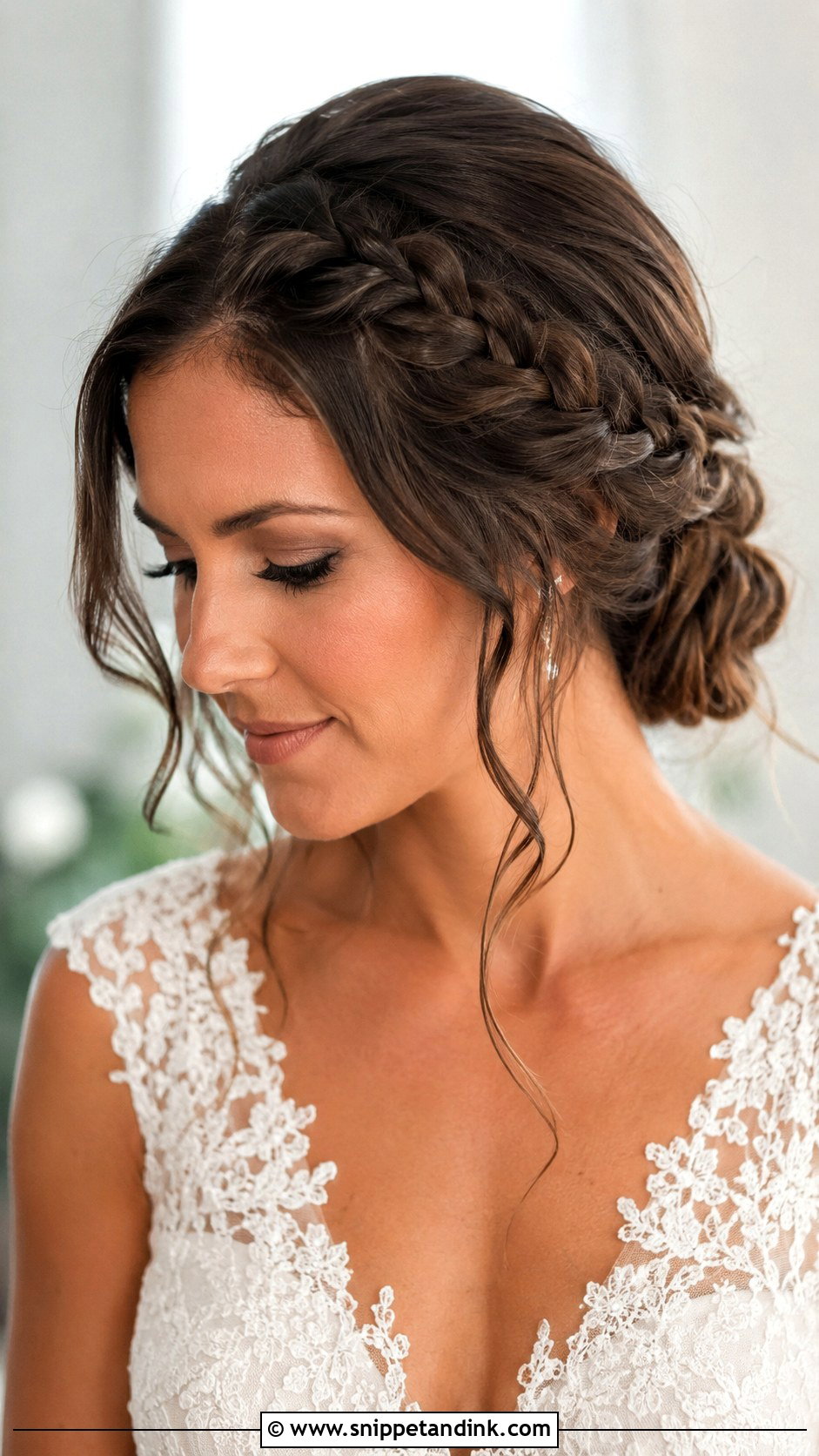
This French braid starts at the hairline and gathers hair smoothly back into a bun or twist, so the face is framed by braid texture and nothing can fall forward. It’s one of the most durable front styles I do and lasts through a full day of hugs and dancing. Tight braiding looks refined; pancaking it loosens it into something softer. A few tendrils left out stop it looking like a gym braid. It suits almost any wedding.
13. Curly Front Bangs for Natural Hair
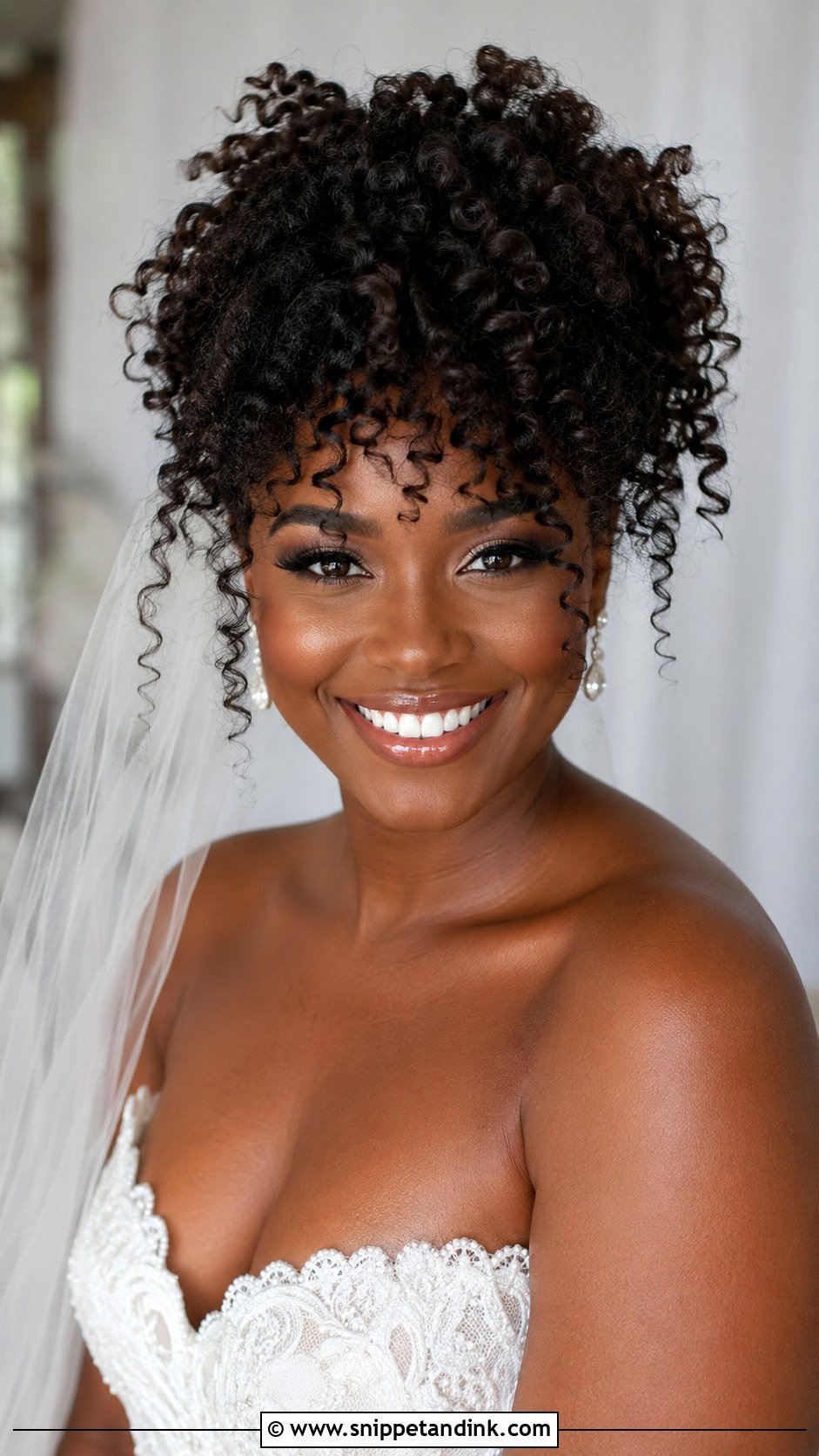
If you have natural curls, the front curls are the ones to define most carefully, because they frame the face. I work in a curl cream on soaking-wet hair and let them dry without touching, so the pattern clumps instead of frizzing. Curly bangs can sit with an updo, a half-up style or a full curly look. My caution: avoid heat-straightening the front for the trial and then curling it on the day, because the pattern won’t match. Celebrate the texture you have and style it the same way twice.
14. Pinned-Back Front With Cascading Curls
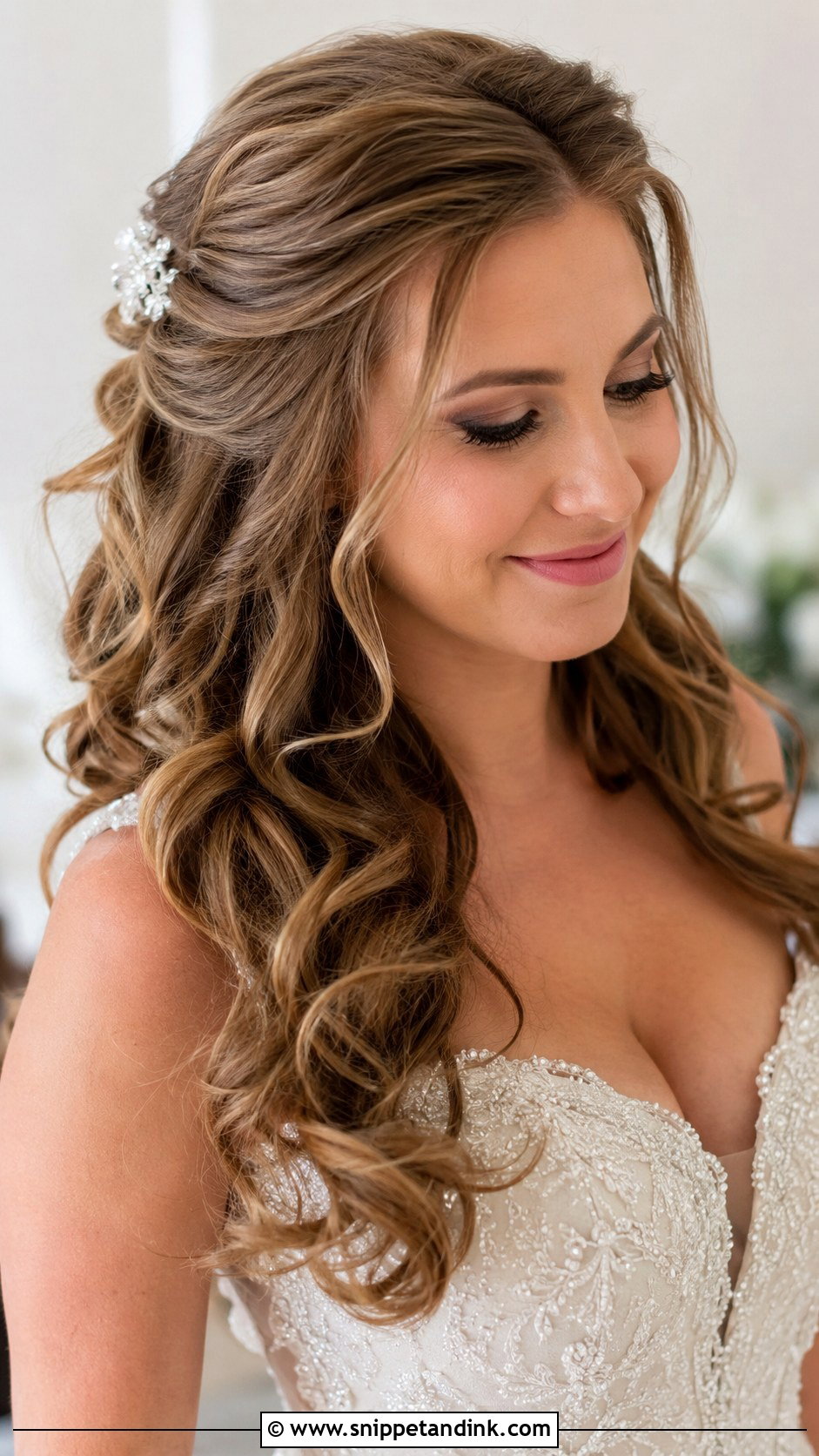
Pinned-back front sections with curls flowing below is the halfway point for brides who don’t want an updo but need hair off their face. I sweep each front section back and pin it underneath where the two sides meet, then hide the join with a small comb or decorative pins. It suits medium to long hair and most face shapes. The weak spot is heavy curls dragging the pinned sections loose, so I always anchor them on a small hidden braid.
15. Front Fishtail Braid Over the Shoulder
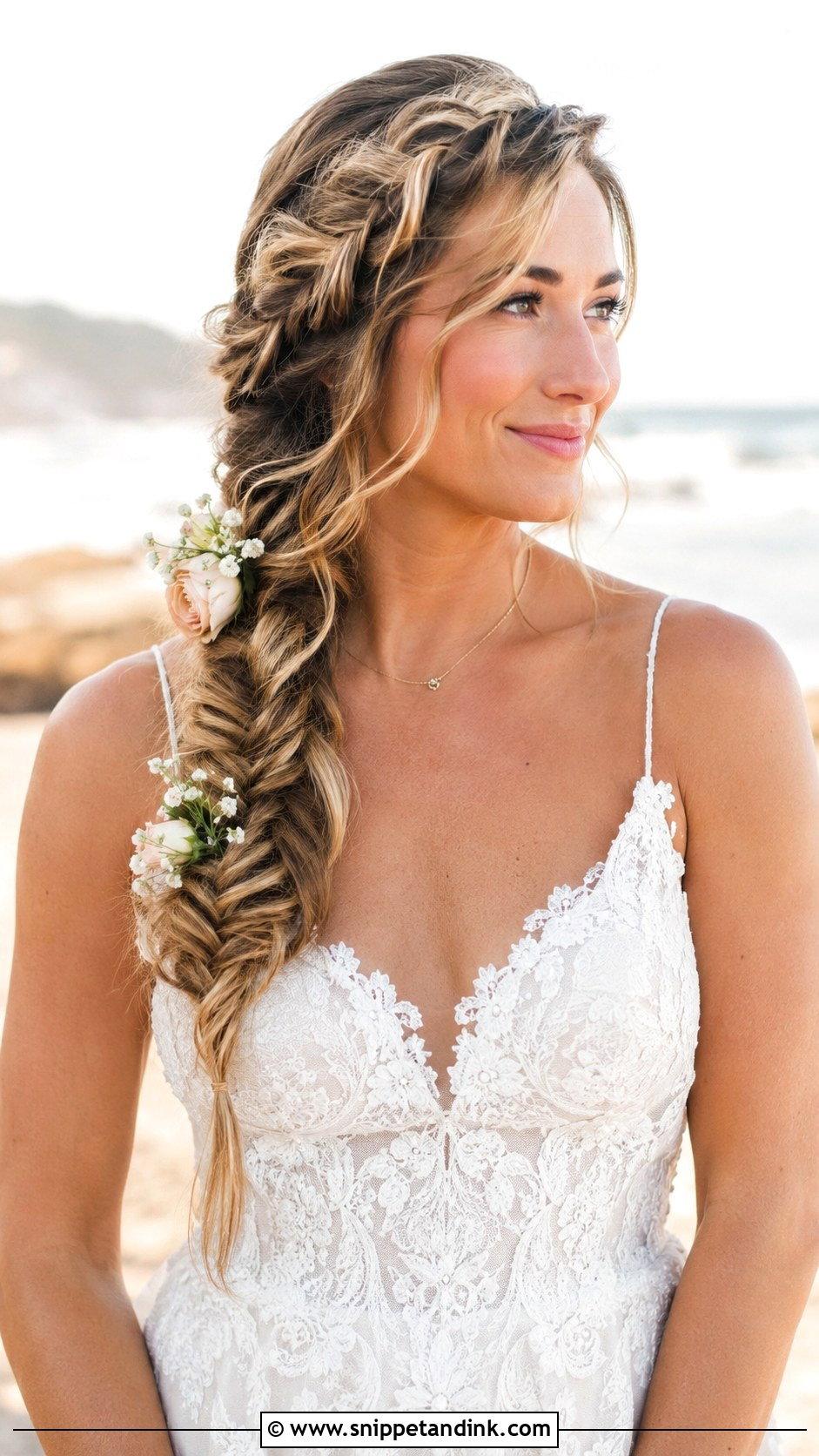
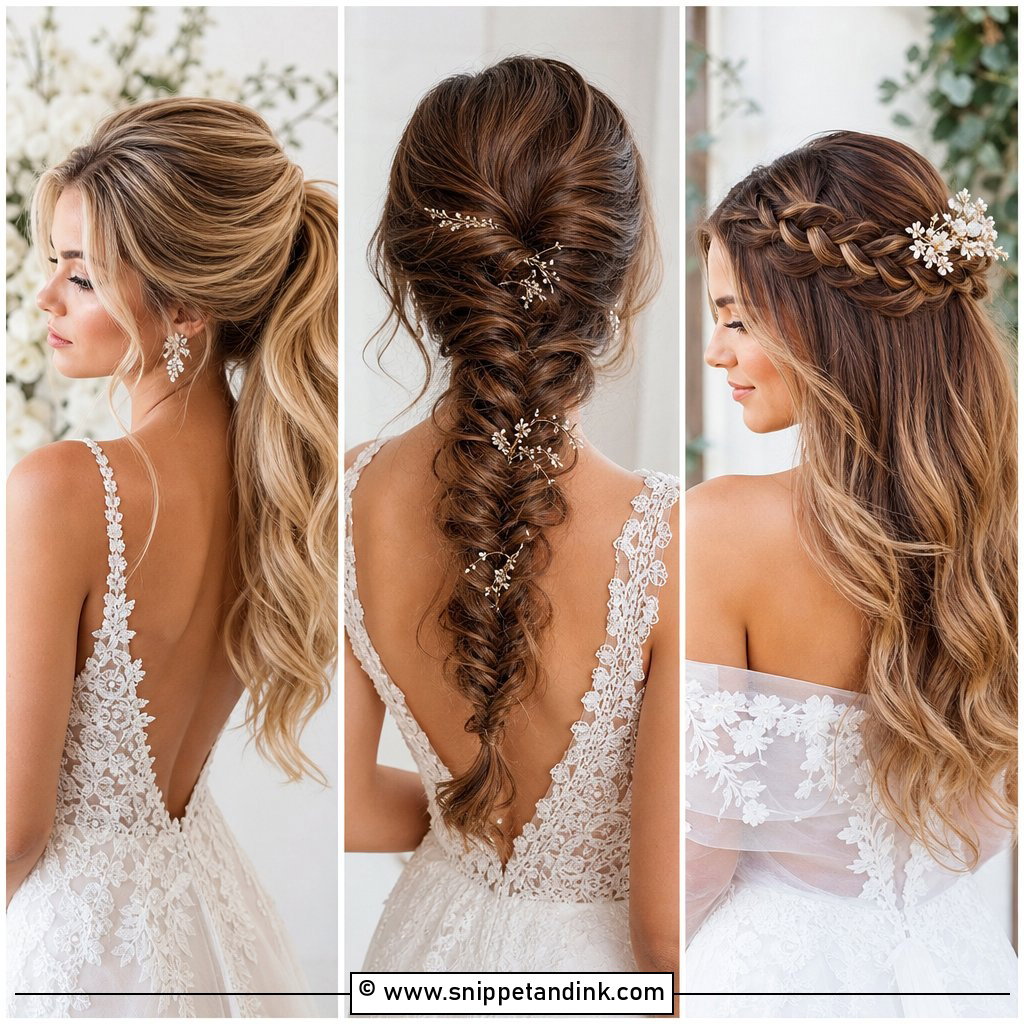
A fishtail starting near the front and lying over one shoulder is a relaxed style for beach and garden weddings. Teasing out a few front pieces keeps it from feeling tight. I build it with a clear elastic and gently pull the edges to widen it; on fine hair, a few hidden extensions make it look full. Small flowers can sit along it. Expect to brush your hair away from that shoulder if your dress has a detail there.
16. Sleek Slicked-Back Bridal Front
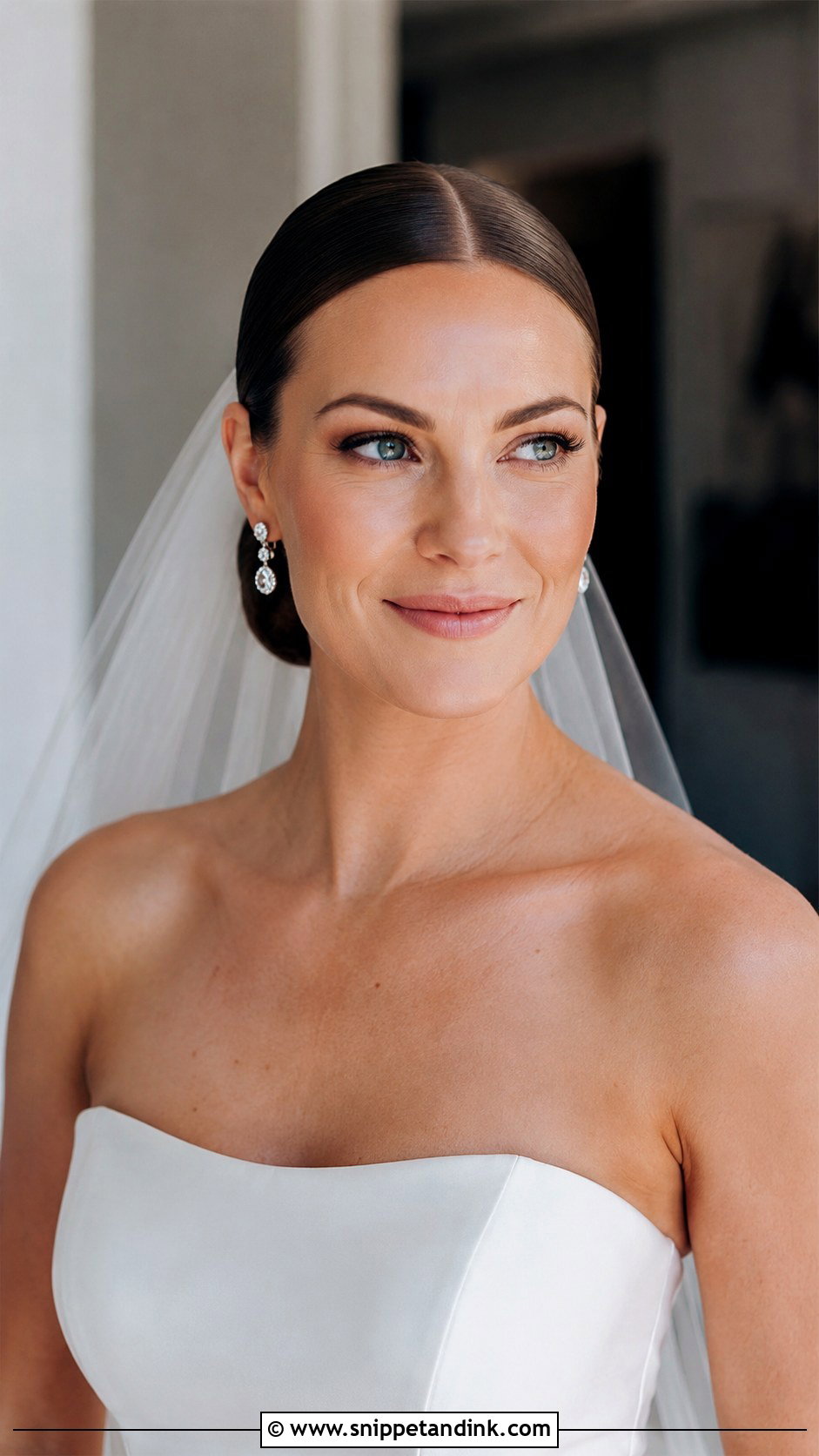
A slicked-back front pulls every strand away from the face for a clean, editorial line. It sits with low buns, ponytails or sleek chignons, and it puts your makeup and earrings front and centre. I use a strong-hold gel on damp hair and a fine bristle brush to smooth it back, then let it set before touching the lengths. Strong features and oval faces suit it most. If you have a lot of baby hair or flyaways around the hairline, a toothbrush and a little gel tame them, but the look will always be less forgiving on you.
17. Front Waterfall Braid for Brides
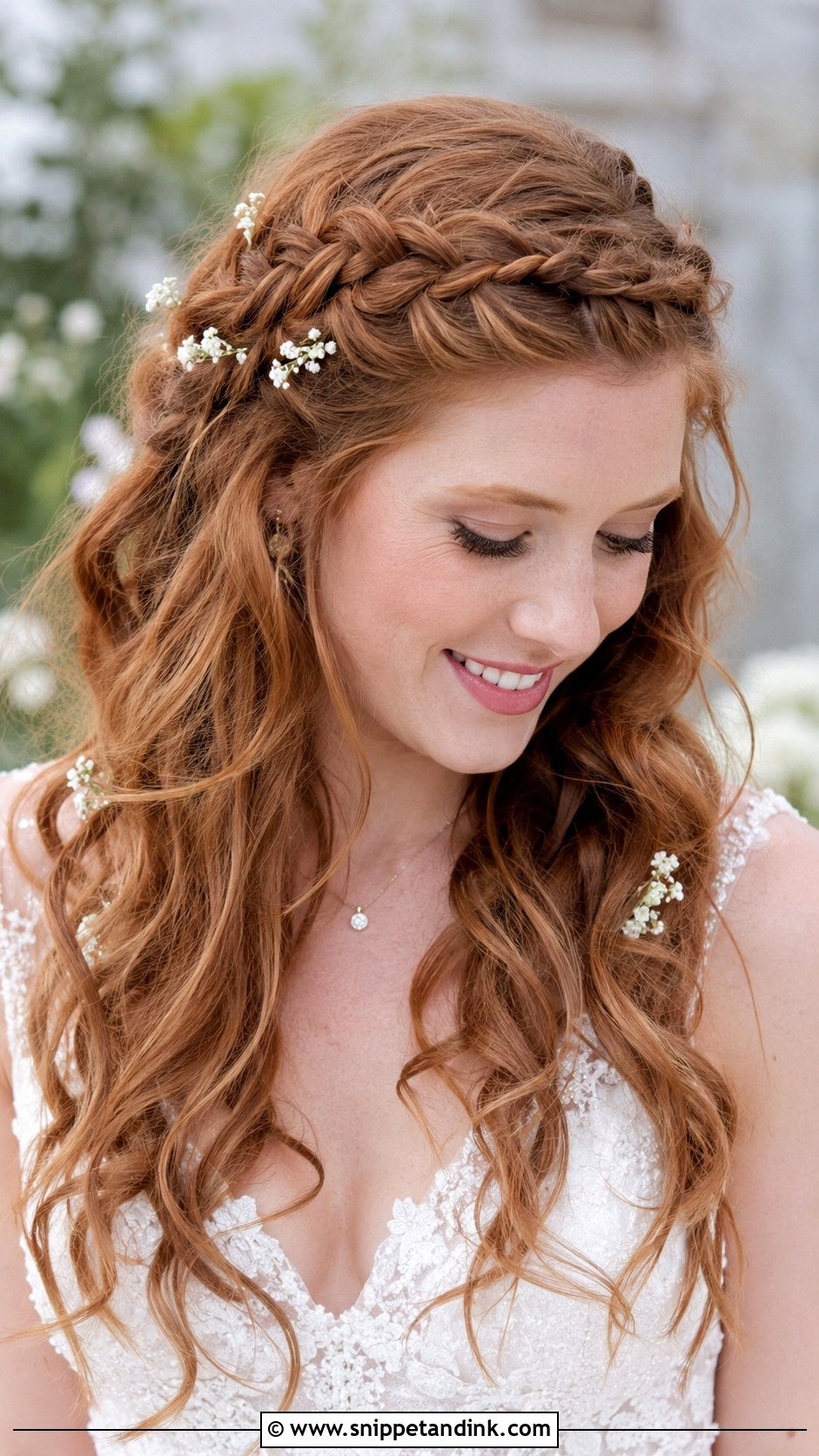
A waterfall braid travels horizontally across the head and drops a strand at each crossover, so loose hair falls through the plait. It frames the face with woven detail while the lengths flow into waves or curls. It suits medium to long hair and boho or garden weddings. The dropped strands need curling after the braid is done, not before, otherwise the braid pulls the curl straight. Small flowers can sit along it.
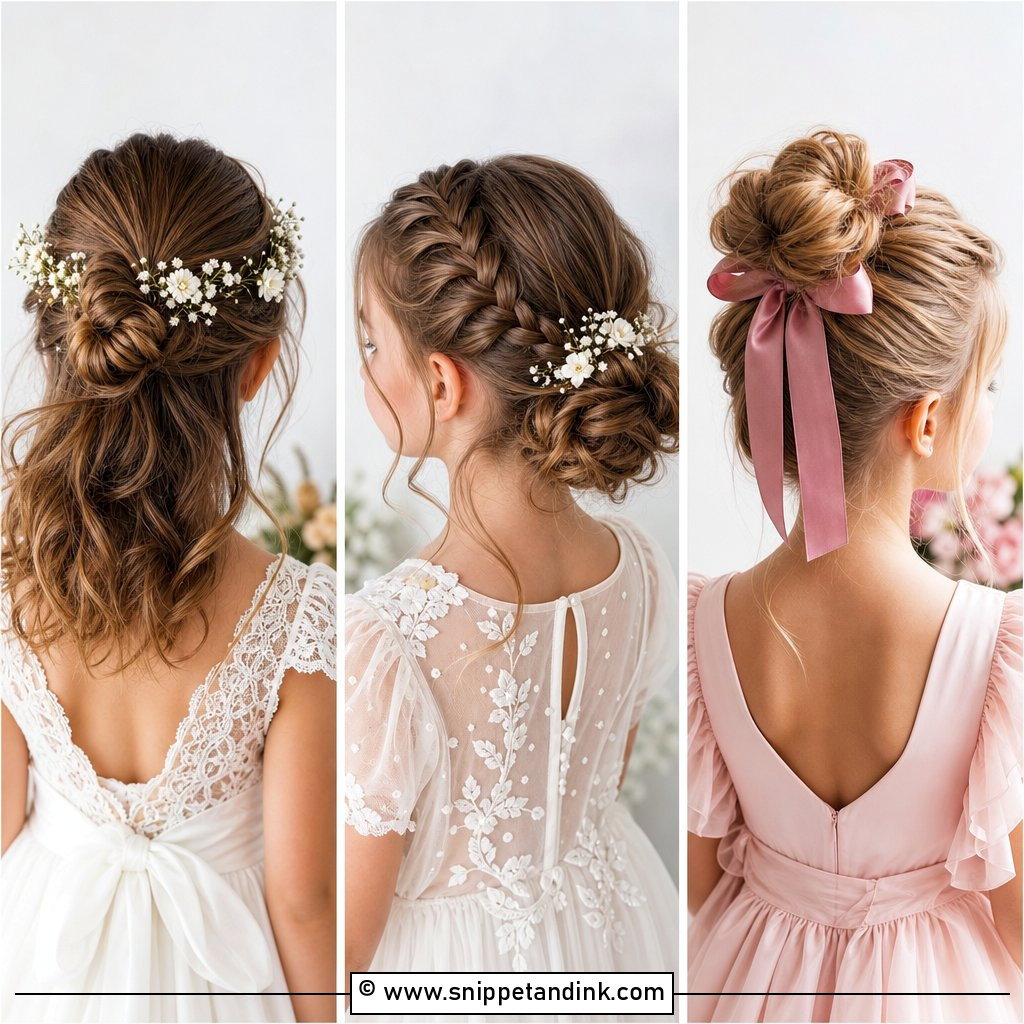
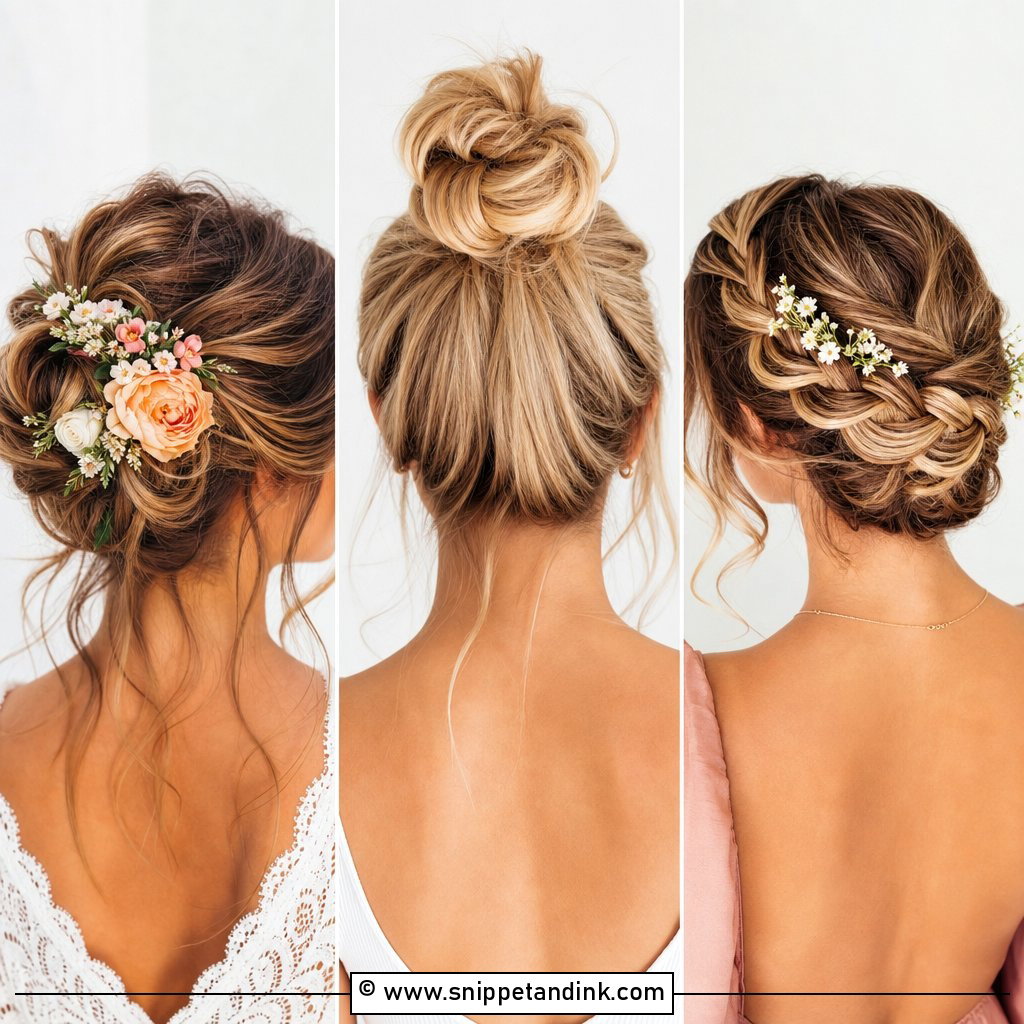
18. Front Twists With Flower Accents
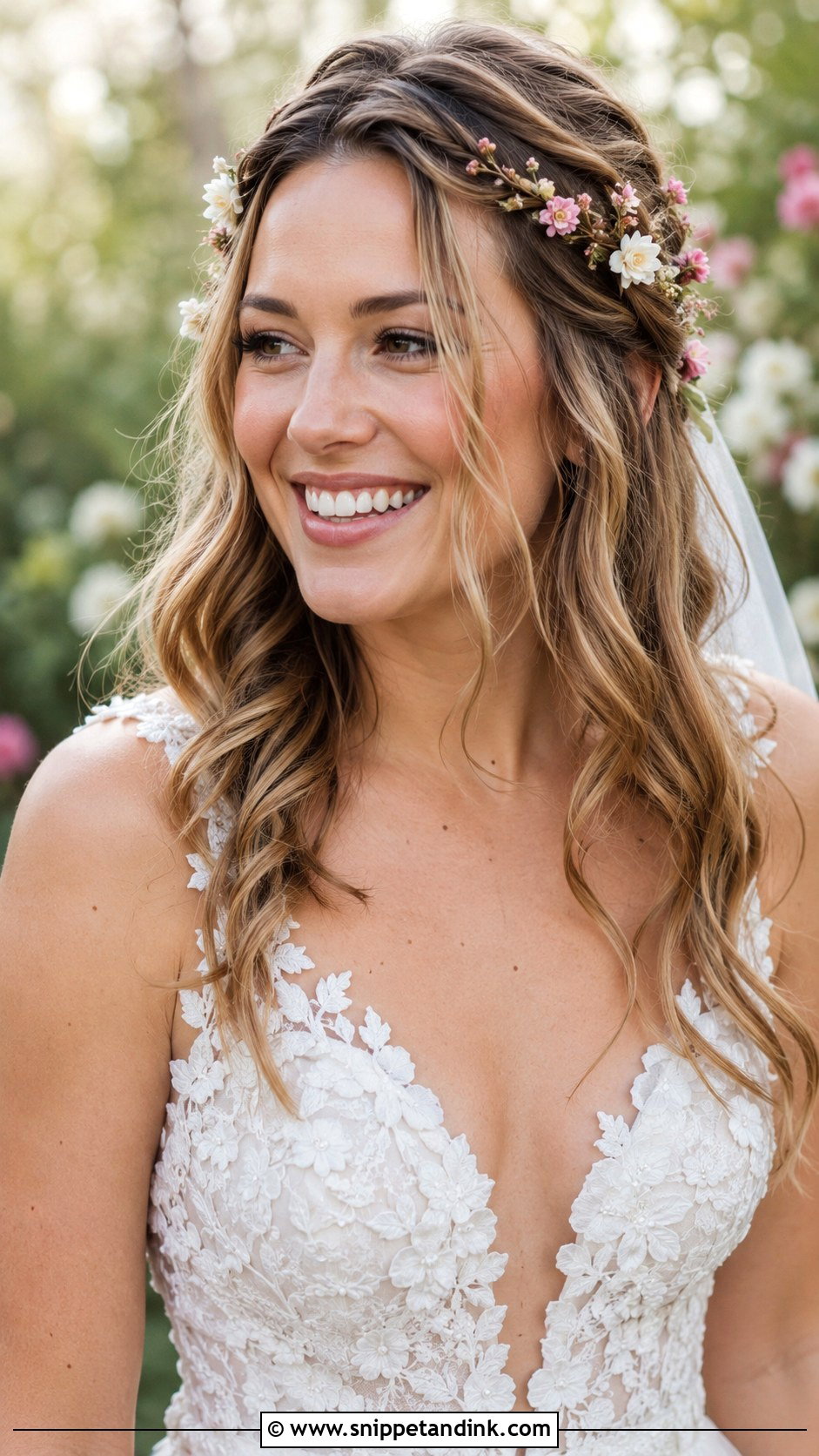
Two or more twisted sections frame the face, with small blooms tucked between them. It’s a fresh, garden style that suits spring and outdoor weddings. I choose sturdy flowers like wax flower, small spray roses or baby’s breath, because delicate blooms wilt against warm scalp by the speeches. Pair it with waves or an updo, and leave a few tendrils loose. Ask your florist to wire the flowers so I can pin them securely.
19. Voluminous Front With Loose Curls
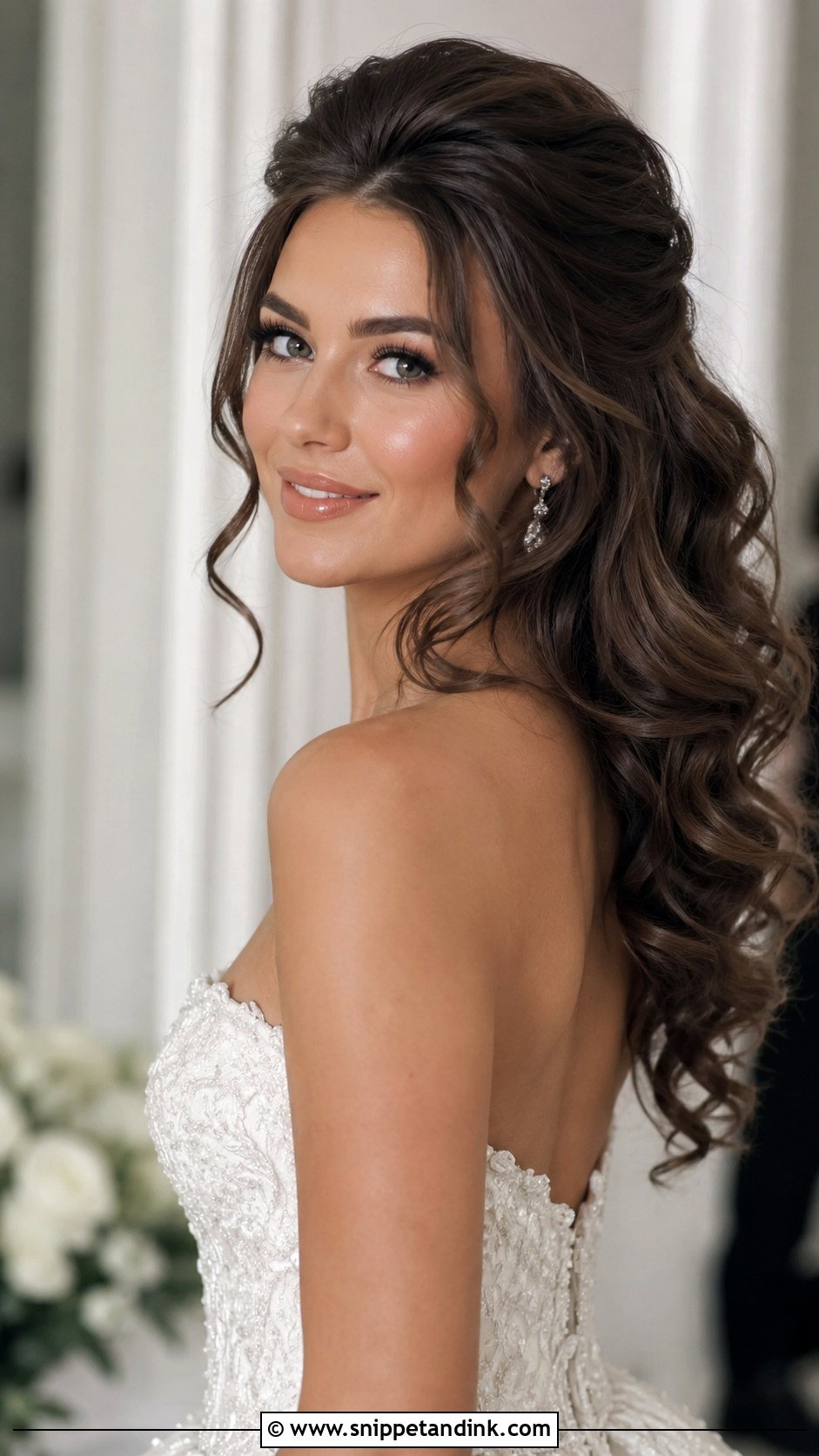
Big, voluminous front sections paired with loose curls give height at the crown and drama around the face. Volumising mousse at the roots and rollers set while the hair cools are what keep the lift. Loose curls underneath balance the volume so it doesn’t look top-heavy. It elongates round faces. Wear it fully down or pinned to one side, but be aware that a veil comb pressed into the crown can flatten the lift unless it sits below it.
20. Front Money Piece Highlights for Brides
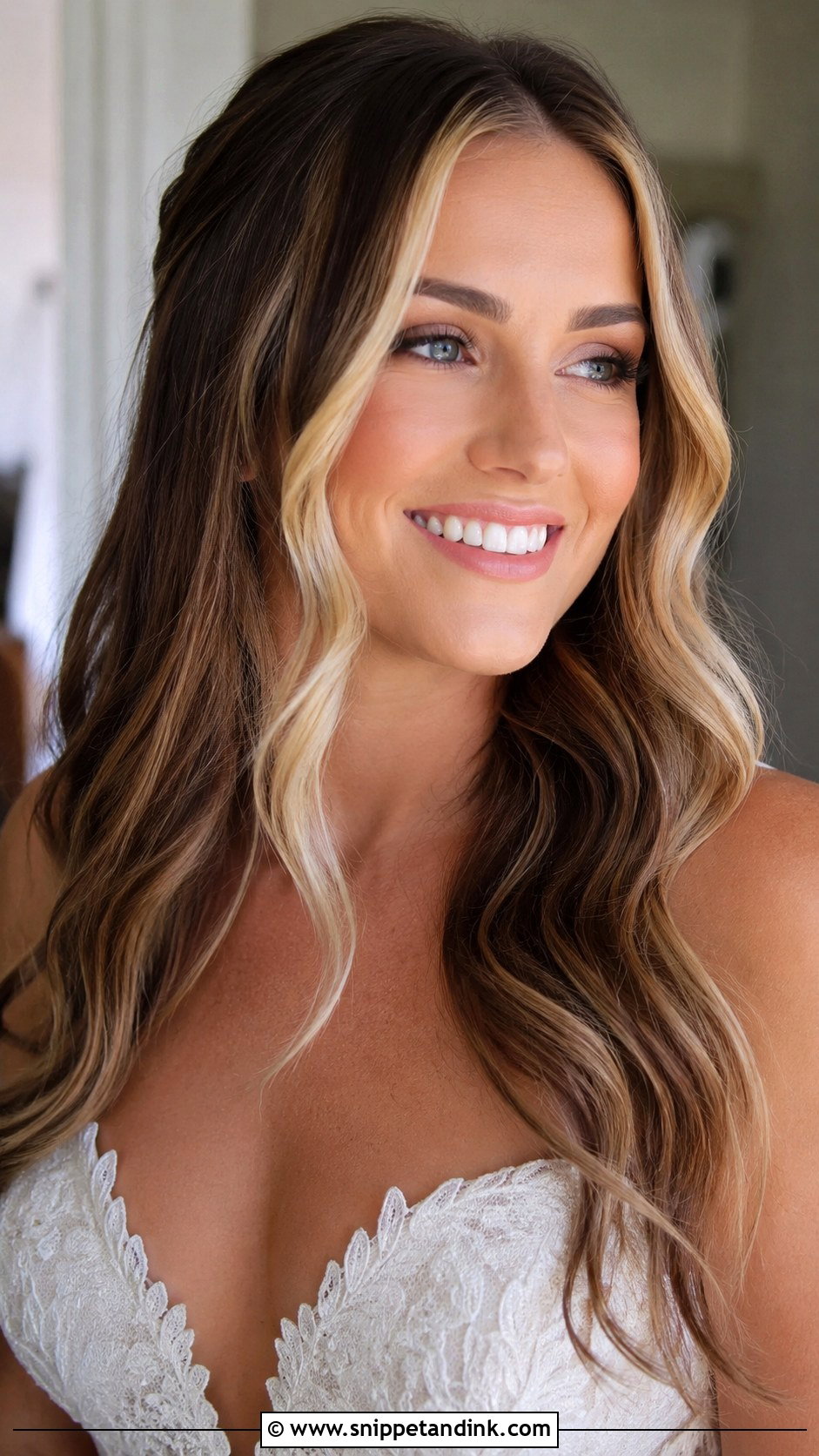
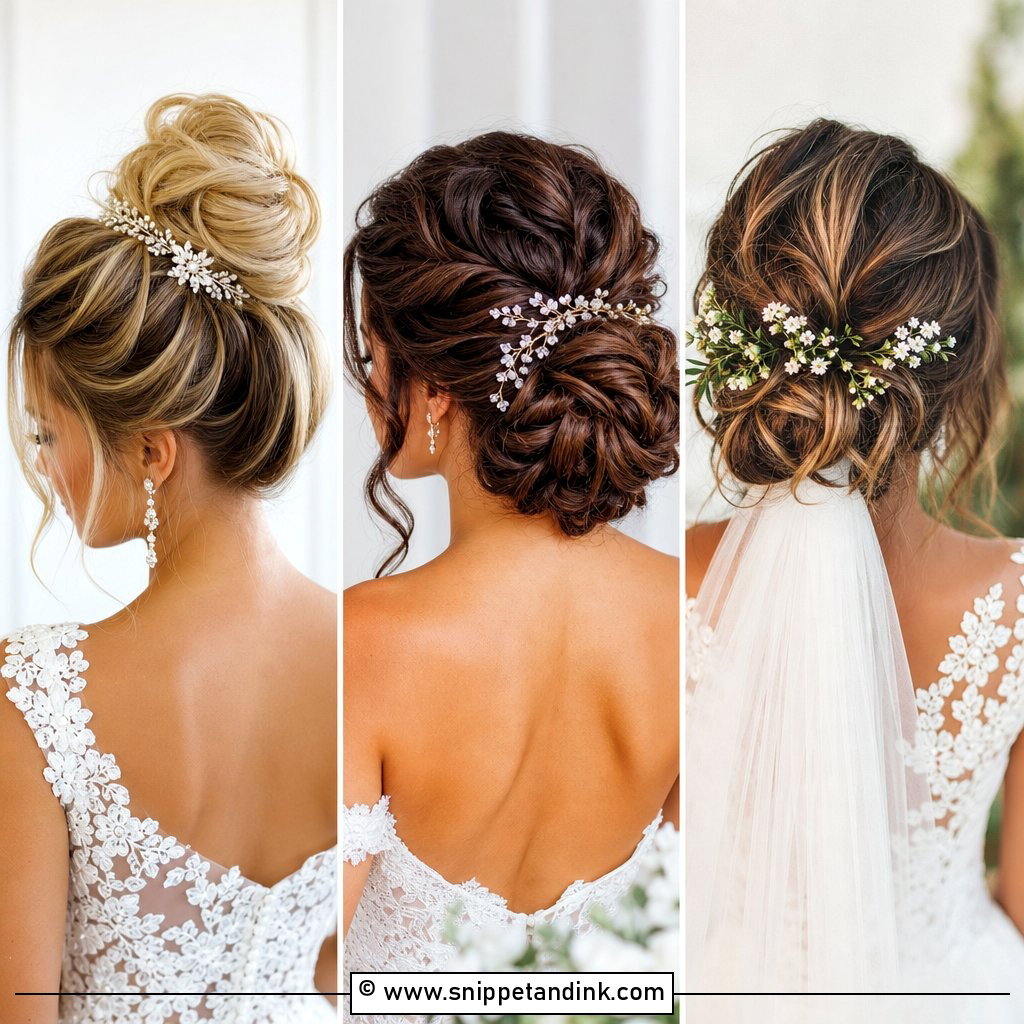
Money piece highlights brighten the strands nearest the face, so every front style here gets more contrast. It’s a colour decision, not a styling one, so book it with your colourist four to six weeks before the wedding. That gives time for a toner adjustment if the shade comes out too brassy. Customised to your skin tone, the brighter pieces lift your complexion in photos. They work with any updo, half-up style or waves.
Why Tendrils Go Limp by the Speeches, and How I Prevent It
Front pieces take the most handling of anything in a bridal style. You touch your face, hug people, push hair behind your ears and lean into the cake. Curls also drop faster near the face because skin warmth and breath soften the set. The fix starts at the trial: I curl tendrils with a smaller barrel than the rest of the hair, pin each one while it cools, then release them only once the makeup is finished.
On fine hair, a light texture spray before curling helps the bend hold. On thick or coarse hair, the risk is the opposite: tendrils puff out, so I smooth them with a little cream after brushing out. Humidity is the hardest test. For a summer or beach wedding, I’d lean toward front styles with a braid or twist anchor, since loose tendrils are the first thing to flatten.
The small kit for the bridesmaid’s bag
- Six bobby pins matched to your hair colour, not black by default.
- A travel-size flexible hairspray for flyaways, not a strong hold that crunches.
- A clean mascara wand to smooth baby hairs back at the hairline.
- A small clear elastic in case a braid or fishtail end slips.
Front Styles That Last From Vows to Last Dance
The front sets the tone for the whole style, so pick it before the back. From soft curtain bangs and delicate tendrils to braids and Hollywood waves, there’s a hairline here for almost any face and dress. Bring a photo of your neckline and your veil to the trial, wear the style for a few hours afterwards, and check it in photos taken with flash. Flowers, pearls or a money piece can make it yours.
You'll Like These Ideas:


Leave a Reply