
Most short-haired brides arrive at my chair apologising for their length, and I always tell them the same thing: short hair is easier to pin, not harder. There’s less weight pulling on each grip, so the shape you set at nine in the morning is usually still there at midnight. The catch is that every short updo depends on where your shortest layers sit, because those are the pieces that escape first. Below are 20 updos I’d happily put on a pixie, a bob or a lob, with notes on what each one needs from your cut and where it tends to struggle.
Where Your Shortest Layer Sits Decides the Updo
When a short-haired bride sits down for a trial, I run my fingers up the back of her head before I look at any photos. The shortest layer at the nape tells me more than the overall length does. If it reaches the hairline, almost anything on this list is possible. If it stops an inch above, I plan around it with braids, twists or a clip that hides the gap.
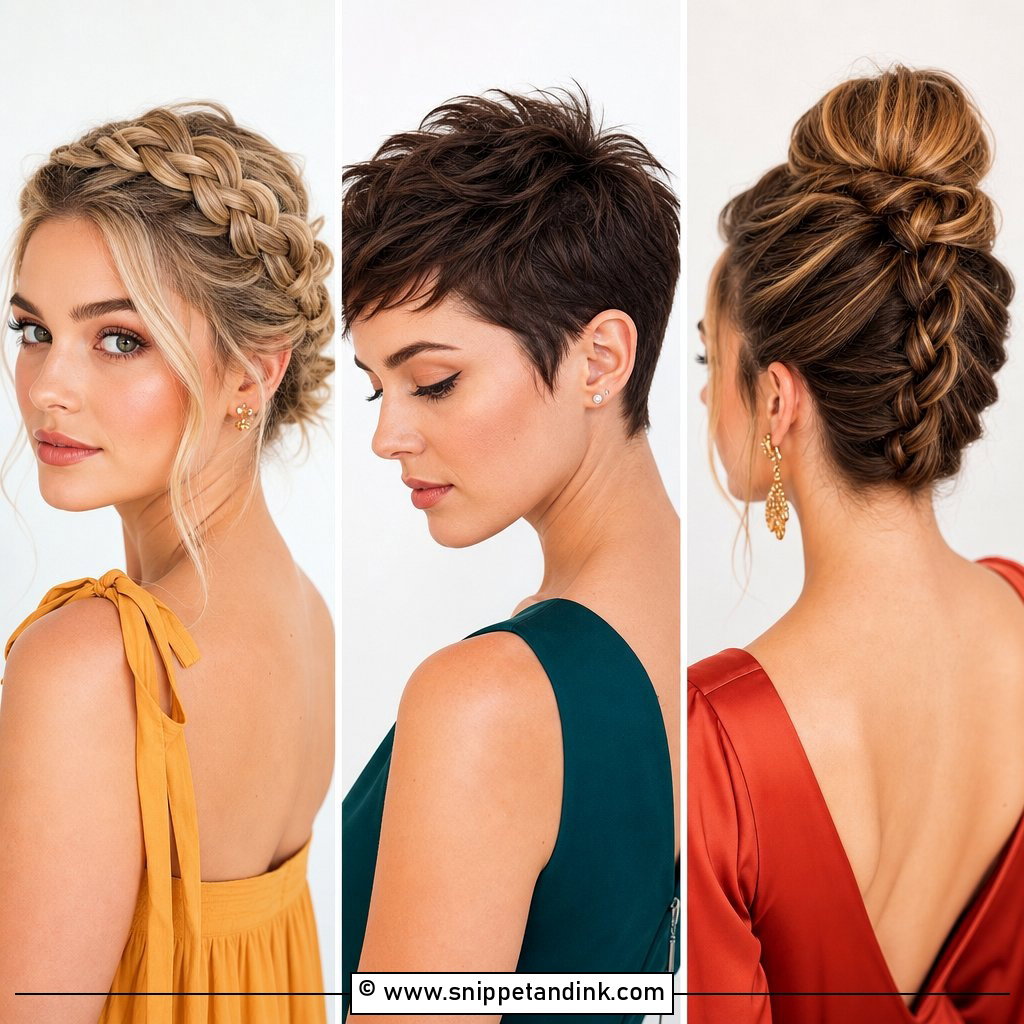
- Pixie: twists, slicked styles and accessories. There isn’t enough length to gather a true bun, so I add detail rather than height.
- Chin-length bob: tucked rolls, small knots and low twisted buns, as long as the back layers aren’t stacked very short.
- Lob or shoulder length: nearly every style here, including chignons, halo braids and loose waved updos.
- Heavily layered cuts at any length: braids tight to the scalp work better than buns, because they catch the short pieces.
Timing your last haircut matters too. I ask brides to get a light trim about three to four weeks out, not the week before. A fresh cut has sharp, blunt ends that resist pinning, and a few weeks of growth gives me that little bit of extra length to tuck.
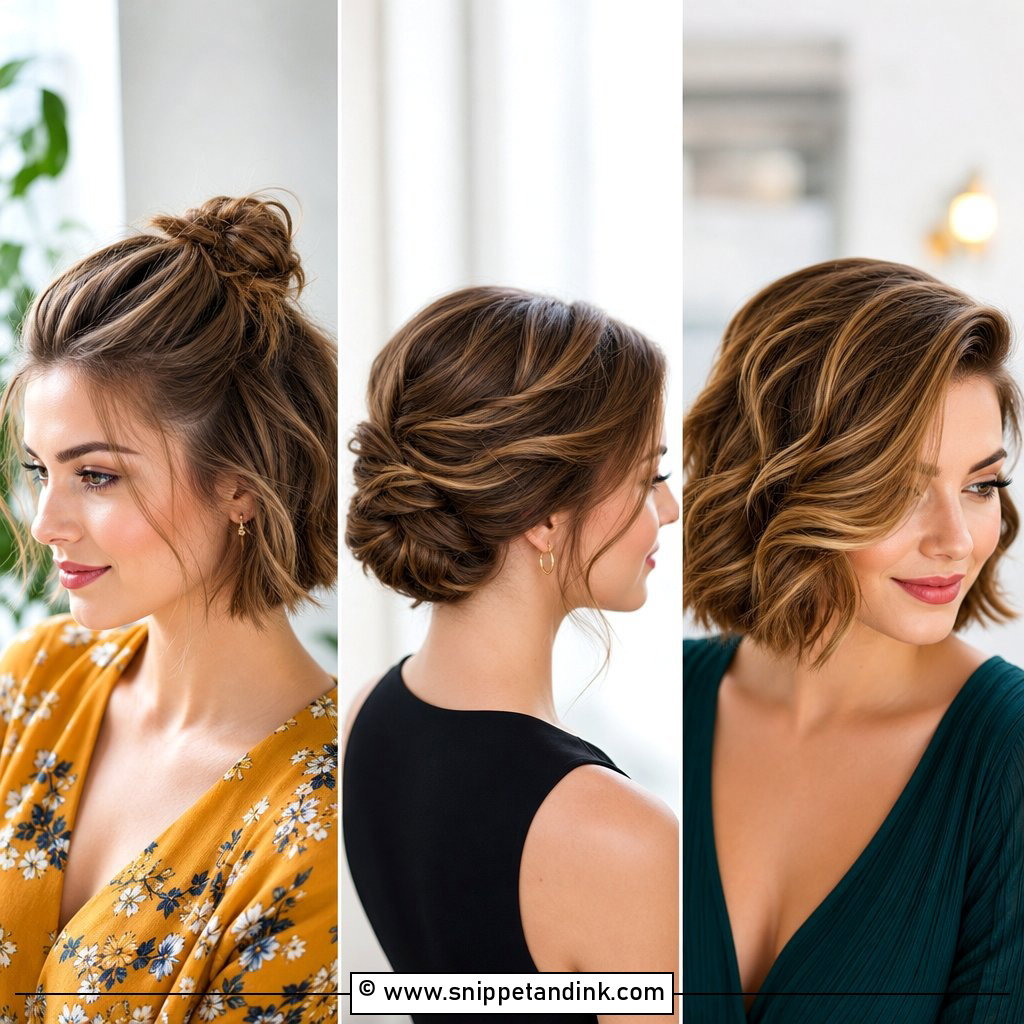
1. Low Messy Bun for Short Hair
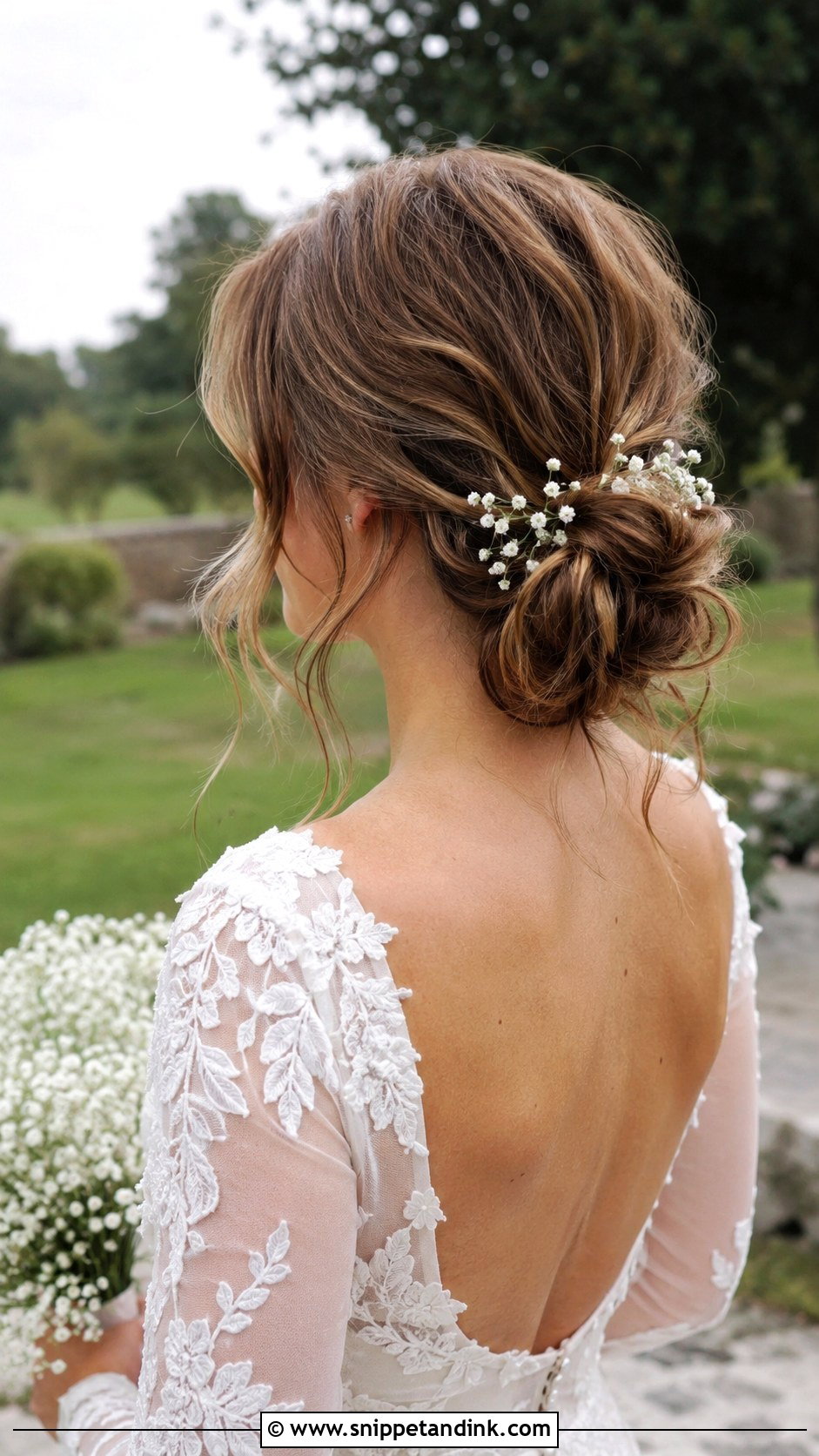
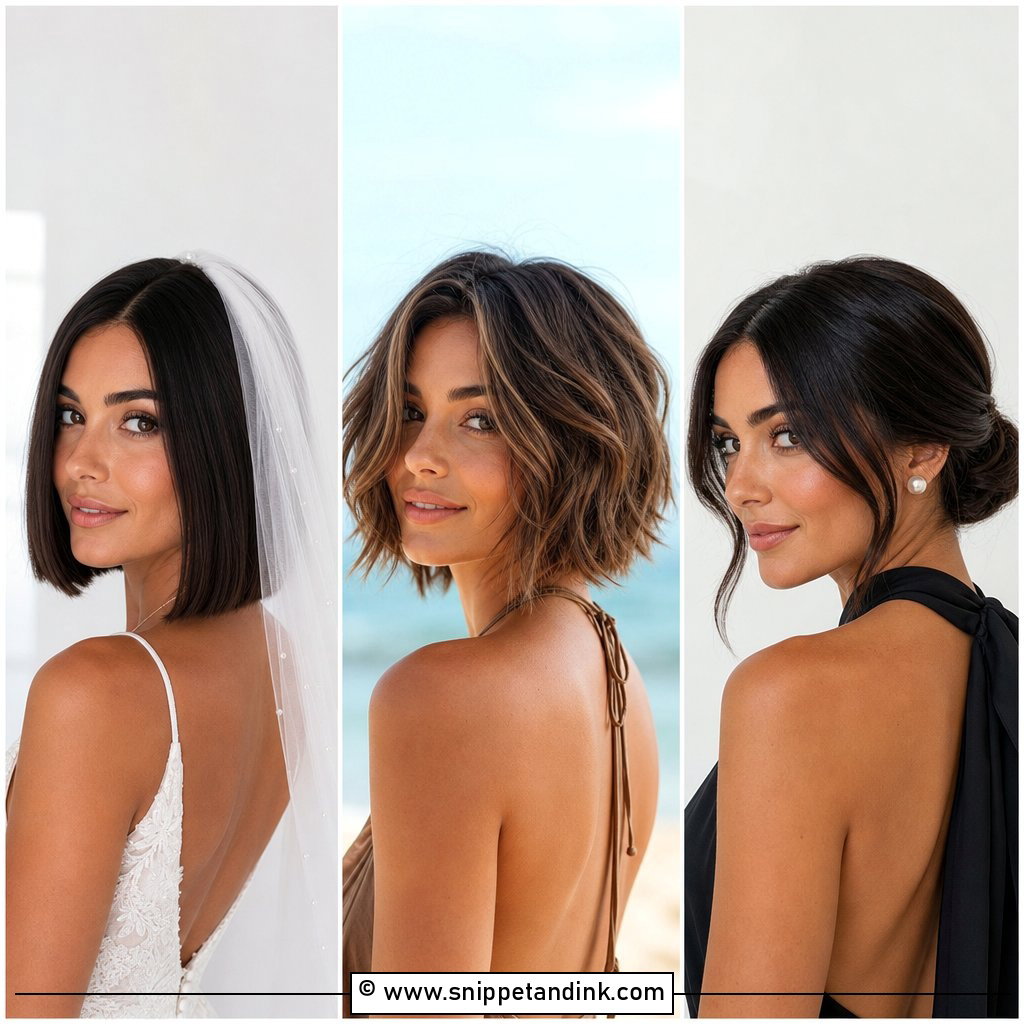
I start this one by putting a little texture spray through dry hair, because a freshly washed bob slides straight out of a loose knot. Gather everything at the nape, twist it into a soft knot and pin it in a crisscross so the grips lock each other. A few pieces pulled free around the face keep it from looking like a gym bun. It sits comfortably under a garden-party veil, and a pearl pin or a sprig of baby’s breath covers the spot where the ends meet. If your layers are shorter than about chin length at the back, expect a few to drop by the evening; I leave those as part of the look rather than fighting them.
2. Classic Chignon for Short Hair
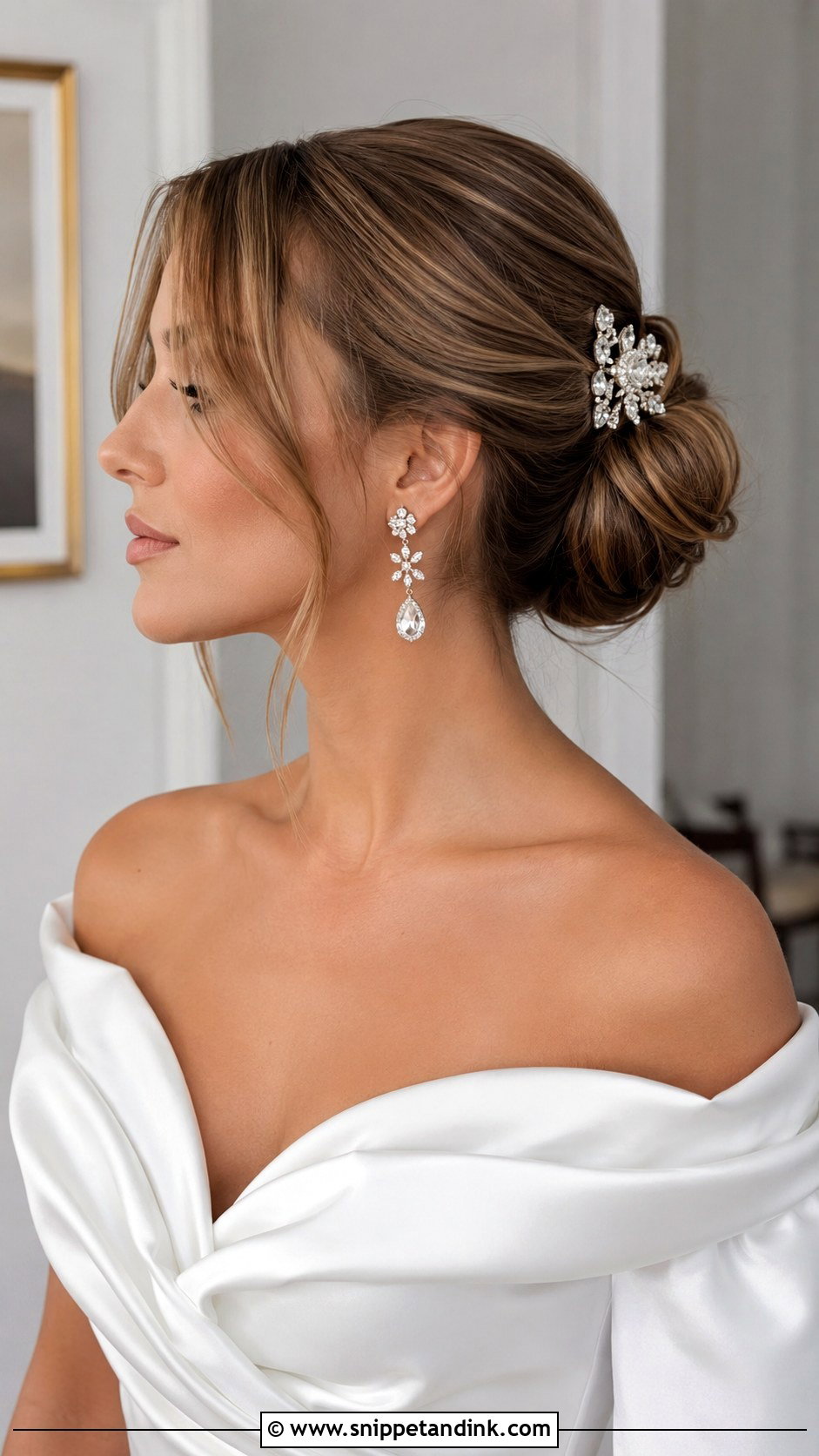
A chignon on short hair is really a roll, not a coil. I backcomb the root at the nape lightly so the pins have something to bite into, then turn the ends inward and pin along the seam rather than through the middle. Done that way it stays smooth from every angle. It suits a structured gown and a strong earring, and a jeweled clip placed over the seam hides the one spot where short ends like to peek out.
3. Braided Updo for Short Hair
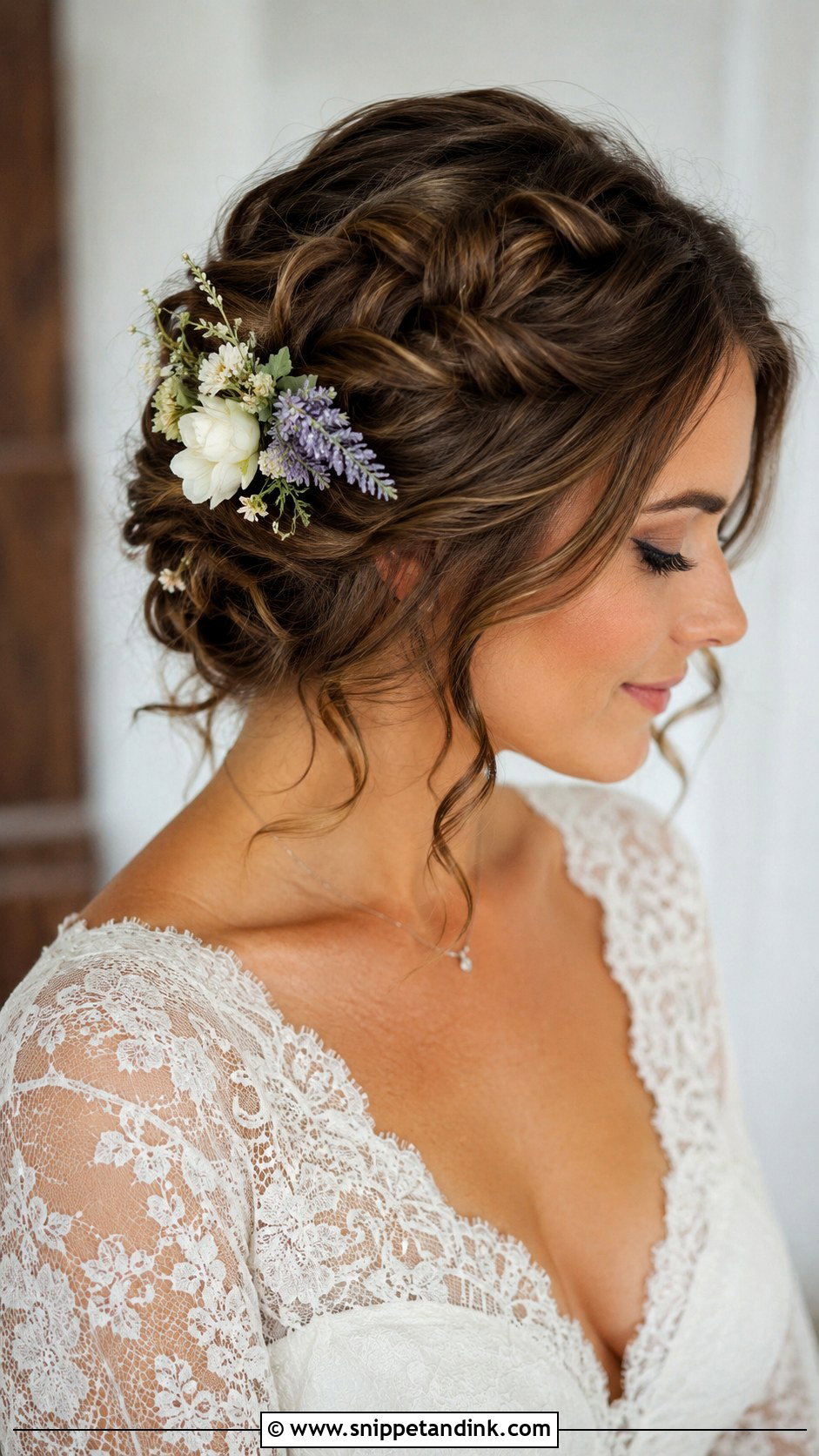
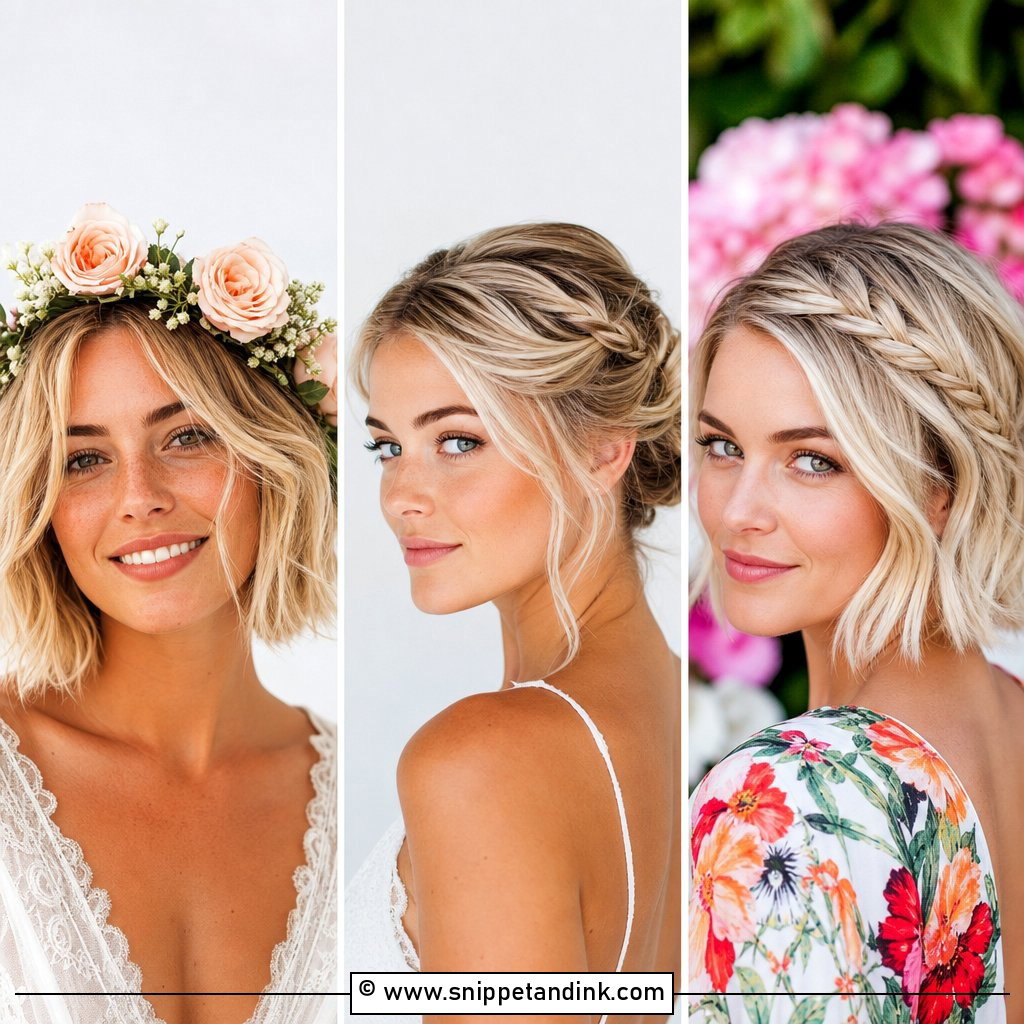
Braiding short hair is mostly about keeping the braid tight to the scalp, because a loose braid on short lengths has nowhere to hide its ends. I’ll usually run one braid along the crown and tuck the tail under the back section, or work two or three small braids into a low knot. Hair just past the chin is enough if the layers aren’t too choppy. Flowers slip easily into the woven gaps, which makes this a good fit for rustic and outdoor weddings. Heavily layered cuts are the exception; the short pieces pop out of every turn of the braid.
4. Twist and Roll Updo
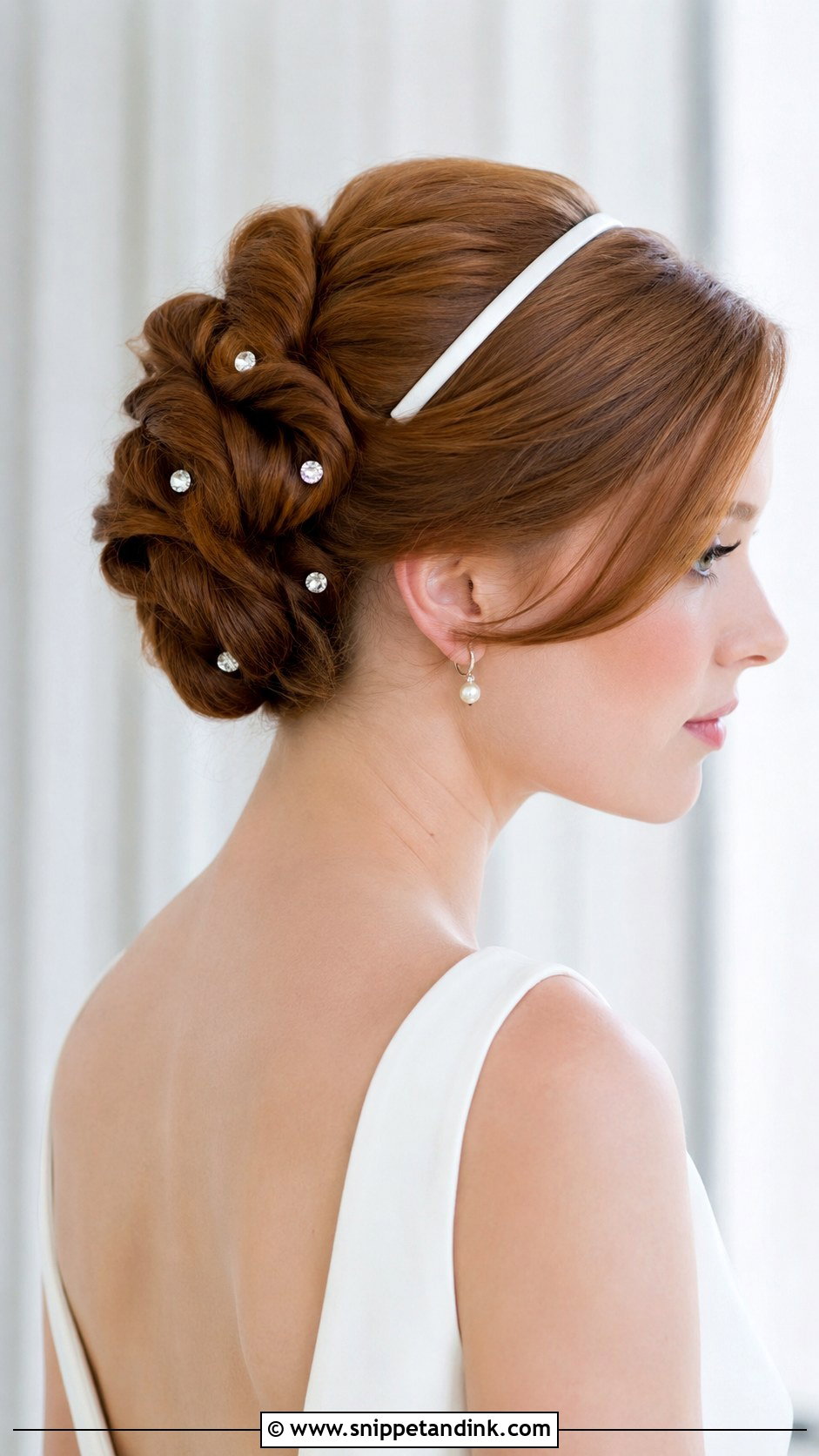
Twist and roll is my go-to for a blunt bob. I take the hair in three or four sections, twist each one away from the face and roll it toward the scalp before pinning, so the result looks sculpted without being stiff. Blunt ends hold a roll far better than feathered ends do. A thin white headband or a line of tiny crystal pins along one twist gives it a finish. It suits modern and classic weddings equally, and the twists hold their shape through a full day of hugging.
5. Dutch Braid Updo
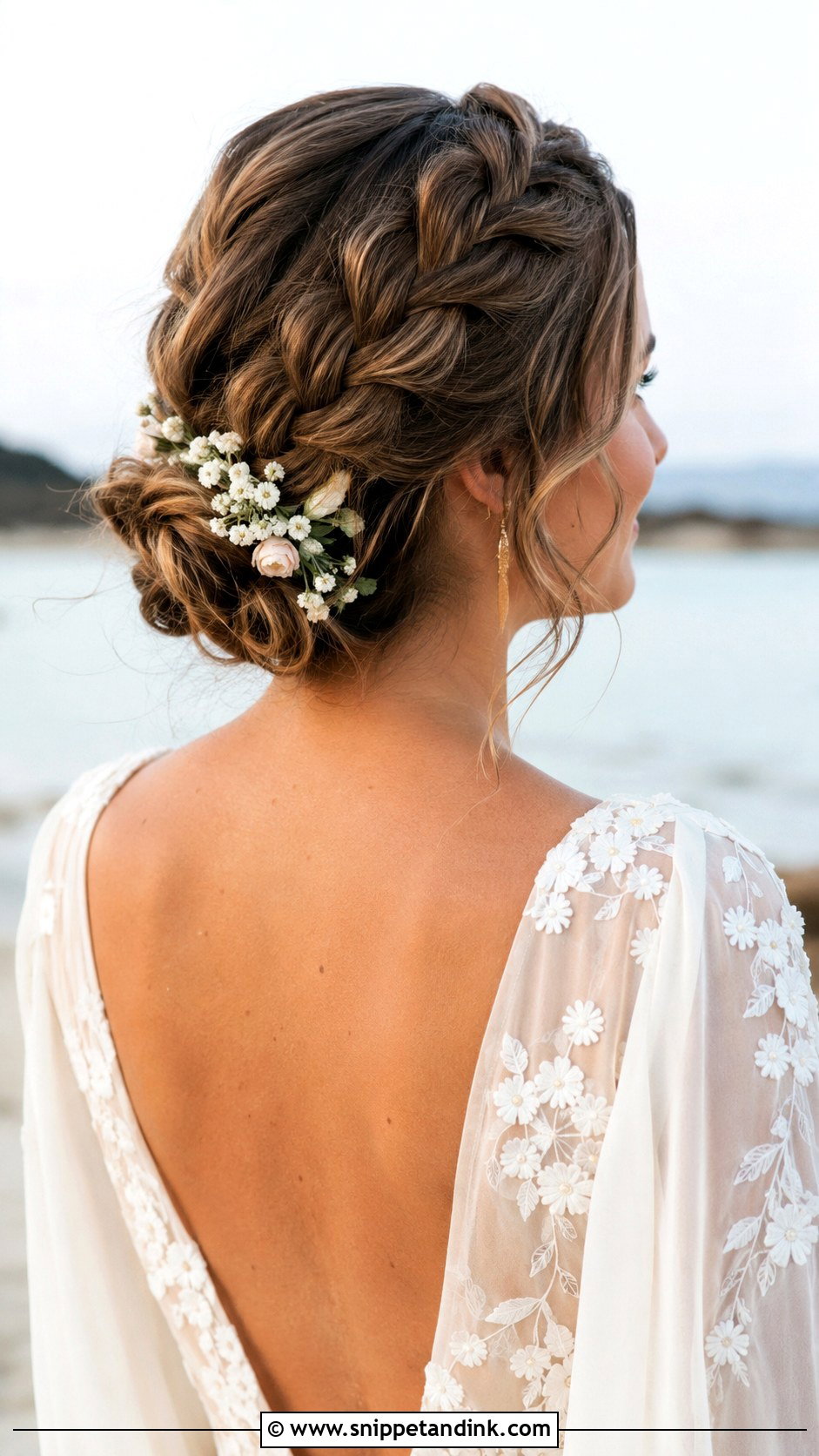
Dutch braids are worked under rather than over, so the braid sits raised on the scalp instead of flat. On short hair that matters, because the raised braid gives the style its volume when there isn’t much length to work with. I section cleanly, braid close to the head, then wrap the end into a low bun and pin it under itself. It survives hours of dancing better than most loose styles. Tuck small flowers or pearl pins between the plaits, and ask your stylist to go a touch tighter than feels necessary, because braids relax as the day goes on.
6. Pixie Cut Updo With Twists
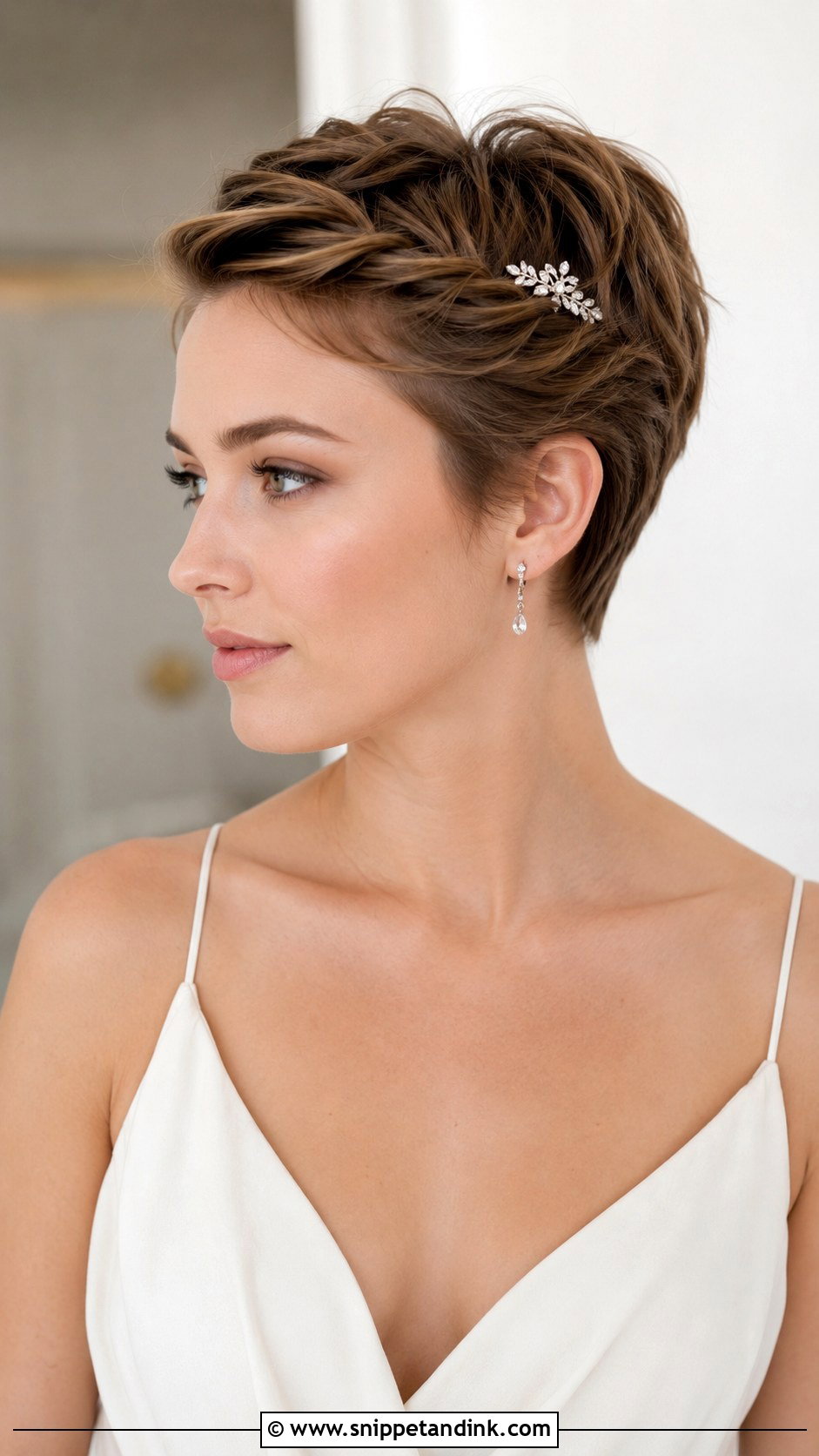
Think a pixie is too short for an updo? It isn’t, but it does need a plan. I twist the front sections back in small ropes and pin them flat at the crown, which turns a cropped cut into something that reads as styled rather than just neat. The twists add movement to short layers. A sparkly clip or a fine headband sitting just behind the twists finishes it. On very fine pixies I use small, matte grips, because shiny pins show through thin hair in every flash photo.
7. Half-Up Half-Down Short Hair
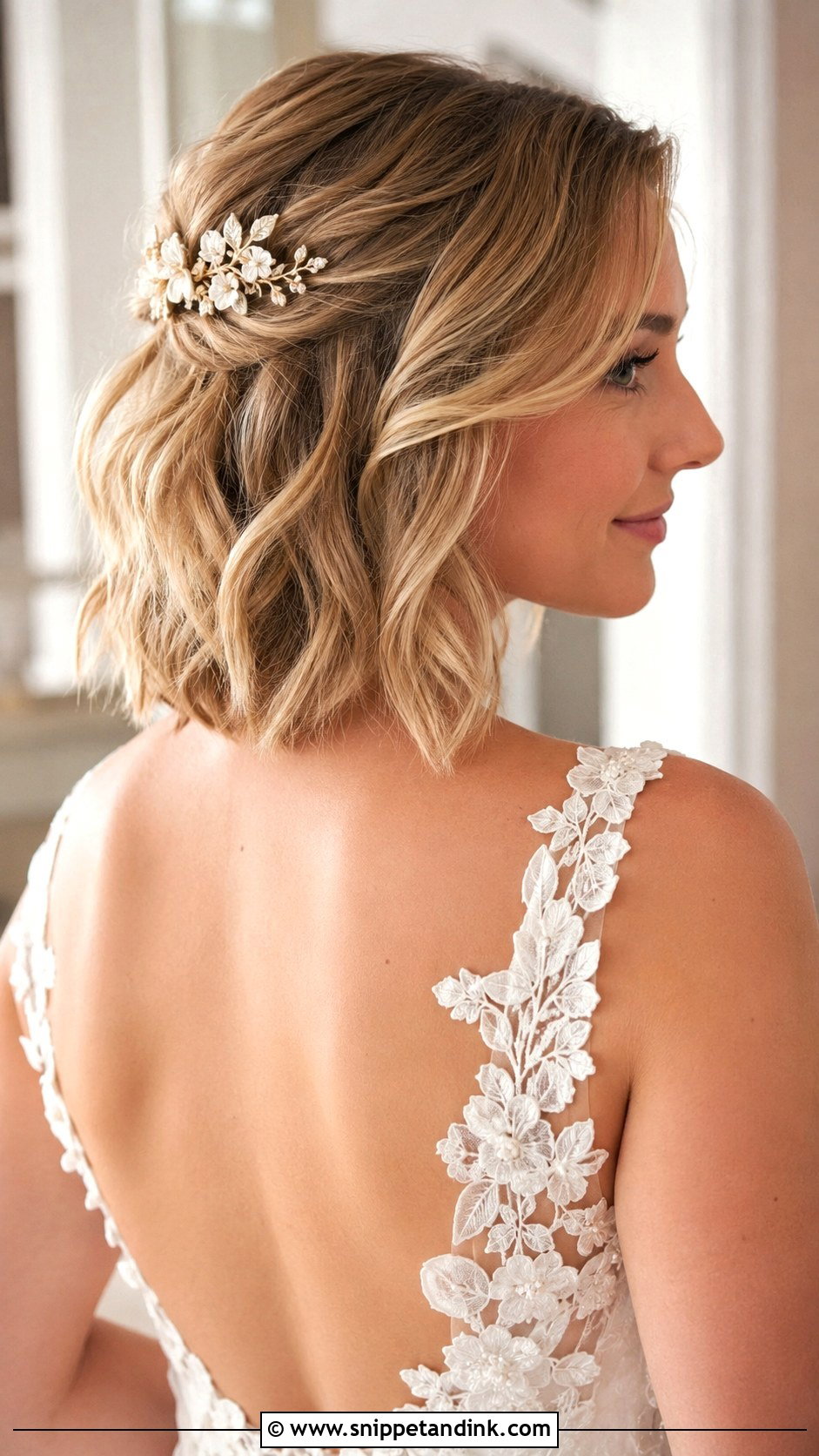
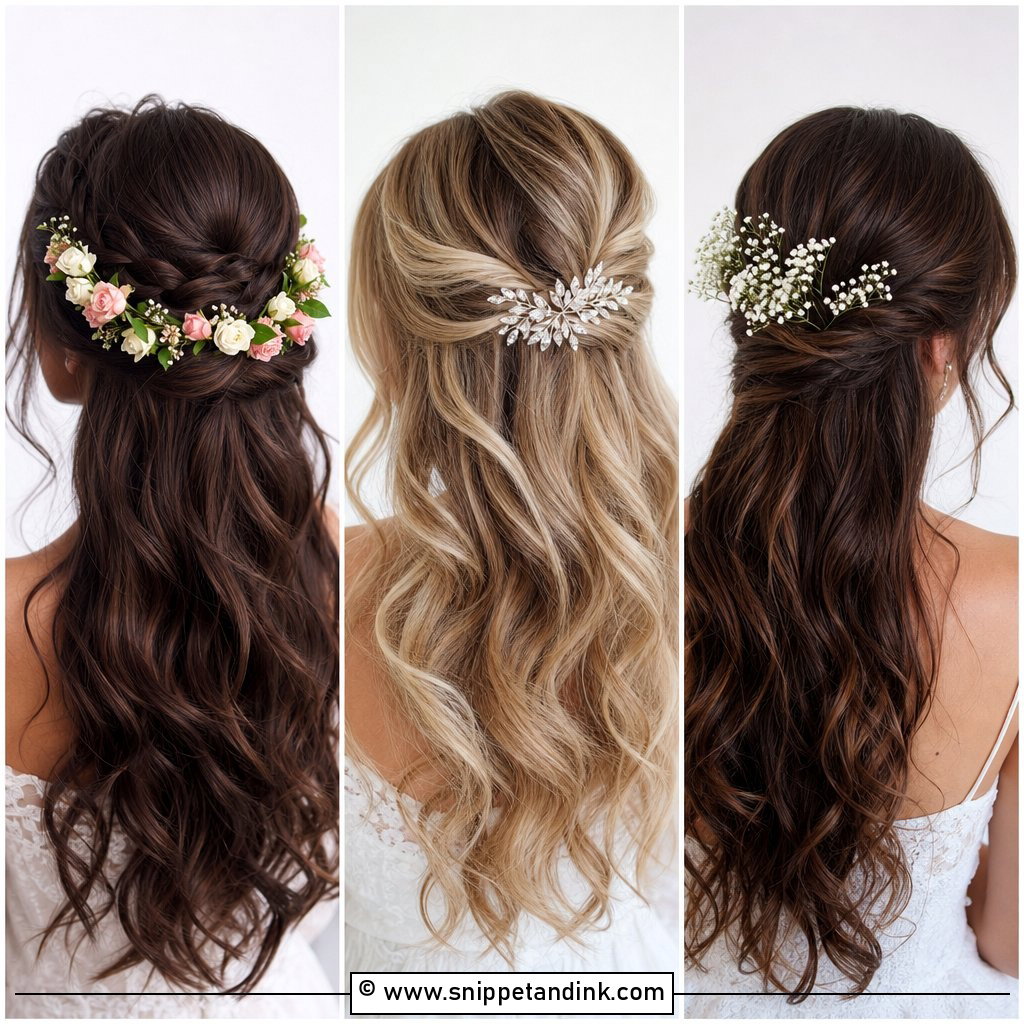
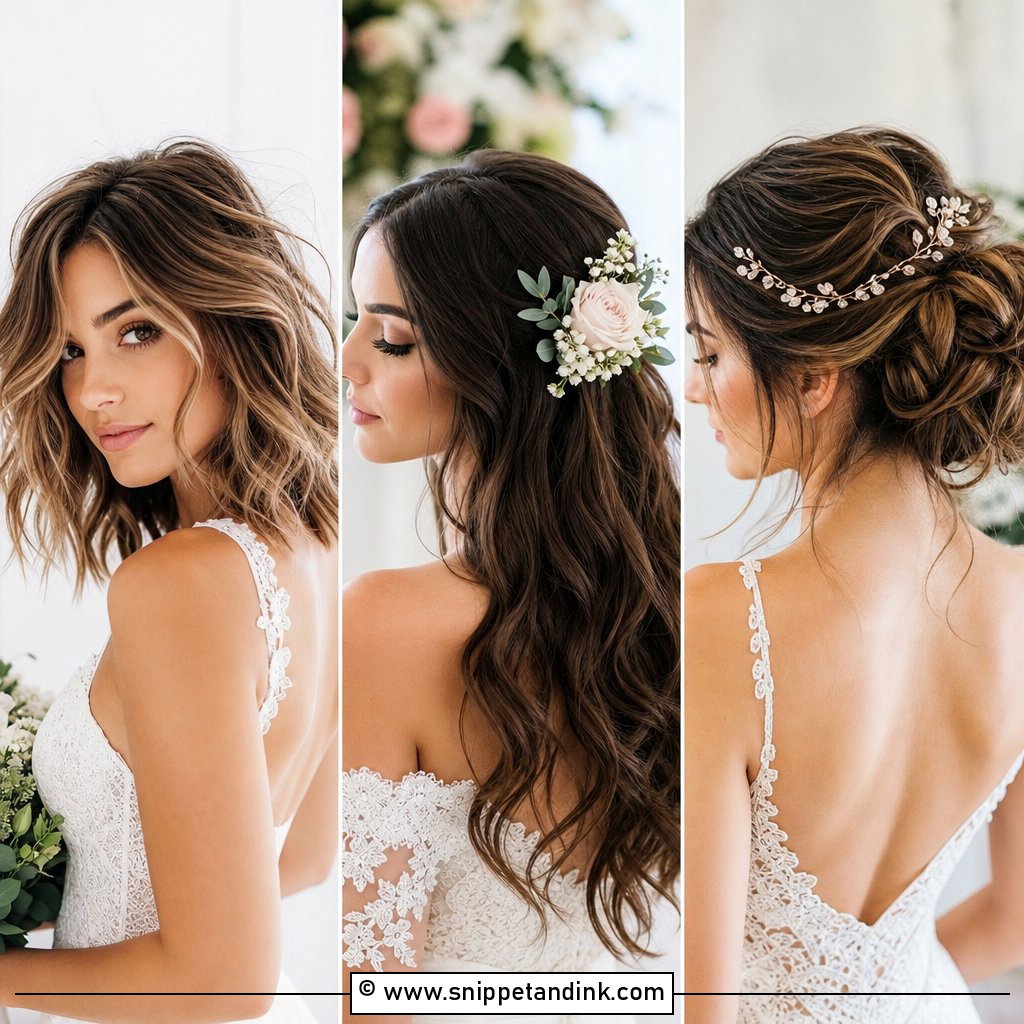
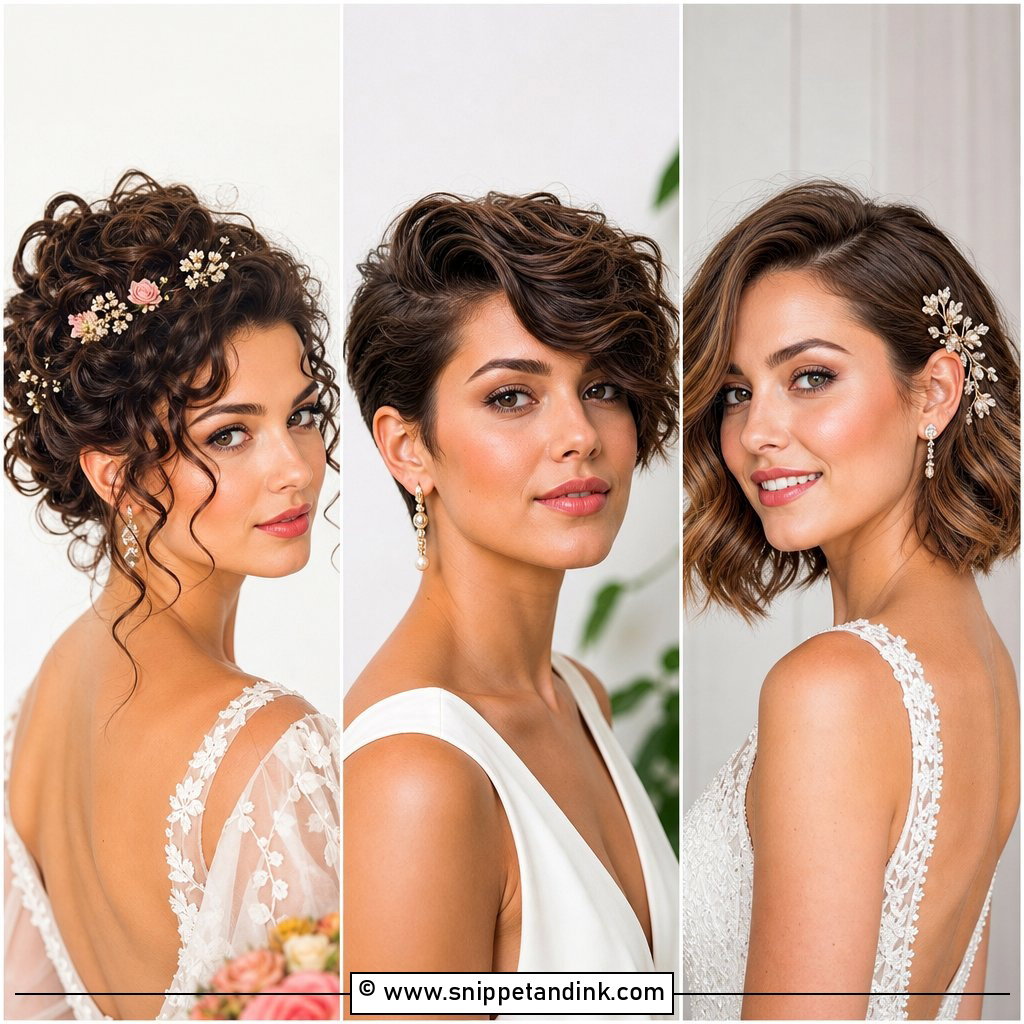
Half-up is the style I suggest when a bride isn’t sure she wants her ears and neck fully on show. I secure the top section with pins or a clip and leave the rest in soft waves. On short lengths I curl the bottom section with a larger barrel than you’d expect, because tight curls on a bob shrink up and the hair can end up looking shorter than it is. It keeps hair off the face while showing your natural texture, and a floral pin or jeweled barrette sits neatly where the top section is anchored.
8. Slicked-Back Bun for Short Hair
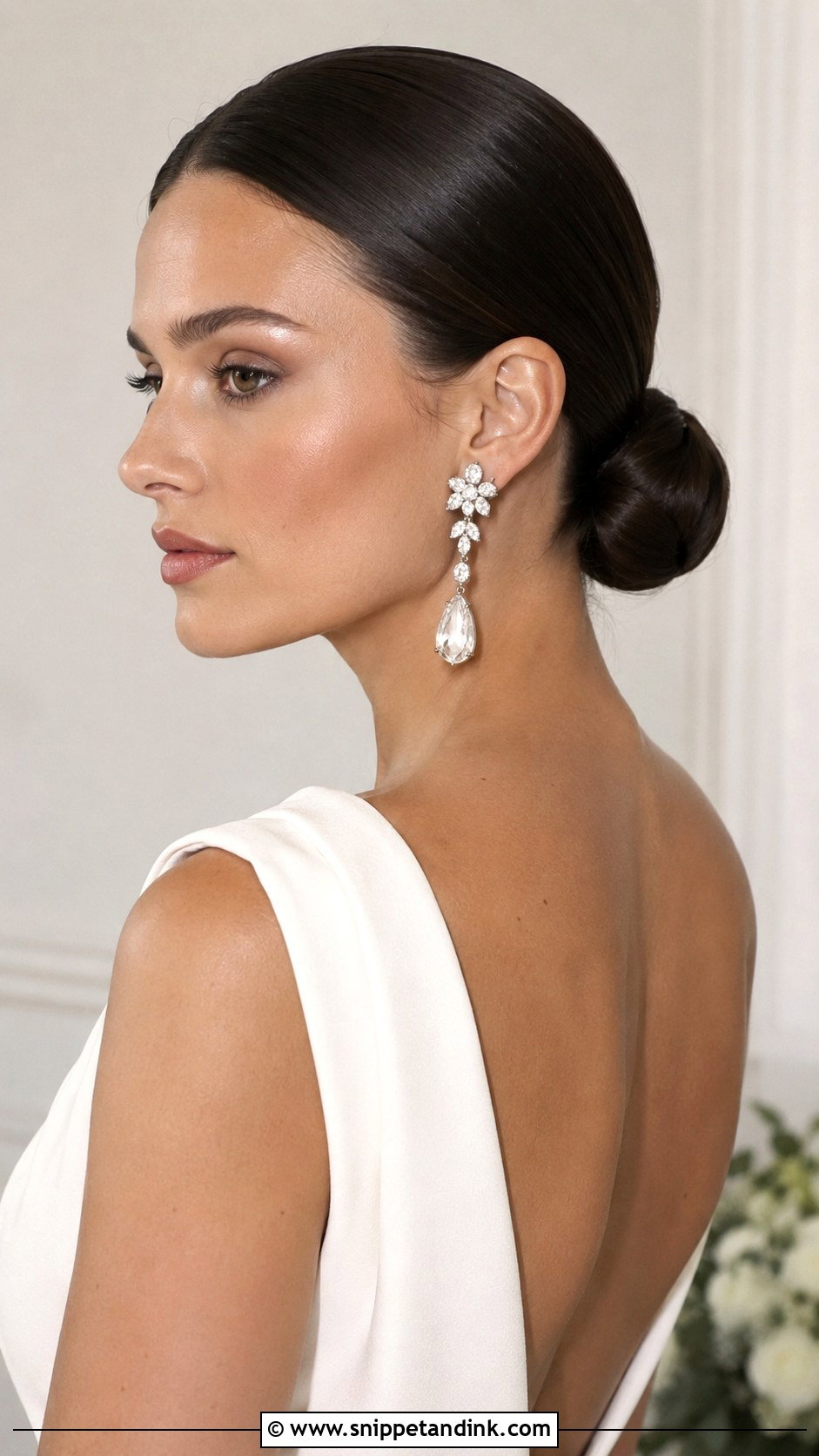
This one depends almost entirely on product. I smooth a styling cream through damp hair first, then a firmer gel only on the hairline, and brush it back with a fine bristle brush before gathering a tight low bun at the nape. If the hair is too dry when you add gel, it flakes by the speeches. The finish is editorial and clean, and it lets a statement earring or a minimalist gown do the talking. A light shine spray right before photos gives it that glassy look. I’d steer you away from it if you’re self-conscious about your hairline, because nothing is softened or covered.
9. Curly Short Hair Updo
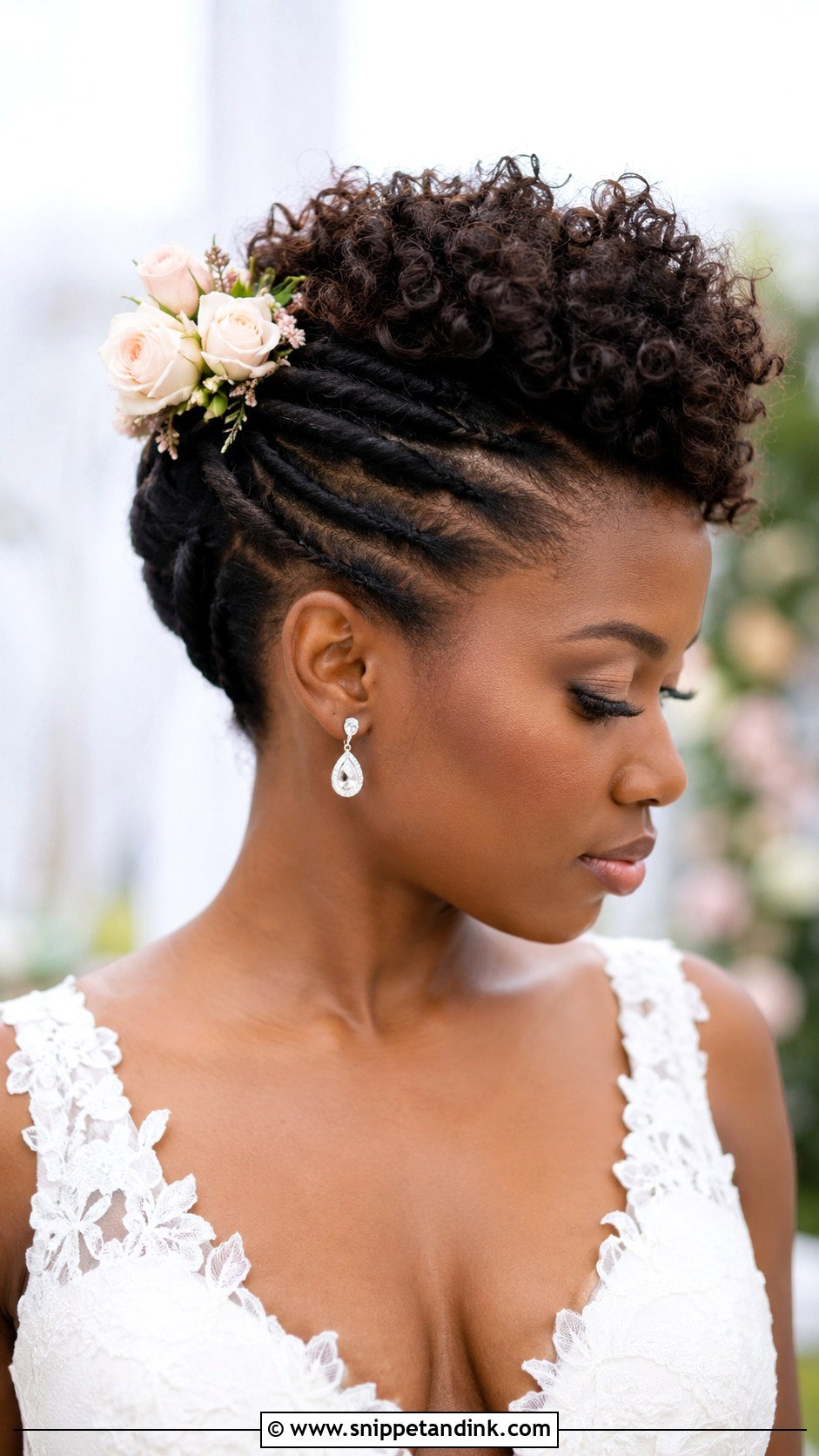
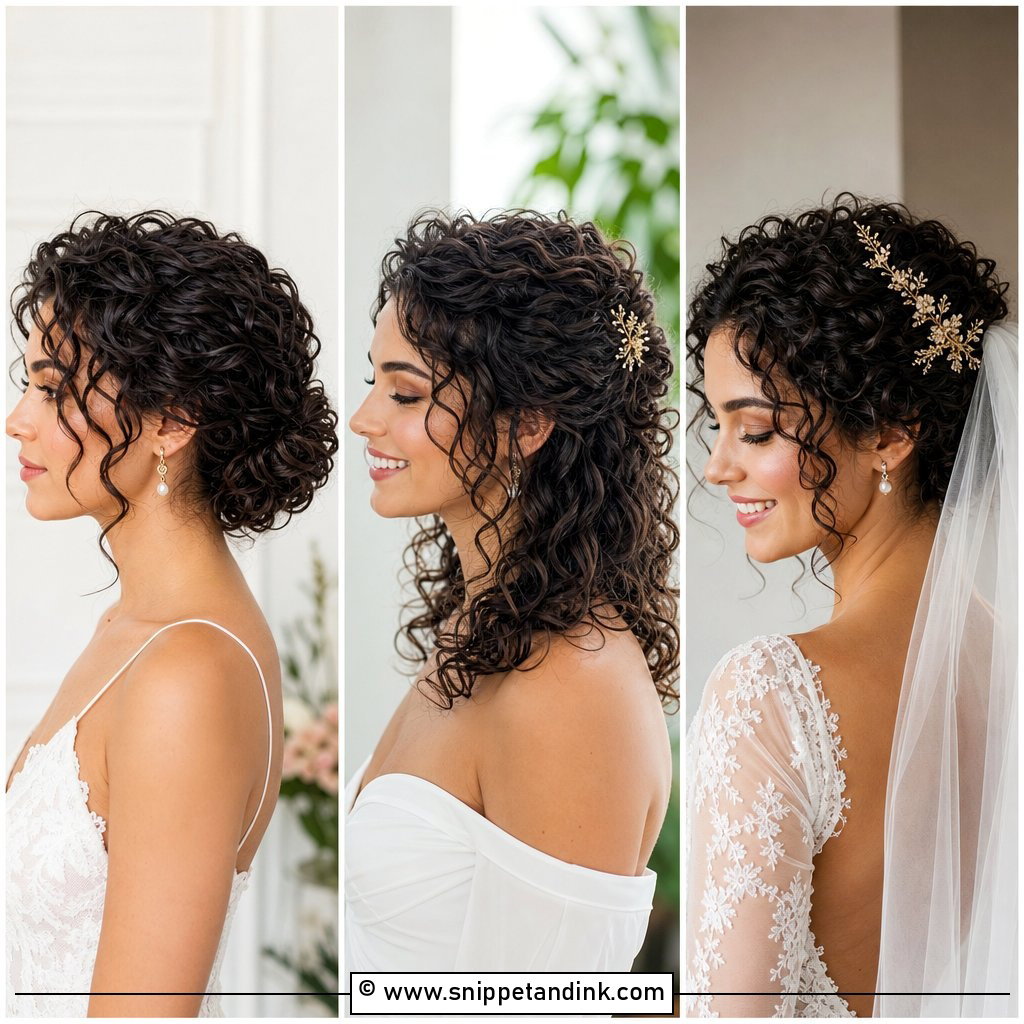
With short coily hair I work with the curl pattern, not against it. Flat twists pinned at the back keep the sides neat while the top stays free and full. I prep with a leave-in and a little oil so the twists stay defined, and I never brush curls out on the morning, which only invites frizz. Fresh flowers sit well in the curls because the texture grips the stems. The shape holds all day without much help, and your natural texture stays the centre of the look.
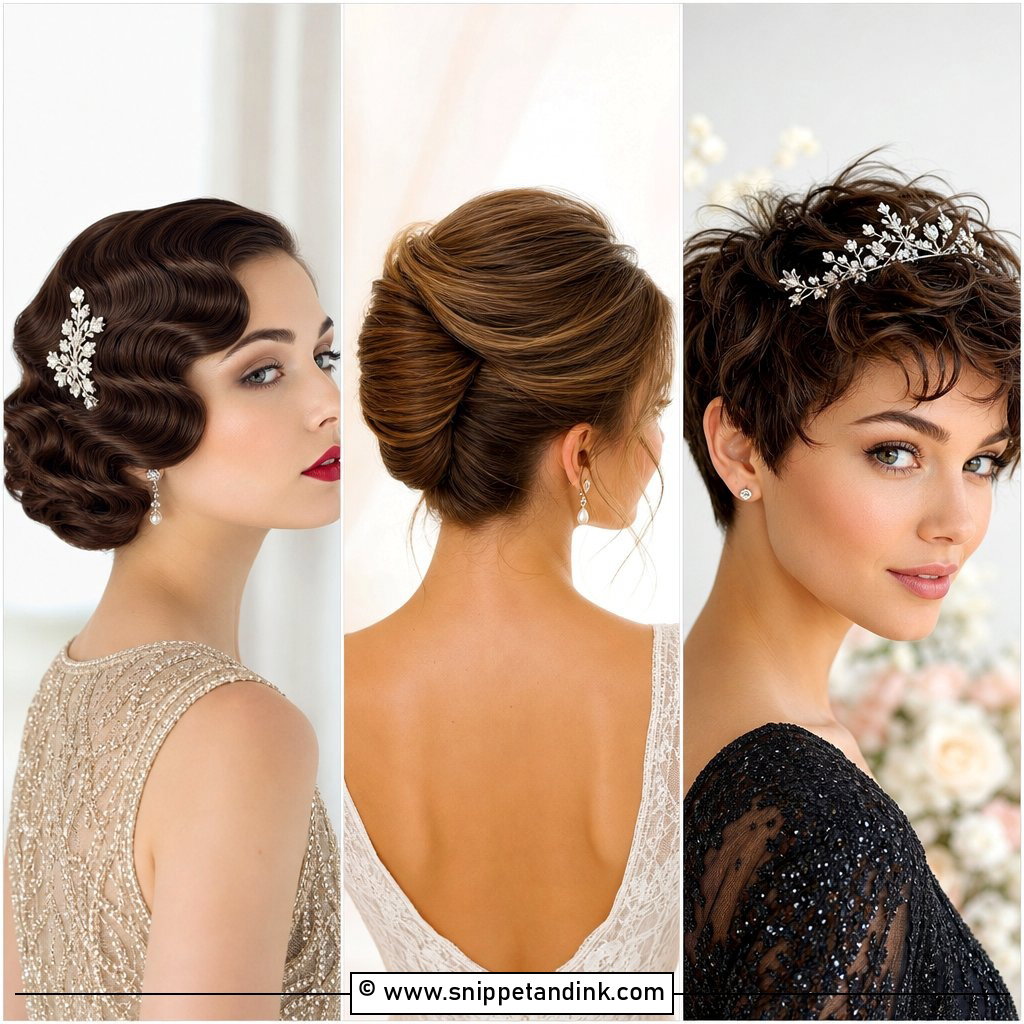
10. Vintage Finger Wave Updo
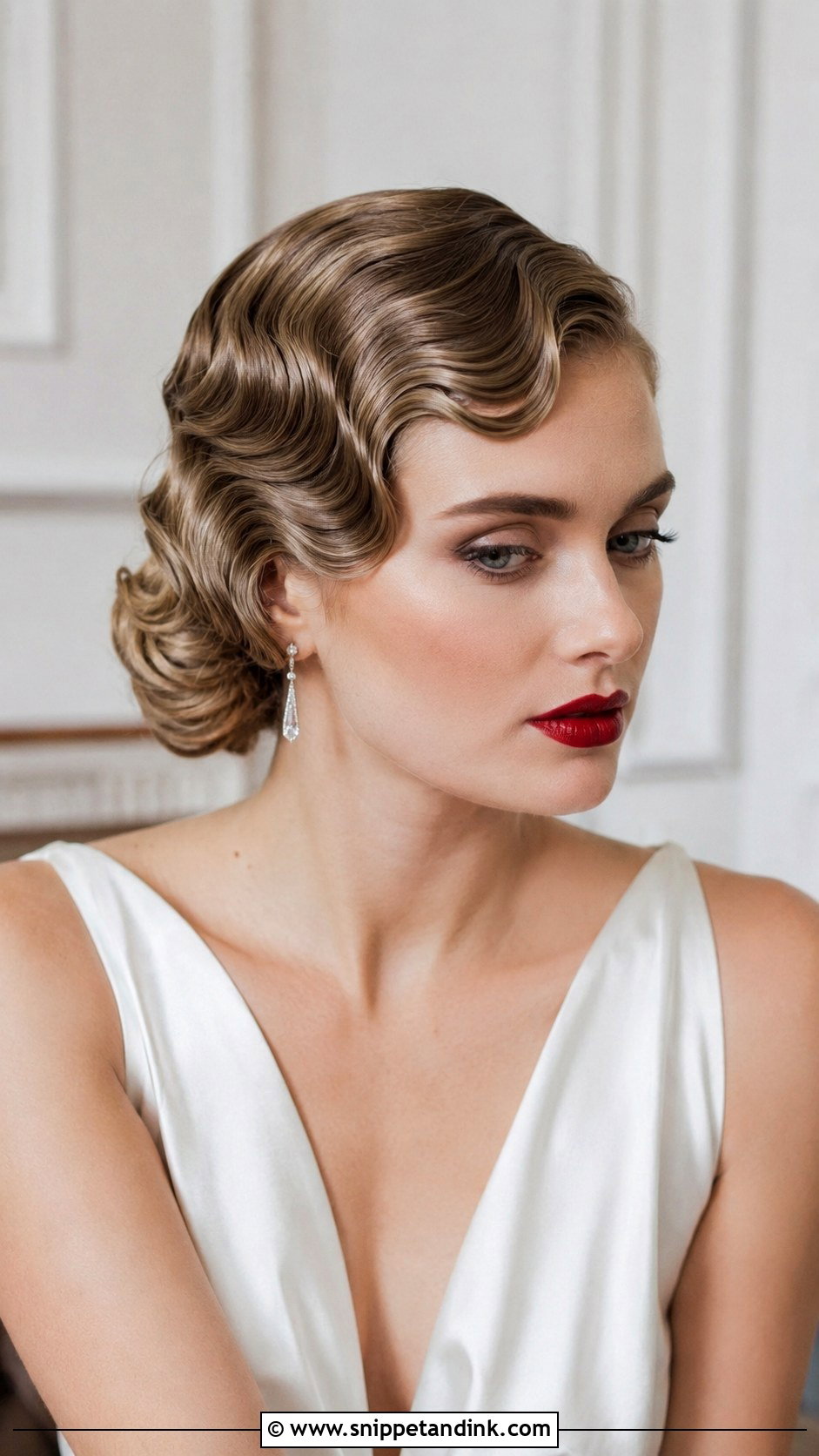
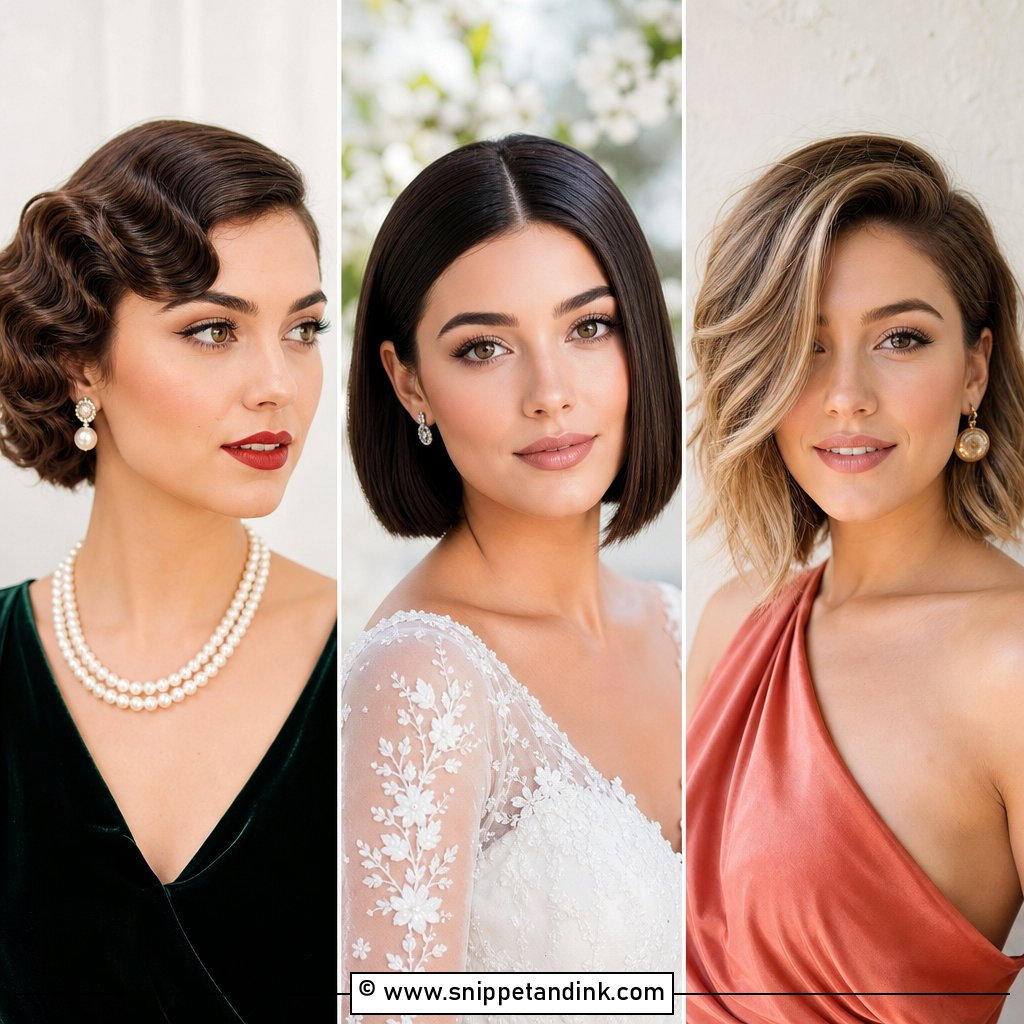
Finger waves are set, not curled. Channel old Hollywood with a vintage finger wave updo by pressing S-shaped ridges into wet, gelled hair with your fingers and a comb, clipping each ridge until it dries. That drying time is the part brides underestimate; it needs to be fully set before the clips come out or the waves collapse. The back is pinned into a soft roll. It pairs with a satin gown and a red lip, and the glossy ridges catch light nicely in photographs. Booking a trial for this one is not optional.
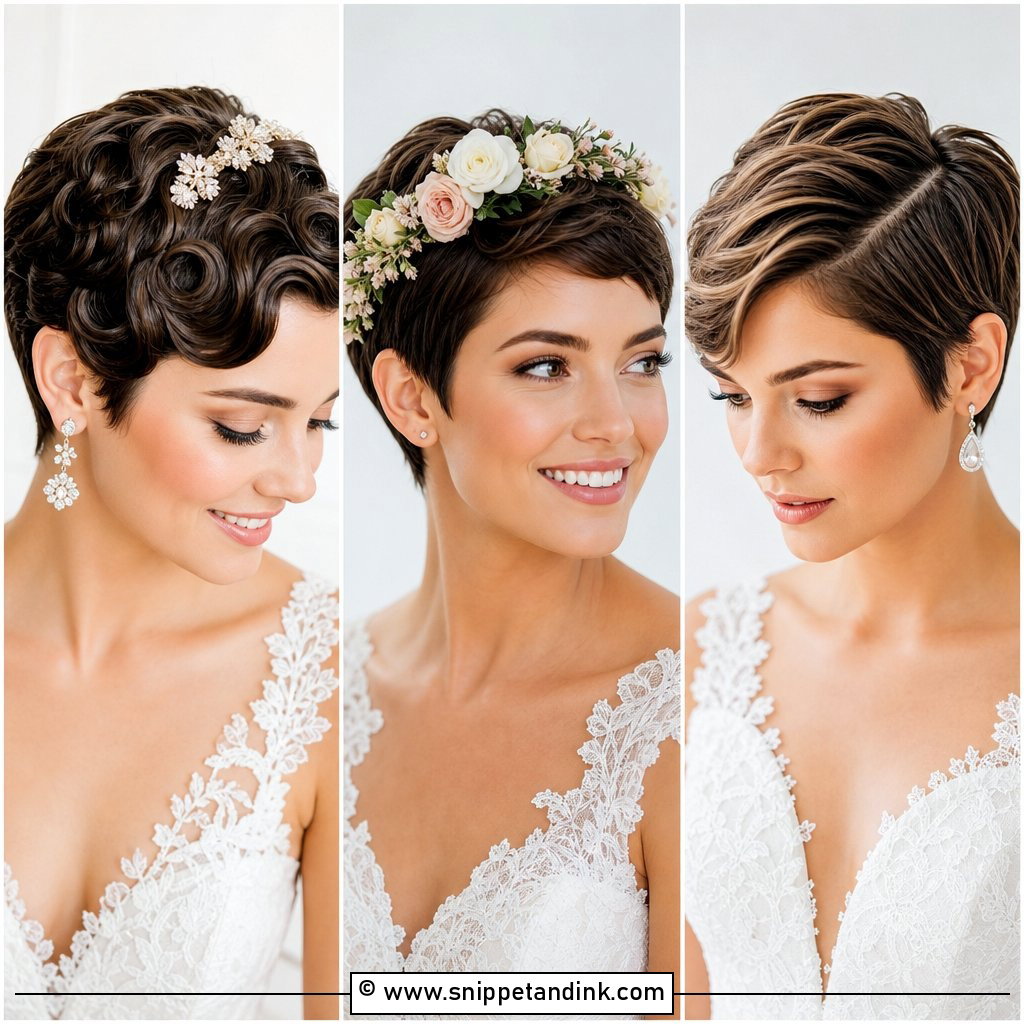
11. Floral Crown Updo for Short Hair
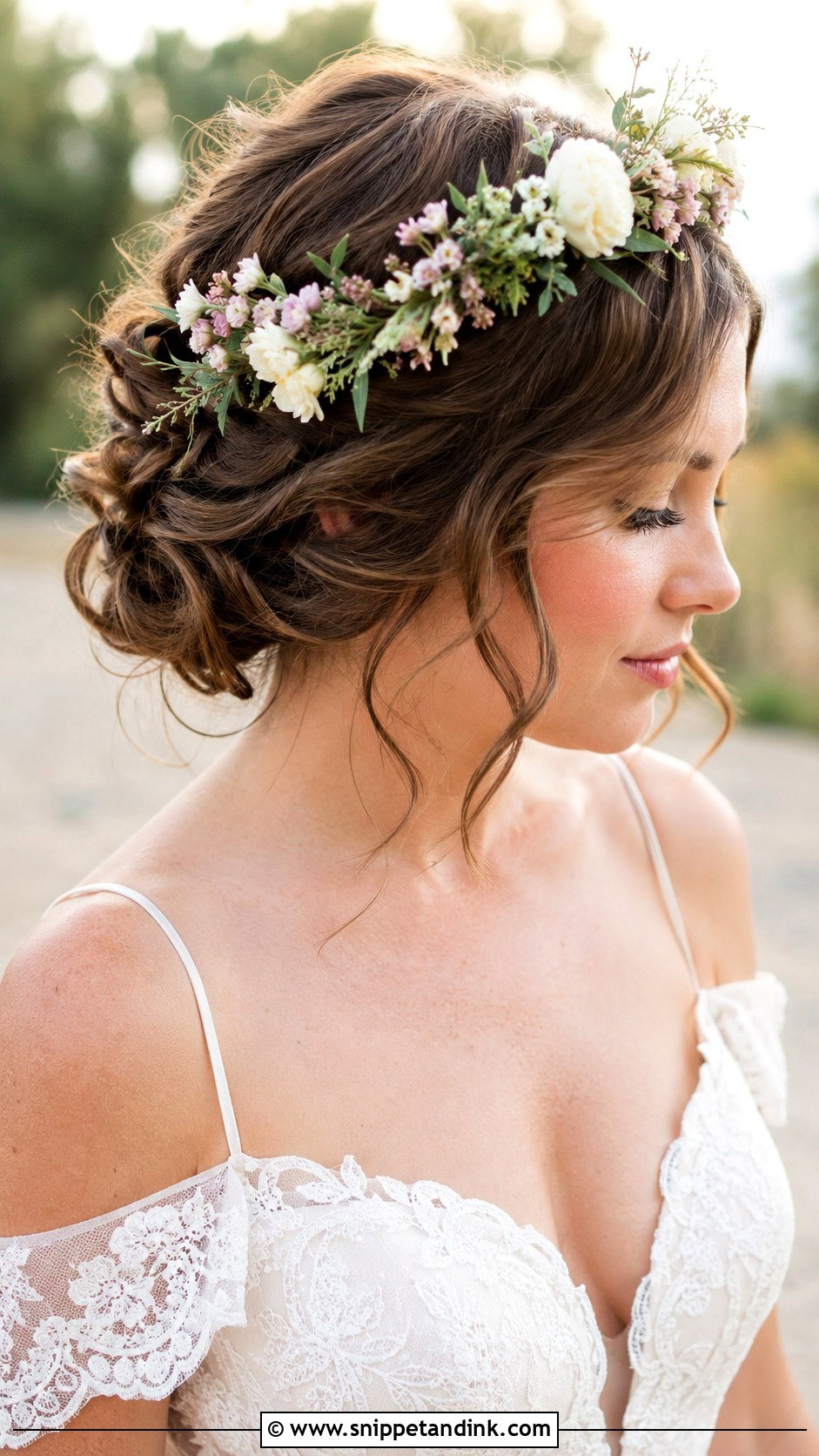
For a floral crown I pin the hair into a small bun or twist first and only then wrap the blooms around the crown, so the flowers sit on a stable base instead of being the only thing holding everything together. Ask your florist for hardy stems; spray roses and waxflower last far longer out of water than delicate garden blooms. Matching the crown to your bouquet ties the two together. It sits well on pixie, bob, and lob lengths, and with the flowers doing the work you rarely need any other accessory. It suits spring and summer best, because heat wilts the blooms by mid-afternoon.
12. Side-Swept Short Hair Updo
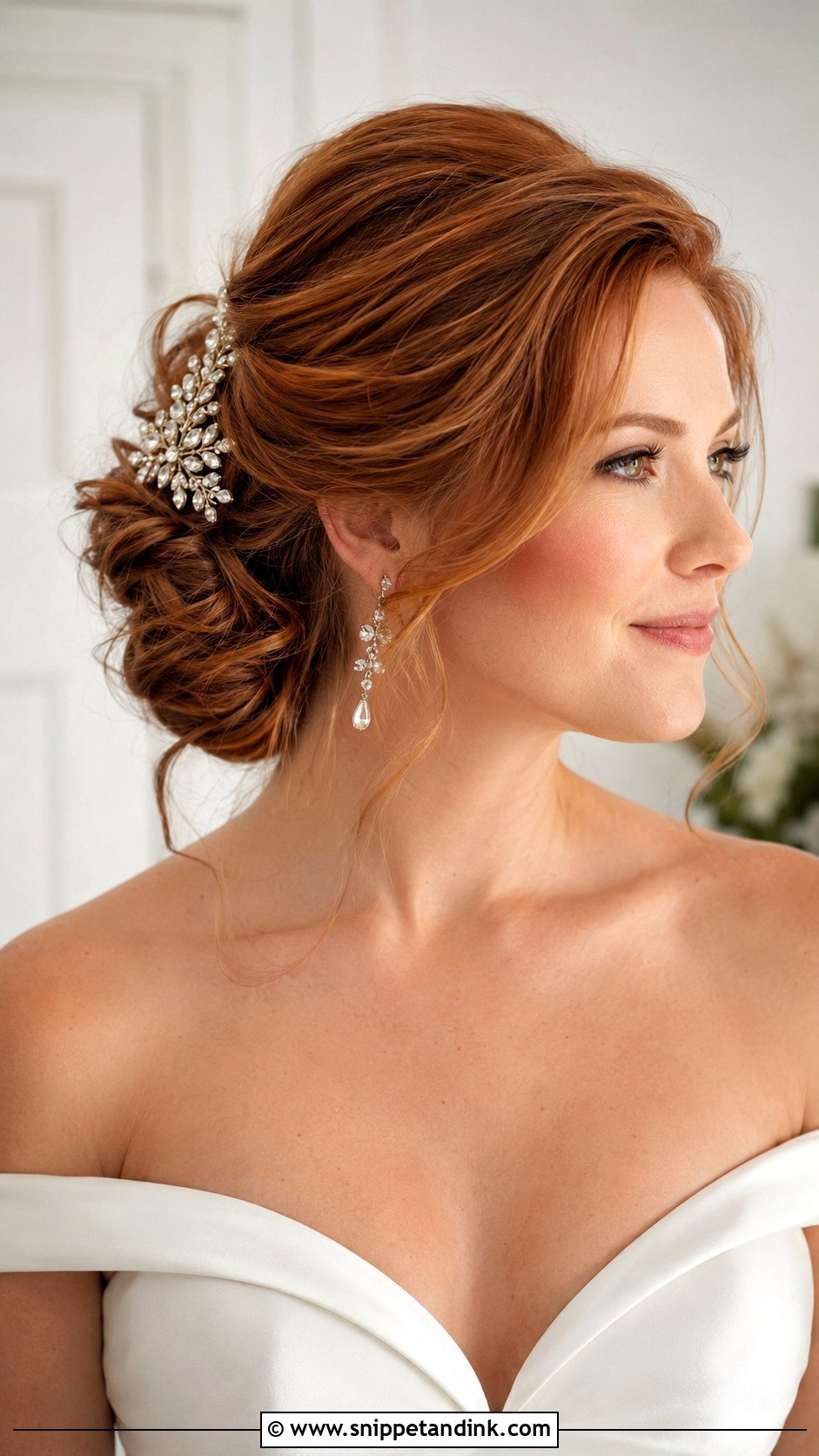
Side-swept styles are my answer for brides with a strong side parting they’ve worn for years. I sweep everything to one side and pin it into a low, loose arrangement behind the ear, anchoring with a pair of crossed grips under the bulk. Bob and shoulder-grazing lengths are ideal. A jeweled comb or floral pin on the swept side completes it. Pair it with an off-shoulder gown and wear your statement earring on the open side, because one on the swept side gets lost in the hair.
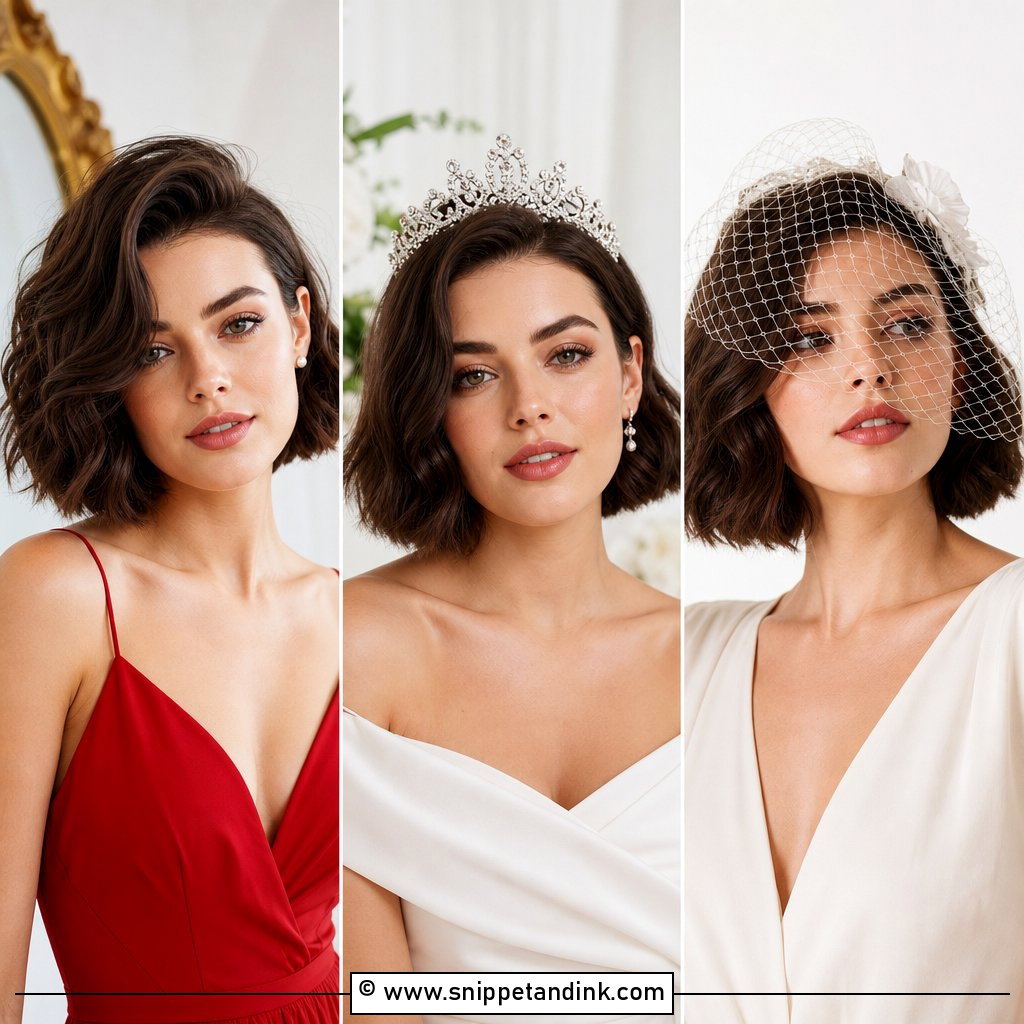
13. Textured Updo With Hairpiece
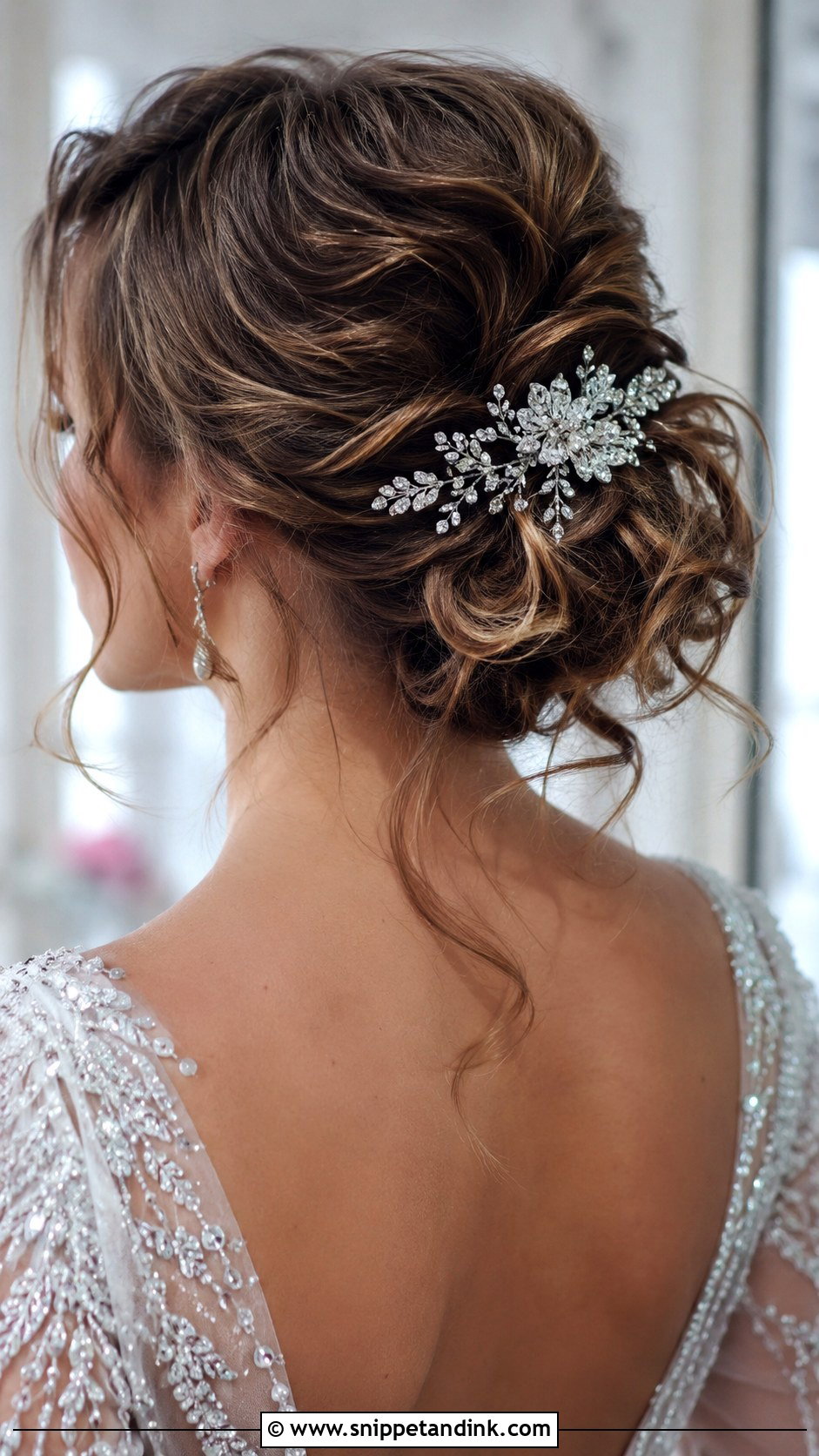
Here the hairpiece leads and the hair supports it. I curl the hair in loose waves, then pin it into an undone arrangement that gives the piece something soft to sit against. The trick is to place the comb or clip at the trial, not on the morning, so you know exactly where the weight sits and which grips sit beneath it. Heavy crystal combs need two crossed pins underneath or they slide down by evening. This suits evening and formal weddings, where a bit of sparkle earns its place.
14. Halo Braid Updo for Short Hair
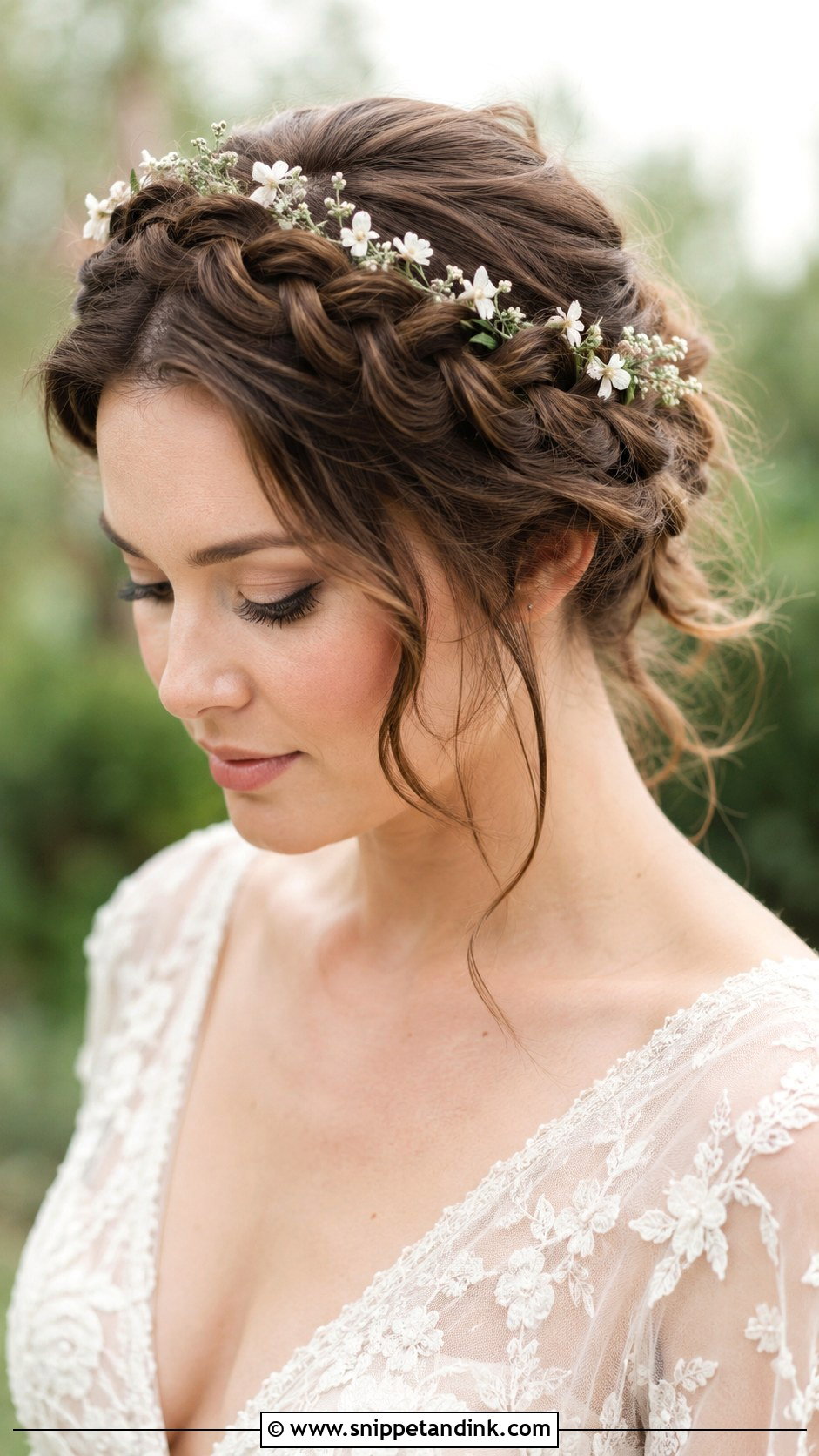
A halo braid on short hair rarely goes all the way around; I usually braid along the front hairline from ear to ear and pin the ends behind the ears, hidden under the back section. The braid then reads as a crown from the front, which is the view that matters in most photos. Tuck tiny flowers or pearl pins along it. It keeps hair off the face for outdoor and garden weddings and holds firmly through the day. You’ll need hair that reaches at least past the ears for the braid to reach round.
15. Sleek Bob Tucked Updo
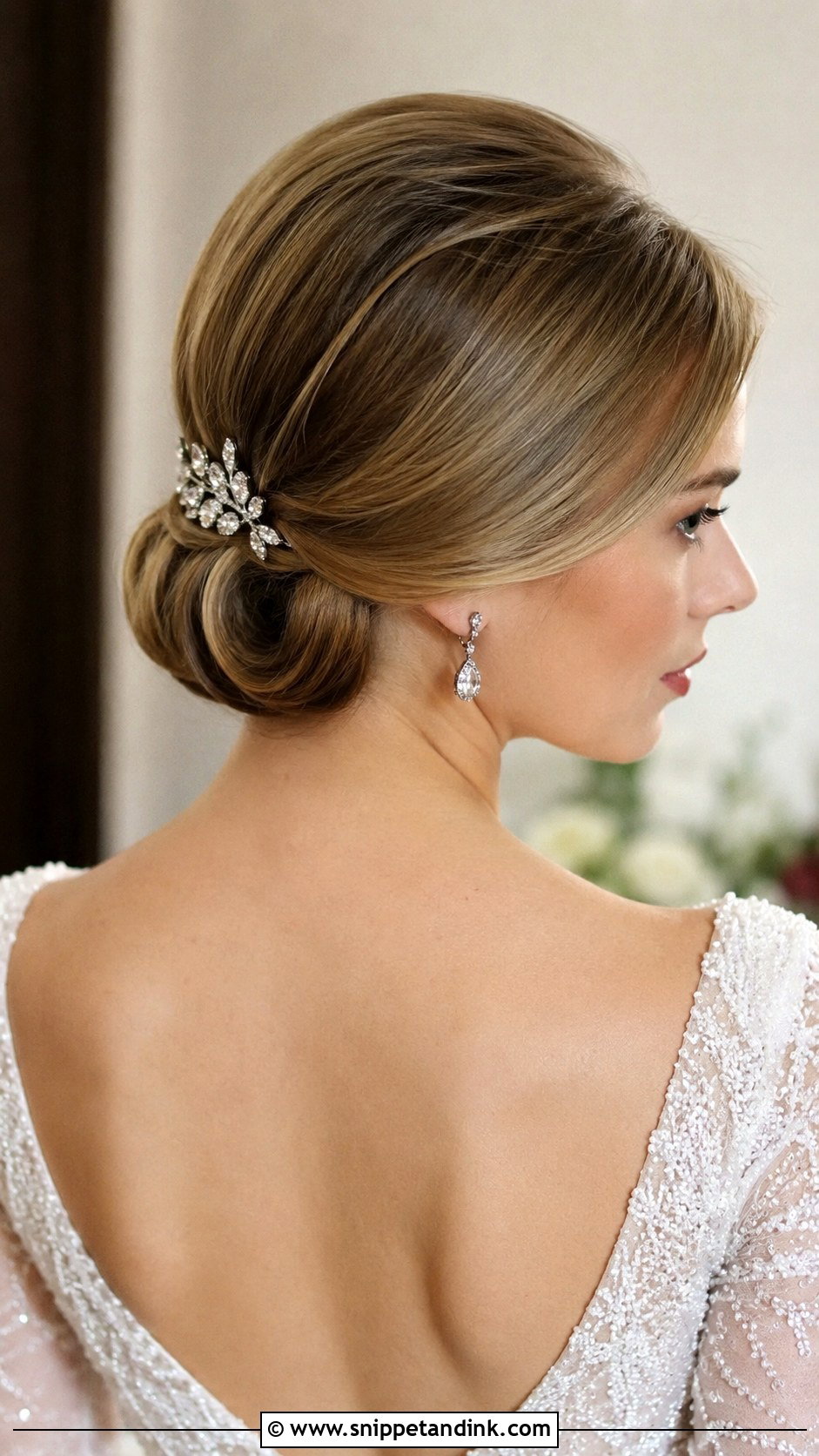
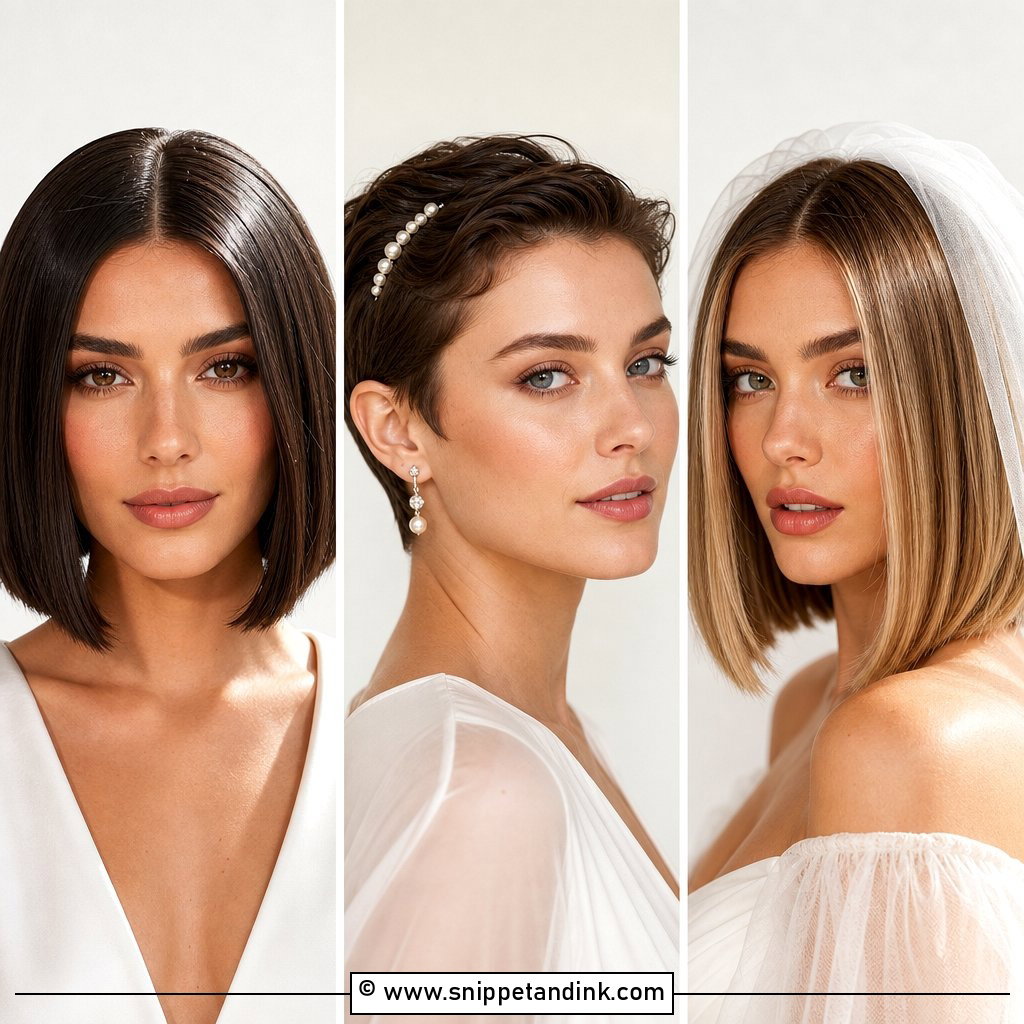
A tucked bob gives you the shape of an updo without needing the length. I roll the ends under and pin them flat against the nape, hiding the pins inside the roll so nothing shows. It works best on chin-length to shoulder-length cuts. Add a sparkly clip or a fine headband and it reads as finished. It’s the quickest style on this list, which makes it handy when the morning schedule is tight.
16. Loose Romantic Updo With Waves
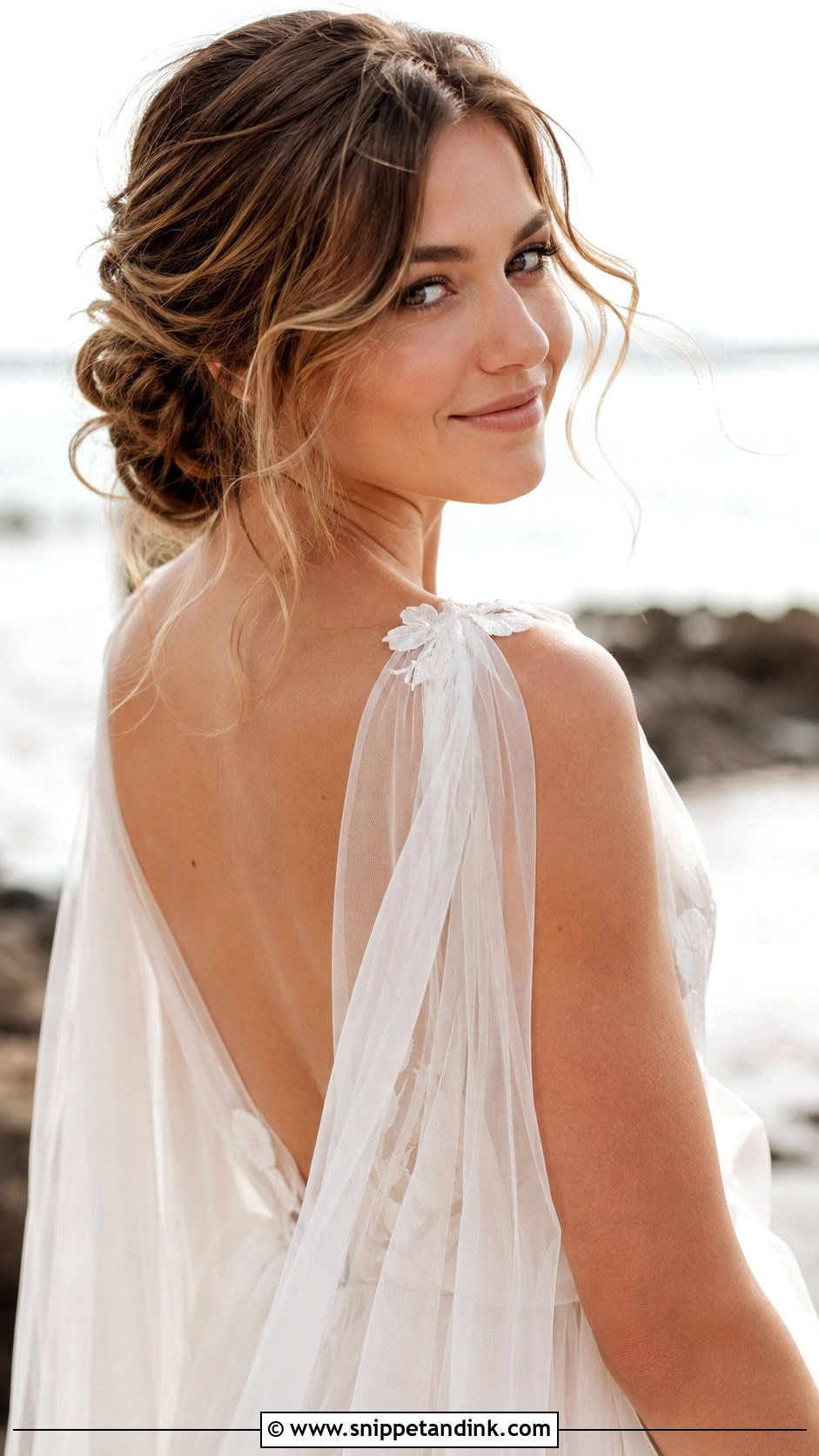
Loose updos look simple, but they rely on prep. I curl the hair first and let the curls cool fully before touching them, because a warm curl pinned straight away drops within the hour. Then I gather it into a relaxed low bun or twist and pull a few pieces out around the face. Delicate pins or flowers add a finish. It suits garden and beach weddings, though on a beach I’d go a little firmer, since wind and salt air flatten loose texture fast.
17. Knotted Updo for Short Hair
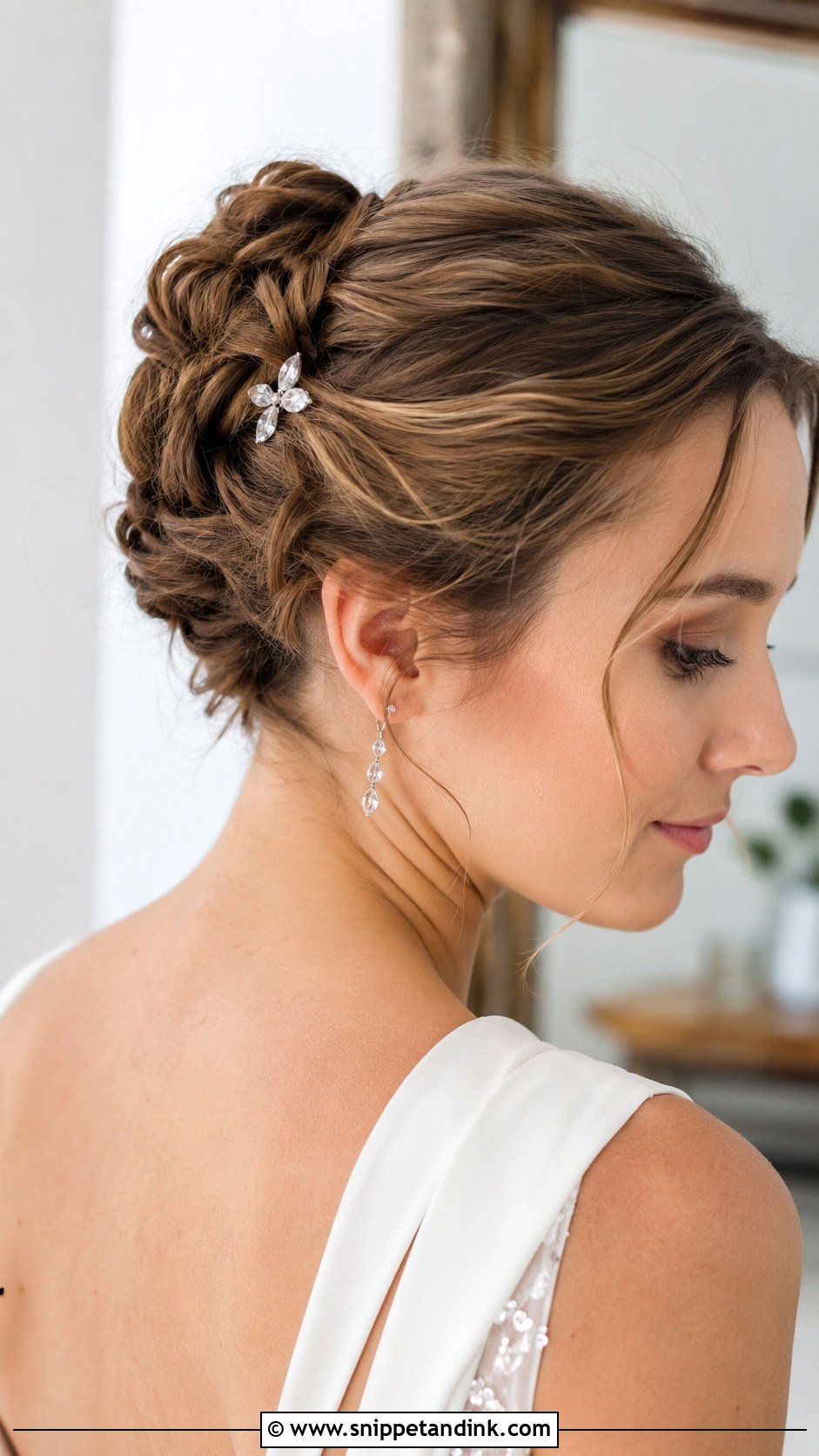
A knotted updo is made by tying small sections into actual knots and pinning them into a textured arrangement. Each knot locks itself, so it holds better than you’d expect on short hair. I’d suggest it for bob and lob lengths especially, because a pixie doesn’t leave enough hair to tie. A crystal pin or a small bloom placed between two knots finishes it. It’s for the bride who wants her hair to look a bit different from every other updo at the reception.
18. Accessorized Pixie Updo
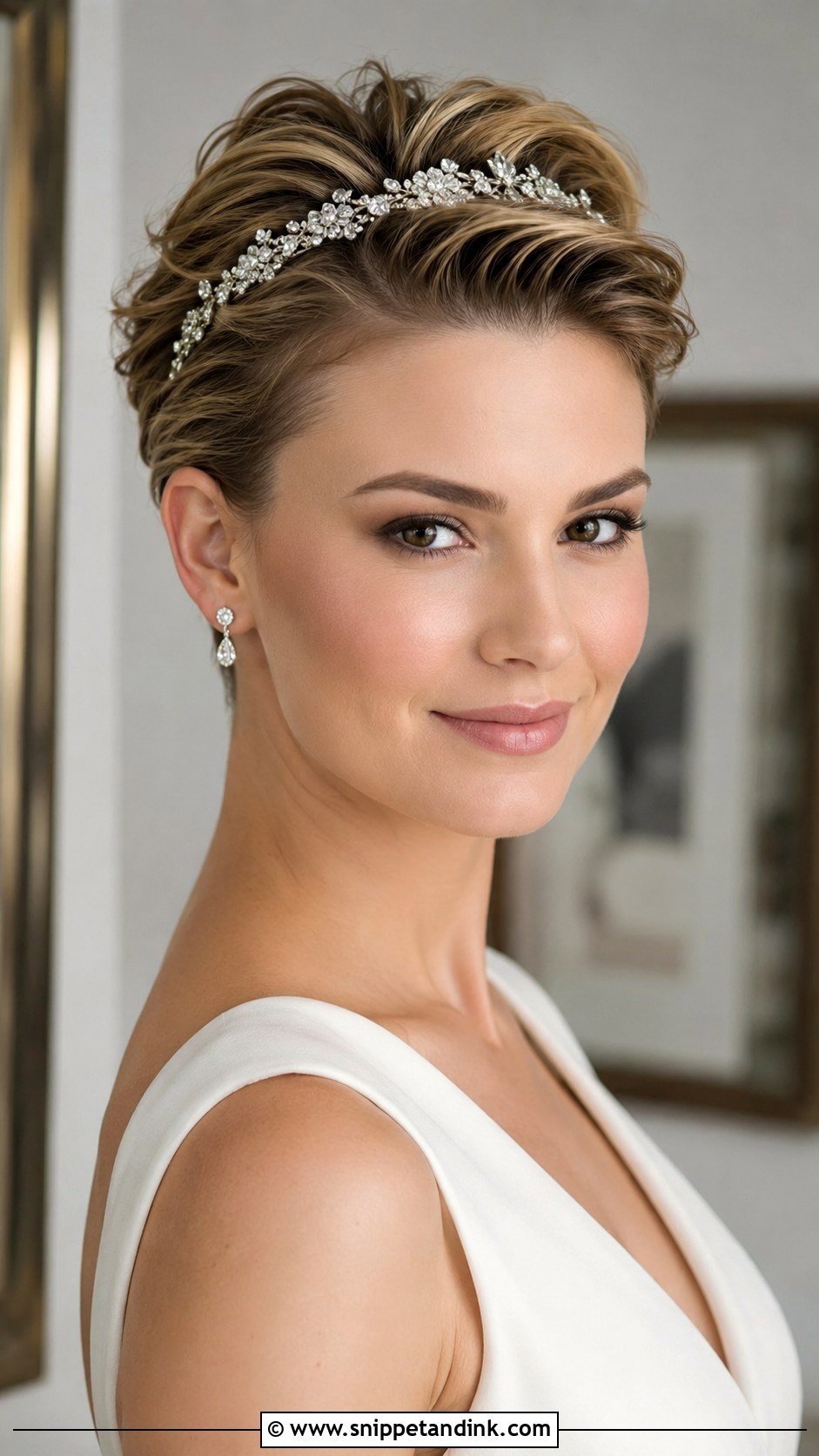
Sometimes the right accessory makes all the difference. An accessorized pixie updo turns a cropped cut into a bridal style with very little styling. I slick the sides back with a light cream and set a headband, jeweled clips or a small tiara where the crown has enough length to hide the band. Bring the accessory to your trial so we can check it doesn’t press behind the ears, which gets uncomfortable after a few hours. Match its metal and stones to your gown’s detailing, and a pixie looks every bit as bridal as long hair.
19. Low Twisted Bun With Tendrils
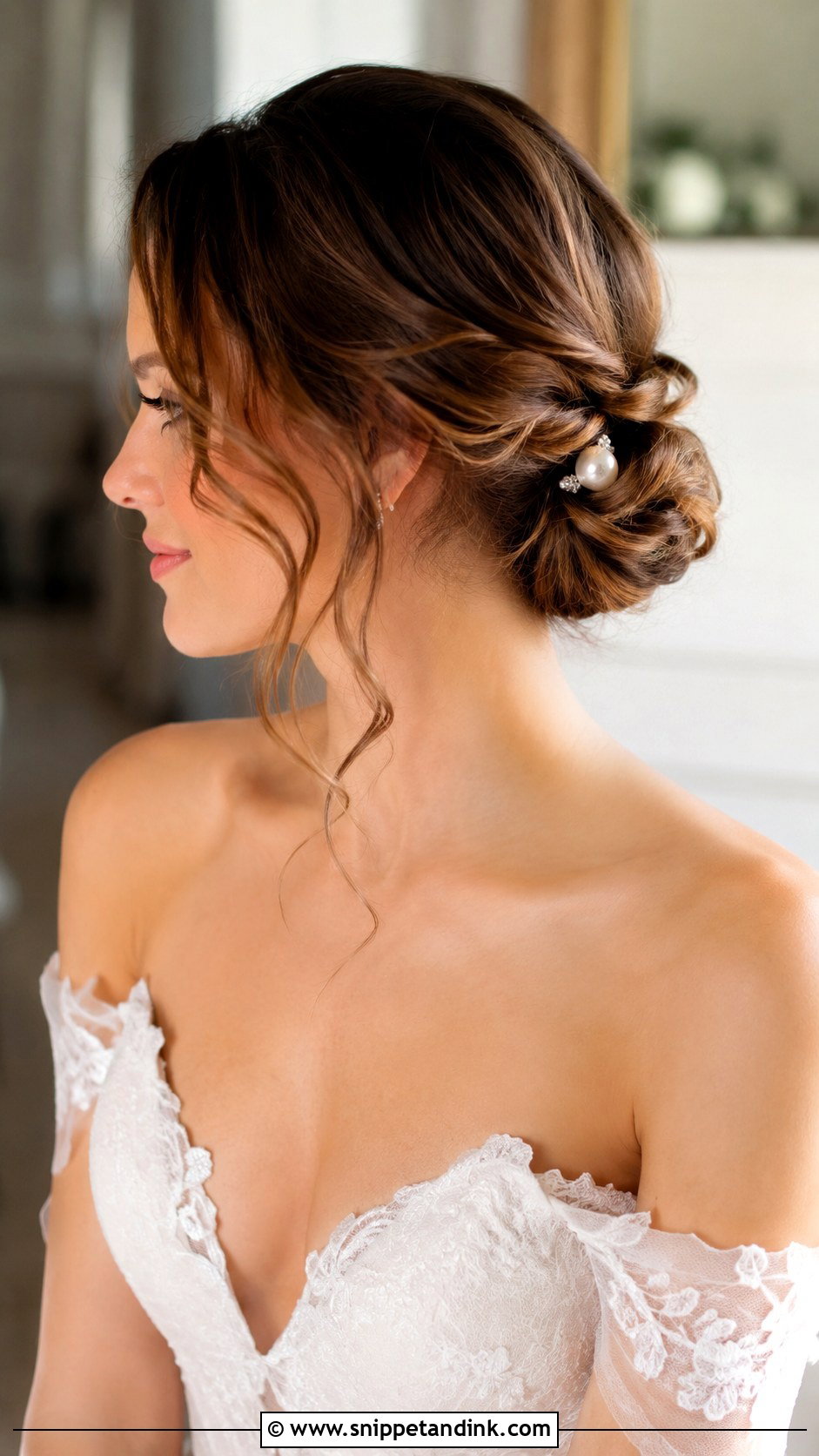
A low twisted bun with tendrils is the style I suggest most to brides who are nervous about looking too done. I twist the hair into a low knot at the nape, then release a few strands around the face. Those tendrils are the weak point: if they’re cut too short, they flick out instead of falling. I curl them with a small barrel and pin them out of the way until the photographer arrives. A pearl pin or small floral accent finishes the knot. It’s flattering on most face shapes and works for formal and relaxed weddings alike.
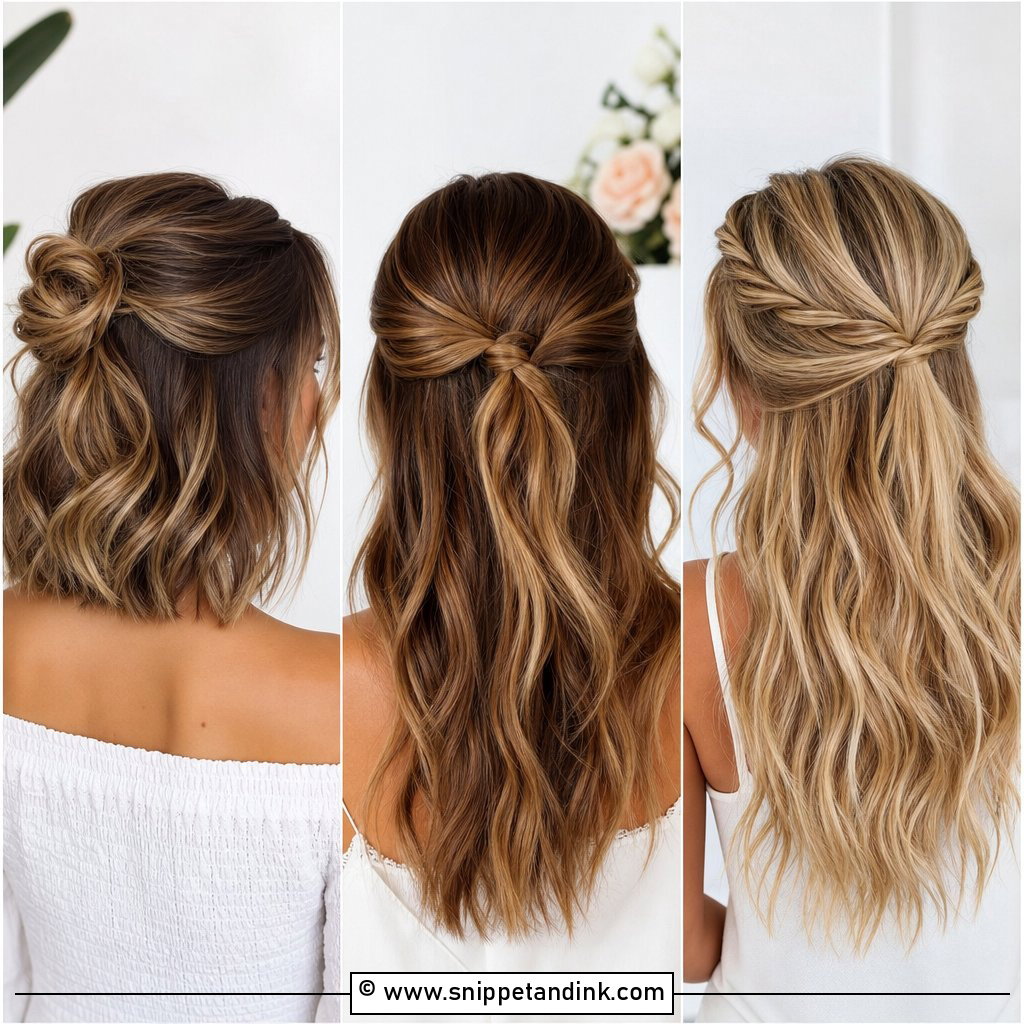
20. Crystal Pin Short Hair Updo
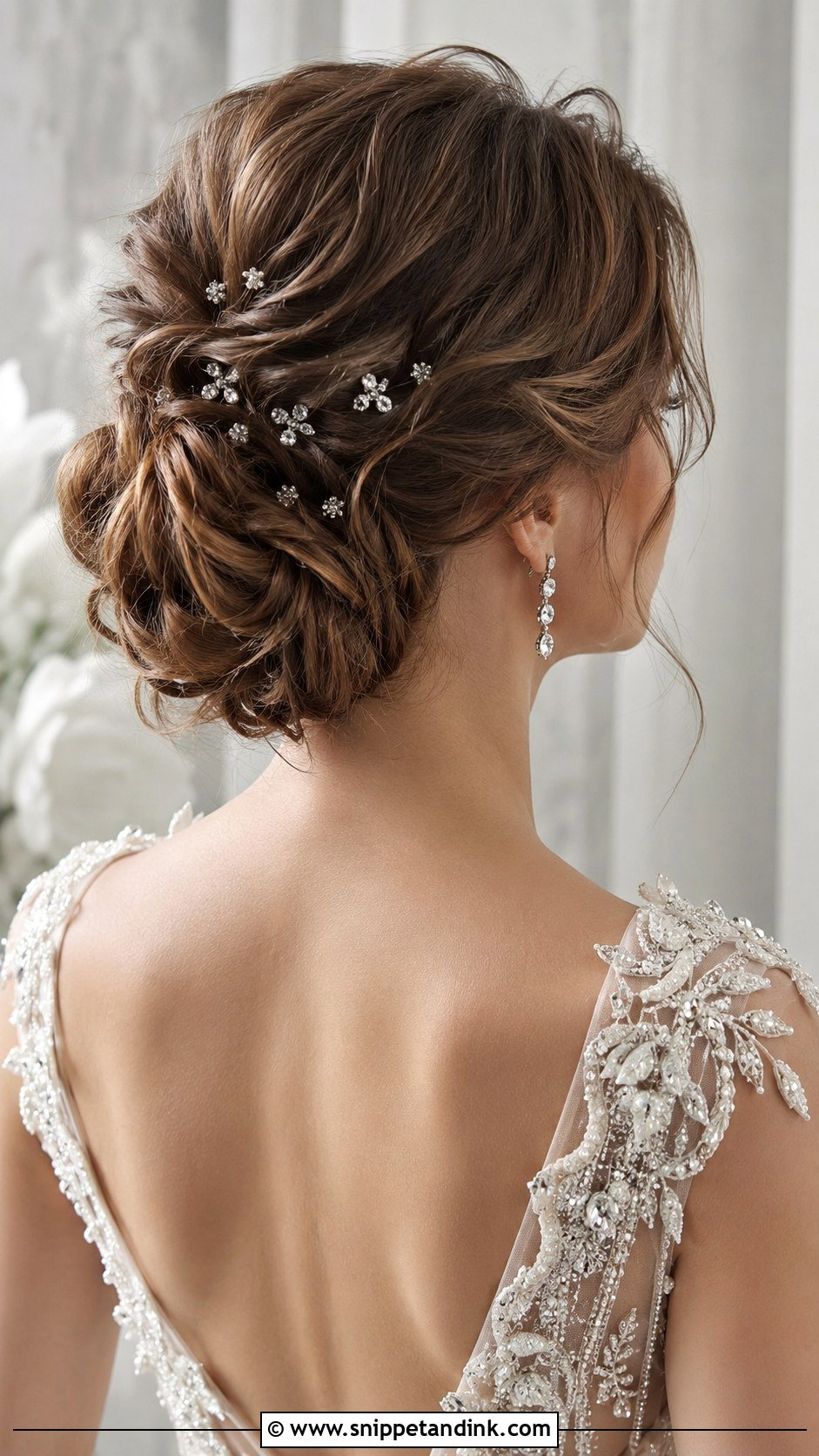
Crystal pins can carry a whole look on short hair. I style a soft bun or twist first, then place the pins in a cluster on one side or scatter them across the back. Clusters read better in photos from a distance; scattered pins look prettier up close, so think about which matters more to you. Each one needs to be pushed in at an angle against the direction of the hair to grip short lengths. It works from pixie to lob, and it pairs with plain and ornate gowns alike.
Why Short Updos Slip, and How I Stop It
Short hair rarely falls out of an updo all at once. It escapes one piece at a time, usually around the nape and behind the ears, and usually because the hair was too clean, too soft or pinned in the wrong direction.
Wash the night before, not the morning
Hair washed on the morning is slippery and gives pins nothing to hold. I ask brides to wash and fully dry their hair the evening before, skipping heavy conditioner on the roots. If you have very oily hair, a dry shampoo at the root that night soaks up the excess without making it squeaky.
Small pins, crossed in pairs
Large bobby pins are too long for short sections and pop back out. I use short grips matched to the hair colour and lay them in an X, so each one holds the other. On fine hair I spray the grip itself with a little hairspray before it goes in, which gives it a touch of tack.
A small kit for the evening
Give your maid of honour six spare grips in your hair colour, a travel hairspray and a tail comb. Most short updo repairs take less than a minute: lift the loose piece, smooth it back, and pin it under a neighbouring section rather than on top of it.
Take Your Own Cut to the Trial, Not a Longer Inspiration Photo
Short hair gives you more wedding updo options than most brides expect, from soft chignons and braided crowns to accessorised pixie styles. What matters most is matching the style to the cut you’ll actually have on the day, so book your last trim with that in mind and bring photos of updos on similar lengths. Flowers, small pins and a few loose tendrils can soften any of them. Work through two favourites at your trial, wear the winner for a few hours afterwards, and you’ll walk into the morning knowing exactly how it holds.
You'll Like These Ideas:



Leave a Reply