
Vintage updos look relaxed in photos, but almost all of them are built on a set: rollers, pin curls or sculpted waves that have to cool and dry before they’re brushed into shape. That’s the part I explain first to brides, because it changes how long your morning takes. The payoff is that these shapes hold better than most loose modern styles. They sit happily with lace, satin, a courthouse suit, a cathedral veil or an heirloom comb. Bridal hair right now is leaning toward soft structure and brushed curls anyway, so the older shapes don’t feel like fancy dress. Below you’ll find 1920s finger waves, 1940s rolls, 1960s height and Edwardian softness, with how each one is made.
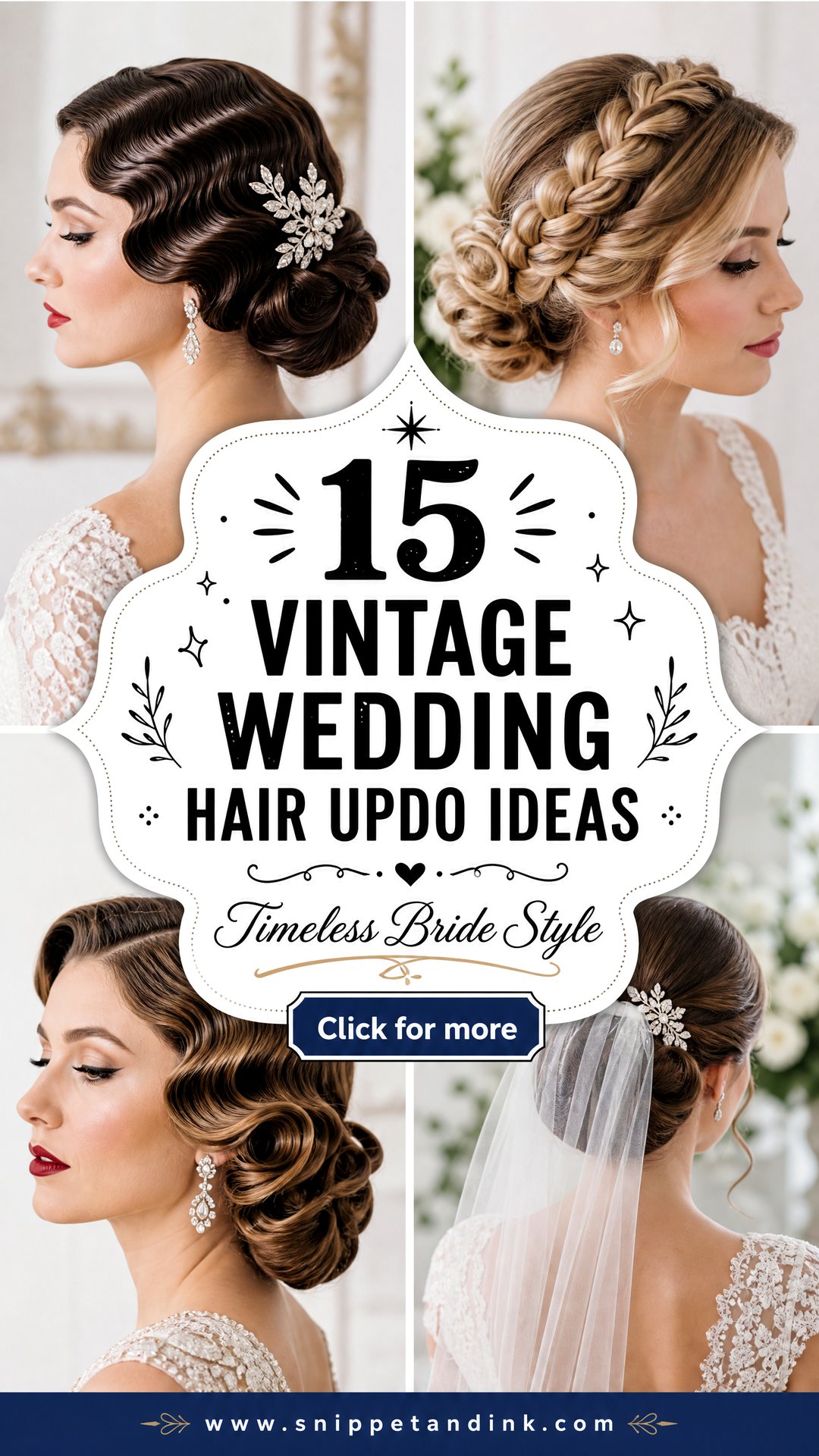
Wet Sets, Rollers and Why Vintage Hair Needs a Longer Morning
Most modern bridal hair is curled with an iron and styled straight away. Vintage shapes work differently. The curl or wave is set first, left to cool or dry, then brushed into shape. Skip the setting time and the roll or wave relaxes before the ceremony.
- Wet sets (finger waves, some pin curls) are shaped on damp hair with gel and clips, then dried completely. On thick hair that can take an hour under a hood dryer or with a diffuser.
- Roller or pin curl sets on dry hair are heated, rolled and left to cool. I let them sit while I work on bridesmaids, then brush out last.
- Brush-out is where the shape appears. A boar bristle brush turns separate curls into smooth waves, and this is where most of the skill sits.
In practice, I plan longer for a vintage bride than for a loose style. Tell your stylist which look you’ve chosen when you book, so the timeline has room for it rather than squeezing the set into the slot meant for a simple bun.
1. Vintage Wedding Finger Wave Low Bun
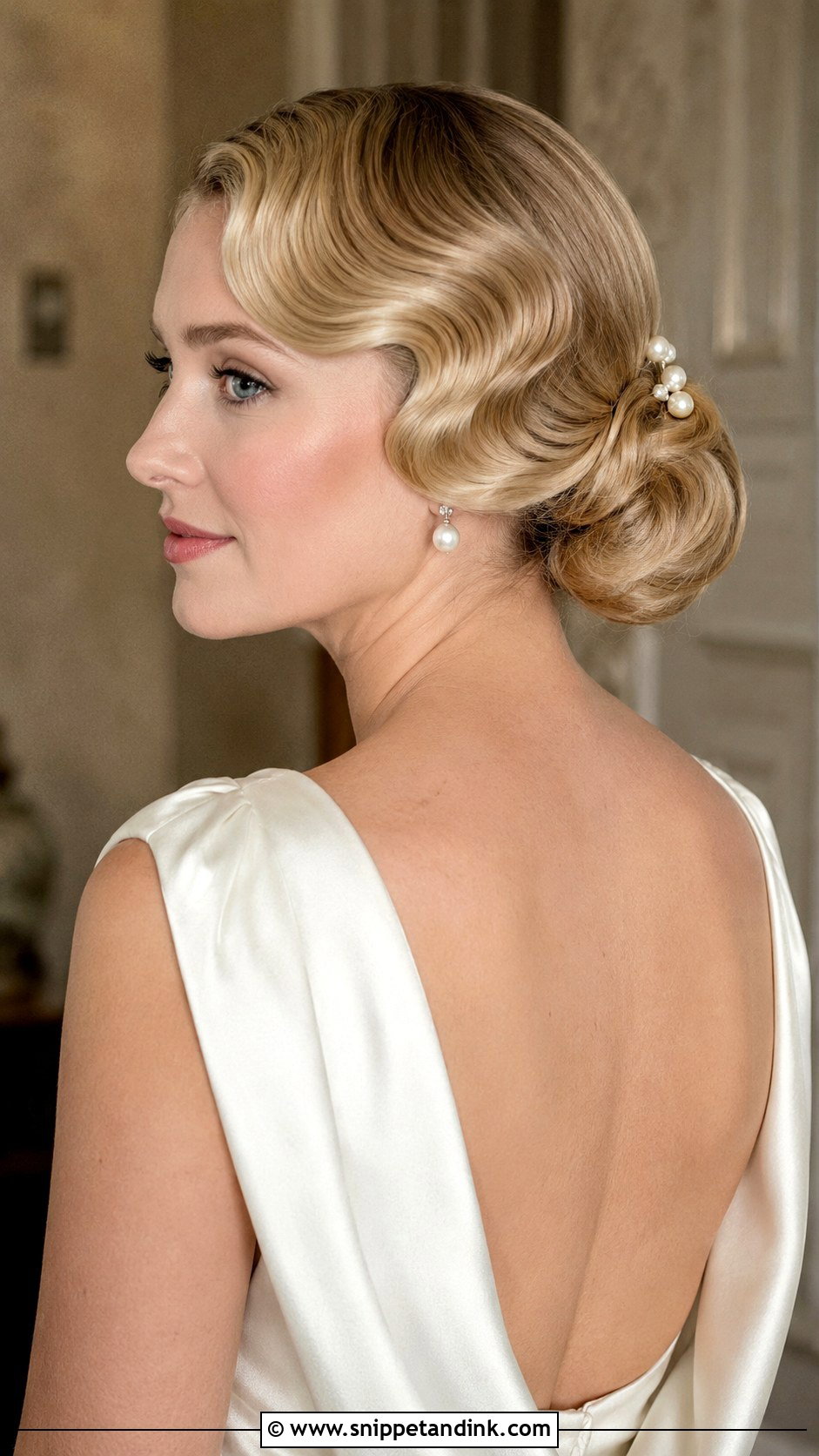
Finger waves at the front, a neat low bun behind: it’s the most Hollywood shape on this list. I sculpt the waves on damp hair with gel, a comb and clips, and nothing comes out until the hair is completely dry. Pull the clips early and the ridges blur. A side part gives the waves room. Strong hold is non-negotiable, but I finish with a shine spray so the surface doesn’t look crunchy. It sits best with satin, pearl earrings and a birdcage veil.
2. Vintage Wedding French Twist
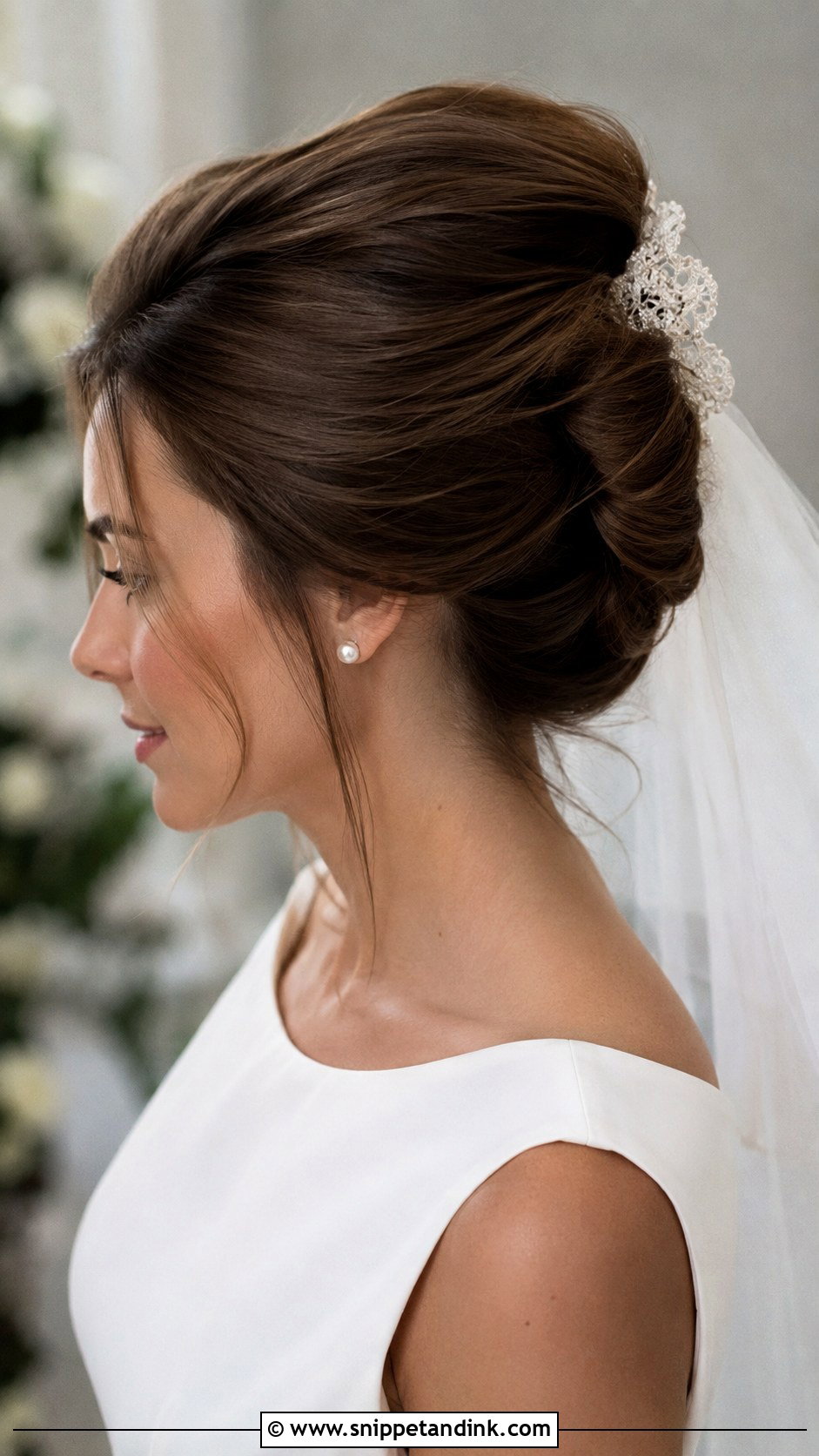
A French twist sweeps the hair up the back of the head into a vertical roll, so the neck, shoulders and neckline are completely on show. Medium to long hair works; below about shoulder length there isn’t enough to wrap. The secret is a hidden line of crossed bobby pins running up the center of the head before the roll goes over it. Without that spine, the twist loosens by the reception. Leave a face-framing piece or two, and set a comb along the seam if you want decoration.
3. Vintage Wedding Gibson Tuck
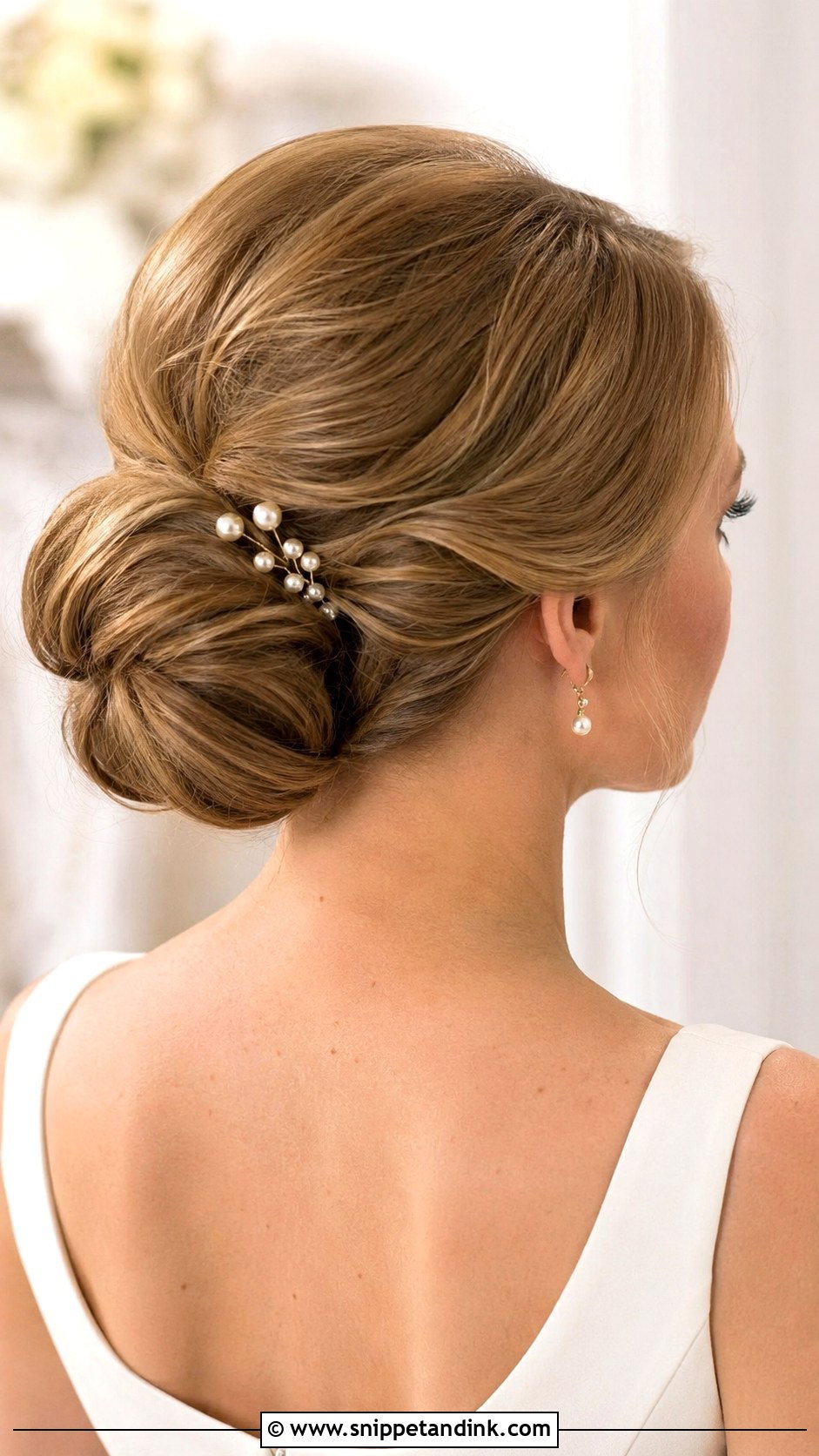
The Gibson tuck rolls hair inward at the back so it sits low and full at the nape, with an Edwardian softness around the face. Airy is the word I keep in mind. I’d steer you away from it if your hair is very fine and very straight, because the roll tends to slip out within a few hours unless I add texture spray and a padded base. High necklines and lace suit it well. Two or three wisps at the temples, pulled out after the roll is pinned, keep it from looking stern.
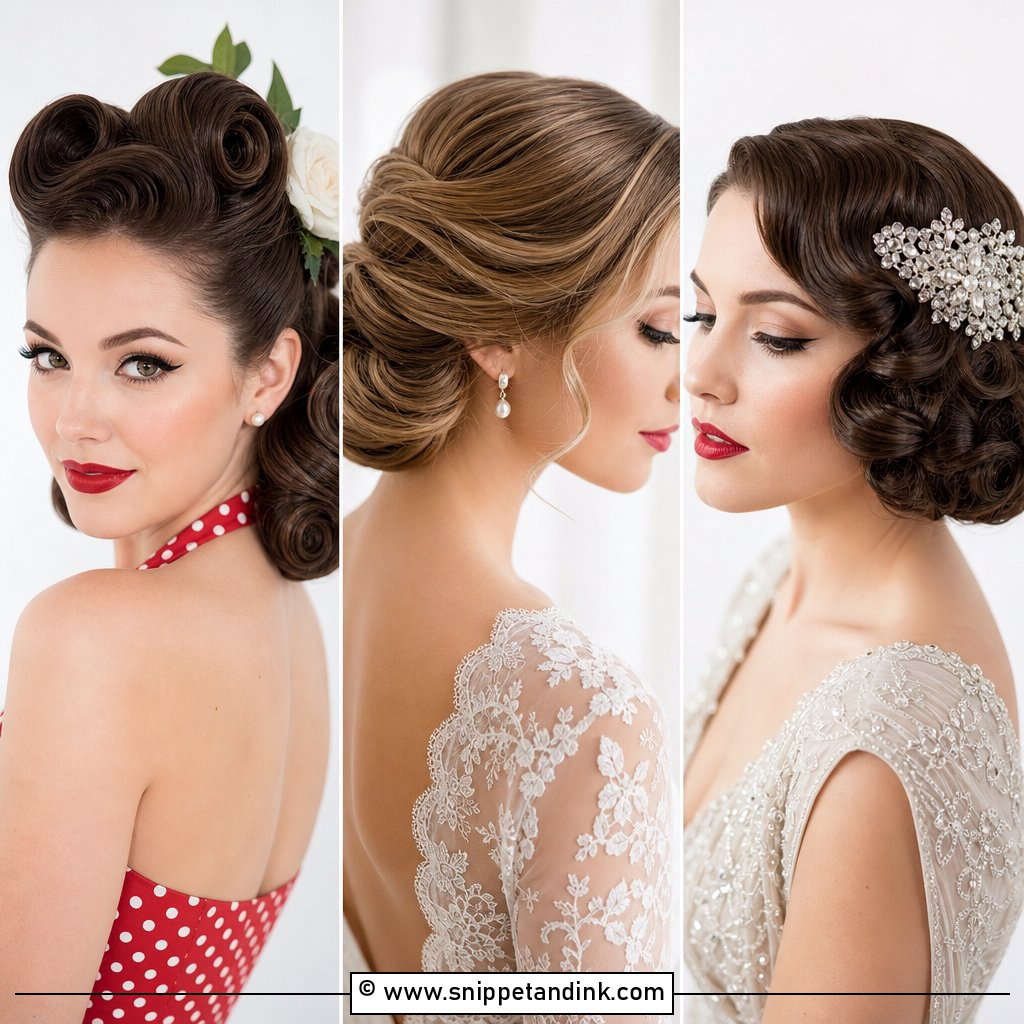
4. Vintage Wedding Victory Roll Updo
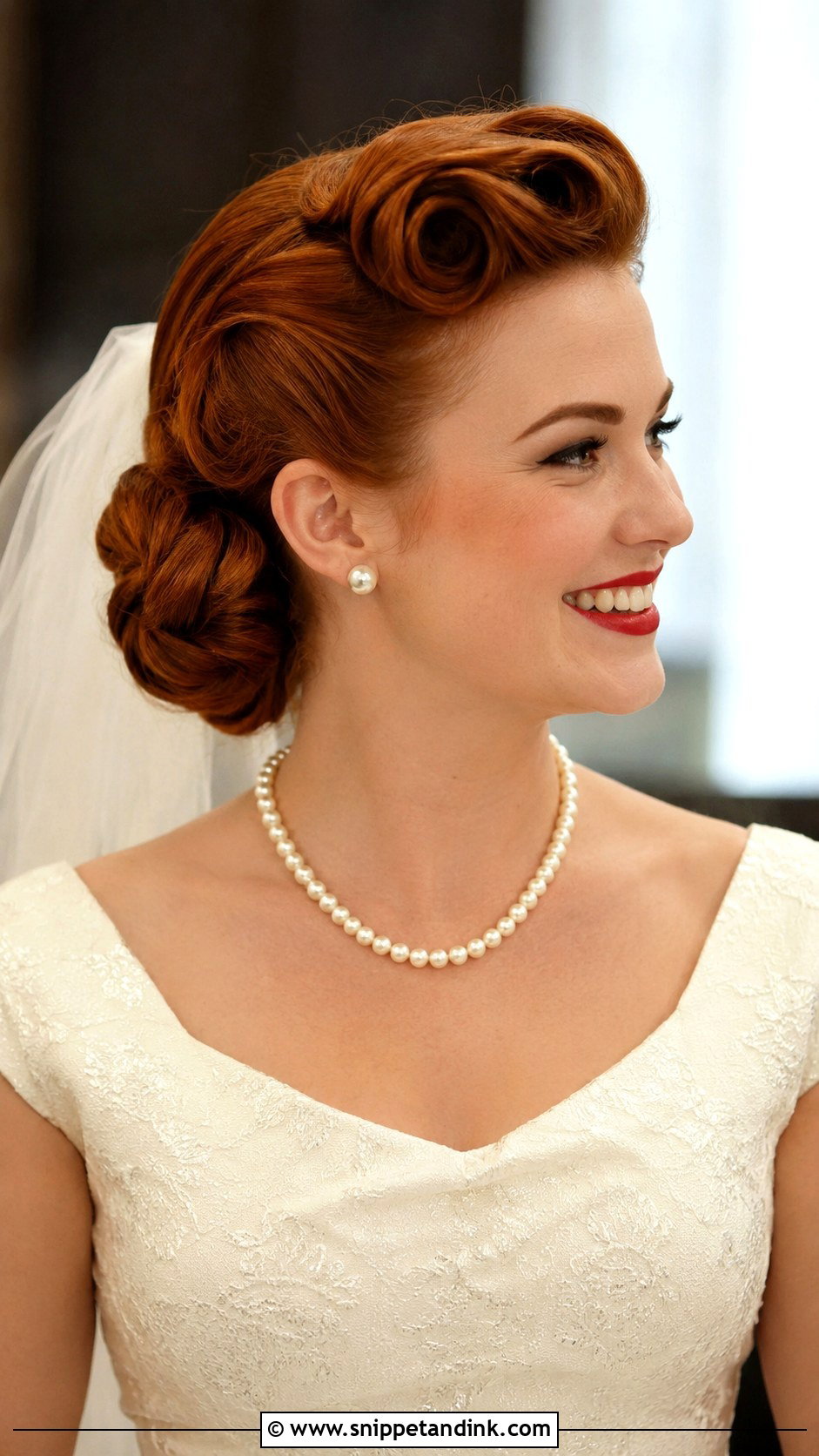
Victory rolls are the boldest 1940s shape here: smooth barrels of hair at the front or sides, with the rest pinned into a low bun, curled back section or chignon. They take a firm curl set first. I roll each section around my fingers, slide it off and pin it from the inside, so no grip shows. Shine matters; frizzy rolls look like a costume party. If you love retro makeup like winged liner, a tea-length dress or fitted satin, this is the one that pulls the whole look together.
5. Vintage Wedding Pin Curl Updo
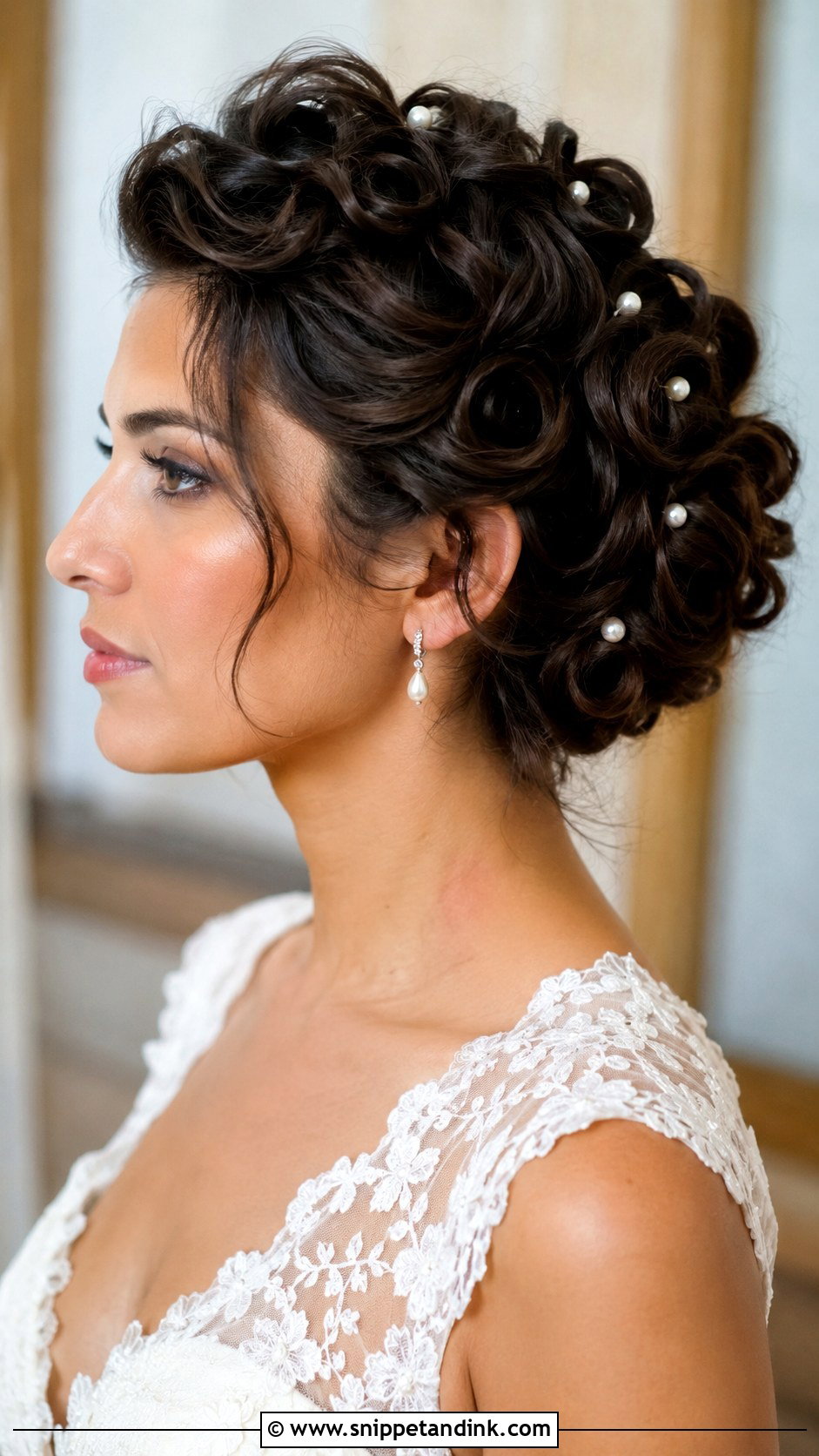
Pin curls are the oldest trick in vintage hair. Small sections are wound flat and clipped close to the head around the crown, sides or nape, then left to set. Shorter, layered and medium hair suits this best, because the curls create fullness without needing long lengths. I usually set them the night before or very early on the morning and brush out last, so the curl has hours to firm up. Each curl catches light in photos. Add a few tiny pearl pins or a crystal comb and stop there.
6. Vintage Wedding Beehive Updo
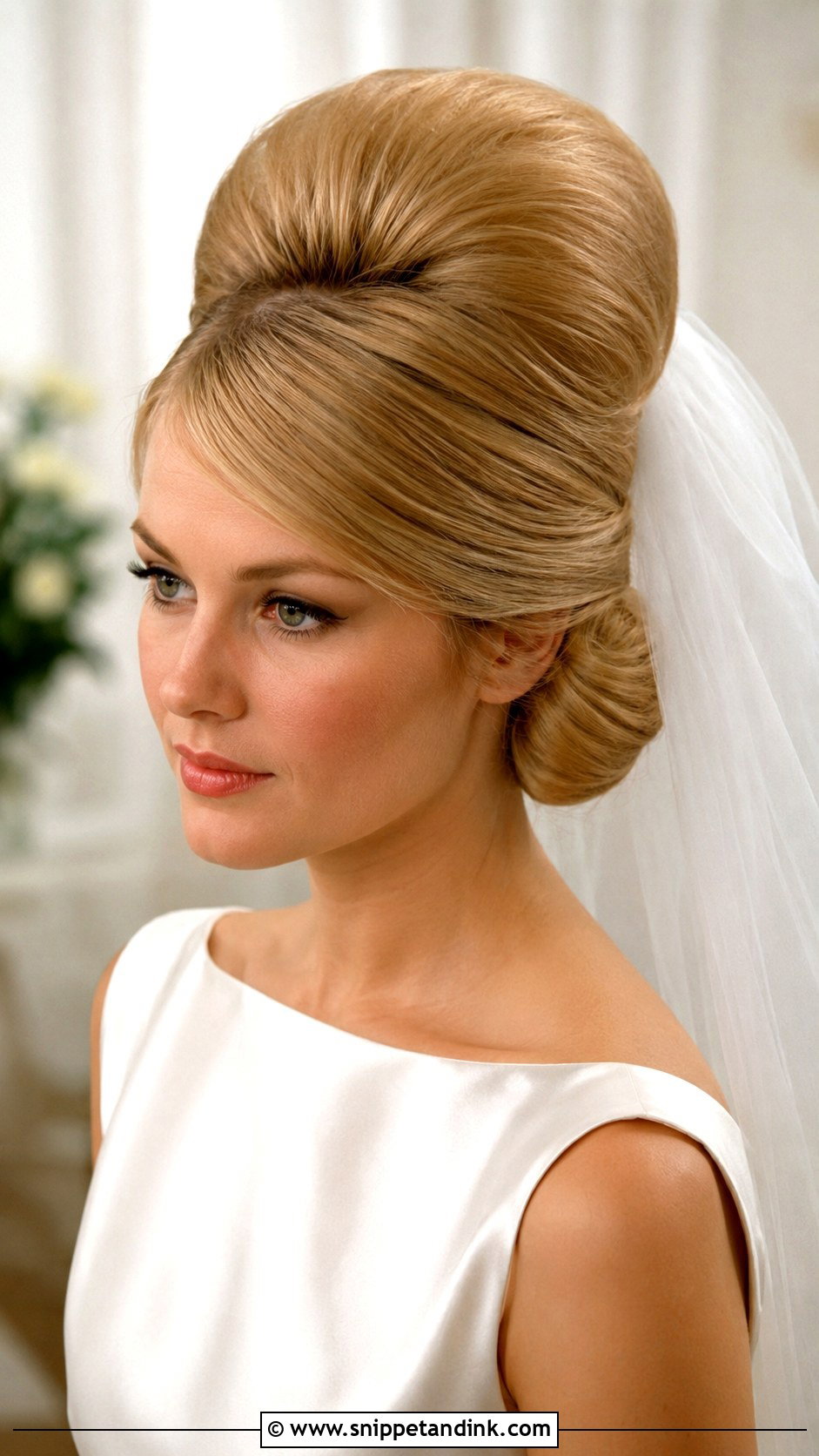
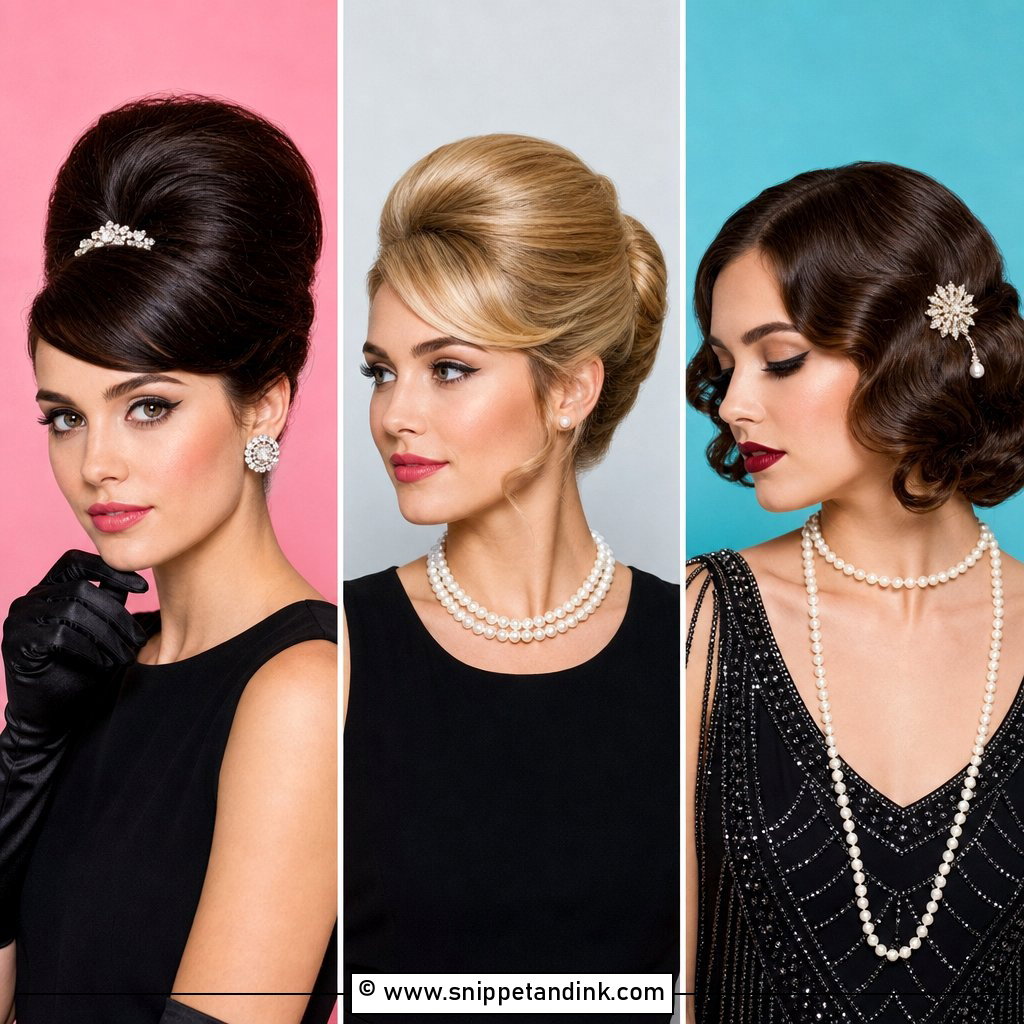
A beehive suits brides who love 1960s-inspired volume. The crown is backcombed and smoothed into a rounded dome, and the back goes into a bun, twist or tucked roll. Teasing has to be firm at the root and smoothed over with a soft brush, otherwise the surface shows lumps under flash. I always insist on a trial for this one. A veil set behind the crown sits well; a comb pushed into the dome itself flattens it. Soften the front with a side part or curtain fringe.
7. Vintage Wedding Braided Crown Updo
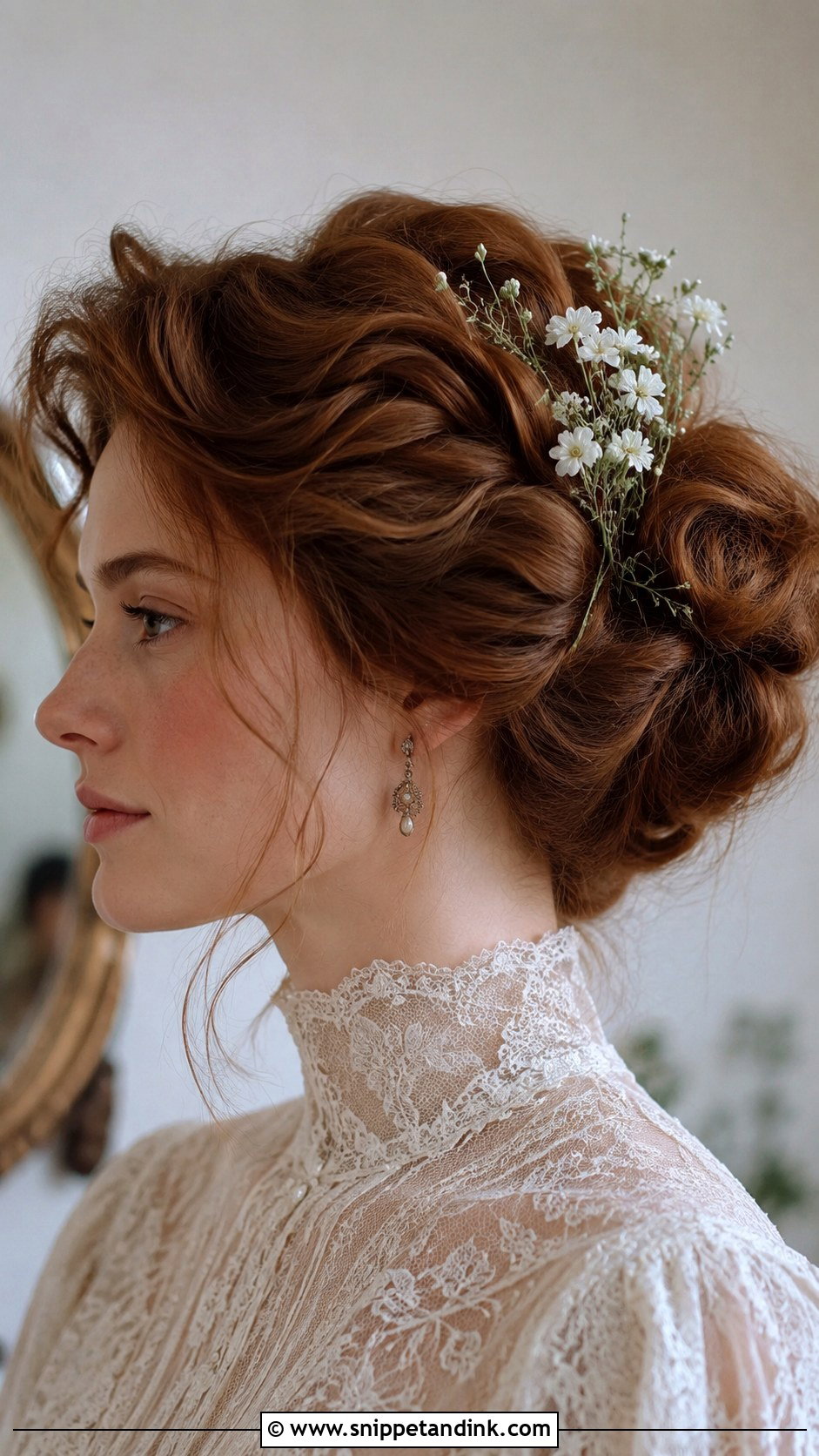
A braided crown wraps the hair around the head like a soft crown, ends tucked and pinned out of sight. It’s the least glossy option here, which suits outdoor ceremonies and rustic venues. Long hair is a practical match because everything is lifted off the neck. I pin it with U-pins along the inside of the braid where it meets the scalp, which holds better than bobby pins across the top. Add small flowers or tuck a veil under the braid.
8. Vintage Wedding Edwardian Pompadour Updo
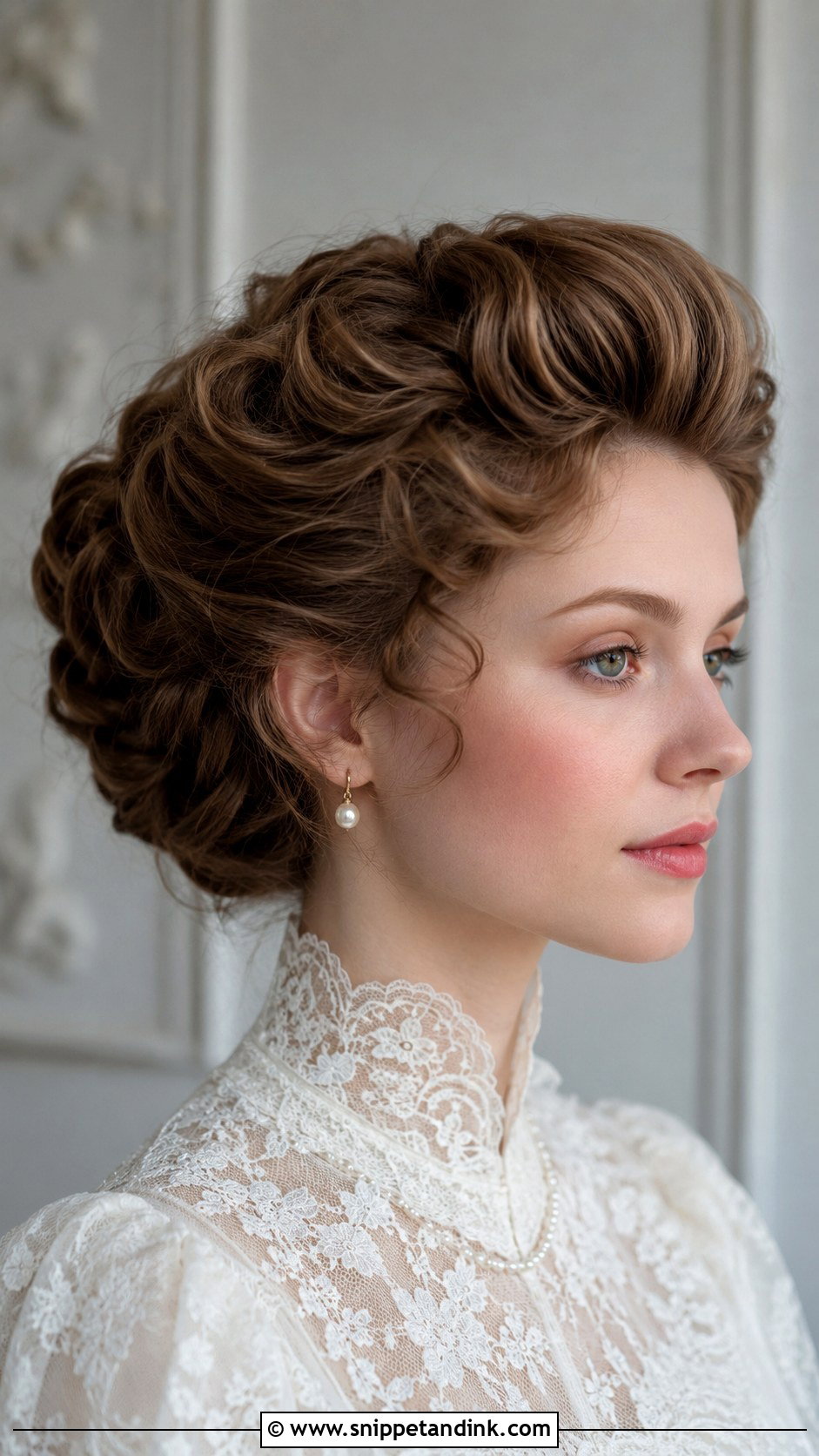
The Edwardian pompadour lifts the front hair in a cushioned roll and pins the back into a loose bun or rolled shape. Cushioned is right. Stiff and tall is wrong. I build the front over a padded base matched to your hair color so the volume holds without heavy backcombing. It belongs with lace, high collars, puff sleeves or heirloom accessories, and it flatters a bride who wants volume without a slick finish. Small curls at the temples soften the outline.
9. Vintage Wedding Marcel Wave Side Bun
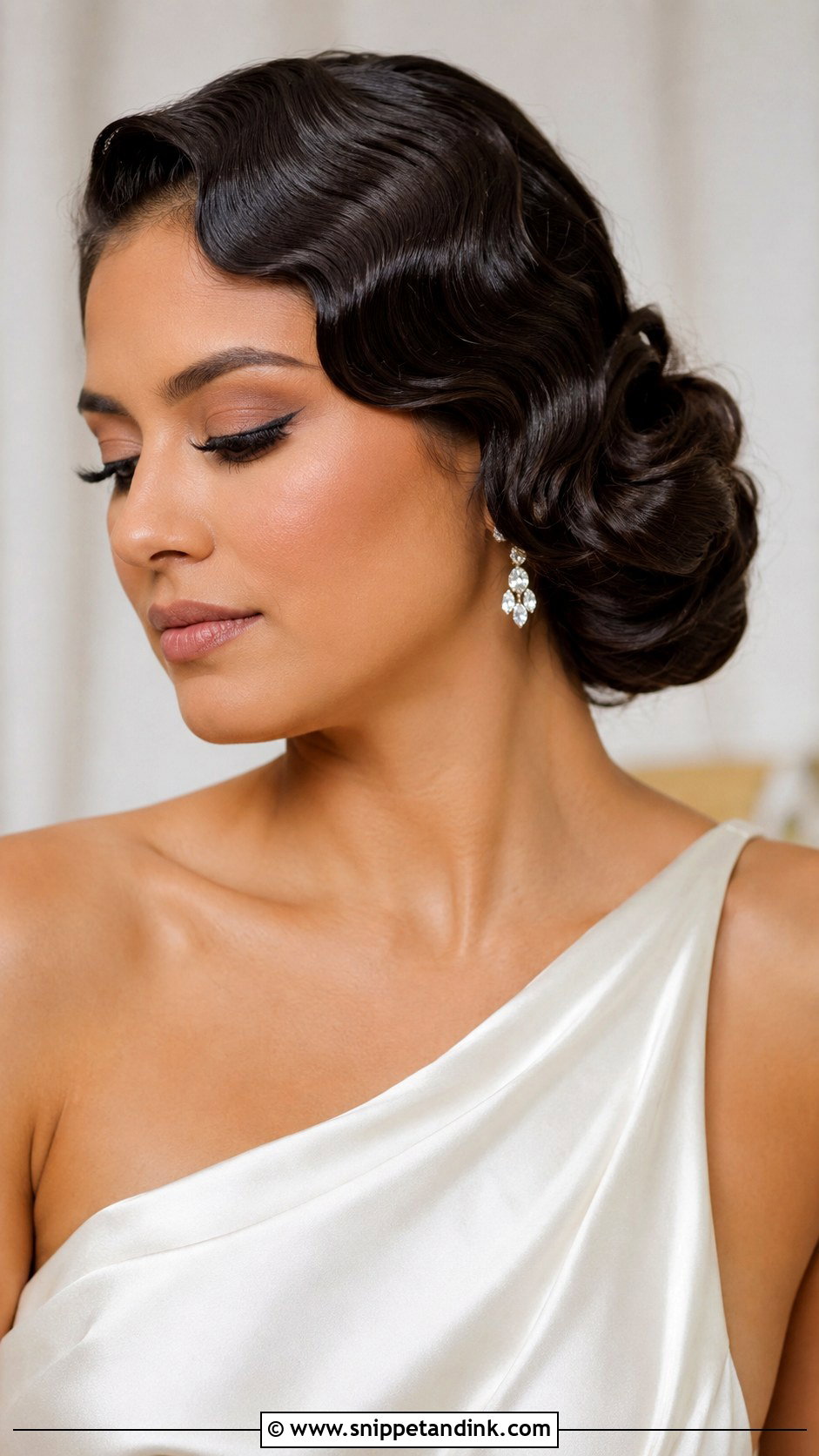
Marcel waves were originally made with heated tongs and have a deeper, more regular ripple than a loose curl. Here they cross the front or side, with the rest gathered into a low bun set slightly off-center. That asymmetry creates a strong profile in photos, especially with a one-shoulder gown, drop earrings or a side veil. Clean placement takes time: I set each wave with a clip while it cools, and use a smoothing cream so the shine reads. Plan on a longer chair slot than for a simple bun.
10. Vintage Wedding Rolled Low Bun
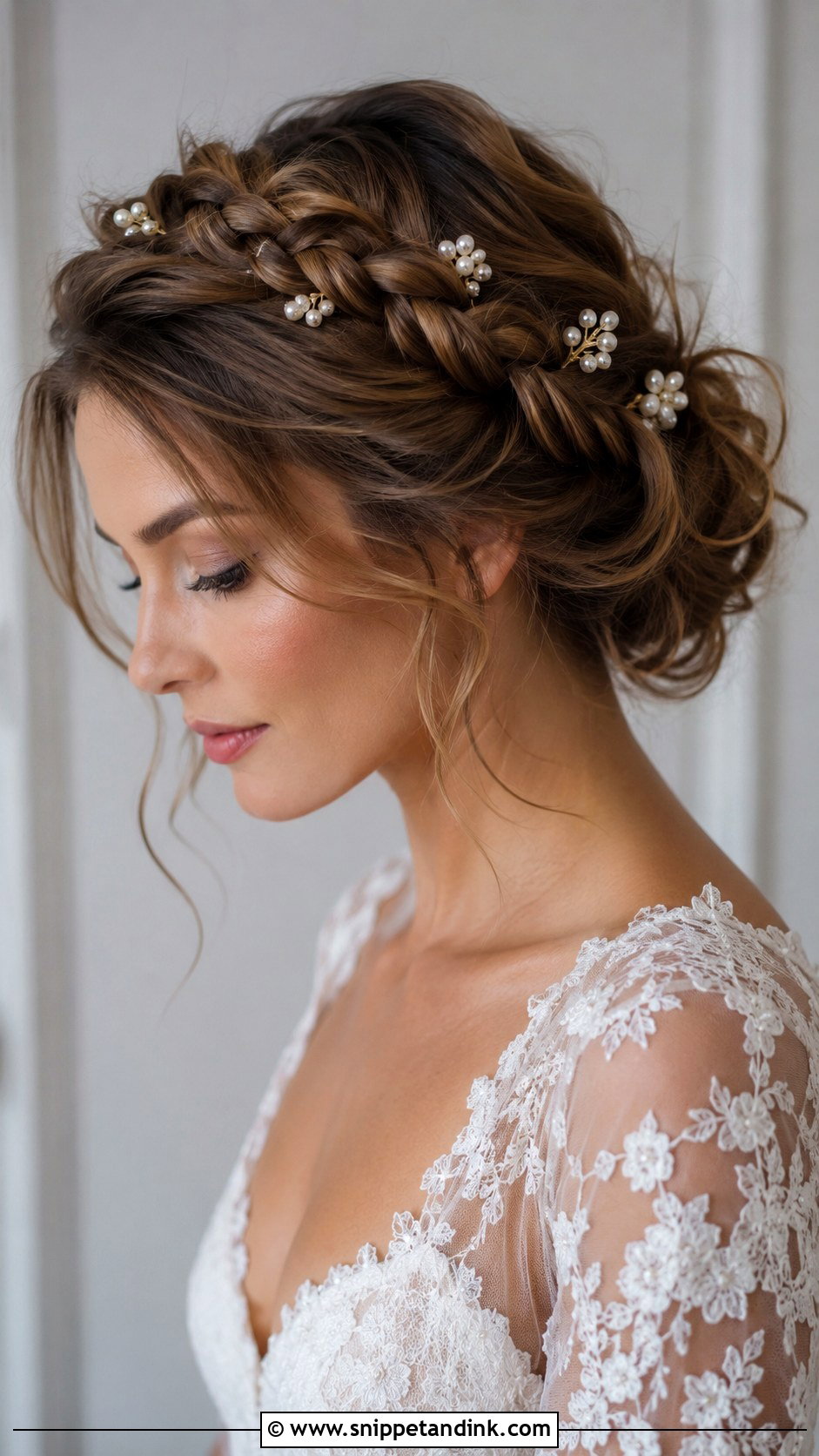
The rolled low bun is the one I suggest when a bride wants vintage without a theme. Hair is brushed back or softly parted and rolled into a rounded bun at the nape. It accepts almost any accessory, from a veil to a comb to a few flowers, and it suits lace or satin. Light lift at the crown keeps it from looking flat. Honestly, it’s also the most forgiving shape here if your stylist is less experienced with sets.
11. Vintage Wedding Bouffant Updo
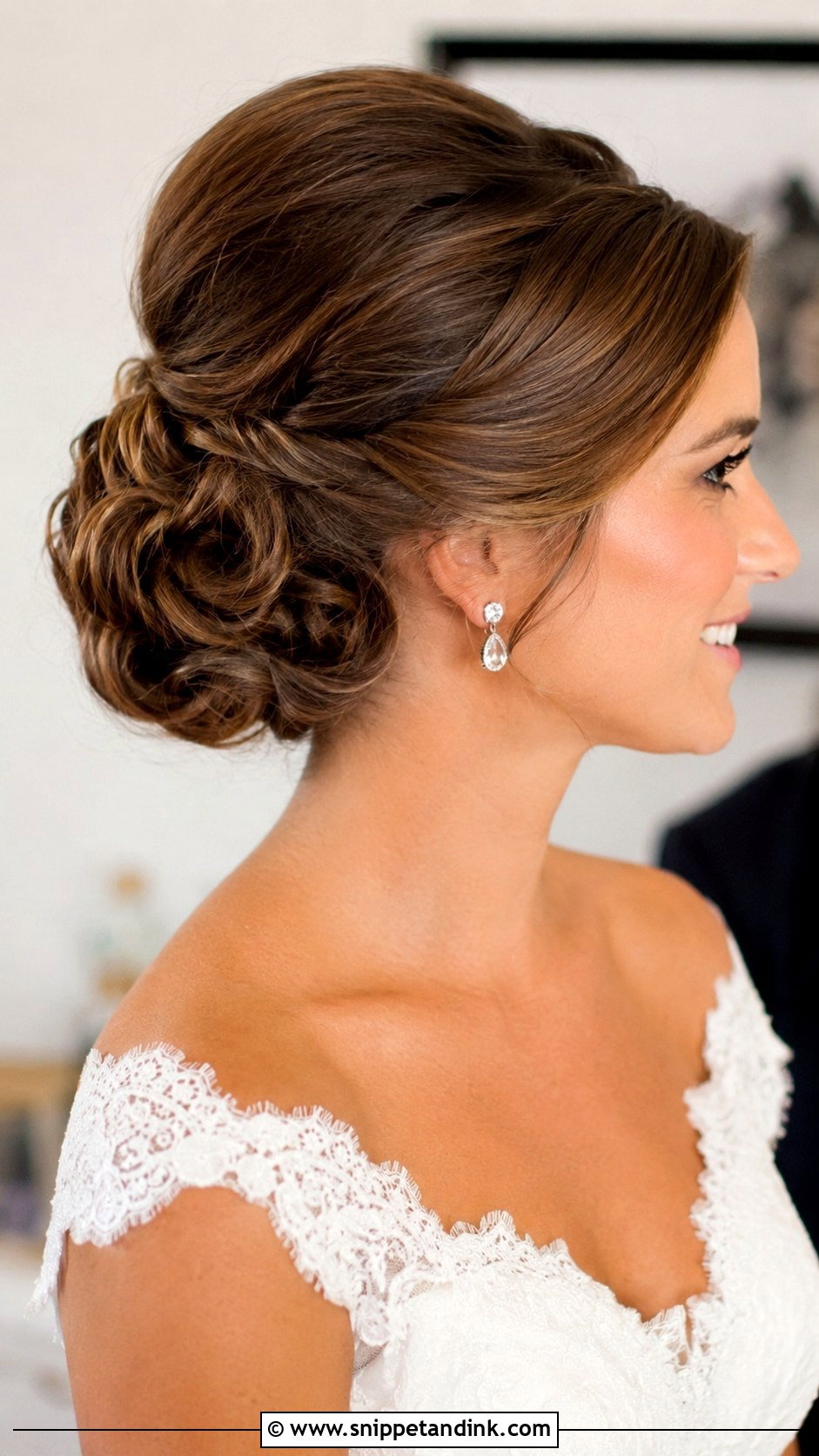
The bouffant is the beehive’s quieter sister. Volume sits lower and stays focused at the crown, with the rest pinned into a chignon, twist or curled bun. Because the crown is lifted and firm, it gives a veil comb a natural anchor point. I keep the sides smooth but not pressed flat, because flat sides make the crown look like a separate piece. Finish with small accessories; a large one fights the height.
12. Vintage Wedding Faux Bob Updo
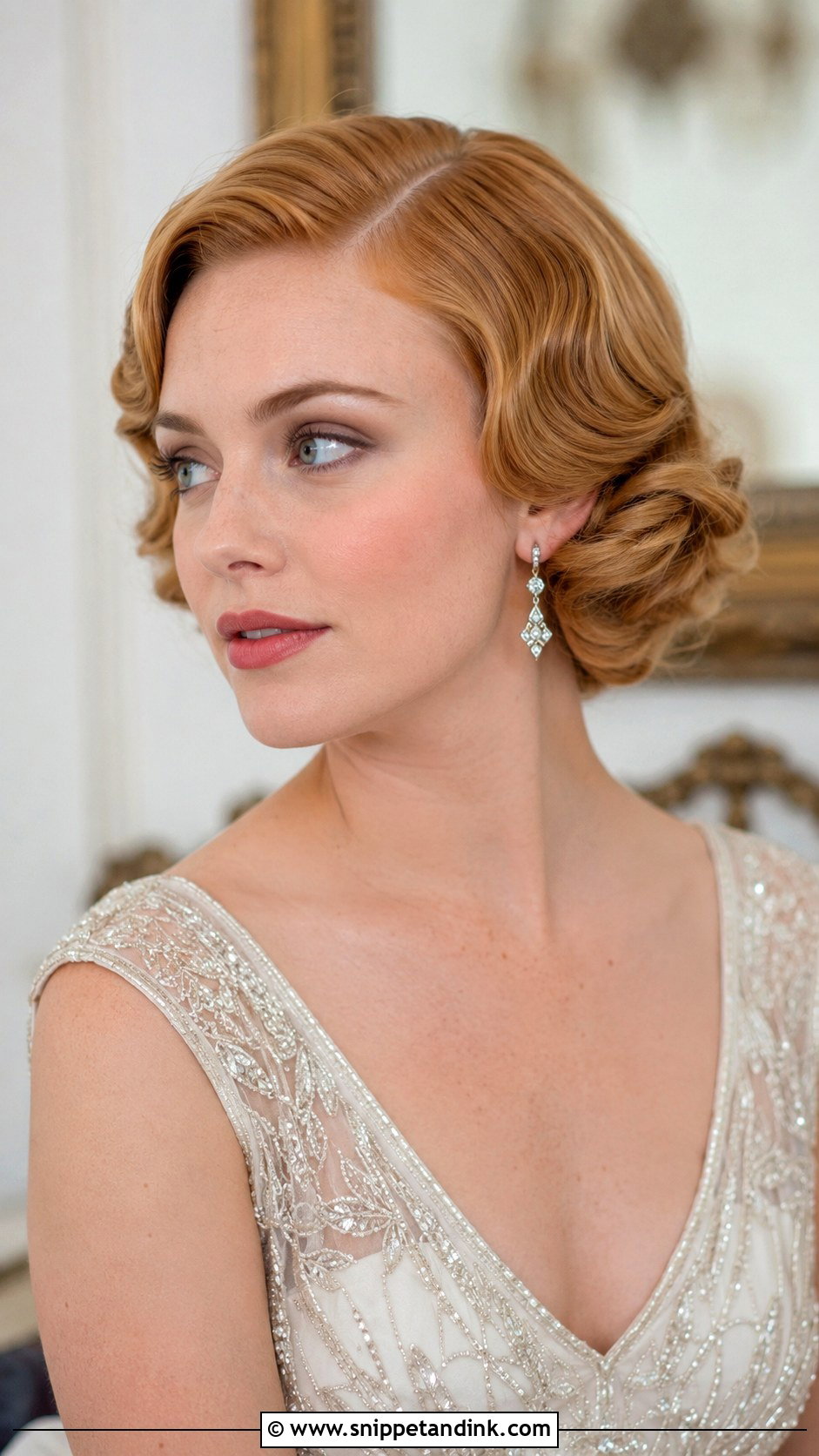
A faux bob gives you 1920s or 1930s hair without cutting your length. I curl the hair, roll the ends under at the nape and pin them in a row, so the shape stops at the jaw like a real bob. The front can carry finger waves, soft curls or a deep side part. Very thick or very long hair is hard to fold this way without a bulge at the nape, so I’d test it first. It looks right with beaded gowns, cap veils and Art Deco pieces, and it’s a fun switch for the reception. Every tuck needs its own pin or the shape opens up on the dance floor.
13. Vintage Wedding Milkmaid Braid Updo
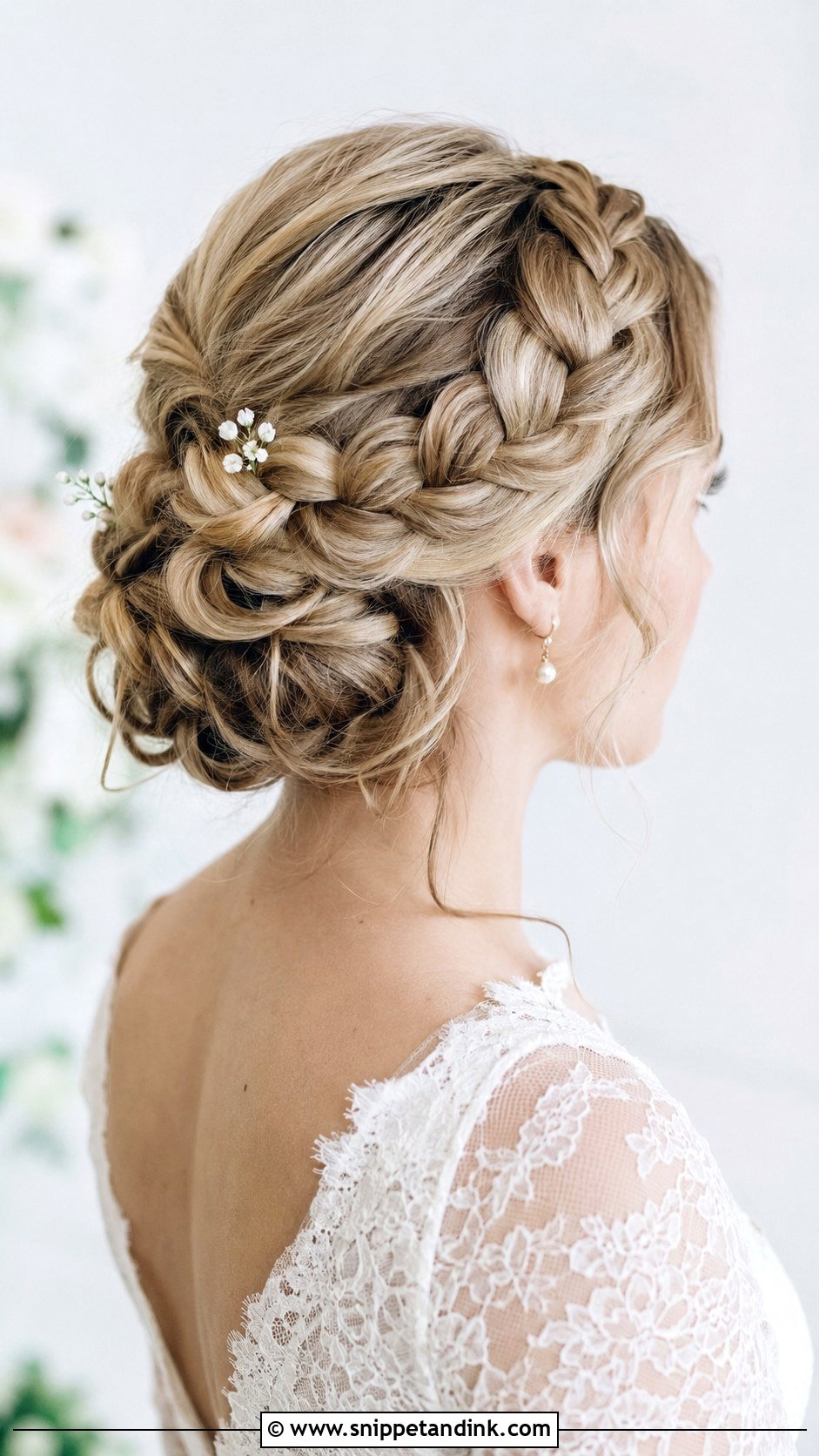
Milkmaid braids are two plaits wrapped over the head and pinned into a crown shape, keeping hair off the neck all day. Long, thick or textured hair holds braids best. Fine hair can work if I pancake the braids gently so they look fuller. Loosen them a little for softness but stop before they look casual; once the edges look fuzzy in daylight, the vintage feel is gone. Lace gowns and small floral pins pair well with it.
14. Vintage Wedding Chignon With Veil
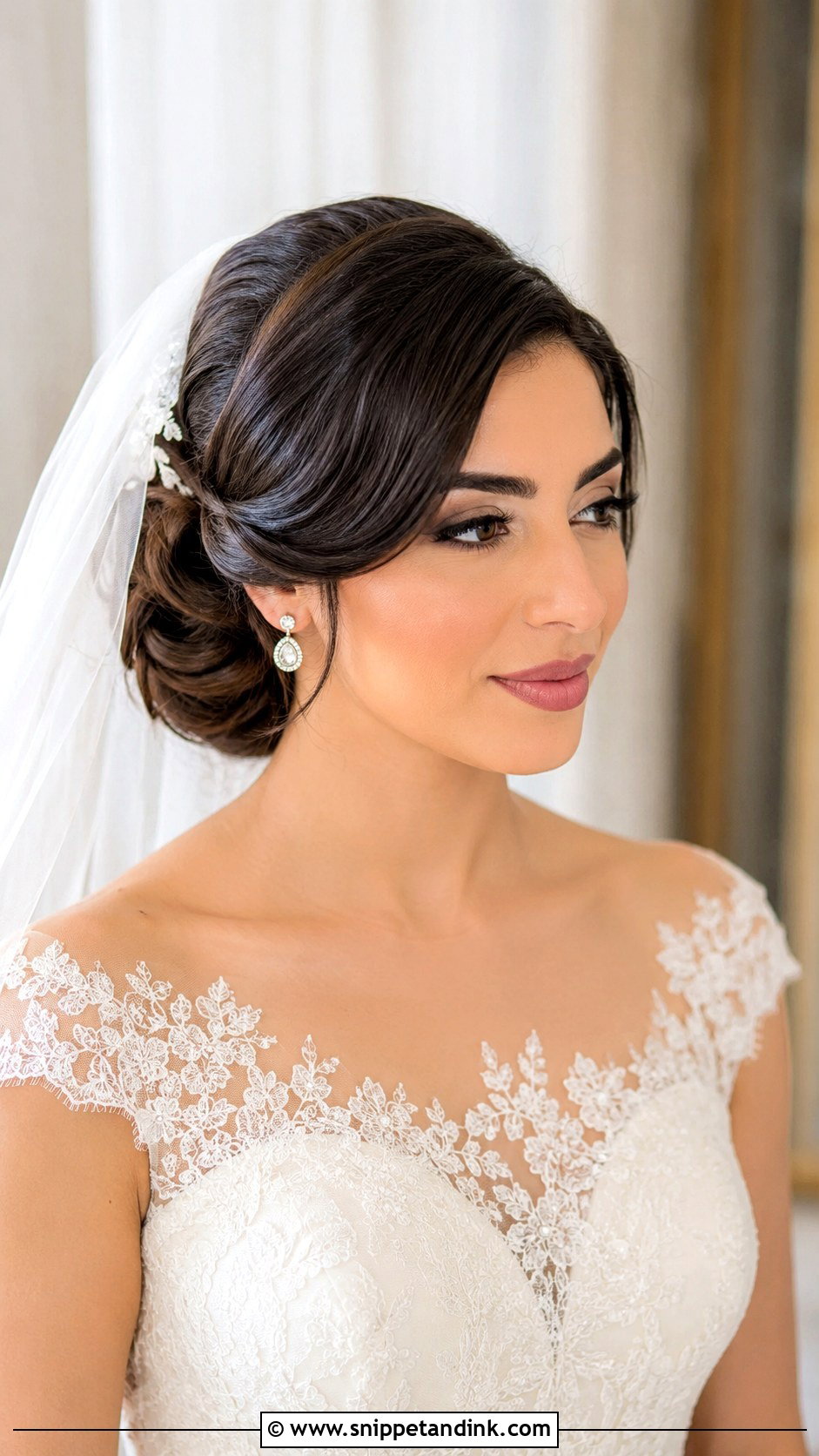
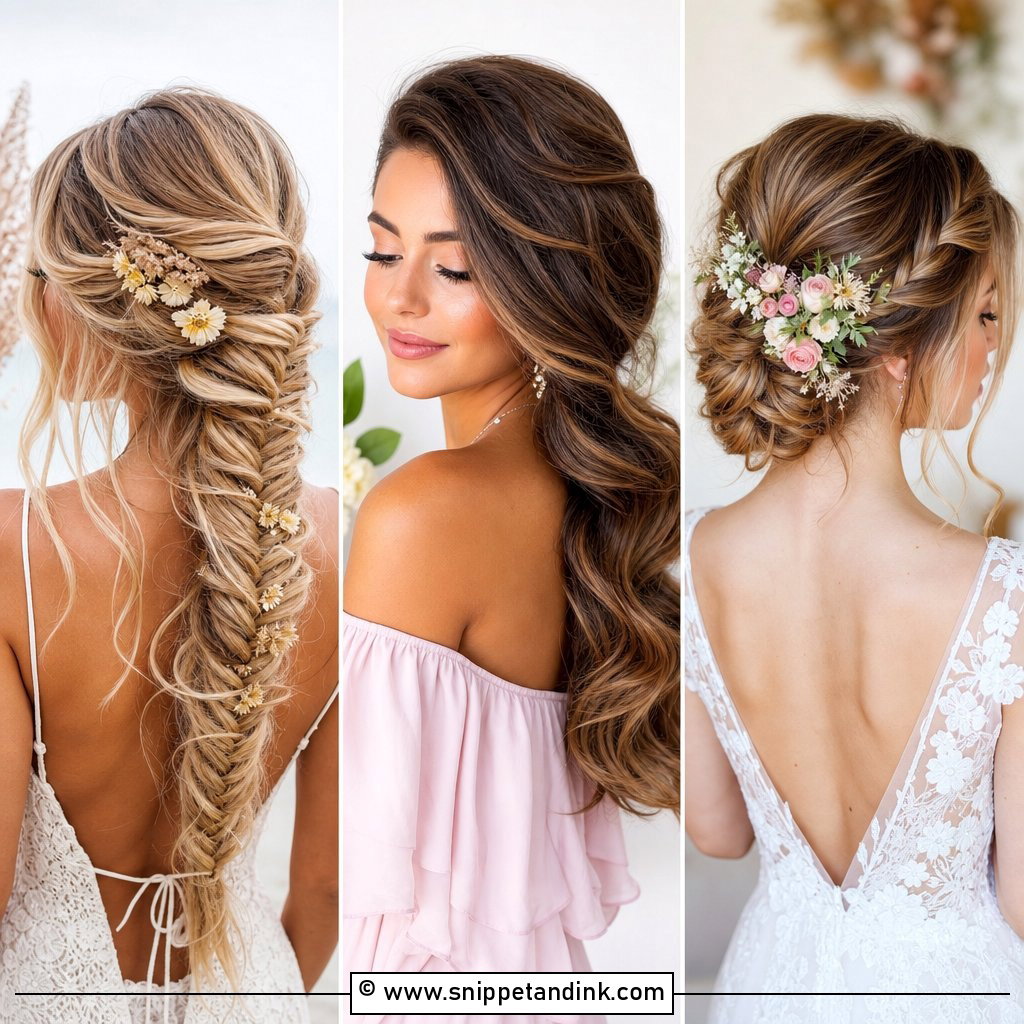
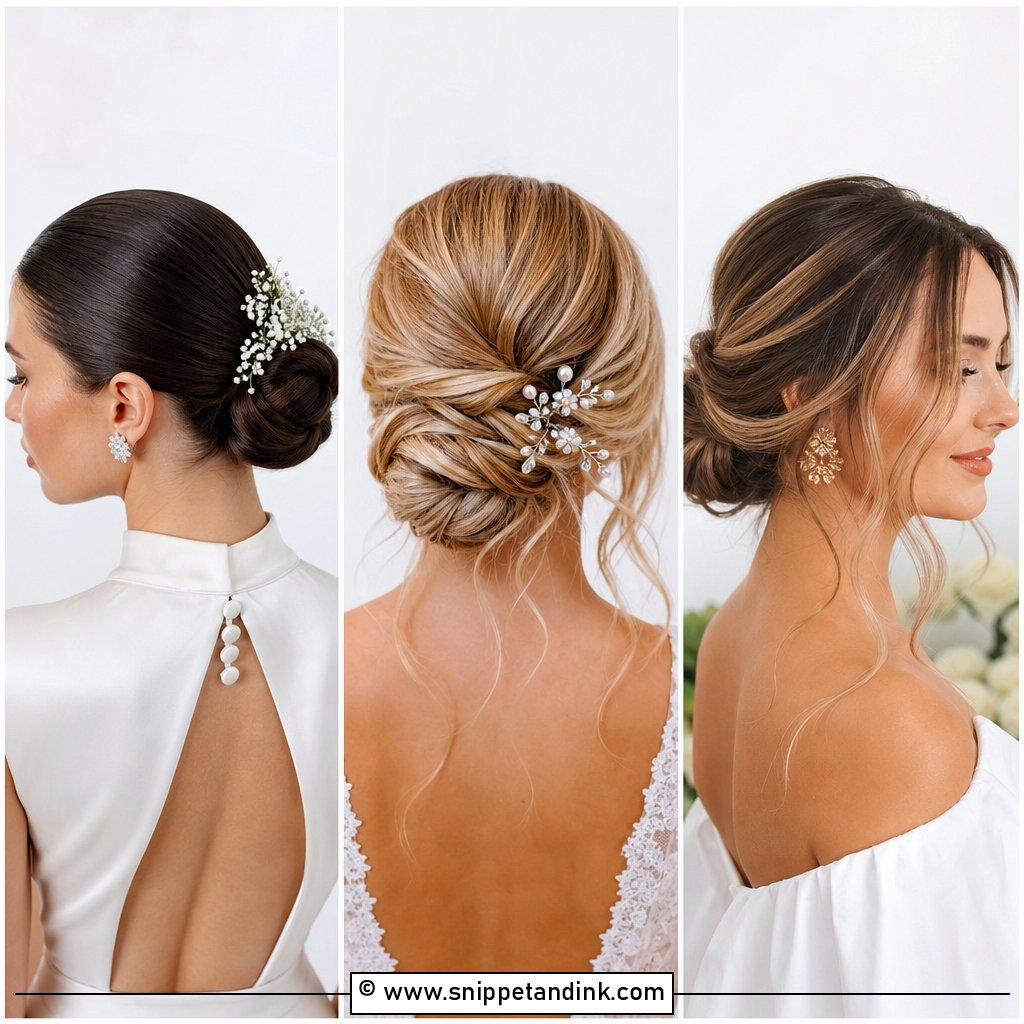
A chignon is the steadiest base for a veil. It can sit low at the nape or slightly higher depending on where the veil should fall, and the surface can be smooth, softly curled, twisted or textured. For a vintage note, add a side part, brushed waves or pearls. I build it on a hidden elastic so a cathedral or mantilla veil has something solid to grip, and a shorter blusher sits on it just as well. It also keeps attention on your face and neckline.
15. Vintage Wedding Old Hollywood Updo
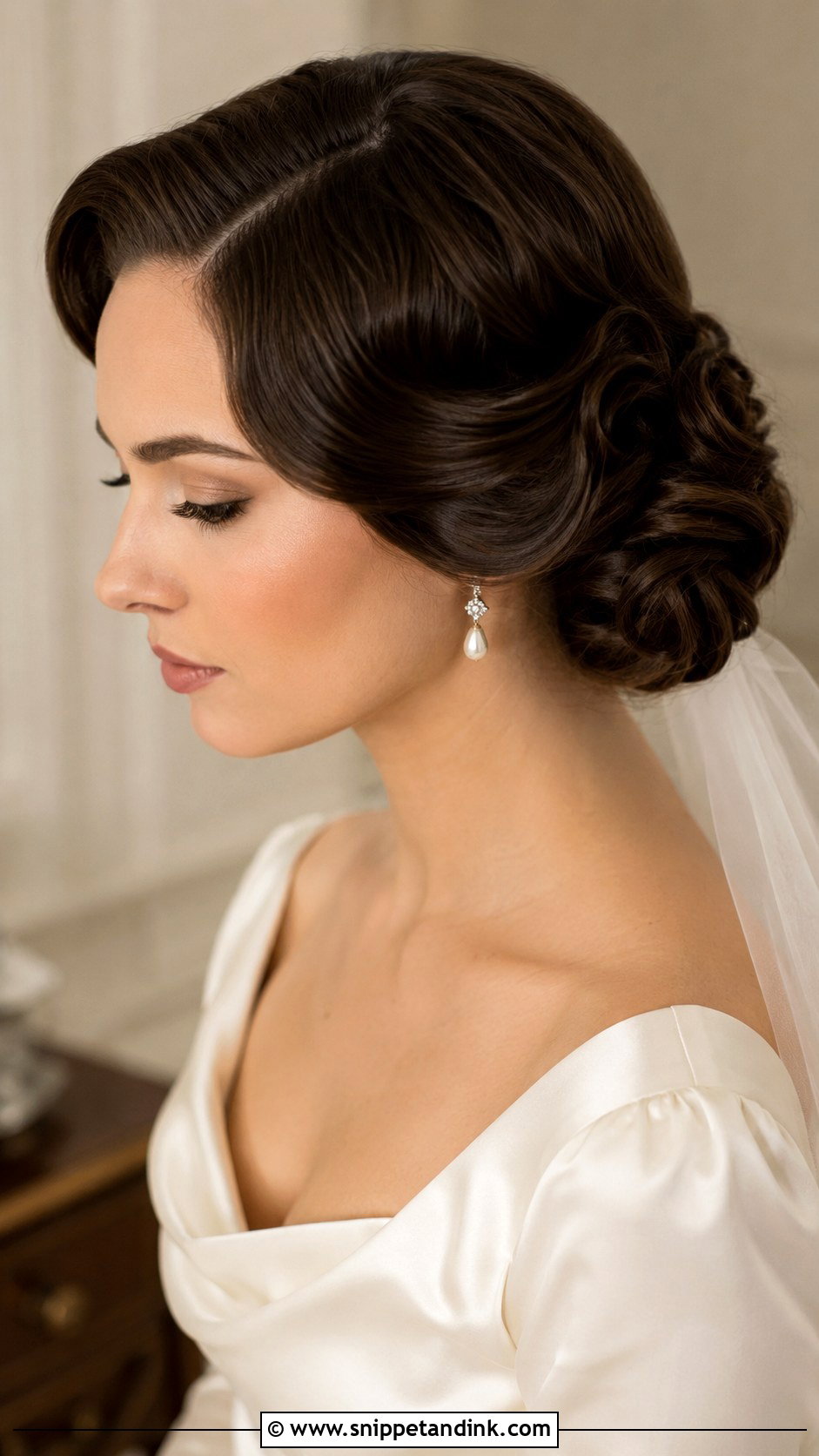
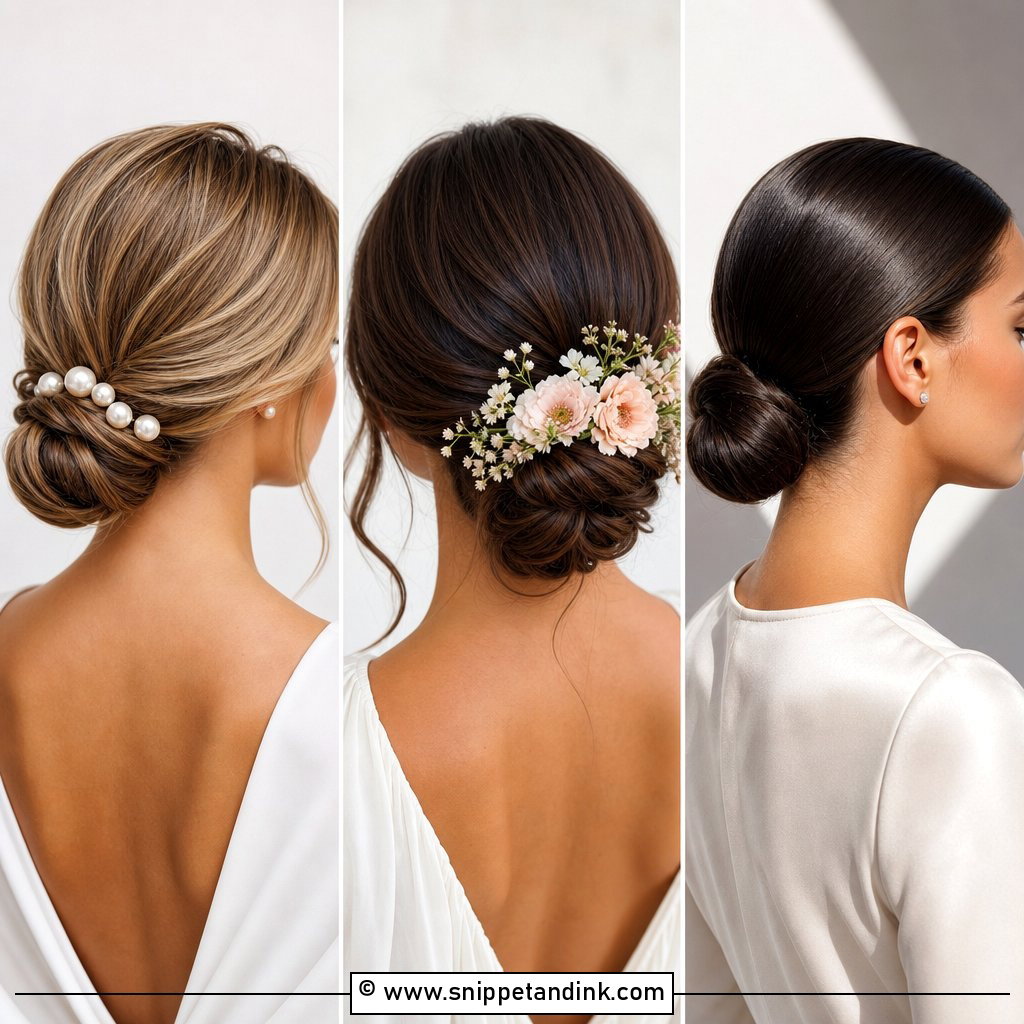
Old Hollywood brings glossy brushed waves, a deep side part and a low curled bun or tucked shape at the back. The waves come from a roller or tong set that’s brushed out once fully cool, which is why the curls look like one sweeping shape instead of separate ringlets. Keep the curls defined around the face so the vintage feel is obvious. Balance the volume and it stays wearable. Satin, pearls and a classic red lip are its natural companions.
Layers, Fine Hair and Other Things a Sculpted Style Won’t Forgive
These updos were designed for hair that was set every week and often cut to suit them. Modern cuts don’t always cooperate, so here’s how I adapt them.
Heavily layered hair
Short layers poke out of French twists and rolled buns. Pin curls and faux bobs handle them better, because each layer gets set into its own curl.
Fine, slippery hair
Wash it the night before rather than the morning of, and expect me to use texture spray before setting. Pads matched to your shade give beehives and pompadours their body without heavy teasing.
Coarse or very curly hair
Sculpted waves need a smooth base, so a silk press or blow-dry usually comes first. Braided crowns and pin curl updos let natural texture stay, and they hold well in humidity.
Hair above the shoulders
Finger waves, pin curls and victory rolls were all worn on short hair in their own decades, so a bob can carry them without any added length. A French twist, chignon or milkmaid braid is another matter; for those I’d blend in clip-in pieces matched at the trial, never on the morning.
Sculpted or Soft? Let the Dress Decide the Decade
Vintage updos fall into two broad families. Some are sleek and sculpted, like finger waves and Marcel waves. Others are softer, like Gibson tucks, braided crowns and Edwardian pompadours. Your dress, veil, venue and hair length narrow it down quickly. Bring photos to the trial, then ask how the set will behave on your hair texture and how long it needs in the chair. A good vintage updo should feel secure enough that you forget about it after the first hour.
You'll Like These Ideas:


Leave a Reply