
Short hair is not a problem to be solved on a wedding day. It’s a length with its own rules. A pixie shows off the neck and earrings in a way no updo can, and a bob or lob holds waves, pins and even a veil if they’re placed with care. What changes is the approach: less hair means every pin needs a reason and every accessory needs a grip point. I’ve grouped these twenty looks from the shortest cuts to the longest, with notes on what each one asks of your hair and your stylist.
What a Pixie, a Bob and a Lob Can Each Carry
Before picking a photo, it helps to know what your length can physically do. I sort short cuts into three rough groups at a consultation.
Pixie and cropped cuts
Not enough length to gather, so the style is about texture and shape. Headbands, single clips, birdcage veils and finger waves suit it. A traditional veil comb usually needs a hidden base, like a thin band.
Chin-length bobs
Long enough to tuck, twist and pin at the sides, and to hold a fingertip veil with some support. A real bun is a stretch, but half-up and side-swept looks work well.
Lobs, around the collarbone
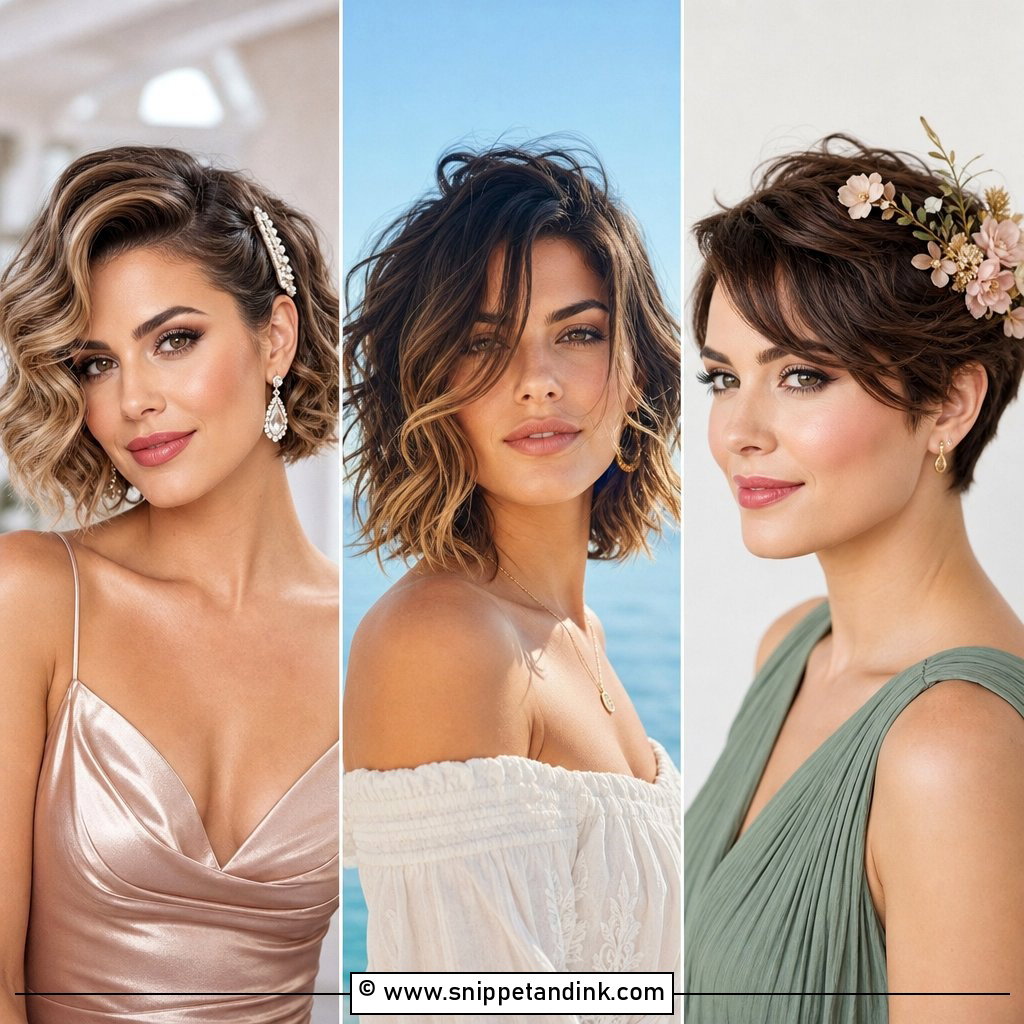
The most flexible short length. It can make a small low bun, a faux updo, braids and most veils. It’s also the length most likely to flip up at the ends against the shoulders, which waves can fix.
If you sit between two groups, or you’re mid grow-out, show your stylist the length you’ll have on the wedding date, not today. Hair grows roughly a centimeter a month, so a bob booked six months out may be a lob by the time you walk down the aisle, and the plan should follow that.
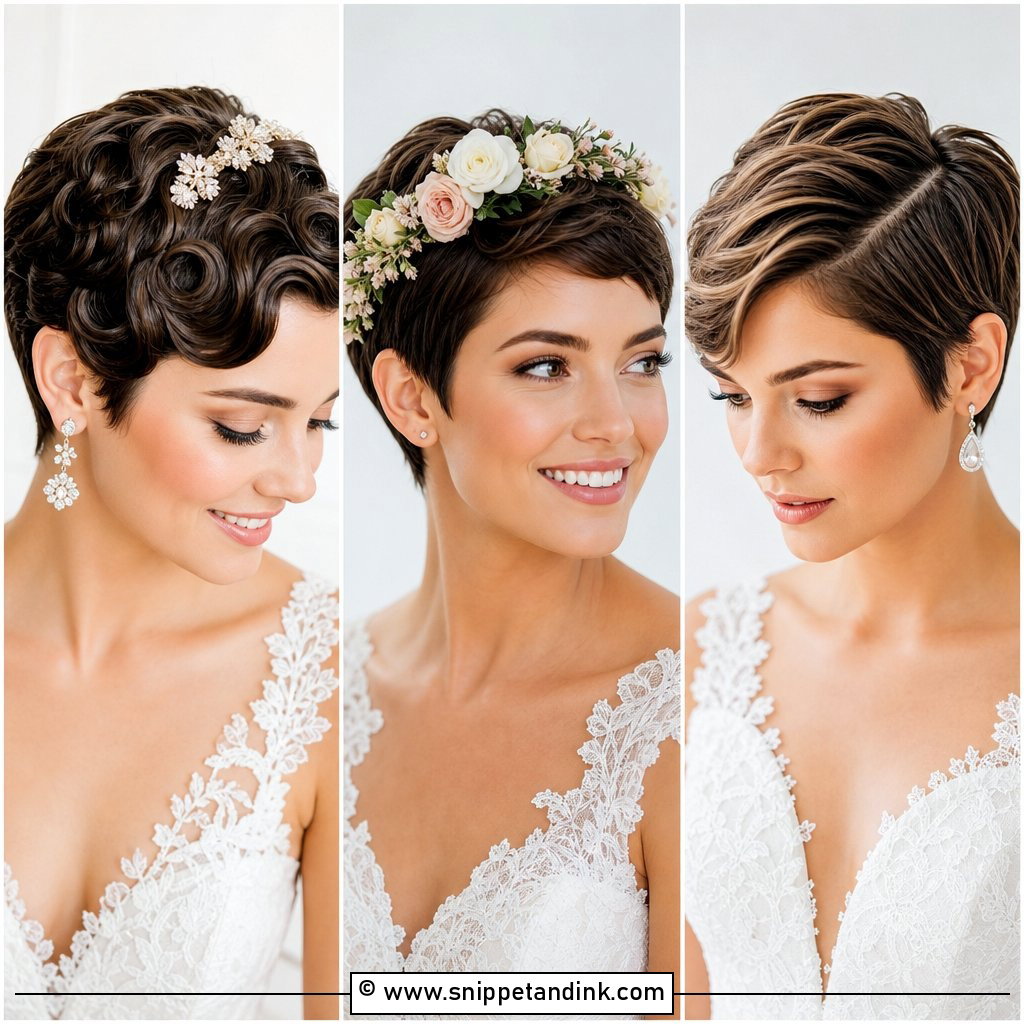
1. Bridal Pixie Cut
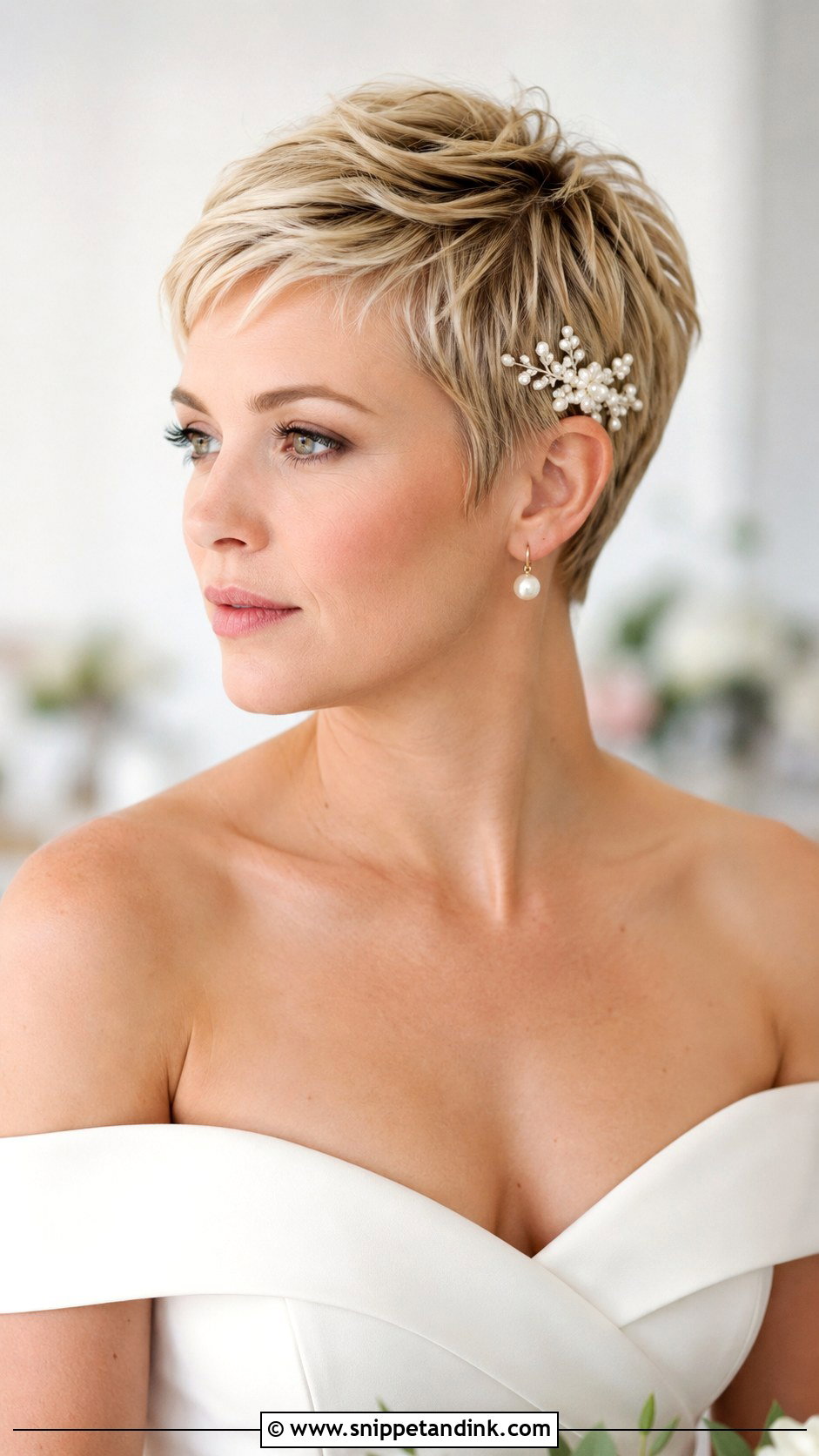
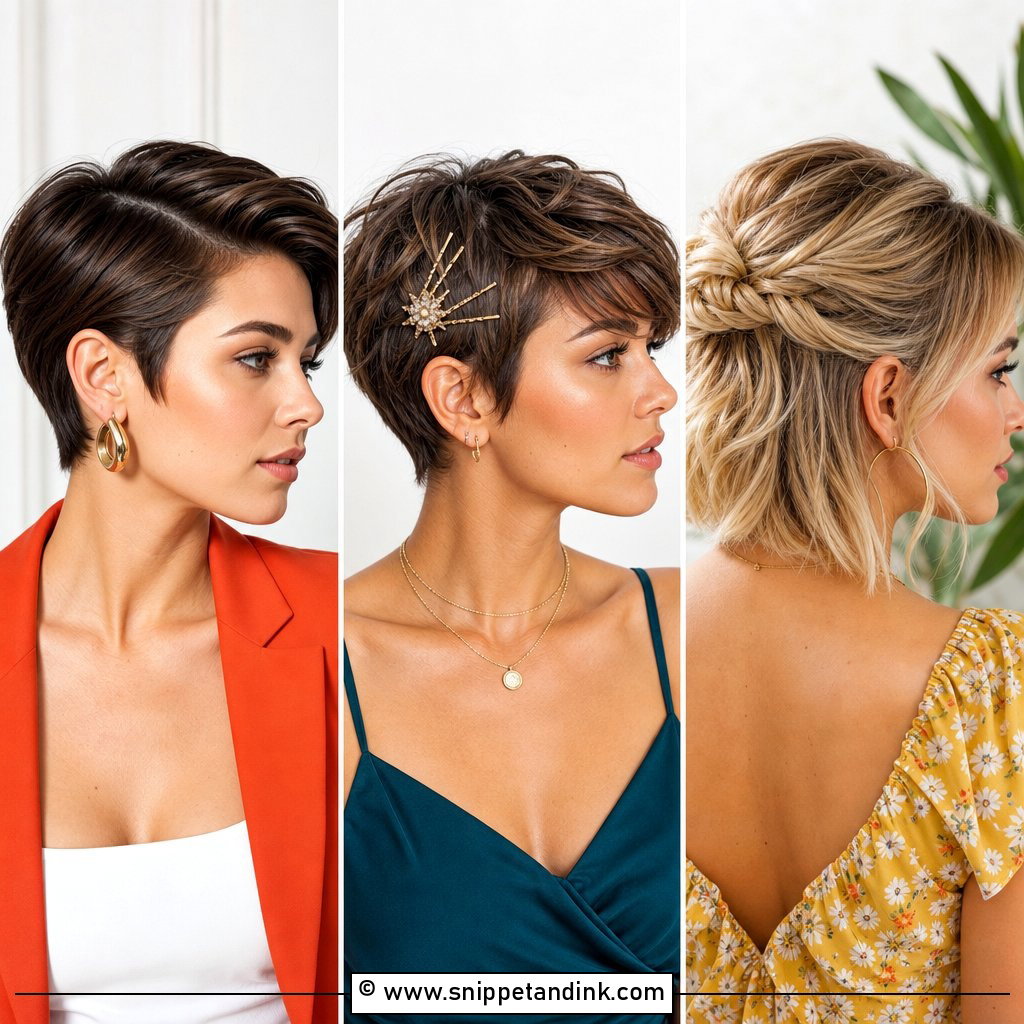
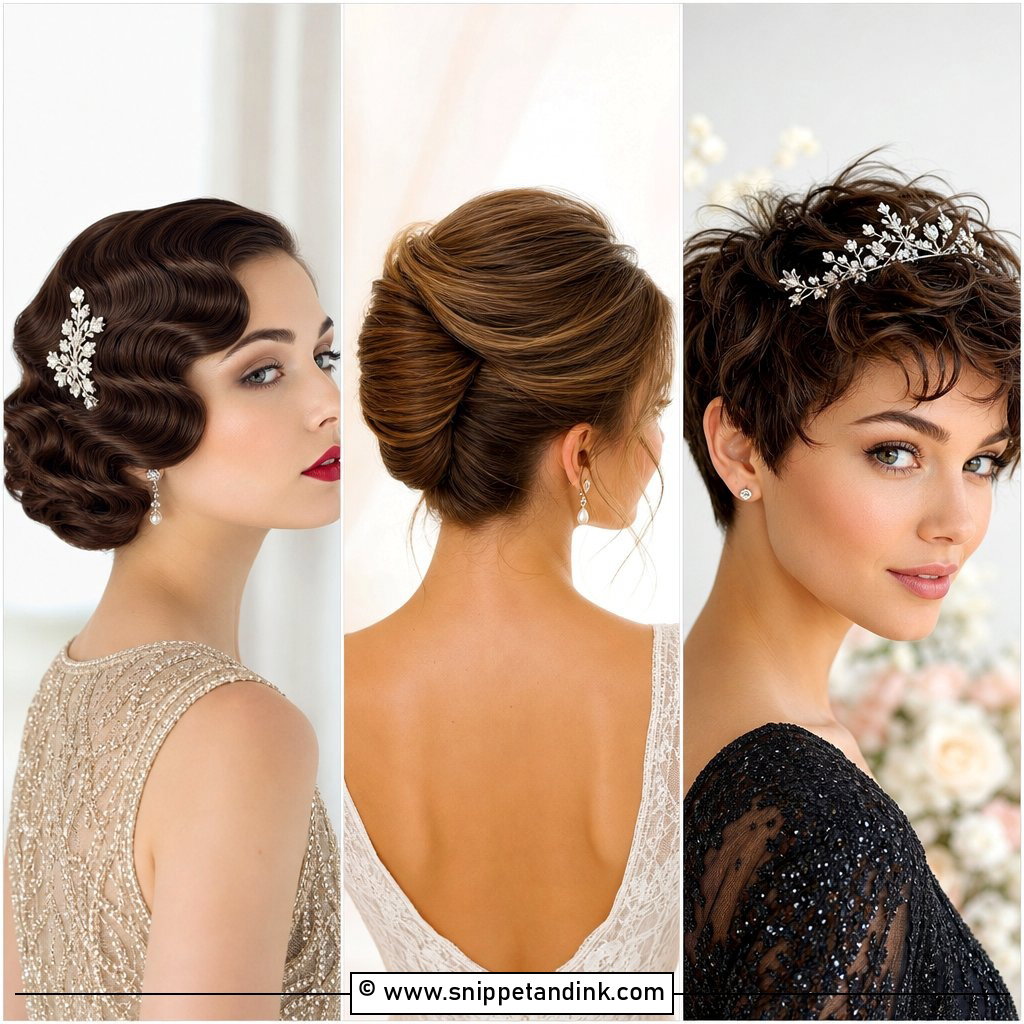
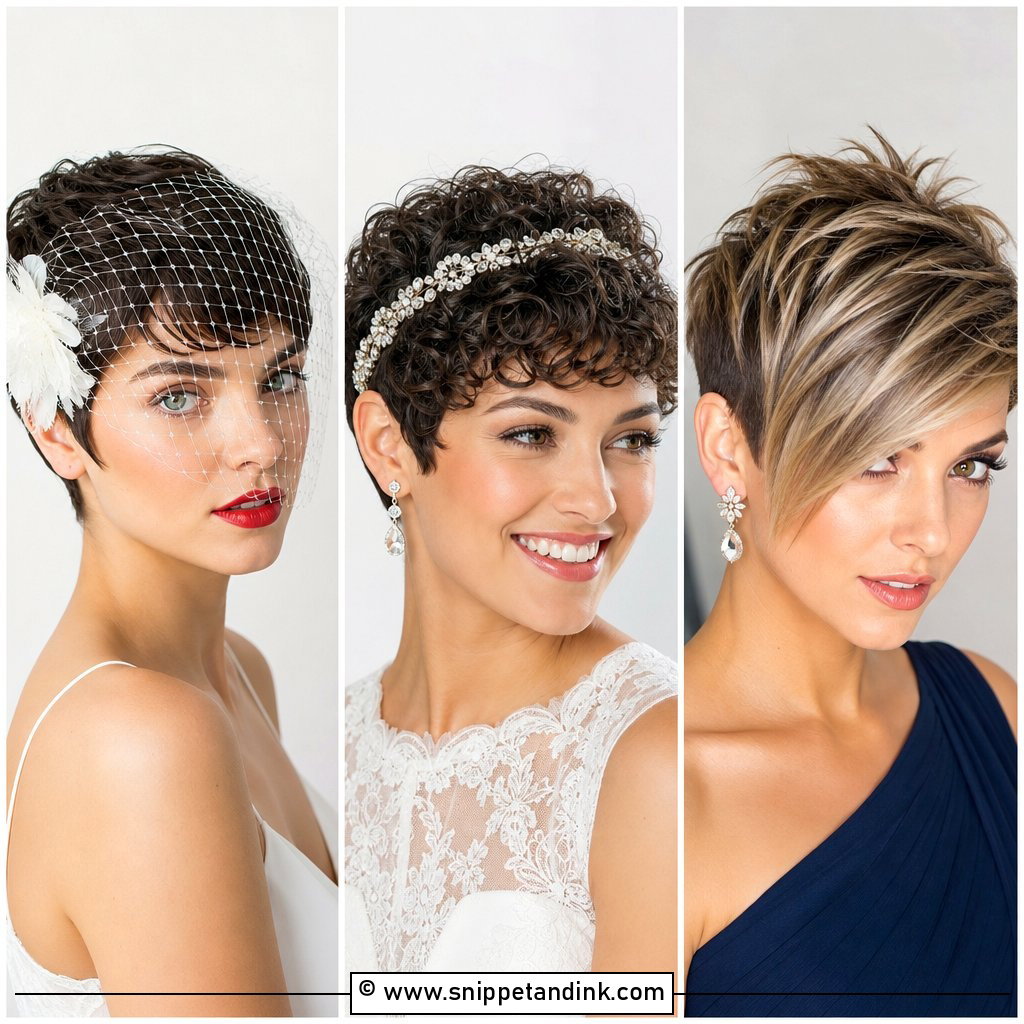
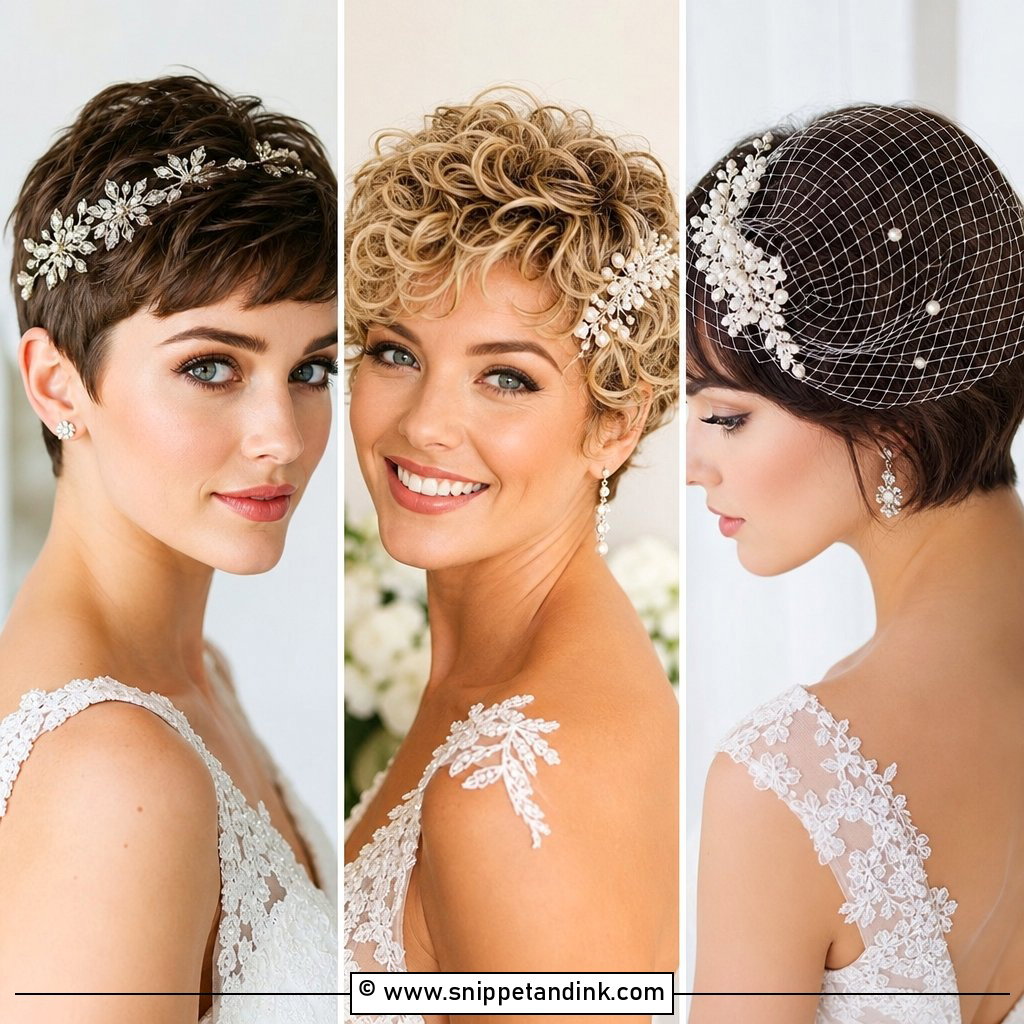
A bridal pixie cut puts your face and neckline front and center, so the cut has to be clean. Book the trim about a week before the wedding; any sooner and the edges around the ears look harsh, any later and the nape starts to blur. I style the top with a little paste for soft texture rather than slicking it flat. A tiny pearl comb or crystal clip just above one ear is usually enough. High necklines and off-the-shoulder gowns both suit it.
2. Bridal Pixie Cut With Headband
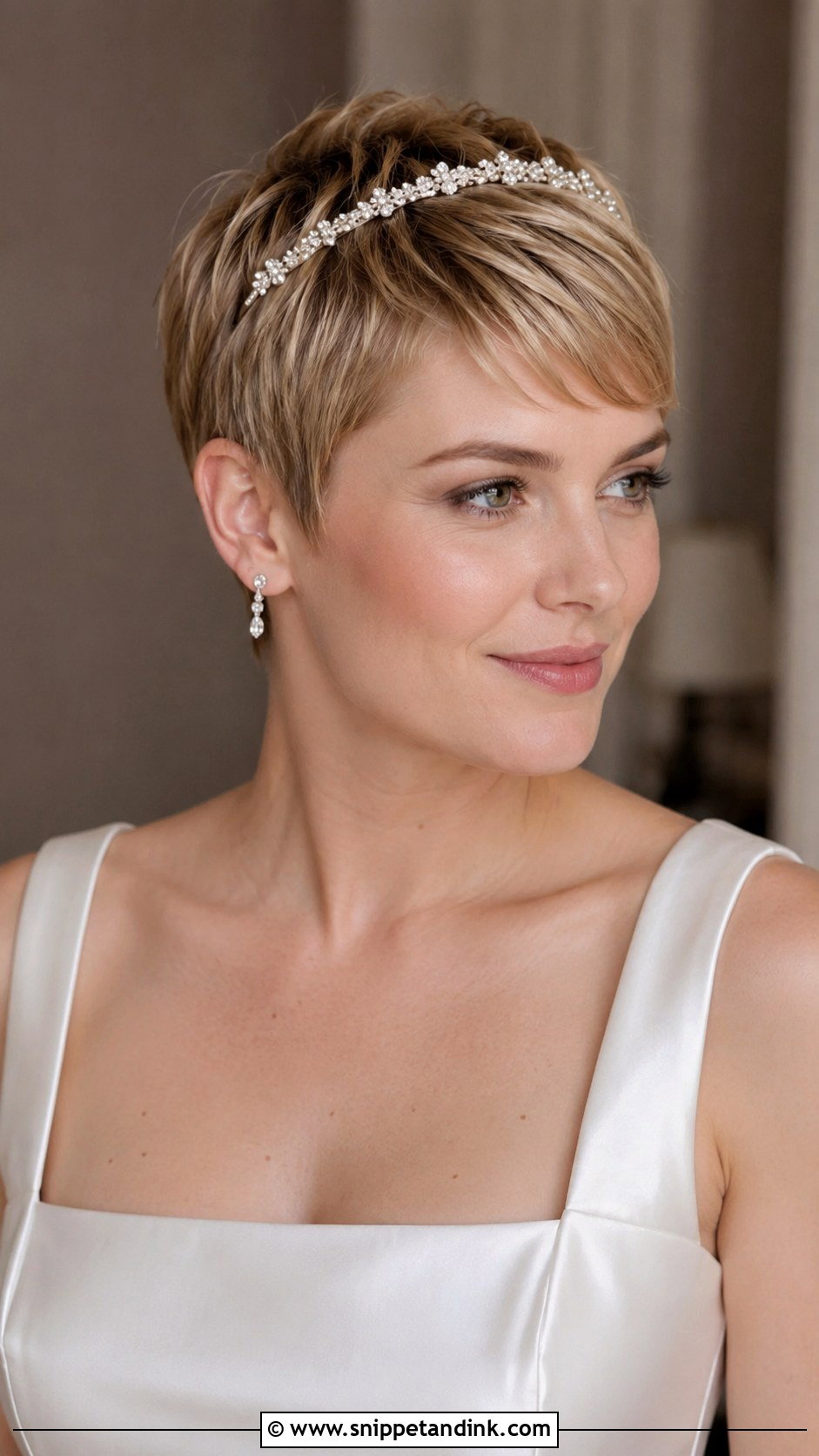
A bridal pixie cut with headband is the quickest way to dress up very short hair, because the band holds itself on without needing length to pin into. A padded satin band gives a fashion edge; a slim pearl one is more classic. I lift the crown a little before the band goes on, so the hair behind it doesn’t look pressed. Headbands with a fabric lining or tiny teeth stay put far better than polished metal ones, which tend to creep forward.
3. Bridal Curly Pixie Cut
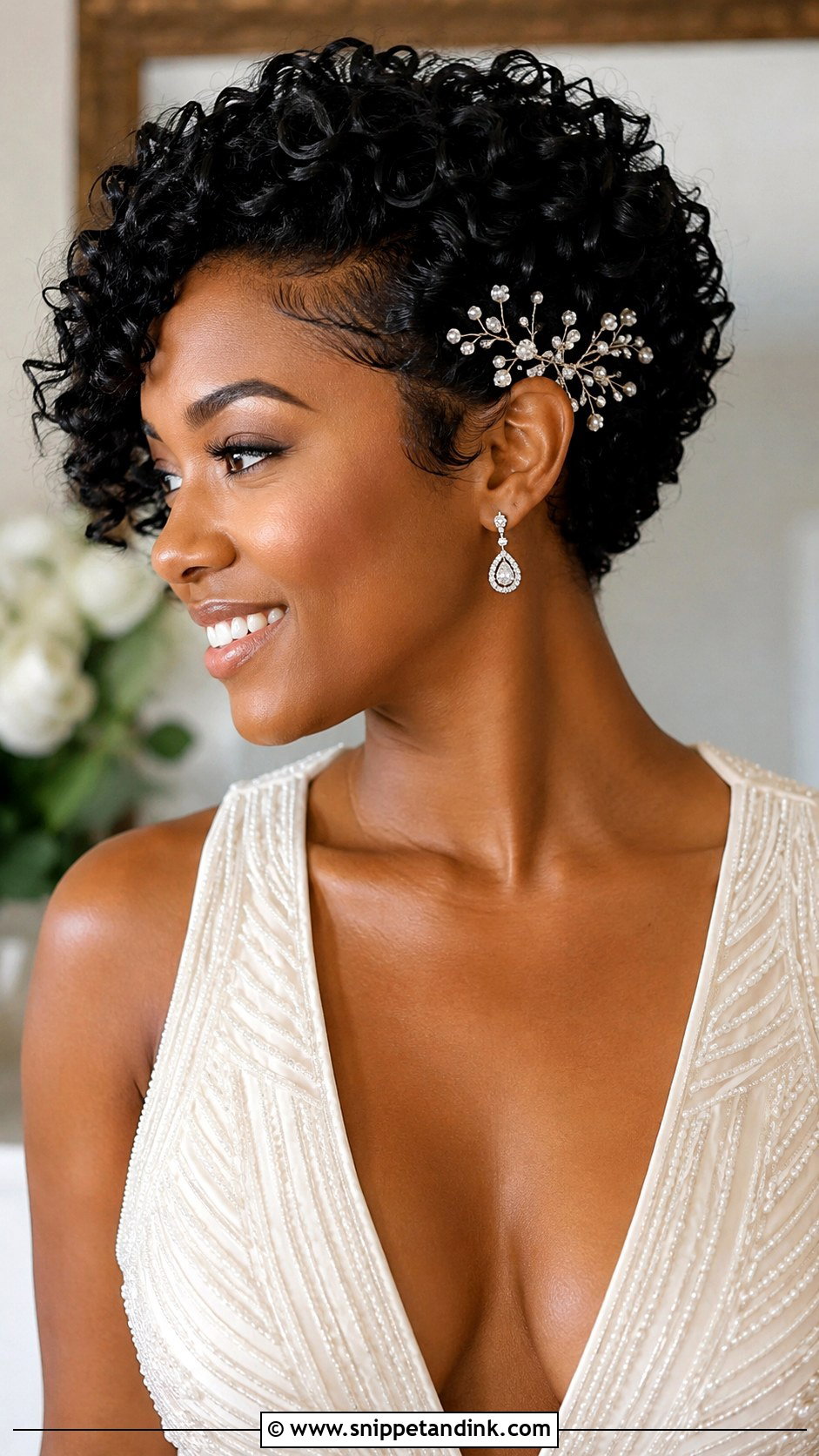
Curly pixies are about letting the pattern do the work. I define curls on damp hair with a curl cream and a light gel, then diffuse on low heat and leave them alone; touching them while they dry is what causes frizz. Longer front curls can be shaped into a soft side sweep. Accessories are tricky here, since a pin can flatten a curl, so I tuck a small vine pin or a few small flowers only where the curls are dense enough to hold them.
4. Bridal Finger Waves Short Hair
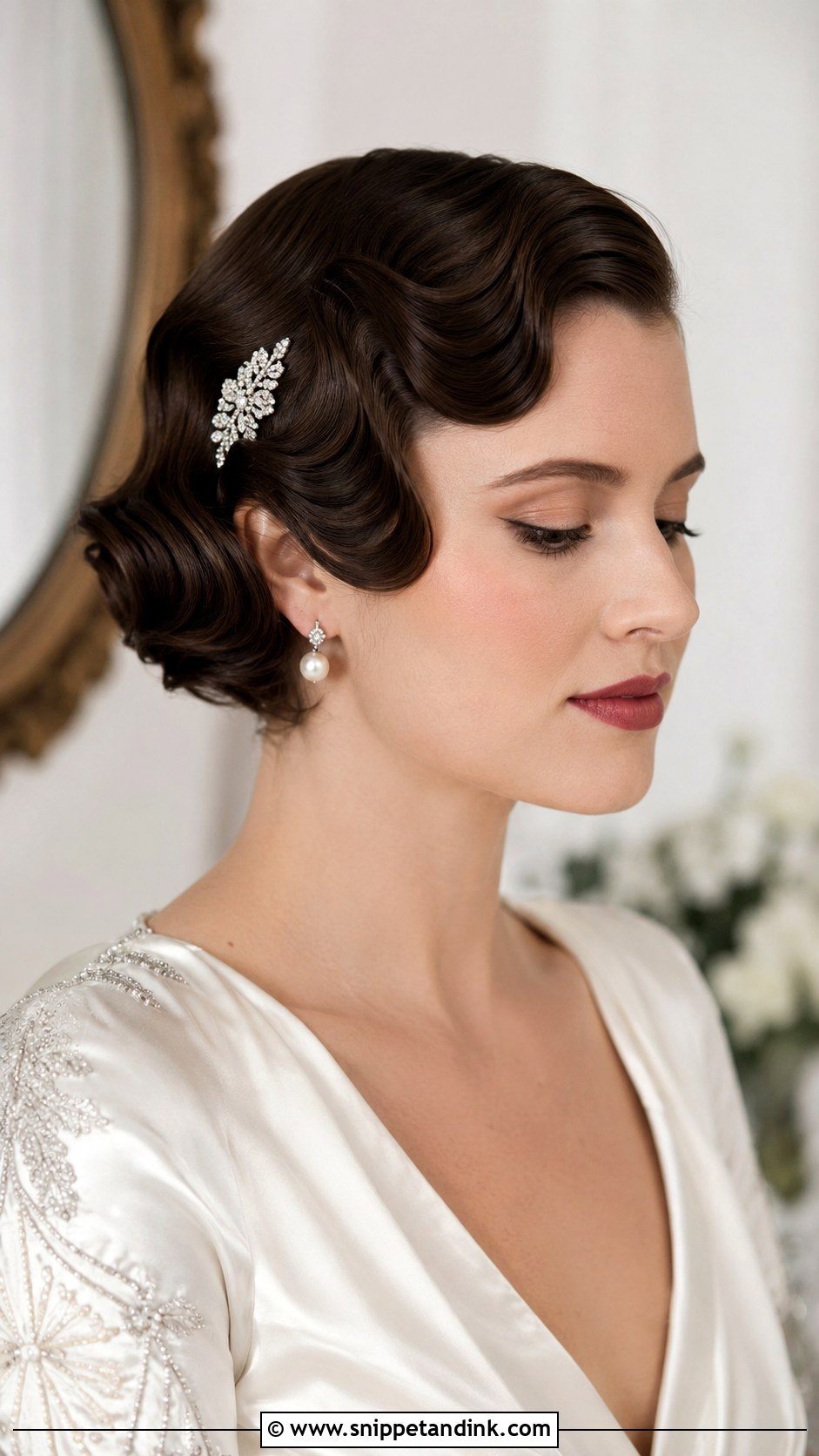
Bridal finger waves short hair styles are the most vintage option in this list and among the most durable once set. The waves are shaped with setting gel and a fine comb, clipped and left to dry completely. Layered cuts are harder, because shorter layers can break out of the wave, so a trial matters here. Glossy is the goal, but too much product looks greasy in close-ups. Red lips and pearl earrings are the natural pairing.
5. Bridal Slicked Back Bob
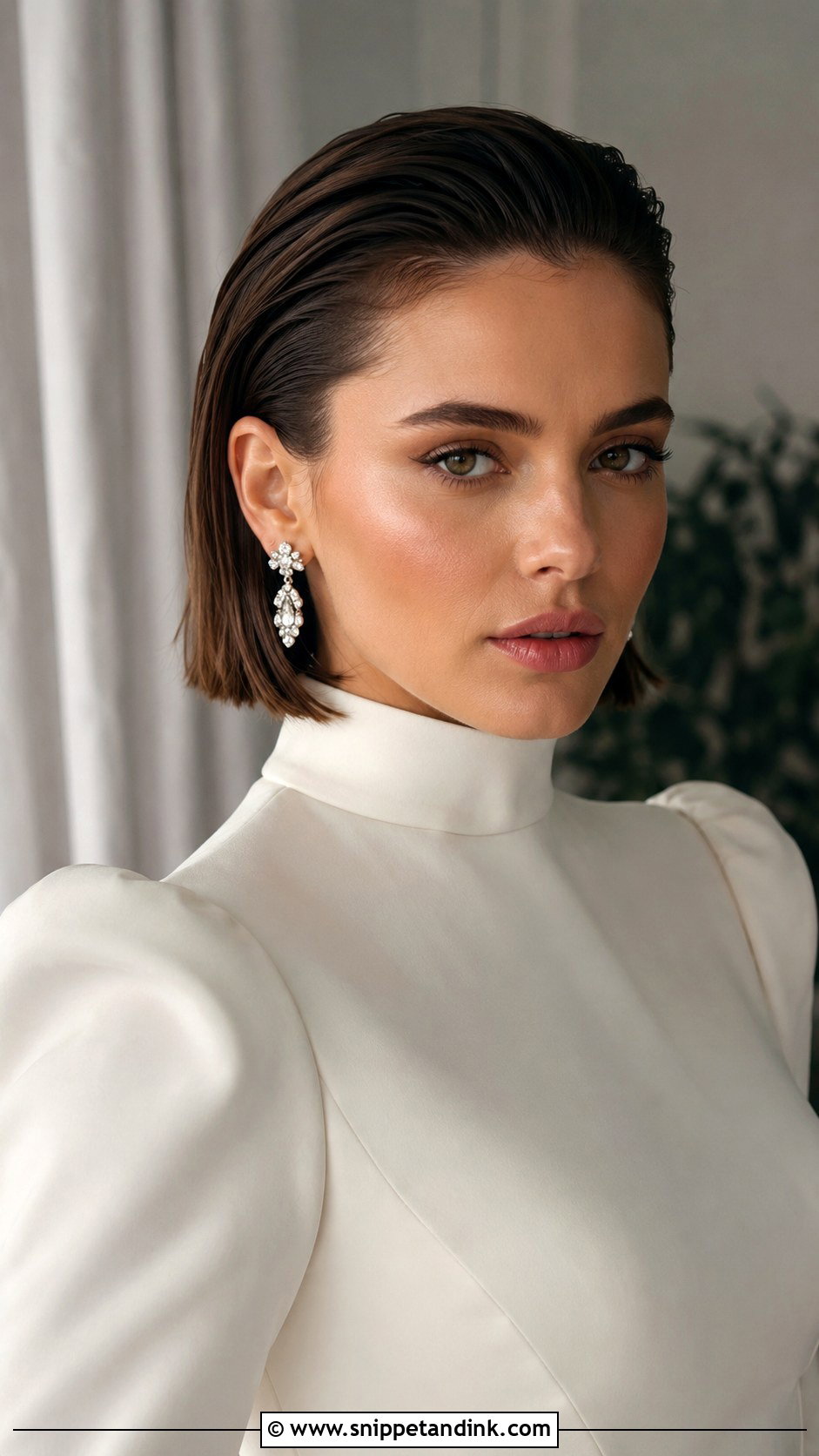
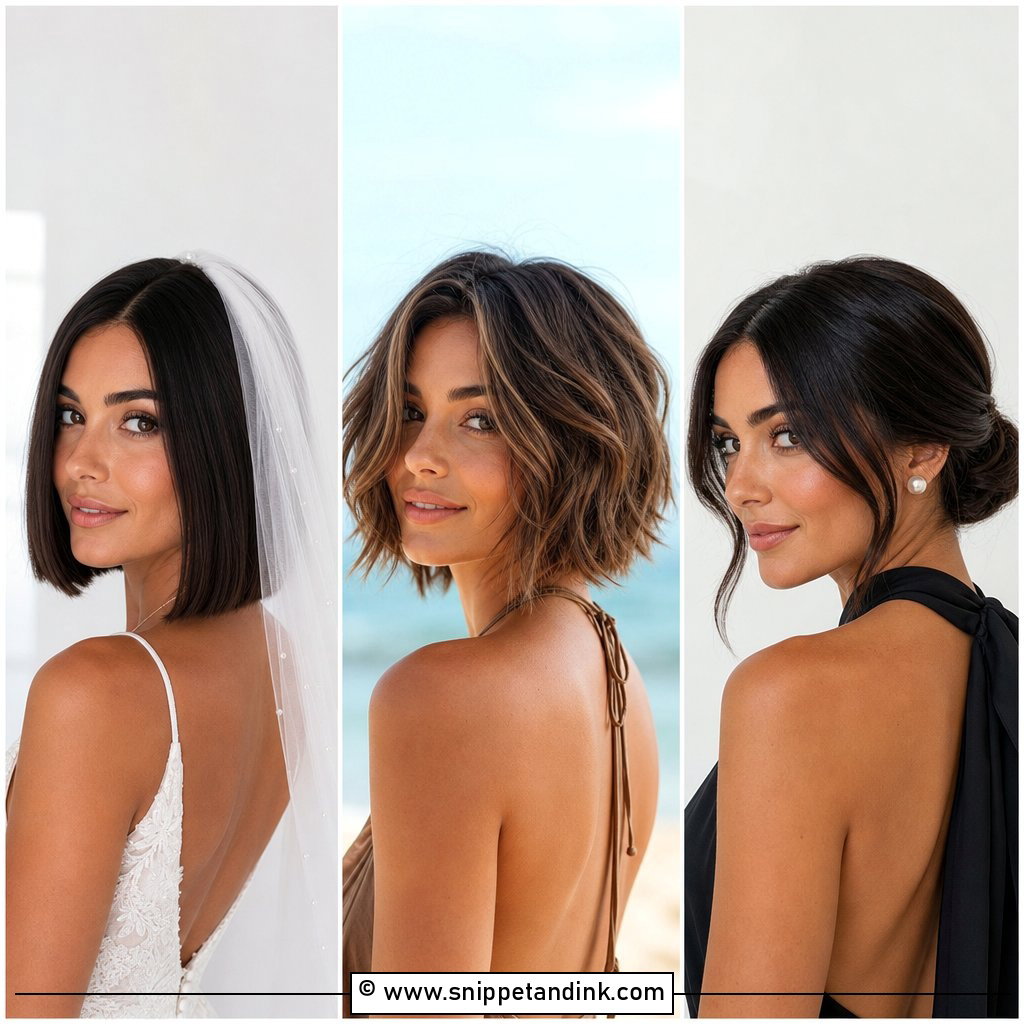
A bridal slicked back bob leaves the face completely open, which is why it works best when the dress has the drama: sculpted shoulders, a detailed neckline or big earrings. I comb the hair back with a strong cream rather than a heavy gel so it moves a little. The bob length still softens the jawline. Test it before committing if you have a strong cowlick at the front, as it can push the hair up over the hours.
6. Bridal Side Part Bob
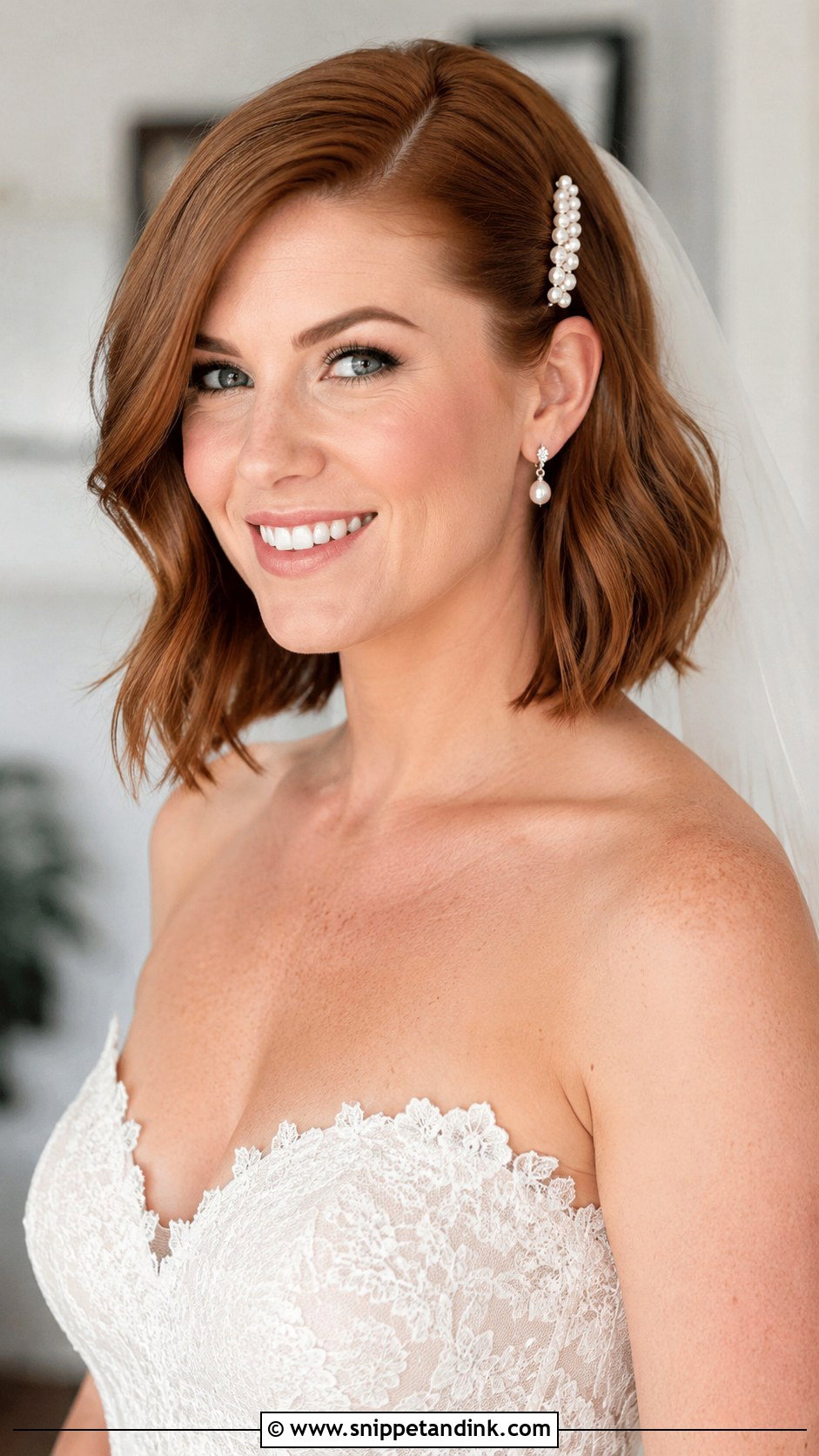
Quick to do and easy to tailor. A deep side part gives a short cut height at the crown and a sweep across the forehead. Bend the ends for softness or keep them straight for a sharper look. I place any comb or pearl pin on the lighter side of the part, which balances the extra hair on the heavy side. In photos, that face-framing section adds movement from three-quarter angles.
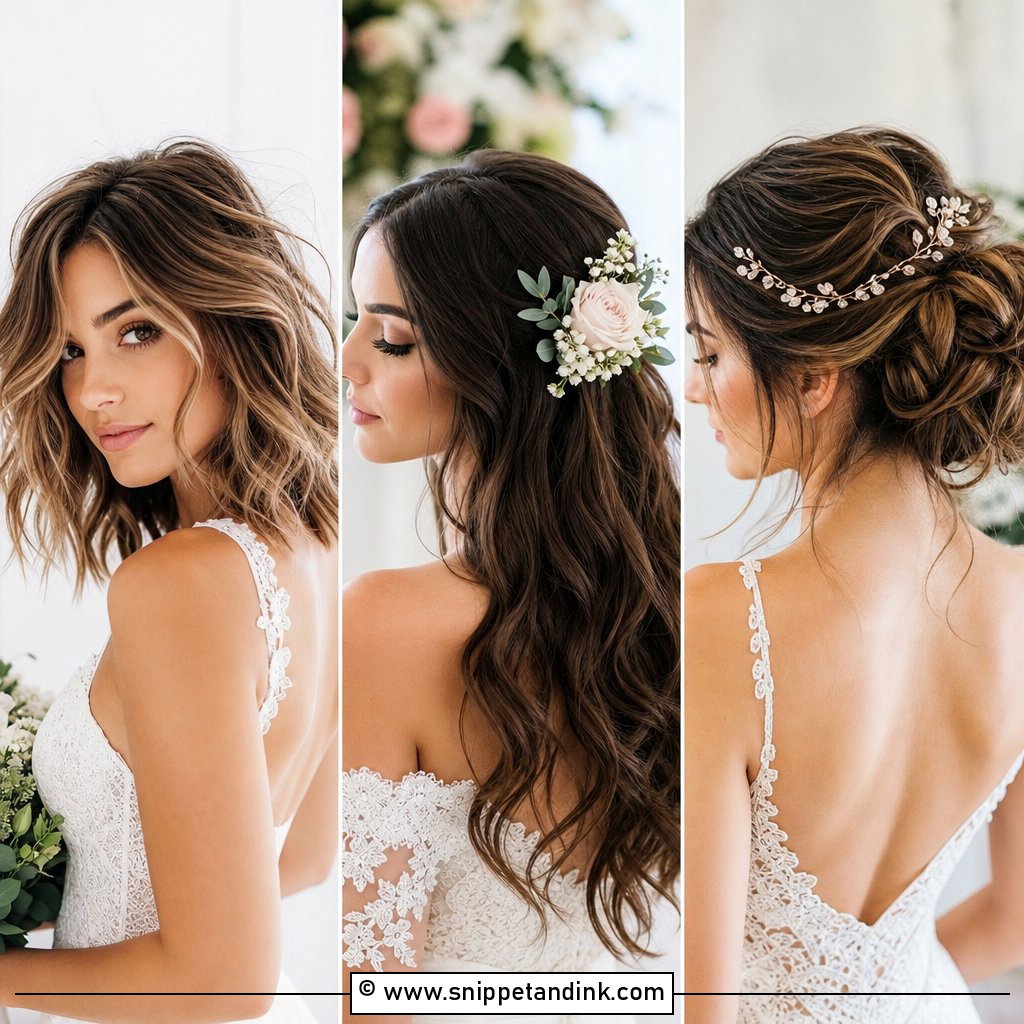
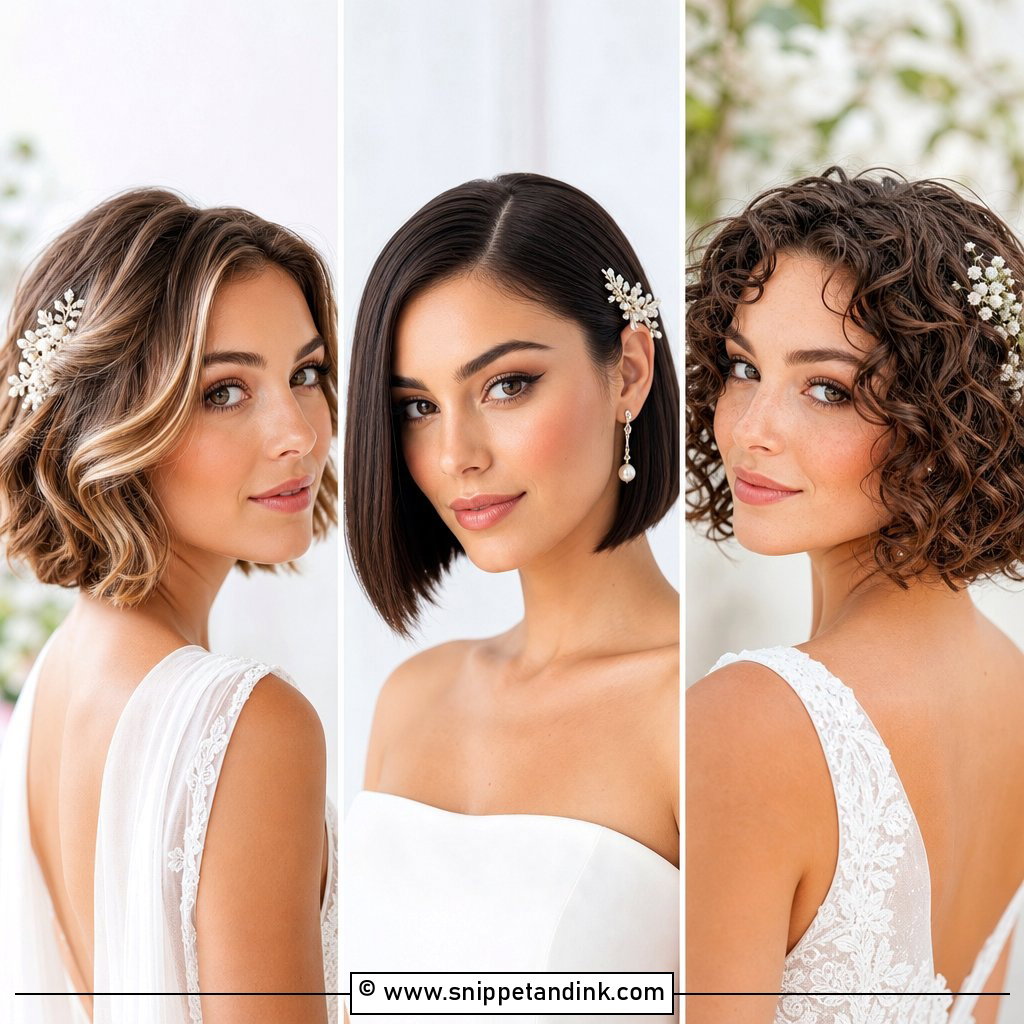
7. Bridal Wavy Bob
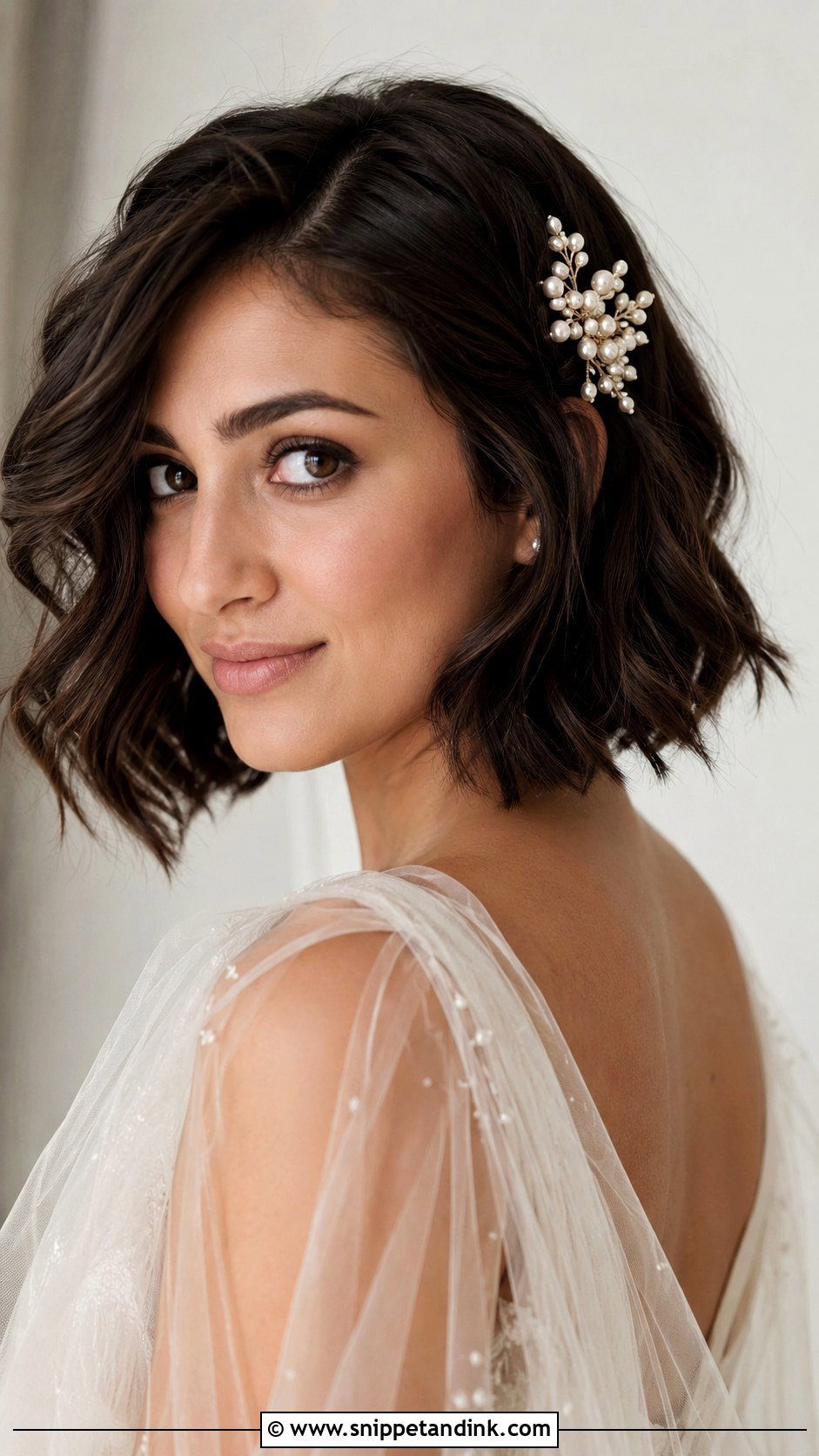
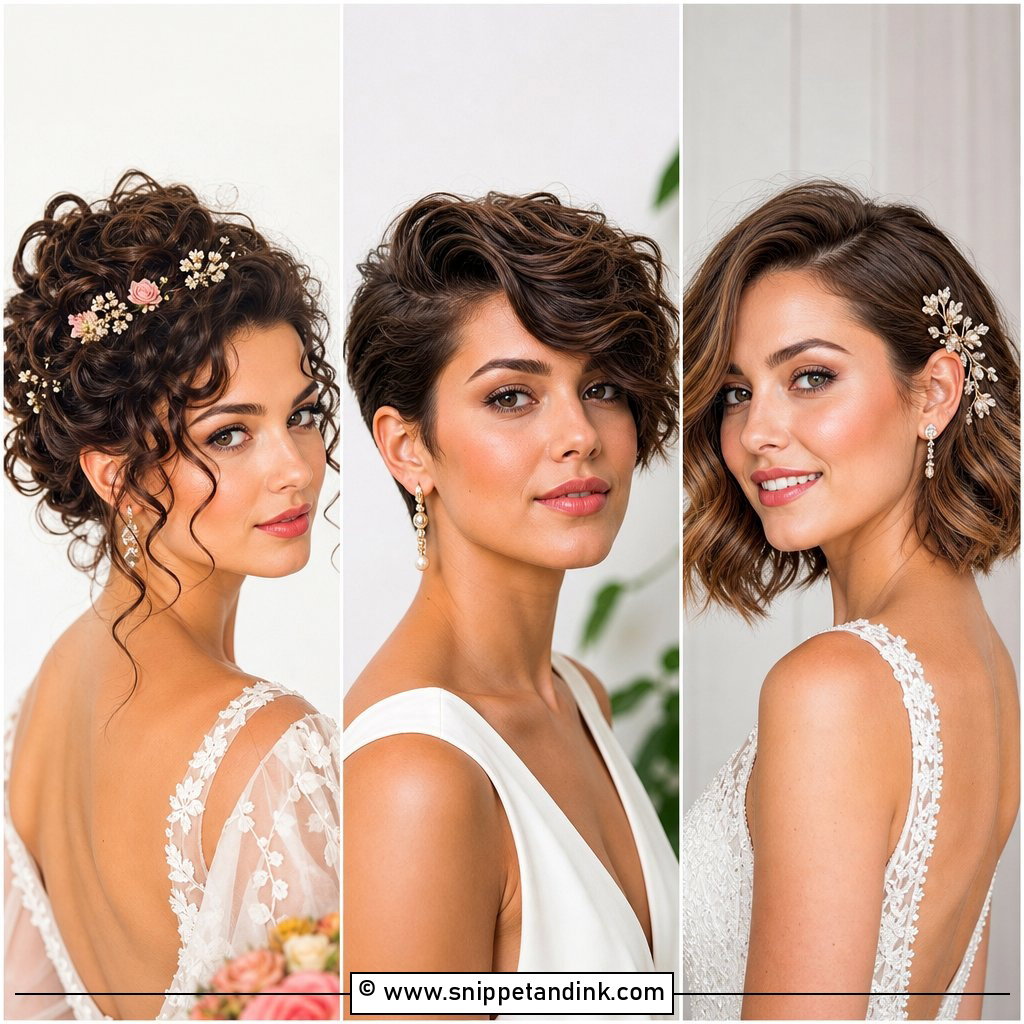
Waves on a bob look best when they’re brushed out and shaped away from the face, so they read airy rather than set. I use a medium barrel and leave the last inch of each section straight, which keeps the ends from flipping up into a dated curl. A flexible spray keeps the movement without stiffness. This suits garden and courthouse weddings, and a sheer veil tucked at the crown sits easily on waved hair.
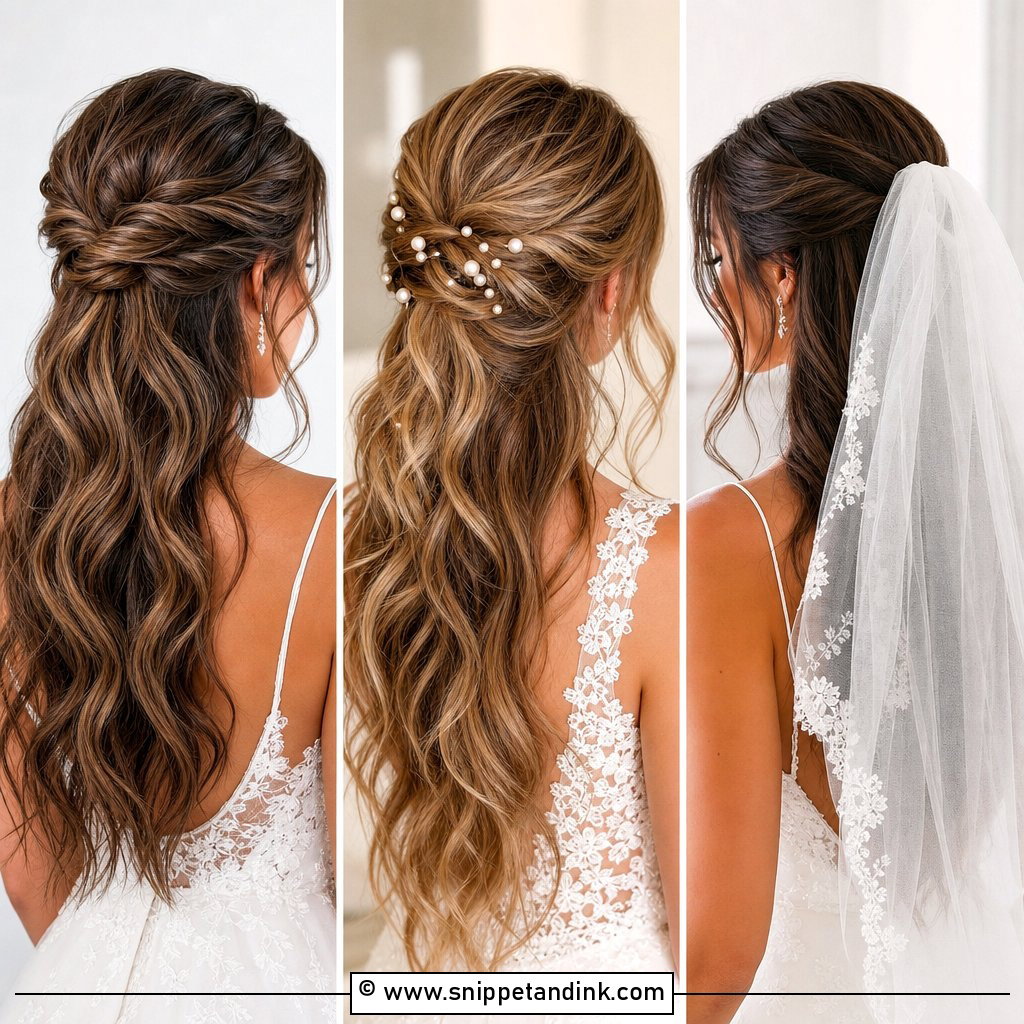
8. Bridal Bob With Veil
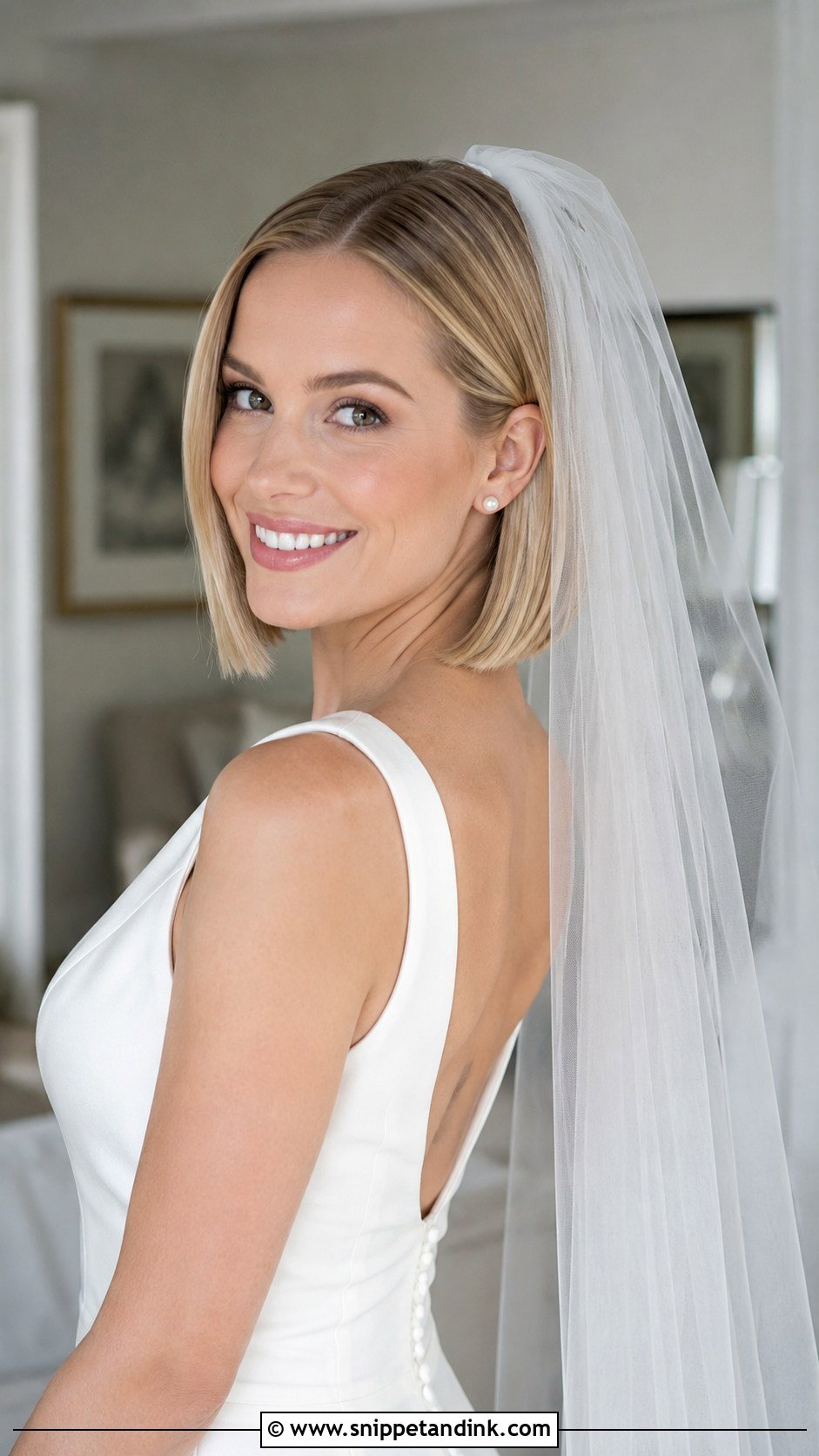
A veil on a bob is all about where the comb can grip. I usually place it at the crown under a small twist or a backcombed section, which gives the teeth something to hold. A fingertip veil balances short hair well; a birdcage veil adds a vintage note. Long, heavy cathedral veils can pull a comb out of short hair, so if that’s the veil you love, ask whether it can be sewn onto a thin headband. Test the actual veil at your trial.
9. Bridal Bob With Pearl Pins
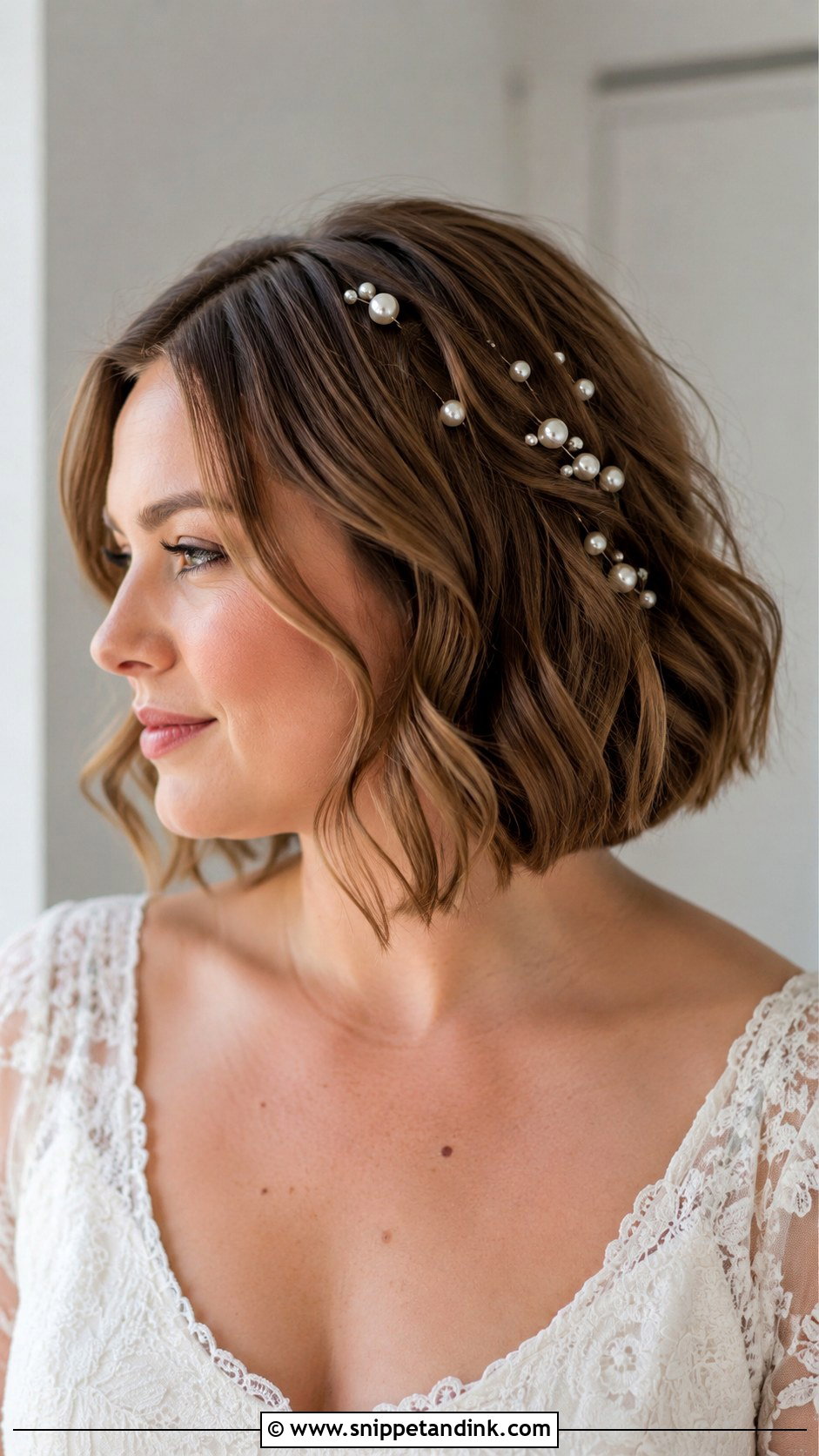
Pearl pins sit well on wavy bobs because the texture gives them something to grip. I scatter them along one side or use them to hold back a face-framing piece. Mixed sizes look more natural; uniform pins look cleaner. On smooth, freshly washed hair they slide, so I spray the section with a little texture spray first. They’re practical too: they hold hair off the face during the ceremony without hiding the bob’s shape.
10. Bridal Bob With Side Clip
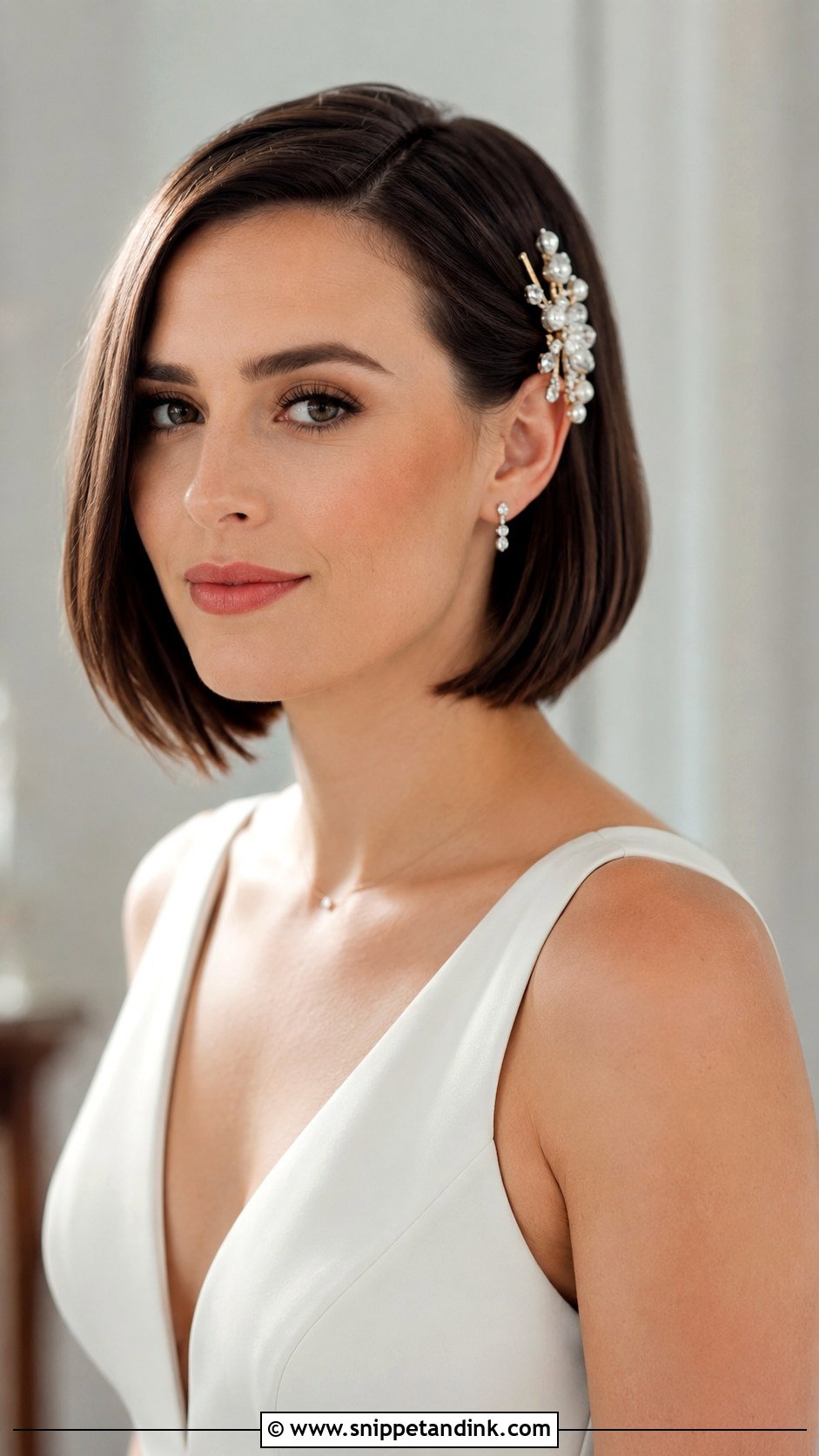
One good clip often looks better on a bob than five small pieces. I tuck one side neatly behind the ear, secure it with crossed bobby pins and then place the clip over them, so the clip is decorative and the pins do the holding. The other side stays soft. Choose a clip in proportion: something wider than two fingers can look heavy on short hair. It’s also an easy fix for front pieces that blow around at an outdoor ceremony.
11. Bridal Half Up Bob
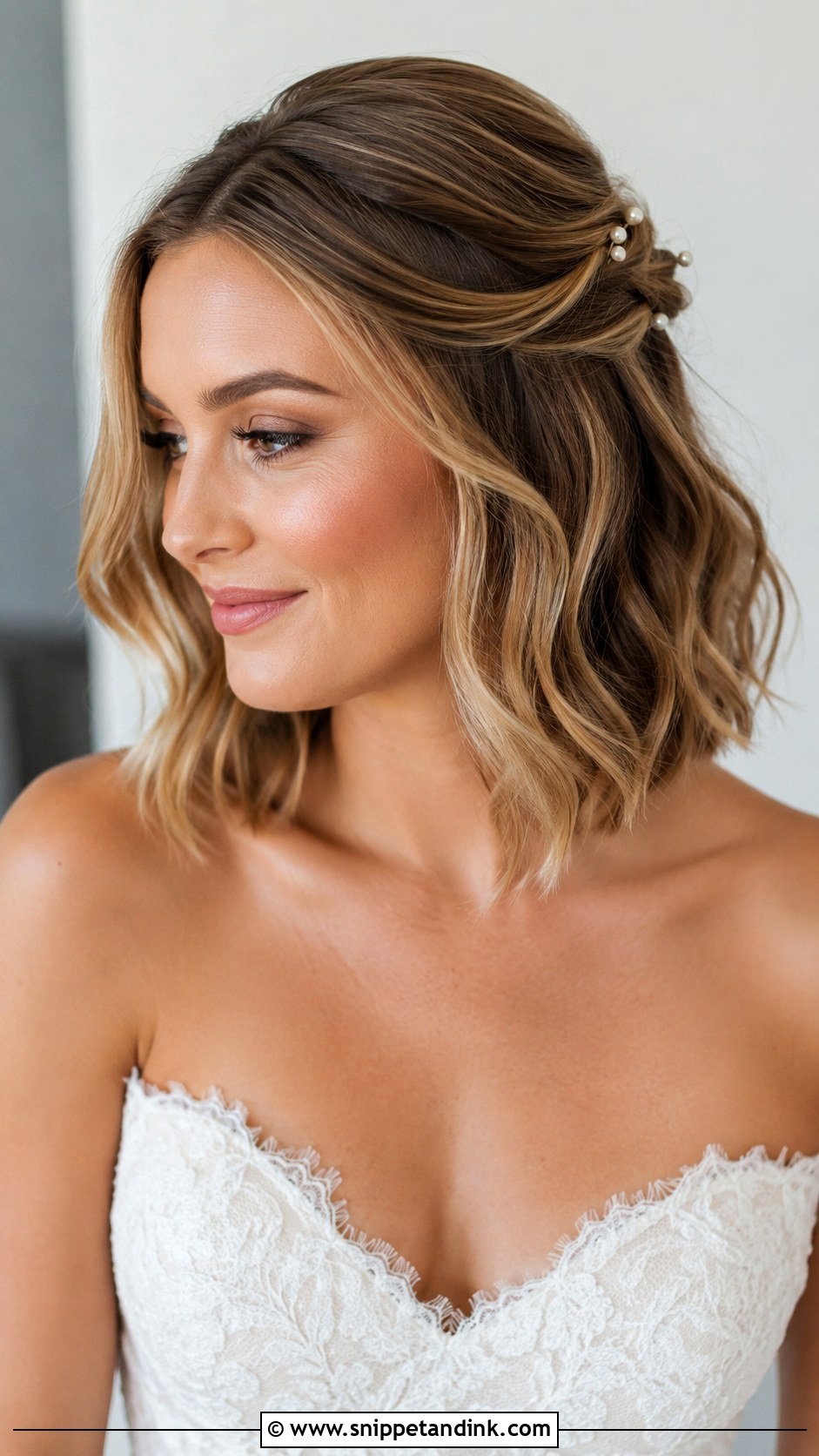
With a bob, half up only works if the top section reaches the back of the head. I take a narrower section than I would on long hair, so what hangs below still looks full. Twisting the sides back and pinning them is often easier than gathering everything. Loose waves underneath fill out the shape. A small comb or a short veil can sit at the point where the twists meet.
12. Bridal Braided Bob
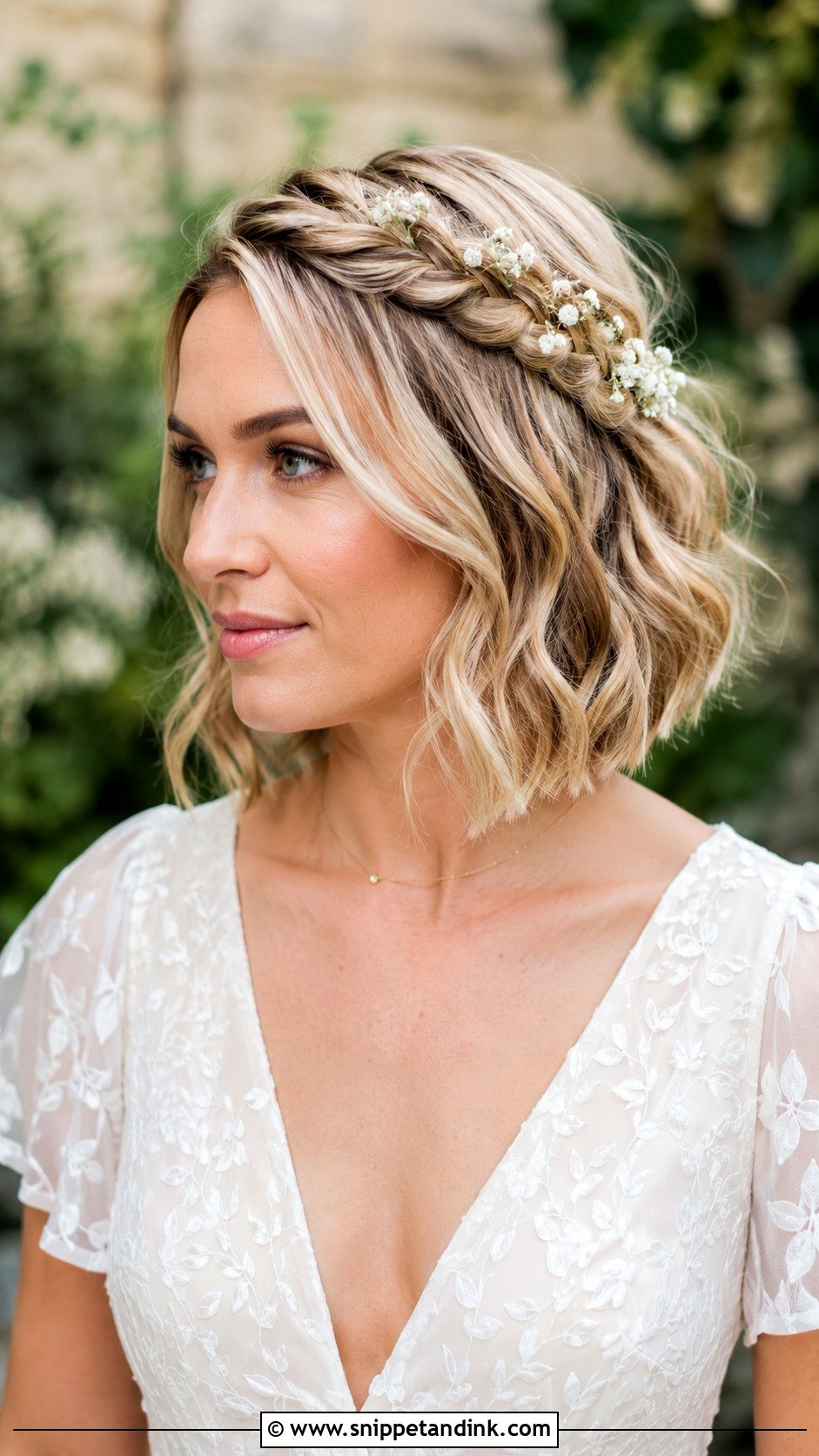
A braid doesn’t need to be large to make a difference on short hair. A small side braid or one running along the hairline adds detail and has a practical purpose: it catches shorter layers that would otherwise fall forward. I braid with a little texture spray so short ends don’t poke out. Soft waves through the rest of the bob keep it relaxed. Tiny flowers or pearl pins sit well in the braid itself.
13. Bridal Twisted Bob
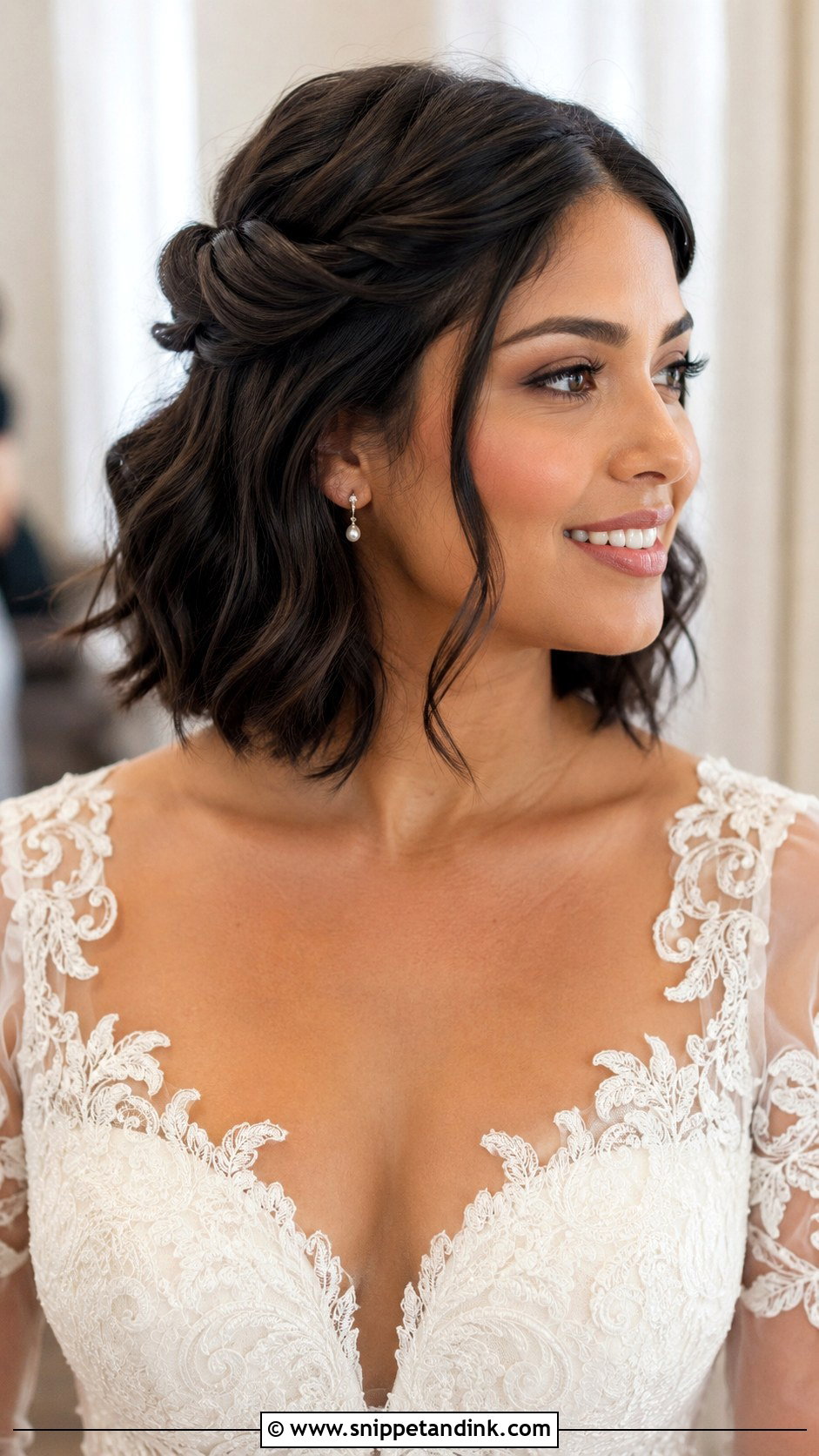
Twists are quicker than braids and create a gathered look without needing much length. Small sections from each side are twisted back and pinned near the crown or nape. On fine hair, twists add visual fullness without heavy teasing, which is a real plus. The remaining length can be curled or tucked under. Keep the pins hidden inside the twists rather than across them, since visible pins break the line.
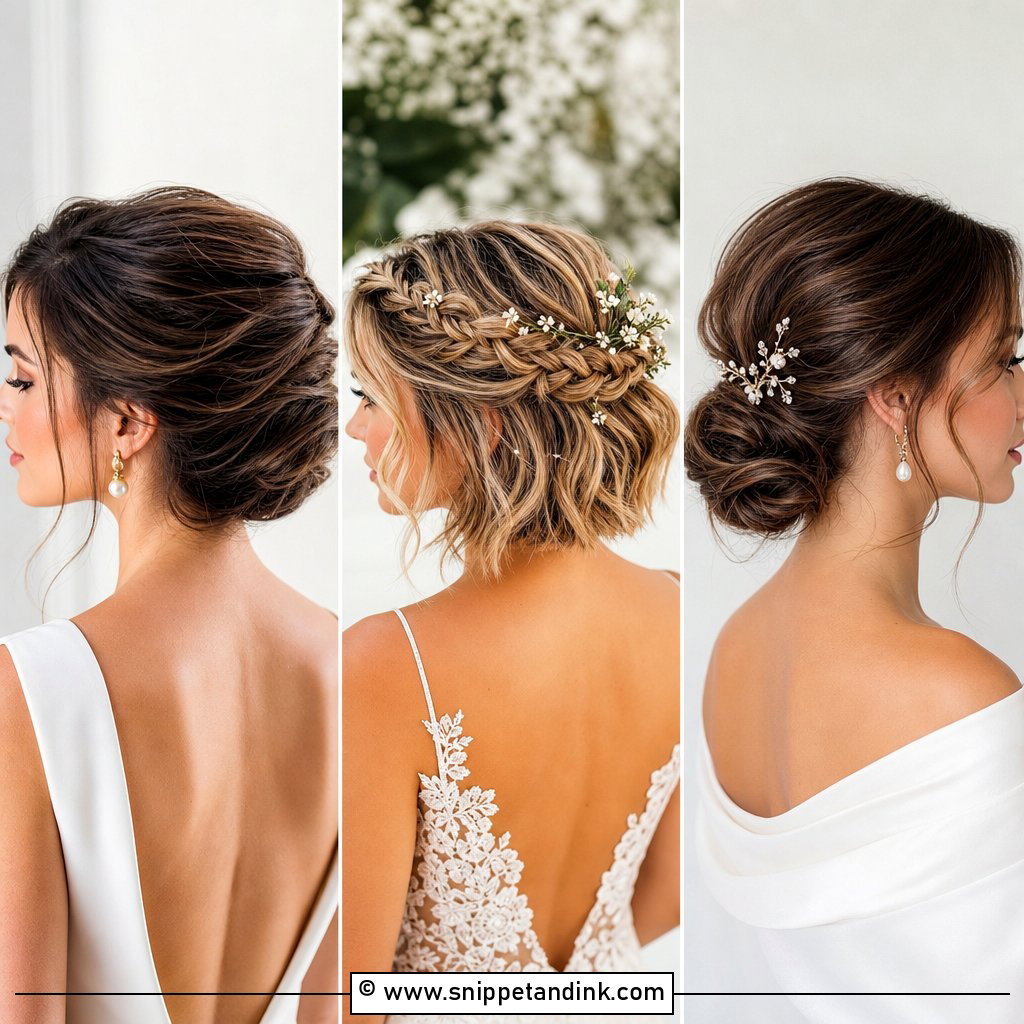
14. Bridal Short Hair Low Bun
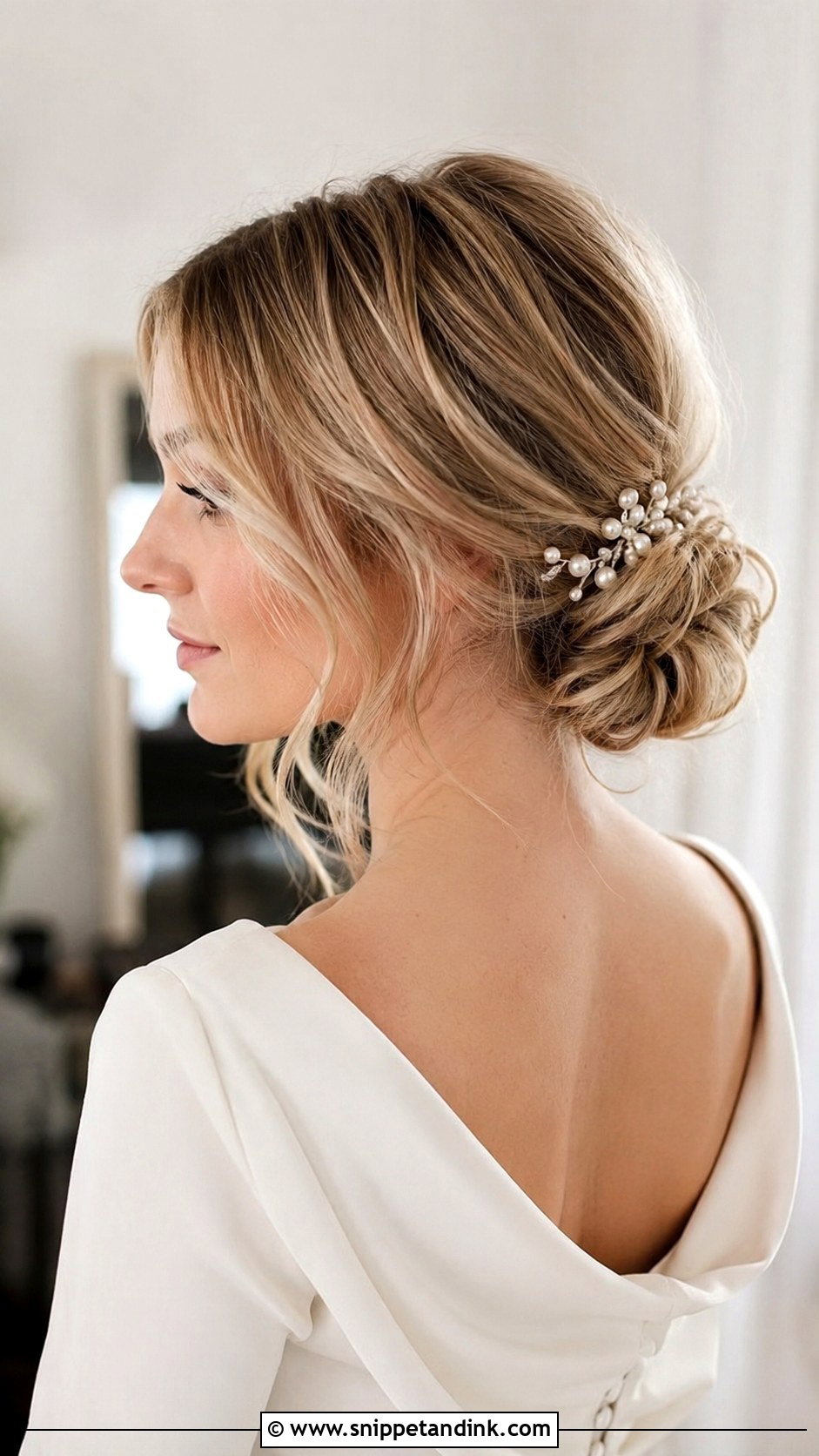
A low bun needs at least bob-length hair, ideally hair that reaches past the jaw. I gather what reaches the nape, twist it into a small bun and pin every loose end, using mini bobby pins that disappear into short hair. The bun will be compact, not full. Shorter pieces at the sides can be left out to frame the face. If the nape layers are too short to reach, a small hairpiece can fill the shape without needing full extensions.
15. Bridal Short Hair Faux Updo
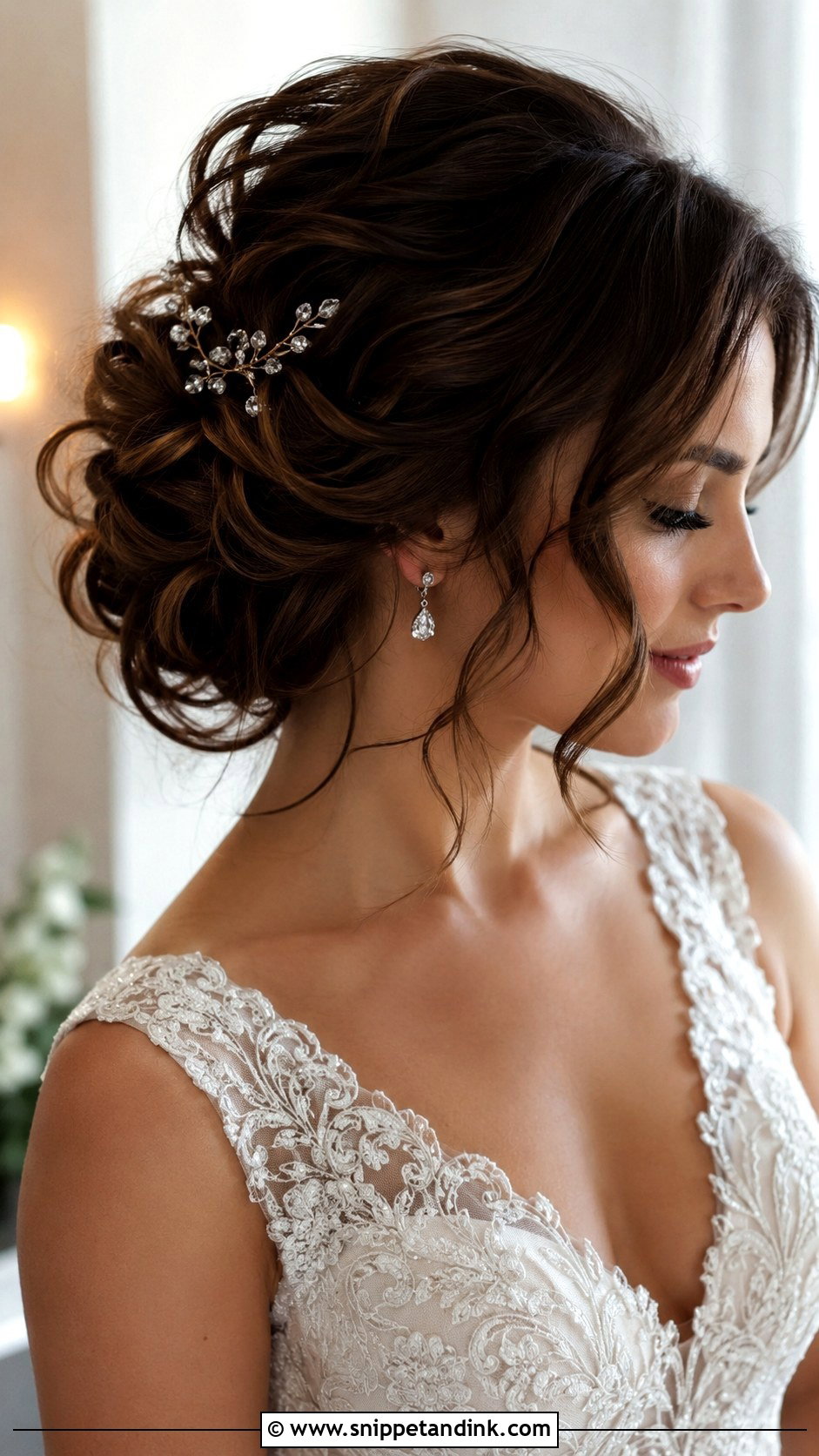
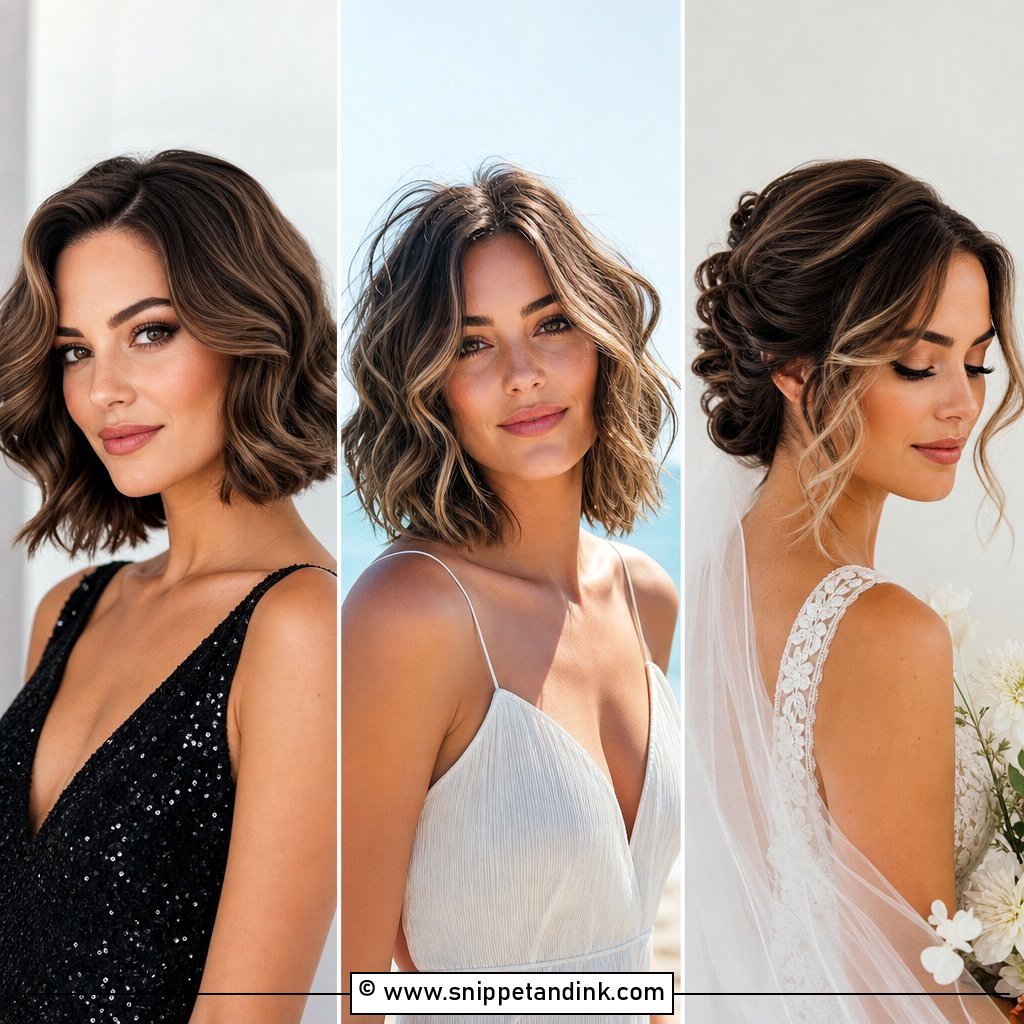
A faux updo is clever hairstyling: curls and small sections pinned close to the head so it looks gathered even though it isn’t. Texture is essential, as it hides pins and keeps the shape soft. I curl the hair first, then pin each curl individually, working from the nape upward. Layered bobs and lobs work best. It takes longer than people expect, so allow extra time on the morning.
16. Bridal Short Hair With Flower Crown
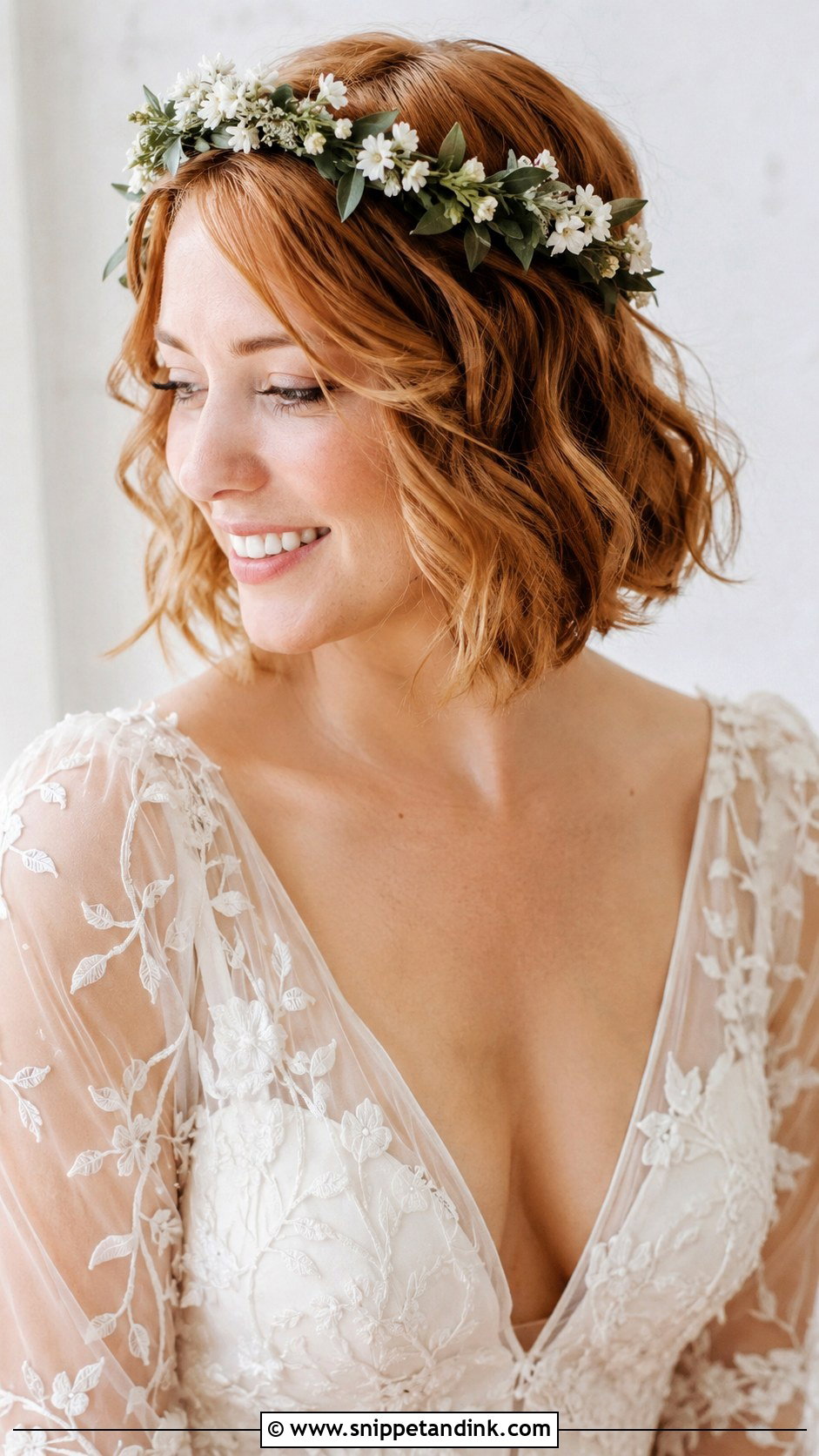
Scale is everything with a flower crown on short hair. Small blooms and greenery suit a pixie or bob; oversized flowers can overwhelm a short cut and look like a costume. I place the crown slightly back from the hairline and pin it through the wire at both sides and the back. Ask your florist for blooms that hold up out of water. Soft waves or natural curls help it blend into the hair.
17. Bridal Short Hair With Birdcage Veil
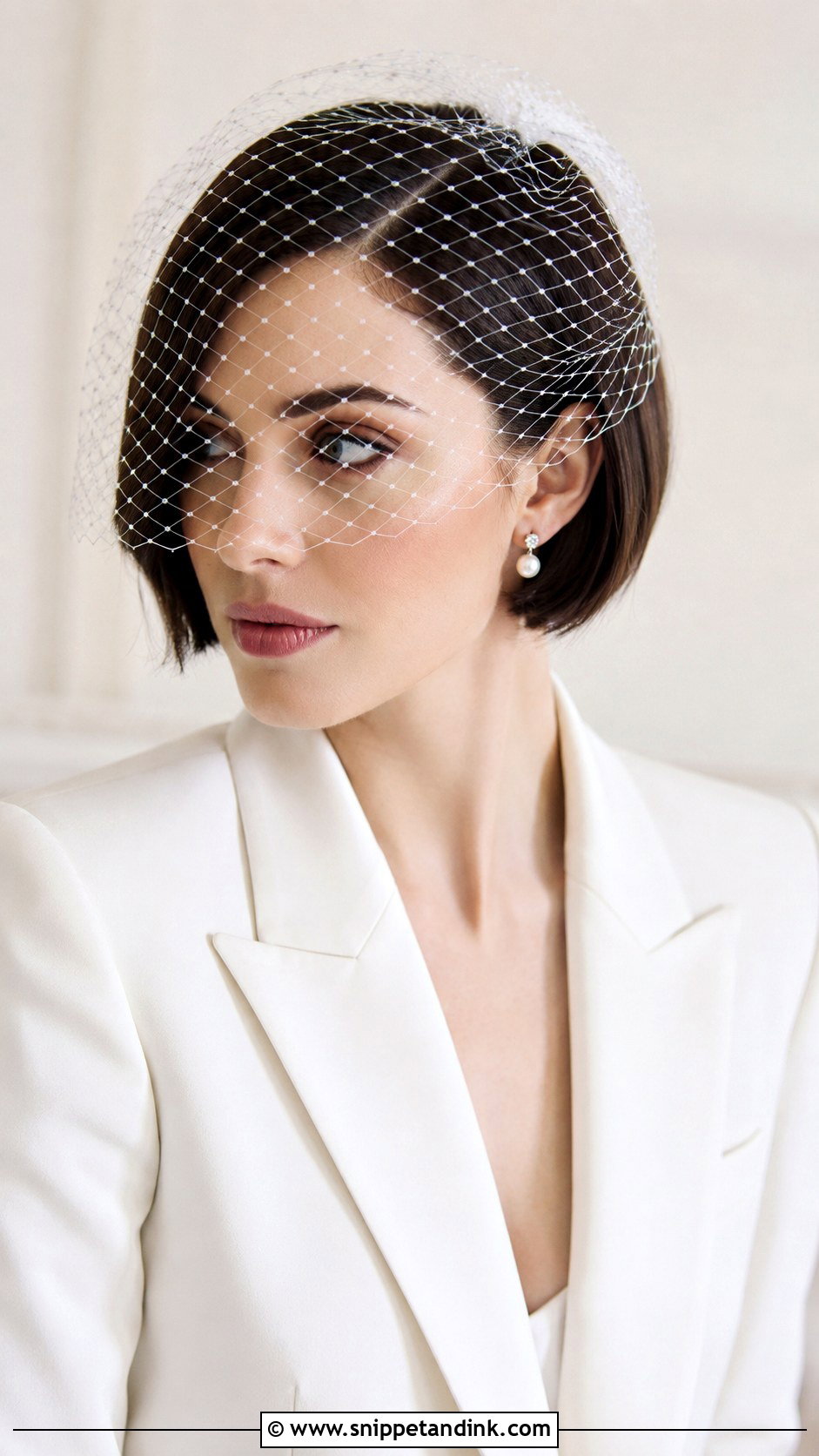
A birdcage veil frames the face rather than falling down the back, which makes it a natural match for pixies, crops and bobs. It should skim the eyes or cheekbones without hiding your expression. I place it after the hair is finished, anchored with a comb or pins at one side. The hair underneath can be finger-waved, side-parted or slicked. It suits courthouse and city weddings, and a tailored bridal suit too.
18. Bridal Short Hair With Tiara
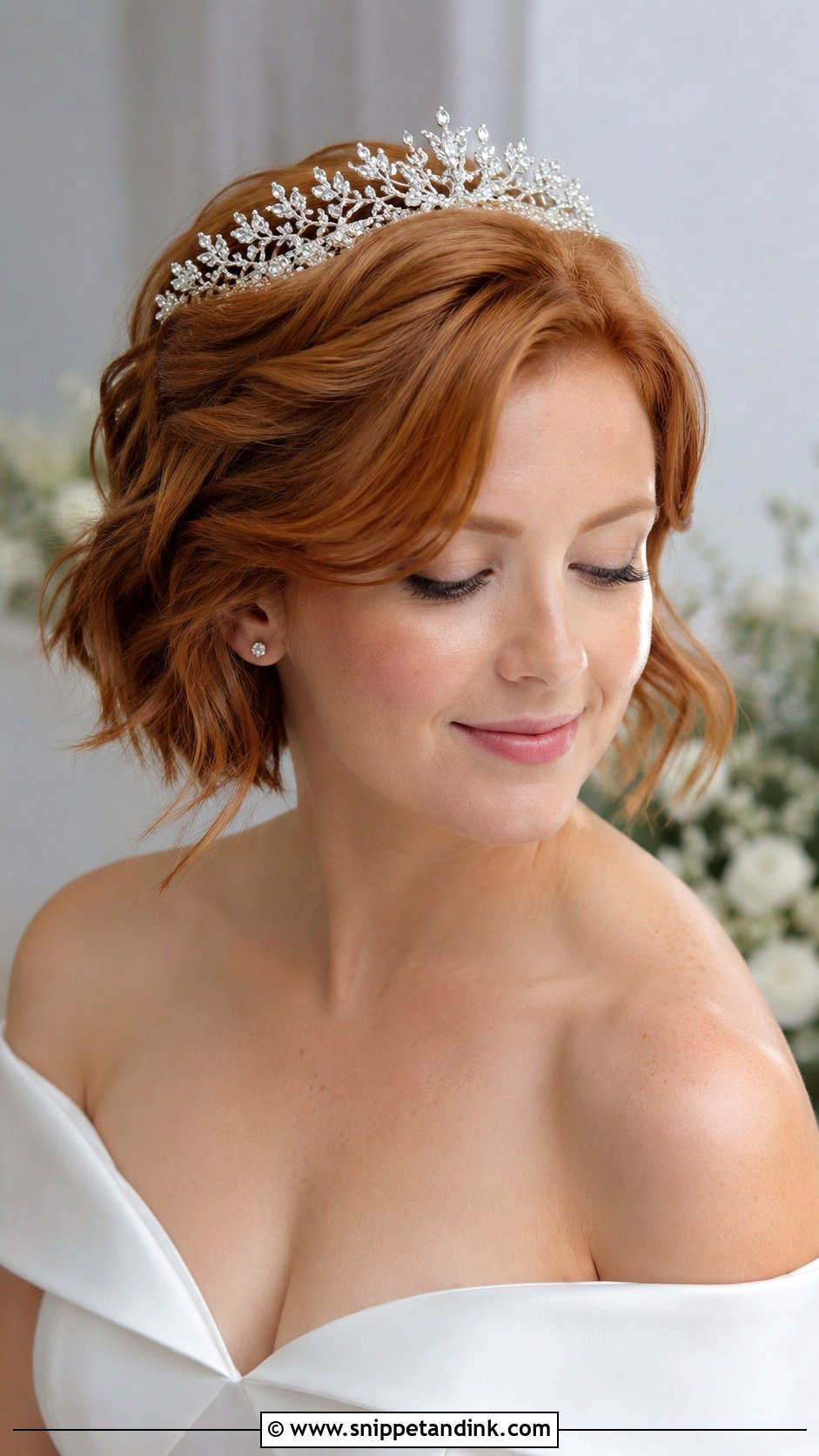
A tiara on short hair needs lift behind it, or it sits flat against the scalp. I backcomb a small section at the crown, smooth over it and slide the tiara in front of that support. Then I pin through the tiara’s side loops, if it has them, with crossed bobby pins. A delicate tiara suits a simple dress; a more detailed one works with a clean, structured gown. A veil attaches neatly just behind it.
19. Bridal Short Hair With Curtain Bangs
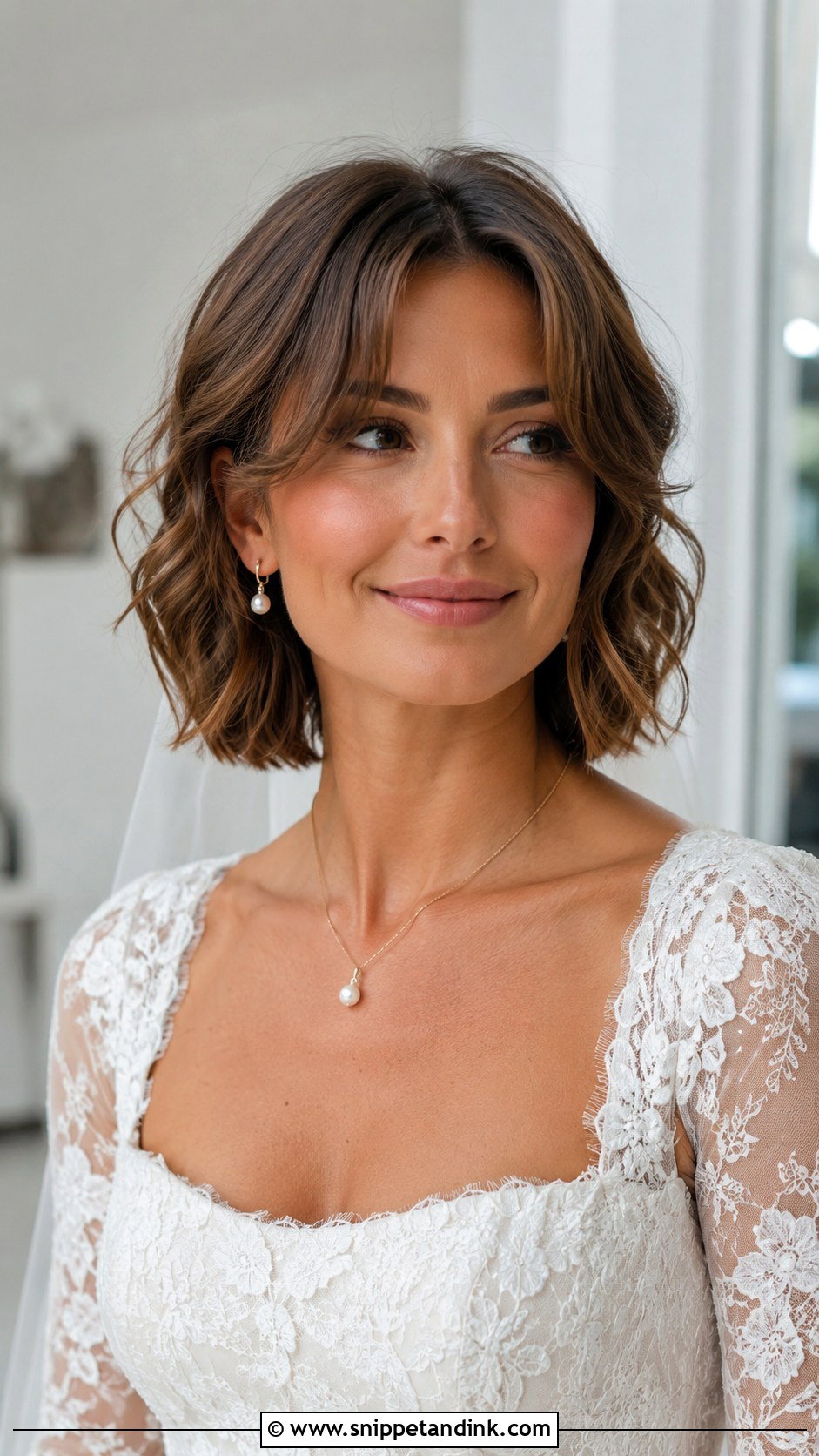
Bridal short hair with curtain bangs softens the cheekbones and jaw and works on bobs, lobs and longer pixies. I shape the bangs away from the eyes with a round brush so they don’t fall forward when you look down at your vows. A soft bend is enough; tight curl at the front rarely lasts. The rest can be waved, tucked or pinned half up.
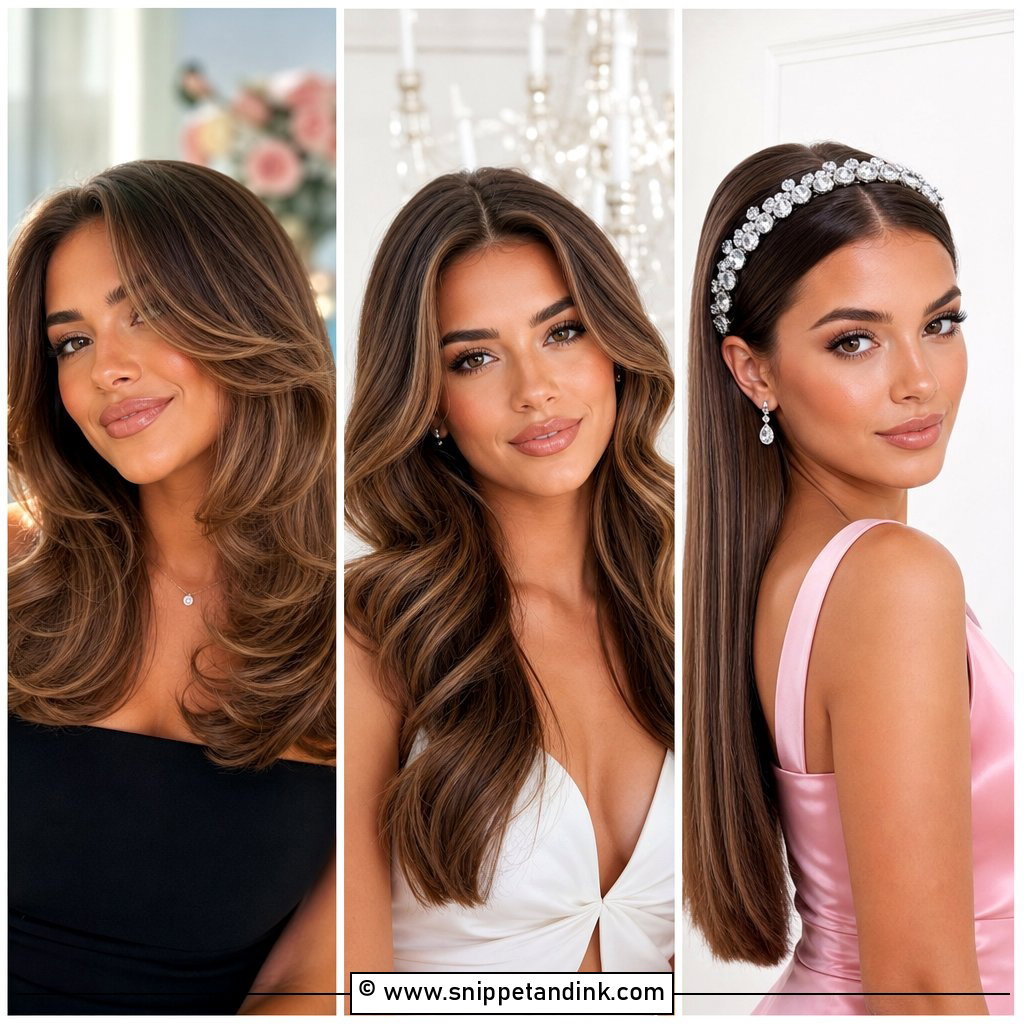
20. Bridal Short Lob Waves
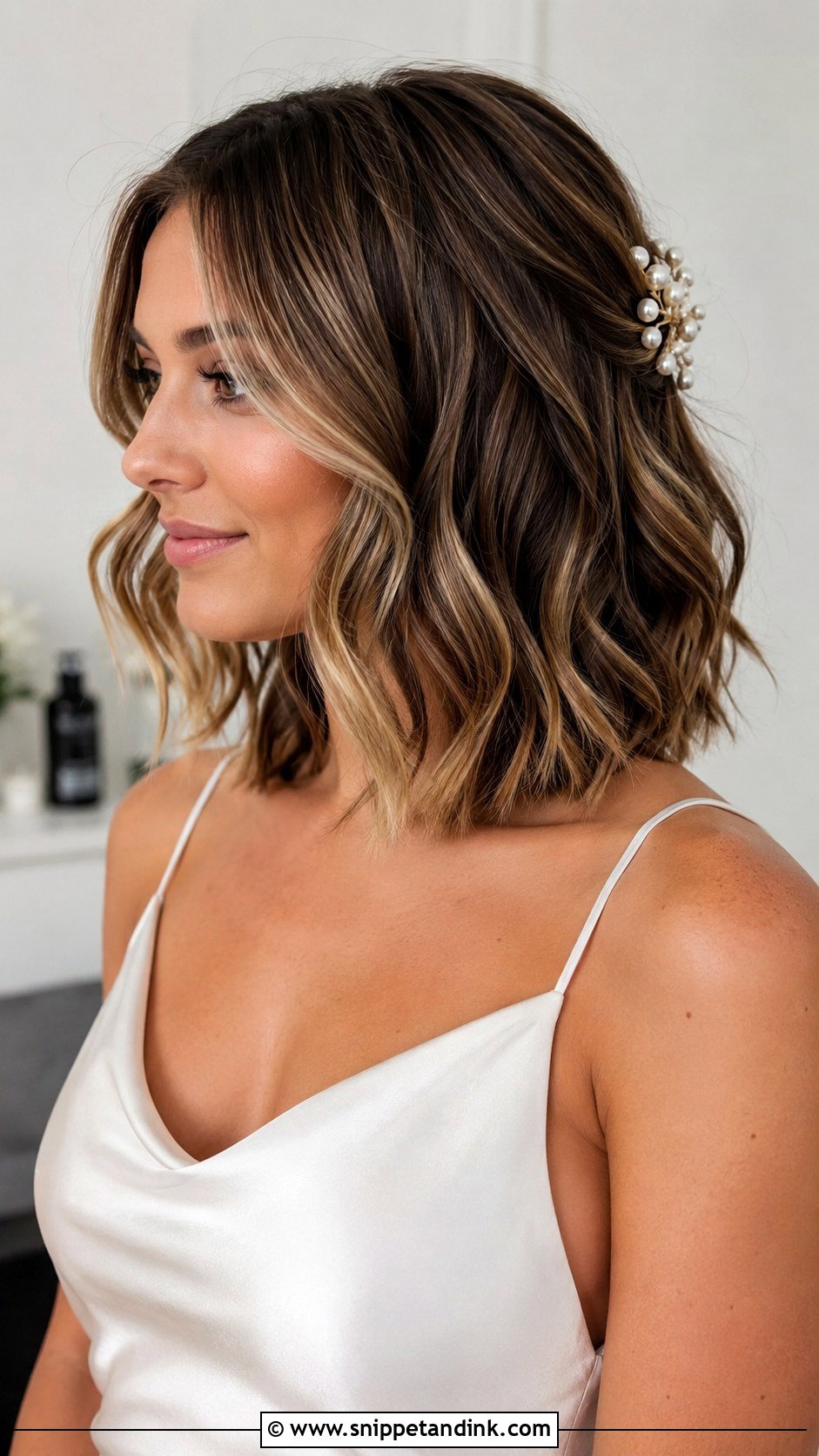
Lob waves are for hair that sits between a bob and shoulder length. That length gives more styling room while still feeling light. I curl it in loose waves and leave the ends slightly undone. The one thing to watch is how the ends hit the shoulders: they can flip outward against a dress strap or collar. A center part feels modern; a side part adds softness.
Should You Add Extensions Just for the Wedding?
It’s a fair question, and the honest answer is that short hair usually doesn’t need them. Extensions make sense when you want a specific look your length can’t reach, like a full bun on a bob. They work less well on very short cuts, because the wefts need hair long enough to cover the clip and the blend at the nape.
- Clip-ins are the easiest one-day option. Have them color-matched in daylight and cut to blend with your own ends.
- Get them at least a few weeks before your trial so your stylist can style with them.
- Very short layers at the nape can show the clips when the hair is up. A trial reveals this.
- If your short cut is part of who you are, think twice. A sudden mane can make you look unfamiliar in your own wedding photos.
Whatever you decide, a short cut changes through the day: roots can flatten at the crown and oil can show at the hairline. A travel-size dry shampoo and a few matching bobby pins in your bag cover most of it.
Your Cut Already Has the Shape. Style It, Don’t Hide It
Short hair can carry a veil, a tiara, a braid or a finger wave just as well as long hair, as long as the style fits the cut you actually have. Bring your saved photos to the trial, but also ask your stylist what will hold best through the ceremony and reception. Test your accessories with your veil, earrings and neckline together, and you’ll walk in looking like yourself on a good day, just a little more polished.
You'll Like These Ideas:



Leave a Reply