
Short hair is often easier to style for a wedding than long hair, and it usually lasts better. There is less weight pulling curls flat and fewer pins working loose by the evening. What it does demand is precision, because every bend and parting shows. A short bob can be waved, smoothed or set into vintage ridges, and a pixie can carry volume, pearls or a sculpted finish. I always start with the cut you have today and the neckline you’ll wear, then build the style around those two things. The ideas below are the short looks I’d actually put in front of a bride, a bridesmaid or a guest.
Two Weeks Out Is When a Short Cut Looks Its Best
Short hair grows out faster than people think, at least visually. A quarter inch barely registers on long hair, but on a pixie it changes how the nape and the sides sit. That’s why timing the cut matters more for a short-haired bride than almost anyone else.
I usually suggest the final cut about seven to fourteen days before the wedding. That’s long enough for the hair to soften and for any mistake to be corrected, and short enough that the shape is still crisp. Cutting the day before is risky: freshly cut ends can look blunt, and there’s no time to fix anything.
- Keep the same stylist and the same cut you’ve worn for a few months, so there are no surprises.
- Book a neckline clean-up separately if your cut has a tight nape. It can be done two or three days before.
- Hold off on color changes in the last month. Fresh color on short hair is the first thing people notice, and you want it settled.
- Bring your trial photos to the final cut so the shape matches what we tested.
1. Short Wavy Bob Wedding Hair
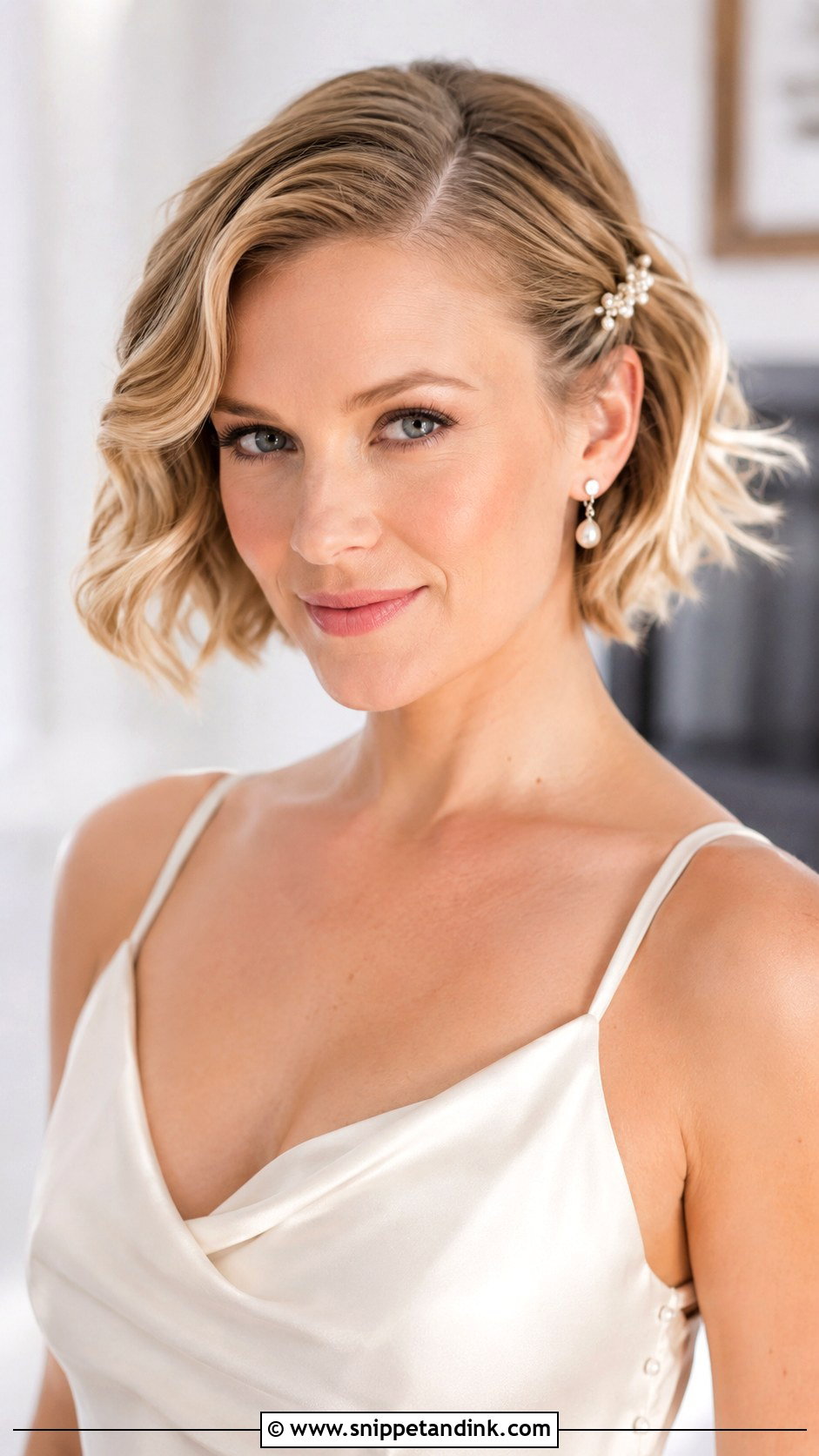
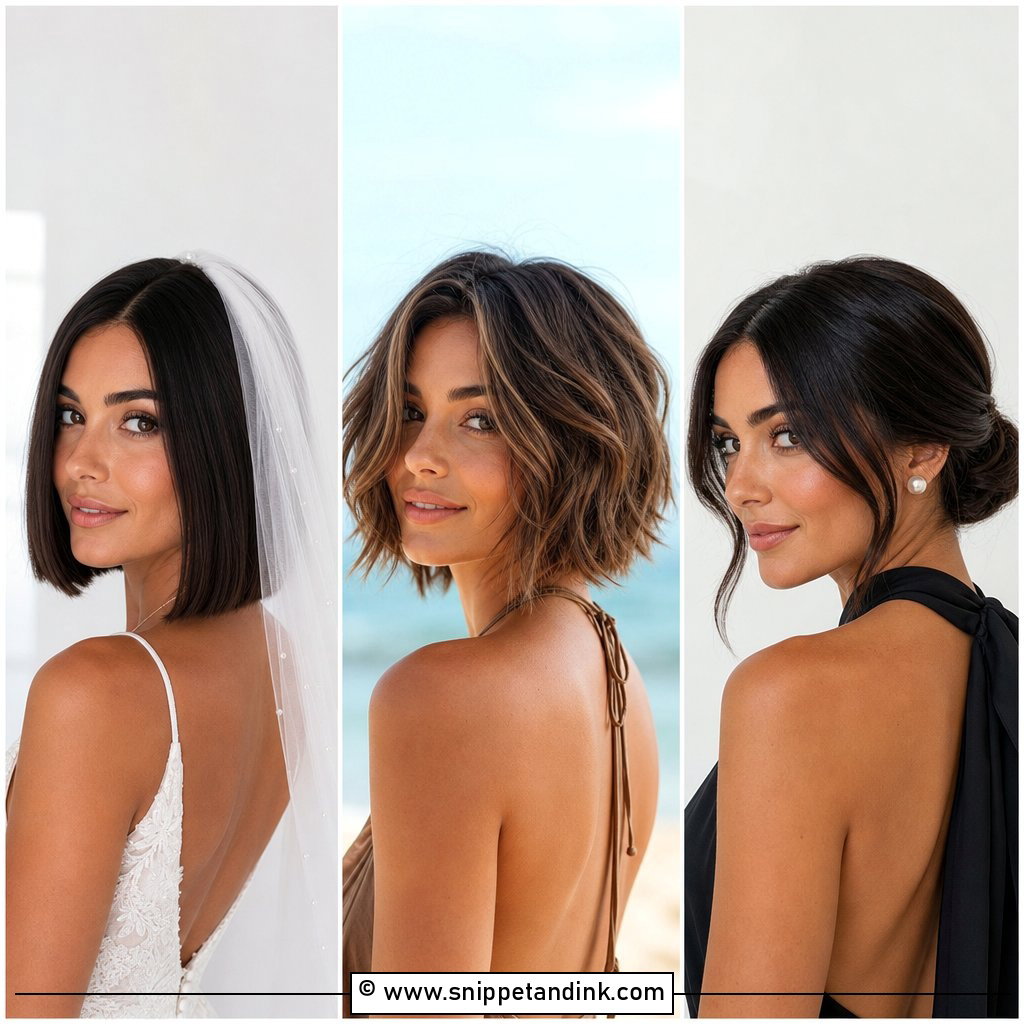
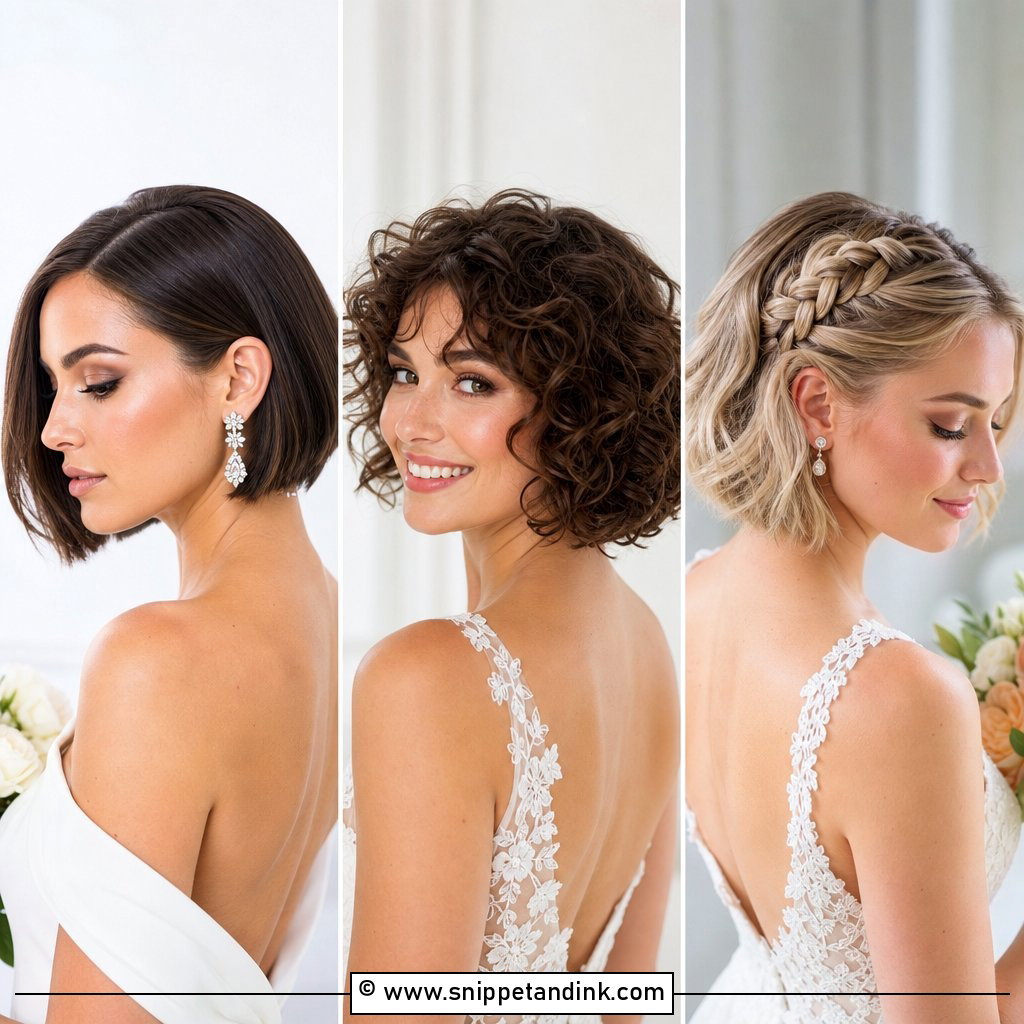
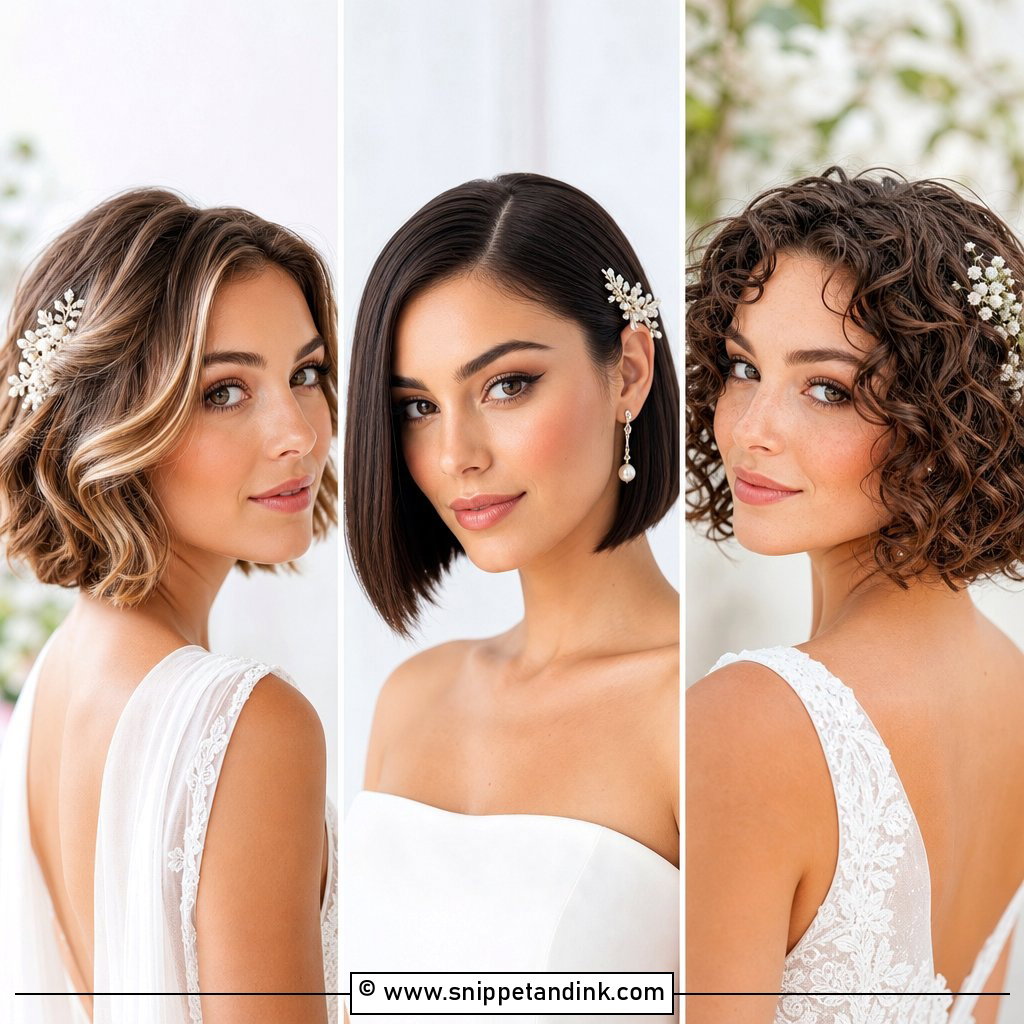
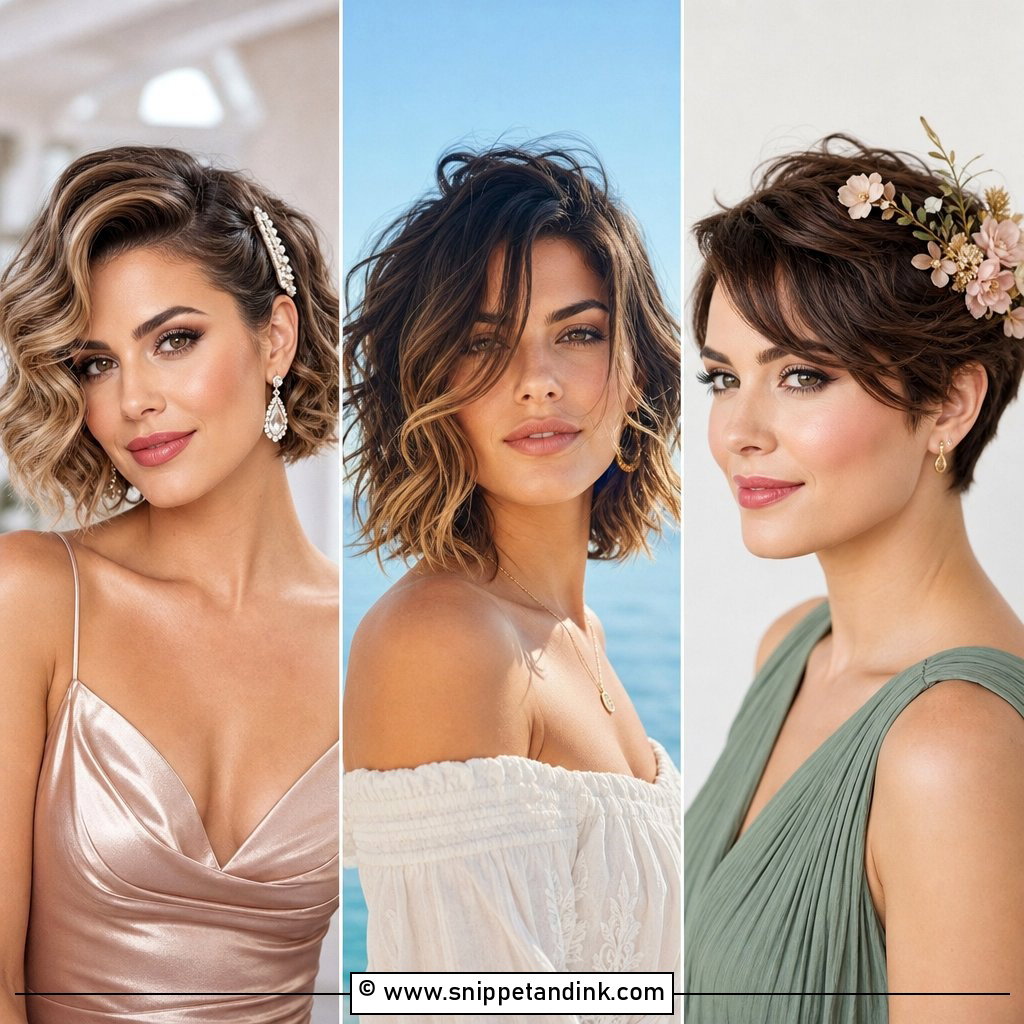
Loose waves on a bob are the look I’m asked for most, and they’re kind to chin and jaw length cuts because the bend adds width right where the face needs it. I start the curl an inch or two below the root so the crown stays smooth, then brush the waves out once they’ve cooled. A side part reads more formal; a center part looks current. On fine hair I use a smaller barrel than you’d expect, since the wave relaxes noticeably within the first hour. Pearl pins or a small comb sit nicely on the part side.
2. Short Curly Bob Wedding Hair
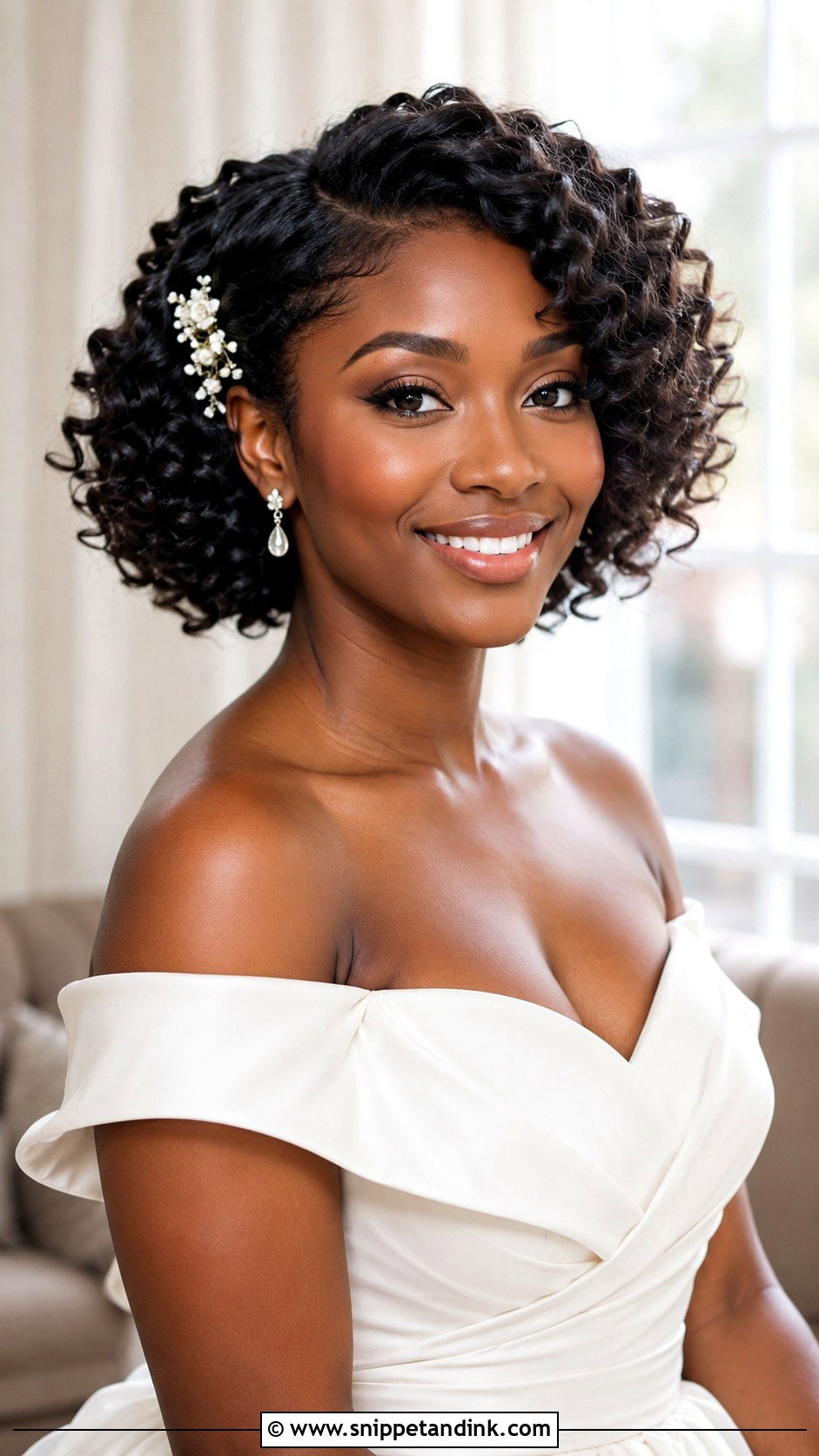
With a curly bob, my job is mostly to stay out of the curl’s way. Forcing the pattern into a rigid shape is how you end up with frizz by the speeches. I’ll refresh the curls with a cream and a light gel, shape them around the cheekbones, and pin one side back so the silhouette has some balance. Curls carry a strapless or off-shoulder neckline well because there’s no fabric competing near the face. Skip a brush once the gel has set; scrunch out the cast with your hands instead. A floral pin or a few tiny pearls is plenty.
3. Short Sleek Bob Wedding Hair
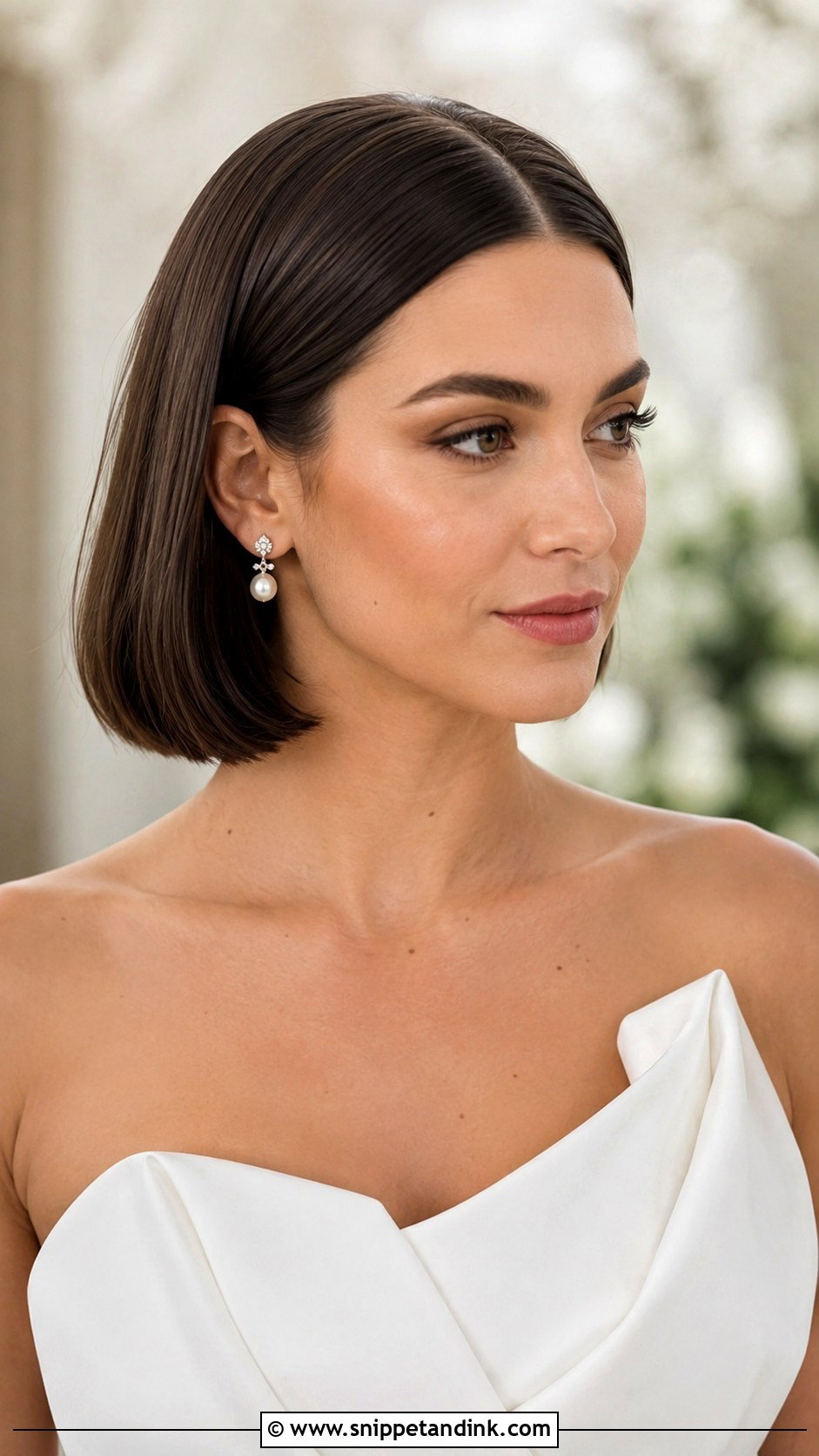
A sleek finish only works on a cut that’s already precise, so I’d look at a blunt bob, a tucked bob or a softly angled one. Any unevenness in the line shows straight away once the hair is smoothed. I flat iron in small sections and bevel the ends under slightly, which keeps it from looking severe against a structured neckline. Go light on serum. Short hair sits close to the face, and too much oil reads as greasy rather than glossy in flash photos. Statement earrings finish it.
4. Short Side Part Wedding Hair
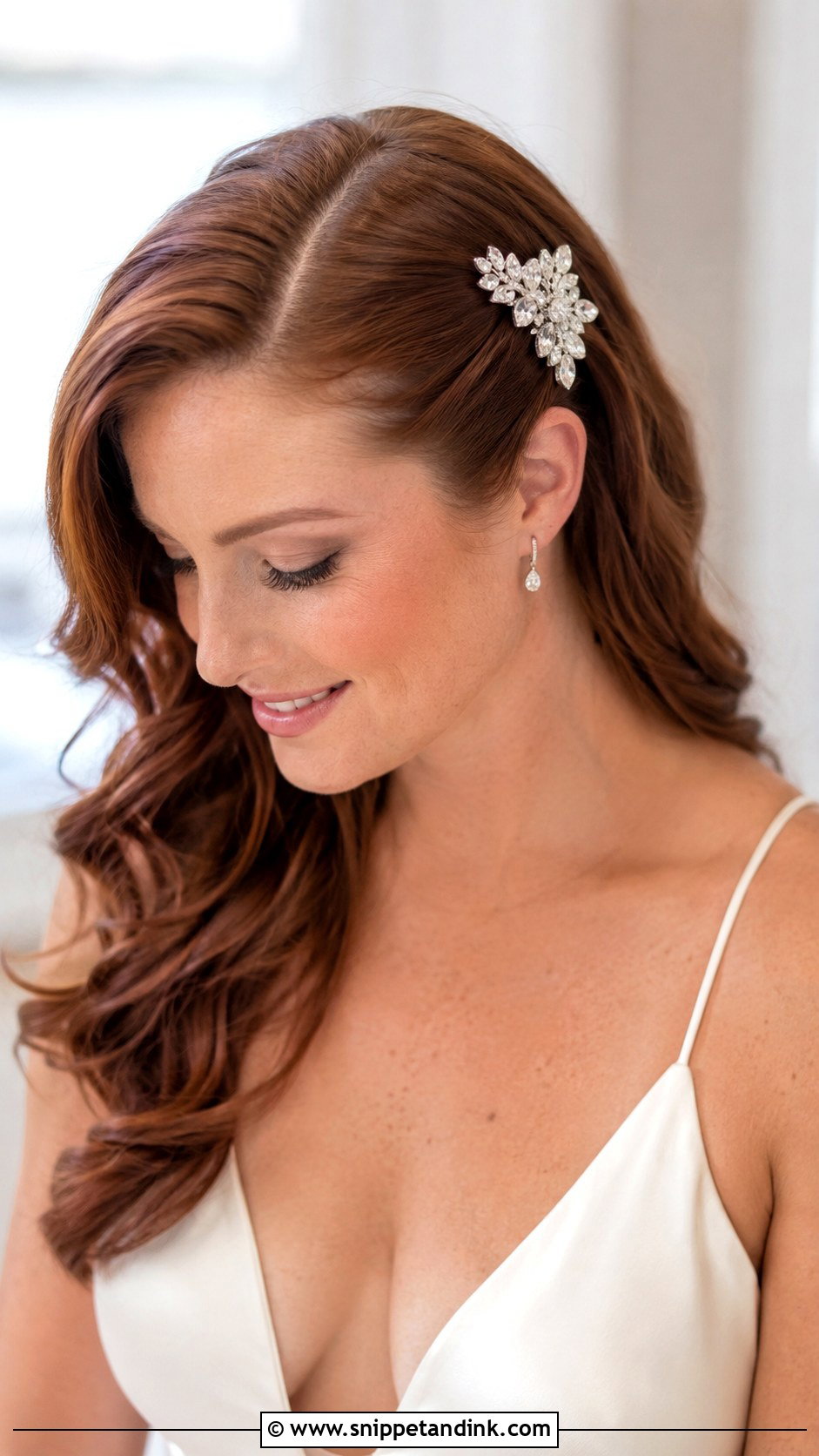
Moving the part is the cheapest change you can make, and on short hair it changes almost everything. A deep side part pushes lift to the crown and gives the face a diagonal line even when the cut itself is simple. It suits pixies, bobs, lobs and short curls alike. I’ll wave the heavy side and tuck the light side behind the ear, or press both flat and add a decorative clip for something sharper. One caution: if your hair grows in a strong opposite direction, practise the part for a week beforehand so the roots stop springing back.
5. Short Pixie Wedding Hair
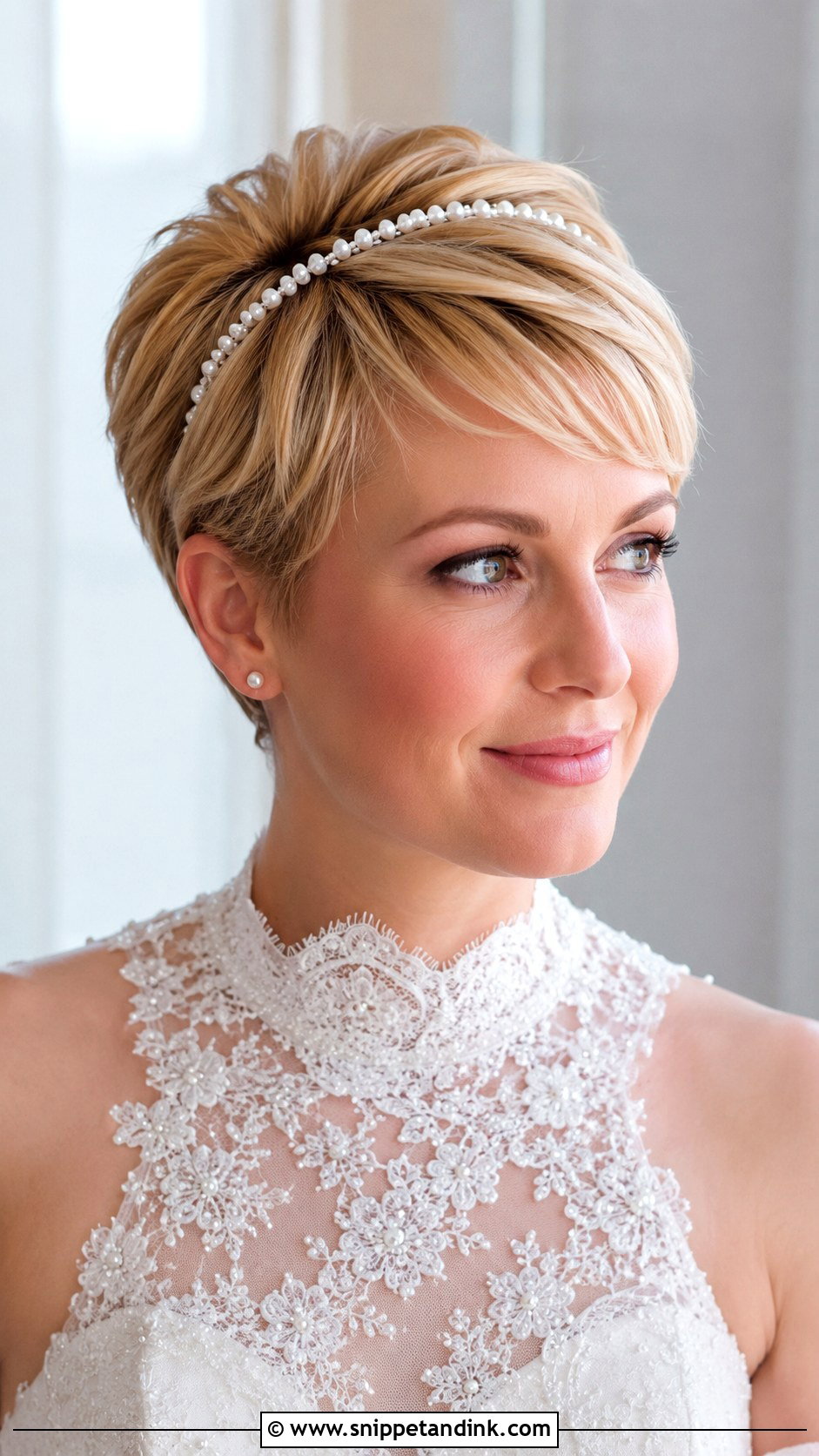
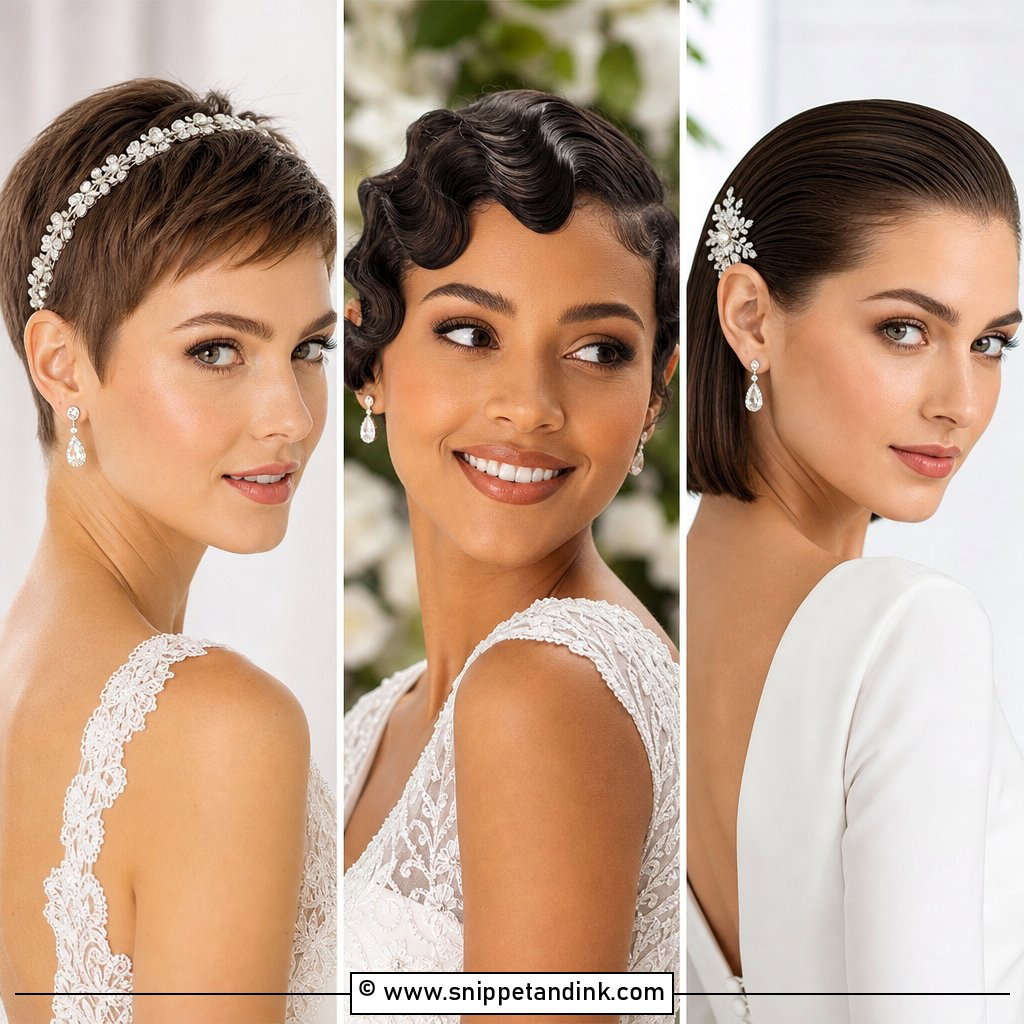
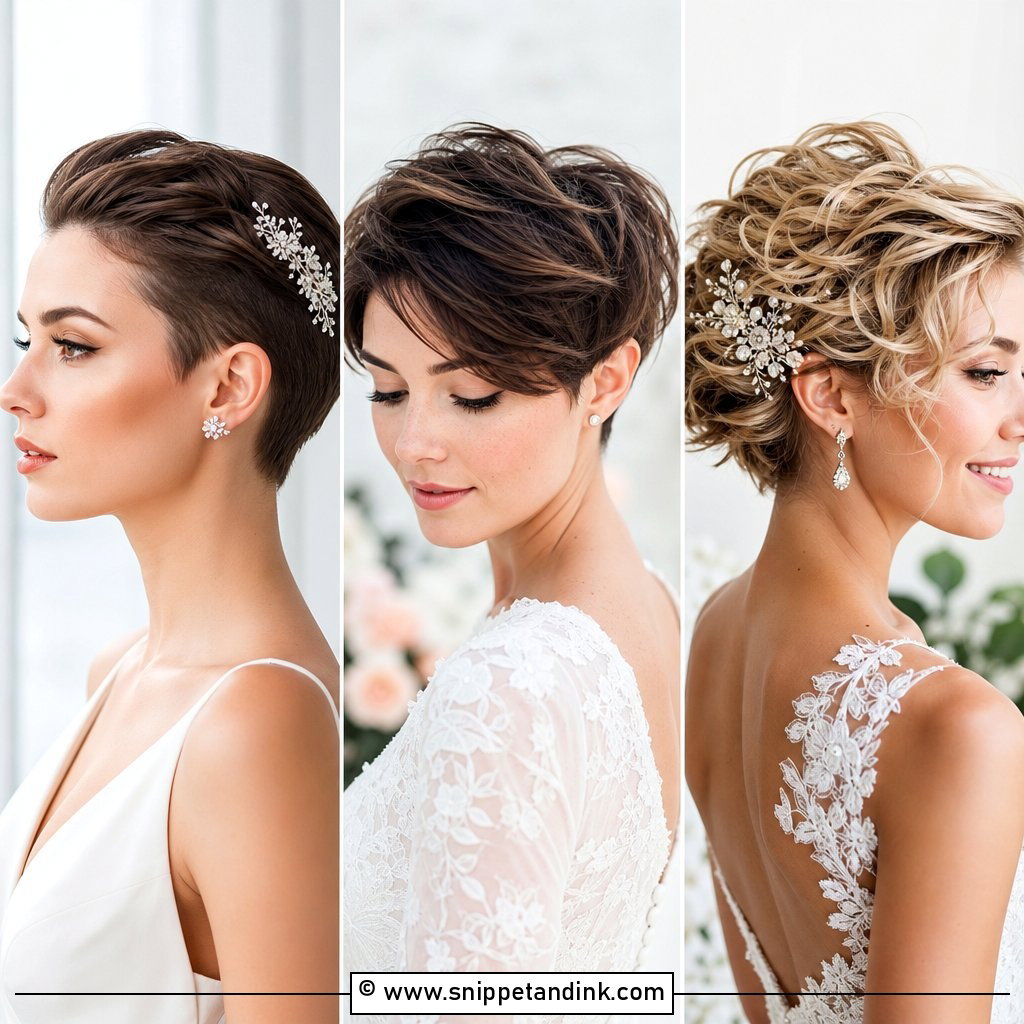
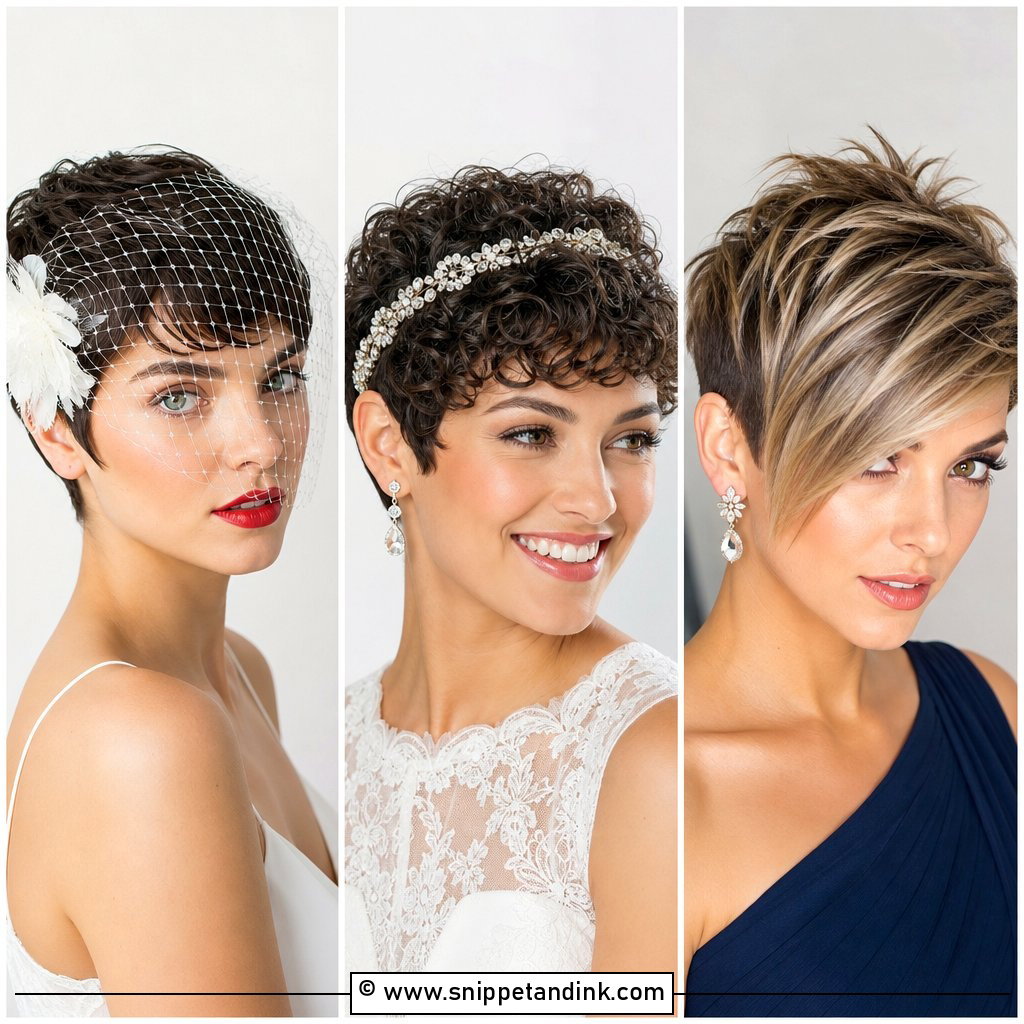
A pixie cut looks bridal when the detail is deliberate, because there isn’t length to hide behind. I lift the crown with a round brush, then sweep the fringe to one side for a softer read, or keep the sides tight and add piecey texture on top for something more modern. High necklines, lace and bold earrings all suit a pixie because nothing covers them. A lightweight paste gives control without the stiffness of wax. If you want a headband, try it at the trial; on very short hair some bands slide forward when you smile.
6. Short Textured Pixie Wedding Hair
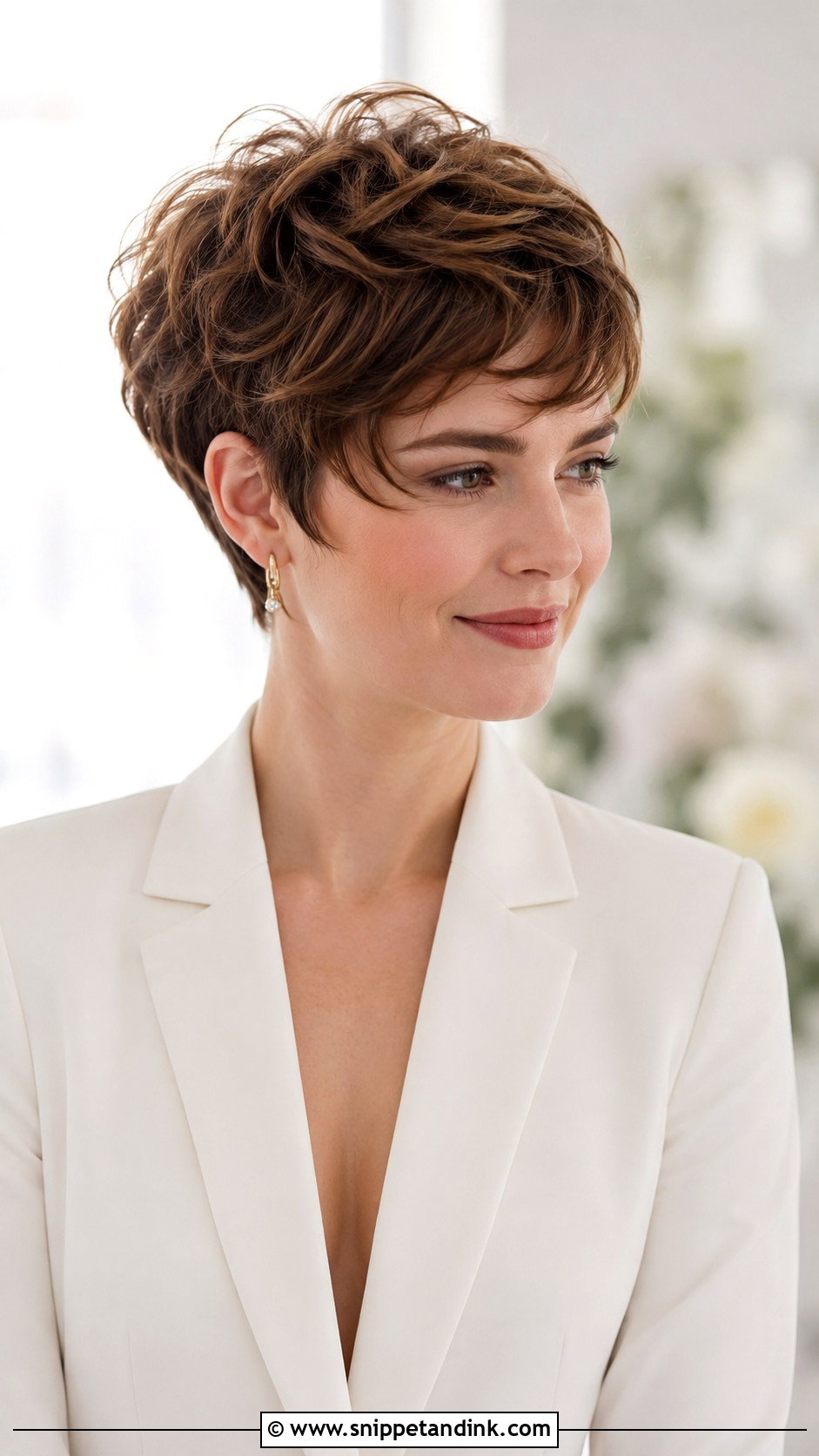
Texture is what keeps a pixie from looking flat in side and back shots, and photographers take far more of those than brides expect. I build volume at the crown, then twist small pieces with a paste so the layers separate rather than clump. The finish should feel touchable. If it looks spiky, there’s too much product on the ends. This one sits comfortably on bridesmaids and guests too, since it’s quick to refresh with fingertips. A plain barrette is enough, or nothing at all.
7. Short Finger Waves Wedding Hair
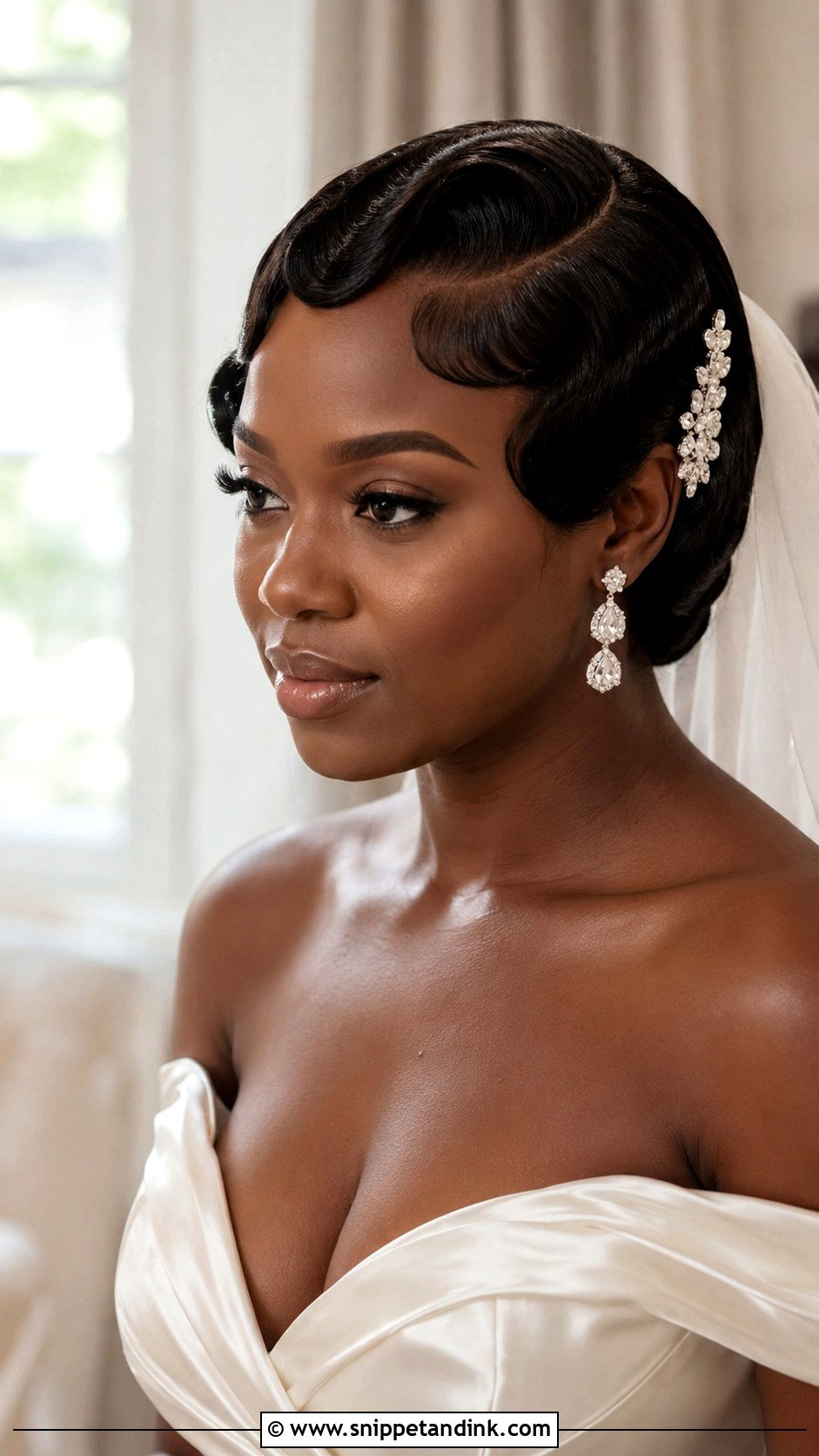
Finger waves are a set, not a curl, which is why they suit pixies, cropped bobs and short relaxed hair so well: the ridges have to lie close to the head. I comb a firm setting lotion through wet hair, push each ridge in with my fingers and a comb, clip it, and let it dry completely before touching it. Rush the drying and the pattern collapses. Expect a longer appointment than for a blow-dry. The result should shine without crunch, and it suits satin, beading and a red lip. A small crystal pin at the side adds sparkle without covering the waves.
8. Short Half Up Wedding Hair
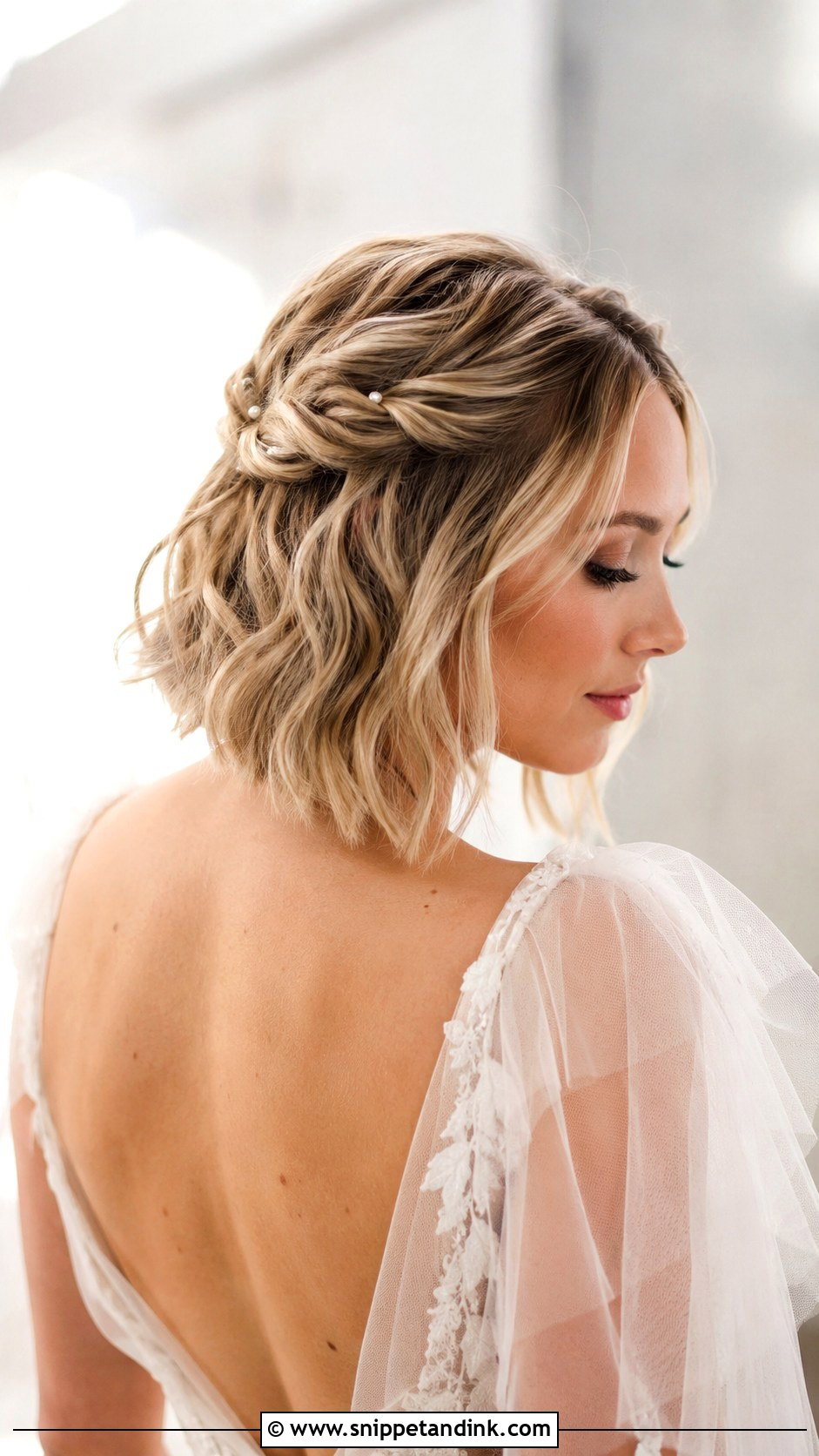
A half up style on short hair keeps the face clear for the ceremony while leaving movement at the ends. It’s easiest on bob and lob lengths. On anything shorter I use tiny twists or mini braids near the crown, because the sections are too short to gather into one clip. I take the front pieces back loosely and cross the pins underneath so they grip each other. Leave the crown slightly lifted, otherwise the style looks flat from the front. A small comb or pearl pins can sit at the join.
9. Short Braided Bob Wedding Hair
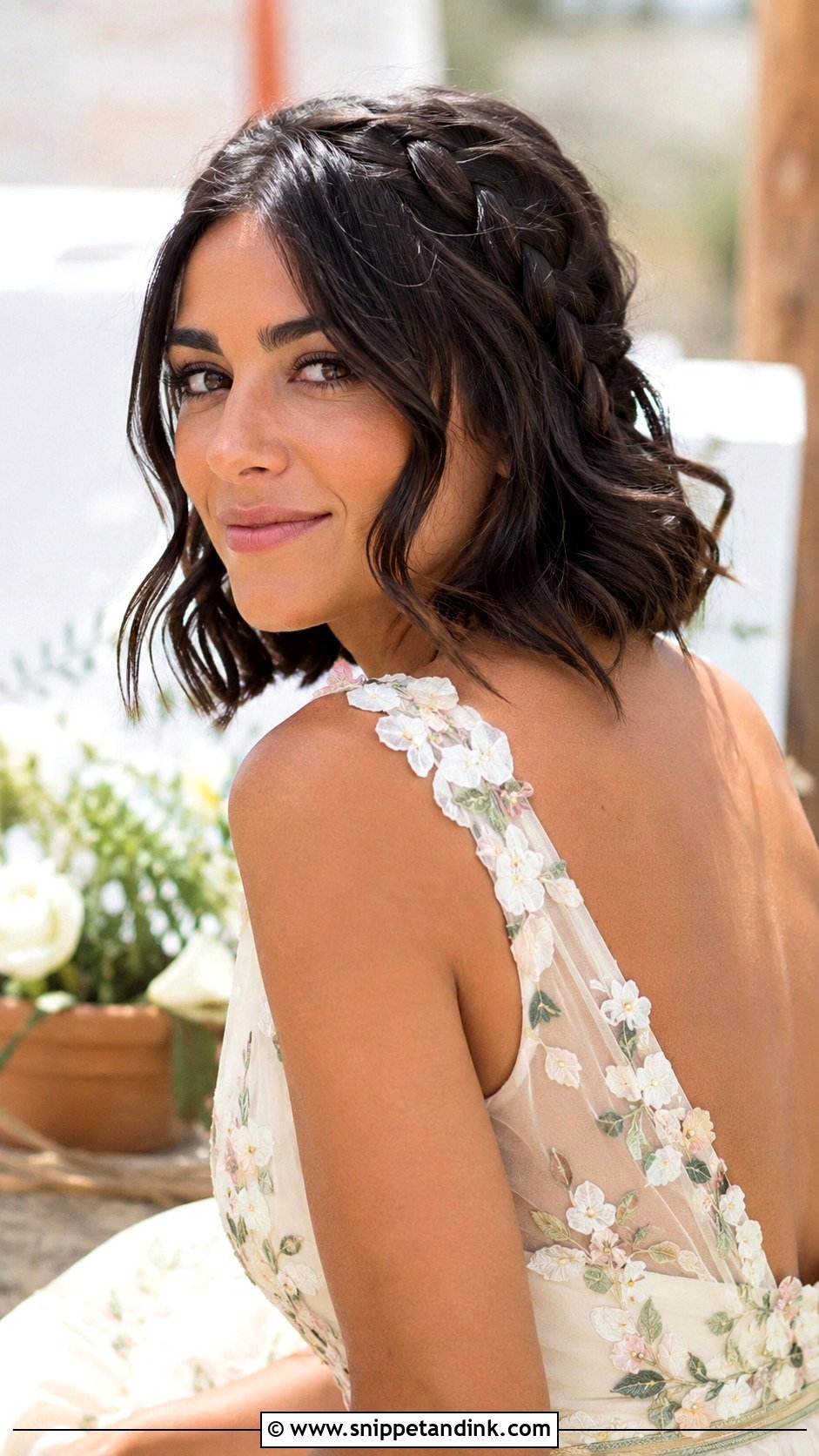
Braids give a bob detail without extensions, and they hide the uneven layers that make short updos tricky. A pair of face-framing braids, one side braid or a small crown braid all work. They blend best into wavy, curly or textured bobs, where the movement disguises where the braid ends. I secure each tail with a clear elastic, then tuck it under the next section and pin across it so nothing pokes out. Pancake the braid a little for softness and leave a few pieces loose at the temple. It suits garden and beach ceremonies, where wind would pull apart a looser style.
10. Short Bob With Pearl Pins Wedding Hair
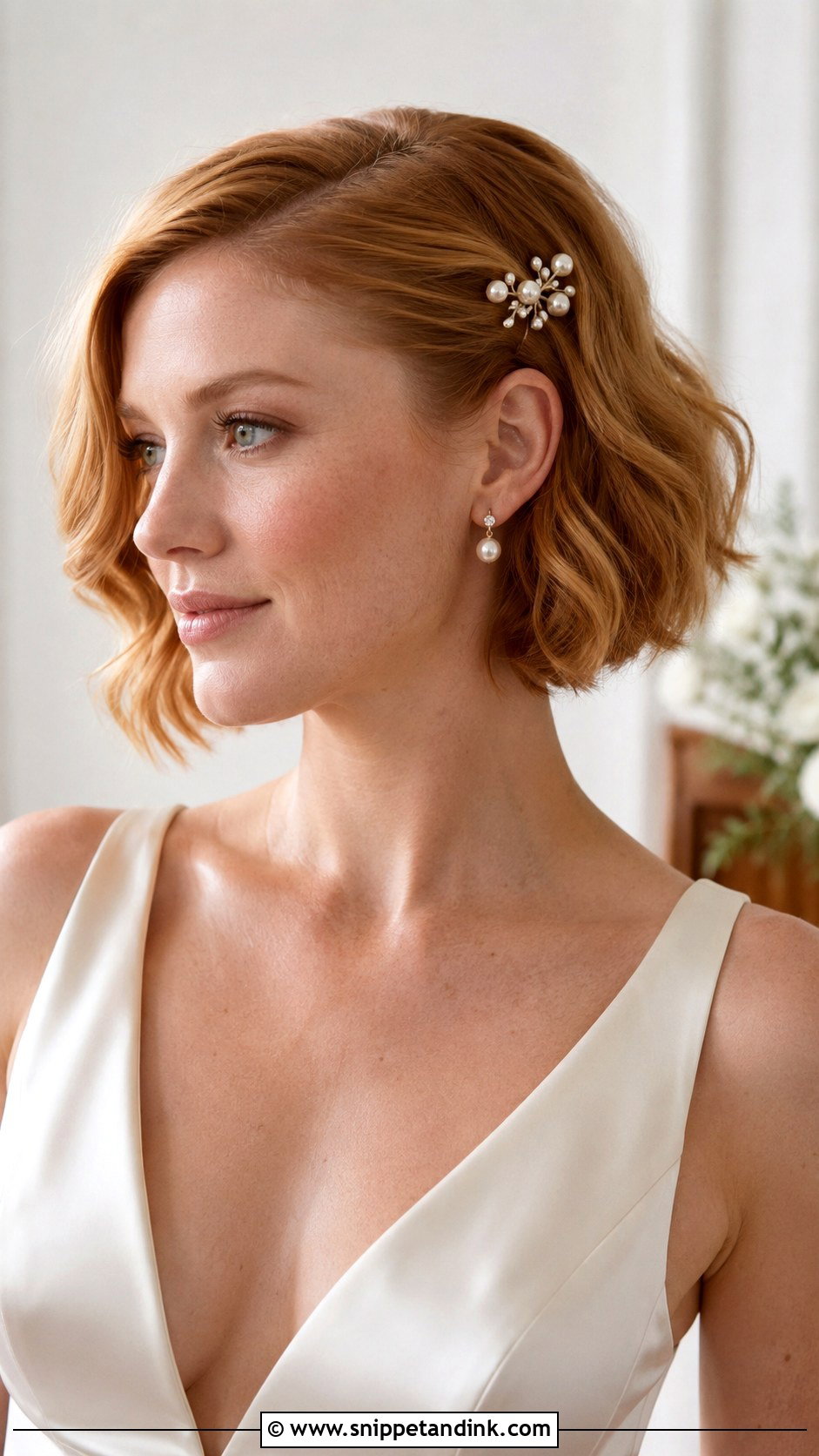
Pearl pins are the quickest way to make short hair look like wedding hair. Placement matters more than quantity. I cluster three to five on one side for impact, or scatter a few through soft waves if the dress already has pearl detail. Each pin needs a little grip underneath, so on silky hair I dust some texture spray at the spot first. Keep the hair around them smooth; frizz next to a pearl looks messier than frizz on its own.
11. Short Bob With Veil Wedding Hair
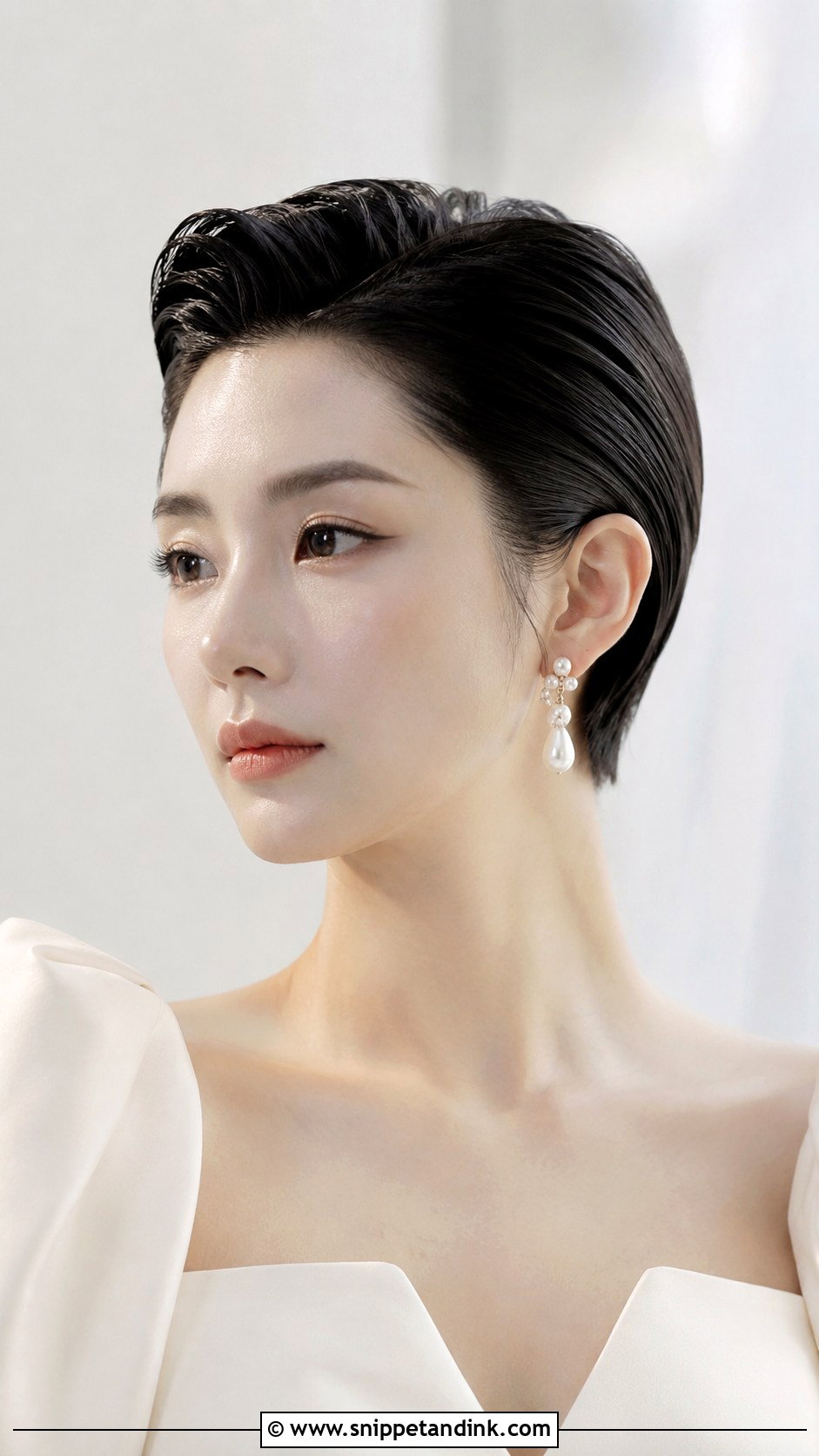
A veil can sit on short hair as securely as on an updo, it just needs somewhere to anchor. On a bob I place the comb at the crown or just above the curve at the back of the head, so the haircut’s shape stays visible. If the hair is fine, I’ll make a small teased base and cross two bobby pins into it before the comb goes in. A short veil feels light and modern; a long one gives a striking contrast with cropped hair. Keep other accessories minimal so the two aren’t fighting.
12. Short Wet Look Wedding Hair
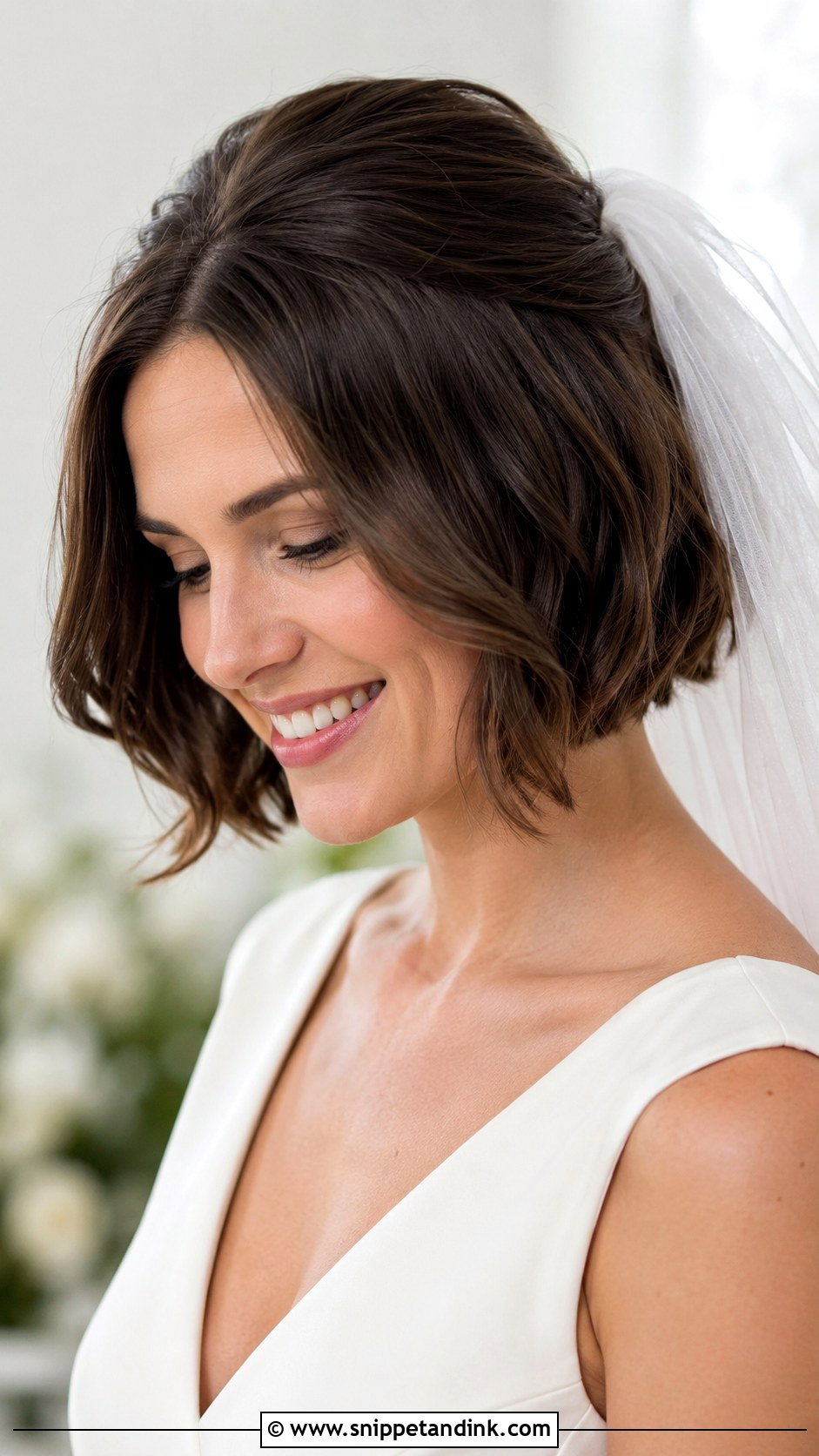
The short wet look is the most fashion-led idea here, and it suits pixies, short bobs and slicked crops. Hair is set close to the head with gel and shine, and once it dries it barely moves through dancing. The difference between polished and greasy is how much product sits on the surface. I work gel in at the roots and finish with only a mist of shine. Simple gowns, suits, slip dresses and big earrings all sit well with it. I’d keep it for city weddings and evening receptions; at a rustic daytime ceremony it can look out of place.
13. Short Hollywood Waves Wedding Hair
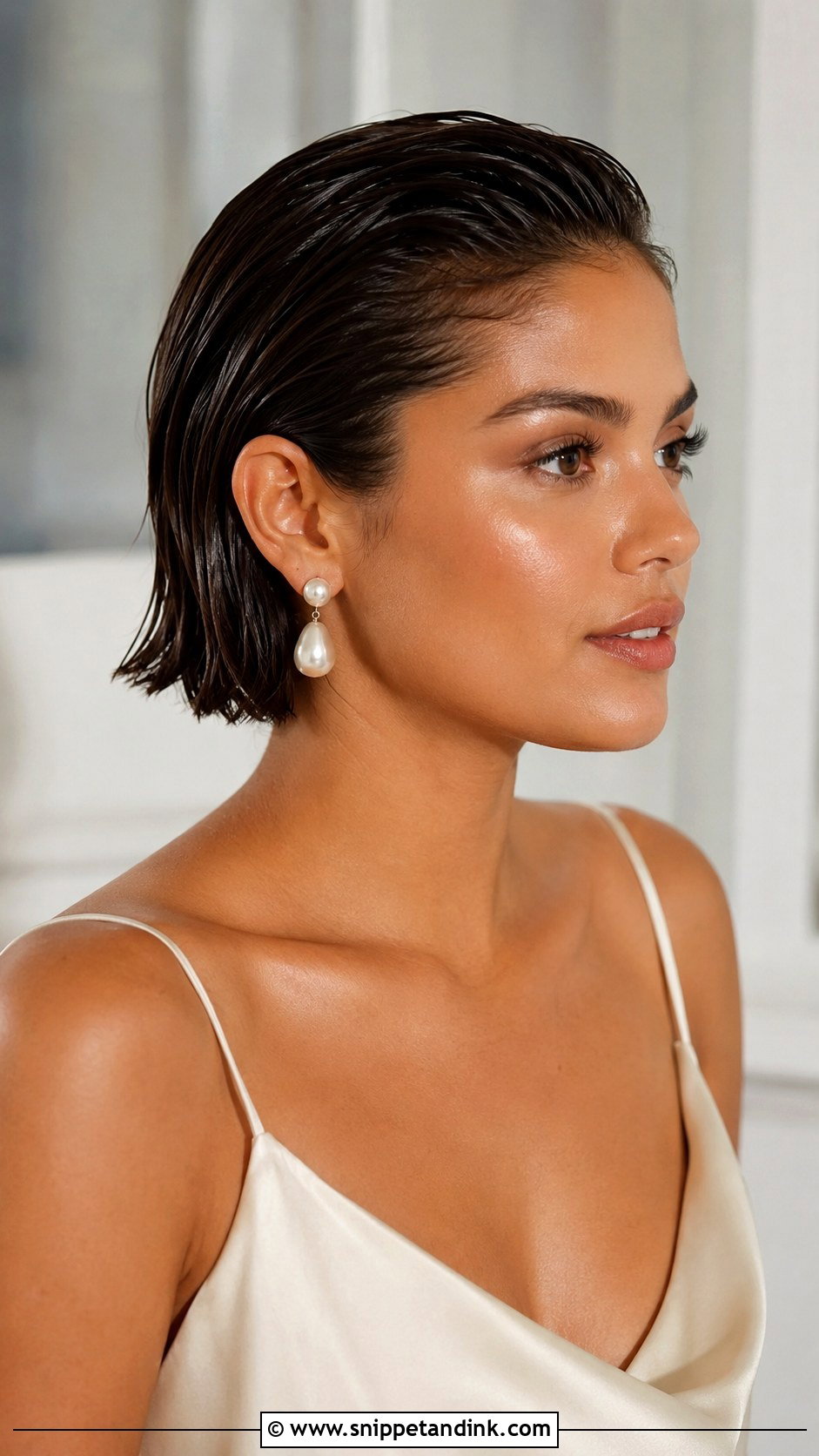
Hollywood waves on short hair need a bob or lob long enough to hold one full S-bend. I curl every section in the same direction, pin each curl while it cools, then brush everything into one ribbon of wave and set the dips with duckbill clips for ten minutes. A side part completes it. The common mistake is spraying so hard it turns into a helmet. I want the ends to stay soft so the wave moves when you turn your head. Satin, fitted gowns and vintage jewelry suit it.
14. Short Natural Curls Wedding Hair
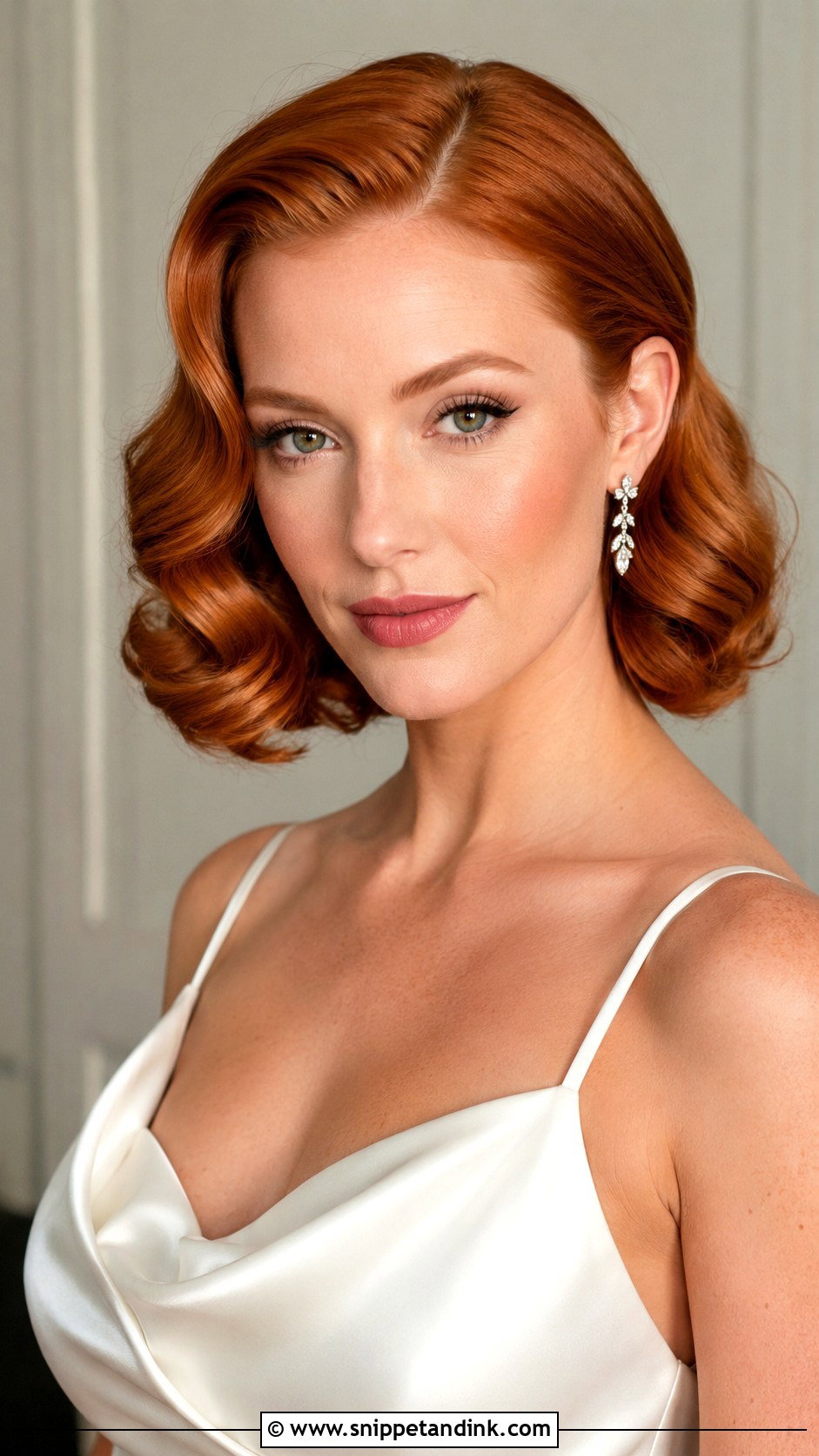
Natural curls on short hair look best when they’re hydrated and defined in small sections, so the texture is even all the way round. A tapered cut, a curly bob or a rounded crop all work. I ask brides to deep condition two or three days before rather than the night before, so the hair isn’t too soft to hold definition. Shape the silhouette with a pick at the root, never through the ends. A few pearl pins, gold cuffs or a fine headband add a bridal note without hiding the pattern, and you still look like yourself.
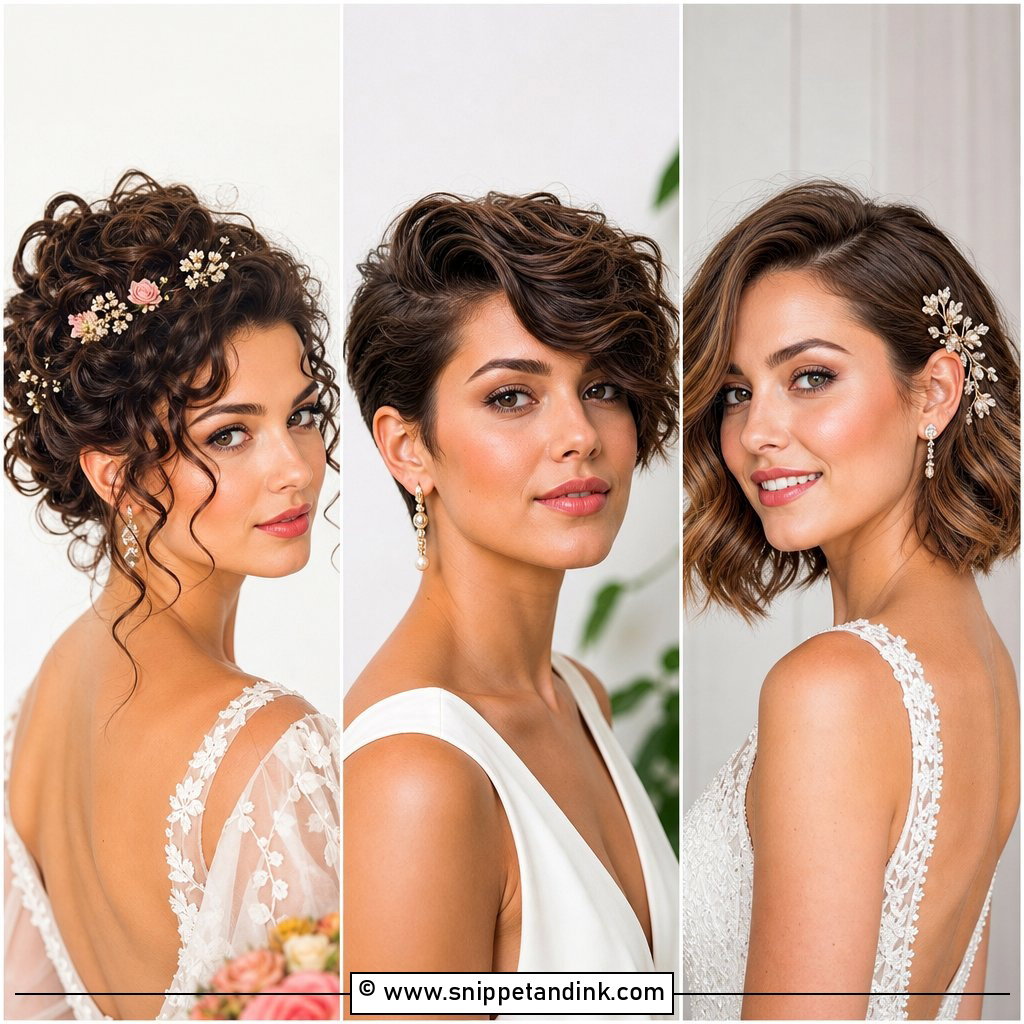

15. Short Slicked Back Wedding Hair
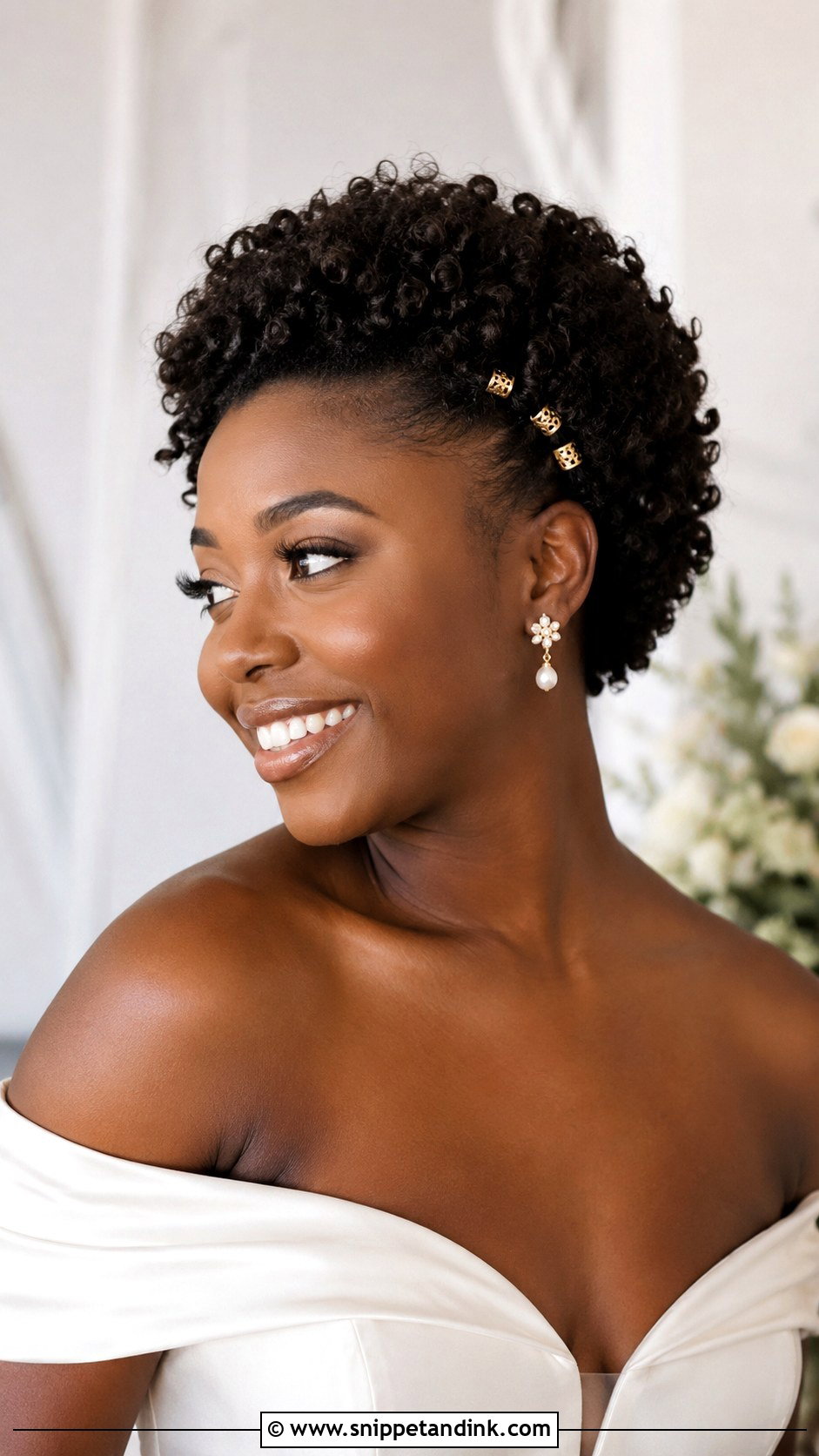
Short slicked back wedding hair clears the face completely, so makeup, earrings and neckline take over. It works on pixies, cropped bobs and short layers. I brush everything back over a flexible gel and keep a little height at the front unless the bride wants it sleek on purpose; dead flat can look harsh. Glossy sides give a stronger version. Choose a gel that dries without flaking, and check it at your trial against a dark collar, since some formulas leave white flecks on fabric.
Pins Need Something to Grip on a Pixie
The most common complaint I hear from short-haired brides is that accessories slide out. That’s a physics problem, not a hair problem. A bobby pin holds by trapping hair between its prongs, and when the hair is two inches long and freshly washed, there isn’t much to trap.
What actually holds
- Wash the day before, not the morning of. Second-day hair has a little grip.
- A dry texture spray at the spot where the accessory sits gives pins something to bite into.
- Cross two bobby pins into an X first, then slide the comb or clip over them.
- Small combs with short teeth hold better than long-toothed ones, which lever out.
- Snap clips are often more secure than pins on hair under three inches.
Try every accessory at the trial and then move around. Hug someone, put a jacket on and off, and look down at a phone. If it shifts in ten minutes, it’ll be on the floor by the first dance.
Products Short Hair Actually Needs on the Day
Short styles rely on product more than long ones because there’s no weight to hold a shape. That doesn’t mean more product. It means the right one in the right place.
For sleek and wet looks, use a gel or pomade with firm hold, plus a light shine mist. For waves and texture, a mousse at the root and a flexible hairspray. For curls, a leave-in, a curl cream and a gel that you scrunch out once dry. Avoid heavy oils on fine short hair; they make it separate and look thin in photos.
Keep the touch-up bag small: a travel hairspray, a few pins in your hair color, a fine comb and a little paste for flyaways. Short hair is quick to fix, which is one of its quiet advantages.
Your Haircut Already Did Half the Work
Short hair isn’t a limitation for a wedding; it’s a head start. A bob changes character with texture and parting alone, and a pixie can go from soft to sculpted with one product swap. Curly and natural short hair looks its best when the pattern is defined and supported rather than fought. Pick the idea that suits your cut, your neckline and how much maintenance you want on the day. Then bring two or three clear photos to a trial, wear something with your wedding neckline, and see how it looks after a few hours, not just in the first five minutes.
You'll Like These Ideas:


Leave a Reply