
A flower crown is the only piece of wedding floristry that has to survive on a warm head, with no water, for the whole day. That changes how I build one, and it changes the hairstyle it sits on. A crown can soften a polished look, make loose waves look intentional or turn a simple bun into something worth photographing, but only when the hair underneath holds it steady. Before you choose, think about your neckline, your veil, your venue, your hair texture and how much you plan to move. A tiny baby’s breath halo is a very different object from a bold rose crown, in weight as much as in look. The fifteen styles below run from classic to boho, beachy, garden and modern.
Which Flowers Last on a Warm Head Without Water
Once a stem is wired into a crown, it’s cut off from water and sitting against body heat. Some flowers shrug that off for a whole day; others look tired before the ceremony ends. I build crowns from the first group and use the second only for a short portrait session.
Hardy enough for a full day
- Spray roses and garden roses, well conditioned the night before
- Wax flower, statice, rice flower and baby’s breath
- Dendrobium orchids and hypericum berries
- Eucalyptus, ruscus and most leathery greenery
- Anything dried or preserved
Likely to droop or brown
Hydrangea wilts fast out of water. Gardenias bruise brown wherever they’re touched. Sweet peas, lily of the valley and most soft field flowers go limp in heat. If you love one of these, ask your florist to add it only as an accent, or carry it in your bouquet instead, where it has a water source.
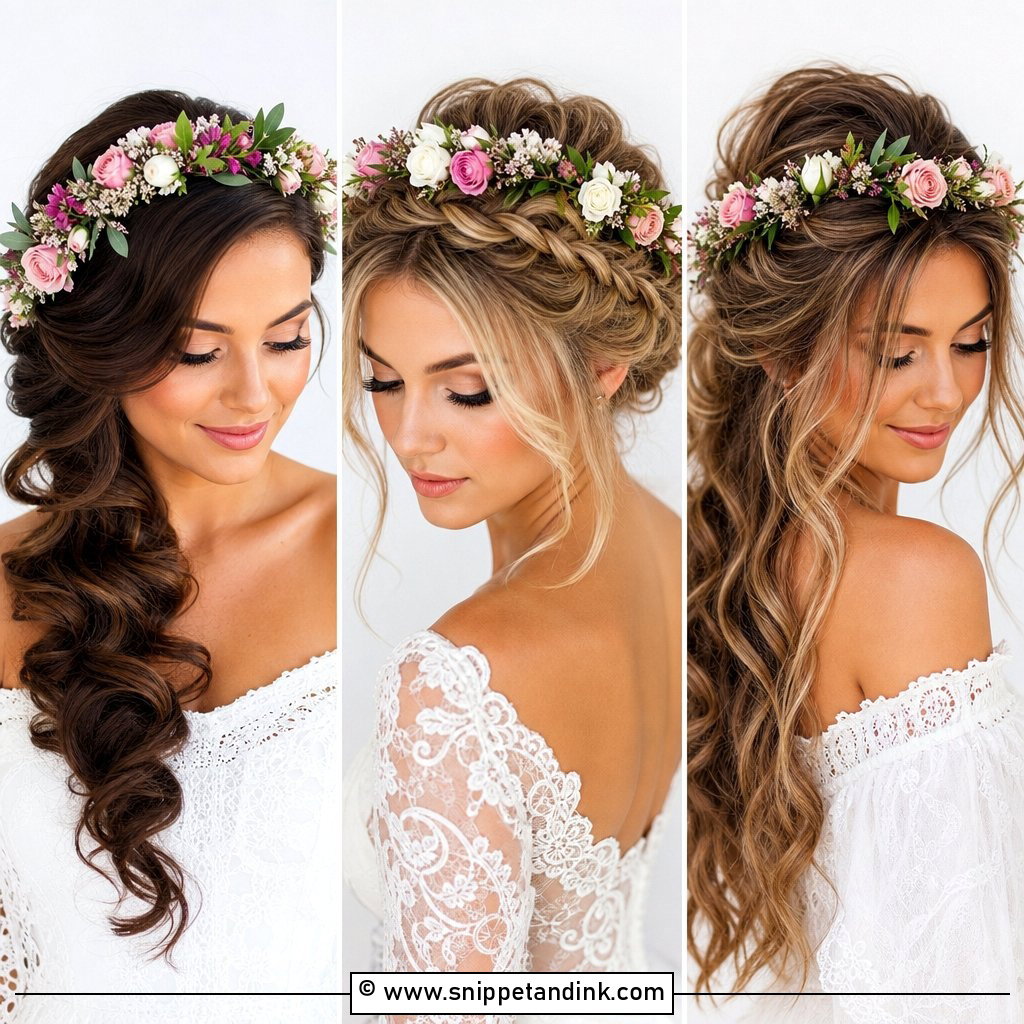
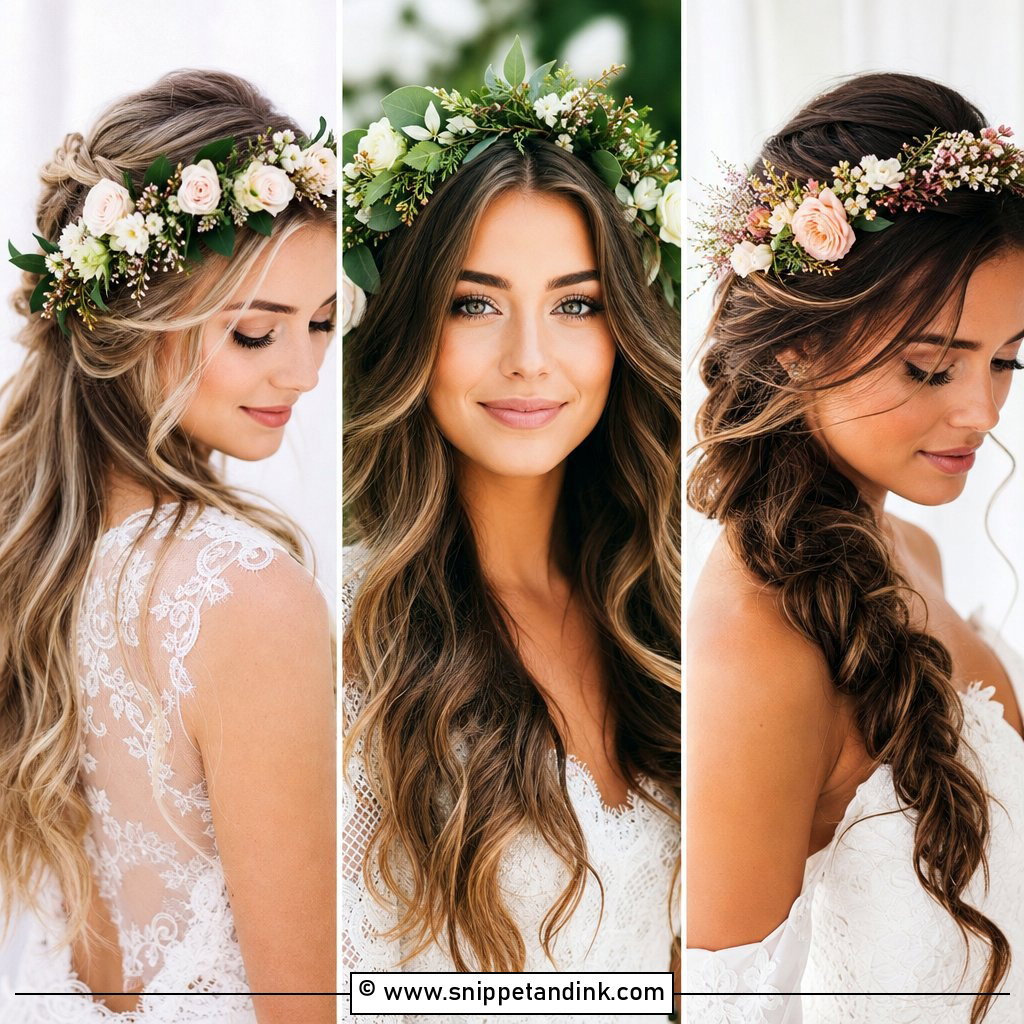
1. Loose Waves With Flower Crown
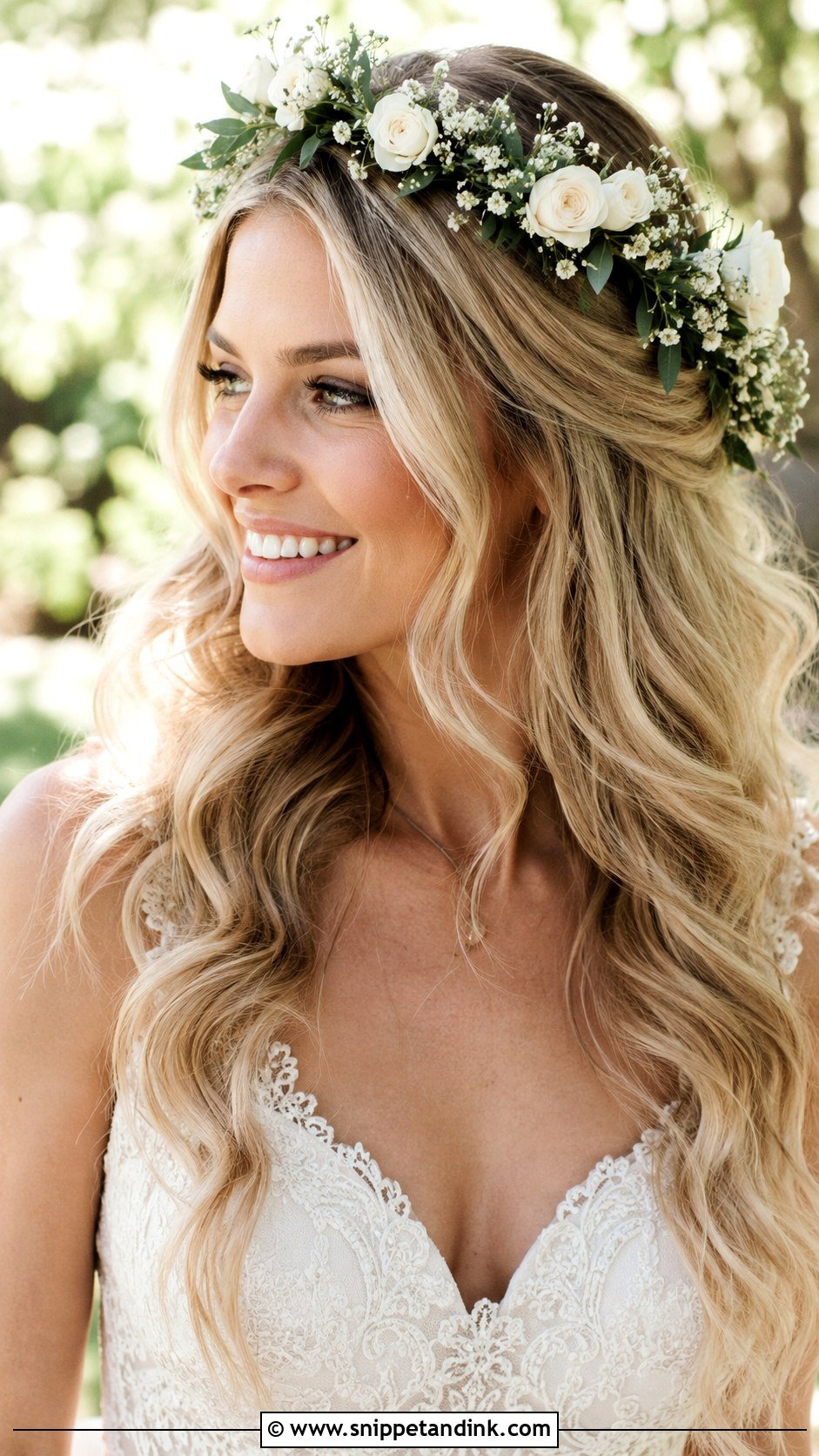
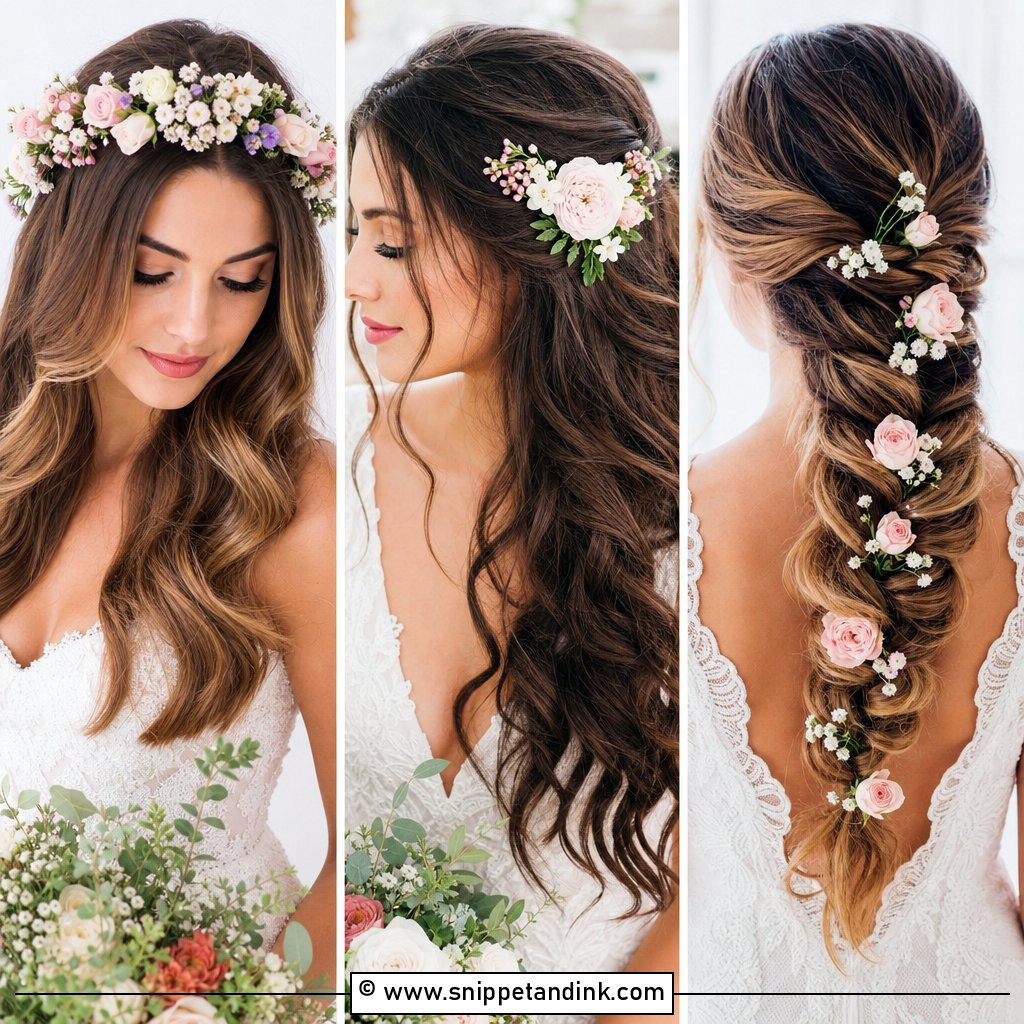
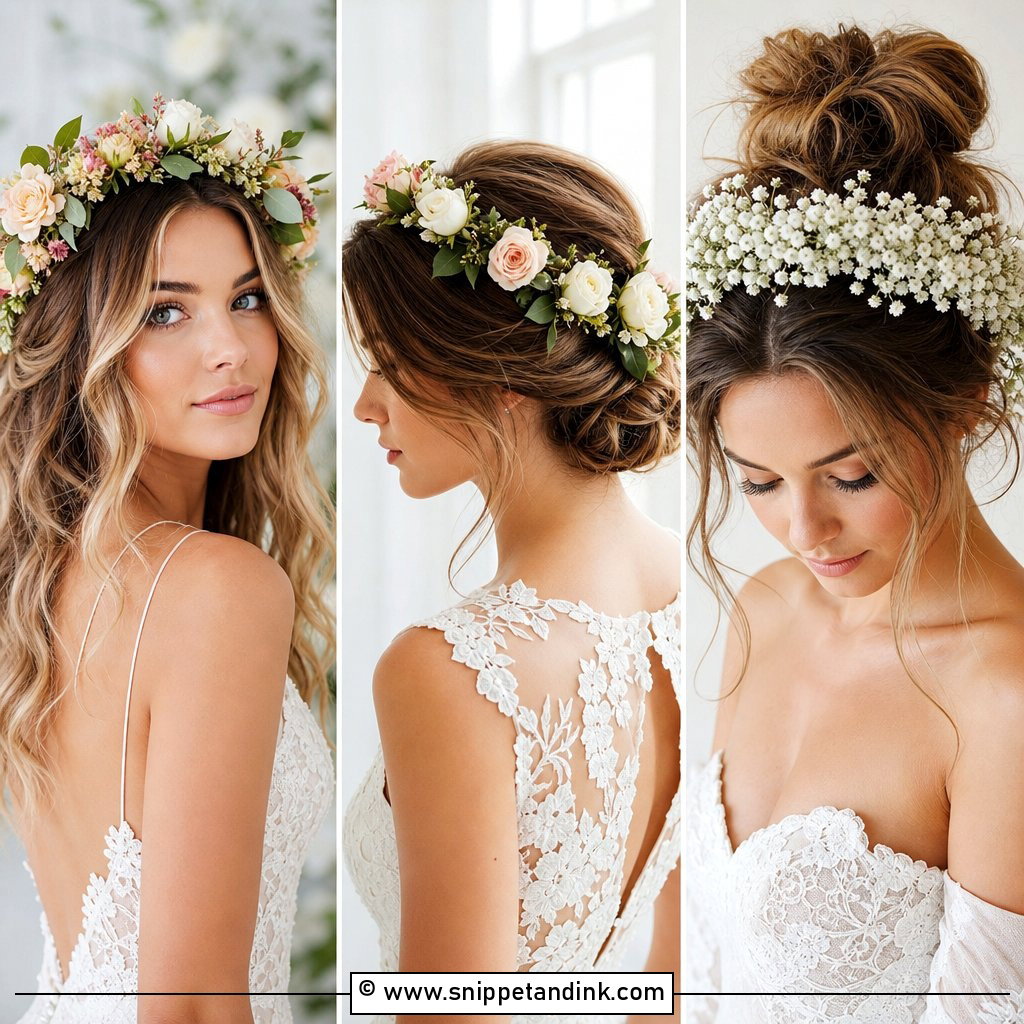
Loose waves are the base I see most often under a crown, and the reason is practical: waves give the wire something to settle into, so the flowers look grown in rather than placed on top. Wide, brushed-out curls with a little lift at the crown hold the band level. I keep the flowers small on loose hair, spray roses, baby’s breath, wax flower and a little greenery, because a heavy crown on hair with no pins in it slides backwards within an hour. Outdoor, beach, garden and rustic weddings suit it, and you still get to wear your hair down.
2. Half Up Half Down Flower Crown Hairstyle
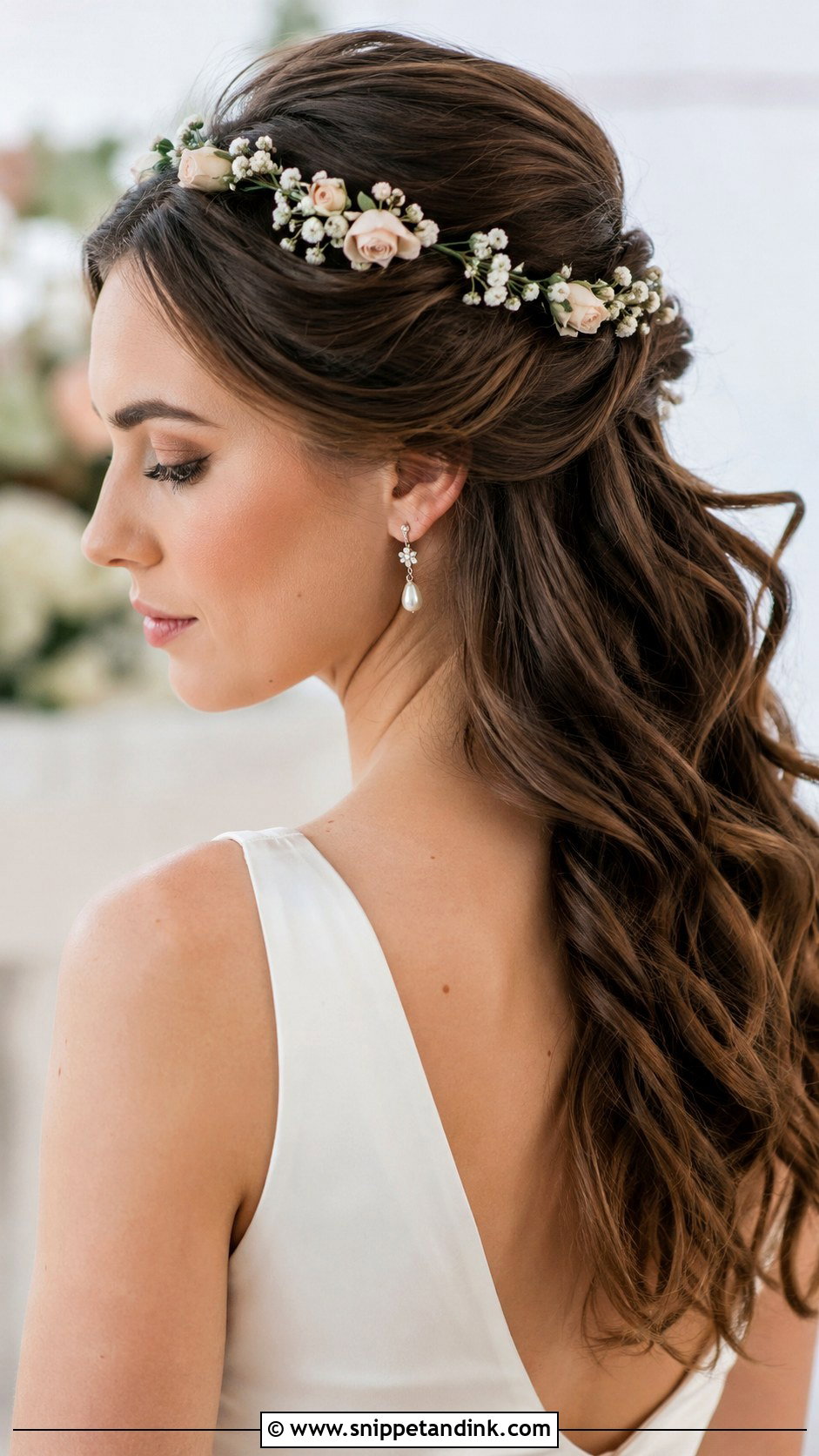
Half up hair is the easiest style for me to fit a crown to, because the pinned top section is a ready-made anchor. The crown sits just behind the hairline and its wire ends pin straight into that section. Below, the lengths can be curled, waved or simply blown smooth. It’s also the best choice if you’re wearing a veil, since the comb goes under the pinned section and the flowers stay in full view. For a classic wedding I’d keep the blooms small and pale; a garden wedding can carry brighter color.
3. Boho Braided Flower Crown Hairstyle
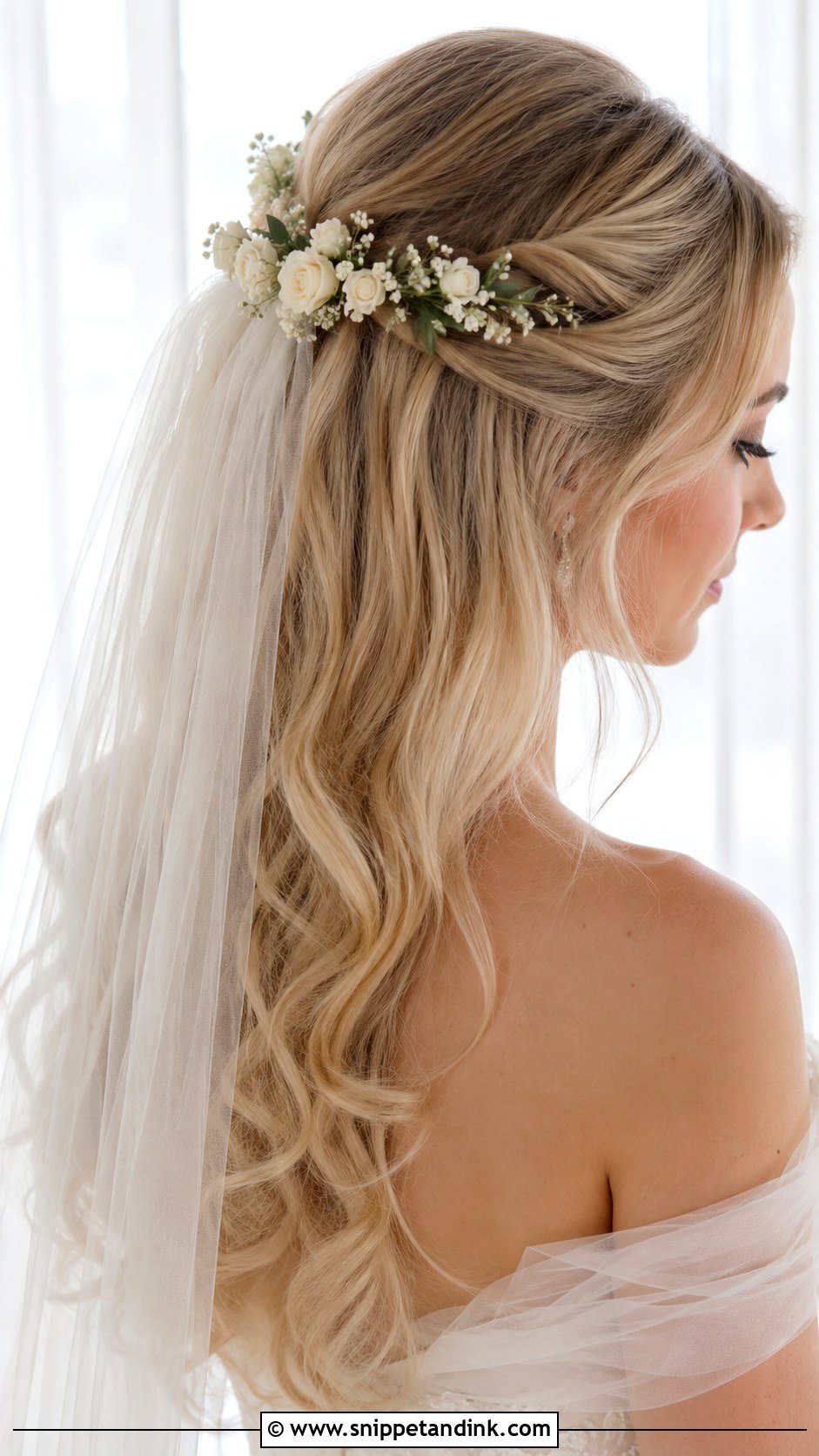
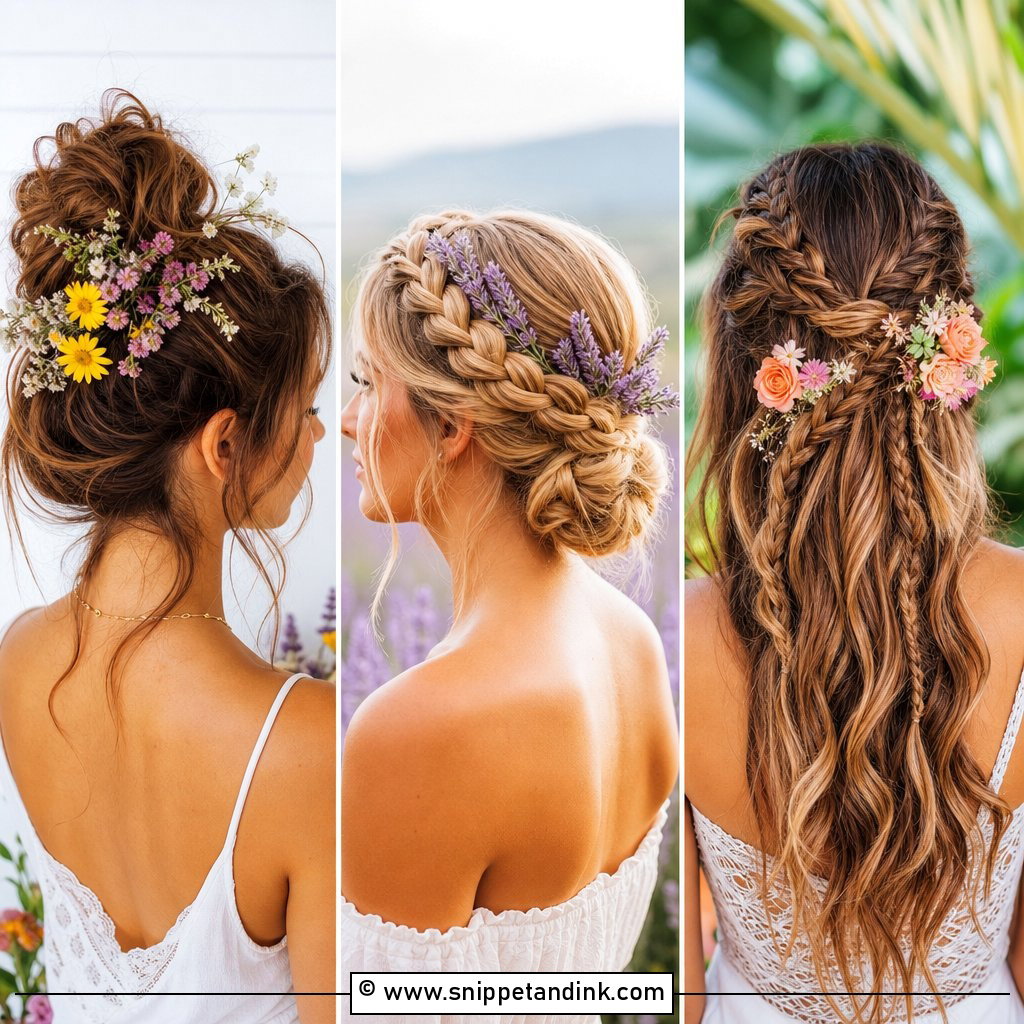
Braids hold a crown better than anything else, because the ridges stop the wire from shifting. The braid can cross the crown, run down one side or weave through loose waves for a relaxed, festival-leaning look. Wildflowers, dried stems, daisies and airy greenery sit naturally against the texture. I’d choose this one for a long outdoor ceremony, since a breeze barely moves a braided base. Ask for a few face pieces left loose. With lace, flowing sleeves and an open back, it looks at home.
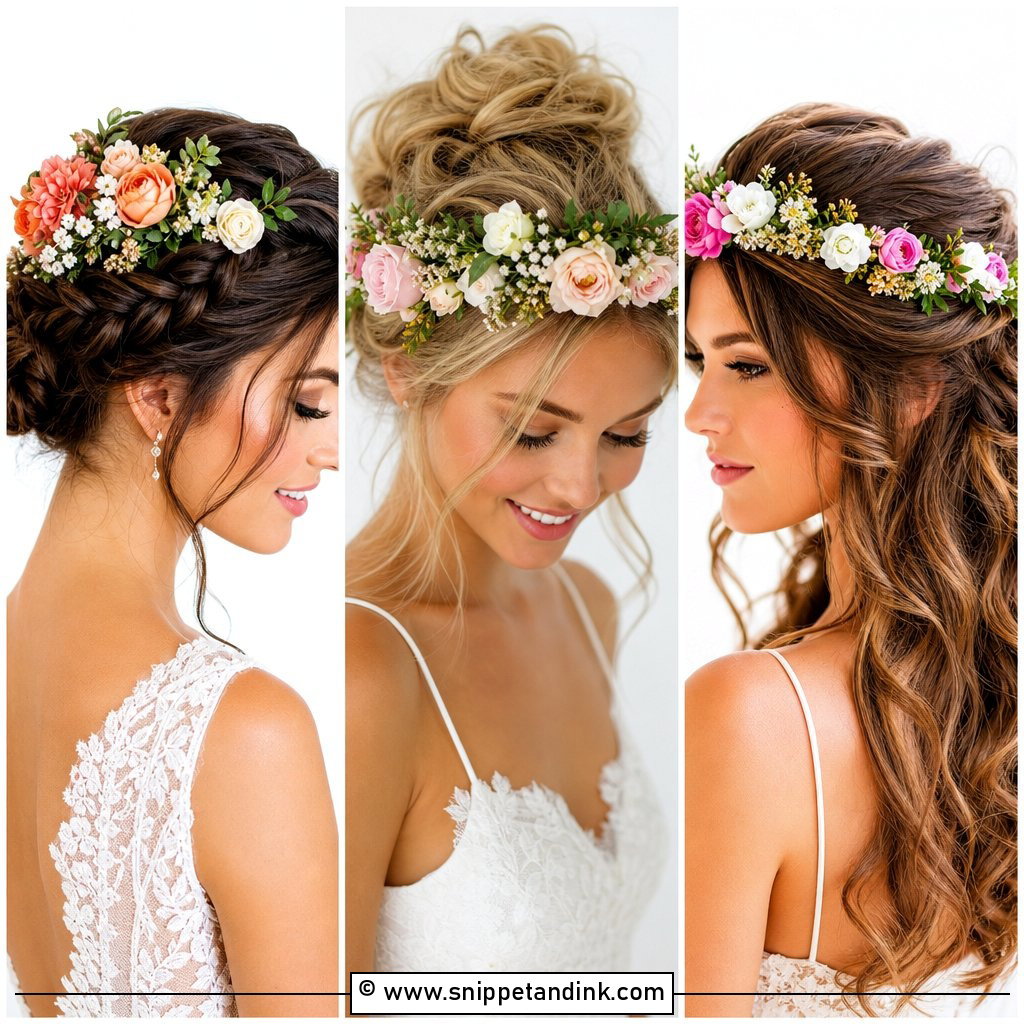
4. Low Bun With Flower Crown
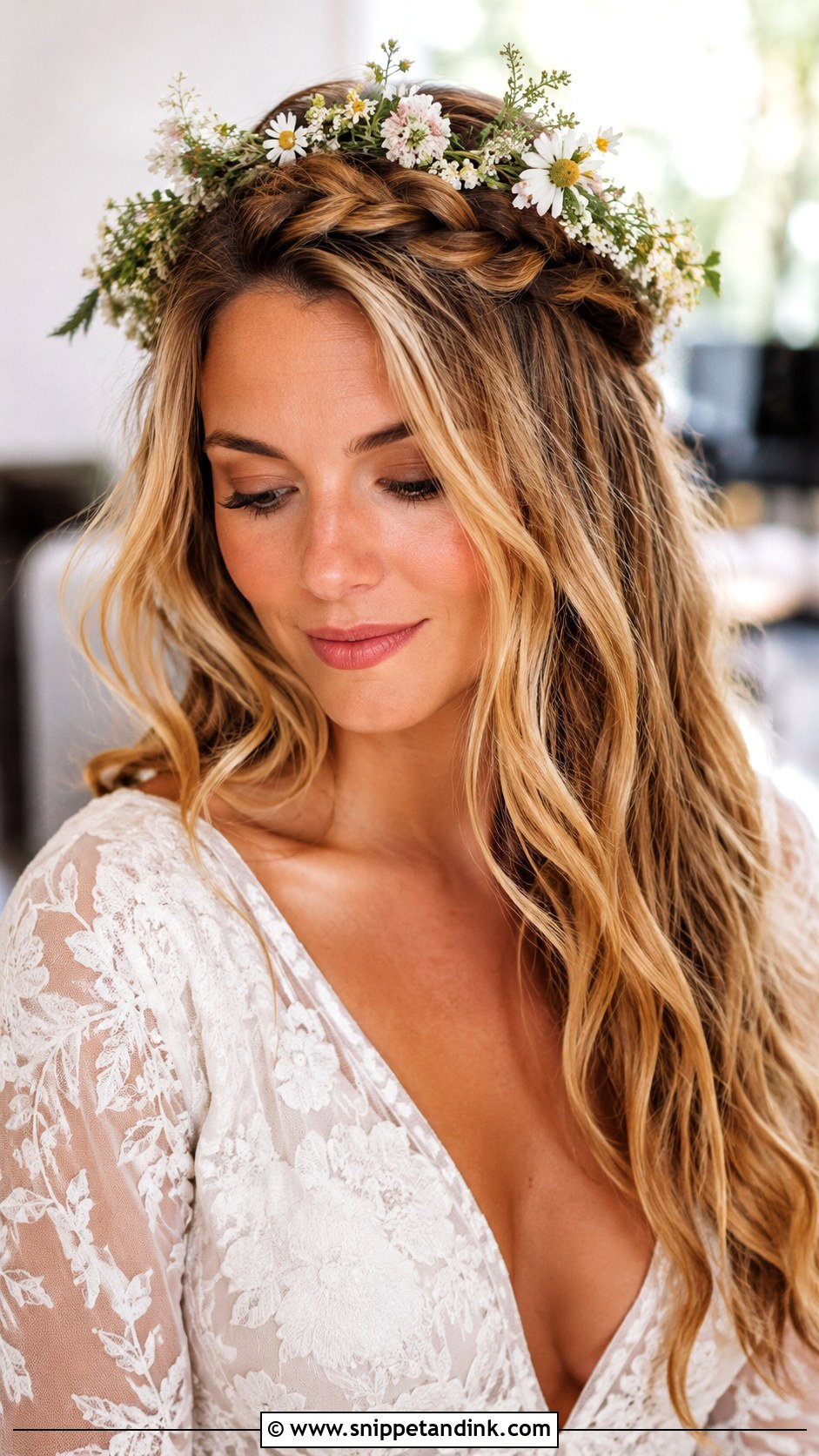
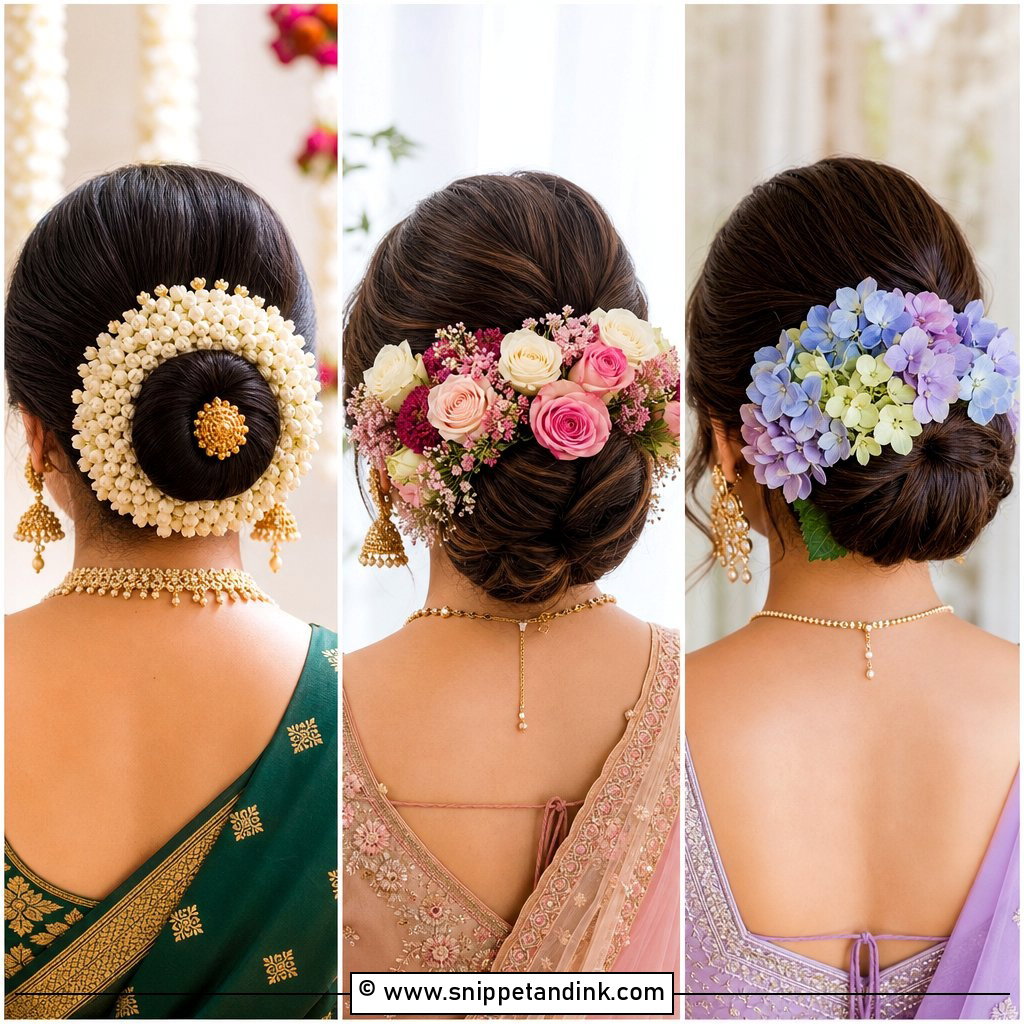
A low bun gives the flowers a clean frame and leaves the neckline open for earrings, a veil or a detailed back. The bun can be smooth or loosely textured. I’d steer a timeless look toward a slim crown and a bohemian one toward a fuller crown; the bun takes either weight. In warm weather it keeps hair off the neck, which also keeps heat away from the stems at the back of the crown. It looks most polished with roses, ranunculus, baby’s breath, and soft green leaves.
5. Messy Updo With Flower Crown
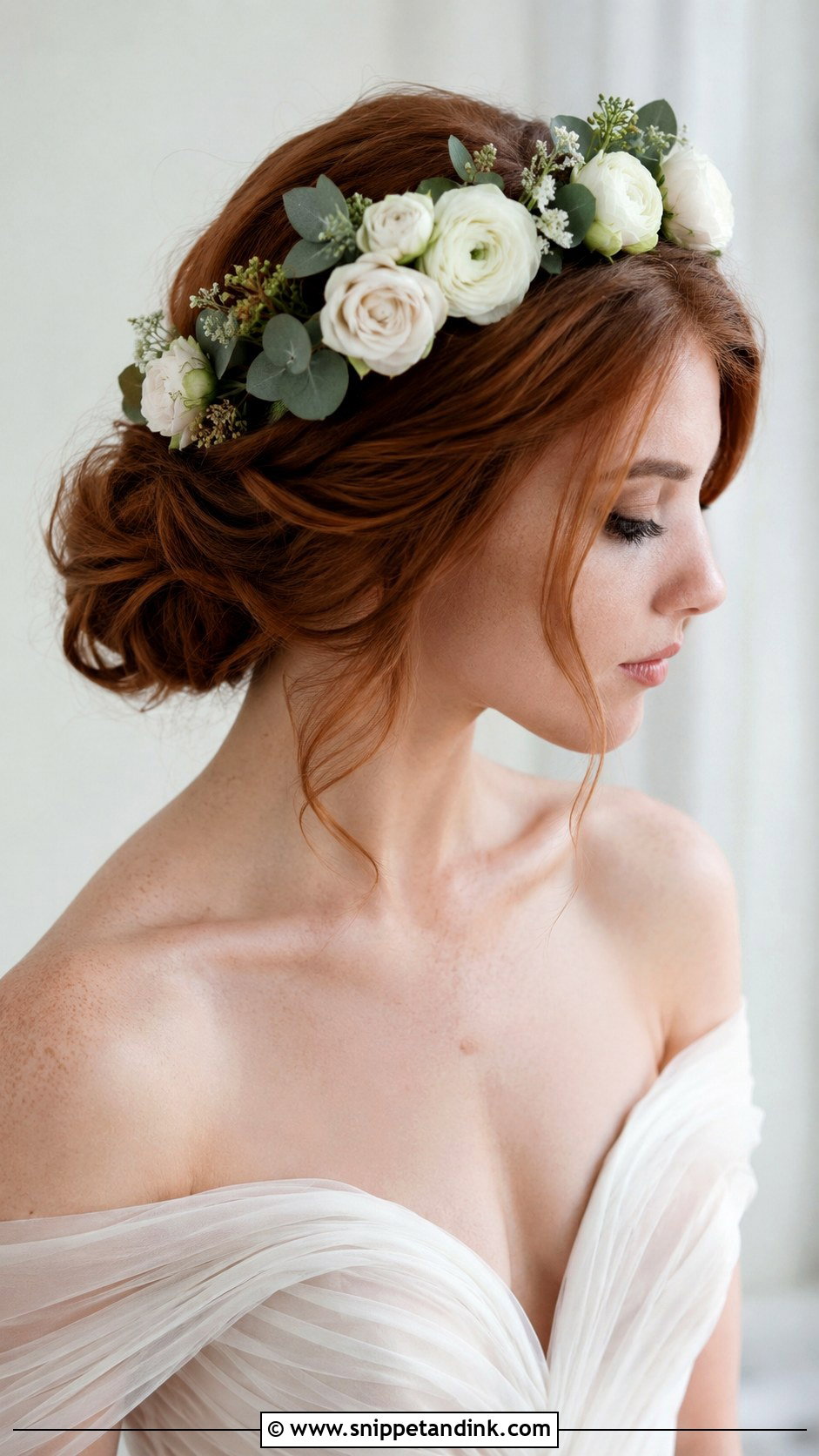
The messy updo is about looking undone while being pinned firmly underneath. Lifted texture, loose curls and a few falling pieces give it its softness, and the crown adds the shape. It suits medium to long hair, fine or thick. Pick flower color by mood: white blossoms read clean, peach and lavender read warmer. One thing to watch is scale. A big crown on top of a lot of volume quickly looks top-heavy, so I keep the flowers in proportion and let the hair carry most of the texture.
6. Crown Braid With Flower Crown
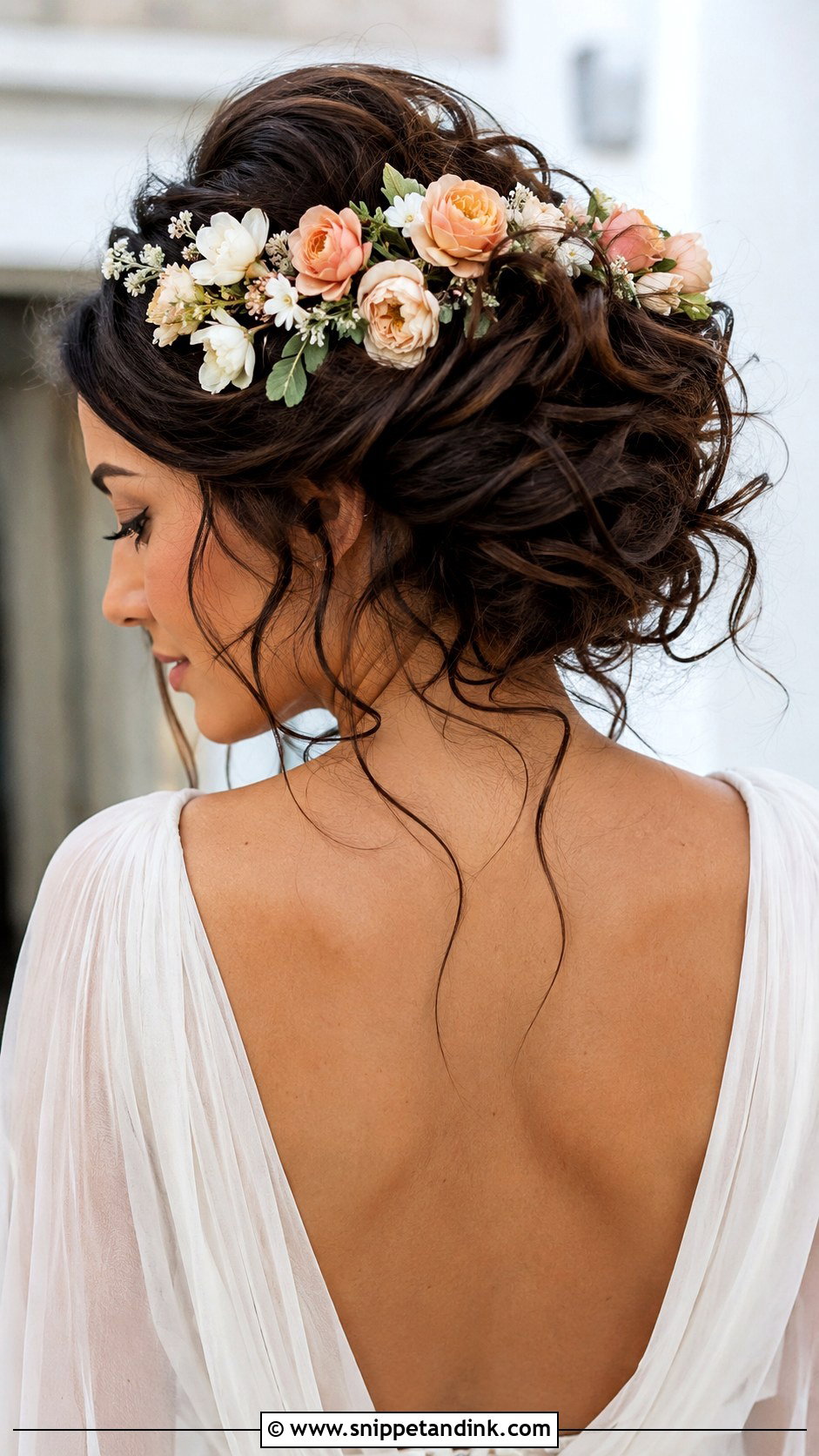
A crown braid already circles the head, so the flower crown can either sit just in front of it or be tucked right into it. I prefer the second: flowers wired into the braid look fuller and can’t slide. It’s the most secure style on this list, which makes sense for woodland and outdoor weddings where you want hair fully controlled. Greenery tucked between blooms adds depth. Because the back is so detailed, it pairs well with open-backed and lace-backed dresses that guests will be looking at during the vows.
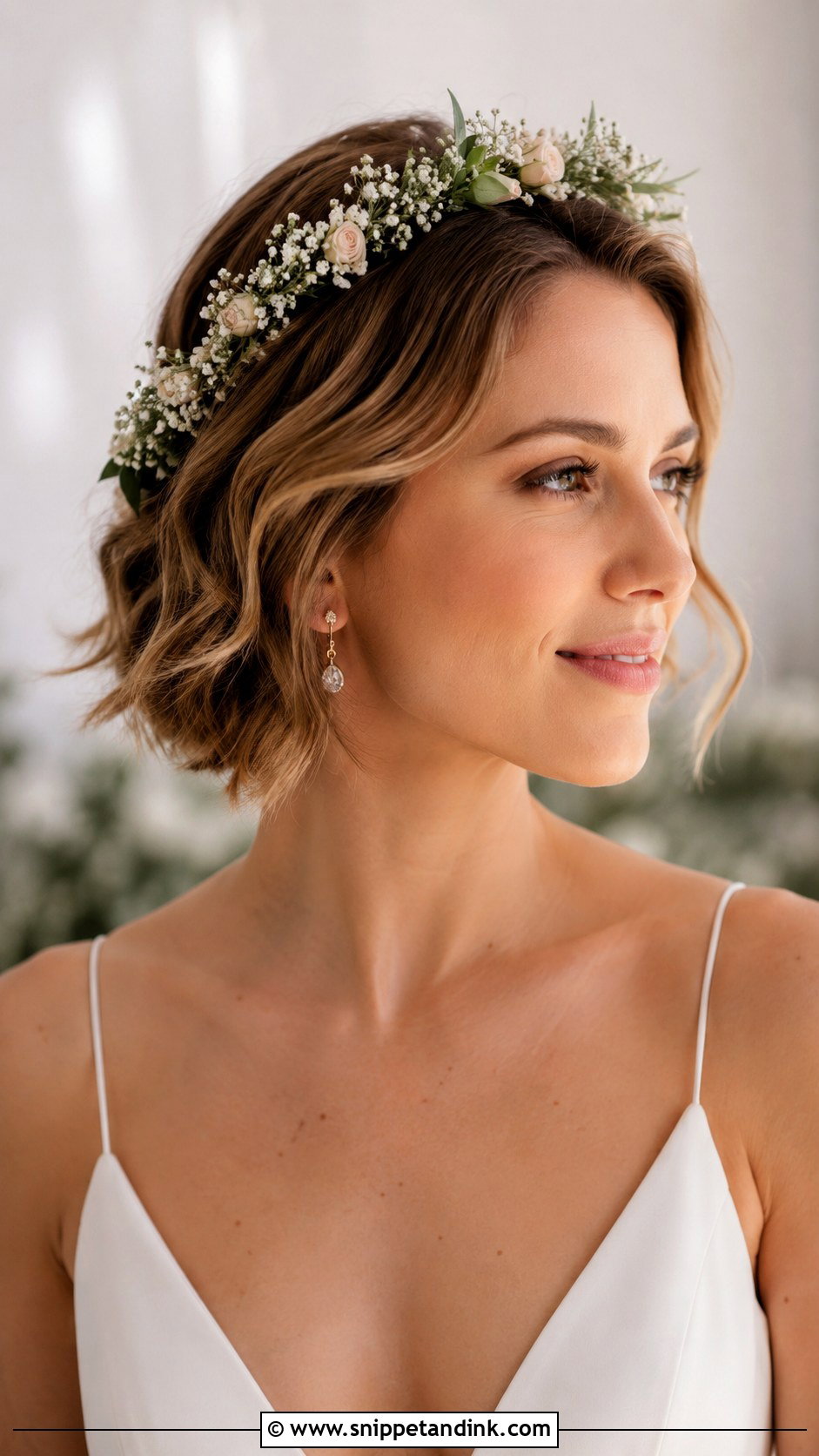
7. Short Hair With Flower Crown
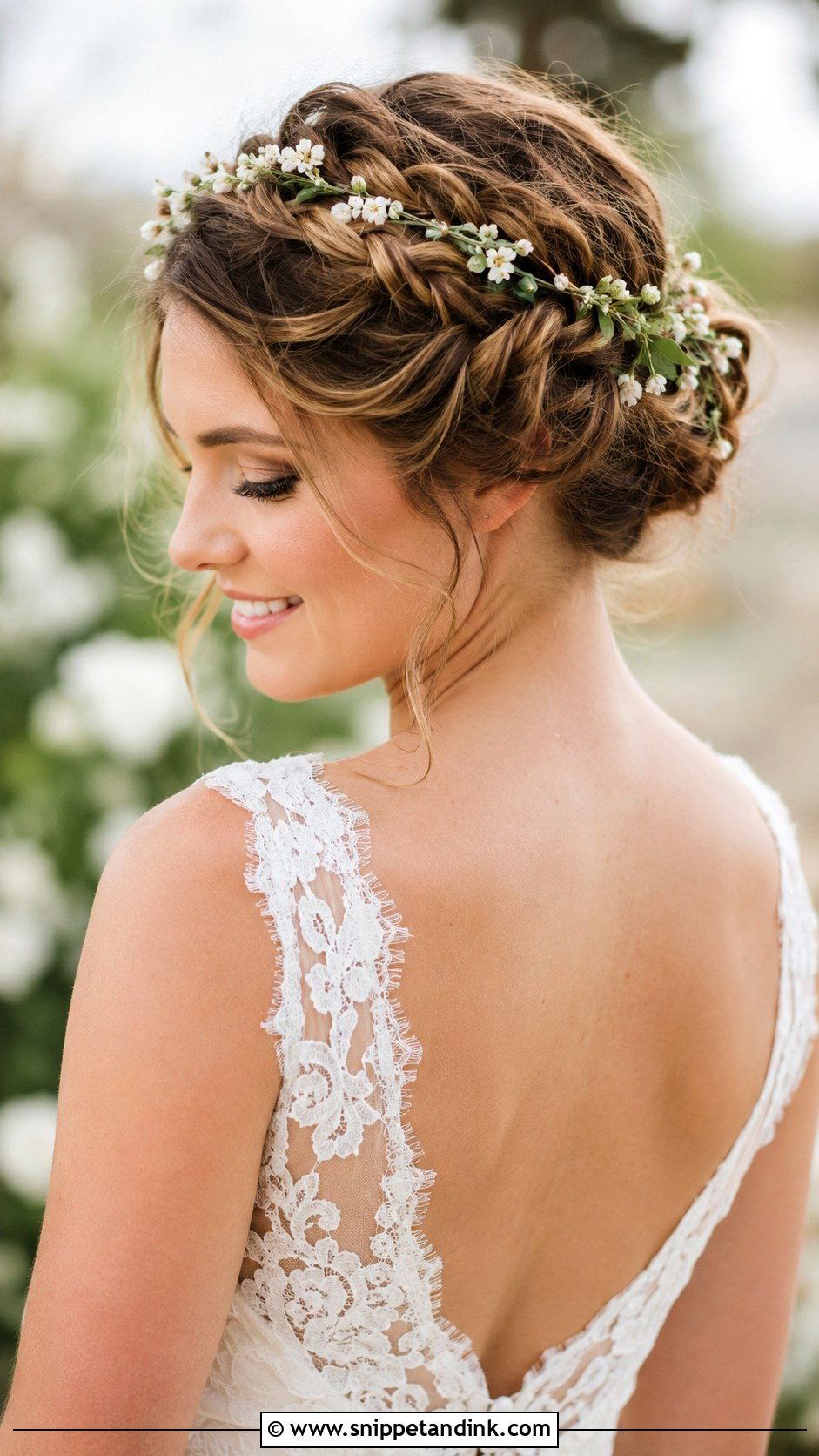
Short hair takes a flower crown well; it just needs a smaller one. A bob, lob, pixie, or bixie cut looks right with a fine halo or a crown that builds up on one side and tapers off on the other. Soft bends or a smooth blowout keep it polished. On a pixie, I add small loops of wire at the back so the stylist can pin through them, because there isn’t much hair to grip. Baby’s breath, mini roses, dried flowers and fine greenery stay in scale. The crown should frame the haircut, not cover it.
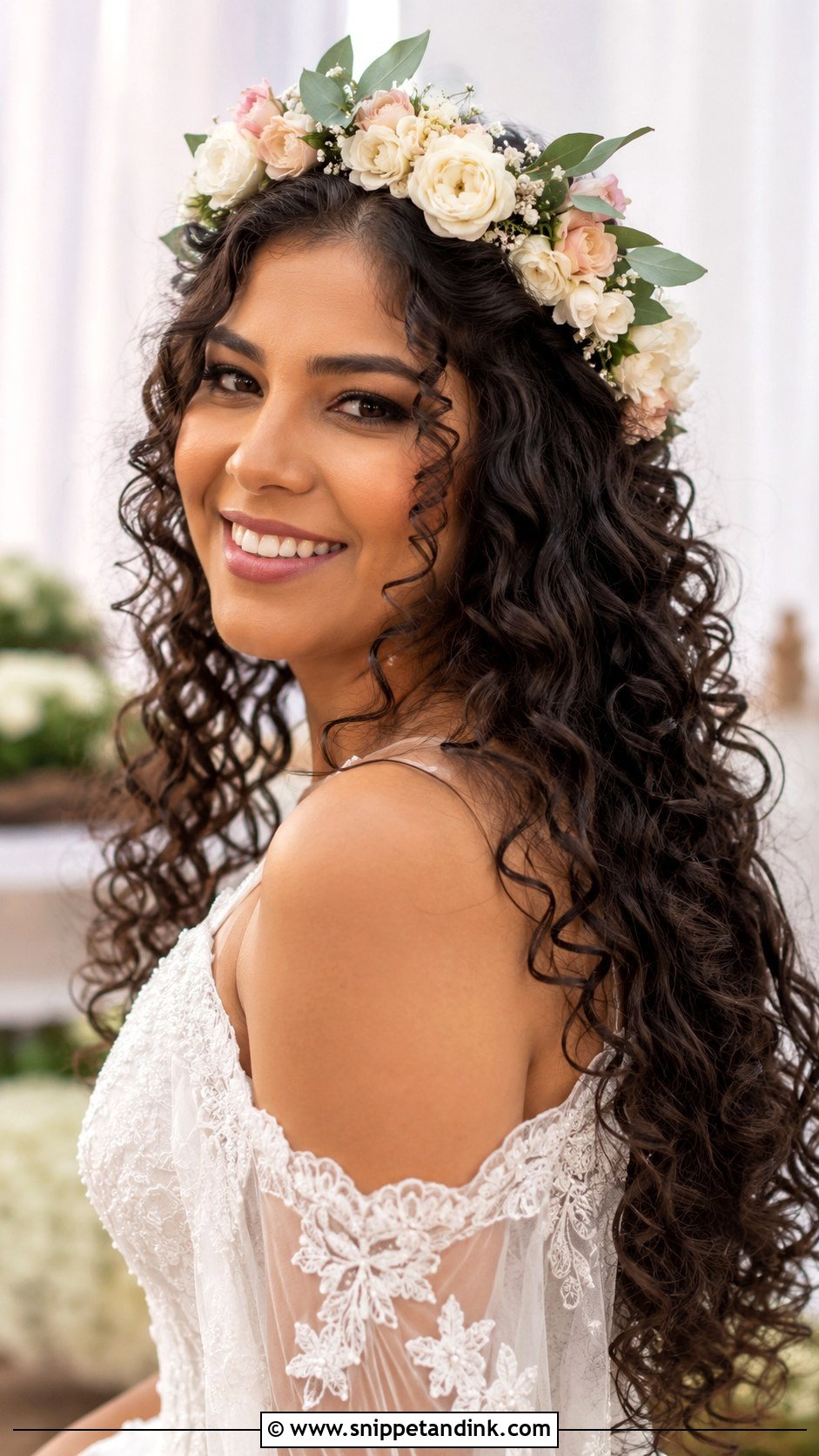
8. Long Curly Hair With Flower Crown
Curls create their own volume, so a crown needs to be sized to the hair, not to your bare head. I measure where it will sit after the curls are styled, otherwise it either perches on top or squeezes them flat. A medium-width crown holds its own against the fullness without looking bulky. Define the curls, control frizz and leave them soft. Flowers can run evenly around or build slightly fuller at the back. Cream flowers and blush blooms against dark, dense curls look rich, and so does fresh greenery.
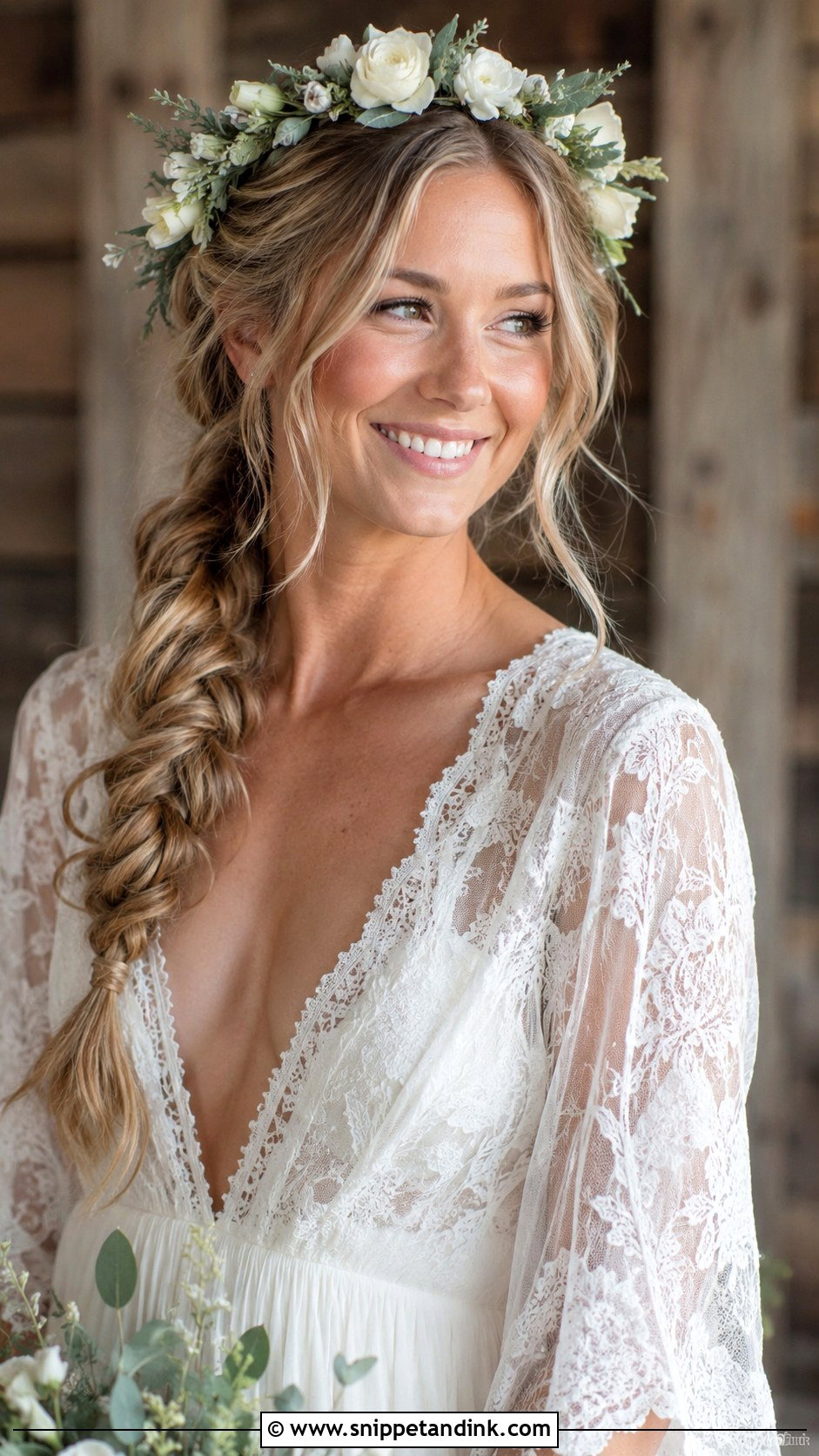
9. Side Braid With Flower Crown
A side braid brings the hair forward over one shoulder, showing off texture, highlights and length. With the braid as detail below, the crown on top can stay fairly simple. Fishtail, loose three-strand and soft Dutch braids all work; pull them apart a little for fullness and leave pieces loose by the face. It’s comfortable for a long day at a beach, barn or garden venue. Note that it’s lopsided by design, so I build the crown slightly fuller on the side opposite the braid to balance the silhouette.
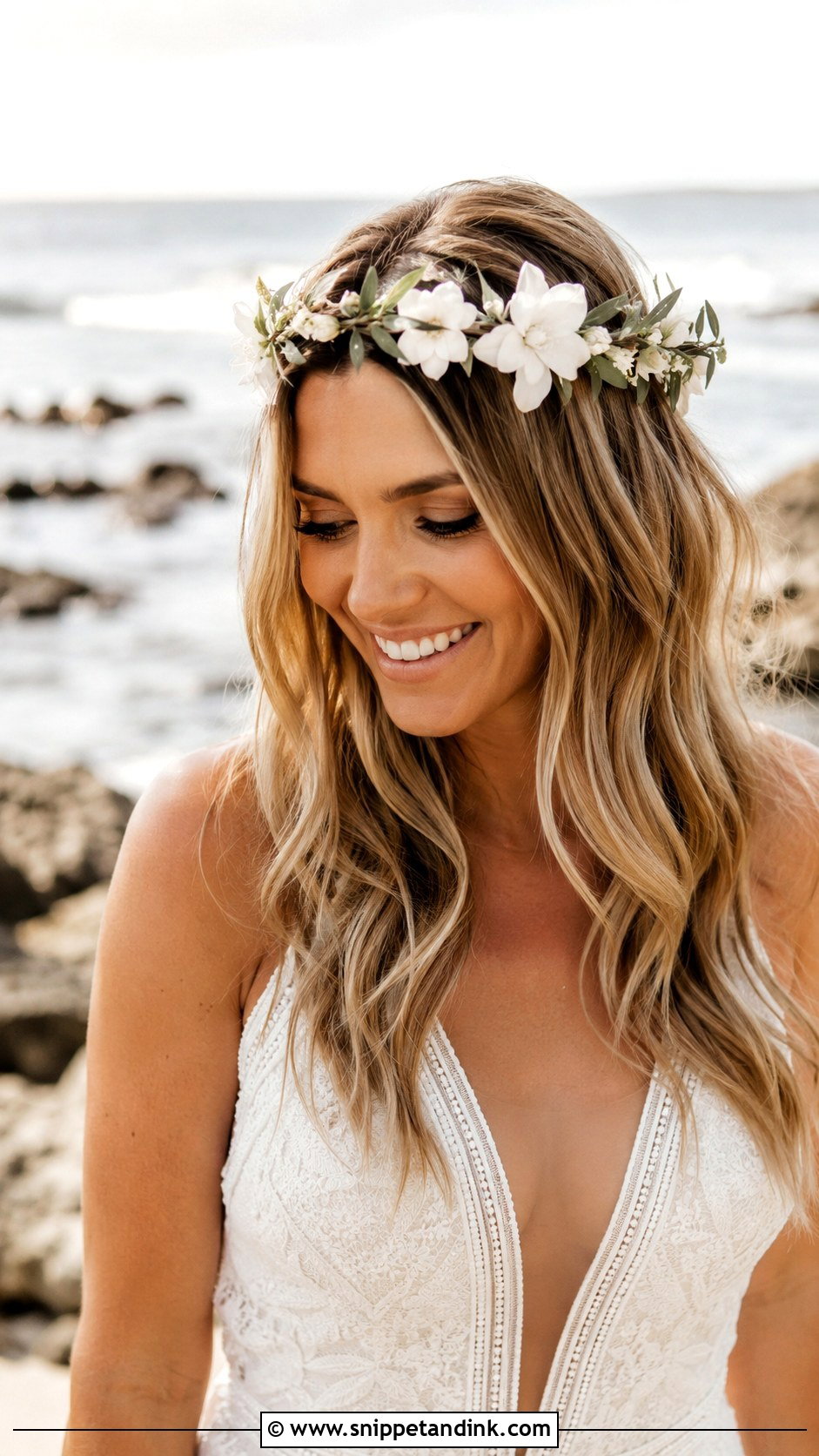
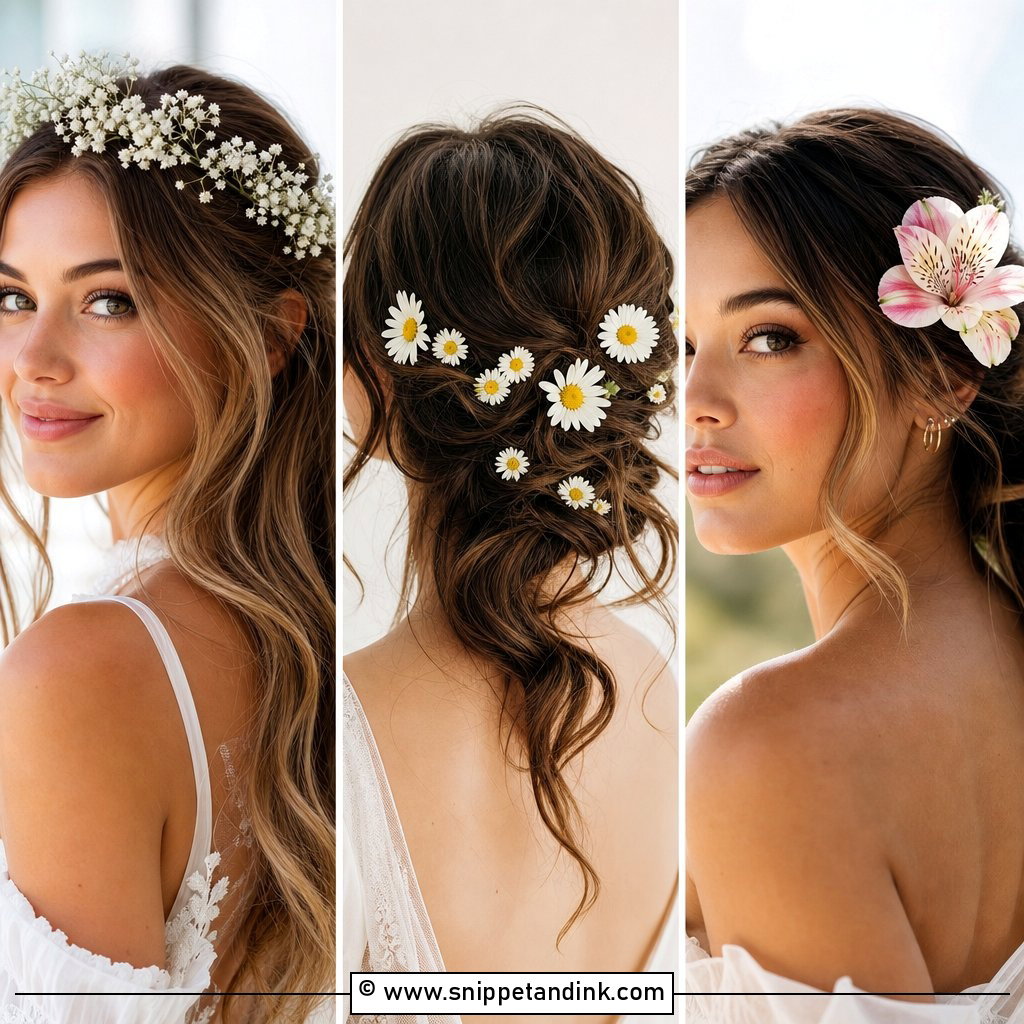
10. Beach Waves With Flower Crown
Beach waves are soft and separated, so they want a light crown. For coastal ceremonies, destination weddings and summer receptions, the crown can include tropical blooms, white flowers, small orchids or greenery. Dendrobium orchids are a good pick for a hot beach; they’re thin-petaled but tough, and they don’t brown the way gardenias do. A center part looks modern, a side part softer. Sea air and wind loosen the waves through the day, so a flexible hold is better than a stiff one.
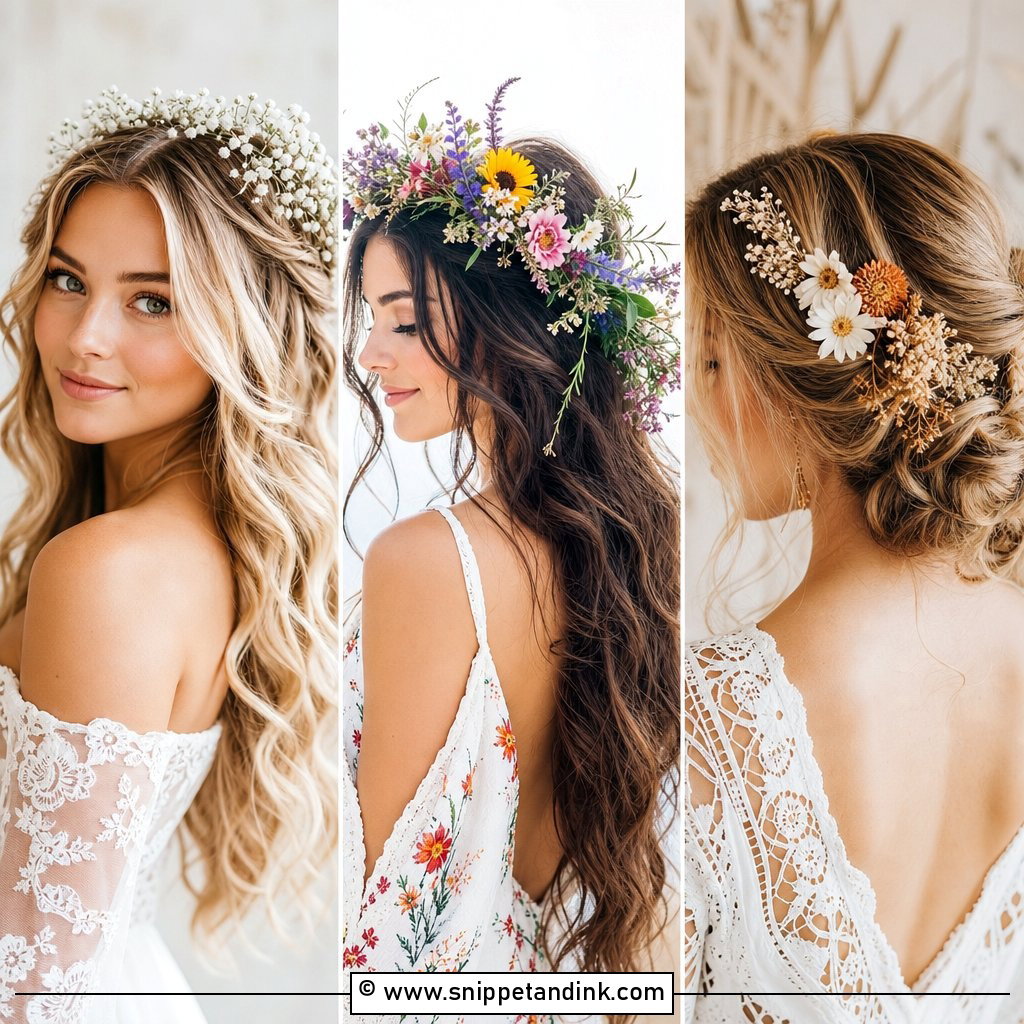
11. Baby’s Breath Flower Crown Hairstyle
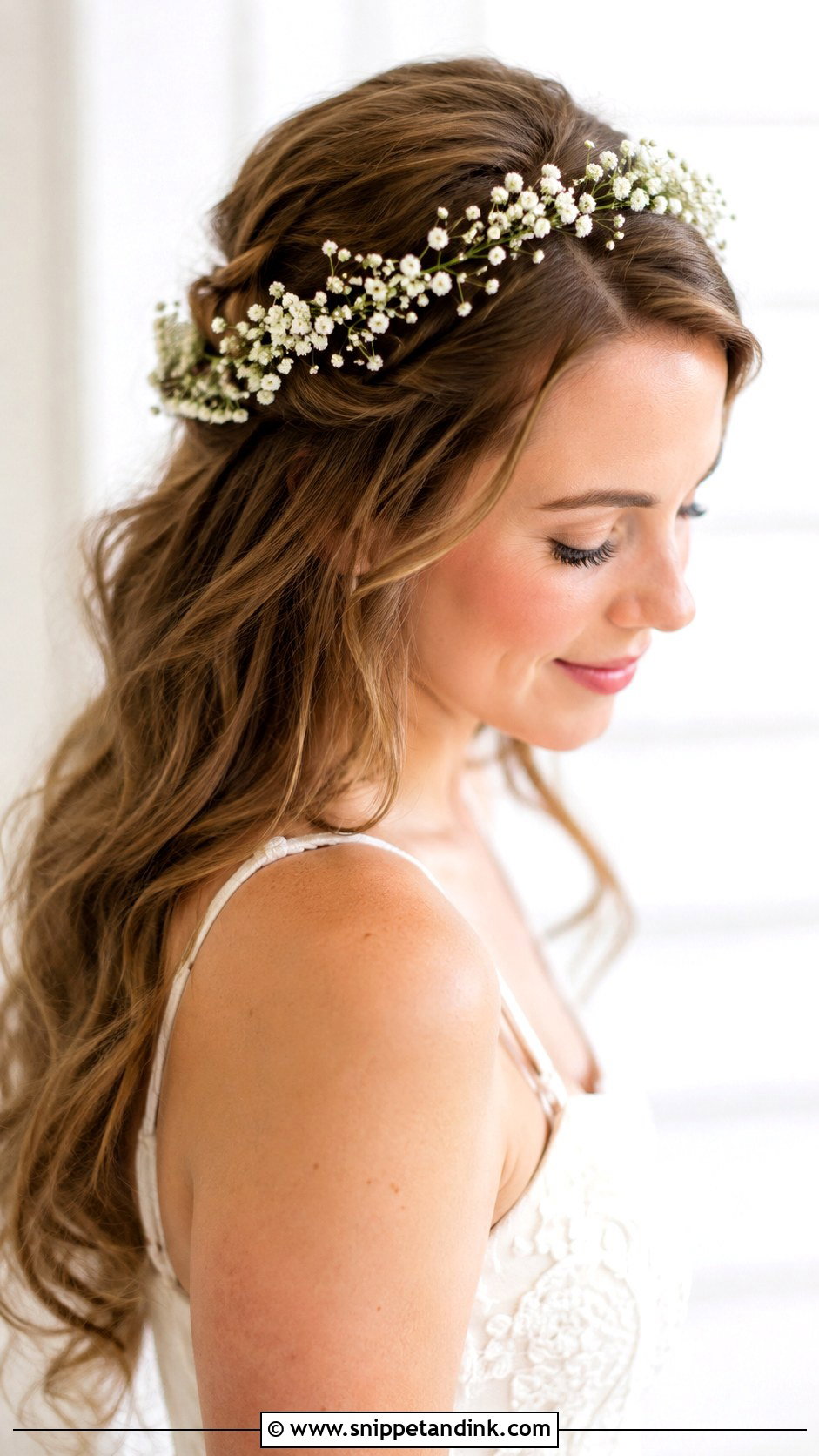
Baby’s breath is the most forgiving flower I put in a crown. It’s light, it holds up without water better than most blooms, and it suits nearly any dress, with loose waves, half up hair, braids, low buns or short cuts. The tiny white clusters make a soft halo instead of a statement, which is why minimalist brides pick it. For a modern version, keep it slim and airy. For a more romantic one, I let a few sprigs trail down into pinned curls or a loose braid. One honest note: fresh baby’s breath has a faint smell some people dislike up close, so smell a stem before committing.
12. Rose Flower Crown Bridal Hairstyle
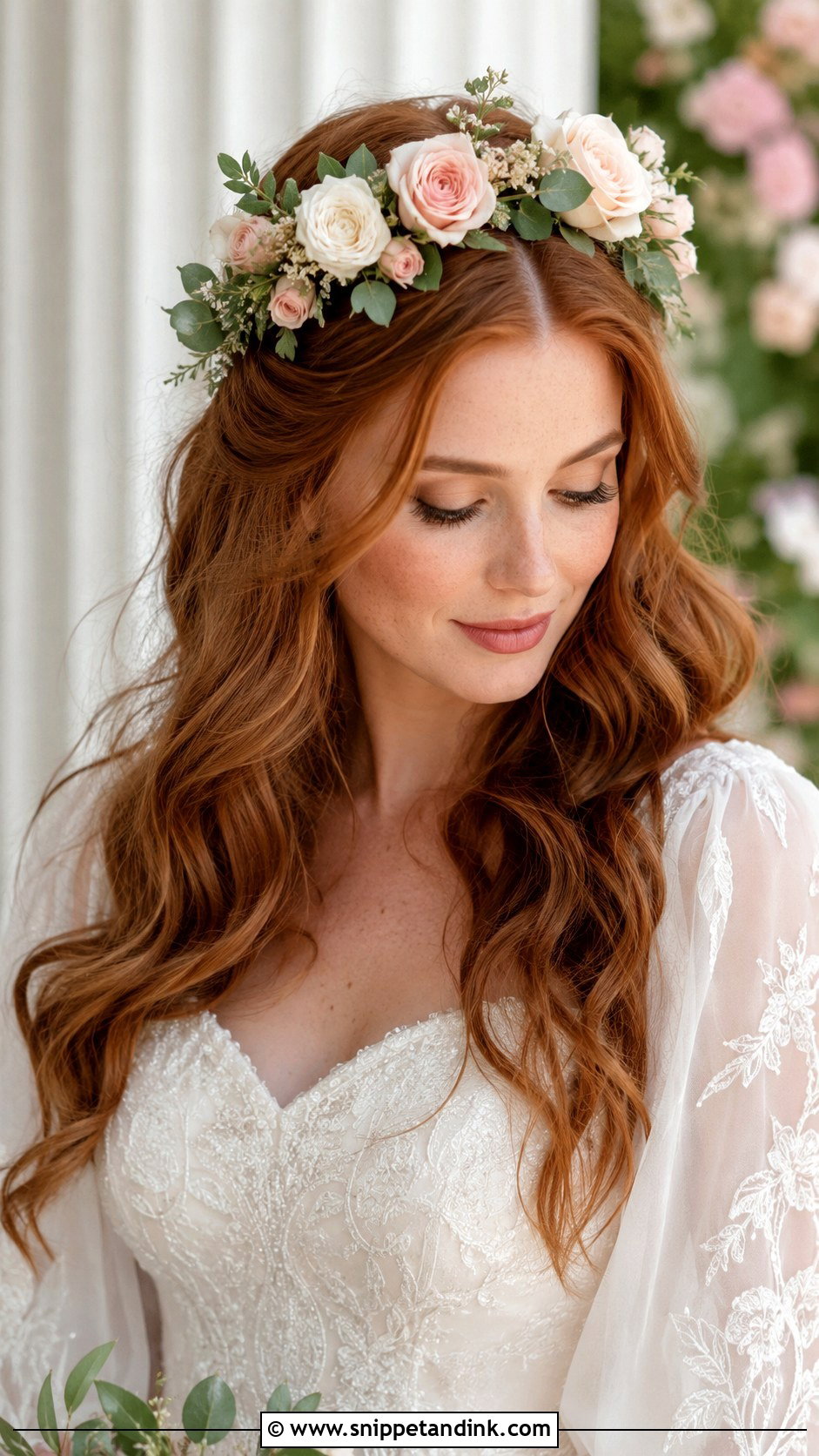
Roses bring the classic bridal note, and the size of the bloom decides the mood. Spray roses suit half up hair, buns and short cuts; full-size roses need long waves or a fuller updo to balance their weight. Blush, ivory, peach and pale pink match most makeup and bouquets. If your dress is heavily detailed, I’d go smaller and add greenery. Roses are also among the toughest flowers for a crown: I condition them in water overnight before wiring, and they hold their shape for hours. Garden, estate and indoor weddings all suit them.
13. Wildflower Crown Wedding Hairstyle
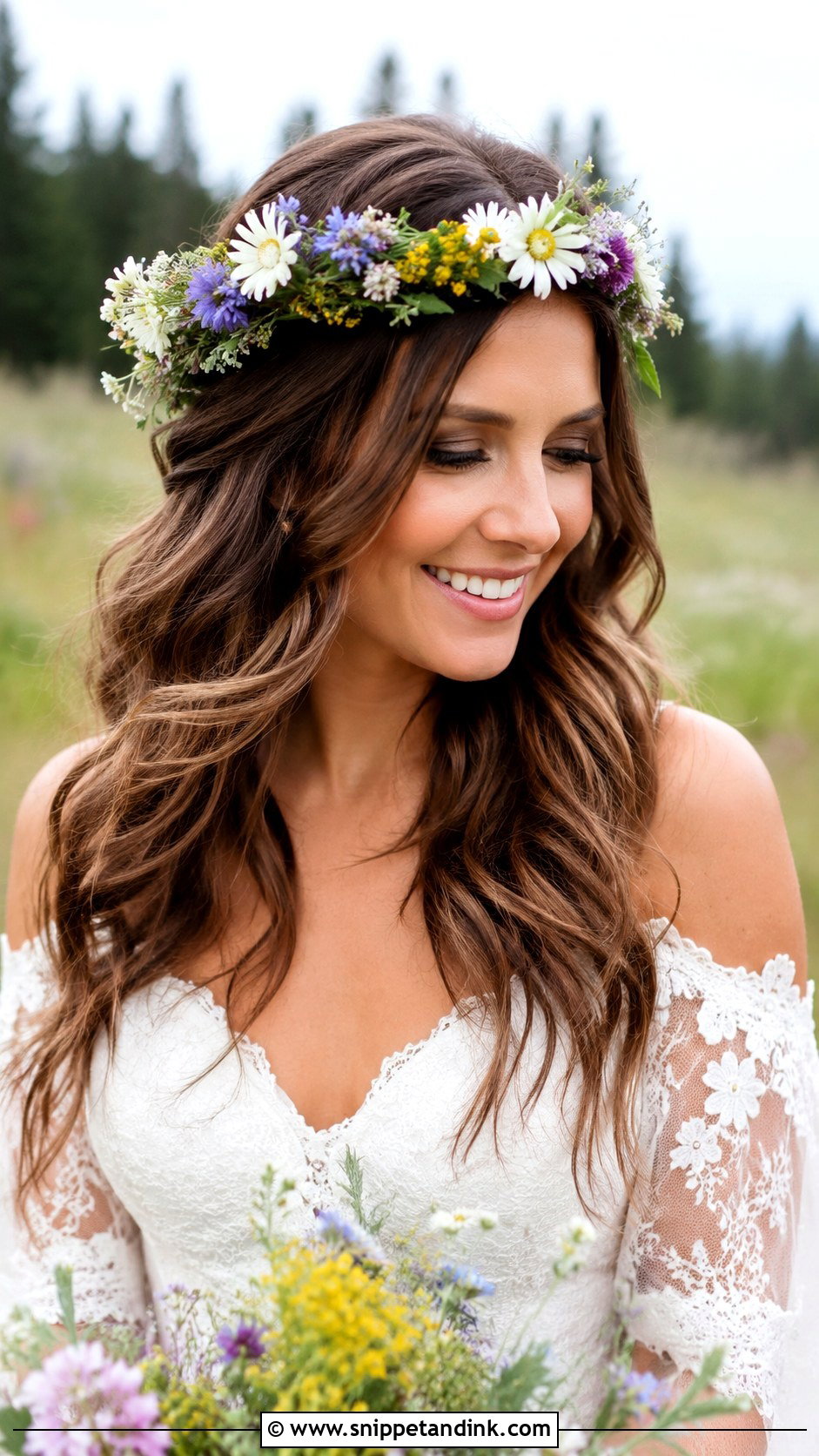
Wildflowers bring color and texture for an outdoor feel. The crown can mix tiny daisies, wax flower, lavender, small greenery and whatever is in season. Loose waves, braids and half up hair suit it. It should look a little wild, but the stems still need to be wired firmly and balanced. A word of caution: many true field flowers wilt within an hour of being cut, so I use hardy blooms that look wild rather than picking from a meadow. Meadow, backyard and rustic weddings in spring or summer are its natural home.
14. Flower Crown With Veil Hairstyle
Wearing a veil and a flower crown together is all about placement. The crown sits on top or just behind the hairline; the veil is pinned underneath it or at the back of the head. That keeps the flowers visible and stops the veil from pressing the hair flat. Loose waves, half up hair, low buns and textured updos all take the pairing. Match the crown’s weight to the veil’s: a slim crown with a long veil, a fuller crown with a short or soft one. Too much on both and the whole head looks heavy.
15. Dried Flower Crown Wedding Hairstyle
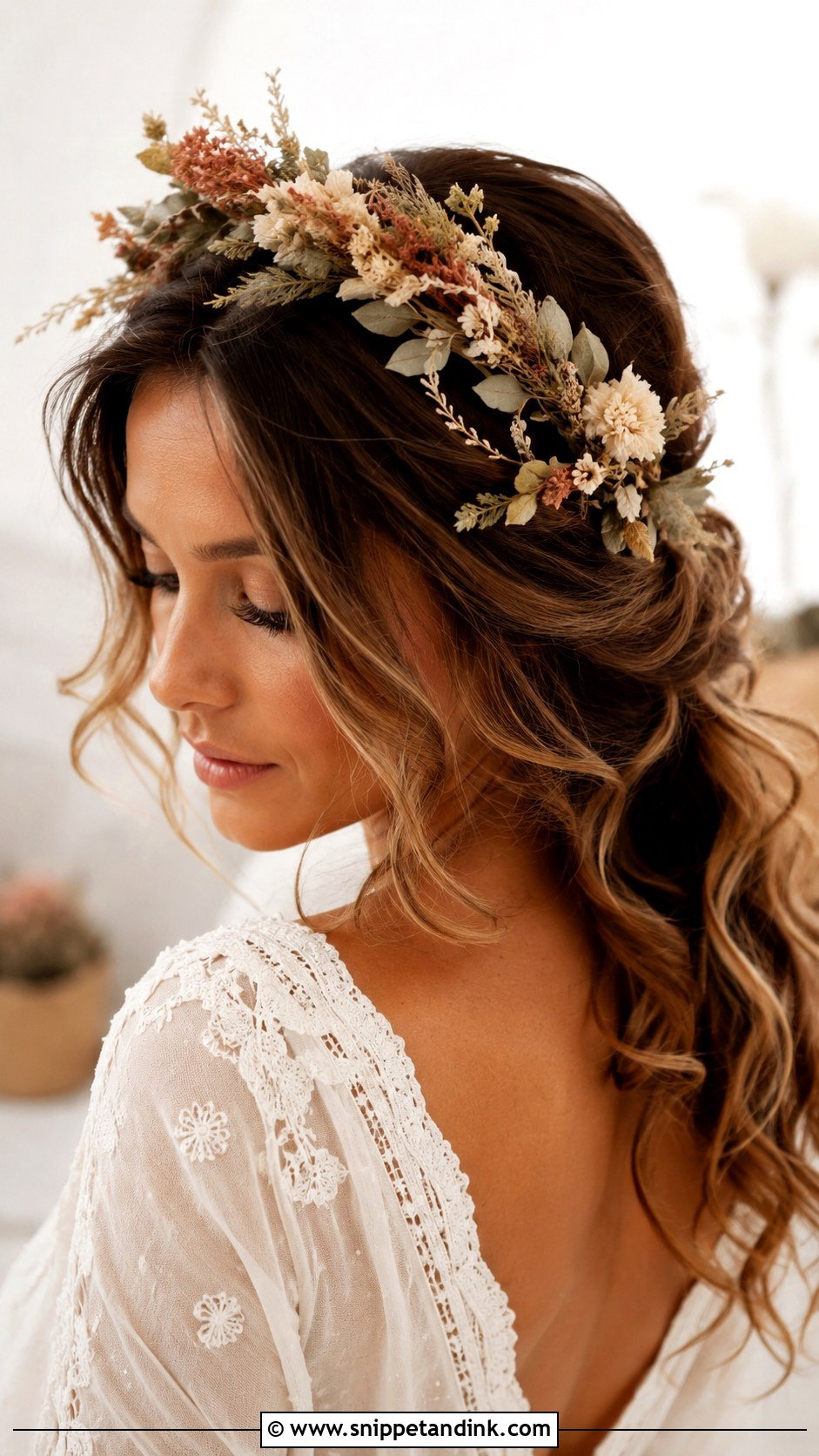
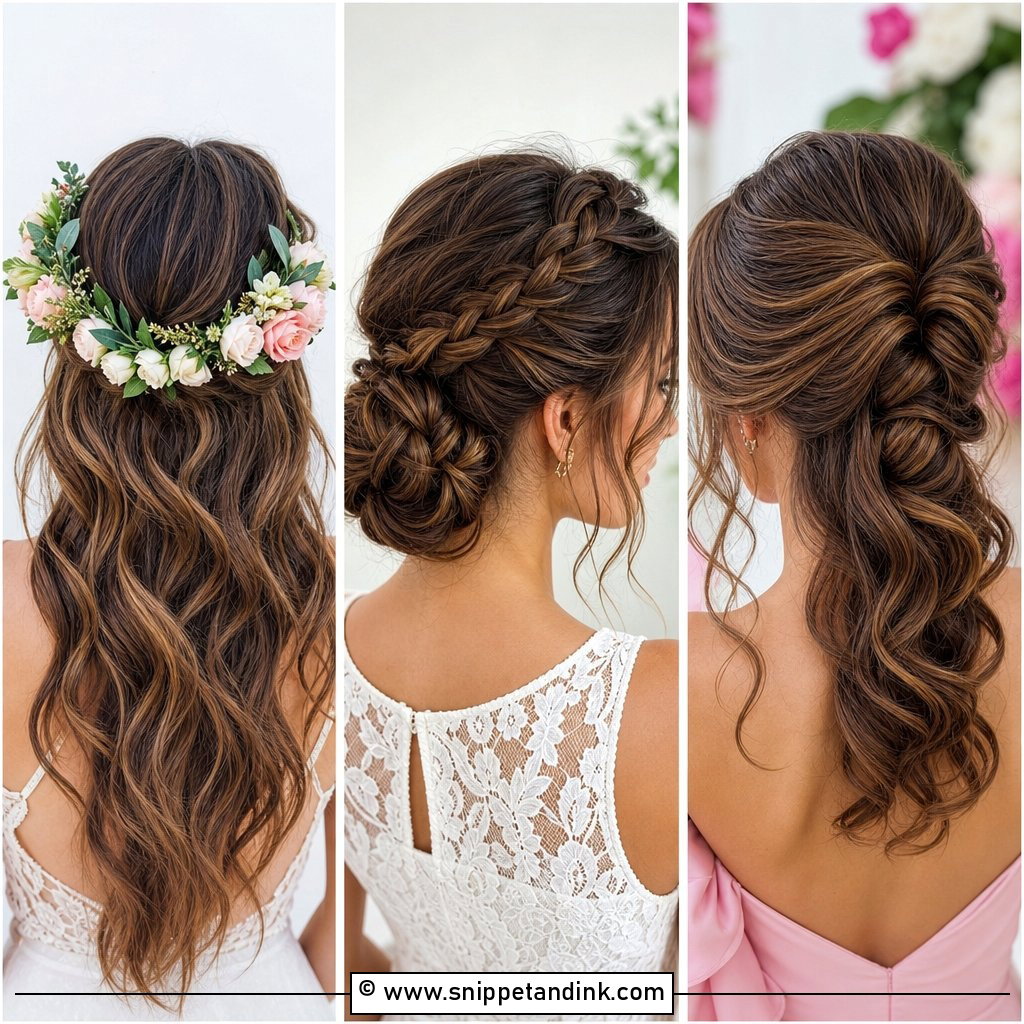
Dried flowers are the crown you get to keep. They bring muted color and a handmade texture that suits boho, rustic, autumn and countryside weddings. Loose waves, low buns, braids and half up looks all suit them. Dried stems are brittle, so the hair should be finished before the crown goes on, and it should be pinned through its frame, never pushed down onto the head. Neutral tones like cream, beige, dusty pink, rust, and sage give a warm palette. Keep the hair soft and slightly textured so the crown looks at home.
Making the Crown the Day Before, and Storing It Overnight
Fresh crowns are usually made the day before or the morning of the wedding. Overnight, mine go into a box lined with lightly damp tissue, misted, lidded and kept somewhere cool, ideally a fridge with no fruit in it. Ripening fruit gives off ethylene, which makes flowers age faster. Leave the crown out of the sun and away from the car’s heater, and take it out of the box only when the hair is done. If the getting-ready room is hot, a light mist of water on the petals, never the wired stems, perks it up just before it goes on.
Getting the fit right
Measure your head where the crown will actually sit, over the styled hair, not around your forehead. I build crowns on a wire frame wrapped in floral tape with a ribbon at the back, so the fit can be tightened on the morning. A crown that’s too tight pinches and leaves a headache; one that’s too loose slides with every hug, however many pins hold it.
Dried crowns can be made weeks ahead. Keep them in a box somewhere dry and dark, because damp makes them limp and sunlight fades the color.
Wear It for an Hour Before You Commit
A flower crown can look polished, relaxed or romantic, and most of that comes from the hair under it. Waves read soft, low buns read classic, braids read boho, and short hair reads modern with a smaller crown. Choose the style that suits your dress, venue, veil and natural texture, then think about comfort. Ask for a sample crown or a few test stems at your hair trial, and wear it for an hour to feel the weight. Light flowers, firm pins and that test run will do more for the day than any particular bloom.
You'll Like These Ideas:


Leave a Reply