
Fresh flowers are the one hair accessory that changes over the course of a wedding day, and that’s both the charm and the challenge. A bloom that looks crisp at 10am can be limp by the first dance if it’s the wrong variety or went in at the wrong moment. I’ve styled flowers into everything from baby’s breath tucked into braids to full roses pinned around a low bun, and the styles below are the ones I’d actually put on a bride. For each one I’ve added what I watch for when I build it, so you can bring a realistic picture to your trial.
Heat, Hairspray and Hydrangeas: What Wilts First
Cut flowers in hair have no water source, so every bloom is on a timer from the moment it’s pinned. Some varieties barely notice; others give up before the photos. When a bride shows me her inspiration, the first thing I check is whether the flowers in the photo will last as long as her day does.
Flowers that hold up
- Spray roses and garden roses that are just opening
- Orchids, especially dendrobium
- Wax flower and baby’s breath, which look fine even when they start to dry
- Eucalyptus and most sturdy greenery
- Ranunculus, if it’s well hydrated beforehand
Flowers that need a plan
Hydrangea, gardenia, hibiscus, peonies and true field flowers like forget-me-nots all have short lives out of water, bruise easily or drop petals. They can still work, but they should be placed last, kept small and delivered late. On a hot outdoor day I’d rather swap them for a hardier lookalike than watch them droop by the speeches.
Hairspray is the other quiet enemy. Most sprays will mark petals and can speed up browning, so I finish and spray the whole style first, let it dry, then add the flowers. If anything needs a touch-up later, shield the blooms with your hand.
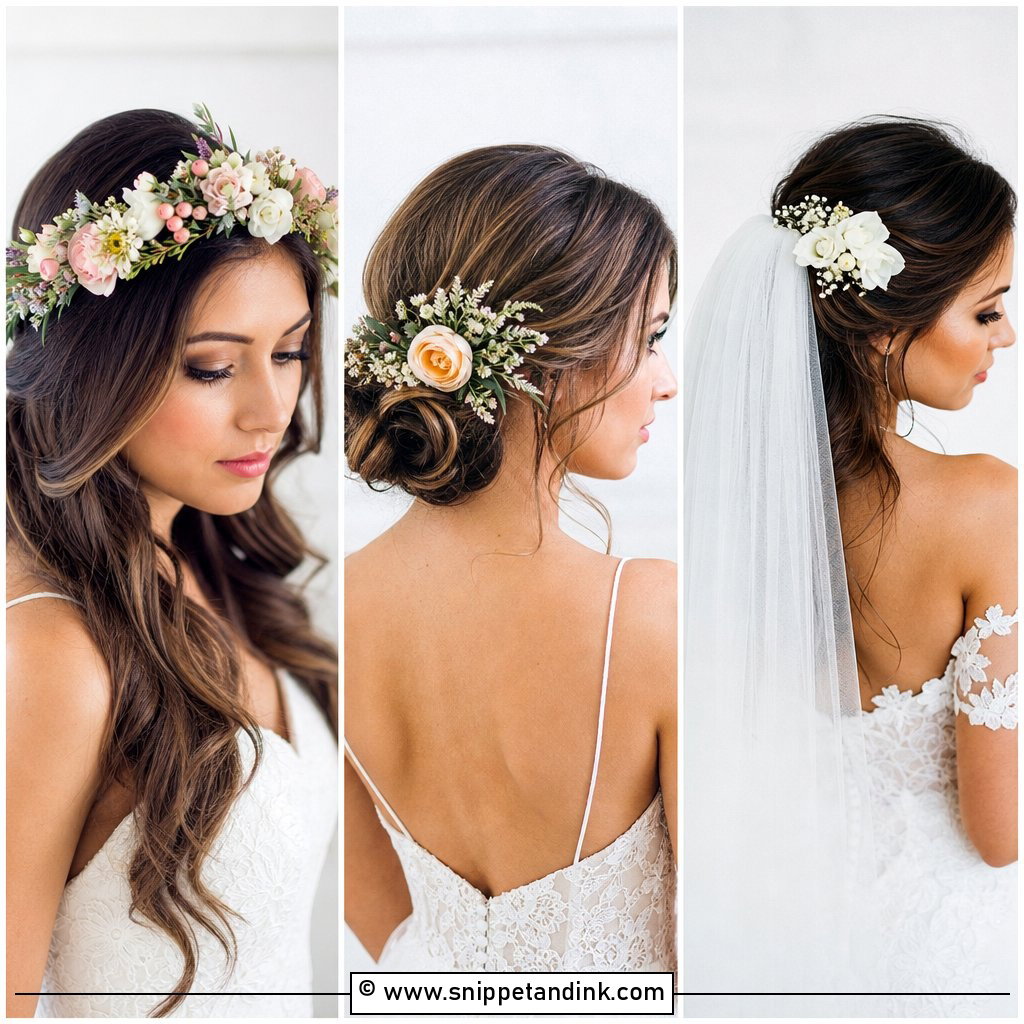
1. Flower Crown With Loose Waves
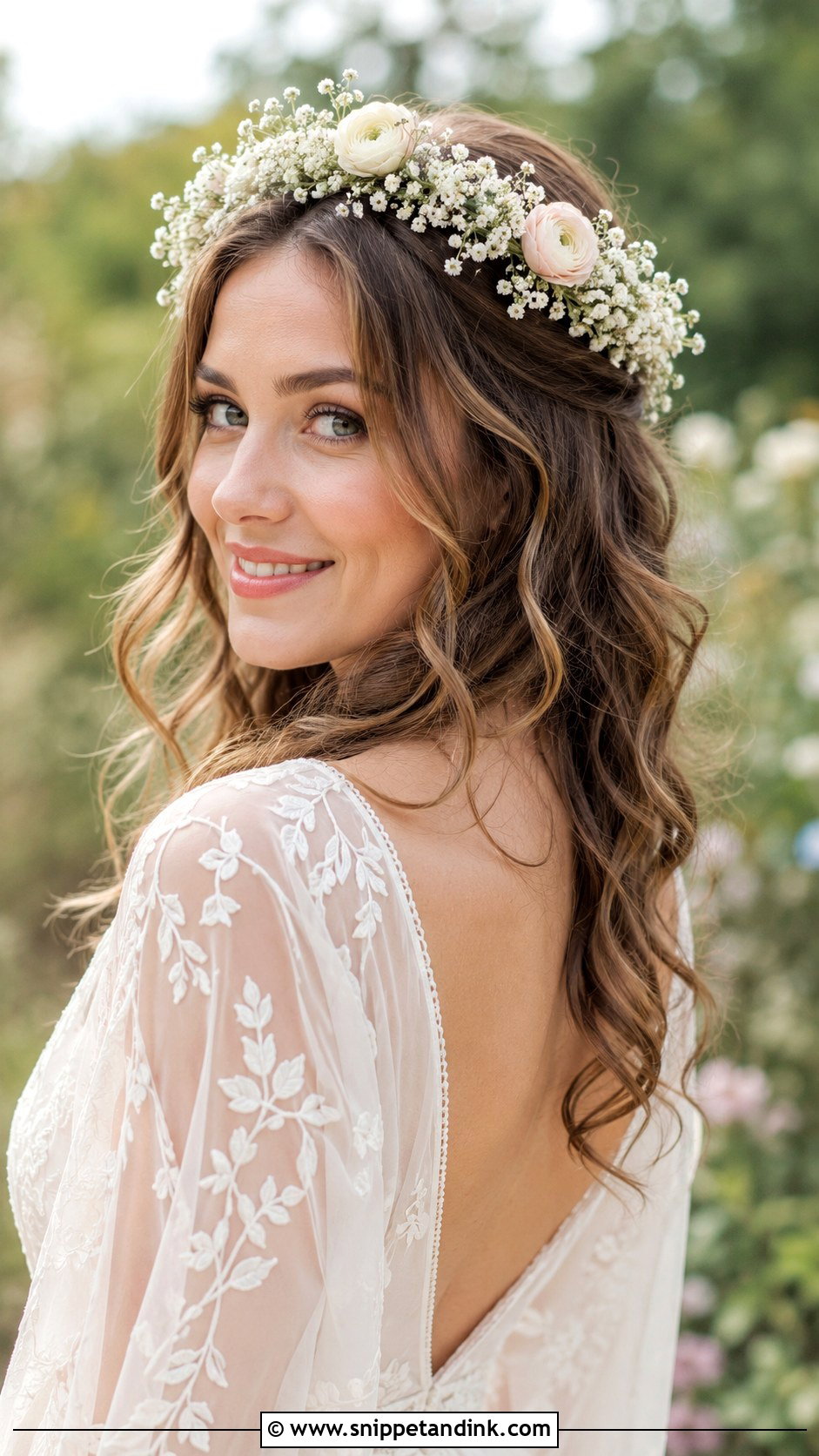
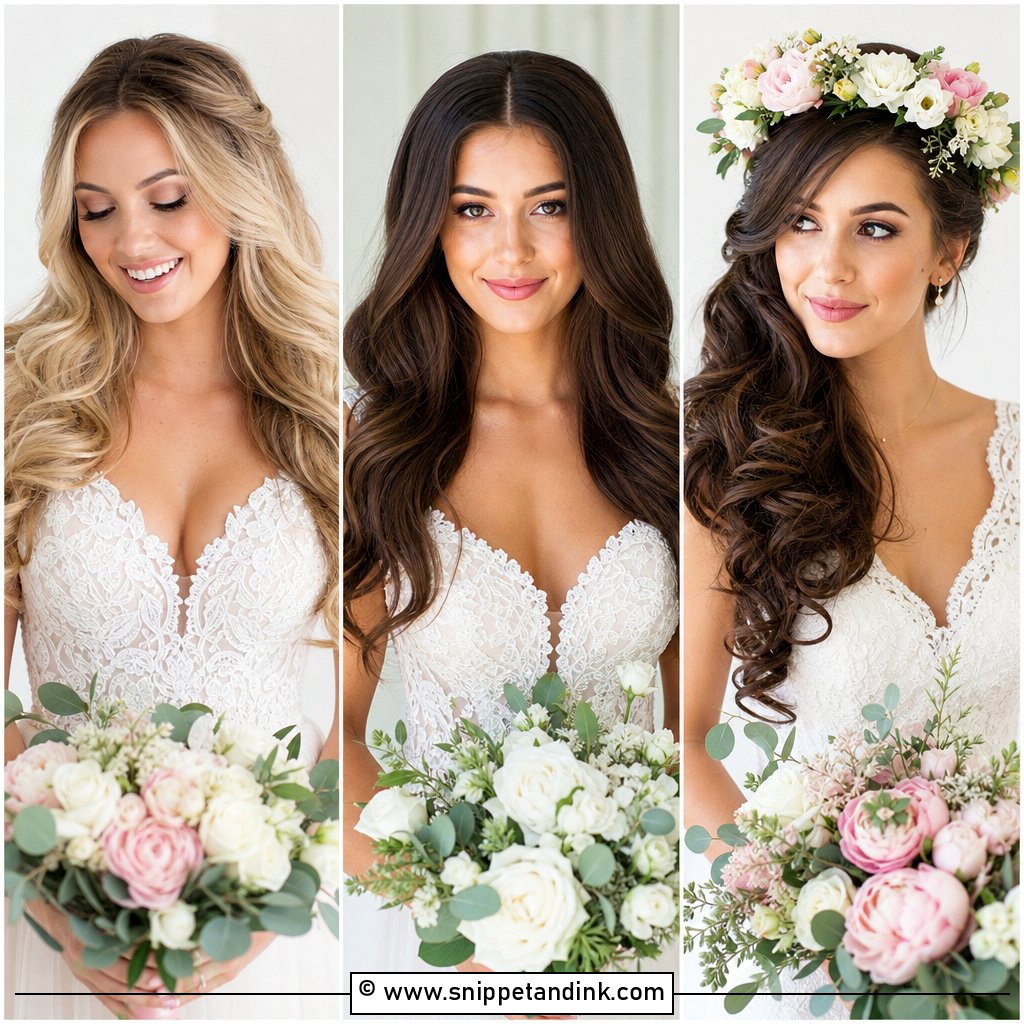
A crown sits on the head at the exact spot where most brides feel pressure after a few hours, so I build it light. Small ranunculus, wax flower and baby’s breath on a thin wire base weigh far less than roses, and I anchor the crown with two crossed bobby pins on each side rather than relying on a tight fit. The waves underneath need a firm set, because the crown flattens the top section a little. Repeat a stem or two from your bouquet and the whole thing reads as one idea.
2. Low Bun With Roses
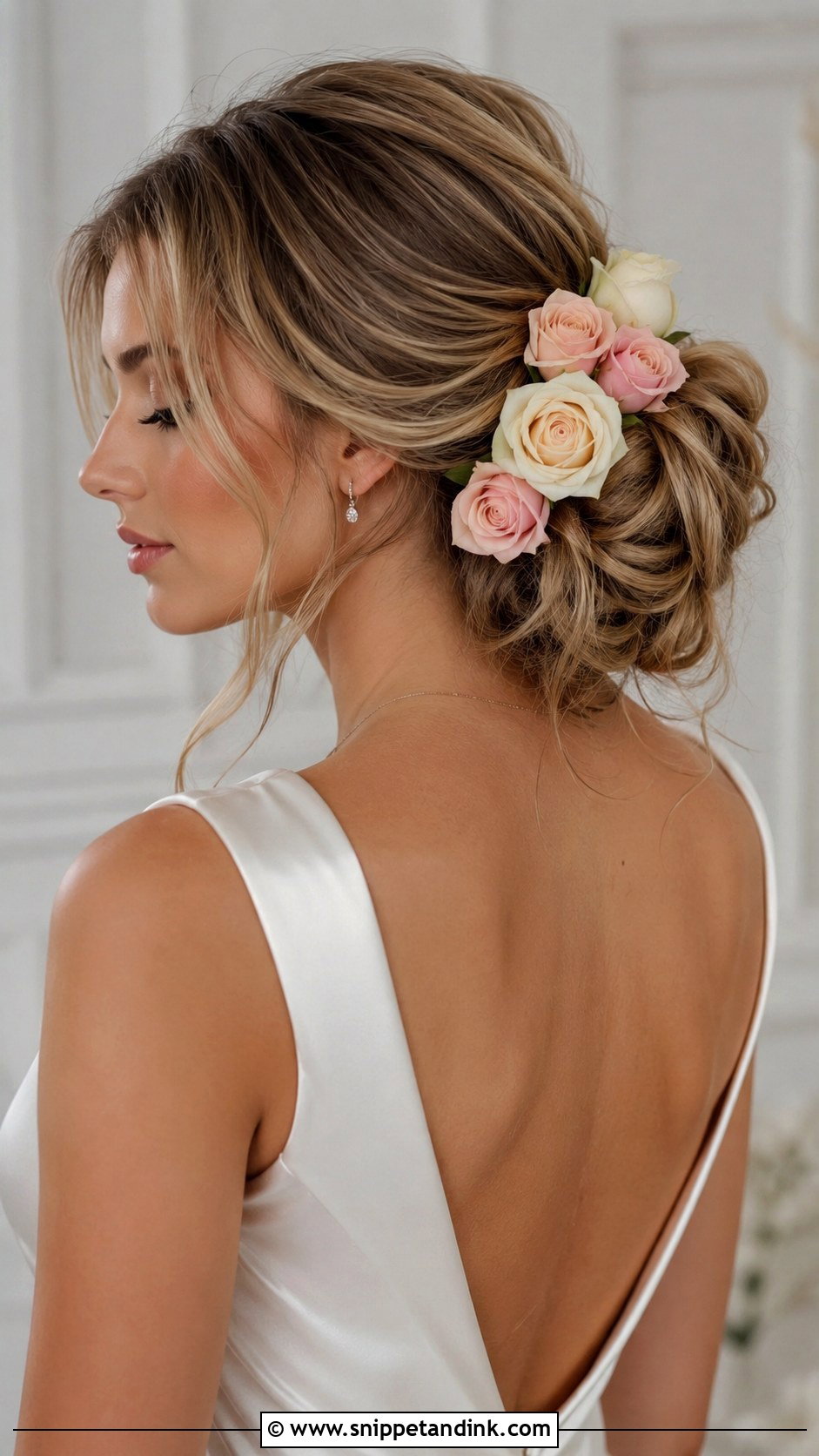
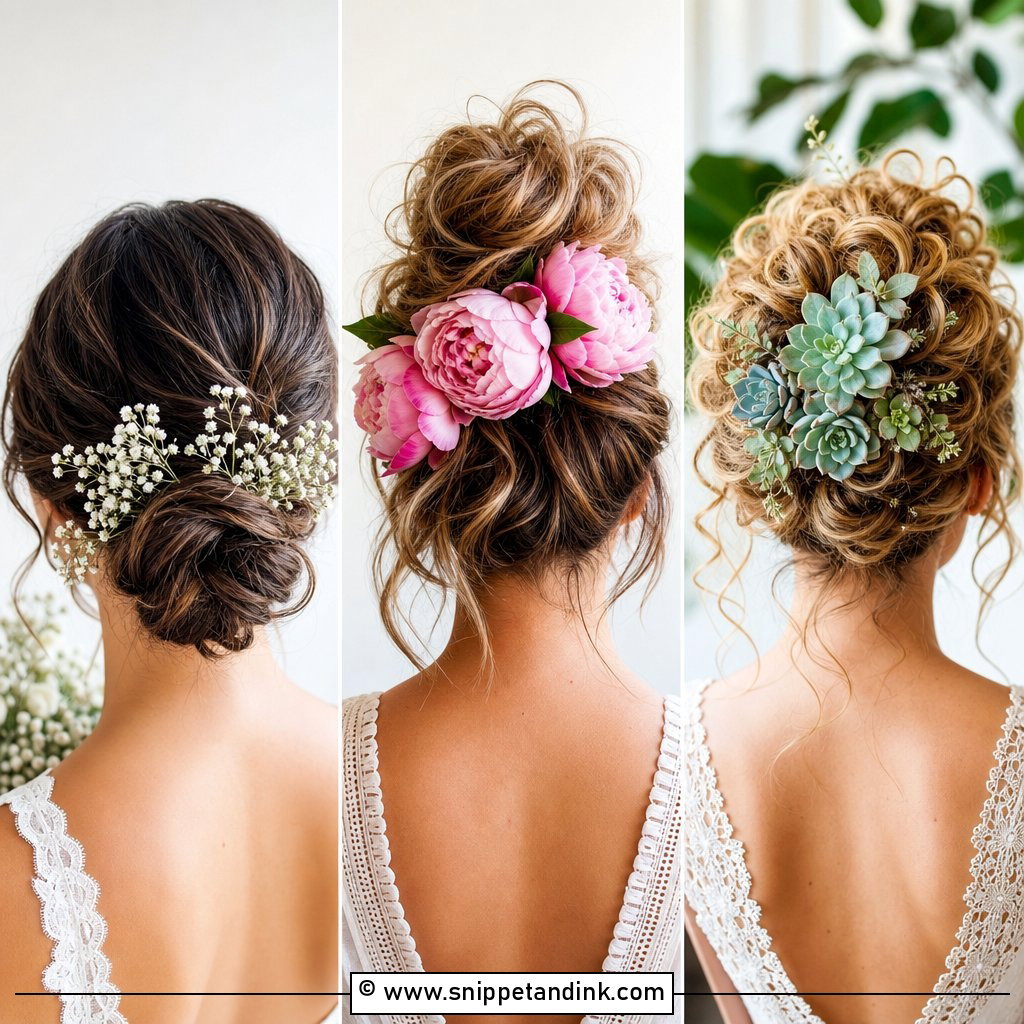
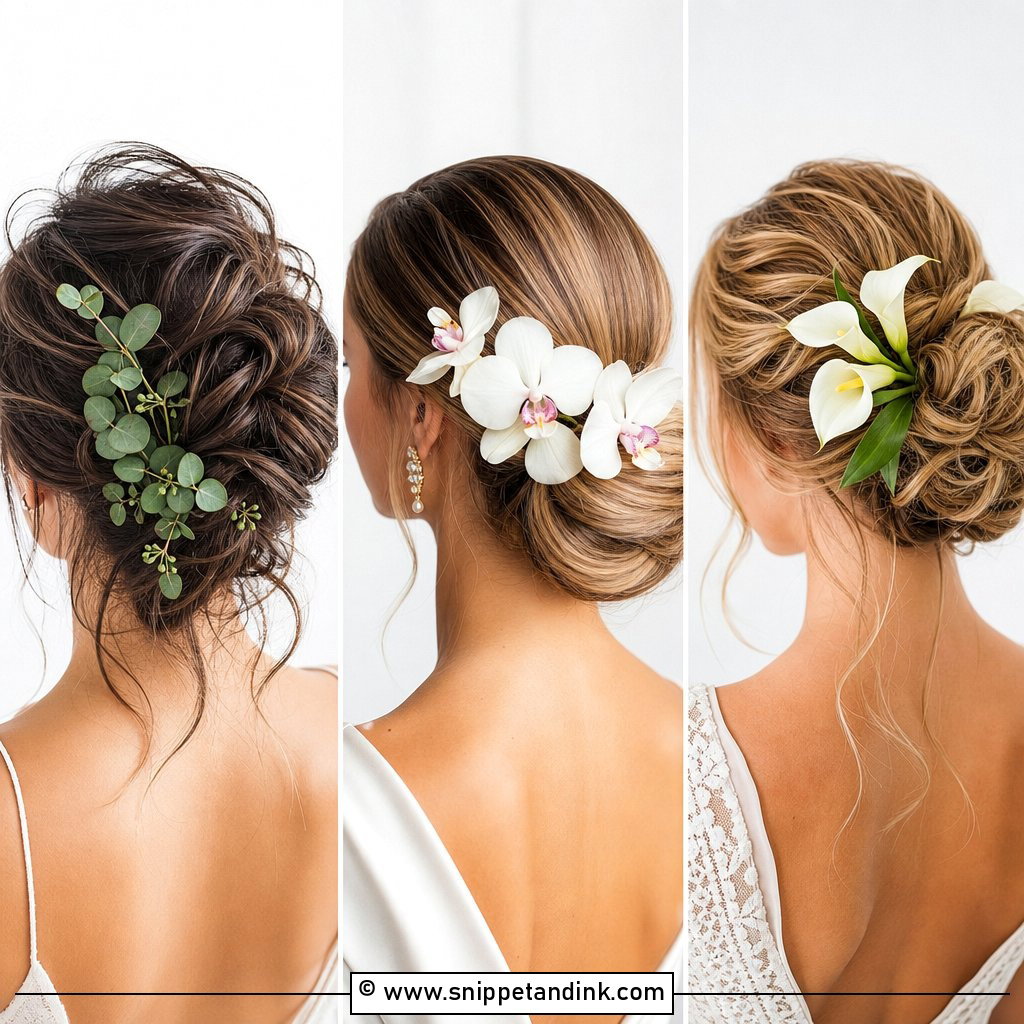
Roses are my first pick for a soft, voluminous low bun because they’re one of the few flowers that genuinely hold up out of water for most of a day. I ask the florist for heads that are just opening, not fully blown, so they don’t drop petals onto your shoulders by the reception. Blush and cream sit softer against the hair than bright pink, which can look like a separate accessory. A few tendrils at the face keep the bun from looking severe. If you’re wearing a veil, I place the roses below the comb so the two never fight for the same pins.
3. Half Up Half Down With Baby’s Breath
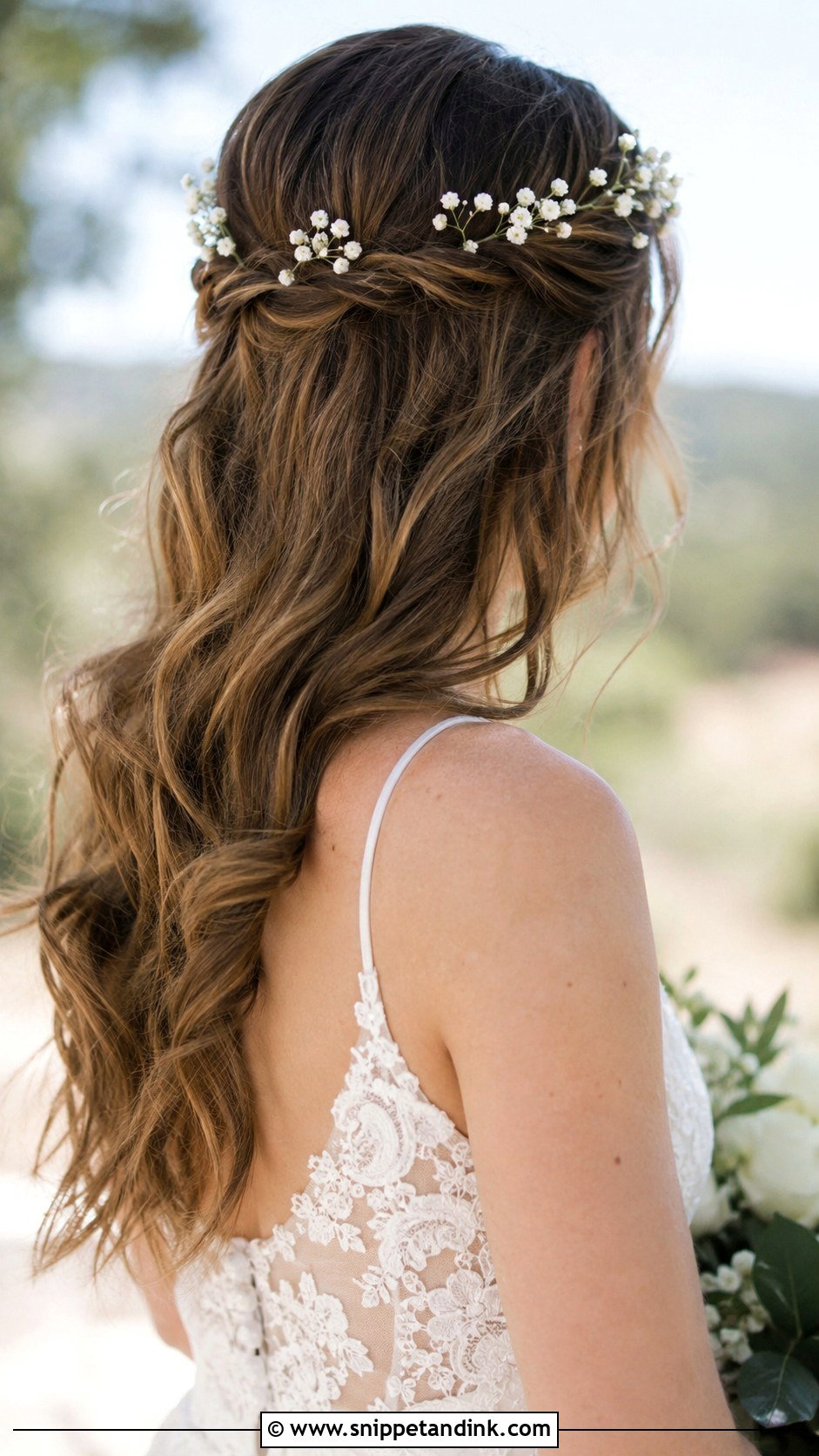
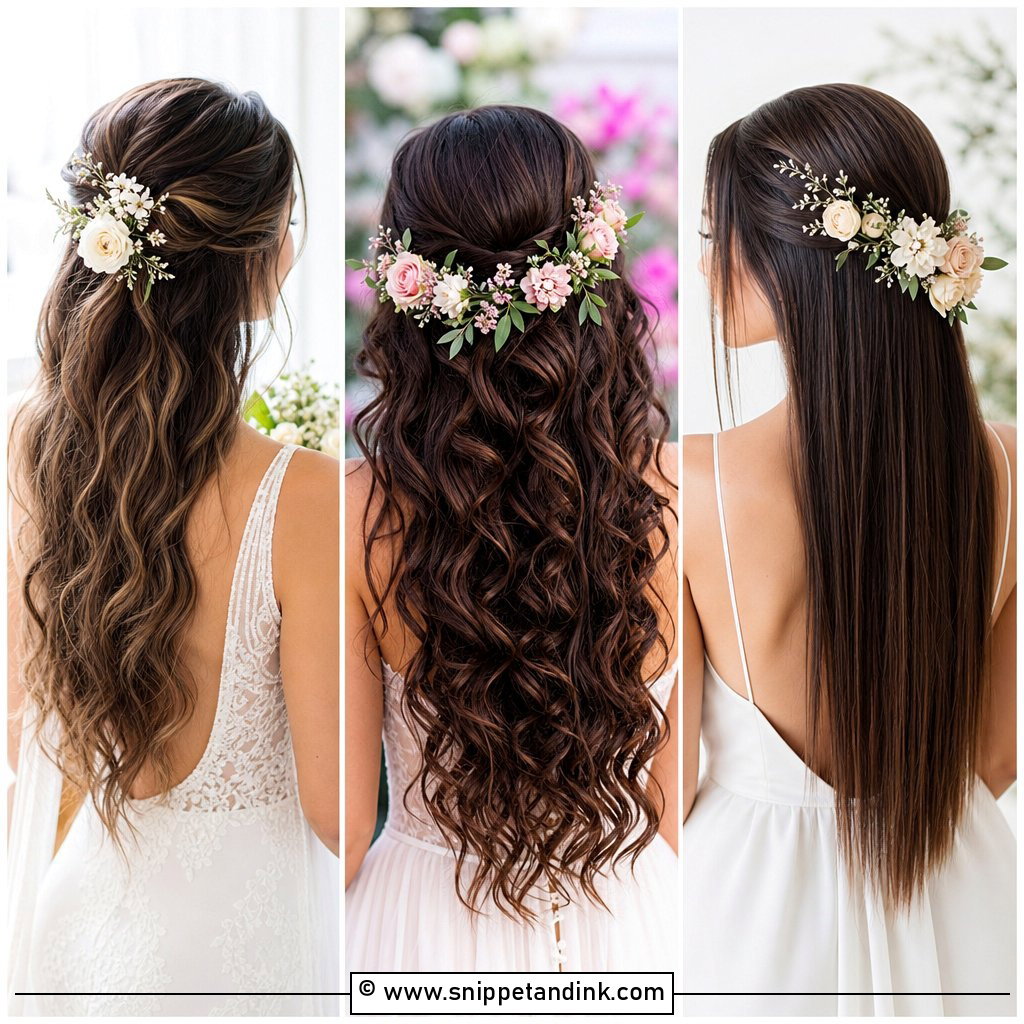
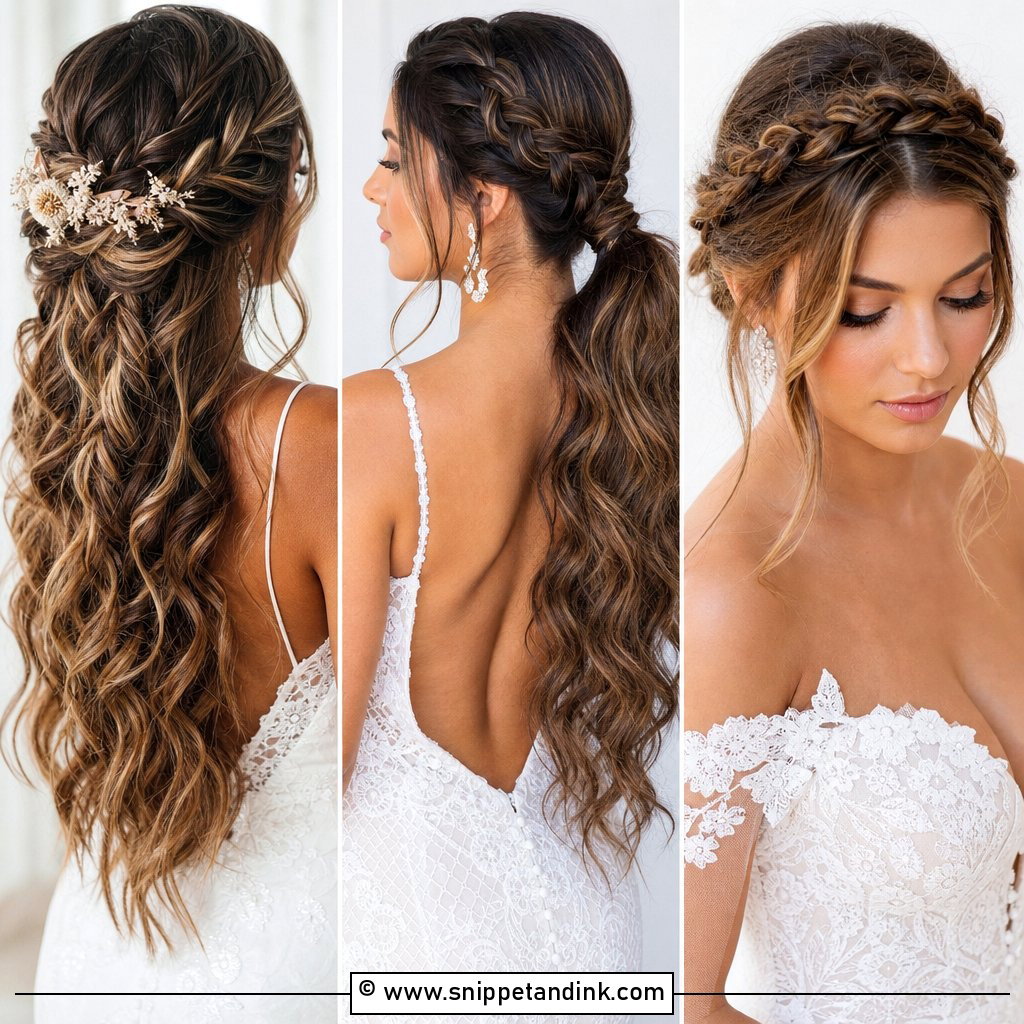
Half up, half down suits the bride who wants her length on show but doesn’t want hair blowing into her lip color. I twist or braid the top section first and only add baby’s breath once that structure is pinned, pushing small sprigs in at an angle so the stems hide inside the twist. Baby’s breath is about the most forgiving flower I work with: it barely wilts, and if it does dry out it still looks the same from a few feet away. On very fine hair I add a little texture spray before twisting so the sprigs have something to grip.
4. Braided Updo With Wildflowers
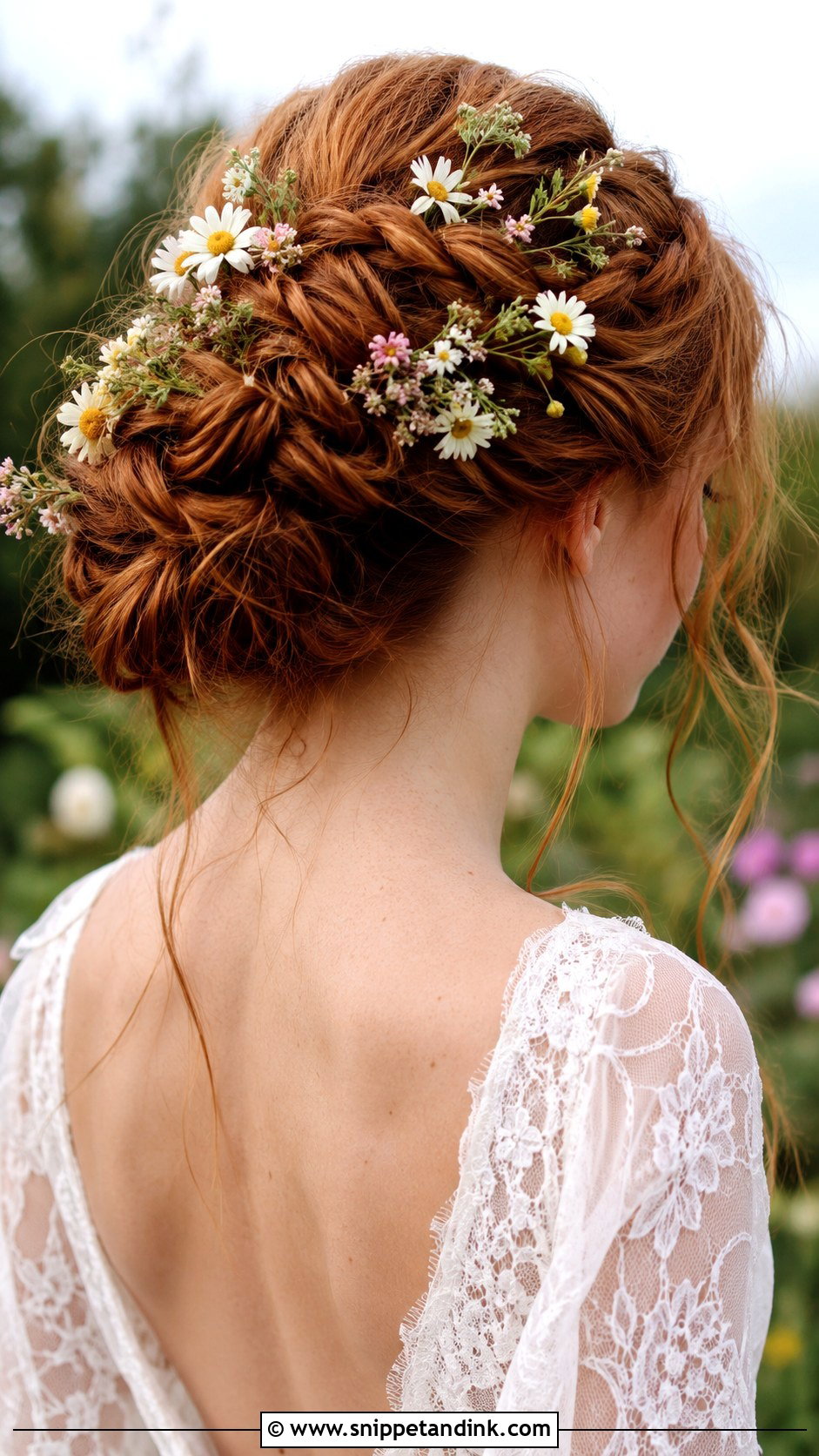
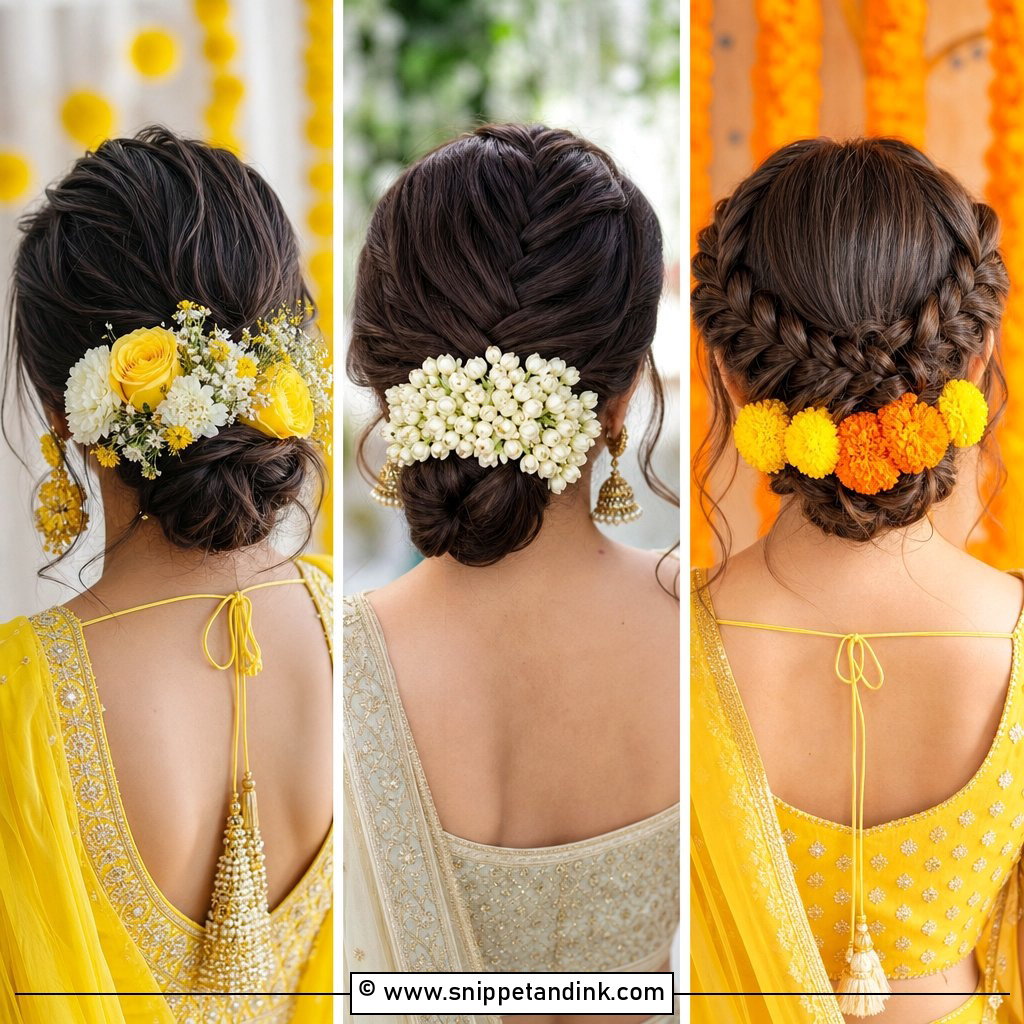
Braids give flowers a natural pocket, which is why this updo is so secure. I tuck tiny wildflowers like daisies, forget-me-nots or wax flower into the outer loops of each plait rather than the center, where pressure crushes them. Be aware that true field flowers are delicate: real forget-me-nots can droop within a couple of hours, so I usually suggest a hardier lookalike from the florist. All-white keeps it classic; a mix of colors feels like a meadow.
5. Boho Braid With Mixed Blooms
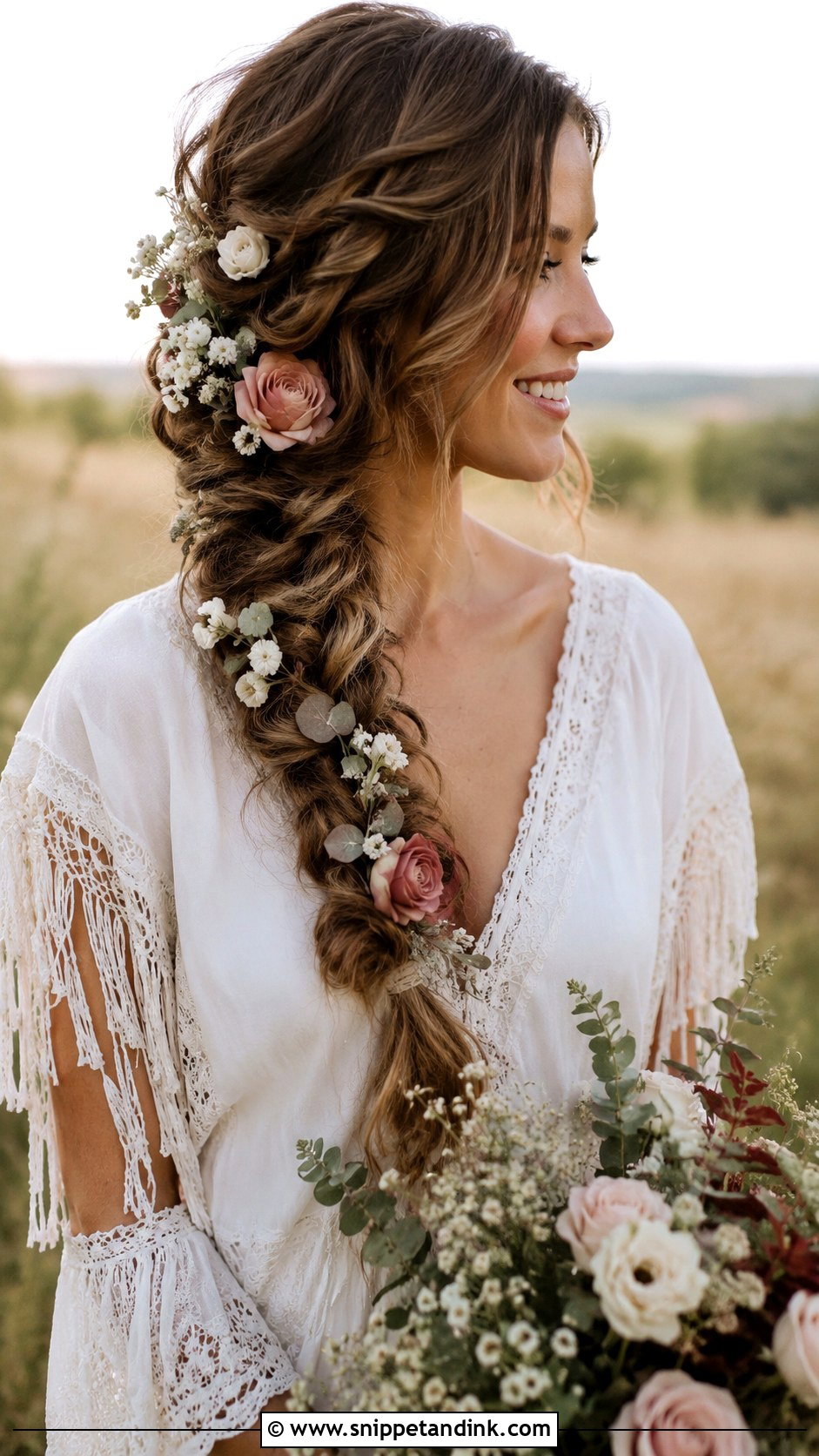
The loose boho braid is the style where I see flowers fall out most often, because the plaits are pulled open on purpose. My fix is to secure each bloom with its own small pin hidden under a strand, then pancake the braid around it. Eucalyptus is great filler here since it handles warmth and handling well. Leave a few pieces out at the face. This one sits nicely with a relaxed gown and a beach or field ceremony, less so with a structured ballgown.
6. Sleek Low Ponytail With Orchids
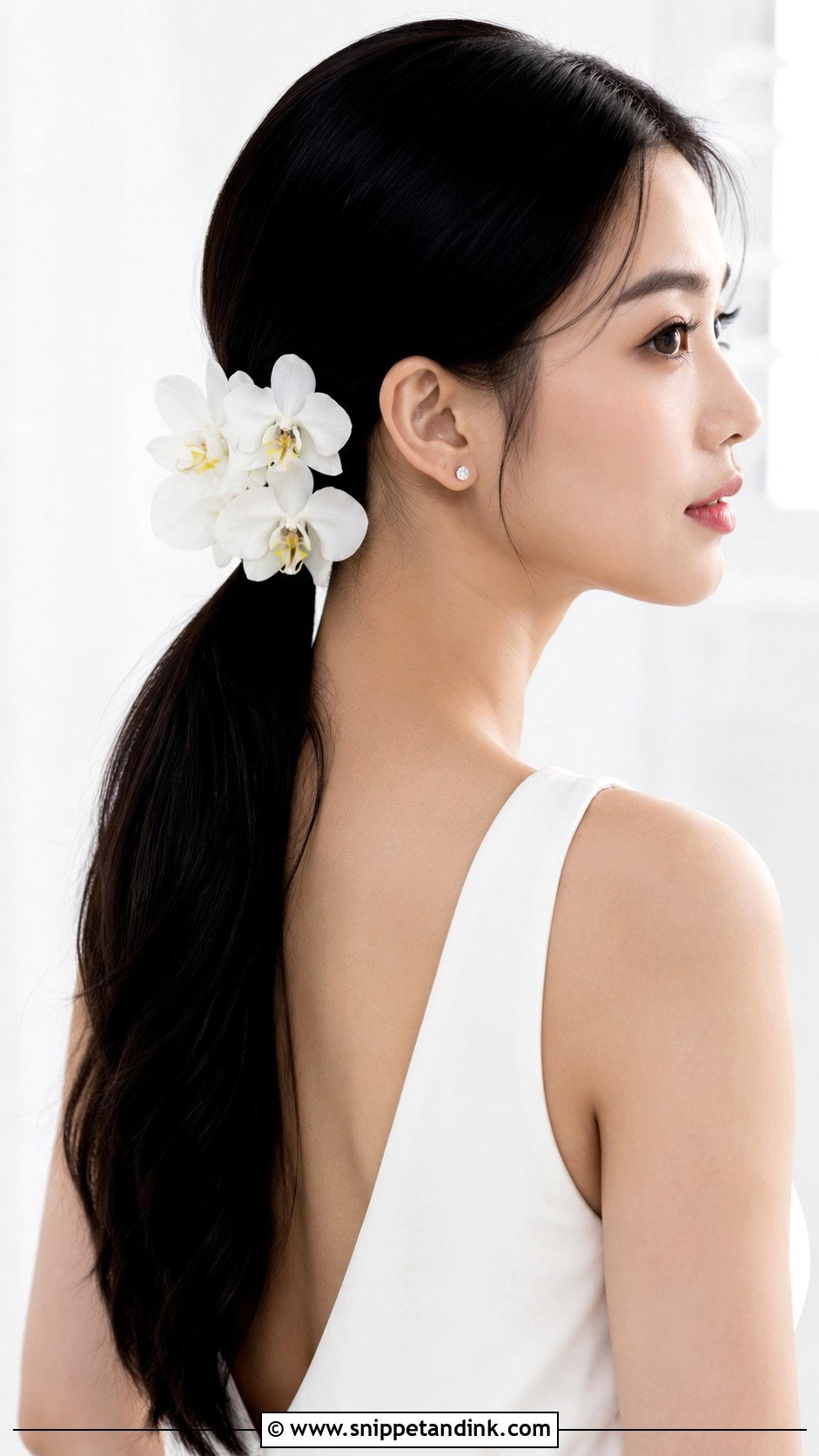
A sleek ponytail lives or dies on smoothness, so I set the base with gel or a firm cream and a small elastic before anything decorative goes near it. Then come the orchids along the base or trailing down the length. Dendrobium orchids are tough and stay fresh out of water far better than most blooms, which makes them a smart pick for a hot day. Wrap a strand of hair around the elastic first; the flowers then sit against hair, not rubber. I’d skip this one for very layered cuts, since short layers poke out of a sleek finish.
7. Curly Updo With Gardenias
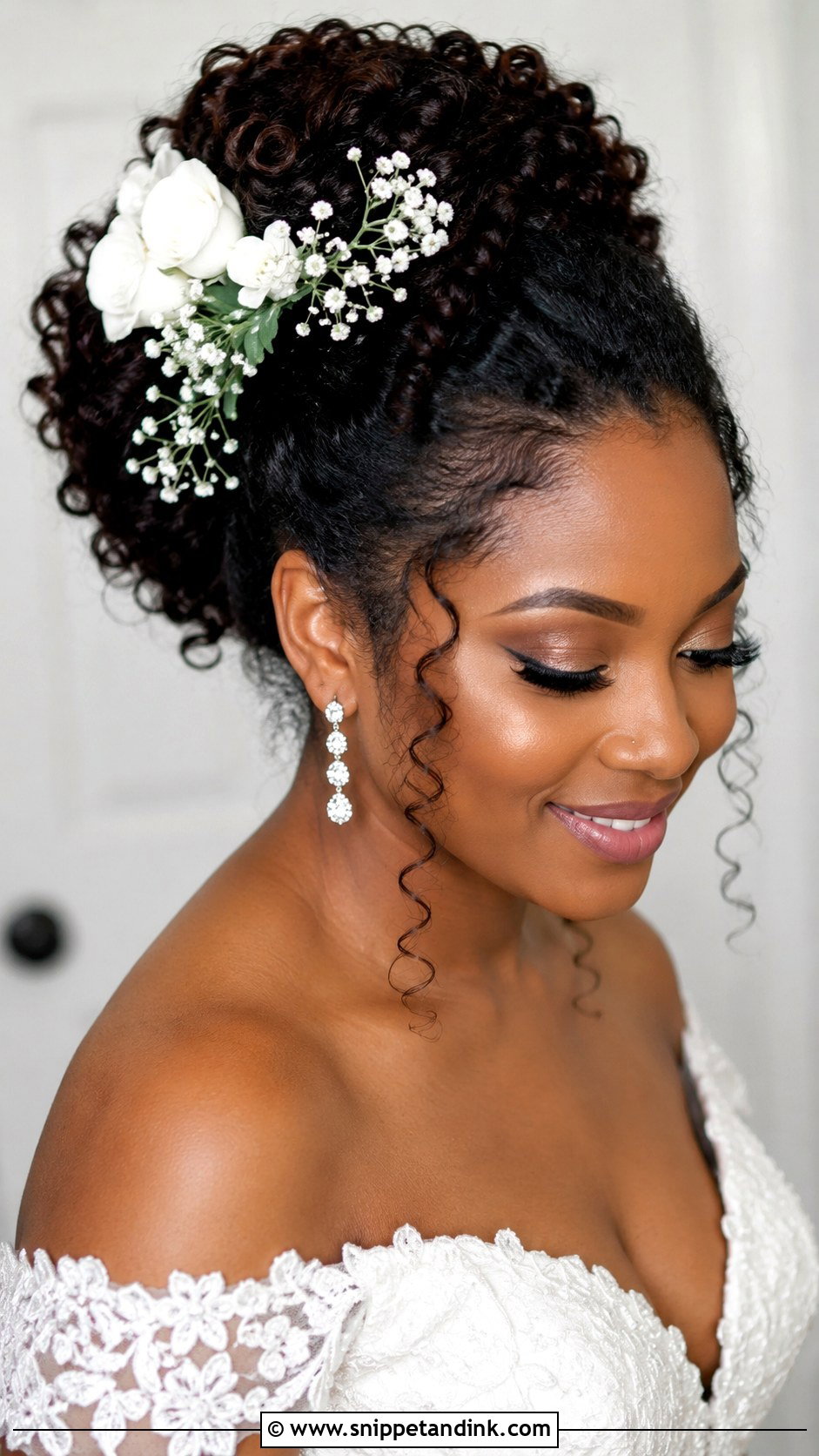
On curls I work with the texture as it is, rather than brushing it out, so the updo is built from defined sections pinned loosely at the crown. Gardenias smell incredible, but I’ll be honest about them: the petals brown the moment they’re touched, so I place them last and ask everyone, including the bride, to keep hands off. Small baby’s breath sprigs between curls hide any pins and survive being squashed. This keeps hair off the neck, which matters more than people expect in summer heat.
8. Side Swept Curls With a Single Bloom
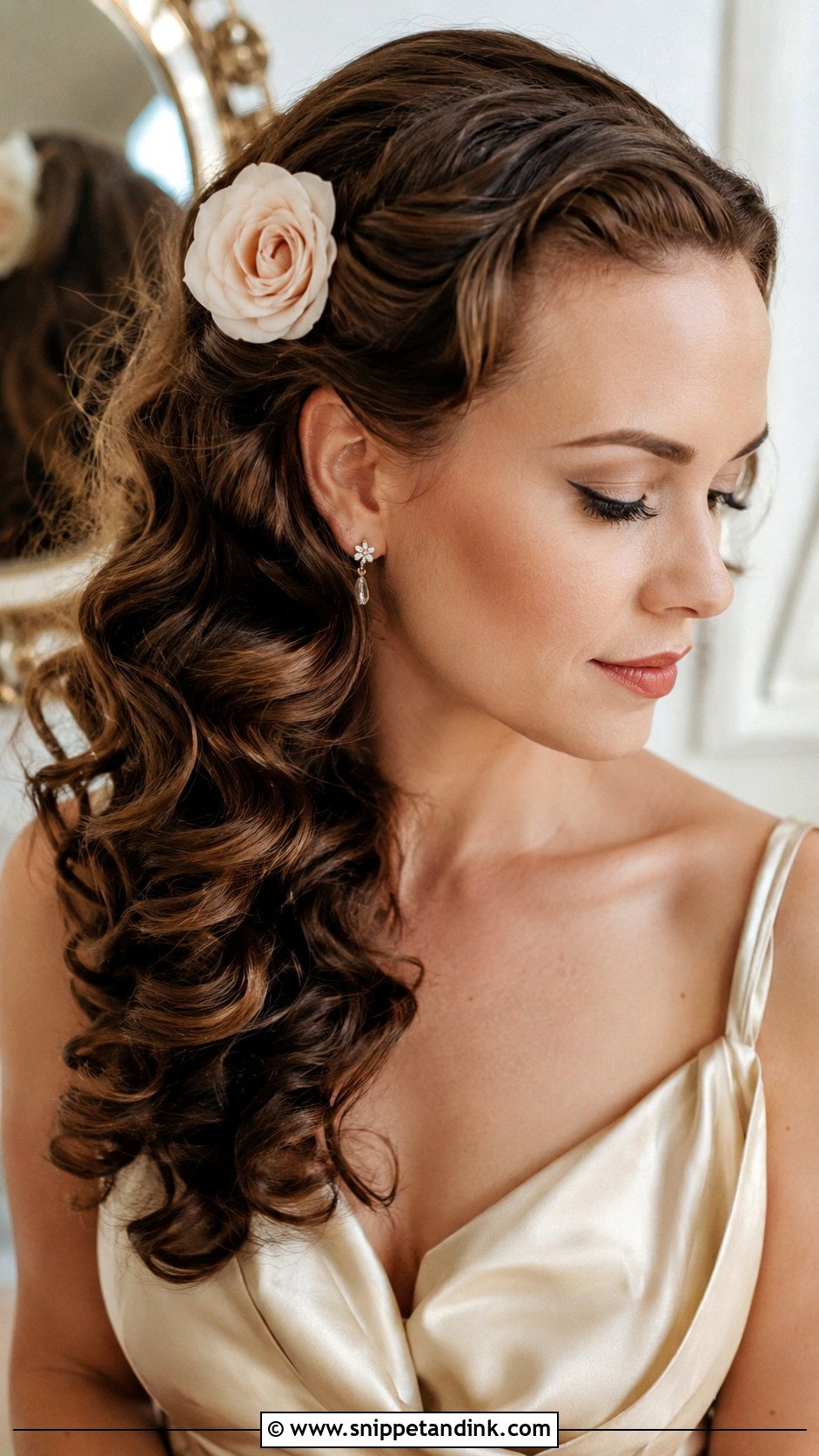
One flower behind the ear is quick to do and quick to get wrong. The bloom has to be wired onto a sturdy pin or comb, because a single large peony or garden rose is heavy and will slowly twist downward otherwise. I set the side-swept curls with a large barrel and pin them under at the back so the weight stays on one side. Go with a bloom from your bouquet. It’s a retro shape that suits a fitted or vintage-style dress and needs very little fuss once it’s in.
9. Messy Bun With Eucalyptus and Flowers
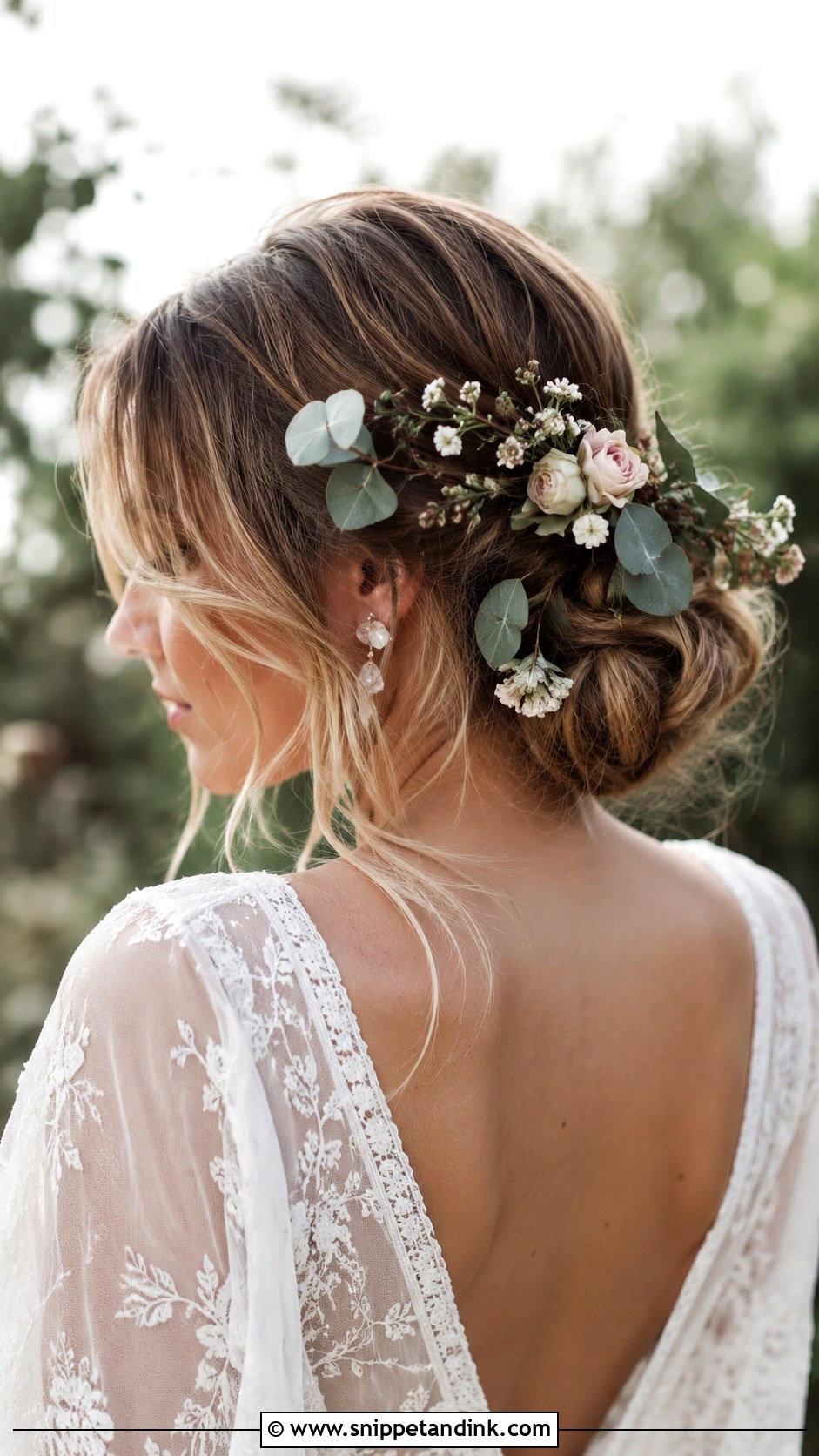
A messy bun still needs a tidy foundation. I put the hair in a secure base ponytail, then build the loose wrap on top, which means the bun doesn’t sink lower through the evening. Eucalyptus sprigs go in first to fill the shape, then two or three blooms where they’ll show from the side. Pull out a few face-framing strands after the flowers are in, not before, or you’ll catch them with the pins. It’s comfortable to wear for a long day and easy to touch up yourself.
10. Crown Braid With Daisies
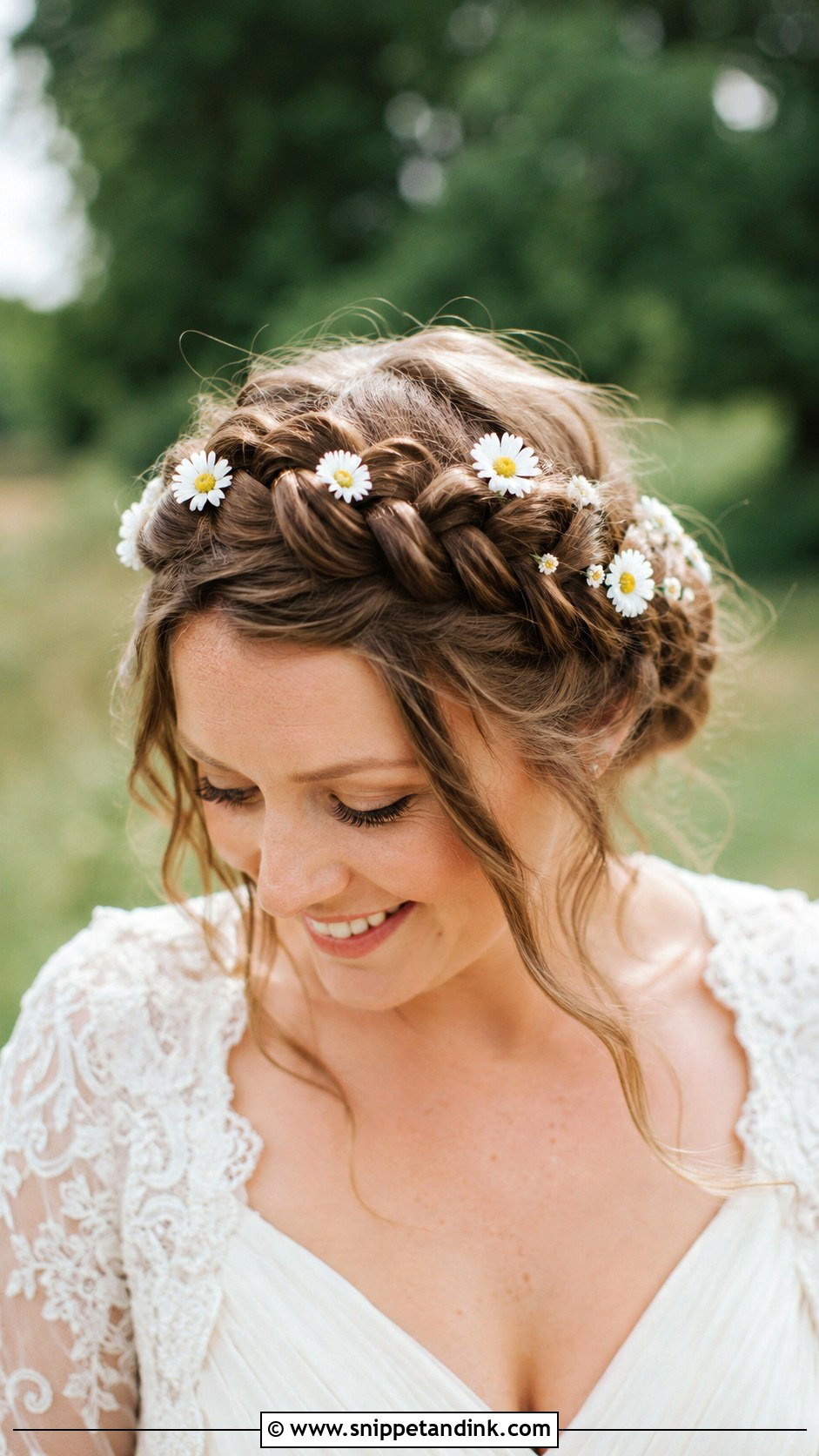
Crown braids keep every strand up, which makes them practical for an outdoor party with a lot of movement. The braided halo needs enough length to wrap fully around the head; on shoulder-length hair I use two braids pinned end to end. Daisies are cheerful but thirsty, so I ask the florist to condition them well beforehand. Any small, flat bloom can stand in. This shape reads a little young on some faces, so we test it at the trial before committing.
11. Soft Chignon With Peonies
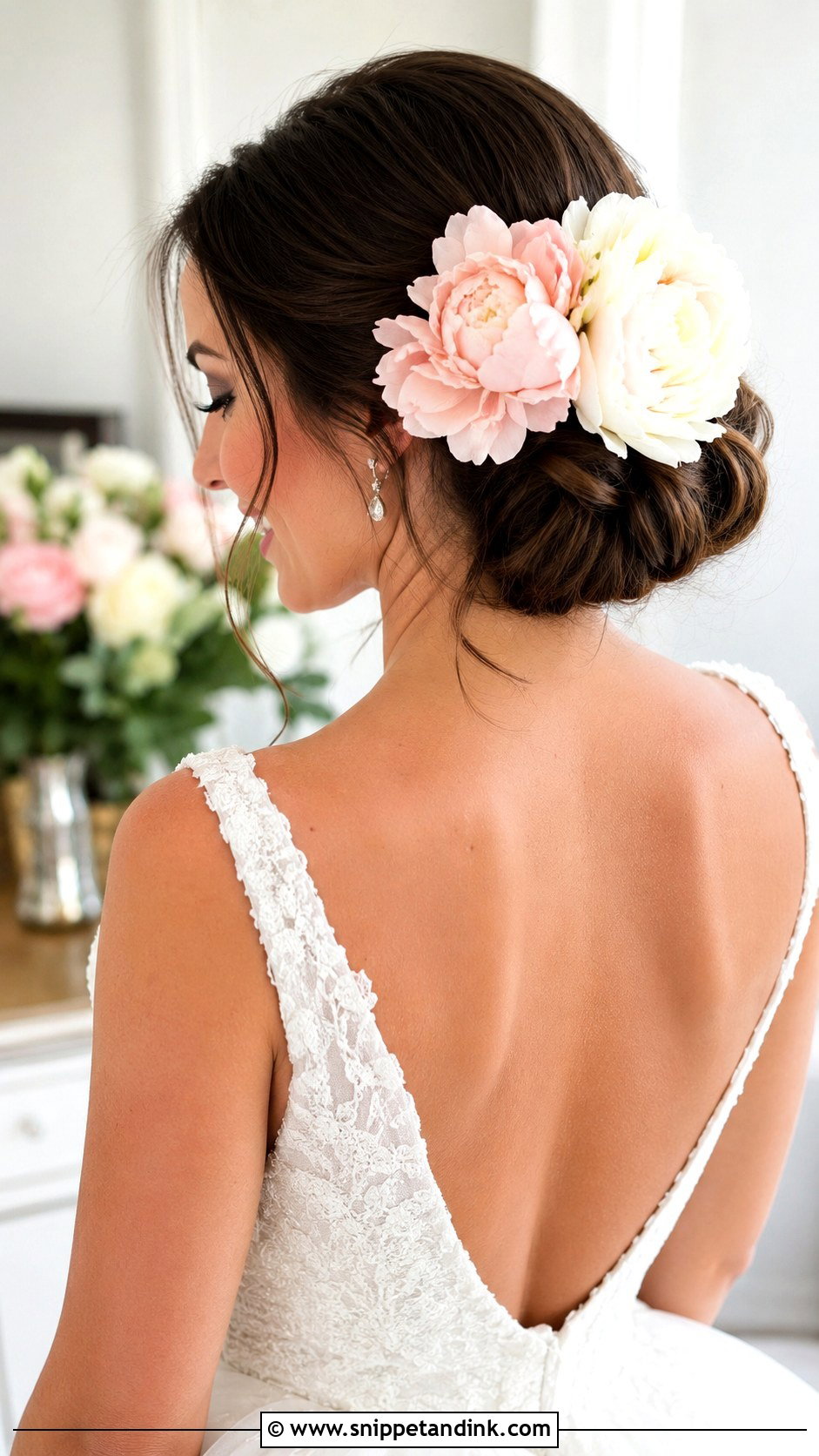
Peonies are the flower brides ask for most and the one I worry about most. They’re big, they open fast in a warm room, and a fully open peony will shed petals down your back. So I want them slightly closed on the morning, wired to a comb, and placed around a firmly pinned chignon at the nape. One or two heads is plenty. With a cathedral veil, I keep the peonies to the sides so the comb can sit centered above the knot.
12. Beach Waves With Tropical Flowers
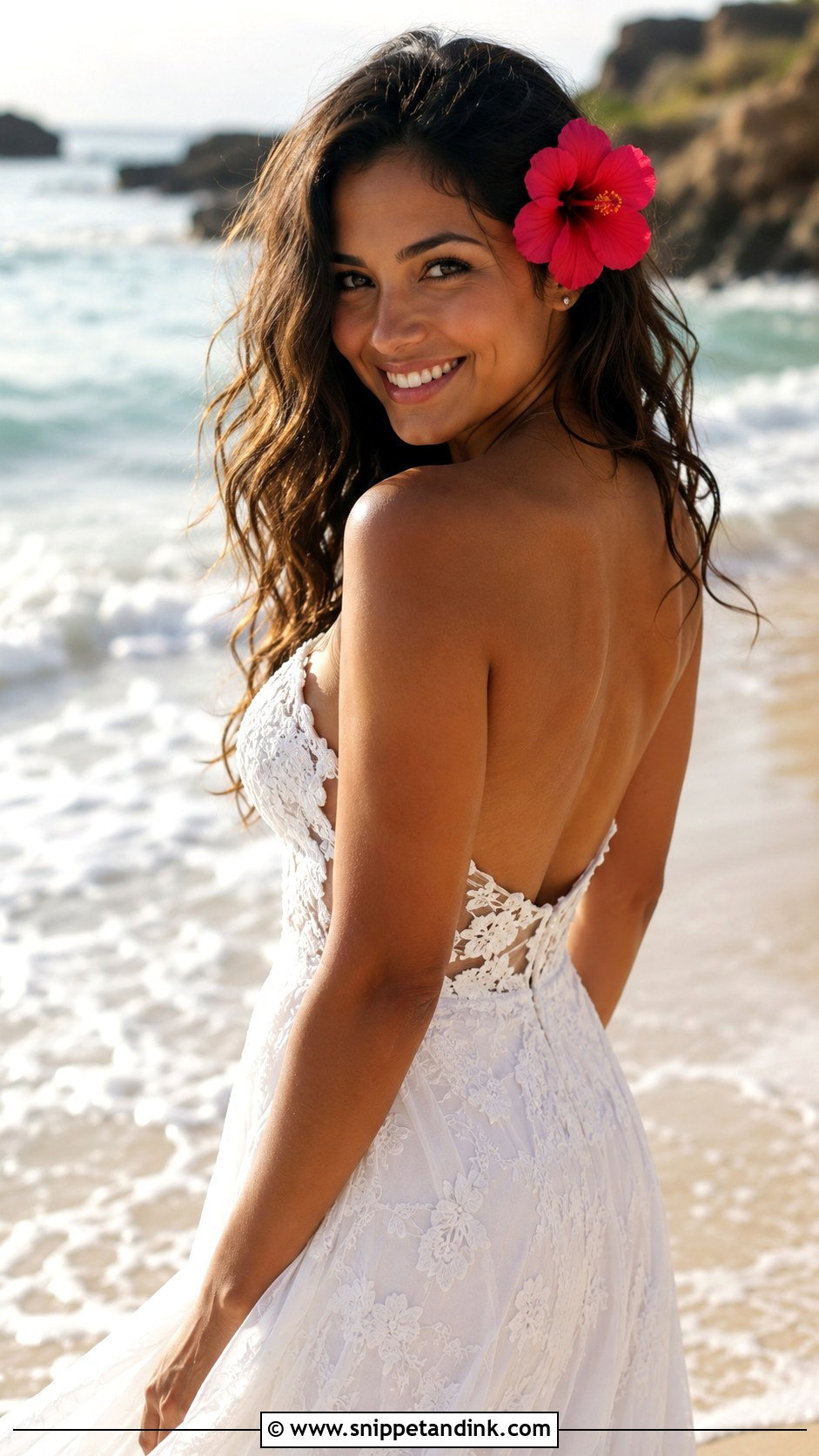
Tropical flowers look right against loose, tousled waves by the sea, but hibiscus is one of the shortest-lived blooms out there and can start closing within hours. Frangipani and plumeria last better, and orchids last best of all. Tuck the flower behind one ear on a pinned comb, then let the waves do the rest. Sea air will loosen any curl, so I set the waves a little tighter than the photos you’ll see, and they relax into this shape by the vows.
13. Vintage Updo With Garden Roses
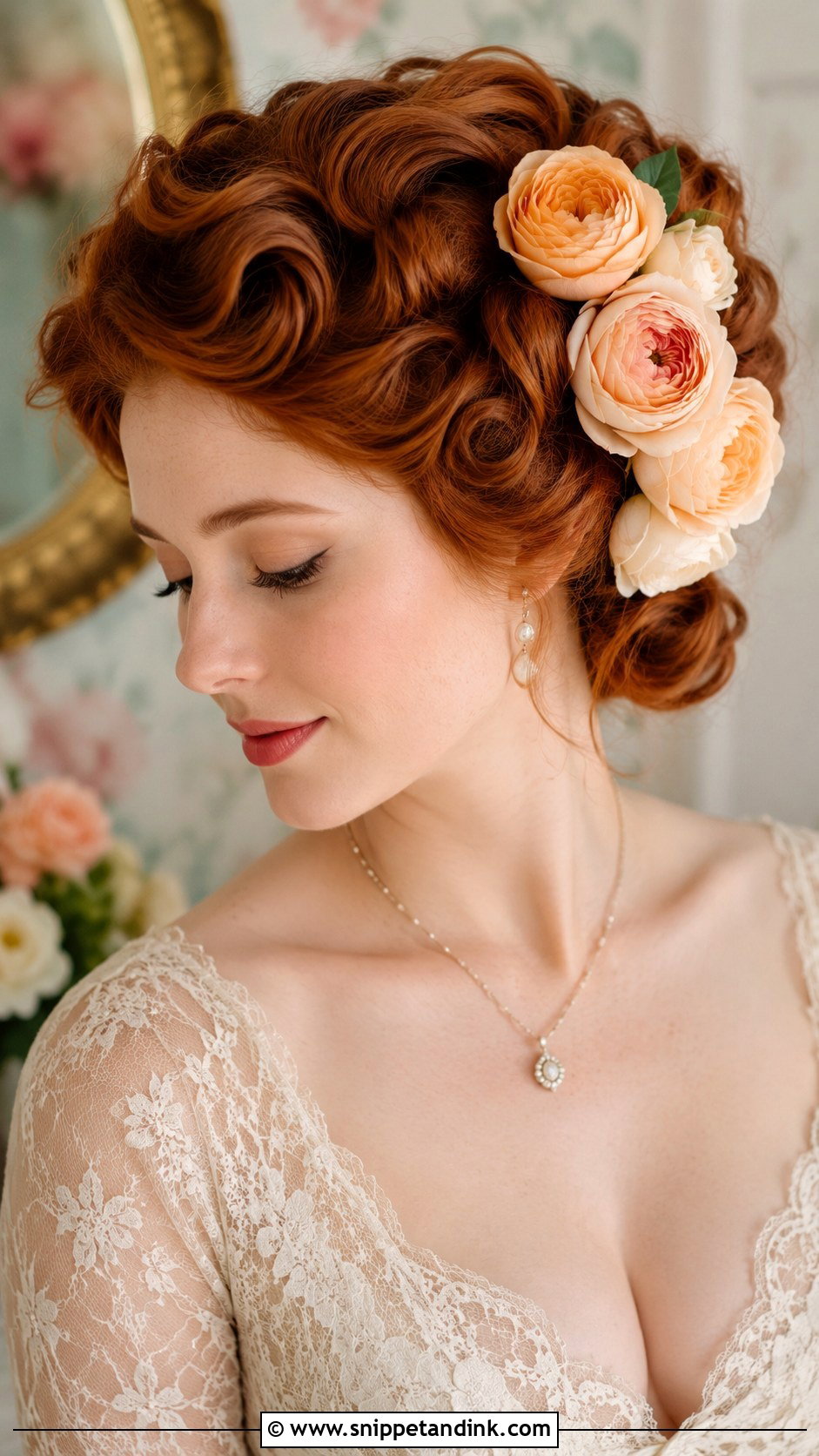
A vintage updo built from pin curls takes the most time of anything on this list, usually because each curl has to cool before it’s brushed out and swept into the twist. That structure is also why it holds so well. Garden roses add a ruffled, full texture, and I set a small cluster to one side so the asymmetry looks intentional. It’s the style I’d point to with a vintage-cut gown or heirloom jewelry. Book enough time for it on the morning.
14. Fishtail Braid With Baby’s Breath
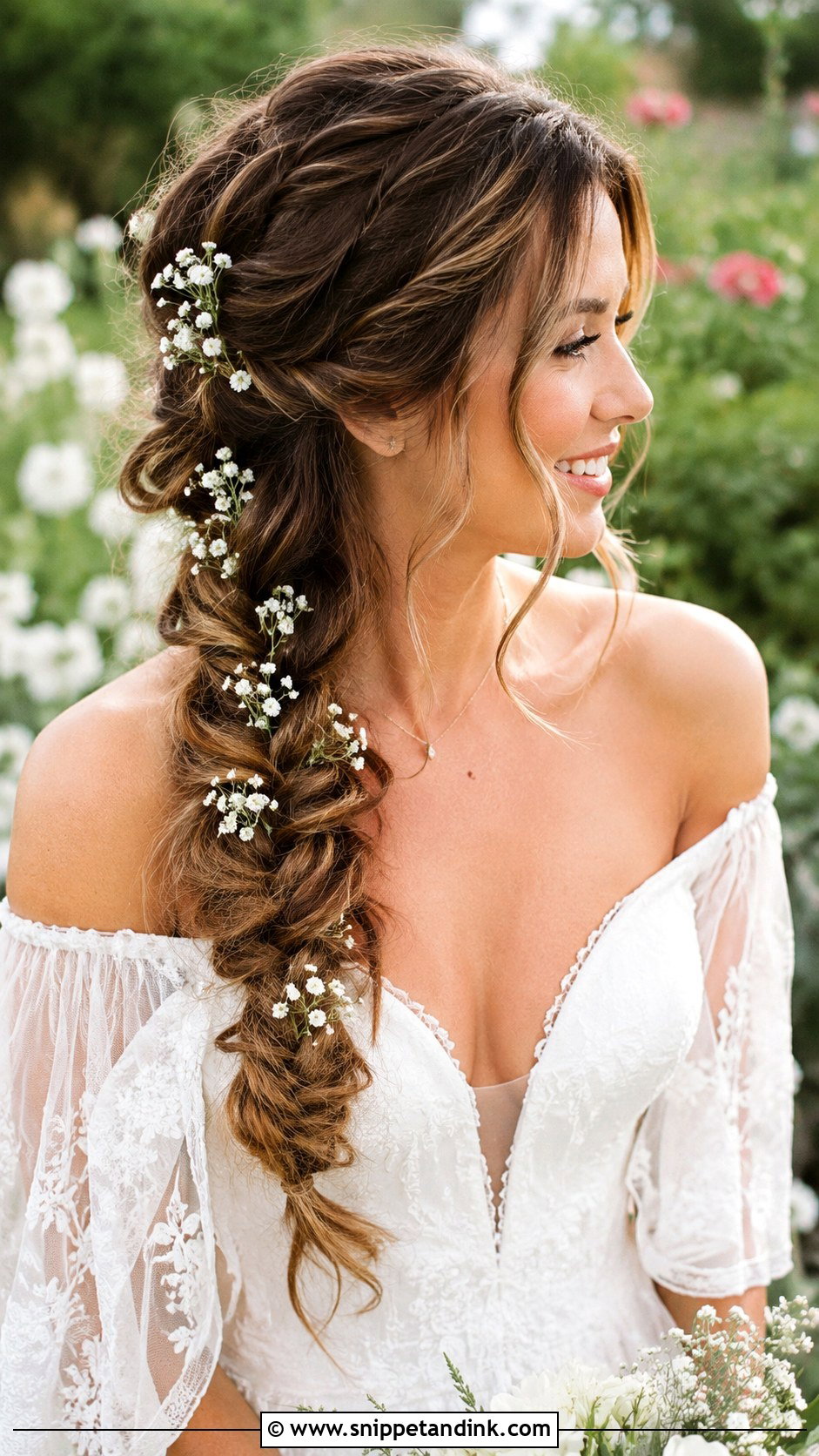
Fishtails have dozens of tiny gaps, which makes them ideal for small flowers that would get lost in a chunkier braid. I braid first, pull the edges out for width, then press baby’s breath sprigs into those gaps so the stems sit inside the braid. Done this way, it barely needs pins. You do need decent length and some density for the side-swept shape to look full; on very fine hair I add a couple of clip-in wefts.
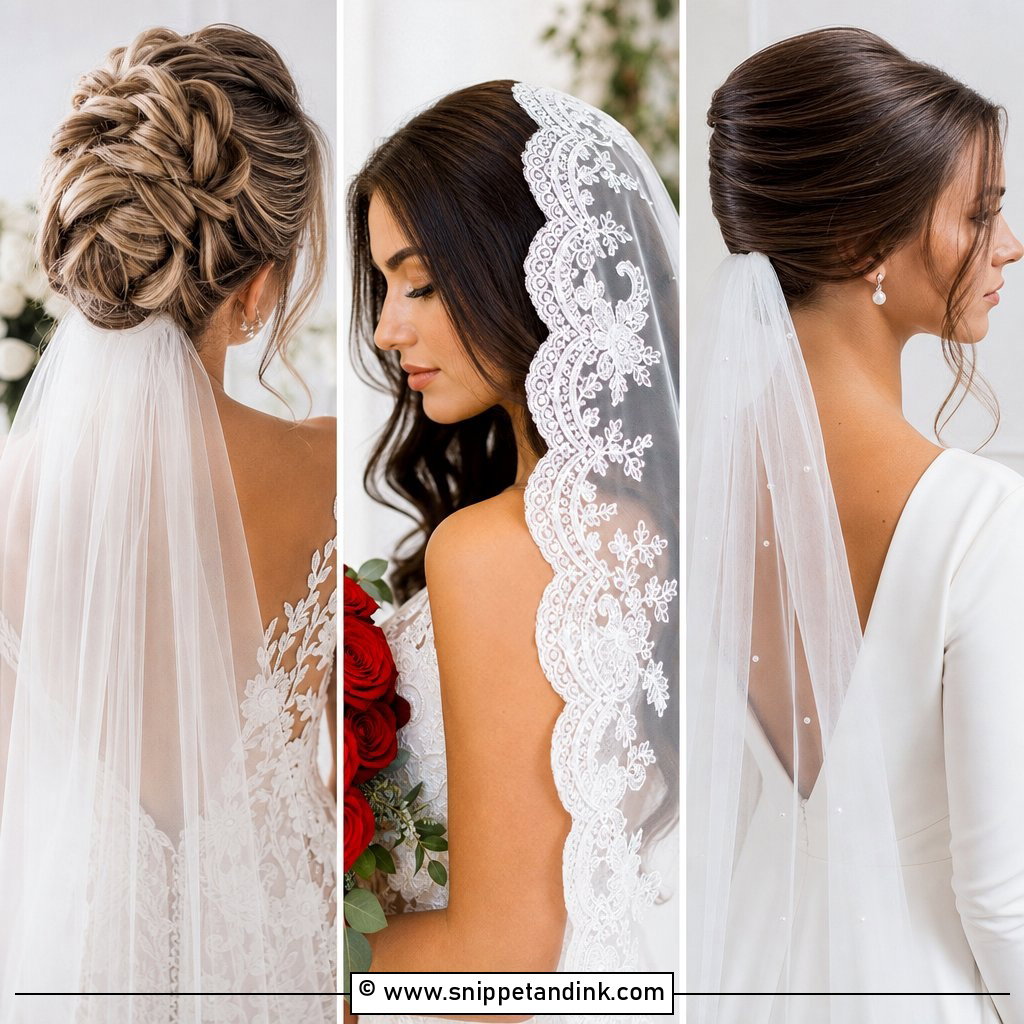
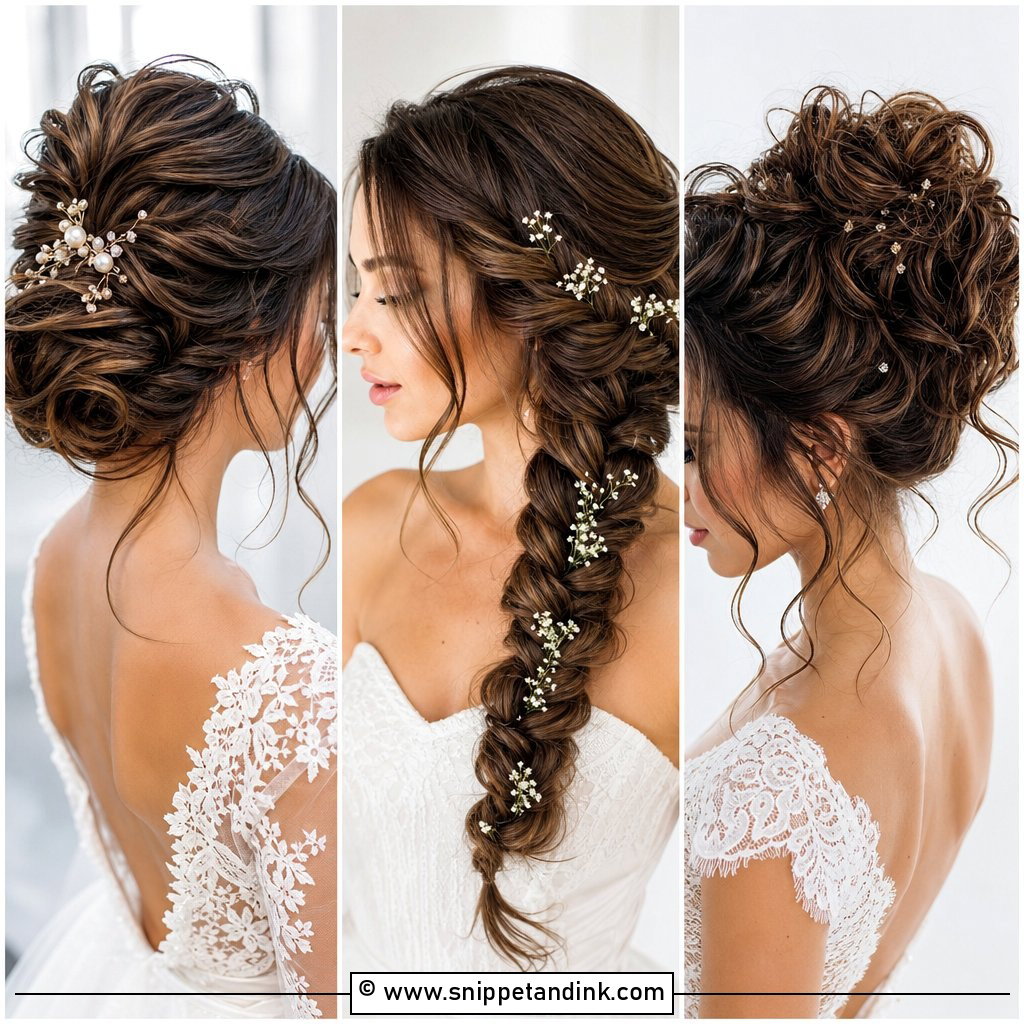

15. Half Up Crown With Wax Flowers
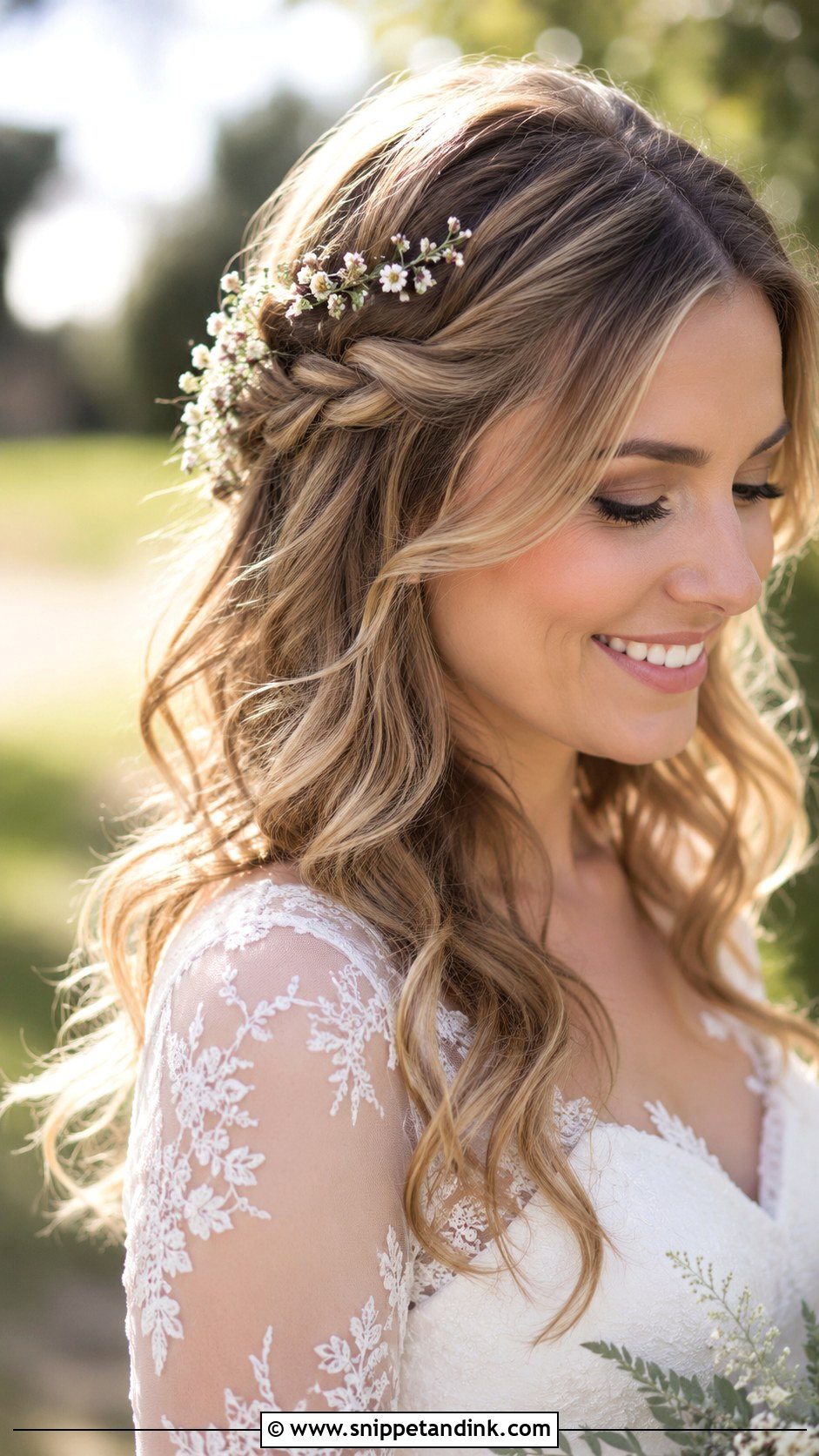
This is the half-up style I’d suggest to a bride who wants flowers but finds a full crown too much. The twisted crown section takes wax flowers along its line, and wax flower is a great choice because it’s small, sturdy and almost impossible to bruise. Soft waves underneath add movement. I curl the bottom section before pinning the top, so I’m not working around the flowers with a hot iron later. Spring and summer weddings suit it well.
16. Twisted Updo With Hydrangeas
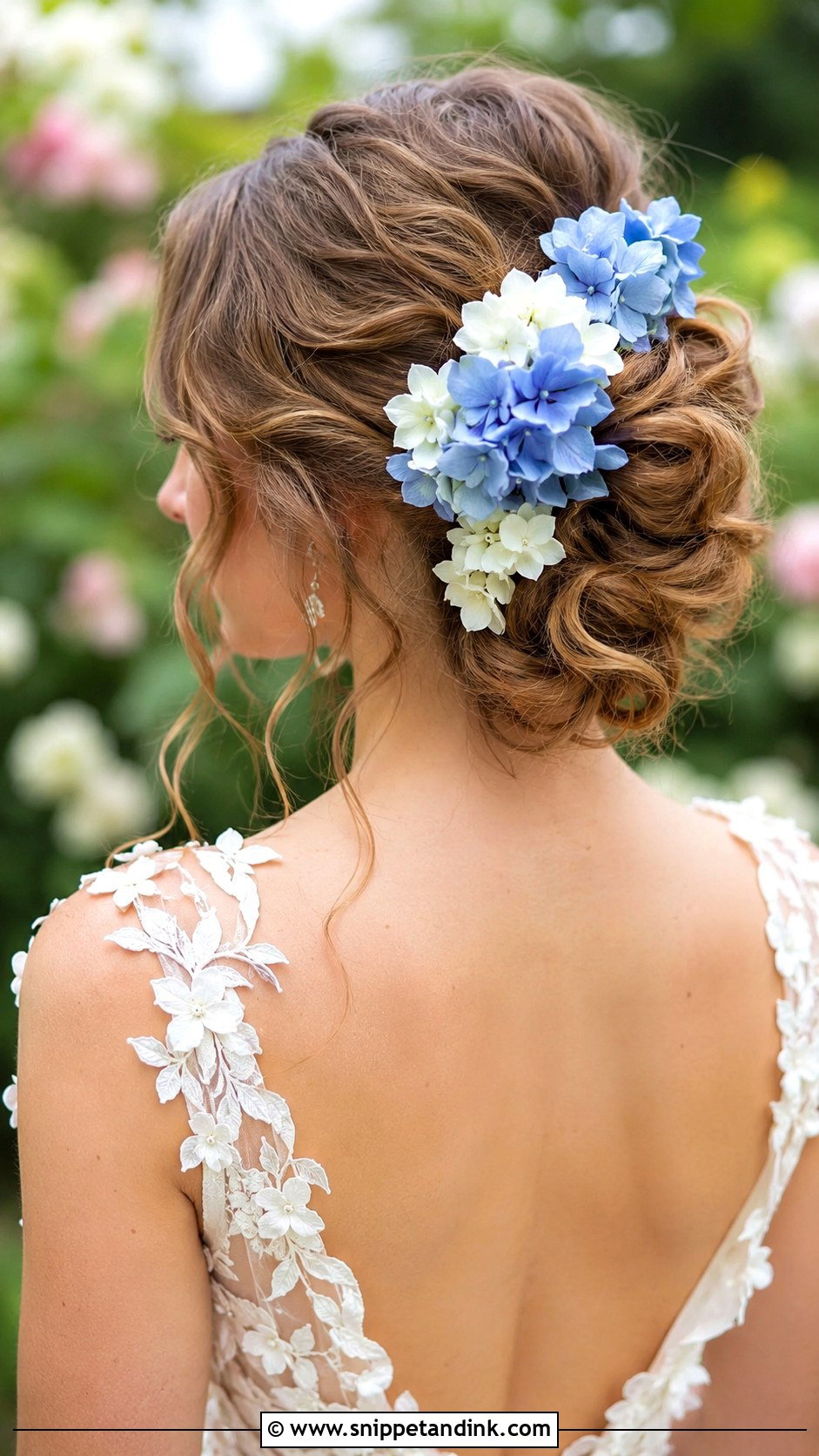
Hydrangeas are the flower I most often talk brides out of for hair. They drink water through their petals as well as their stems and can wilt quickly once cut and pinned, especially in heat. If you love the look, ask the florist to hydrate them overnight and deliver them as late as possible, and keep the pieces small, a few florets rather than whole heads. Twisted updos give them a firm surface to sit on. Blue, white or lavender all show up well against most hair colors.
17. Loose Side Braid With Roses and Greenery
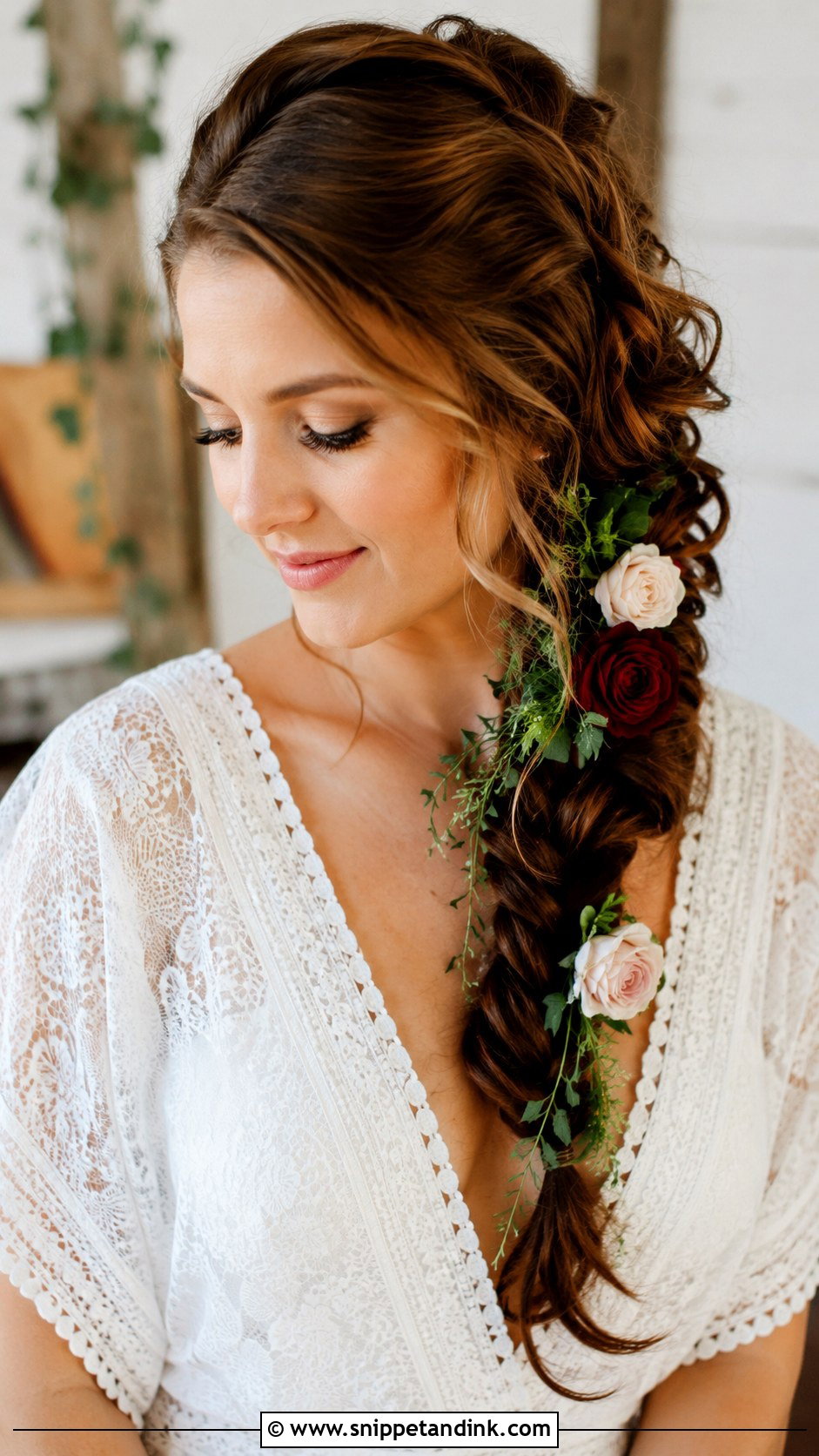
A side braid over one shoulder looks relaxed, but all its weight hangs from one side, so I anchor it under the ear with crossed pins before I loosen anything. Roses and trailing greenery go along the outer edge of the braid, where they’ll face the camera when you turn. I pancake the plaits gently afterward and pull a few pieces loose at the face. Rustic, garden and outdoor ceremonies are where it fits most naturally, and it shows off length and flowers at the same time.
18. Sleek Bun With Single Statement Flower
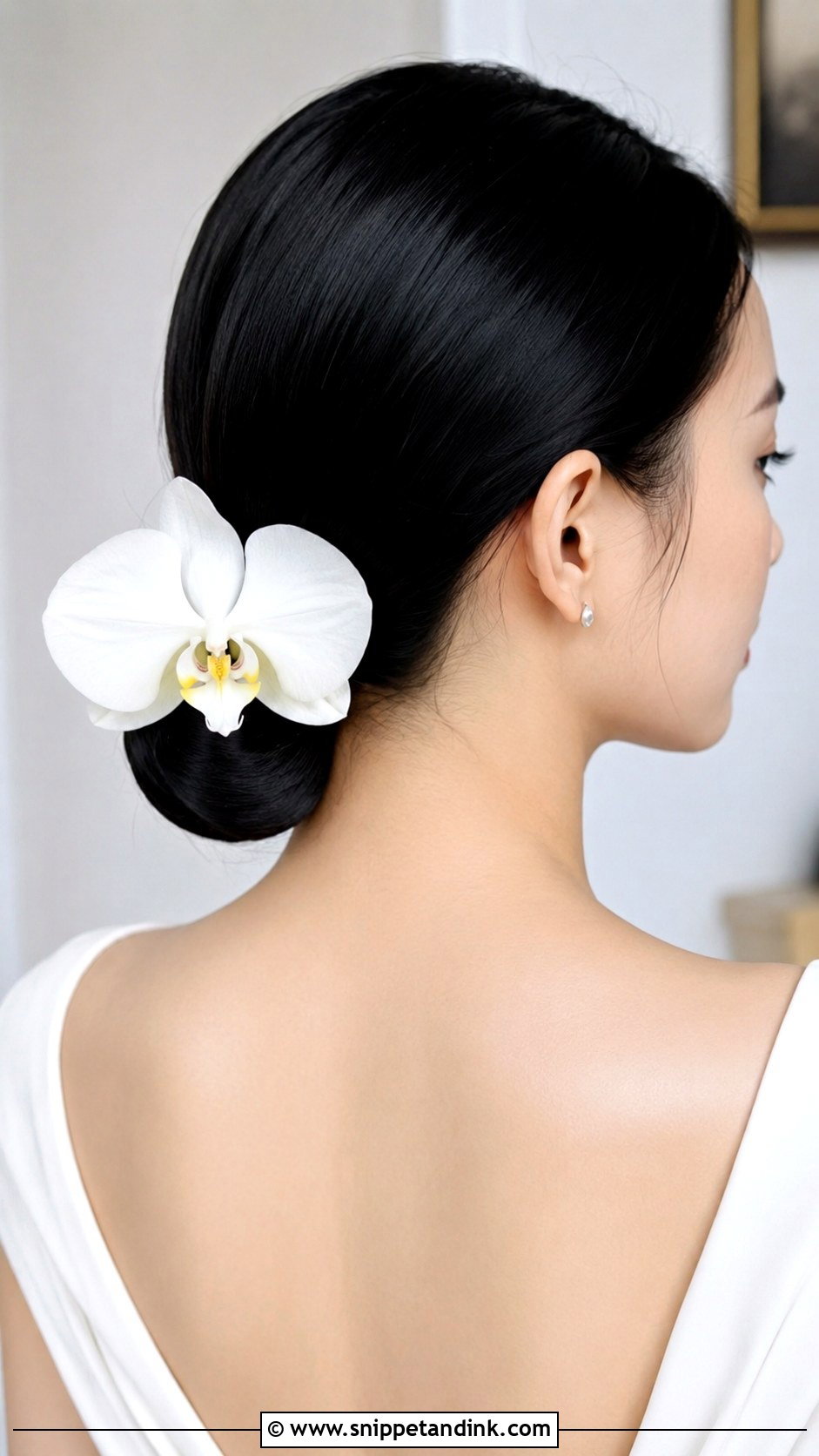
For a minimalist bride, one bold flower on a sleek bun does more than a dozen small ones. The bun has to be tight and smooth, set low, with no bumps showing through, so I brush the hair back while it’s still slightly damp with product. A white rose or an orchid at the base is the classic choice. Placement matters: just off center at the side reads modern, dead center at the back reads more traditional. Keep earrings simple or go bold, but not both.
19. Romantic Updo With Mixed Pastel Flowers
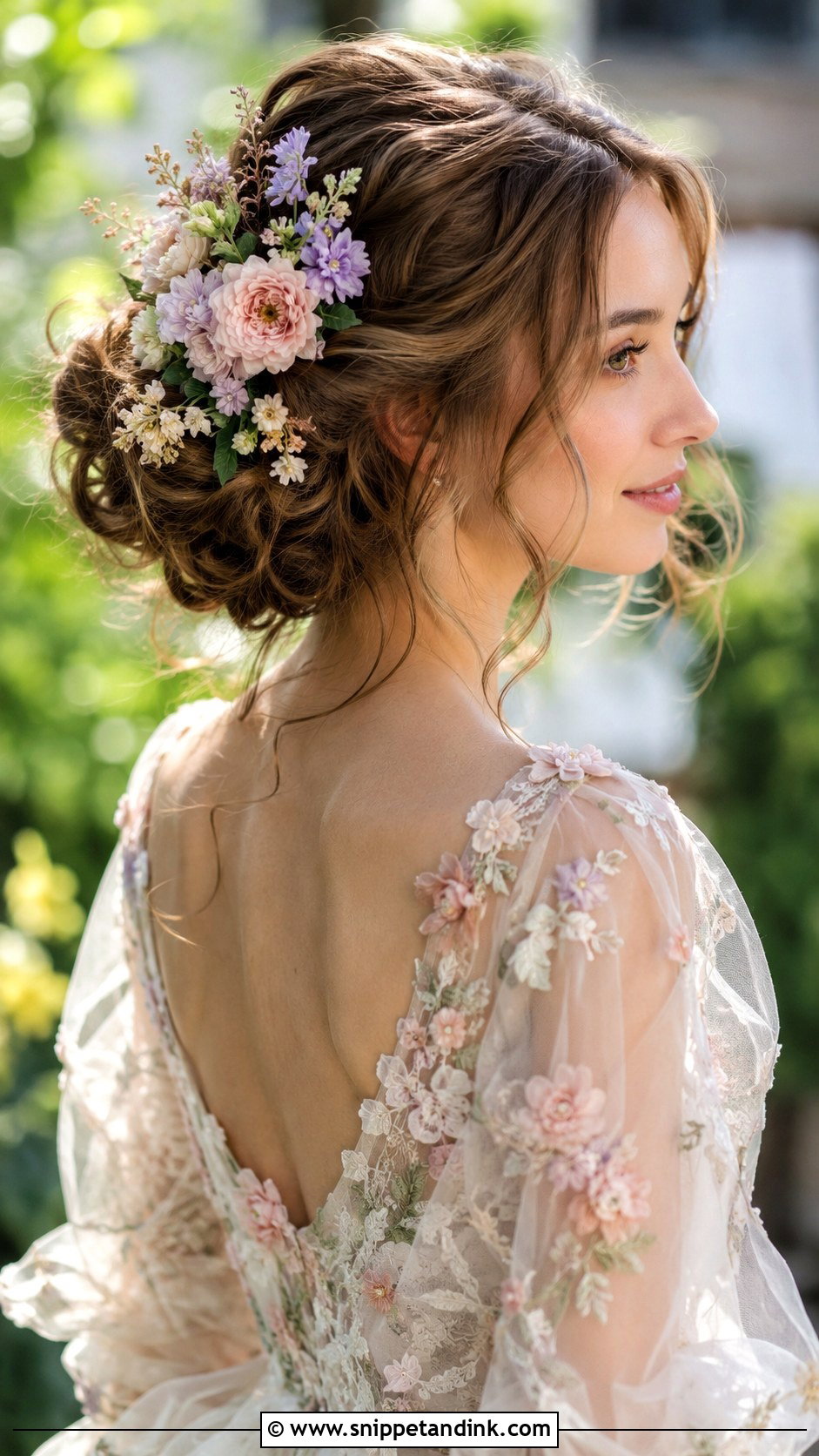
Mixed pastels are easy to overdo. I keep it to three colors, blush, lavender and cream, and repeat each one at least twice so the arrangement looks planned. The loose textured updo underneath is pinned in sections, which gives me pockets for each flower and keeps them from slipping. Tendrils at the face soften the edge. This is very much a spring and summer look and one I’d match closely to the bouquet.
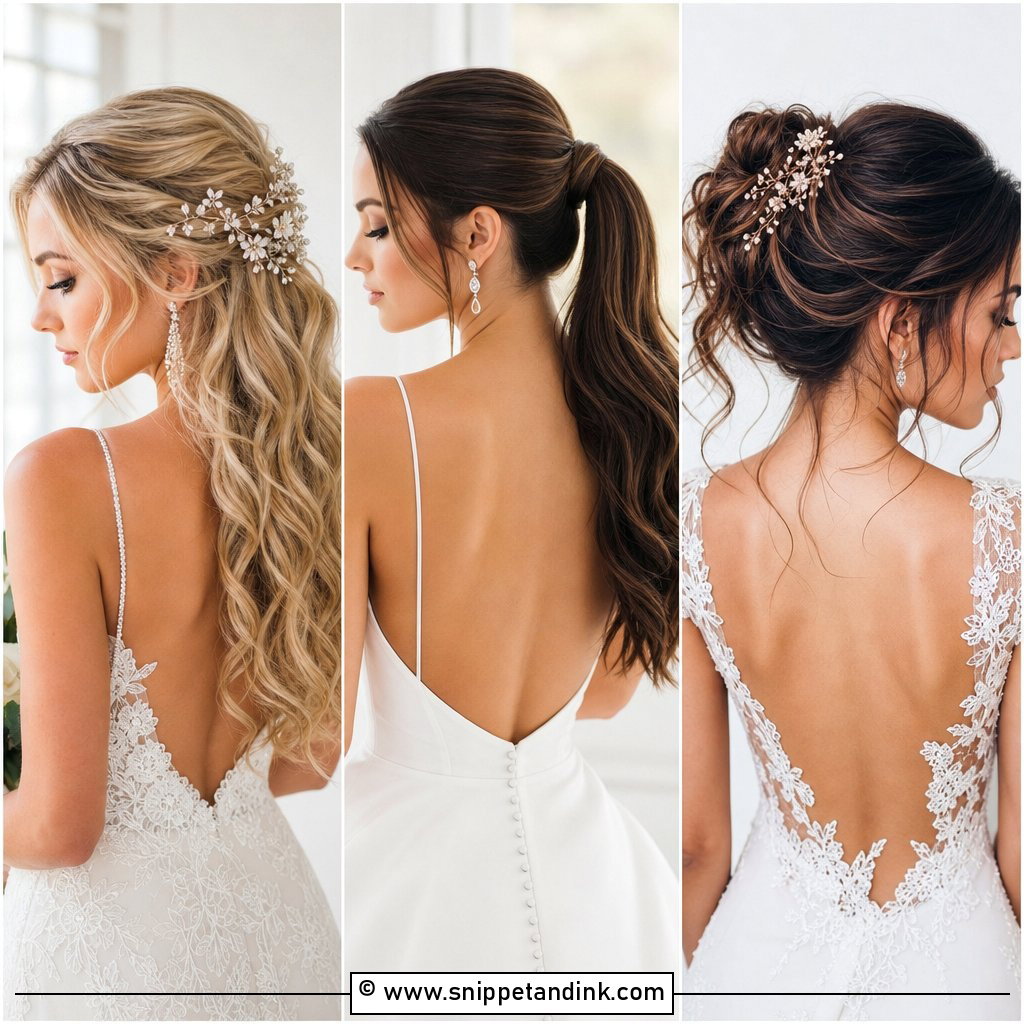
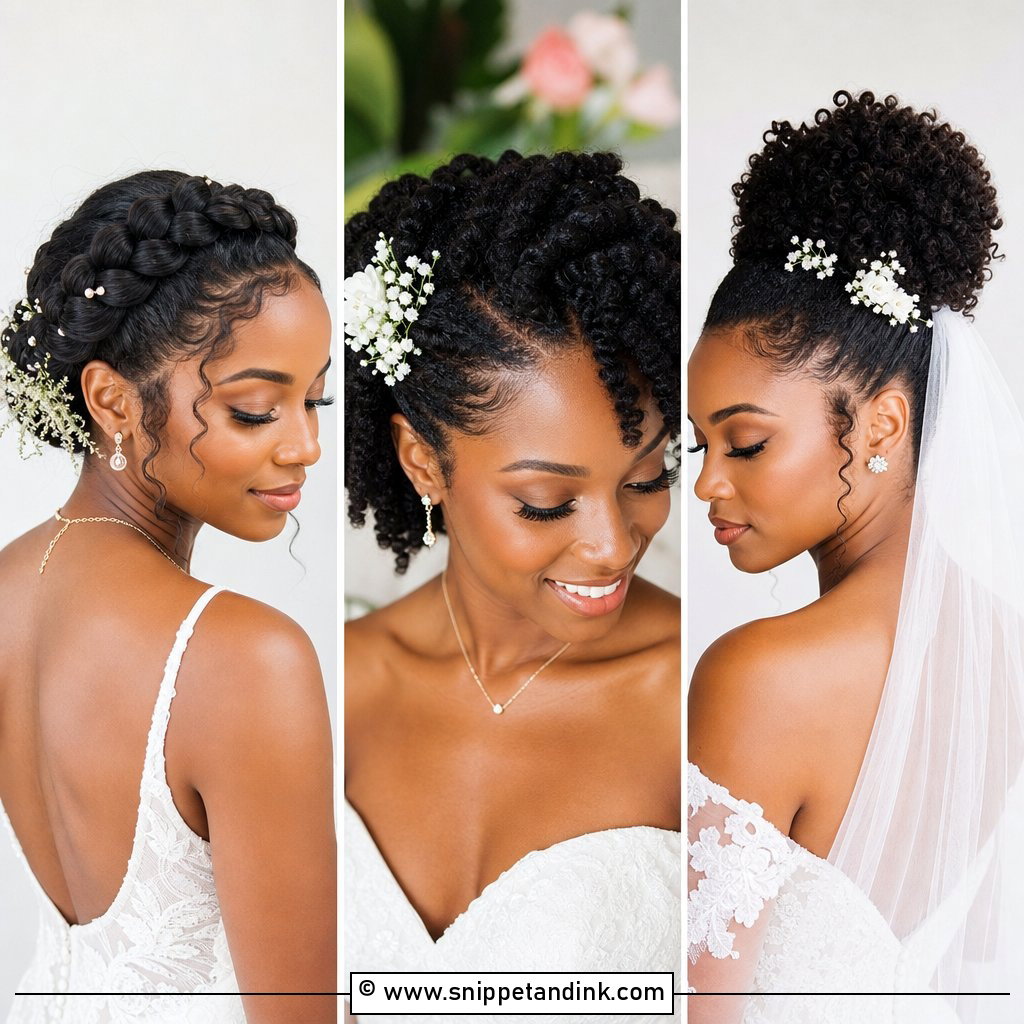
20. Flowing Waves With Floral Hair Vine
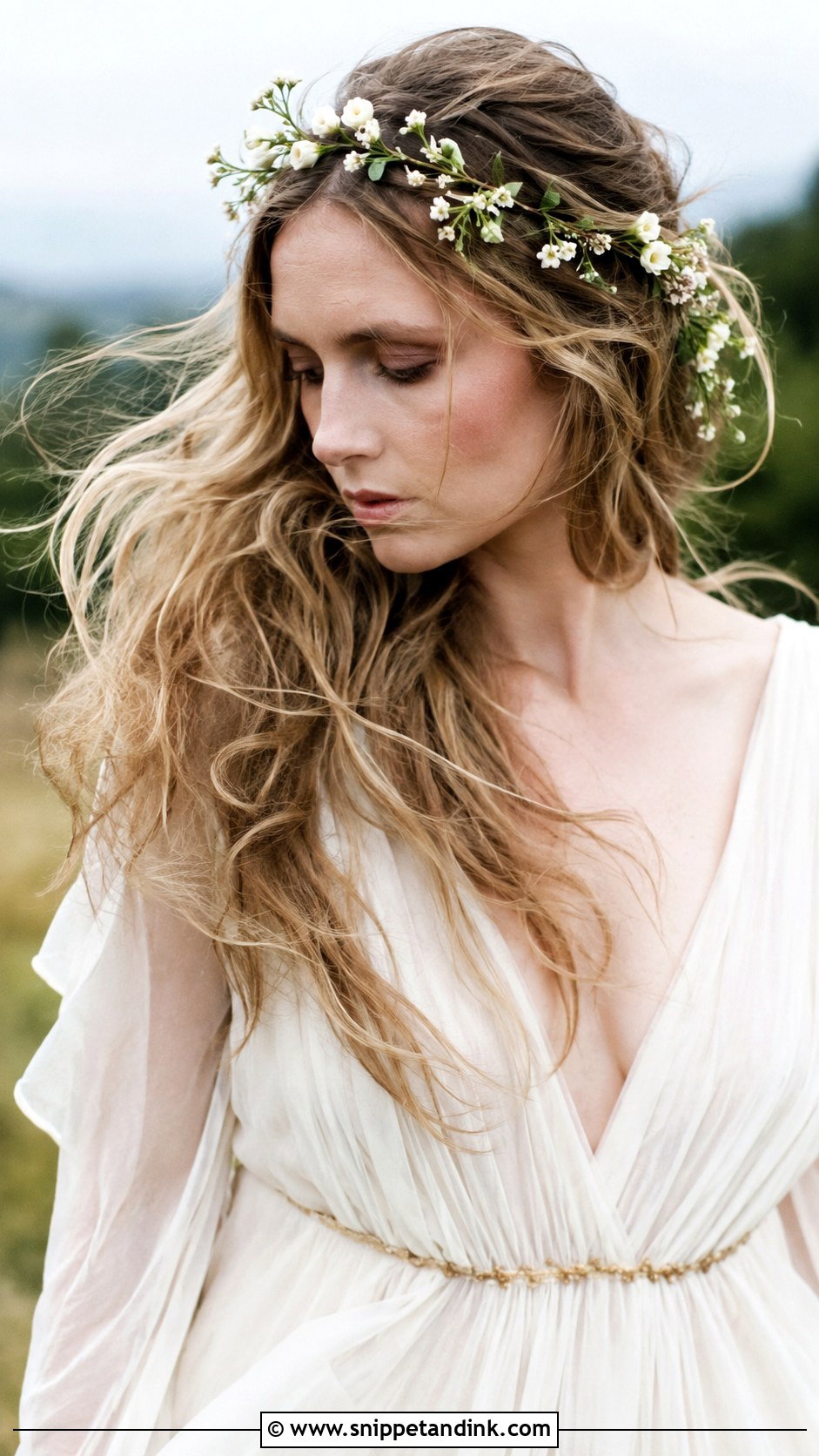
A hair vine is my favorite way to add flowers without the weight of a crown, because it’s flexible and can be bent to follow the hairline or the back of the head. I pin it in four or five points with small bobby pins hidden behind leaves, then weave the waves around it. Many vines are made with silk or preserved flowers, which means no wilting at all. If yours is fresh, have the florist make it on fine wire so it can bend. Loose waves suit outdoor and garden ceremonies best.
Getting Flowers From the Florist Into Your Hair
The best results come when your florist and your stylist are working from the same list. I ask brides to order hair flowers as their own line item, not as spare stems pulled from the bouquet bucket on the morning.
- Order pieces ready to wear. Ask for blooms wired or taped onto bobby pins or small combs, plus a few loose sprigs of baby’s breath or wax flower for filling gaps.
- Ask for a few spares. One or two backup heads cost little and save the day if a bloom snaps or browns.
- Have them delivered to the getting-ready room, kept cool and out of direct sun until the hair is finished. A box in the fridge is fine; a hot car is not.
- Bring a flower or two to your trial. Even a supermarket rose tells us how the weight sits and where the pins need to go.
- Plan the order of work. Hair, then spray, then veil comb, then flowers last, so nothing gets crushed or misted.
If your venue is warm, keep a spray bottle of plain water nearby and mist the flowers lightly from a distance between the ceremony and the reception. If a bloom fails completely, pull it and close the gap with a sprig of filler; nobody but you will know a flower was there.
Start With the Bouquet, Then Build the Hair
The most reliable starting point is your bouquet: pull one or two of its flowers into your hair and the whole look holds together. After that, think honestly about how long the flowers have to last, how warm the venue will be and how much weight you’re happy to wear on your head. A crown, a single rose behind the ear and a braid scattered with baby’s breath all work; they just need the right bloom. Bring photos of your favorites from this list to your trial, ask your florist which of your chosen flowers travel well, and test the style for a few hours before you commit.
You'll Like These Ideas:


Leave a Reply