
Brides bring me Caila Quinn photos more often than almost any other reference, and I understand why. Her hair is glossy dark brunette, lifted at the crown and bent rather than tightly curled, with a few face-framing pieces that look as if they fell there on their own. That kind of polish sits comfortably with a classic gown in a garden, by the water or in a ballroom. Below are fifteen ways I’d translate it onto a real wedding day, from fully down to a low bun to a reception ponytail, with notes on what each one needs to last.
Translating Caila’s Gloss Onto Hair That Isn’t Hers
Most of these references show thick, dark, very healthy hair, and that’s the detail brides forget at a trial. The shapes travel well. The finish depends on what your hair already does, so the first thing I ask is which part of the picture you actually love: the shine, the lift at the crown or the loose bend through the ends.
Fine or Thin Hair
Fine hair can get there, but it needs grip. I use a volumising mousse at the roots, a little texture spray before curling and some backcombing hidden under the top layer. Clip-in wefts are worth trying at the trial for the down styles, because the added weight keeps waves from separating into strings by evening.
Thick, Wavy or Curly Hair
Thick hair holds curl well but can look wide. Ask for some internal layering at your last cut so the waves fall closer to the face. If your natural texture is curly, I don’t blow it straight; I smooth only the outer layer with a large barrel, and the curl underneath keeps the volume.
Blonde, Red or Highlighted Hair
Lighter shades don’t reflect light the way dark brunette does, so the gloss reads more as softness than shine in photos. A clear gloss or toner a week or two before helps. Keep product light, because heavy oil on pale hair looks damp under flash.
1. Caila Quinn Wedding Hair Down
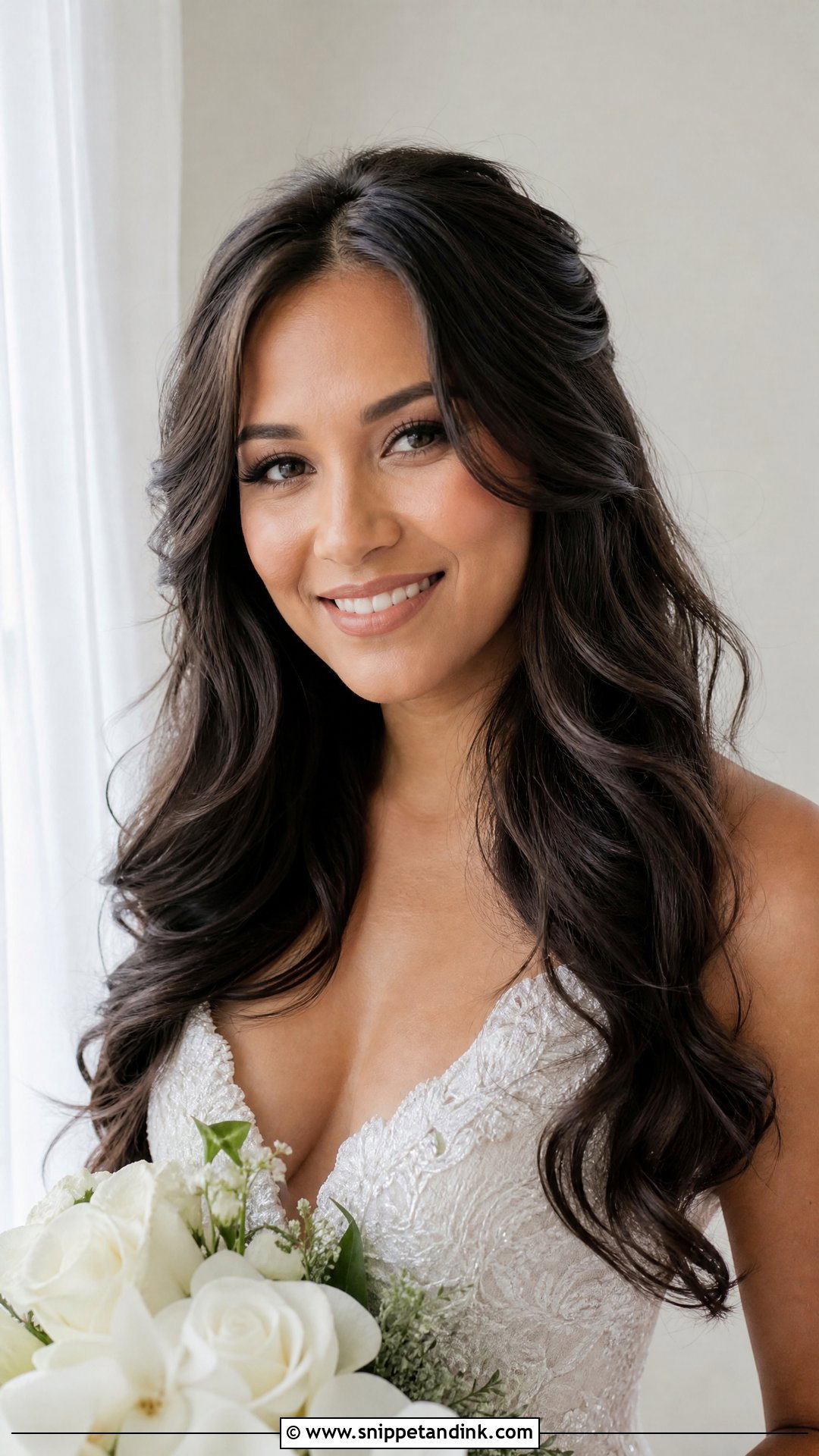
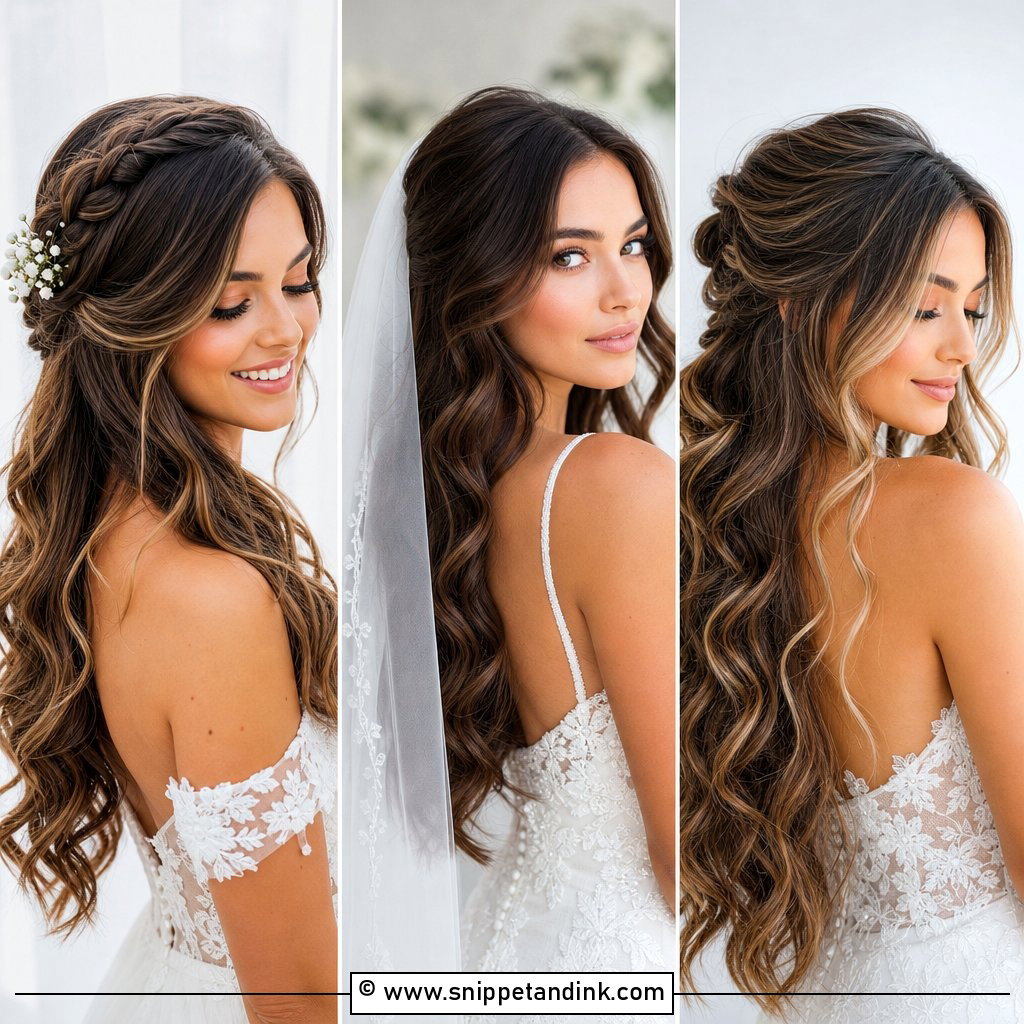
Worn down, this look lives or dies on the blowout. I do a round-brush dry first, lifting the crown section straight up off the scalp, then add loose curls and brush them out with a wide comb once they’ve cooled. Long hair resting on bare shoulders softens strapless gowns and sweetheart necklines in a way an updo can’t. The catch is wind and hugging. Down hair is the first style to tangle at the back, so I tell brides to keep a comb with whoever is holding the bouquet. A light shine spray goes on last, never before the iron.
2. Caila Quinn Bridal Waves
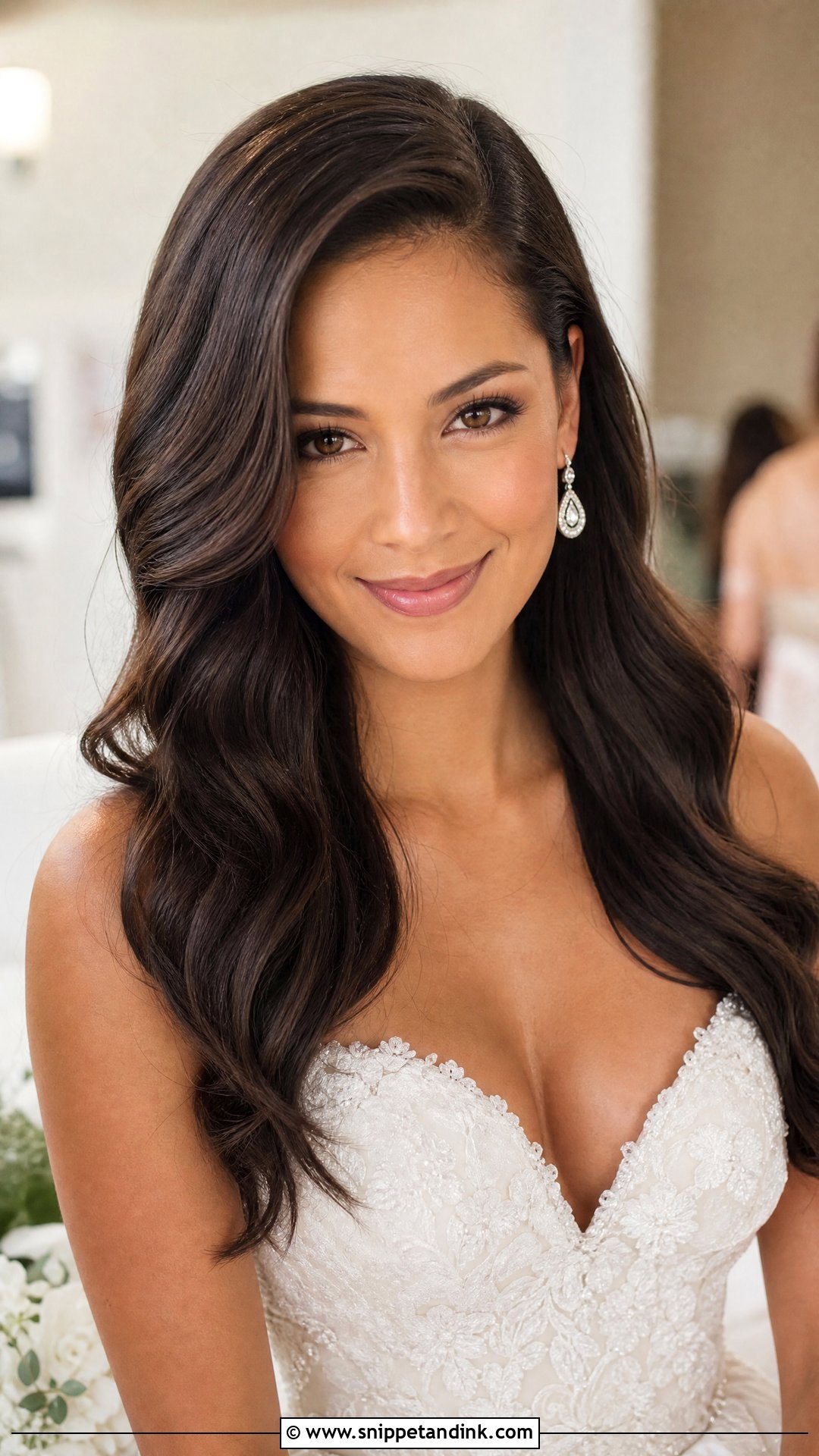
People hear “waves” and picture beach texture. These are not that. The bend starts around the cheekbones and gets fuller toward the ends, and the surface stays smooth enough to reflect light. I use a medium barrel, around an inch and a quarter, and curl every section away from the face so the front opens up rather than closing in. Brushing happens only after every pin is out and the hair is cold. A flexible hairspray, misted from arm’s length, keeps the bends moving through the vows and the first dance without that crisp shell.
3. Caila Quinn Half Up Wedding Hair
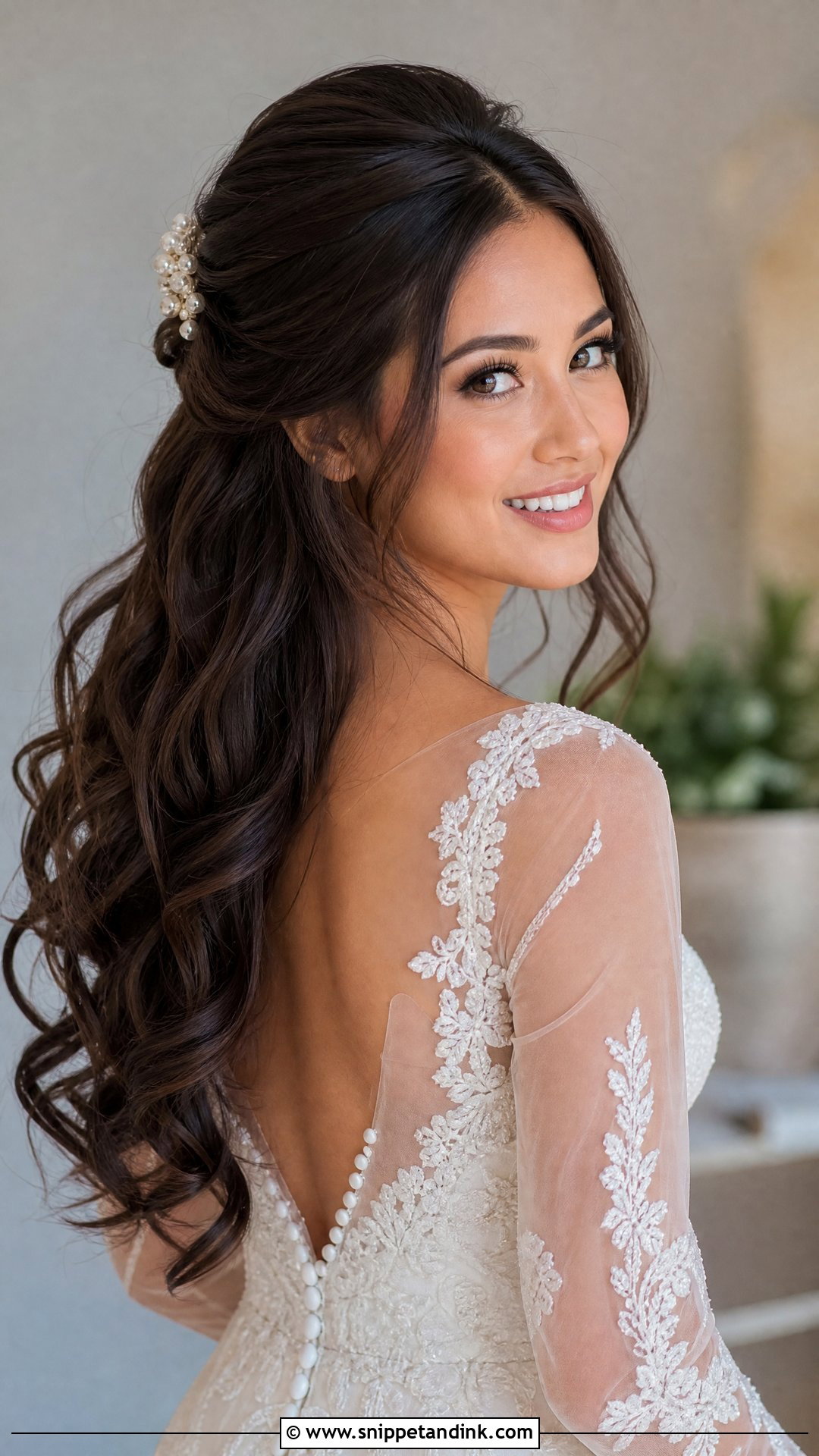
Half up solves the most common complaint I hear about wearing hair down outdoors: it blows into your lip gloss. Pinning the front sections back at the crown keeps your face clear while the length still shows. The secret to the shape is a little hidden backcombing under the twist, which gives the crown lift without looking teased. I anchor the twist with crossed bobby pins, because a single pin on silky hair slides out within an hour. A pearl comb or a short veil can sit right above it. Leave the front pieces loose and slightly bent, or the whole thing starts to look like a school-photo style.
4. Caila Quinn Wedding Hair With Veil
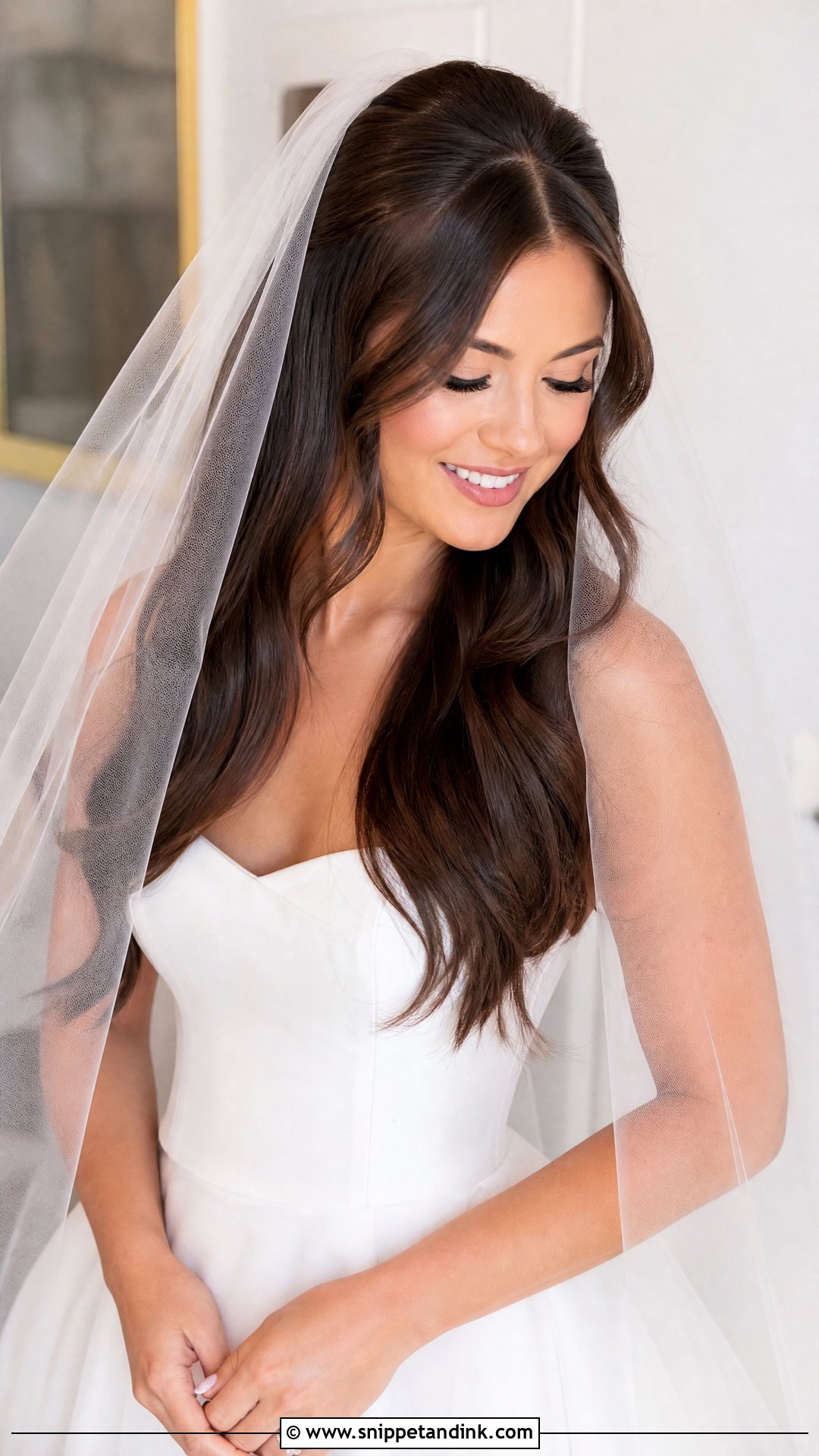
A veil changes how the hair has to be built. The soft volume at the crown and the curls falling under the tulle look simple, but the comb needs something firm to grip. I make a small hidden teased section or a tiny braid under the top layer and push the veil comb into that, teeth facing down toward the scalp. Cathedral and fingertip lengths are heavier than they look, especially if the edge is beaded, so test yours at the trial. If the veil pulls your head back slightly when you turn, it needs a better anchor, not more pins.
5. Caila Quinn Wedding Updo
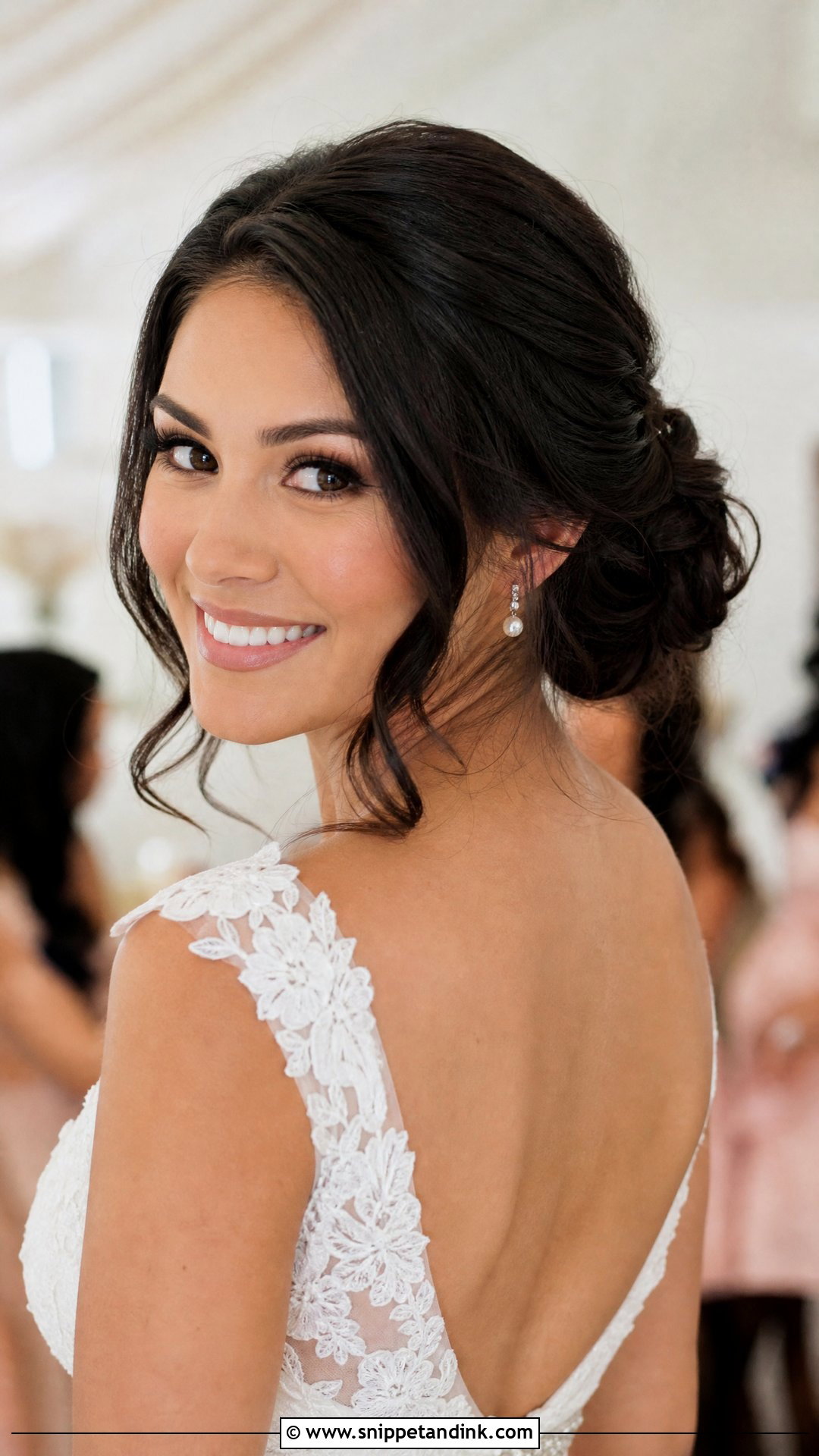
This updo is soft rather than severe: a low bun with loose face-framing pieces, a little height at the crown and a few curled sections tucked in around the nape. It shows earrings and a detailed neckline without looking pulled back. Updos are my safest recommendation for heat, since nothing is resting on your neck. Texture is what makes it romantic, so I curl the hair before pinning it up rather than working from straight hair. Skip a slick finish unless the dress is very clean and modern. Secure but never frozen is the aim.
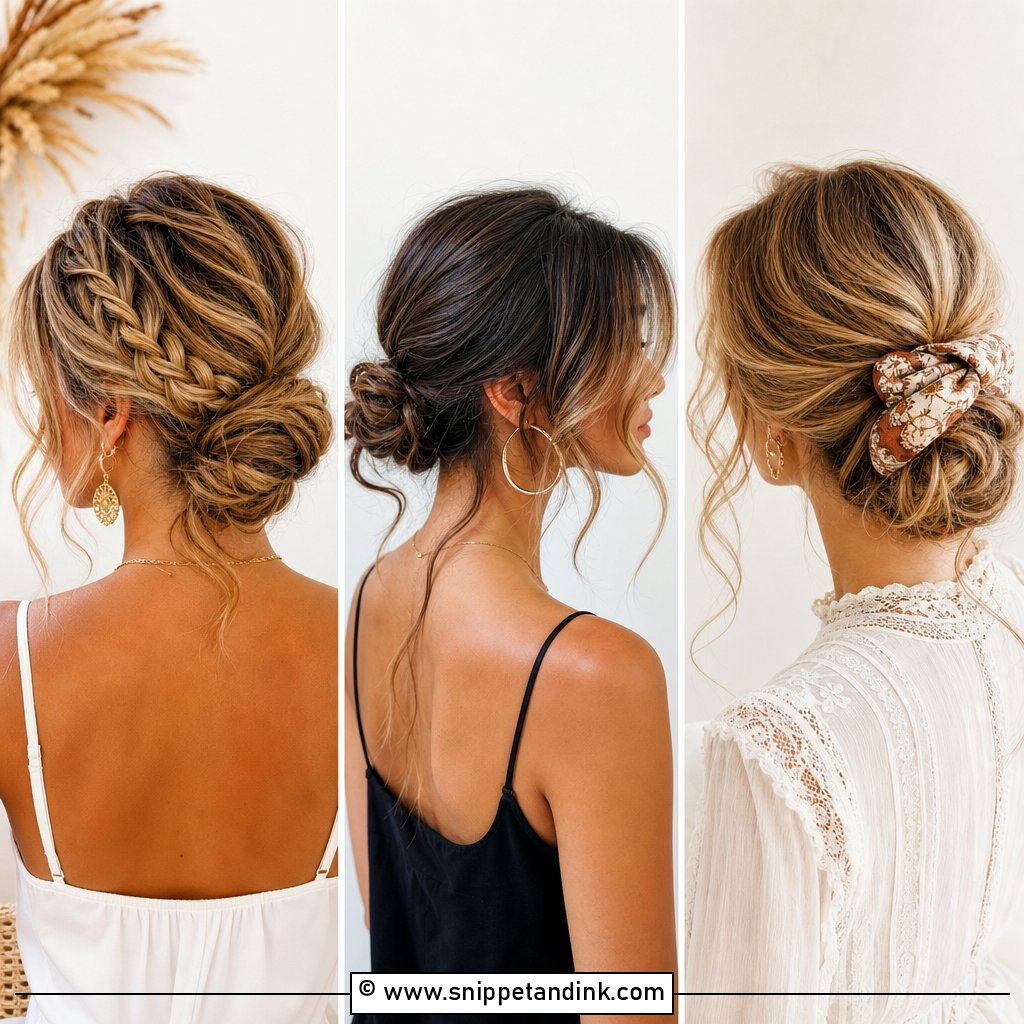
6. Caila Quinn Low Bun Wedding Hair
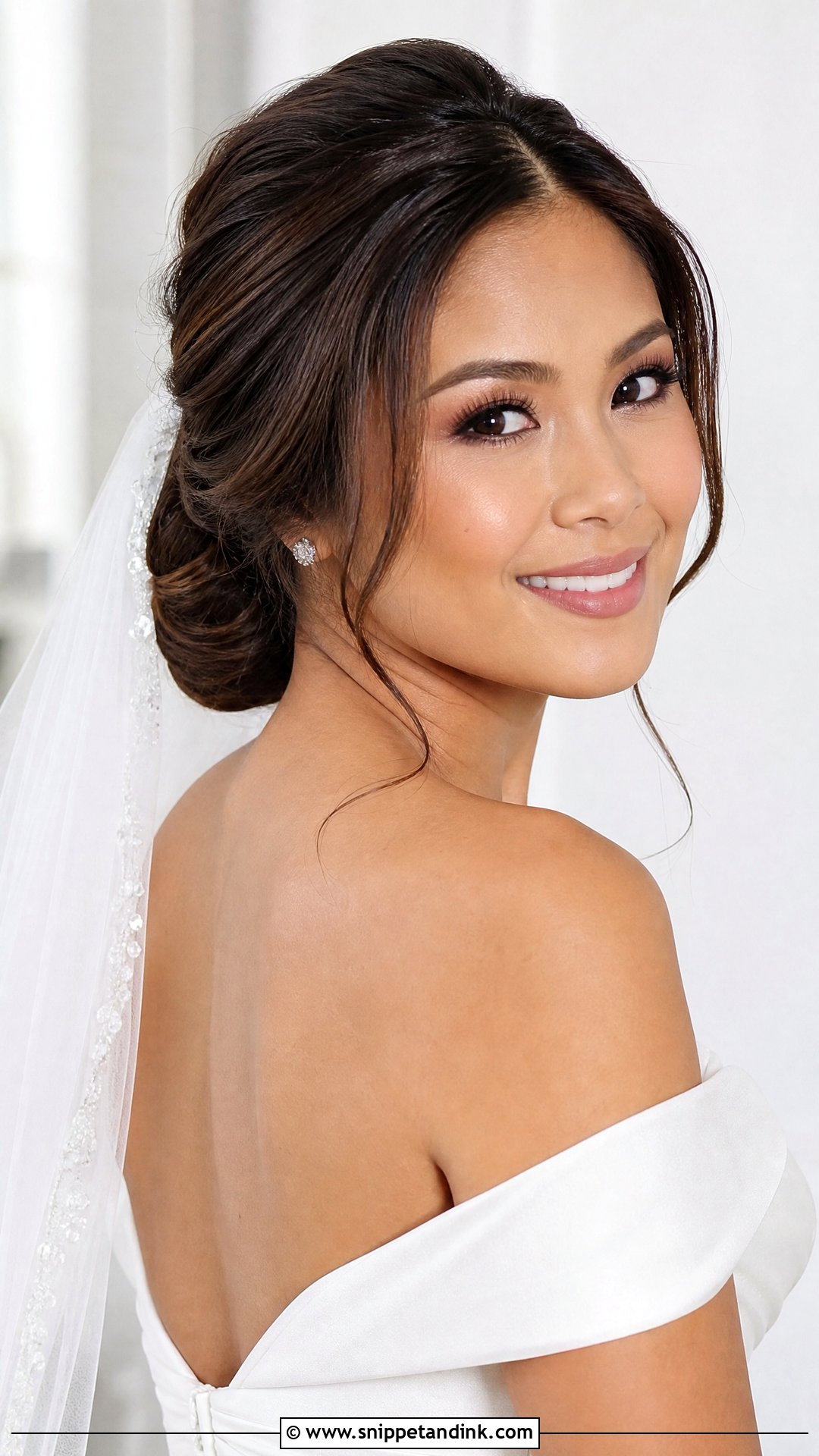
A bun at the nape is the style I find easiest to keep perfect from noon to midnight. With soft lift above it and a few polished curls around the face, it suits lace, ball gowns and off-the-shoulder necklines. It’s also the shape that survives taking a veil out best, because the comb sits just above the bun and leaves no dent when it comes out. Ask for visible softness in the bun itself. I pull a few loops loose with my fingers after pinning, which stops it looking like a ballet knot.
7. Caila Quinn Loose Curl Wedding Hair
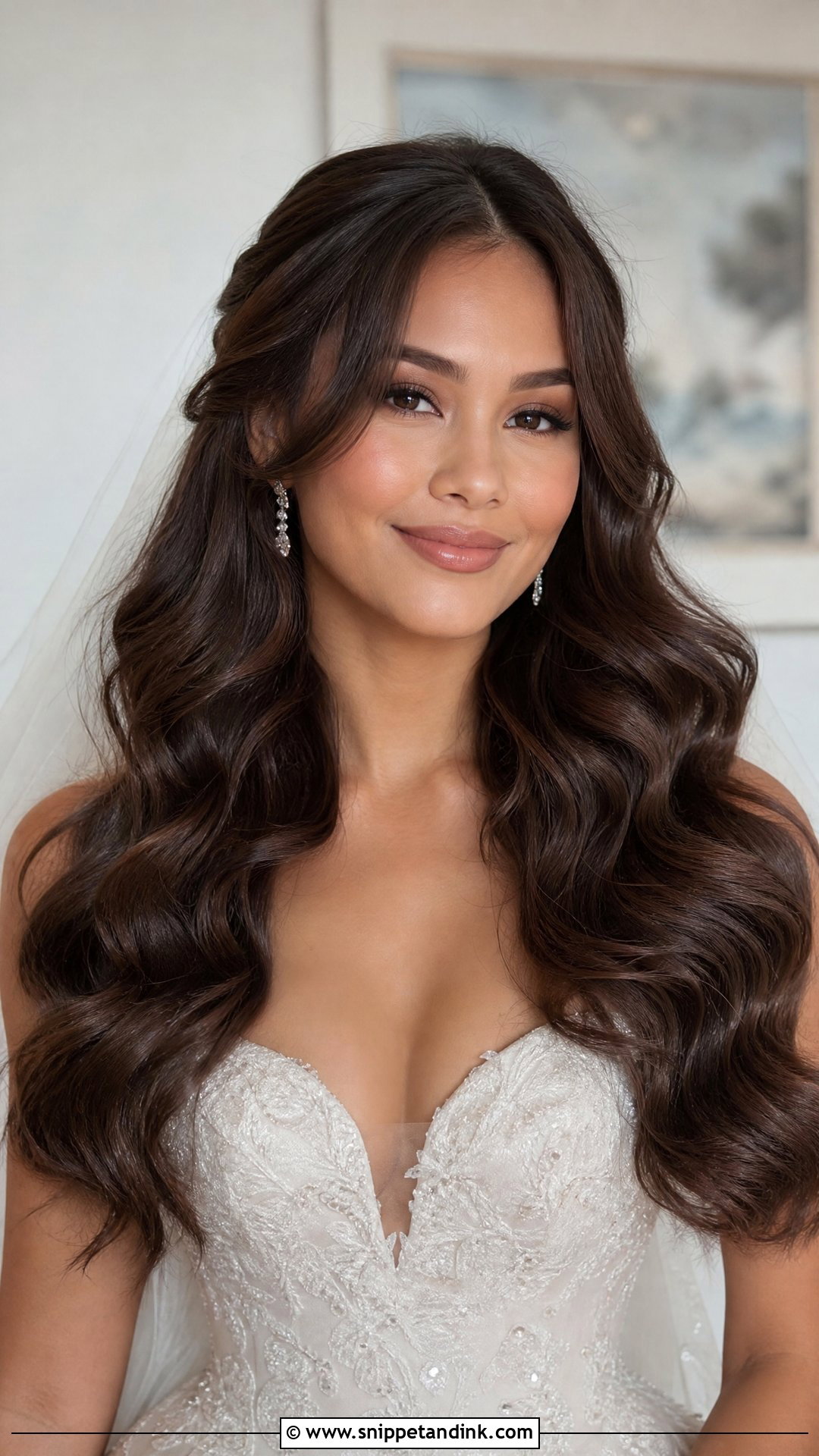
Full, glossy curls brushed into one soft shape give long dark hair real depth on camera, since every bend catches the light differently. The common failure is curls dropping by the reception. To prevent it, I curl smaller sections than you’d expect, pin each one in a coil while it cools, and only brush through once the whole head is cold. Fine hair might need a setting spray before the iron. Pearl studs and natural glam makeup keep the overall look from tipping into pageant.
8. Caila Quinn Side Part Wedding Hair
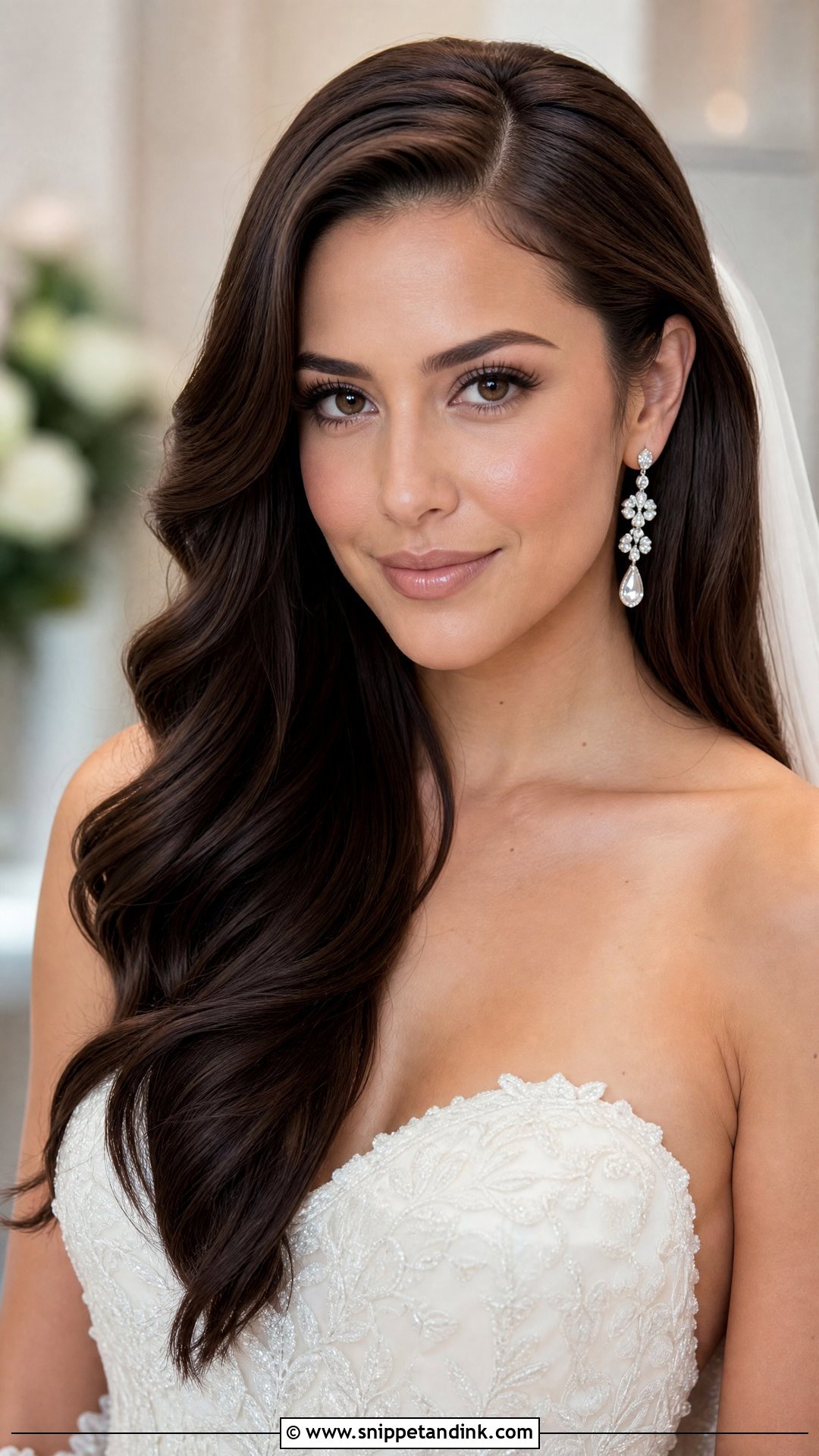
Moving the part to one side is the quickest way to make waves feel dressed up. It throws more volume over one eye and frames the face asymmetrically, which balances one-shoulder gowns and strapless bodices well. Before I commit, I check where your hair naturally parts and how stubborn the cowlick at the front is. Fighting a strong cowlick all day is a losing game. If you’d like to show a statement earring, tuck the lighter side behind the ear and hold it with one hidden pin rather than slicking it flat.
9. Caila Quinn Wedding Ponytail
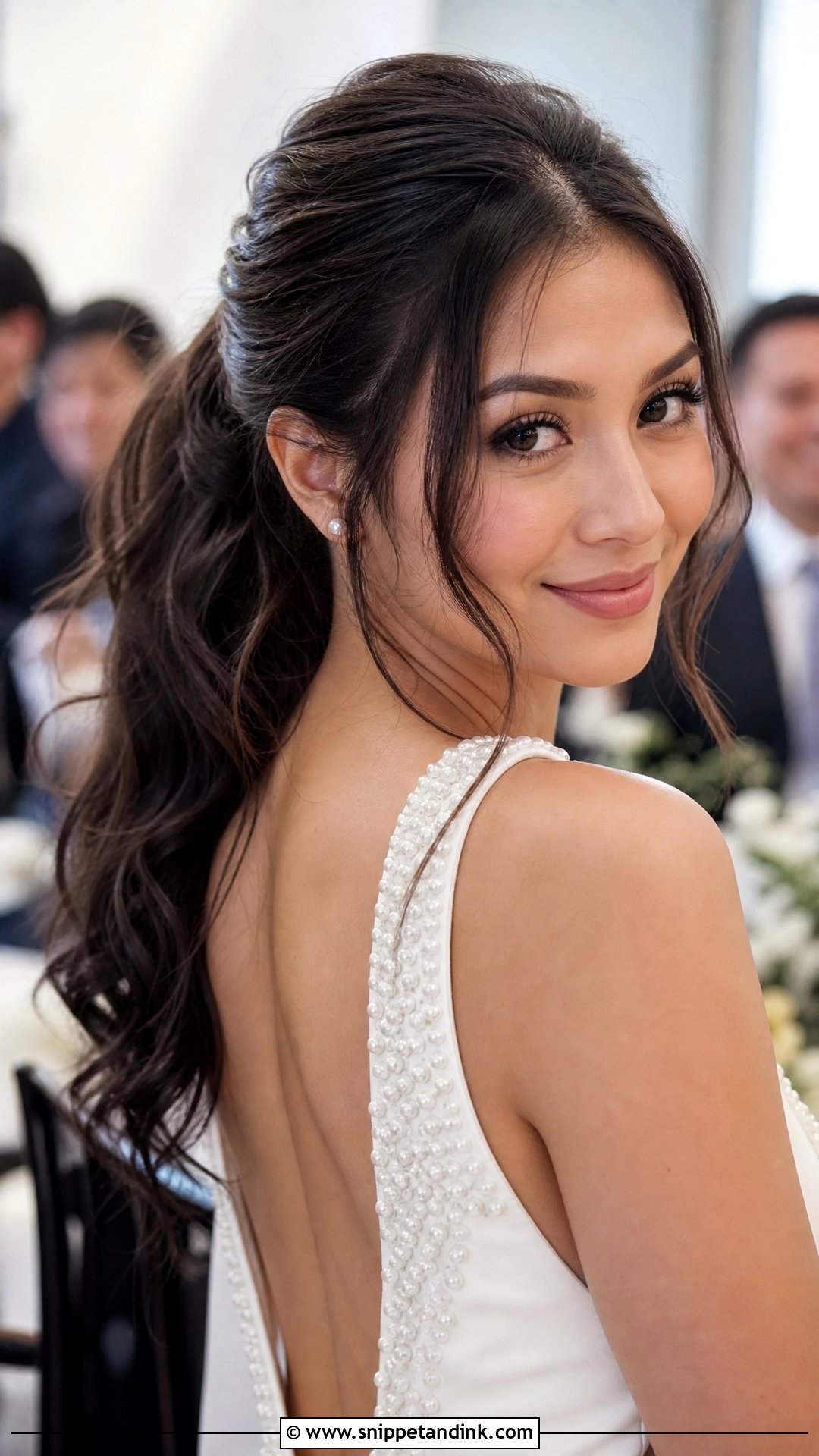
A bridal ponytail is not a gym ponytail. The roots are lifted, the length is curled and there are face-framing pieces around the cheeks. I set it at mid-back of the head, which sits nicely with a veil, a bow or pearl pins and doesn’t tug when you lean back in a chair. Two elastics, one at the base and one slightly lower, stop it from sagging as the night goes on. Then I wrap a strand around the base to hide them. It feels secure enough for dancing, which is why I often suggest it as a reception change.
10. Caila Quinn Wedding Hair With Flowers
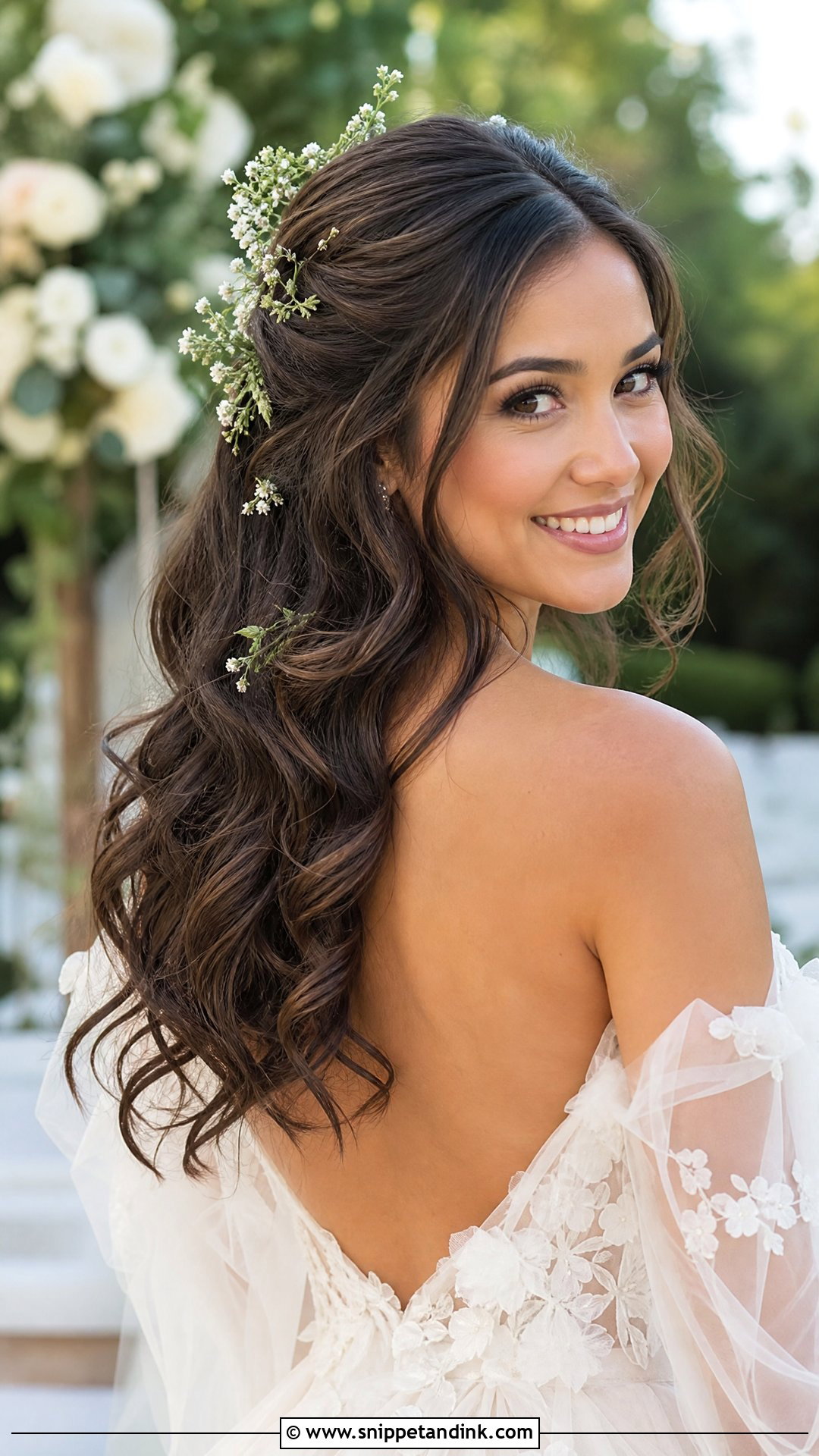
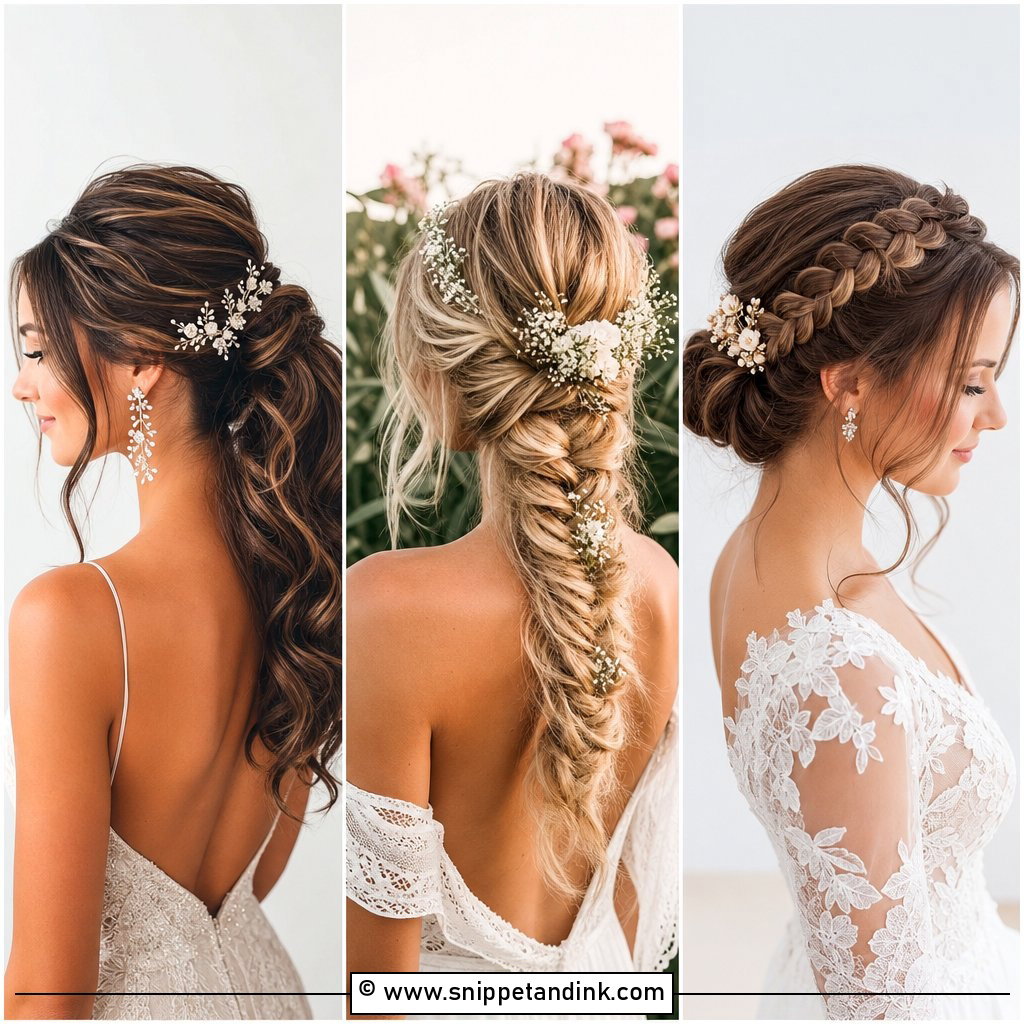
Tiny white blooms, a bit of greenery or small floral pins can sit in soft waves or a half-up twist and read especially well from behind, against a flowing veil or an open back. Keep them small. Too many flowers and the hair becomes a headpiece. Real flowers wilt, so I ask the florist for wired, hardy stems like spray roses or waxflower and avoid anything delicate that bruises against warm skin. They should match the bouquet and be delivered to the getting-ready room, not the ceremony, so I can pin them in early.
11. Caila Quinn Wedding Hair With Pearl Pins
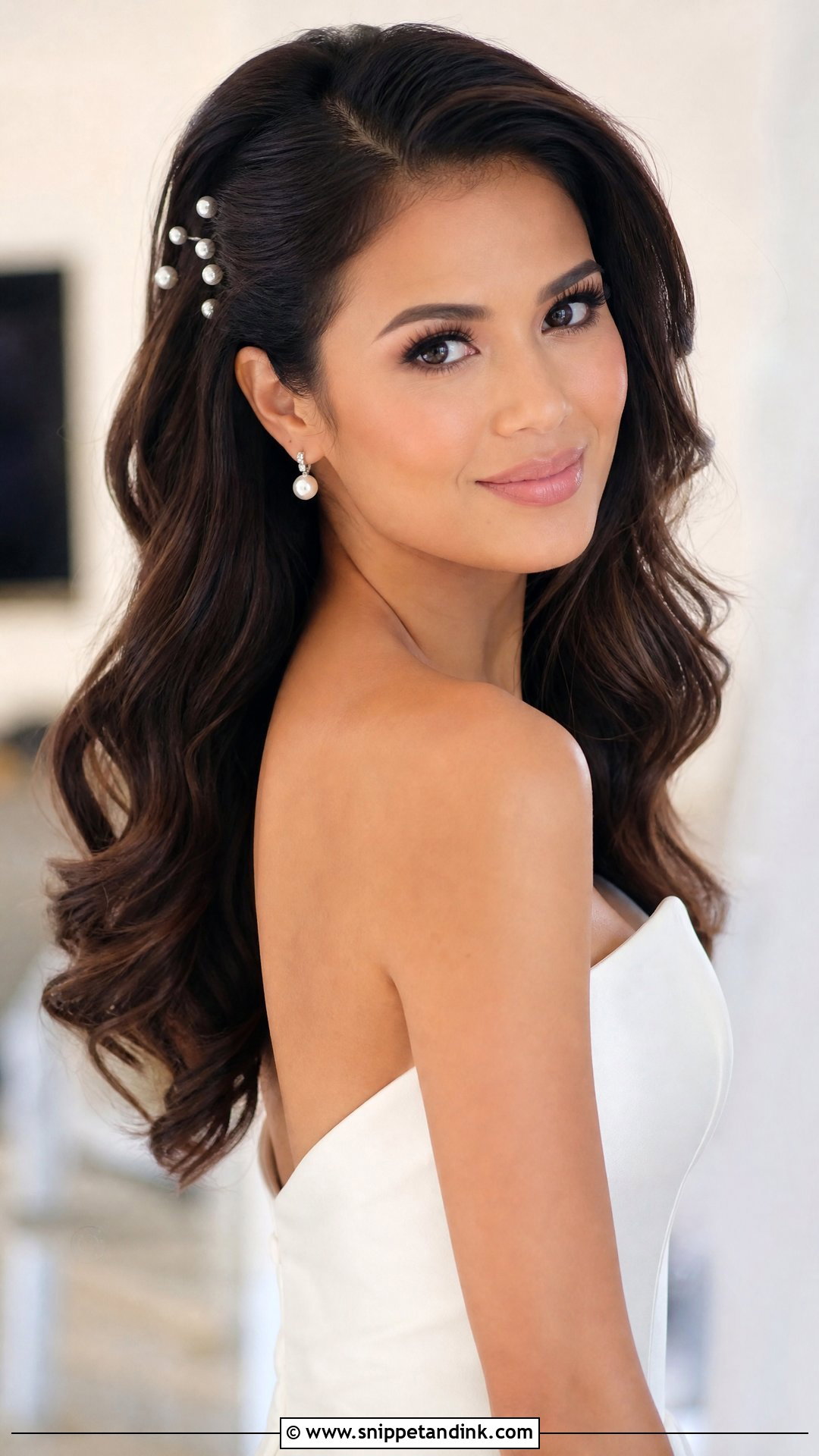
Pearl pins give soft waves or a low bun a finished edge without dating the photos. For hair worn down, I place a small cluster at one temple, angled back so the pins disappear into the hair. For an updo, I scatter them around the bun so they catch light from every side. Smooth, shiny hair makes the pearls stand out; on frizzy or heavily textured sections they get lost. Pearl pins are lightweight, so they slide out of silky hair. I always pin them over a crossed bobby pin for grip.
12. Caila Quinn Natural Glam Wedding Hair
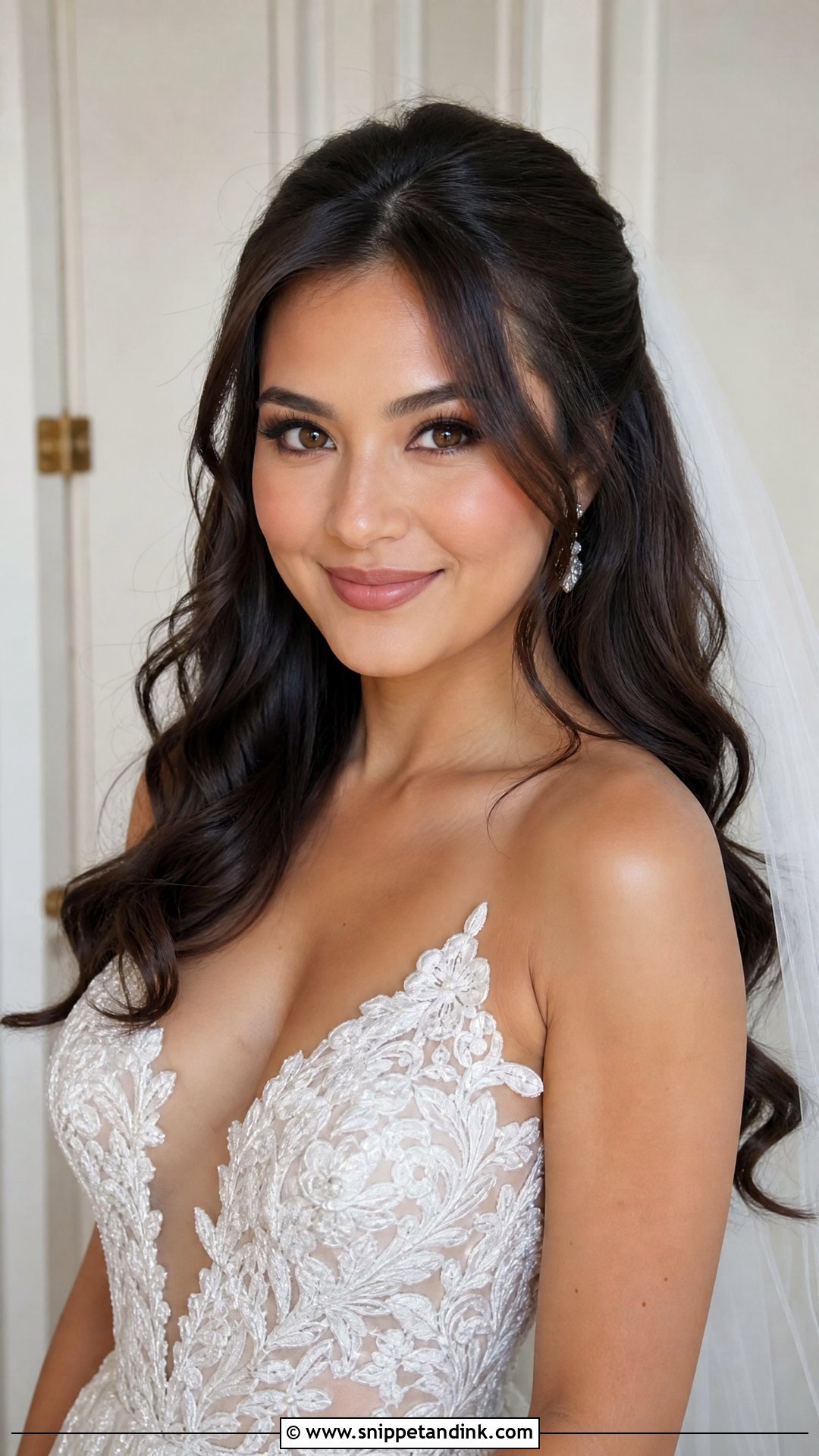
Natural glam is about looking dressed up and still recognising yourself in the mirror. The hair should be glossy and softly curled with plenty of movement, with no harsh teasing or overly perfect ringlets. It sits naturally with warm makeup, fluttery lashes and glowing skin. It’s also the most flexible look here, since it can be worn down, half up or pinned softly to one side. The real work happens weeks earlier. A trim about two weeks before the wedding and a conditioning treatment give me healthy ends to style, and no shine spray can fake that.
13. Caila Quinn Reception Hair
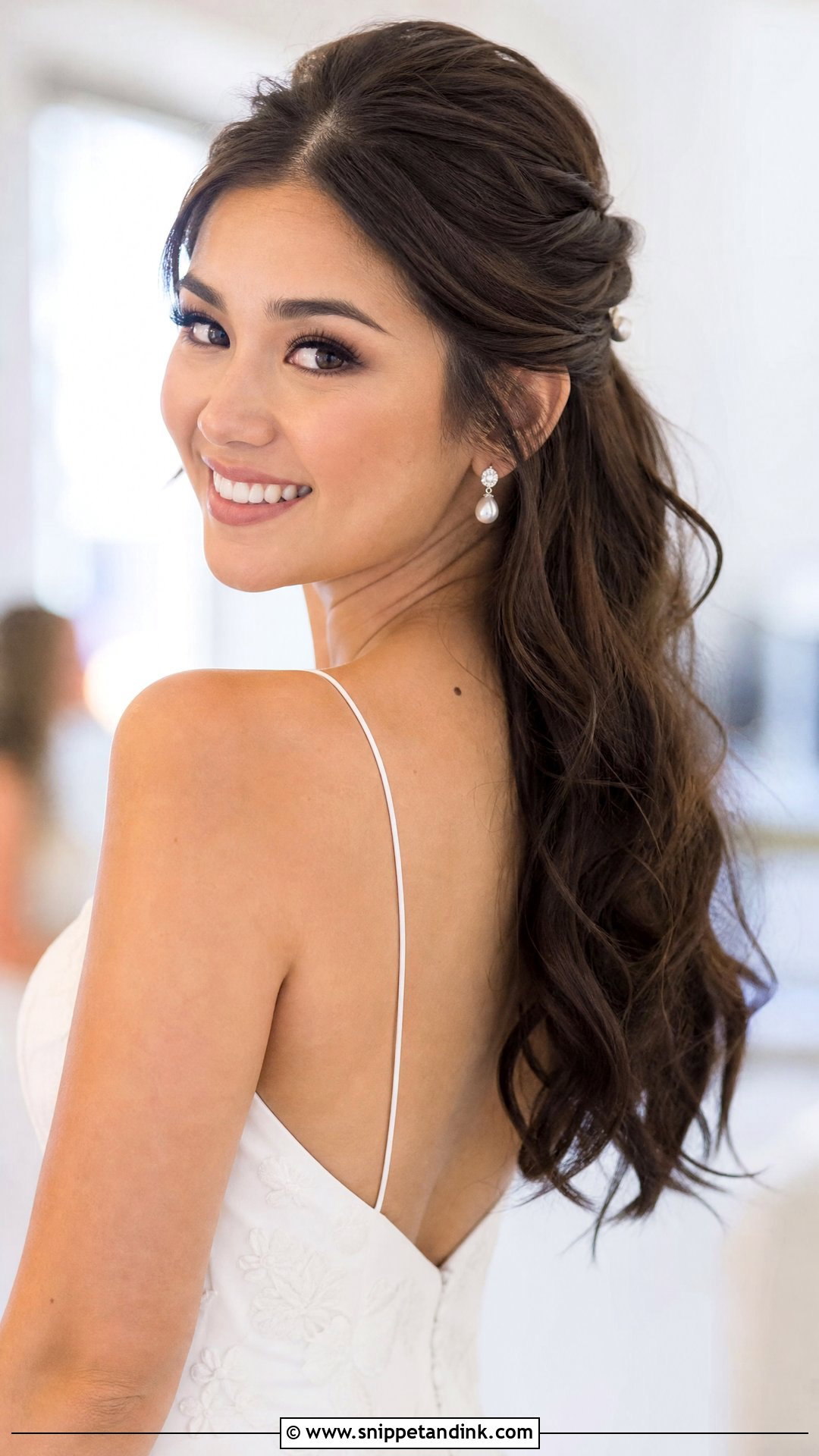
For the party, I like hair that moves more easily. Many brides start with a veil and soft waves, then switch into a half-up twist, low ponytail or loose pinned-back look once the dancing begins. The change takes me ten minutes if the ceremony style was built with it in mind, which is why I ask about your reception plans at the trial. Leave a few curls around the face so it still feels romantic once the veil is off. A small comb, bow or pearl pin turns the second look into a deliberate choice rather than a fix.
14. Caila Quinn Wedding Guest Hair
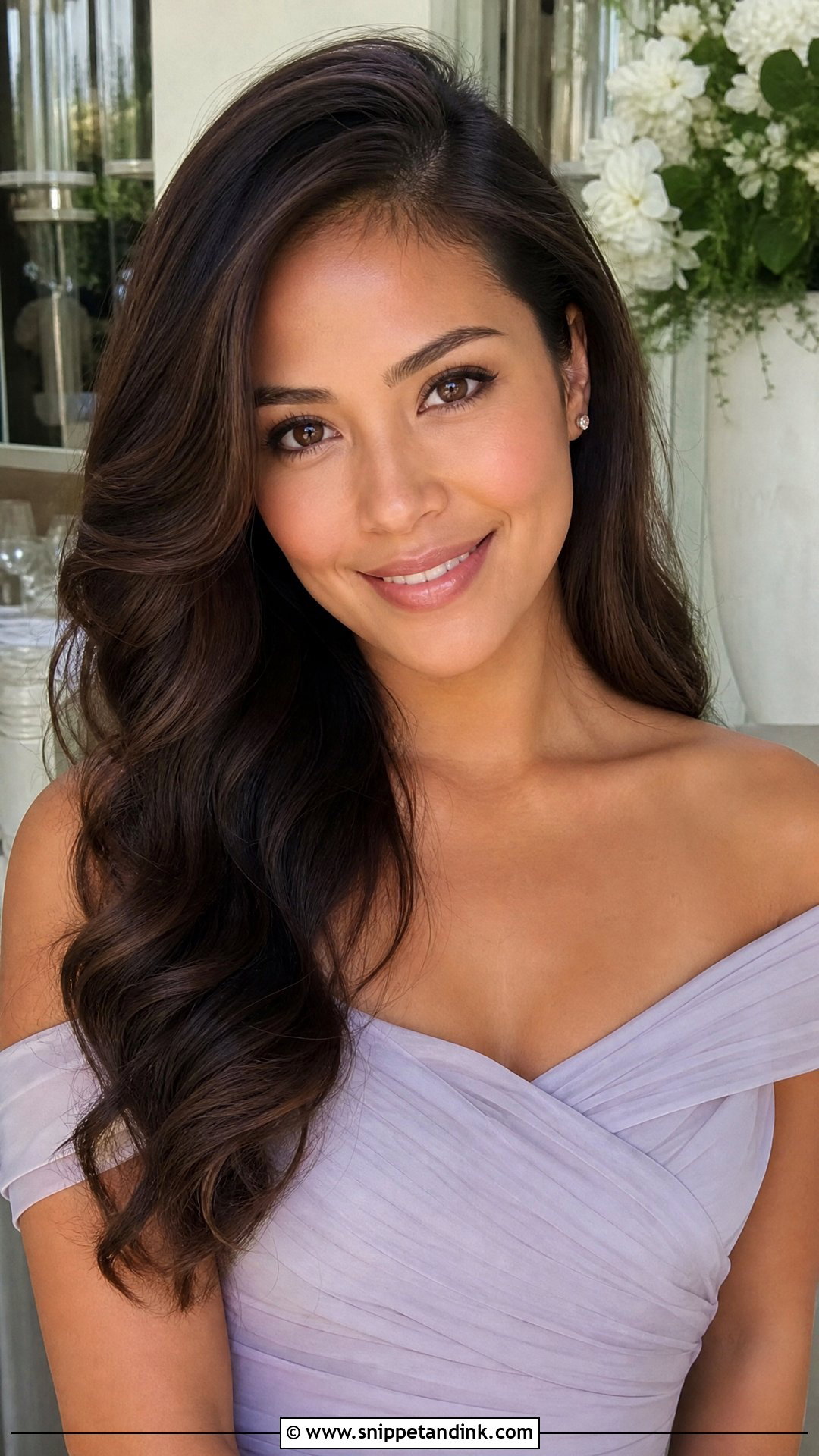
As a guest, you can borrow those polished brunette waves for your own wedding guest hair as long as you dial the formality down. Loose curls with a side part or a simple half-up twist are right; a veil-style comb or heavy pearl work belongs to the bride. Satin dresses and floral prints both suit the softer finish. A shine that is smooth but not mirror-perfect keeps it relaxed. Tuck a small clip in your bag if the wedding is outdoors, because humidity will lift the front pieces first.
15. Caila Quinn Bridesmaid Hair
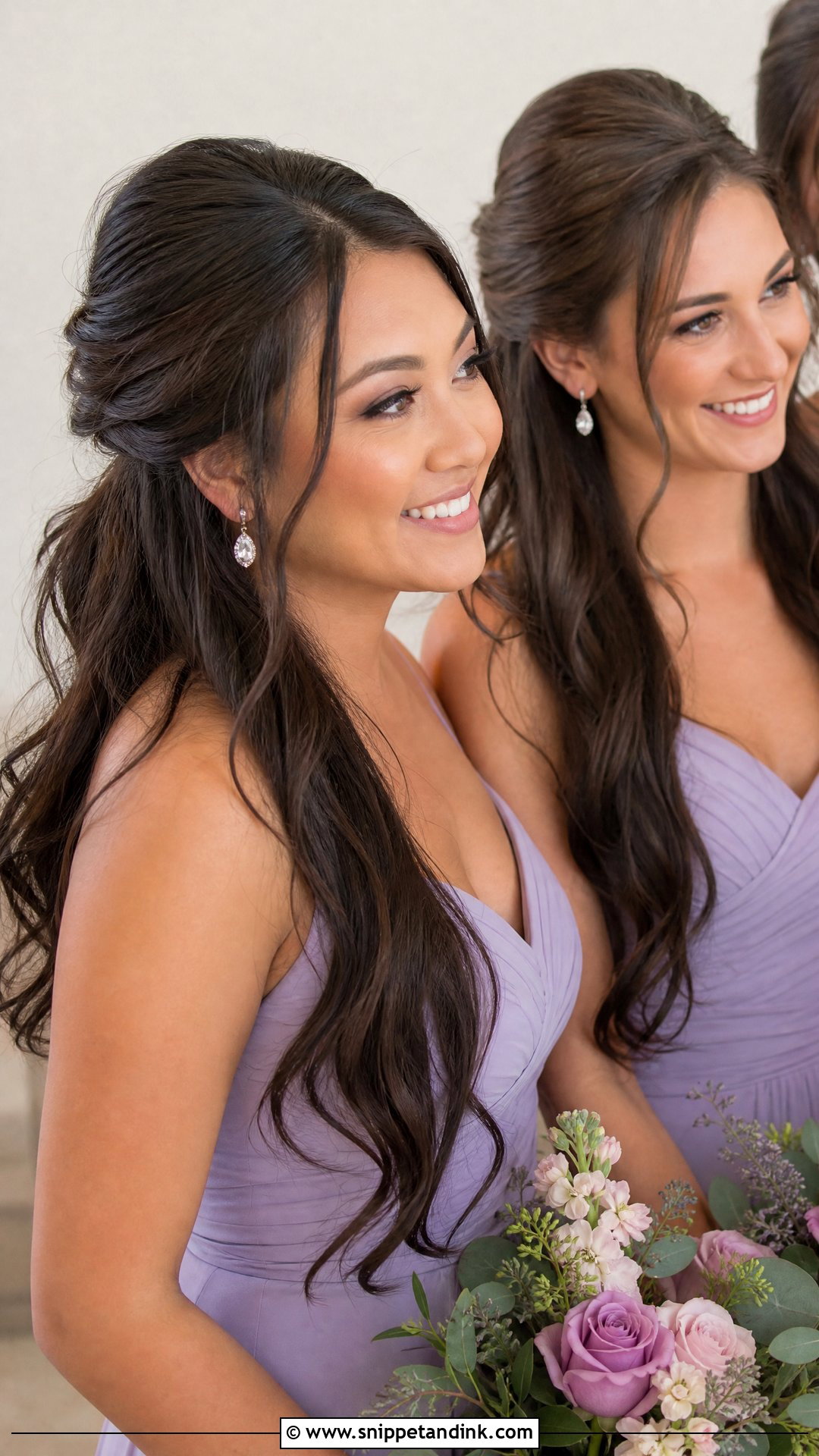
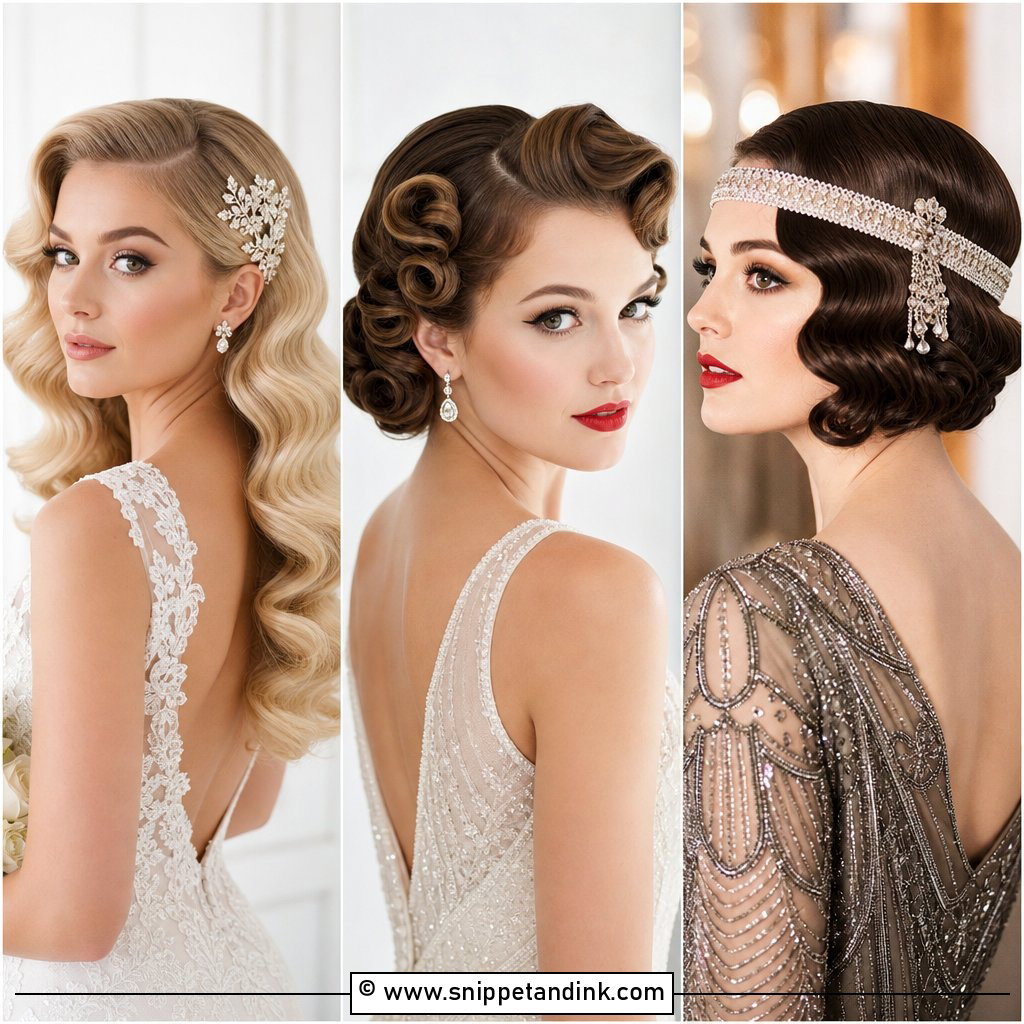
Caila Quinn bridesmaid hair works best when the texture matches across the party but the shape doesn’t have to. I’ll give everyone the same soft brunette-style wave and then let each bridesmaid choose loose, low bun or half up based on her face, her neckline and how much hair she has. Short or layered hair often can’t make a full bun, and forcing it leaves pins on show. Small matching pins tie the group together if the bride wants that. Everyone should be able to sit, hug and dance without asking me to fix it.
Why Polished Waves Go Flat by Dinner, and How I Stop It
Brushed-out waves are the bridal style most likely to drop. They have less structure than an updo, and you’ll spend the day hugging people, sitting in cars and standing outside for photos. These are the causes I see most.
- Curls brushed while still warm. Each section should be pinned and left to cool completely. This one habit separates waves that last from waves gone by the speeches.
- Shine product applied too early. Oil and serum are finishing steps. Put on before curling, they make hair slippery and the curl won’t set.
- Humidity at outdoor venues. An anti-humidity spray on the finished style does more than extra hairspray, which makes waves crunchy without stopping frizz.
- A heavy veil dragging the crown. A long, beaded veil can flatten the lift within an hour unless it is anchored into a hidden braid or padded section.
Hand a bridesmaid a few bobby pins in your shade, a travel hairspray, a wide-tooth comb and an elastic. If the waves give up before the party, that’s the moment for the low ponytail or half-up twist from the reception idea above, which looks planned rather than rescued.
Shine Starts Weeks Before the Wedding Morning
Nothing about this look is fussy. It’s shine, soft movement and a few pieces around the face, secured well enough that you stop thinking about it after the first hour. Every shape above carries that same feeling, so let your dress and your day decide between them, then add a veil, pearls, flowers or a reception change. When you catch yourself in a mirror at the reception and still look like you on a very good day, the style has done its job.
You'll Like These Ideas:


Leave a Reply