
A waterfall braid is a French braid with a trick in it: each time the top strand crosses over, I drop it and pick up a fresh section, so loose pieces fall through the braid like water over a ledge. That’s what gives waterfall braid wedding hairstyles their soft, cascading look. It adds detail without stiffness, so it sits as comfortably at a garden ceremony as in a ballroom, and it works with veils, fresh flowers and hair vines. It isn’t for everyone, though. Very short layers and very slippery hair both fight it, and I’ve noted where that matters in the twenty ideas below.
What Makes a Waterfall Braid Slip, and the Prep That Holds It
Waterfall braids look gentle, but structurally they are looser than a regular French braid. Every dropped strand is a piece of hair that isn’t holding anything. So the braid relies on grip, and grip comes from preparation more than from pins.
- Freshly washed, silky hair is the hardest to braid. I prefer hair washed the evening before, then given a light texture spray or dry shampoo at the roots.
- Heavy conditioner or oil on the lengths makes stitches slide. Keep them to the ends only on the day.
- Curling goes in first, then the braid. Curling after braiding risks pulling the dropped strands loose.
- The braid end is secured with a small clear elastic, then hidden with a pin pushed back into the braid, so nothing shows from behind.
Wind and long hugs are the two things that test a waterfall braid most. If your ceremony is outdoors, I keep the braid slightly tighter at the start near the face, where you’ll notice slippage first, and loosen the stitches toward the back where it matters less.
1. Classic Waterfall Braid With Loose Curls
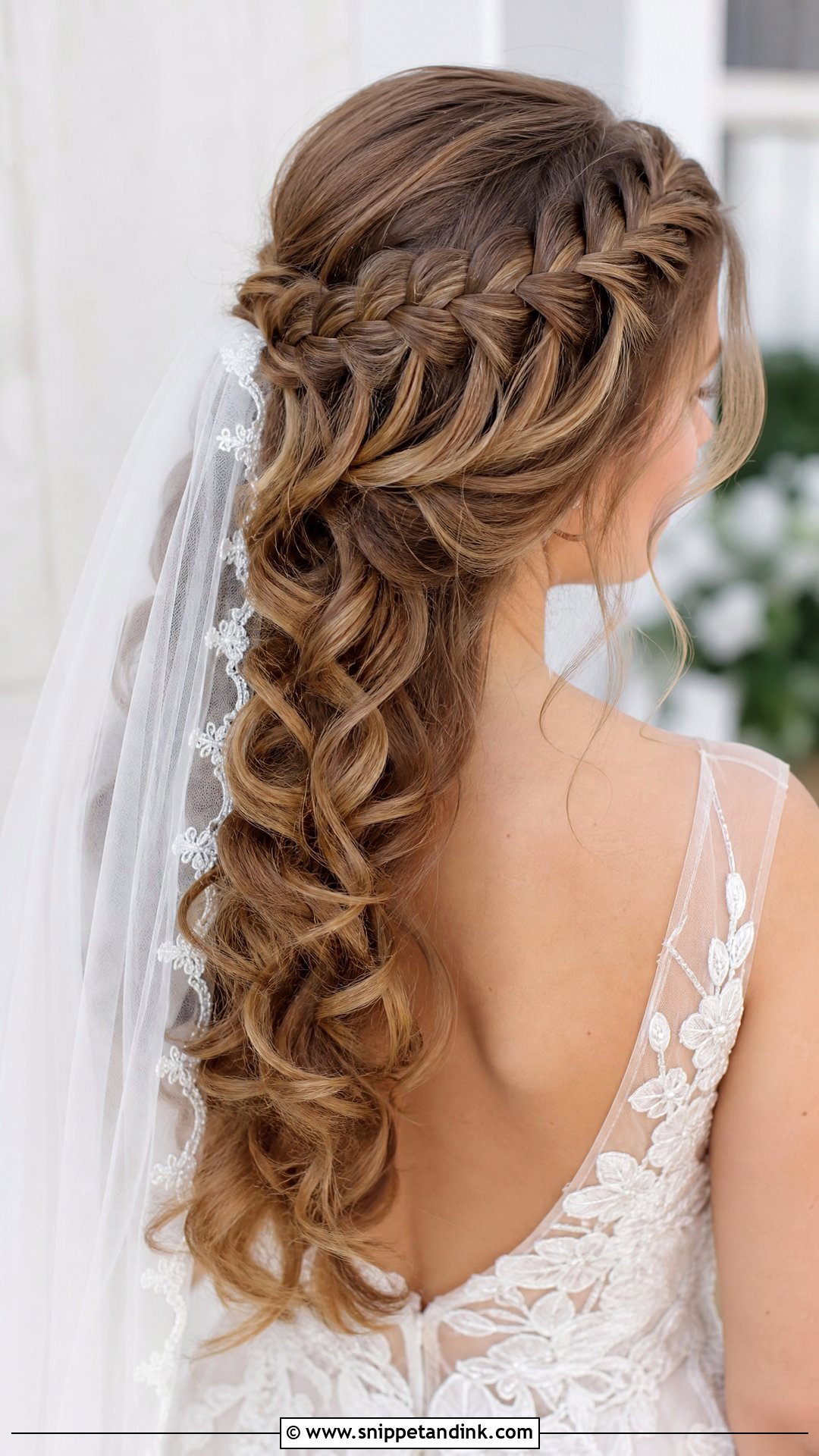
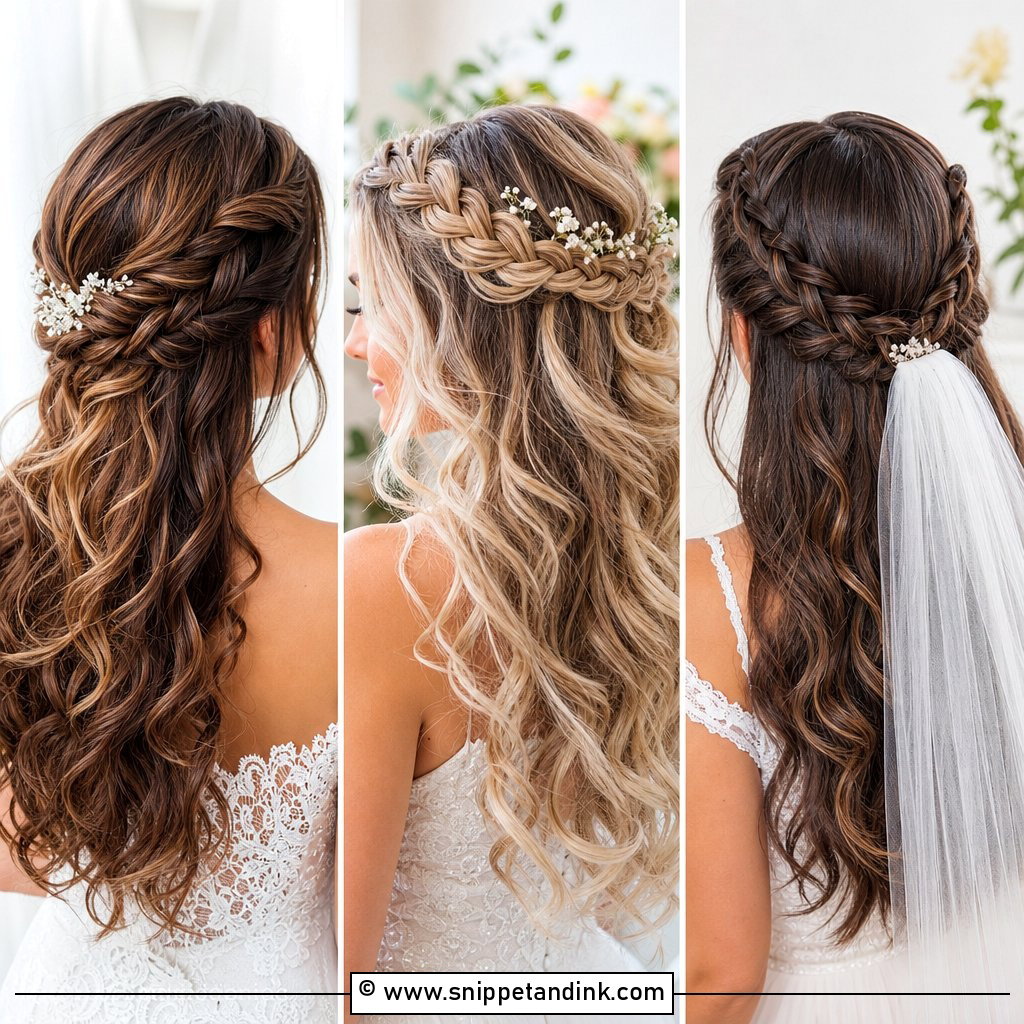
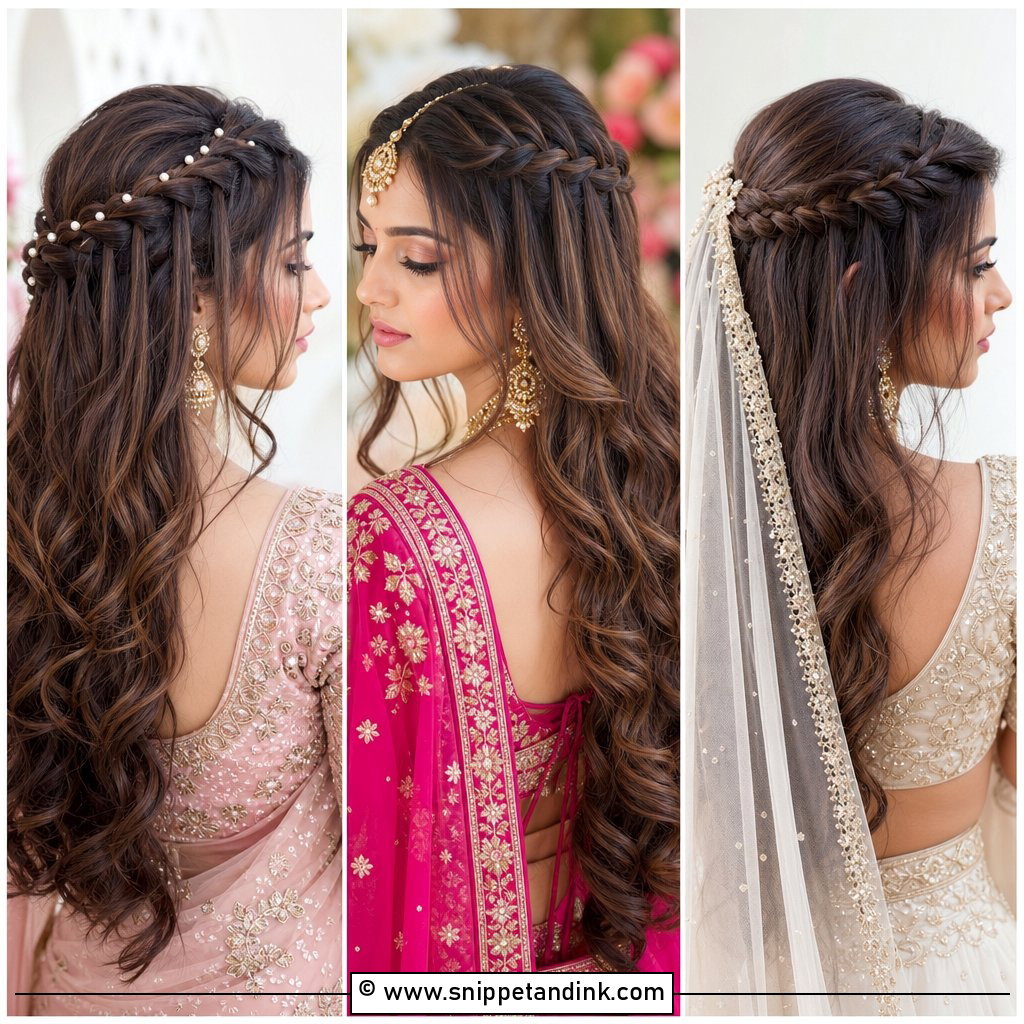
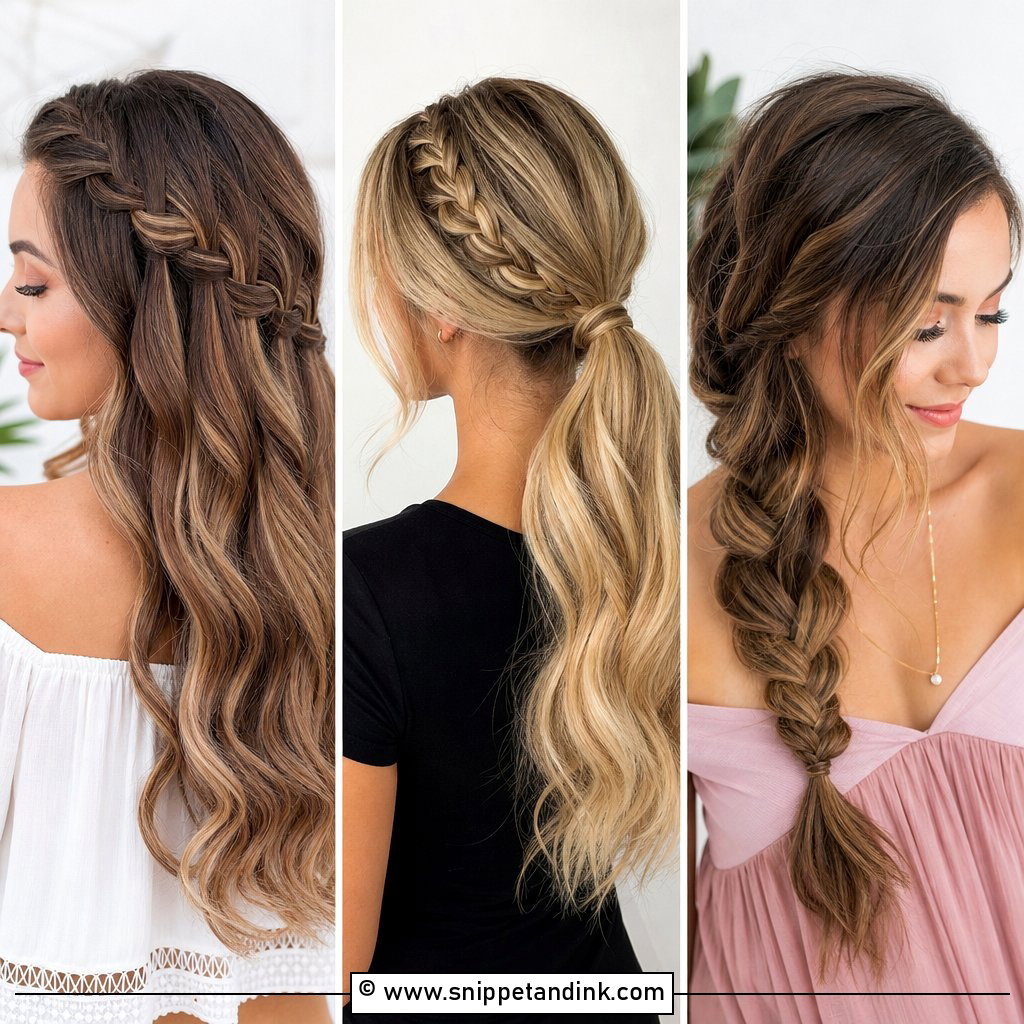
The classic version starts near the temple and travels diagonally across the back of the head, with the dropped strands blending into loose curls underneath. It frames the face while most of the hair stays free. I curl the hair before I braid, not after, so the dropped strands keep their shape and the braid isn’t pulled apart by the iron. A veil tucks in neatly beneath the braid line. Baby’s breath sprigs push easily into the stitches if you want a fresh touch.
2. Half Up Waterfall Braid Wedding Hair
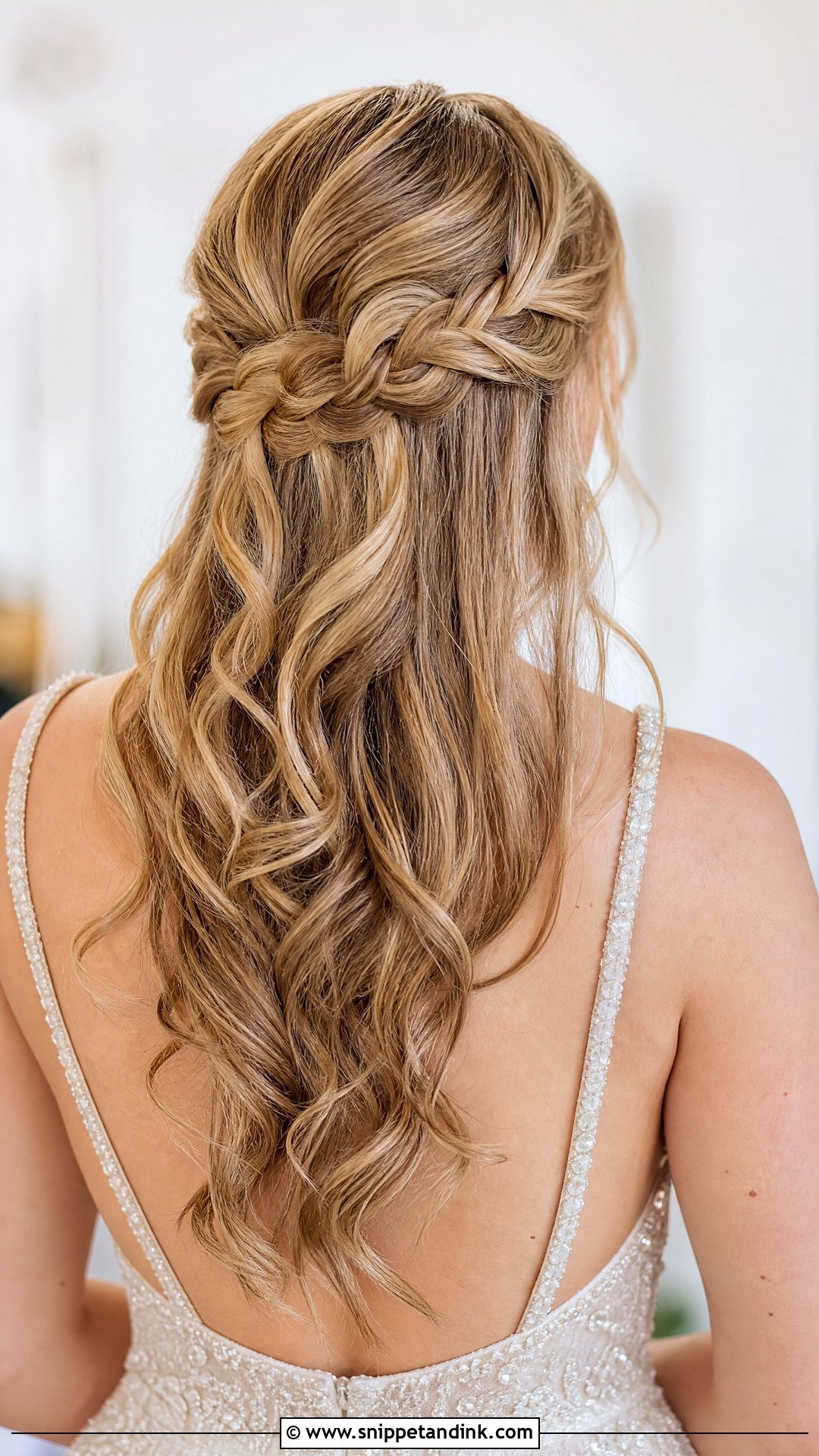
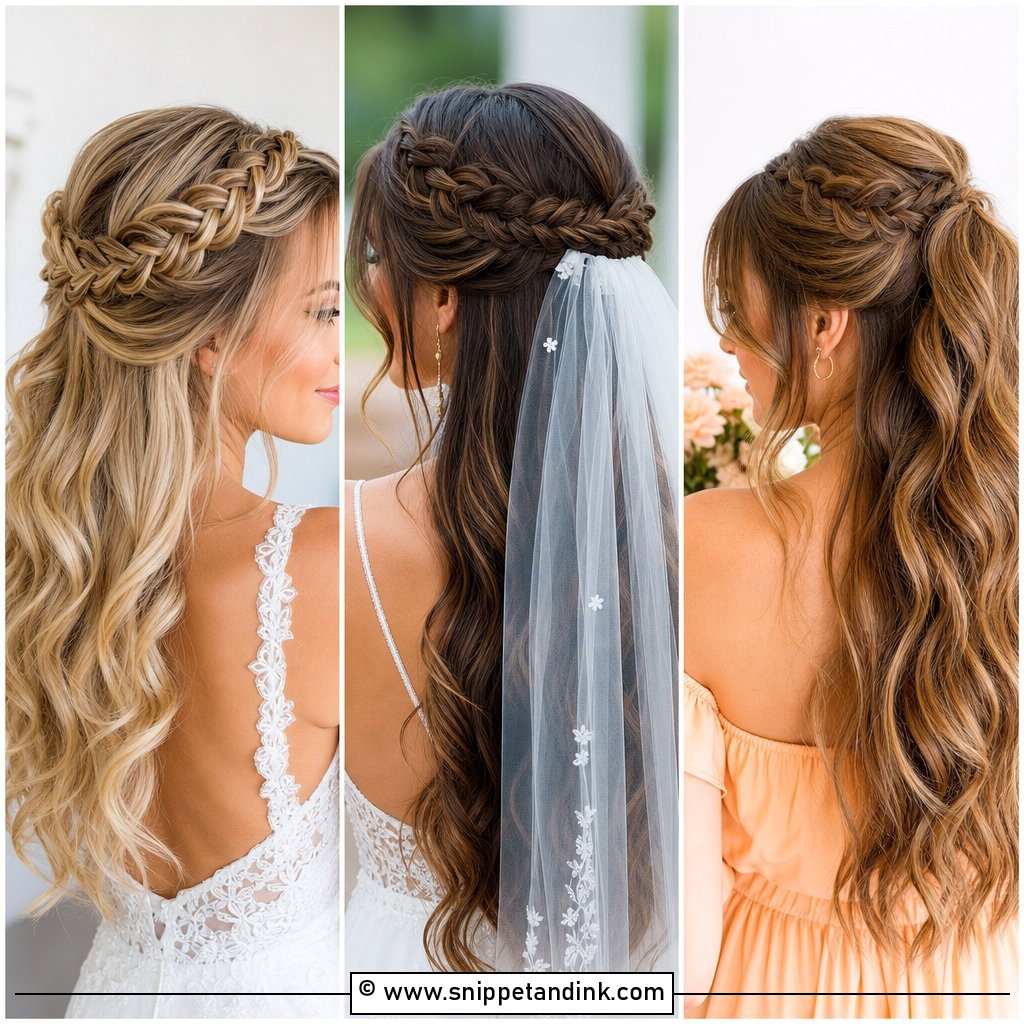
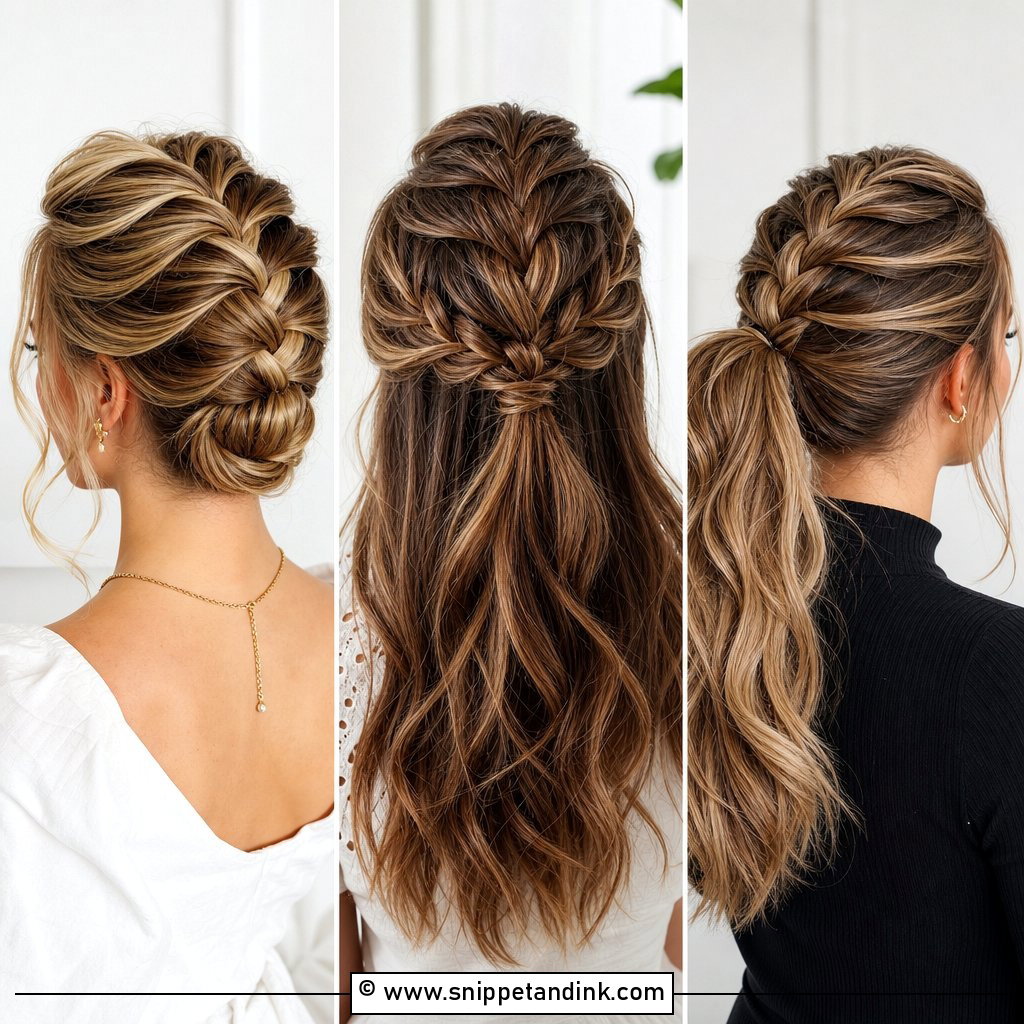
Half up is the answer for brides torn between an updo and wearing their hair down. The top section goes into a delicate waterfall braid, and the rest stays cascading down your shoulders. It keeps hair off the face and shows off length. The weak point is where the two braids meet at the back: I anchor them with two crossed bobby pins under the join, because a single elastic on its own tends to slide down by the evening. A sparkly clip there hides the join.
3. Double Waterfall Braid Crown
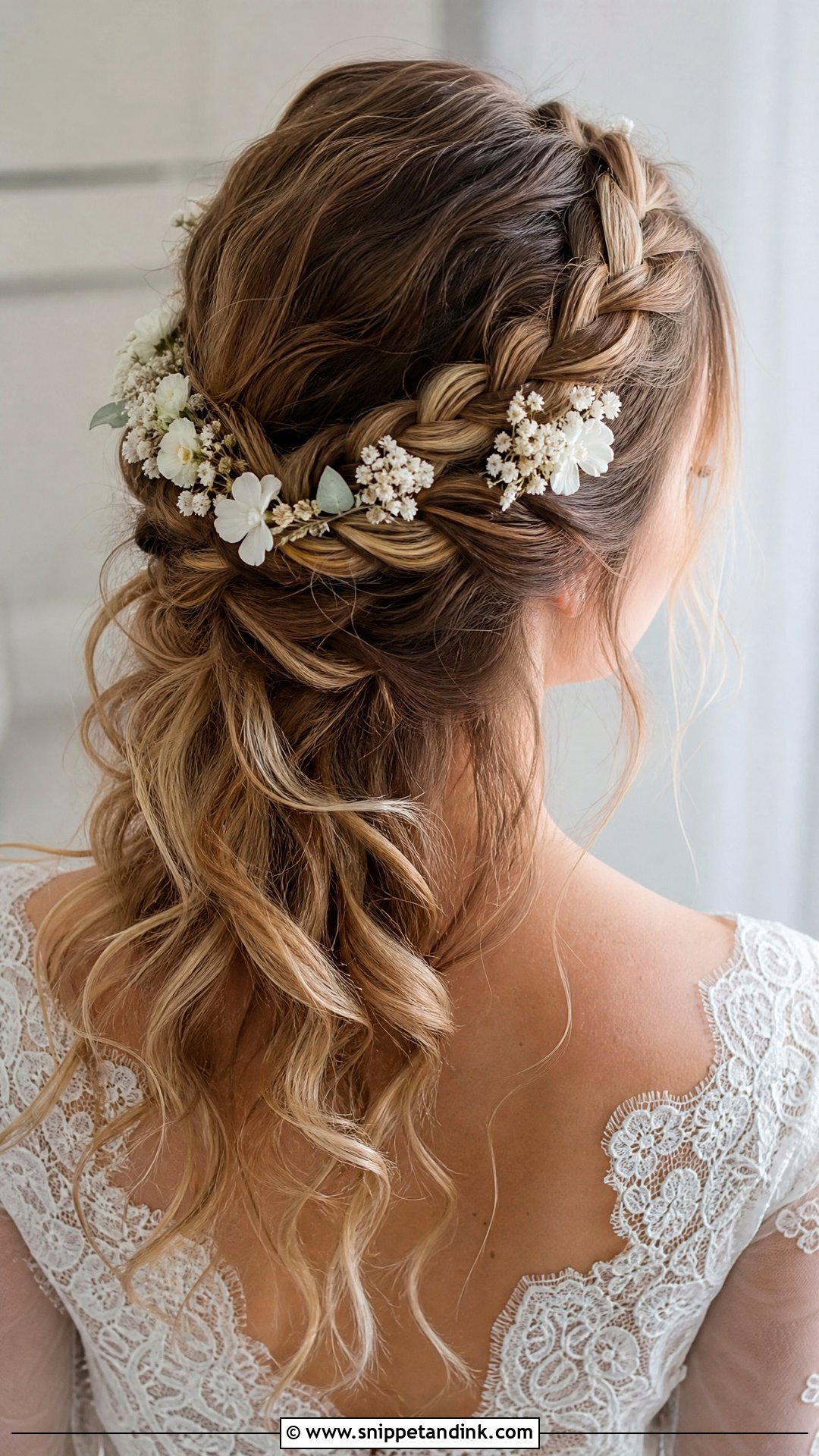
Two waterfall braids, one from each side, meeting at the back form a woven crown with the dropped strands falling below it. It has a fairytale feel and pairs naturally with floral headpieces. I keep the braids as level as possible on both sides; if one sits higher, it shows instantly in front-on photos. The crown works on curly or wavy hair underneath, but on dead-straight hair I add a light wave, otherwise the dropped strands look limp against the detail above them.
4. Waterfall Braid Into Fishtail
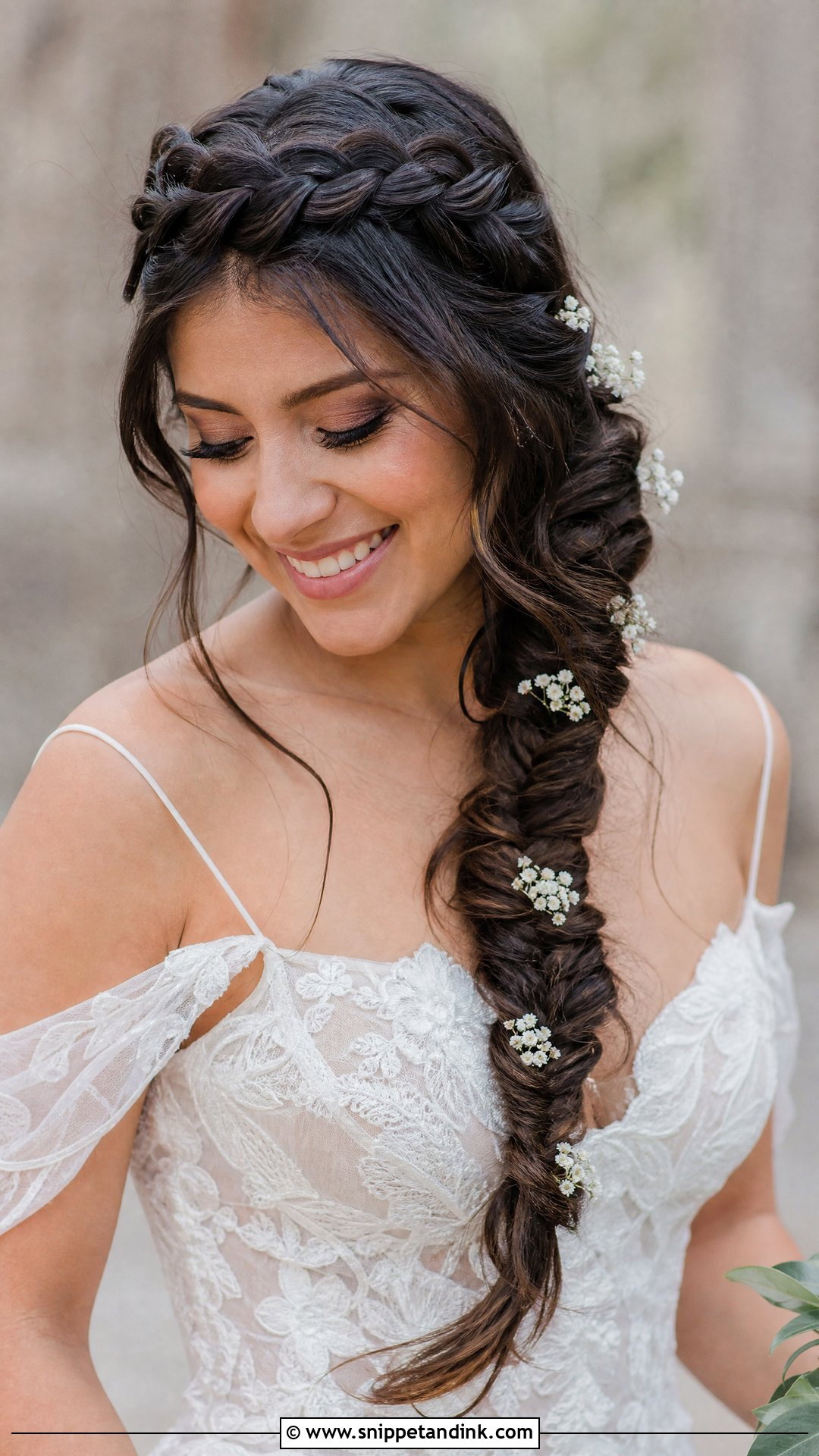
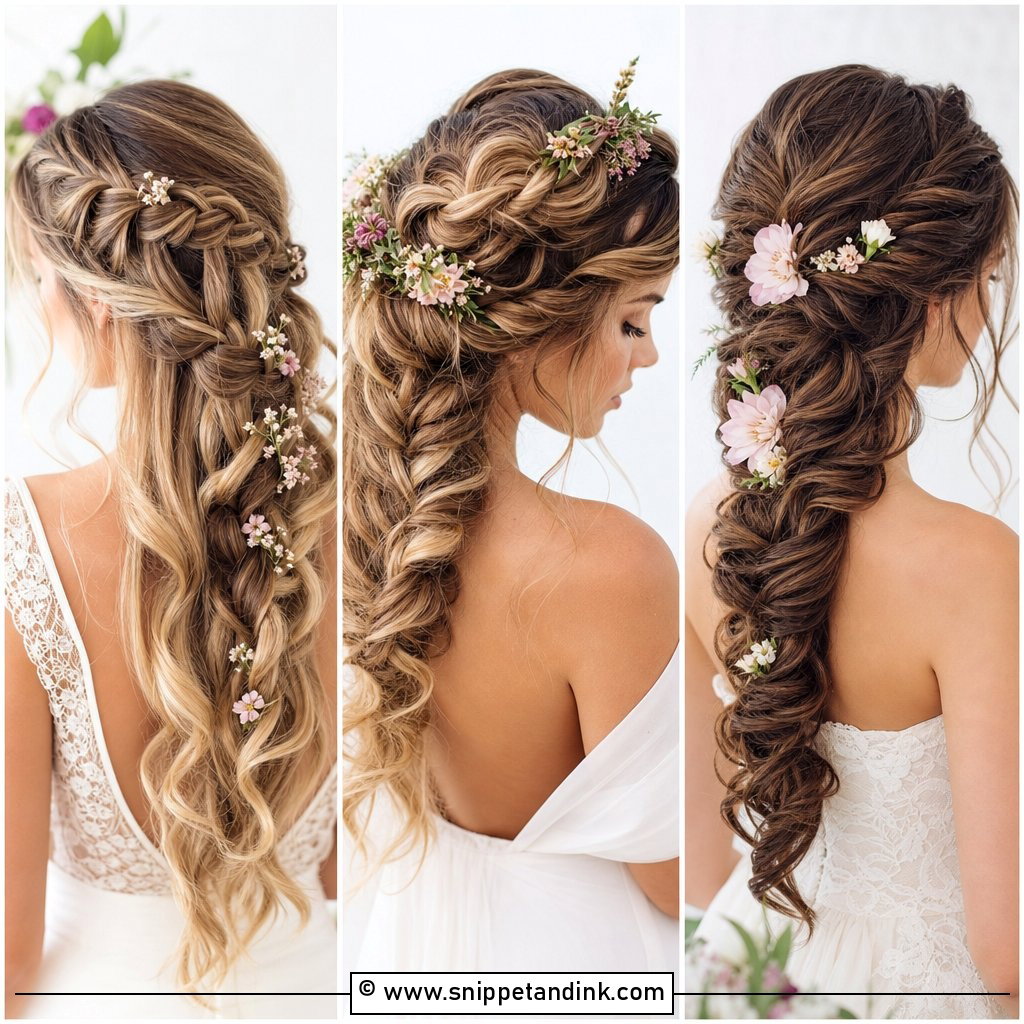
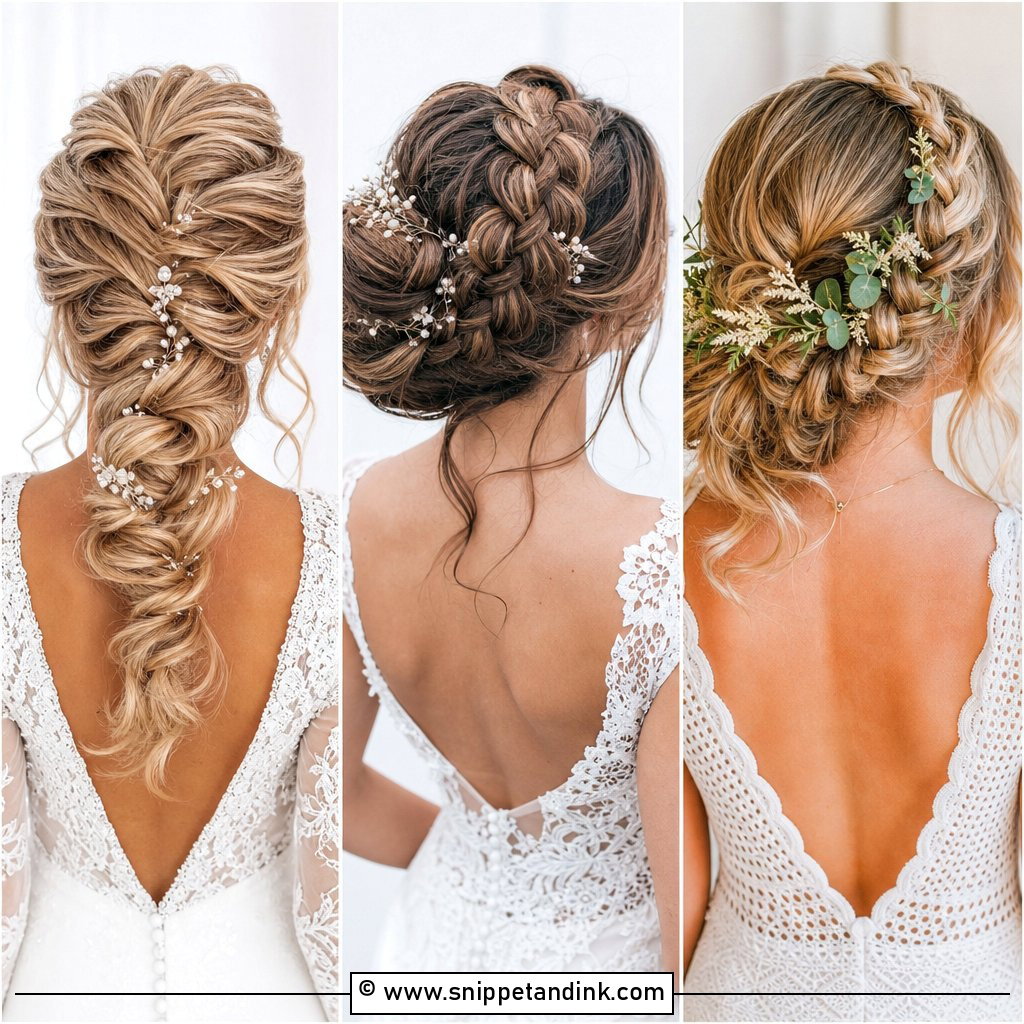
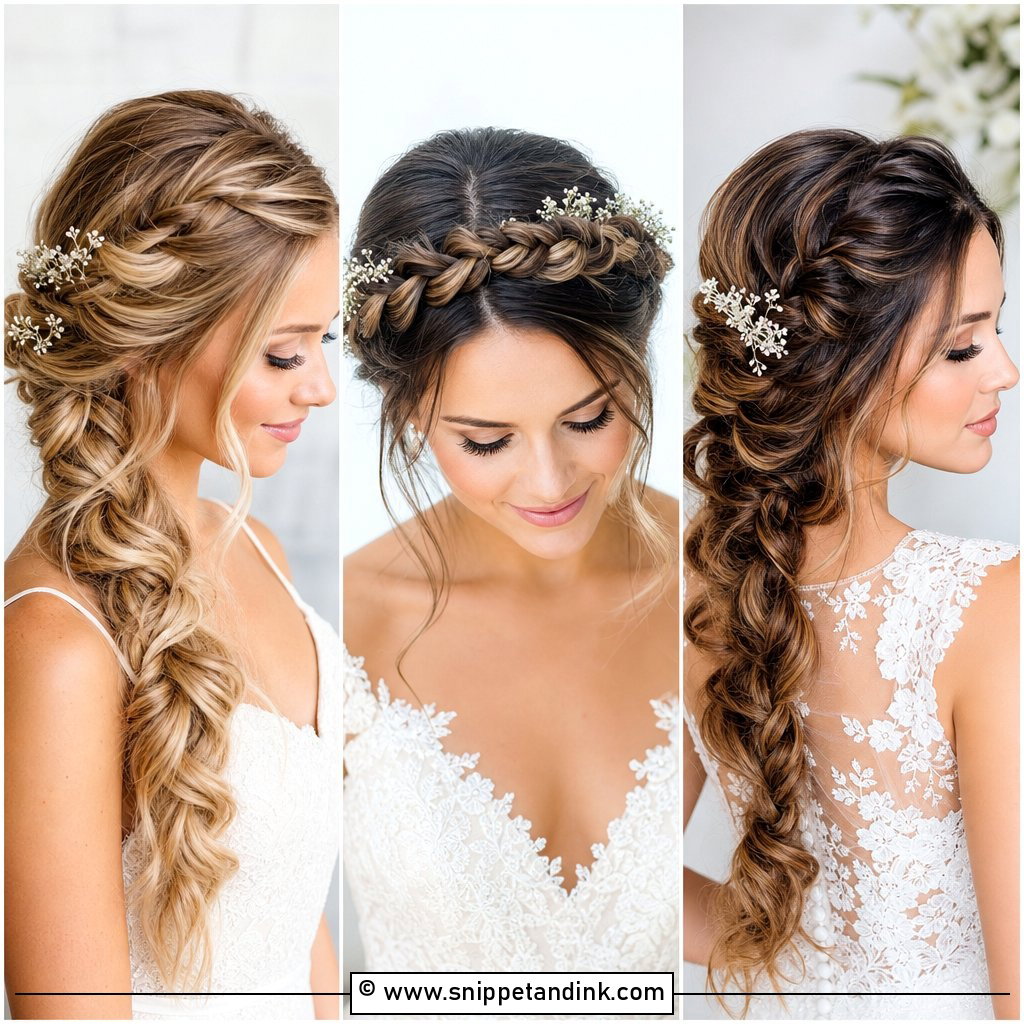
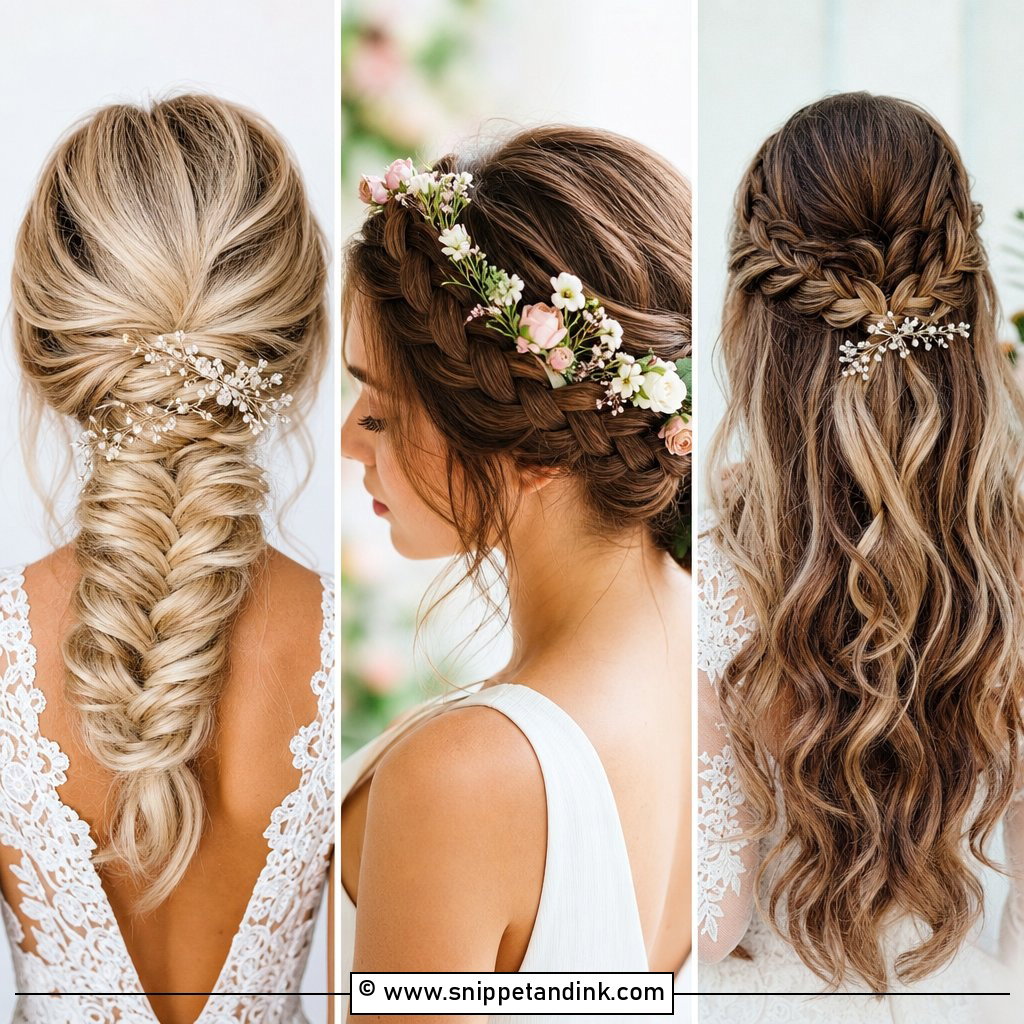
Combining a waterfall braid with a fishtail gives the most texture of any style here. The waterfall runs from the crown toward the back, then the hair transitions into a fishtail down one side. A fishtail takes far longer than people expect, and on thick hair it can be a long sit in the chair, so plan the timeline for it. Leave it loose and tousled, or pin it for a sleeker finish. Seed pearls or tiny flowers slipped along the fishtail make it feel bridal without hiding the pattern.
5. Boho Waterfall Braid With Flowers
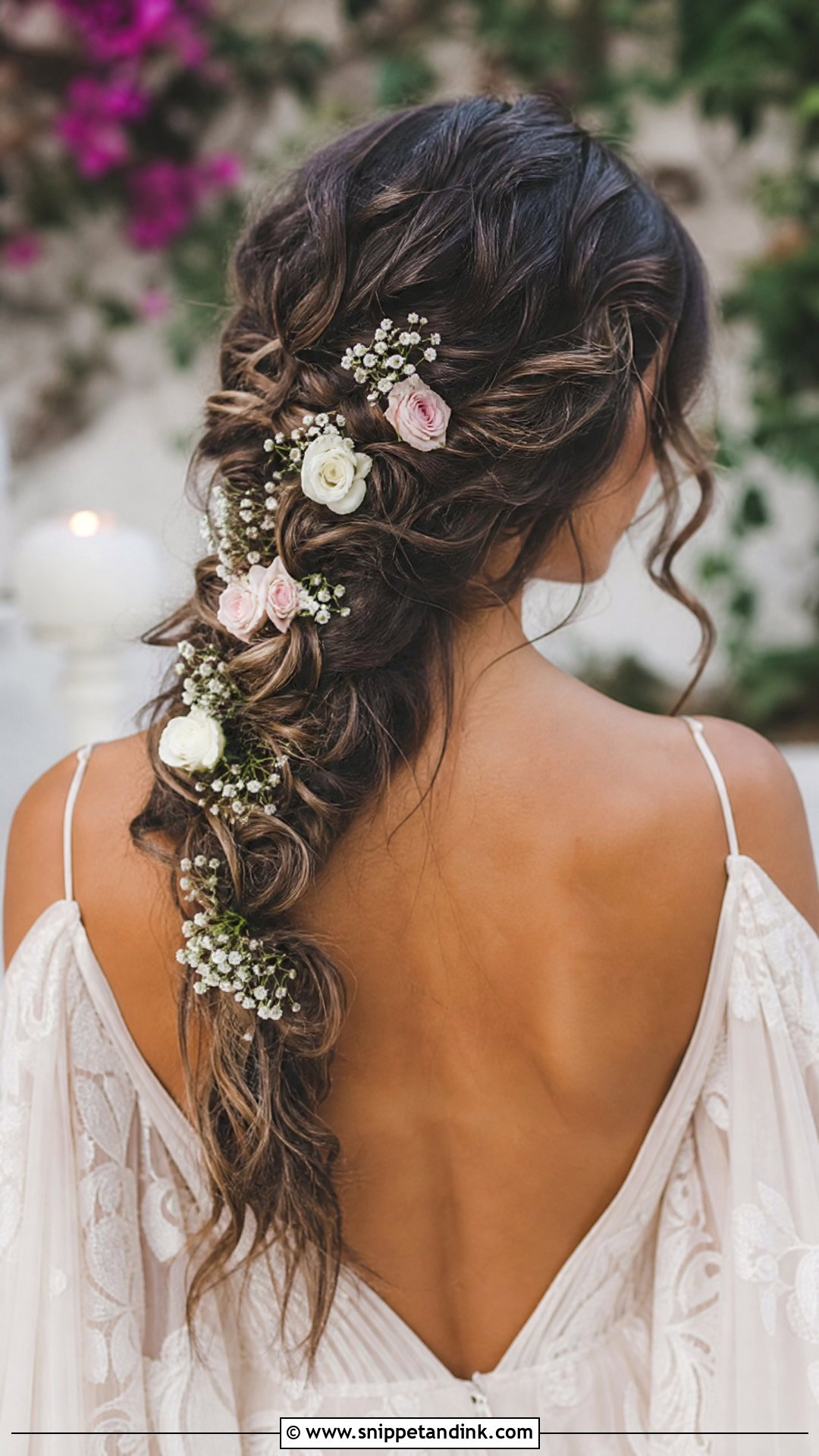
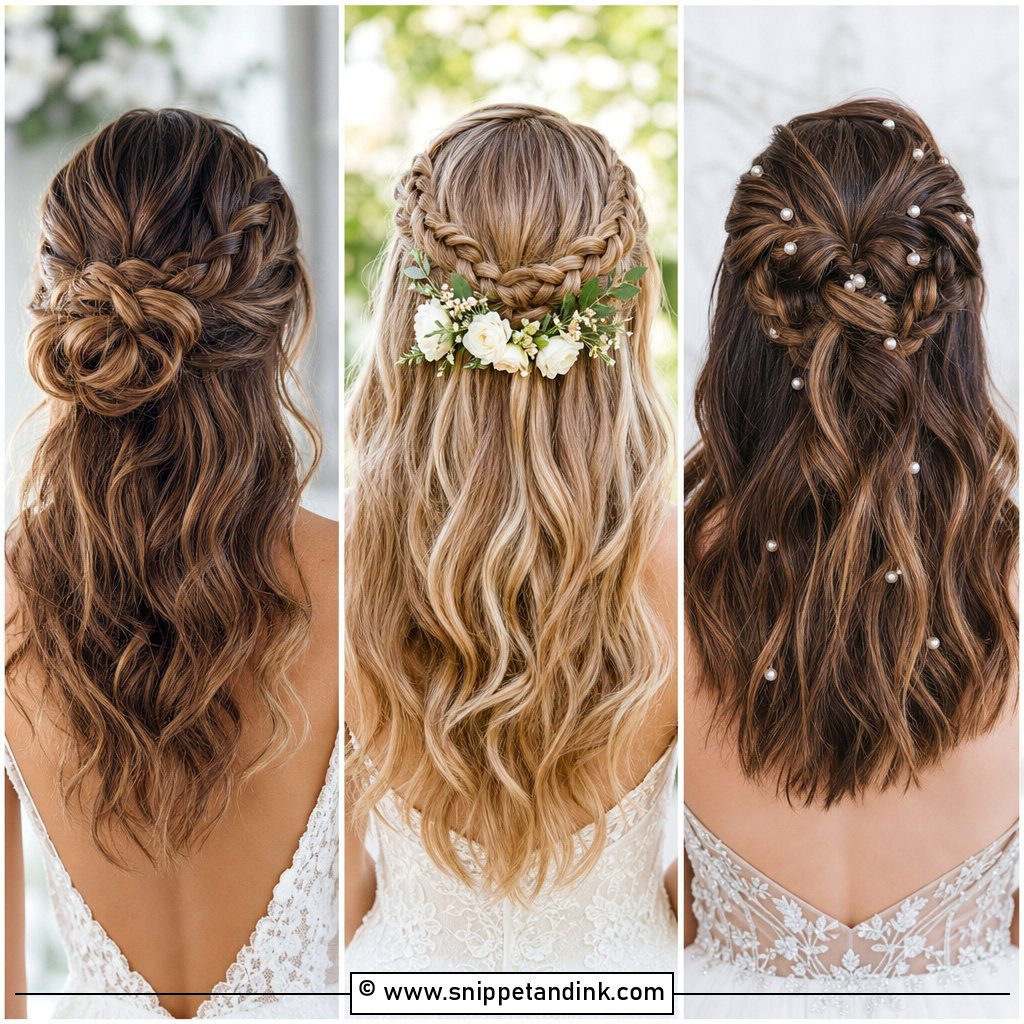
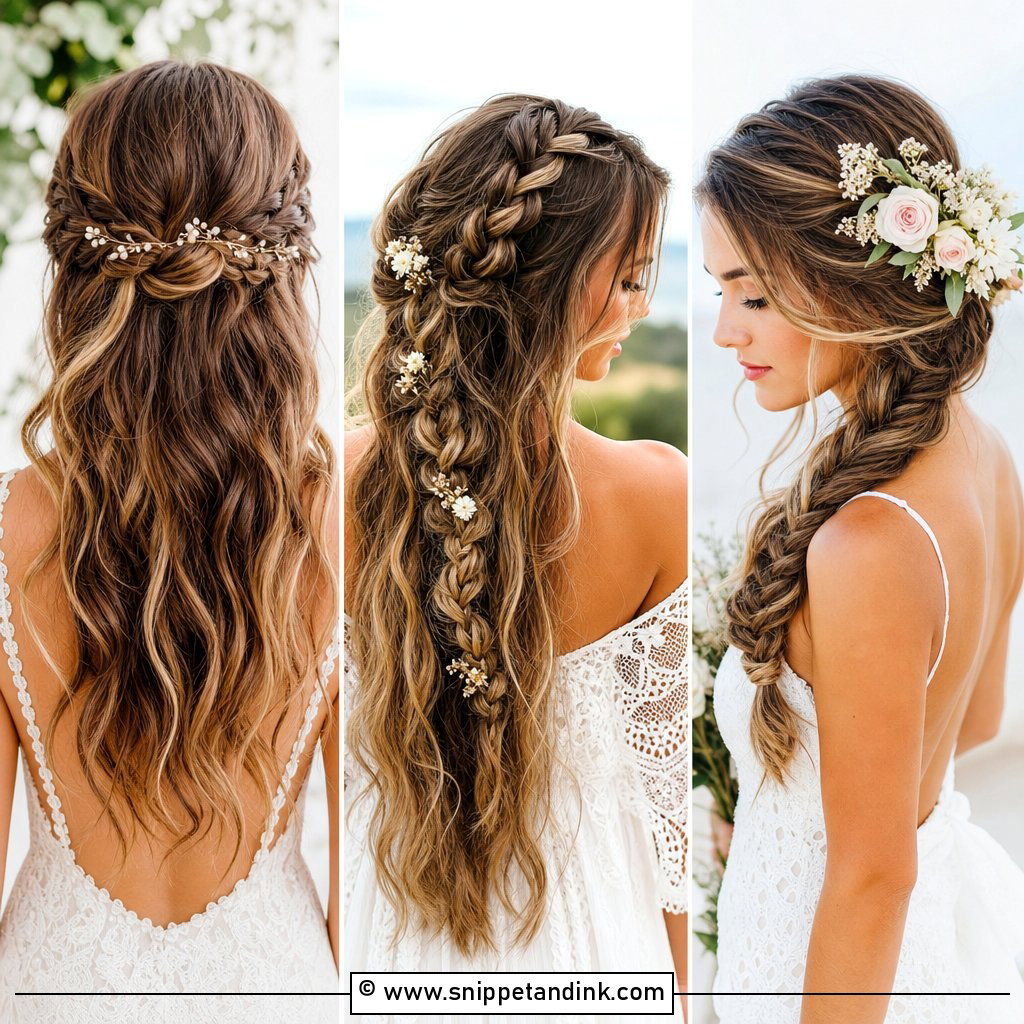
A loose, undone boho braid dressed with wildflowers, baby’s breath, or roses sits naturally at outdoor, garden and beach weddings. The braid weaves across the head and the flowers tuck between the stitches. I wire every stem or use small pins pushed through the braid itself, not just the loose hair; flowers held only by loose strands drop out the first time you hug someone. Keep the rest of the hair wavy and slightly tousled. Wilt-prone blooms, like some garden roses, will soften in heat, so ask your florist which flowers hold up out of water.
6. Waterfall Braid Updo for Brides
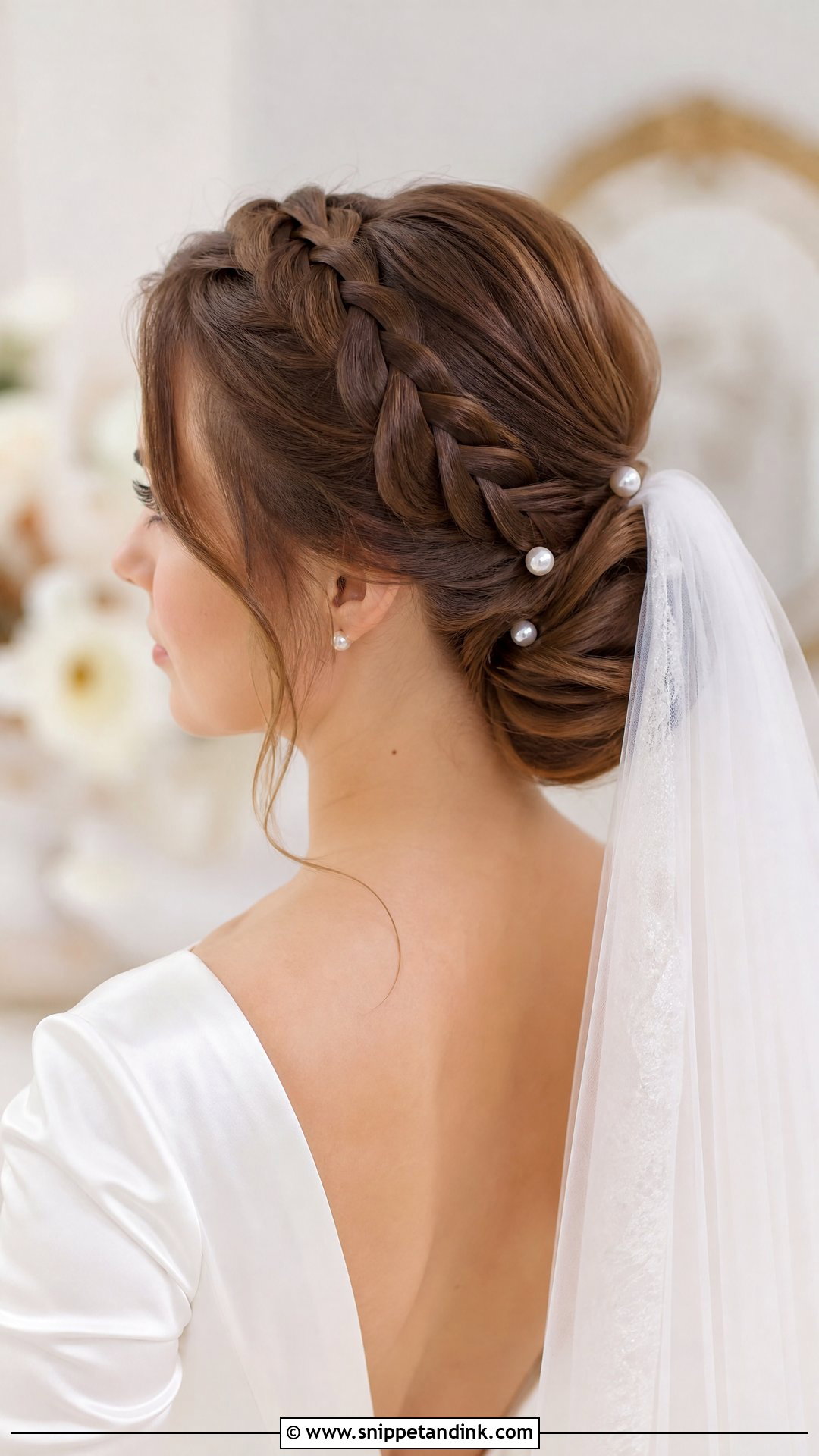
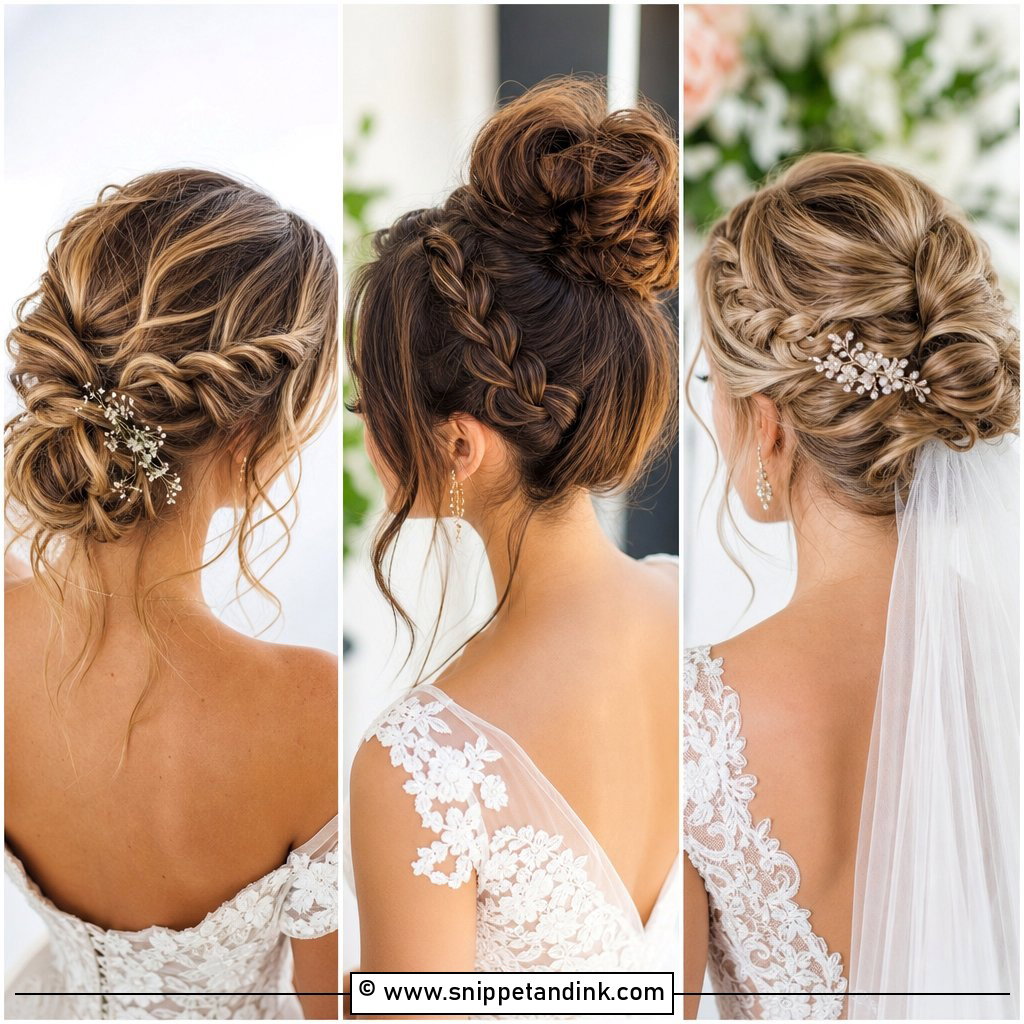
For staying power, a waterfall braid updo is the most secure version on this list. The braid circles the crown, then the remaining hair gathers into a low bun or chignon. The cascading strands soften the bun so it never looks severe. It’s a natural fit for formal ballroom weddings and sits well under a cathedral veil. I build the bun on a small ponytail base so there’s something solid to pin into, which is what keeps it in place through dancing. A jewelled comb or pearl pins work as accents.
7. Waterfall Braid With Beach Waves
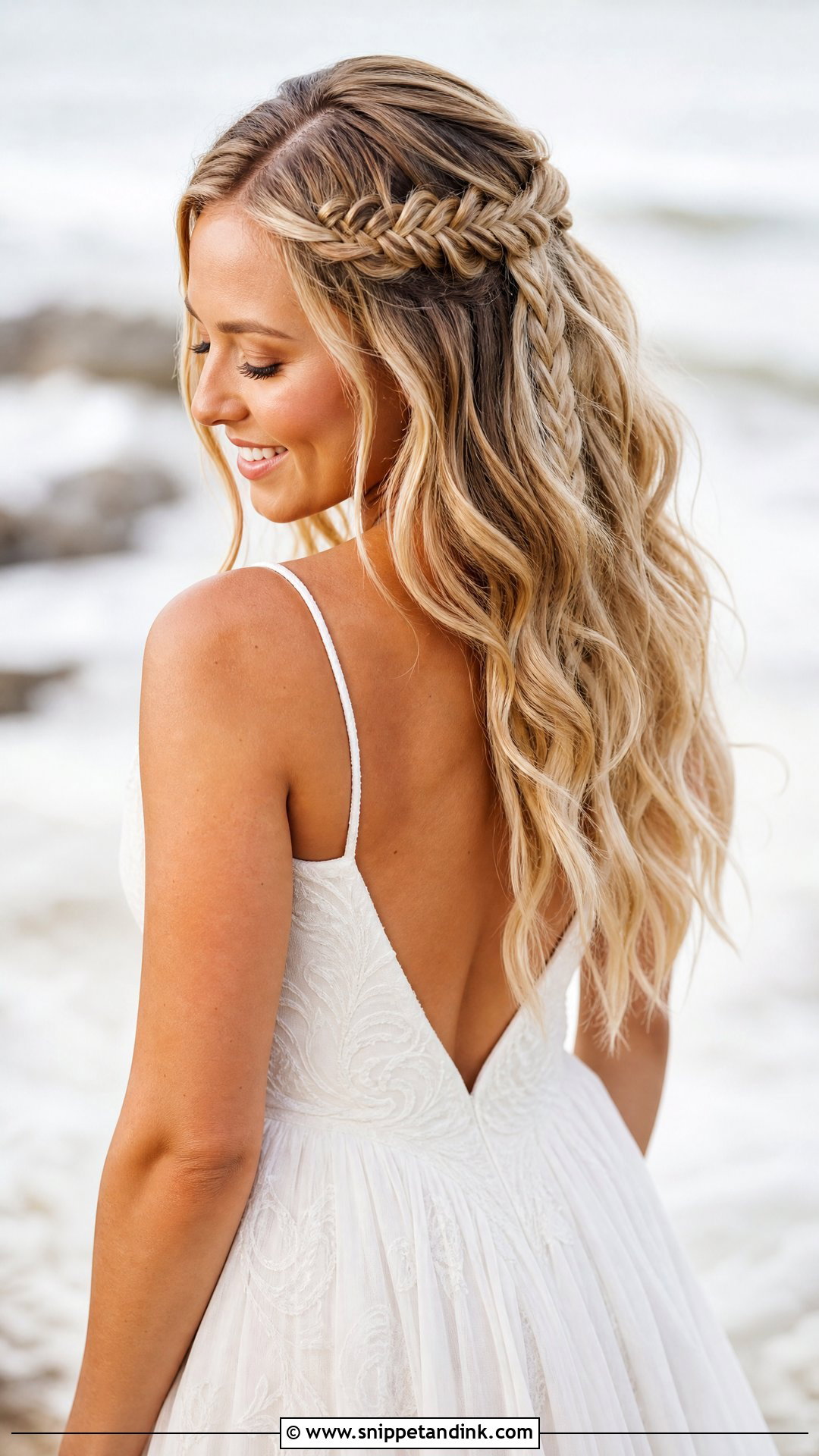
Beach waves and a waterfall braid suit a coastal ceremony, with the braid starting near the face and dropping strands into loose waves. Pair it with bronzy makeup for a sun-warmed feel. The honest catch is wind and salt air: loose waves turn frizzy in humidity, and the dropped strands blow across the face. I set the waves with a flexible hold spray and keep the face-framing pieces a little shorter so they don’t catch on lip gloss. It looks relaxed, but it needs that prep to stay that way.
8. Crown Waterfall Braid With Veil
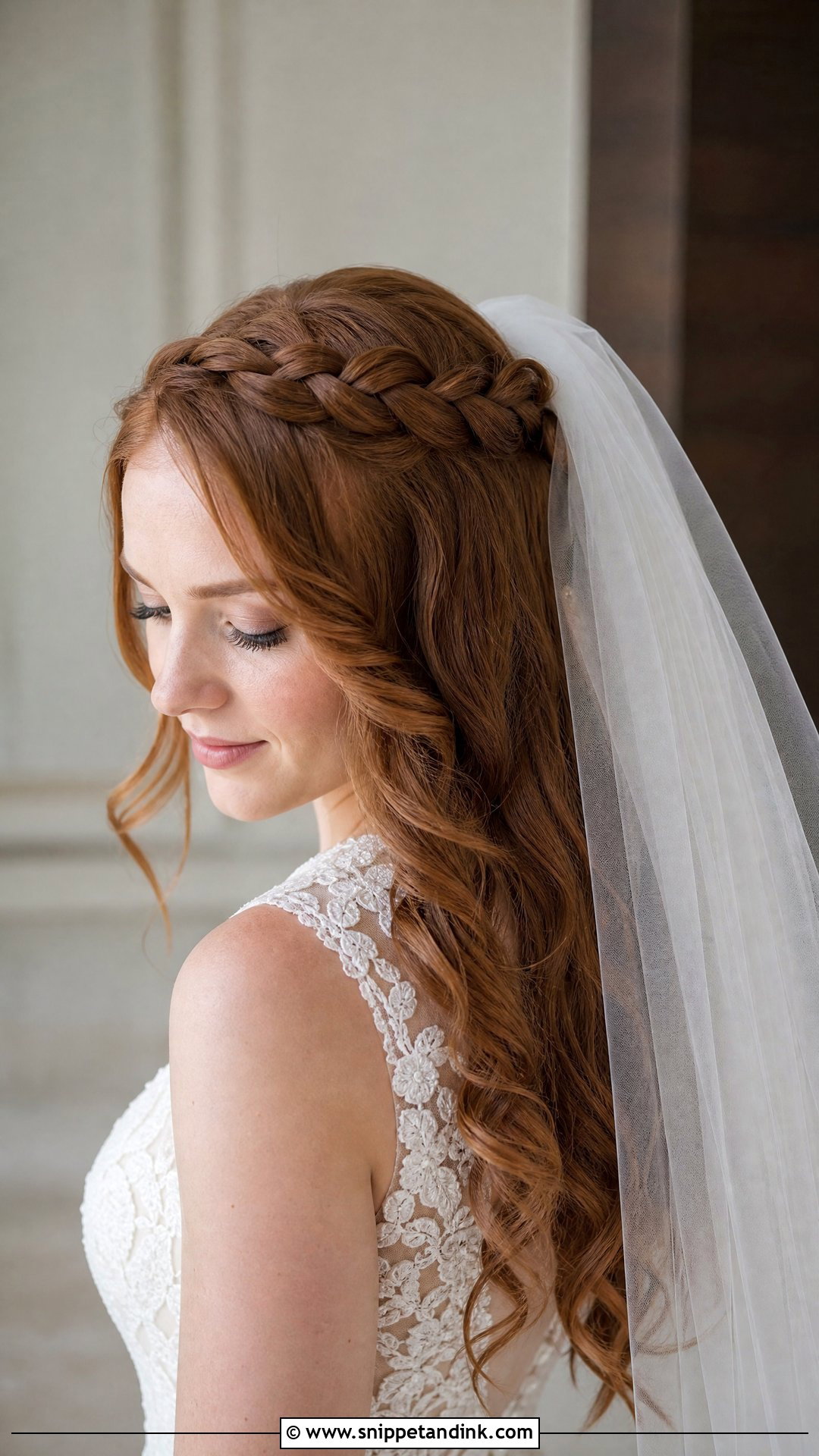
If you’re wearing a veil, the crown waterfall braid frames it neatly. The braid wraps the top of the head like a halo, and the veil comb slides in just below it, where the braid gives it something firm to grip. The cascading strands fall gently under the crown. Once the veil comes off for the reception, the braid still looks complete. I place the comb and test it with the bride turning her head quickly before I finish the style, because a comb pushed into loose hair alone tends to slip back during the walk.
9. Messy Waterfall Braid for Relaxed Brides
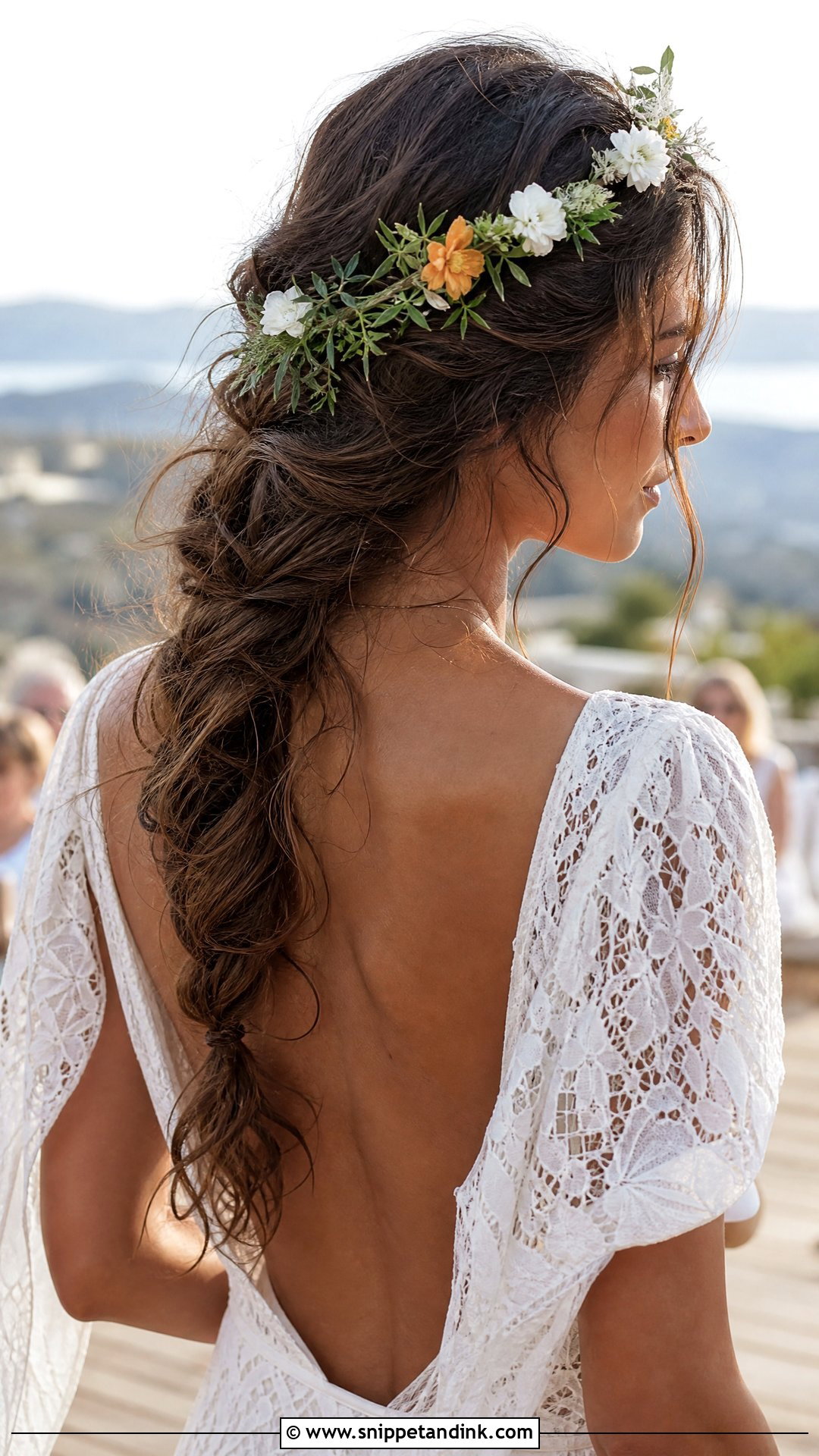
A messy waterfall braid is loosened on purpose. After braiding, I pull gently at the edges of each stitch, a technique often called pancaking, so the braid looks fuller and softer. That also makes fine hair look thicker. It suits boho and outdoor weddings, with or without a flower crown. The risk is pulling too much too early; I always pancake after the braid is secured, never while I’m still working, otherwise the whole structure loosens and starts to drop by lunchtime.
10. Waterfall Braid Half Ponytail
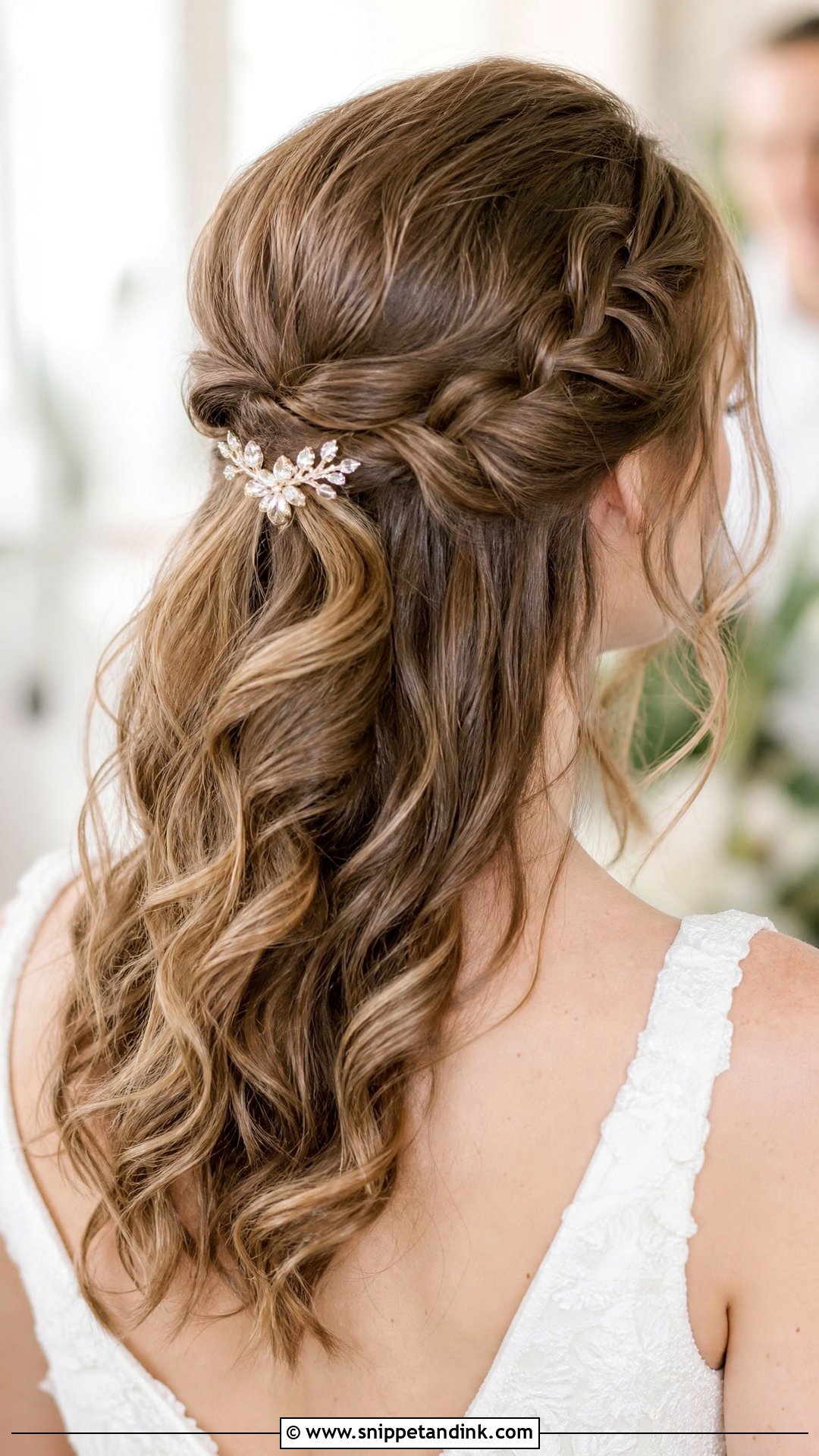
A waterfall braid that flows into a half ponytail feels youthful and less traditional. The top sections go into the braid, and the loose strands gather into a soft half-up ponytail that shows off length and bounce. It works for casual or daytime weddings. Curl the ponytail for volume, or keep it straight and sleek. I wrap a small section of hair around the elastic to hide it, then pin the end underneath; a ribbon or delicate clip can sit over the top.
11. Waterfall Braid With Curtain Bangs
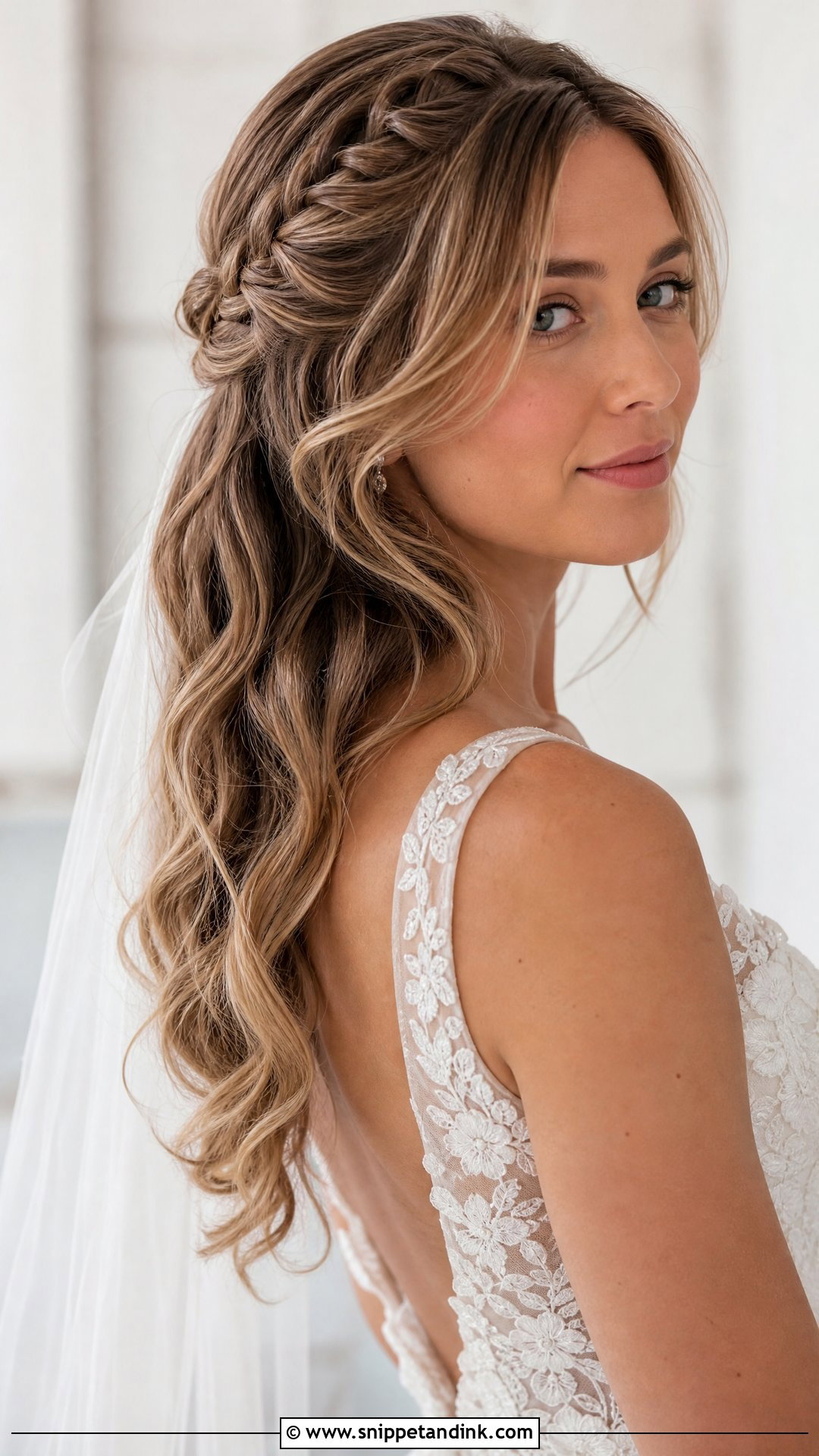
Curtain bangs and a waterfall braid together frame the face nicely: soft, parted bangs at the front, the braid sweeping across the back. This suits brides who already wear bangs and want to keep them. I always ask for the bangs to be trimmed about a week before the wedding, not the day before, so they have time to settle into shape. Loose waves underneath complete it. If your bangs are newly grown out, I’ll often fold the longer pieces into the start of the braid instead.
12. Side Swept Waterfall Braid
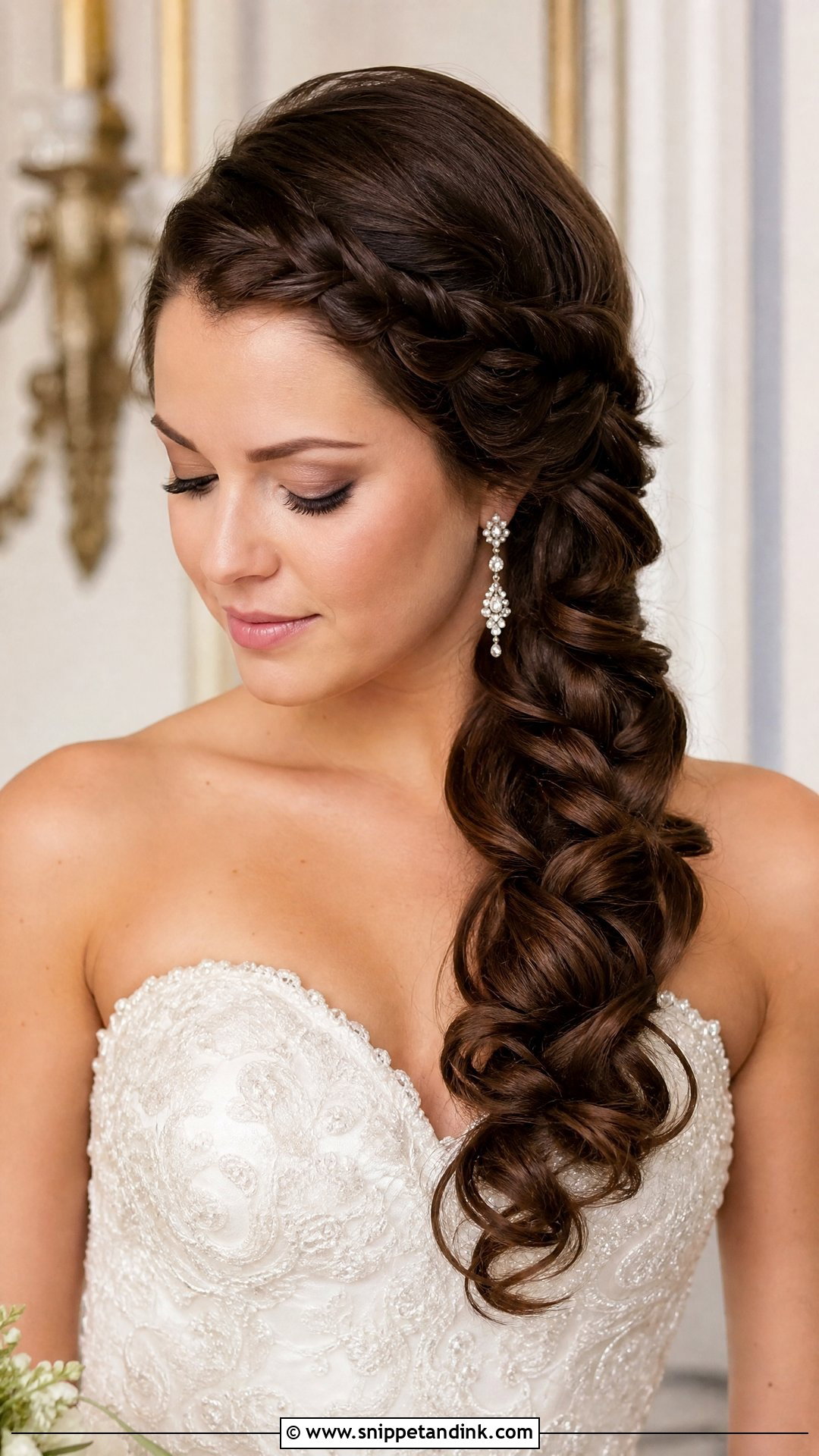
A side-swept waterfall braid brings old Hollywood glamour. The hair gathers to one side, the braid runs diagonally across the head and flows into curls over one shoulder. It shows off statement earrings and a strong neckline, and suits formal evening weddings. The asymmetry is the point, but the weight all sits on one side, so I anchor the hair behind the ear with crossed pins hidden under the braid. Without that, the curls slowly migrate back toward the centre as the evening goes on.
13. Waterfall Braid With Hair Vine
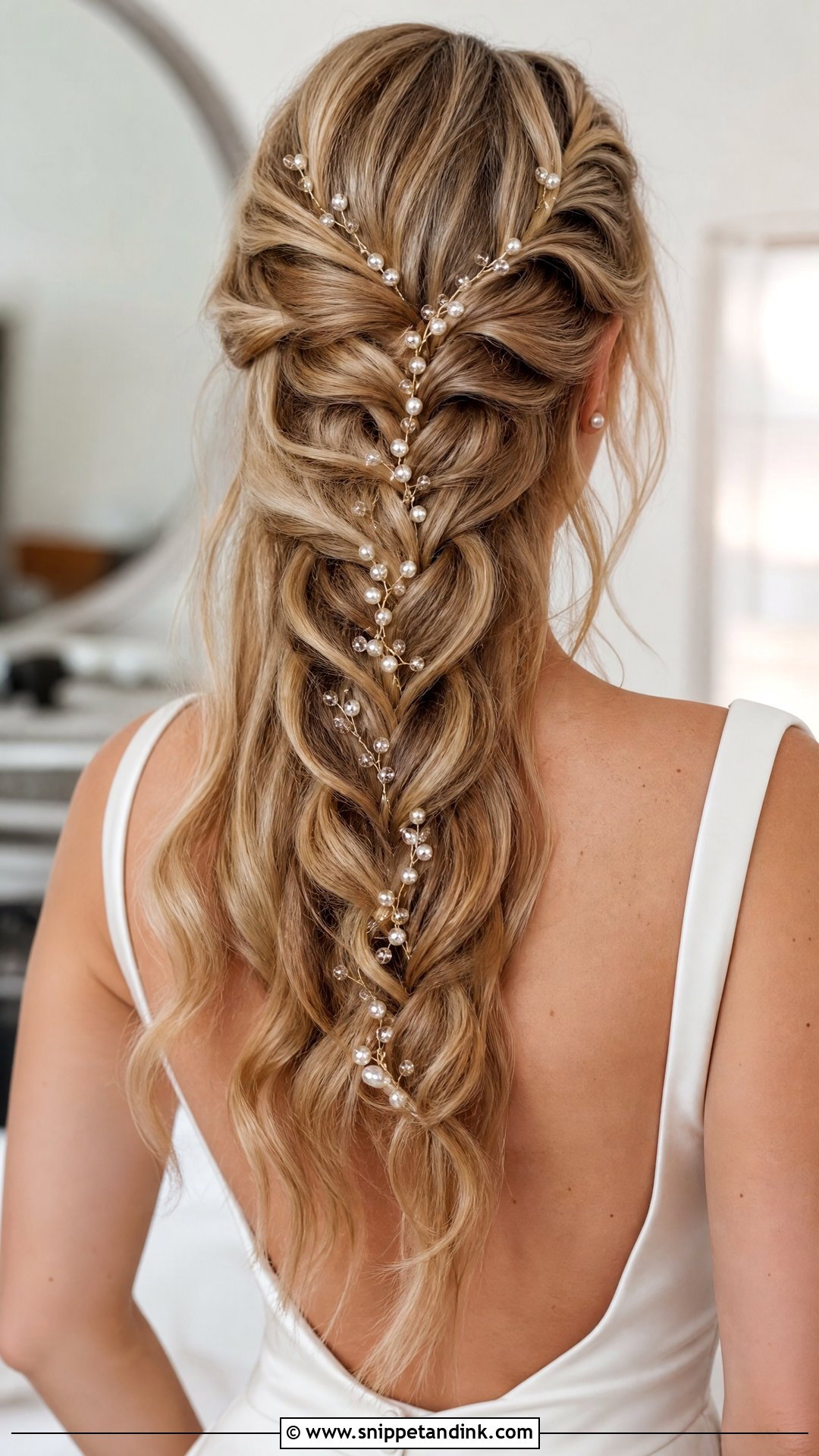
A hair vine is a flexible strand of wire set with pearls, crystals or tiny flowers that weaves through the hair. Following the lines of a waterfall braid, it adds sparkle and depth. It works with both half-up and full waterfall styles. Pearl gives a classic feel; crystal adds more shimmer under evening light. I weave the vine through the stitches of the braid itself and pin each end out of sight. A vine laid over the top of the hair, rather than through it, tends to lift and show its wire once you start moving.
14. Rose Waterfall Braid
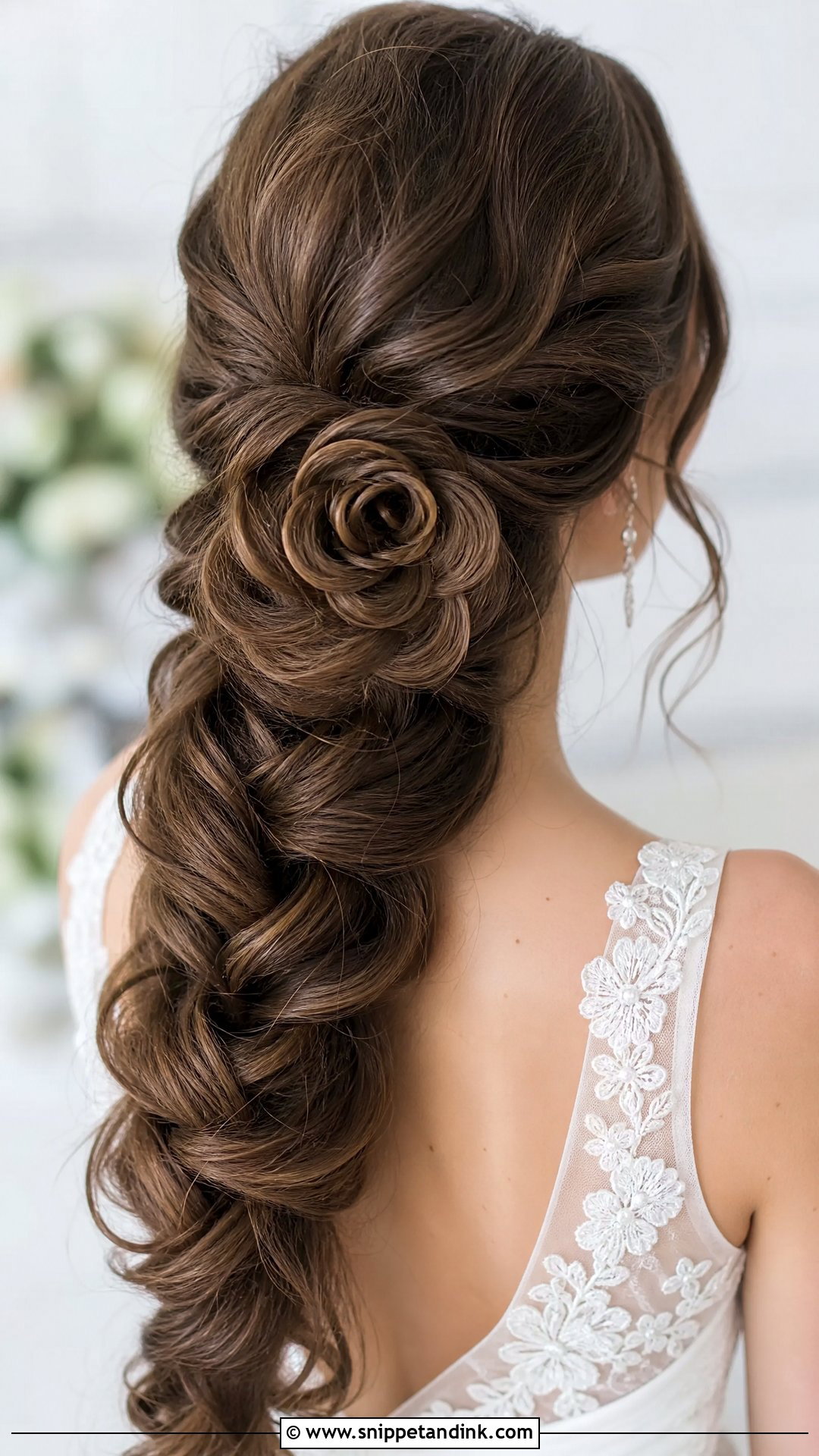
The rose waterfall braid twists part of the braid into a rosette, which looks far more complex than it is. One rosette or several can sit along the braid in half-up or updo styles, and the detail pairs well with plainer dresses. The rosette is coiled from the braid’s end and pinned flat. It needs enough hair density to hold its shape, so on fine hair I use a small amount of texture powder first, and sometimes a discreet clip-in piece to bulk it out.
15. Waterfall Braid for Short Hair Brides
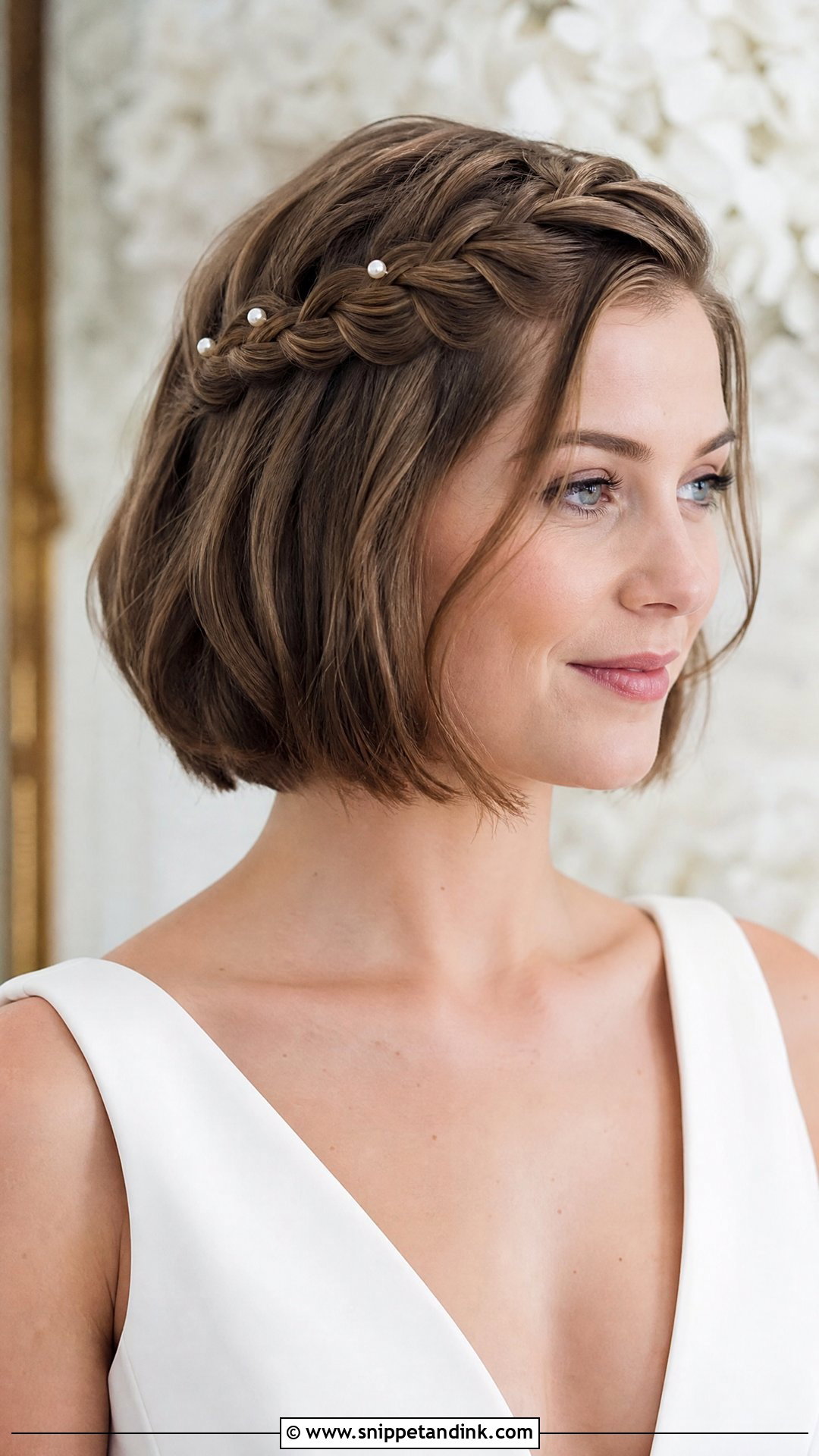
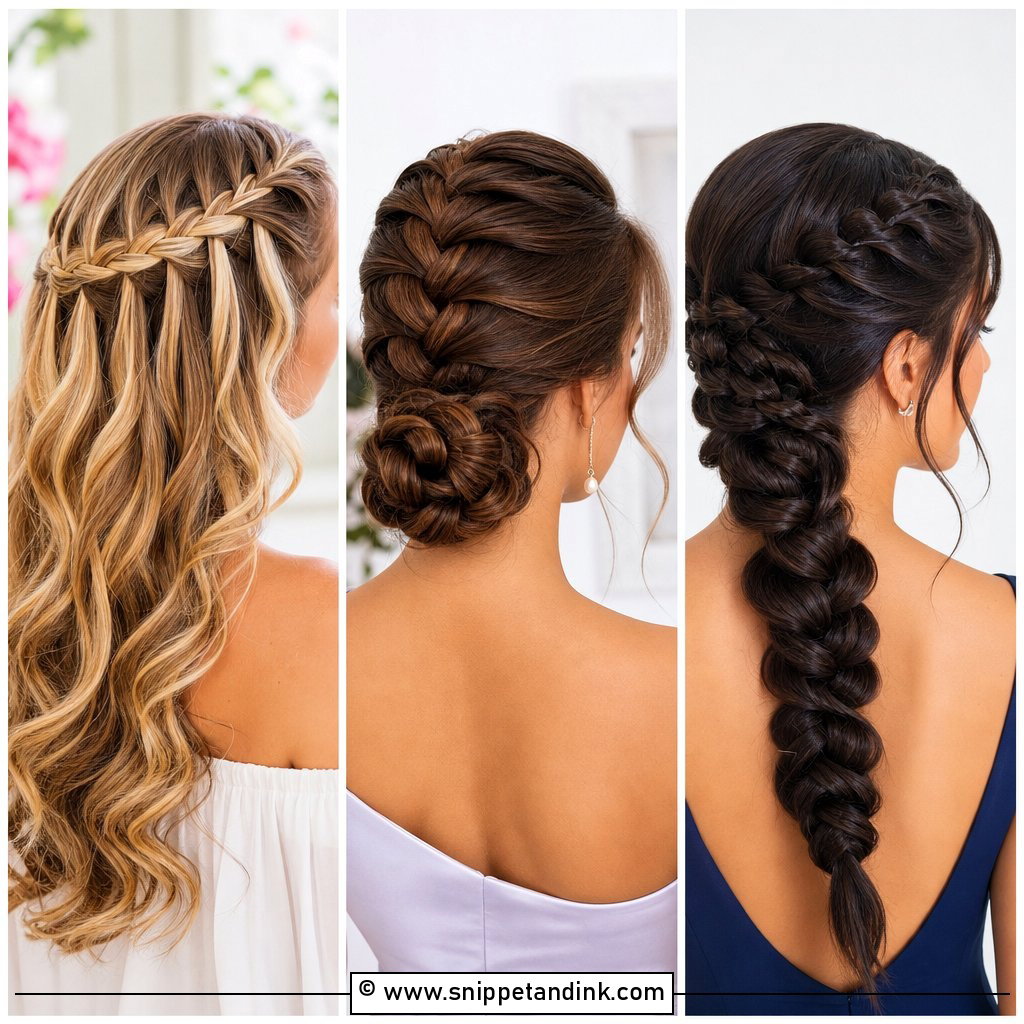
Waterfall braids work on shorter hair too, on a bob or lob. The braid weaves across the crown while the dropped strands blend into the shorter layers, keeping hair off the face. For it to work, the hair needs to be long enough to wrap from the temple to behind the ear, roughly chin length or a little longer. Shorter layers pop out of the stitches, so I mist them with a light texture spray before braiding. Add a small flower clip or pearl pins at the end of the braid where it tucks in.
16. Waterfall Braid With Low Bun
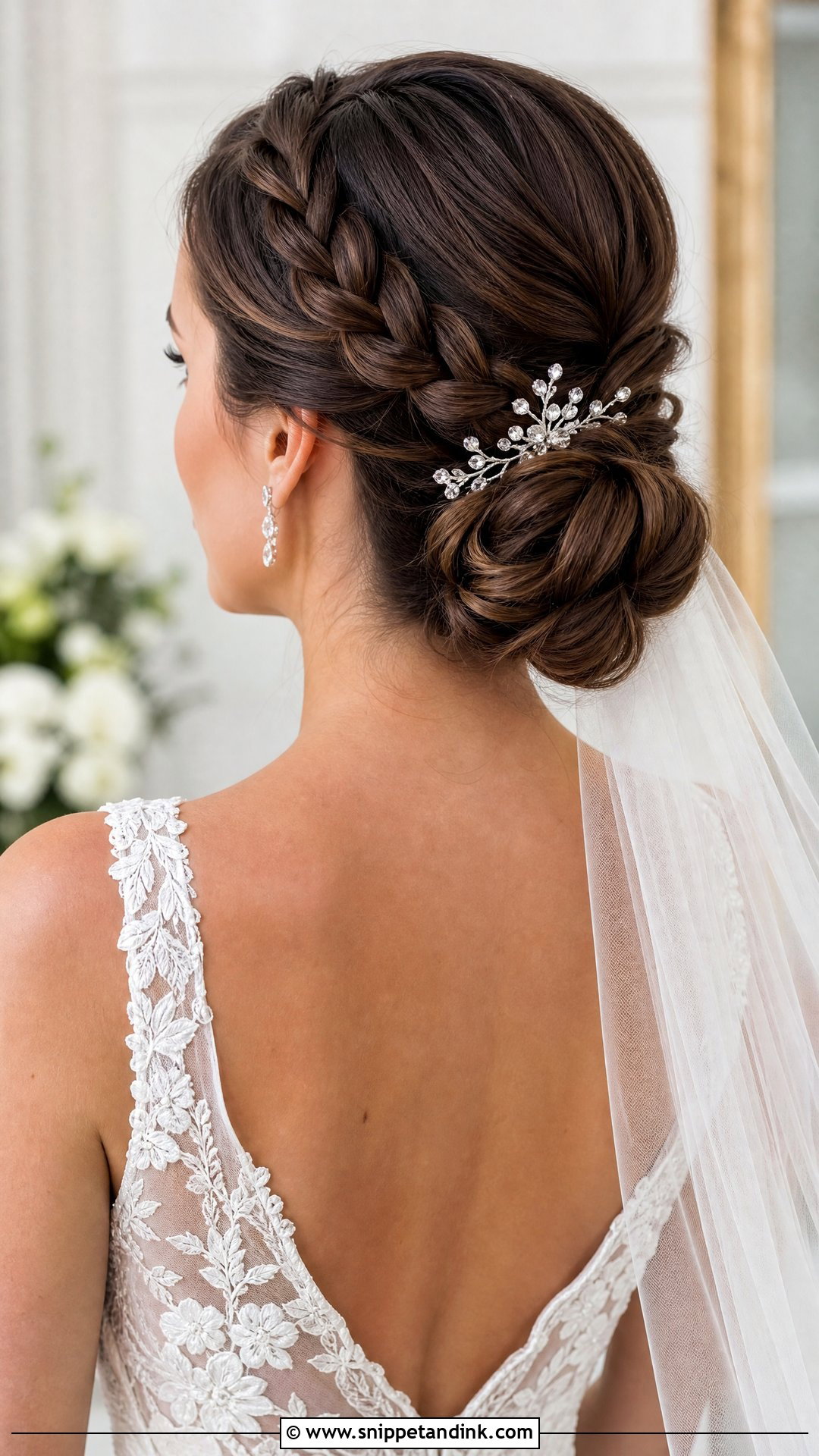
The waterfall braid with a low bun is my usual suggestion for a formal wedding. The braid starts at the crown and sweeps back, and the rest of the hair twists into a soft bun at the nape. It’s secure enough for a full day, works under any veil, and the cascading strands keep it from looking tight. Keep the bun low enough that you can lean back in a chair without crushing it. A jewelled pin or a few flowers tucked into the bun finish it.
17. Deep V Waterfall Braid
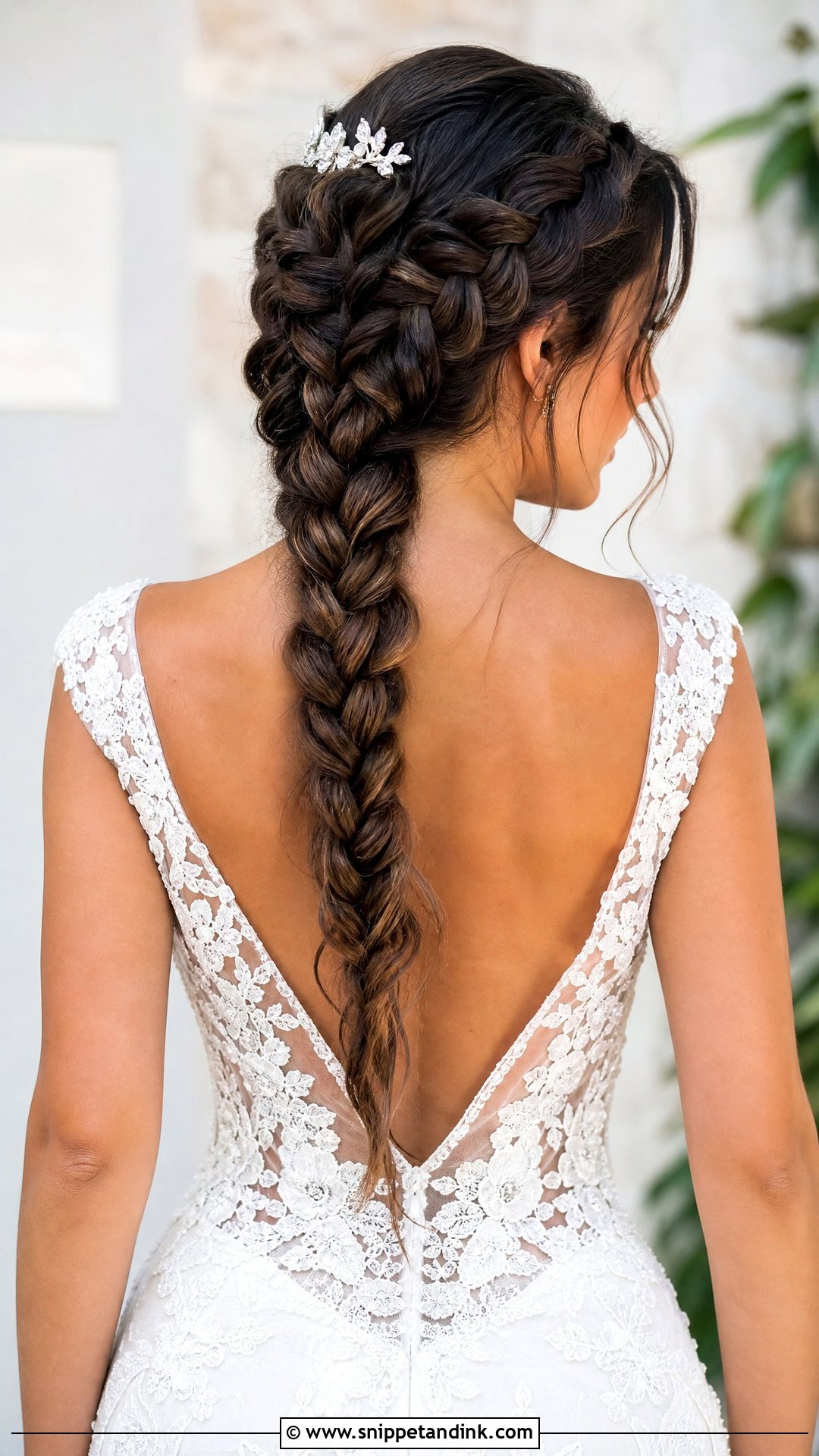
Two waterfall braids start on either side and angle down to meet at the centre back, forming a deep V. The pattern is striking and symmetrical, with strands flowing below the point of the V. It suits wavy or curly textures. Symmetry is the hard part: I section both sides from the centre parting before braiding either one, so the angles match. Small flowers along the braid lines underline the V shape.
18. Waterfall Braid With Tousled Updo
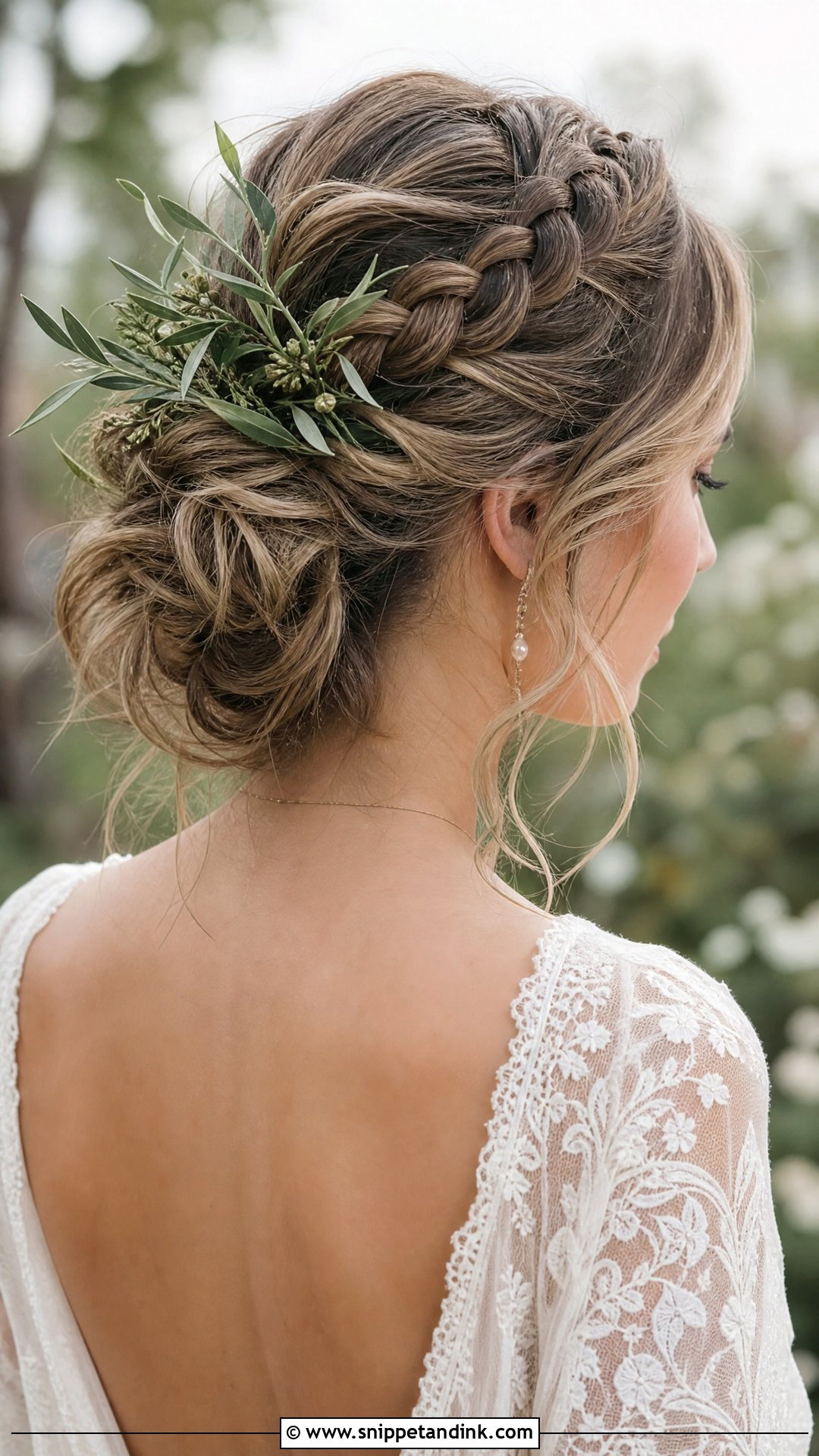
A waterfall braid woven into a loose, tousled updo is relaxed rather than polished. It fits outdoor, garden and rustic weddings, and the volume suits most hair types. Greenery or wildflowers can be tucked in. Undone styles need more structure than they look, so I pin the updo firmly underneath and loosen only the top layer. That way it looks soft in photos but doesn’t actually come apart during the evening.
19. Waterfall Braid With Flower Crown
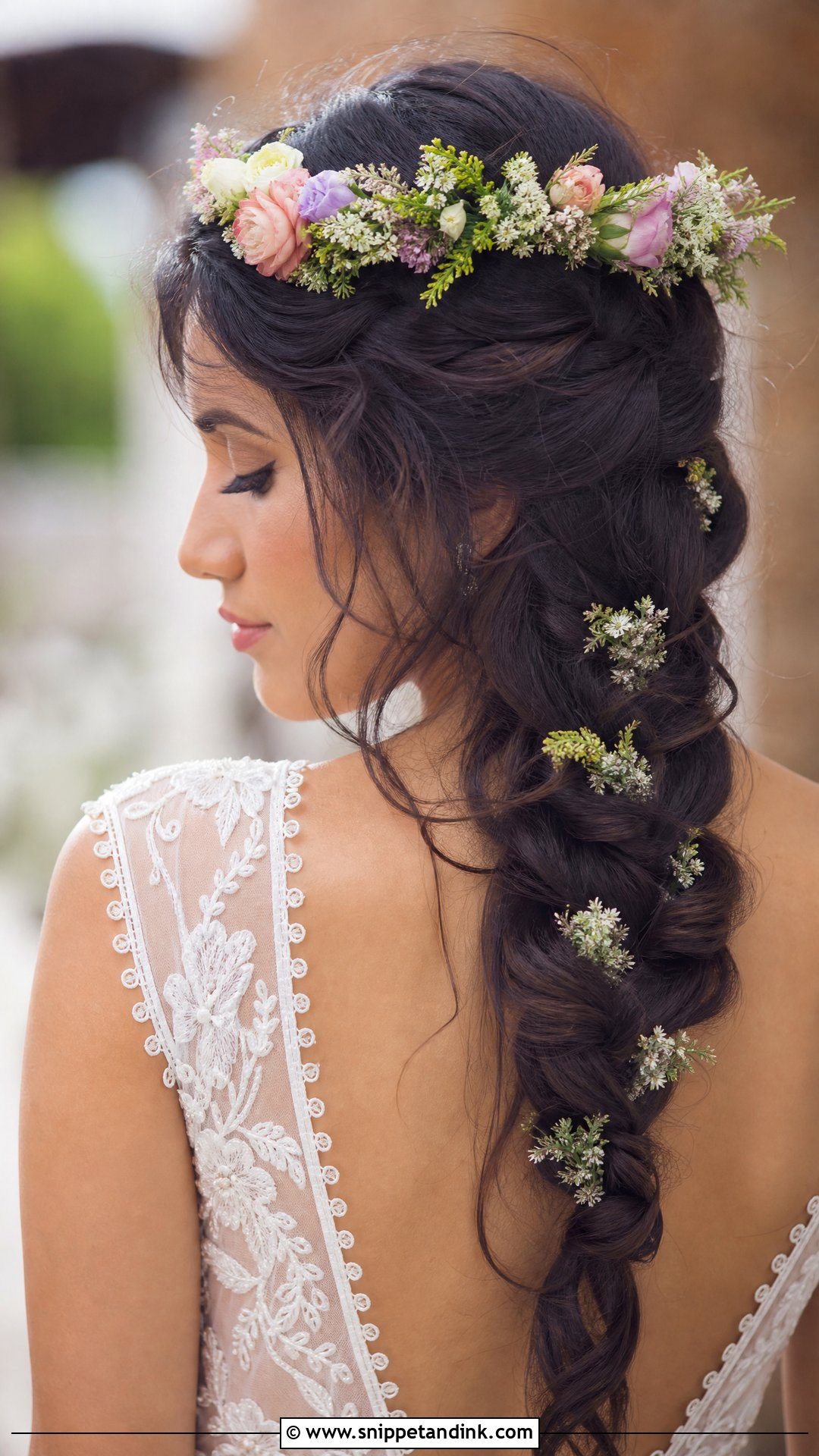
A waterfall braid and flower crown together make a romantic, garden-party look for spring and summer. The crown rests on top and the braid adds detail beneath it while the hair flows below. Matching the blooms to your bouquet ties it together. Fresh crowns are heavier than they look; I pin the crown into the braid at four points around the head so it doesn’t tilt. If the ceremony is long and hot, faux or dried blooms are worth considering, since fresh ones may droop.
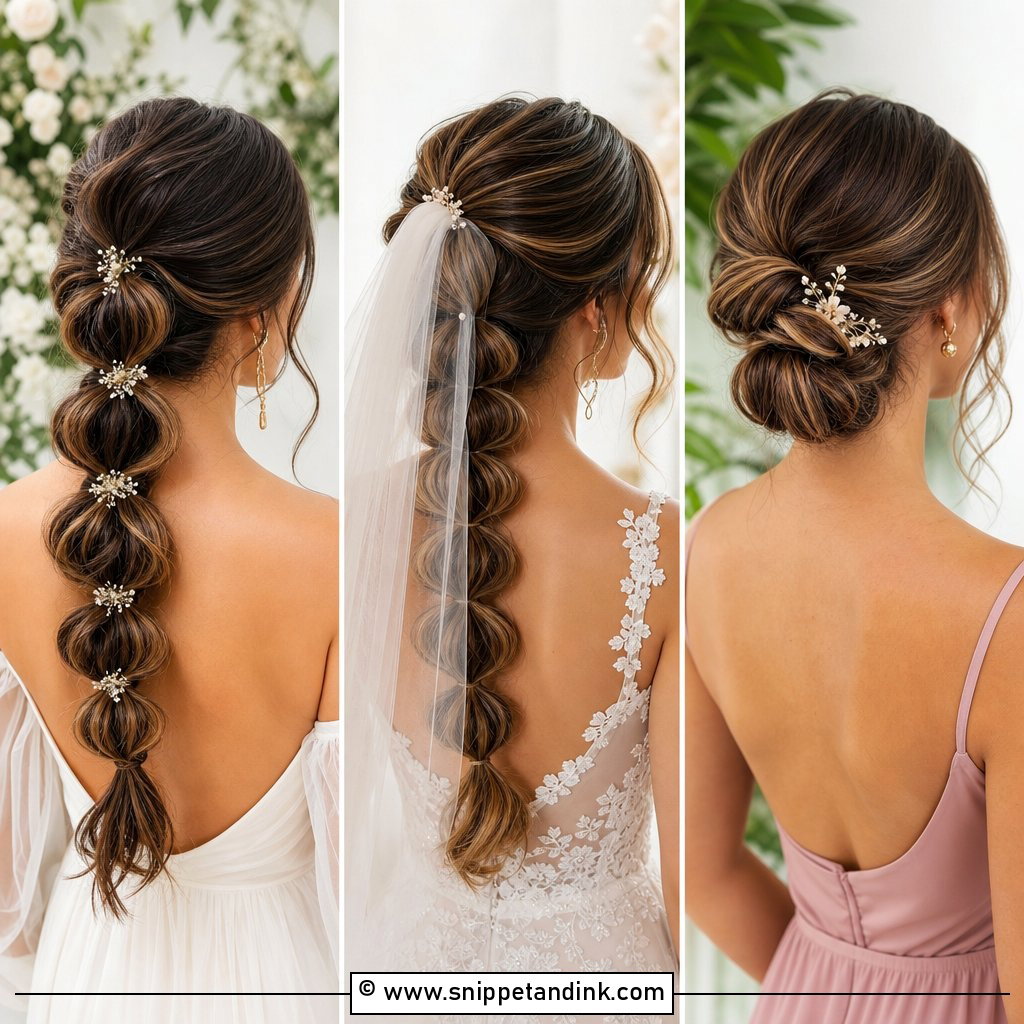
20. Waterfall Braid With Pearl Accents
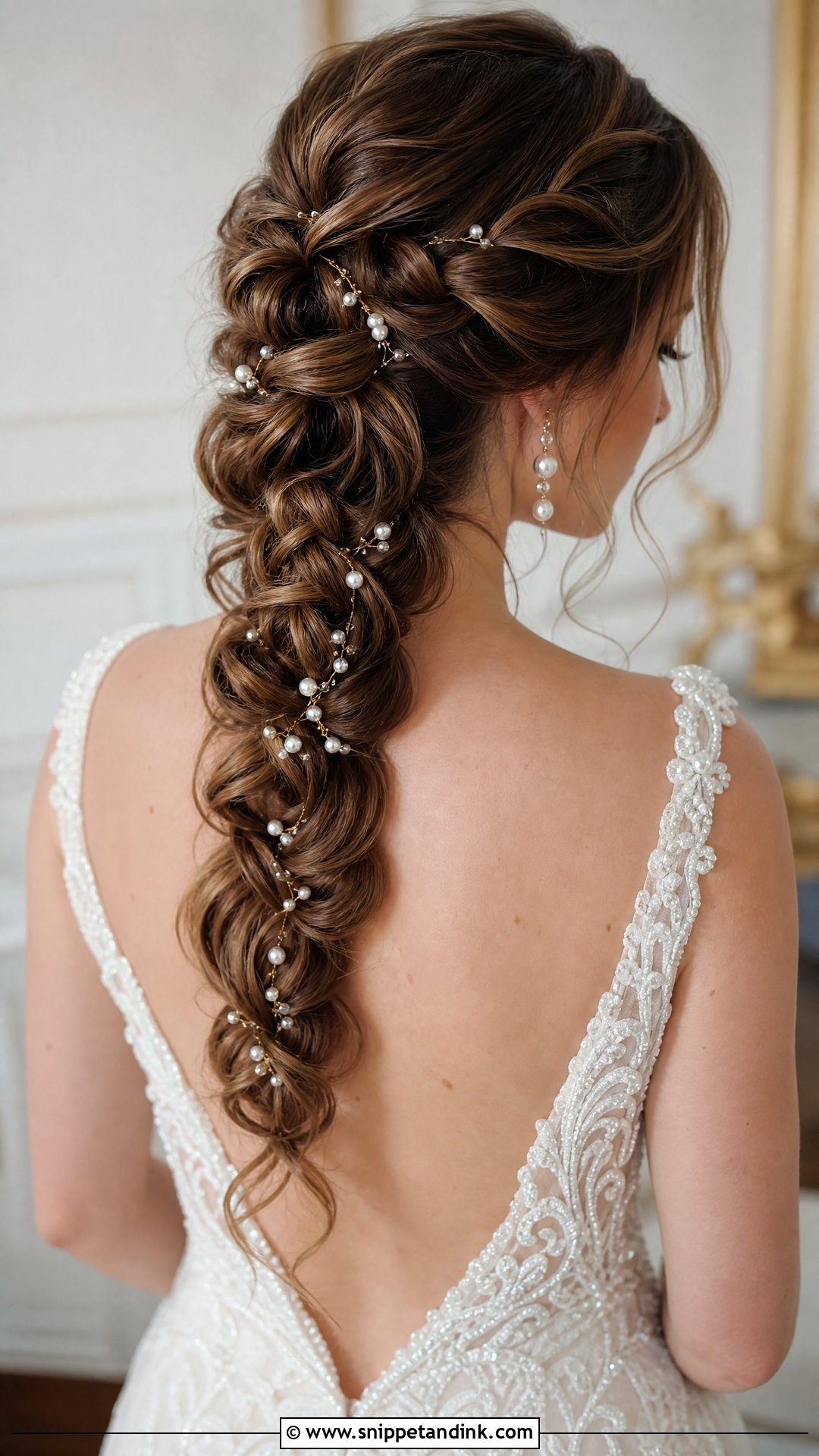
Pearl pins or strands threaded through a waterfall braid add a soft shimmer that suits simple gowns. They work in half-up styles, updos or a full waterfall braid. Scatter them, or place them in a line along the braid. The thing I check first is the pin itself: pearl pins with smooth, straight shafts slide out of silky hair, so I choose ones with a slight wave in the pin or secure each one with a small hidden bobby pin. It keeps the pearls where they were placed through the day.
Layers, Coils and Clip-Ins Under a Waterfall Braid
Heavily layered cuts
Short layers around the crown poke out of each stitch. A little pomade or wax on the fingertips while I braid helps, and I keep the braid path slightly lower, where the hair is longer.
Curly and coily hair
A waterfall braid can work on natural texture, and the dropped curls look full and soft. I braid on stretched hair, whether that’s blown out, banded or twisted out, rather than shrunken, and keep tension light around the hairline. Tight braiding along the edges every time you style isn’t worth the strain on those hairs.
Extensions for fullness
Clip-in wefts placed below the braid line add length and thickness to the dropped strands without showing. Have them colour-matched and bring them to the trial, so I can see how they blend once the braid is in.
Fine, flyaway hair
Fine hair shows every gap in a braid and can look thin once the strands drop. I braid with smaller sections, which creates more stitches and more visual texture, then pancake gently. A light mist of hairspray on a toothbrush, smoothed over the flyaways at the end, keeps the halo of loose hairs down without making the braid look stiff.
Ask for the Braid That Suits Your Hair, Then Dress It
Waterfall braids are adaptable, from boho and garden to formal and glamorous, and the variations here cover flowers, pearls, fishtails and low buns. Start with the braid your hair length and texture can actually hold, then add the accessories you love. Bring your veil or headpiece to the trial so I can see how they sit together. A braid built around your own hair and your own day will last much better than one copied straight from a photo.
You'll Like These Ideas:


Leave a Reply