
Ask me for a style that survives a ceremony, a hot reception and a thousand hugs, and nine times out of ten I’ll end up at the nape. A low bun keeps hair off the face and the shoulders, gives a veil comb something solid to hold, and leaves earrings and necklines in full view. What changes the mood is small: the part, the shape of the bun, the amount of shine. It’s not only a bride’s style either. I put versions of it on bridesmaids and mothers all the time. Use these sleek low bun wedding looks to work out what you’d like to try at your trial.
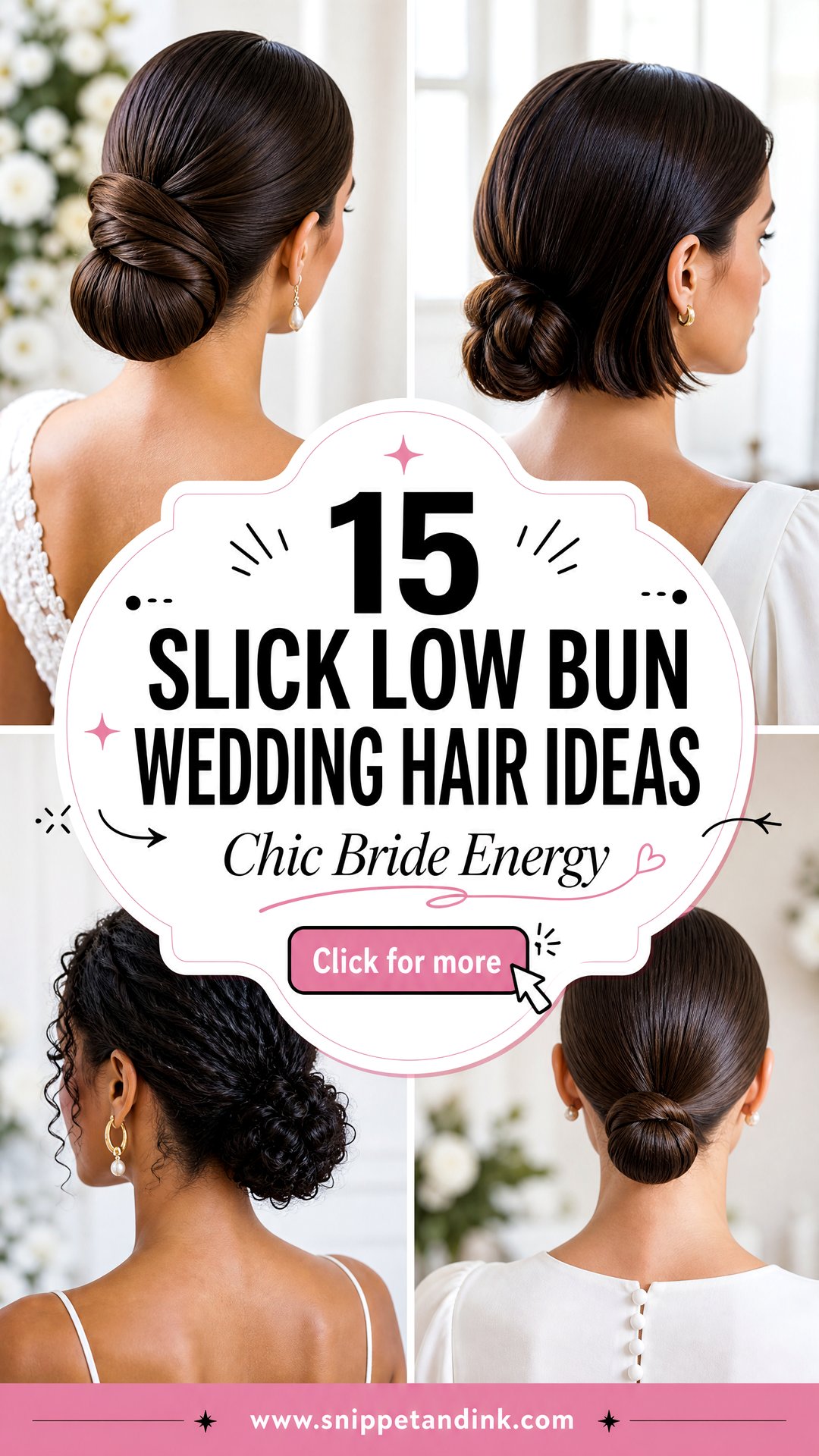
Collars, Cowl Backs and Where the Bun Should Sit
A low bun lives right where most necklines finish, so the dress matters more here than with any other updo. I always ask for a photo of the back of the gown before the trial.
- High necks and lace collars: set the bun a finger’s width above the collar. Sitting on the fabric, it gets crushed every time you turn your head and can snag lace.
- Open or low backs: the bun can drop right to the nape, since nothing touches it.
- Cowl and draped backs: keep the bun smaller and slightly higher, or it fights the fabric for attention.
- Halters and ties at the neck: leave room for the knot. A bun sitting on the halter tie pushes it down and loosens it.
Sit down in the dress at your fitting and look at the back in a mirror. Seated, the neckline rides up, and that’s the height I need to build above.
1. Classic Slick Low Bun Wedding Hair
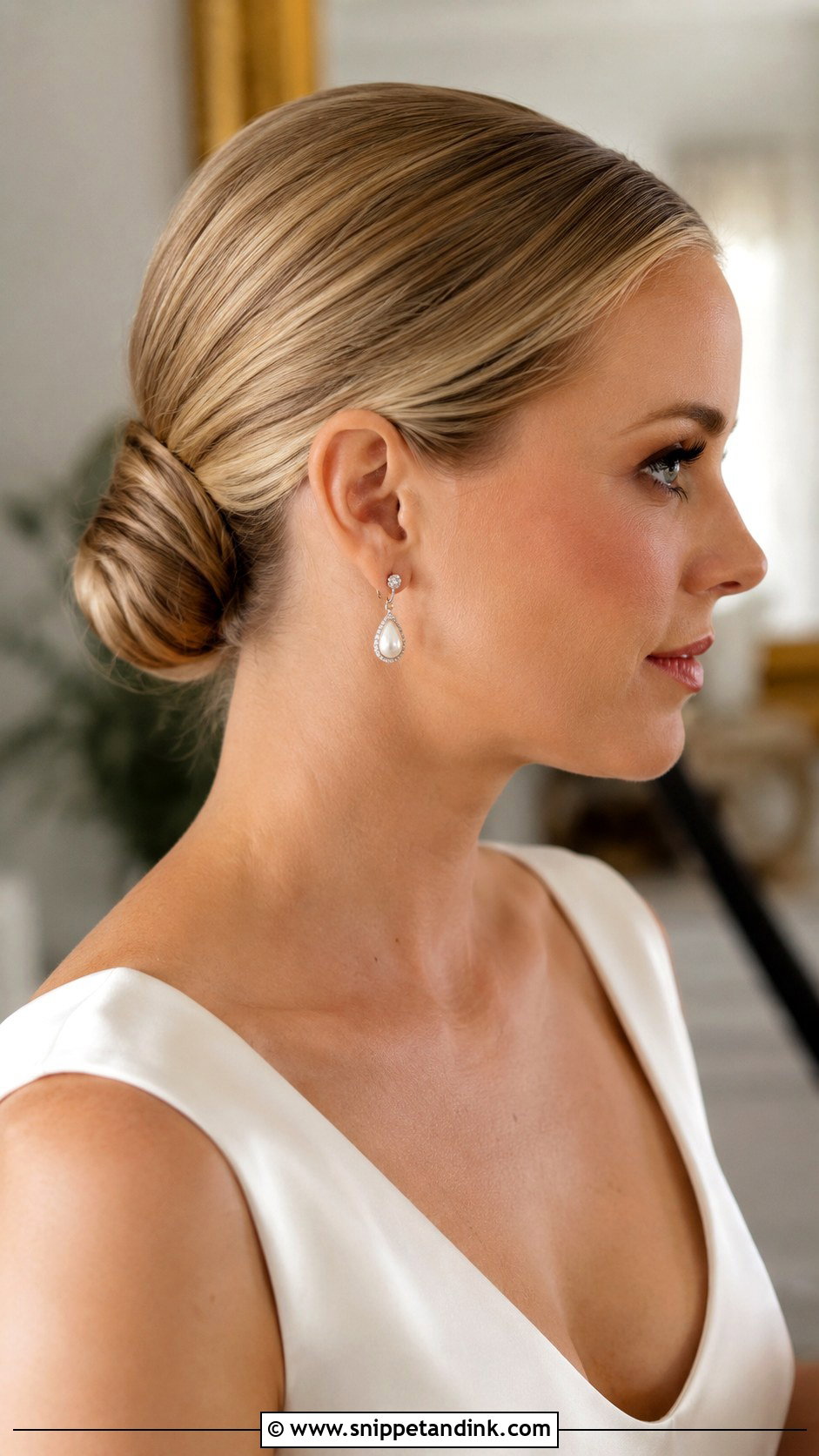
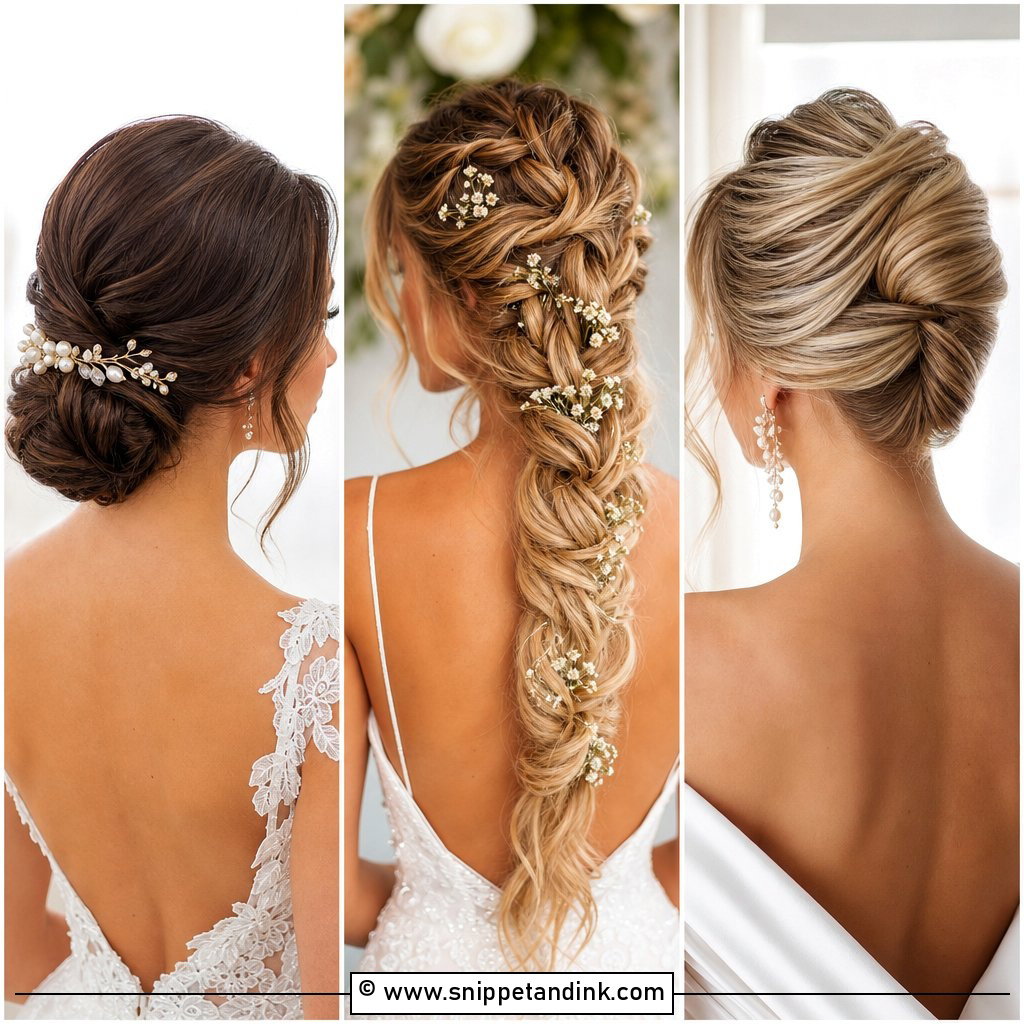
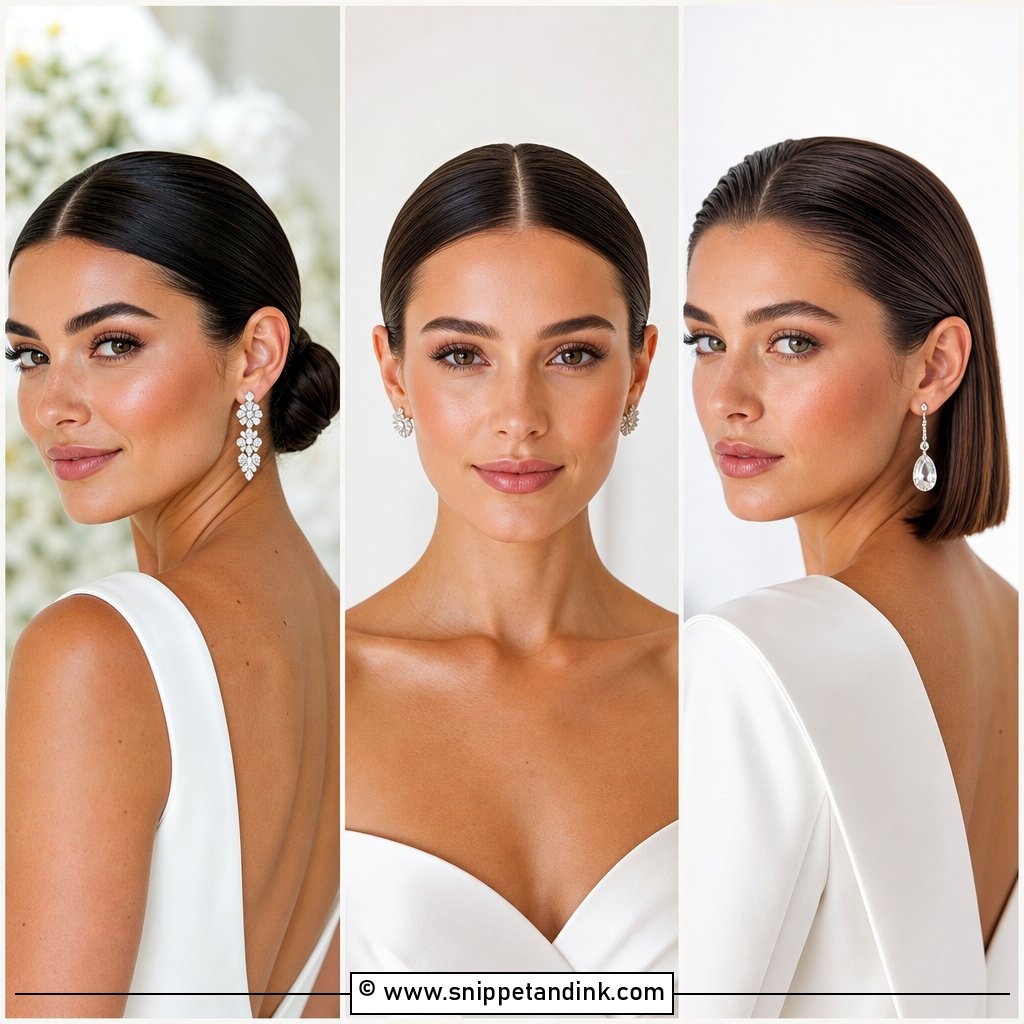
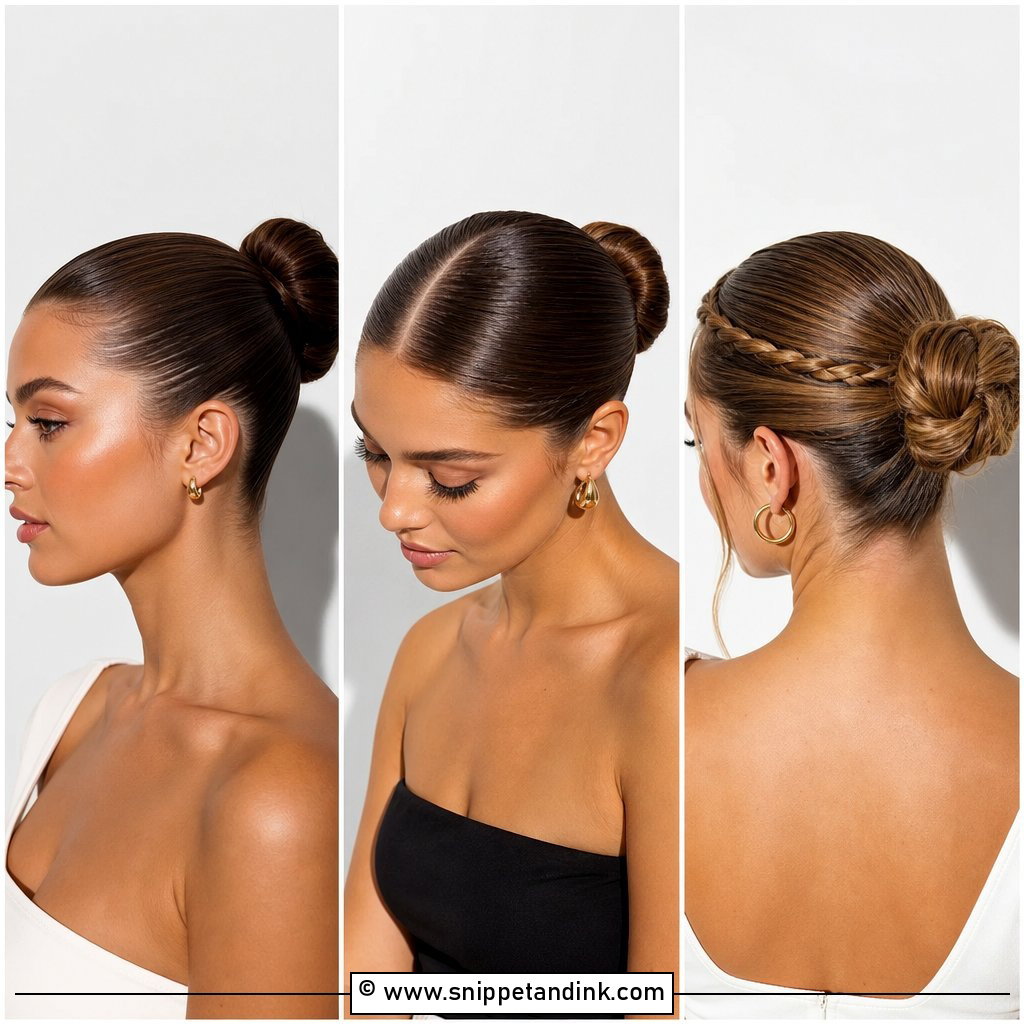
This is the base every other version on the list grows from: hair brushed close to the scalp, gathered at the nape and wrapped into a neat round bun. I keep a little give in the surface. Lacquering it flat gives the helmet effect that looks hard in daylight. It sits well against high necks, open backs and detailed straps, and a veil comb slides straight into it. A smoothing cream, a flexible spray and pins crossed in an X do most of the holding.
2. Middle Part Slick Low Bun Wedding Hair
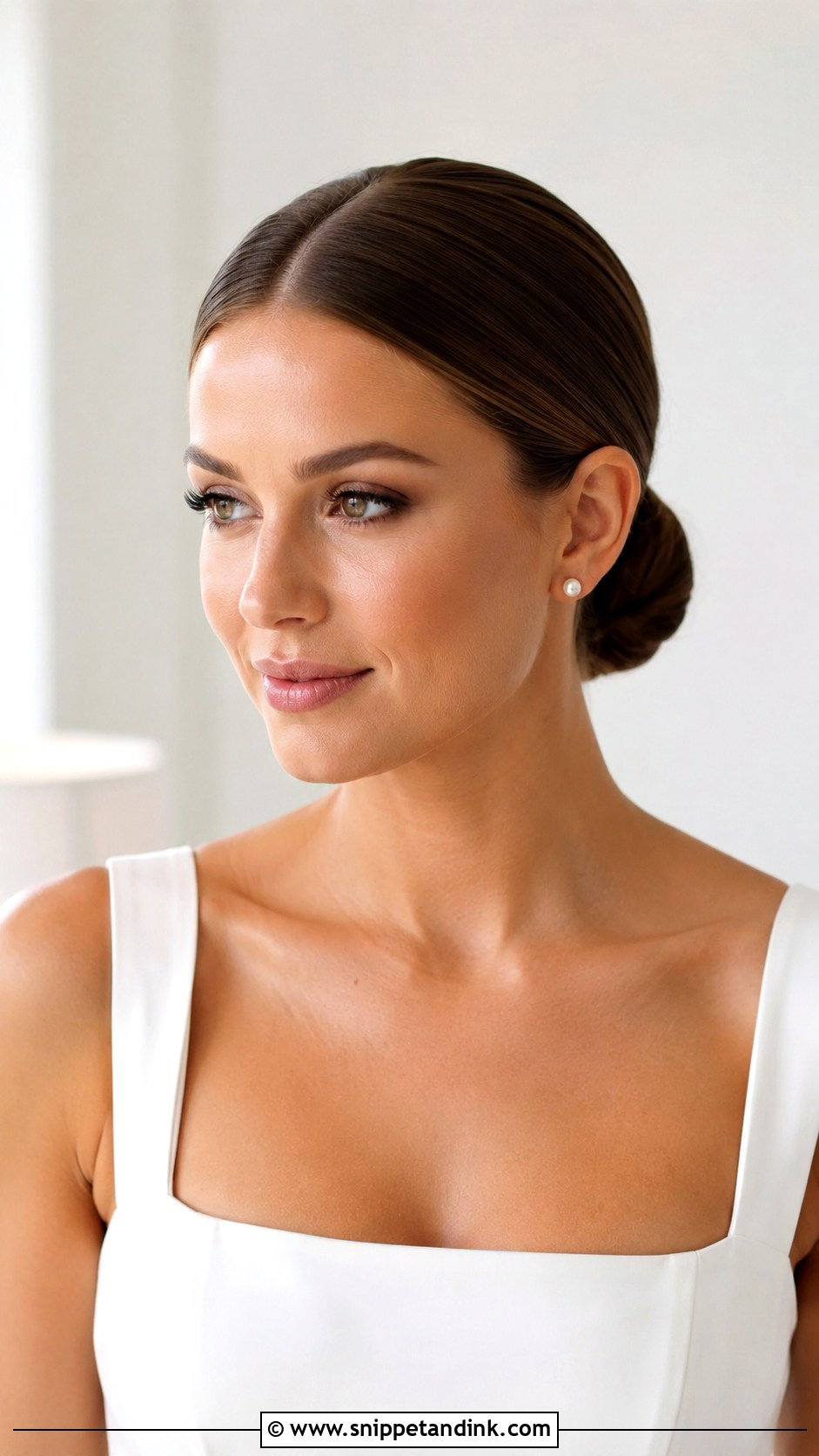
A center part puts the face in a clean frame, and with a low bun the effect is calm rather than severe. It suits satin, square necklines and pearl jewelry, the pared-back look a lot of brides want now. The part should be sharp, but I soften it with a fingertip once the product sets so it doesn’t look drawn on. Getting the sides brushed smooth behind the ears is the real work; that’s where hair bubbles if it’s rushed. The bun can be round, twisted or tucked depending on length.
3. Side Part Slick Low Bun Wedding Hair
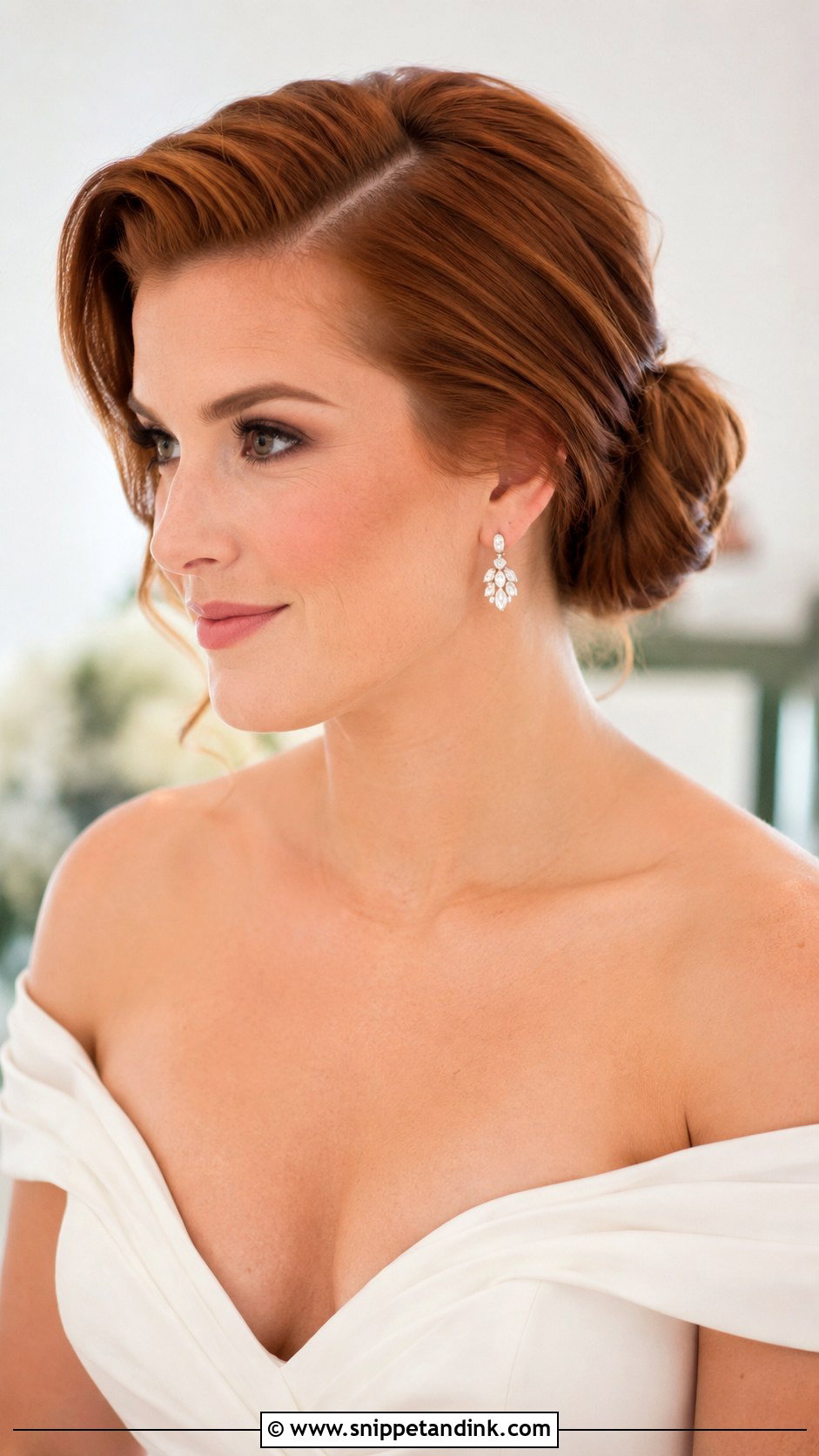
Swing the part to one side and the whole style softens. The heavier side gives a little lift, which balances round and square faces, and the sweep across the forehead has a faint vintage note. I lift the root at the part with a quick blast of the dryer before smoothing, otherwise a side-parted slick style can look flat and plastered. Drop earrings on the open side look especially good, and a comb fits neatly above the bun on the opposite one.
4. Slick Low Chignon Wedding Hair
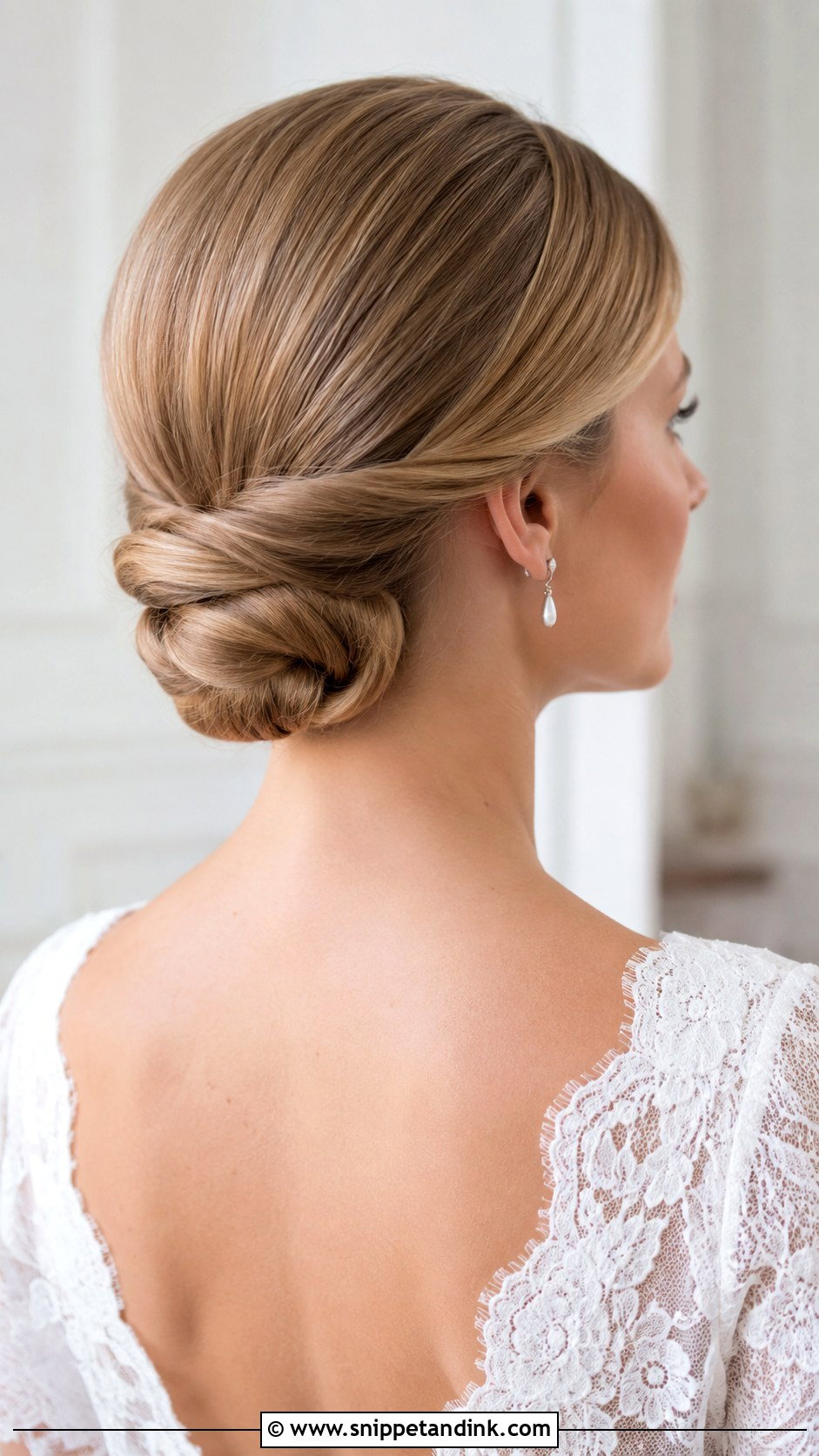
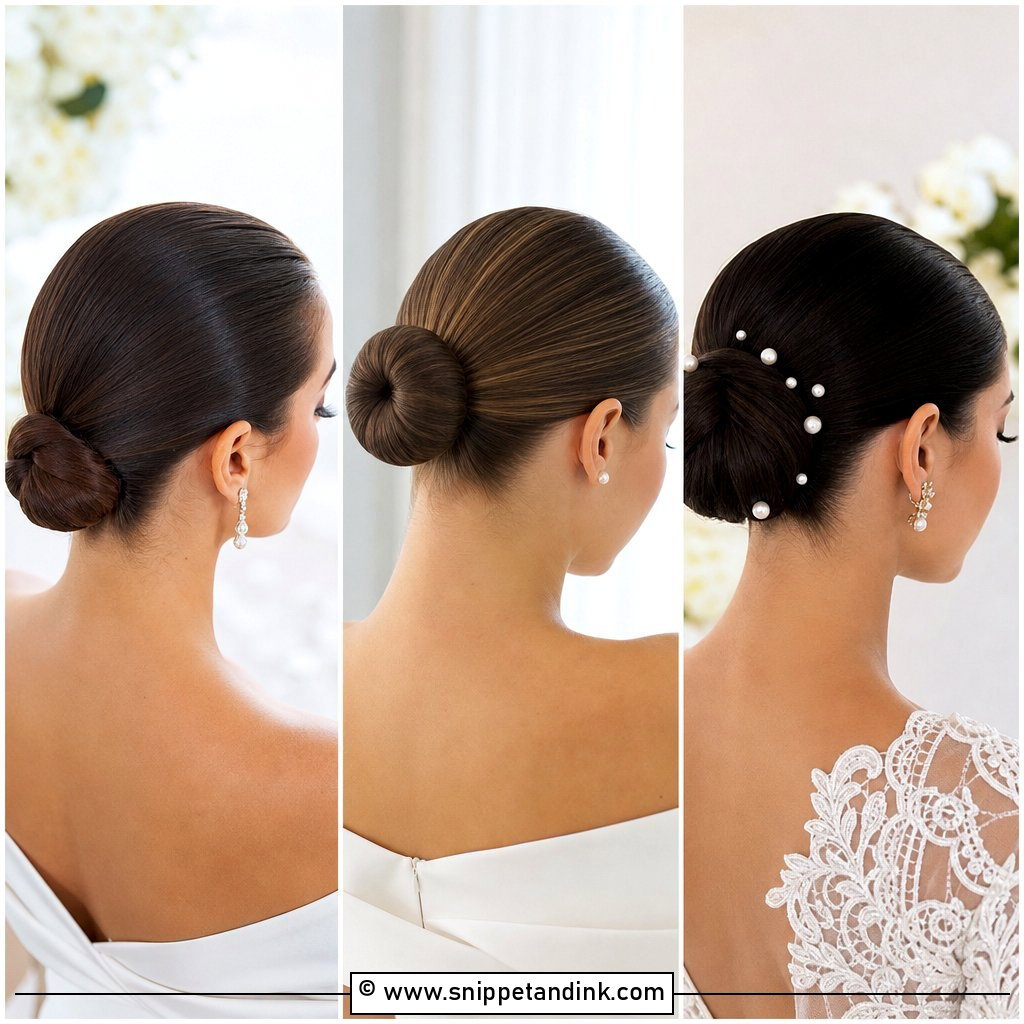
Instead of a simple round knot, a chignon is folded or rolled, so the shape is longer and lies flatter against the neck. Formal weddings and classic gowns suit it. Medium-length hair often does better here than in a round bun, because folding the lengths makes them look fuller than coiling them would. I smooth the crown, secure the fold with pins pushed in toward the scalp, and clean up the edges at the nape last, since that’s what shows above a low back.
5. Slick Low Bun With Pearl Pins Wedding Hair
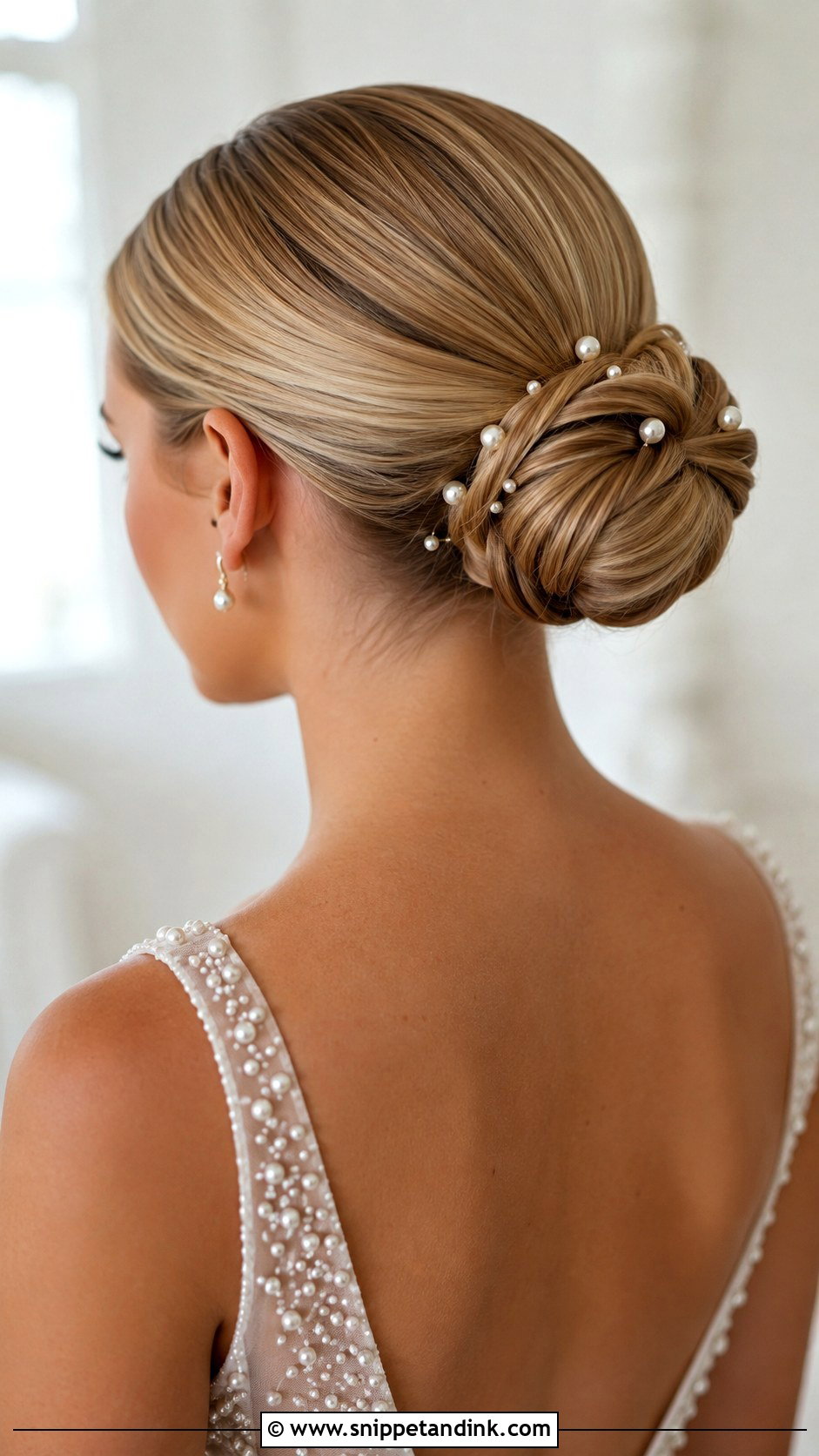
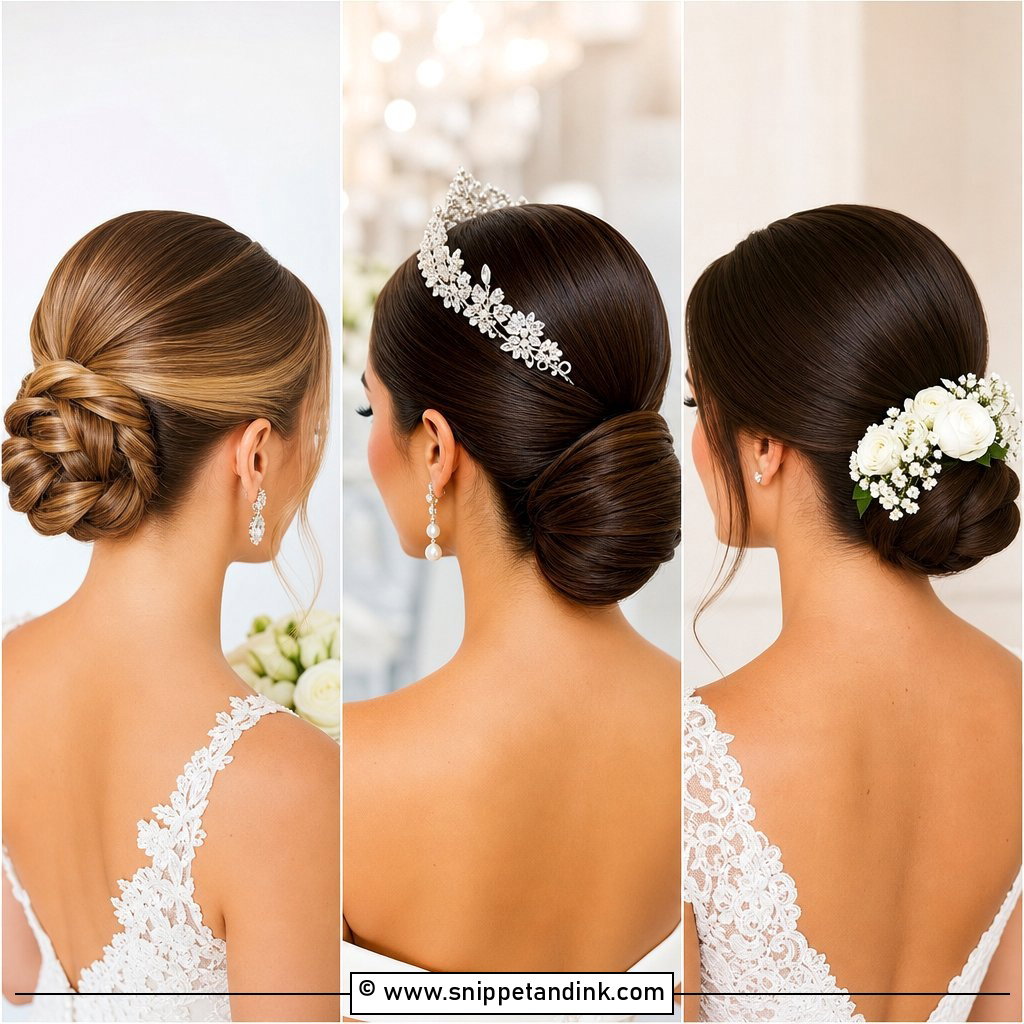
Pearl pins give a slick bun just enough detail. I match them to the dress first: if there are pearl buttons or beading, I’ll pull the same tone, because ivory pearls next to a bright white gown can look yellow. Scattered pins read delicate; a tight group of three or four beside the bun reads more deliberate. The front stays plain so the pins look placed, not sprinkled. Mothers of the bride like this version because it dresses up without the height of a headpiece.
6. Slick Low Bun With Veil Wedding Hair
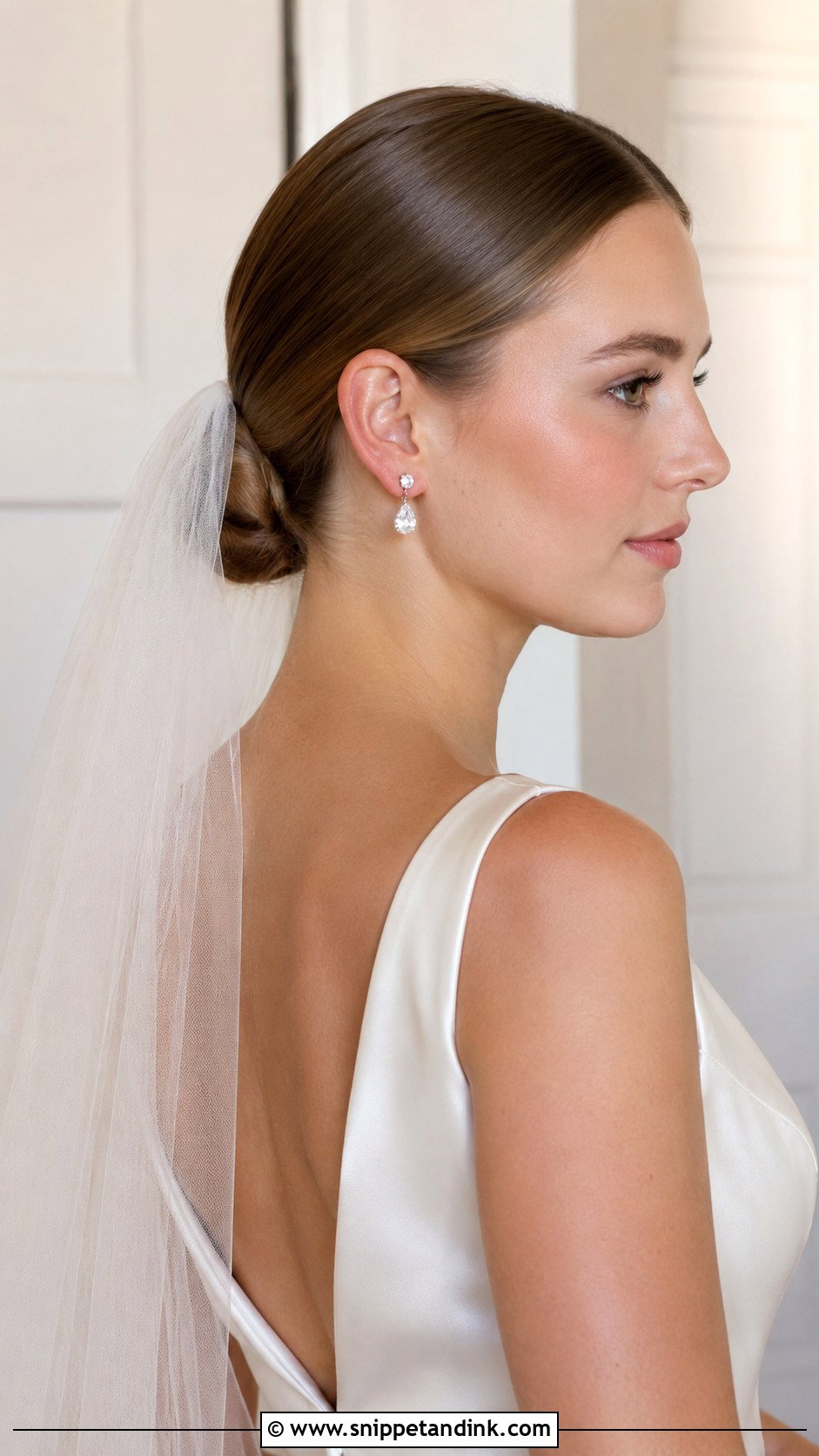
A low bun is the most practical foundation for a veil I know. The veil can sit above the bun, which gives the traditional cascading shape, or be tucked underneath, which is cleaner and more modern. Underneath also keeps the comb out of the way of a high-necked dress. Outdoors, a sleek base helps because wind lifts the veil rather than the hair. I insist on testing the actual veil at the trial; a heavy lace edge needs a different comb position from plain tulle.
7. Slick Low Bun With Face Framing Pieces Wedding Hair
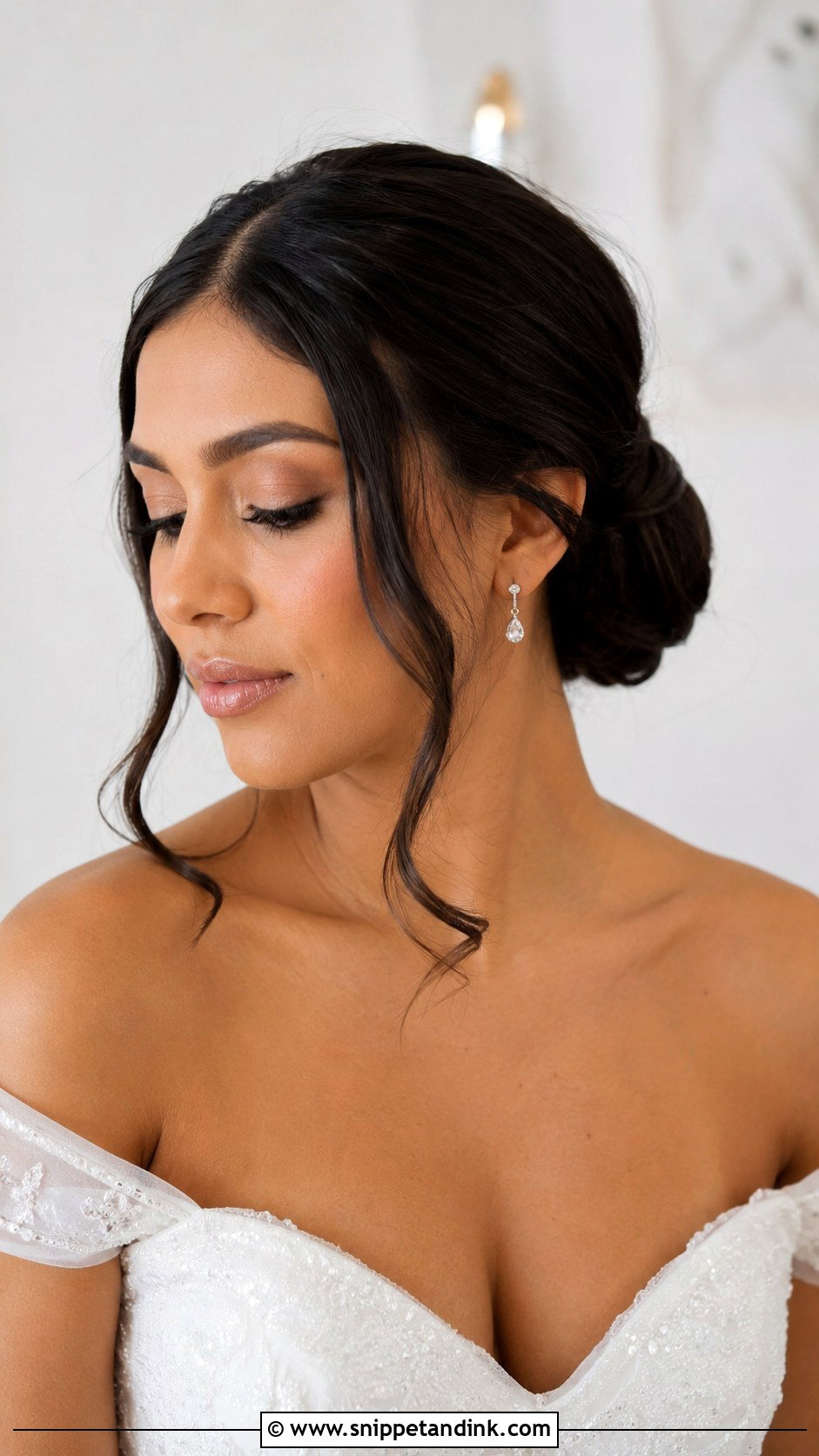
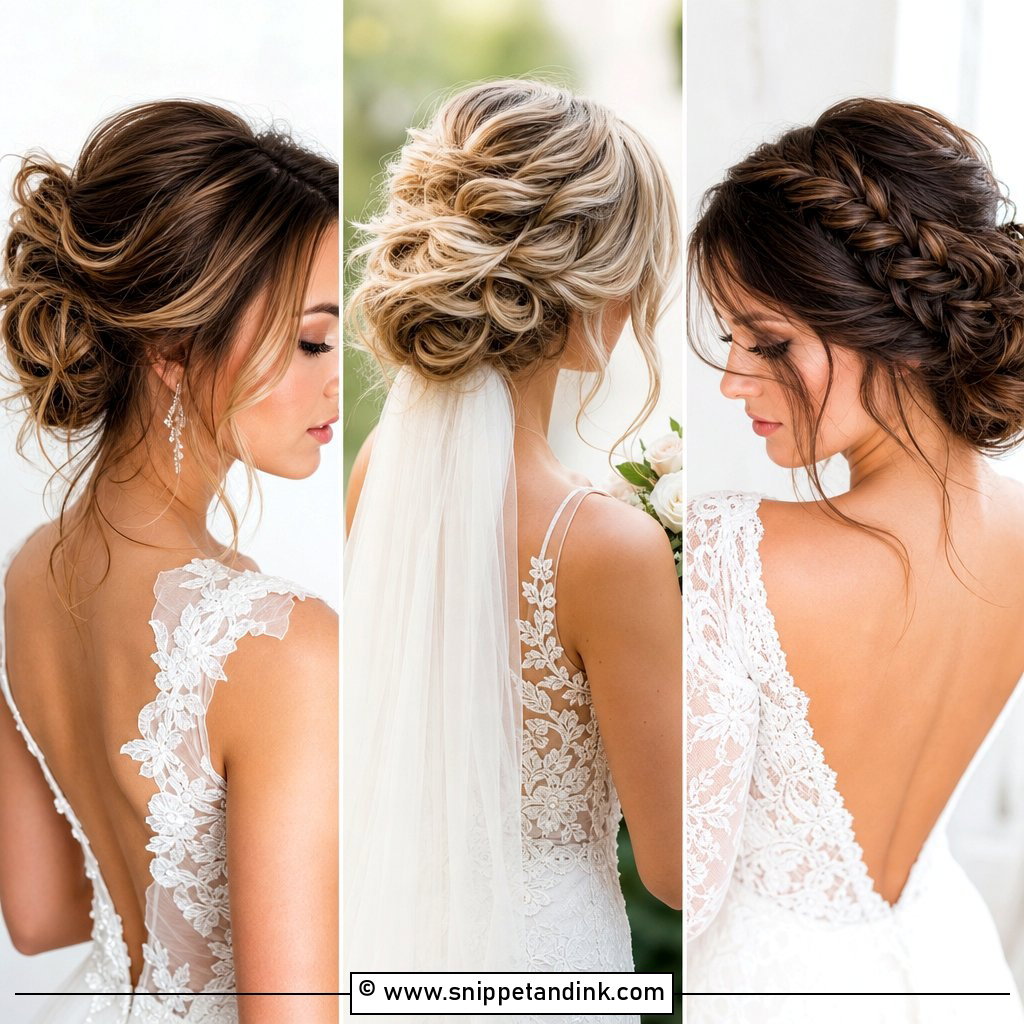
Leaving a few pieces out around the face takes the strictness off the style. I pick them from the temples and in front of the ears, keep them thin and bend them away from the face so they don’t stick to lip gloss. Straight pieces suit very minimal makeup; a soft bend suits off-the-shoulder gowns. The mistake I correct most is pieces that are too thick, which read as hair that’s fallen out. A rice-grain amount of styling cream keeps them from frizzing.
8. Twisted Slick Low Bun Wedding Hair
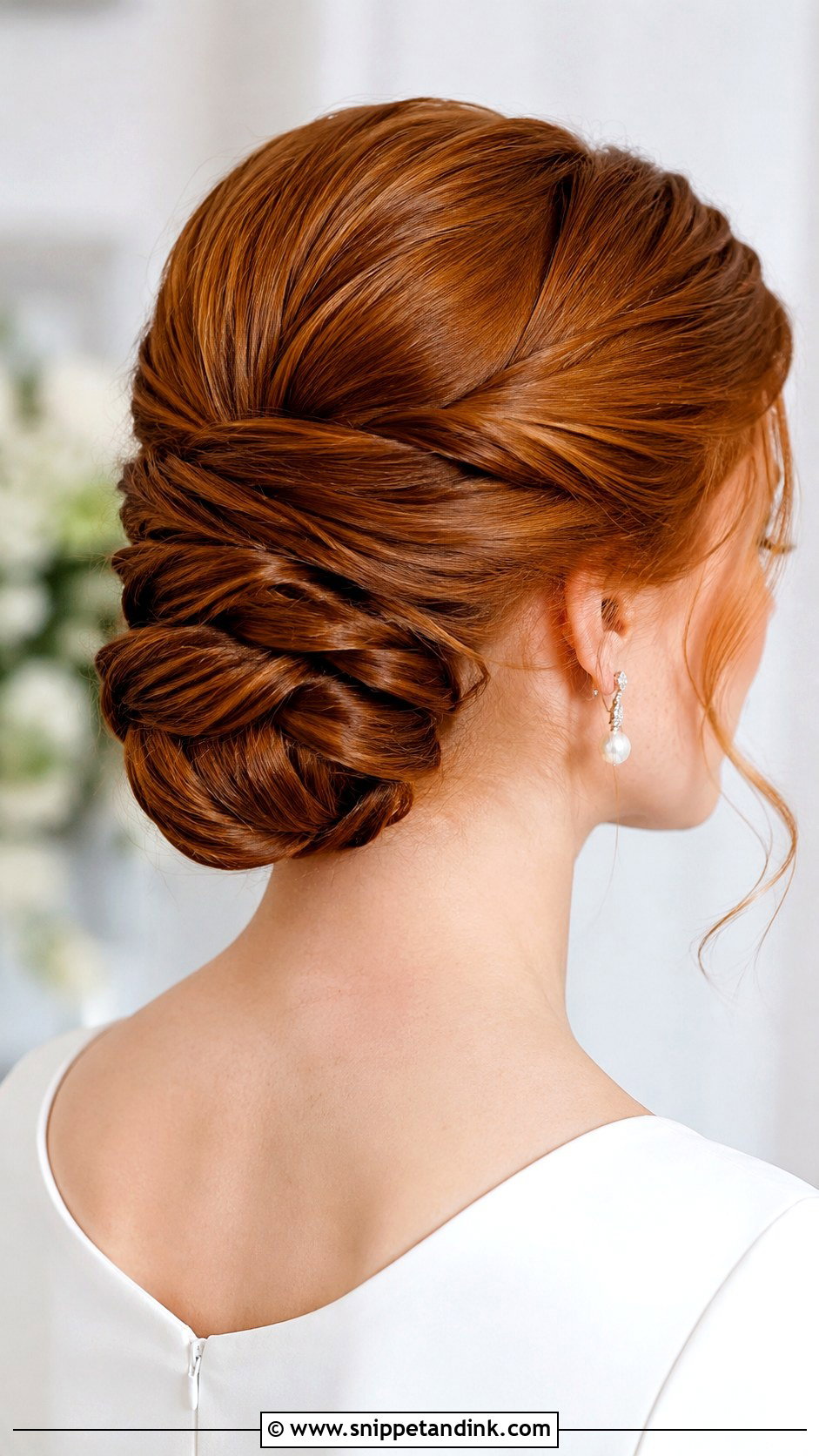
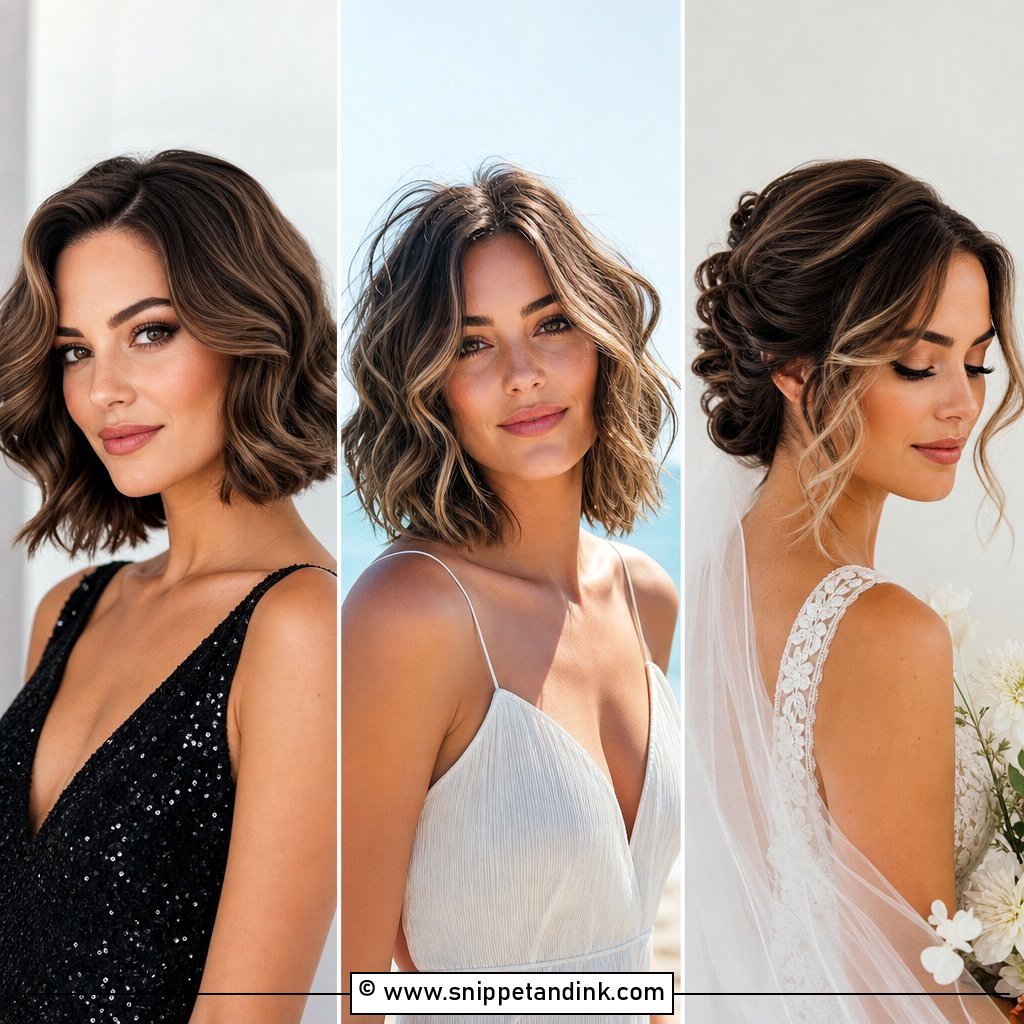
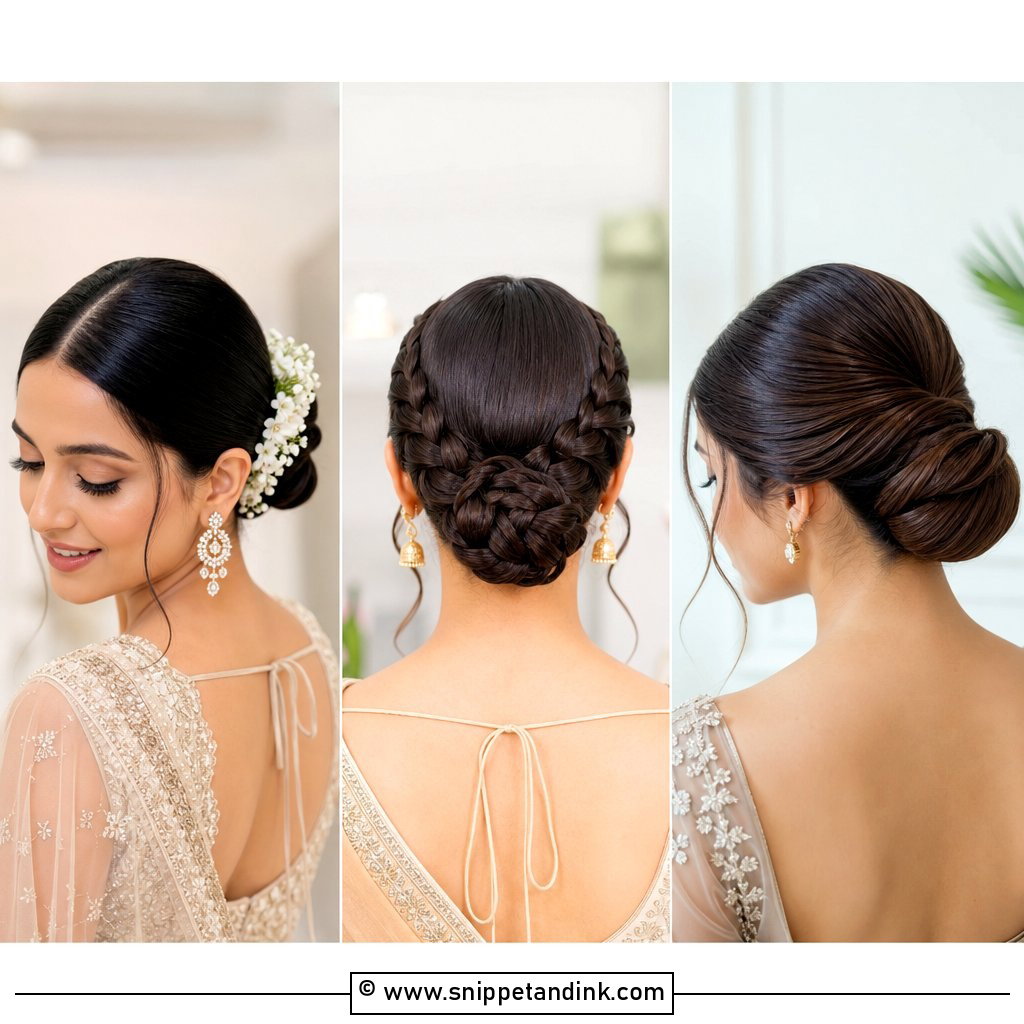
Twisting the hair into the bun adds shape at the back without breaking the sleek line in front. It’s a useful trick on both ends of the density scale: on fine hair the twists look fuller than a plain wrap, and on thick hair they compress the bulk so the bun isn’t enormous. I lock each twist with a U-pin, then finish with a light shine spray from a distance. Close-up photos pick up every curve.
9. Braided Slick Low Bun Wedding Hair
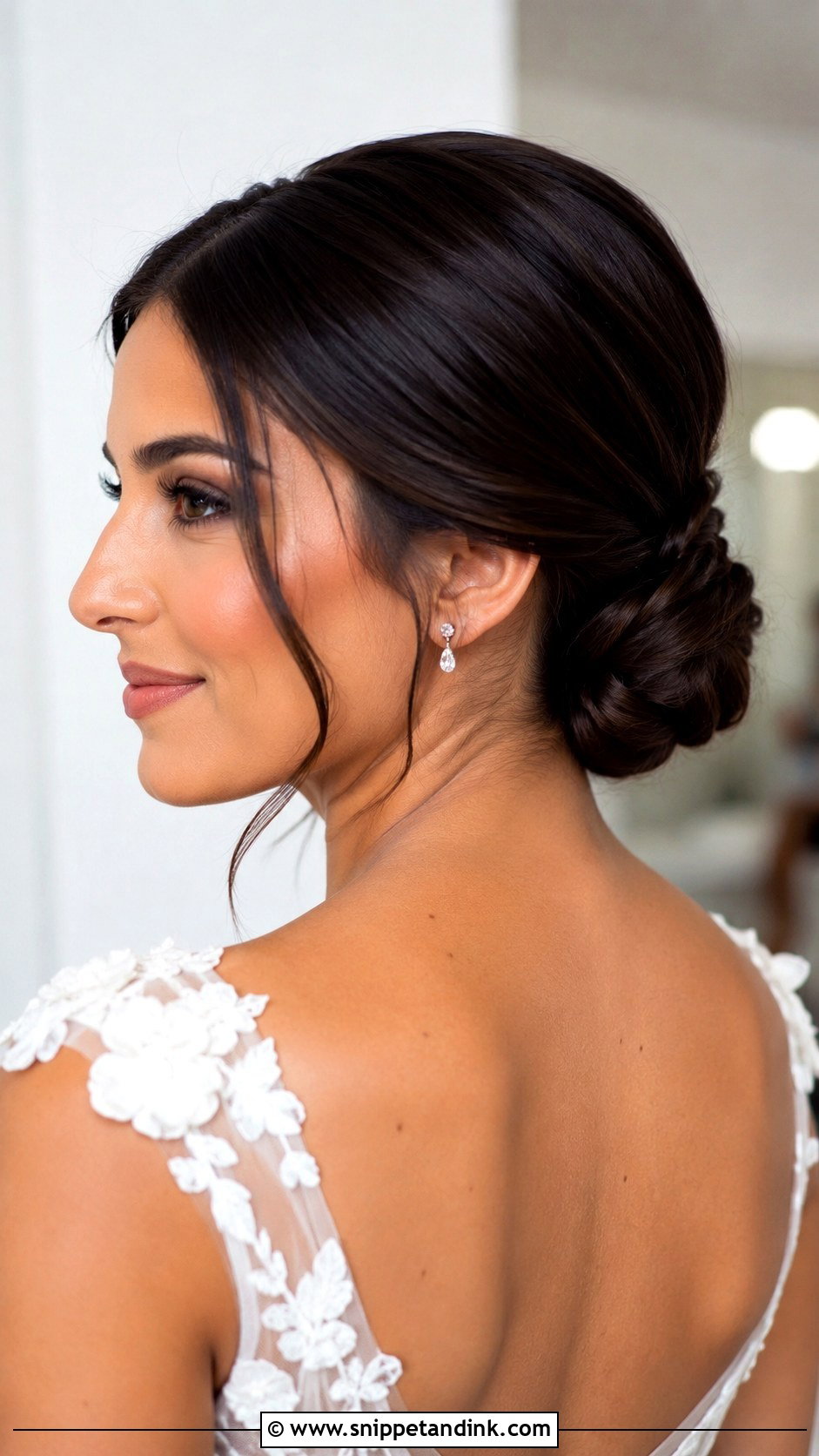
Adding a braid gives the bun a grip that pins alone don’t. The braid can be hidden inside the bun for a subtle ridge or wrapped into or around the bun like a low crown. I lean toward this one for garden ceremonies and anywhere breezy, because a braided bun holds its shape even when a pin works loose. Keep the sides smooth so the braid is clearly the feature. A slightly pancaked braid looks fuller than a tight one.
10. Slick Low Bun With Hair Comb Wedding Hair
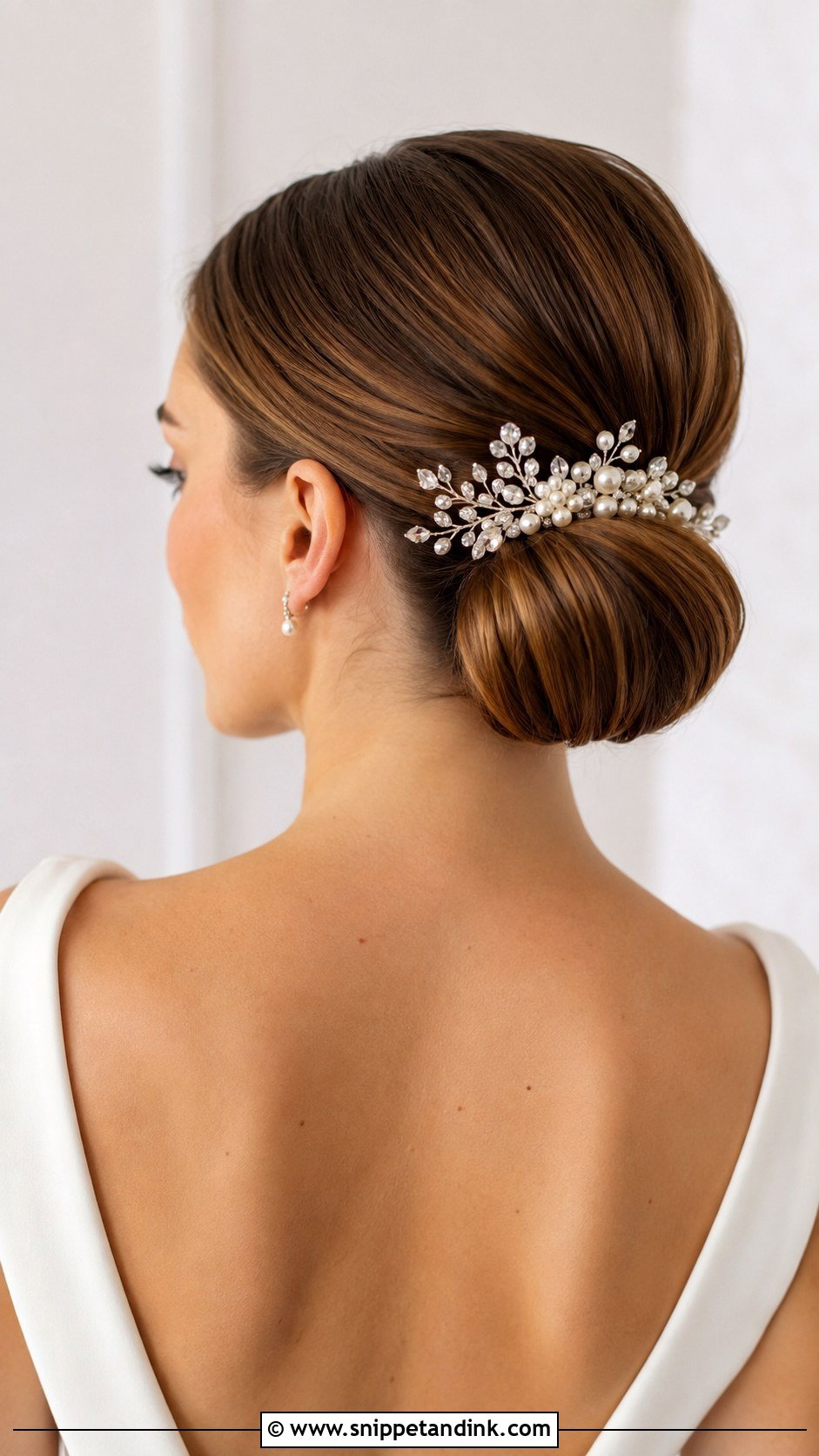
One good comb on a slick base does more than five small accessories. It can sit above the bun, at the side or slid into the base, and the plain background lets the metalwork or crystals show properly. My rule of thumb: heavy beading on the dress means a smaller comb; a plain gown can take a larger one. The comb must come to the trial. Weight varies a lot, and a heavy comb needs a pinned anchor underneath or it tips forward by the speeches.
11. Slick Low Bun For Short Hair Wedding Hair
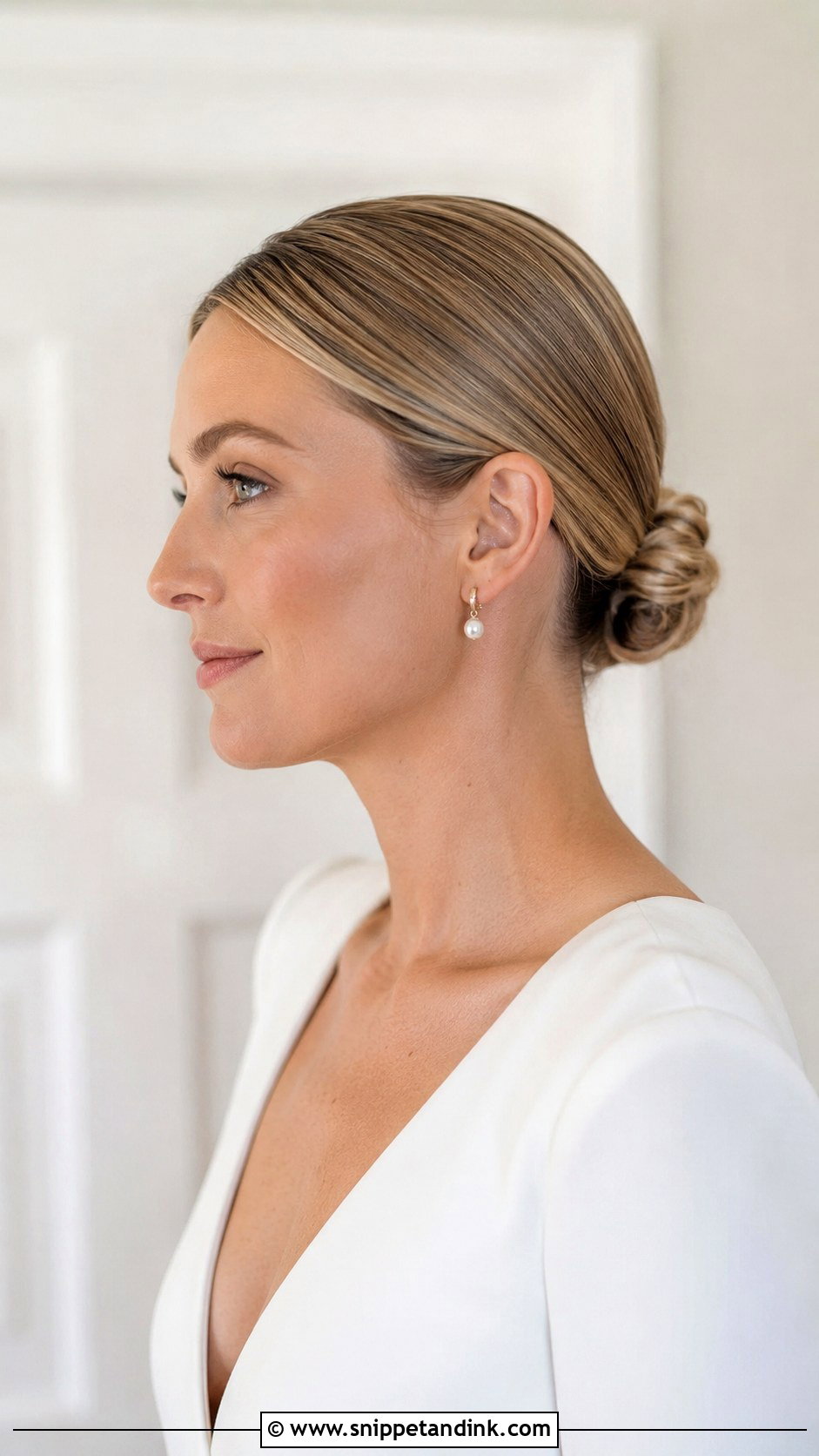
If your hair reaches the nape, a low bun is possible on a bob or lob. The bun will be small, so I build it out with a bit of padding, a clip-in piece or careful layered pinning. The shorter layers at the neck are the hard part; I set them with gel and pin them up under the bun before anything else. A crisp part keeps the front looking intentional. Keep accessories small, or they’ll swamp a little bun.
12. Slick Low Bun For Long Hair Wedding Hair
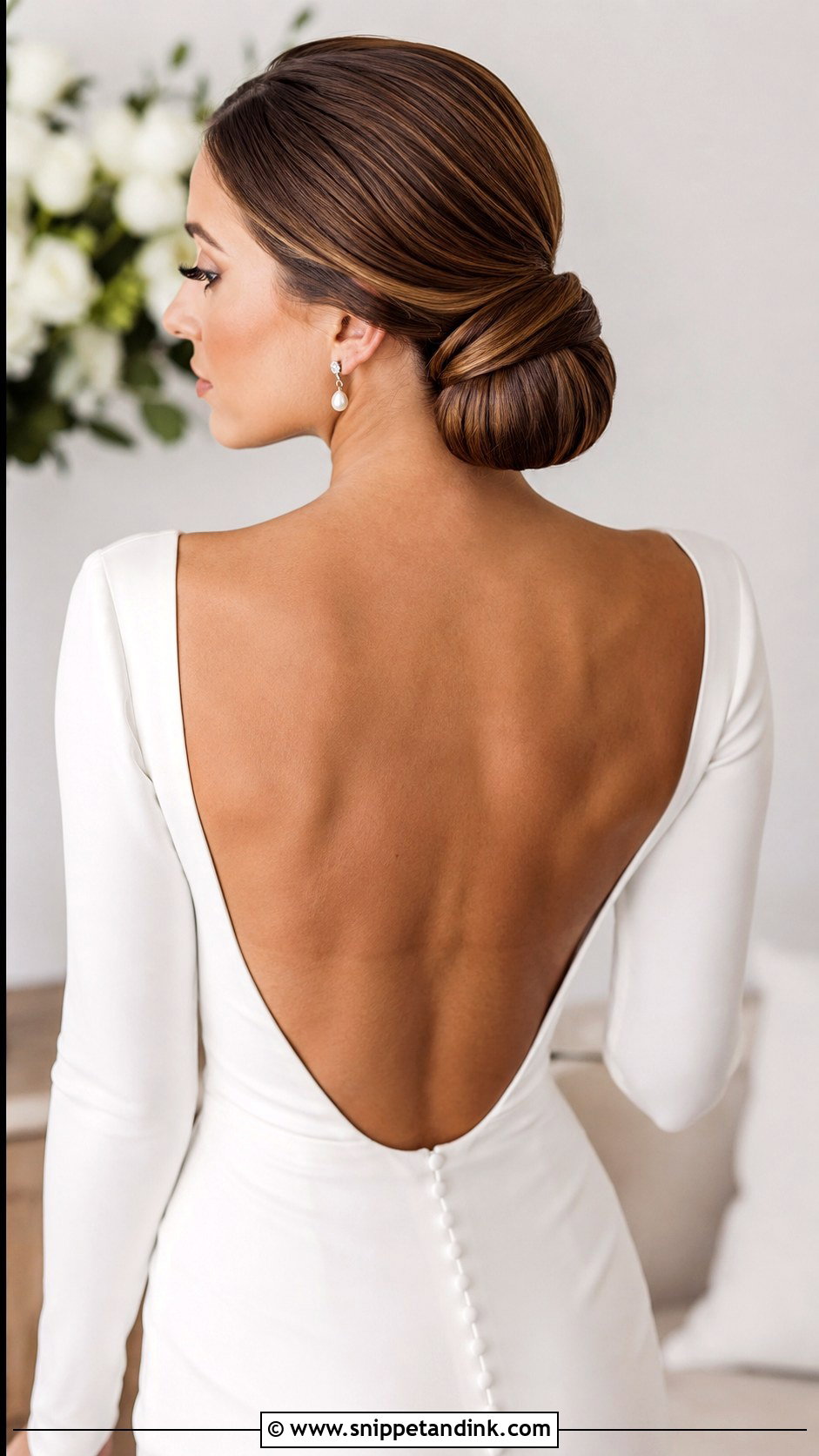
Long hair gives you the most choice, from a wrapped bun, folded chignon or twisted knot, and the most risk. Hair past mid-back is heavy, and a bun built from one ponytail slides down by evening. I split it into sections, pin each to its own anchor and only then shape the outside. The crown stays sleek, the bun can be as full as you like, and the weight sits evenly so it doesn’t pull to one side.
13. Slick Low Bun For Thin Hair Wedding Hair
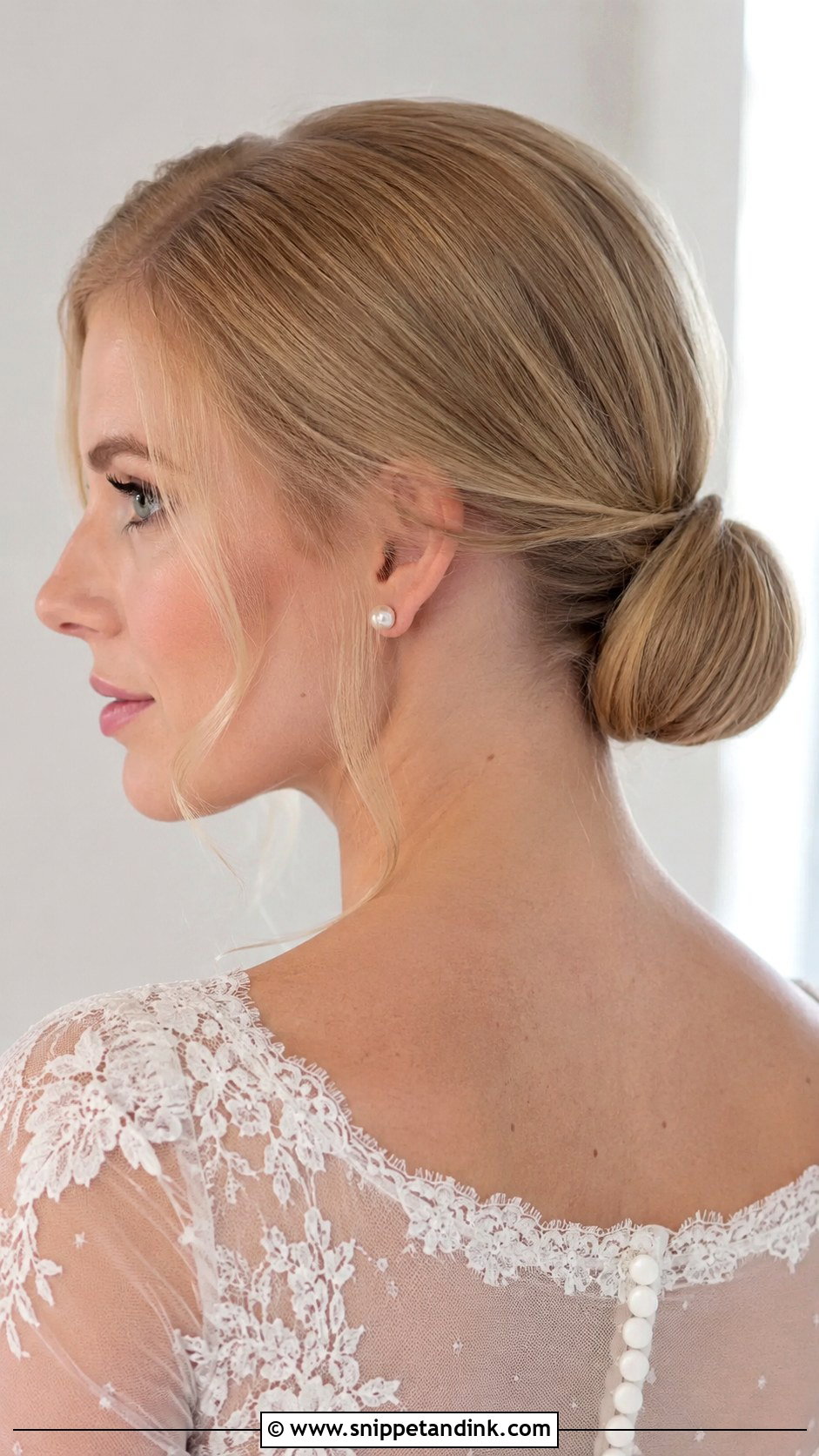
Slick low bun for thin hair works when the volume is hidden inside and the surface stays smooth. I lightly tease the ponytail, wrap it around a small bun form matched to the hair color and, if needed, add a clip-in weft underneath. The thing to avoid is a very wet finish. Heavy gel on thin hair separates it into lines and shows the scalp. A satin finish with a touch of lift at the crown looks fuller in person and on camera.
14. Slick Low Bun For Curly Hair Wedding Hair
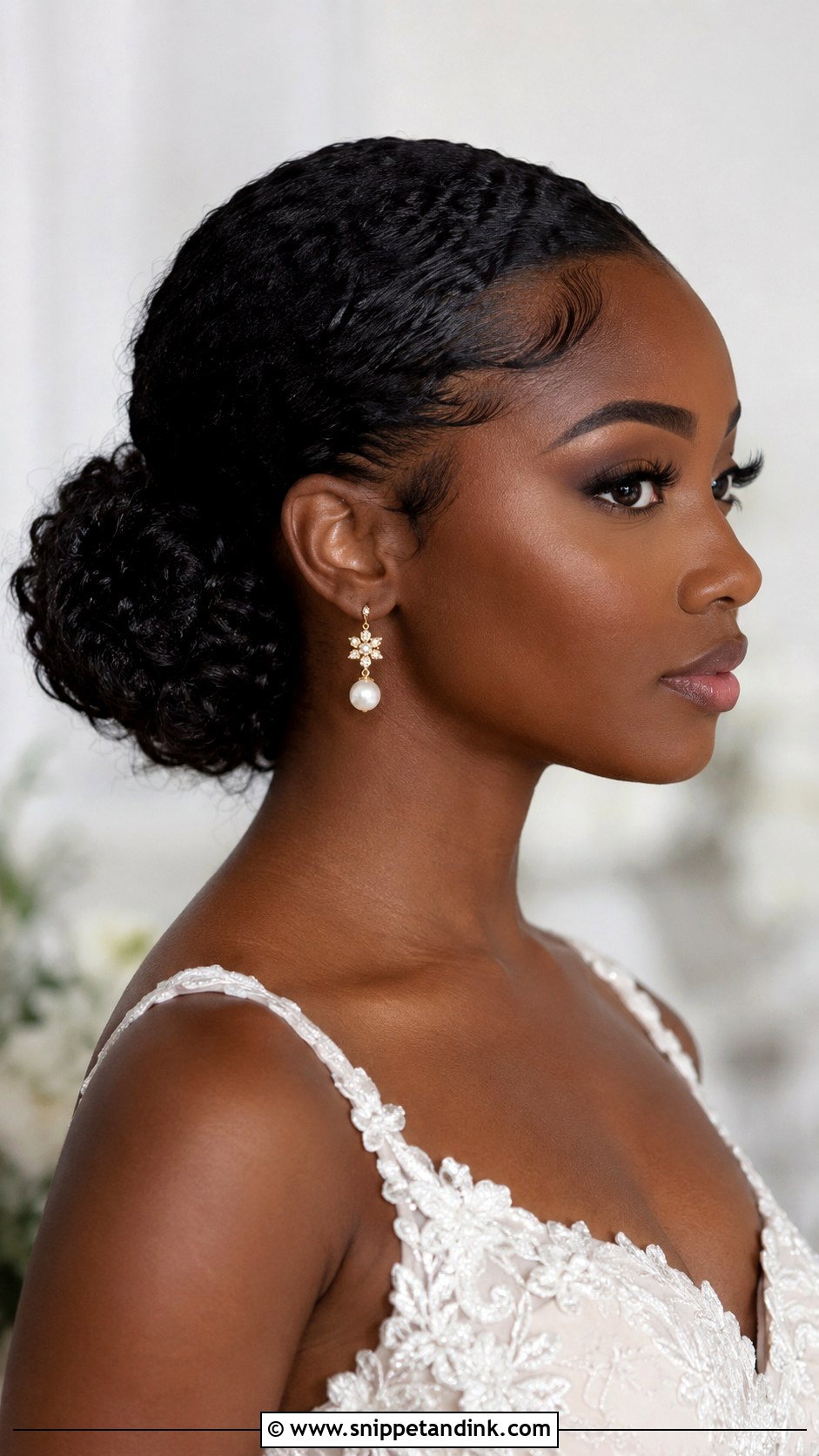
Curly hair can wear a slick low bun without being straightened. I smooth only the front and sides with a strong cream or gel, using a soft brush, and leave the curls in the bun as they are, just shaped and pinned. The contrast between the sleek hairline and the textured bun is what makes it. Curl pattern decides whether the bun looks defined or fluffy, so I’d rather see your hair on a normal day at the trial than freshly stretched. Deep condition through the week and use a humidity-resistant finisher on the day.
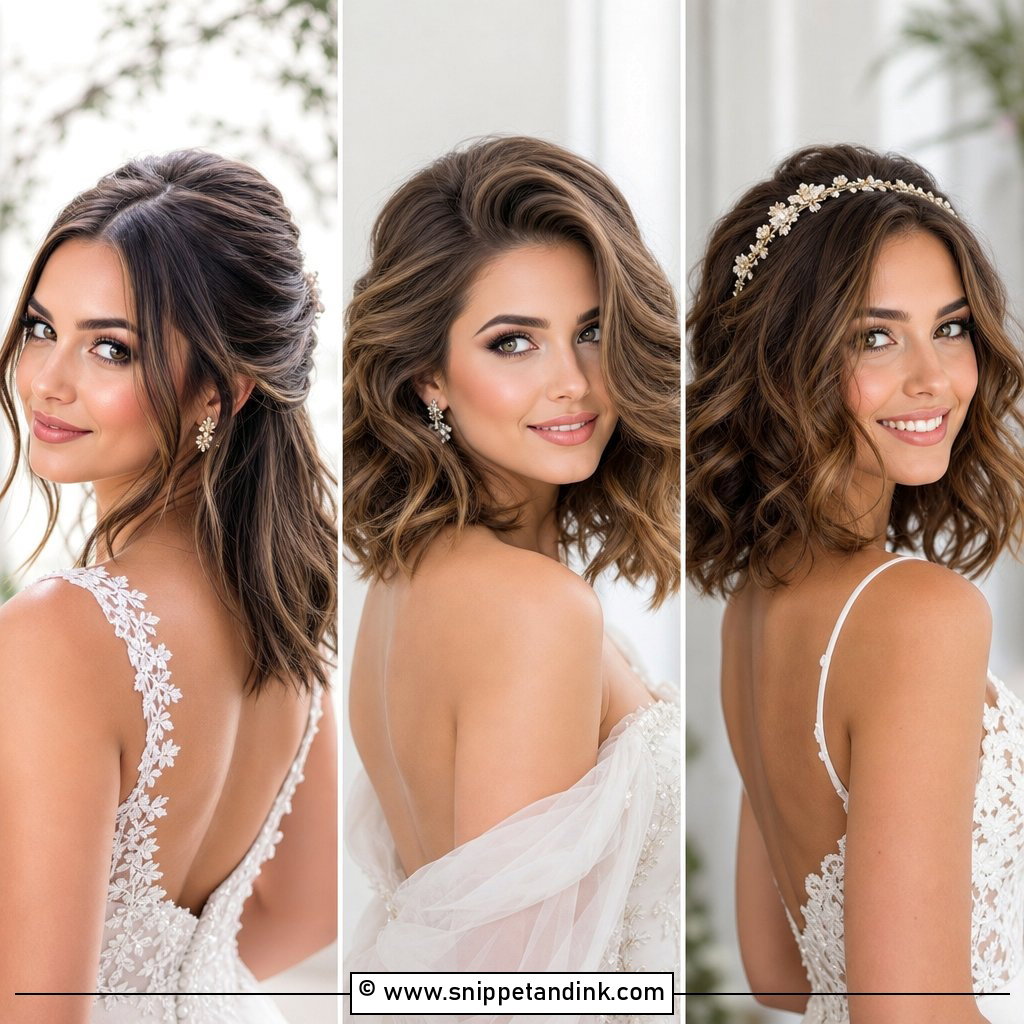
15. Minimal Slick Low Bun Wedding Hair
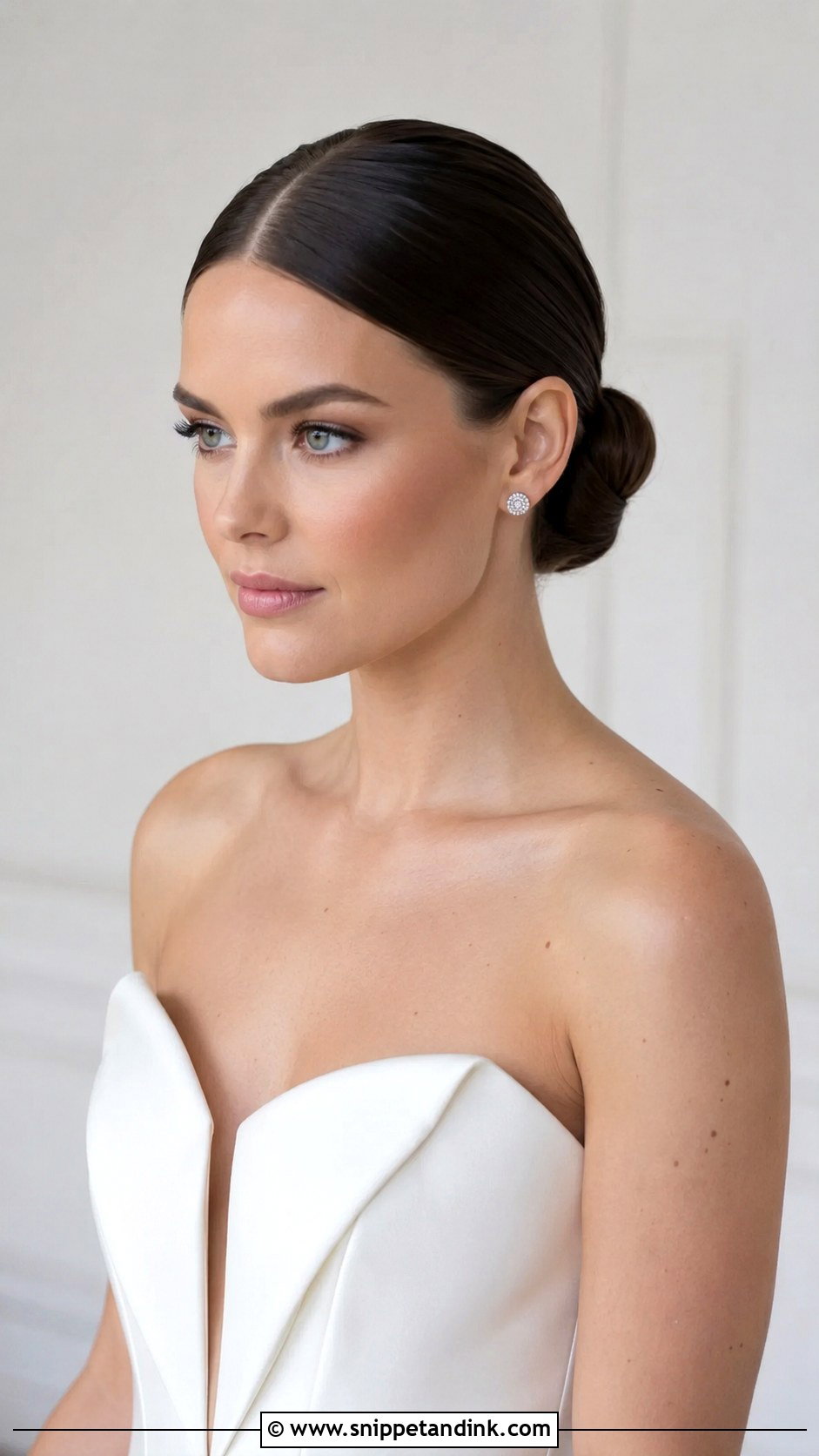
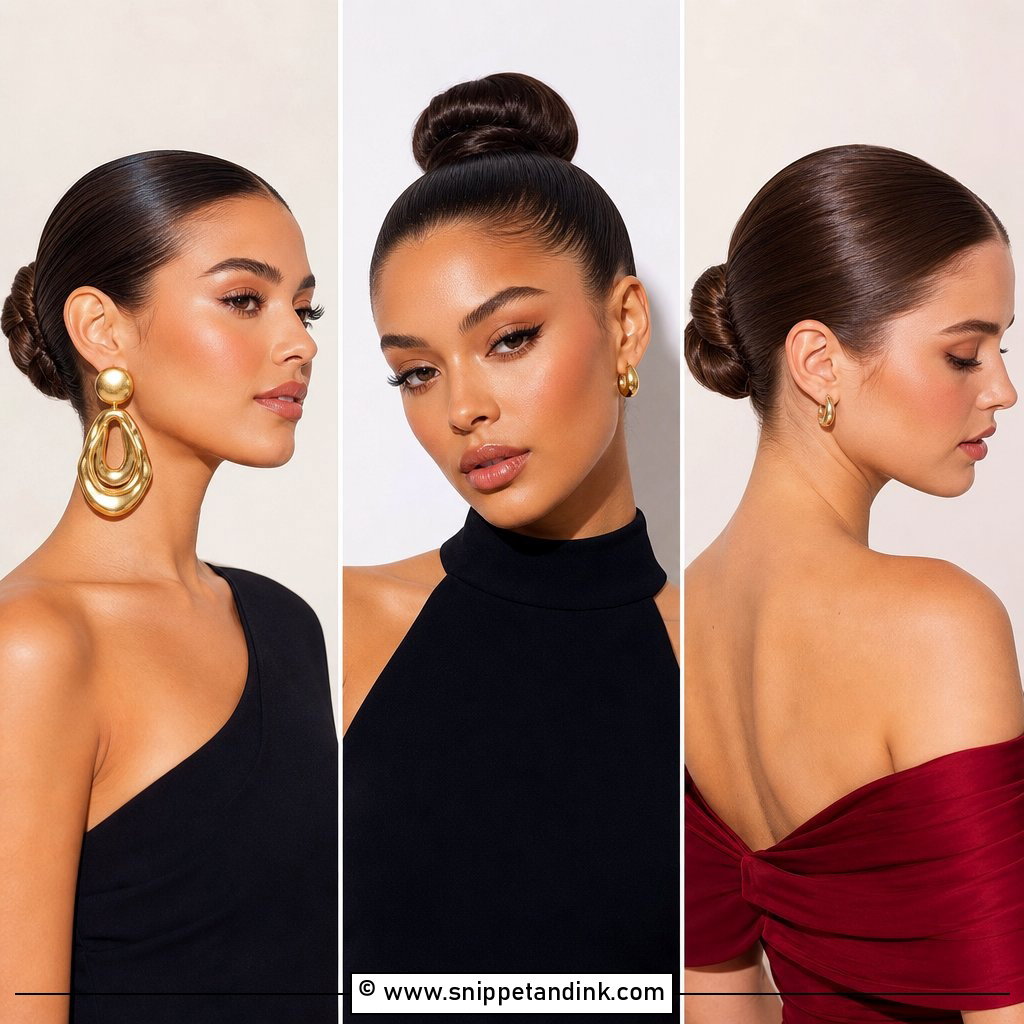
No tendrils, no accessories, no extra volume. All that’s left is the part, the sides and the bun, so each one has to be right. It’s my favorite version for city ceremonies, courthouse weddings and sharply tailored gowns, or for a bride whose earrings or makeup are doing the talking. The thing that keeps it bridal rather than gym-ready is shape: a carefully sized bun and a soft shine. A clear elastic and a few pins pushed deep keep it clean in photos.
One Low Bun Across a Whole Bridal Party
Because it suits so many hair types, the low bun is a popular choice for bridesmaids and mothers too. Matching everyone exactly rarely looks as good as people expect. Hair lengths and textures vary, and a bun that suits a bride with thick waist-length hair can look tiny on someone with a chin-length bob.
Match the finish, not the shape
I keep one element consistent, usually the part or the shine level, and let each person’s bun follow their own hair. Curly bridesmaids keep their texture; fine-haired ones get a little padding. In group photos the party still looks coordinated.
Plan the chair time honestly
A slick bun is quick on hair that’s already washed and dried smooth, and slow on hair that arrives damp or full of yesterday’s product. Ask each person to come with clean, fully dry hair. That one request saves more time on the morning than anything else I do.
Mothers of the bride often prefer the bun a touch softer at the front, with a little lift at the crown. It reads more flattering at a distance and is gentler on thinning hairlines.
Still Neat When the Last Song Plays
A low bun earns its popularity by doing a lot quietly: it holds, it frames the face and it sits well with almost any dress. You can keep it plain with a center part, soften it with face-framing pieces, add a braid or twist, or finish it with pearls, a veil or a comb. Start from your hair type and neckline, then pick the version. Bring saved photos to the trial, wear your accessories that day, and tell your stylist if anything pulls. A comfortable bun is the one that’s still neat at the end of the night.
You'll Like These Ideas:


Leave a Reply