
Most brides come to their first consultation with a folder of photos and one worry: will it last? That is the right question. Bridal hair has to survive a veil going in and out, a dozen hugs, an outdoor ceremony and a dance floor, and the photos only show it at its best. The 30 styles below cover chignons and ballerina buns, braids, Hollywood waves, bobs and textured ponytails. For each one I have added what I check before agreeing to it: the hair it suits, the dress it needs and how it tends to hold up by the evening.
Veil Comb Placement for Buns, Twists and Half-Up Styles
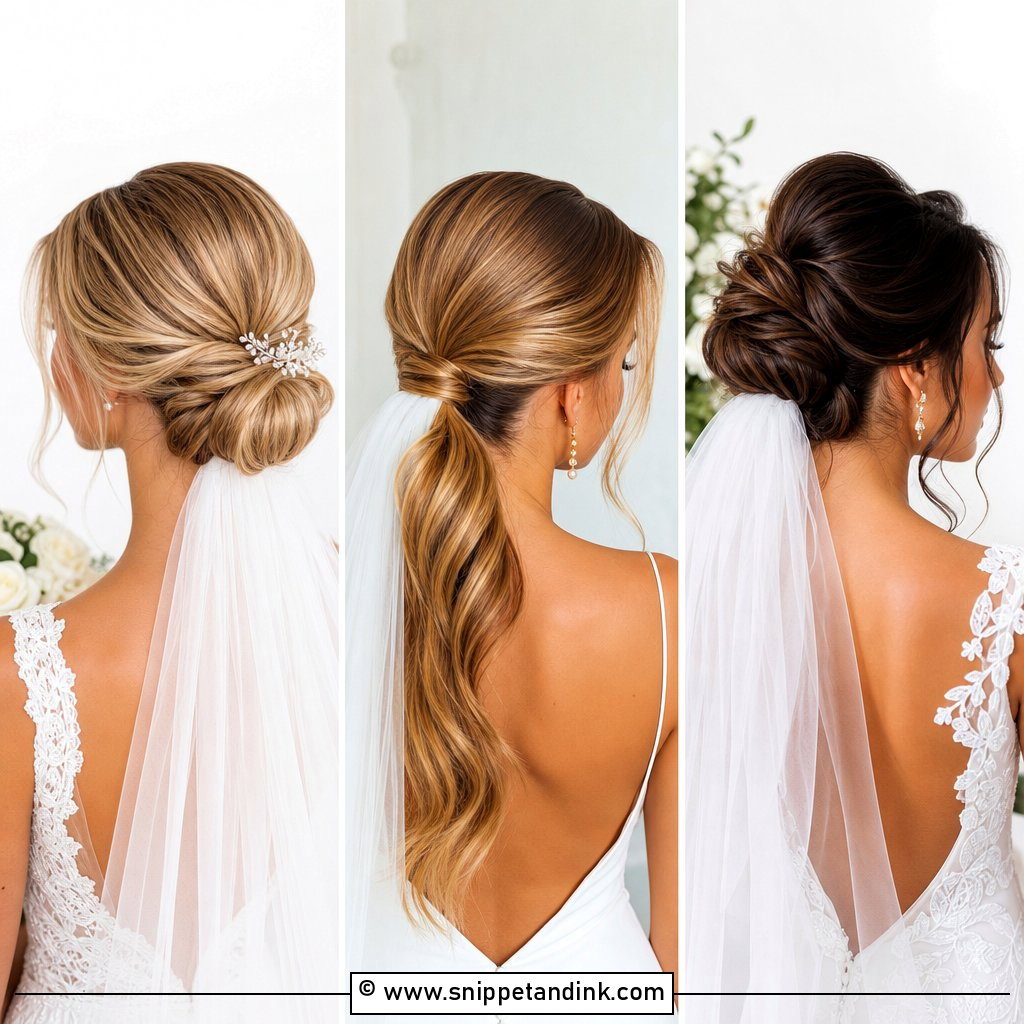
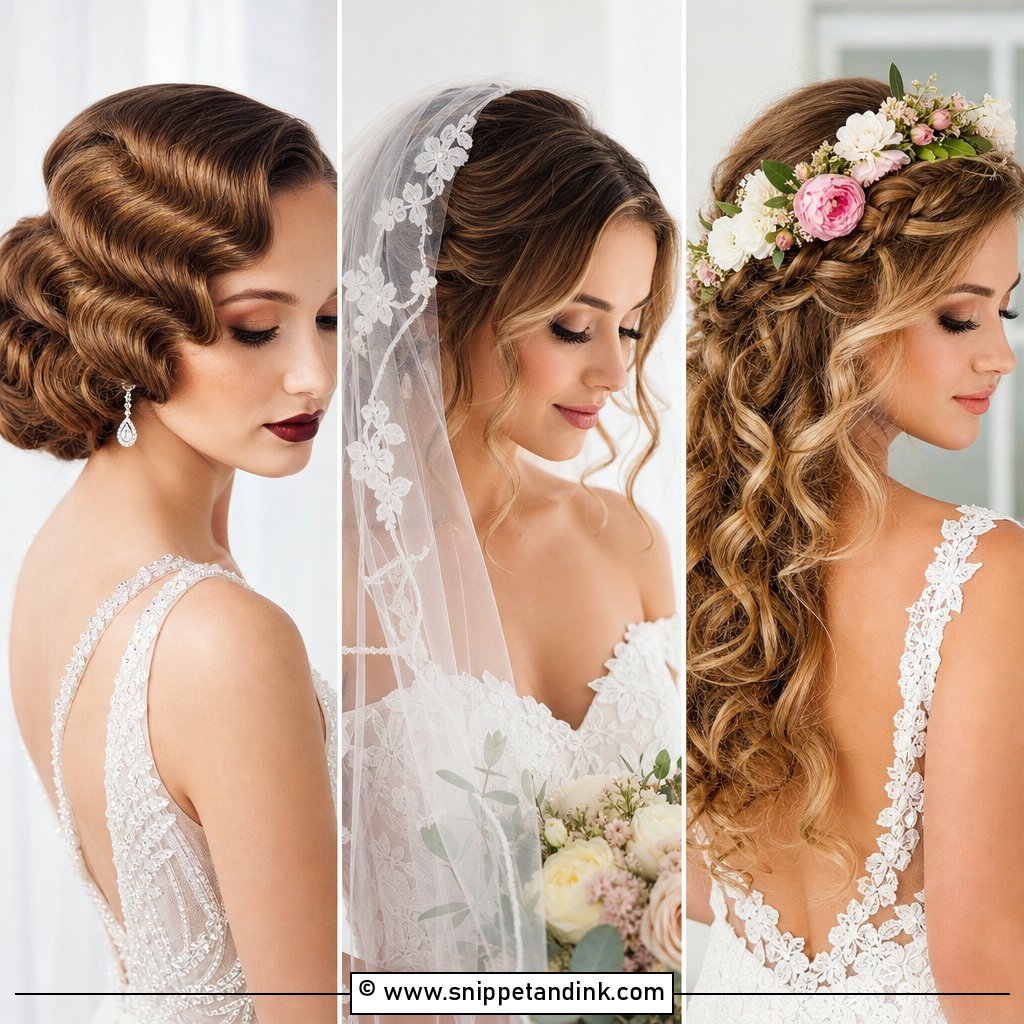
The veil changes which style you can wear, and brides often only think about it at the trial. A comb needs something to grip, and how much weight it carries depends on the veil length.
- Low bun or chignon: the comb goes just above the knot or tucked under it. This is the most secure setup for heavy cathedral veils.
- High bun: the comb slides in beneath the bun. A long veil here pulls the head back, so pick a lighter, shorter veil.
- Half-up: the comb sits right under the pinned section, where the bobby pins form a base. I add two crossed grips there first.
- All down: the hardest. I build a hidden grip base at the crown for the comb, or the veil slowly slides back.
If you want to remove the veil after the ceremony, tell your stylist at the trial so she places it to come out cleanly without dragging the style apart.
1. Classic Low Chignon for Brides
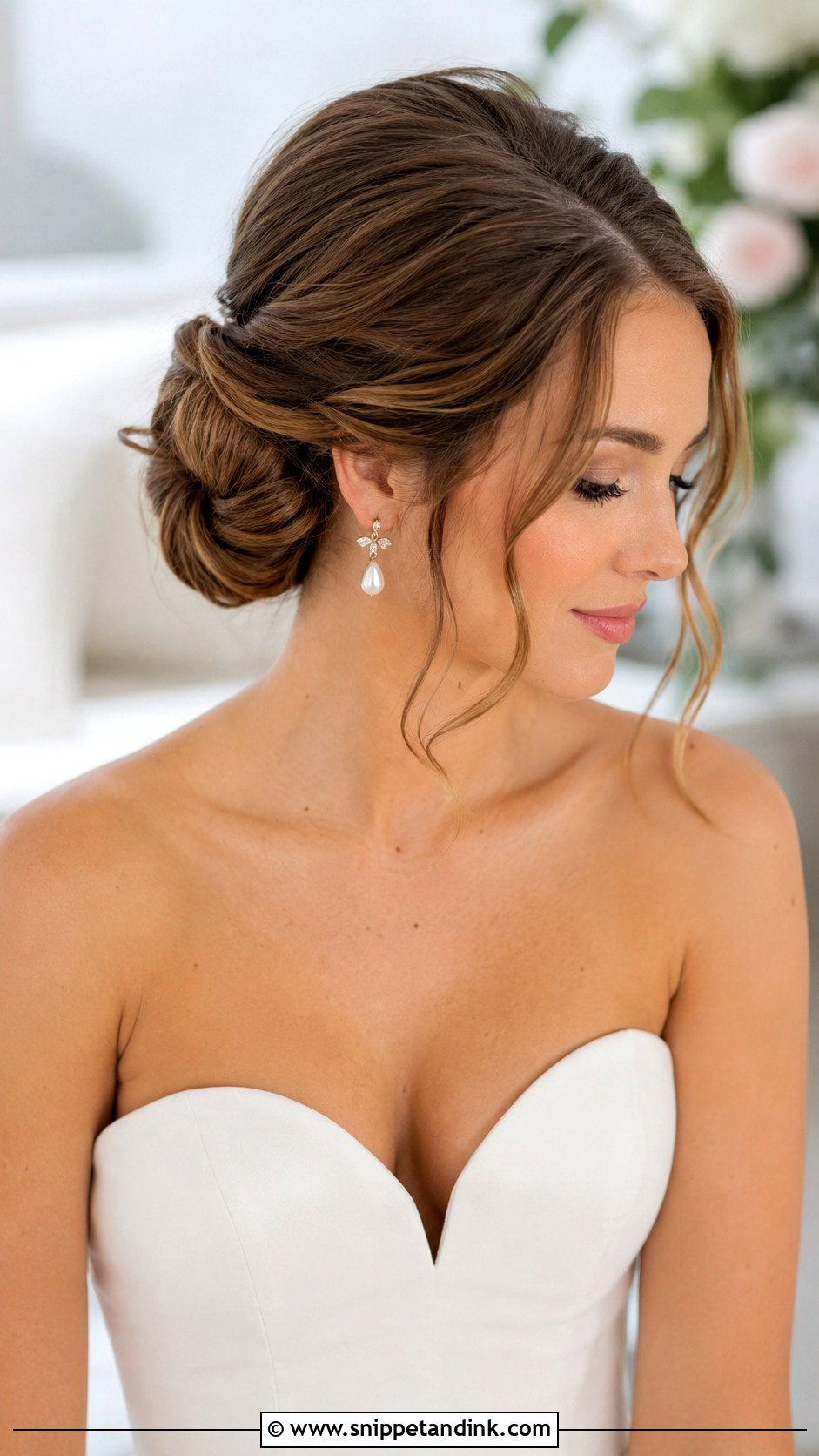
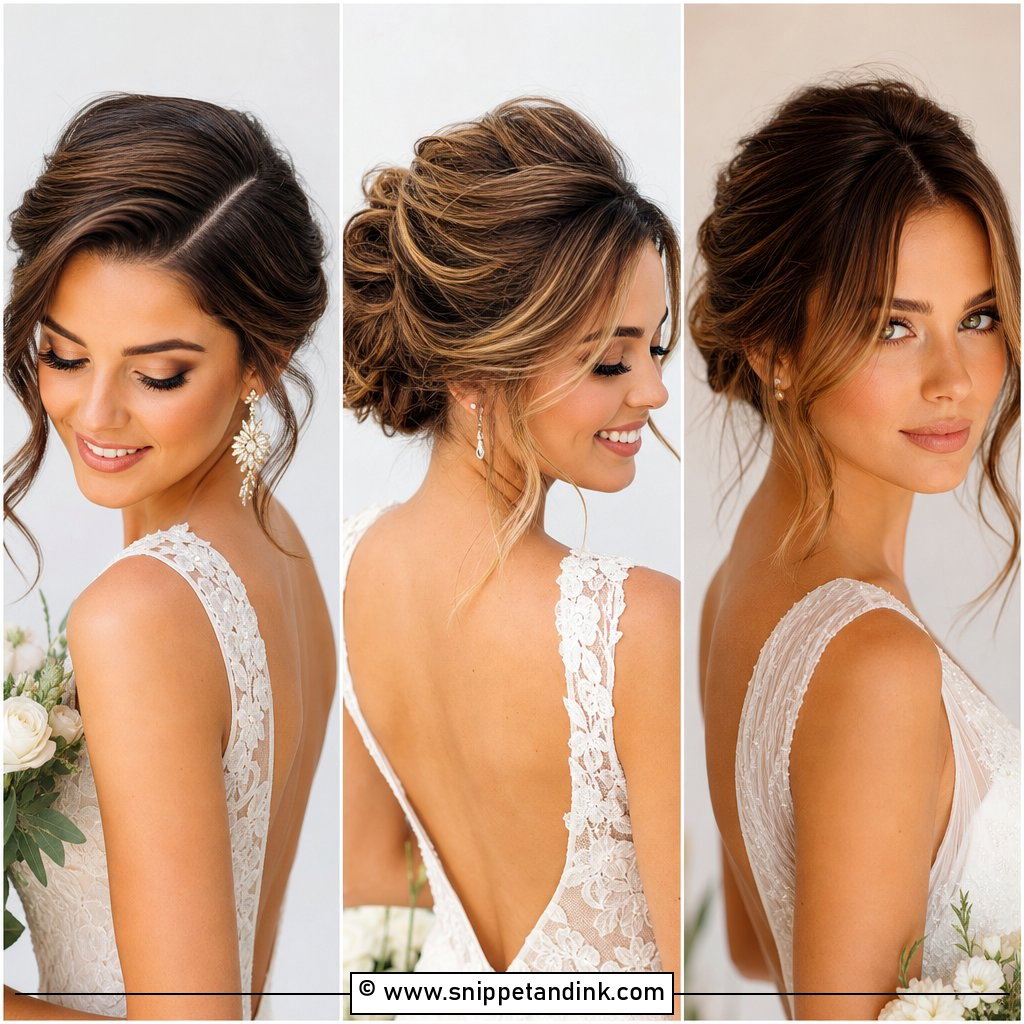
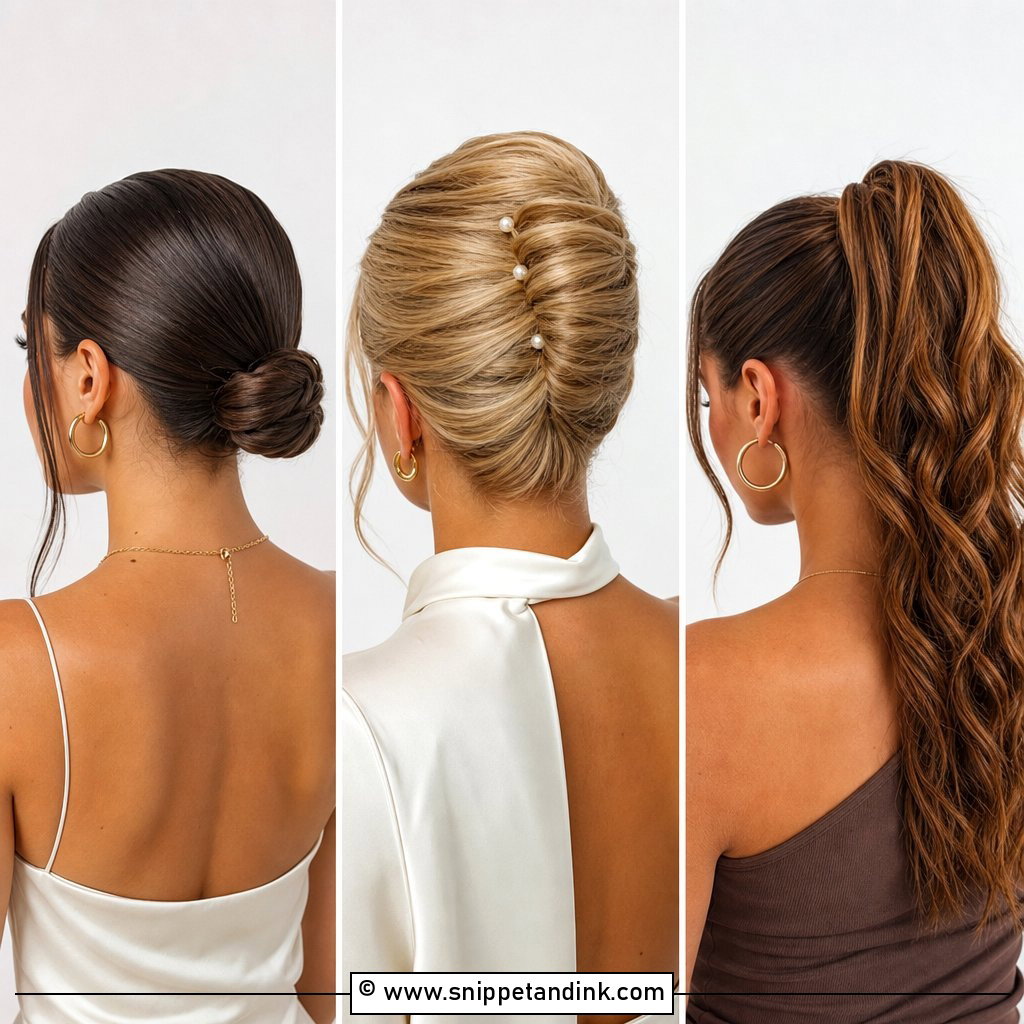
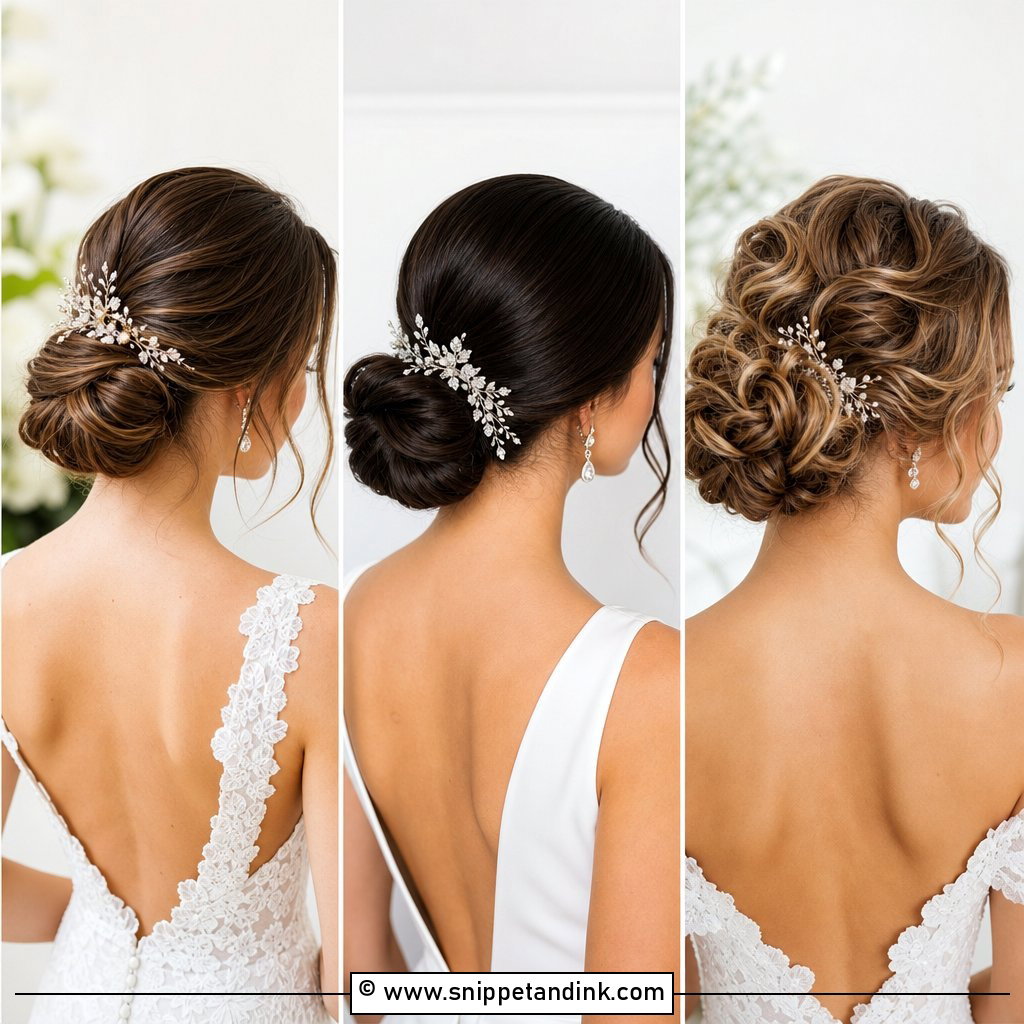
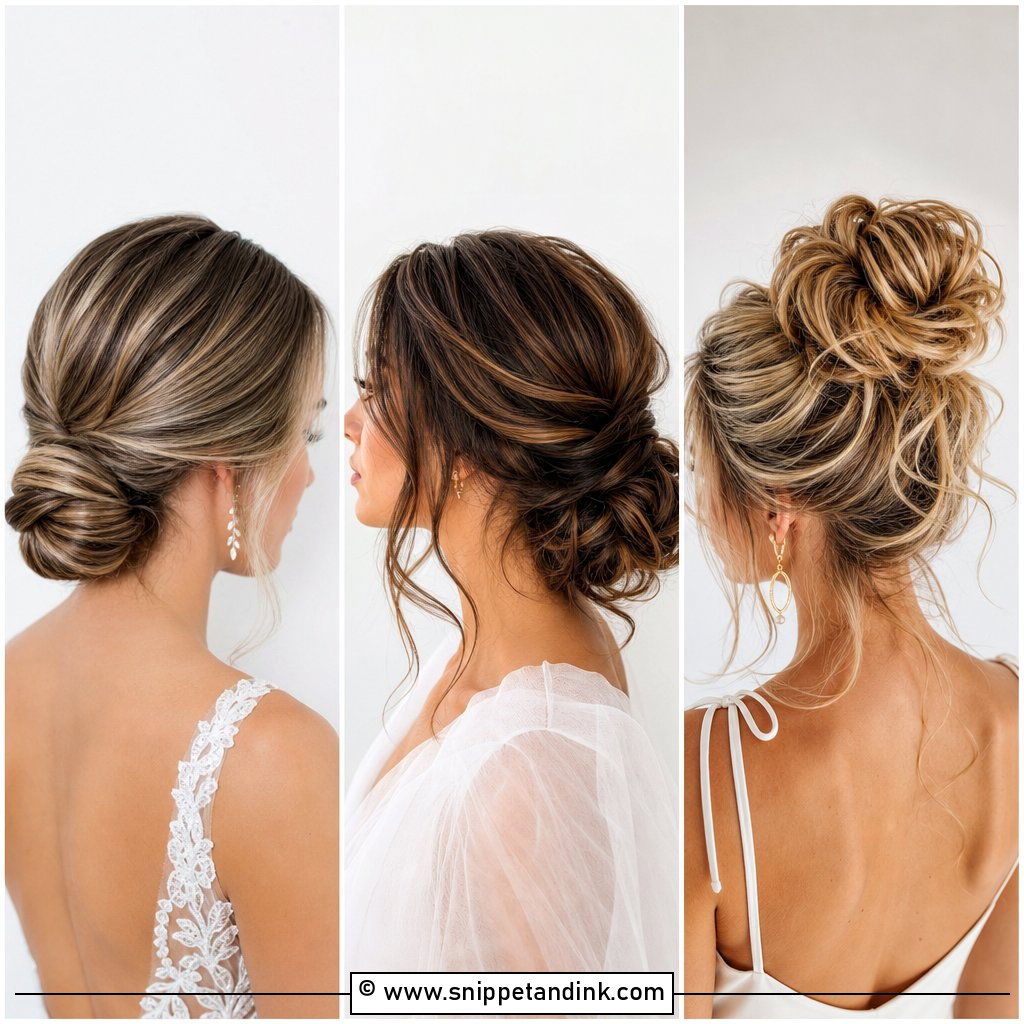
A low chignon sits at the nape and leaves the neck, shoulders and back clear, which is why I suggest it first for strapless gowns, open backs and big earrings. It is also the easiest shape to put a veil comb into, directly above the knot. Sleek and editorial or softened with a few tendrils, it holds from the morning to the last dance. On fine hair I add a mesh donut or padding inside, so the knot keeps its size from the side.
2. Messy High Bun With Face-Framing Tendrils
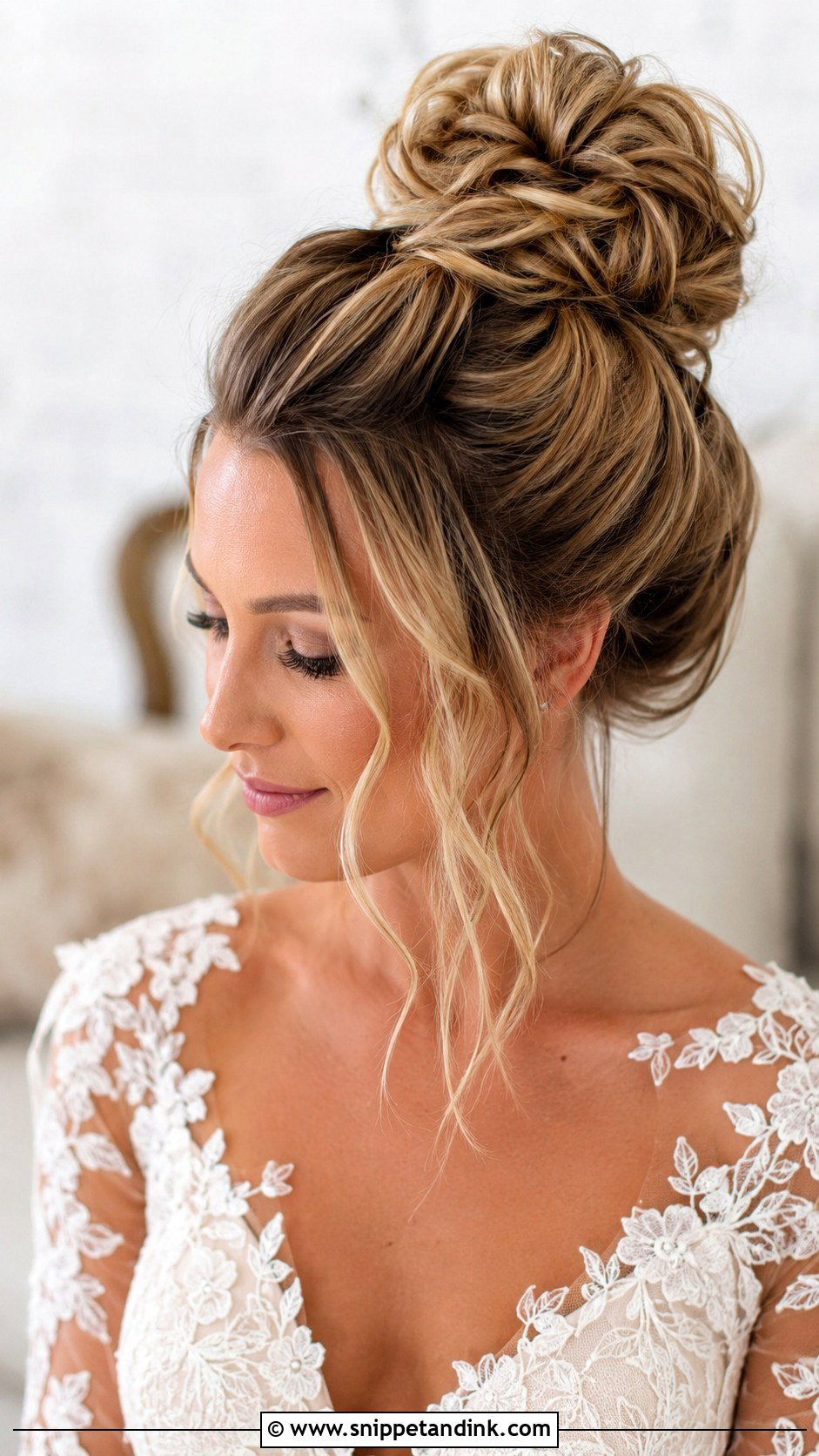
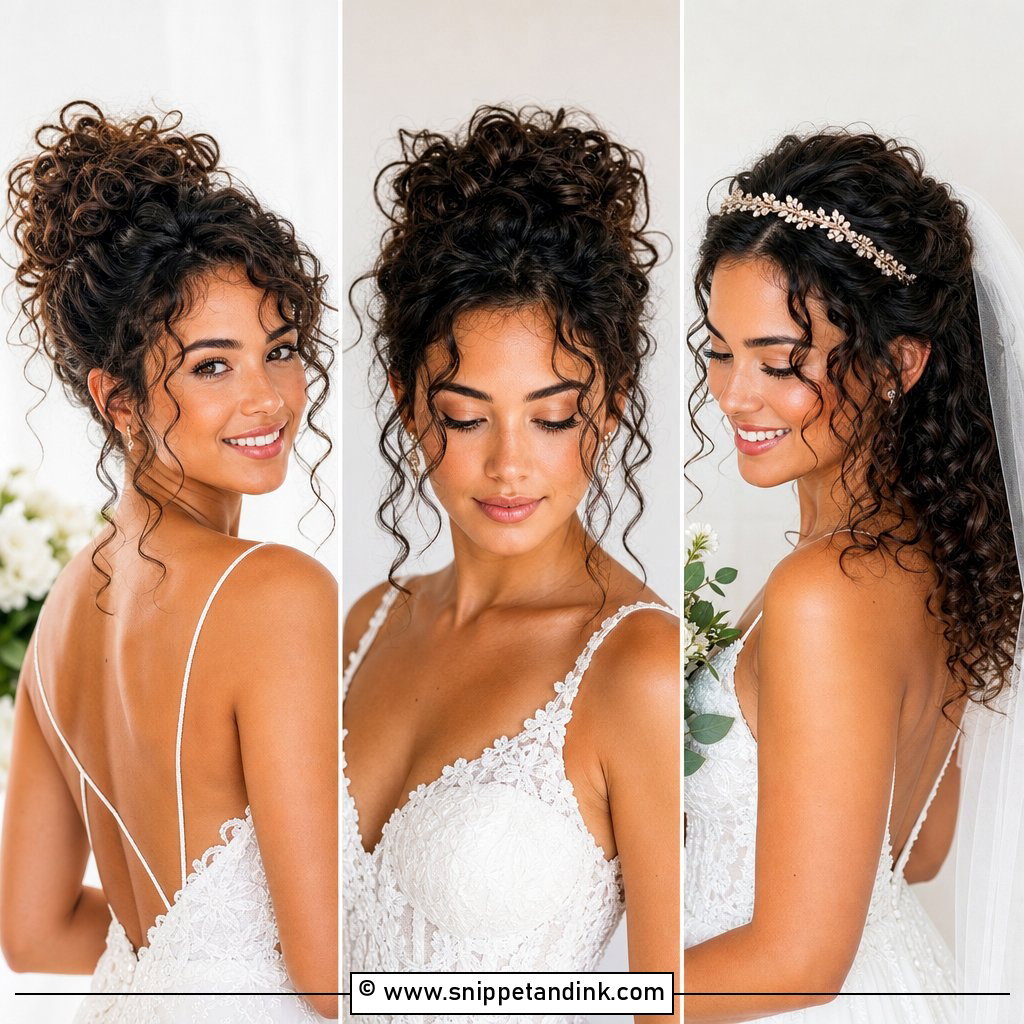
Height at the crown and a few loose curls around the face give a messy high bun its romance, and that undone finish is built in stages. I curl everything first, then gather a relaxed knot high on the head and pin it in sections. Only then do I pull pieces loose. It suits barn and outdoor weddings. The trade-off: a high bun leaves no room for a veil comb at the back, so plan on a veil that sits underneath it or none at all.
3. Hollywood Waves for Wedding Day
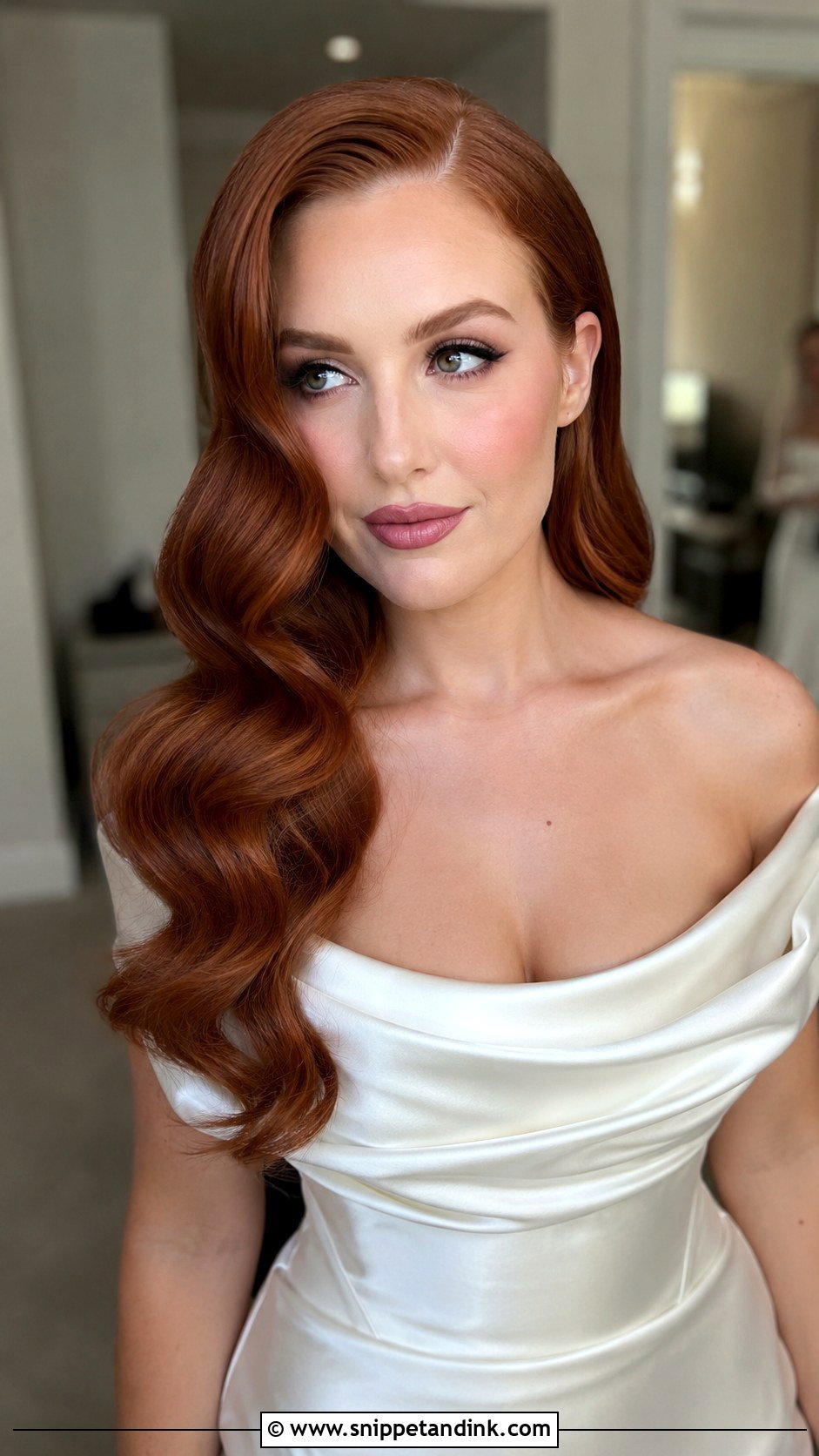
Hollywood waves are uniform S-shaped waves brushed into one glossy mass, and they are a lot more structured than they look. I set them in pin curls all going the same direction, let them cool fully, then brush them out with a boar bristle brush and clip the ridges while the spray sets. Medium to long hair shows the shape best, with a deep side part. Humidity is the risk; on a damp day the ridges soften within a few hours, so I suggest this for indoor and evening weddings.
4. Sleek Ballerina Bun With Center Part
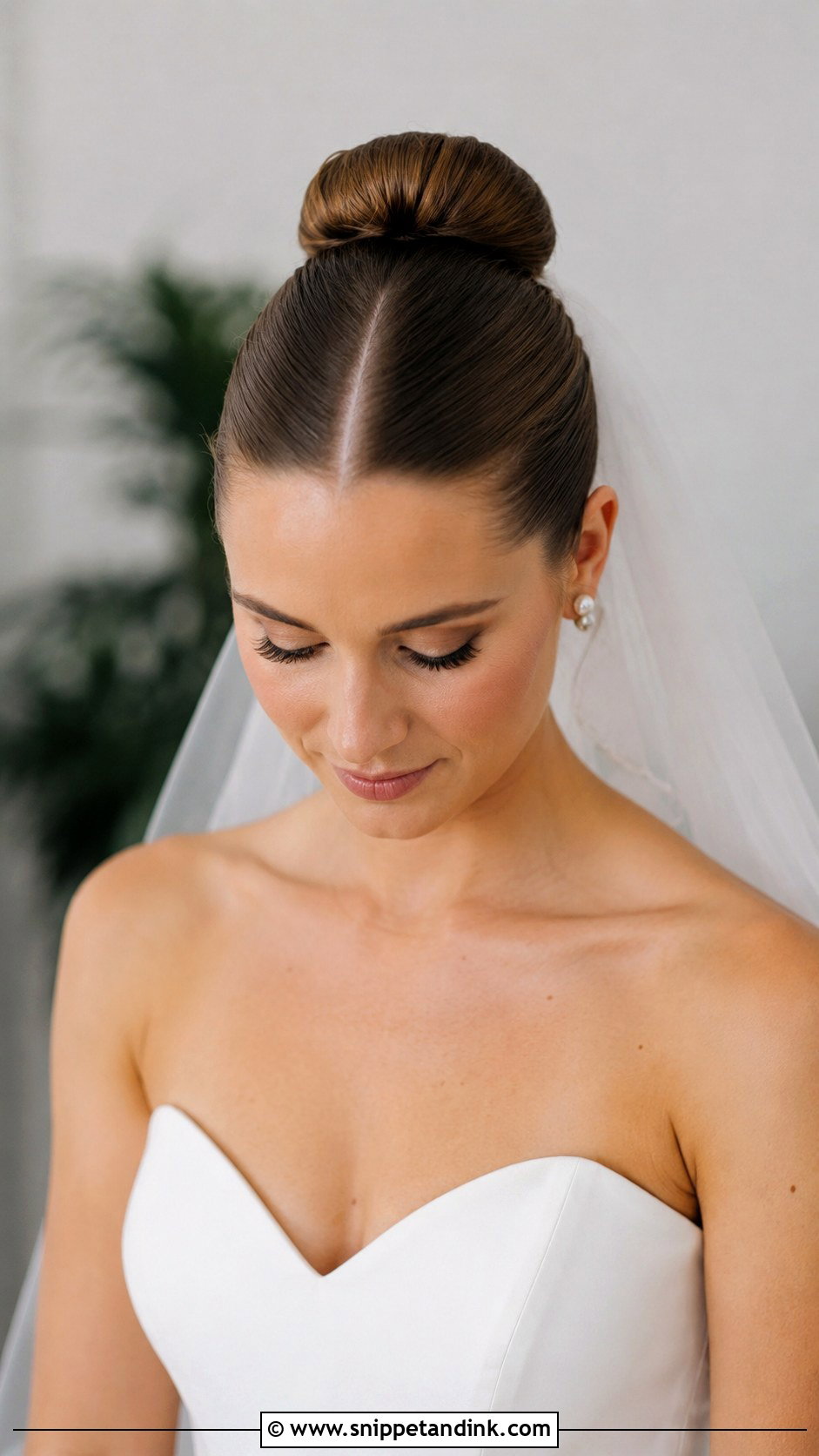
A ballerina bun is a center part, every strand smoothed back, and a tight bun at the crown or mid-height. It elongates the neck and shows the whole face, which means your skin and brows are on full display. I use a fine-tooth comb and a light gel at the hairline and finish with a tiny bit of hair wax on a toothbrush for flyaways. It holds through anything. The one thing it doesn’t suit is a very high forehead or a widow’s peak that you would rather soften.
5. Half-Up Half-Down Bridal Style
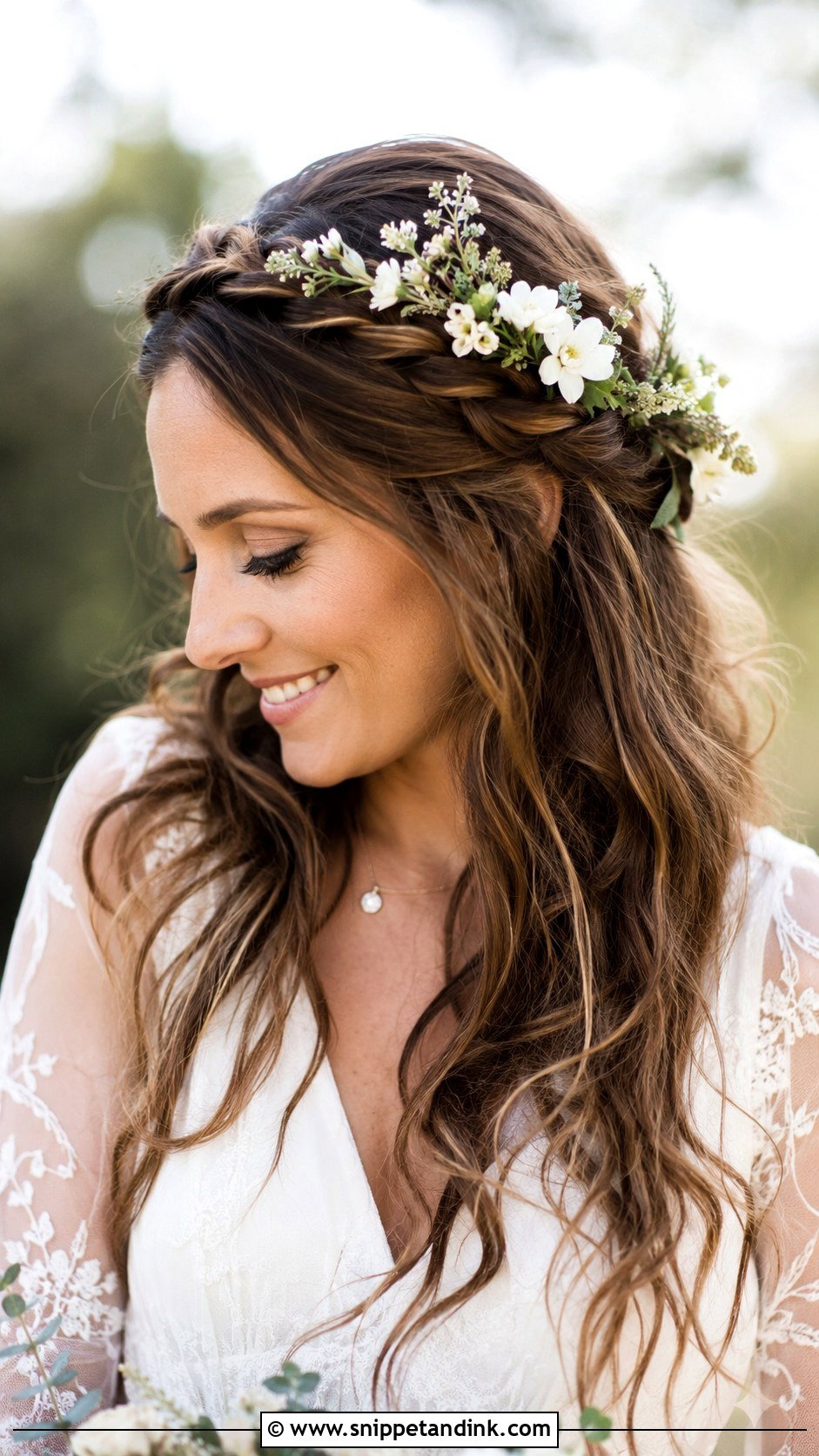
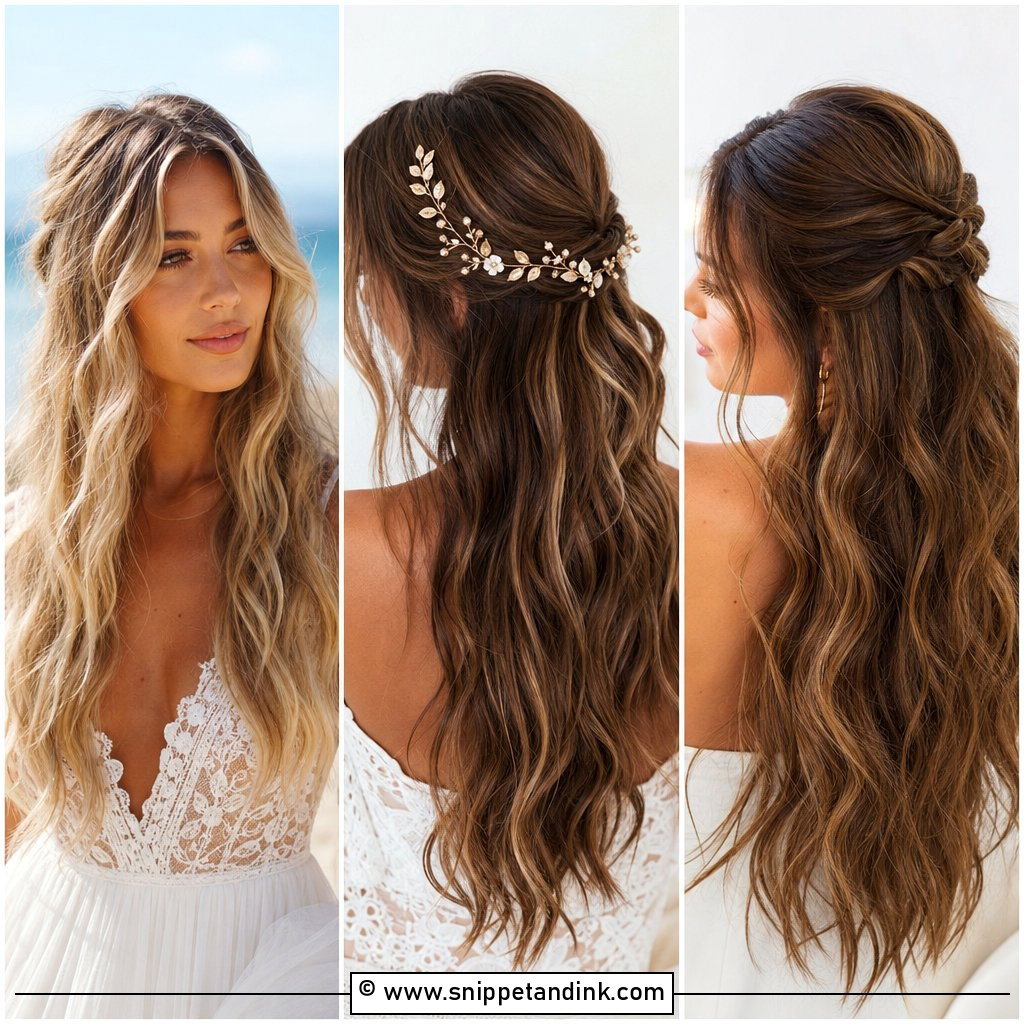
Half up, half down is the style I steer undecided brides toward. The crown section is pulled back into a twist, a small braid or a mini bun, and the rest falls in waves. It keeps hair off your face and gives a veil comb an anchor right under the pinned section. Its weakness is longevity on very fine or freshly washed hair, because the curls below drop. I build the pinned base with crossed bobby pins so the veil doesn’t pull the twist down.
6. French Twist Updo for Brides
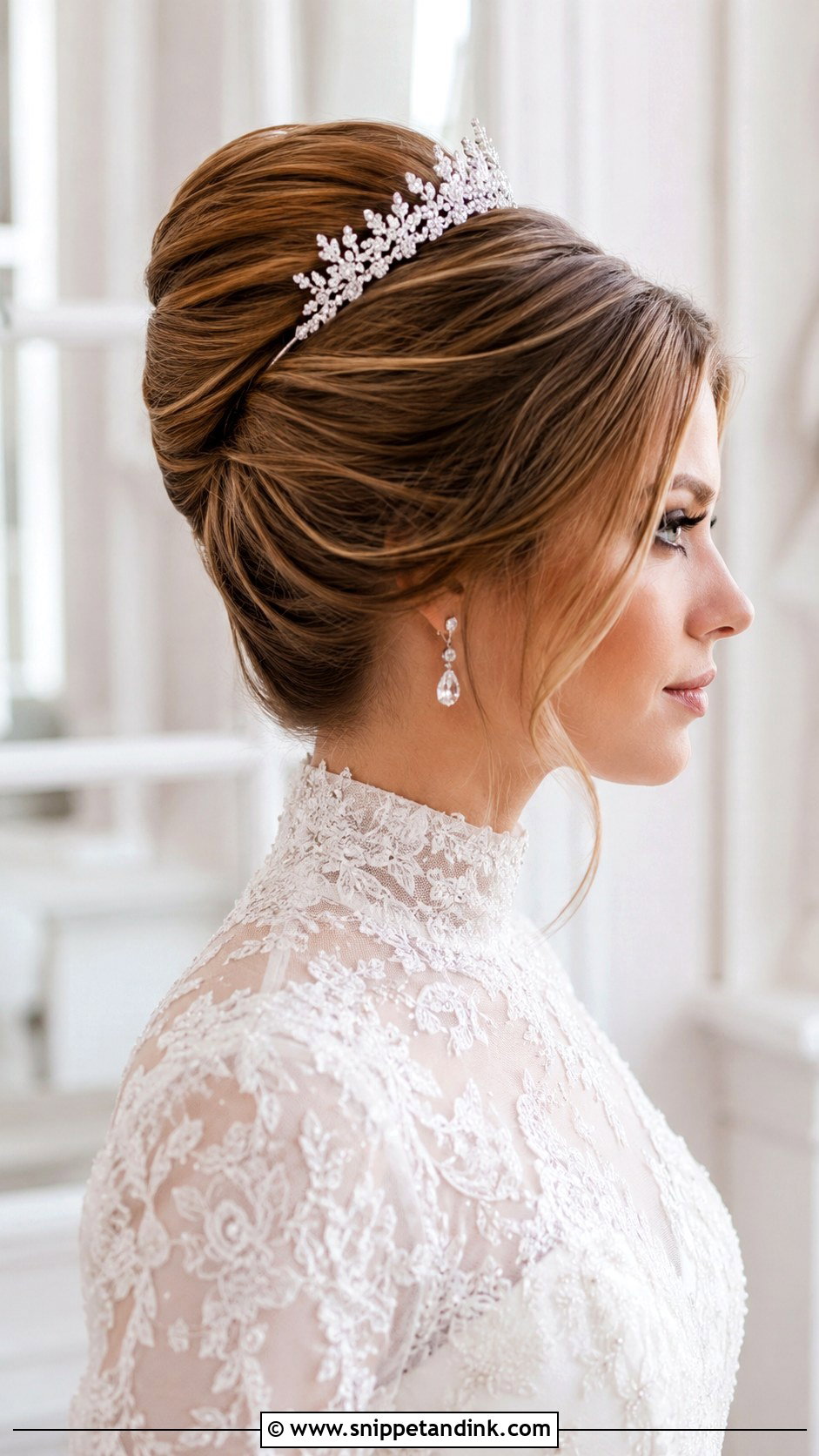
A French twist folds the hair vertically up the back of the head and pins it into one long roll. It is the most formal shape on this list and sits well with tiaras, high necklines and cathedral veils. What it needs is length to reach the crown and a bit of grip, so I prep with texturizing spray before rolling. Very thick hair can make the roll too wide; I sometimes thin out the underneath section with pins before twisting.
7. Boho Braided Crown for Weddings
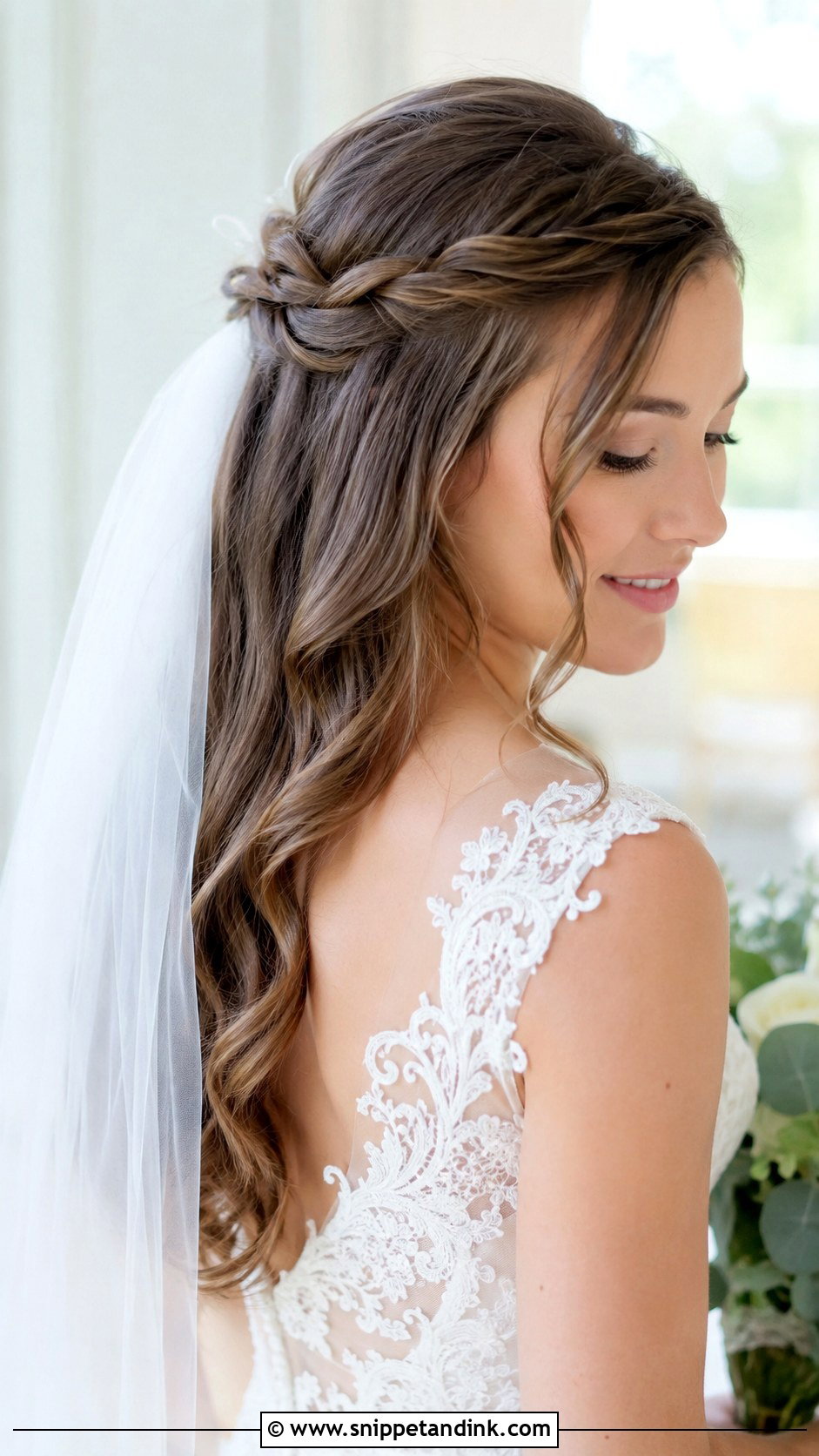
A braided crown wraps a plait over the top of the head and is pinned all the way along, so it stays put through dancing and wind. It suits outdoor and festival-style weddings, and it takes fresh flowers or greenery well. Long hair is needed to go fully round; on shorter lengths I use two Dutch braids that meet at the back instead. Wear it with loose waves underneath or with everything gathered up.
8. Low Textured Ponytail for Brides
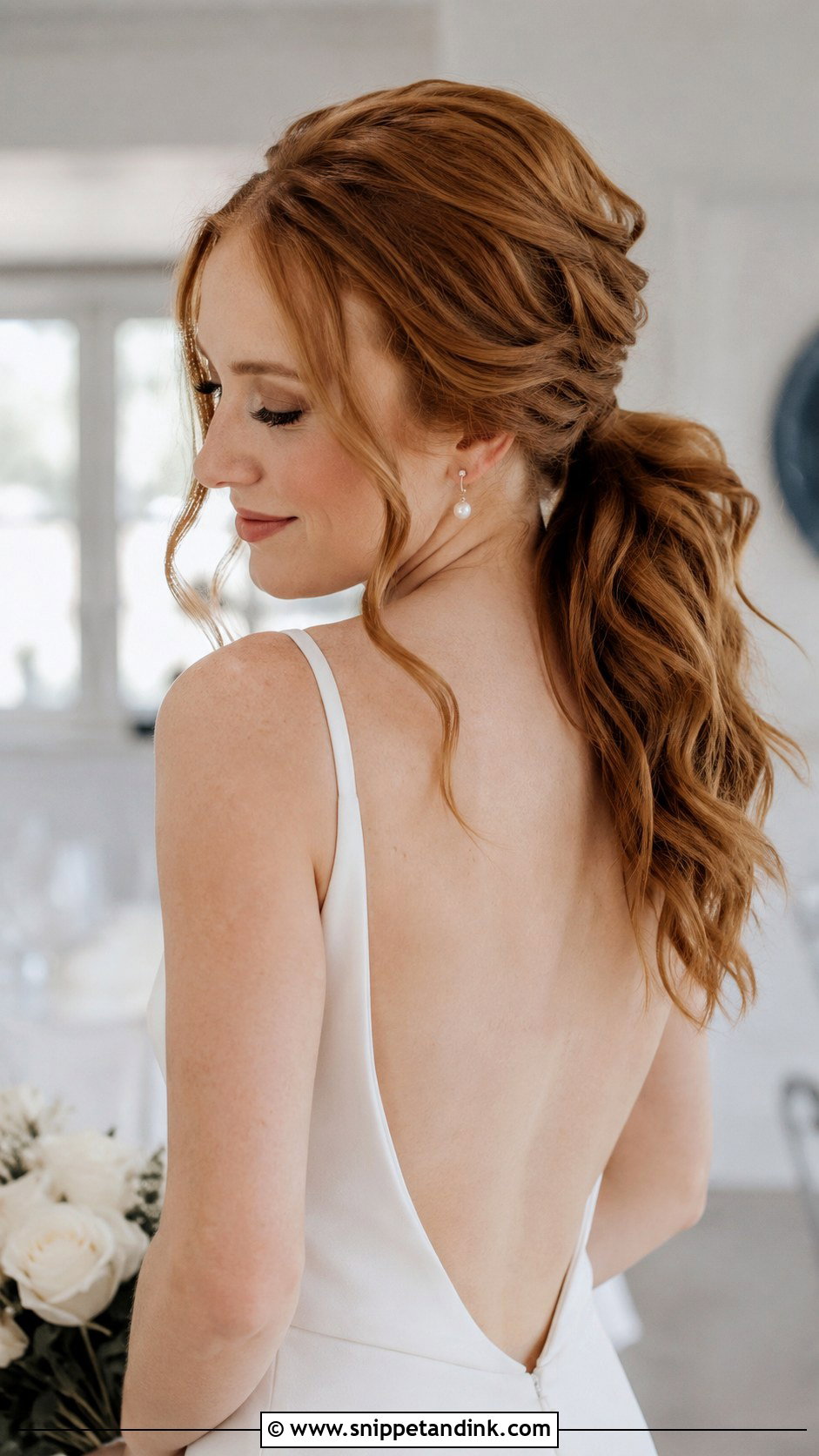
A low textured ponytail needs curl first, then gentle gathering at the nape so it looks soft rather than scraped back. I wrap a small strand round the base and pin from underneath to hide the elastic. It shows off open backs and statement earrings, and it is the most comfortable style here if you can’t stand pins. The thing to know is that hair with heavy layers tends to escape a low pony through the day, so I leave a couple of face-framing pieces loose on purpose.
9. Fishtail Braid Wedding Hairstyle
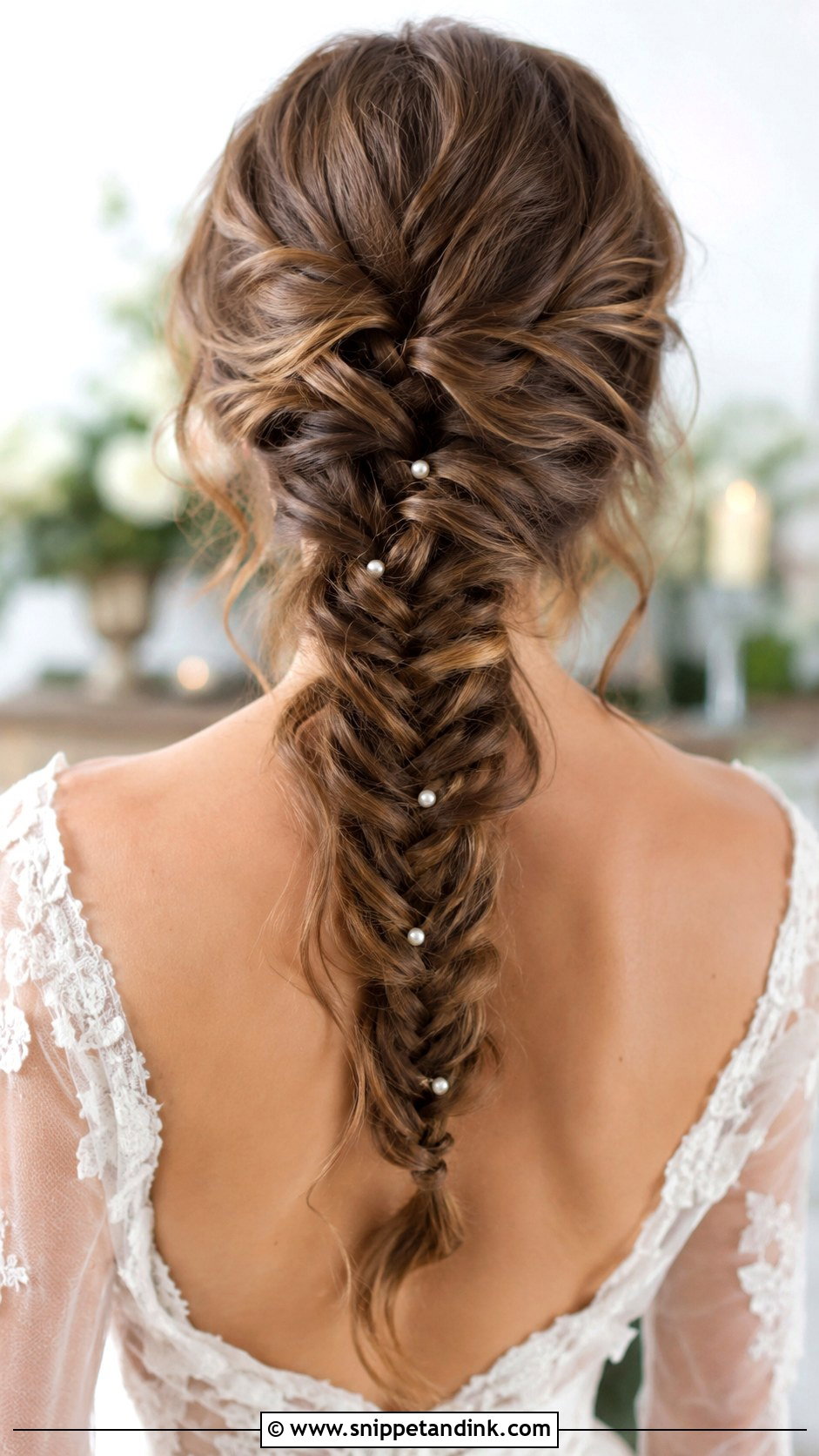
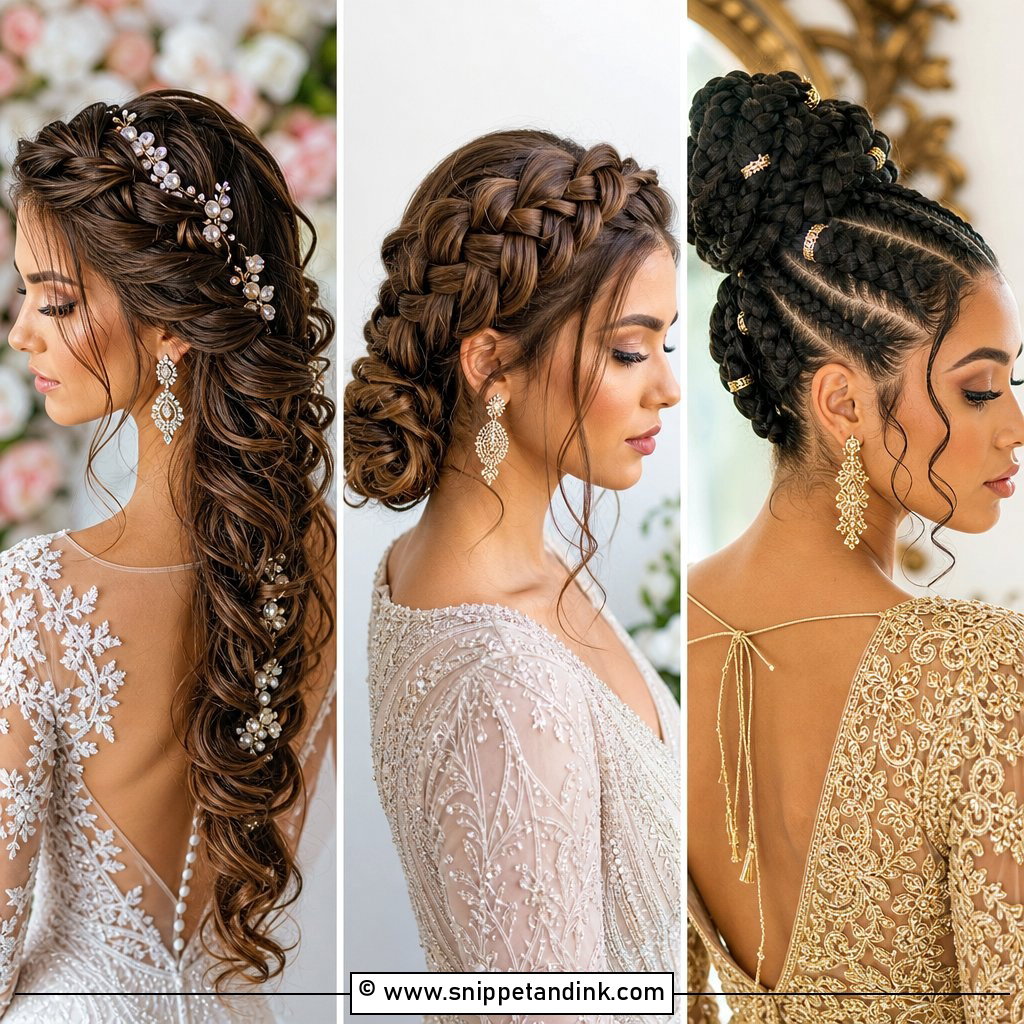
The fishtail braid looks complicated but uses just two strands, crossed in small pieces, which gives that herringbone pattern. I tie it off and then gently pull the edges to widen it. Worn down the back or worked into an updo, it suits long, thick hair best. Tiny pearl pins or small flowers can be added between the sections. On very fine hair the pattern can look thin from a distance, so ask for clip-in pieces if the braid feels sparse.
10. Soft Romantic Curls for Long Hair
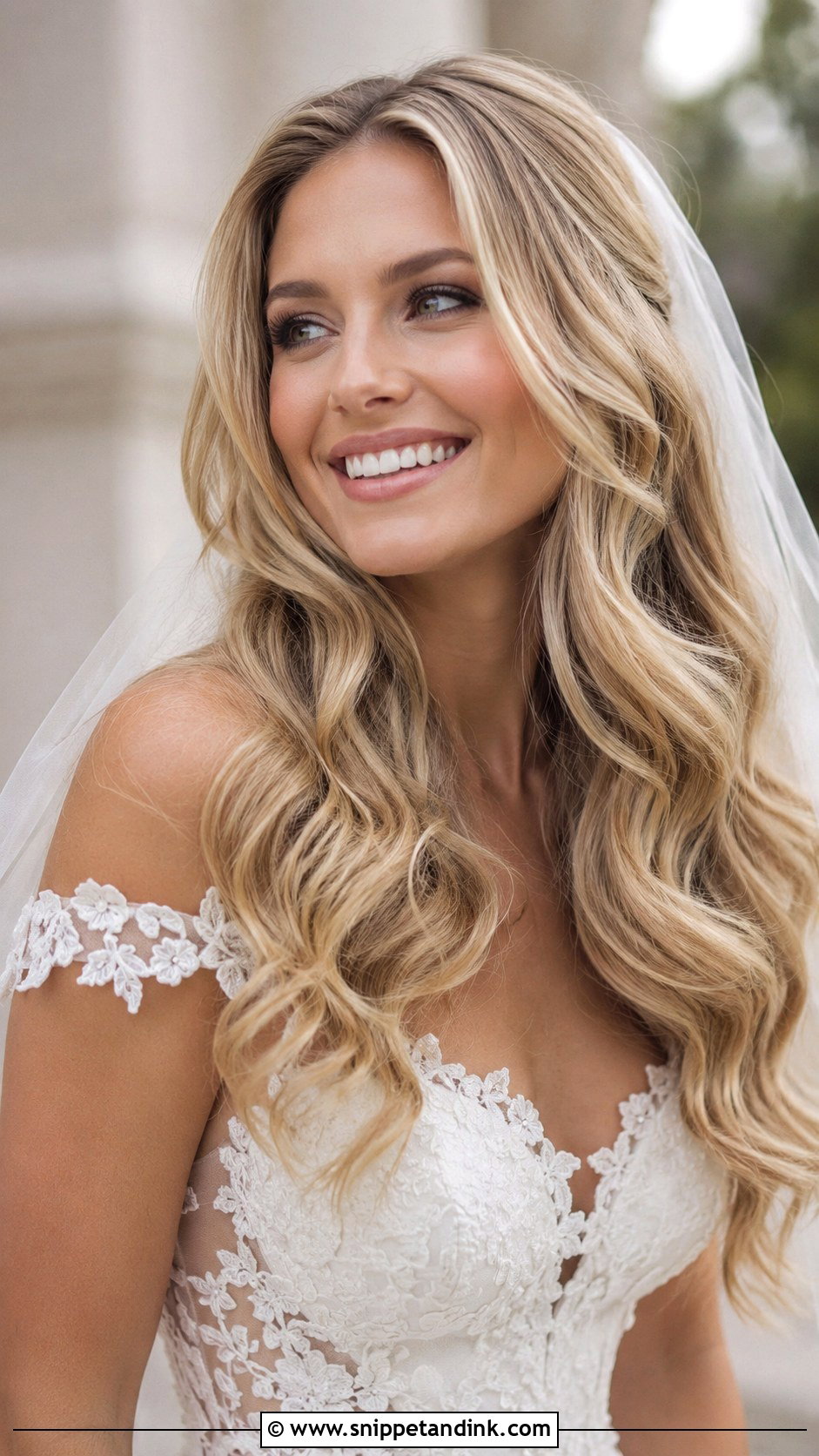
Down curls are what most brides picture, and the hardest style here to keep looking fresh by evening. I curl in sections no wider than an inch, pin every curl while it cools, and then brush them out with fingers. You can wear them fully down or with one section pulled back. A veil comb needs a grip base underneath to hold in curled hair. Brides with long, healthy hair get the best result; very fine or heavy, straight hair tends to lose its curl by the reception.
11. Sleek Low Bun for Modern Brides
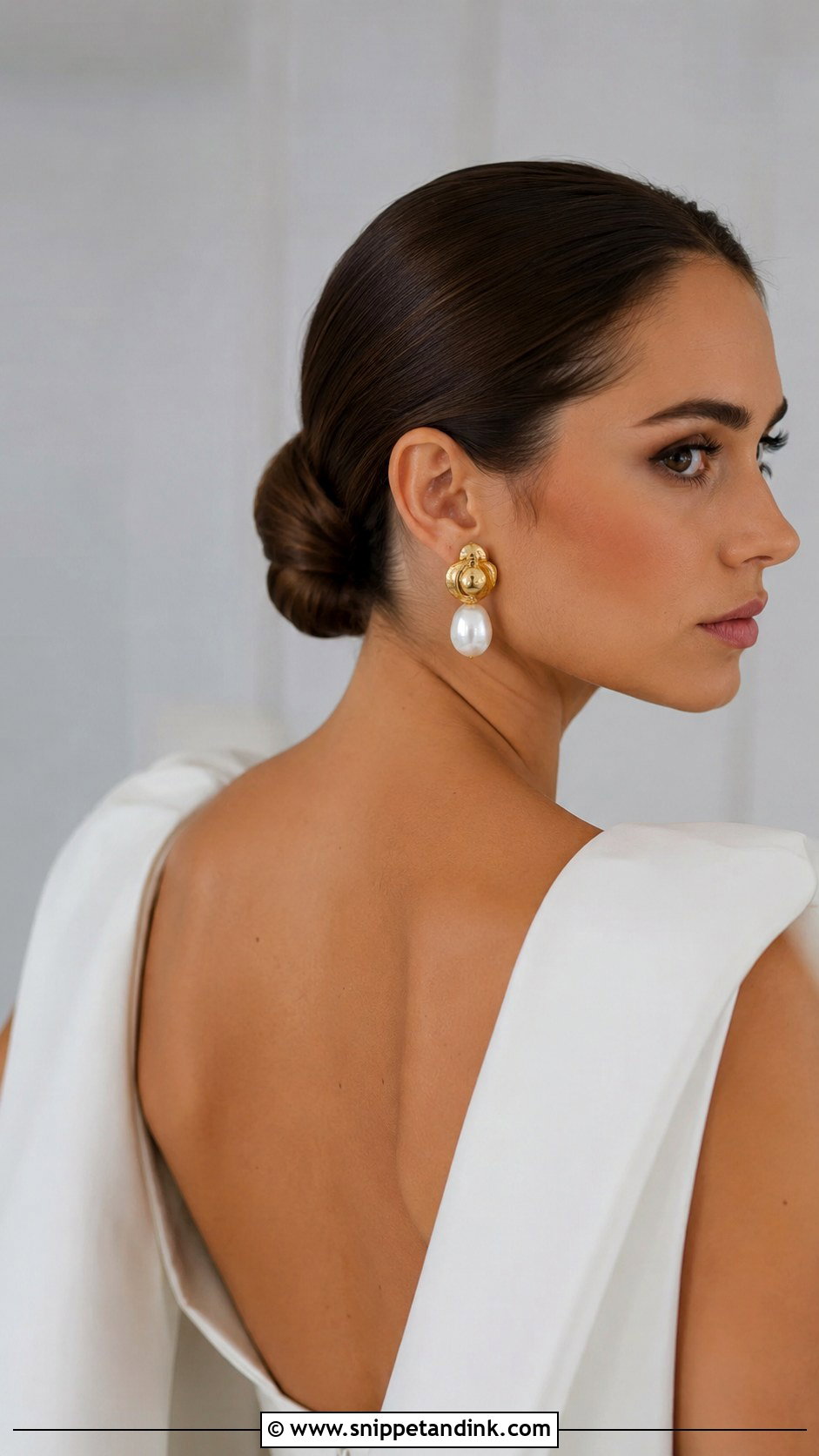
A sleek low bun is built from hair smoothed tightly back and knotted at the nape. It suits structured, minimal gowns and big jewelry. Nothing moves, whether you are walking down the aisle or dancing. I smooth the hairline with a little gel, tie the ponytail first, and only then twist the bun, which keeps the shape tight. Cathedral veils sit neatly just above it.
12. Vintage Finger Waves for Brides
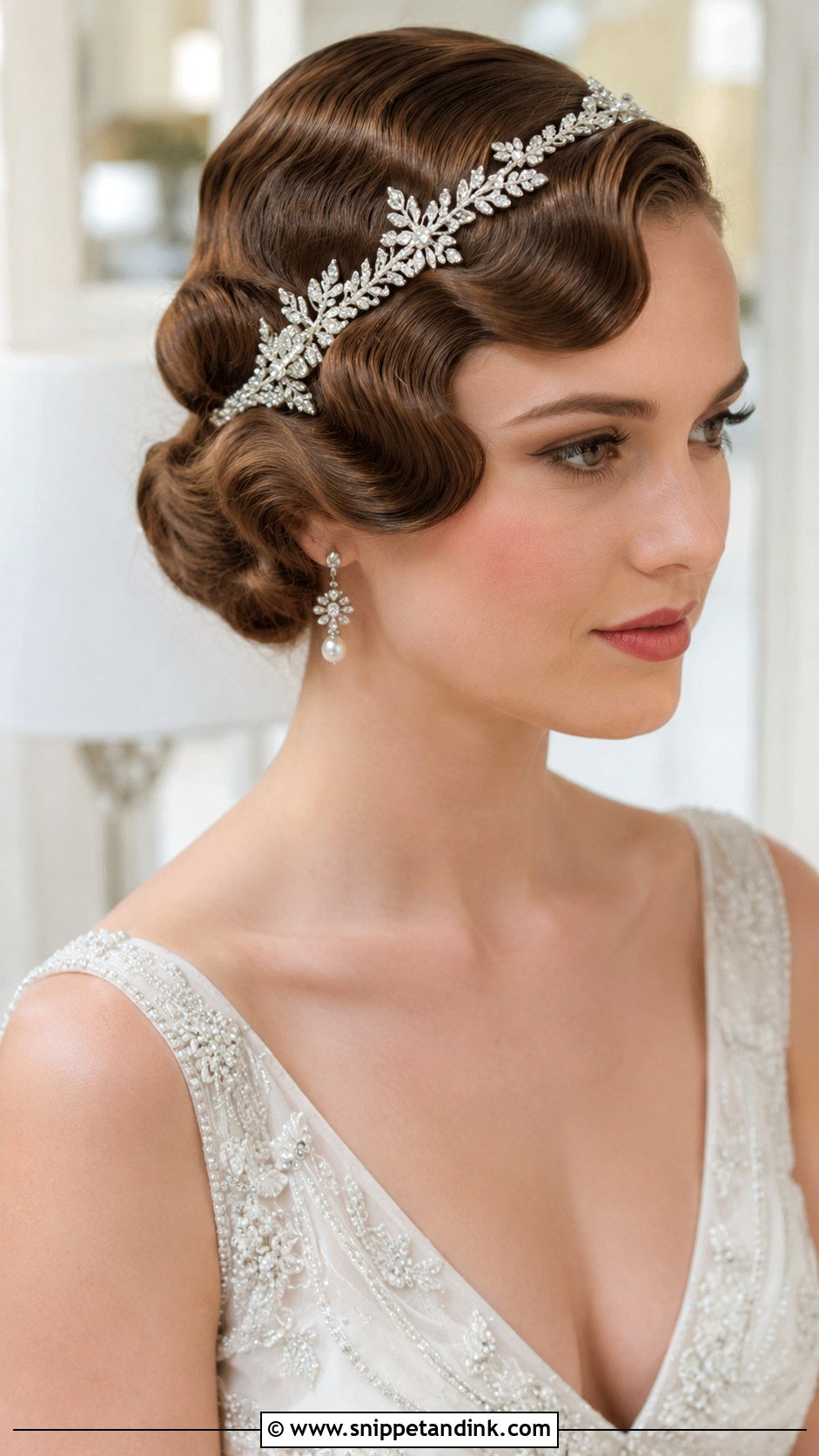
Finger waves are flat S-shaped ridges set with gel and a comb, and they suit short hair and bobs better than almost any other formal style. I set them wet and let them dry completely before touching them; brushing them too soon flattens the ridges. A jeweled comb or headpiece sits well in the side part. This style really depends on your stylist’s skill, so ask to see her own photos of finger waves before booking it.
13. Dutch Braid Updo for Weddings
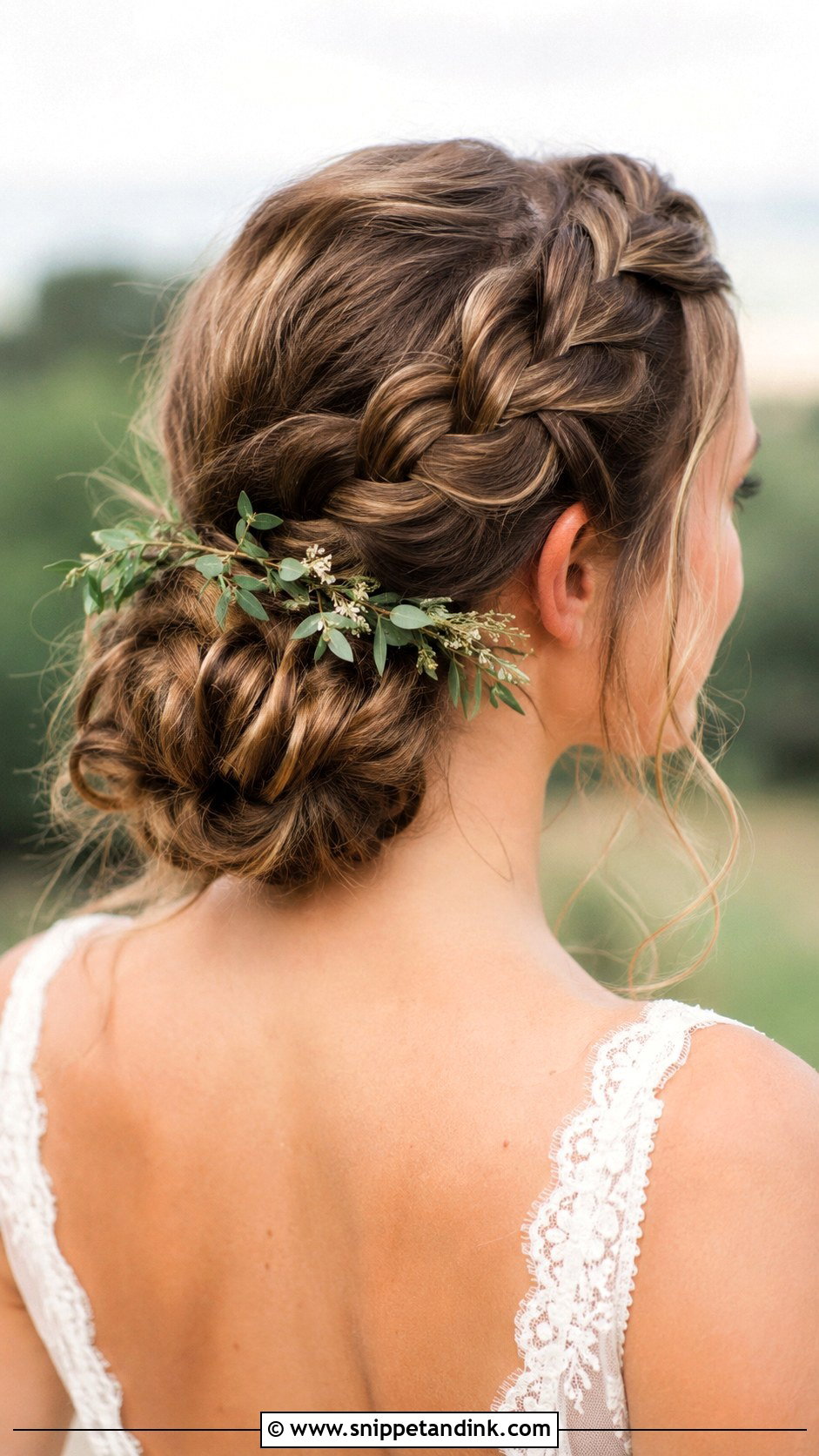
A Dutch braid crosses strands underneath rather than over, so the plait sits raised off the head. I use it in updos to give the shape a structure that holds by itself. It suits boho, rustic and outdoor weddings, and tucks into a low bun or wraps round the crown. Pancaking the braid (pulling the edges wider) makes it look fuller. Greenery and small flowers slide into the raised plait easily.
14. Tousled Updo With Loose Pieces
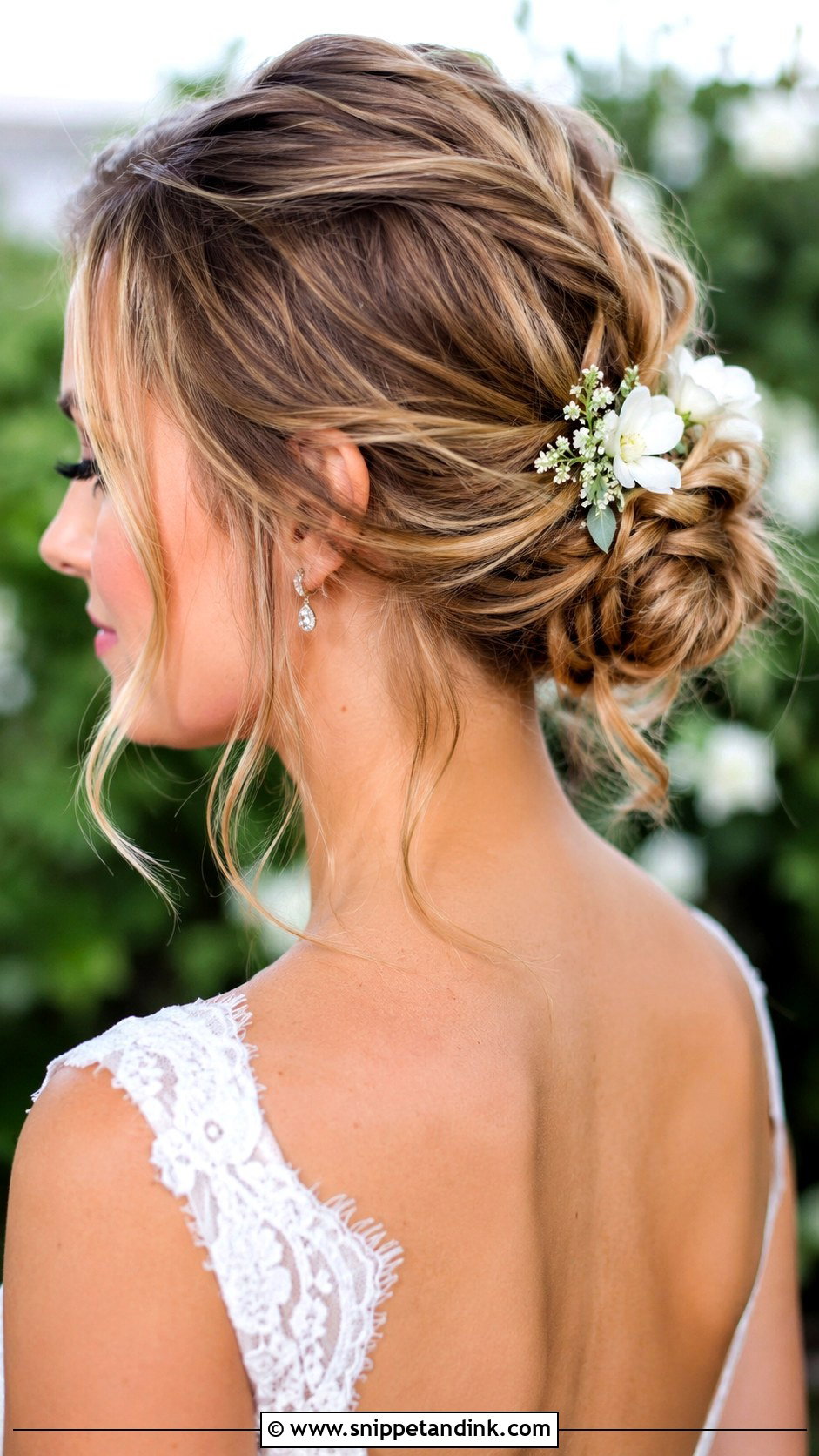
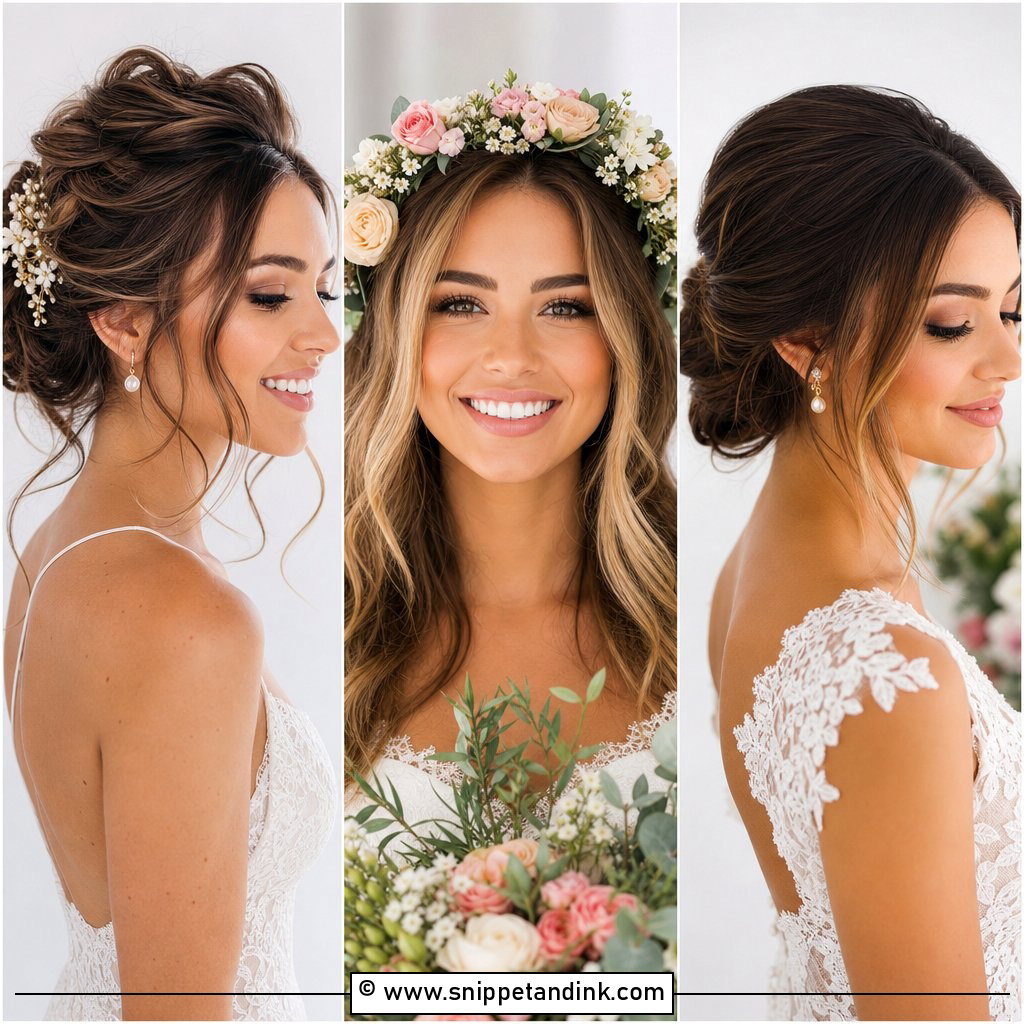
A tousled updo is a textured knot or twist with loose pieces around the face, the soft romantic look many outdoor brides ask for. Its relaxed look depends on a firm base: I pin the core of the updo tight, then pull pieces out around it. If the whole thing is loose, it just slides down by the evening. It suits garden and vineyard ceremonies, with floral accessories and a soft veil.
15. Sleek High Ponytail for Brides
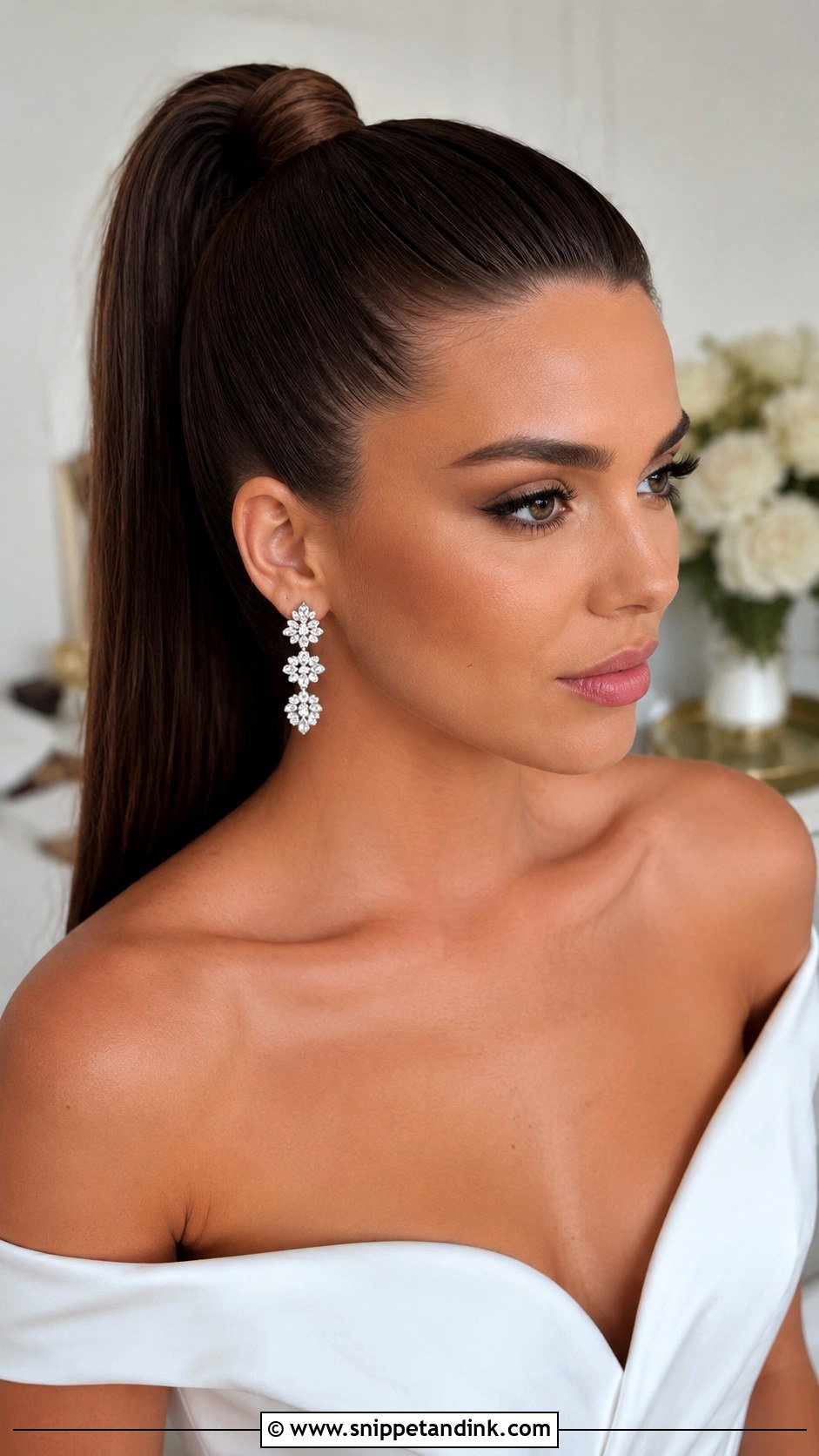
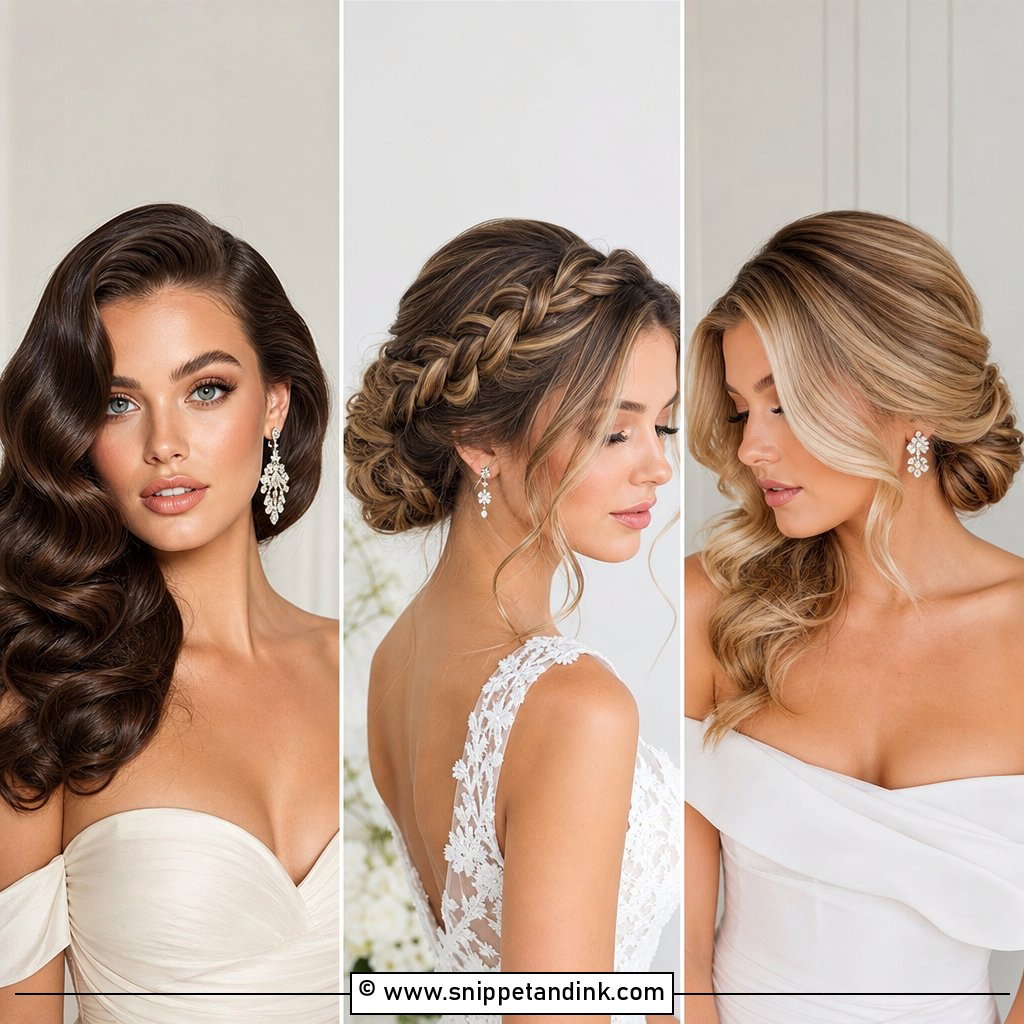
A sleek high ponytail pulls everything up and lifts the features. It looks strong with modern gowns and statement earrings. I wrap a strand round the base and hide the grip underneath. The risk is weight. Thick or very long hair makes a high pony heavy, so I stack two elastics and pin the base to the scalp. It stays secure through dancing, but expect a slight ache after many hours if the pony is tight.
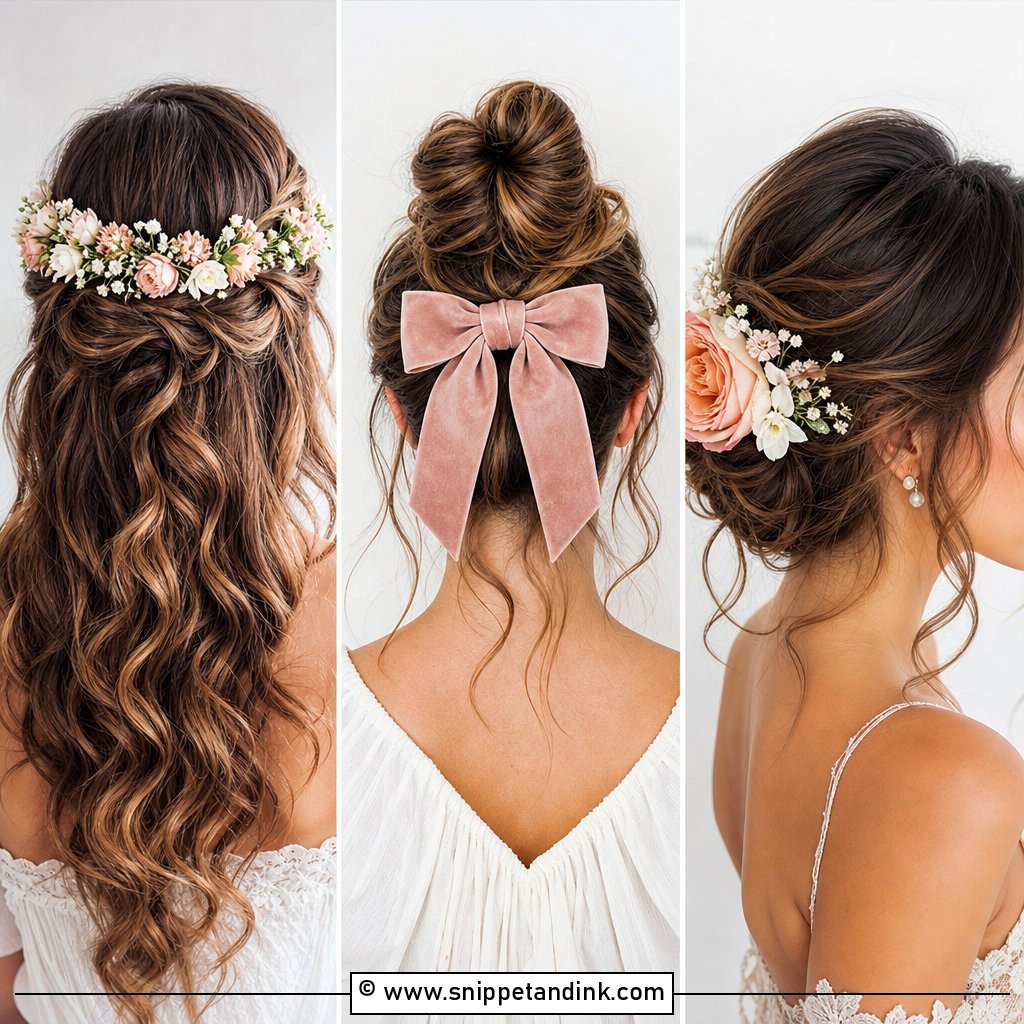
16. Floral Adorned Wedding Updo
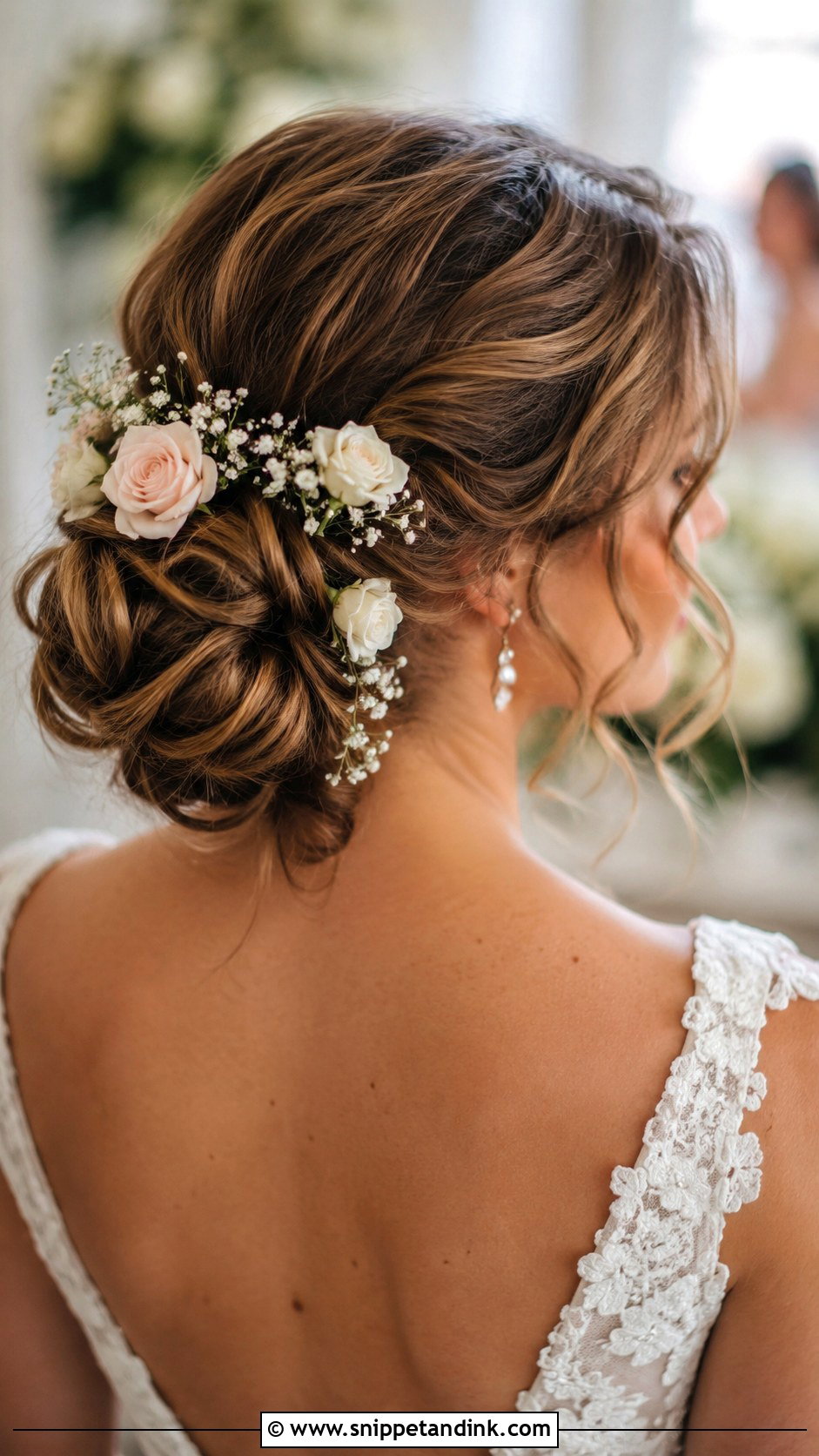
Fresh flowers in an updo give a garden feel, and they replace a hairpiece altogether. I use hardy blooms like baby’s breath, spray roses or greenery, prepared by the florist and kept chilled until the last minute. Soft petals like gardenias brown quickly against warm skin and hair. A floral-adorned updo can be loose or polished; I wire the flowers to bobby pins so they can be removed later without pulling the style apart.
17. Side-Swept Curls for Brides
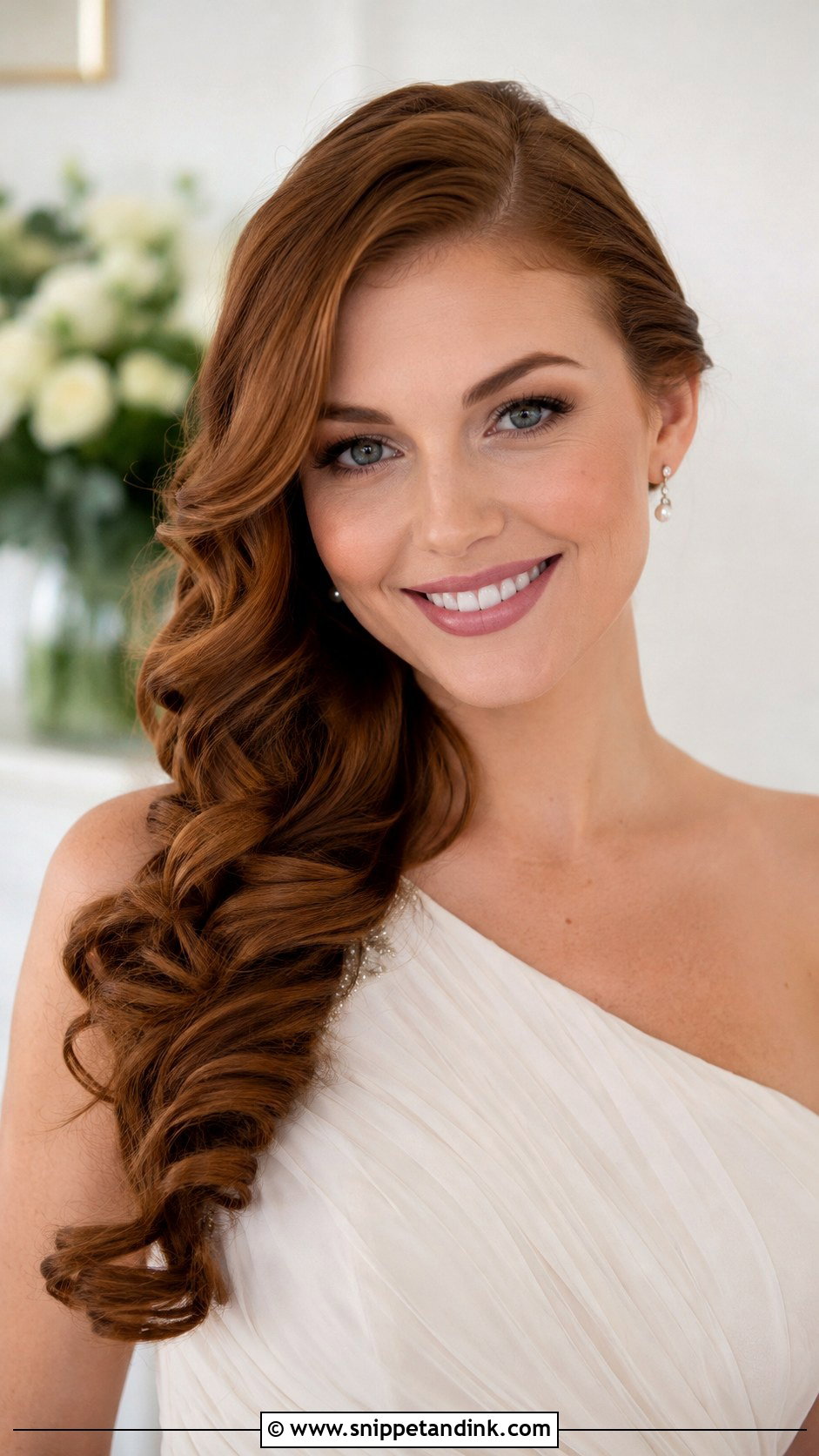
Side-swept curls gather full curls over one shoulder, an old Hollywood look that suits one-shoulder and asymmetric gowns. I set the anchor first, a row of crossed grips behind the ear on the far side, then sweep the curls across. Without that anchor the hair slides back to centre within a couple of hours. A deep side part adds drama. Medium to long hair is needed.
18. Braided Low Bun for Weddings
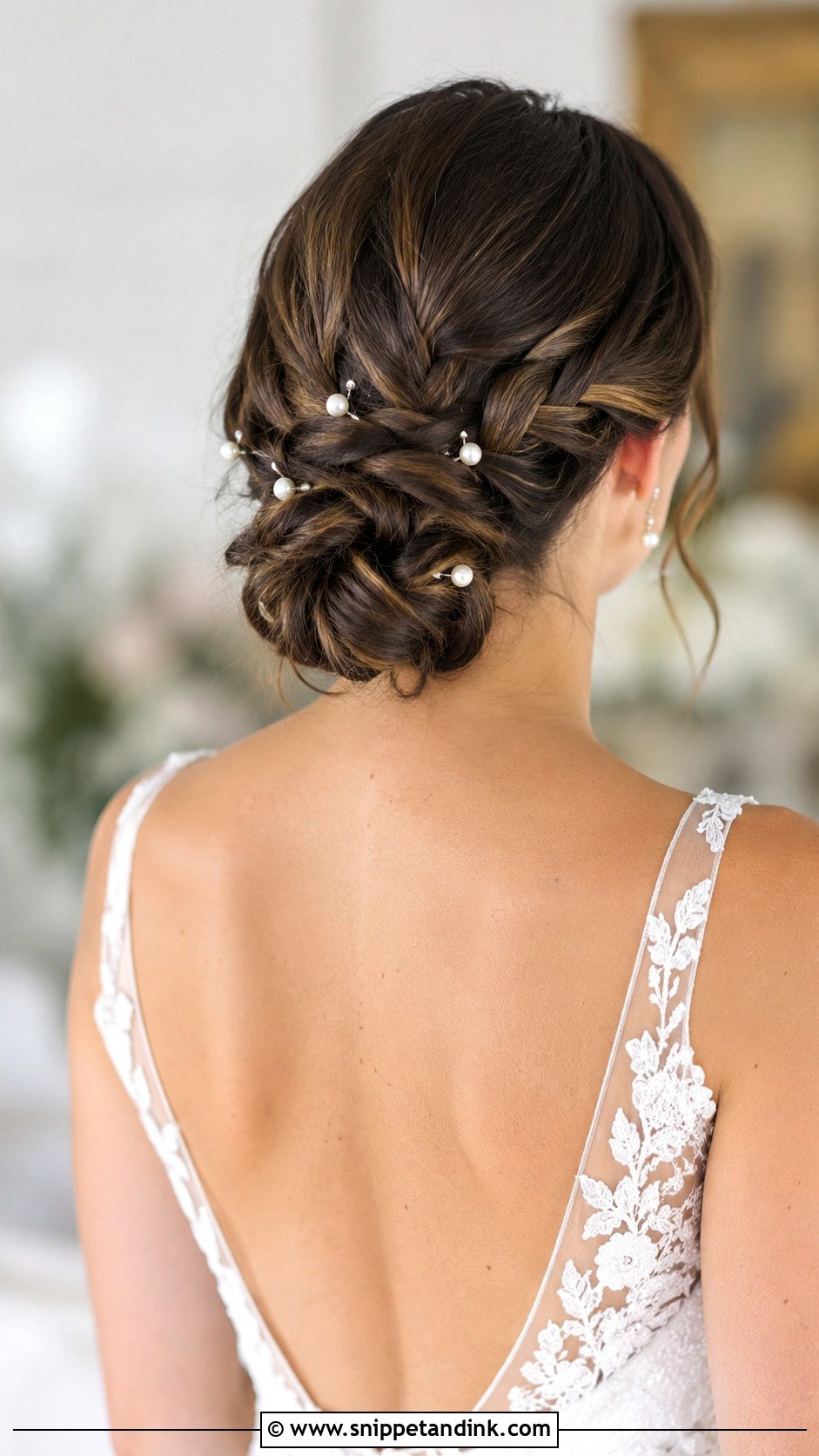
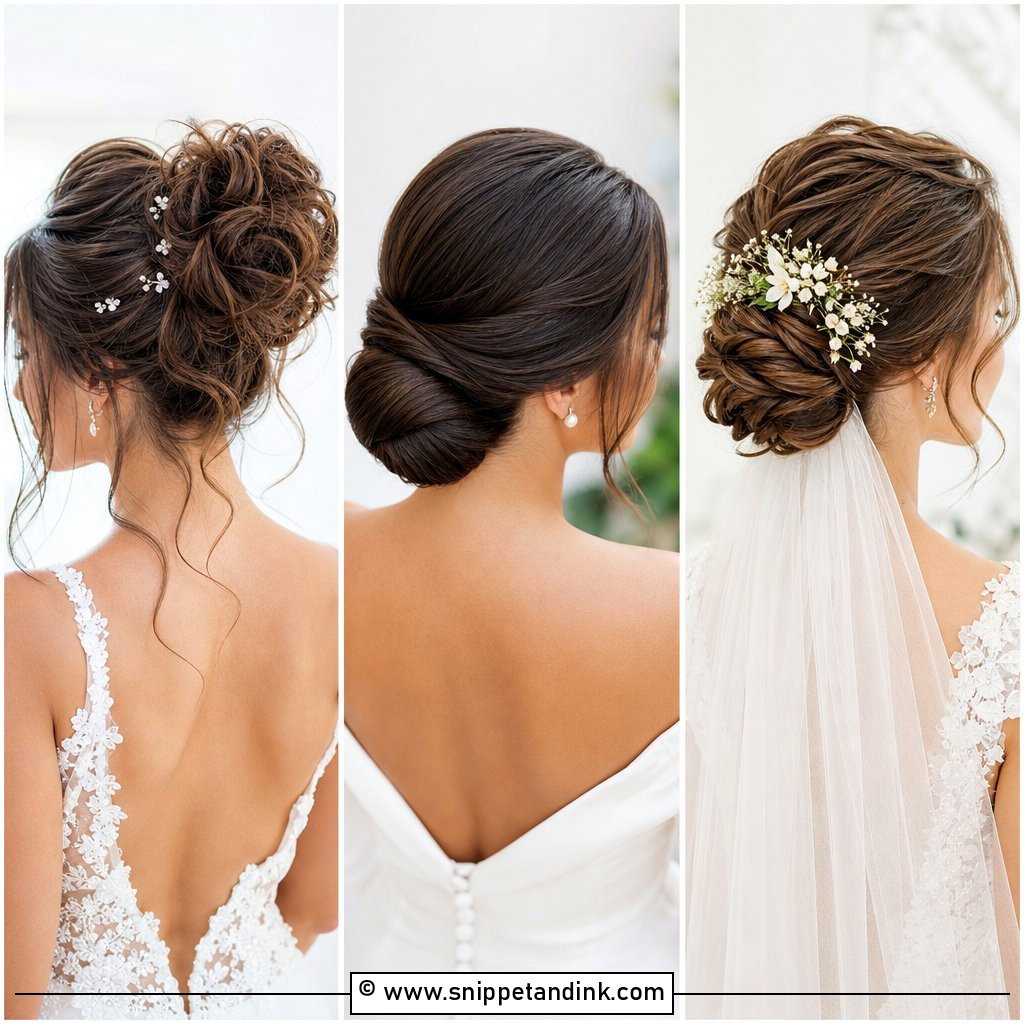
A braided low bun works plaits into a knot at the nape. The braids are doing more than decorating; they hold the bun together, which makes this one of the most secure updos here. It suits open-back gowns and statement jewelry. I loosen the braids slightly before pinning so they look soft, and add pearls or small pins along the plait if you want detail.
19. Boho Waves With Flower Crown
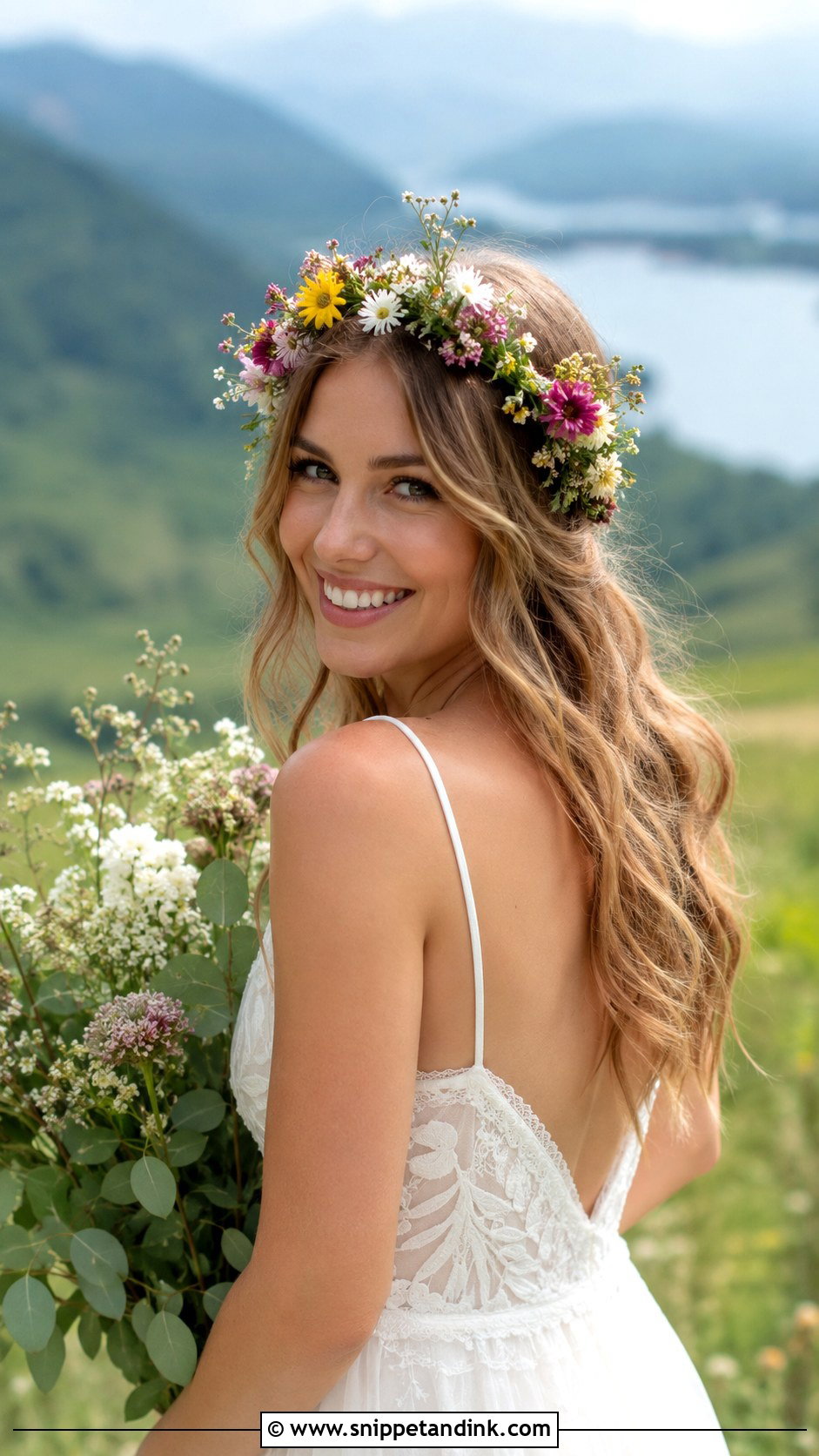
Loose waves with a flower crown suit outdoor and festival-style weddings, especially in soft daylight. I anchor the crown with a few grips through the wire, because a crown resting on top of slippery waves moves every time you turn your head. Fresh crowns are heavier than they look. If you are wearing one all day, ask your florist for lighter blooms or a dried and silk mix.
20. Twisted Crown Half-Up Style
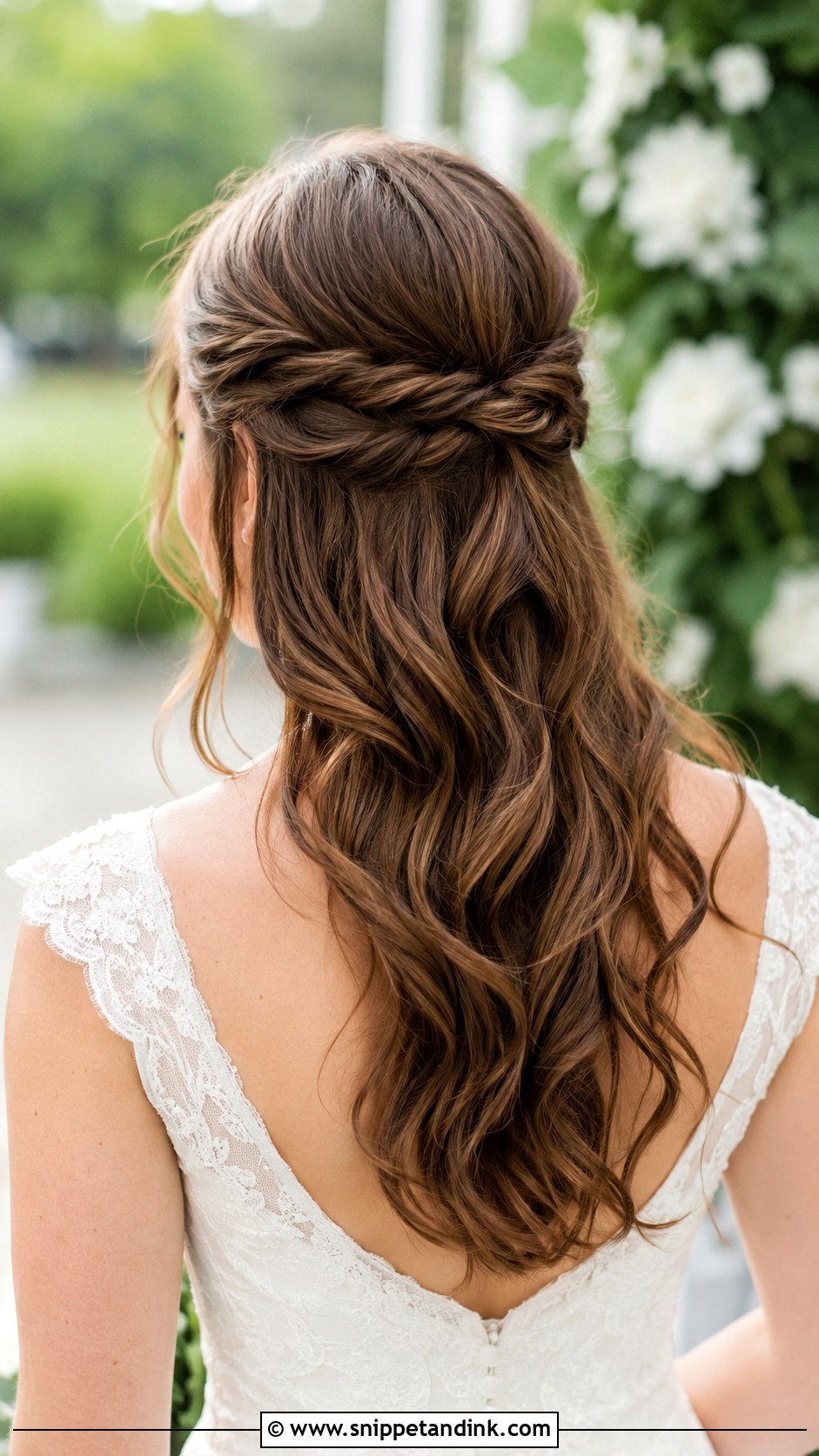
Two sections twisted back from the temples and pinned at the crown give a halo effect while the rest stays down. It frames the face, keeps hair off it, and gives a veil comb a natural base where the twists meet. It is my usual suggestion when a full updo feels too formal. Fine hair benefits from a little teasing at the crown before twisting, so the twists don’t lie flat.
21. Slicked Back Wedding Updo
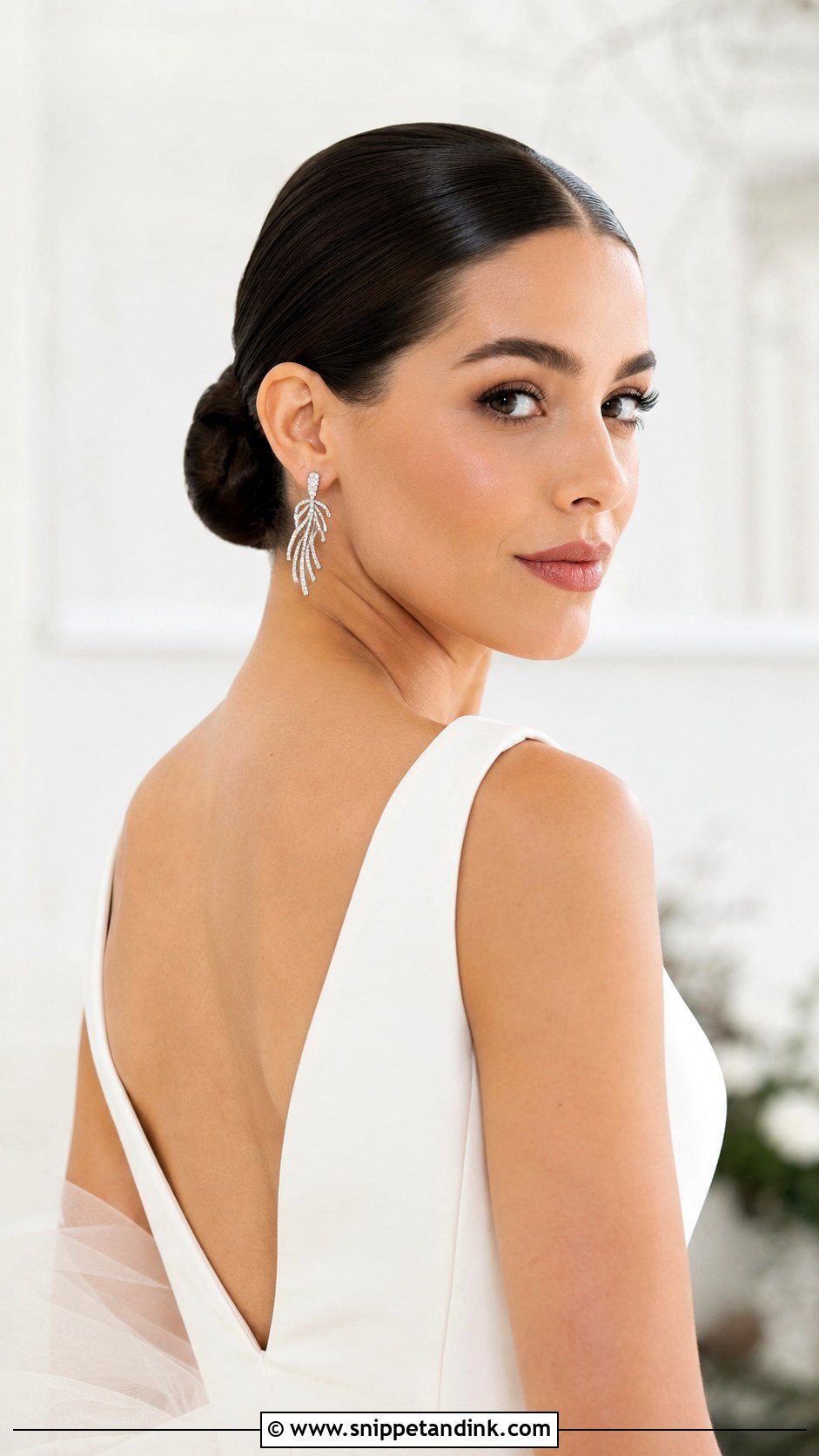
A slicked back updo pulls every strand tight from the face into a low bun or chignon, often with a wet-look or glossy finish. It shows the face, earrings and neckline completely. I use a strong gel and a boar bristle brush, and I check the scalp is comfortable before finishing. Tight styles can give headaches after many hours. It is a modern, minimal look, and the most humidity-proof style on this list.
22. Voluminous Curly Updo for Brides
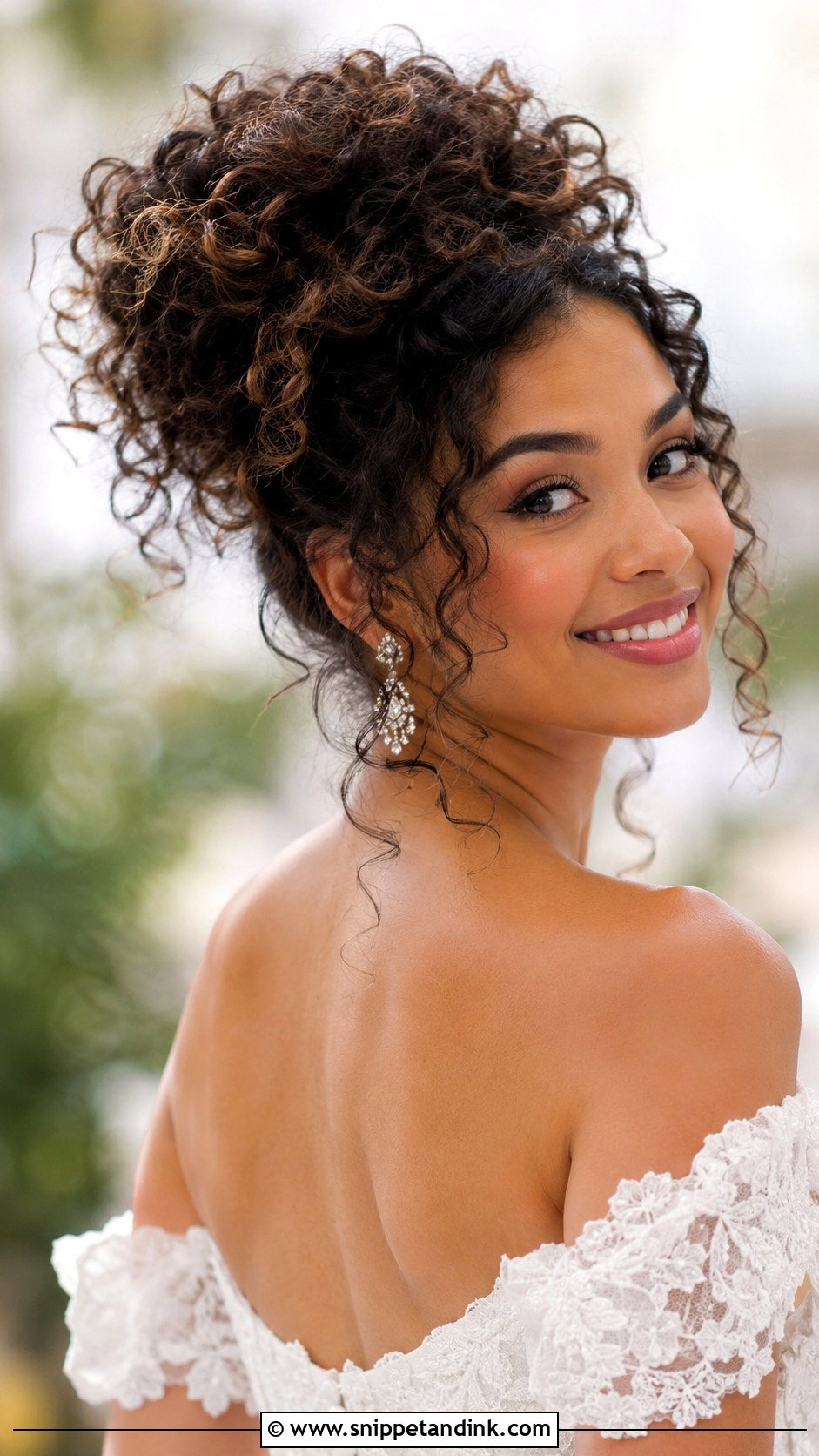
A curly updo gathers your natural curls into a full shape rather than straightening them. That keeps the texture and saves time. I ask brides to arrive with curls styled and defined the way they usually wear them, then I gather and pin rather than re-curl. A few curls left free around the face soften it. Floral pins and statement earrings suit it, and it works well for formal weddings.
23. Pearl Embellished Bridal Bun
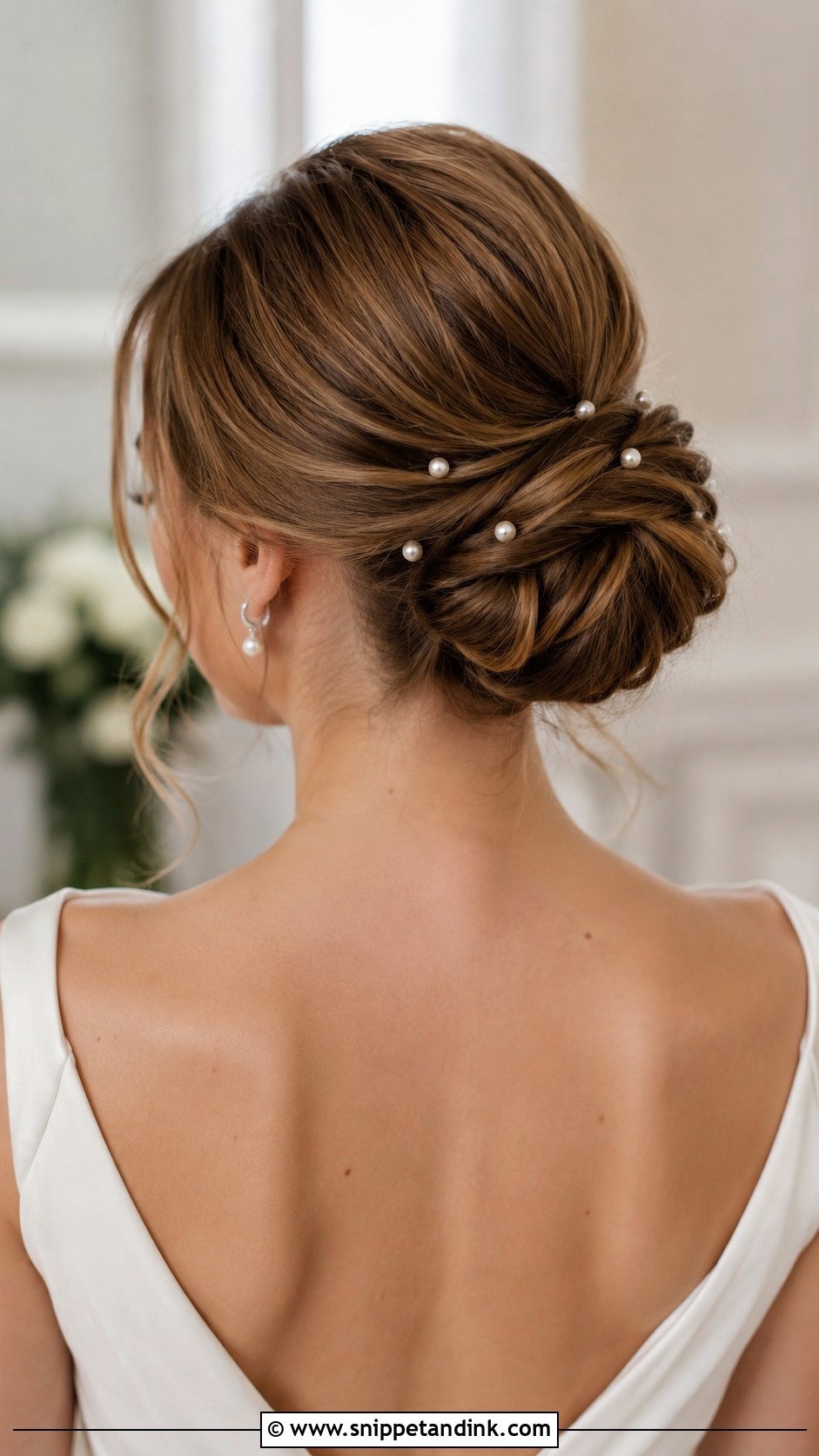
Pearl pins scattered through a bun add light without the sparkle of crystals. I push them in at different depths and angles so they don’t form a neat row; a straight line of pearls looks like a hair clip. A sleek bun gives a modern look, a textured one a softer one. The pearls can stand in for a hairpiece entirely, and they pair well with pearl earrings.
24. Loose Waterfall Braid for Weddings
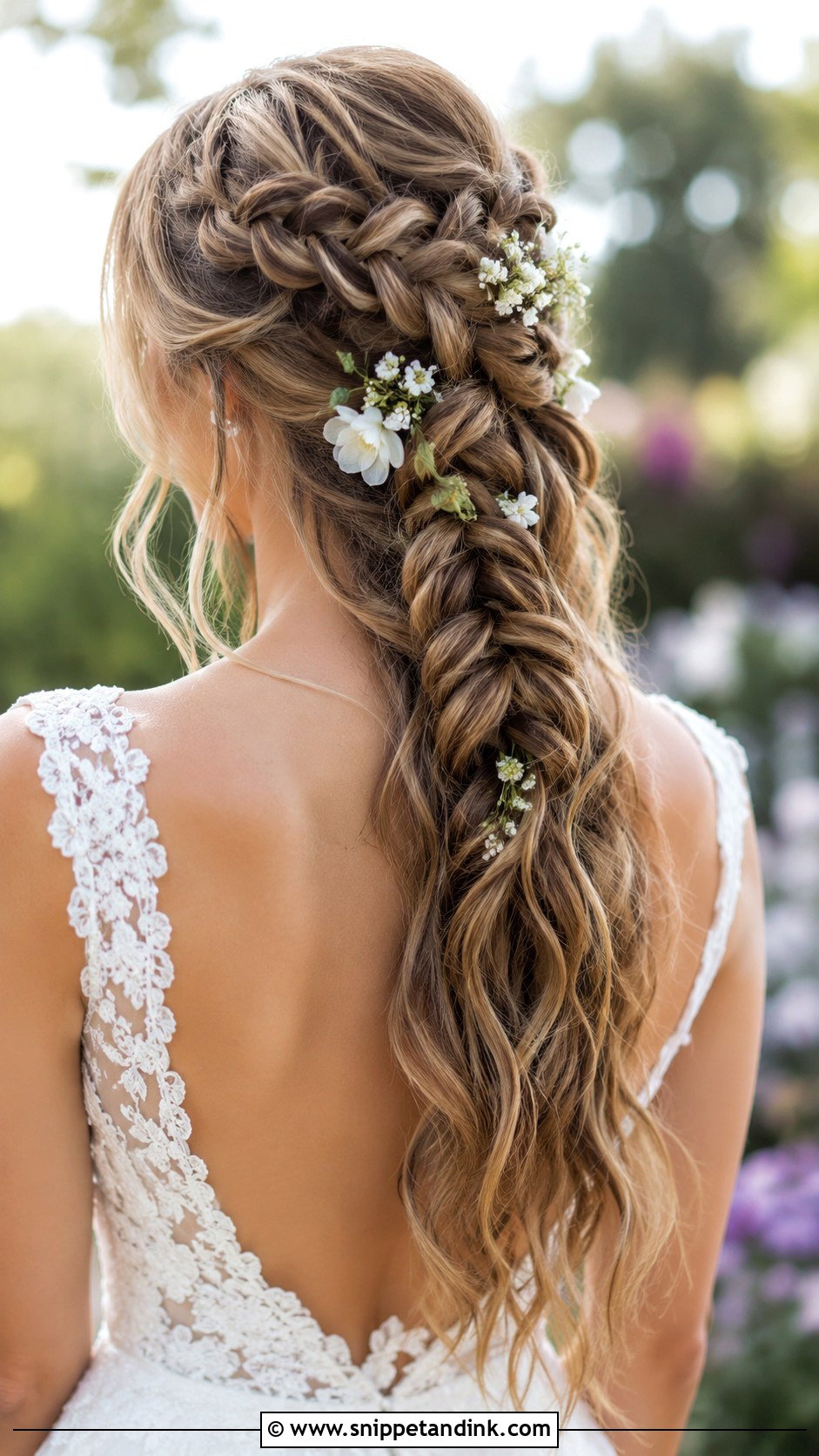
A waterfall braid runs across the head horizontally and drops a strand down at each stitch, so hair falls through it like water. It sits as a half-up style with waves below. I suggest it for brides with medium to long hair who want detail without a full updo. On layered hair, short pieces poke out of the braid, so I pin small sections from underneath. Small flowers tuck into the braid without needing extra grips.
25. Sleek Bob Bridal Hairstyle
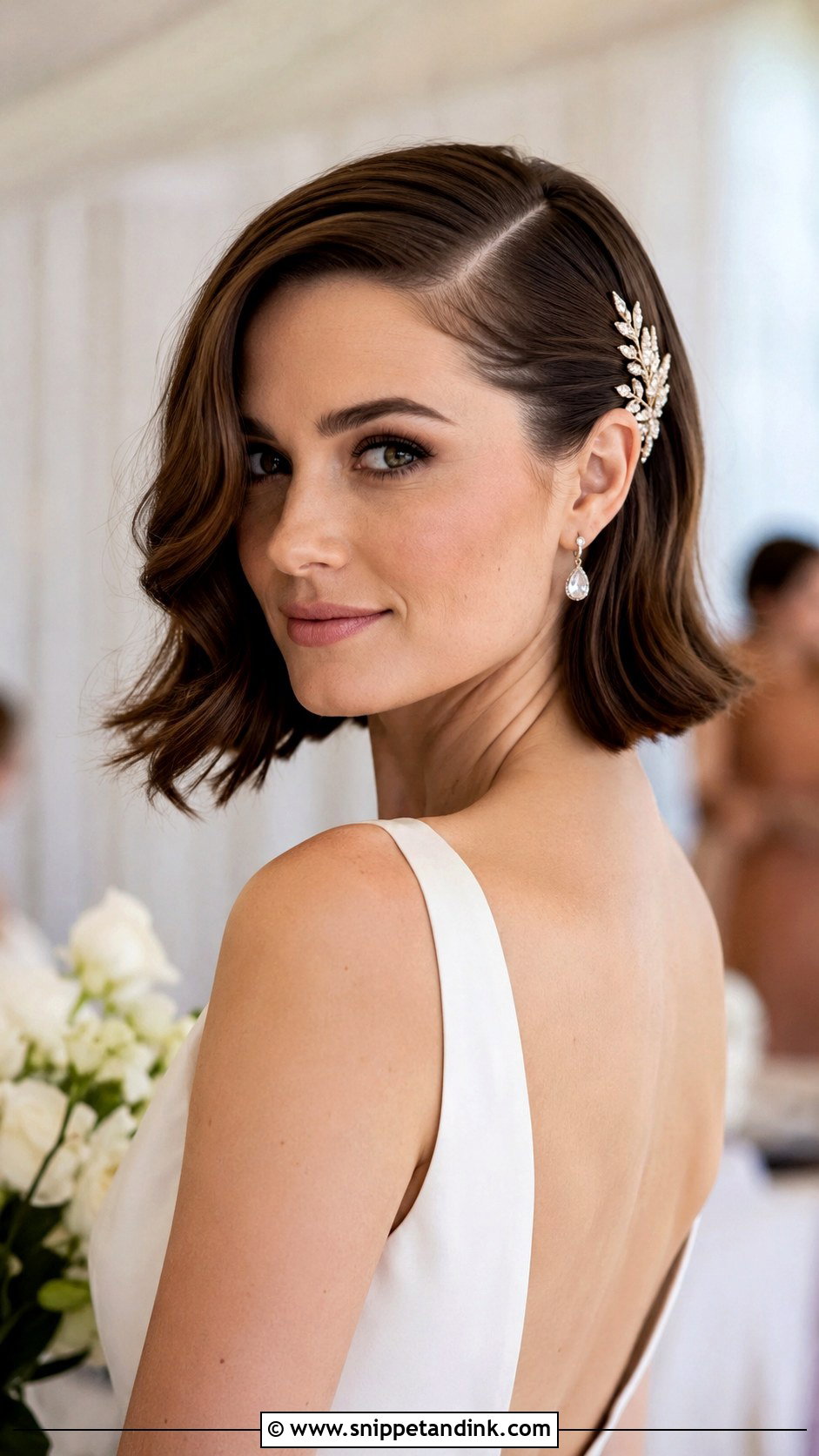
A sleek bob is smoothed into a clean, glossy line, straight or with soft waves. I flat-iron it in small sections and finish with a little shine spray. Pins and combs need a grip base underneath because short hair has less to hold on to; a slim headband is the easiest accessory. Get your trim four to six weeks before the wedding so the ends have settled and don’t look freshly cut in photos.
26. Textured Updo With Curls and Braids
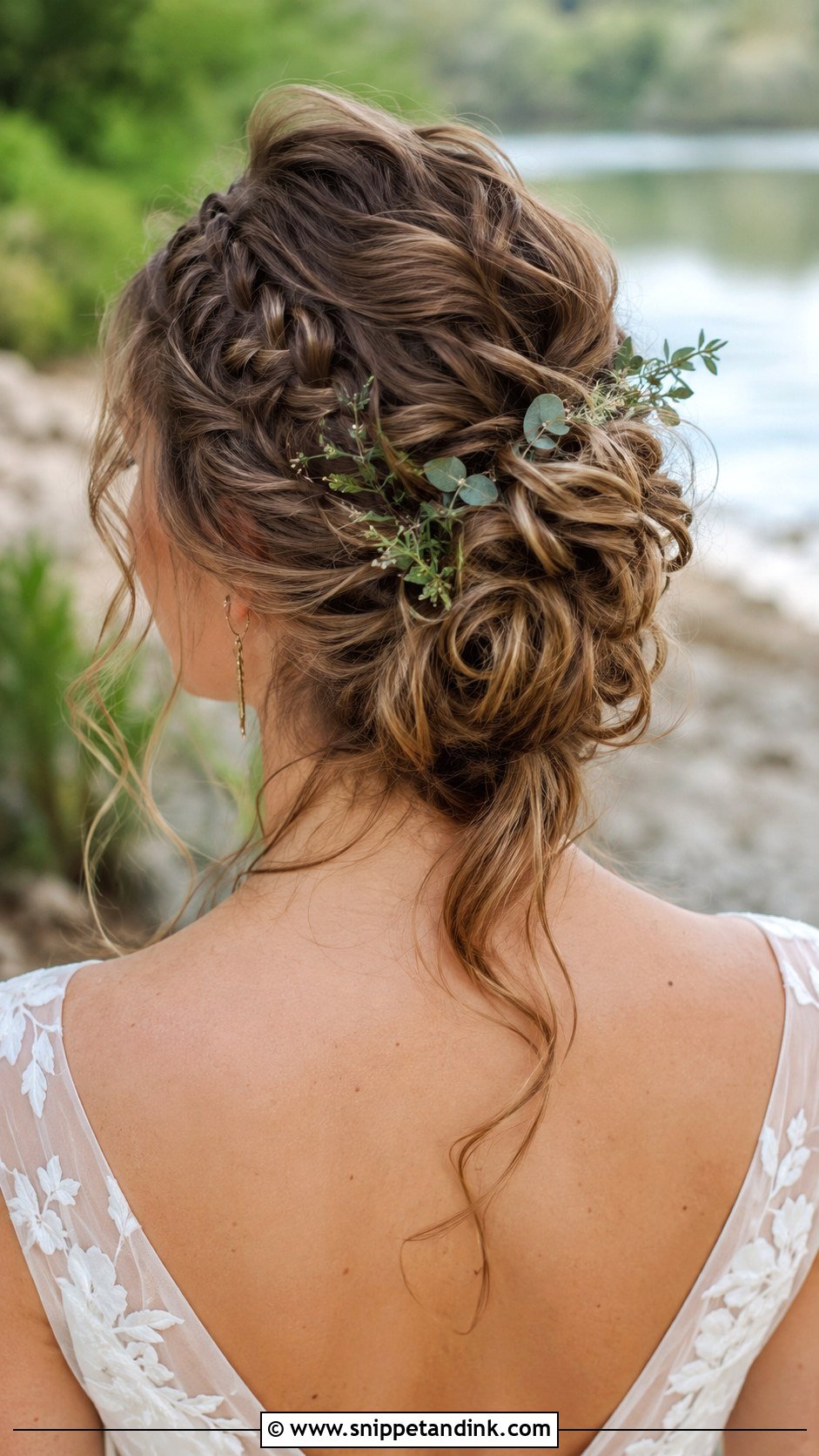
A textured updo with curls and braids combines plaits, twists and curls in one shape. It takes the longest of any style on this list and suits long, thick hair best. The more textures, the more it can look busy, so I keep the braids to one side or the crown and let the curls carry the rest. Greenery or small flowers suit boho and garden weddings.
27. Low Side Bun for Brides
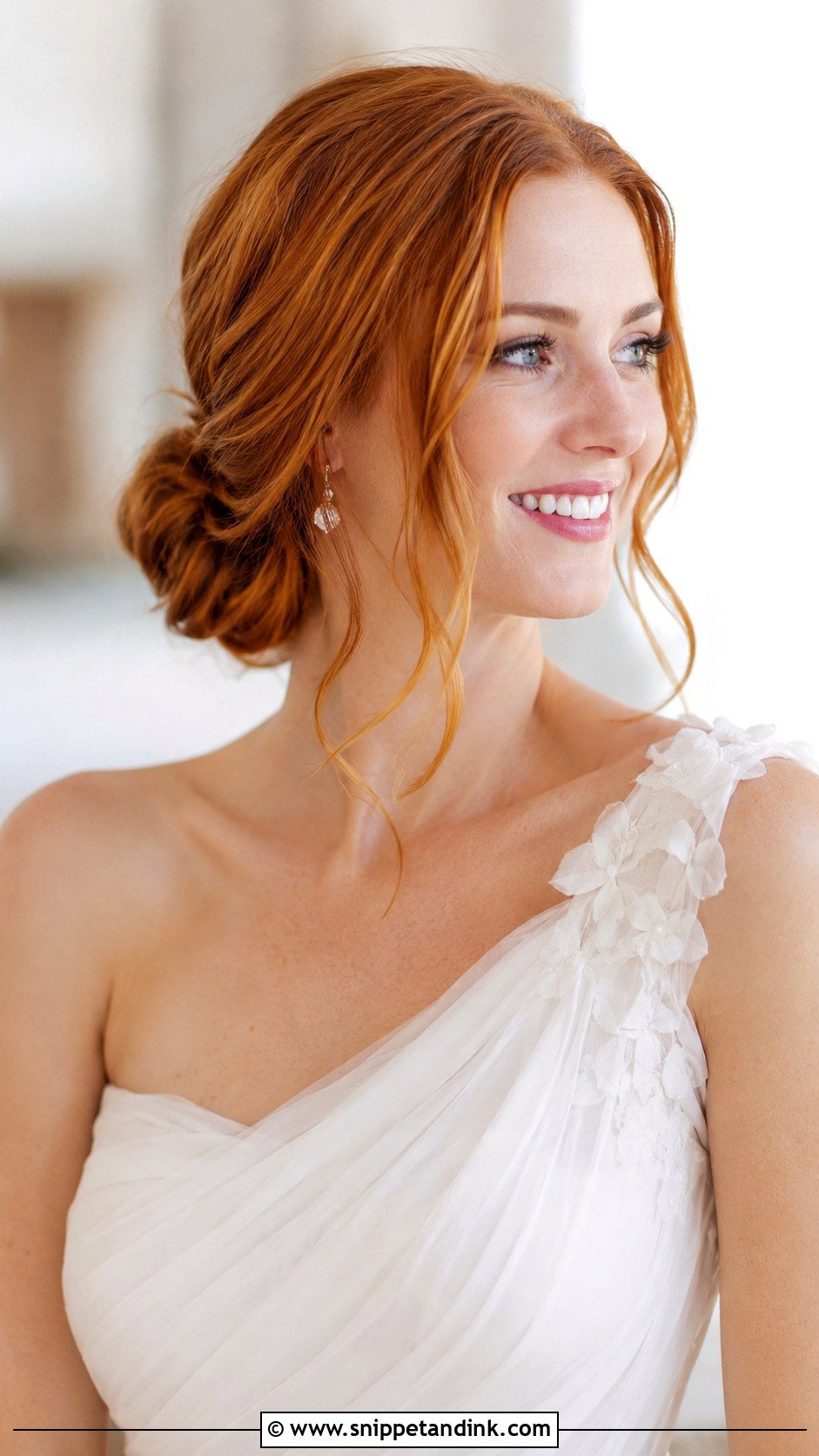
A low side bun sits off to one side at the nape. It shows one earring and one shoulder, so I place it opposite to any detail on the gown: a one-shoulder strap on the left means the bun on the right. Sleek or textured, it needs a firm base so the weight doesn’t pull it to the center. A few face-framing pieces soften it.
28. Half-Up Bun With Cascading Waves
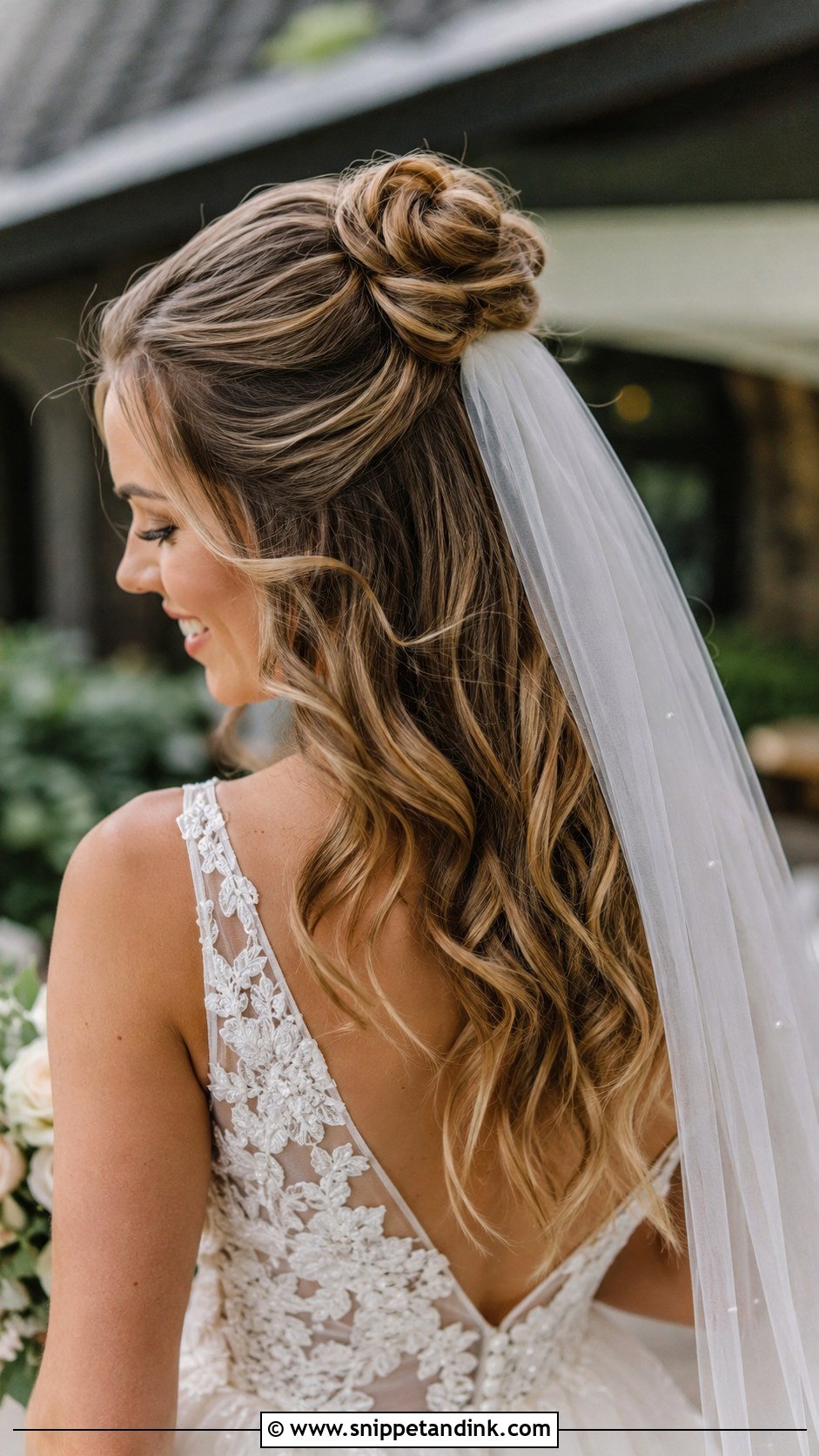
A half-up bun sits a small knot at the crown with waves below. The knot gives height and shows from the front. I keep it smaller than a fist, because a large half-up bun leaves a gap and can look like a top knot from the gym. It frames the face, keeps hair out of your eyes, and a veil comb fits just below it.
29. Greek Goddess Braided Hairstyle
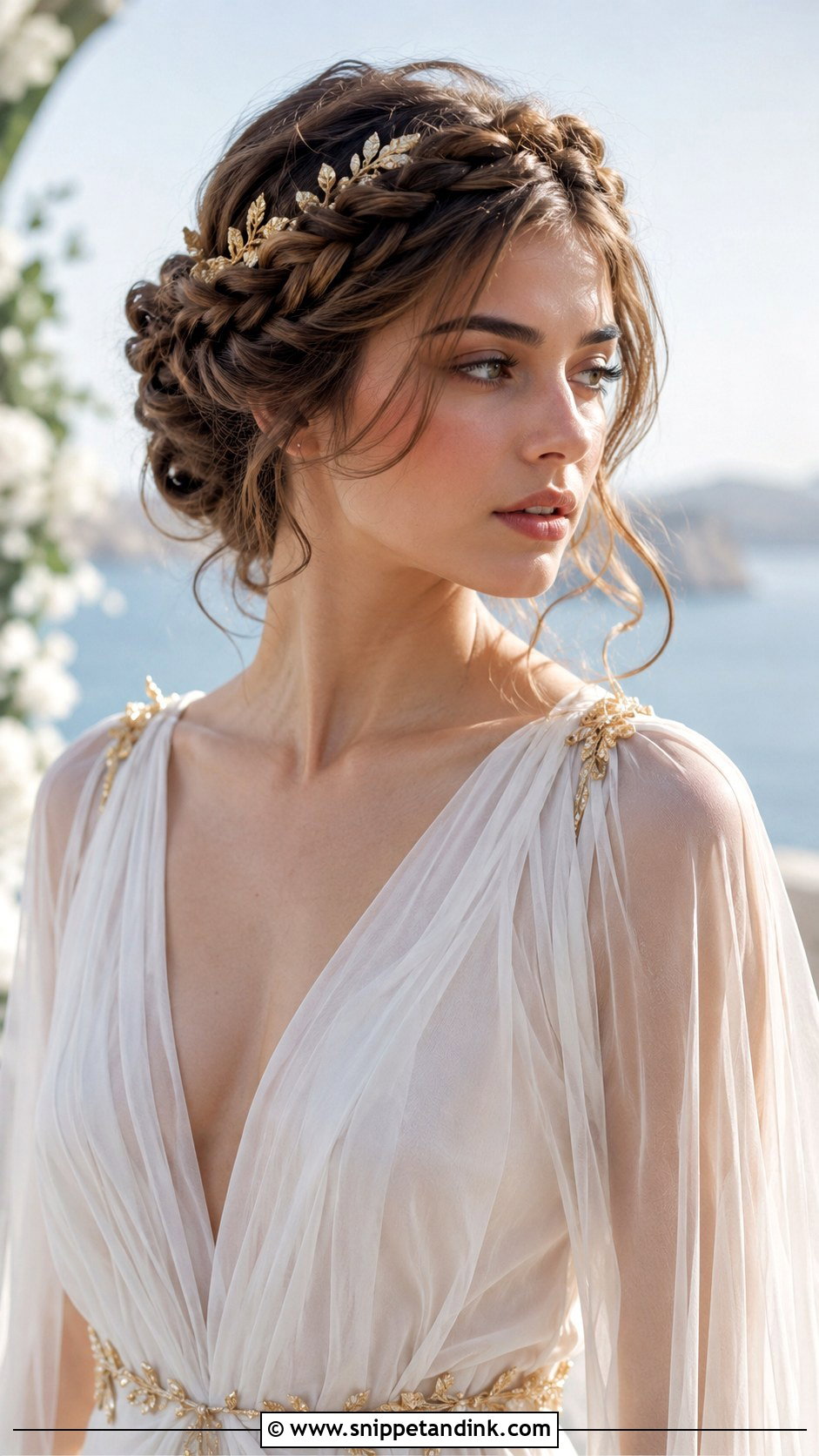
A Greek goddess braided style wraps and twists braids around the head like a halo, with tendrils left soft around the face. It suits outdoor, garden and bohemian weddings. Gold leaf pins or small flowers finish it. The braids keep everything tight to the head, so it holds well in wind. Medium to long hair is needed for the braids to go round.
30. Curtain Bangs With Wedding Updo
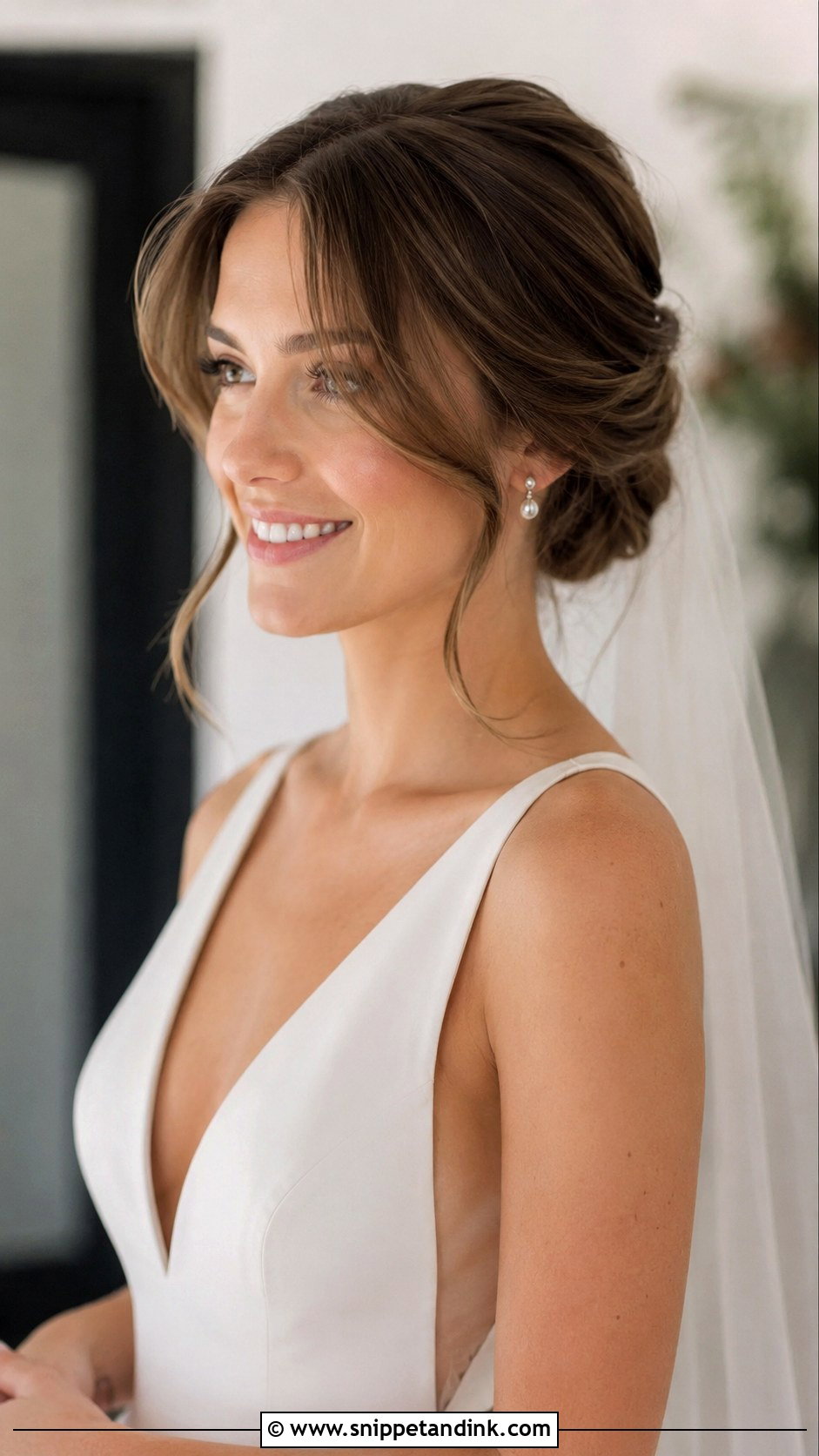
Curtain bangs part in the center and sweep to each side, softening a sleek bun, a textured updo or a chignon. They need to be cut a few weeks ahead, not the week of the wedding, so they have time to settle into shape. I curl them away from the face with a round brush and set them with a light spray. They suit most face shapes, and they hide a high forehead well.
A Hair Calendar for the Last Two Months
- Eight weeks out: trial. Wear the style for the rest of the day and take photos in daylight and with flash.
- Four to six weeks out: trim and any fringe cut, so ends look settled rather than freshly cut.
- One to two weeks out: colour or toner, so it is fresh but not still adjusting.
- The day before: wash and dry, no conditioning masks or oils near the roots.
- On the morning: arrive with dry hair, nothing in it, and a button-up top.
Avoid starting anything new in that window. Keratin smoothing, a dramatic colour change or a new texturizing treatment can change how your hair holds curl and pins, and your trial will no longer be a reliable test.
What a Good Trial Actually Tests
A trial is not just about the look in the mirror. I check how the style holds once the veil is in and out, whether a pin digs in, and what the back looks like from a seated position in photos. Keep it in for several hours and move around. If anything is uncomfortable, say so then. It is far easier to adjust on that day than on the morning of the wedding.
Your Dress and Your Hair Texture Set the Shortlist
Before a photo, two things decide which styles will work for you: the neckline you are wearing and the hair you actually have. From sleek chignons and Hollywood waves to braids and flower crowns, there is a version of each look above for most lengths and textures. Narrow it down with your venue and weather, book a trial, and send your stylist the photos you love along with a picture of the dress and veil.
You'll Like These Ideas:


Leave a Reply