
There’s a reason so many church brides end up with their hair in a bun. It sits quietly under a veil, leaves the neckline of the gown alone, and stays tidy through the processional, the readings, the vows, the hymns and the long receiving line afterwards. Which bun suits you depends on the dress, where the veil goes, your hair texture and how formal the service is. Some brides want a smooth low chignon under a chapel-length veil; others want soft curls, pearls, a braid or a little lift at the crown. These Christian bridal bun hairstyle ideas cover that whole range, and I’ve noted with each one where the veil sits best.
Blushers, Mantillas and Orthodox Crowns Each Want a Different Bun
Church weddings bring head coverings that a beach ceremony never does, and each one wants the bun in a slightly different place. Get this right and the veil sits calmly all day; get it wrong and it slides, tilts or pulls at the scalp.
A veil with a blusher
If someone will lift a front layer from your face at the altar, that lift tugs the comb forward. A mid-height bun gives the comb something solid behind it. I have the lift practised once at the trial so whoever does it knows to use two hands and go up and back, not straight up.
A lace mantilla
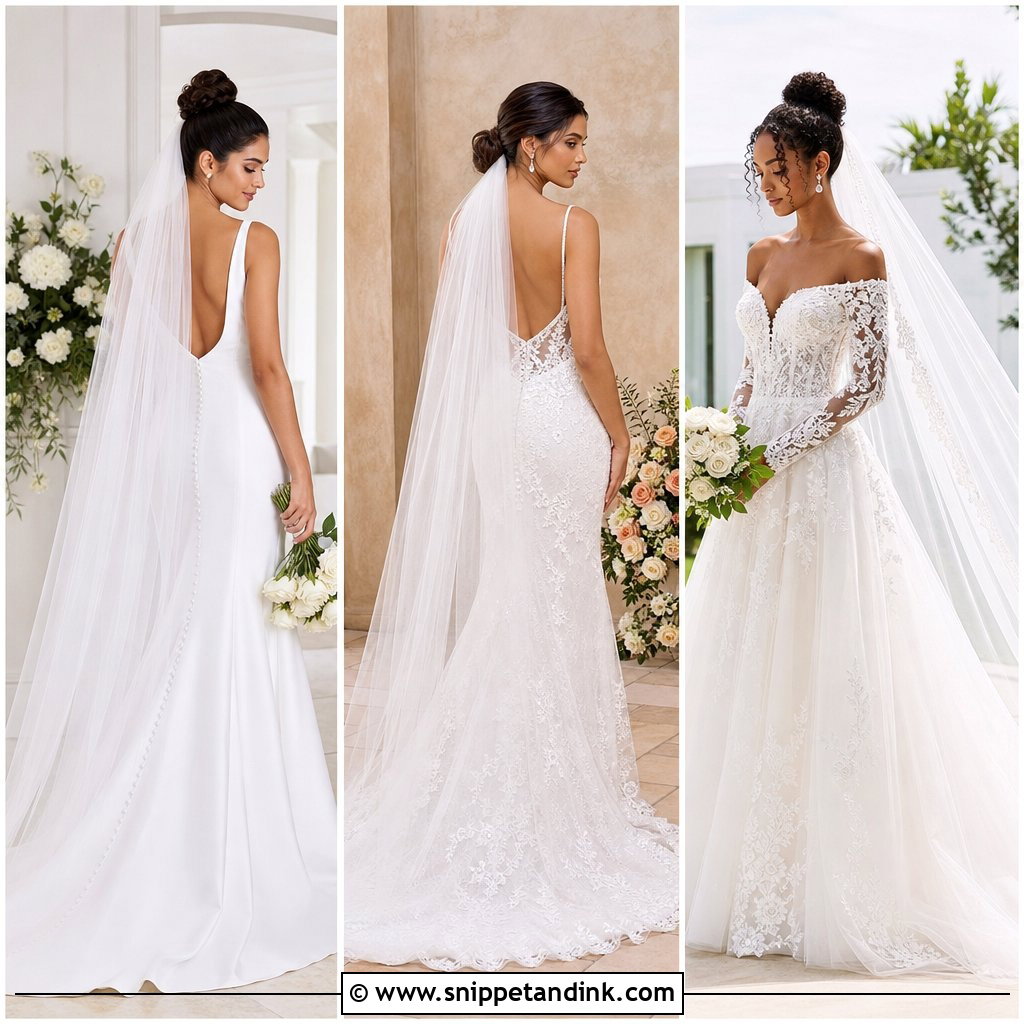
A mantilla drapes from the top of the head and frames the face, so it looks best over a smooth crown and a low chignon. A high or very full bun creates a hump under the lace. Keep the sides sleek and let the lace edge do the decorating.
Orthodox stefana
In Greek and other Orthodox services, joined crowns are placed on the couple’s heads and swapped back and forth during the ceremony. A high bun or a tiara gets in the way. I’d choose a low bun, a flat smooth top, and pins that won’t snag the ribbon linking the crowns.
A net veil over a saree
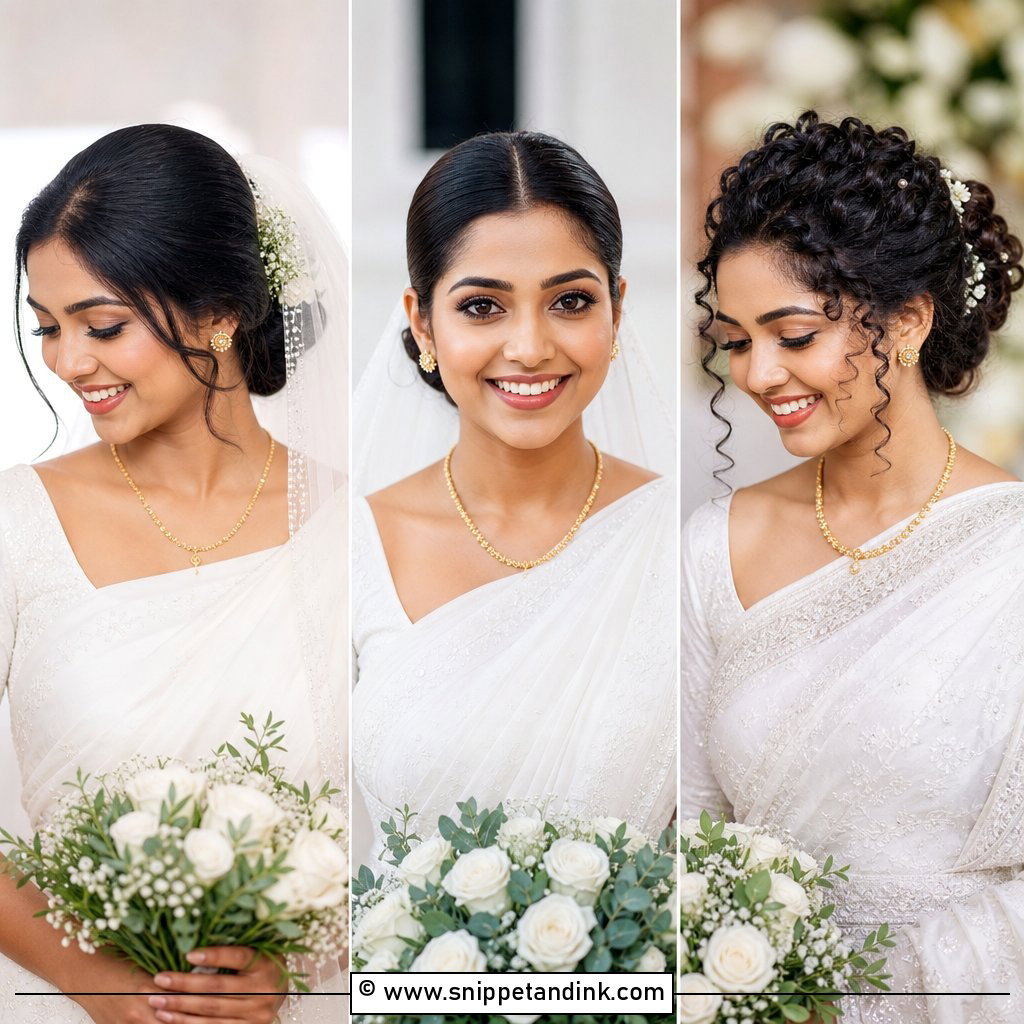
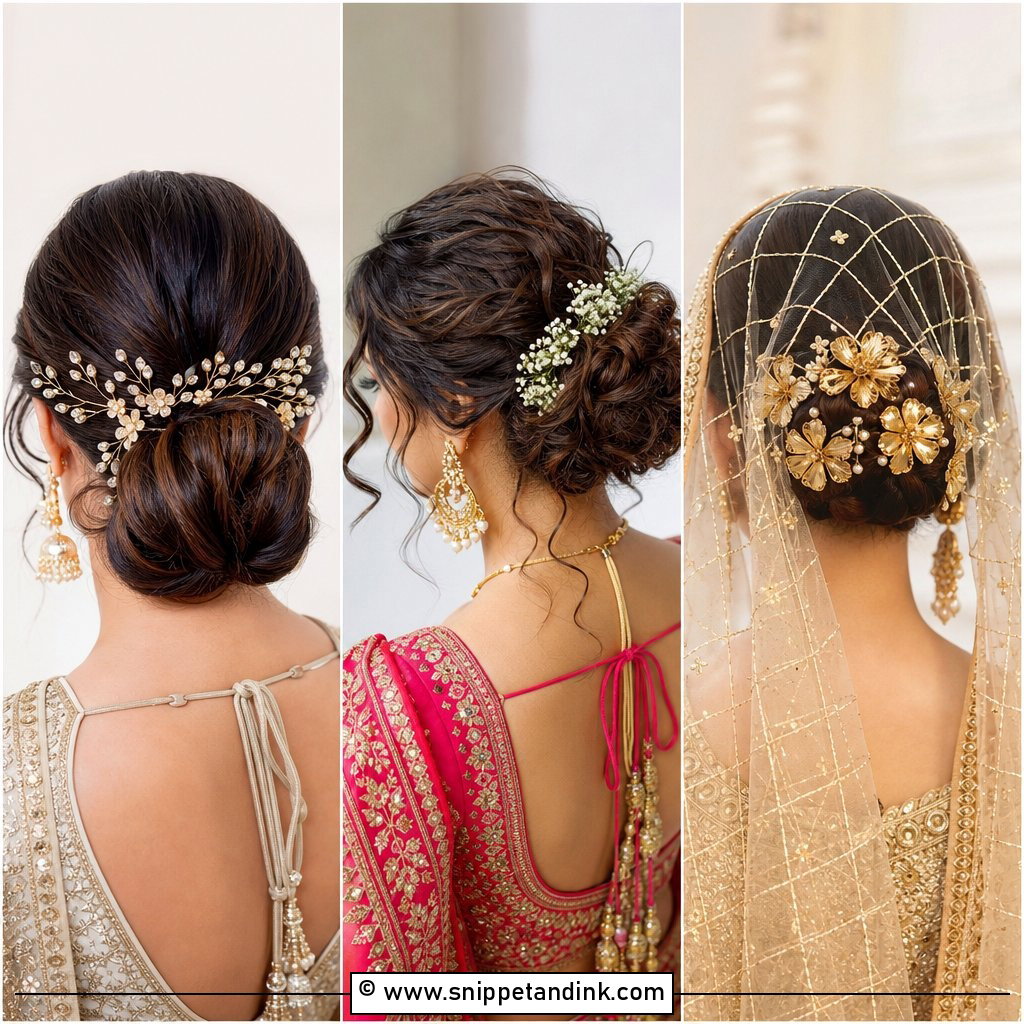
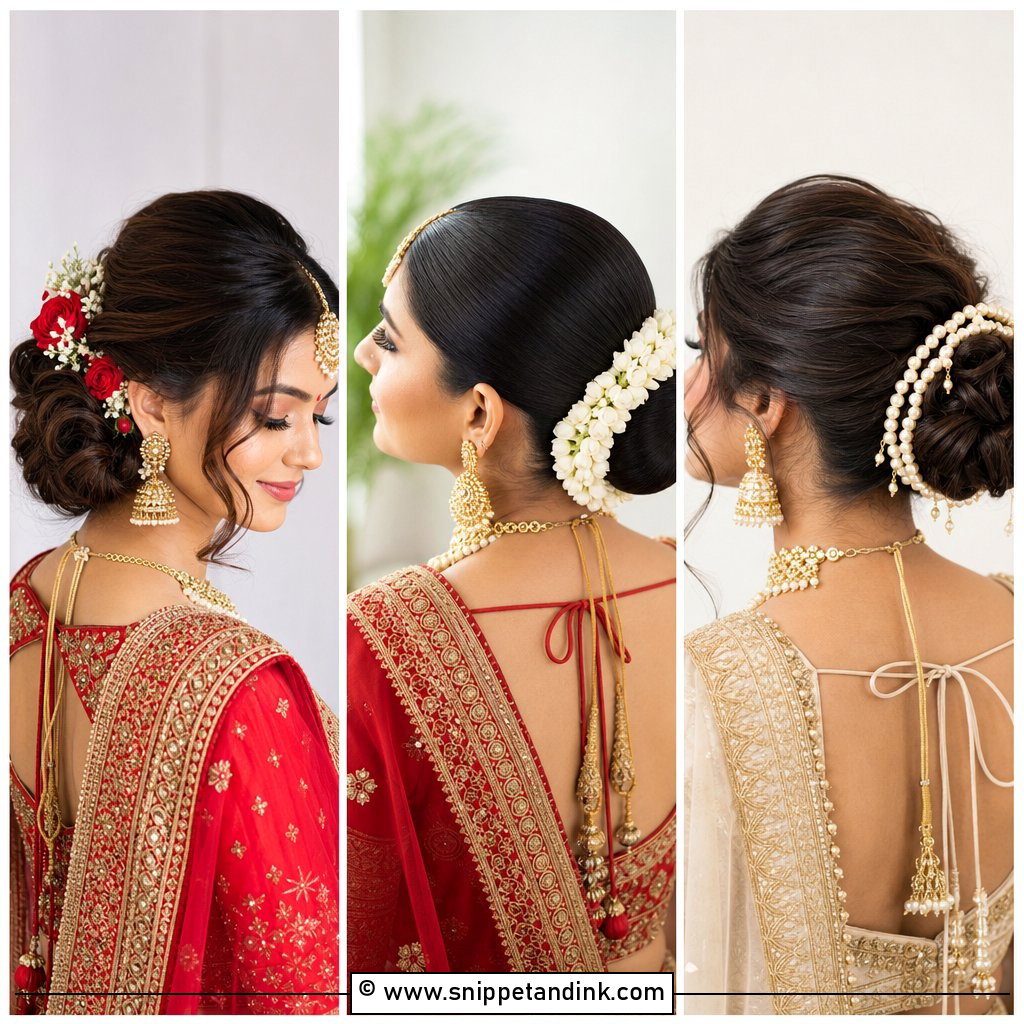
Many South Indian Christian brides pin a long net veil over a silk saree, sometimes with a small crown. The pallu adds weight at the shoulder, so a low, firmly anchored bun with jasmine or pearls keeps the veil from dragging to one side.
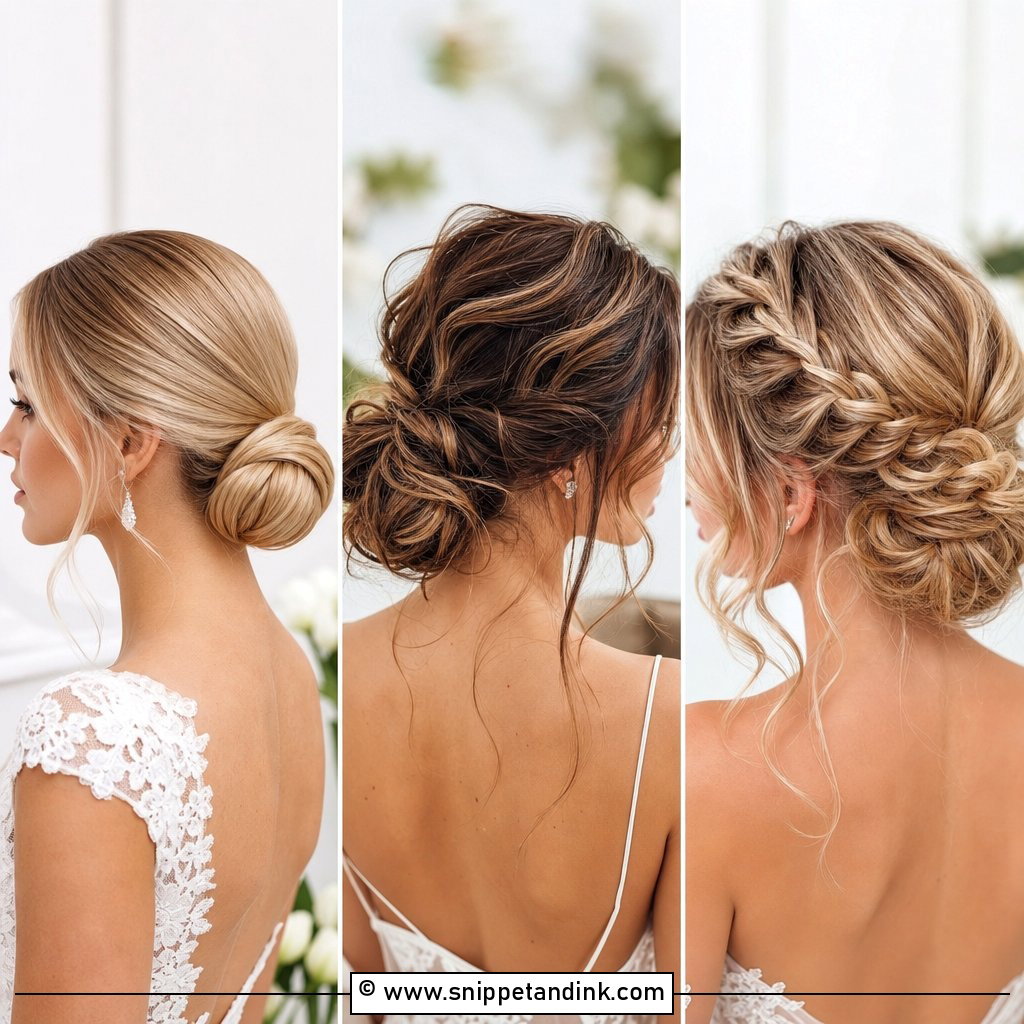
1. Christian Bridal Low Bun With Veil
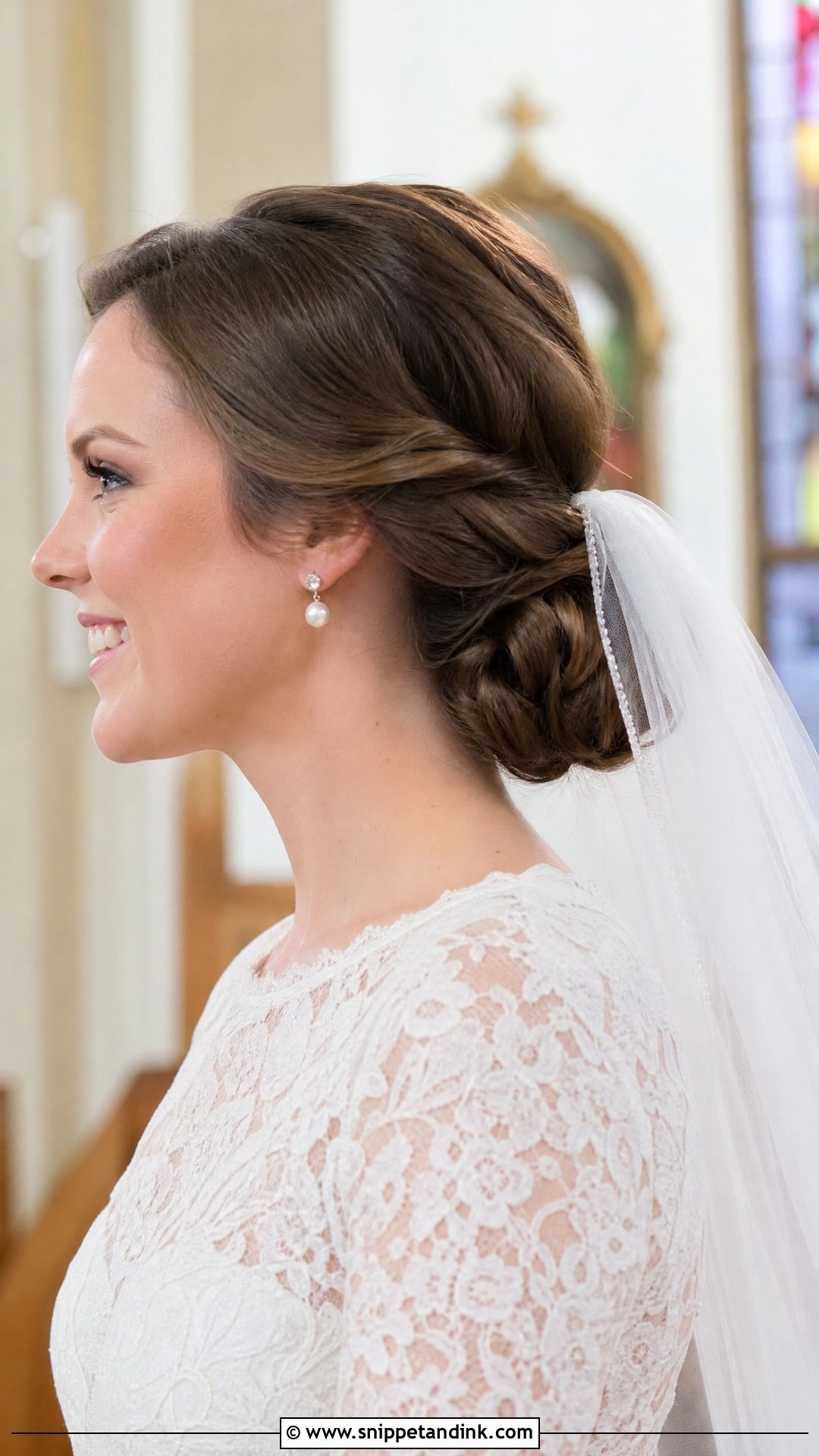
Most church veils sit happiest with a low bun under them. Near the nape, it reads formal and modest, and cathedral, chapel, fingertip, or mantilla veils can rest above or below it without bulk. Above the bun, the veil frames the head; below, it shows the bun through the tulle. I keep the sides smooth and give the crown a little volume so the veil doesn’t flatten you. Before the comb goes in, I build a small criss-cross of bobby pins where it will sit, so its teeth have something to grip. Lace sleeves and pearl earrings finish the picture.
2. Christian Bridal Chignon Bun
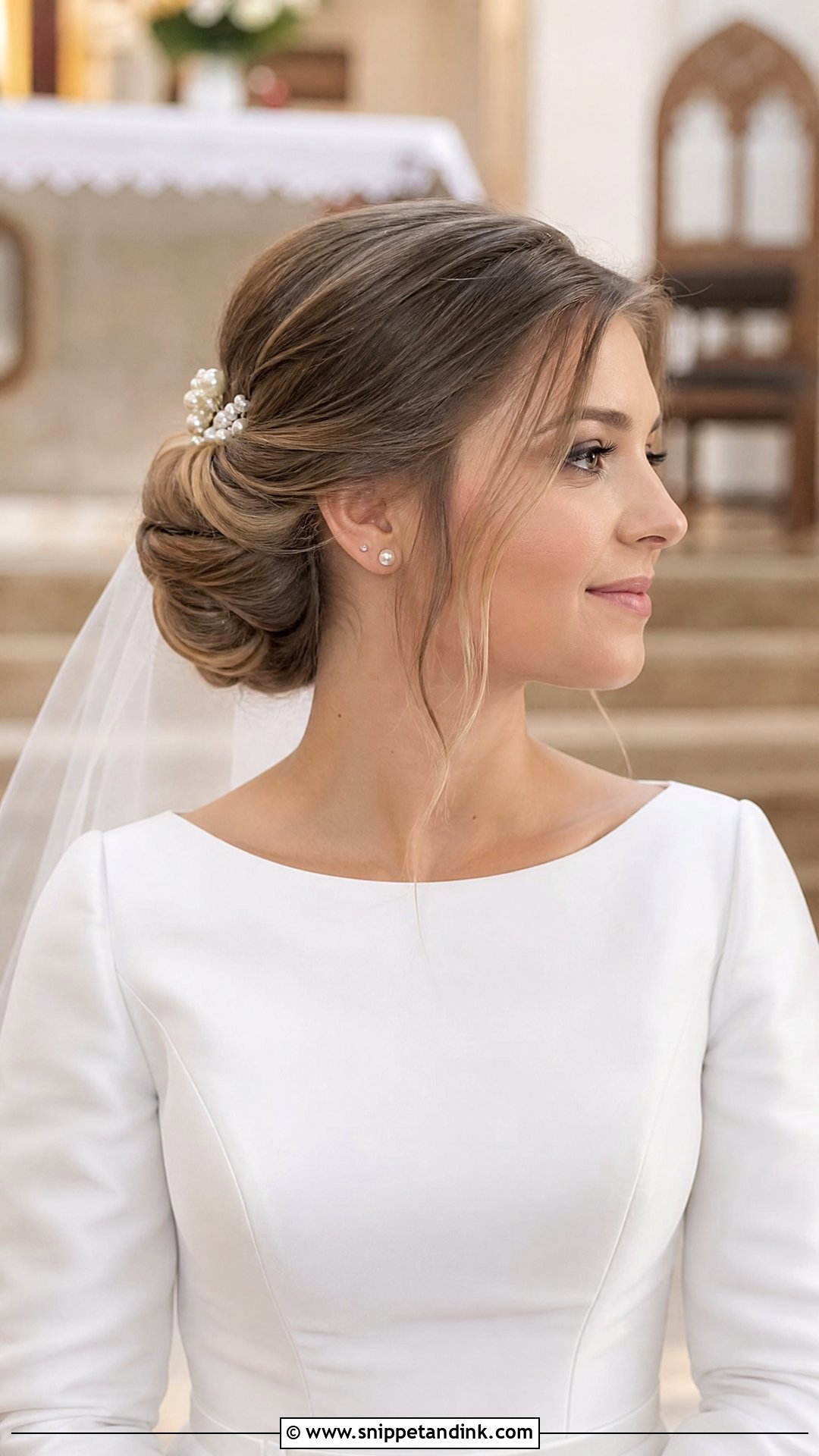
A chignon is the tidier, more sculpted cousin of the low bun: hair tucked, rolled, or twisted low at the back so the shape is polished without being severe. It pairs with veils, tiaras, pearl combs and traditional gowns, and medium to long hair can wear it sleek or textured. For a formal Mass I keep it neat; for a garden chapel I set gentle waves first, then pin. During prayer your head is bowed, which shows the chignon to the whole congregation, so the roll needs to be even on both sides.
3. Christian Bridal Sleek Bun
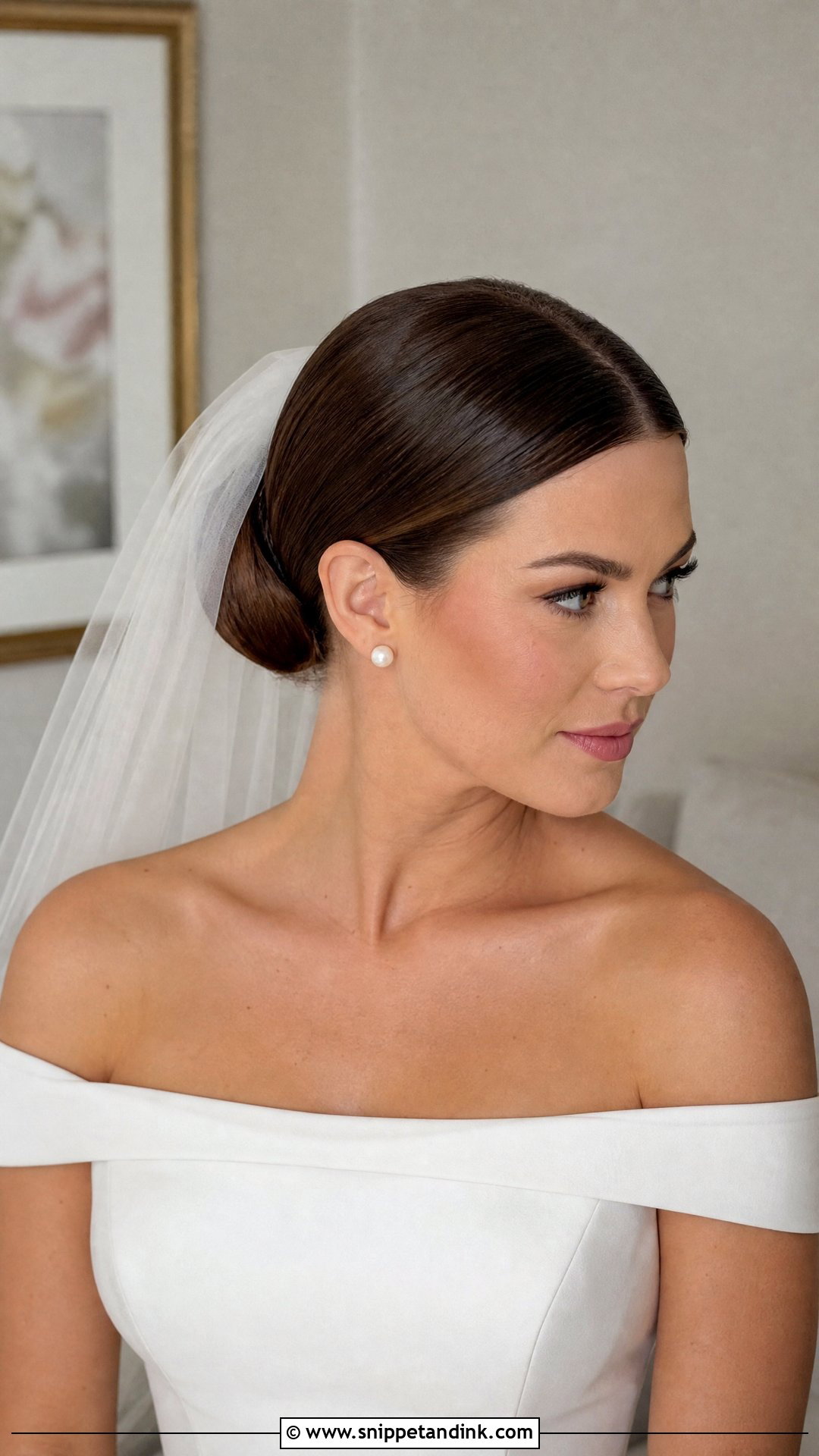
Sleek buns let a detailed gown and veil do all the talking. I smooth the hair into a centre or soft side part, then gather it at the nape or slightly higher. Fewer loose ends also means less for tulle to catch, which is a real advantage under a long veil. The prep is unglamorous: a full blow-dry with a paddle brush, smoothing cream, then pins placed in pairs. I go easy on shine spray, since too much reads greasy under church lighting and makes the veil comb slip.
4. Christian Bridal Messy Low Bun
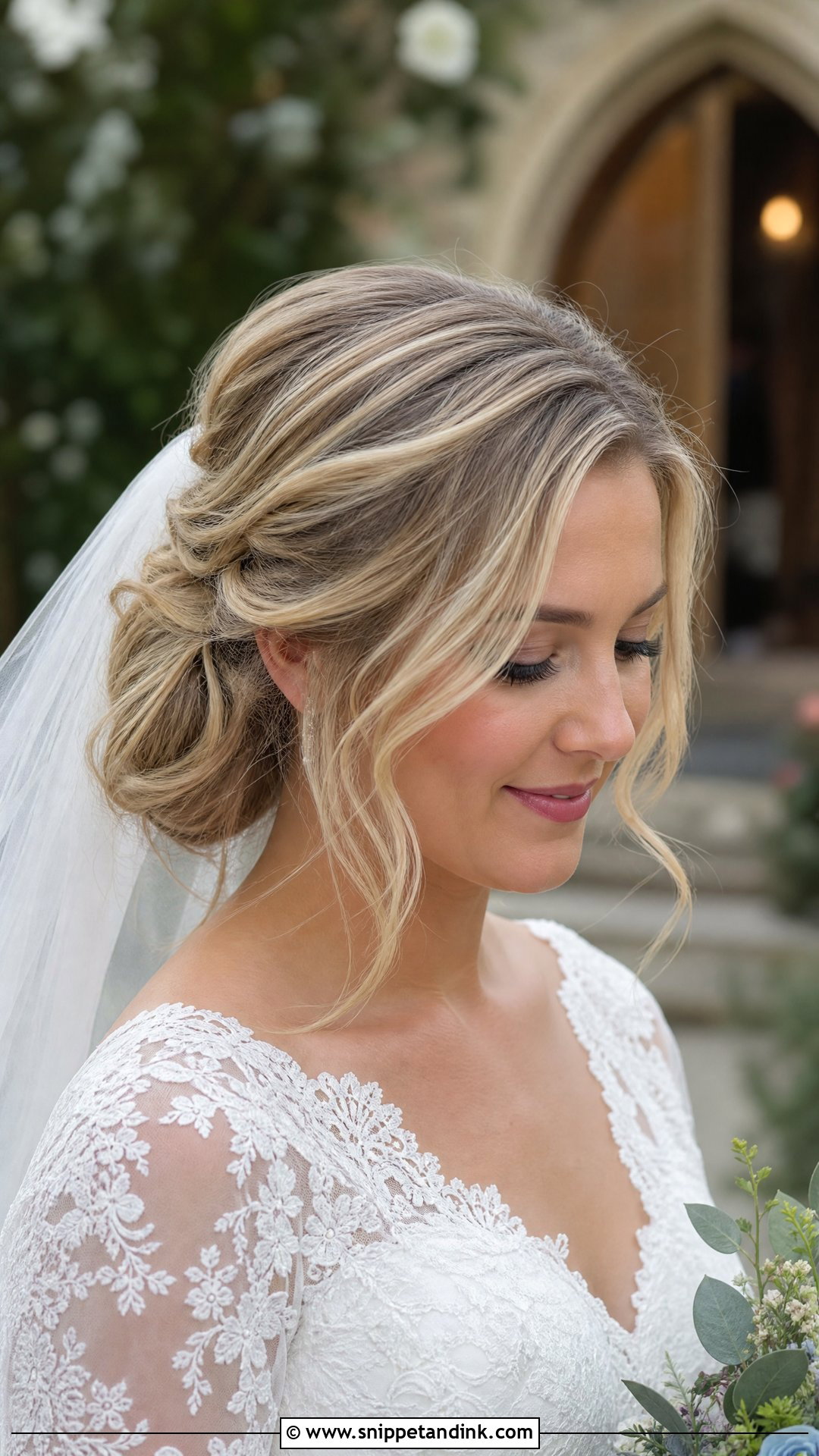
Messy is the wrong word, really; the texture is planned. Loose curls, pinned twists and a few wispy face pieces create movement while the bun underneath stays locked. Garden chapels, rustic churches and small ceremonies suit it, and floral pins, pearl accents or a simple veil tucked above the bun all sit well. The danger is that a relaxed bun can read as unfinished in formal portraits. I check it from a few metres back at the trial; if it looks like it fell out of place, it needs one or two sections tightened.
5. Christian Bridal Braided Bun
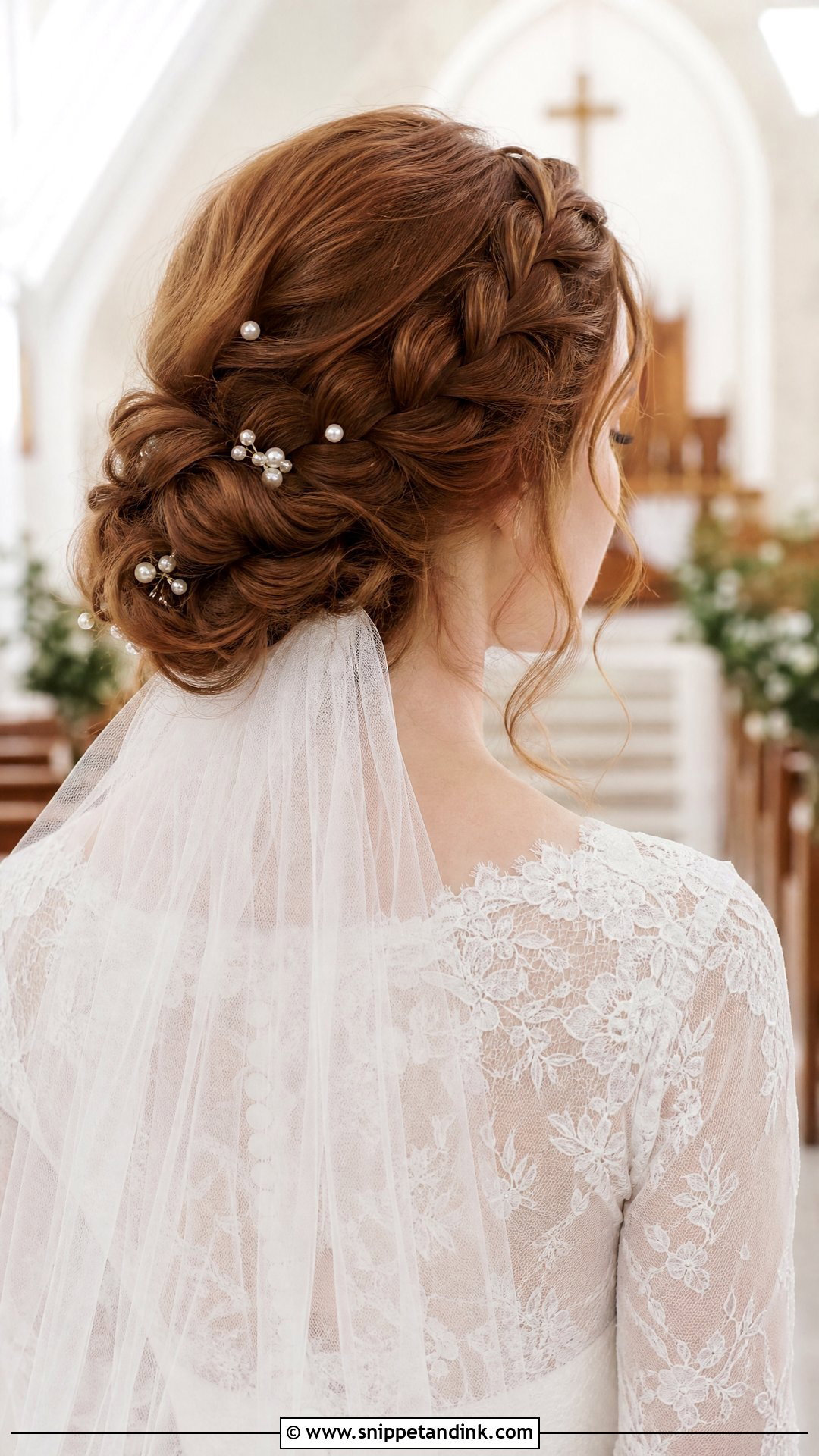
Braids hold layers that would otherwise escape over a long ceremony, which is why I like them for outdoor photos after church. The braid can wrap the bun, cross the crown or melt into a low chignon. I widen it gently by pulling the edges once it’s pinned, so it looks soft rather than tight. Where you put the veil changes the look: under the bun shows the braid off through the tulle, while over it gives a more classic church silhouette and hides most of the detail.
6. Christian Bridal Side Bun
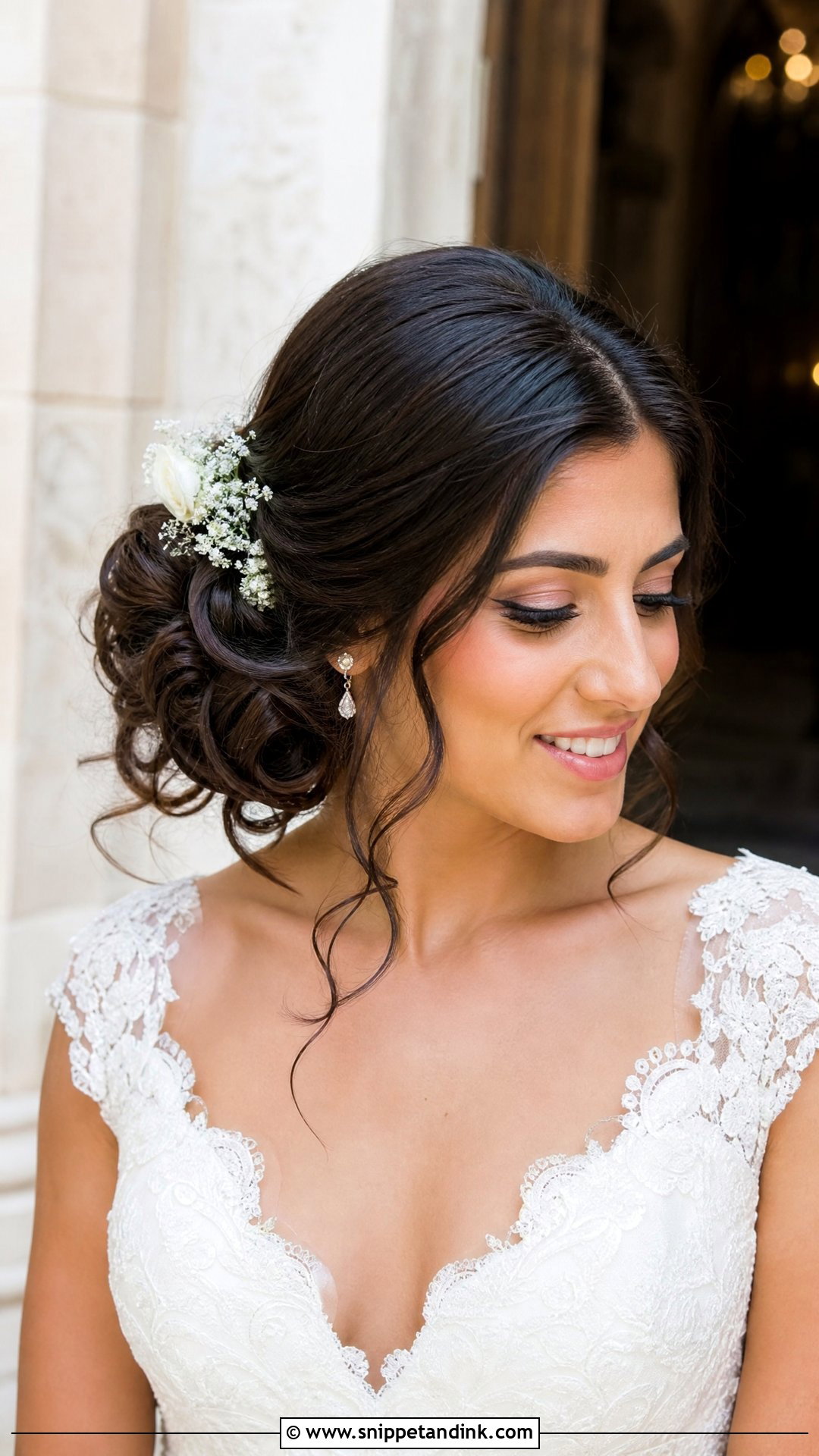
Off to one side near the nape, this bun is visible from the front, which makes it a good portrait style. One-shoulder gowns, lace bodices and soft veils suit it, with the bun opposite the bare shoulder for balance. Keep the other side smooth or add a fine twist there. It can be polished, curled or braided depending on the dress. One thing I check early: which side you’ll stand on at the altar. Guests should see the bun, not the plain side, so I place it facing the pews.
7. Christian Bridal High Bun
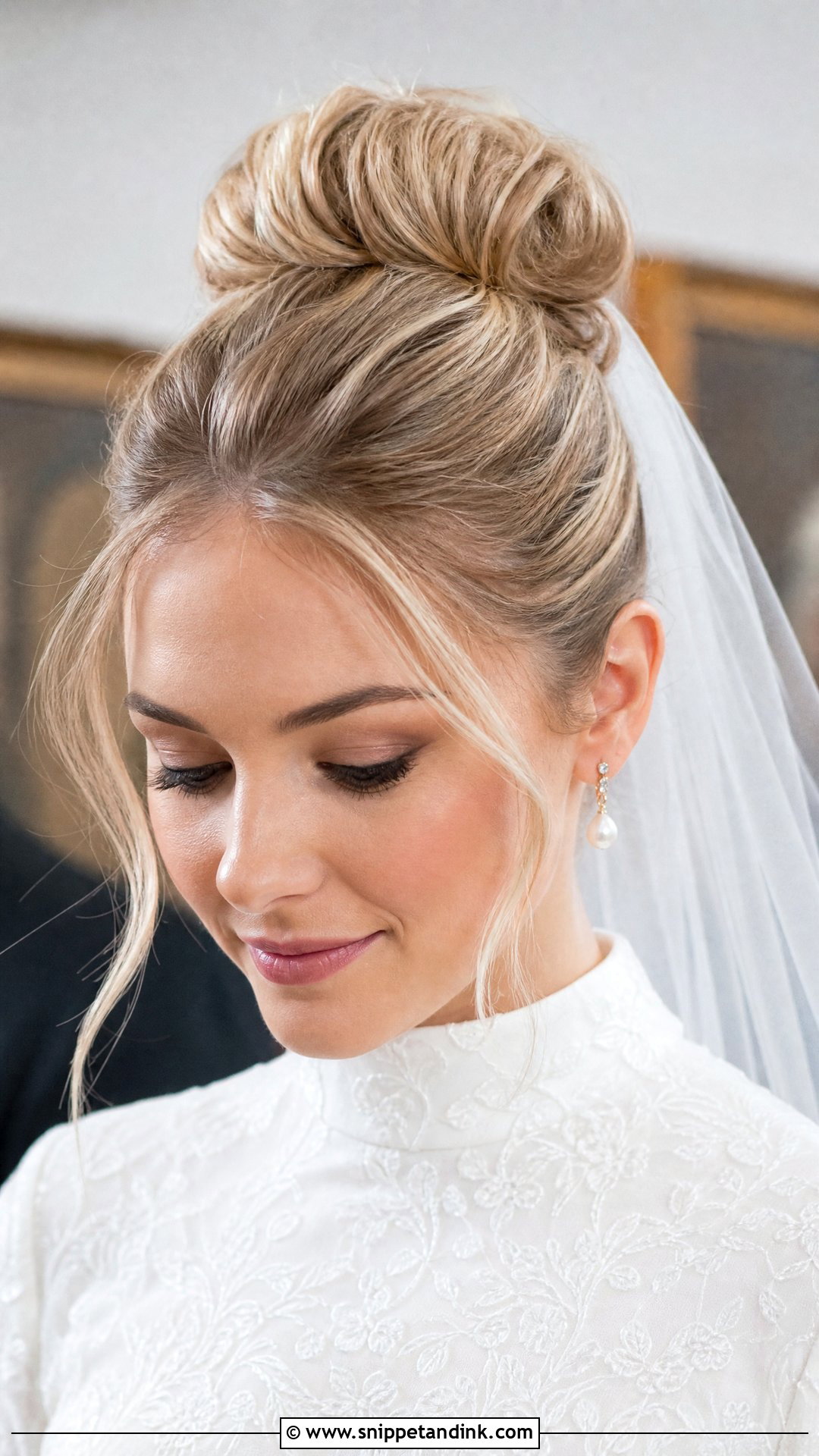
A high bun lifts everything off the shoulders, which is exactly what a high neck, long sleeves or statement earrings need. For church, I keep it smooth, round and balanced rather than towering. A veil can slide in underneath for a floating effect, and a tiara or headband sits well in front. The practical drawback is pews and chairs: a high bun can press against a tall seat back, and it’s the first to feel heavy if the service runs long. Sit down in it at the trial before you commit.
8. Christian Bridal Donut Bun
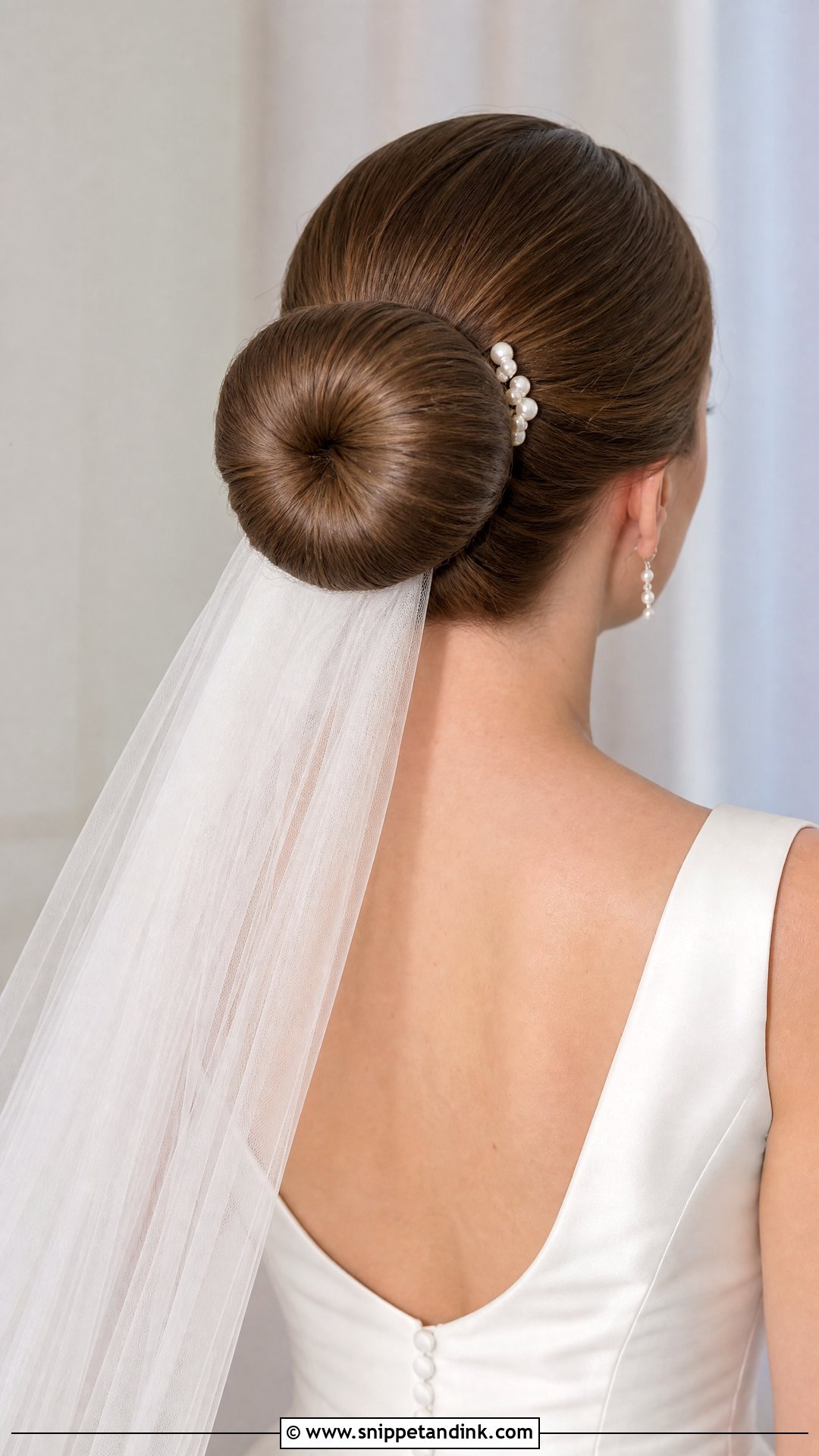
If your hair is fine, the donut bun is your friend. A foam or mesh ring underneath gives a full, even shape that natural fine hair can’t make alone, and it holds that shape all day. It can sit low, mid-height or higher depending on the veil and dress. I match the donut to your hair colour, because a pale ring can peek through dark hair in flash photos. To keep it from looking plain, wrap a small section of hair around the base or add pearl pins along one side.
9. Christian Bridal Twisted Bun
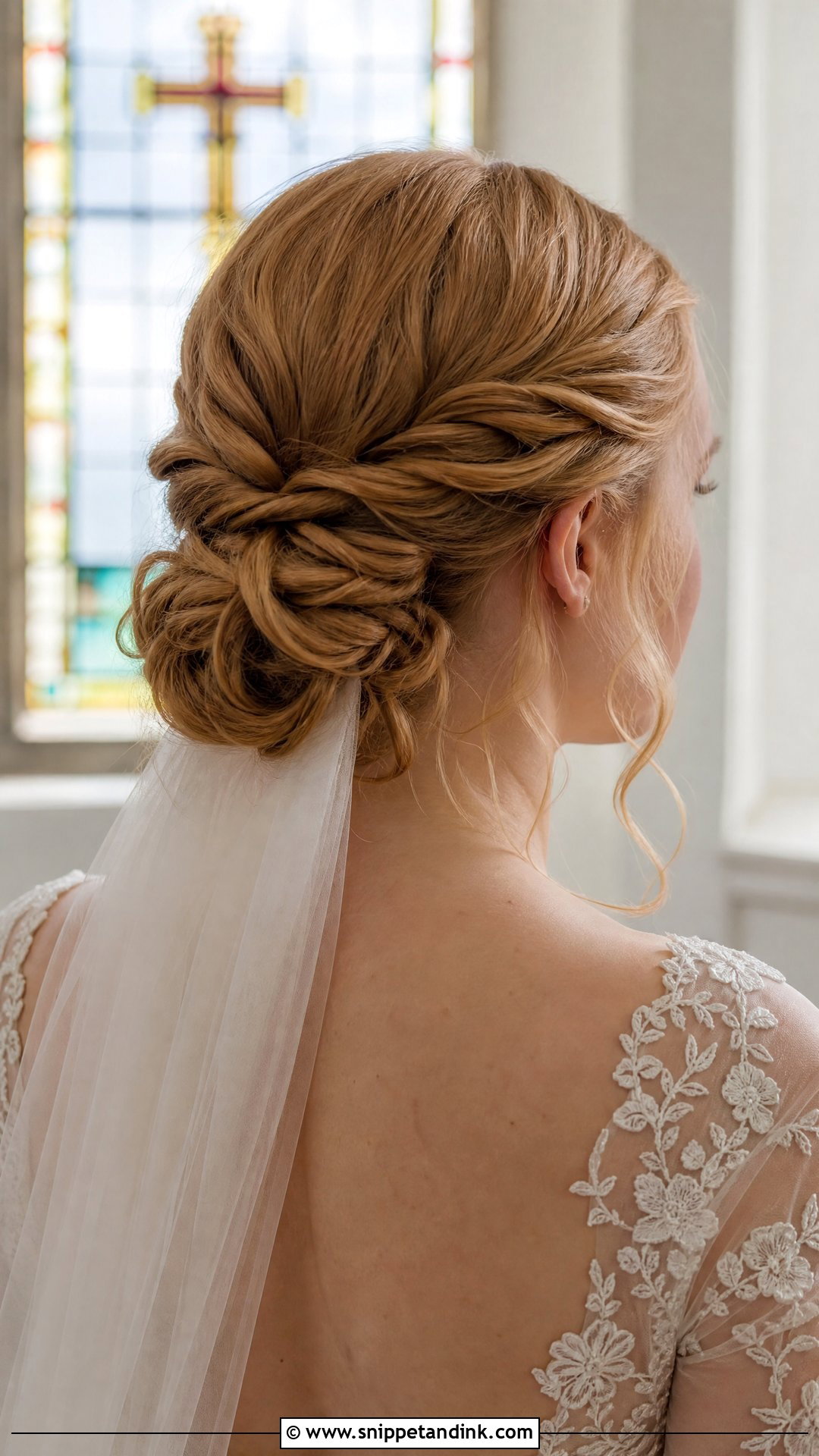
Twisted buns sit between a sleek chignon and a loose low bun in formality, which makes them a safe middle choice. Twists start at the temples, travel along the sides and meet at the nape, so the detail is built from your own hair. They’re especially good for layered cuts: each twist traps the shorter pieces that would poke out of a smooth bun. I twist away from the face, which keeps the front open and lifts the sides slightly. Veils, combs and small pearl pins all fit around it.
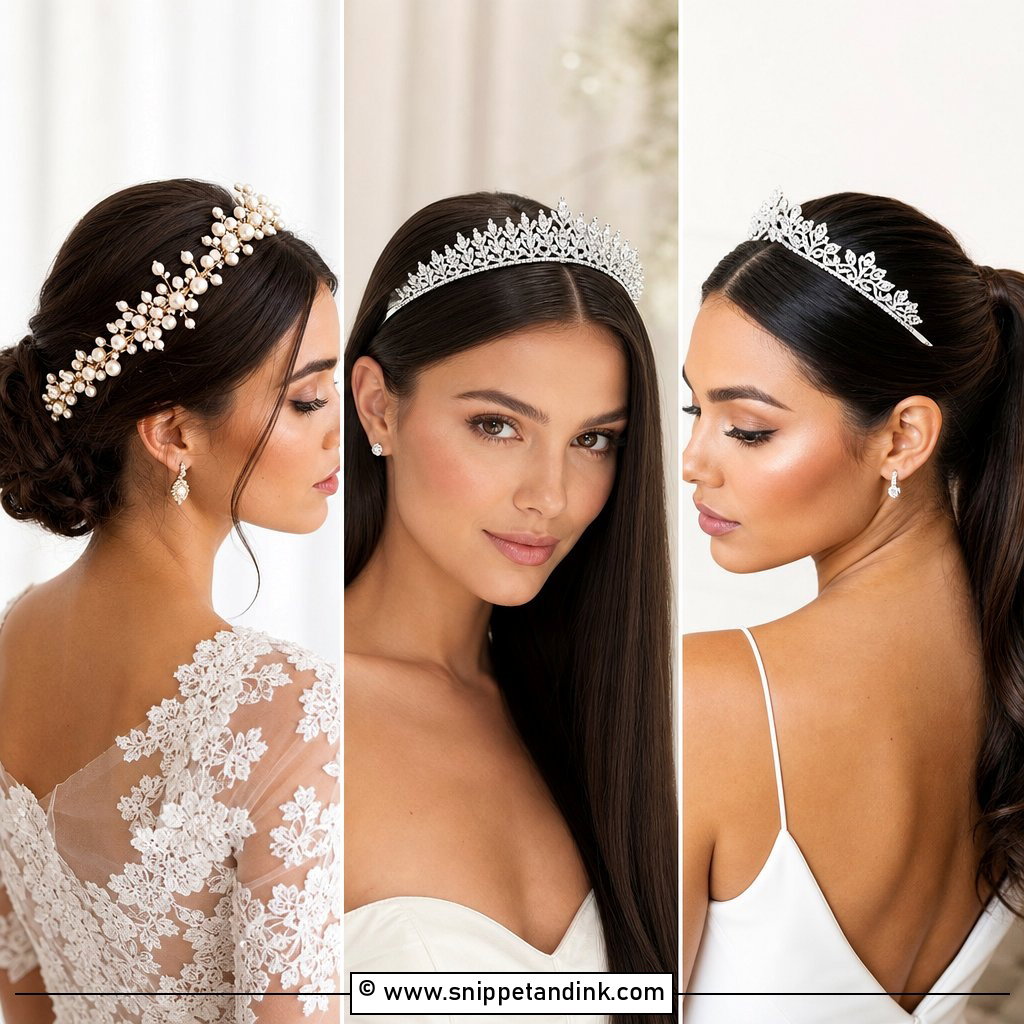
10. Christian Bridal Bun With Tiara
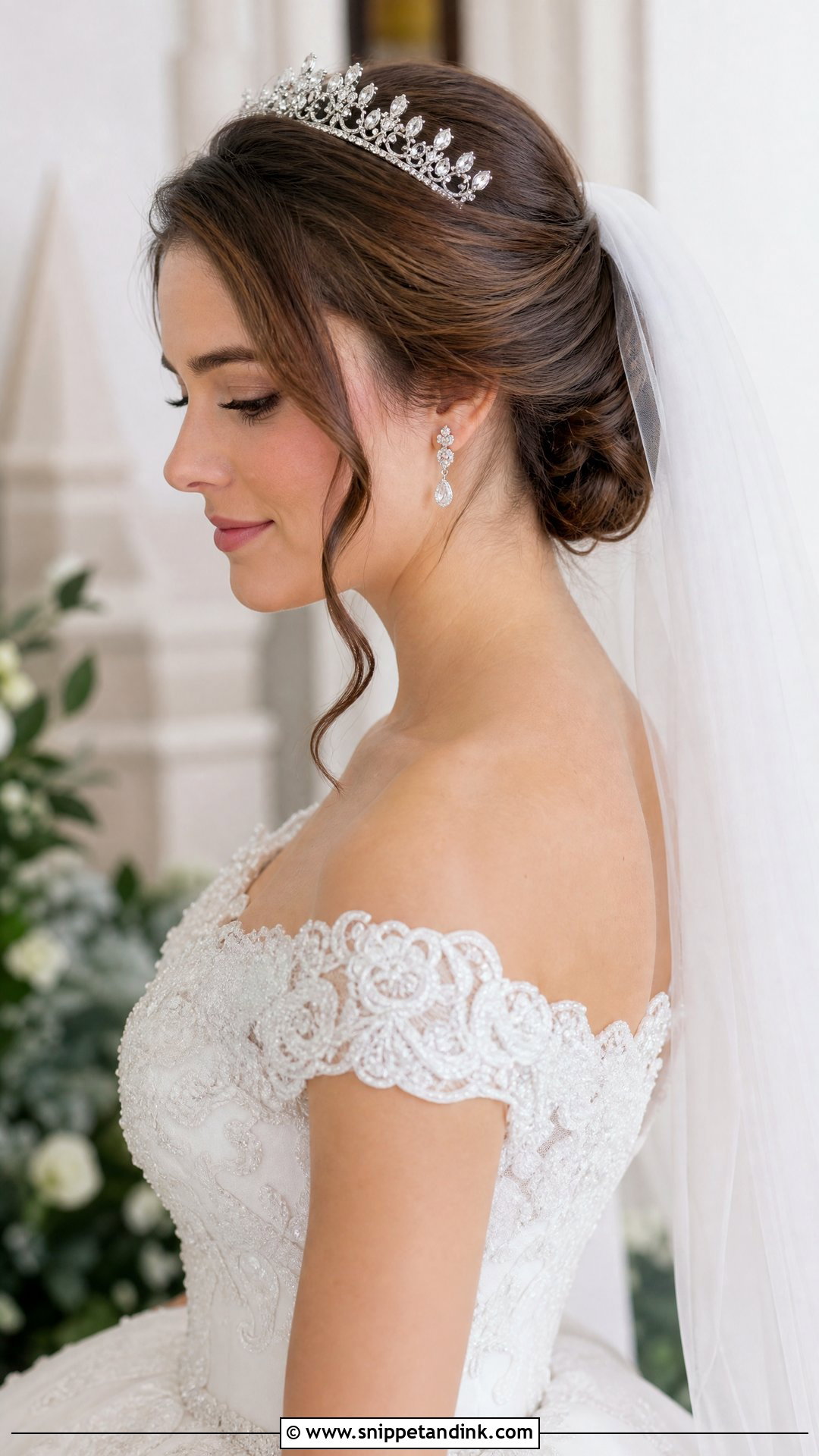
A bun with tiara is the most traditional look here, and the bun is what keeps the tiara level. I set the tiara slightly in front of the bun, then secure it with bobby pins threaded through its frame and crossed into hair behind it; tiaras rarely stay put on their combs alone. A low chignon suits it, though a mid bun gives more support for a heavier piece. Keep other detail out of the way. Braids, flowers and heavy pins next to a tiara usually compete with it. Classic gowns and long veils complete it.
11. Christian Bridal Bun With Pearls
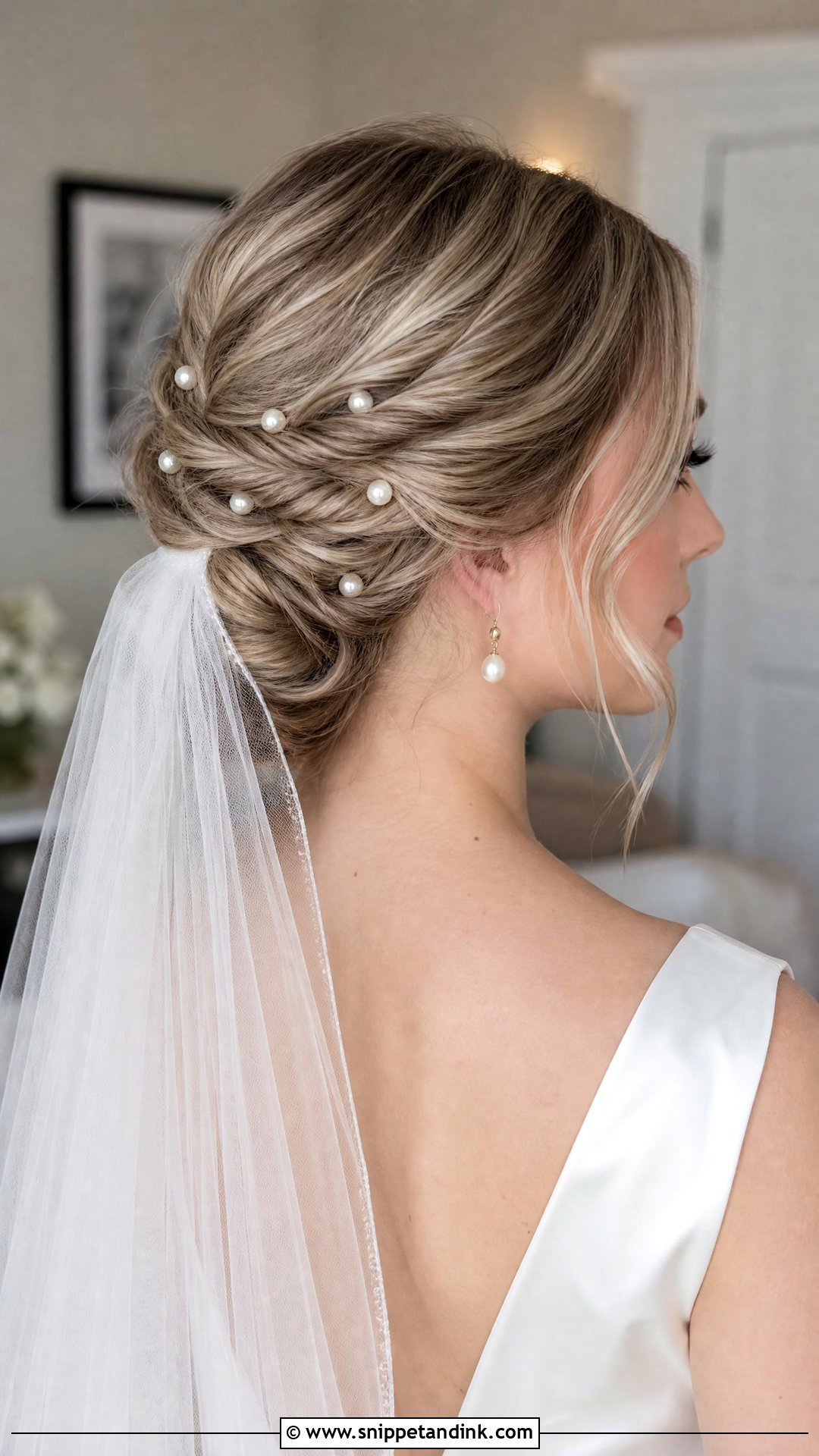
Pearls go with satin, lace, crepe and modest bridal gowns almost without effort. Use them as single pins, a comb, a headband or a fine vine around the bun. Keep the bun shape clean so they stand out; a low, twisted or braided bun all work. If your veil already has pearl edging or scattered pearls, I’d pick smaller pearls for the hair so the two read as one set rather than two collections. Check the colour too: bright white pearls next to an ivory veil can make the veil look dingy.
12. Christian Bridal Bun With Flowers
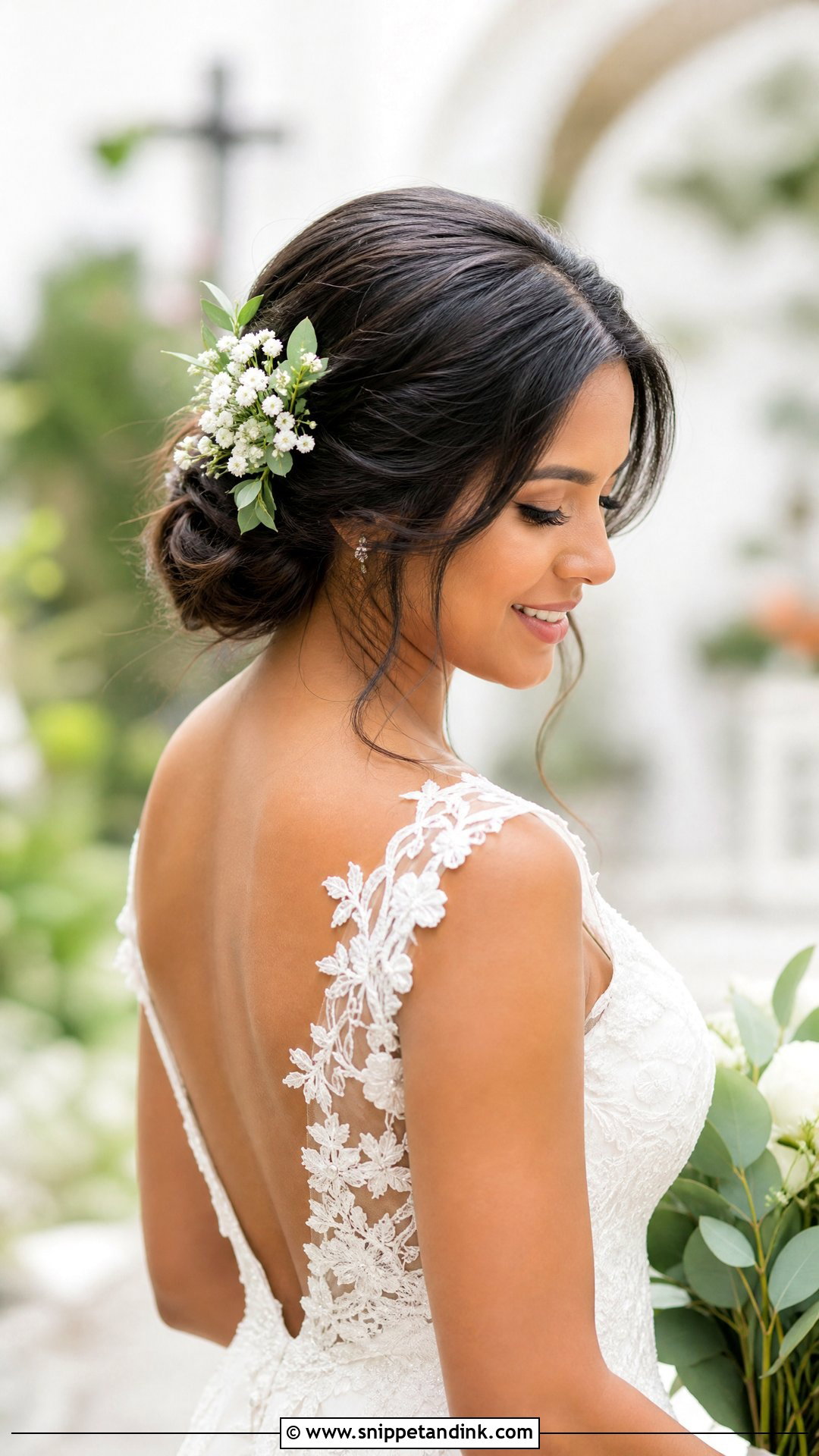
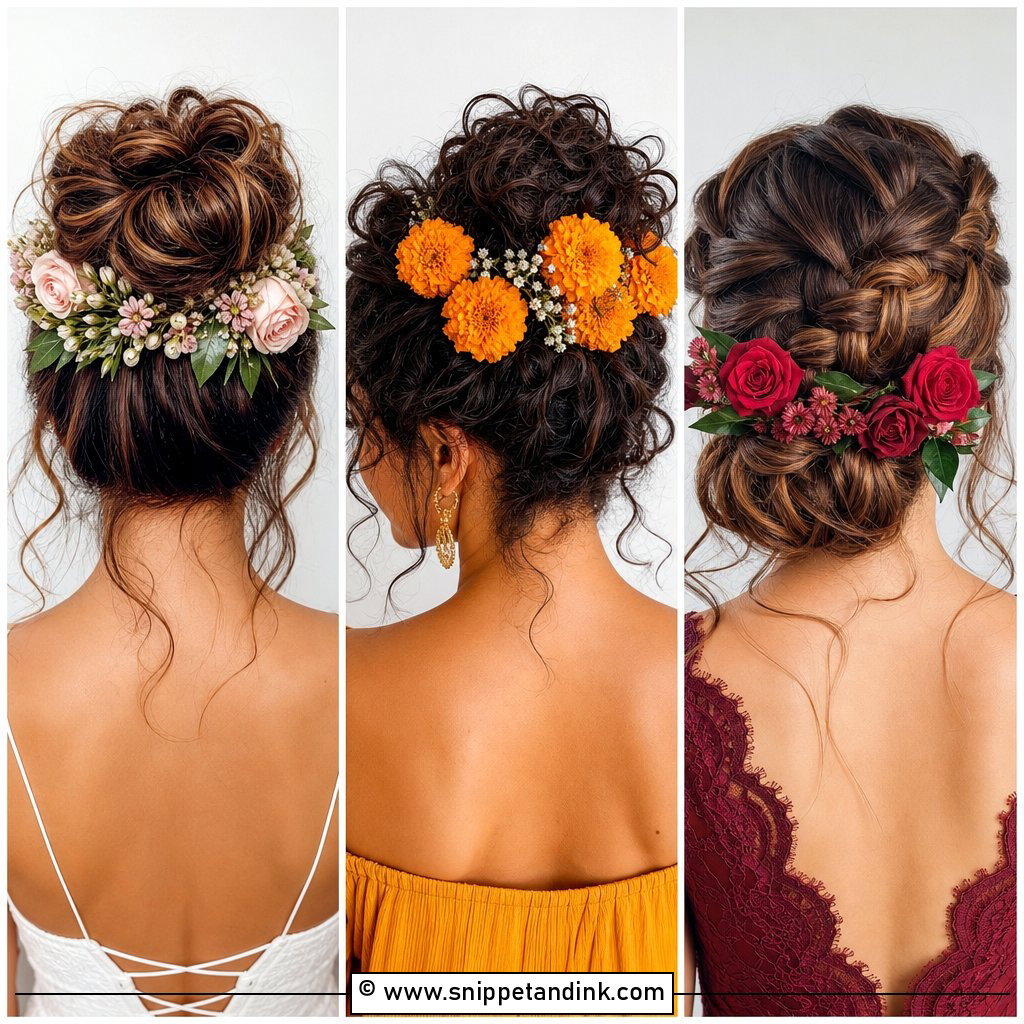
Flowers suit spring, summer and garden chapels, and they should belong with the bouquet. Fresh, silk and dried all work. Small white blooms, baby’s breath, blush flowers or greenery frame the bun without taking over, and a low textured bun gives them gaps to sit in. Fresh flowers wilt against a warm scalp, so I ask the florist for wired, hardy stems and add them last. Keep the placement to one side or around the bun rather than everywhere at once.
13. Christian Bridal Curly Bun
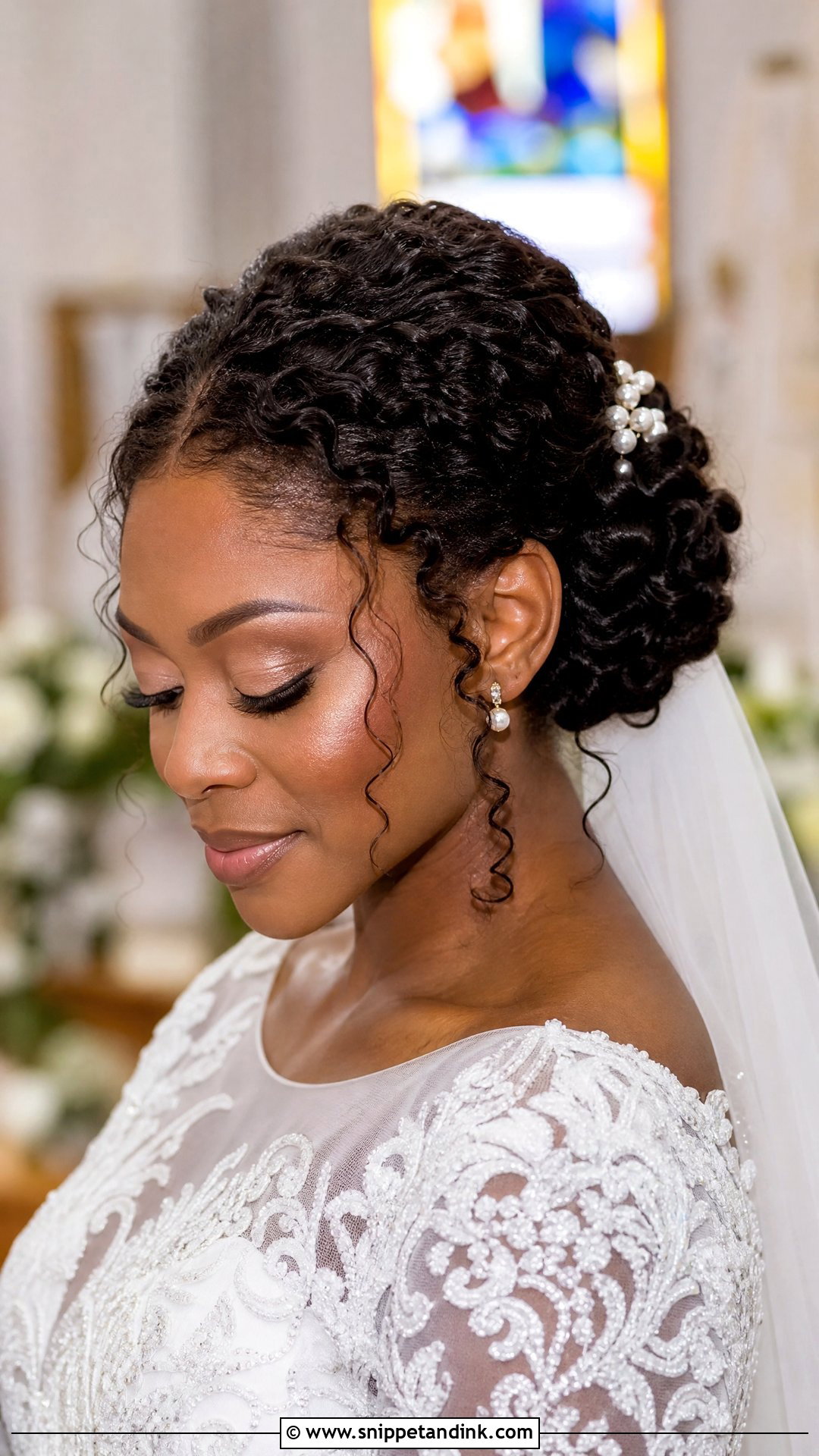
Curls make the fullest bun of all, whether natural or set into straight hair. Pin them low, to the side or at mid-height, keeping the curl shape visible. My order is always the same: define the curls first, let them set, then pin, so each curl keeps its spring. For natural curls I use open hairpins instead of bobby pins, which crush the pattern flat. Leave a few curls near the face. A veil above the bun covers some detail; below it shows more.
14. Christian Bridal Bun For Long Hair
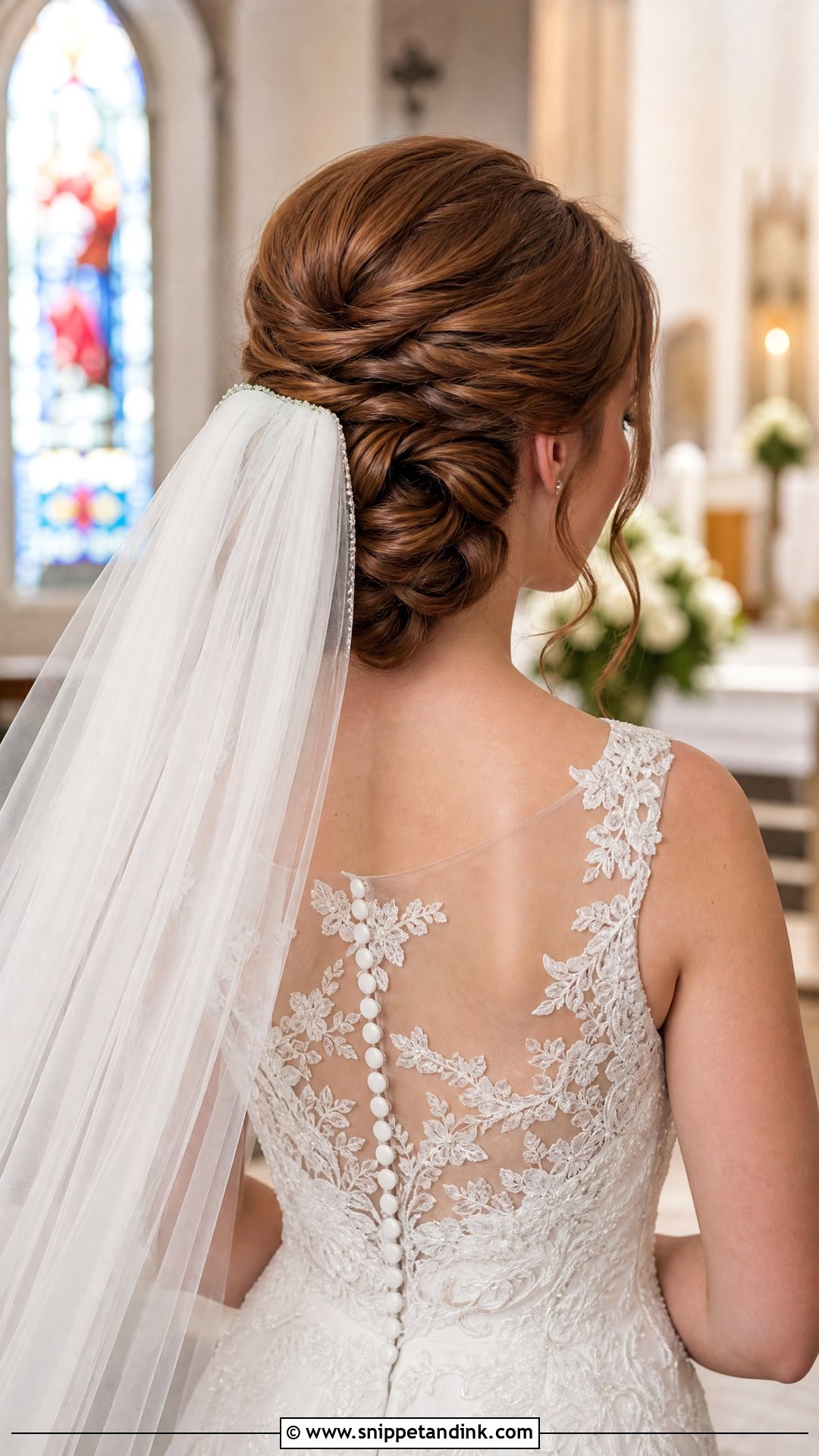
Long hair can build a large chignon, a braided or twisted bun, or a smooth wrapped bun with real presence. The thing to manage is weight. A heavy bun pulls on the scalp and slowly drops through a long ceremony, so I split the hair into two or three sections and anchor each separately, with a firm base and padding where needed. For an open back or detailed lace, a low bun keeps the focus on the dress. A veil, a pearl comb or a few soft face pieces complete it.
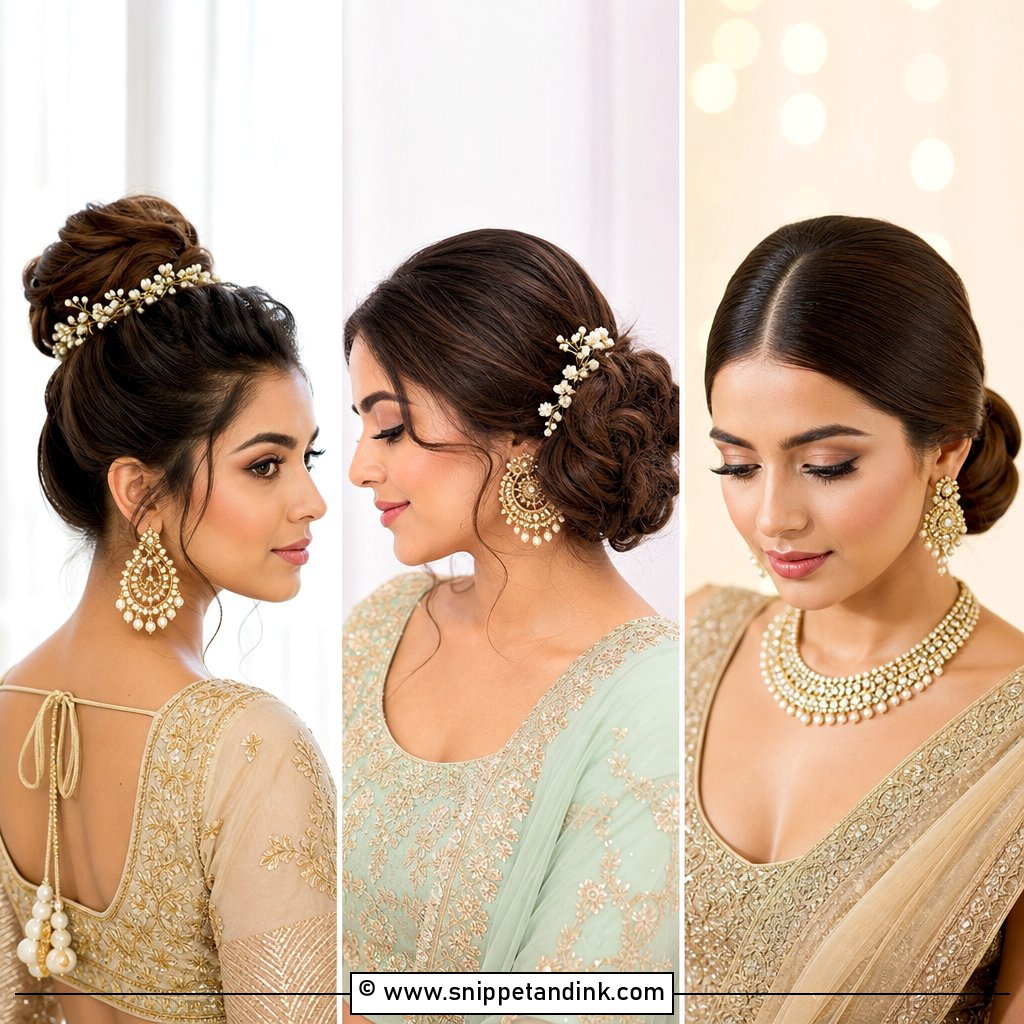
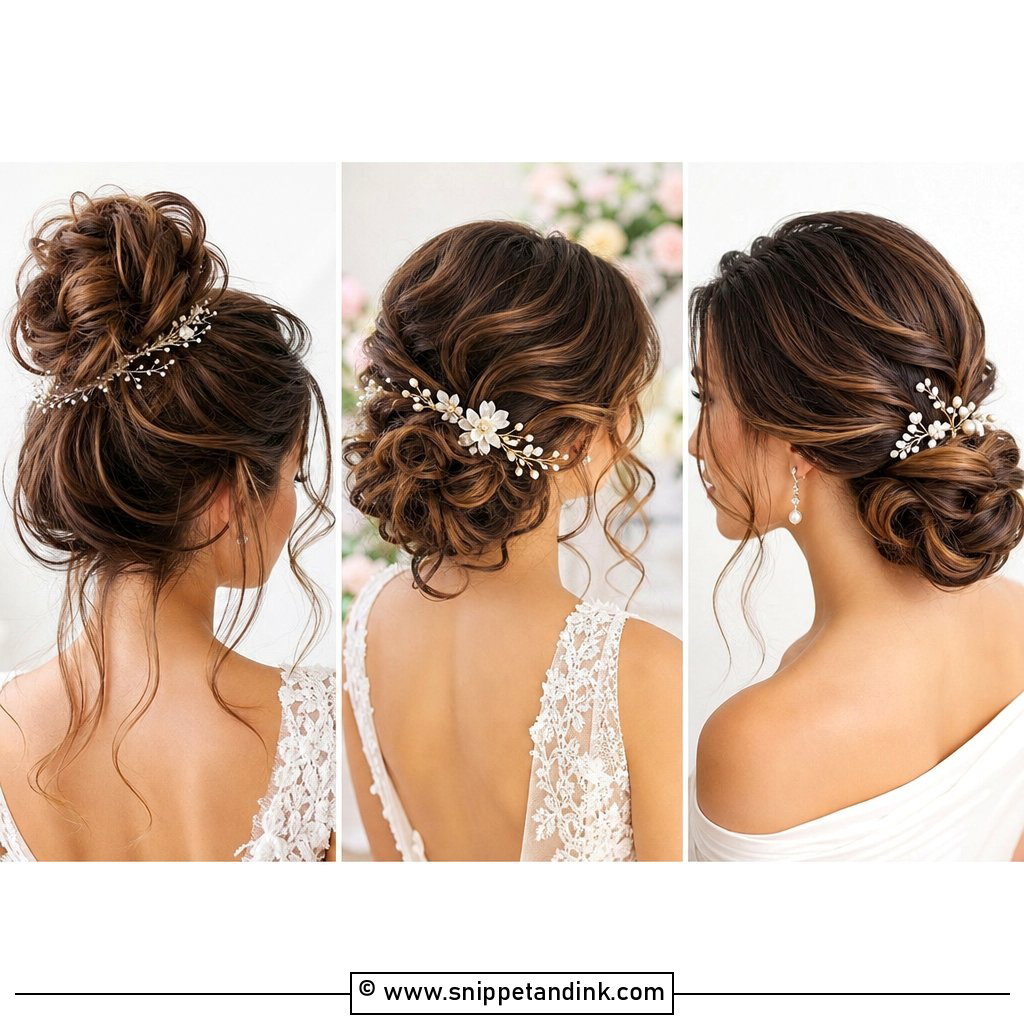
15. Christian Bridal Bun For Medium Hair
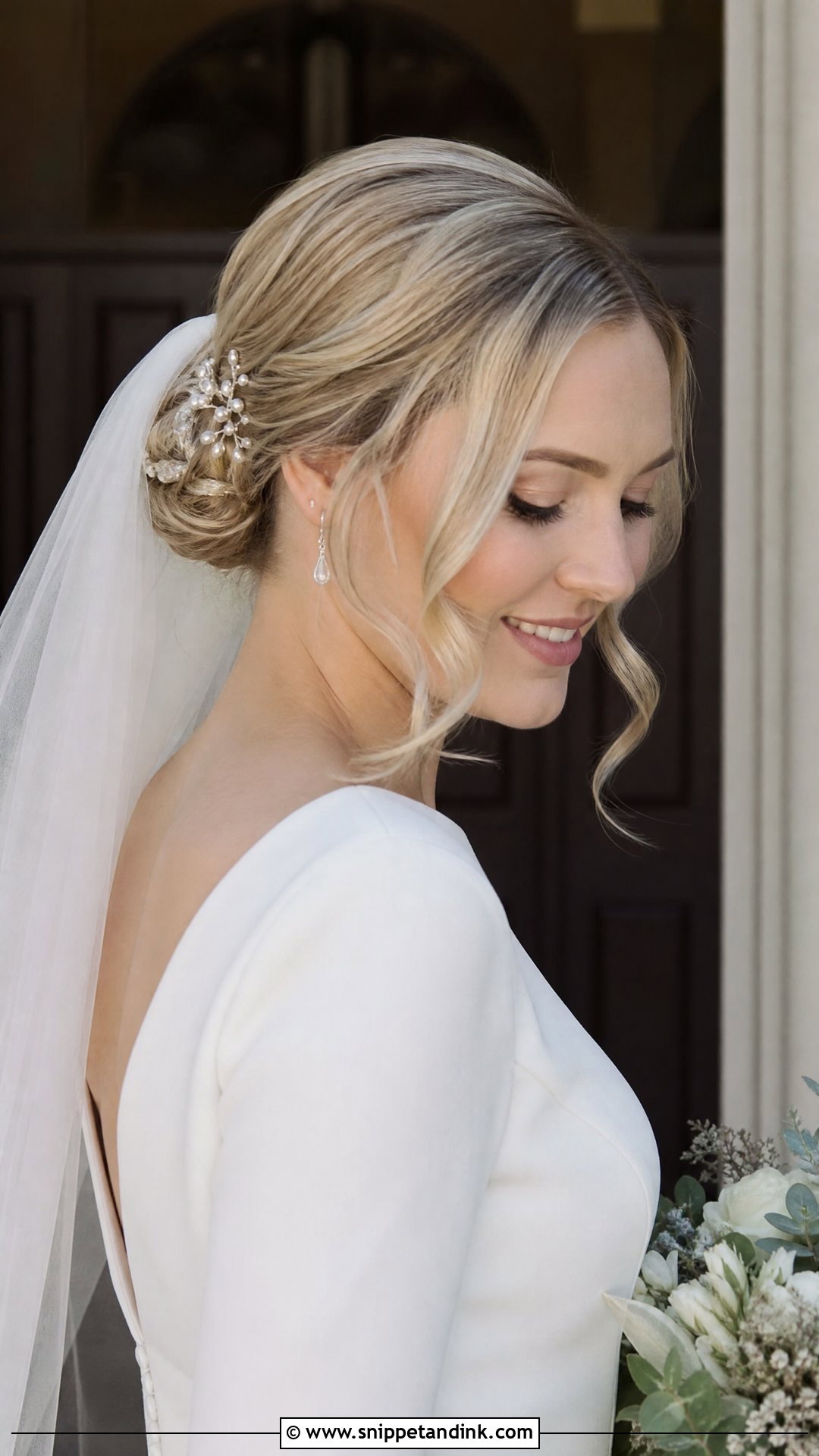
Medium hair can still make a full, polished bun. Low buns, tucked chignons, twisted buns and soft textured buns all suit it. For more fullness, padding, a couple of clip-in wefts or some curl texture before pinning gives the bun body. I keep it close to the nape, since that’s where shorter layers reach and stay put. The lighter weight is a bonus under a veil, and you’re less likely to feel tired of it by the reception. A small comb or a few pearls complete the look.
What the Congregation Sees for an Hour
At a reception, guests mostly see your face. In church it’s the opposite. During a full service, especially a nuptial Mass that can run close to an hour, everyone in the pews is looking at the back of your head. That changes where I spend my effort.
- The back needs the most finish. Uneven sections, a visible elastic or a bun slightly off centre are obvious from the third row, so I step back and check from a distance, not just in the mirror.
- Old churches are often dim, and many don’t allow flash during the service. A very flat, sleek bun can disappear into a dark veil in low light. A little texture or a few pearl pins catches what light there is.
- Stone buildings can be cool even in summer, then the reception room is hot. Hair prepped for humidity won’t mind the chill, but the reverse isn’t true, so prep for the warmer room.
- You’ll sit, stand and kneel more than once. A high bun can press against a tall chair back, and kneeling tips your head forward, so test both positions at the trial.
One more call worth making to the church office: some parishes have quiet rules about veils, bare shoulders or confetti, and a few ask for hairspray to be applied outside rather than in the vestry. It saves a scramble on the morning.
Pinned for the Whole Service, Not Just the Aisle
Every bun here, sleek, soft, braided, pearled or curly, is doing the same quiet job: holding the veil, keeping your face clear and lasting through a ceremony that can run much longer than the walk down the aisle. So I’d start with the practical questions. What’s your neckline, how heavy is the veil, how long is the service, and what does your hair do after a few hours of pins? Answer those at a trial, in the dress if you can, and the right bun usually becomes obvious. Then you can stop thinking about your hair and be present for the vows.
You'll Like These Ideas:



Leave a Reply