
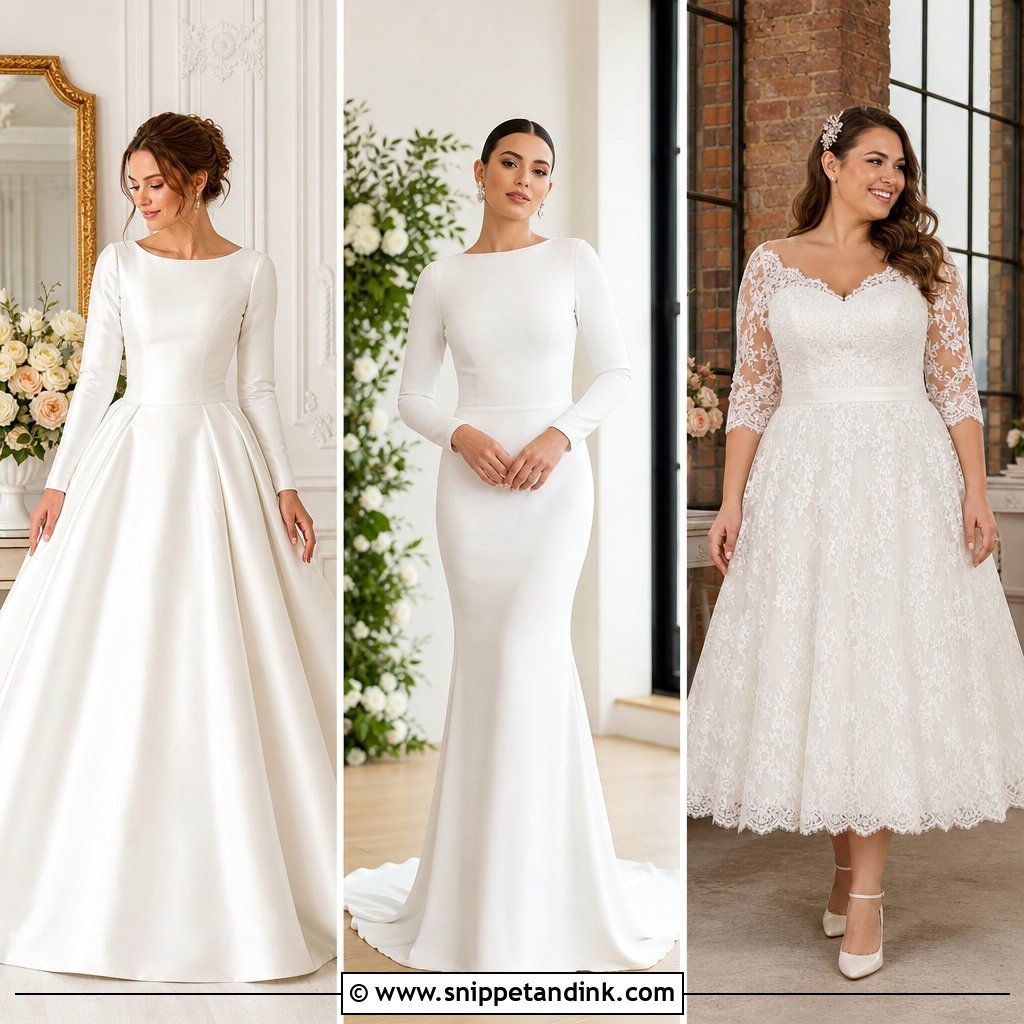
When a bride tells me she wants a dress she’ll still like in her anniversary photos, I don’t hand her a list of trends to avoid. I talk about proportion, fabric and fit, because those are what decide whether a gown dates. Satin ball gowns, lace sleeves, a bateau neckline, a long plain veil: they’ve lasted because the shape does the work rather than a detail of the season. Below are 25 classic directions, each with the thing I’d check in the fitting room before you commit, for ceremonies from a ballroom to a garden to a courthouse.
Why Some Wedding Dresses Date and Others Don’t
Look at wedding photos from any decade and the dresses that still look right usually share a few things. The waist sits at the natural waist, the neckline is simple and the fabric drapes the way it should. What dates a dress is a detail that belonged to one season: a particular sleeve shape, a heavy beaded belt, an unusual colour of lining, or illusion mesh in a tone that doesn’t match the skin.
When a bride wants a classic gown, I use a quick test. Cover the most fashionable detail with your hand while looking in the mirror. If the dress still looks complete and you’d still choose it, it will probably age well. If it falls flat without that one detail, the detail is doing too much.
Fit matters just as much as design. A classic gown that pulls at the zip or gapes at the bust looks off in any decade, while a plain dress altered to sit perfectly looks right for a very long time. Budget for two or three fittings and bring your wedding shoes and undergarments to each one.
1. Satin Ball Gown Wedding Dress
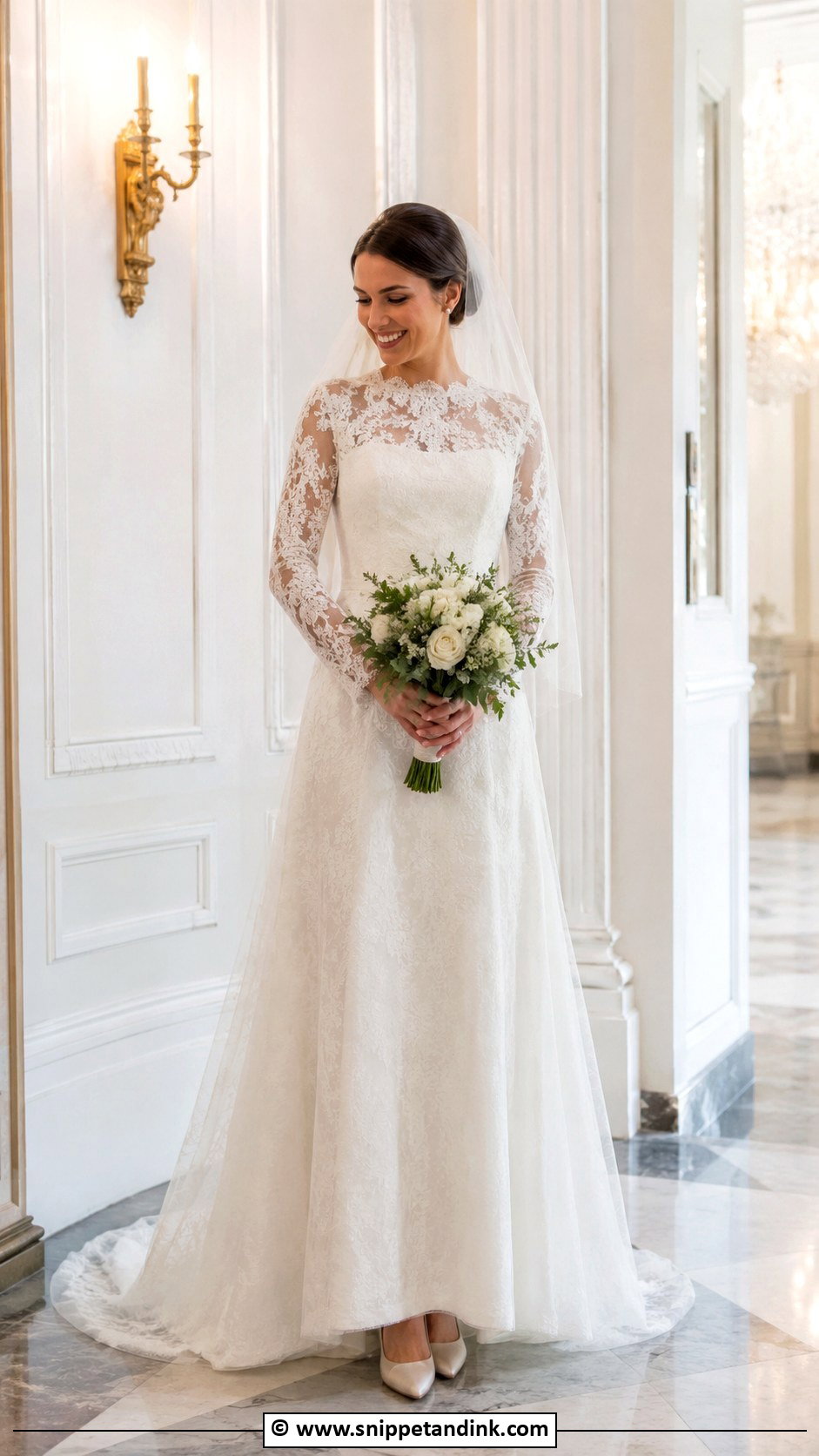
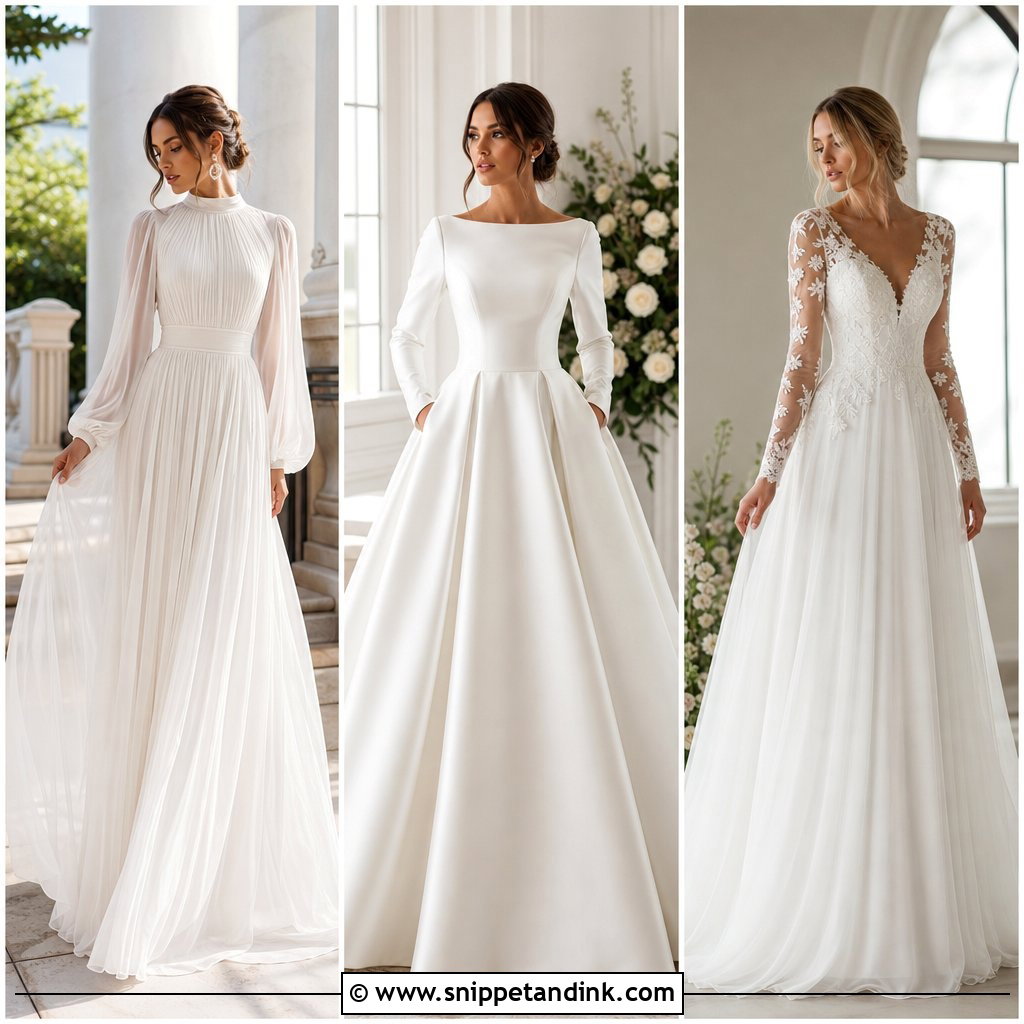
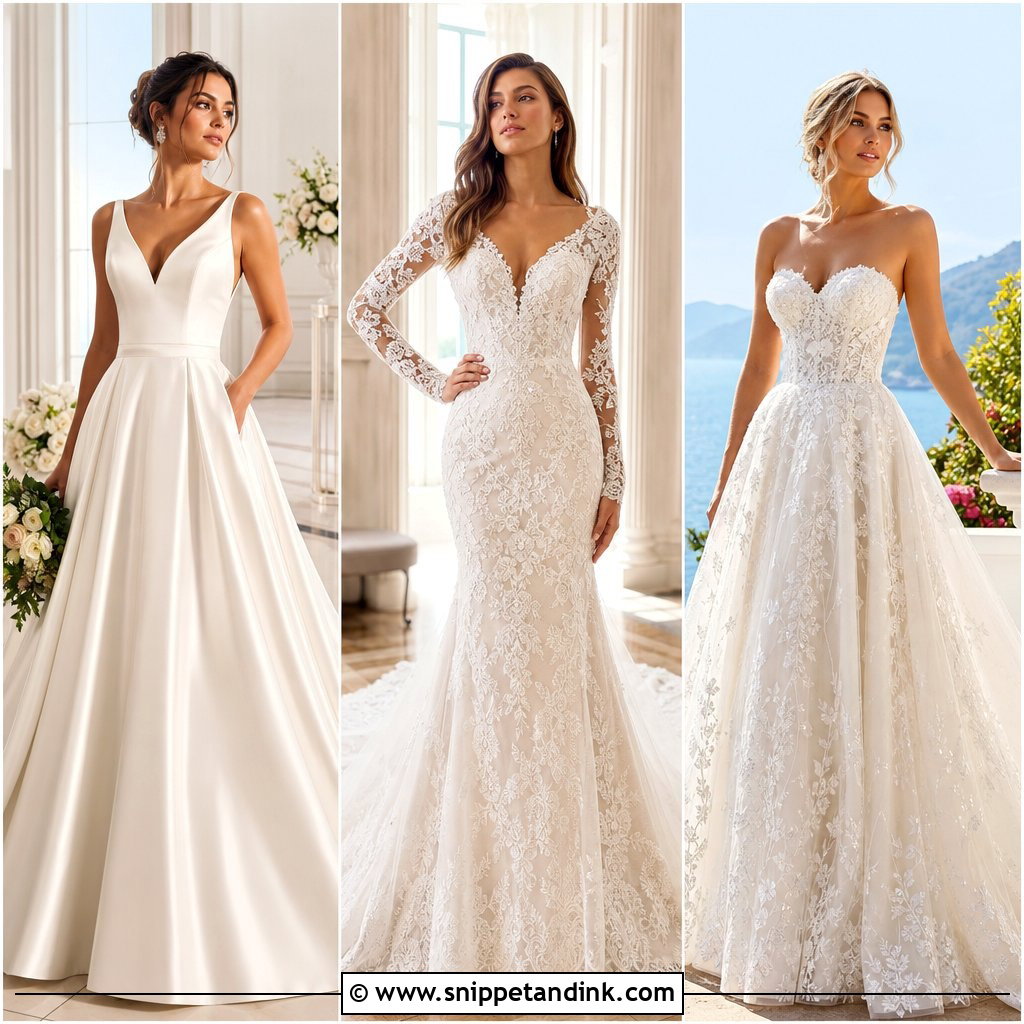
Grand without fuss, a satin ball gown wedding dress relies on two things: a bodice that’s properly boned and a skirt with enough petticoat underneath. Without the petticoat, heavy satin collapses into folds by the reception. Keep the neckline plain (strapless, scoop or bateau) so the fabric is the feature. A chapel veil, pearl drops, pointed ivory heels and a low bun suit a hotel or formal indoor venue. Sit down in it at a fitting; satin crushes across the lap, and a gown with a slightly heavier weave recovers better.
2. Long Sleeve Lace Wedding Dress
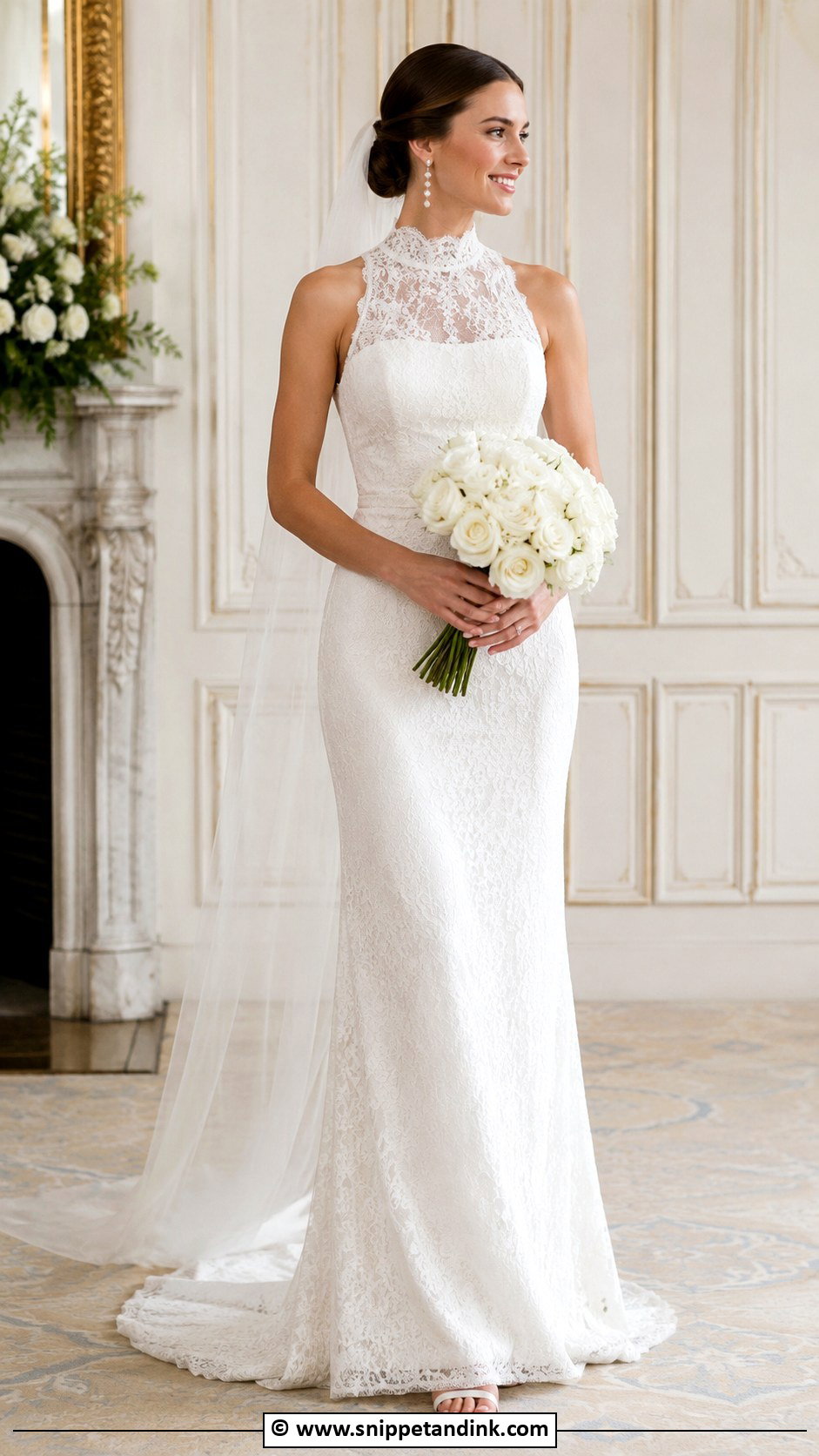
Lace sleeves have outlasted almost every bridal trend I can think of. What makes them look classic rather than dated is the lace itself: a fine Chantilly or soft corded lace ages well, while thick, shiny guipure on mesh can look heavy. Check the sleeve at the elbow when your arm bends; tight lace pulls and can tear at the seam. A fitted bodice and gentle A-line skirt, pearl studs, satin pumps and a plain sheer veil keep the texture as the only detail. A low chignon suits cooler months and formal ceremonies.
3. Off Shoulder A Line Wedding Dress
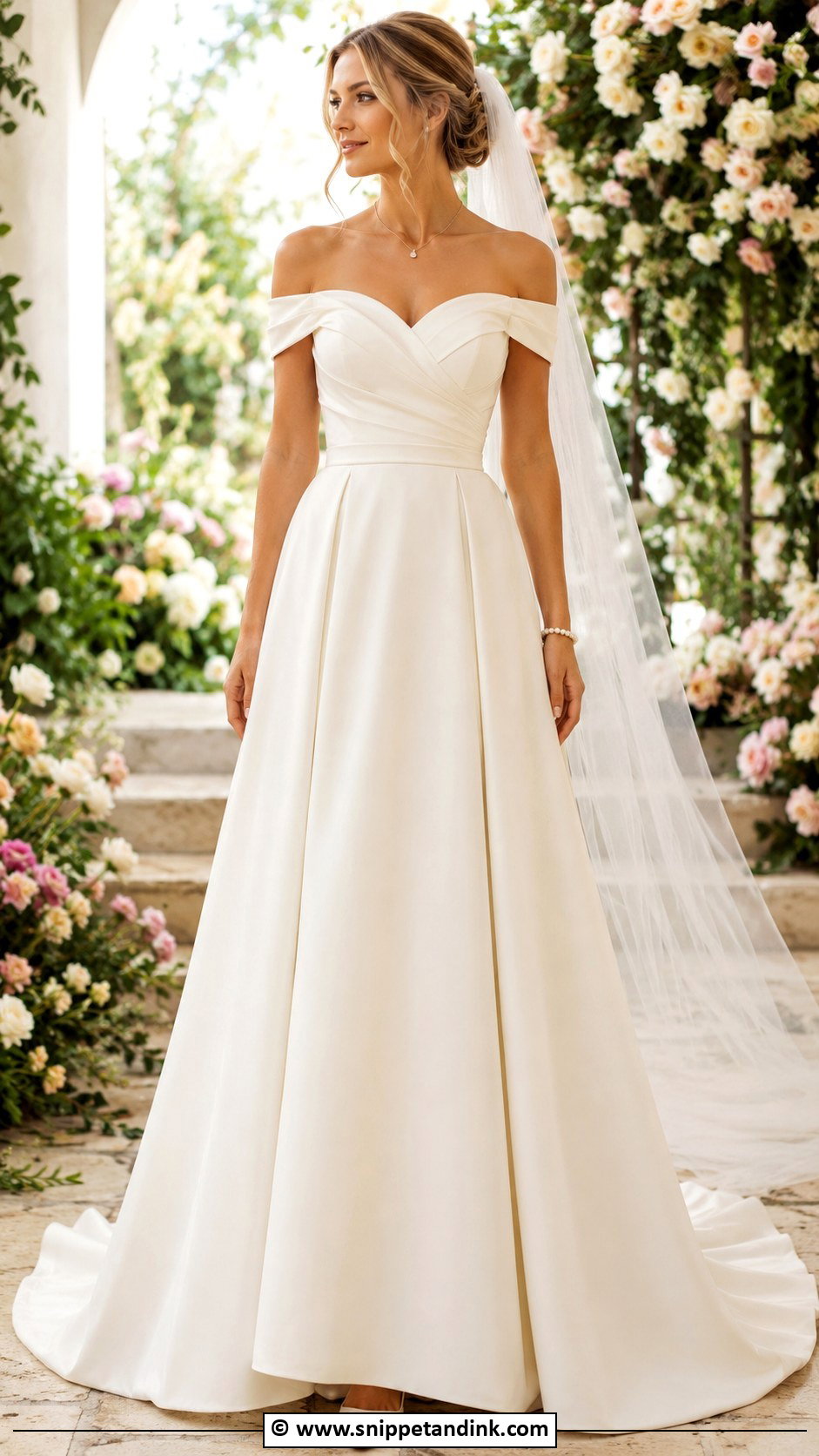
Off-shoulder necklines show the collarbone and shoulders, and the A-line skirt keeps everything below balanced. The one fitting point I never skip: raise your arms. If the band climbs or slides, have a tailor tighten it or add a hidden silicone strip. Crisp mikado holds the neckline best, satin softens it, light lace makes it romantic. A smooth updo shows the neckline off, and a fine necklace or pearl bracelet is enough jewelry. It suits most figures because it marks the shoulders and waist, then floats away from the hips.
4. Strapless Sweetheart Wedding Dress
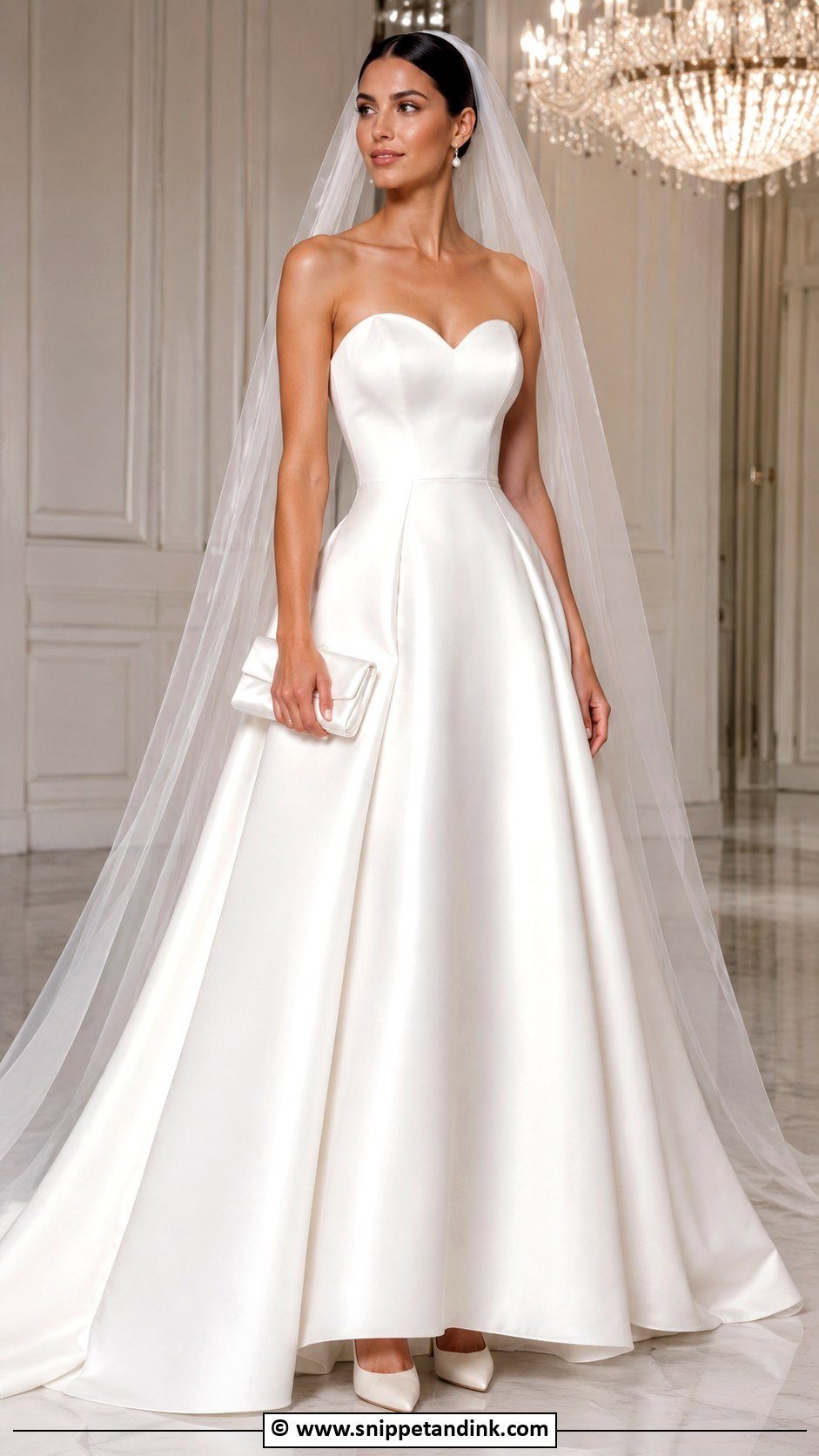
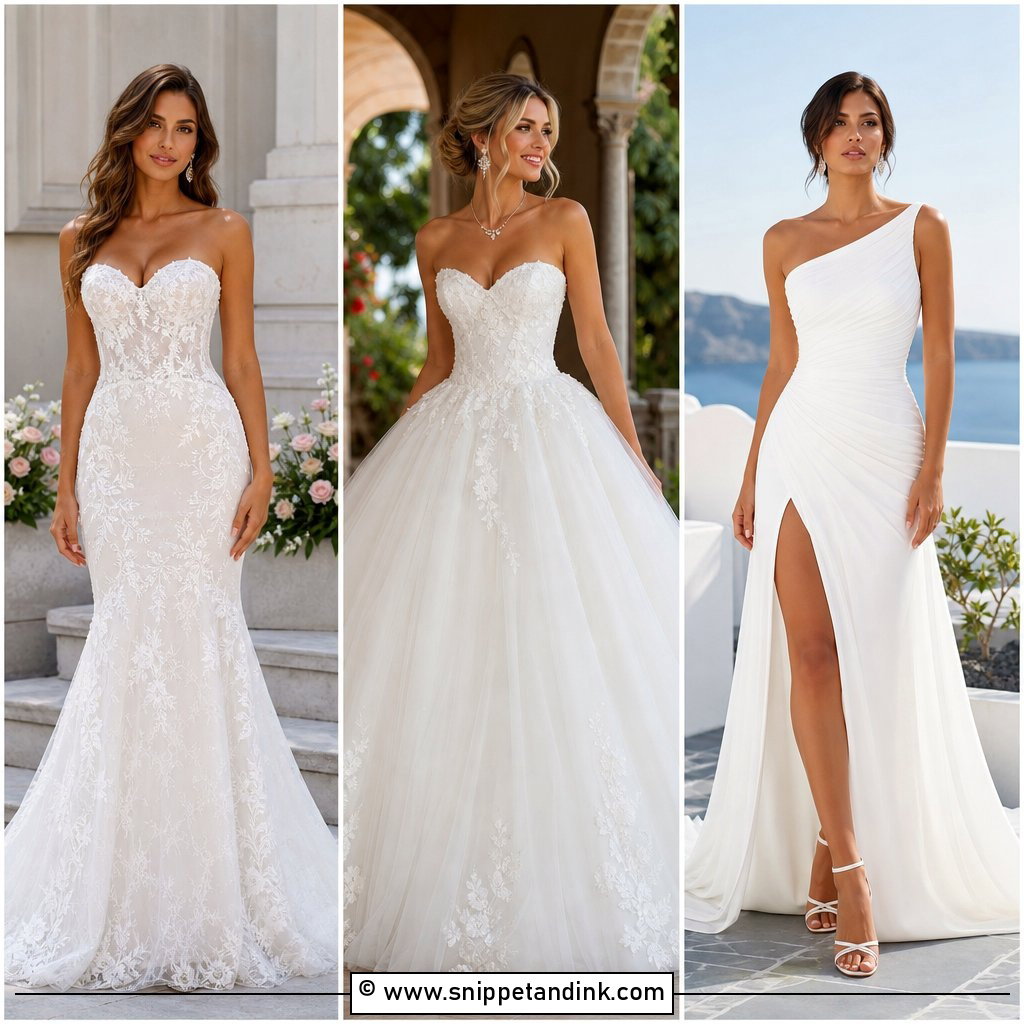
The sweetheart curve flatters the bust and adds softness, which is why a strapless sweetheart wedding dress has stayed popular for decades. The bodice must hold itself up; if you’re tugging at it in the fitting room, you’ll tug at it in every candid photo. Good boning and a waist stay sewn inside carry the weight. Satin, crepe or lace all work. A cathedral veil adds drama, while a fingertip veil and pearl earrings keep it simpler. It suits a ballroom, a garden or an elegant outdoor space equally well.
5. Bateau Neck Wedding Dress
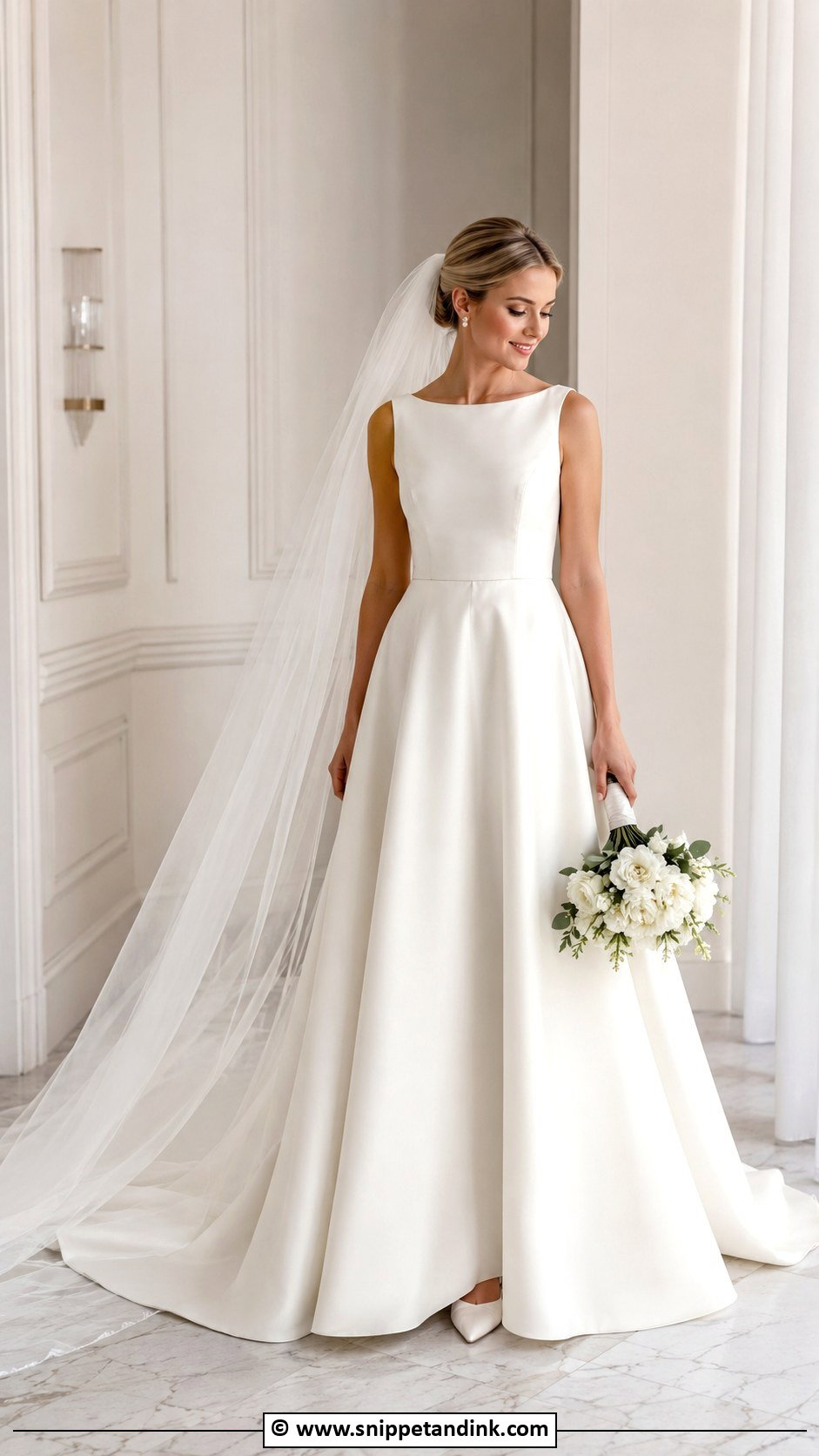
A bateau neck wedding dress runs straight across the collarbone, almost shoulder to shoulder, which is why it reads so calm in portraits. It’s a neckline for strong shoulders and a long neck; on a very short neck it can feel high, and a slightly scooped boat neck is kinder. Silk, mikado and crepe give the cleanest line. A fitted bodice with an A-line or sheath skirt, a sleek bun, pearl studs, a long veil and pointed pumps give it that royal-inspired mood without trying.
6. Simple Crepe Wedding Dress
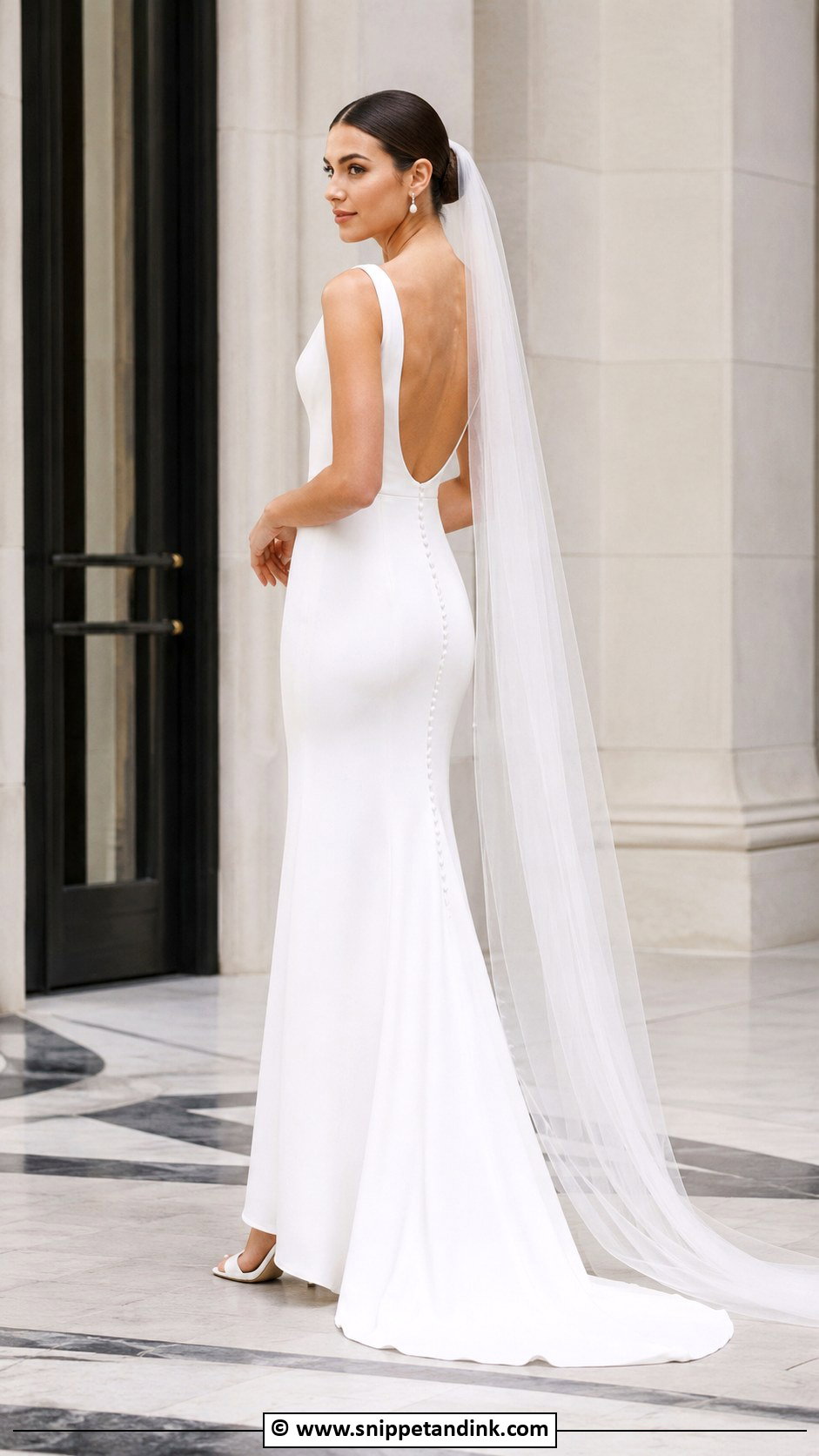
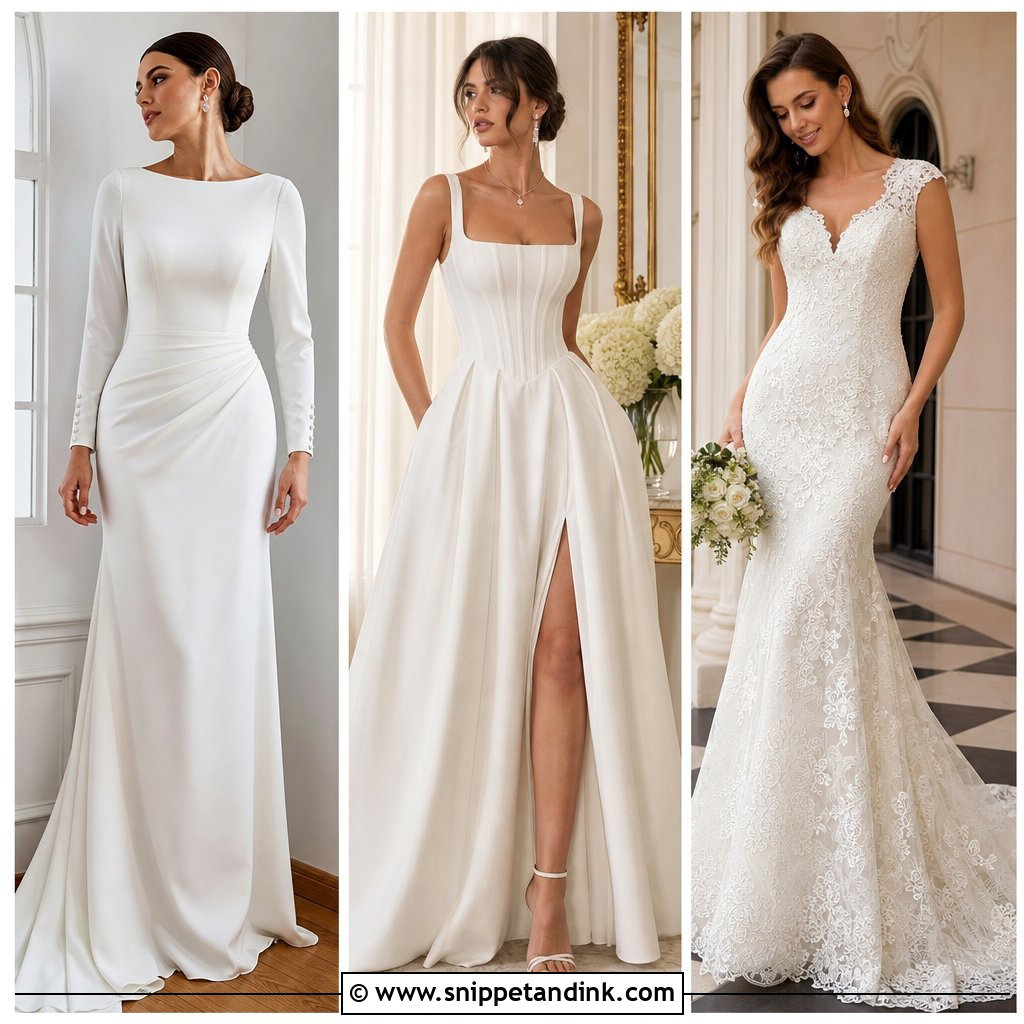
Crepe is honest fabric. It shows every seam, every line of underwear and every millimetre of a bad fit, which is why a simple crepe gown looks either very expensive or quite plain, depending on the tailor. A firm, heavyweight crepe is what you want; thin stretch crepe clings. Sheath and soft mermaid shapes suit it. If the back is low, think carefully about the bra solution early, and keep jewelry minimal. Pearl earrings, a narrow veil, white heels and a sleek bun suit a city wedding or modern venue.
7. Mikado A Line Wedding Dress
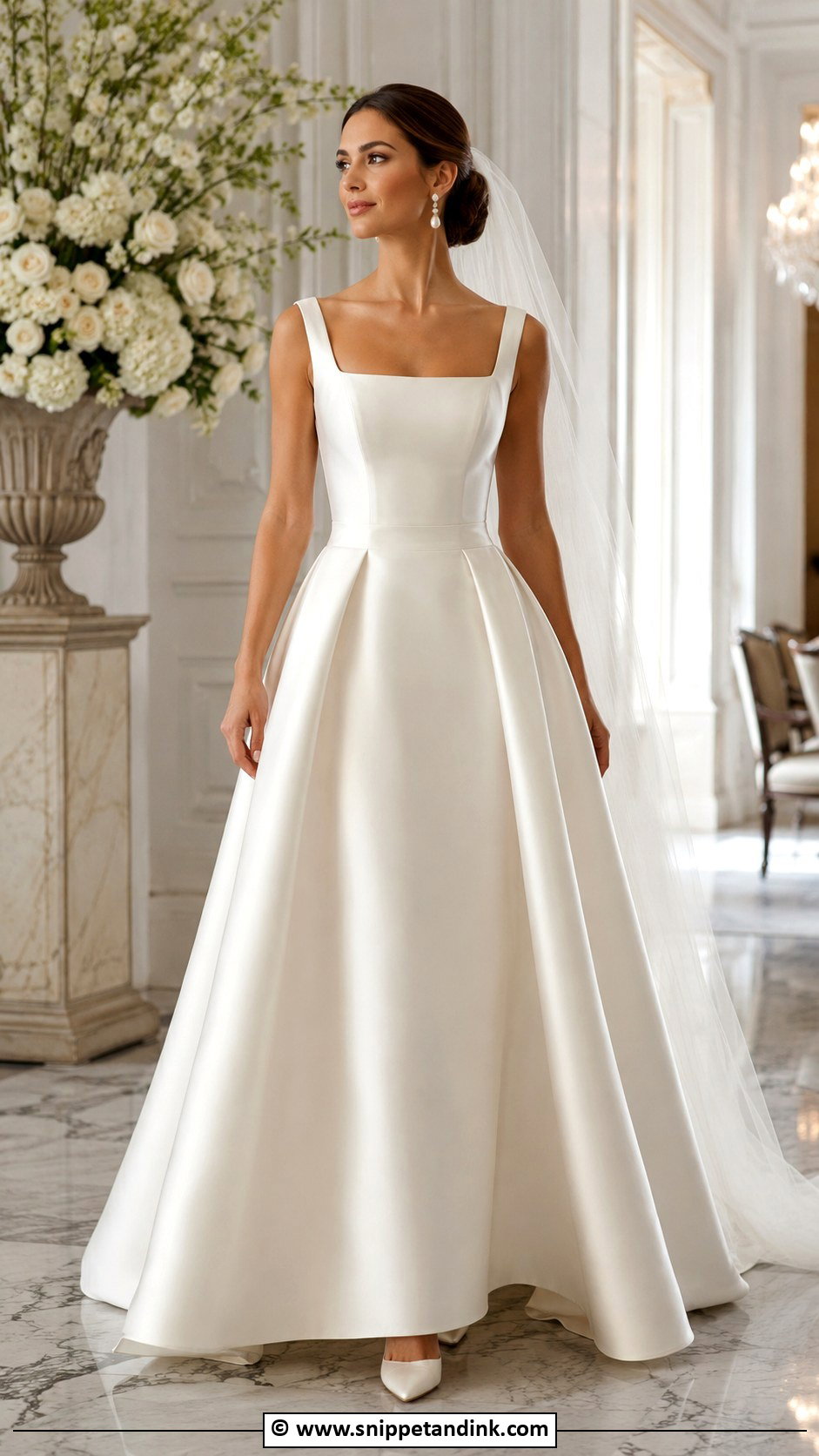
Mikado is a heavy silk or silk-blend weave with a slight sheen, and its weight is the reason it holds a sculpted skirt without layers of netting. That also means it’s warm, so it suits autumn and winter more than a hot outdoor summer. Square, strapless or clean V-necks pair well. Pearl drops, a neat veil and satin heels complete it. Mikado creases sharply rather than softly if crushed, so steam it on the morning and travel with it hanging. It’s right at home at a formal or black-tie wedding.
8. Square Neck Wedding Dress
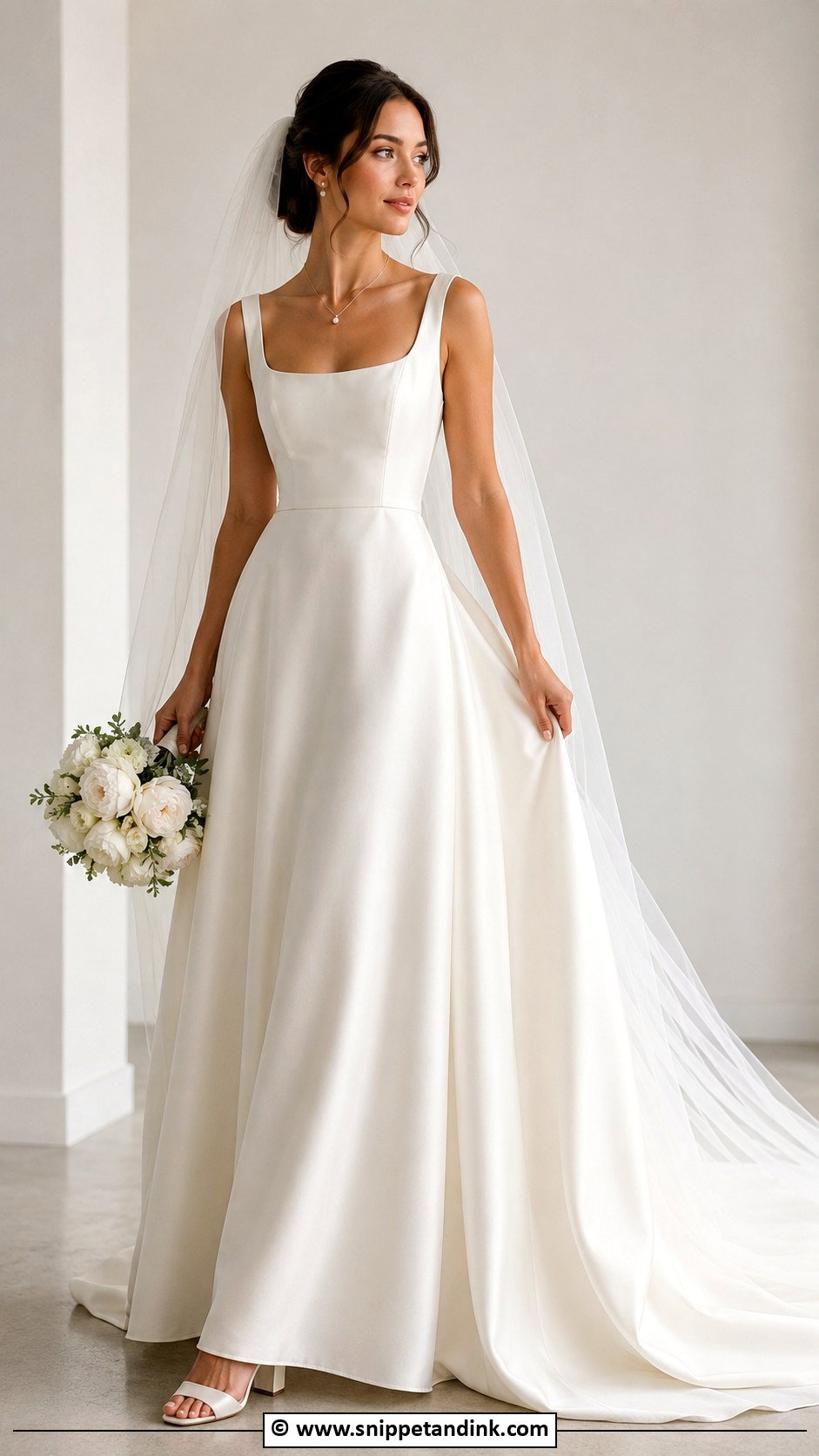
Square necklines frame the shoulders and collarbone in straight lines, which feels classic without being fussy. The strap width decides how it sits: wider straps suit broader shoulders and support a fuller bust, narrow ones look delicate on a slimmer frame. It works on fitted gowns, A-lines and plain satin. Pearl studs, a long sheer veil, soft makeup and ivory pumps finish it. If the dress is very plain, a fine pendant sits neatly inside the neckline.
9. Tea Length Wedding Dress
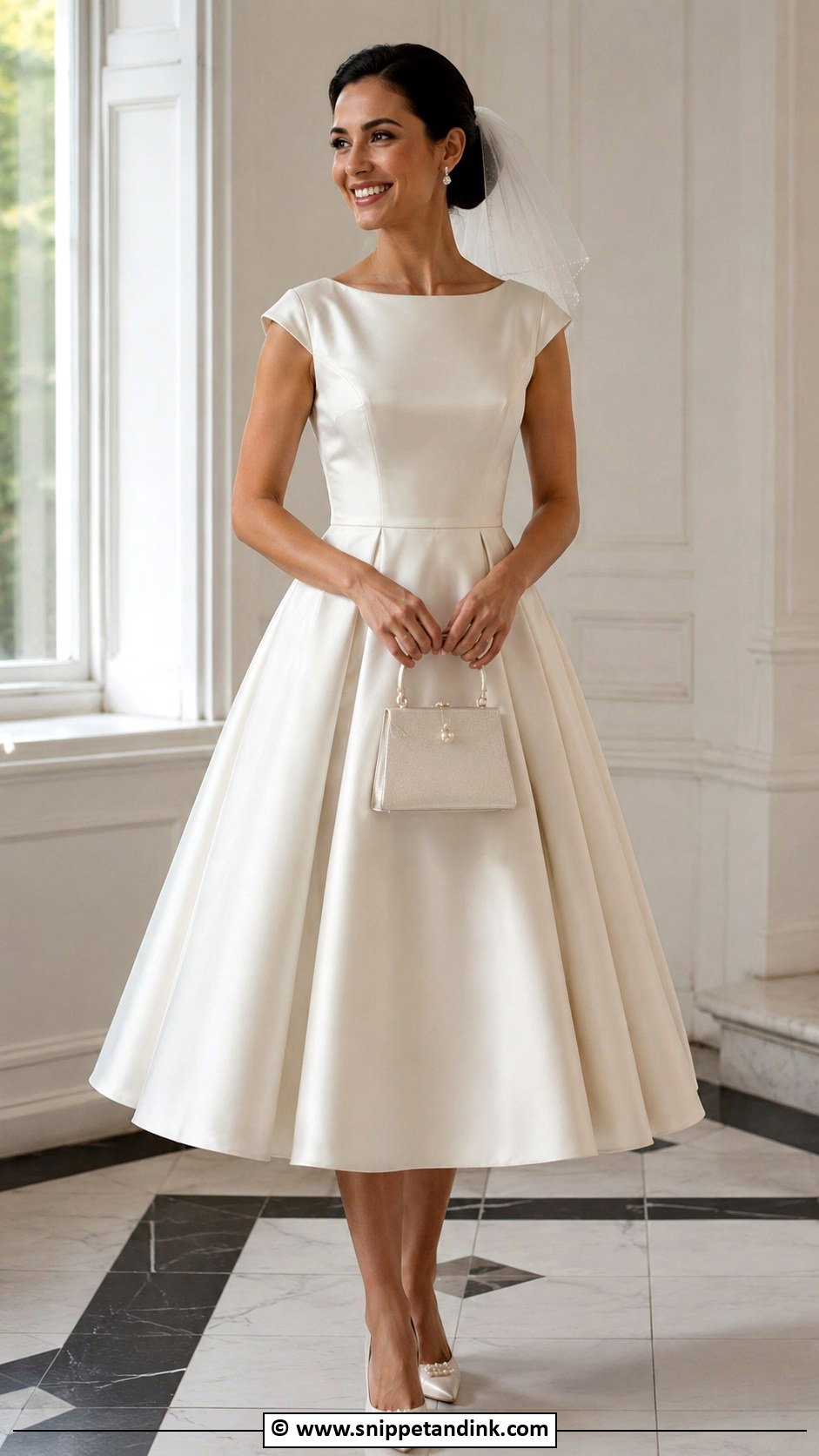
Tea length shows your shoes, so choose them as carefully as the dress. The hem falls between knee and ankle, and the right point is just below the widest part of the calf; too high and the leg looks shortened. A fitted bodice with a full satin, tulle or lace skirt needs a petticoat underneath to keep its bell shape. Pointed pumps, pearl earrings, short gloves if you like them, and a birdcage or shoulder-length veil finish it. Courthouses, gardens and intimate receptions all suit it, and you can dance without holding your skirt.
10. High Neck Wedding Dress
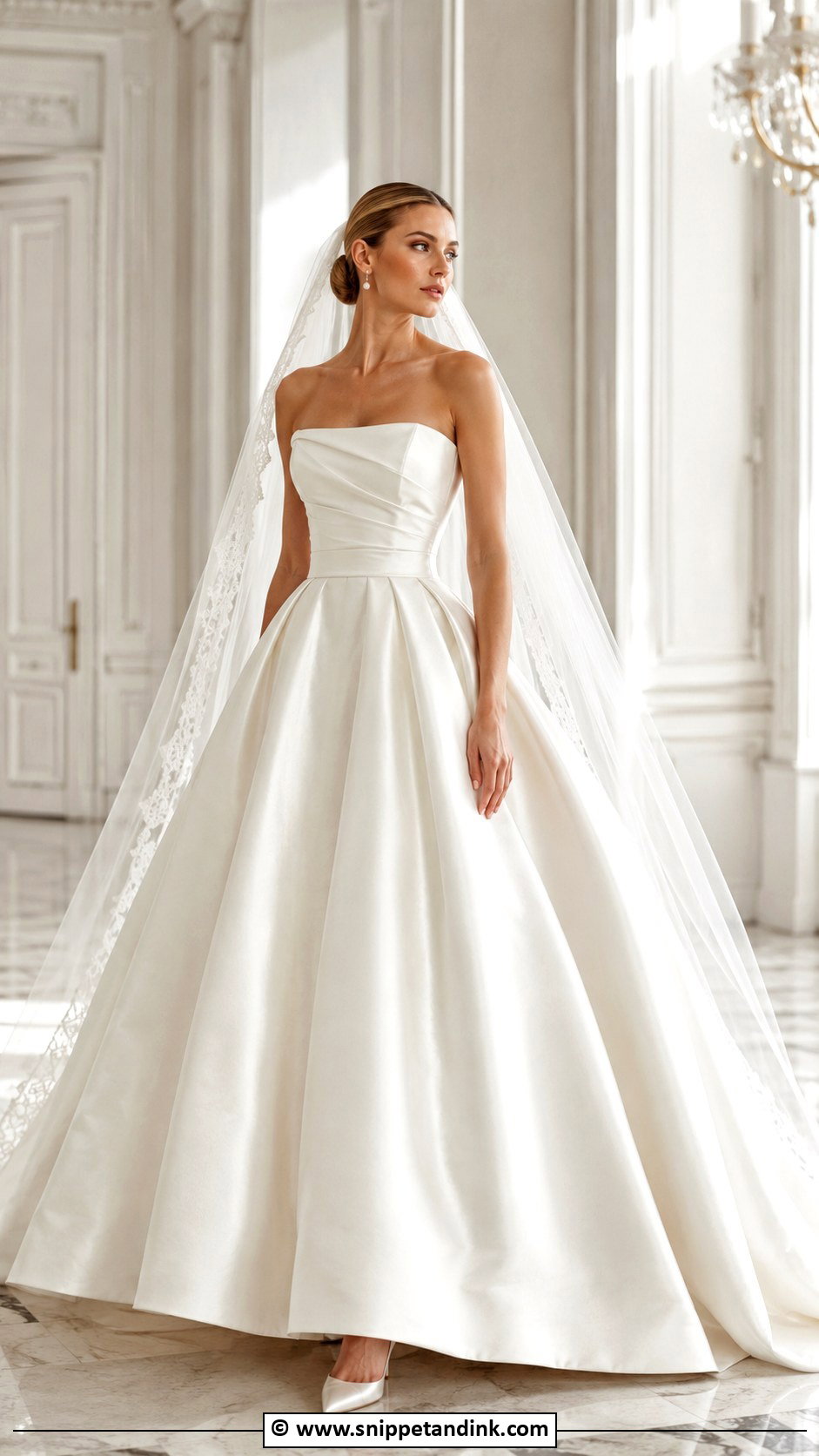
High necks frame the face and need little else. The fabric changes everything: lace reads romantic, crepe and satin look sleek and almost architectural. Comfort is the thing to test. A high neck that’s even slightly tight will bother you by mid-afternoon, so turn your head and swallow in the fitting room. Skip the necklace altogether. A low bun, pearl earrings and a veil set low at the back of the head keep the line clean, over a fitted, A-line or column skirt.
11. Silk Slip Wedding Dress
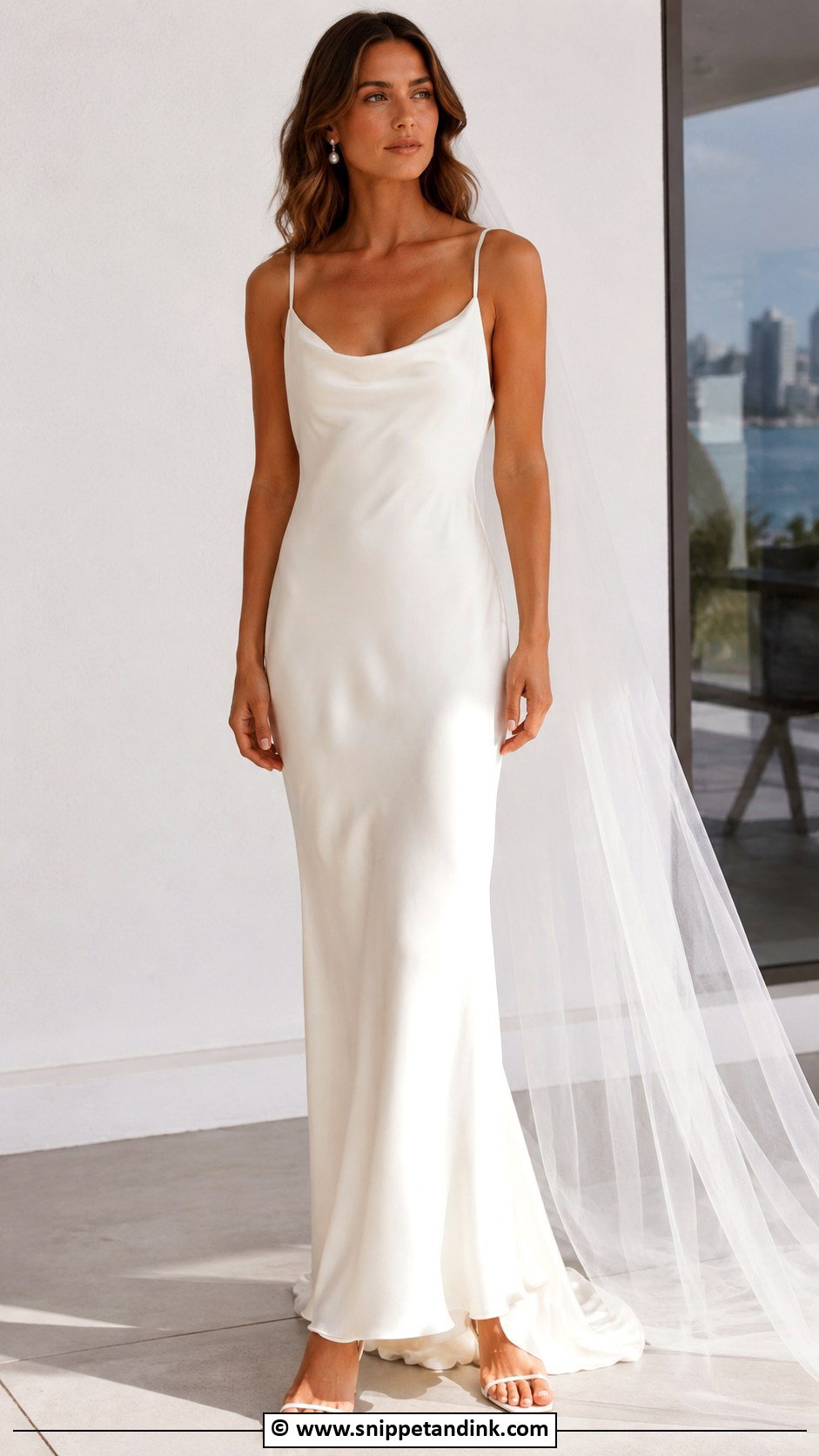
Silk slips rely on drape, and bias cut is what makes them fall that way. The trade-off is that silk shows everything beneath it and wrinkles quickly when you sit, so I’d suggest a heavier silk, or a silk-like satin with a bit of weight, for anyone worried about lines. A cowl neckline is more forgiving than a straight one. Pearl earrings, strappy ivory heels, a sheer veil and a soft wrap complete it for a coastal or city ceremony. Loose waves or a sleek bun both suit it.
12. Lace A Line Wedding Dress
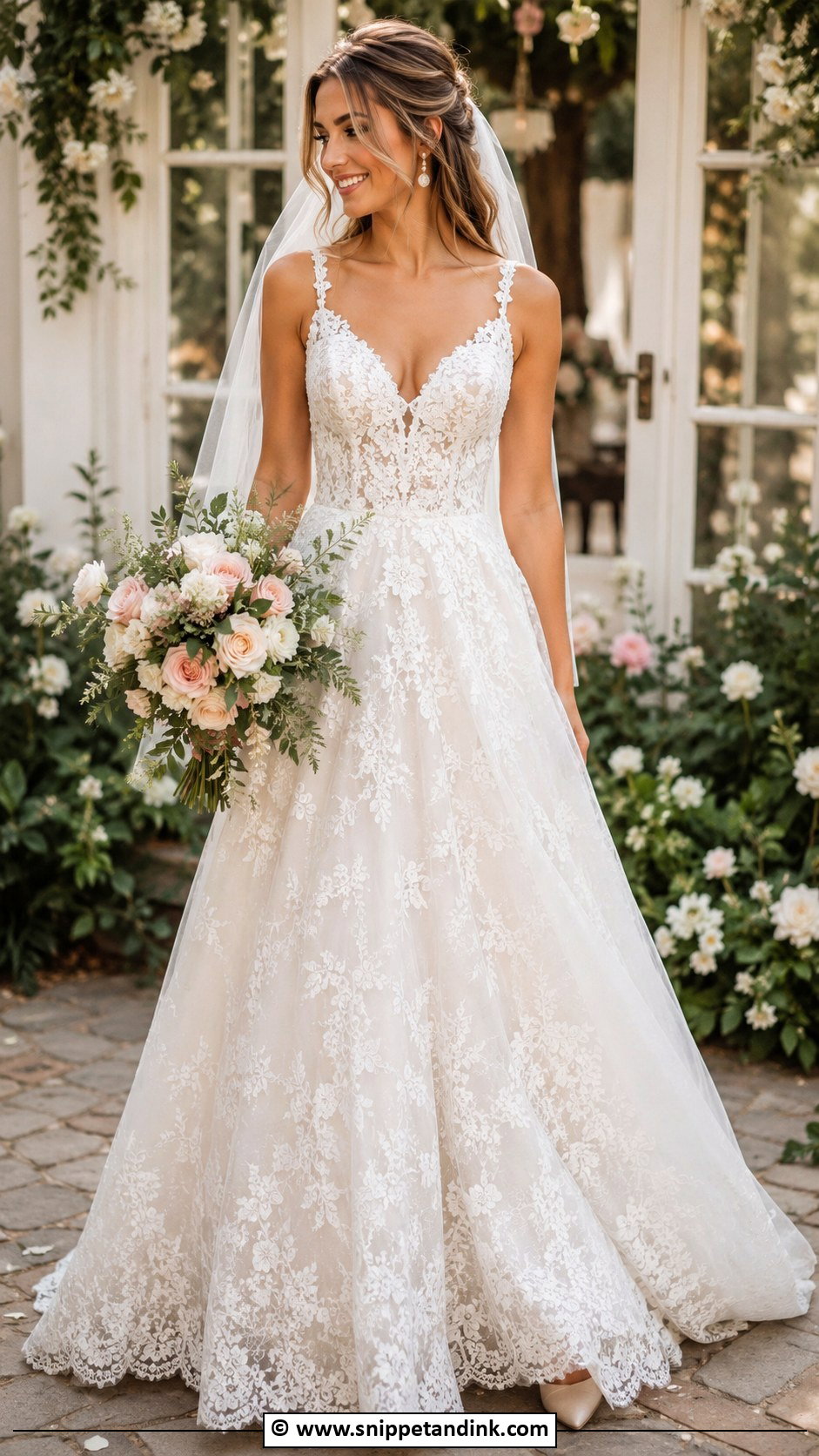
Soft lace and an A-line skirt have been paired for generations because the combination flatters most figures and moves easily. Choose lace that feels light in the hand; heavy, stiff lace makes a bodice look armoured. A lined bodice keeps it refined. Pearl earrings, ivory heels, a soft veil and a fine bracelet are plenty, with a half-up style or low bun. Gardens, estates and ballrooms all suit it.
13. V Neck Wedding Dress
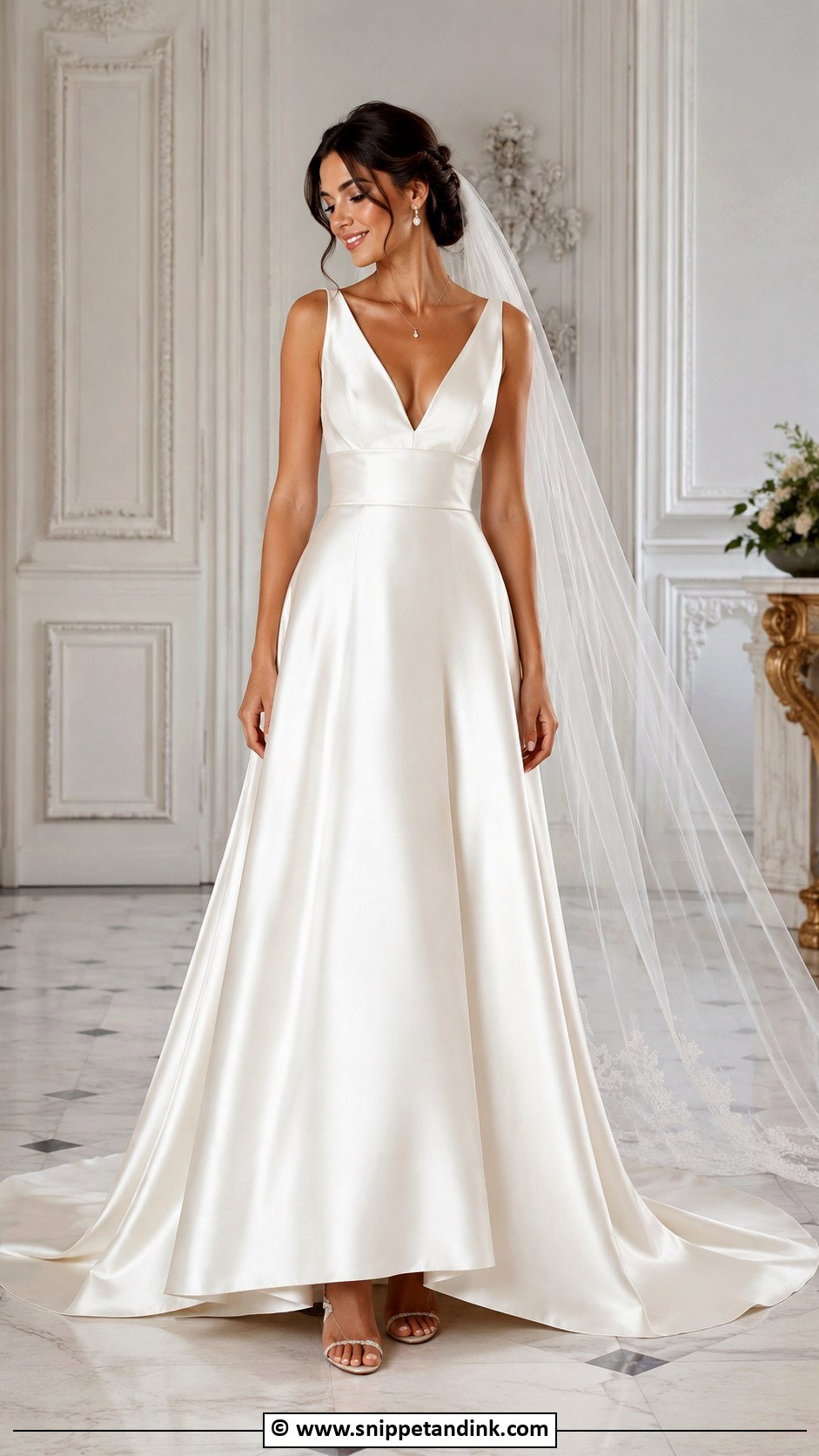
A shallow V is modest and classic; a deeper V looks sleek but needs careful support. For anyone with a fuller bust, I look for built-in cups and a sheer mesh insert at the centre of a deep V, which keeps it in place without tape. Satin, crepe and lace all work. A fine pendant, pearl earrings, a long veil and simple heels suit it, with light accessories on a full skirt and a classic bouquet with a fitted one. The vertical line lengthens the torso, which flatters most figures.
14. Cap Sleeve Wedding Dress
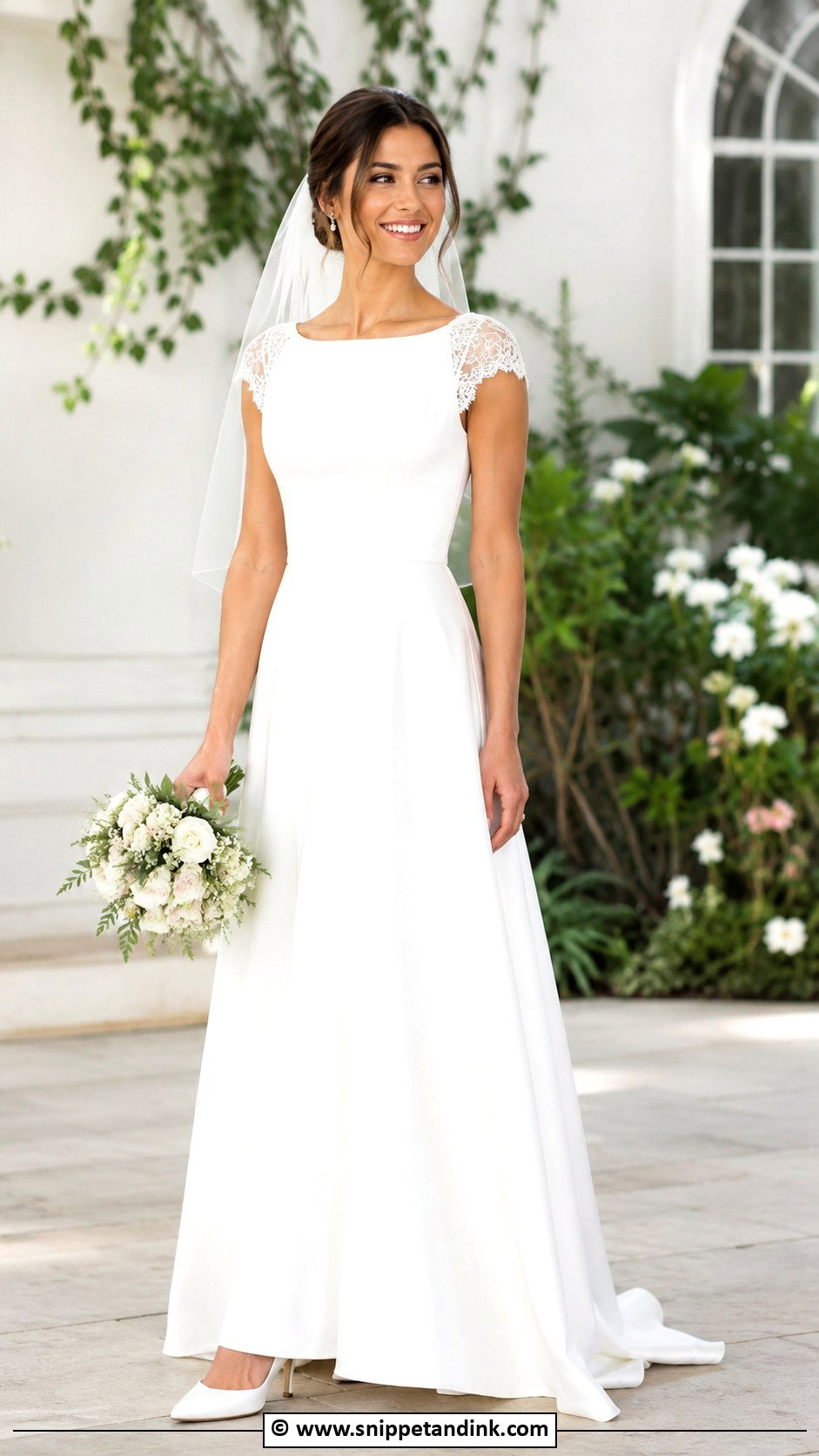
Not every bride wants strapless, and a cap sleeve wedding dress gives just enough shoulder coverage to feel secure. The fit check is your arm movement: a cap sleeve set too tight cuts into the upper arm when you hug or lift a bouquet. Lace caps feel romantic; satin or crepe looks clean. Pearl studs, a soft veil, closed-toe heels and a low bun or smooth waves suit spring and summer daytime weddings, and an A-line or fit-and-flare keeps it balanced.



15. Pearl Detail Wedding Dress
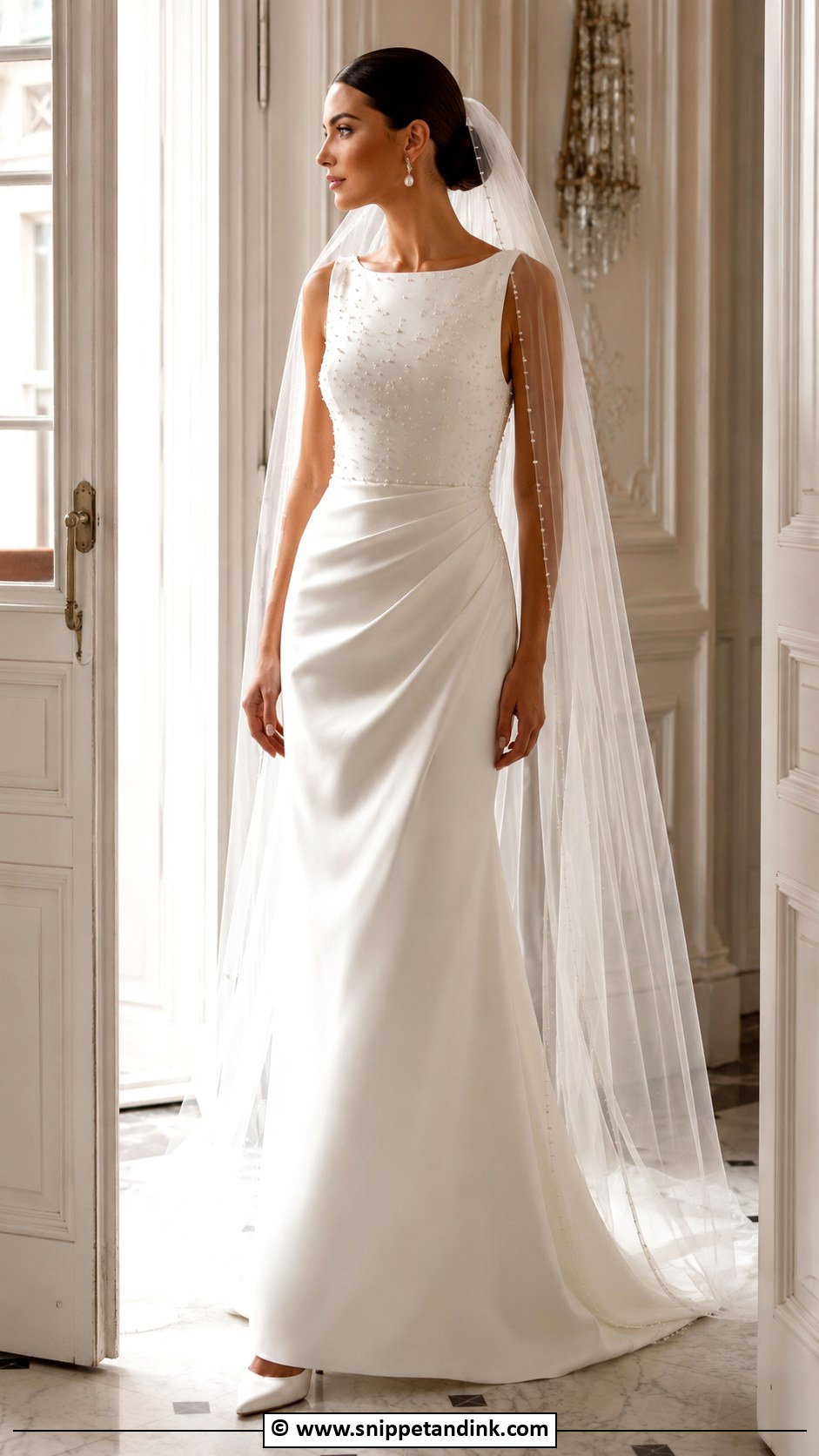
Pearls add shine without sparkle, which is why they feel classic. Placement is everything: a line along the neckline, scattered on sleeves, or tiny buttons down the back. I’d always check how they’re attached. Hand-stitched pearls last; glued ones fall off during the reception. Keep the silhouette simple so the pearls look refined, and repeat the detail only once more, maybe on the veil. Pearl earrings, satin heels and a low bun, smooth ponytail or soft waves finish it for a formal or garden setting.
16. Minimalist Column Wedding Dress
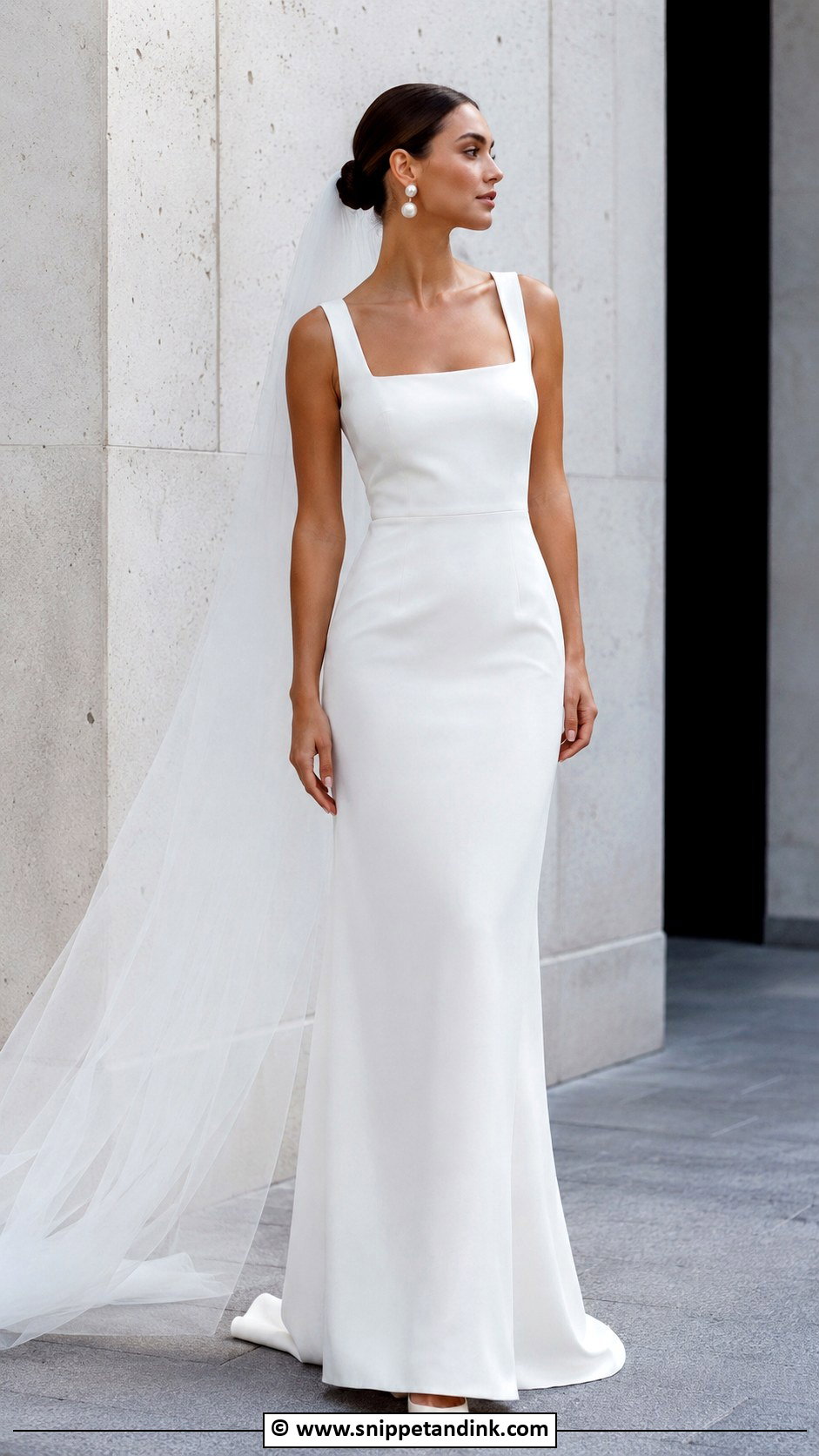
Straight lines show tailoring more than any other shape, which is the honest truth about a minimalist column wedding dress. The hem is the trickiest alteration: too long and you’ll trip on stairs, too short and the line breaks. Crepe, silk and satin all suit it. Square, high or strapless necklines work. Sculptural pearl earrings, pointed heels, a long veil and a smooth bun suit city weddings and art-filled venues. Expect a slight walking restriction if the skirt is narrow at the ankle.
17. Full Tulle Skirt Wedding Dress
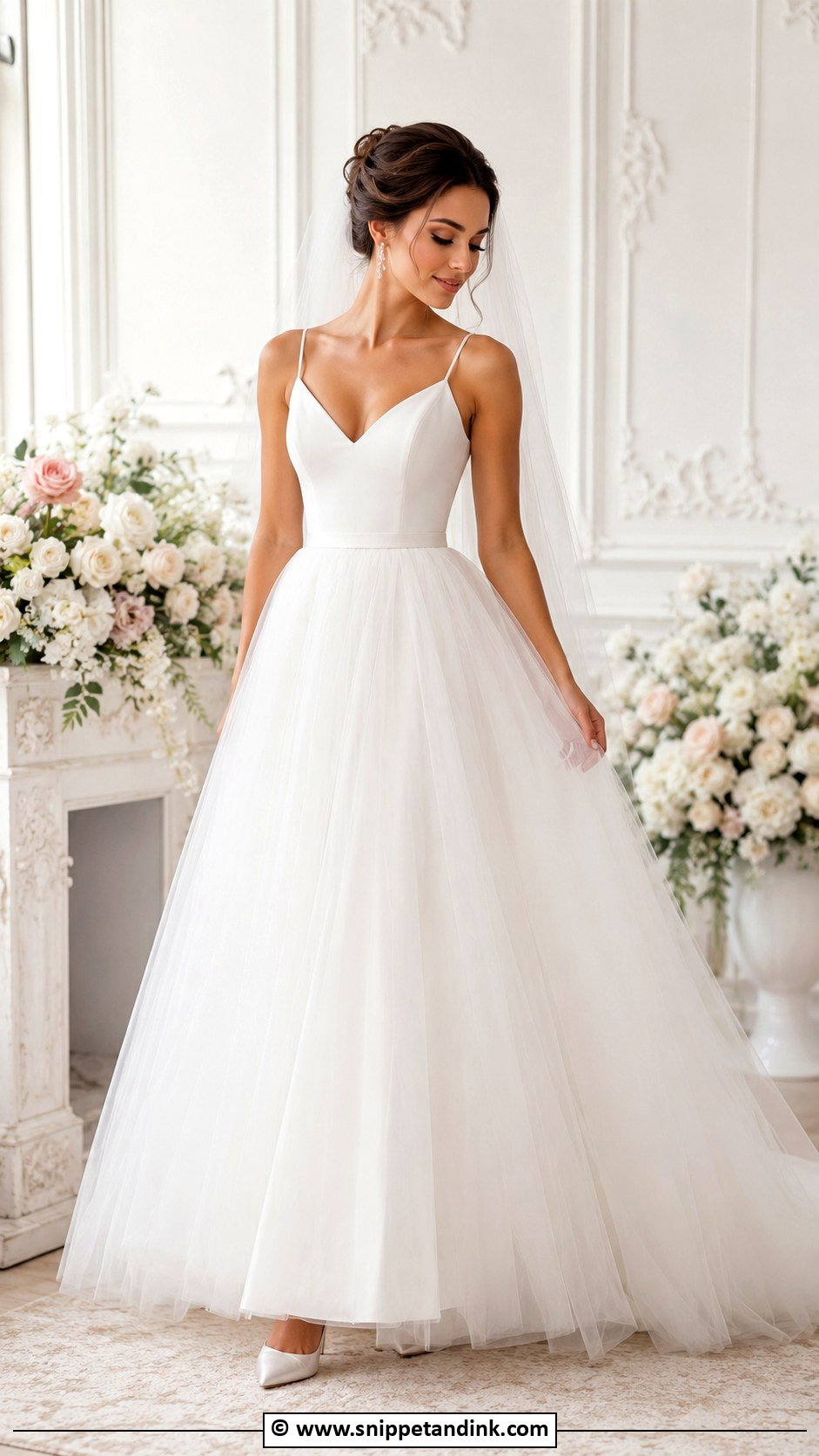
Fine tulle in many layers looks softer and more classic than a few stiff layers of netting. That’s the first thing I feel when a bride tries one on. A fitted satin or lace bodice balances the volume. Tulle snags easily on rough stone, bracelets and shoe buckles, so check your jewelry and the ground at the venue. Delicate earrings, satin pumps, a simple veil and a polished updo suit a ballroom, garden or formal reception. Keep trendy details off it, and the skirt alone carries the look.
18. Long Train Wedding Dress
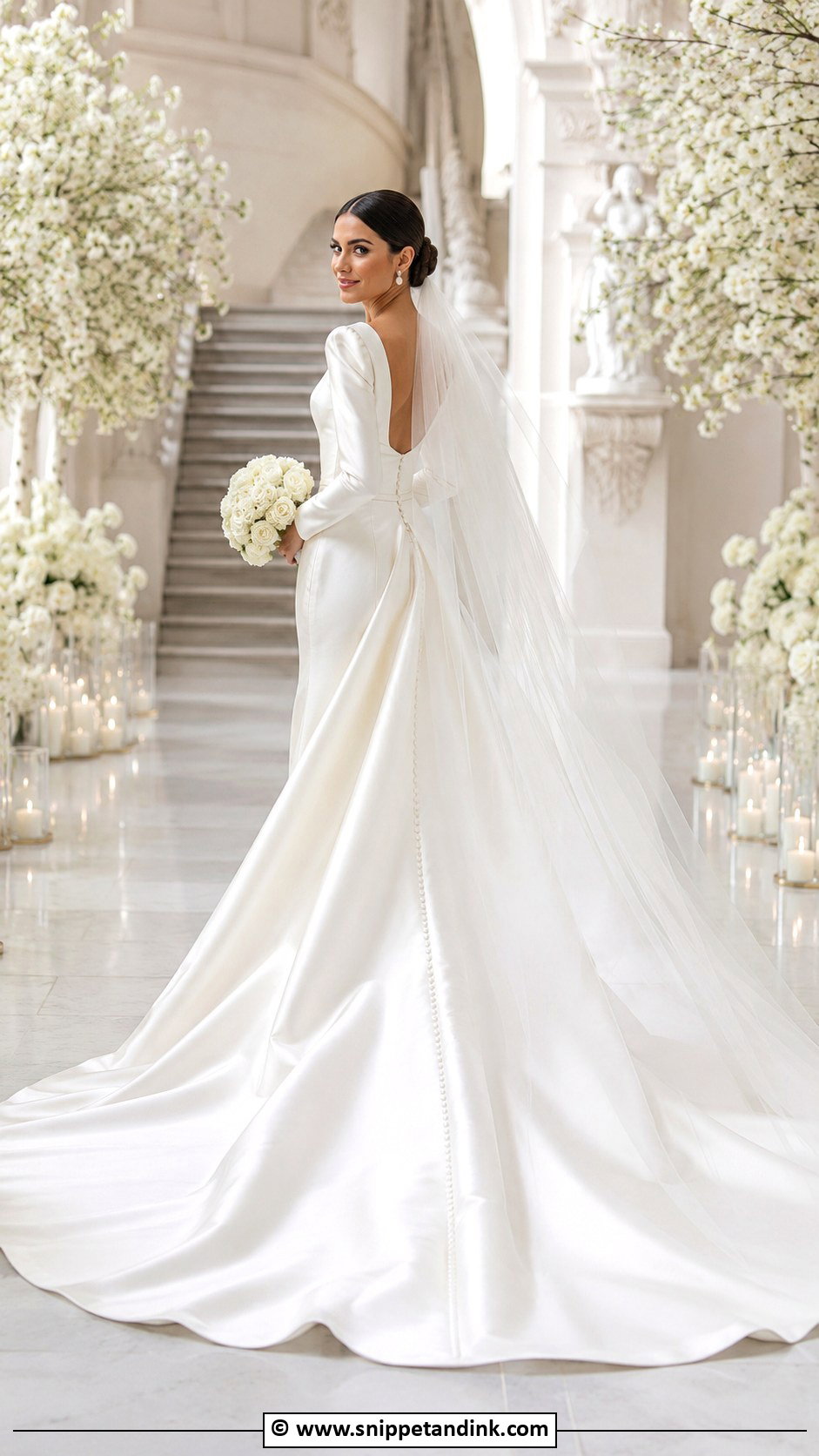
A long train gives presence during the entrance and looks wonderful in a church aisle shot. The practical part matters just as much: a train needs a bustle for the reception, and the type changes the look. An over bustle lifts the train up with hooks to the back of the skirt; an under bustle (often called French) tucks it beneath with ties. Ask your tailor which suits your fabric. A cathedral veil, pearl earrings and refined heels suit formal venues. Practise the bustle with whoever will do it on the day.
19. Sheath Lace Wedding Dress
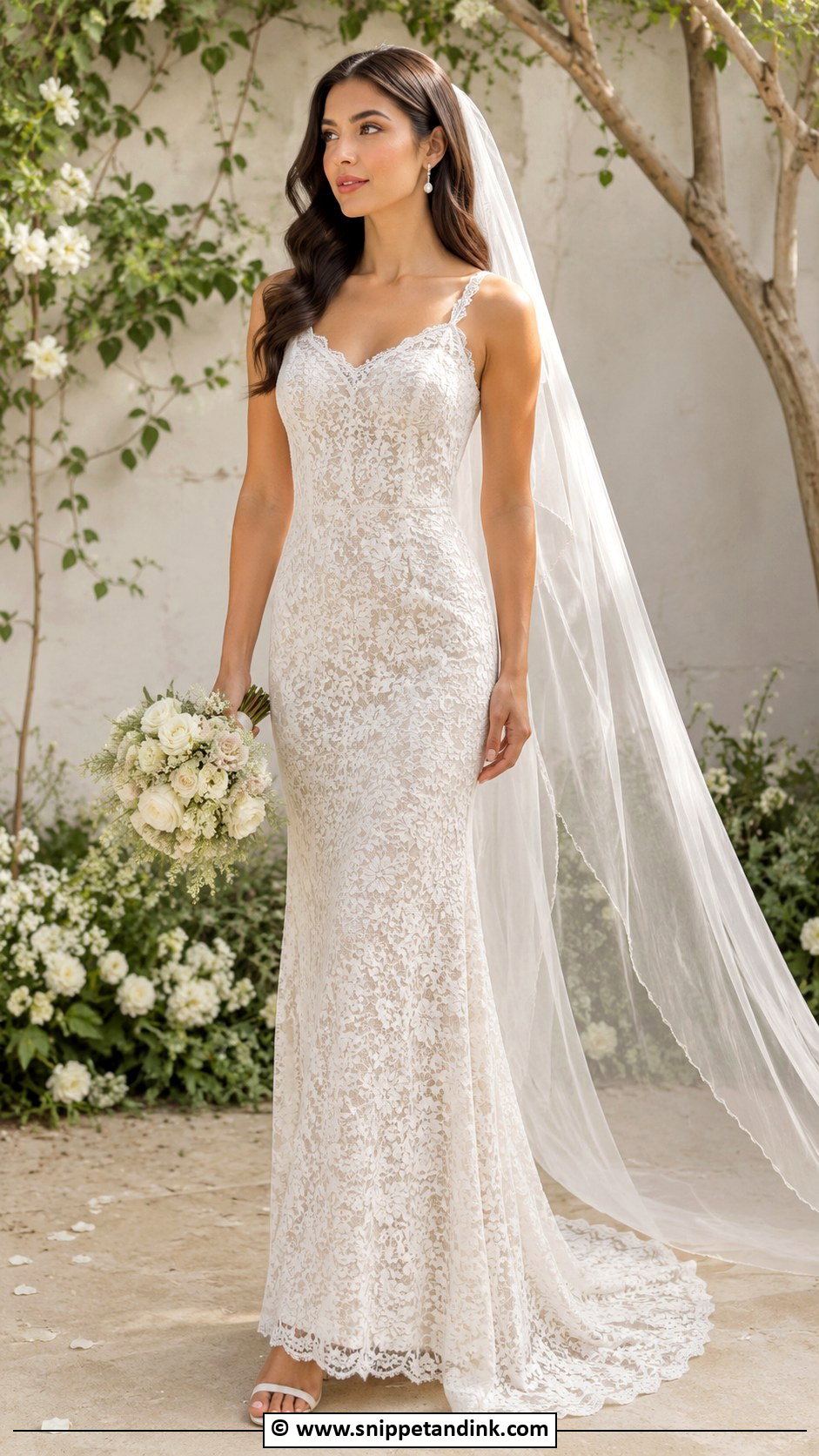
A sheath follows the body without extra skirt, so lace on a sheath shows every line underneath. A fully lined bodice and a smooth lining beneath the lace solve most of that. It’s easy to move in, which makes it practical for garden weddings and intimate venues. A small train adds bridal polish. Pair it with a sheer veil, pearl earrings, ivory heels and soft waves. If you’re petite, a sheath tends to look longer and cleaner than a full A-line of the same length.


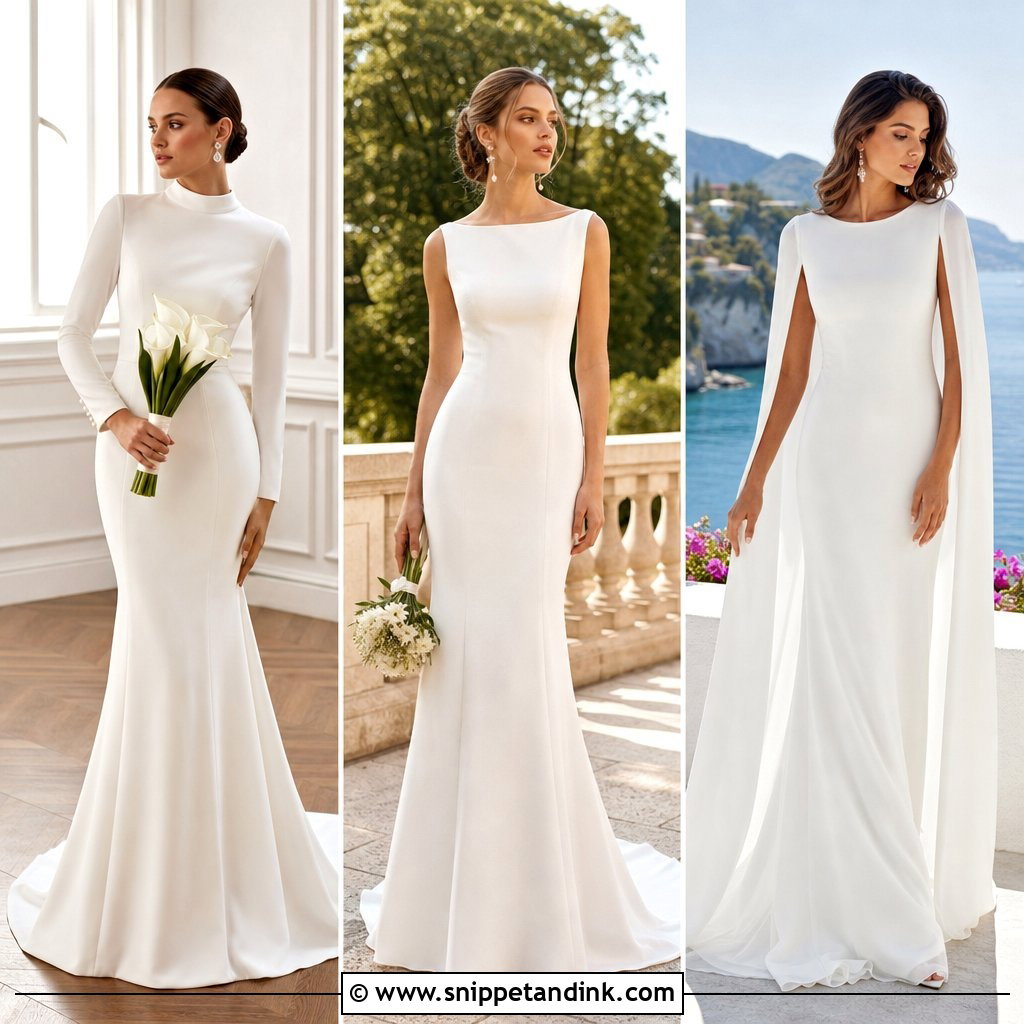

20. Satin Mermaid Wedding Dress
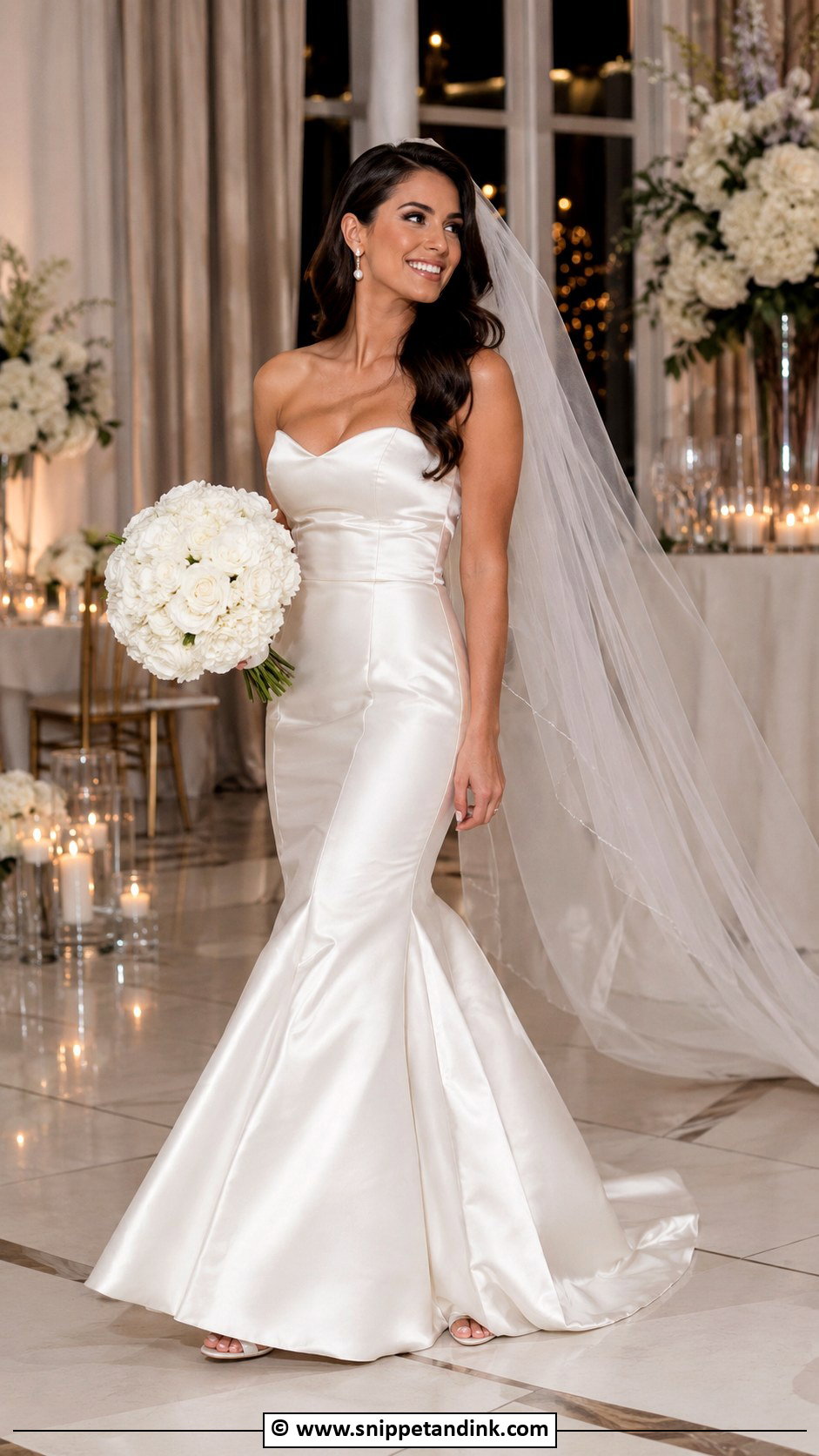
Mermaid shapes are fitted to the knee or just below, then flare. Getting that flare point right is what makes it look elegant rather than restrictive; too low and you’ll walk in tiny steps all night. Satin smooths the line. A sweetheart, off-shoulder or straight neckline suits it, with a long veil, pearl earrings, simple heels and a neat bun or side-parted waves. Skip extra embellishment, since the shape already has drama. Check you can climb stairs and sit at the dinner table before you buy.
21. Vintage Inspired Wedding Dress
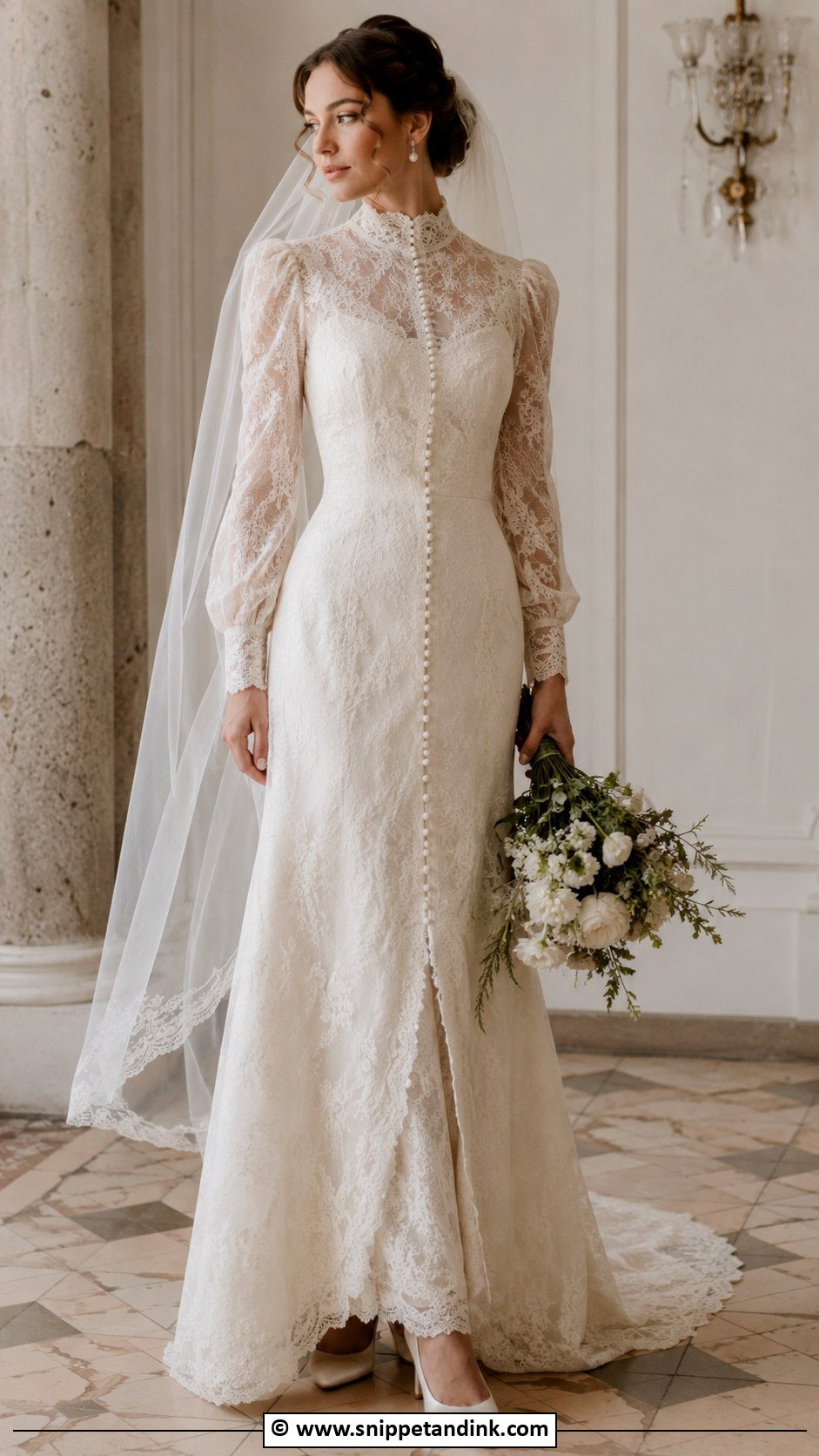
Vintage detail looks timeless when you choose one feature and keep the rest modern: delicate lace, covered buttons, soft sleeves or a 1950s full skirt. Two or three vintage features together tip into costume. Covered buttons down a back are gorgeous but slow to fasten, so allow time and a helper. Pearl earrings, satin shoes, a simple veil and polished hair suit it, and a red lip works if the rest of the makeup stays soft. Historic venues and gardens suit it naturally.
22. Bow Back Wedding Dress
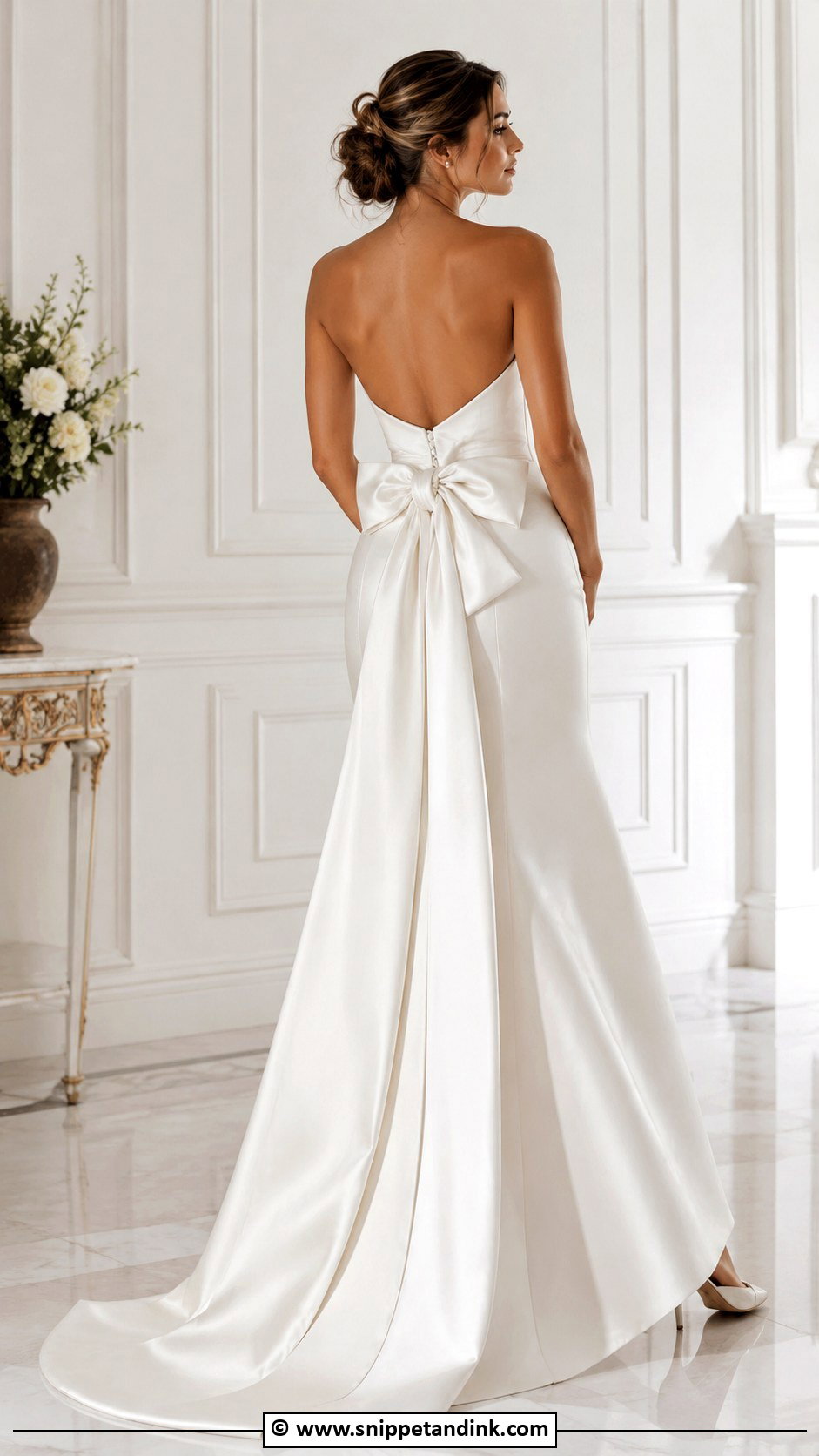
A clean, well-placed bow makes a simple gown memorable. On a back bow, look at how it’s anchored. A heavy bow sewn only at its centre droops and pulls the fabric down, so ask your tailor to tack the loops in place. Mikado, satin and faille hold a crisp bow; soft fabrics let it flop. A structured bodice and smooth skirt let the bow be the only accent. Pearl studs, a simple veil, ivory heels and a soft updo show the back detail.
23. Simple Courthouse Wedding Dress
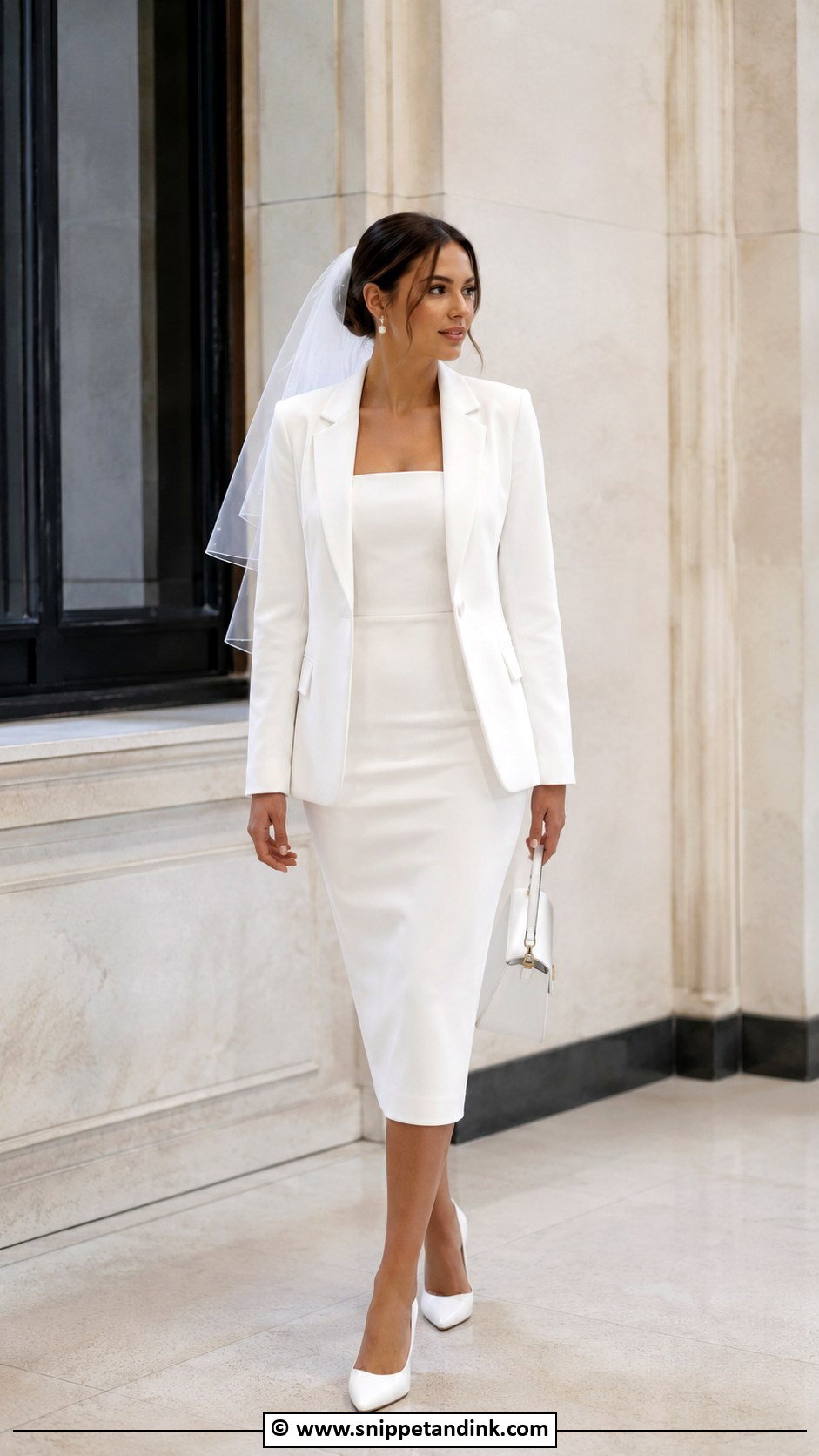
Small ceremonies still deserve a proper dress. For a simple courthouse wedding dress I’d look at a midi sheath, a tailored mini, a tea-length satin or a clean column. Choose a fabric with real weight (crepe, satin, silk or lace) so it reads as bridal rather than a day dress. White pumps, pearl earrings, a small structured bag and a short veil or bow keep it classic. A blazer or cropped jacket helps with photos, travel and cooler weather between locations.
24. Classic Plus Size Wedding Dress
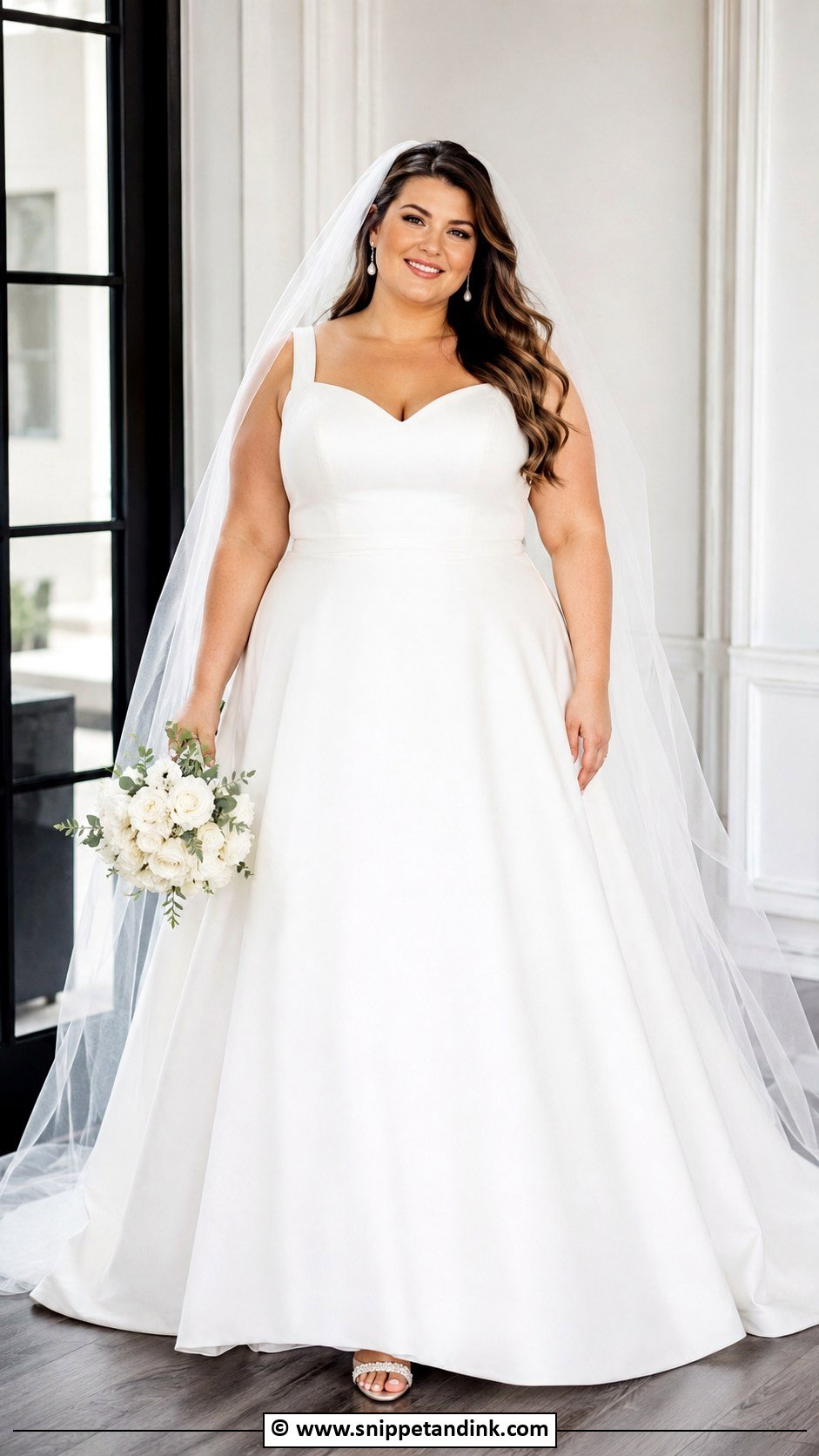
Support is the starting point for a plus size gown, not an afterthought. I look for built-in cups or a corset structure, a smooth lining, straps or sleeves that actually carry weight, and fabrics with enough body to hold shape without feeling stiff. A-lines, structured ball gowns, wrap-style bodices and fit-and-flare shapes all look classic when tailored well. Ignore body-type rules and choose the gown you can move in. Pearl earrings, a long veil, stable heels and a hairstyle you feel confident in finish it.
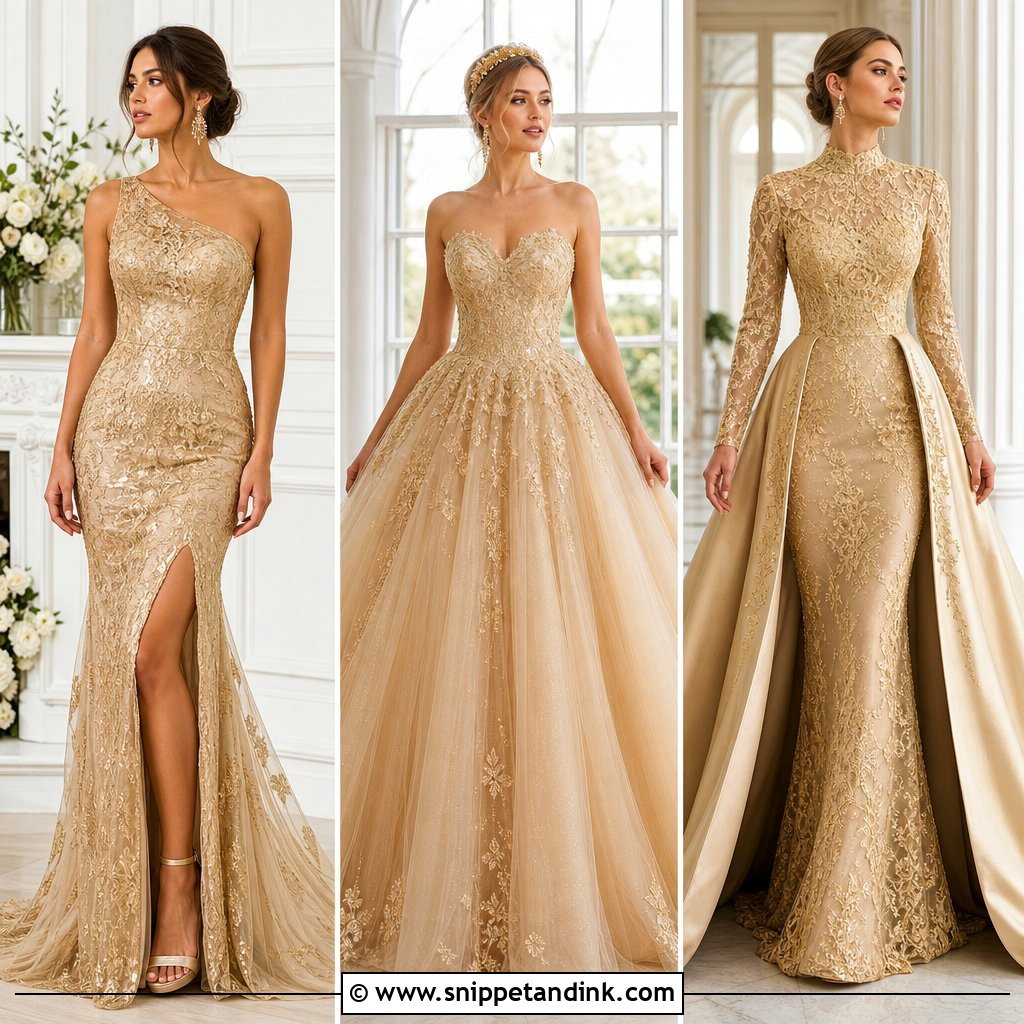


25. Classic Modest Wedding Dress
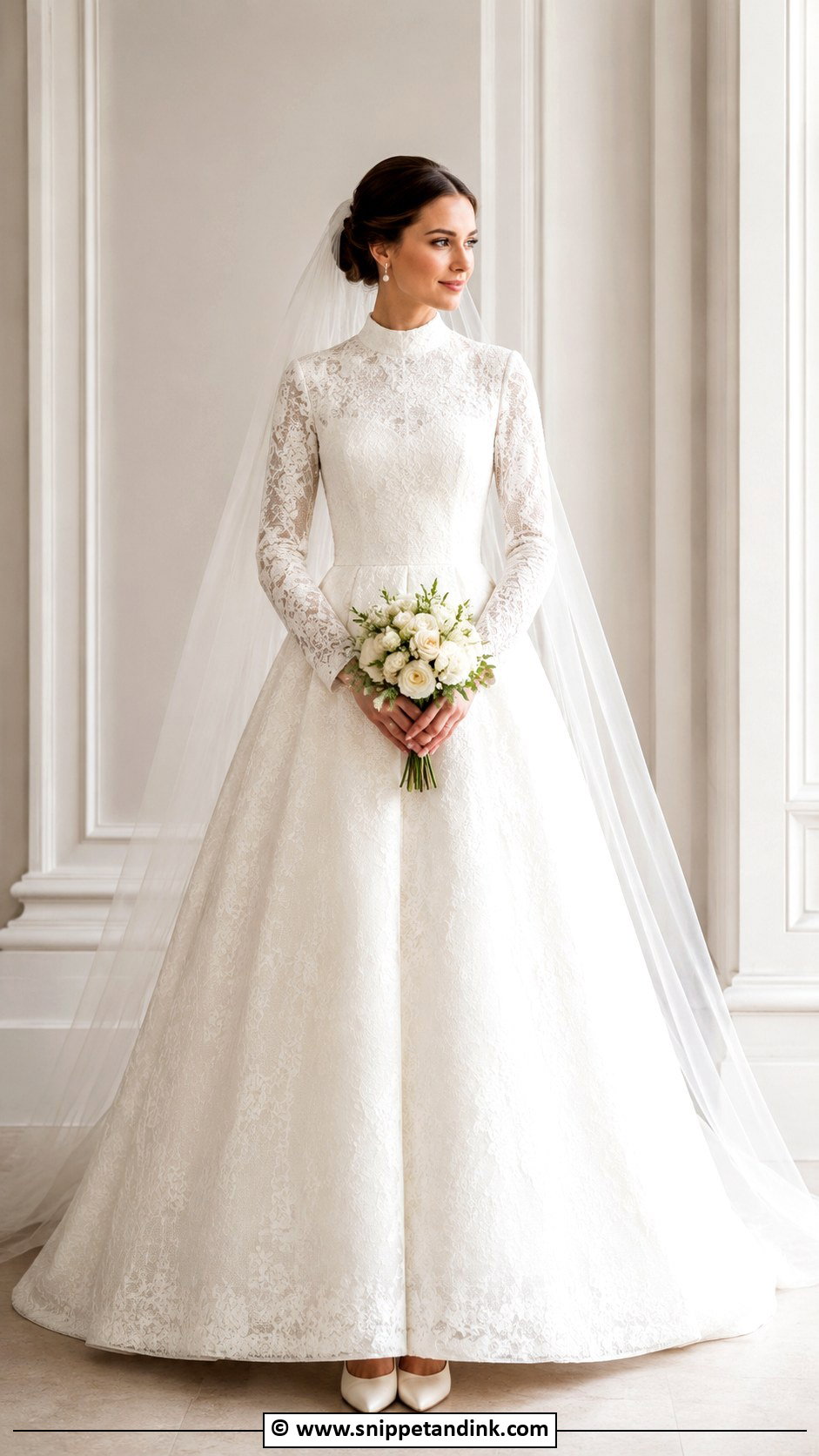
Coverage and grace go together easily. Long sleeves, high necks, bateau necklines, full skirts and lined lace all create a modest look. The common pitfall is heat: layers of lining under long lace sleeves can be warm, so ask about breathable linings for summer. Soft fabrics and strong tailoring keep it elegant rather than heavy. Pearl earrings, closed-toe heels, a long veil and a polished bun or soft waves suit it, with simple accessories if the gown has lace or buttons. Formal venues and traditional ceremonies suit it well.
Caring for a Classic Gown After the Wedding
A dress you chose to last should be stored to last. The sooner it’s cleaned the better, ideally within a few weeks. Champagne, sweat and white wine can dry invisibly and then turn yellow or brown over months as the sugars oxidise, so a dress that looks clean the next morning may not stay that way.
- Use a cleaner who handles bridal gowns, and point out every mark, including ones you can’t see but remember spilling.
- Store it in an acid-free box with acid-free tissue in the folds, or in a breathable cotton garment bag. Never leave it in plastic, which traps moisture.
- Keep it somewhere dark, cool and dry, away from attics and basements where temperature and humidity swing.
- Heavy gowns shouldn’t hang for years by their straps; the weight stretches the shoulders. Fold them with tissue instead.
- Take it out once in a while, check for spots and refold along different lines so creases don’t set.
Lace and silk are the most delicate, satin and mikado the hardiest. If you hope a daughter or friend might wear it one day, that care is what makes it possible.
What Lasts Is the Shape
A classic gown doesn’t have to be plain or impersonal. It just relies on silhouette, fabric and fit rather than the detail of the season, with styling that supports the dress instead of competing with it. Satin, lace, crepe, pearls and clean tailoring are what make it hold up in photos years later. Ball gown, courthouse dress or modest lace, the right one feels comfortable and unmistakably yours on the day and every time you look back at it.
You'll Like These Ideas:









Leave a Reply