
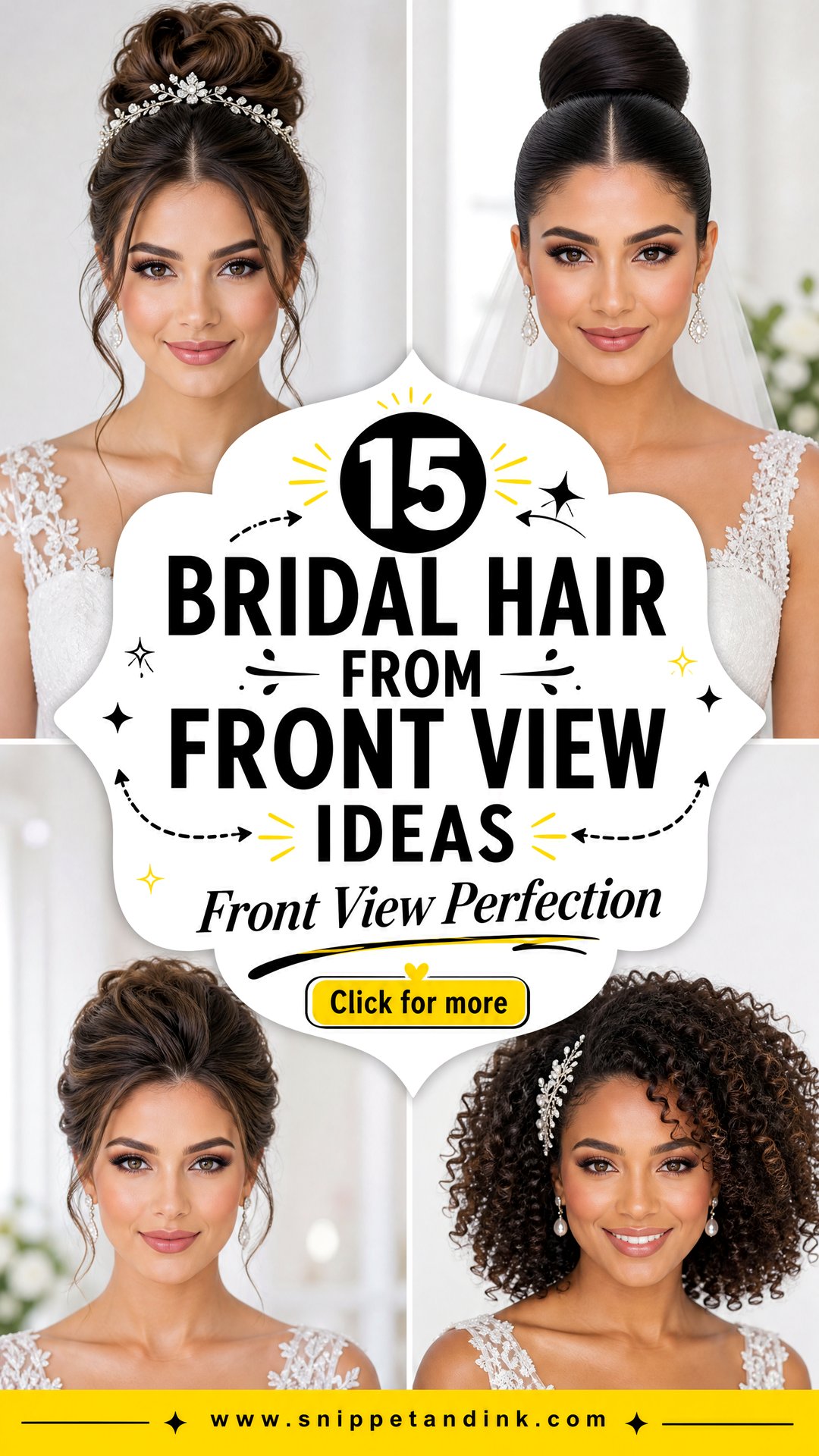
Brides tend to show me the back of a hairstyle and forget that almost every important photo is taken from the front: the walk down the aisle, the vows, the first look, the toast. From the front, a style is mostly about three things, the part, the hairline and how much volume shows above and beside the face. That’s why I spend so much of a trial standing directly in front of the chair. The bridal hair from the front view ideas below cover buns, waves, ponytails and updos, and for each I’ve noted what the front is actually doing, so you know what to ask for.
Reading a Front-View Photo Before You Save It
Front-view inspiration photos are useful, but they hide more than they show. When a bride brings me one, I look past the overall look and check a few things first.
- Density. Models and stylists often add clip-in wefts for volume, so a front that looks full may be borrowed hair. Compare the thickness of the ends to your own.
- Head tilt. A chin dropped slightly and turned away makes most styles look softer than they will straight on.
- Hidden back. You can’t see whether the bun is low and tidy or huge and padded. Ask your stylist what the back would need to be for that front to work.
- Hairline. Look at where the part sits and how much scalp shows. If yours differs a lot, the front will look different on you.
- Light. Soft window light flatters waves and flyaways; a flash or bright sun shows every stray hair.
I’d rather see two photos of a look, one front and one side, than five of the front from different brides. That tells me far more about what you actually want.
1. Bridal Low Bun Front View
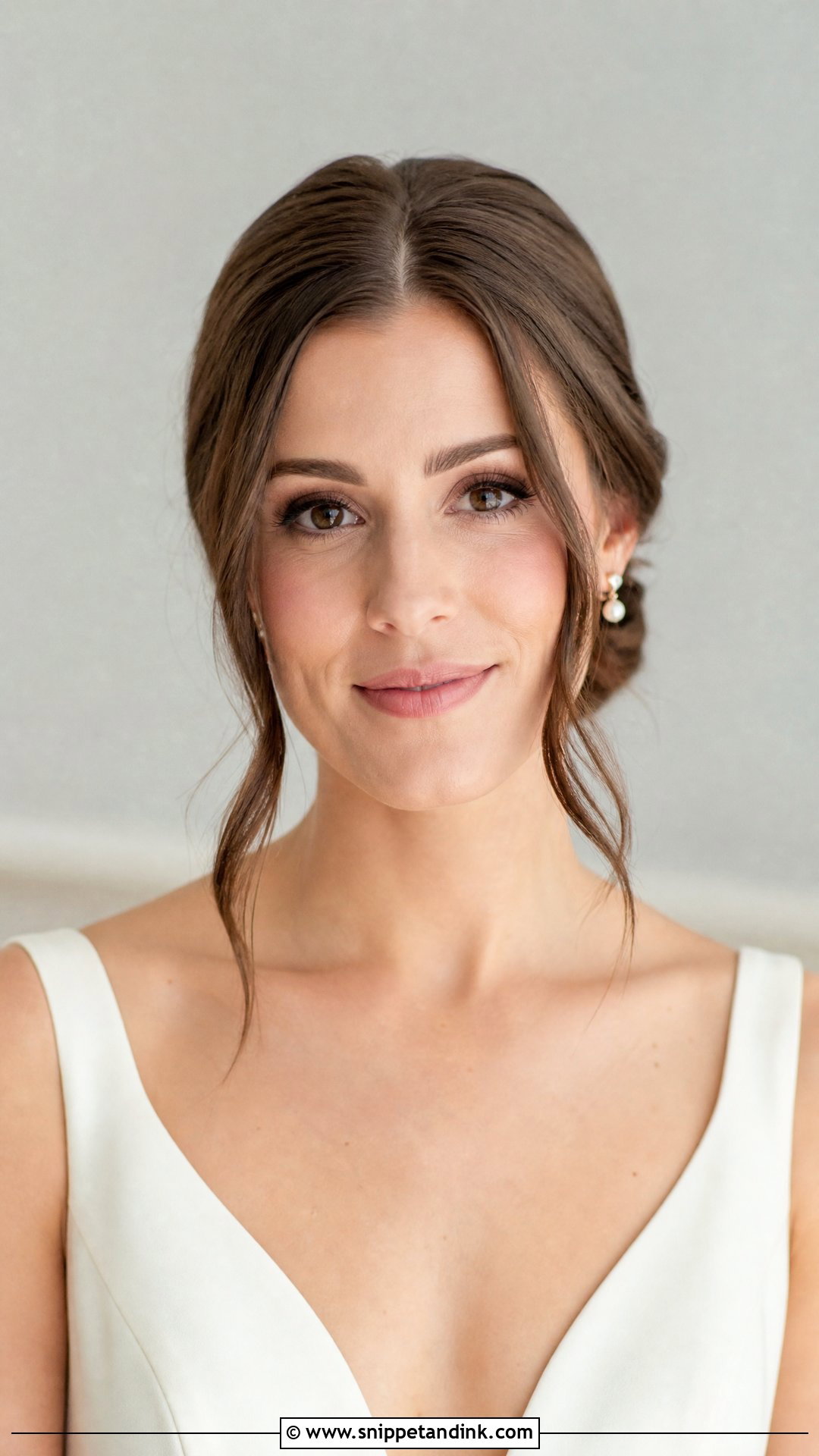
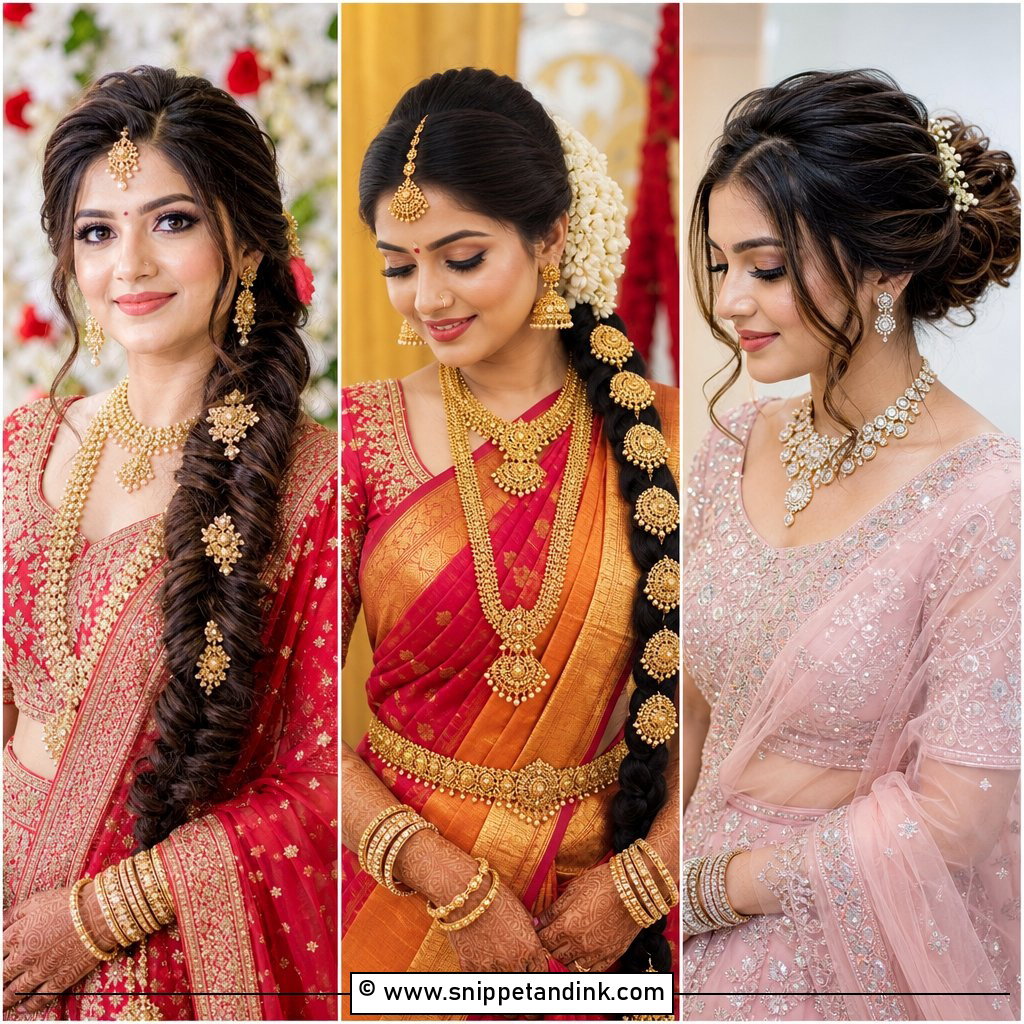
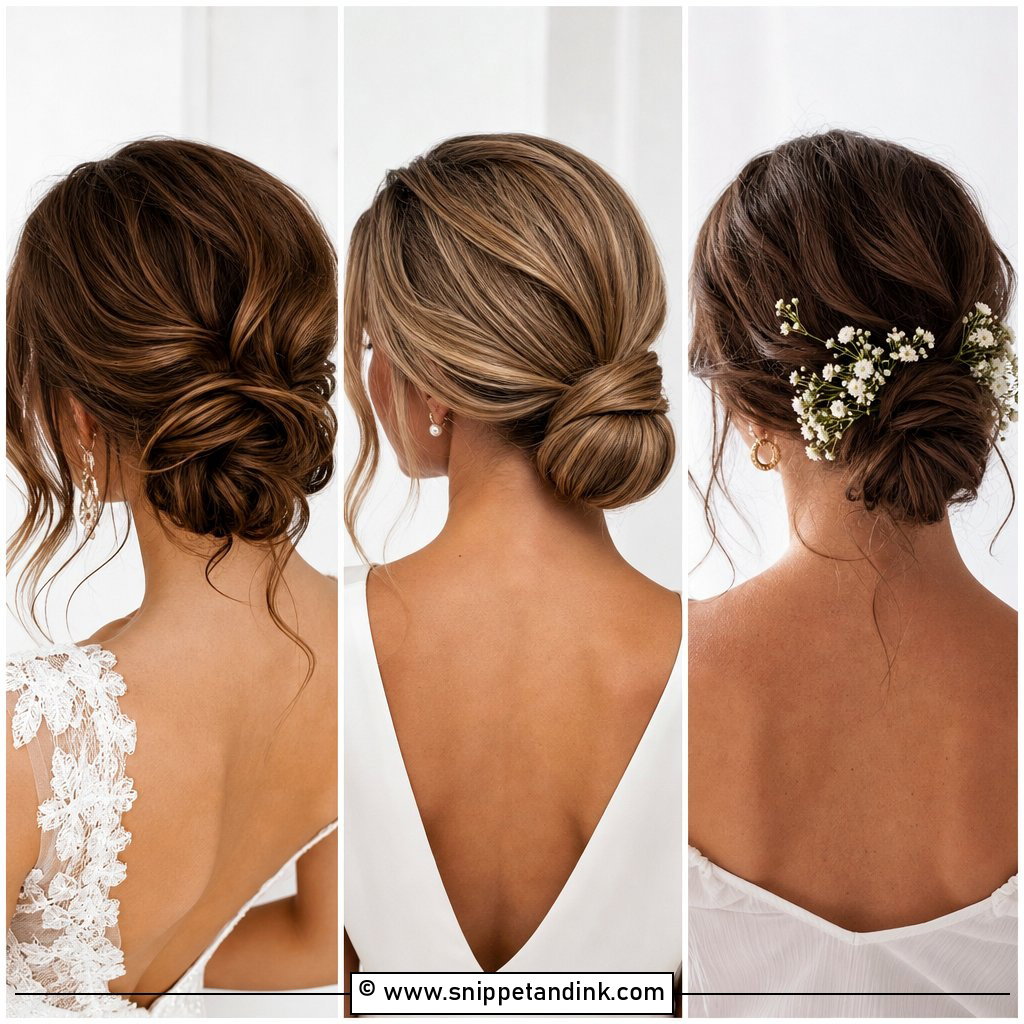
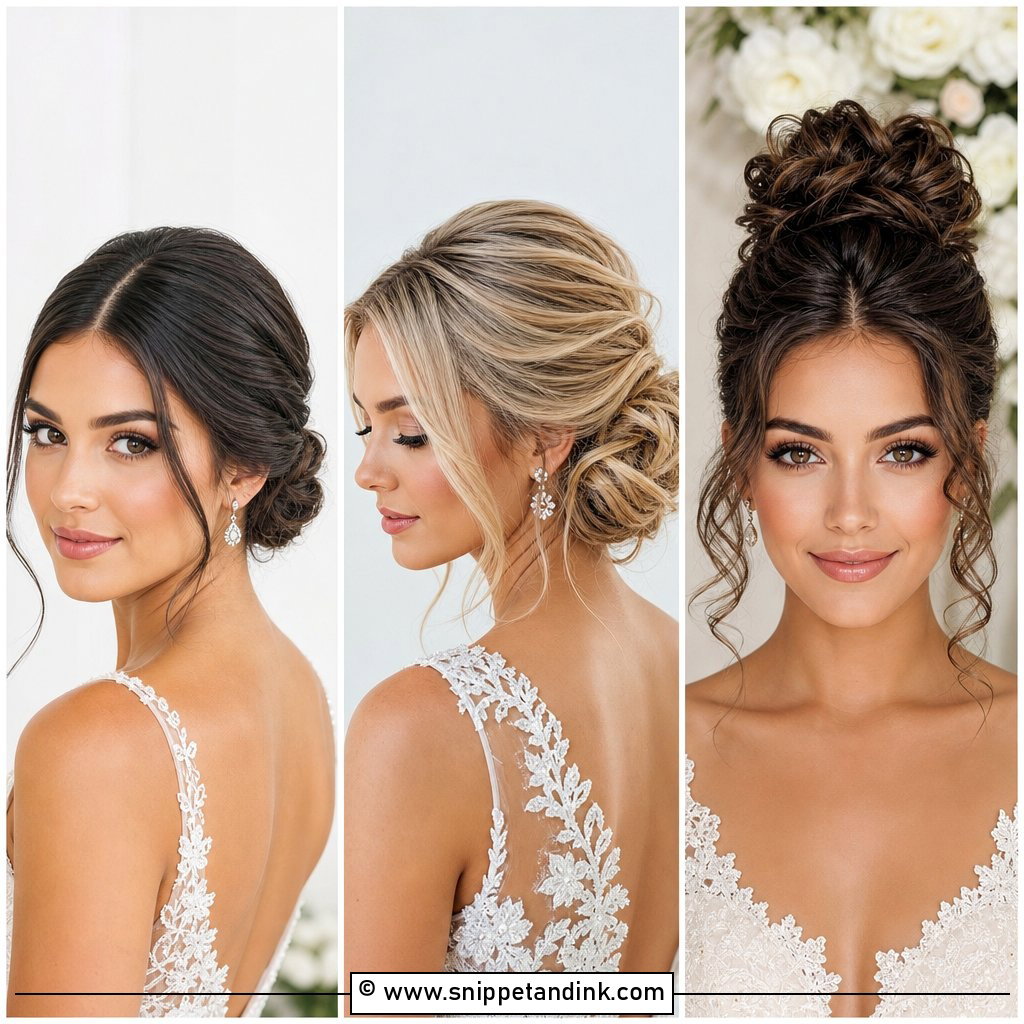
From the front, a low bun almost disappears, which is exactly why it works: the eye goes straight to your face, earrings and neckline. That also means the front has to carry the style alone. I give it a little lift at the crown and a soft, slightly textured hairline so it doesn’t look like hair scraped back for the gym. A clean centre part or a gentle side part both read well. It’s a safe partner for any veil, because the comb sits behind the bun out of the front view entirely.
2. Bridal High Bun Front View
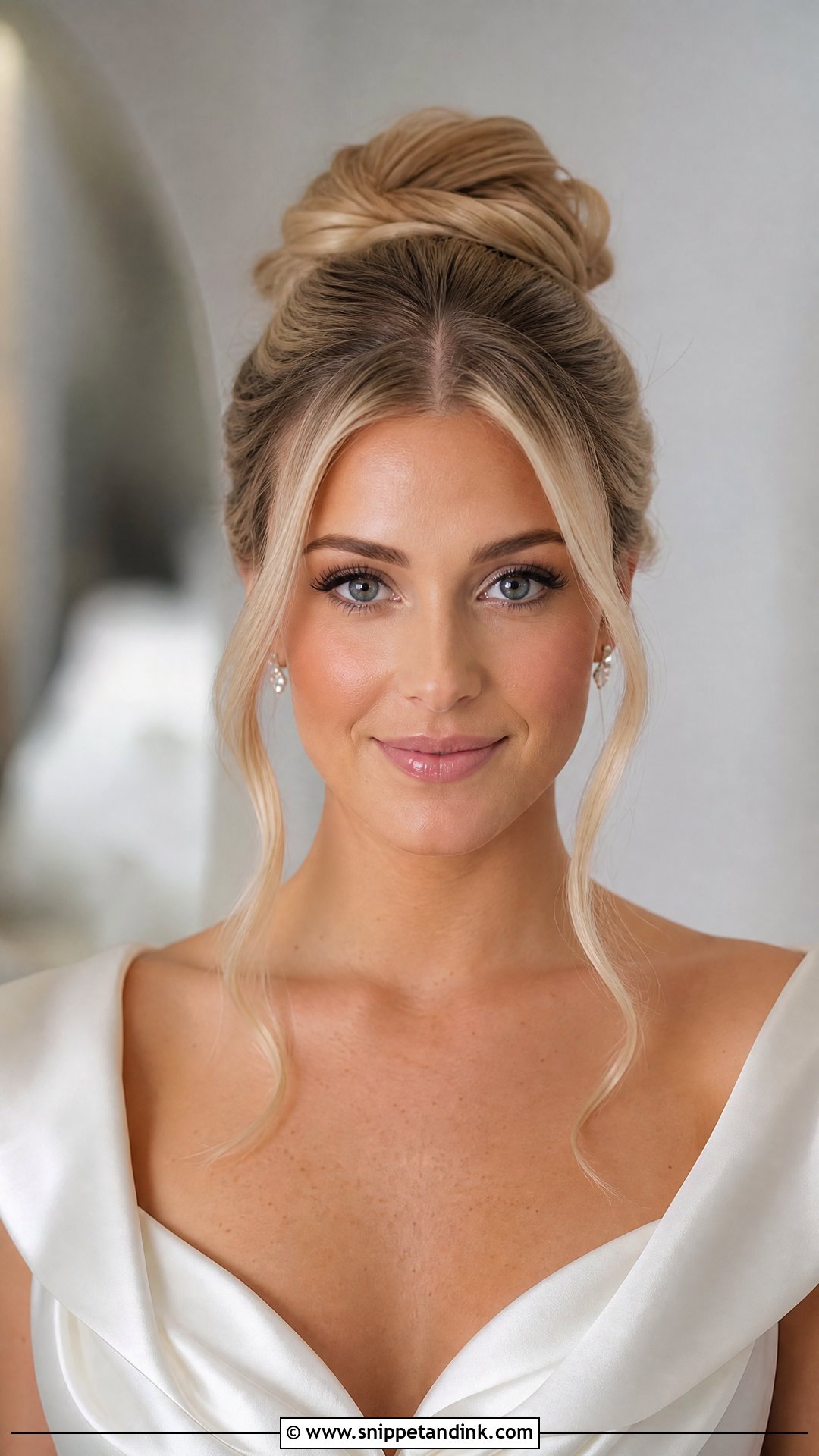
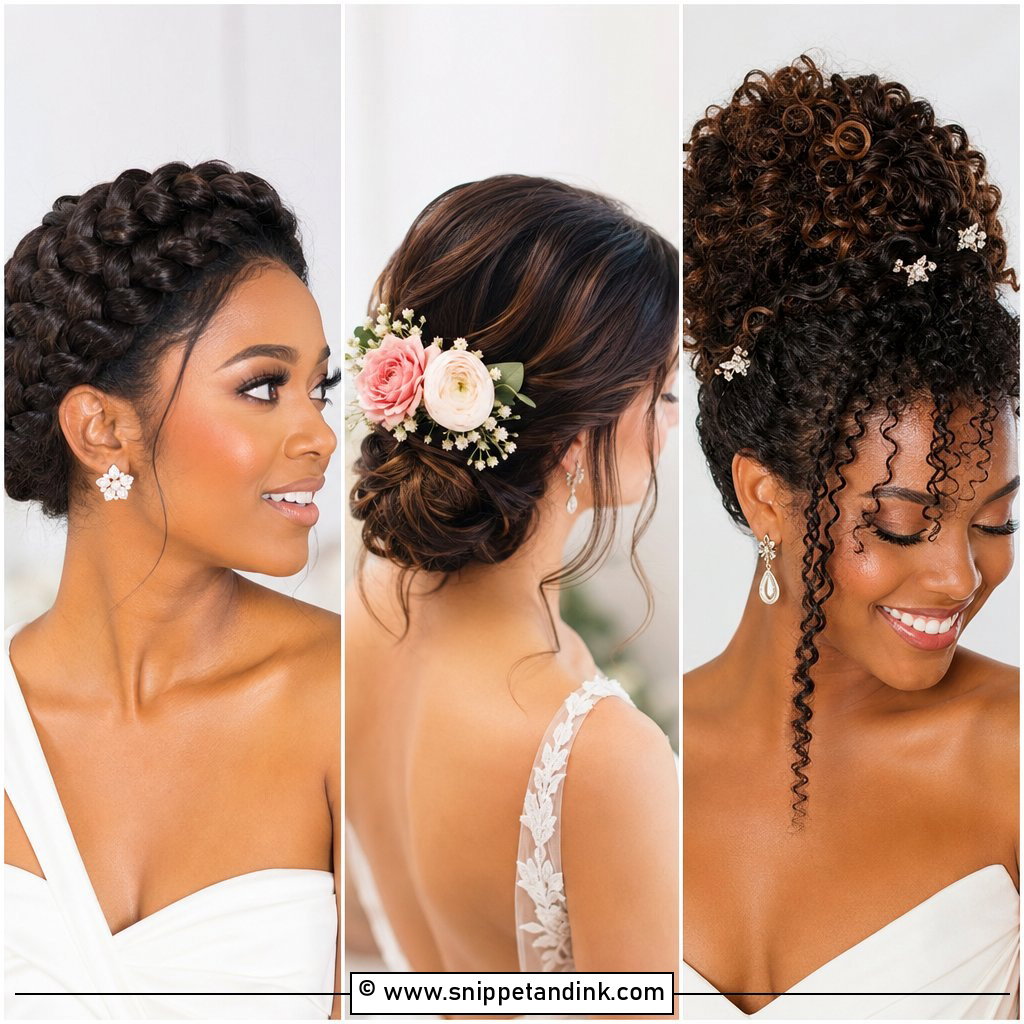
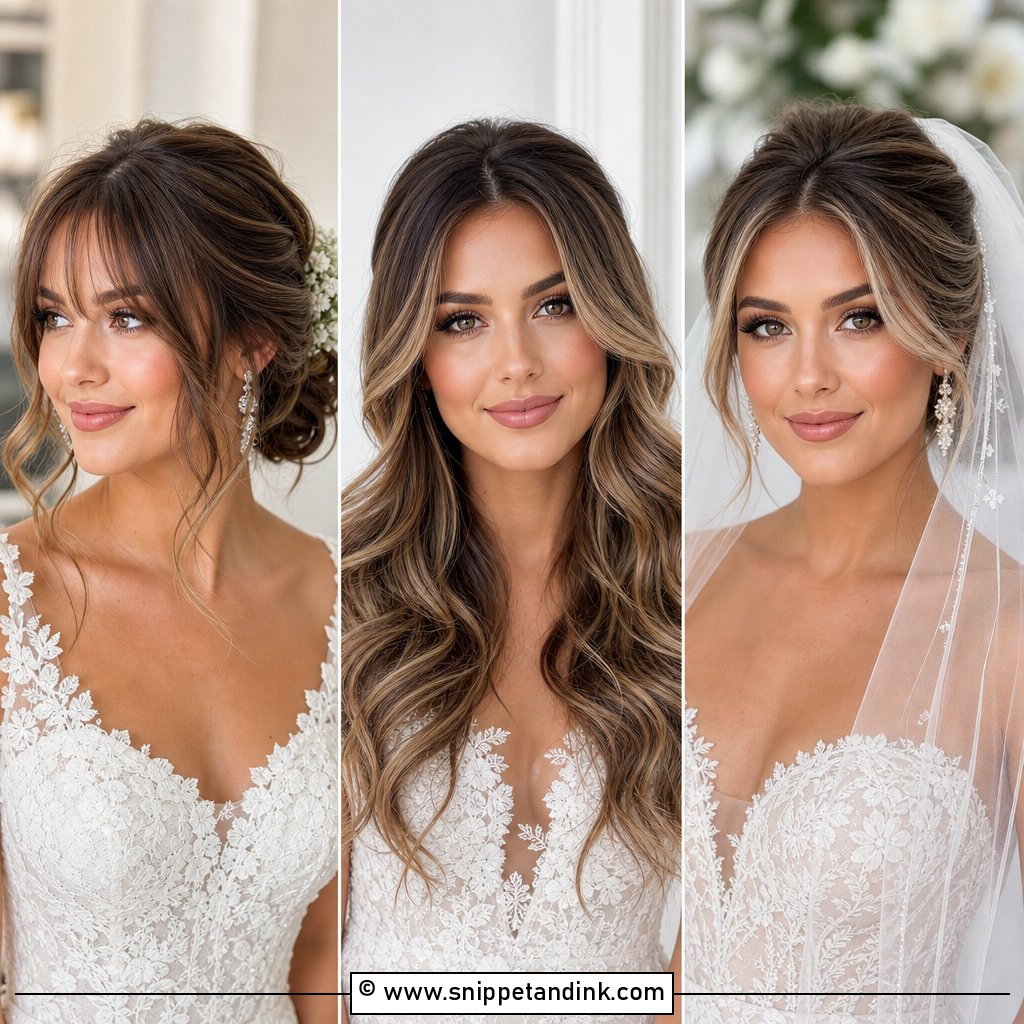
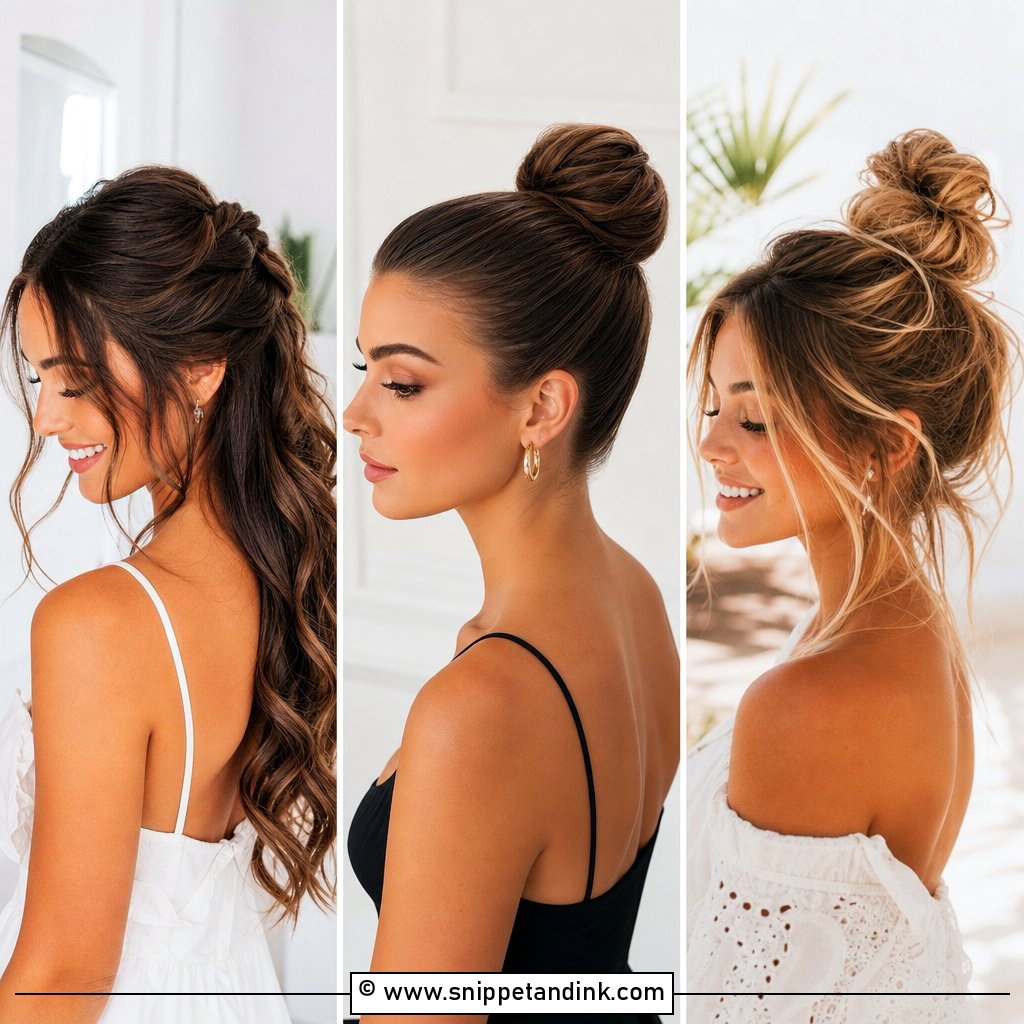
A high bun shows from the front as a small rise above the crown, and that rise gives the whole face a lifted, upright look. I place it so you can just see the top edge when you look straight into the mirror; any further back and you lose the effect. Strapless, square and high necklines all suit it since the shoulders stay clear. Smooth sides look modern, and a couple of tendrils look softer. A tiara sits nicely in front of it, and a veil goes underneath.
3. Bridal Sleek Bun Front View
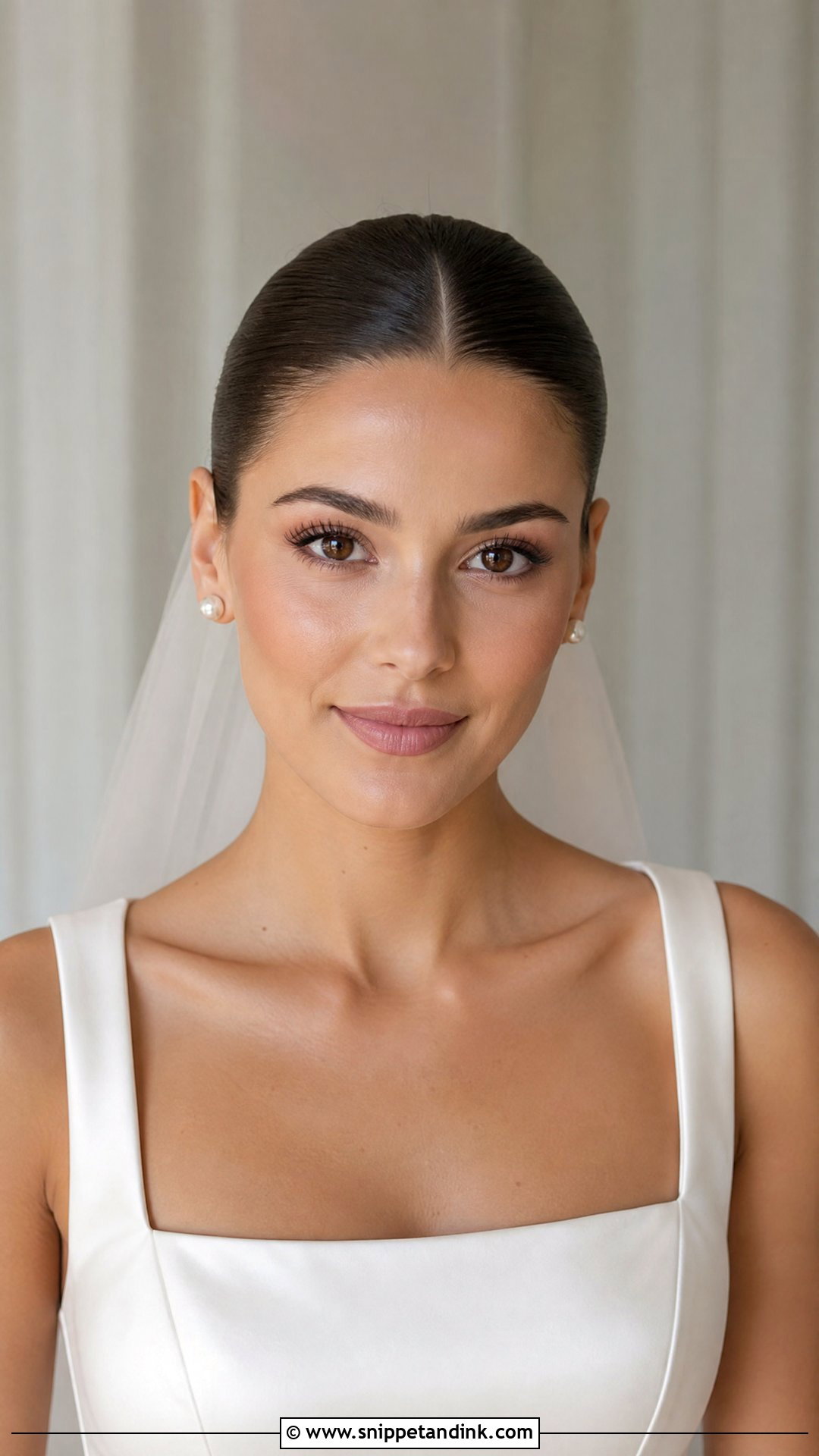
Clean and glossy, the sleek bun is the front view with nowhere to hide, so the part has to be dead straight and the hairline smooth. I lay the front with a small brush and a little gel, then finish with a light shine spray, keeping it off the roots, where it can look wet in flash photos. It shows off brows, makeup and jewellery more than any other style here. Modern gowns and satin are its natural pairing. If you have a lot of flyaways or new growth at the hairline, warn your stylist, because sleek styles make those obvious.
4. Bridal Half Up Half Down Front View
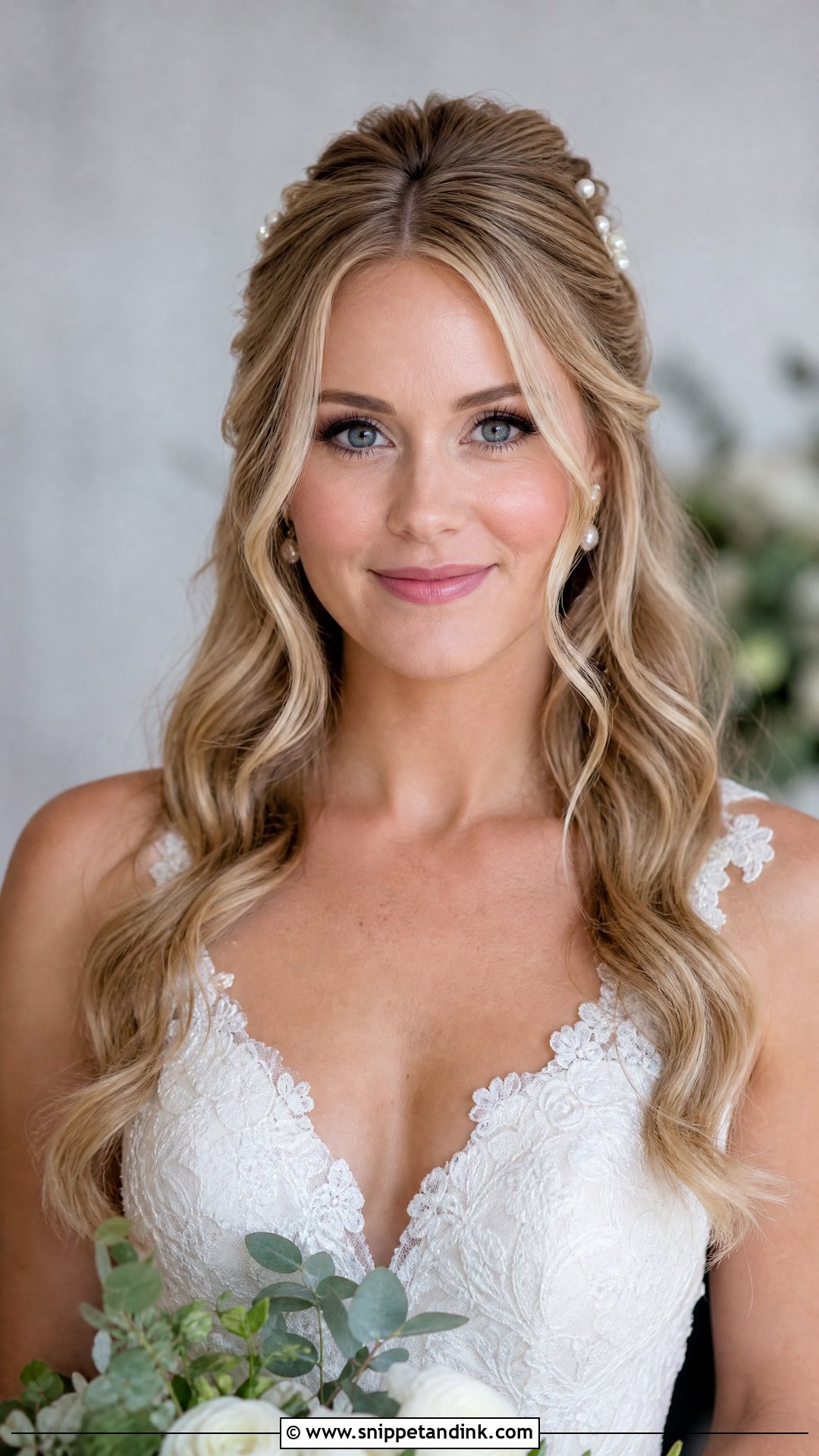
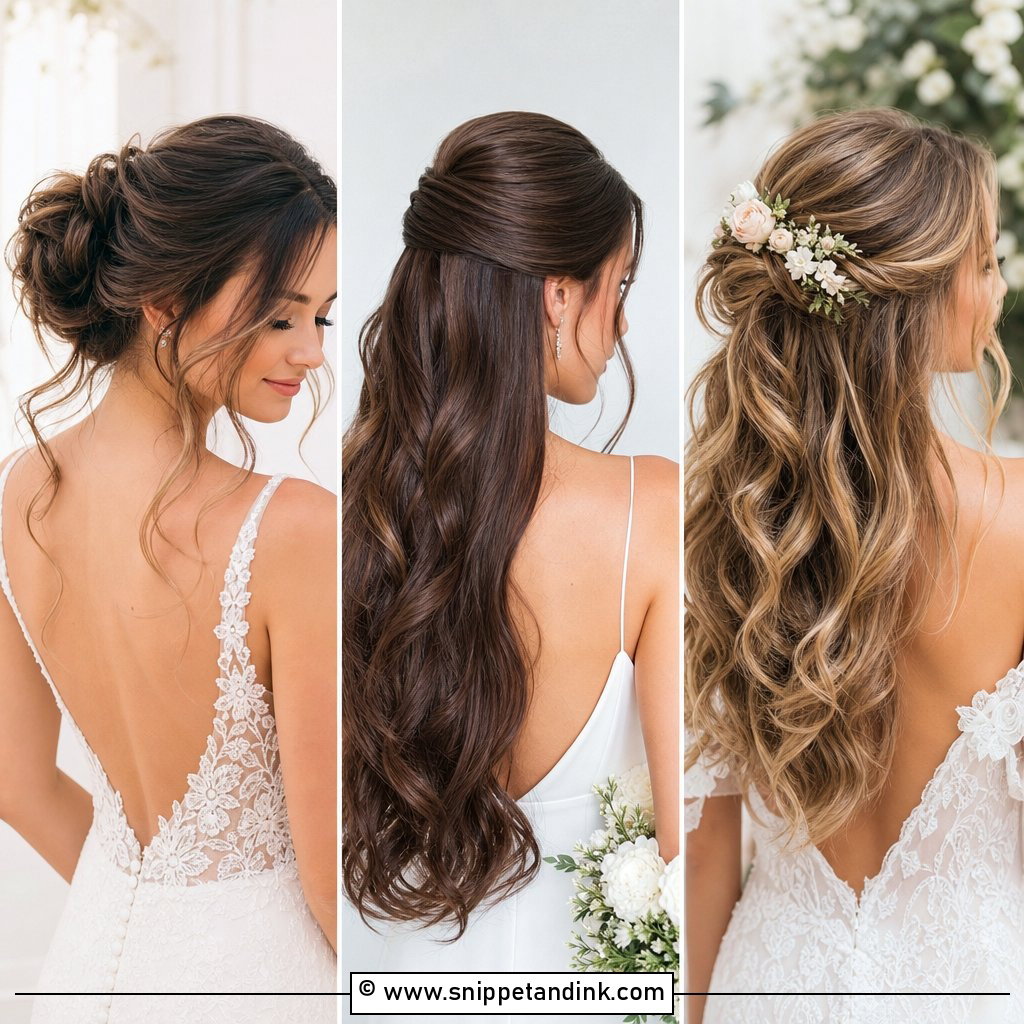
In a half up, half down front view, you see the top section lifted away from the face and the lengths falling in front of or behind the shoulders. That’s the real choice to make: hair in front of the shoulders frames the face; hair behind shows the neckline. I usually do one side forward and one back. The pinned section keeps hair out of your eyes during the vows. Keep the front soft with a little crown volume, and save the pins and pearls for the back.
5. Bridal Hollywood Waves Front View
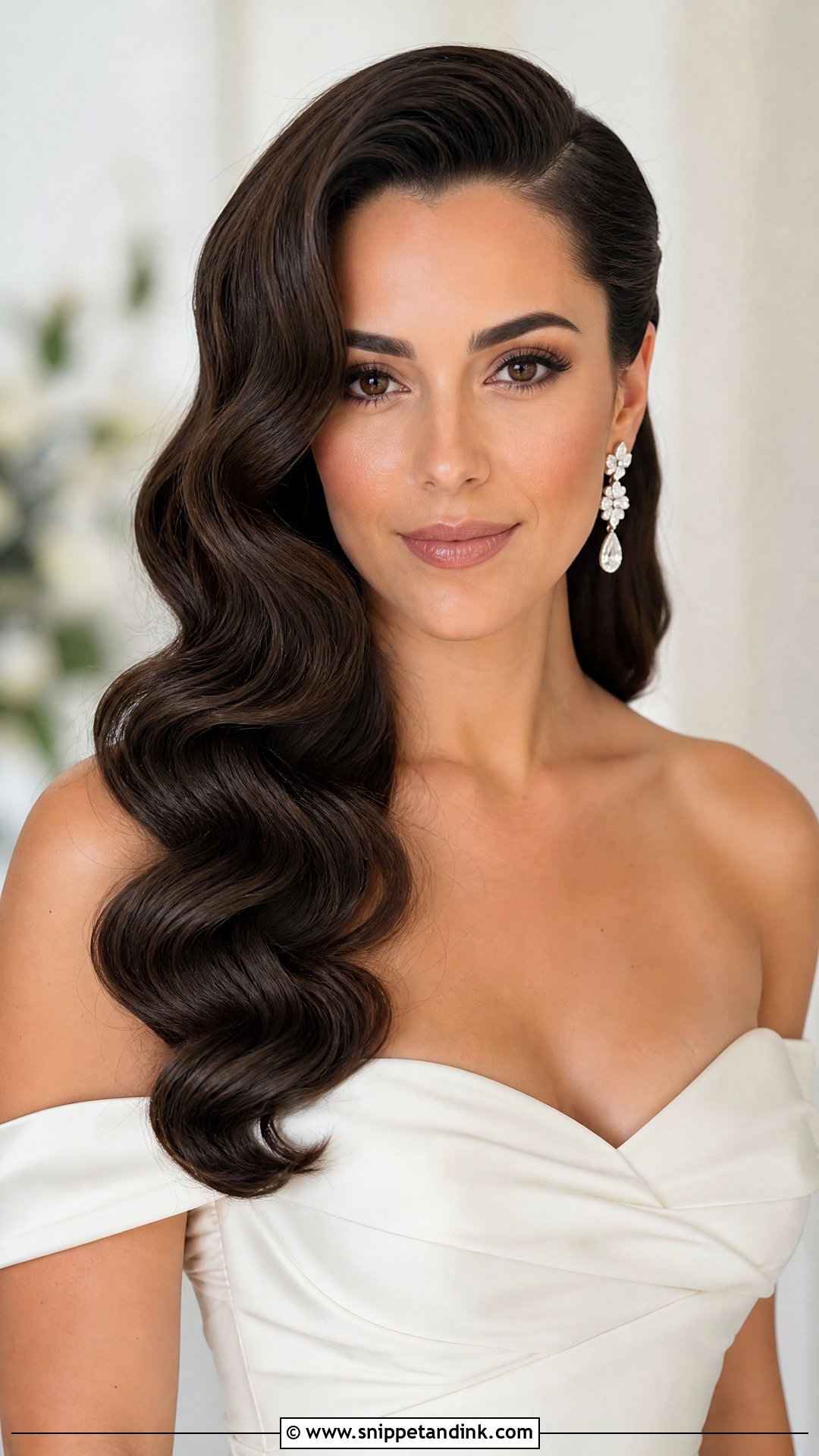
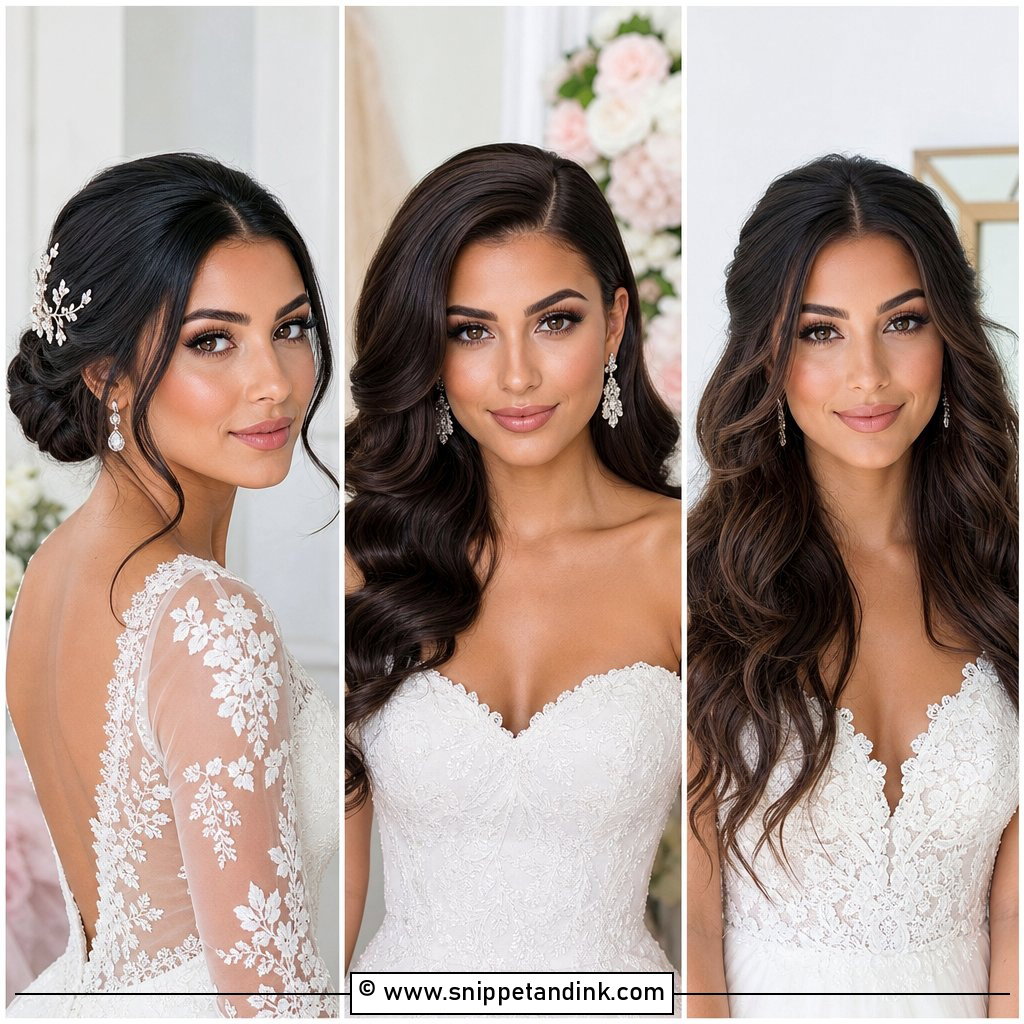
Hollywood waves are one of the most photographed front views in bridal hair, and for good reason. Every wave is set and brushed in the same direction from a deep side part, so from the front one side sweeps over the shoulder while the other tucks behind the ear. That tucked side is the clever part: it frames one earring and shows a sliver of jaw, which reads elegant on camera. Medium to long hair is needed. With a strapless or off-shoulder gown they’re a natural fit. I keep them glossy but brushable, never helmet-firm.
6. Bridal Soft Waves Front View
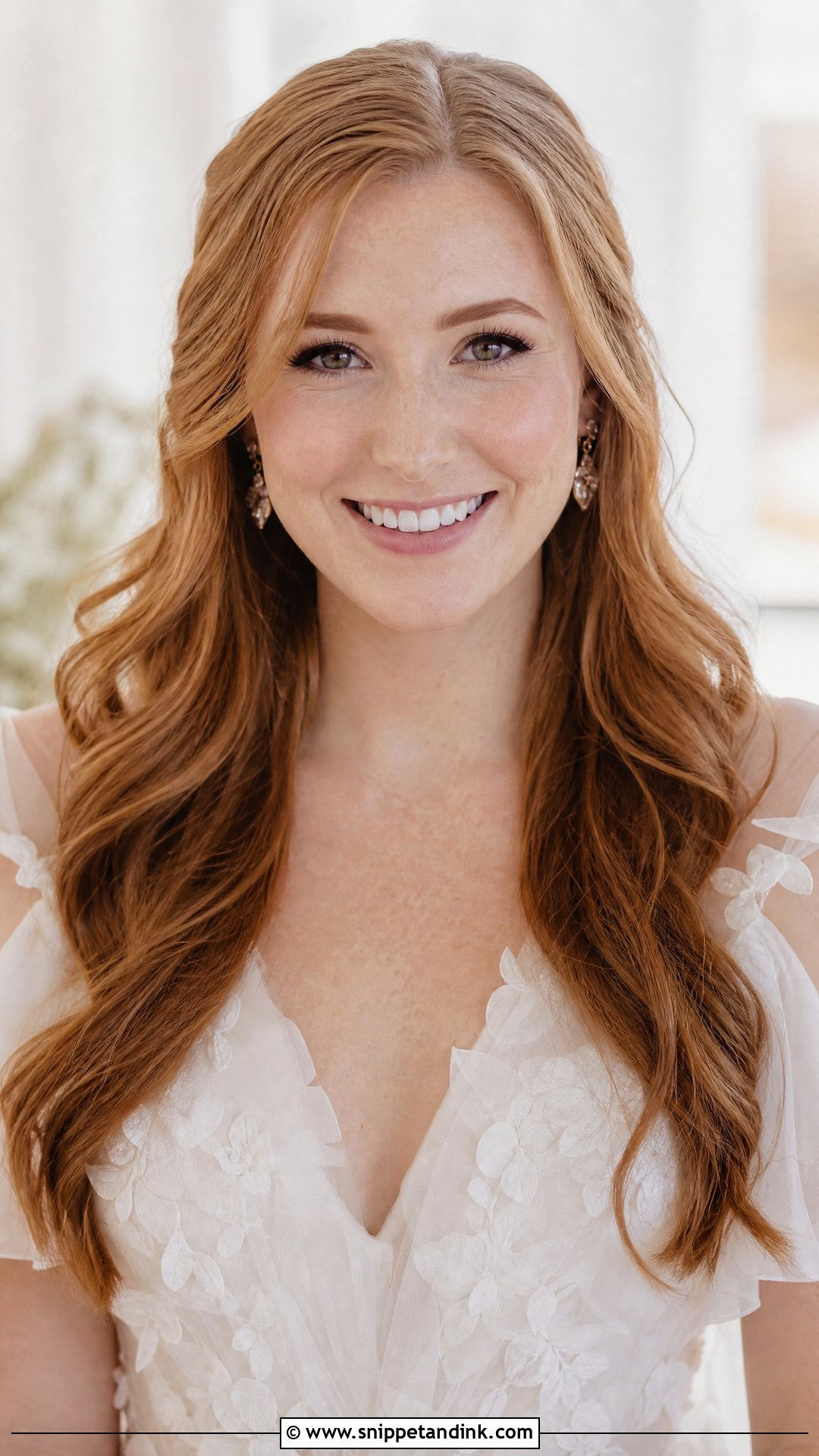
Soft waves look relaxed from the front only if they start in the right place. I begin the curl below the cheekbone, so the face is framed by movement rather than covered by it. The roots stay smooth and the ends polished, and that contrast is what keeps soft waves bridal rather than beachy. Centre parts, side parts and curtain pieces all work. Ask for enough hold to survive hugging; waves collapse fastest at the front, where people’s arms and cheeks meet your hair.
7. Bridal Side Part Waves Front View
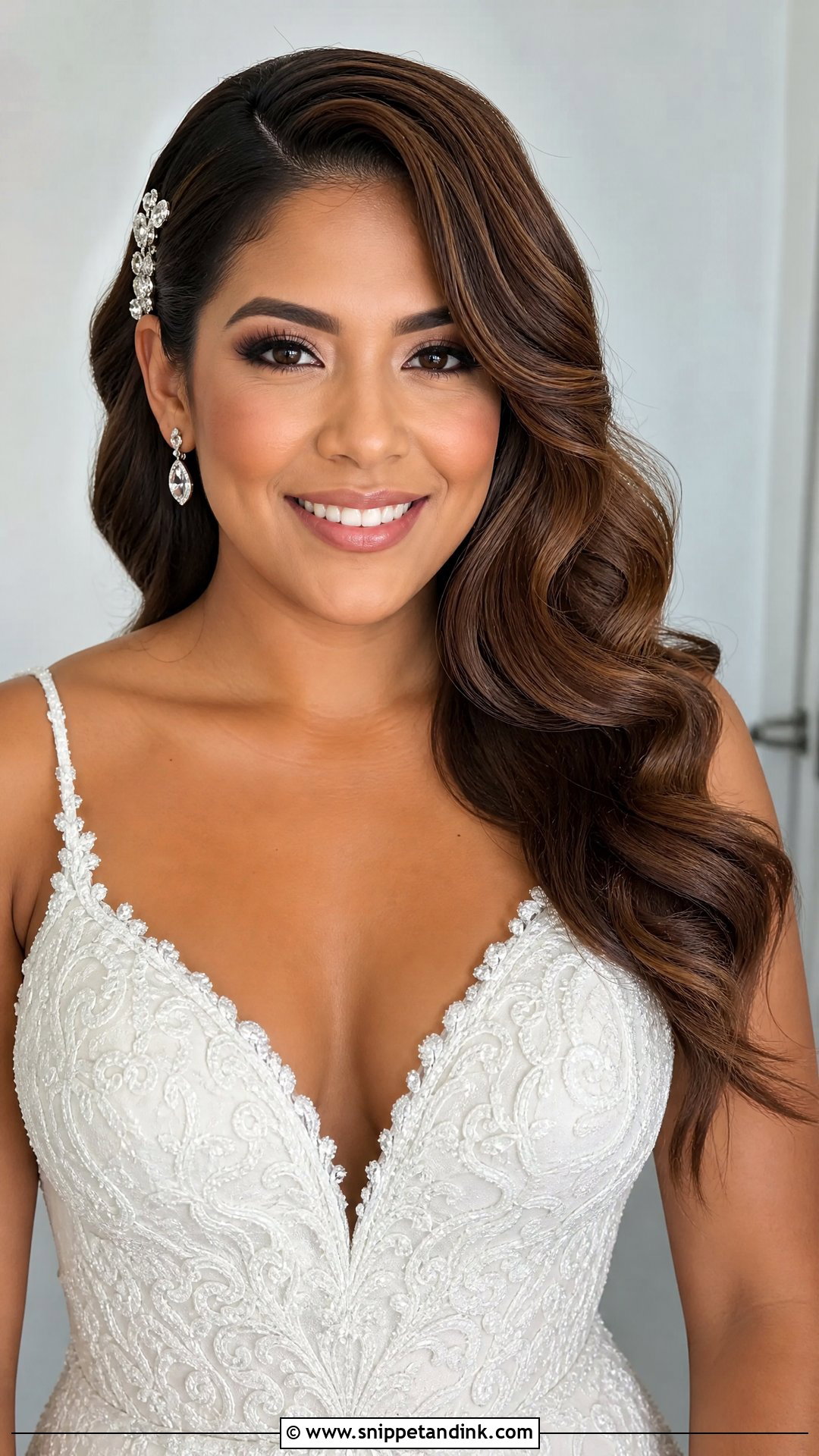
A side part makes any wave look more deliberately styled, because asymmetry reads as intentional on camera. One side tucks behind the ear, the other falls in loose waves over the shoulder, and suddenly one statement earring has the stage. I find it flatters round, oval and heart-shaped faces alike. The waves stay smooth near the top and looser toward the ends. Pin the tucked side with a hidden grip; tucked hair slips out the moment you laugh.
8. Bridal Ponytail Front View
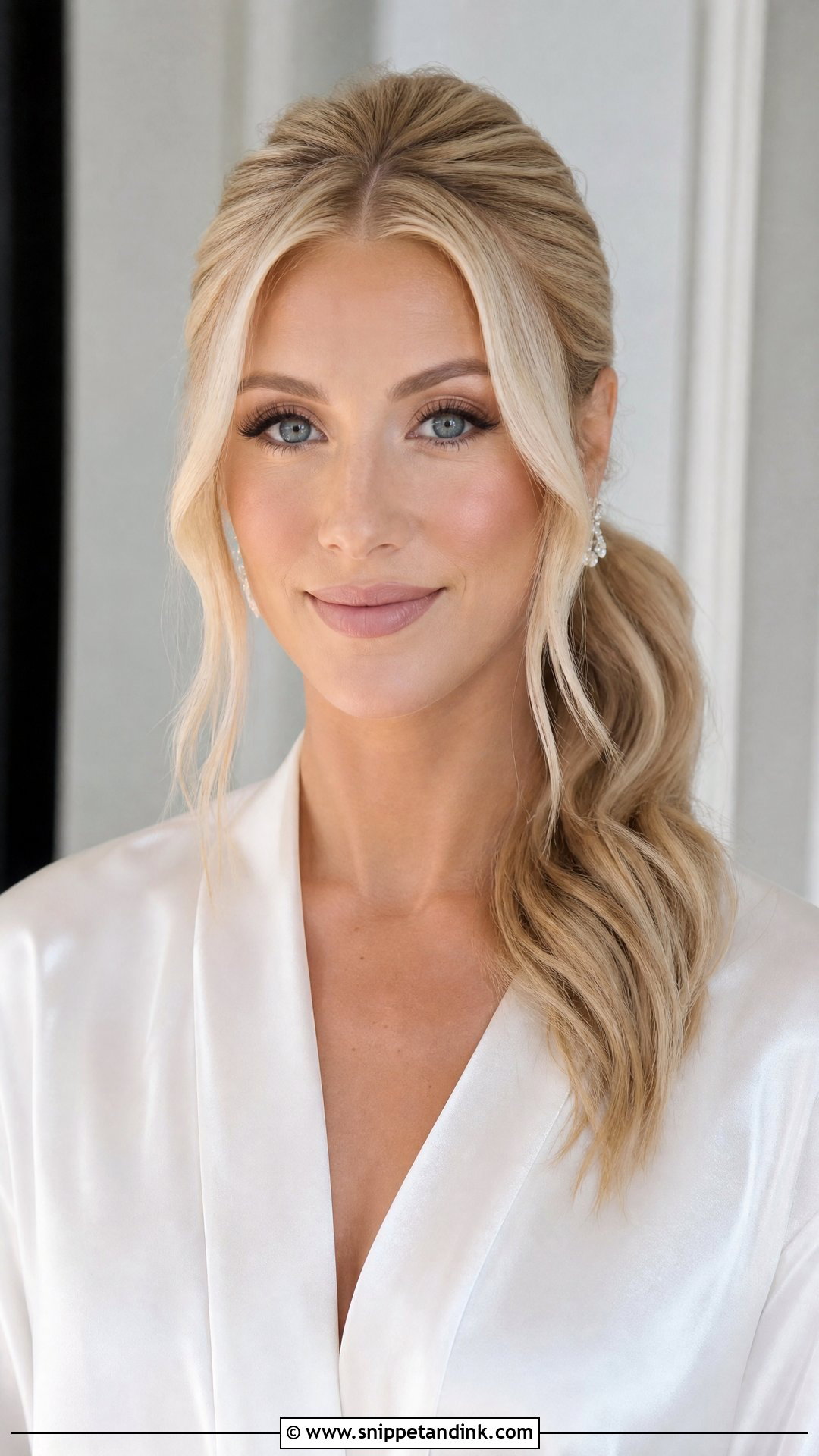
From the front, a ponytail shows only the hairline and the face, which is why the hairline gets all my attention here. Sleek and sculpted, or softened with face-framing pieces, the effect differs completely. Low looks graceful, mid or high looks fresh. I wrap the base with a strand of hair so the elastic never appears in side shots. Outdoor and warm-weather weddings are where it earns its place. Strong earrings help, since there’s nothing else around the face.
9. Bridal Textured Updo Front View
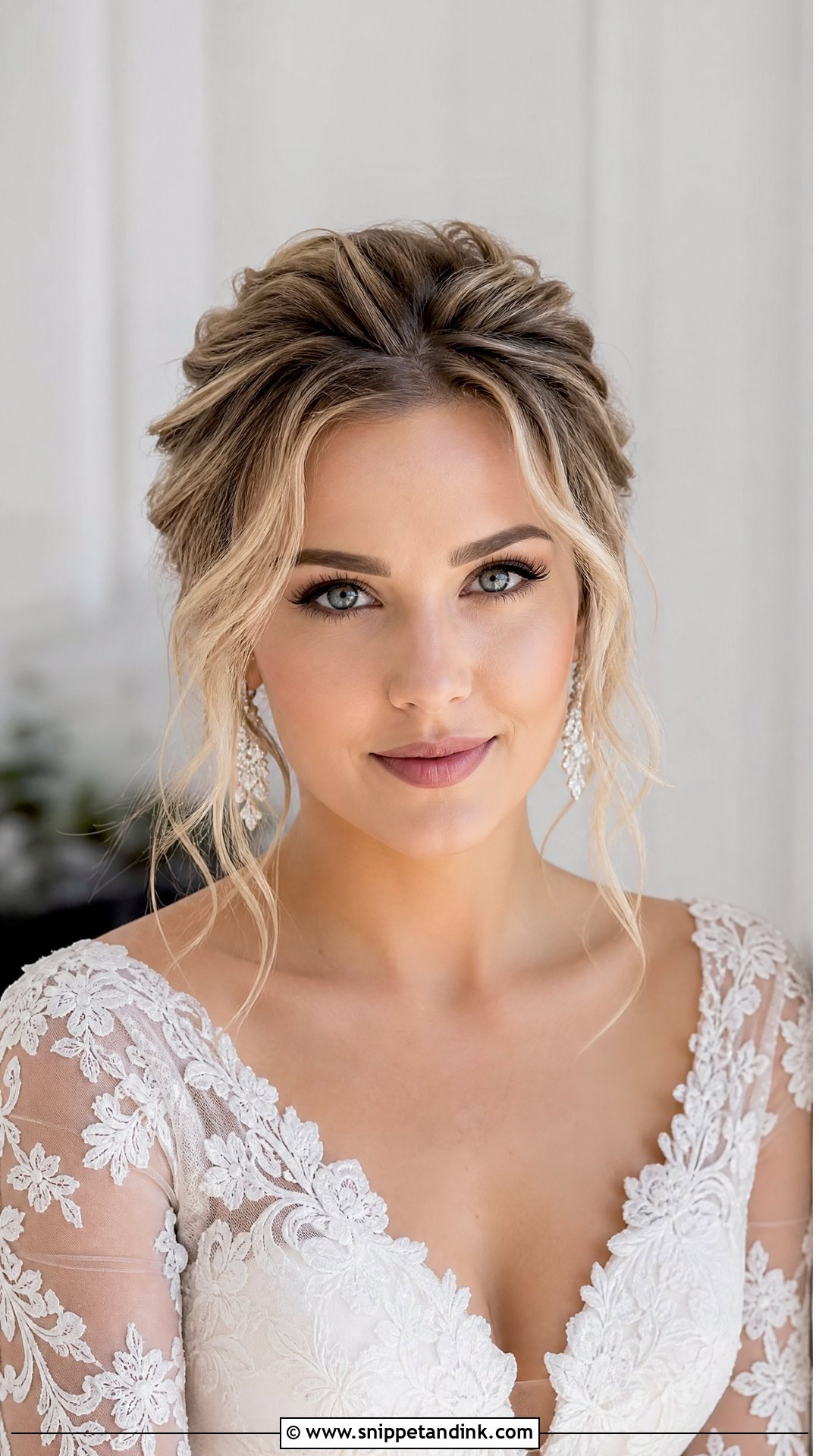
A bridal textured updo front view shows a little volume at the crown and wispy pieces around the face, while all the twists and pinned curls are tucked away behind. I build the front last, once the back is secure, so I can balance the height against your face rather than guessing. Highlighted or dimensional hair shows texture much better in photos than one flat colour. Lace gowns and garden weddings suit it. The finish should be touchable, which means a flexible spray and not a lacquer.
10. Bridal French Twist Front View
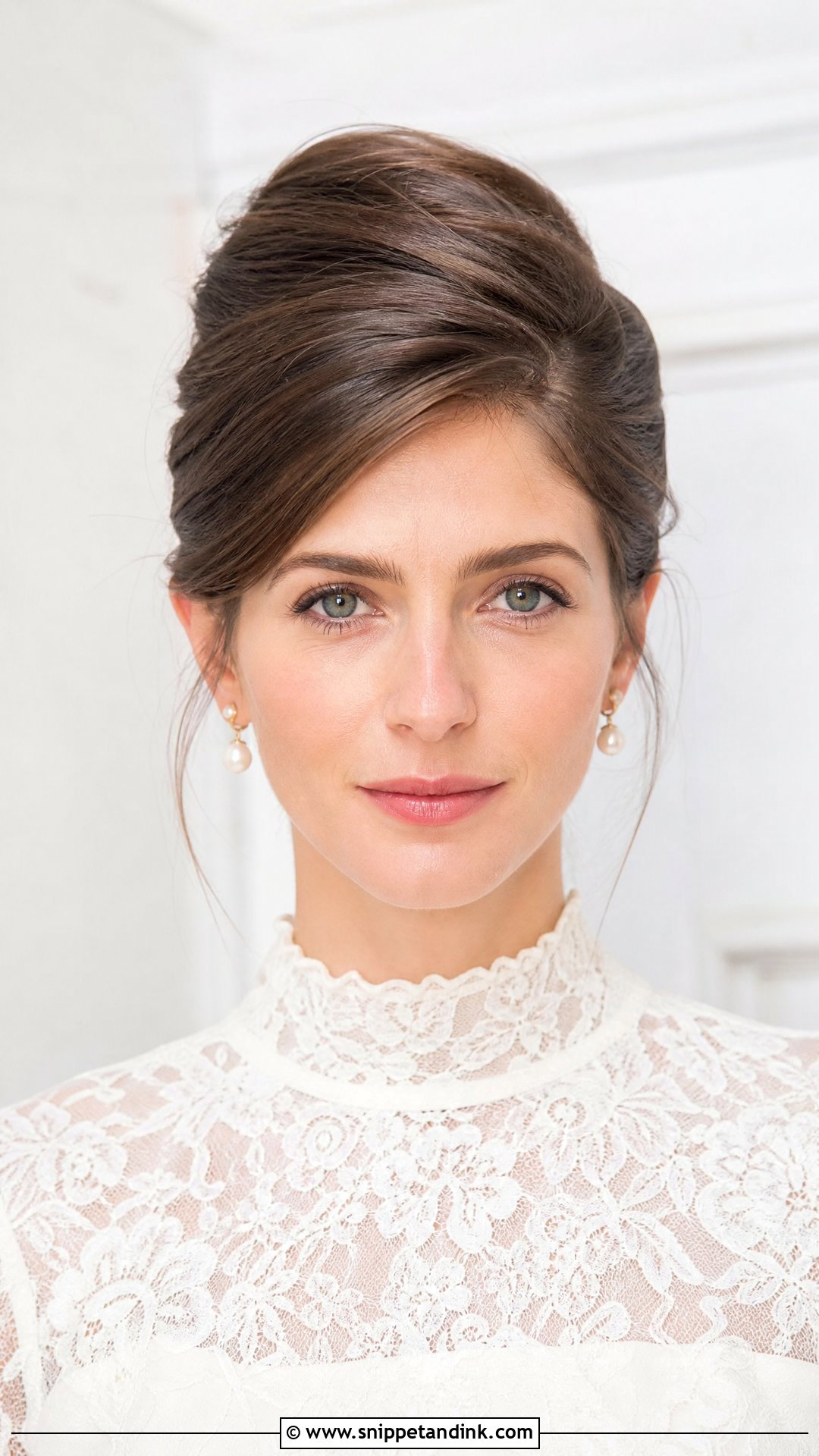
Most of a French twist is invisible from the front. What you do see is the sides swept back cleanly and a smooth lift above the forehead. So the quality of the sweep is the whole front view; any bump or ridge where the sides meet the twist will show. I brush the sides back with a boar bristle brush and pin them just behind the ear before the twist goes in. A side part softens it, a centre part feels modern. Boat neck and high neck gowns suit it best.
11. Bridal Chignon Front View
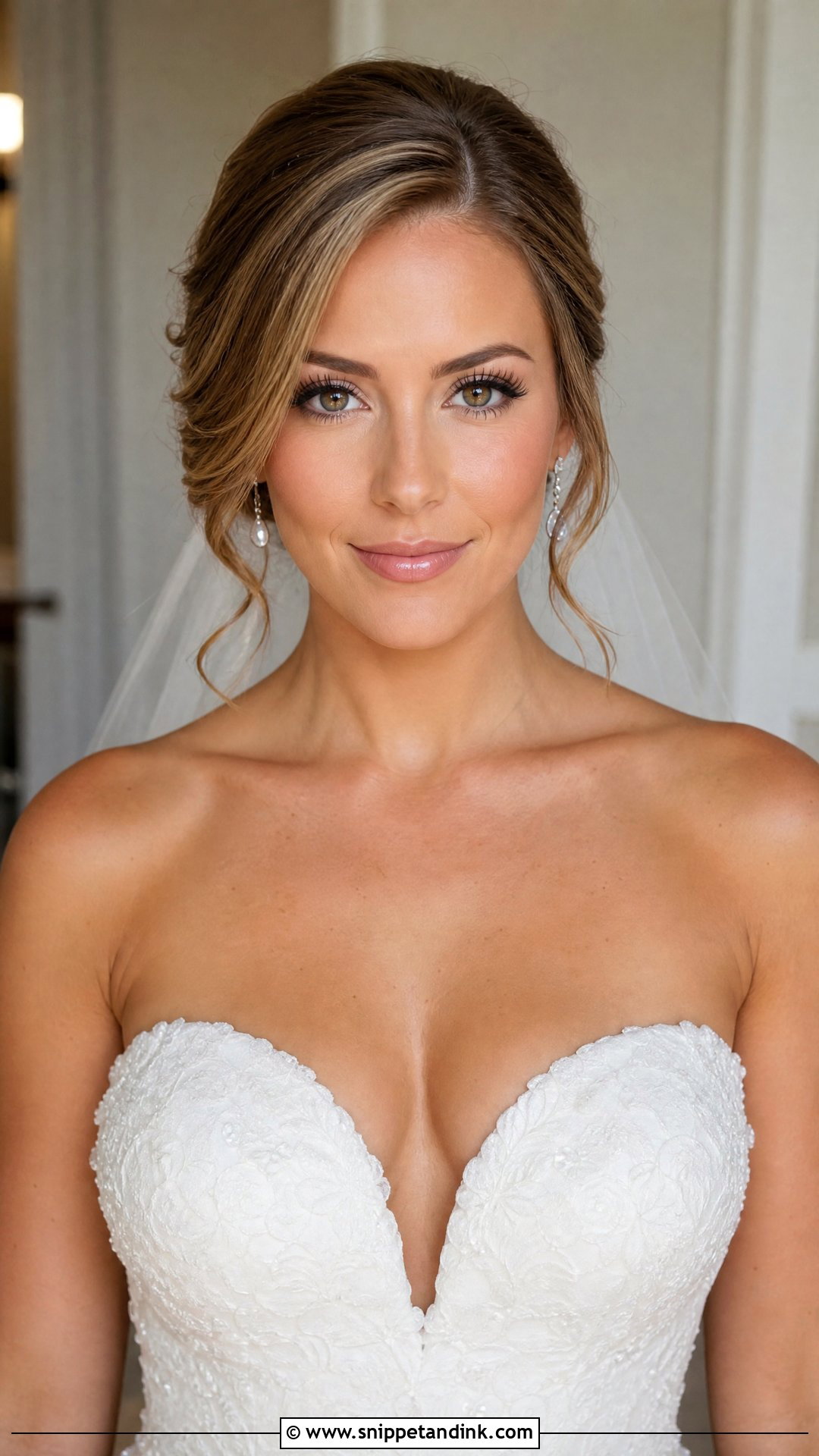
A bridal chignon front view is flexible because the chignon itself sits low at the nape and barely shows, so the front can be sleek, softly parted or waved. That flexibility is useful when you want your veil or earrings to be the feature. The mistake I see most is a hairline pulled too tight; it looks severe in a straight-on photo and can give you a headache by lunchtime. I keep a little slack at the front and leave a few soft pieces.
12. Bridal Curtain Bangs Front View
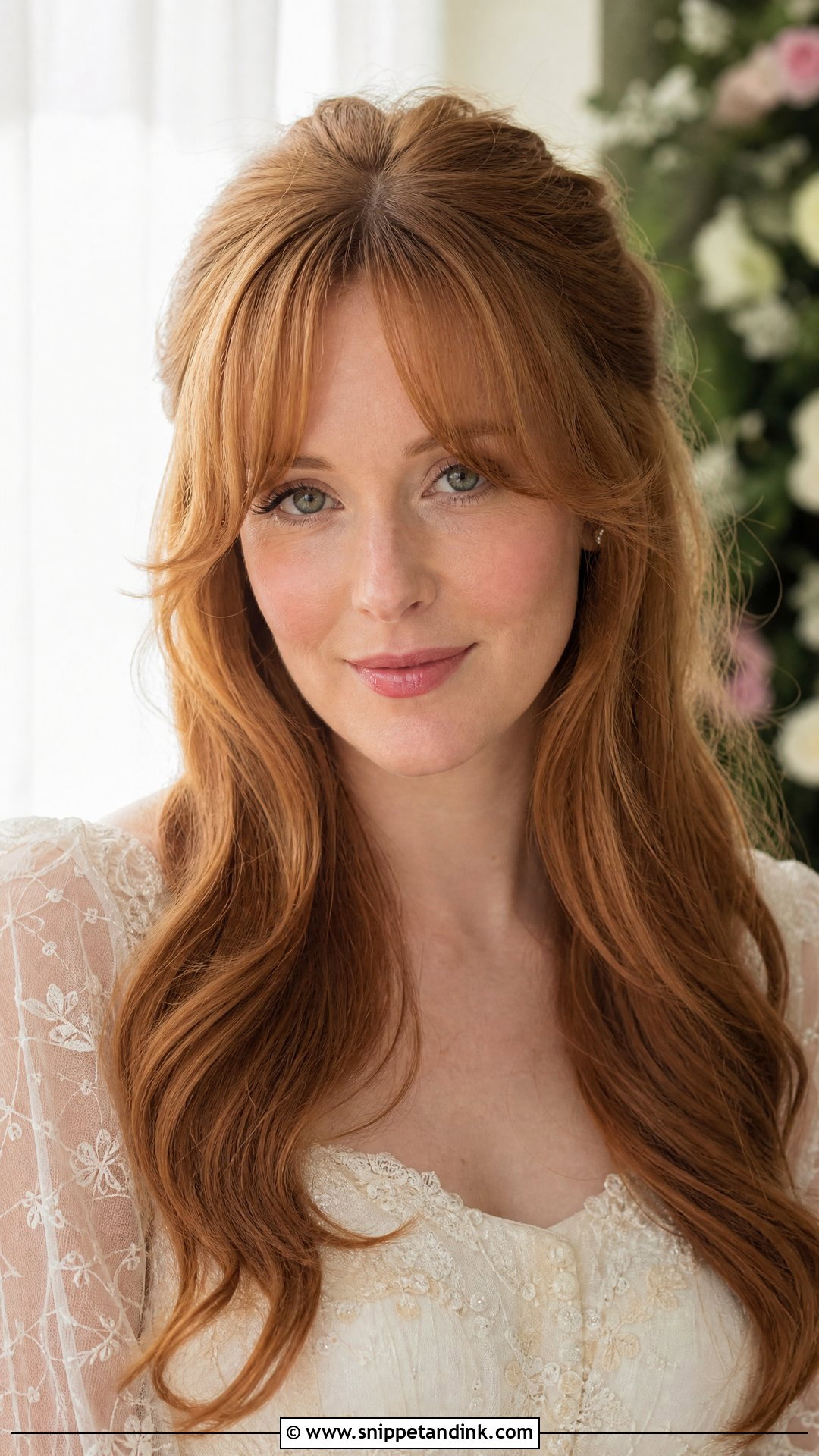
Bridal curtain bangs from the front open around the eyes and cheekbones and give the face a soft frame without covering it. They go with a bun, a ponytail, half up or loose waves. The key is that they blend into the surrounding hair instead of sitting as a separate block, so I curl the outer ends of the fringe into the face-framing layers. Polished ends, curved slightly away from the face. Glowing makeup and delicate earrings suit this look, since the bangs already do the framing.
13. Bridal Braided Crown Front View
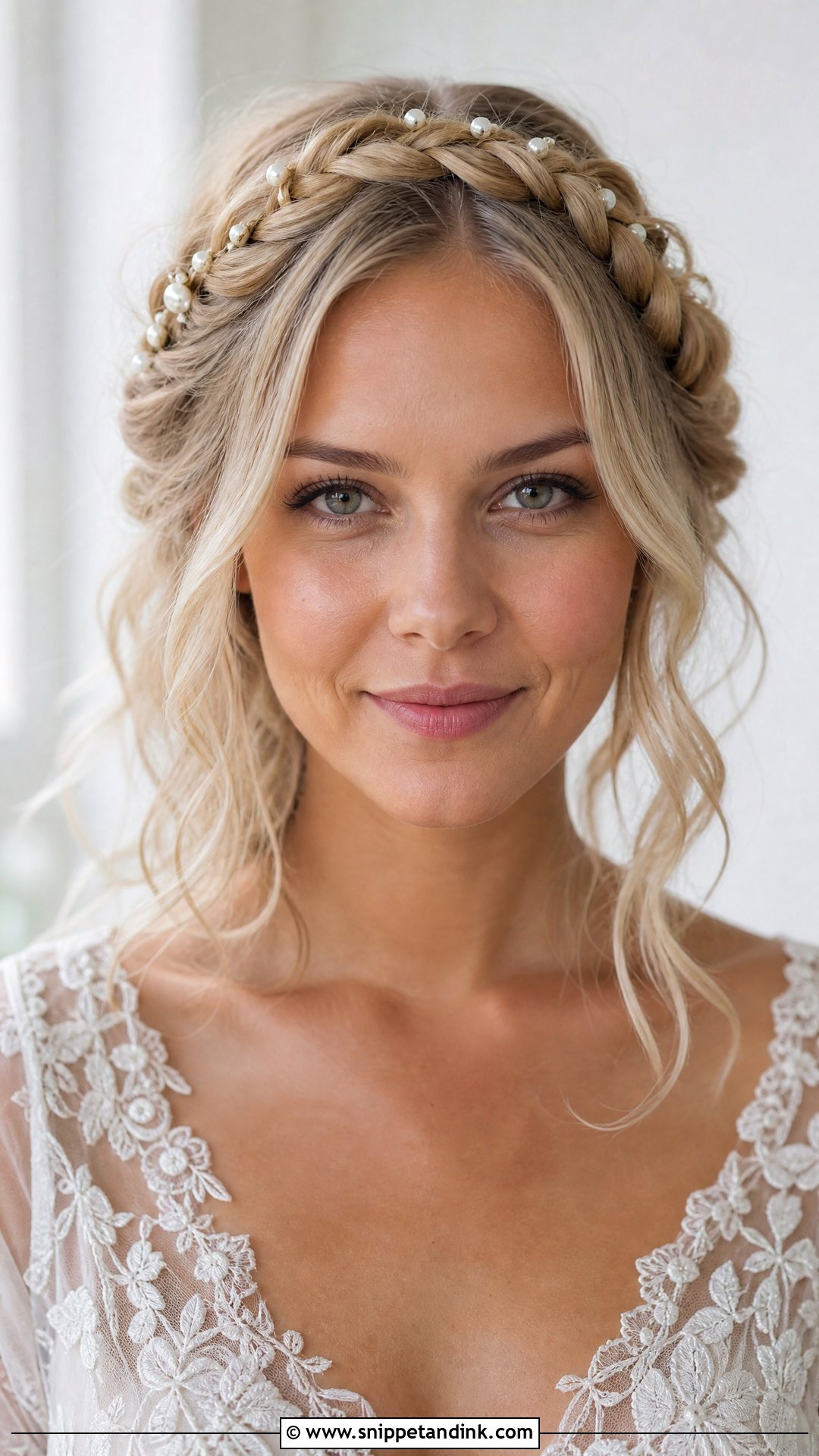
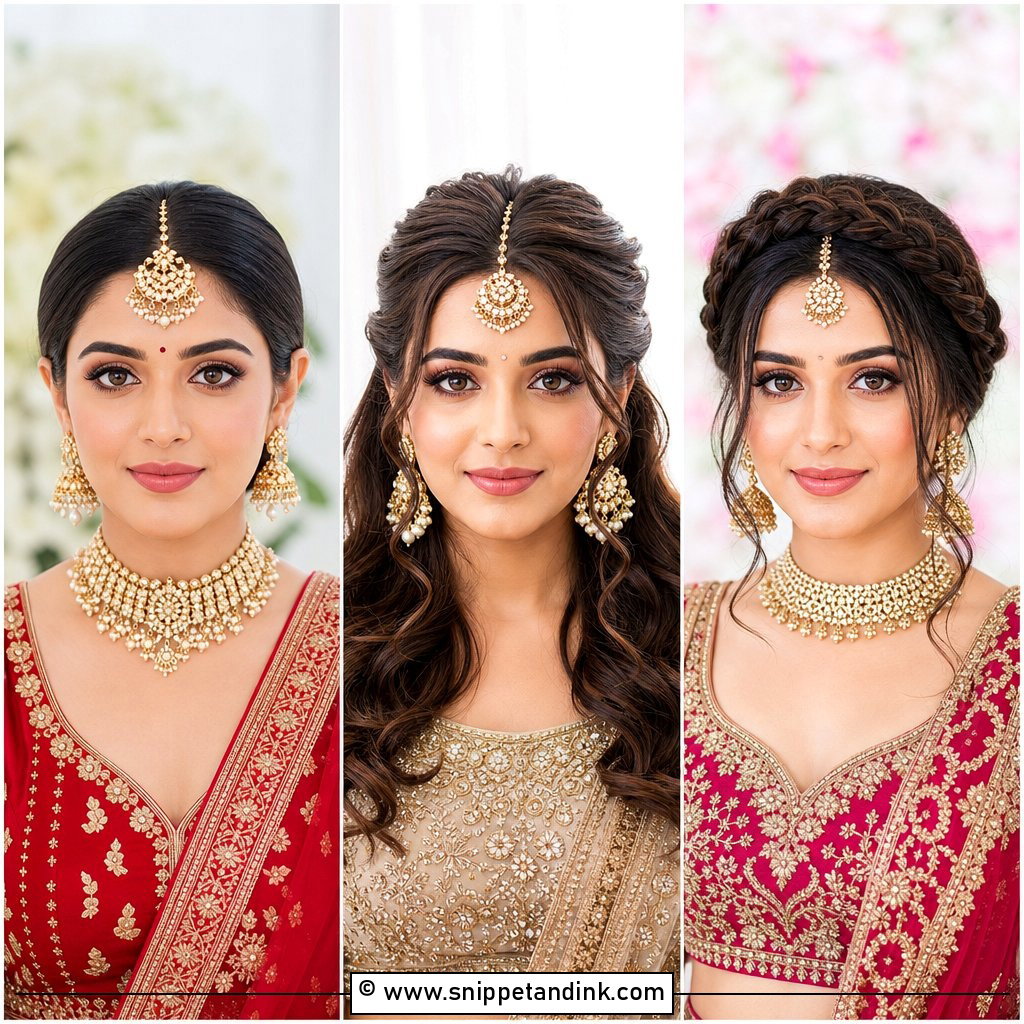
A braided crown frames the face from the front like a headband, so its placement decides how it looks. Right at the hairline it feels like a festival braid; set a finger’s width behind it, it looks more bridal and less costume. I usually do the latter. Loosen it slightly so it doesn’t look tight, and pair it with loose waves, a low bun or a soft updo. Outdoor, rustic and beach weddings suit it, and a few small pins or pearls are plenty.
14. Bridal Natural Curls Front View
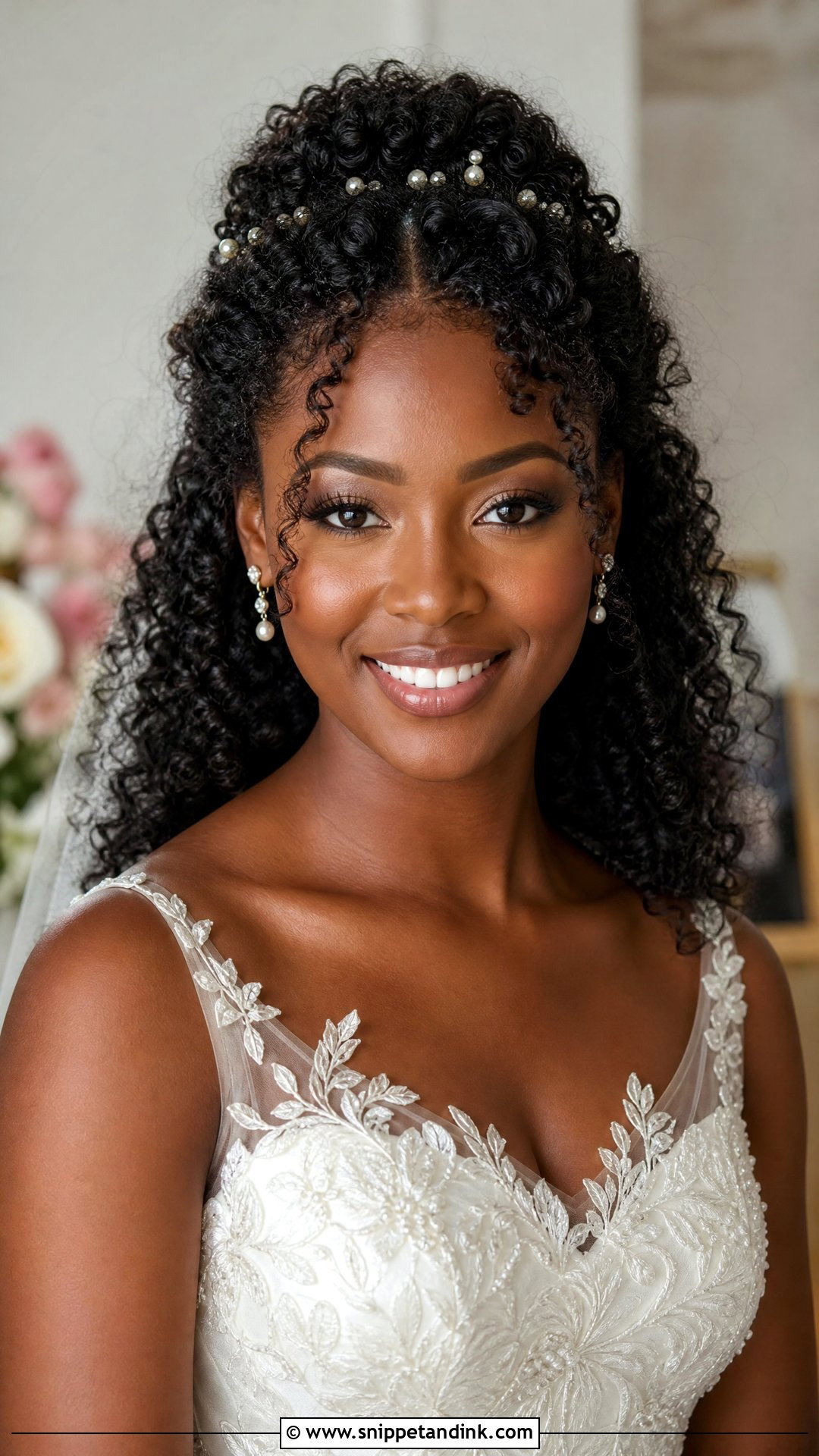
Natural curls from the front are about shaping, not taming. I look at which curls fall around the face and decide which to keep forward and which to pin back, so the face is framed without being covered. Down, half up or a curly updo can all work. Hydrate and define the curls well in the days before, and use a hold that won’t crunch. On a long day the front curls get the most handling, so I keep a few spare defined curls pinned out of sight to swap in later.
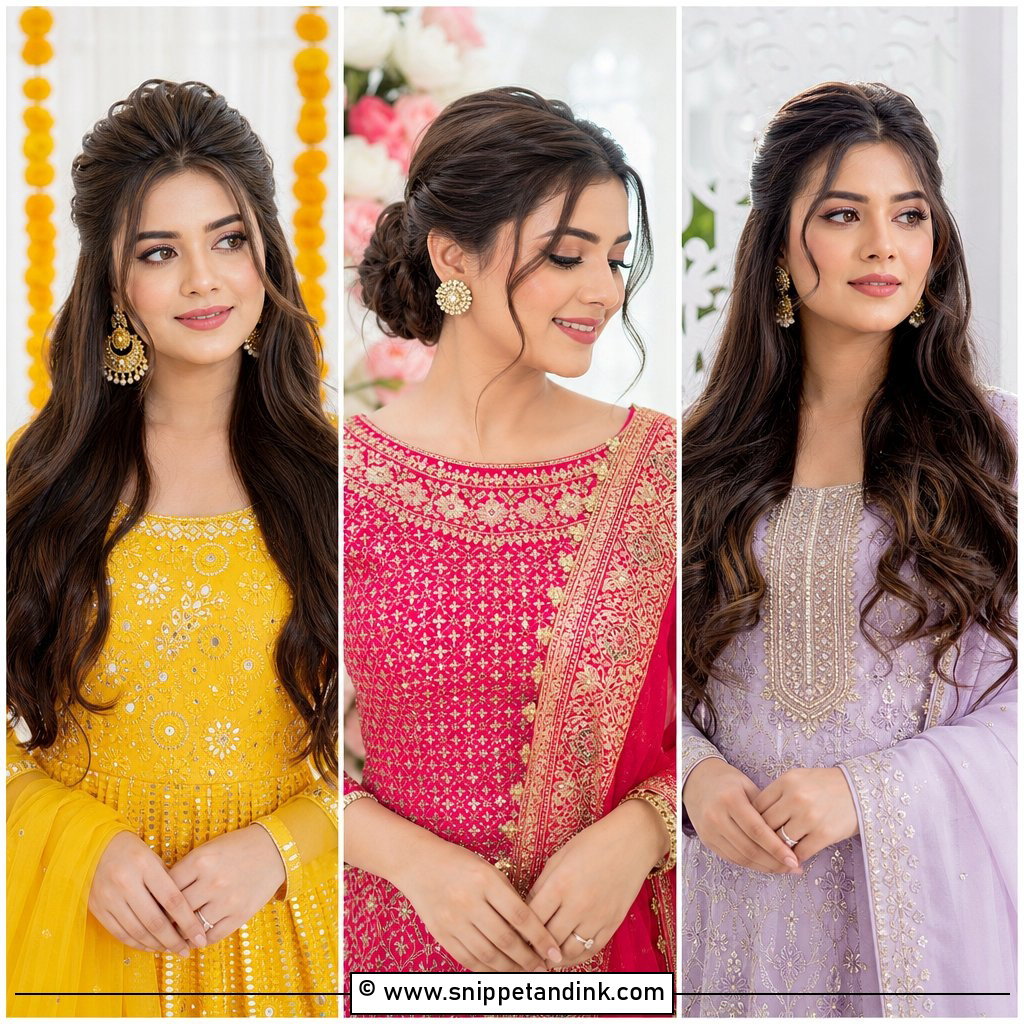
15. Bridal Bob Front View
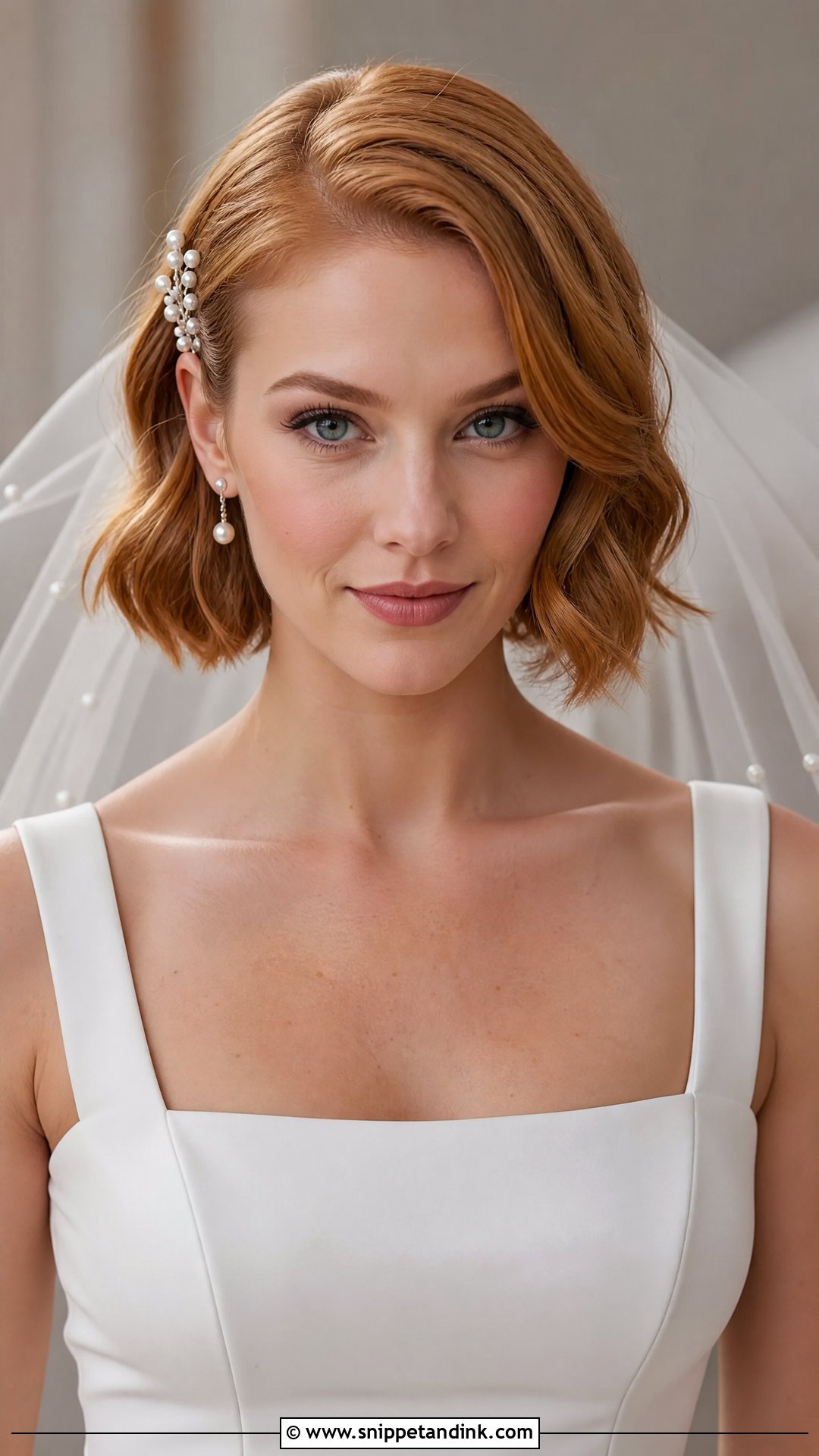
A bridal bob front view is all jawline: the cut ends right where your face and neck meet, so the shape of the ends is what people see. I either polish the ends straight and glossy or give them soft bends, depending on your face shape. A deep side part with one side tucked shows an earring well. A small pearl clip is enough of a bridal detail. Get it trimmed a week or so before, so the line is crisp but not freshly blunt.
Part Line and Hairline Carry the Front View
Since the front is mostly part and hairline, those are the two areas I prepare most carefully.
Roots and scalp
Regrowth shows clearly along a part, particularly in sleek styles. If you colour your hair, book the root touch-up a week or two before so it’s fresh but settled. Under flash, a pale scalp can show through a centre part on fine hair; a little tinted root powder along the part softens that line.
Where the part goes
Try both a centre and a side part at your trial, even if you always wear one. A side part you’d never wear day to day can sit better with a veil comb than your usual one. Once chosen, I blow-dry the part in place from the root so it doesn’t drift back to its usual spot.
Flyaways and baby hairs
Short hairs at the temples glow in backlit photos. I smooth them with a little gel on a clean toothbrush or a flyaway stick, and pack the same in a bridesmaid’s bag for the evening.
What the Camera Sees First at the Altar
The front of your hair is what nearly every guest and every camera will see, so give it the most thought. Consider your face shape, neckline, veil placement and earrings together, not separately. A sleek bun reads modern, Hollywood waves read glamorous, a chignon reads classic and natural curls read personal. At your trial, have someone photograph the front in daylight near a window, then check those photos for the part, the hairline and any bumps. Fix those details, and the rest will follow.
You'll Like These Ideas:


Leave a Reply