
A simple wedding dress is harder to get right than a busy one. With no lace or beading to distract, every seam, every inch of fit and the quality of the fabric are on show, which is exactly why a well-made plain gown looks so expensive. The shapes in this list (satin slips, crepe columns, clean A-lines, long sleeves, square necklines, a few pearls) suit a courthouse, a garden, a beach or a ballroom, depending on the fabric you choose. I’ve added notes on how each one behaves once you actually wear it: how it creases, what it needs underneath, and where it struggles.
What a Plain Dress Shows That a Lacy One Hides
Lace and beading cover a lot. Remove them and the fabric reveals everything underneath, so the first appointment I book after a bride chooses a minimal gown is an undergarment check. Satin and silk show any line from a seamed bra or lace knickers; crepe is more forgiving but still marks at the hip if the fit is tight.
- Buy your shapewear or slip before the first fitting and wear the same pieces at every appointment.
- Choose smooth, unseamed pieces in a shade close to your skin, not white, which can show through ivory.
- Bring the shoes you’ll actually wear so the hem is set to the right height from the start.
- Sit, bend and lift your arms in the fitting room. A plain dress that only works standing still isn’t finished.
Fabric choice follows from your day. If you’ll be in a car for an hour and then seated for a long dinner, crepe and mikado keep their shape better than satin or silk, which will crease across the lap.
1. Satin Slip Wedding Dress
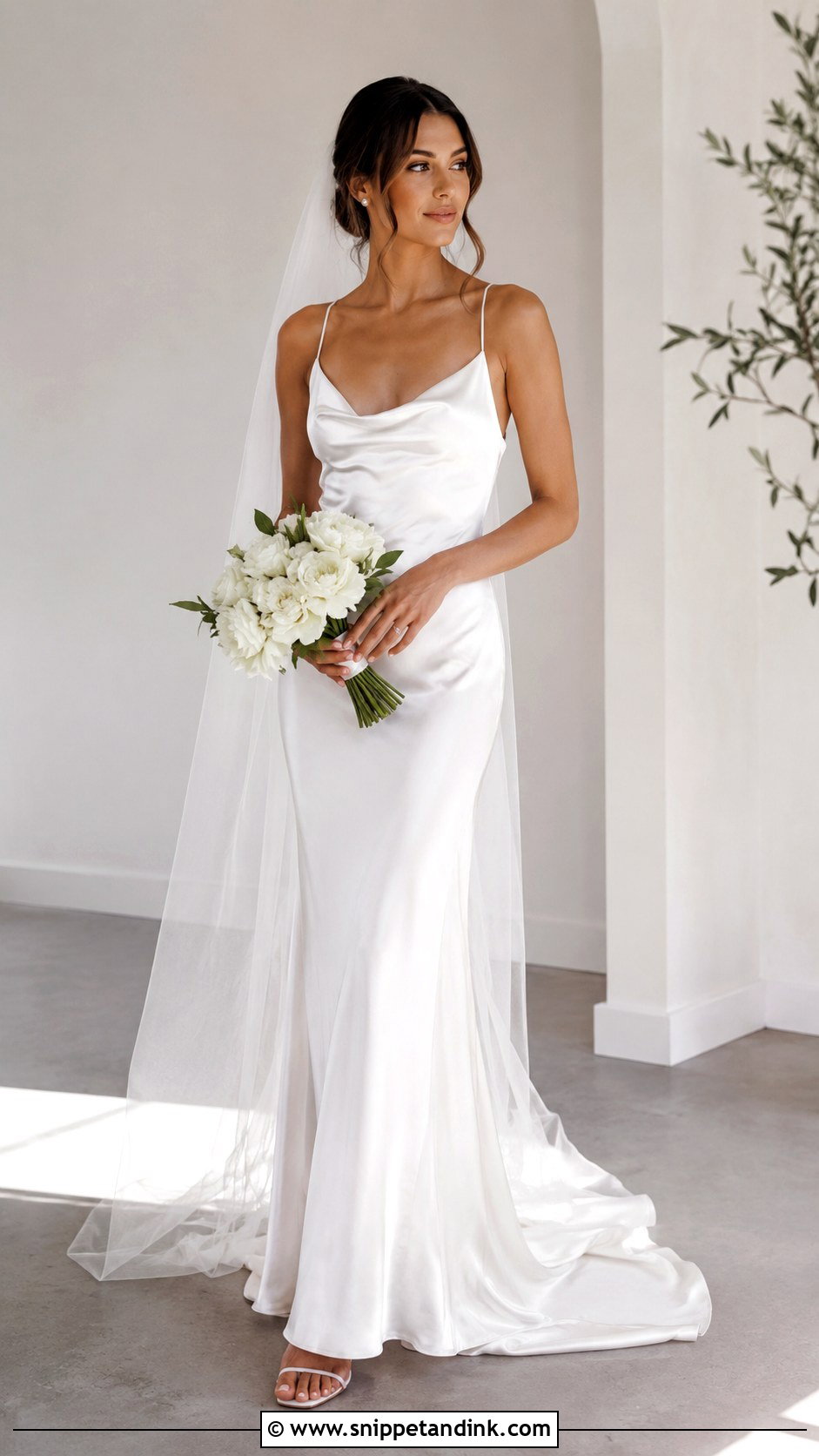
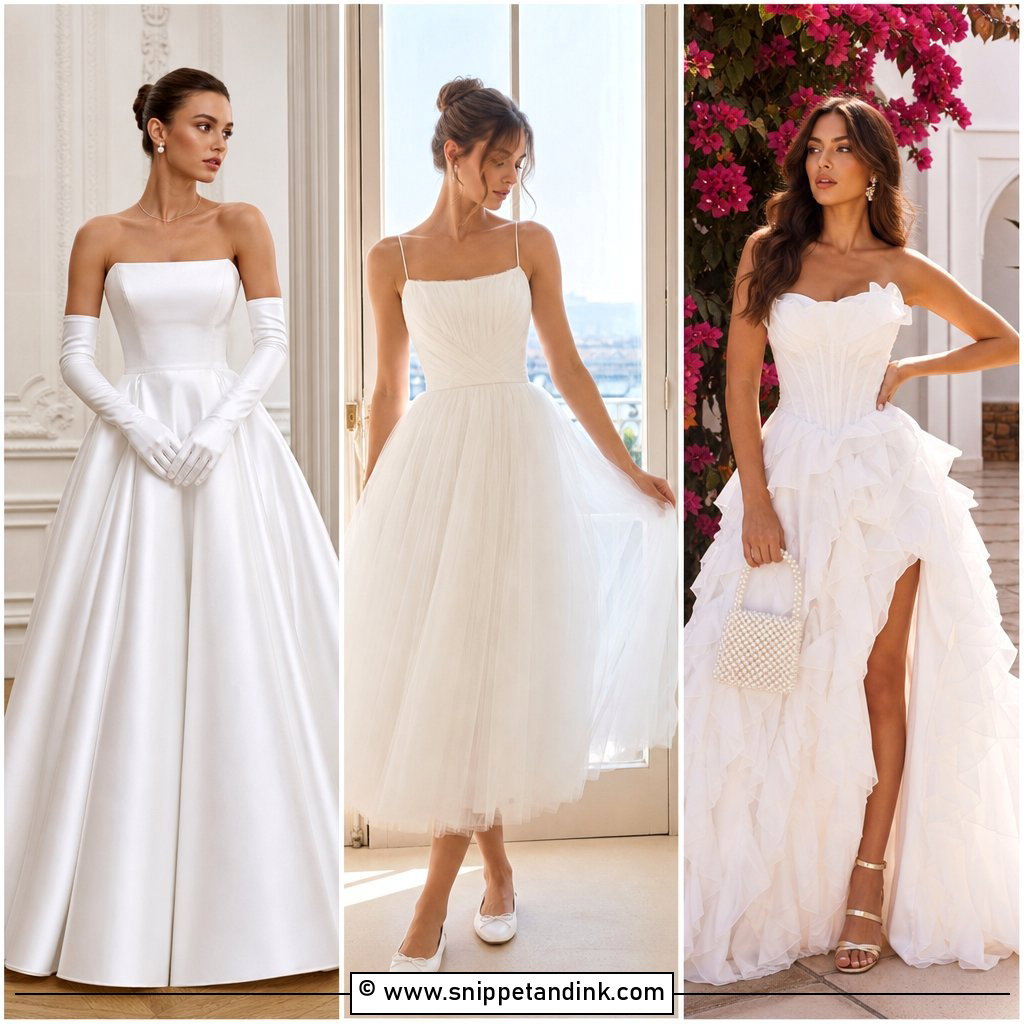
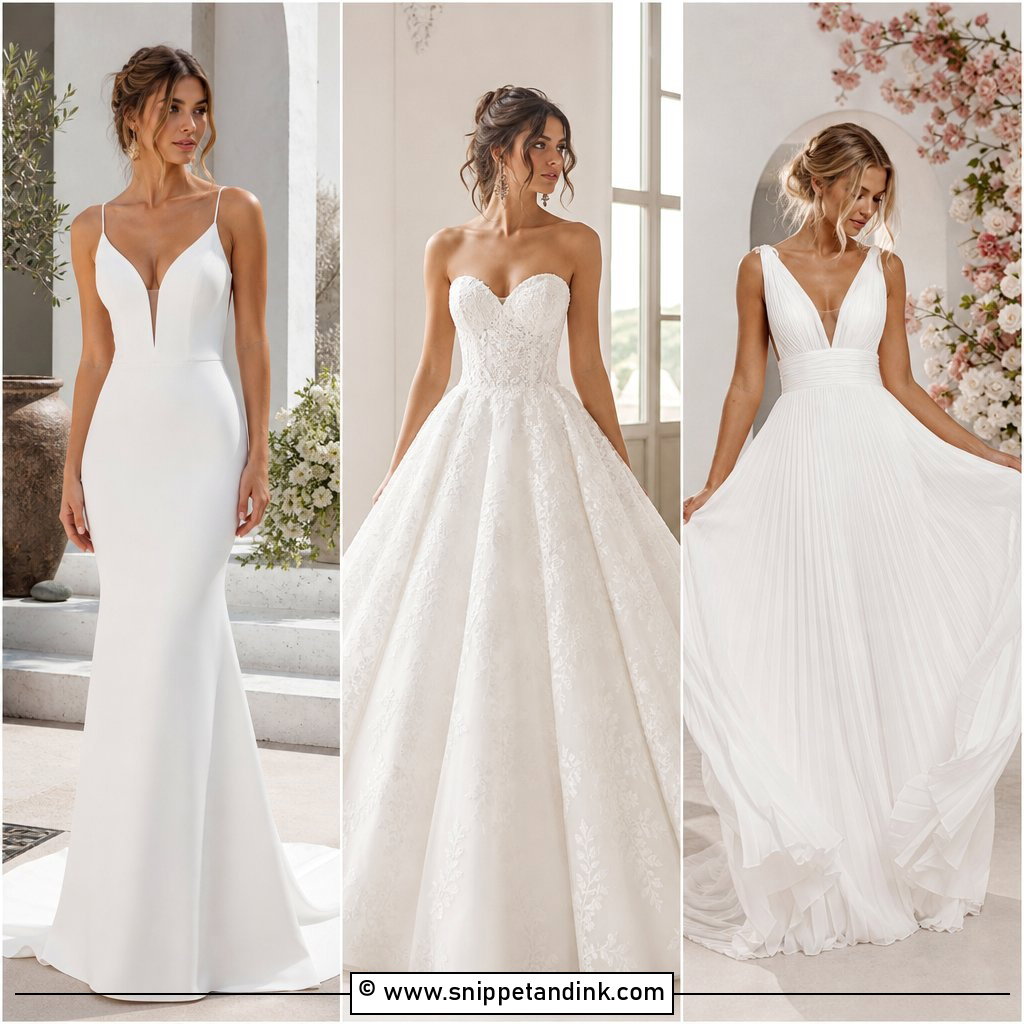
Bias-cut satin is the most honest fabric in bridal. It drapes over the body in a way nothing else does, and it also shows every line underneath, so I fit slips over the exact undergarments the bride will wear. The other thing to know is that satin creases when you sit, especially across the lap, so expect softer lines by the reception. Thin straps or a cowl neckline both suit it, along with pearl studs and a smooth low bun. A chapel-length veil adds ceremony without hiding the drape. It sits best in a city, on a rooftop or at a small reception.
2. Crepe Column Wedding Dress
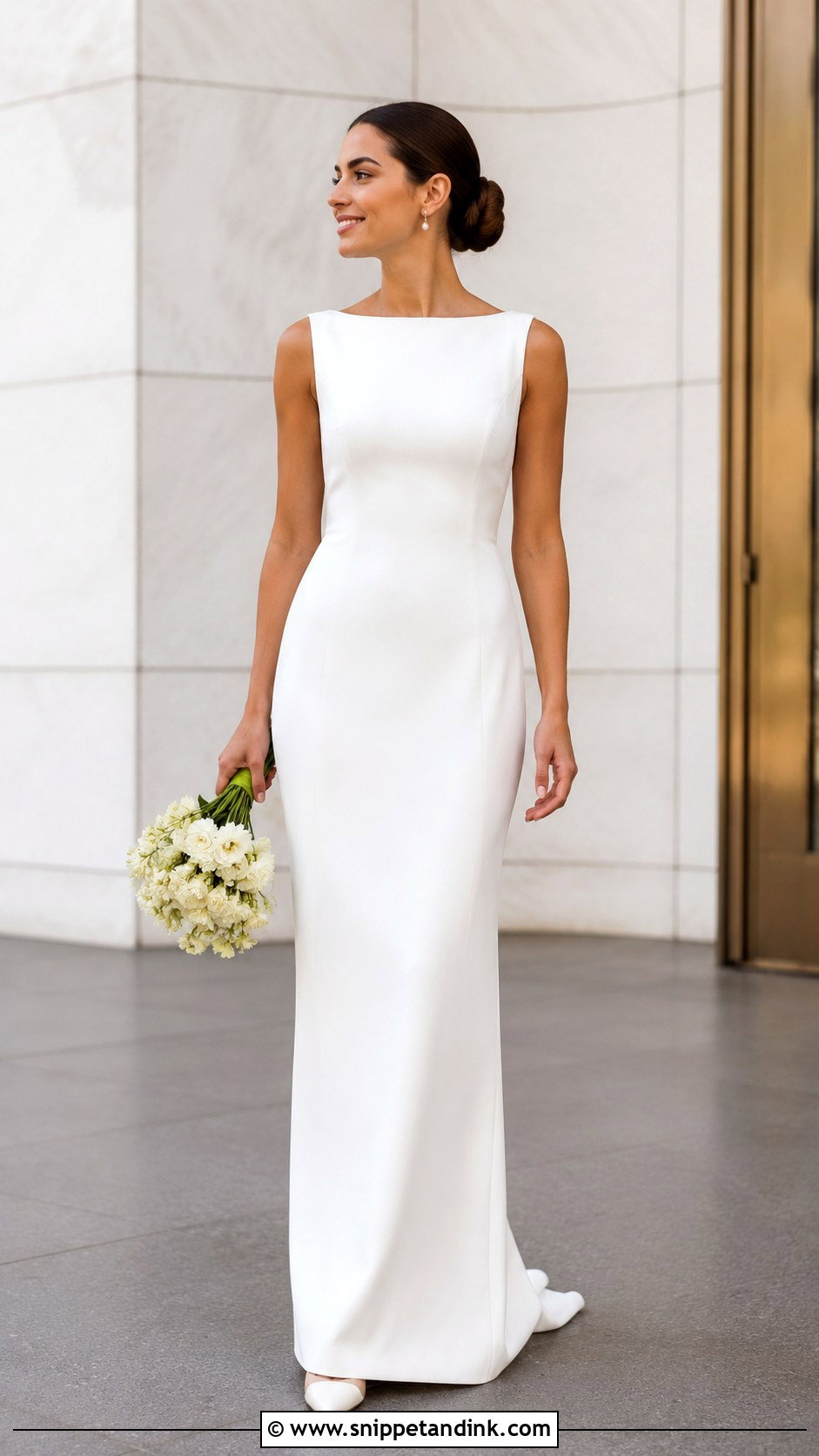
A crepe column wedding dress relies on tailoring the way a good suit does. Crepe is matte and forgiving of small creases, but a column has nowhere to hide a loose waist or a tight hip, so I spend most fittings on those two seams. A bateau or square neckline keeps the line long. Style it with pointed pumps, a small bouquet and a sculptural bun. Galleries, courthouses and evening venues suit its sharpness.
3. A Line Wedding Dress
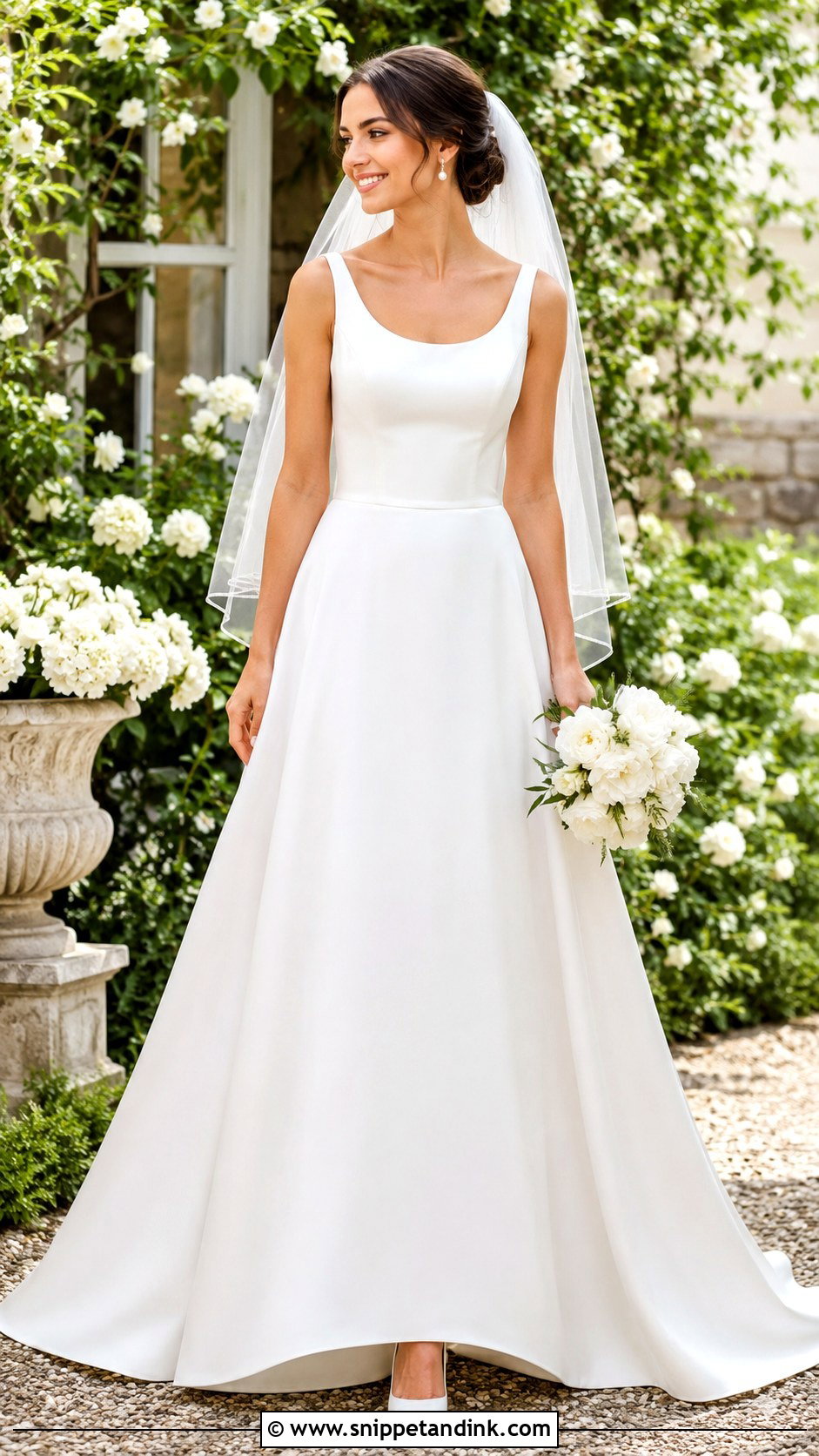
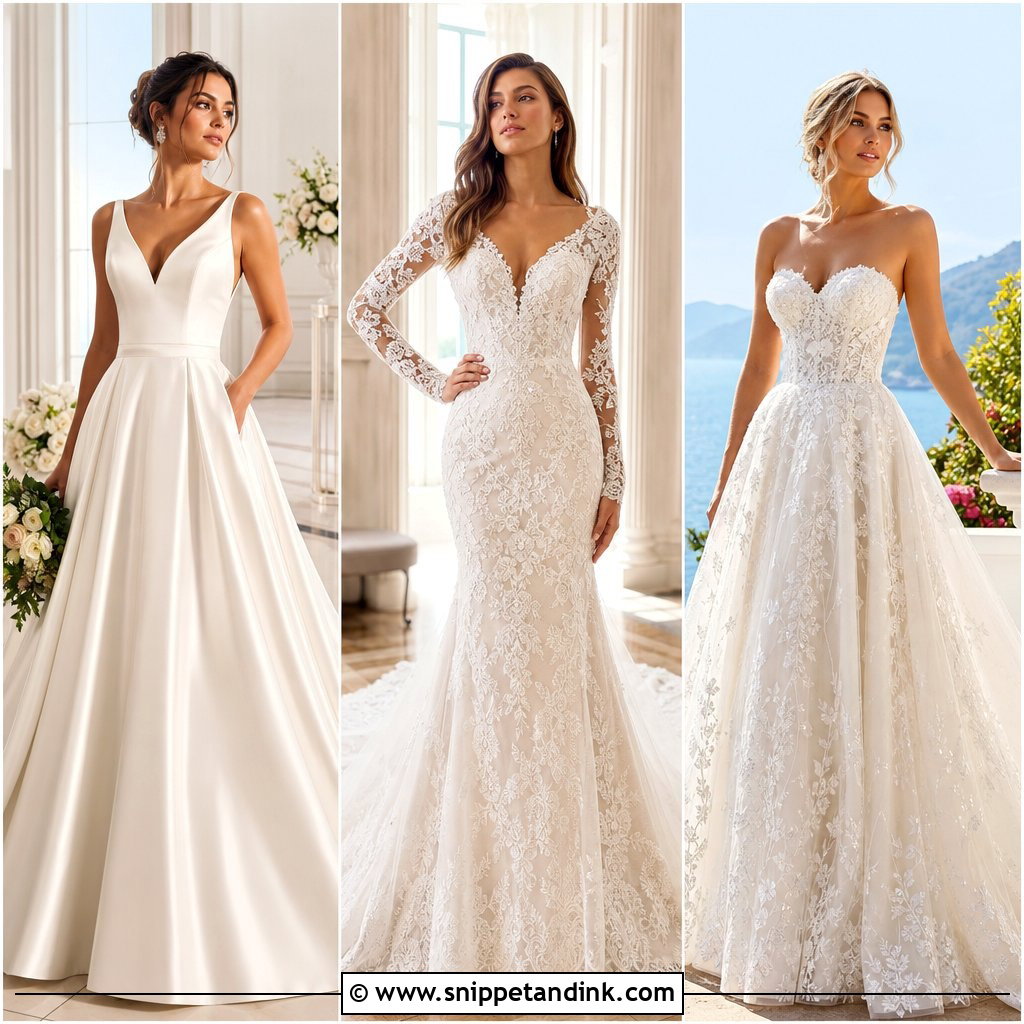
Most brides try an A-line first, and many end there, because the fitted bodice and gradual skirt flatter a wide range of figures. For a pared-back version, choose satin, mikado, crepe or a soft organza rather than sparkle. My one caution: very light organza A-lines can look flat in a big outdoor space, so if the venue is large, a fabric with some body gives the skirt presence. A scoop neckline, thin veil and pearl earrings keep it fresh for gardens, estates and hotels.
4. Square Neck Wedding Dress
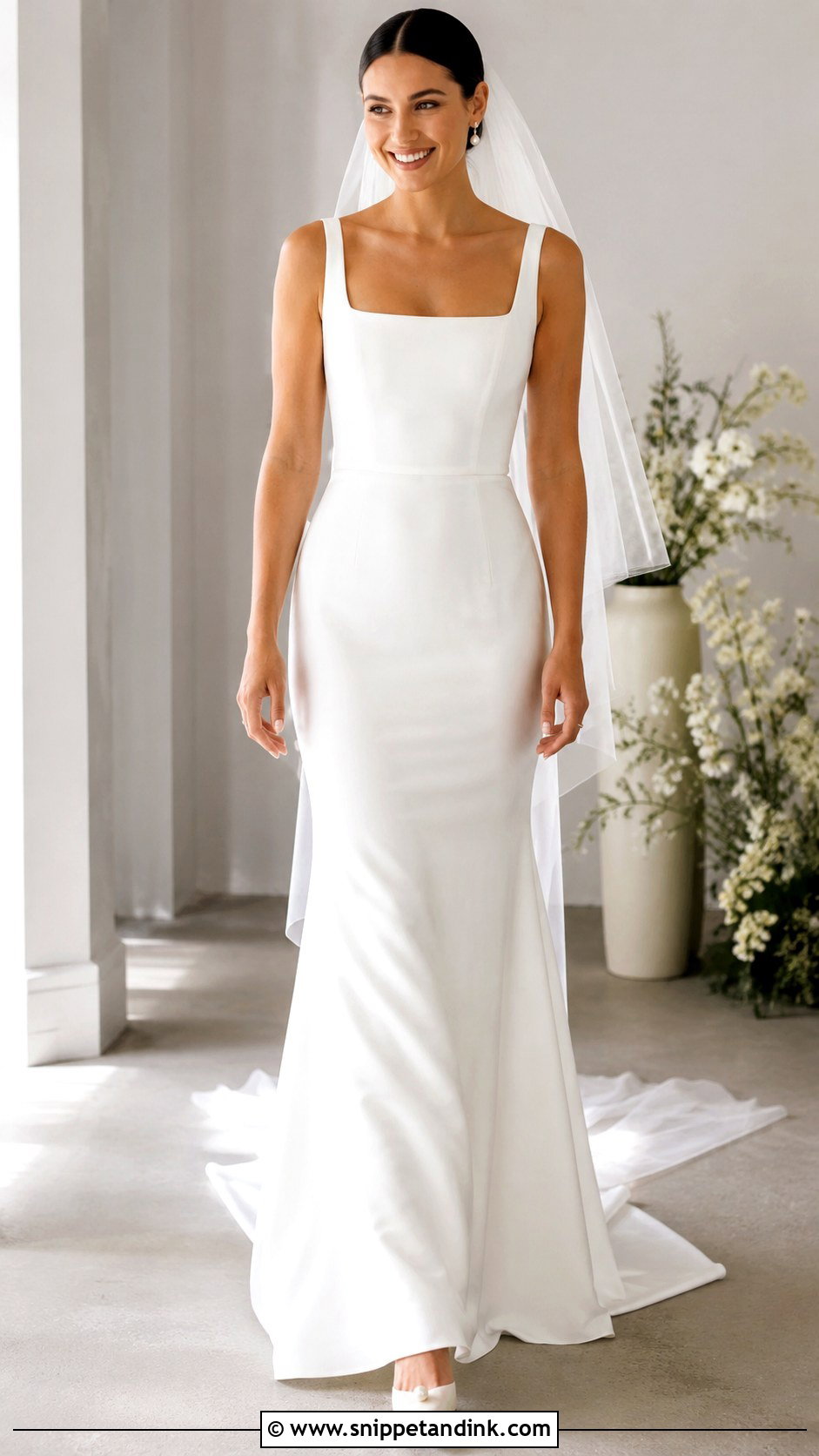
Square necklines frame the collarbone, and the width of the neckline decides whether that works. I set the corners in line with the inner edge of the shoulder; wider and straps start sliding. It suits a fitted crepe gown, a satin A-line or a softly structured ball gown. Wide straps give real support for a fuller bust, thin ones look more delicate. Pair it with a smooth updo and a veil with a clean cut edge, since heavy lace trim clashes with the straight line.
5. Strapless Satin Wedding Dress
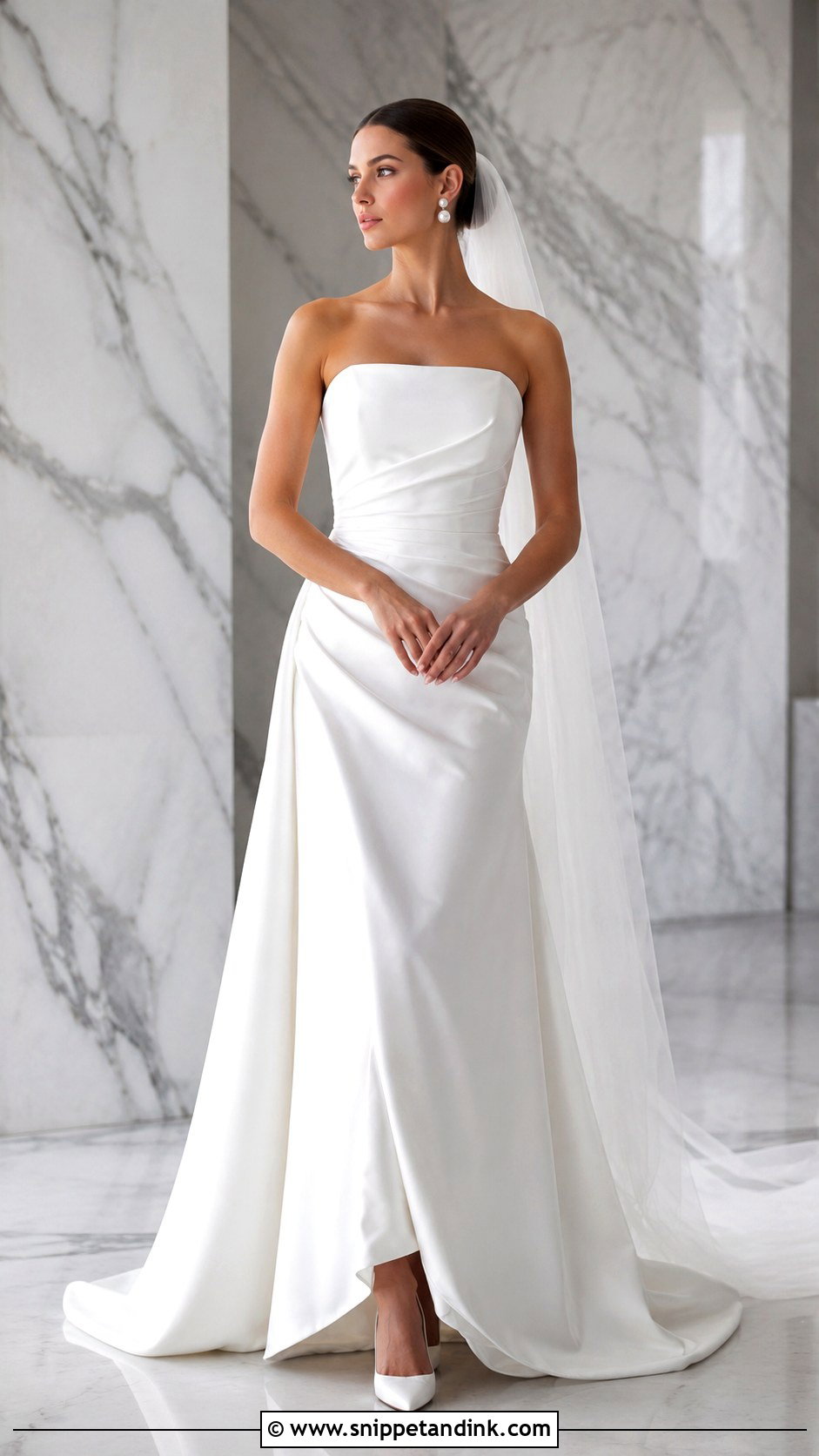
Strapless satin only looks classy if it stays put. The bodice needs internal boning and a waist stay, and the fit should be checked with your arms raised, the way you’ll hug people. Choose straight-across for a modern look or a soft sweetheart for something gentler, and skip heavy beading so the tailoring shows. Statement pearl earrings can stand in for a necklace. Pointed heels and a fingertip veil finish it for hotels and formal ceremonies.
6. Long Sleeve Crepe Wedding Dress
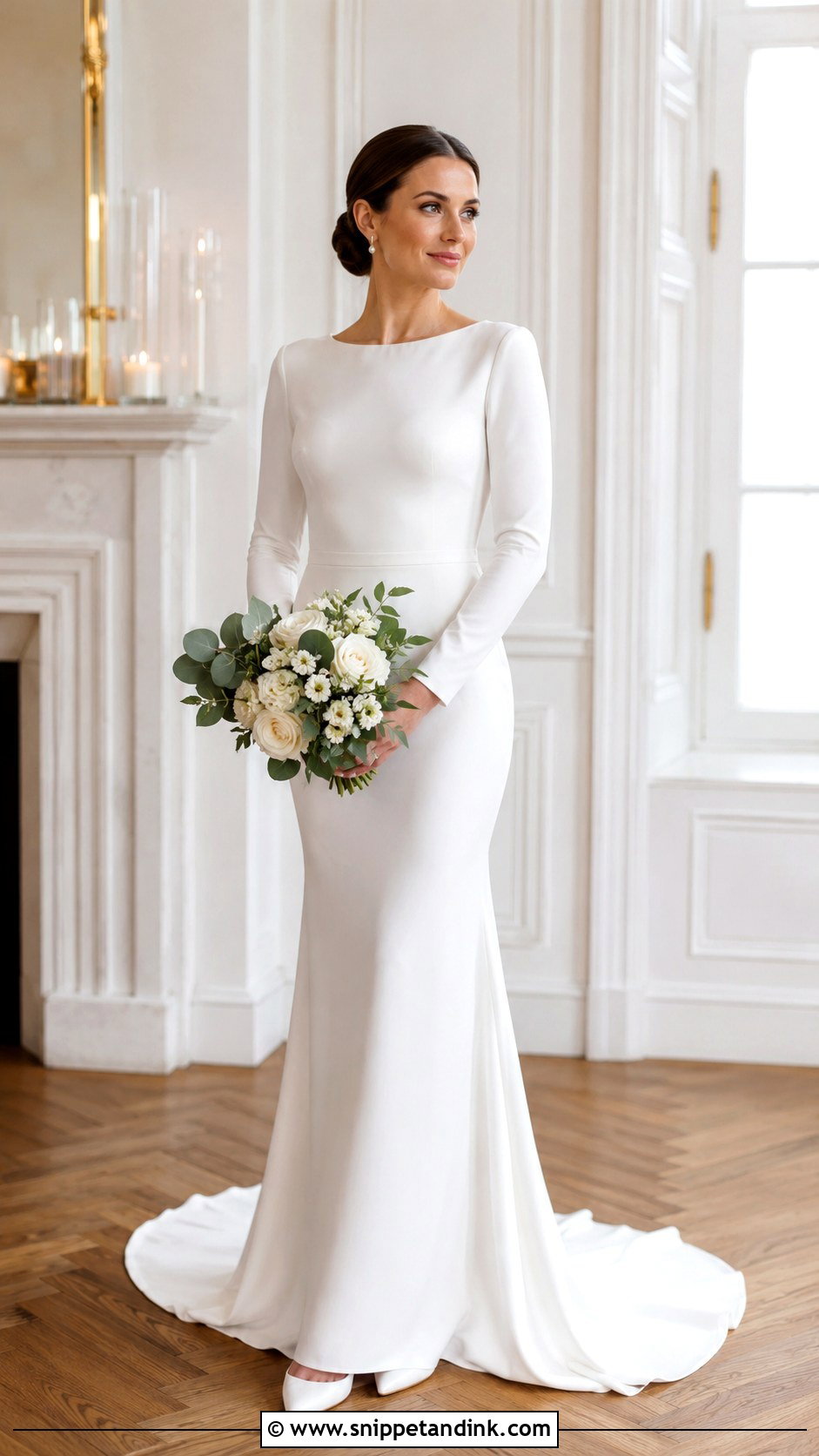
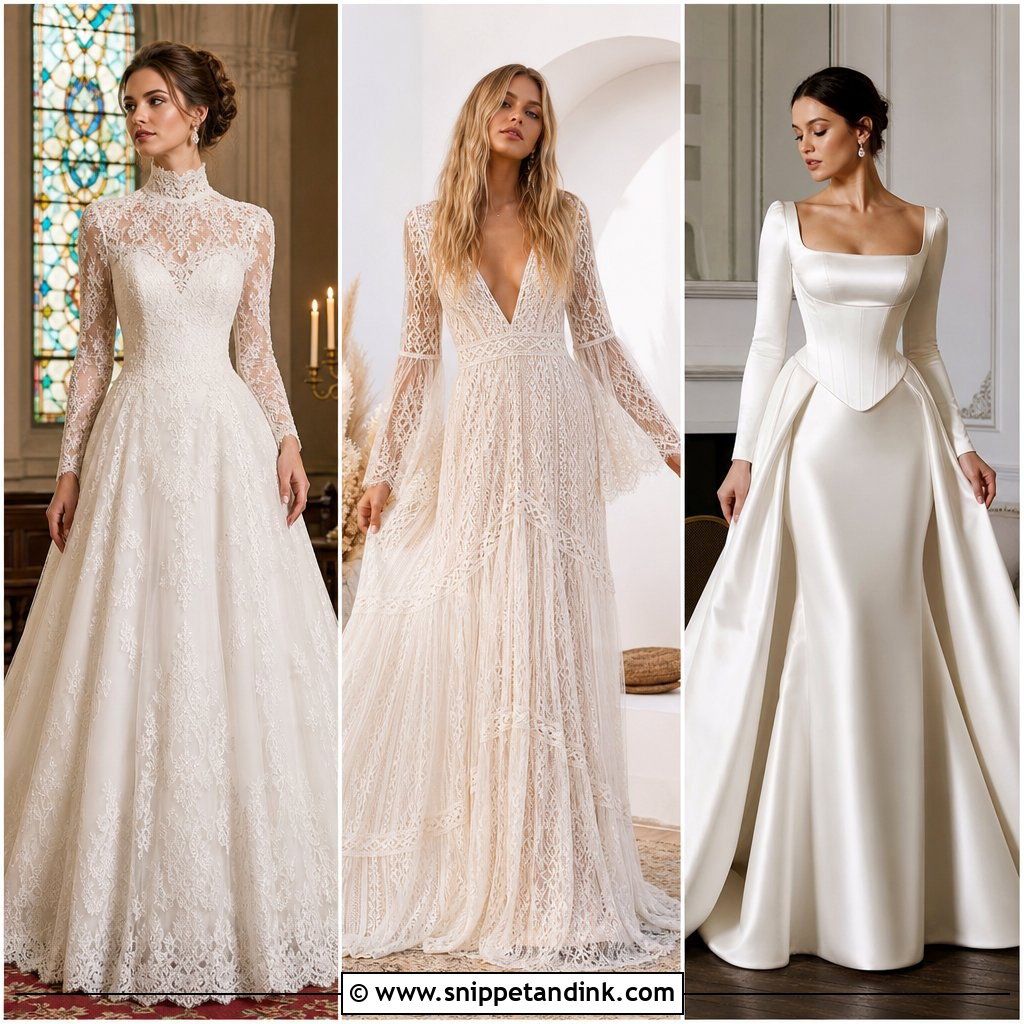
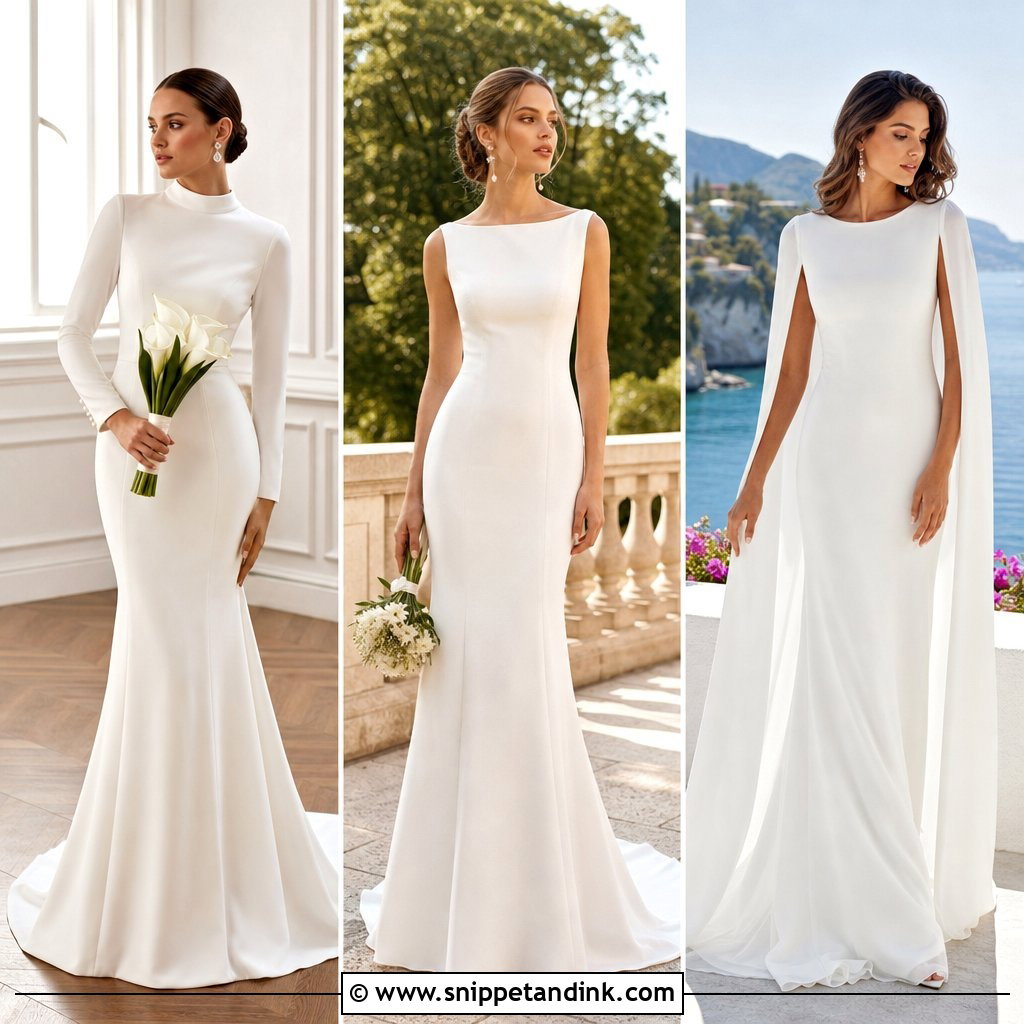
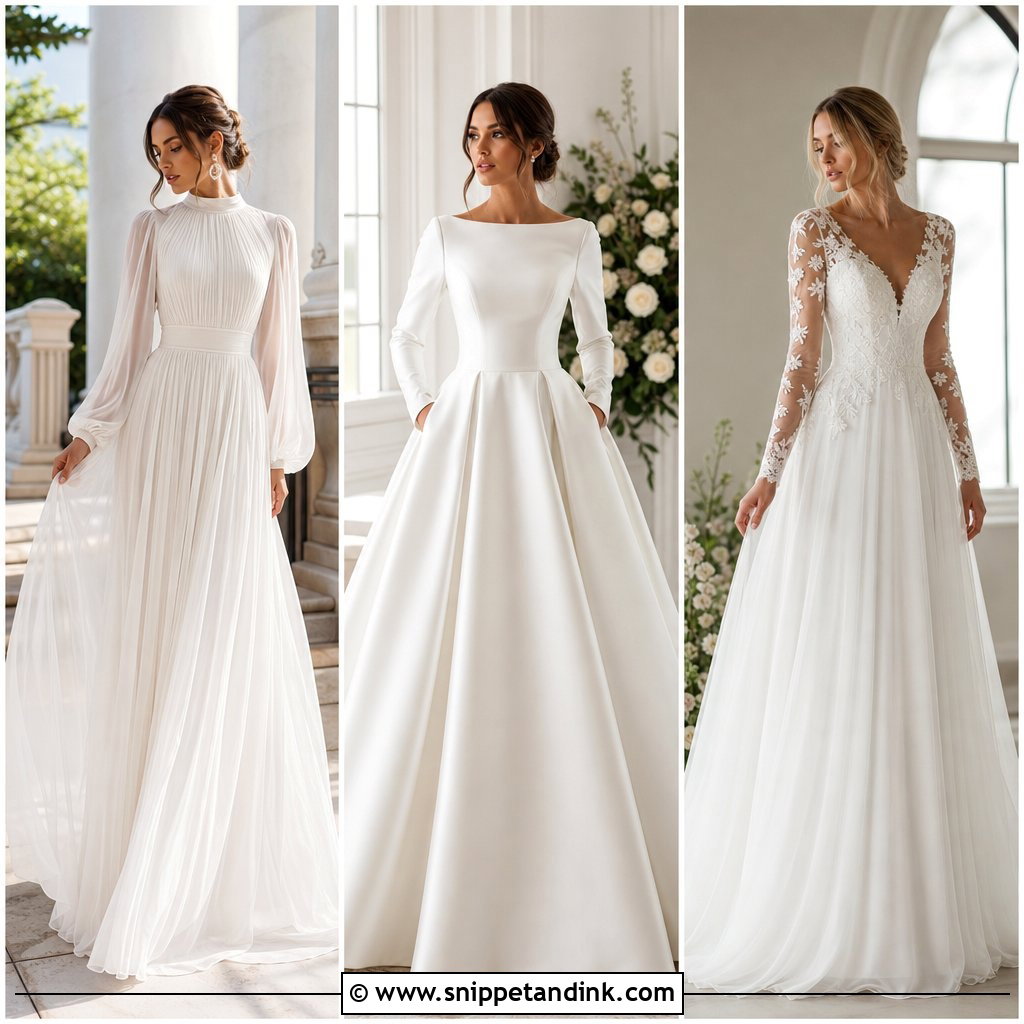
Sleeves change everything about how a crepe dress moves. Fitted sleeves look streamlined, but if they’re cut too close, you won’t be able to lift your arms for a first dance, so I always ask brides to reach forward and up at fittings. Slightly relaxed sleeves give more ease. A high neck feels formal, a bateau quieter, a deep V more modern. Long sleeves come into their own in autumn, winter and early spring, in city halls and historic venues.
7. High Neck Wedding Dress
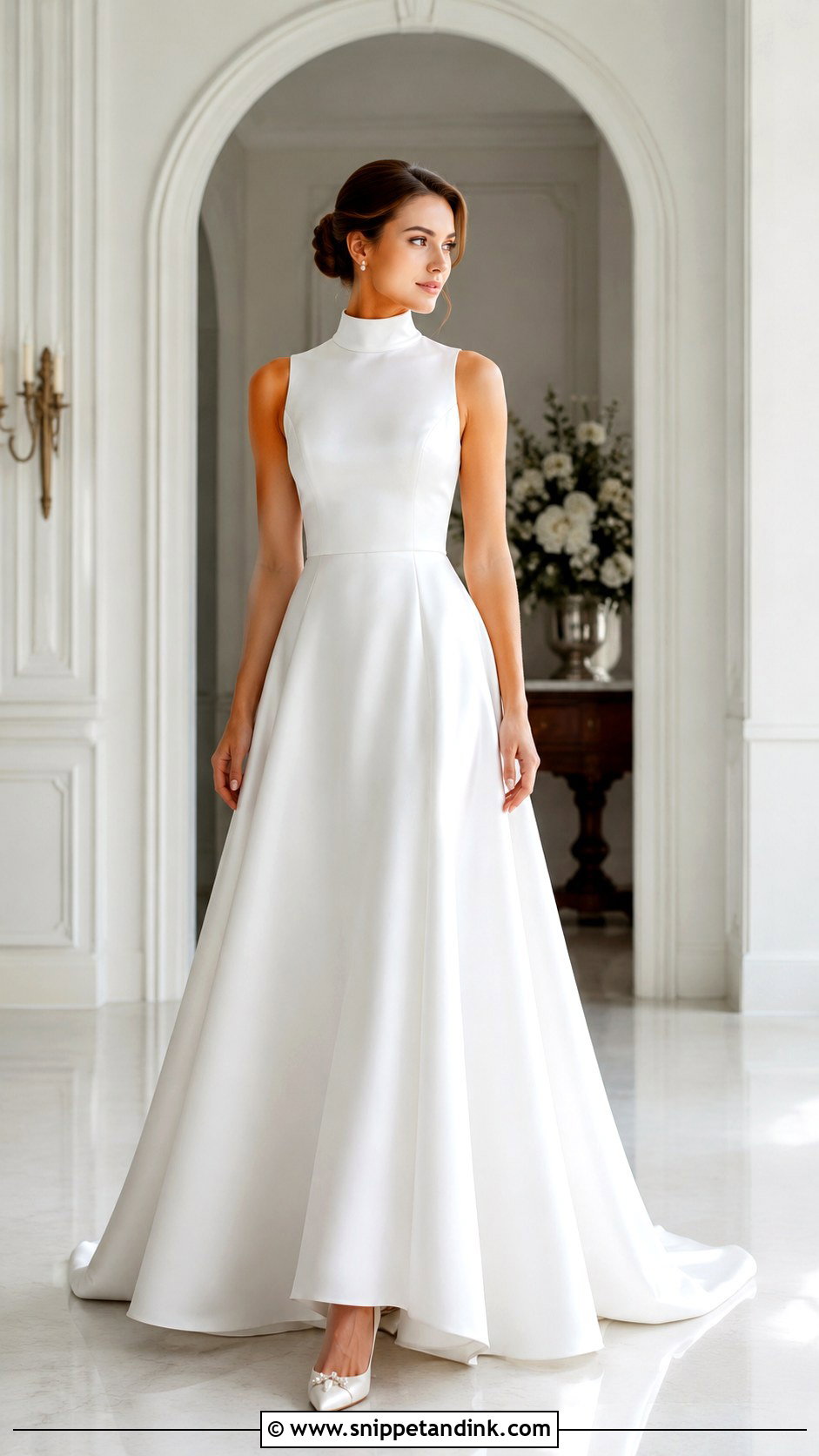
High necklines are regal by themselves, so I keep jewelry to small earrings. In smooth crepe, satin or soft chiffon, a column version reads modern and an A-line softer. The fit at the throat matters: a collar that’s snug in the morning can feel tight by evening after a warm day, so leave a finger’s width. This is my usual suggestion for a modest bride who still wants a fashion-forward line, at museums, estates and formal ceremonies.
8. Off The Shoulder Wedding Dress
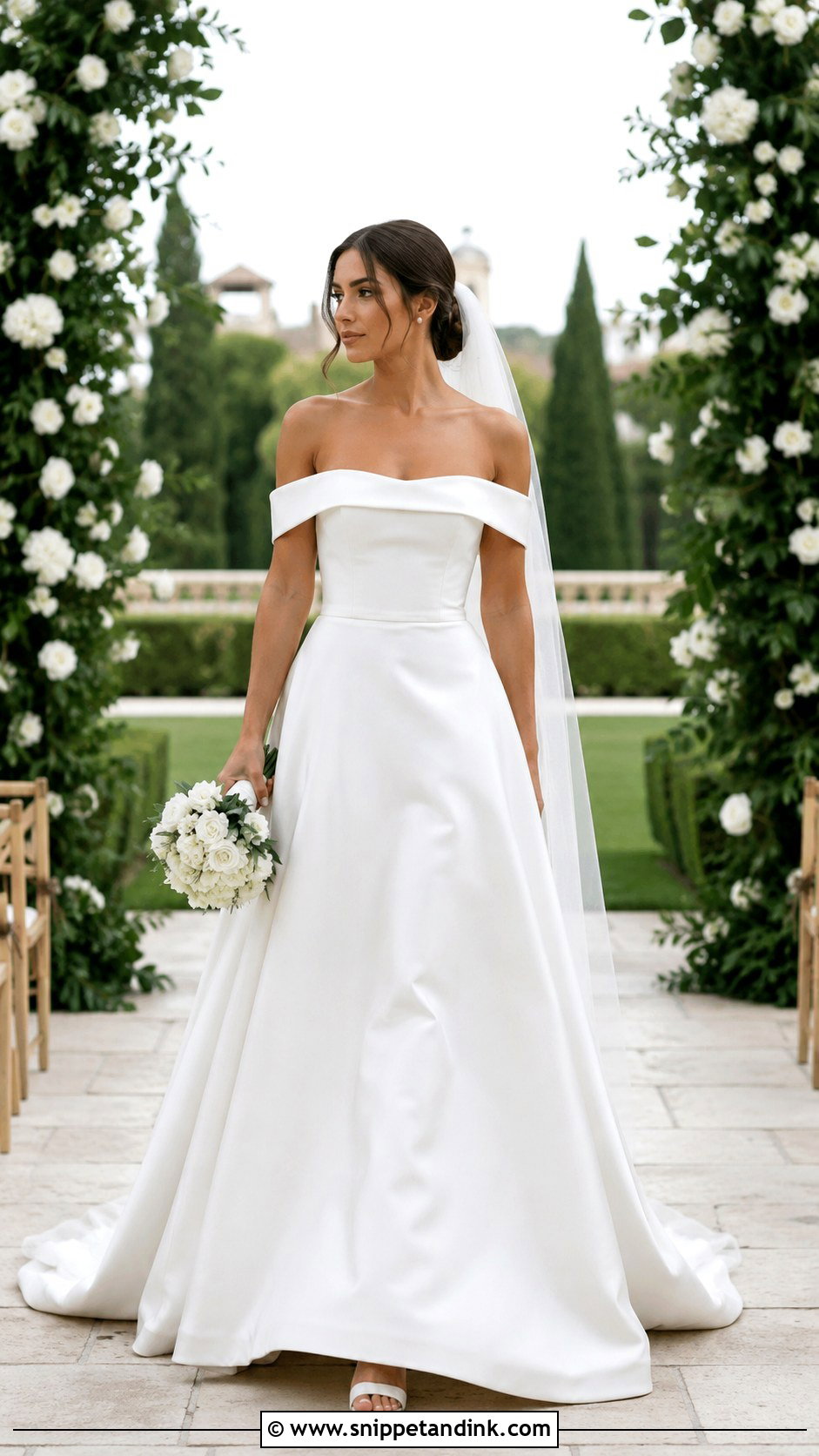
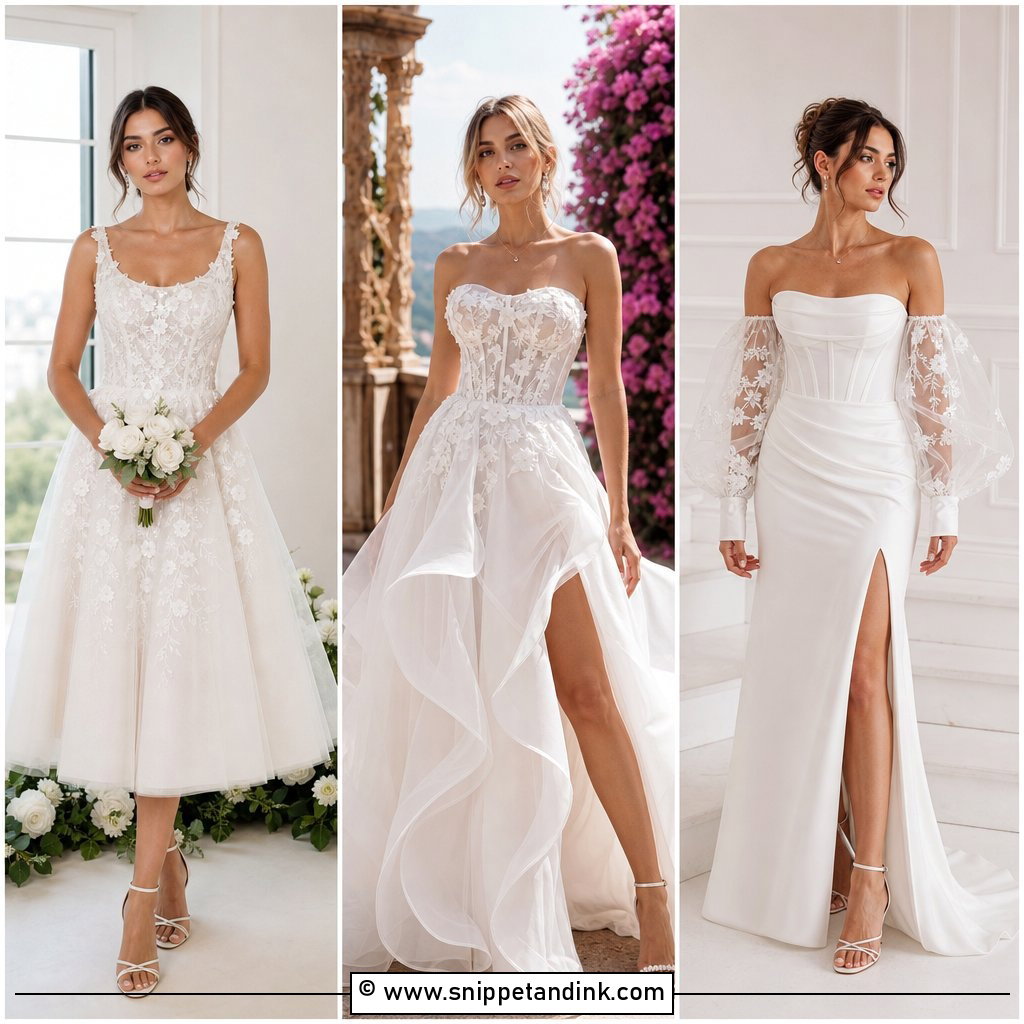
Off the shoulder bands restrict your arms more than people expect. When I fit one, I ask the bride to raise her arms as if holding a bouquet up, because if the band rides up or digs in, it will do the same all day. A clean crepe version looks modern; satin A-line feels more classic. Keep extra details off it and wear a neat low bun so the neckline stays visible. Choose comfortable heels for garden venues and ballrooms.
9. V Neck Wedding Dress
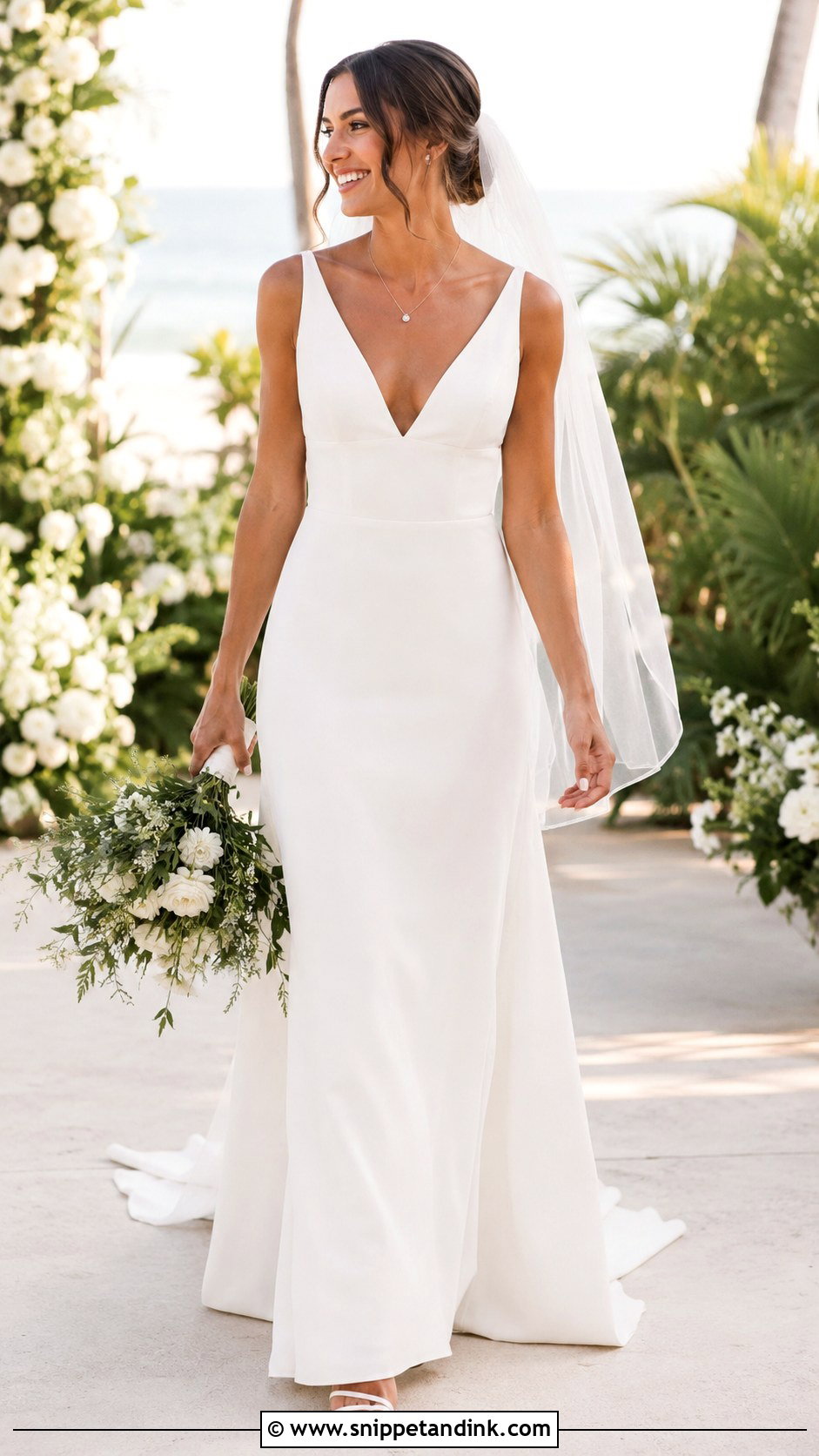
How deep should a V go? Deeper than you think in photos, shallower than you think when you’re dancing. A modest V lengthens the neck; a plunging one needs mesh or fashion tape to stay in place when you bend. Clean seams and supportive straps make the difference in crepe, which looks modern, or satin, which shines more. One pendant or pearl earrings is enough. Soft waves and strappy heels suit beaches and destination ceremonies.
10. Minimalist Ball Gown Wedding Dress
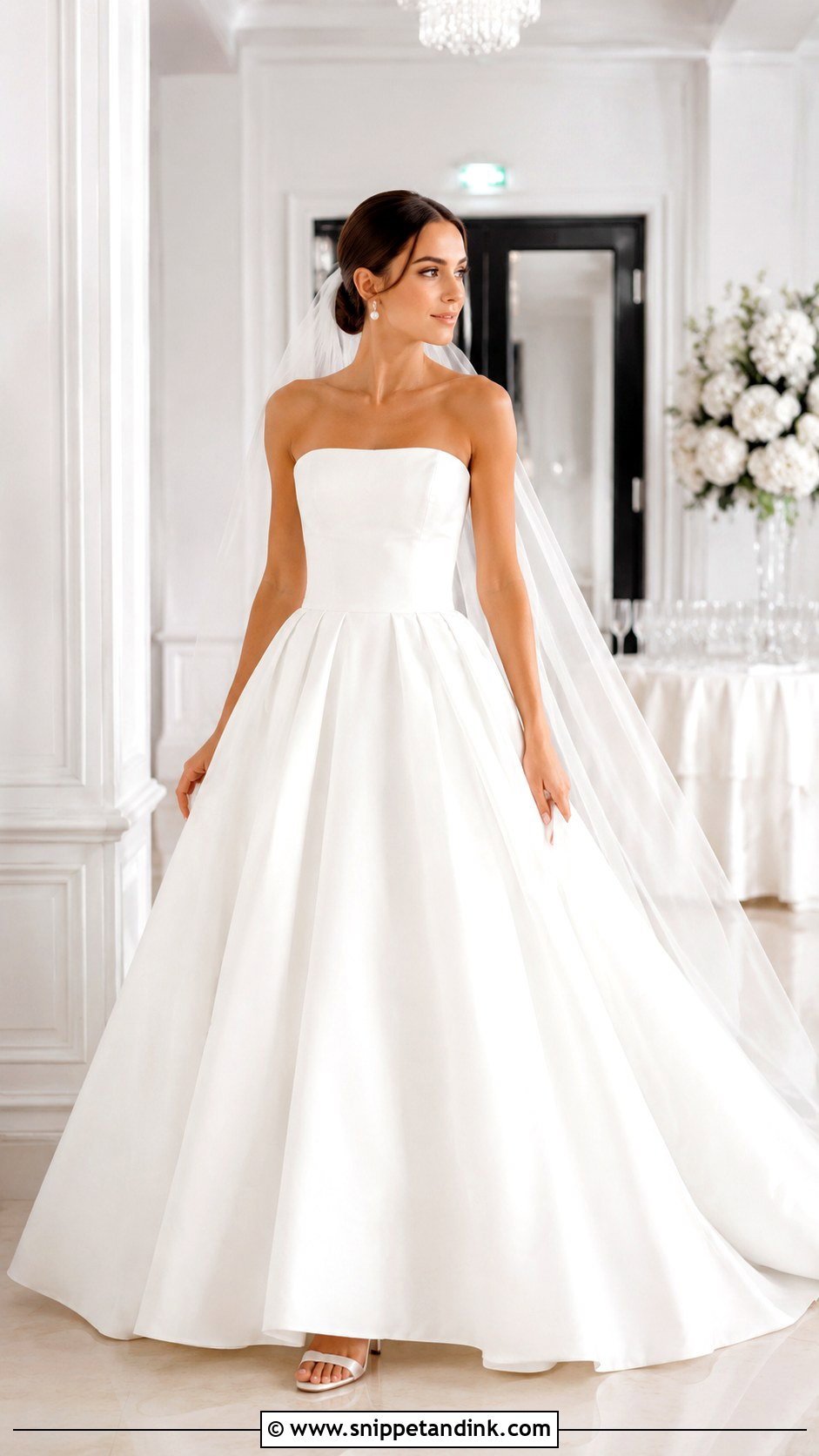
A minimalist ball gown wedding dress gets its drama from volume, so the skirt fabric matters more than anything else. Mikado and structured organza hold that shape all night; a soft satin skirt slowly collapses unless it has layers of crinoline underneath. Check the weight, too, since a full gown can be heavy by the end of the evening. A strapless, square or bateau neckline suits the silhouette. It belongs in large venues and formal receptions where the skirt has room.
11. Tea Length Wedding Dress
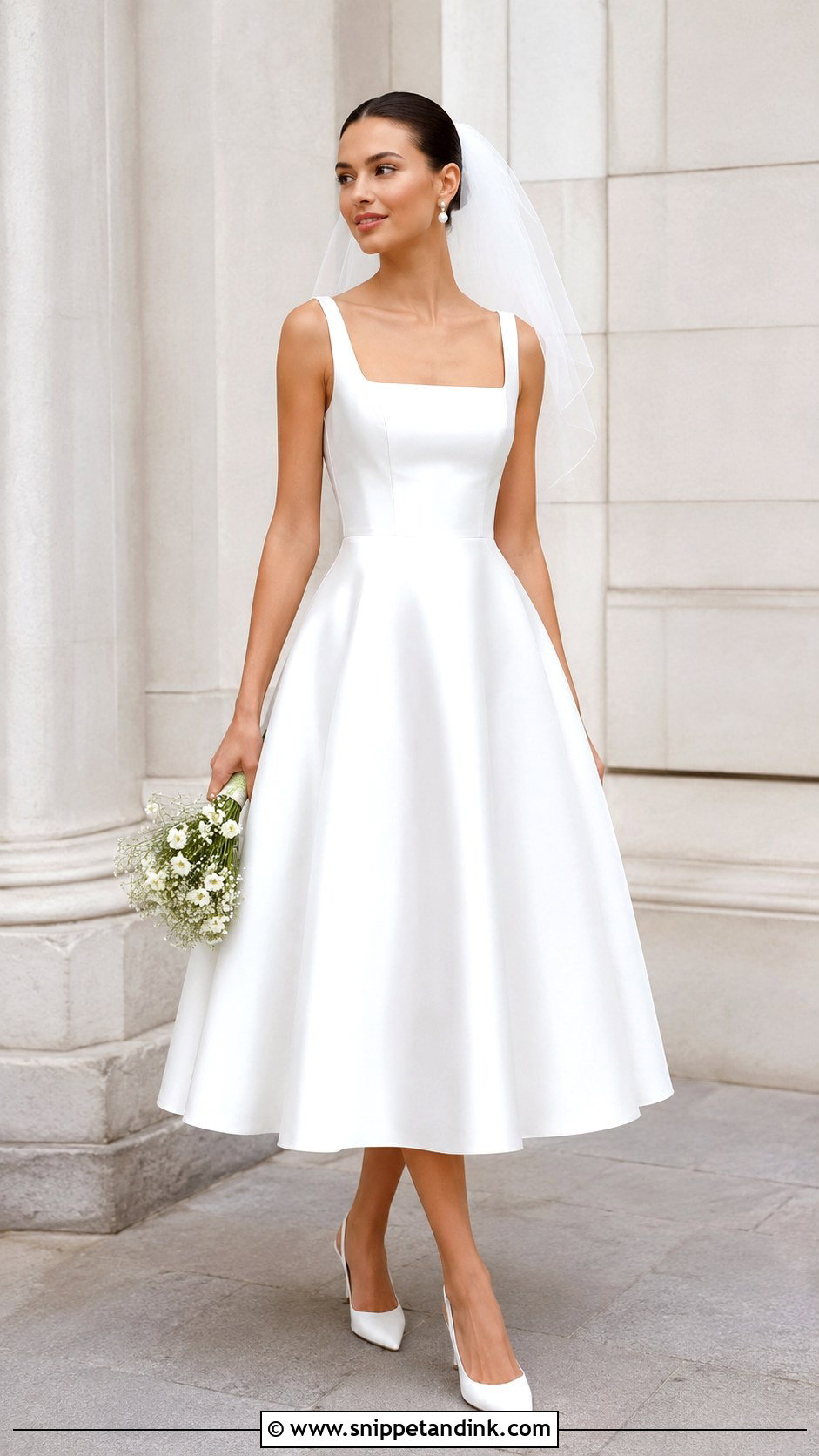
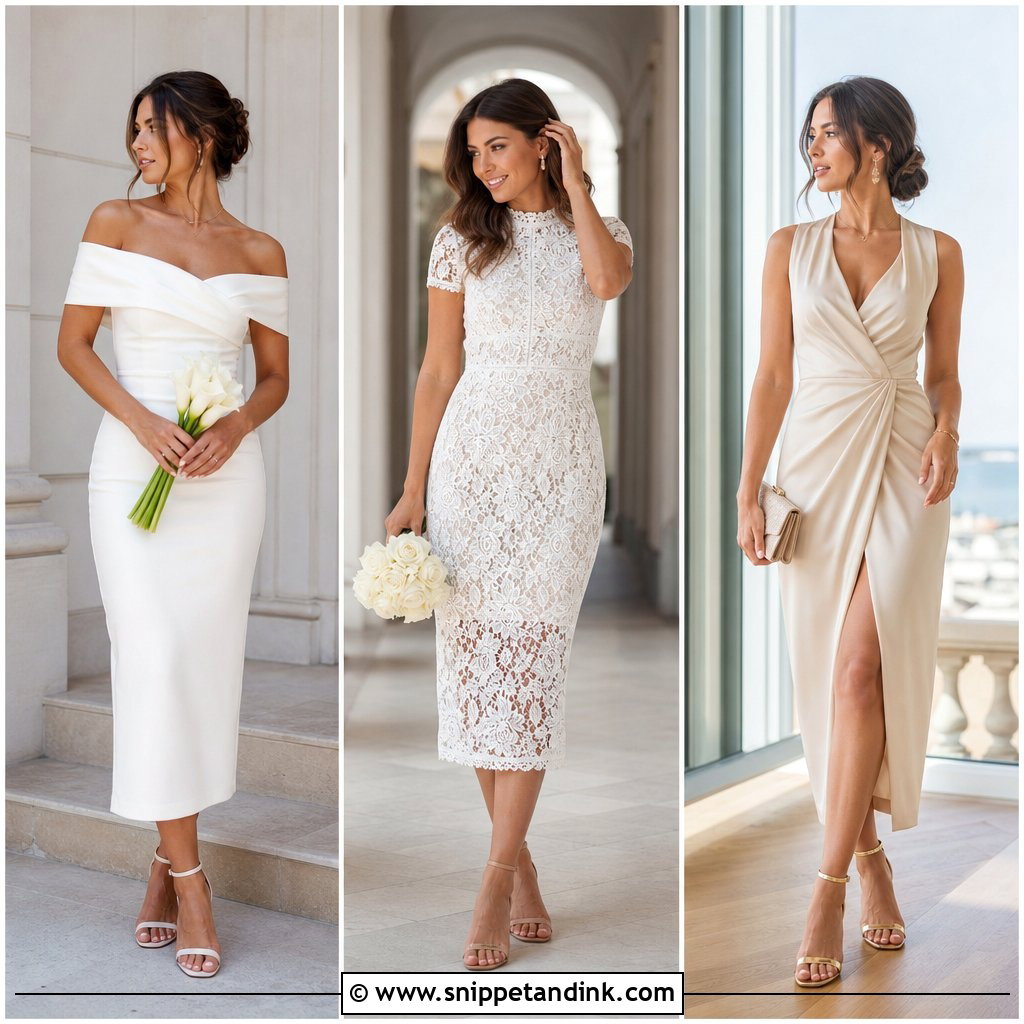
Tea length dresses show your shoes, so the shoes become part of the outfit. The hem falls between the knee and ankle, and I set it with the actual pair on so it hits the narrowest part of the calf. Satin, crisp taffeta and soft organza all hold this length well. A short veil and a small bouquet suit courthouse weddings, brunch receptions and vintage-inspired days. It feels joyful without tipping into casual.
12. Courthouse Wedding Dress
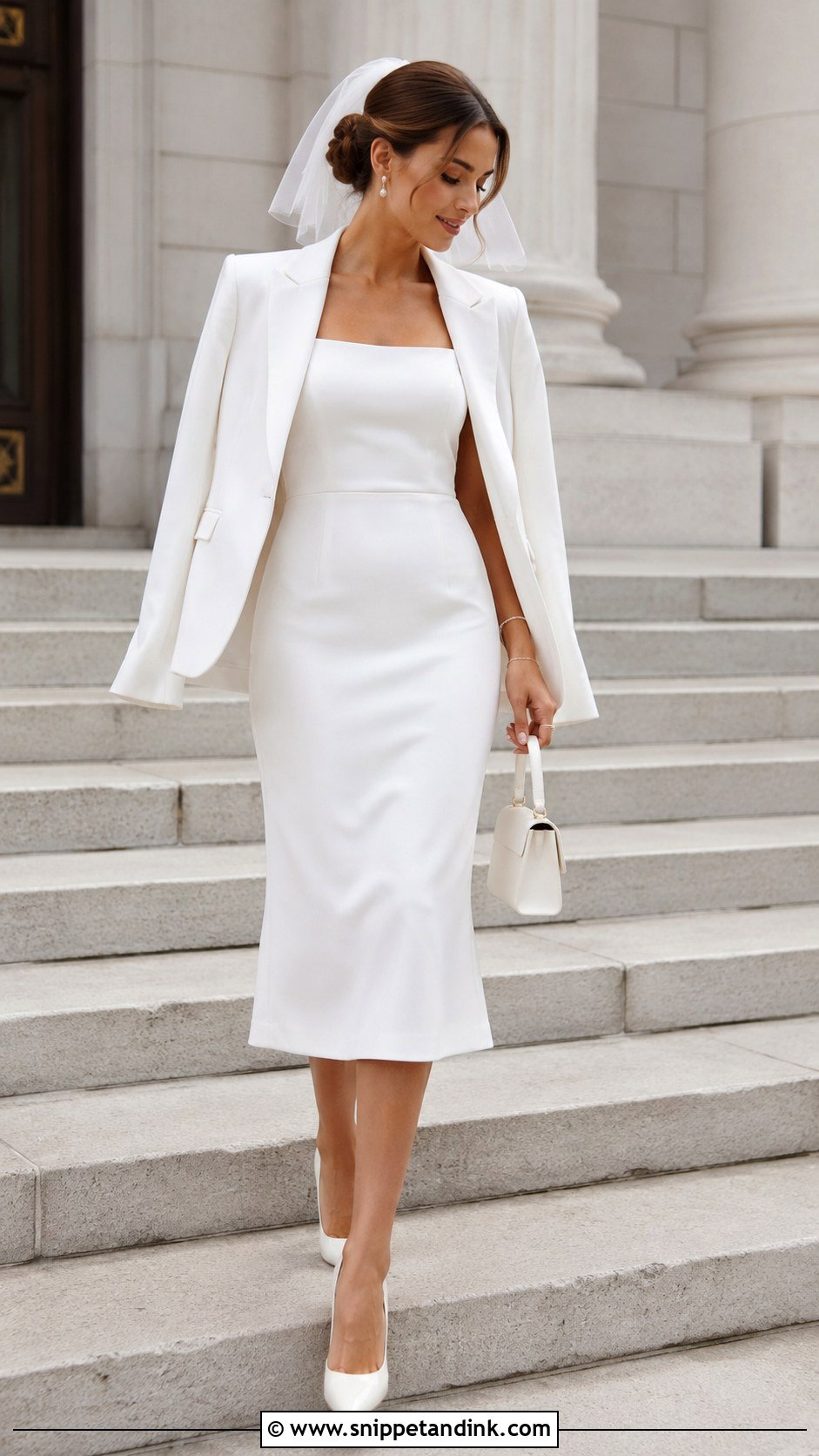
Wrinkles are the enemy at a courthouse, because you’ll be sitting in a car, a waiting room and possibly a restaurant before most photos are taken. That’s why I lean towards crepe sheaths, structured midis or a tailored mini for a courthouse wedding dress, and away from silk slips that crease on the first sit. A structured mini bag, pearl earrings and a short veil or hair bow add the bridal note. A blazer looks sharp on a cool day and comes off for lunch afterwards.
13. Beach Wedding Dress
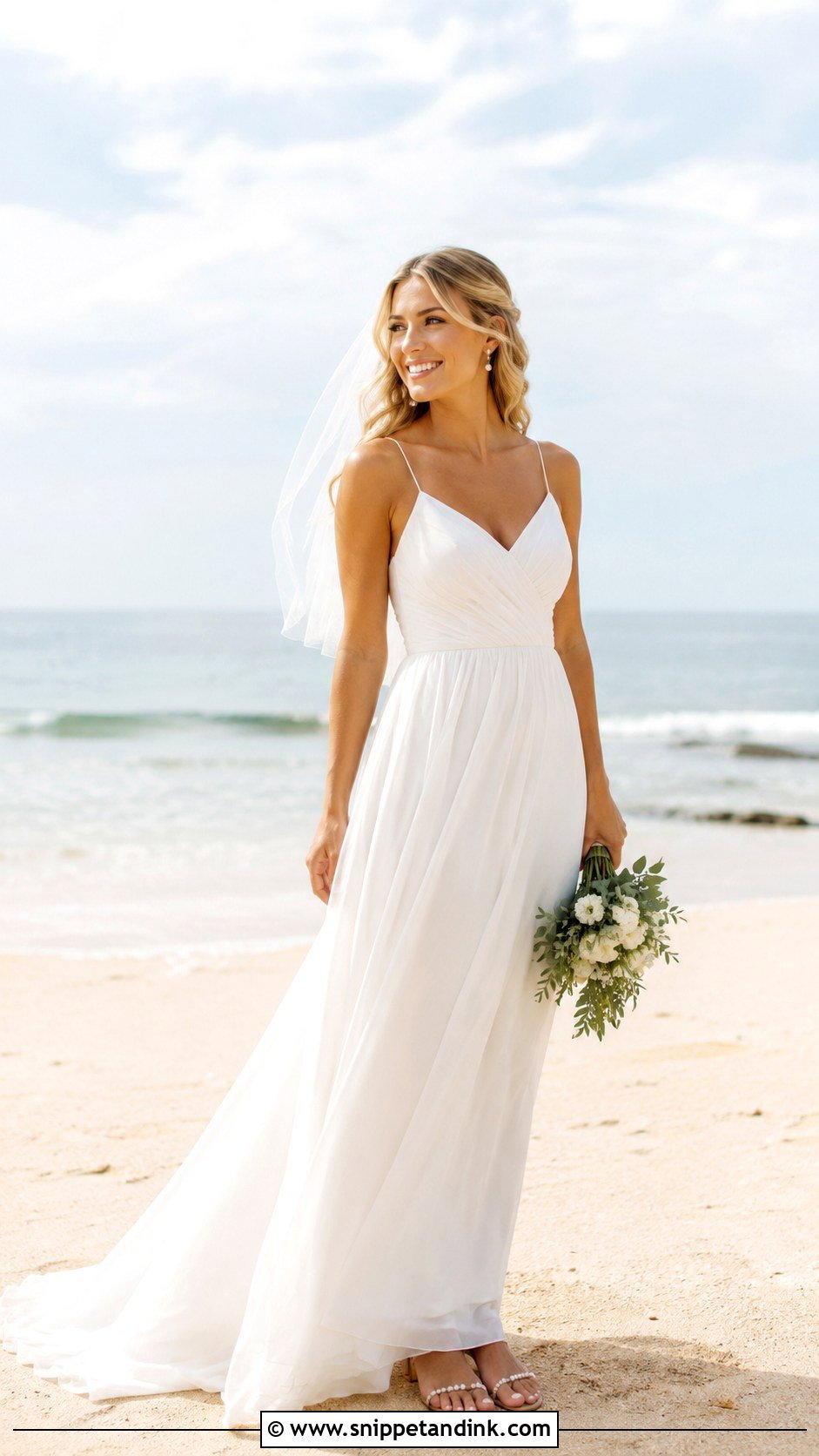
Sand ruins trains and wind ruins tulle, so a beach wedding dress works best in fabrics that move but don’t fly: chiffon, silk, lightweight crepe. A slip or relaxed sheath beats anything with length dragging behind. Ask for a hem that clears the ground when barefoot or in flat sandals; I hem these shorter than a ballroom gown for that reason. A short veil or a hairpiece is far easier in a sea breeze. Loose waves suit the setting.
14. Garden Wedding Dress
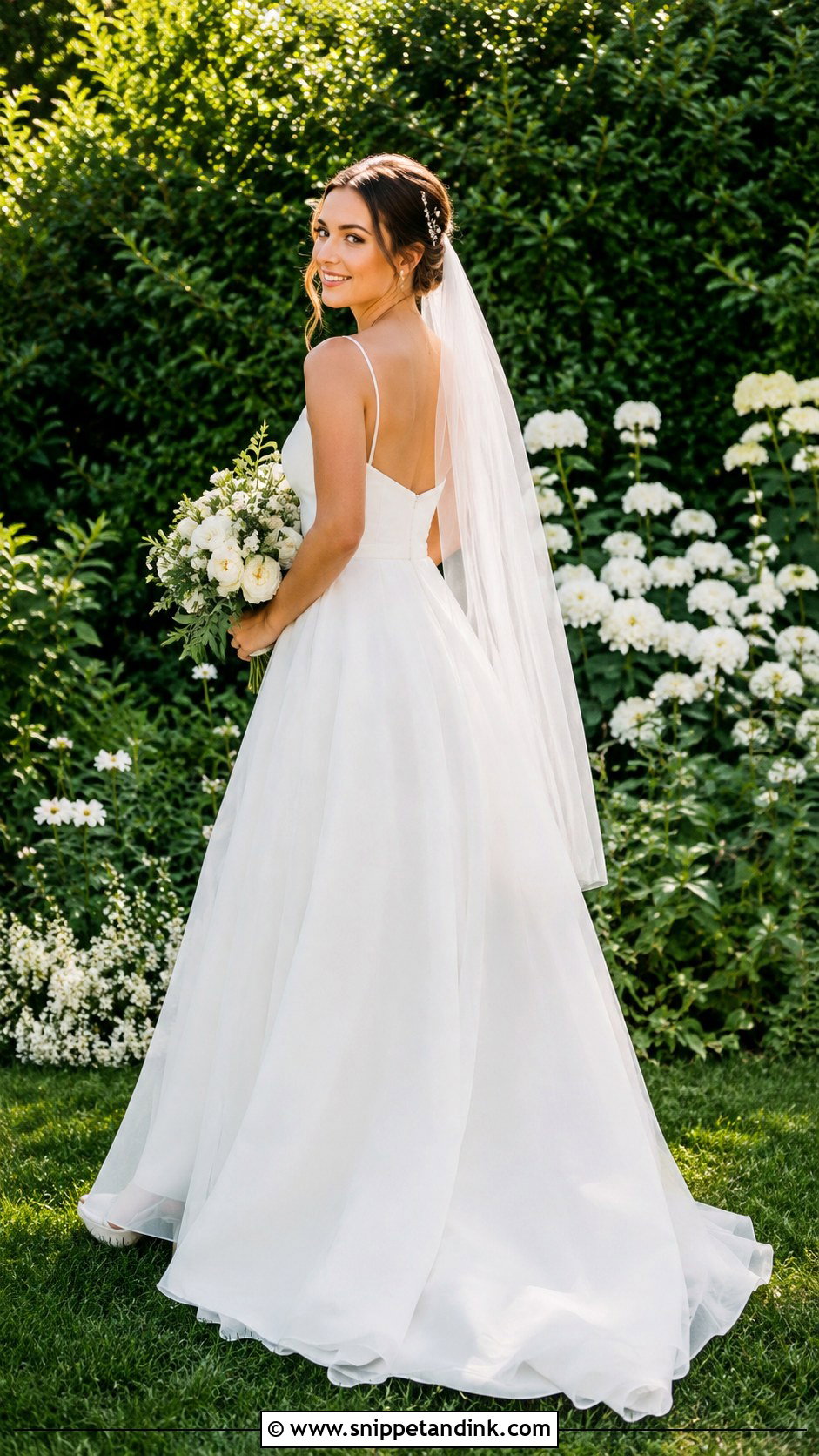
Grass is what I think about first for an outdoor garden ceremony. A long train picks up damp and green stains, and stilettos sink, so block heels or flats and a sweep train are practical choices. For the dress itself, a plain-bodice A-line in tulle, organza, chiffon or satin feels right without floral overload. A sheer sleeve or light appliqué adds texture if you want it. A low bun with pearl pins finishes it for spring, summer or early autumn.


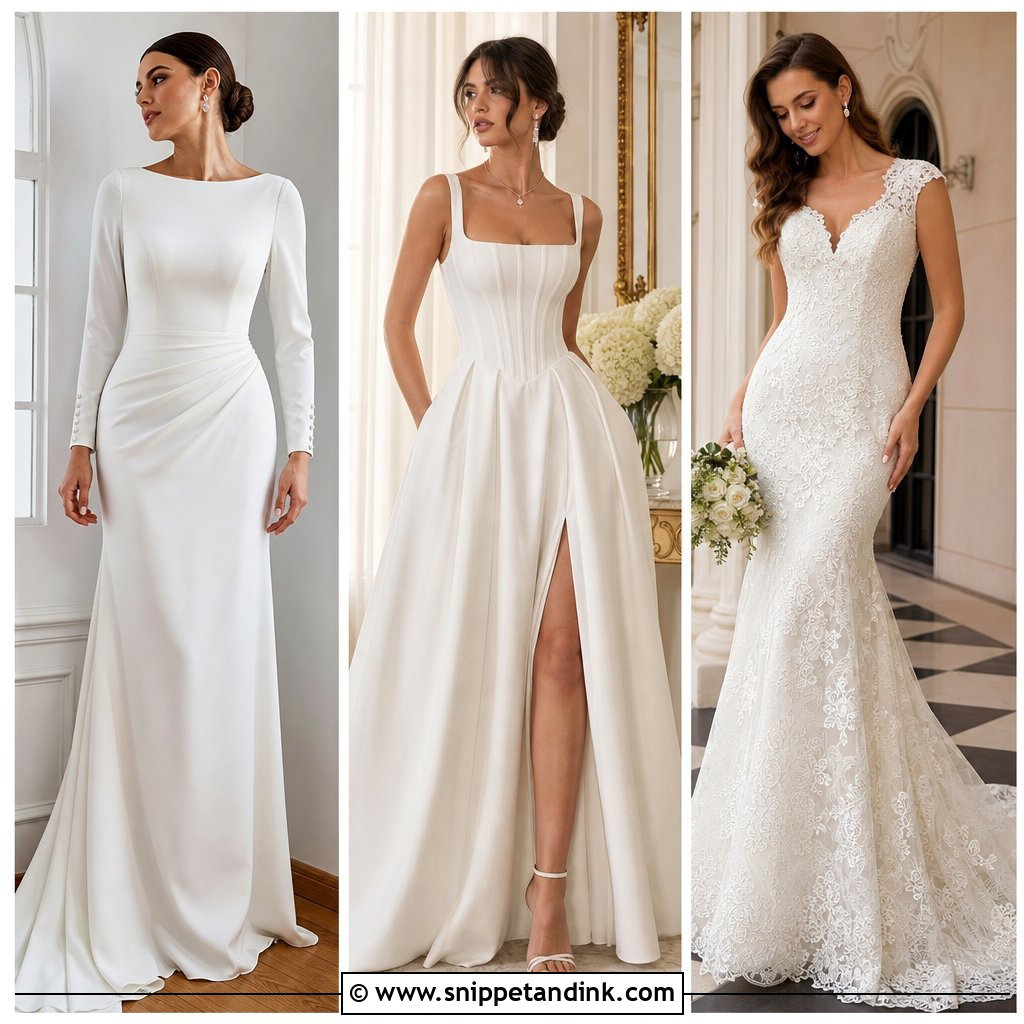
15. Lace Sleeve Wedding Dress
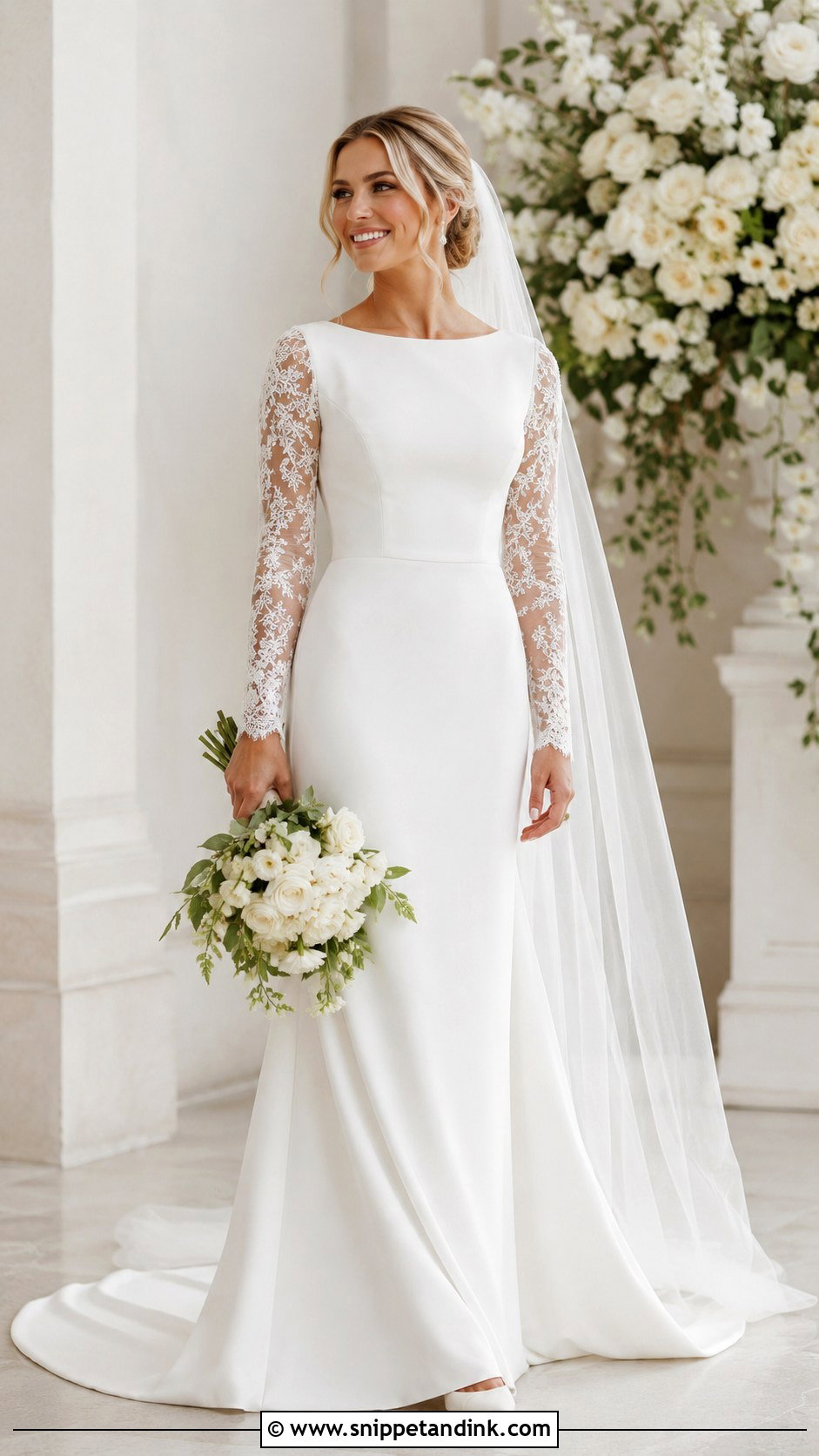
Lace sleeves give a plain gown one soft detail, and the key is restraint. I choose delicate lace with a light pattern so the sleeve reads as texture, not a second dress. The body stays clean in crepe, satin or chiffon. Long sheer sleeves suit cooler seasons; short lace sleeves feel lighter in summer. Small pearl earrings and a plain veil keep it simple. It’s a good route to coverage without heaviness.
16. Pearl Detail Wedding Dress
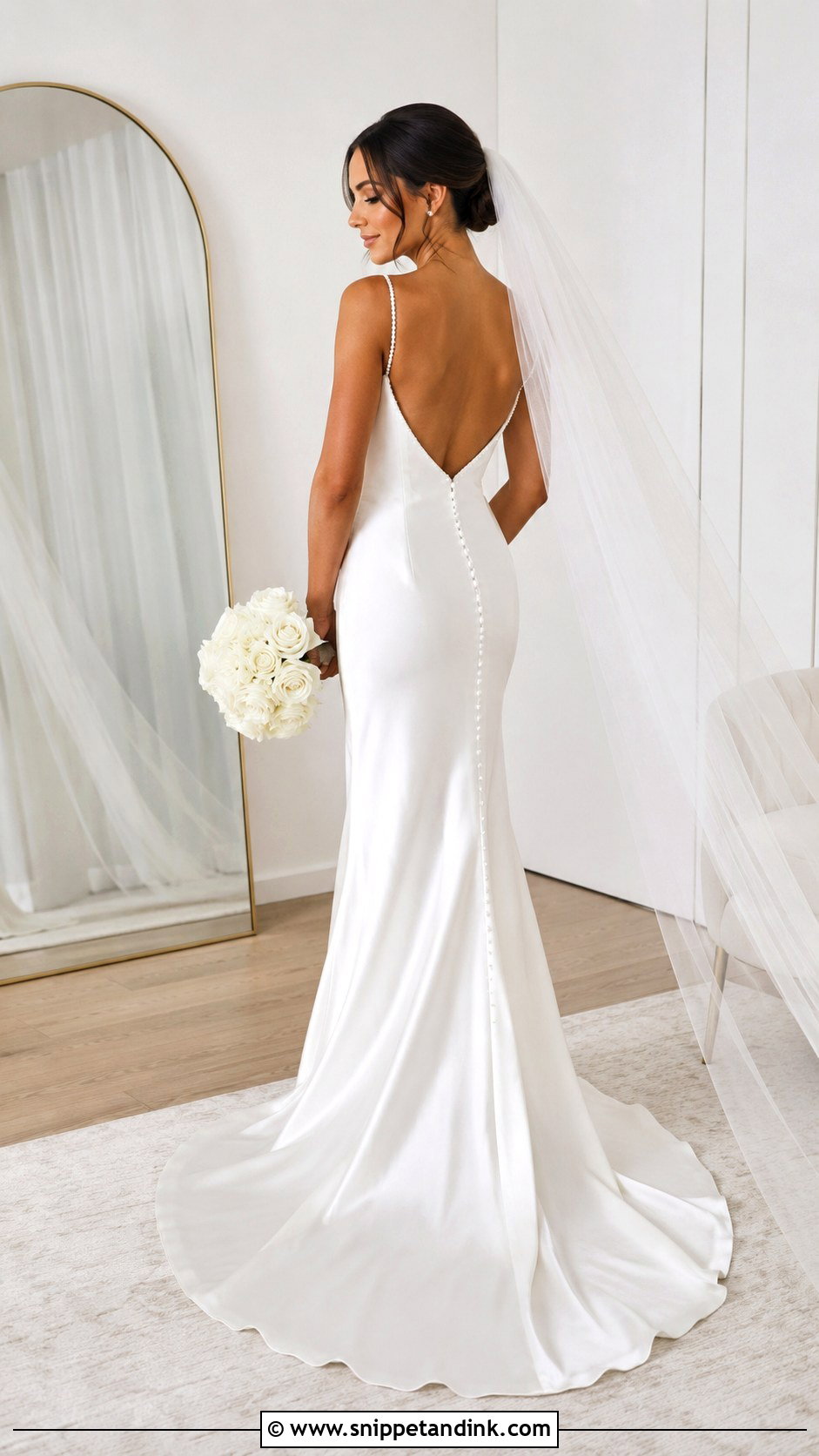
Pearls on a gown add a soft glow rather than sparkle, and placement is where I’m careful. Pearl buttons down a crepe back, pearl straps on a satin slip, a light scatter across tulle: any one of those is enough. Sewn pearls are also heavier than they look, so a fully pearled bodice can drag fine fabric. Keep your own jewelry small so it doesn’t compete, with satin heels and a smooth veil.
17. Simple Tulle Wedding Dress
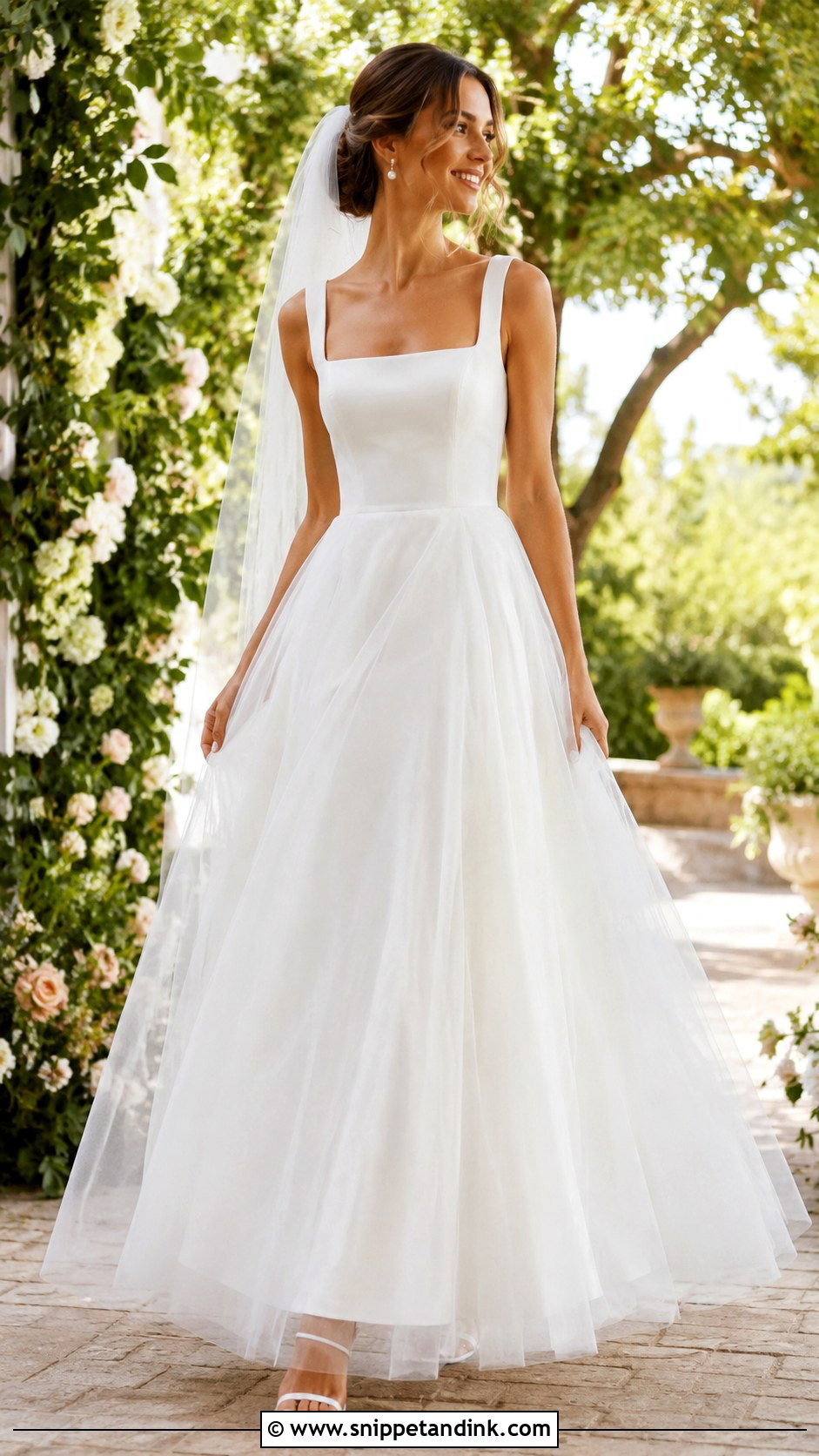
Fine, soft tulle moves; stiff tulle stands up and scratches. I always rub a swatch against the inside of the arm before recommending a tulle skirt, because some net is rough enough to irritate skin by evening. A clean bodice, whether square, strapless or thin-strapped, keeps it classy, and a plain veil blends into the skirt. Garden and estate weddings suit its softness when you don’t want too much volume.
18. Silk Wedding Dress
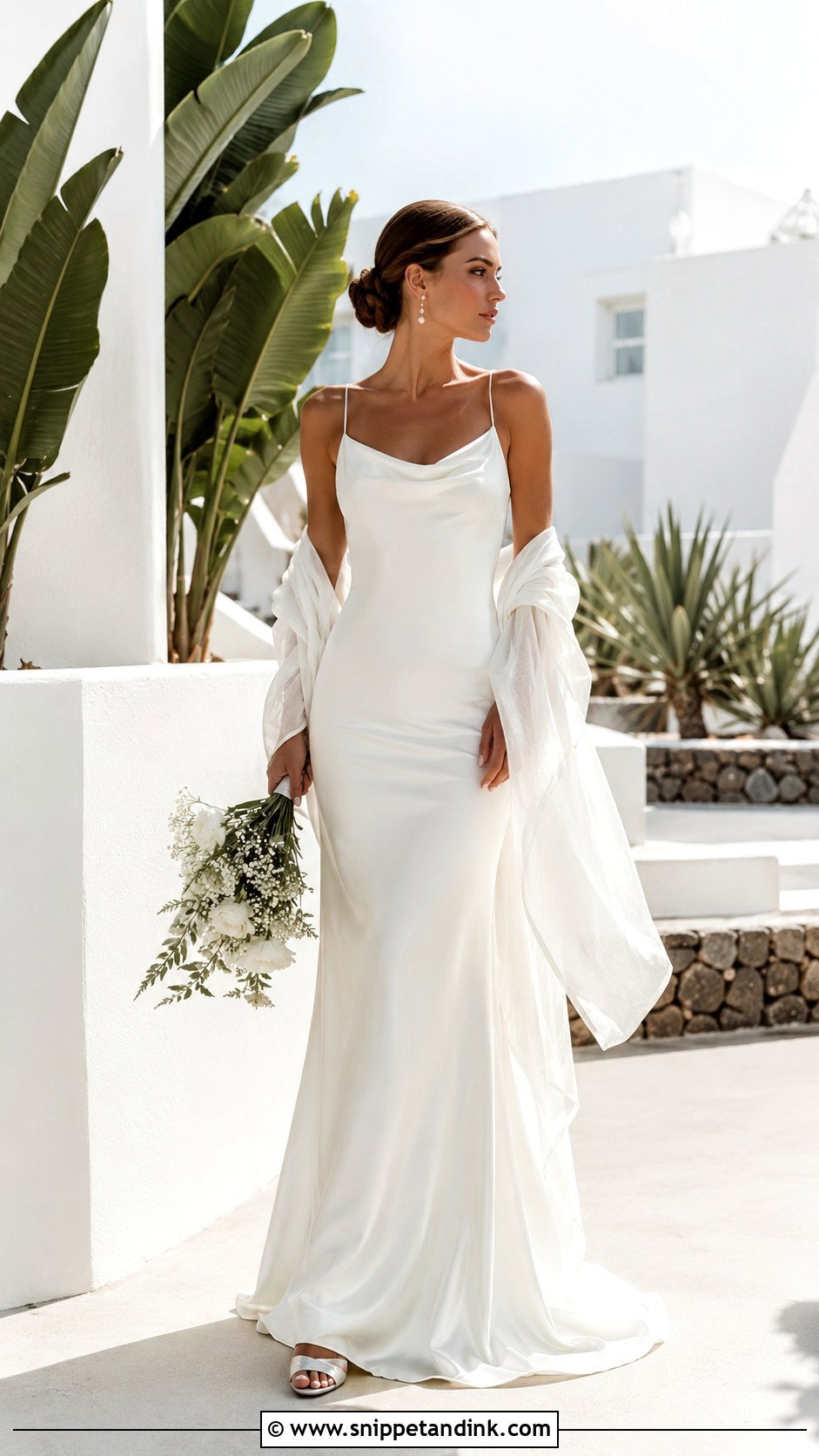
Silk is the fabric that shows the most and forgives the least. It drapes with real fluidity, but water marks it, it creases readily and every seam shows through, so tailoring has to be precise. A silk slip, A-line or sheath needs little else. A silk wrap or a clean bridal cape adds coverage for a ceremony. I recommend it to brides who value fabric over decoration, for intimate weddings and destination ceremonies.
19. Bridal Mini Dress
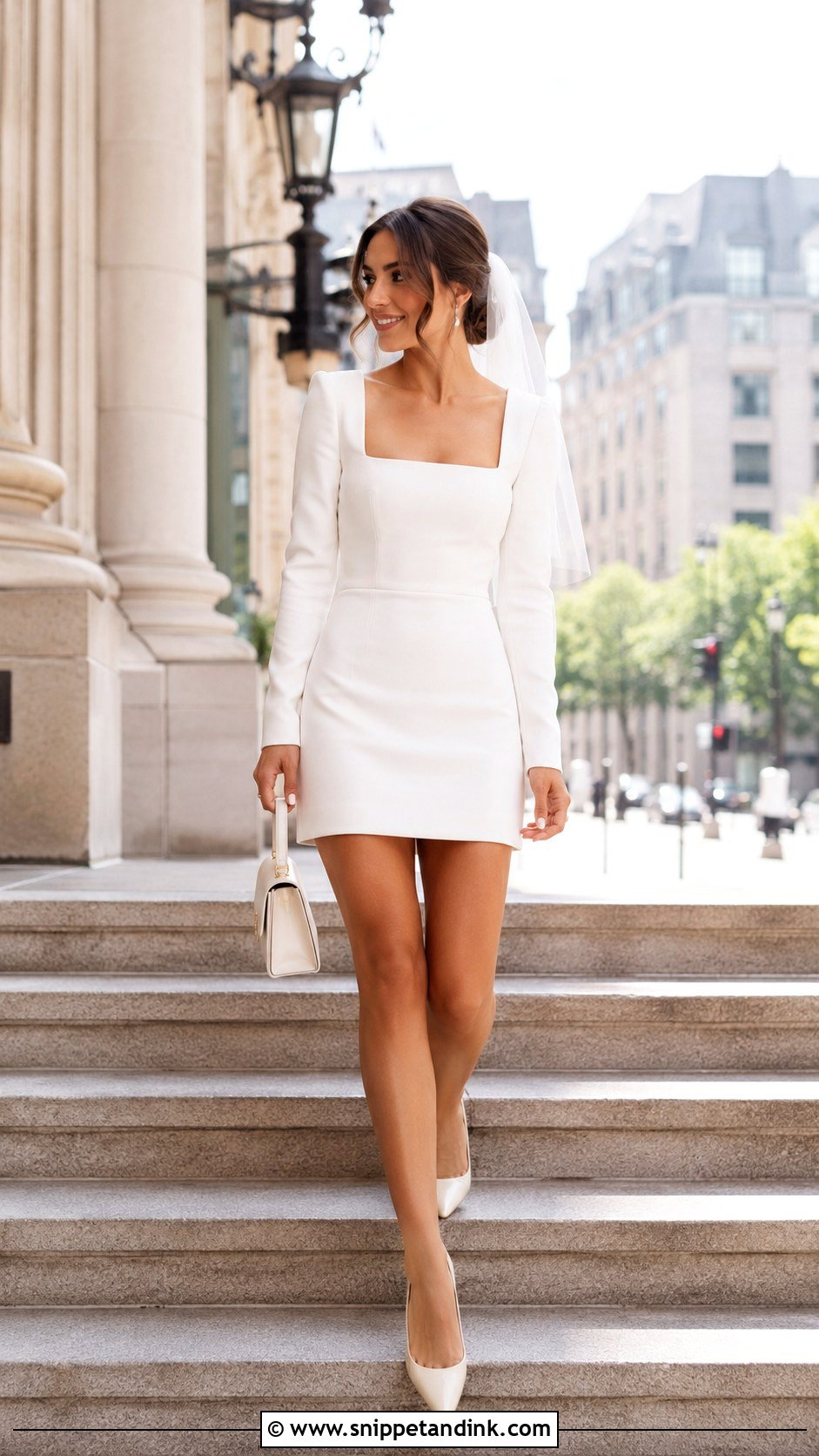
A mini reads bridal when the fabric is structured and the hemline is chosen carefully. I want it to sit a hand’s width above the knee when standing, because it rides up when you sit. Long sleeves, a square neckline or a shift cut keep it refined. Pair it with elegant heels, pearl earrings and a short veil or hair bow. Courthouse weddings, reception changes and after-parties are where minis earn their place.
20. Wedding Jumpsuit
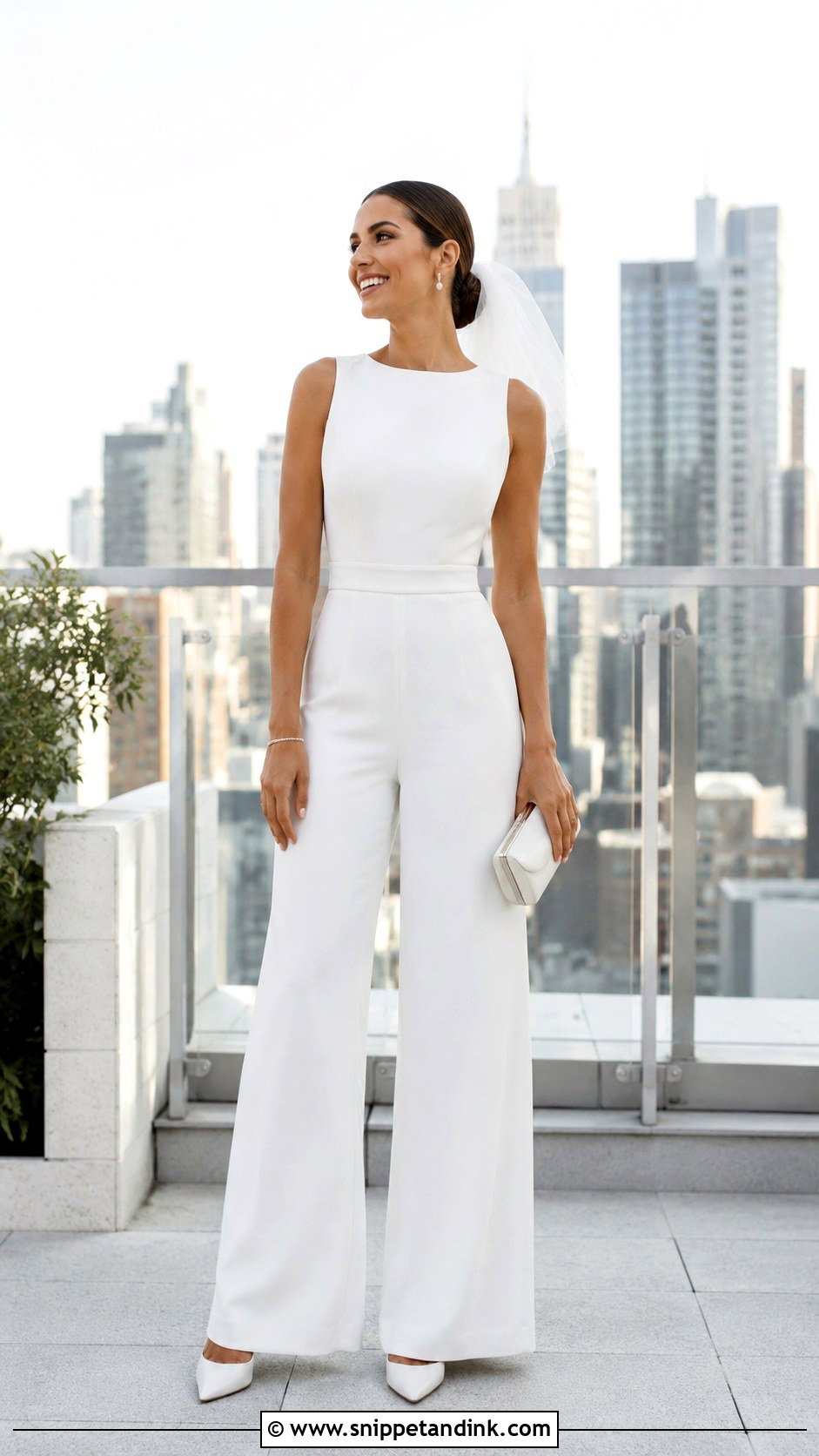
A wedding jumpsuit needs one fitting check a dress doesn’t: the rise. If the crotch sits too low, the trousers pull every time you sit or climb steps, so test both at the fitting. White crepe with wide legs gives a long line, with a clean bodice, a defined waist and maybe a cape overlay. Wear pointed heels, a sleek clutch and a low bun, and add a short veil or headband if you want a ceremonial touch. It suits courthouses, rooftops and city celebrations, or a reception change.
21. Wedding Dress With Bow
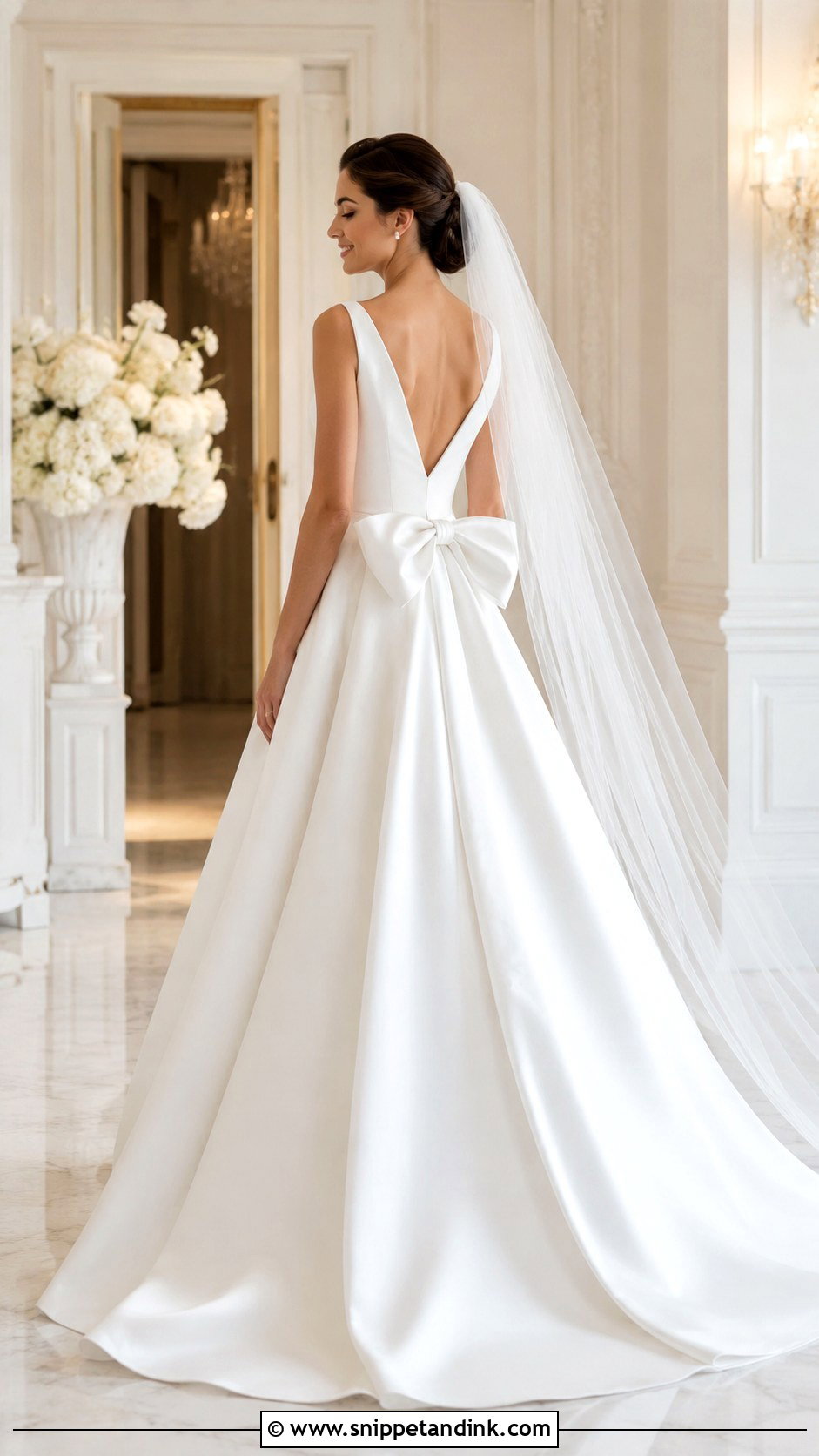
One bow, placed with intent, is enough. A back bow on a column dress looks modern; a waist bow on an A-line looks romantic; a shoulder bow suits a one-shoulder line. I check bows in a seated position, since a large back bow gets crushed against a chair all through dinner. Satin, crepe or mikado give the bow the stiffness to hold its shape. Keep studs simple and the veil plain.
22. Wedding Dress With Cape
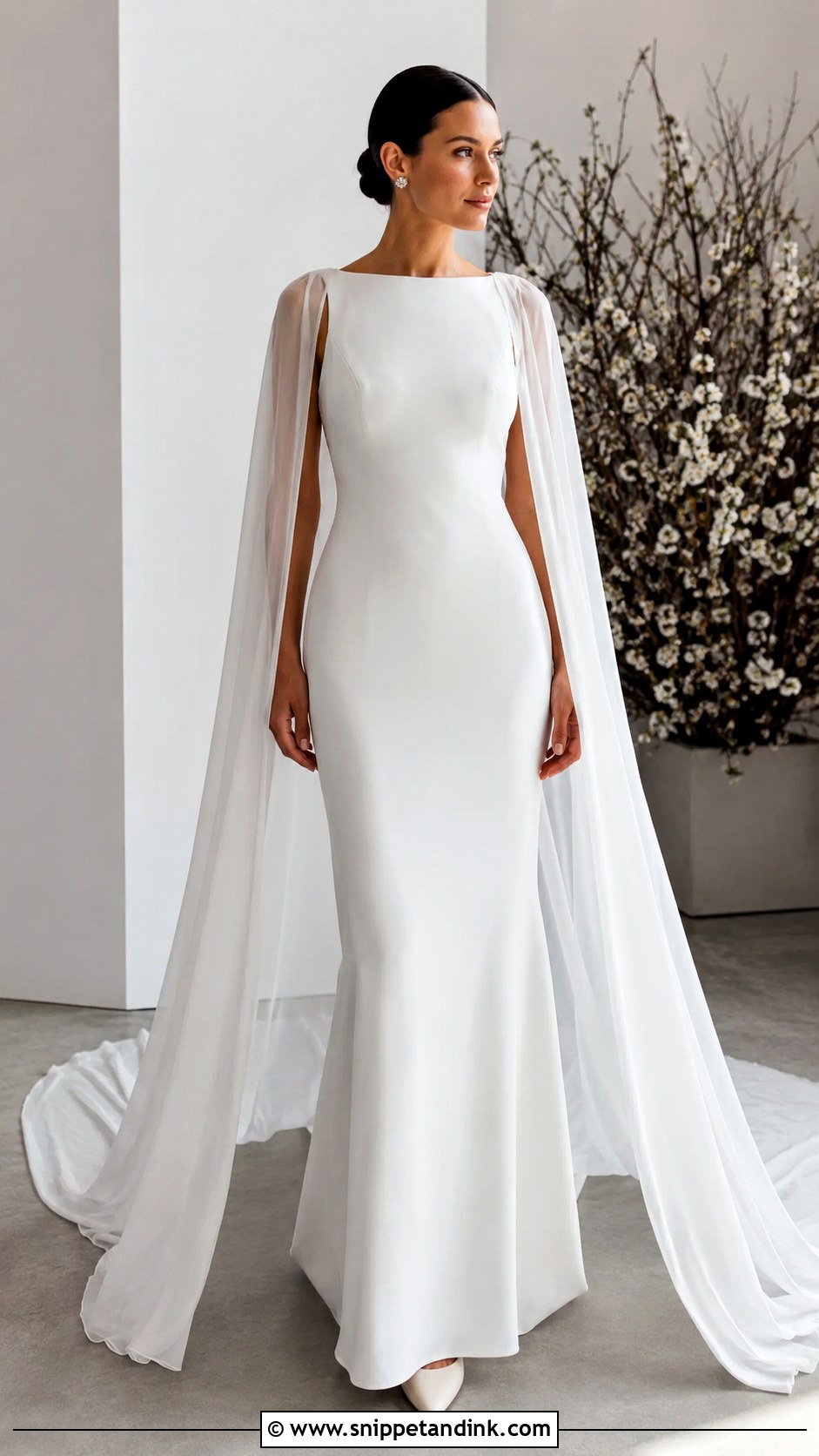
Capes change how a simple dress moves on camera. A sheer cape trails behind as you walk and gives the motion a veil would, which is why I suggest one for brides who don’t want a veil at all. A column, slip or crepe sheath makes a clean base. Ask for a cape that detaches at the shoulder so it can come off for dancing. Sleek hair and small earrings let the cape do the talking at modern and outdoor venues.
23. Backless Wedding Dress
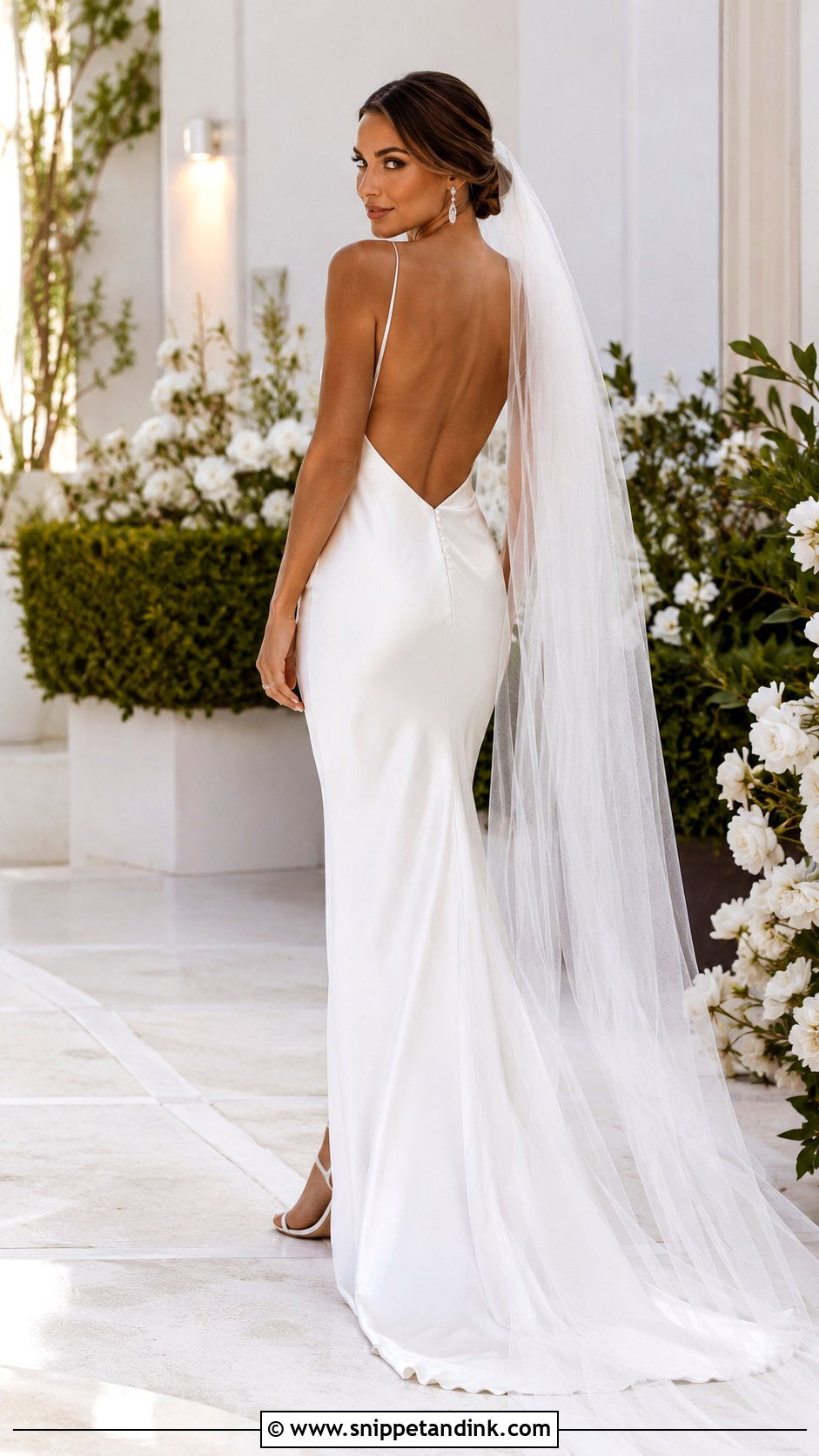
Backless gowns live or die on the shoulder straps and the lowest point of the back. If the back is cut too low, the front gapes when you lean; if straps are loose, they slide. I fit these with the bride moving, not standing still. A satin slip, crepe sheath or long sleeve gown with an open back all work. Wear your hair swept to one side or in a low bun so the back is seen. Beach weddings and evening ceremonies suit it.
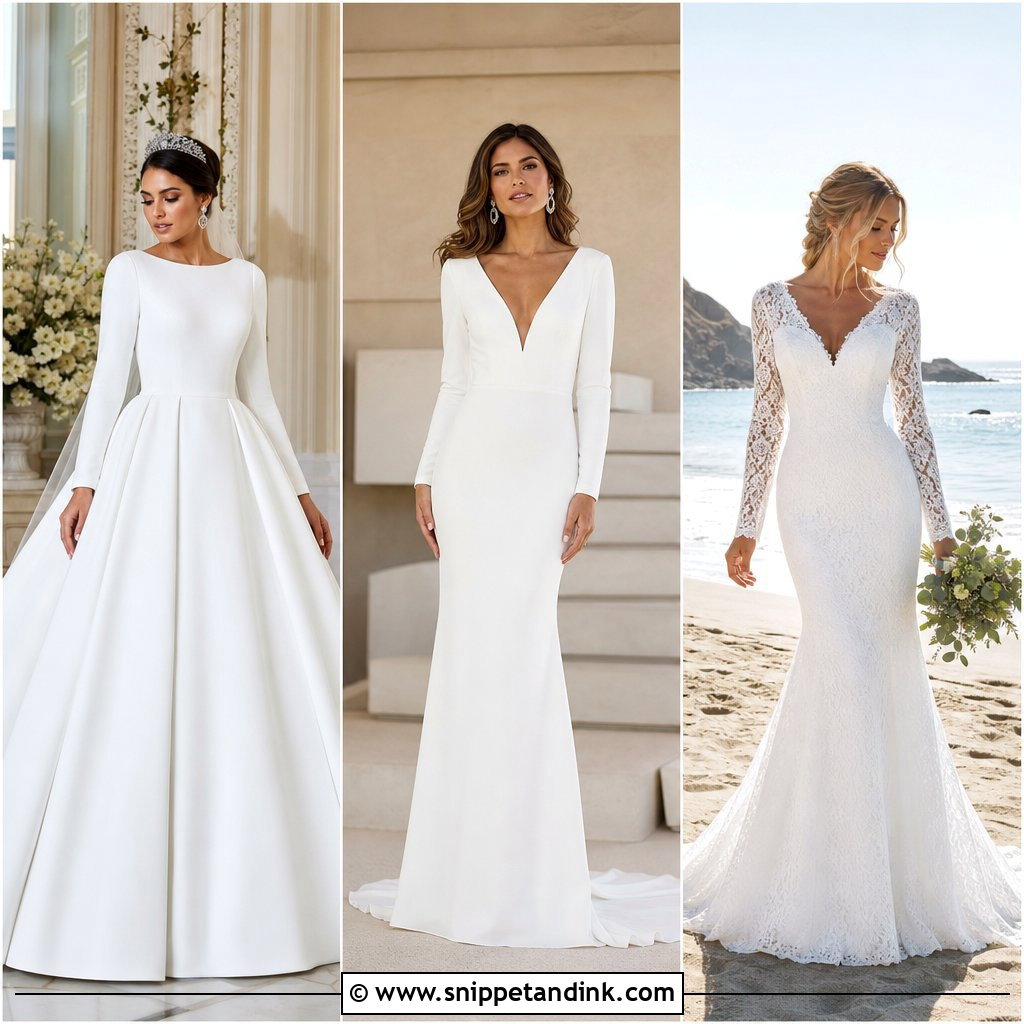
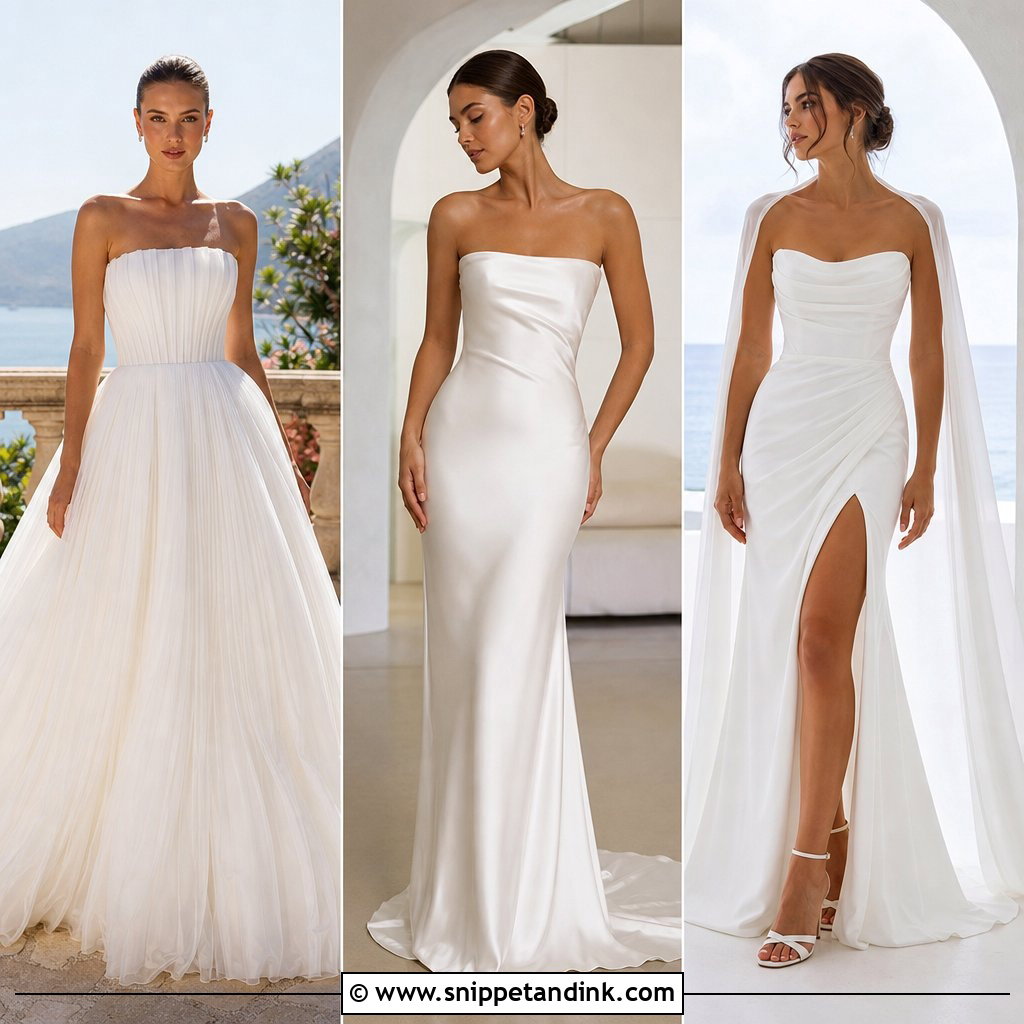
24. Simple Plus Size Wedding Dress
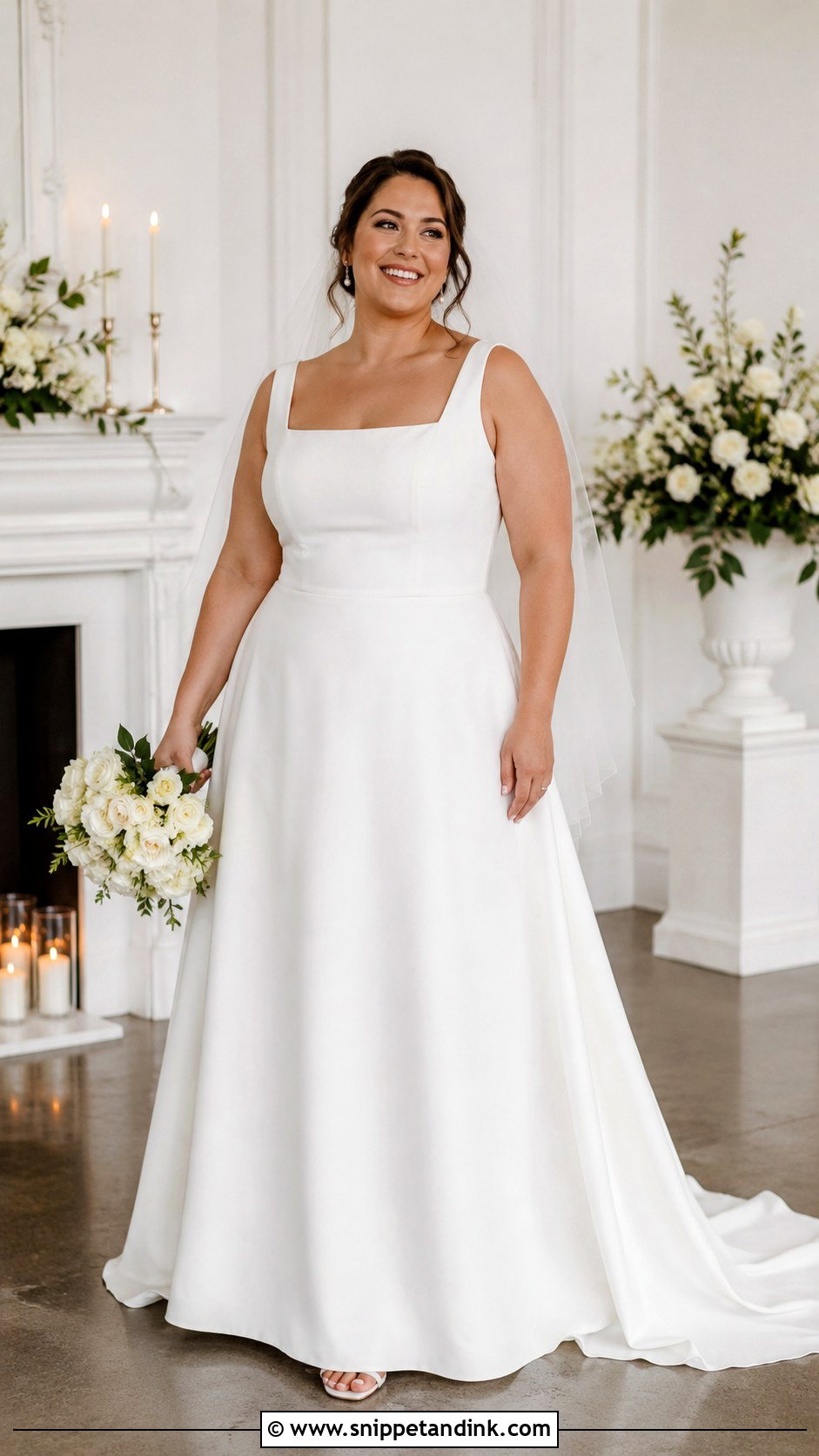
Construction is what makes a simple plus size wedding dress look elegant: good lining, supportive straps, a built-in bra if you want one, and seams placed to follow your shape rather than fight it. A-line gowns, crepe fit-and-flare cuts, square necks and wrap-style bodices all work. The goal is a dress that fits your body as it is, so you can move freely. Order with enough time for alterations, since most off-the-rack bridal sizes need adjusting. Comfortable heels or flats and a veil matched to the dress length complete it.
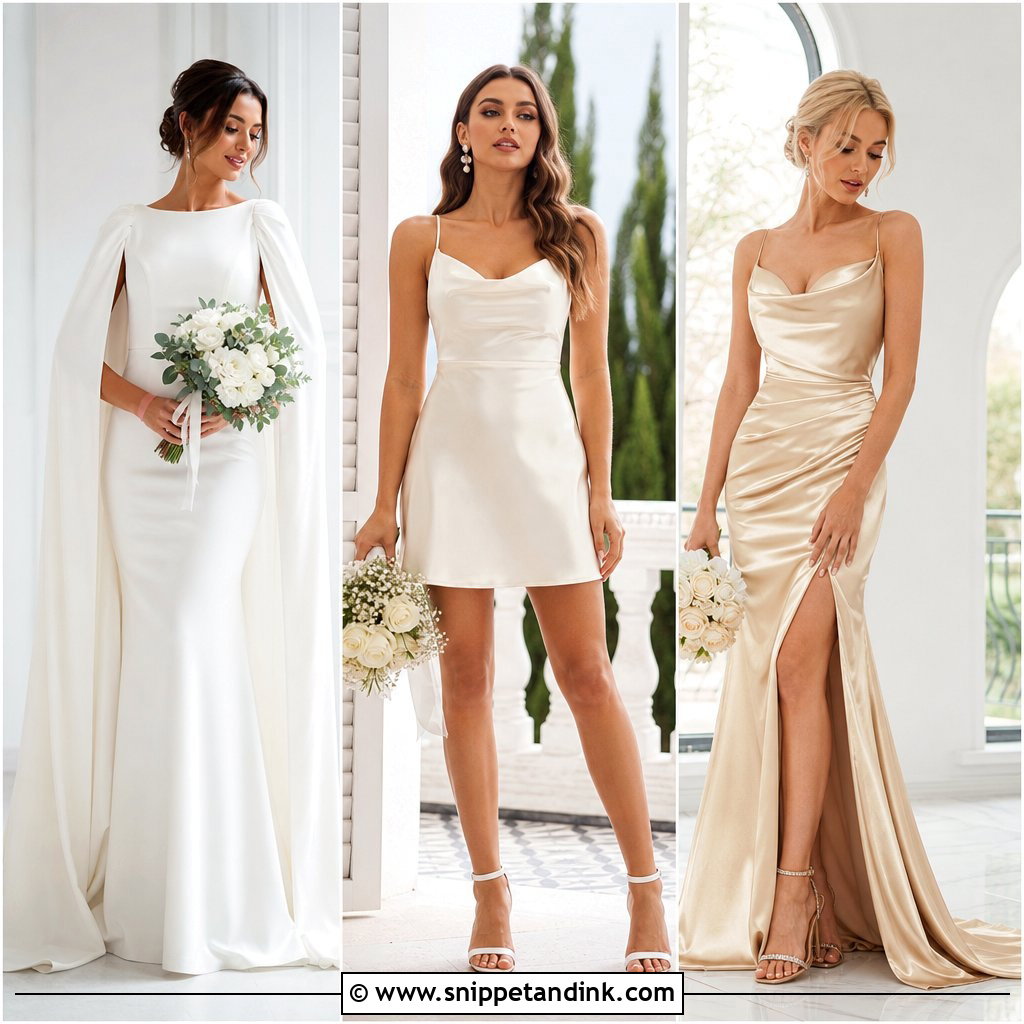
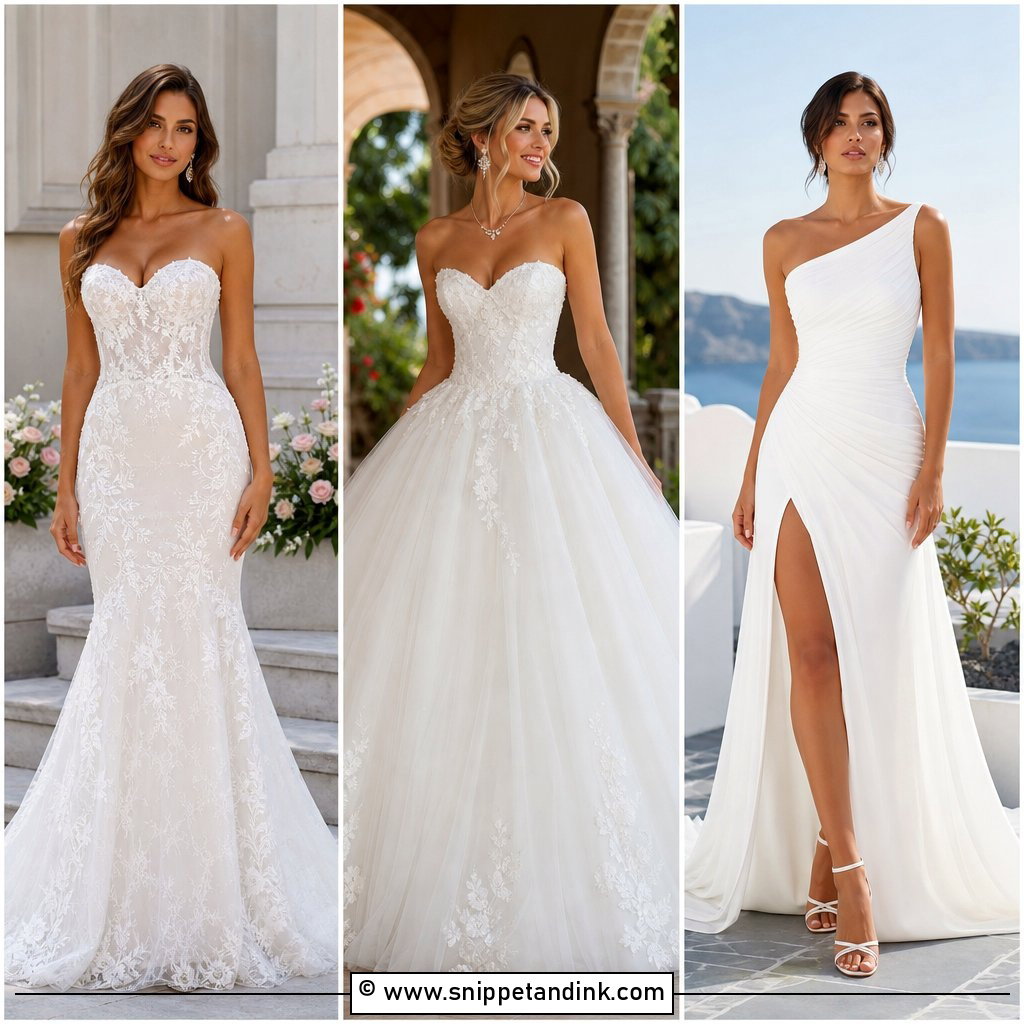

25. Simple Maternity Wedding Dress
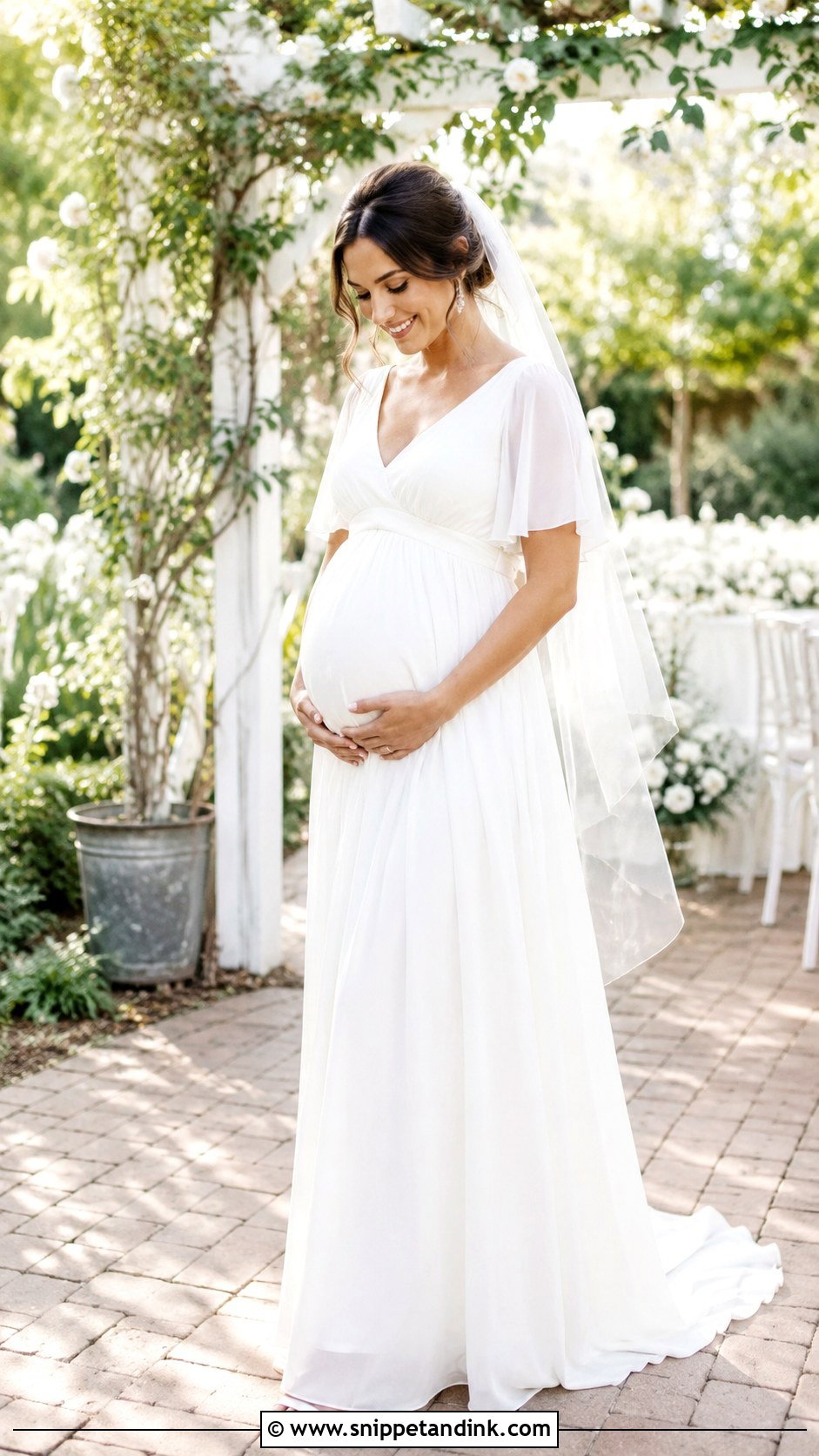
Bodies change week to week in pregnancy, so with a simple maternity wedding dress I schedule the final fitting as close to the wedding as the seamstress allows, often within a fortnight. Empire waists, stretch crepe, flowing chiffon and soft A-lines all give room through the waist while keeping shape at the shoulders. A V neckline or flutter sleeve balances the line. Breathable fabric and supportive low heels matter more than anything decorative, and avoid anything heavy or hard to sit in.
When to Start Alterations on a Minimal Gown
Simple dresses often need more alteration work, not less, because there is nothing to hide a seam that is slightly out. I plan the first fitting roughly two to three months before the wedding, a second a few weeks later, and a final one in the last fortnight. Bridal seamstresses get booked up heavily in peak season, so call early even if the dress hasn’t arrived yet.
If the dress has a train, ask for a bustle at the second fitting and practise it with whoever will fasten it on the day. Satin and silk need careful hooks, since heavy fabric pulling on a single loop can tear it.
Steaming on the Morning, Storing It After
Hang the gown the night before so creases from travel drop out, then steam from inside the skirt rather than pressing the face of the fabric. Silk can water-spot, so keep the steamer moving and test it on a hidden hem first. After the wedding, get it to a specialist cleaner fairly soon, since sugar marks from drinks may be invisible at first and yellow over time. Store it folded with acid-free tissue in a breathable box, not in plastic, and away from bright light.
Plain Fabric, Precise Fit
With a simple dress, the fabric and the fit are the whole story. A satin slip, crepe column, soft A-line, jumpsuit or tailored courthouse look will all read as classy if the seams sit where they should and you can move without adjusting. Let accessories support the dress rather than compete with it: shoes you can walk in, jewelry you’d wear again, a veil or hairpiece suited to the setting. Spend your fitting time making sure it feels right sitting down as well as standing up.
You'll Like These Ideas:









Leave a Reply