
A Kerala bride’s hair has a lot to carry: a heavy Kasavu border or silk, temple jewellery, sometimes a nethichutti along the parting, and in many ceremonies several metres of fresh jasmine. When I plan hair for a Hindu bride in a gold-bordered Kasavu, a Christian bride with a veil, or a Muslim bride whose dupatta will cover most of the crown, the starting point is different each time. Below are 30 styles worth considering, from the classic mullappoo braid to open curls for the reception, with notes on what each one asks of your hair and how it holds through a long, warm day.
Mullappoo Opens on Its Own Clock, So Plan Around It
Jasmine strings for a Kerala wedding are usually bought as tight buds, and that’s deliberate: the buds open over the following hours, which is when the scent is strongest. For a morning muhurtham, I ask families to collect the strings the evening before, wrap them loosely in a damp cotton cloth and keep them in the main part of the fridge, never the freezer or pressed against the back wall where they can frost. Taken out about an hour before dressing, they start opening while you’re getting ready instead of before you’ve left the house.
Quantity is where families get caught out. A braid covered from crown to tip takes far more strings than a bun wrap, and florists usually sell by the muzham or the metre. Tell yours the exact style and your hair length, and order a little extra for touch-ups and for the bridesmaids.
How I fasten heavy strings so they stay put
- Ask for strings sewn on firm thread, not loosely knotted; loose strings slide down the braid every time you move.
- Pin each string with U-pins pushed into the braid or bun, not only across the surface.
- Keep one spare string and a few pins with whoever is helping you at the venue.
- If strong scent gives you headaches, wear a string at home for an afternoon weeks before. Fabric or pearl jasmine looks very close in photos.
1. Traditional Jasmine Braid for Kerala Bride
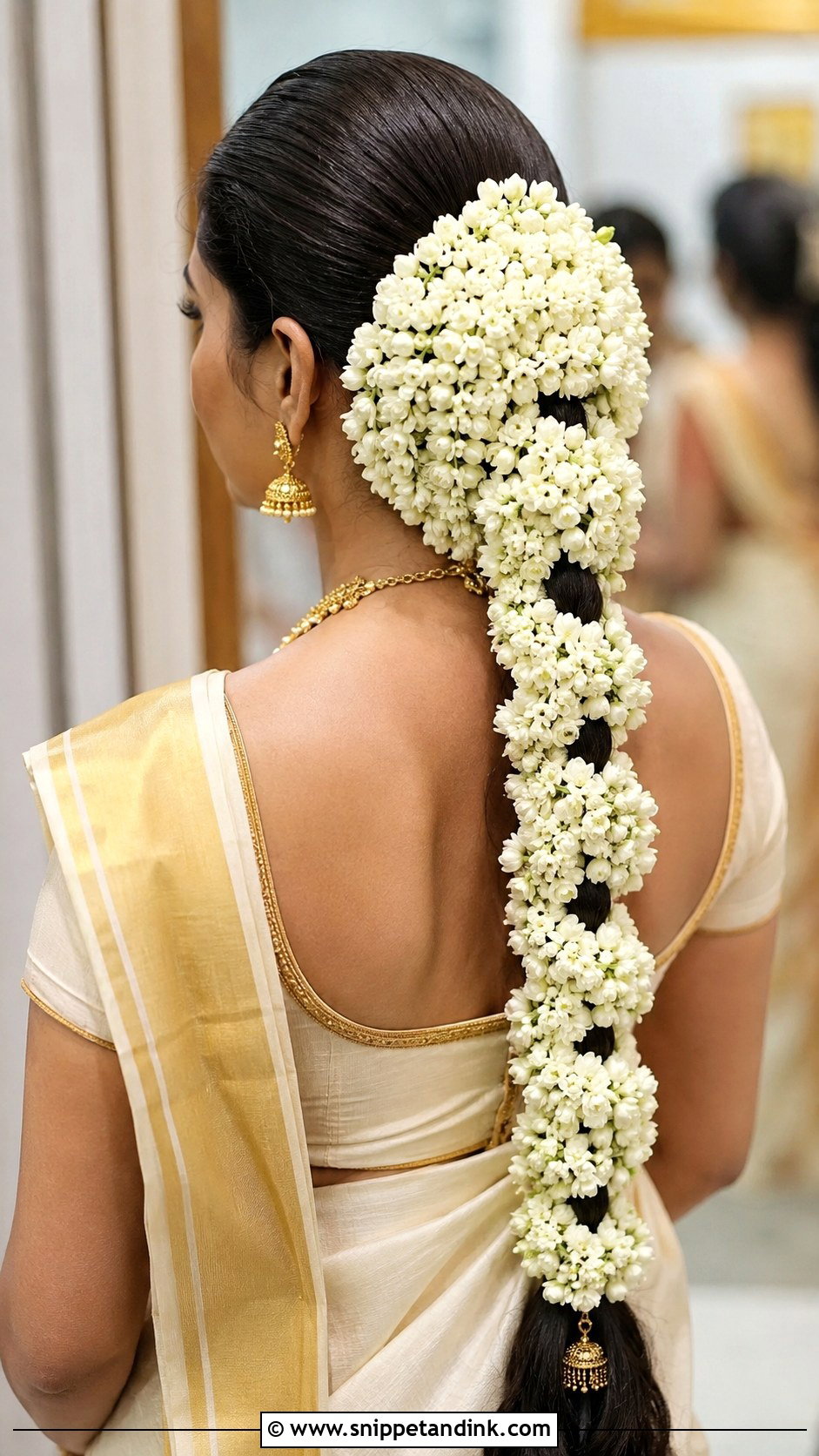
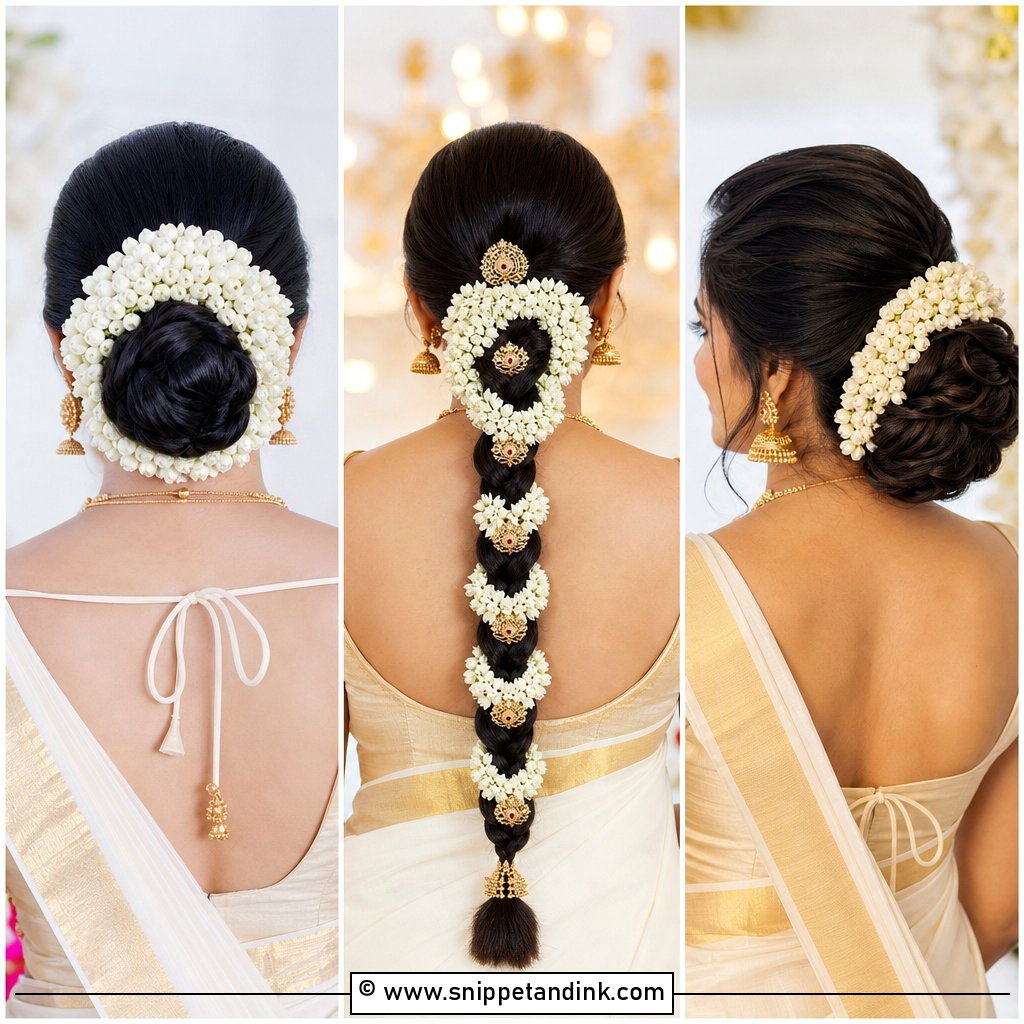
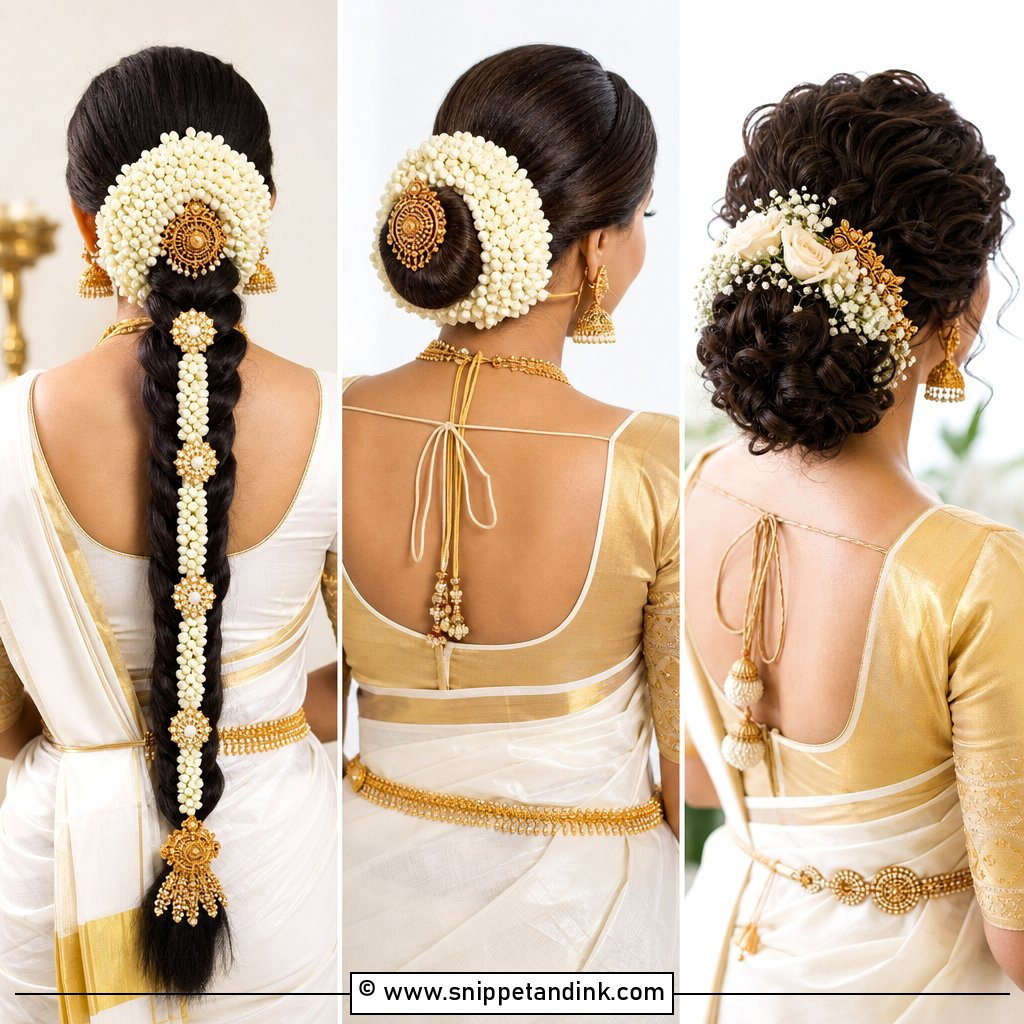
The plait trailing fresh jasmine down the back is still the most requested Kerala bridal look, and against a gold Kasavu border and temple jewellery nothing reads more clearly as tradition. The hair is woven into a long, firm plait, then the mallipoo strings are pinned over it in layers. I braid tighter than feels natural, because the flowers add real weight and a loose plait widens and sags by the end of the muhurtham. If your hair stops at mid-back, a clip-in braid extension matched to your colour gives the length. I attach it under the first two crossings so the join disappears beneath the jasmine.
2. Low Bun With Jasmine and Kanakambaram
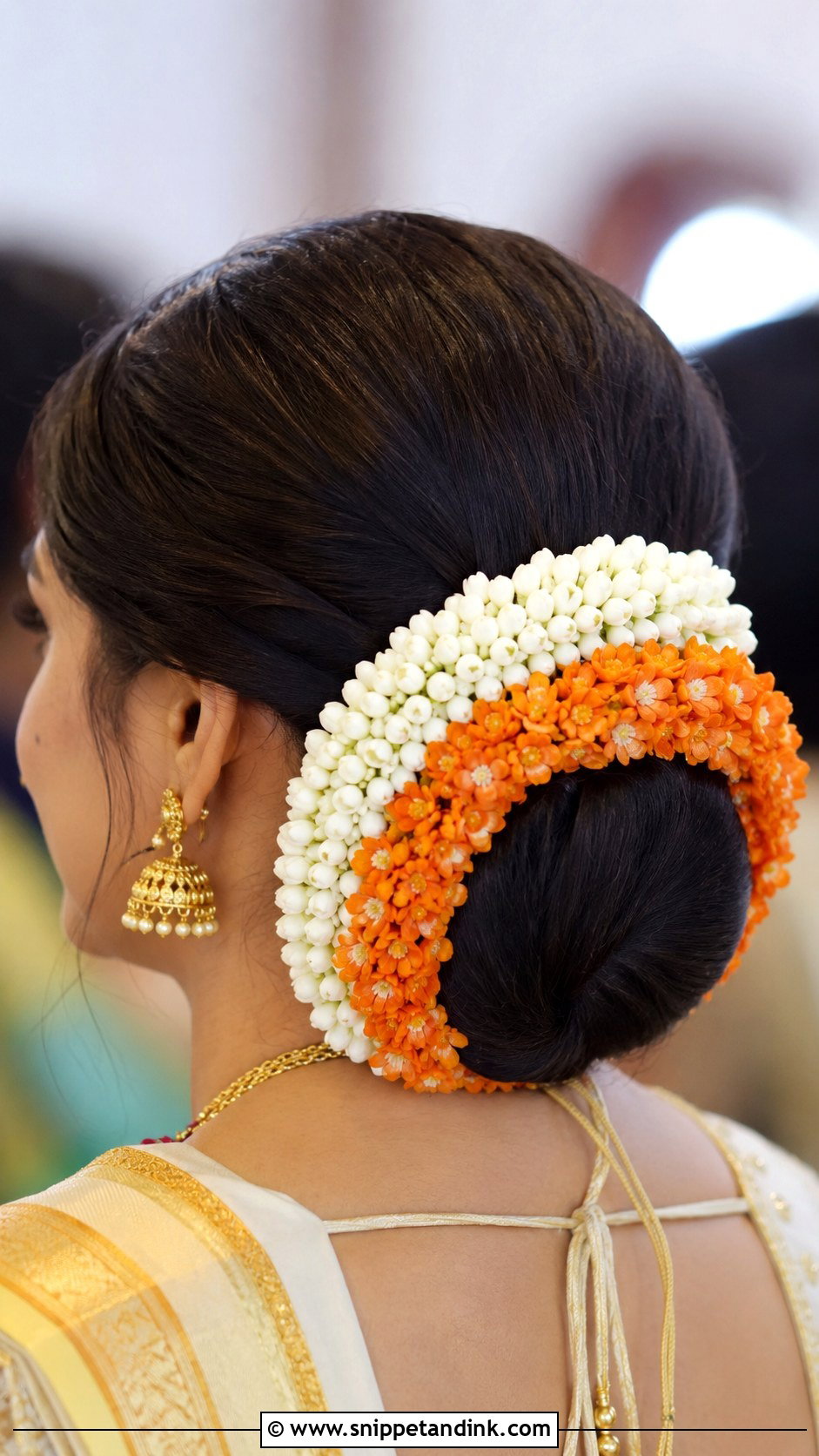
Wrapping a low bun in jasmine and orange kanakambaram flowers gives you two colours that hold up against dark hair even in a dim temple hall. The hair is gathered at the nape, coiled smooth, and the strings go around it in rings. Kanakambaram keeps its colour for hours, so I let it carry the outer ring and tuck the jasmine just inside. One caution: a bun sitting right on the nape crowds the groom’s hands when he ties the thali, so I set this one slightly higher than a Western low bun.
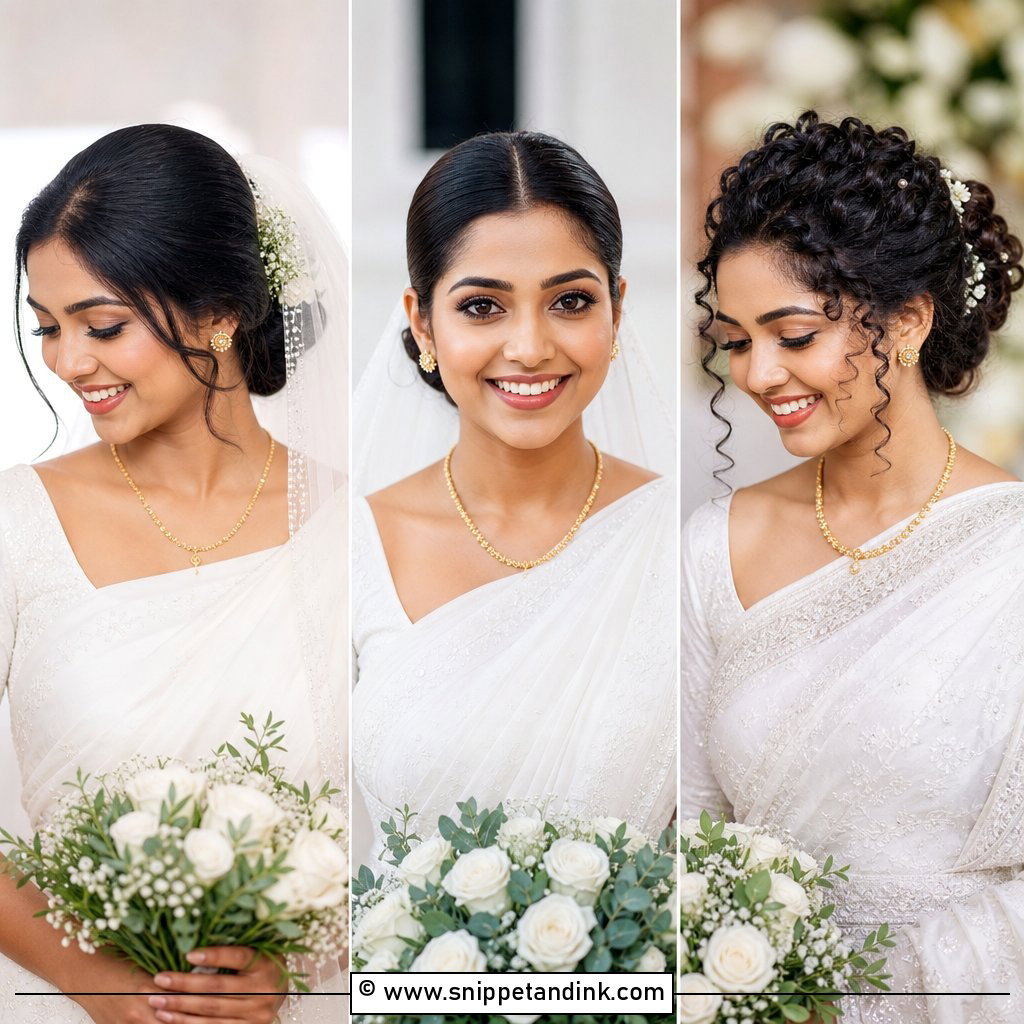
3. Voluminous Curly Bun for Christian Kerala Bride
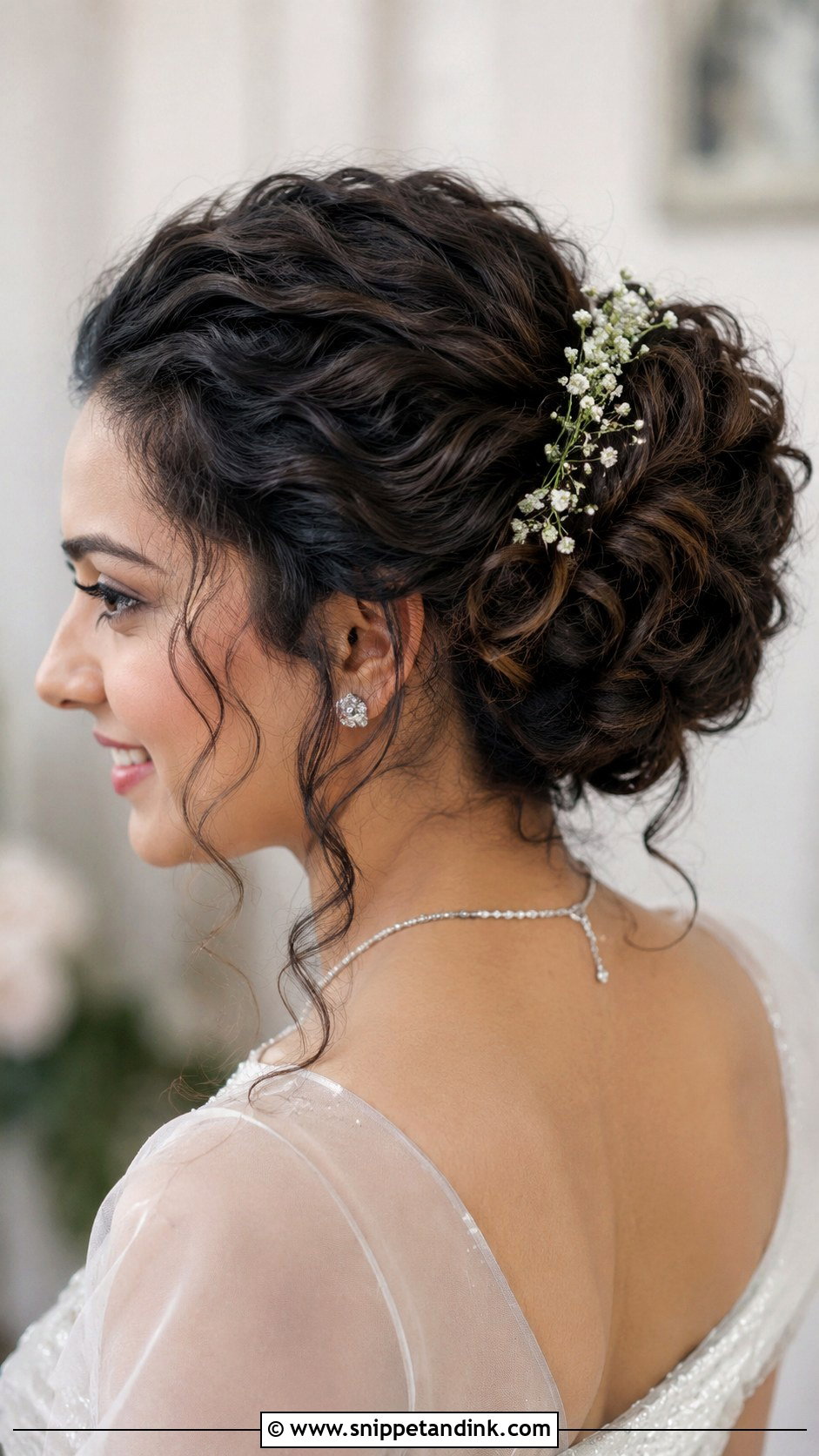
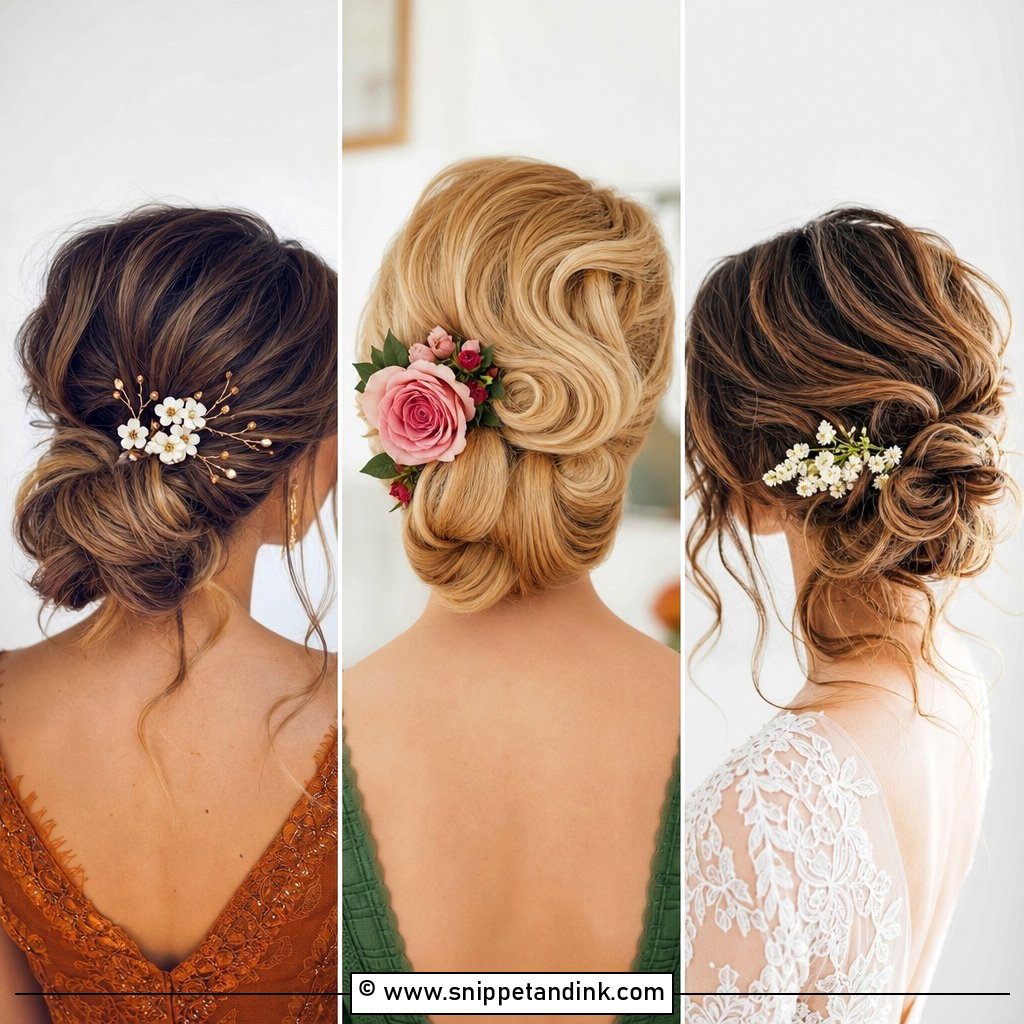
Christian brides in Kerala often skip the heavy garland, and the voluminous curly bun suits Christian Kerala weddings because it gives the veil something to rest against. Curls are set first, pinned loosely into a lifted bun, a few tendrils are left at the temples, and small white blooms go in last. I place the bun just below the crown so the veil comb grips solid hair above it. Set too high, the bun pushes the veil up and it slides backwards during the service.
4. Open Hair With Soft Waves
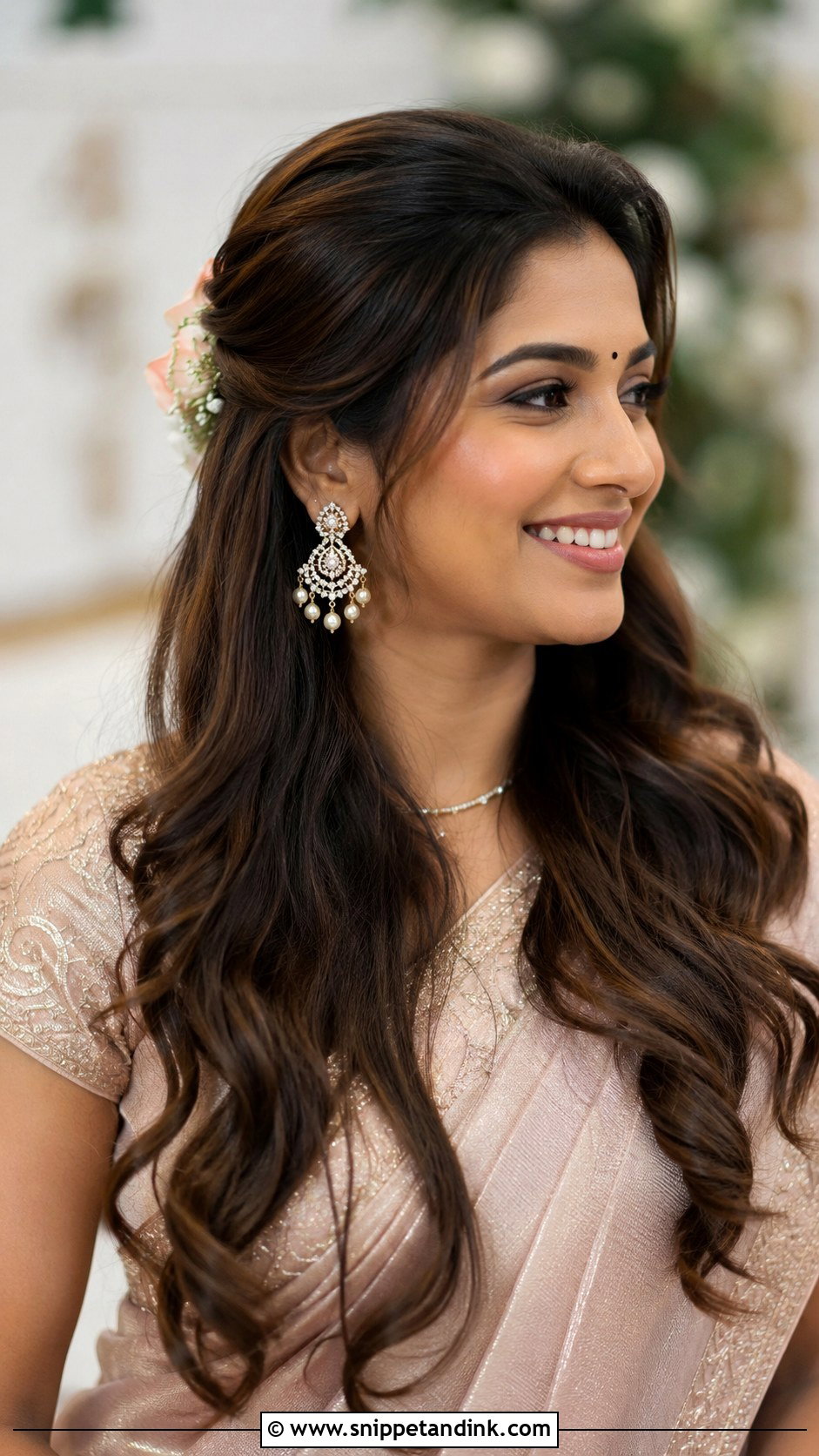
Open waves are the easiest style to wear and the hardest to keep in Kerala humidity. I curl in sections, pin each curl while it cools, and brush out only once the hair is completely cold, which is what makes a wave last. A small floral pin above one ear is all the decoration it needs. I’d keep this for the engagement or reception rather than a long morning ceremony, because hair that leans straight will have lost much of its bend by noon in a hot hall.
5. Fishtail Braid With Floral Accents
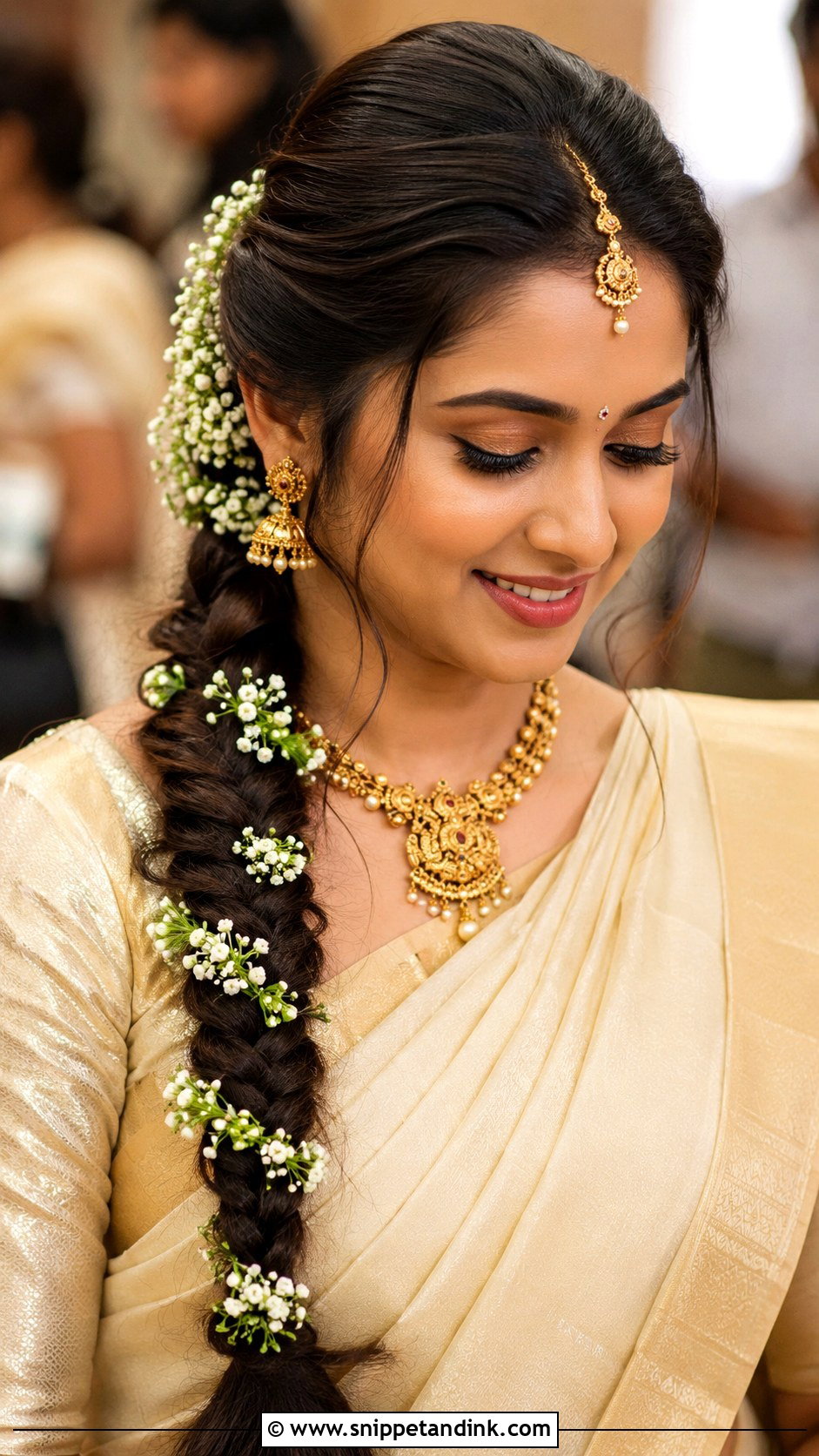
A fishtail looks complicated but is only two sections with thin pieces crossed between them, which makes it flatter and denser than a three-strand plait. Loosened a little afterwards, it drapes over one shoulder with a rope texture, and jasmine buds tucked into the gaps sit flush instead of sticking out. It needs at least shoulder-length hair with fairly even layers. Short layers poke out of every crossing, and on a heavily layered cut I’d choose a regular plait instead. It works for an engagement with either a saree or a lehenga.
6. Side Swept Bun With Gajra
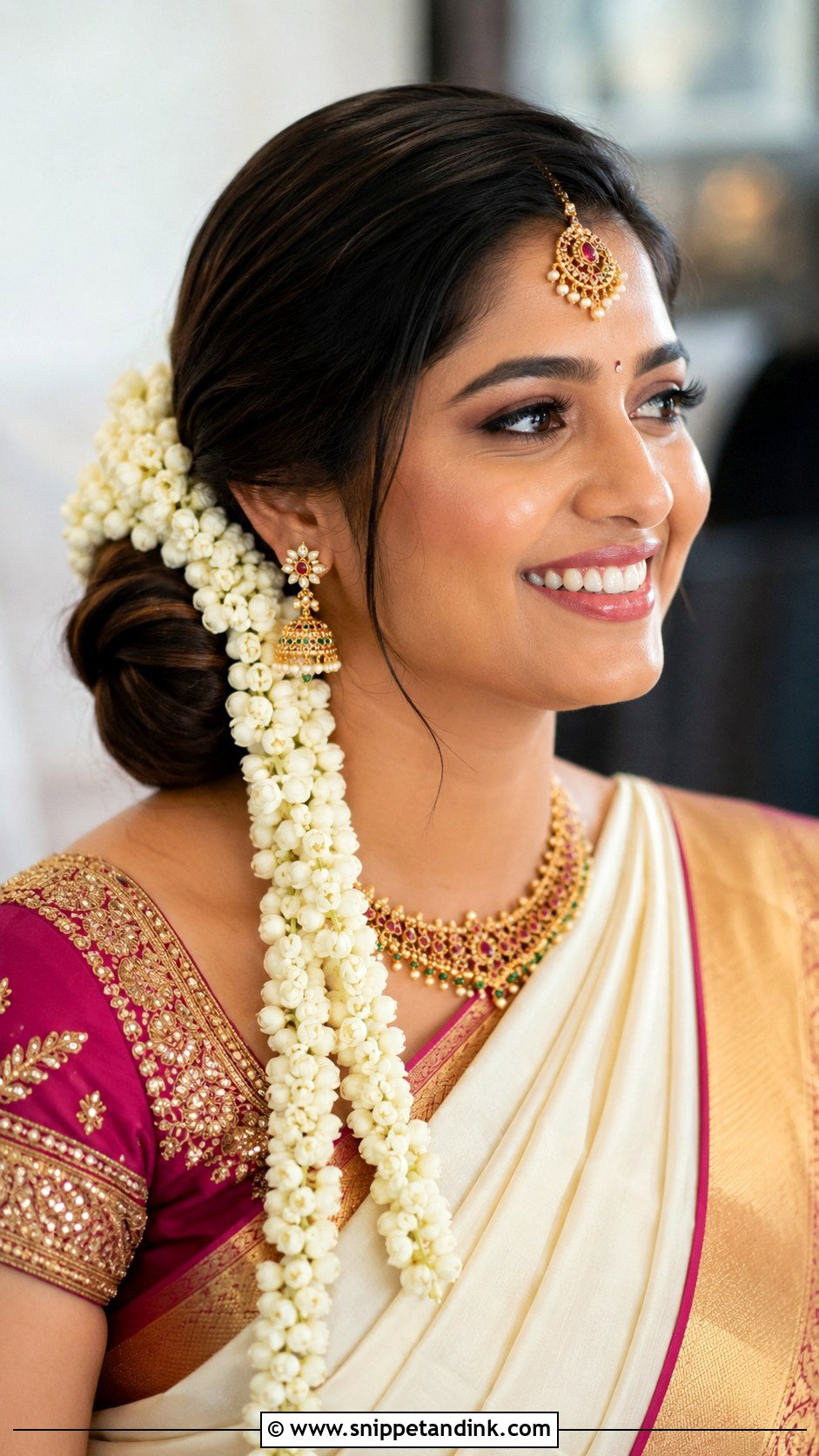
A side-swept bun with a gajra falling over the shoulder moves all the attention to one side, toward your earring. I coil the bun just behind the ear, then pin a long jasmine string so it drops forward over the collarbone. Before committing, I check which side you’ll stand on next to your partner and put the bun on the other side, so the flowers don’t sit between you in every couple portrait. It suits a reception and leaves room for a hair chain or a maang tikka.
7. Long Braid With Arali and Jasmine
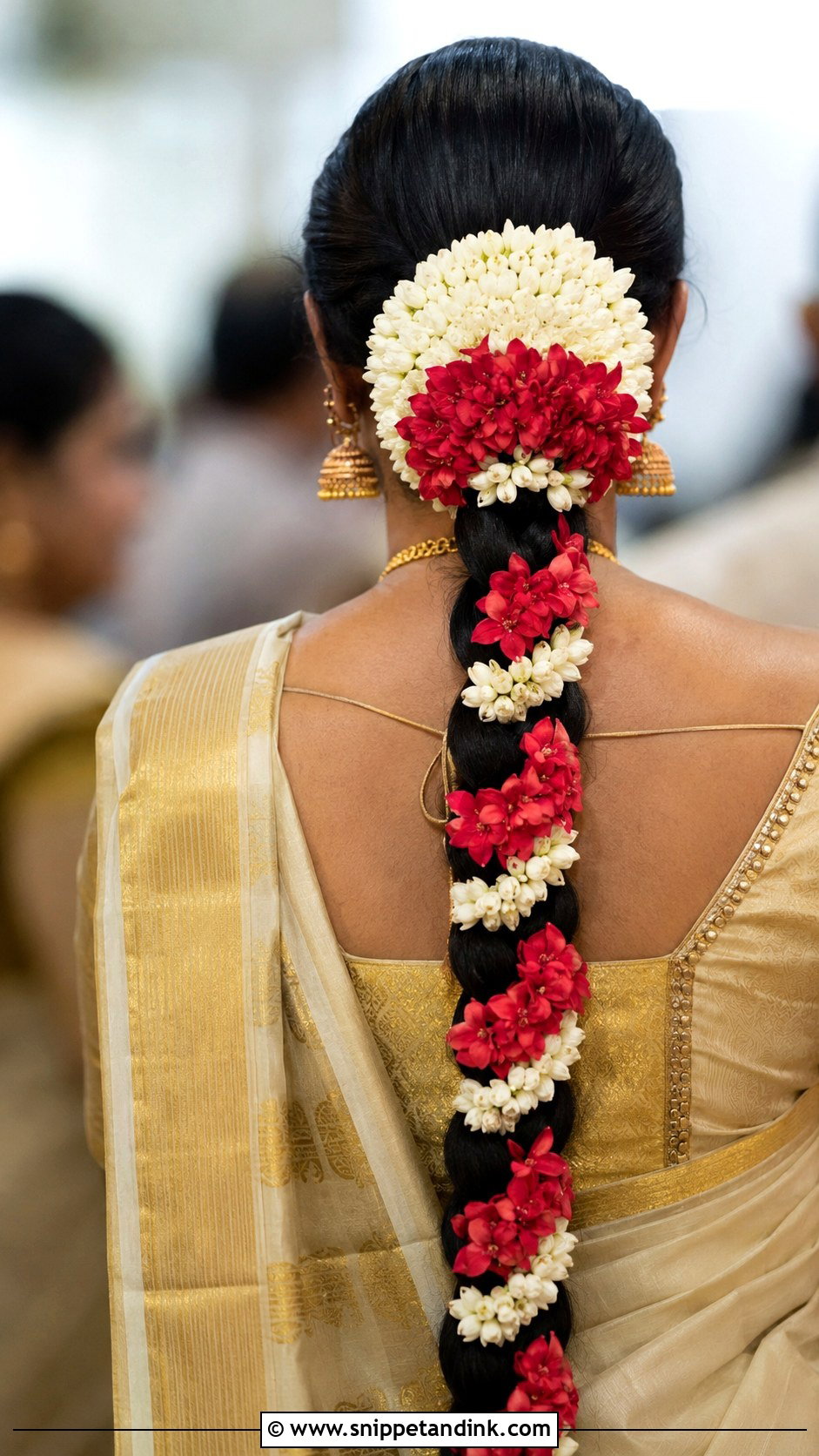
Alternating bands of red arali and white jasmine make a plait you can read from the back of the hall. The hair is braided thick and long, then the flowers go on in rows from crown to tip. The bands only look right when they’re evenly spaced, so at the trial I mark their positions with pins along the braid, which saves a lot of fiddling on the morning. A thin plait makes the rows look sparse, so this one wants long, full hair or an extension. Wear it with a bold-border saree and temple jewellery for a grand ceremony.
8. Messy Bun With Loose Curls
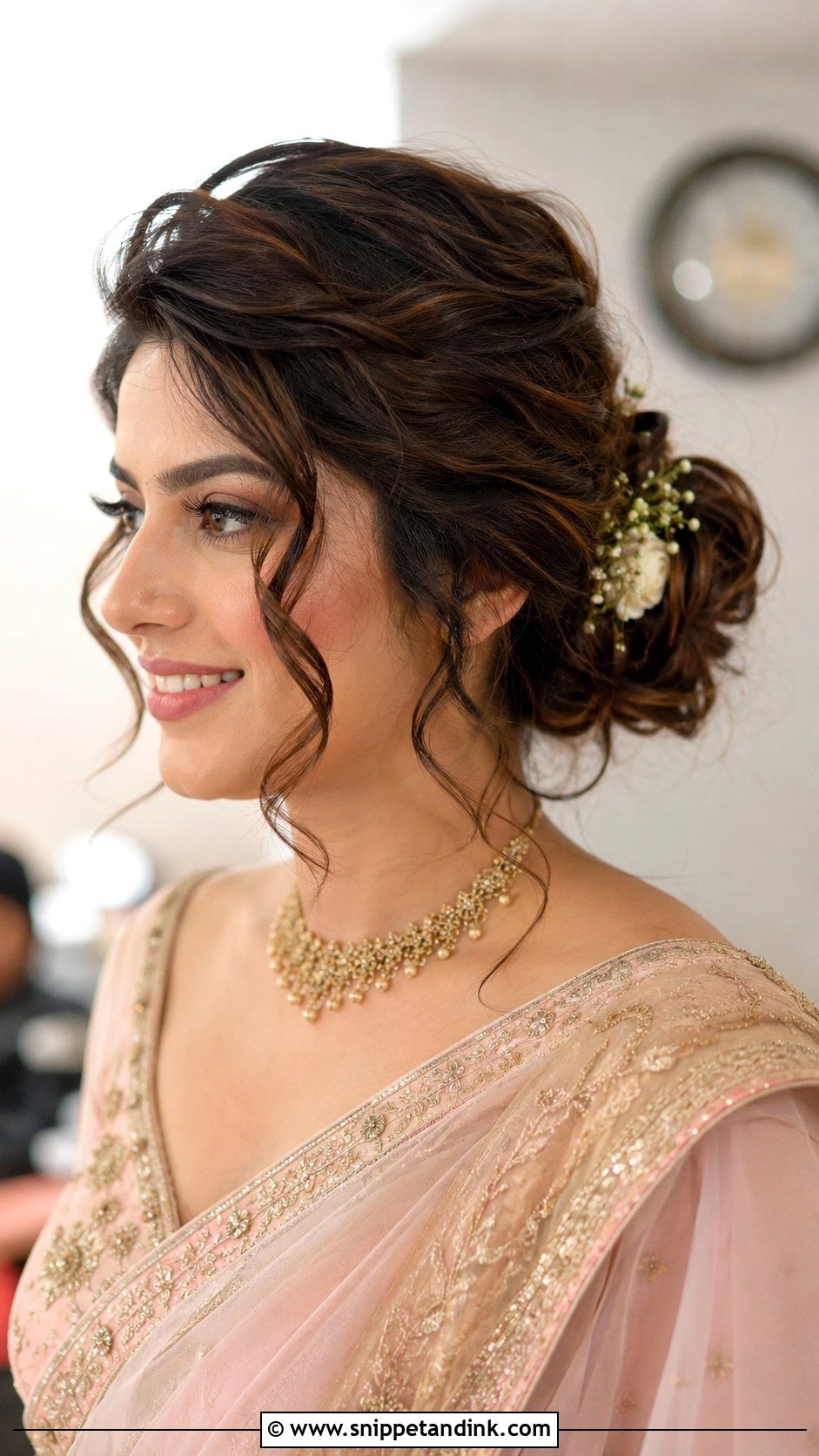
This is the bun I suggest when a bride’s hair has natural wave and she’s worried about humidity. Instead of fighting frizz, the style uses it: the hair is gathered loosely, texture spray goes in, and a few curls are pulled out at the face. Messy on the surface still needs a firm base underneath. I build a small hidden ponytail first so the bun can look loose without actually slipping. It belongs at a Christian wedding or the reception more than a traditional muhurtham.
9. Half Up Half Down With Flowers
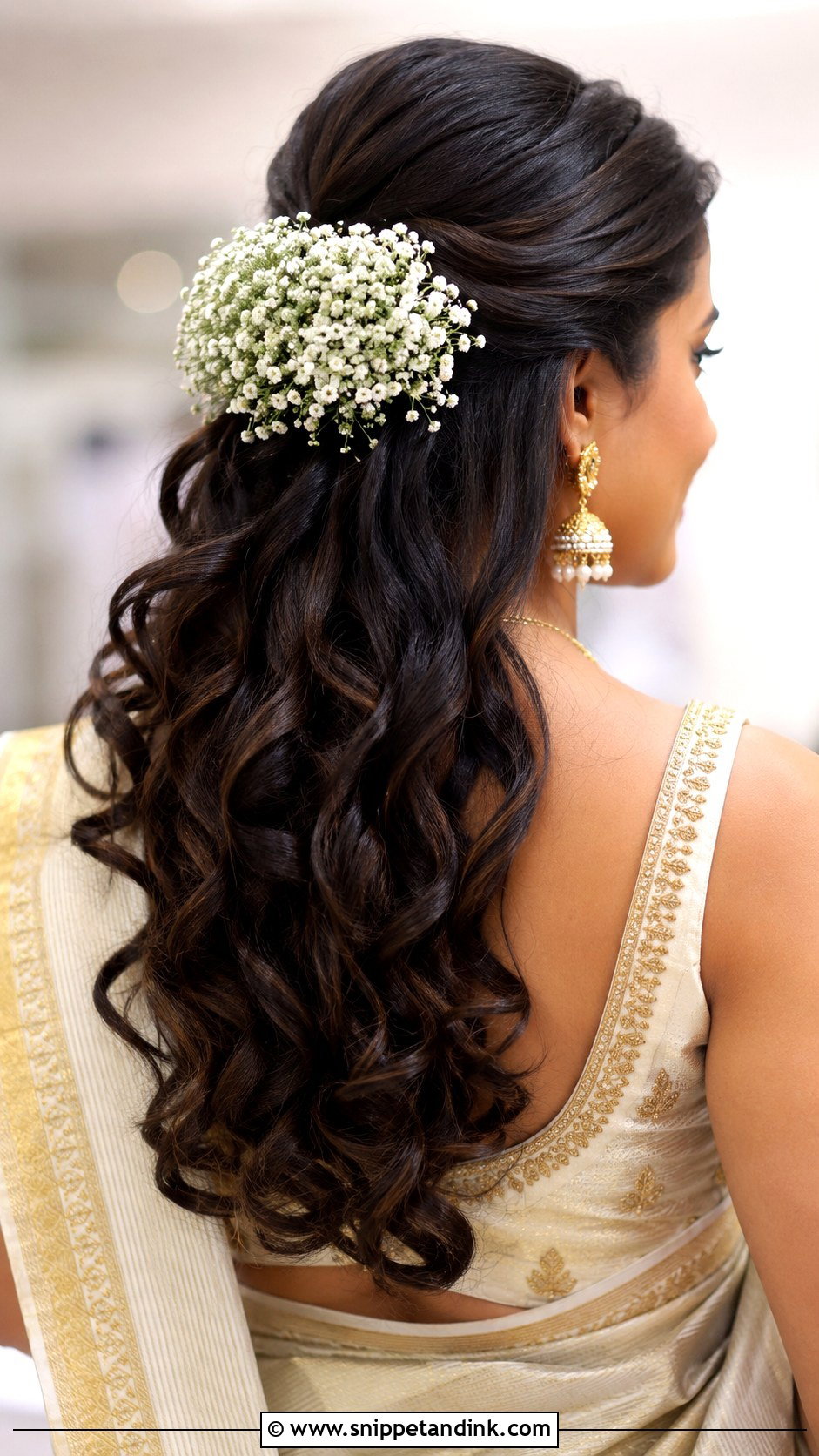
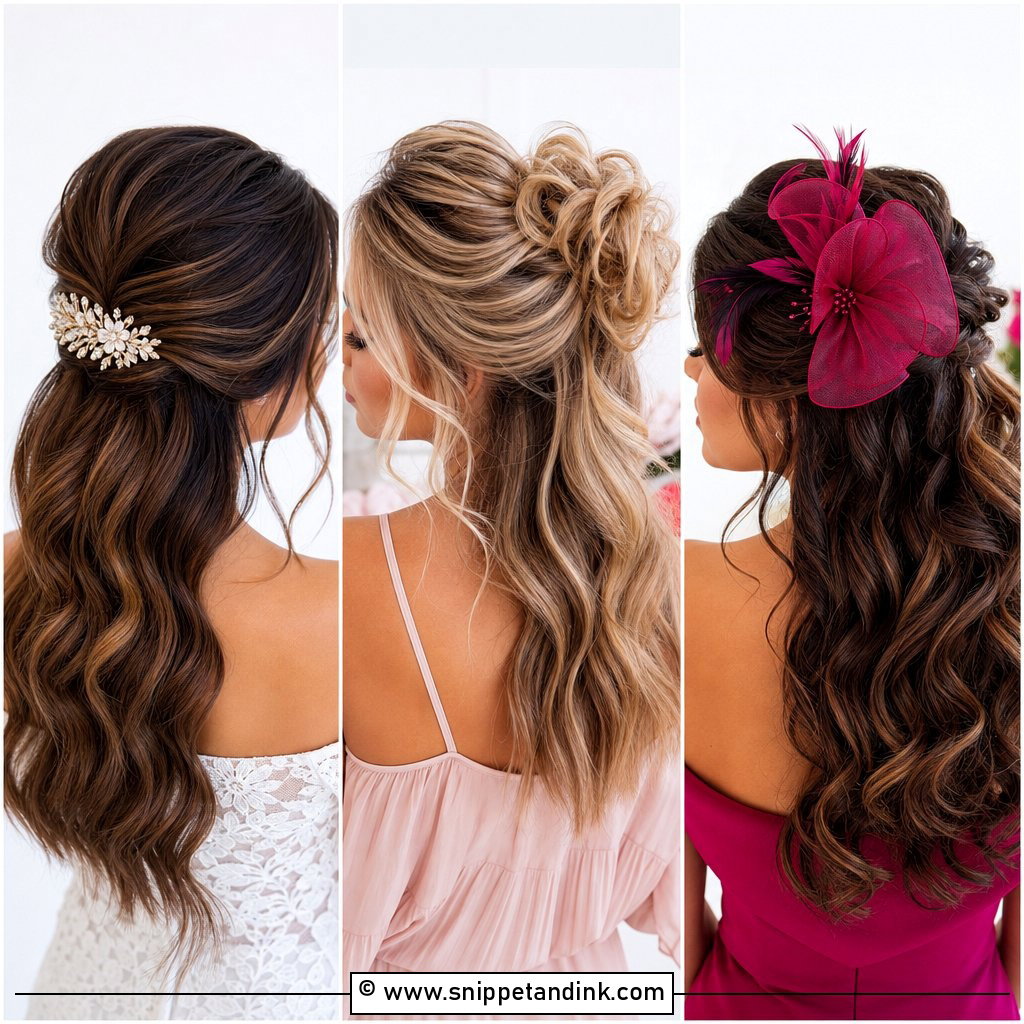
Half up, half down pulls the top section back and lets the rest hang in waves, with a small cluster of flowers at the crown. It keeps hair out of your eyes during rituals and still shows your length. The weak spot is the back: an hour of leaning against a stage chair flattens and frizzes it. I tell brides to sit a little forward when they can, and I leave a few pins and a small comb with whoever is helping you. It’s comfortable for an engagement or a small family wedding.
10. Braided Bun Wrapped in Jasmine
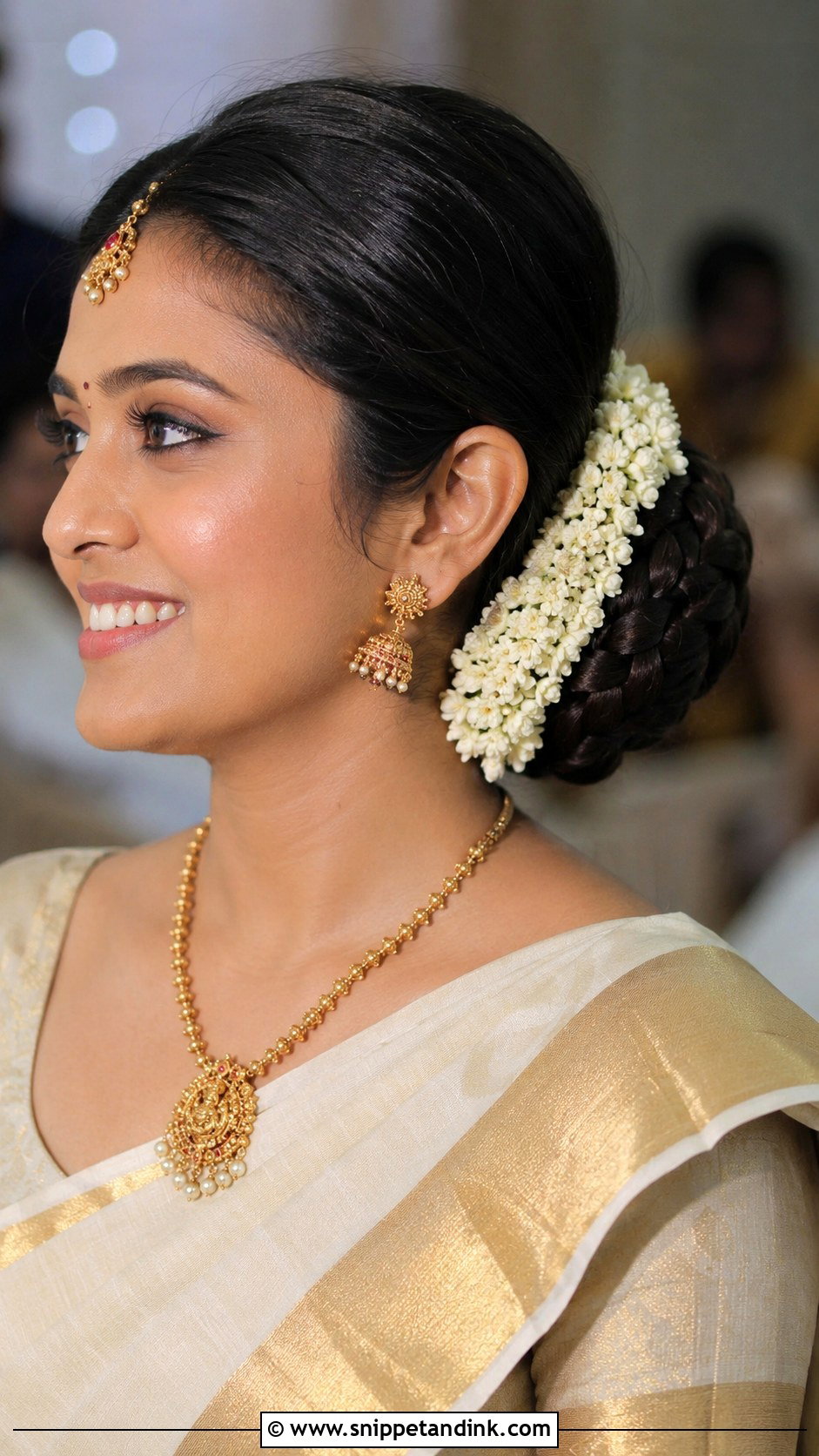
Braiding first and then coiling the braid gives a bun with woven texture that holds far better than a plain twisted one. I pin it at the nape with U-pins pushed through the braid itself rather than around it, then wrap a thick jasmine garland around it like a halo. Because the braid locks every strand in place, this style suits traditional Hindu Kerala brides facing a long morning of rituals and a lot of bending forward. From behind it stays neat in photos, and a maang tikka with temple jhumkas finishes it.
11. Reception Curls With Side Parting
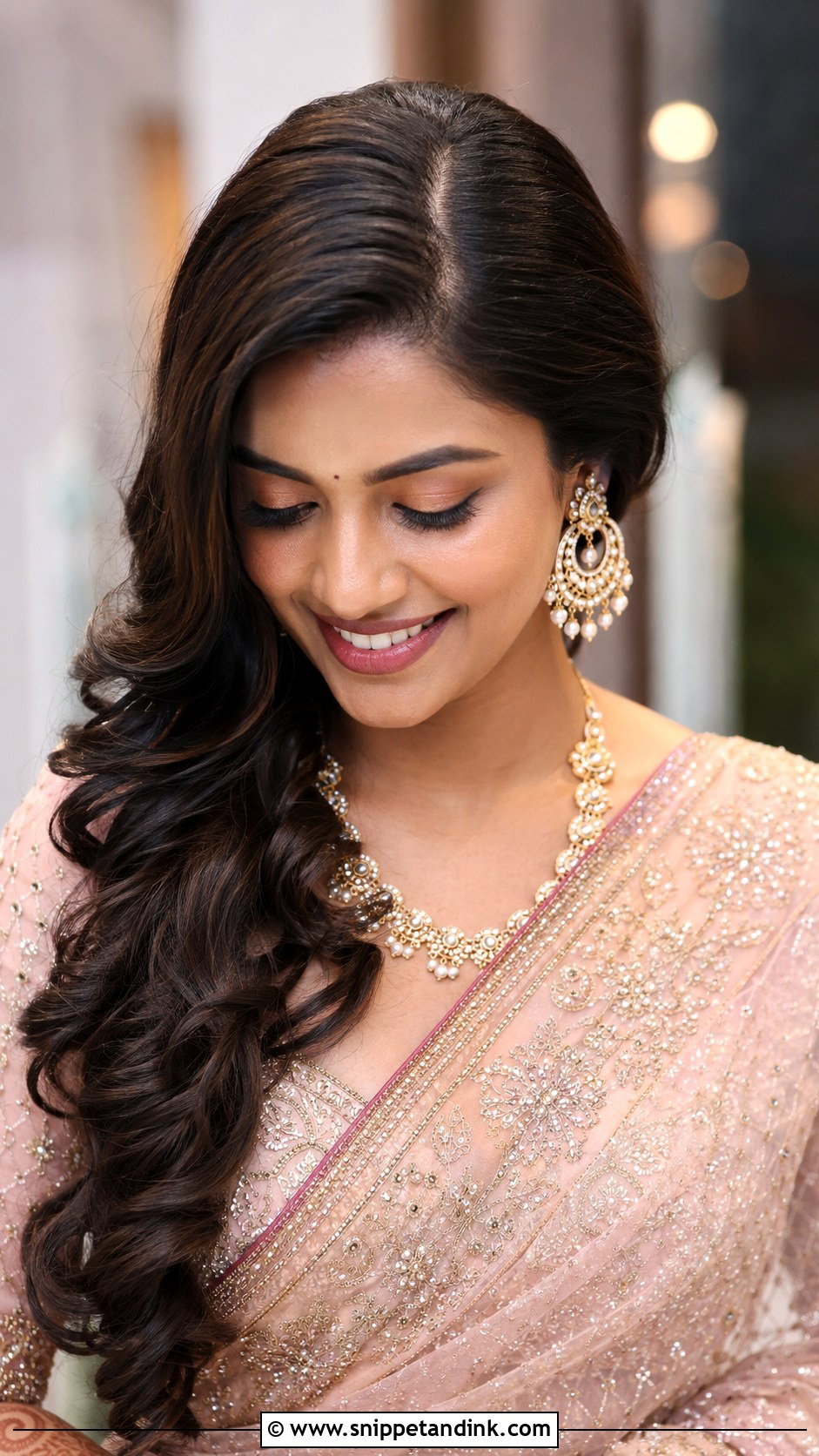
Hollywood-style curls with a deep side parting are for the reception, not the temple. The hair is set in curls all turning the same direction, then brushed into one connected wave over a shoulder. Getting the parting right matters more than the curl. I find the side where your hair naturally falls and go a little deeper than feels comfortable, because the weight of the wave drags the parting back toward the centre over the evening. Keep accessories to one small piece; a heavy reception saree or gown supplies the rest.
12. Floral Crown Braid
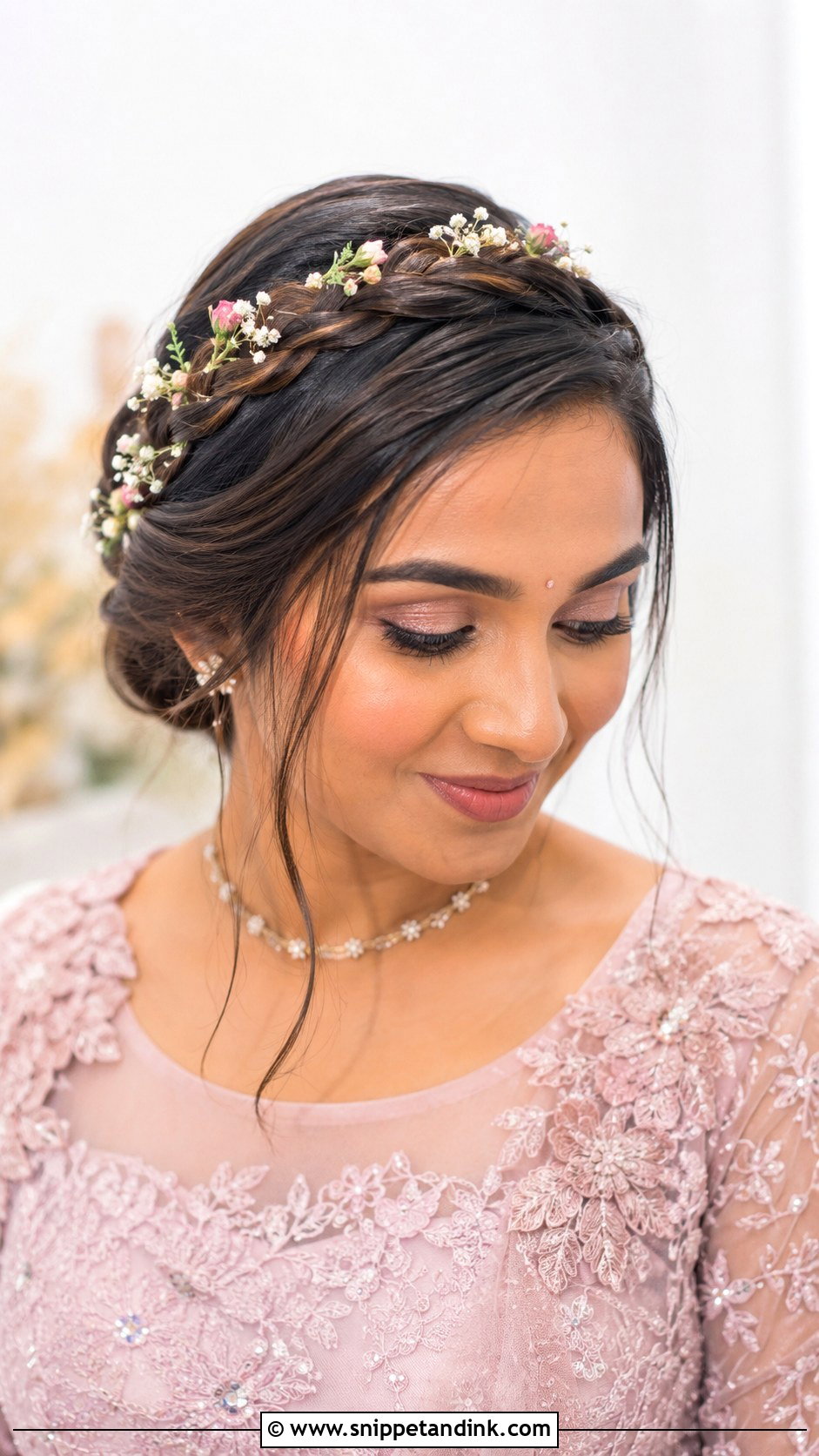
A crown braid wraps over the top of the head like a band and keeps every strand off the face, which helps at a warm daytime wedding. Small flowers are tucked along its length. I usually build it as two Dutch braids meeting at the back, because one braid travelling all the way round needs very long hair to close. On fine hair I gently pull the edges of the braid outward so it looks twice as wide. It sits more naturally with pastel sarees and outdoor ceremonies than with a gold Kasavu and a full temple set.
13. Sleek Bun With Temple Jewelry
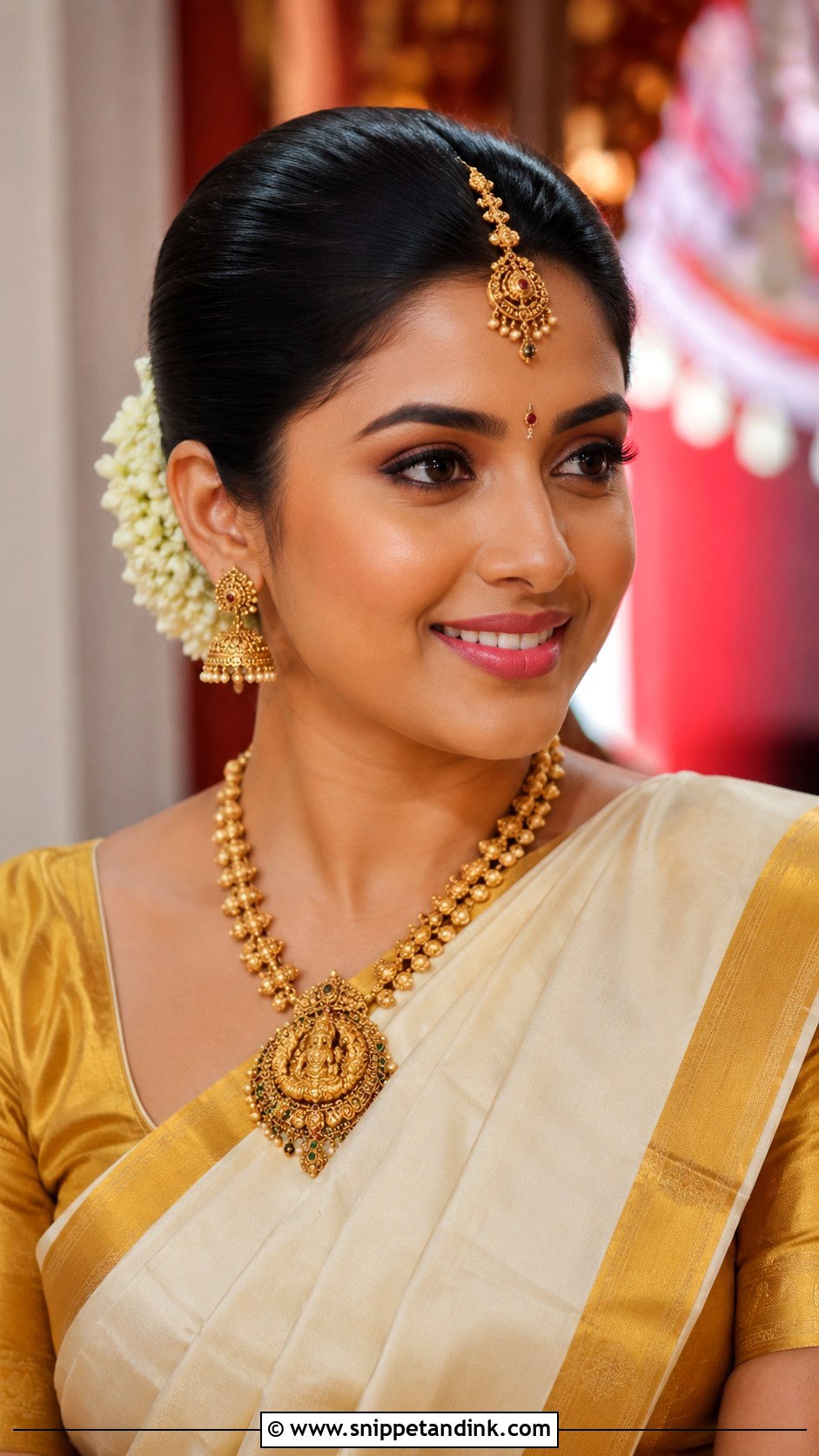
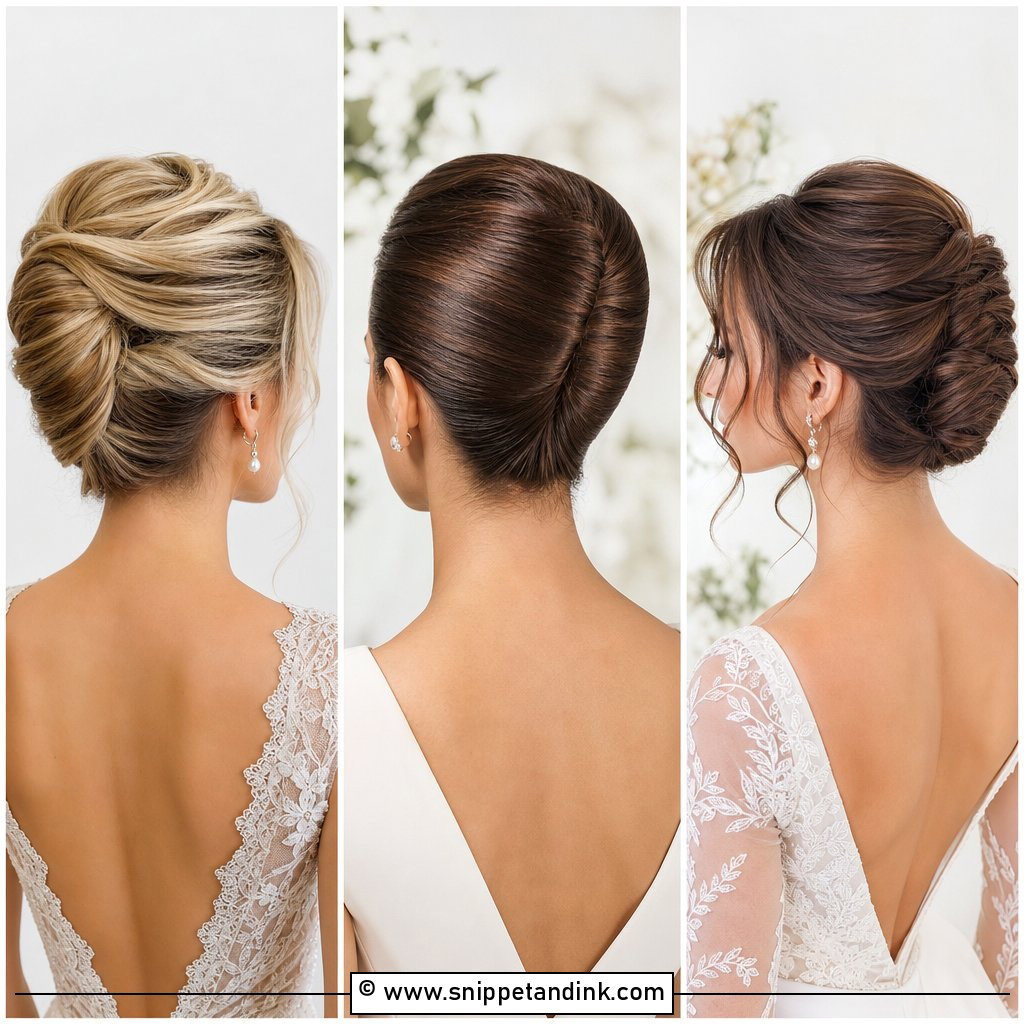
When the jewellery is the main event, with a nethichutti, maang tikka and layered jhumkas, I recommend the sleek bun. Everything is brushed back smooth and coiled tight so nothing competes with the gold, and a small jasmine accent keeps the tradition. It needs smoothing cream and a fine-tooth comb on day-old hair; freshly washed hair is too slippery, and the baby hairs puff up by midday in Kerala humidity. I’d steer brides with thin edges toward something with softness at the front instead.
14. Loose Side Braid With Jasmine
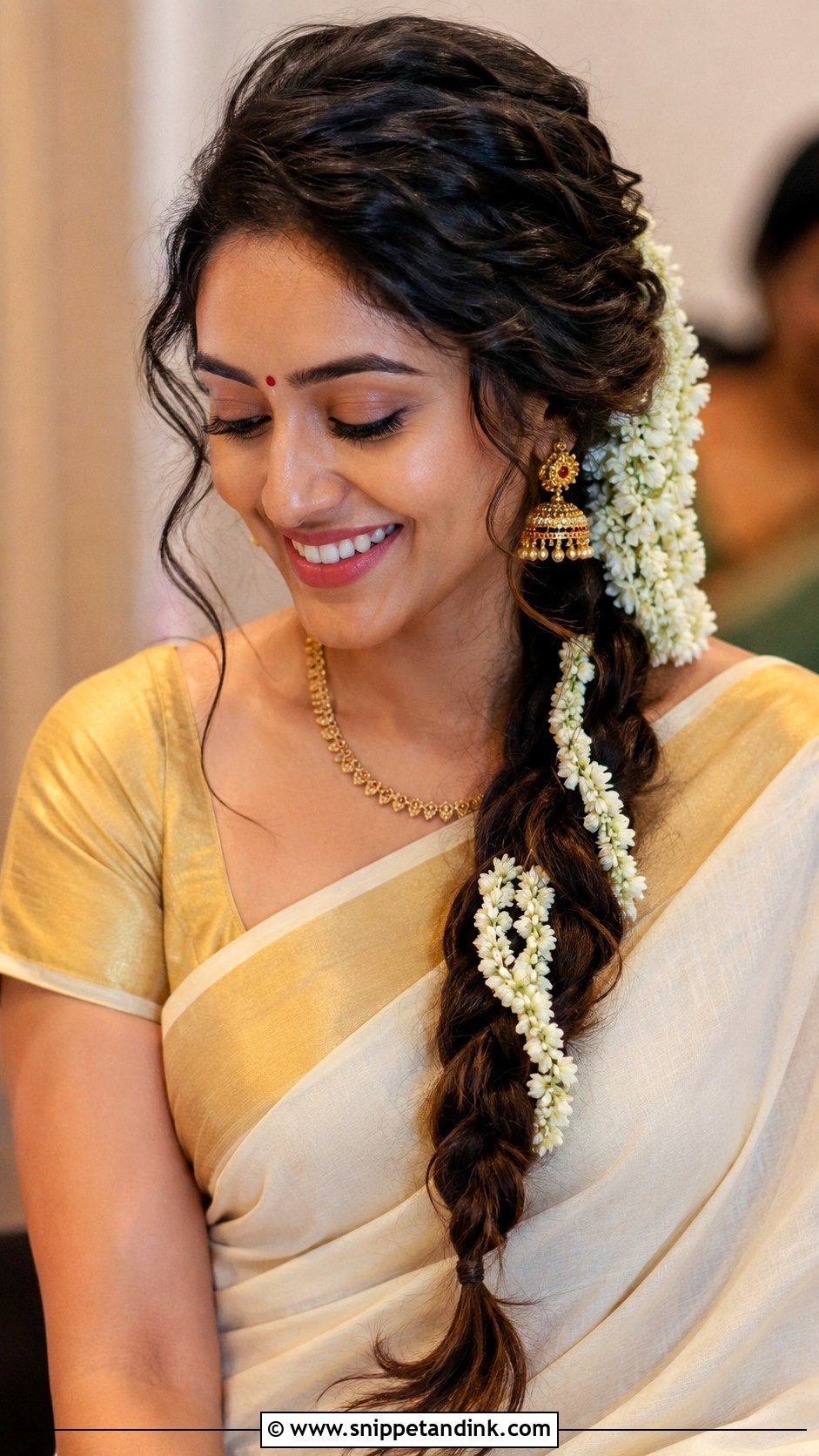
A loose side braid is a plait pulled apart after braiding so it looks fuller, with jasmine strands woven through. It lies over one shoulder and draws the eye to your face and earrings. Since the braid isn’t tight, it relies on a good elastic and a couple of hidden pins at the nape to stop it swinging behind you. I like it for mehendi and engagement functions, when you’re moving around and sitting on the floor and an updo would dig into the back of your head.
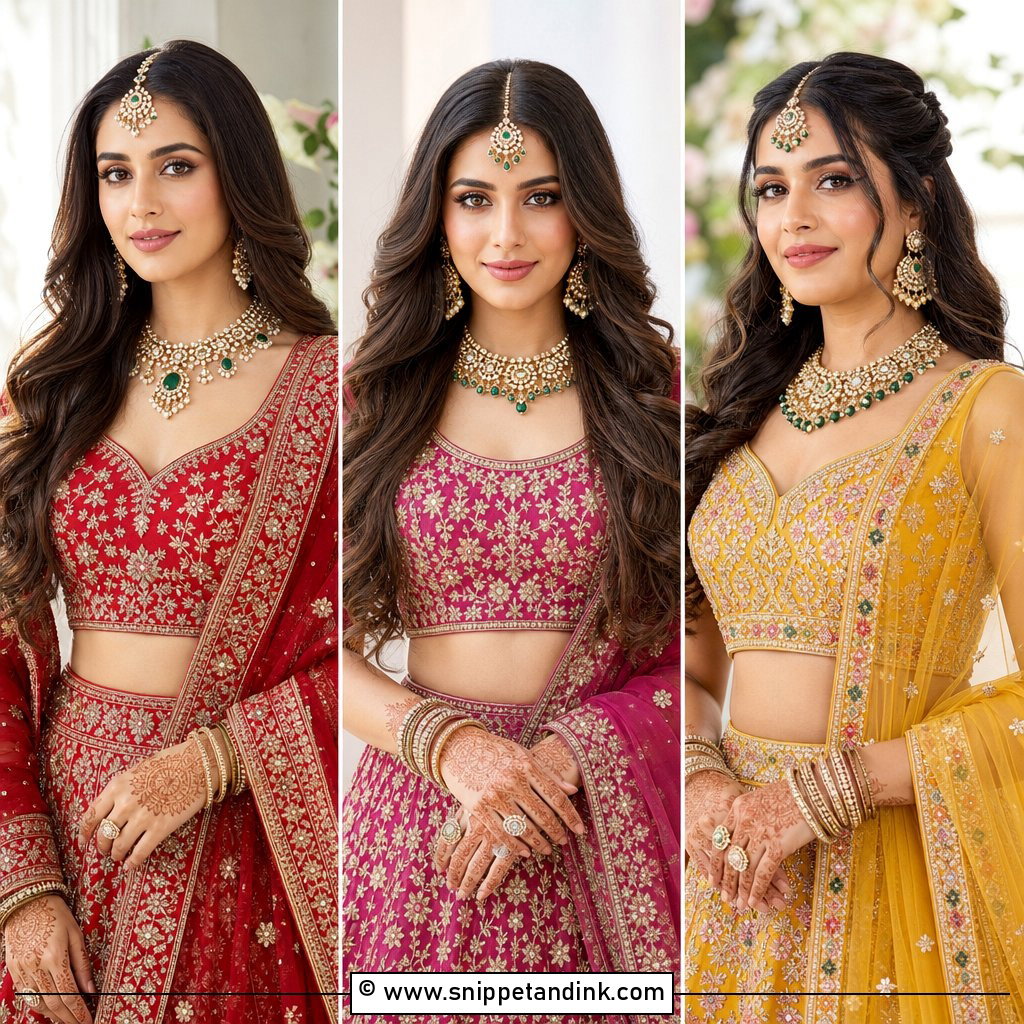
15. High Bun With Floral Gajra
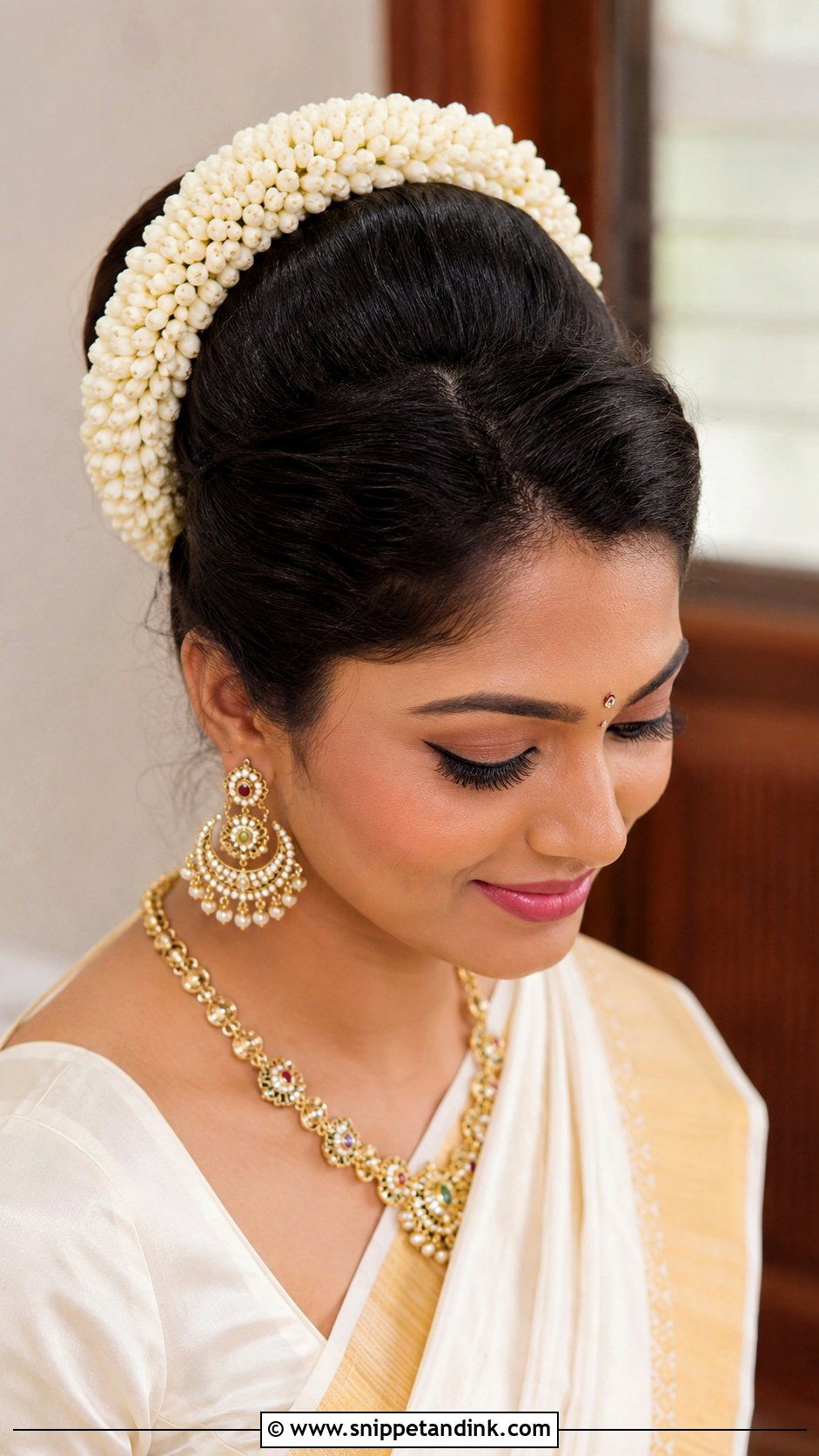
A high bun at the crown adds height, clears the neck and keeps you cooler through a long ceremony. A circular jasmine gajra wraps the base like a wreath. Height is also the risk, because all that weight sits on a small area. I anchor it to a ponytail secured with two elastics and use a bun base if the hair is thin. Pair it with chandbali earrings, and skip it if you plan to drape a pallu over your head, since the fabric won’t sit over a raised bun.
16. Curly Open Hair With Maang Tikka
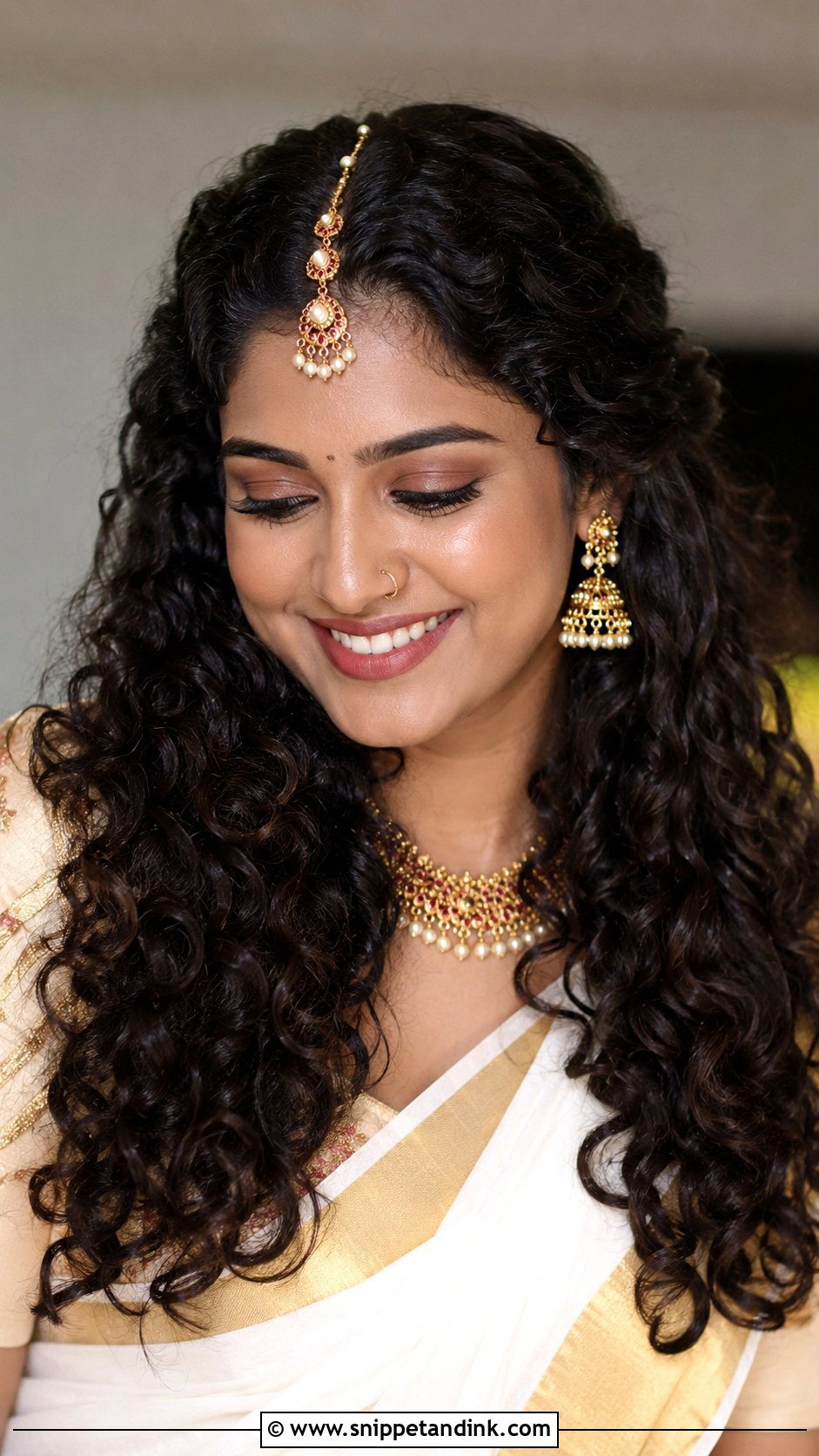
Open natural curls with a maang tikka leave your texture exactly as it grows. I don’t brush curls; I refresh them with a water-based curl cream and a diffuser, then run the tikka chain along the parting with a small clear elastic under the hook so it stays put. Curls lose definition the more they’re handled, so after setting I leave them alone and only reshape the front pieces before photos. Statement earrings work well because nothing is pinned up to hide them.
17. Braided Updo With Pinned Flowers
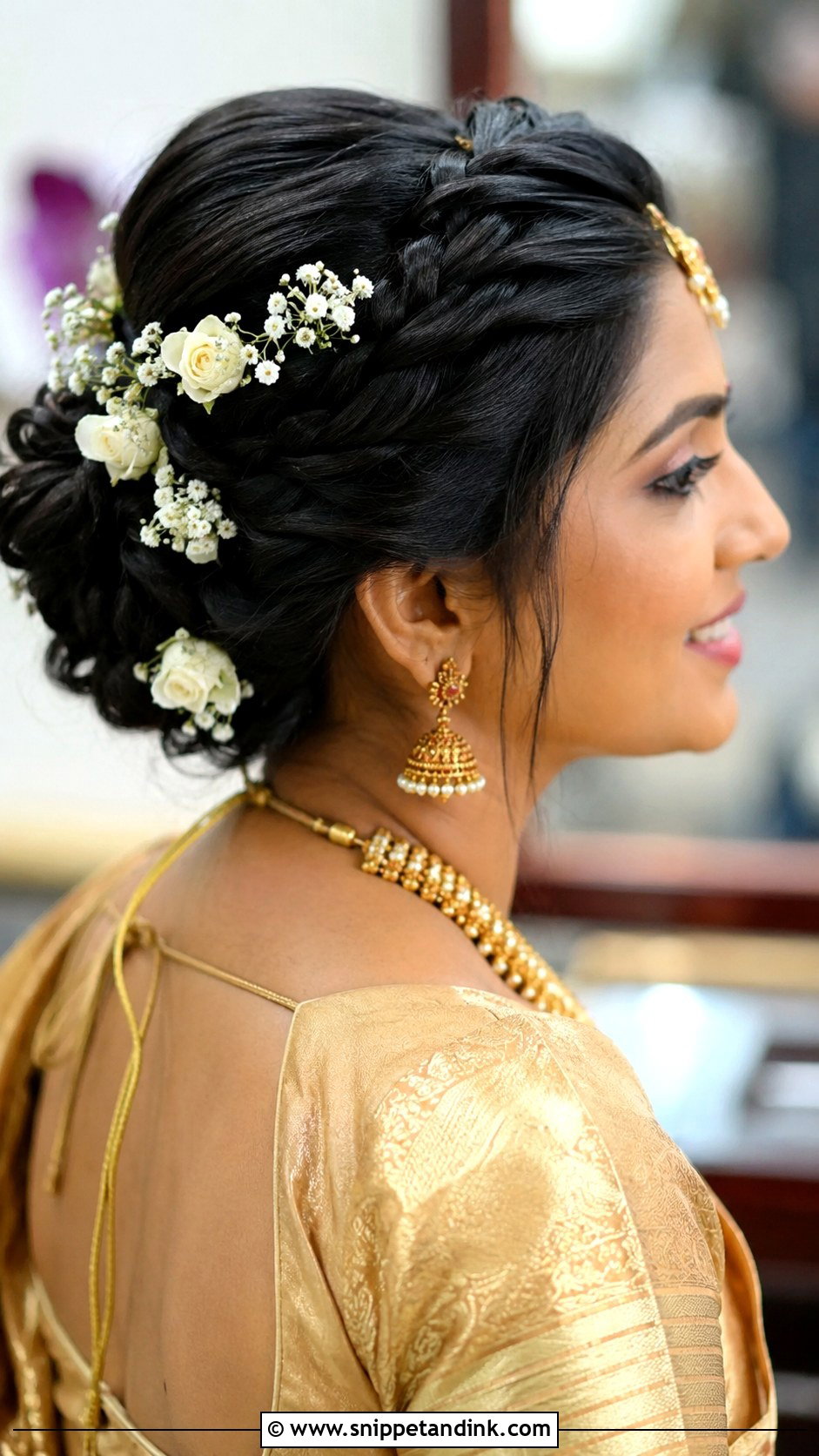
Several small braids twisted and pinned together make an updo with detail you can photograph close up, and tiny flowers sit in the gaps between them. It takes time. I’d plan at least an hour for it on the morning, longer on thick hair, and it’s one I insist on trialling, because the final shape depends on how many braids your hair density can actually make. Once pinned it’s secure enough for dancing and sits well with temple jewellery or a fusion look.
18. Soft Waves With Hair Accessory
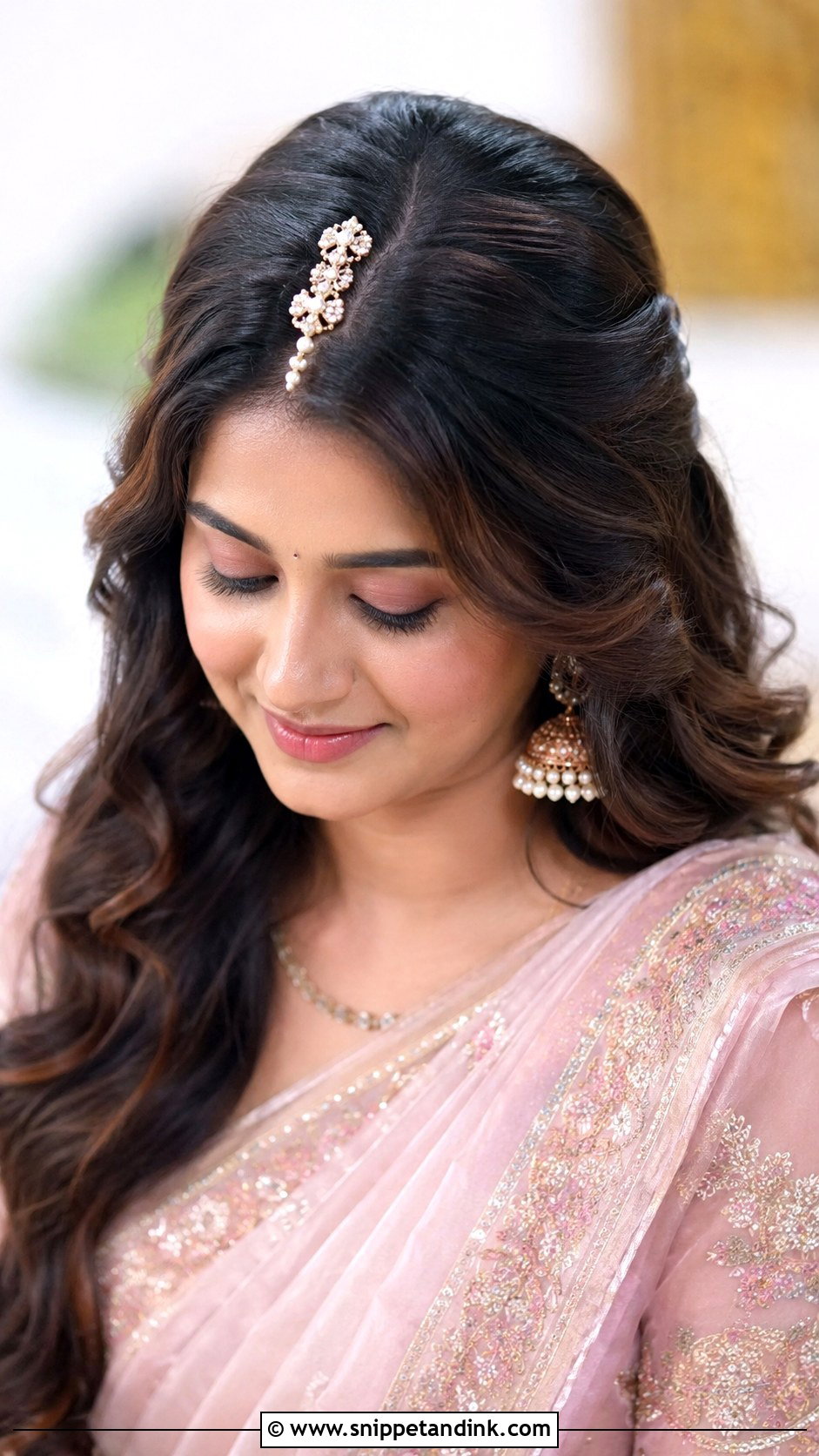
Soft brushed-out waves with a jewelled pin near the parting are a light option for an engagement or reception. The waves are looser than full curls, and the pin is the only sparkle. Placement is the whole trick: I put the pin slightly behind the hairline, in line with the outer corner of the eye, so it shows from the front and not only in profile. If it loosens later, it’s easy to re-pin yourself in the restroom mirror.
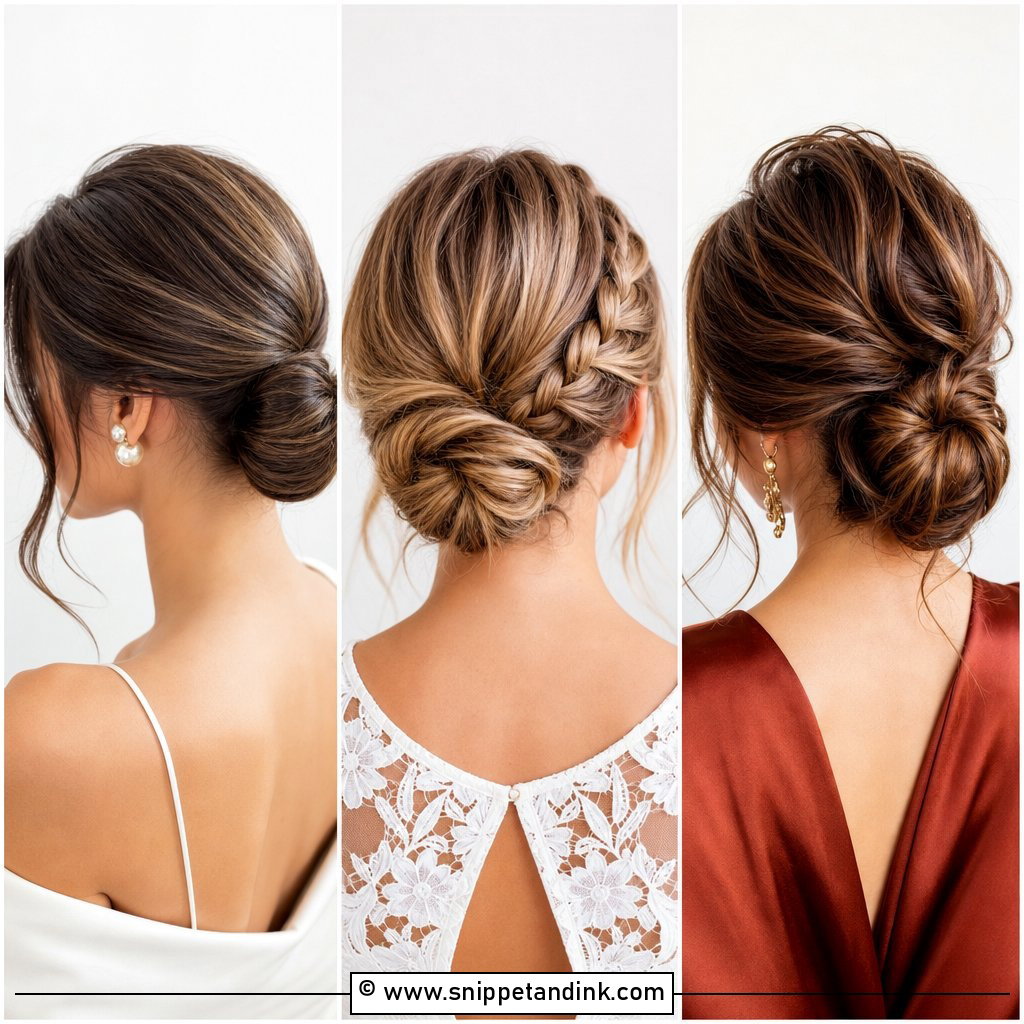
19. Donut Bun With Jasmine Wrap
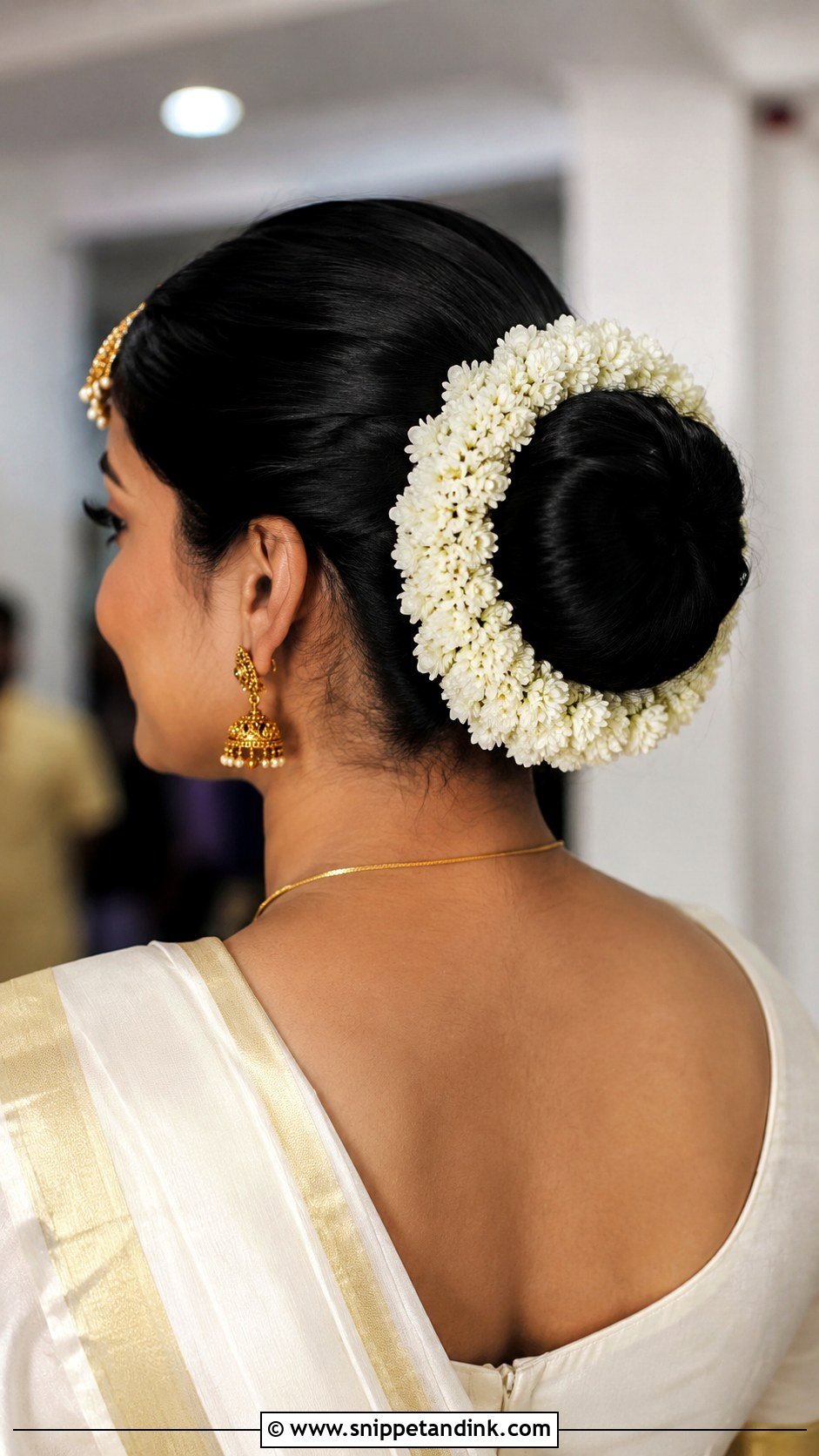
A neat donut bun wraps the hair smoothly around a foam base for a round, full shape, with a jasmine garland circling it. This is my default for fine or thin hair, because the base supplies the volume the hair doesn’t have. Match the base to your hair colour and let the flowers cover any thin patches. It stays tidy for formal Hindu ceremonies with temple jhumkas and a maang tikka.
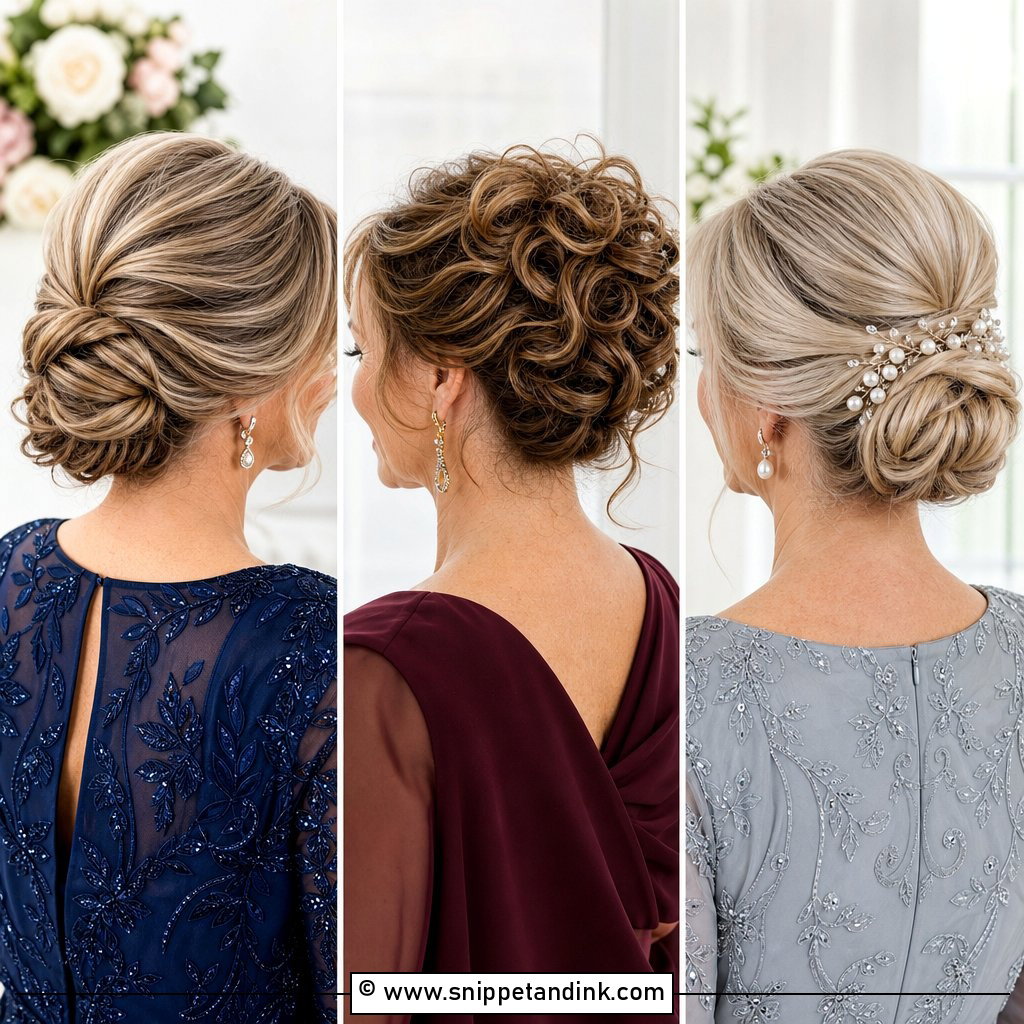
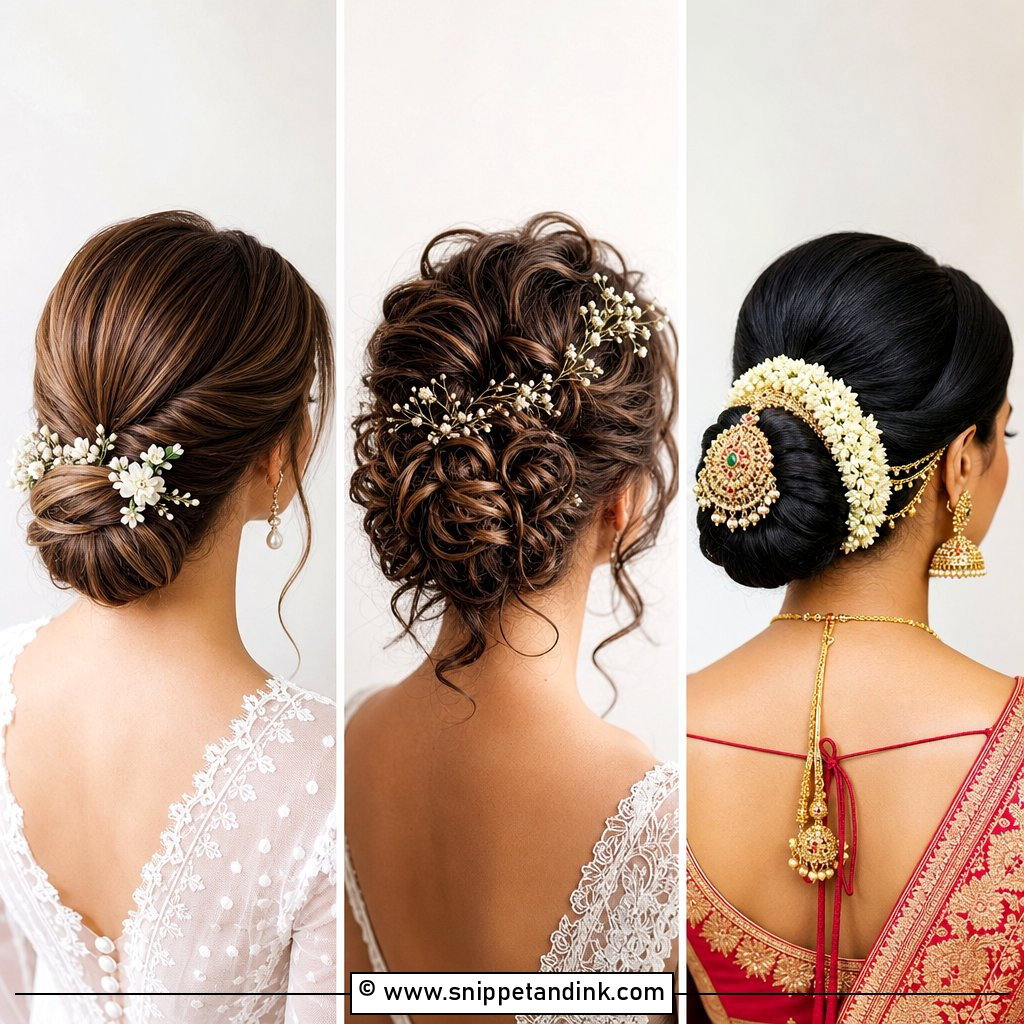
20. Twisted Half Updo With Curls
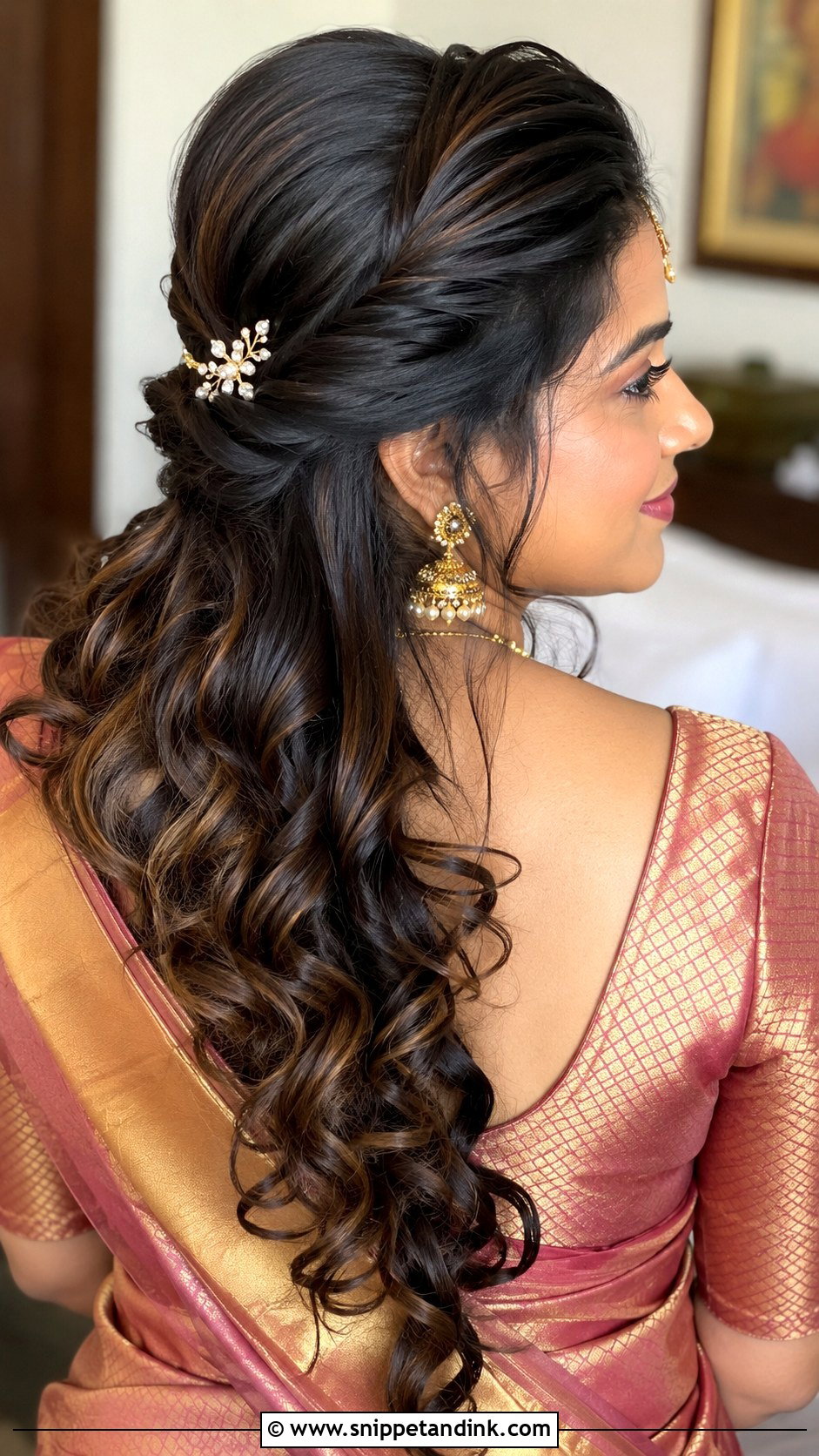
Twisted side sections meet at the back while curls hang loose below, so the face stays clear and your length still shows. A small flower or jewelled pin hides the meeting point. I pin the twists across each other in an X rather than side by side; pinned in a line, they loosen the first time you turn your head. It works for a reception or engagement with a saree or a gown.
21. Bun With Cascading Flower Strands
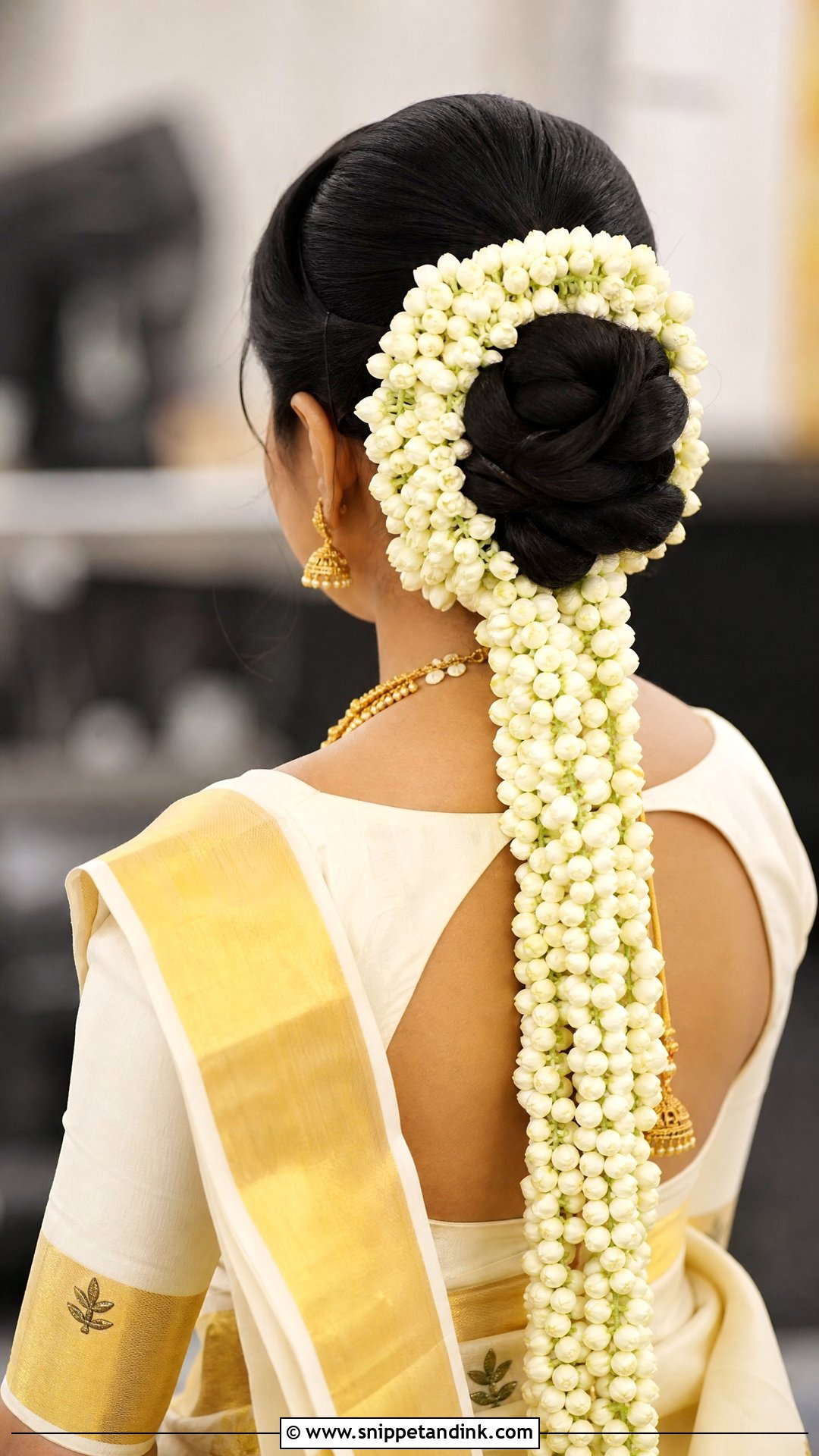
A tight bun with long jasmine strands falling down the back is the most flower you can wear, hanging behind you almost like a veil. That weight is serious: several long strings of fresh jasmine pull backward all day. I build it on a firm ponytail and pin the strings into the ponytail itself, not just the surface of the bun, or the whole thing tilts by lunchtime. It’s made for grand Hindu ceremonies with a gold Kasavu and temple jewellery, and it’s the style where the photos from behind matter most.
22. Sleek Low Ponytail With Flowers
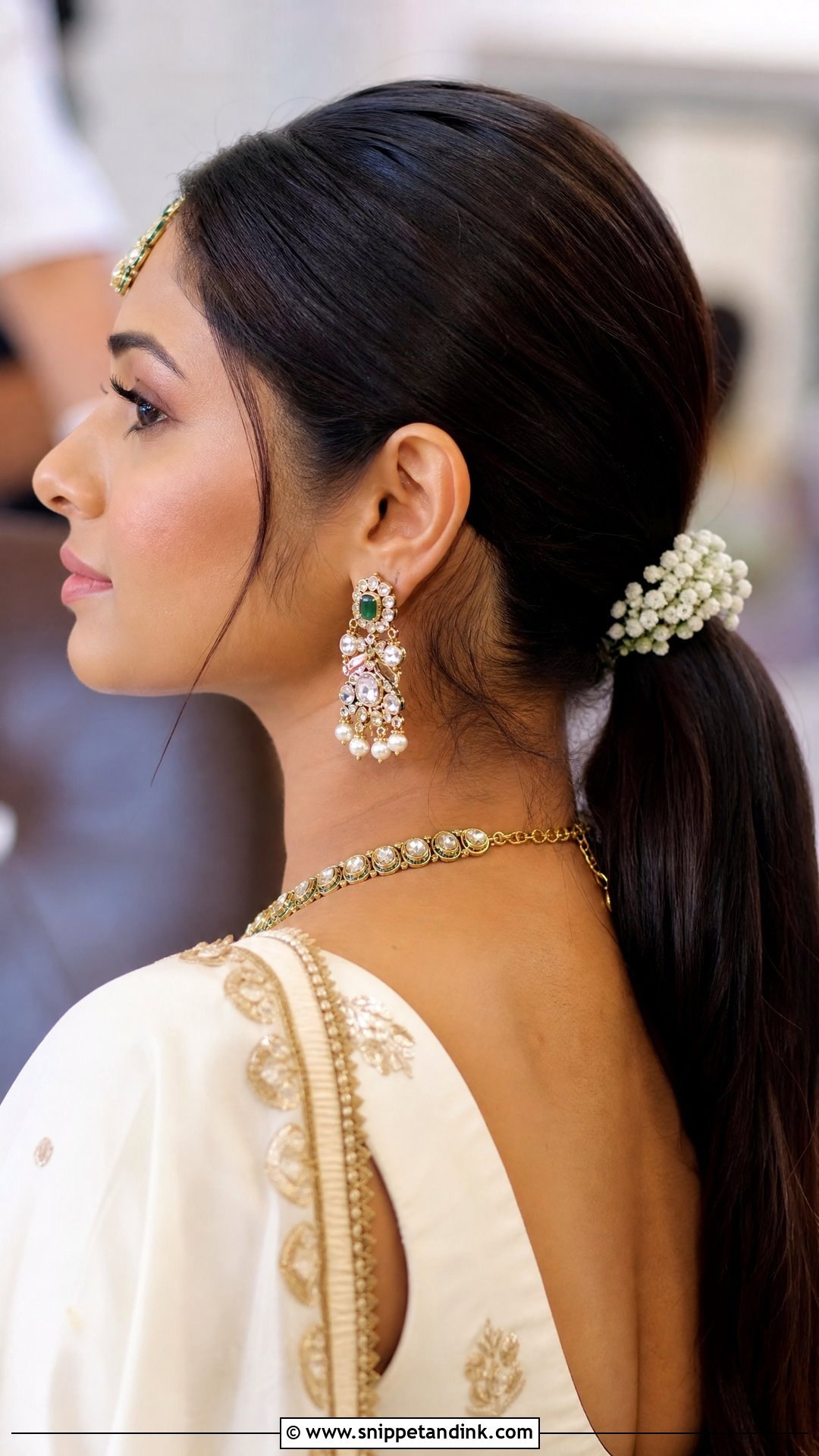
A sleek low ponytail is the modern option: hair smoothed back, tied at the nape, a small jasmine wrap at the base. I wind a strand of the ponytail around the elastic before adding flowers so the band never shows. It’s quick to wear but less forgiving of flyaways than a bun, so I’d save it for a fusion look or a reception where the outfit and jewellery do most of the talking. It suits any face shape because it’s so close to the head.
23. Braid With Floral Hair Vine
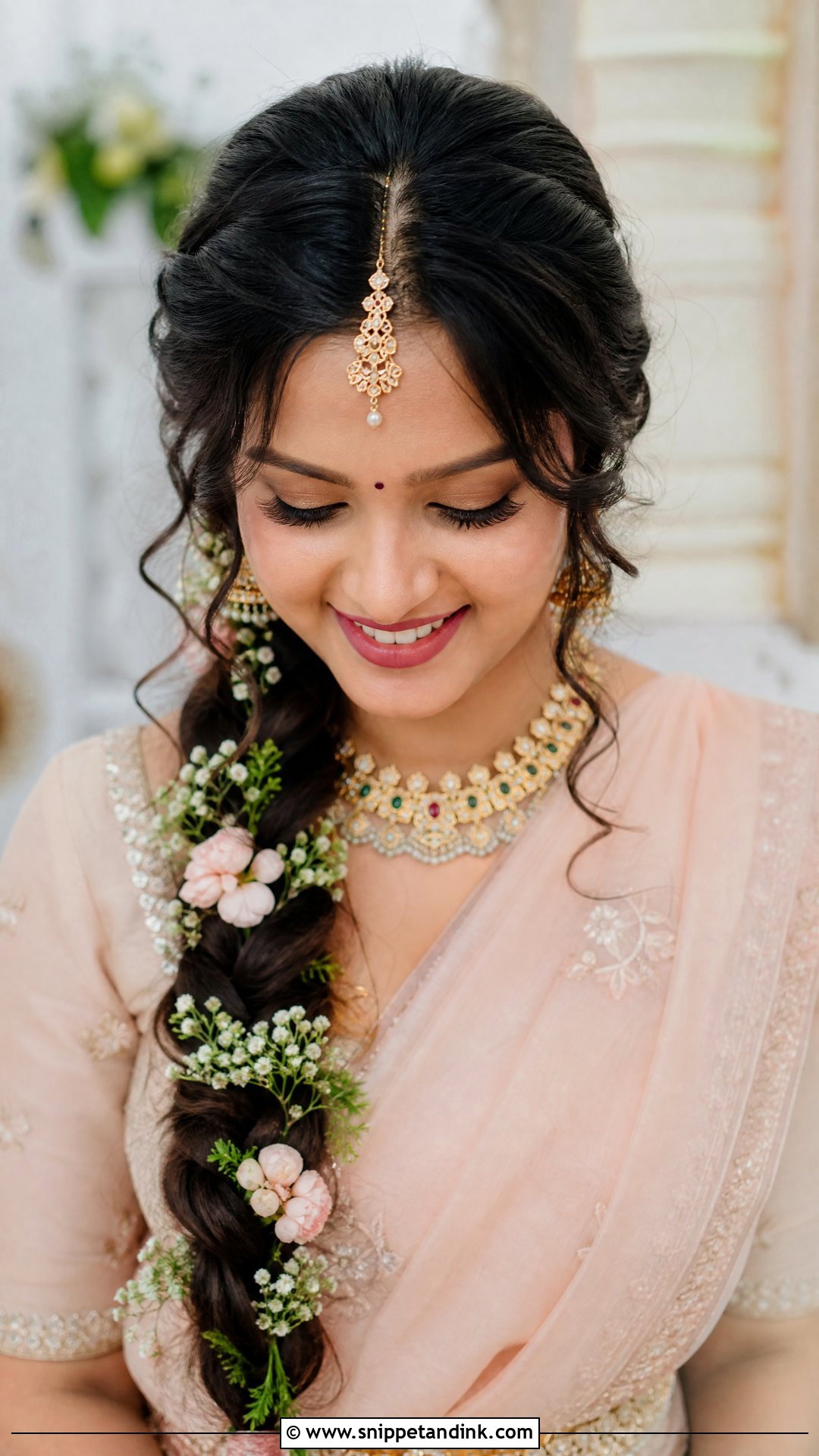
A floral vine woven along a soft braid brings greenery and tiny blooms into the hair. For a daytime outdoor function I lean toward vines made of fabric or wired dried flowers, because fresh greenery can wilt quickly in direct sun. The braid sits loose over one shoulder. It fits an engagement, mehendi or garden ceremony with a pastel saree or a flowing gown.
24. Voluminous Open Hair With Curls
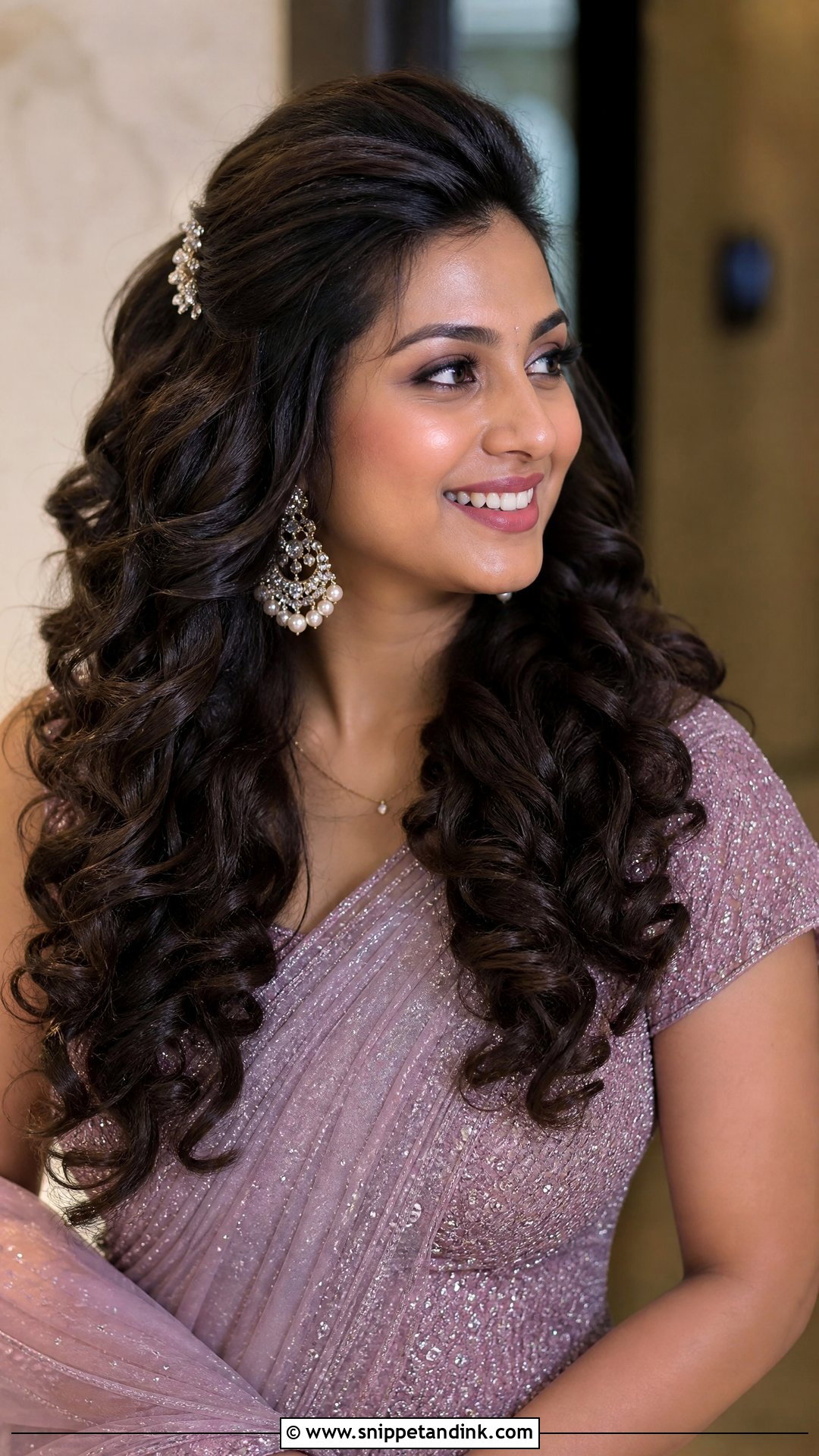
Big volume at the crown with curls all the way down is a reception look that carries across a large hall. I backcomb only at the roots of the crown, smooth the top layer over it, then set the curls with enough hold to last through the dancing. Full volume can swamp a small face or a petite frame, so for those brides I keep the sides closer to the head. Chandbali earrings and a deep side parting suit it.
25. Bun With Pearl and Flower Detailing
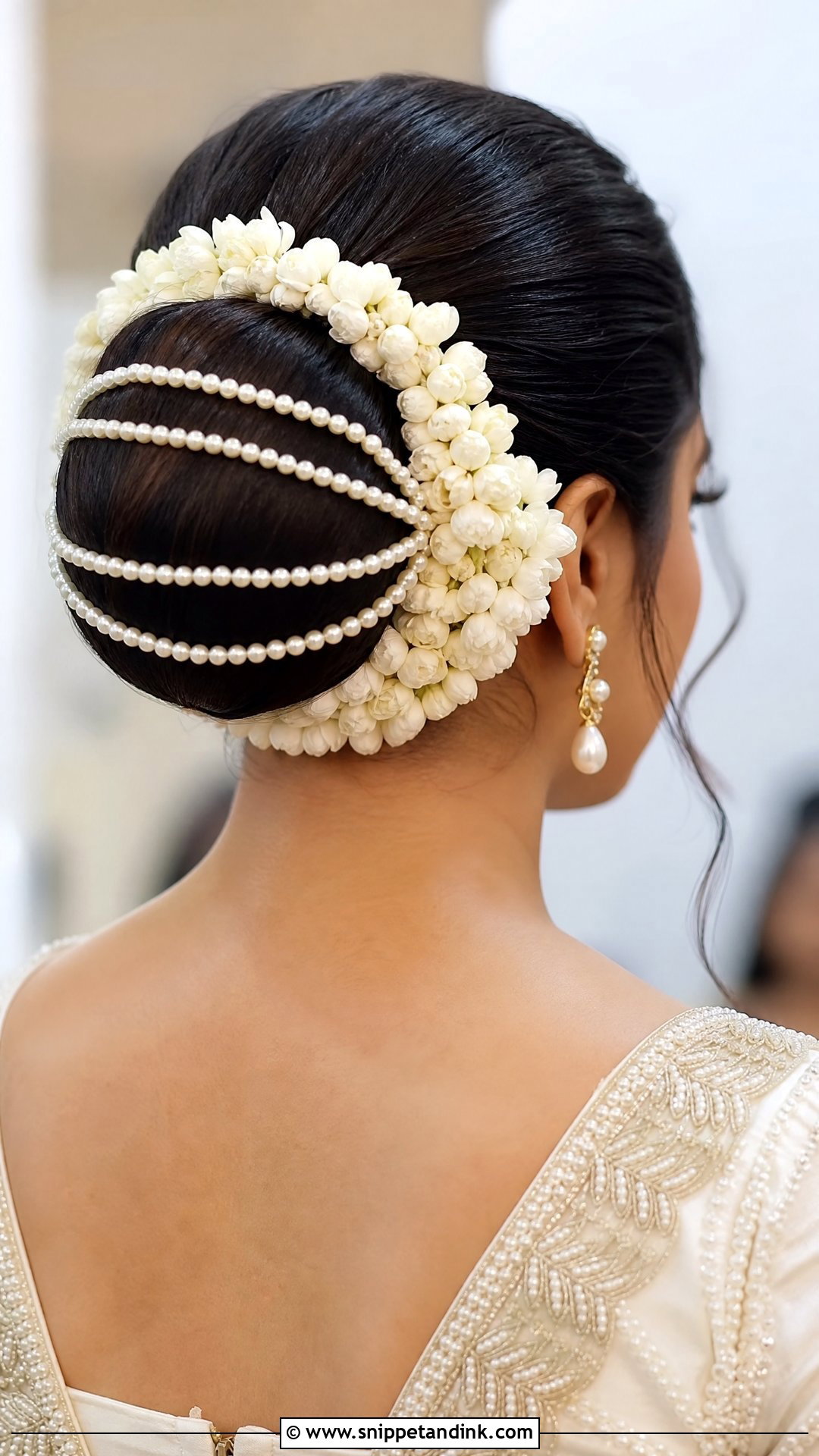
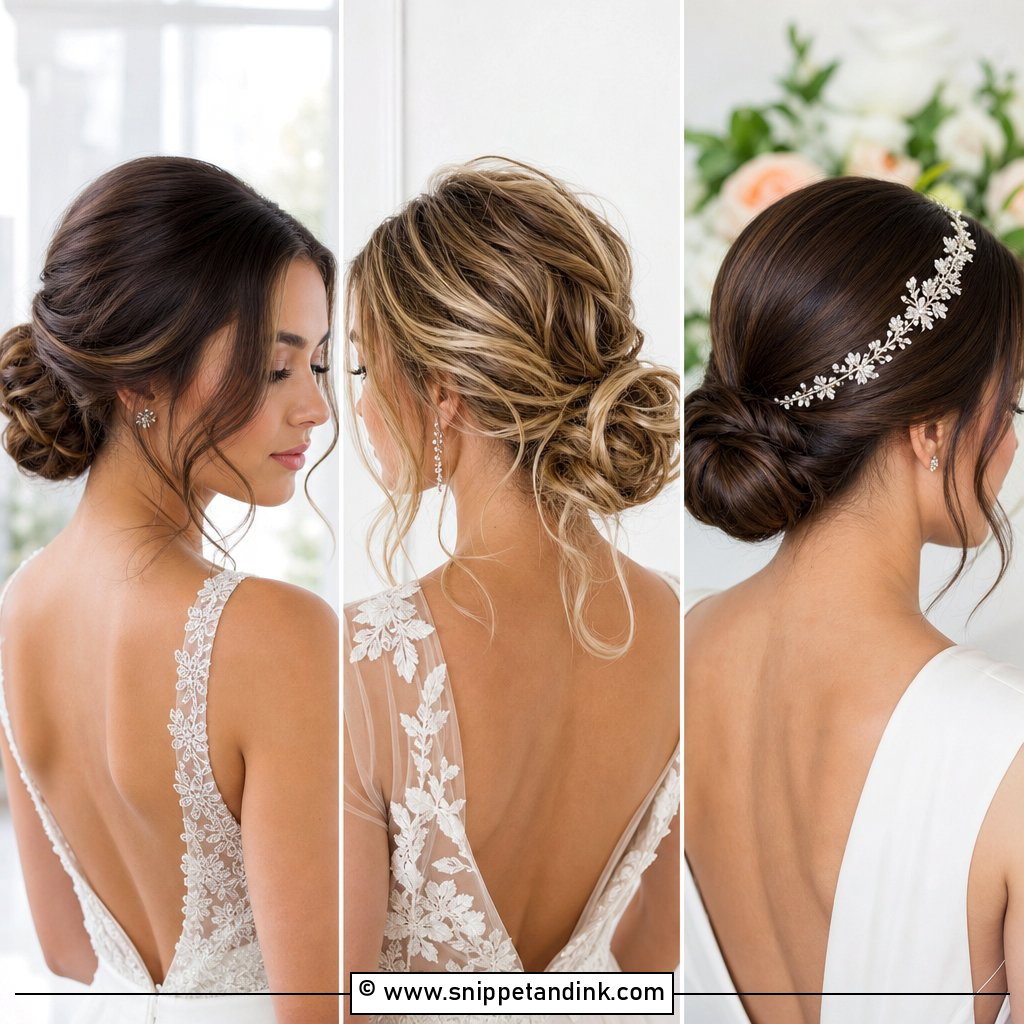
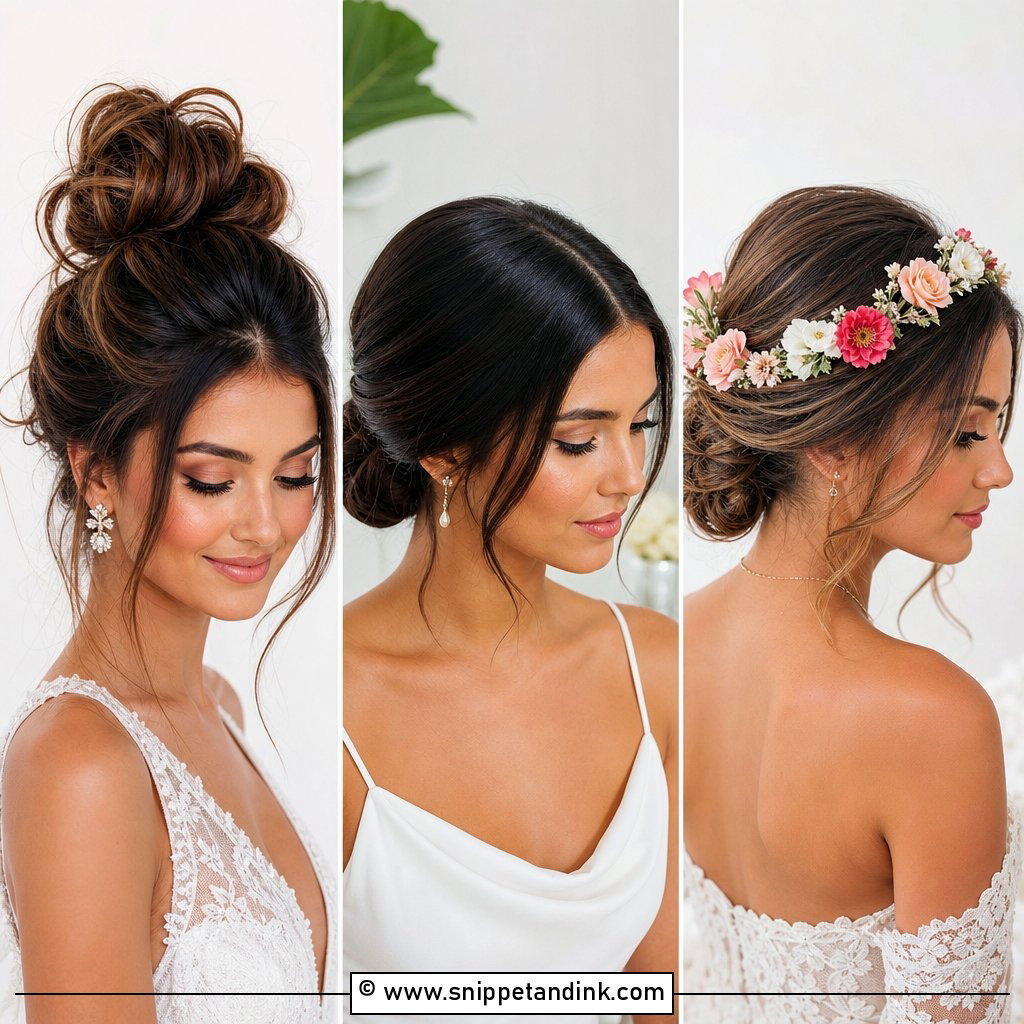
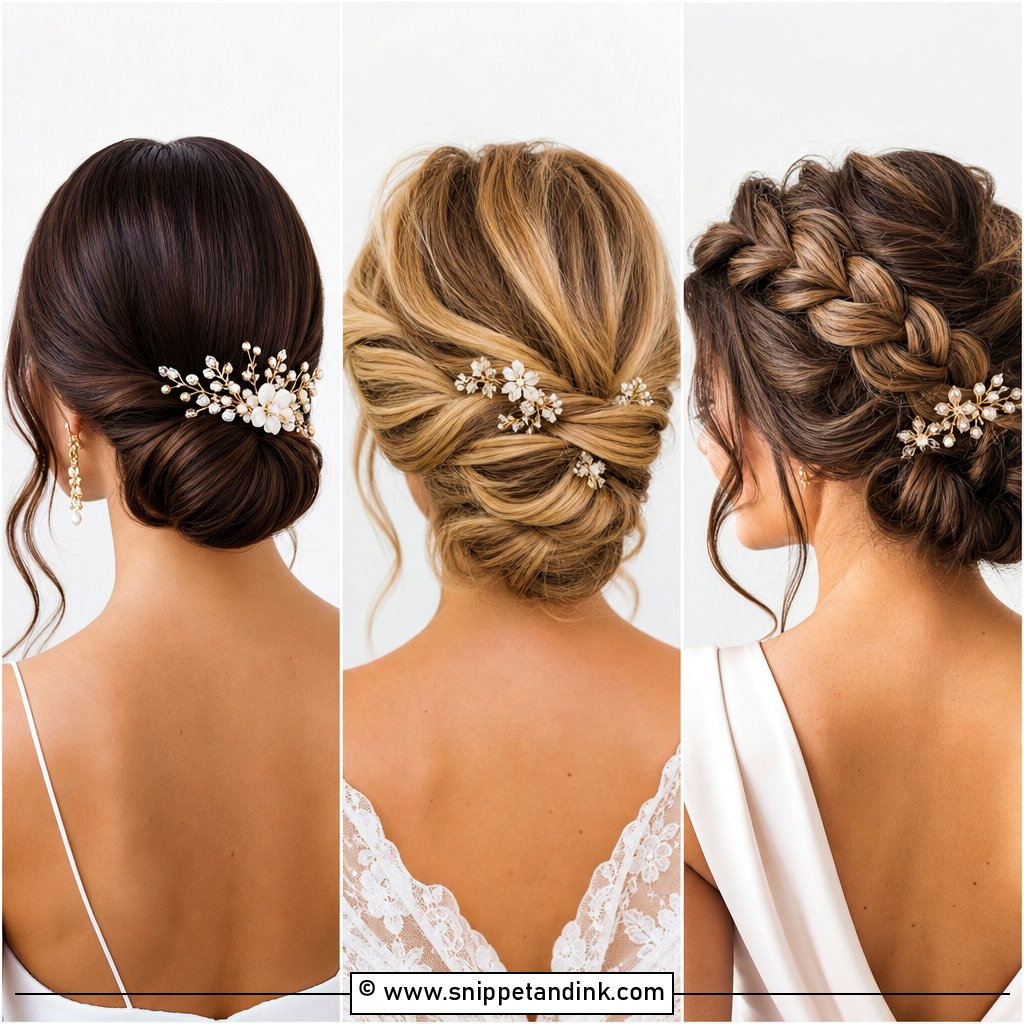
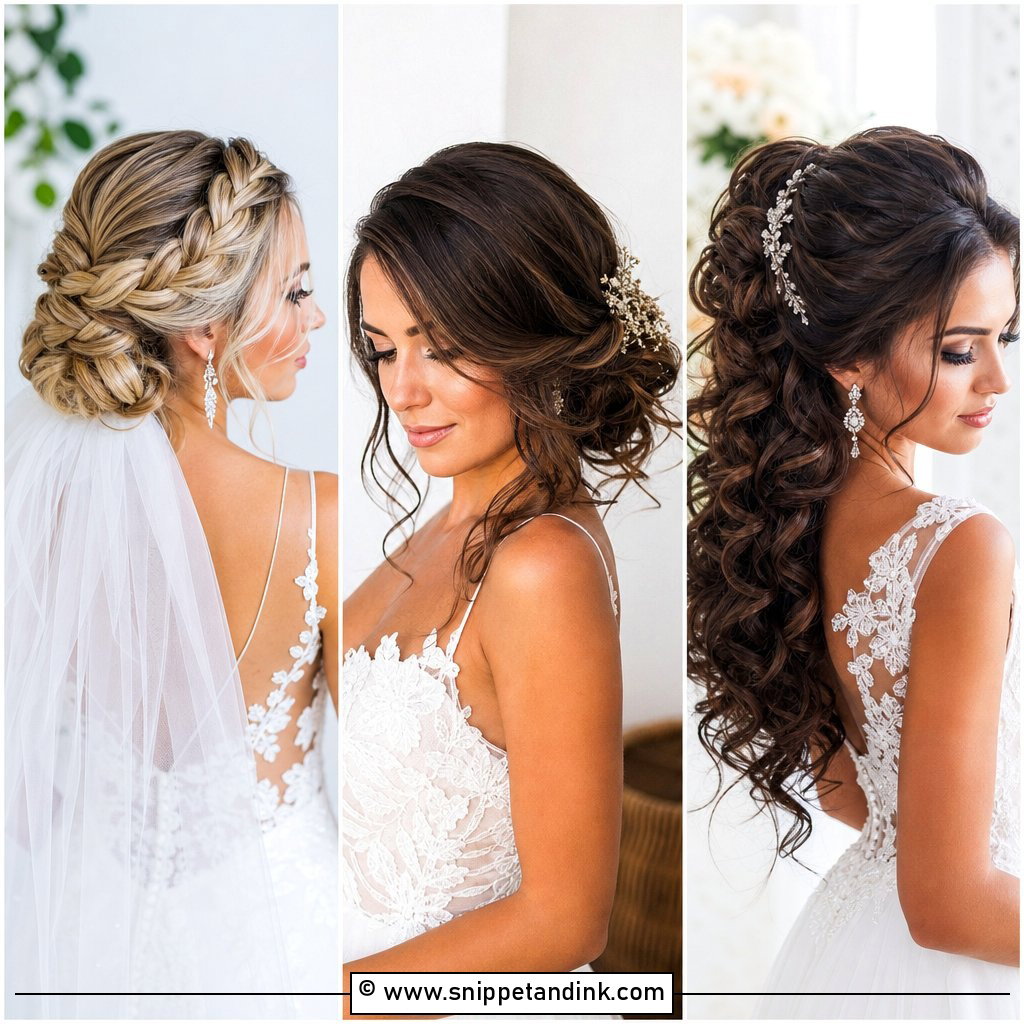
Pearls woven among jasmine on a smooth bun give a quiet shimmer, and pearls last far longer than flowers. I pin the pearl strands first, hooking small pins through the string, and add the jasmine around them, so if the flowers tire by evening you can pull them out and still have a finished bun. It suits Christian Kerala weddings and Kasavu sarees alike, especially with matching pearl earrings.
26. Loose Braid With Curled Ends
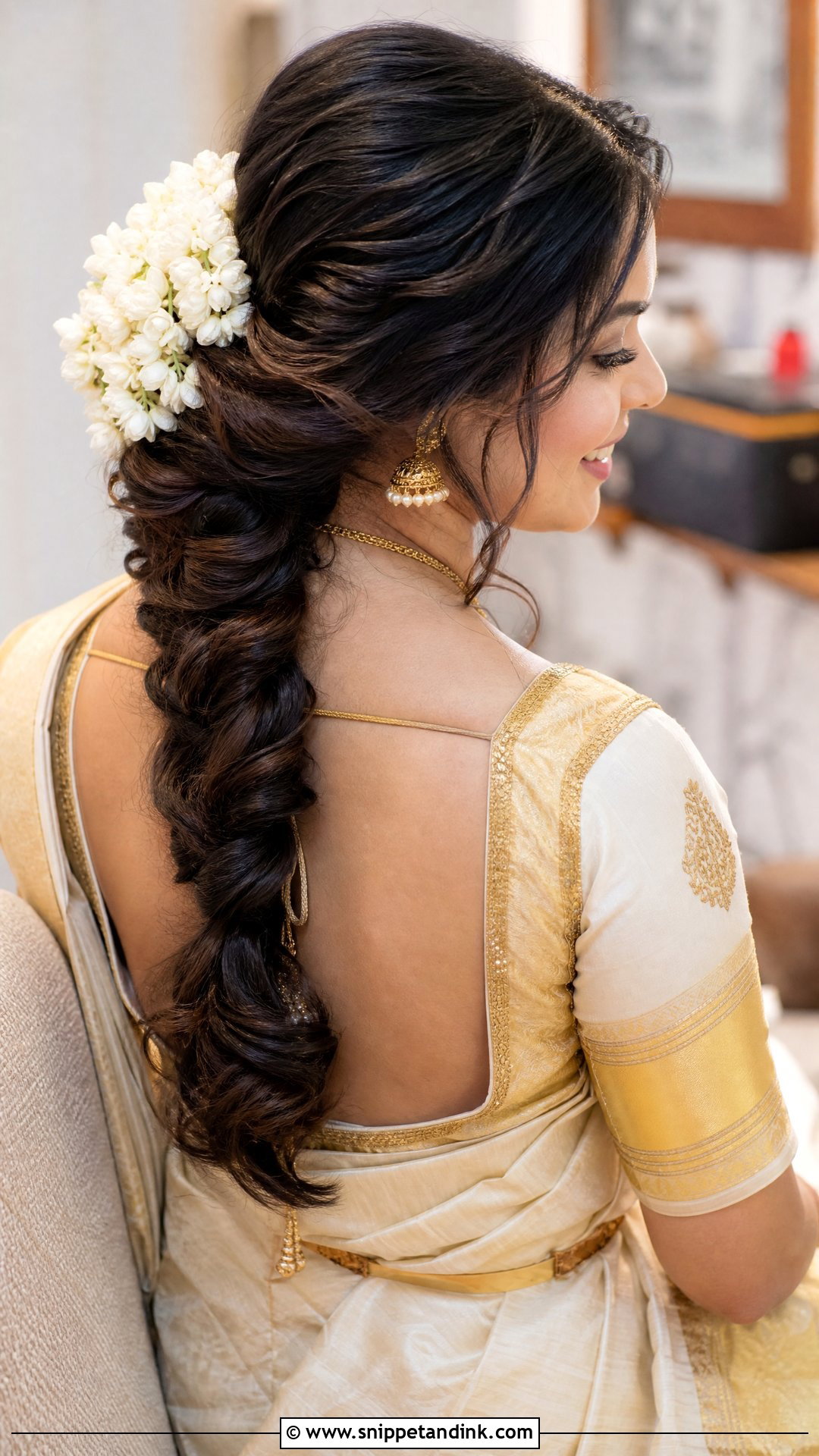
A loosely woven braid, pulled apart for fullness, ends in a tail curled into soft waves, with a few flowers tucked along it. It’s comfortable for daytime functions like the mehendi, when you’re sitting and moving for hours. The curled tail is always the first part to drop, so I curl it in smaller sections than the rest and spray it before it cools. Natural texture helps here, and it sits well with a saree or a lehenga.
27. Floral Bun With Maang Tikka
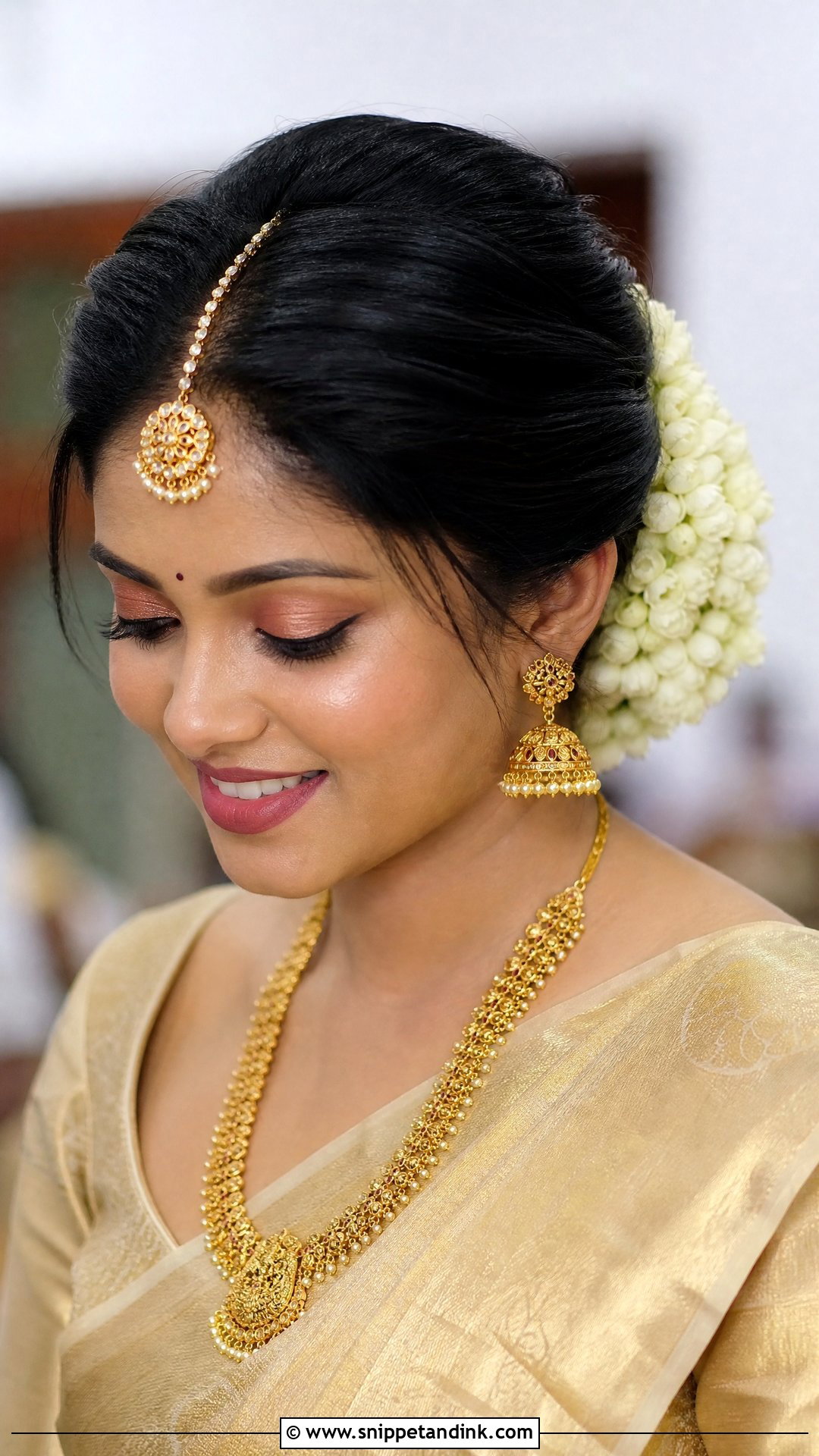
A jasmine-wrapped bun with a statement maang tikka is the classic Hindu bridal pairing: the tikka centres the face while the bun keeps the hair tidy through hours of rituals. I secure the tikka before the bun goes up, with its chain pinned along the parting and a hidden pin at the crown, so it doesn’t swing forward when you bow your head. Finish with temple jhumkas and a gold saree.
28. Wavy Side Swept Open Hair
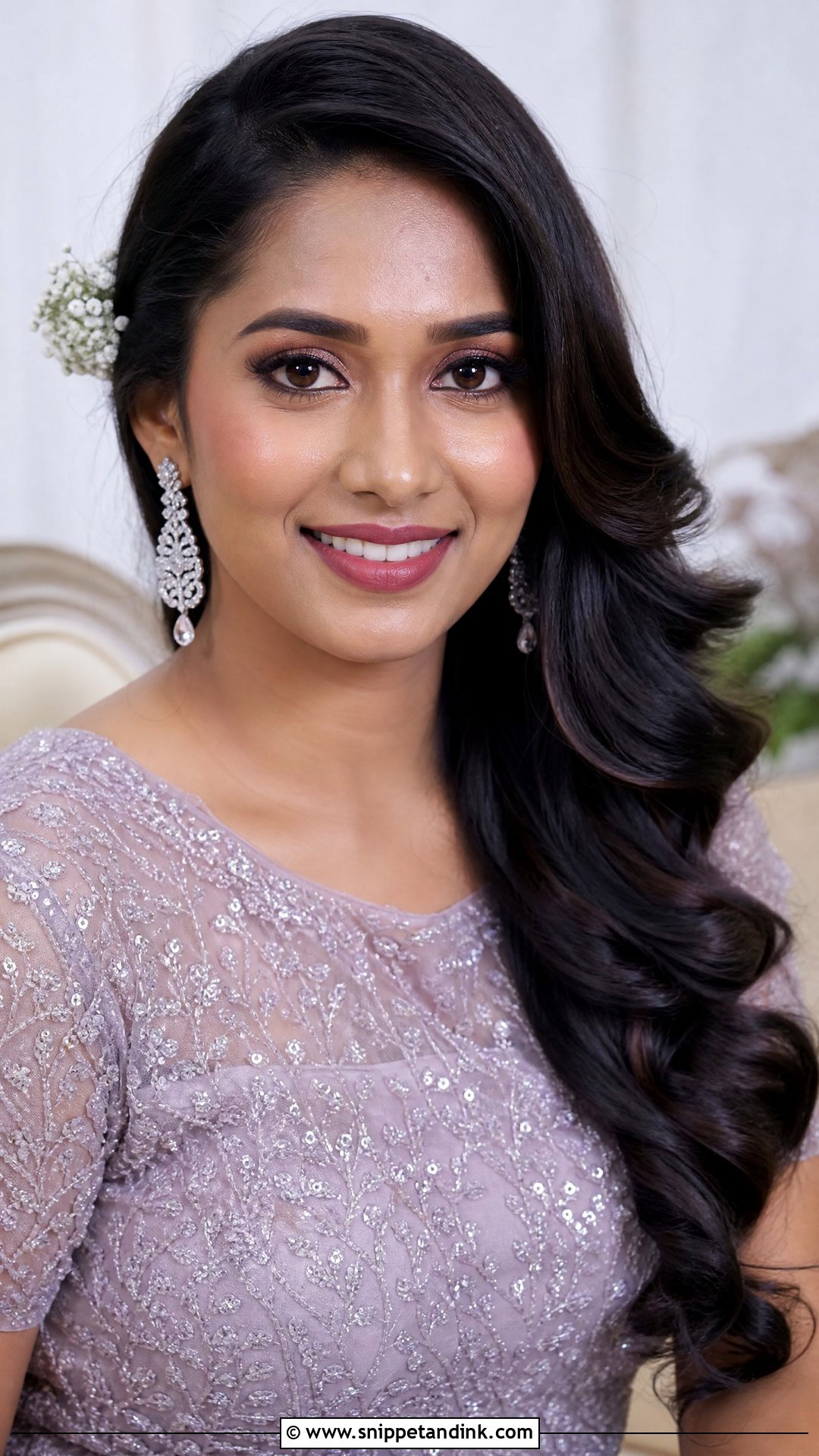
Sweeping all the waves to one side leaves the other side of the neck bare and frames the earring there. A small flower near the parting is enough. To stop the hair drifting back to the centre, I set a few hidden bobby pins in a criss-cross behind the ear on the bare side; without them the style flattens out within the hour. It’s for evening receptions and engagements when you’d rather not wear an updo.
29. Braided Updo With Floral Band
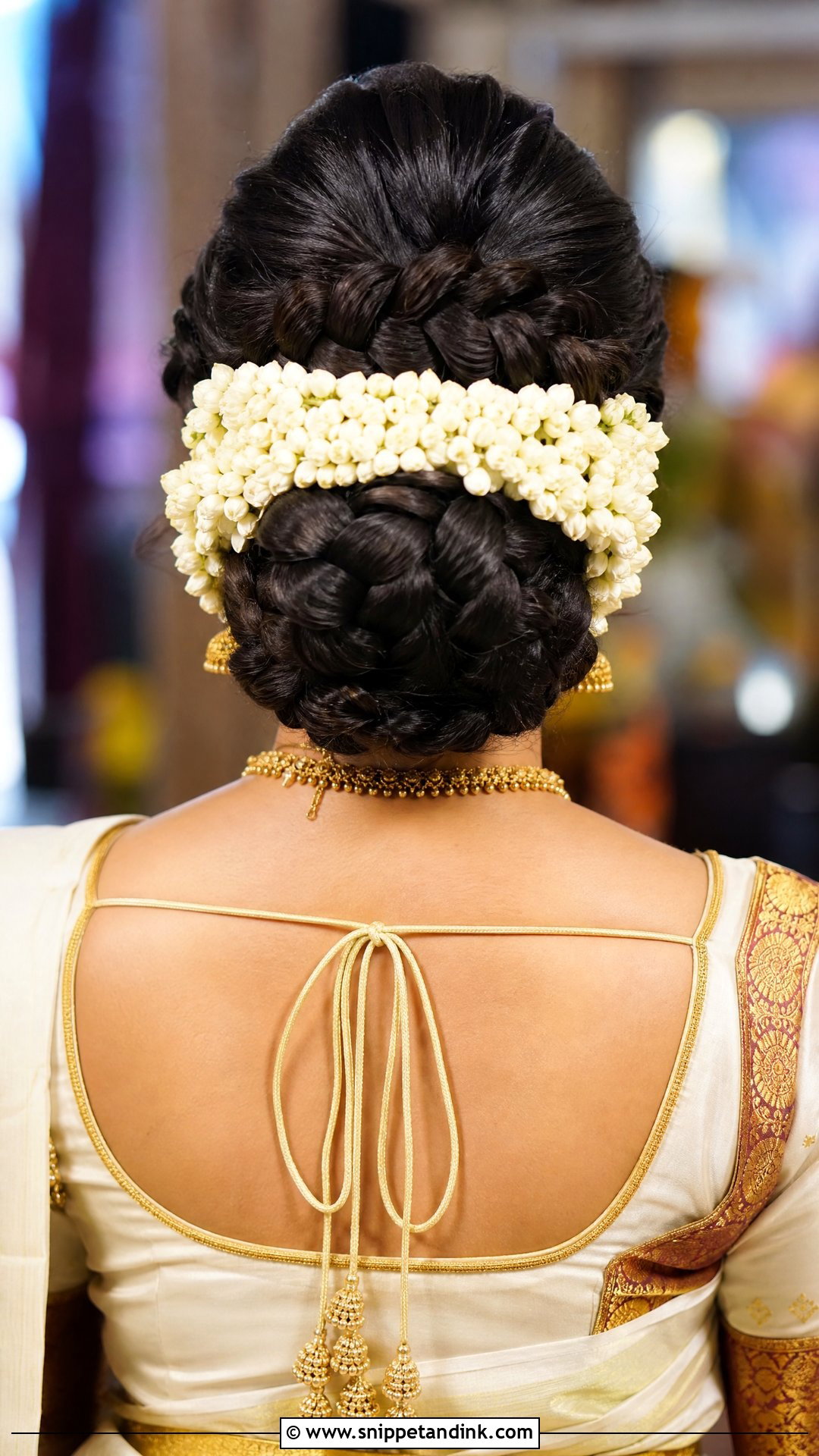
Braids arranged into a neat updo, finished with a band of jasmine across the back, keep the hair completely off the neck. In a Kerala summer, with silk on your shoulders, that matters. The braids have to be pinned flat before the flowers go on, so I check the shape with a hand mirror from behind before adding the jasmine. It holds through a long ceremony and dancing later.
30. Soft Curls Half Updo With Jasmine
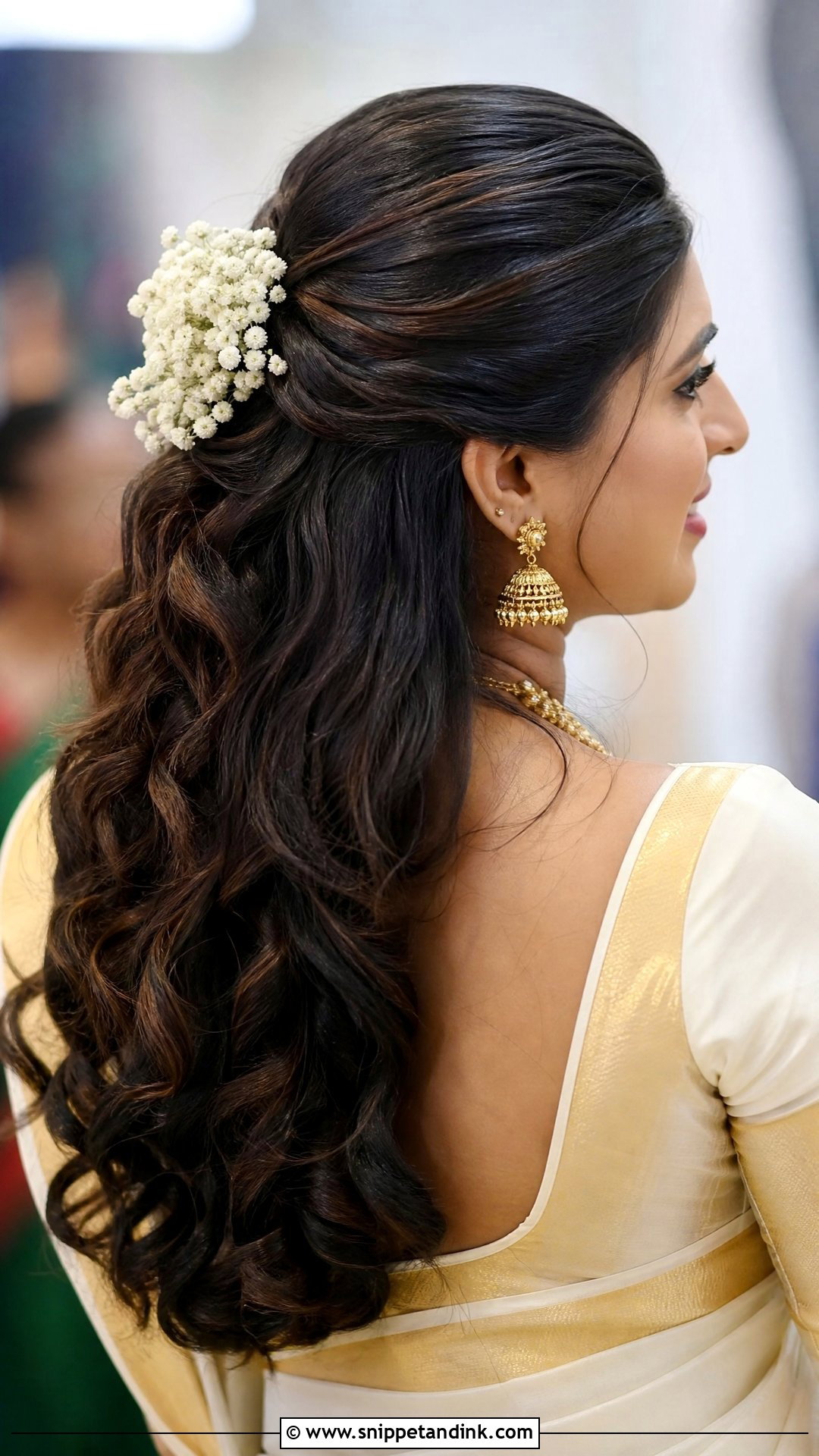
To close the list, a half updo with the top twisted back and pinned, soft curls below and a small jasmine cluster at the crown. It shows curls and length while keeping a finished crown. I keep the curls pinned up in rolls until just before you leave, then release them, which buys an extra hour or two of shape. It adapts to an engagement, a reception or the ceremony itself.
The Thali, the Veil or the Dupatta Shapes the Back of the Style
In a Hindu wedding the groom ties the thali at the back of your neck, and he needs clear access to the nape with everyone watching. A large low bun with layered flowers sitting right there makes the knot fiddly. I either lift the bun an inch or two, or leave a small gap in the flowers where the thread will sit.
At a Christian ceremony the minnu is tied the same way, so the same rule applies, and the veil becomes the second concern. The veil comb needs firm hair to grip, either a lightly backcombed crown or a bun placed just below where the comb will go. Bring the actual veil to your trial; a borrowed one with a different comb tells you nothing.
Muslim brides who’ll wear a dupatta or hijab over the hair need a flat crown and a low, compact bun that doesn’t push the fabric out of shape. Volume under draped fabric looks lumpy in photos, so I keep everything smooth and pin the dupatta into the hair itself, using pins with rounded tips that won’t snag the silk.
When Your Hair Isn’t Long, Dense or Fond of Monsoon Air
Many of these styles were created on long, thick hair, and plenty of brides don’t have it. Clip-in extensions work well for braids and buns. Buy them in a texture close to your own, since a lot of Kerala hair has a slight natural wave and very silky straight extensions show at the join, and bring them to the trial so they can be cut and blended.
Humidity is the other honest limit. Open curls and soft waves drop fastest in the monsoon or a Kerala summer, while braids and buns barely change. If your wedding falls in the wet months and your hair doesn’t hold a curl, I’d choose a structured style for the ceremony and keep open curls for an evening reception in an air-conditioned hall. Book the trial in similar weather if you can, and wear the style for a few hours afterwards to see how it settles.
Start From the Saree, Then Look at Hair
Look at your saree, your jewellery and the ceremony before you look at hairstyles. A Kasavu with temple gold leans toward the jasmine braid or a flower-wrapped bun; a church veil wants a curly bun below the crown; a reception gown can carry open curls. Then be honest about your hair, because length, density and how it behaves in humidity decide whether a style lasts. Bring two or three pictures to your trial, wear a top with a similar neckline, and ask your stylist to show you the back in a mirror. After that, add your own touch wherever it feels right.
You'll Like These Ideas:


Leave a Reply