
Wearing your hair down can feel every bit as bridal as a formal updo, but only if it’s been built for the day. Down doesn’t mean untouched. The versions I’m proud of are shaped, pinned underneath where nobody sees it, and finished so the movement is still there after the vows, the hugs and the first hour of dancing. Loose hair sits naturally with strapless gowns, off-the-shoulder necklines, a simple veil or a single comb, and it lets your own texture show. Below are classic waves, soft curls, sleek lengths and half-up details, with my honest notes on who each one suits.

A Quick Density Test Before You Commit
The biggest factor in how loose bridal hair holds up isn’t the curling iron. It’s how much hair you have and how fine each strand is. Gather your hair into a ponytail at the nape and look at the thickness of the tail. If it’s slimmer than your thumb, waves tend to drop and separate by evening, and the ends can look see-through in backlit photos.
That doesn’t rule you out. It just changes my plan.
- Fine or thin hair often benefits from a few well-blended clip-in wefts, worn at the trial first so I can colour match and place them.
- Have your trim four to six weeks out, not the week before.
- Very thick hair holds curl well but can feel hot and heavy on the neck by mid afternoon; a half-up section relieves that without losing the down look.
- Curly and coily textures usually look fullest and last longest when defined in their own pattern rather than stretched straight.
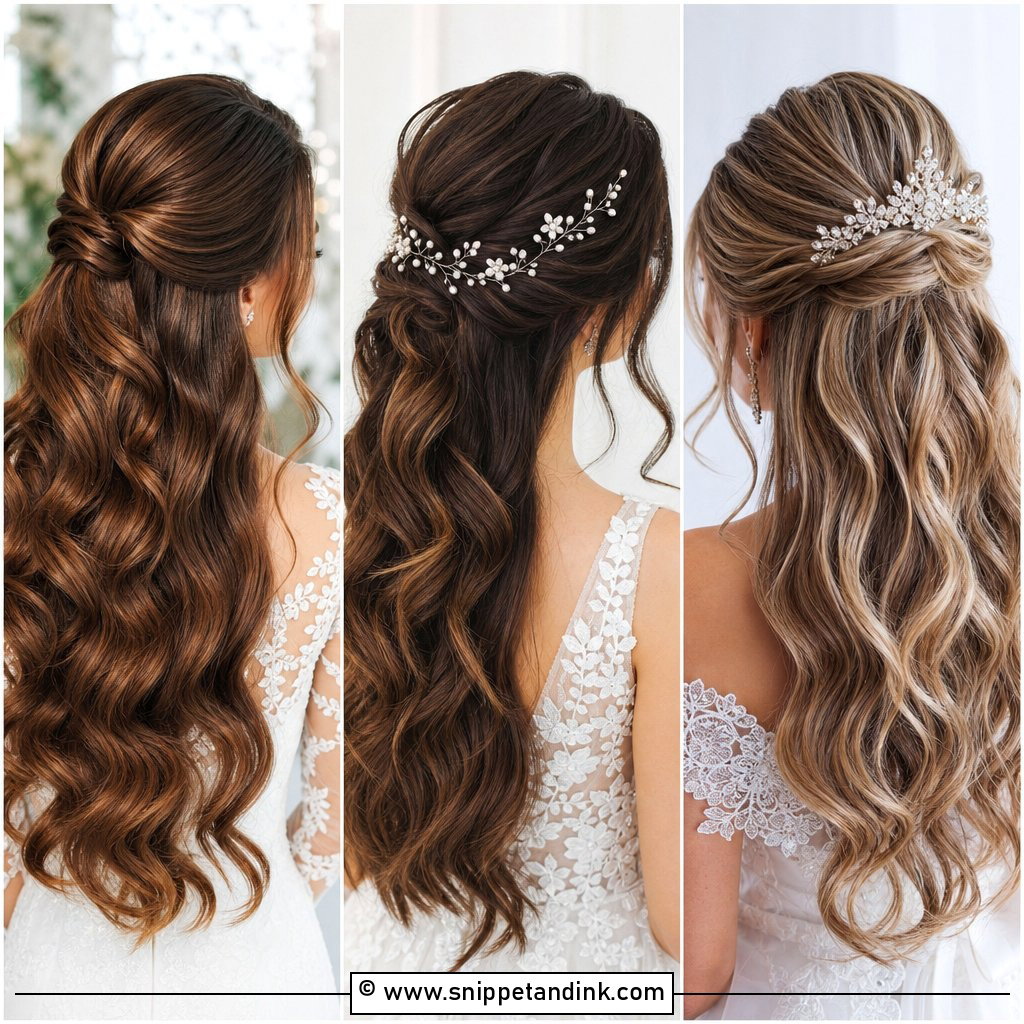
1. Bridal Hair Down With Soft Waves
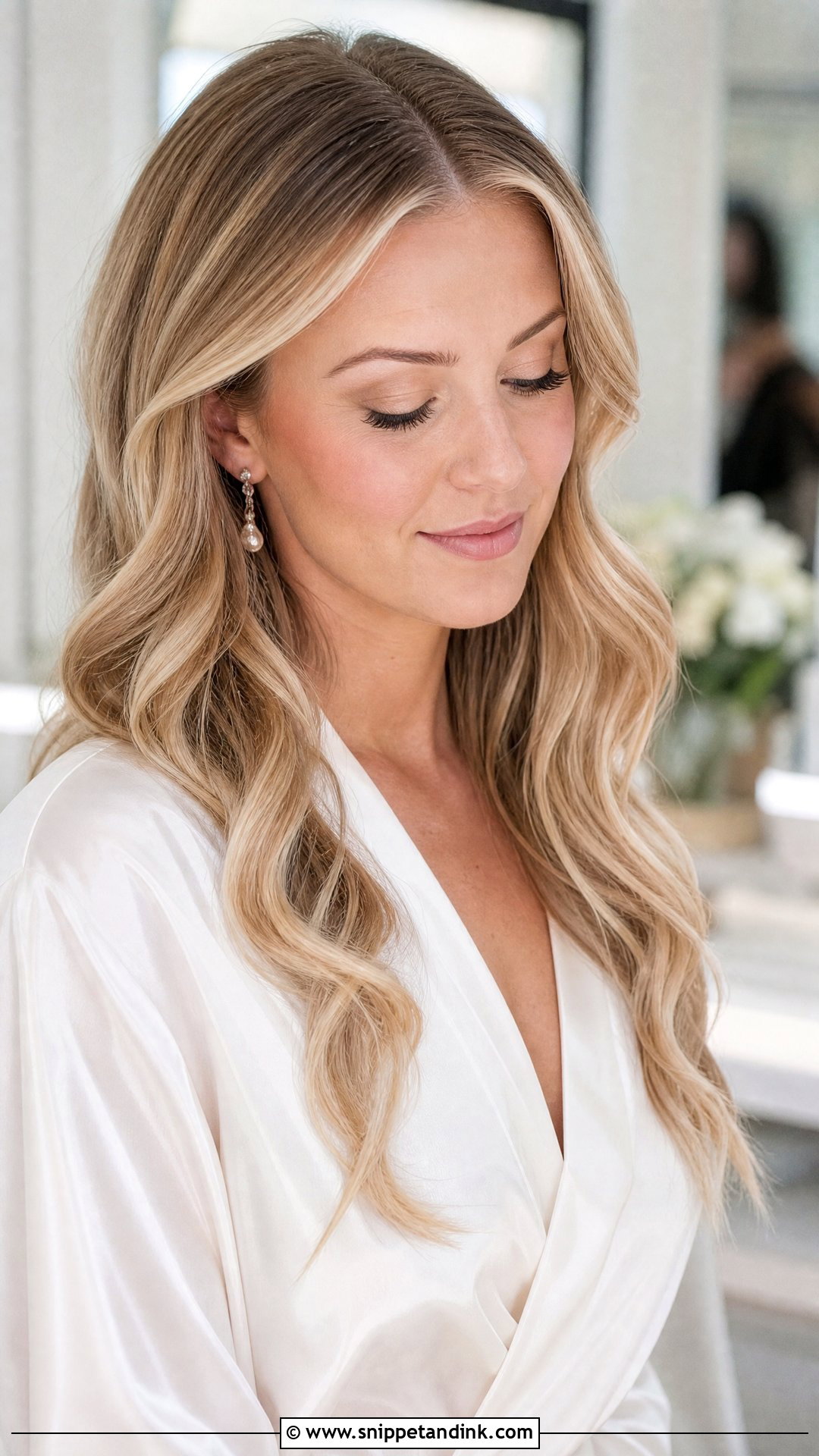
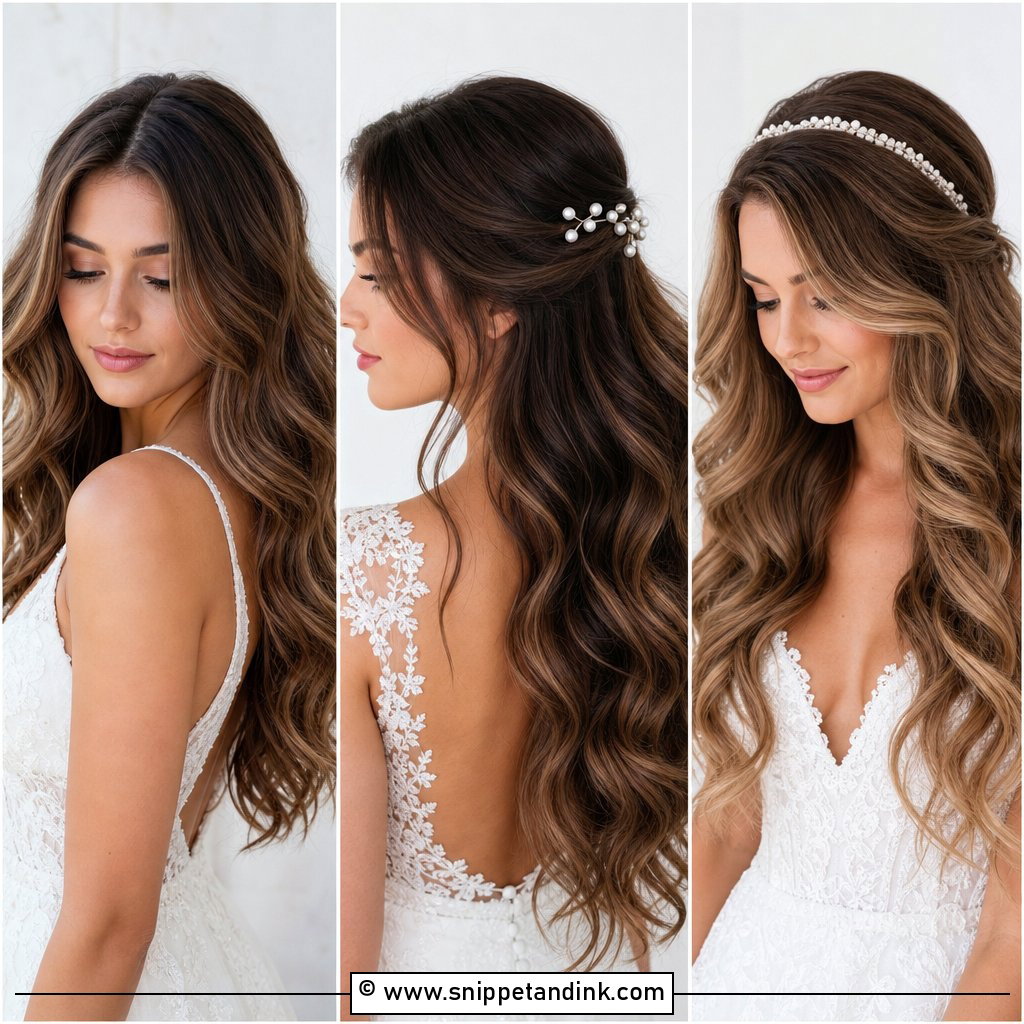
Soft waves are the style I get asked for most, and the one most likely to fall if it’s rushed. They should be smooth and loose, brushed just enough that the ends move. Medium to long hair suits them, parted in the centre or a little to one side. I build some lift at the root with a round brush first, because flat roots read as limp in photos even when the lengths look great. A flexible spray keeps the shape touchable. Accessories are optional here; the waves carry the look on their own.
2. Bridal Hair Down With Hollywood Waves
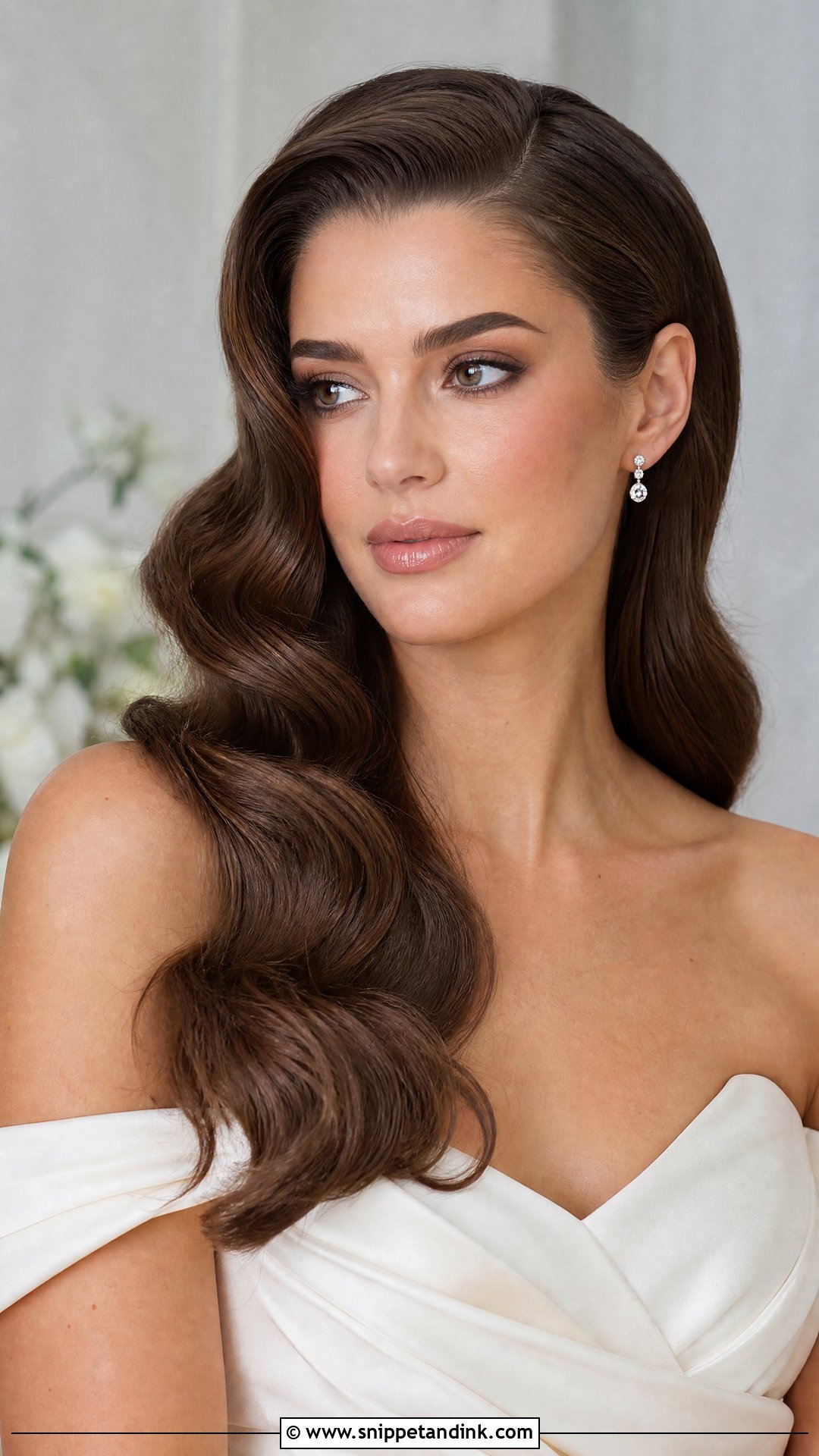
Deeper, shinier and more structured than a beach wave, this gives you a red-carpet feel that belongs with formal gowns and classic venues. I set every curl in the same direction so the waves line up into one continuous ripple, then tuck one side behind the ear for that clean profile. Satin, lace and fitted silhouettes suit it. The risk is frizz: one fuzzy patch breaks the pattern. If your hair puffs in humidity, I’d smooth it completely before curling, and keep a shine spray in your bag.
3. Bridal Hair Down With Loose Curls
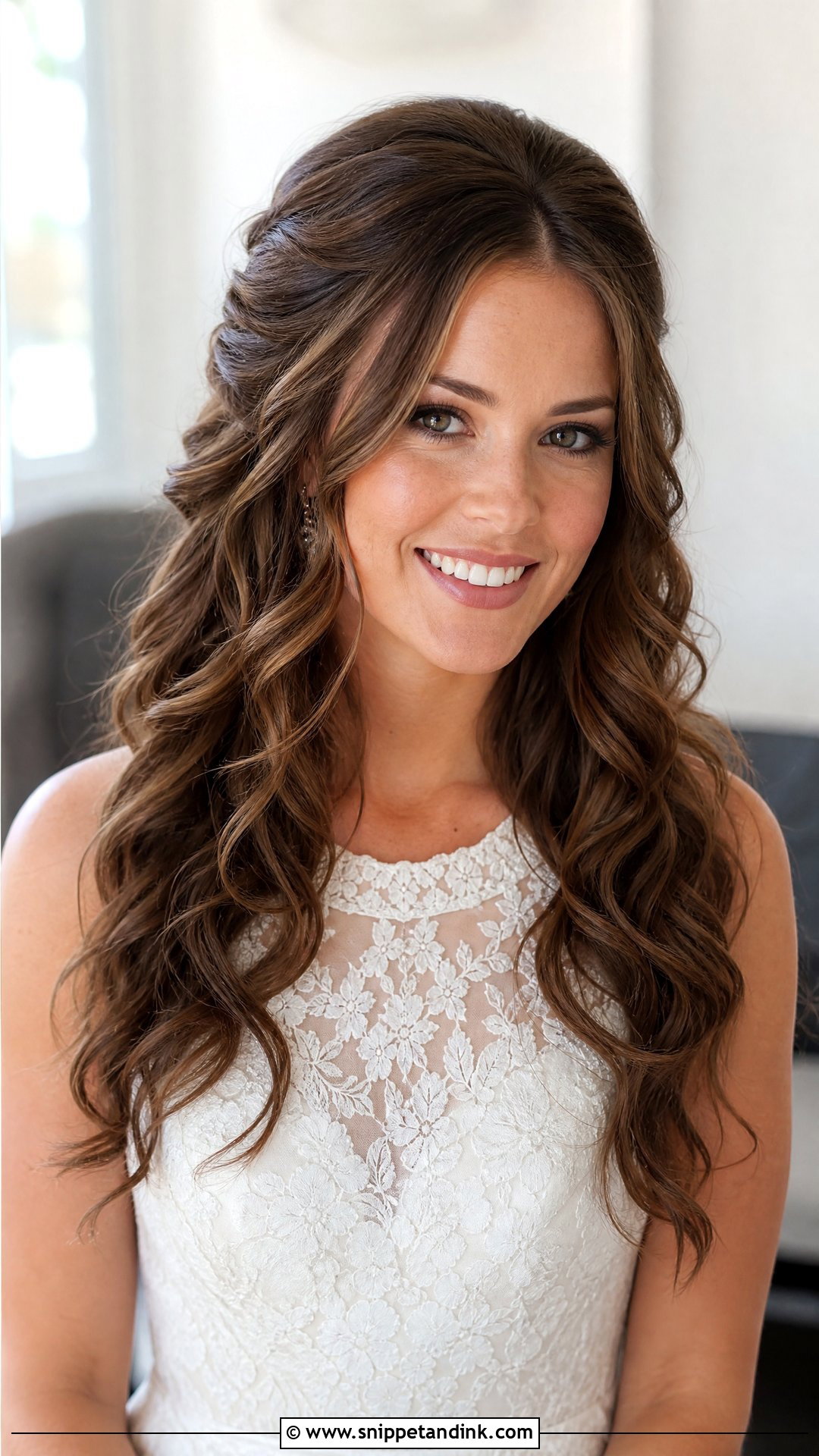
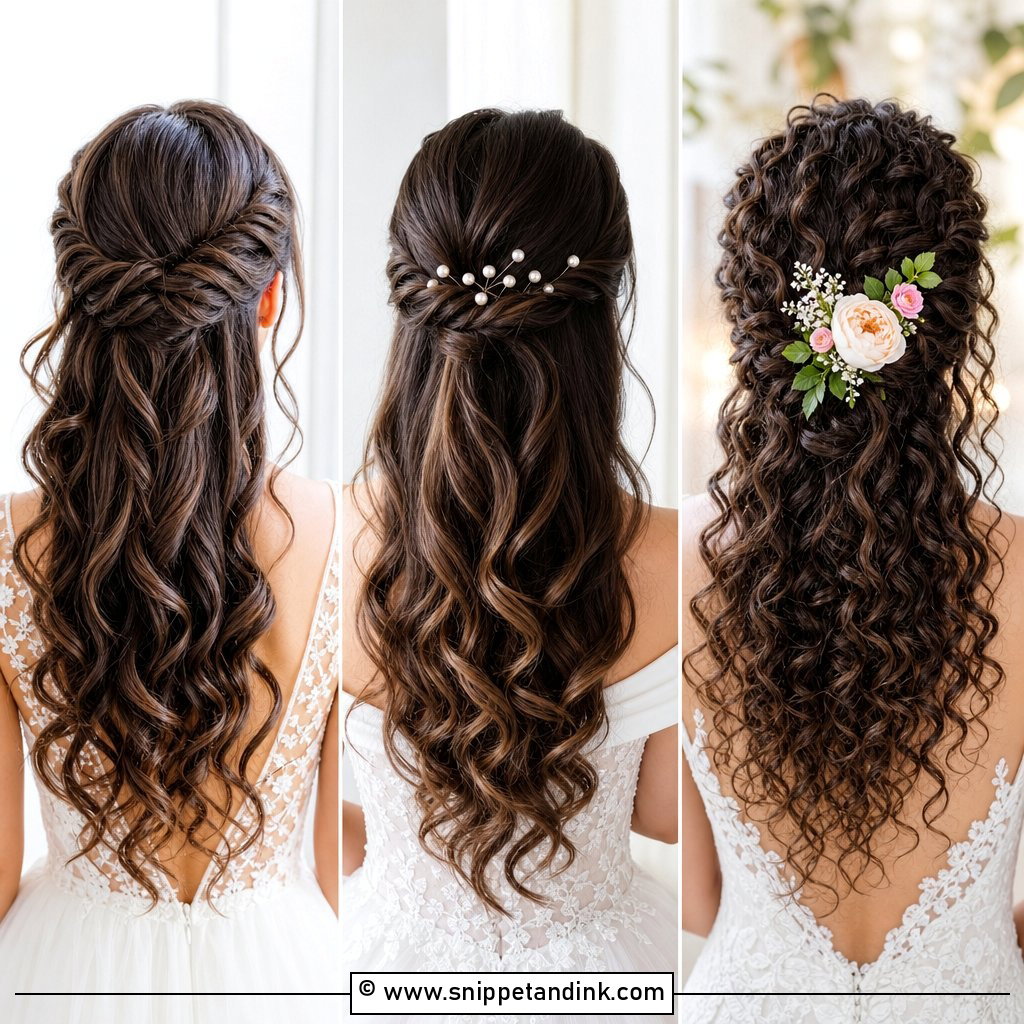
Want bounce and a bit more volume? Loose curls give you both. They should feel open and airy, never tight. Layered hair is ideal because the shorter pieces lift around the face and shoulders. I curl a little tighter than the reference photo and brush out gently later, which buys you hours of hold. A veil can sit at the crown or slip under the top section. Add two face-framing pieces and keep them short, or they’ll be in your mouth by the speeches.
4. Bridal Hair Down With Pearl Pins
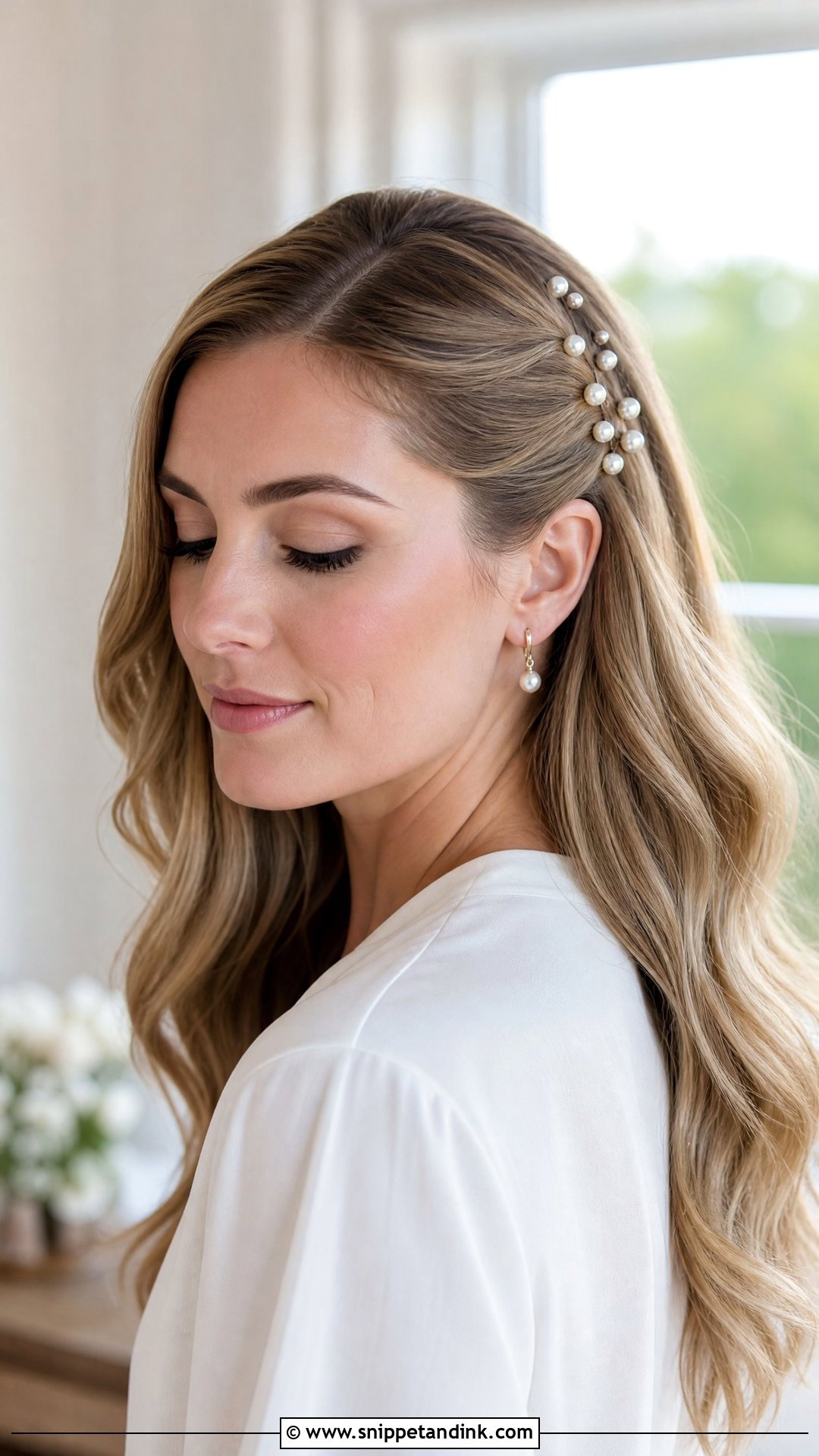
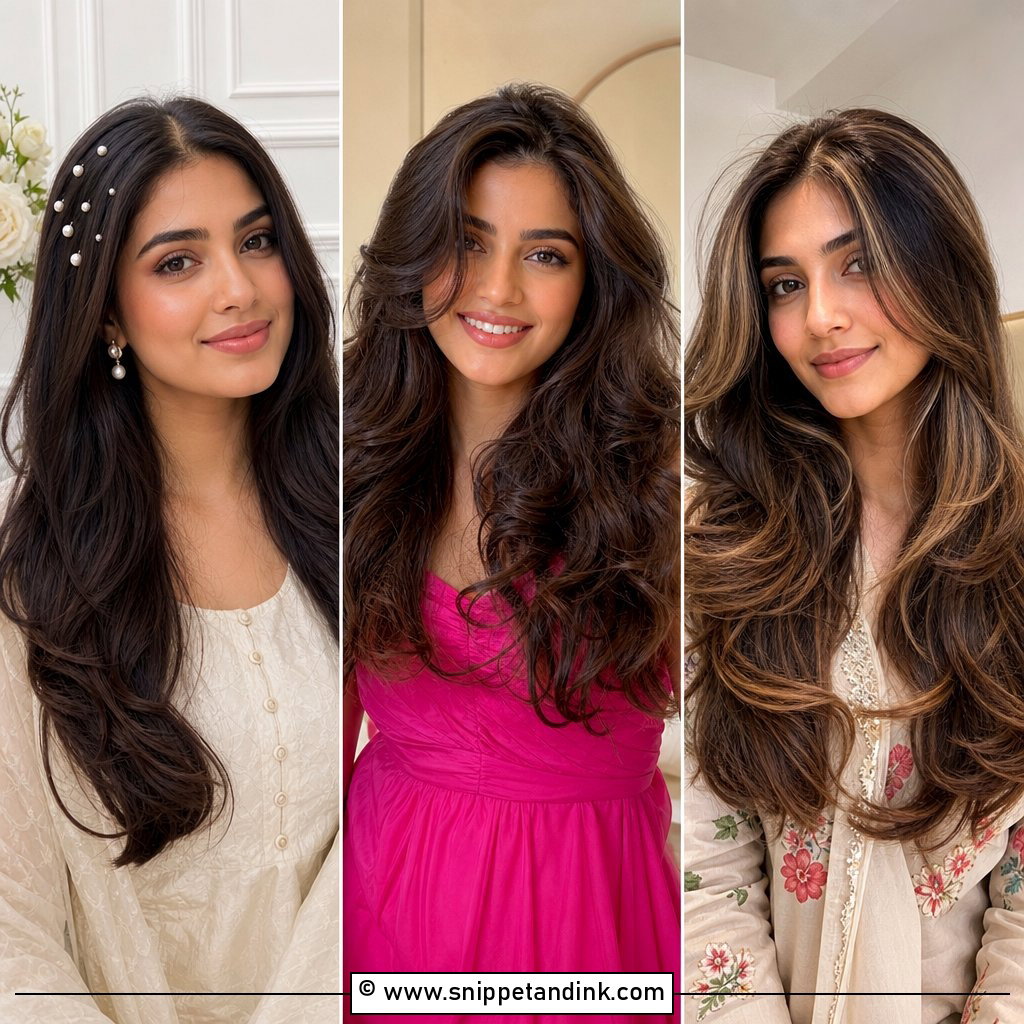
Pearl pins add detail without changing the shape of the hair at all. Scatter them through one side, circle a small twist, or tuck them near where the veil will sit. The thing I’m careful about is grip: pins sit beautifully in waved or textured hair but slide out of a silky blowout, so I lock each one over a hidden bobby pin. Five or six well-spaced pins look intentional; fifteen look crowded. Match the pearl shade to your earrings and the beading on the gown.
5. Bridal Hair Down With Veil
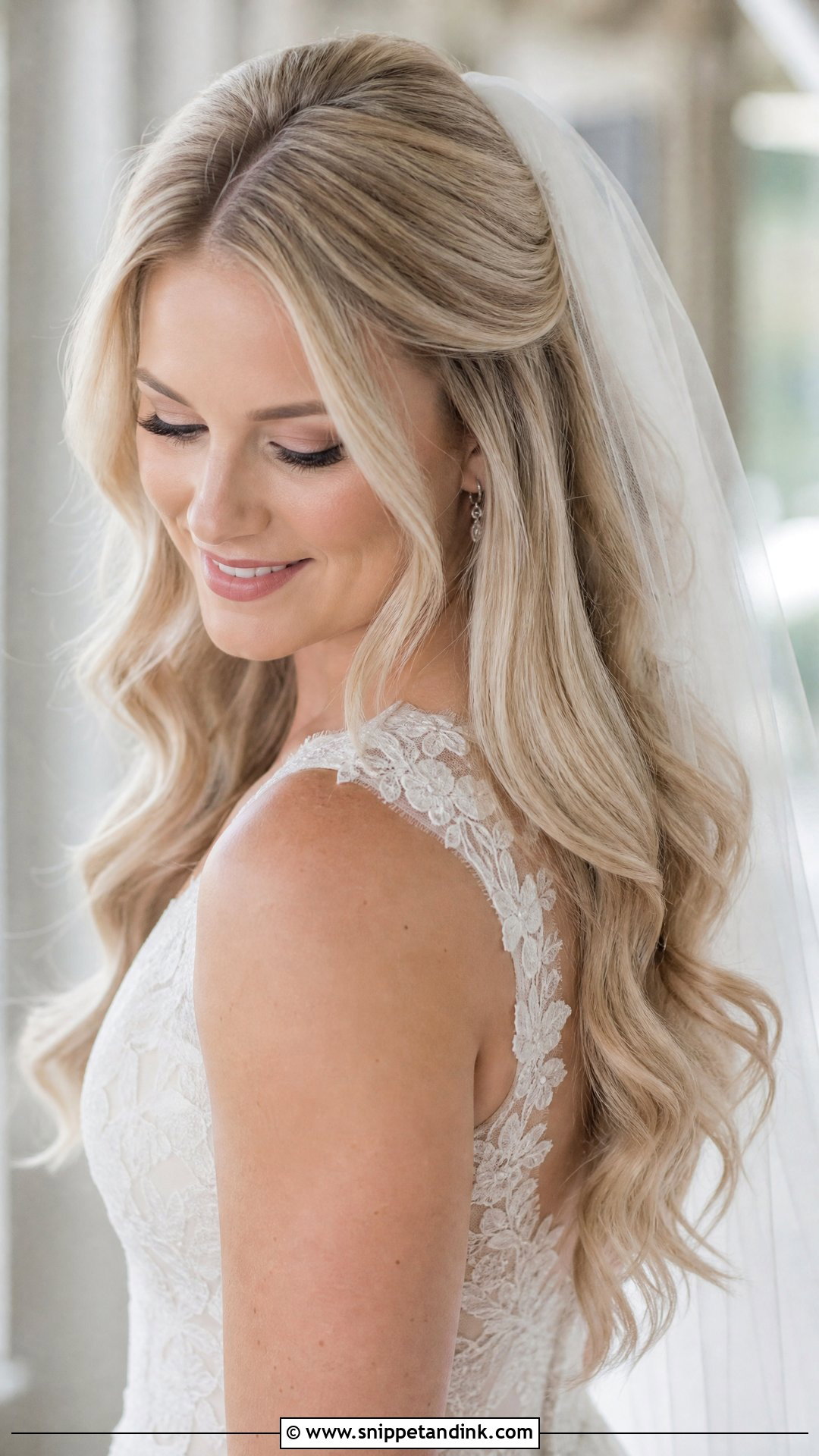
Veils need an anchor, and loose hair doesn’t naturally give you one. I make a small, hidden backcombed pad or a pair of crossed pins at the crown or just below it, then slide the comb in against that. Soft waves or loose curls give the veil something to rest against so it doesn’t slip back. Long hair blends into the fall of the tulle. If your veil has heavy lace, pearls or embroidery, keep the hair finish smooth so the two don’t compete, and test the weight at your trial; cathedral veils pull harder than you’d expect.
6. Bridal Hair Down With Side Part
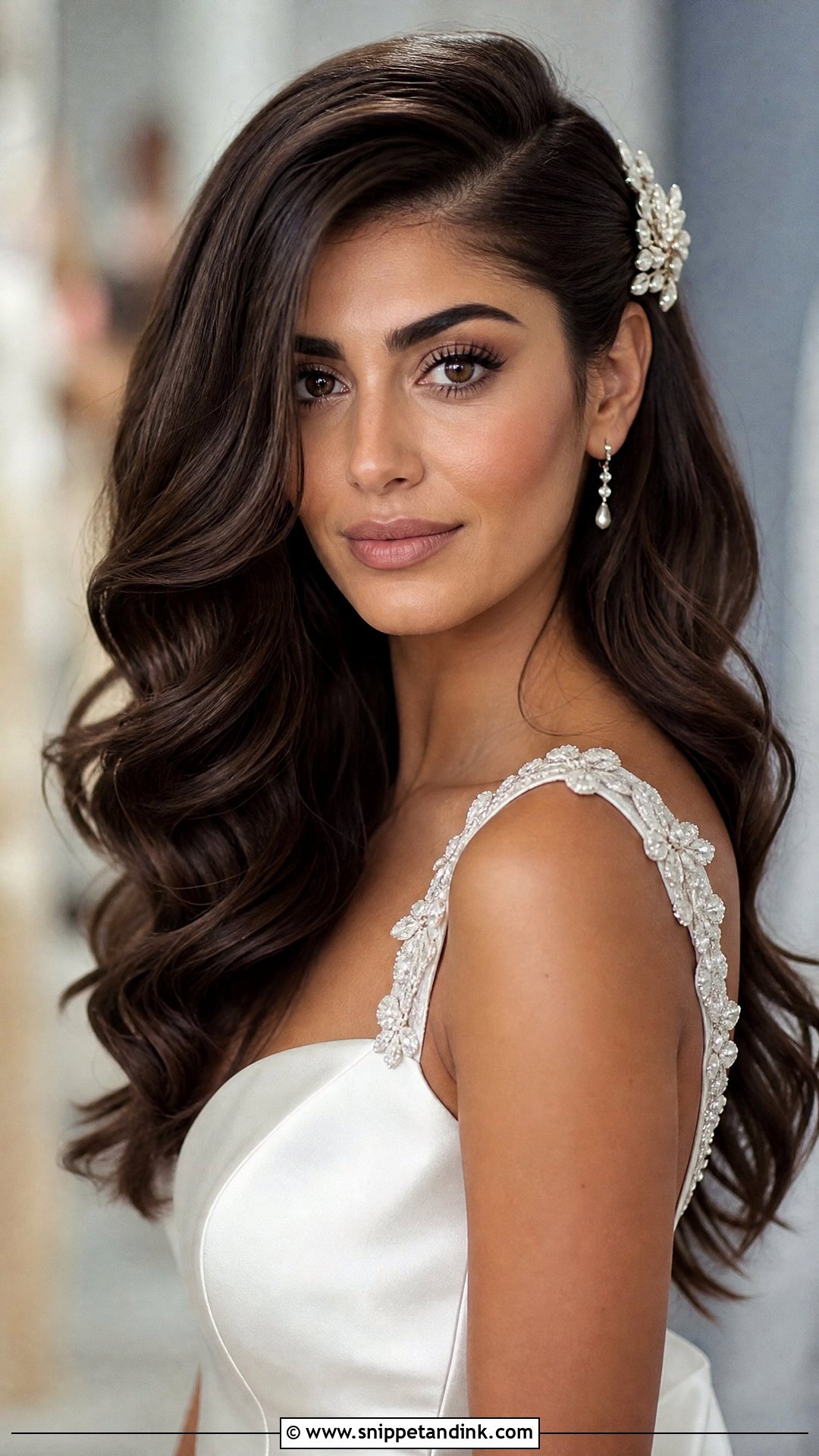
A deep side part is the quickest way to make loose hair look styled. It shapes the face and gives you a soft, elegant sweep without pulling anything back. It goes with Hollywood waves, brushed curls or smooth waves with tucked sides. One thing to watch: your part shouldn’t fight your natural growth. If your hair falls left, a dramatic right part will slowly drift back by evening, so I choose the side your hair already favours.
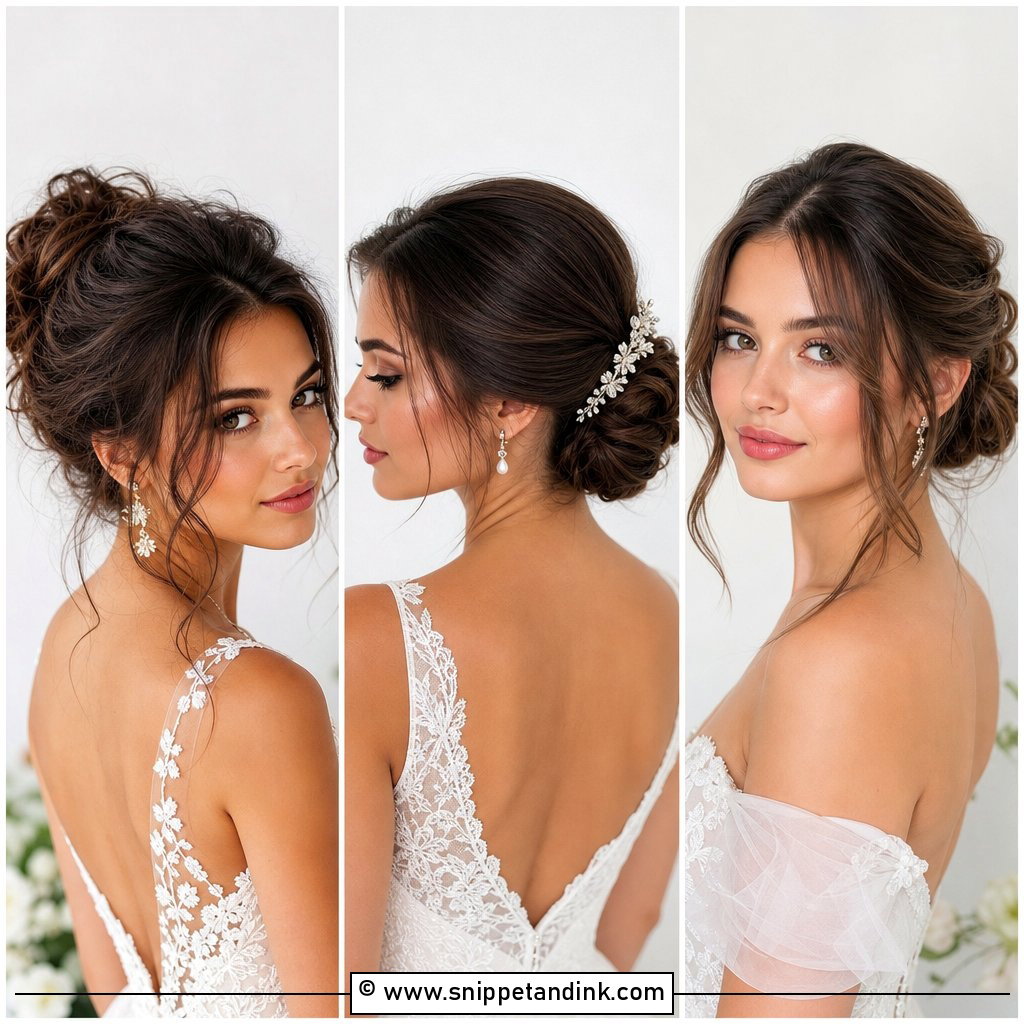
7. Bridal Hair Down With Middle Part
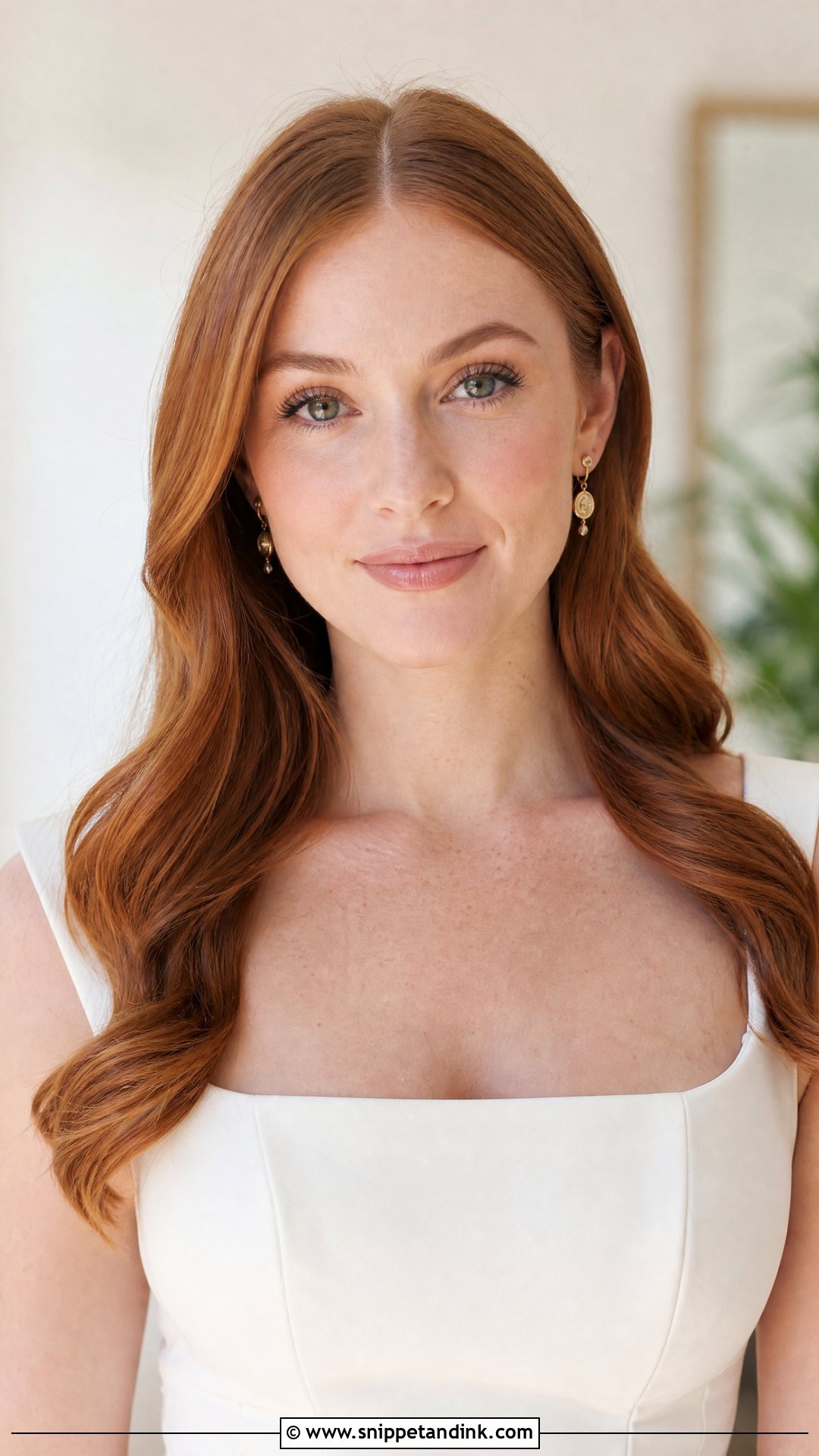
A middle part looks modern and clean, and it’s less forgiving than it seems. It needs a smooth top and soft movement through the lengths, because any frizz at the parting shows straight away in close-ups. The even frame suits simple gowns, square necklines and minimal jewelry, and it’s the easiest base for a veil or comb centred at the back. Wear it sleek, softly waved or curled at the ends. A drop of lightweight serum keeps flyaways down while the hair still moves.
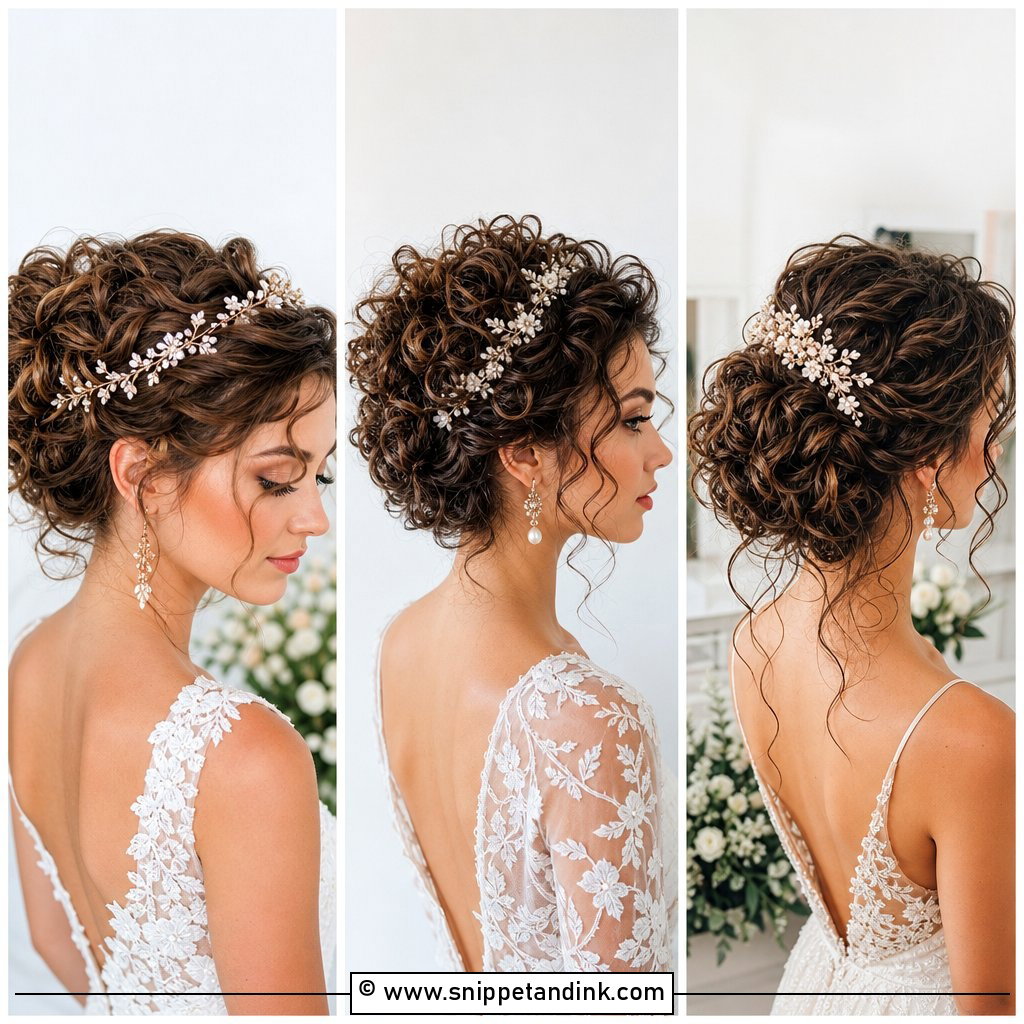
8. Bridal Hair Down With Half Up Crown
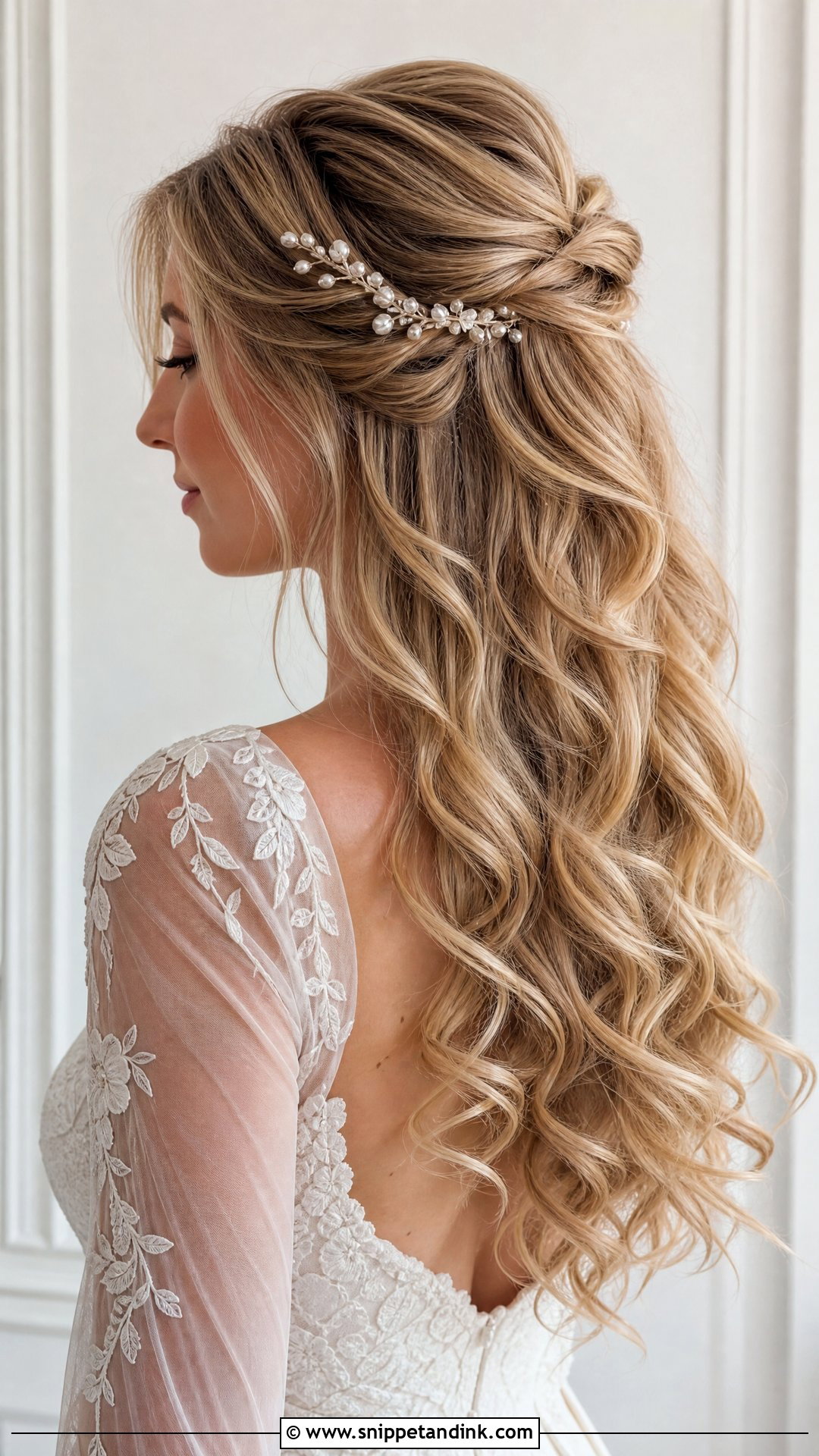
If you’re wavering between down and up, this is the compromise I steer most brides toward. The top section is twisted or pinned at the crown while the rest falls in waves or curls. It keeps hair out of your face for photos and gives a veil, vine or comb a secure base. I leave the crown slightly lifted rather than pulled flat; tight on top looks dated, and it gives you a headache by the reception.
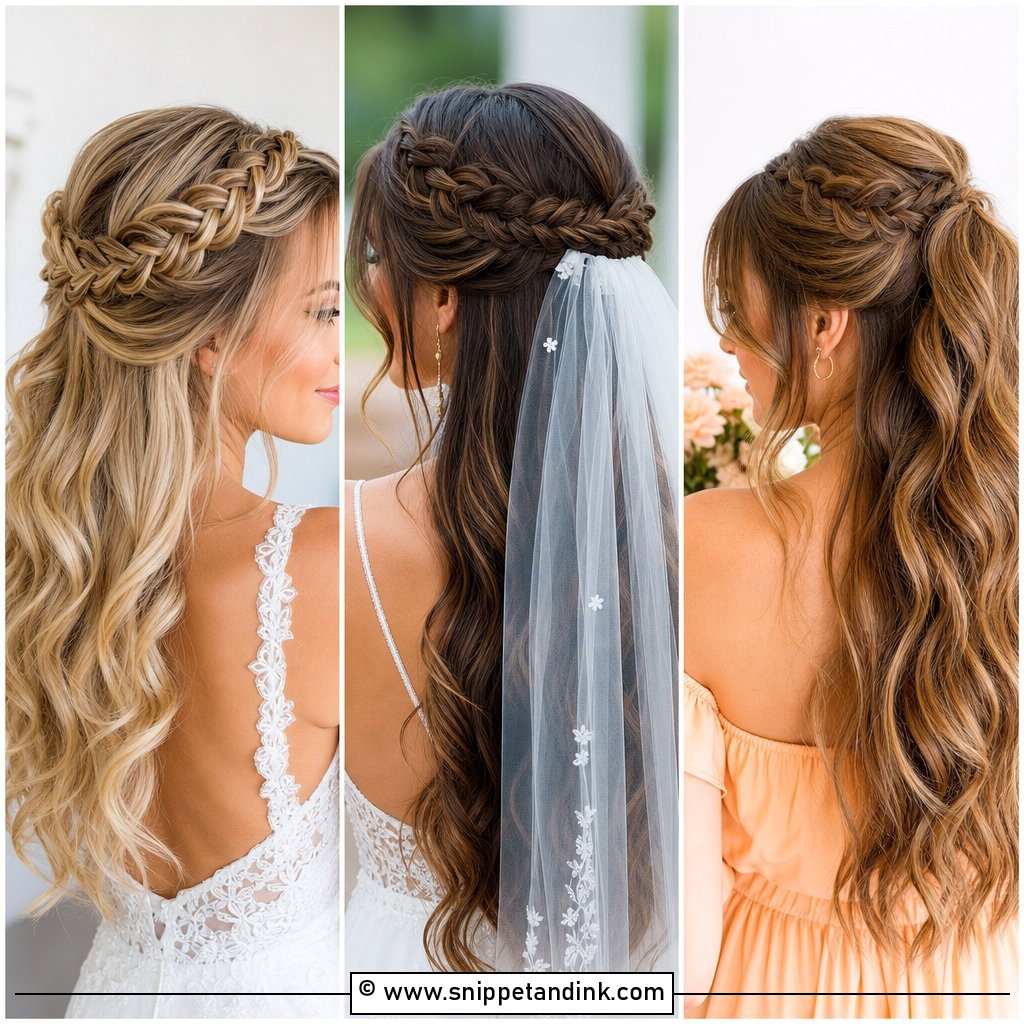
9. Bridal Hair Down With Braided Crown
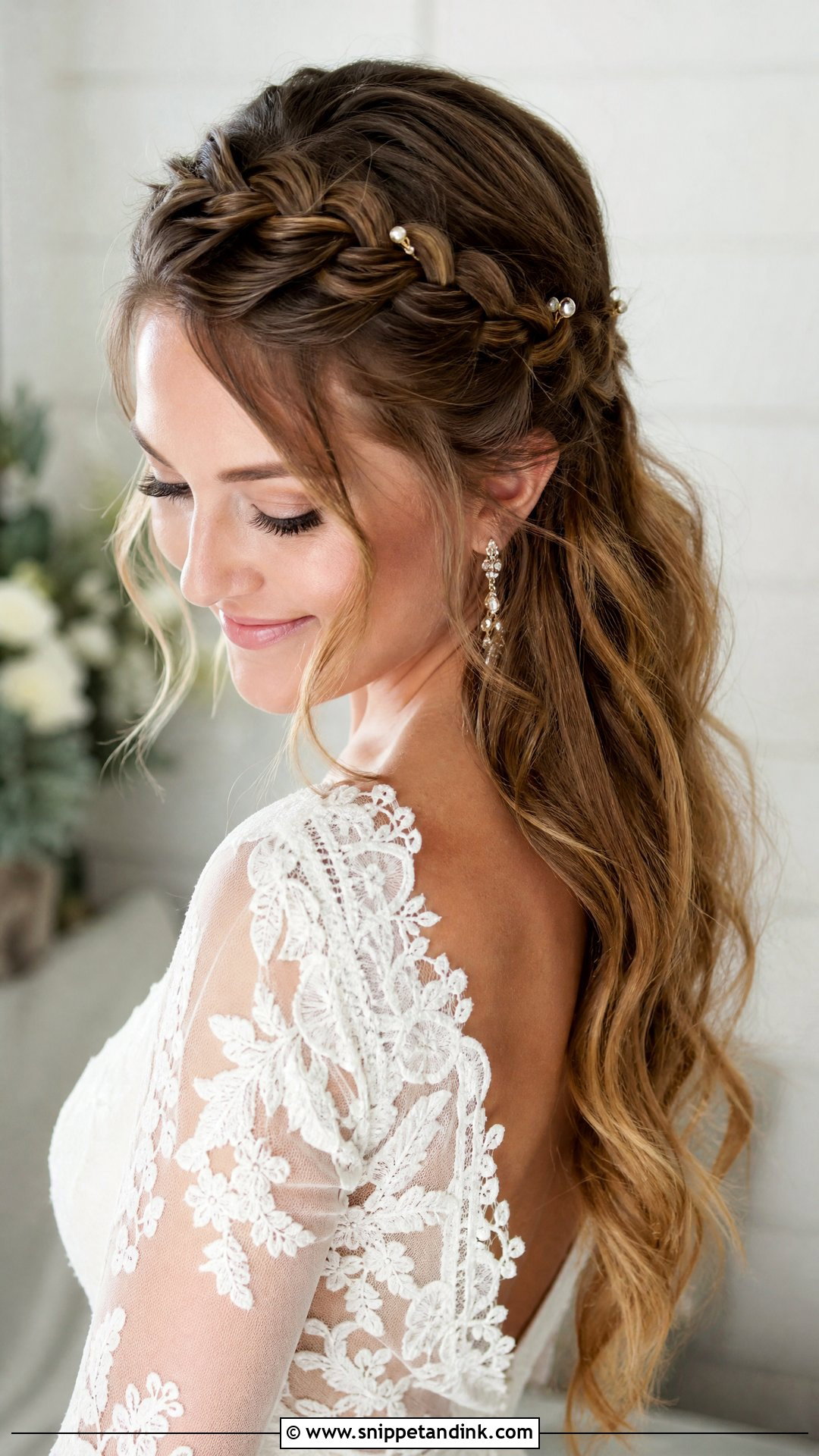
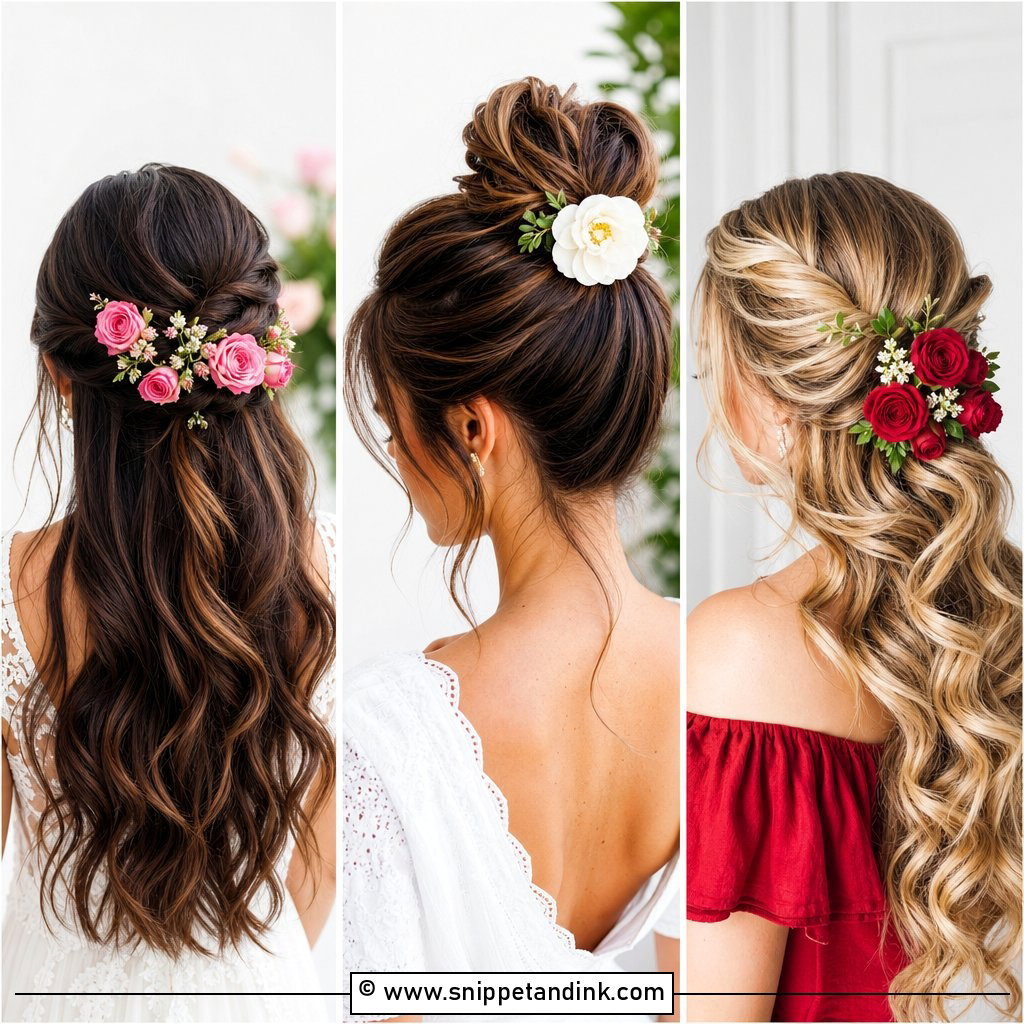
A braid across the top or along one side brings texture and a slightly boho mood, and it holds a half-up section far better than pins alone. The lengths look best in loose waves or natural curls so the braid blends in. Garden and outdoor ceremonies with lace or airy fabrics suit it. I pull each loop out gently after braiding to soften it; a tight braid on loose hair looks like two different hairstyles. A few tiny flowers or pearls are plenty.
10. Bridal Hair Down With Hair Vine
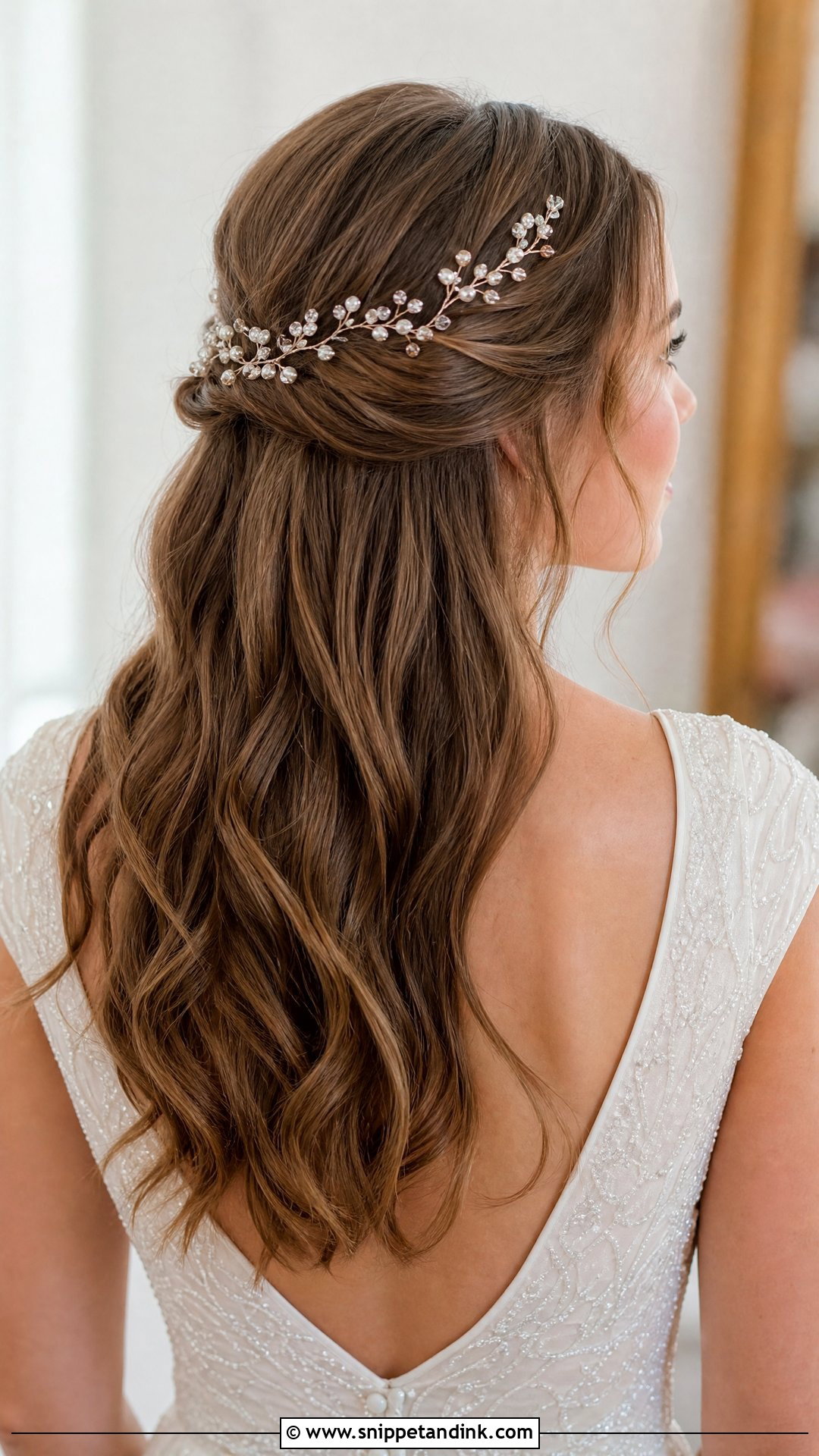
Here the accessory becomes part of the hairstyle. A hair vine can curve through waves, cross a half-up section or frame one side of the head, in pearl, crystal, floral or metal. I weave the wire under small sections and pin it at several points; a vine resting on top of smooth hair will slide. Waves and curls hold it best. If your gown already has strong detail, choose a fine vine so the two aren’t competing.
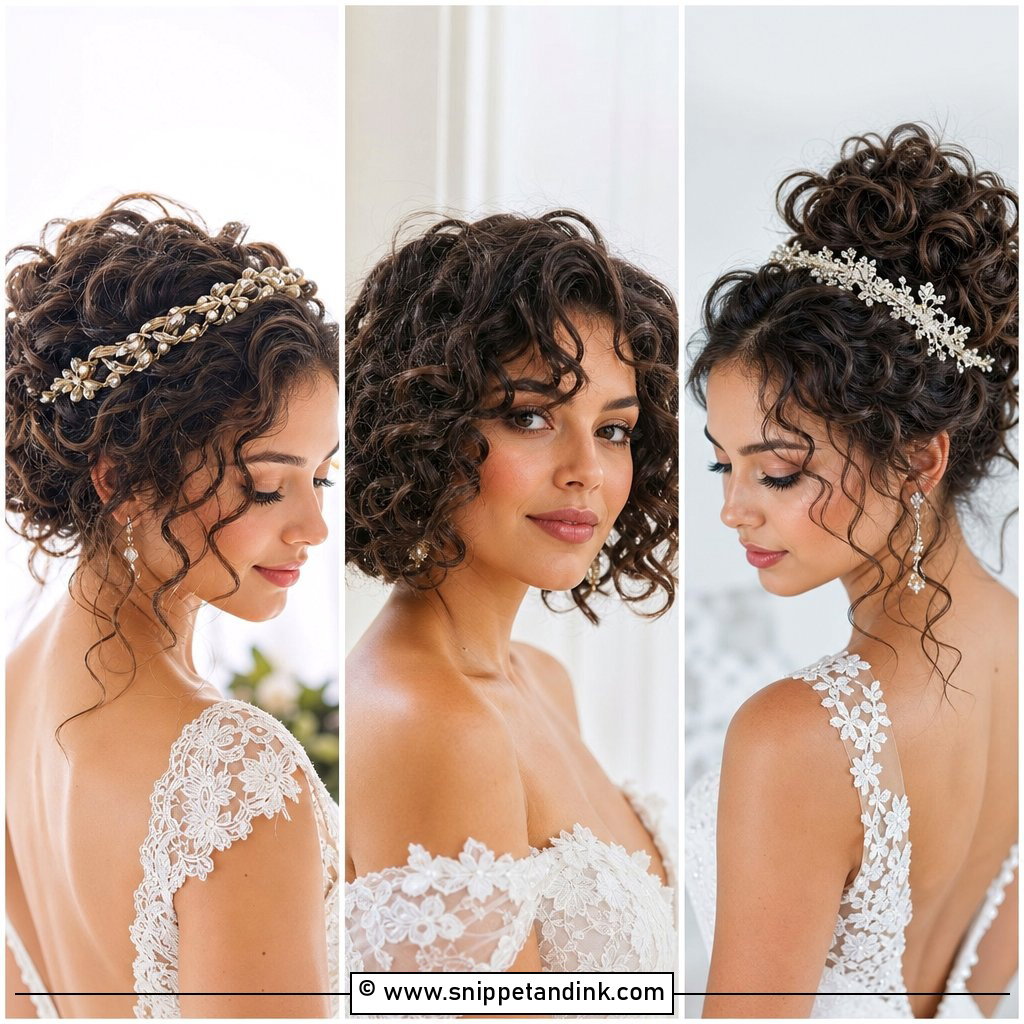
11. Bridal Hair Down With Natural Curls
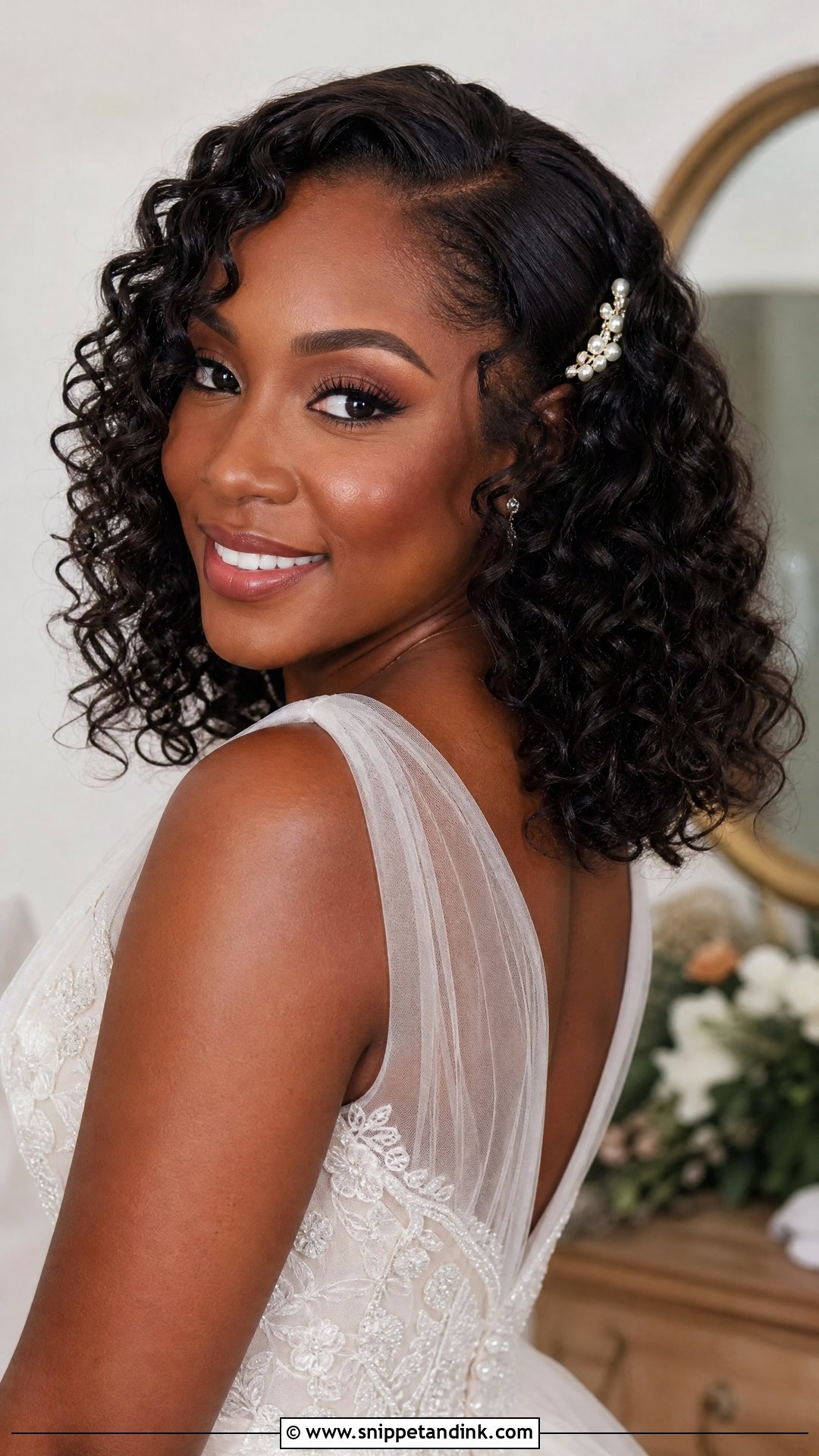
Defining your natural curls rather than hiding them is the approach I’d always choose for curly hair. A layered cut helps the curls sit around the shoulders without feeling heavy. I use a hydrating cream, a light gel and careful diffusing for bounce without crunch, and I never brush them dry. Floral pins, pearl clips or a simple veil tucked into the crown all sit well. Do the trial on hair washed with your own routine, so we both know how your pattern behaves on a normal day.
12. Bridal Hair Down With Long Layers
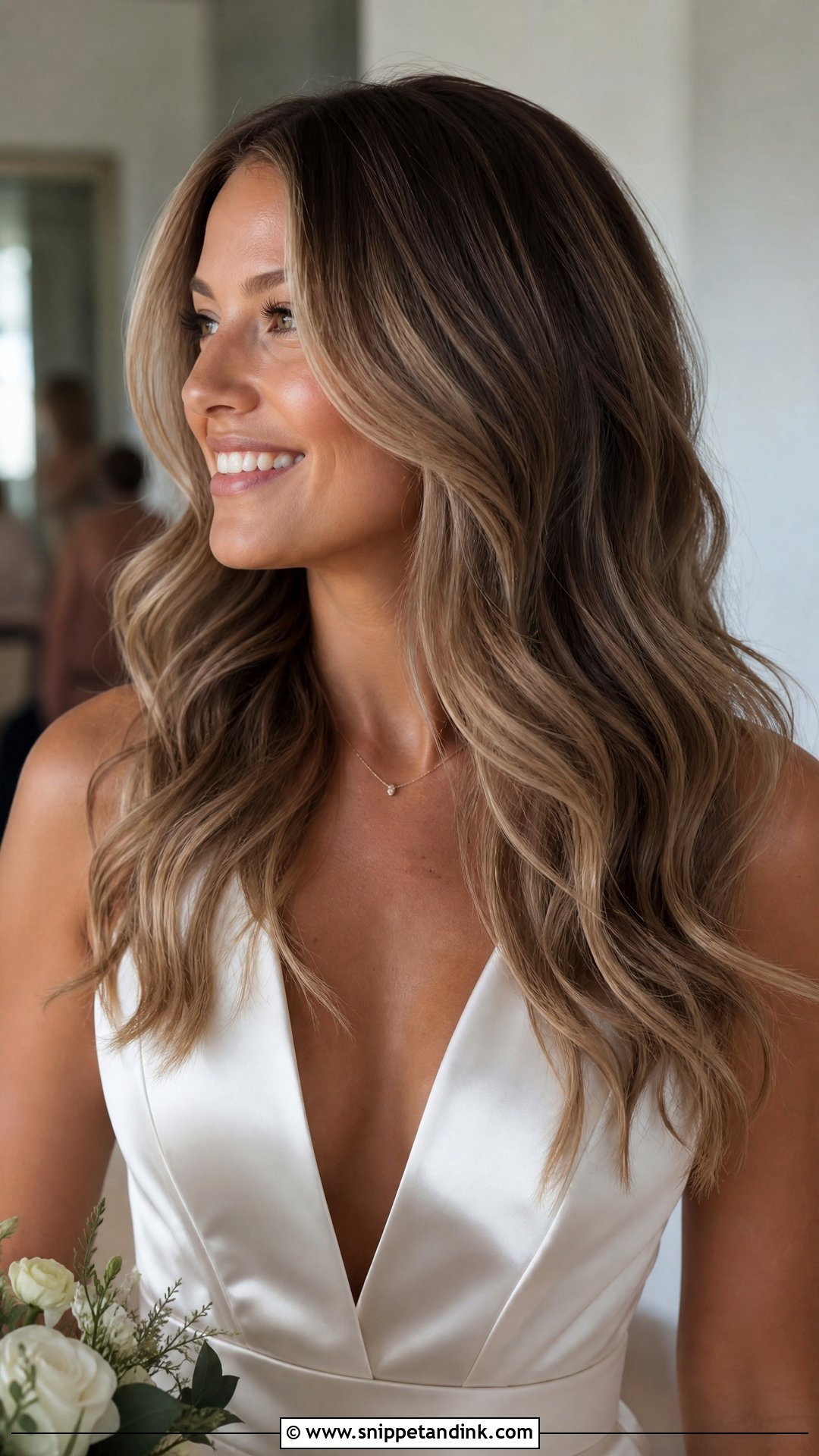
Layers give long hair movement and stop it hanging in one heavy sheet. They help curls and waves fall softly around the face and collarbone, so you keep length without losing body. My method is a round-brush blowout first, then loose curling. Layers also show off balayage, highlights or dimensional brunette tones, because each length catches the light differently. Get your trim done four to six weeks ahead so the ends look healthy, not freshly blunt.
13. Bridal Hair Down With Sleek Straight Hair
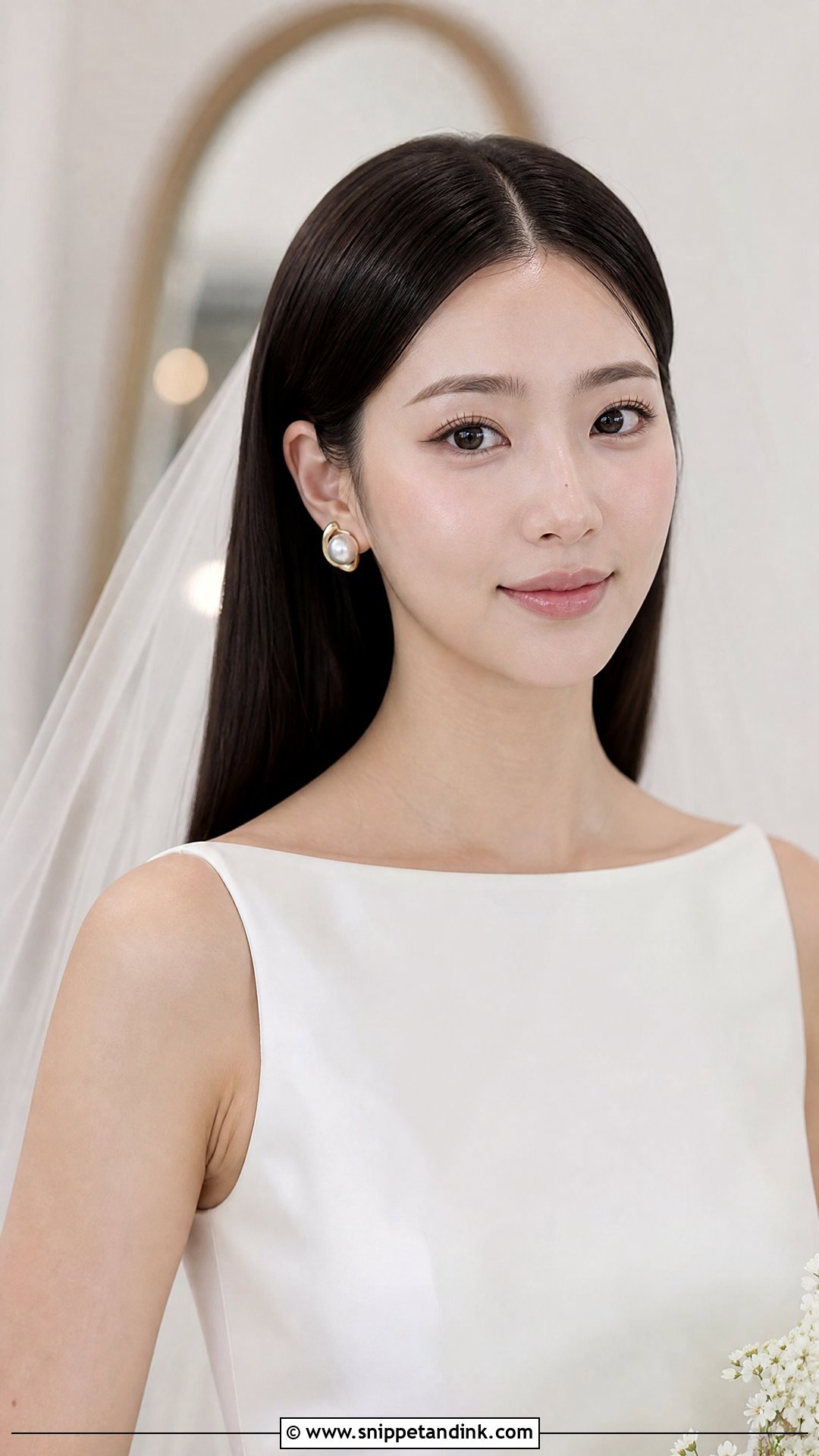
Sleek and straight is the minimalist’s choice, and it’s all precision. The finish must be glossy and controlled, never stiff. A centre part feels sharp, a side part a bit softer. It suits structured gowns, plain veils and bold earrings, since the hair stays out of the outfit’s way. I work in small sections with a heat protectant and a fine flat iron, then seal with an anti-humidity spray. In muggy weather it’s the first style to give up, so agree a sleek low pony as your backup.
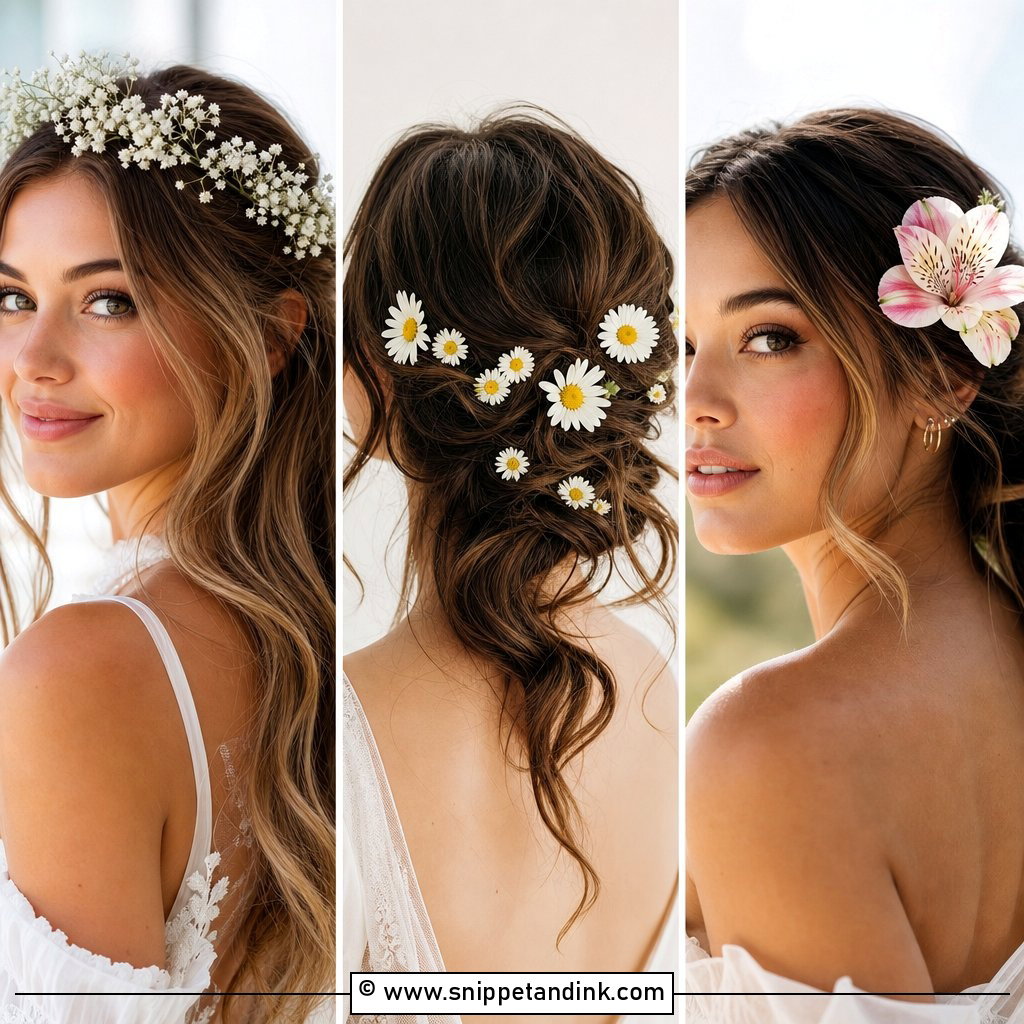
14. Bridal Hair Down With Floral Hair Comb
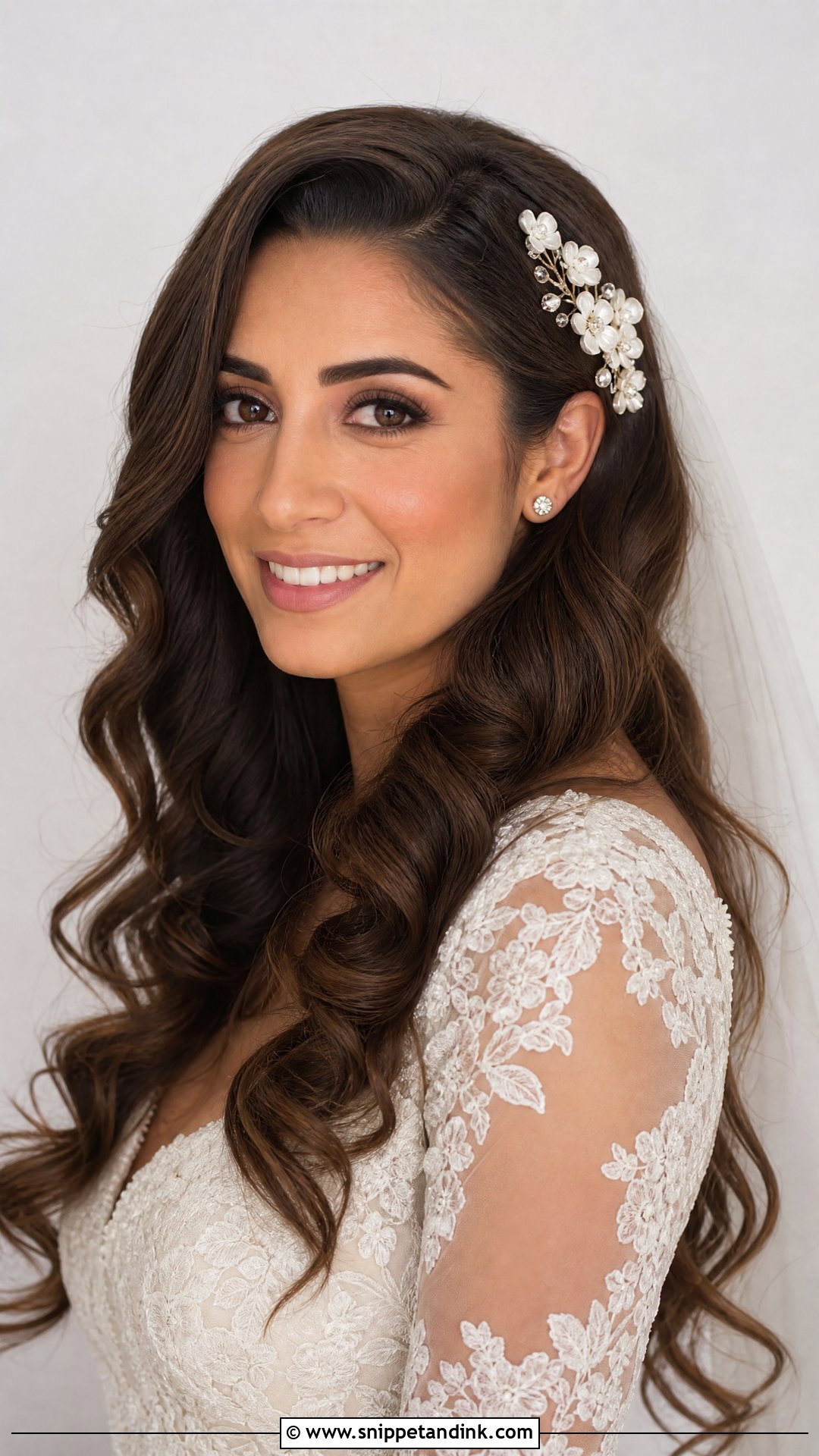
Flowers in the hair suit soft looks, and a comb is the most secure way to wear them. It can sit above one ear, behind a half-up twist or near the veil. Loose waves, brushed curls and natural texture give the teeth something to grip; sleek hair doesn’t. I’d keep the flowers smaller than you think, and match them to your bouquet. Fresh blooms wilt in heat, so for a summer afternoon ceremony ask your florist about sturdier varieties or a silk version.
15. Bridal Hair Down With Face Framing Pieces
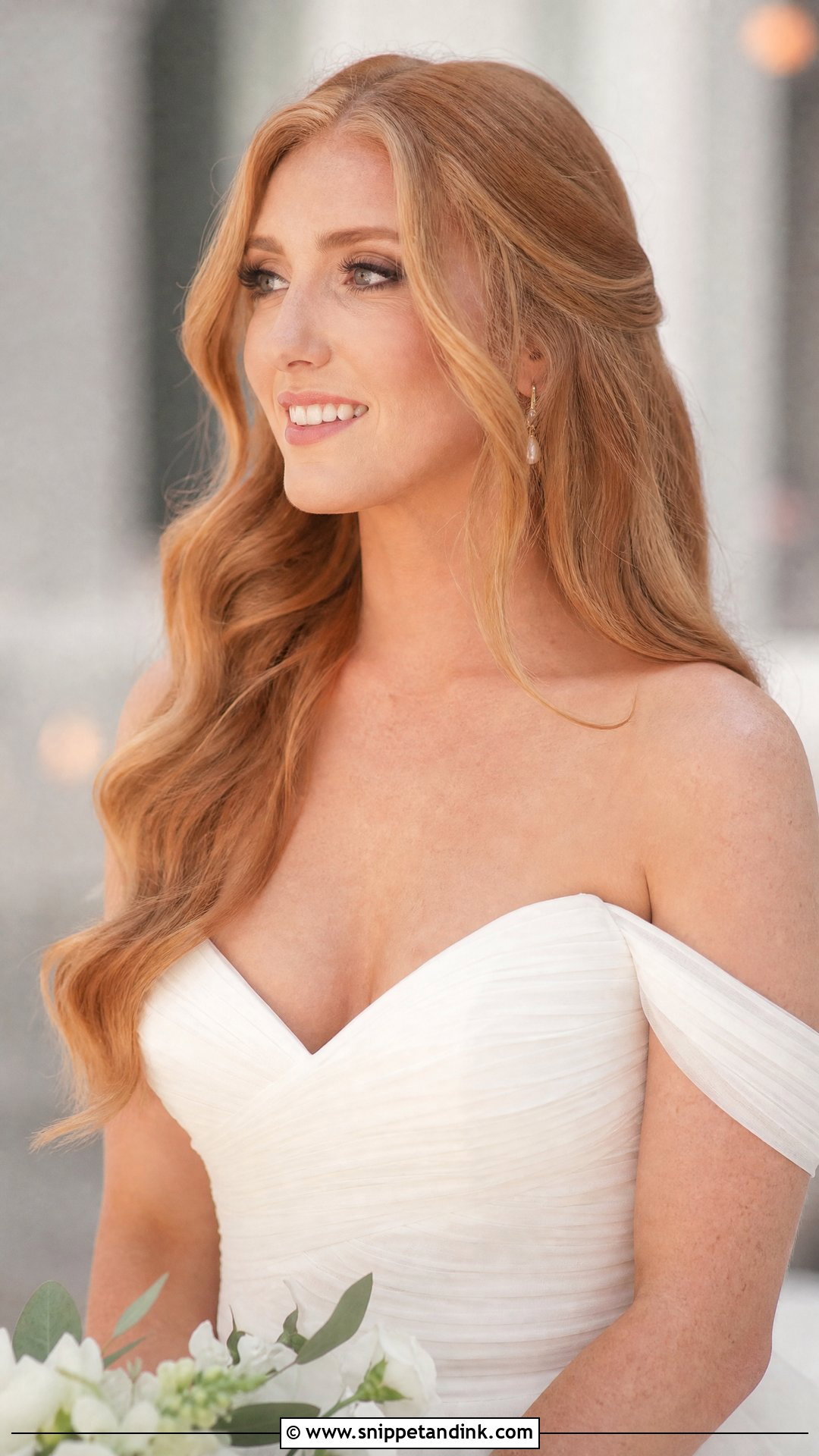
Face-framing pieces give loose hair definition around the cheekbones and jaw. They can be curled away from the face, softly waved or tucked behind the ears for a cleaner line. I cut no new pieces on the wedding morning; anything we pull forward should already exist in your haircut. Keep them light, because heavy pieces stick to lip gloss and foundation. Balanced with the rest of the waves, they make the whole style look deliberate.
Beaded Bodices, Warm Necks and Other Hair-Down Realities
Loose hair interacts with your dress all day, and not always kindly. Lengths catch on beading, sequins and the edges of lace appliqué, and every snag pulls a curl apart. If your gown has a detailed back, decide whether you want to hide it or show it off, because long waves will cover most of it in the aisle photos.
- Wear the dress, or a top with similar beading, at your hair trial and see where the ends land and whether they catch.
- In summer, hair on the neck gets warm fast. A side sweep pinned behind one ear keeps one side cool and still reads as hair down.
- Your bouquet arm tends to push hair forward on that side. I add a hidden pin or two to keep it back during the processional.
- Keep a plan B in your bag: an elastic in your hair colour and a decorative clip, so you can switch to a low ponytail for dancing without it looking like a rescue.
None of these are reasons to give up on wearing it down. They’re just the things I’d rather we see at the trial than discover at the reception.
Arms Up, Head Turned, Hair Still in Place
Hair worn down is a balancing act. It has to look soft, yet there’s a lot of quiet structure underneath keeping the shape for twelve hours. Hollywood waves, loose curls, sleek lengths, natural texture, a few pearls or a veil can all work, provided the style suits your dress and the weather you’re likely to get. Bring clear photos to your trial, put the veil or accessory on while you’re there, and move in it: hug someone, raise your arms, turn your head quickly. If it still looks like you afterwards, you’ve found it.
You'll Like These Ideas:



Leave a Reply