
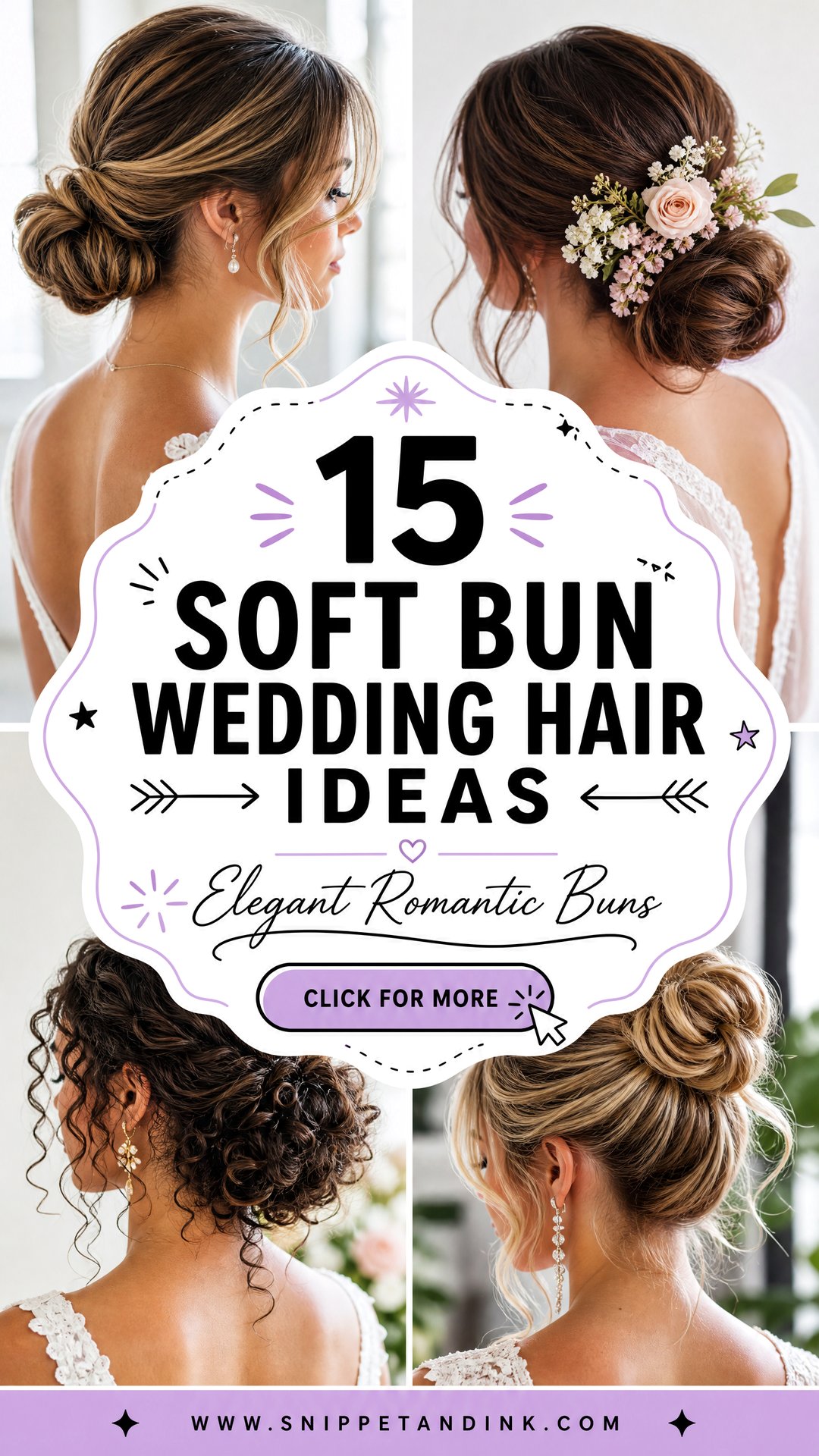
Brides ask me for a soft bun more than almost anything else, usually while holding up a photo and saying they want it “not too done.” That’s a fair request and a slightly tricky one, because a bun that looks relaxed at noon has to be built firmly enough to still have a shape at midnight. Low placements, gentle texture, a few pieces around the face and a finish you could touch without it crunching are what most people mean. The fifteen below cover classic, twisted, braided and dressed versions, plus notes for long, medium, thin and curly hair, so you can see which one your own hair will actually hold.
Soft on the Outside, Firm Underneath
The softness in these photos is the last ten minutes of the appointment. Everything before that is structure, and if the structure is skipped the bun is flat and sliding by the first dance.
- I curl the whole head first, even for a bun that will look mostly smooth, and let the curls cool fully. Cooled curls hold their bend; warm ones fall.
- A small anchor goes in where the bun will sit: an elastic, or a pair of crossed pins tucked into a little gathered section. Every later pin locks into this anchor.
- Sections are pinned one at a time, each through to the anchor rather than to the hair around it.
- Only then do I pull the outer layer loose by hand, loosen the crown and take down the face-framing pieces.
If you’re shown a soft bun that is pinned loosely all the way through, it will look lovely in the chair and won’t survive a hug. Ask your stylist what the bun is anchored to; a good one will be happy to tell you.
Hair washed the night before usually holds better than freshly washed hair, particularly if it’s fine or silky. Arrive with it completely dry, no oil or leave-in conditioner at the roots, and wear a top that buttons or zips at the front so you can change without lifting anything over your head.
1. Soft Low Bun Wedding Hair
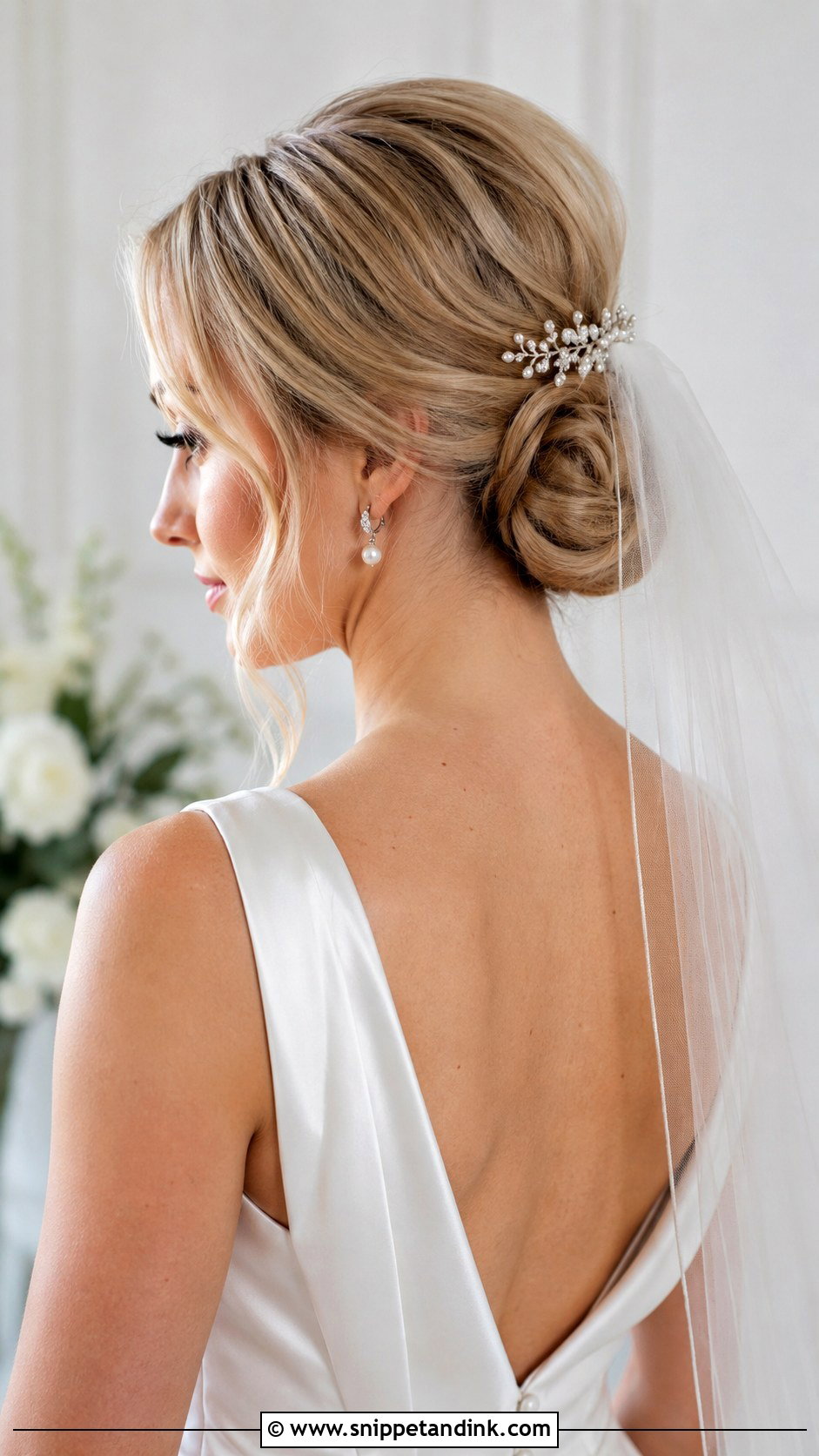
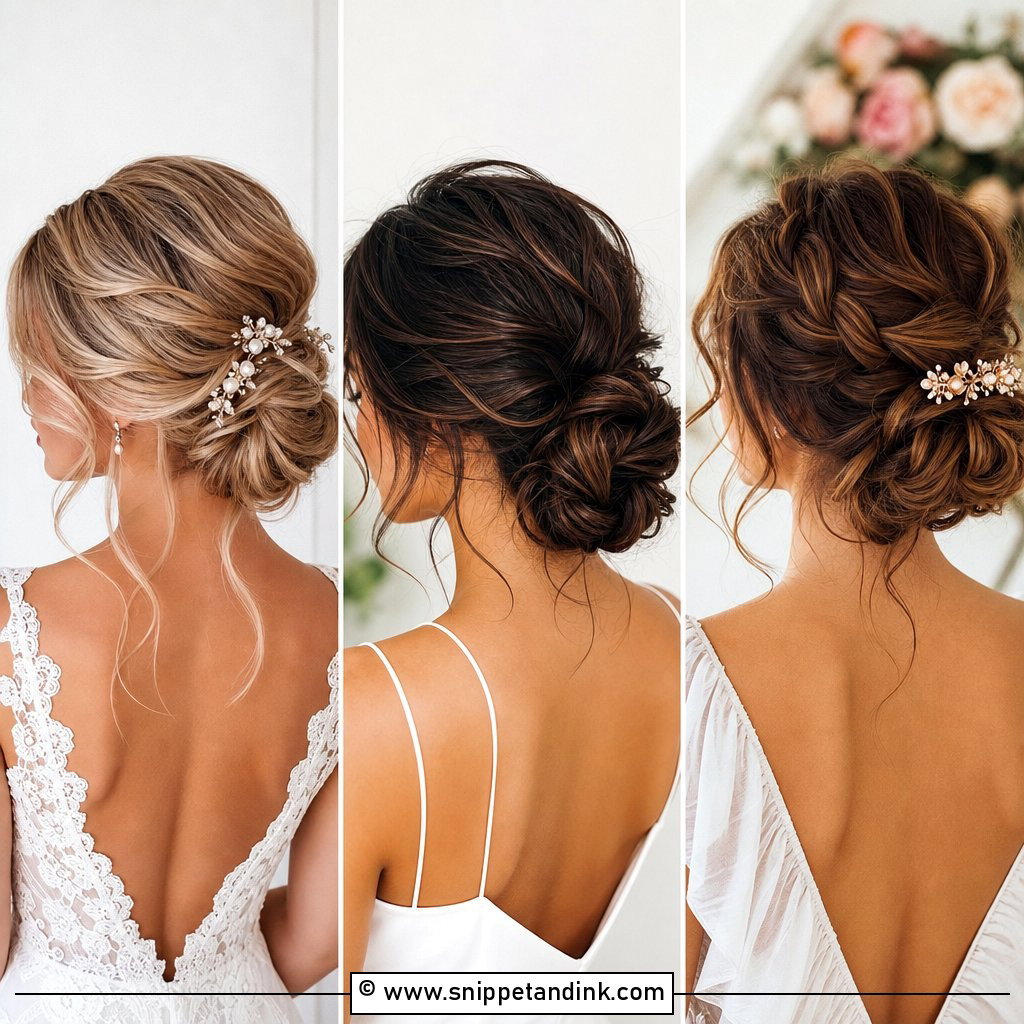
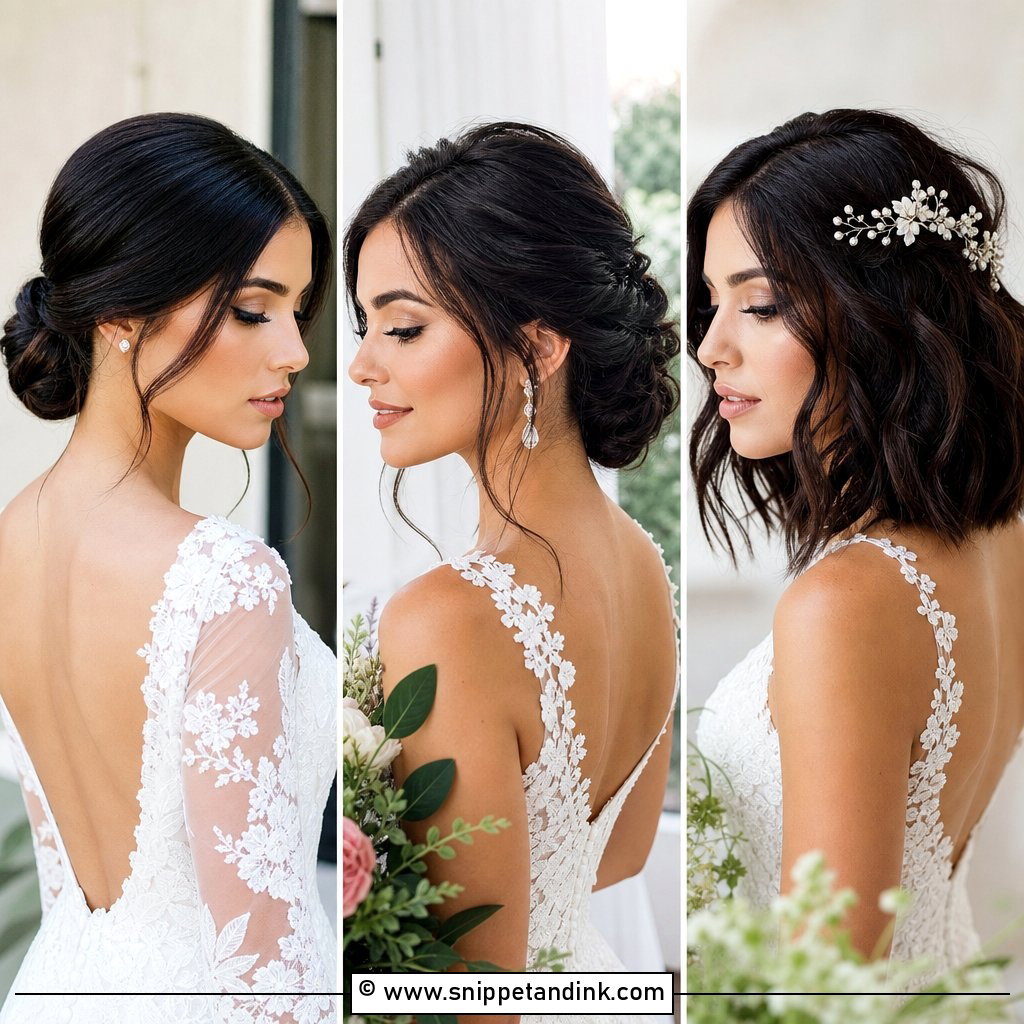
If you can’t decide, start with the low bun. It sits at the nape, keeps your face open and gives a veil, a comb or a few pearl pins a solid base. I build a little lift at the crown, keep the sides smooth but not flat, and pull the bun gently apart once it’s pinned so it looks rounded rather than tight. Off-the-shoulder, strapless, square and high necklines all leave it room. Two or three face-framing pieces stop it reading too formal, though I’d keep them out of your lip line.
2. Soft Messy Bun Wedding Hair
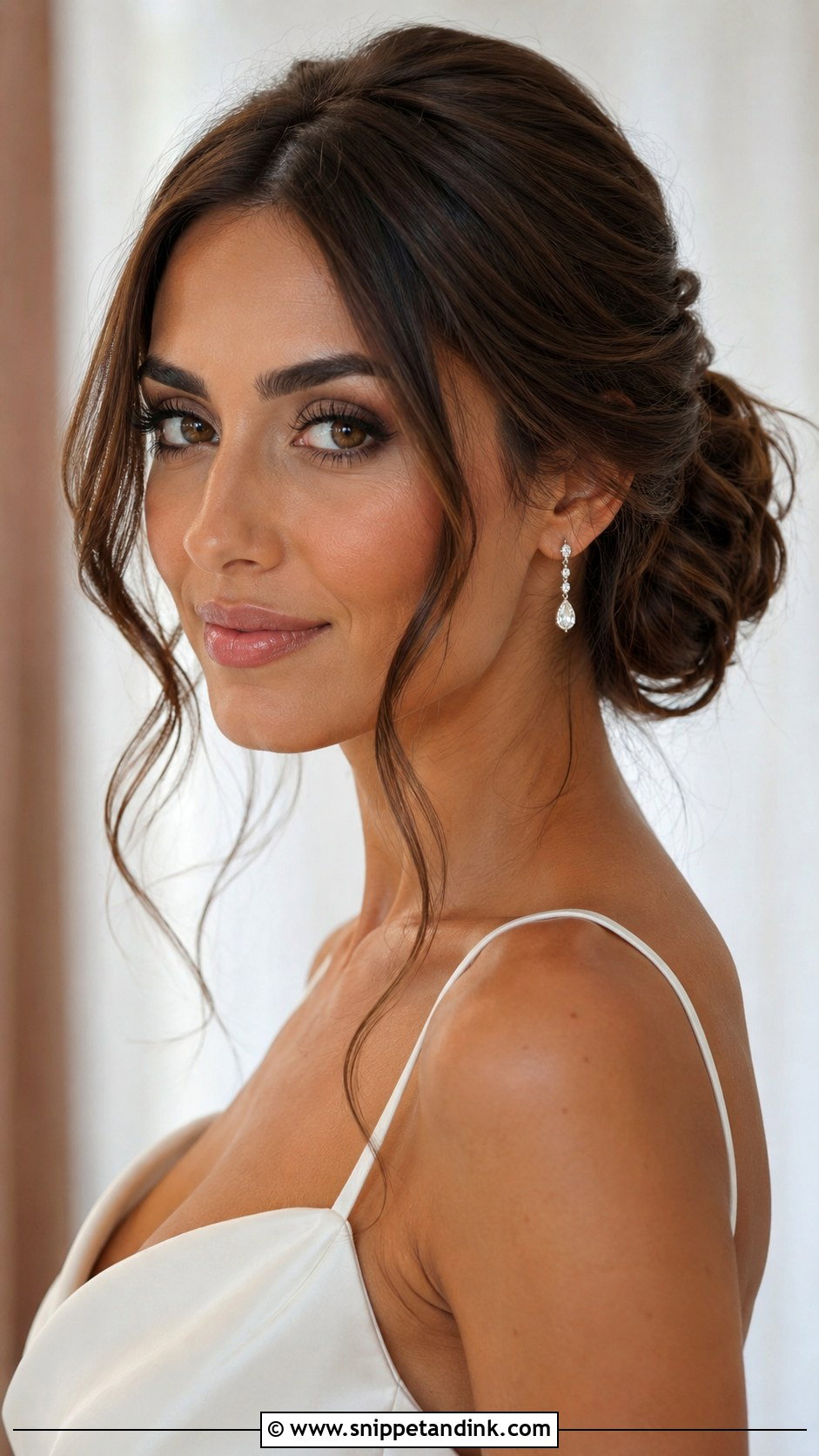
Messy, done well, is the most worked-on style in this list. Every section is curled first, because curled hair has grip and a bun made from straight hair just slides and flattens. Then I pin it in loose loops and pull out the texture by hand, checking the shape from the side and back as I go. Medium to long hair is easiest. The mistake I see in reference photos is pieces pulled out everywhere, so the bun loses its outline; it should still read as a bun from across a garden or a beach.
3. Soft Chignon Wedding Hair
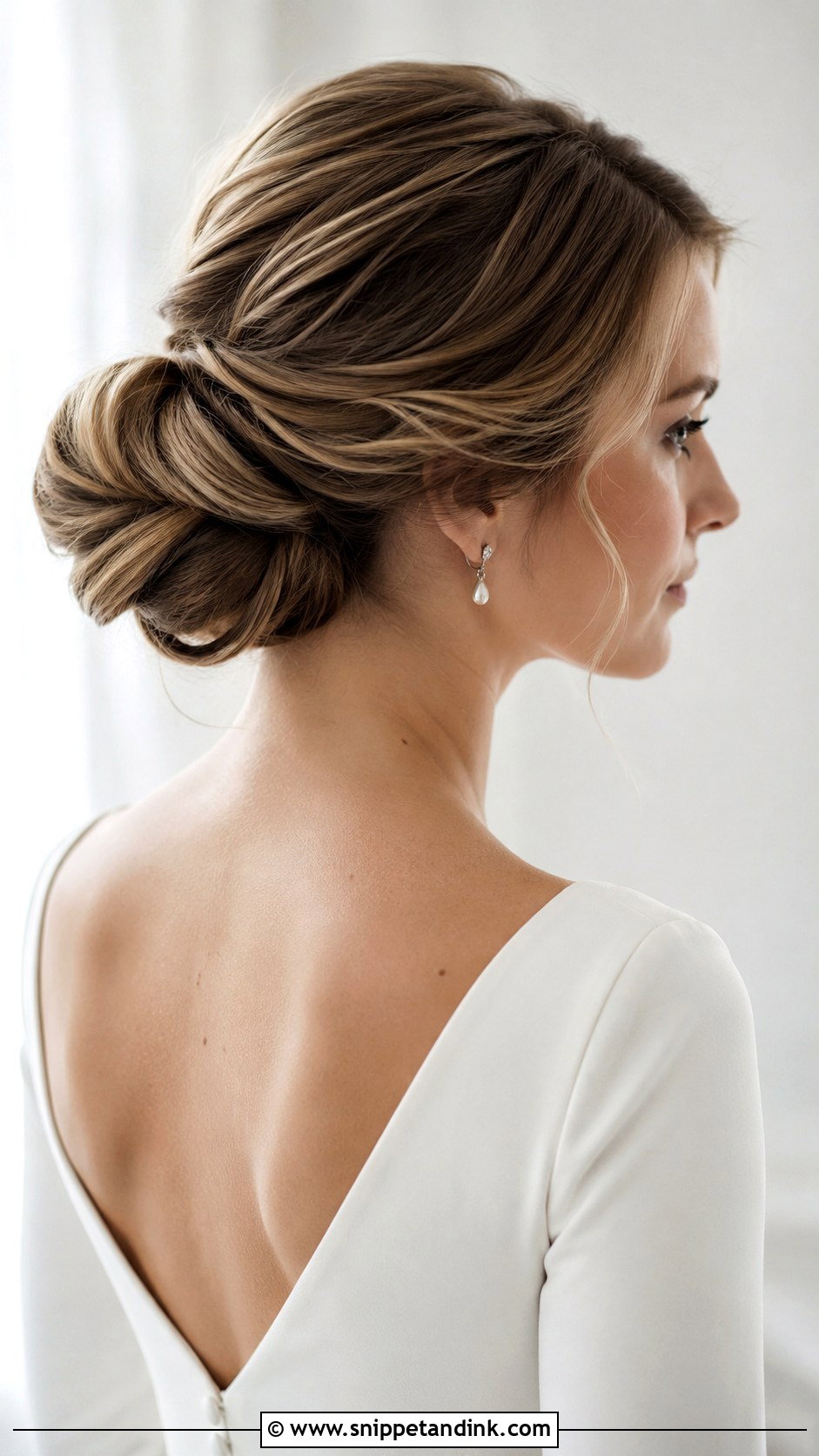
A chignon is tucked or rolled low at the back of the head, which suits a formal ceremony and a classic gown. To soften it, I wave the hair first and roll it loosely so the bends show through the fold instead of being smoothed out. That gives it depth in photos. Fine hair does surprisingly well here: a small padding piece or careful backcombing inside the roll makes it look fuller, and once the outer layer covers it nobody can see the support.
4. Soft Twisted Bun Wedding Hair
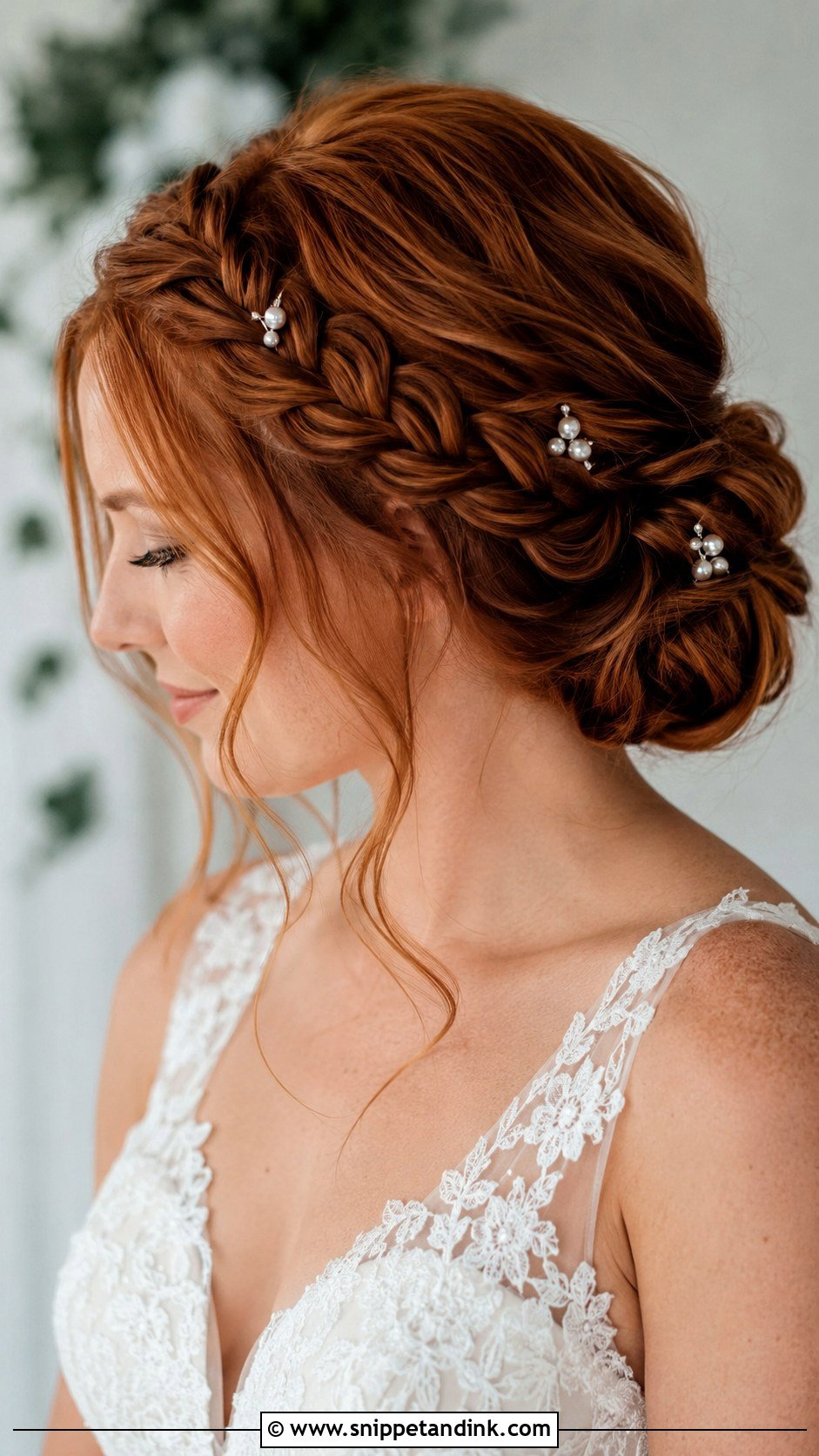
Twisting the sections back before pinning gives the bun a sculpted pattern without a braid or a big accessory. It’s the version I recommend for layered cuts and medium length, because twisting traps the short layers that would otherwise poke out of a plain bun after an hour. A clean-lined dress benefits from that bit of texture. I keep the front soft with a side part or loose tendrils and finish with a flexible spray. Twist each section in the same direction, or the pattern looks muddled from behind.
5. Soft Braided Bun Wedding Hair
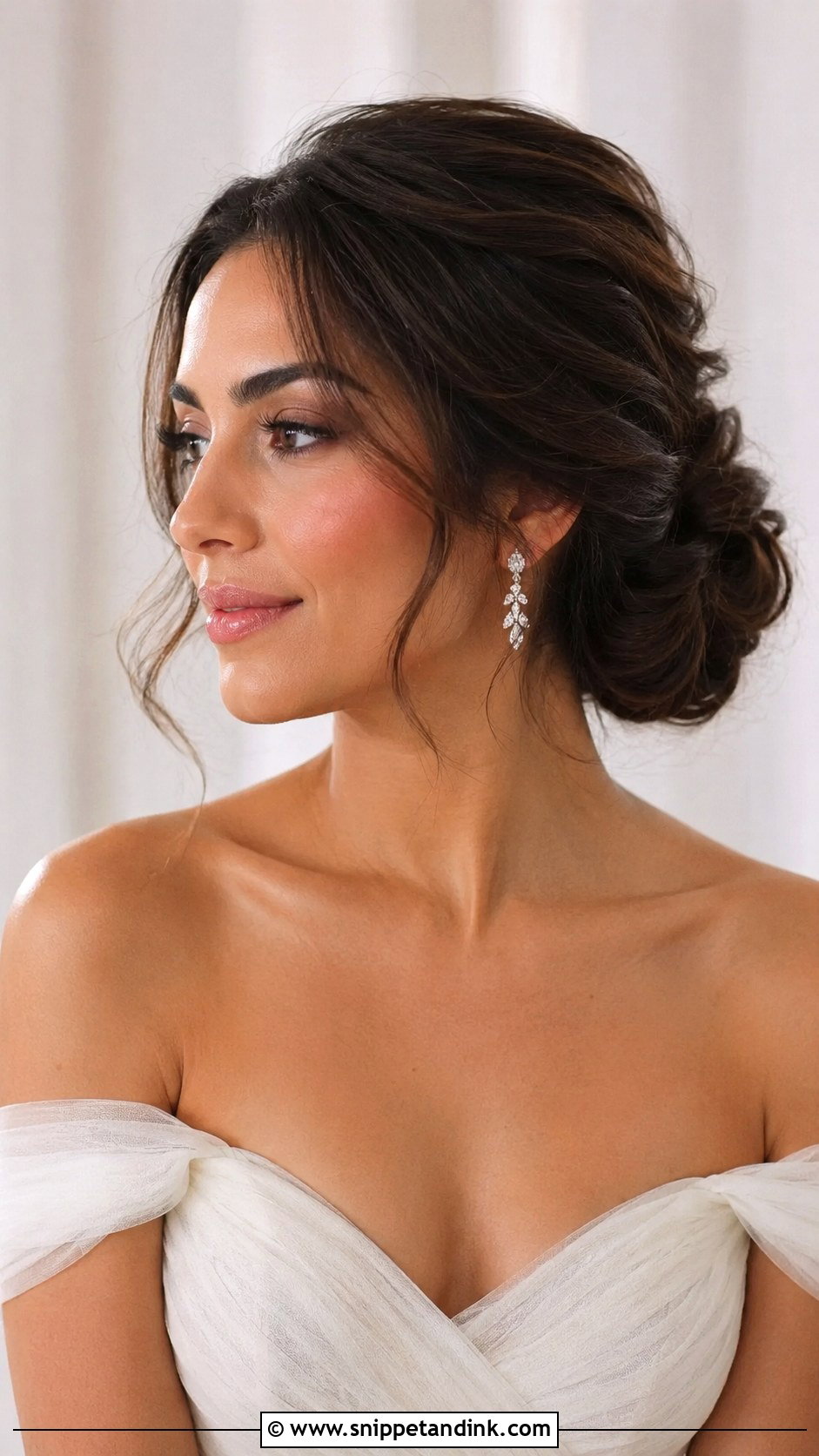
A braid can wrap around the bun, run along one side or sit across the crown before the hair gathers low. Outdoors it earns its keep, since the braid holds the structure even when wind gets at the loose texture. Gently pulling the braid apart, which stylists call pancaking, makes it look softer and wider, but I do that before it goes into the bun, not after, or the edges fray. Boho, classic or whimsical depends mostly on the dress. Small pearl pins, tiny florals or a simple veil all suit it.
6. Soft Bun Wedding Hair With Face Framing Pieces
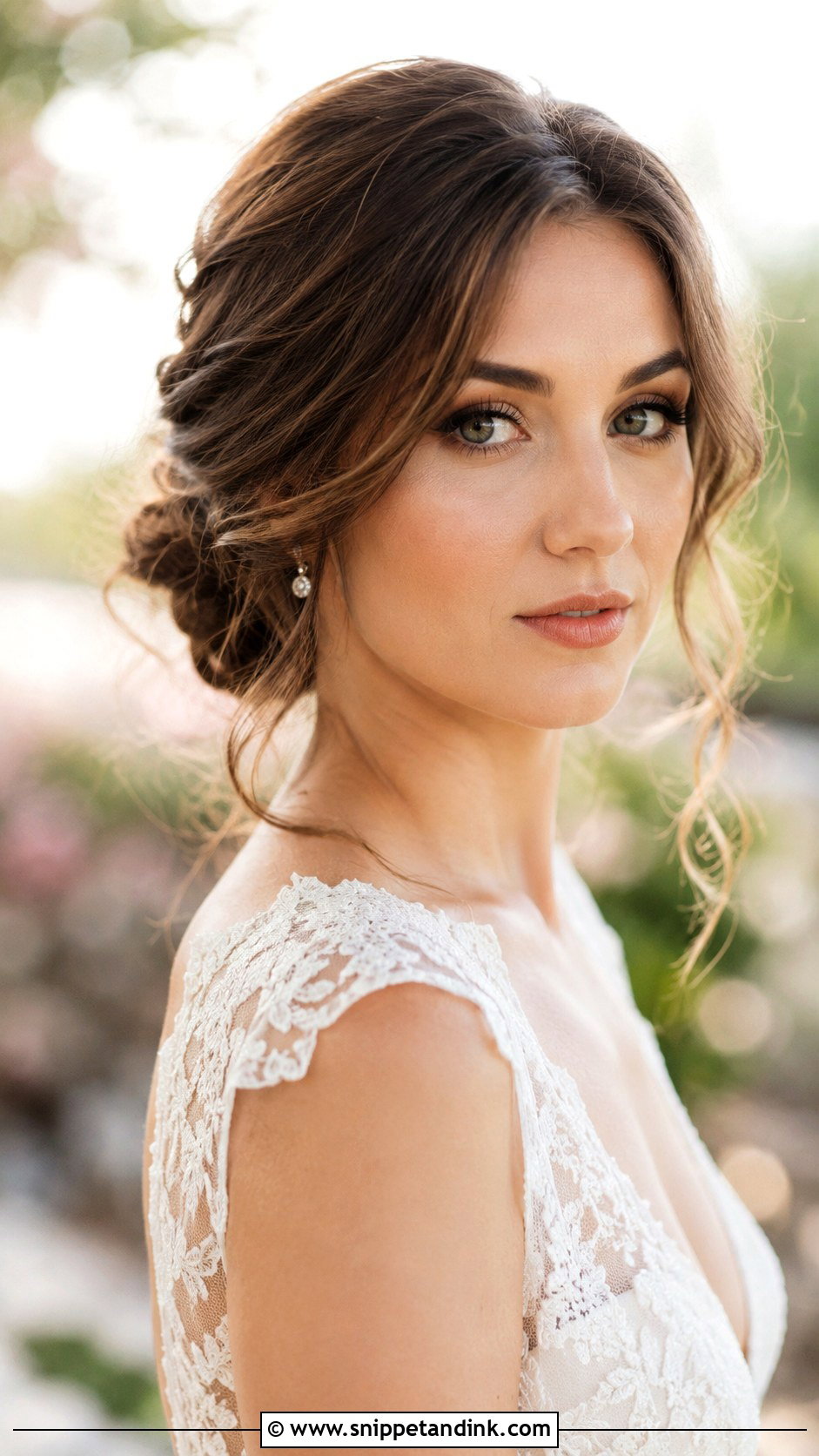
Leaving a few pieces out is the answer for brides who feel bare with everything pulled back. They soften the forehead, jaw and profile, and they can be bent, tucked behind an ear or left near the cheekbones. The bun behind can be any shape. What I watch is how many pieces come out: two to four slim sections look chosen, while ten look like the updo is falling down. I curl them last and leave them pinned up until just before you walk, so they don’t drop.
7. Soft Bun Wedding Hair With Veil
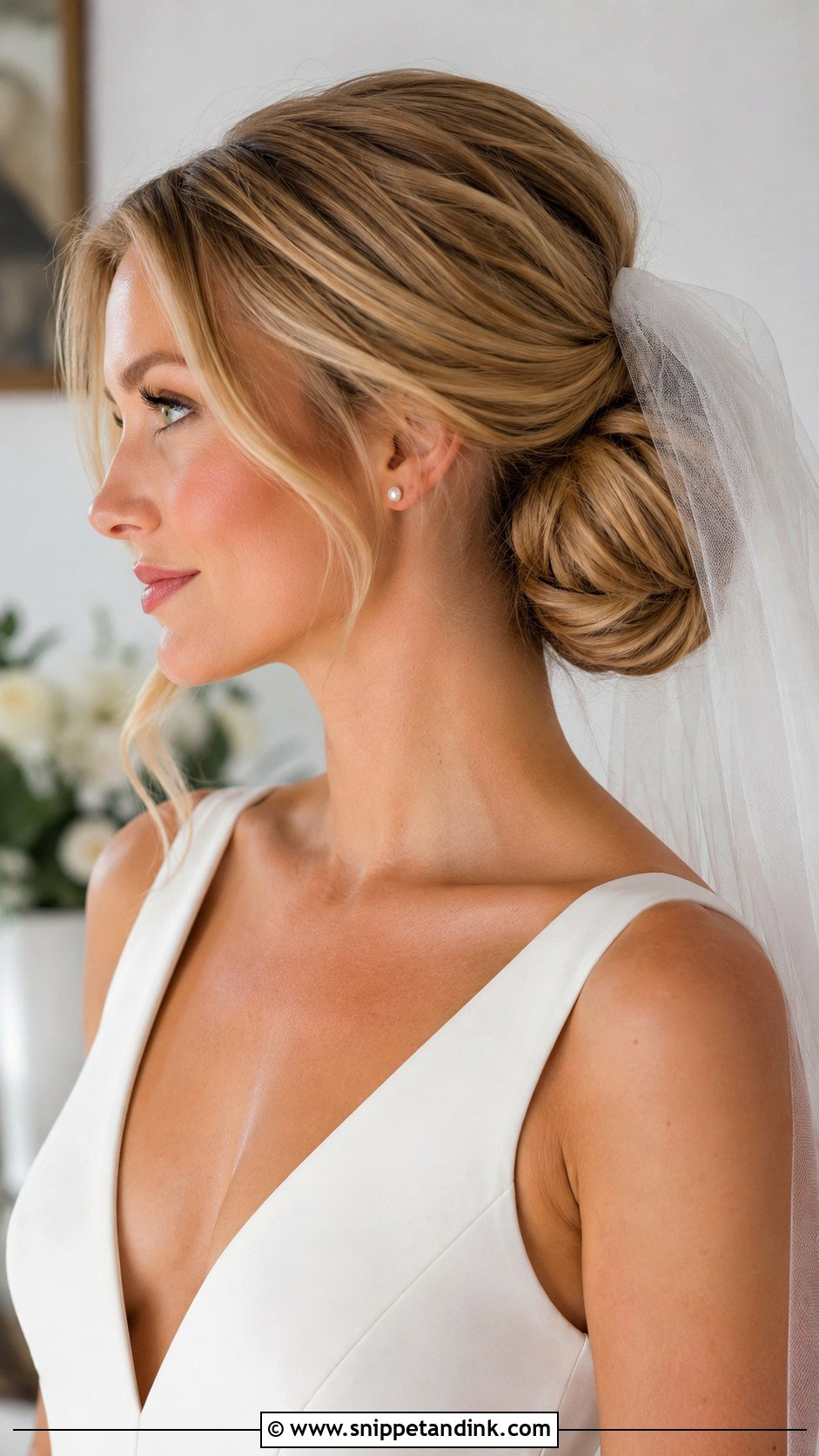
Veil placement has to be decided at the trial, not on the morning. Pinned above a low bun the veil gives the classic bridal outline; tucked underneath it feels lighter and more modern. A soft bun needs a firm core for the comb, so I pin the inner structure tightly and let only the outer layer look loose. A little texture at the crown helps the veil sit into the hair rather than on top of it. This works with fingertip, chapel, or cathedral veils. Practise taking it out too; a careless pull drags half the bun with it.
8. Soft Bun Wedding Hair With Pearls
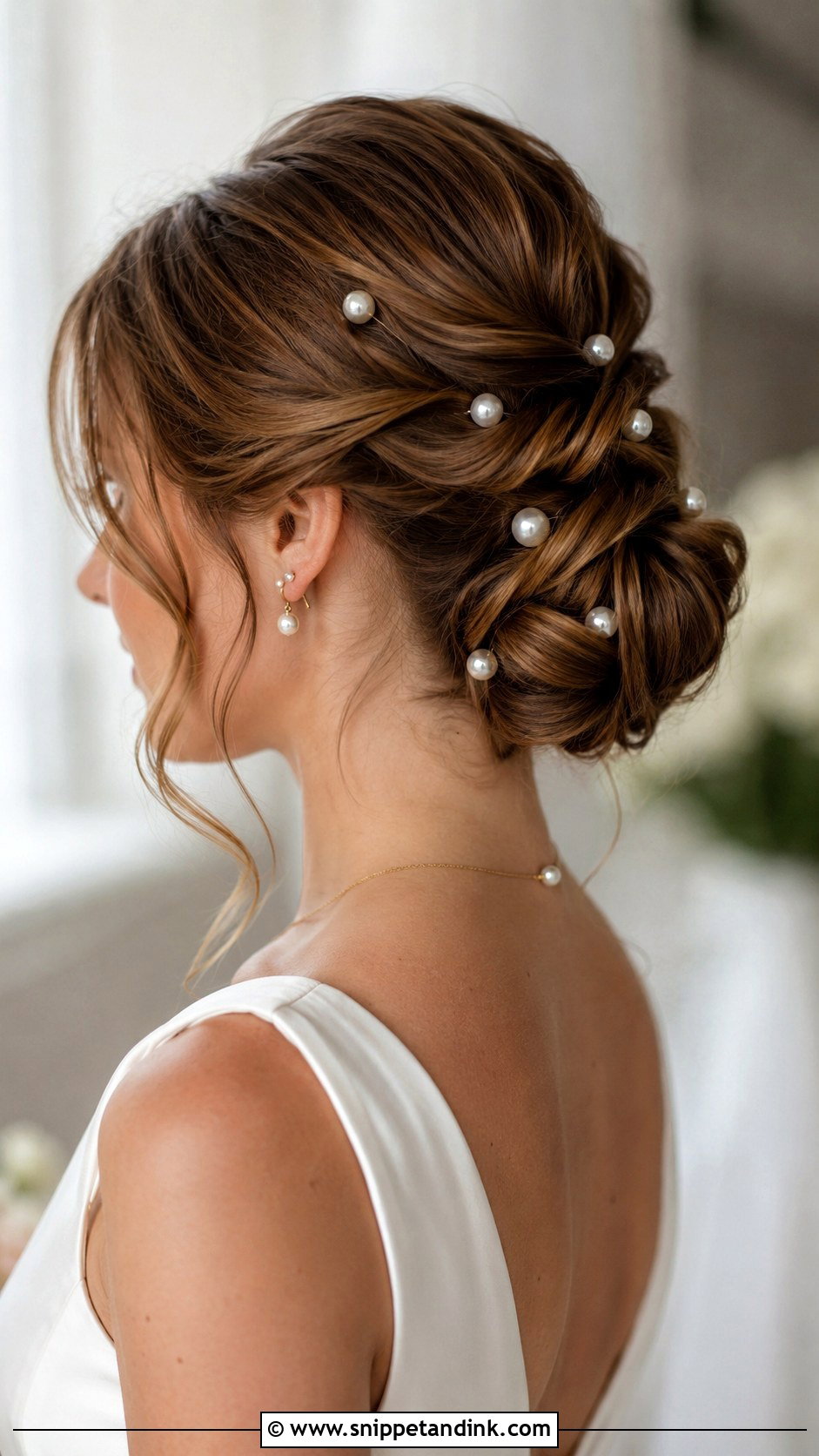
Pearls look best when the bun underneath is calm. A soft low bun, twisted bun or chignon gives them a quiet background; a very textured messy bun swallows them. I slide each pin in following the direction of the hair, scattered through the bun, along one side or around the base. Satin, lace sleeves and simple crepe all suit pearls. If your dress already carries heavy beading, I’d use three or four pins at most, or leave them out and let the gown do the work.
9. Soft Bun Wedding Hair With Flowers
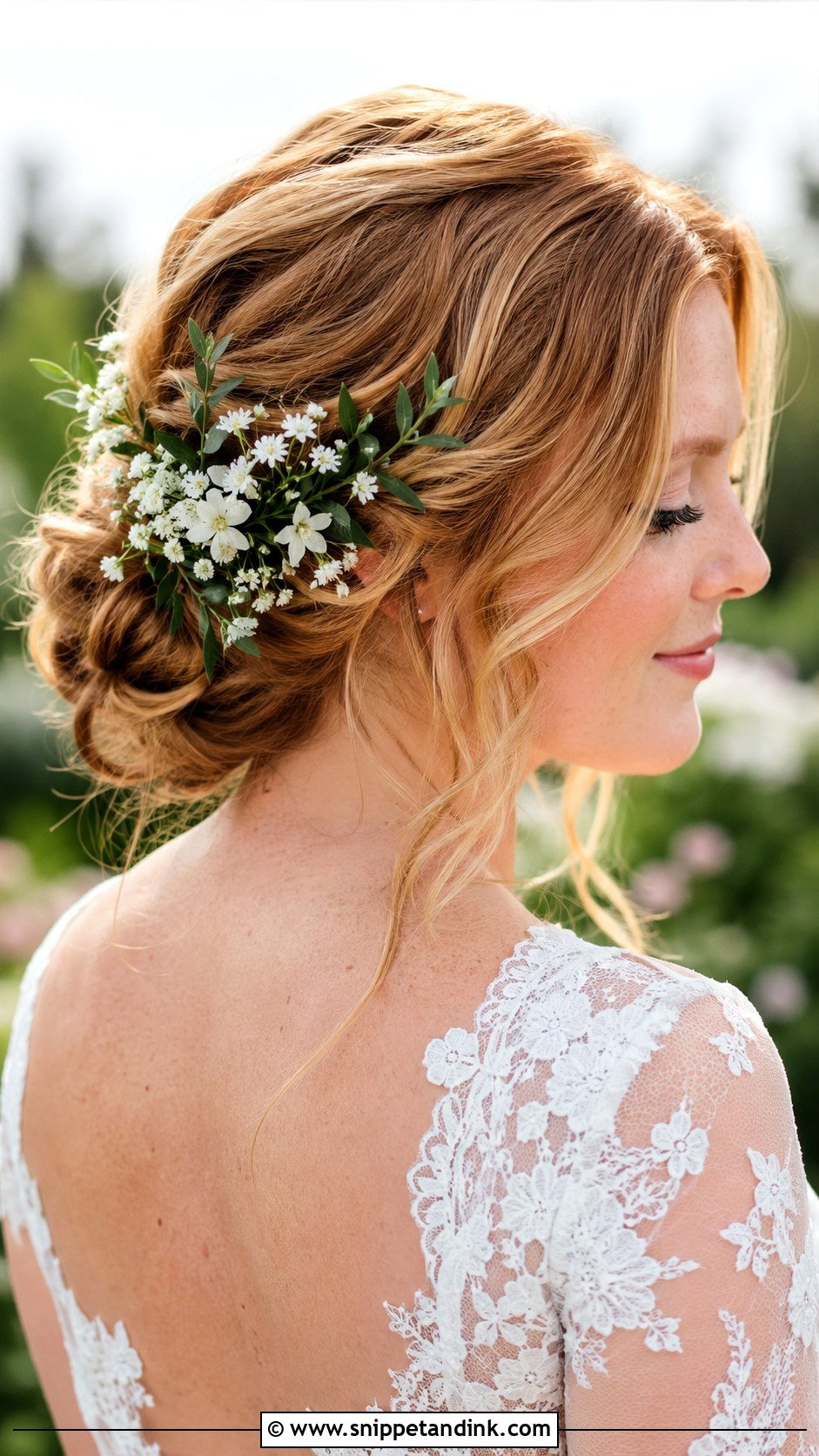
Flowers bring a soft bun straight into a garden or spring wedding. Fresh or realistic silk stems can circle the bun, sit to one side or tuck into twists, as long as they’re light and scaled to the hair. Baby’s breath, small roses, orchids and fine greenery are good choices. Fresh flowers are the risk: they lose water quickly against a warm head. I ask the florist for sturdy, conditioned stems delivered the morning of, and I wire or pin them in last so they spend as little time out of water as possible.
10. Soft Bun Wedding Hair For Long Hair
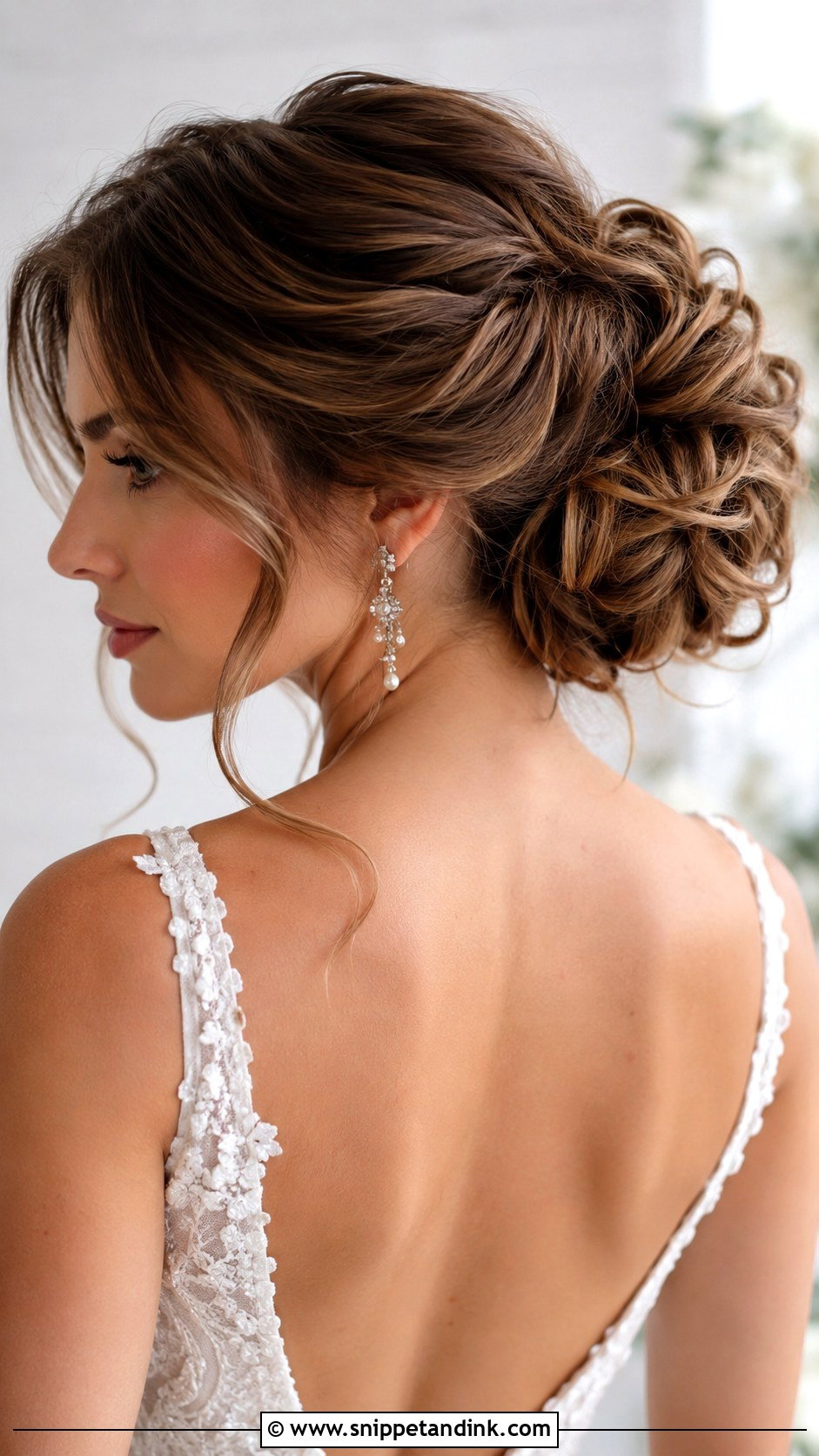
Long hair gives me plenty to work with, enough for twists, loops, rolls or a fuller low bun. The challenge is weight. Long, thick hair pinned into one mass can feel heavy by the reception, so I section it, pin each section to its own anchor and build the bun close to the head. Waving it first keeps the bun from looking dense. A dramatic veil, an open-back gown and statement earrings all balance well with the larger shape.
11. Soft Bun Wedding Hair For Medium Hair
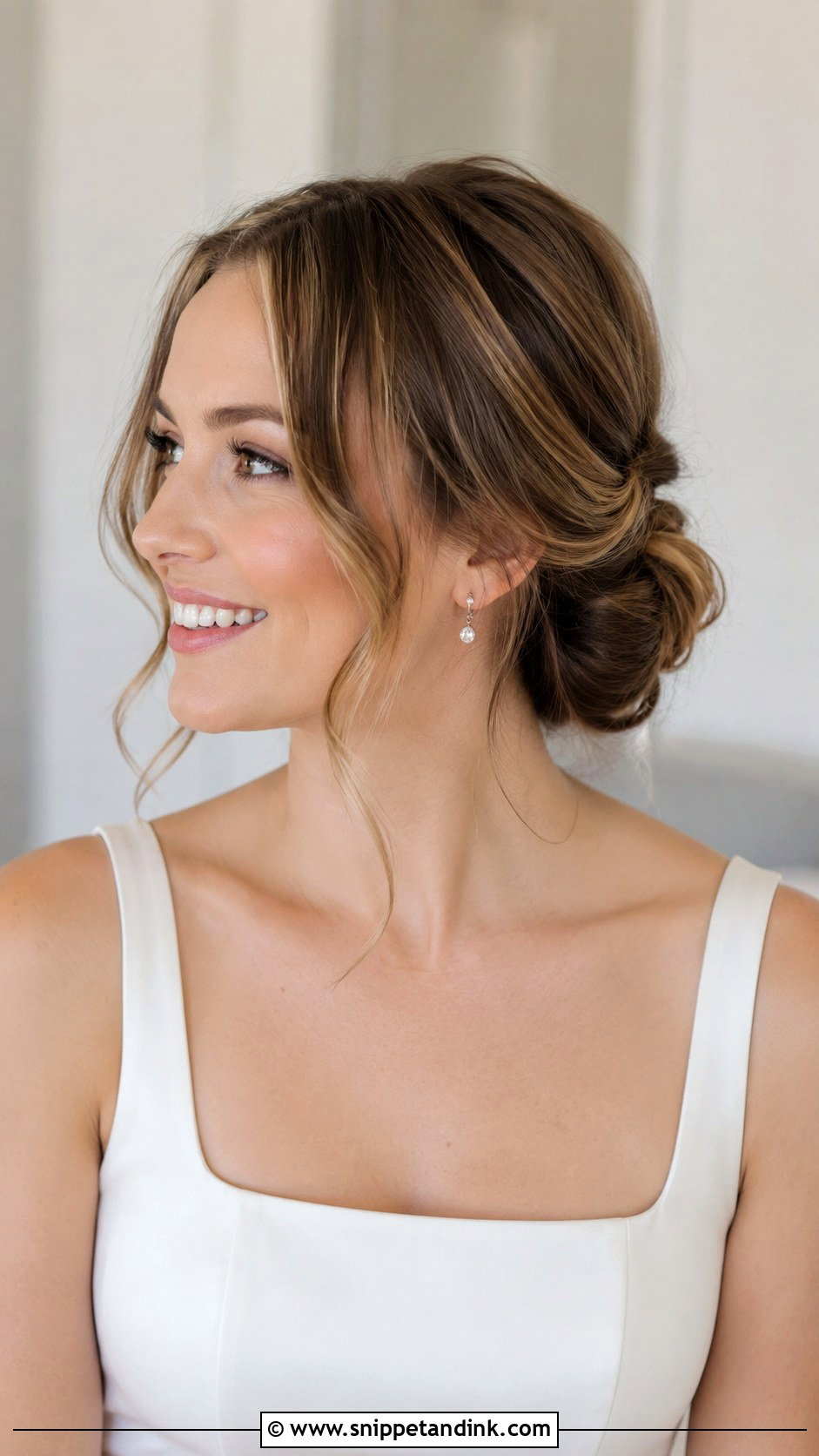
Medium length, from shoulder to collarbone, holds a soft bun better than most people expect. I curl it first so it has grip, then build a twisted bun, loose chignon or tucked low bun, because none of those needs much length to close. The shortest layers at the nape are the usual problem, and a couple of crossed pins under the bun catch them. Fine or layered hair may want a small padding piece or a few clip-ins. Keep the front light with a soft part and minimal face-framing.
12. Soft Bun Wedding Hair For Thin Hair
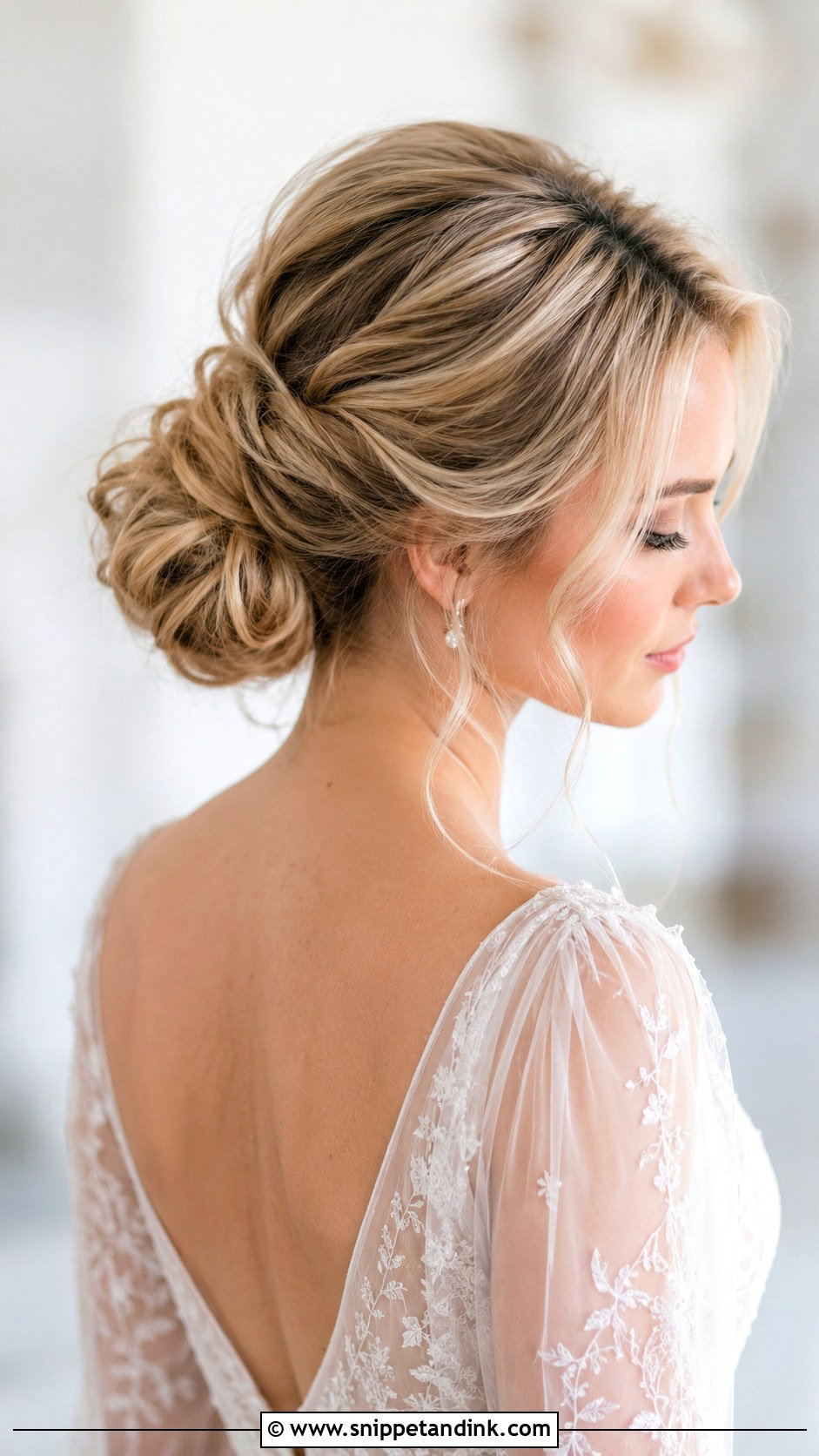
Thin hair needs the bun to look bigger than the hair it’s made from. I prep with volumizing mousse at the roots, texture spray through the lengths and a set of curls before pinning, which gives each section more body. A low chignon, twisted bun or braided bun shows more visual depth than a plain coil. Padding or a few clip-in extensions can build the shape quietly. Skip very slick sides; flattening the hair against the head makes it look sparse. Gentle crown volume and a slightly expanded bun do far more.
13. Soft Bun Wedding Hair For Curly Hair
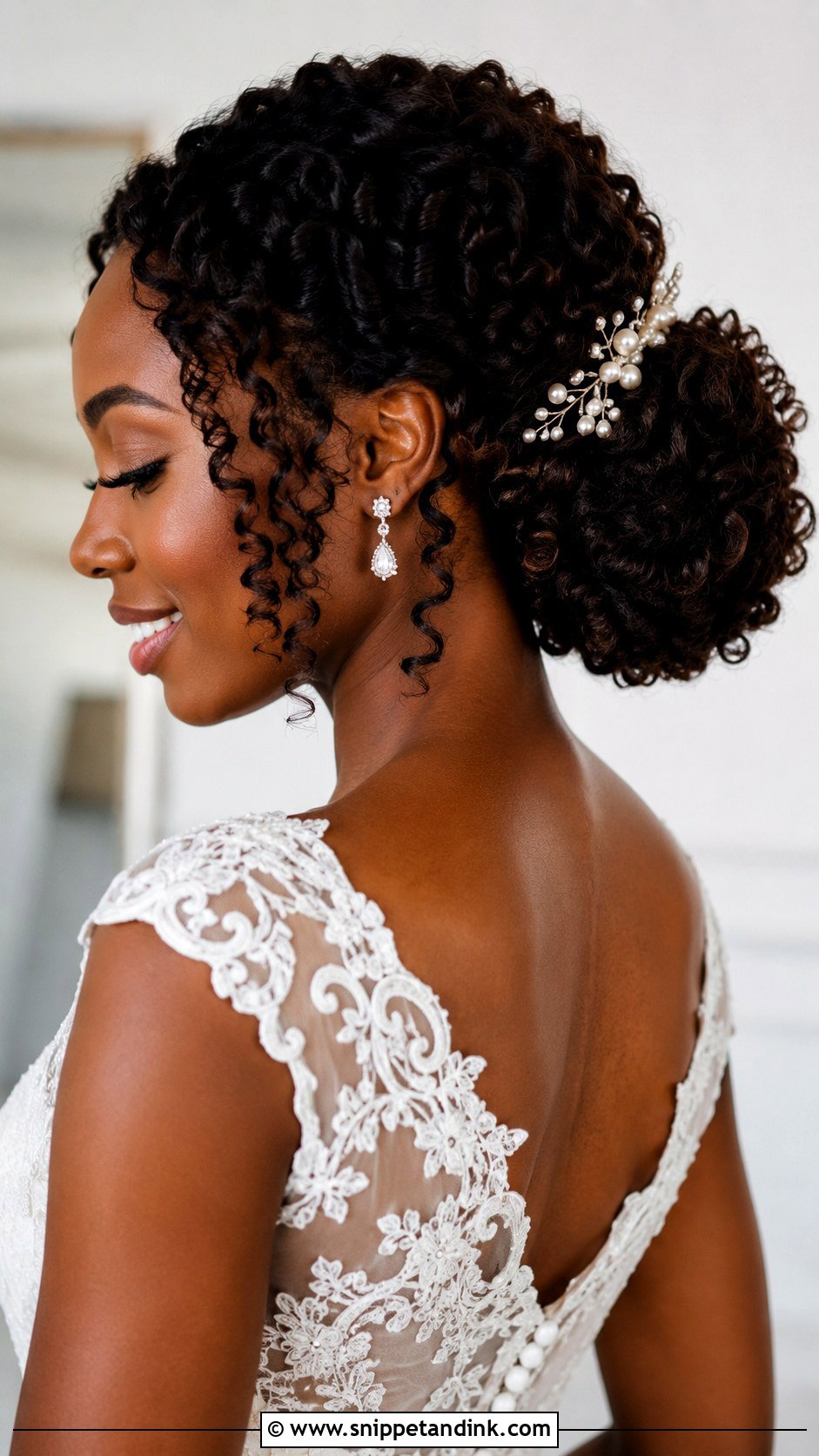
Curly hair arrives with the movement other brides pay me to create, so I shape it rather than fight it. A curly low bun can leave coils at the hairline, crown or nape, with the bun pinned loosely enough for individual curls to stay visible. Stretching curls before pinning usually ends in frizz by the afternoon. Prep is about moisture first: a curl cream, then a light gel to hold, especially if the day is humid. Floral accessories, pearl pins and lace all sit naturally against curly texture.
14. Soft Sleek Bun Wedding Hair
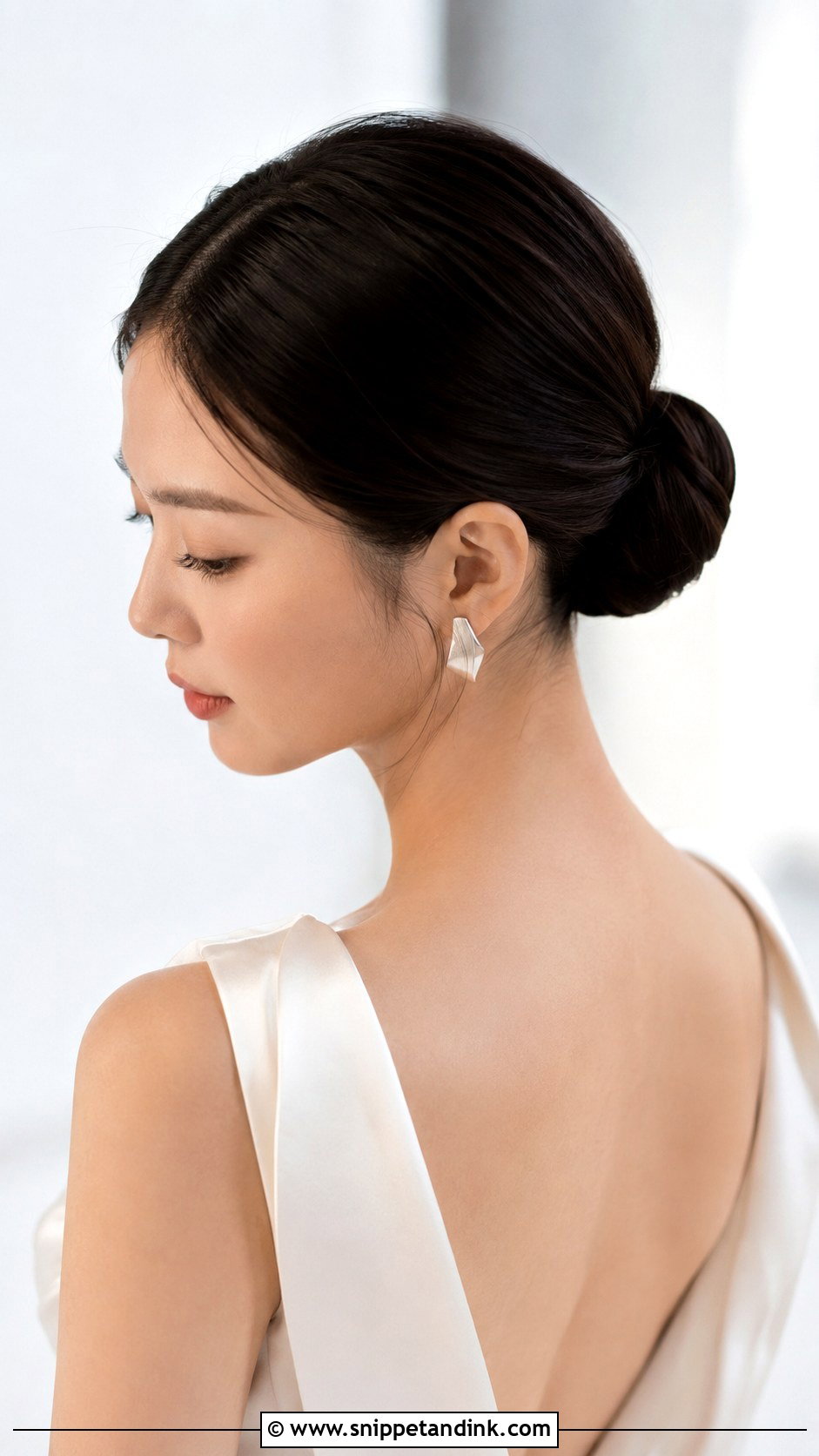
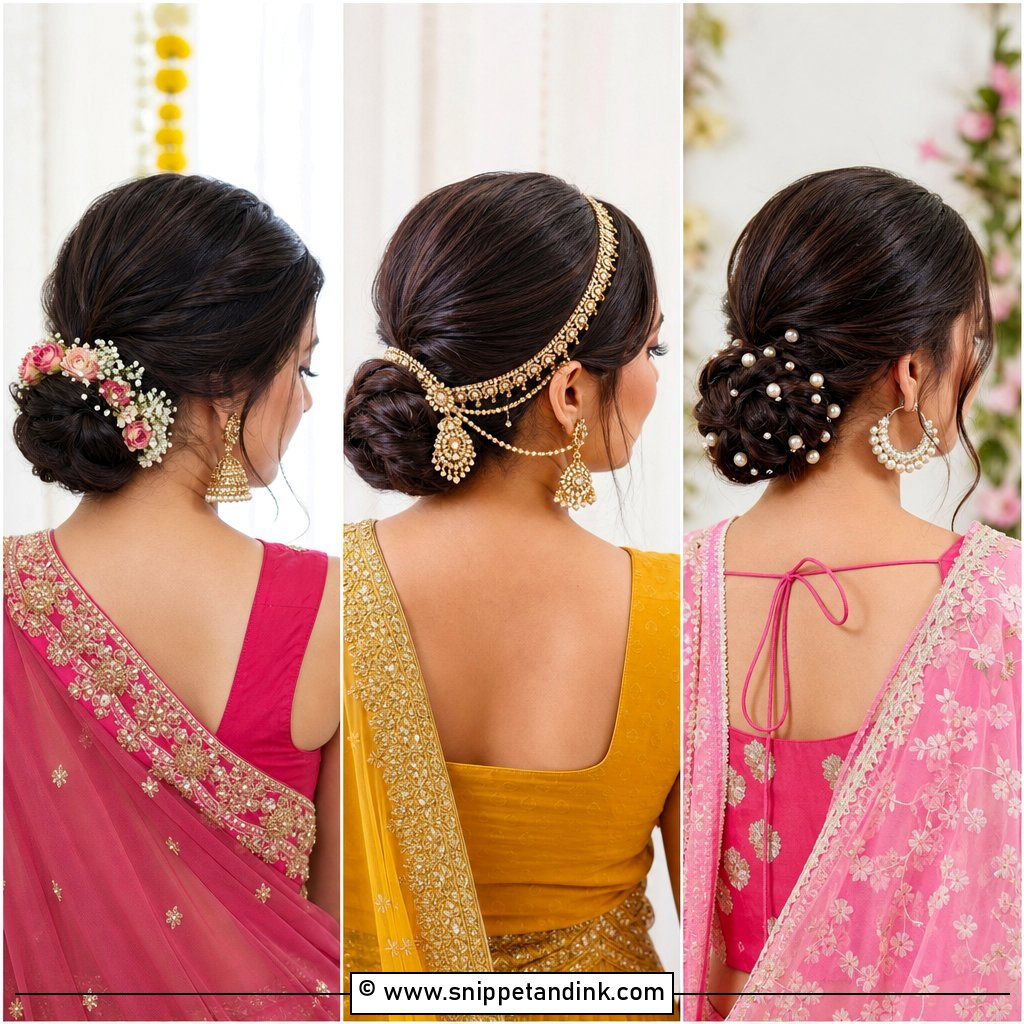
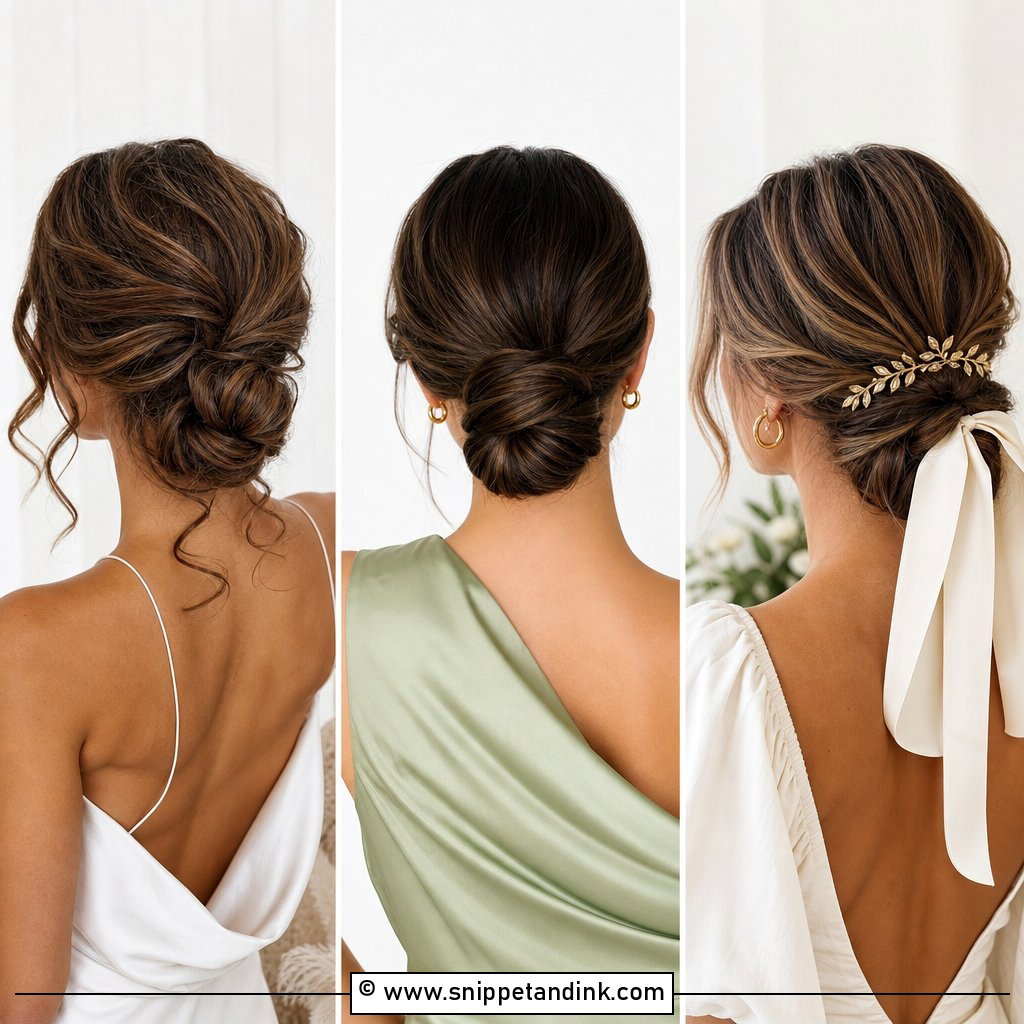
Somewhere between a tight slicked bun and a messy one sits this version: smooth on the surface, but with a little ease around the part, crown or bun. A center part looks balanced, a side part a bit more classic. Minimalist gowns, satin, structured necklines and statement earrings suit it. The bun can sit low at the nape or slightly higher. I use a light shine spray and a flexible hold here, never a strong gel, because the moment it crunches it stops reading as soft.
15. Soft High Bun Wedding Hair
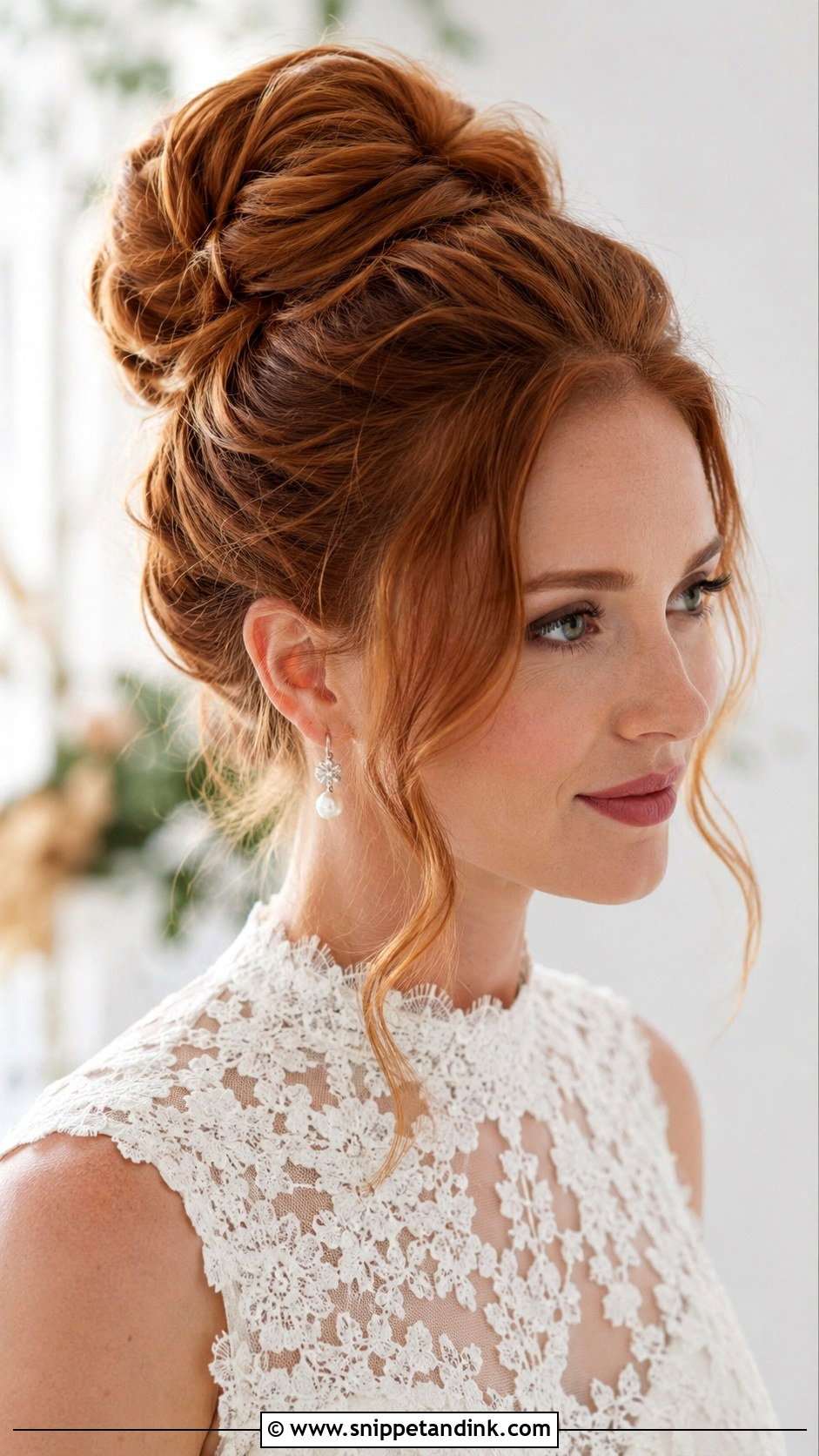
A high bun lengthens the neck and shows off earrings, and it balances a high neckline or a detailed bodice well. To stop it looking severe, I gather it at the crown without pulling the hairline tight, add a little volume on top and leave a couple of curled pieces loose. Keep the bun rounded rather than compact. It suits ballet-inspired themes, formal venues and warm ceremonies, since the hair stays off your neck. It does put more strain on the scalp than a low bun, so wear it for a few hours at your trial before committing.
How Soft Is Too Soft for Your Weather?
Loose texture reacts to the air more than a sleek finish. Planning the amount of softness around the forecast saves a lot of disappointment.
Humid or coastal
Curled hair drops and frizzes quickly in damp air. I tighten the structure, keep fewer loose pieces and choose a twisted or braided bun, which holds its pattern even when the surface puffs up a little.
Hot and dry
Sweat at the nape loosens the lowest pins first. A bun sitting just above the nape stays drier than one resting on the neck.
Windy
Face-framing pieces whip into lip gloss. Keep them short enough to tuck behind the ear, and pin the veil a little lower.
When Your Hair Won’t Hold a Curl
Some hair drops a curl in minutes, usually very fine, very straight or heavily conditioned hair. You can test it at home a week or two before your trial: curl a section, leave it, and check it after a couple of hours. If it’s straight again, tell your stylist.
- Skip conditioner on the lengths the night before and use it on the ends only.
- A setting mousse or spray applied before curling gives the hair something to hold onto.
- Choose a twisted, braided or tucked shape over a messy bun, because their texture comes from the structure rather than from the curl.
- Let your stylist pin the curls while they cool, then release them; it takes longer, but it lasts.
A Soft Bun That Still Looks Like You at Midnight
A soft bun can be shaped to almost any wedding mood, classic or boho, minimal or dressed with pearls. Placement, texture, accessories and face-framing are the dials. A low bun reads traditional, a messy bun relaxed, a chignon refined, and twists or braids add detail. Plan it around your dress, veil, hair type, weather and comfort. Bring clear photos to your trial, look at the front and back view in a hand mirror, and keep the version you forget you’re wearing.
You'll Like These Ideas:



Leave a Reply