
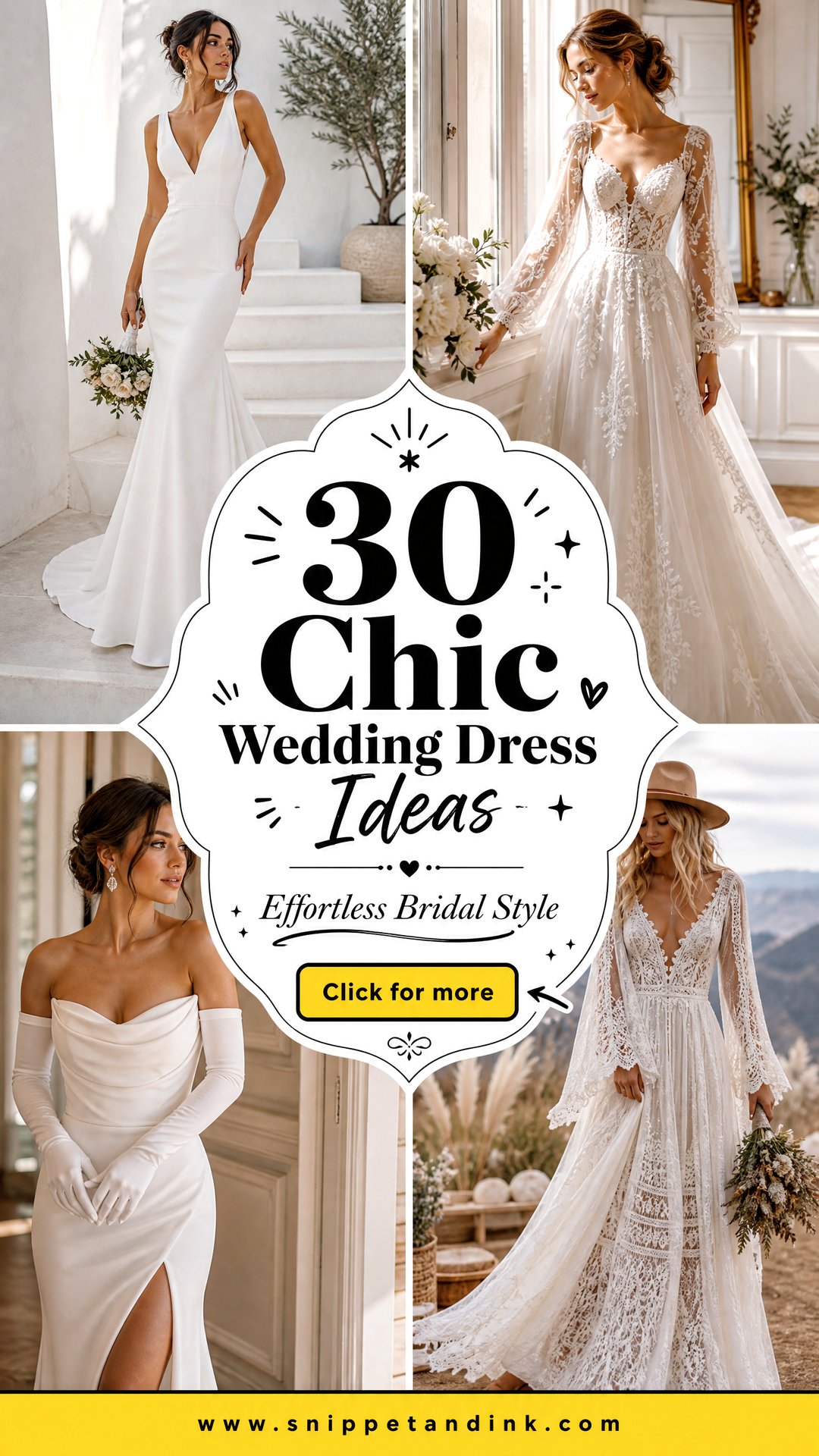
A gown on a hanger tells you very little. I’ve watched brides walk past a plain satin column on the rail and then refuse to take it off once the veil and shoes were on. So the ideas below are full outfits: silhouette, fabric, shoes, veil, jewelry and hair, styled the way I’d put them together on a fitting day. Right now I’m seeing clean minimal gowns, drop waists, corset bodices, pearl work, sheer layers and short reception dresses everywhere. Use the list to work out which shapes you keep coming back to, then test them against your venue and against how much you plan to move.
What I Have Every Bride Do in the Fitting Room Mirror
Standing still in front of a three-way mirror is the least useful thing you can do in a wedding dress. Within a minute of a bride putting on a gown, I ask her to move, because the dress you buy has to cope with ten or twelve hours of real life, not a ninety-second twirl.
- Sit on a hard chair for a full minute. Watch where the bodice digs, whether boning presses into the ribs, and how much the skirt creases.
- Raise both arms as if hugging someone taller. Straps, off-shoulder bands and cropped tops show their weak points here.
- Walk forward, then turn and walk away. Trains and long hems behave differently going backward, and you’ll do both at the altar.
- Bend to pick something up. If the neckline gapes, it will gape in photos too.
Bring shoes of roughly the height you plan to wear, and the undergarments you think you’ll use. Sample gowns are often a different size from yours and clipped at the back, so judge the shape and the fabric, not the exact fit. That part is the seamstress’s job later.
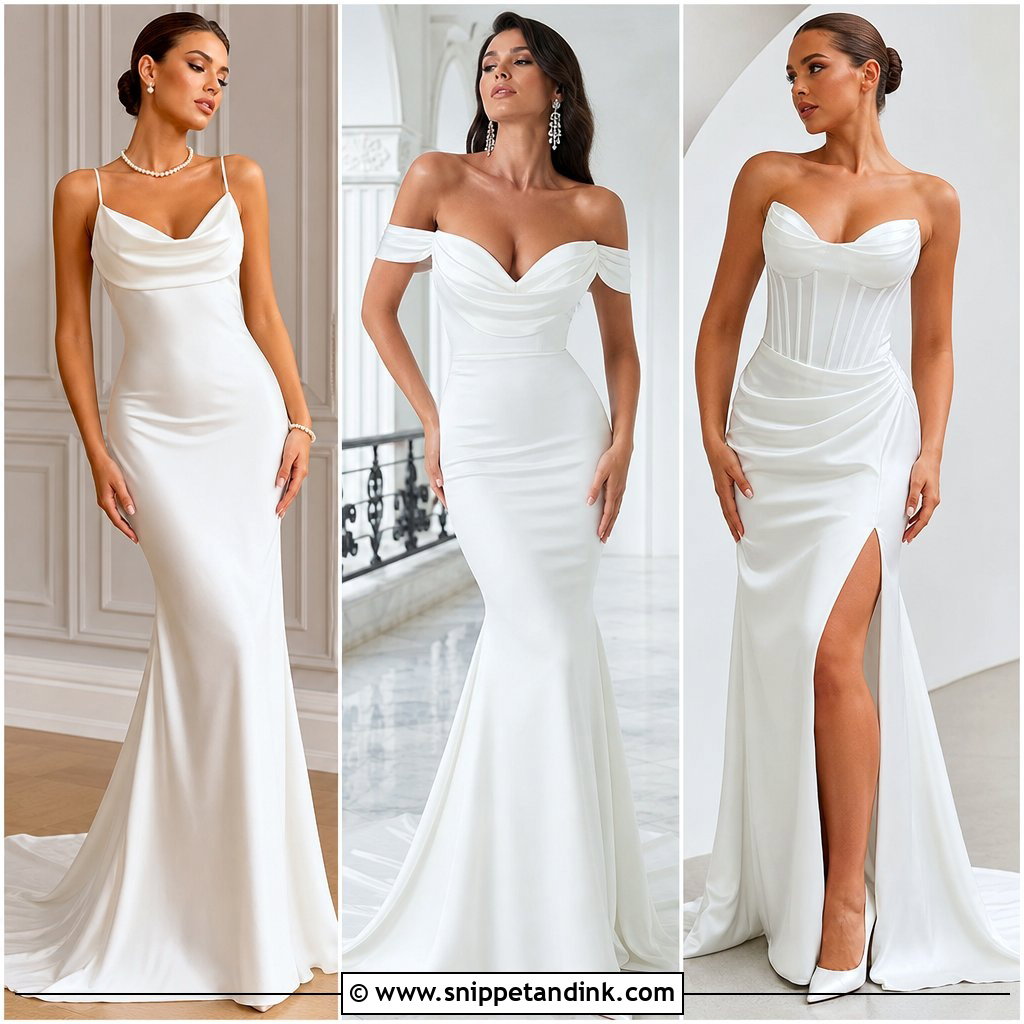
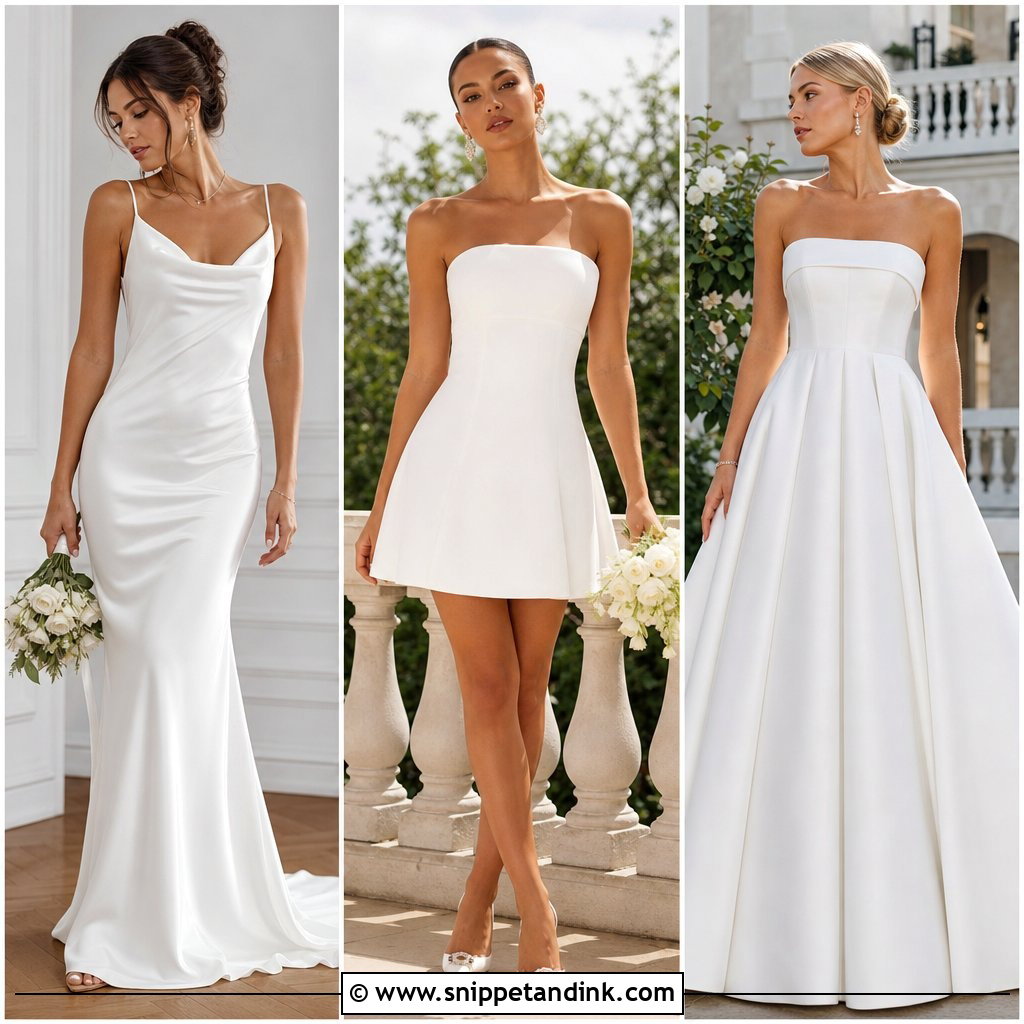
1. Minimal Satin Wedding Dress
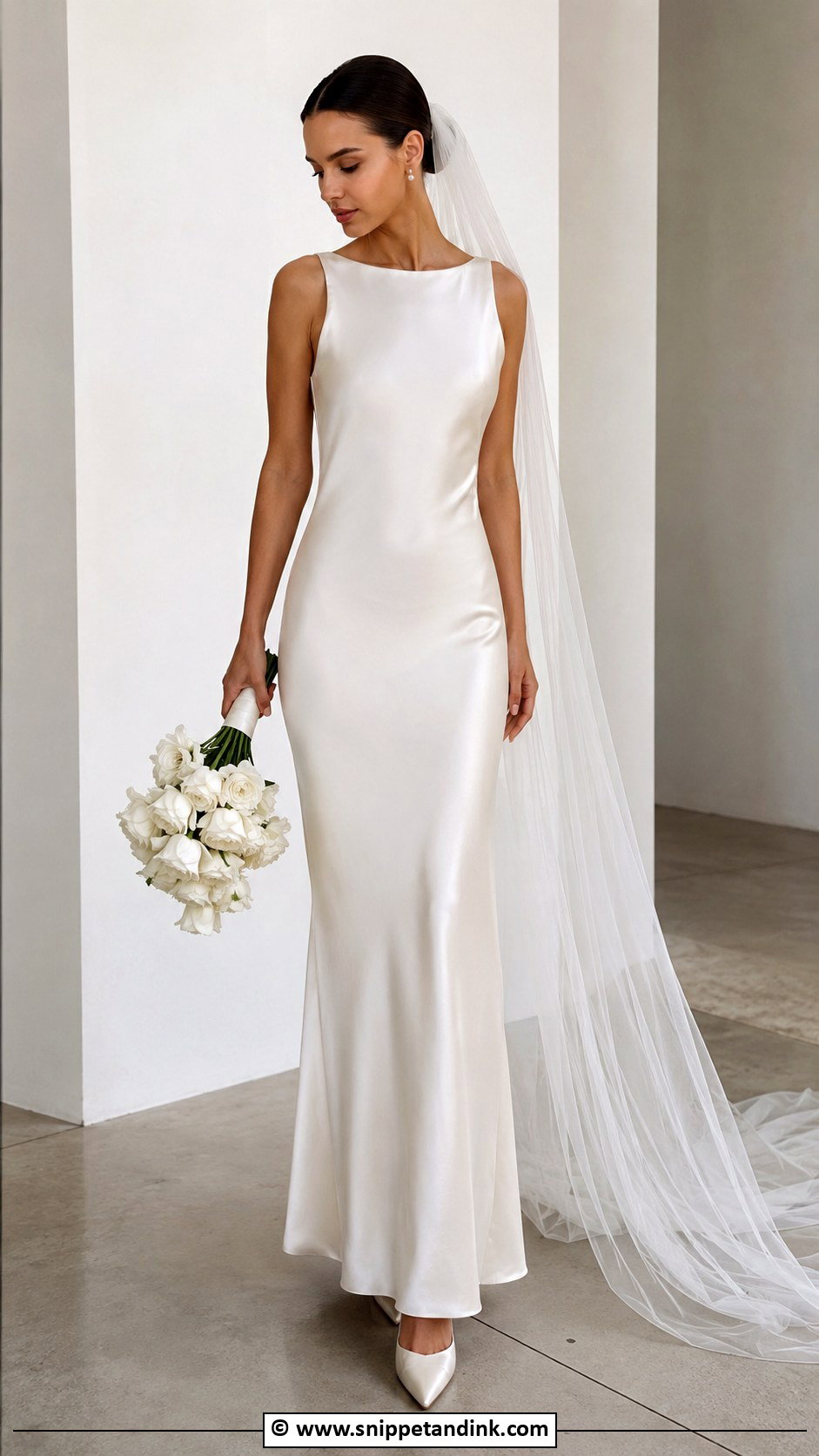
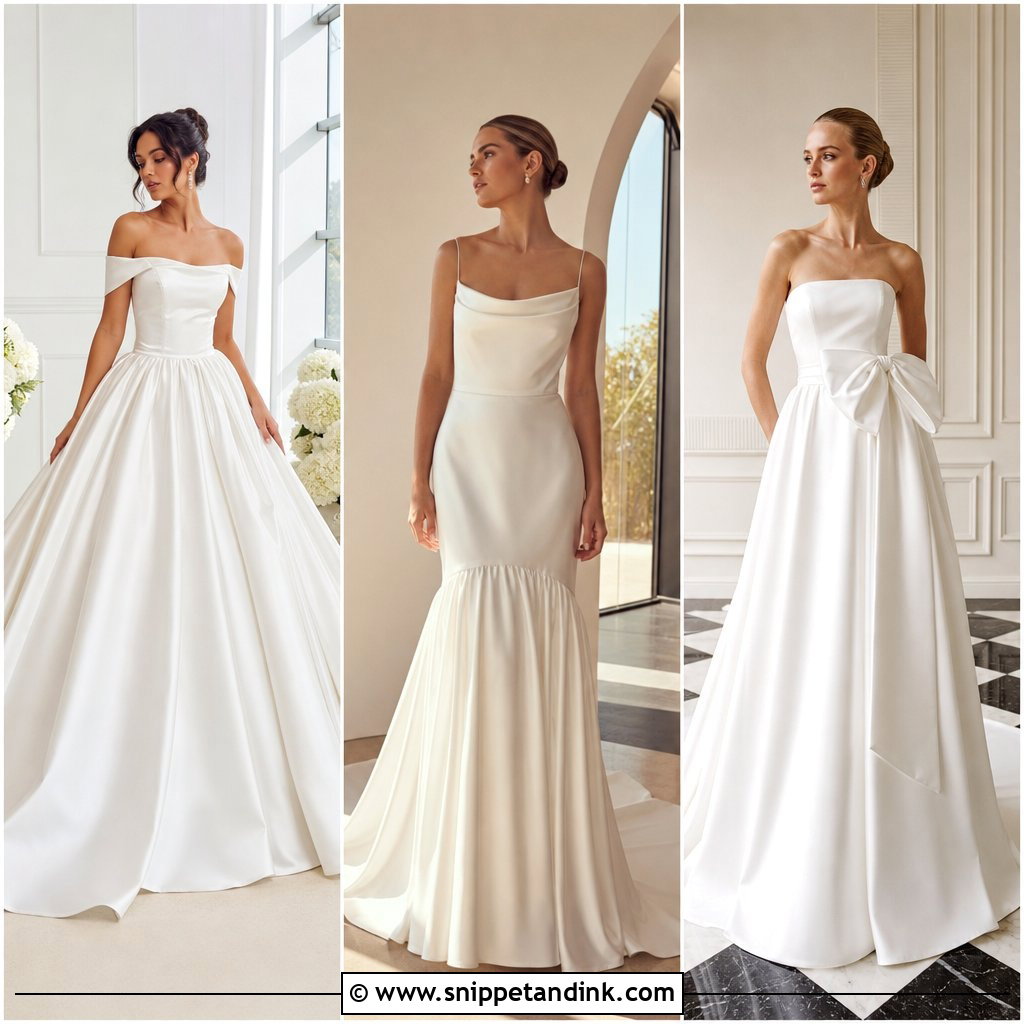
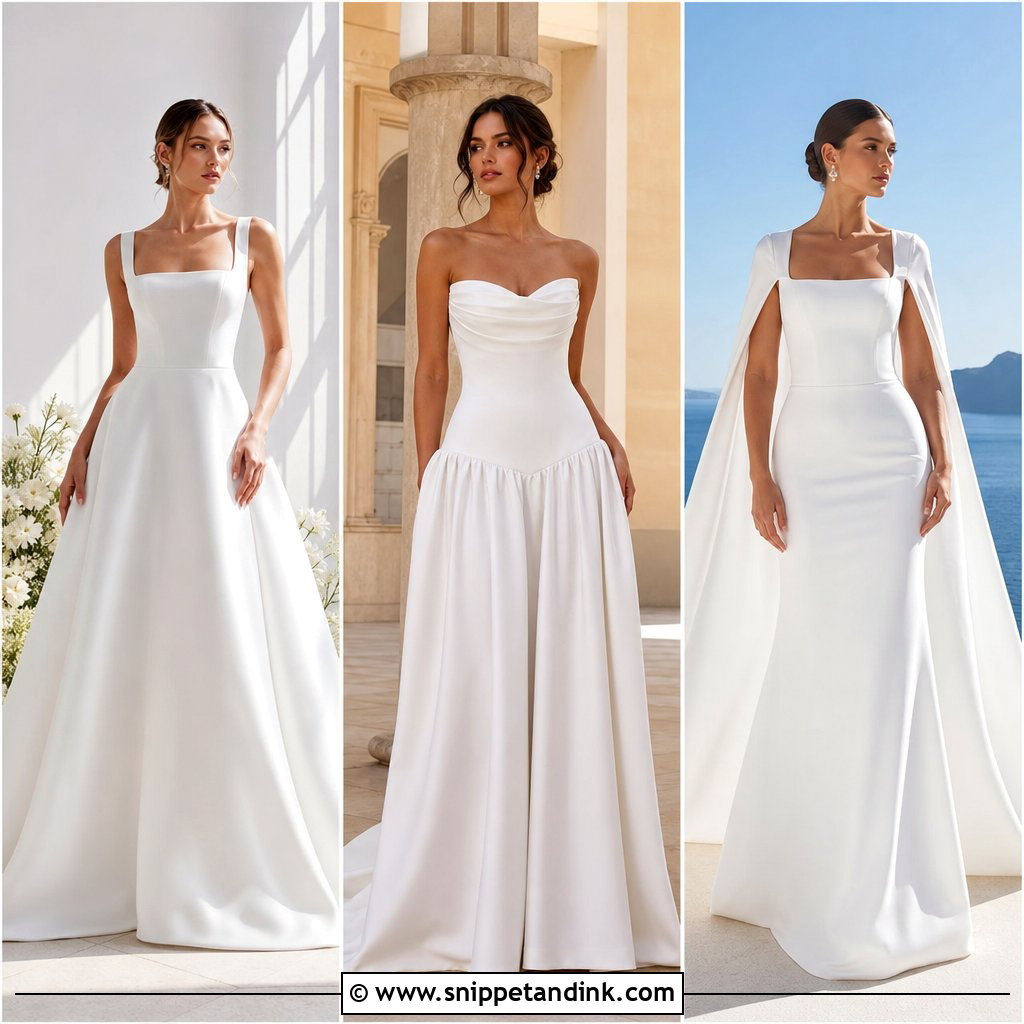
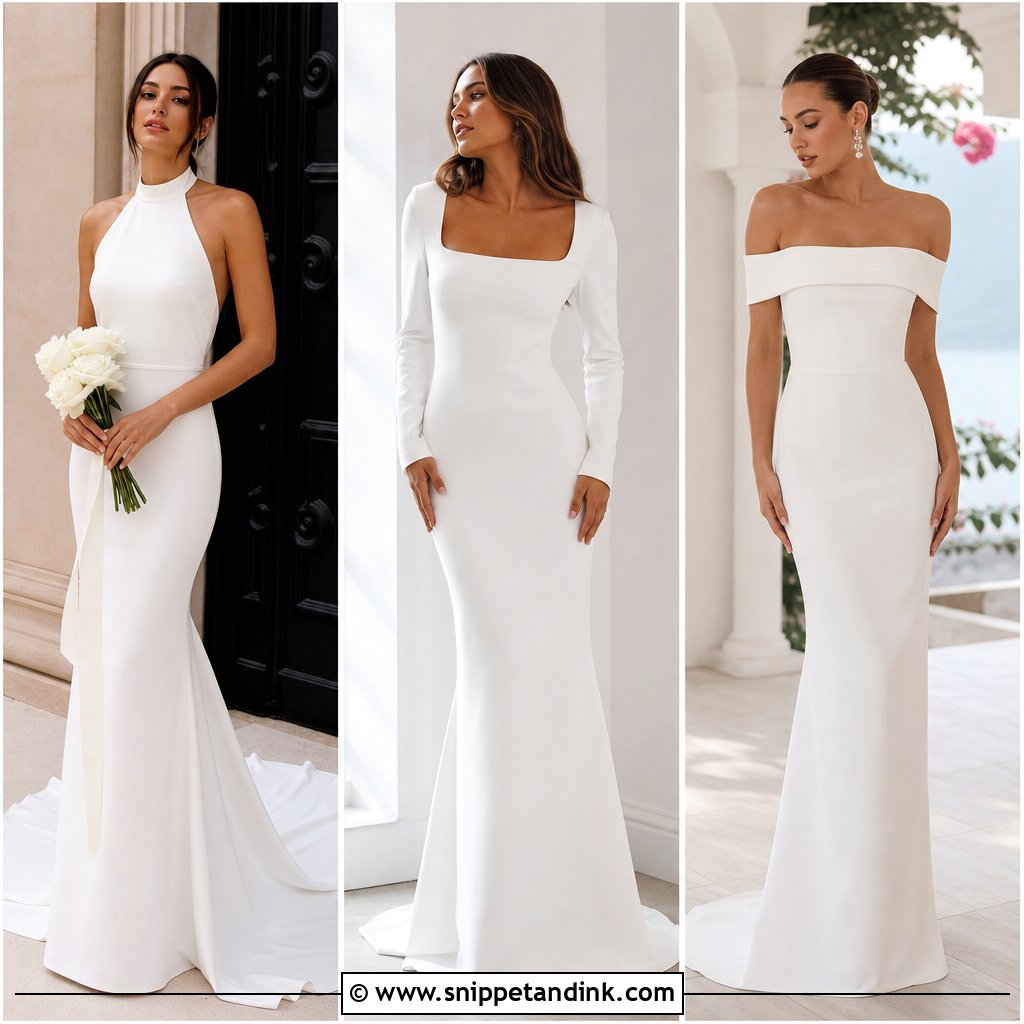
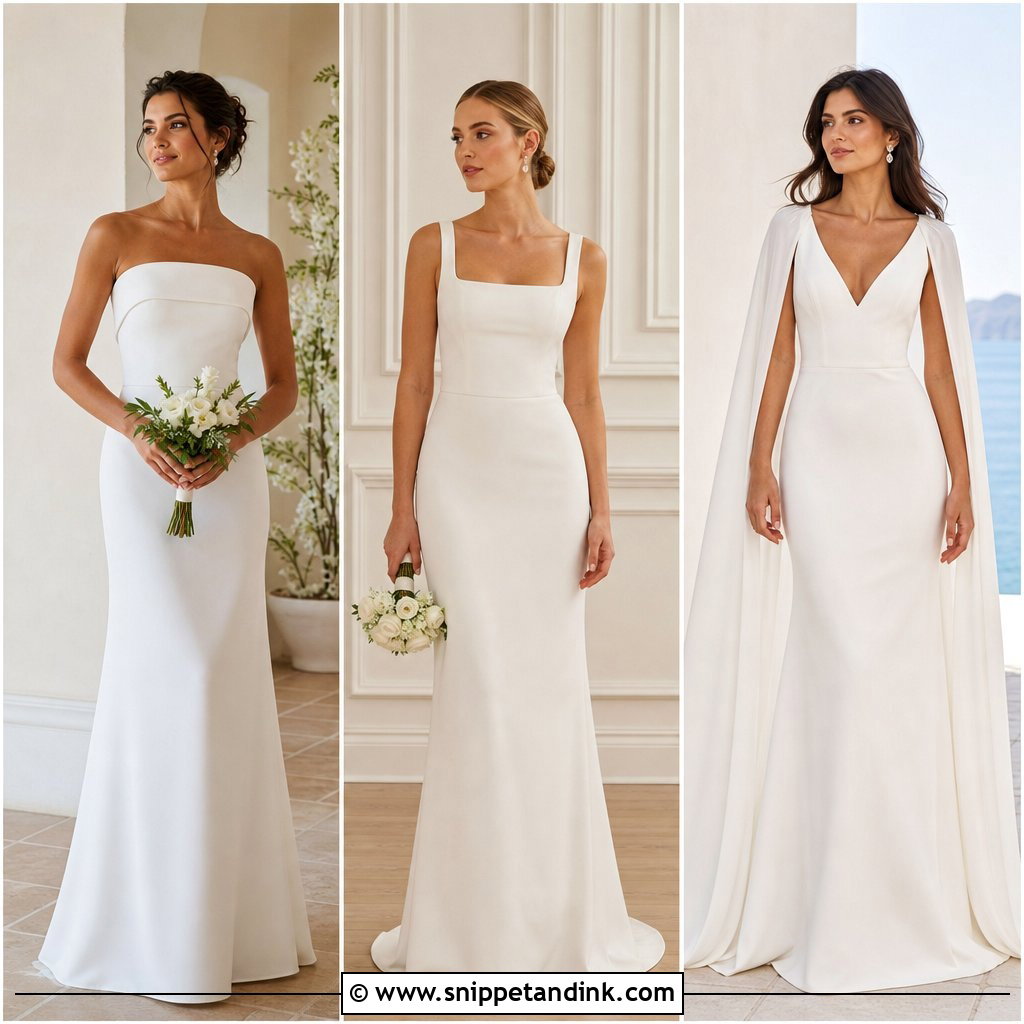
Satin this plain hides nothing, which is the whole appeal and the whole risk. A bias-cut or column gown in ivory needs a fitting that’s close but not tight, because satin pulls into ripples anywhere it strains across the hip. I pair it with pointed satin pumps, pearl studs and a smooth low bun, plus a long plain veil for softness. Keep the bouquet to white flowers and greenery. City hotels and modern ballrooms suit it, and so do tiny ceremonies where guests stand close enough to see the fabric.
2. Square Neck Wedding Dress
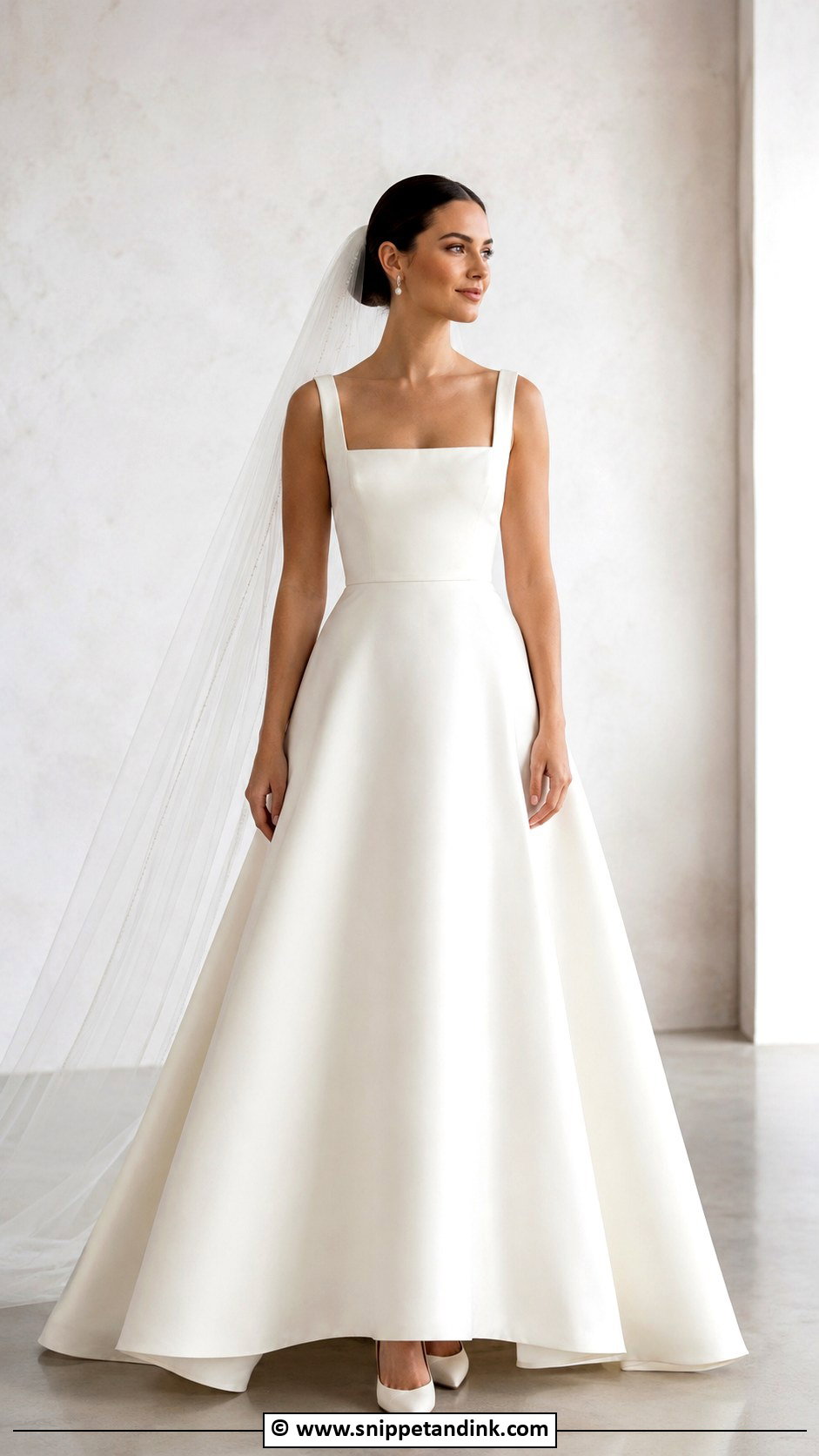
The square line sits right at the collarbone, so it gives structure without drama. It works on fitted, A-line and ball gown shapes. The thing I check first is the width of the neckline: if it’s wider than the shoulder points, straps start sliding by the reception. Delicate drop earrings, a smooth veil and closed-toe heels are all it needs. With a plain bodice, a pearl headband or short gloves adds some personality. Wear your hair up or tucked so the neckline stays visible.
3. Drop Waist Wedding Dress
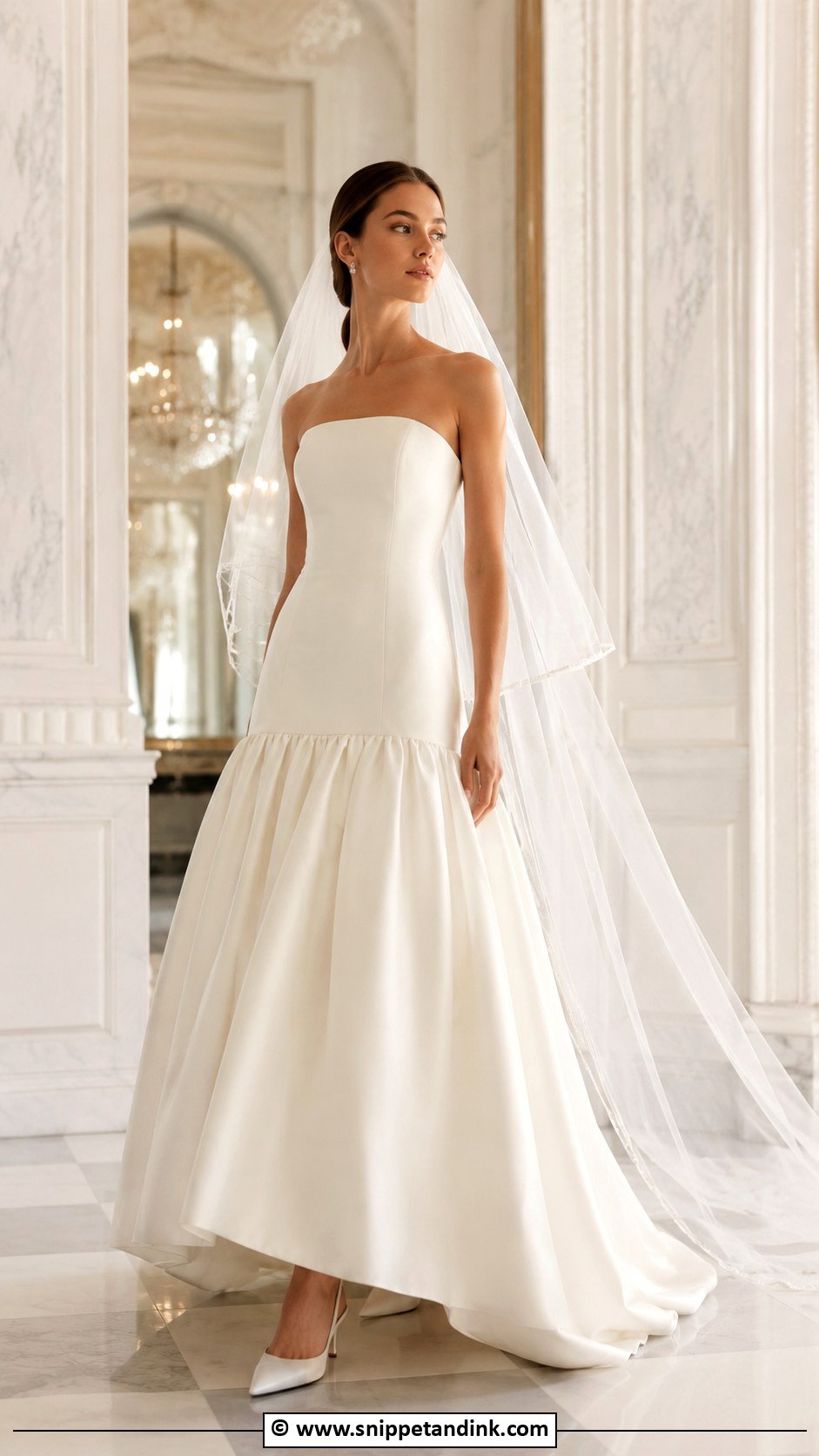
A drop waist wedding dress carries the fitted bodice down past the natural waist before the skirt releases, which makes the torso look long. It needs a fabric with body to hold that shape, so I look for mikado, taffeta, organza or a heavier satin. Sit down in it before you commit. A low seam can dig in at the hip if the bodice is cut too straight. Satin slingbacks, a sheer fingertip veil and small crystal earrings keep it clean, and a structured bow or opera gloves pull it toward vintage. Keep the bouquet compact so the long line stays the focus.
4. Lace Long Sleeve Wedding Dress
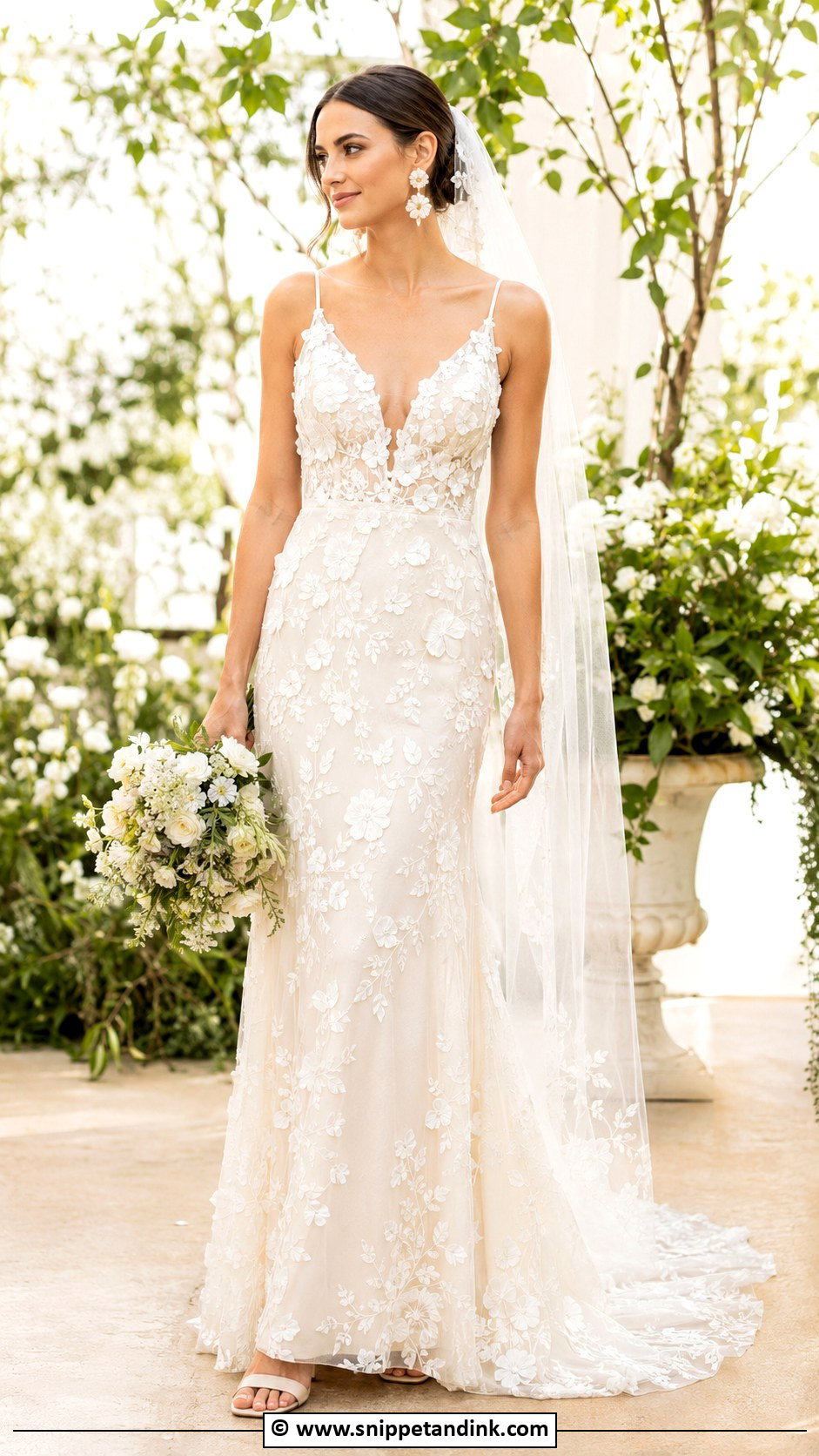
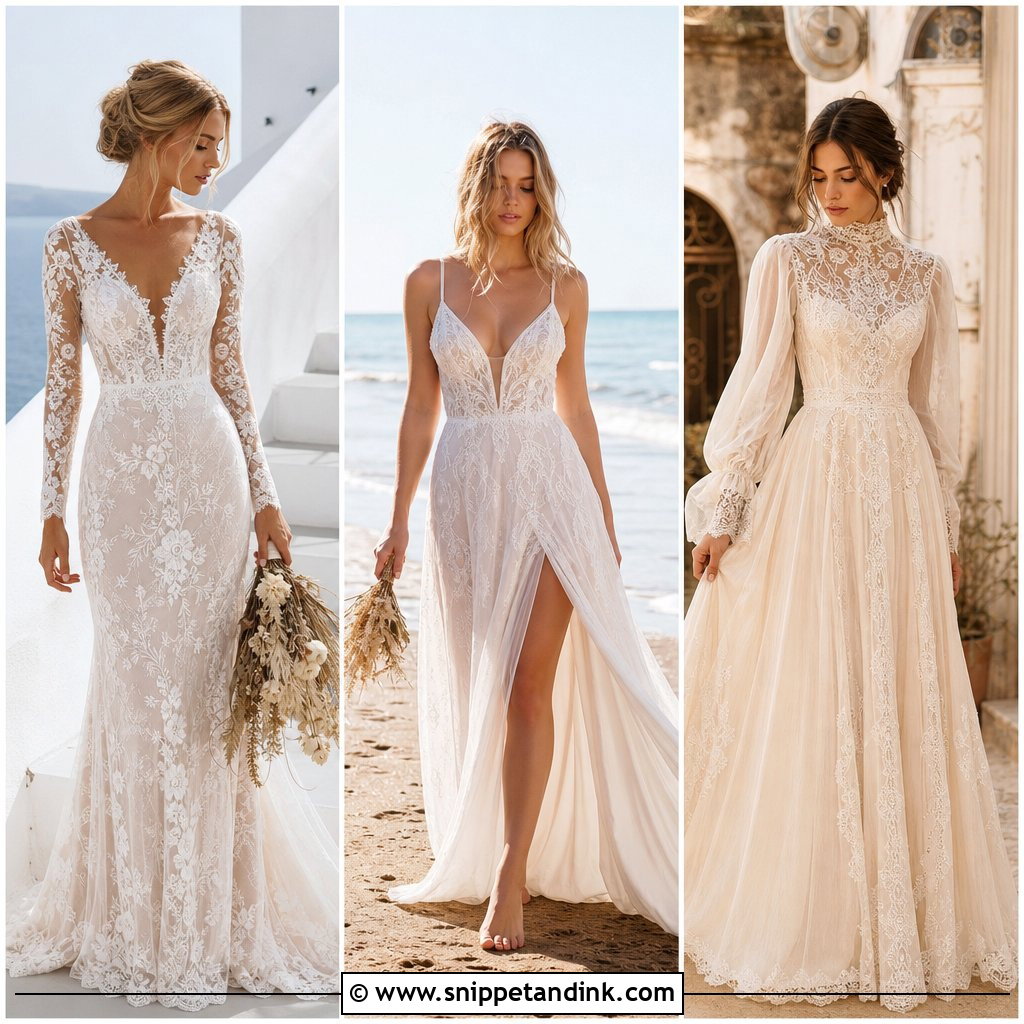
Lace sleeves give coverage and warmth for autumn and winter dates without making a dress feel heavy, provided the lace is fine. Heavy corded lace on a fitted sleeve can stop you lifting your arms to hug anyone, so I always have brides raise both arms in the mirror. A gentle V-neck balances the coverage. Pearl earrings, ivory heels and a plain veil let the lace pattern lead. A low bun or half-up style keeps hair out of the sleeve seams, where loose curls tend to catch.
5. Floral Applique Wedding Dress
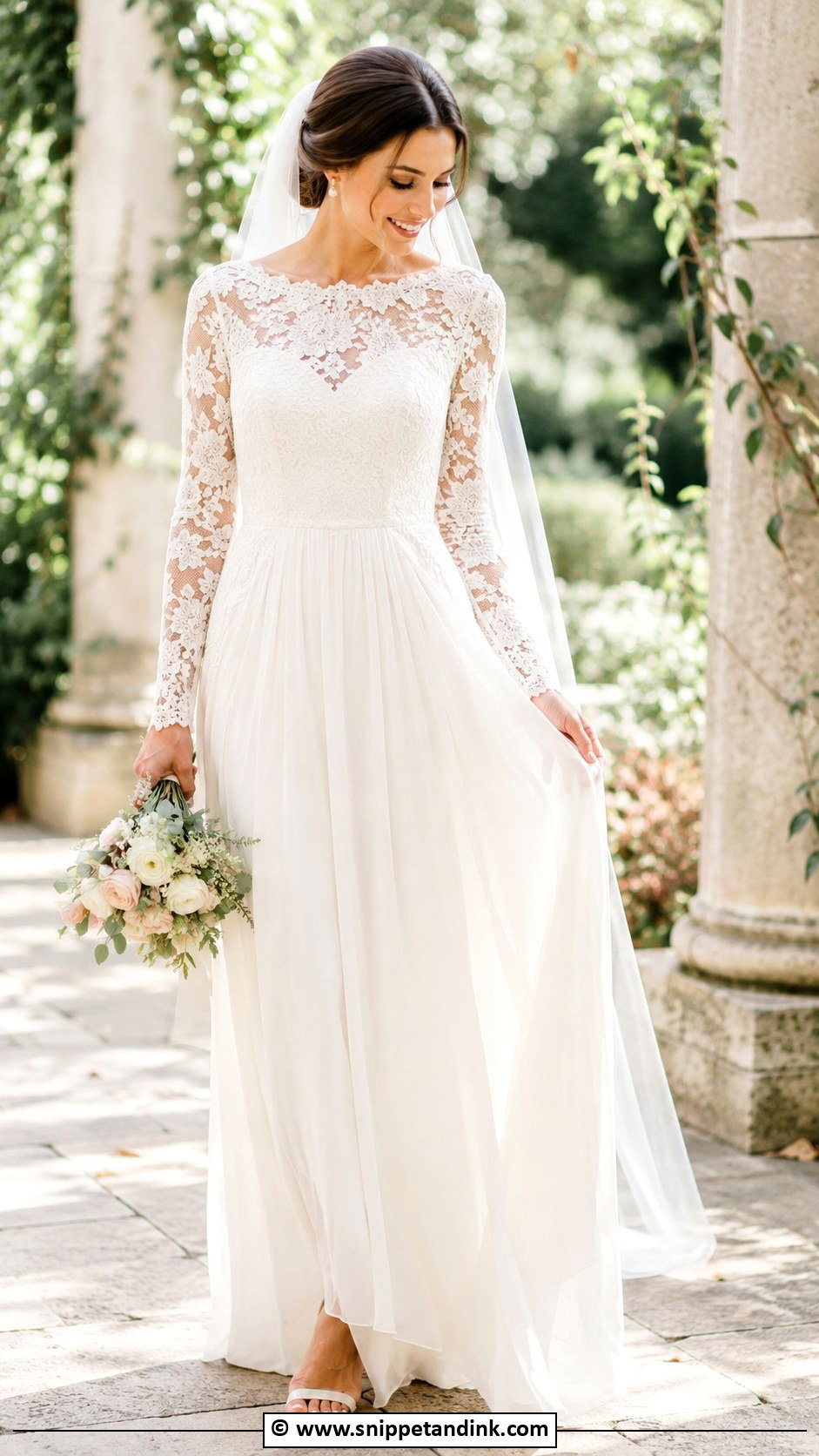
Raised appliqué gives a gown dimension without sparkle, and it reads well in daylight, so garden and spring weddings are where it shines. The trap is a veil with its own lace edge. Two sets of flowers fighting each other look busy, so I put a sheer veil with a plain or barely finished edge over appliqué. Barely-there heels and small floral earrings finish it. If the appliqués are bold, stop there. If they’re subtle, you have room for a soft hair comb or a fine bracelet.
6. Pearl Wedding Dress
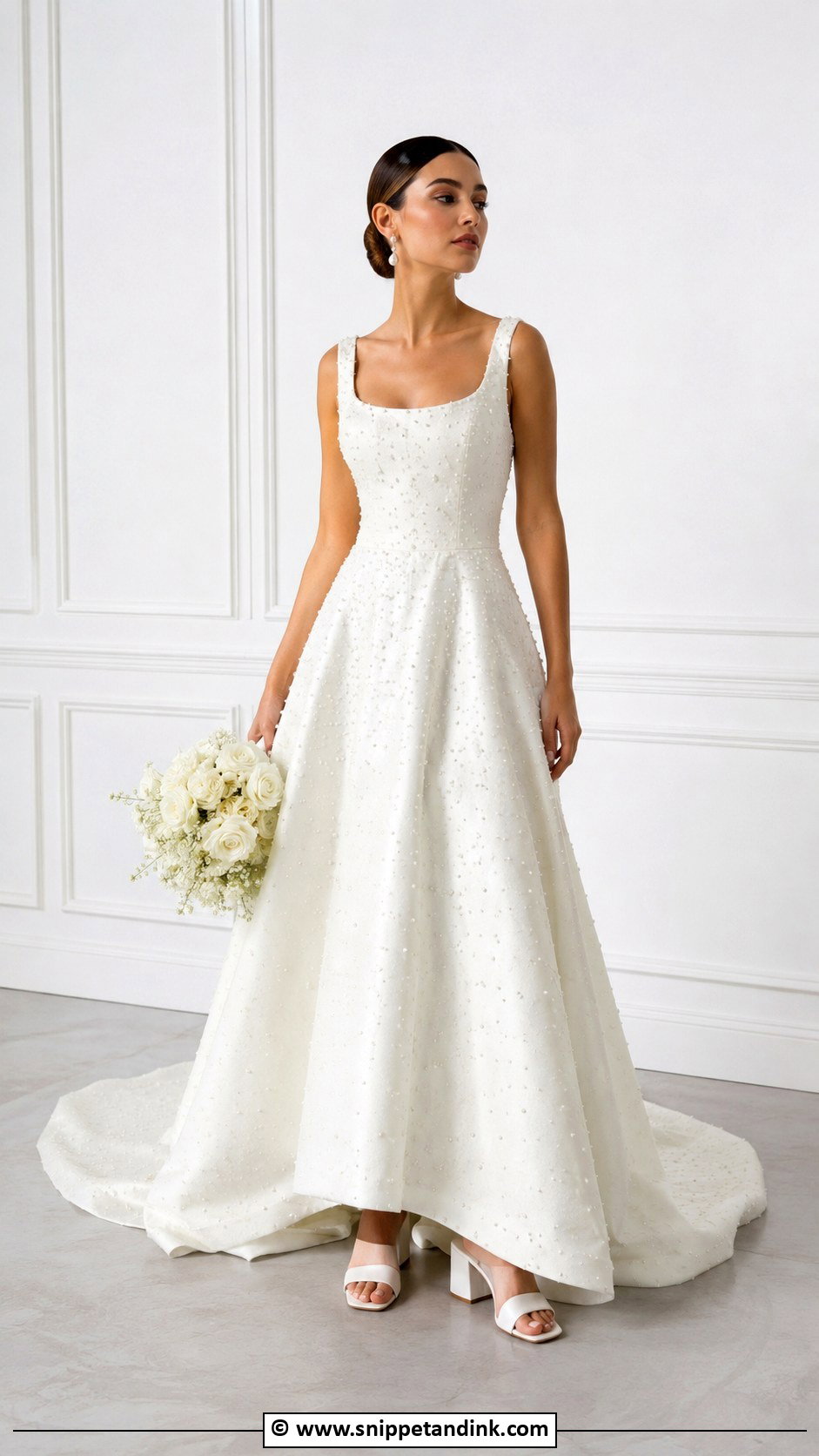
Pearl detail can be a scattering on the sleeves, a full bodice or an entire gown, and each needs different styling. A mostly plain dress takes a pearl-edged veil well. An allover pearl dress already has enough, so I use a simple veil and pearl drop earrings with a sleek bun. One practical check: hand-sewn pearls snag on lace veils and on beaded bouquet wraps, so run your hand over the bodice and see what catches. Keep makeup dewy so the pearls look soft against skin.
7. Corset Bodice Wedding Dress
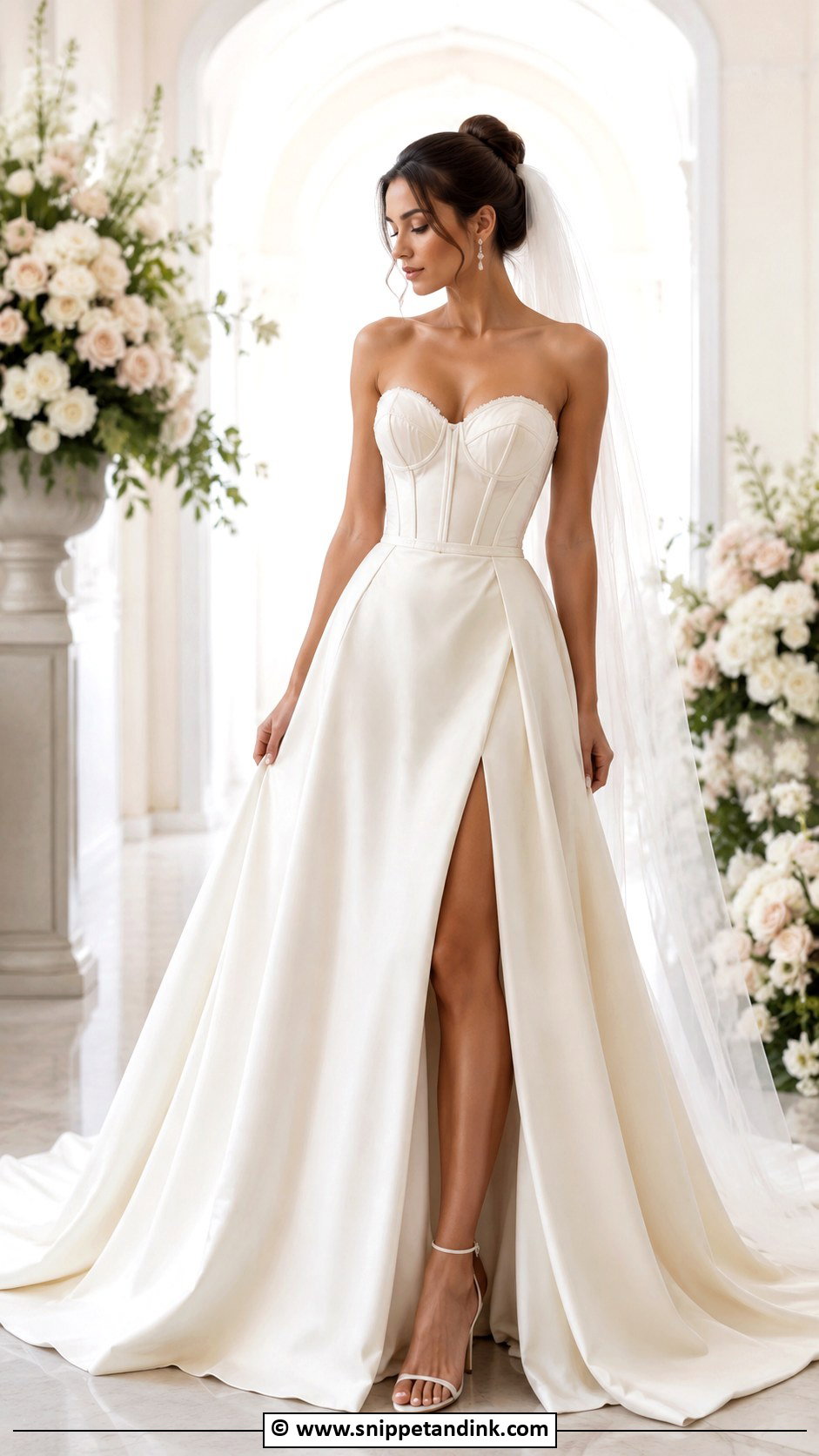
A corset bodice gives you a defined waist and real support, which is why brides who dislike strapless dresses often feel secure in one. Modern versions sit well over a flowing A-line or soft ball skirt. I check the boning while you sit: if a bone presses into the ribs at the fitting, it will hurt by hour six. Strappy heels, a chapel veil and refined earrings work here. With visible boning, keep accessories quiet. Smooth fabric gives the cleaner line, lace a softer one.
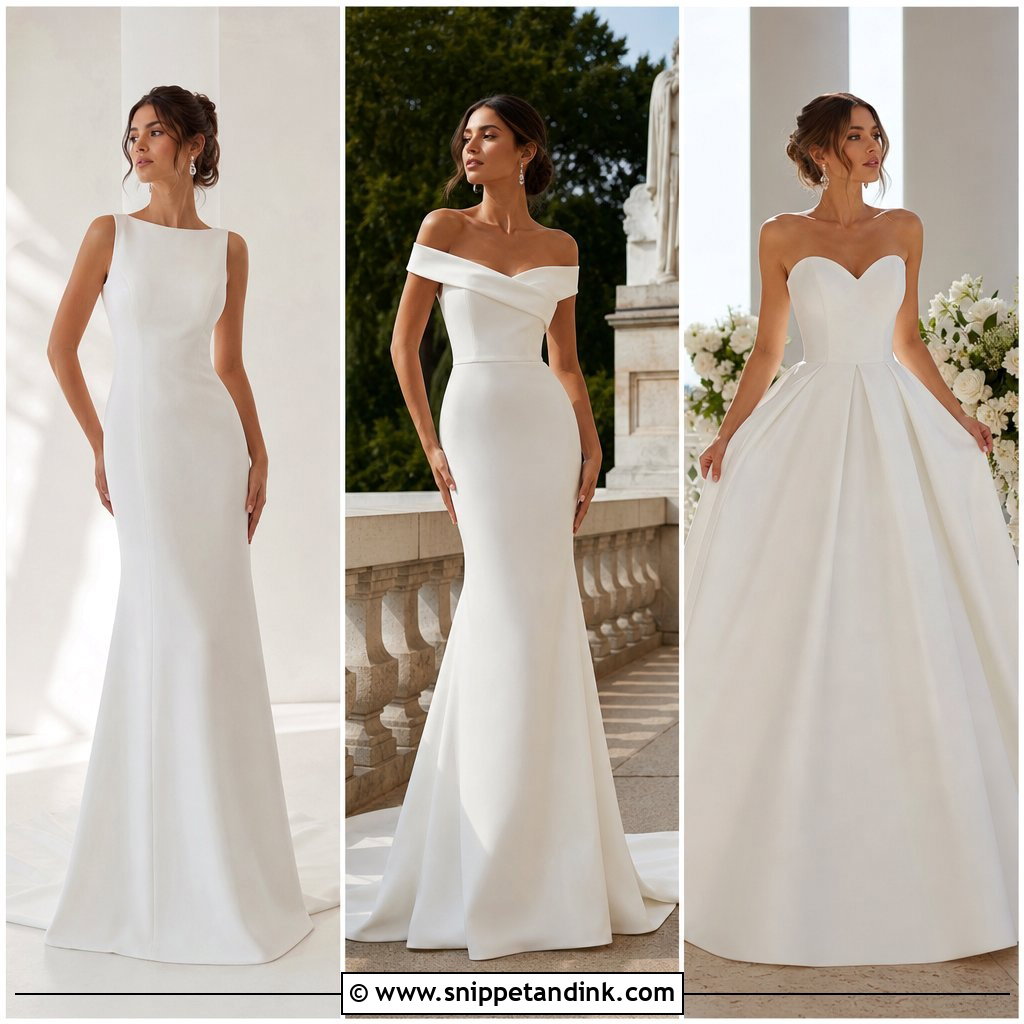
8. Off The Shoulder Wedding Dress
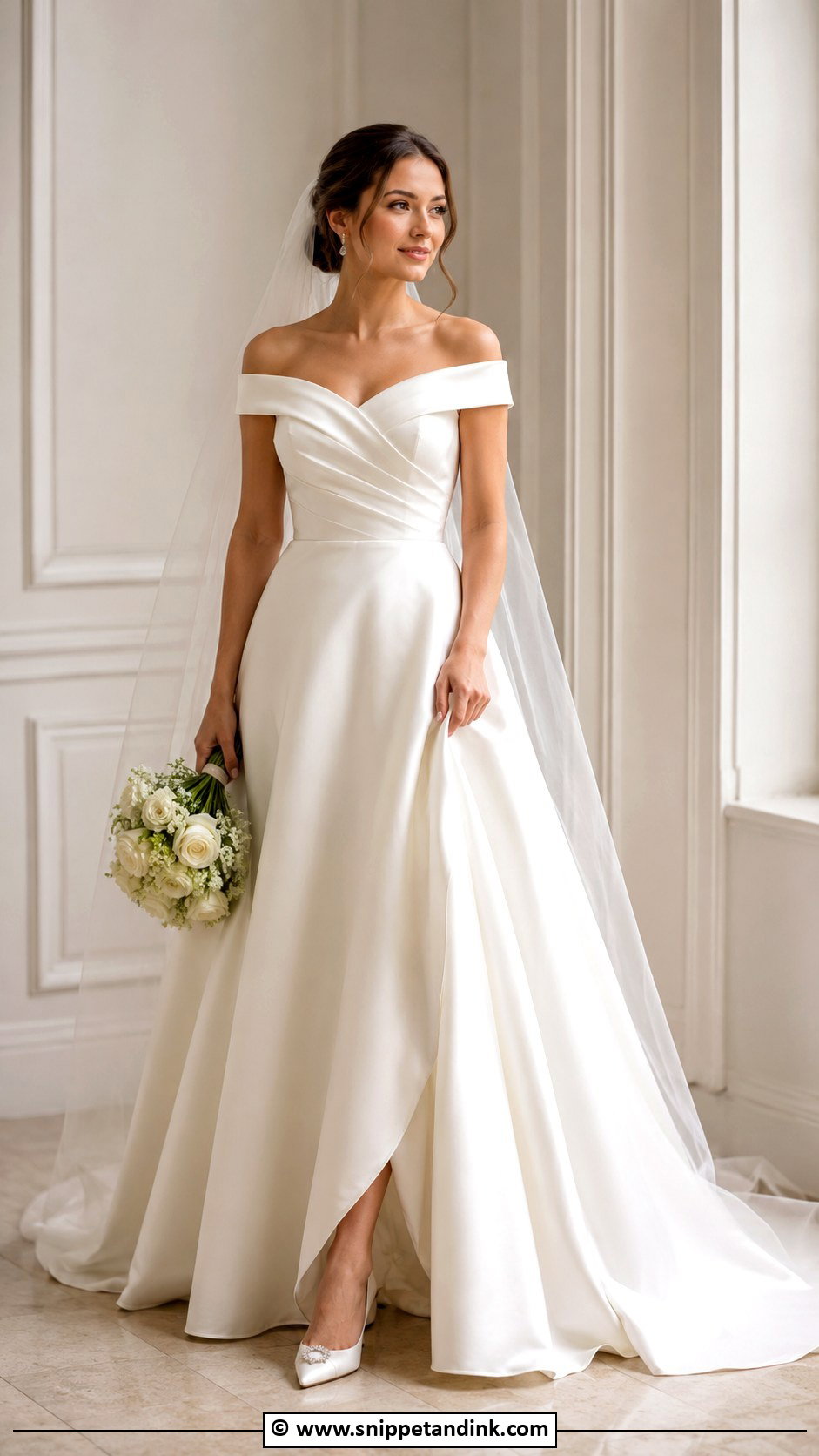
Off-shoulder necklines show the collarbone and shoulders, and they come in satin, crepe, lace and tulle. They also restrict your arms more than any other cut. Ask to lift your arms to shoulder height in the fitting room; if the band rides up, it needs grip tape or a small adjustment to the bodice. Choose a fine necklace or statement earrings, never both. A low bun or swept-back style keeps the neckline open. Pointed pumps, a simple veil and a small bouquet finish it for formal rooms and portraits.
9. Halter Neck Wedding Dress
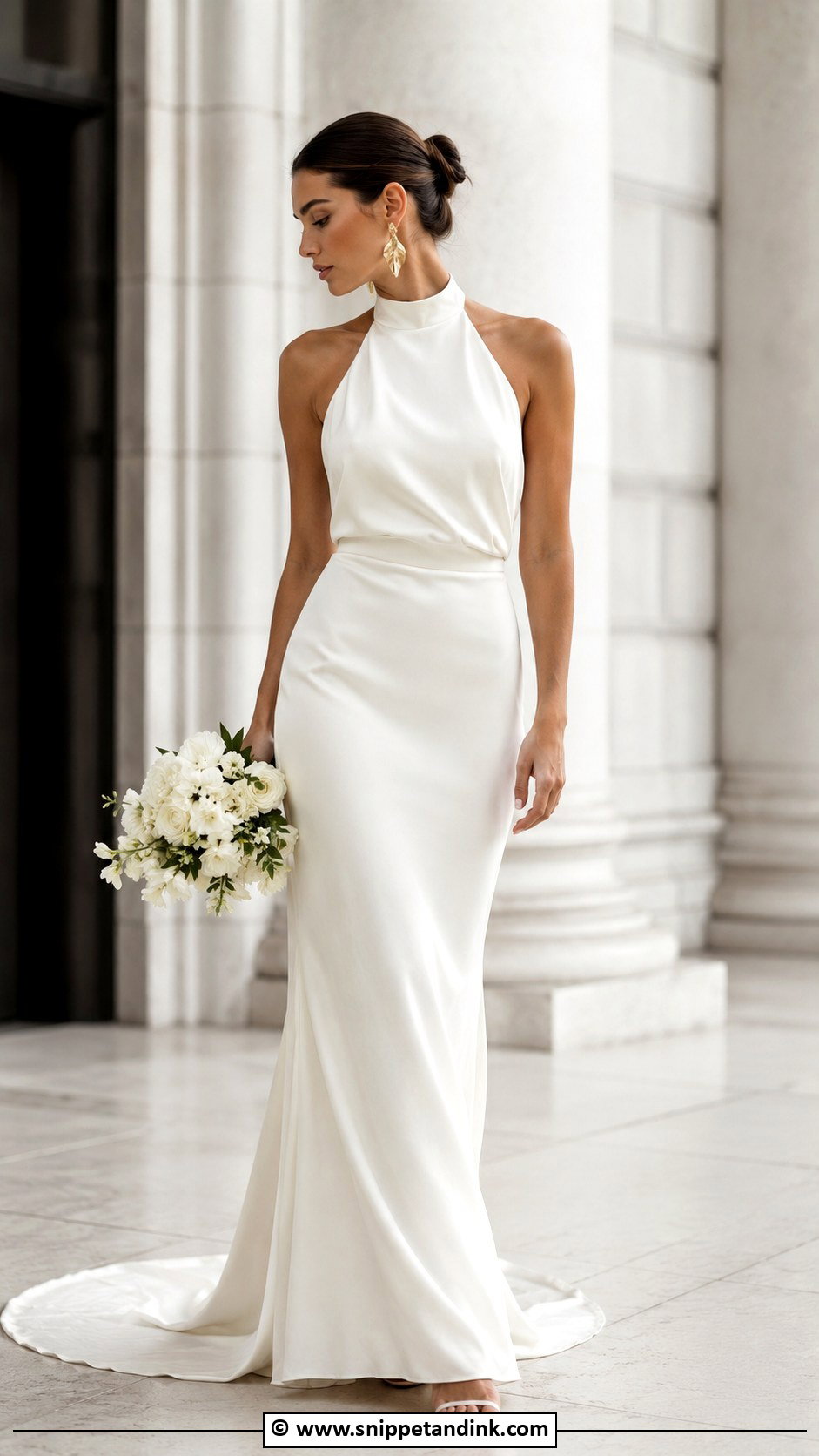
A halter pulls the eye up to the face and shoulders and suits column, fit-and-flare and open-back gowns. Because the neckline does the work, I skip necklaces entirely and go for sculptural earrings and a smooth updo. Loose hair tends to tangle in the halter strap at the back of the neck, which is worth knowing before you plan waves. A short veil, a long one or none at all can work depending on the back. Crepe or satin gives a sharp result for rooftop and city venues; chiffon makes the halter feel lighter.
10. Strapless Ball Gown Wedding Dress
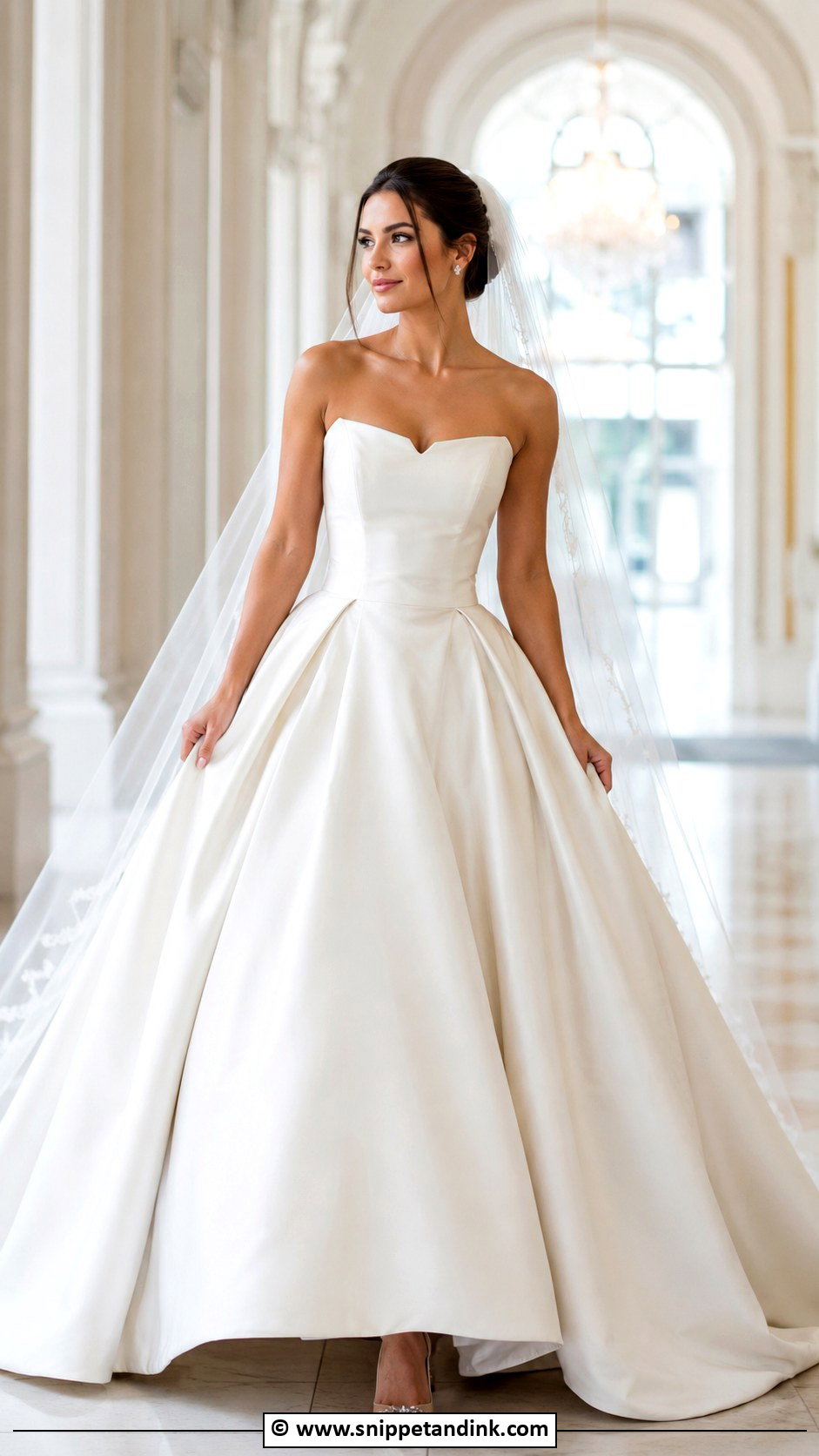
A strapless ball gown wedding dress is built for an entrance. The full skirt brings the drama while the bodice stays clean. Strapless gowns rely completely on the internal structure and the fit at the top edge, so I treat alterations here as non-negotiable; a bodice that’s slightly loose gets hitched up all night. Add a cathedral veil, crystal studs and heels you can walk in under the volume, because you won’t see your feet. Satin, mikado, organza and layered tulle all hold the shape. A rounded bouquet echoes the skirt, and either a polished bun or soft waves works.
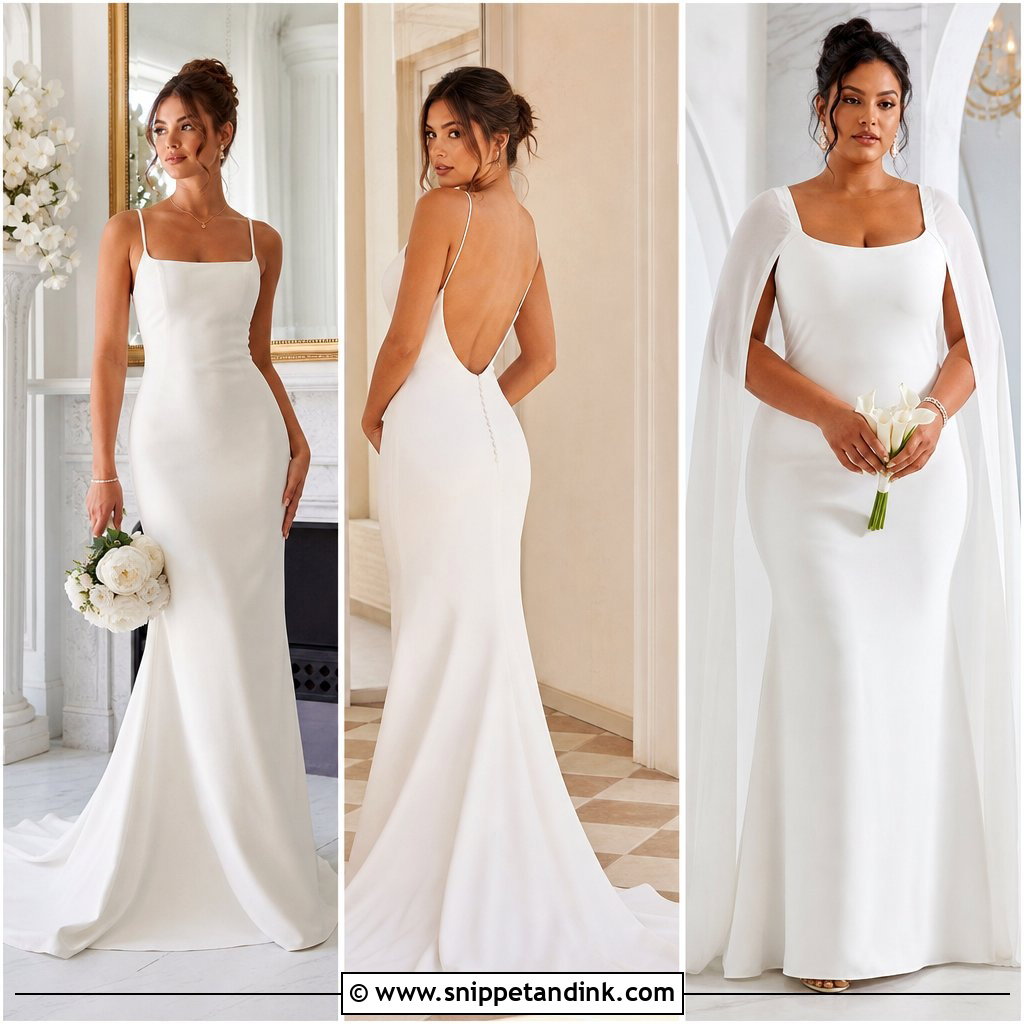
11. Crepe Fit And Flare Wedding Dress
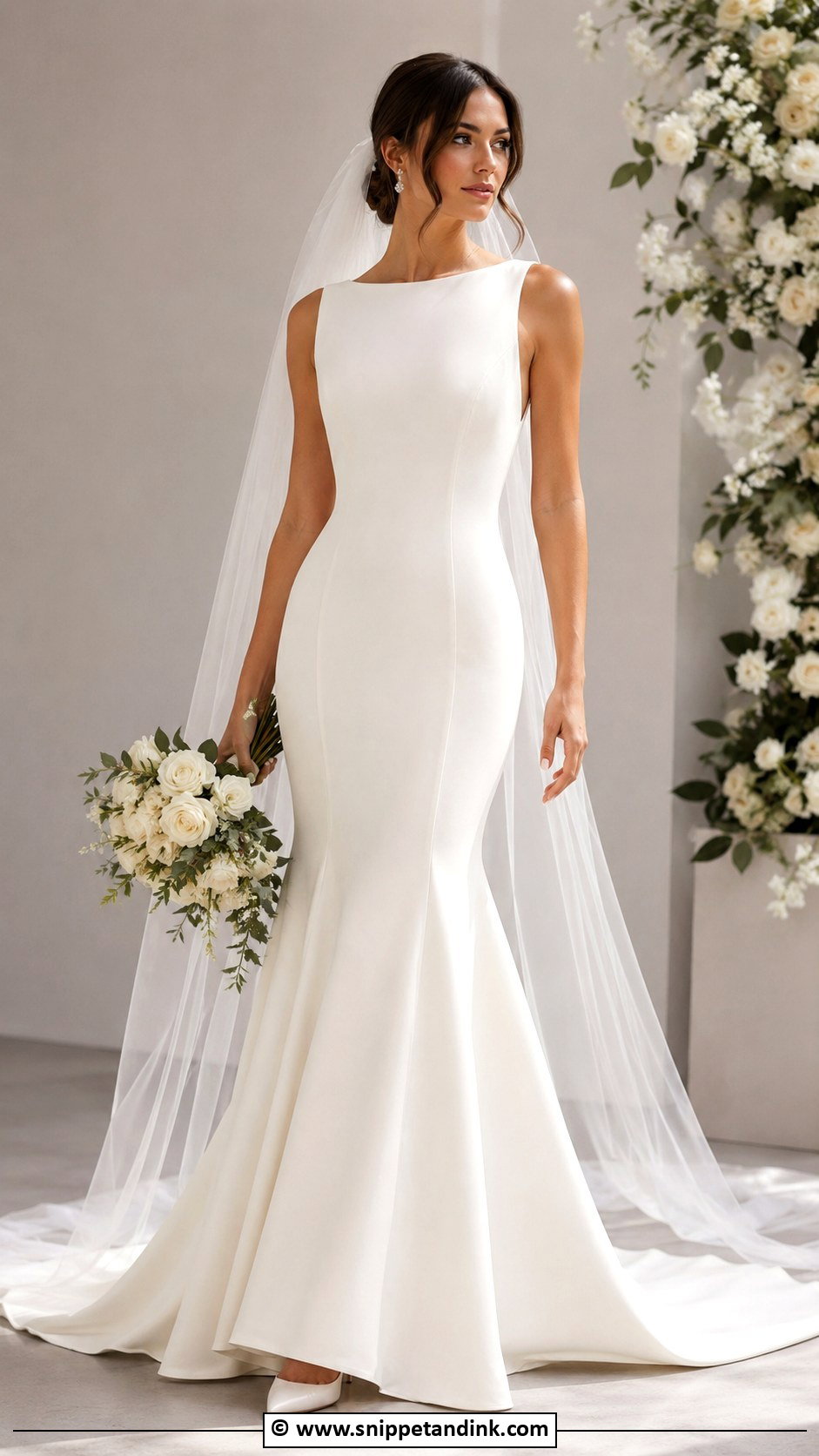
Crepe is smooth and fairly structured, so a fit-and-flare shape looks sculpted in photos. It also shows every pull and bump of the lining underneath, which means tailoring decides whether this dress works. I ask brides to bring their actual undergarments to the first fitting for exactly this reason. Pointed heels, a long veil and simple earrings keep it refined. A low back, a row of covered buttons or a subtle train adds interest. It suits modern rooms and destination weddings where you want something you can walk in comfortably.
12. Sheer Sleeve Wedding Dress
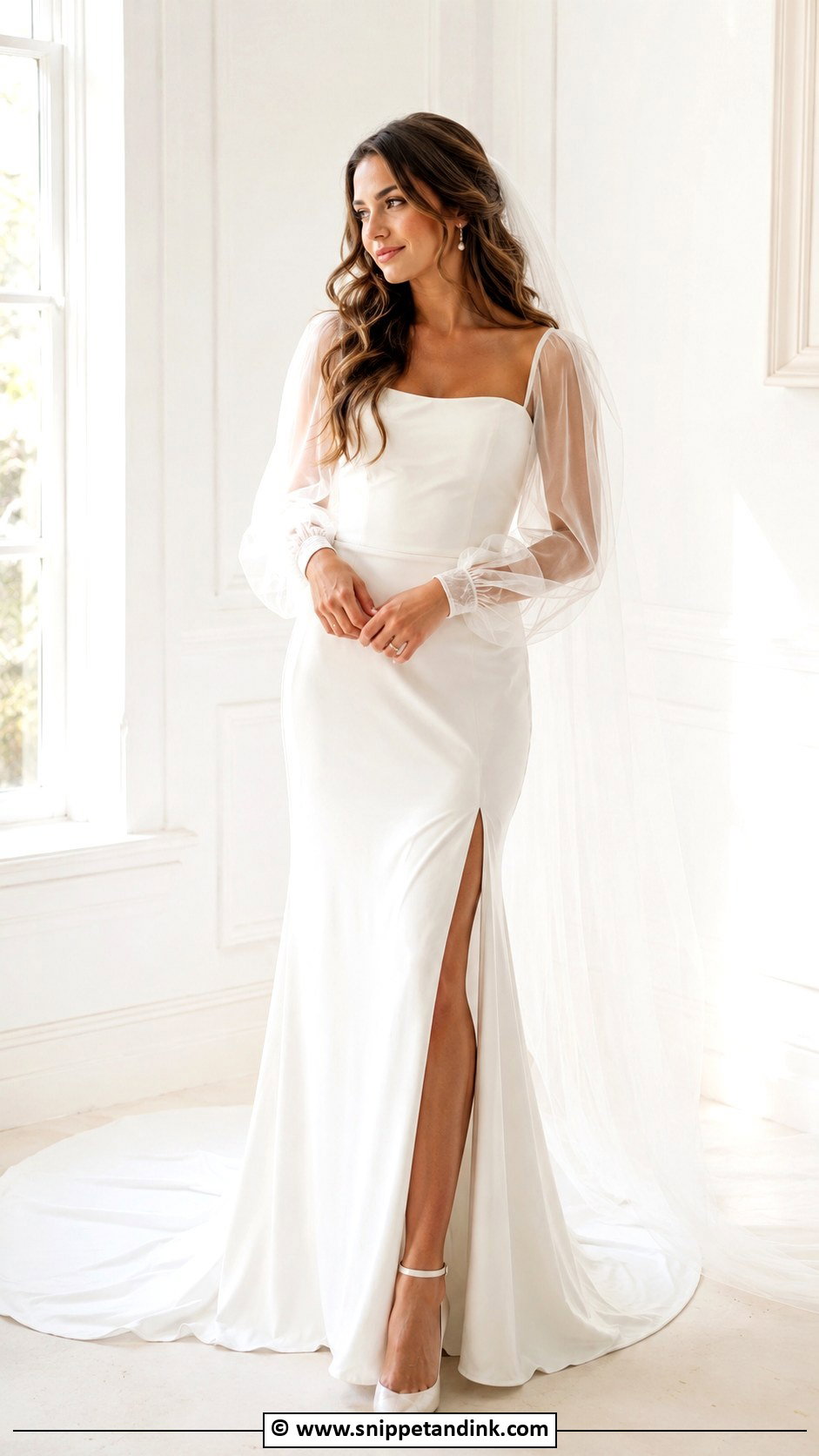
Sheer sleeves give arm coverage while keeping the dress airy. They might be plain tulle, dotted, lace-covered or scattered with small appliqués. The detail I look at is the sleeve colour: tulle that’s a shade off from the bodice looks grey next to skin in photos, so match it under daylight, not shop lighting. Dainty earrings, satin heels and a veil in the same tone keep everything coherent. A loose bun or gentle waves keep the shoulders clear. These sleeves work in most seasons.
13. High Neck Wedding Dress
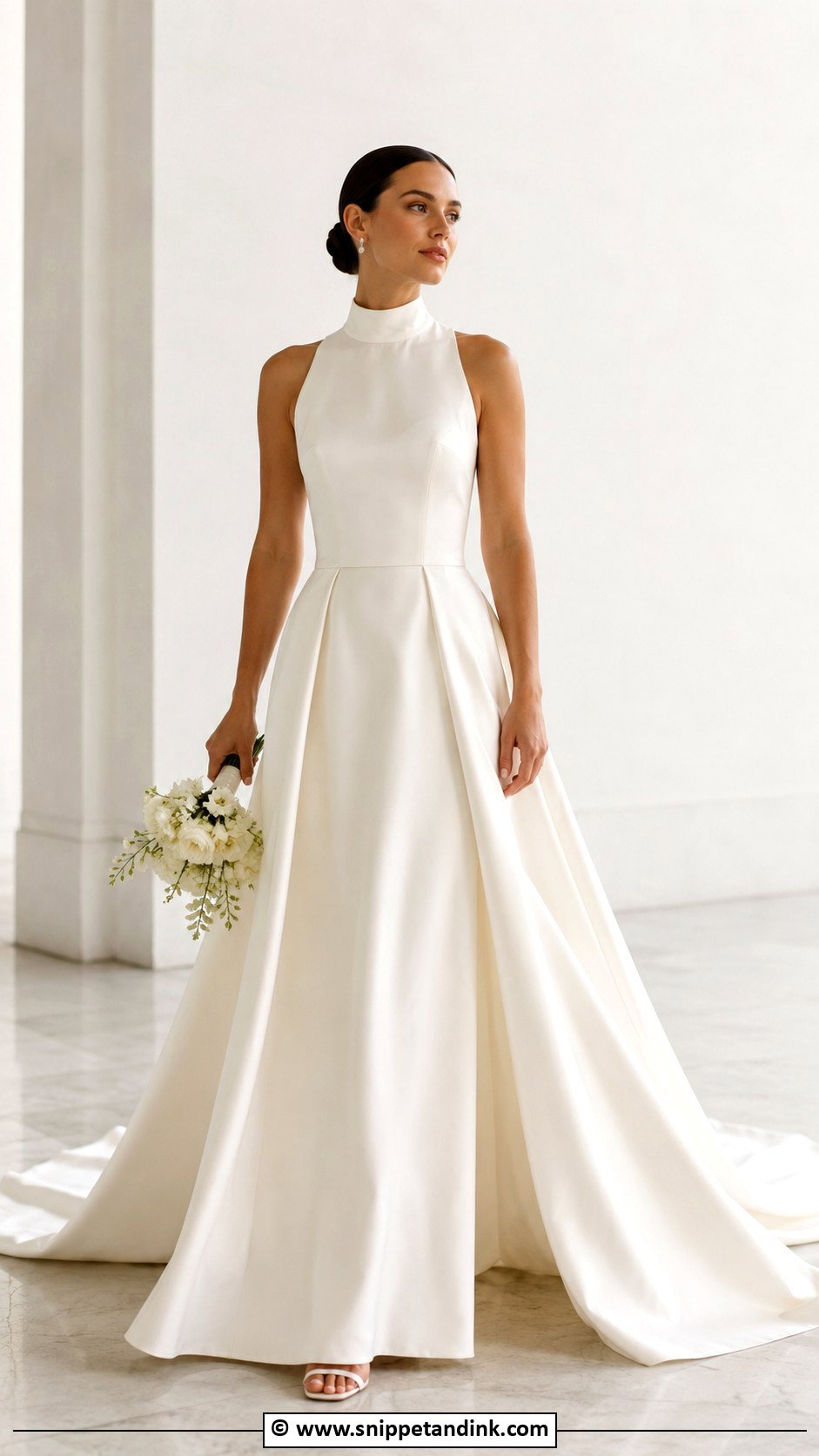
A high neck reads poised and editorial, and it pairs especially well with an open back or a flowing skirt. Skip the necklace and let the neckline frame the face. Small earrings, sleek hair and simple heels are enough. A long veil softens it, while a clean headband feels modern. Lace, satin, crepe and silk all suit the shape. I’d steer you away from it if you run warm or have a summer afternoon ceremony outdoors, since a closed collar traps heat at the throat.
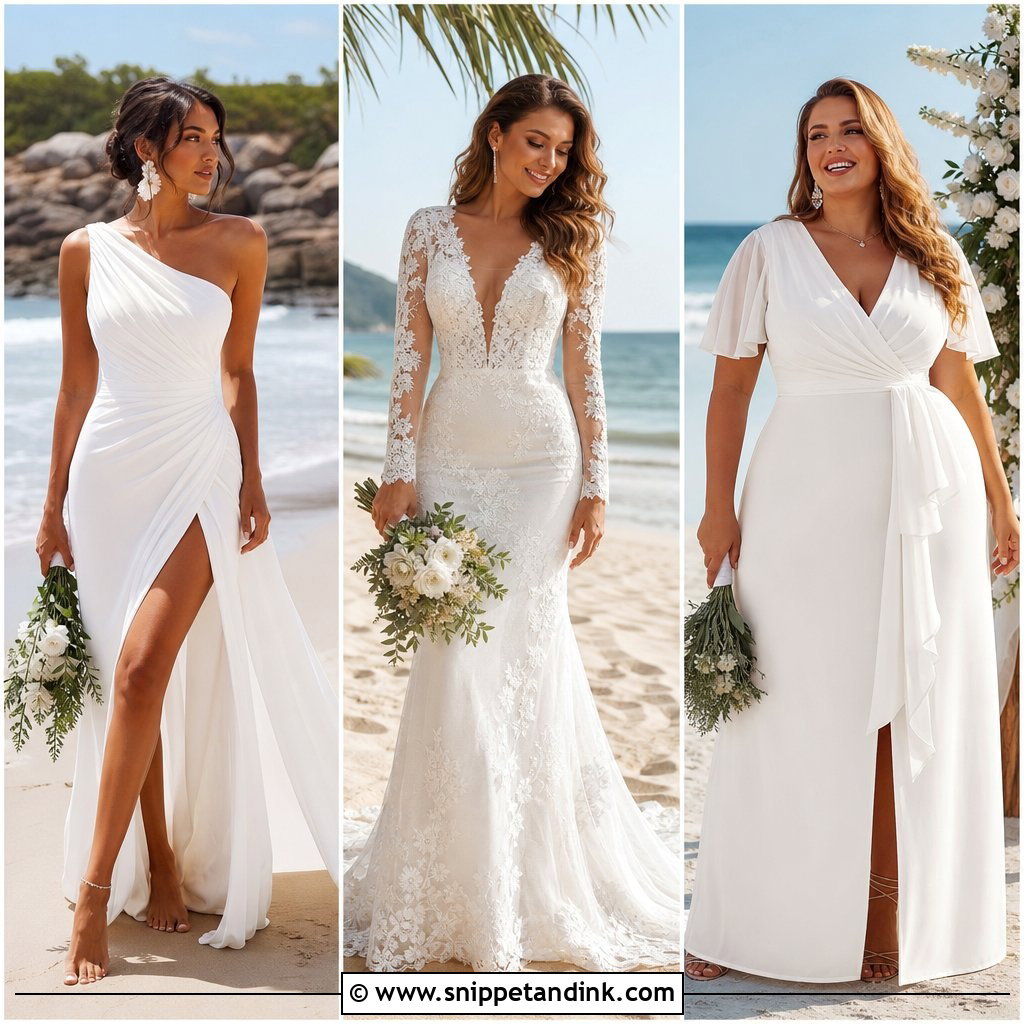
14. Slip Wedding Dress
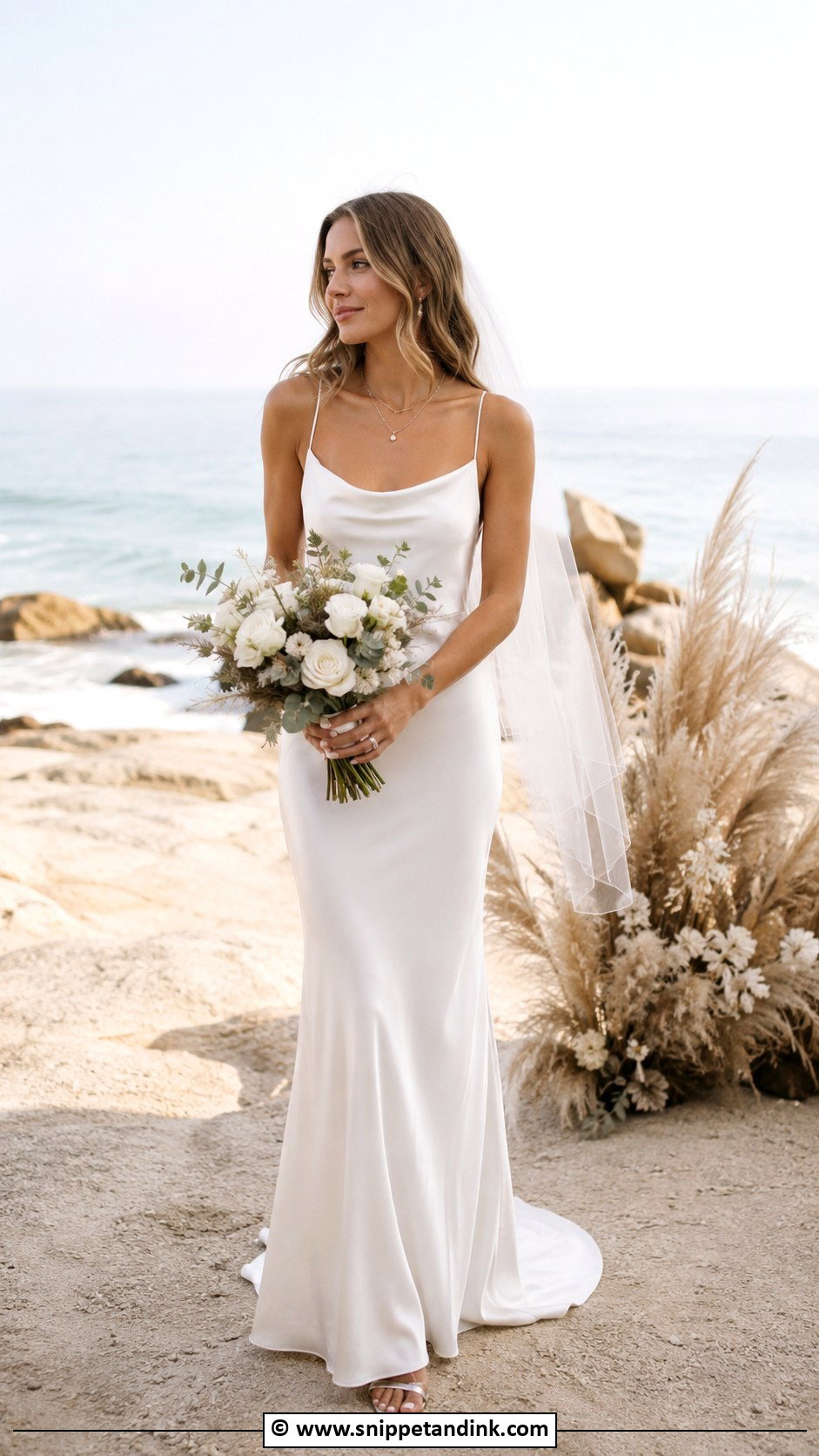
A slip dress is light and quietly stylish, and it’s honest about fit in a way few gowns are. Silk, satin or charmeuse should skim the body without clinging. Bias-cut slips show the line of every seam beneath them, so laser-cut underwear with no visible edges is not optional. Strappy sandals, fine jewelry and soft waves keep it relaxed. For the ceremony, a sheer veil, a cropped feather jacket or a clean wrap adds coverage. Beach venues, elopements and small modern receptions suit it best.
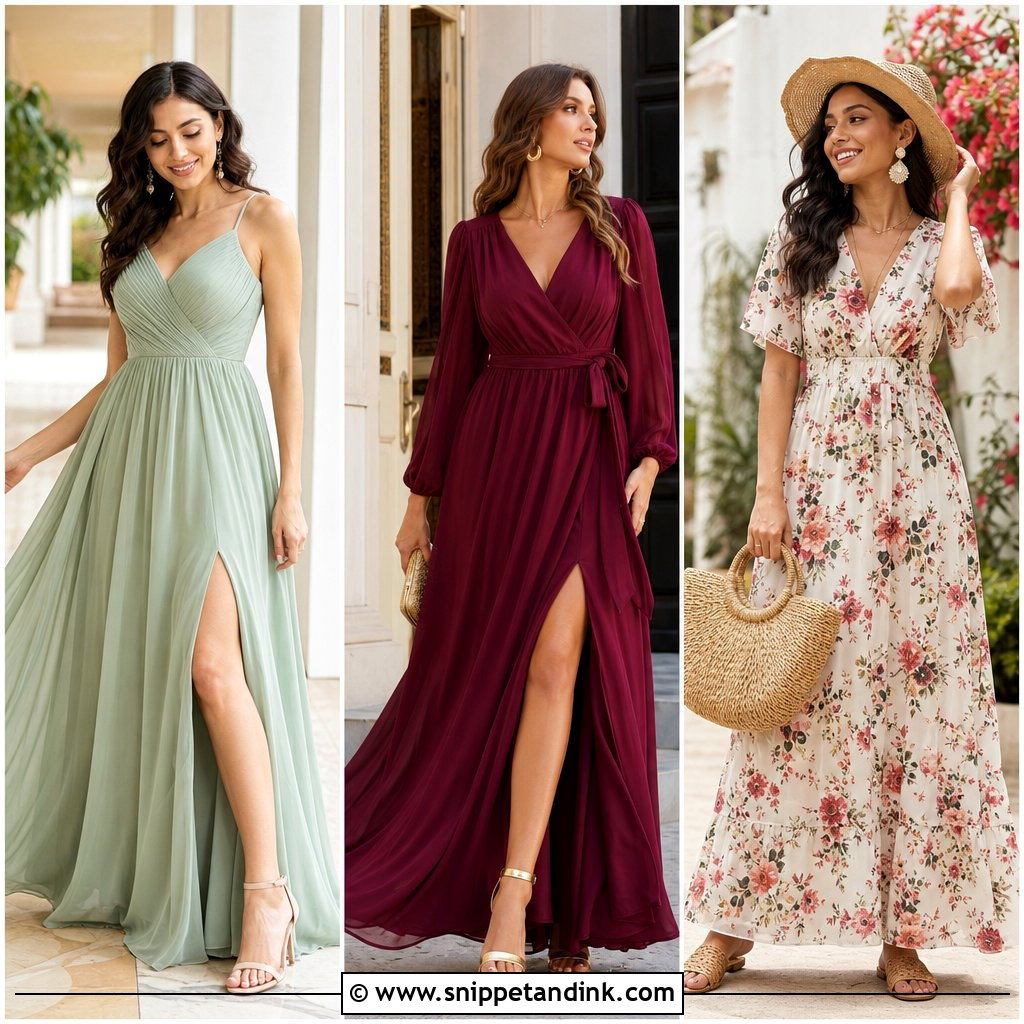
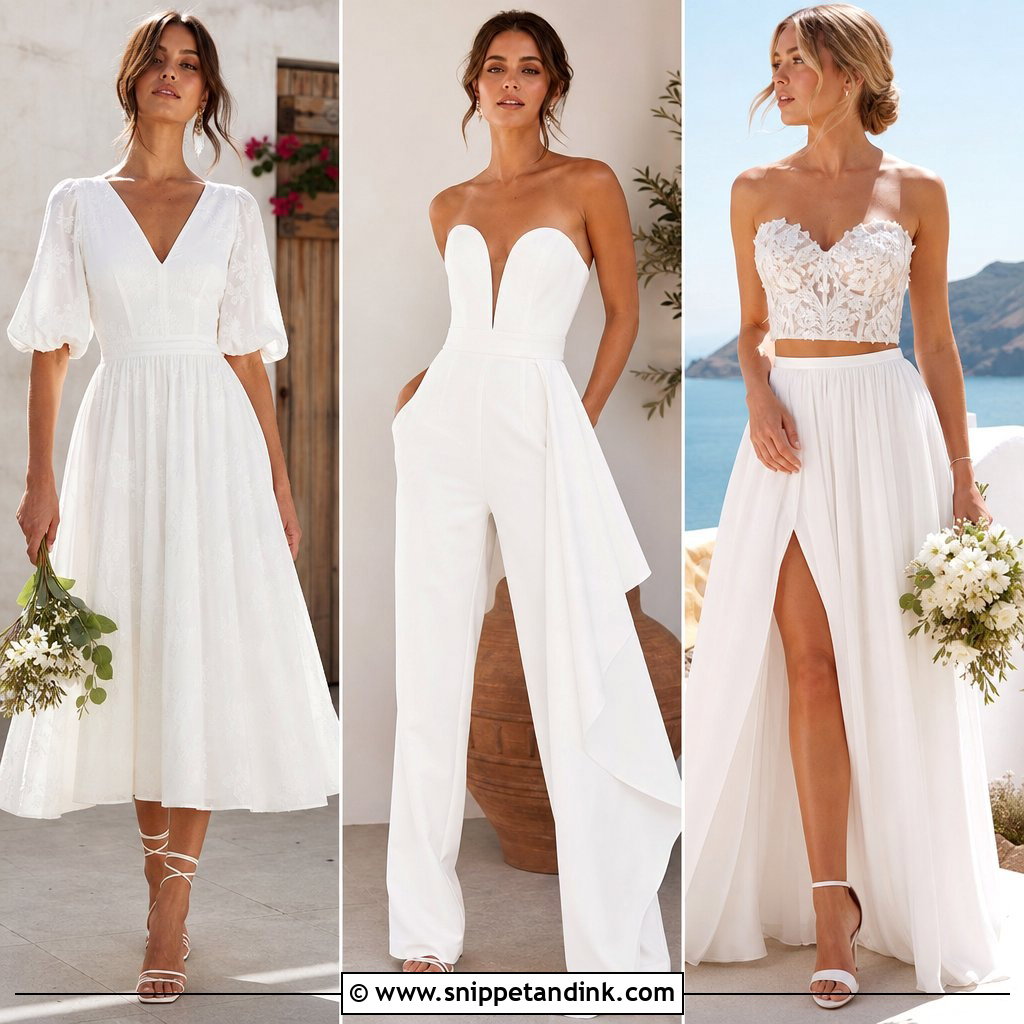
15. Short Wedding Dress
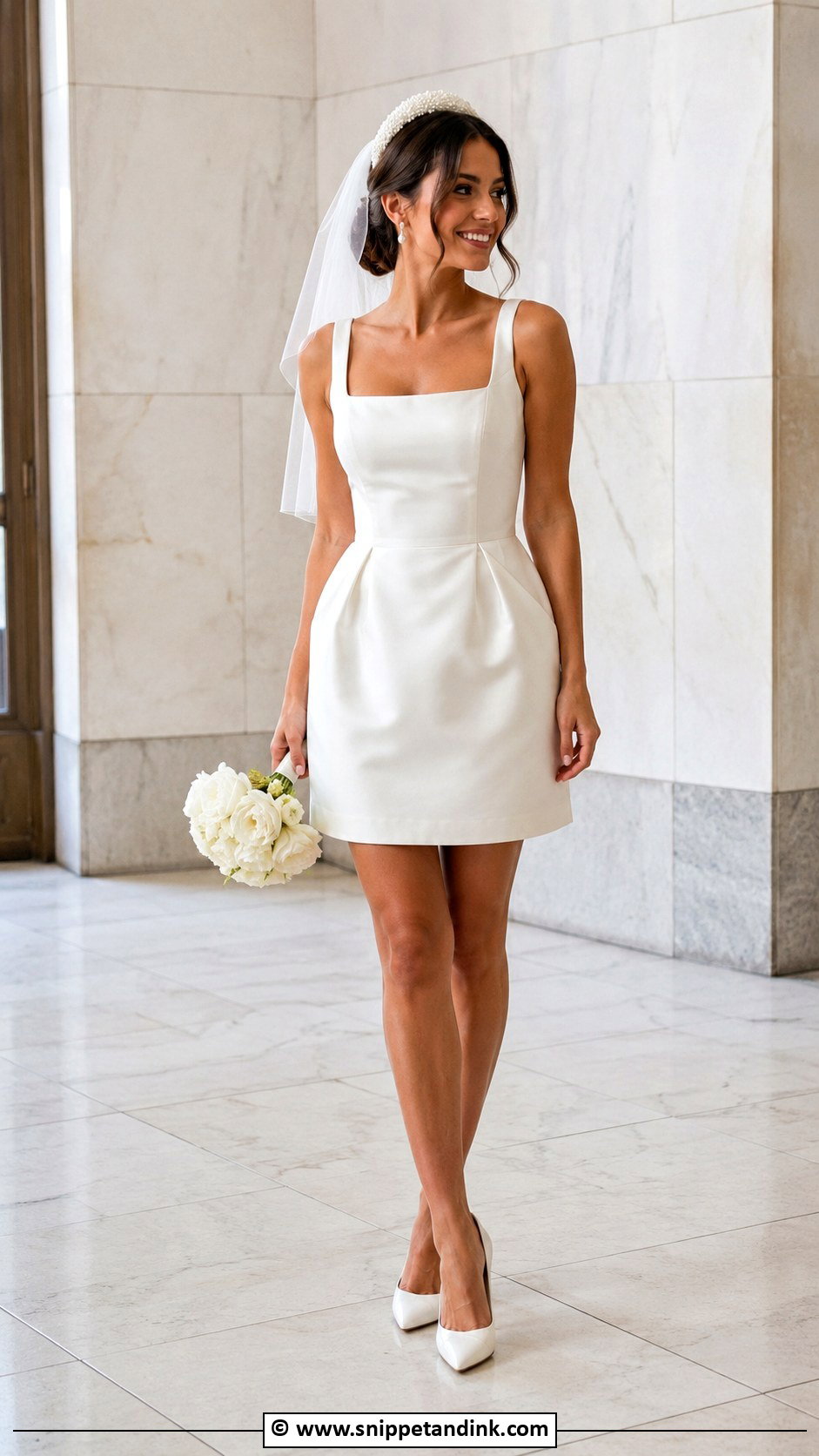
Short dresses are practical for courthouse weddings, receptions and second looks. A mini or knee-length cut with structure, lace, feathers, satin or a bow looks considered rather than casual. Your shoes become a main feature, so I tell brides to buy the shoes first and fit the hem to them. Pearl earrings and a small veil or bridal headband keep it bridal. Dancing is easy, and a structured bag or small clutch completes the outfit. Keep the grooming polished; that’s what separates bridal from a party dress.
16. Tea Length Wedding Dress
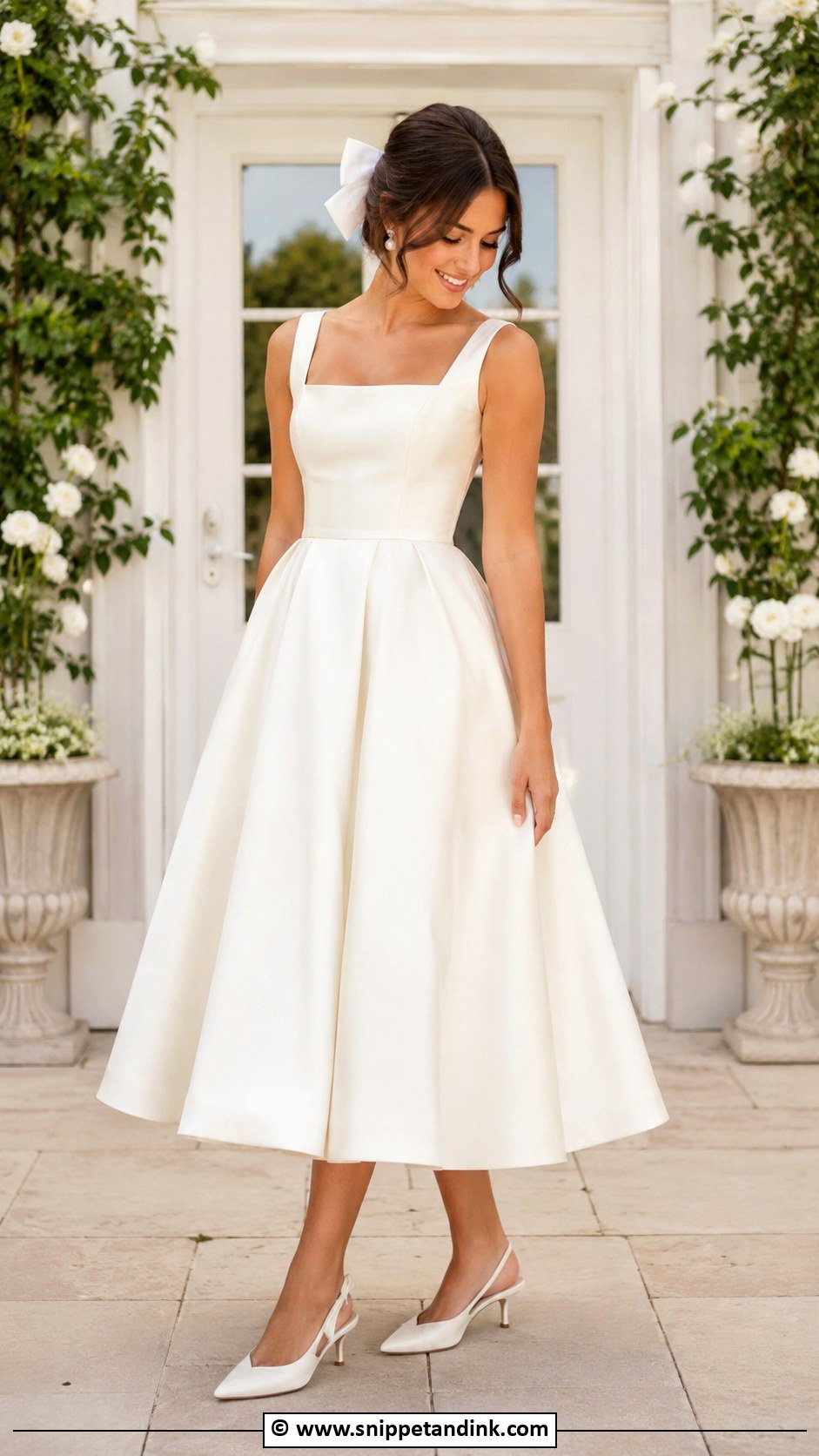
A tea length wedding dress has a vintage feel but still wears easily now. The hem falls between knee and ankle, so the shoes are fully on show. Hem length is the fitting detail I’m fussiest about here: a couple of centimetres too long and it looks like a long dress that shrank. Slingbacks, pearl studs and a birdcage veil or a neat hair bow suit it. Satin looks polished, tulle softer, lace classic. It works for courthouse ceremonies, garden parties and brunch receptions.
17. Bridal Jumpsuit Outfit
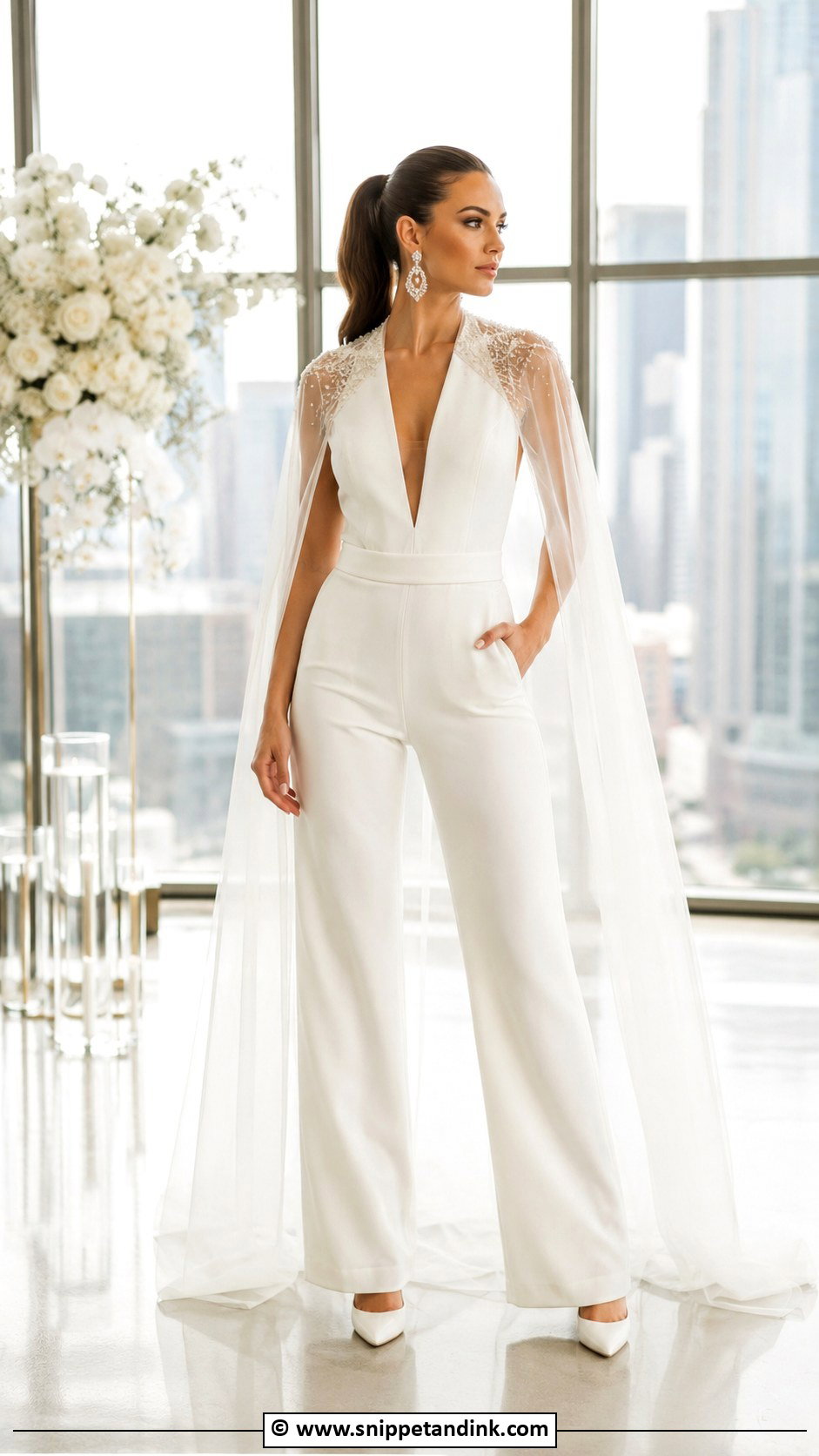
A bridal jumpsuit outfit suits a bride who wants trousers but still wants a bridal moment. Look for tailored legs, a defined waist and a good neckline. Jumpsuits are hard to fit off the rack because torso length matters as much as waist size; if the rise is short, it pulls every time you sit. Pointed heels, statement earrings and a sleek ponytail or bun keep it sharp. A cape, overskirt or long veil makes it ceremonial. Choose a fabric with weight, like crepe, satin or silk, so it doesn’t look like daywear.
18. Two Piece Wedding Dress
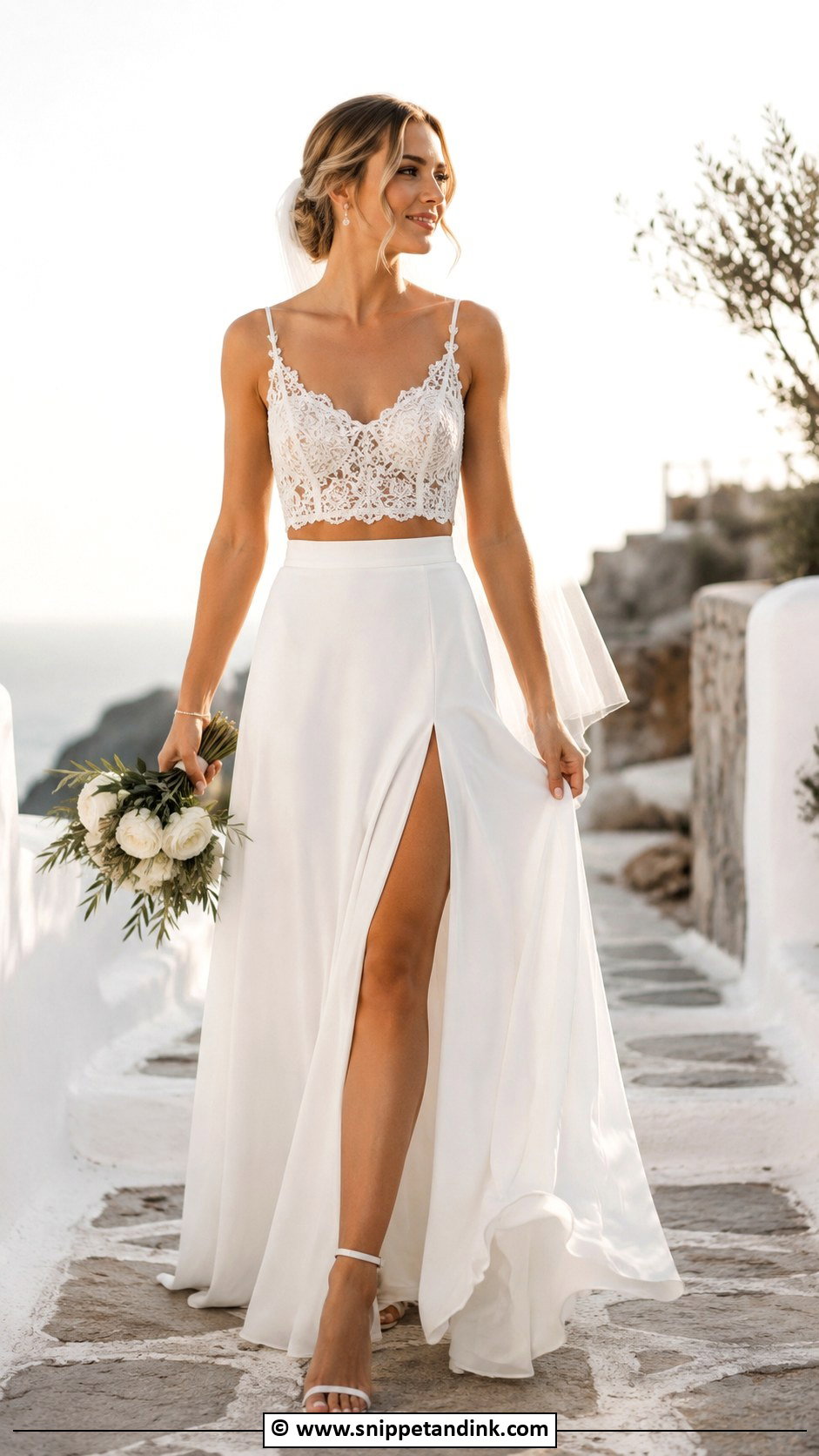
Separates give flexibility, and they genuinely help brides who are a different size on top and bottom, since each piece can be ordered and altered on its own. A cropped lace top with a high-waist skirt feels romantic; a satin bandeau over a full skirt feels modern. I always check the gap with arms raised, because a top that meets the skirt when you stand still can show a stripe of midriff when you hug. Simple heels, clean jewelry and a veil that ties both pieces together work well. Destination weddings and receptions suit the lighter feel.
19. Blazer Wedding Dress
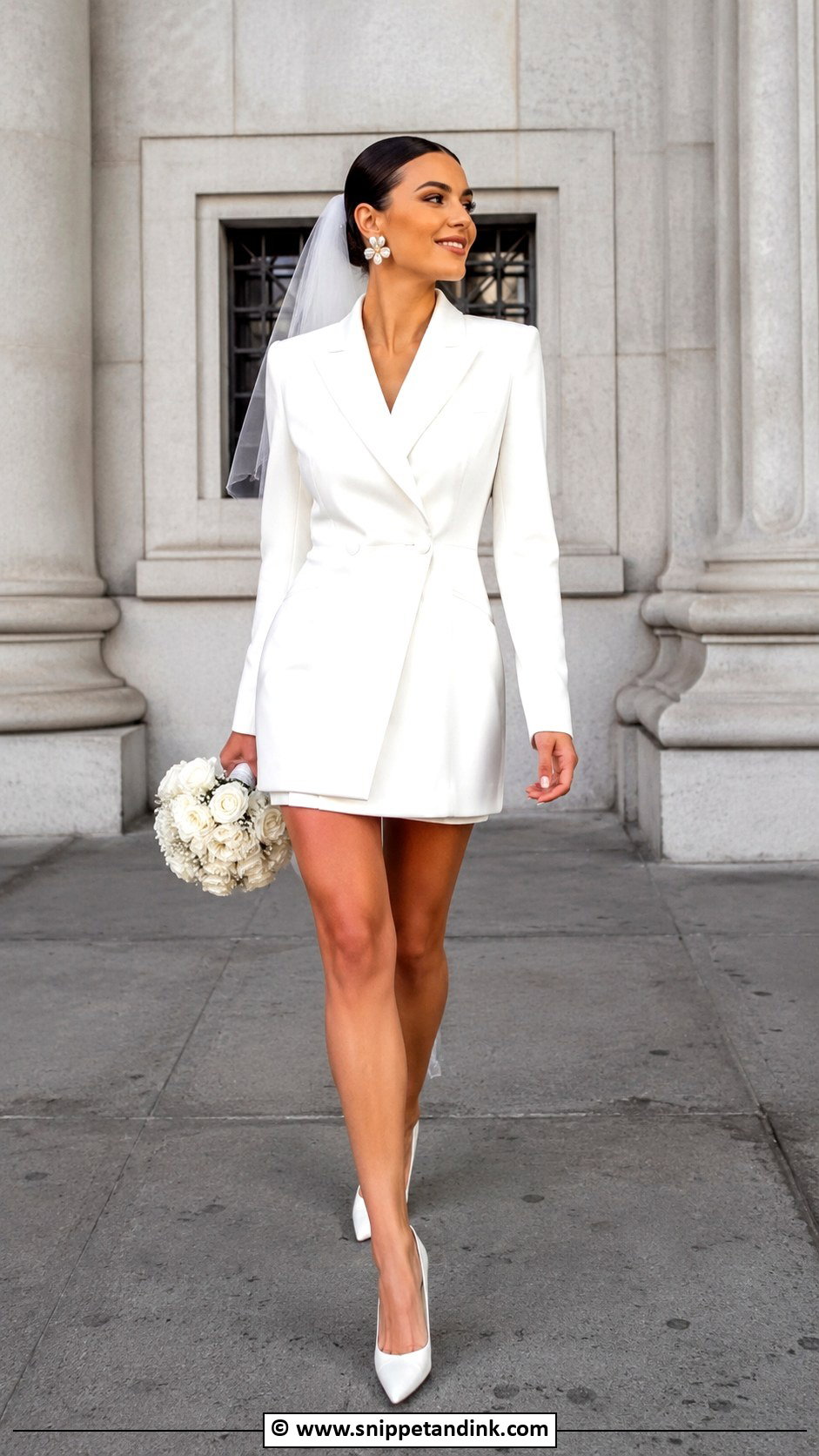
A blazer dress can be a tailored mini, a long tuxedo-style gown or a jacket layered over a slip. Tailoring makes or breaks it: the shoulder seam should end exactly at your shoulder bone, and the waist should close without the lapels gaping. Pointed pumps, bold earrings and a clean hairstyle suit it. A short veil or a structured headband adds a bridal note without softening it much. Crisp white, ivory or cream all work for city weddings and reception changes.
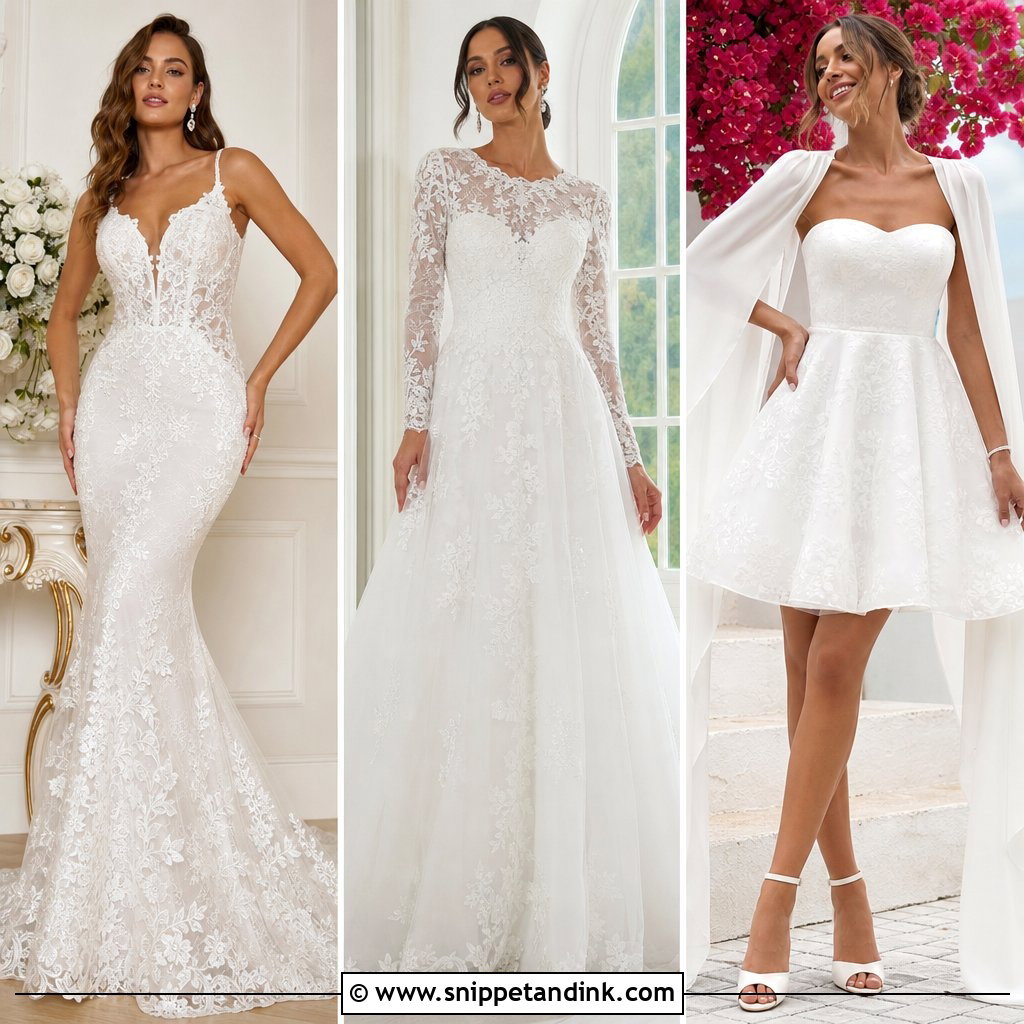
20. Wedding Dress With Bow
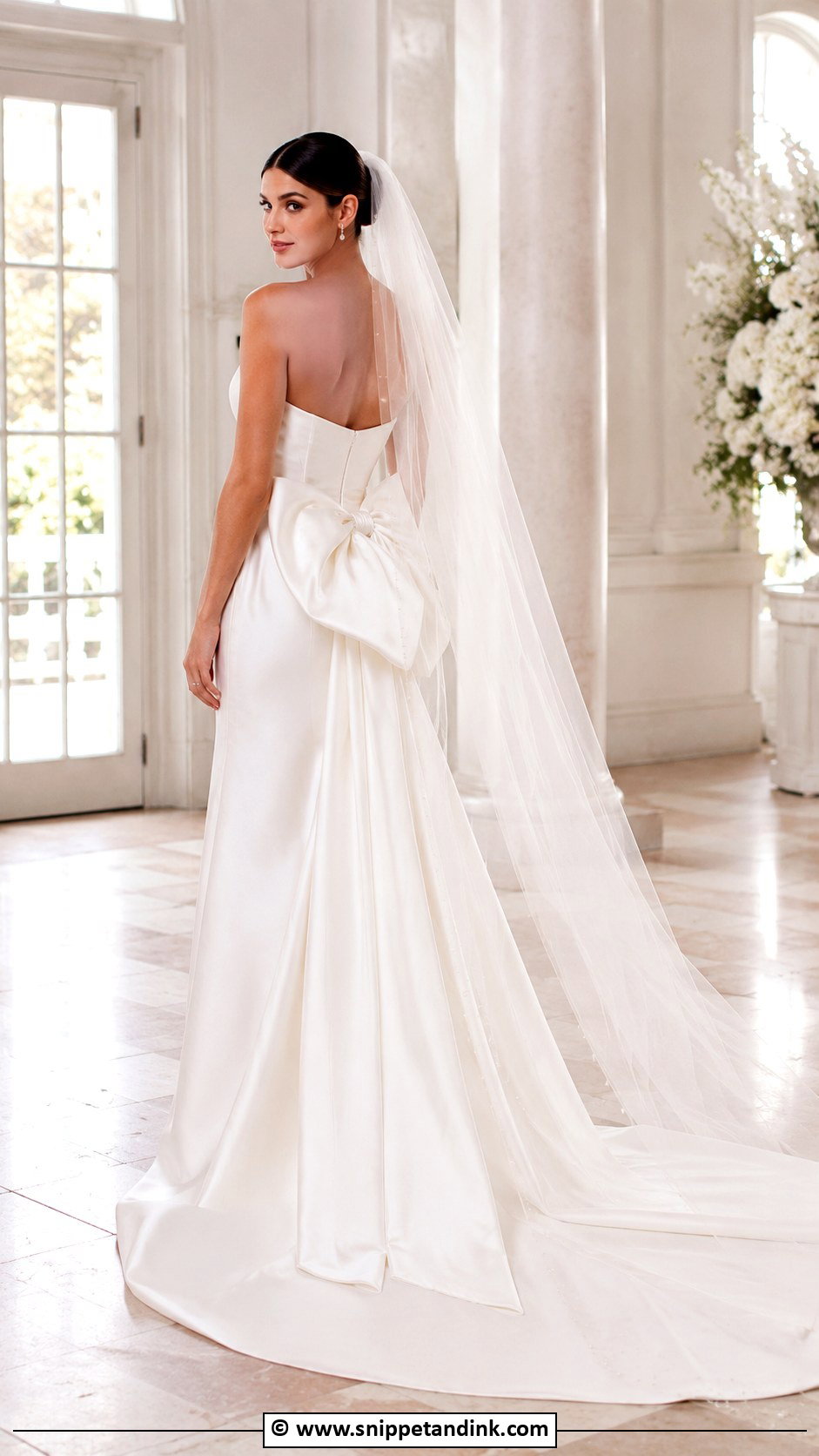
A wedding dress with a bow changes character depending on where the bow sits. At the back it reads romantic, on the shoulder fashion-forward, and at the waist it defines your shape. An oversized back bow and a long veil compete for the same space, so I usually move the veil to a lower comb or swap it for a short one. Satin, mikado, taffeta and organza hold a bow’s shape; soft fabrics let it droop. A detachable bow or bow train gives you a ceremony detail you can remove later.
21. Wedding Dress With Detachable Skirt
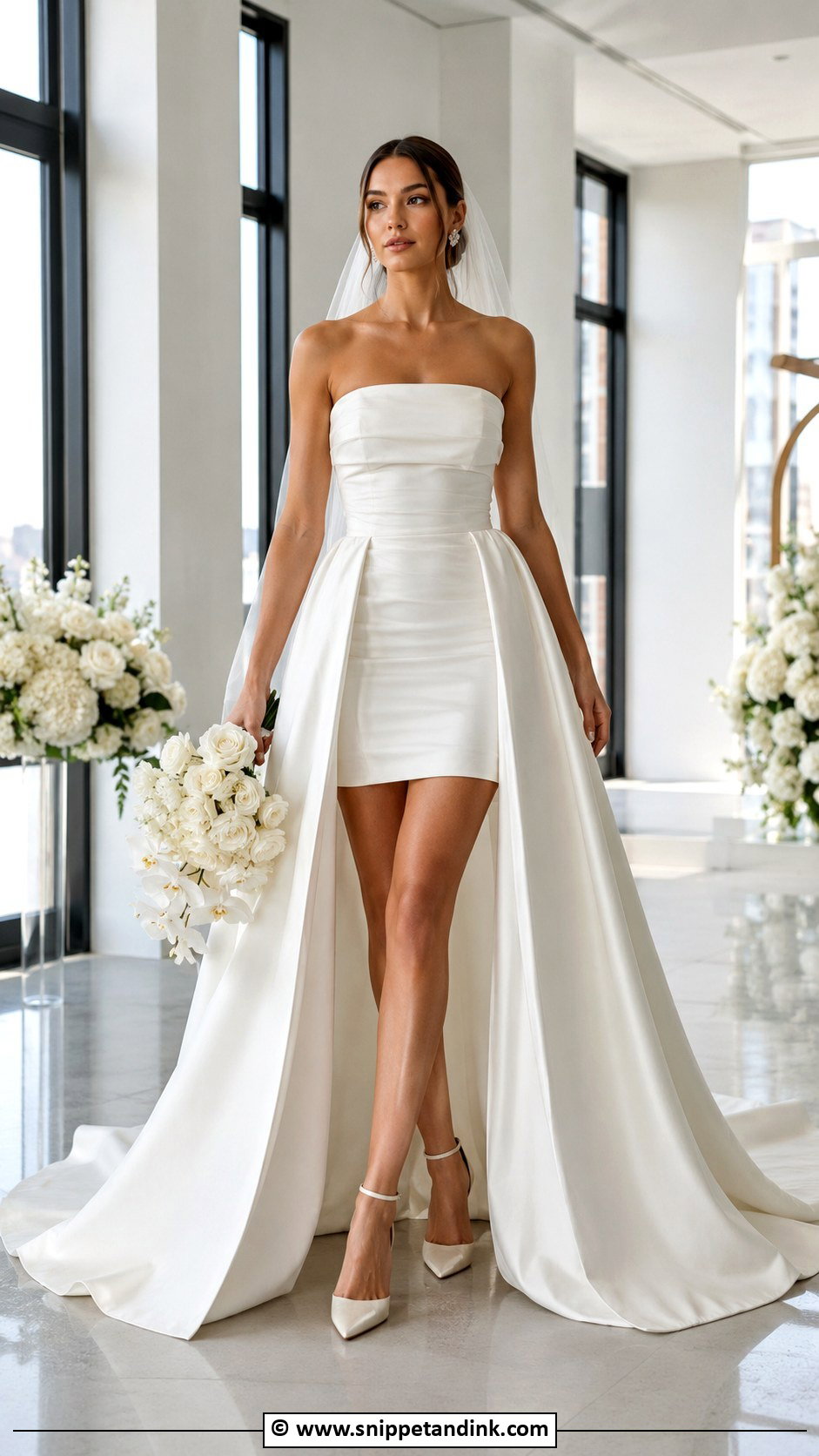
Two outfits in one: a full overskirt for the ceremony, then a slimmer look underneath for dancing. The underlayer might be a fitted mini, a jumpsuit or a column dress. What usually goes wrong is the fastening. Hooks and snaps that were easy in the shop are fiddly with nervous hands, so practise the removal at your final fitting and show whoever will help you on the day. Choose heels that work with both versions and jewelry that suits both. A simple veil completes it.
22. Wedding Dress With Cape
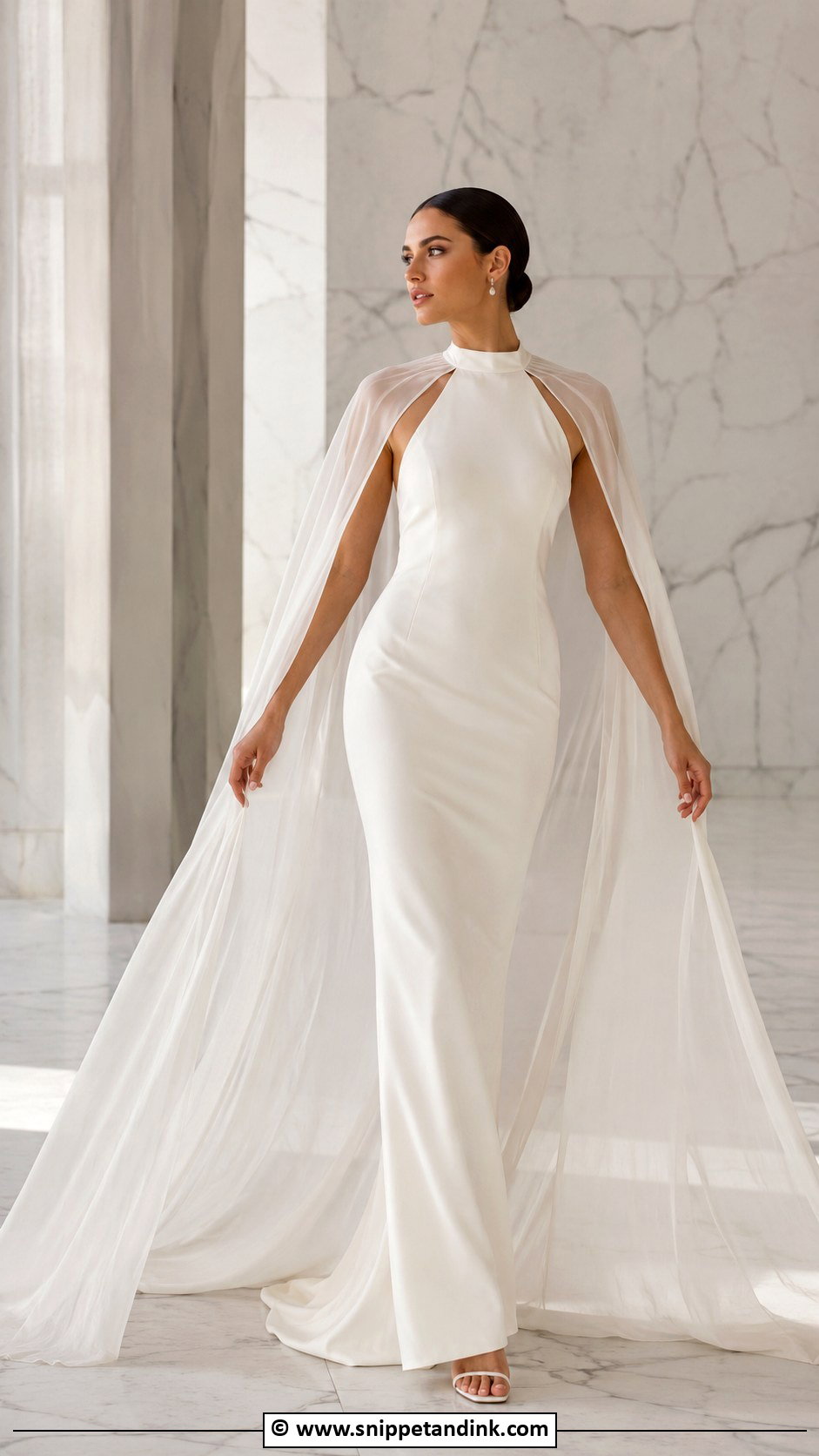
A cape gives drama and movement without needing a traditional veil, and it’s a smart way to cover arms on a sleeveless gown. It might be sheer, beaded, lace-trimmed or smooth crepe. A shoulder-length cape moves softly; a full-length one adds real impact in outdoor portraits. I check how it fastens, since a cape that hooks at the neck can pull back on the throat when someone steps on the hem. Keep the gown underneath clean if the cape carries the detail, and keep earrings minimal.
23. Wedding Dress With Gloves
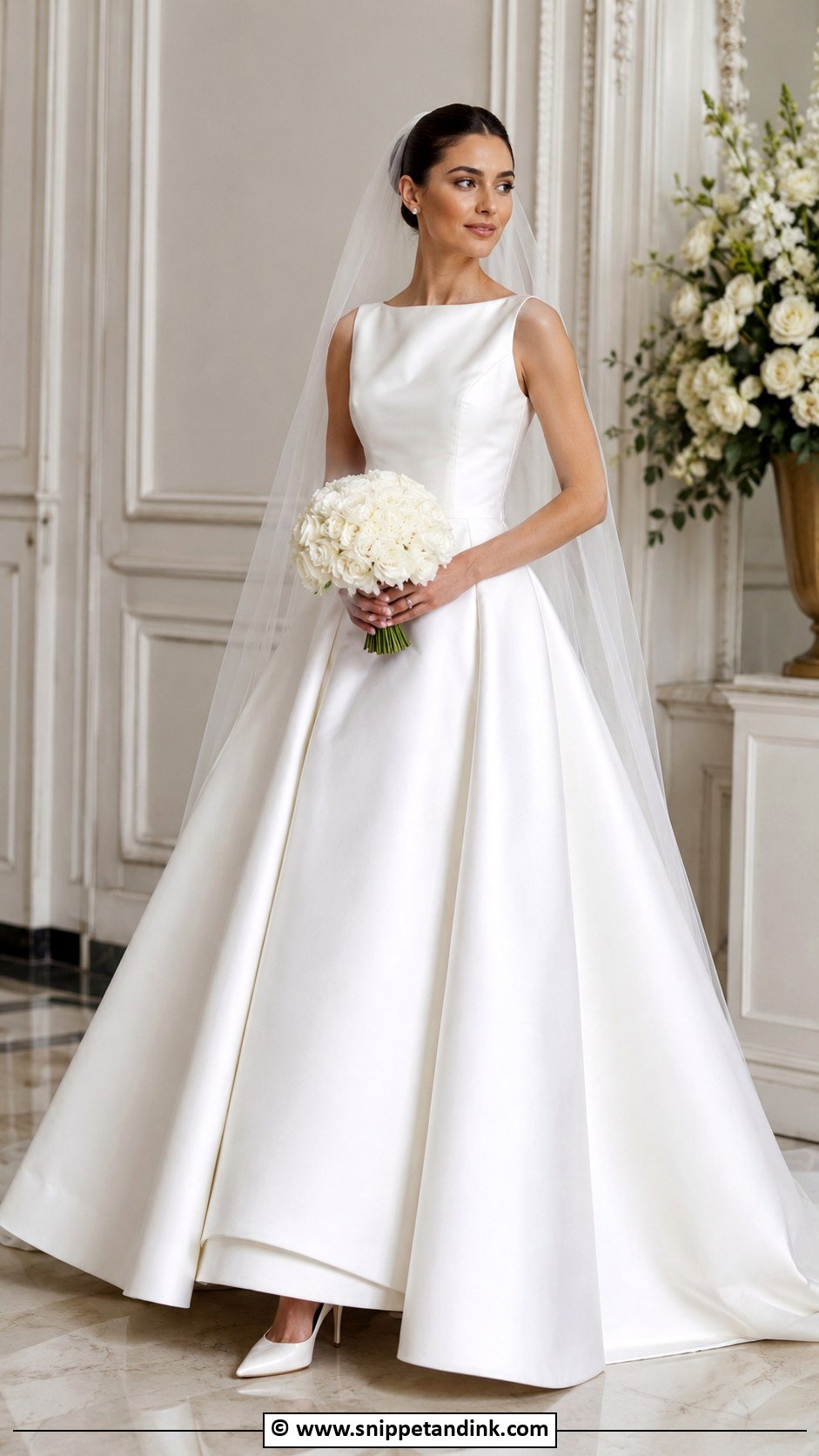
Gloves add instant polish. Opera length suits strapless, off-shoulder and sleeveless gowns; shorter gloves suit vintage shapes. Satin reads formal, sheer reads modern. The colour should match the dress or sit just warmer, because a stark white glove next to an ivory dress shows the mismatch clearly. Plan the ring exchange too: most brides slip the left glove off, or choose a glove with a ring finger opening. With pearl earrings, a smooth veil and classic pumps, keep everything else plain so the gloves stay elegant rather than costume.
24. Beaded Wedding Dress
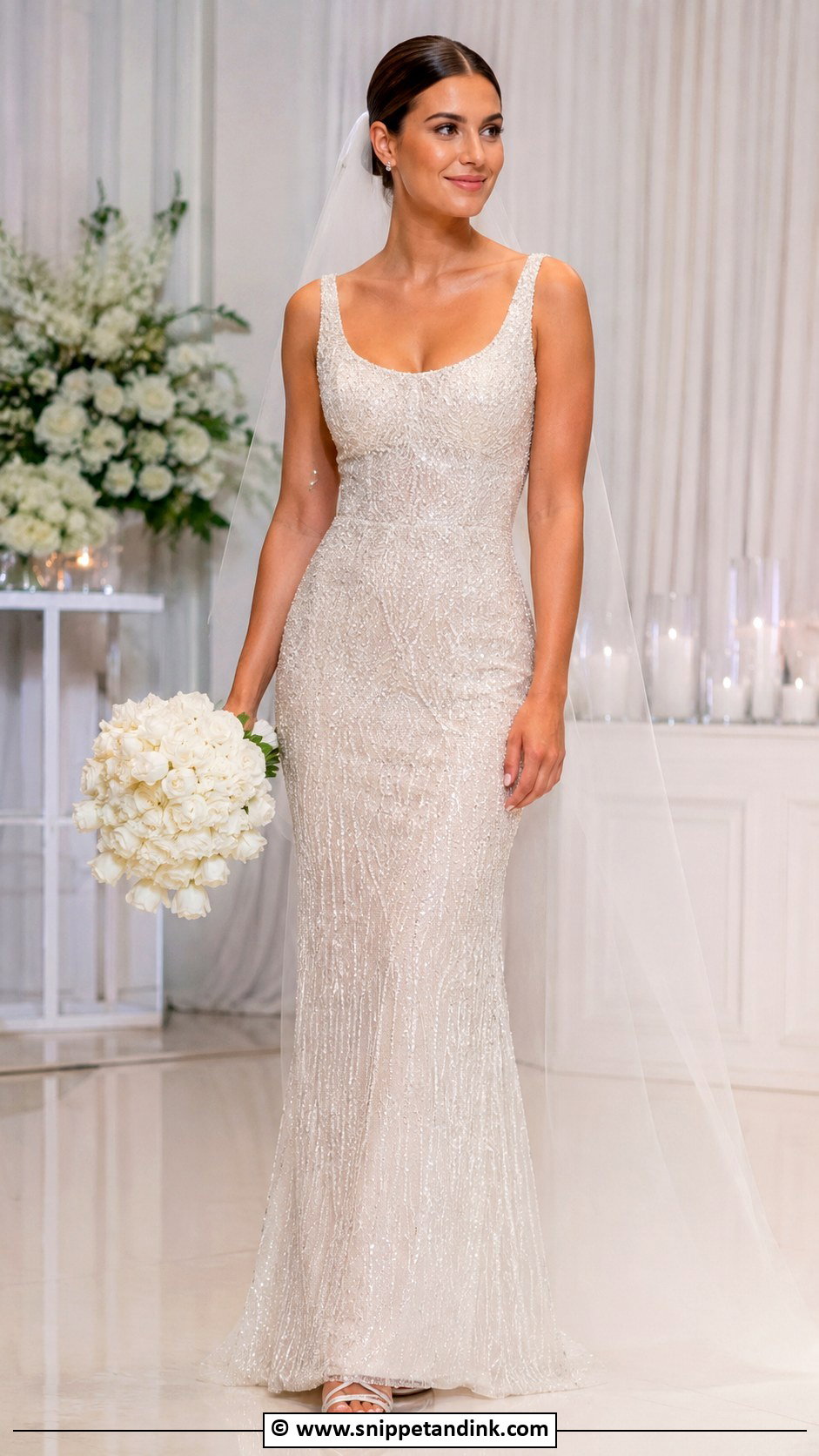
Beading catches light and gives the dress movement, from a soft glow to full embellishment. It also adds weight, sometimes a lot, so a heavily beaded A-line can drag at the shoulders by evening. I have brides wear a beaded sample for a full ten minutes before deciding. Pair it with simple sandals or pumps, small earrings and a plain veil, and skip heavy necklaces and big hair pieces. Evening receptions and formal rooms suit it, especially with candlelight.
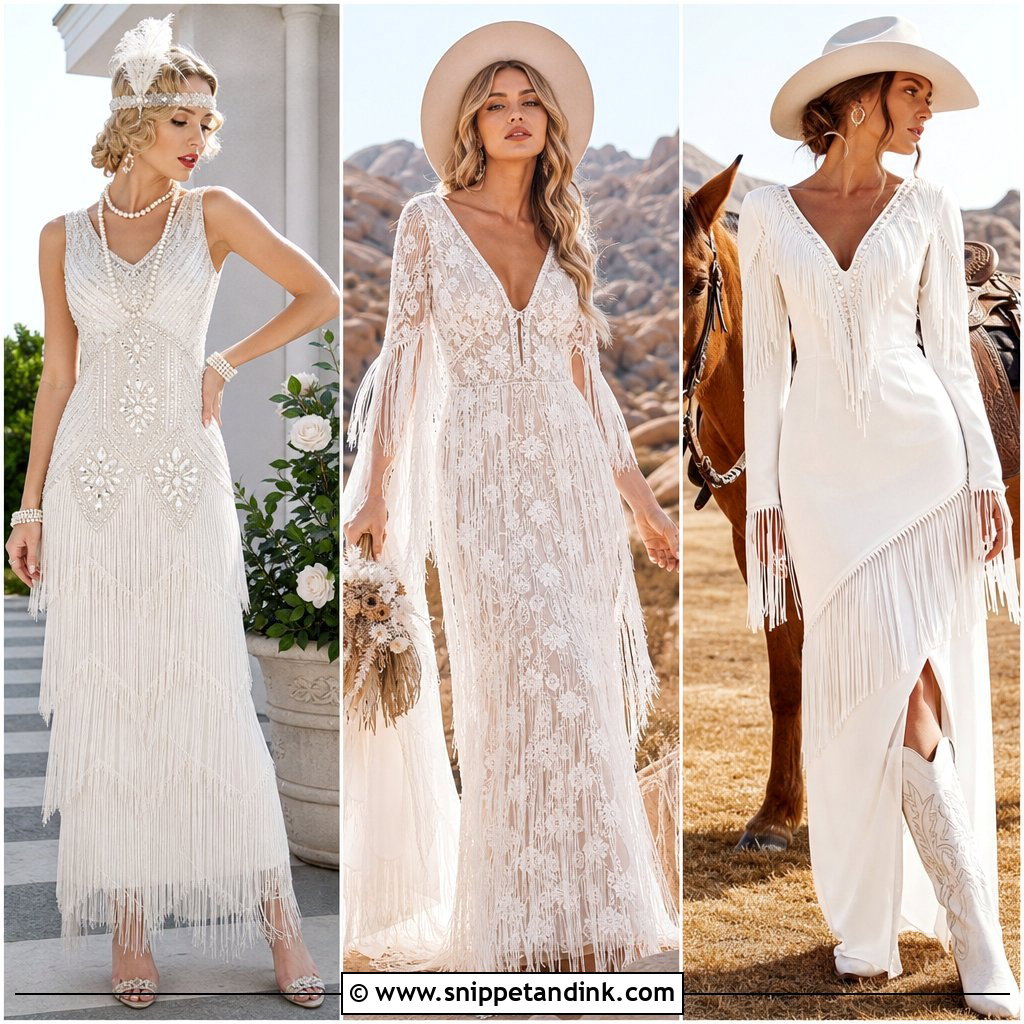
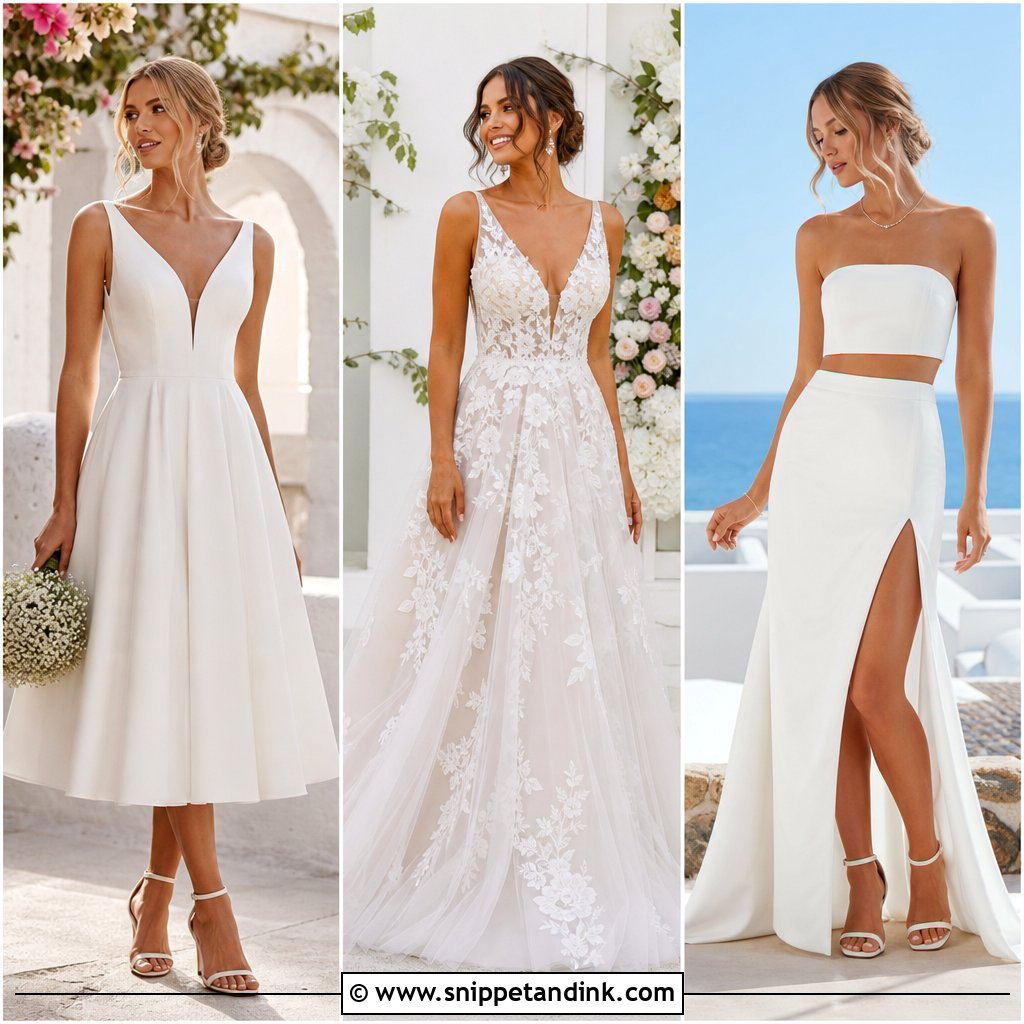
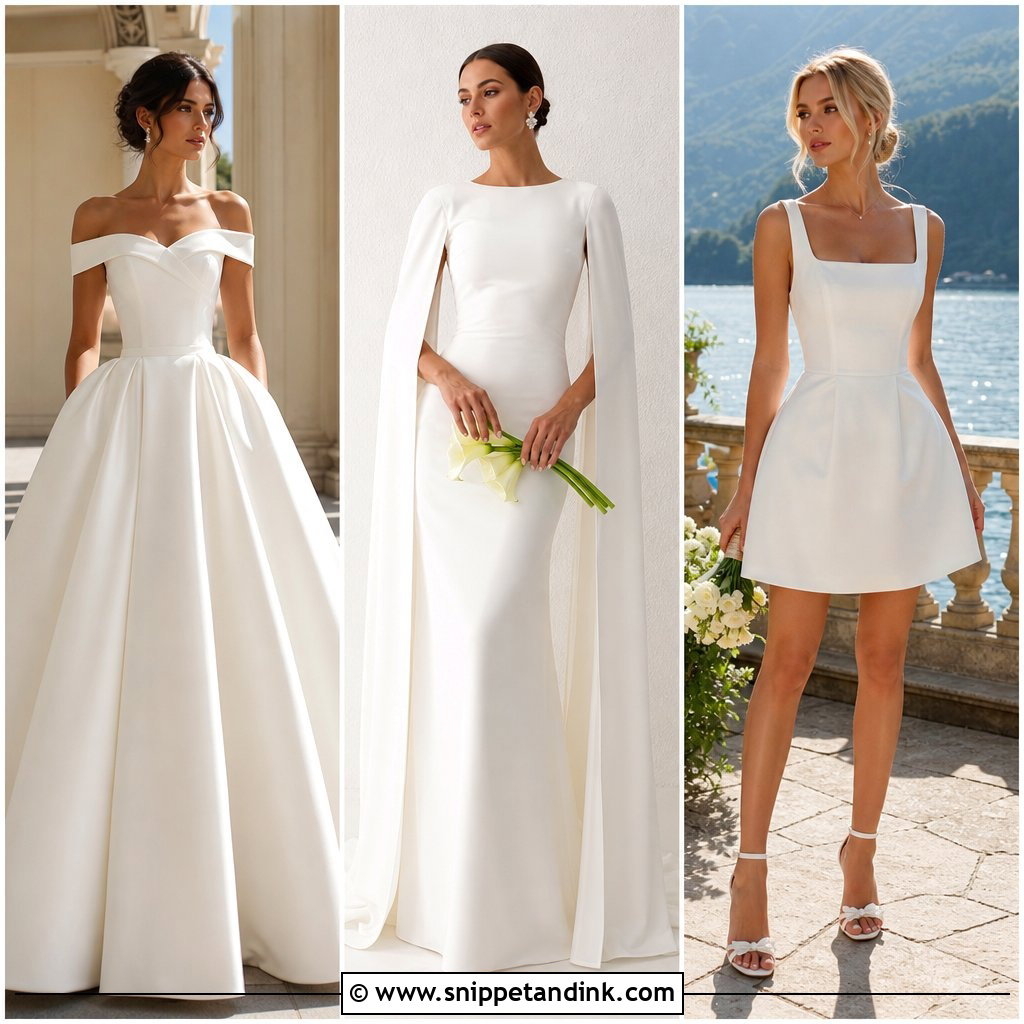
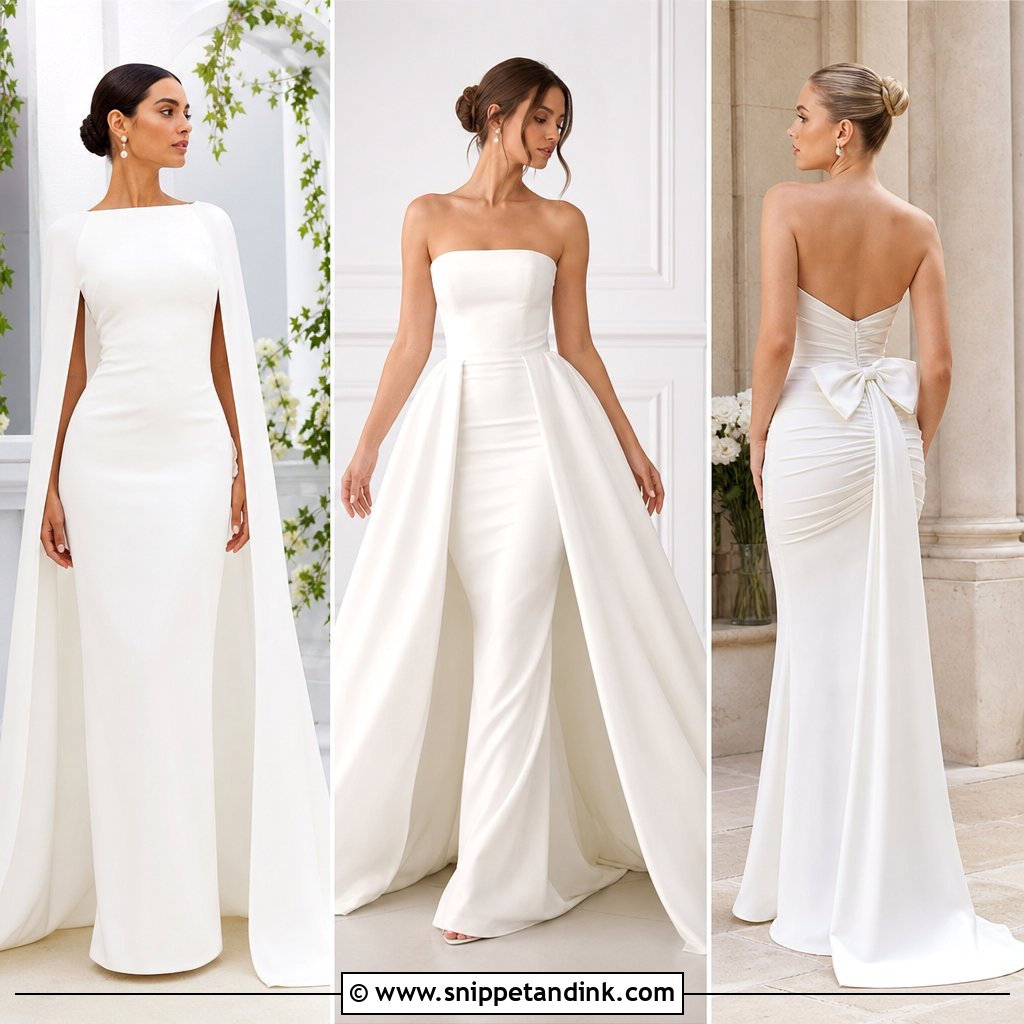
25. Tulle A Line Wedding Dress
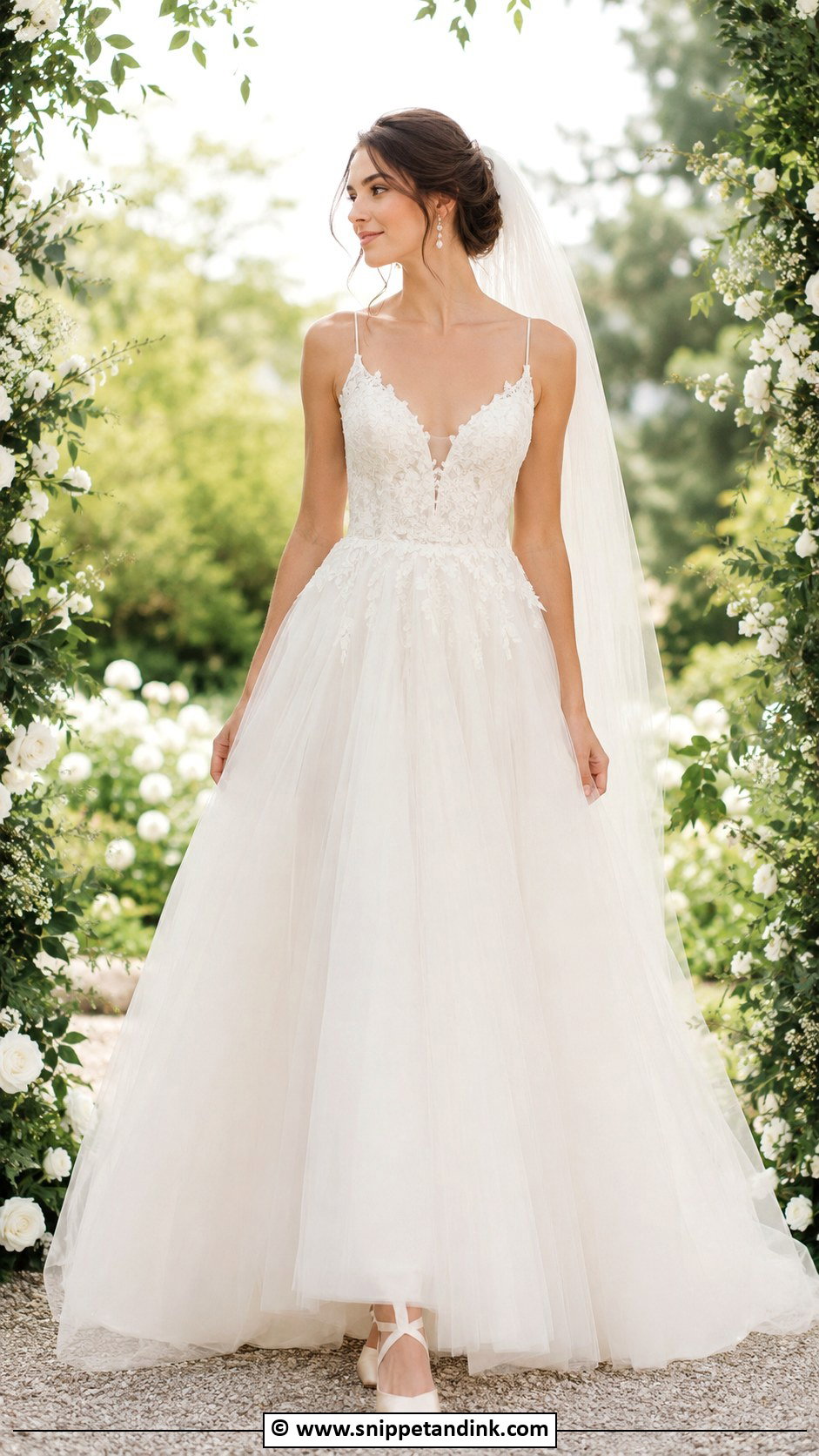
Tulle over a fitted bodice is light and easy to move in, which is why so many body types feel good in an A-line. It’s also delicate: tulle snags on rough stone steps and on heel buckles, so I suggest smooth shoes for this dress. Ballet-style heels, delicate earrings and a sheer veil keep it airy. Plain tulle gives a minimal result, layered tulle with a little sparkle adds detail, and a ribbon belt helps if the waist needs definition. Keep the bouquet light.
26. Mikado Wedding Dress
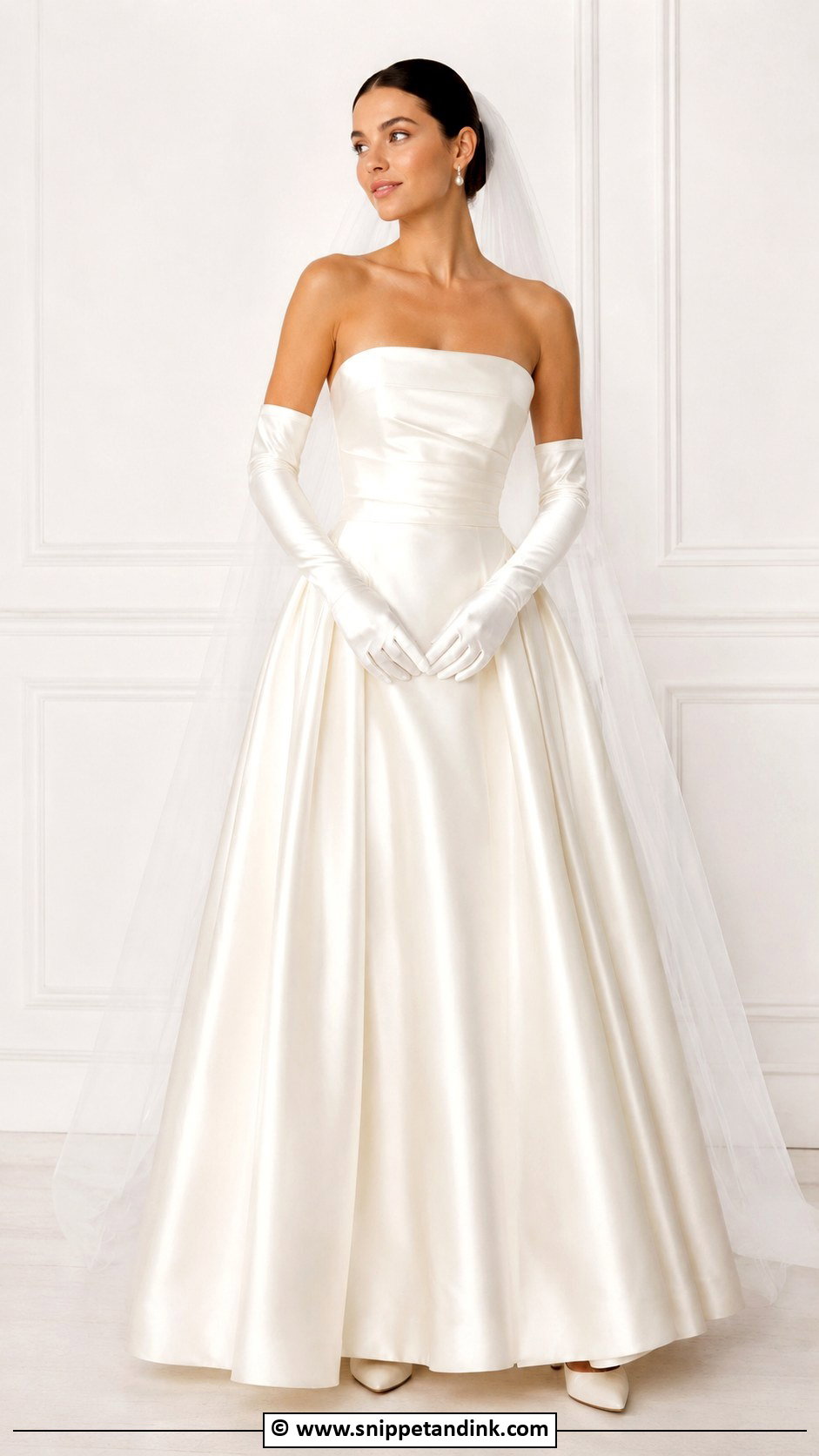
Mikado is a heavy silk-blend weave with a slight sheen that holds a sculpted shape, so it suits ball gowns, A-lines and structured silhouettes. Because the fabric has so much presence, classic pumps, pearl studs and a polished veil are plenty. Mikado creases sharply when you sit for a long dinner, which is worth knowing; it relaxes again but a steamer on the day helps. Look for covered buttons, a folded neckline or a structured bow. Formal indoor venues and traditional receptions are its natural home.
27. Boho Lace Wedding Dress
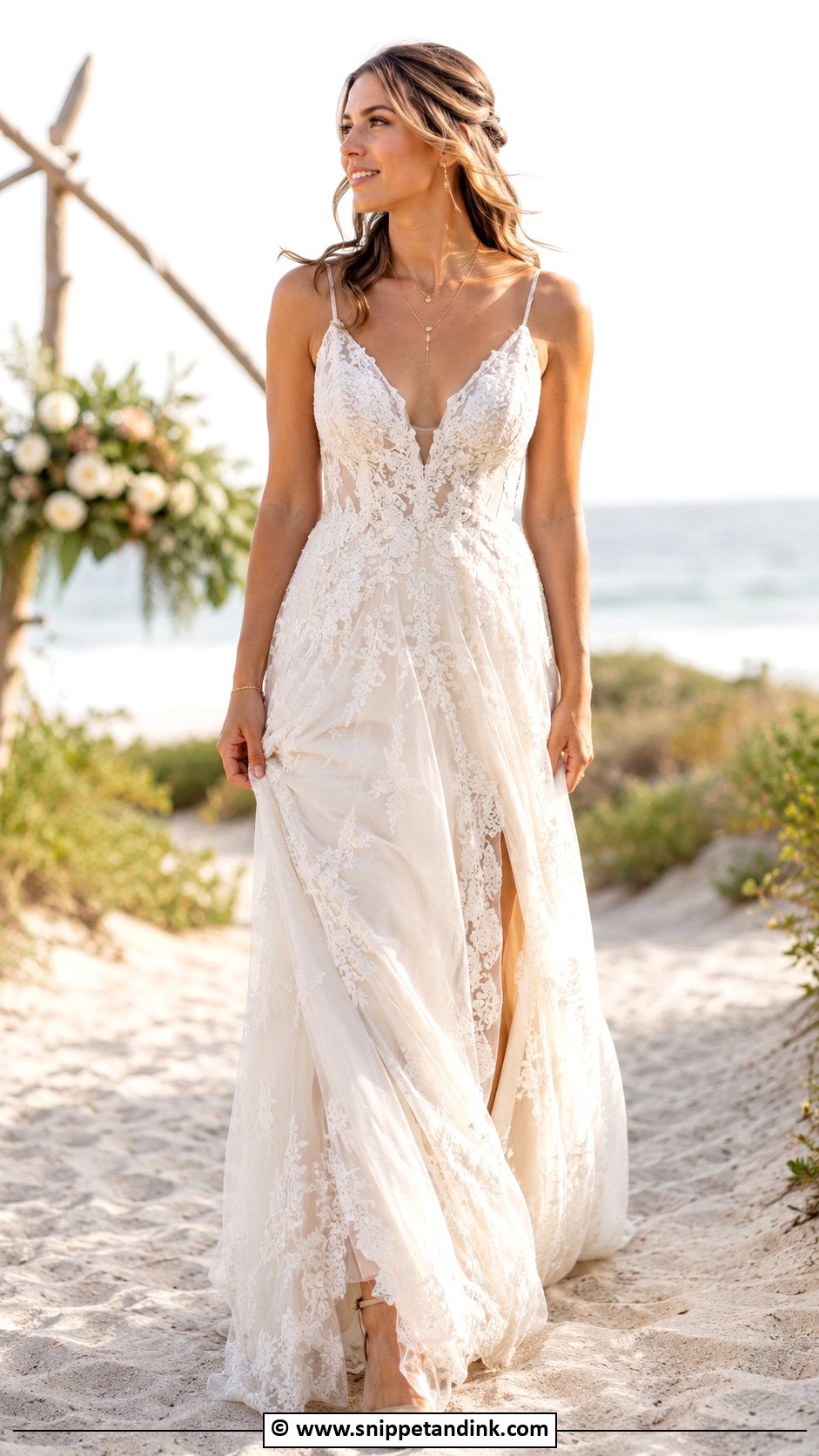
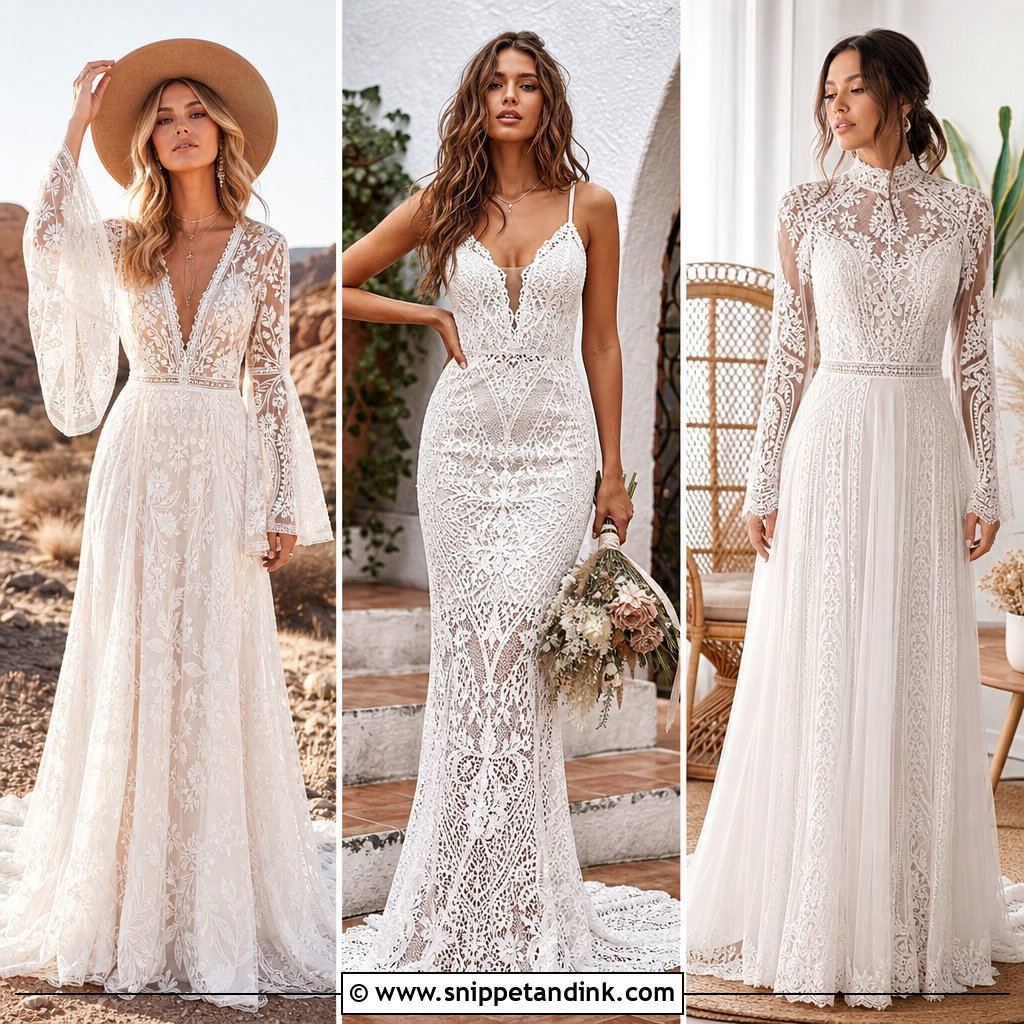
Boho lace is relaxed and natural: soft lace, flutter sleeves, a flowing skirt, sometimes crochet-style texture. Block heels or delicate sandals, loose waves and simple gold or pearl jewelry suit it, and a floral hair comb adds softness. For outdoor ceremonies on grass or sand, I’d ask for the hem to just clear the ground, since a dragging lace hem picks up soil and grass stains fast. A soft veil or no veil both work. Keep the dress light enough to move in heat.
28. Black And White Wedding Dress
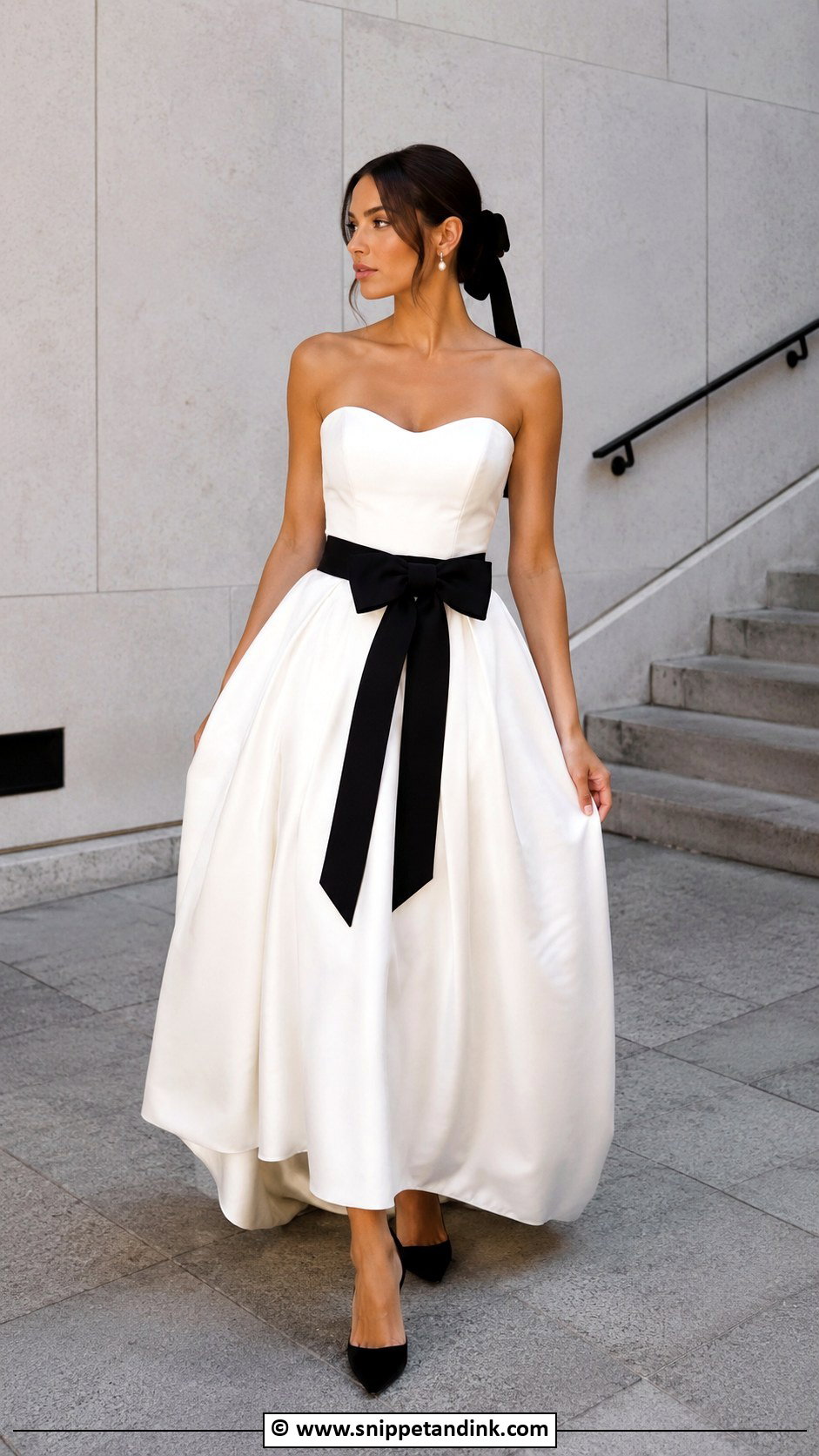
Black against white is high contrast, so start small. The black might be a bow, gloves, trim, a belt, embroidery or just the shoes. A white gown with black satin pumps and a black hair ribbon is the gentle version. Keep makeup clean so the contrast stays crisp. I’d test the combination in daylight photos first, because black detail on white can lose all its texture in an overexposed shot. Modern city weddings and formal receptions suit it best.
29. Champagne Wedding Dress
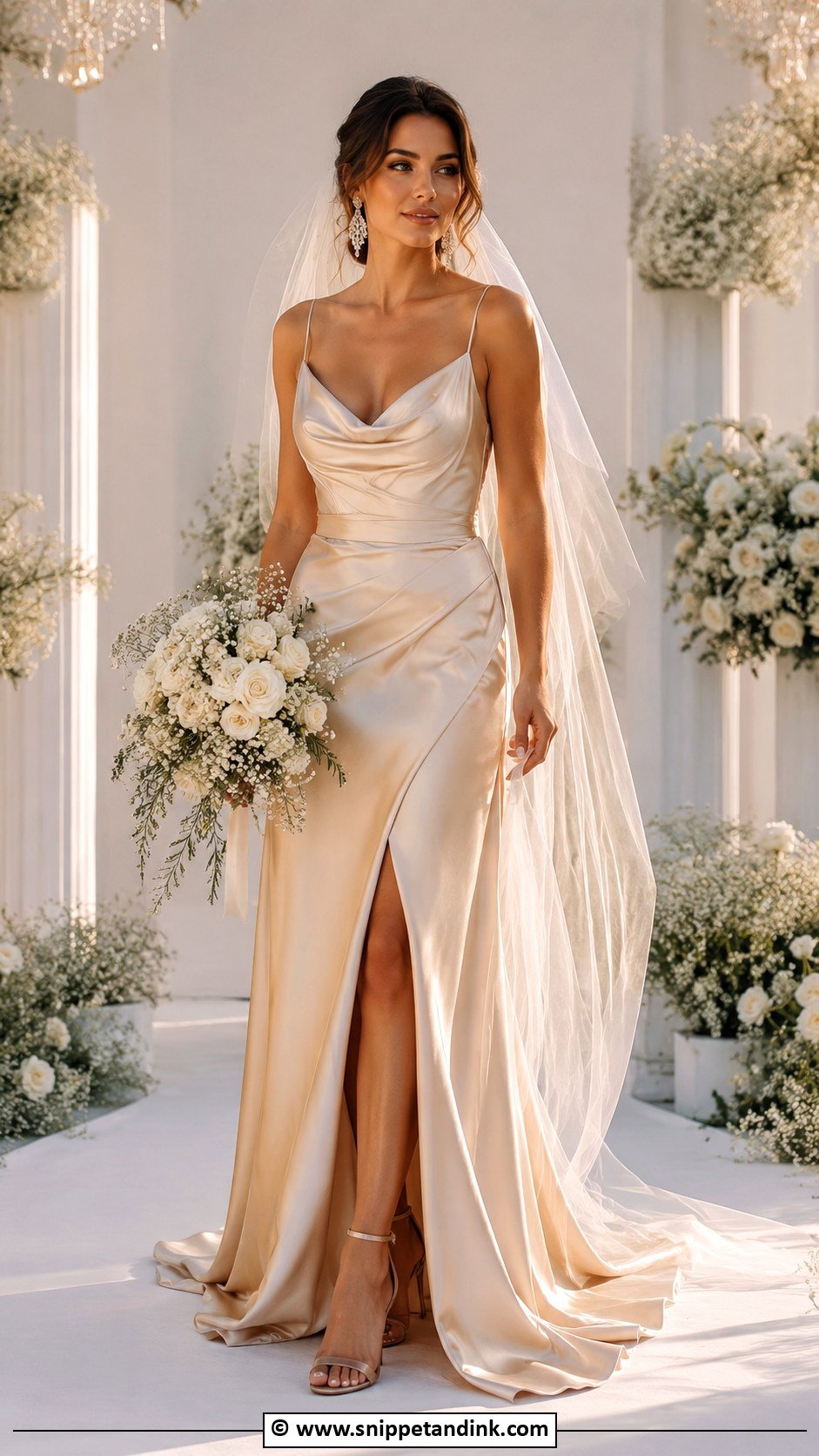
Champagne is a warm, golden alternative to bright white, and it flatters many skin tones that bright white can wash out. Hold the fabric up to your face in daylight to check; on some skin it looks pink, on some almost gold. Nude or metallic heels, delicate crystal earrings and a veil in soft ivory or matching champagne keep the tone consistent. Satin, tulle, beading and lace all work. Evening ceremonies and outdoor venues show it well.
30. Reception Wedding Dress
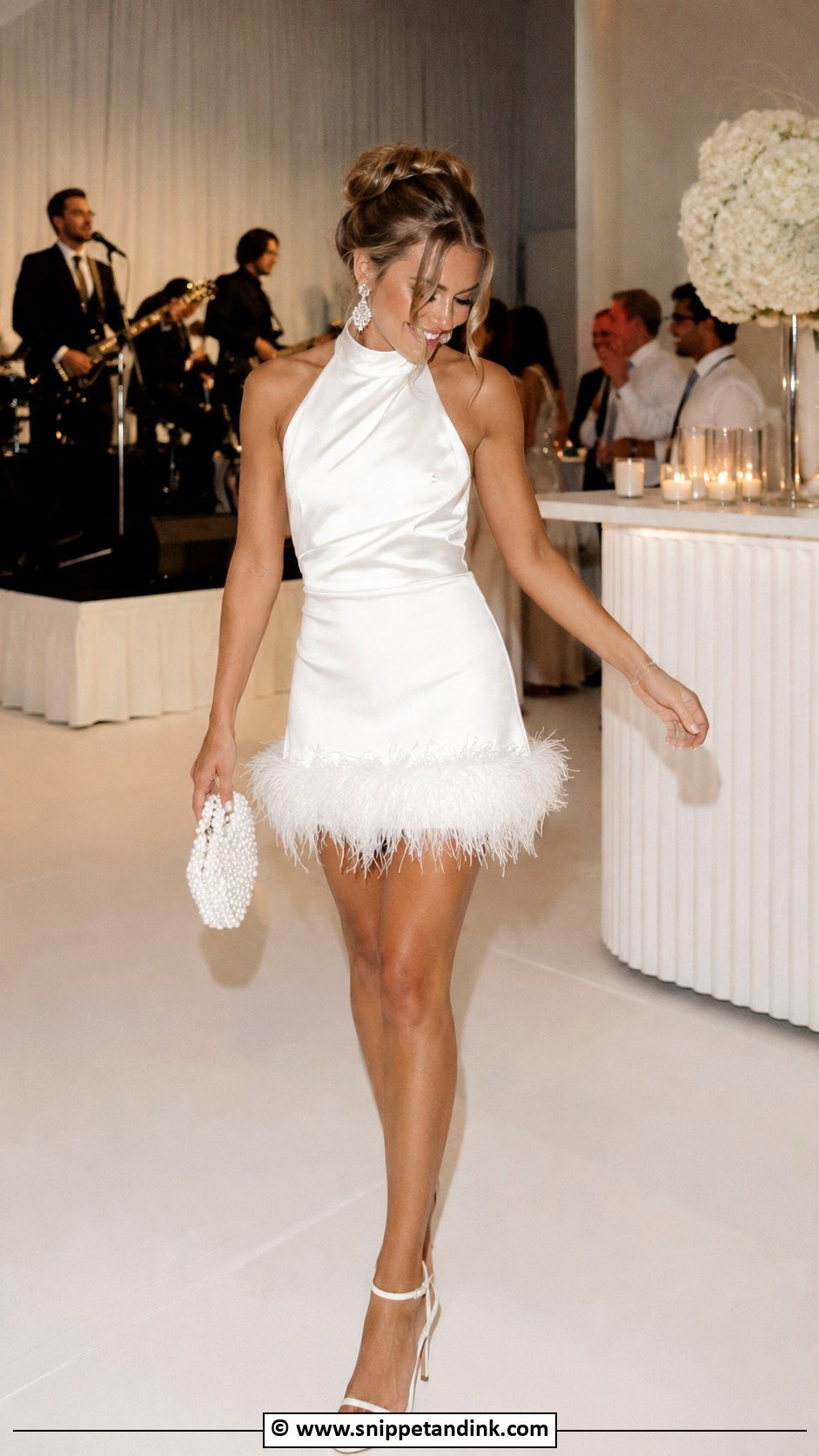
The reception dress is for movement. It might be a mini, a slip, a feather-trimmed dress, a fitted midi or a column gown. If your ceremony gown is dramatic, go lighter here. This is also the place for sparkle, fringe, bows or a shorter hem. I try to link it back to the ceremony look through colour or fabric so the photos feel like one day, not two parties. Add comfortable heels, statement earrings and a small clutch, and allow fifteen minutes for the change, not five.
Order Dates, Alterations and the Bustle Nobody Mentions
Most bridal gowns are made to order, and the wait from deposit to delivery commonly runs several months; designer and couture pieces can take longer. That’s why I like brides to settle on a dress roughly nine to twelve months out. Ready-to-wear and sample sale gowns shortcut that, but leave less room to change your mind.
Alterations usually start about two to three months before the wedding and take two or three fittings. Bring your final shoes and undergarments to every one, because changing either afterward changes the hem and the fit. Keep your weight in mind but don’t plan around losing it; it’s far easier to take a dress in than to let it out.
Ask about the bustle at the first fitting
Any gown with a train needs a way to lift it for the reception. An over bustle hooks the train up onto the back of the skirt; an under bustle tucks it beneath with ties. Heavy trains may need several points to stay up. Have the person who’ll fasten it on the day come to the last fitting and do it themselves at least once.
Getting the Dress Cleaned and Stored Properly Afterward
Take the gown to a specialist cleaner within a few weeks. Spilled champagne and white wine dry clear, but the sugar in them oxidises over months into brown marks that are much harder to lift. Point out every spot you know about, including the hem.
For storage, I’d skip the plastic bag the dress came in. Plastic traps moisture and can yellow fabric over time. Fold the gown loosely with acid-free tissue in the creases, lay it in an acid-free box or a breathable cotton bag, and keep it somewhere cool, dark and dry, which rules out most attics and basements. Heavily beaded gowns shouldn’t hang by their straps for years, as the weight stretches the shoulders.
Which of These Gowns Fits the Way You’ll Spend the Day
Every look here comes back to the same question I ask at the start of an appointment: what will you actually be doing in this dress? Standing for a long ceremony, sitting through dinner, dancing, walking across a lawn. A plain gown can carry a dramatic veil, and a statement dress usually needs very little else. Compare the full outfits rather than chasing a single trend, think about your venue and season, and pick the one you forget you’re wearing by the second hour.
You'll Like These Ideas:




Leave a Reply