
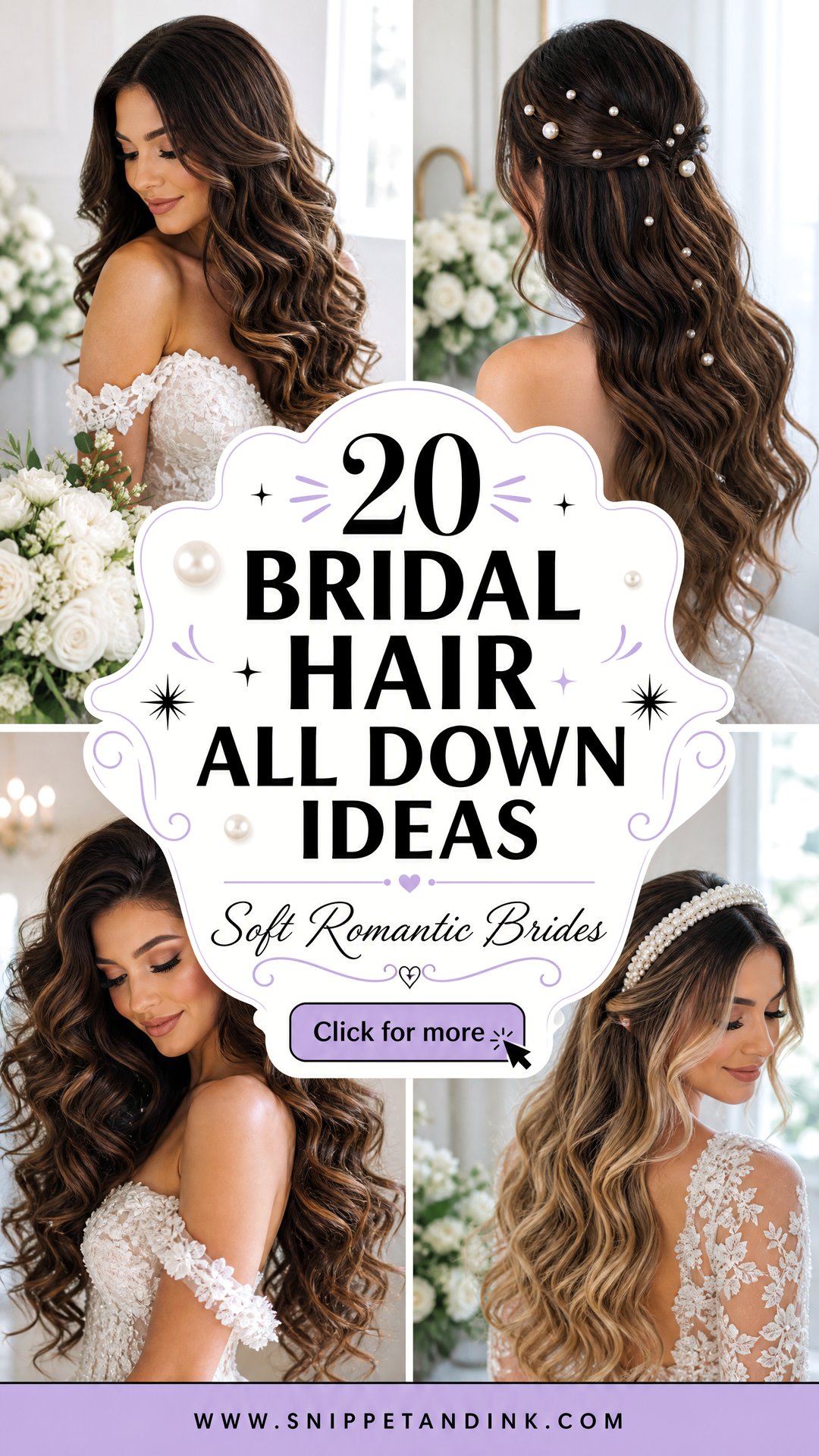
Wearing your hair fully down on your wedding day lets length, colour and texture do the work an updo would normally hide. The catch, from my side of the chair, is that down styles are the ones most likely to fall flat by the speeches, because nothing is pinned to hold their shape. So each of the twenty ideas below comes with what I actually look at before I commit to it: how your hair takes a curl, what your neckline does to the ends, where the veil comb will sit, and what the weather is likely to do at your venue.
Why Down Styles Drop, and How I Build Them to Hold
An updo is held by pins. A down style is held only by the set of each curl, so its enemies are weight, heat and moisture. Long, heavy hair pulls curls straight under its own weight, body heat and damp air soften the shape the iron created, and every hug presses the back flat. None of that makes down a bad idea. It just means the structure has to be hidden inside the hair.
The prep I ask brides for
- Wash the night before or that morning, and dry it completely. Hair that’s even slightly damp at the root won’t hold a curl.
- Keep heavy conditioner and oils away from the roots that week; use them on the mid-lengths and ends only.
- Arrive with no styling product in, so I can choose the mousse or setting spray that suits your texture.
- Tell me about any new colour, cut or treatment, because a fresh keratin smoothing can make hair refuse to curl.
What happens in the chair
I set each curl and pin it while it cools. It takes longer, but it’s the single step that buys the most hours. At the crown I often build a small hidden base, either light backcombing or a tiny braid under the top layer, so the veil comb and any accessories have something to grip. The brush-out happens as late in the schedule as possible, never first thing in the morning.
1. Bridal Hair Down With Soft Waves
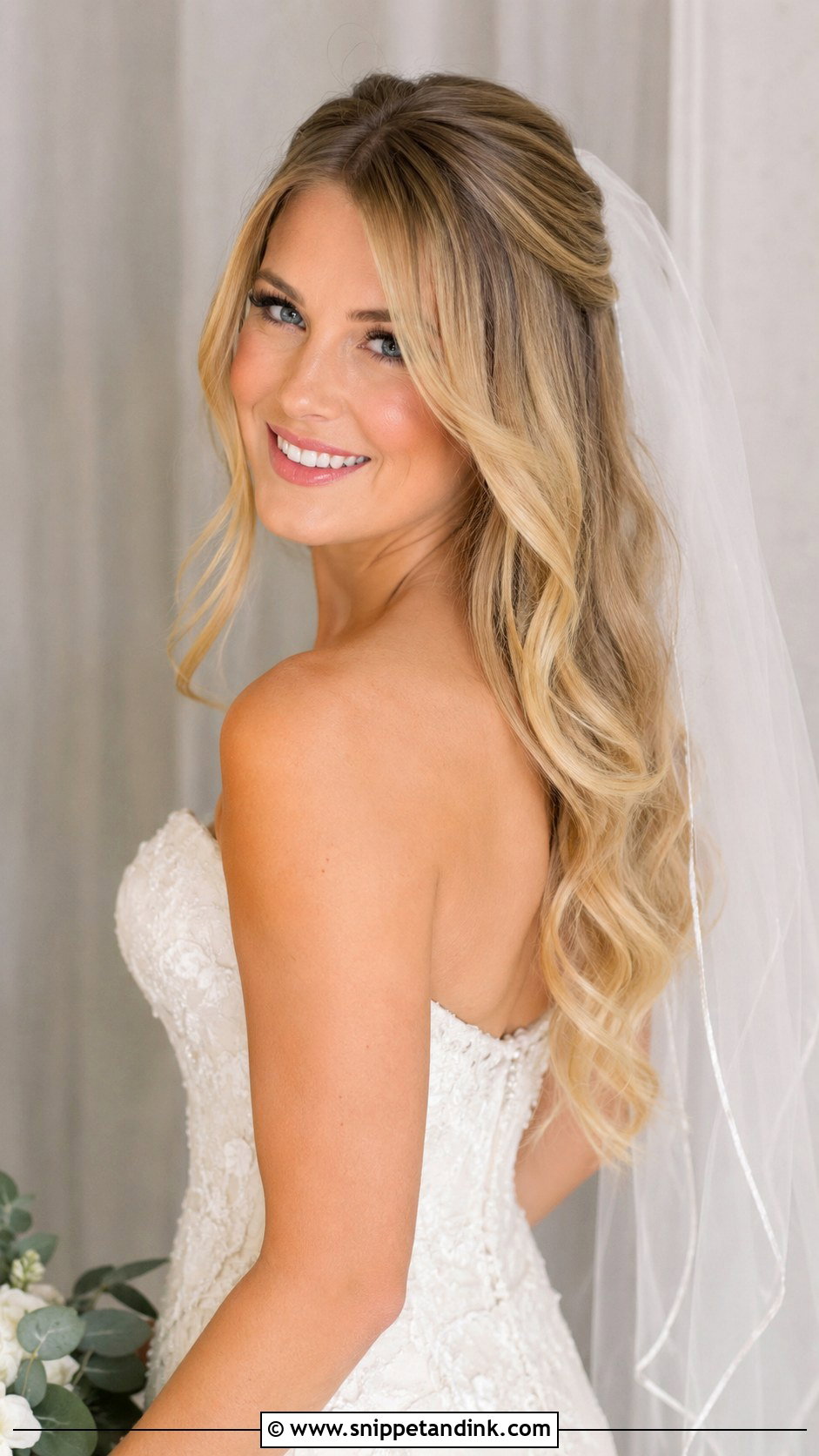
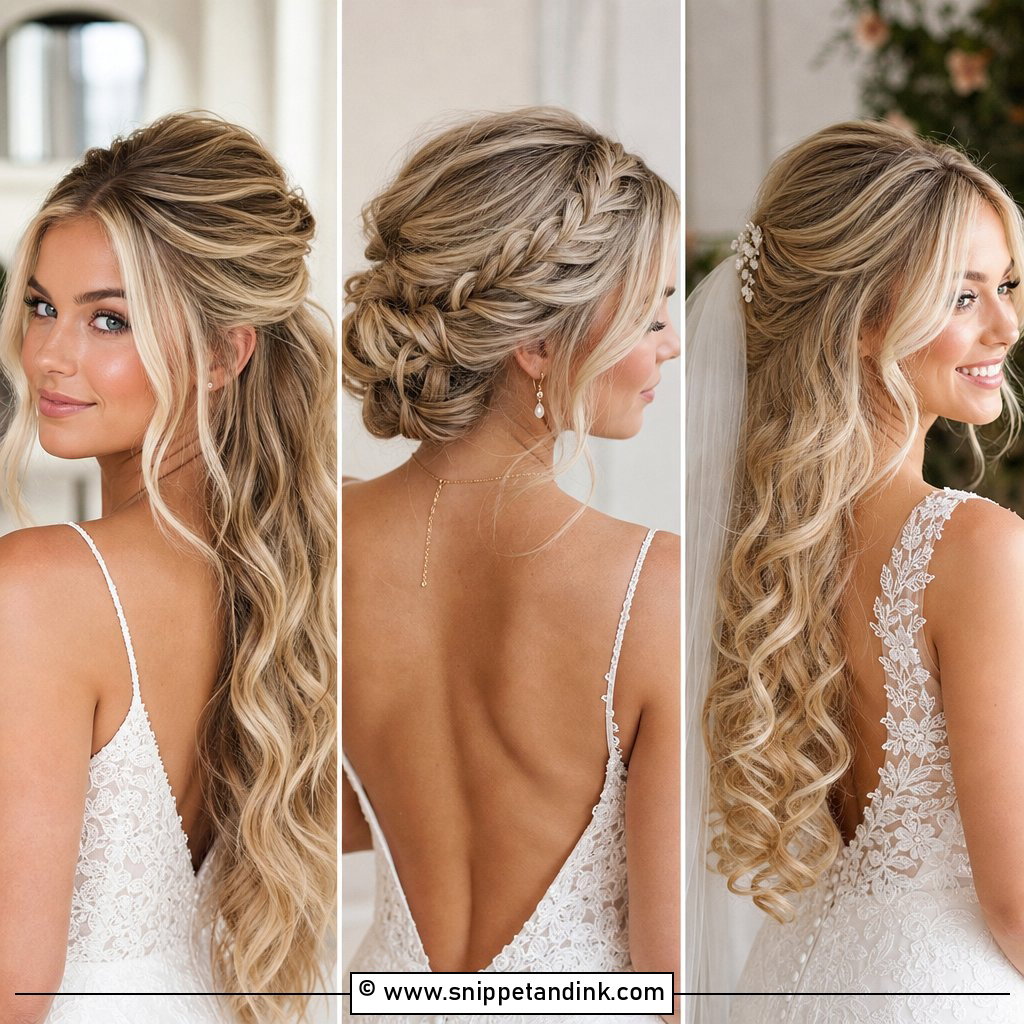
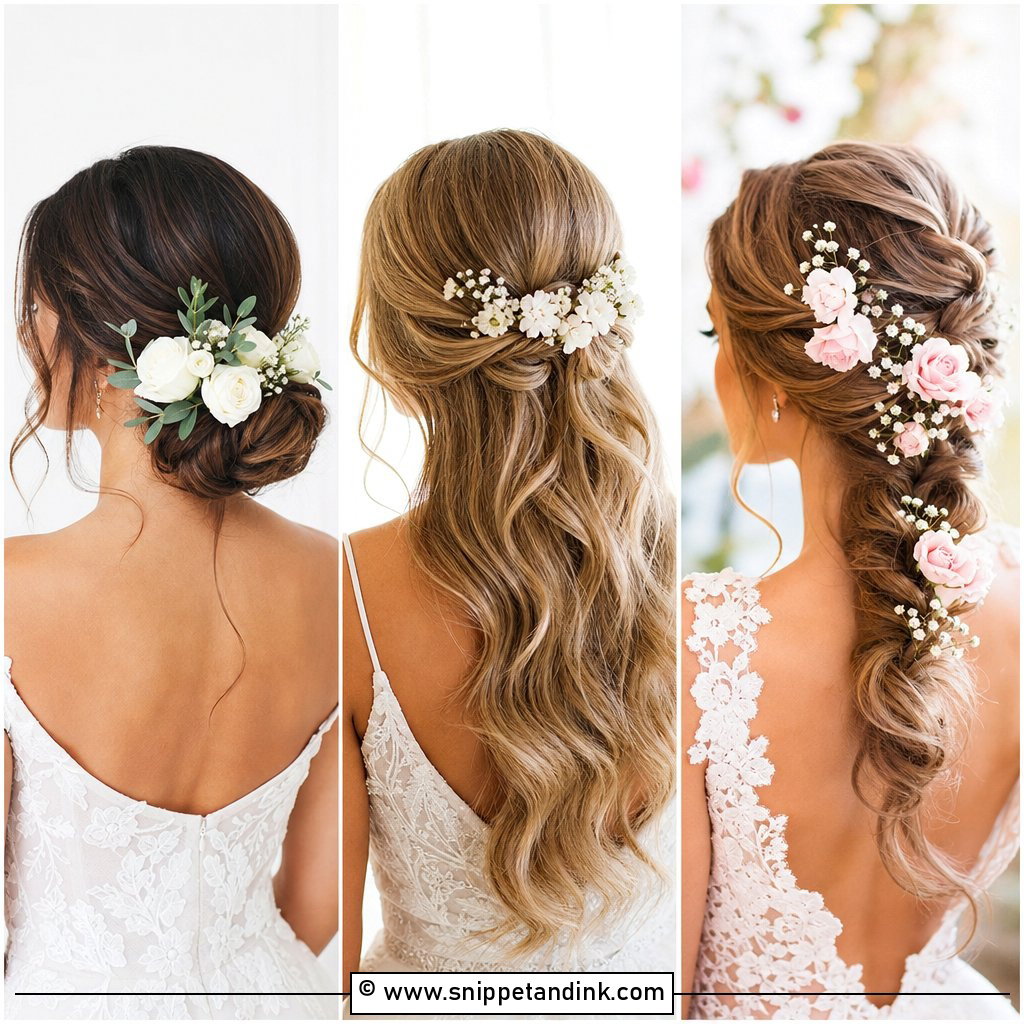
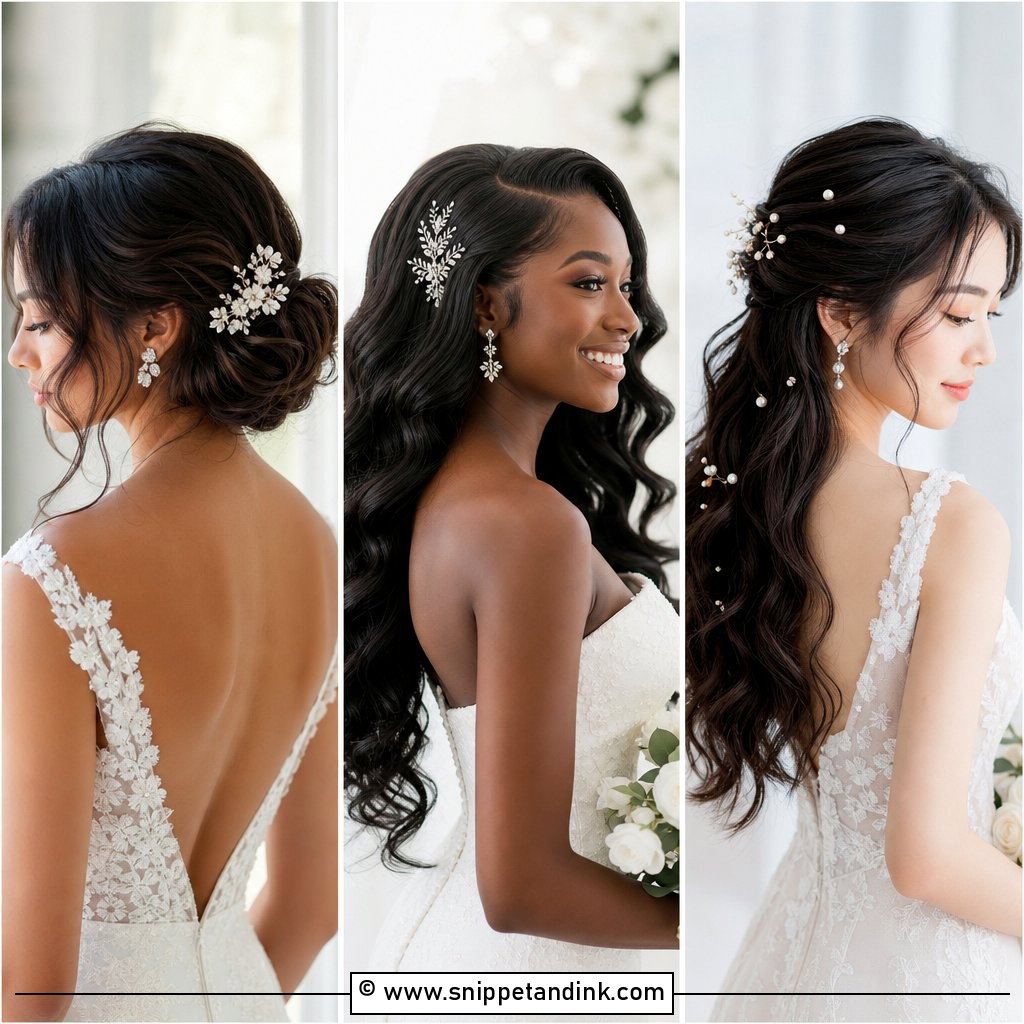
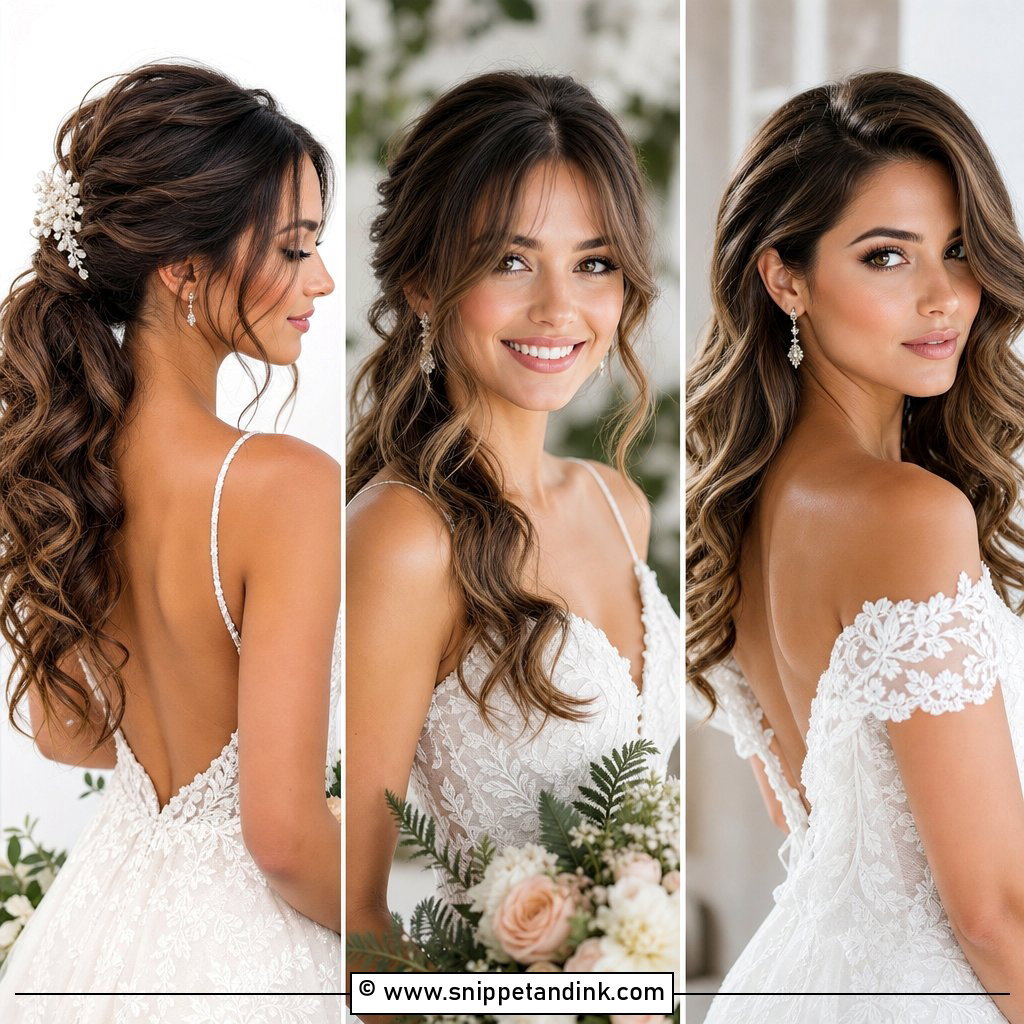
Soft waves are the down style I’m asked for most, and they suit medium to long hair that holds a bend for a few hours. Where the wave starts matters more than people expect. Starting at cheekbone level frames the face, while starting lower keeps the crown clean. I curl each section, let it cool completely in a pin curl, then brush it out with a wide brush, because brushing hot curls is the fastest way to lose them before you’ve left the hotel. A centre part reads more current; a soft side part gives more lift.
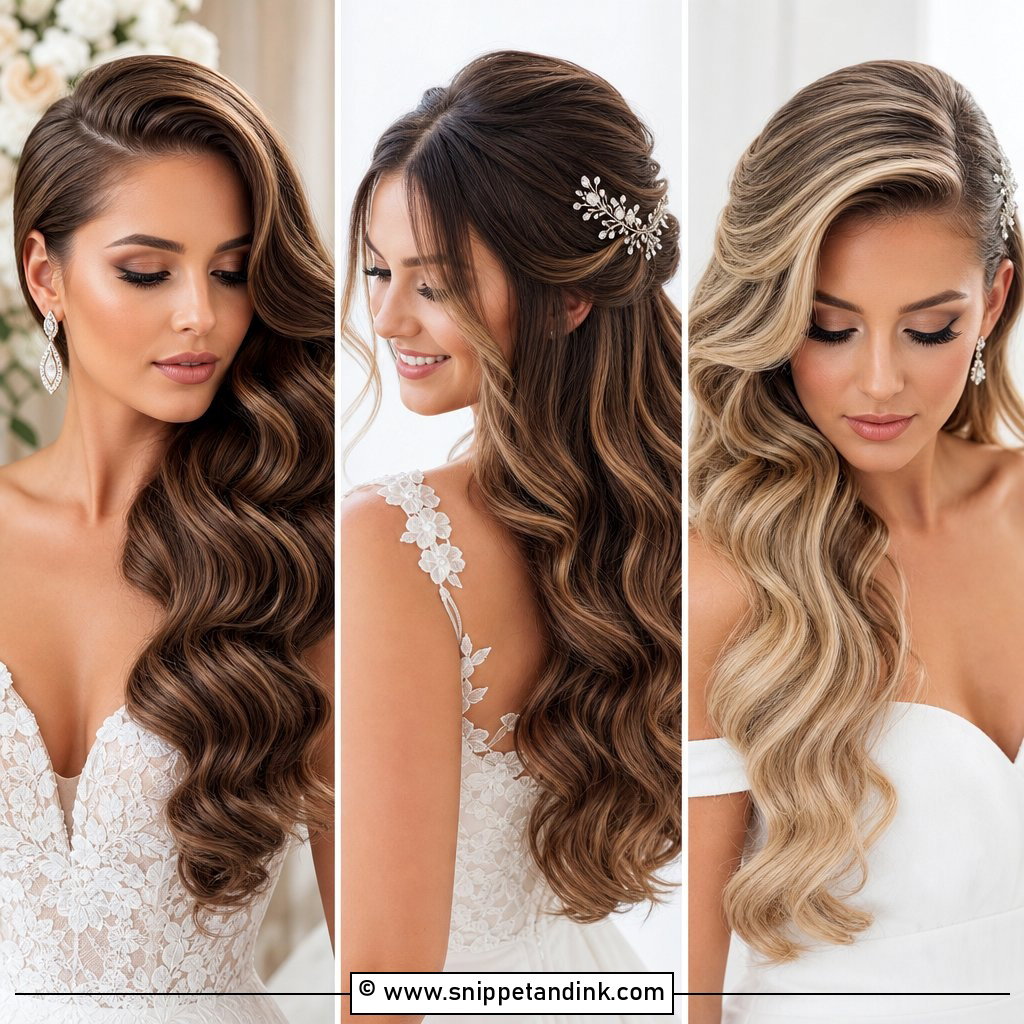
2. Bridal Hair Down With Hollywood Waves
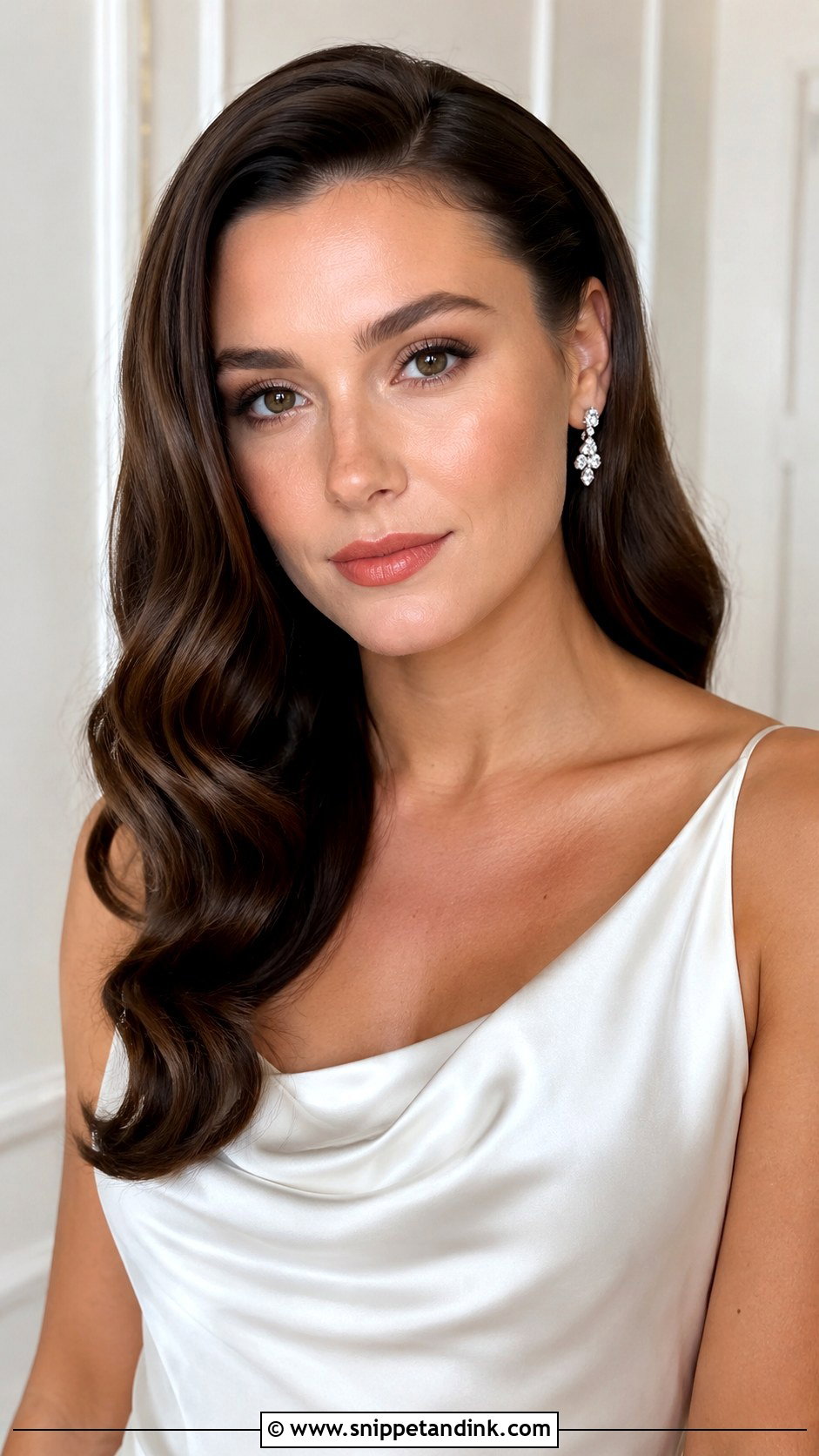
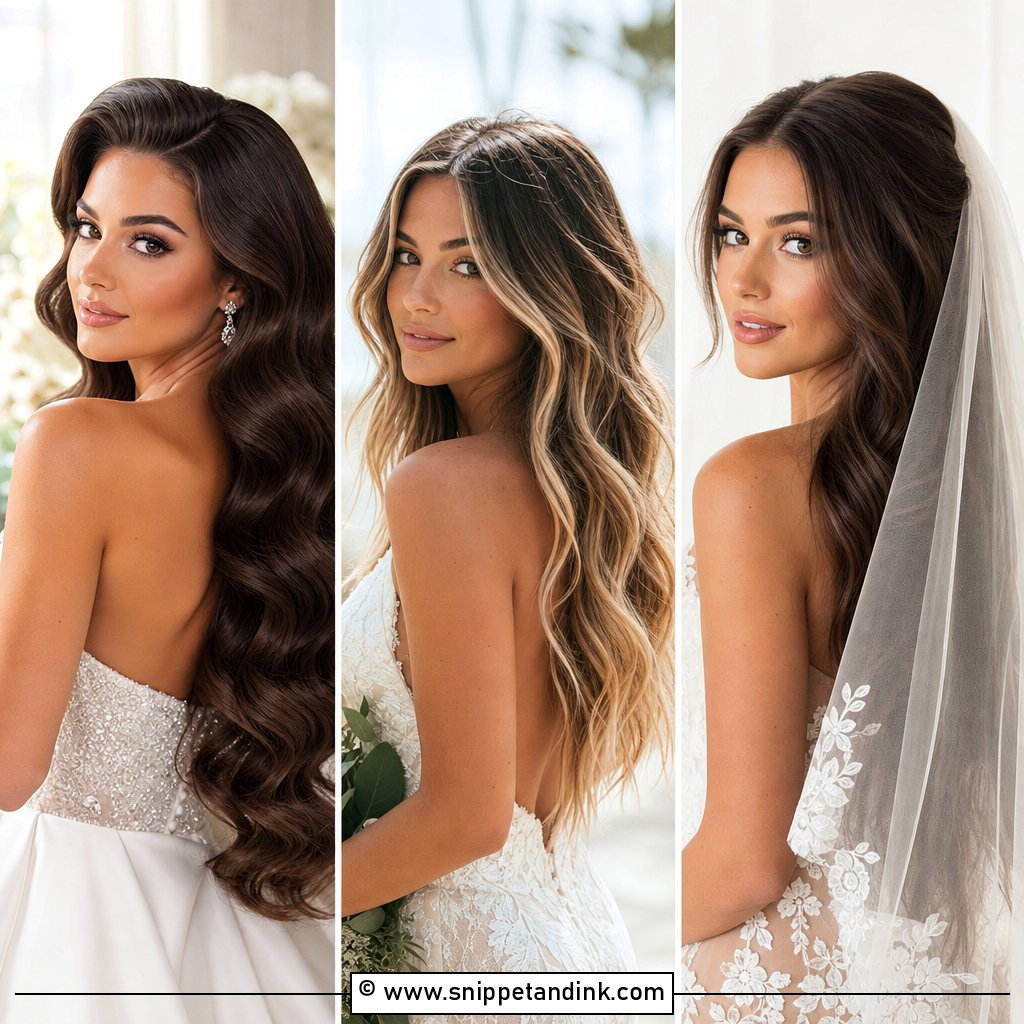
Hollywood waves are the most structured way to wear your hair down: every wave travels the same direction and the finish is glossy rather than airy. I curl every section with the iron pointing one way, pin each curl flat against the head, then brush the whole panel together so the waves link into one continuous ridge. That linking is why they need hair that holds curl well. On slippery or very fine hair I’ll often add a few clip-in wefts underneath for body. They sit best against a strapless or satin gown with a plain neckline, and a light mist of shine spray is plenty. Too much and the waves separate and look wet.
3. Bridal Hair Down With Loose Curls
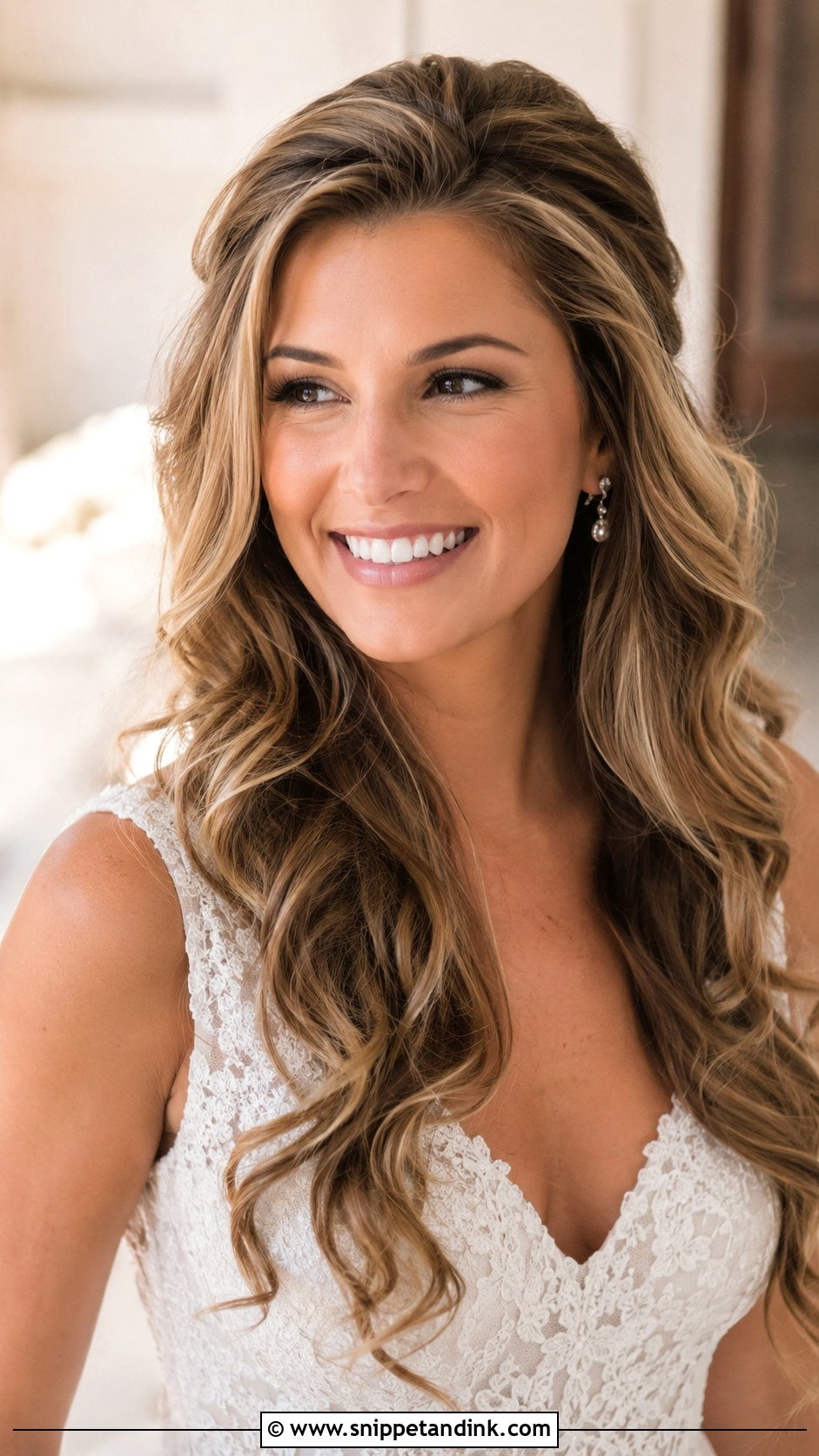
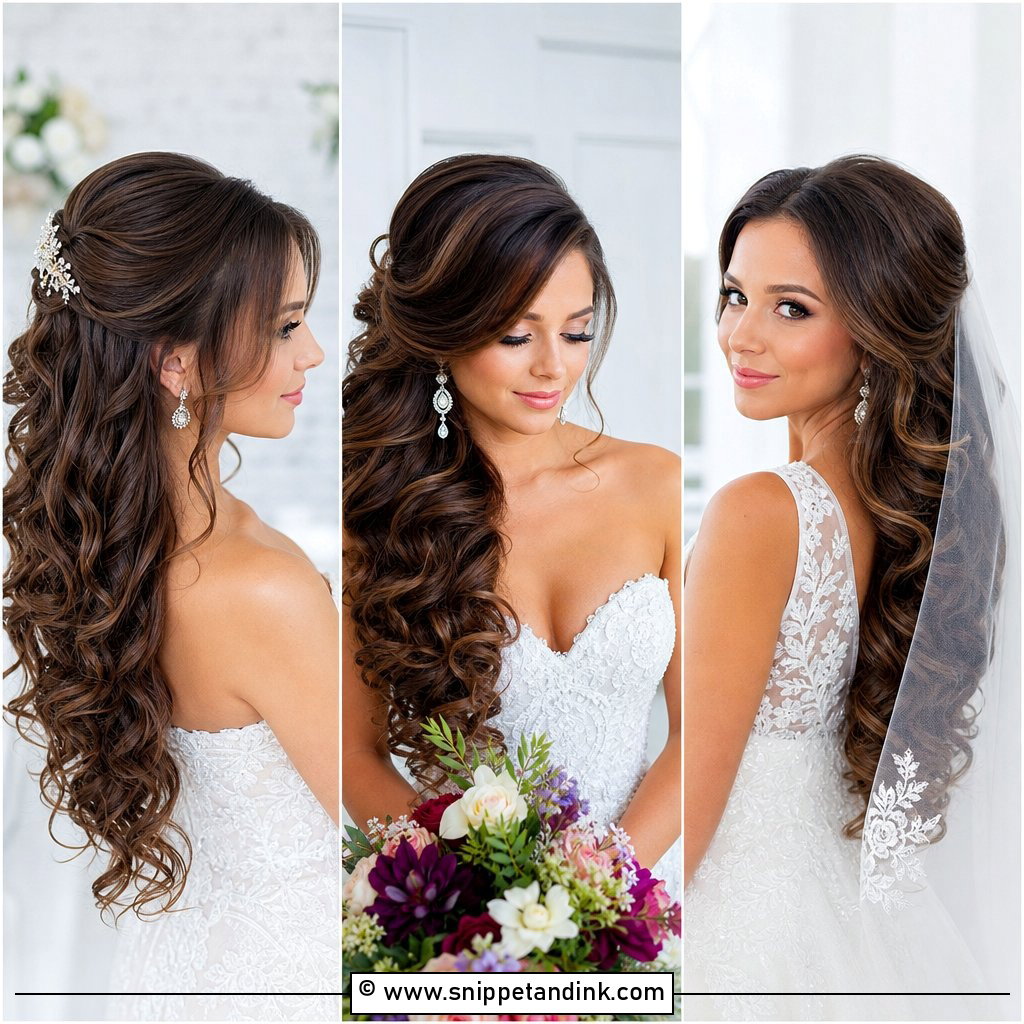
Loose curls give more bounce than waves while staying soft, and that extra body helps fine or heavily layered hair that otherwise looks thin worn down. Brush them out or leave them defined. For outdoor weddings I set them with a flexible-hold product, pin them while they cool, and release them at the last possible minute. Under a long veil they also give the tulle something to rest on, so it doesn’t plaster the hair flat against your back.
4. Bridal Hair Down With Pearl Pins
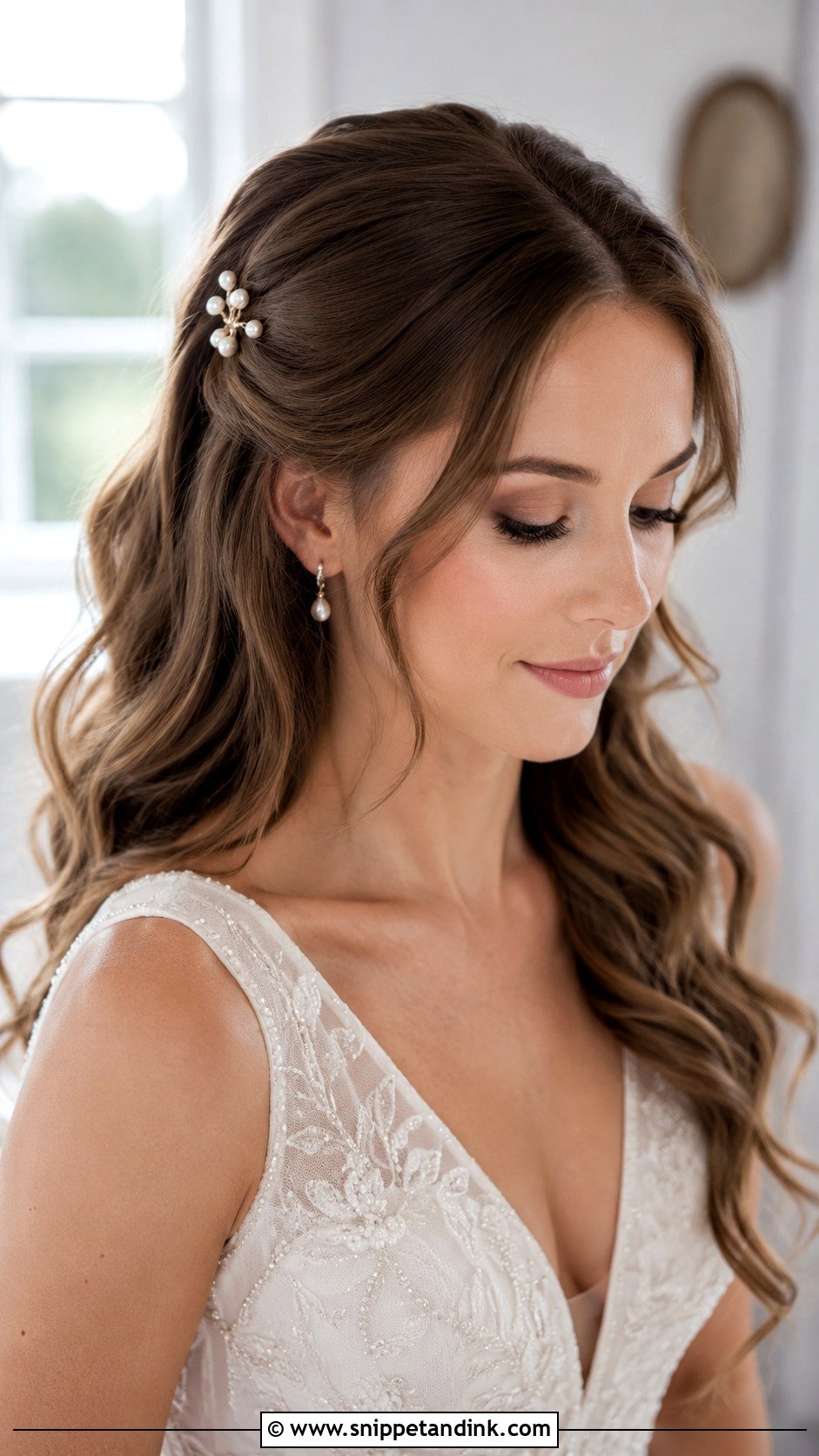
Pearl pins add detail without changing the shape of the style, which is why I reach for them when a dress has pearl buttons or a very clean bodice that needs a small echo. Placement is everything. Scattered at random, they look like they fell in; grouped on one side or following the line of a wave, they look planned. I slide each one against a small bobby pin crossed underneath, because a decorative pin on its own slips out of smooth hair within the hour. Small pearls read delicate in photos, and a cluster of larger ones shows from across the room.
5. Bridal Hair Down With Veil
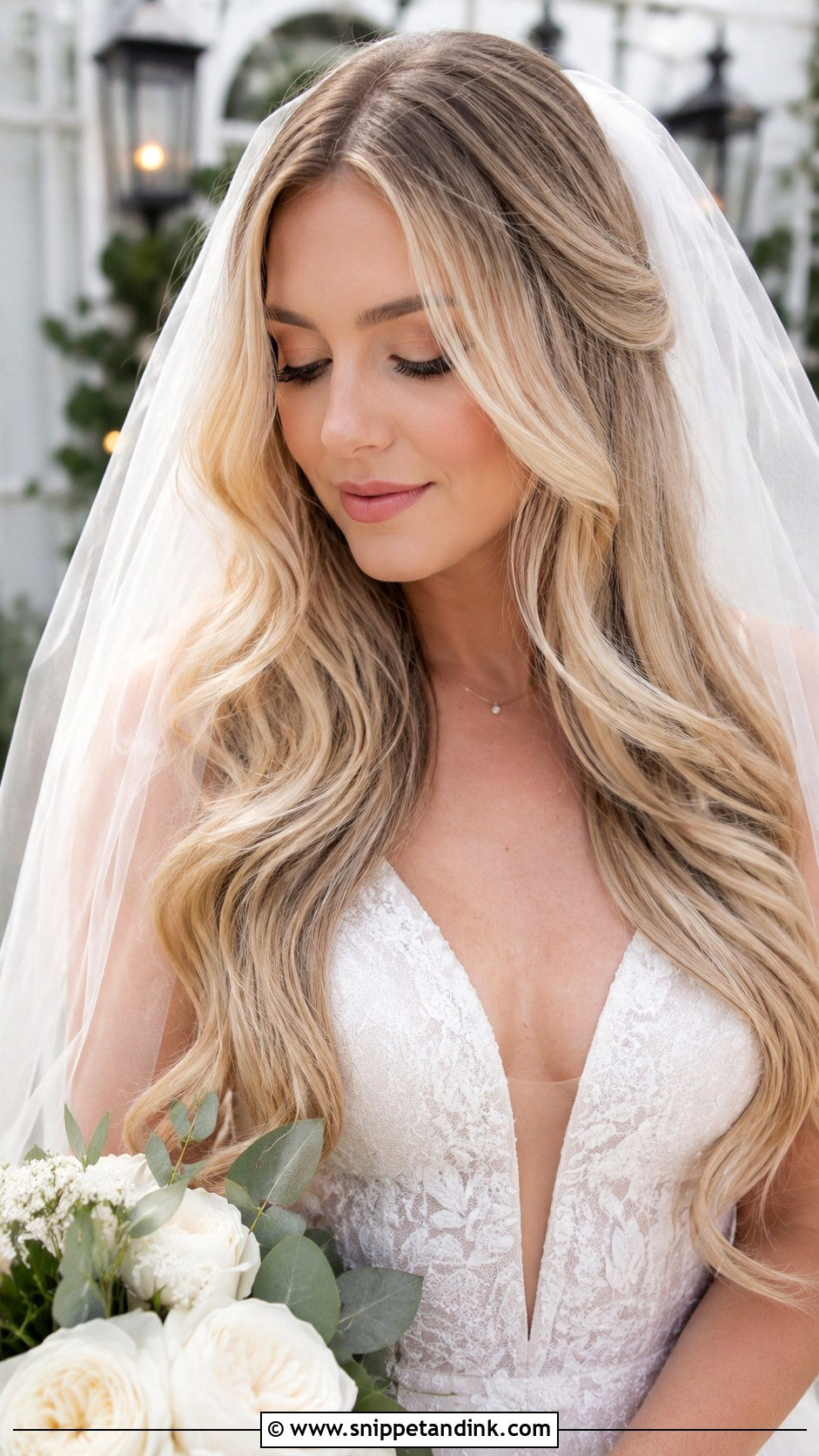
A veil with hair worn down needs more planning than one anchored in a bun, because the comb has nothing solid to bite into. It can sit at the crown for a traditional look, lower at the back for something softer, or tucked under the top layer so the comb disappears. Waves and curls give the comb grip; straight hair usually needs a small patch of backcombing or two crossed anchor pins hidden underneath. Bring the actual veil to your trial, not a photo of it. I want to feel its weight and watch how it pulls when you turn your head.
6. Bridal Hair Down With Side Part
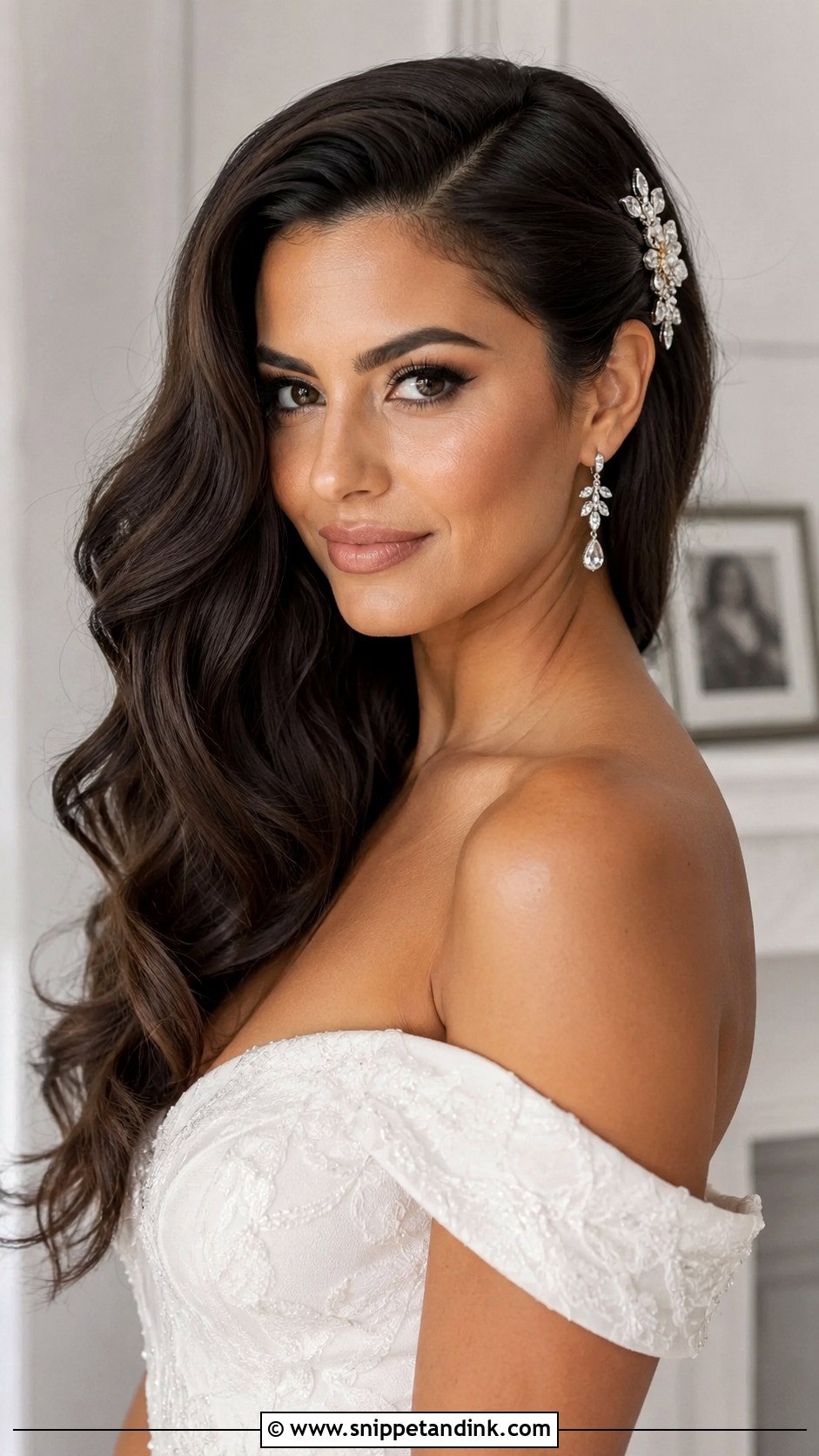
Moving the part to one side puts volume at the crown and creates a sweep across the face, so I suggest it for brides whose hair lies flat at the roots. It also balances a one-shoulder or asymmetric neckline. A deep side part reads glamorous, a gentle one more relaxed. On the heavier side I usually tuck the hair behind the ear with a pin or small comb and leave the other side loose to frame the face. If you’ve parted in the same spot for years, retrain it by drying it the new way for a few days beforehand.
7. Bridal Hair Down With Middle Part
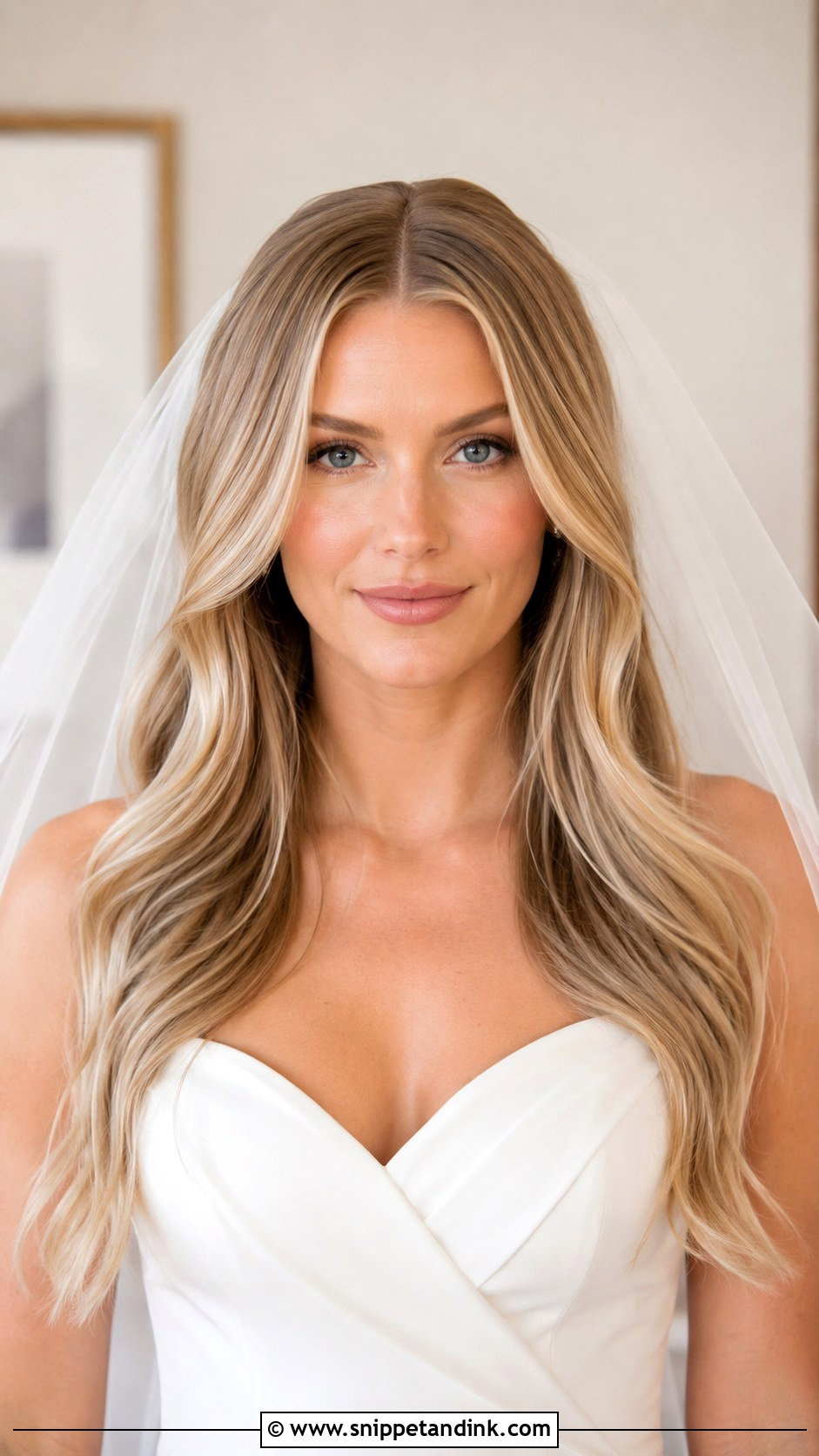
A middle part is the cleanest, most modern way to wear down hair, and it suits soft waves, sleek lengths and long layers. Its weakness is the front. Without a sweep, those front pieces fall forward every time you look down at your rings. I curl them away from the face and set them with a little spray at the root so they stay back. A middle part also shows any unevenness in the hairline honestly, so I’d check straight-on trial photos before committing.
8. Bridal Hair Down With Curtain Bangs
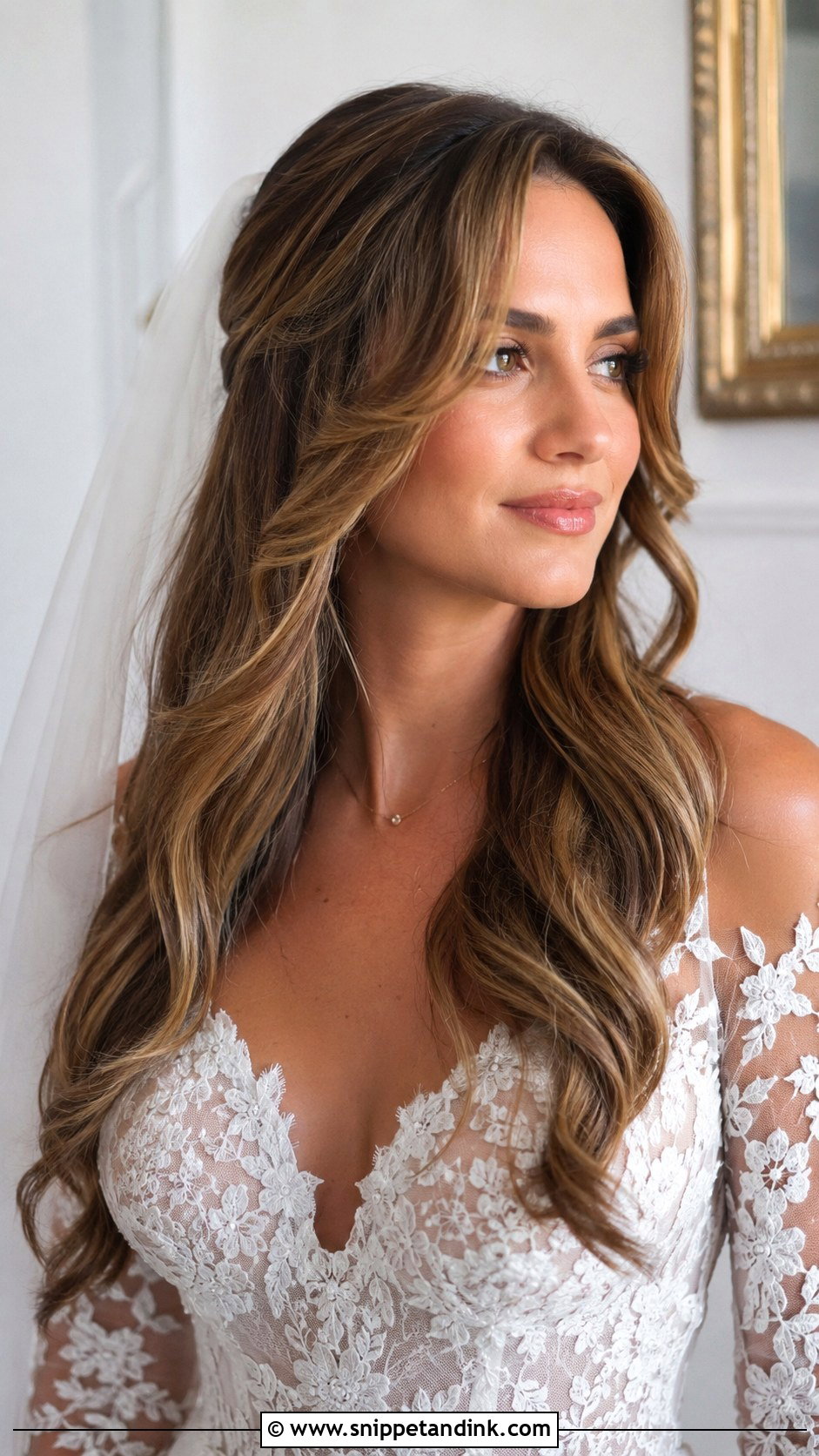
Curtain bangs add movement around the face and stop down hair looking flat in photos, especially paired with waves or a bouncy blowout. I dry them over a round brush pulled away from the face first, then finish with a large iron, because bangs that are only curled tend to split down the middle by mid-afternoon. If you’re getting fresh bangs, cut them two to three weeks out, not in the wedding week. A new fringe always sits a little short and stiff for the first several days.
9. Bridal Hair Down With Long Layers
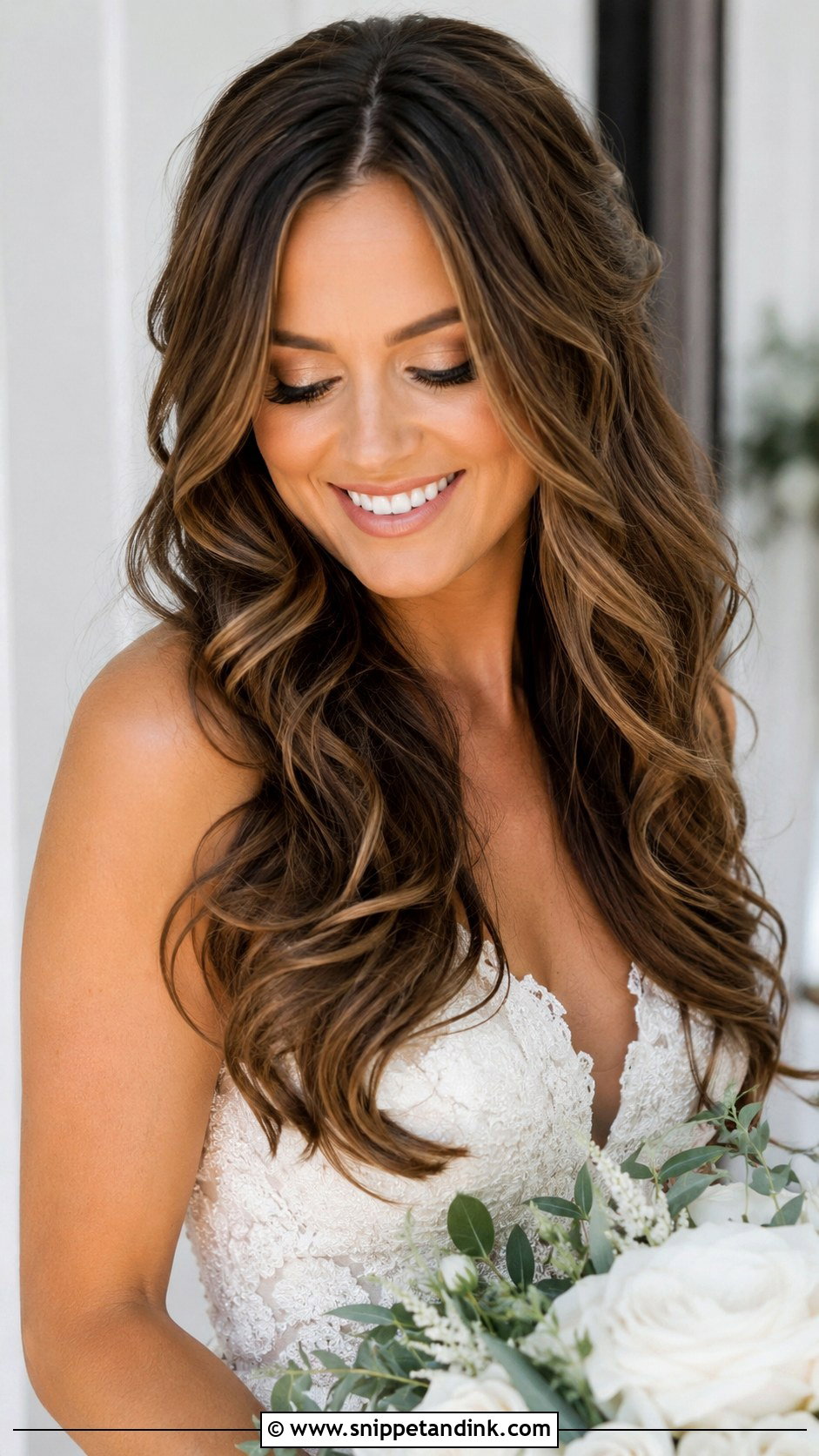
Long layers stop down hair from collapsing into one heavy triangle at the ends. On thick hair they take out weight so curls actually move, and on fine hair they fake a bit of fullness. They also catch the light, which shows off highlights or balayage. My one warning is about timing: don’t let anyone take the layers shorter in the final weeks. Shorter pieces are harder to curl, they pop out of the waves, and they flick outward whenever a veil brushes over them.
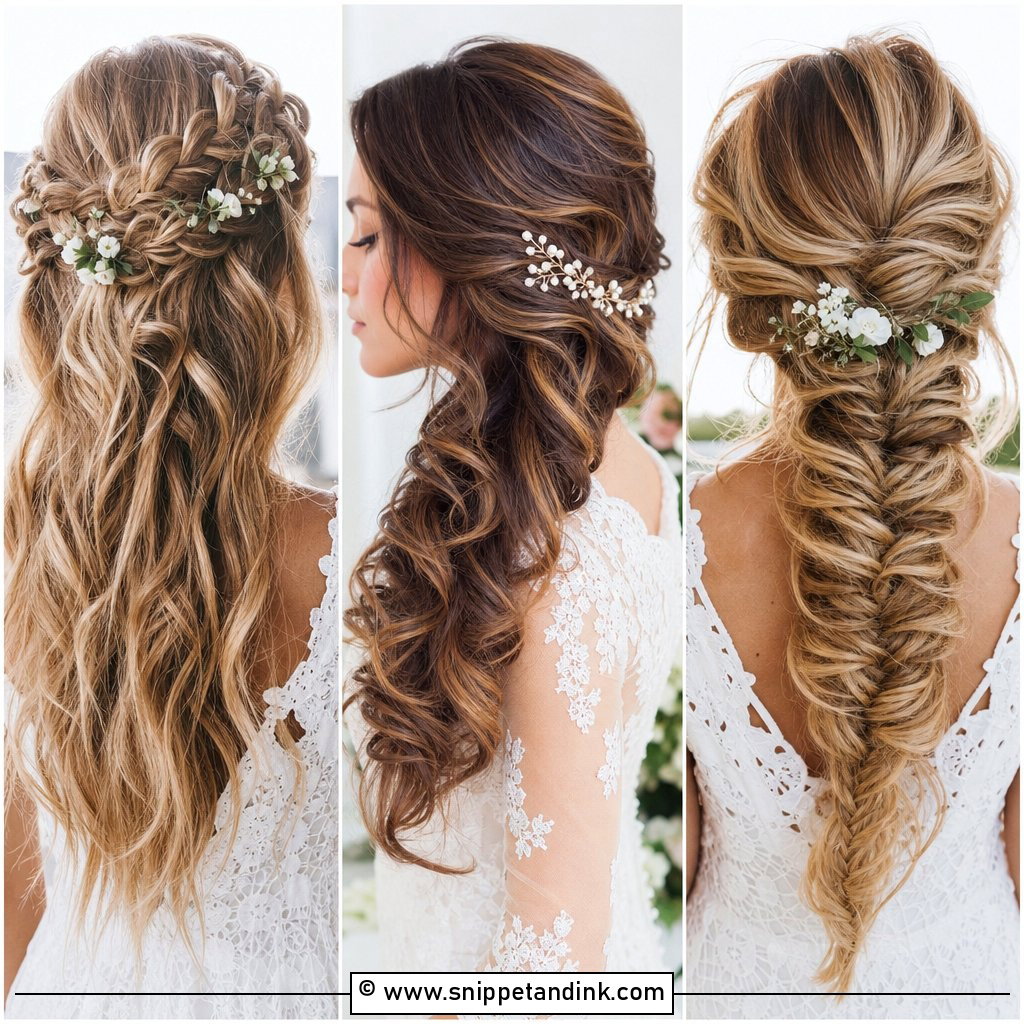
10. Bridal Hair Down With Beach Waves
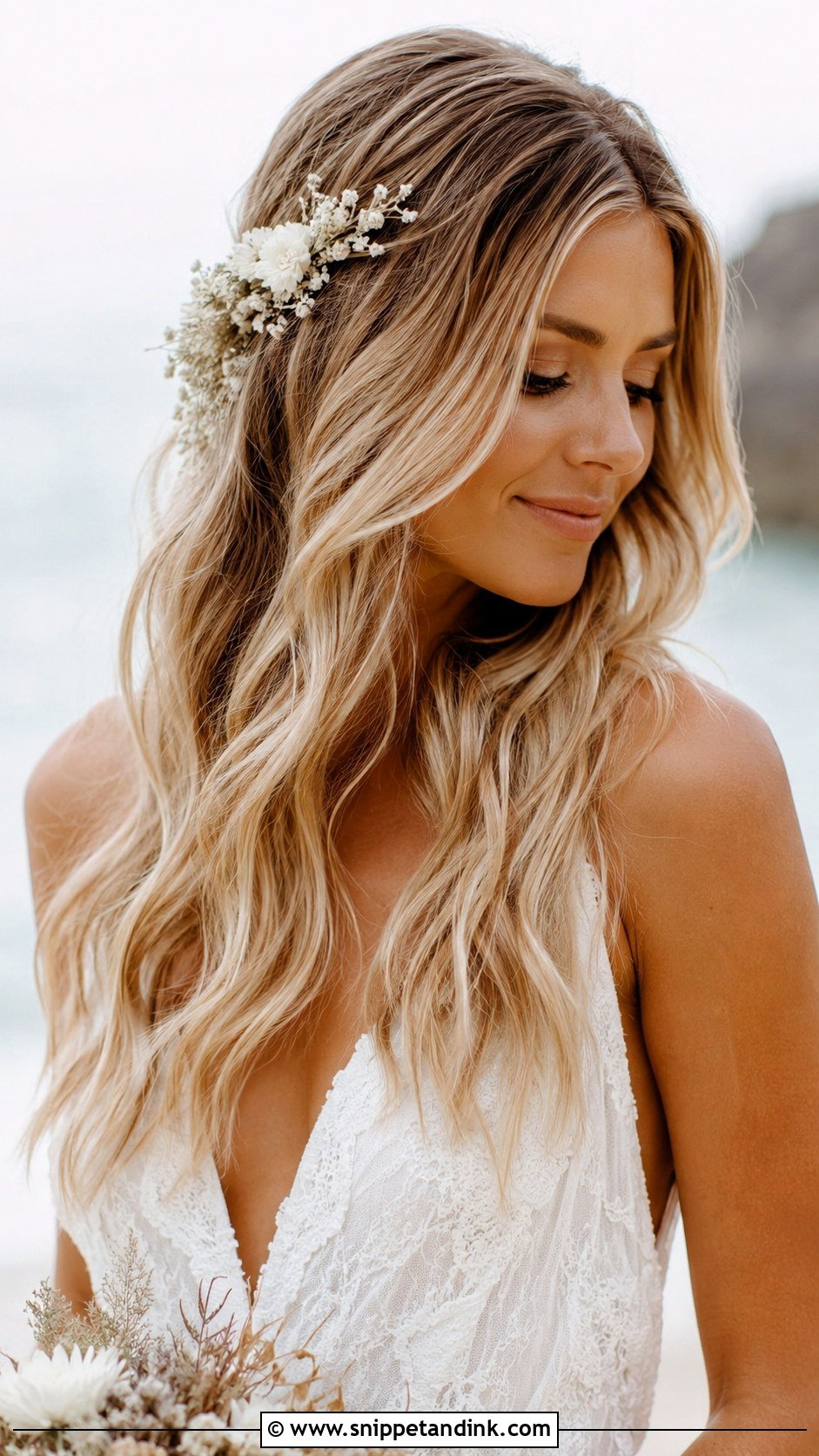
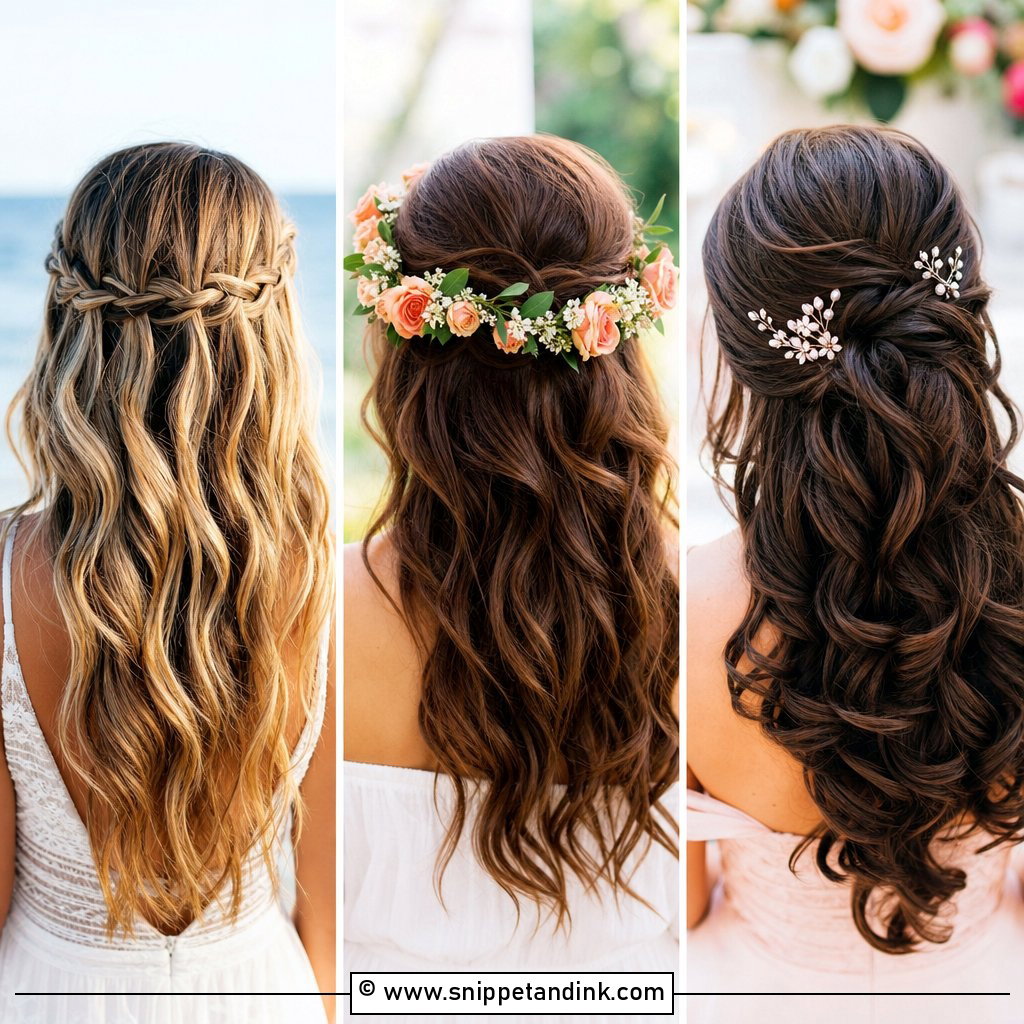
Beach waves suit coastal ceremonies, rustic venues and simple dresses, and they’re the look most likely to tip from soft into frizzy if the prep is skipped. I smooth the hair first, then use a flat iron twist or a large barrel with the ends left out, so the wave looks relaxed but has a real pattern underneath. It should feel touchable, never crunchy. Salt sprays are tempting here, but they draw moisture out of the hair and can make it fluffier in humid air, so I use them sparingly and finish with a humidity-resistant spray.
11. Bridal Hair Down With Sleek Straight Hair
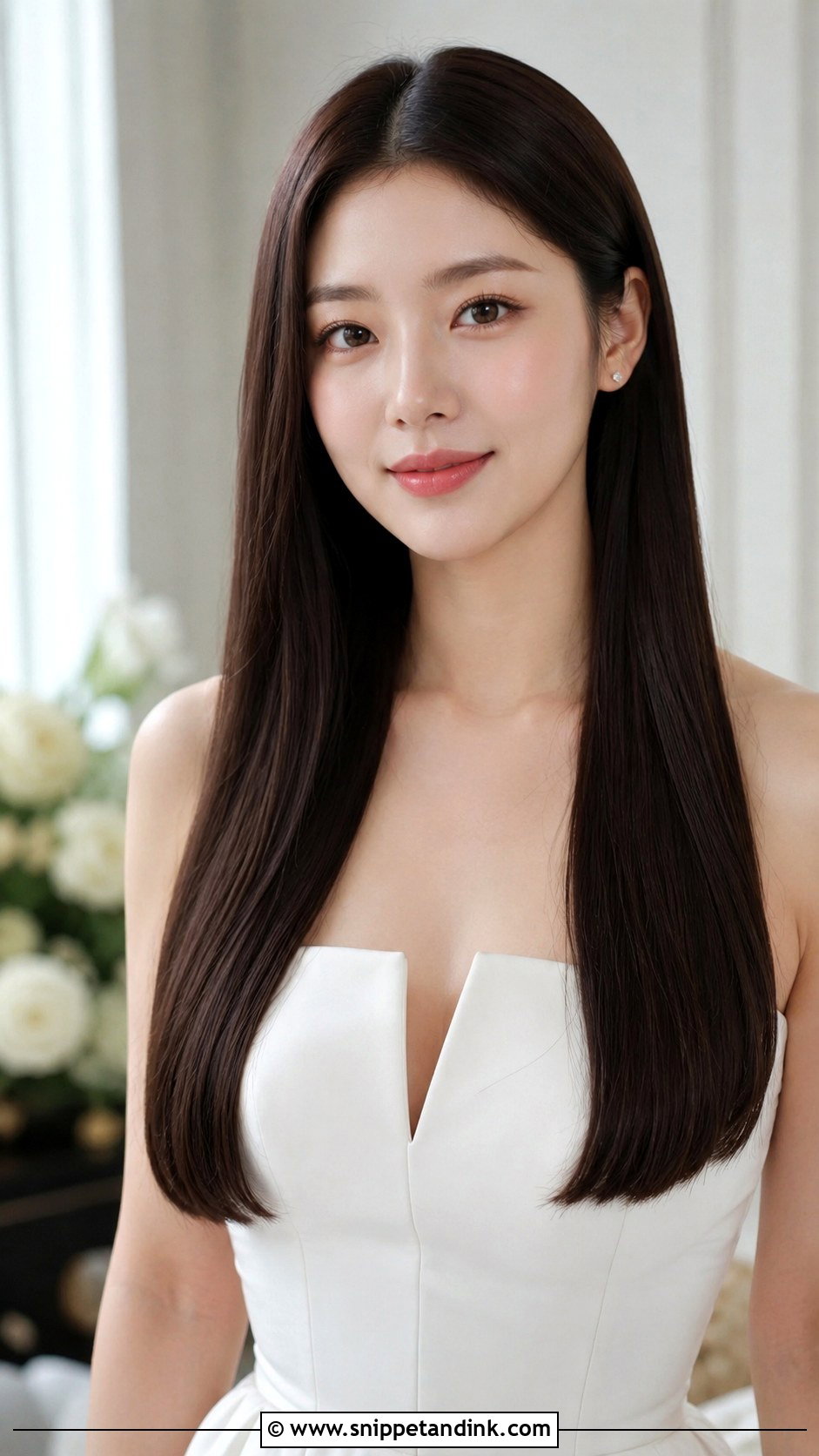
Sleek straight hair is the honest choice for a bride who wears hers straight most days and wants to recognise herself in the photos. It looks simple, yet it’s the least forgiving style in this list, since every flyaway and every kink from a hair tie shows. I start with a smoothing blow-dry, flat iron in fine sections, and put a drop of serum on the ends only. A blunt cut sharpens it and long layers soften it. It pairs well with high necklines and statement earrings, though high collars can build static, so I keep an anti-static spray in my kit for exactly that.
12. Bridal Hair Down With Natural Curls
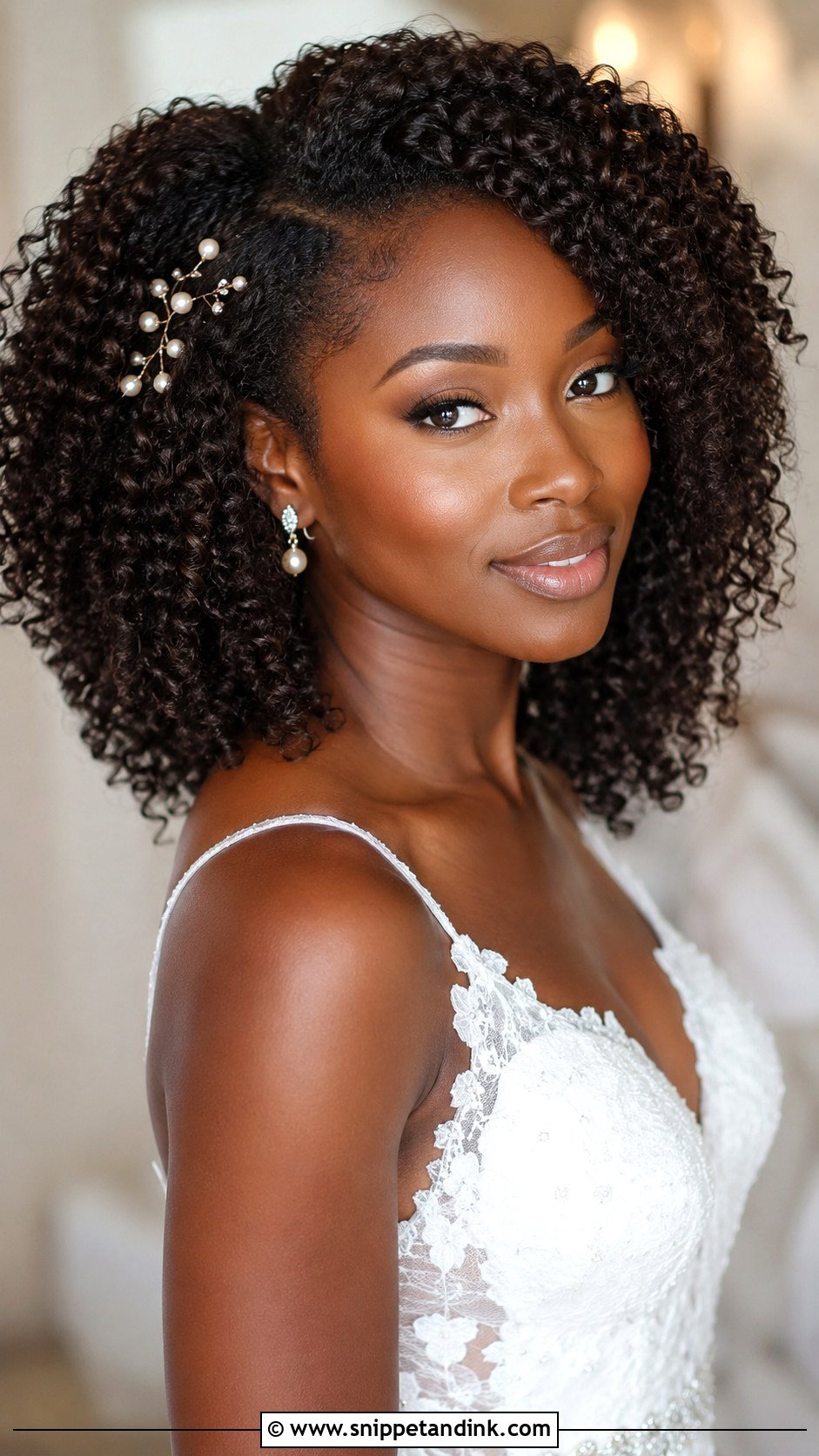
Natural curls worn fully down show texture and volume no iron can copy, and I’d much rather work with them than straighten them. The work starts weeks ahead: regular hydration, a curl-friendly trim so the shape sits well around the face and shoulders, and a trial using the products you’ll actually wear in your wedding climate. On the day I don’t brush. I refine individual curls with a finger or a small iron. Accessories need care too, because a comb pushed in carelessly flattens the pattern around it, so I seat it at the root and lift the curls back over the base.
13. Bridal Hair Down With Voluminous Curls
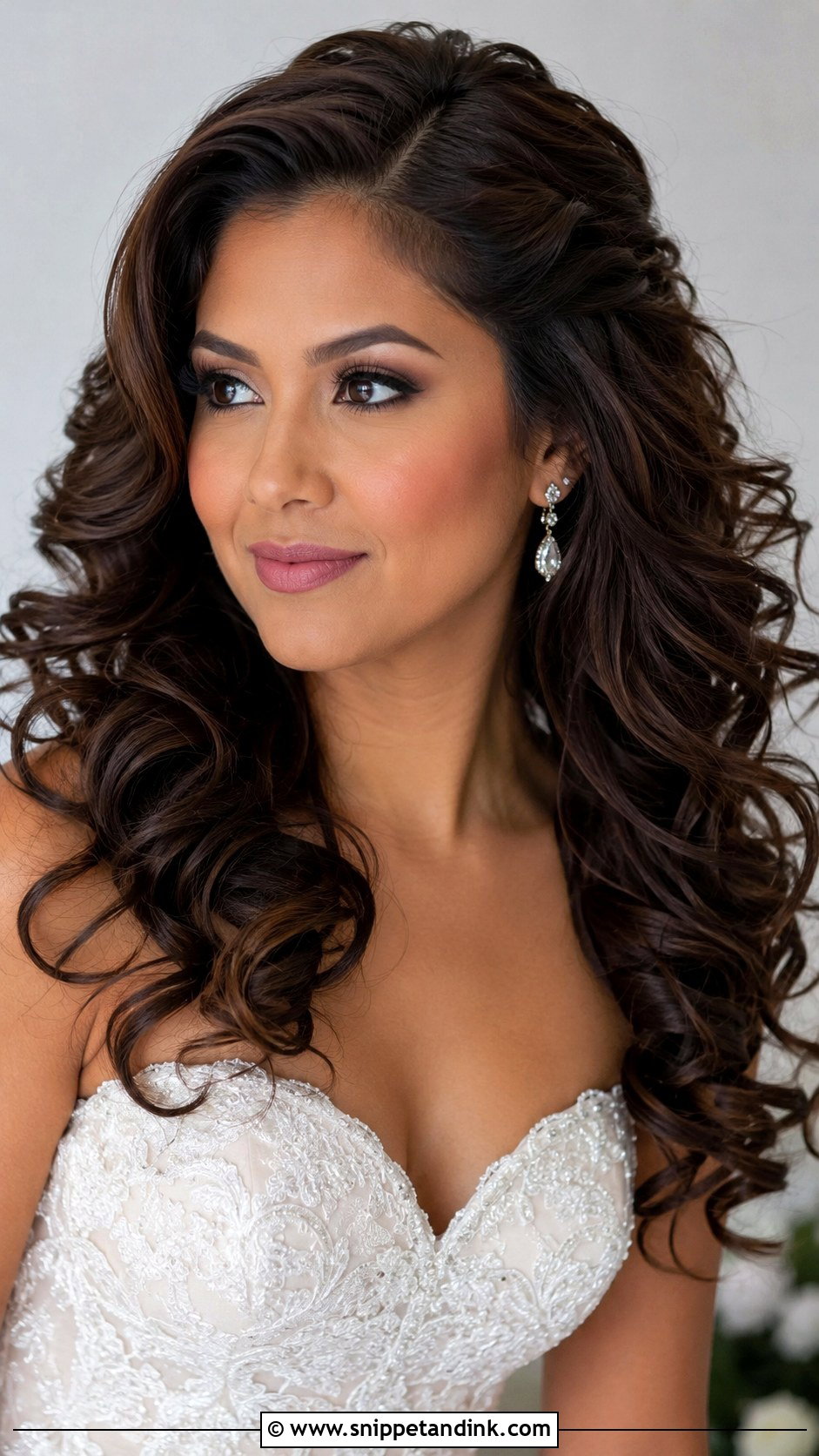
Big curls add height and body for a fuller, more glamorous look, and they’re strongest on long or thick hair, or hair with extensions. The risk is width. If every curl is set in the same direction they push sideways and the face starts to look small, so I alternate directions and keep the fullest part below the jaw. A little lift at the crown balances a full gown. Strong prep and a soft final finish is how they last: setting mousse at the root, then only a light hold spray at the end.
14. Bridal Hair Down With Floral Clips
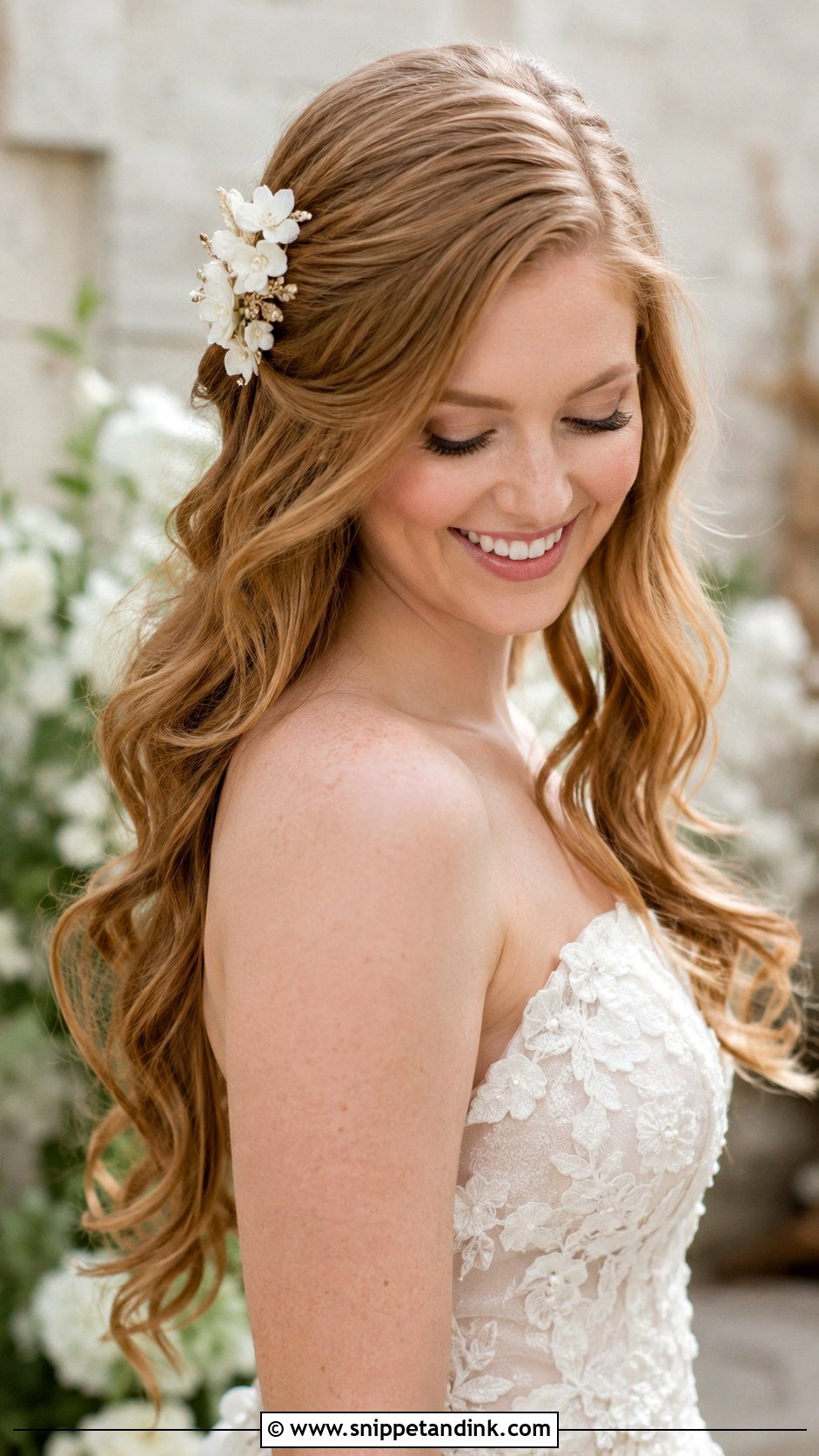
Floral clips give down hair a garden feel without the wilting risk of fresh stems, and they can be matched to your bouquet or the detail on your dress. One clip above the ear looks polished; a few small ones across the back look softer. Weight is the first thing I check. Silk and resin flowers are light, but a heavy metal or porcelain clip slowly drags down a section of smooth hair, so I anchor it to a tiny hidden braid or a pair of crossed pins.

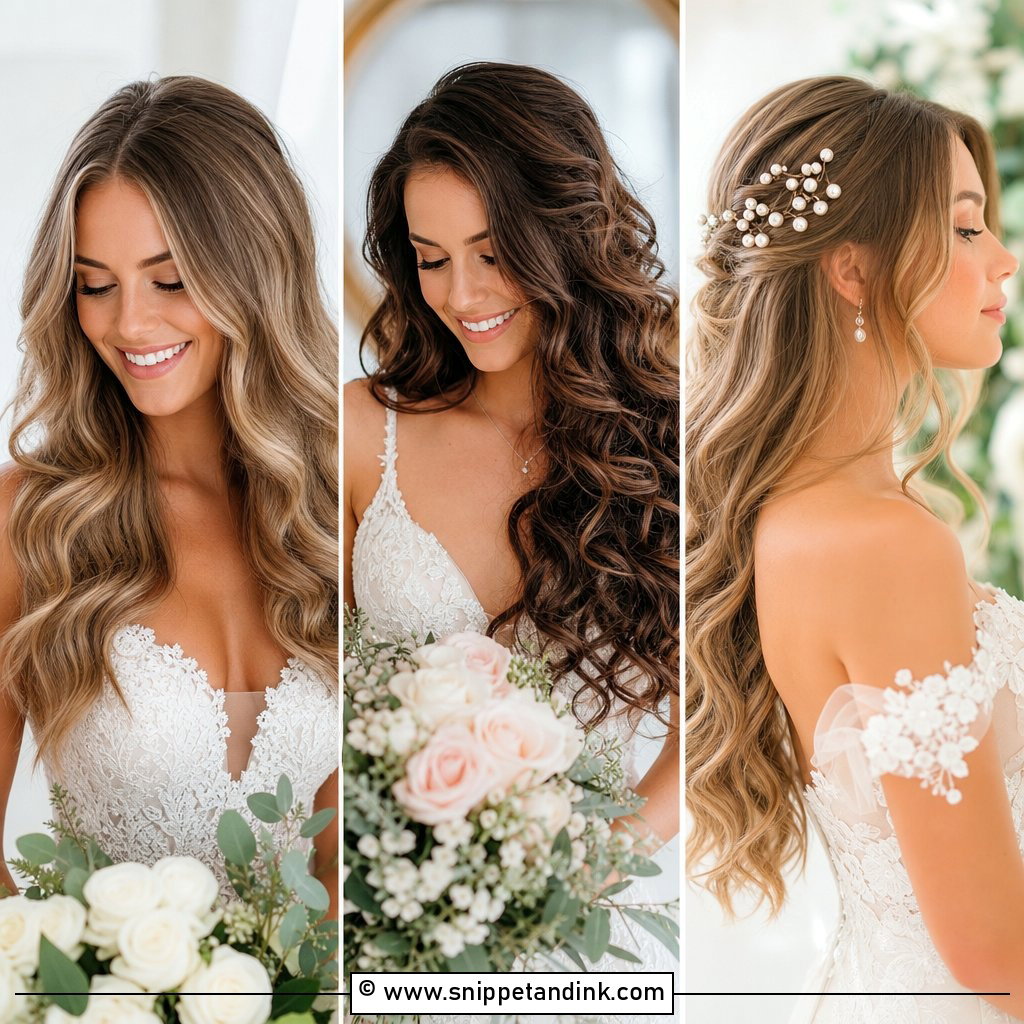
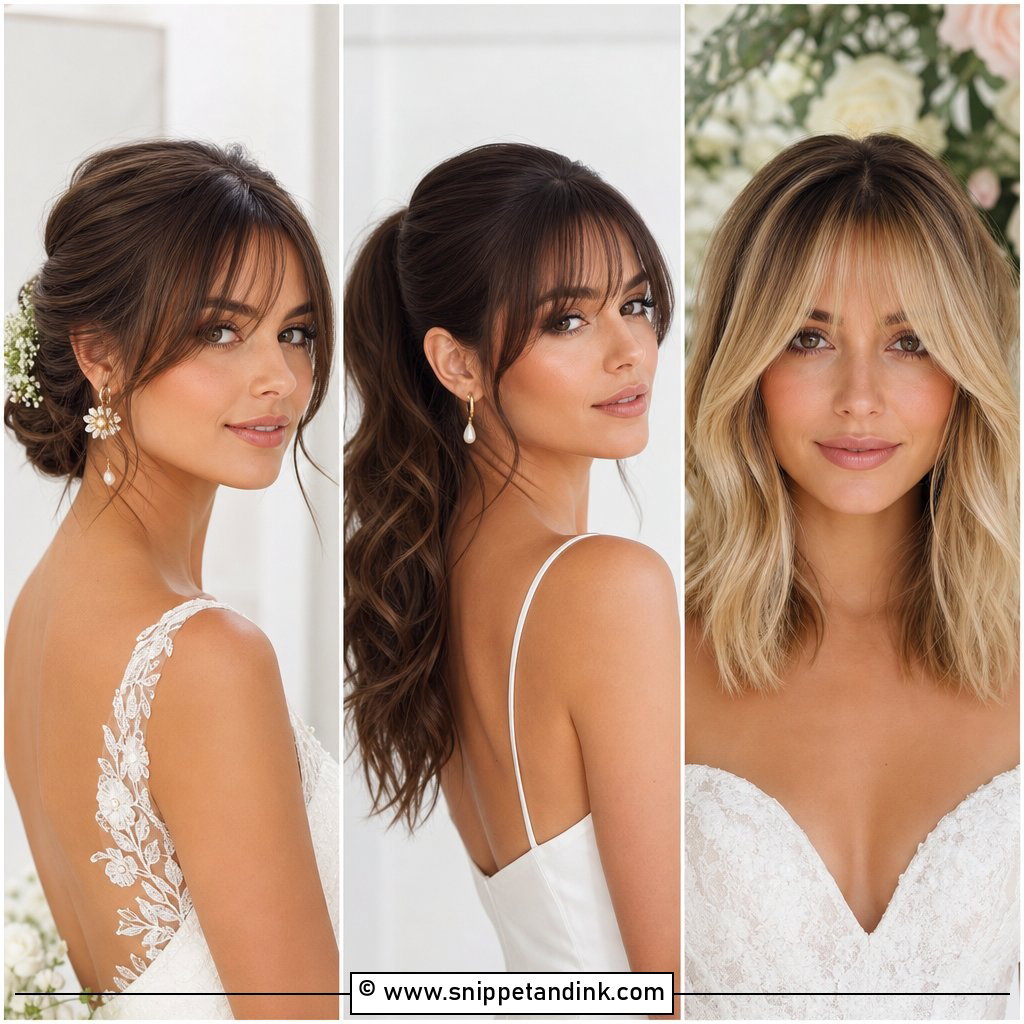
15. Bridal Hair Down With Hair Vine
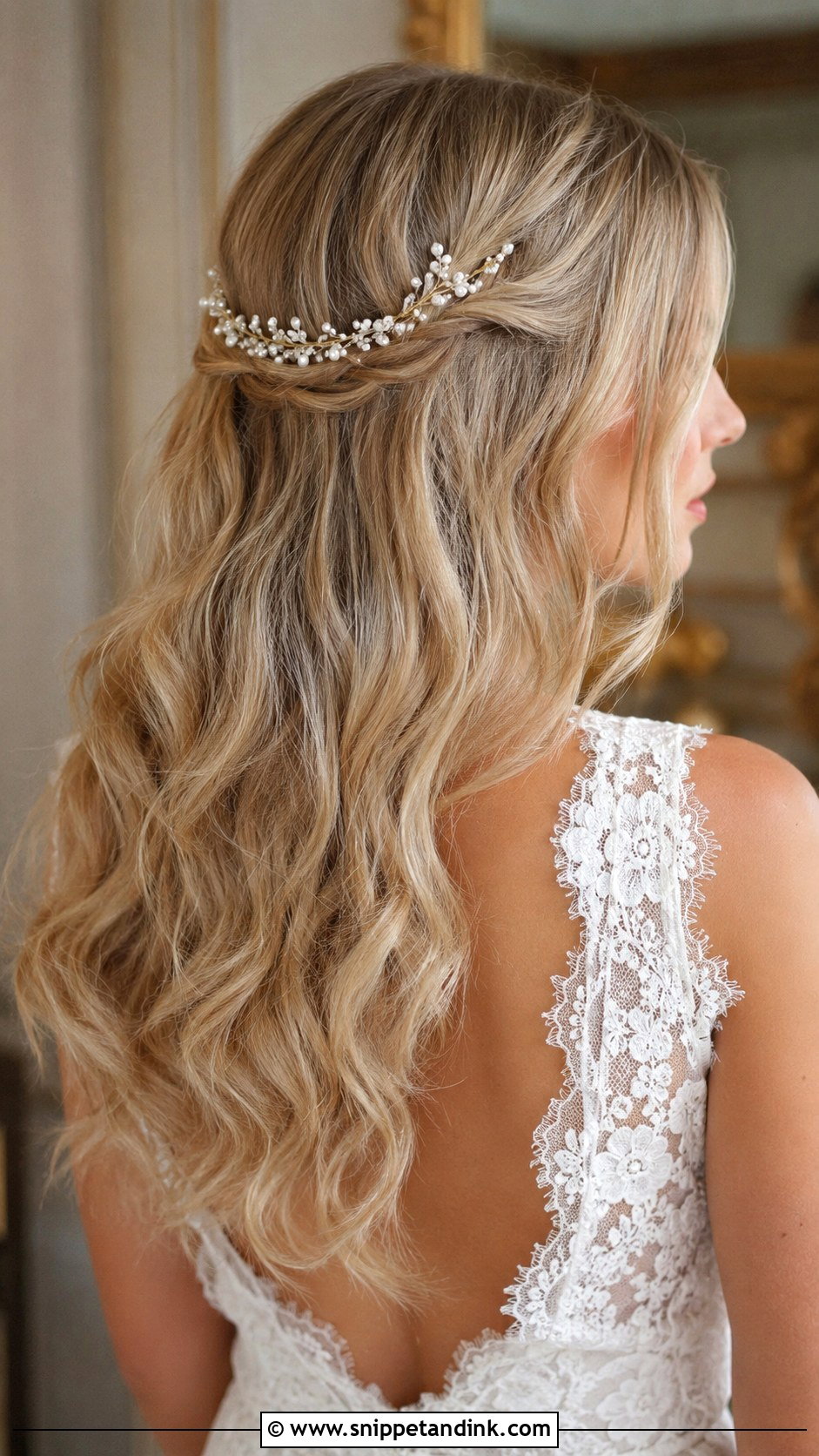
A hair vine adds fine detail to all-down hair without needing an updo. It can run across the crown like a halo, sit like a headband, or trail along one side. Waves and curls hold it best because the wire has texture to settle into; on straight hair it tends to slide. I bend the vine to the shape of the head before it goes in, then thread tiny pins through its loops every few centimetres. If the vine is busy, keep the earrings and veil plain so nothing competes.
16. Bridal Hair Down With Headband
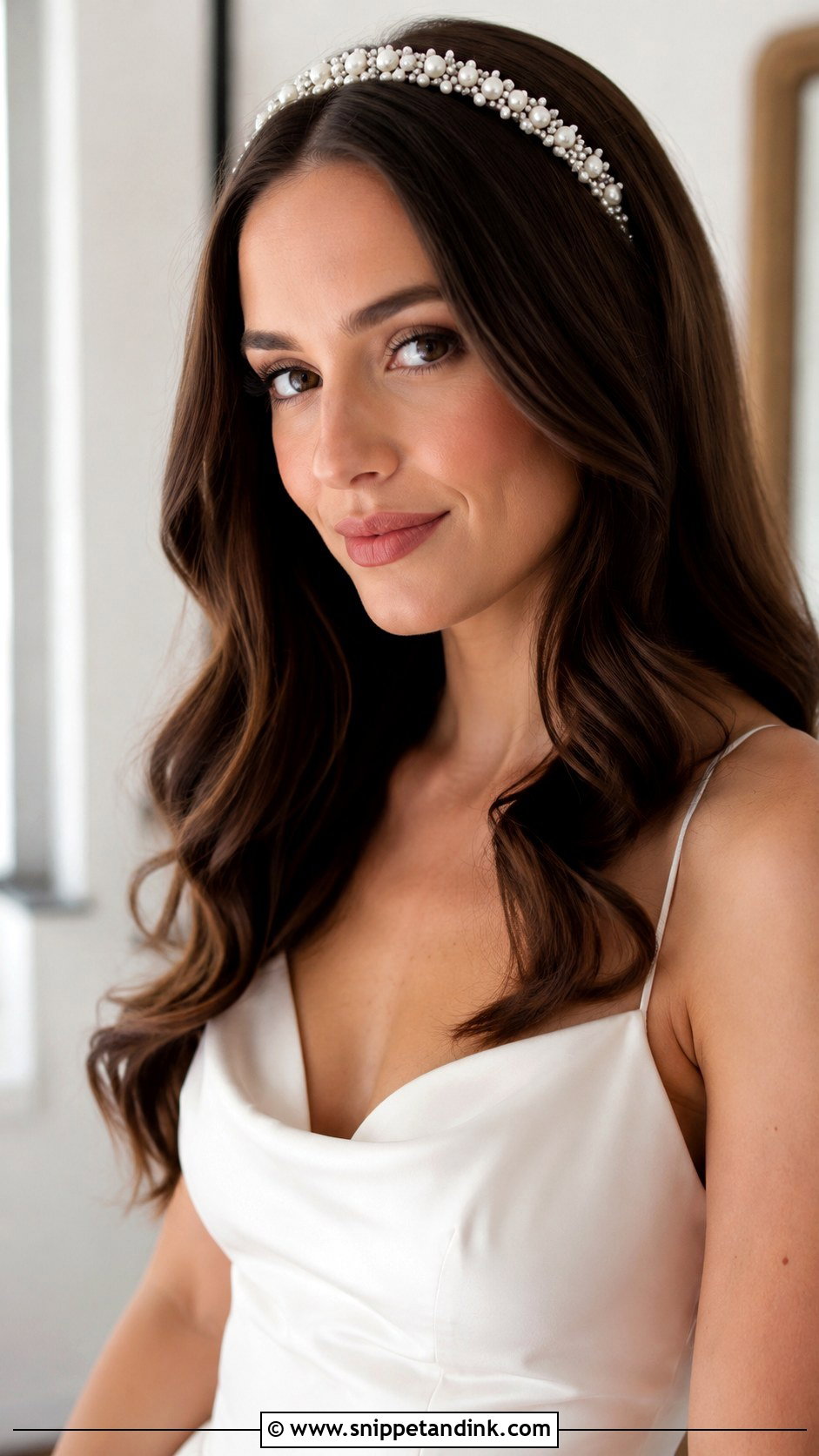
A bridal headband makes down hair look finished in seconds, and it’s the most practical way to keep front pieces off your face without pinning anything up. Thin pearl bands are delicate, padded satin feels modern, and crystal adds evening sparkle. Pressure is my main concern. A band that feels fine at the trial can give you a headache by hour six, so wear yours around the house for an afternoon first. Set slightly behind the hairline it looks softer; closer to the front it’s bolder.
17. Bridal Hair Down With Blonde Balayage
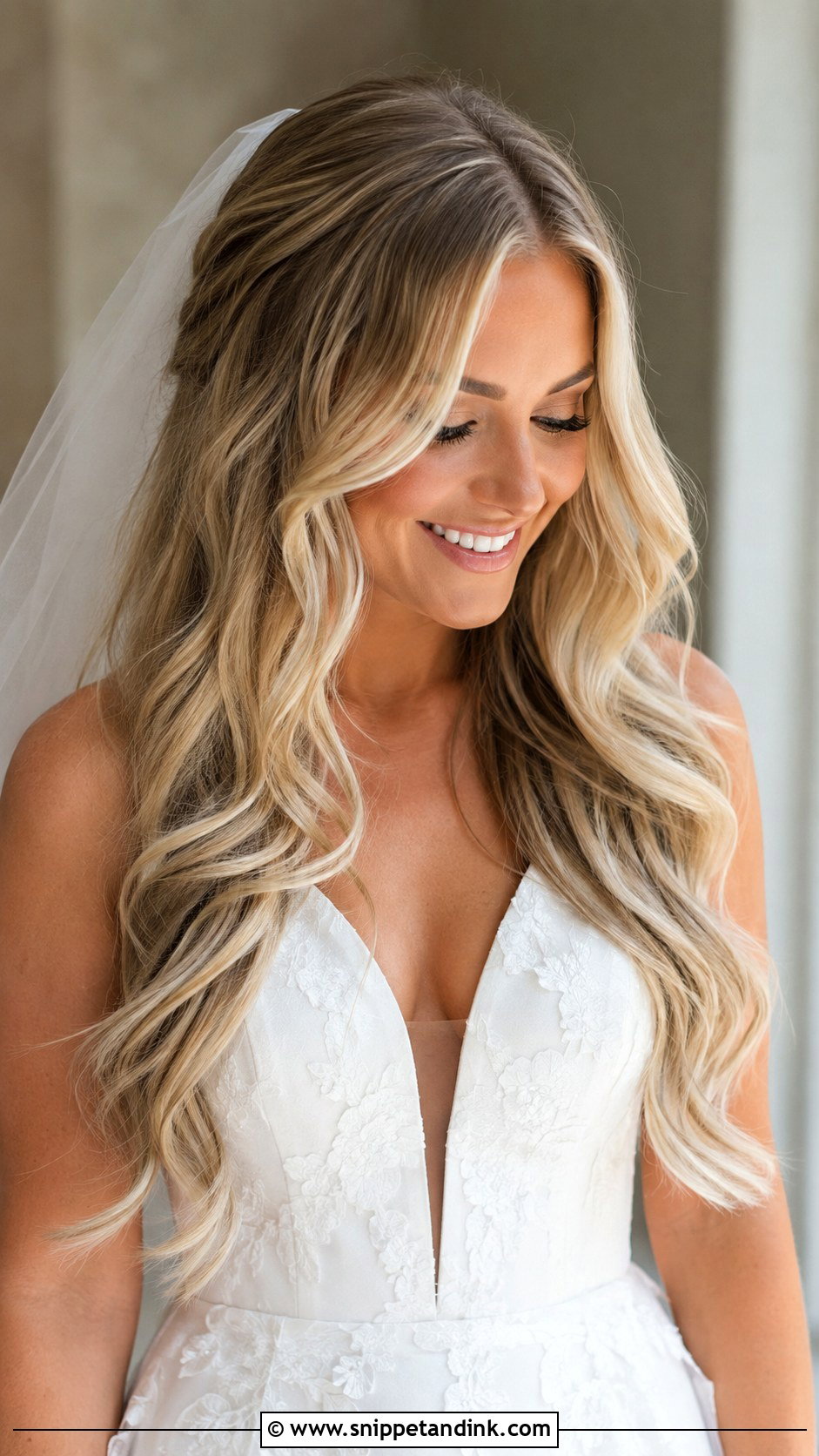
Blonde balayage shows off movement in waves and curls because the lighter strands catch every bend. It brightens the face and makes layers look more dimensional on camera. Colour timing is what I talk through first. Refresh it two to four weeks before the wedding, so the tone has settled and doesn’t look freshly toned and flat in photos. A gloss in that window adds shine and softens any harsh lines. Keep accessories restrained, since the colour already gives the eye plenty to follow.
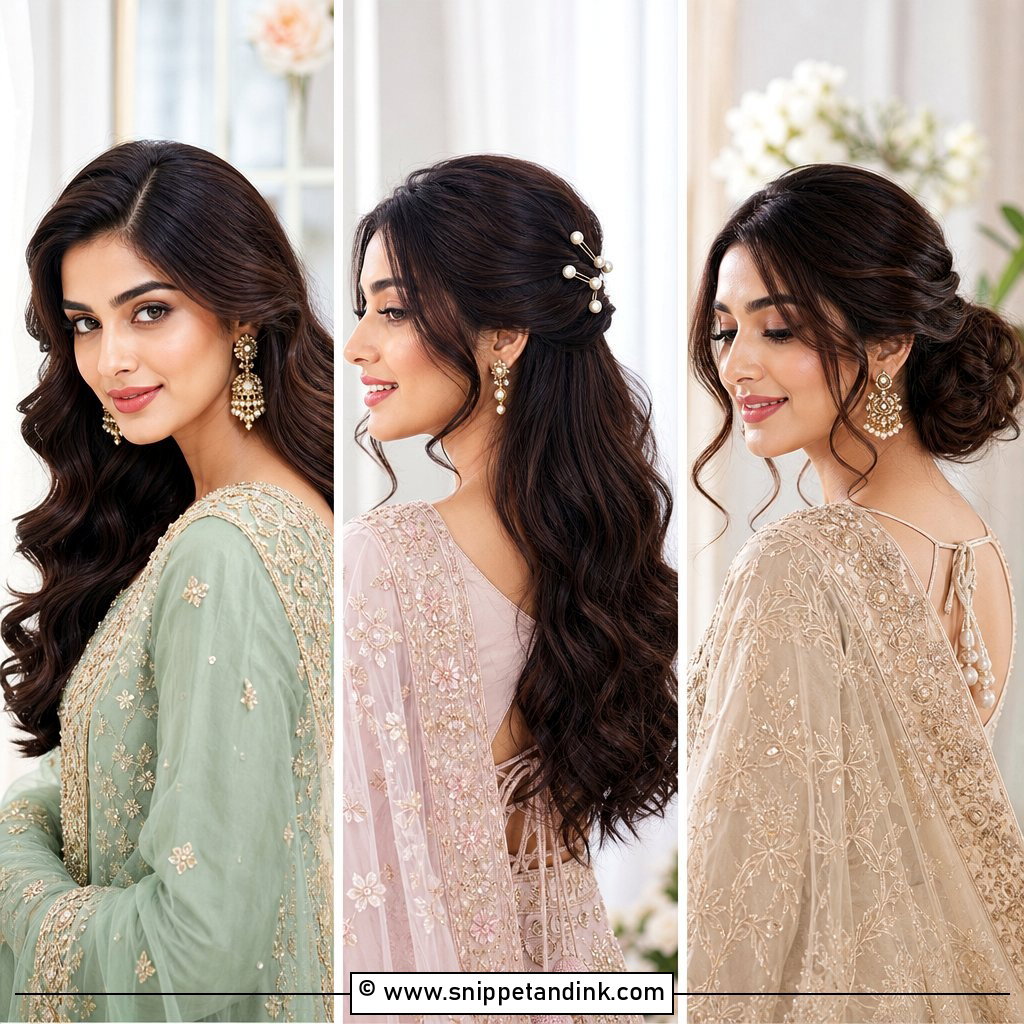
18. Bridal Hair Down With Brunette Waves
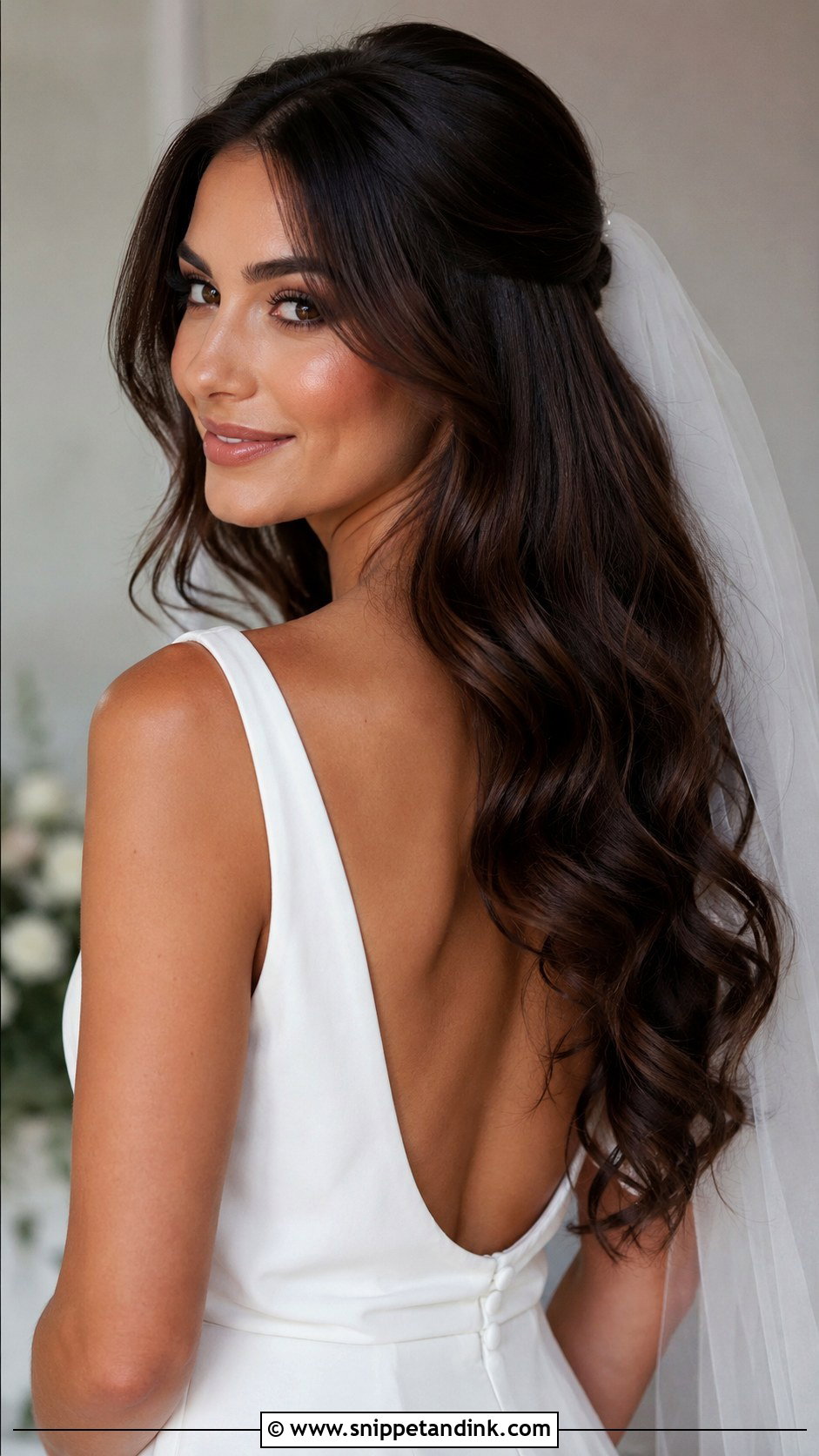
Dark hair looks richest when it’s glossy and shaped with clear movement, because waves on deep shades can merge into one solid mass on camera. Chocolate, espresso, chestnut and caramel brunette shades all keep their depth in photos if the light can find edges. I curl brunettes in slightly smaller sections so each wave stays readable, and subtle highlights added weeks ahead give extra separation if you want it. Shine spray suits dark hair, but use a light hand; too much reads greasy under flash.
19. Bridal Hair Down With Red Hair
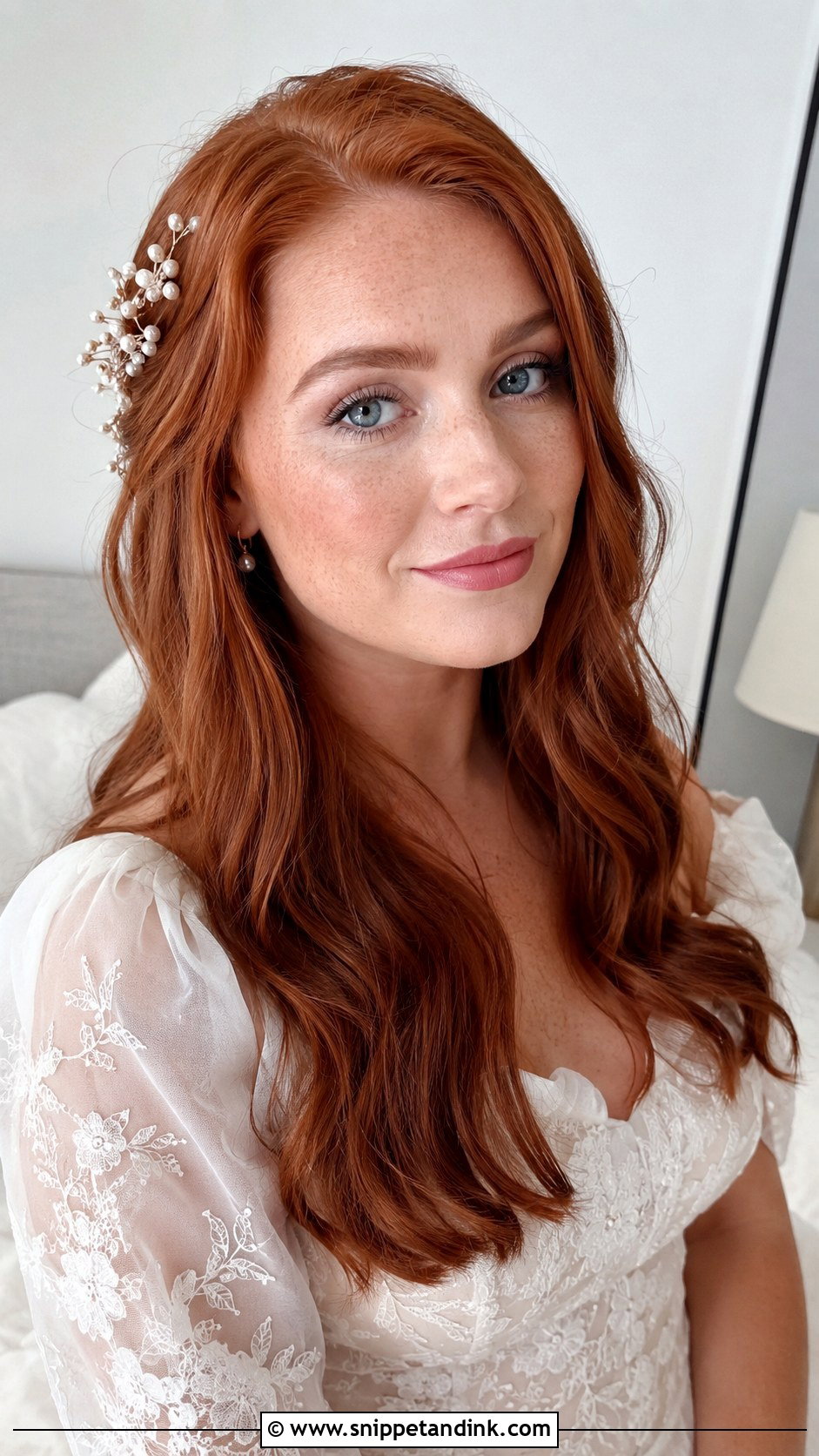
Red hair worn down brings its own impact. Copper, auburn, strawberry blonde and deep red shades all glow in soft waves or loose curls, especially against ivory and warm-toned makeup. Red is also the colour that shifts most between daylight, warm indoor bulbs and flash, so at your trial I’d take photos by a window, under lighting like your reception’s and with flash on. Red pigment fades faster than most shades, so book any refresh close to the date. The style itself can stay simple; long layers and a soft part let the colour carry it.
20. Bridal Hair Down For Short Hair
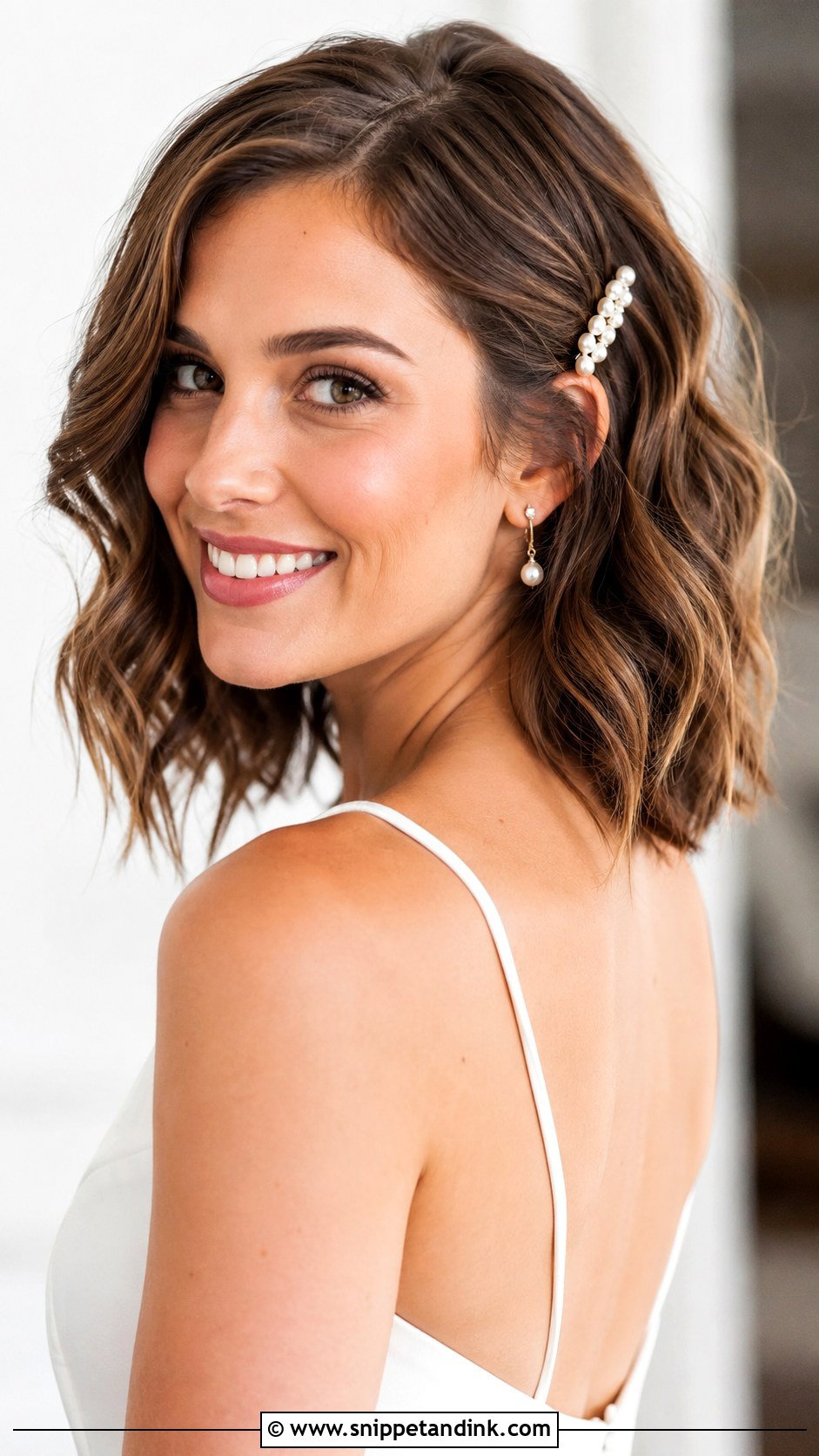
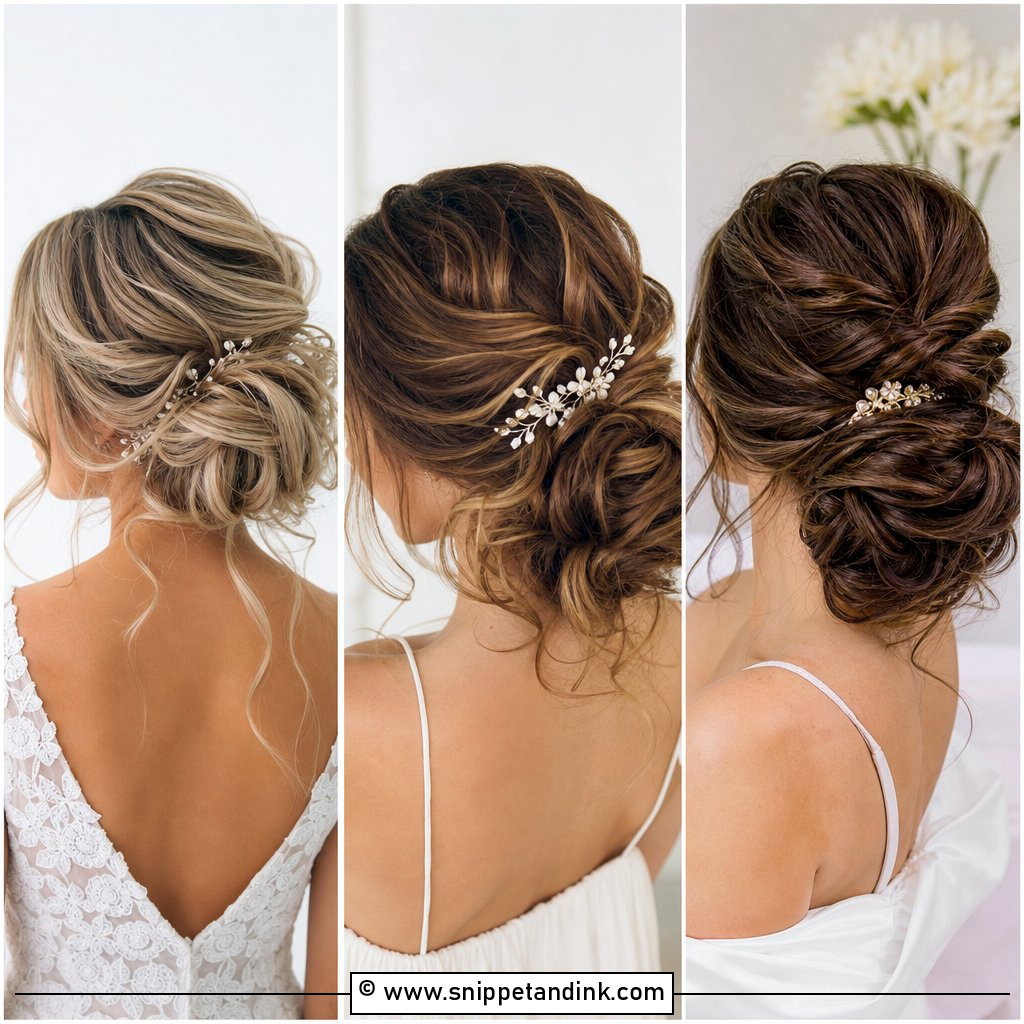
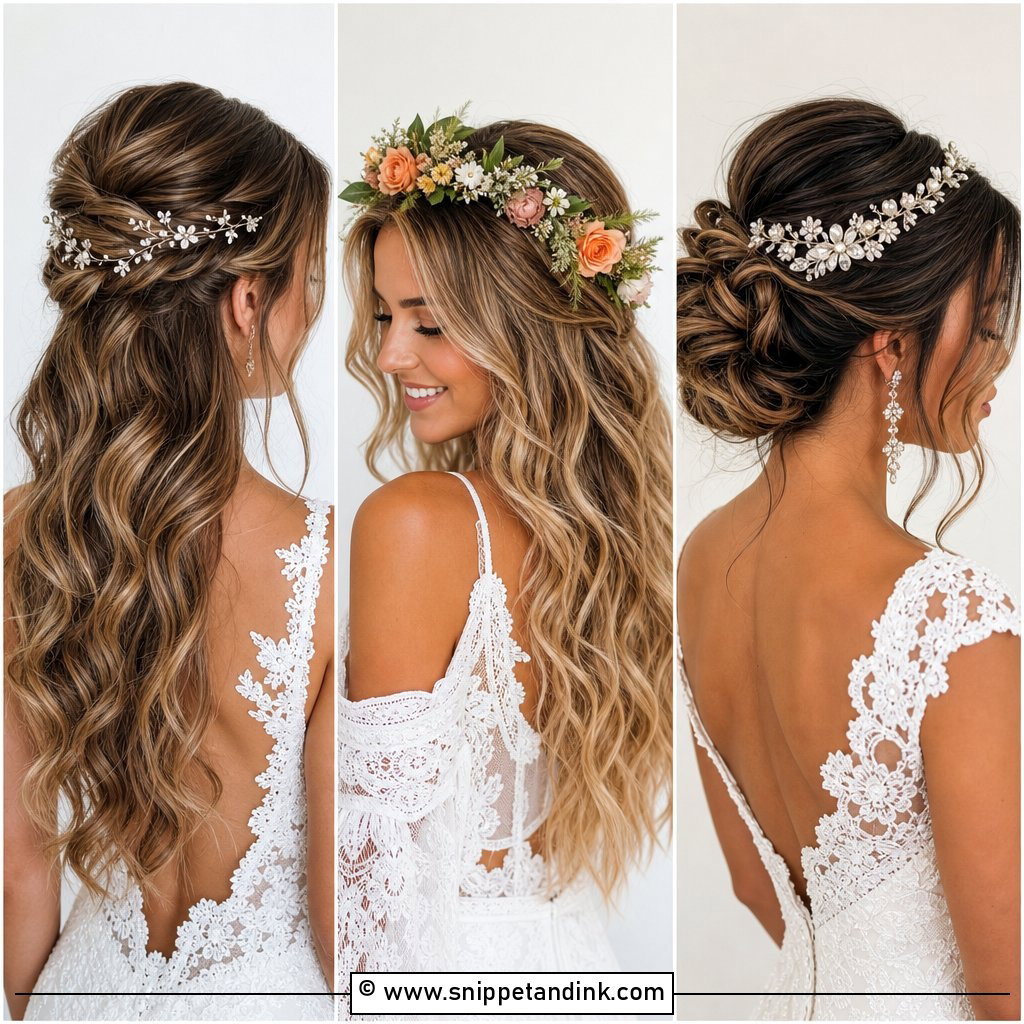
Short hair worn down needs as much planning as long hair, maybe more, because every bend sits right beside the face. A bob, lob or shoulder-length cut can take polished bends, sleek ends or vintage curls. I use a smaller iron than I would on long hair and turn the ends under or out on purpose, so it never looks half finished. Short hair holds a set well once it’s prepped, and a single clip, a small comb or a veil placed low at the back gives it the bridal finish. Have the cut about two weeks before so the line has softened.
Is All-Down Right for a Halter, a Hot Day or a Heavy Veil?
Down hair isn’t the right call for every combination, and I’d rather say so at the consultation than on the morning itself.
- Halter and high necks. Hair lying over the straps hides the neckline and rubs into frizz at the nape. A half-up style or a sweep over one shoulder works better.
- Open or low backs. Long hair covers the detail you chose the dress for. Bring it forward over one shoulder for the ceremony and let it fall back later.
- Hot, humid days outdoors. If your hair frizzes at the first damp air, expect curls to relax by early evening. Sleek straight hair or a half-up style lasts longer.
- Long, heavy veils. A cathedral veil anchored in loose hair drags on its comb all ceremony. Choose lighter tulle, or plan to take the veil off before the reception.
A Touch-Up Pouch for Hair Worn Down
Hand this to a bridesmaid who isn’t afraid to fix your hair, and let her watch at the trial how each curl was made.
- Bobby pins in your hair colour and a couple of spare decorative pins
- A travel hairspray and a small anti-frizz balm for the ends
- A wide-tooth comb, never a paddle brush on curls
- A cordless mini iron, if the venue allows it, for the front pieces
- A clear elastic and a claw clip for when you want it off your neck on the dance floor
The front pieces drop first, so those are the only ones worth re-curling. Let the back relax. A little looseness by evening looks natural in photos and nobody will notice it but you.
Trust the Trial More Than the Inspiration Photo
Down hair can be relaxed, sleek, glamorous or fully textured, and the right version depends on your hair, dress, venue and weather far more than on any picture. That’s why I treat the trial as the real decision. We test curl hold, veil placement and accessories, then look at how it reads in photos taken in different light. Bring your inspiration, but stay open when your stylist explains how your own hair behaves. On the day it should feel like you, only more finished.
You'll Like These Ideas:




Leave a Reply