
Grooms tend to overthink the suit and underthink the haircut, then spend the morning poking at a fringe that won’t sit right. The best wedding cut usually isn’t the cleverest one. It’s the one that suits your face, your suit and your hair’s natural habits, and that you trust not to collapse by the speeches. Current men’s wedding hair leans toward clean tapers, soft texture and classic shapes with more movement than a decade ago. When I style a groom on the morning, my whole job is to make a good cut look its best, not to invent something new. Here are fifteen cuts that do that well.
A Countdown for the Cut, Working Back From the Wedding
Short men’s cuts change fast. A fade that looks crisp on Monday is noticeably soft by the following Saturday, so timing matters more than it does for longer hair. This is the rough calendar I give grooms with barbered styles.
- Two months out: try any new shape now. If a quiff or textured crop doesn’t suit you, there’s still time for it to grow back.
- Three to four weeks out: get the cut you’ll actually wear, close to final length, and wear it to a dinner or engagement photos to see how it behaves.
- Three to five days out: the real wedding cut. Fades and tapers settle and lose that freshly shaved shine on the skin, which looks more natural in close-ups.
- The day before: a lineup and neckline tidy only. Nothing new and no shorter guard numbers.
- The morning: wash, blow-dry and style. Leave the clippers at home.
Bring a photo of the suit and shirt collar to the final cut. A barber judges the length at the nape very differently once he knows there’s a wing collar or an open-neck linen shirt sitting there.
1. Classic Side Part Groom Wedding Hairstyle
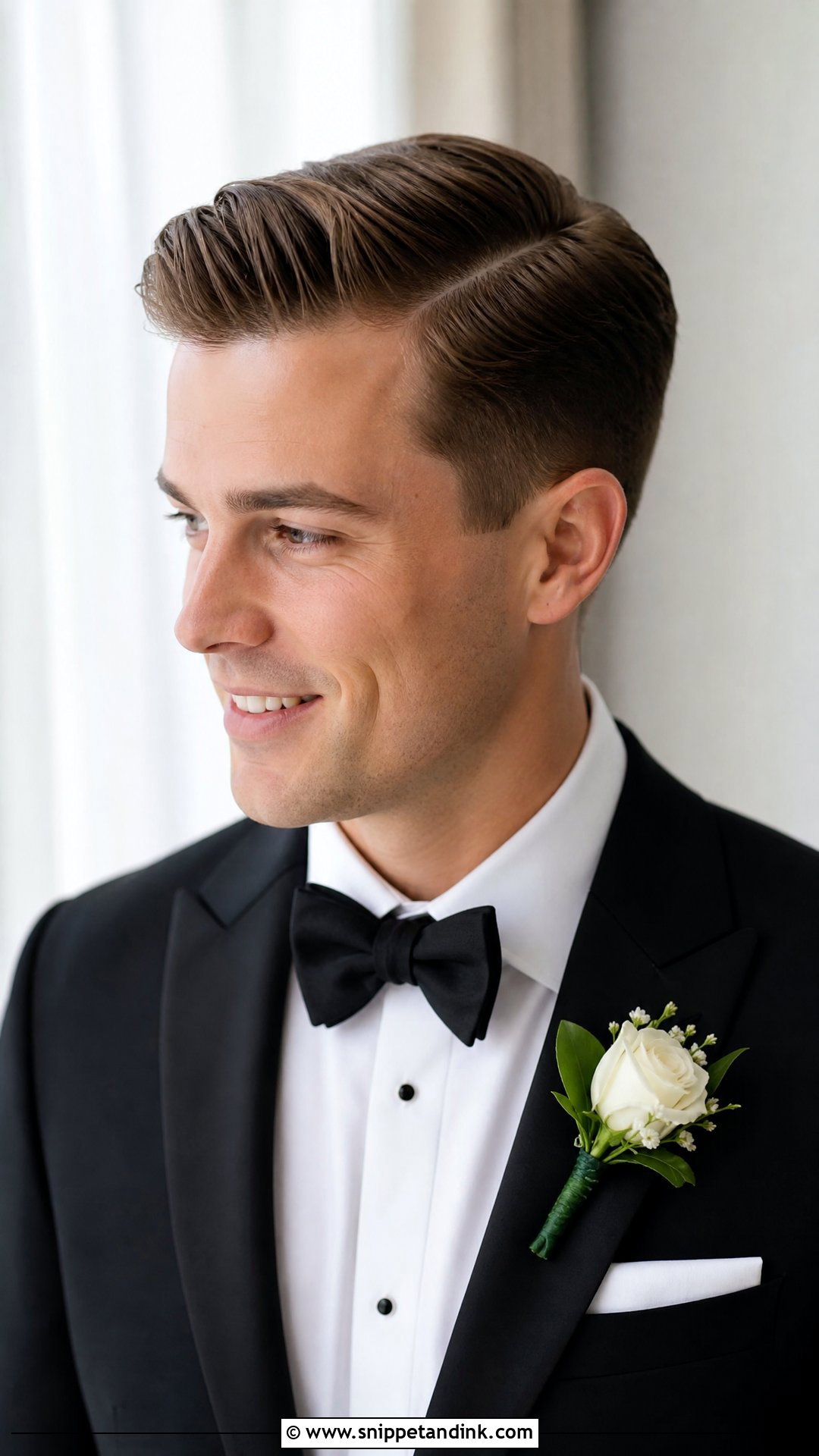
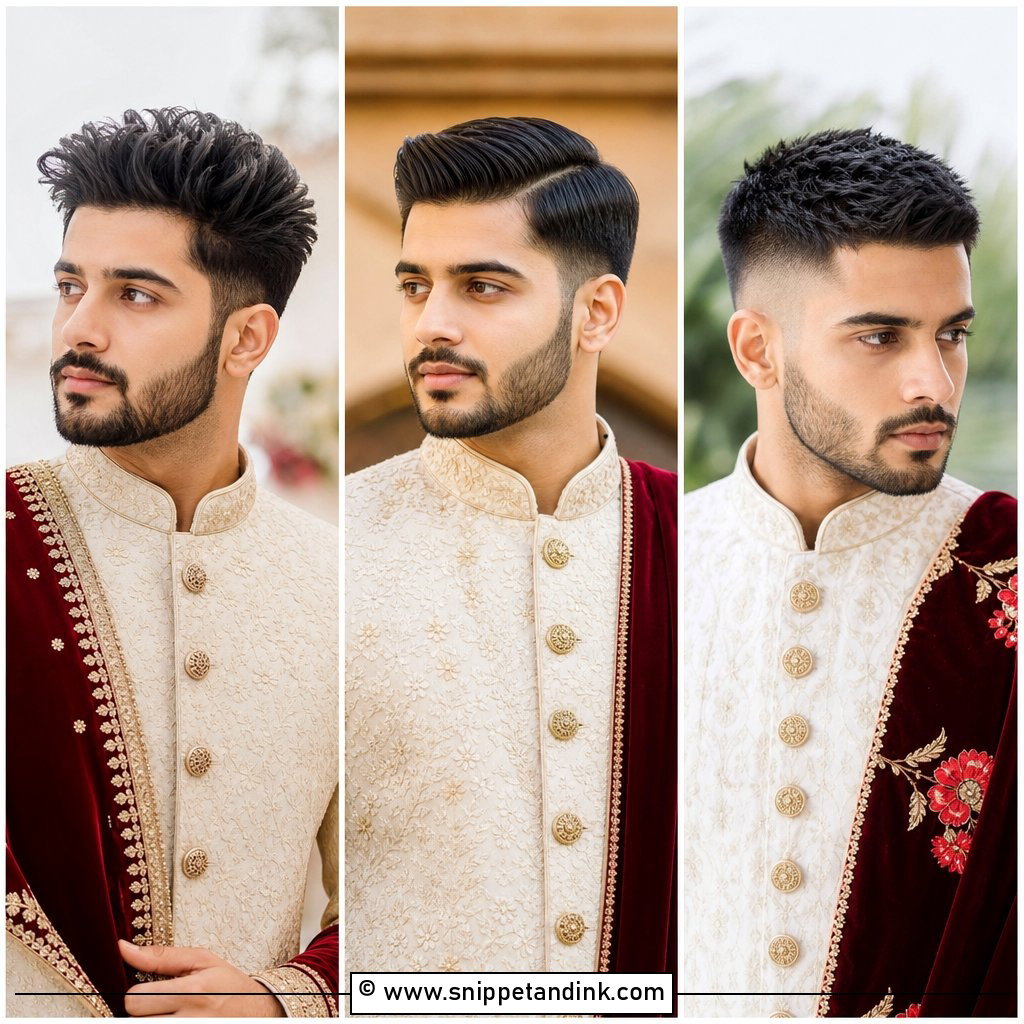
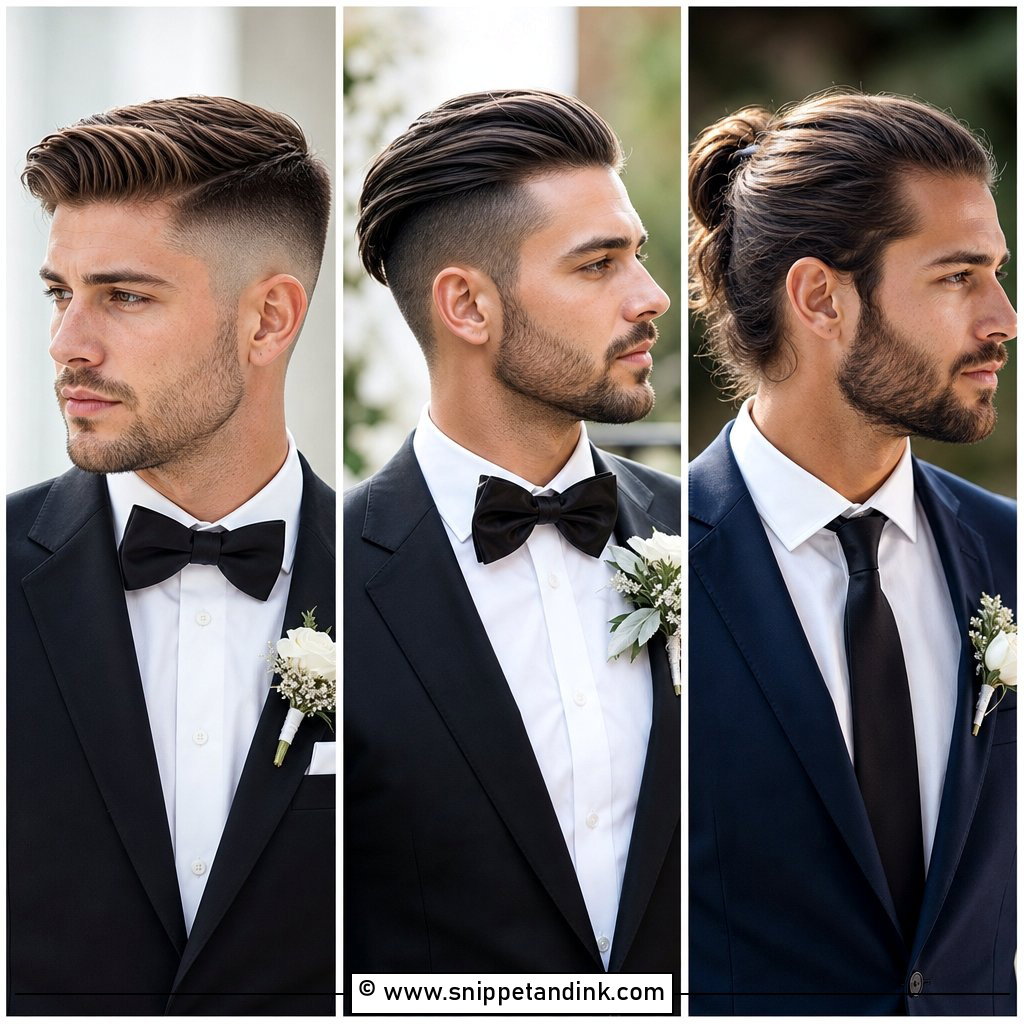
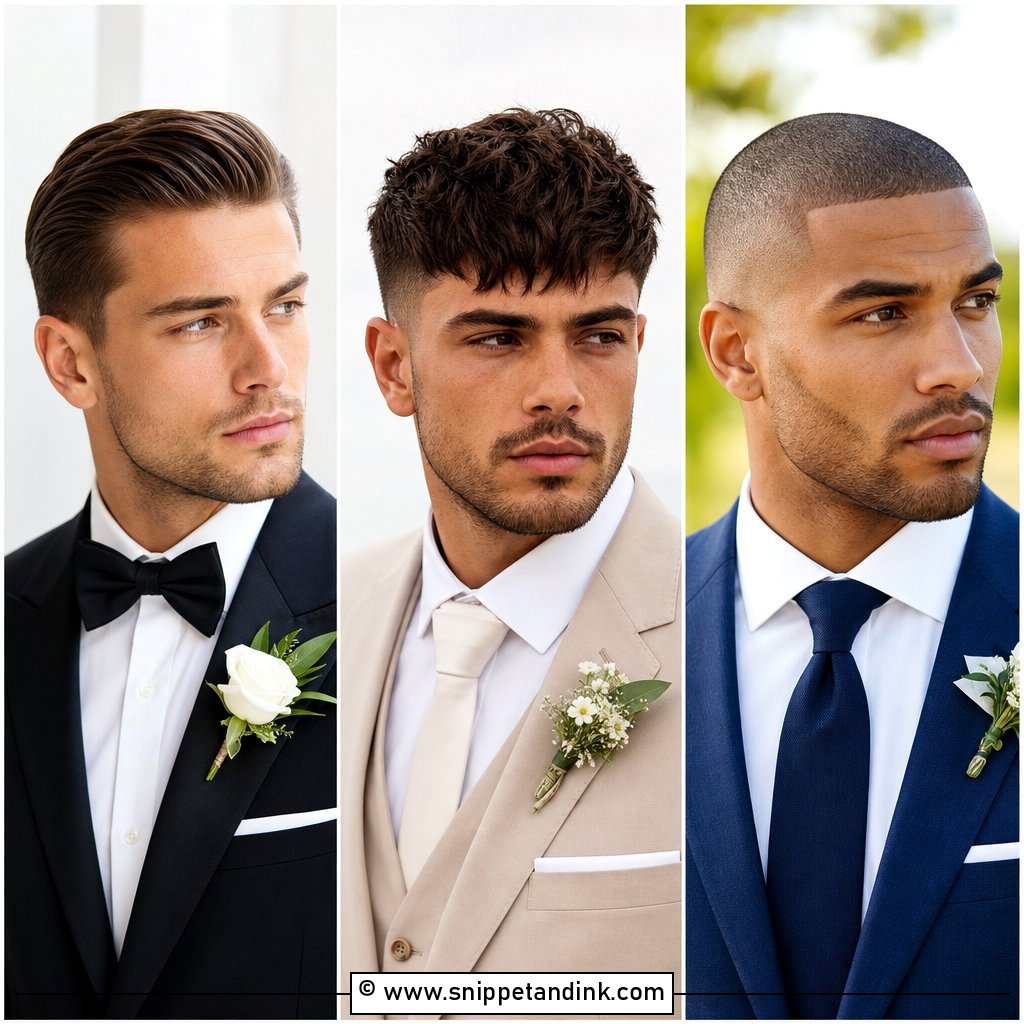
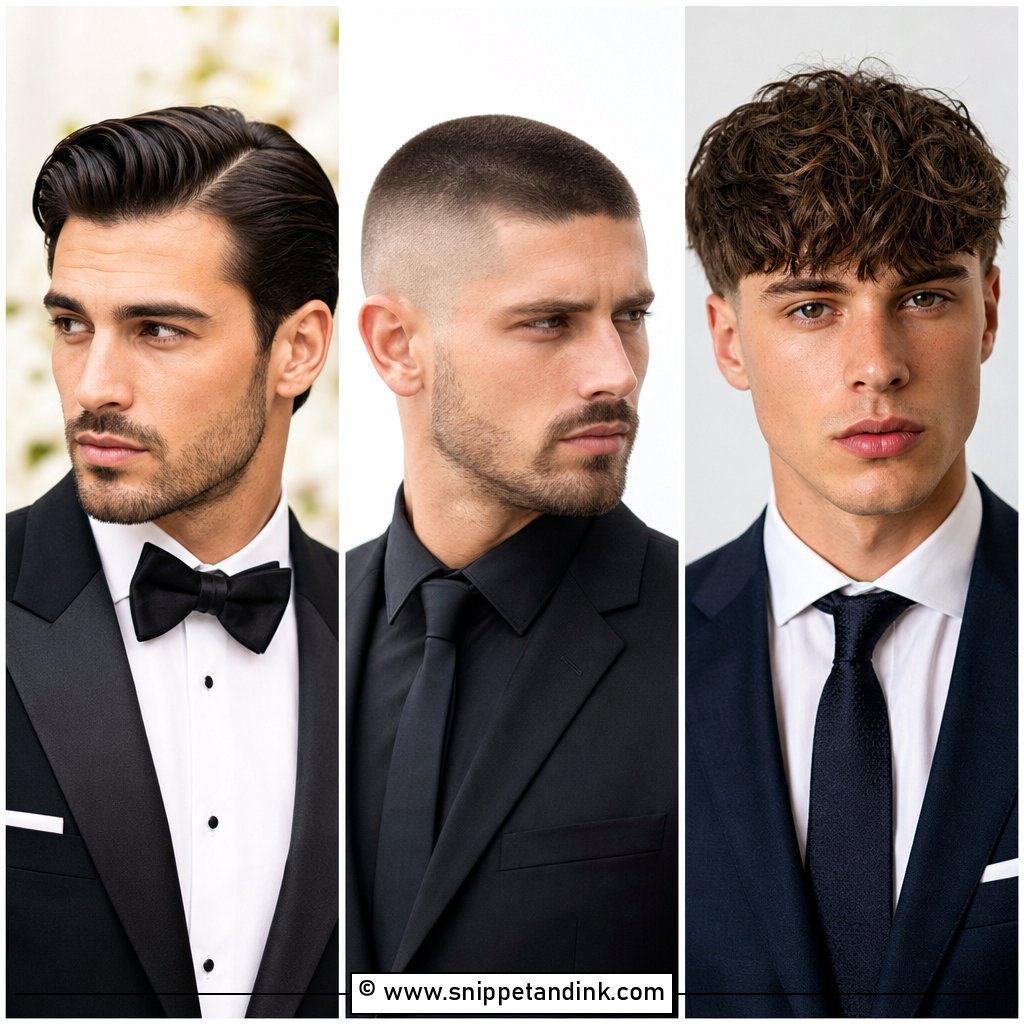
The side part is the one I’d hand to a groom who is nervous about looking different from himself. It sits right with tuxedos, navy or black suits, and formal church or ballroom settings. Find the natural part first by combing wet hair straight back and letting it fall; forcing the part to the other side means it fights you all day. Ask the barber for a tidy taper around the ears and neckline, with enough length on top to comb over. A light pomade or styling cream gives control and a soft sheen. Straight and slightly wavy hair hold it best, and it keeps the face open for close-ups.
2. Slick Back Groom Wedding Hairstyle
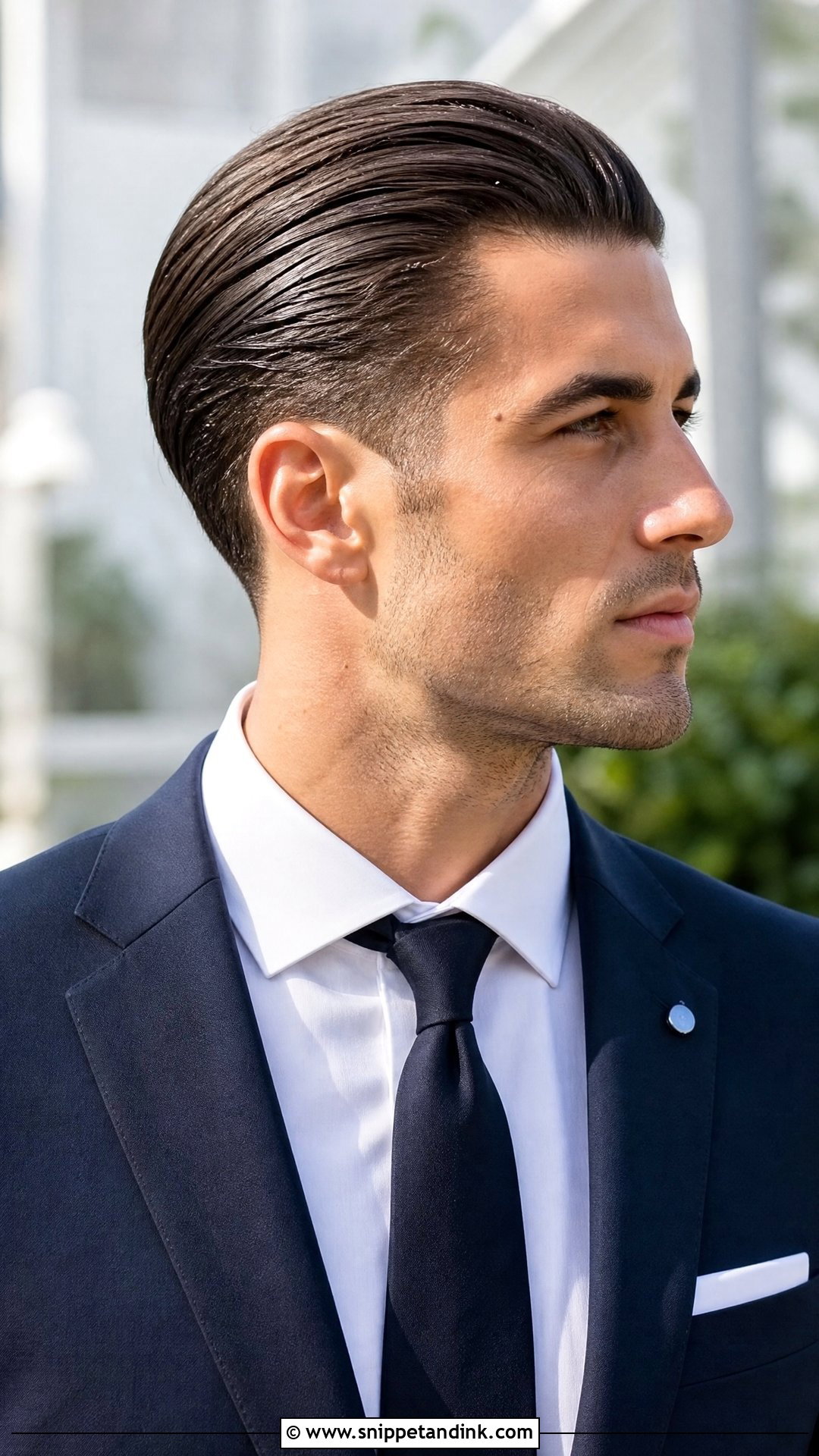
Slick backs date badly when they’re shiny and rigid, and look current when you can still see the comb lines and a bit of movement. So skip heavy gel. A flexible pomade or grooming cream, combed through damp hair and then blow-dried back, holds without that helmet sheen. The top needs enough length to lie flat when brushed back; the sides can be tapered or faded. It suits black tie and evening receptions and keeps hair off the forehead in outdoor wind. Test your product at least once before the wedding in daylight. What looks fine in a bathroom mirror can read greasy under a photographer’s flash.
3. Low Fade Groom Wedding Hairstyle
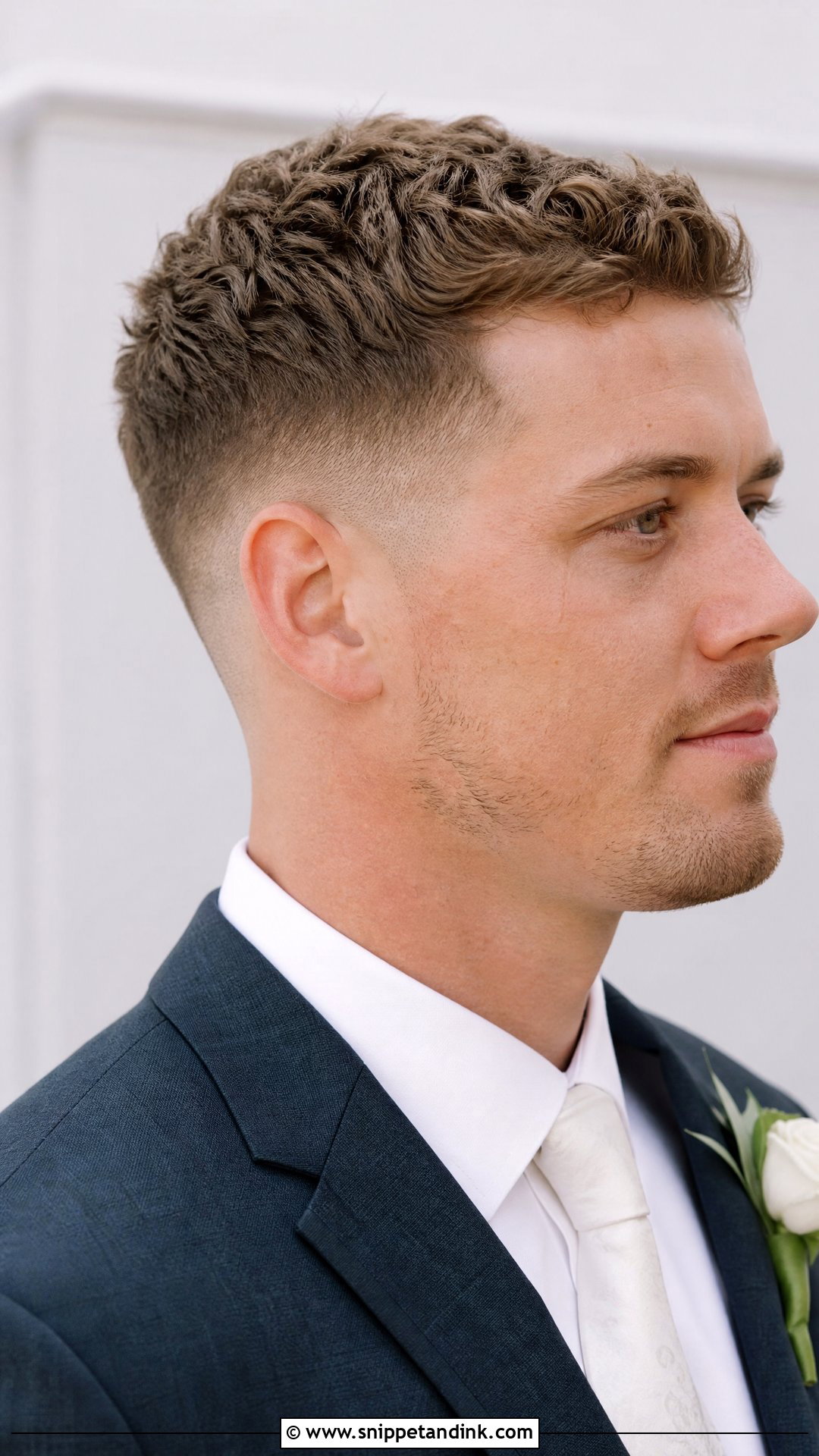
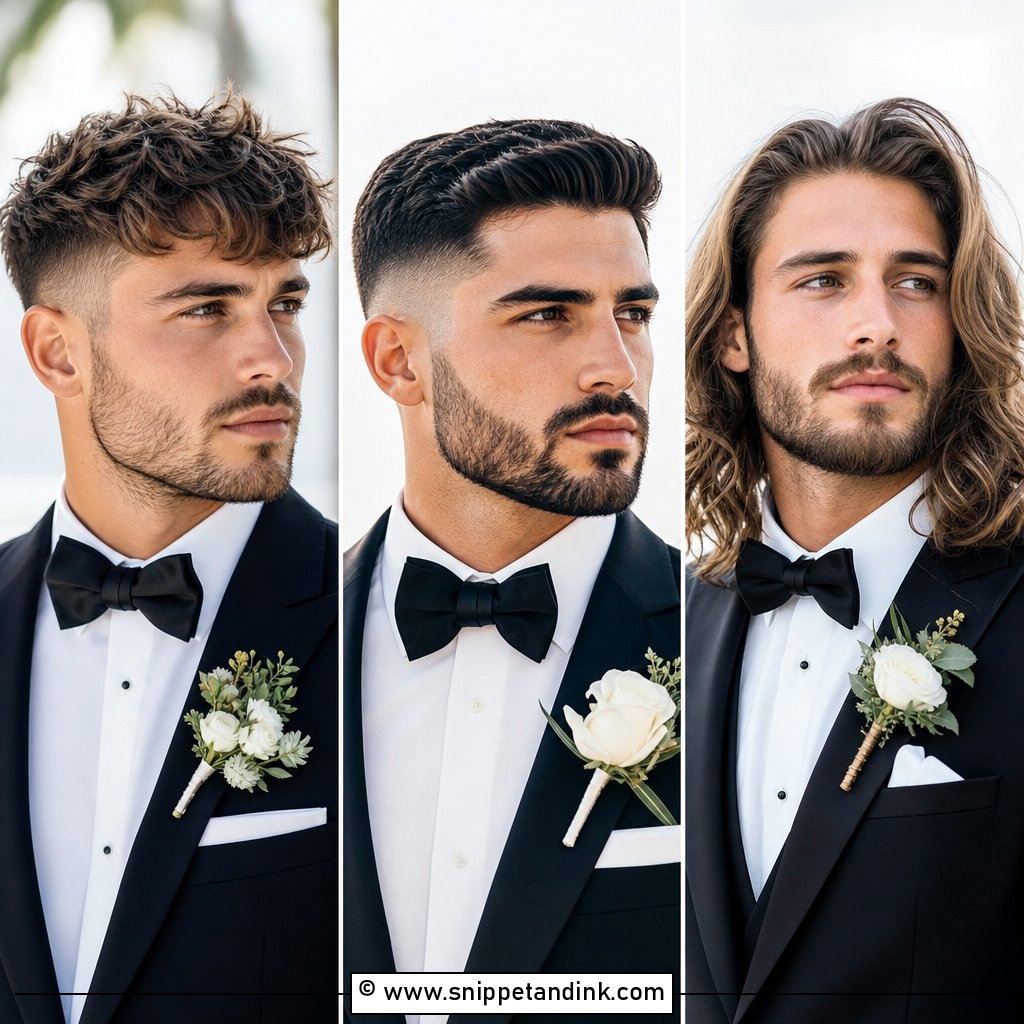
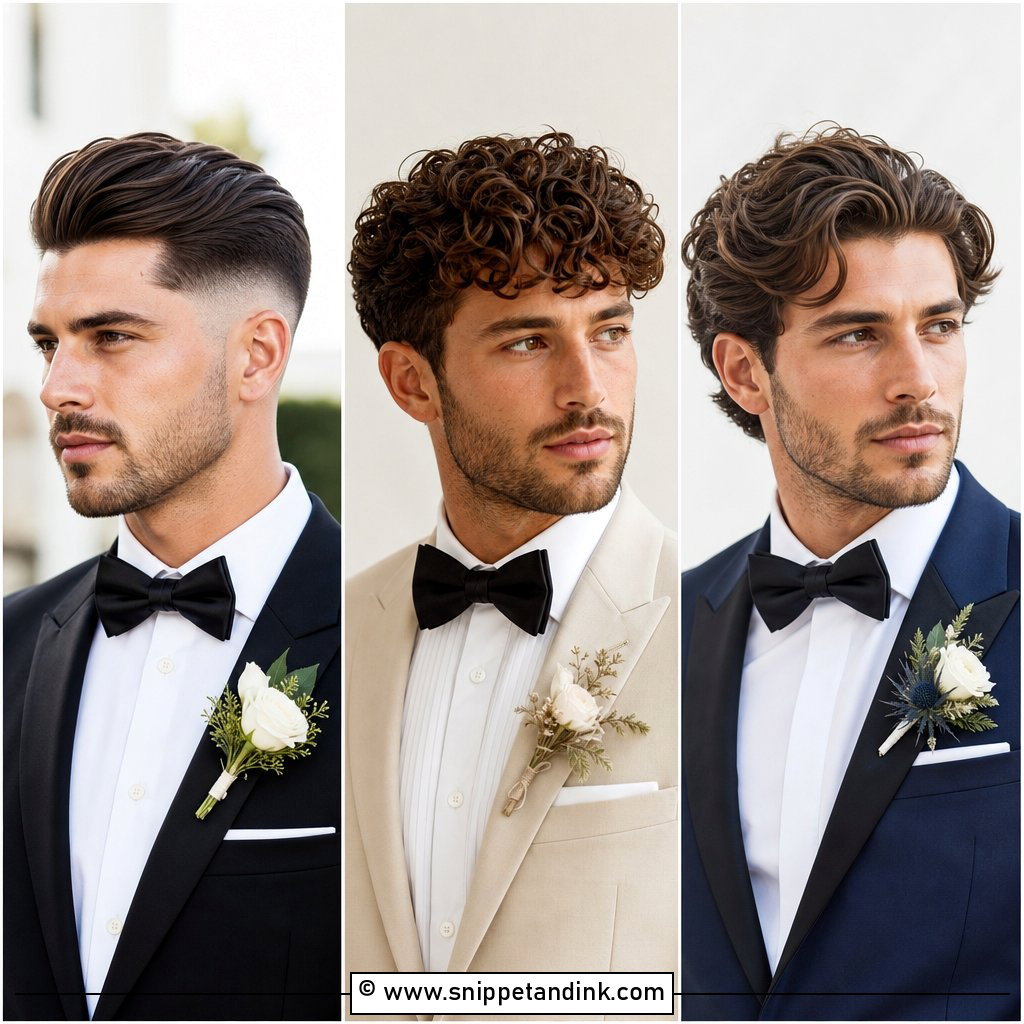
Low fades are the easiest barbered cut to wear at a formal wedding because the shortest section stays down near the ears, below where most eyes land. It works under almost any top: short texture, a side part, curls or a brushed-up front. If your wedding is black tie, I’d ask the barber to keep the fade low and the blend soft at the neckline rather than chasing a skin-tight finish. Fades grow out fast, so book the final one a few days before the ceremony, not a fortnight.
4. Textured Crop Groom Wedding Hairstyle
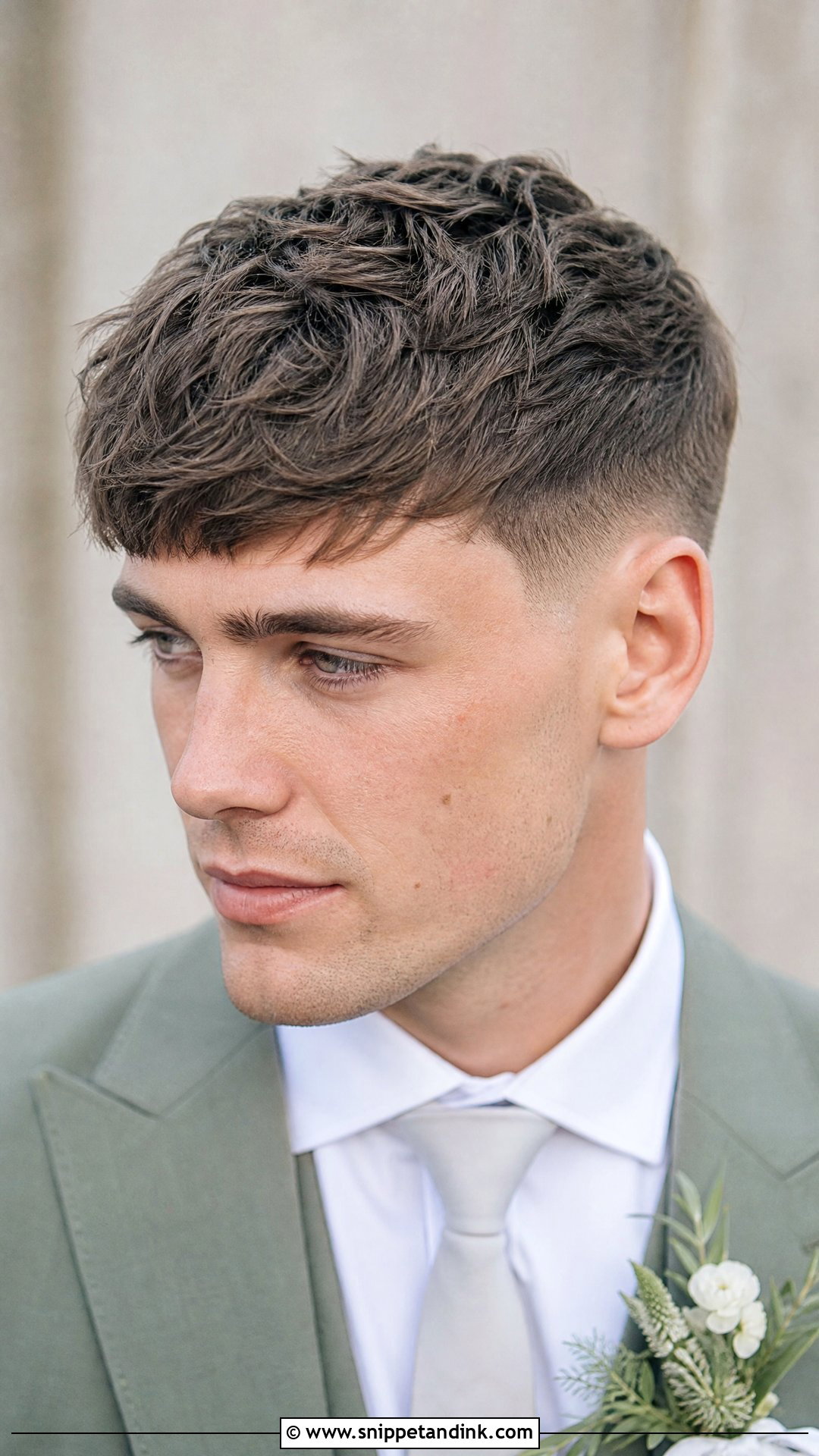
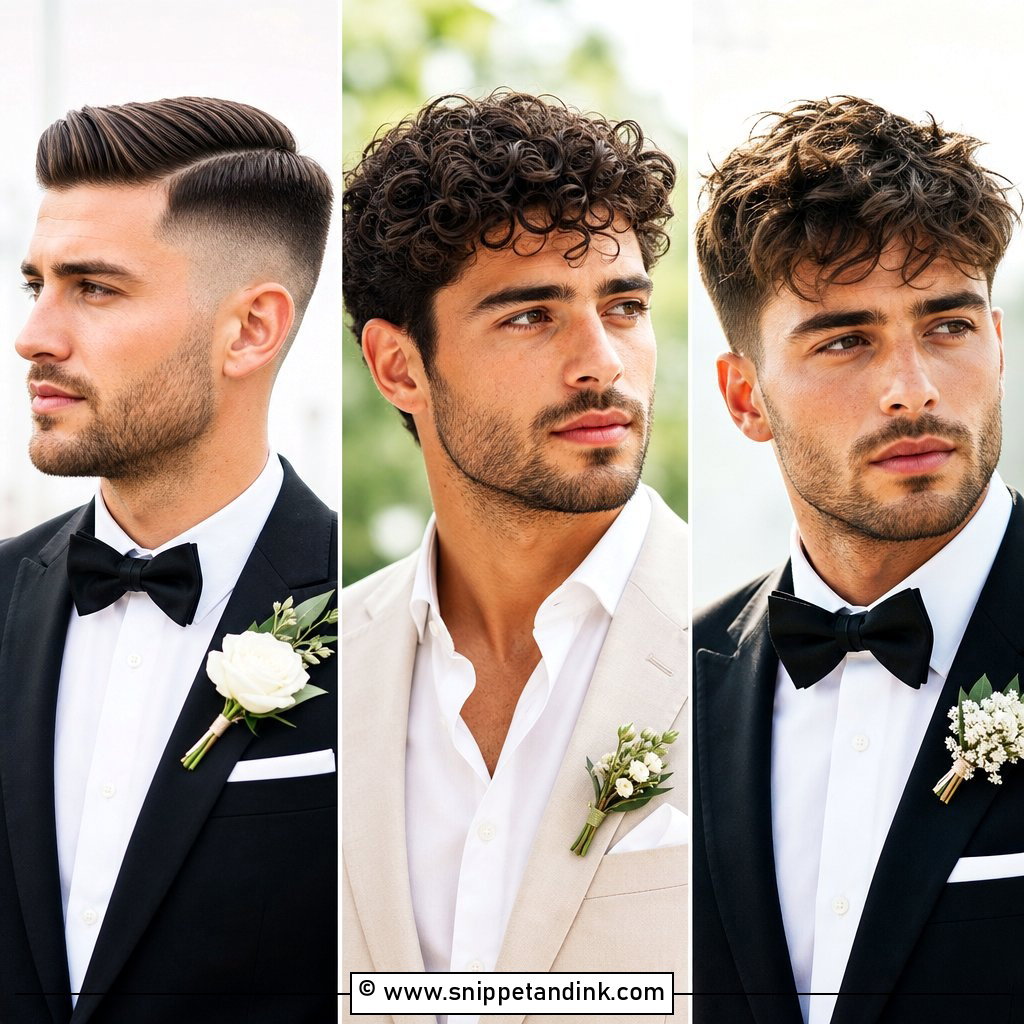
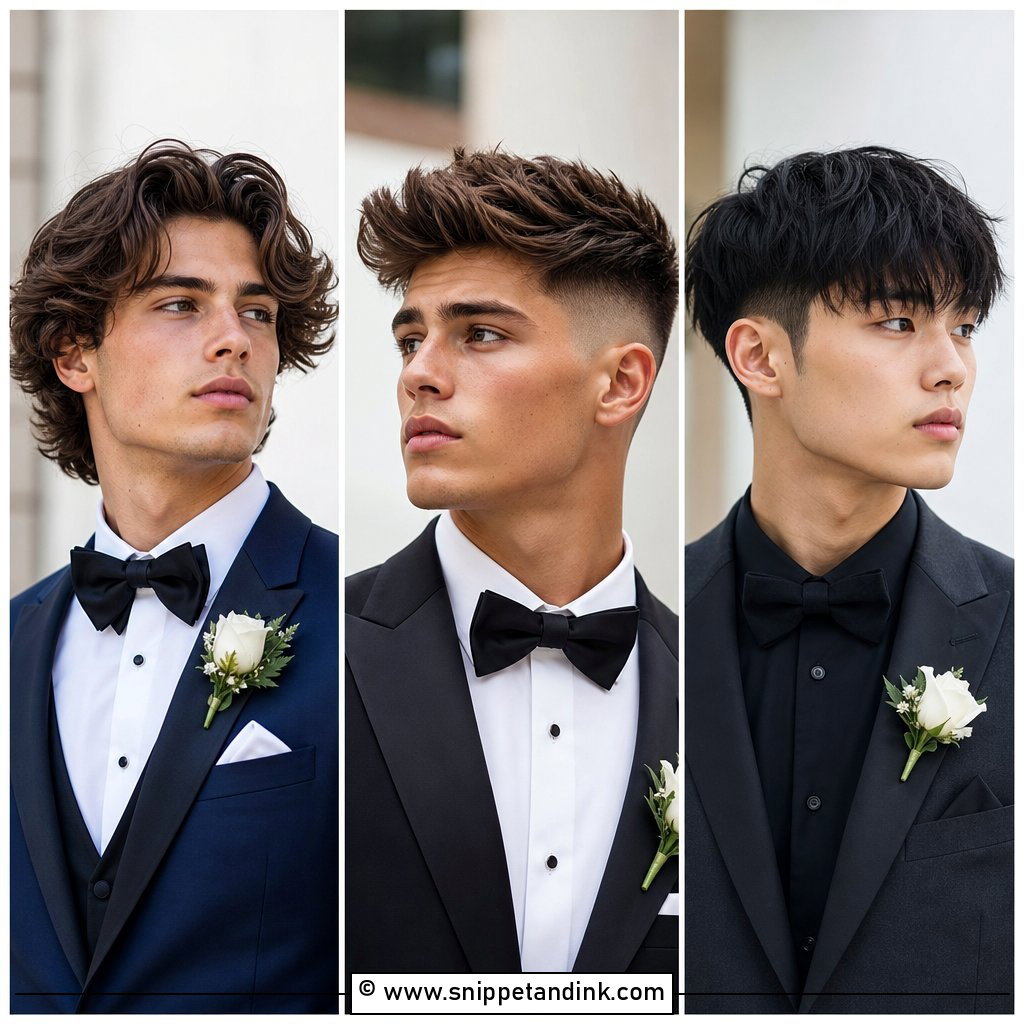
Thick hair that puffs into a mushroom when it gets a bit long is exactly what a textured crop fixes. The barber takes weight out of the top with point cutting so the hair sits with separation instead of bulk, and the fringe can go forward, up or to the side. Matte clay or texture paste suits it; anything shiny makes it look wet and flat. There’s a fine line between styled and messy, so I’d work the product in with fingers, then define just a few pieces at the front. It looks right at relaxed garden and city weddings, and the contrast with a sharp suit is part of its appeal.
5. Tapered Curly Groom Wedding Hairstyle
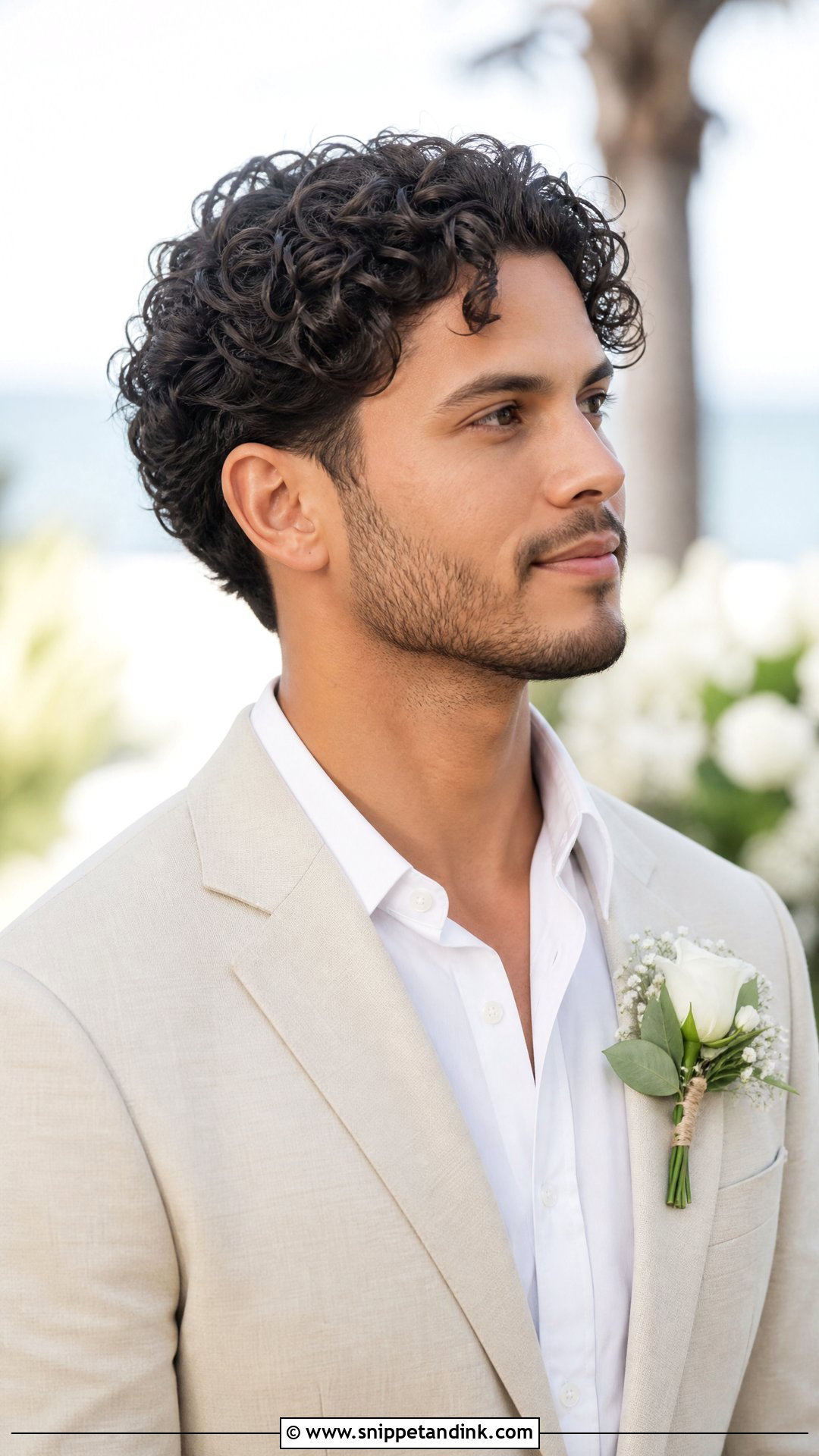
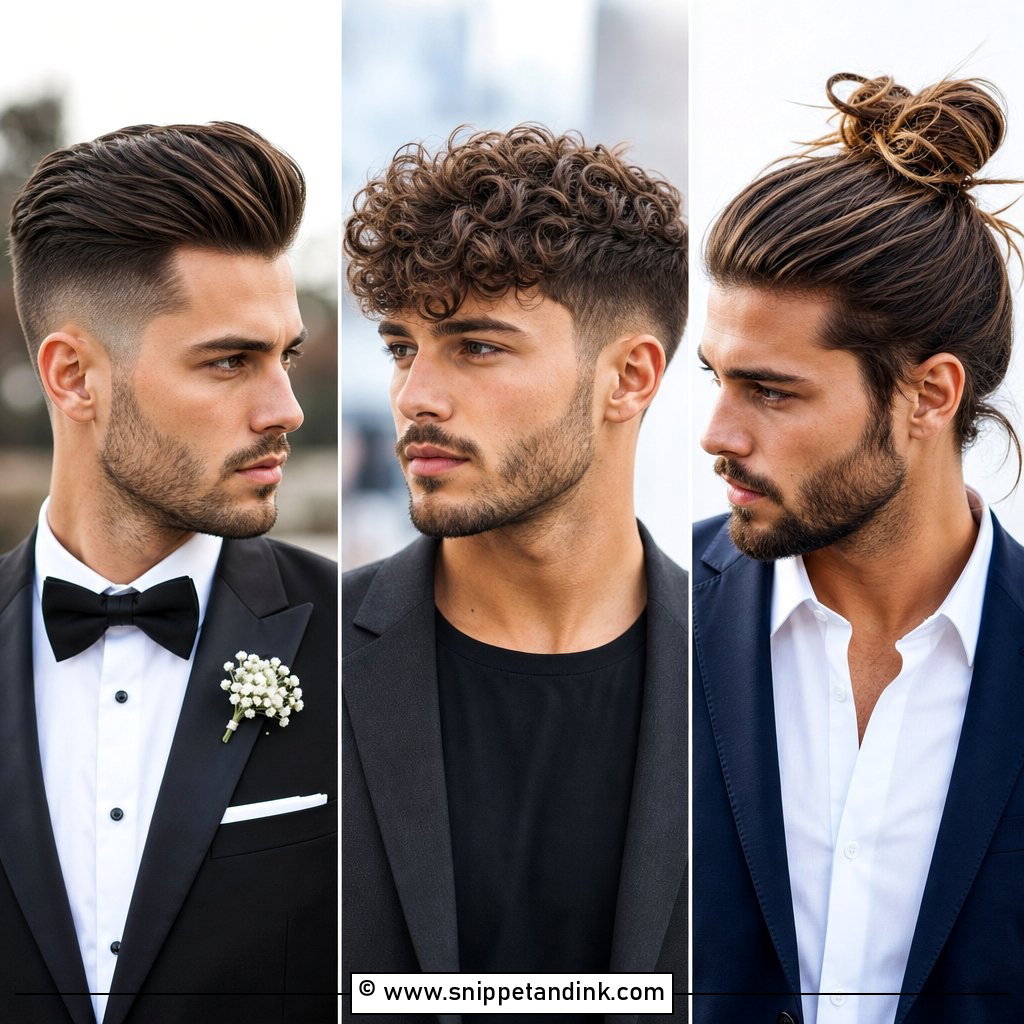
Curls look their best on a groom when they’re hydrated and the shape around them is deliberate. A tapered cut keeps the sides neat and lets the curl pattern take over on top. Ask a barber or stylist who cuts curls dry, so they can see where each curl actually sits before removing bulk. I’d layer leave-in conditioner, then curl cream, then a light gel, and leave it alone while it dries; touching curls while wet breaks the clumps into frizz. Outdoor and destination ceremonies suit it, and it softens formal menswear nicely.
6. Short Pompadour Groom Wedding Hairstyle
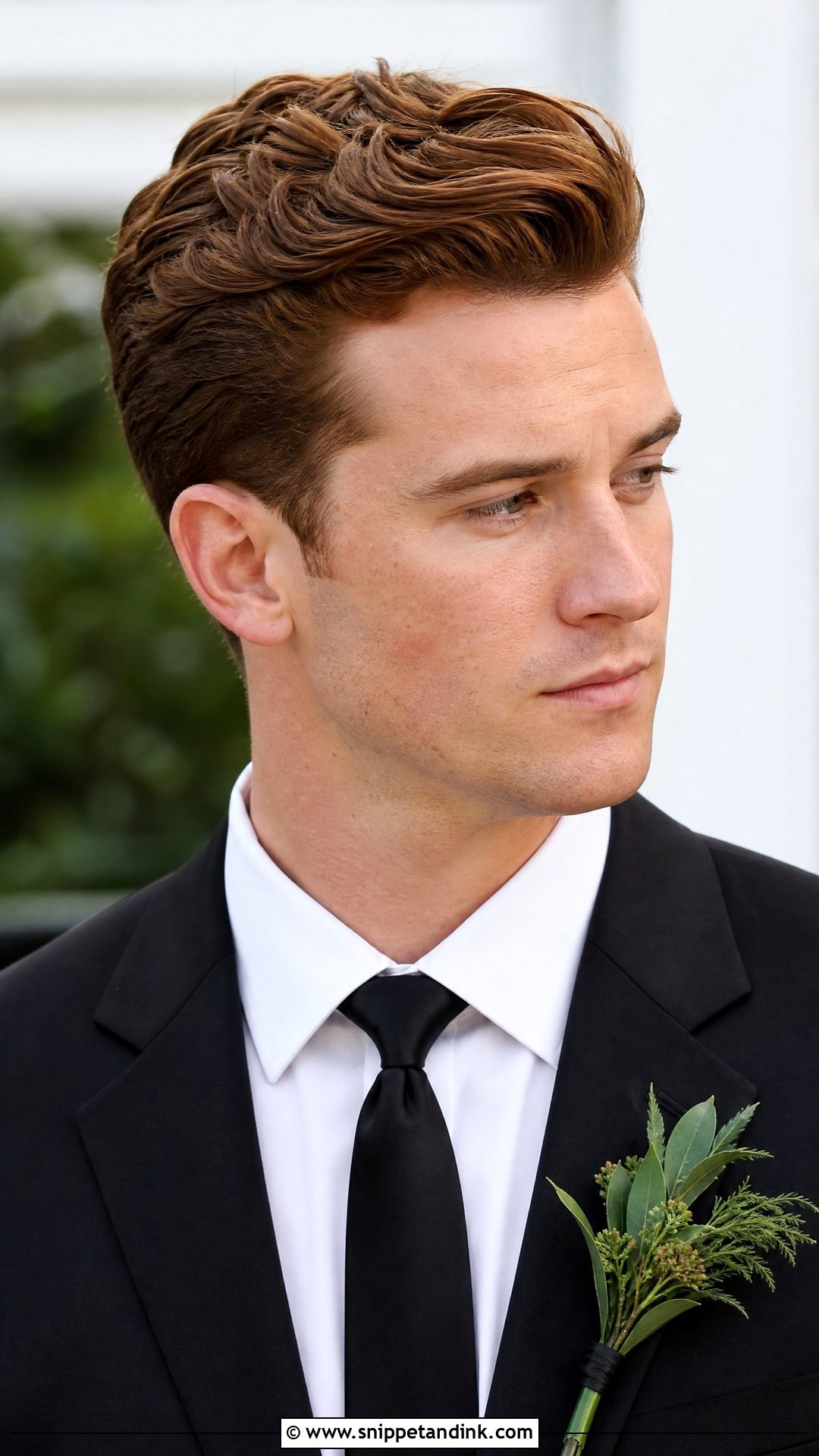
Height, structure and a hint of vintage: a short pompadour gives all three without the drama of a tall one. The sides can be tapered, faded or scissor-cut. It needs medium to thick hair, because fine hair loses lift by the afternoon no matter how much product you use. The blow-dry does most of the work. Dry the front up and back with a round or vent brush, set it with a blast of cool air, then add a medium-hold product. Crisp collars and tailored suits balance the height.
7. Modern Quiff Groom Wedding Hairstyle
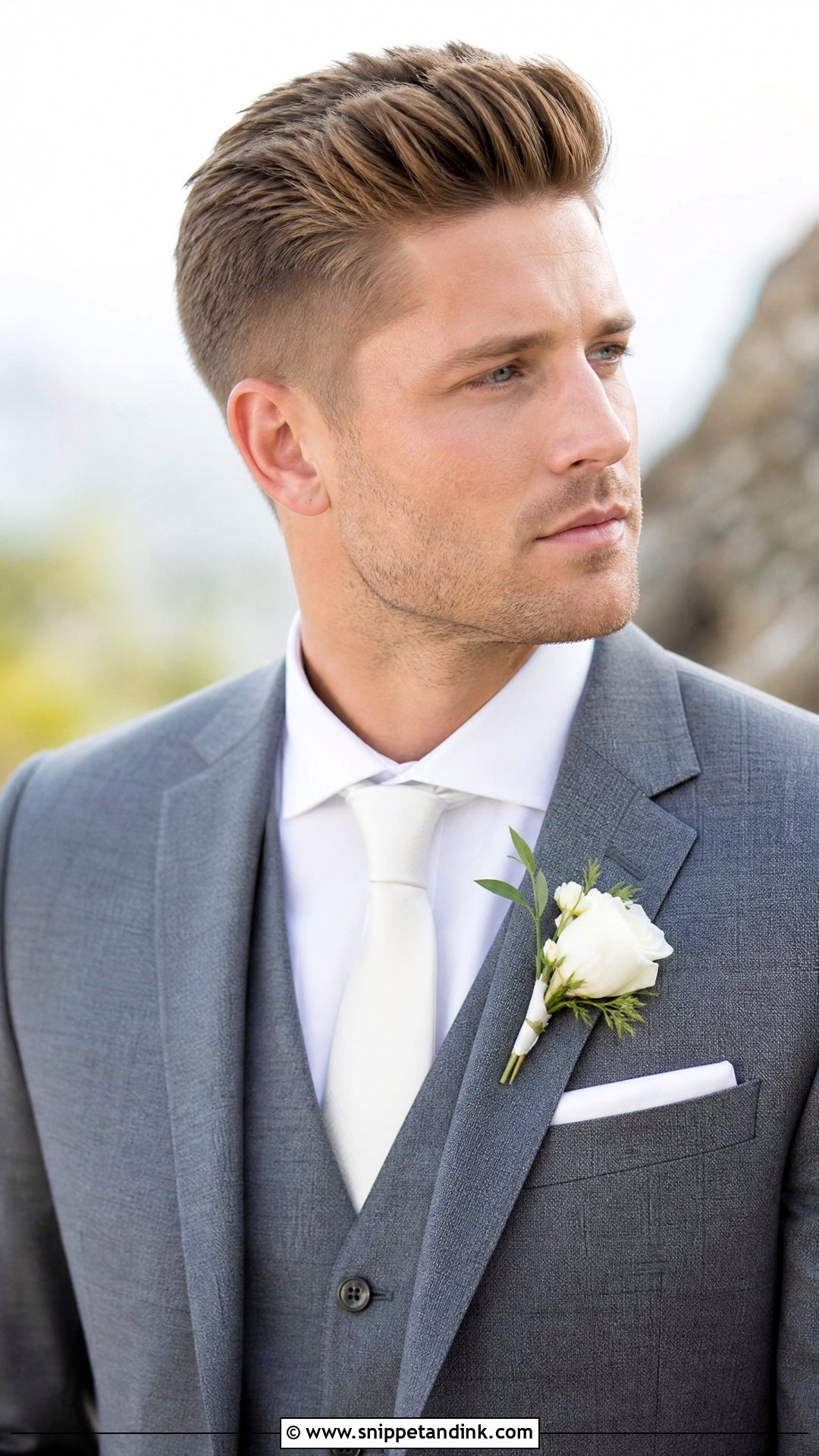
The modern quiff lifts the front without the slick finish, and it reads well from the side and the back as well as face-on. Straight, wavy and thick hair all hold it. With a scissor taper it leans classic; with a low fade it looks more current. Most people get the order wrong and put product in first. I always blow-dry for lift, then add product, because paste on wet hair weighs the roots down. Finish with matte paste or a light spray so the front survives the vows, the portraits and the dance floor.
8. Medium Length Flow Groom Wedding Hairstyle
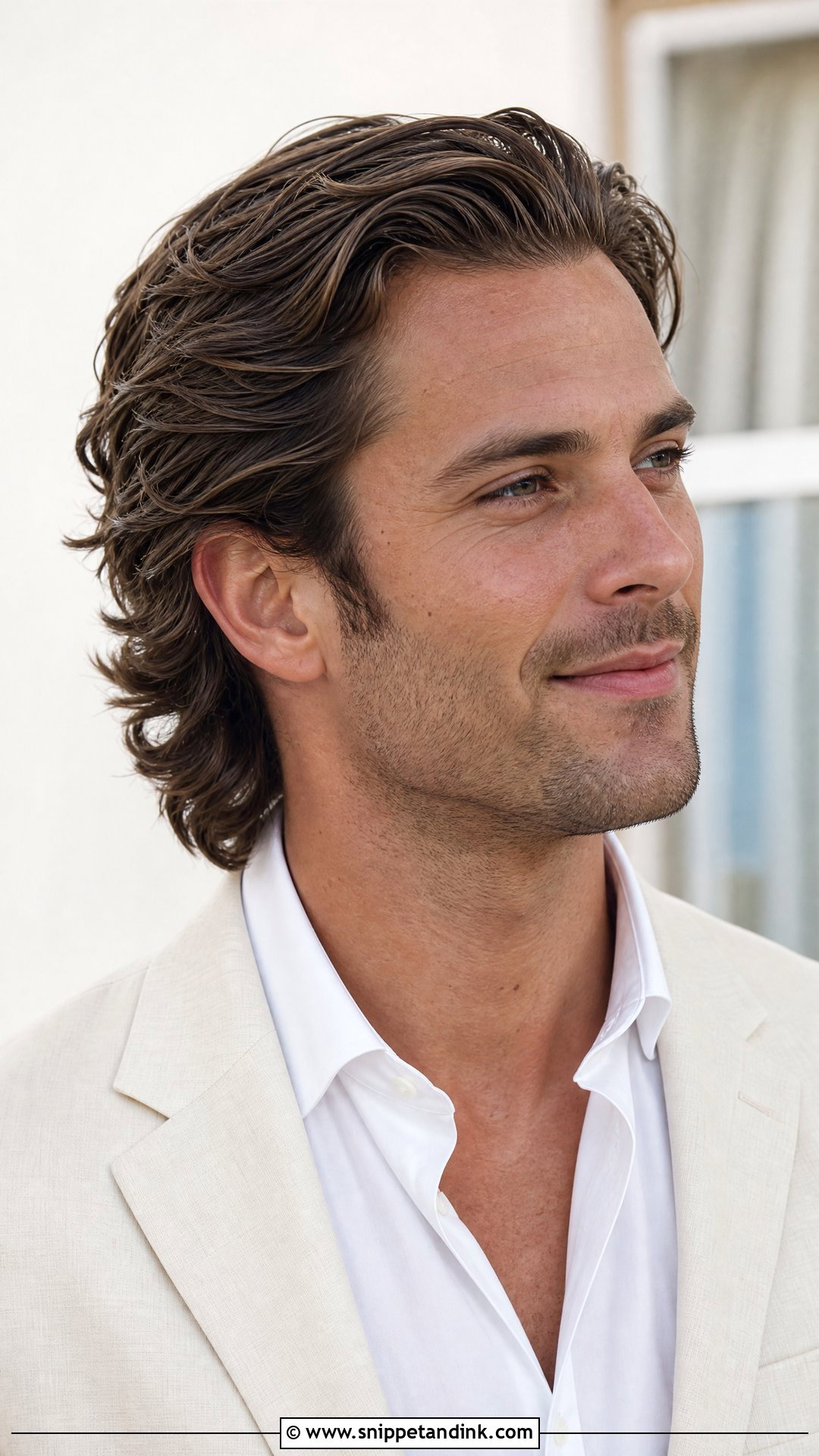
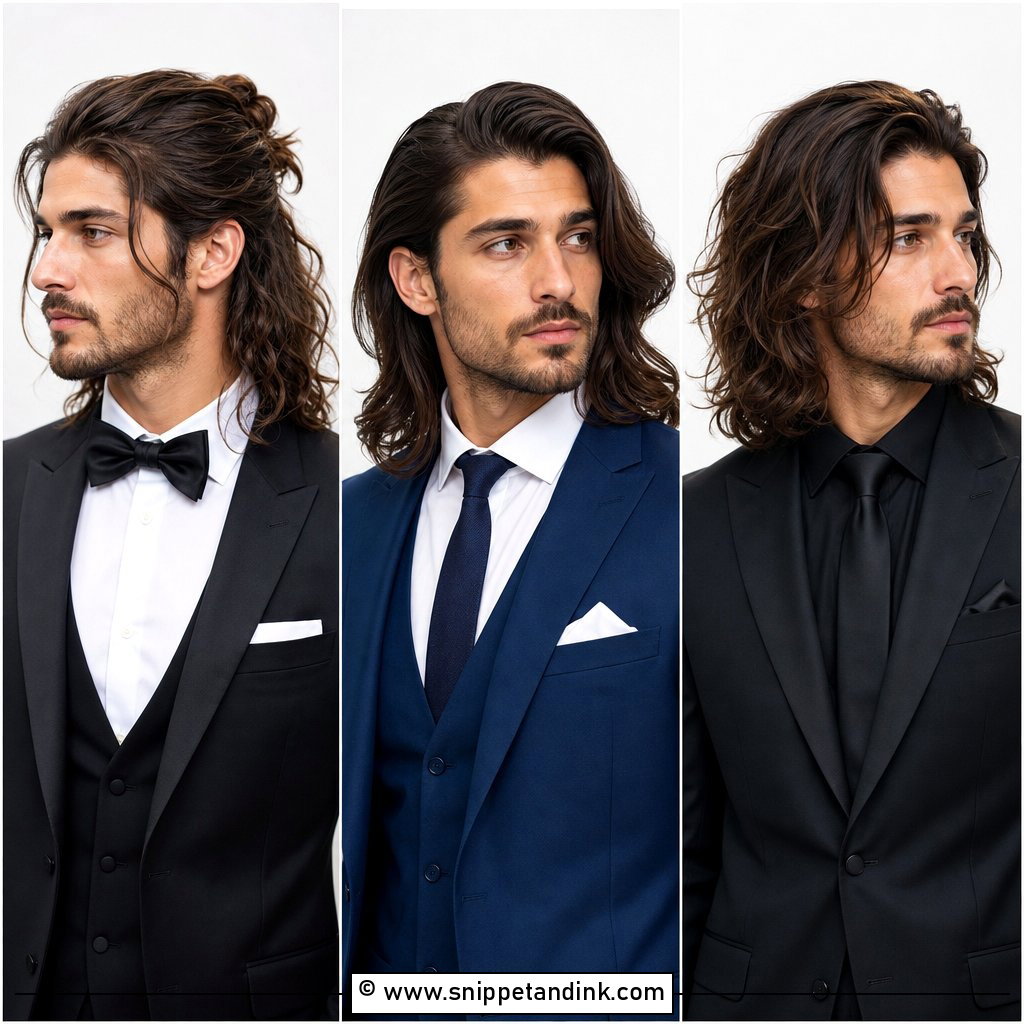
Medium-length hair brushed back with soft layers can look relaxed and still wedding-ready, but only if it’s been cut into a shape. Hair that’s simply grown out for a few months tends to sit in a block and flick outward at the collar. I’d ask for layers through the back a few weeks ahead so it moves when you walk. A lightweight cream calms frizz and gives definition without weight. Beach, rustic and creative ceremonies suit it, as do softer, unstructured suits.
9. Curly High Top Groom Wedding Hairstyle
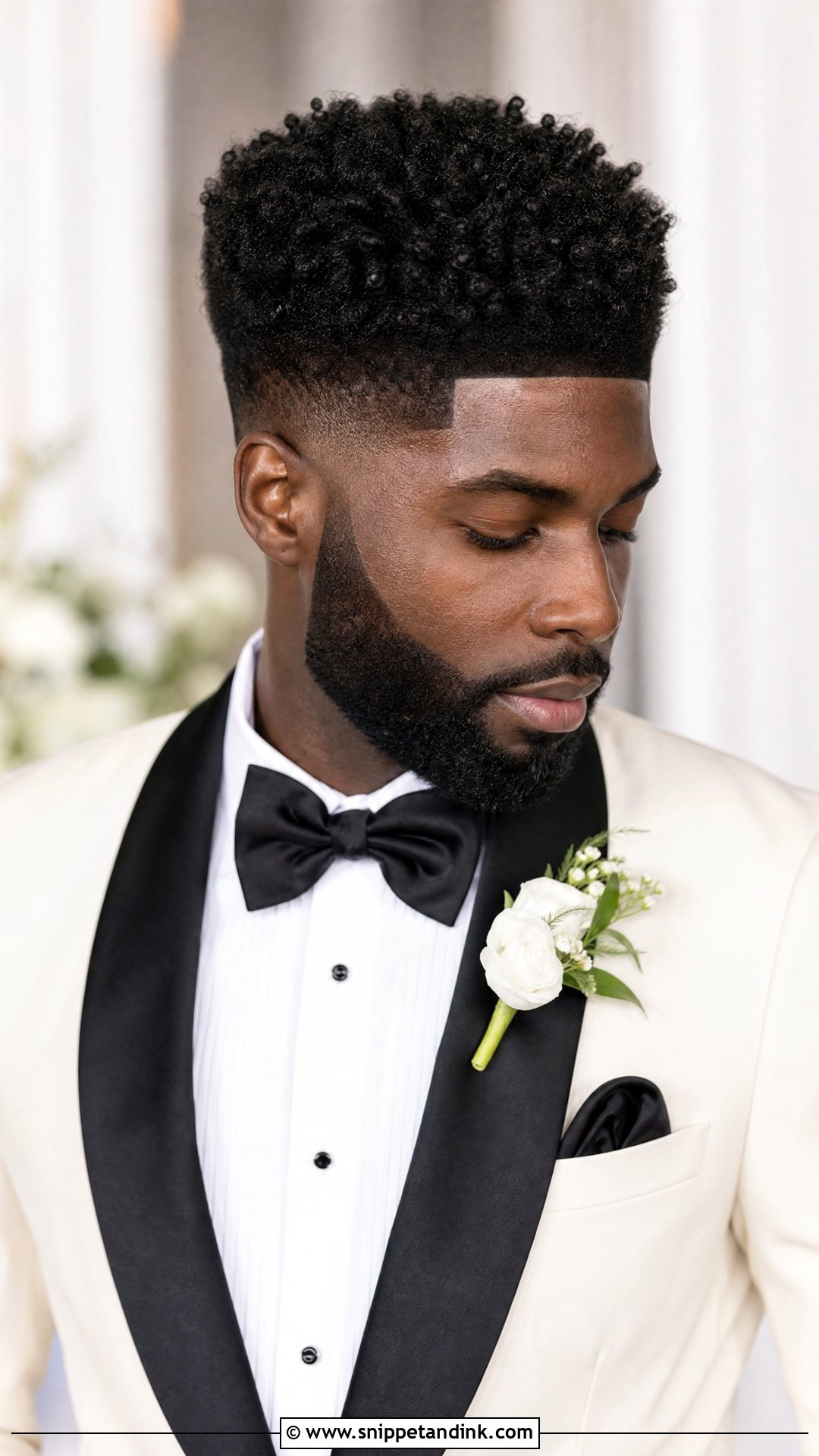
A curly high top has real presence, and it celebrates natural curls and coils instead of cutting them away. The balance between the height on top and the shaped sides decides whether it looks sharp or top-heavy, so this is one for an experienced barber who can judge it against your face shape and the suit. Moisture is everything for coils on a long day. I’d prep with leave-in conditioner and a defining product, and keep a small spray bottle nearby for midday refreshes. Fresh edges and a clean neckline finish it off without any accessories.
10. Buzz Cut Groom Wedding Hairstyle
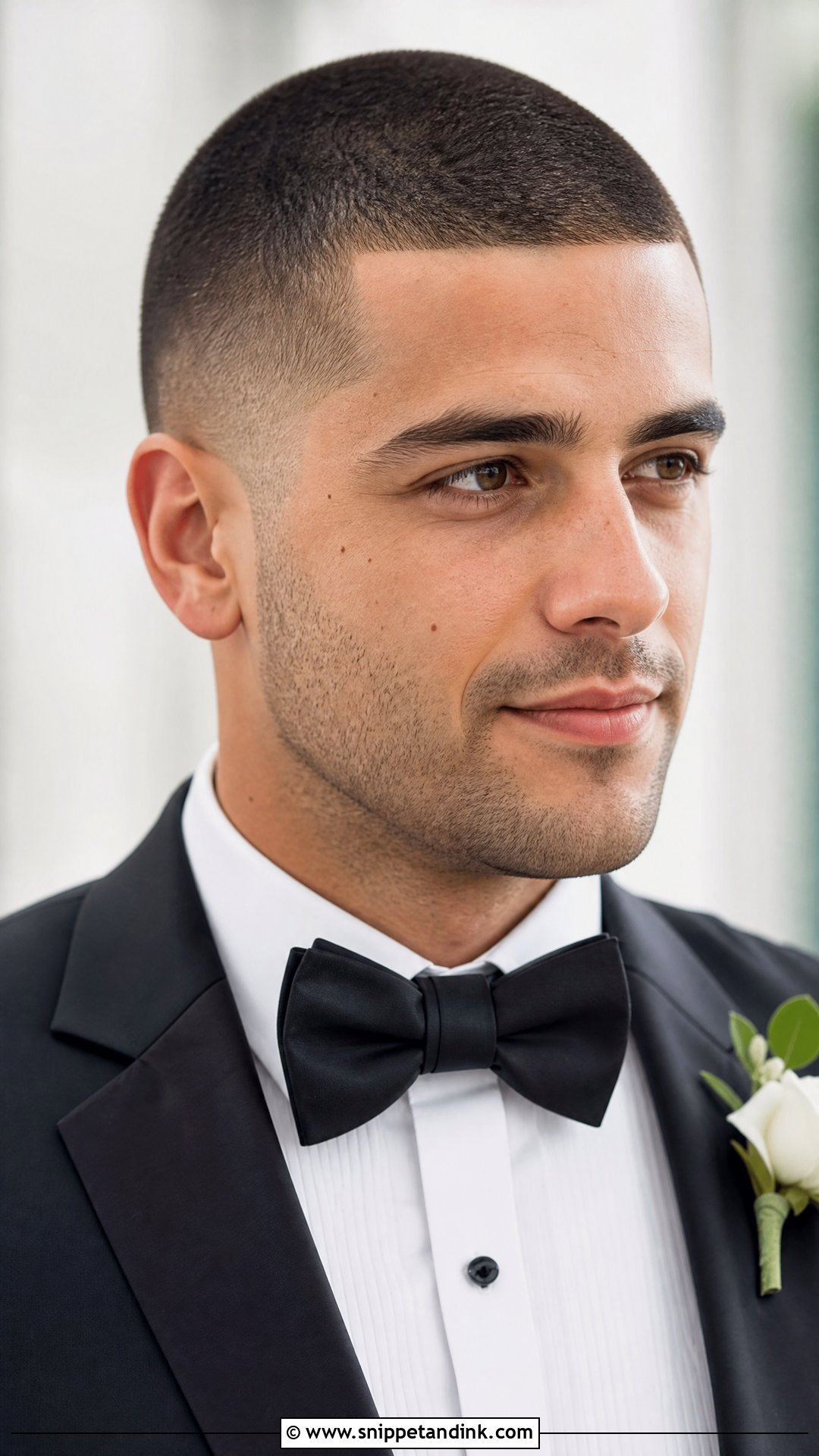
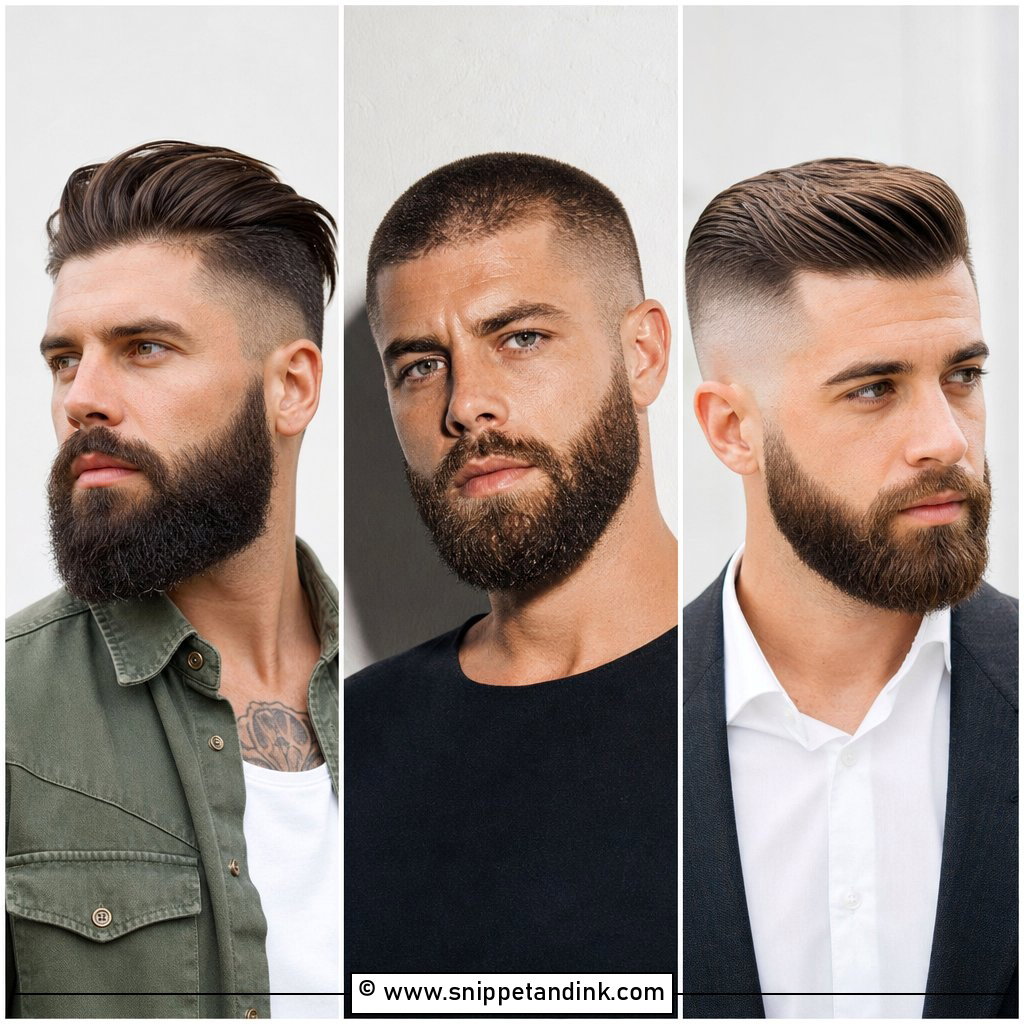
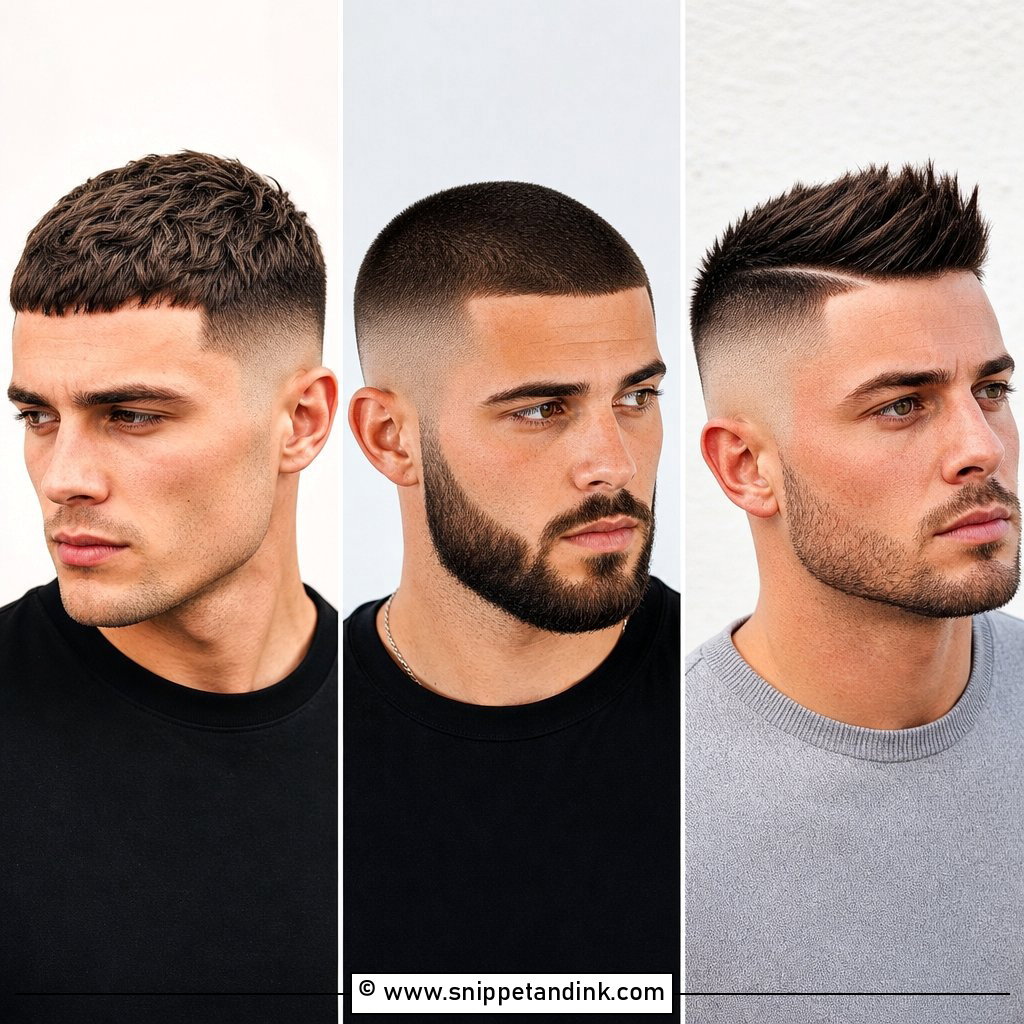
A buzz cut puts all the attention on the face and the suit, which can look very polished if the grooming around it is spot on. There’s no styling to go wrong, so it holds up through any weather. Head shape and density matter: ask the barber to choose a guard length that doesn’t show scalp under bright light, because outdoor sun is harsher than a salon mirror. A subtle fade or a clean lineup adds polish. Moisturize the scalp too; dry flaky skin shows on a short cut. Pair it with a well-groomed beard or a clean shave.
11. Crew Cut Groom Wedding Hairstyle
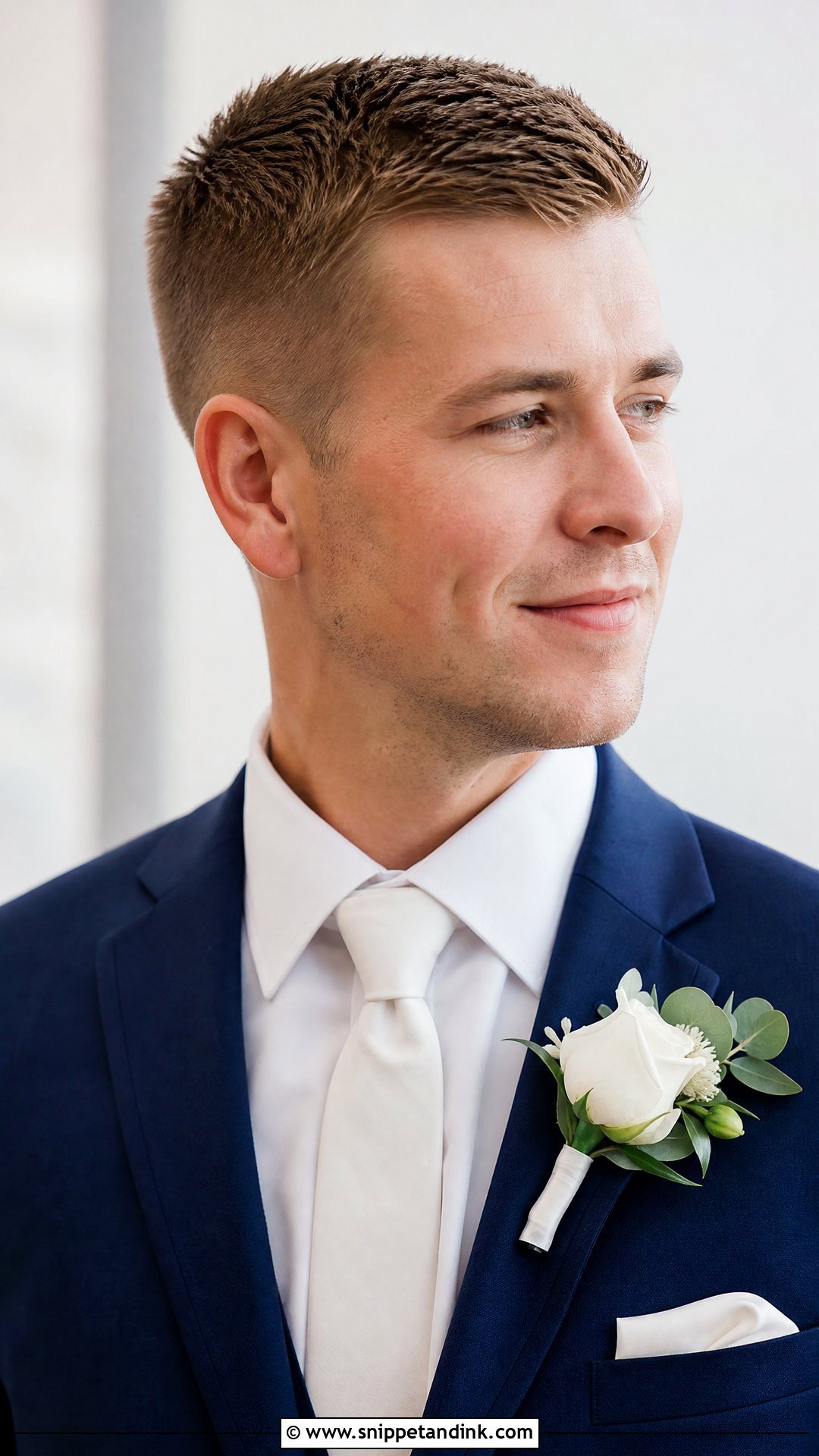
The crew cut is a classic groom wedding hairstyle for men who’d rather not style anything. It keeps a little more length on top than a buzz cut, which softens the face, and the sides taper down cleanly. Hot-weather weddings are where I’d push for it, since there is nothing to fall out of place when you sweat. A small amount of matte product adds texture on top if you want it. Get the neckline and sideburns cleaned up within a few days of the wedding, since that edge is where a crew cut first looks shaggy.
12. Comb Over Fade Groom Wedding Hairstyle
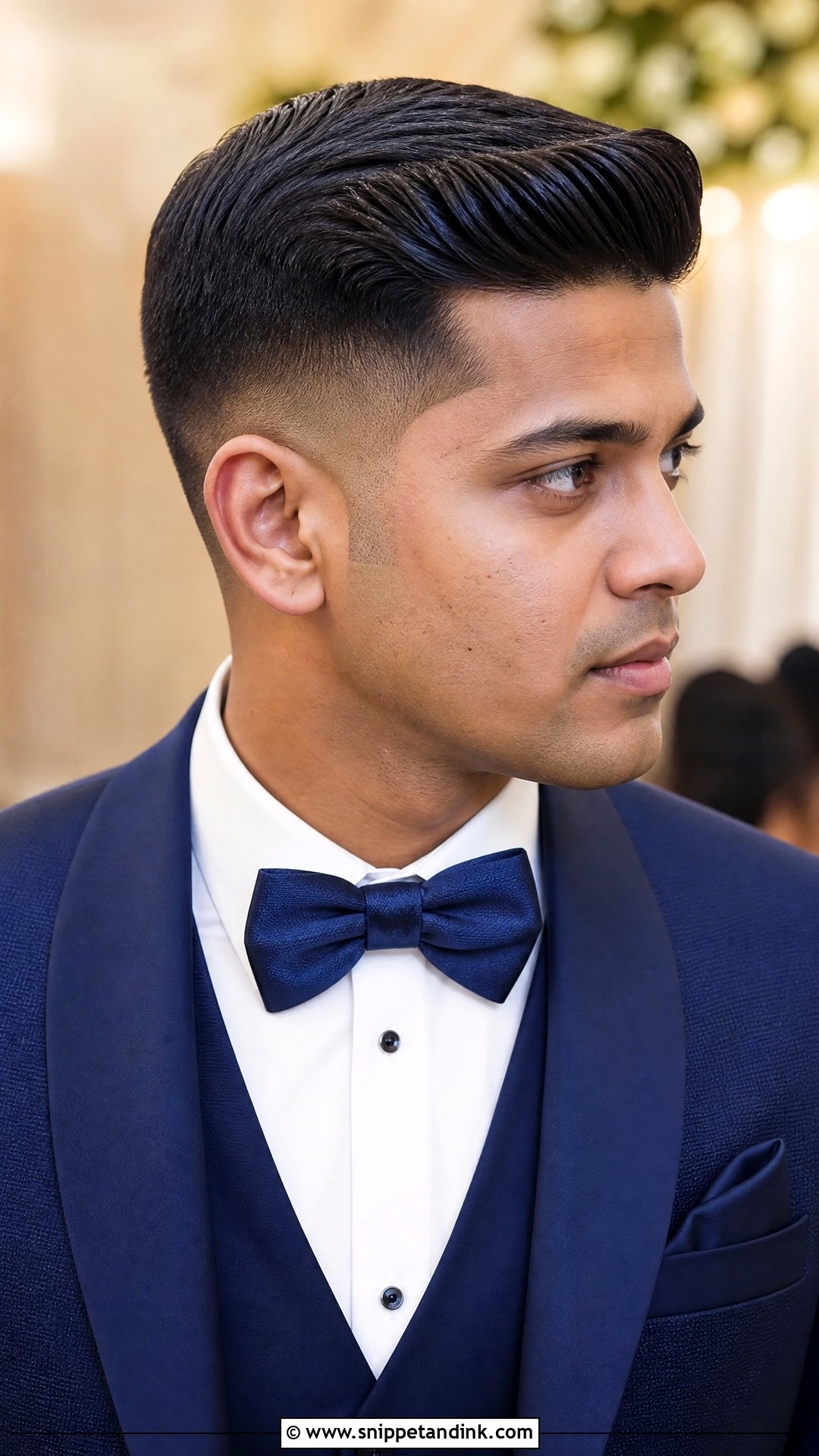
Somewhere between a side part and a fade sits the comb over fade: defined on top, tight at the sides. Matte finishes soften it; a little shine makes it formal enough for an evening wedding. The blend is what I’d look at closely, because side-on photos at the altar show every line in the fade. If you can see a hard step between guard lengths in a phone photo taken from the side, ask for it to be smoothed. Tailored suits and neat facial hair suit it.
13. Wavy Side Swept Groom Wedding Hairstyle
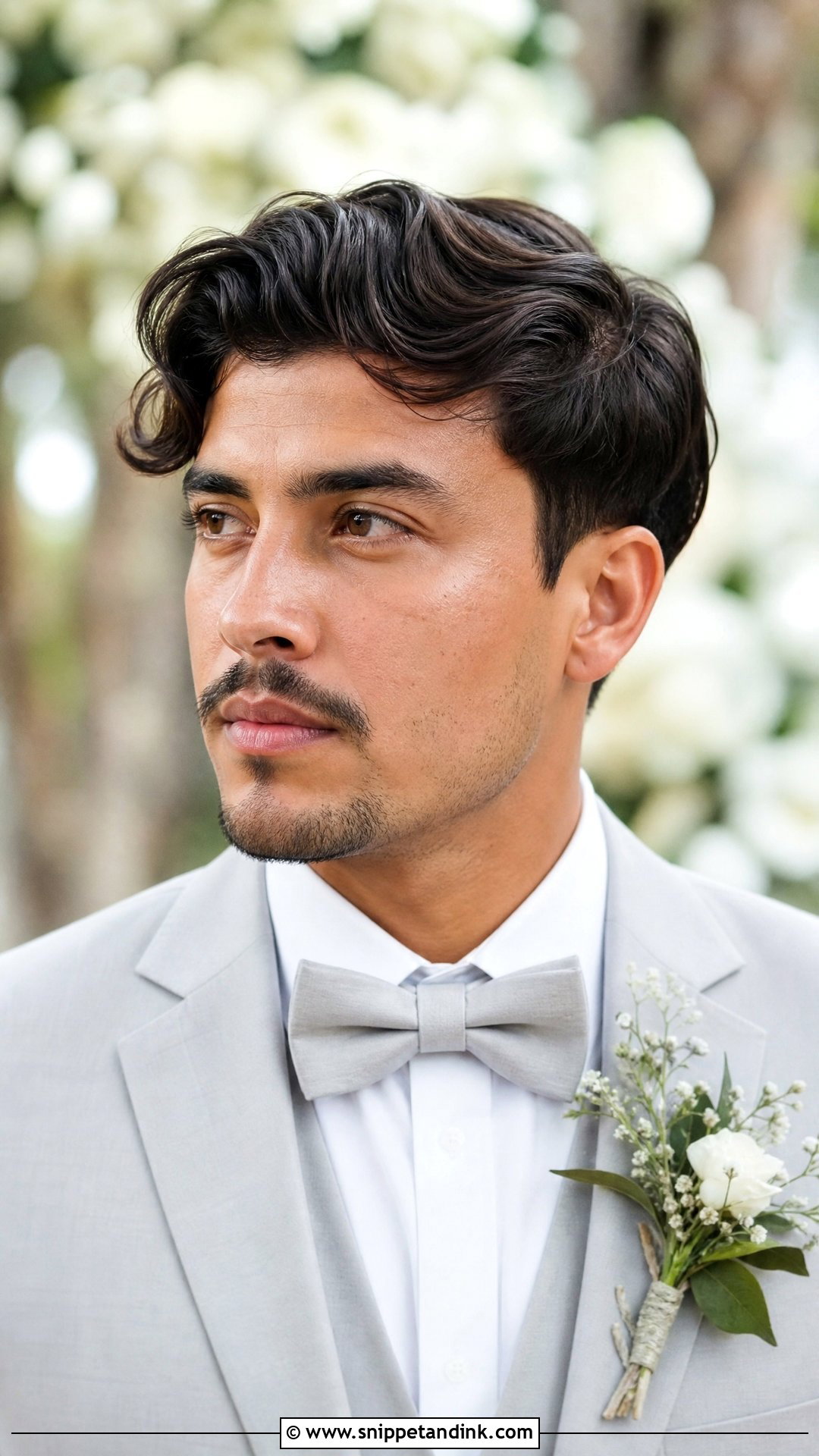
Soft waves swept to one side give medium hair movement without stiffness. The sides stay shaped and the top does the moving. A curl cream or light styling lotion cuts frizz and guides the wave, but go easy, because waves weighed down with product turn into flat strands by the evening. I’d suggest it for outdoor, vineyard and coastal weddings; the main risk is wind, so set the sweep with a light spray and accept that some movement is part of the look.
14. Man Bun Groom Wedding Hairstyle
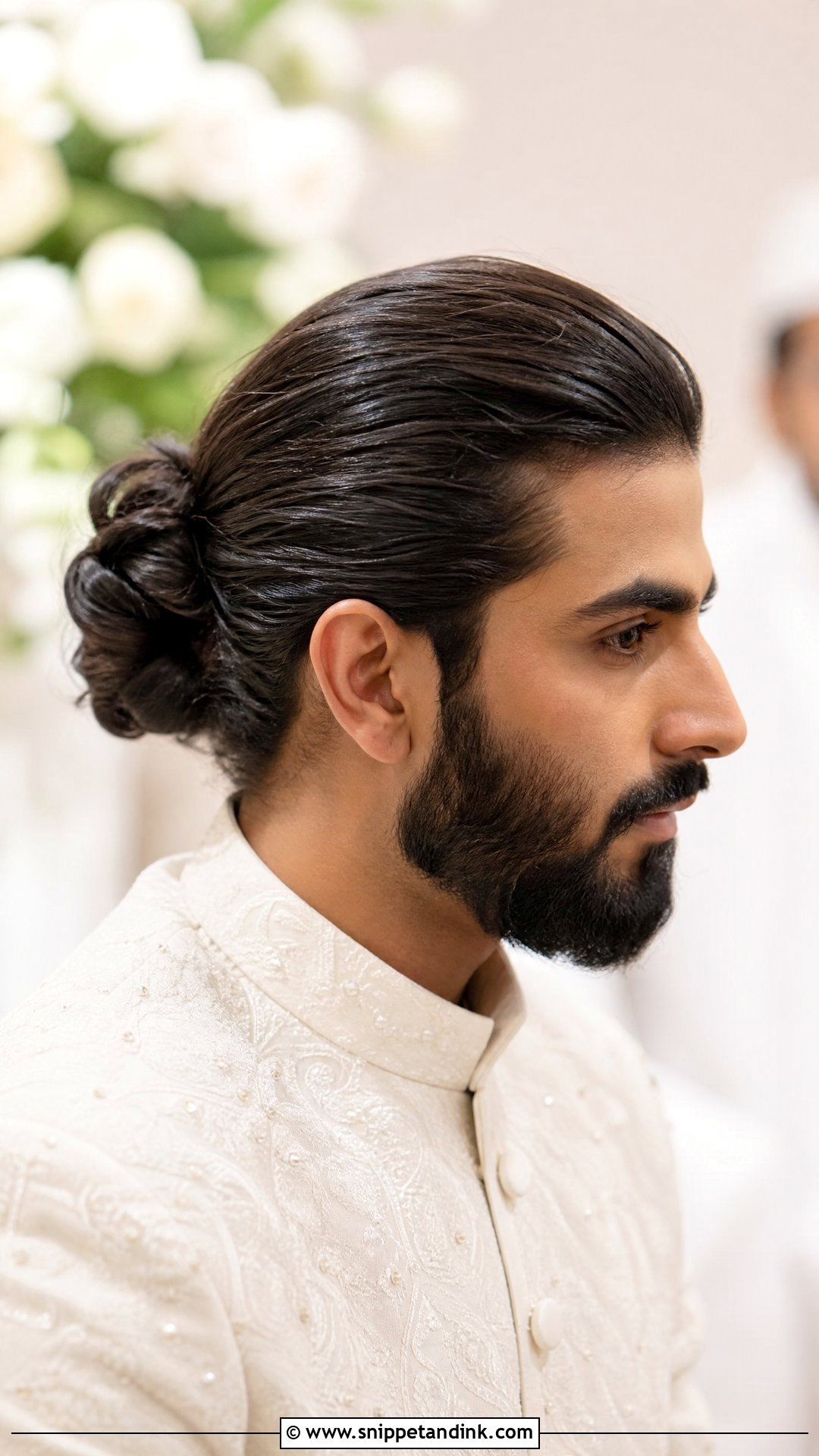
The trick to a refined man bun is the brushing before it ever gets tied. Brush the hair back smoothly and secure it at the crown or lower toward the nape. Low reads more formal, higher reads more modern. It’s an option for men with long hair who want to keep their length and still look neat at the ceremony. A smoothing cream catches flyaways, and the neckline needs grooming because it’s fully on show. Tailored suits, sherwanis and destination weddings all suit it.
15. Long Hair Groom Wedding Hairstyle
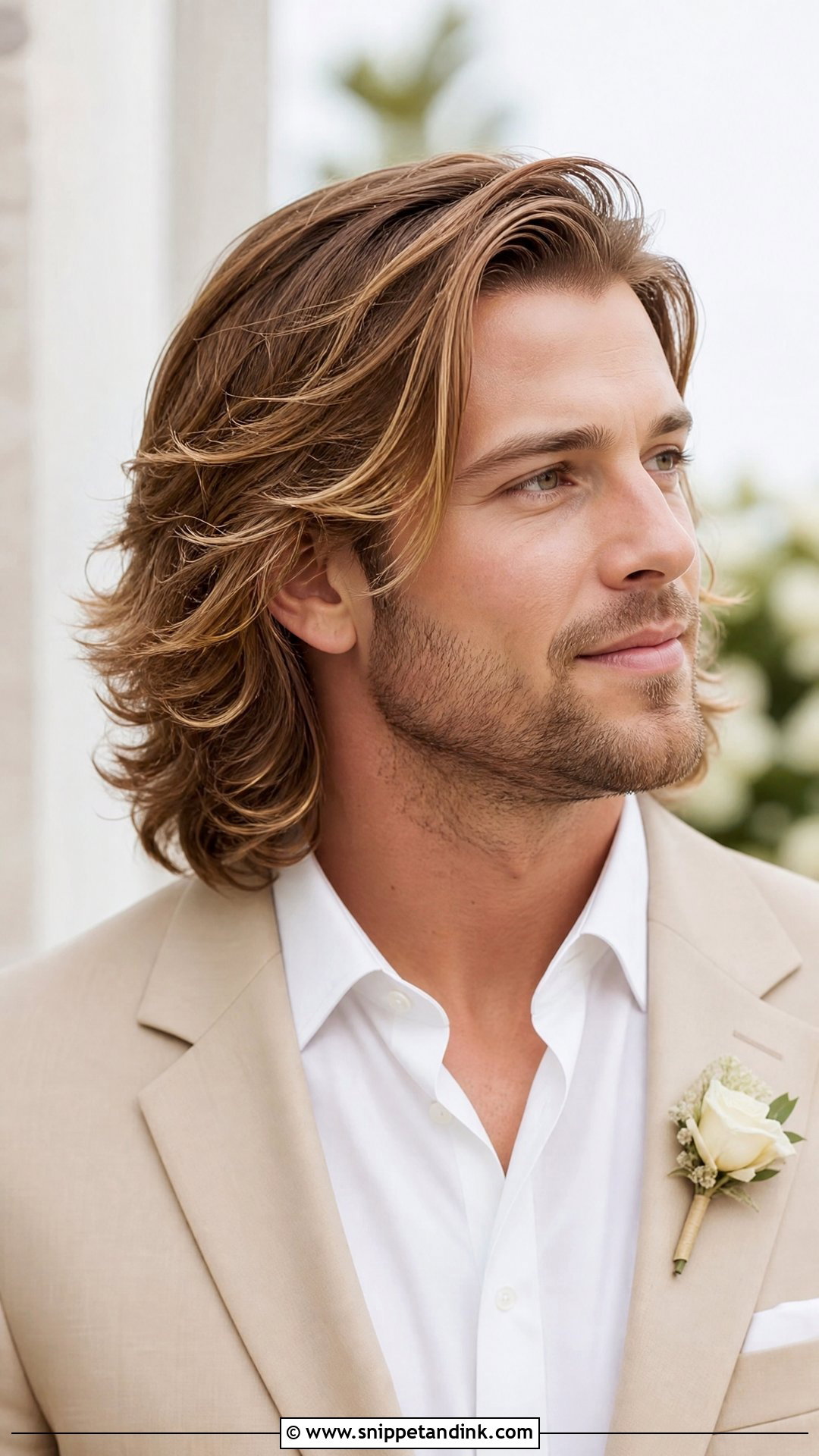
Worn loose, half back or tucked behind the ears, long hair needs a plan for the day as much as any short cut. Soft layers, healthy ends and controlled movement around the face are what make it look intentional. I’d book a trim a few weeks ahead to remove dry ends without losing length. A smoothing serum or light cream tames frizz; resist layering on product to compensate for heat, which makes the lengths stringy. It sits most comfortably at bohemian, beach and creative formal weddings.
How Styling Products Behave After Six Hours of Hugging
Product that looks right in the mirror at noon can look very different at nine at night under string lights. Heat, sweat and a hundred hugs all take a toll, and camera flash exaggerates shine. This is how I think about each type.
Matte clay and paste
The most forgiving choice for crops, quiffs and comb overs. It holds through heat and doesn’t turn shiny when you sweat. Too much looks dusty, so warm a pea-sized amount between your palms first.
Pomade and grooming cream
Better for side parts and slick backs. Water-based pomade can be rinsed and restyled if things go wrong; oil-based versions hold well but tend to look greasy under flash by the evening.
Curl cream and light gel
For curly tapers and high tops, the gel cast keeps definition through humidity. Scrunch it out once fully dry, and carry a small spray bottle of water to revive curls before evening portraits.
When the Final Cut Goes Wrong
It happens: a fade taken too high, a part shaved in when you didn’t ask for one, a fringe chopped short. My advice is not to book a second barber the same afternoon to fix it, which usually means going even shorter.
- Restyle rather than recut. A fade that’s too high often looks intentional with more texture and volume on top.
- Use the days you have. Even three days of growth softens a harsh line noticeably.
- Ask your original barber to blend, not remove. They know exactly what they did and most will fix it without charge.
- A carefully shaped beard draws the eye down and away from the sides of the head in portraits.
The Haircut Should Disappear Into the Suit
If guests leave saying the groom looked great but can’t quite say why, the haircut did its job. Start with how your hair actually behaves, then match the shape to the venue and the weather. Side parts, slick backs, low fades and crew cuts read as classic; curly tapers, medium flow and longer styles let more personality through. Do a product test, take a few phone photos by a window from the side and back, and make any tweaks a couple of weeks out, not the night before.
You'll Like These Ideas:


Leave a Reply