
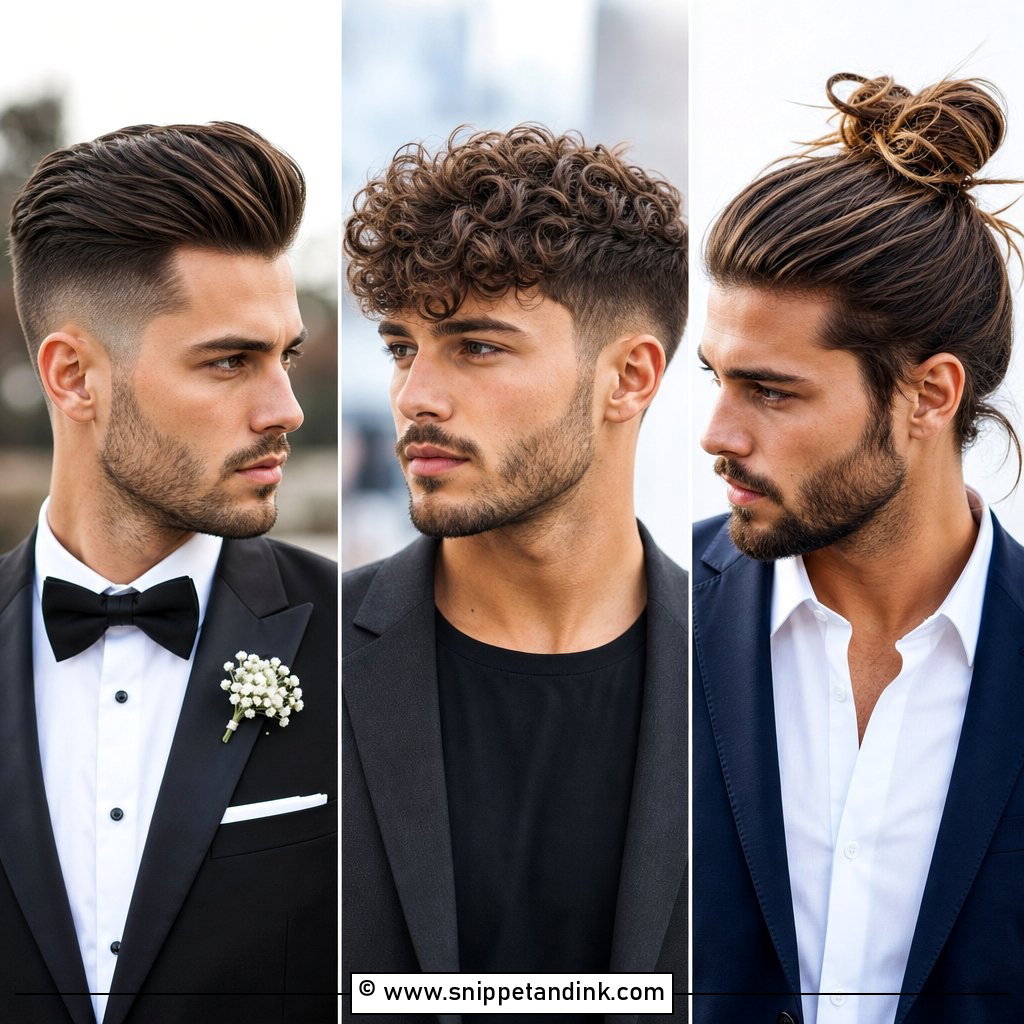
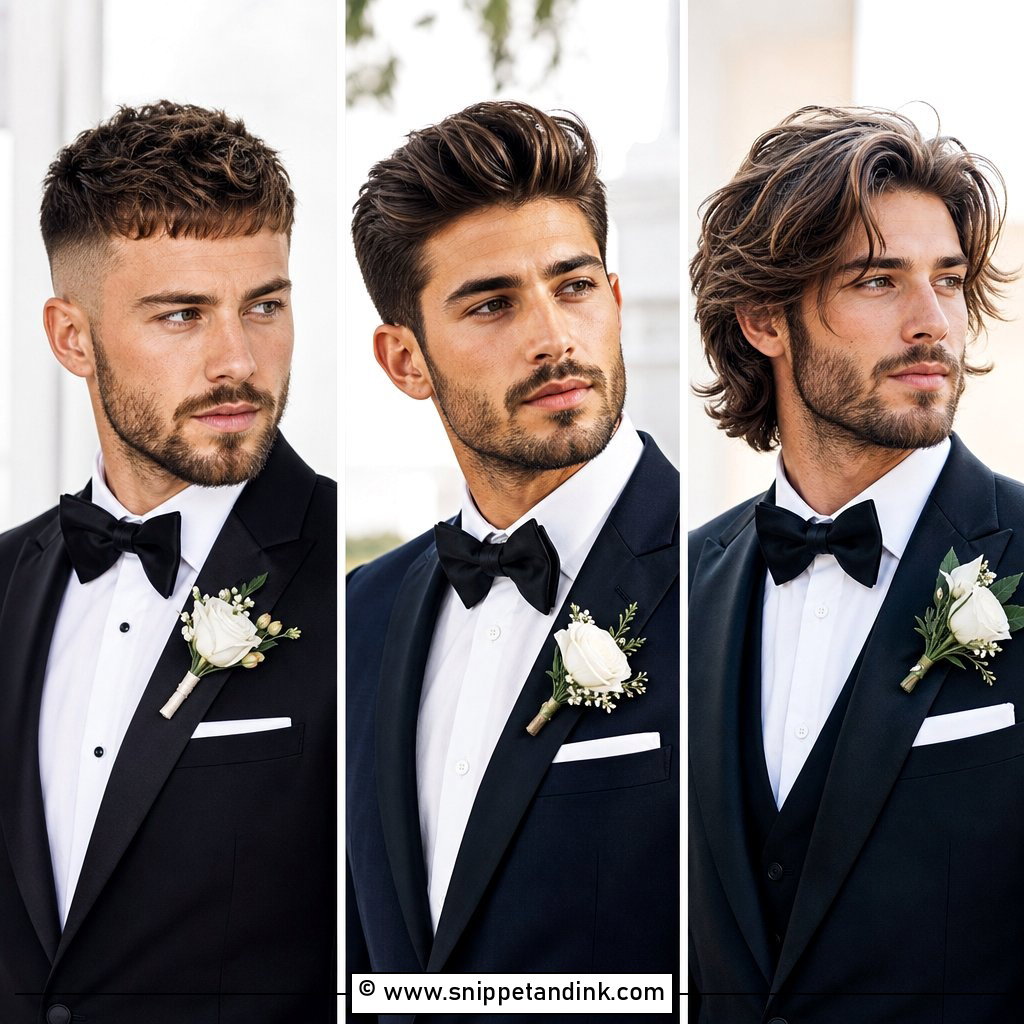
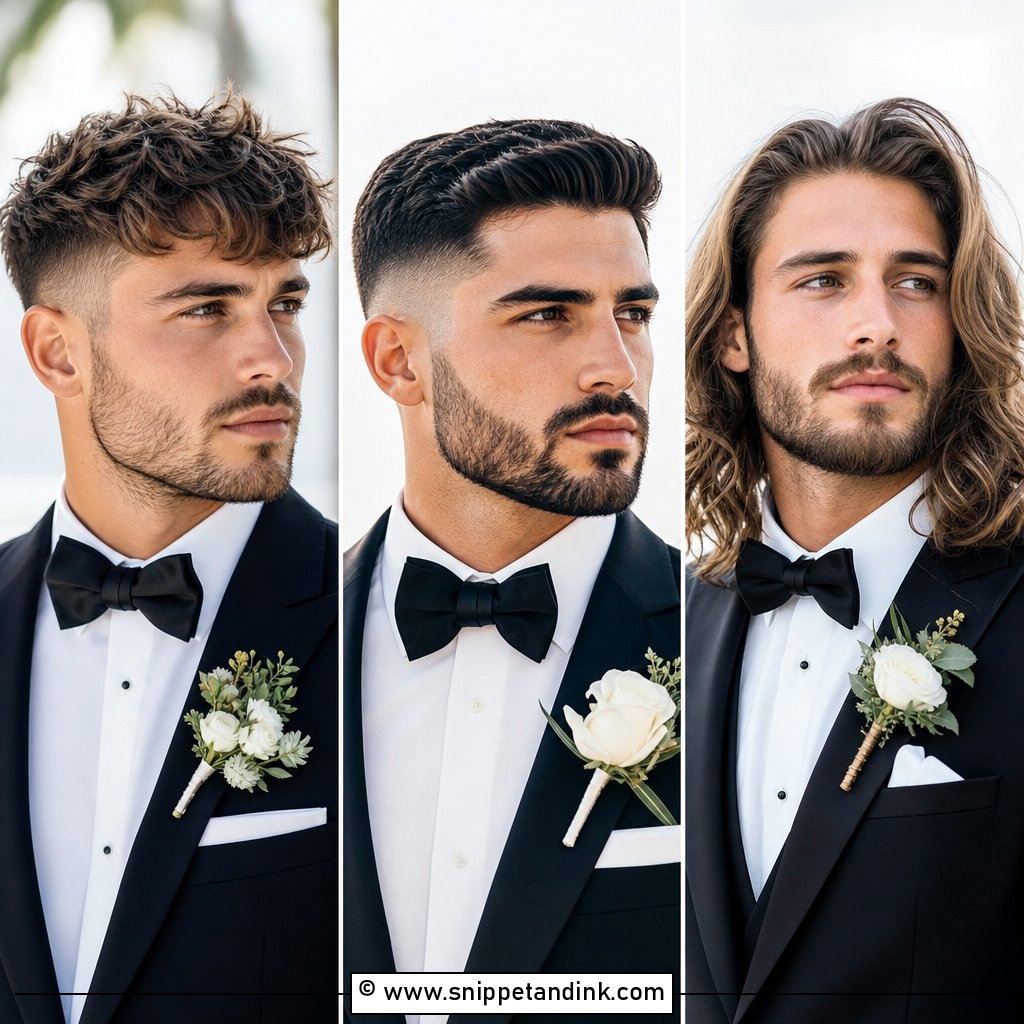
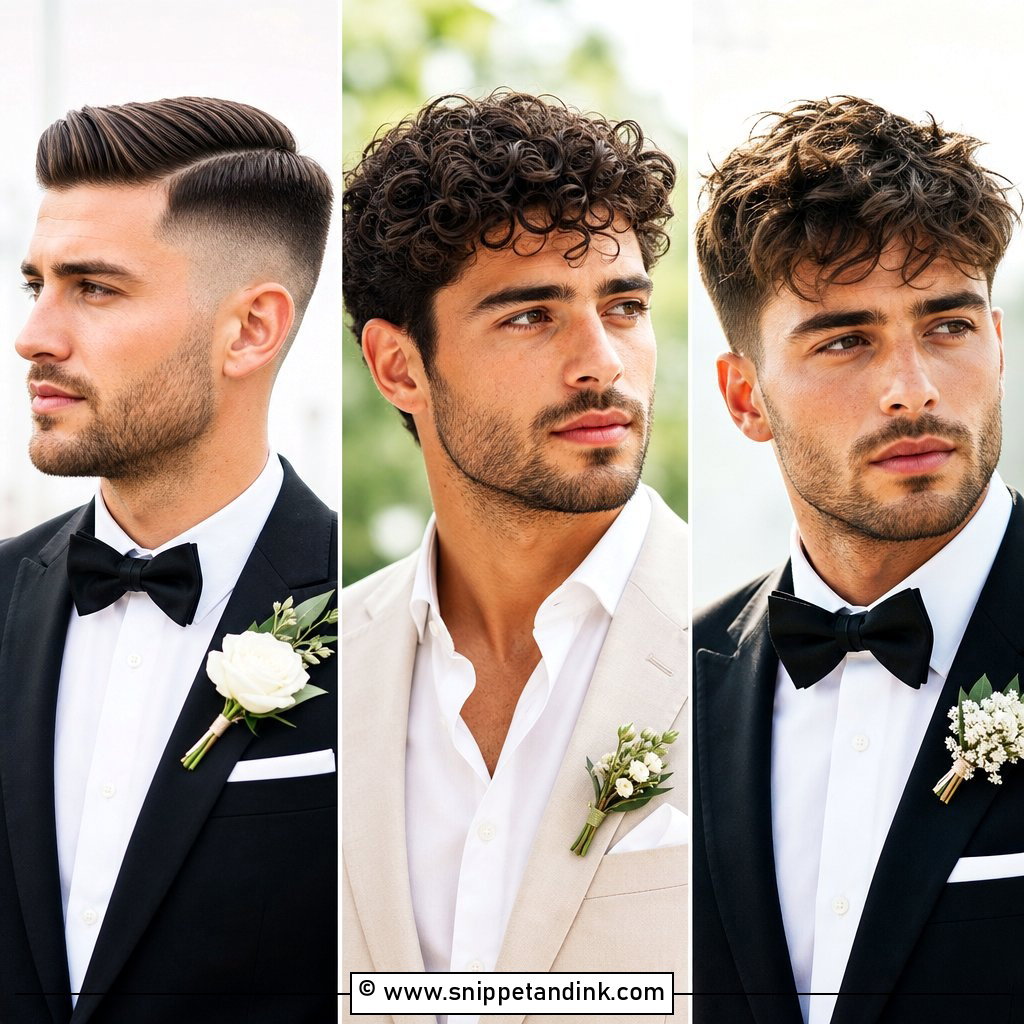
When I dress a groom, the haircut is part of the outfit, not something he sorts out on his own the week before. It has to sit right above a sherwani, bandhgala, kurta or suit collar, fit under a safa, turban or sehra, and still look tidy after hours of rituals and a reception under hot lights. The cuts that work best usually have clean sides, controlled height and a soft, natural finish rather than a gelled shell. Below are fifteen looks for short, medium and long hair, with notes on which outfits and headwear each one actually suits.
Scheduling the Final Cut When Functions Run for Days
An Indian wedding rarely happens on one day, and a haircut that looks perfect at the haldi can look grown-out by the reception. I plan the cut backwards from the most photographed event, which is usually the main ceremony.
- Try any new style at least six weeks ahead, so there’s time for a second cut if it doesn’t suit you.
- Book the final cut five to seven days before the main ceremony. Freshly cut hair can look sharp and slightly unnatural for a day or two; by the weekend it has settled.
- Fades and skin-short sides show regrowth fastest. If your functions span several days, ask your barber for a quick neckline and sideburn clean-up on the morning of the ceremony.
- Tapers and longer cuts forgive the gap better, so they suit weddings with many events.
Don’t try a new barber in wedding week. Even a skilled one needs a cut or two to learn your cowlicks and how your hair falls.
1. Indian Groom Textured Quiff
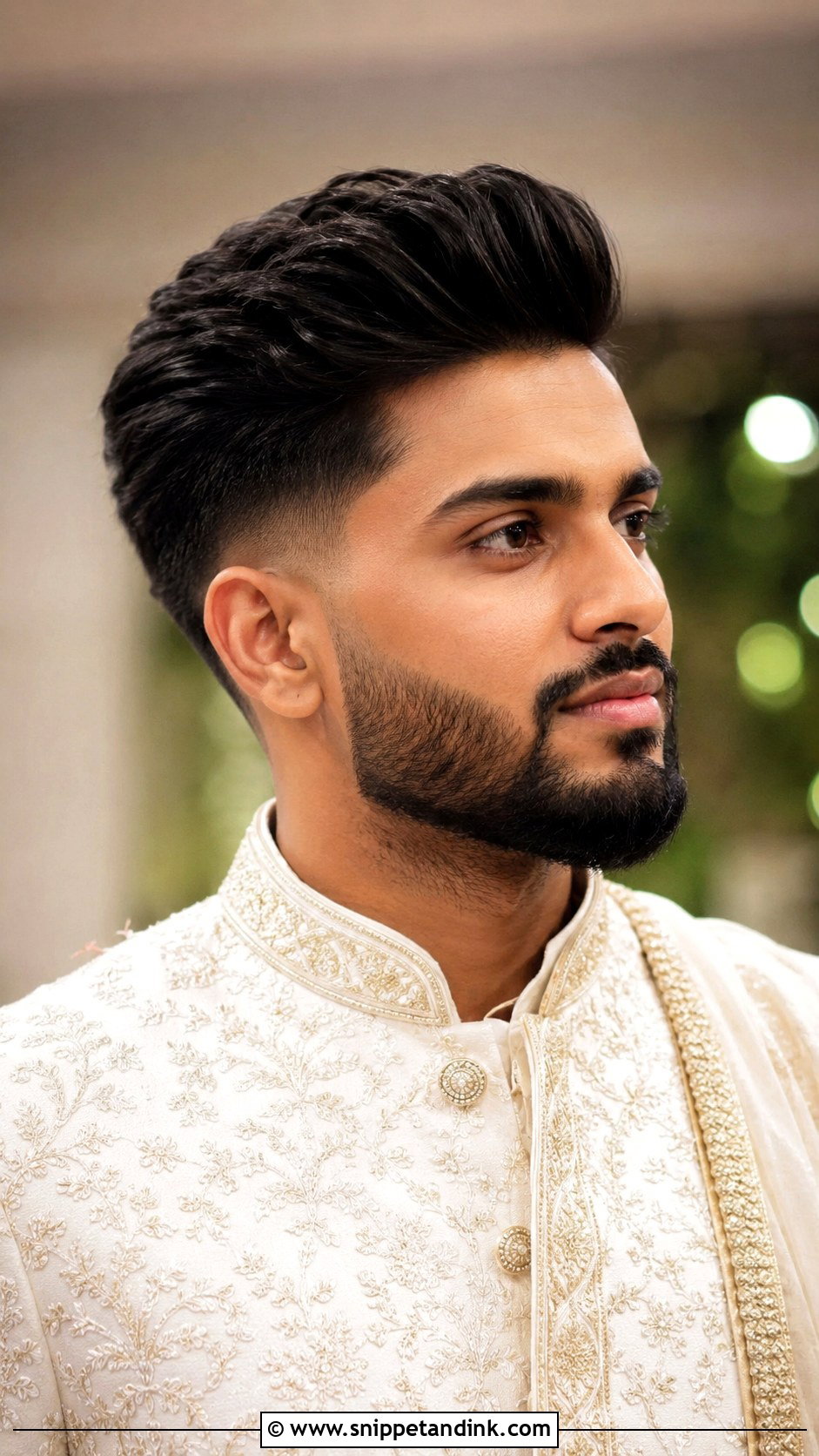
Thick, dark hair is made for a textured quiff, because the density holds lift at the front without much product. The top stays longer and the sides are tapered or faded, so the outline looks sharp above a high collar. I tell grooms to ask the barber for broken-up texture, not spikes, and to style it with a matte clay worked in from the back first; starting at the front loads the fringe and it collapses. It adds height to a sherwani or a reception suit without tipping into drama. Under a safa, though, the quiff gets flattened, so save it for functions without headwear.
2. Indian Groom Classic Side Part
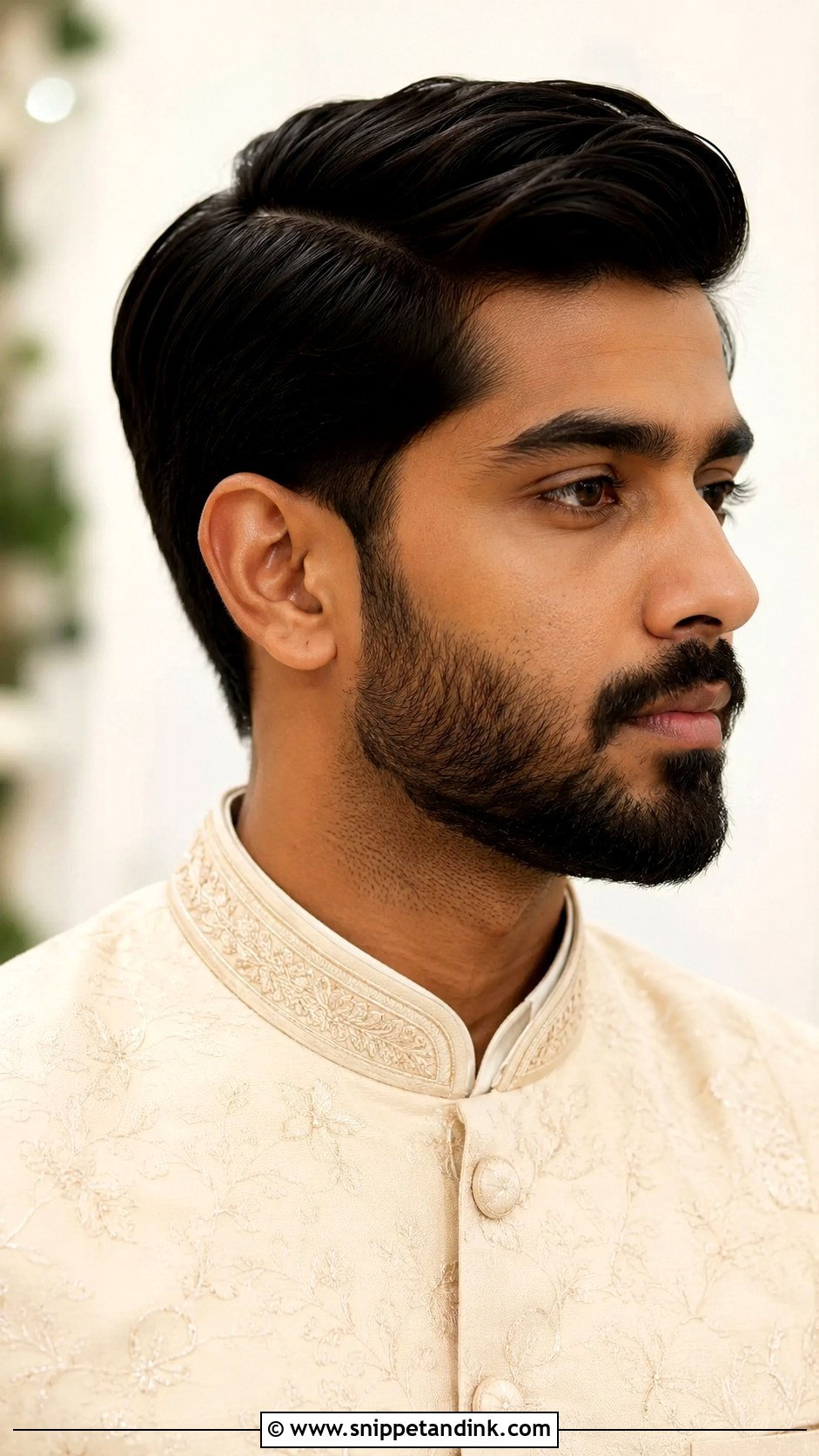
The side part is the cut I’d recommend to a groom who isn’t sure, because it works at the mandap, in portraits and at the reception without changing anything. It needs short to medium hair with a bit of length on top. Where the part sits matters: in line with the outer corner of the eyebrow looks natural, while a part cut in with clippers can look harsh in close-ups. A low taper keeps the sides neat, and a light pomade or grooming cream gives some shine and movement without the wet look.
3. Indian Groom Slick Back Hair
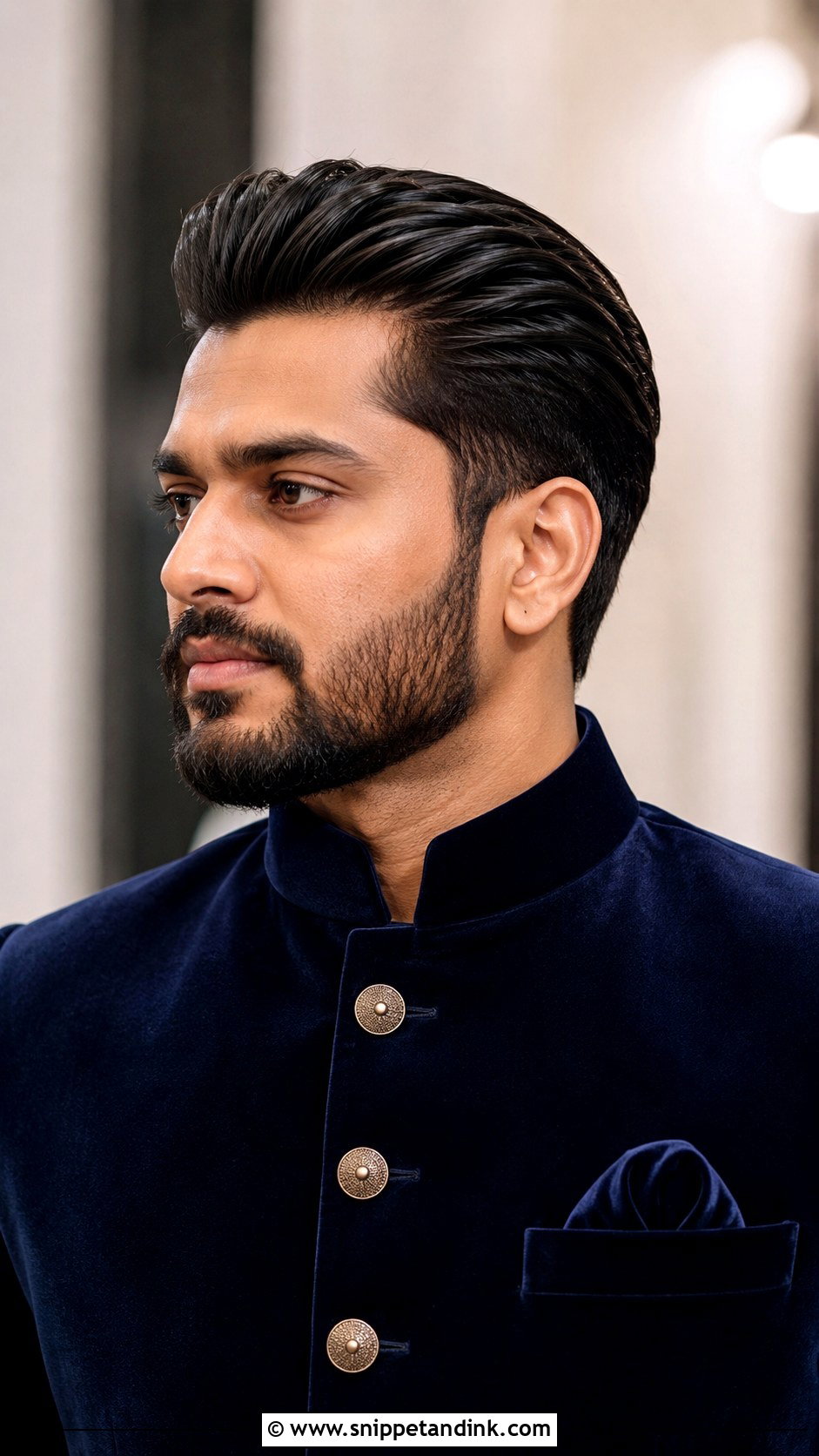
Brushing the hair straight back exposes the whole face, so the jawline, beard and the collar of a structured sherwani or embroidered bandhgala all get more attention. It needs medium length on top and some weight left at the crown; cut too short there and the hair sticks up instead of lying back. I’d steer grooms away from heavy gel, which turns crisp and shiny under flash. A flexible pomade combed through damp hair, then smoothed once dry, gives the same line with a softer finish. Low fade or tapered sides keep it current.
4. Indian Groom Low Fade Haircut
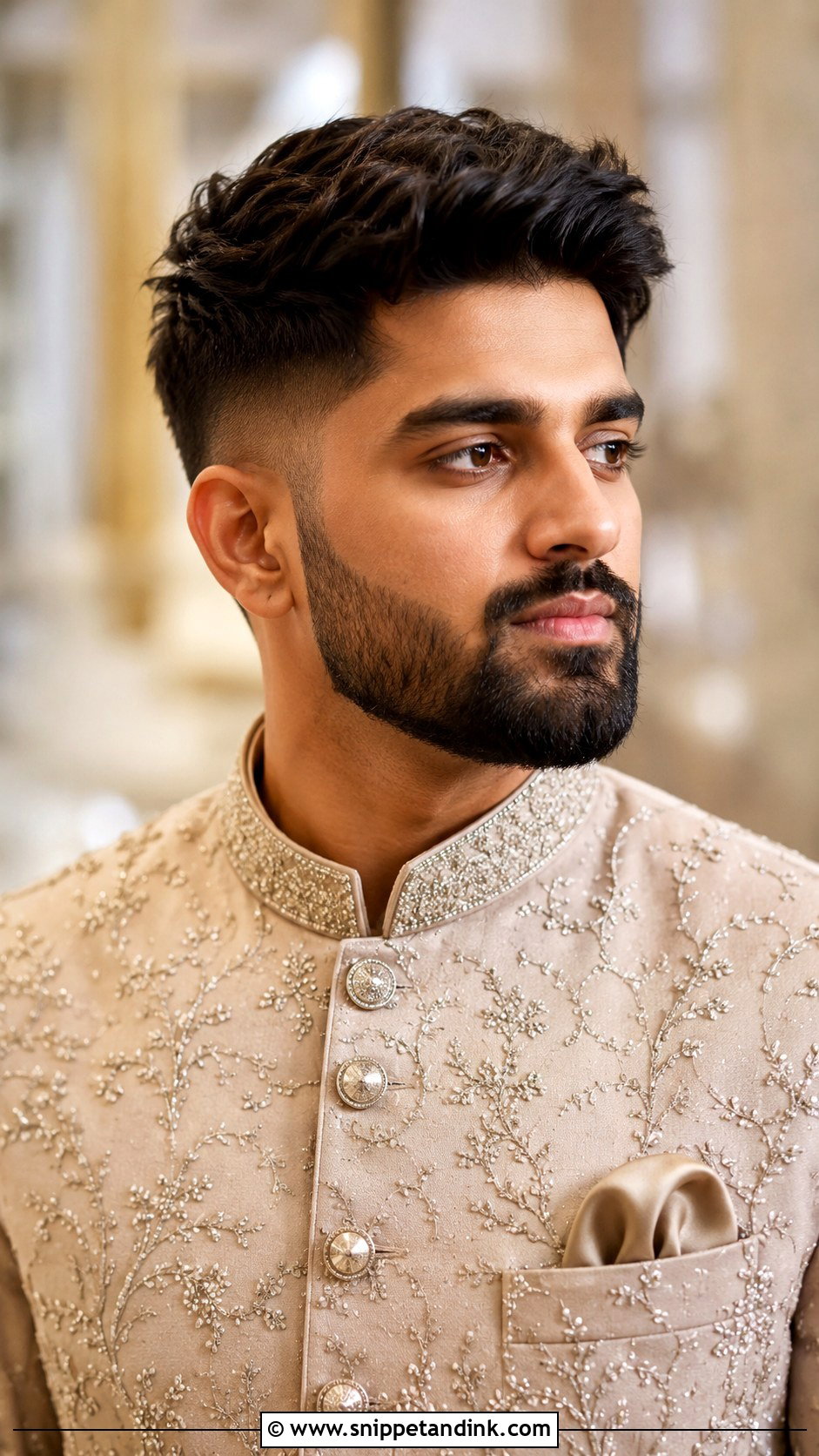
A fade that starts low, near the ears, gives a clean modern outline without looking too edgy beside a traditional sherwani or kurta. That’s why a low fade haircut is such a useful base across several functions: the top can be worn as a quiff for the sangeet, a side part for the ceremony and swept back for the reception. The thing to watch is timing. A fade shows regrowth faster than any other cut, so get it done a few days before, not two weeks out, and keep it blended rather than cut high.
5. Indian Groom Pompadour
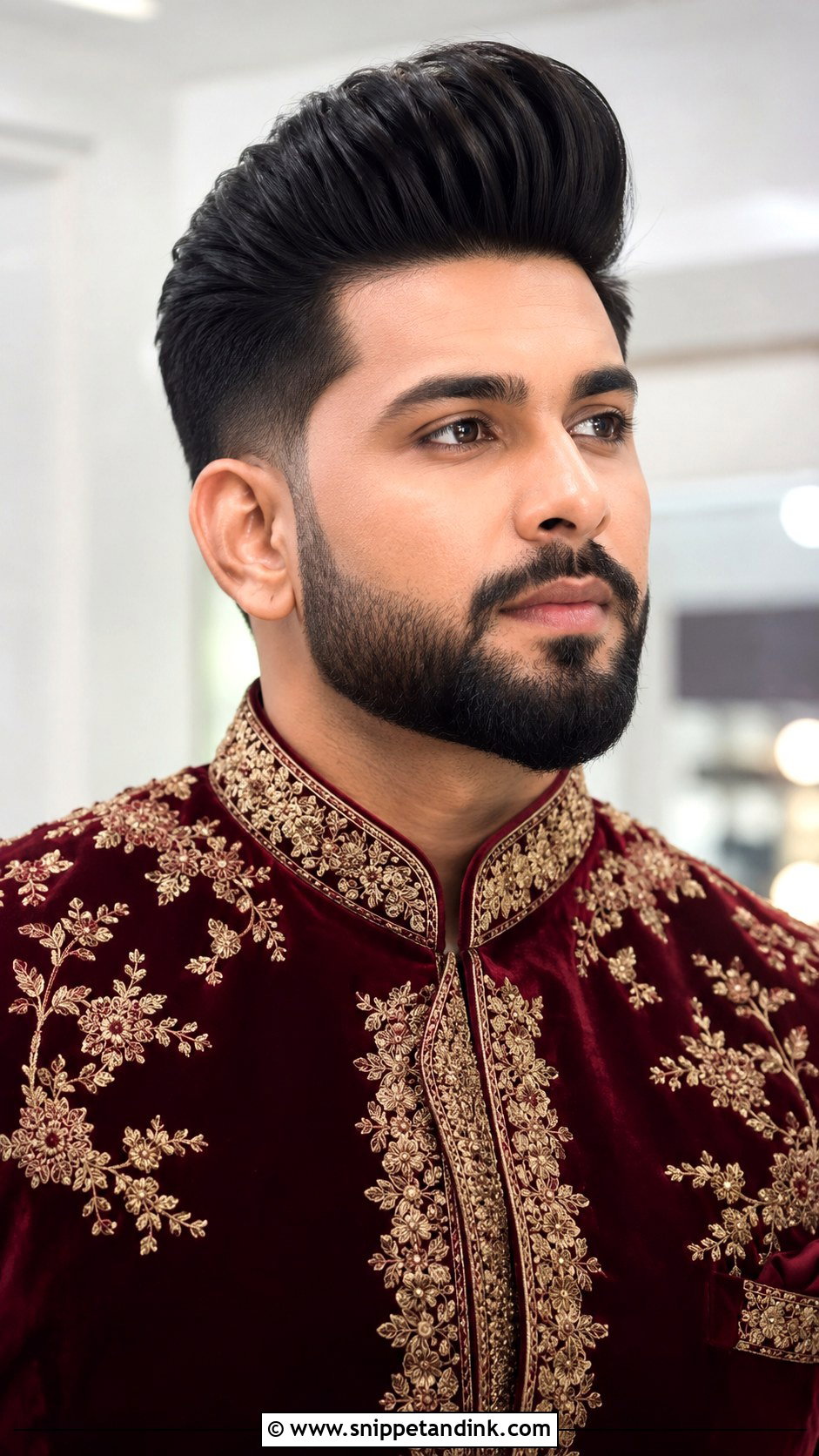
A pompadour is the most styled look on this list, with real volume at the front and a smooth sweep back. Indian hair often has enough thickness to hold it, but only with a proper blow-dry: round brush, lifting at the roots, then a medium-hold product. Skip the blow-dry and no product will keep the shape for long. With very traditional outfits I keep the sides tidy but not shaved, since a stark undercut can fight with a brocade sherwani. Velvet bandhgalas and evening reception looks suit it best.
6. Indian Groom Short Crop Haircut
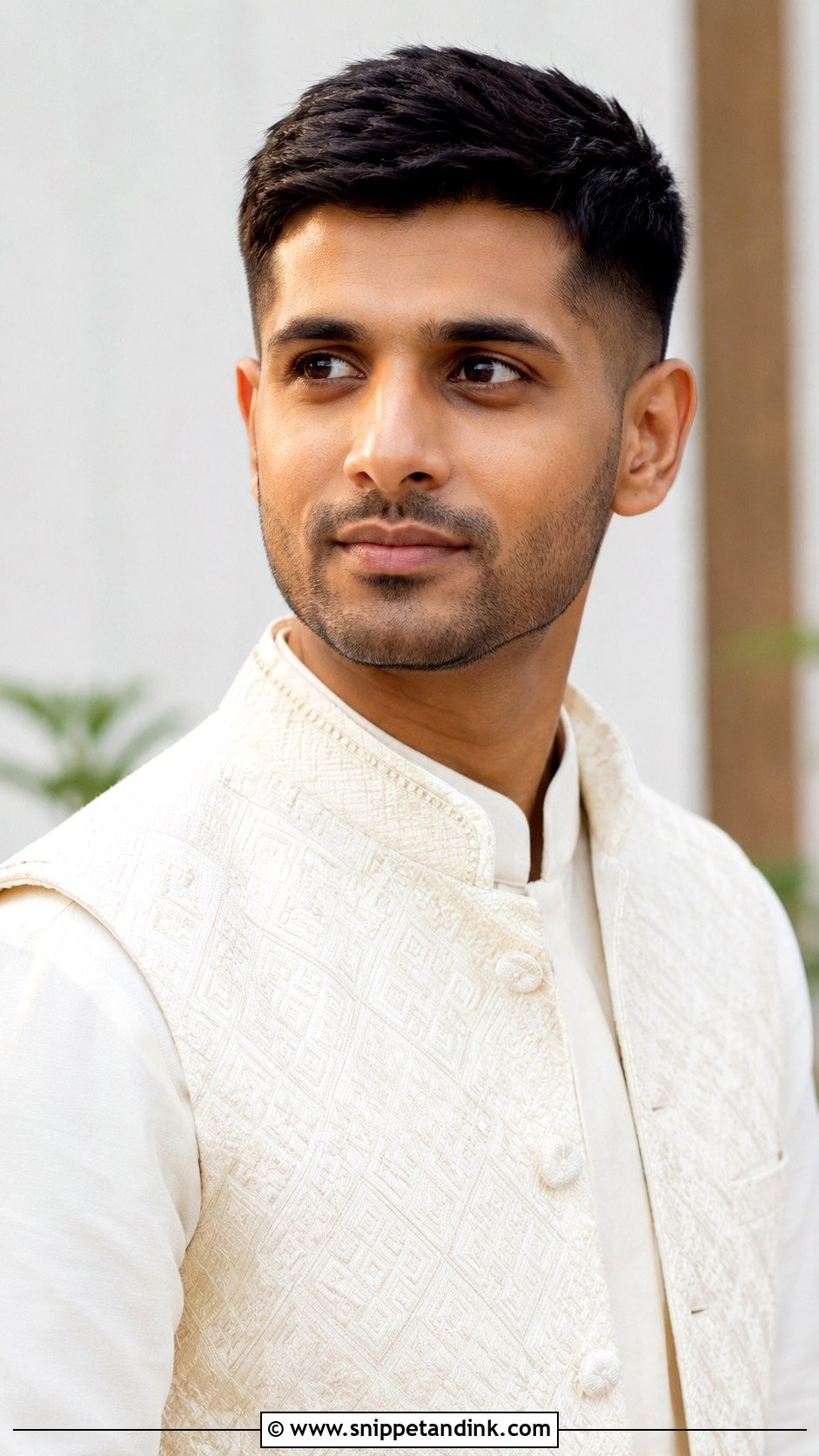
For a groom who doesn’t want to think about his hair at all, a short crop is the answer. The top is short with light texture, the sides balanced, and there’s almost nothing that can go wrong in humidity or during long rituals. It also sits flat under a safa or sehra. I’d ask the barber for point-cut texture on top rather than a blunt clipper finish, which looks flat in photos. A pea-sized amount of matte paste is all it needs.
7. Indian Groom Wavy Medium Hair
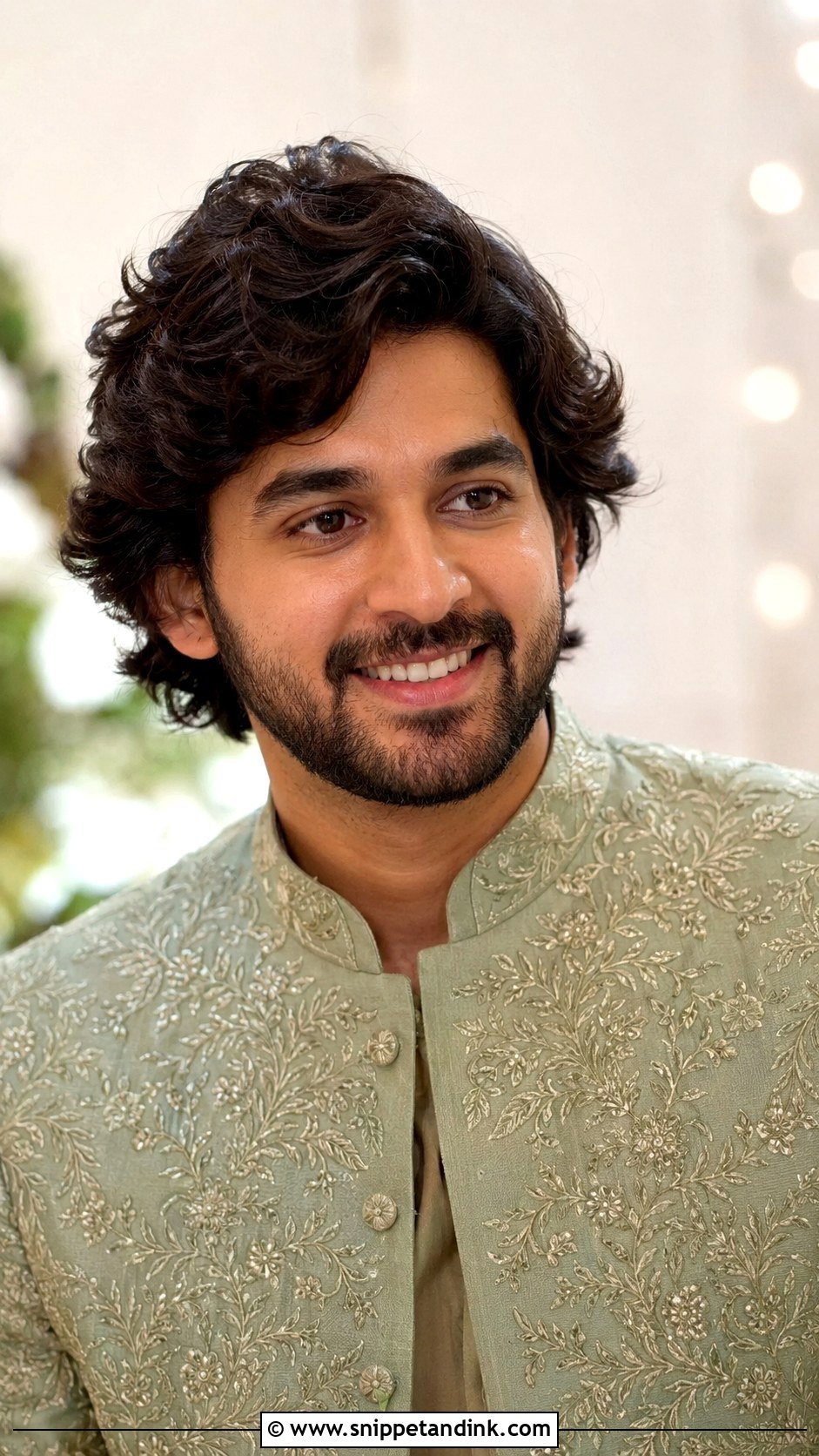
Medium-length waves look relaxed and polished at the same time, and they suit mehndi, haldi, beach and garden weddings especially well. The cut makes or breaks it: soft layers let the waves fall around the forehead and sides, while one length all over turns into a triangle of bulk. It pairs naturally with lighter groomwear in ivory, beige, pastels or linen blends. Define the waves with a curl cream or light leave-in while the hair is damp, and leave the comb alone afterwards. Combing waves when dry just turns them into frizz.
8. Indian Groom Curly Hair
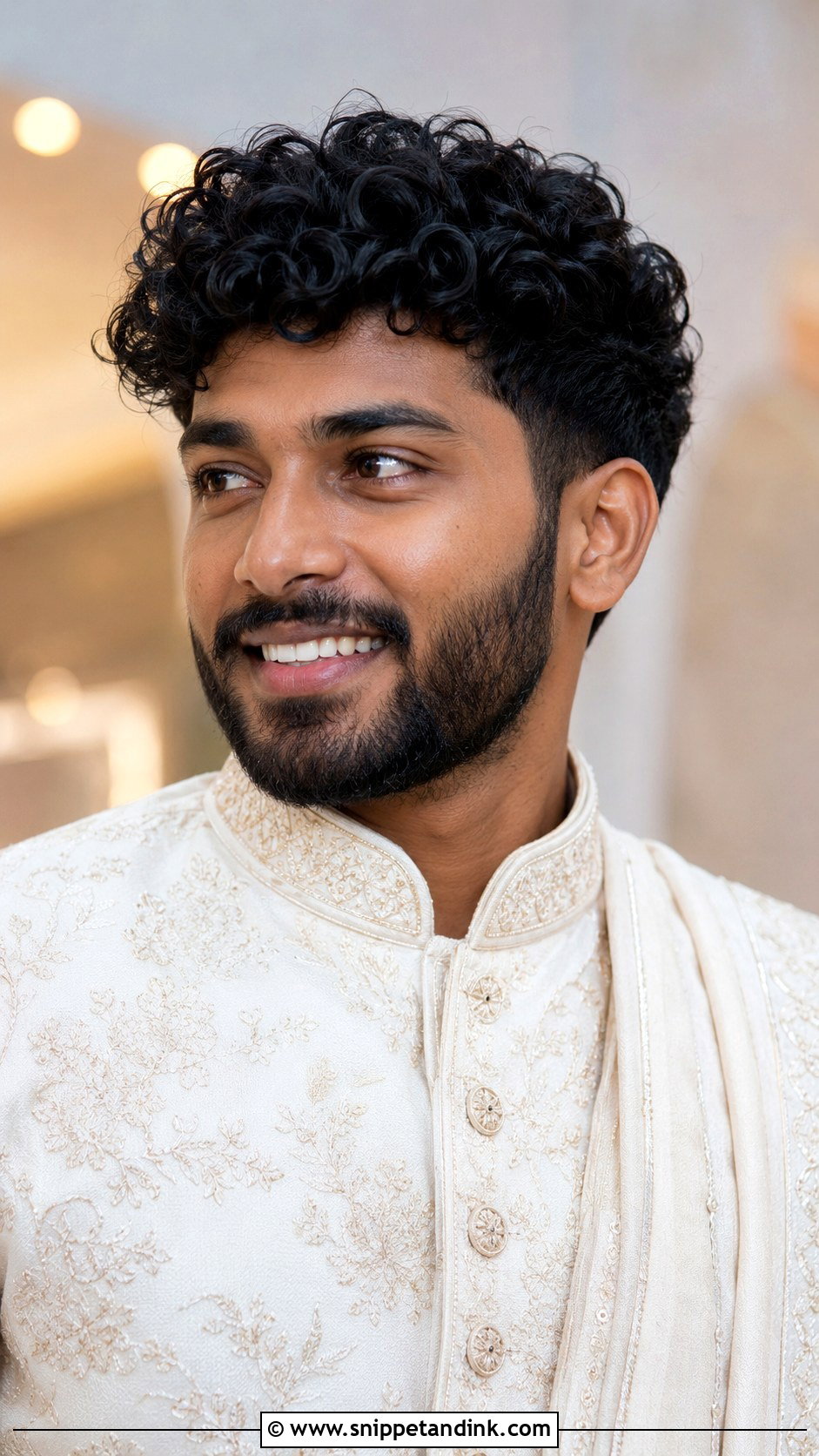
Curly hair should be shaped, not flattened. A good barber cuts the outline and removes bulk from inside the curls while keeping their pattern, usually with the hair dry so he can see where each curl falls. Keep the sides tapered and let the top show natural definition. With a well-groomed beard, it works with ethnic wear and suits equally. Curls need moisture to look defined in photos, so apply curl cream or a light defining gel to damp hair and let it dry without touching it.
9. Indian Groom Long Hair Bun
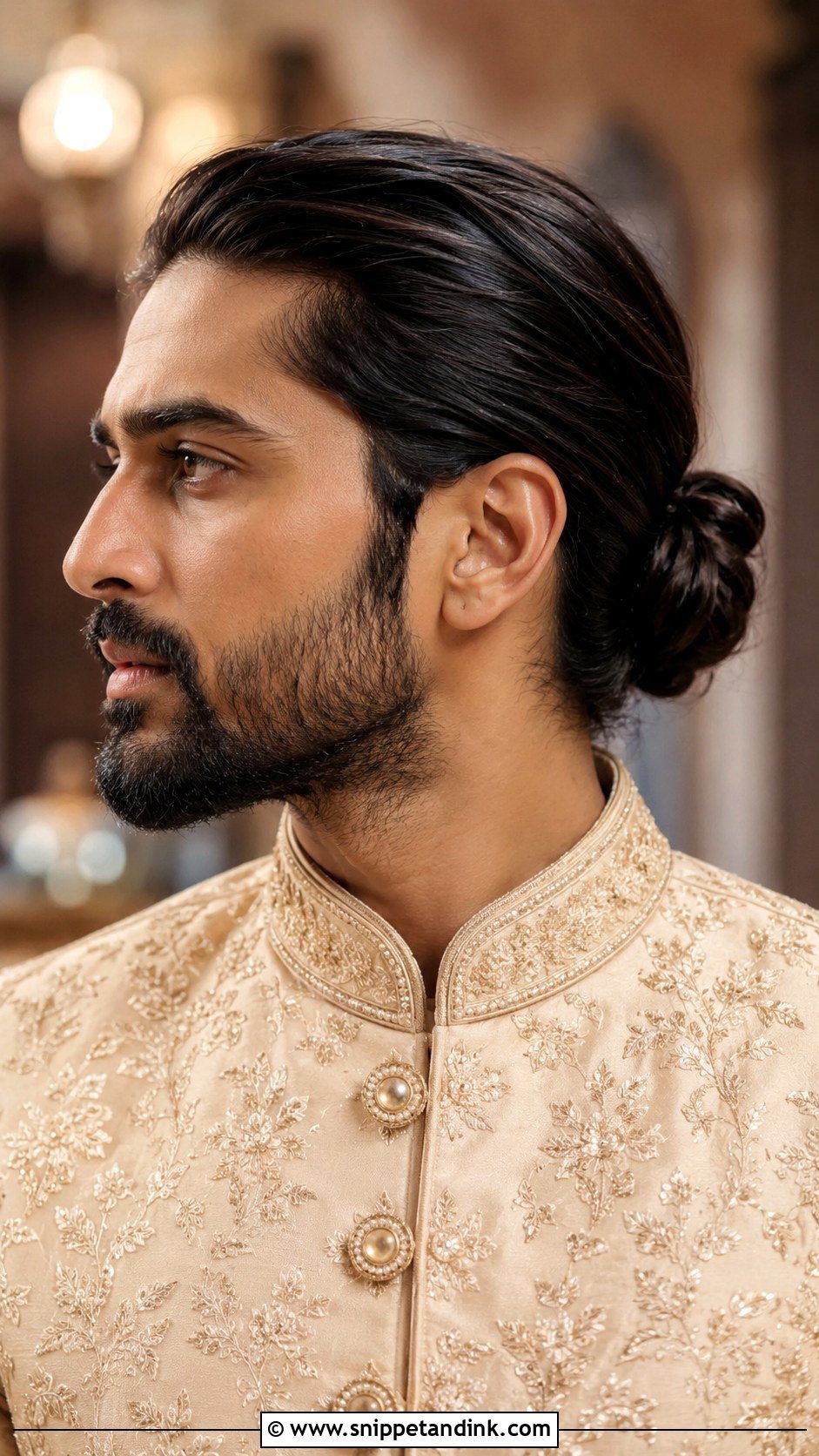
Shoulder-length or longer hair tied into a bun keeps everything controlled through ceremonies and looks deliberate with a sherwani, bandhgala or Indo-western outfit. Low at the nape reads elegant; a little higher feels more modern. I’d avoid pulling it too tight, which looks severe and can give a headache by the evening. A small amount of serum on the lengths before tying keeps frizz down, and a clean beard balances the softness of the bun.
10. Indian Groom Man Bun With Beard
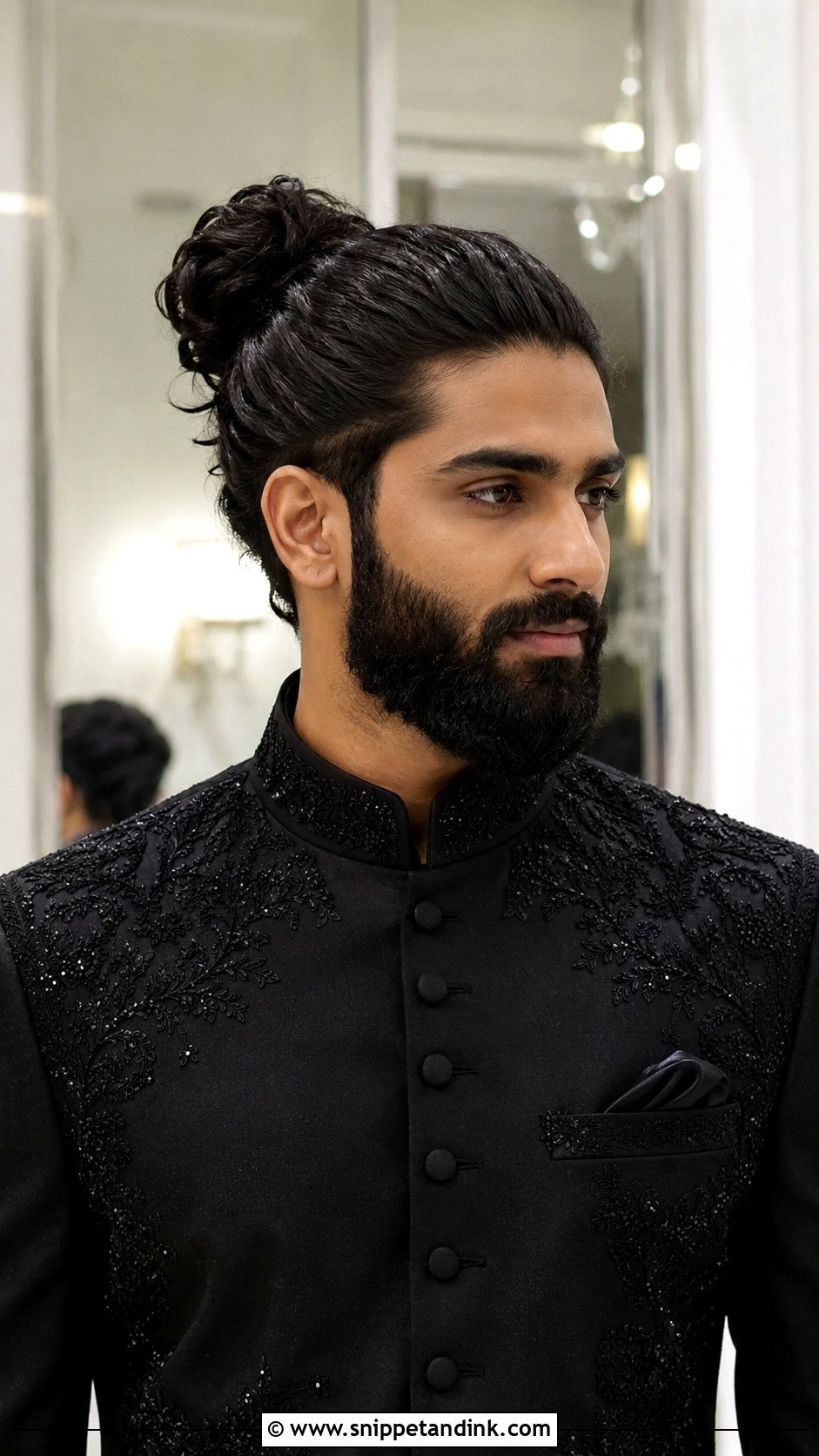
Pairing a man bun with a full beard gives the face strong structure, which is why it works with embroidered sherwanis and layered necklaces. The details decide whether it looks groomed or casual: lightly tapered or cleaned-up sides around the ears and nape, a bun pinned securely, flyaways smoothed with a little cream. Get the beard shaped by the same barber a couple of days before, so the lines and the hair outline match. Done carelessly, this style looks like a day off rather than a wedding.
11. Indian Groom Side Swept Hair
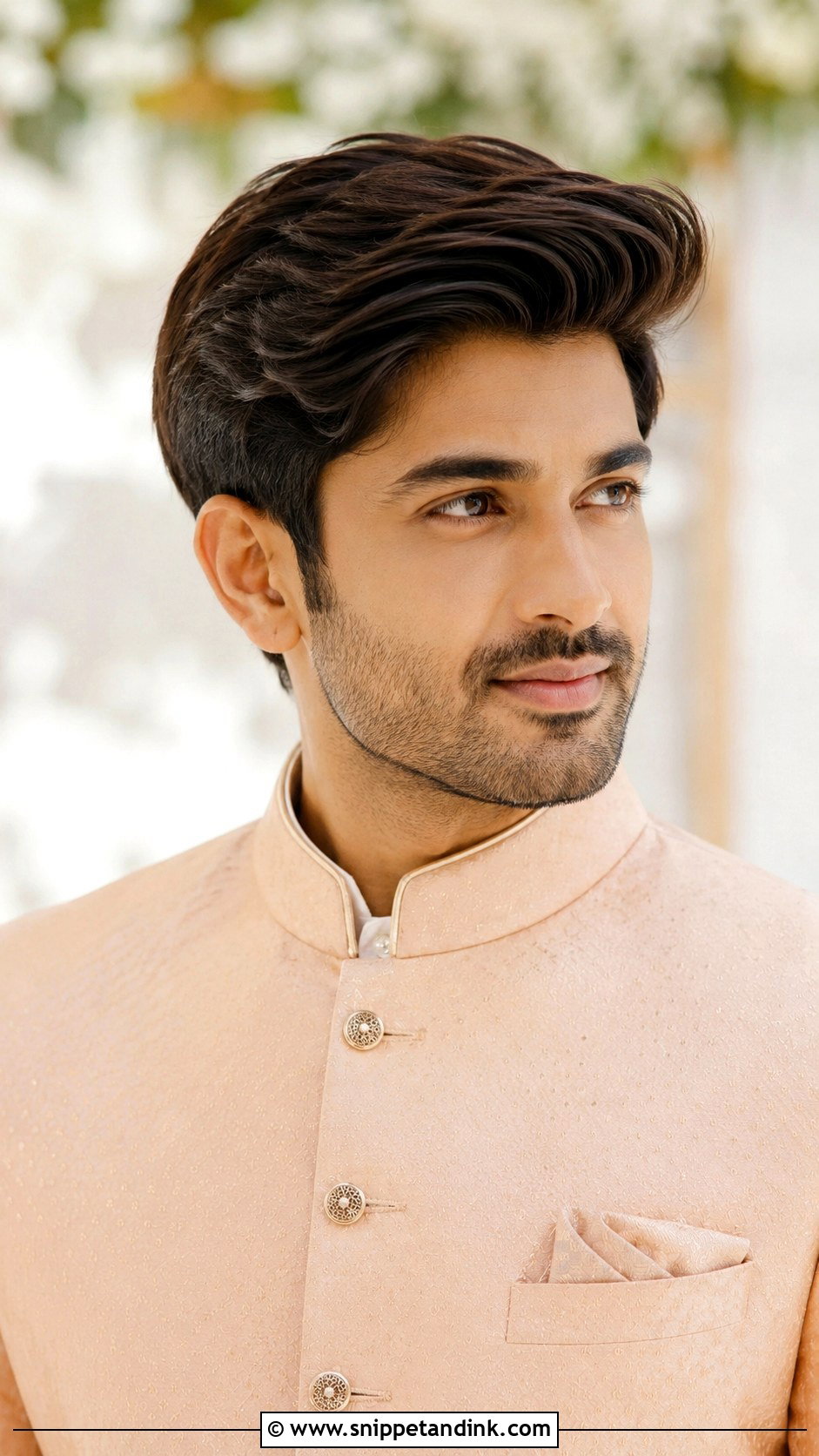
Hair brushed diagonally across the top gives movement and keeps the face open without adding height. That makes it a good choice for grooms who feel self-conscious with a tall quiff. It needs medium length and suits oval, square and heart-shaped faces. I’d blow-dry it into place, directing the hair across with the nozzle pointed down the shaft, then finish with a flexible cream. It’s formal enough for the rituals and relaxed enough for the reception, with a trimmed beard or a clean shave.
12. Indian Groom Undercut Hairstyle
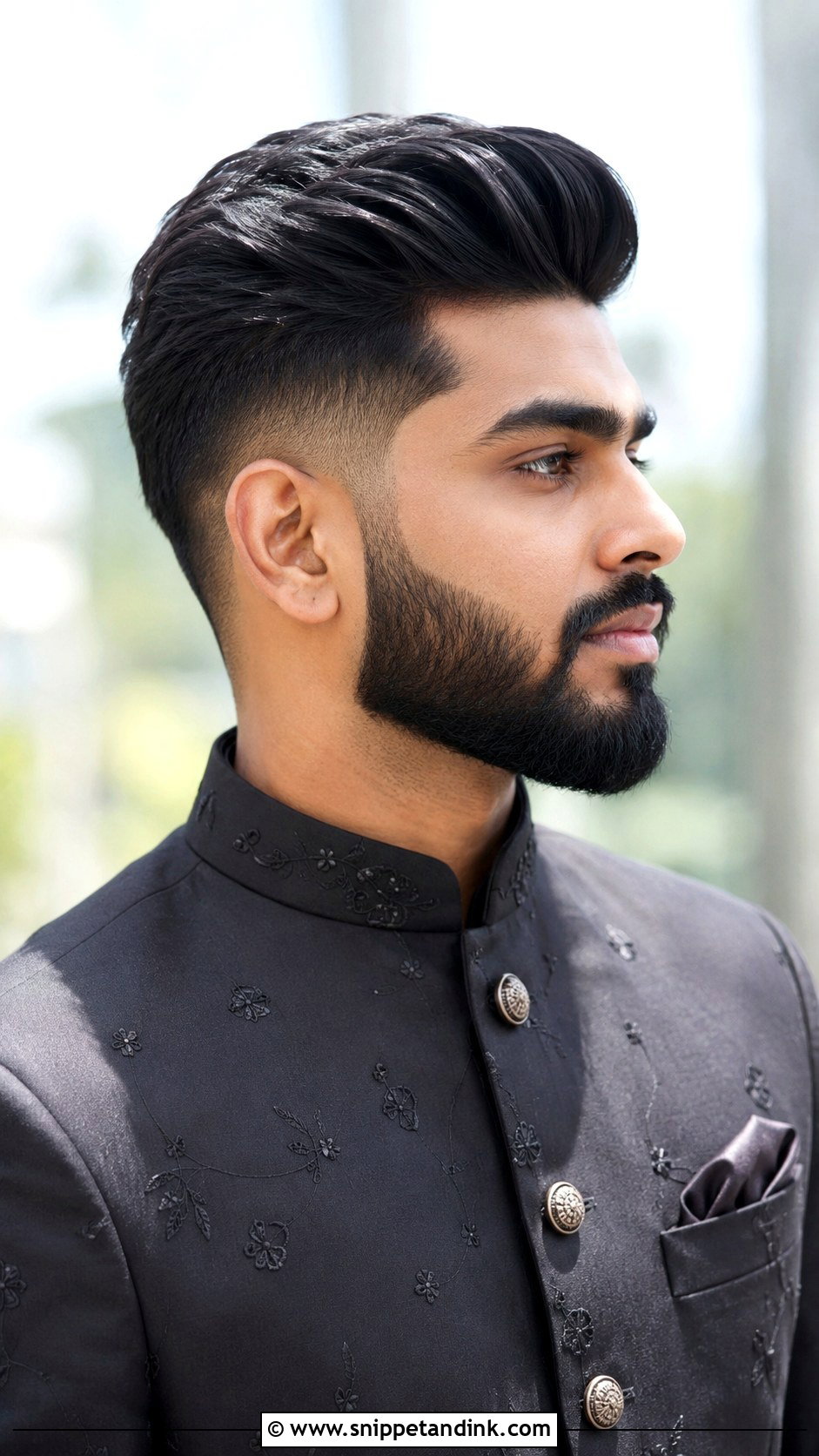
An undercut hairstyle creates contrast with short sides and a longer top. For an Indian wedding, I’d go for a softer version where the sides are blended rather than sharply disconnected, which can look out of place with a traditional outfit. The top can be worn as a quiff, slick back, side part or textured sweep, and it suits reception suits and Indo-western looks well. If you’re wearing a safa, check the top length with whoever is tying it first; too much hair on top makes the safa sit high and uneven.
13. Indian Groom Tapered Haircut
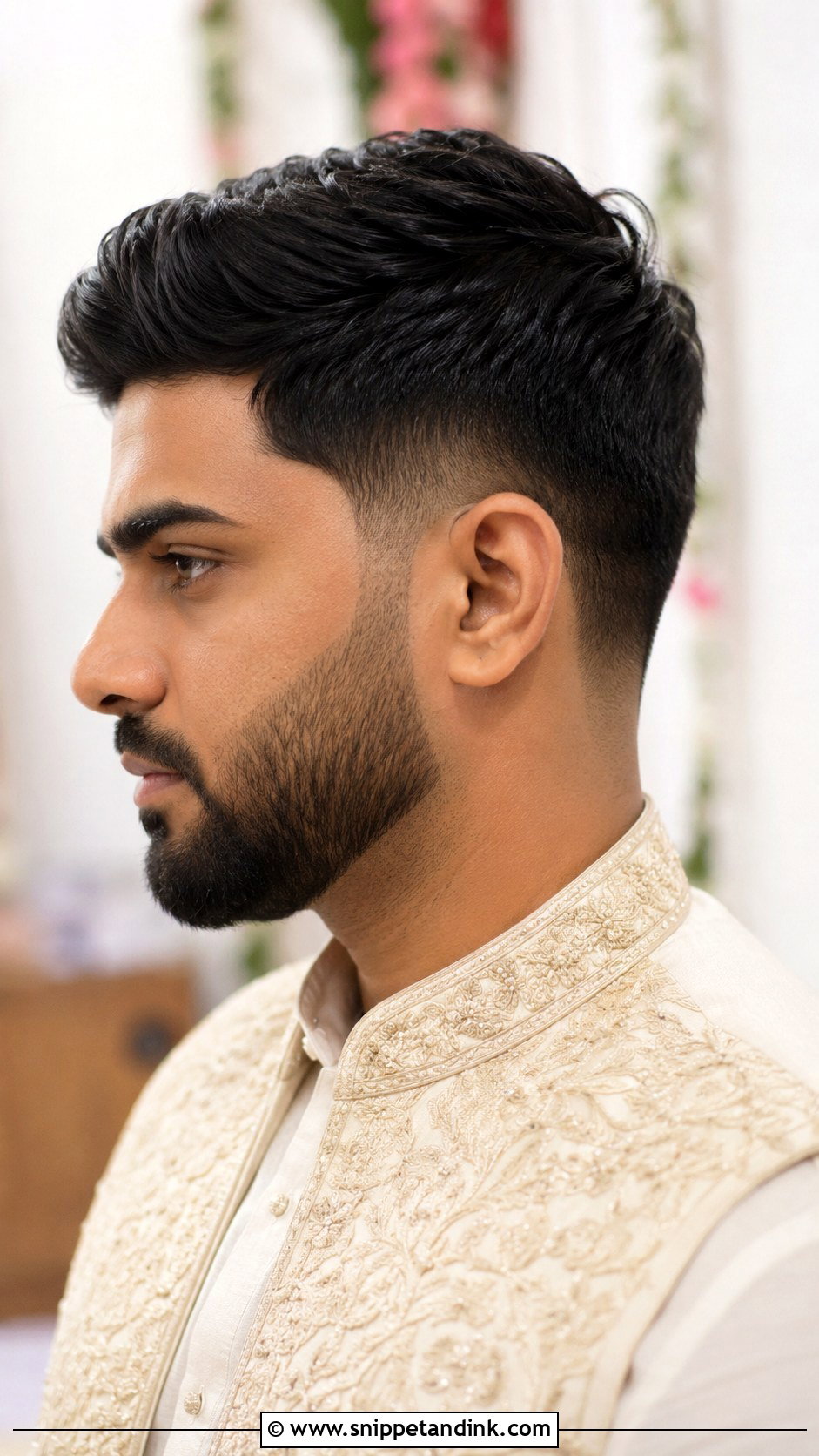
A taper shortens the hair gradually at the neckline and around the ears while keeping its natural shape, so it looks tidy without the obvious skin line of a fade. A tapered haircut suits nearly every outfit, from a silk kurta to a formal sherwani, and the top can be worn natural, parted, brushed back or lightly textured. Its practical advantage is how it grows out: softly, so it still looks fresh on the last day of a four- or five-day wedding. Add a neat beard trim and you’re done.
14. Indian Groom Hairstyle With Safa
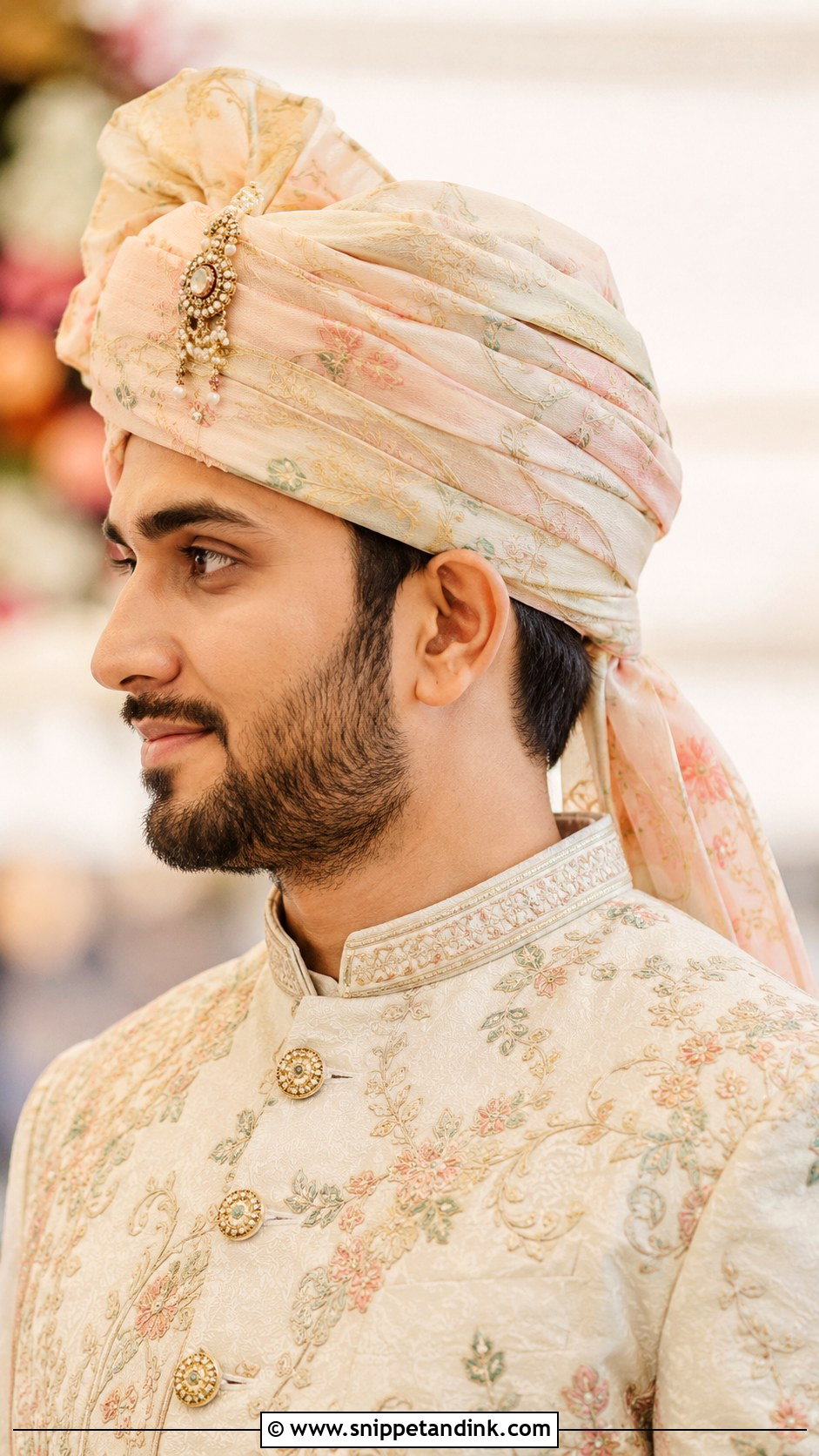
Under a safa, most of the hair disappears, so I focus on what still shows: the forehead line, sideburns, the beard and the back of the neck. A short crop, low taper, slick back or controlled side part all fit well underneath. Keep the top short enough that the safa sits level; too much height pushes it up at the front. Use a light product rather than a heavy one, because the safa traps heat and a greasy hairline shows in close-ups. With a sherwani, kalgi and sehra, the outline around the face is what the photos remember.
15. Indian Sikh Groom Turban Hairstyle
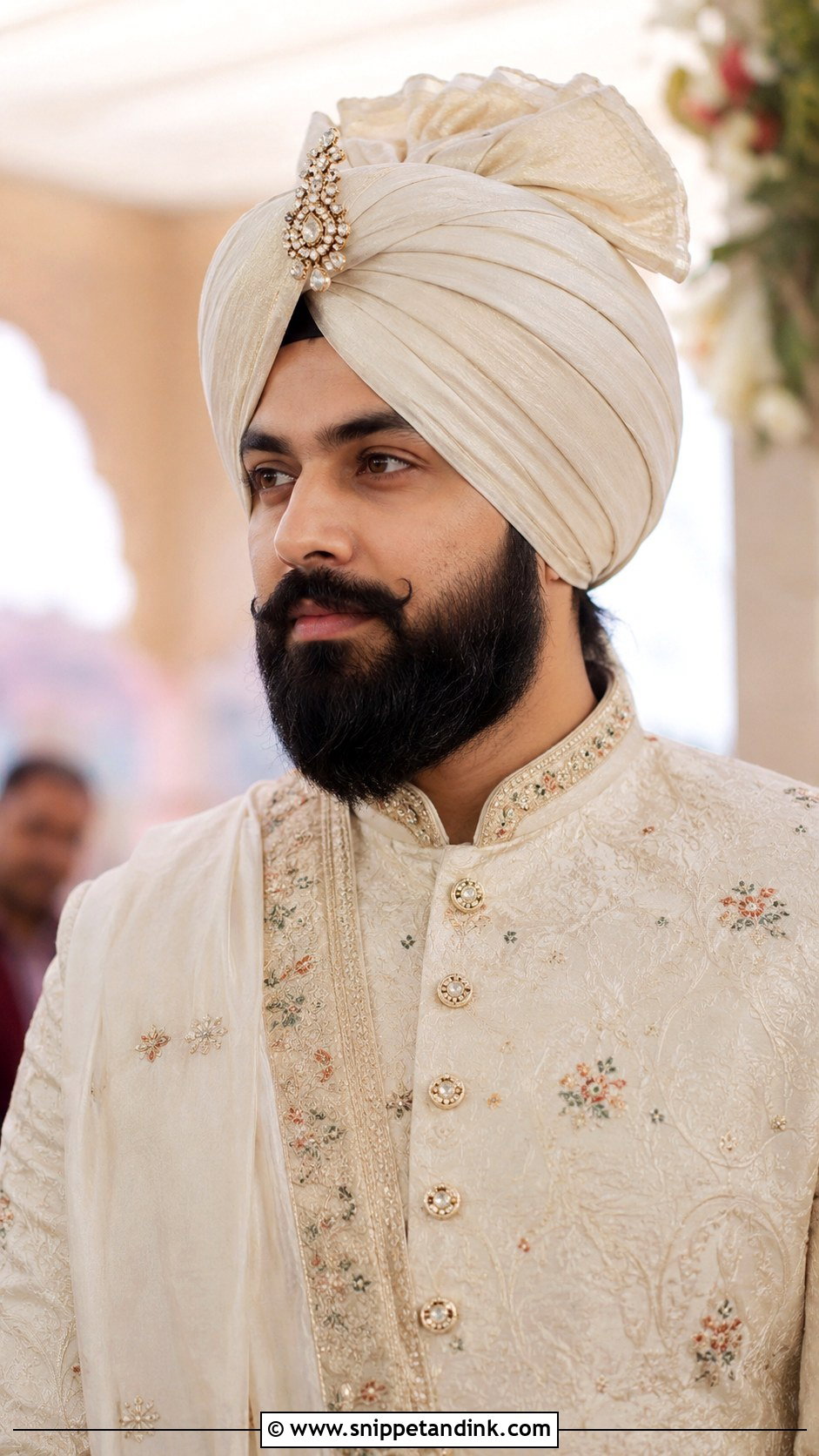
For a Sikh groom, the work happens before the turban goes on: long hair washed, dried properly and tied securely in a joora so the turban sits comfortably for the whole Anand Karaj. Damp hair under a turban gets uncomfortable fast, so I’d allow time to dry it fully. The beard can be left natural, shaped or softly set, depending on personal and family practice, and that’s a conversation for the groom and his family rather than the stylist. Choose a turban colour that complements the sherwani or achkan instead of matching it exactly; a shade lighter or darker usually reads richer.
Beard Lines and the Bandhgala Collar
A high mandarin collar on a sherwani or bandhgala sits right where the beard ends, so the two have to be planned together. If the neckline of the beard is too low, the collar rubs against stubble all day and pushes the hair outward. I’d set the beard’s lower edge about a finger’s width above the Adam’s apple, which keeps it clear of the collar and gives the jaw a cleaner line in profile.
Trim the beard two or three days before rather than that morning. Fresh razor lines on the cheeks and neck can look red or bumpy in close-up photos, especially on sensitive skin. A light beard oil the night before softens the hair so it lies flat under the collar.
Reviving Hair Flattened by a Safa Before the Reception
A safa worn for several hours presses the hair flat and leaves a ridge around the head. Most grooms change for the reception with very little time, so I pack a small kit for him or his brother to carry:
- Mist the pressed area with plain water from a small spray bottle until it’s damp, not soaked.
- Blow-dry against the direction it was pressed, lifting at the roots with your fingers.
- Restyle with the same product used in the morning, using about half the amount, since some is still in the hair.
- Wipe the forehead and hairline with a blotting sheet so the line where the safa sat doesn’t shine in photos.
This takes about ten minutes if a hairdryer is already in the changing room, so check that with the venue in advance.
A Groom’s Haircut Looks Best About a Week Old
Start with hair type, outfit, face shape and the wedding schedule, and the shortlist gets short quickly. A textured quiff or pompadour brings height, while a side part or slick back feels classic. Long hair looks refined in a bun, and curls or waves only need the right cut and product. If a safa or turban is involved, it comes first and the hairstyle fits around it. Book the cut early, try the style with the actual outfit at least once, and keep it looking like you on a very good day.
You'll Like These Ideas:


Leave a Reply