
The trendiest cut is rarely the right one for a wedding. What I look for is a style that agrees with the haircut you already have, your texture, the suit and how formal the venue is. A clean fade suits a city wedding; longer waves or a brushed-back shape sit better at an outdoor ceremony. Classic, textured, curly, long and low-maintenance styles are all here, for grooms, groomsmen and guests, with the practical detail I’d want a client to know before the barber picks up the clippers.
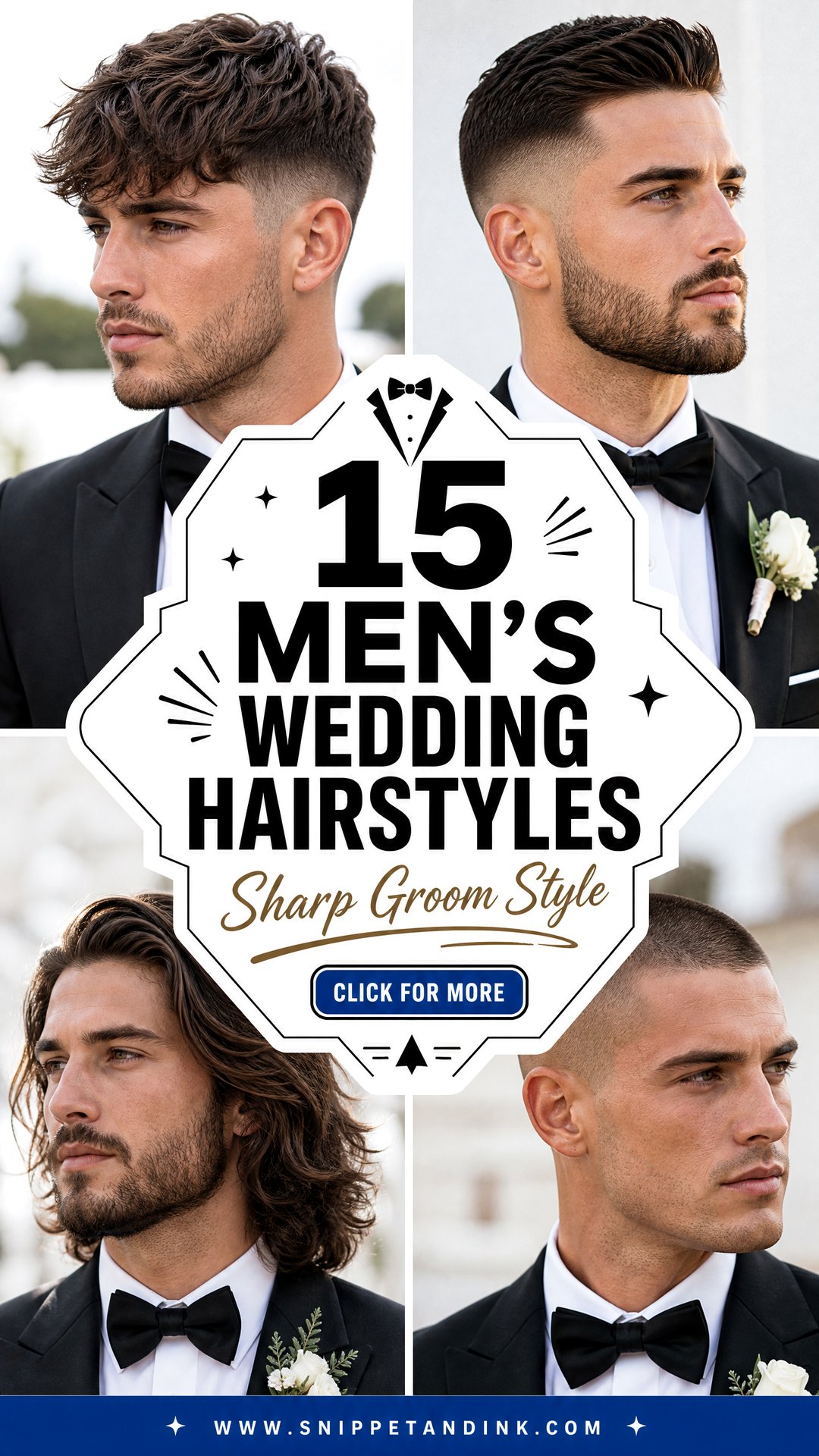
Groom or Guest? Dressing Up the Same Cut to Different Levels
The same haircut can be finished for a groom or for a guest, and the difference is mostly polish, not shape. When a whole wedding party comes to me, I adjust the finish by role.
- Groom: freshly cut a few days out, edges cleaned up the day before, styled on the morning by someone else if possible. He’ll be photographed from every angle, including the back of the head at the altar.
- Groomsmen: cut within the same week as the groom so nobody looks shaggy in the line-up. Same finish family, matte or shiny, but not the same hairstyle.
- Guests: a normal recent cut with a tidier finish than everyday. Matching the groom’s slick back exactly can look odd in group shots.
Dress code tips the balance too. Black tie wants a controlled shape with a little shine. A daytime garden wedding is the one place I’d let texture and movement show.
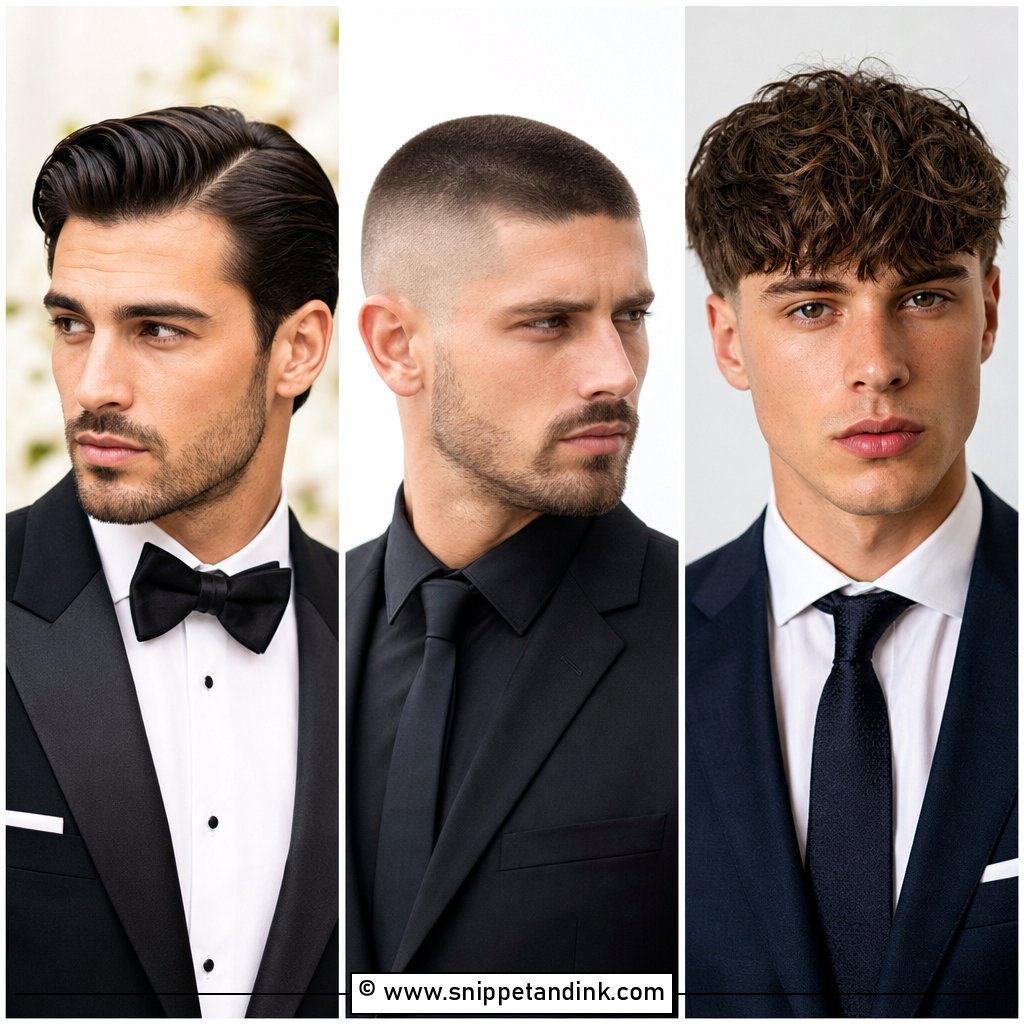
1. Slick Back Wedding Hairstyle
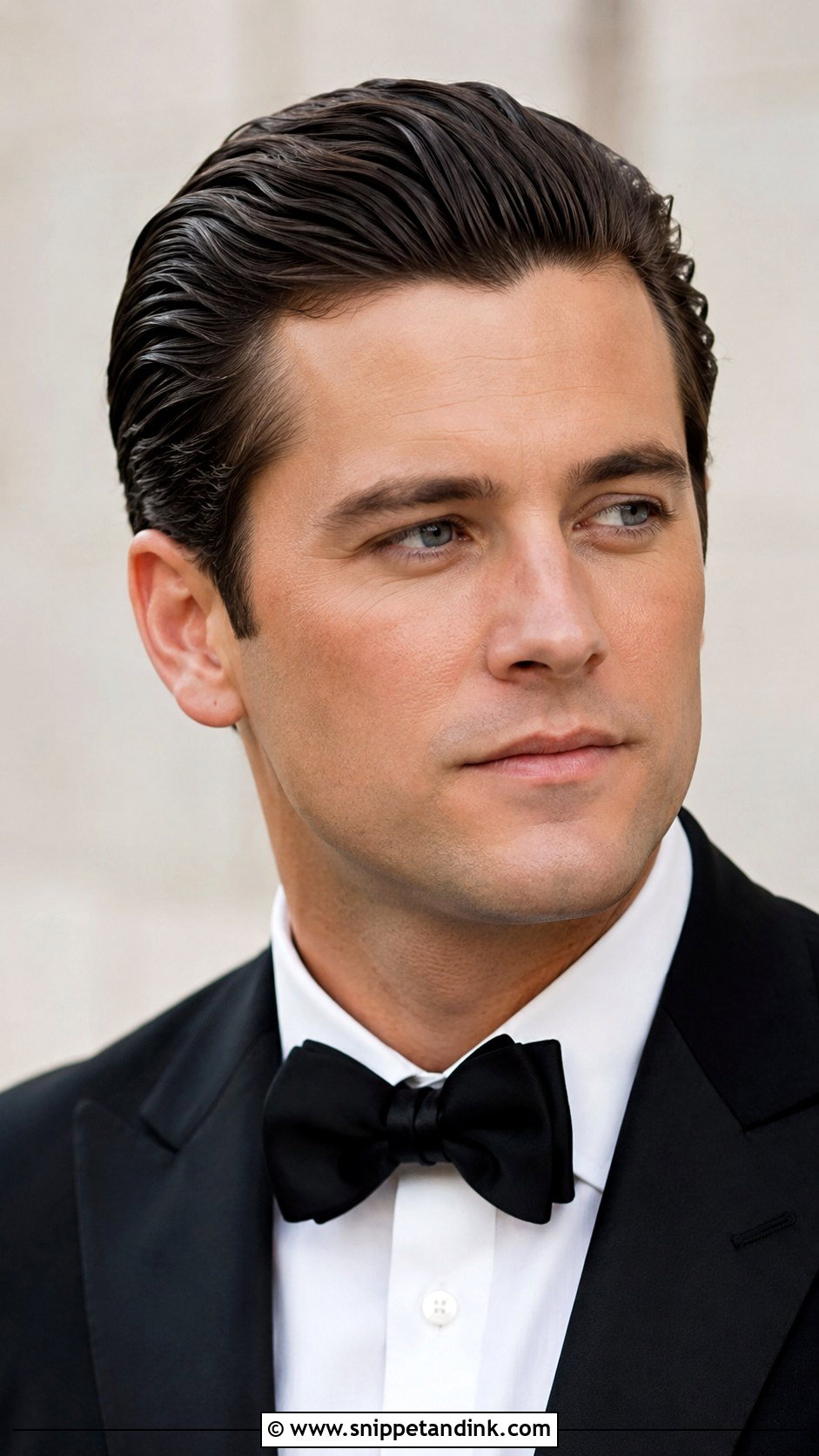
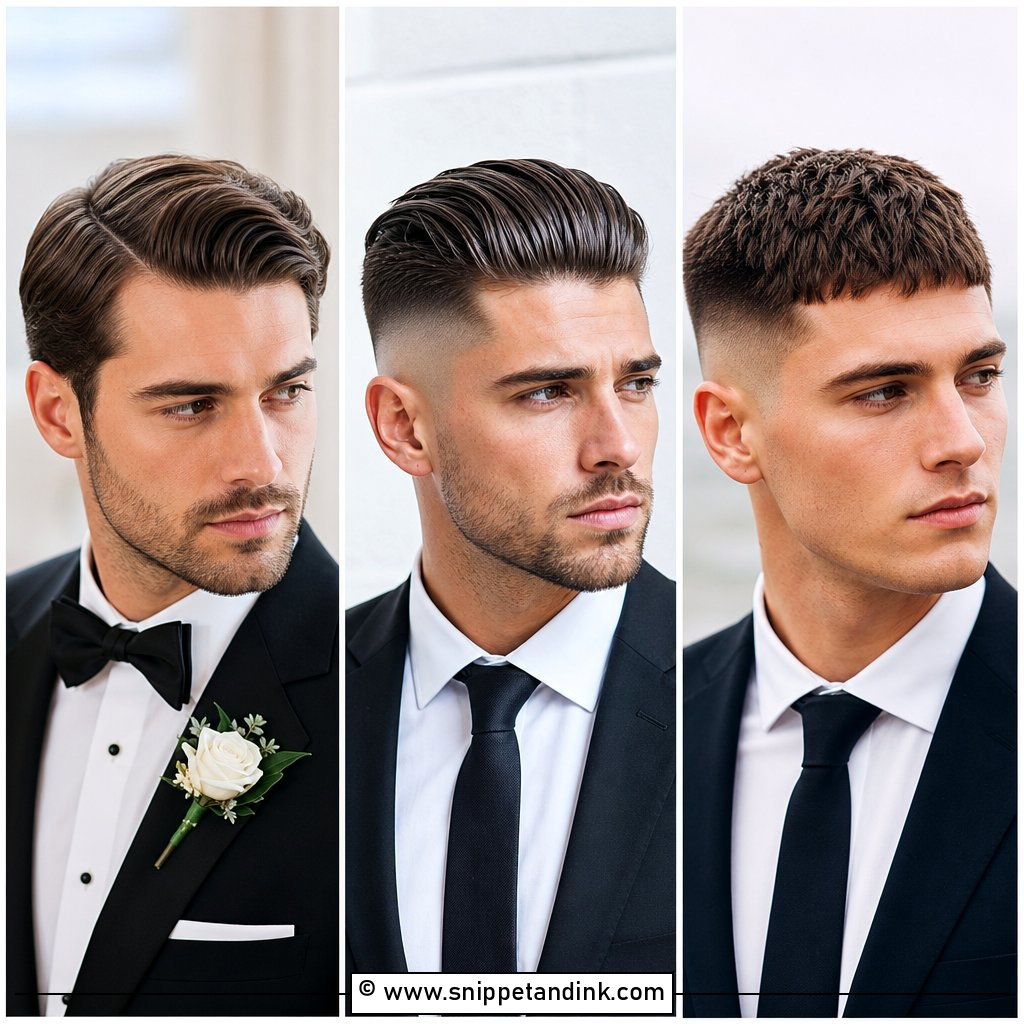
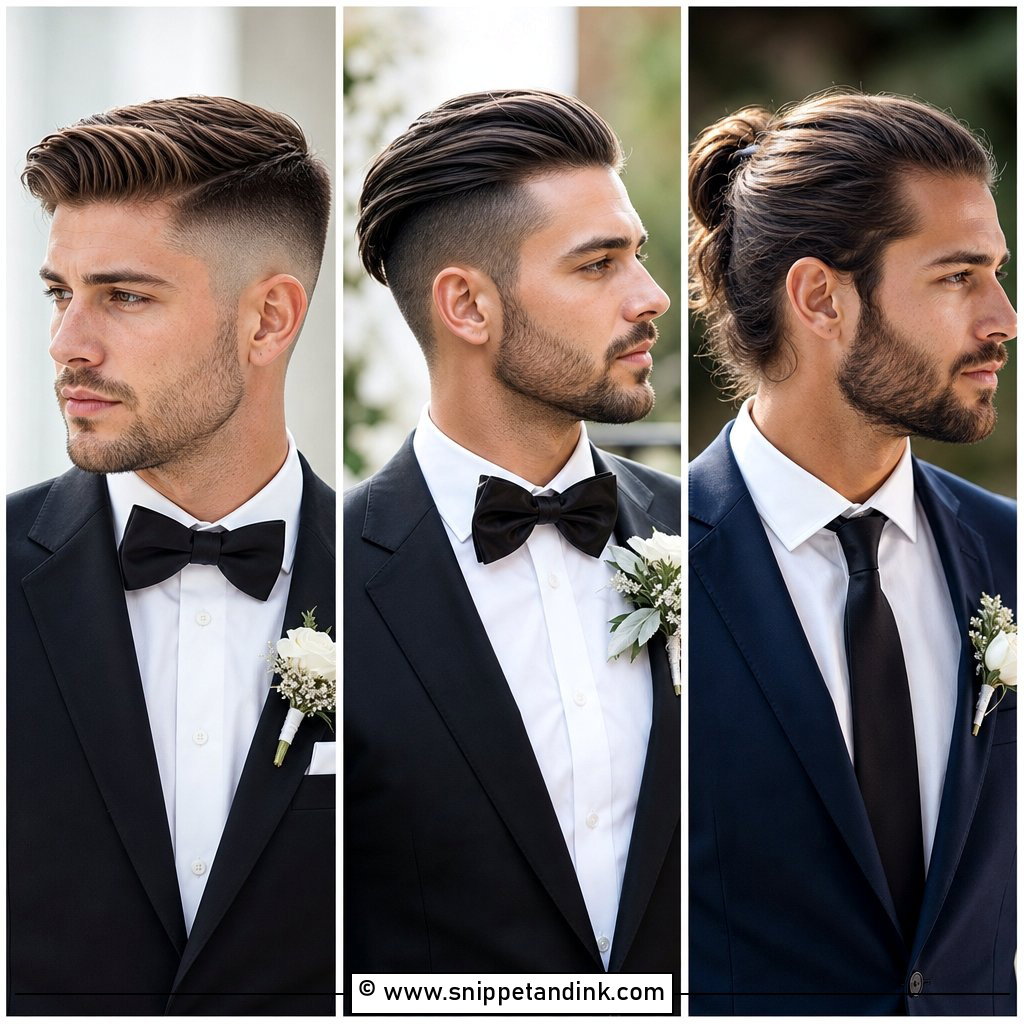
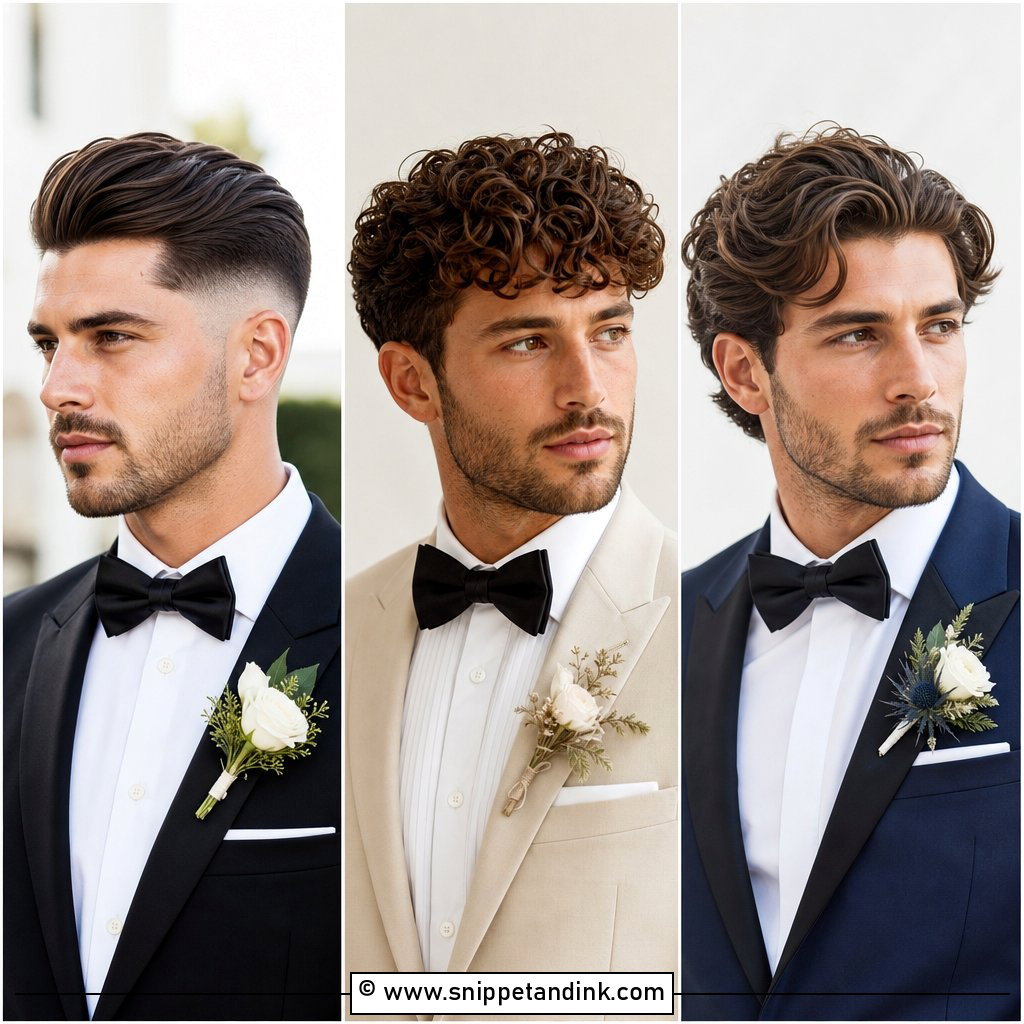
Slicked back, the hair leaves the jawline and collar fully on show, which is why it suits tuxedos and black tie so well. Medium-length straight or wavy hair with enough on top to comb back works best; short hair just stands up. Ask for tidy sides, soft blending and a natural neckline, cut before wedding week. I’d skip heavy gel. A light pomade or cream keeps it controlled without the stiff, wet shine that looks greasy in flash photos. If your hair is very fine, expect it to separate into lines by evening, and pick a softer brushed-back version instead.
2. Side Part Wedding Hairstyle
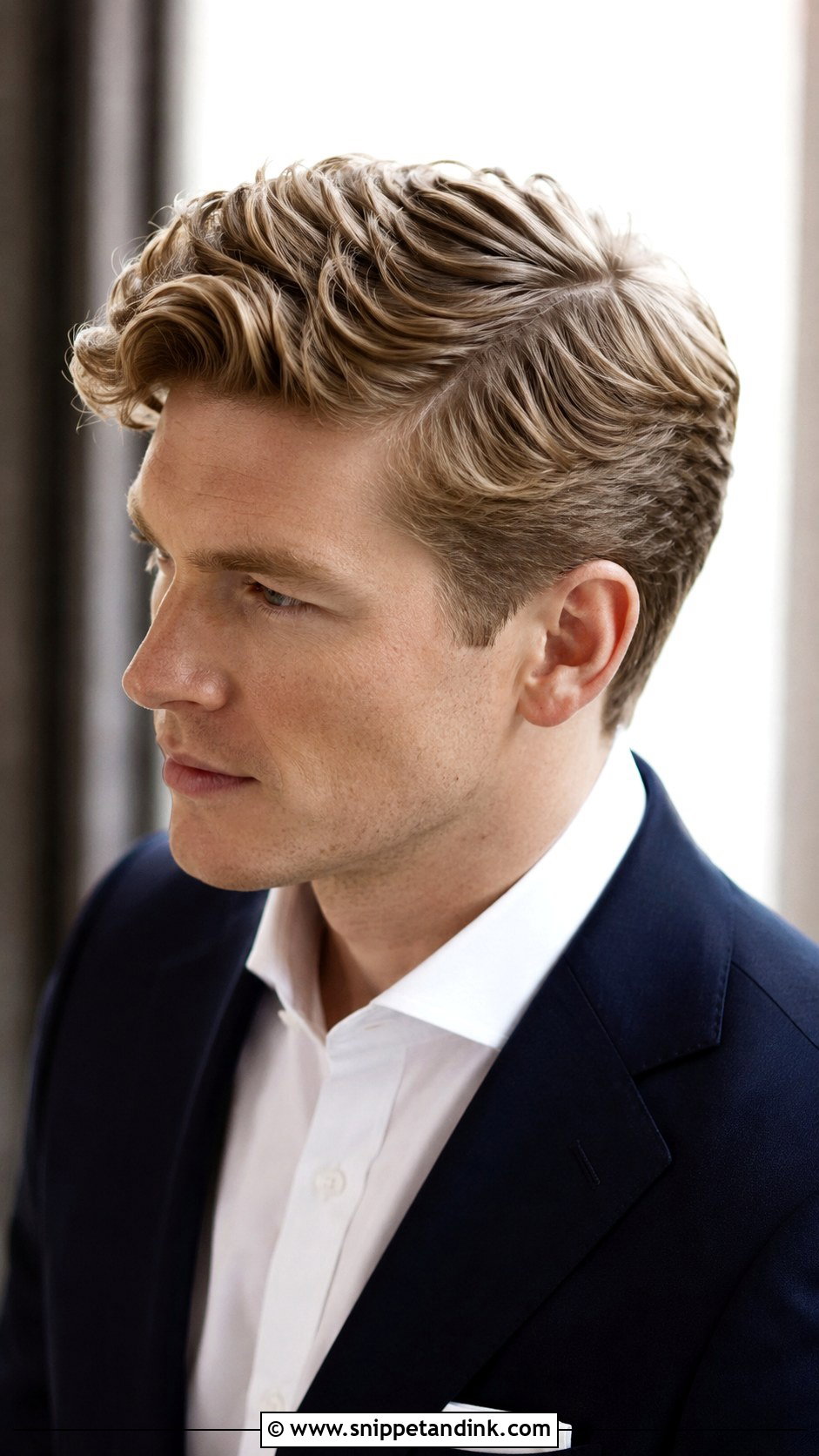
There’s a reason the side part has lasted: the part gives structure, and the top can be smooth, lifted or lightly textured to suit the dress code. Short to medium hair in straight, wavy or loosely curly textures carries it. It sits well with a clean shave, a short beard, or trimmed stubble. Get the cut several days before, then use a small amount of cream or pomade. I always comb the part where the hair naturally splits when it’s wet; forcing it elsewhere is how a side part collapses mid-reception.
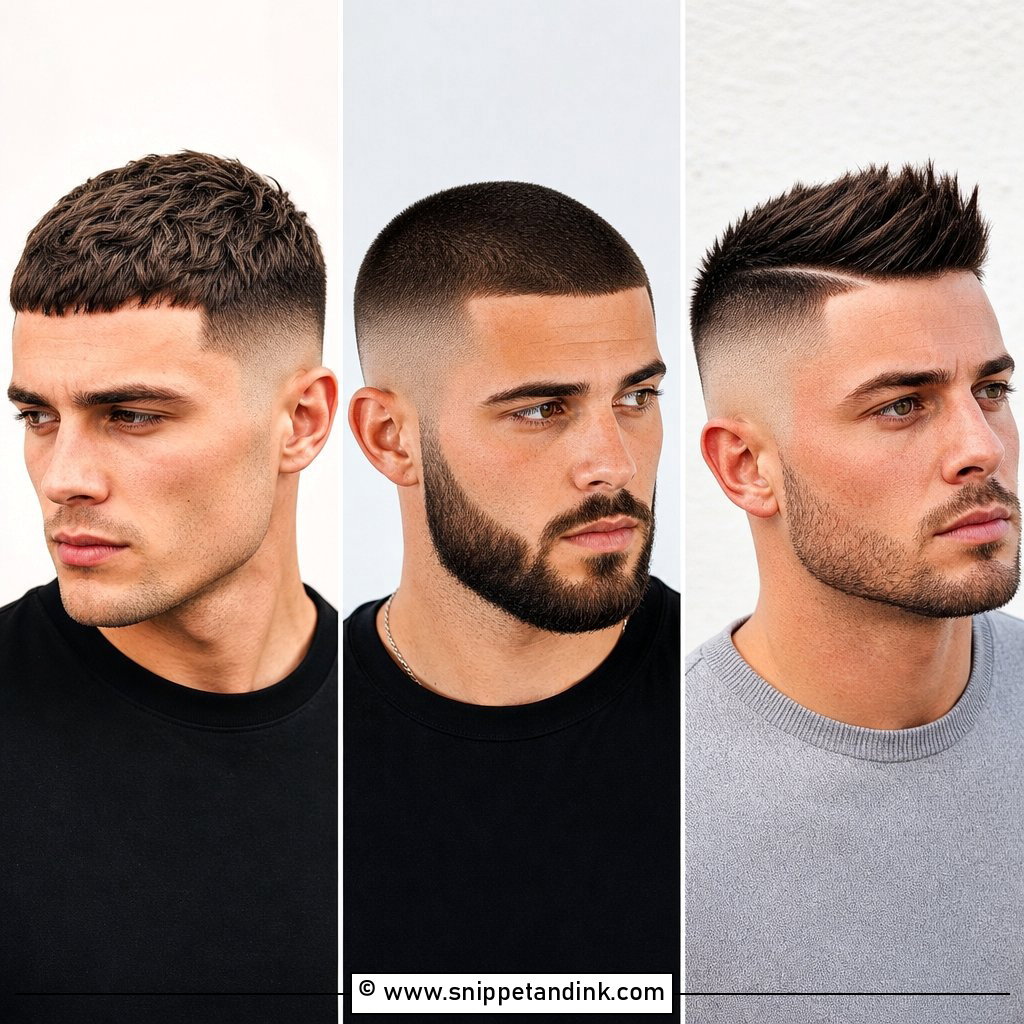
3. Textured Crop Wedding Hairstyle
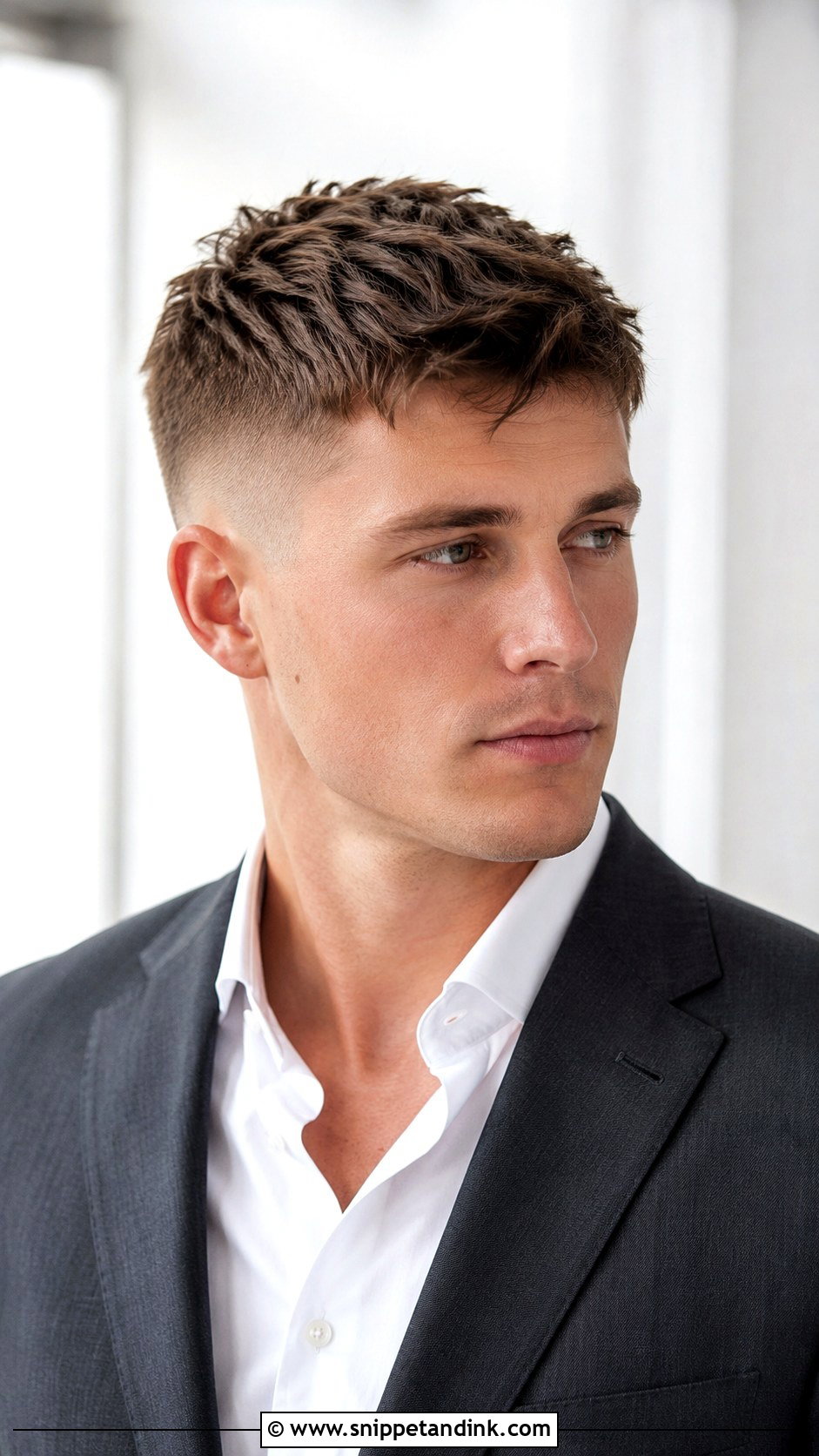
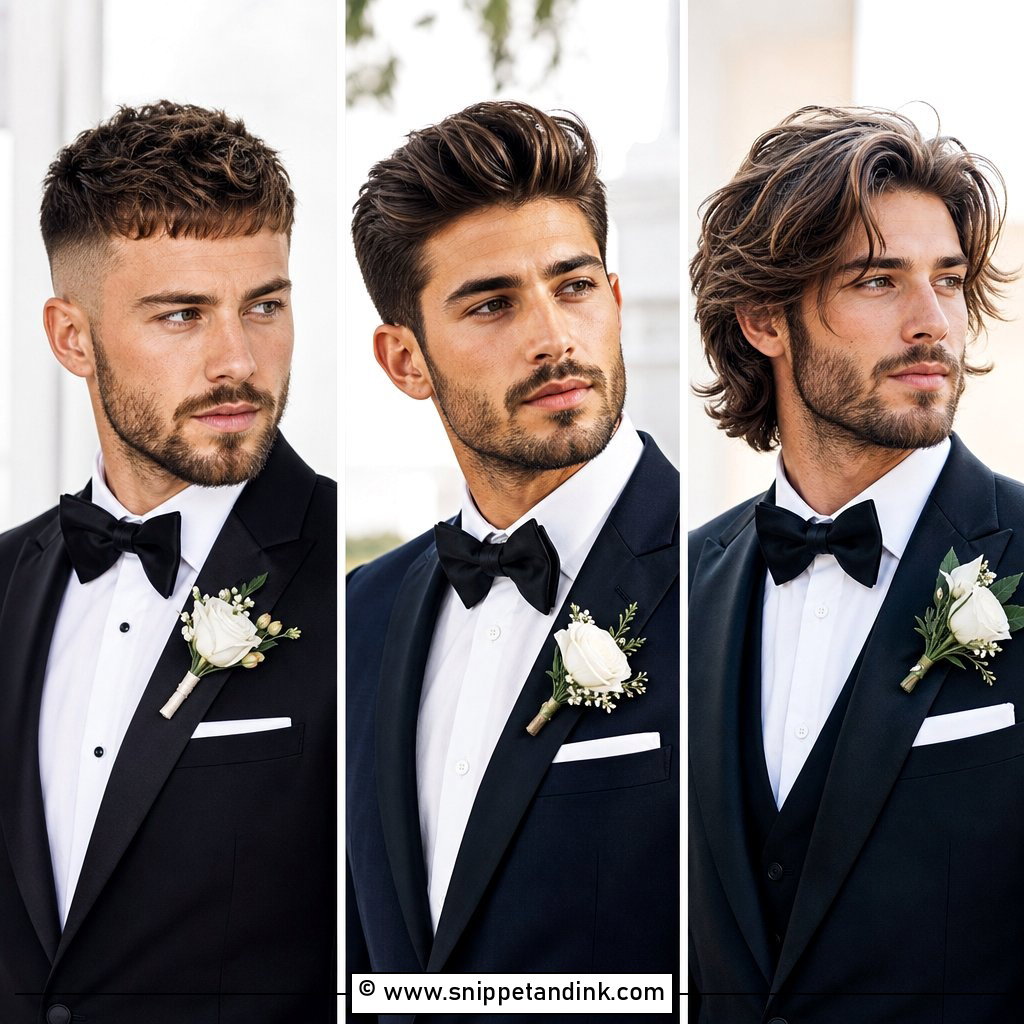
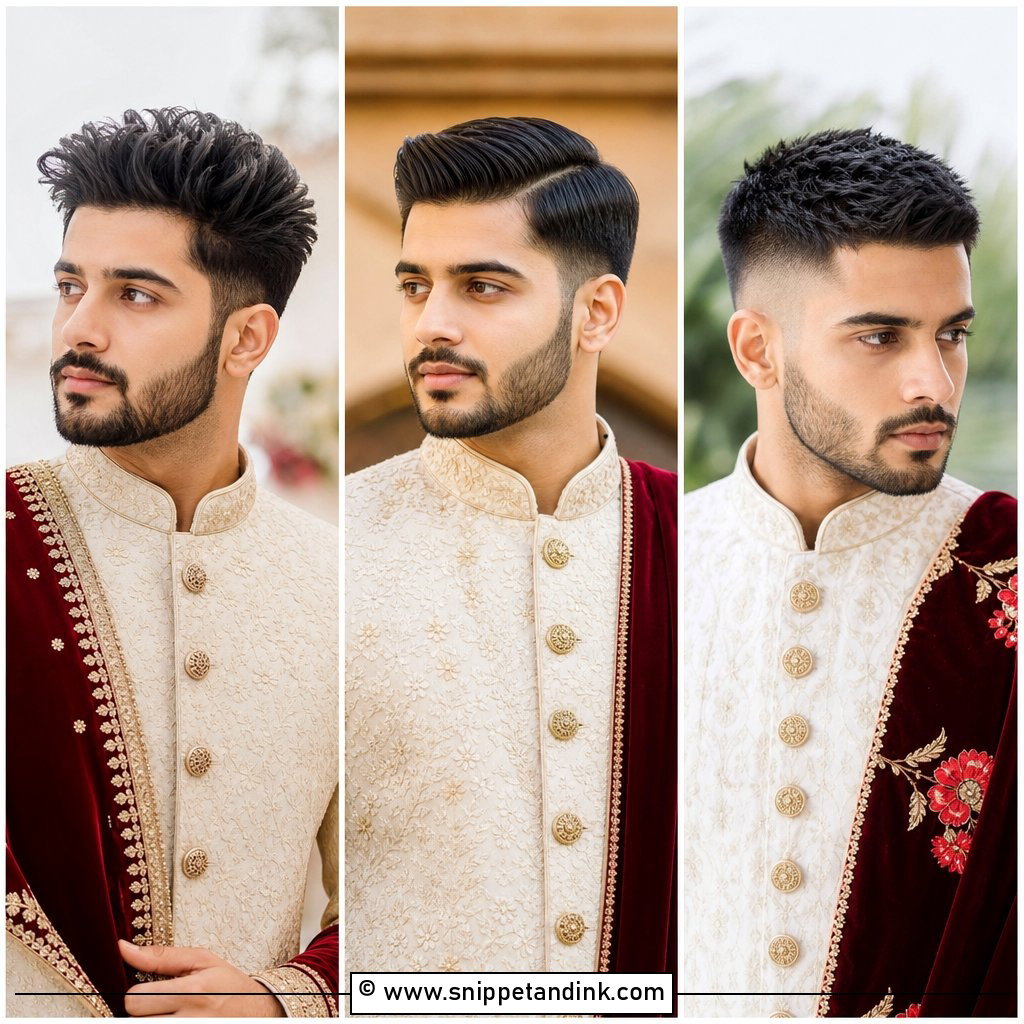
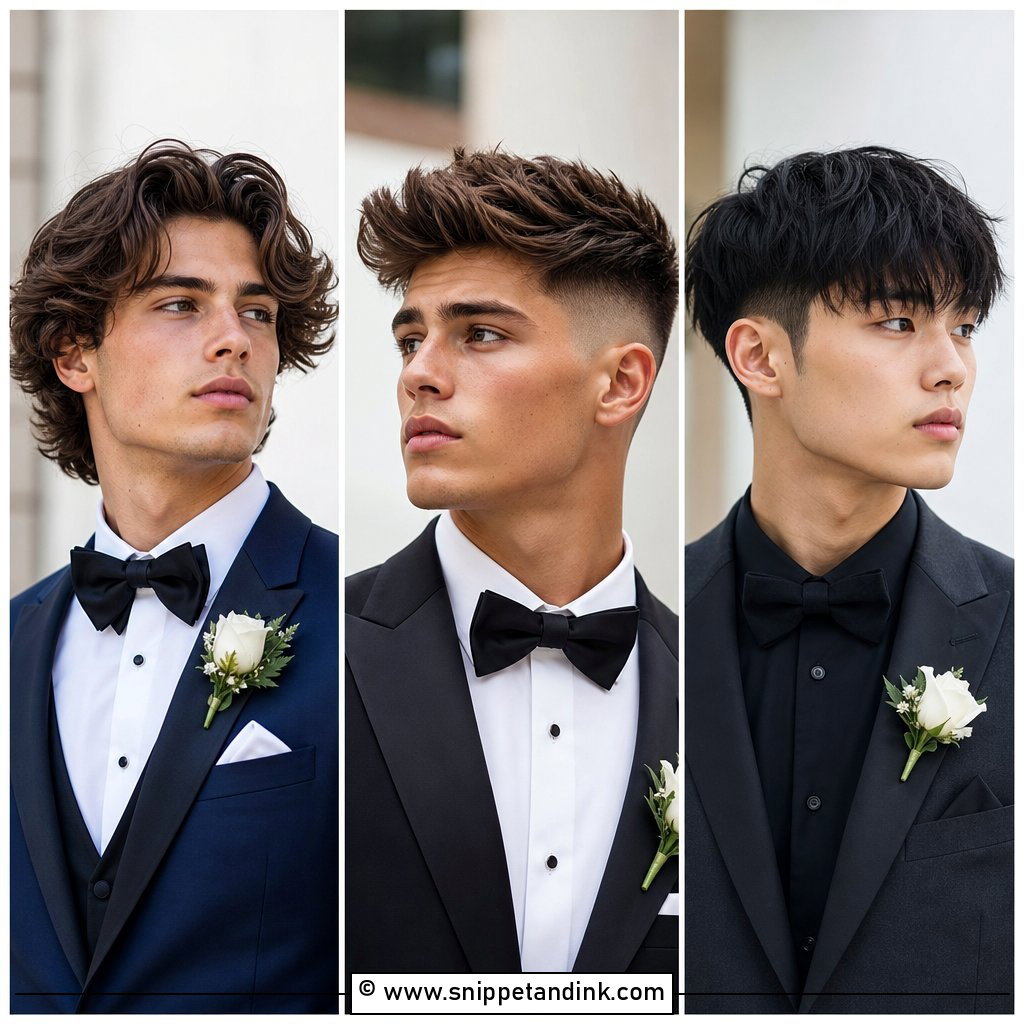
A textured crop keeps the top short to medium and choppy, with tapered, faded or scissor-cut sides. Thick hair benefits most, because the texturising takes out bulk that would otherwise puff up in heat. If you don’t want to touch your hair once all day, this is the cut. Matte paste defines it without grease. Keep the hairline and neckline freshly cleaned up; with so little length on top, the edges are what make it look like a wedding cut and not a regular one.
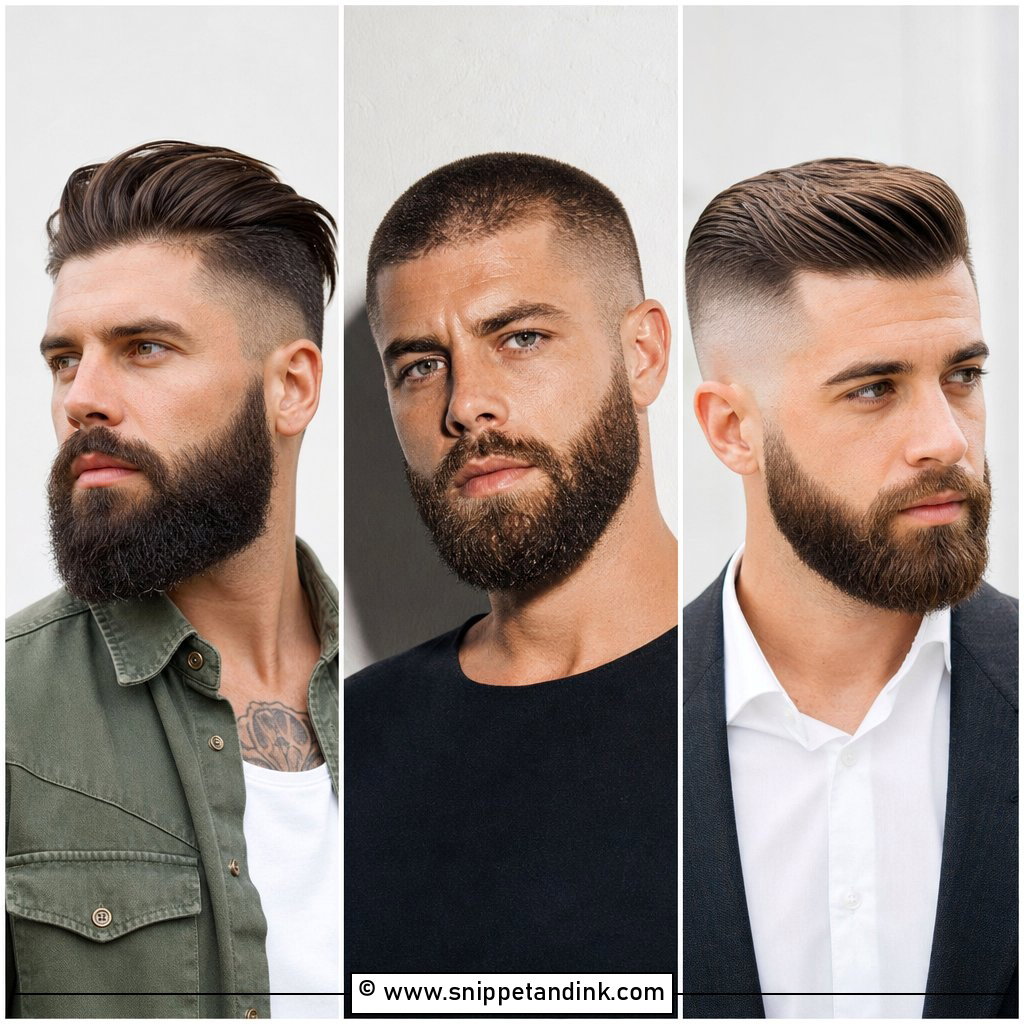
4. Taper Fade Wedding Hairstyle
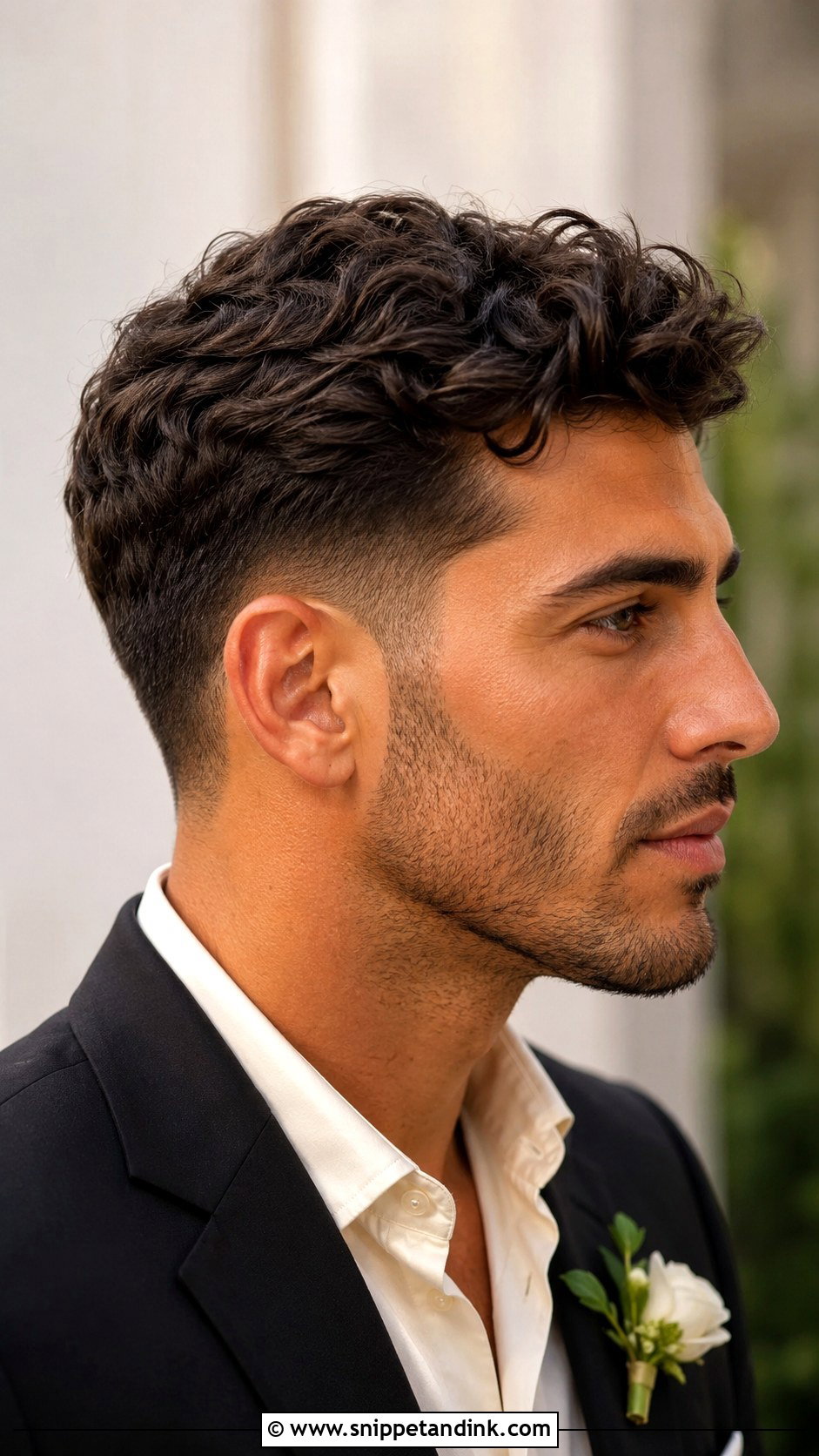
A taper fade tidies the temples, ears and neckline and leaves the top free for a side part, waves, curls or a brushed-back shape. It’s less dramatic than a high skin fade, so it looks right in formal portraits. Grooms, groomsmen and guests can all wear it. Ask for a soft blend and not too short at the bottom if you want the classic version. That softer blend also grows out more evenly, which matters if the photos come a few days after the cut.
5. Low Fade Wedding Hairstyle
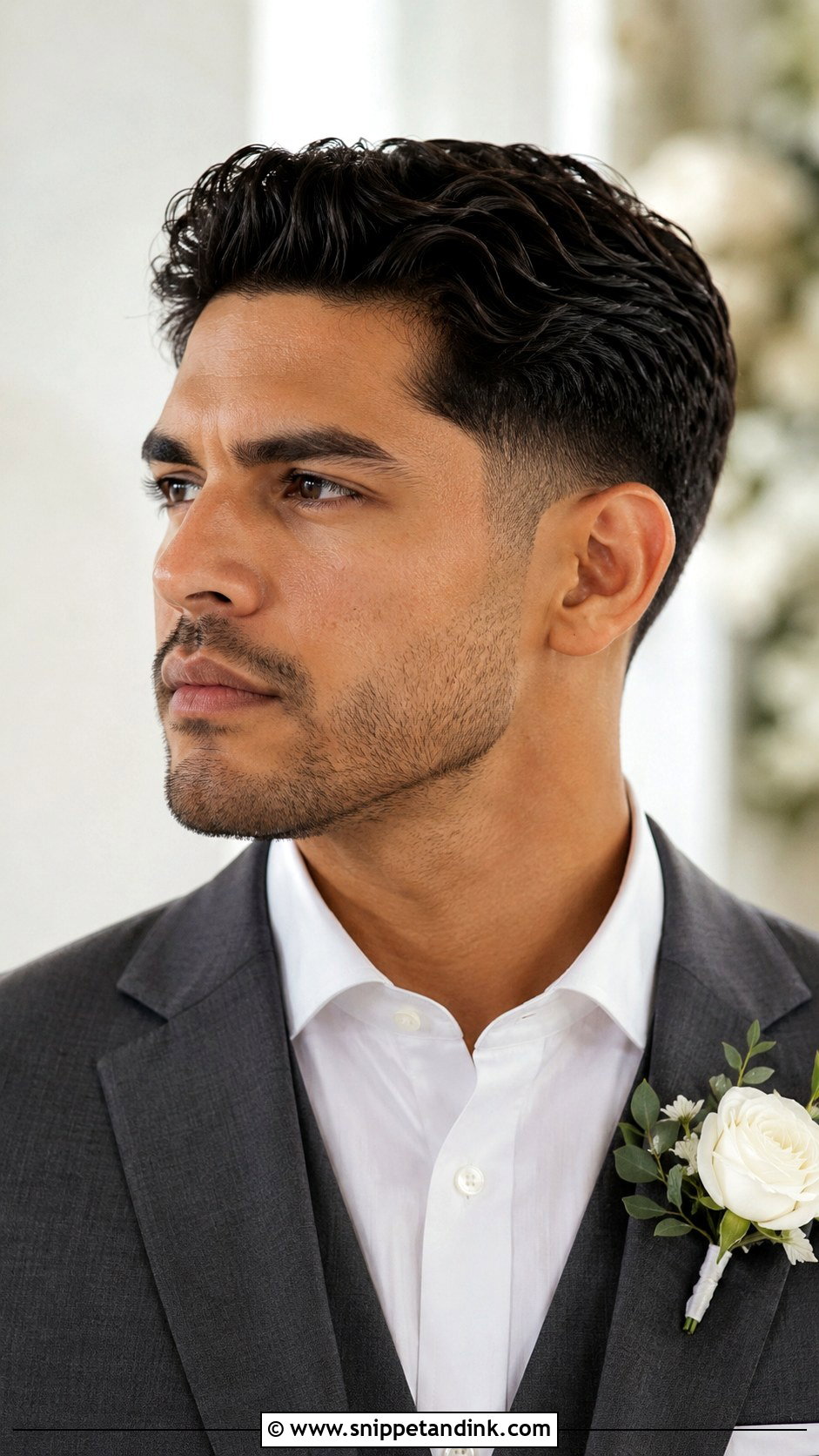
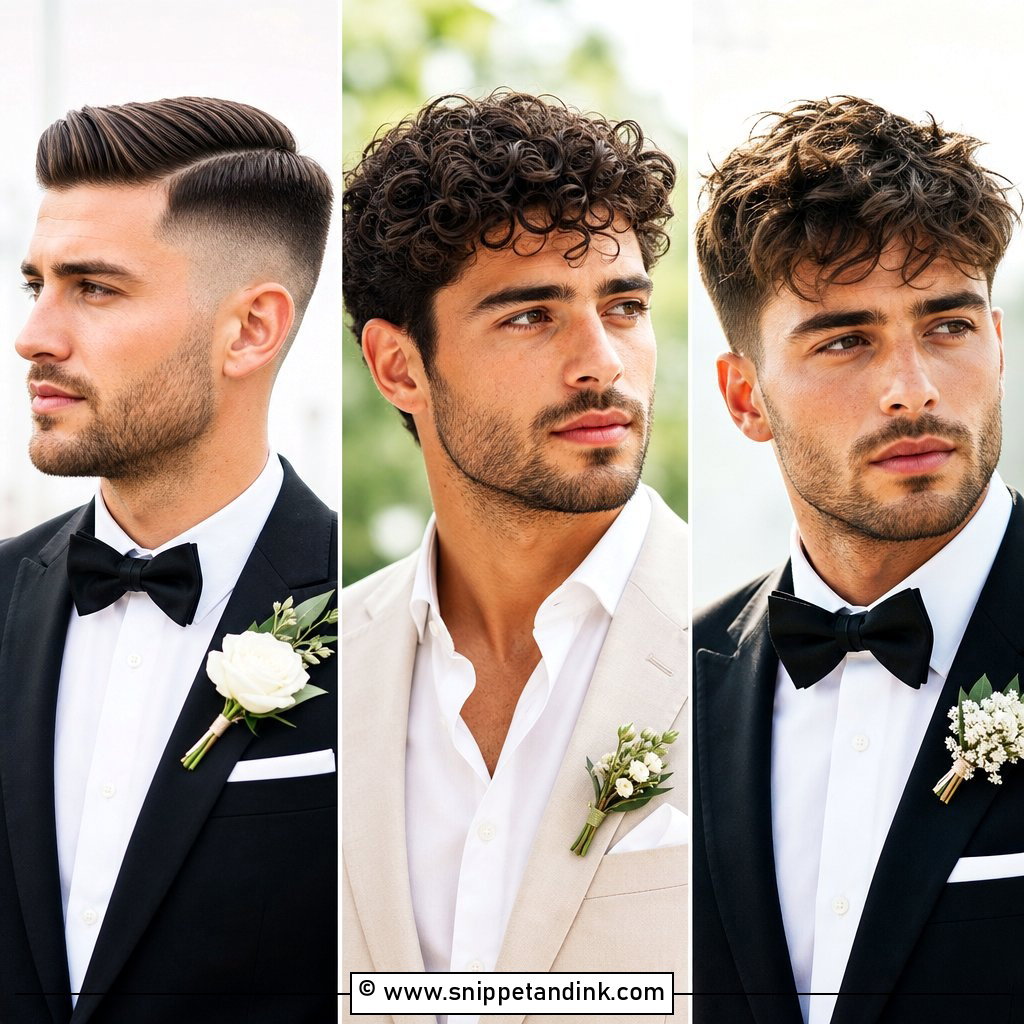
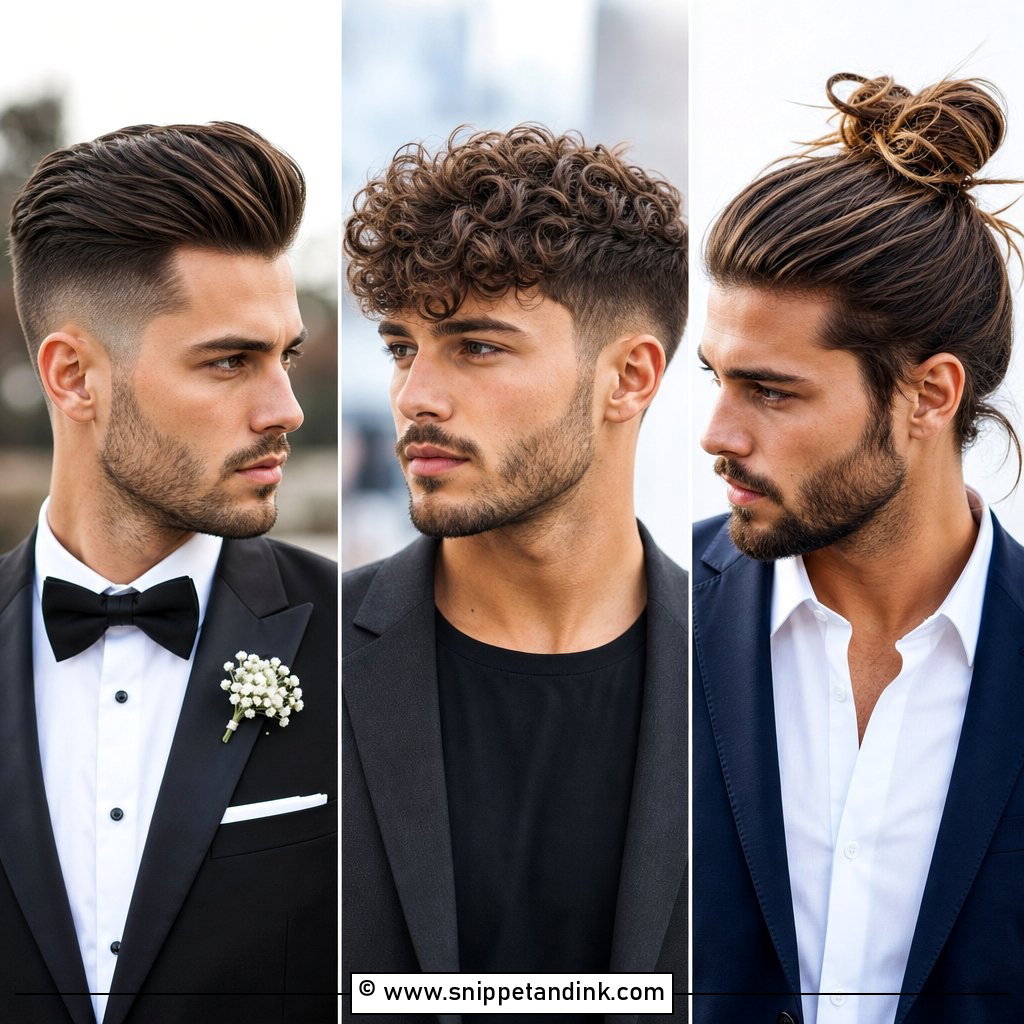
Starting low near the ears and neckline, a low fade gives clean edges and keeps some softness on the sides. It sits under short curls, waves, comb overs, pompadours and textured tops. The top still needs enough shape or volume to match the suit, or the head can look small against a structured jacket. From the side it photographs crisply, especially with a neat beard or stubble. I’d book it two to four days out so the blend has softened slightly.
6. Comb Over Wedding Hairstyle
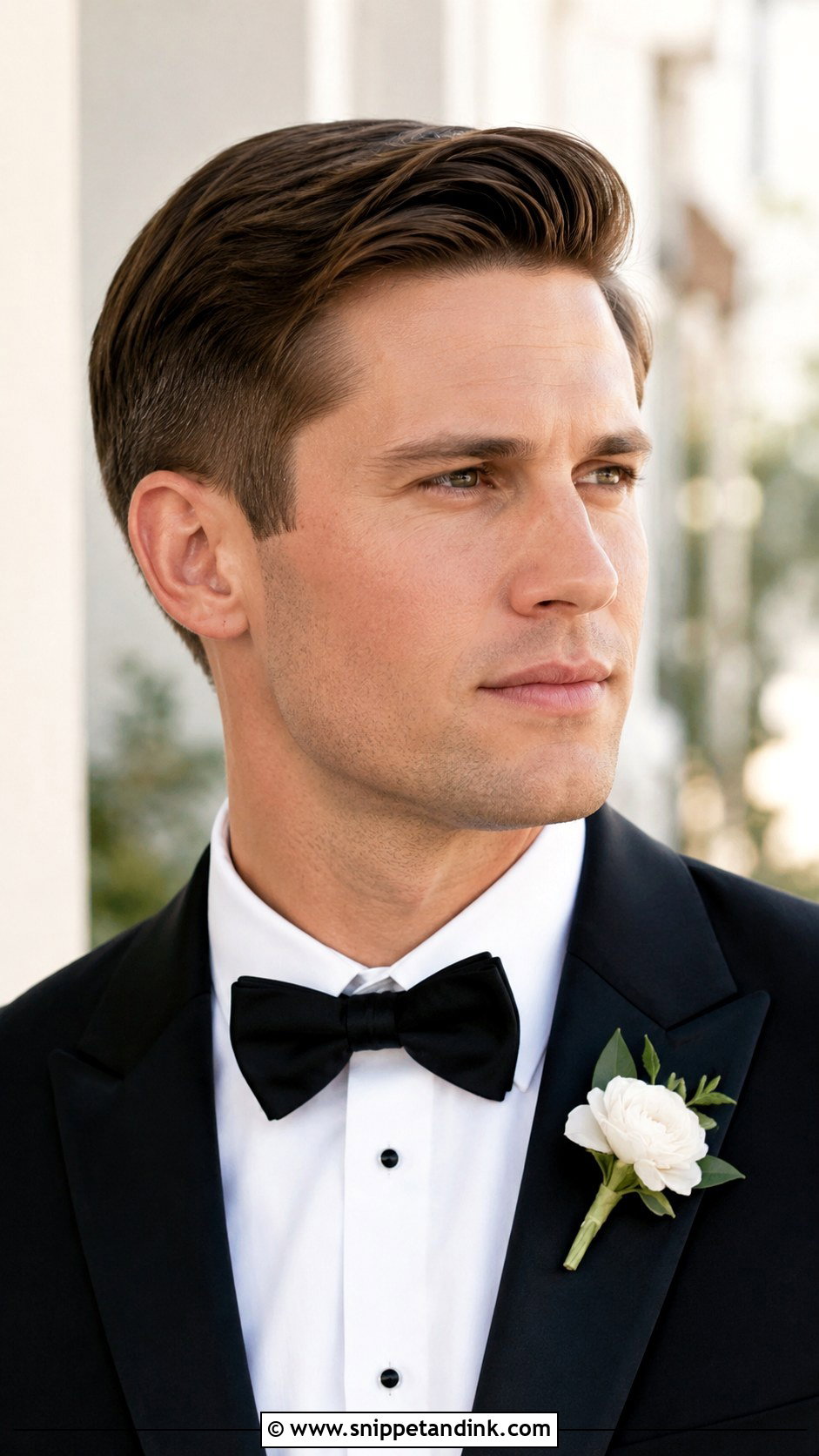
Neat, classic and easy to adjust, the comb over can take a hard part for sharpness or a natural part for a softer feel. The hair on top needs enough length to sweep across without gaps. Straight, wavy and medium-thick hair hold it best. I blow-dry the hair in the direction it will be combed, which does most of the work, then finish with flexible pomade or cream. Up close it should look smooth and touchable. One caution: a hard part shaved in the day before can look raw, so have it done a few days earlier.
7. Pompadour Wedding Hairstyle
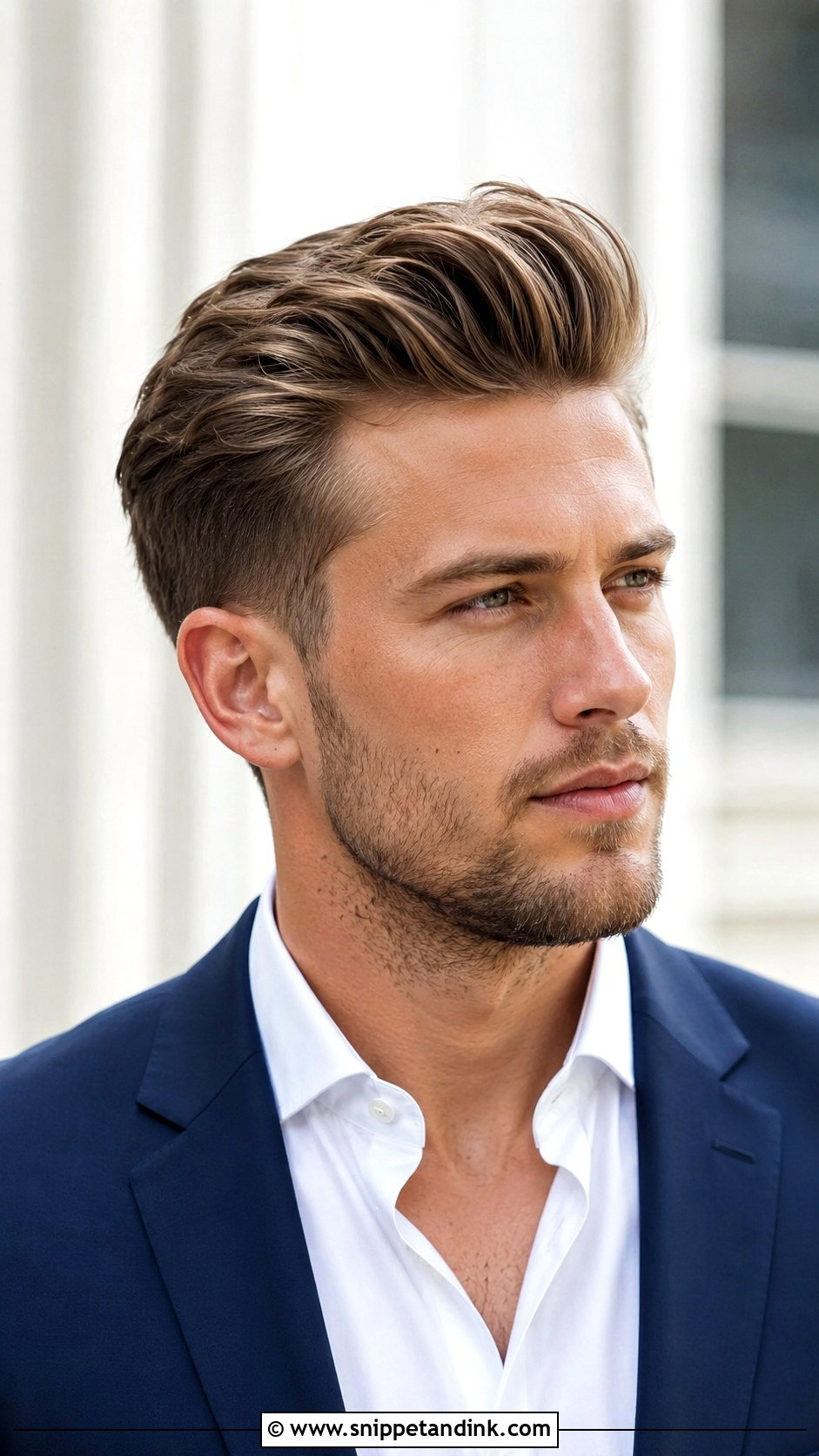
A pompadour wedding hairstyle is for the groom who wants more presence than a side part. Volume on top lengthens the face and tapered or faded sides keep it current. Thick straight or wavy hair is almost a requirement; fine hair loses height within a few hours. The blow-dry builds the shape, and product only holds what the dryer made. A medium-hold pomade or cream keeps it raised without turning crunchy or overly shiny.
8. Curly Wedding Hairstyle
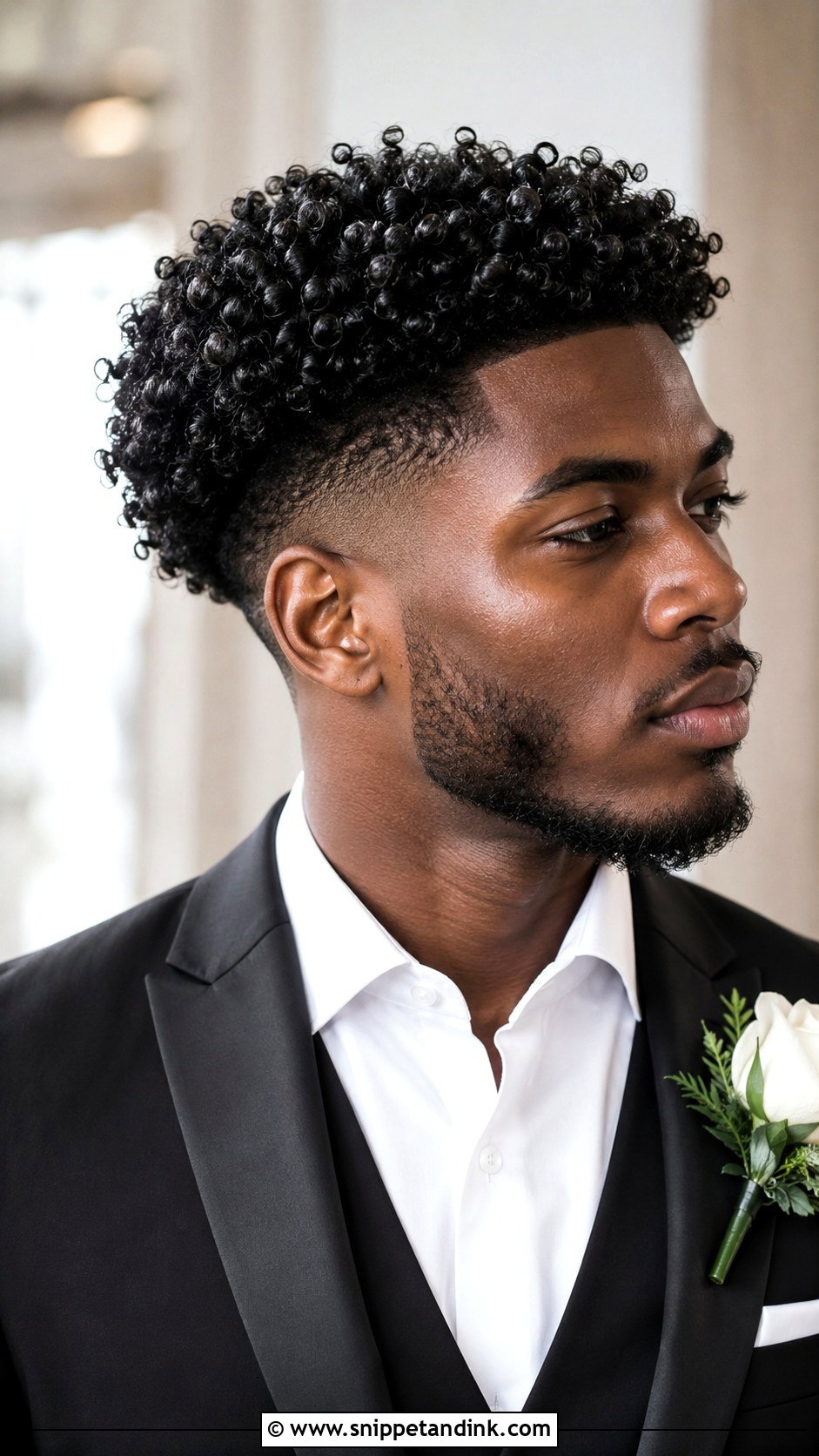
Curls look their best shaped and hydrated, not forced flat. Ask for a tapered cut that tidies the sides and leaves defined length on top. Curl cream, leave-in conditioner or a light gel controls frizz through ceremony and reception. Watch the timing if your curls shrink after a cut: a cut done the day before can look shorter and tighter than you expected. A few days lets the pattern relax. I’d also ask for the top to be cut dry, so the barber sees how each curl actually sits.
9. Wavy Wedding Hairstyle
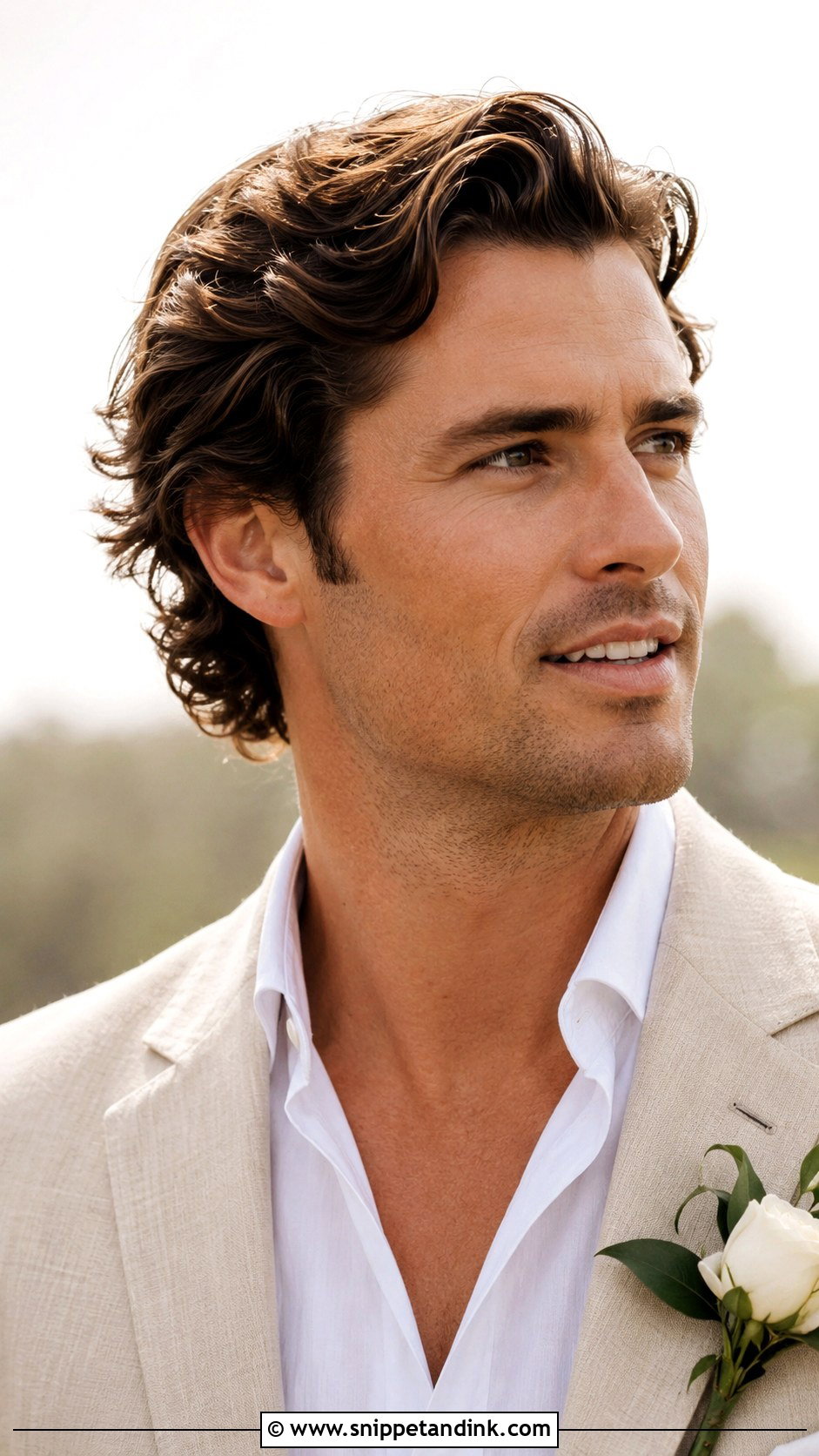
Waves suit beach weddings, garden ceremonies, rustic venues and modern suits. The goal is bringing out the bend the hair already has, not creating it. Push medium-length waves back, side-part them or texture them lightly, with a taper keeping the sides tidy. I use sea salt spray or a light cream before blow-drying, then a small amount of matte paste. Overdo the paste and the wave goes flat and heavy, so start with less than you think.
10. Short Wedding Hairstyle
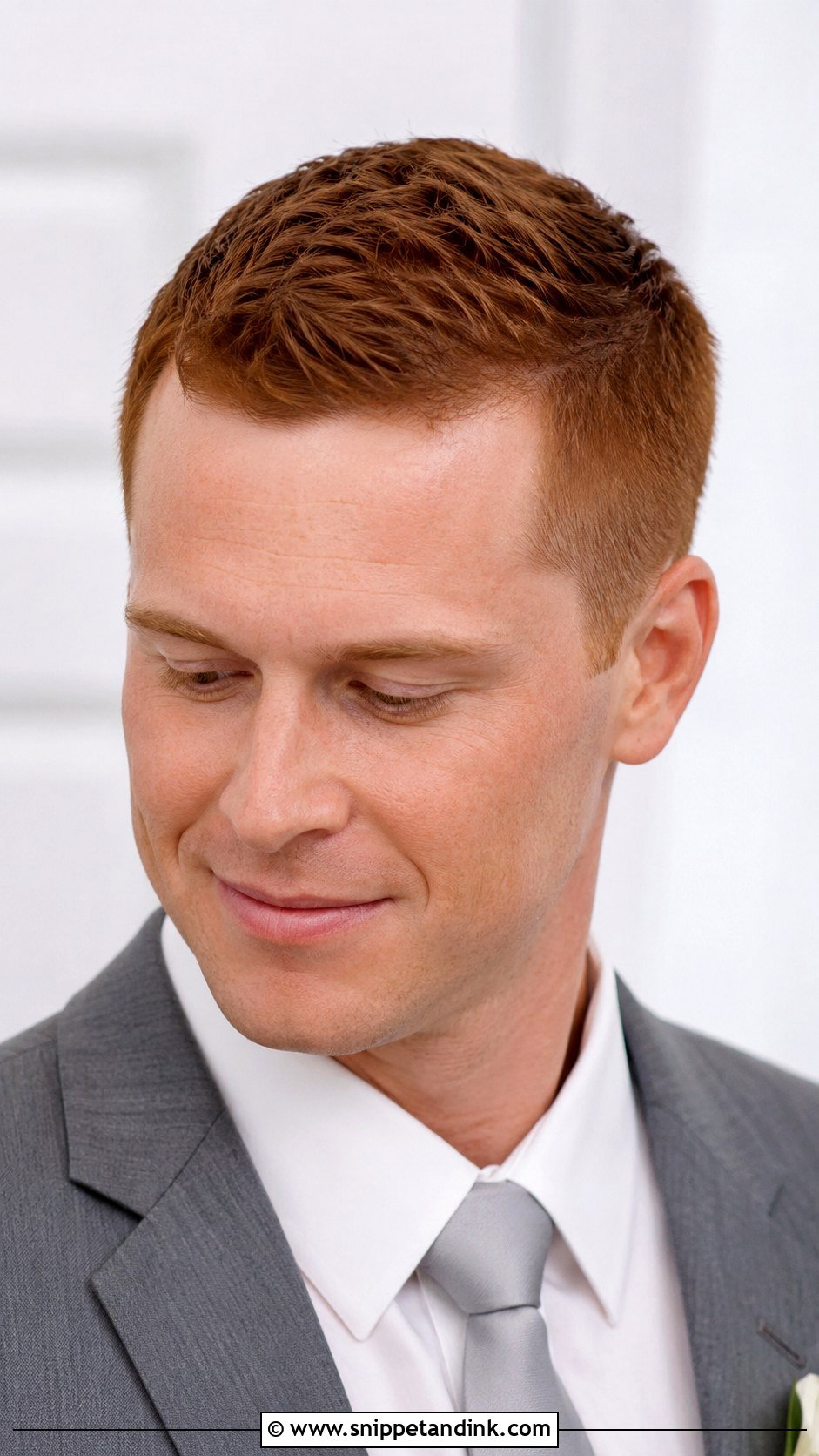
Short hair has nowhere to hide, so precision does the work: clean edges, balanced length and a fresh neckline. A neat taper, cropped texture, subtle side part or crew cut shape all qualify. It’s the answer for busy schedules, hot weather or hair that won’t hold a longer style. A little styling cream or matte paste handles flyaways. Honestly, the cleanup around the ears and nape matters more here than any product.
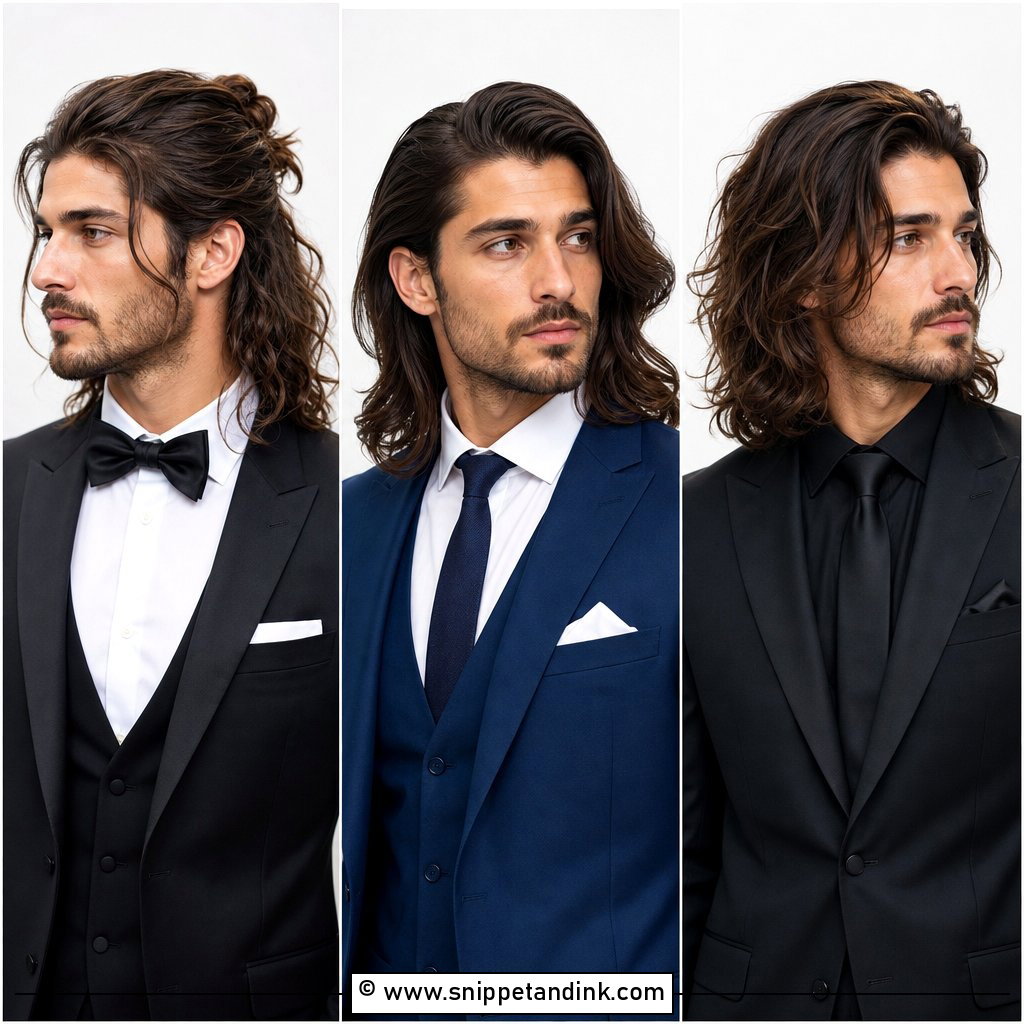
11. Long Hair Wedding Hairstyle
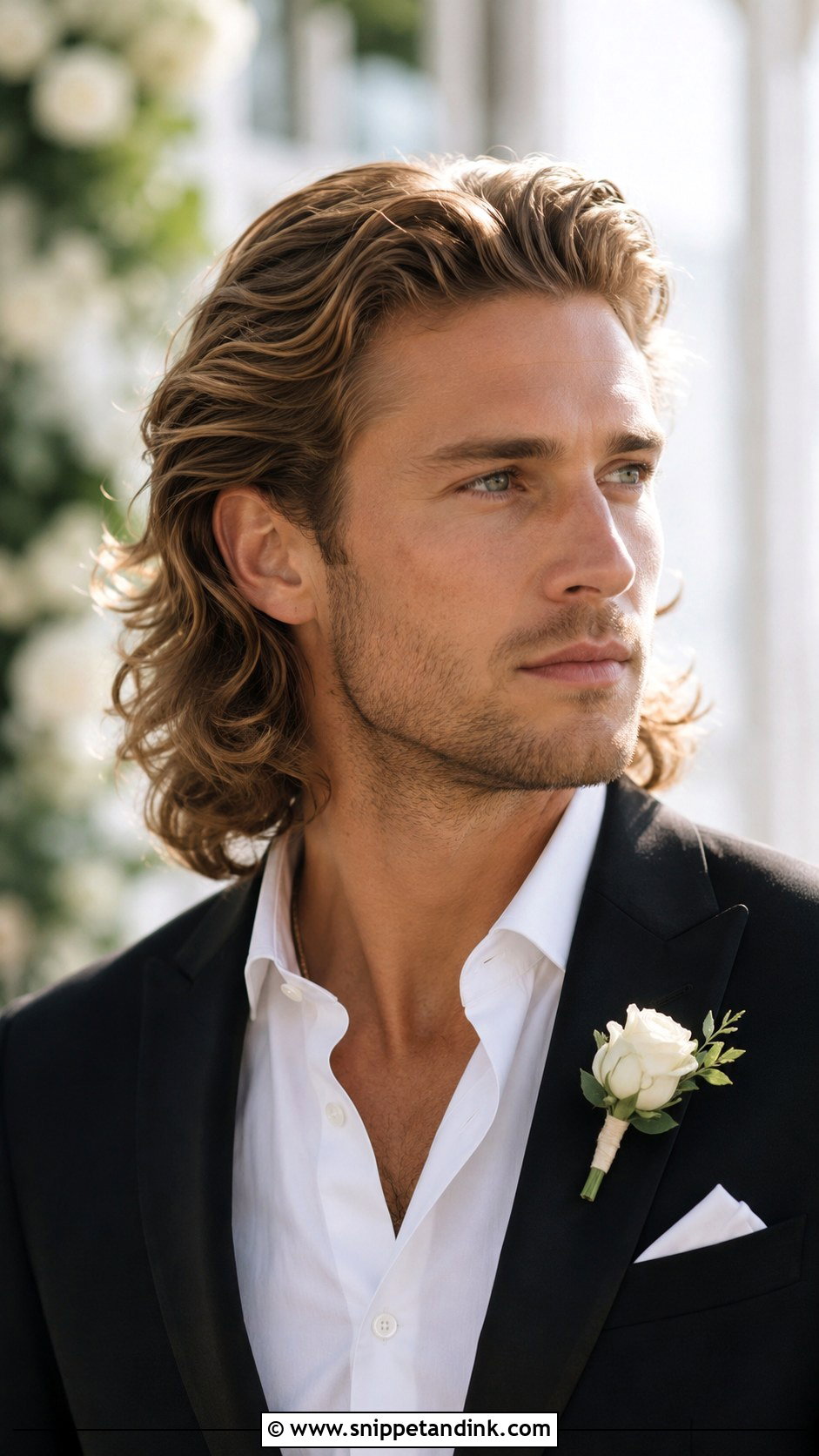
Long hair at shoulder length or beyond can be brushed back, waved, worn half-up or tied into a low bun. Suit, venue and texture decide which. For a formal wedding, a smooth low bun or half-up keeps the face clear and the outfit visible; for a relaxed one, loose waves feel personal. Trim dry ends a couple of weeks before, since split ends catch the light on camera. A smoothing cream or light oil on the lengths, never the roots, keeps it healthy-looking without going flat.
12. Man Bun Wedding Hairstyle
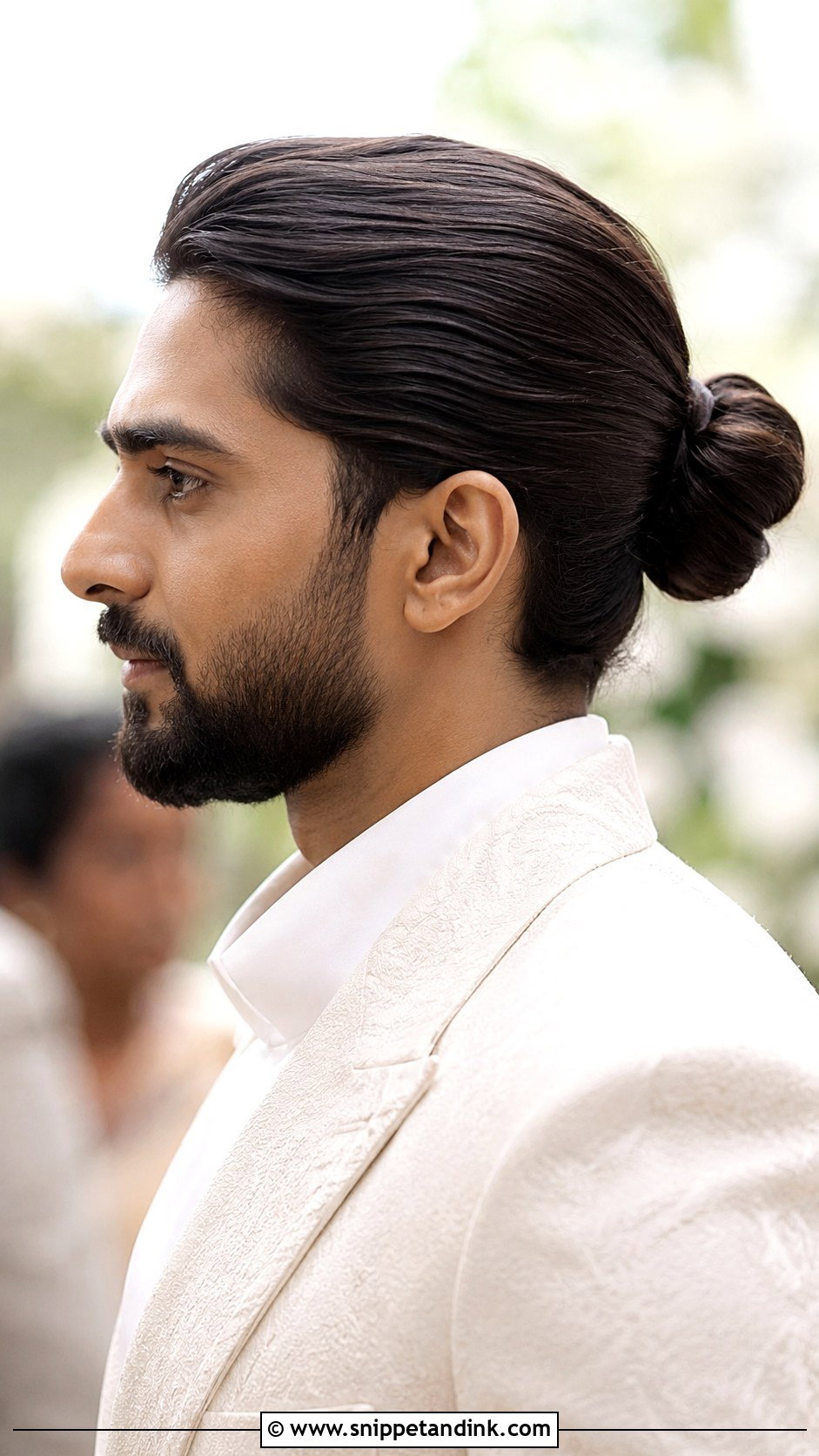
A man bun wedding hairstyle keeps long hair secure through photos, greetings, dancing and weather. Low at the nape is more formal; a mid bun is relaxed. Natural, tapered or undercut sides change the look. I smooth the hair back with a brush or wide-tooth comb without flattening all the texture, then a touch of cream for frizz. Keep the tie snug rather than tight. A strained hairline is visible in close-ups and uncomfortable after a few hours.
13. Afro Wedding Hairstyle
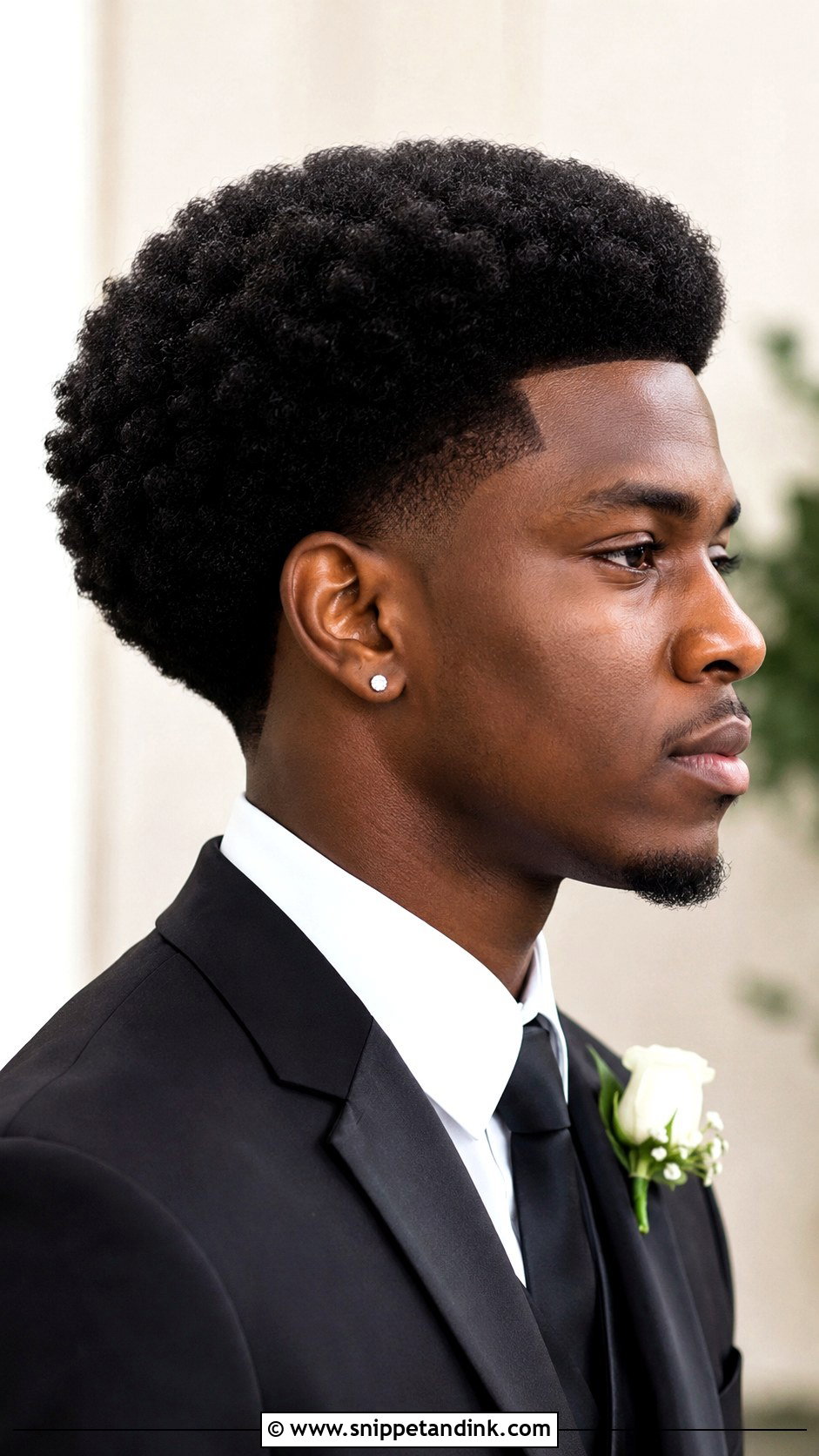
An afro wedding hairstyle works when the shape is picked, trimmed and moisturised so the silhouette looks deliberate. A rounded afro has real presence with formalwear. A low taper at the edges or a softly shaped hairline adds detail. I’d moisturise with a leave-in conditioner, curl cream or light oil before shaping. Book the barber shape-up close to the wedding, but not the same morning if your skin reacts to a fresh lineup.
14. Braided Wedding Hairstyle For Men
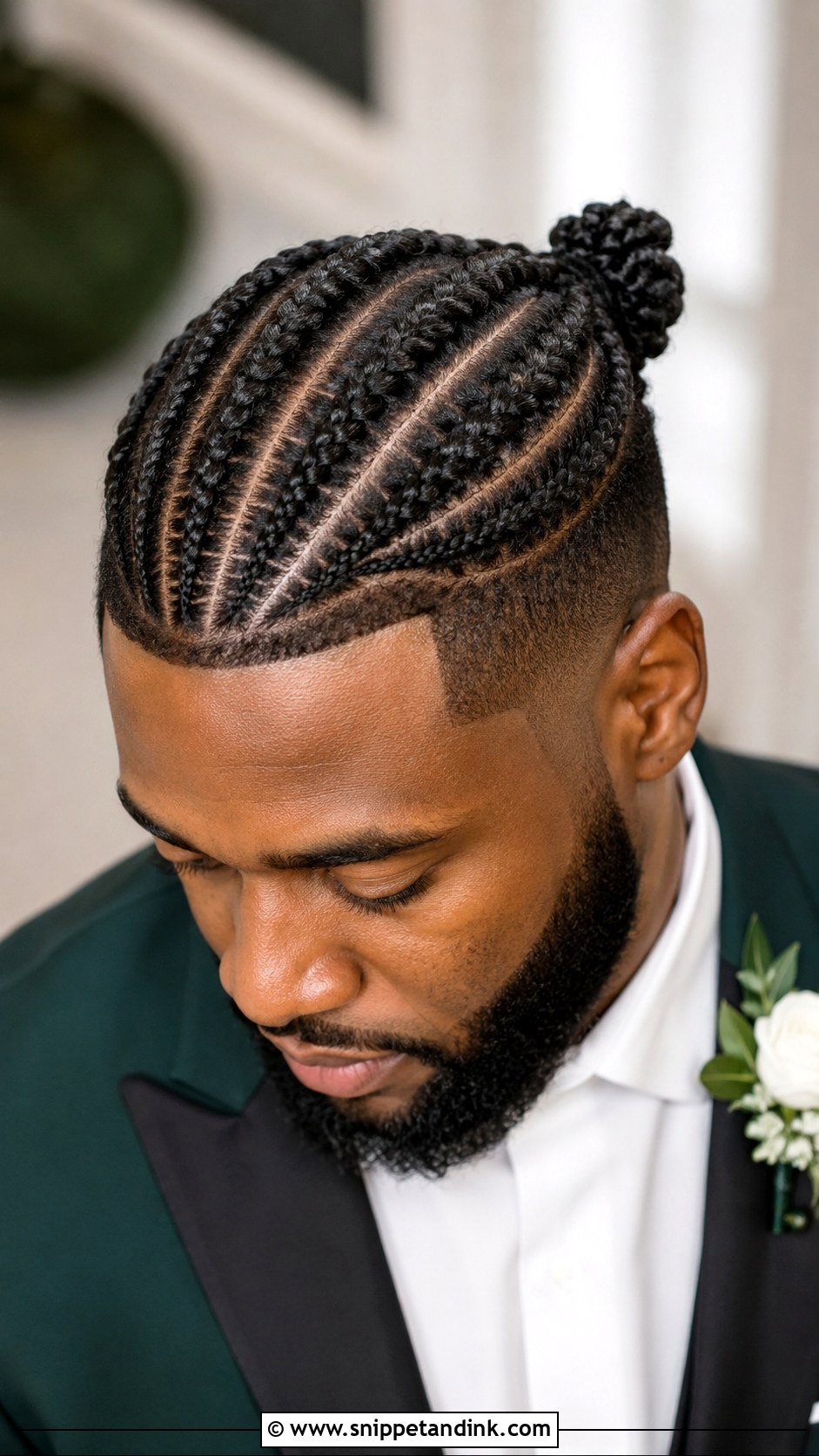
Braids keep long or medium textured hair controlled through a full day, which is a big advantage outdoors. Cornrows, two braids, stitch braids or a braided bun can all work. Book the braider close enough for a fresh finish but not so close that the scalp is still tight and sore. A few days usually gives the tension time to ease. Keep the hairline clean and the braids moisturised with a light sheen spray or oil. Too much oil will mark a white shirt collar.
15. Buzz Cut Wedding Hairstyle
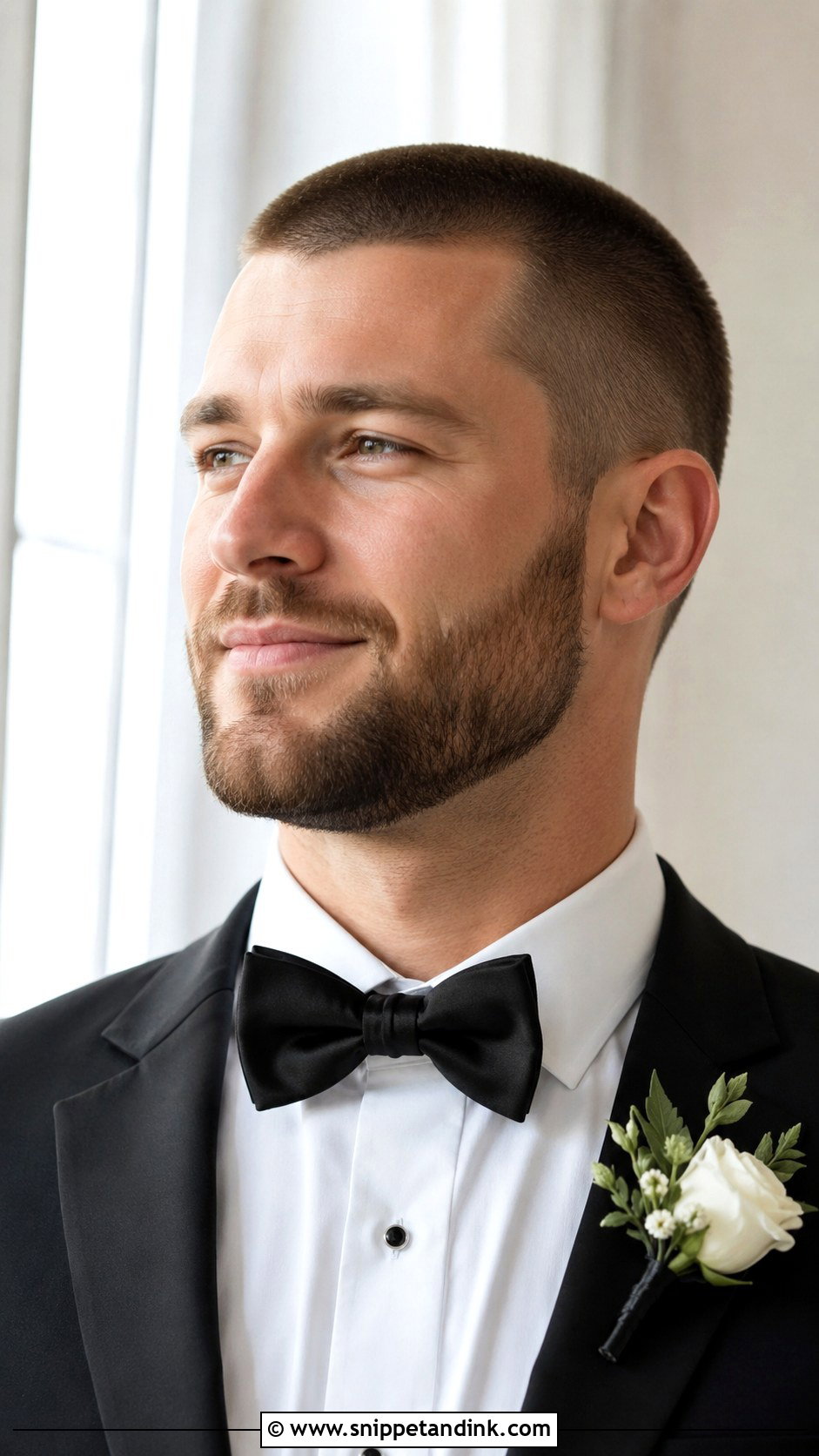
With a buzz cut, there’s very little hair, so every detail shows. A clean hairline, even clipper work and a tidy neckline separate a wedding buzz from an everyday one. It suits men who want the focus on the suit, the face and the accessories. A trimmed beard adds shape and balance. Have it cut a few days before so the scalp has calmed down and the edges look fresh but not raw.
Salt-and-Pepper Hair and a Thinner Top at the Altar
Older grooms and fathers of the couple ask me about this more than anything else, and most wedding hairstyle lists skip it.
When the top is thinning
Gel and shiny pomade clump hair into strands and show the scalp between them under flash. A matte paste or a thickening cream worked in with a blow-dryer gives more coverage. Keeping the sides shorter makes the top look fuller by contrast, and a slightly shorter overall length often looks thicker than long, sparse hair.
When the hair is grey or silver
Grey hair can look yellowish under warm venue lighting. A purple or silver shampoo used a few days before the wedding brightens it, but leave it on too long on very light hair and it can tint slightly lilac, so test it beforehand. Grey hair is also often coarser and drier, so a little cream softens wiry pieces that stick up in photos.
On a bald or closely shaved head, the issue is shine. A mattifying moisturiser or a light dusting of powder keeps the scalp from glowing under lights.
Your Barber, Your Product and a Week to Spare
A wedding style should look right in person, hold up in photos and feel comfortable all day. Some men suit a slick back or side part; others look their best with curls, waves, braids, an afro or long hair. The wedding isn’t the time to fight your texture or try something risky the day before. Plan early, bring reference photos of men with hair like yours to your barber, and test your product routine before the event. Leave a week of margin, and if something goes wrong, there’s time to fix it.
You'll Like These Ideas:


Leave a Reply