
Grooms usually get less thought than the suit, and it shows in photos when the haircut is a week too old or brand new and still stiff. A good wedding cut frames the face, sits well under a collar and keeps its shape through hours of hugs and dancing. Classic, modern or a little edgy, there’s a version for every hair type and face shape, from skin fades to textured crops and side parts. Below are 25 groom haircut ideas to show your barber, each with what I’d tell you before you sit down in the chair: who it suits, what it needs to stay put, and where it tends to go wrong.
Trying a New Cut Six Weeks Out, Not the Week Before
The most common groom haircut problem I see isn’t the style. It’s trying something new days before the wedding and hating it with no time to fix it. If you’re changing your cut at all, do the new version about six weeks out. That gives you time to see how it grows, learn to style it yourself, and make one adjustment before the final trim.
- Six weeks before: the new cut, with photos of the look you want and of your suit.
- Two to three weeks before: a tidy-up to correct anything that didn’t sit right.
- Three to five days before: the final trim, so edges are crisp but not raw.
- One or two days before: beard shaping and line up, giving skin time to settle.
Tell your barber the wedding date at every appointment. A barber who knows the timeline will leave the top a little longer at the final cut and keep fades a touch softer, so the hair looks naturally yours in photos rather than just out of the chair.
1. Low Skin Fade With Textured Top
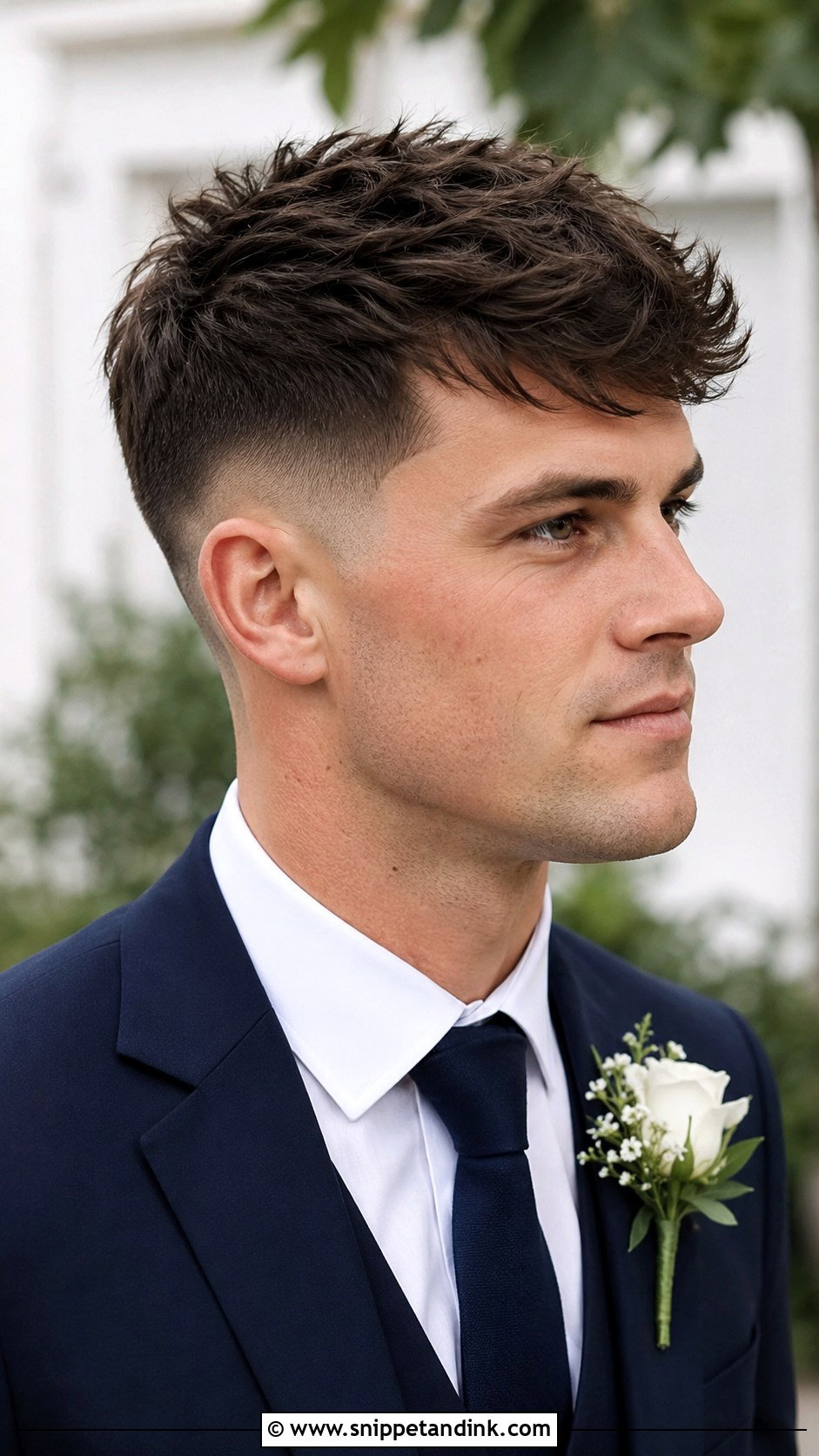
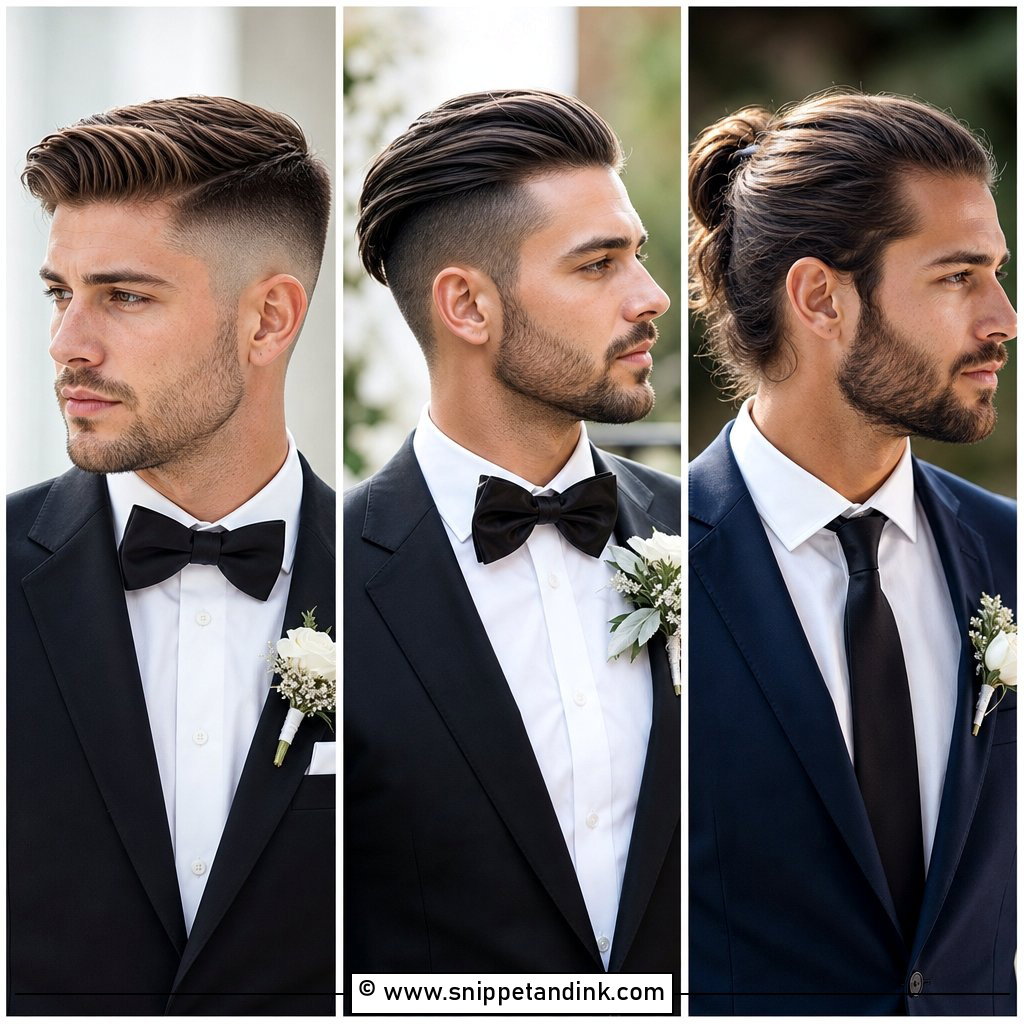
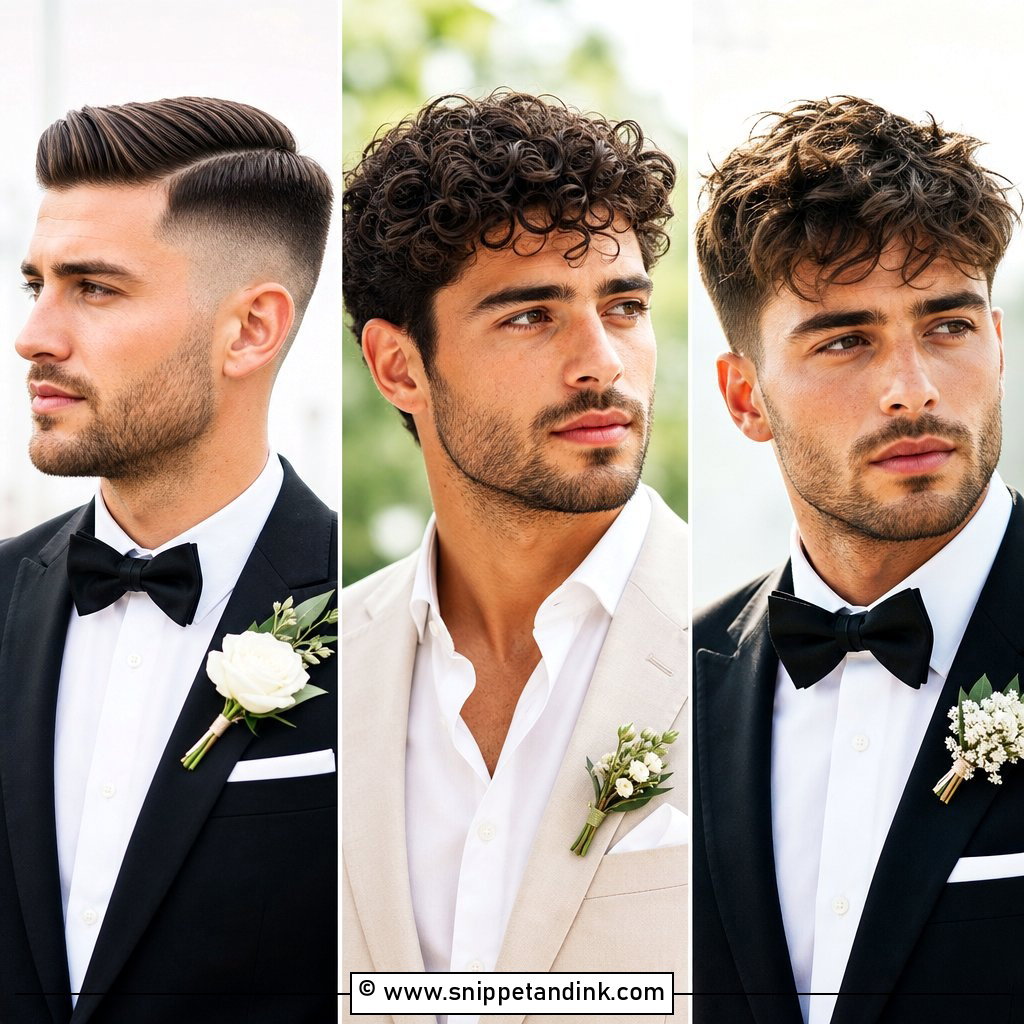
A low skin fade under a textured crop is the cut I’d call the safest modern choice. The fade starts low near the ears and blends down to skin, so the sides look clean without the starkness of a high fade, and the top stays long enough to tousle. A little matte pomade worked through dry hair gives definition. One caution: skin fades grow out fast, and the stubble line shows within about a week, so this cut needs to be done very close to the wedding. It suits most face shapes and sits neatly above a tailored collar.
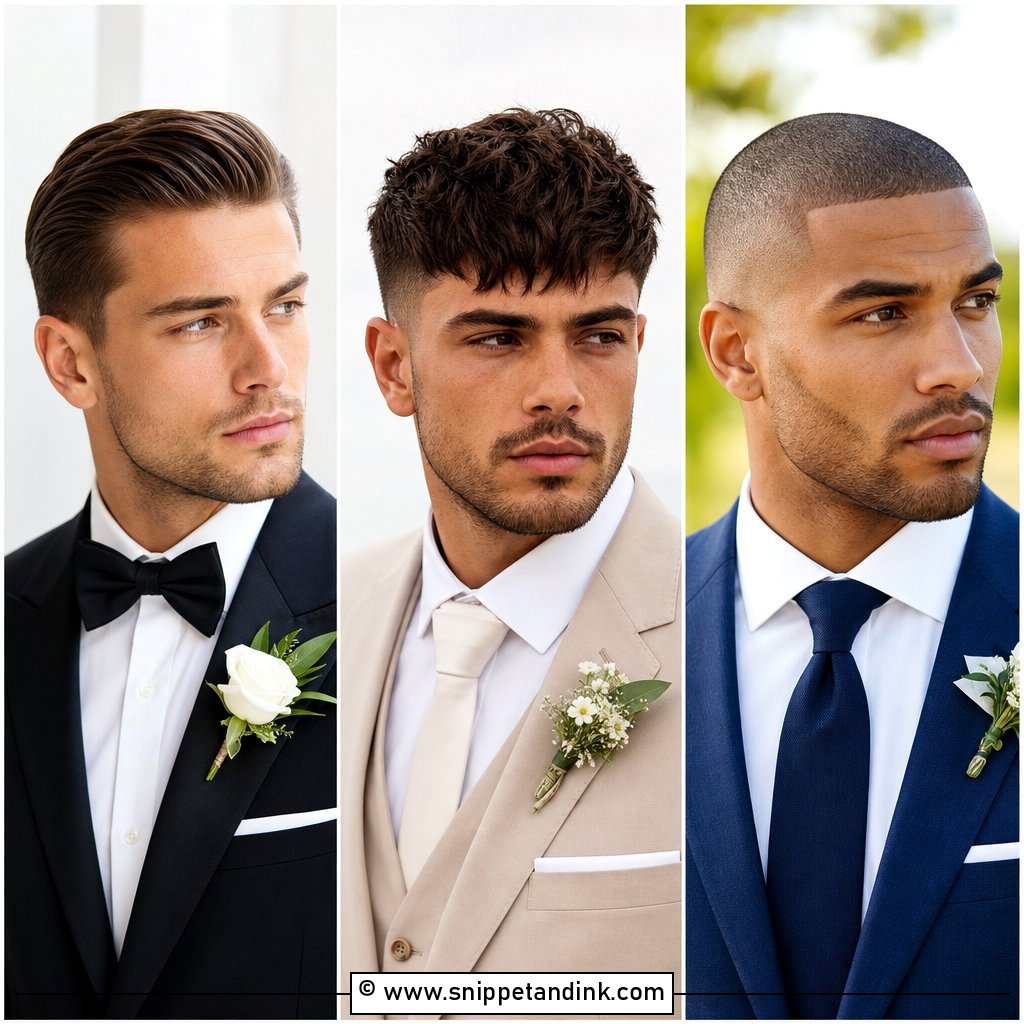
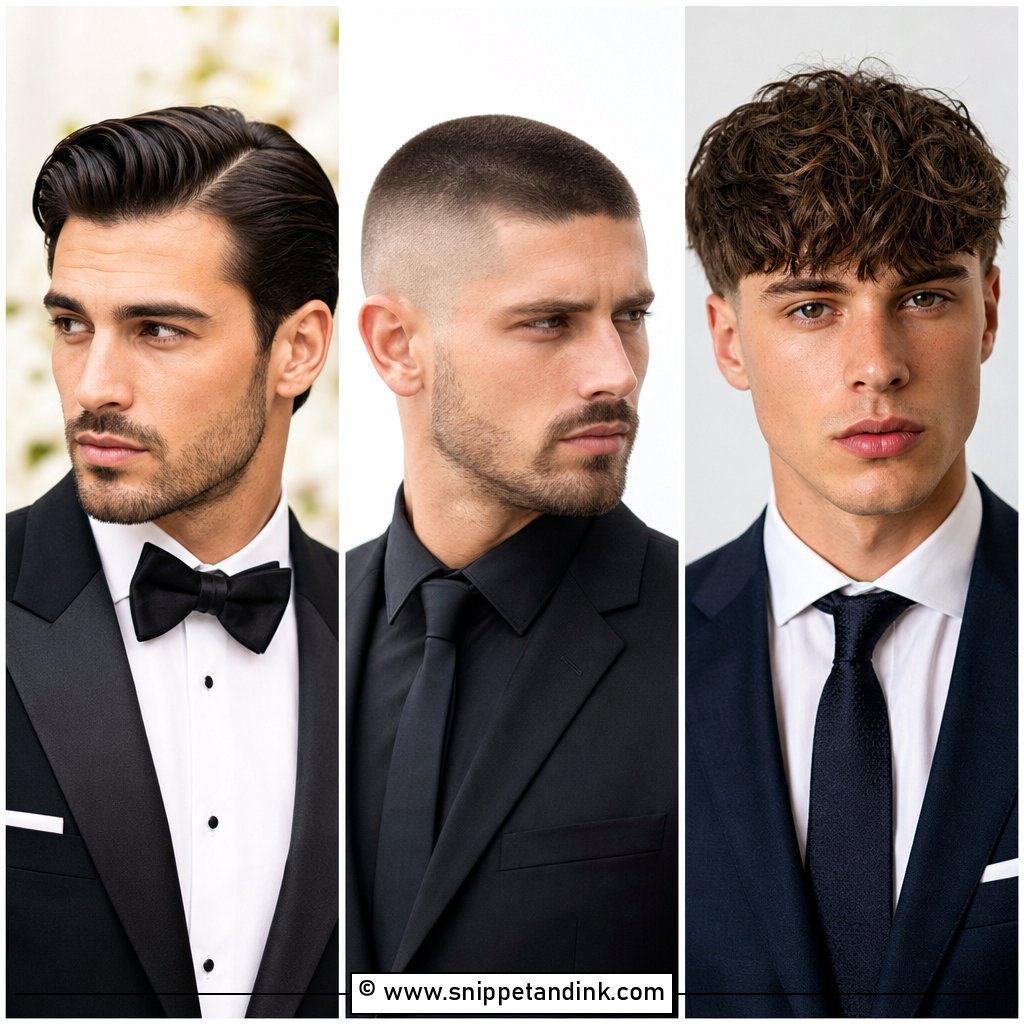
2. Classic Side Part Haircut
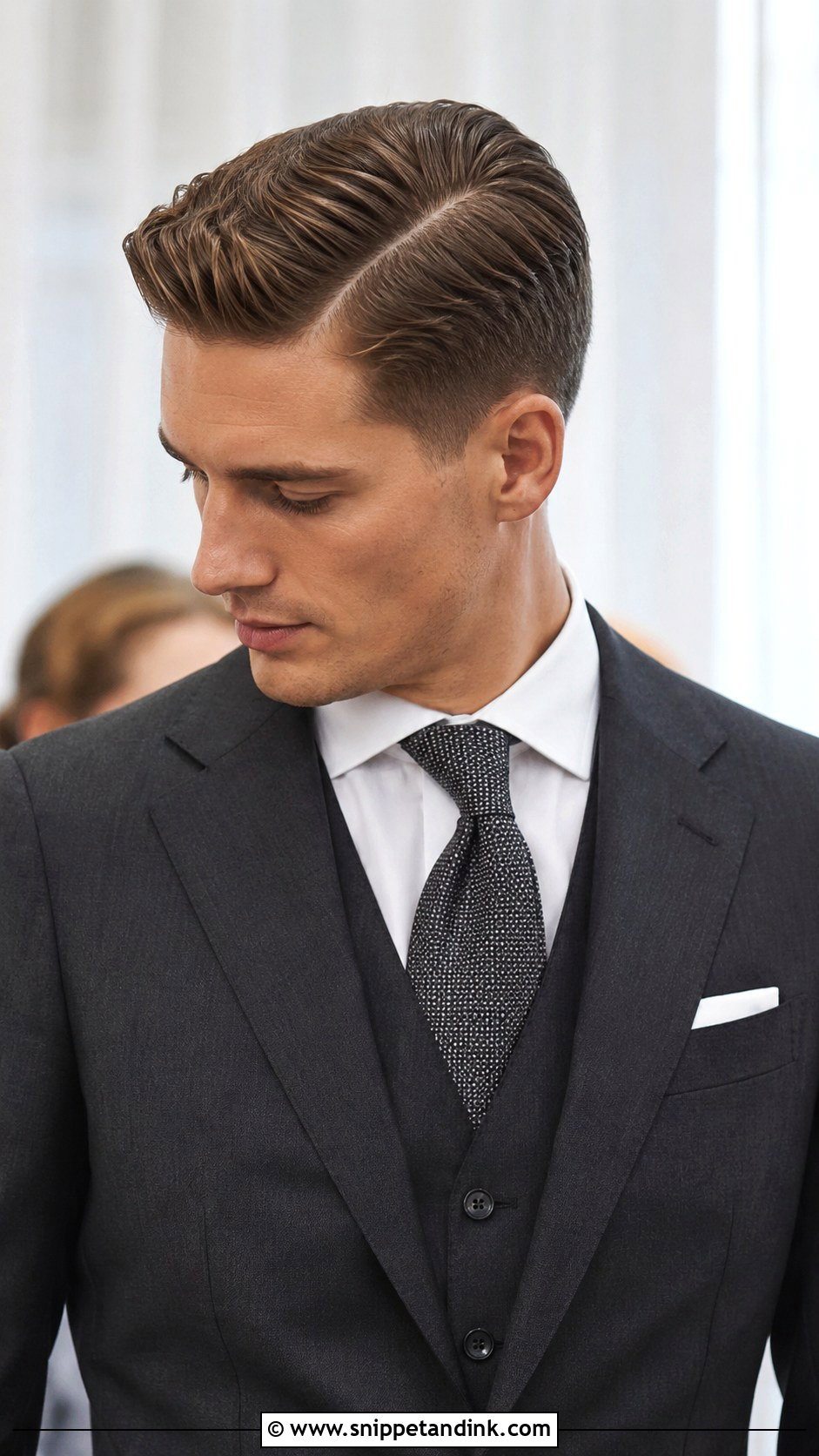
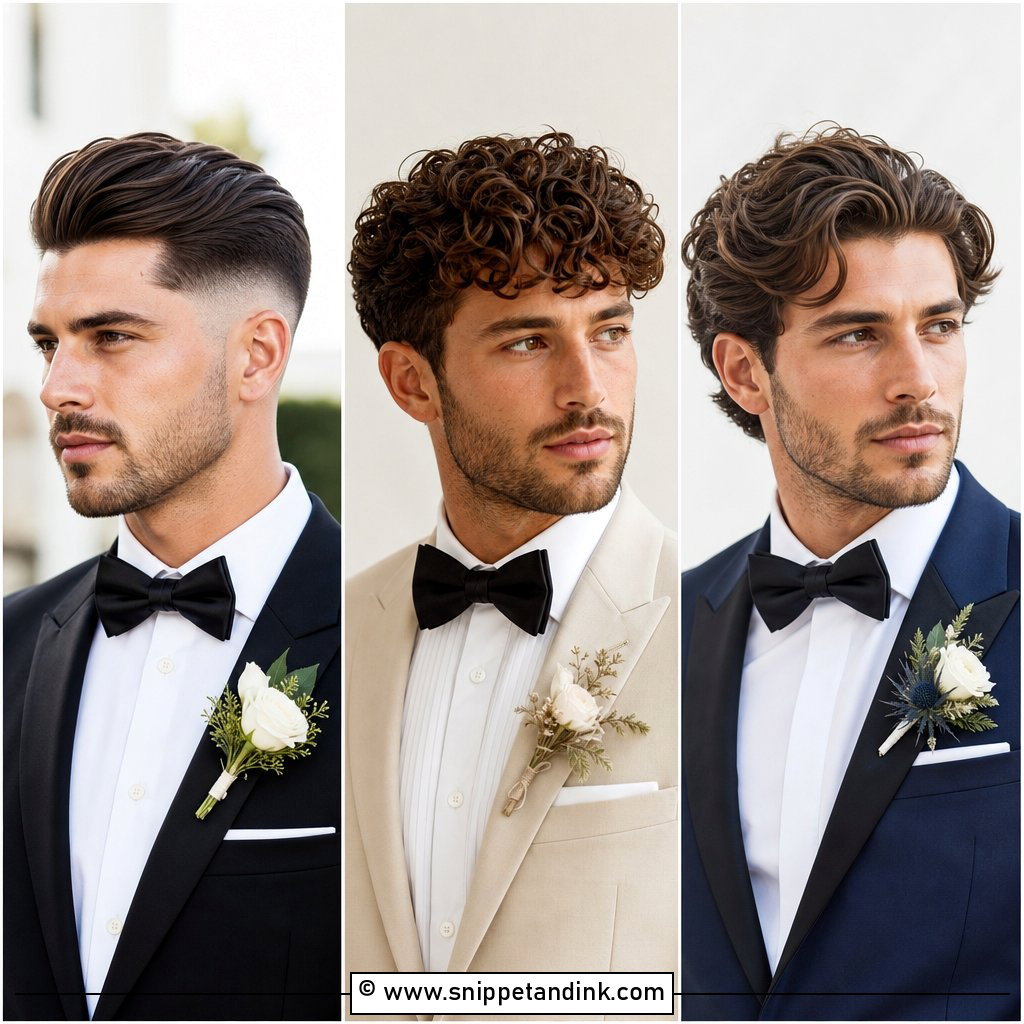
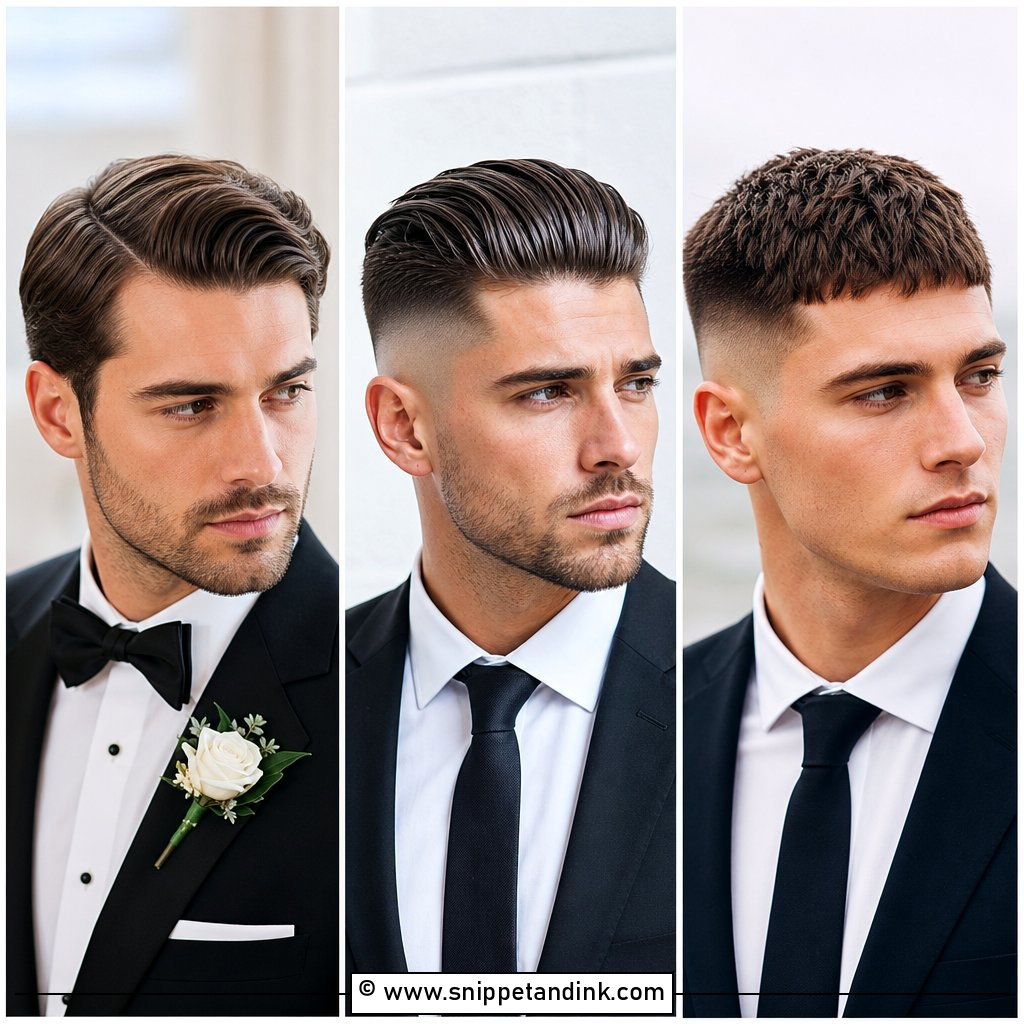
The classic side part is the cut that looks right in a church, a ballroom or a garden and will still look right in the album decades later. Hair is combed to one side along a defined parting line. Straight or slightly wavy hair holds it best; very curly hair fights the line. I find the natural part first by combing the hair back wet and seeing where it falls, because forcing a part on the wrong side means it’ll spring open by the reception. A light shine product keeps it smooth, and it sits well with a clean shave or a trimmed beard.
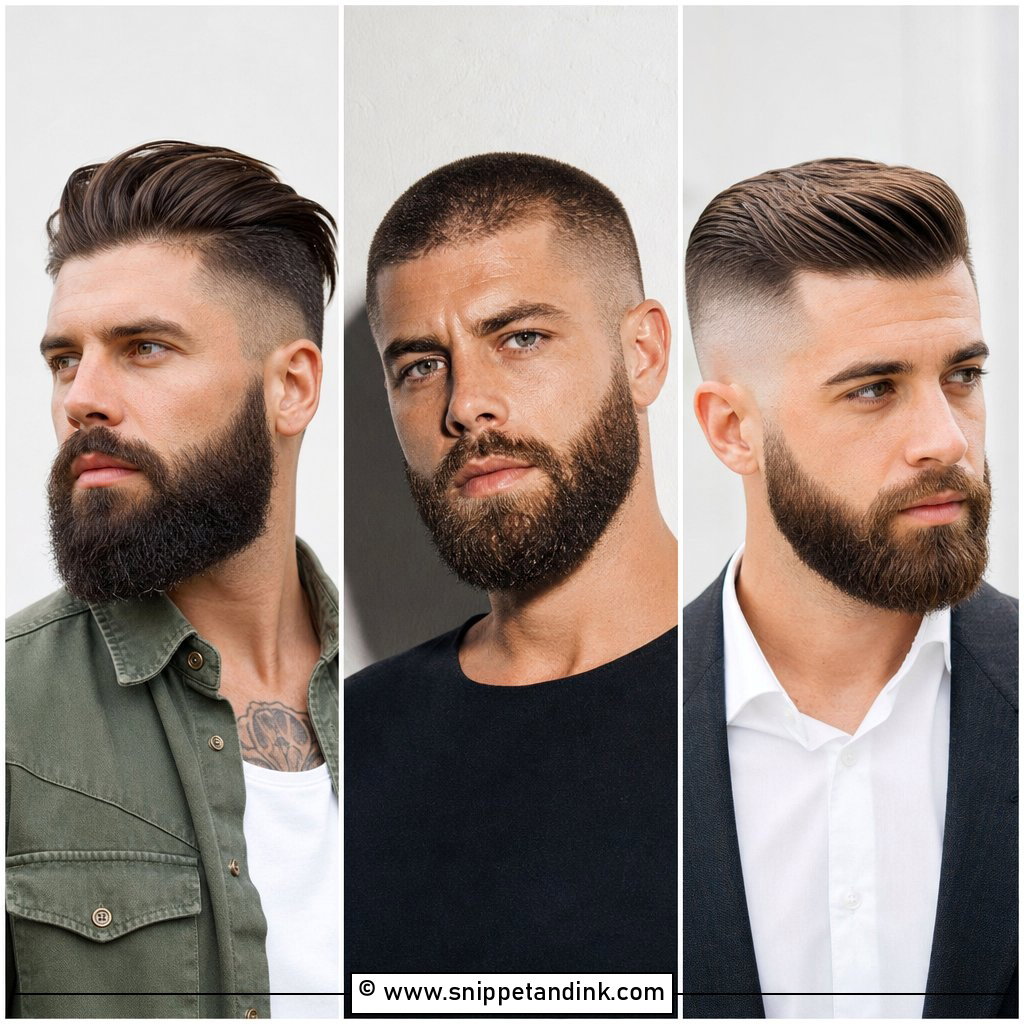
3. Taper Fade With Pompadour
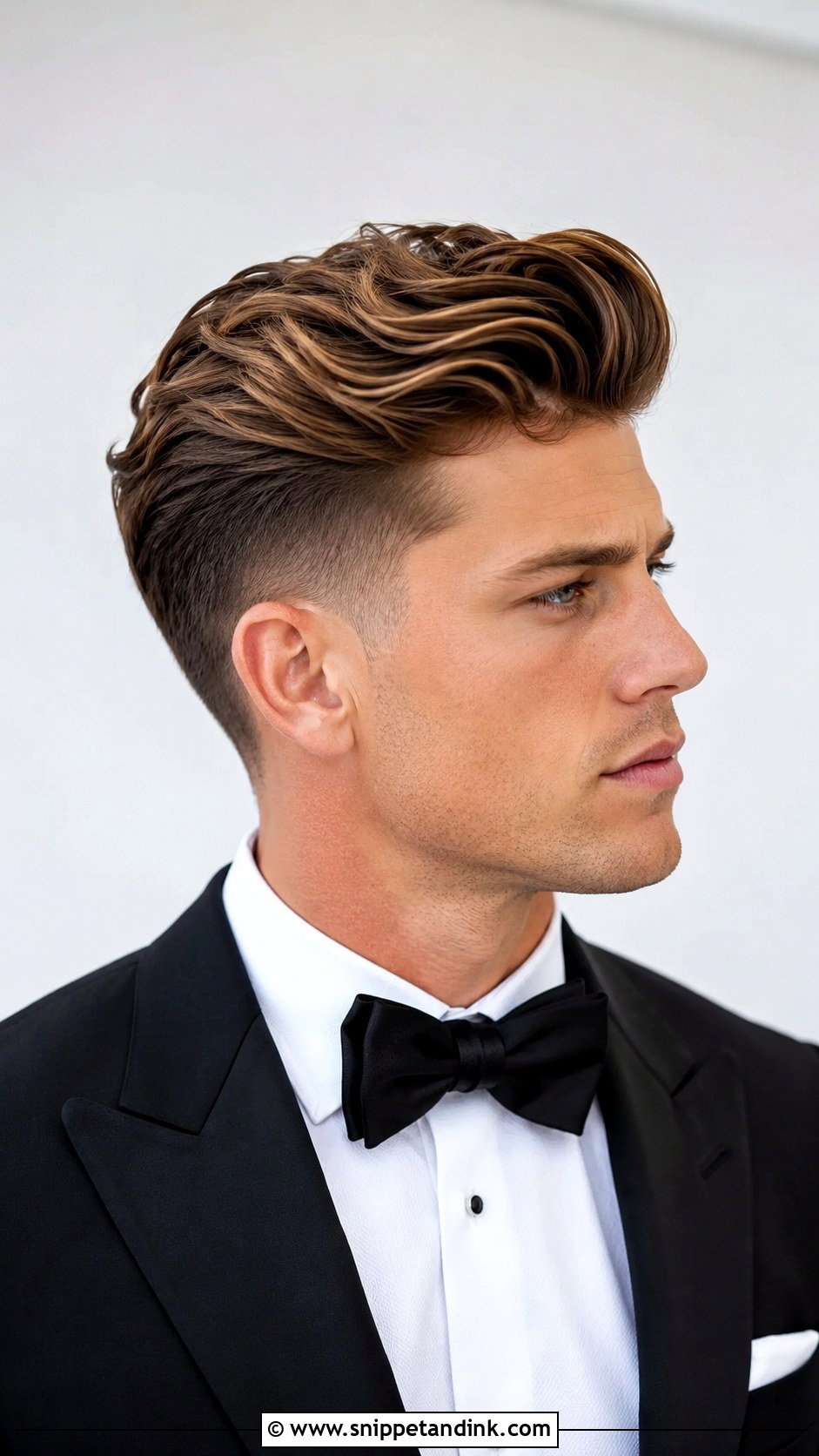
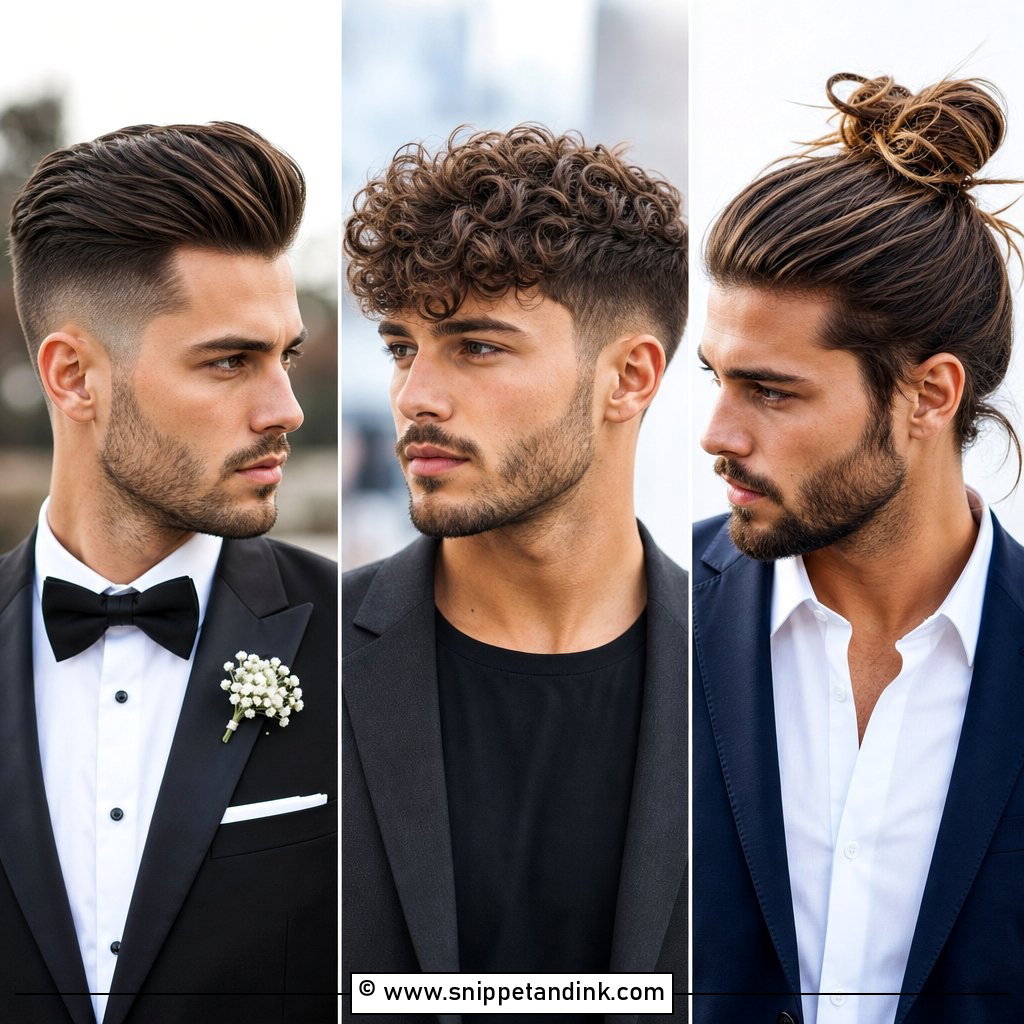
Want height in your photos? A taper fade paired with a pompadour gives it. The taper tidies the sides and shortens gradually toward the neckline and ears, and the top is swept up and back into a full wave. The volume comes from blow-drying upward with a round brush before any product goes in; pomade alone just weighs it down. It needs a few inches on top, so plan ahead if you’re growing it. It flatters oval and square faces and pairs naturally with a three-piece suit.
4. French Crop Haircut
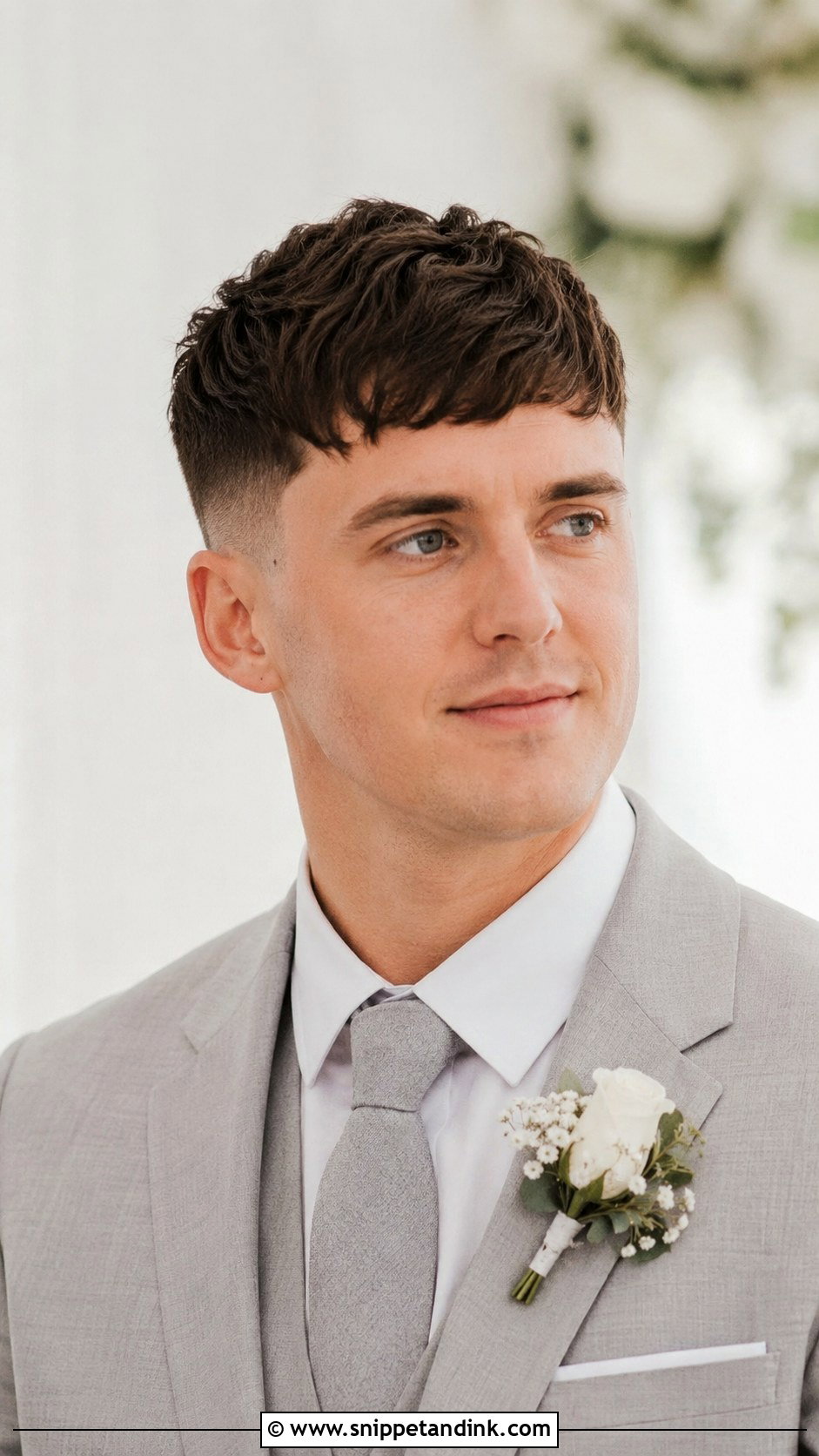
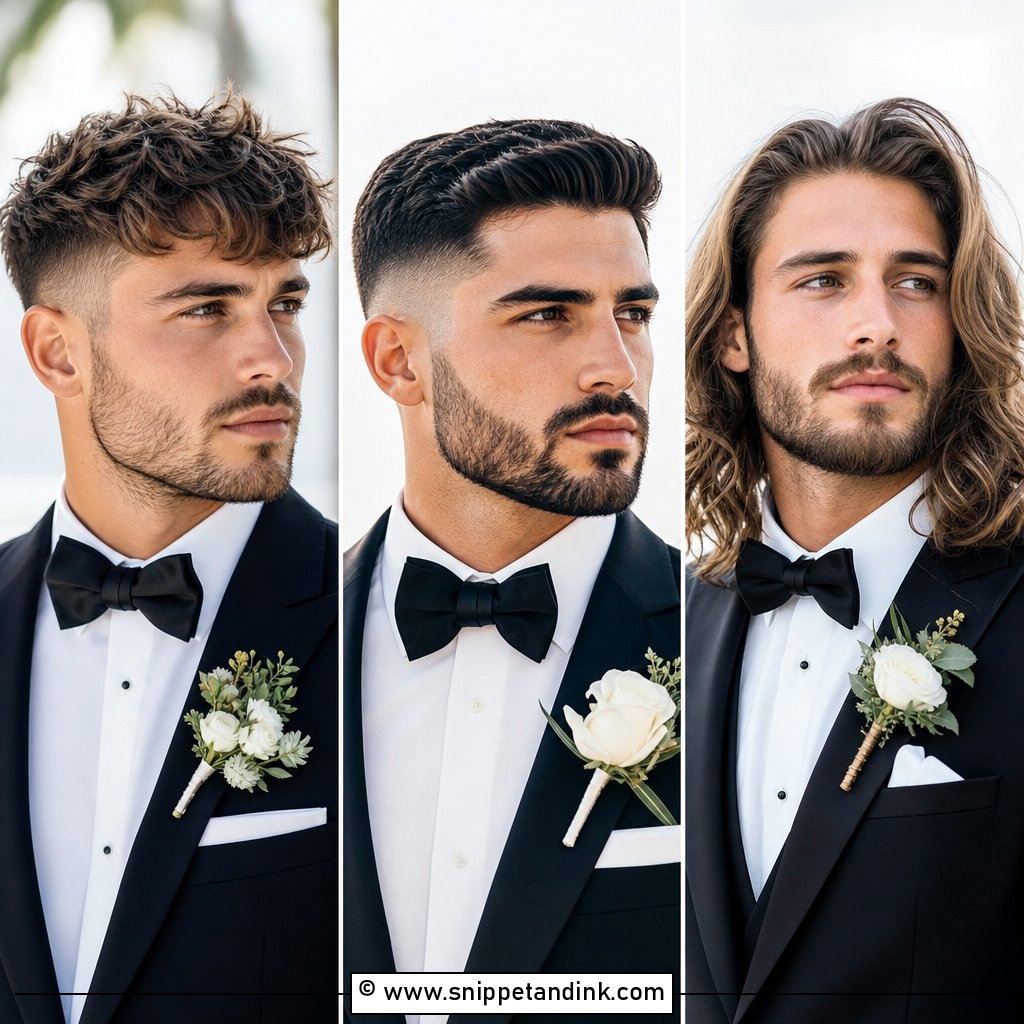
The French crop is short tapered sides with slightly longer hair on top, pushed forward into a textured fringe. It’s the cut I’d suggest to anyone who doesn’t want to style anything on the wedding morning: towel dry, a touch of matte paste, done. The blunt fringe gives a modern edge. Thick and straight hair suits it best, and it softens a round face. Ask for the fringe cut a little longer than usual if your wedding is more than a few days after the appointment, since a fringe that’s crept into your eyes is hard to hide.
5. Buzz Cut With Beard
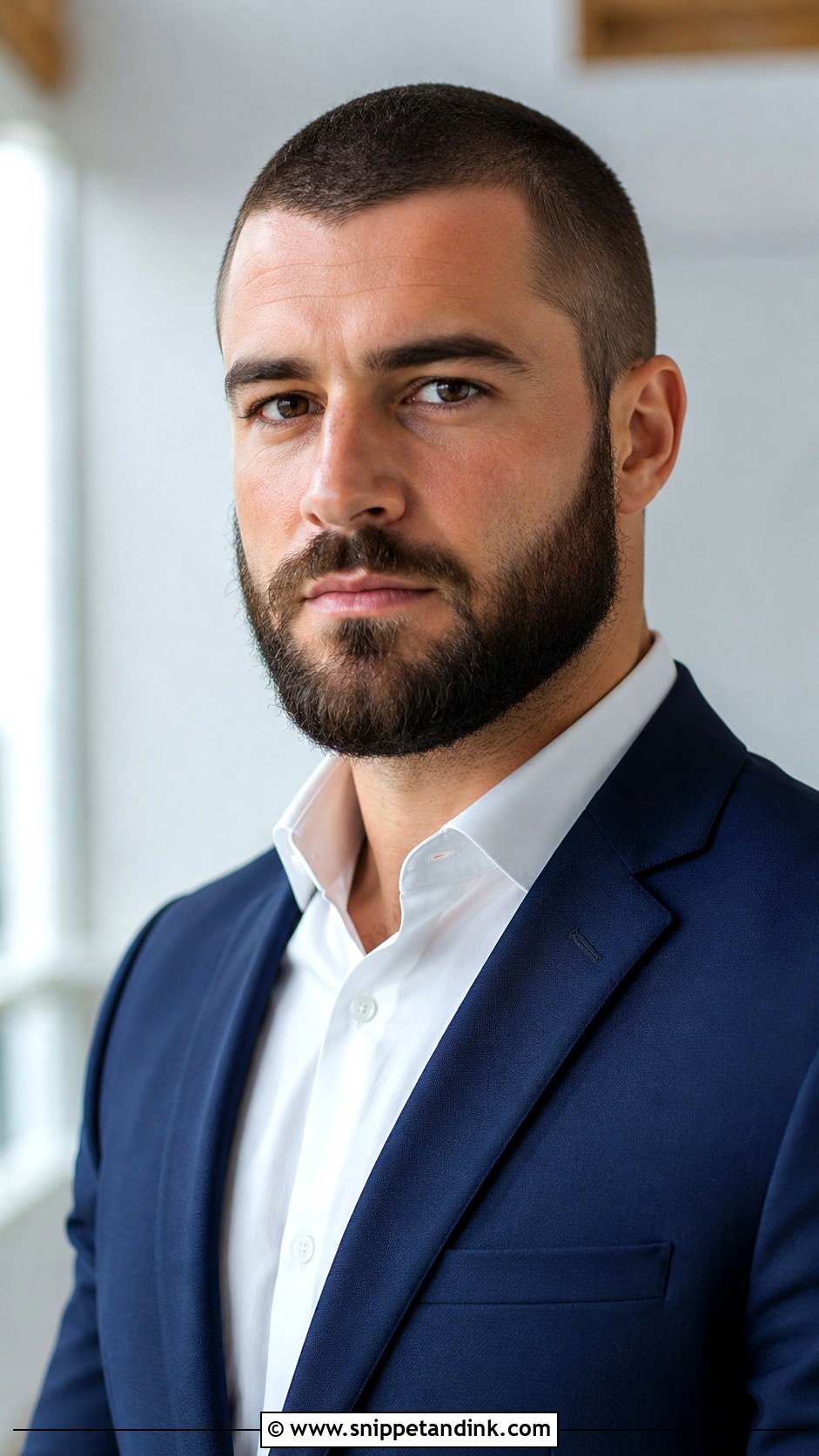
A uniform buzz cut with a well-shaped beard needs almost no upkeep and puts all the attention on your face and jawline. It’s a strong option for thinning hair, where longer styles tend to show scalp under the photographer’s lights. The beard does the real work here, so I’d have it shaped and lined a day or two before rather than the morning of, to give any redness from the razor time to calm down. Clipper length matters more than people think; a number two or three usually looks healthier on camera than shaved close.
6. Slicked Back Undercut
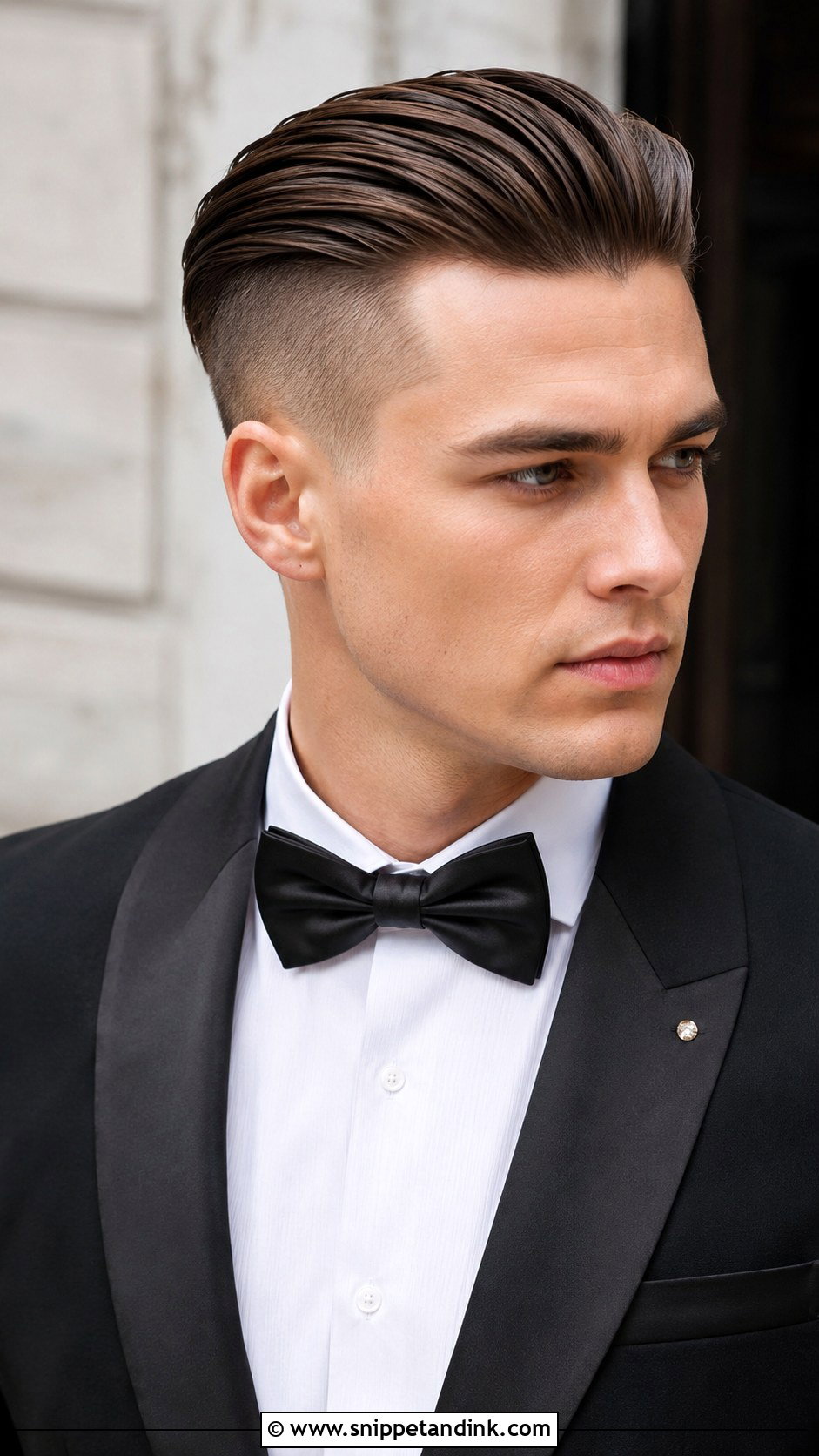
The slicked back undercut is a sharp disconnect: short sides and back, a long top combed straight back, and no blending between them. That contrast looks fashion-forward and very deliberate. It needs straight to wavy hair with real length on top and a strong-hold pomade for gloss. The weak spot is the back of the head, where the long top can fall over the undercut line as the day goes on, so I’d carry a small comb in your inside pocket. Angular faces suit it, and it looks most at home with a tuxedo.
7. Curly Hair With Taper Fade
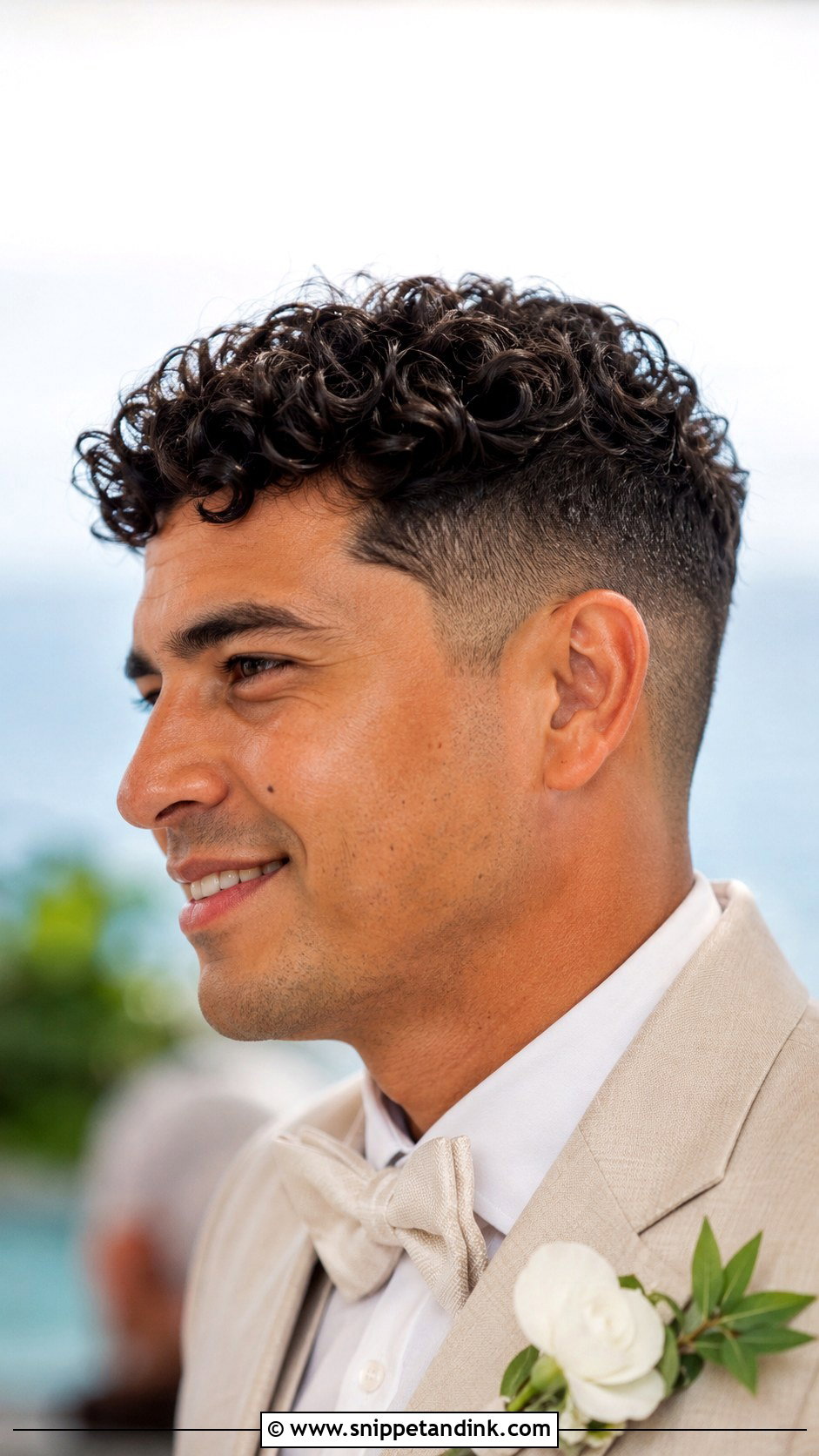
Curly hair doesn’t need taming, it needs a good shape, and a flattering taper fade provides one. The sides shorten gradually toward the neckline while the curls on top stay full. Curls should be cut dry or at least checked dry, because they shrink as they dry and a cut done wet can come up shorter than expected. Apply curl cream or a light gel to damp hair, scrunch and let it air dry or diffuse on low heat so frizz doesn’t take over at an outdoor or humid destination wedding.
8. Textured Quiff Haircut
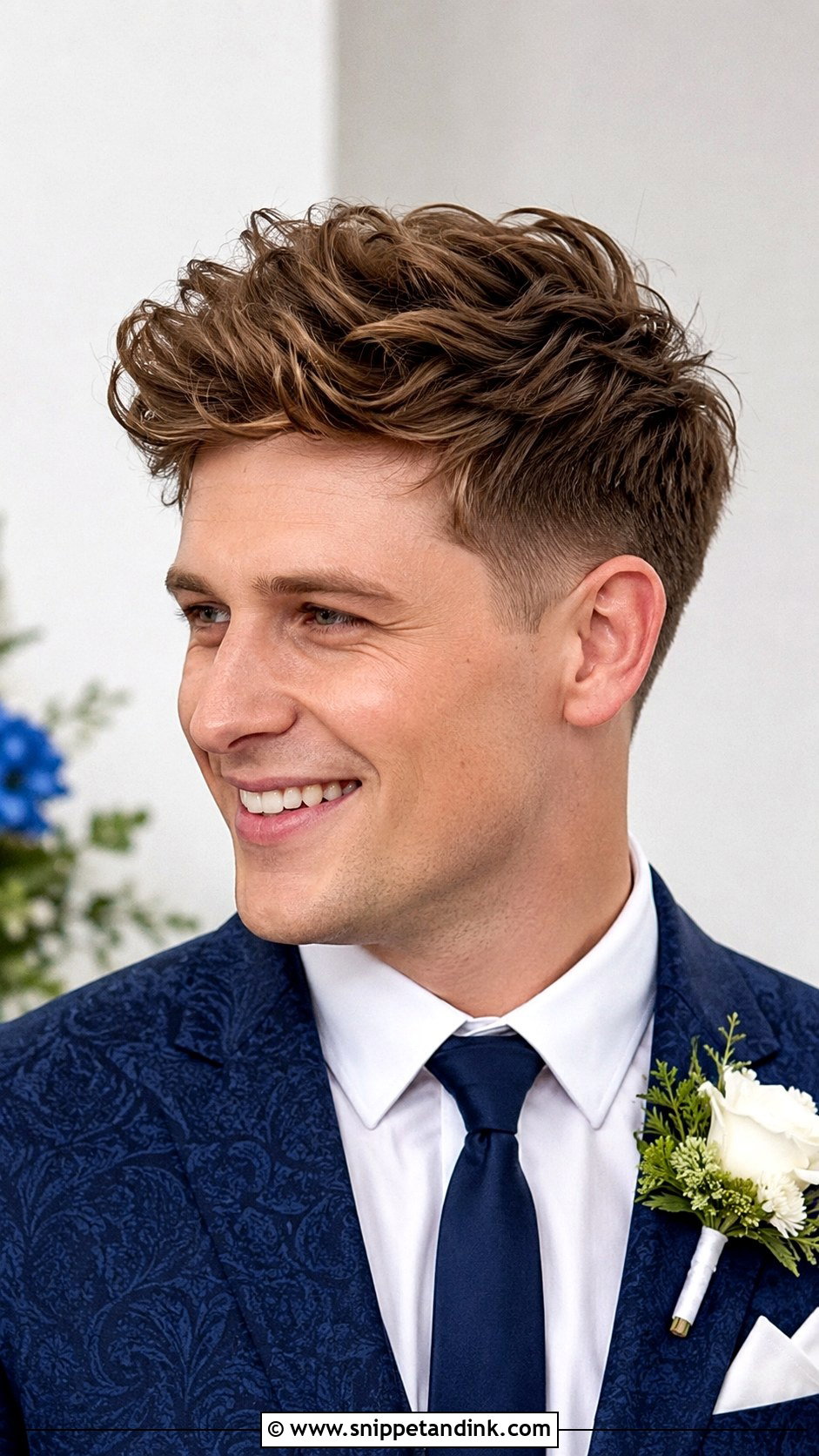
A textured quiff lifts the front up and slightly back like a pompadour but keeps the finish messy rather than glossy. The sides stay short with a taper or fade. A matte clay or paste gives hold that still moves if someone runs a hand through it. I build the lift by blow-drying the front upward first; skip that step and the quiff collapses by lunchtime. Oval and rectangular faces suit it best, and it bridges a relaxed and a dressy wedding comfortably.
9. Comb Over Fade
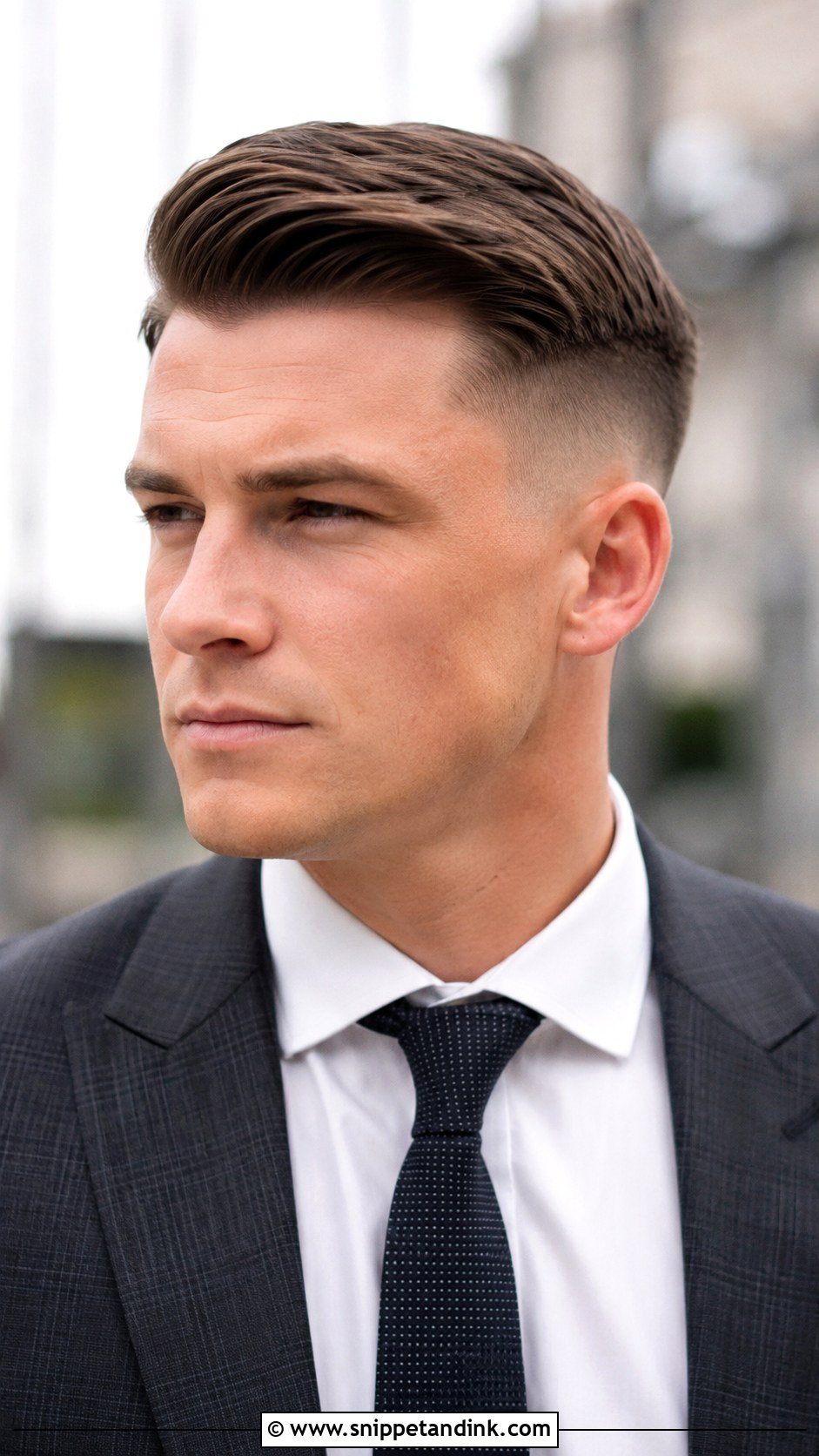
The comb over fade is a side part’s tidier cousin: the top combed to one side, the sides faded clean underneath for sharper contrast. The fade height is adjustable, low for a softer look and high for more edge, so tell your barber how much skin you want to see. A light pomade keeps the top in place. On fine hair, a comb over can look flat and thin; a slightly messier finish and a matte product help there. It suits formal ceremonies and most face shapes.
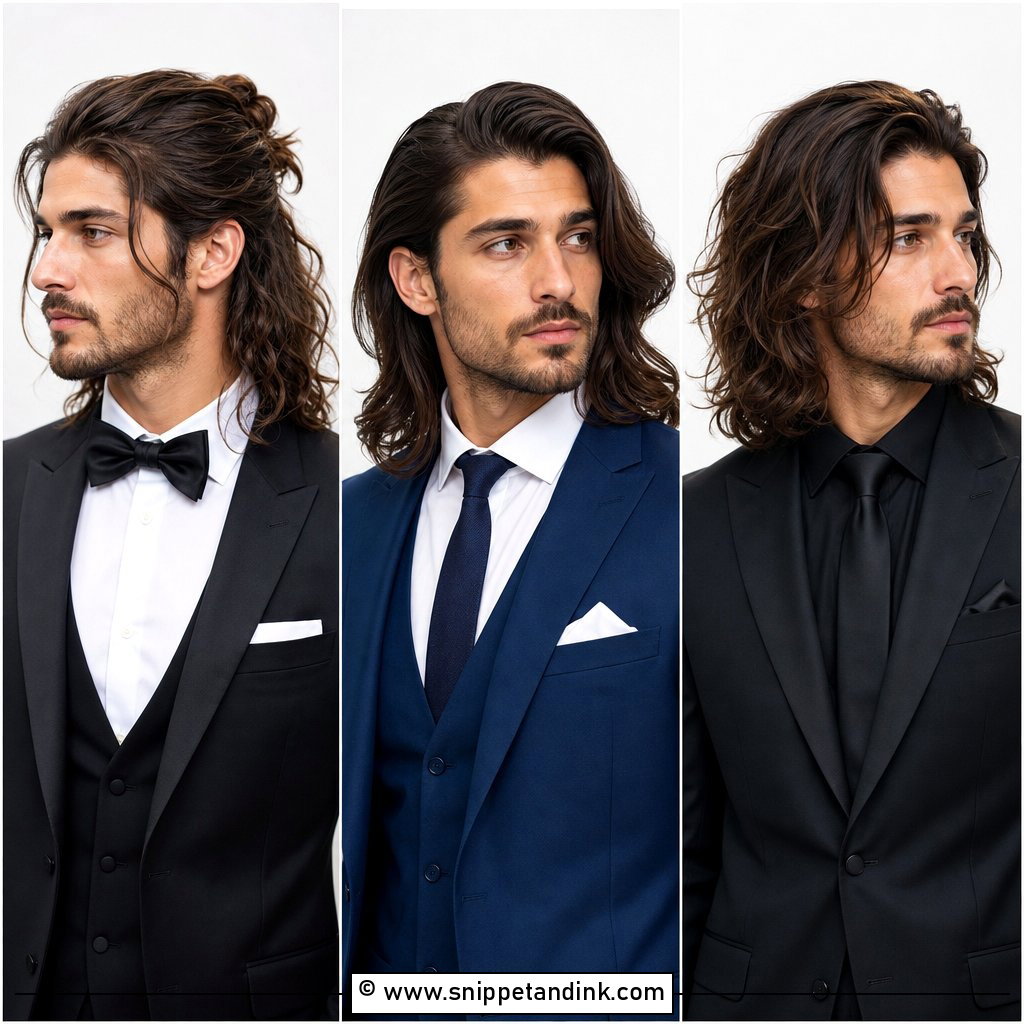
10. Long Hair Tied Back
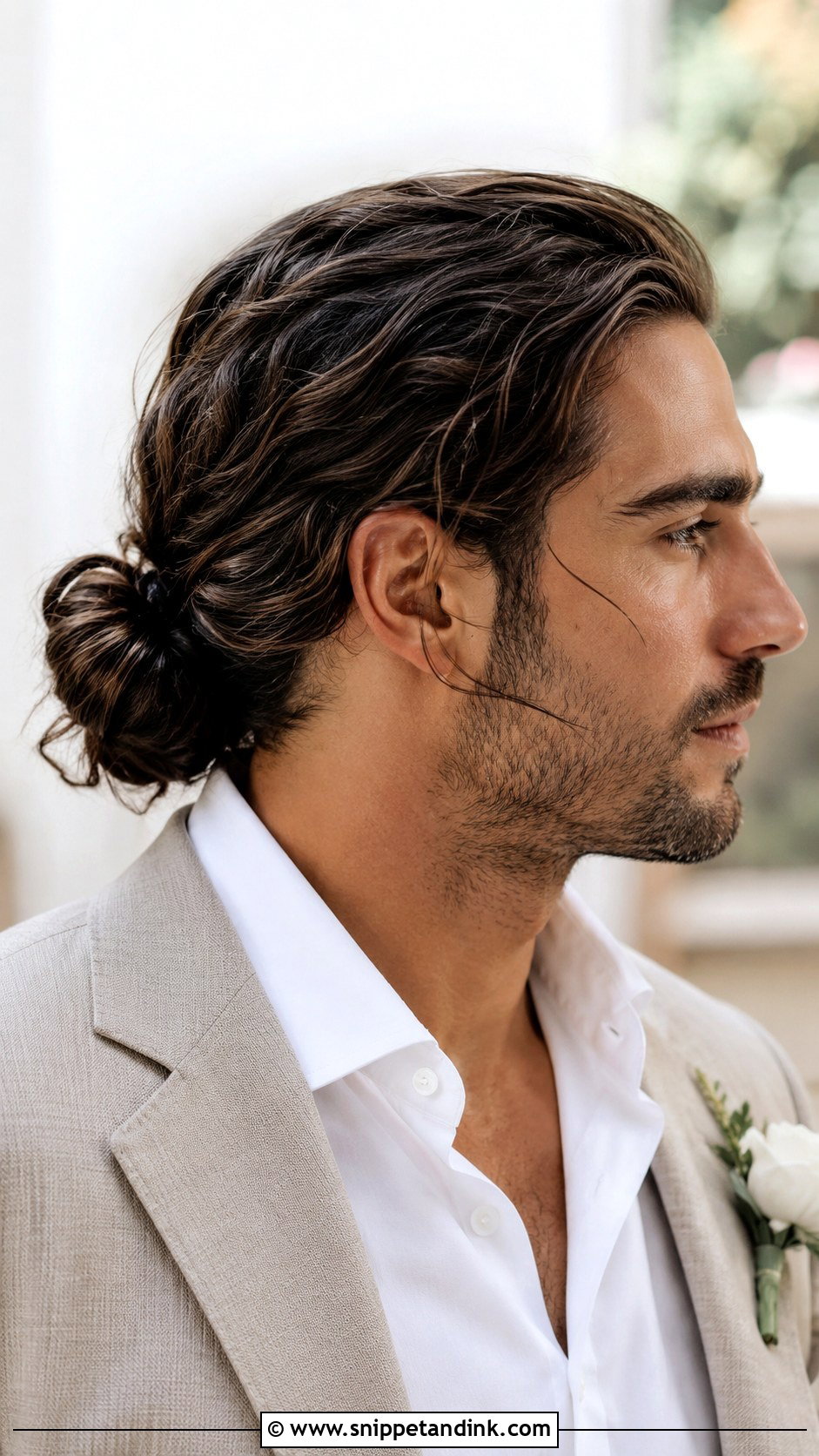
Long hair doesn’t have to go for the wedding. A low bun or ponytail at the nape looks deliberate and keeps hair off your face during the vows and dinner. I’d have the ends trimmed two or three weeks before, which removes split ends without taking away length you’ll notice. Smooth with a little serum, tie with an elastic close to your hair color, and keep the tension moderate so it doesn’t pull the hairline or cause a headache by evening. It suits a sleek suit as easily as a boho wedding.
11. Crew Cut Haircut
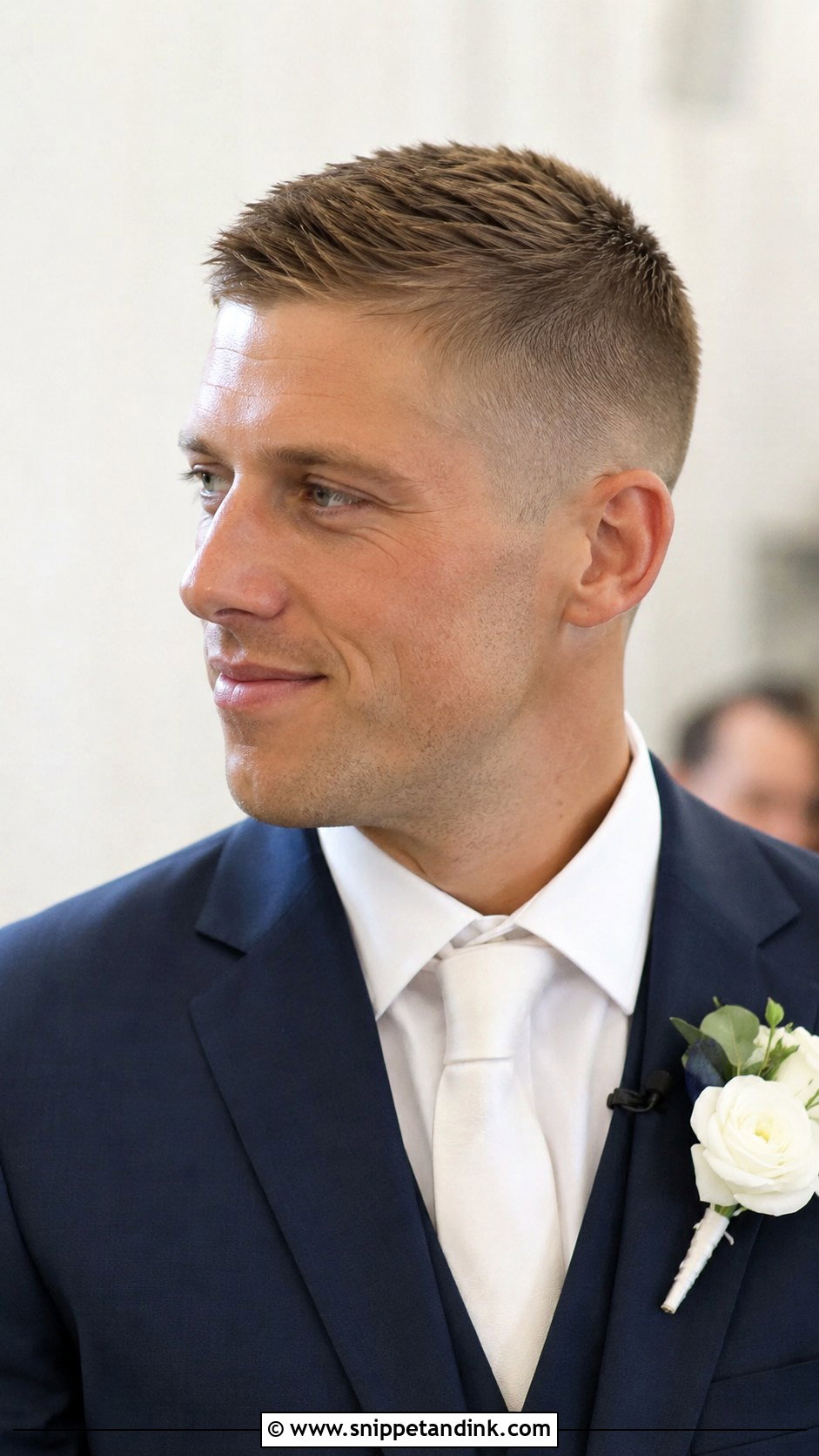
The crew cut keeps the sides and back tapered, leaving a little more length on top to push forward or up. It’s about as easy as a wedding morning gets and it looks neat on most face shapes, making a groom look younger and fresher. A small amount of product adds texture if you want it. The only real risk is cutting it too short too close to the day; a crew cut done the week before has time to settle so it doesn’t look freshly shorn in photos.
12. Side Swept Undercut
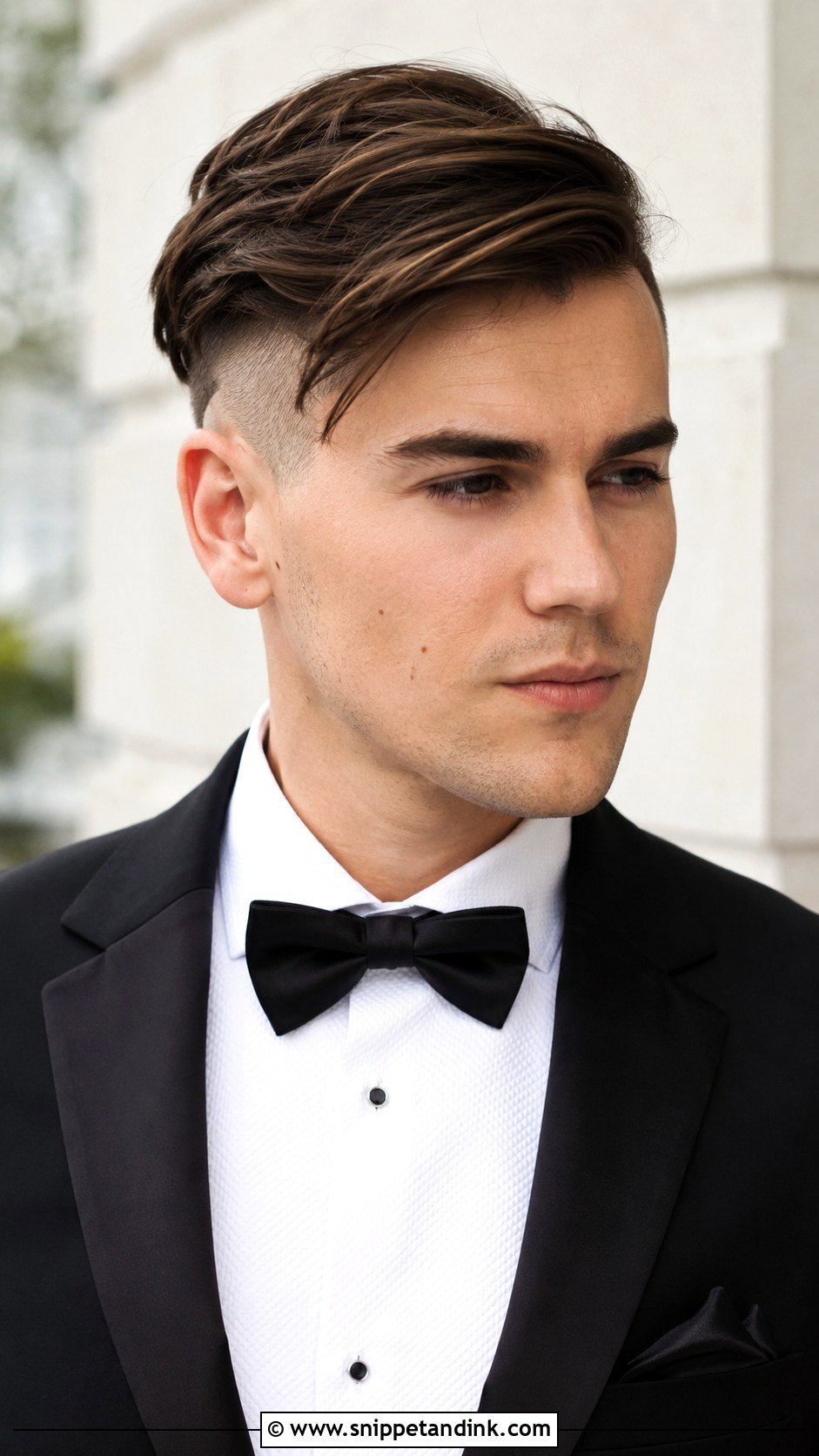
Here the sides are taken short into an undercut and the longer top is swept across to one side, giving movement on top and contrast underneath. A medium-hold cream or paste keeps the sweep while letting the hair still look like hair. It suits oval and diamond faces and wears well with a slim suit or a tuxedo. If you have a cowlick at the front, show your barber, because it will decide which way the sweep can go, and fighting it means the top flips back by the reception.
13. Modern Caesar Cut
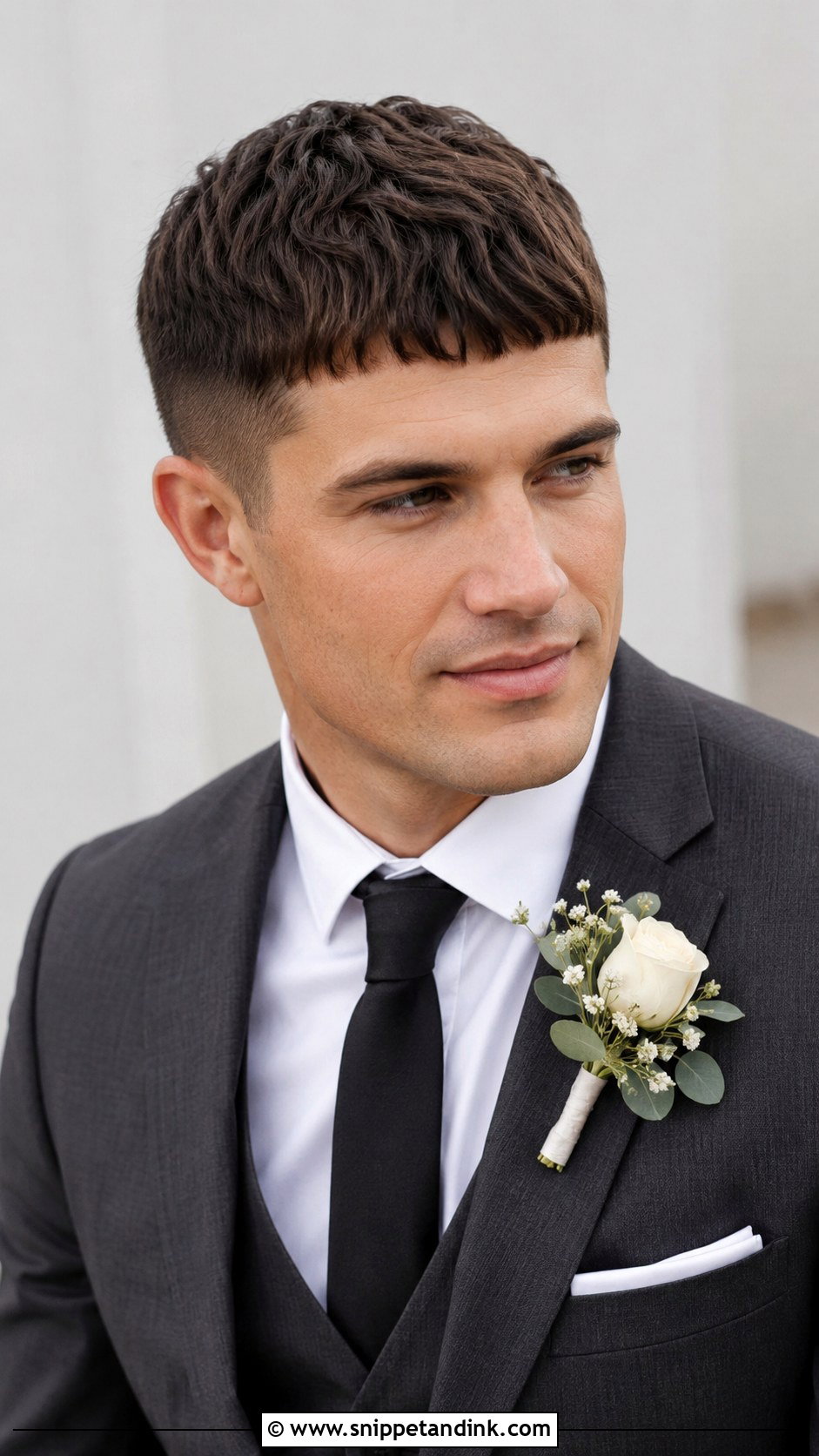
Short all over with a straight, horizontal fringe across the forehead, the Caesar is a quick morning and a clean shape. Thick or coarse hair holds the fringe best, and the cut does a good job of disguising a receding hairline because the fringe sits over it. A matte product brings out texture without shine. Round and oval faces suit it. Fine hair is where it struggles, since a short fringe can separate and show scalp under flash, so I’d keep it slightly longer if your hair is thin.
14. Wavy Hair With Side Part
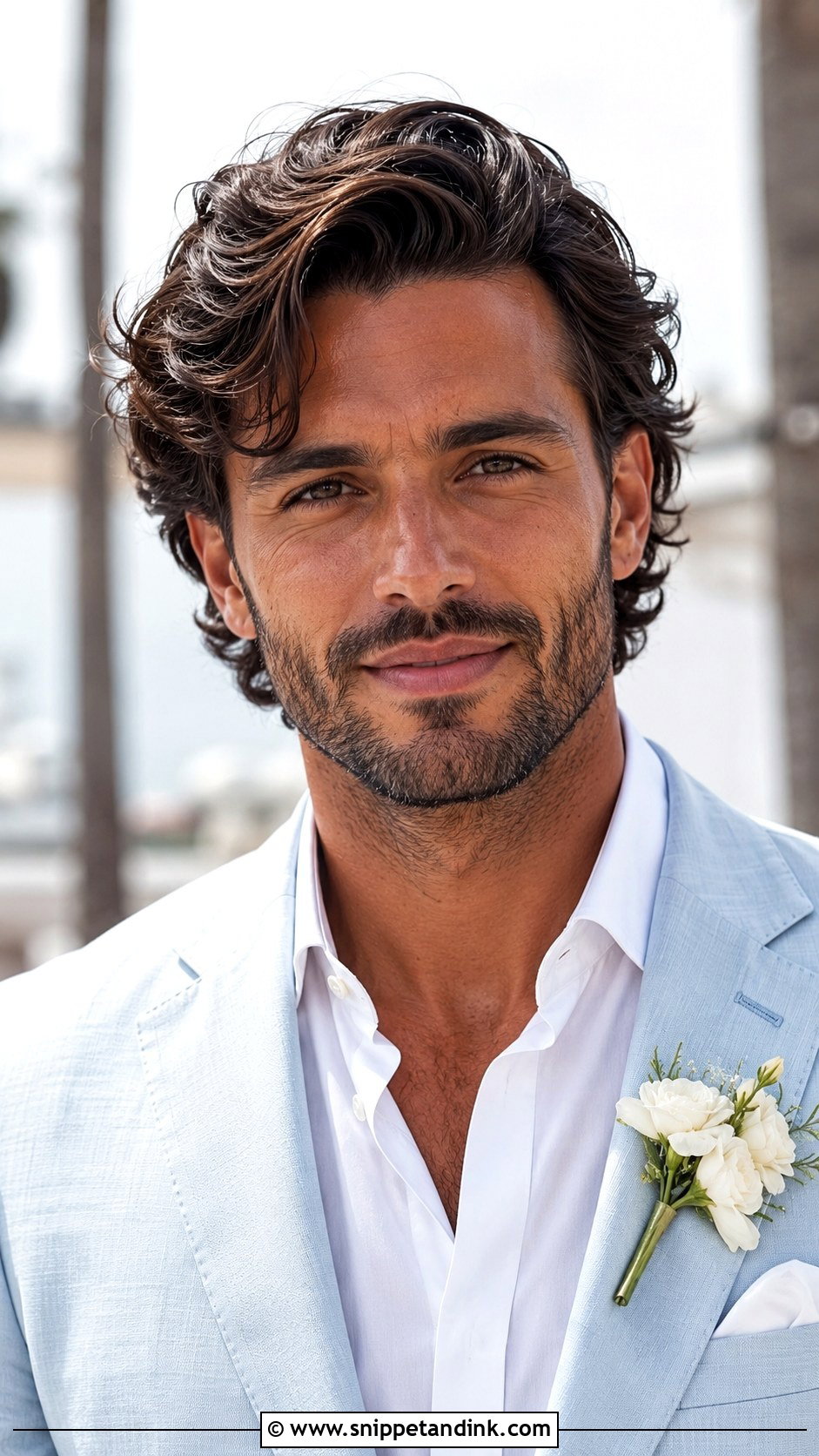
Natural waves look best when the cut follows them. Part the hair to one side and let the waves fall in their own direction, defined with a light cream that controls frizz without making them crunchy. Medium length gives the waves enough weight to form. This suits outdoor and beach weddings well, where sea air will add texture anyway. I’d ask your barber to remove bulk with texturizing rather than blunt layers, which can make waves puff out sideways instead of falling.
15. High Fade With Hard Part
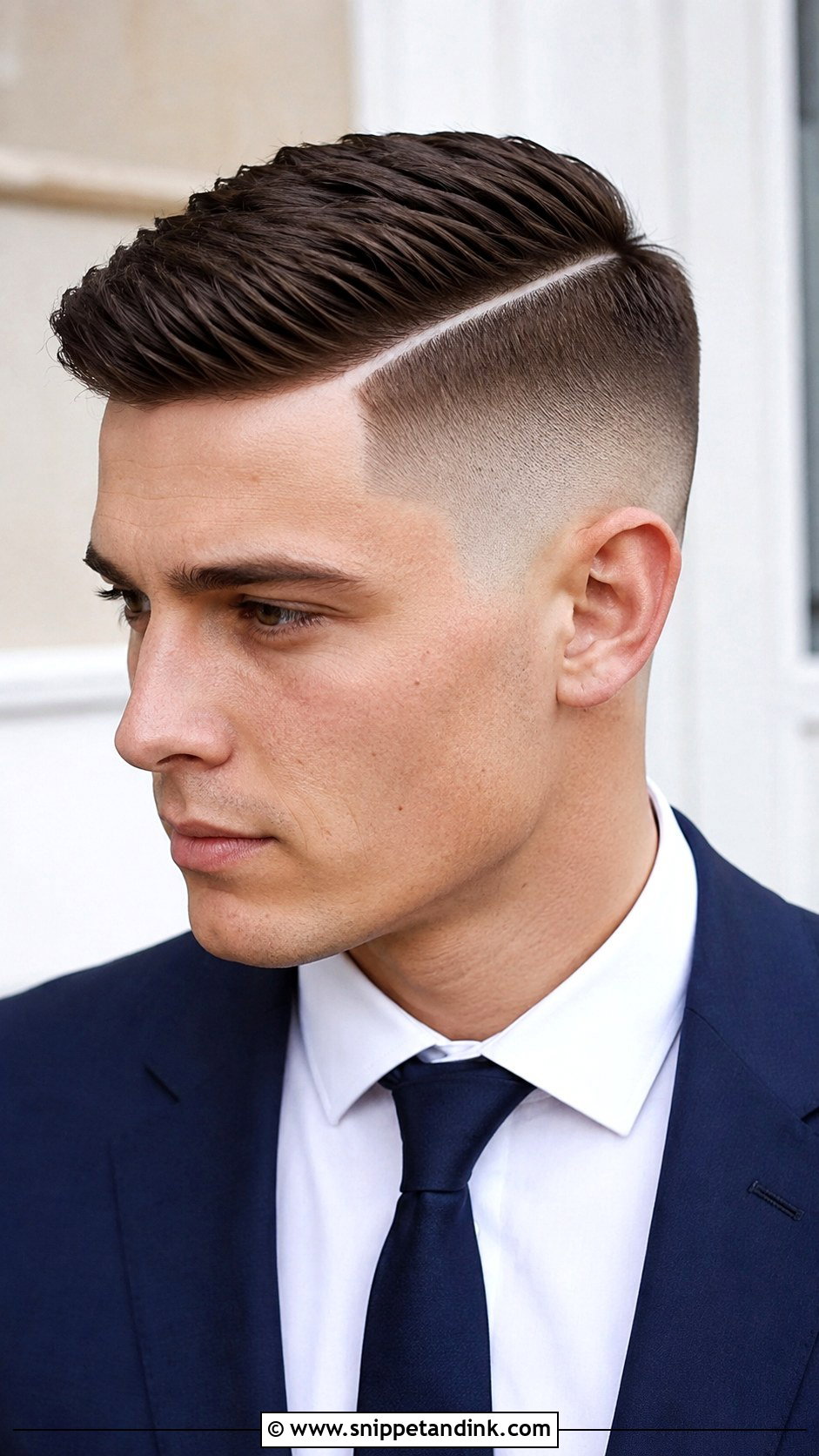
The high fade with a hard part uses a razor line to separate the longer top from short faded sides, which gives very crisp structure. The high fade draws attention upward to the styled top. A strong-hold product keeps the shape in place. Square and oval faces suit it. The trade-off is that a hard part is shaved into the scalp and takes a while to grow out, and the line softens noticeably within a week, so book it no more than two or three days before the wedding.
16. Messy Textured Crop
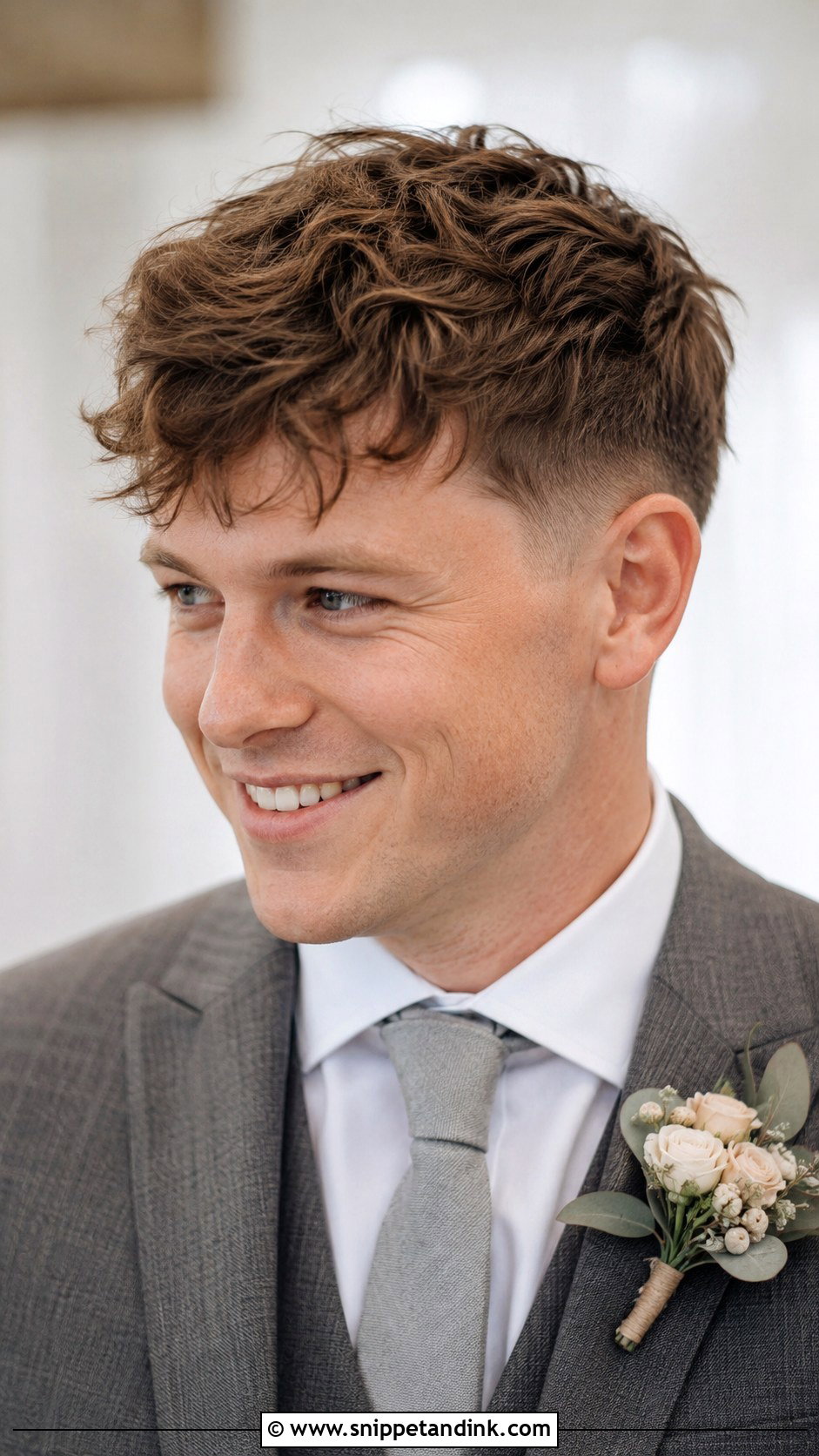
The messy textured crop keeps the sides short and the top cut into choppy layers that fall in a tousled way. It’s the right cut for a relaxed wedding where a perfect side part would look stiff. Matte paste worked through with fingers, not a comb, gives light hold and a lived-in look. Straight and wavy hair both take it well. The line between messy and unkempt is the neckline and the area around the ears, so keep those clean even when the top is loose.
17. Sleek Slick Back
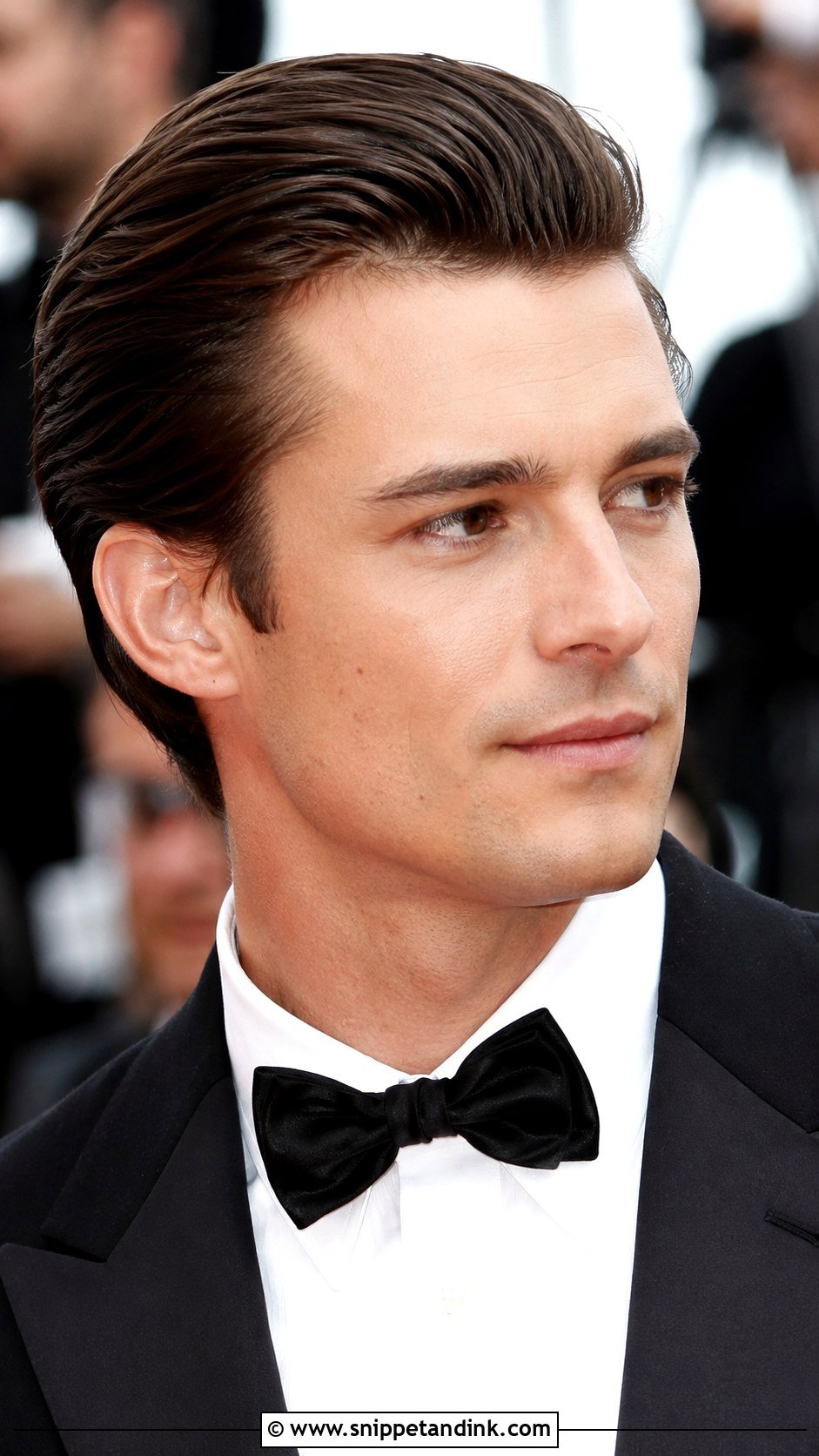
Combing everything straight back from the forehead gives a smooth, glossy silhouette that belongs with a classic tuxedo at a formal or black-tie wedding. A high-shine pomade provides the finish and holds all night. It needs medium to long hair with some flexibility. Before you commit, try it once at home: a slick back puts the whole forehead and hairline on display, and on a receding hairline it can look harsher than intended. Oval and rectangular faces carry it most easily.
18. Short Afro With Line Up
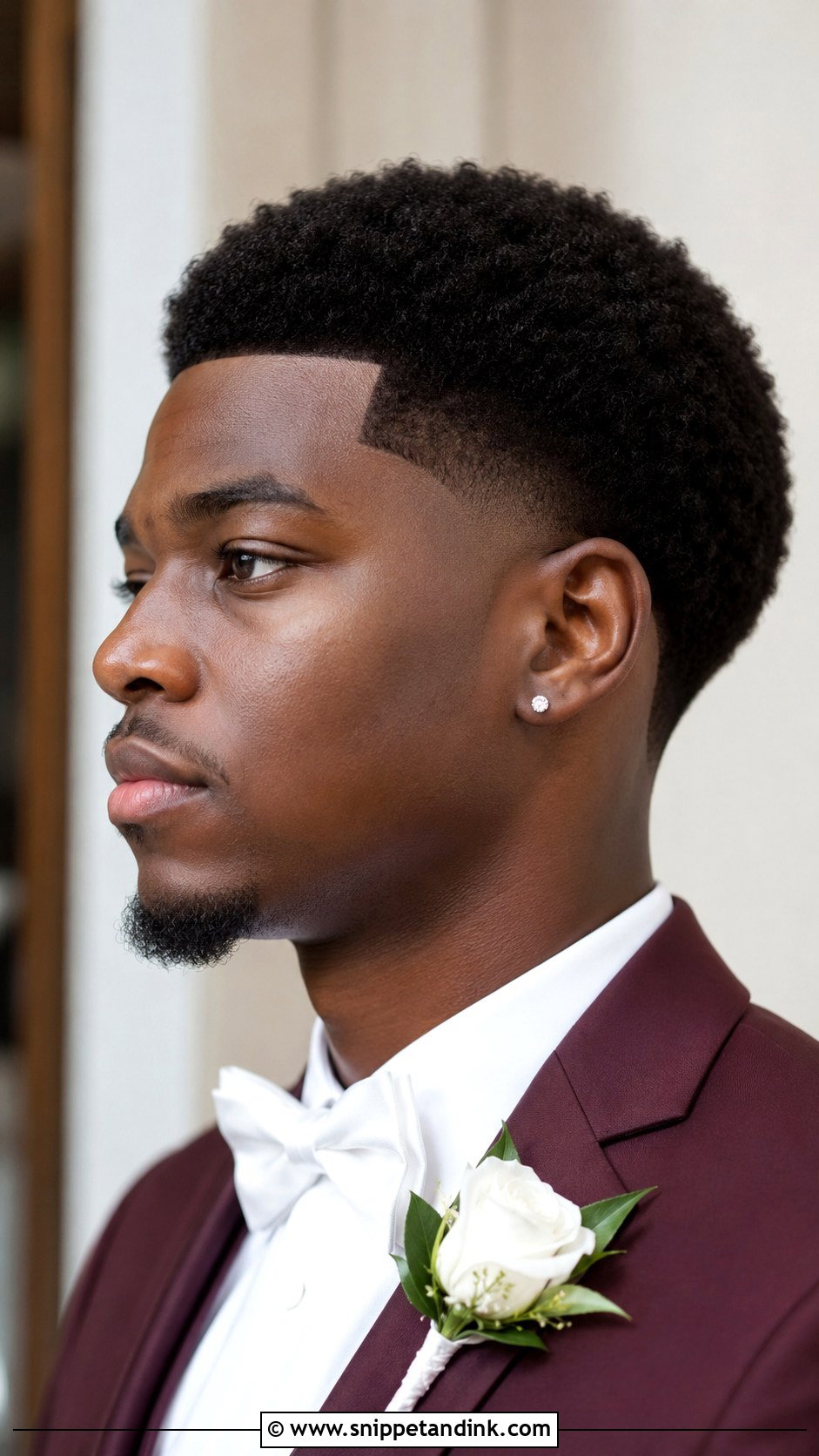
A short afro kept neat and rounded, with a crisp line up along the hairline and beard edges, looks sharp and modern. Coily hair loses moisture quickly, so a leave-in conditioner or light cream keeps the shape soft and defined through the day. I’d do the line up one or two days before rather than the morning of, because shaving coarse, curly hair can cause bumps and irritation that need a day to settle. It flatters most face shapes and suits formal or relaxed weddings.
19. Disconnected Pompadour
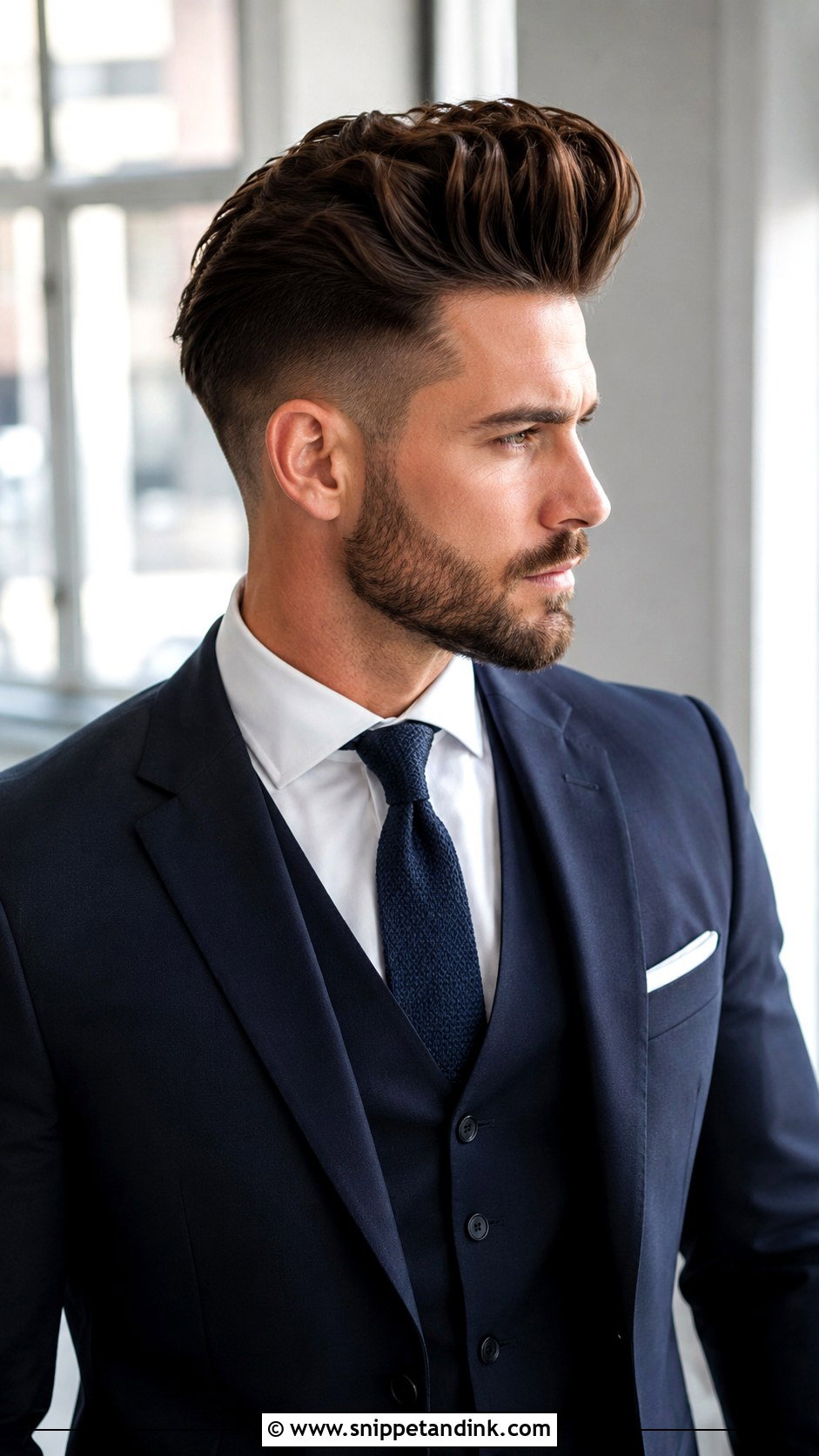
The disconnected pompadour has very short sides and a long, high top with no blending between them, styled up and back. The contrast is bolder than a taper pompadour. A strong-hold pomade or a blow-dry with a pre-styling spray keeps the height; without it, the top can drop as the room warms up. Oval and square faces suit it, and it looks right with a sharp three-piece suit and a vintage theme. It needs regular cuts to keep the sides tight, so it’s not a good choice if you only see a barber every couple of months.
20. Ivy League Haircut
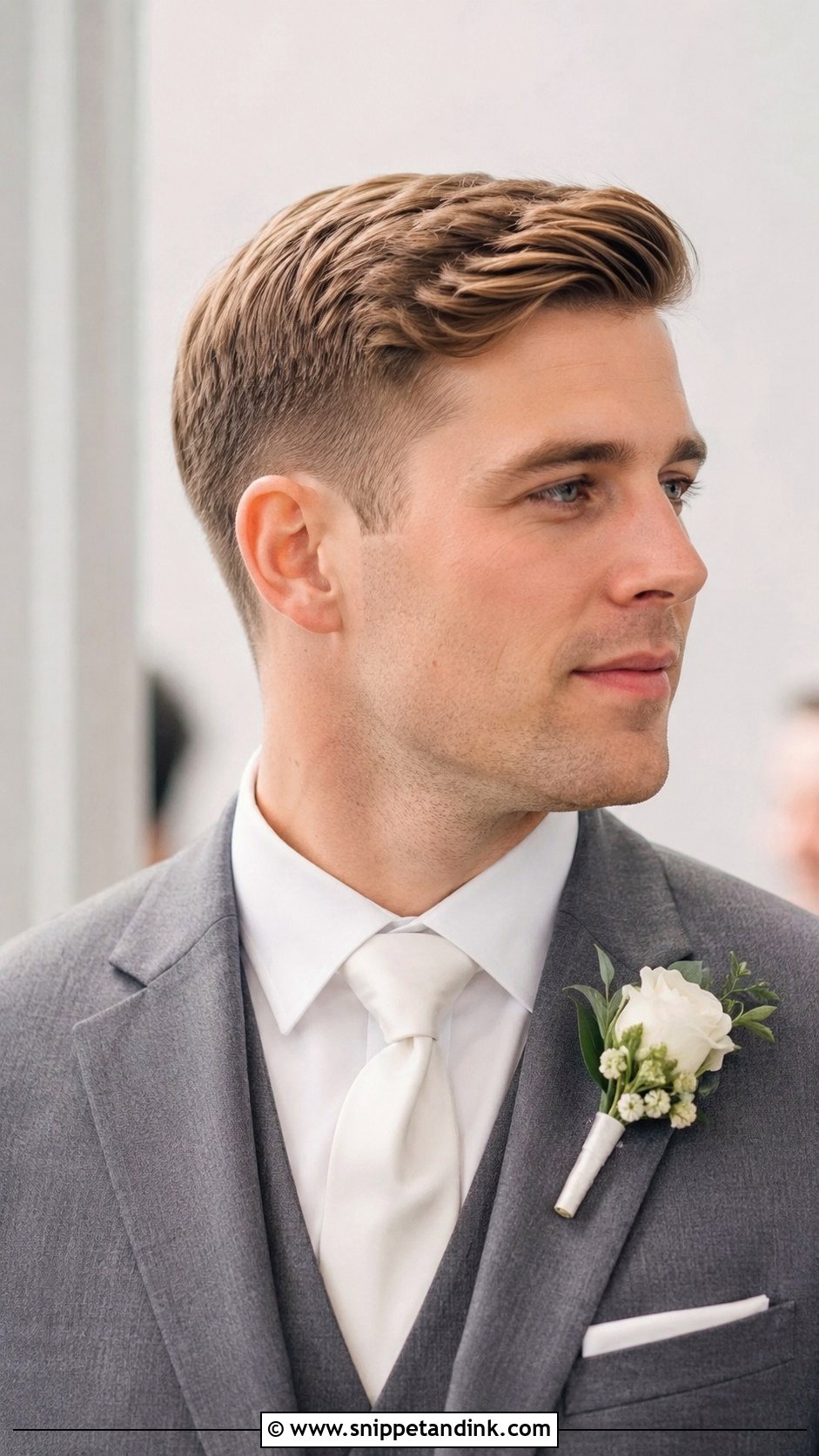
The Ivy League, also called the Harvard clip, is a longer crew cut with enough length on top to comb to one side. It looks classic and dignified, and it suits a traditional wedding. A light pomade keeps the part neat. It grows out gracefully, which is why I’d suggest it for a groom who can only fit in his cut a week ahead. Most face shapes suit it, and it looks equally right with a tailored suit or a casual linen jacket.
21. Faux Hawk Fade
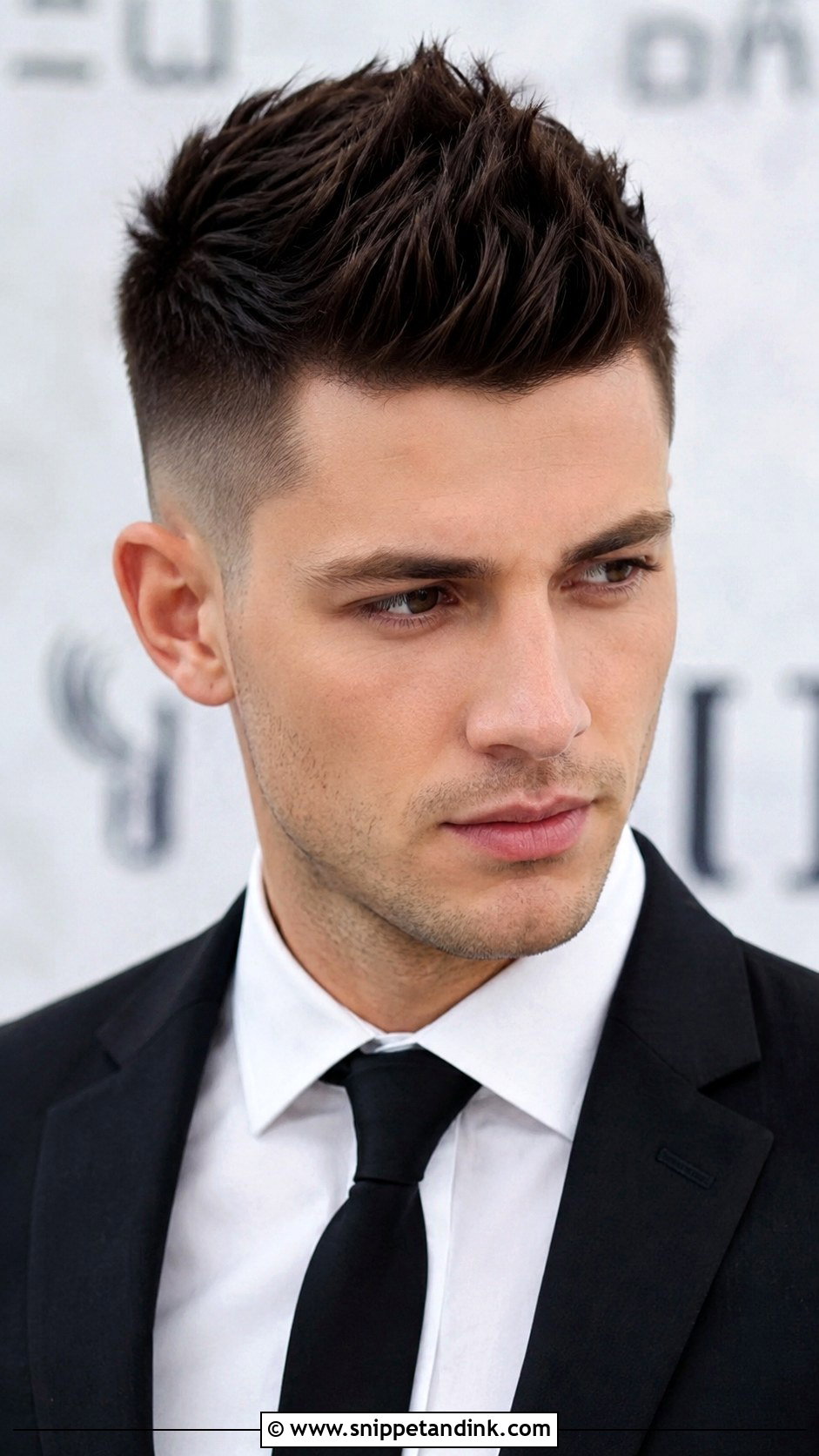
The faux hawk fade fades the sides short and leaves a longer strip down the center, styled up into a soft peak. It keeps the attitude of a mohawk without the shaved sides. A medium-hold product creates the lift. Oval and rectangular faces suit it. Keep the peak soft for a wedding; a sharp, spiky ridge looks dated in photos, and a soft lift ages far better.
22. Textured Fringe Haircut
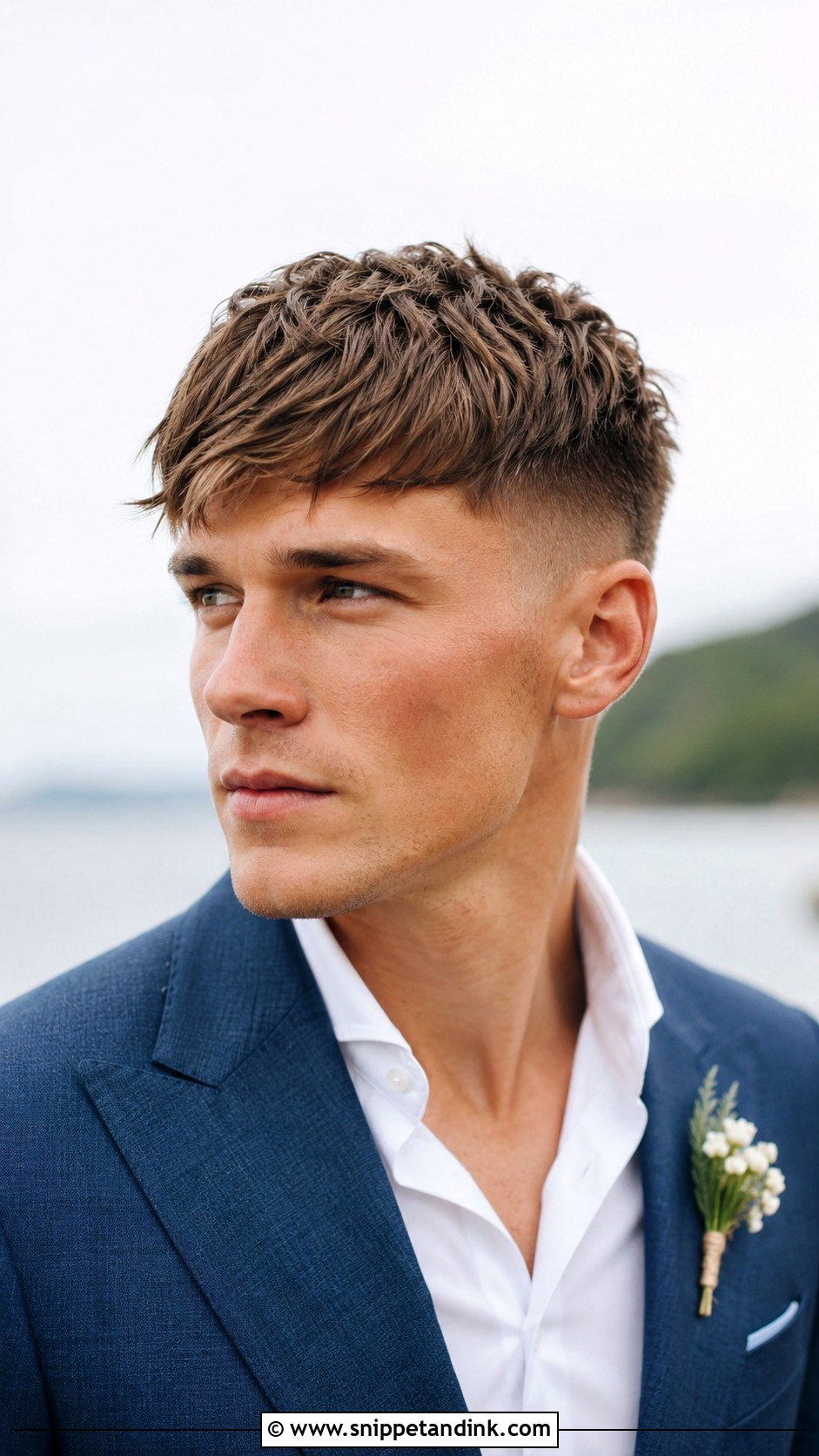
Choppy layers on top pushed forward into a soft fringe, with tapered sides, give a young, easy look. Matte product brings out the piecey texture without weight. It suits round and oval faces and casual or semi-formal weddings. The fringe is the bit to plan. I cut it slightly long and texturized at the ends so it doesn’t sit as one heavy line, and so it still falls clear of the eyes when you’re looking down at the rings during the vows.
23. Long Hair With Man Bun
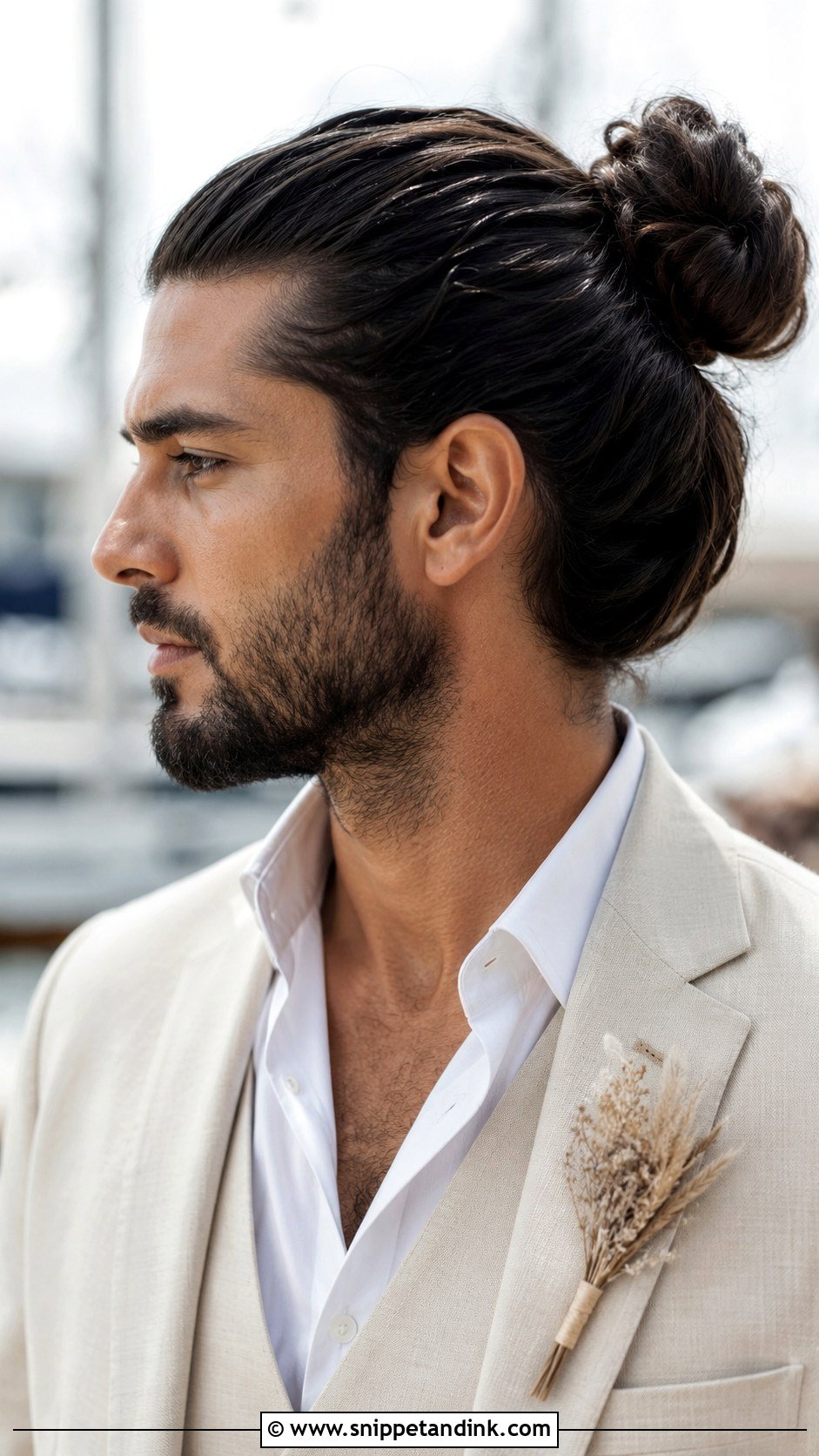
Gathering long hair into a neat bun at the crown or back of the head keeps it off your face all day without losing length. Smooth flyaways with a little serum and secure the bun with an elastic plus a couple of pins so it doesn’t slip while you dance. Placement changes the mood: a low bun at the nape looks formal, while one higher up feels relaxed and boho. Check how it sits against your collar and jacket before the day, since a low bun can catch on a high collar.
24. Low Fade With Side Part
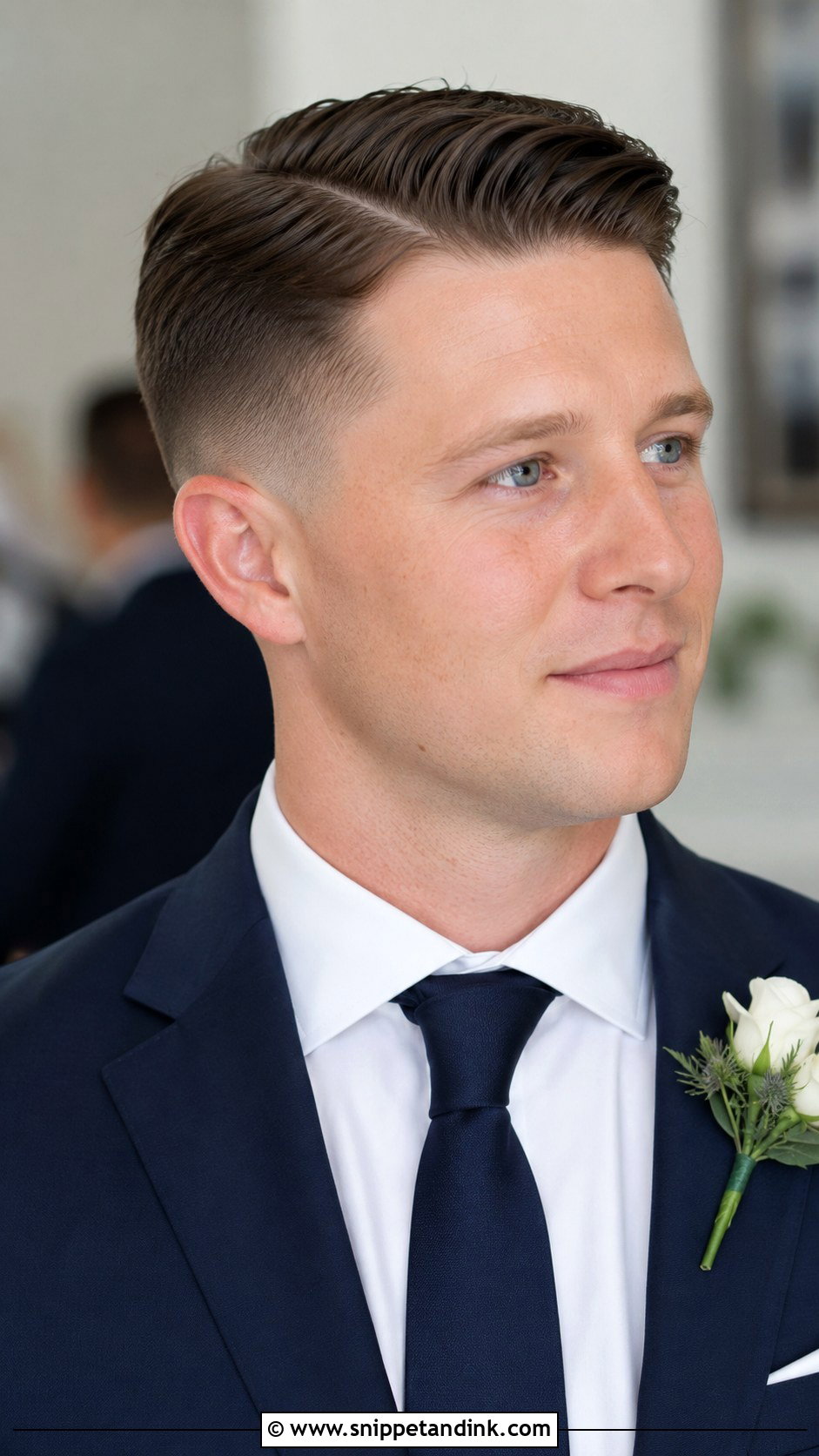
A low fade blended softly near the ears, with the top neatly side-parted, combines structure with a traditional look. It’s less stark than a mid or high fade and grows out more gently, which is useful if the cut has to happen several days early. Straight and wavy hair suit it, and a light pomade keeps the part defined. It fits rustic ceremonies and ballroom receptions equally, and suits most face shapes.
25. Burst Fade With Curly Top
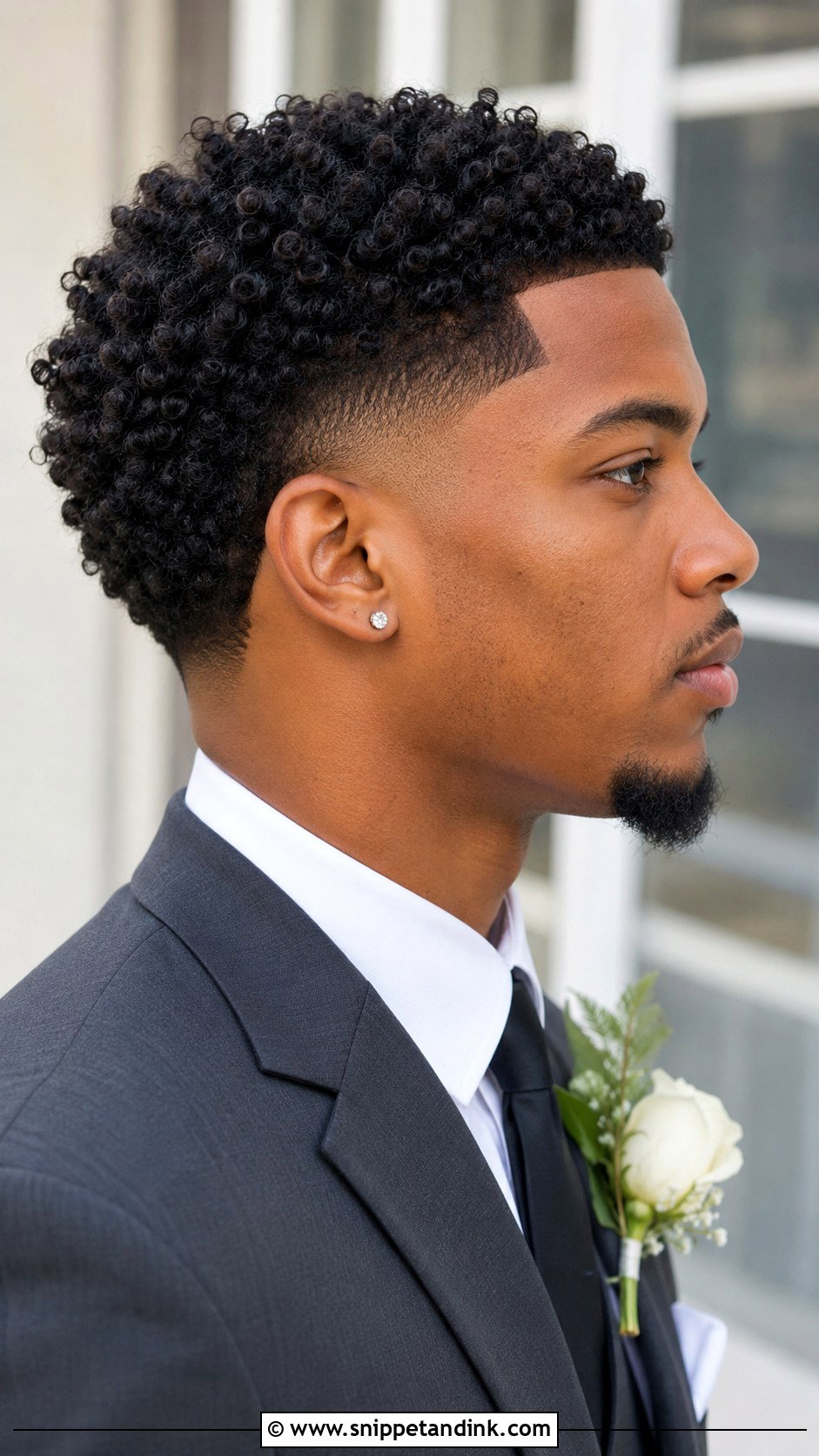
A burst fade curves around the ear in a semicircle and leaves the back longer, so the sides look clean while the curls on top stay full. The shape highlights natural texture and avoids the very short back of a standard fade. A curl-enhancing cream keeps coils hydrated and defined, and I’d apply it on damp hair rather than dry. Like any fade, the outline softens within days, so time the cut close to the wedding. It suits most face shapes and works for casual or formal weddings.
Product That Holds Through Hugs, Heat and the Dance Floor
Wedding days are long and warm. I’d pick a product by finish and hold, then wear it for a full day before the wedding to see how it behaves.
- Matte paste or clay suits textured crops and quiffs and doesn’t glare under the photographer’s flash.
- Water-based pomade gives shine for side parts and slick backs and rinses out easily the next morning.
- Oil-based pomade holds longest but can look greasy by evening in a hot room, and it marks collars.
- Curl cream or leave-in conditioner keeps coils and waves defined; heavy gel tends to go crunchy and flake.
Cowlicks, Thinning Crowns and Hair That Won’t Lie Flat
Every head has a quirk, and the best cut works with it. A cowlick at the hairline dictates which way a fringe or sweep can go, so ask your barber to cut with it rather than against it. A thinning crown hides better under shorter hair and a matte finish, since long, glossy hair separates and shows scalp under bright light. Very thick hair benefits from thinning out the bulk on the sides so it doesn’t puff out above the ears. If you aren’t sure what quirk you have, ask at the six-week appointment, while there’s still time to adapt the plan.
Three to Five Days Before the Vows, Then Hands Off
The right groom haircut is the one you feel like yourself in, cut at the right moment. Skin fades, side parts, textured crops and natural curls all have a place; what matters is that the cut suits your face shape, your hair type and how much styling you’ll realistically do on the morning. Book your final trim three to five days before the wedding so edges are sharp but not freshly raw, and bring a photo so you and your barber are aiming at the same thing. Then leave it alone until the day.
You'll Like These Ideas:


Leave a Reply