
A groom’s hair is judged at close range for a full day: the ceremony, the receiving line, the portraits next to the collar of a suit you’ll be photographed in for decades. I style grooms the same way I fit a suit, by starting with what’s already there. Your hair type, your hairline and how much time you’ll actually spend on it that morning matter more than any trend. Below are twenty cuts and styles I’d stand behind, from the side part to the man bun, with notes on how each one is cut, what product it needs and who it doesn’t suit.
How Many Days Before the Wedding to Get Each Cut
The most common mistake I see is a groom who gets every cut the day before. Some styles look best fresh, others need a few days to settle. Here’s how I’d time them:
- Skin fades, undercuts and high top fades: one to three days before. Clipper lines blur quickly.
- Tapers, crew cuts and the Caesar: three to five days before, so any redness or pale skin at the edges calms down.
- Scissor cuts like the side part, quiff and textured crop: about a week before, which lets the ends soften.
- Long hair, ponytails and buns: a trim two to three weeks out, then leave it alone.
Book a trial cut roughly four to six weeks before the wedding, with photos of the style you want. That gives you a full growth cycle to fix anything you dislike. Never try a new barber in the final week.
1. Classic Side Part for Grooms
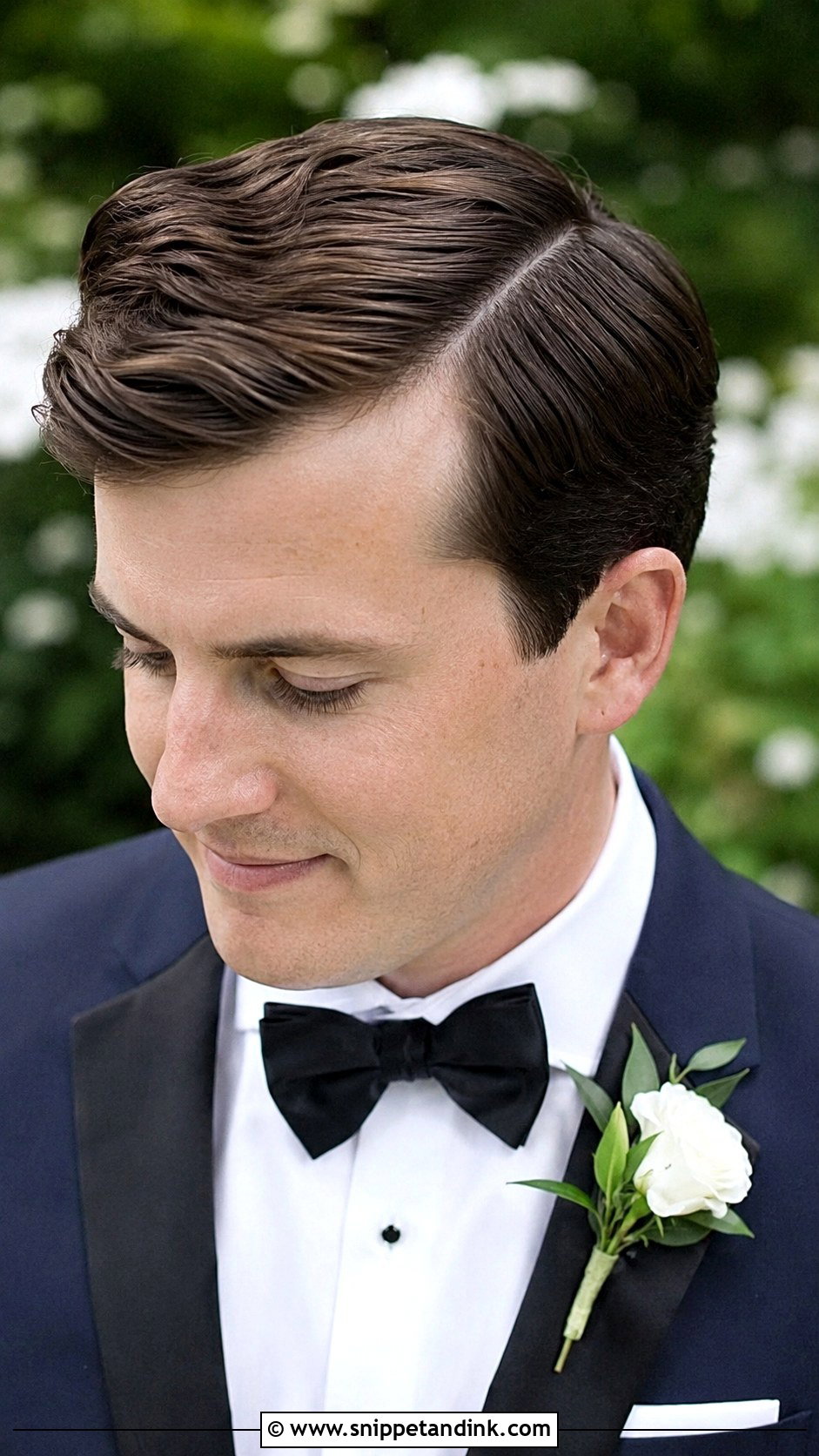
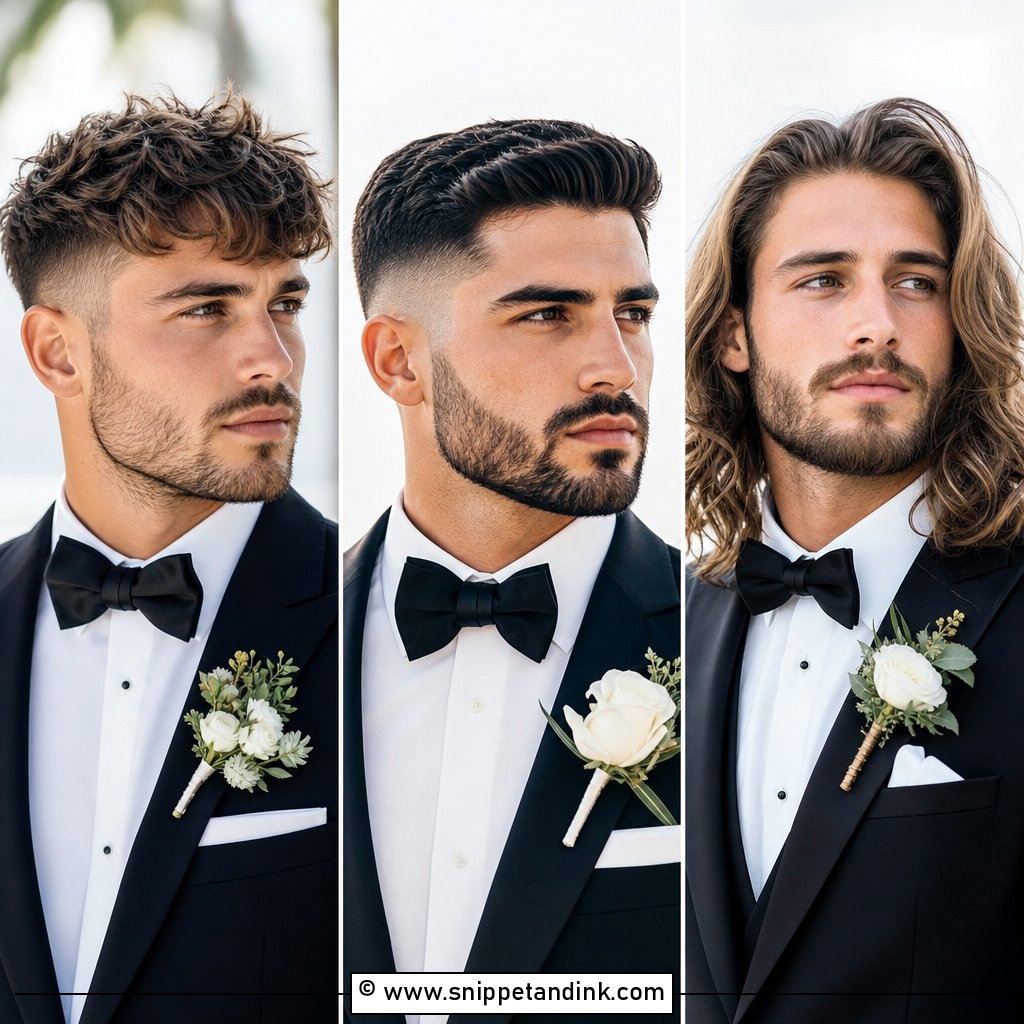
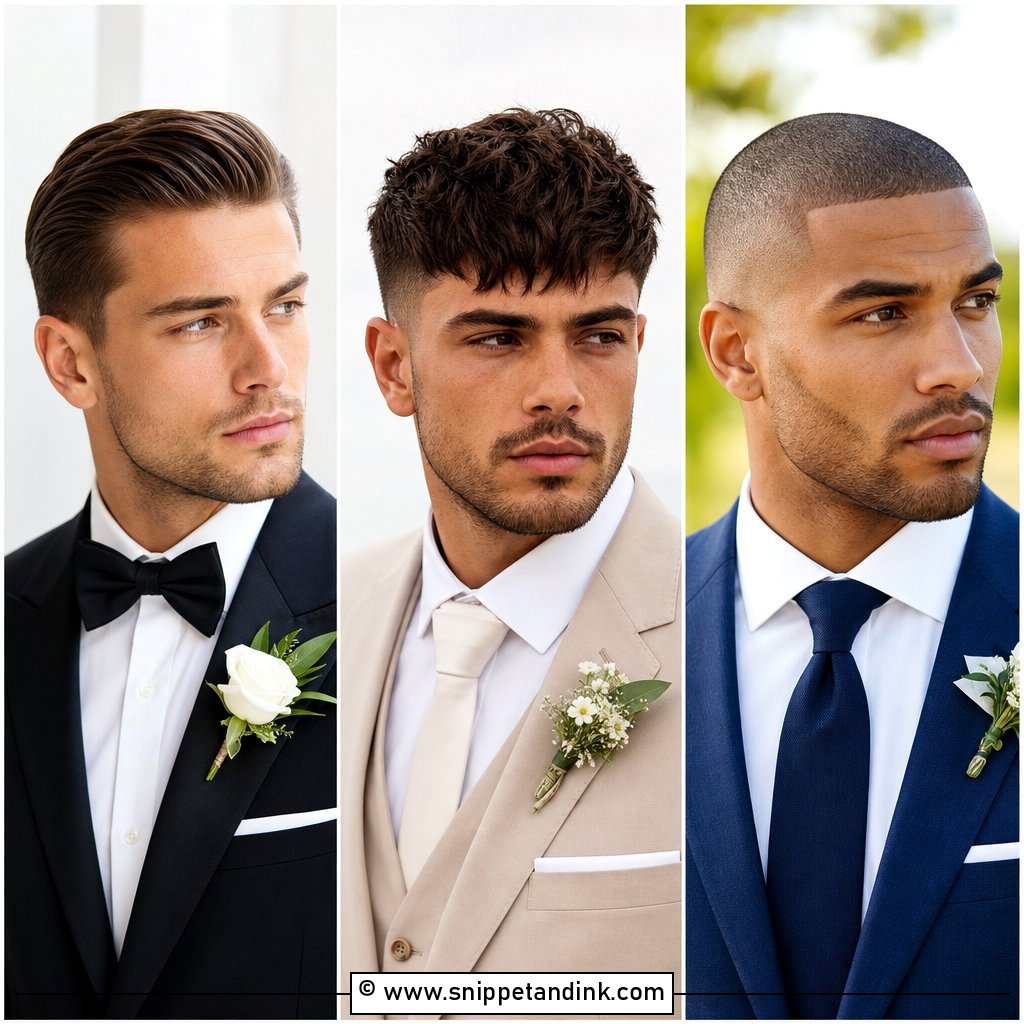
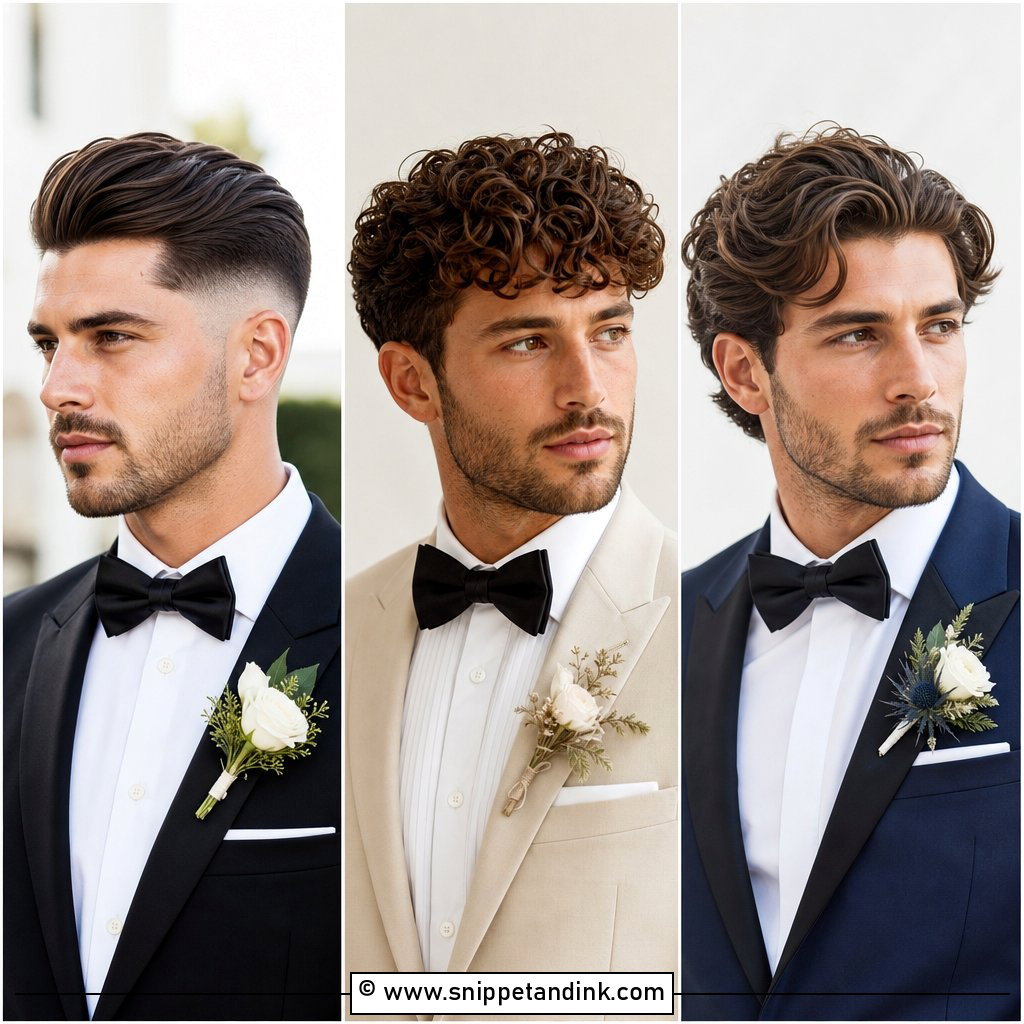
I recommend the side part more than anything else, because it sits correctly with a tuxedo or a tailored suit and still looks right in photos thirty years on. Hair is combed to one side along a clean parting line. It works best on medium length hair and suits most face shapes. Find your natural part first, the line where your hair falls when you push it forward and let it drop, and work with it; forcing a part against a crown swirl means it splits by the reception. A light pomade gives shine and keeps it in place.
2. Pompadour Hairstyle for Grooms
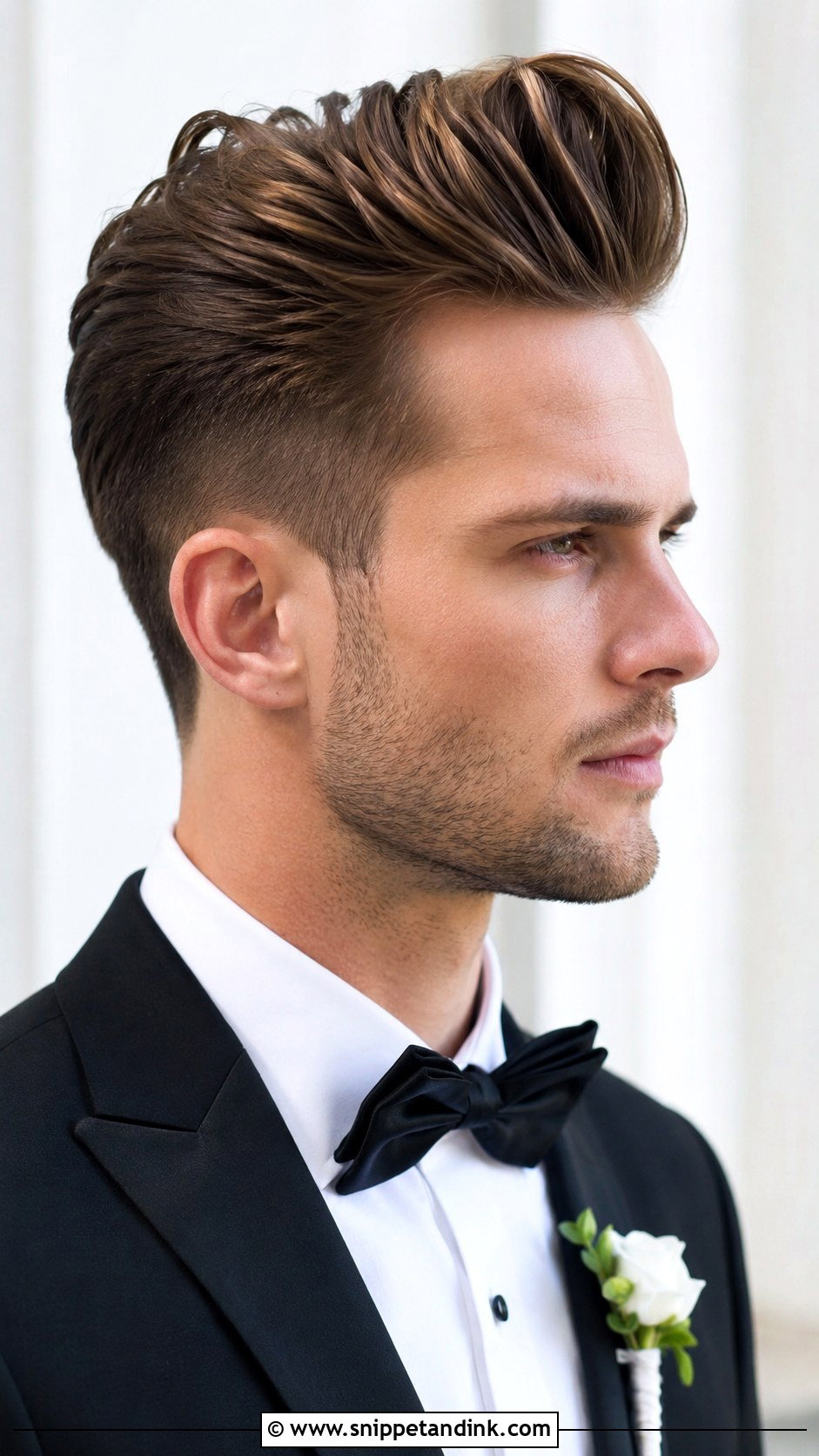
A pompadour is a commitment. The front is swept up and back into real height with short, clean sides for contrast, and that lift flatters rounder or softer face shapes. Classic and retro weddings suit it. It needs at least four or five inches at the front, a proper blow-dry with a round brush to set the direction at the root, and a strong-hold pomade on top. If your hair is very fine, the height will sink by evening, and I’d suggest a quiff instead.
3. Textured Crop for Grooms
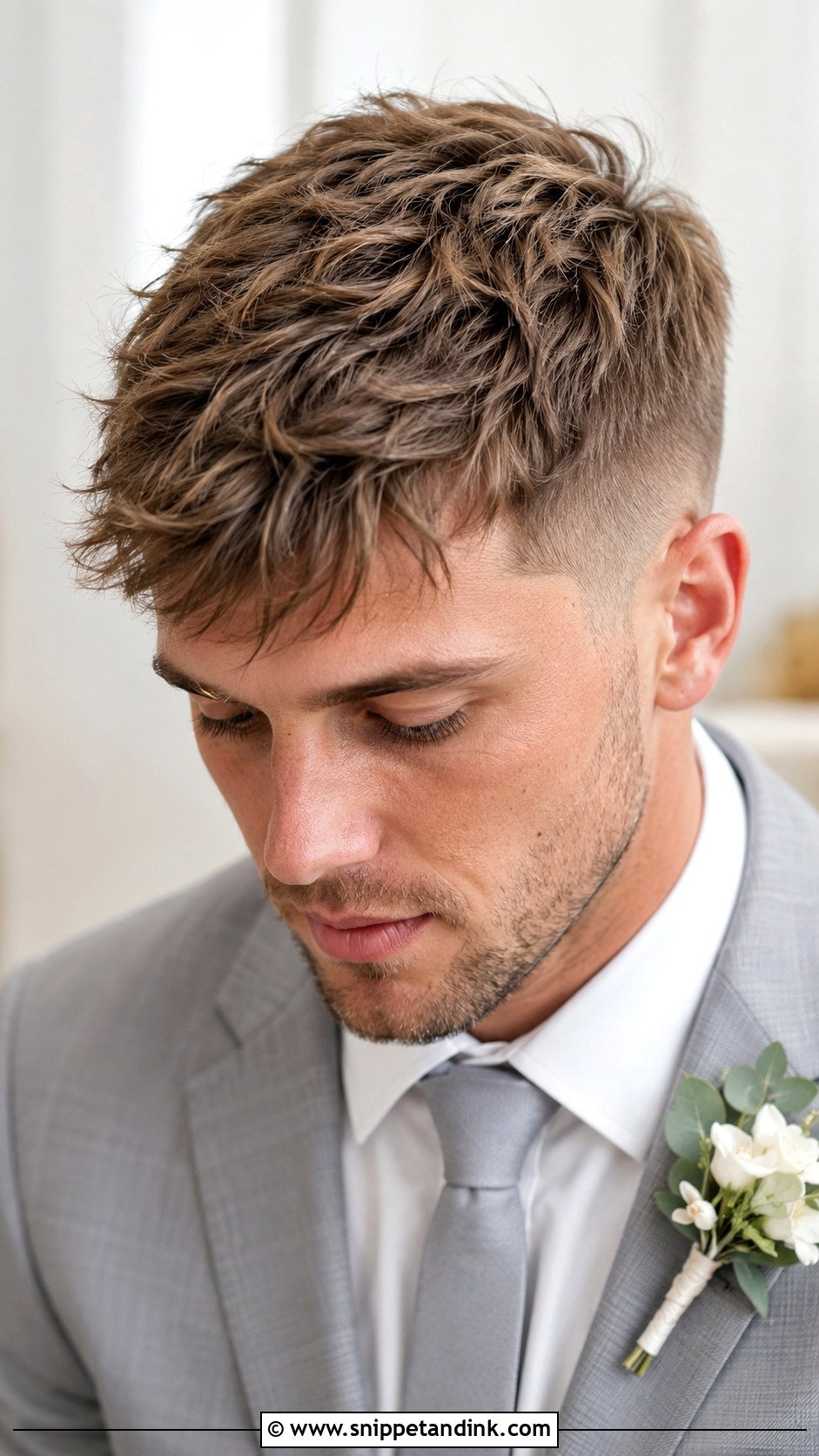
Easy is the textured crop’s whole appeal. Short, choppy layers sit on top, and a short fringe falls forward for a relaxed feel. It’s very low-maintenance, which matters when the morning is already full. A touch of matte clay rubbed between the palms and pushed through with fingertips gives the piecey finish without stiffness. Outdoor, semi-formal or city weddings suit it best. I’d be careful with this cut if your hairline is receding at the temples, because the forward fringe can draw attention there rather than hide it.
4. Slicked Back Hairstyle for Grooms
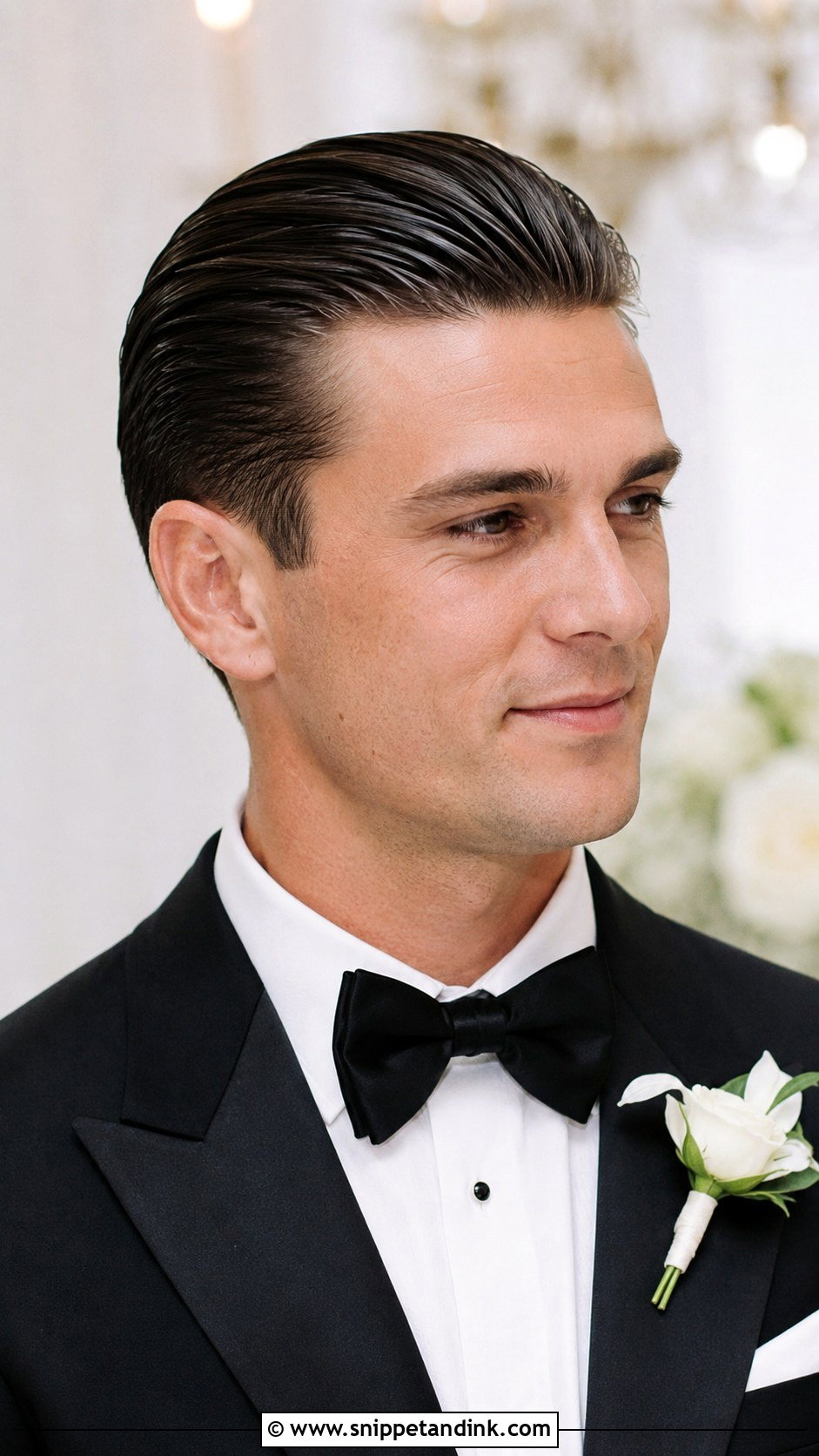
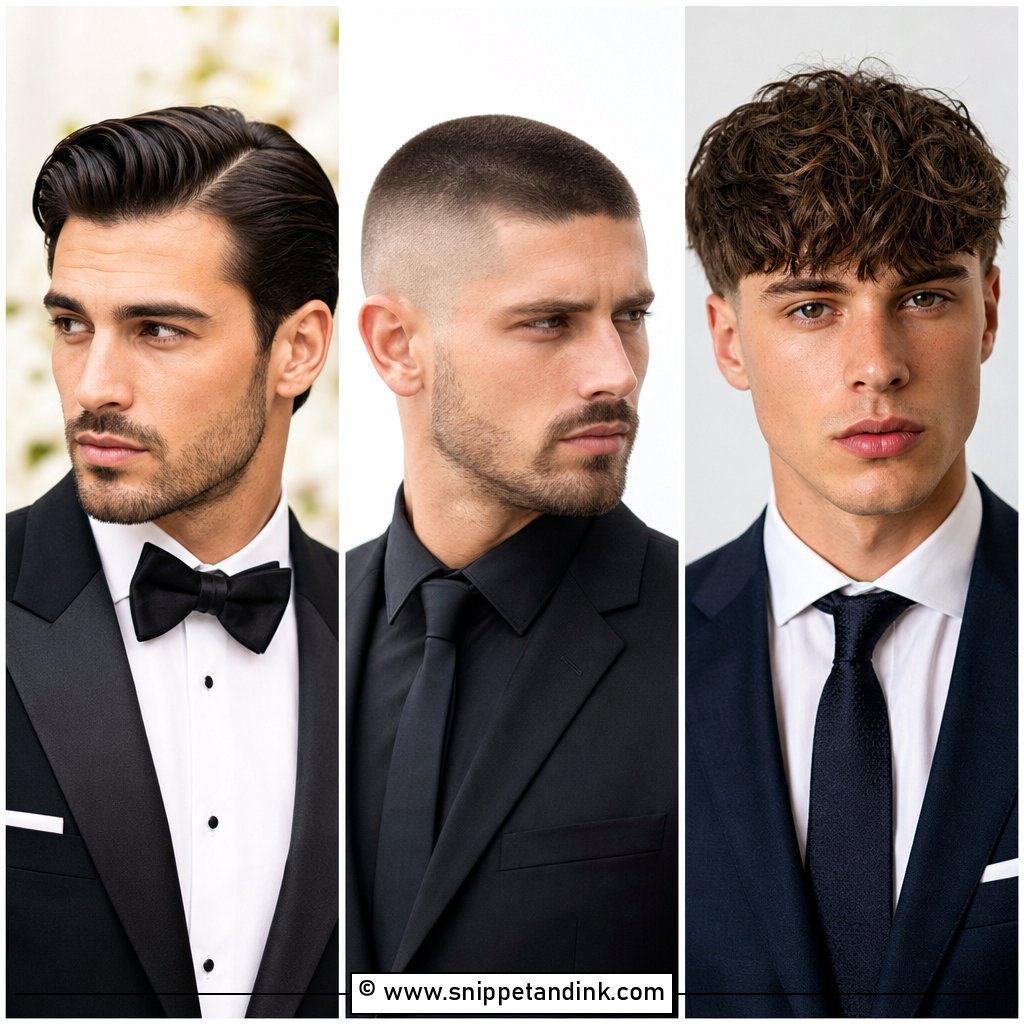
Slicked-back hair is the formal choice for black-tie weddings and upscale venues. Every strand is combed straight back with a high-shine product, which puts the attention on your face and the suit. Medium to longer hair holds it best. The trick is applying product to damp, not wet, hair and combing in the direction it will stay. Strong pomade or gel locks it through dancing. One warning: very high-shine products can bounce camera flash back as white streaks, so a medium shine usually photographs better than a full gloss.
5. Low Fade for Grooms
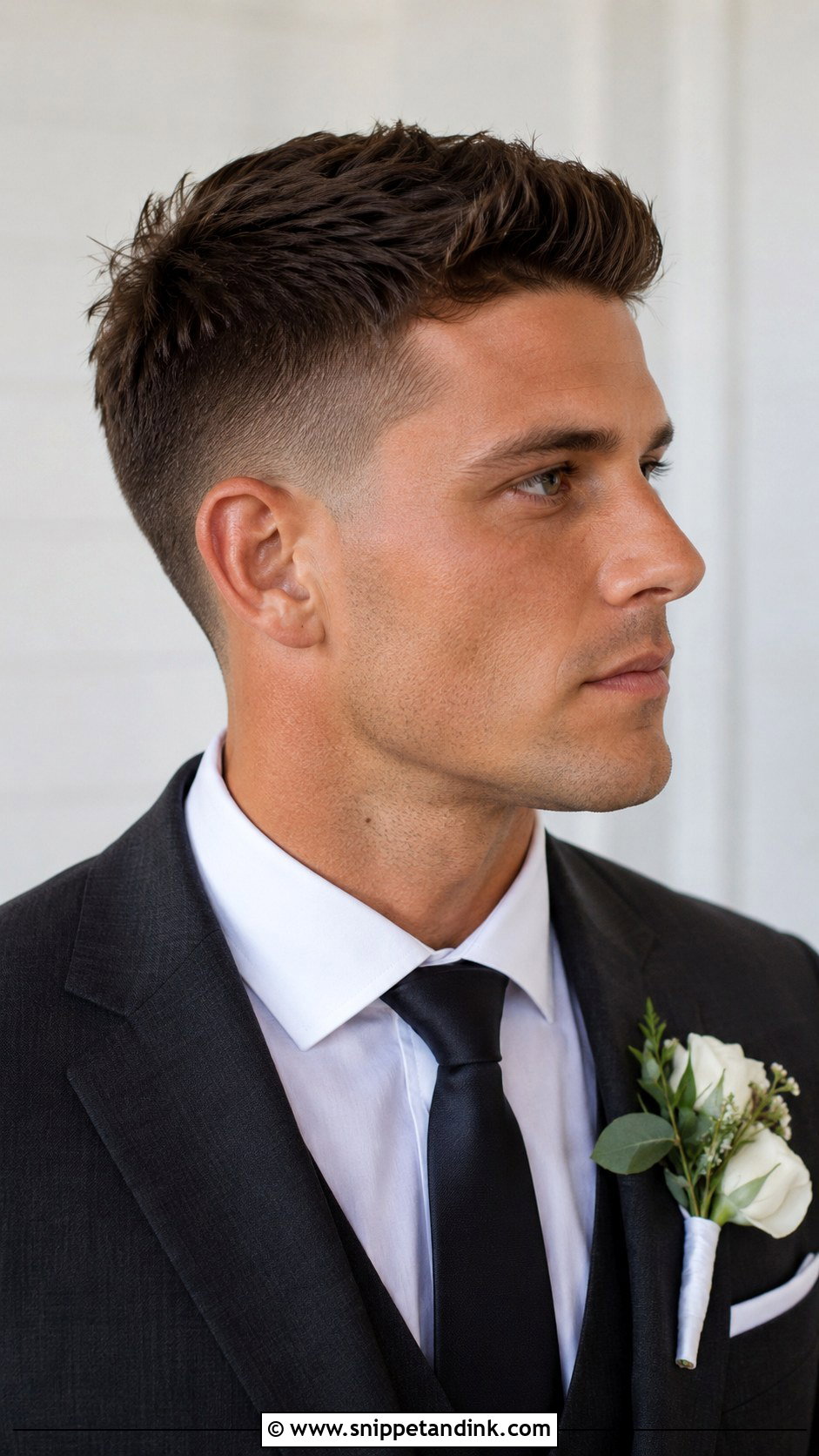
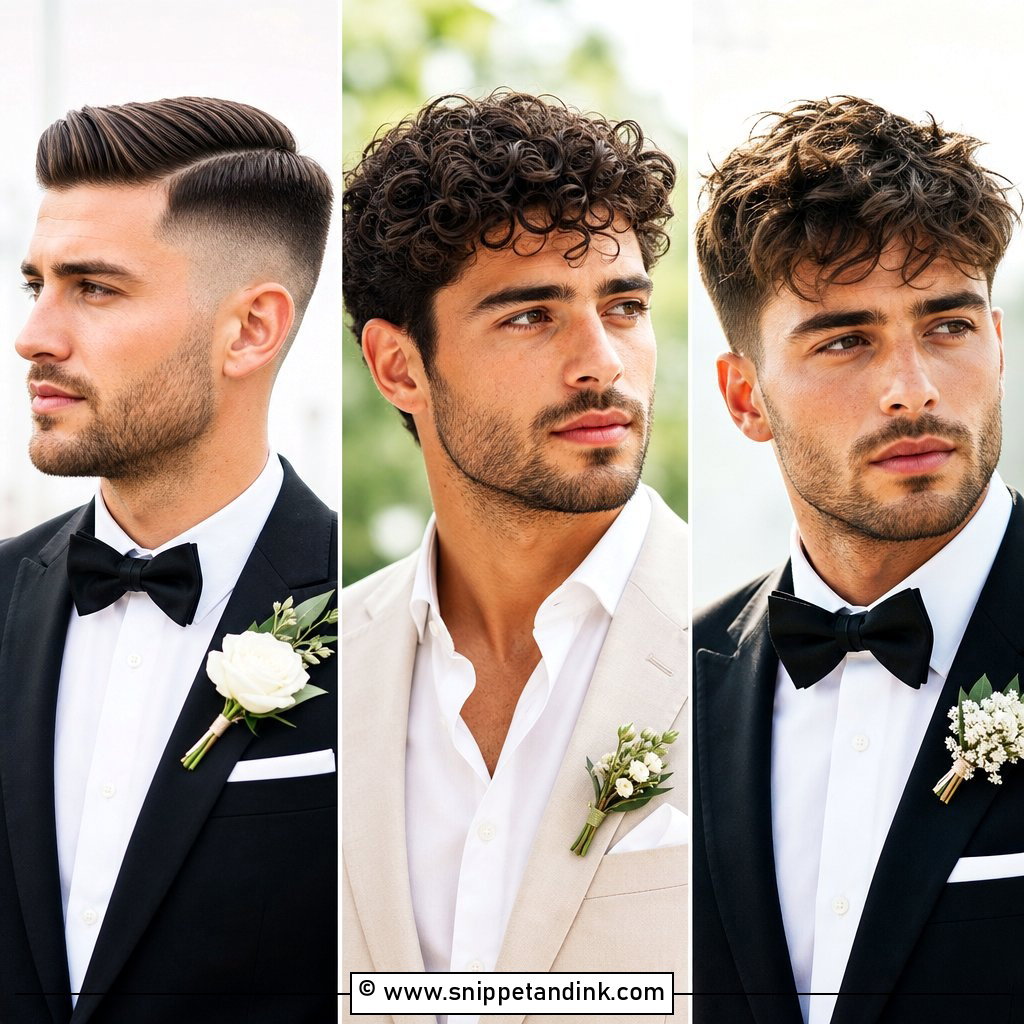
A low fade starts just above the ears and blends upward into longer hair on top, giving clean structure without a dramatic contrast. Pair it with a comb-over, a slicked top or a textured finish. The fade is the part that ages fastest: a crisp low fade looks sharp for only a few days, so time the cut close to the wedding. It suits formal and casual weddings and flatters most face shapes. It’s also the easiest cut on this list for a barber who doesn’t know you yet to get right.
6. High Top Fade for Grooms
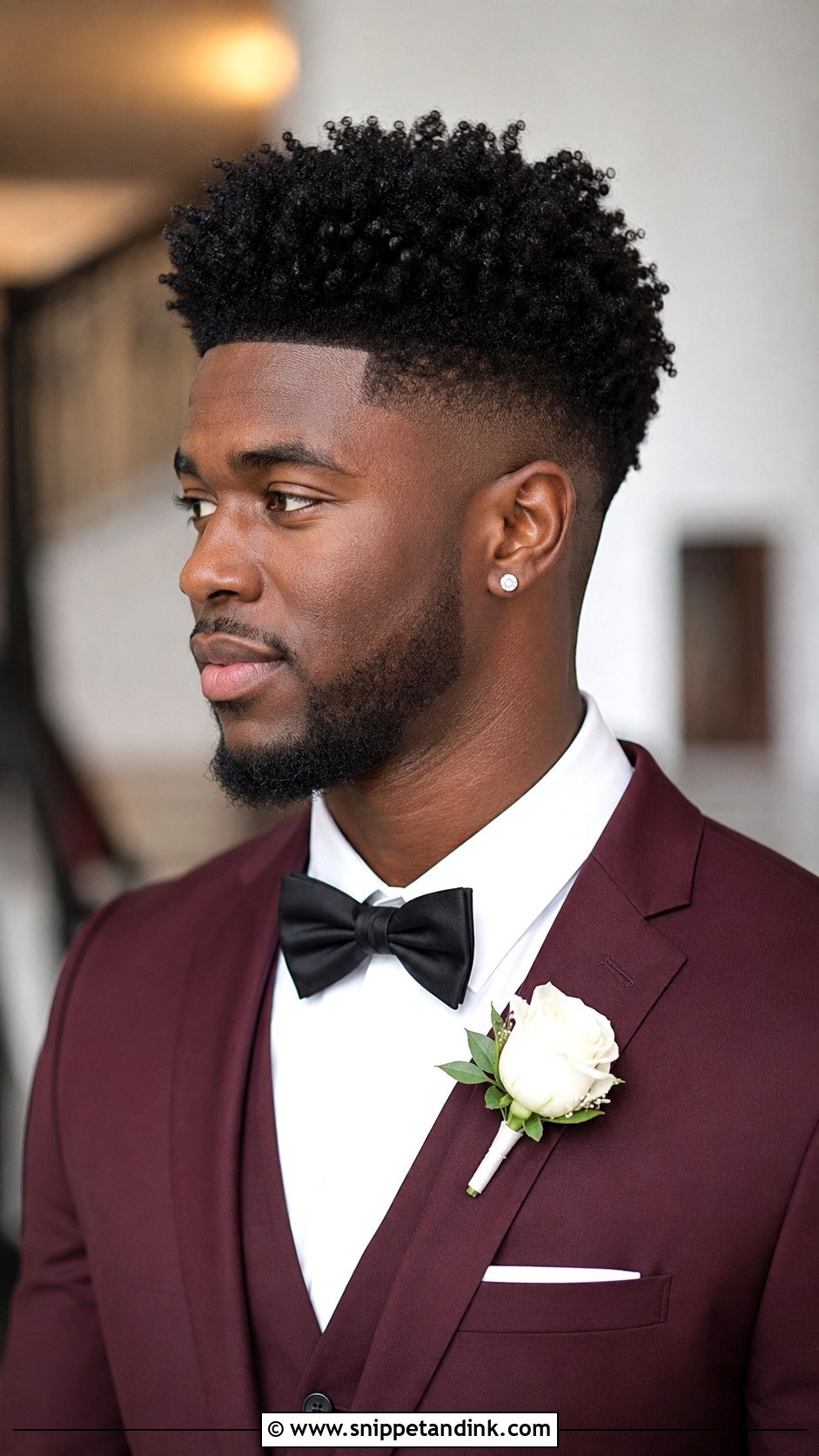
Bold contrast is the point of a high top fade. The sides are faded short and sharp while the top stays full and tall, which adds height and presence. It works best on thick, textured or coily hair, which naturally holds the shape. I have the top shaped with clippers and shears a few days before so the edges soften slightly, then shaped again with a pick and a light hold product on the morning. Keep a pick and a small spray bottle with your best man; a quick mist and pat brings the shape back after hugs.
7. Undercut with Textured Top for Grooms
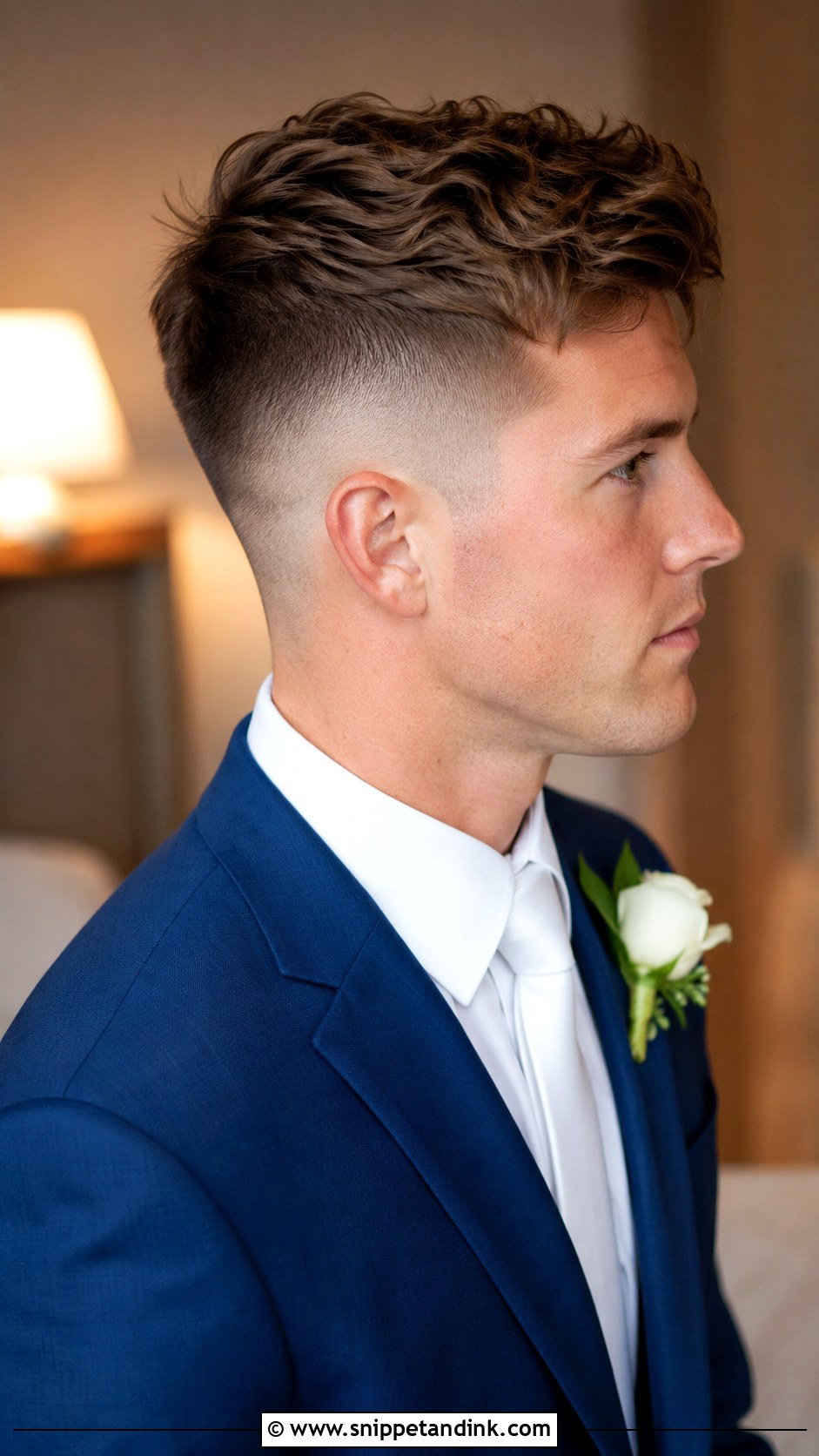
An undercut sets very short or shaved sides against a longer top, and with a textured finish it suits formal and casual weddings alike. You can slick the top back, sweep it to the side or leave it tousled, which lets you match the style to the suit and venue. The textured undercut needs a clear disconnection line, so the shaved sides should be redone within two or three days of the wedding or the line blurs. If you have a head shape with bumps or flat spots at the back, ask your barber to leave the sides slightly longer.
8. Low Bun for Grooms with Long Hair
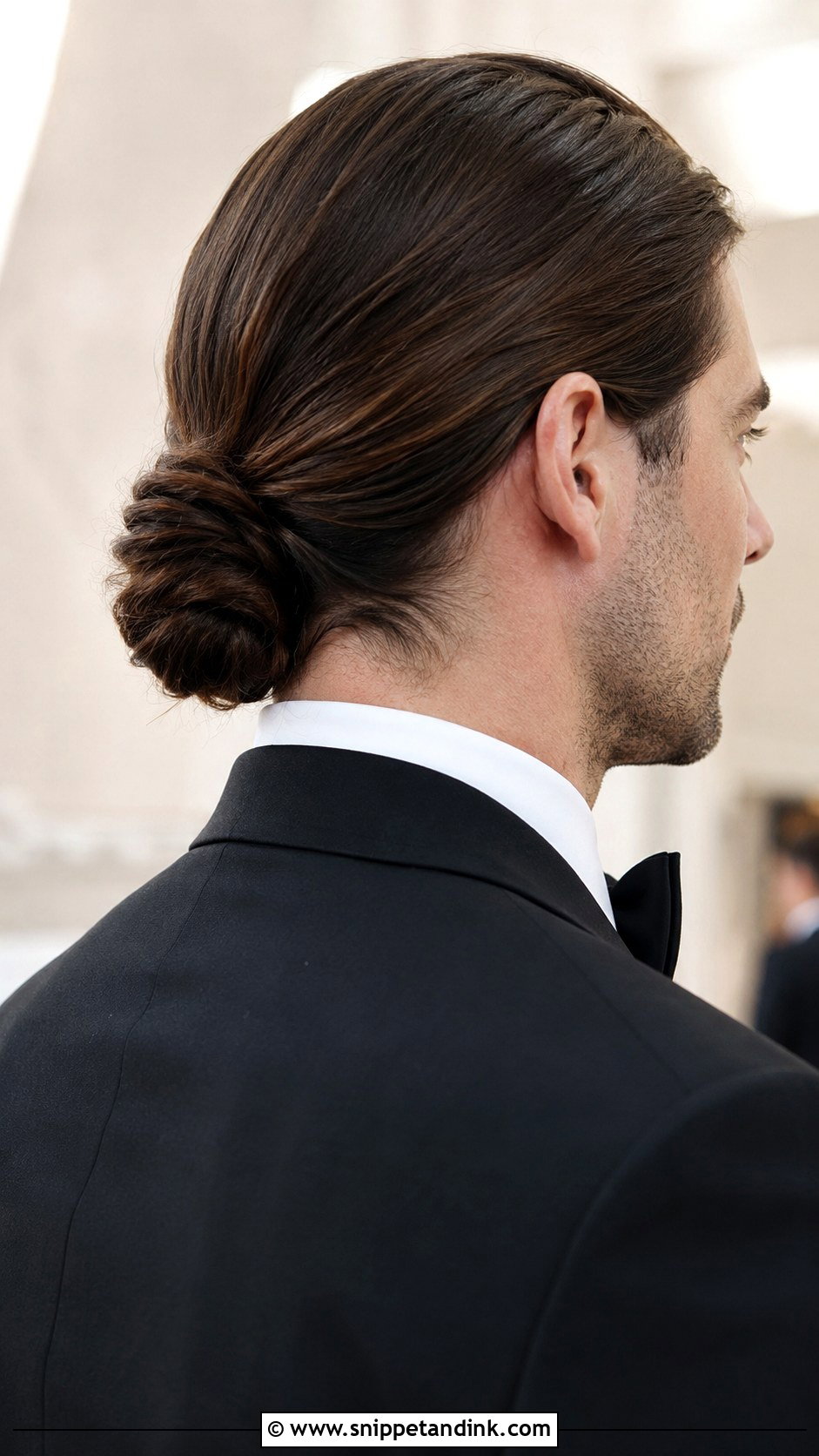
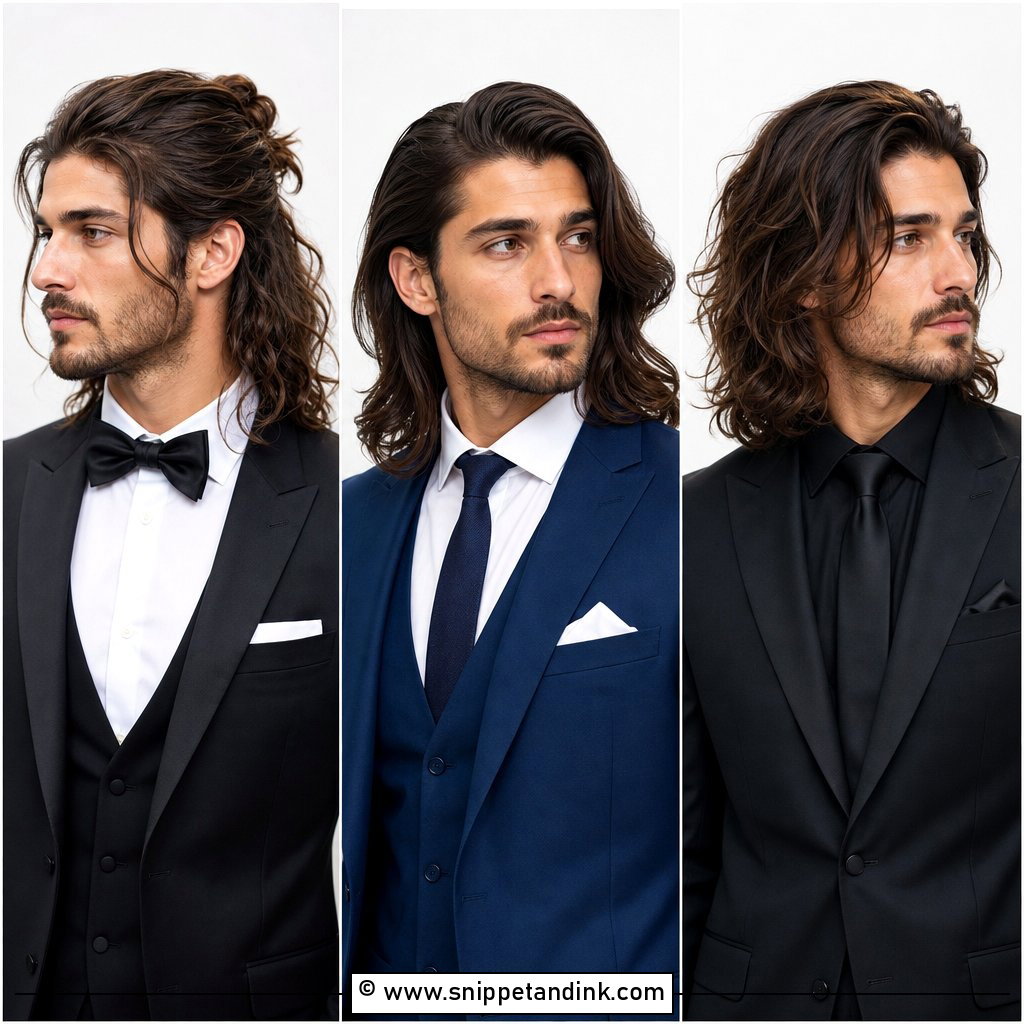
A sleek low bun suits formal weddings better than most people expect from long hair on a groom. The hair is smoothed back and gathered neatly at the nape, which keeps it controlled through the ceremony and dancing and sits well against a tailored suit or tuxedo collar. I use a light cream and a soft brush rather than gel, since gel on long hair goes crunchy and flakes on a dark jacket. Fix the tie with a fabric elastic, not a thin rubber band, so it doesn’t snap or snag when you take it down.
9. Top Knot for Grooms
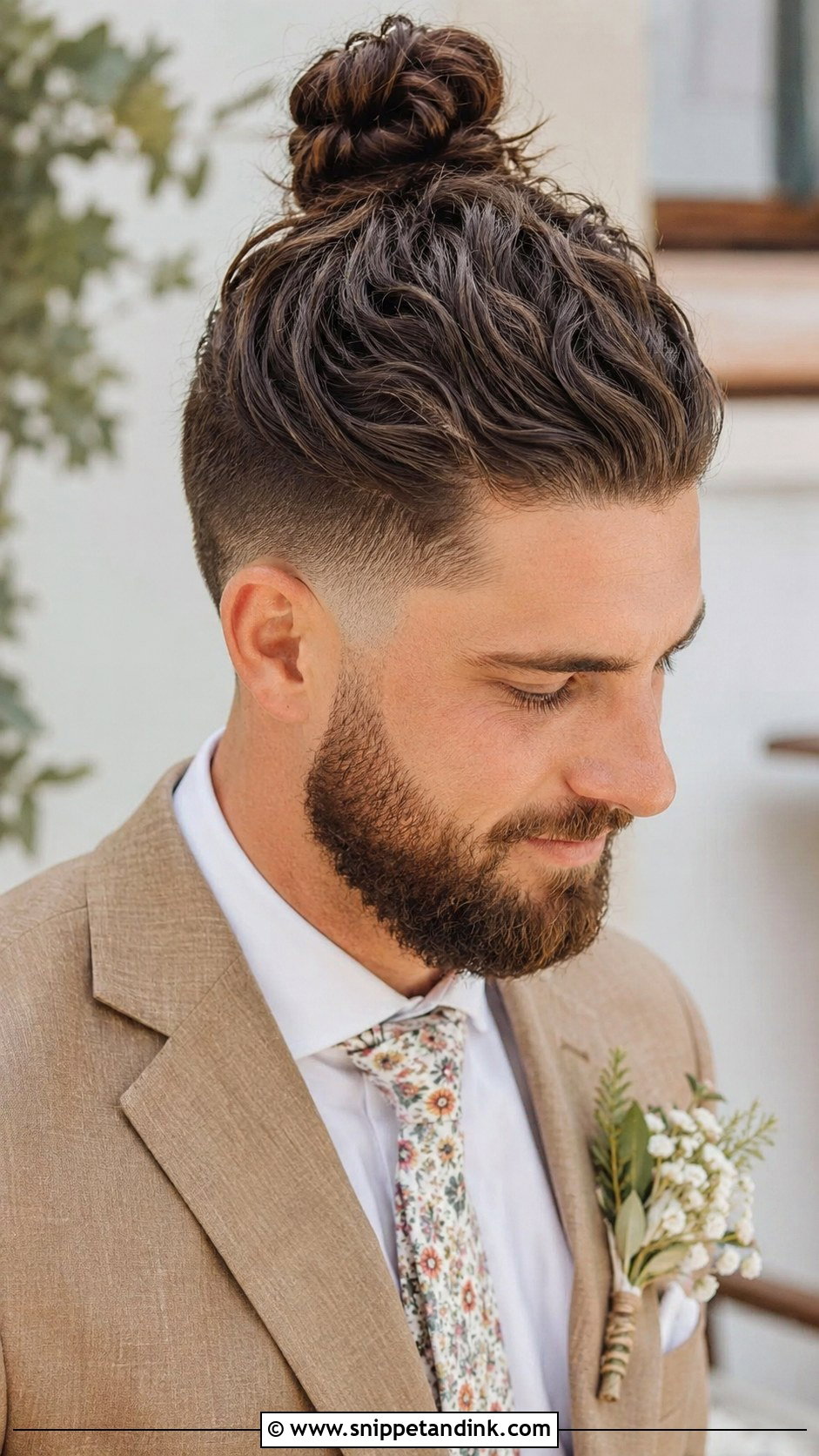
Tied up at the crown, the top knot carries a trendy, bold energy, with the sides faded or left longer. Paired with a well-groomed beard it reads rugged and modern. Outdoor, boho and contemporary weddings suit it. It keeps hair secure through a long celebration, but it’s the hardest long-hair style to keep tidy at the nape, so I smooth the underside with a little cream before tying. If you’ll be wearing a turban, a sehra or any headpiece, plan for a lower knot instead.
10. Quiff Hairstyle for Grooms
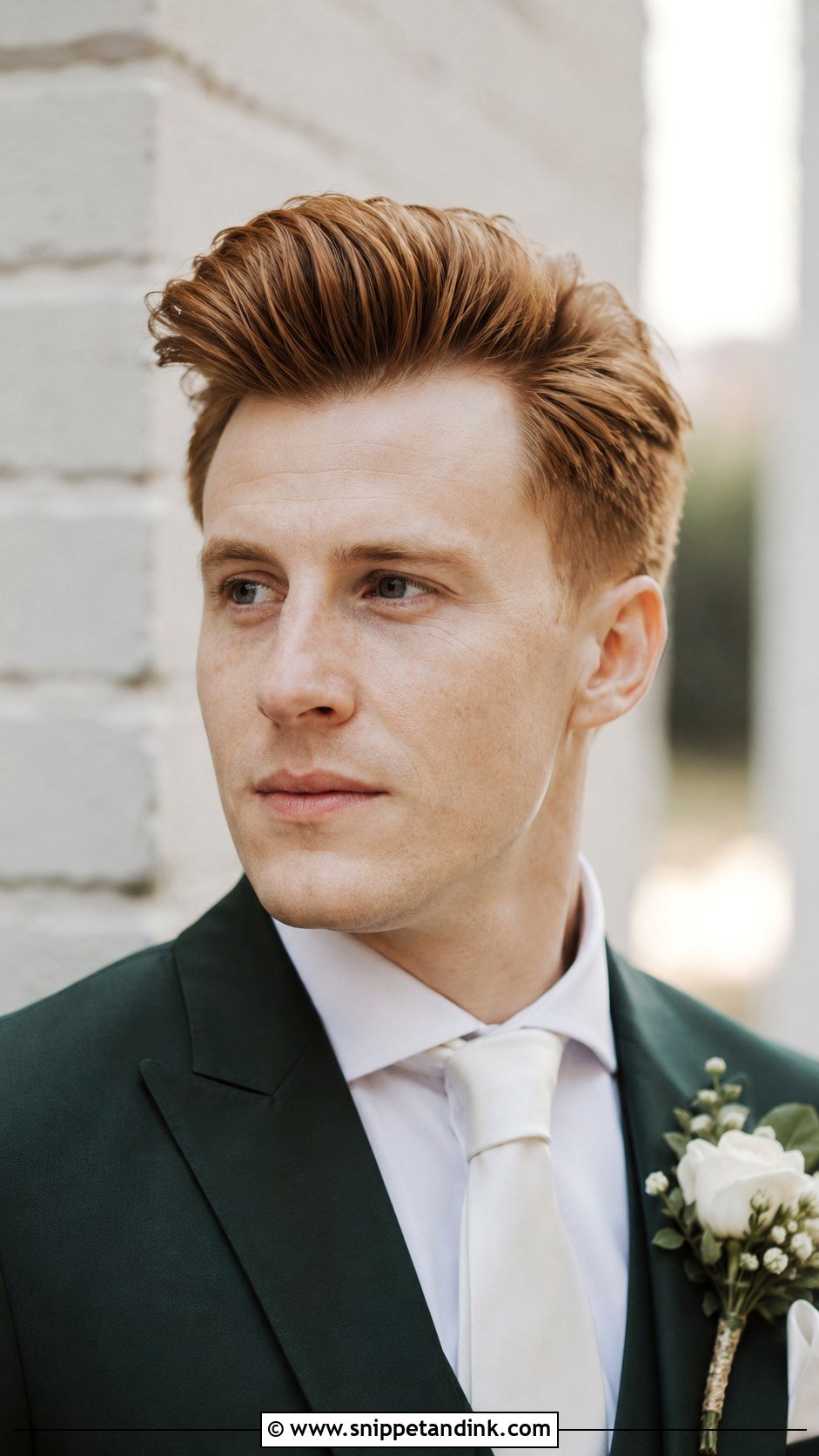
The quiff sits between classic and modern. Hair is lifted up and back at the front with less height than a pompadour, and the sides are kept shorter. It flatters most face shapes and works for formal or semi-formal weddings. I blow-dry the front upward first and only then add a little texturising paste, because product on undried hair just weighs it down. The quiff is forgiving: if it drops slightly by evening, it simply looks more relaxed rather than broken.
11. Comb Over Fade for Grooms
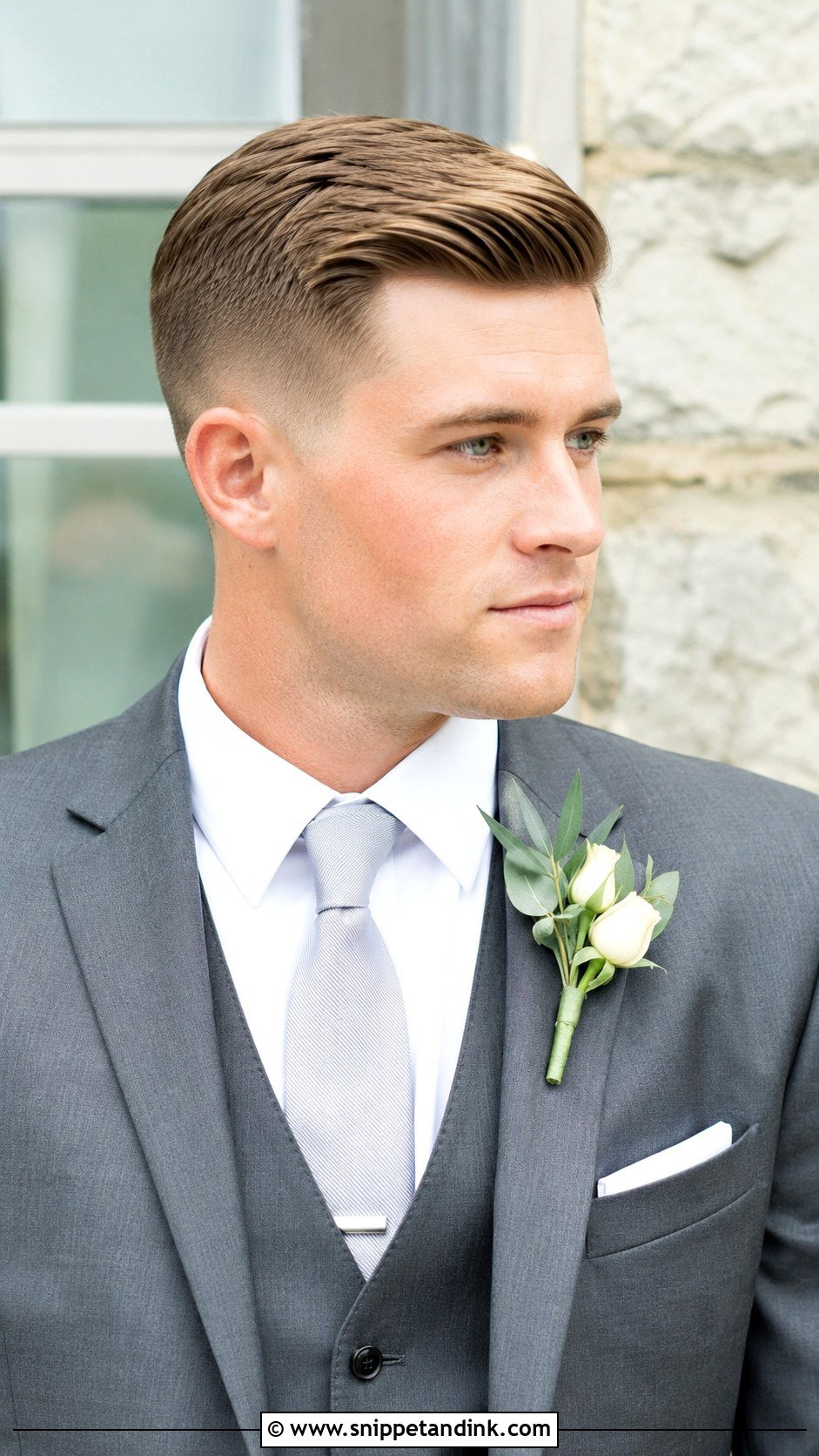
Swept to one side over sides faded short, the comb over fade marries a gentlemanly top with a sharp gradient. It’s polished, and right for formal weddings and upscale venues. Straight or slightly wavy hair suits it best; very curly hair resists lying flat in one direction. Ask for the part line to be lightly shaved in only if you want it noticeable, since it reads strongly in close-ups. A light pomade gives control and a little shine, and it stays crisp from ceremony to reception.
12. Curly Hairstyle for Grooms
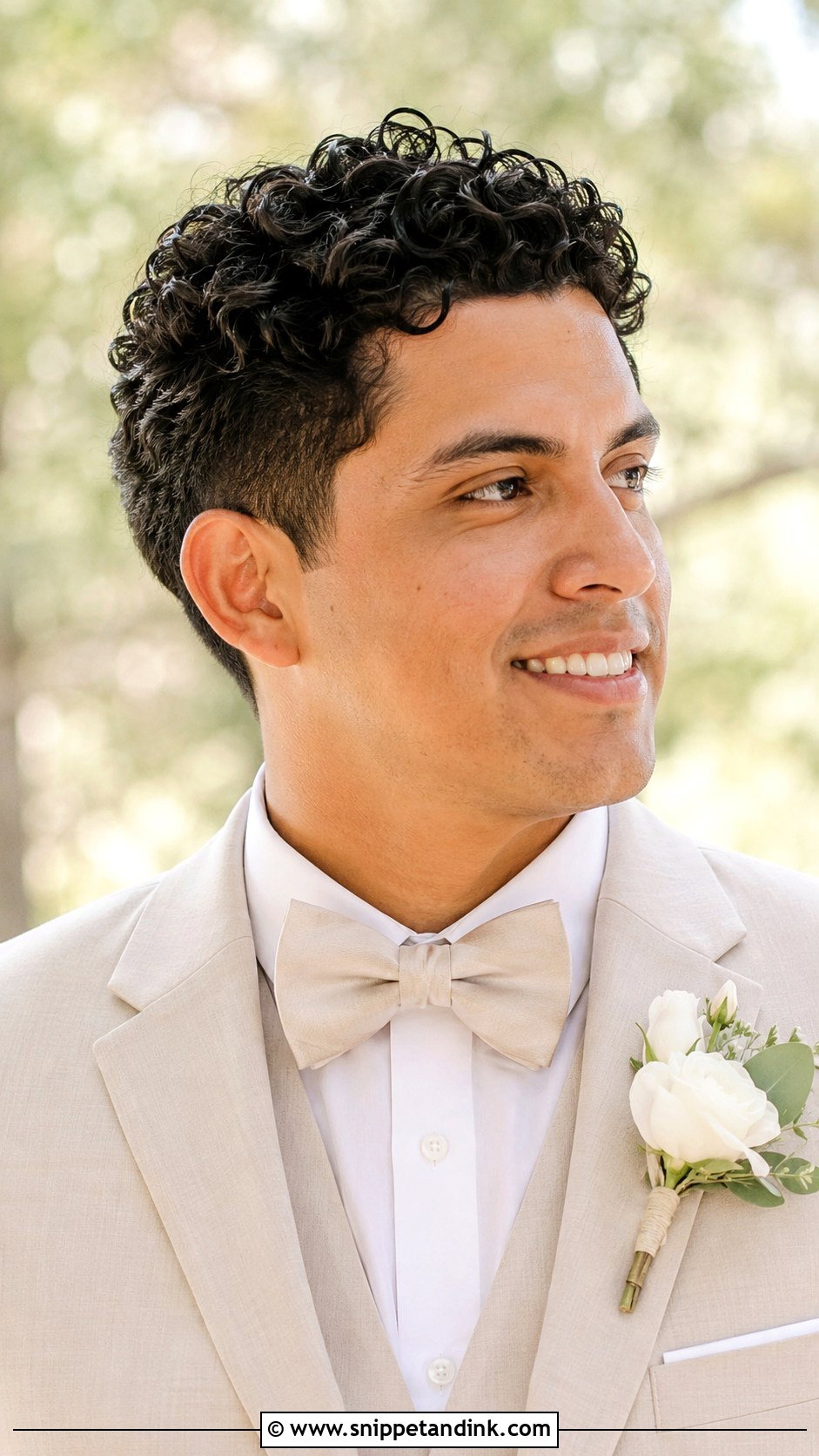
Curls look their best on a wedding day when they’re cut for curls. A well-shaped curly cut keeps volume on top and tidies the sides, and the contrast gives a balanced shape in photos. I’d ask for it to be cut dry or by someone who cuts curls regularly, because curls shrink and a wet cut can come out much shorter than planned. Use a curl cream on damp hair and leave it alone to dry, as touching it while drying creates frizz. It suits relaxed, outdoor and modern weddings.
13. Short Taper Haircut for Grooms
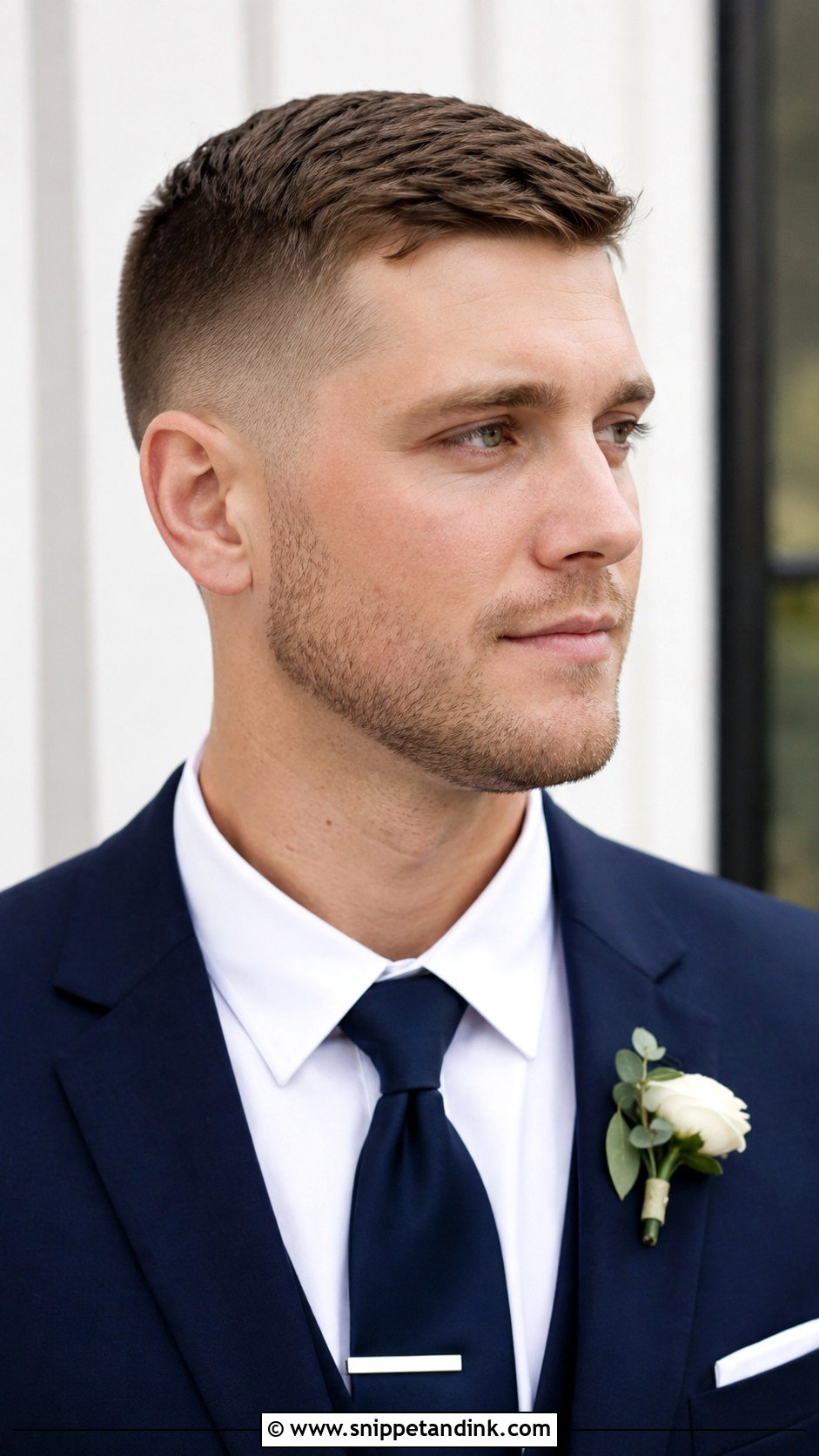
A short taper shortens gradually down the sides and back toward the neckline, giving a neat formal finish. The top stays short enough to need very little work but long enough to style slightly. It flatters most face shapes and hair types, and it suits a grand venue or an intimate ceremony equally. The detail I check is the neckline: a tapered neckline grows out more gracefully than a blocked one, which helps if the honeymoon starts right after. A small amount of product is optional.
14. Slicked Back Undercut for Grooms
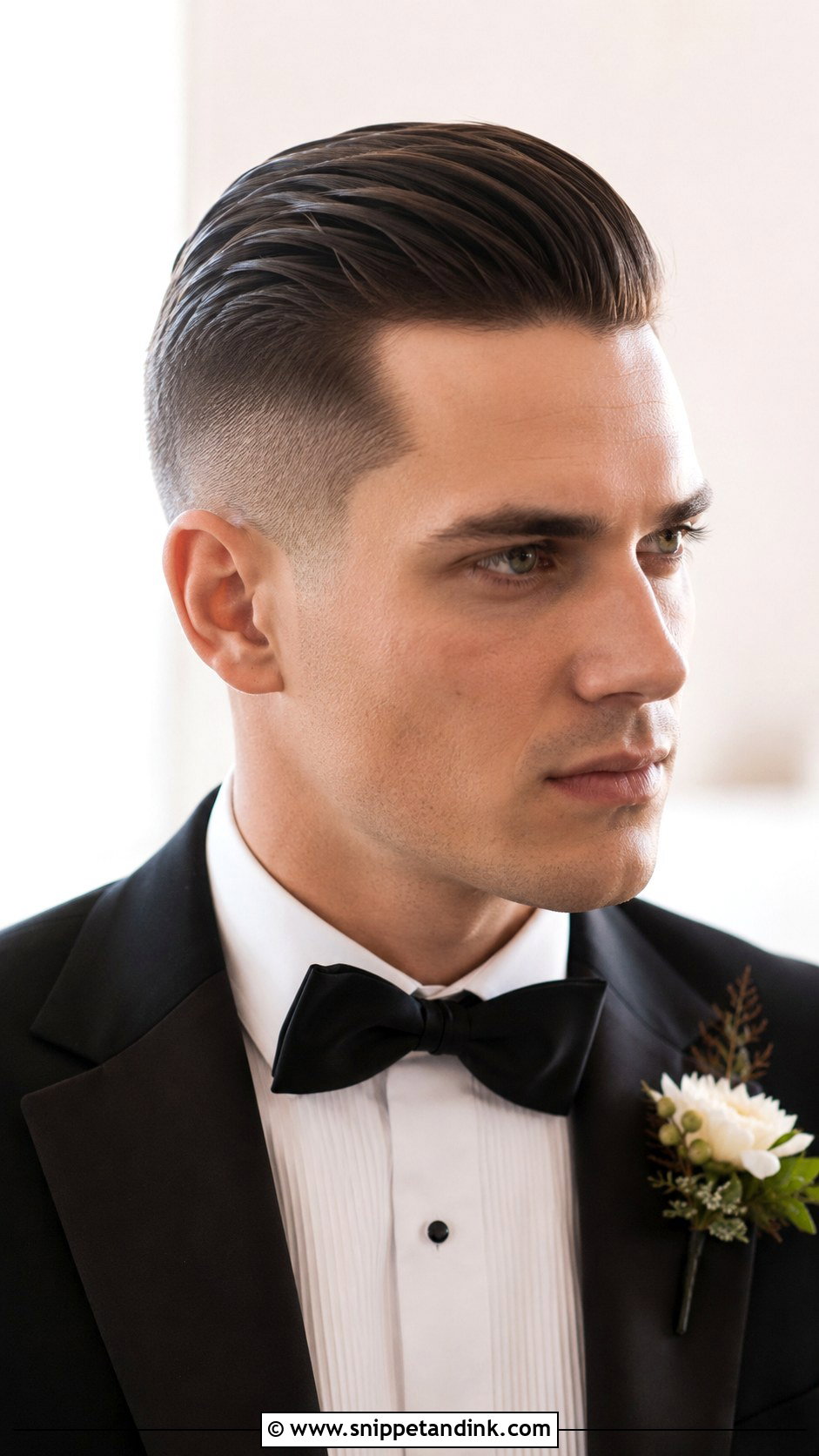
Sharp and fashion-led, the slicked back undercut pairs shaved sides with a longer top combed straight back. The clean undercut lines frame the face dramatically. A high-shine pomade keeps the top smooth all day, though as with any slick style I’d use medium shine if you’ll have lots of flash photography. Formal weddings suit it. It’s not forgiving of an awkward grow-out, so book the clipper work two or three days before and avoid any experiments with the length on top in the final month.
15. Ponytail for Grooms with Long Hair
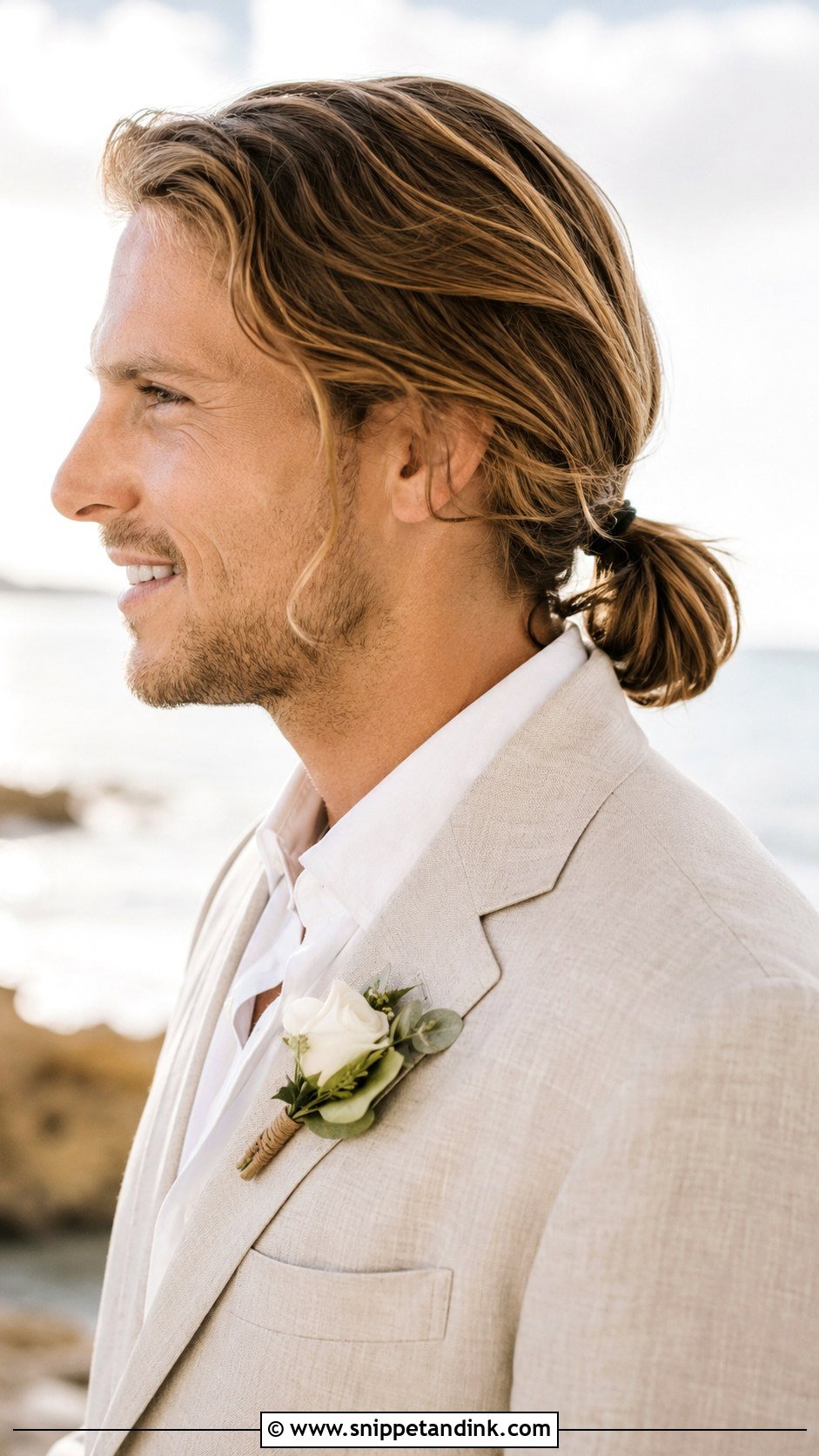
A neat ponytail gathered at the nape keeps long hair controlled while still showing length and texture. Outdoor, rustic and beach weddings suit it. A smooth, low version reads formal; a slightly textured one feels easy. Wind is the reason I like it outdoors: hair worn loose on a beach ends up across your face in every vow photo. Tie it with a fabric elastic and wrap a thin strand of hair around the tie, pinned underneath, so the elastic doesn’t show against a light jacket.
16. Caesar Cut for Grooms
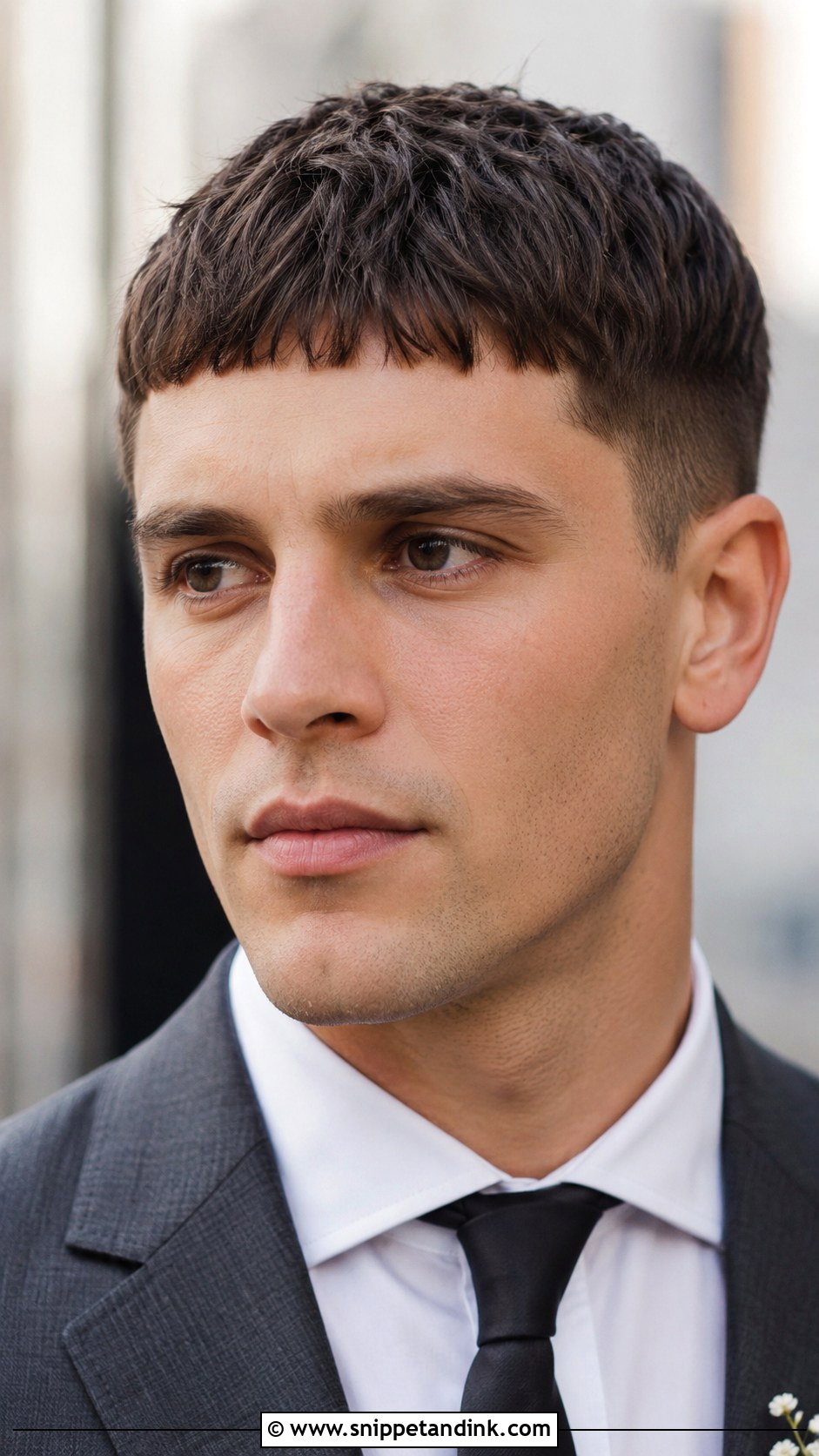
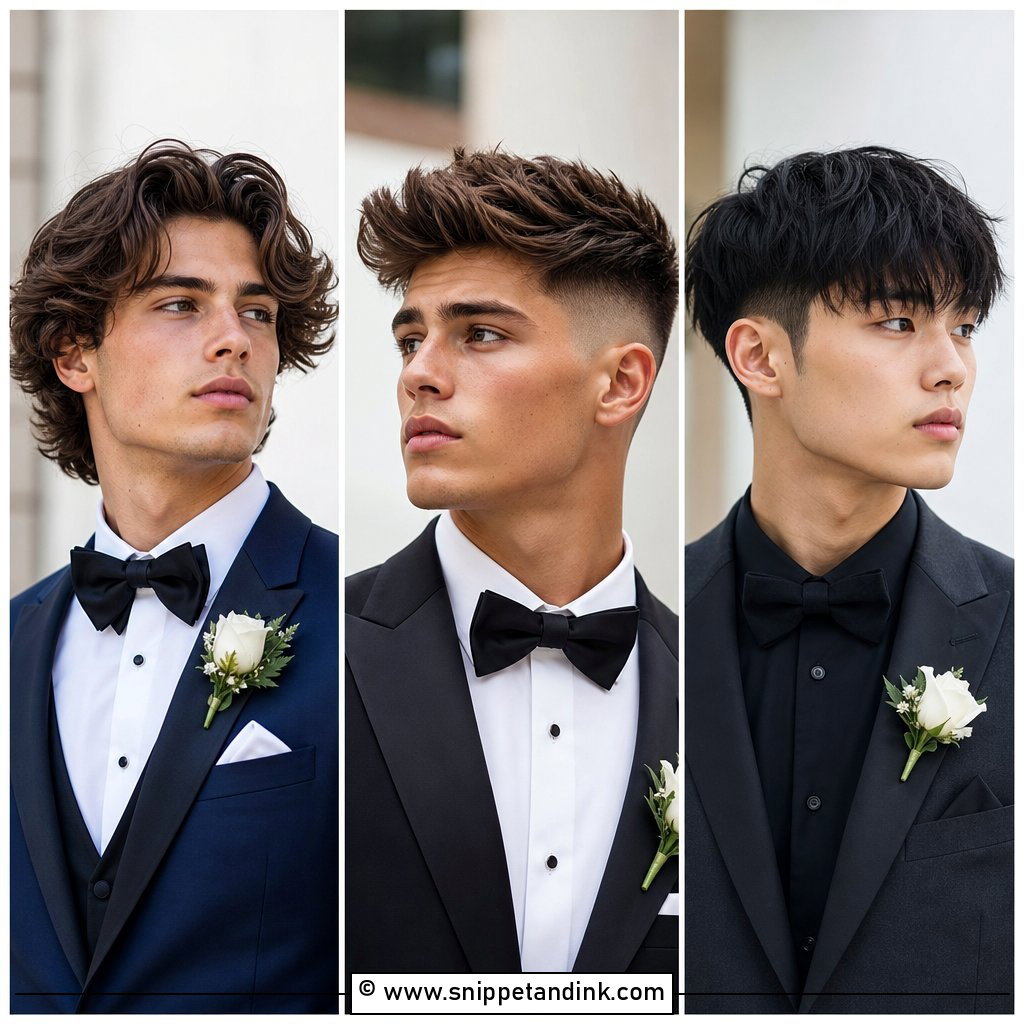
The Caesar cut is short and even all round with a horizontally straight fringe, and it needs almost no styling on the morning. That forward fringe makes it a good choice for receding or thinning hair, since it covers the hairline without looking like it’s trying to. It flatters round and oval faces. A touch of matte product adds texture. My only caution is a strong cowlick at the front, which pushes the fringe up and breaks that straight line.
17. Faux Hawk for Grooms
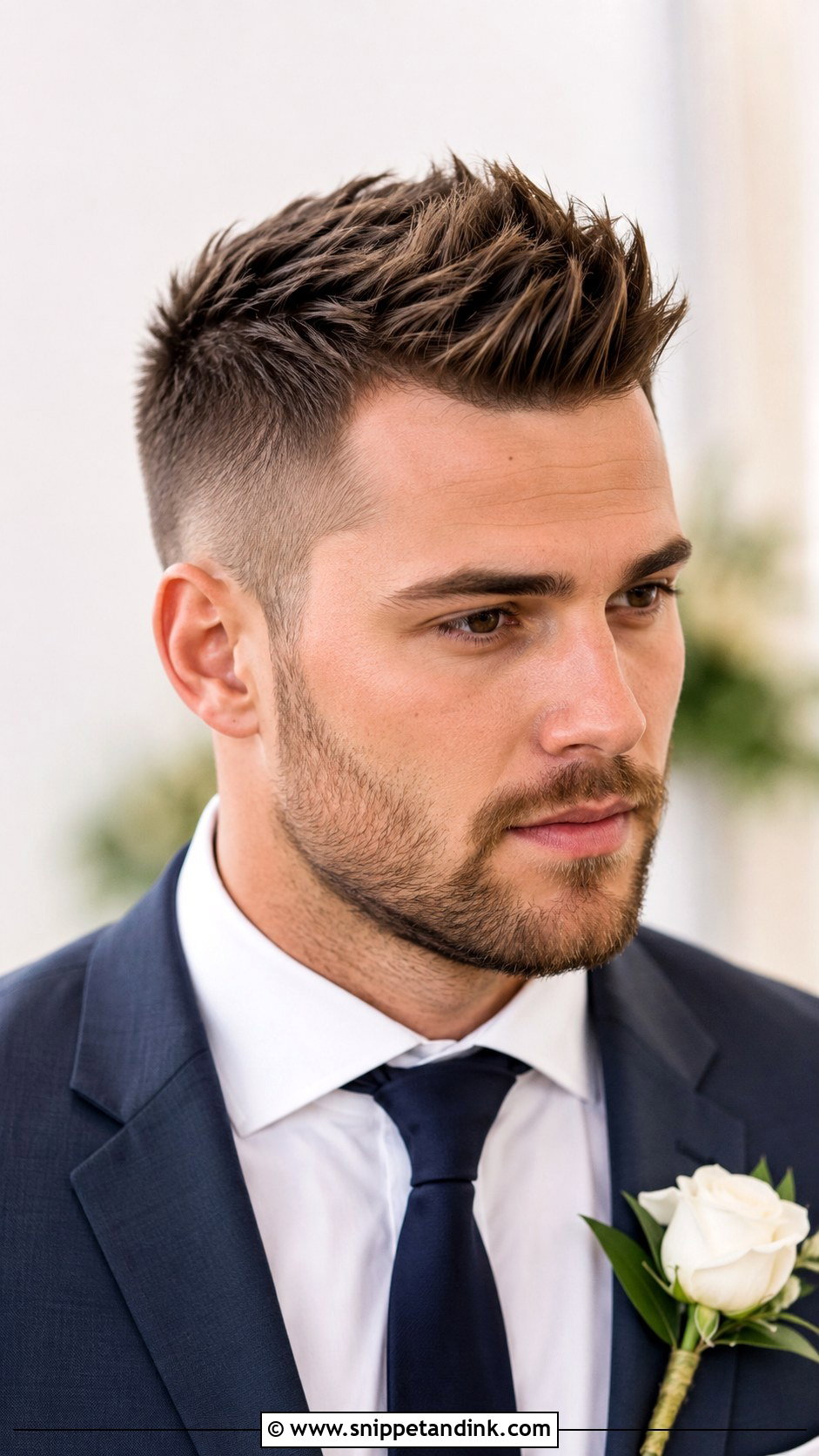
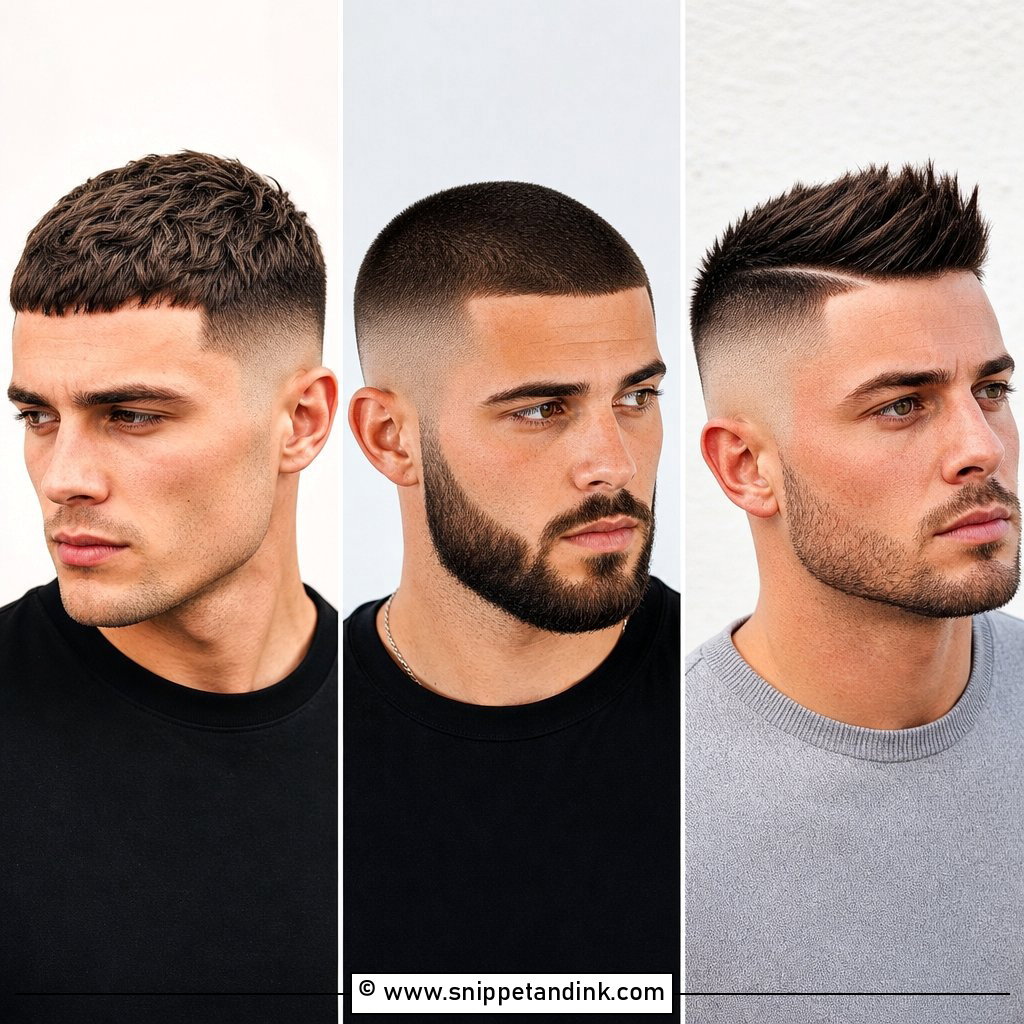
Styled up toward the centre with shorter or faded sides, the faux hawk gives a peaked shape without the commitment of a true mohawk. It’s playful and still tidy, which suits contemporary, outdoor or creative weddings. A flexible-hold product keeps the peak defined. I’d keep the peak lower than you’d wear it on a night out; a tall faux hawk next to a formal suit can look like two different outfits. Grooms with thick hair get the easiest result.
18. Wavy Medium Hairstyle for Grooms
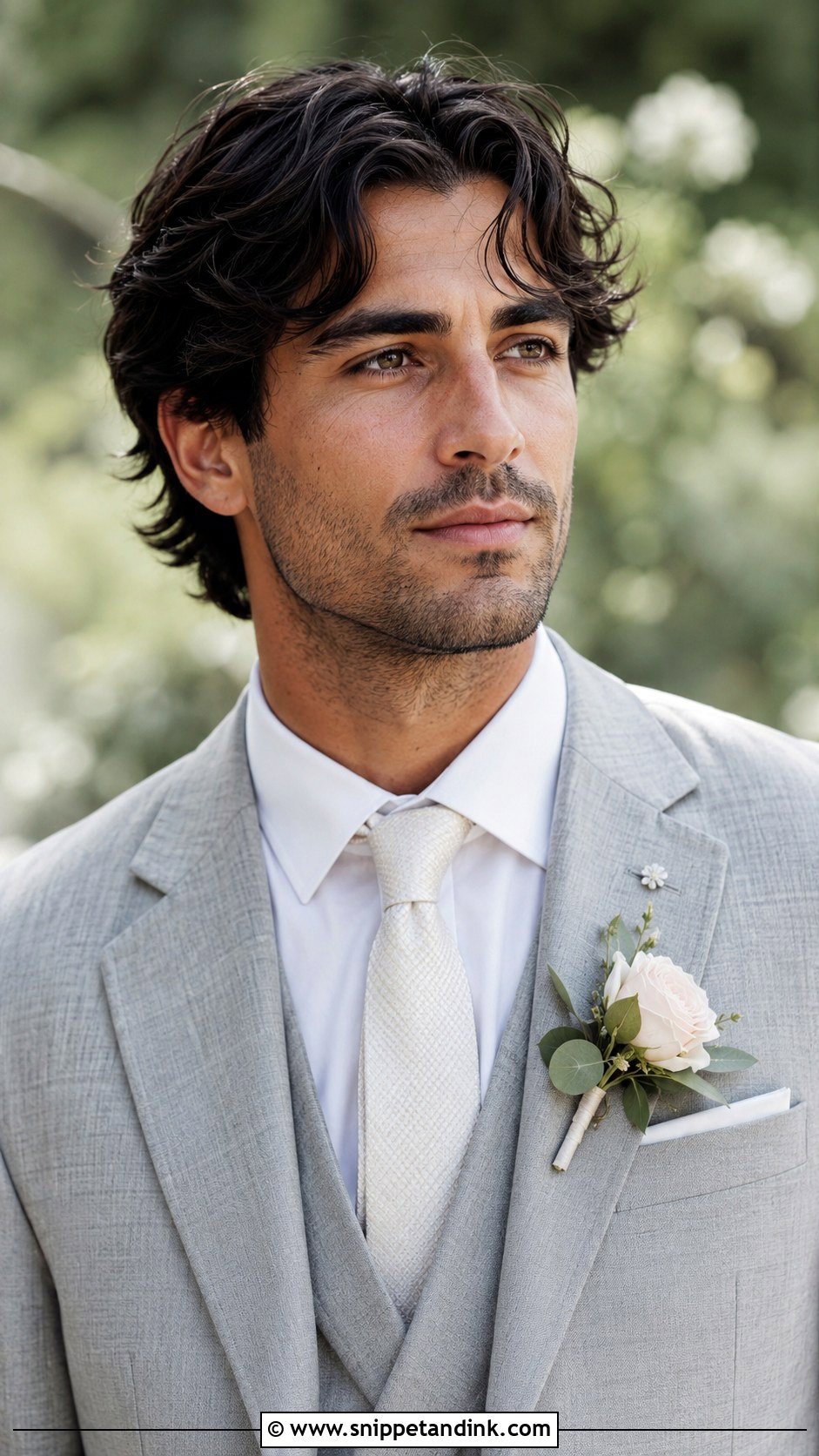
Medium-length waves frame the face softly and keep movement while still looking intentional. Beach, garden and boho weddings suit them. A sea-salt spray or light cream enhances the waves and controls frizz without stiffness. Salt spray dries hair out, so on already dry or coarse hair I’d use a cream instead. The length needs a trim around two weeks before, close enough to tidy the ends but far enough for the shape to settle into its natural fall.
19. Crew Cut for Grooms
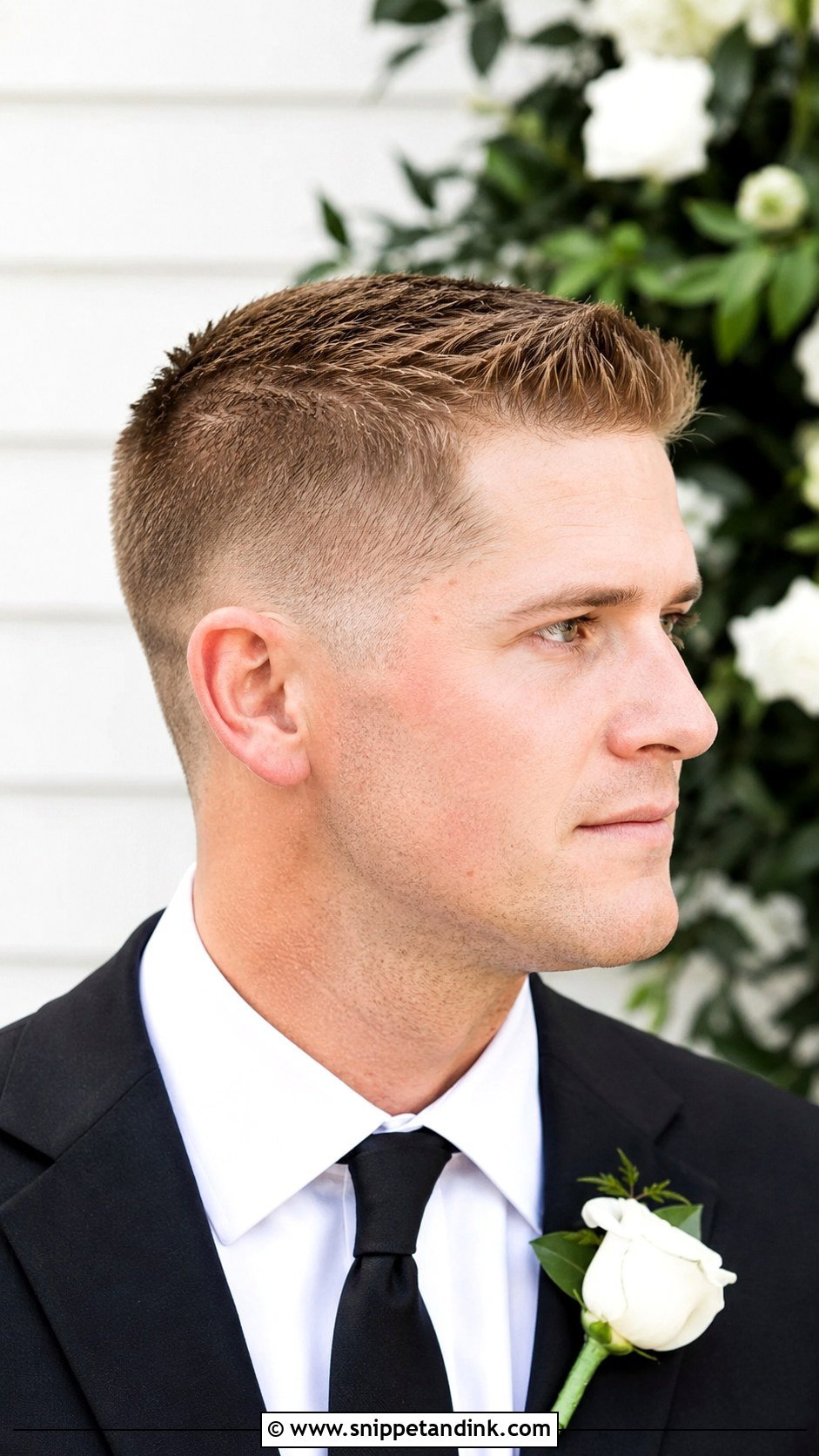
Short sides, a slightly longer top, a tidy taper: the crew cut is the simplest cut here, and it stays crisp all day with no styling. It suits most face shapes and hair types and works with a formal suit or relaxed attire. Because it’s so short, the timing matters. A crew cut done the day before can show a pale band of untanned skin at the sides, especially for a summer wedding, so I prefer three to five days before.
20. Man Bun with Beard for Grooms
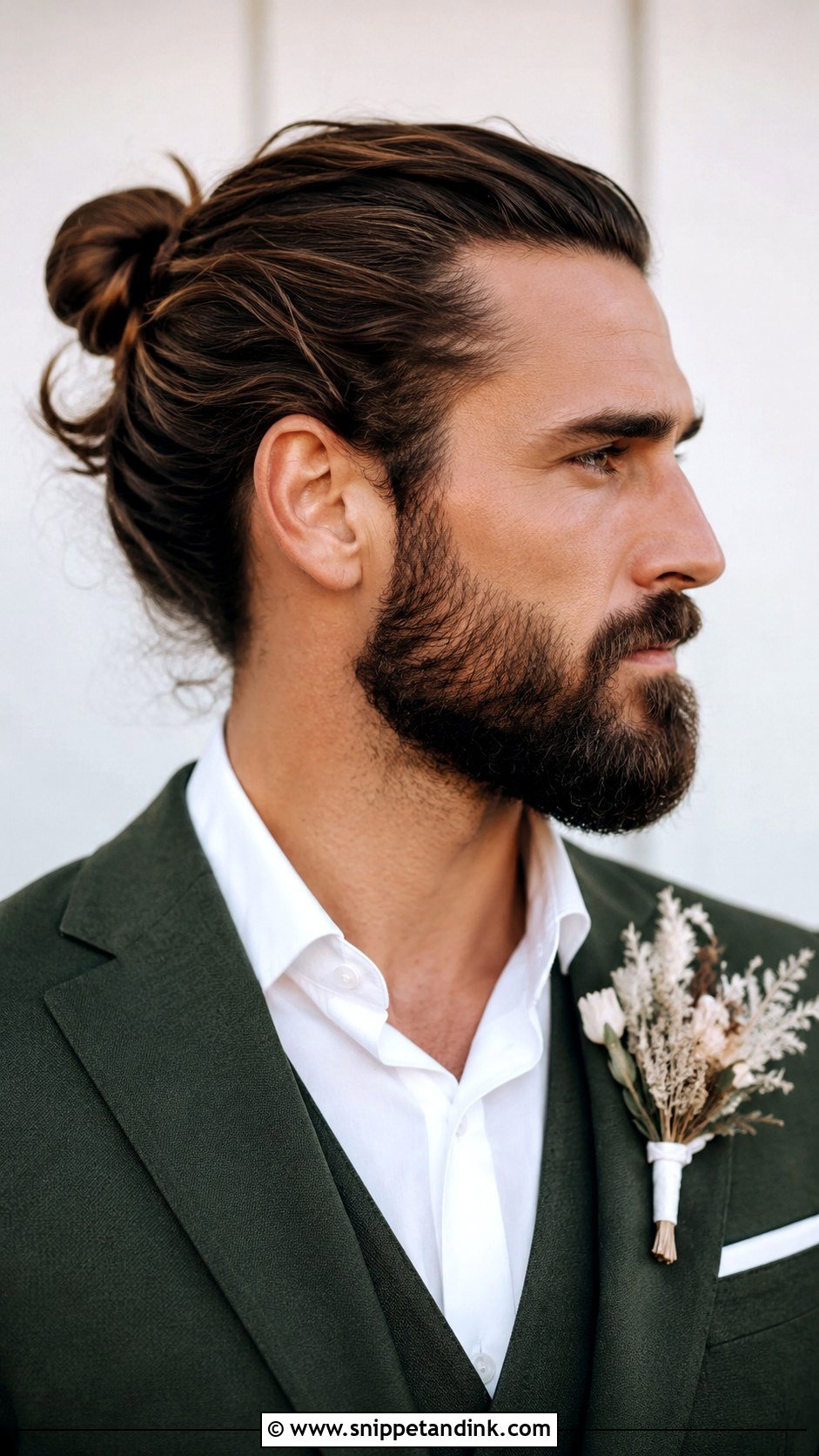
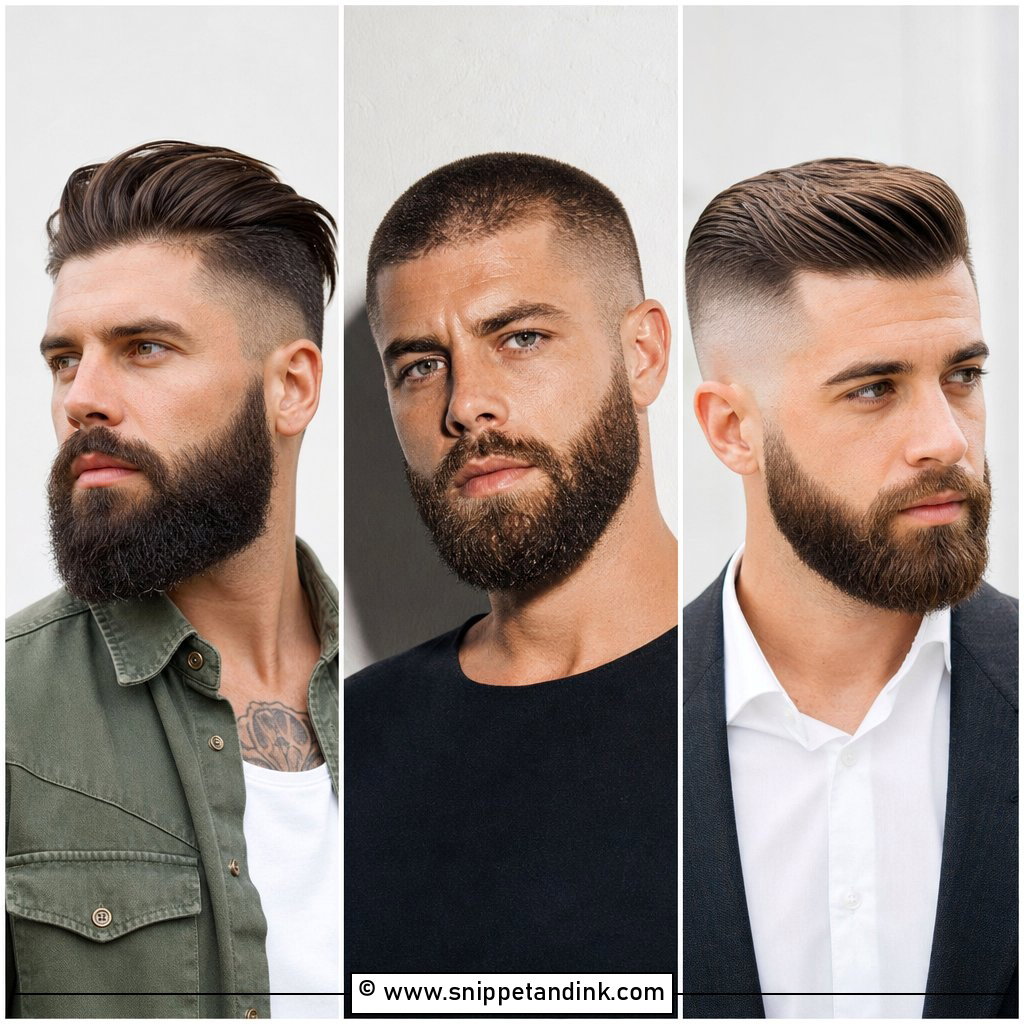
Long hair tied back into a bun with a groomed beard has a rugged, individual look that suits boho, outdoor and modern weddings. The beard frames the face and balances the bun. The two need to match in polish: a sleek bun with a straggly beard looks unfinished. A little beard oil, a trimmed neckline and a smooth bun give the finish. For the man bun with a beard, have the beard shaped by the same person or on the same day as the hair, so the lines agree.
Matte, Medium or High Shine Under the Photographer’s Flash
Product choice changes how hair looks in pictures more than most grooms realise. I match it to the style and the venue:
- Matte clay or paste: textured crops, quiffs, faux hawks and messy tops. It holds without reflecting light.
- Medium-shine cream or pomade: side parts, comb overs, buns and most formal looks. It looks groomed without glare.
- High-shine pomade or gel: slicked-back styles only, and even then I keep it moderate if the reception has flash photography.
Heat is the other factor. A crowded dance floor makes hair sweat at the hairline, and water-based pomades soften as you get warm, while oil-based ones hold better but are harder to wash out. Whatever you choose, try it on a normal day first, not for the first time on the morning.
Lining Up the Beard, the Neckline and the Collar
A sharp haircut can be undone by a beard that doesn’t match it. I have the beard shaped at the same appointment as the final cut so the sideburns blend into the fade at the same length. The neckline of the beard should sit just above the Adam’s apple; trimmed too high, it makes the jaw look softer in profile photos.
Check the back of your neck against your shirt collar too. Stray hairs above a white collar show clearly in ceremony photos taken from behind. A quick neck shave or trim the day before solves it, and a lint roller in your jacket pocket takes care of cut hairs on dark wool.
The Fifteen-Minute Test for Wedding Morning
Your hair type, face shape and the wedding’s formality will rule out half this list on their own. From what’s left, pick the style you could recreate yourself in fifteen minutes if your barber isn’t there that morning. Book a trial cut about a month before so there’s time to adjust, then the final cut in the last week, timed to the type of cut. Look at the result in a jacket and collar, not under a barber’s cape. That’s the version people will see.
You'll Like These Ideas:


Leave a Reply