
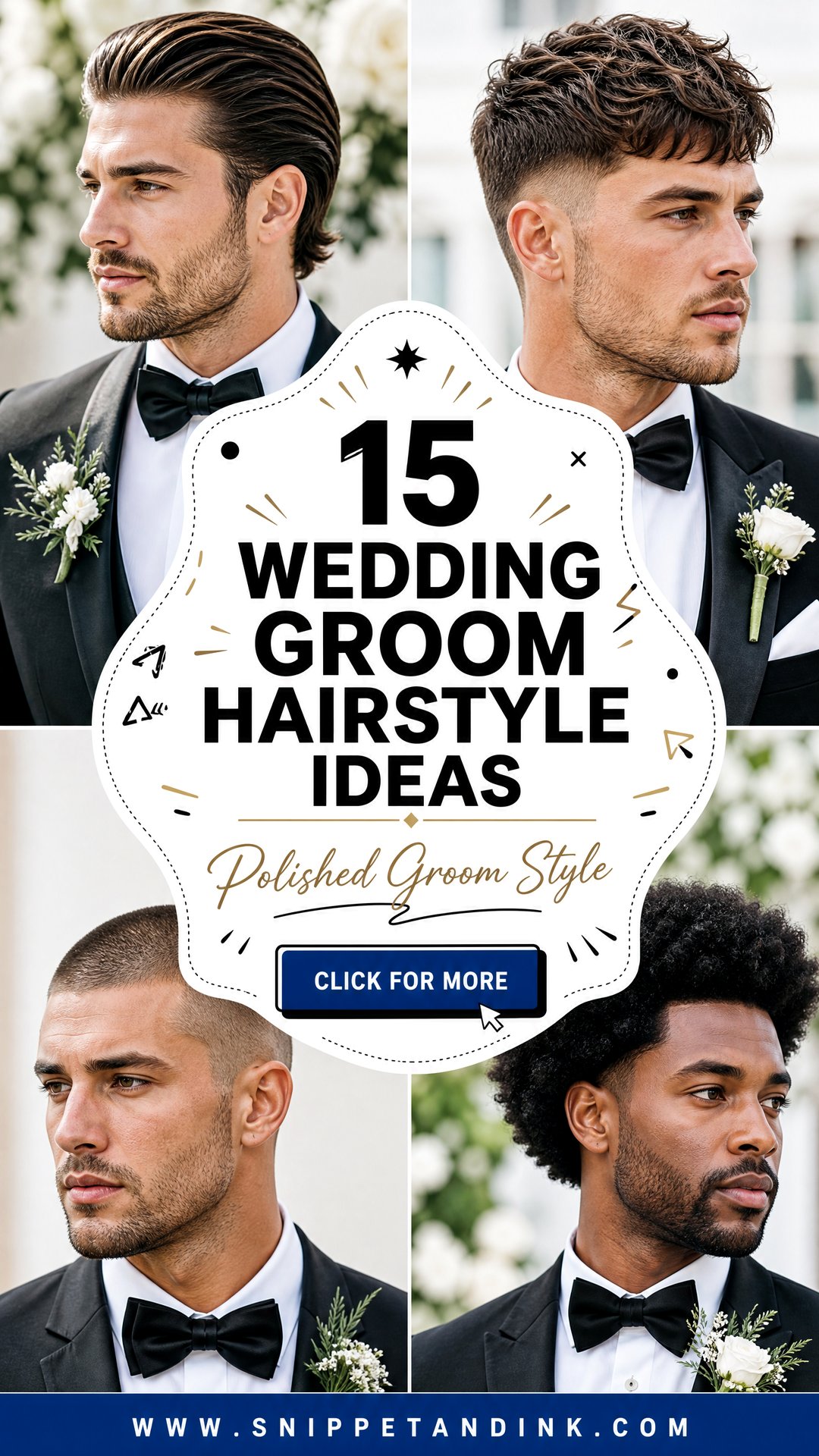
Grooms tend to think about hair last, usually a few days out, when the suit is already fitted. That’s backwards. The haircut sets the line between collar and face, and a cut that’s a week too fresh or a week too old shows in every close portrait. What I want for a groom is hair that looks like a good version of how he always wears it, holds through a ceremony and a sweaty dance floor, and still moves. Current men’s hair trends make that easier than it used to be: soft texture, classic side parts, low tapers, modern slick backs and longer flow cuts are all in. The fifteen cuts below suit a tux, a linen suit, a sherwani or a tailored jacket, as long as the timing and the product are right.
Haircut Timing Depends on How Short You Go
There isn’t one right day to get the wedding haircut. It depends on how quickly the cut shows growth.
- Fades, buzz cuts and crew cuts: two to four days before. Close enough to look sharp, far enough that the skin has calmed down and the line has softened.
- Classic cuts with some length on top: about a week before, so the ends settle and stop looking freshly cut.
- Long hair, curls and locs: a trim or maintenance one to two weeks ahead, then only a light cleanup of the neck and edges.
- Beard shaping and lineups: one or two days before, never the morning of, to avoid razor bumps in close-ups.
If you want to try a new style, do it a month or more before the wedding, with the same barber, so there’s time for a second visit if it doesn’t suit you.
1. Classic Side Part Groom Hairstyle
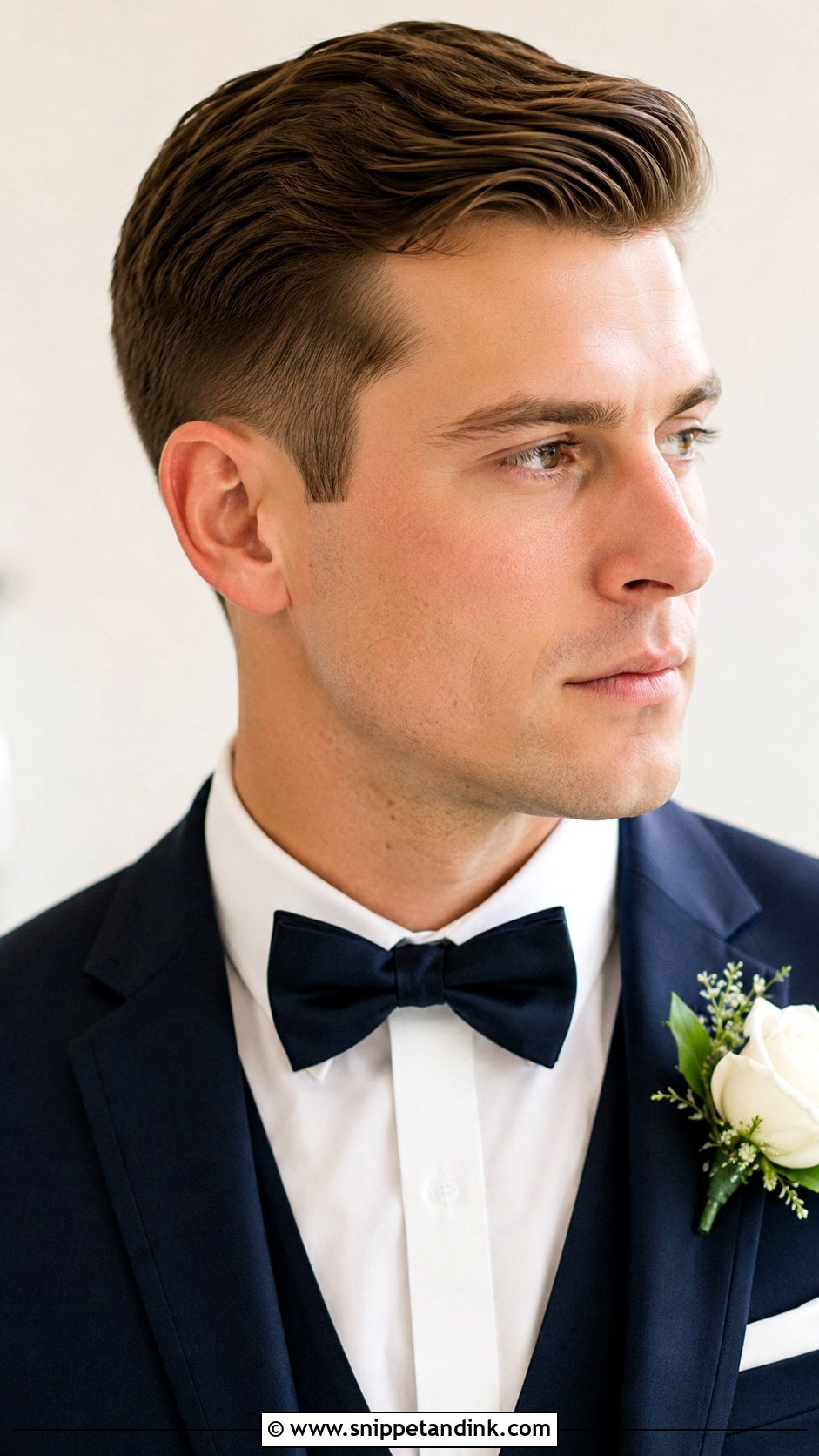
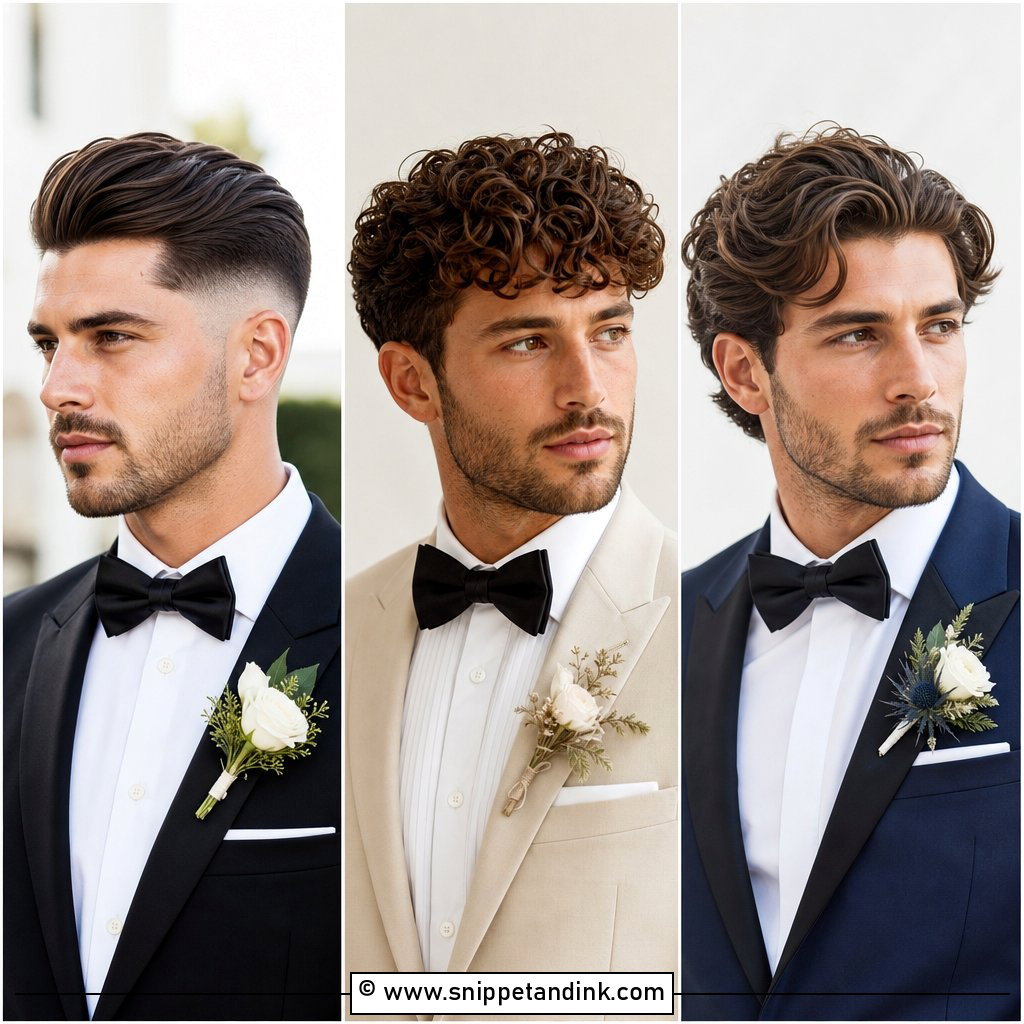
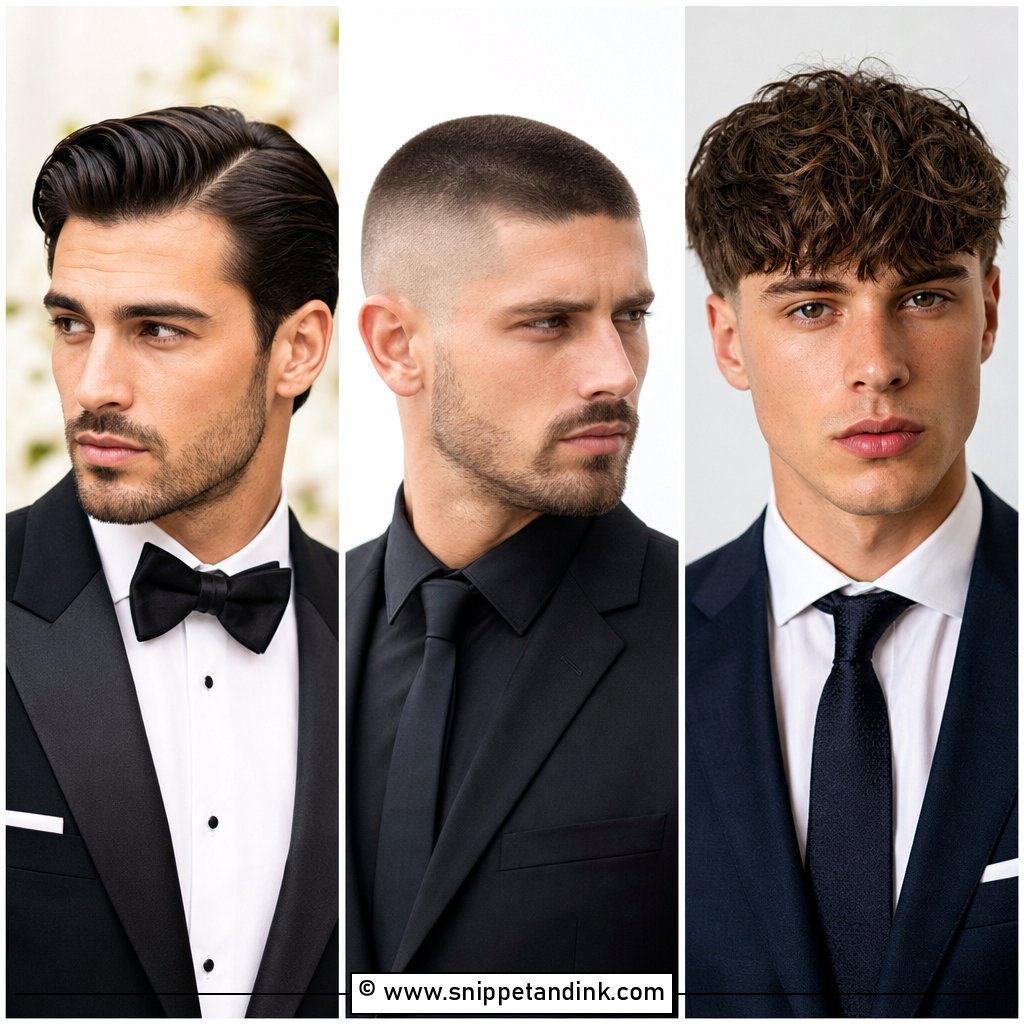
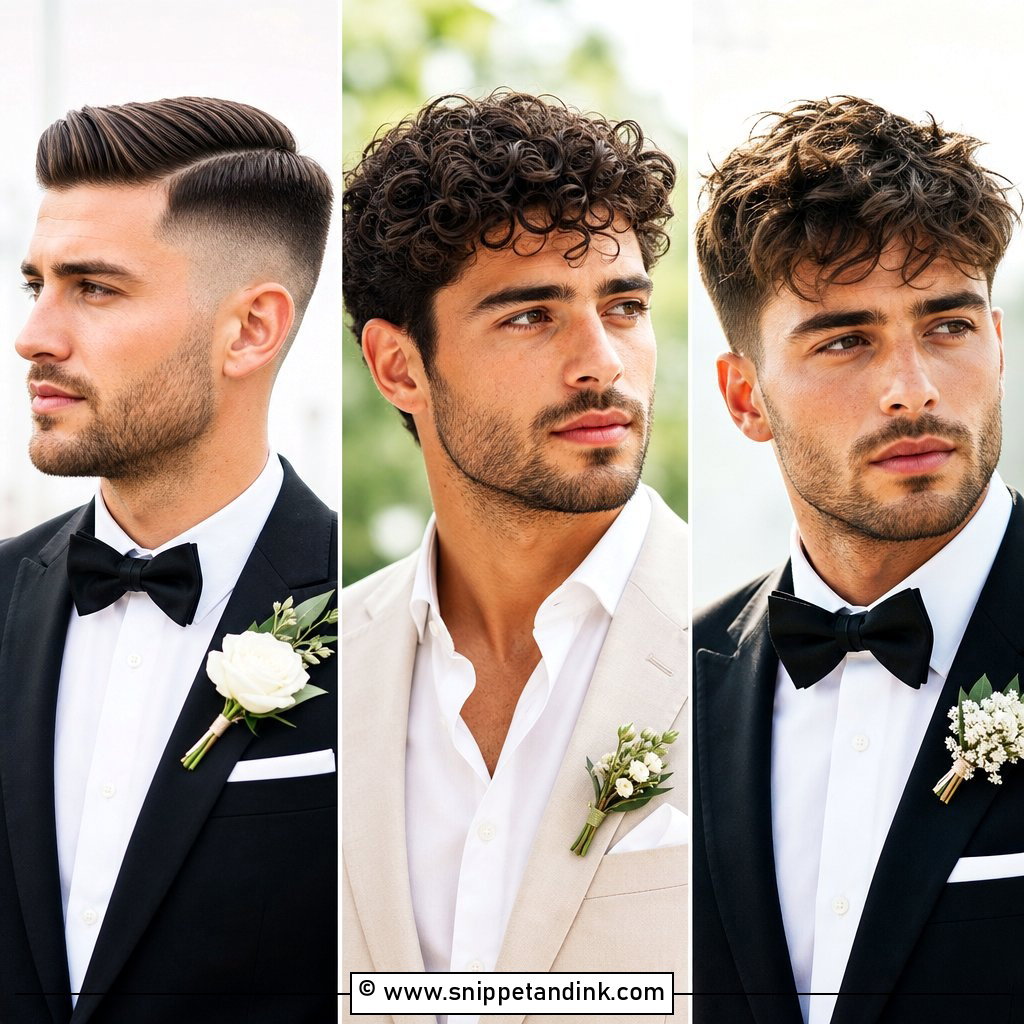
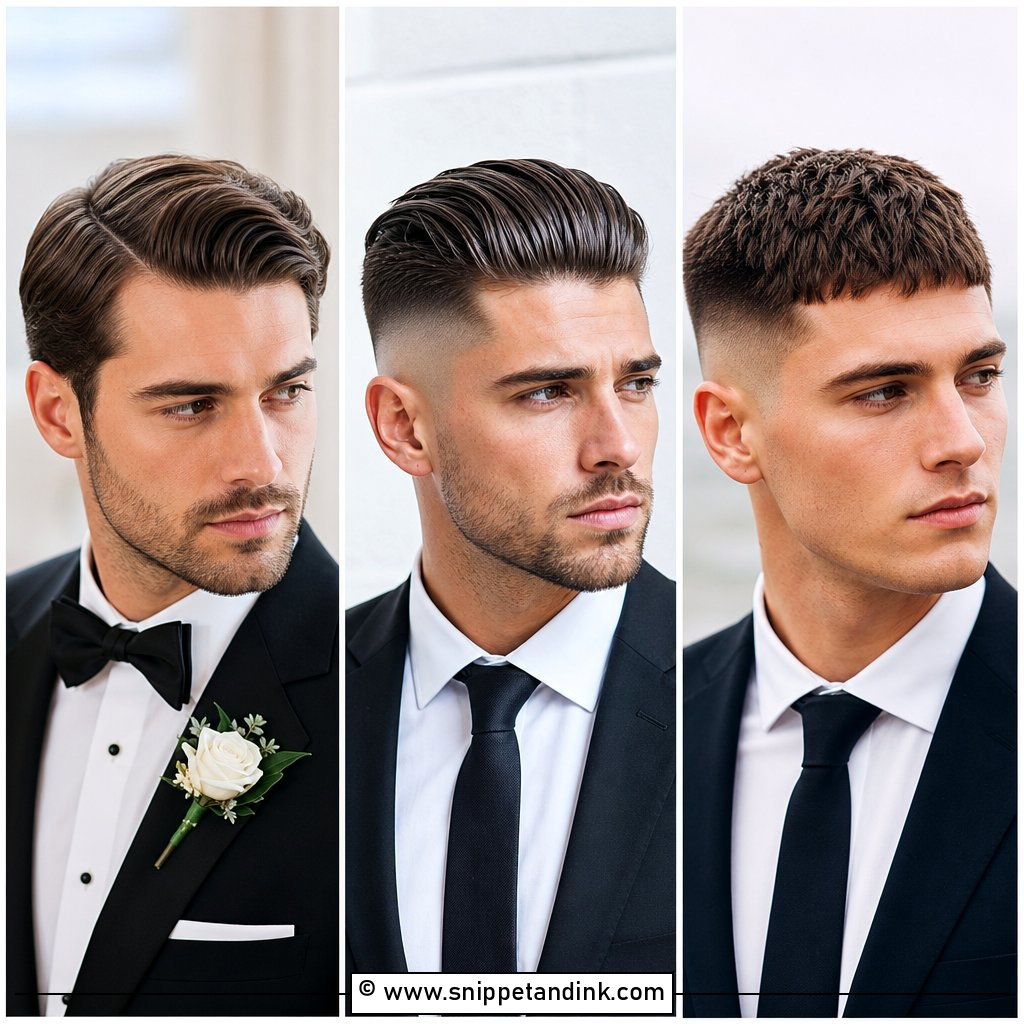
If a groom asks me for the safest option, this is it. The part gives the hair a structure that survives wind and hugs, and the top can sit smooth, lifted a little or brushed back. Medium-short hair with a fresh taper around the ears and neck suits it best. Have the barber find your natural part rather than cutting a new one; a part against the growth pattern pops up again by the reception. Finish with a low-shine pomade or cream. High shine looks wet under a flash, and these cuts end up in a lot of close-ups.
2. Slick Back Groom Hairstyle
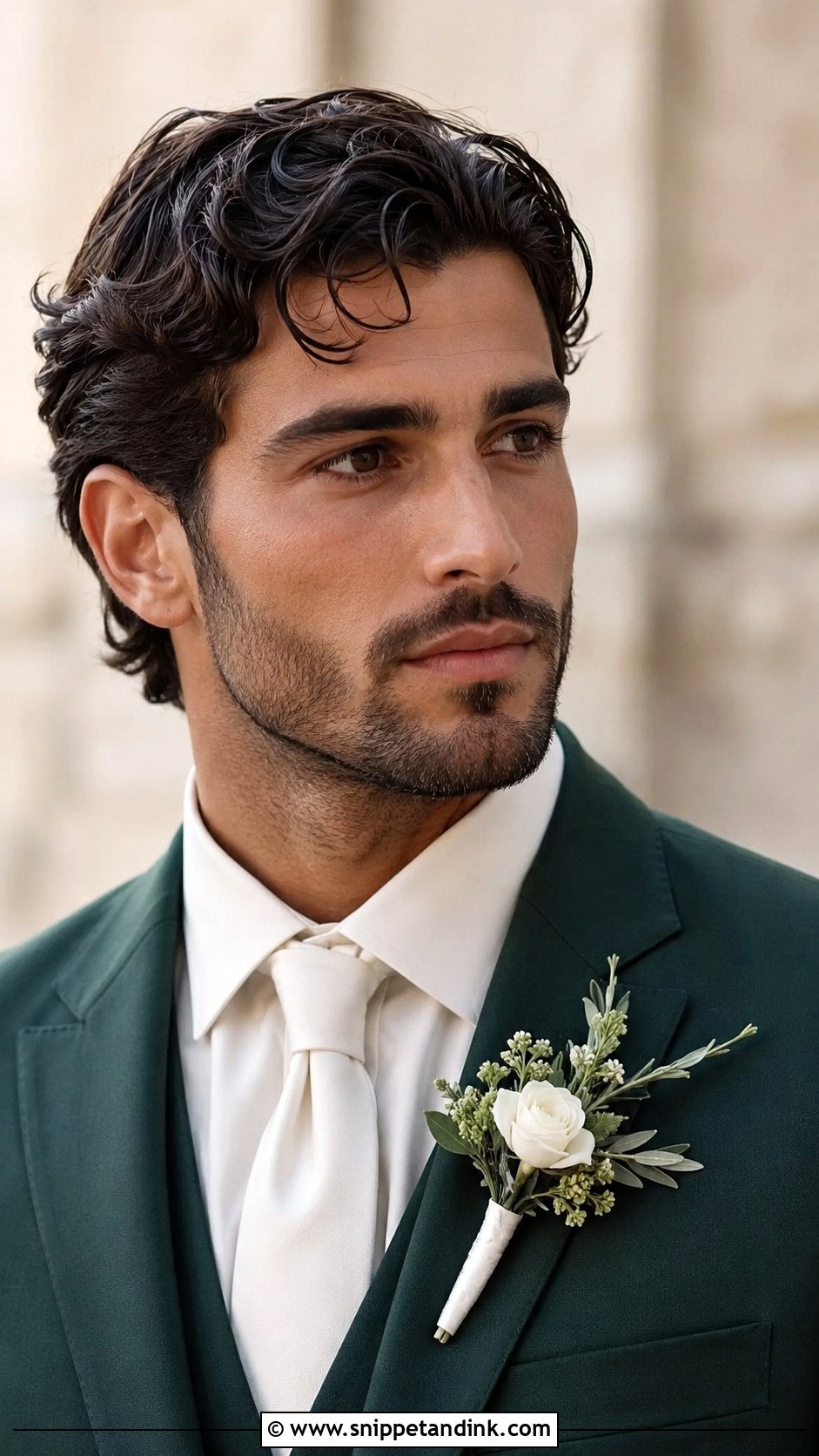
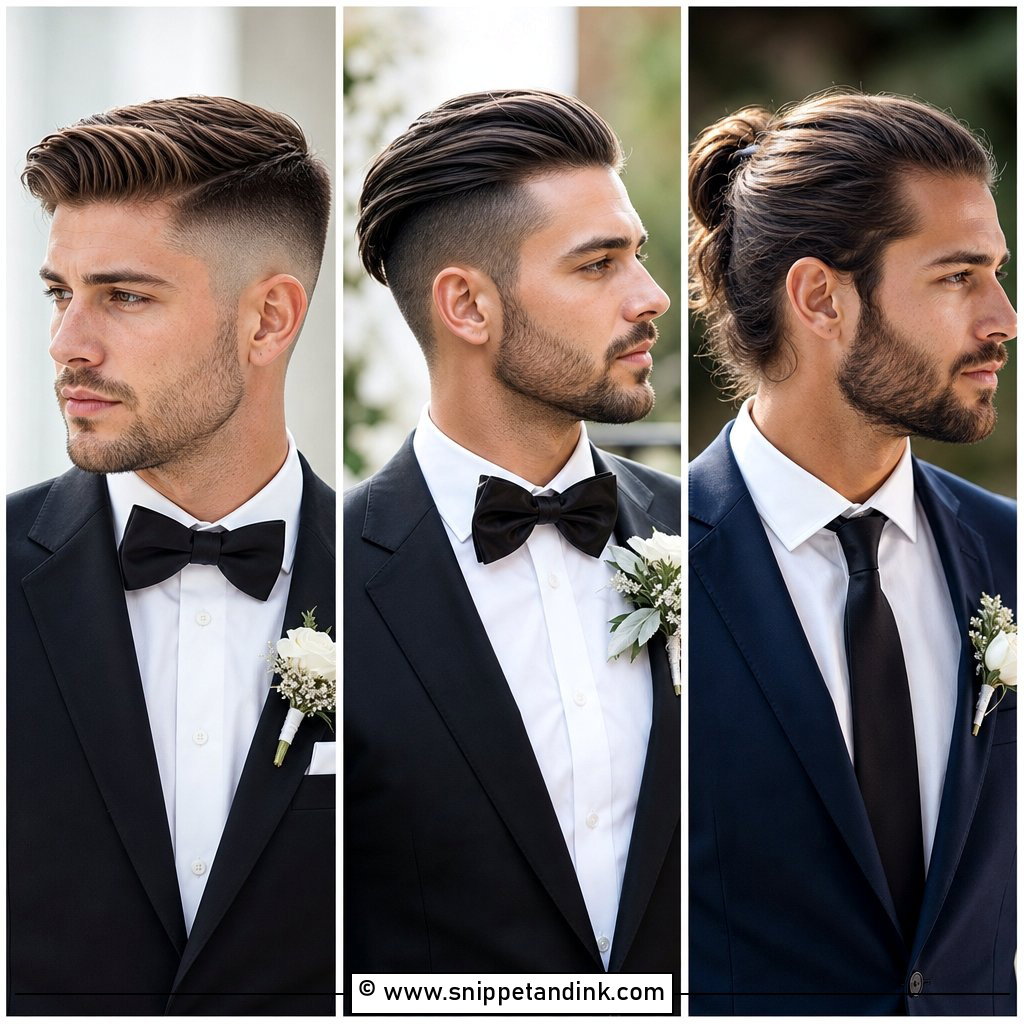
A slick back groom hairstyle needs enough length on top, usually several inches, to lie flat when brushed back, with tapered or faded sides for balance. The modern version moves; it shouldn’t look like a helmet. A shine cream or flexible pomade gives hold without that hard shell. It sits well with a tux, a structured suit and an evening wedding, and it puts the jawline and collar on show. Get the cut a few days before so the fade softens. If the hair has a strong cowlick at the front, I’d pick another style; the cowlick will win by the first dance.
3. Textured Crop Groom Hairstyle
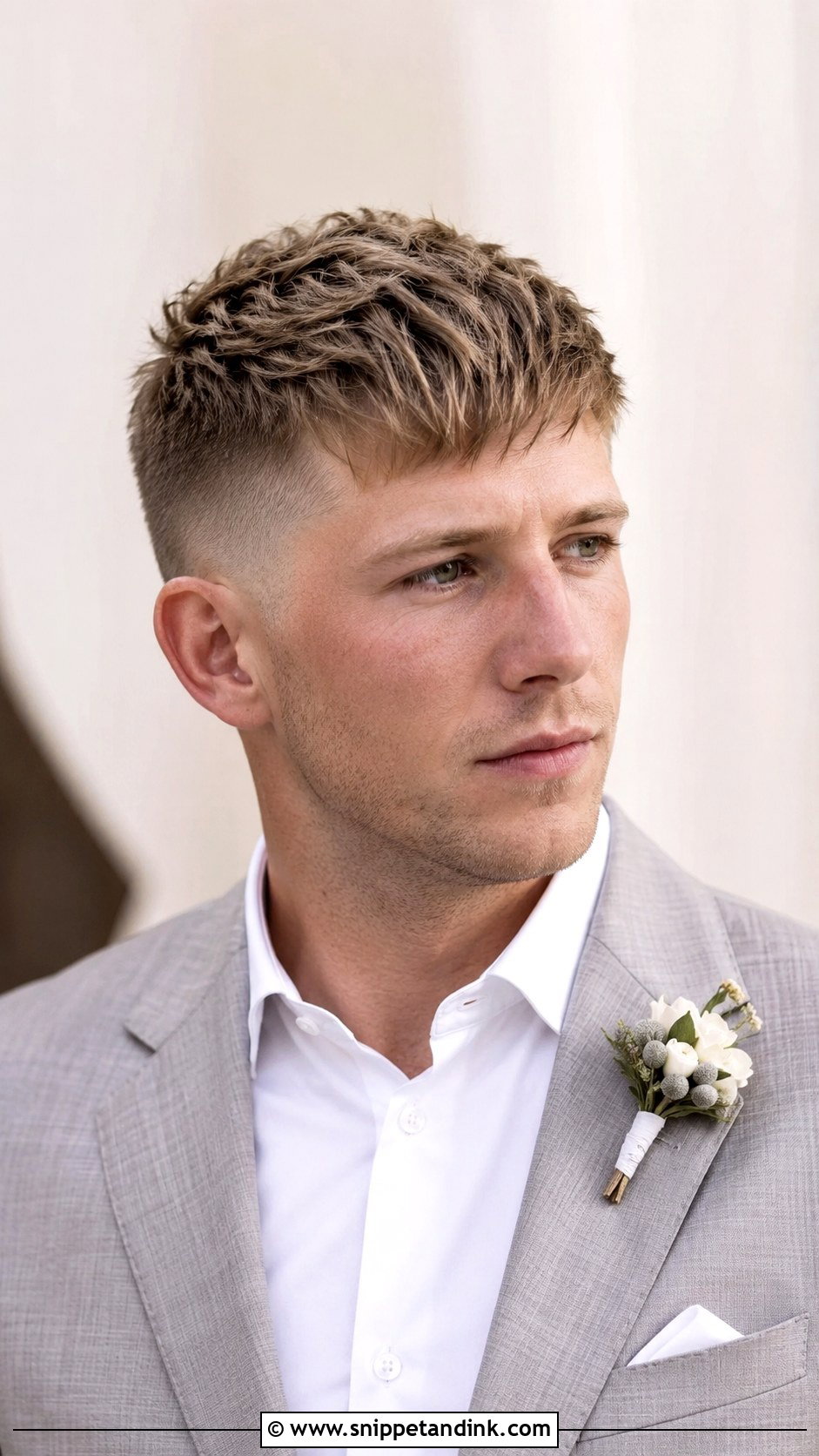
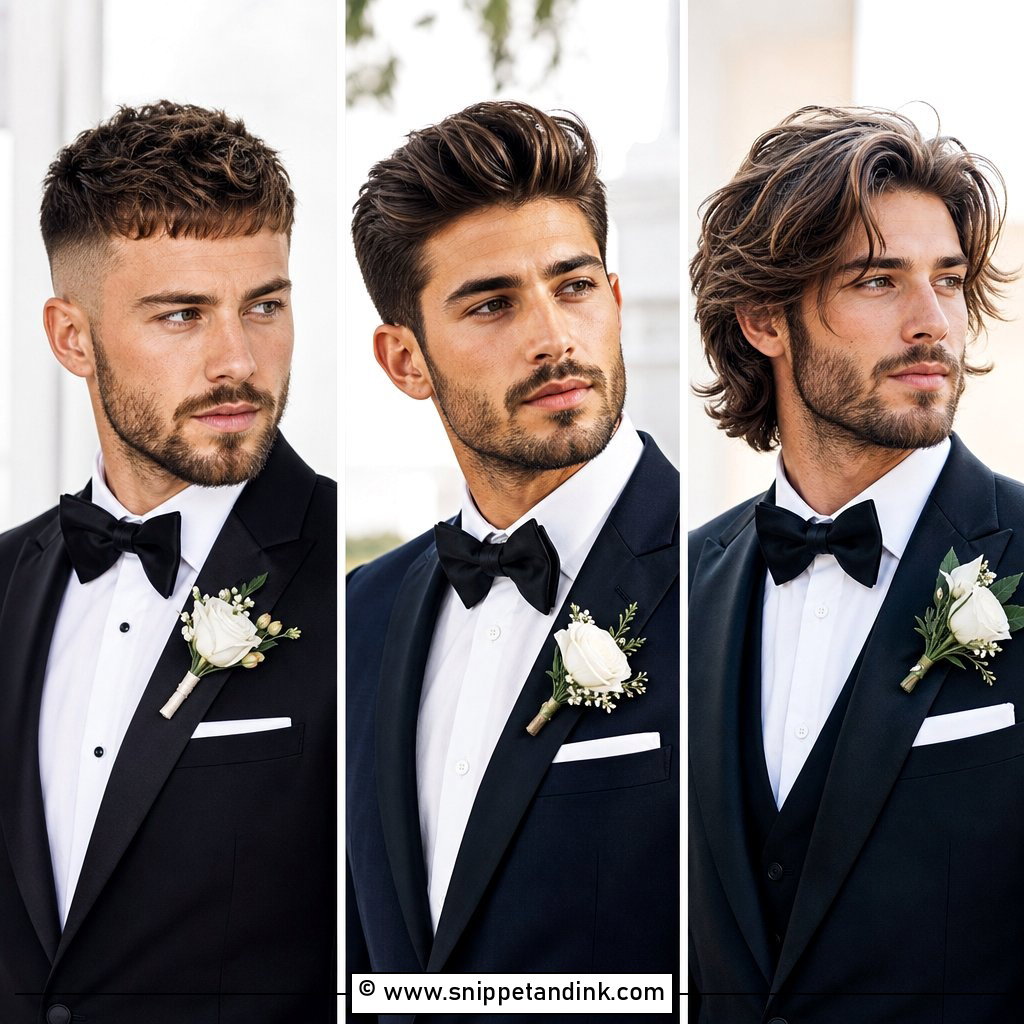
A textured crop is a modern cut with almost no styling time. Short layers on top give movement, and the fringe can sit forward, messy or pushed up depending on the face shape. Straight, thick, fine and slightly wavy hair all take it. It stays in place in heat, which is why I like it for summer weddings. Keep a low or mid taper on the sides. A matte clay or texture powder holds it without shine; on fine hair, powder adds volume where clay would weigh it down.
4. Low Taper Fade Groom Hairstyle
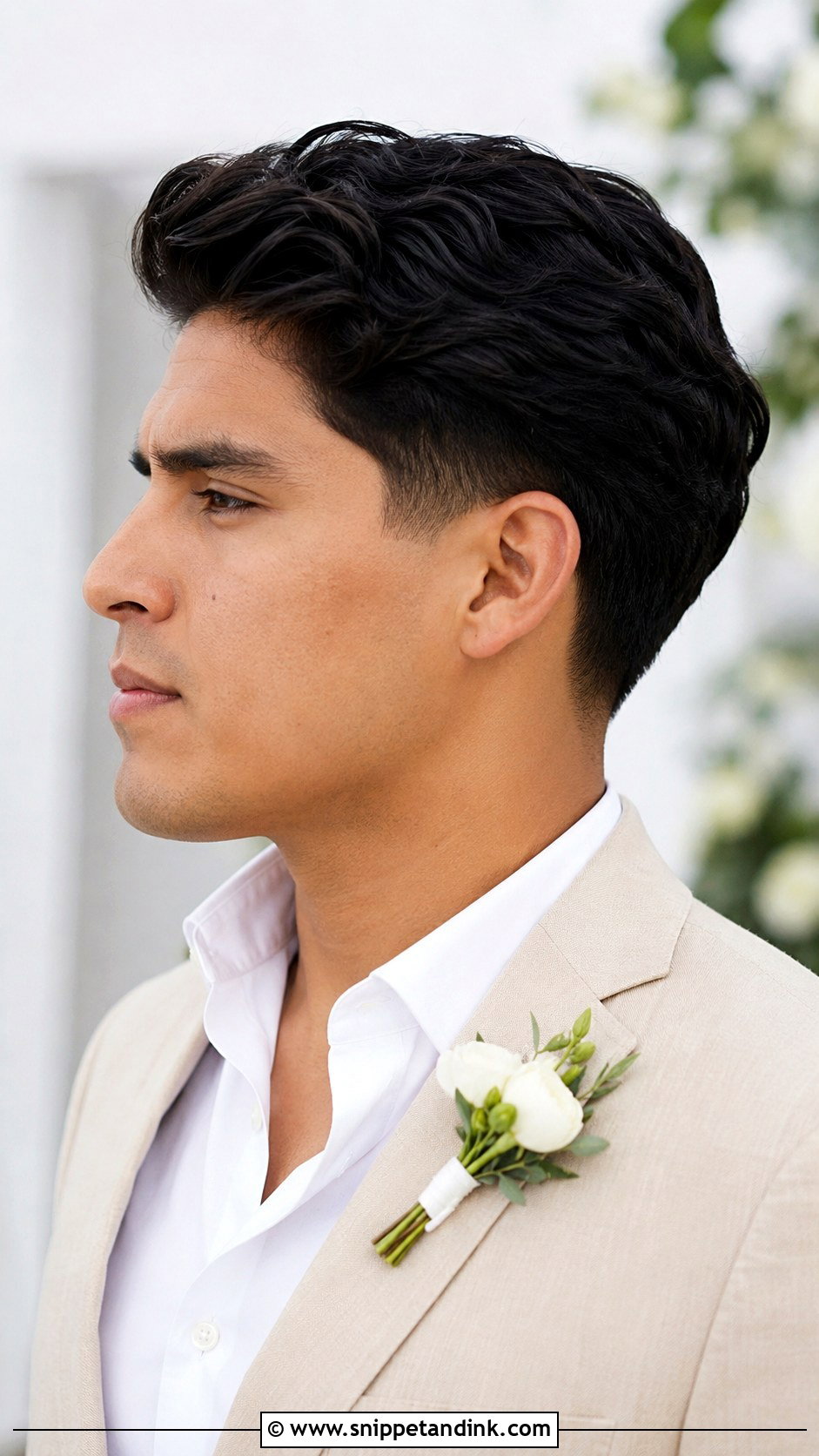
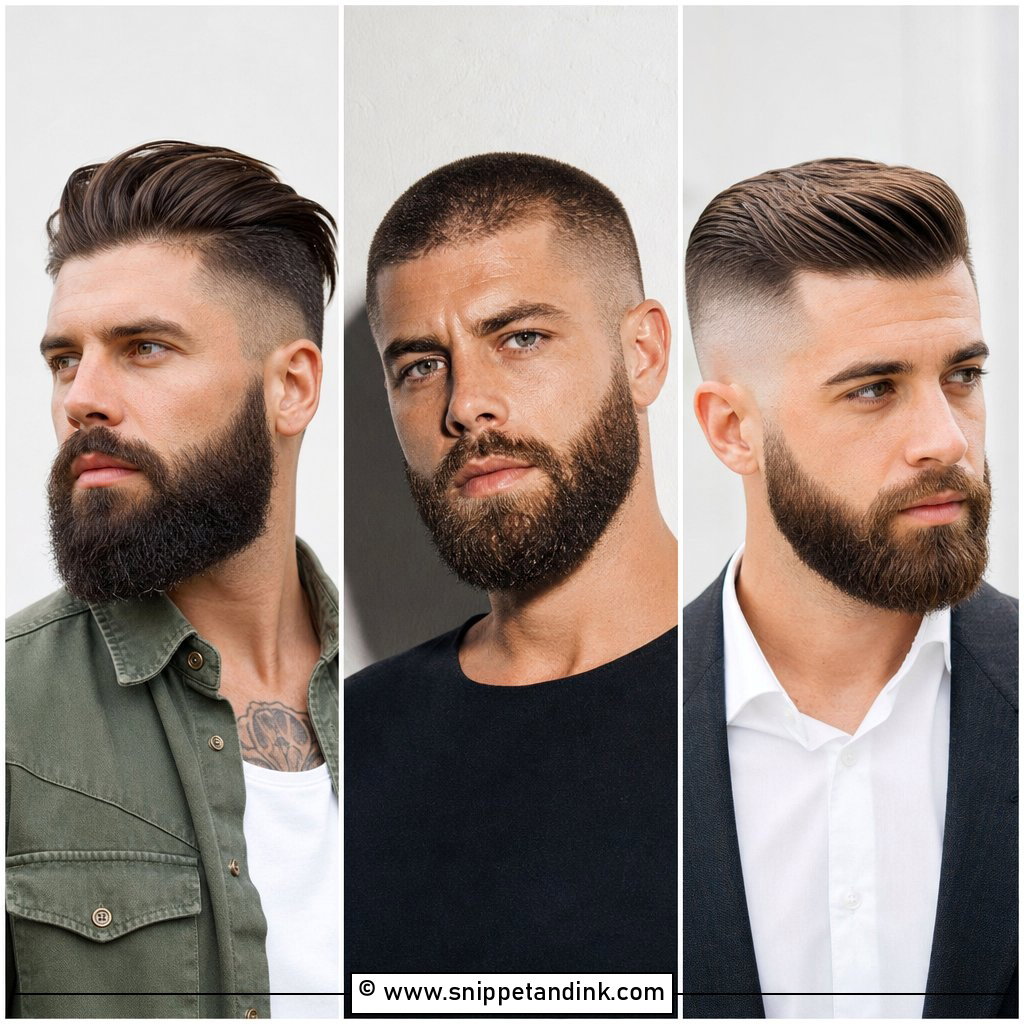
A low taper fade is the cleanest choice for a groom who doesn’t want anything dramatic. The fade starts low at the sideburns and neckline and blends softly into the length on top, so it reads fresh rather than trendy. The top can be a side part, a soft quiff, a brush-back or plain texture. It connects neatly into a beard. Here’s the catch: a fade grows out quickly, and by a week the blend is visibly softer, so book it within a few days of the wedding. The side profile shows up in many vow photos, so the blend matters more here than people assume.
5. Modern Quiff Groom Hairstyle
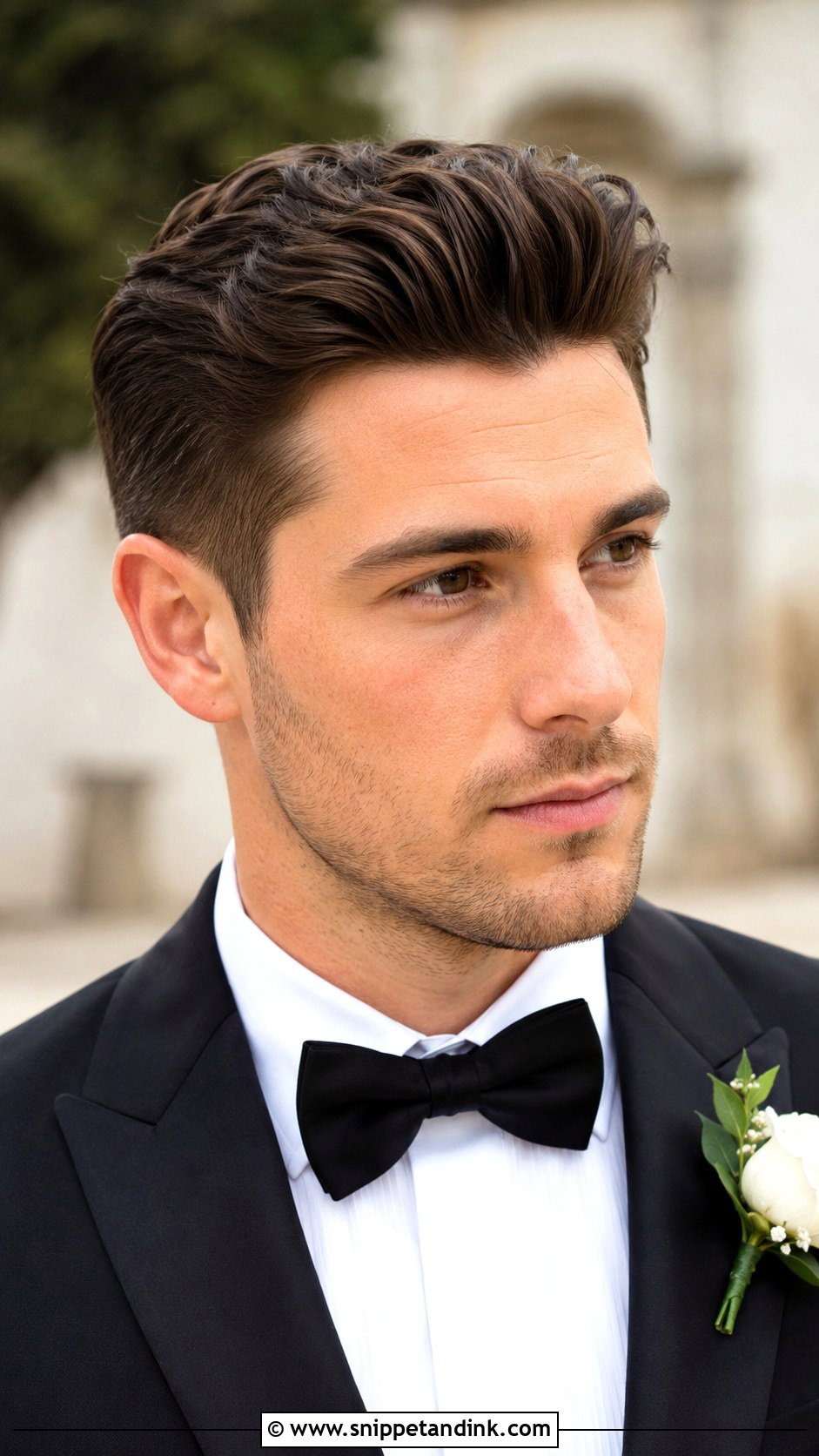
A modern quiff groom hairstyle lifts the front up and slightly back, with neat sides. The height lengthens the face, which helps a round or square jaw. It needs medium thickness and a few inches on top. The blow-dry is what holds it: I dry the roots upward with a round brush or fingers first, then add a flexible product. Without that step, the quiff collapses by midday no matter how much wax is in it. A humid outdoor venue tests it hardest.
6. Short Pompadour Groom Hairstyle
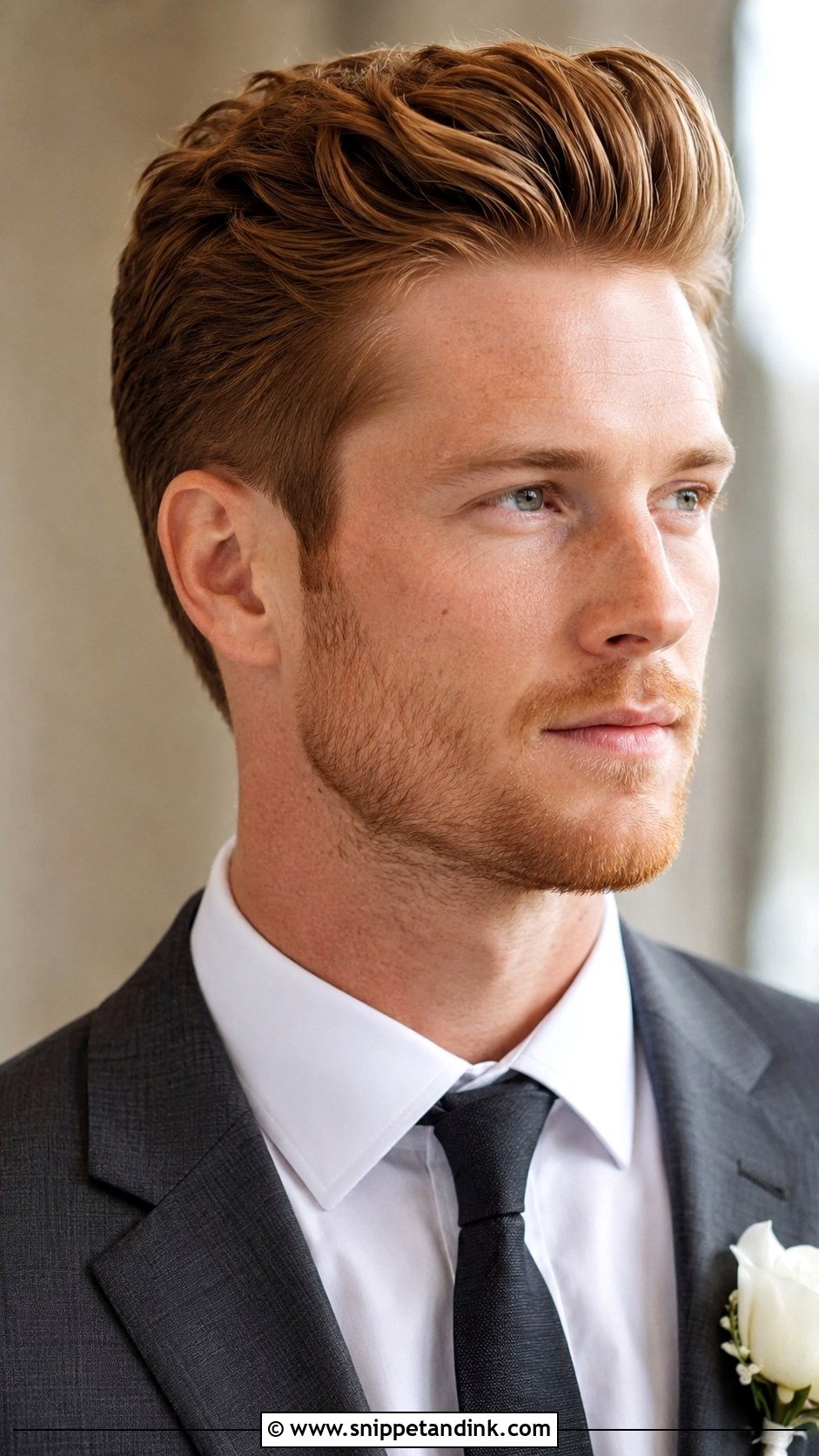
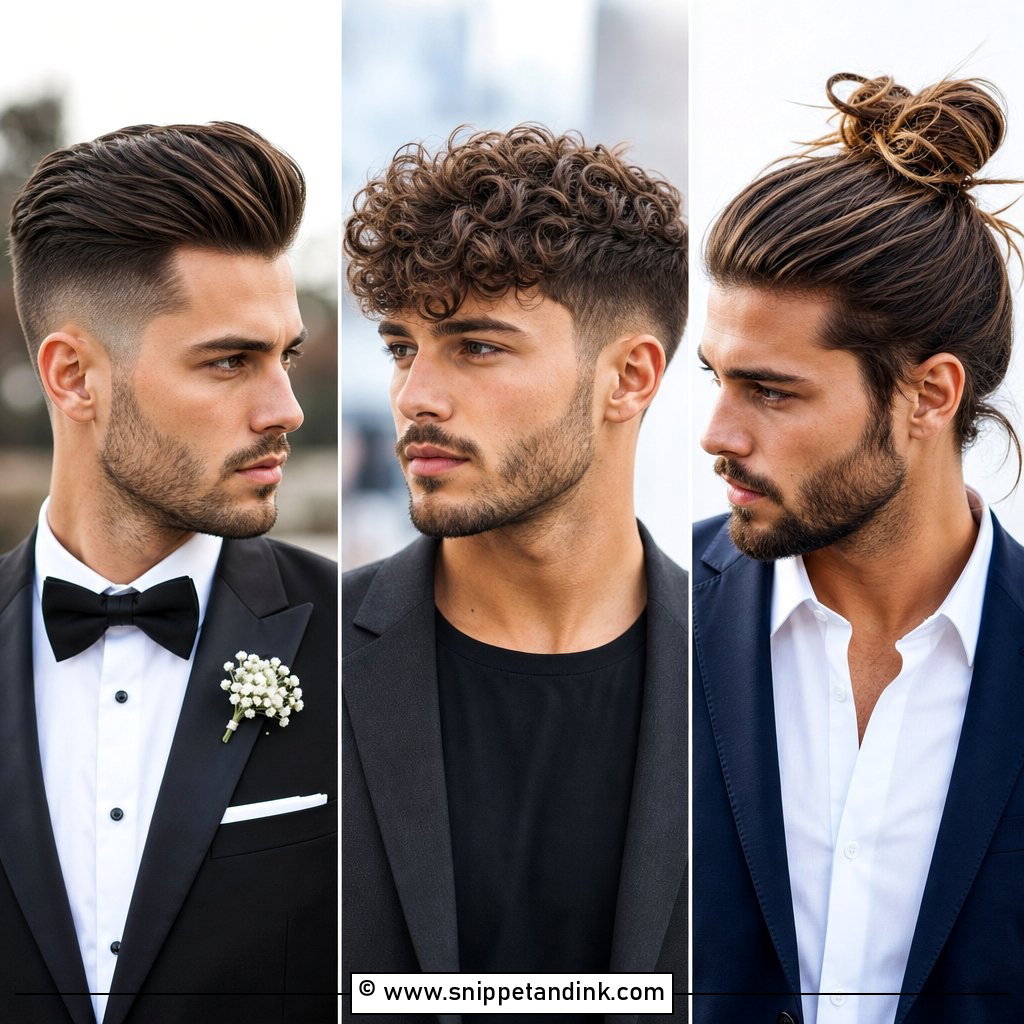
A short pompadour has more structure than a quiff: the front is lifted and swept back, with close sides. Kept modest in height, it looks vintage without becoming a costume. Formal suits, bow ties and classic wedding themes suit it. It needs straight or wavy hair that can hold volume; very fine hair goes flat by evening. Ask your barber to adjust the height to your face, and keep the finish smooth rather than shiny so it reads current. A heavy, oil-based pomade can take days to wash out, so test it before the morning.
7. Curly Groom Hairstyle
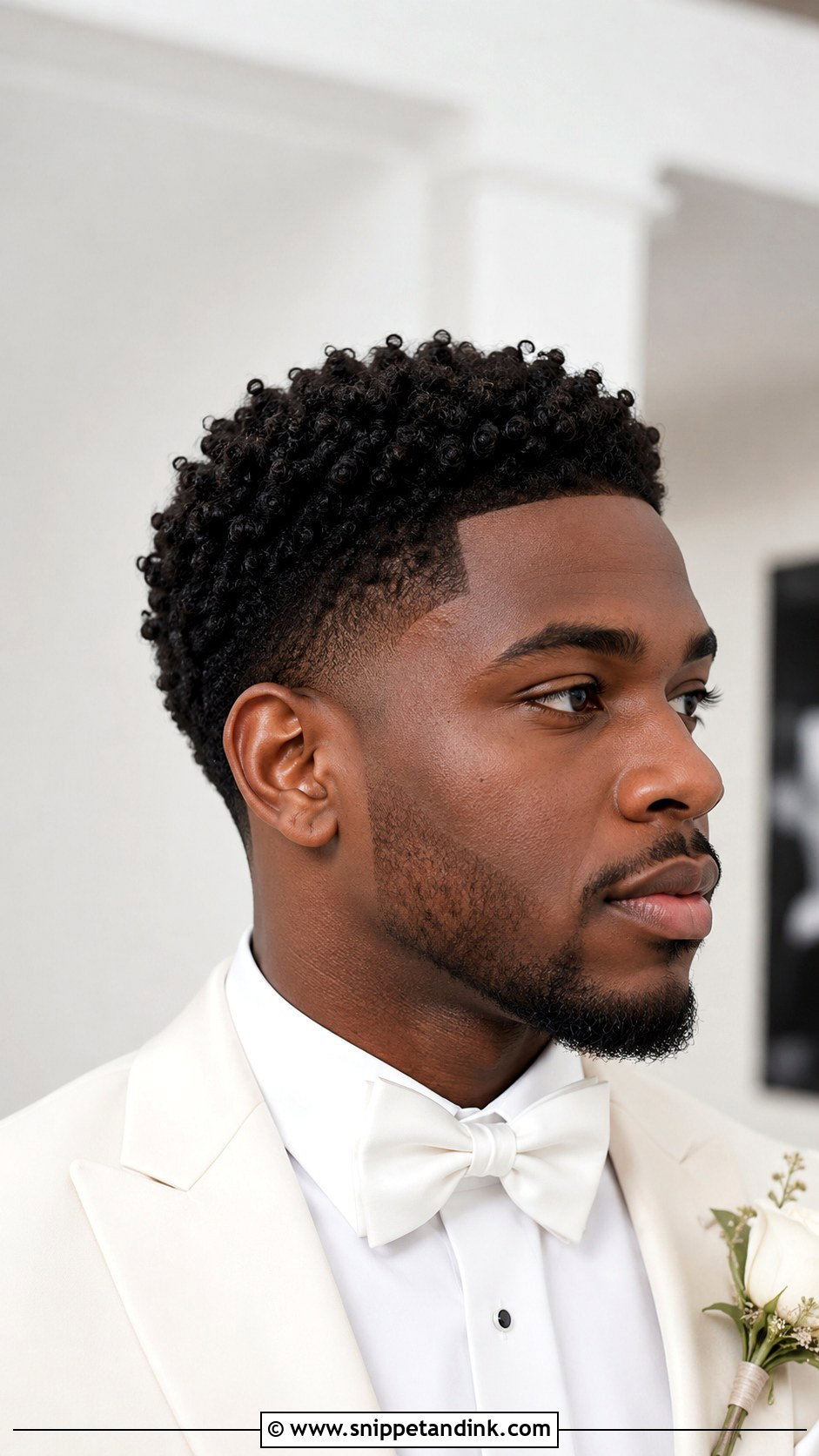
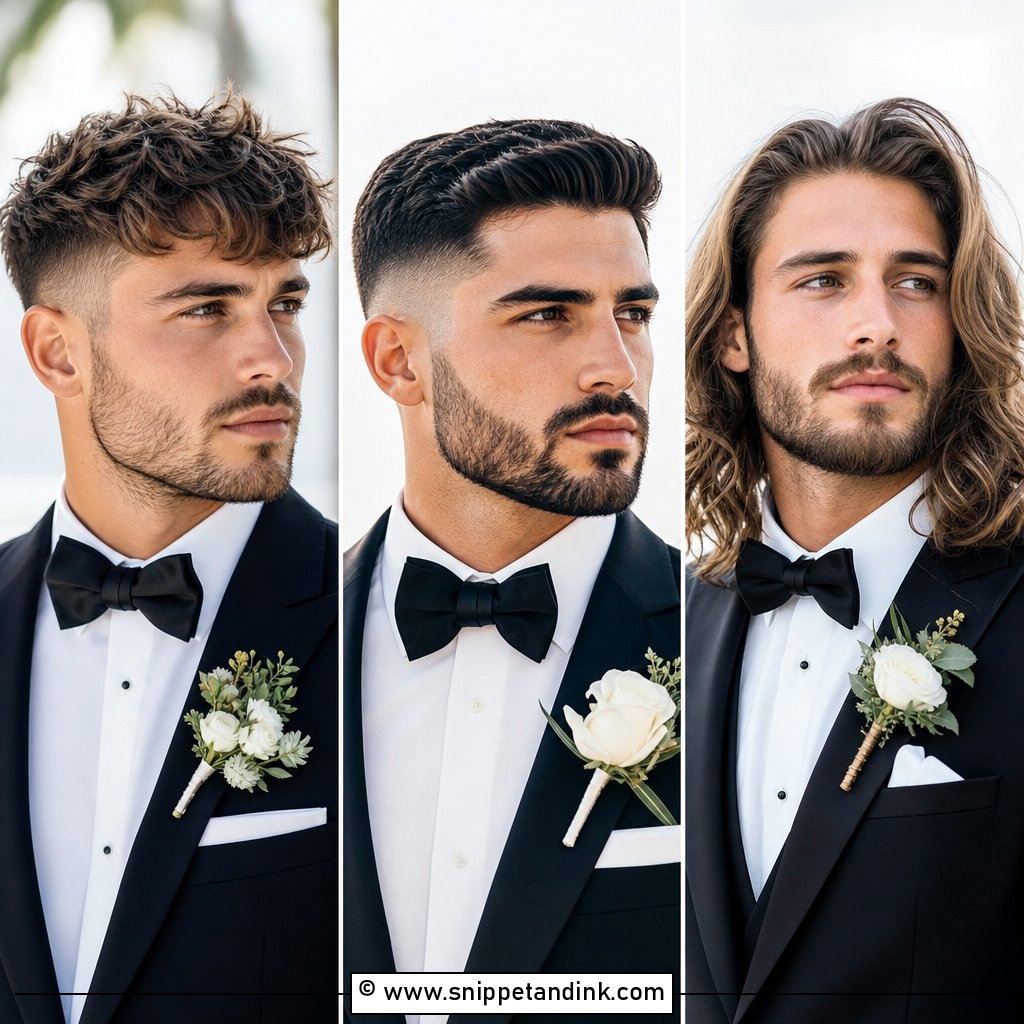
For curls, the haircut does most of the work. I’d ask for shaped, defined curls that move freely, with a tapered side and enough length on top to show the pattern. A curl cream or light gel keeps frizz down and holds definition. Garden, beach and modern weddings suit it well. The trim before the wedding should remove bulk, not length, because curls shrink as they dry, and a cut that looked right wet can sit an inch shorter. Keep the hair moisturized in the days before so the curls stay defined in humid air.
8. Wavy Groom Hairstyle
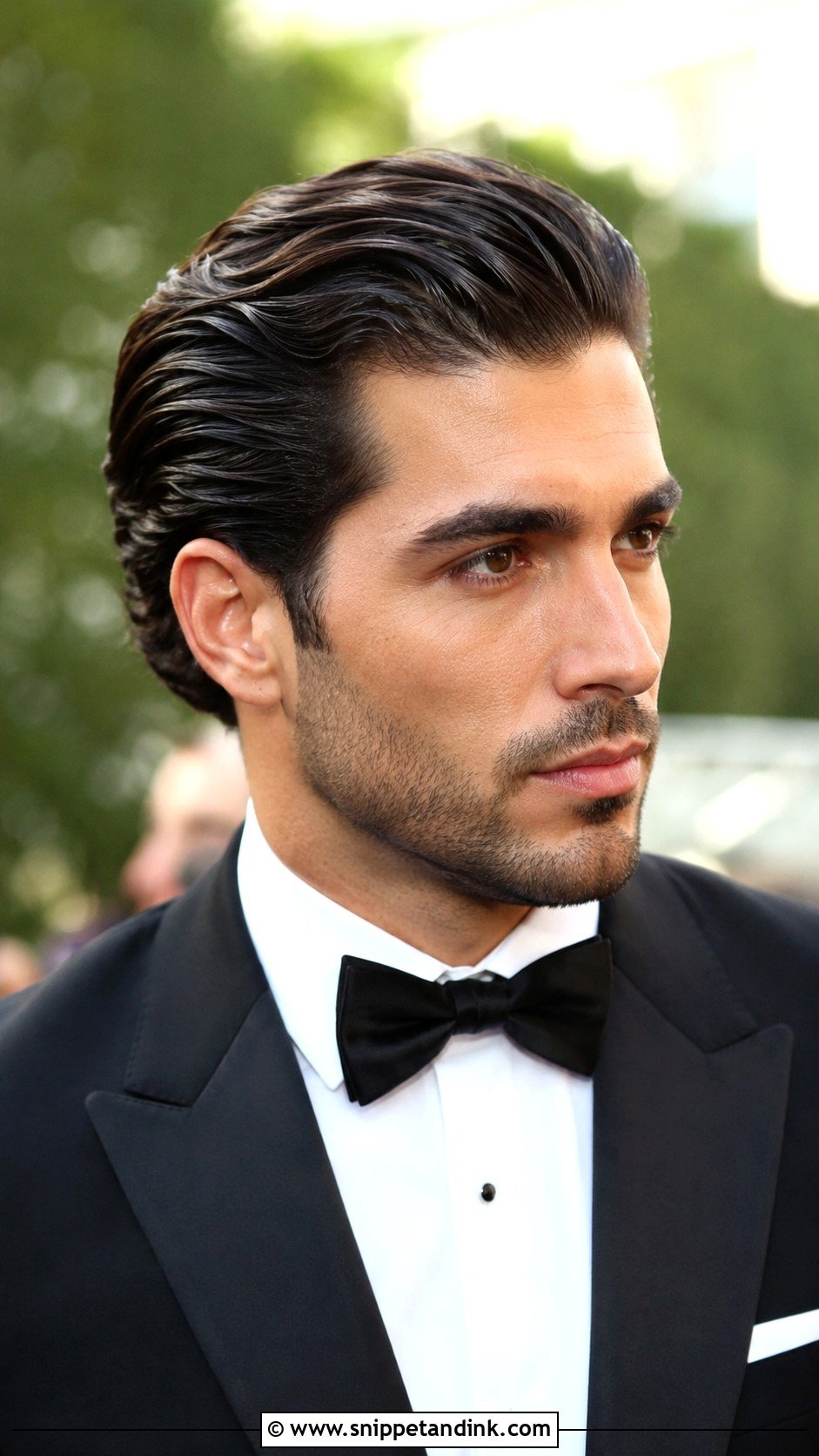
Waves sit between polished and relaxed, so they suit both a formal room and an outdoor ceremony. Brush them back, part them to one side or leave loose volume on top. The sides should be tidy but not shaved severe, or the top looks oddly heavy. A light cream, sea-salt spray or flexible paste works. Wavy hair reacts to humidity more than straight hair, so the groom should know how his waves behave on a damp day before the wedding; a light cream controls frizz better than salt spray in that case.
9. Long Hair Groom Hairstyle
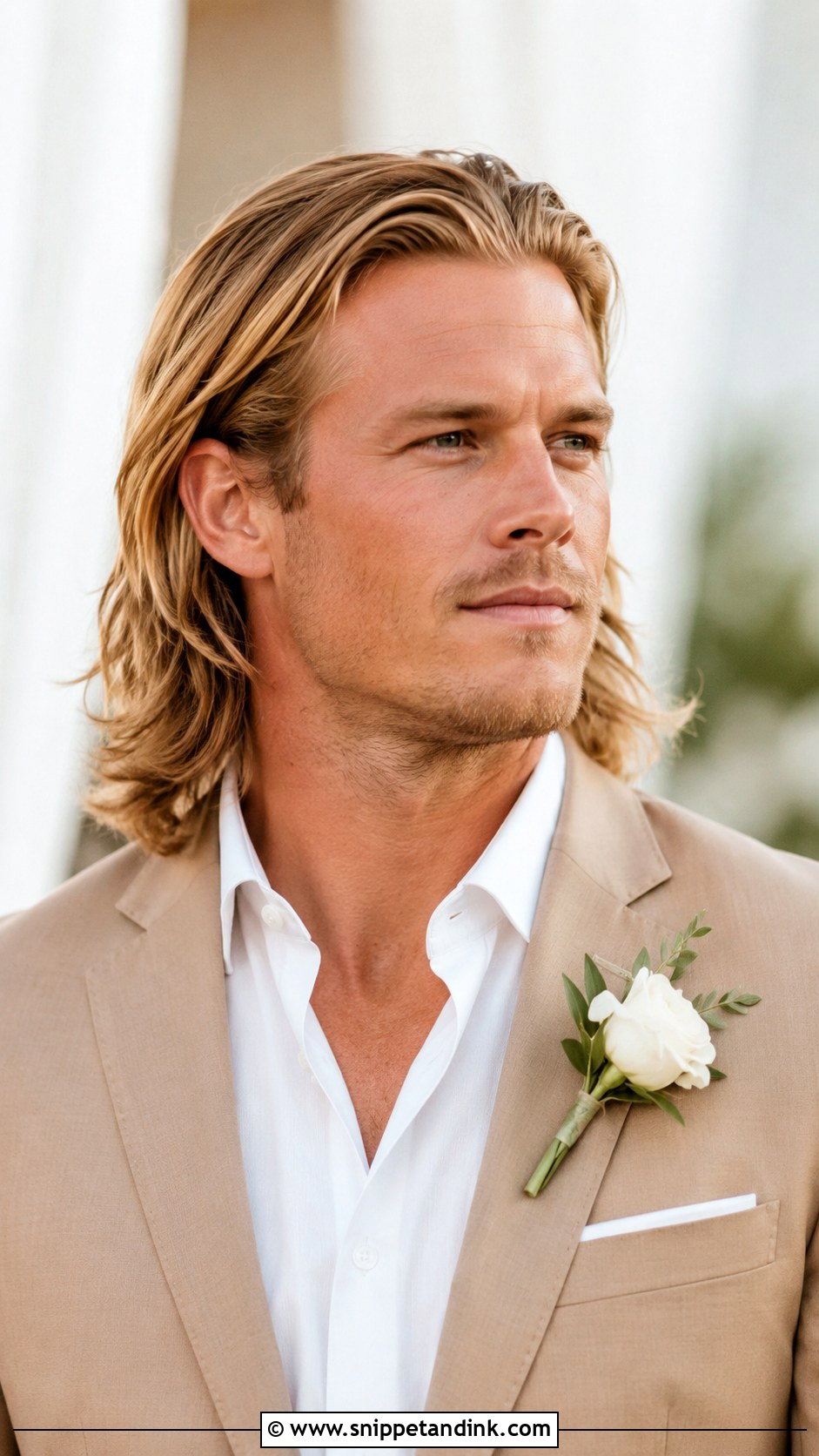
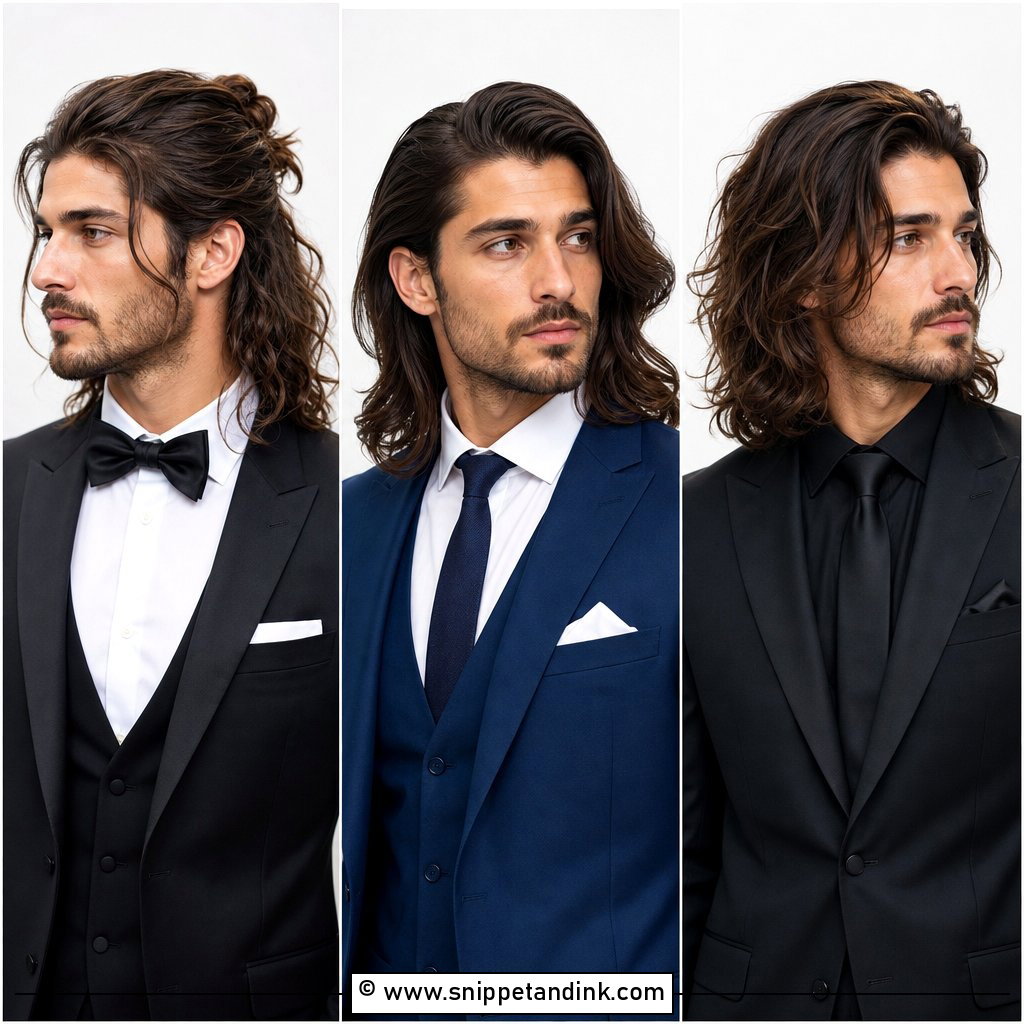
Long hair on a groom looks deliberate when the ends are healthy and the shape frames the face. It can be worn loose with soft layers, tucked behind the ears, pulled half up or tied low at the nape. The outfit and venue decide which; long hair loose next to a stiff tux collar can look unfinished. A light smoothing cream calms flyaways, and a clean neckline and beard trim keep it groomed. Take off split ends a few weeks before, not the week of, so the cut settles. A long hair groom hairstyle suits boho, rustic and destination weddings especially well, and many cultural ceremonies too.
10. Man Bun Groom Hairstyle
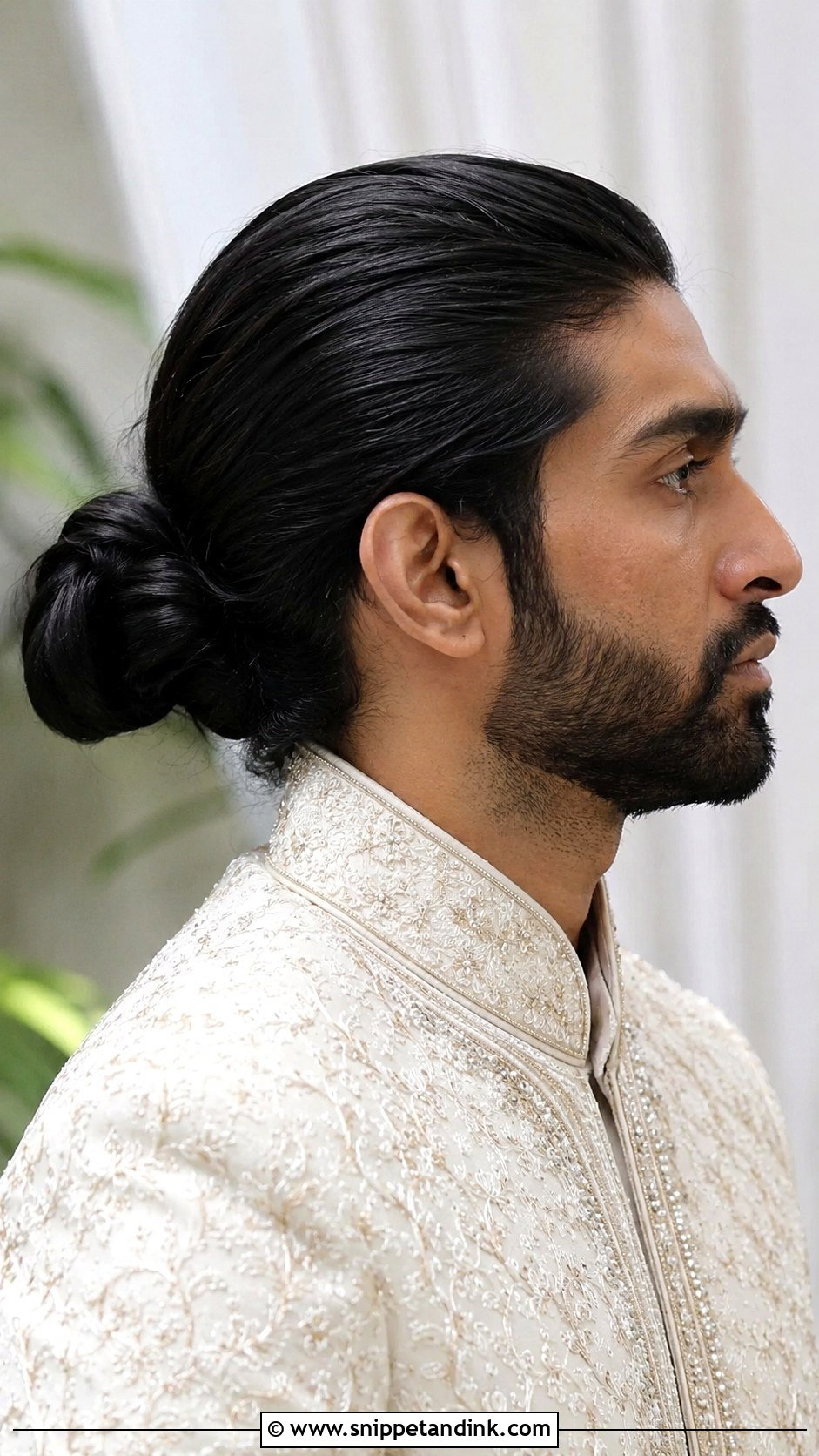
A man bun is the practical option for long hair: nothing in the face during the vows, and nothing moves when you dance. Low reads refined; slightly higher is more relaxed. The hair needs to be long enough to secure without pulling hard, or the hairline gets sore by evening. Sides can be natural, tapered or undercut. Smooth the hair with a cream before tying it, then leave a little texture so it doesn’t look plastered. It pairs well with tailored suits, linen and traditional wedding attire, and it keeps hair off a stiff collar all day.
11. Buzz Cut Groom Hairstyle
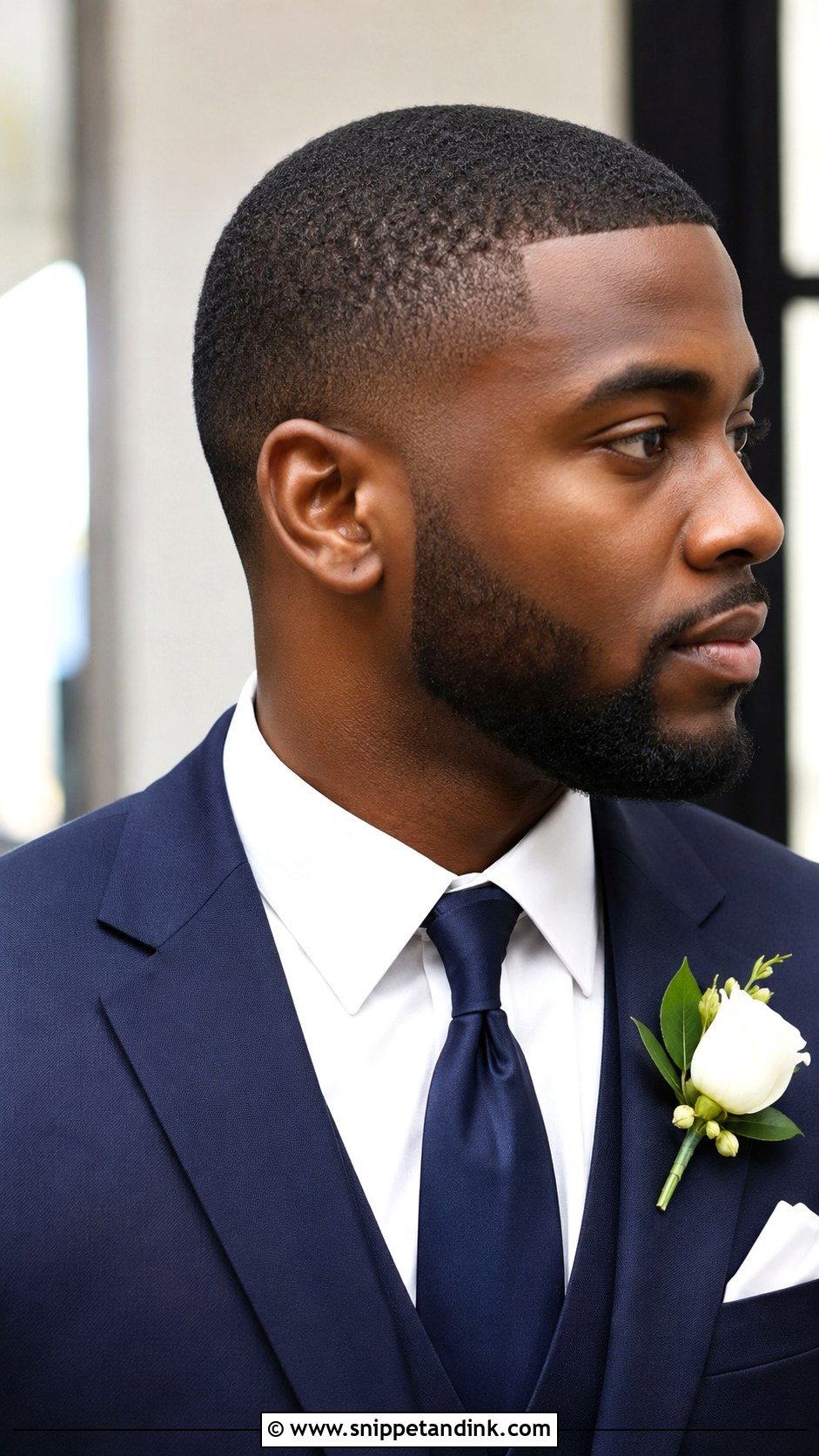
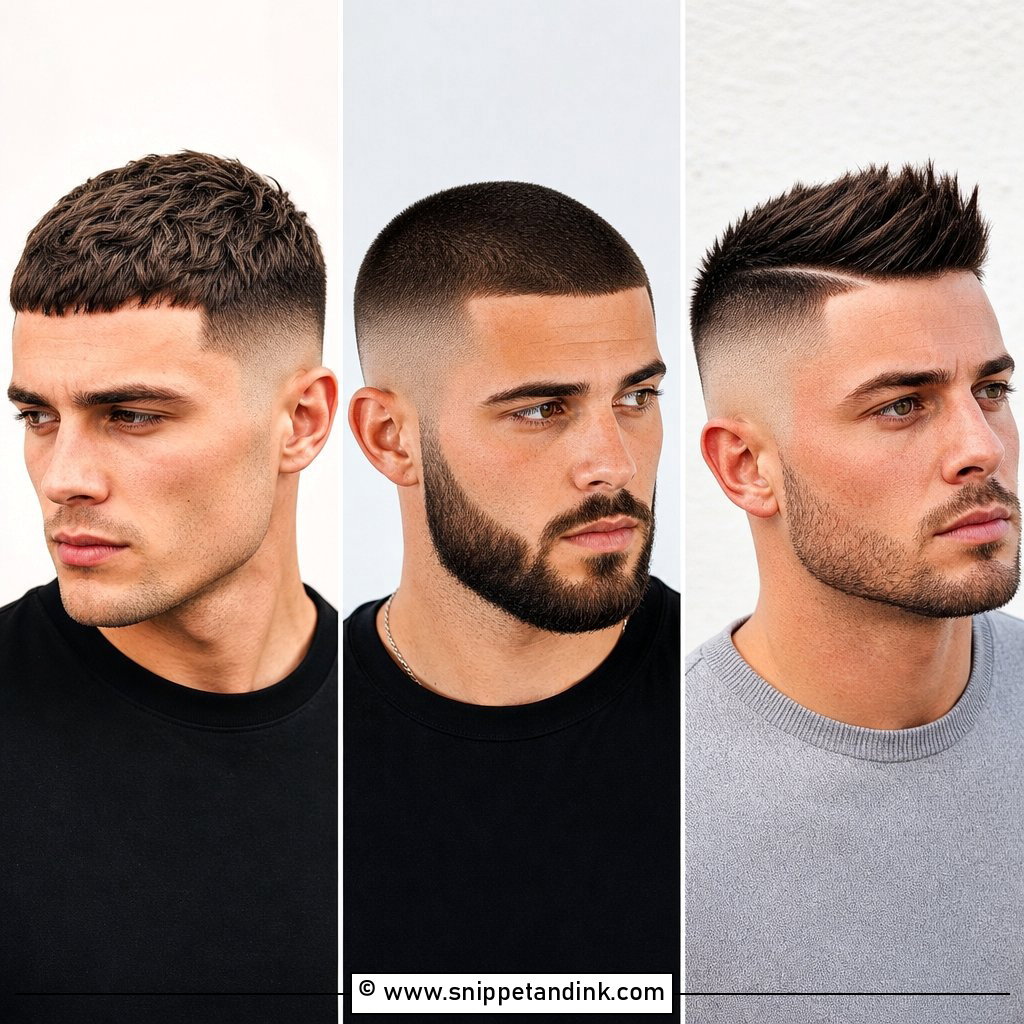
A buzz cut groom hairstyle only looks intentional when the edges are clean: hairline, temples, ears and neck. Without that, it looks like a buzz cut that’s simply been left. A slight fade adds shape, and a sharp beard trim completes it. Grooms who already keep their hair short rarely regret it, and it’s the coolest cut in a hot climate. The guard length matters: ask the barber to pick one that suits your head shape, and get it done a day or two before so the scalp has time to settle and doesn’t look red in photos.
12. Crew Cut Groom Hairstyle
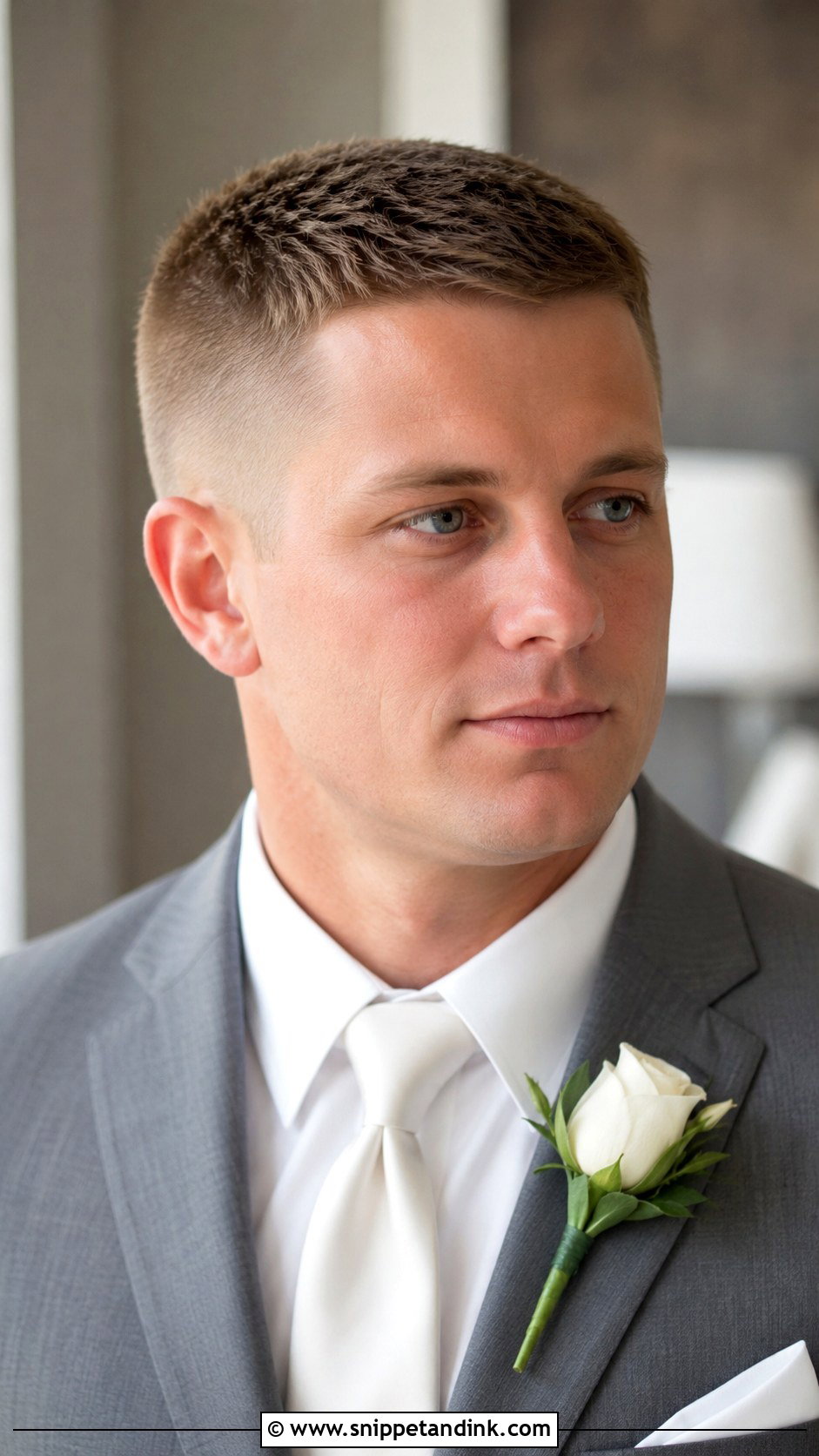
A crew cut keeps the sides short and leaves a little more length on top for texture or a brushed-up finish. It’s very easy to manage through a long day, and nothing moves out of place. Use a small amount of matte paste for definition without looking product-heavy. It pairs naturally with classic suits, military-style tailoring and minimalist weddings. If your hair grows fast, book it two or three days out; a crew cut loses its shape quicker than you’d expect.
13. Taper Fade With Beard Groom Hairstyle
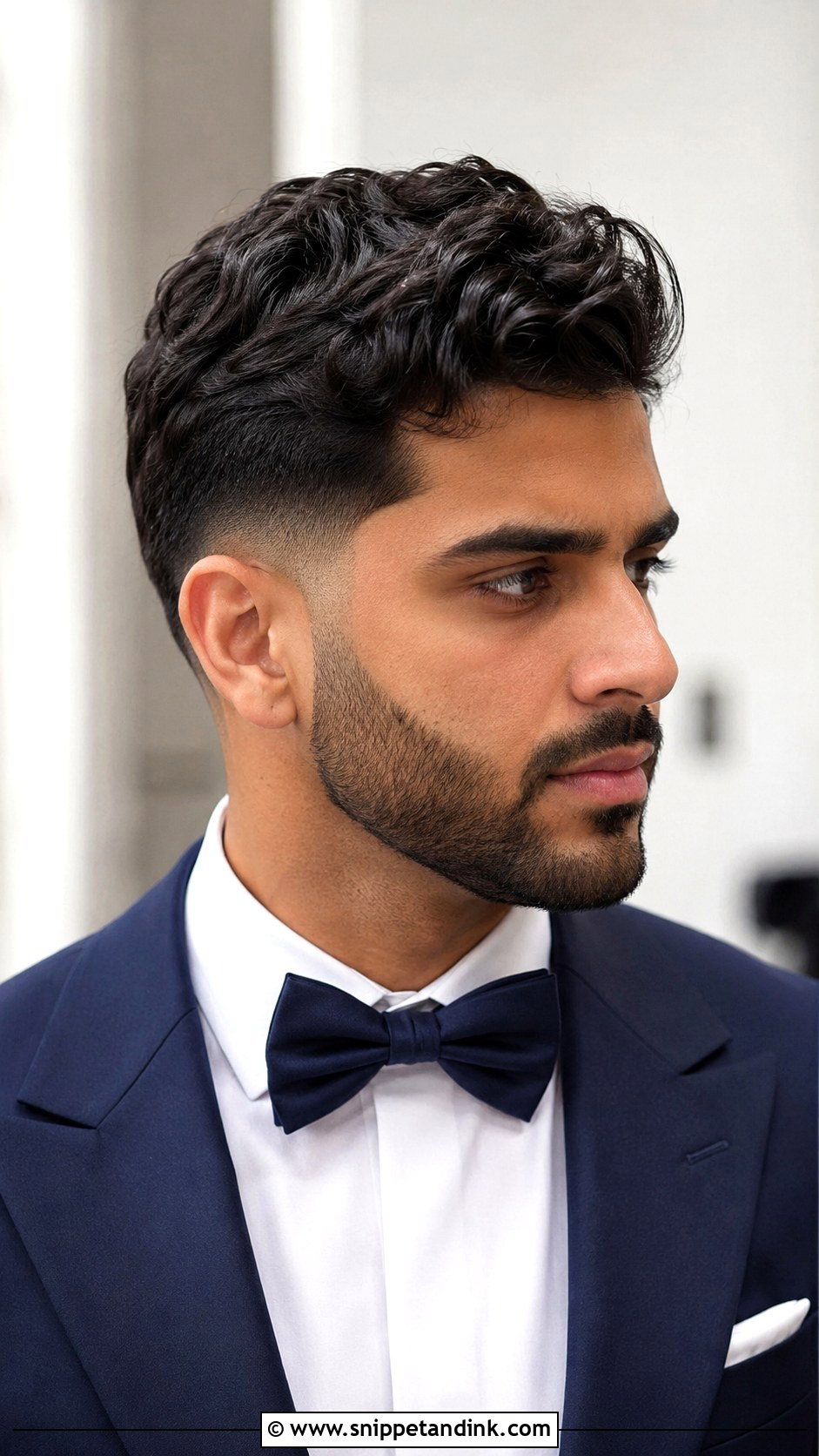
A taper fade with beard groom hairstyle treats the haircut and the jawline as one job. The fade blends into the sideburns and then into a shaped beard or short stubble, which is what makes the face look defined in close-ups. The top can be textured, parted, brushed back or lifted. Book the cut and beard work close to the wedding but not the morning of: a fresh lineup can leave the skin red or bumpy for a day, especially on sensitive skin. Give it a day or two to calm down.
14. Afro Groom Hairstyle
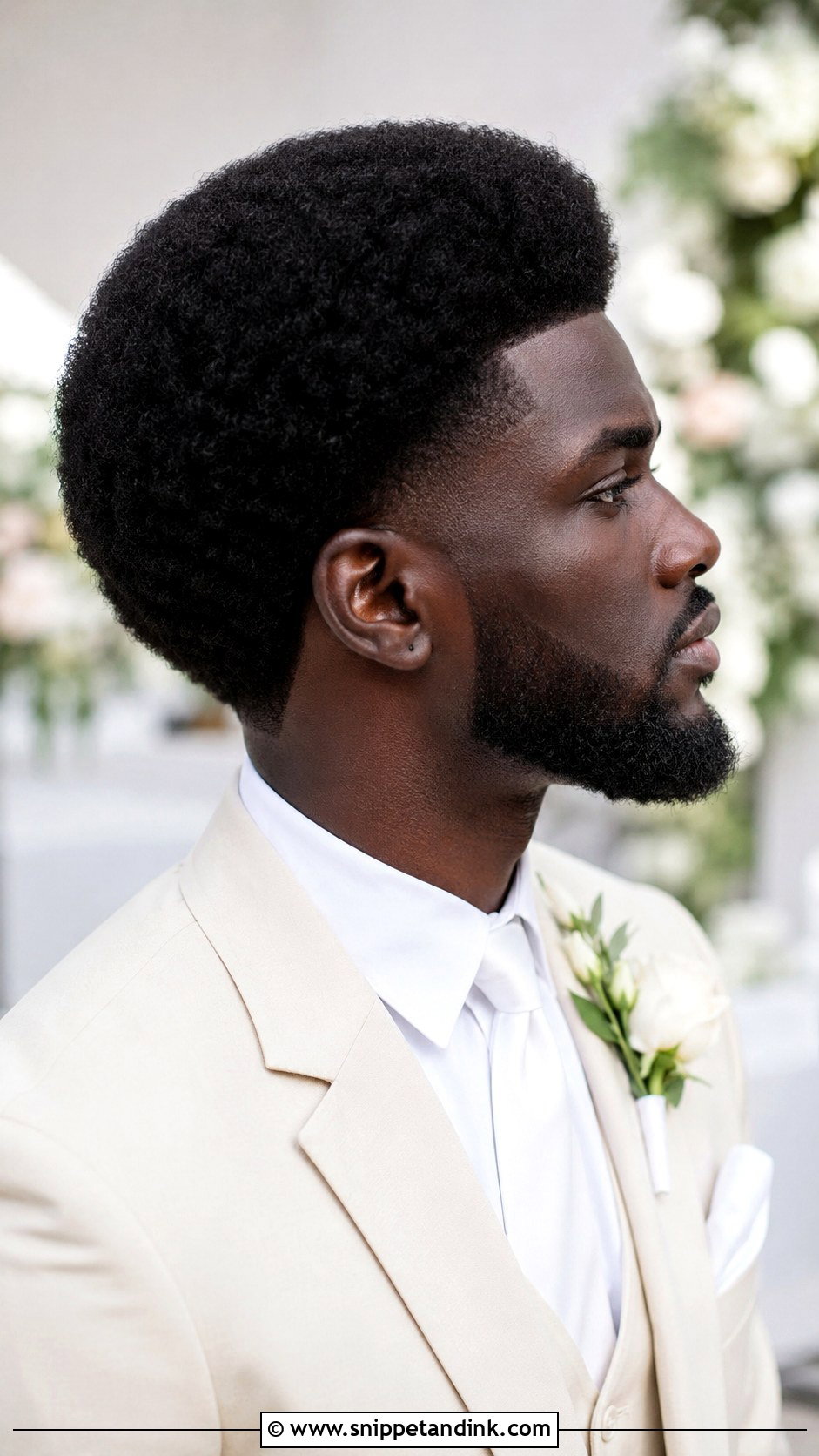
A well-shaped afro looks bold and refined. For a wedding, I’d ask for a clean outline, even volume and a soft finish that keeps the curl pattern. The sides can be tapered, or the shape left round for a fuller classic look. Moisture is what keeps it from looking dry under lights, so use leave-in conditioner, curl cream or a light oil. It looks right with a formal suit, traditional attire or modern menswear. Have a barber or stylist shape it a few days ahead, then pick it out gently on the morning to restore the silhouette after you’ve slept on it.
15. Locs Groom Hairstyle
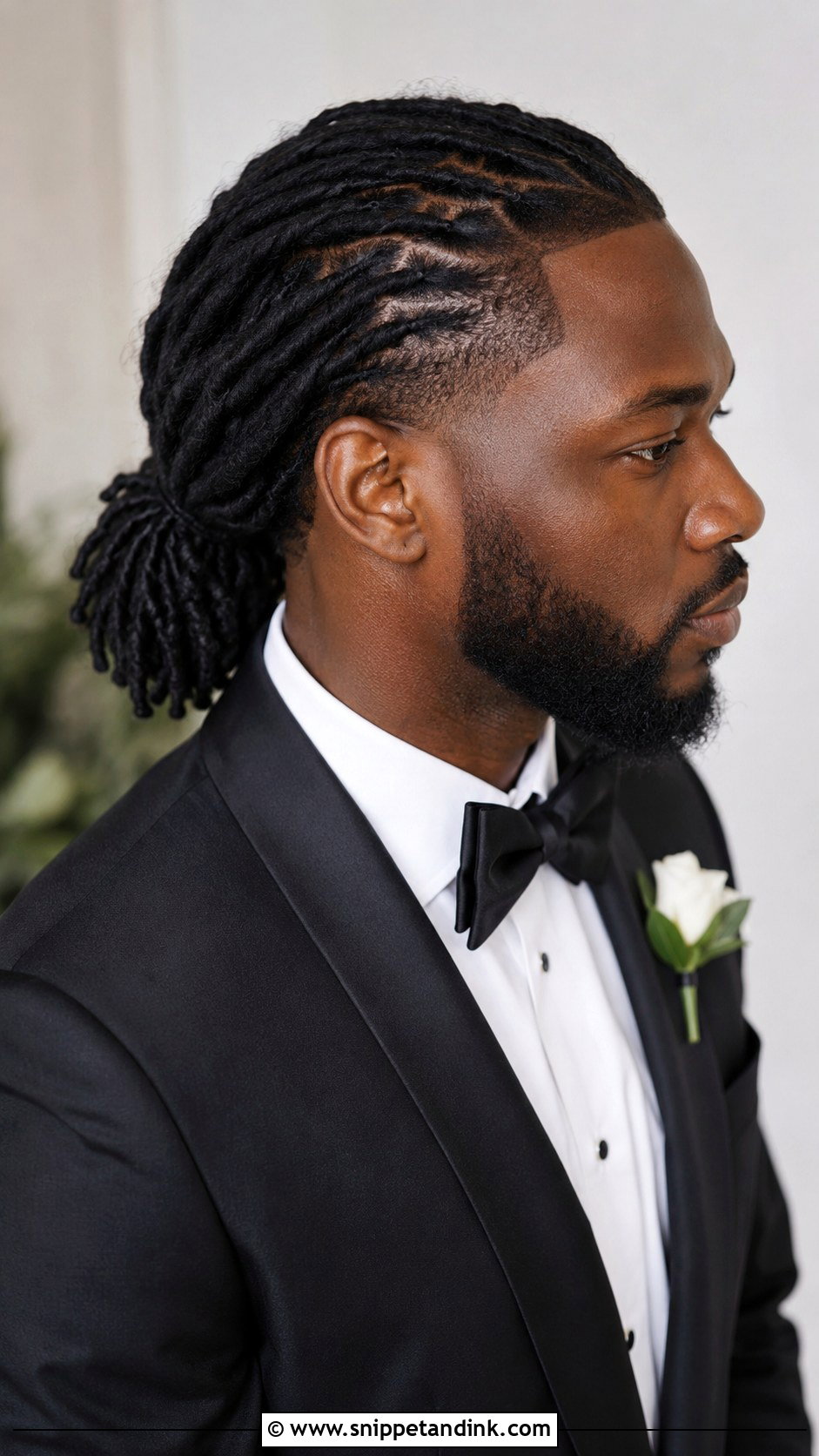
Locs can be worn down, tied in a low ponytail, styled half up or gathered into a neat bun, depending on length, outfit and how formal the ceremony is. Retwist or maintain the roots about a week before, so they look tidy but not freshly tight, and a clean taper or shaped hairline adds polish. They suit formalwear, traditional dress and outdoor celebrations equally. Don’t load the locs with heavy product before the wedding; residue builds up and can show white in flash photos. A light oil or mist is enough for shine.
Sweat, Hugs and Ten Hours in a Jacket
A groom wears his suit for longer than almost anyone at the wedding, often in heat, and his hair gets pressed by every hug. Product choice matters more than the cut here. Water-based pomades and creams rinse out and re-style with a damp comb, which makes a midday fix easy. Oil-based ones hold through humidity but are harder to adjust and to wash out.
Sweat at the hairline is the usual problem, especially for fringes and quiffs. A fringe pushed slightly up and back stays drier than one sitting on the forehead. Ask the best man to carry a small comb, blotting papers and a travel tin of the same product, so a quick fix between ceremony and portraits takes two minutes.
Under a Safa, Turban or Kippah
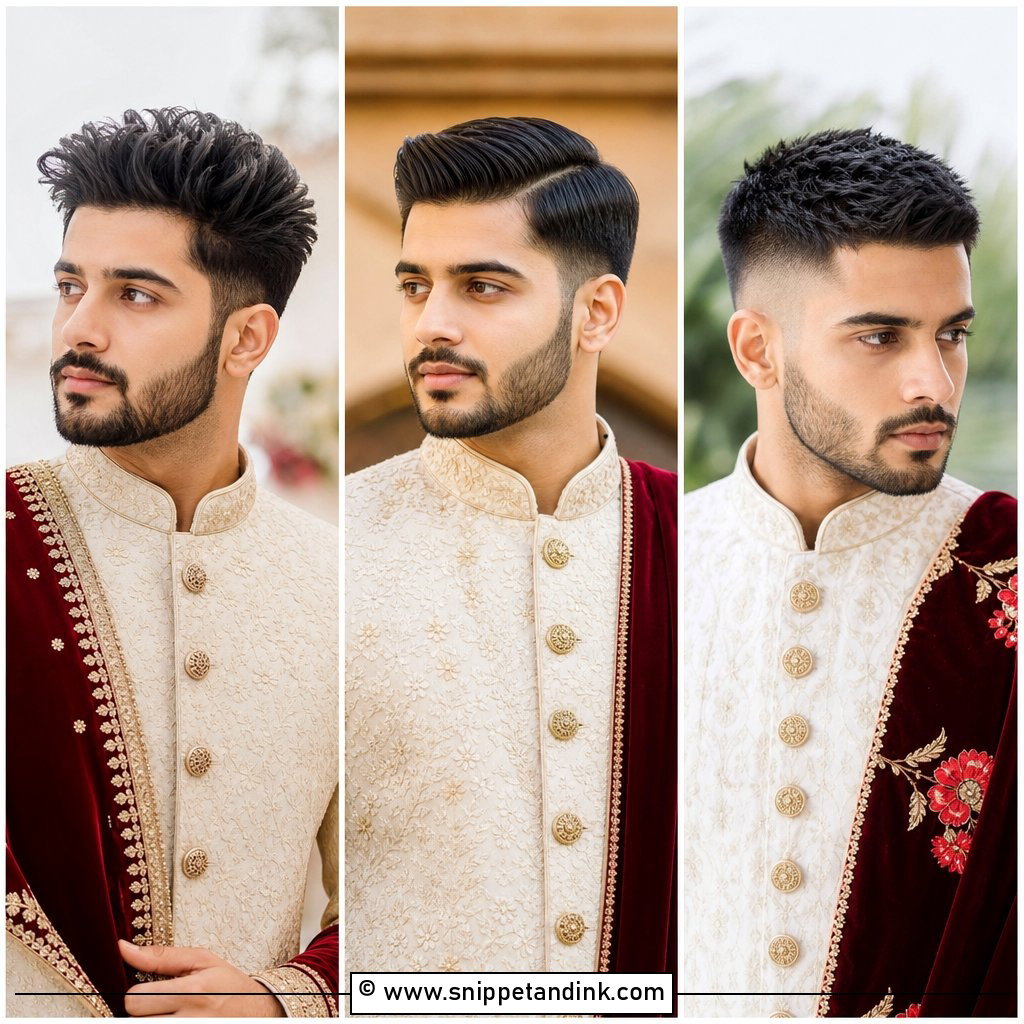
Headwear changes the plan. Under a safa or a tied turban, a high quiff or pompadour gets crushed and looks odd when the turban comes off later, so a short, flat style or long hair tied low works better. A kippah usually clips on, and clips need some hair to grip; a fresh buzz cut gives them almost nothing, so keep a little length on the crown or ask about a small piece of double-sided tape. If headwear comes off for the reception, choose a style that recovers with fingers and a little water.
Sharp on the Day, Still Him in Twenty Years
The right cut looks natural, fits the outfit and stays tidy through a long day. A classic side part, slick back or short pompadour suits some grooms; others look and feel better with curls, waves, locs, an afro or long hair tied back. What matters most is timing, the right product and proportion with your face and the wedding’s formality. Book the barber early, try the style a few weeks before, and keep the finish clean rather than stiff. In twenty years, the photos should look like you, not like the trend of the year.
You'll Like These Ideas:


Leave a Reply