
Most of my wedding mornings are spent on the bride, but I usually get ten minutes with the groom, and those ten minutes tell me whether his cut was planned or rushed. A groom’s hair has less room to hide mistakes than a bride’s updo: there are no pins, no veil, just a hairline, a parting and whatever product he chose. Below are twenty cuts I see grooms bring to their barbers, with notes on which hair types they need, how each one behaves by the late evening, and where they tend to go wrong. Take the photos to your barber, but take the notes too.
Countdown for a Fade, a Crop or Long Hair
The most common groom hair problem I see on a wedding morning is a cut booked at the wrong time. Different cuts grow out at different speeds, so the countdown should follow the style, not a general rule.
- Skin fades, high fades and shaved undercuts: two to three days before. Bare skin shows regrowth fastest.
- Tapers, crew cuts and crops: three to five days before, so the edges soften and don’t look freshly cut.
- A new style you’ve never worn: try it six to eight weeks ahead, then get a maintenance cut in the final week.
- Long hair worn in a bun or slicked back: trim only the ends a couple of weeks out, so the length still reaches the tie.
I’d never cut a new style the day before. If the barber goes too short or the shape doesn’t suit you, there is no time to grow it back. Beard trims are different: those are best done the day before or the morning of, so the edges are crisp.
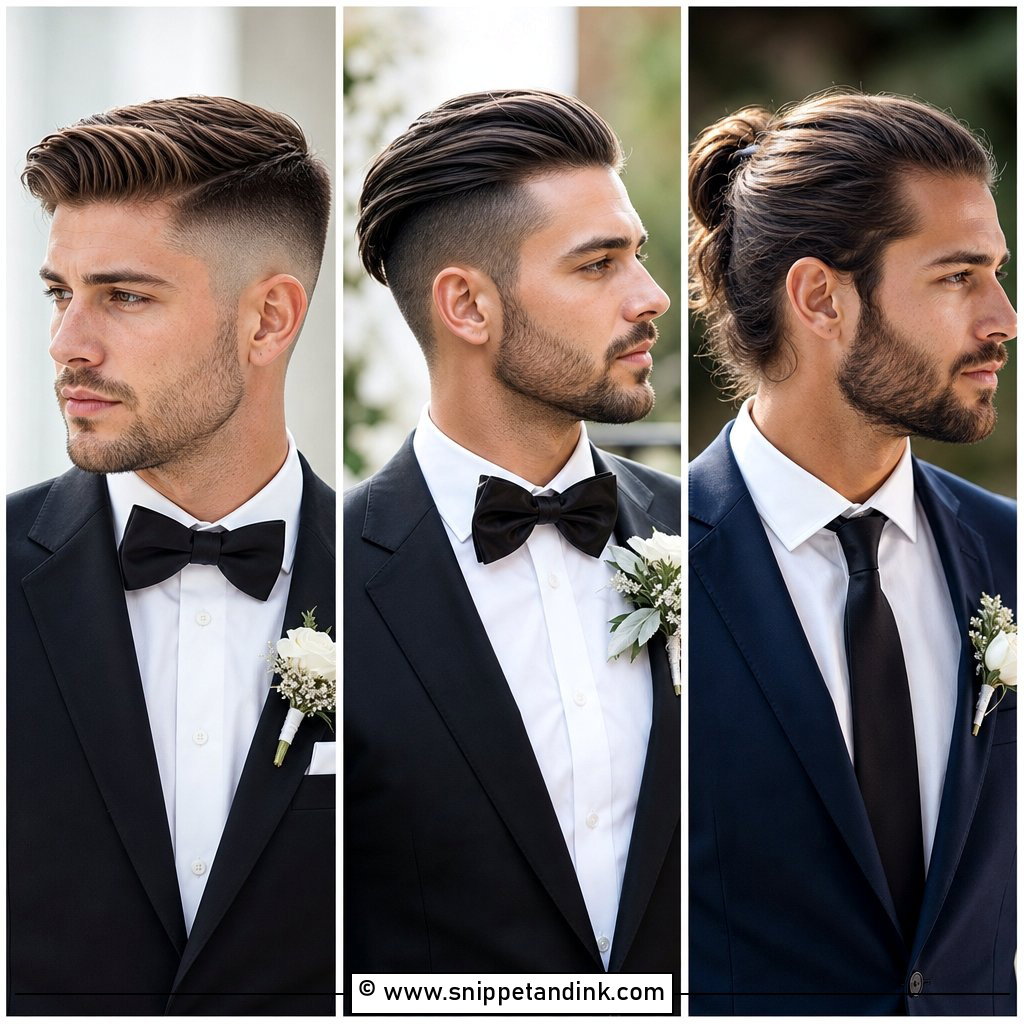
1. Low Skin Fade With Textured Top
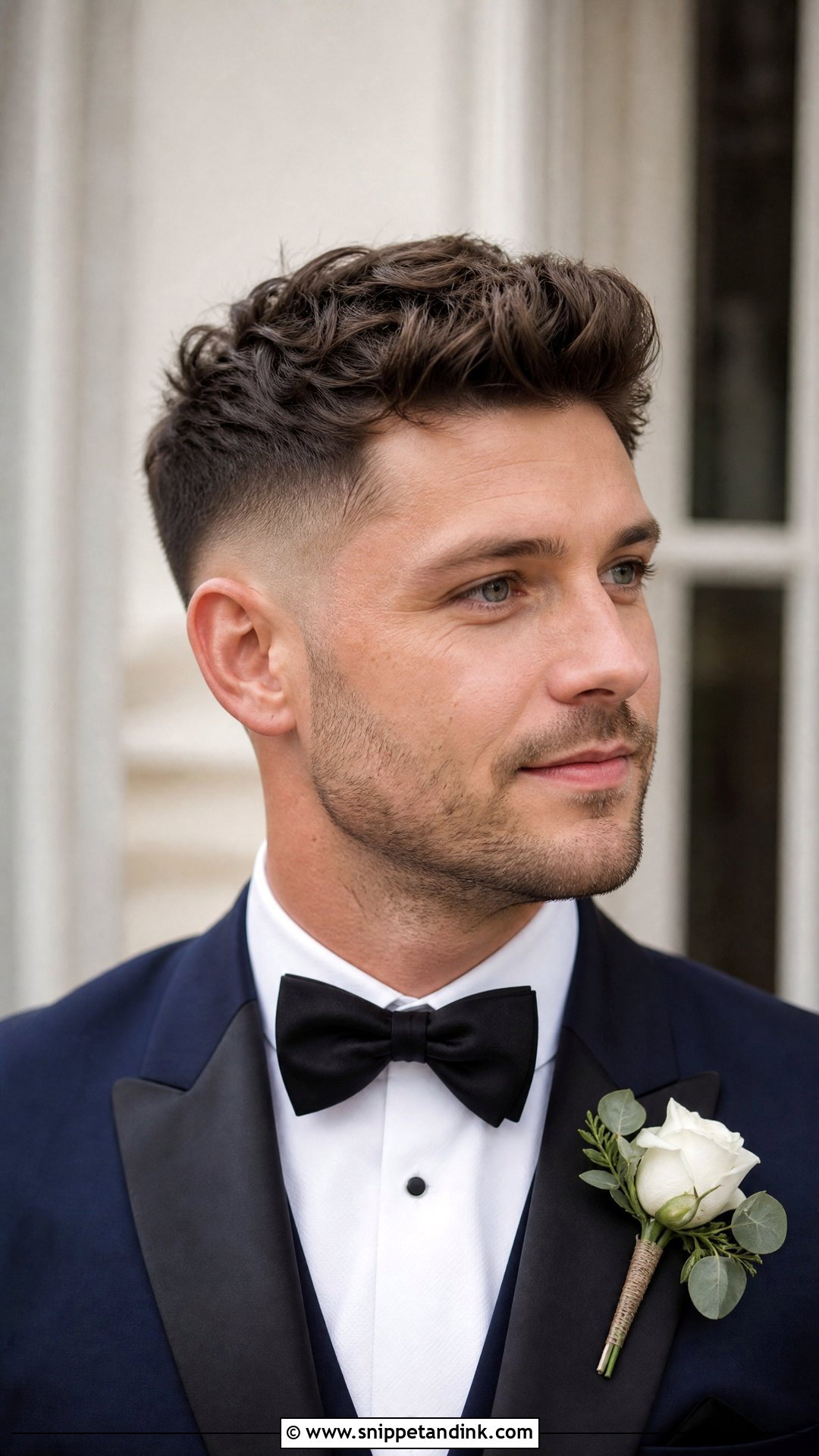
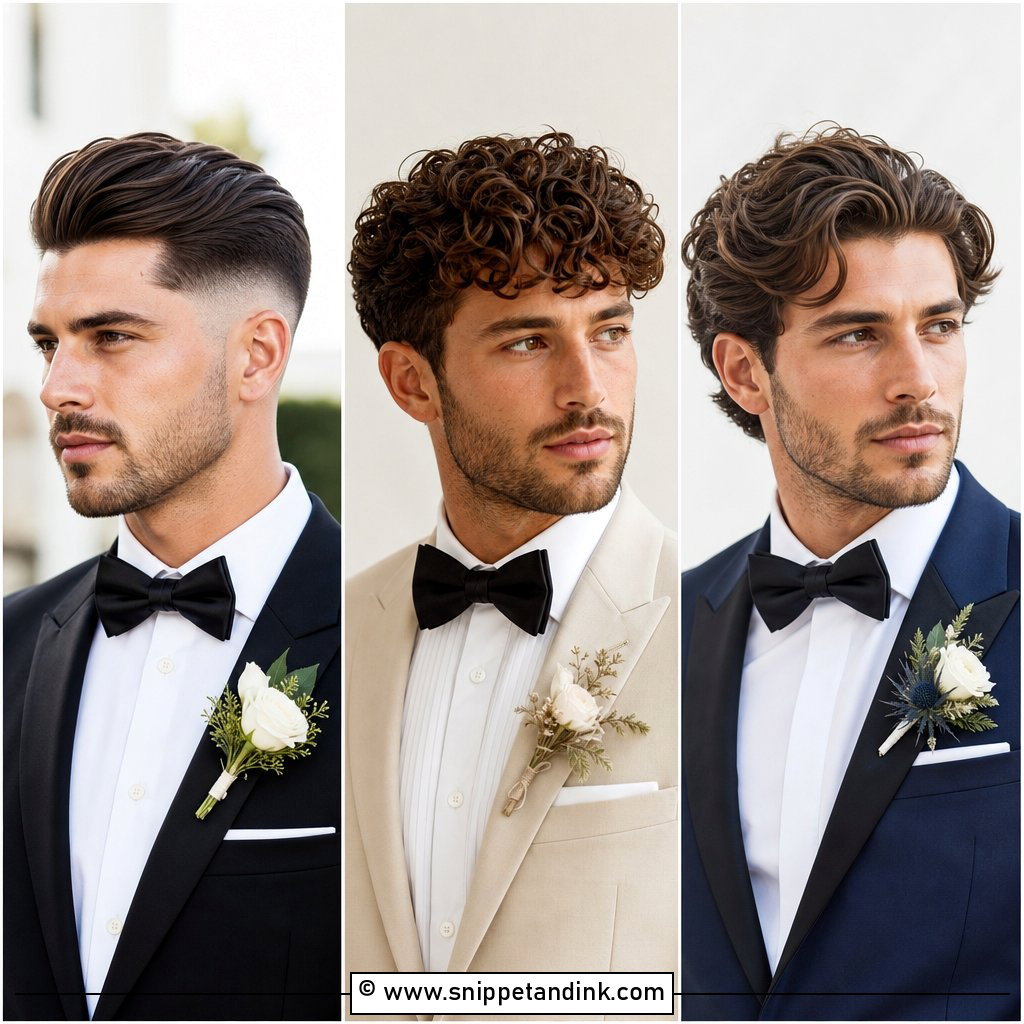
A low skin fade starts down near the ear and neckline, so the skin shows only at the very bottom and the blend climbs gradually into a fuller top. Because the bare skin sits so low, it reads clean without looking severe, which is why it suits a tuxedo as easily as a linen suit. The catch is timing: skin fades show regrowth within days, so this is the one cut I’d book two or three days out, never a week. Style the top with a little matte paste worked in with your fingers, not a comb, and the texture holds through hugs and a hot dance floor.
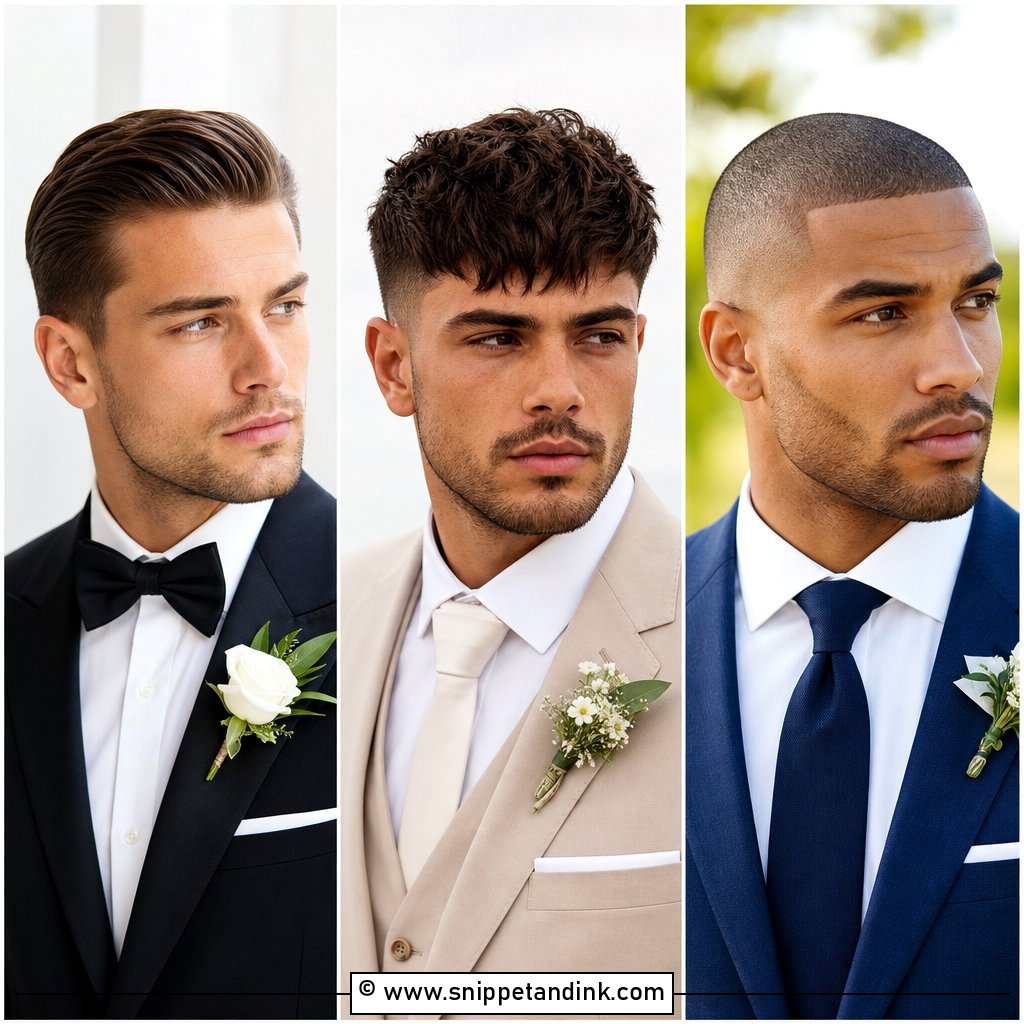
2. Classic Side Part for Grooms
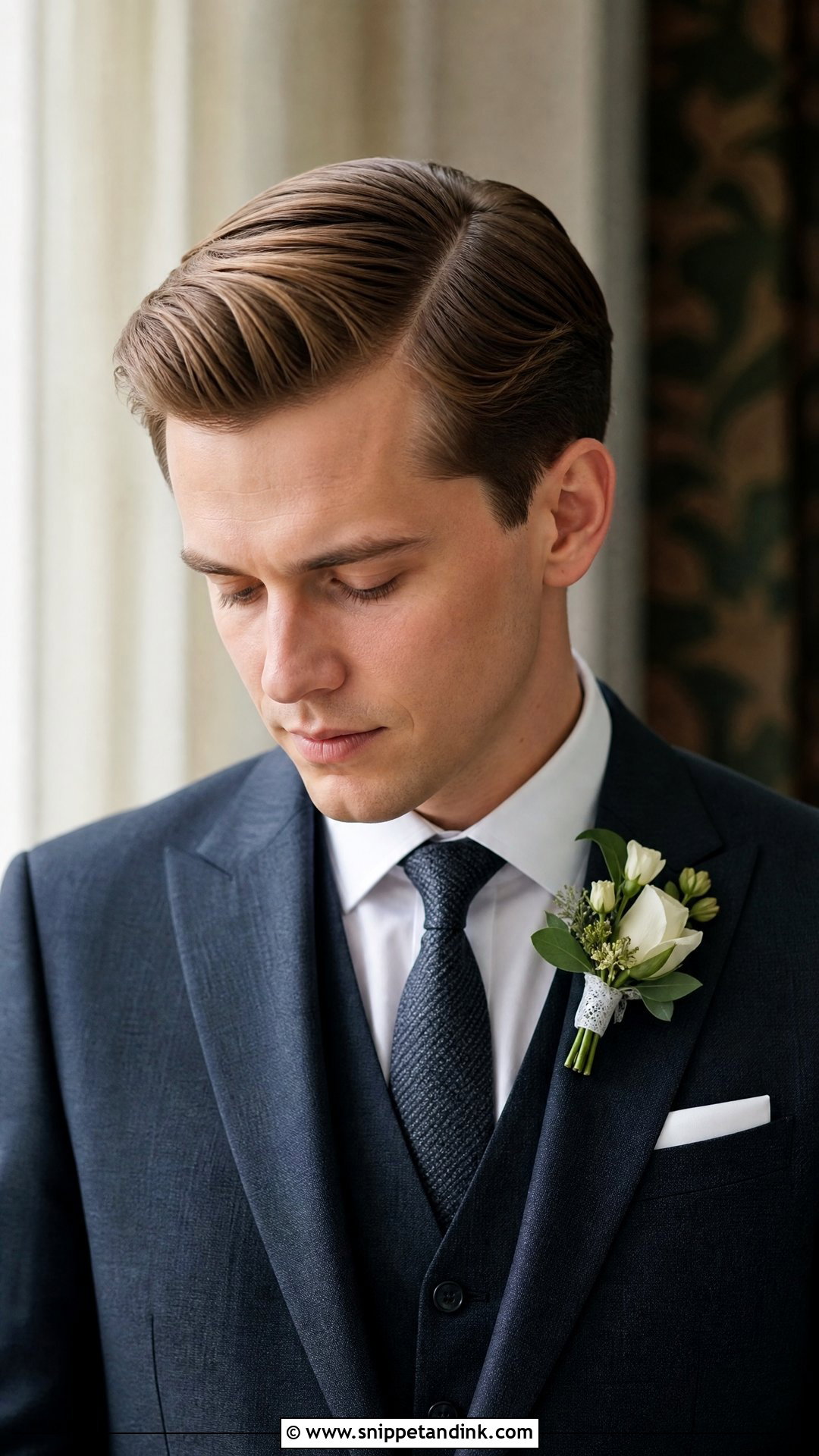
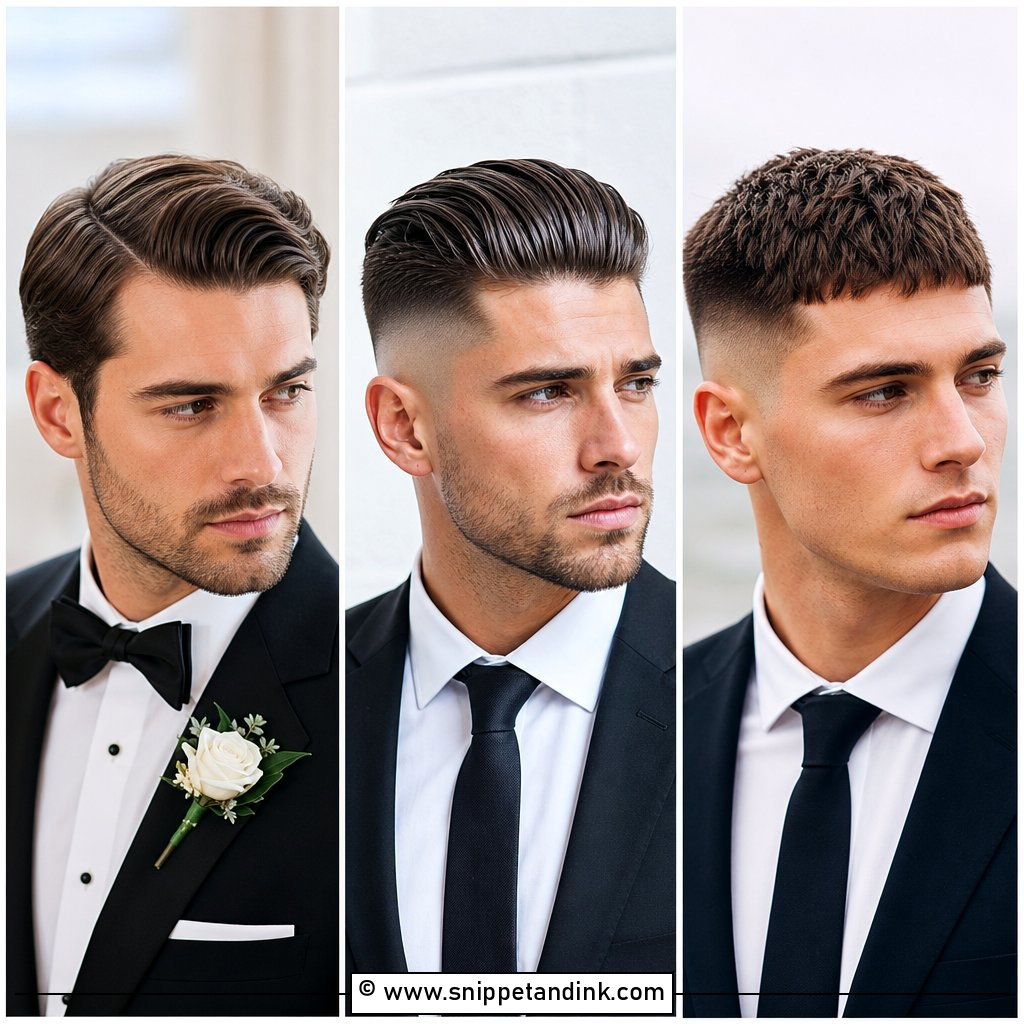
The side part relies on one thing more than the cut itself: finding your natural parting. When a barber forces the part to the wrong side of a crown whorl, it splits open by mid-afternoon no matter how much pomade goes in. Medium length on top gives the comb enough to work with. I’d use a water-based pomade here, which gives a soft shine and rinses out cleanly, and keep a pocket comb for the photos after the ceremony, since a side part is the style that shows any drift.
3. Slick Back Undercut
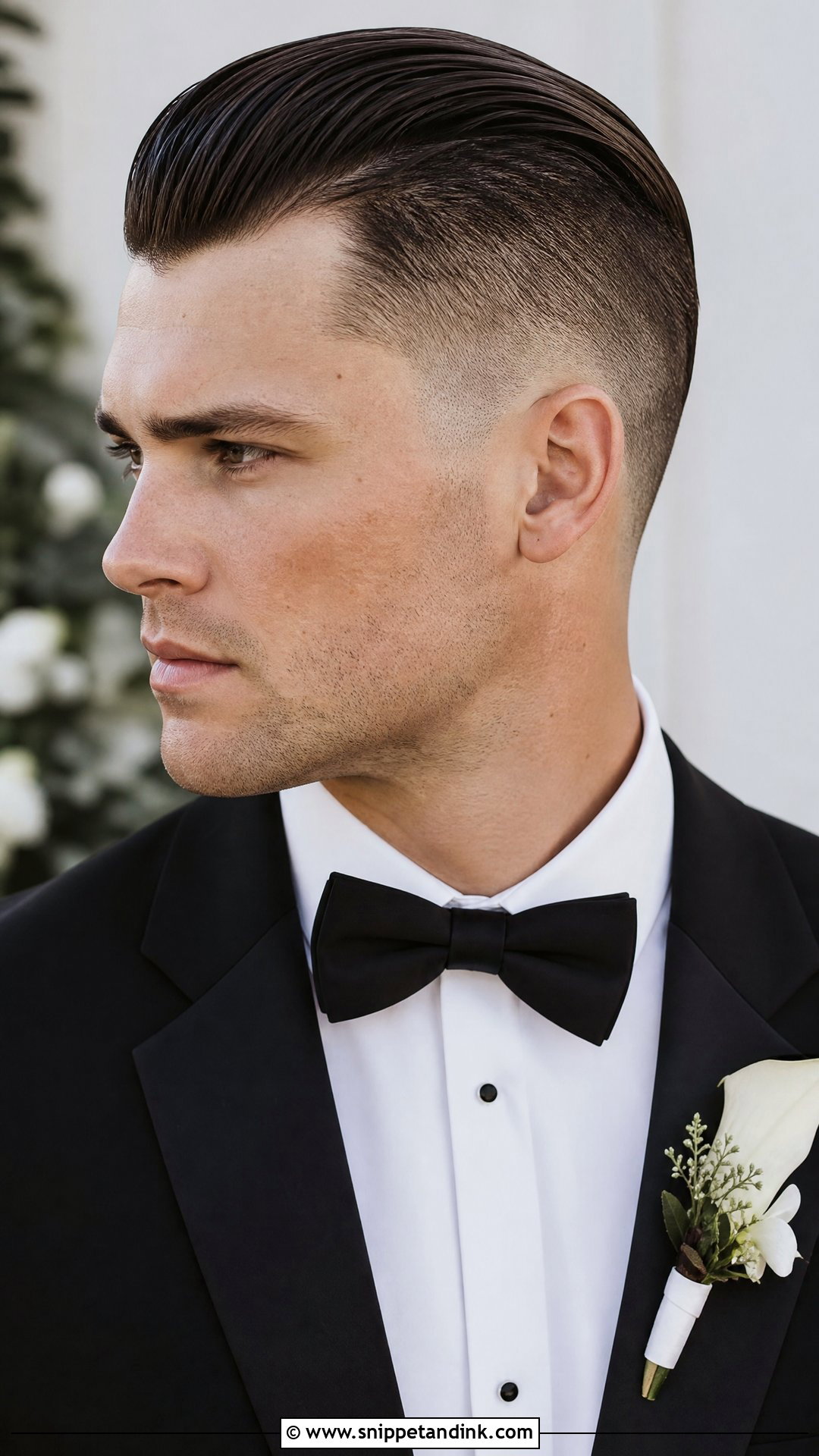
With the slick back undercut, the sides are taken short or shaved and the long top is pulled straight back. The disconnection between the two is the point, so the line where they meet has to be crisp. This one needs real length on top, at least four or five inches, or the hair lifts and splits at the crown instead of lying flat. Apply a strong gel or pomade to damp hair and comb it through in one direction; reworking it once it starts to set is what makes it look greasy.
4. Pompadour Wedding Haircut
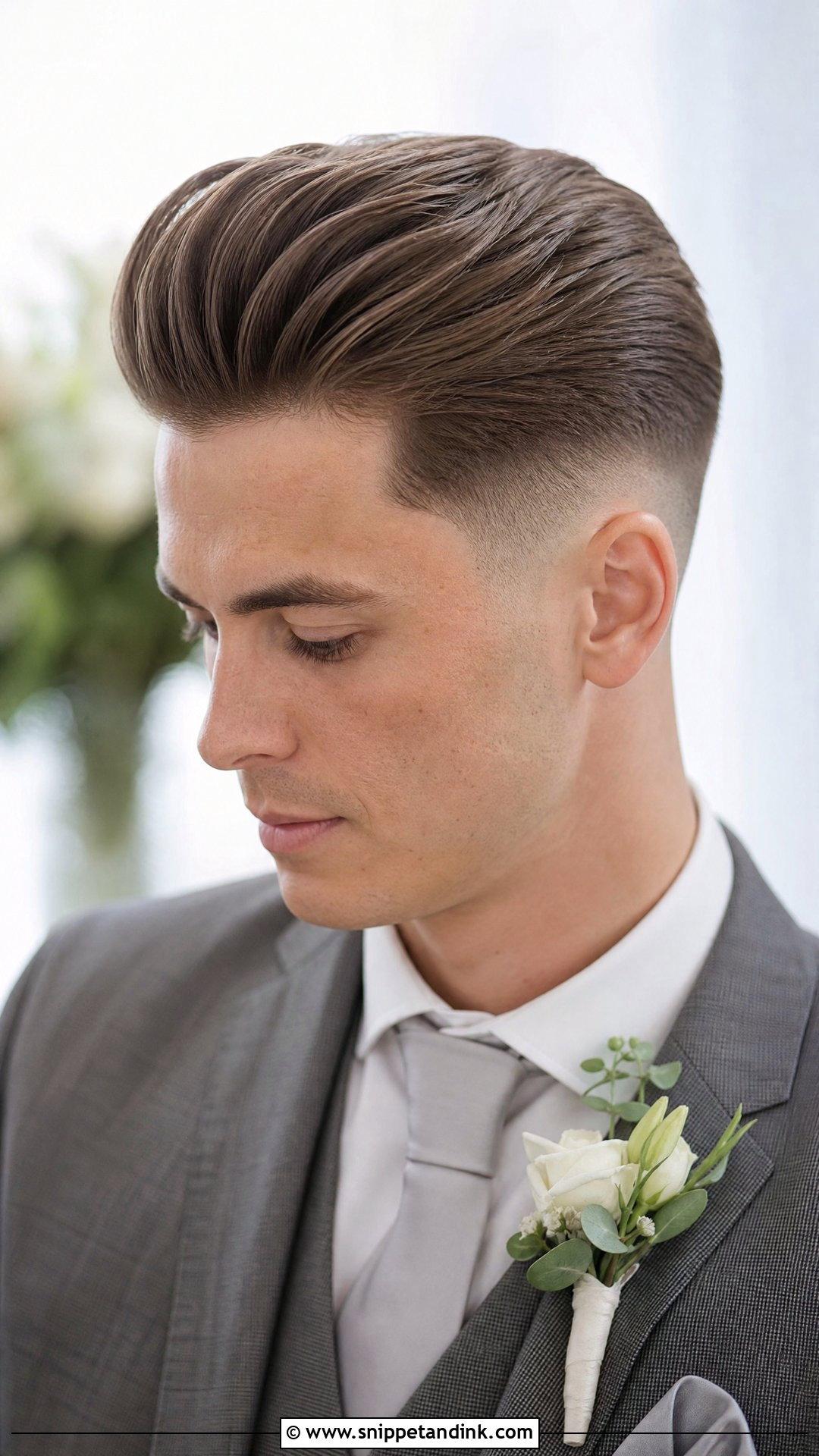
A pompadour lives or dies by the blow-dry. The pomade only holds the shape; the height comes from drying the front up and back with a round brush, so a groom who has never blow-dried his own hair should not attempt this alone on the morning. Faded or tapered sides keep the volume from looking dated. Fine hair struggles to hold the lift for a full day, and I’d only suggest it to someone with medium or thick hair, or someone willing to carry a small tin for a touch-up before the reception.
5. Buzz Cut for Grooms
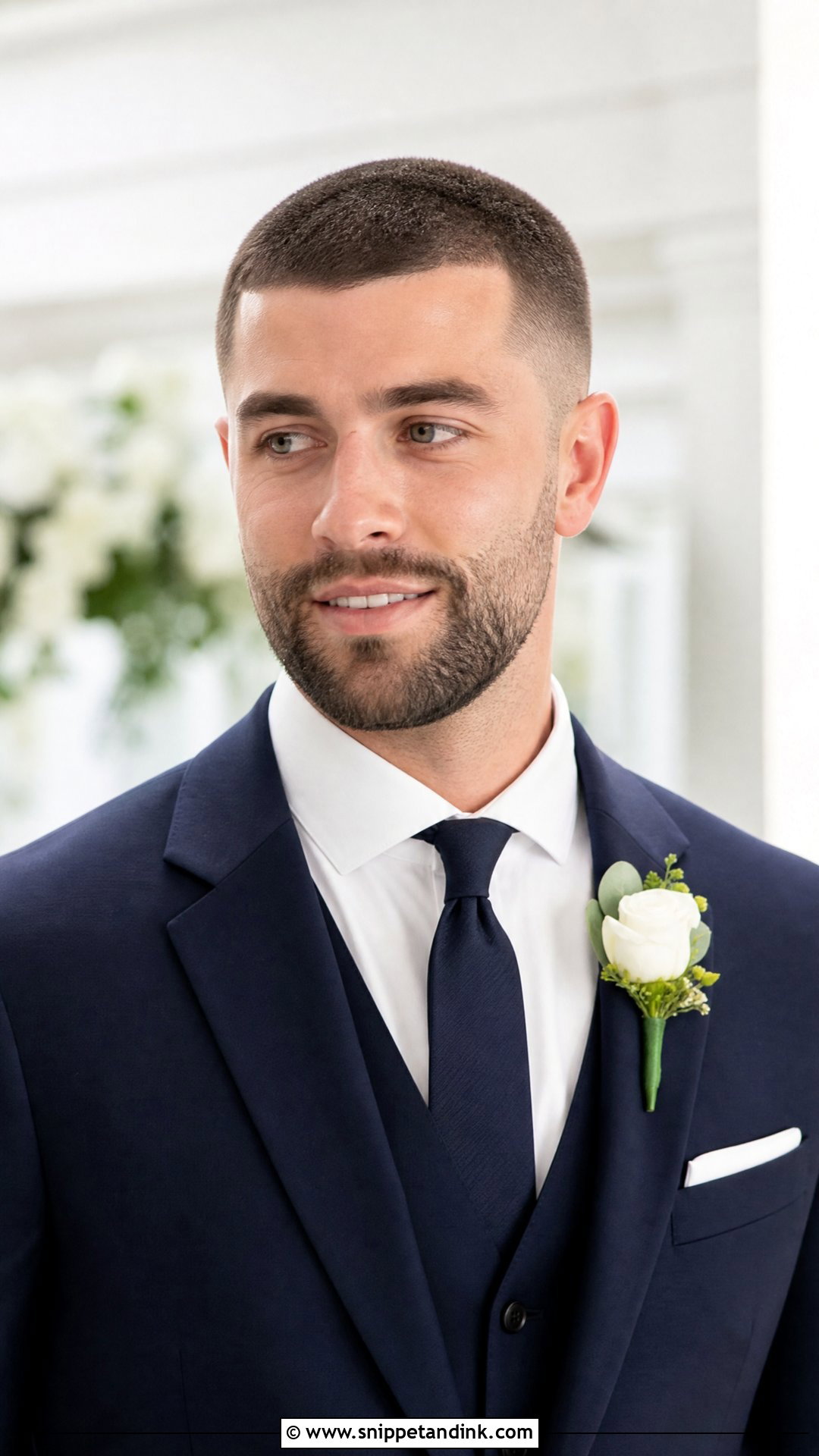
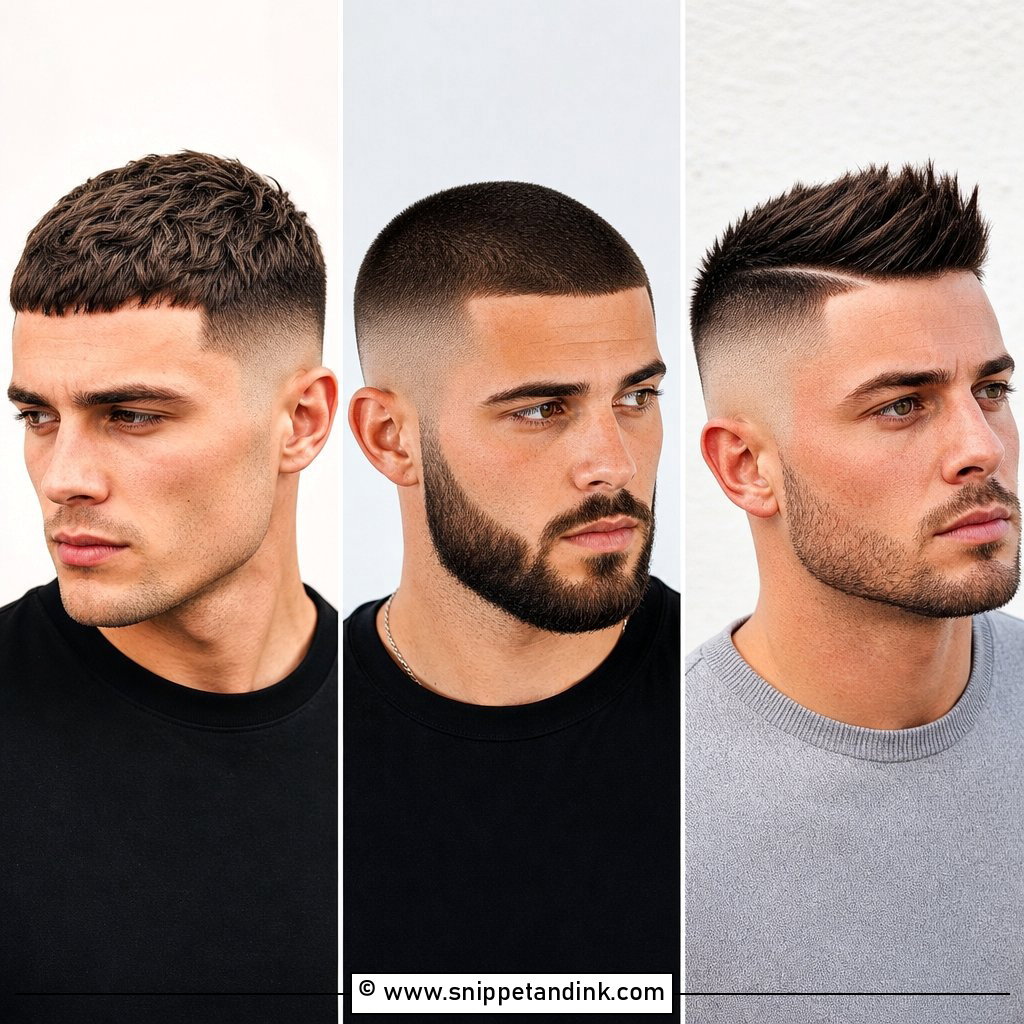
The buzz cut is minimalist in the truest sense: one guard length, nothing to style, nothing to fall out of place. What it does is put the face, the ears and the beard in full view, so the shape of the head and the edge of the beard need more attention than the hair. Ask for the neckline to be tidied and the sideburns squared to match the beard. Buzz it within a few days of the wedding; at that length even a week of growth shows.
6. Taper Fade With Quiff
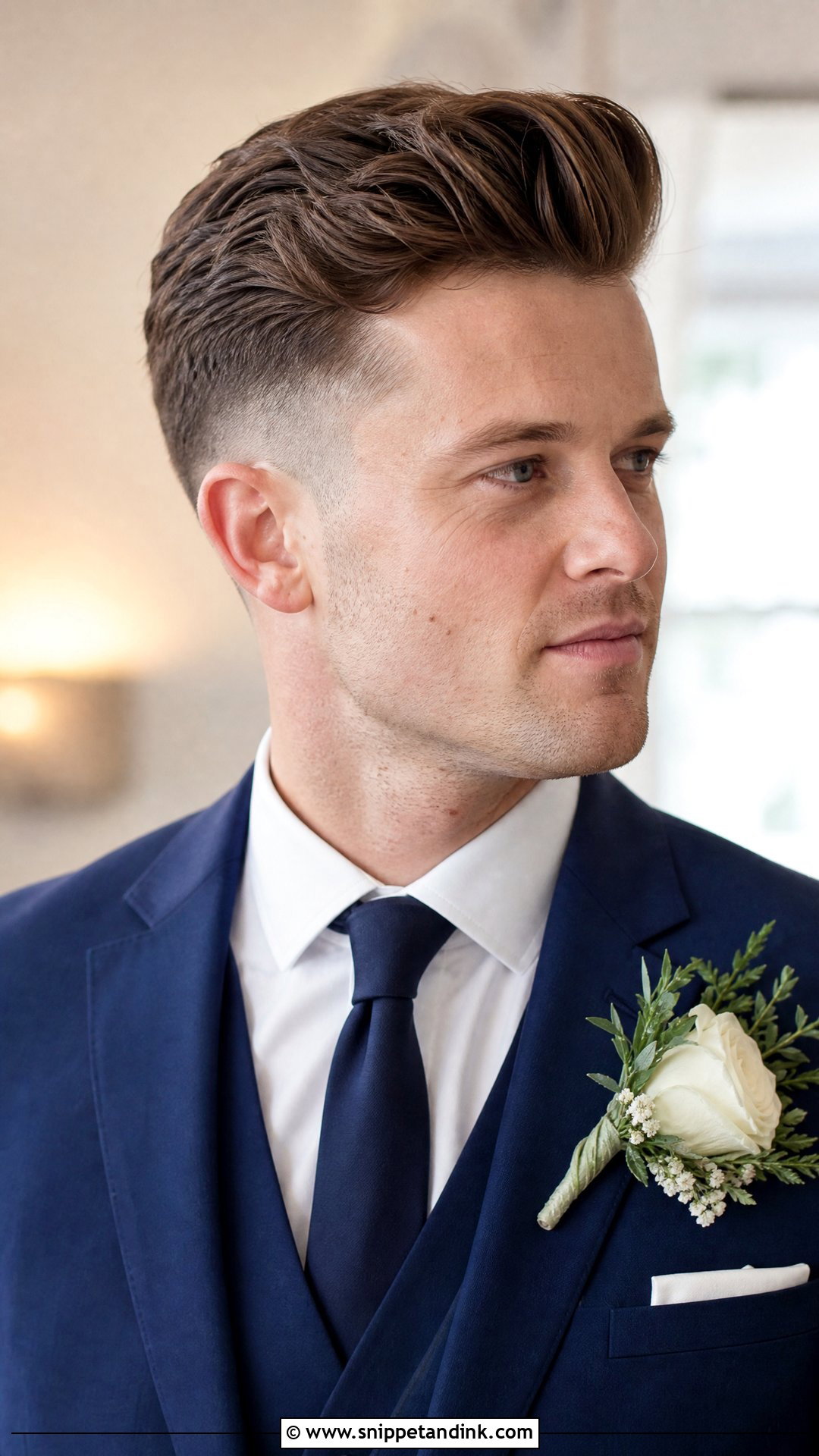
Here the taper fade with a quiff pairs a gentle taper, which leaves more length at the sides than a skin fade, with a front that is swept up and slightly forward. The taper grows out more gracefully, so it forgives a cut booked a week ahead. The quiff itself needs a cream or light pomade and a quick blow-dry upward at the root. If your front hairline has a cowlick, mention it, because a quiff fights a cowlick all day and the cowlick tends to win.
7. Curly Top With Faded Sides
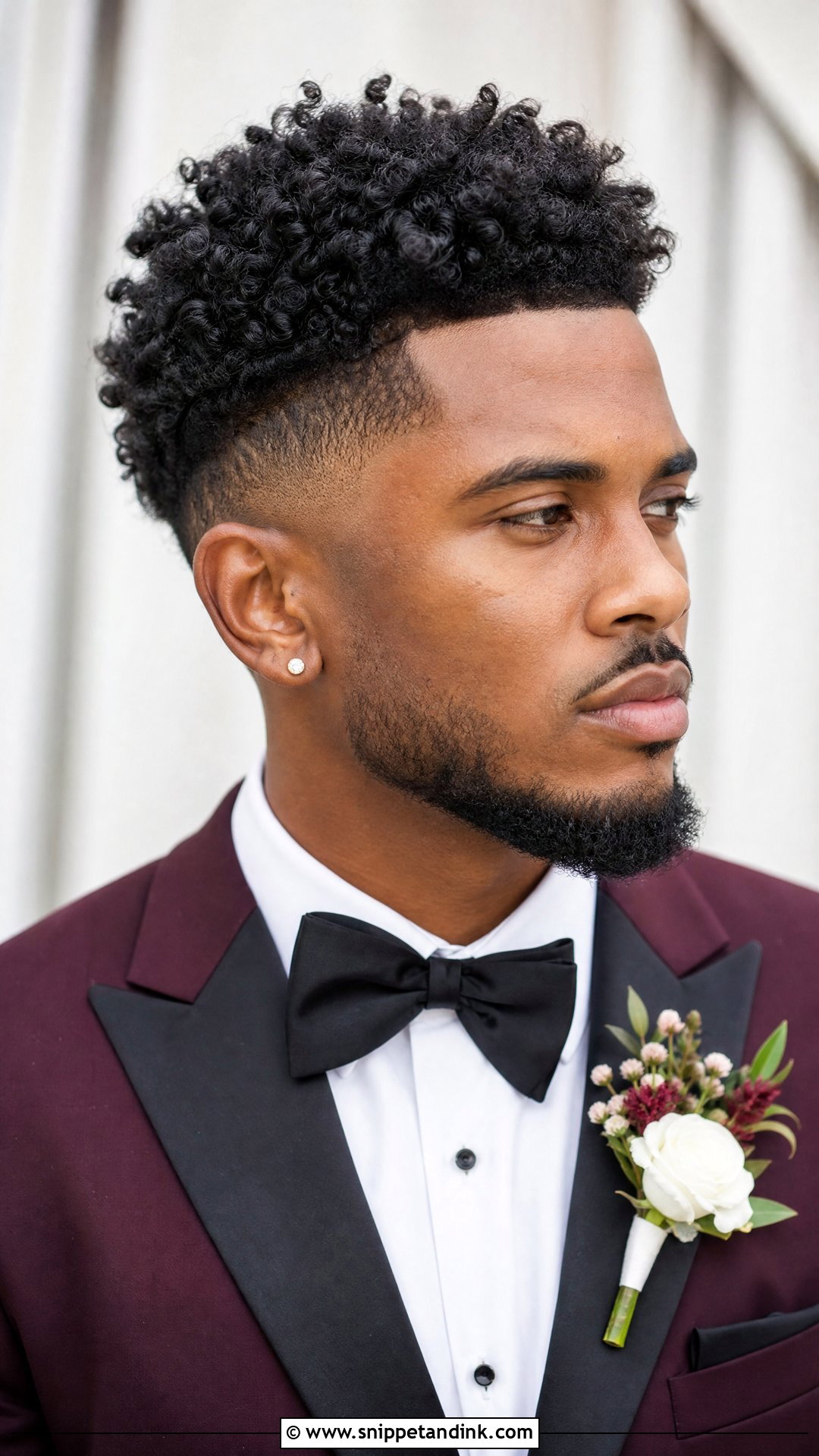
Curls are the texture I’d least want a groom to fight. Faded sides make the curly crown the focus, but the curls need to be cut dry or checked dry, because wet curls can shrink a good deal once they spring up and a top that looks right in the chair can end up shorter than planned. Use a curl cream on damp hair, scrunch, and leave it alone until it dries. Touching curls while they set is what turns definition into frizz.
8. Crew Cut for Grooms
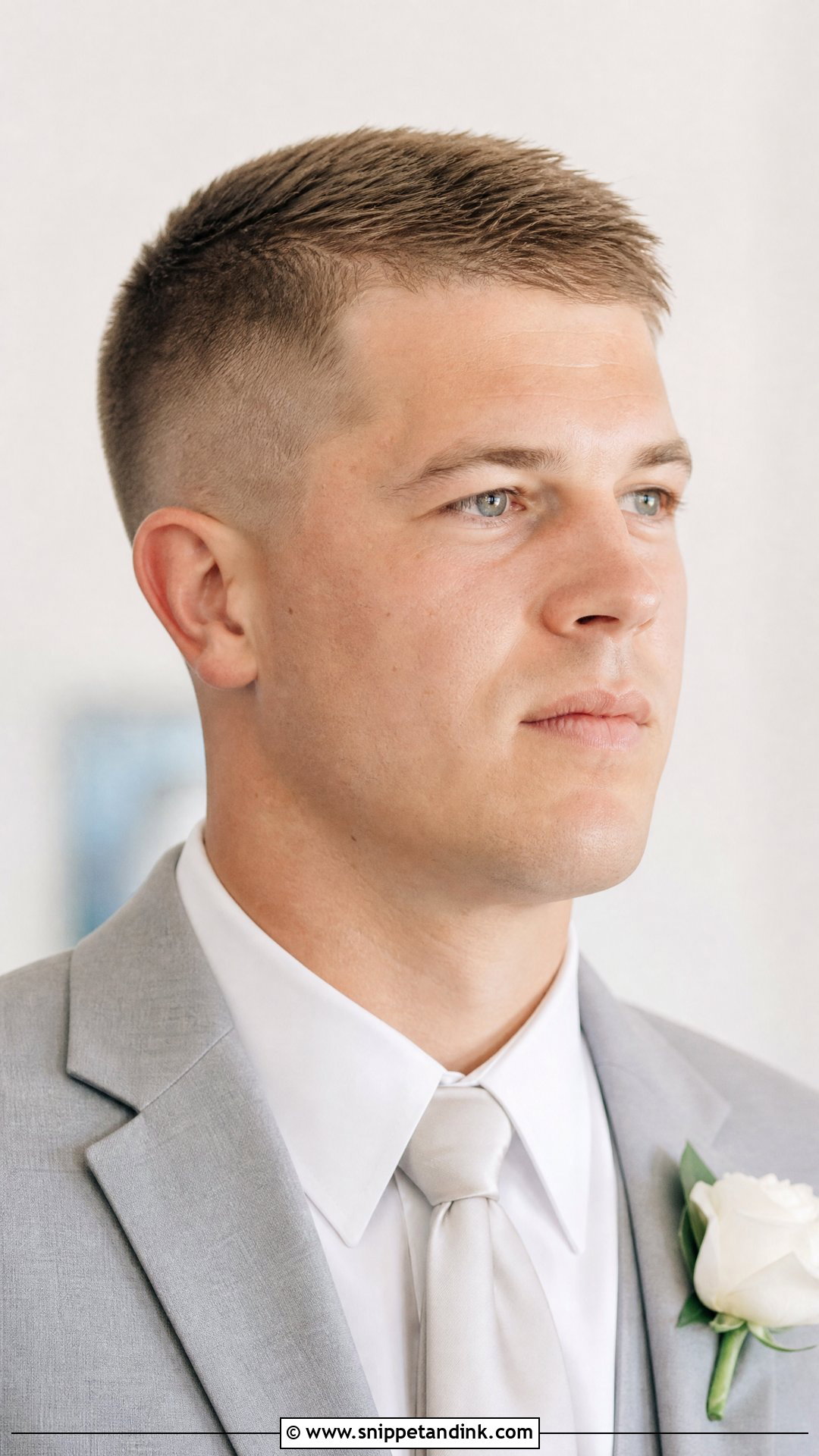
A crew cut keeps a little more length on top than the sides, usually graded slightly longer at the front. It is the cut I’d suggest to a groom who has never cared about styling and doesn’t want to start now. A pea-sized amount of paste is plenty. Its only weakness is that it shows growth unevenly, the sides first, so a cut three to five days before the wedding gives the sharpest result.
9. Textured Crop for Grooms
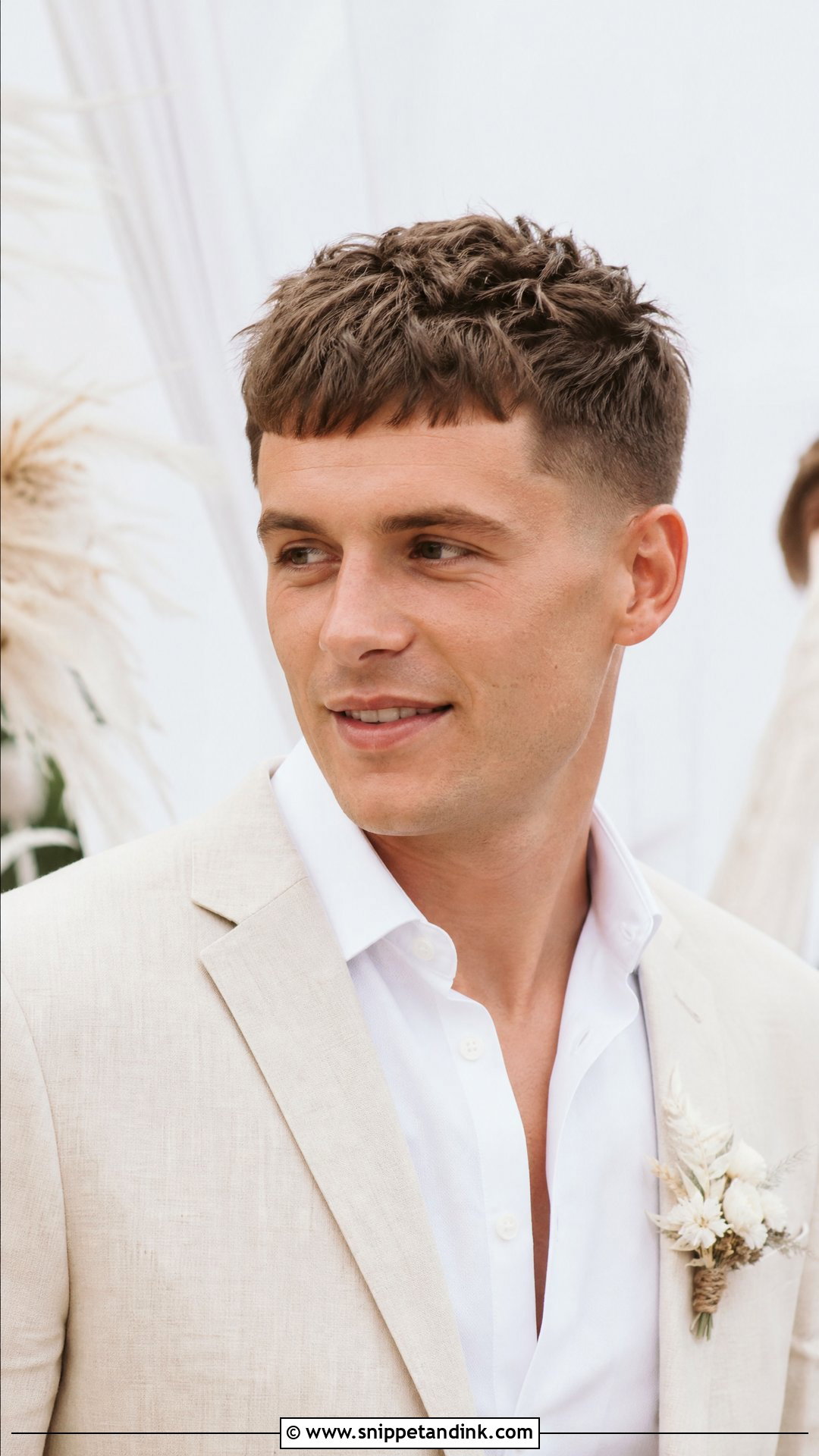
The textured crop has a short, choppy fringe over tapered or faded sides, and the texture comes from point cutting rather than product. Thick, straight hair suits it best; very fine hair can look sparse once it is chopped into pieces. A matte clay rubbed between the palms and pushed in from the roots gives it grip. I’d avoid anything with shine on this cut, which flattens the pieces and makes it look wet.
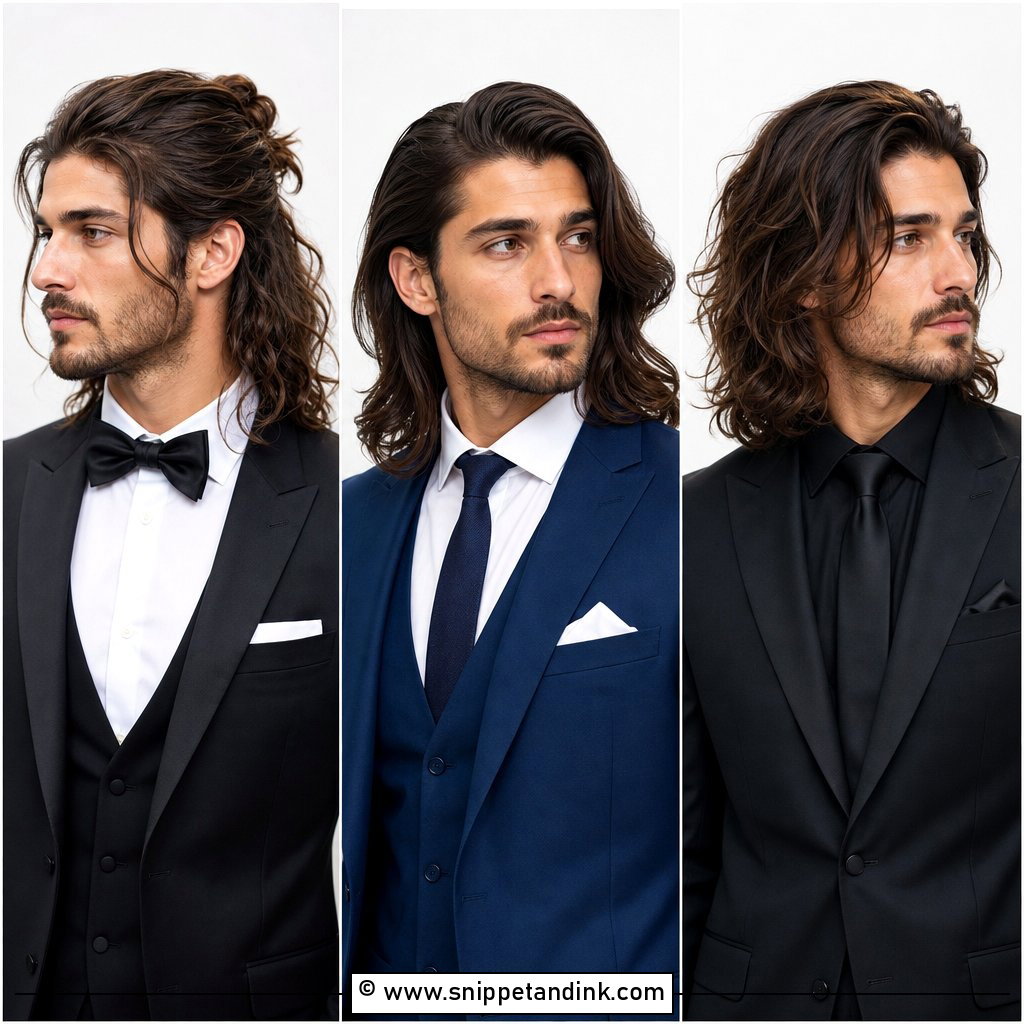
10. Long Hair With Low Bun
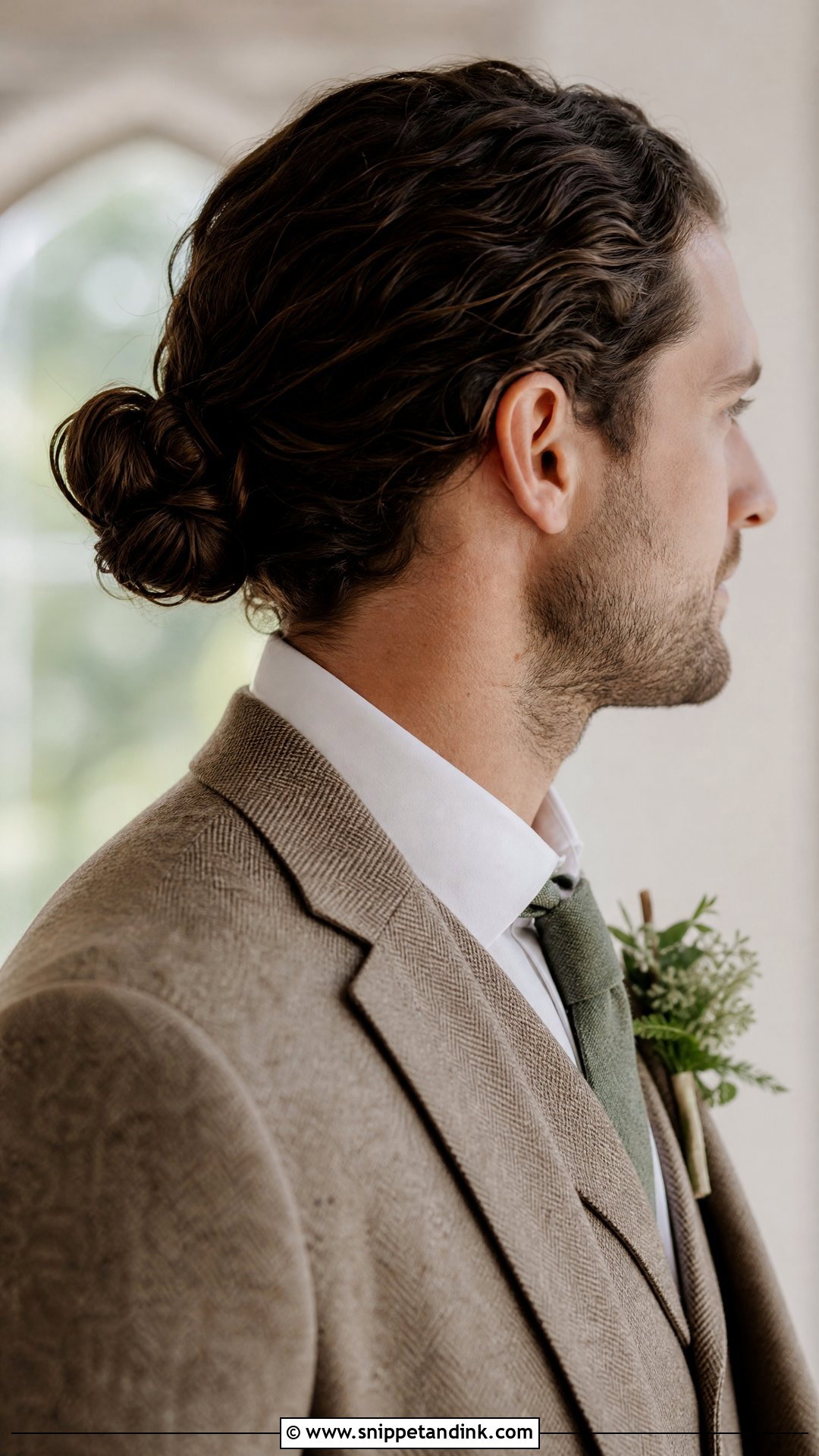
A low bun is the one groom style where my bridal pinning habits actually help. Brush the hair back with a light pomade, secure it with a snag-free elastic, then wrap the tail and anchor it with two or three bobby pins crossed into the base so it doesn’t sag against a collar. A bun that sits too low rubs on a shirt collar all day and loosens, so I place it just above the collar line. It suits relaxed and rustic weddings, and for a black-tie room I’d smooth the front more carefully.
11. Comb Over Fade
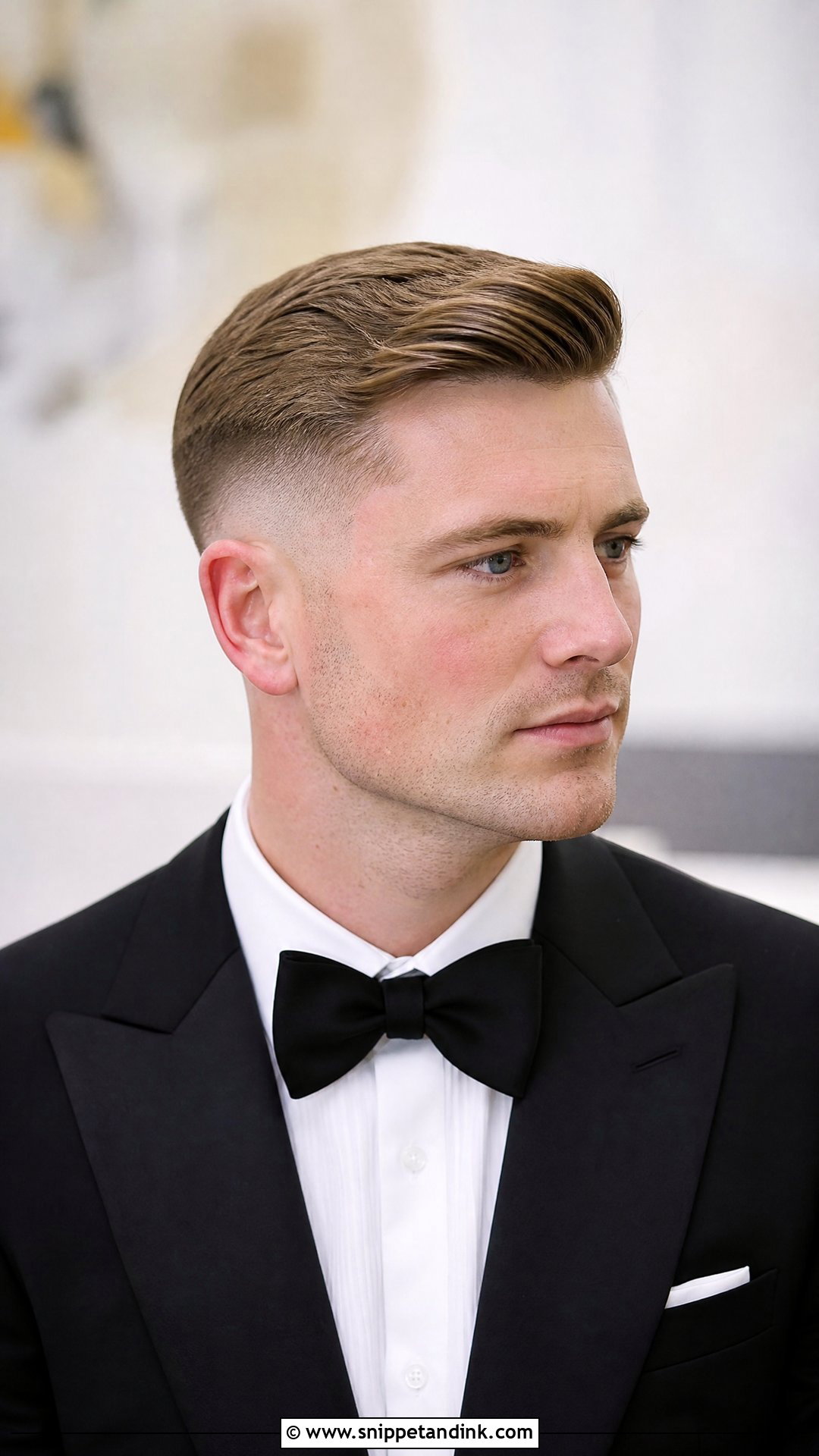
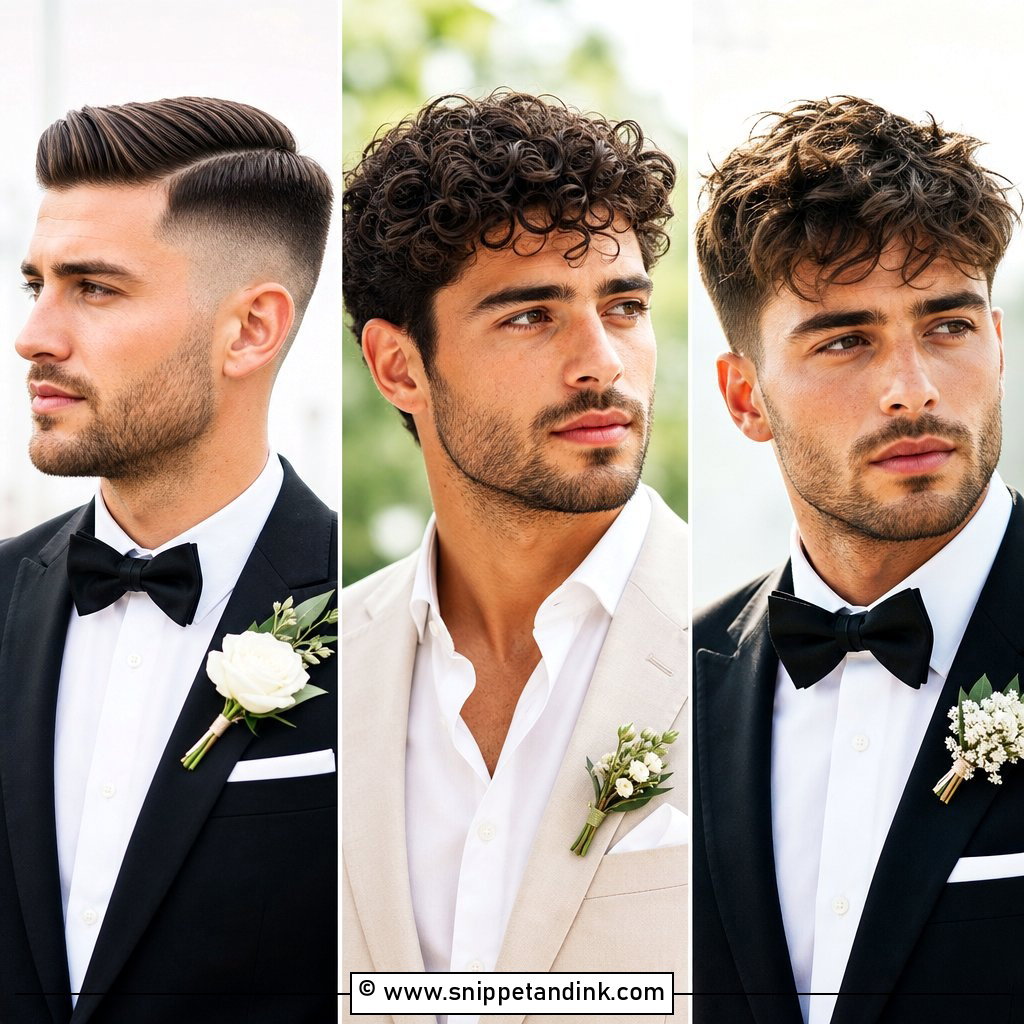
This is the side part with the sides faded instead of scissor cut. The fade removes the bulk that makes a traditional side part look heavy, while the comb over on top keeps it formal. Straight or slightly wavy hair holds the combed shape well; very curly hair resists it. I’d set the part with a comb while the pomade is still workable and then not touch it, because combing a set style twice breaks the hold.
12. Slicked Back Long Hair
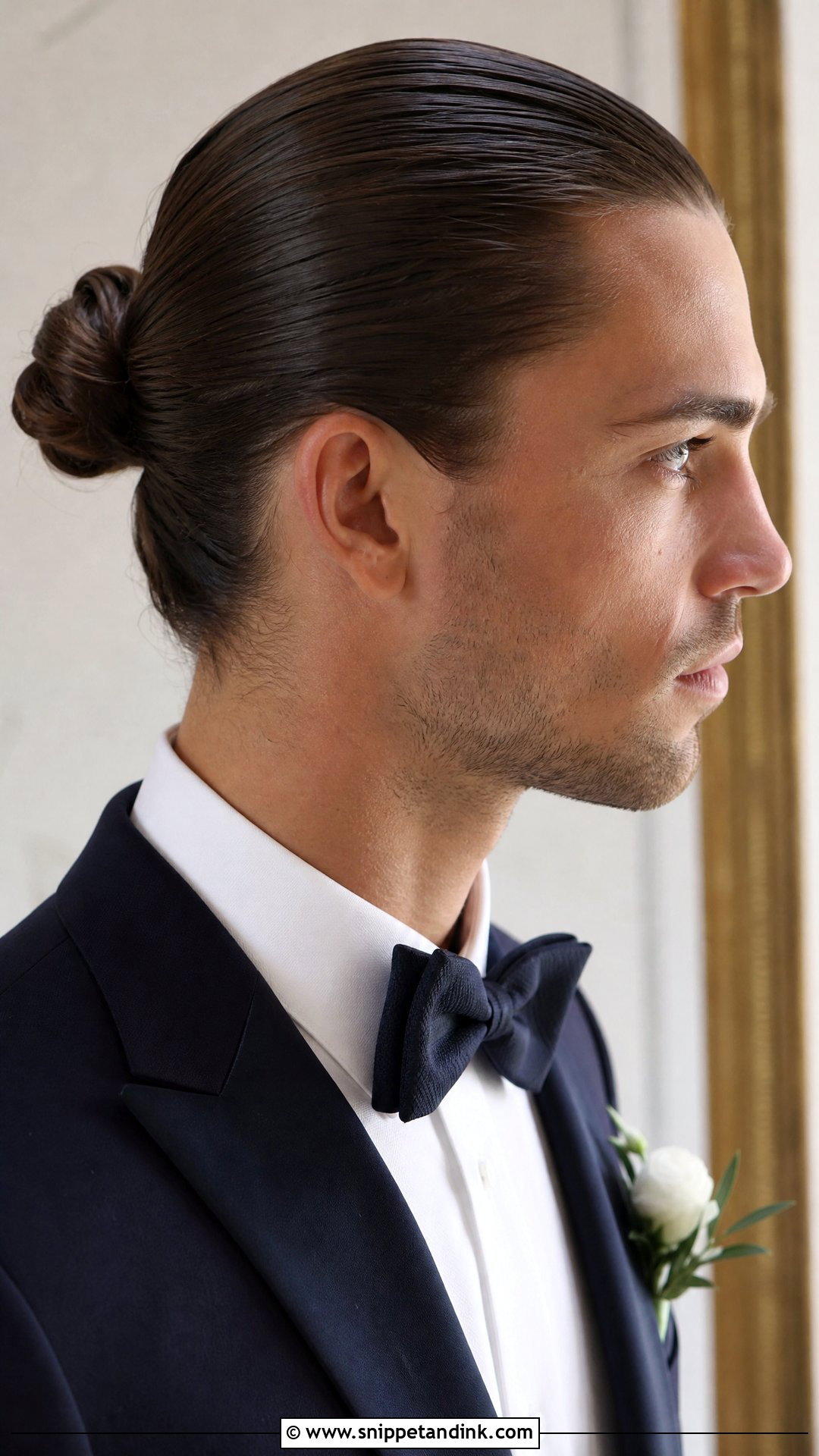
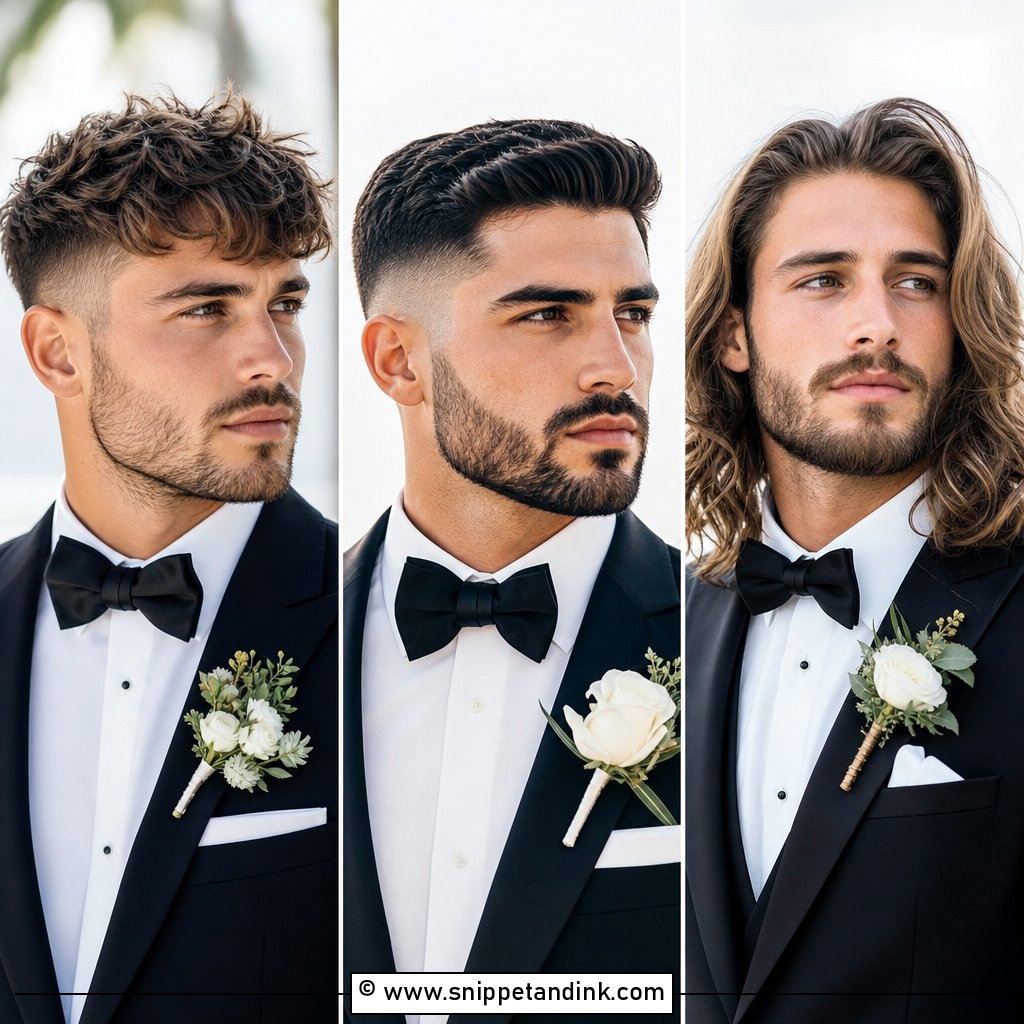
Slicking back medium to long hair needs product on damp hair and patience with the comb. Work a strong-hold gel or pomade from root to end, comb straight back, then let it dry undisturbed. The length can get heavy and start separating at the nape by the end of the night, so I’d tuck the ends behind the ears if they reach the collar. Choose this for a formal evening wedding; at a breezy outdoor ceremony long slicked hair tends to lift in strands.
13. Fringe Down for Grooms
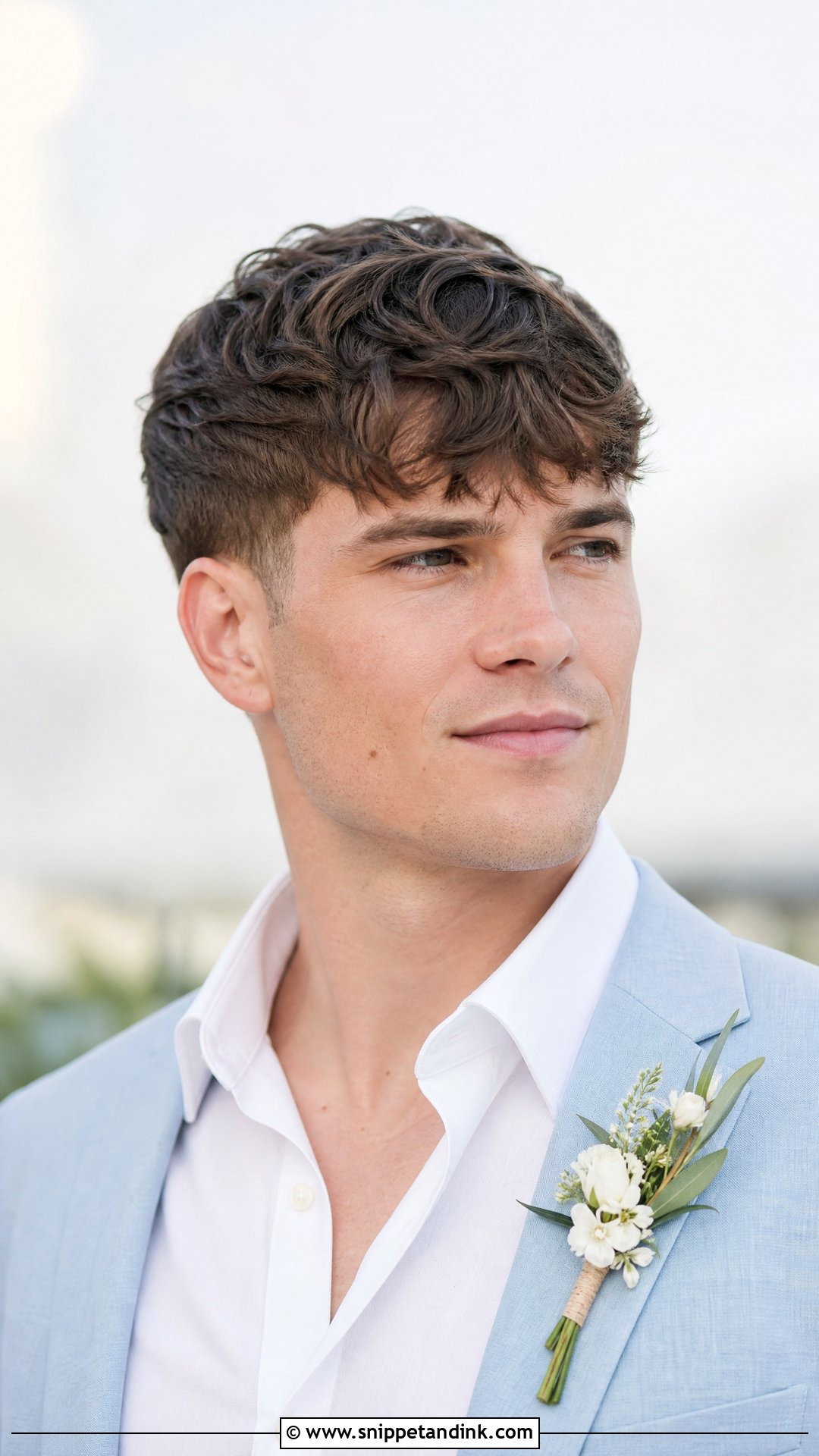
A forward fringe is the most relaxed cut here and the easiest to style: brush the hair forward, rough it up with a little cream, done. It suits a beach or garden ceremony and a groom with a high forehead he’d rather soften. The risk is length: a fringe that grazes the eyebrows on the wedding day will be in the eyes by the toasts, so trim it a touch shorter than usual. Avoid heavy waxes that clump the fringe into strands.
14. Undercut With Slicked Top
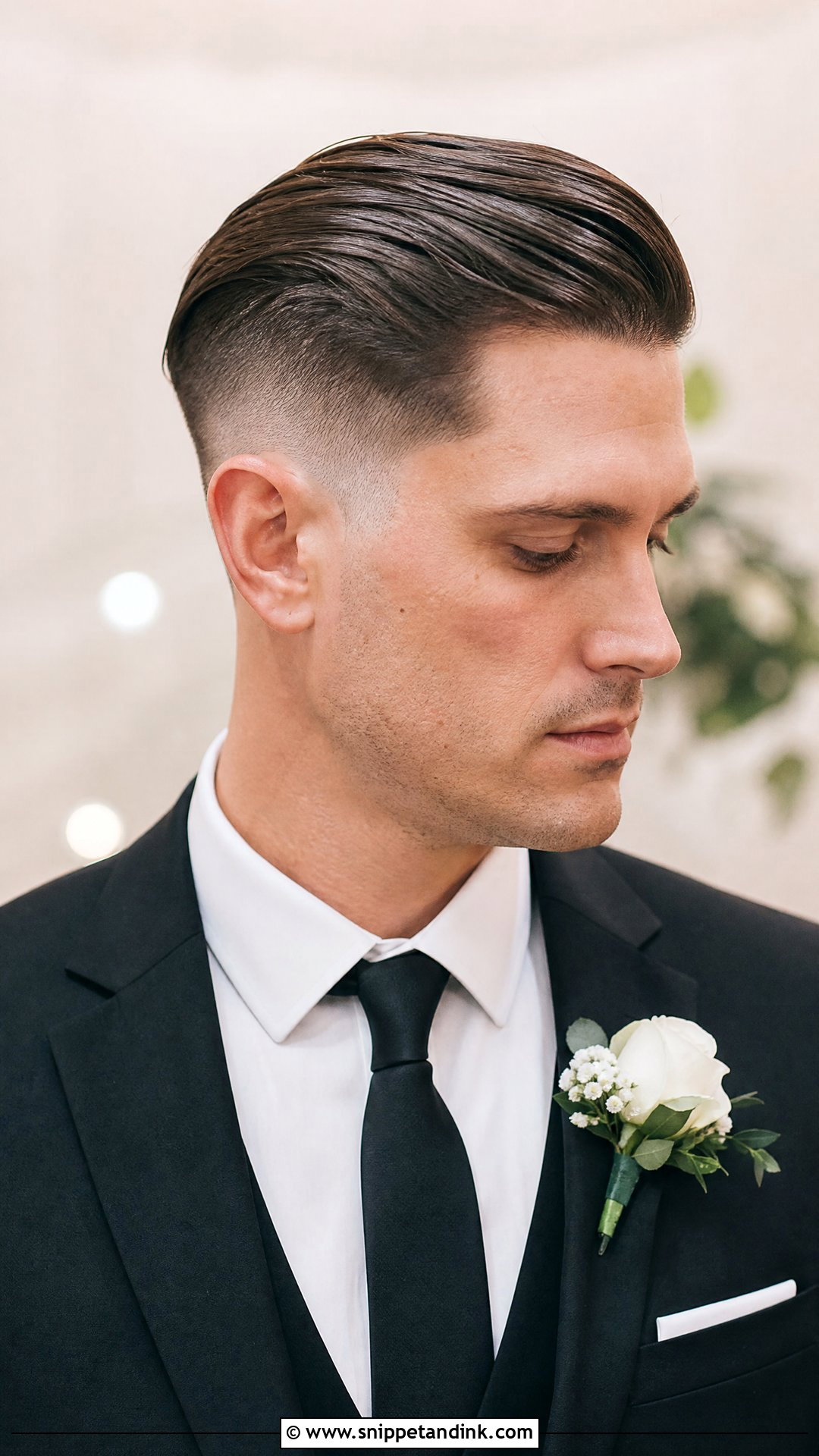
An undercut with a slicked top is close to the slick back undercut above, but usually shorter on top and finished with more shine. Because the sides are shaved, the regrowth line shows quickly; book the shave a day or two before the wedding. A glossy pomade gives the finish this cut is known for. Heads with a visible scar or uneven skull shape at the sides look better with a gentler taper than a full shave.
15. Wavy Hair With Side Sweep
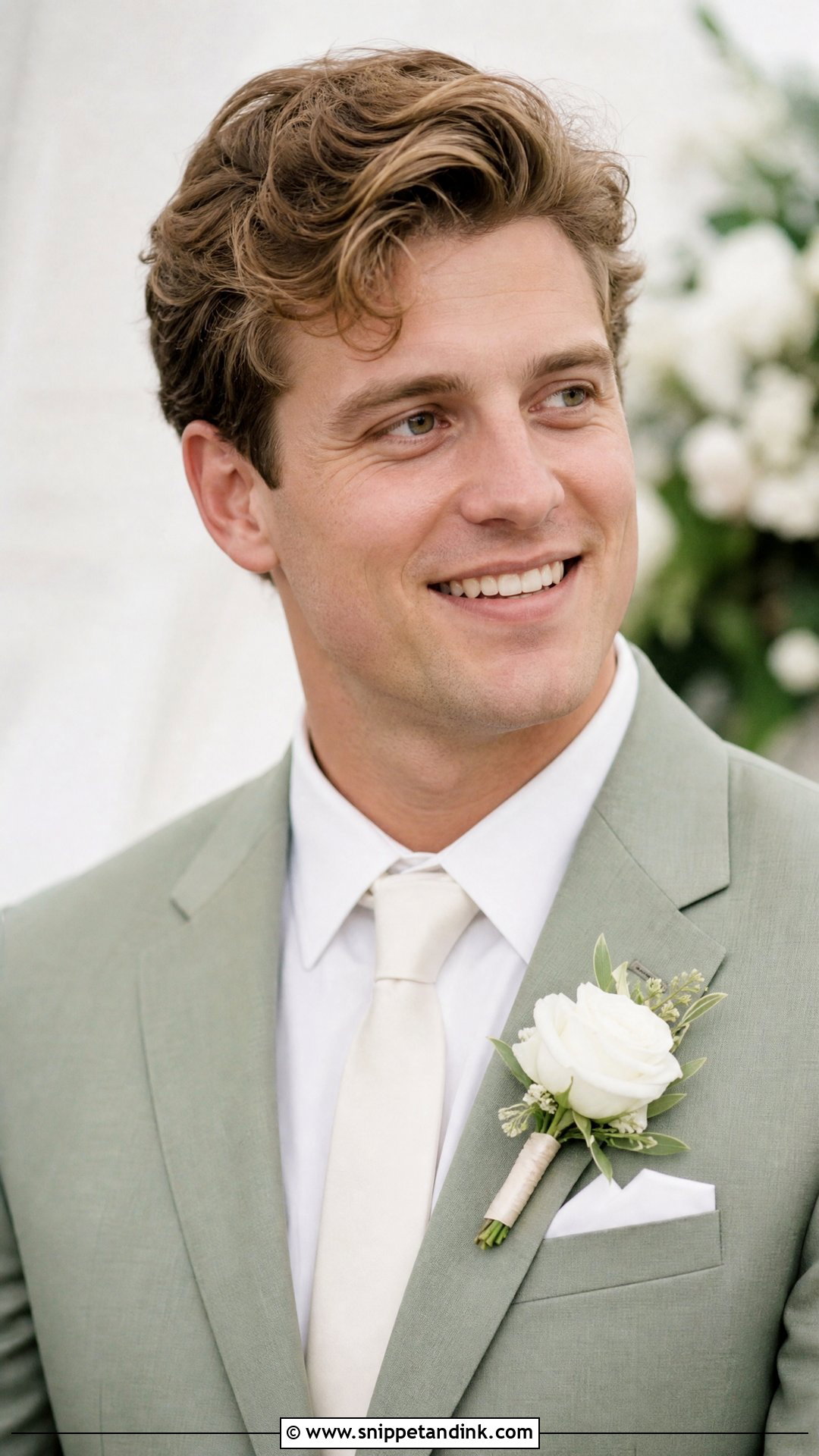
Natural waves need encouragement, not control. Spritz sea salt spray into damp hair, sweep it to one side with your fingers, and rough dry it without a brush, which keeps the wave pattern instead of stretching it out. A side sweep works with the hair’s own direction, so find which way it falls before you decide on the sweep. Humid weather can turn waves fuzzy, so I’d finish with a few drops of a light cream to seal the outer layer.
16. High Fade With Pompadour
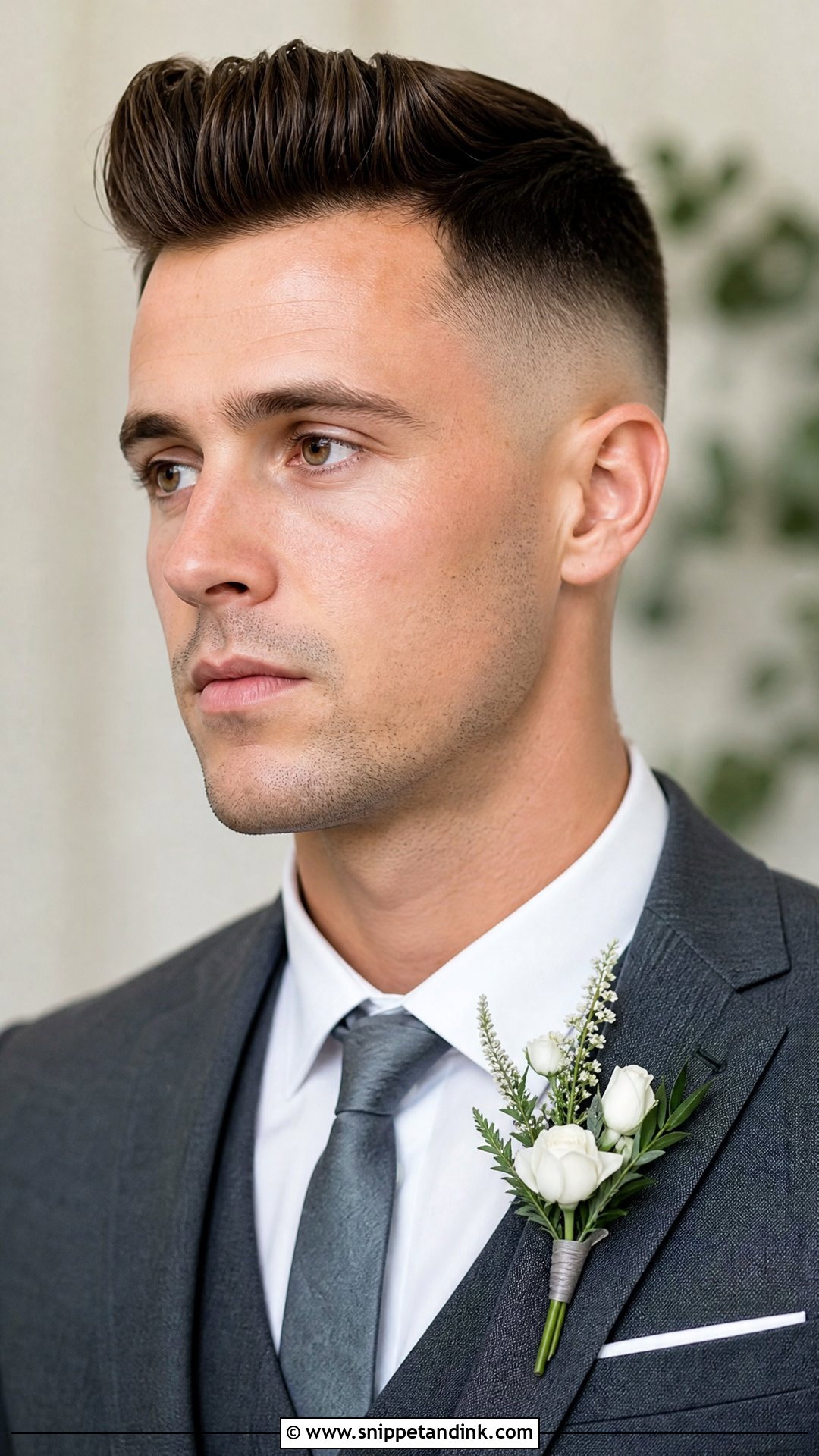
A high fade with a voluminous pompadour takes the skin fade up toward the temples, leaving all the attention on the tall top. It is the most dramatic cut here and the least forgiving: the high fade grows out fast and the pompadour needs a blow-dry and pomade every time it is styled. I’d only suggest it to a groom who already wears something like it. Choosing it fresh for the wedding often feels unfamiliar on the day.
17. Classic Taper Haircut
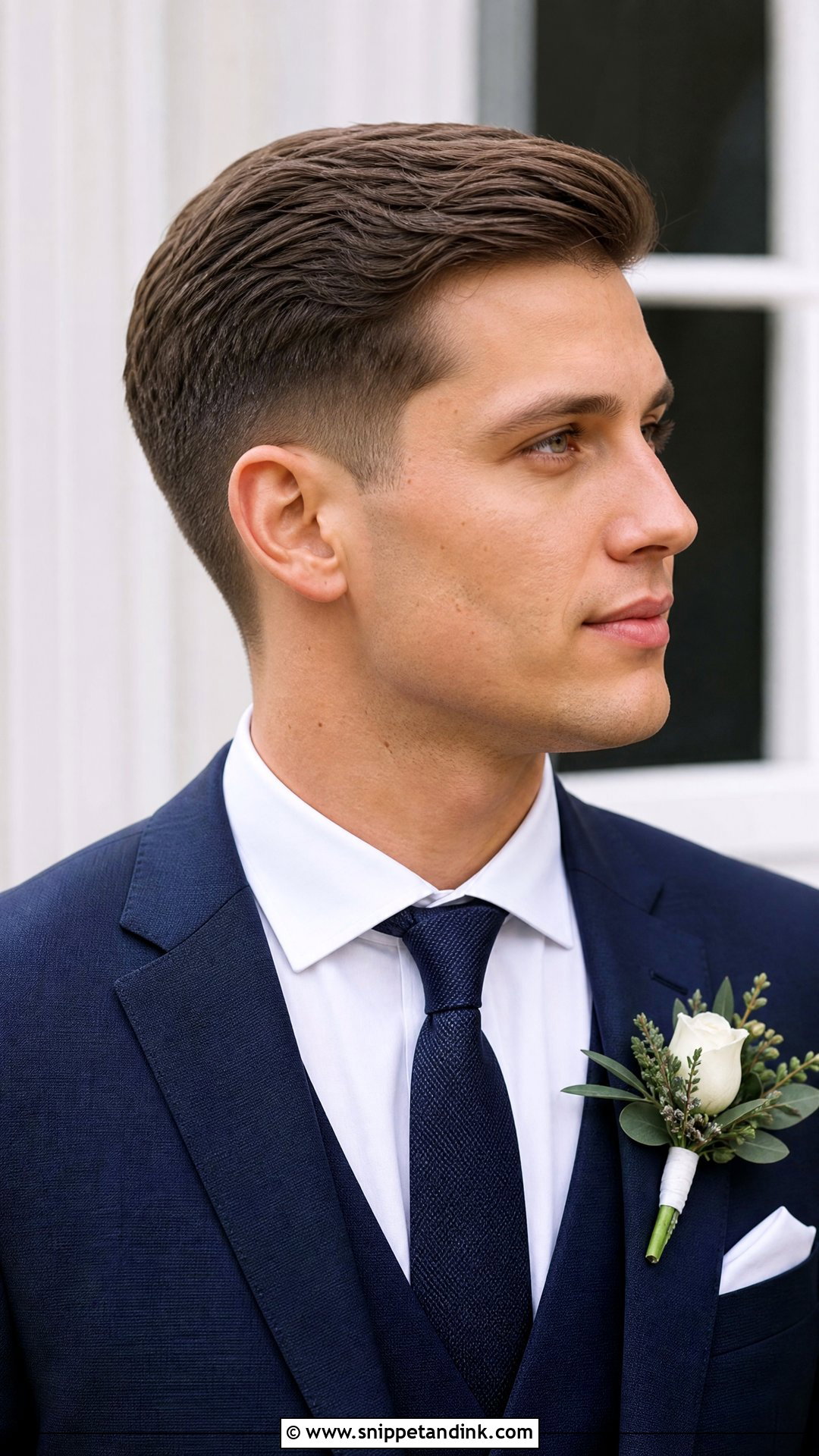
The classic taper haircut grades the hair gradually shorter around the sides and back, without the skin showing. It suits almost every texture and is the safest cut for a groom unsure what he wants, because it can be worn combed, pushed back or loose. It also grows out gently, which gives flexibility on booking. A light cream is enough; the shape is in the cut.
18. Short Curly Caesar Cut
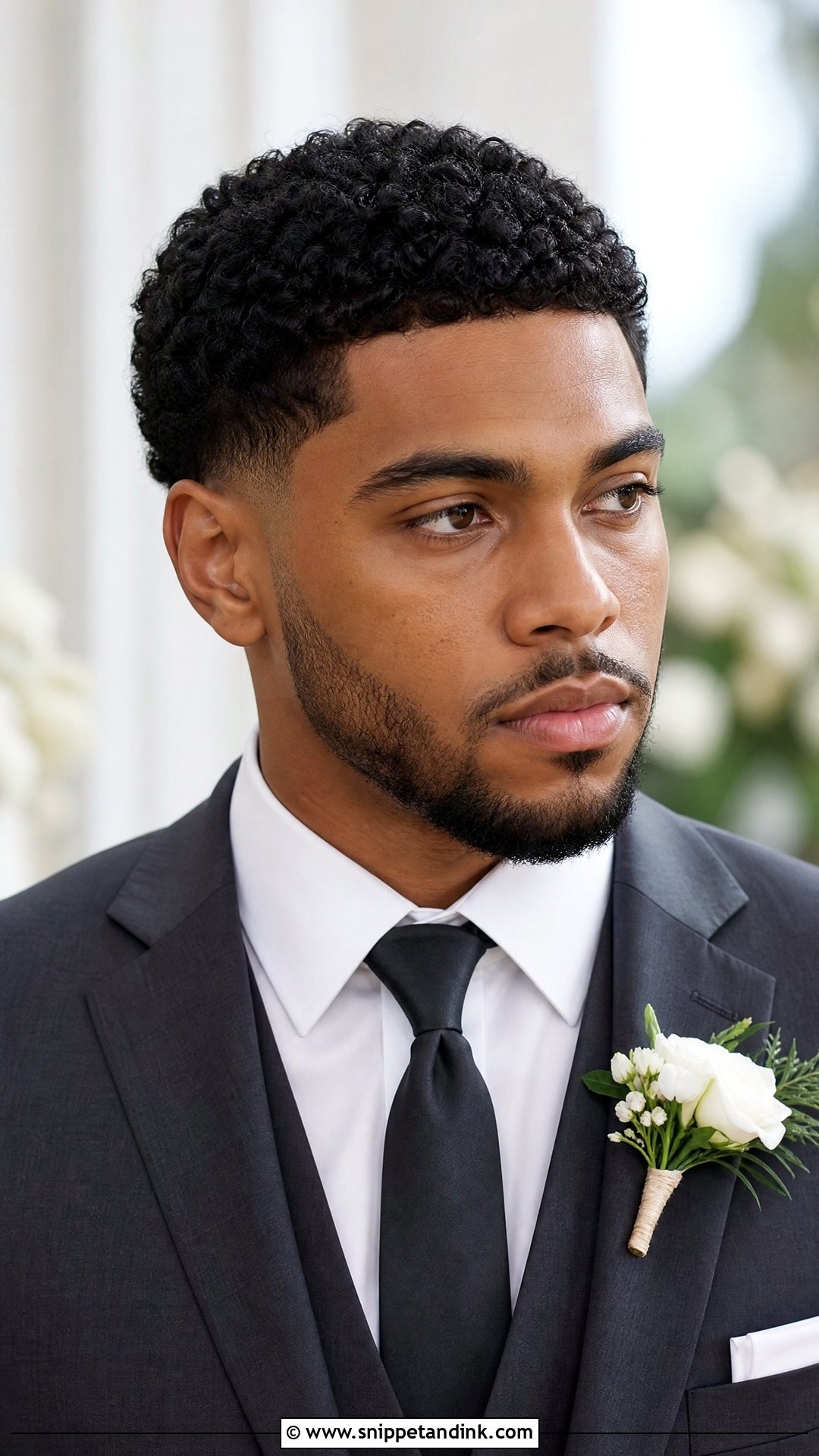
The Caesar cut gives tight curls a short, even length with a straight, horizontal fringe. The fringe line is where it succeeds or fails: if it is cut too high it can make a round face look rounder, so ask your barber to keep it slightly lower and softer. A light curl cream adds definition without weighing the curls down. It holds its shape all day, which makes it one of the lowest-maintenance cuts for curly hair.
19. Messy Textured Quiff
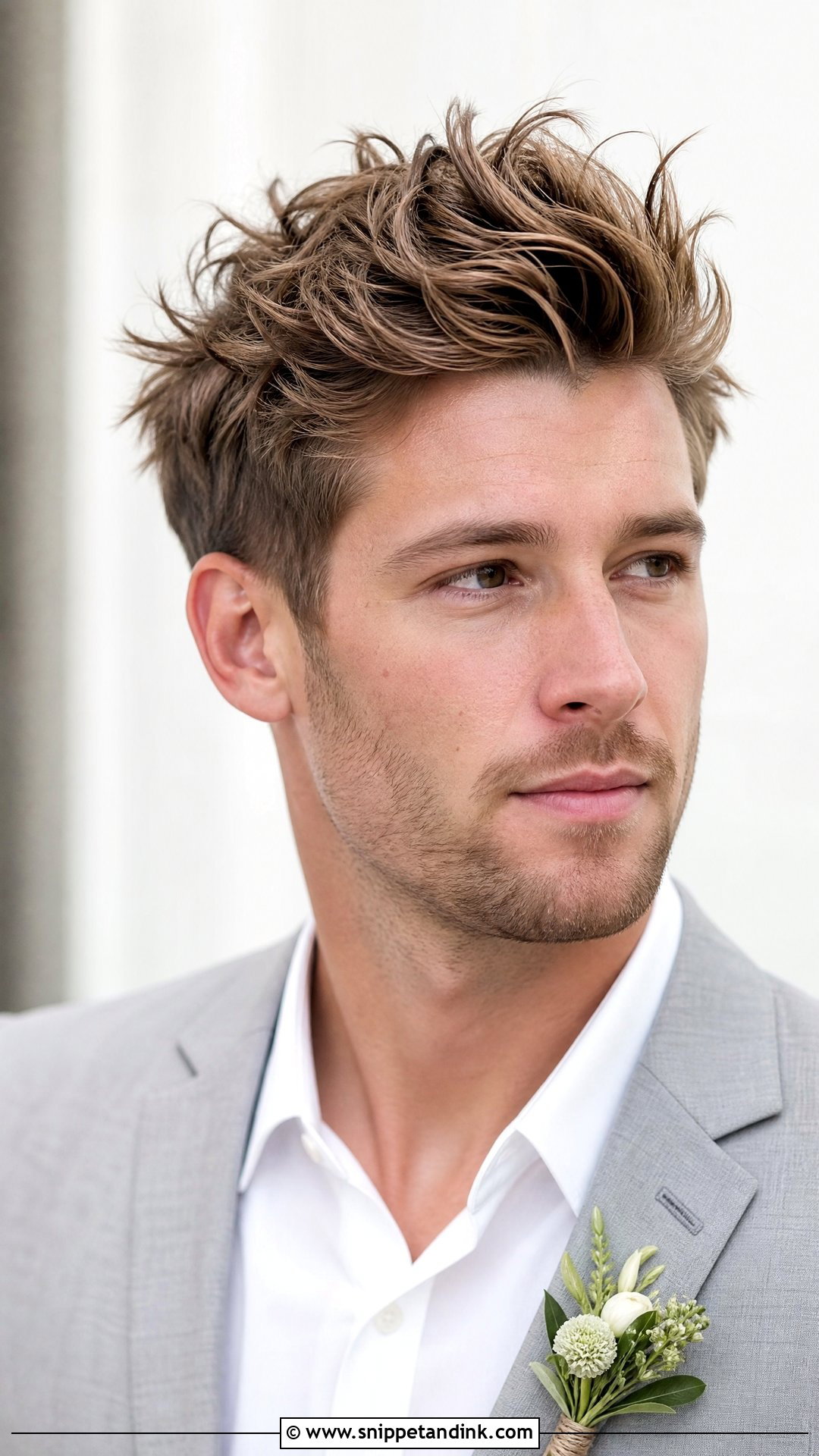
A messy quiff is a deliberate kind of untidy. The front is lifted up and back with a blow-dry, then broken up with a matte paste or a texturizing powder at the roots. Powder gives the most volume but feels gritty and can dull dark hair, so I’d use it sparingly. Fine hair benefits from this style, because the texture disguises thinness better than a sleek finish.
20. Sleek Straight Hair for Grooms
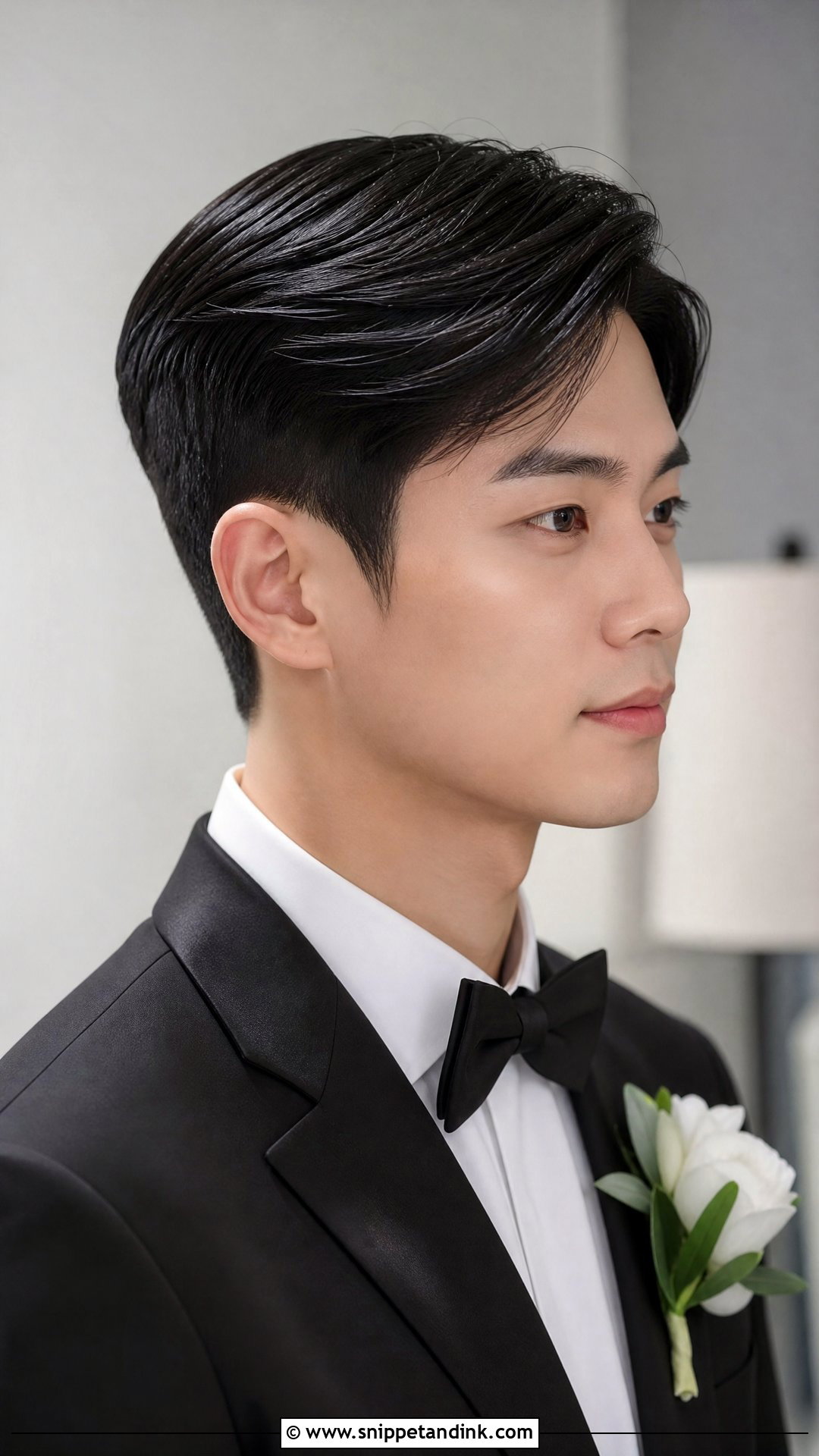
Straight hair that is cut well can be worn sleek with little effort. Use a smoothing serum or light pomade to calm flyaways, then comb the hair into a side part or straight back. Sleek straight hair shows every bump in the cut, so it pays to have the barber check the top layer with the hair dry. A little serum in the palm before the ceremony is the only touch-up it should need.
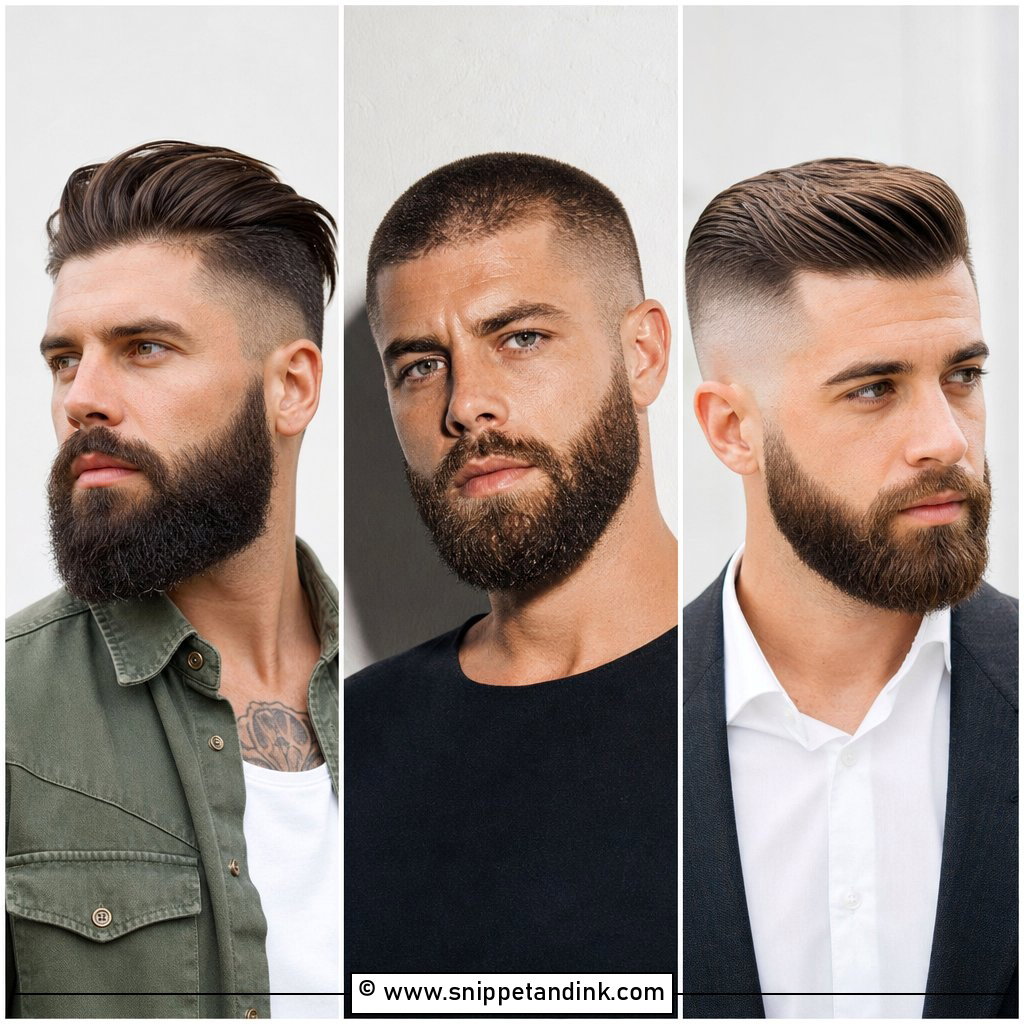
Beard, Sideburns and Neckline Should Agree
When a groom has a beard, I look at the hair and the beard as one shape. A tight skin fade next to a full, untrimmed beard makes the beard look heavier than it is, and the face looks bottom-heavy. The fade needs to blend into the sideburn so there’s no hard line where the hair stops and the beard starts.
- Ask your barber to blend the fade into the beard at the sideburns rather than cutting a straight line.
- Keep the neckline natural or gently tapered; a squared neckline that is cut too high can look severe above a collar.
- Don’t let the barber push the front hairline back with a sharp line-up; regrowth looks uneven within days.
Product That Lasts Through the Evening
Pomade, paste, clay and gel each behave differently by the tenth hour. Water-based pomade gives shine and washes out easily but can soften in heat. Oil-based pomade holds longer in humidity but is harder to rinse out and can leave a heavy look. Matte clay and paste give grip without shine and suit textured cuts. Gel sets hard, which is good for a slick back but can flake if you keep touching it.
My advice is to use on the wedding day the product you already know. A new product the morning of means you haven’t tested how much to use or how your hair reacts. Use less than you think; you can add a little more before the photos, but you can’t remove it without washing your hair.
Matching the Cut to Your Hair, Not the Photo
Every cut above depends on what your hair is actually doing: its texture, its density, the direction it grows. A fade asks for good timing, a pompadour for a blow-dry you can manage, curls for a cream and patience. Take photos to your barber, but ask honestly whether your hair can wear that shape, and book the final cut a few days before the wedding. That way you’ll walk in looking sharp and still like yourself.
You'll Like These Ideas:


Leave a Reply