
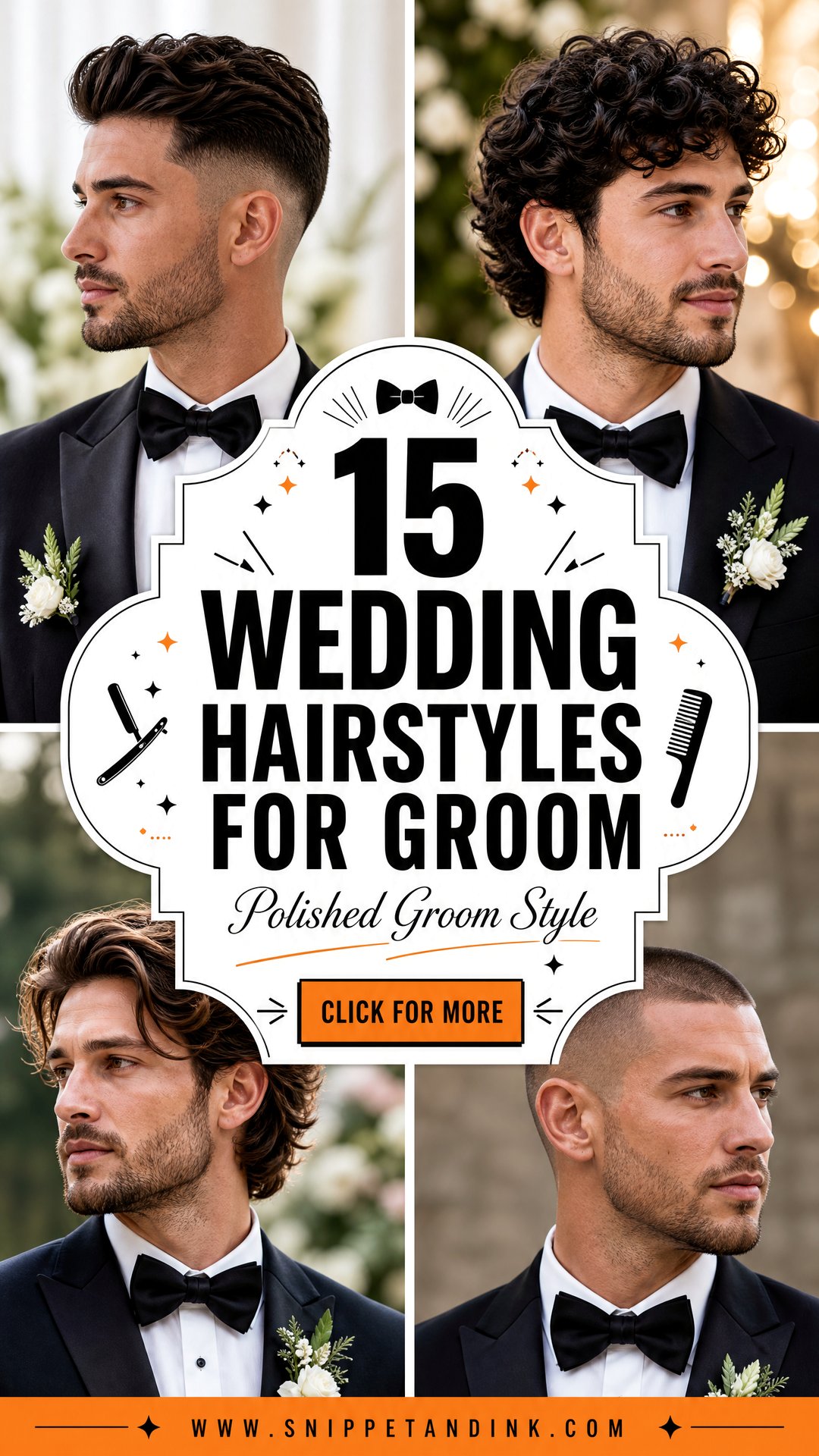
A groom’s hair gets photographed from closer than almost anything else he wears, and it has to hold from the first look until the last song. When I dress grooms, the haircut is the first thing I ask about, because it decides how the collar, the lapel and even the tie knot read in a portrait. The right cut is rarely the trendiest one. It’s the one that suits his texture, the way he already styles his hair on an ordinary weekday, and the formality of the outfit. Below are fifteen cuts and finishes that work on a wedding day, with notes on who each one suits and where it tends to go wrong.
Spacing Barber Visits So the Cut Looks Settled, Not Fresh
The grooming mistake I run into most is a groom booking one haircut, two days before the wedding, with a barber he has never sat with. If the result is too short or the fade sits too high, there’s no time to grow it back. A calmer plan looks like this:
- Six to eight weeks out: get the cut he intends to wear, then photograph it from the front, side and back. That appointment is his trial.
- Three to four weeks out: a shape-up to correct anything that bothered him in those photos. Longer styles like the half-up or the bun only need their ends trimmed here.
- Two to five days out: the final cleanup. Fades and buzz cuts belong at the short end of that window, longer cuts at the far end.
- The morning itself: a neckline and edge tidy at most. No new decisions about length.
If he’s changing style for the wedding, growing out for a slick back or a bun, start three to four months ahead. Hair grows only about half an inch a month, and the awkward in-between stage has to pass before the photos, not during them.
Show the barber the collar
Bring a photo of the suit or the shirt itself. A wing-collar tux or a high-collared sherwani sits close to the nape, and a blunt neckline that looks fine above a T-shirt can look abrupt right above a stiff collar. A tapered nape blends into it far better.
1. Classic Side Part Wedding Hairstyle For Groom
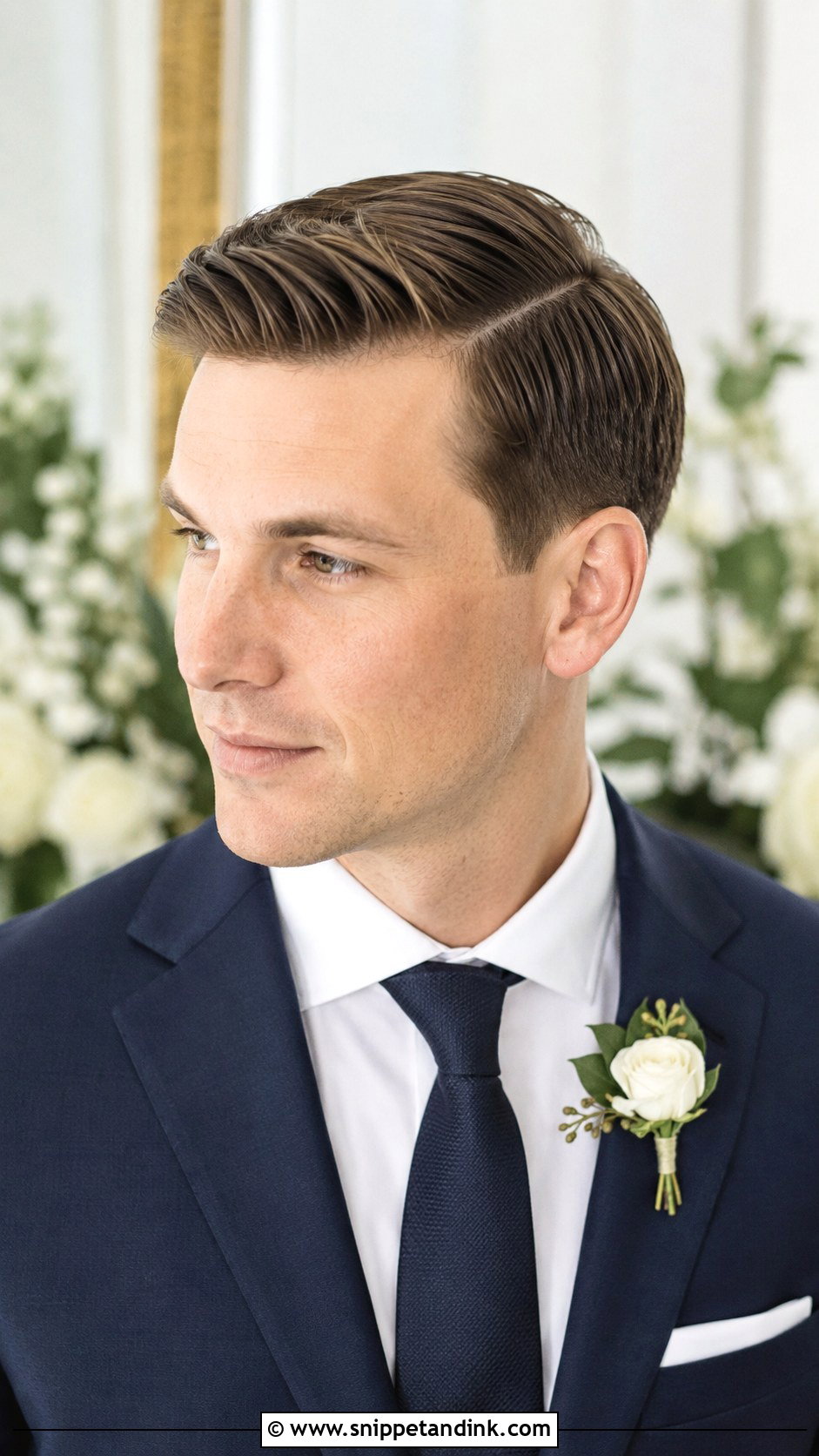
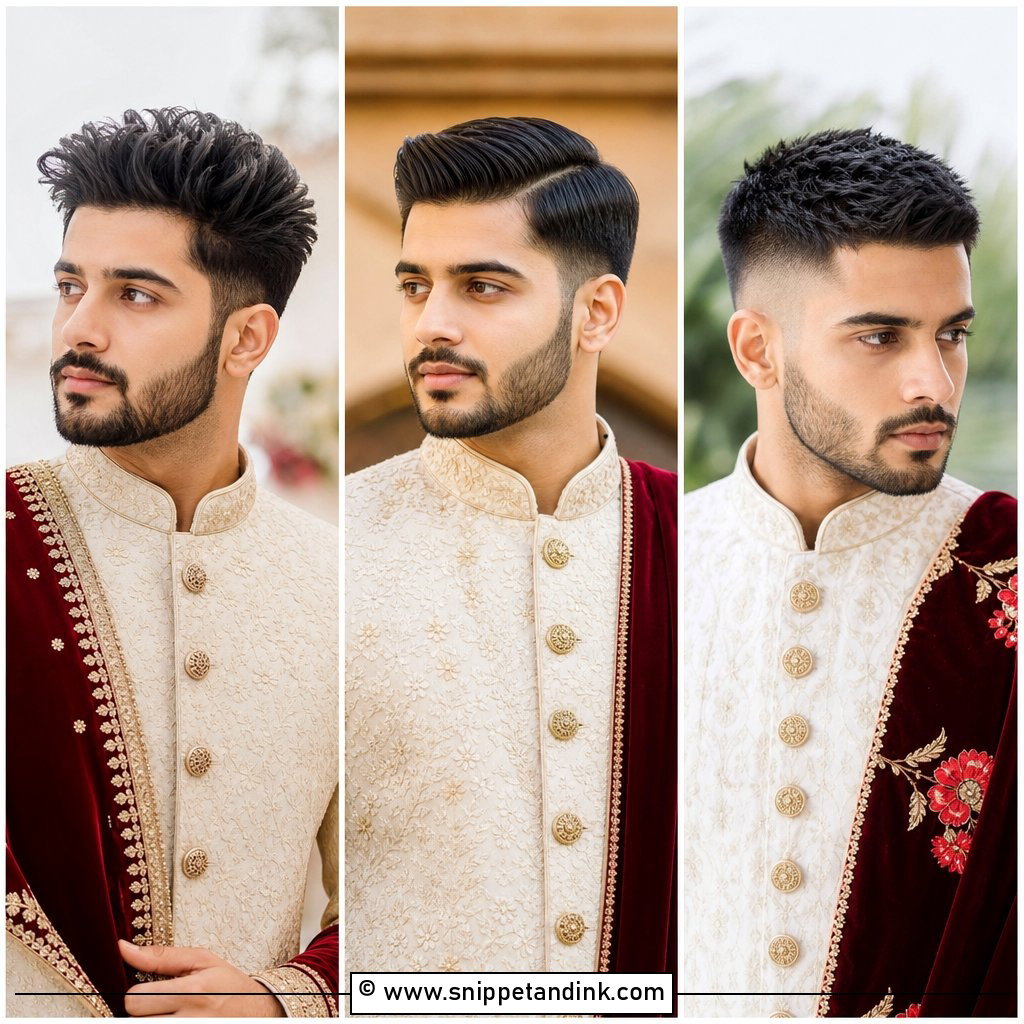
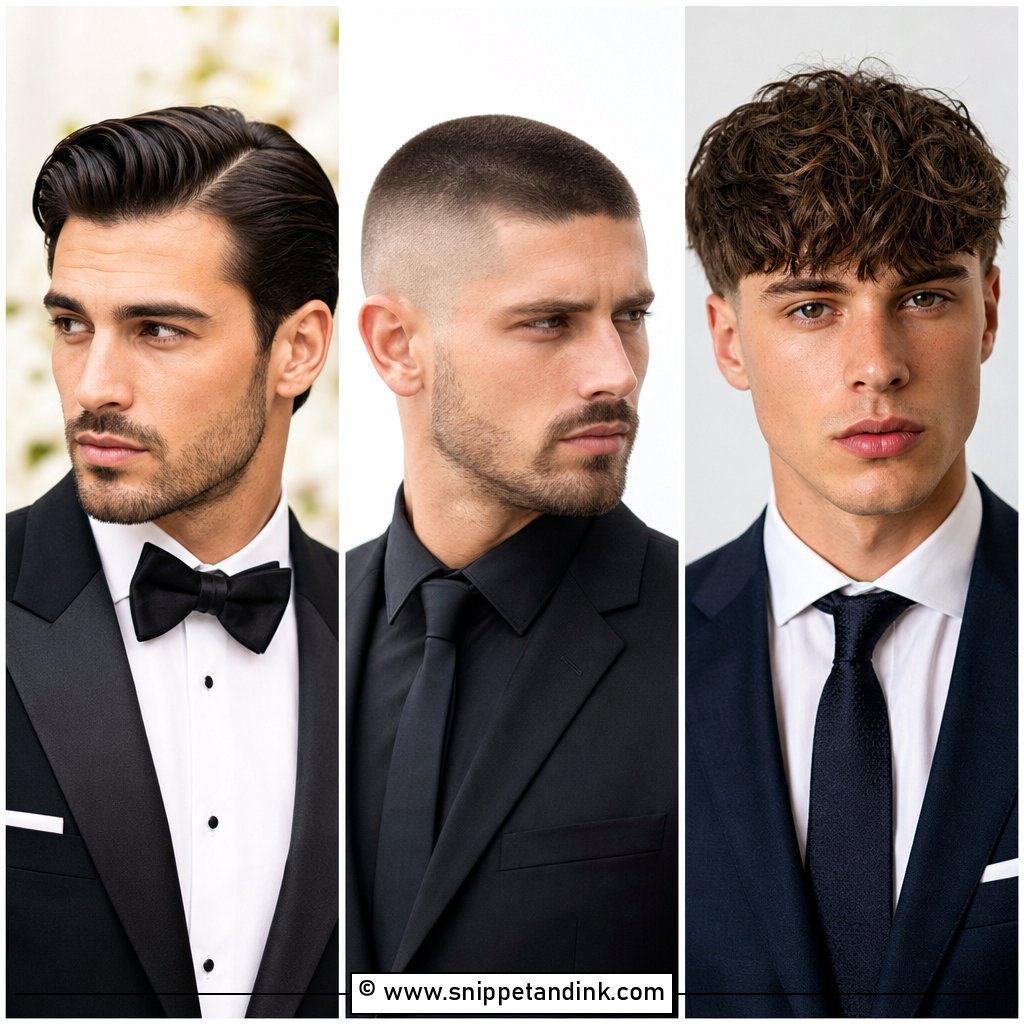
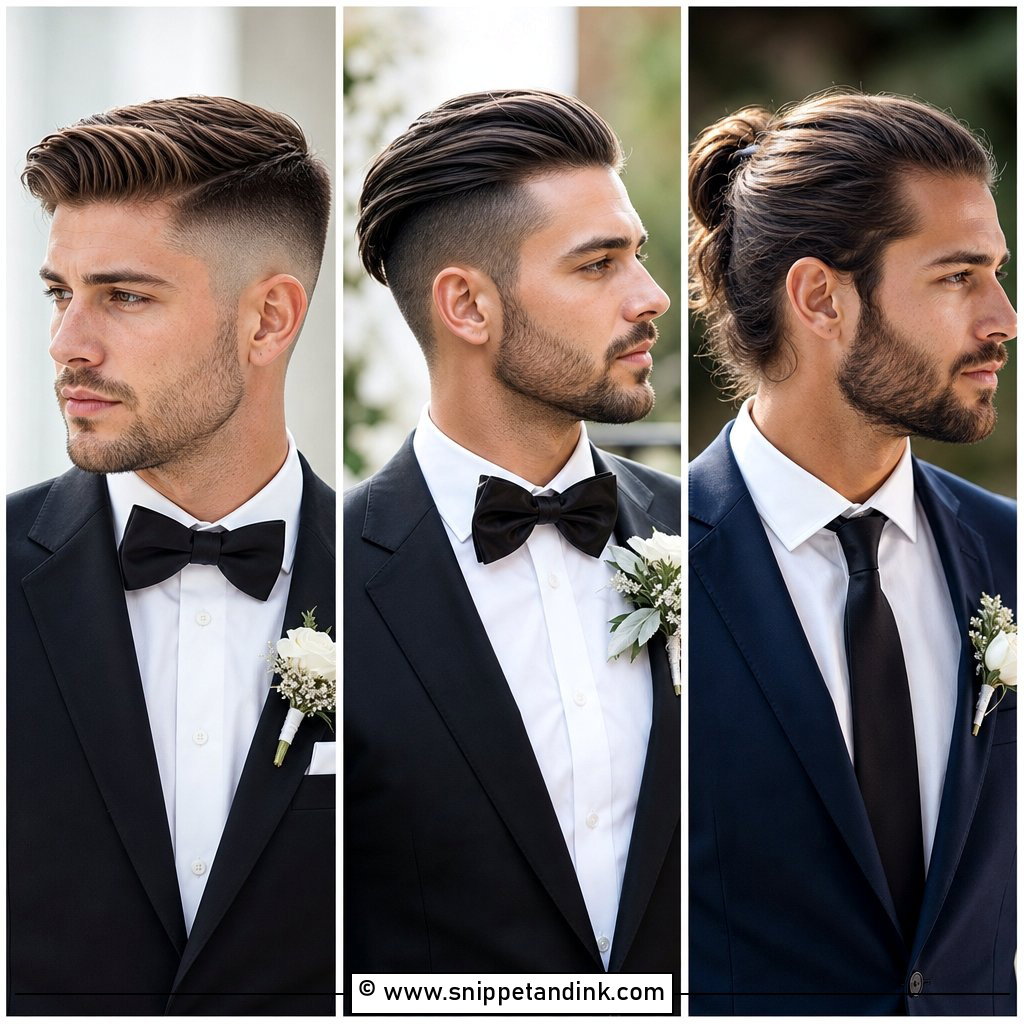
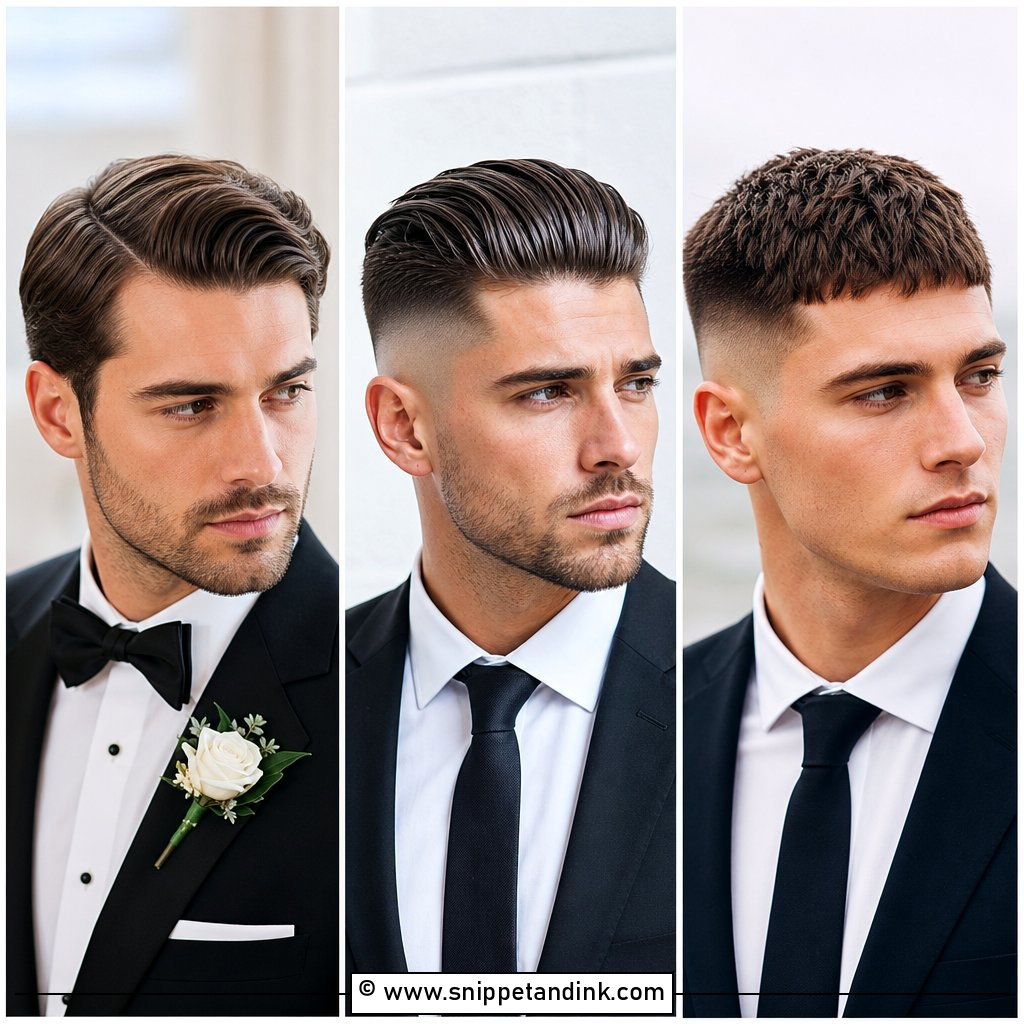
Of every cut here, the side part is the hardest to get wrong with a tuxedo, a three-piece suit, a sherwani or a tailored jacket, because it reads neat without looking stiff. Put the part where the hair naturally separates. Forced to the other side, it fights back by the reception. A lightweight pomade or cream gives soft hold that still moves. Straight, wavy and medium-thick hair take it best, and it stays tidy in close portraits from either side. Ask your barber for tapered sides, a blended neckline and enough length on top to sweep over cleanly.
2. Textured Quiff Wedding Hairstyle For Groom
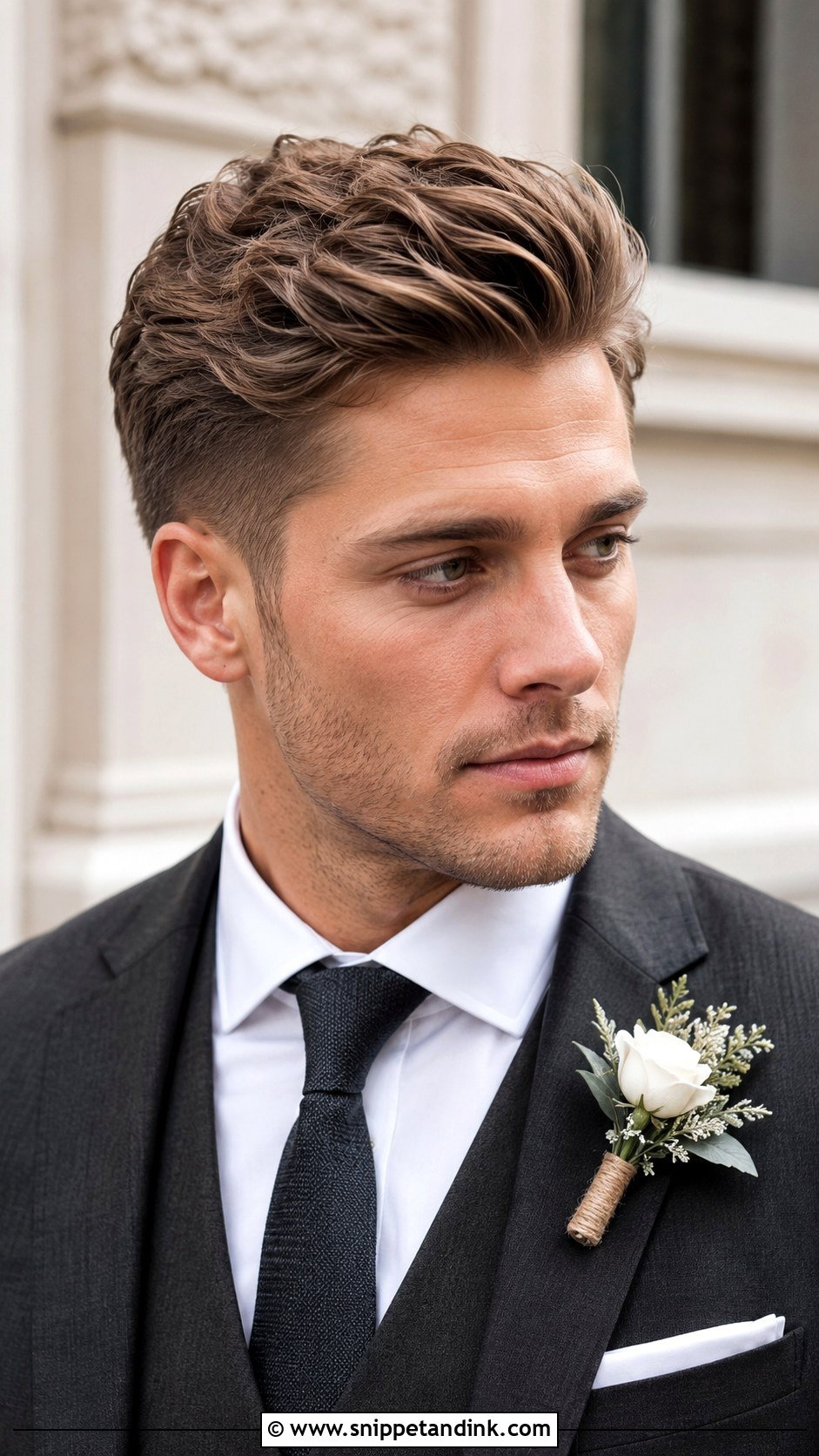
A textured quiff gives height and movement without tipping into drama, so it sits comfortably at a black-tie dinner or in a barn. The front lifts up and slightly back, and the top keeps visible separation rather than a hard, glossy shell. It needs medium to thick hair with some natural body. On fine hair the height collapses within a couple of hours unless it’s blow-dried in first. I’d use a matte clay or paste here and skip anything shiny, then pair it with a taper or low fade so the profile stays sharp above a high shirt collar.
3. Low Fade Wedding Hairstyle For Groom
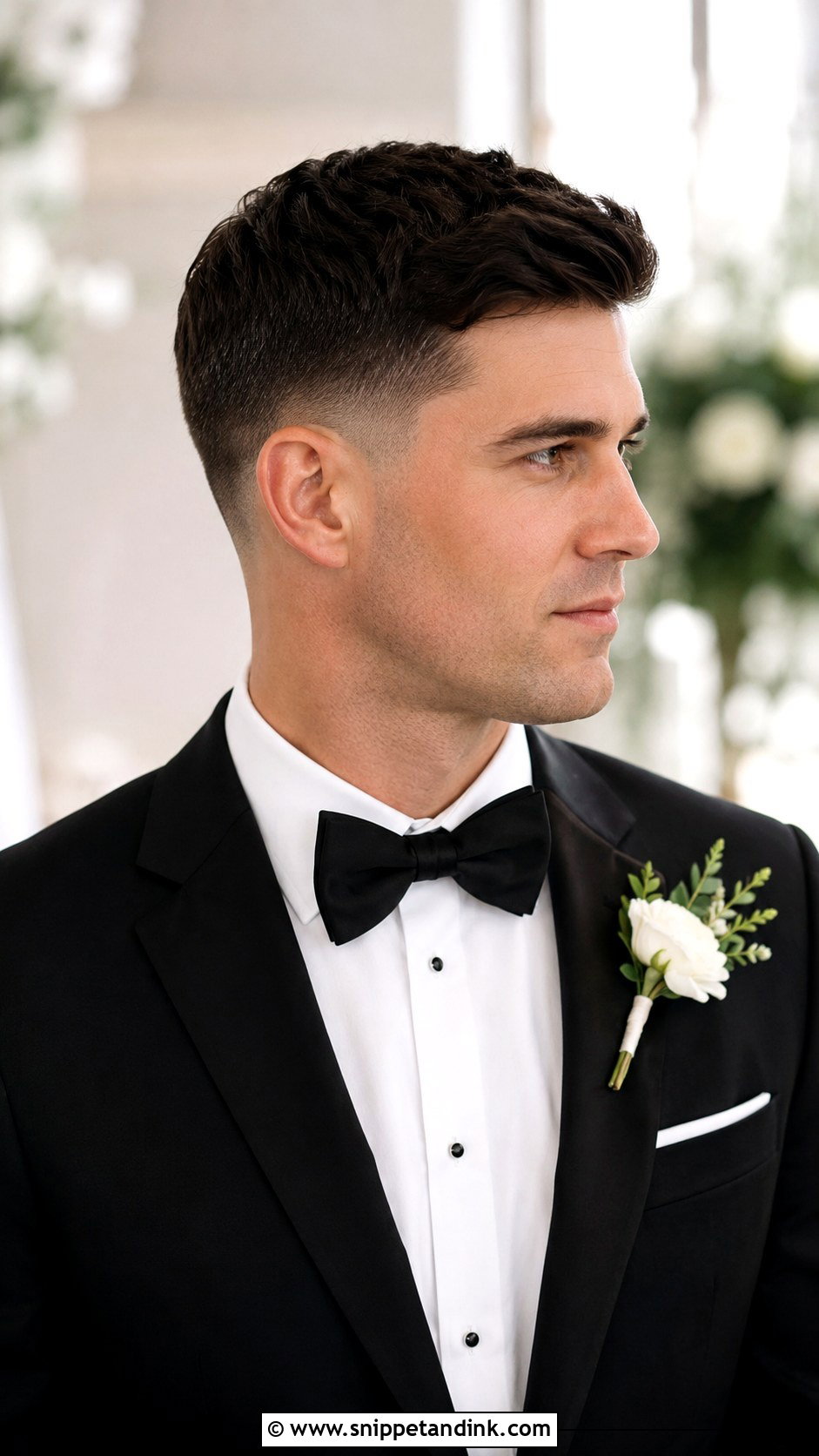
A low fade is one of the quickest ways to make a groom’s haircut look deliberate. It starts low near the ears and blends up into fuller hair, so the outline is clean without showing much scalp, which matters when the photographer shoots him in profile at the altar. The top stays flexible and can carry a side part, a crop, curls or a brushed-back shape. Book the final fade two to five days out. Faded hair grows quickly enough that a cut done two weeks early already looks soft at the edges.
4. Taper Fade Wedding Hairstyle For Groom
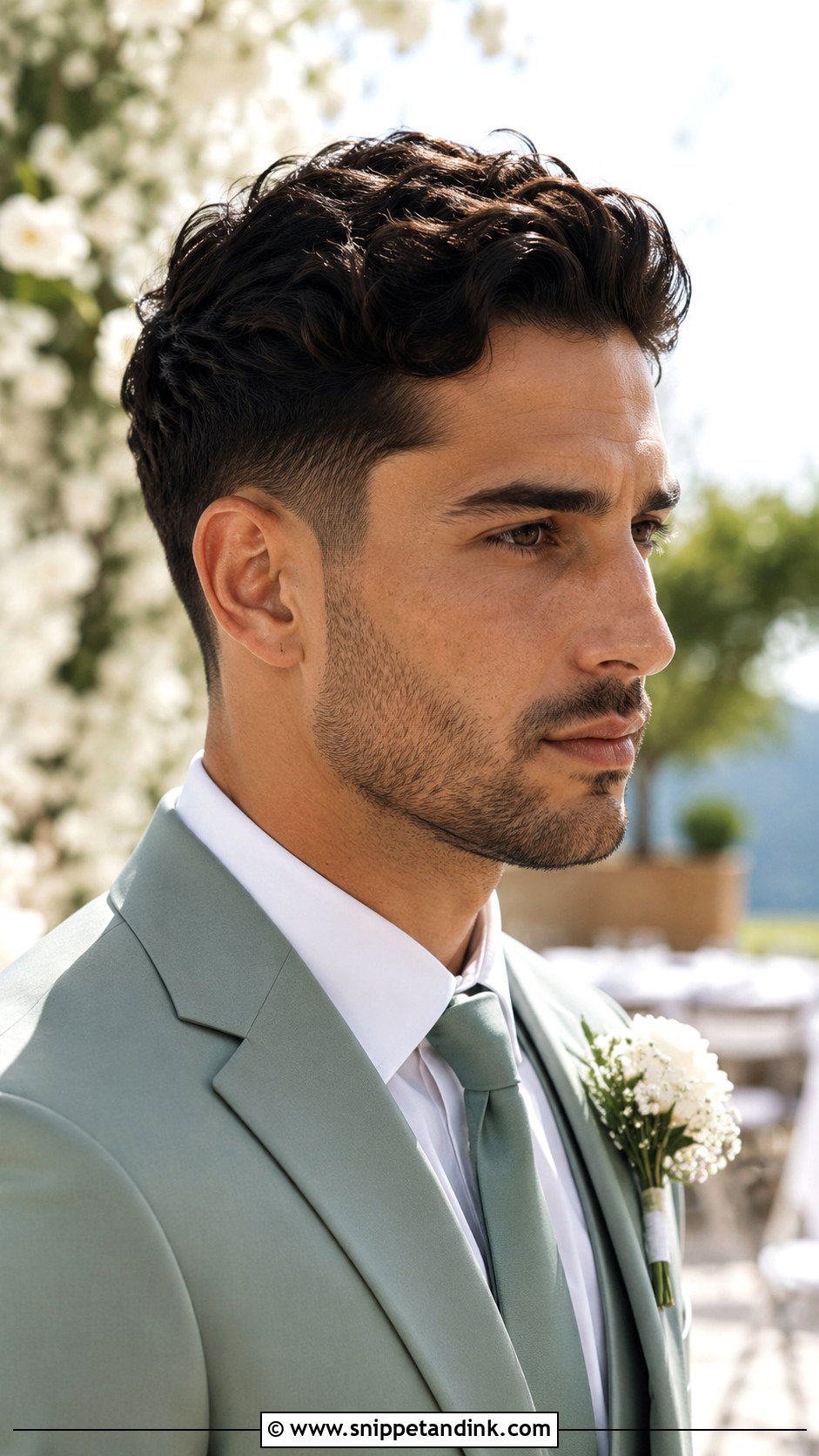
If a full fade feels too sharp, a taper is the gentler version. Only the sideburns and neckline shorten, while the rest of the cut stays fuller and classic. I like it for grooms who worry about their photos dating, since a taper still reads as a normal good haircut decades later. It suits nearly every hair type and pairs with curls, waves, a side part or a brushed-back top. Finish with light hold, so when his partner reaches up during the first dance, she finds hair rather than crunch.
5. Slick Back Wedding Hairstyle For Groom
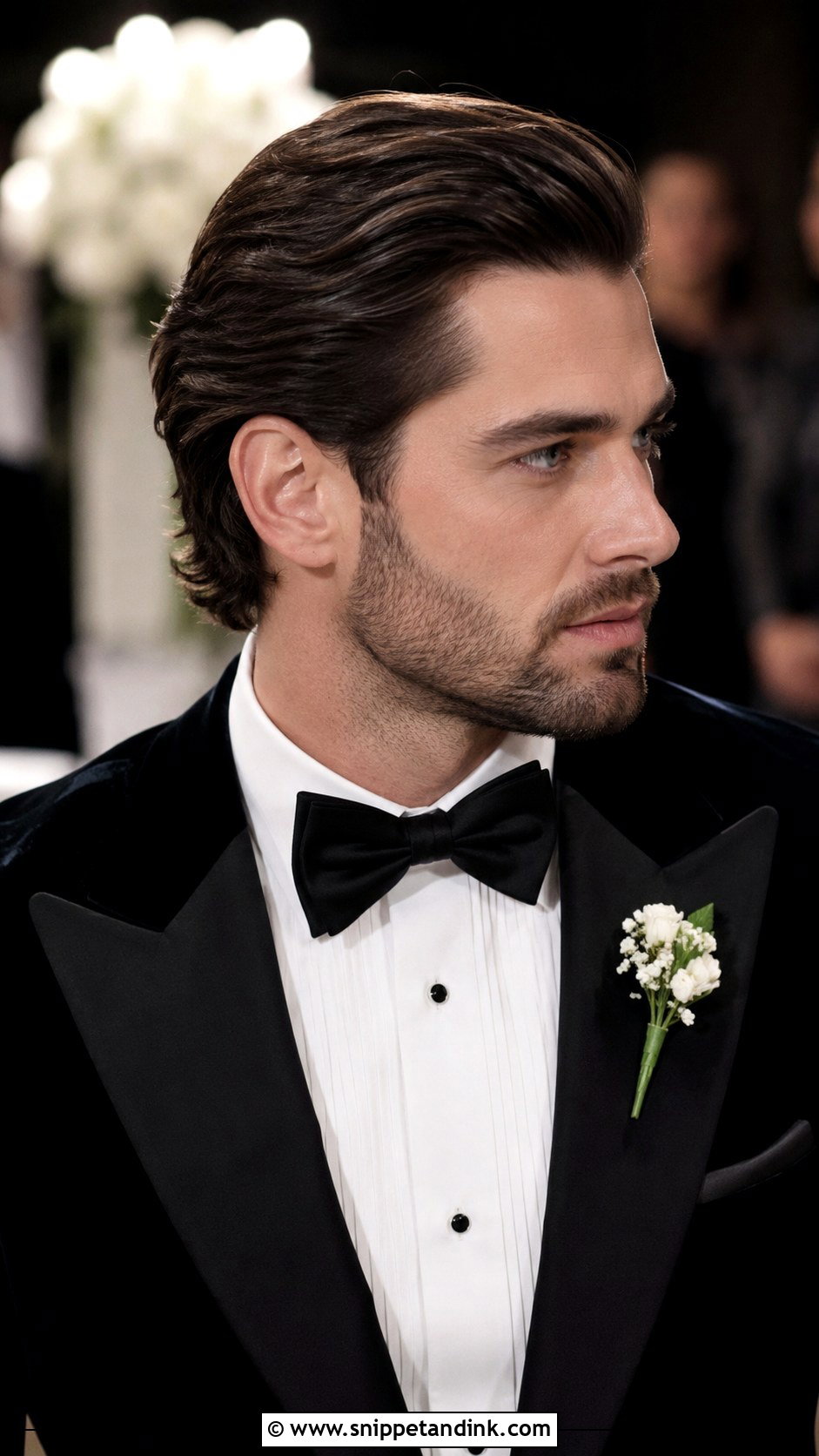
The slick back needs real length on top, enough that the hair lies backward under its own weight instead of springing up at the crown. Sides can be tapered, faded or left medium for a more classic feel. My main warning is heavy gel: under flash it looks wet, and by evening it can flake onto a dark jacket. A flexible pomade or grooming cream gives control with a soft shine instead. It belongs with black suits, velvet jackets and evening receptions, and because it keeps the face fully open, nothing shadows his eyes in the vow photos.
6. Curly Wedding Hairstyle For Groom
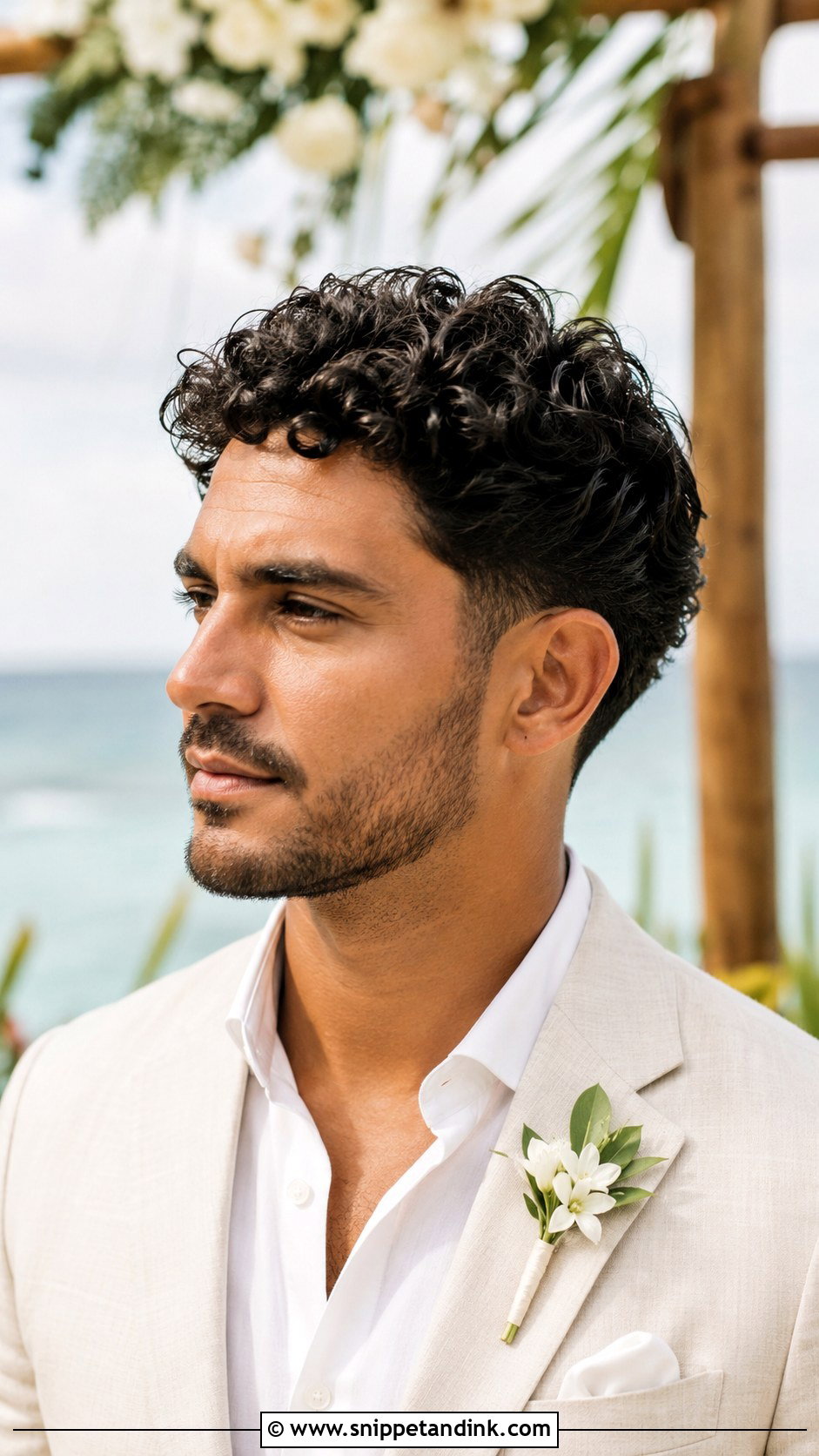
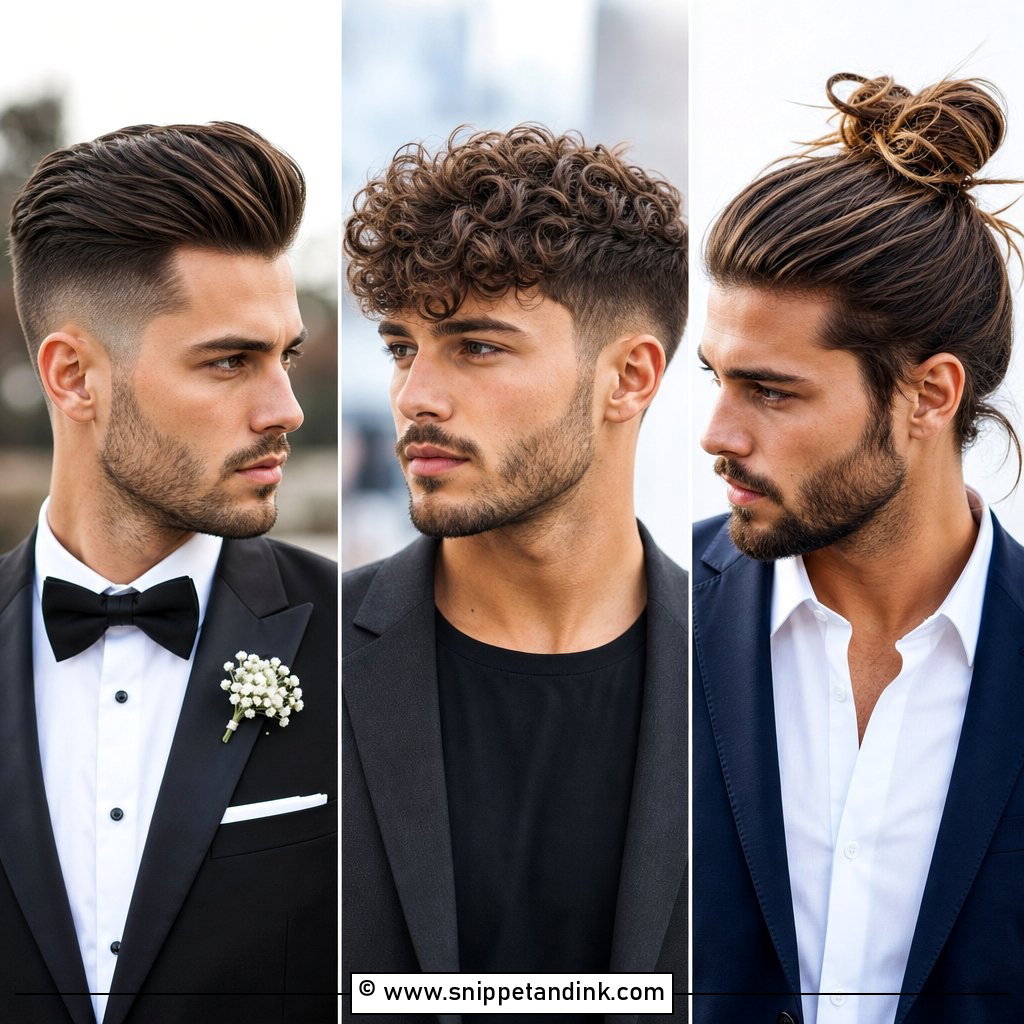
With curls, the mistake I try to head off is a groom attempting to flatten them for the day. They push back the moment the room warms up. A good barber trims the sides and back and leaves the top full enough to show the pattern. After that it comes down to moisture. Curl cream, leave-in conditioner or a light gel applied to wet hair, then left to dry untouched, holds shape far longer than product added once the curls are dry. He’ll look polished and still like himself, at a garden wedding or a formal hall.
7. Wavy Wedding Hairstyle For Groom
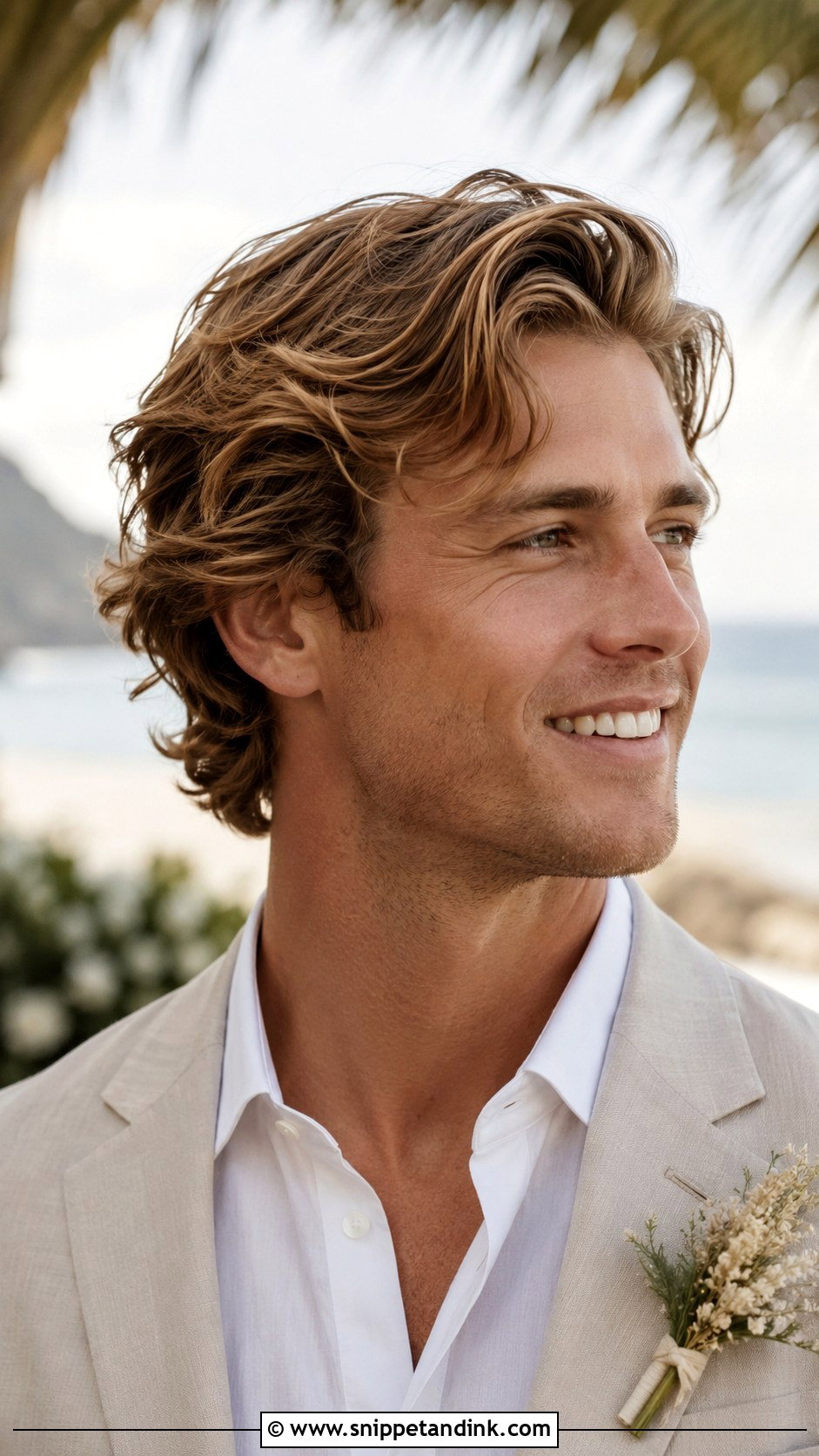
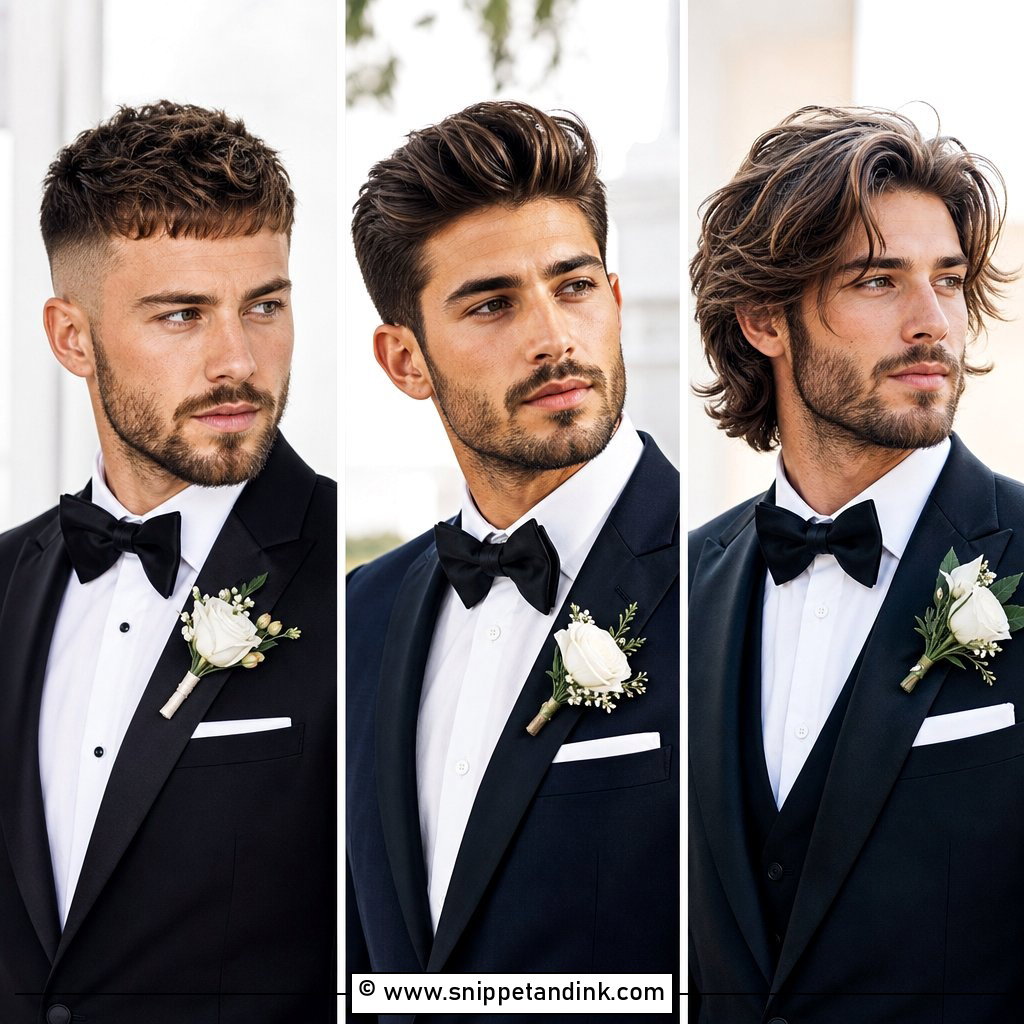
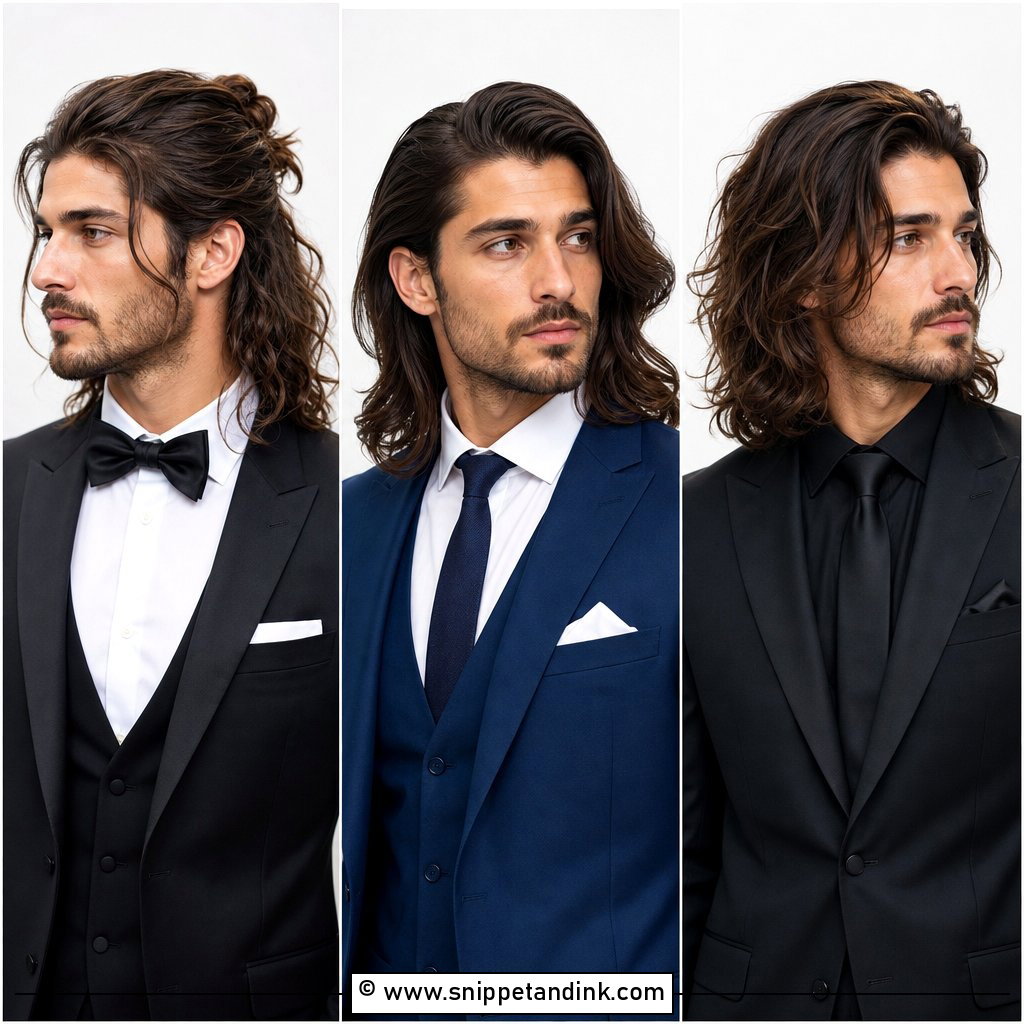
Soft waves suit medium-length hair that already bends on its own. The aim is controlled texture, not volume. Some layering helps the waves sit rather than puff, and a small amount of styling cream gives shape with light hold, whether the front is pushed back, parted or left loose. Know that waves react to humidity more than straight hair does, so a groom marrying on a beach should test his product on a damp day beforehand. With a linen suit at a rustic venue, this cut adds character without competing with the outfit.
8. Man Bun Wedding Hairstyle For Groom
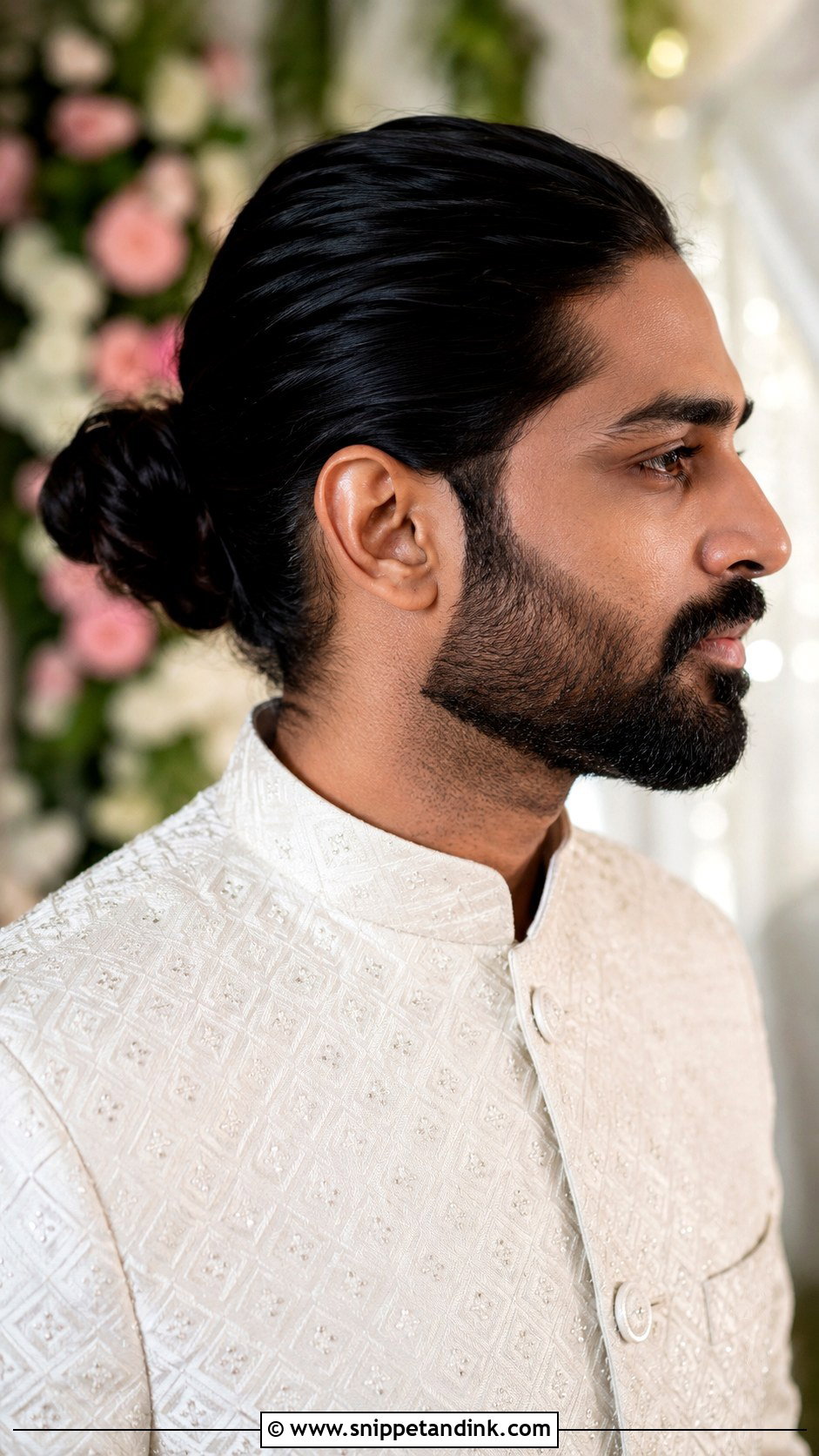
A man bun reads as wedding hair only when the hairline is smooth and the bun is secure. A low bun at the nape looks more formal, but check it with the jacket on: if it sits right on the collar, it gets shoved upward every time he leans back in a chair. A bun at the crown clears that and reads more relaxed. Don’t tie it tight, because a tension headache by the speeches is common. Trim the neckline, shape the beard if worn, and use a little smoothing cream on flyaways. It sits naturally at bohemian weddings, cultural ceremonies and outdoor celebrations.
9. Long Hair Half Up Wedding Hairstyle For Groom
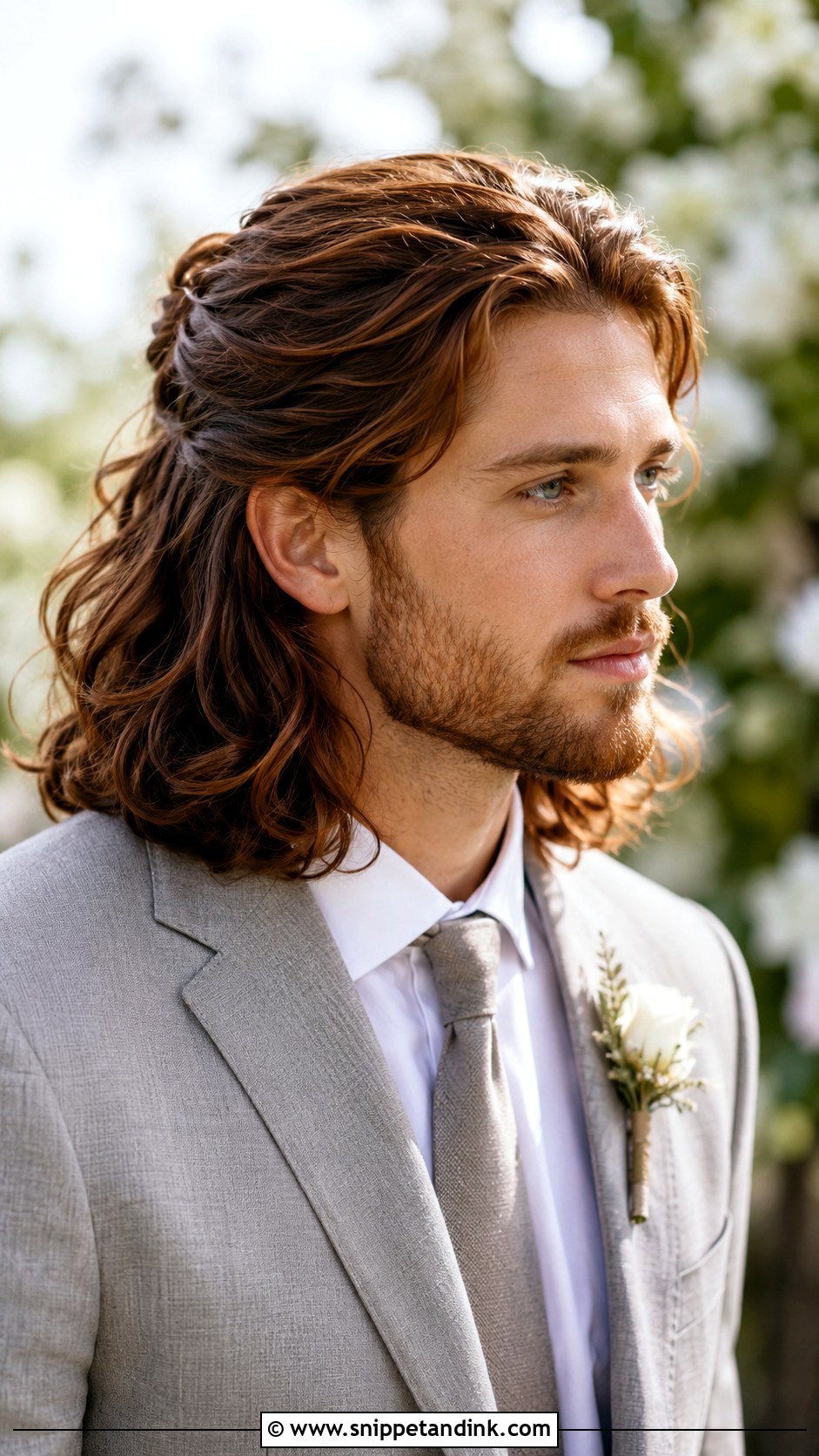
Long hair looks refined at a wedding when it has shape and shine. A half-up style takes the top section back loosely and lets the rest fall over the shoulders, so the face stays clear and the length still shows. Straight, wavy and curly long hair all suit it. The weeks before matter most. Trim dry ends two to three weeks out and use a conditioning mask, because split ends show clearly against a dark jacket. I’d tie it with a soft fabric elastic rather than a band with a metal clasp, which snags when he takes it down later.
10. Buzz Cut Wedding Hairstyle For Groom
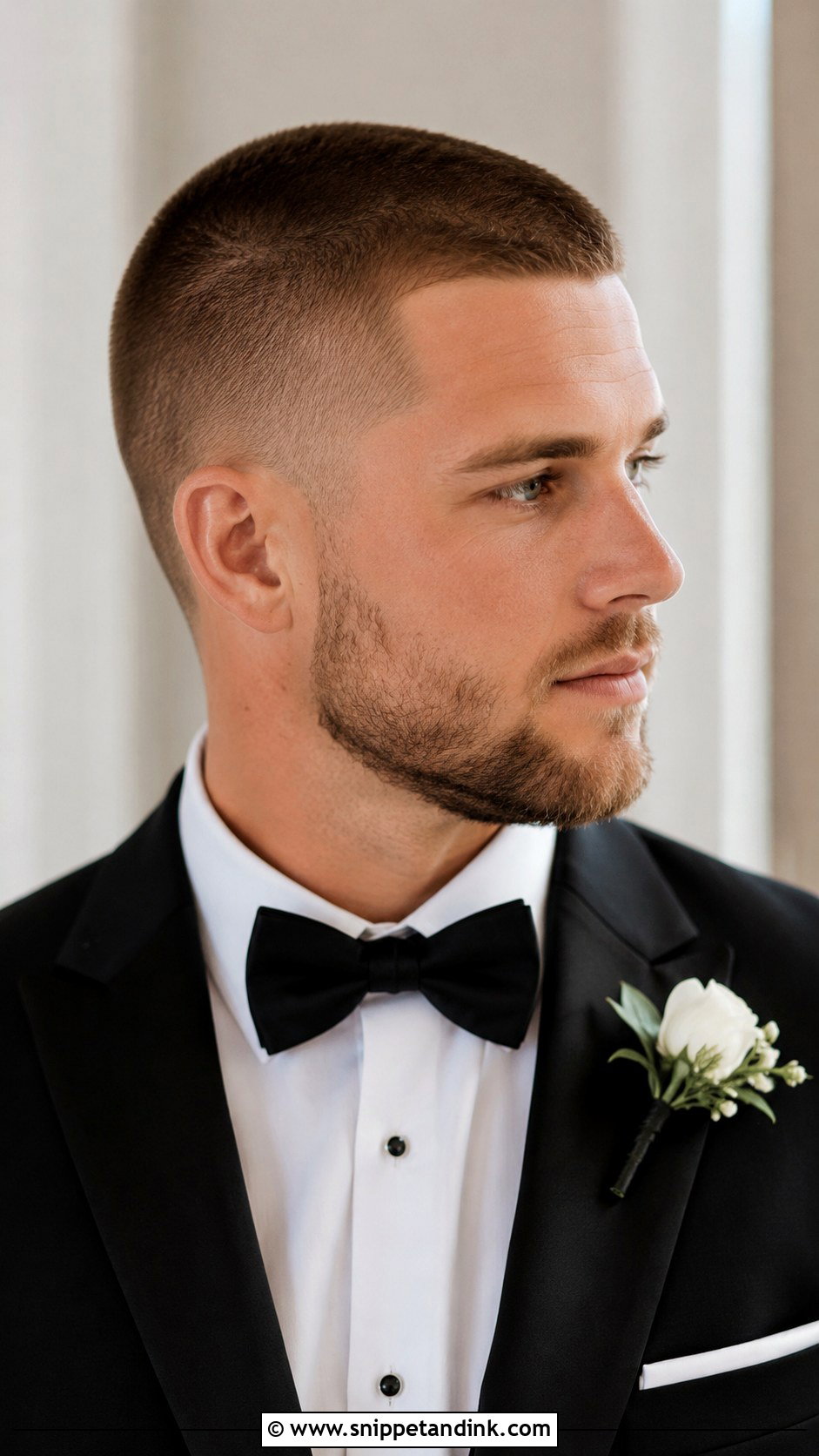
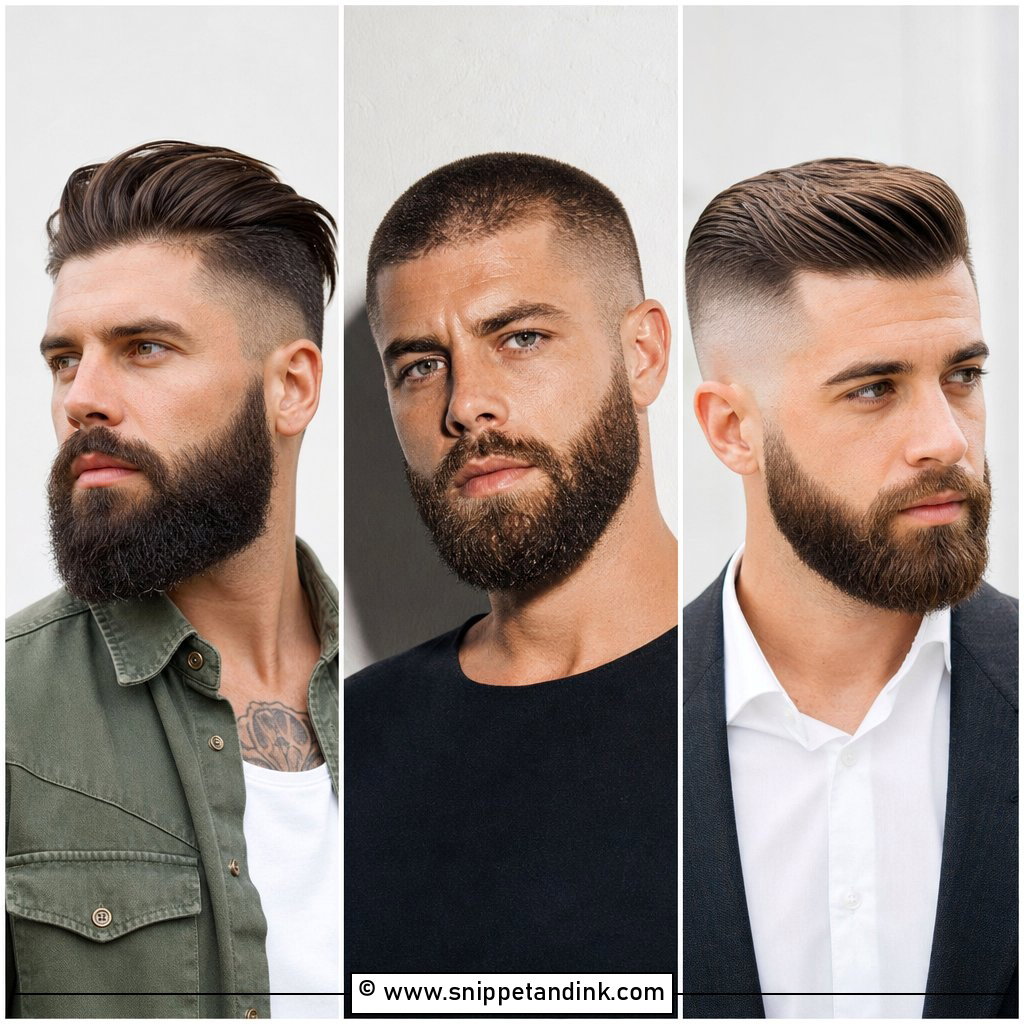
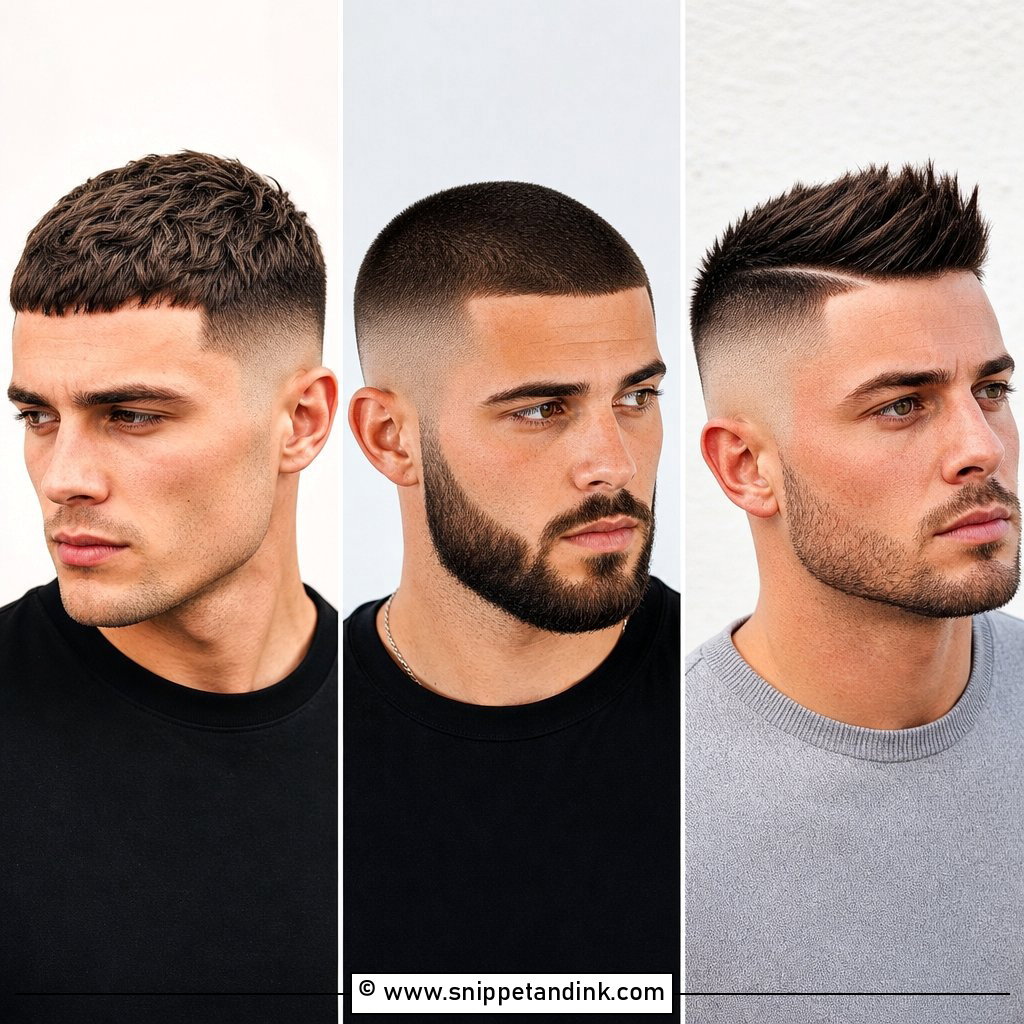
A buzz cut looks sharp at a wedding when every detail is clean: even length, crisp edges and a neat neckline. It suits strong features and well-groomed beards, and with a tailored suit it reads intentional rather than casual. For a softer version, ask for a slightly longer guard on top with a light taper at the sides. The catch is timing. A buzz done the morning of the wedding often shows pale or pink skin along freshly cut lines in close-ups, while a trim a few days earlier settles and still looks fresh.
11. Comb Over Wedding Hairstyle For Groom
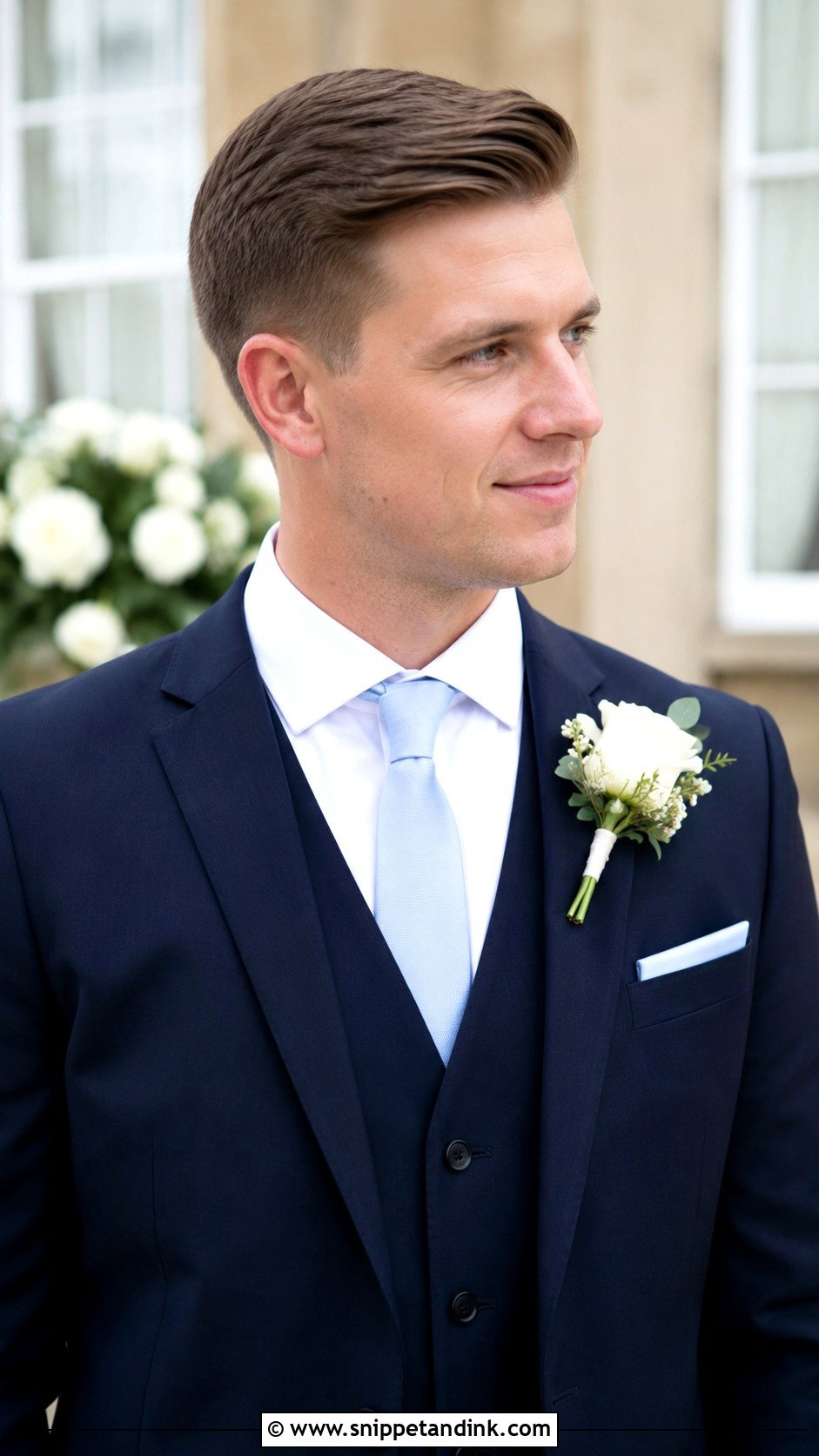
The comb over gives structure without severity on short to medium hair, especially if the top keeps some texture. Hair is directed to one side, with the sides tapered or faded for a cleaner frame. I often suggest it to grooms who are thinning on top, because a matte product makes the hair look fuller, while shine lets the scalp show through under flash. Keep the finish natural. In daylight photos, a high-gloss comb over dates the whole look.
12. Pompadour Wedding Hairstyle For Groom
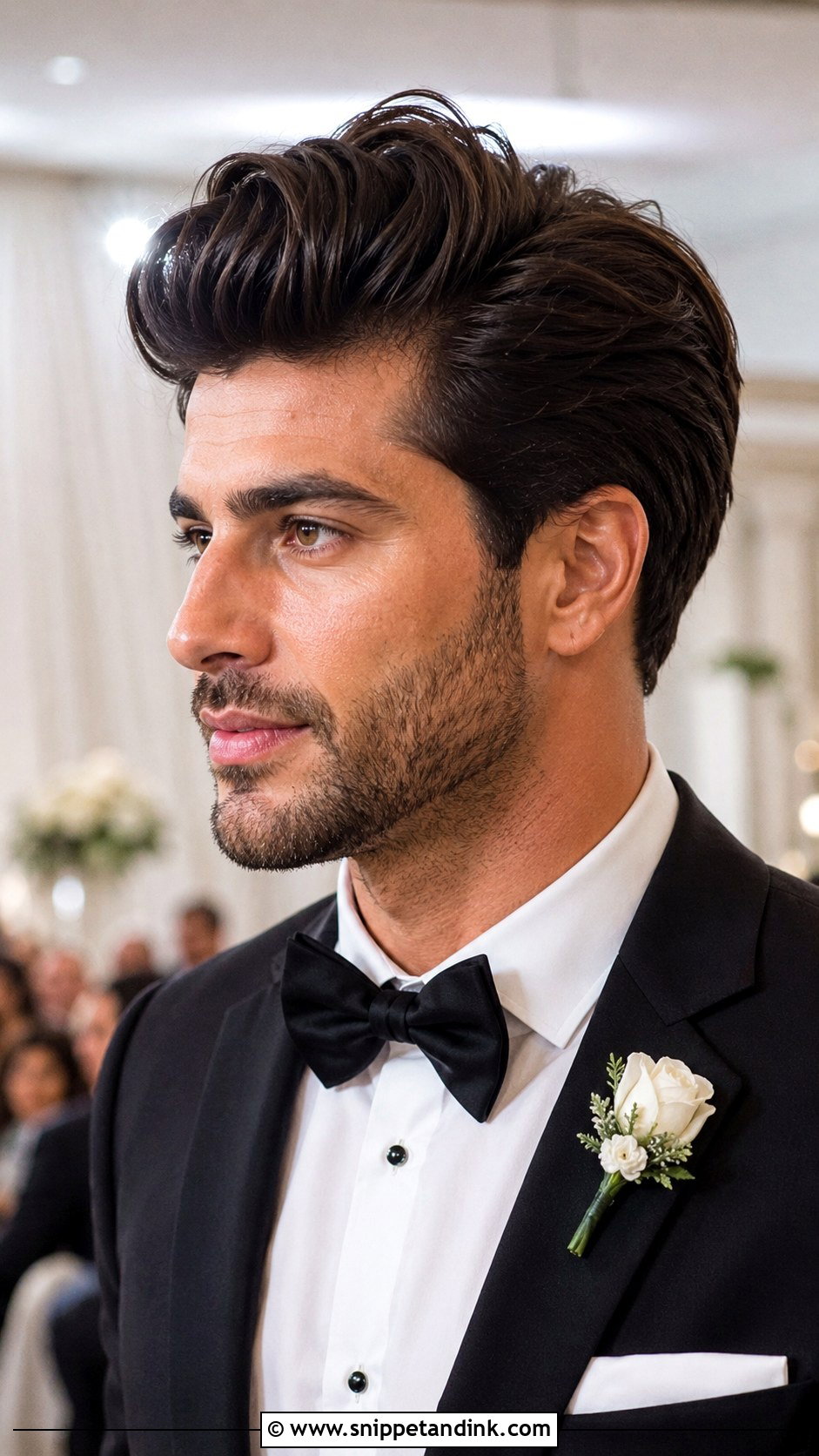
The pompadour carries more height than anything else on this list: the front is lifted and swept back into a shape that shows in every portrait. It needs thick hair and real length on top, and fine hair simply won’t support it through a long day. Sides can be tapered for a classic finish or faded for a modern edge. Because the pompadour relies on structure, it has to be built with a blow dryer, a round brush and firm but flexible product, so a groom who doesn’t style it himself every week should have his barber set it that morning. It’s at home at black-tie and with retro tailoring. Smooth, never stiff.
13. Crew Cut Wedding Hairstyle For Groom
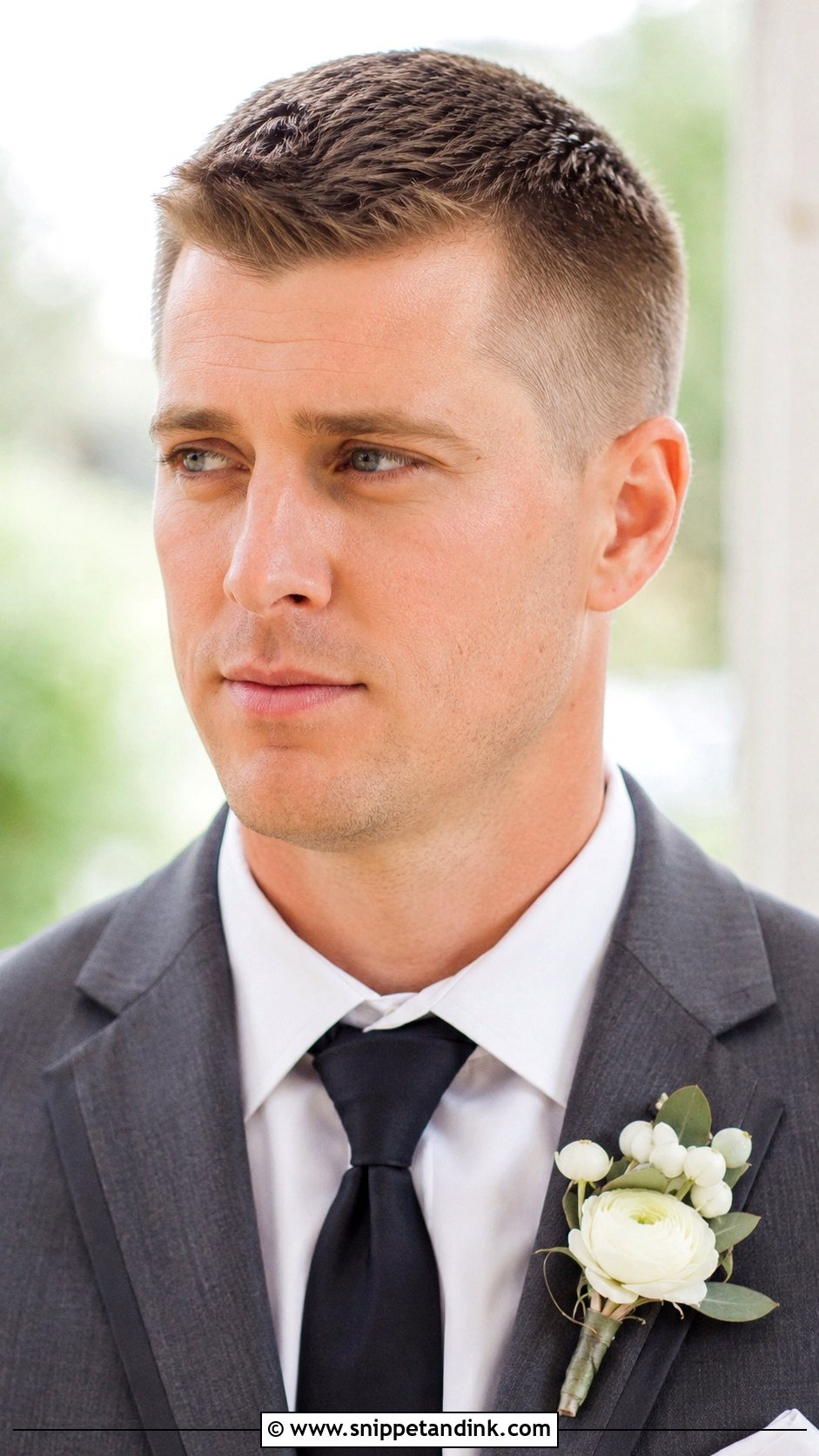
For a groom who wants short hair and no fuss, the crew cut is the honest answer. It keeps slightly more length on top than a buzz, so there’s something to shape, brushed forward or roughed up with a tiny amount of matte product. It suits a formal hall, a courthouse ceremony or a field just as well. Its real advantage shows late in the evening: there’s nothing to collapse. Finish with a clean shave or a shaped beard.
14. Afro Fade Wedding Hairstyle For Groom
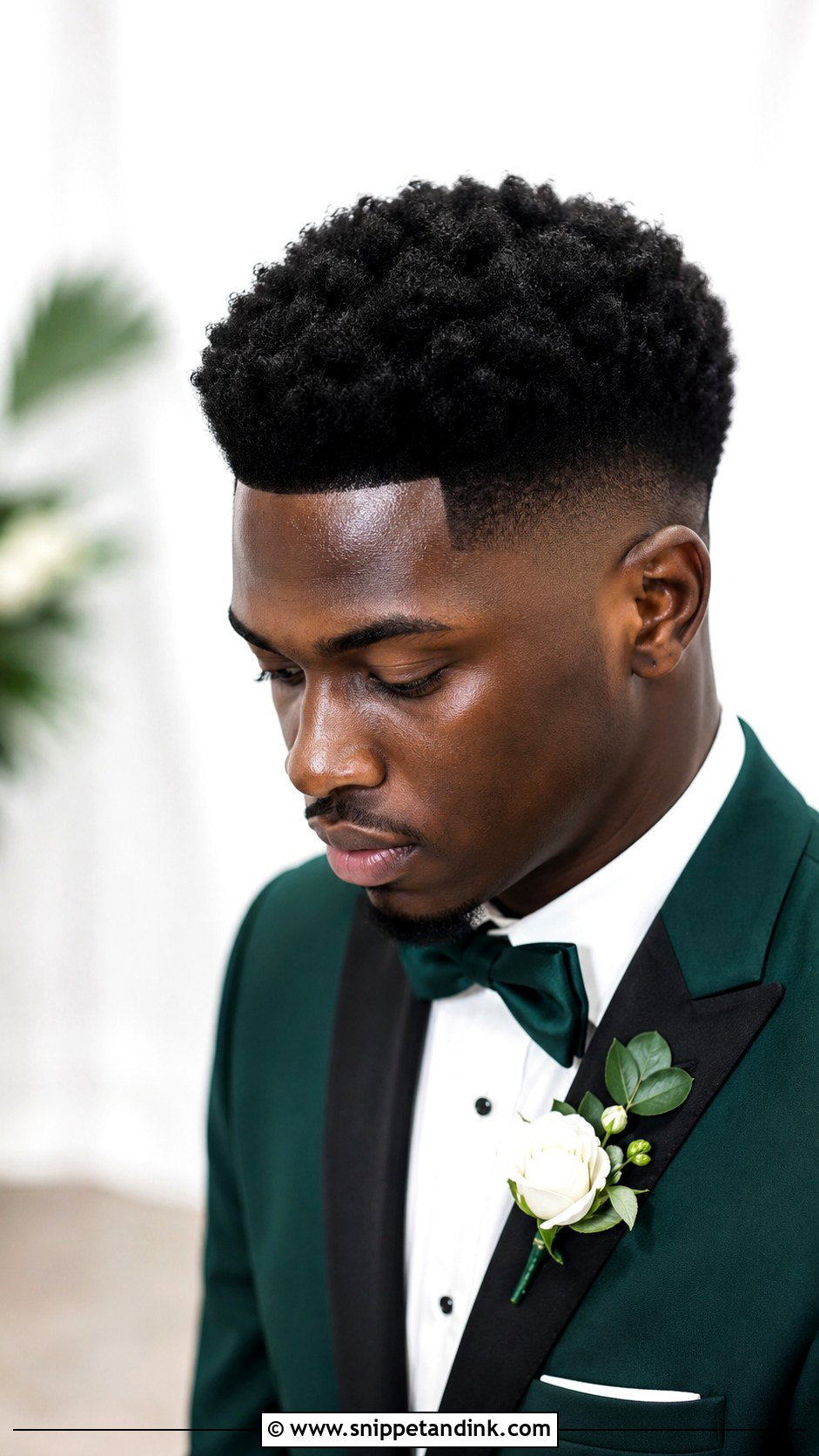
An afro fade keeps natural texture front and center while the faded sides keep the silhouette sharp. The top holds rounded volume and defined shape, so coily and kinky hair gets structure without losing its pattern. Moisture comes first. A leave-in conditioner or styling cream, plus a curl sponge if he uses one, keeps the top from going dull by evening. Ask for a fresh outline that isn’t razor-hard, since an overly sharp line-up can look drawn on in close photos. It sits well with a tuxedo, a modern suit or traditional wedding clothes.
15. Cornrows Wedding Hairstyle For Groom
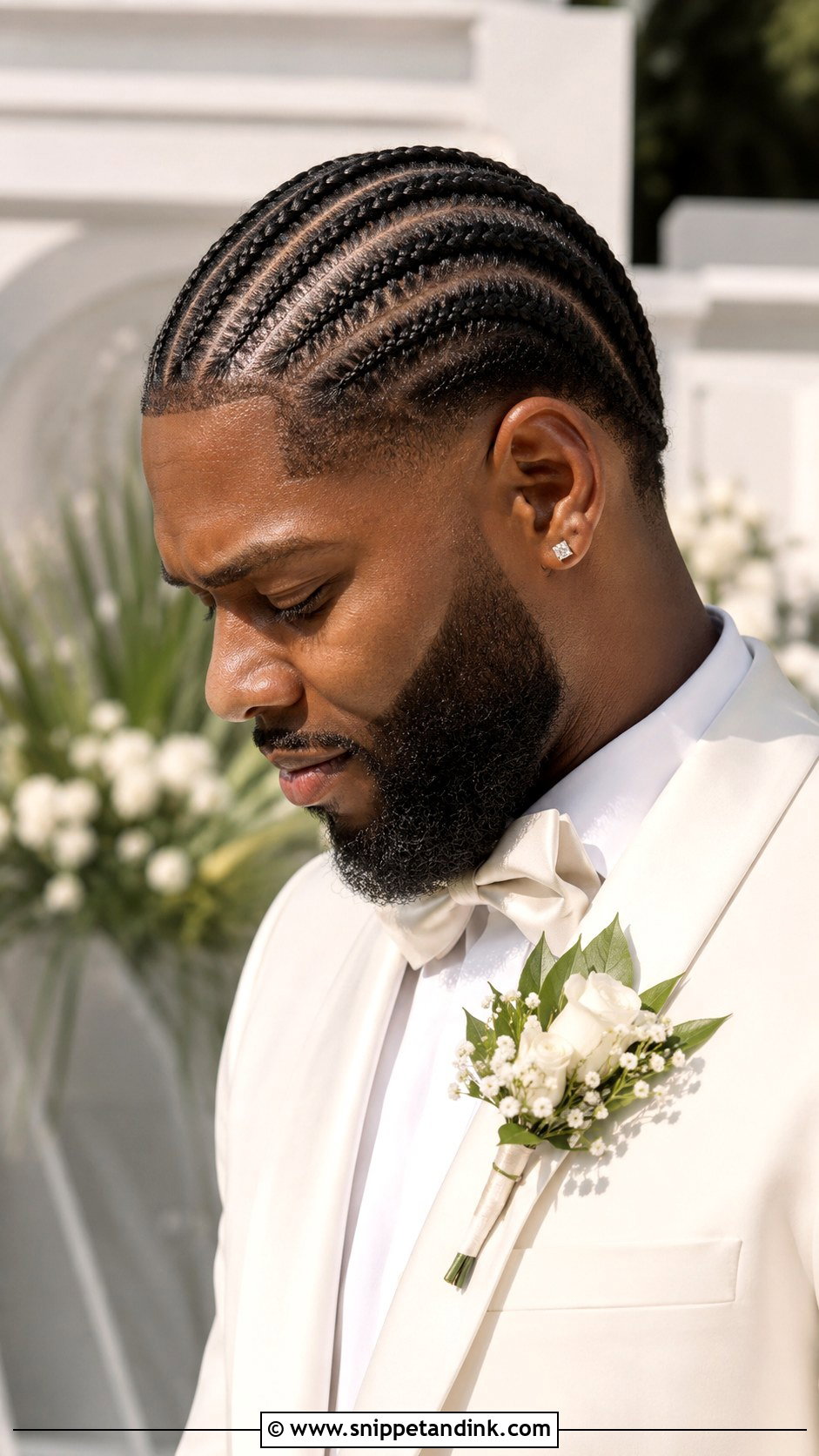
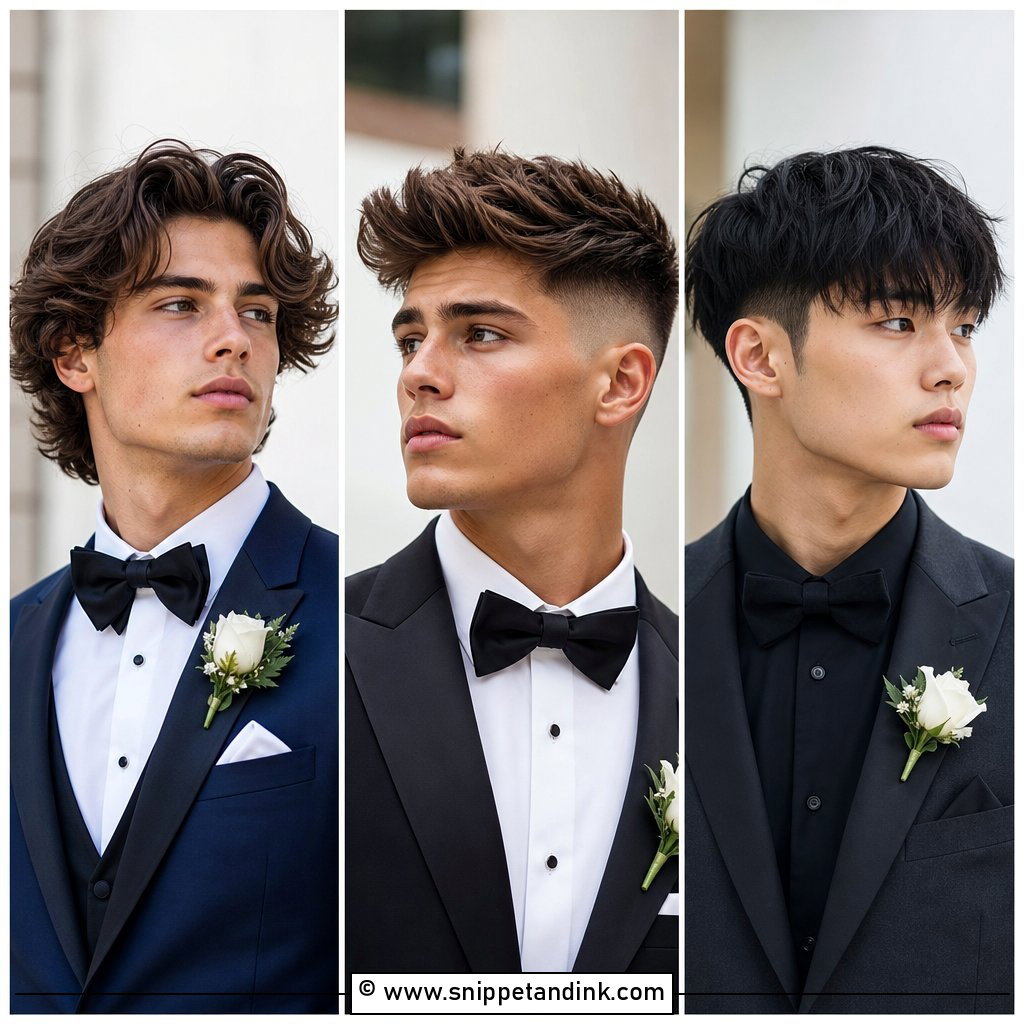
Cornrows stay controlled from the ceremony to the end of the night, which makes them one of the most practical choices for coily or kinky hair, especially in heat or at a destination. The braids can run straight back, follow gentle curved parts, or finish in a low bun if the hair is long. Book an experienced braider a few days before the wedding rather than the day before. Fresh braids often feel tight and tender, and the scalp needs a little time to settle. Keep it moisturized afterward, and let a lined beard and fresh taper frame the pattern.
Hold, Sweat and Hugs Over a Long Wedding Day
Groom hair gets handled more than people expect. Hats come off, uncles ruffle it, he wipes his forehead under a summer tent, and the first dance usually happens after hours of hugging. Product choice decides whether it recovers.
Matching product to the hair he has
- Straight or fine hair: a matte clay or light paste. Heavy creams weigh fine hair down until it separates into strands by evening.
- Thick or wavy hair: a medium-hold pomade or cream, worked through damp hair before blow-drying so the hold starts at the root.
- Curly and coily hair: leave-in plus curl cream or a light gel on wet hair, then hands off until it’s dry.
- Very short cuts: barely anything. A pea-sized amount covers a crew cut.
Have him wear the exact product to work a week before. If it itches, flakes or goes flat by lunch, there’s still time to swap.
A reset kit for the best man’s pocket
I hand a groomsman a pocket comb, a travel tin of the same product and a pack of blotting papers. A shiny forehead shows up in flash photos sooner than untidy hair does, so a quick press with a blotting sheet and one pass of the comb before the portraits fixes most of what the day has done.
Settle the Cut Before the Final Suit Fitting
Any of these cuts can work. The one that will is the one that suits his texture and the way he already wears his hair. A side part, taper or crew cut stays classic. A quiff, pompadour or slick back carries more attitude. Curls, waves, afro fades, cornrows, buns and half-up styles keep his natural texture in the picture. Whichever he picks, test it early. I like the main cut decided before the last suit fitting, so collar and lapels are judged against the hair he’ll actually have, followed by a cleanup a few days before the wedding.
You'll Like These Ideas:


Leave a Reply