
Hair flowers are the smallest order I make for a wedding and often the one I fuss over most, because they’re worn against warm skin for hours with no water at all. A floral bun suits a silk saree, a Banarasi or pastel lehenga and temple jewelry alike. Fresh jasmine gajra, roses, mogra, baby’s breath, orchids, marigolds and tuberose each change the mood, from a South Indian temple ceremony to a reception. They also behave very differently once they leave the cooler. So alongside each bun below, I’ve noted how the flowers hold up and what I’d prepare differently.
Sturdy Petals and Fragile Ones on a Warm Wedding Day
No flower in a bun has water. From the moment it’s pinned, it’s slowly drying in the warmth of your head, under lights and often in a crowded mandap. Some varieties barely notice; others start to look tired within a couple of hours. I sort them for brides roughly like this:
- Very sturdy: marigold, baby’s breath, carnation and most orchids. These keep their shape through a long day and are the safe picks for heat or outdoor functions.
- Reliable with care: roses and tuberose. They hold well if conditioned overnight and handled gently, but petals bruise where they’re pressed.
- Delicate: jasmine and mogra. They give the best fragrance and look freshest in the first few hours, then gradually brown at the edges.
That doesn’t mean skipping jasmine. It means timing it. For a morning muhurat, jasmine is right. For a ceremony that runs straight into an evening reception, I’d suggest a sturdier base flower with jasmine tucked in only for the rituals, or a fresh strand swapped in before the reception.
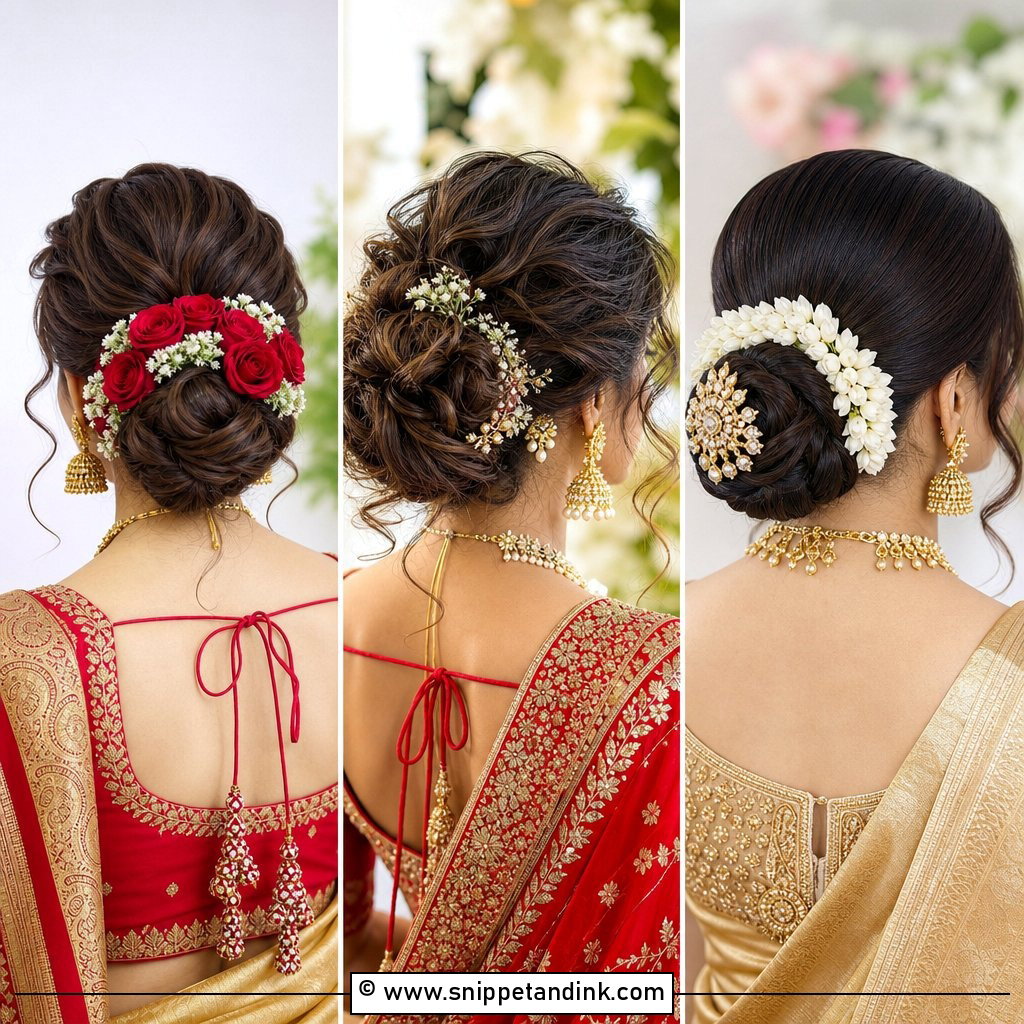
1. Indian Bridal Gajra Bun
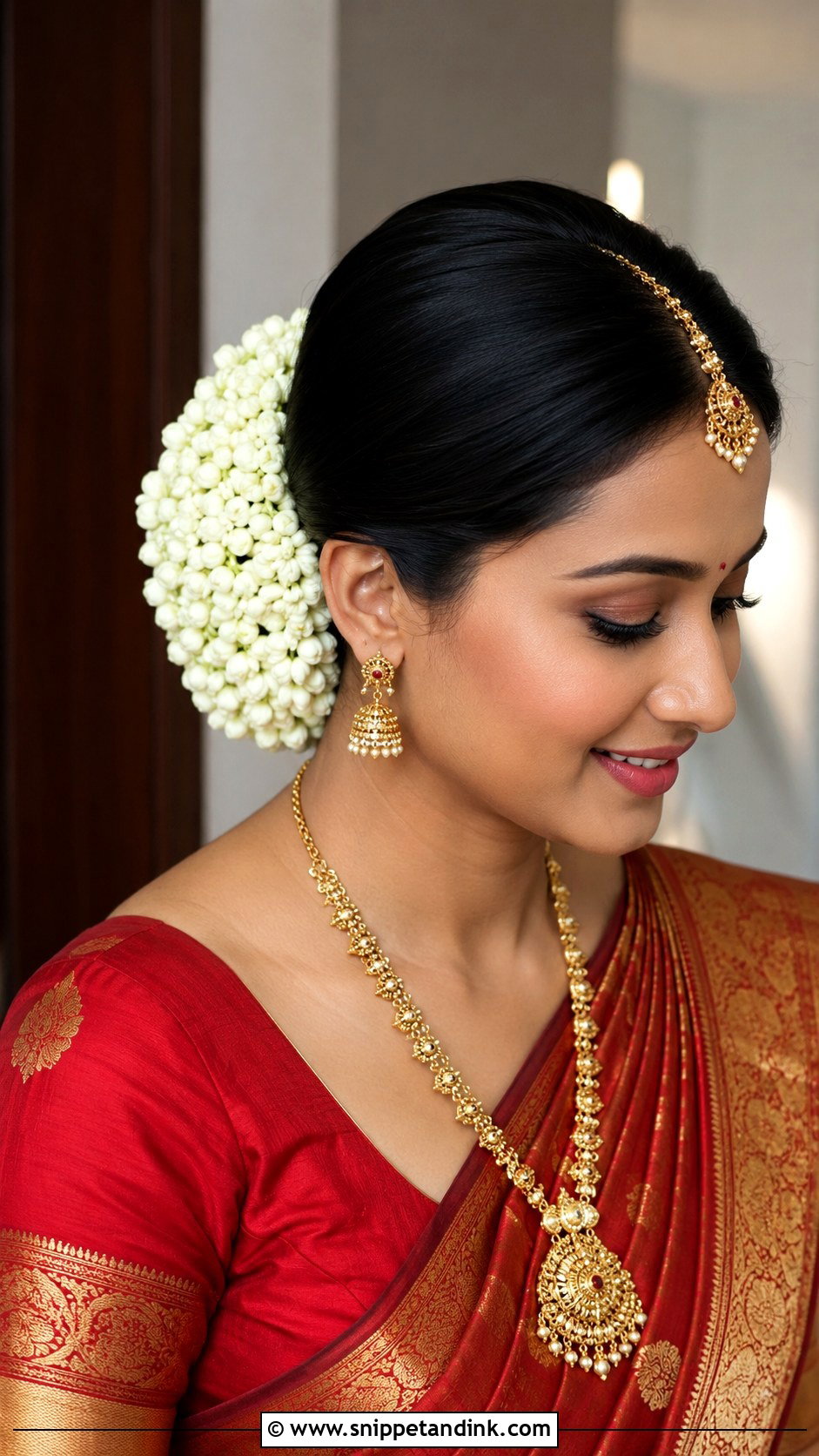
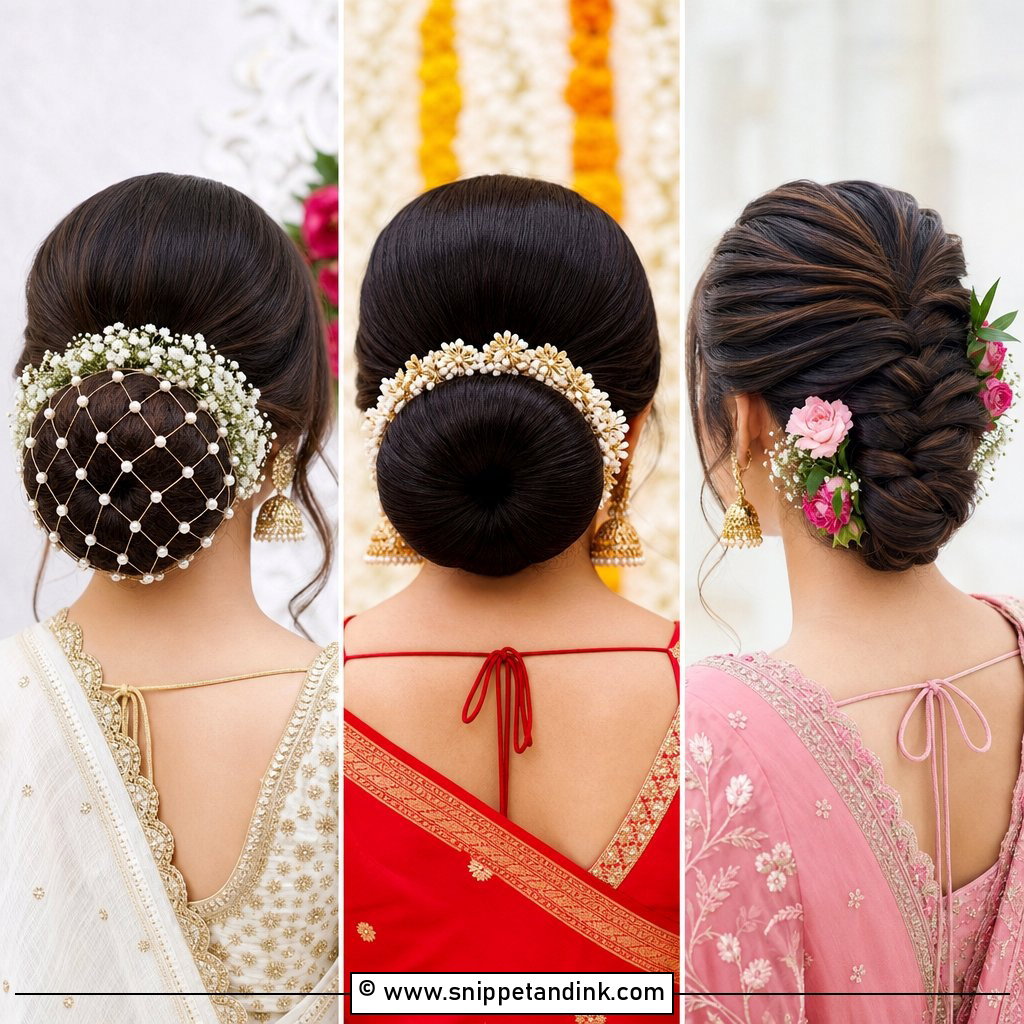
For an Indian bridal gajra bun, the jasmine is strung bud by bud on thread, and the tighter the stringing, the fuller the coil looks on the head. I string the strands for this bun extra dense so two wraps look like three. The hair goes into a neat low or mid bun with a center part, softly padded if it needs bulk, and the coils sit around it. It suits Kanjeevaram and Banarasi sarees, red lehengas and gold jewelry, and it reads clearly from behind, which counts when most of the pheras photos are of your back.
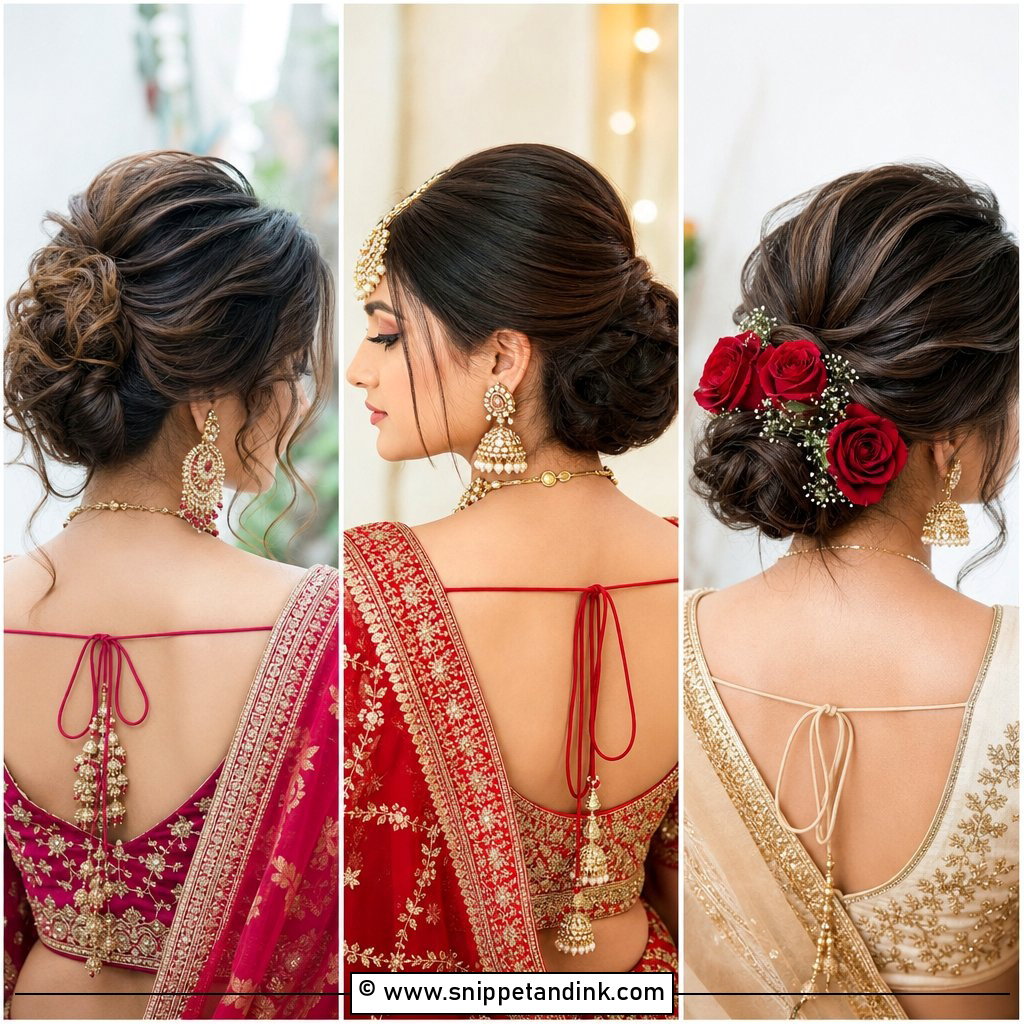
2. Indian Bridal Low Bun With Roses
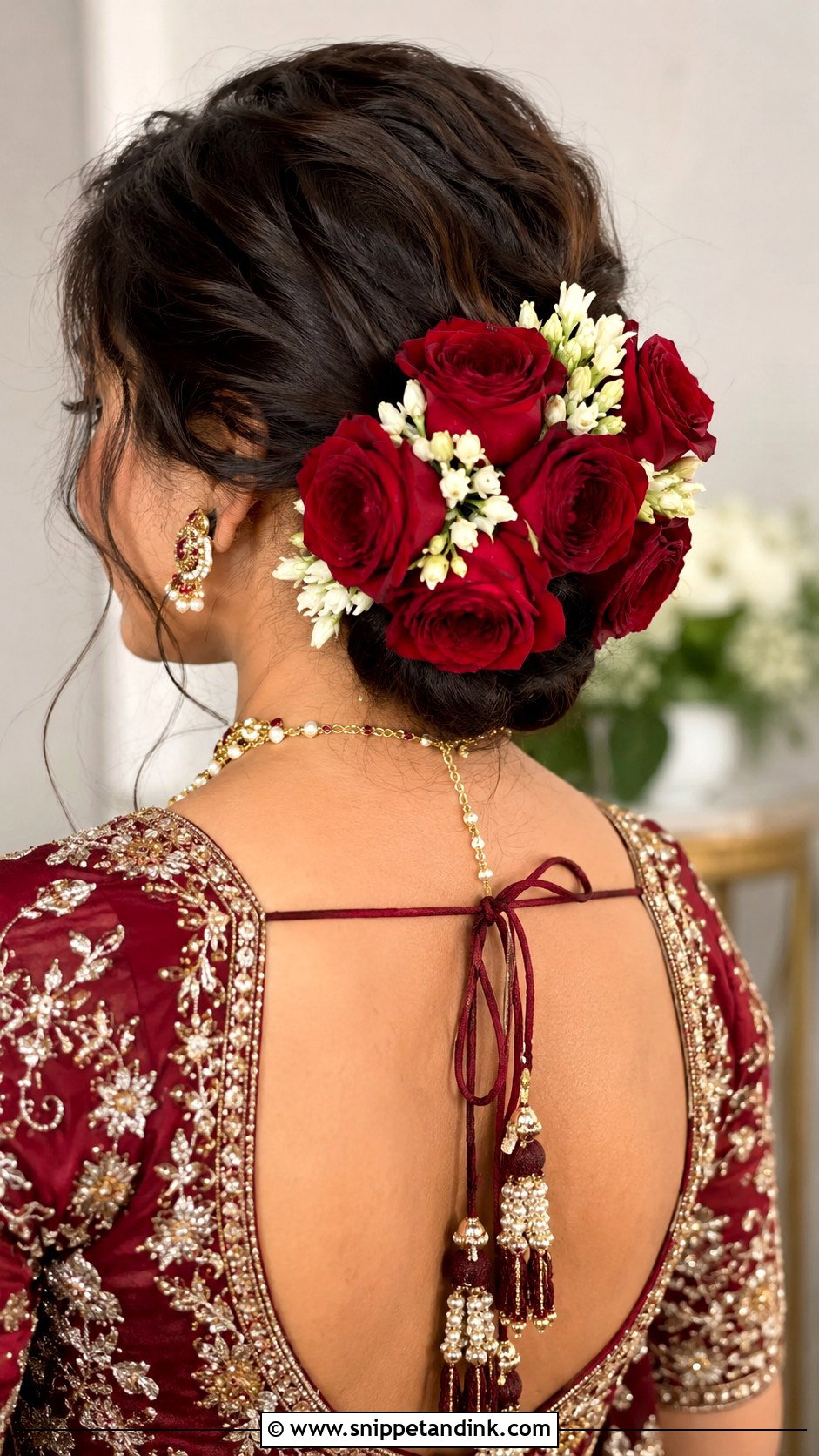
Roses on a low bun need to keep their shape, so I use heads that are just past bud stage and remove the outer guard petals, which are usually bruised in transport. Red with maroon, crimson, rust or gold looks rich; pink or peach suits pastel lehengas and day weddings. Ask for each rose to be wired and pinned around the bun with its face angled outward rather than pressed flat against the hair. Sitting close to the nape, the bun stays comfortable under a dupatta. A few face-framing strands soften it.
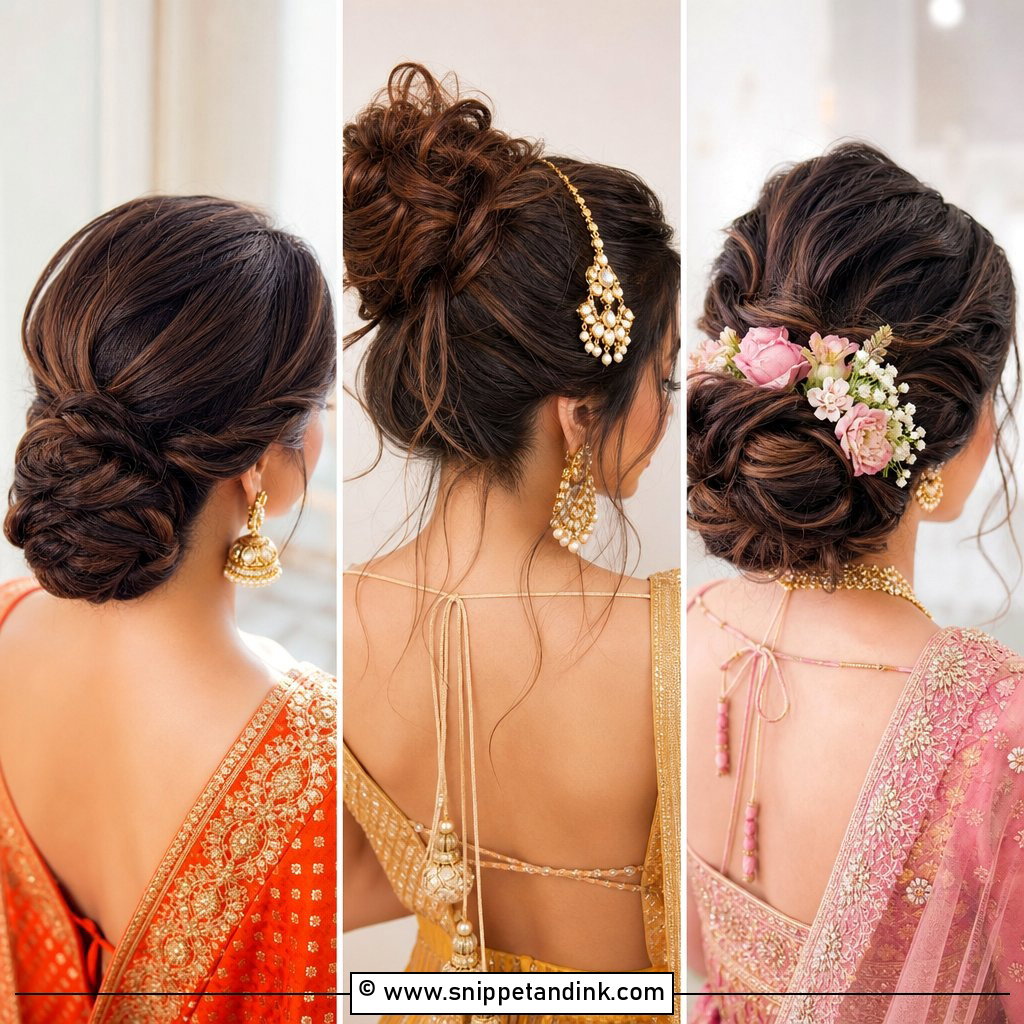
3. Indian Bridal Messy Bun With Flowers
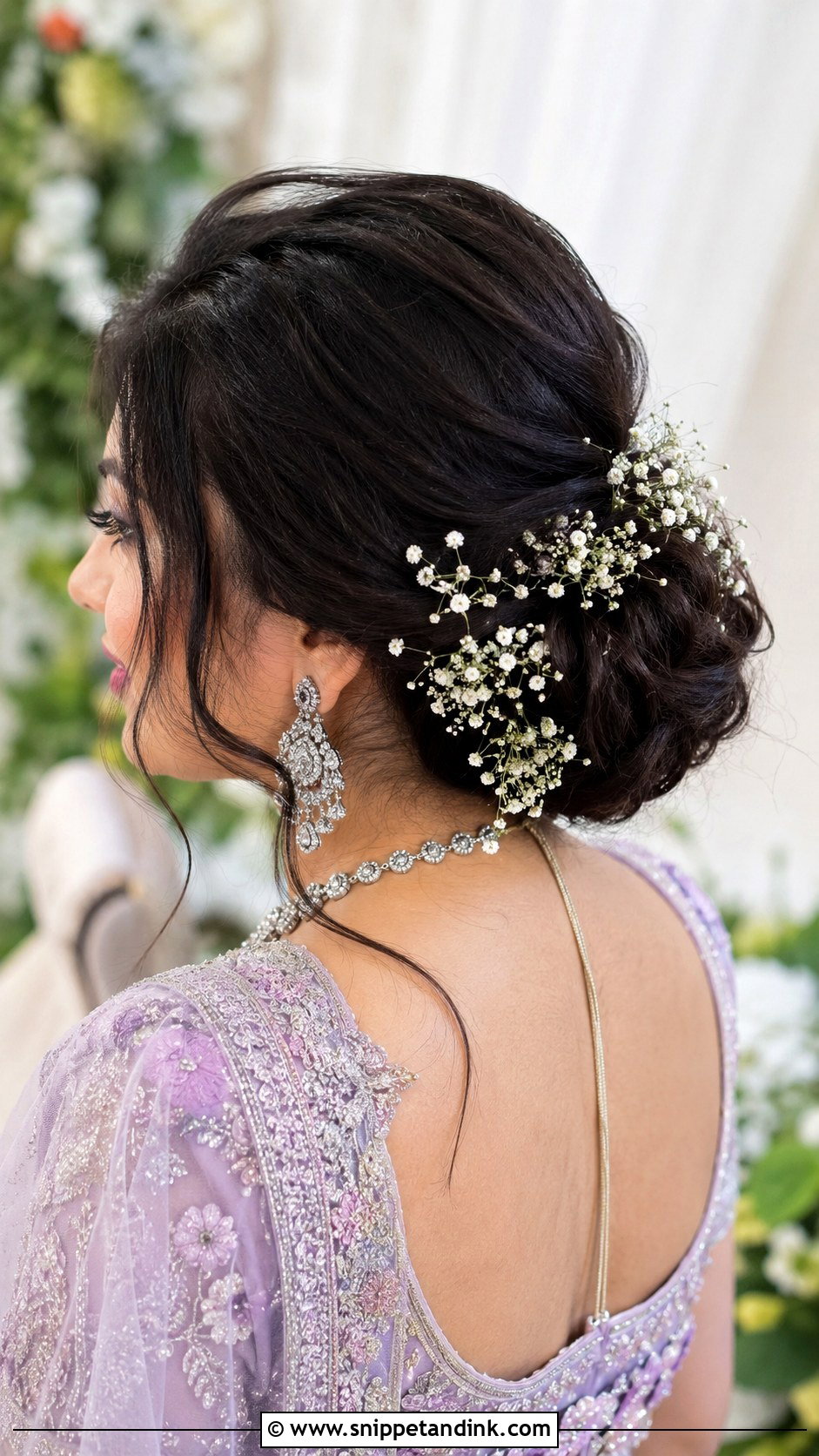
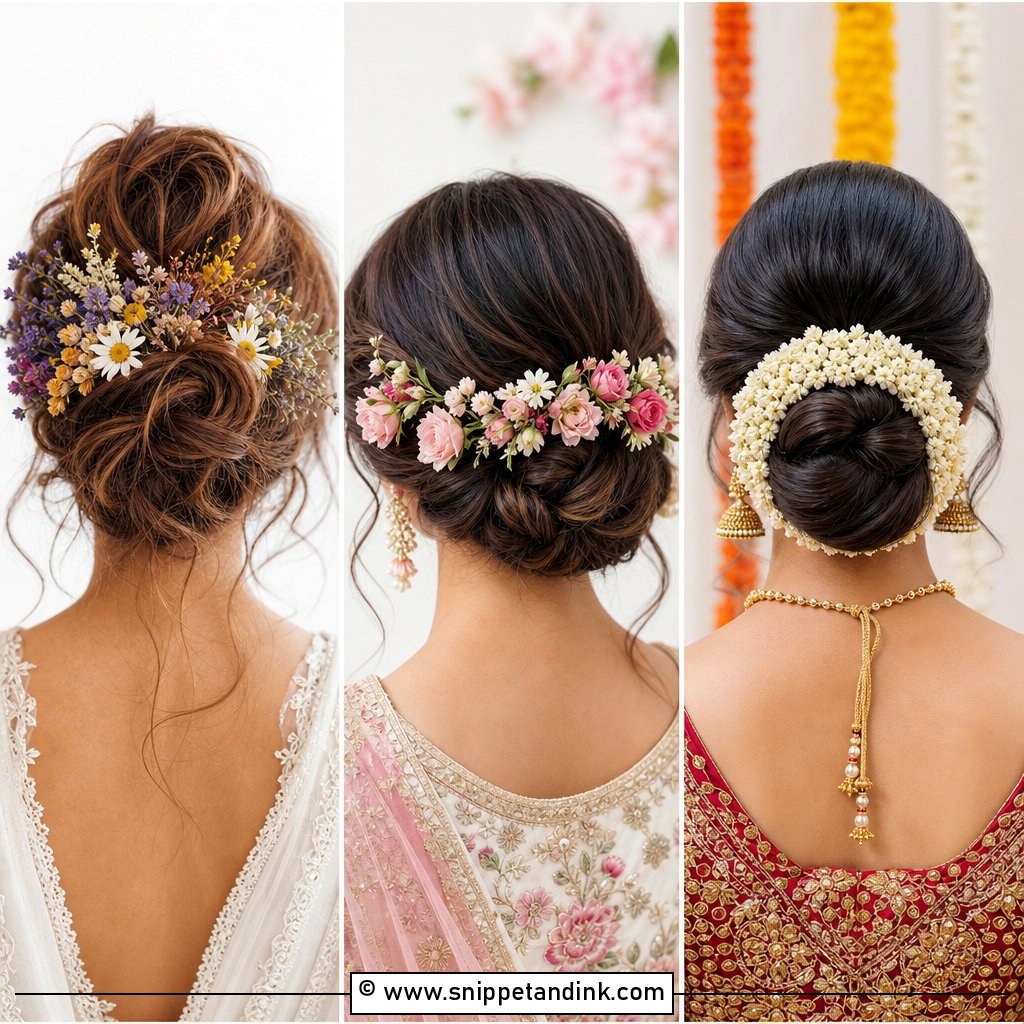
Small blooms are what make the messy bun work, because they can be tucked into the gaps between twists instead of wrapped around the outside. Baby’s breath, spray roses, jasmine buds or a couple of small orchids give a garden feel that suits pastel lehengas, mirror work and outdoor venues. From my side, I cut everything into short wired picks so your stylist can push them in quickly after the hair is set. The hair itself should be curled and pinned in sections first; the texture is planned, not frizz.
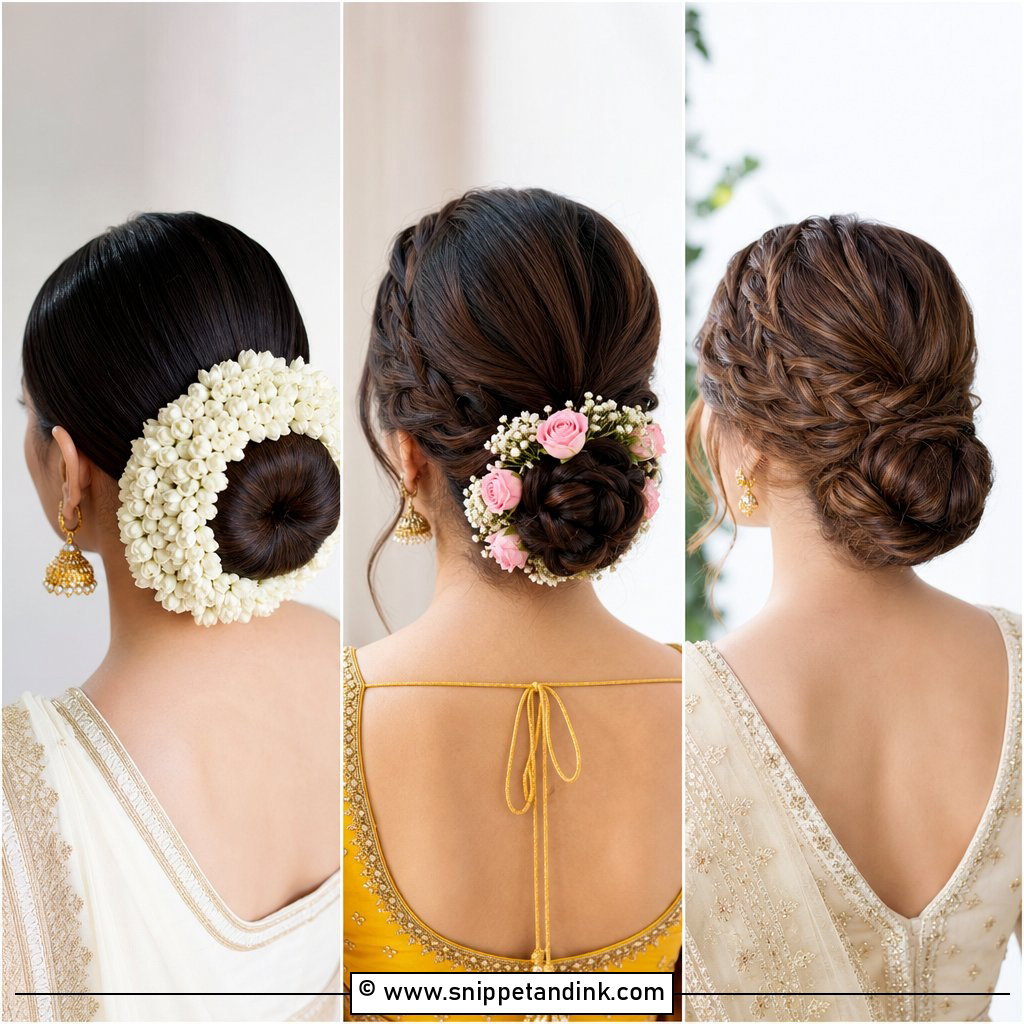
4. Indian Bridal Braided Bun With Flowers
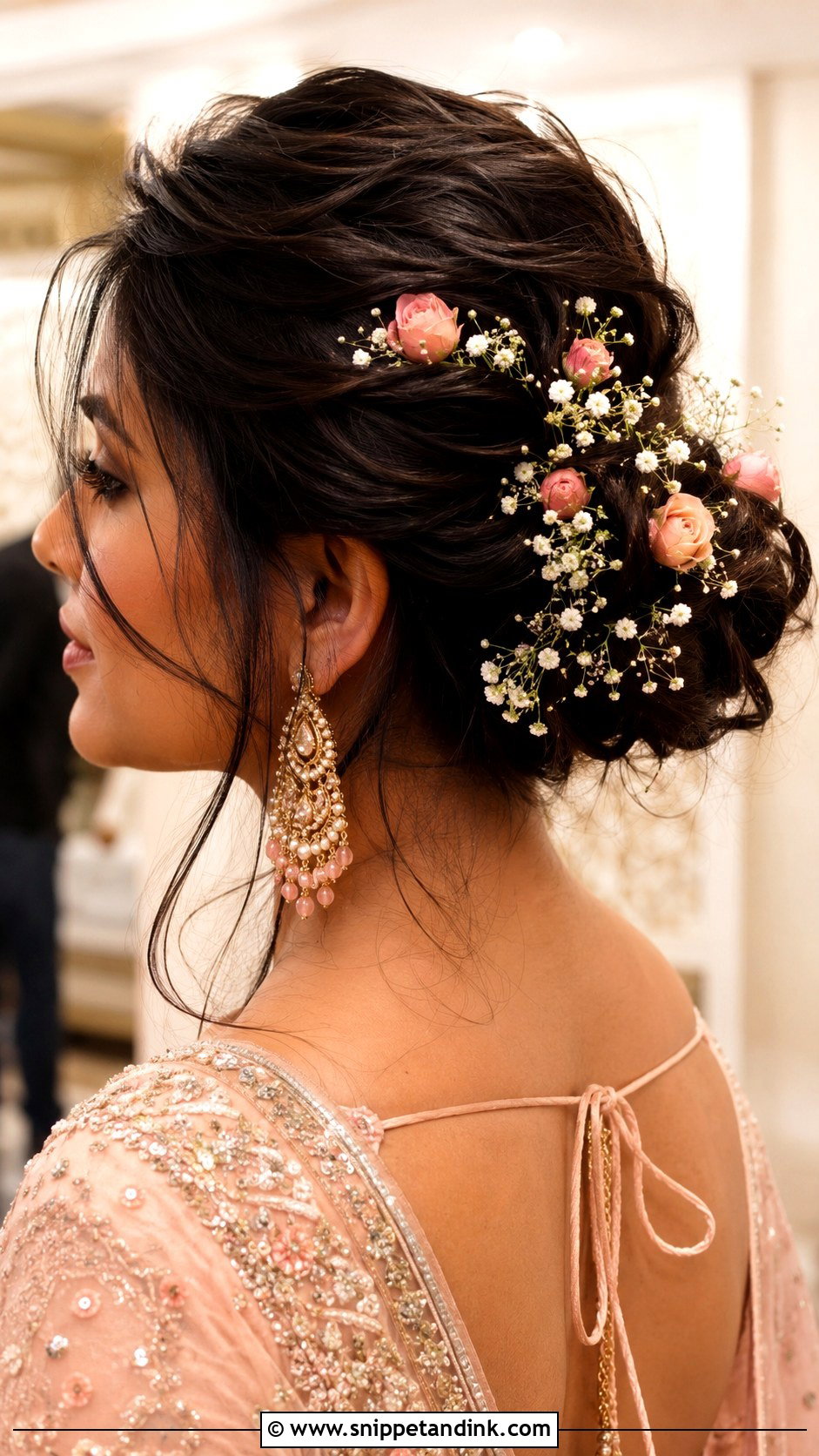
The braid does half the decorating before a single flower goes in, so I send fewer blooms for this bun than for a plain one. The braid can start at one side, run over the crown or wrap the bun itself. Thick hair carries this well. Jasmine, roses or small white flowers sit along the braid line and around the bun, and because the hair is lifted away from the face, heavy earrings stay visible. A slightly loosened braid gives the flowers more grip than a tight, flat one.
5. Indian Bridal Sleek Bun With Flowers
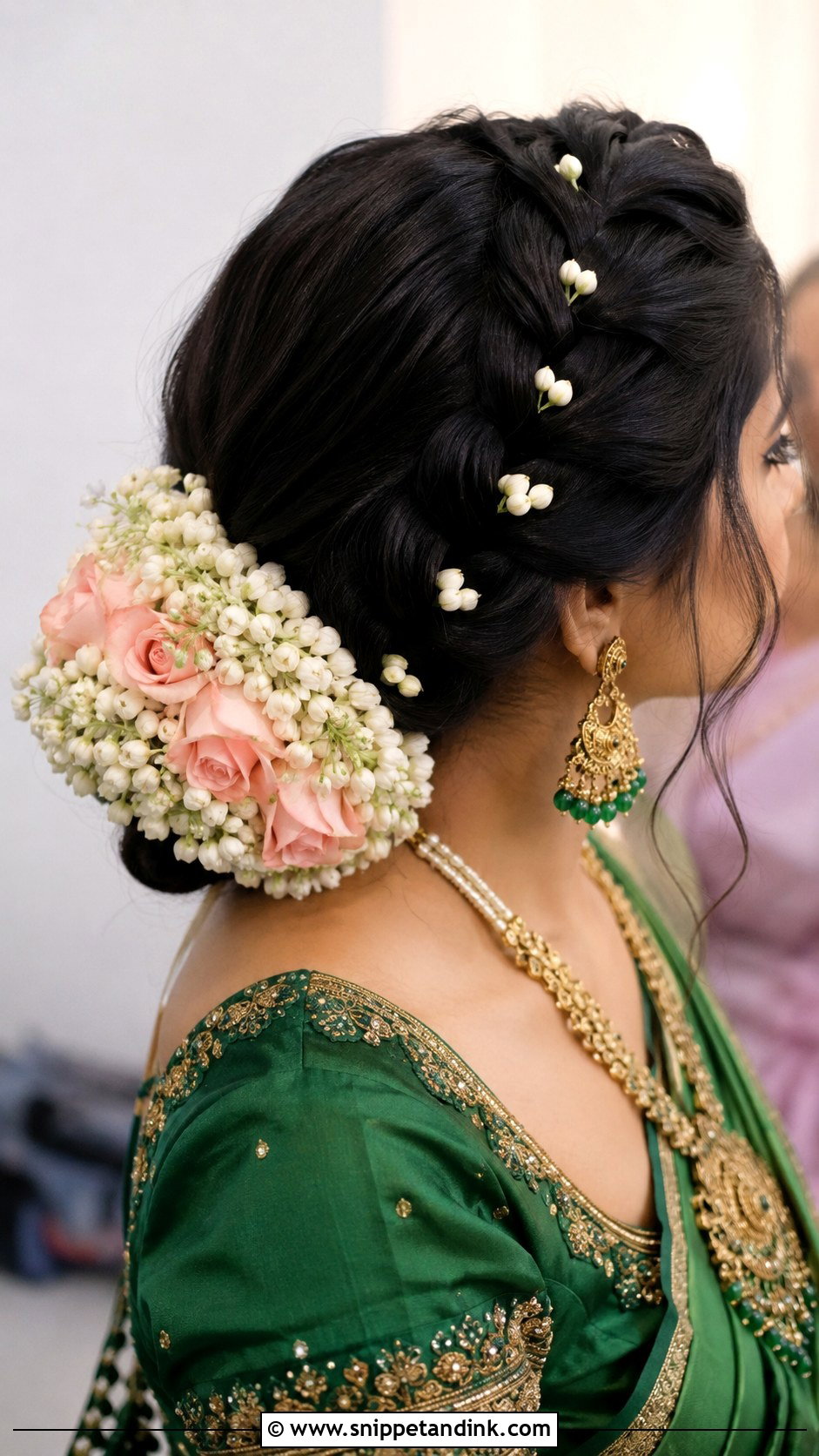
On a sleek bun every flower shows exactly where it was placed, so precision matters more than quantity. I usually send a single row of jasmine or a small crescent of roses for this style, sized to the bun I’ve seen in the trial photos. The hair is parted cleanly, smoothed back and pinned tight, with a little serum for flyaways. It puts the focus on makeup, jewelry and neckline, and suits silk sarees, embroidered blouses, temple sets and a statement maang tikka. The flowers should frame the bun, not hide it.
6. Indian Bridal High Bun With Flowers
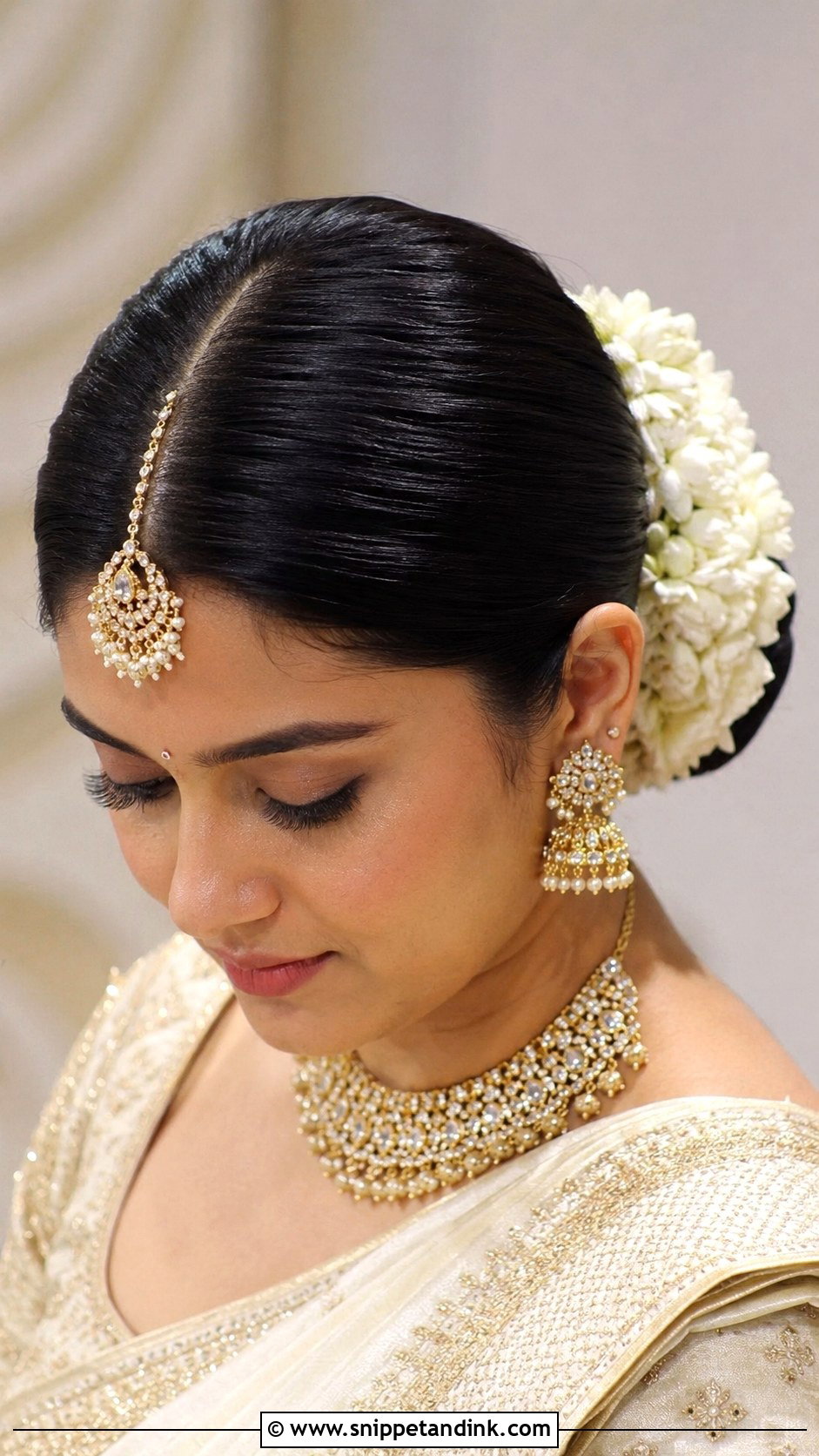
A high bun gives height that balances a heavy dupatta, a broad neckline or bold jewelry, and it leaves the neck open for layered necklaces. It can be smooth, twisted or textured. A ring of flowers at the base looks classic; scattered blooms over the top look more current. My caution here is weight: a high bun can’t carry as much as a low one, so I keep the floral ring light, mostly jasmine, and avoid heavy rose heads at the top. Strong pins are essential either way.
7. Indian Bridal Side Bun With Flowers
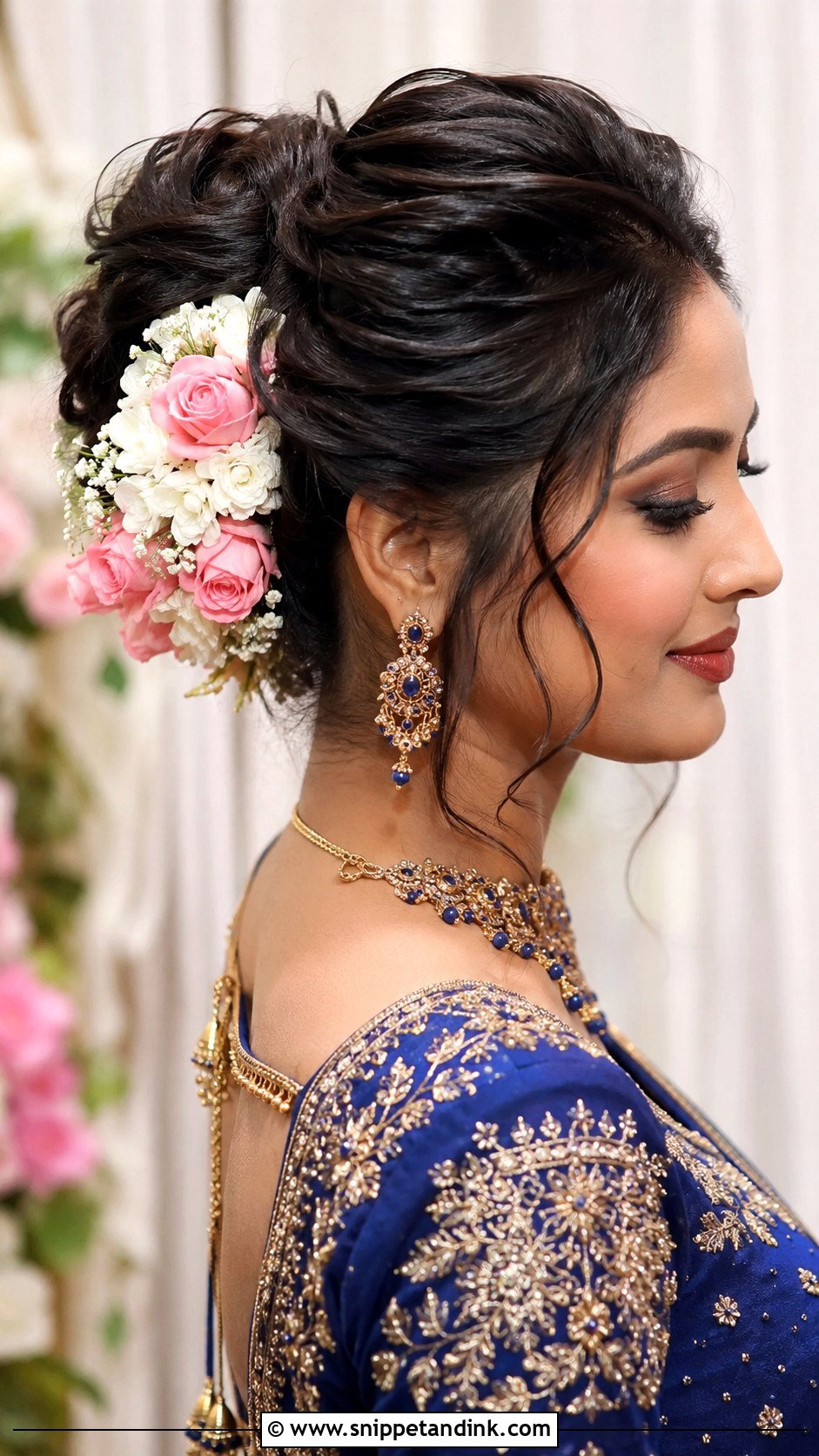
Moving the bun to one side of the nape brings the flowers into front-facing photos, which is why I like it for receptions, engagements and brides who’ll wear a dupatta most of the day. Roses, mogra and baby’s breath all work. The front can take a side part, soft waves or a twist leading into the bun. Because the flowers sit off center, I make the arrangement smaller and flatter than a full wrap so it doesn’t drag the bun down toward the shoulder.
8. Indian Bridal Bun With Baby’s Breath
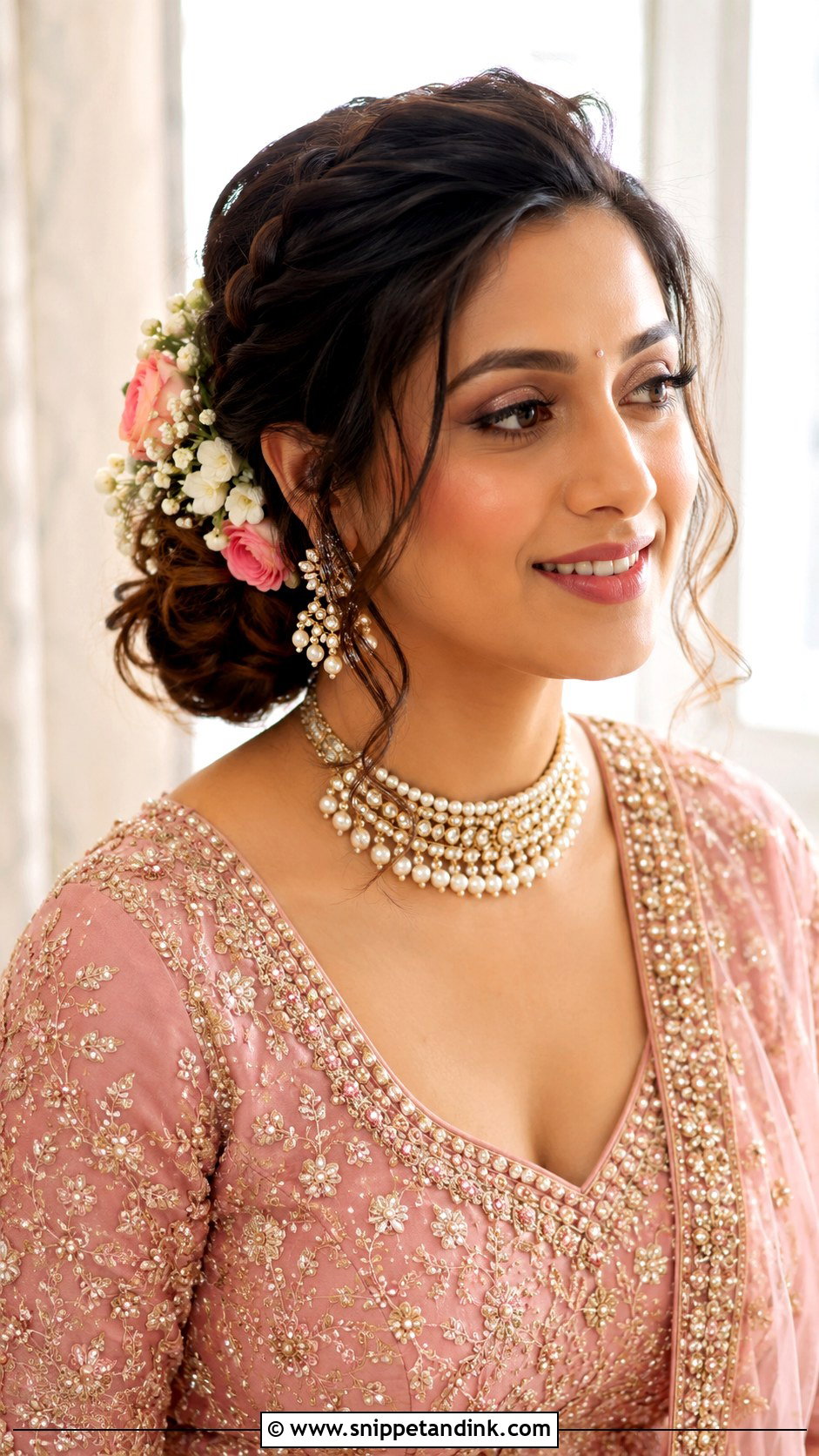
Baby’s breath is one of the toughest flowers I can send for hair. It dries in place rather than wilting, so it looks much the same at midnight as it did at noon. It suits pastel lehengas, ivory outfits, floral embroidery and day ceremonies, and can be scattered over a messy bun, tucked into a braided one or mixed with roses on a low bun. It needs texture behind it to stand out; on a flat, sleek bun it can look like fluff. A few small clusters beat a full covering.
9. Indian Bridal Bun With Orchids
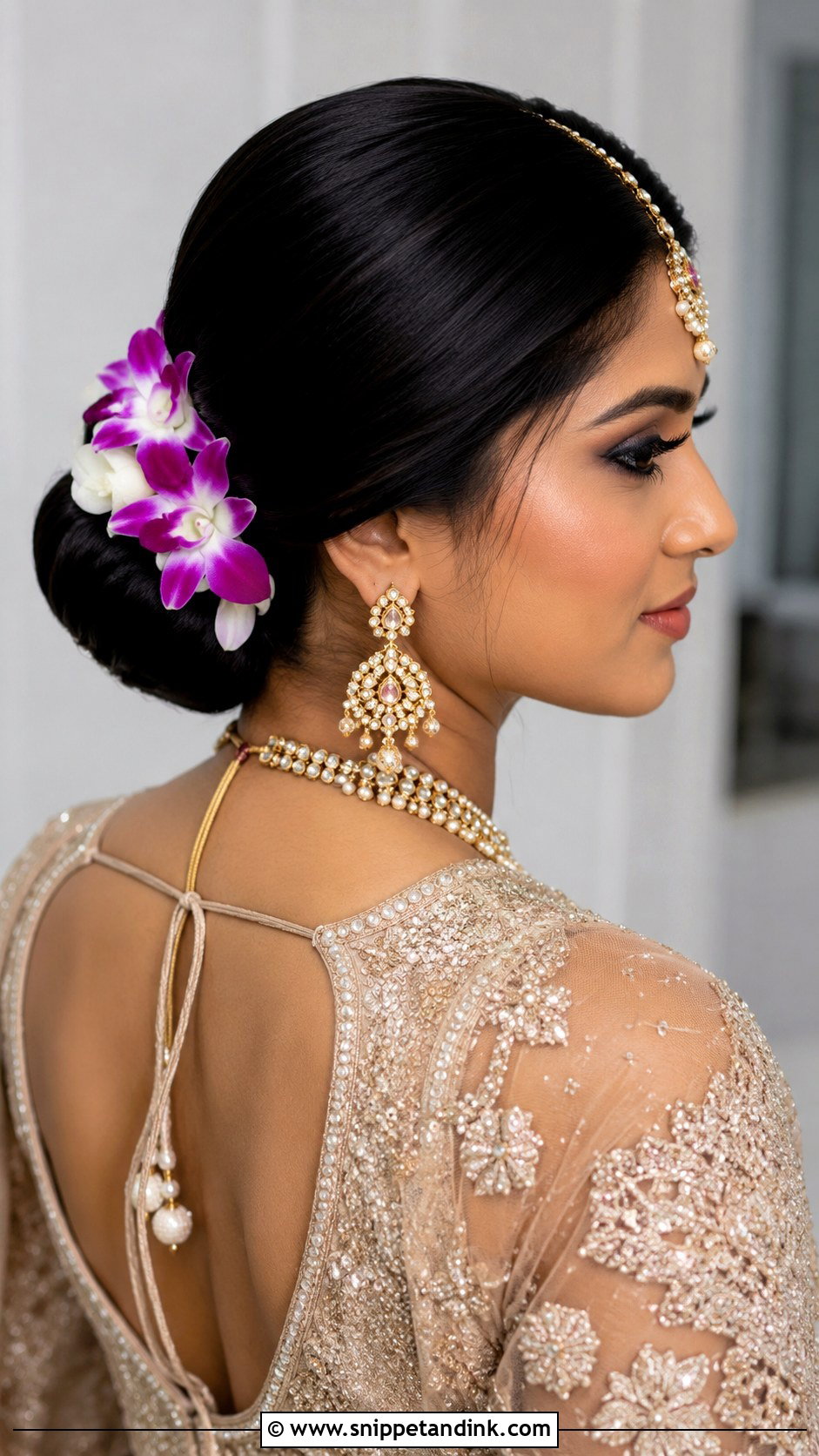
Orchids hold up better out of water than most people expect, which is why I like them for evening functions, receptions and destination weddings in warm weather. They come in white, purple, pink and peach, so matching a lehenga or saree is easy. Each bloom is large, so I space them out with gaps between, and I wire them individually rather than gluing. The bun can be sleek and low or lightly textured. Keep other hair jewelry minimal so the orchids aren’t fighting for attention.
10. Indian Bridal Bun With Mogra Flowers
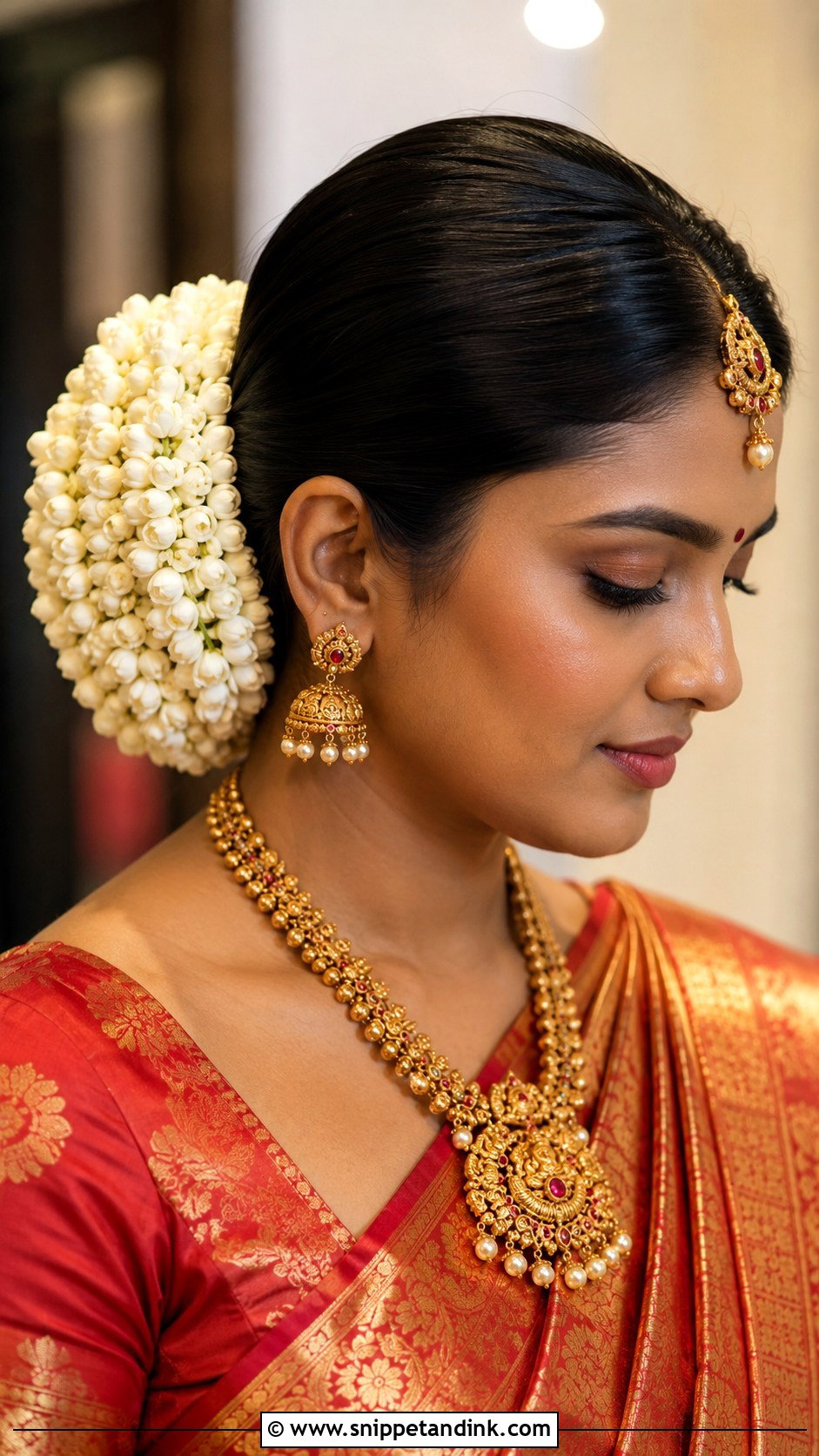
Mogra is the jasmine most gajras are made from, and its scent is the one families remember from every wedding. It adds fullness and softness for pheras, temple weddings and saree looks, wrapped as a gajra, layered in circles or pinned in small clusters. The bun underneath can be padded or extended for straight, wavy or thick hair alike. Gold jewelry, red outfits and warm makeup suit it best. I deliver mogra as close to ceremony time as I can, and I’d ask your stylist to pin it last, because the buds bruise brown wherever they’re squeezed.
11. Indian Bridal Bun With Marigold Flowers
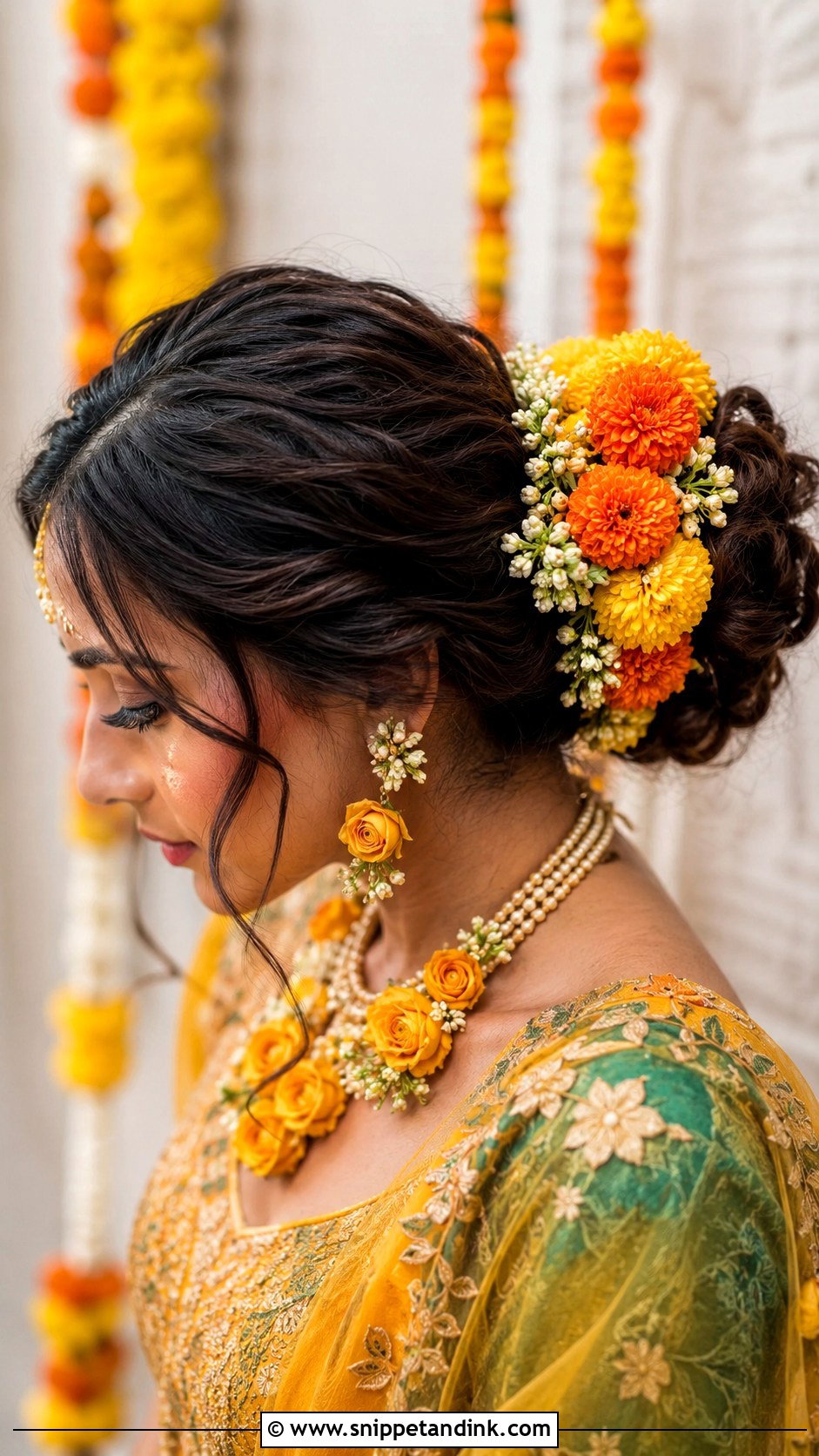
Marigolds are the longest-lasting flower in this list. They barely notice heat, which makes them ideal for haldi, mehendi and daytime events. Yellow and orange look bright with green, mustard, white and rani pink outfits. They’re bulky, so I use them as accents, not a full covering: a low bun with marigold clusters and a few white jasmine buds balances well. Keep the front of the hair smooth so the color reads as deliberate. Some brides find the scent sharp, so check a fresh head before ordering.
12. Indian Bridal Bun With White Flowers
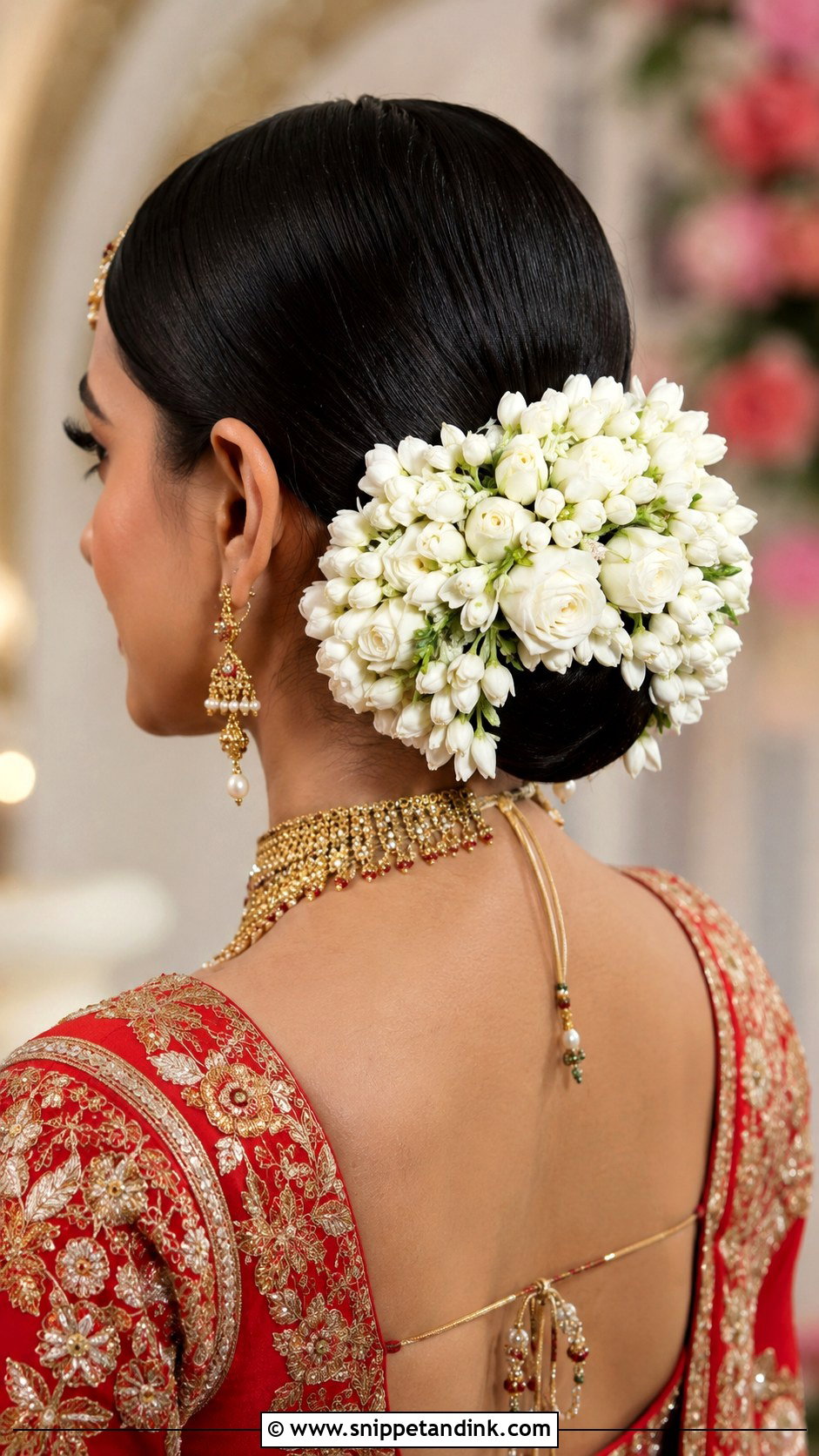
White blooms like jasmine, mogra, tuberose, baby’s breath and small roses go with nearly any outfit color, which is why a bridal bun with white flowers is so often my default suggestion. Wrapped as a gajra it’s traditional; scattered over a textured bun it’s modern. White also gives the strongest contrast against dark hair in photos. My usual formula is one main flower plus one small filler, never four or five types, so the bun looks cohesive from every side.
13. Indian Bridal Bun With Pink Flowers
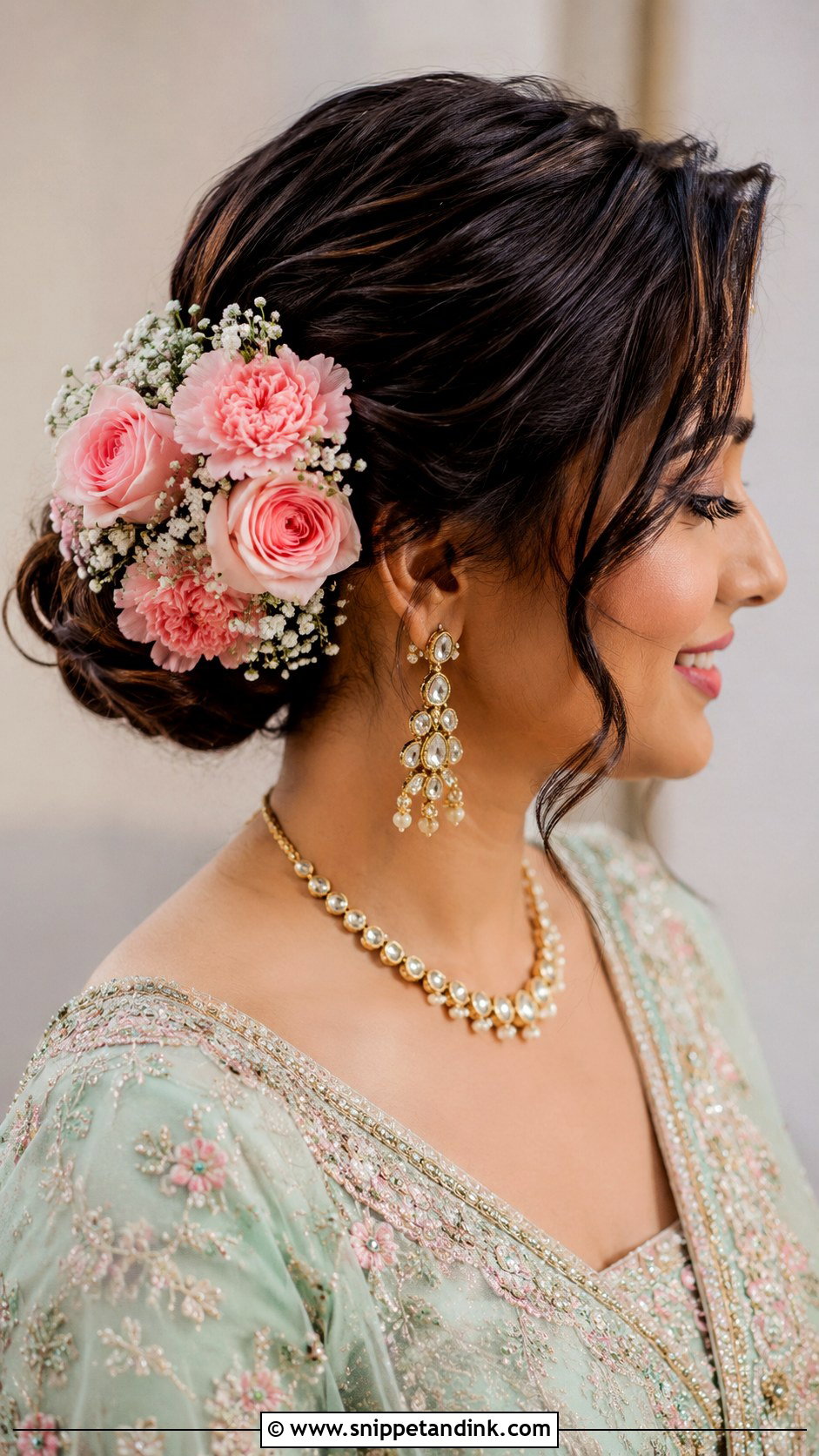
Pink flowers bring color without shouting. Roses, carnations, orchids or seasonal blooms suit lehengas in blush, peach, lavender, ivory, mint or gold, and they’re flattering in daylight and at receptions. Carnations are underrated here; they’re sturdy and their ruffled edges hide small bruises. Mix in tiny white flowers or a few pearls for a more bridal finish. Keep the placement rounded and full so the back of the bun looks finished. The bun can be sleek and low or softly textured.
14. Indian Bridal Bun With Tuberose Flowers
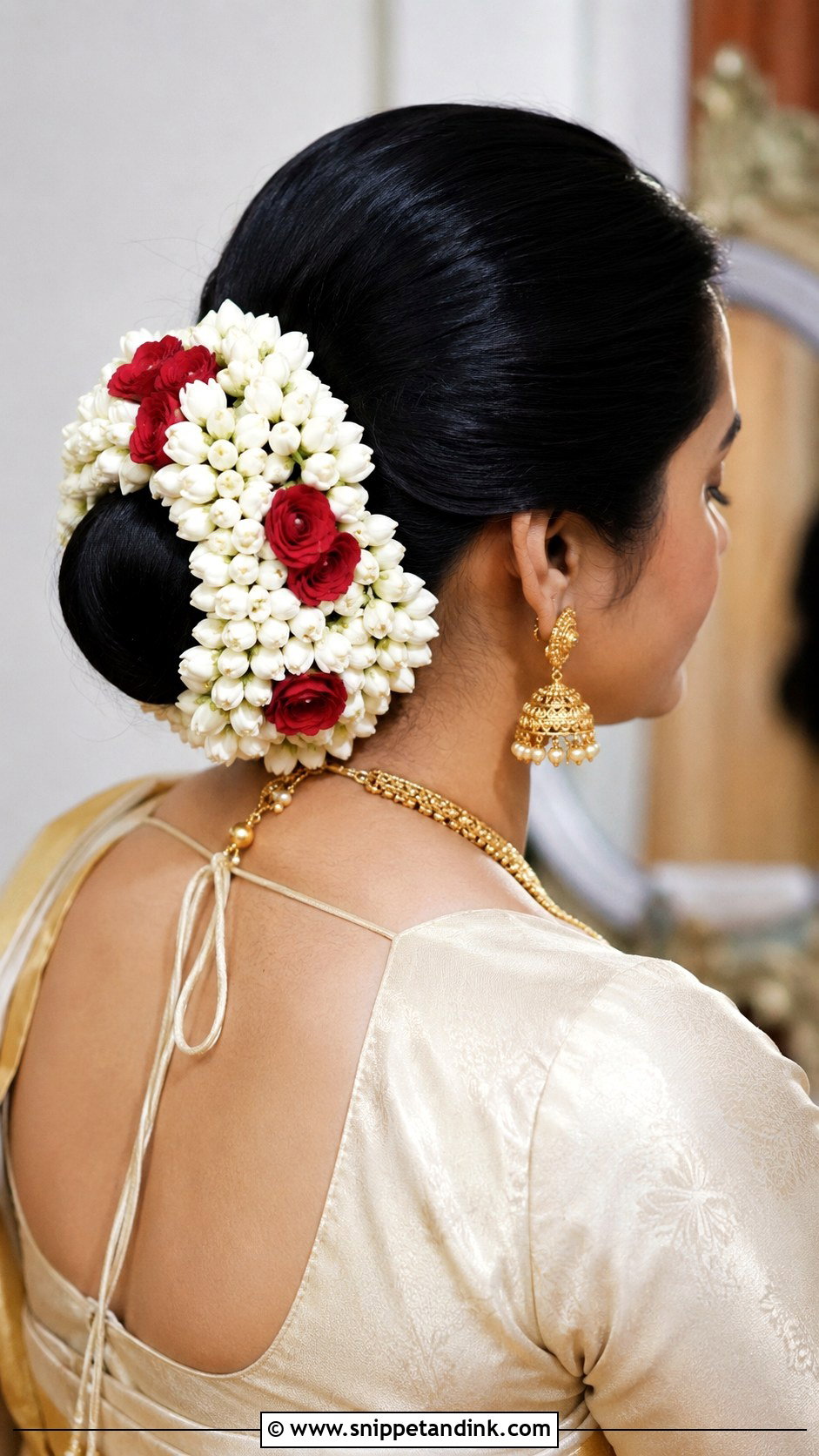
Tuberose gives a richer, heavier scent than jasmine and a slightly larger, waxier flower, so the bun reads as classic but a little different. Strands can wrap the bun or hang down as traditional floral drops. It sits well with South Indian sarees, temple jewelry and ceremonial looks. Tuberose garlands are weighty, so the bun underneath must be firm and smooth. Combined with roses or mogra, the whole look becomes fuller. I’d skip it for anyone sensitive to strong perfume; up close, it’s intense for hours.
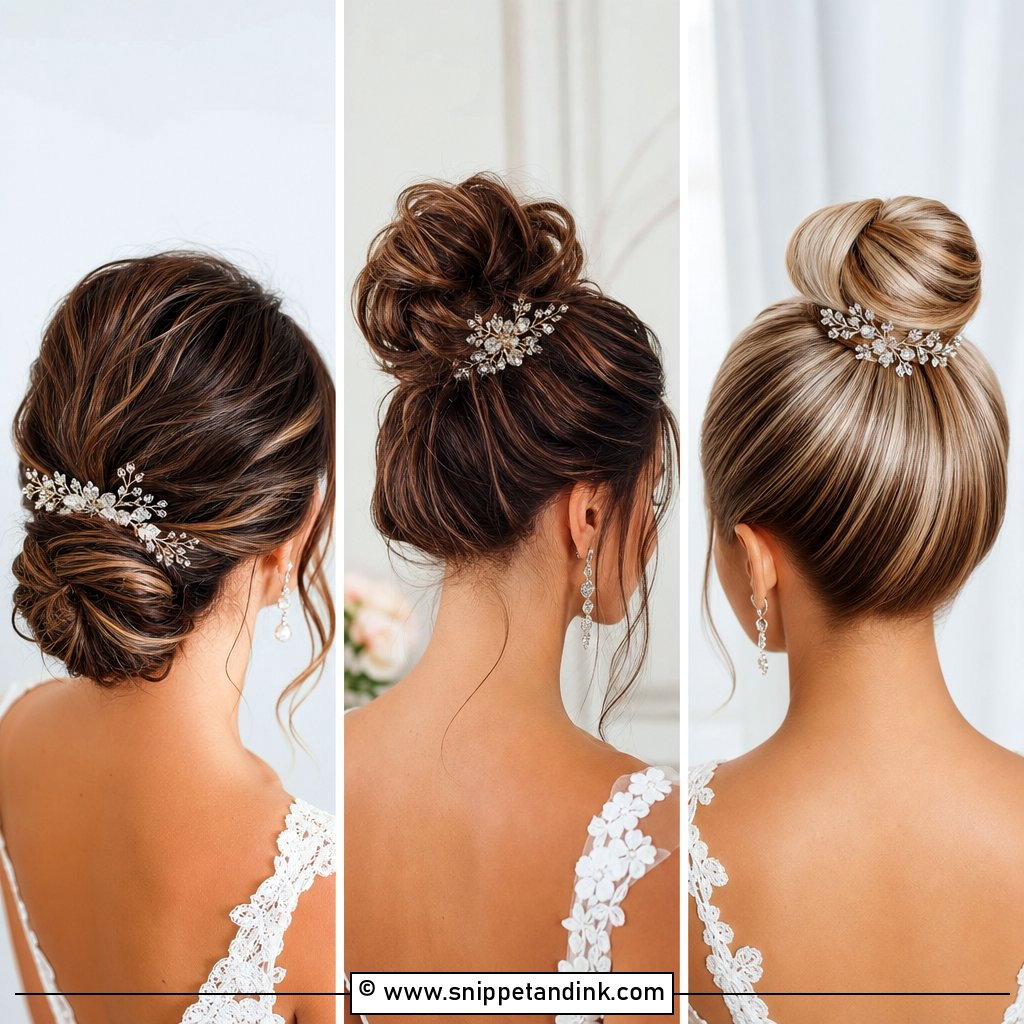
15. Indian Bridal Bun With Mixed Flowers
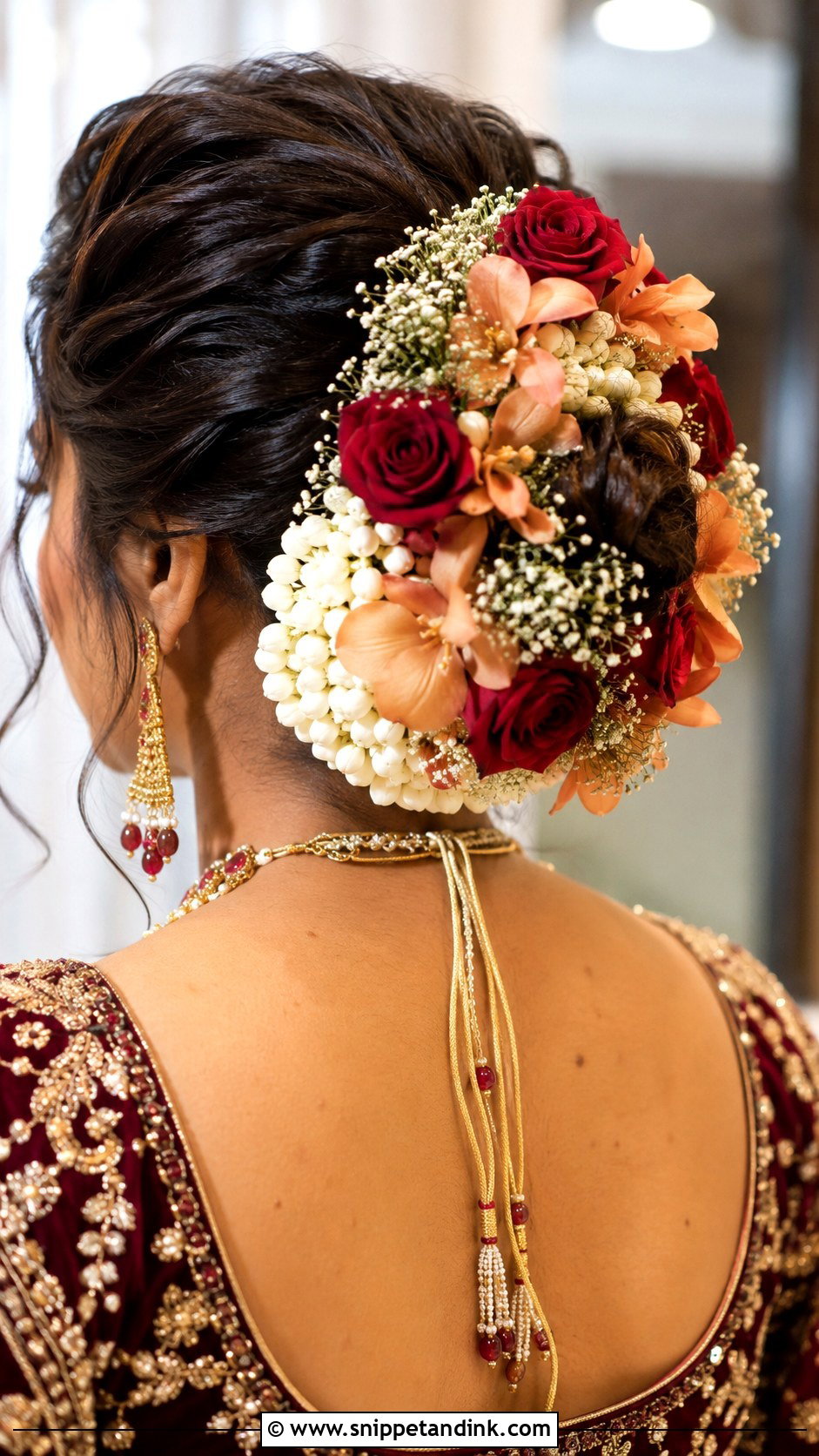
A mixed flower bridal bun is the one I plan most carefully, because it can tip into busy very quickly. Jasmine, roses, baby’s breath, orchids, marigolds and mogra can all be combined, but I pick from the outfit swatch first and limit it to three varieties. Red roses with white jasmine read classic; peach roses with baby’s breath read soft and modern. The bun can be sleek, braided or messy. What matters is that flower size, color and placement are agreed between your florist and stylist before the morning.
Briefing Your Florist and Stylist Together
The flowers and the bun are usually made by two different people who never meet until your wedding morning. Most problems I see come from that gap: a gajra strung too short for the bun, roses arriving unwired, or orchids that need individual pins nobody packed.
- Send your florist a photo from your hair trial, ideally the back of the bun, so the strand lengths and quantity match its real size.
- Ask for hair flowers to be wired or made into picks. Loose stems are slow to pin and fall out.
- Agree on a delivery time: early enough for the stylist, late enough that delicate flowers aren’t sitting in a warm room for hours.
- Order a small spare: an extra strand of jasmine, two roses, a few picks. Something always gets crushed while dressing.
- Store everything in a cool spot, covered with a damp cloth, until the moment it’s pinned.
Pollen, scent and sensitive skin
Strongly scented flowers like tuberose and mogra worn beside the face for hours can bother brides who get headaches from perfume. Lily pollen stains fabric, so I remove the anthers if lilies are in the mix. If you have any history of flower allergies, wear a sample strand for an hour a week before.
Start From the Fabric Swatch, Not the Flower
Each of these buns sets a different tone: jasmine gajra is traditional, roses are romantic, baby’s breath is light and current, a mixed bun is personal. The function, outfit color, dupatta drape, face shape and your own comfort should decide which one you wear. Flowers add scent and softness, but they only look fresh at the end of the night if they were ordered for the right time, kept cool and pinned onto a bun built to hold them. Send your florist a swatch of the outfit and a trial photo, and the rest follows.
You'll Like These Ideas:


Leave a Reply