
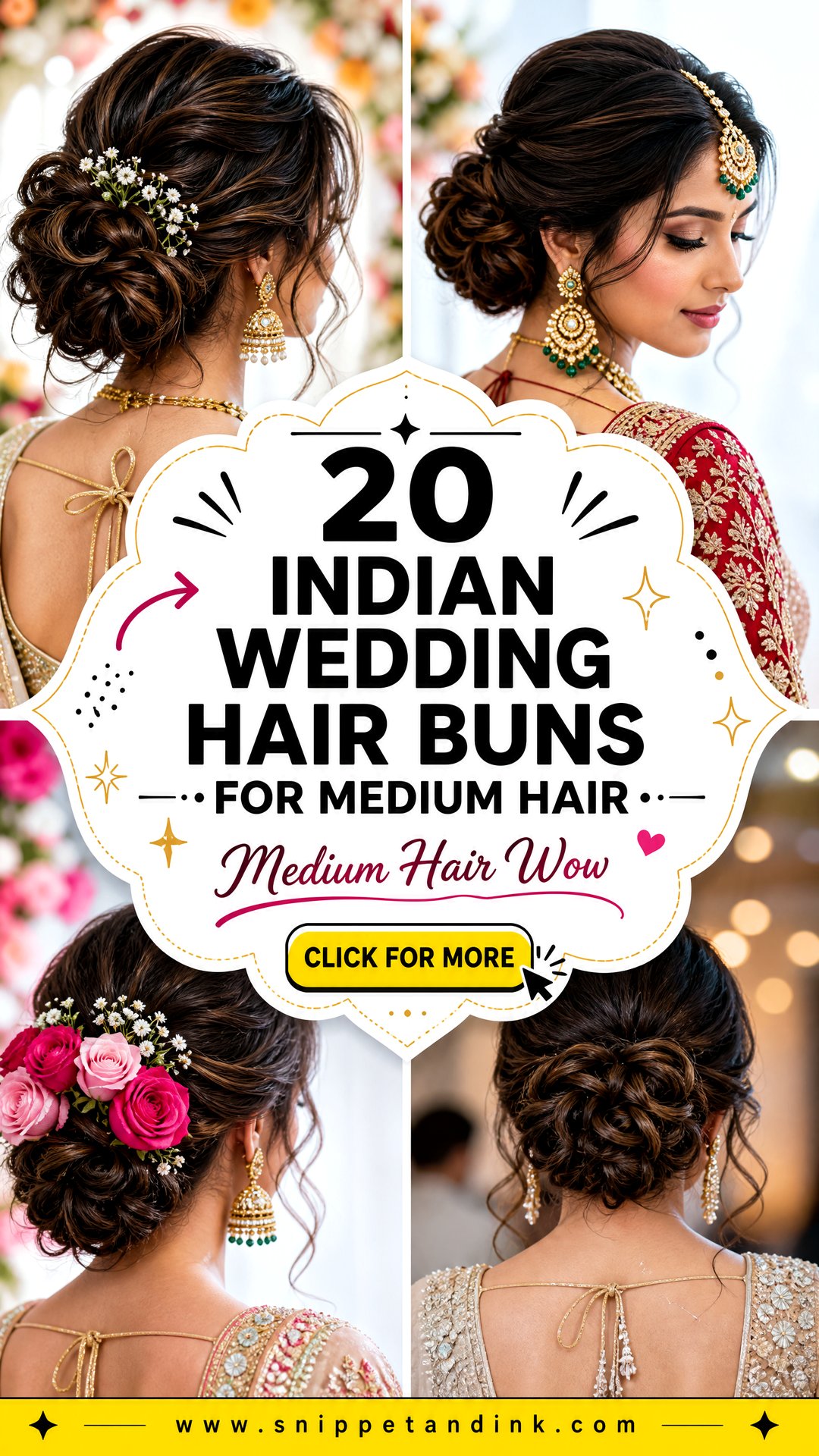
Medium hair, roughly collarbone length to just past the shoulders, makes a better wedding bun than most brides expect. It’s long enough to gather, short enough to stay light, and it won’t drag on your scalp after a long day under a dupatta. What it needs is help with volume, through texture, padding, flowers, jewelry or a few face-framing pieces. Low buns, braided buns, messy buns, side buns and sleek judas all work at this length with sarees, lehengas, anarkalis, shararas and reception gowns. Below are twenty, from the classic gajra bun to modern pearl-studded ones, with notes from my chair on how each is built.
Building a Full Bun When Your Hair Stops at the Shoulders
Most of the full bridal buns you see in photos aren’t all hair. At medium length I almost always add something inside or alongside, and none of it needs to show.
Fillers and padding
A bun donut or mesh padding gives the bun its shape, and the hair is spread over it. Match the filler to your hair color rather than going darker, because thin spots in the hair let it peek through. On fine hair, a padding made from hair-like synthetic fiber blends better than a foam ring.
Extensions just for the bun
A couple of clip-in wefts placed at the nape and folded into the bun give you real hair to wrap, and no one can see where they start. It’s less than a full set and blends better, since only the bun uses them. Bring them to your trial so they can be color-matched and trimmed.
Texture comes before shape
Freshly washed, silky medium hair slides straight out of pins. I work in a texturizing spray or dry shampoo and lightly backcomb each section before shaping it around the filler. U-pins pushed into the bun hold its shape; bobby pins are better for anchoring the base to the scalp.
1. Classic Gajra Bun For Medium Hair
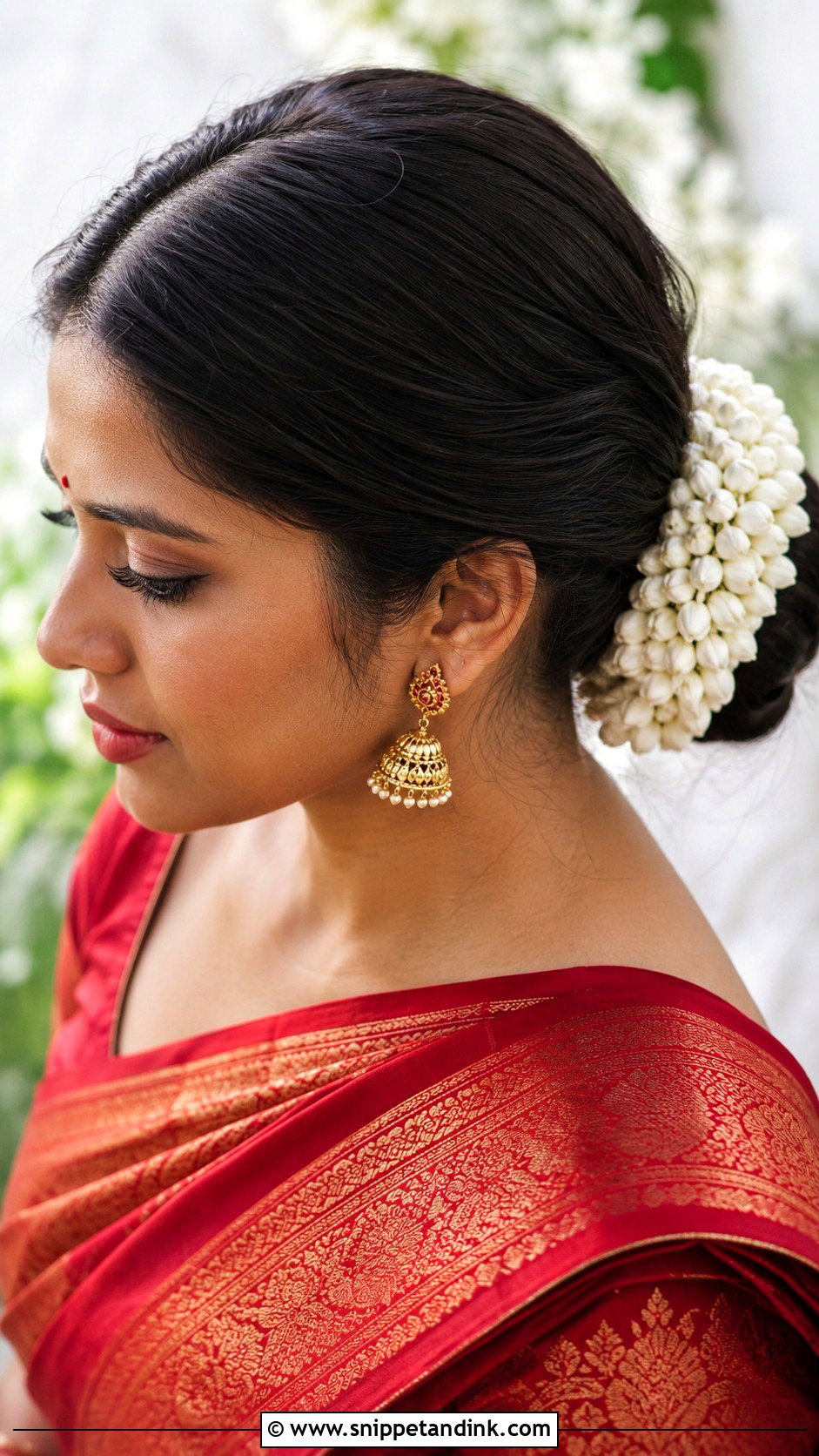
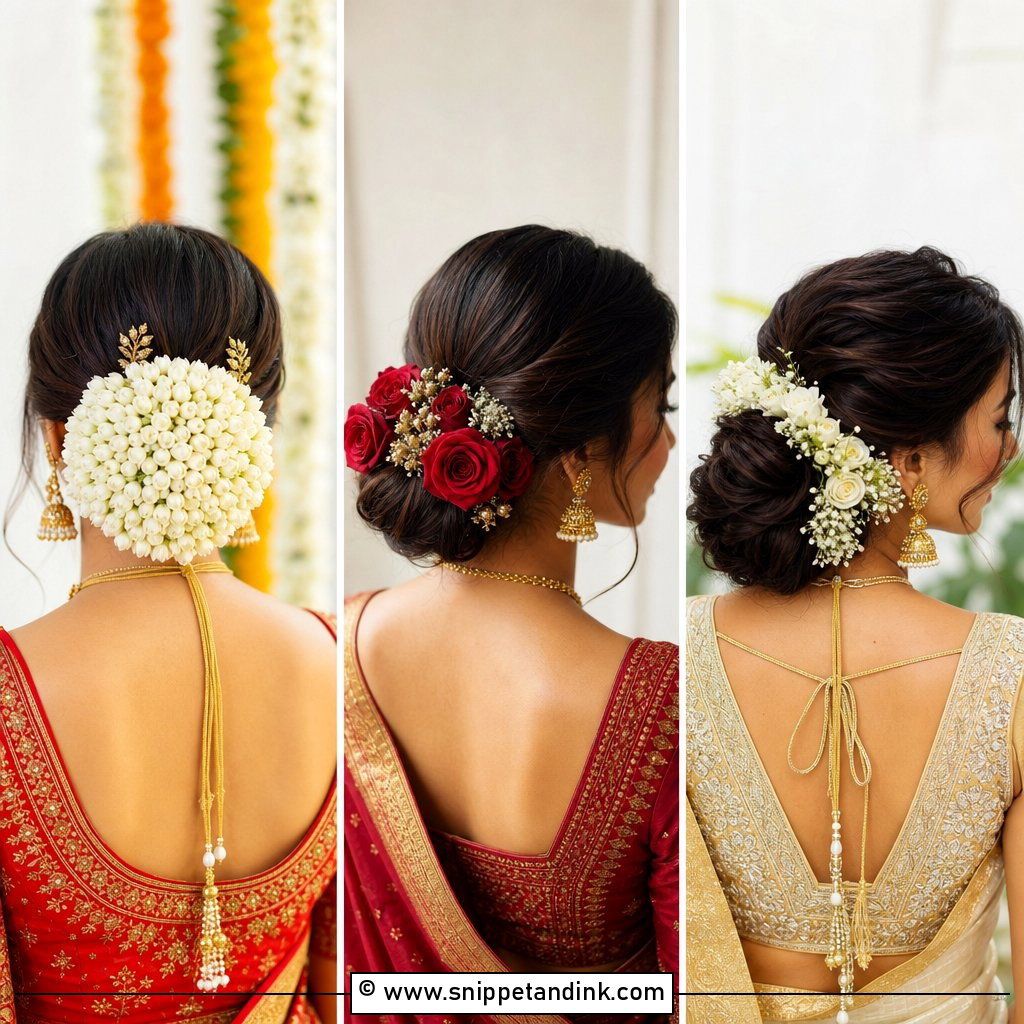
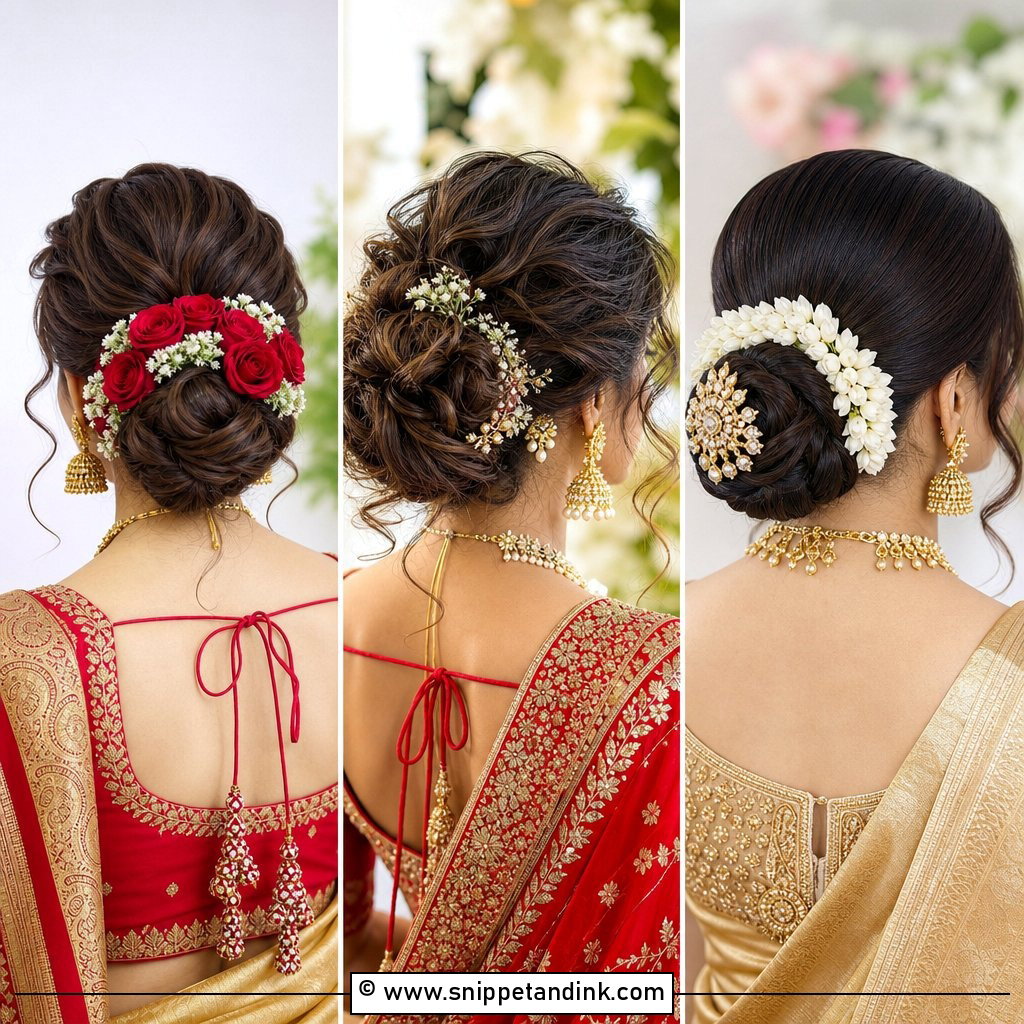
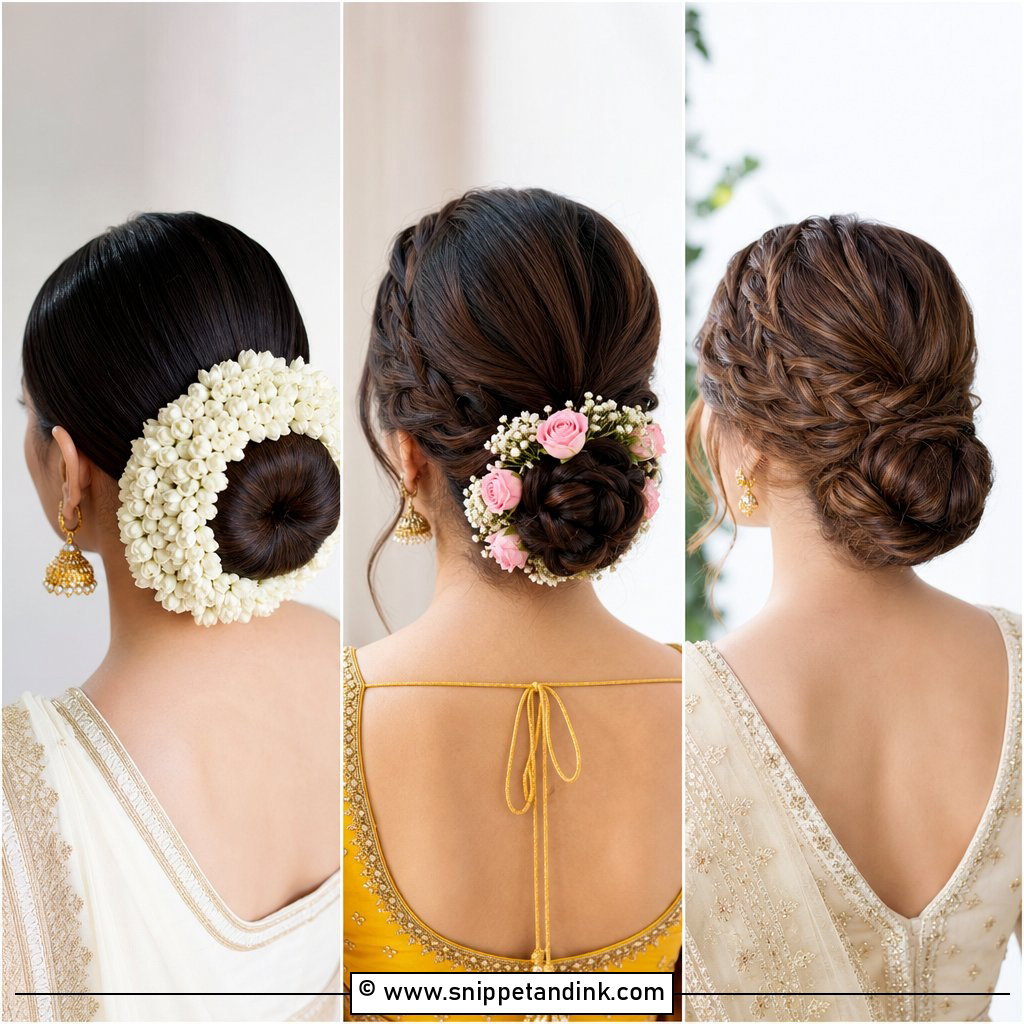
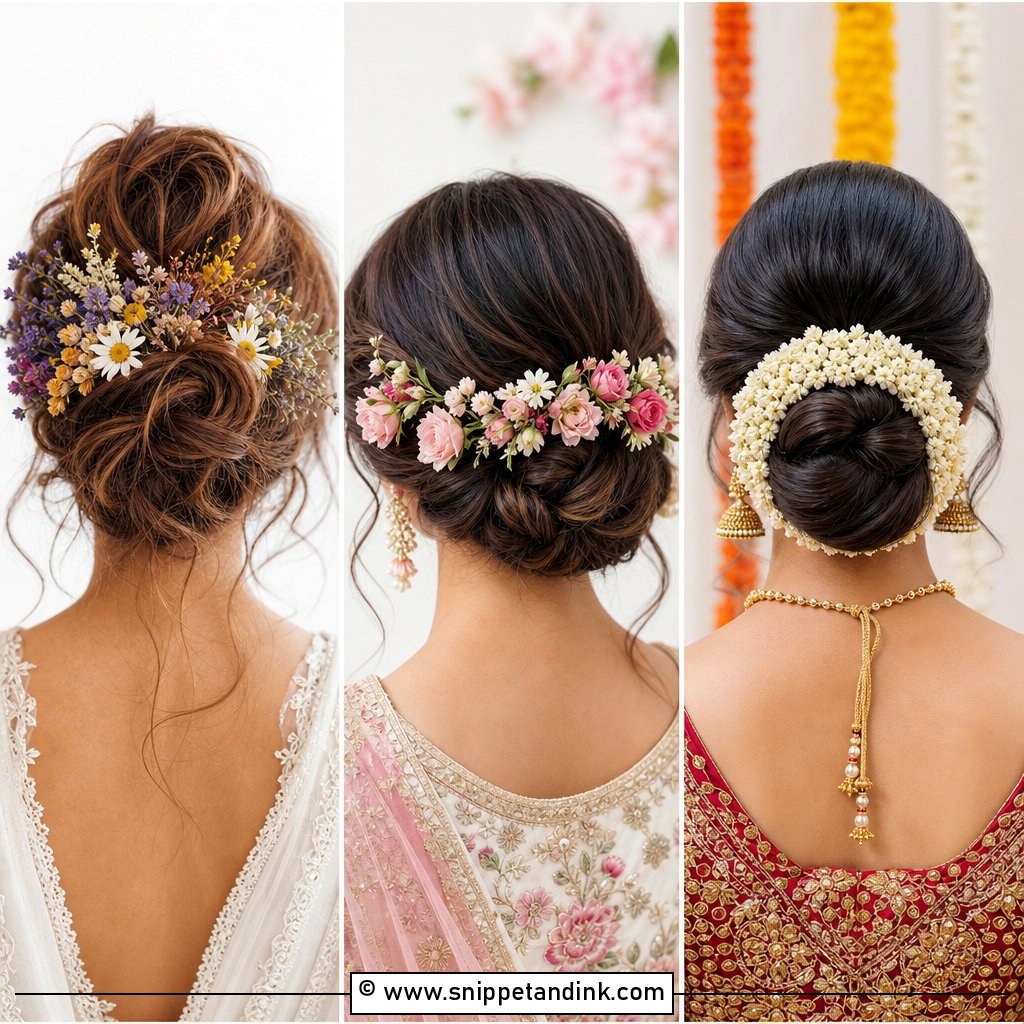
On medium hair, the gajra does double duty: it decorates and it adds size. I gather the hair into a neat low or mid bun, then wrap jasmine gajra around it in rings, so the flowers build fullness the hair alone can’t. It’s honest volume, too, since nobody expects flowers to be anything but flowers. Silk, Kanjivaram and Banarasi sarees with temple jewelry are its traditional match. Keep the front smooth with a center part, and pin the bun firmly with U-pins, because the gajra’s weight sits on it all day.
2. Low Juda Bun For Medium Hair
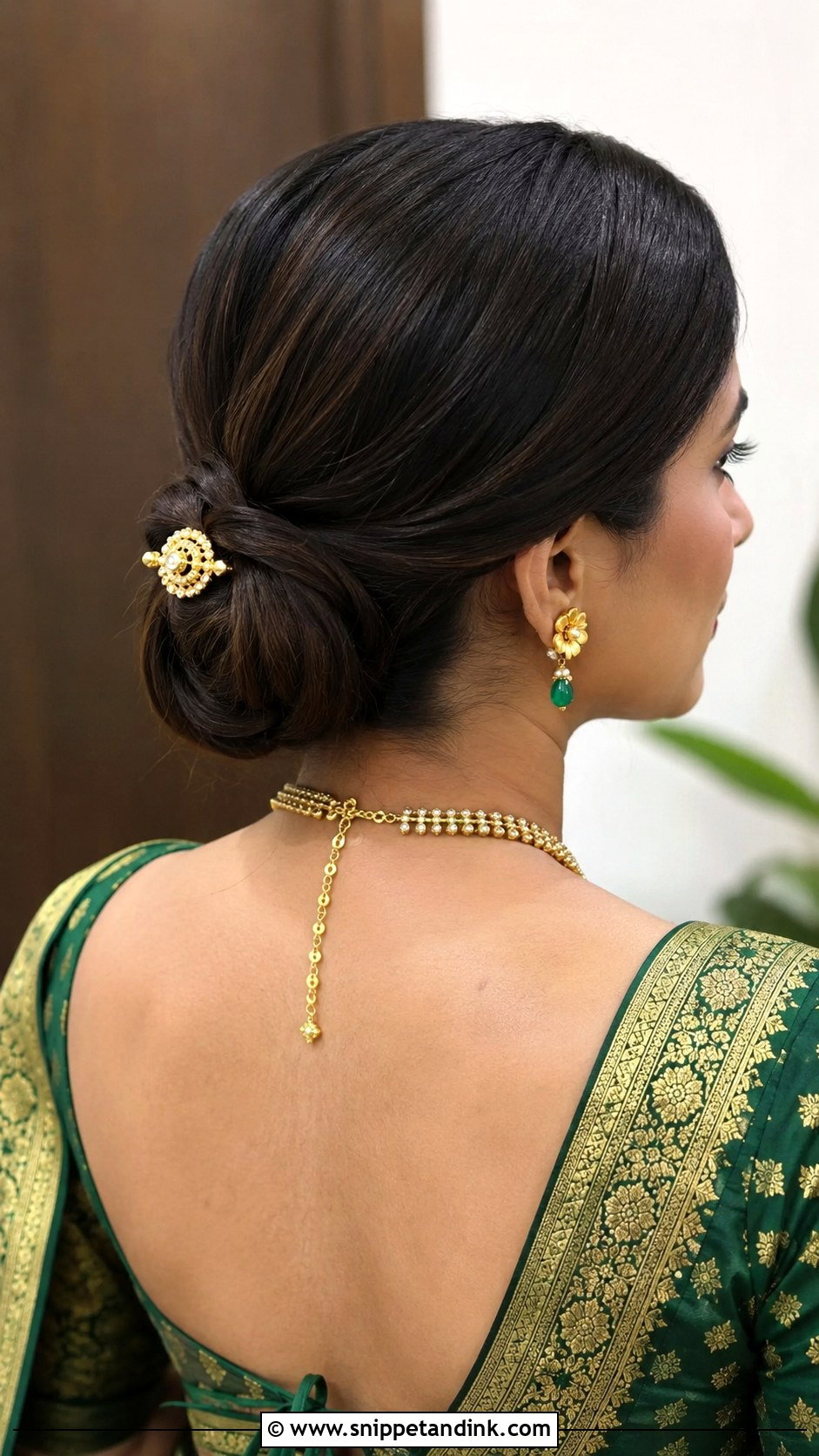
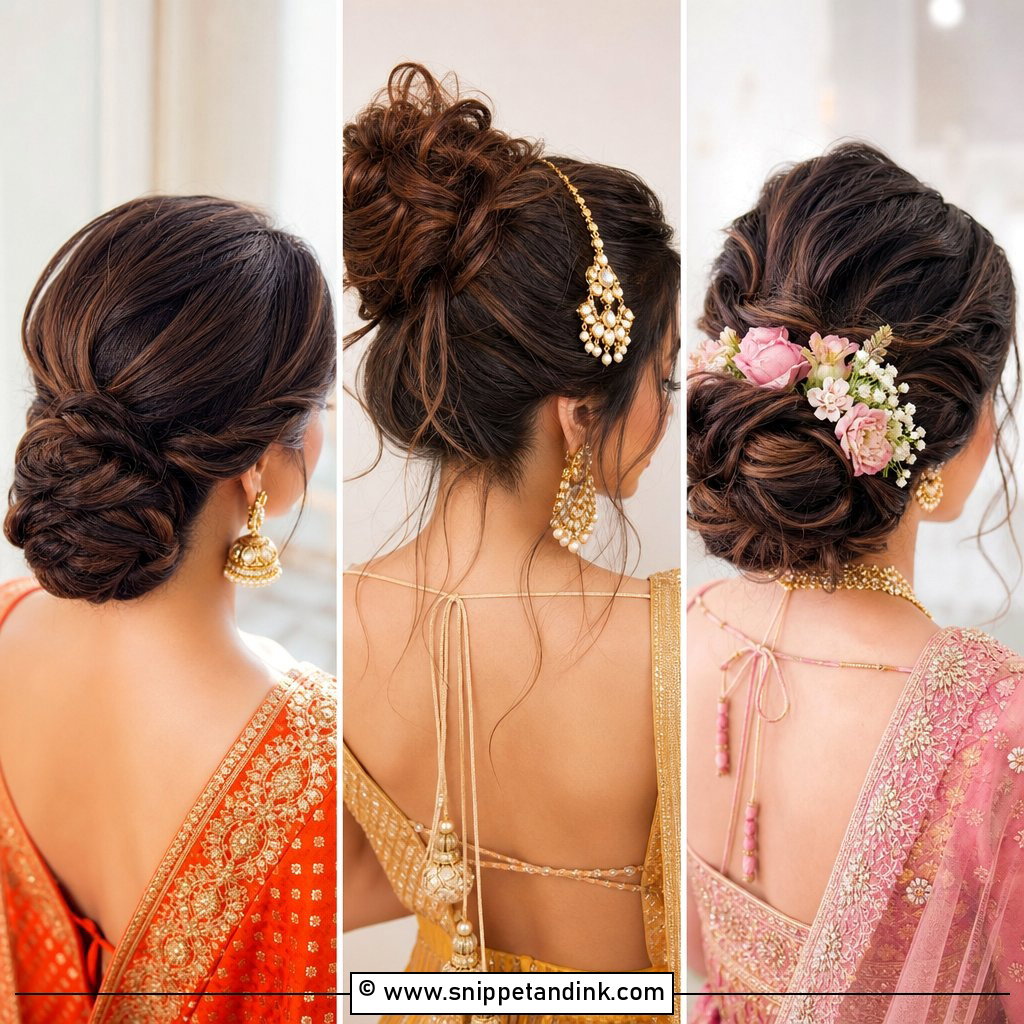
A low juda bun sits at the nape, which is why it rests comfortably under a dupatta and leaves room for heavy earrings. Medium hair is plenty for it, and a small bun pad can hide inside if you want more roundness. The front can be center-parted, side-parted or lightly puffed at the crown. Brides and guests who want a clean look with no fuss both suit it. A juda pin, fresh flowers or a delicate hair chain finishes it.
3. Braided Bun For Medium Hair
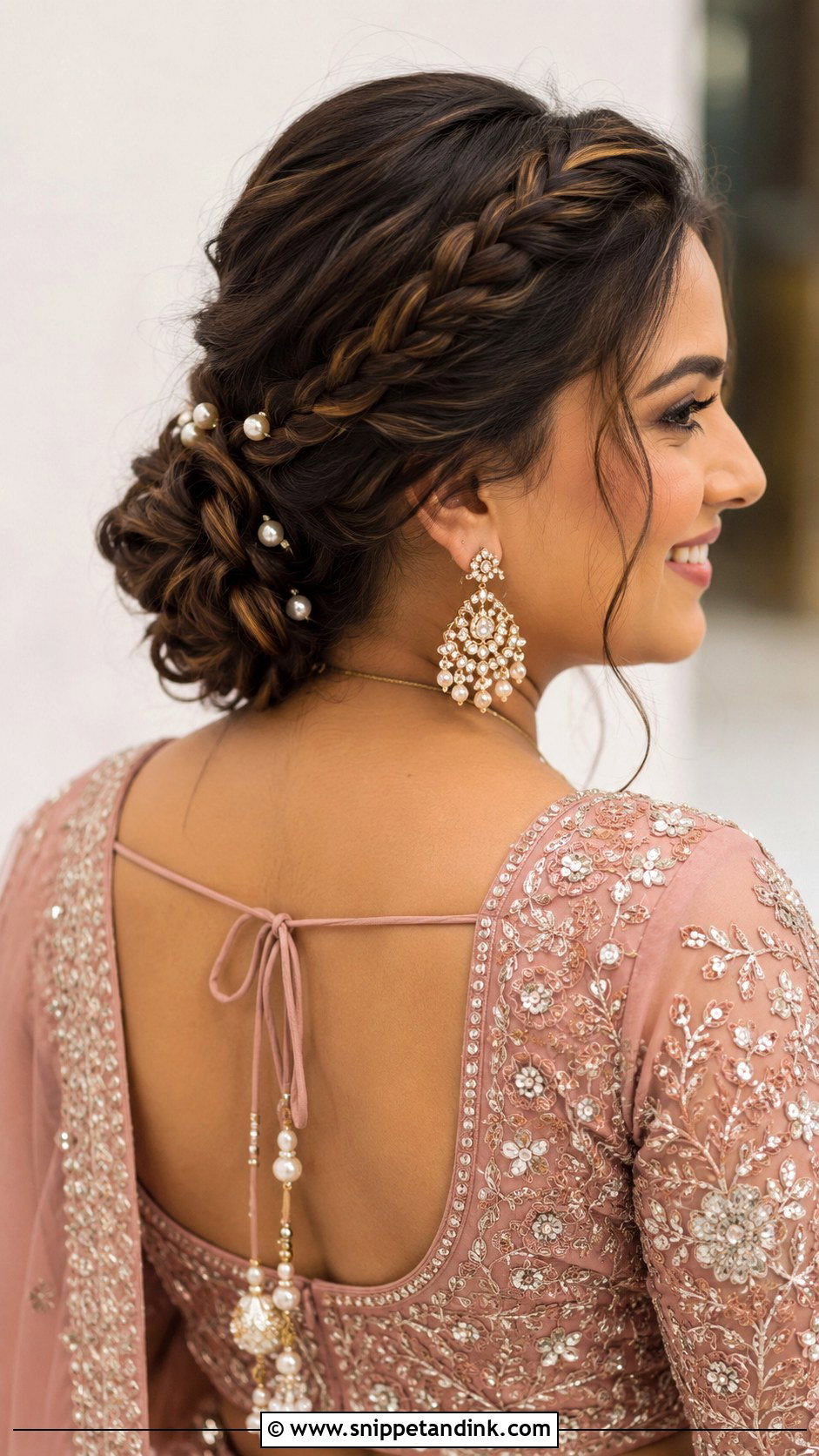
Braids give medium hair grip, and grip is what keeps a bun in place through a long function. I take one or two braids from the front or sides and blend them into a low bun, so the back looks detailed even though the length is modest. It shows well with embroidered blouses and open-back lehengas. Neat for a ceremony, a little looser for mehendi and sangeet, with small flowers, pearl pins or gold accessories to match the outfit. Heavily layered hair is easier to braid than to twist, because the braid catches short ends.
4. Messy Bun For Indian Wedding
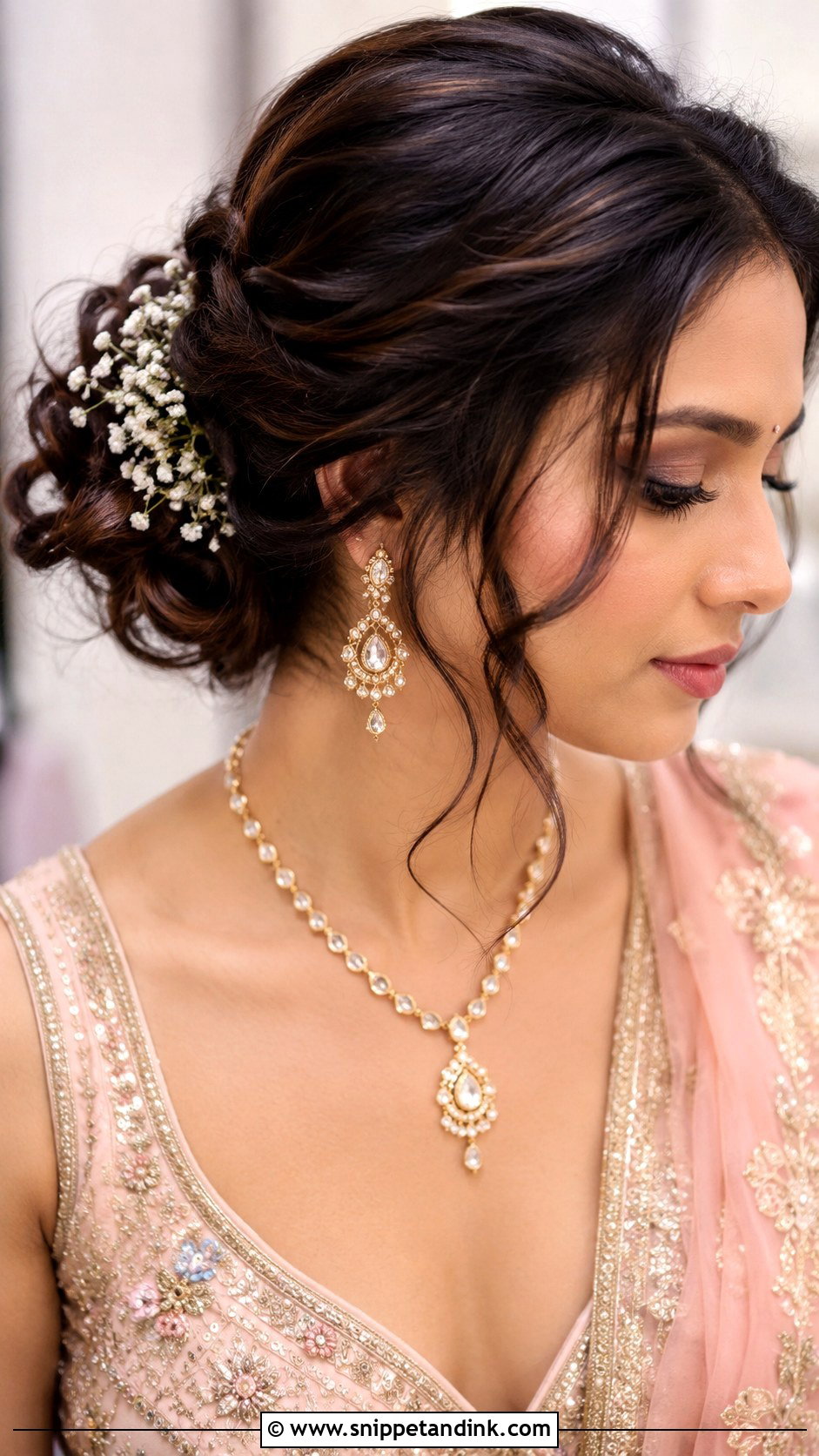
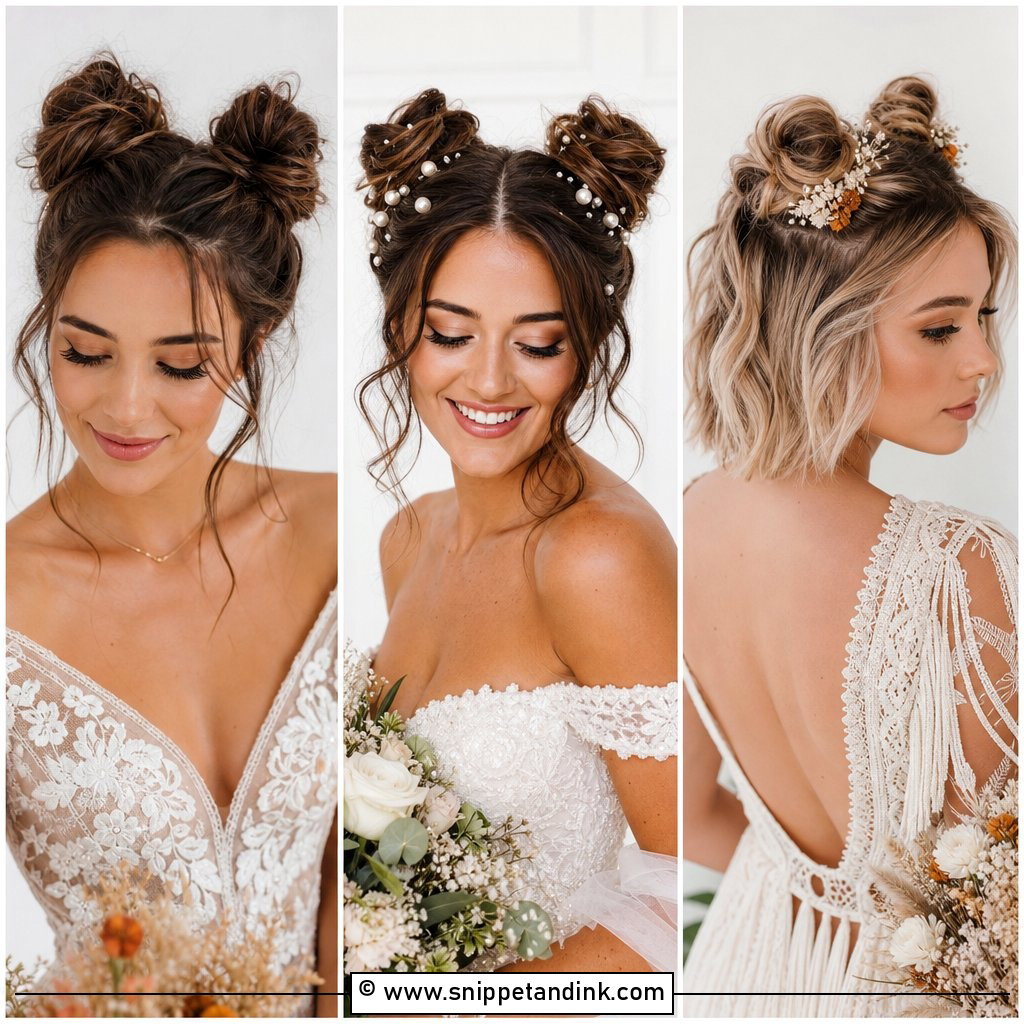
Loose twists and pulled-out texture make a medium-length bun look bigger than it is, so messy is a smart choice at this length. I tease the crown lightly and leave a few strands at the cheeks. Pastel lehengas, organza sarees and lighter jewelry suit it at receptions, engagements or the sangeet. The pin count is higher than it looks. Every loosened section needs a pin under it, plus setting spray, or the softness turns into a bun sliding down your neck by dinner.
5. Sleek Low Bun For Medium Hair
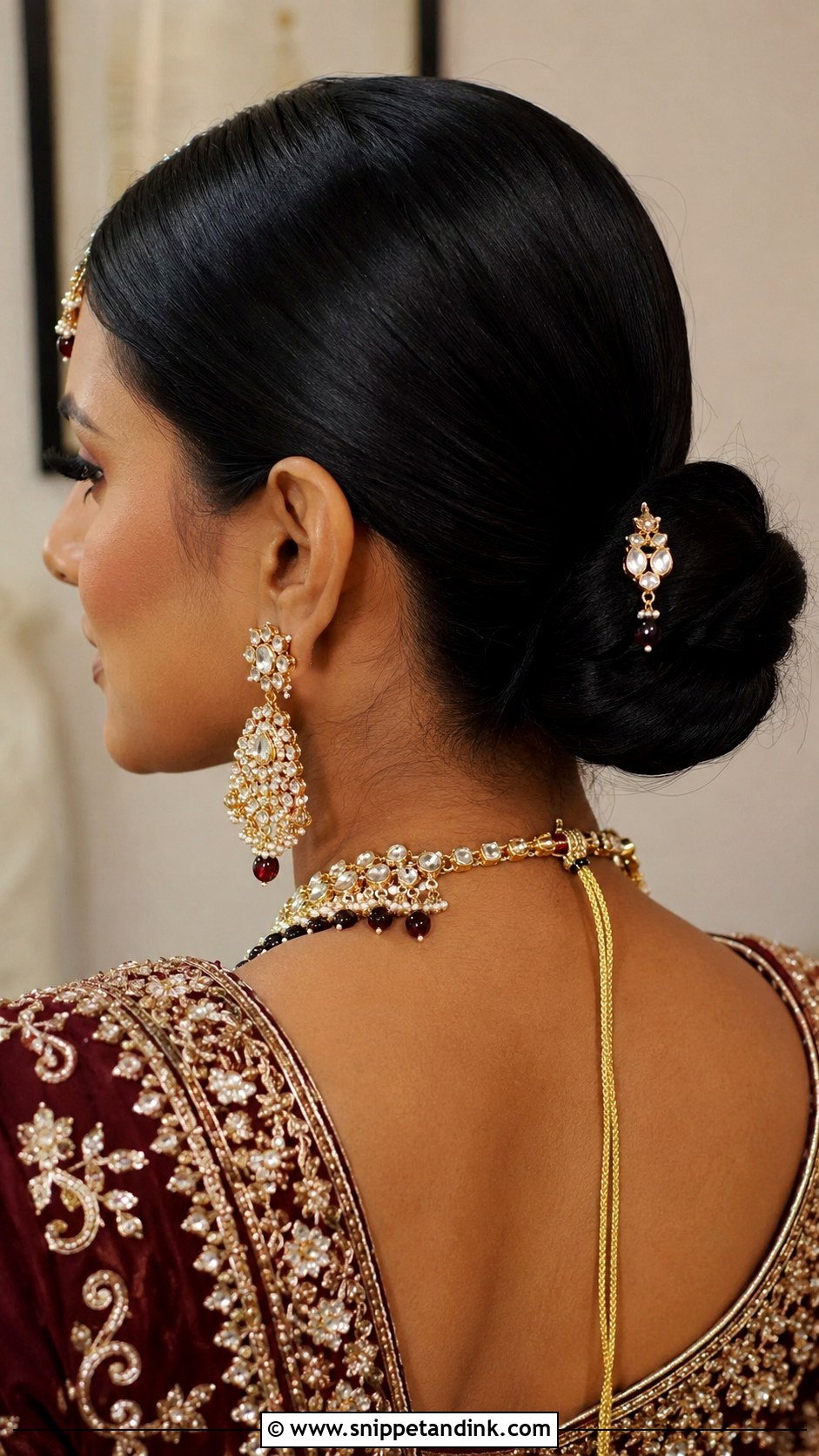
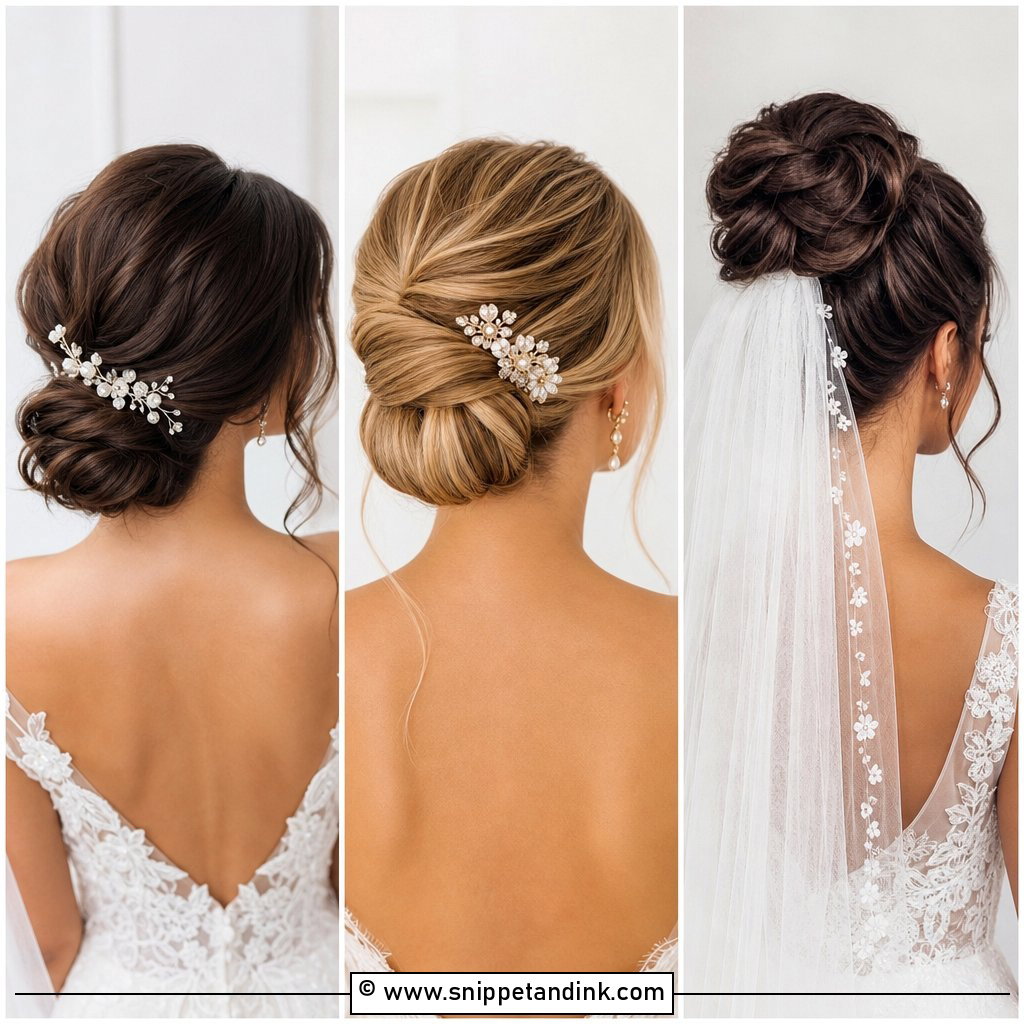
Sleek is where medium hair has the advantage: the bun stays compact rather than bulky, which suits a bride who wants a refined, fashion-led look. The hair is smoothed back or parted sharply and secured at the nape. Heavy dupattas, statement maang tikkas, matha pattis and bold necklaces all sit well with it, and the face and jewelry stay in focus. Smoothing cream, a fine comb and strong pins are the tools. Short layers at the nape usually spoil it, so I gel those flat before gathering. One jeweled accessory is all it needs.
6. Side Bun For Indian Wedding
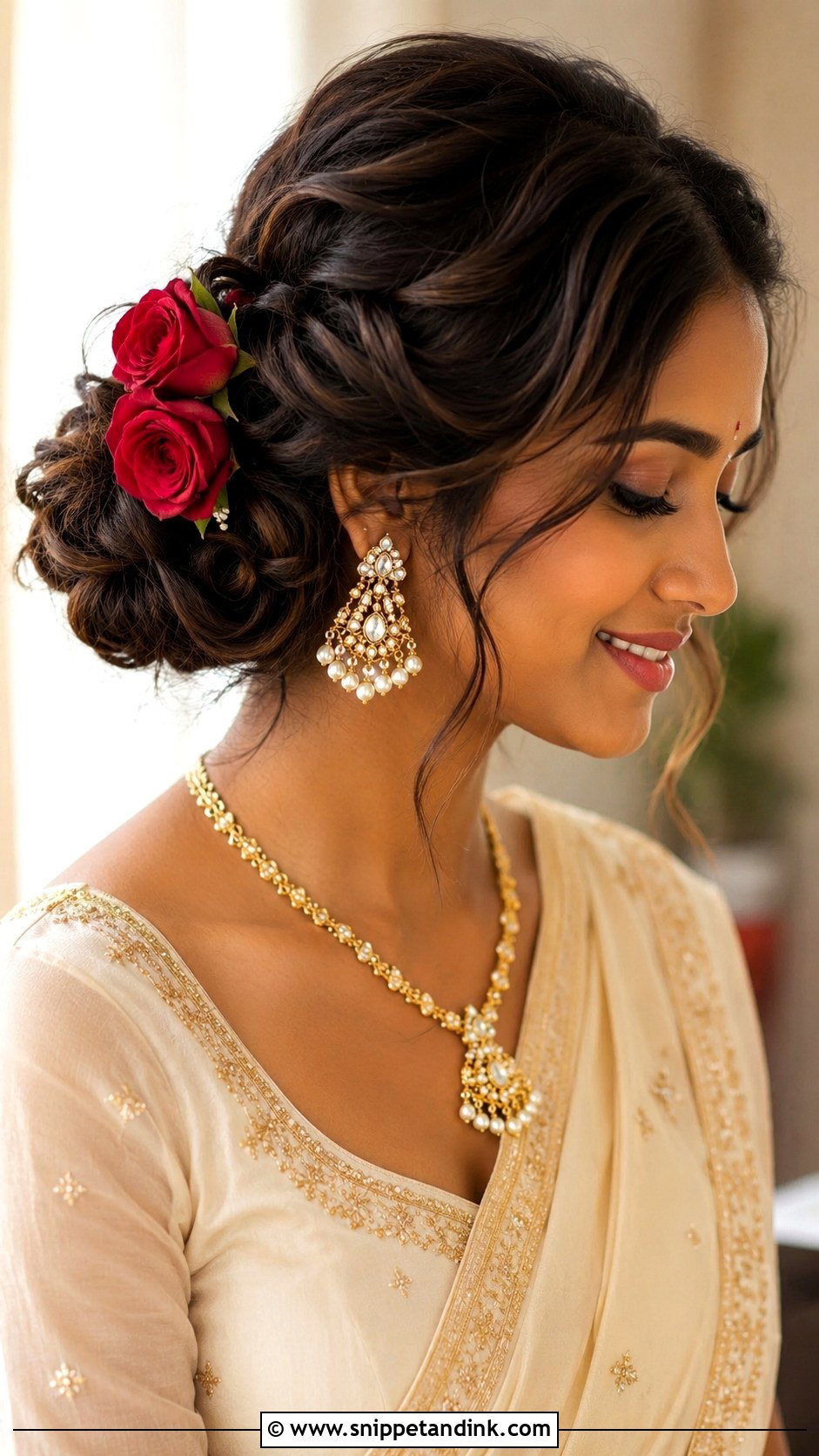
Shifting the bun toward one side, near the lower ear or jawline, puts it into every front-facing portrait. Sarees, lehengas and one-shoulder or deep-neck blouses suit it, decorated with roses, jasmine, pearls or a statement clip. The opposite side needs attention too: smooth it or twist it softly toward the bun, or the head looks lopsided. Medium hair has to travel across the nape to reach the bun, so I anchor it there with crossed pins first.
7. South Indian Bridal Bun For Medium Hair
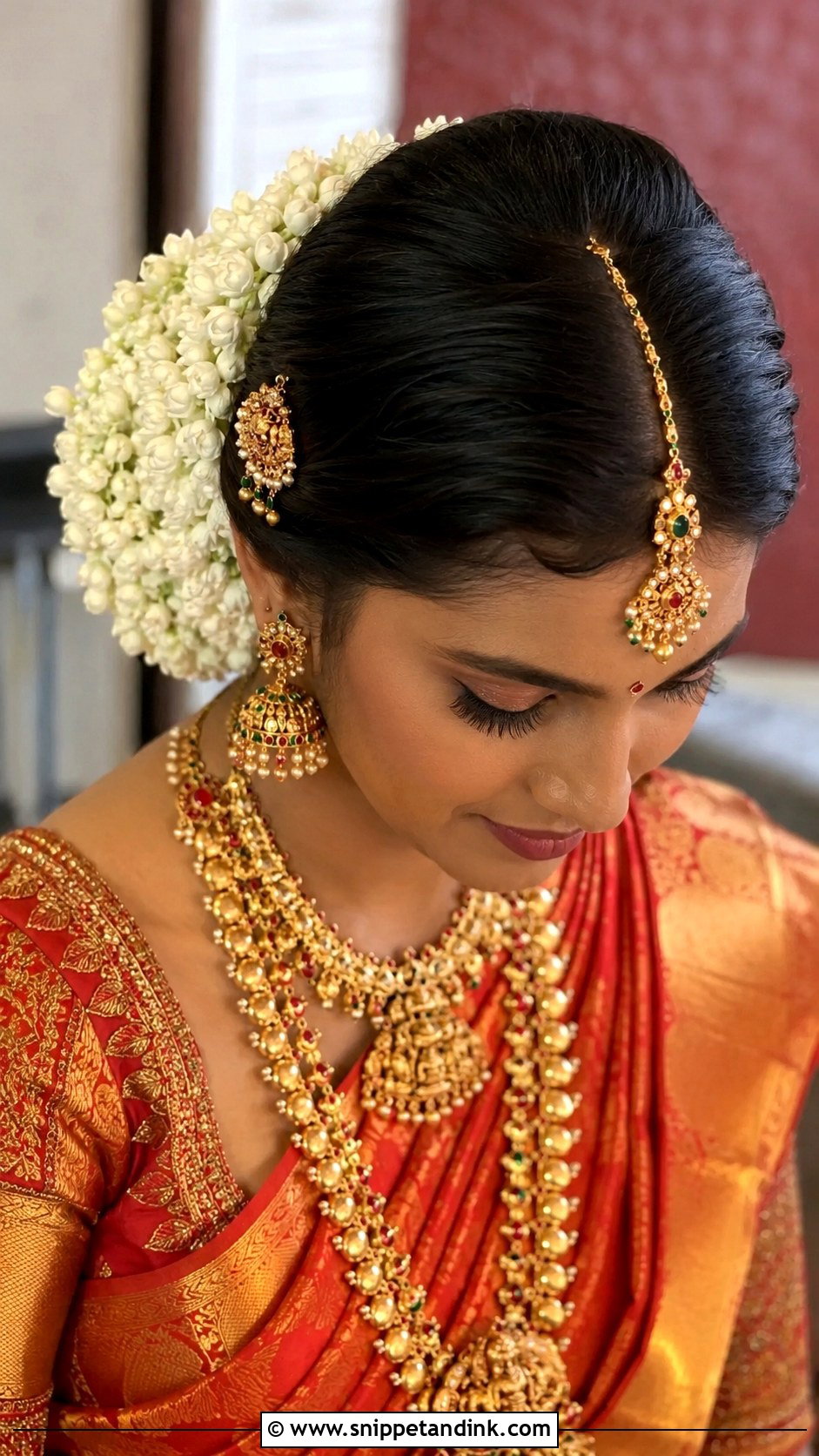
A South Indian bridal bun on medium hair is built around a filler. The bun sits low or mid-height, and the hair is shaped over padding to create the fuller silhouette that goes with silk sarees, before jasmine, gold hair ornaments and temple jewelry go on top. It belongs to the muhurtham, the engagement or traditional family ceremonies. A center part with maang tikka or netti chutti completes it. Keep the bun itself smooth and structured. The flowers and ornaments carry the decoration, and a textured base only competes with them.
8. Bridal Bun With Maang Tikka
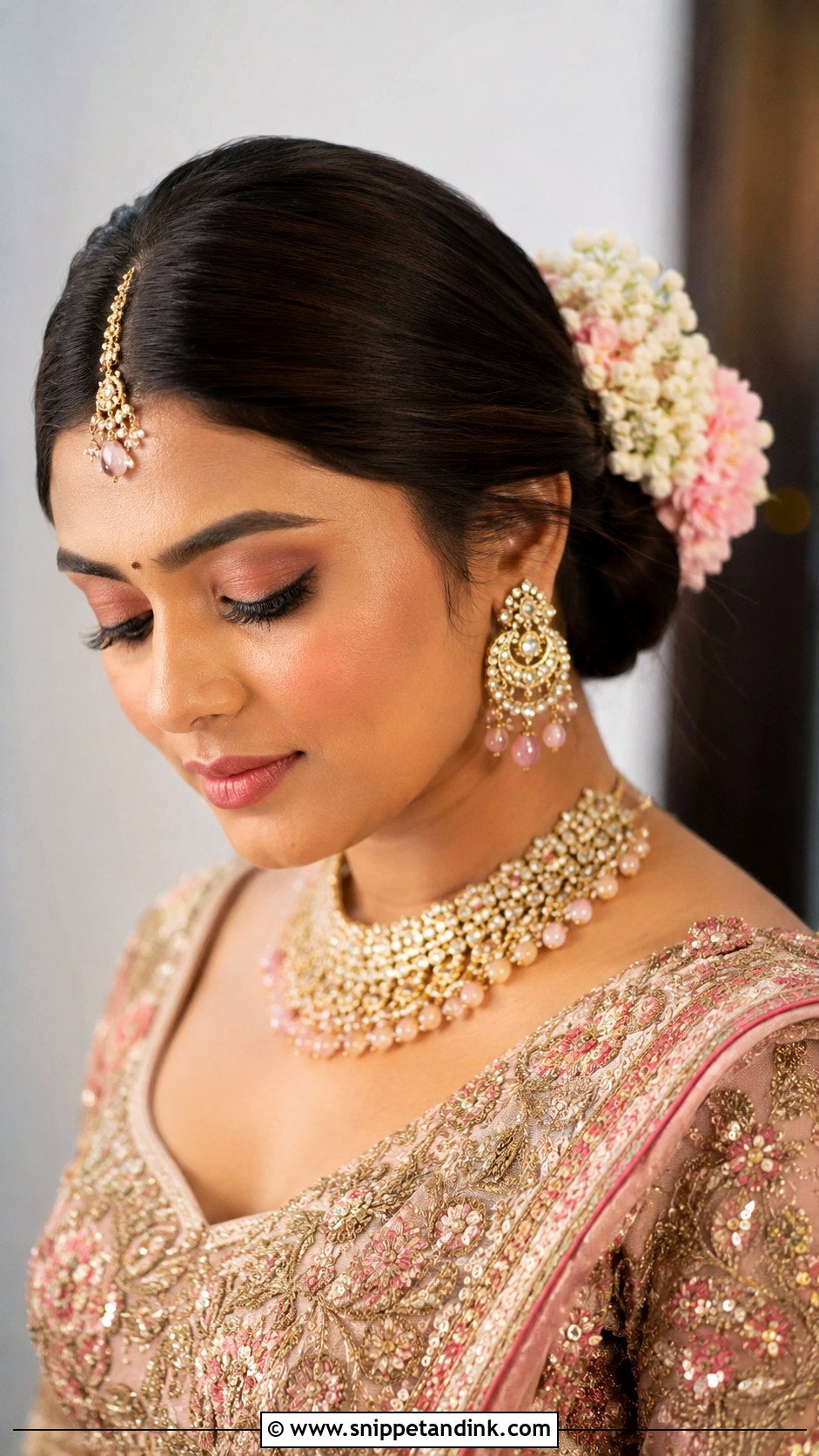
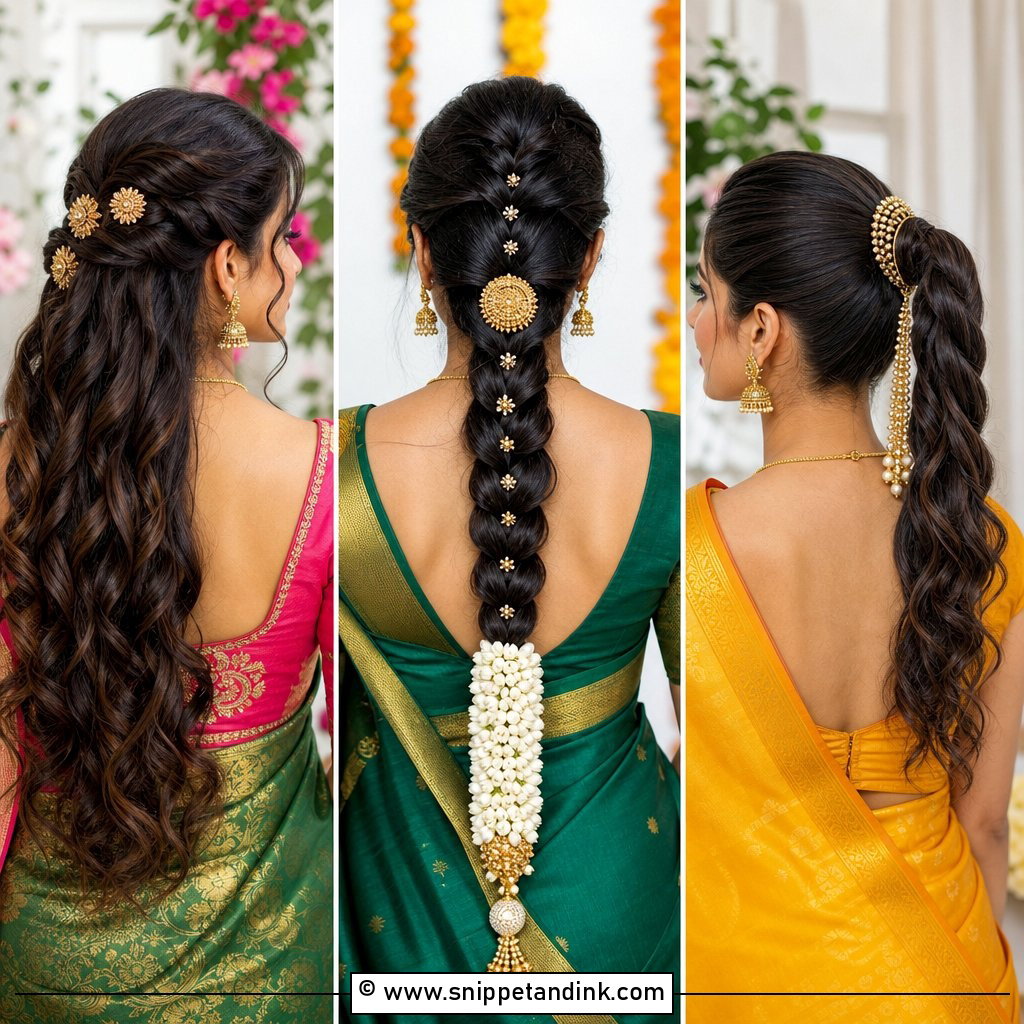
With a maang tikka, the part is the most important line on your head. I part dead center, smooth the front and gather a low or mid bun, then hook the tikka into a small pinned section at the crown so it hangs straight. The tikka pulls attention to the eyes, makeup and jewelry, and medium hair is easy to keep tidy around it. Lehengas, sarees and shararas all work. Soft flowers or pearl pins at the back finish the view from behind.
9. Bridal Bun With Matha Patti
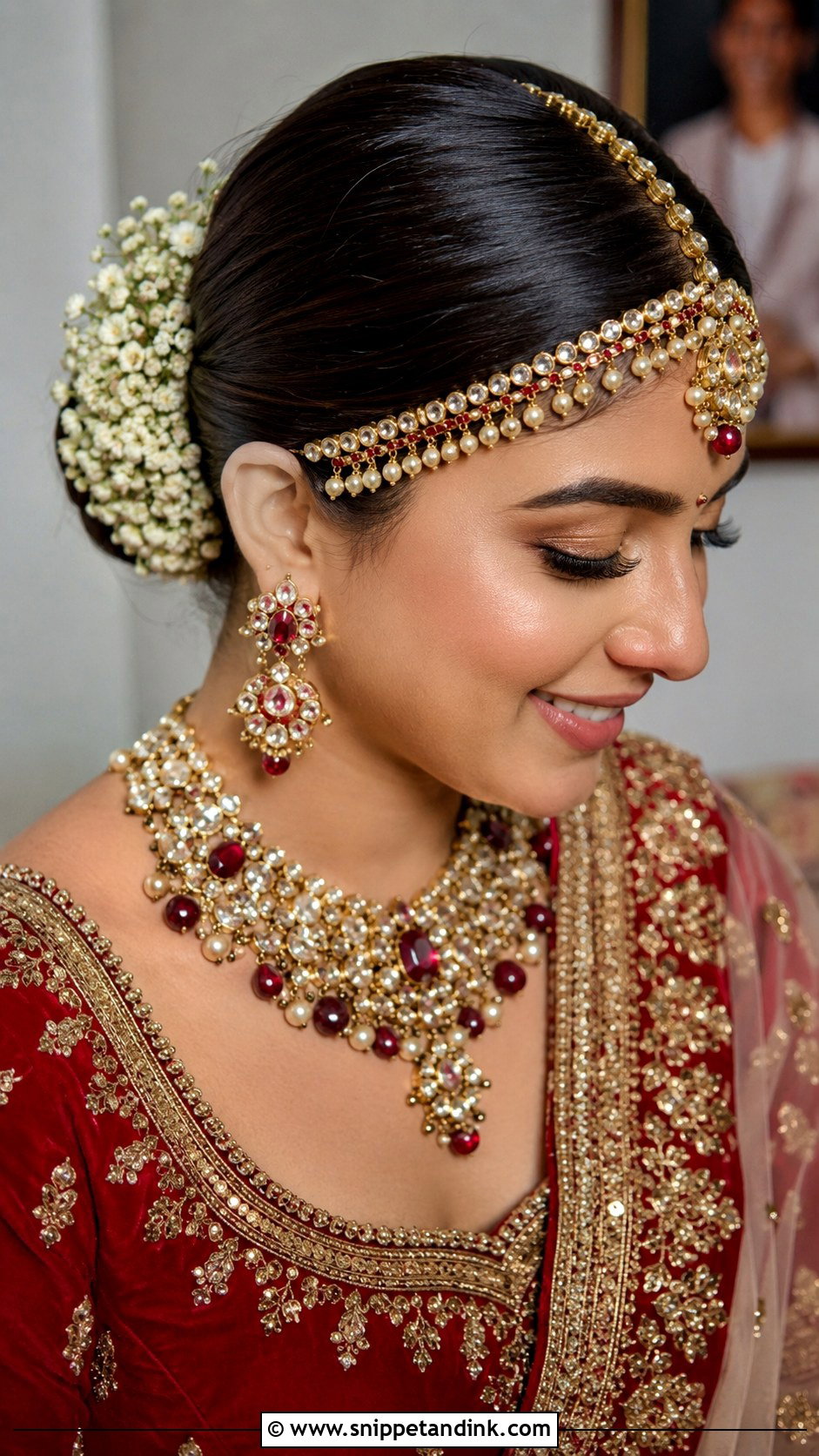
When the outfit and jewelry are grand, a matha patti over a bun is the classic answer. It starts with a clean center part, smooth sides and a secured bun at the back. Medium hair helps here, because there’s less bulk under the headpiece pushing it out of line. The matha patti brings drama at the forehead and the bun balances it behind, which suits the main ceremony with heavy lehengas and embroidered dupattas. Ornate patti, simple bun; a plainer patti can take small flowers. I tuck the side chains under the hair at the temples and pin them, which stops them creeping forward.
10. Bun With Fresh Roses For Medium Hair
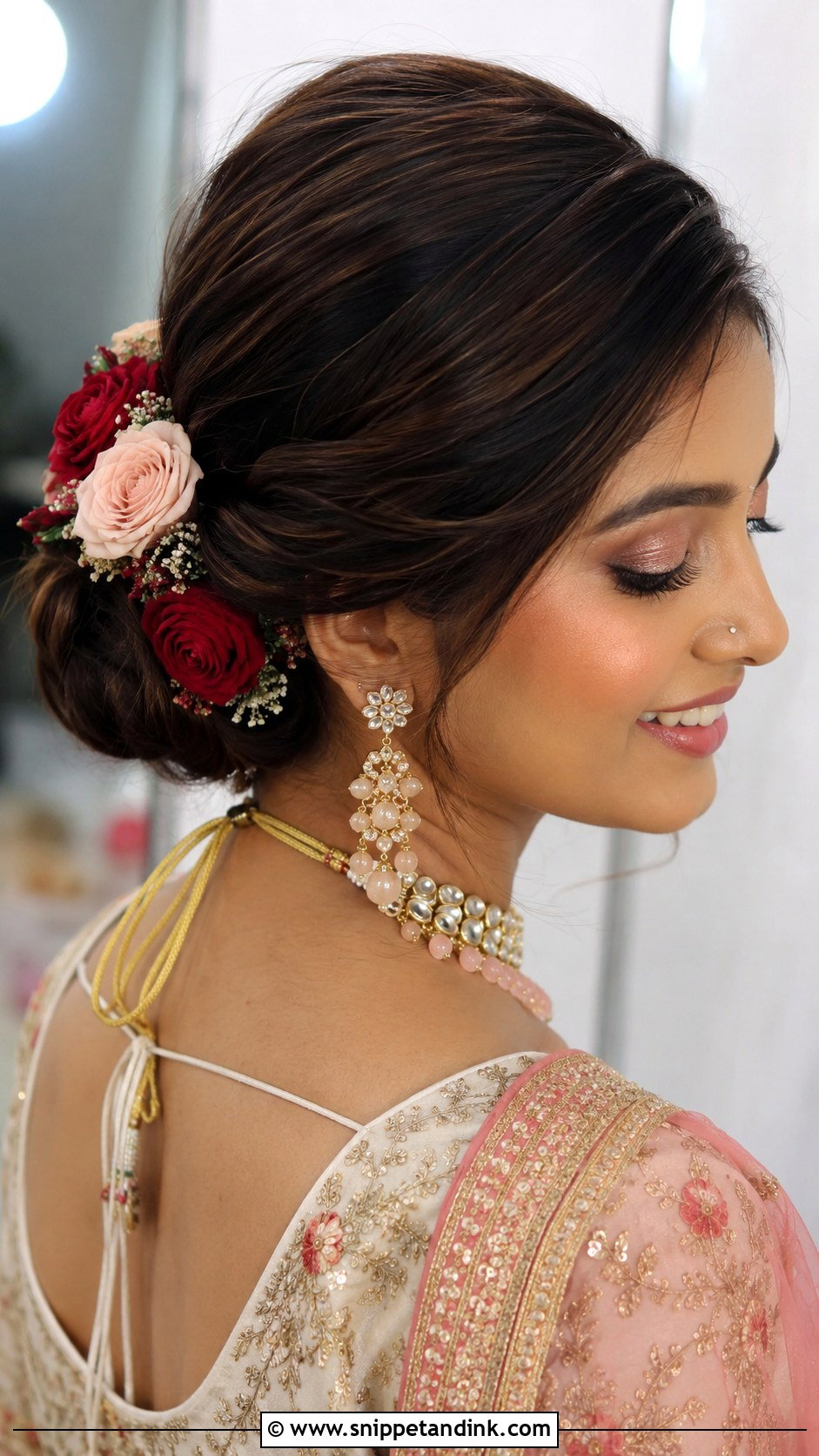
Small roses wrapped around a twisted low bun make medium hair look fuller and more festive at engagements, haldi, mehendi or the reception. Red roses go with bridal lehengas; pink, peach or white with pastels. It’s a way to get volume without extensions. The front stays soft with a center or side part. Rose heads are heavier than jasmine buds and bruise where pins pierce them, so I fix them on florist picks or wire instead of pinning through the petals, and ask for flowers kept cool until the morning.
11. Bun With Pearl Pins For Medium Hair
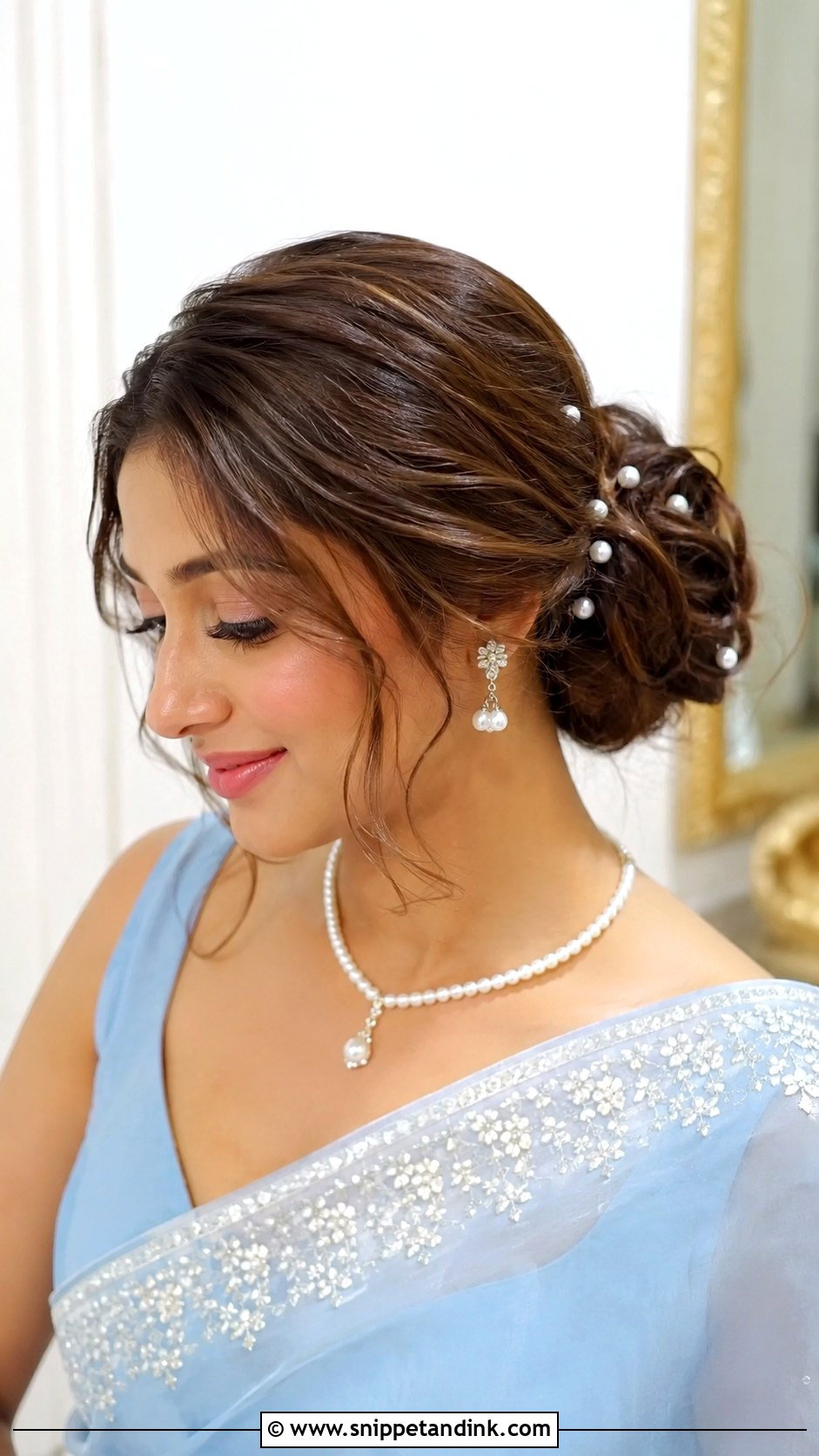
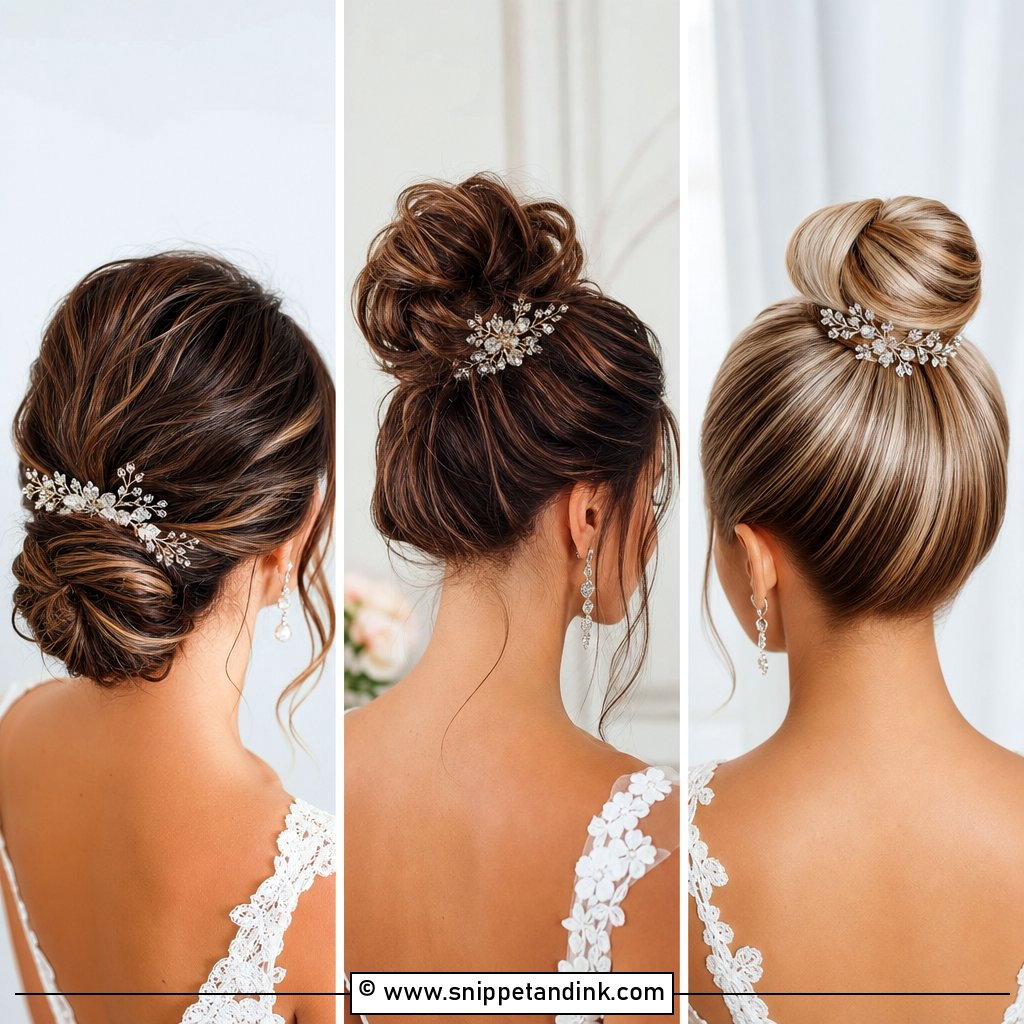
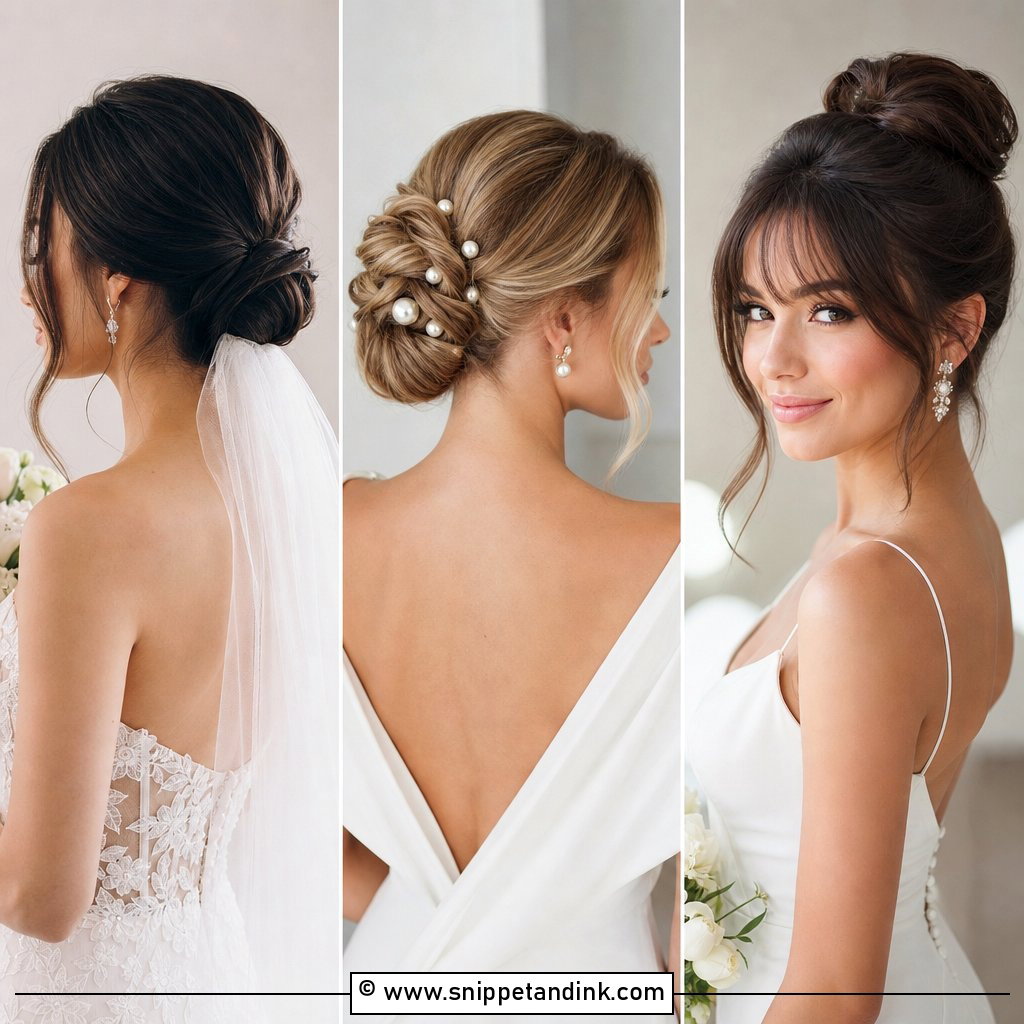
Pearl pins turn a sleek, twisted or slightly messy bun into something delicate without adding weight, so I use them for receptions, engagements and bridesmaids in pastel sarees and lehengas. Medium hair keeps the bun light and easy to secure. Pearl jewelry, dewy makeup and a soft dupatta drape complete the look. I set the pins in a loose spiral rather than a straight row, which reads as scattered rather than arranged, while keeping the spacing even.
12. Twisted Bun For Medium Hair
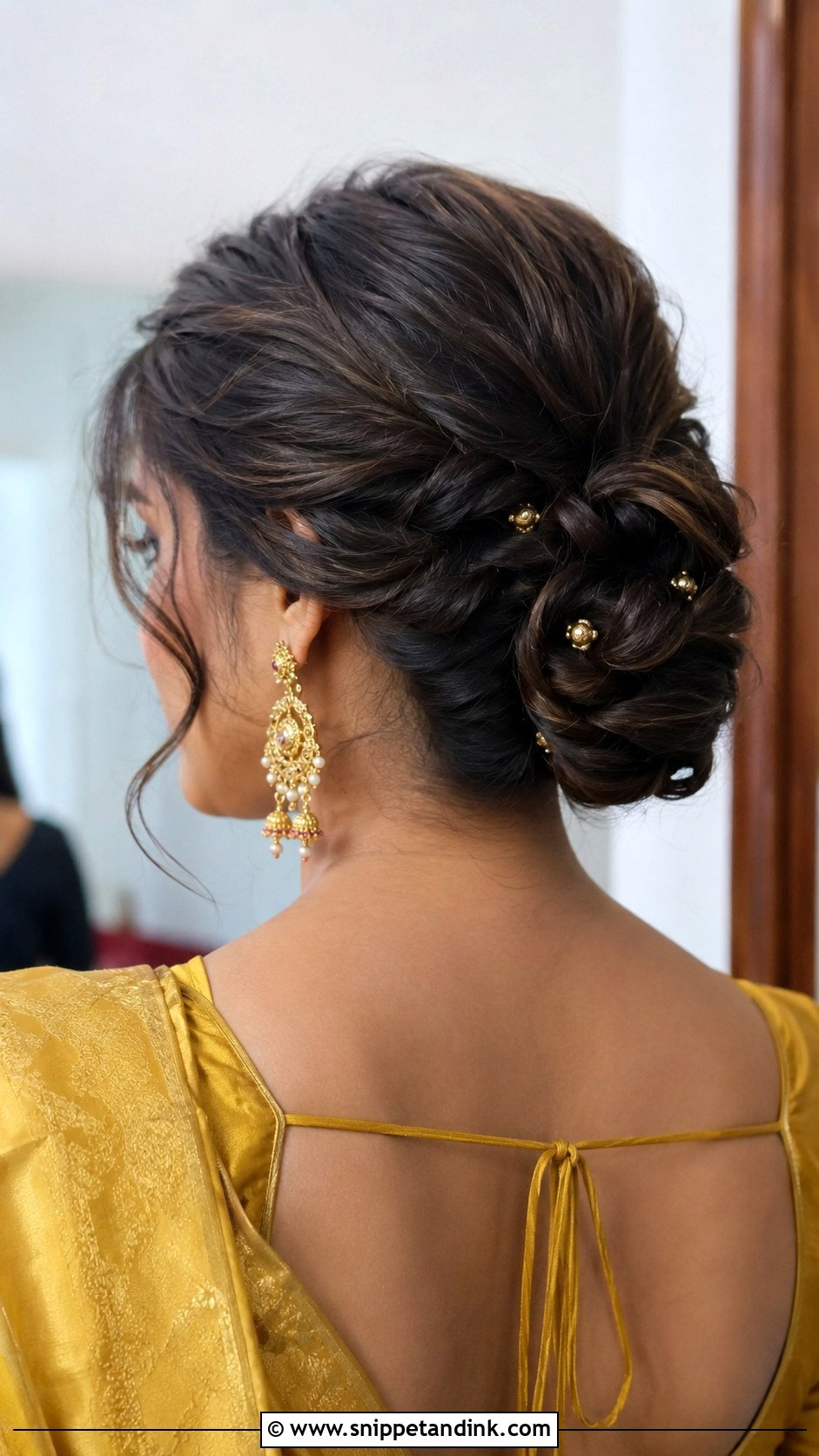
Twisting sections back and pinning them into a bun makes medium hair look longer and fuller than it really is. You get movement and detail without braids, and the twists trap layers that would escape a plain bun. Guests, bridesmaids and brides who want something soft but secure all suit it. Wear it low for a classic shape or slightly higher for lift, with tiny flowers, gold pins or a decorative comb at one side. Twist every section in the same direction, or the bun turns lumpy.
13. Curly Bun For Medium Hair
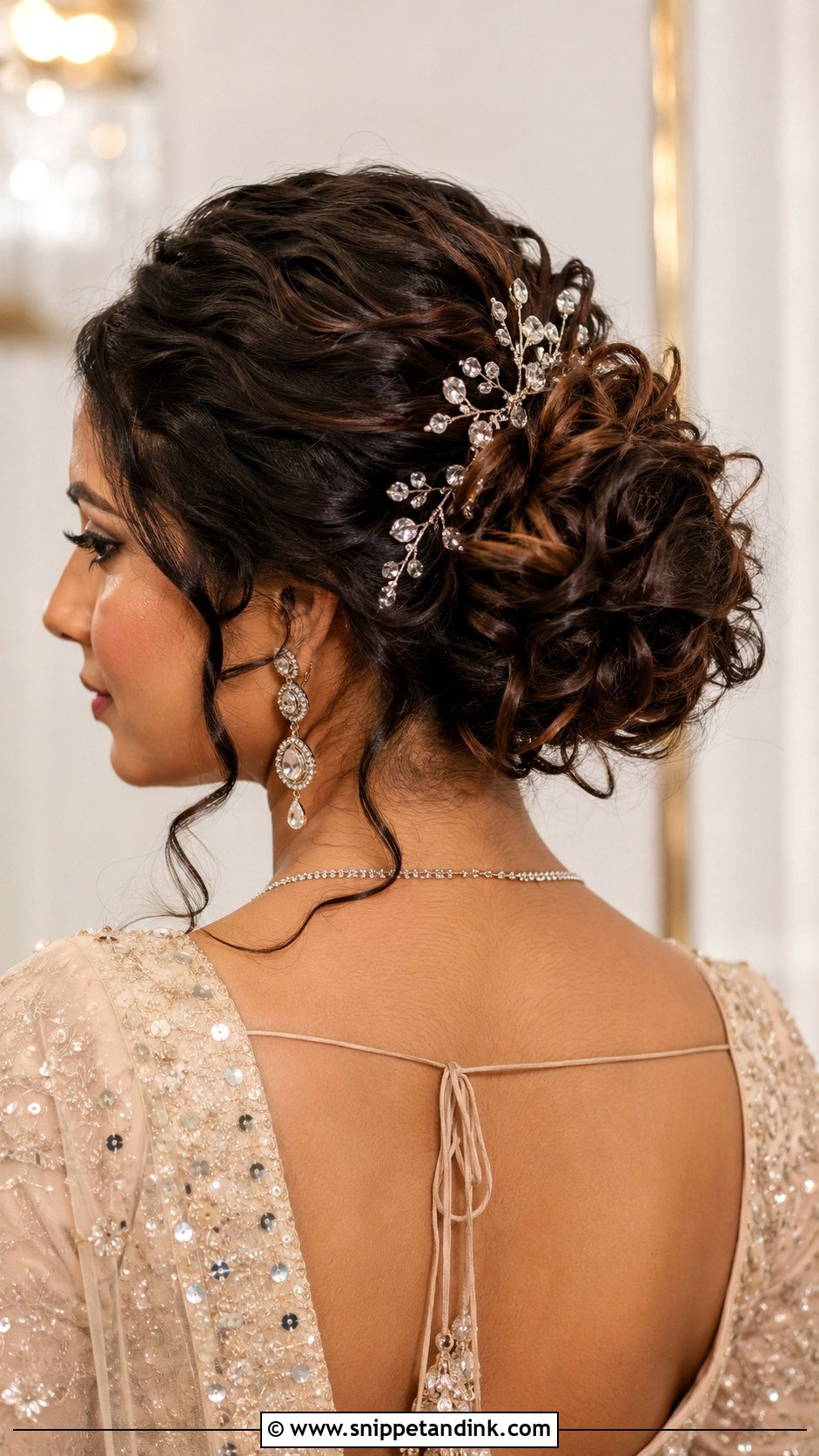
Curl first, pin second. The curls add body, so the finished bun doesn’t look small, and this version is especially kind to naturally wavy hair at a romantic reception. Leave a few soft pieces near the face. It suits lehengas, gowns and embellished sarees, with pearl pins, crystal pins or small flowers. I let each curl cool completely before pinning, because a warm curl pinned into place loses its shape and flattens.
14. Puff Bun For Indian Wedding
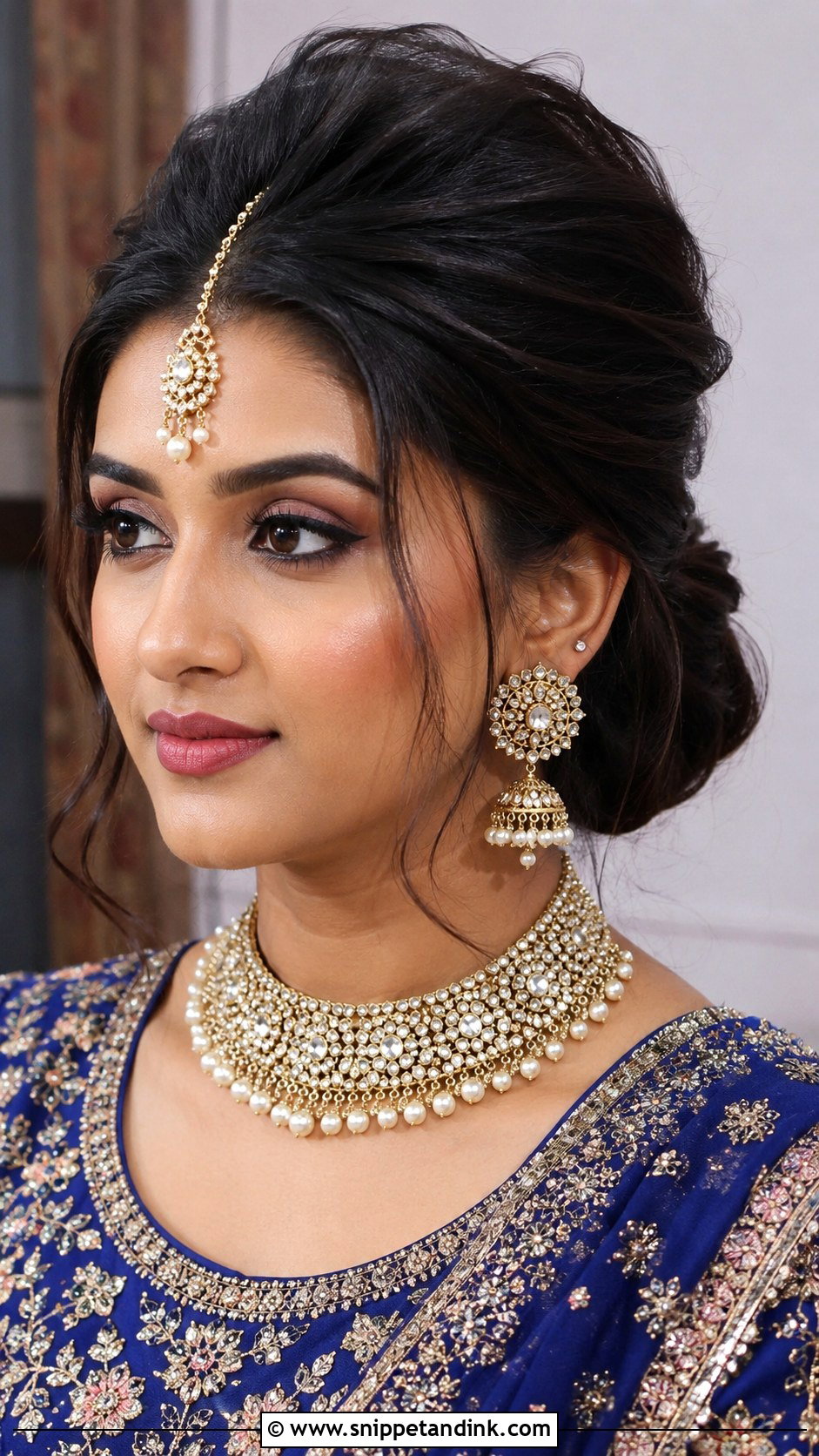
Height at the crown lengthens a round face and gives a dupatta something to sit behind. The front section is lightly backcombed and smoothed over, and the rest goes into a low or mid bun, sleek, braided or textured to suit the outfit. It pairs with a maang tikka, jhumkas and statement necklaces. Keep the puff modest. Too much height looks dated, and a heavy dupatta pinned over a tall puff squashes it into a dent anyway.
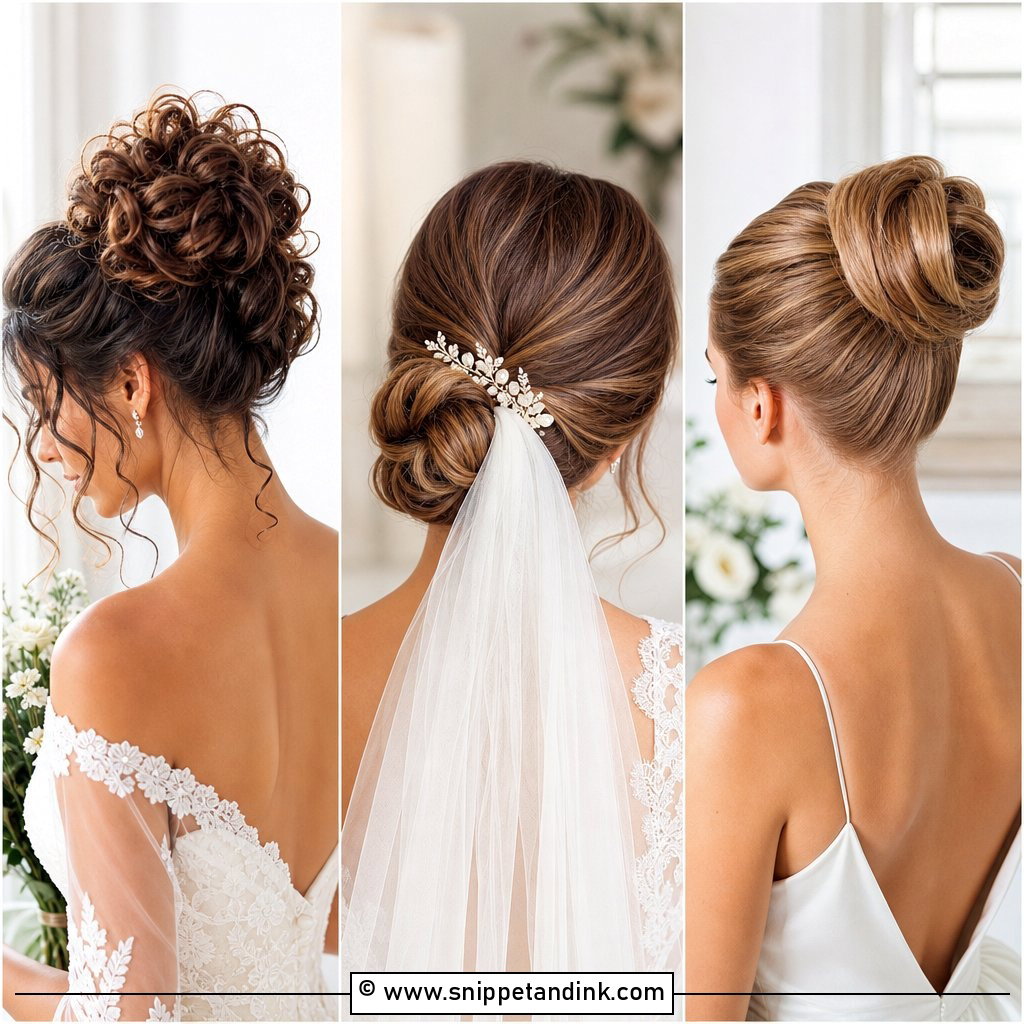
15. Floral Bun For Mehendi
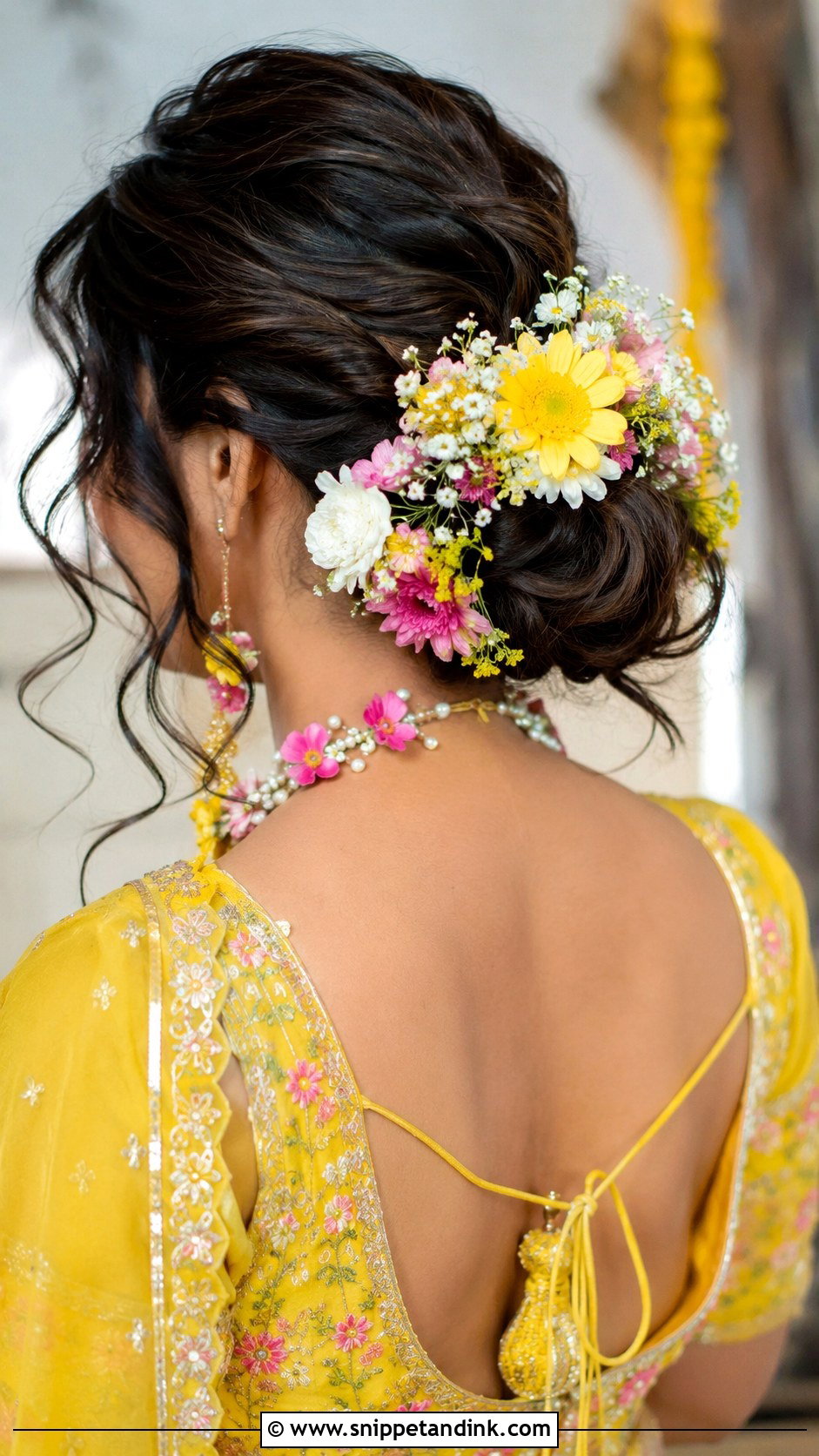
Mehendi hair should be bright and easy to forget about while your hands are busy. Medium hair twisted into a low messy bun and dotted with fresh flowers in yellow, pink, orange or white does both. Floral jewelry, light lehengas and bright mehendi outfits suit it, and the bun keeps hair off your hands while the paste sets. Small flowers look delicate; bigger blooms look bolder. Soft tendrils or a light side part keep the front relaxed. For an outdoor function in heat, hardier blooms like marigolds outlast roses and jasmine.
16. Bun With Hair Chains For Medium Hair
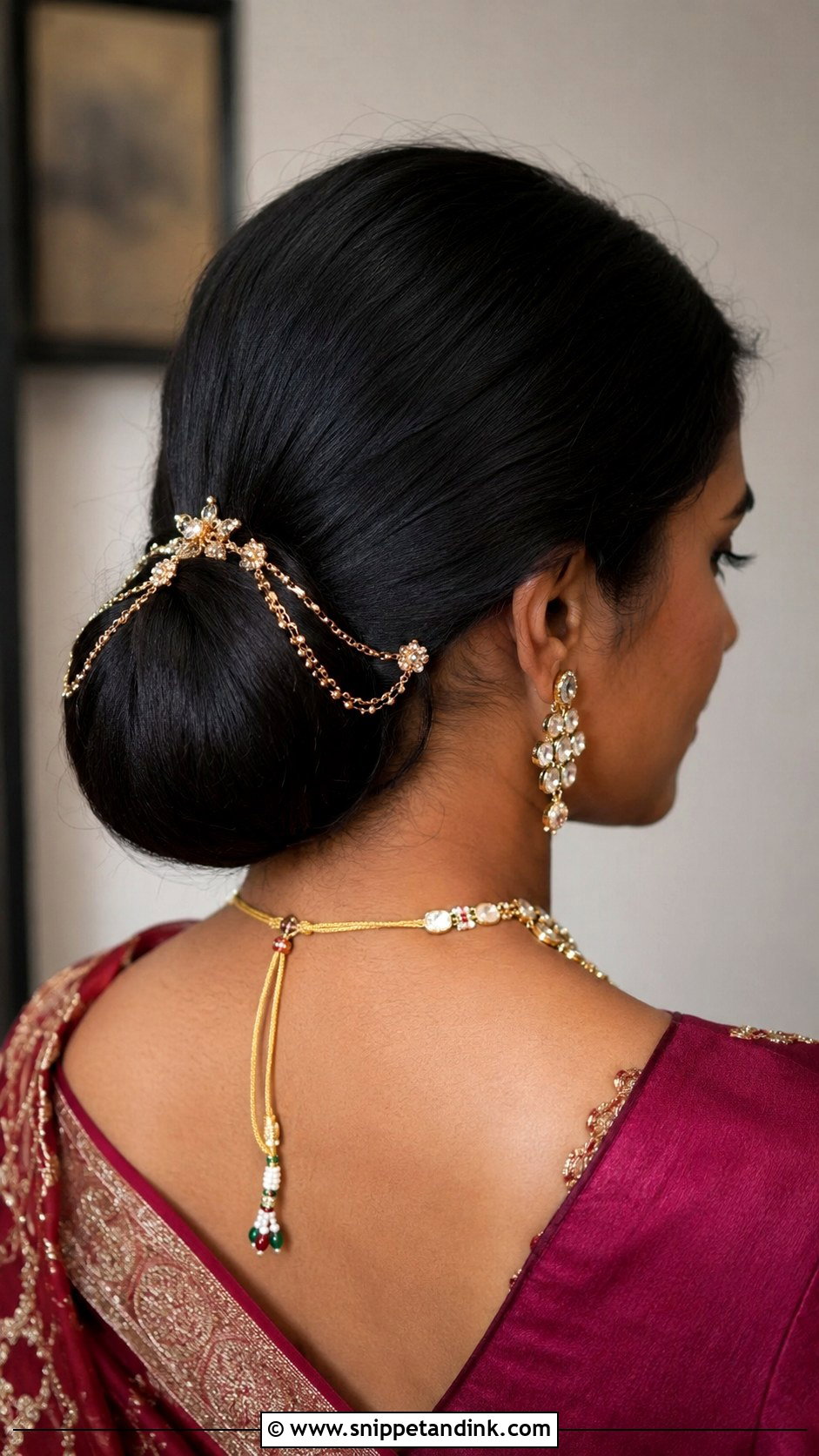
Here the bun is just the stage; the chains are the jewelry. They can drape across the bun, connect to the maang tikka or circle the back. I’d suggest it to brides matching heavy gold, kundan or polki. Medium hair keeps the bun compact and secure under the chains. Smooth the base so the accessory doesn’t get lost, and hook each chain end to a pin hidden in the bun rather than to loose hair. Save it for the main ceremony or the reception.
17. Bun With Juda Pin For Medium Hair
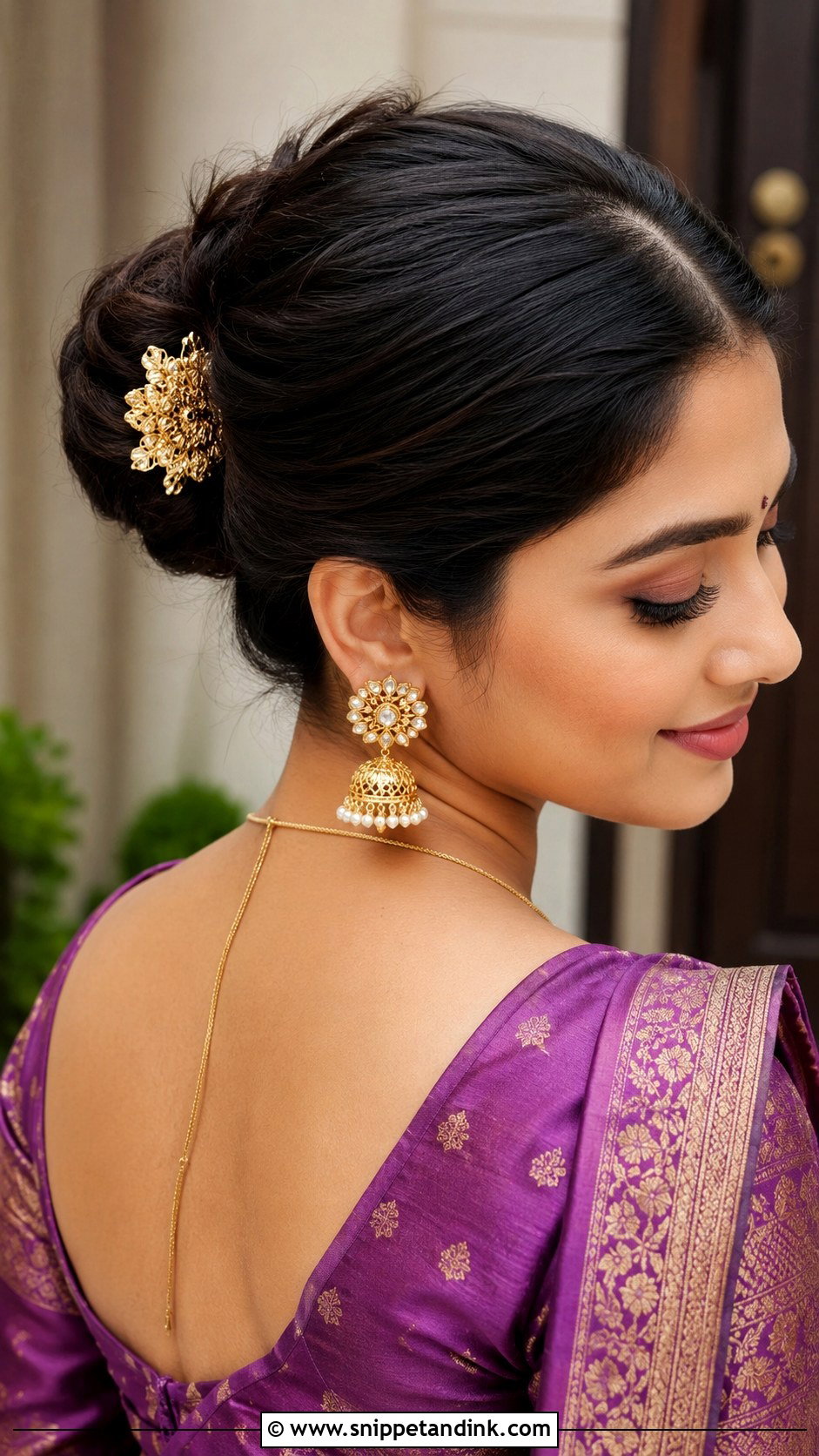
A juda pin is the simplest way to make a smaller bun look dressed up, which is why it suits medium hair. Sleek, twisted, braided or plain, the bun gets a decorative pin at the center or side: gold for silk sarees, kundan for bridal lehengas, pearls for pastels. Bridesmaids, mothers of the bride and guests wear it as easily as brides. On its own, a juda pin won’t hold a bun. I set it into a bun already secured with hidden bobby pins, so it carries no weight at all.
18. High Bun For Indian Wedding
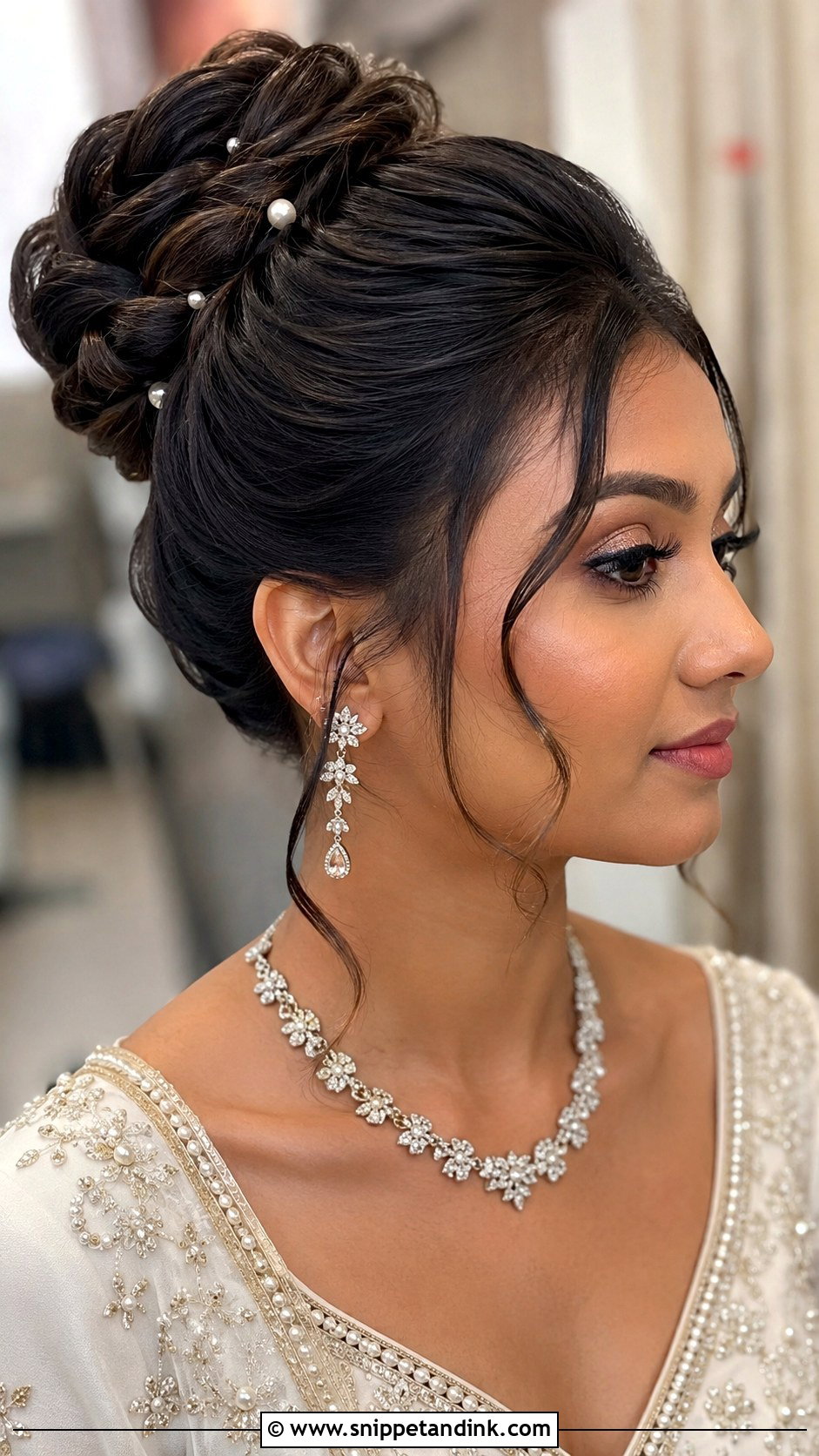
A high bun lifts the whole look and lengthens the neck, keeping heavy necklines and jewelry fully visible. Medium hair is gathered higher on the head and wrapped around a small donut for shape. Receptions, cocktail events and modern bridal looks suit it, sleek or slightly textured, with a few pearl pins, a small flower cluster or a jeweled comb. Don’t set it too far forward. And skip it if you’ll wear a dupatta over your head, since it lifts the fabric into a peak.
19. Low Bun With Face Framing Pieces
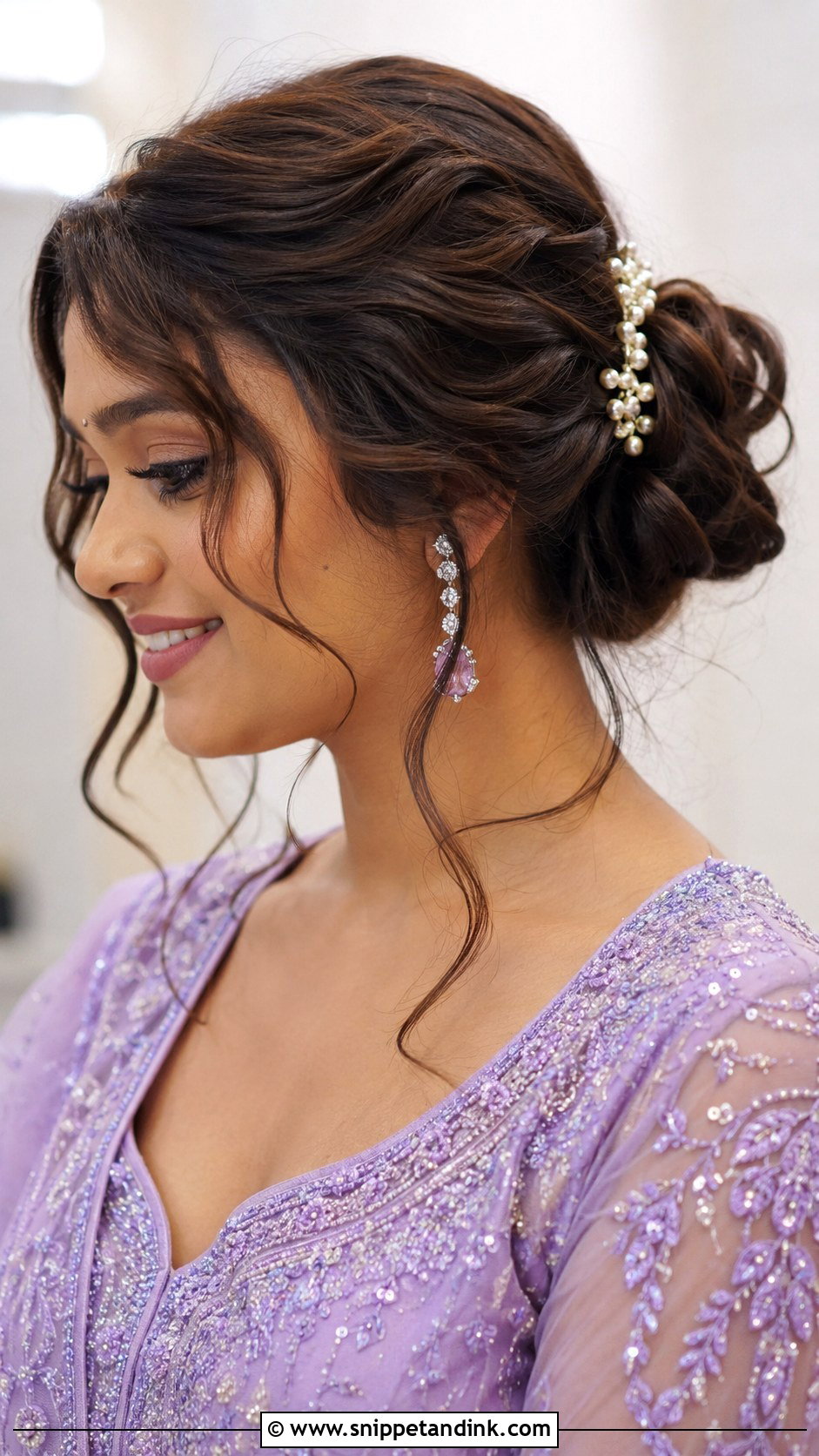
Leaving a few curled strands at the cheeks and jaw softens a low bun, and layered medium hair already has those pieces ready. It suits bridesmaids, sisters of the bride or brides who want something gentle, with a lehenga, chiffon saree or embellished gown. Keep the pieces few and intentional so they don’t distract from jewelry or makeup. In humidity they’re the first thing to go limp, so I curl them a little tighter than looks right in the mirror.
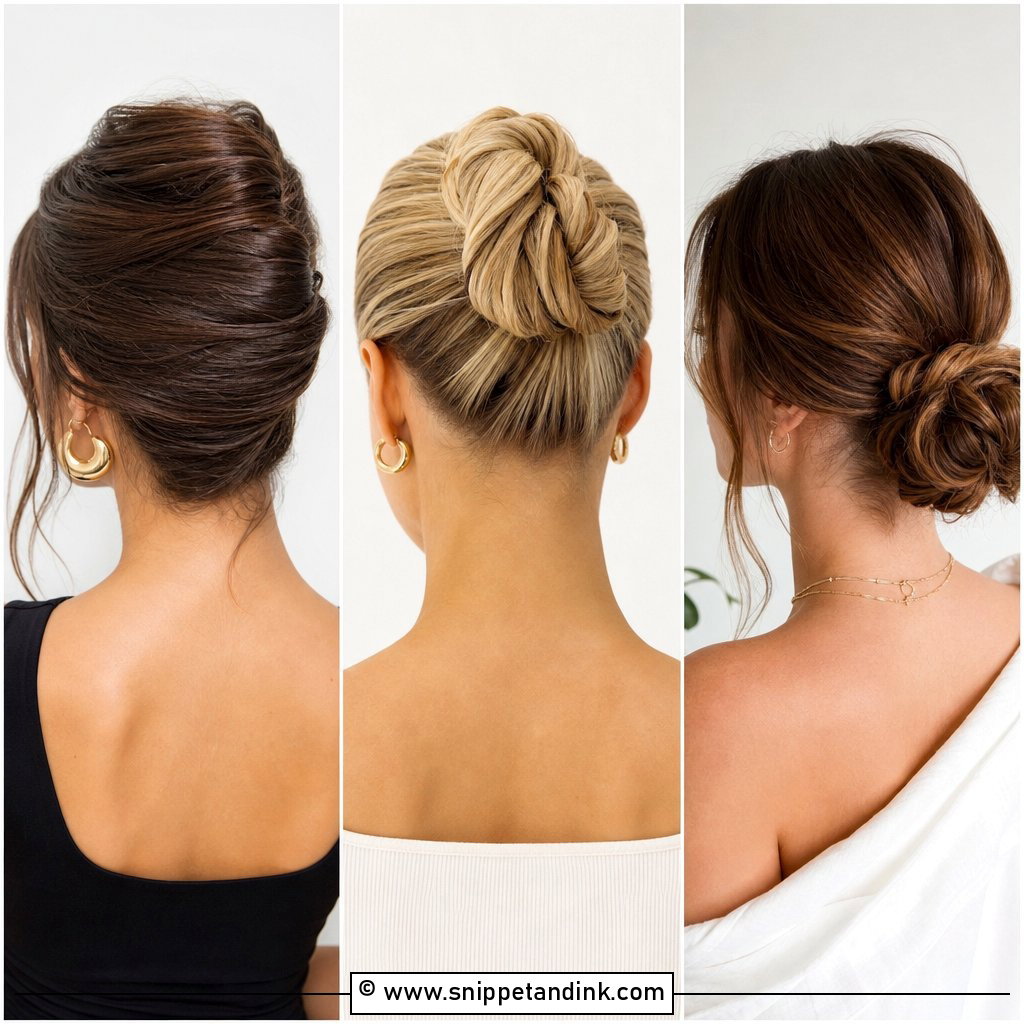
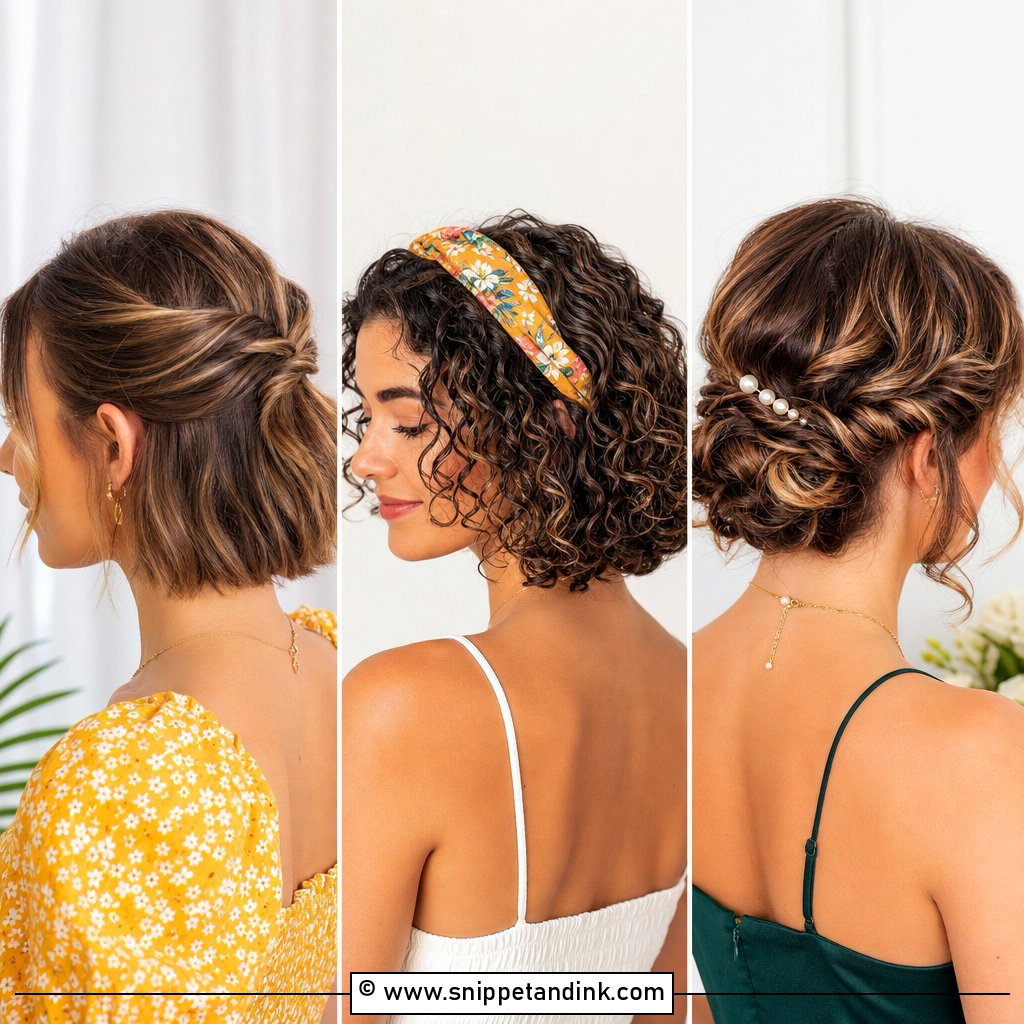
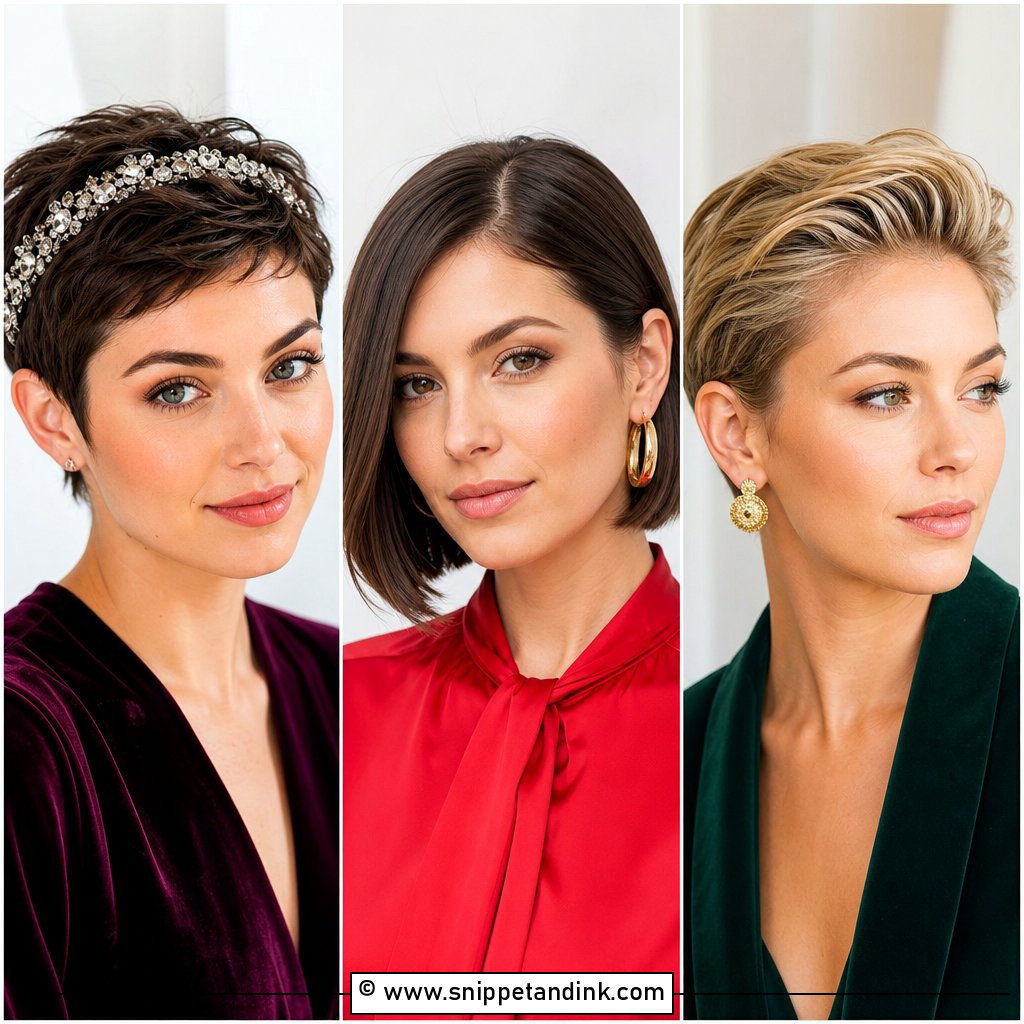
20. Reception Bun For Medium Hair
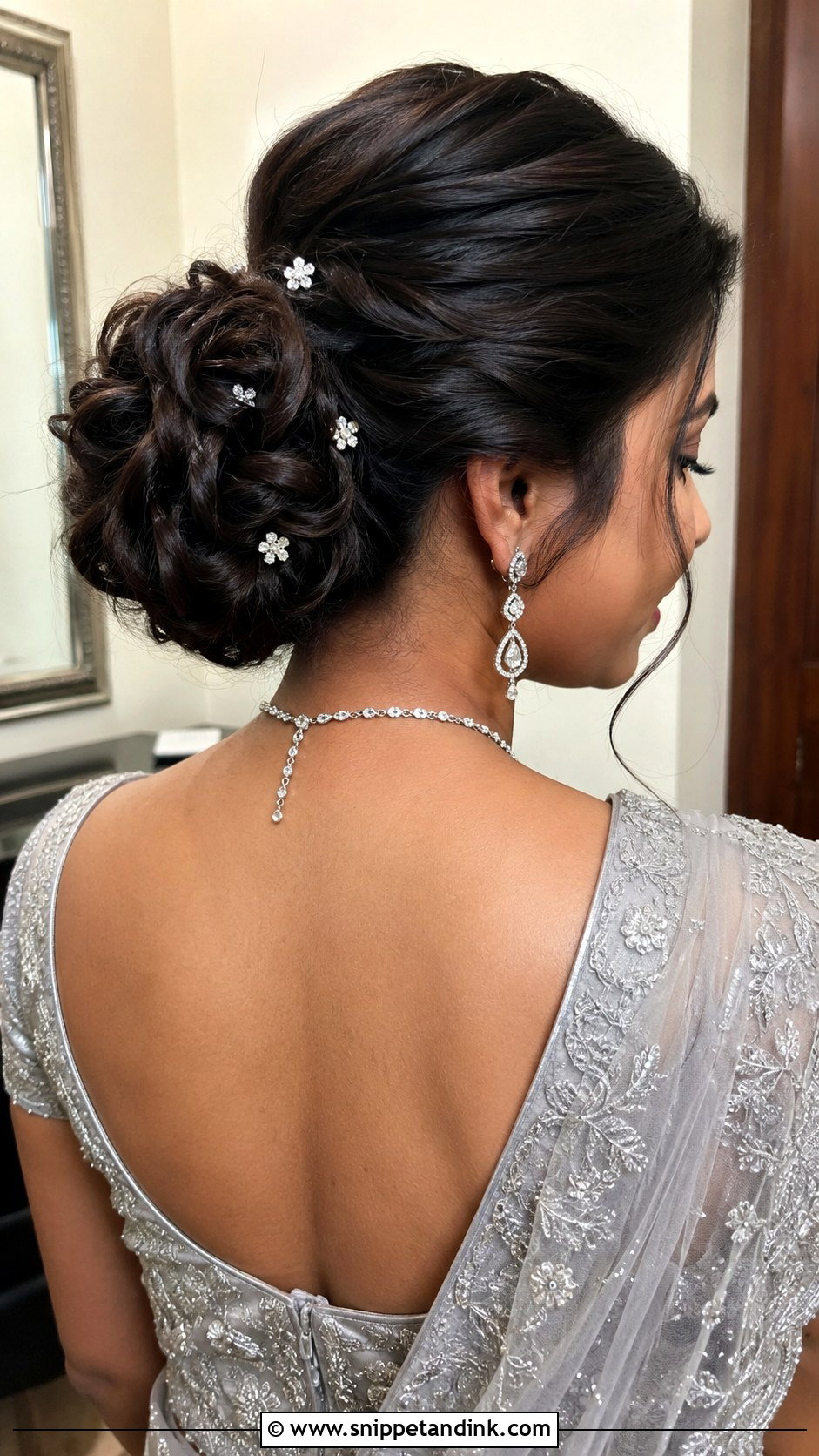
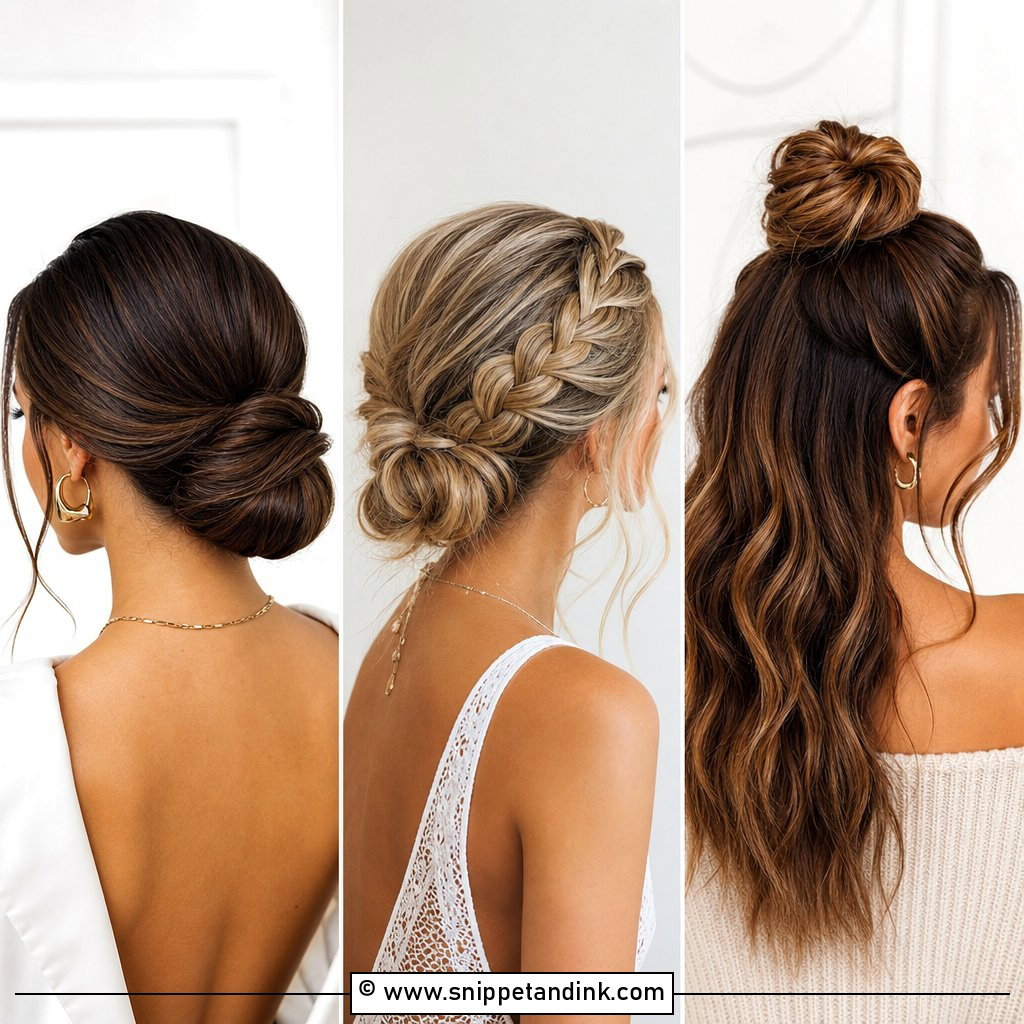
The reception bun can be glossier and more modern than the ceremony one: smooth roots, soft volume, shine, and a bun set low or slightly to one side. It works with gowns, designer sarees and contemporary lehengas. Curling medium hair before pinning makes the bun look fuller and more detailed. Crystal pins, pearls or one statement accessory catch the reception lighting. Keep the front clean, especially with heavy embroidery or a dramatic neckline. If you’re switching from a ceremony bun, I’d brush out and re-set rather than re-pin the old shape.
Where the Bun Sits Decides How the Dupatta Is Pinned
A bridal dupatta can be heavy, and medium hair has less of its own to grip it. The bun is what holds it up. This is the order I follow on the day.
- Settle the bun position at the trial with the real dupatta on. A low bun gives the fabric a ledge to rest on, a mid bun tucks under its fold, and a high bun lifts it away from the head.
- Set two crossed bobby pins on each side of the crown, exactly where the dupatta will fall.
- Drape the dupatta, then pin it into those anchors rather than into the surface of the bun.
- Add flowers and hair chains last, once the dupatta is settled, so its weight doesn’t crush them.
Medium hair also has short pieces at the nape that drop out under the pull of fabric. A little gel or wax smoothed upward before gathering keeps them in, which is much easier than chasing them with pins once the dupatta is already on.
Medium Length Is Enough for a Full Bridal Bun
From gajra buns to sleek low judas and floral mehendi buns, medium hair has plenty of options. Let your outfit, jewelry, function, hair texture and comfort decide. A heavy dupatta wants a sleek or structured bun to anchor it, while mehendi and receptions can take messy, curly or floral versions with more movement. The length doesn’t hold back a bridal look. With good placement, the right accessories and secure pinning, your bun will look full and stay exactly where it was set.
You'll Like These Ideas:


Leave a Reply