
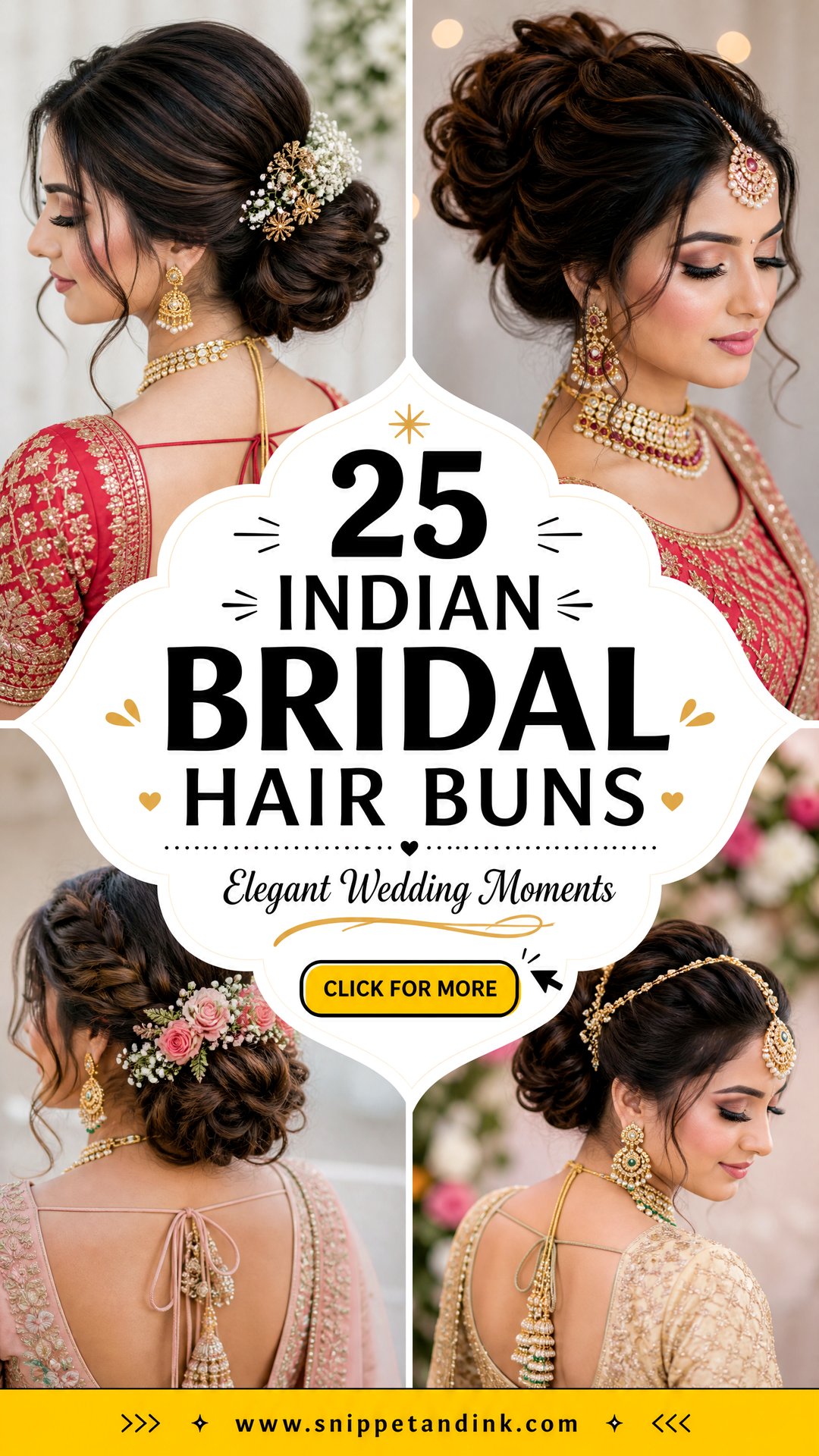
A bun is the hairstyle I build most often for Indian brides, and the reason is practical: it gives the dupatta something to anchor to and keeps the maang tikka sitting straight through hours of rituals. Some of the styles below are fragrant gajra-wrapped knots, others are soft low buns finished with flowers or pins. Your bun decides where the tikka chain clips, how the dupatta is pinned and how heavy the back of your head feels by the pheras. I’ve grouped messy, braided, twisted and flower-covered versions, with notes on which hair lengths and textures each one really needs. Save the ones you like and take them to your trial.
Your Dupatta Decides Where the Bun Sits
Most brides choose a bun from a photo, then discover on the morning that their dupatta has nowhere to go. I always ask how the dupatta will be worn before I decide the bun’s height, because that one detail changes the whole plan.
- Dupatta pinned over the head: a low bun at the nape gives the fabric a firm ledge to pin into and keeps the weight off the crown.
- Dupatta draped over the shoulders only: you can go high, side or braided, since nothing will press on the bun.
- Two dupattas, one on the head and one on the shoulders: keep the bun compact and low, or the layers bunch up behind your neck.
- Saree with the pallu over the head: a smaller, flatter bun stops the pallu from sliding back.
The maang tikka comes next. I pin a small section at the parting for the tikka hook before anything else is done, so the bun can be tight without dragging the tikka off centre. If you plan a matha patti or passa, tell your stylist early, since their chains need anchor points of their own.
1. Gajra Bun With Jasmine Flowers
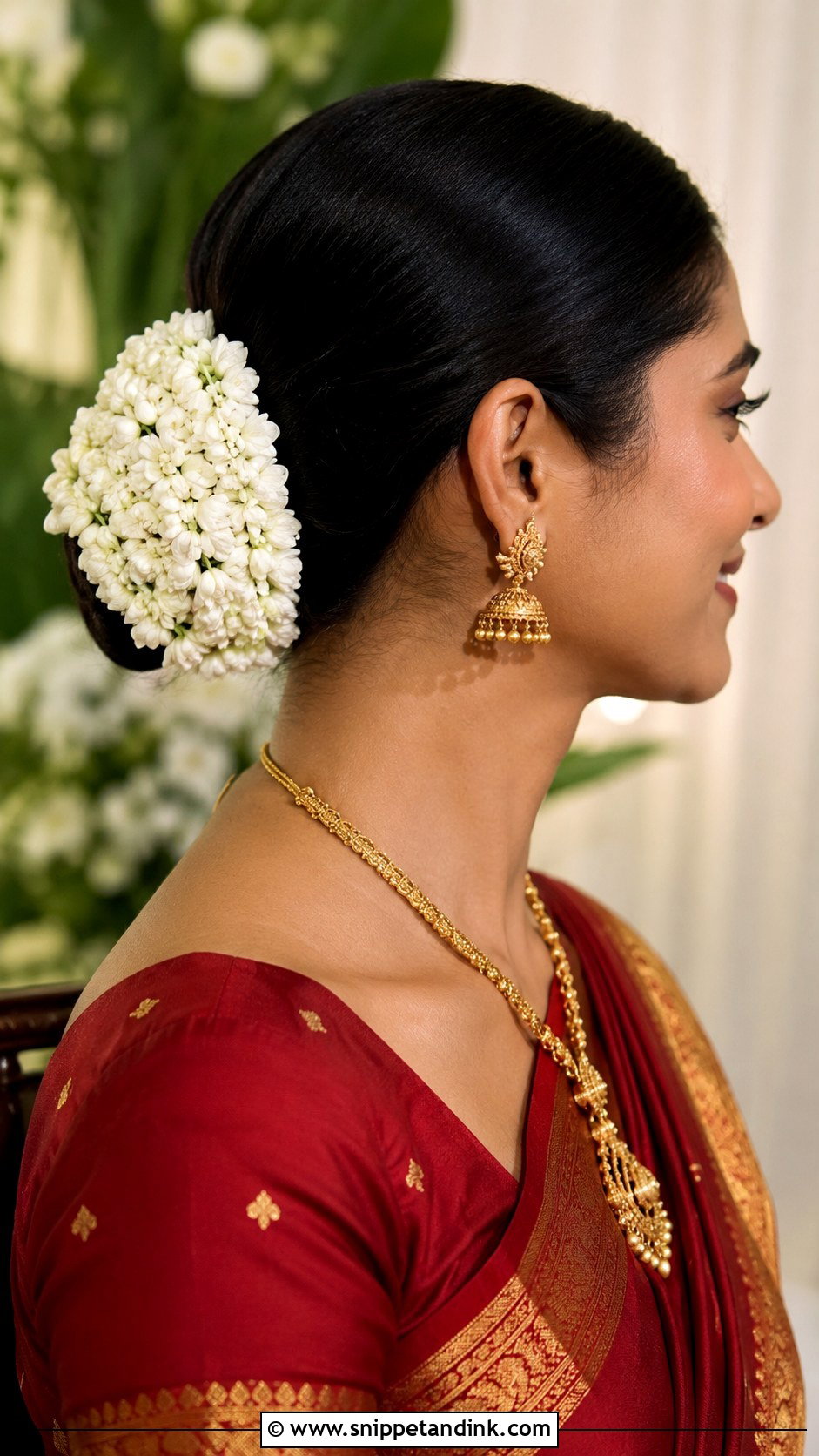
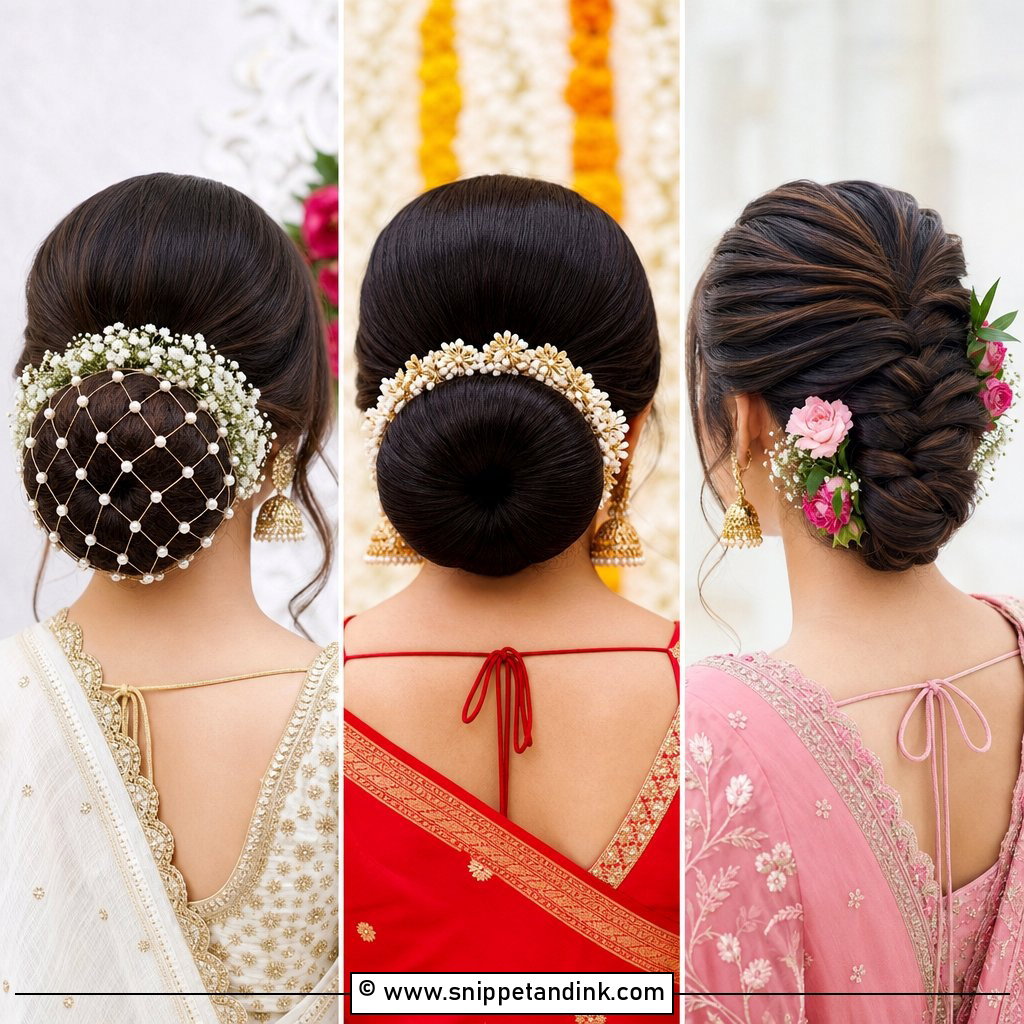
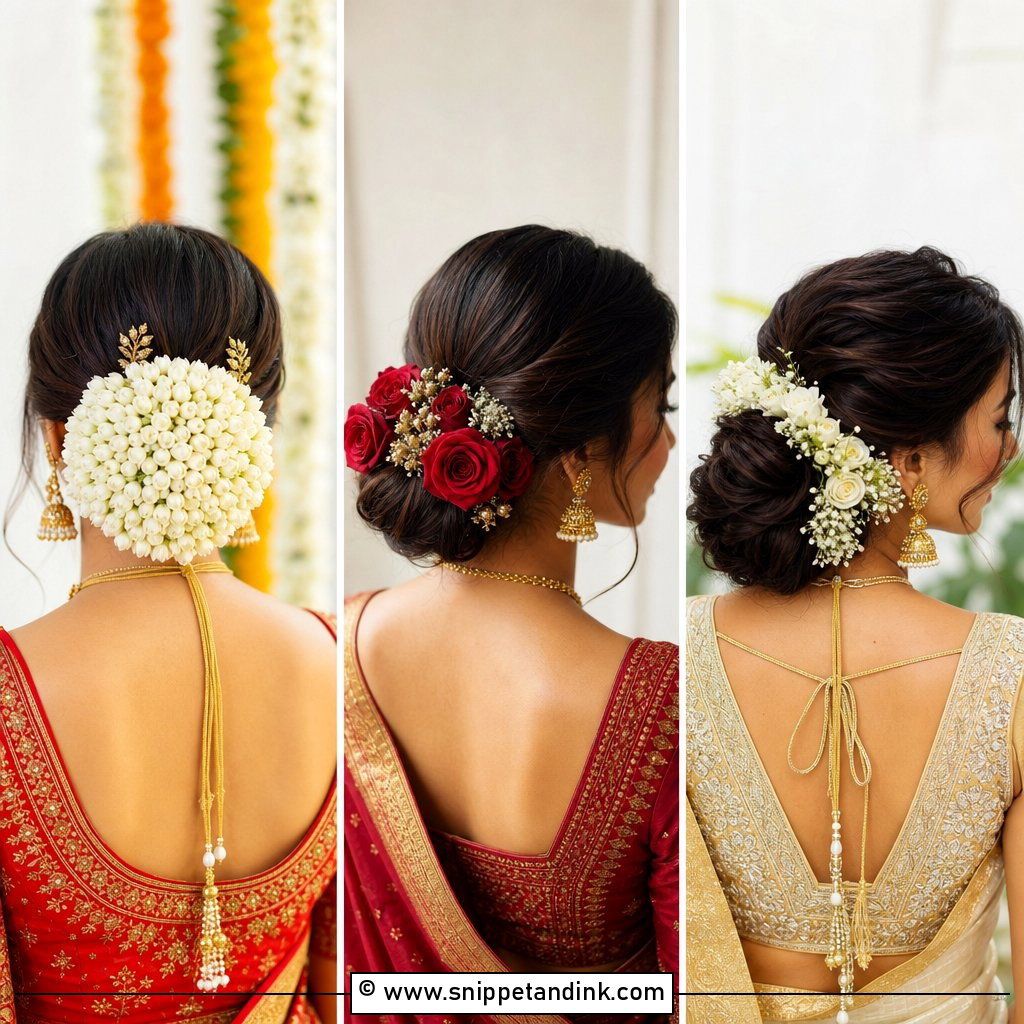
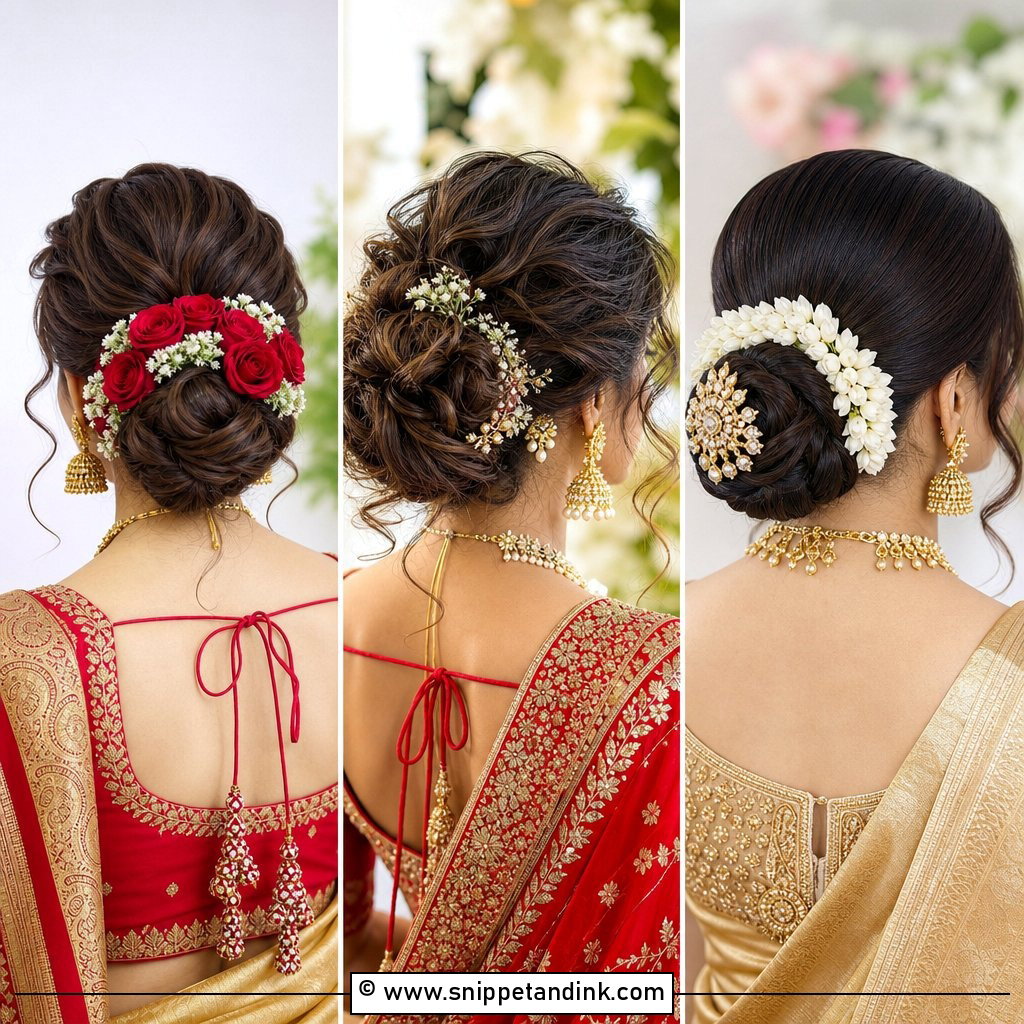
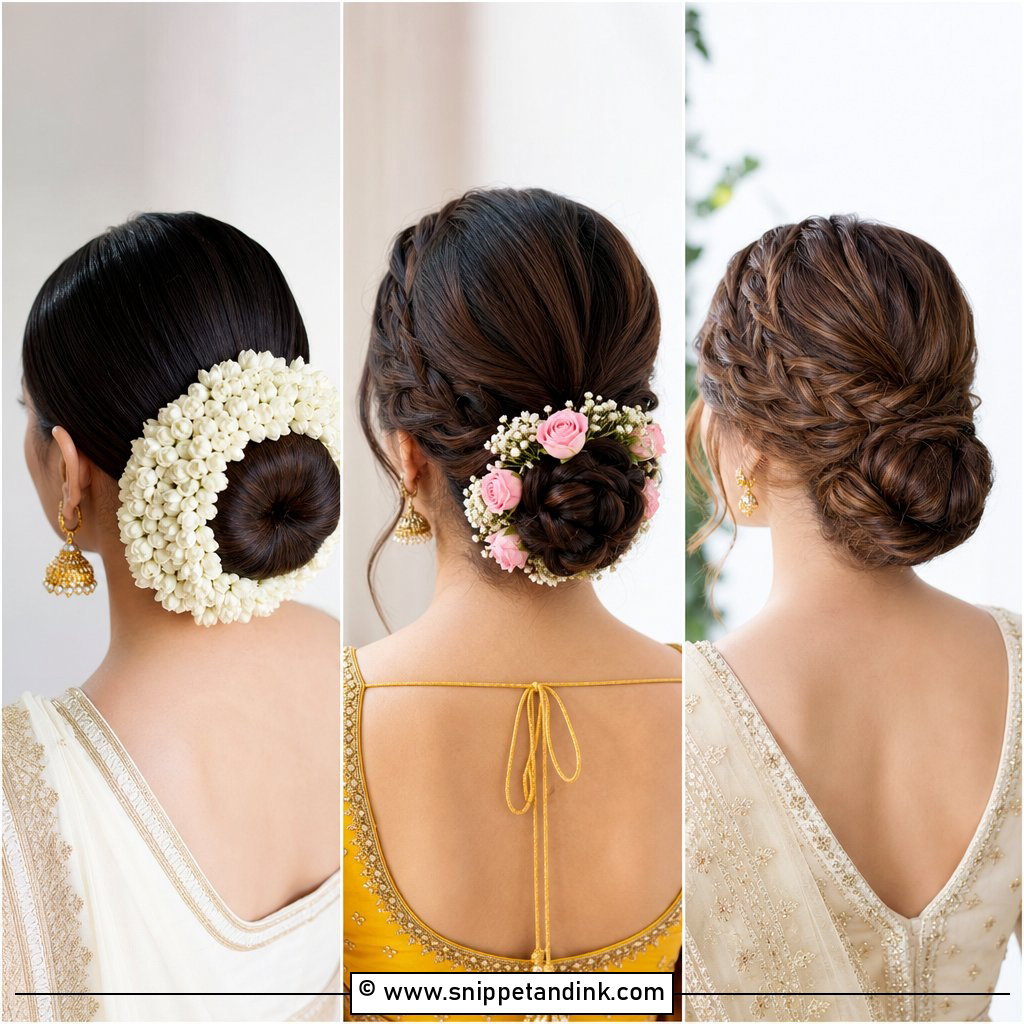
A gajra on a sleek knot is the most traditional choice here, and it’s also the one I plan most carefully. I set the bun first, smooth and tight at the nape or crown, then coil the jasmine around it and secure the string with U-pins every few centimetres so it can’t slide when the dupatta goes on. Fresh jasmine opens and browns over the day, so I ask for the strings to arrive close to the styling time and kept cool. The white reads strongly against red, maroon and emerald silk, and it suits temple jewellery better than almost anything else.
2. Low Messy Bun With Loose Strands
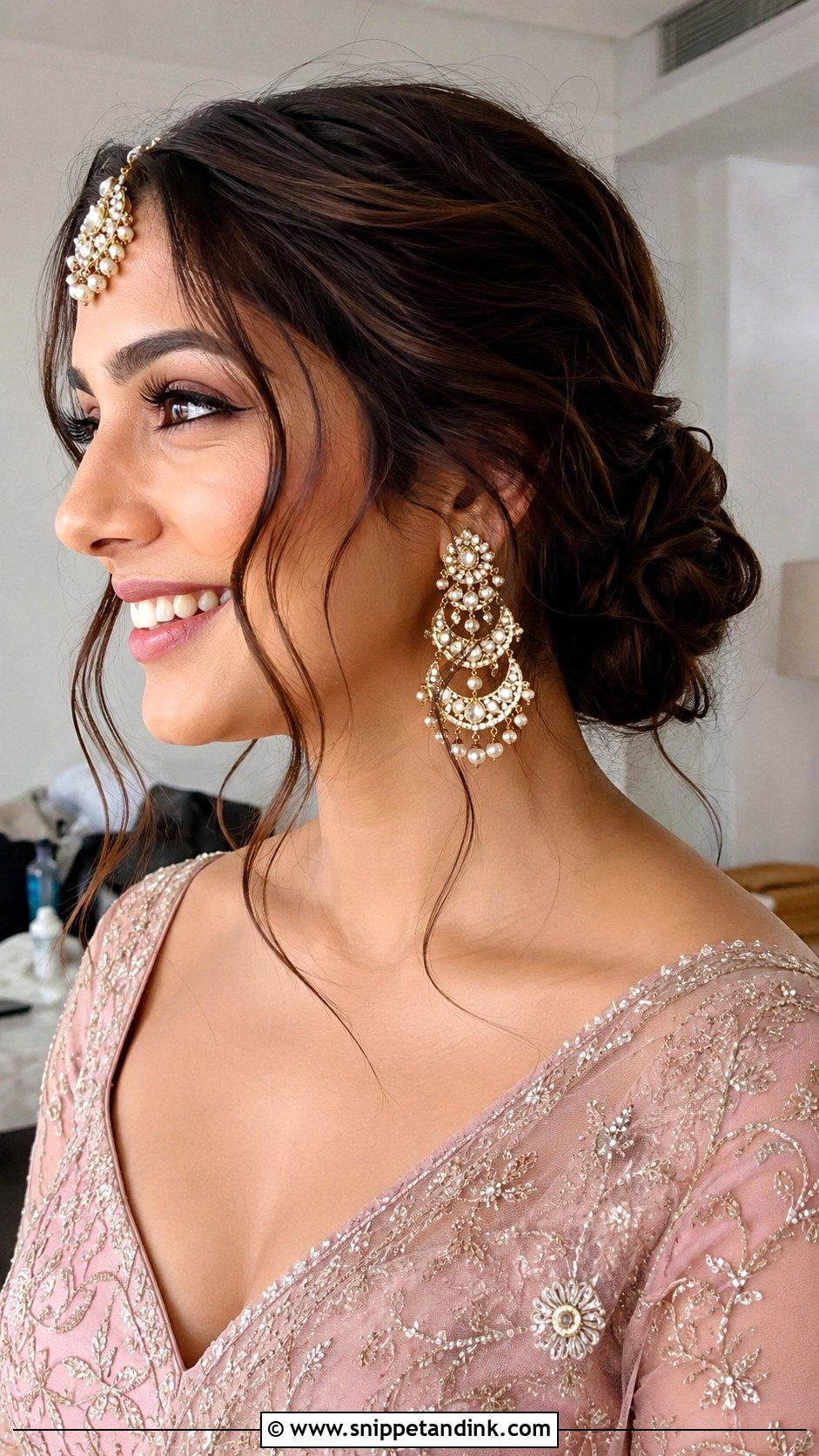
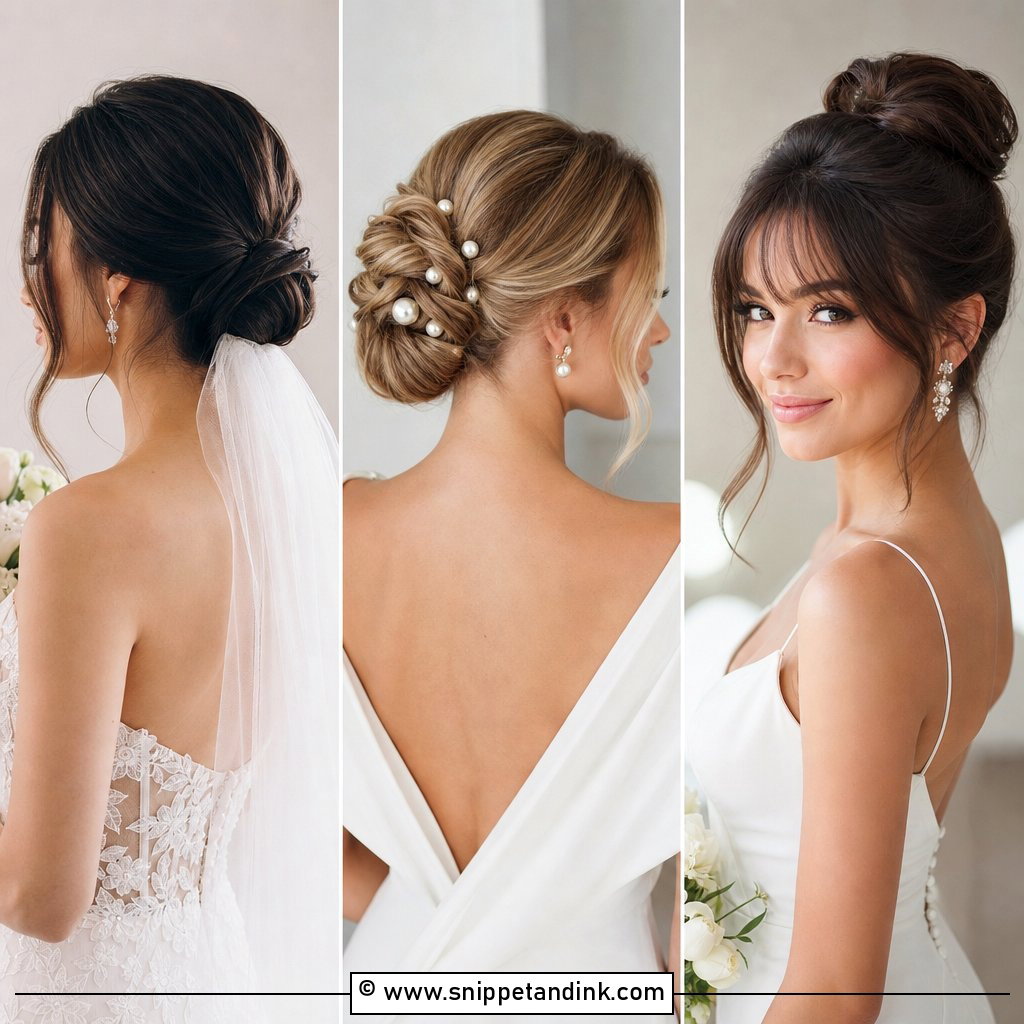
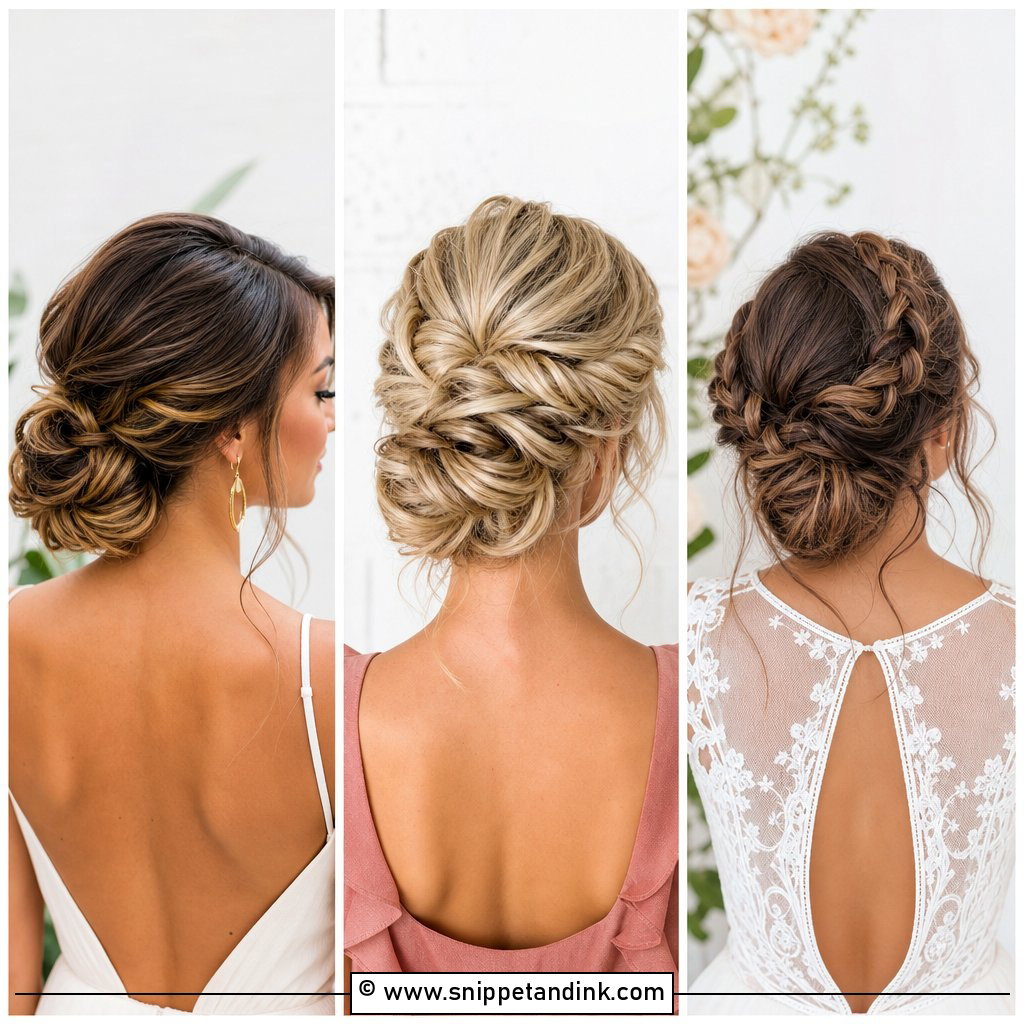
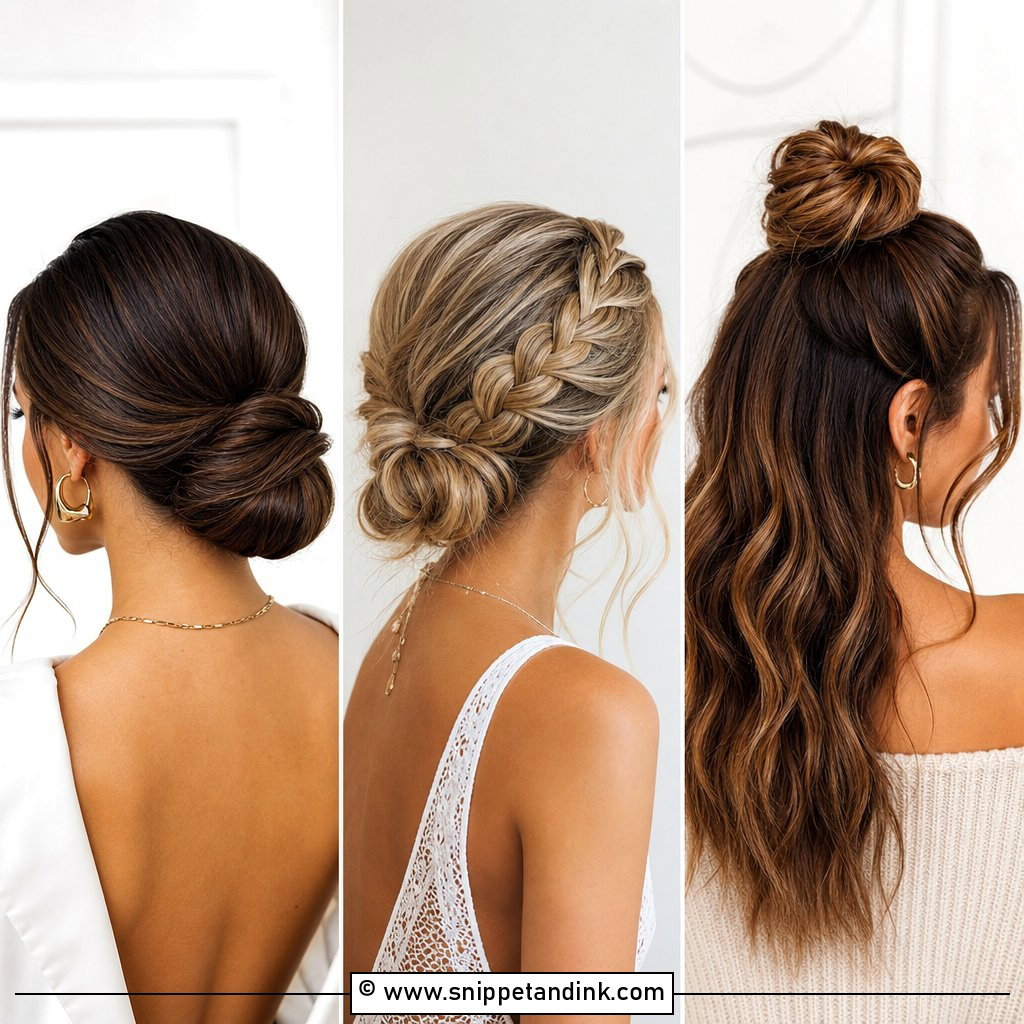
The low messy bun only looks careless. I curl the hair first, brush the curls out, then pin the knot loosely at the nape and pull out a few pieces by the face. On very silky hair I add texture spray before gathering, otherwise the bun slips within the hour. I’d keep this one for the reception or a small ceremony rather than a long muhurat under a heavy dupatta, because the loose pieces get flattened. Baby’s breath along one side finishes it without adding weight.
3. Floral Crescent Bun
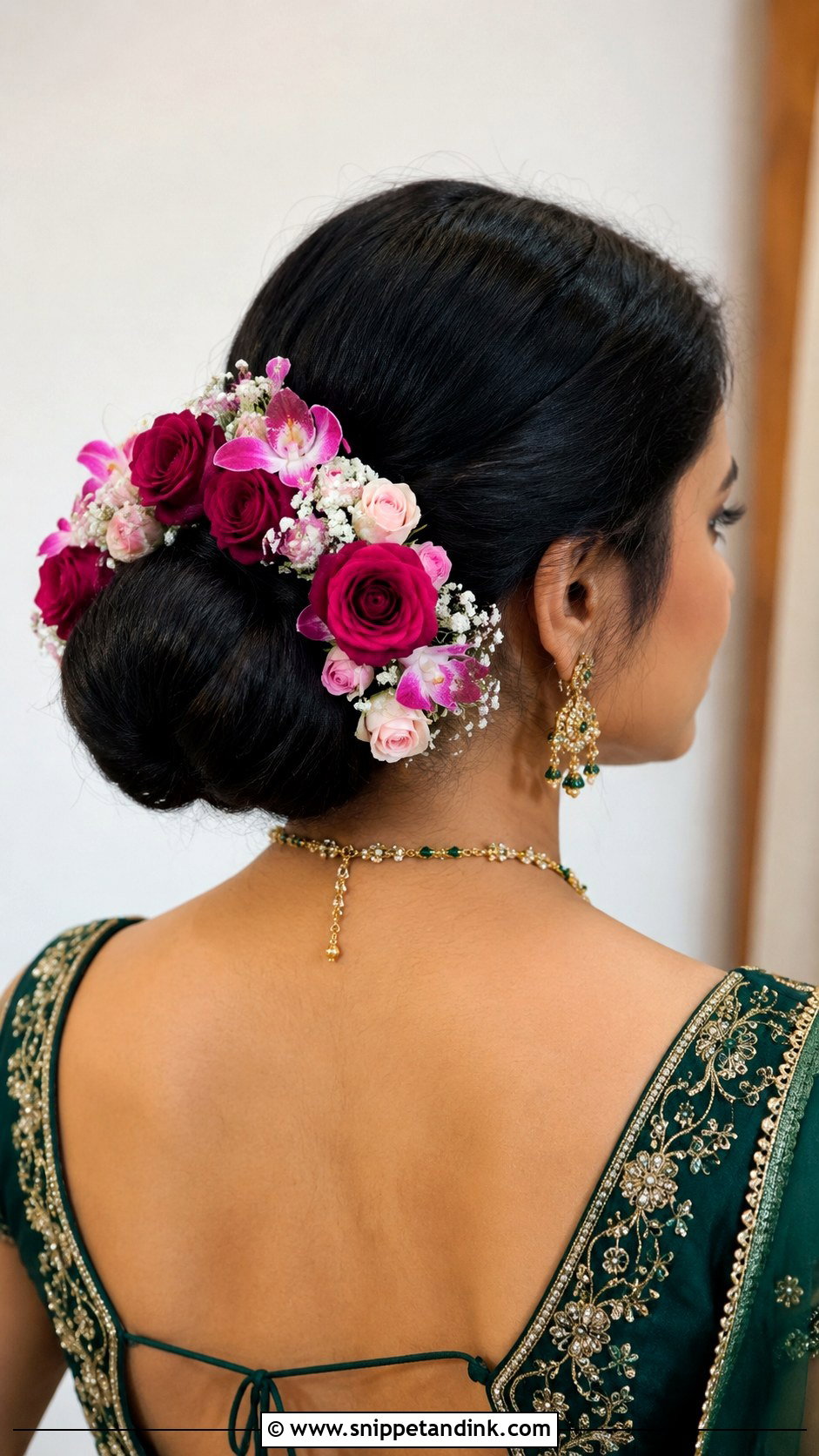
Here the flowers sit in a half-moon around the bun instead of covering it. I start with a smooth low bun and wire the roses, carnations or orchids in a curved line along one edge, working from the largest bloom down to the smallest. The curve frames the back of the head, which matters because so many ritual photos are taken from behind. Ask your florist for blooms that echo your lehenga, and keep the crescent narrow if the dupatta will be pinned over it.
4. Braided Bun With Fishtail
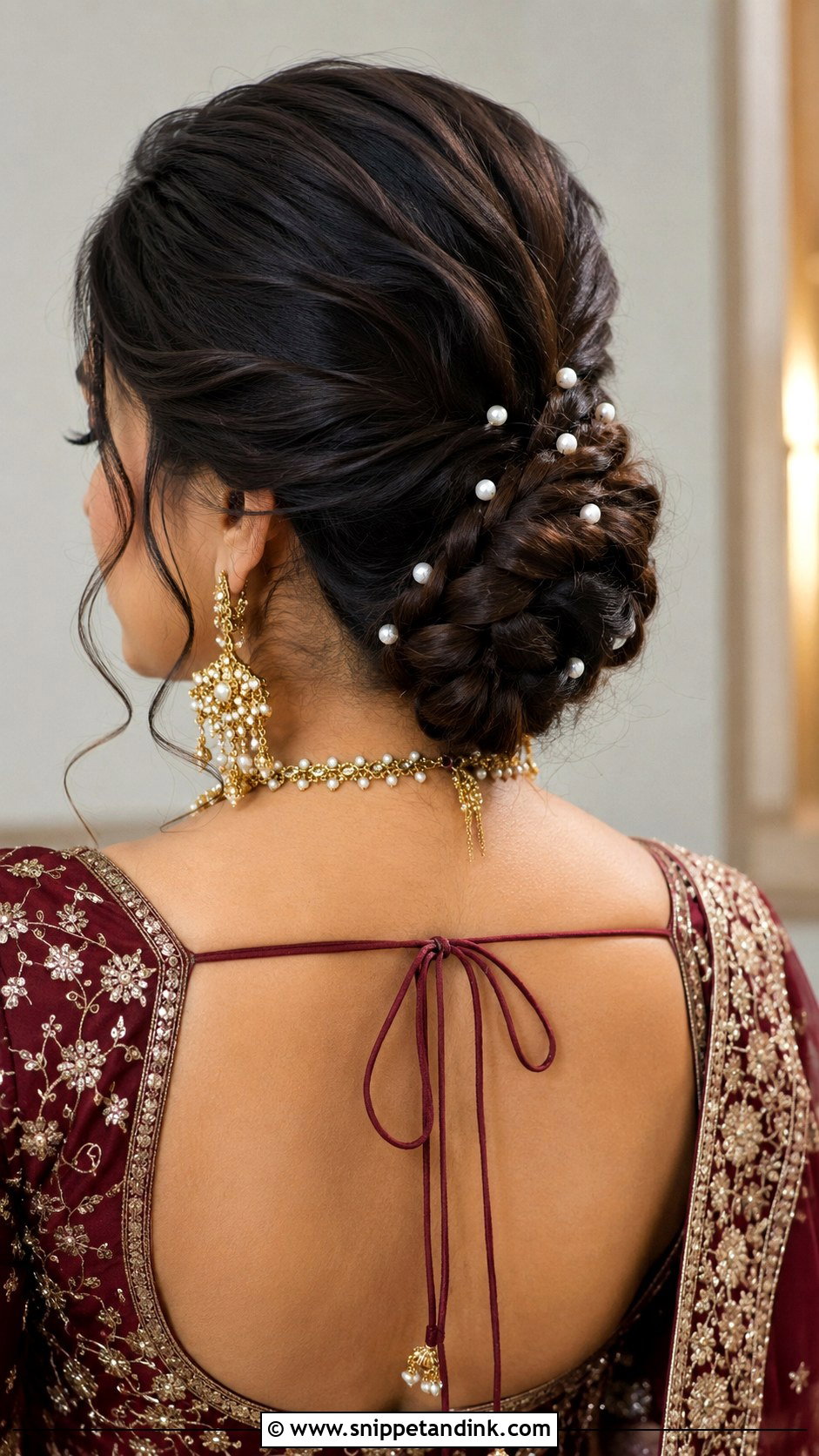
Long, thick hair is what makes this bun work. I braid a loose fishtail, pancake the edges a little, then wind it into a knot at the nape so the woven pattern stays visible. If your hair stops above the shoulder blades, the braid gets too short to wrap and I’d suggest a clip-in to add length. You can keep it sleek or pull a few strands loose. Small pearls or a scatter of tiny flowers along the braid suit both a heavy lehenga and a lighter saree.
5. Twisted Low Bun
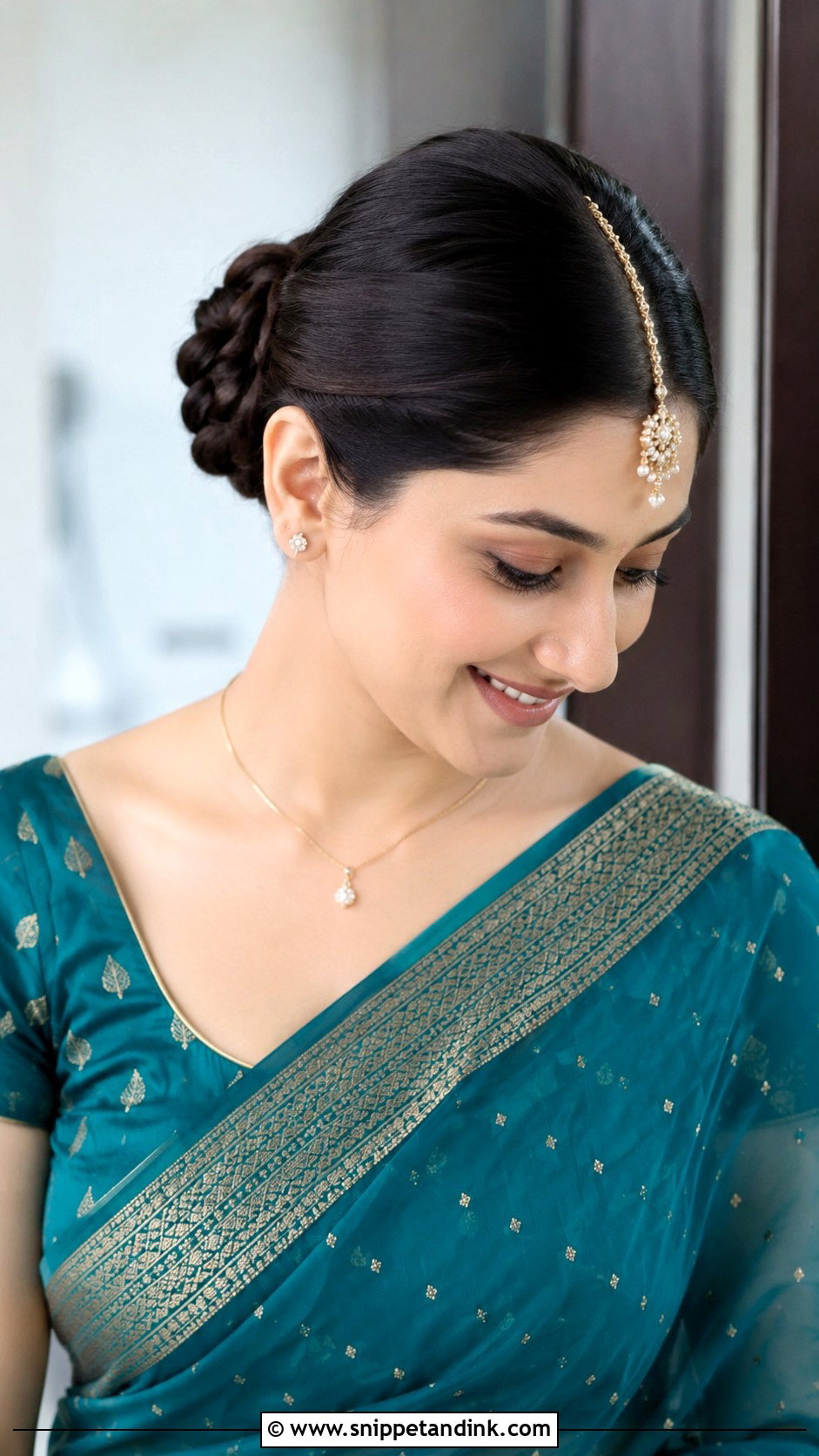
Two sections, each twisted, then wrapped around each other at the nape: that’s all this bun is, and it’s one of the most secure styles I do. The twists grip the pins far better than smooth hair does. I recommend it to brides with heavy jewellery or a weighted dupatta, because it stays flat and doesn’t compete. A clean centre part and a fine matha patti suit it, and one statement pin is enough.
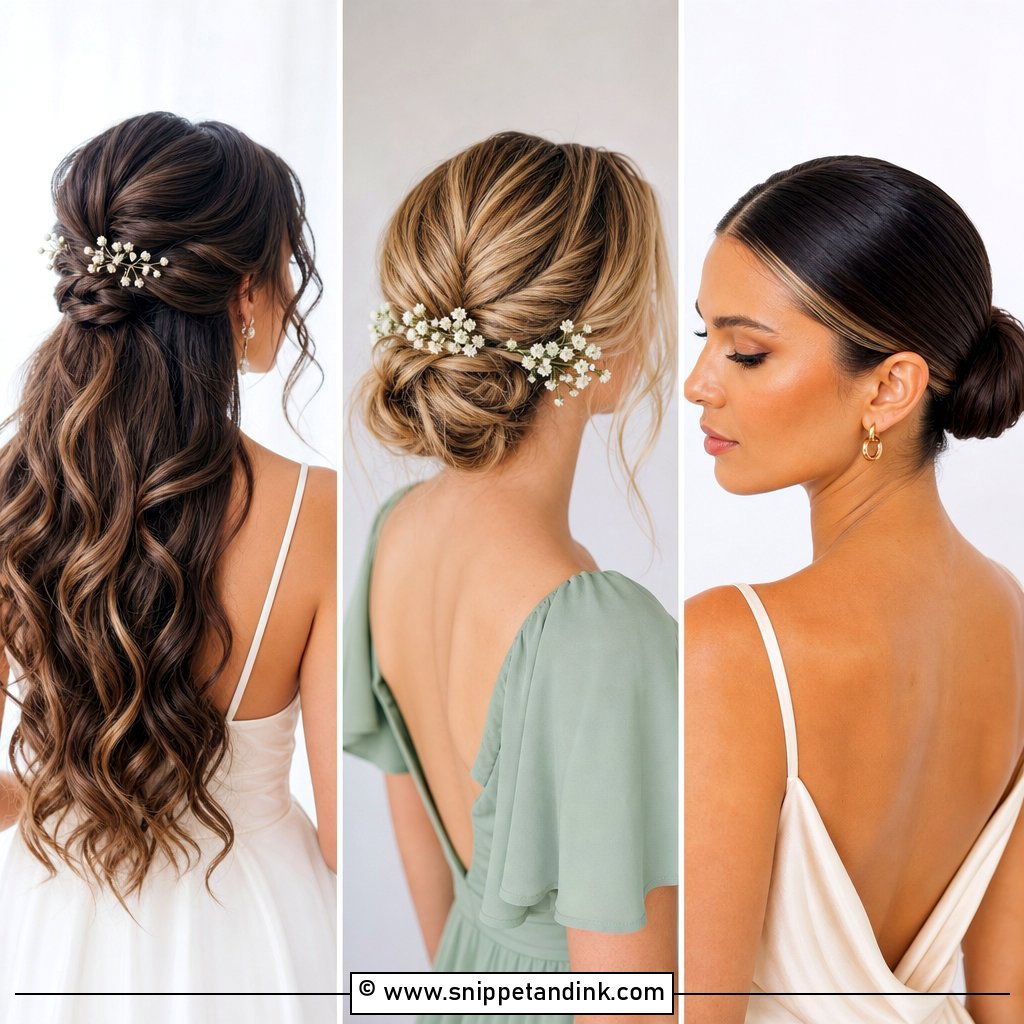
6. Baby’s Breath Bun
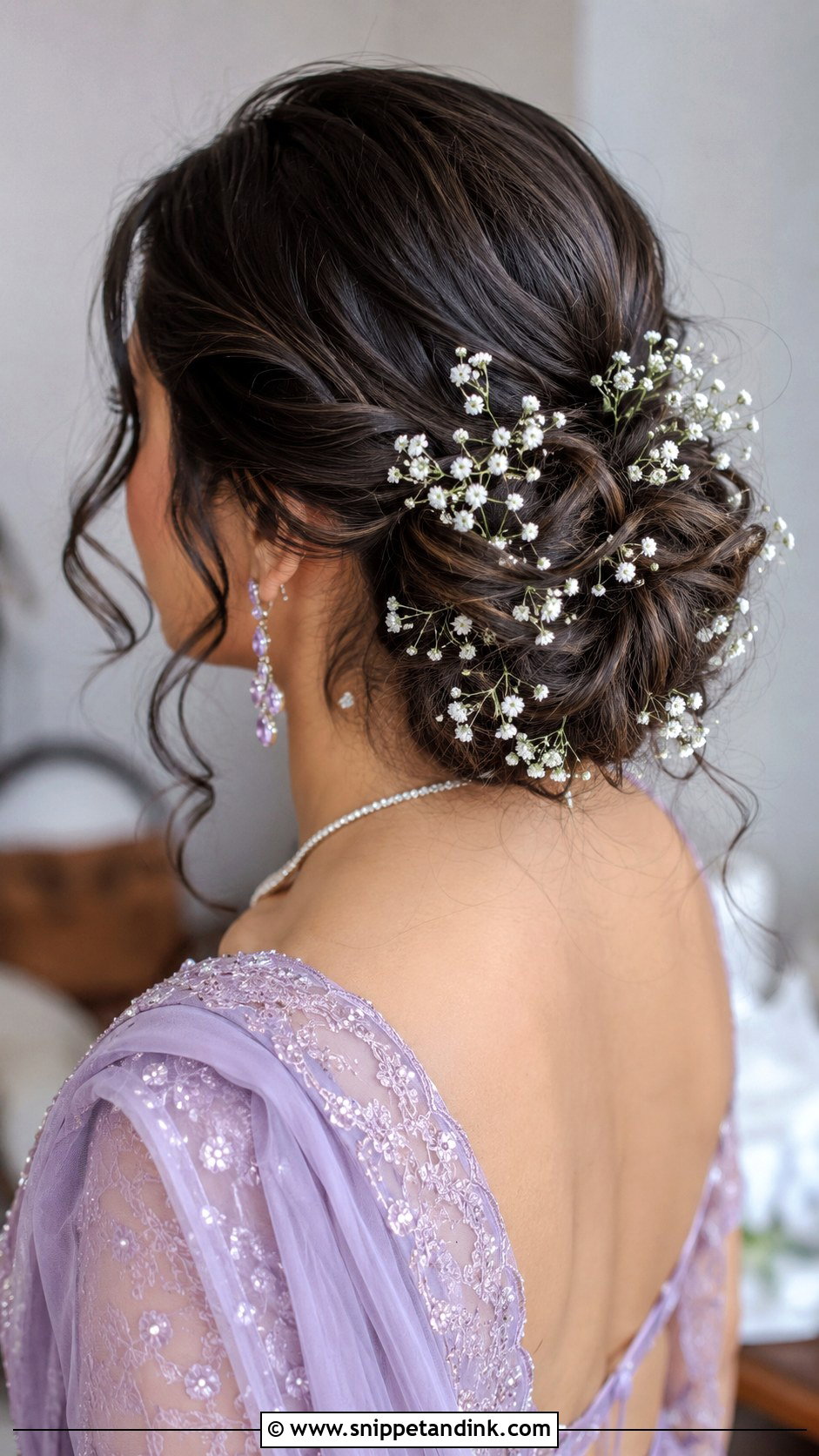
Baby’s breath is light, cheap and lasts well out of water, which is why I like it scattered through a soft low bun. I cut it into tiny sprigs and push each one in with a short bobby pin so the stems don’t poke out. It sits best with pastel outfits and softer makeup, and brides often choose it for engagements, mehndi functions and outdoor events. One honest caution: the tiny heads drop off as the day goes on, so expect a lighter scatter by evening. A few loose curls around the face complete it.
7. Marigold Bun
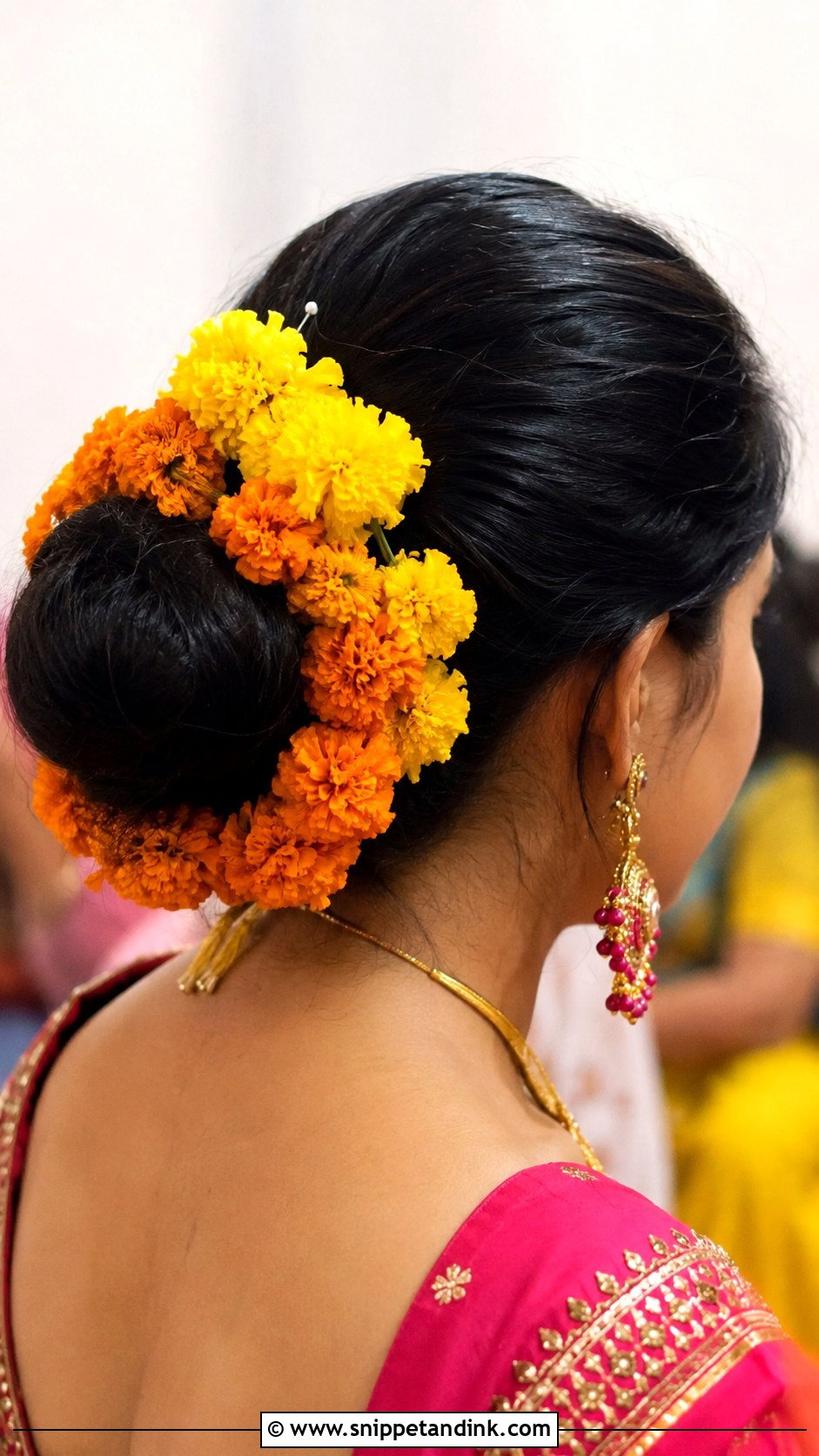
Marigolds bring colour and meaning in one go, and they’re the flower I see most at haldi or mehndi ceremonies. I wrap the blooms around a low or crown bun on a wire or thread so they hang evenly. They’re sturdier than jasmine and hold up well in daylight heat, but they shed petals and can stain light fabric when crushed, so I keep them clear of an ivory dupatta. Gold jewellery and a simple tikka are all this needs.
8. Curly Bridal Bun
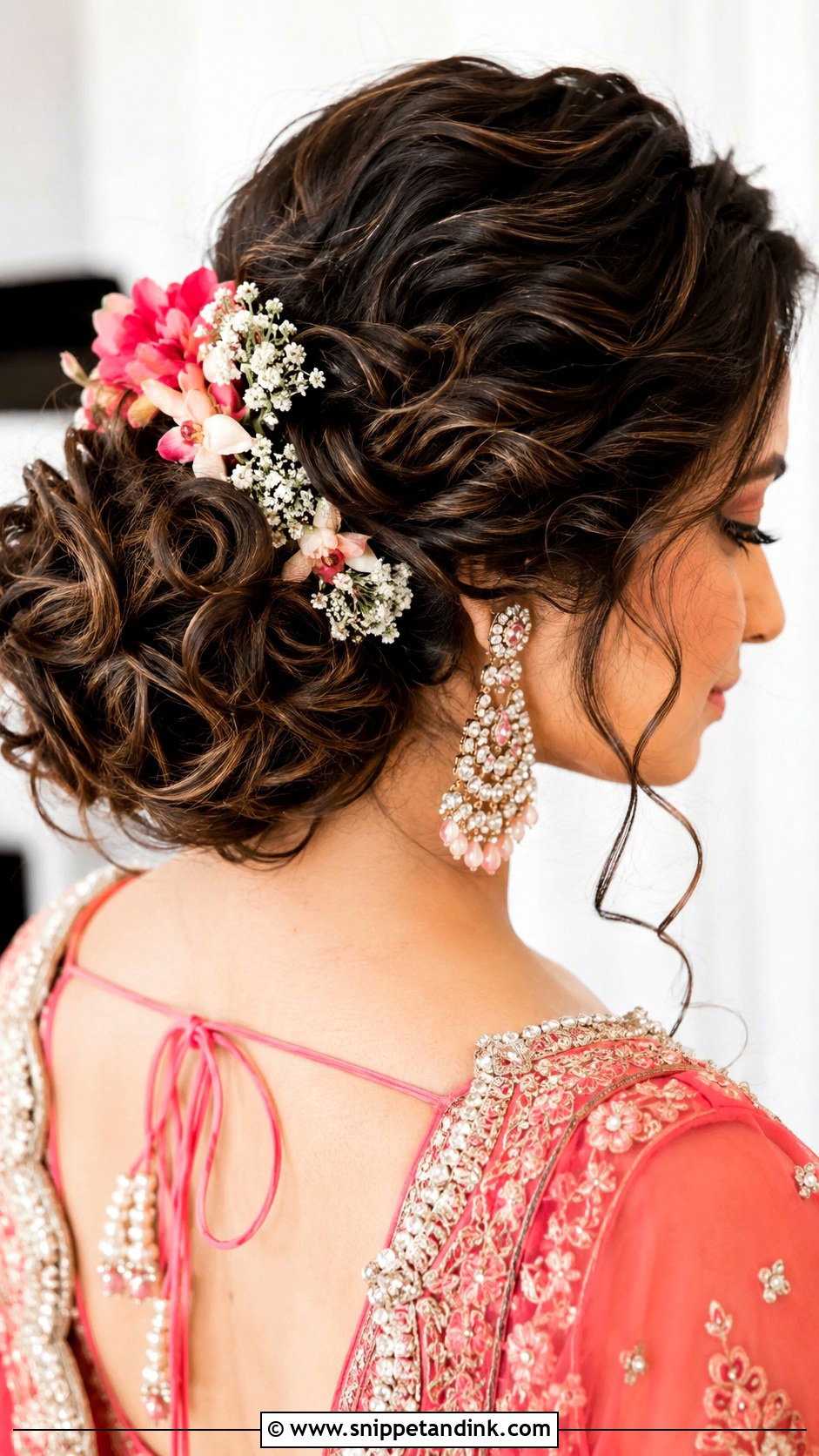
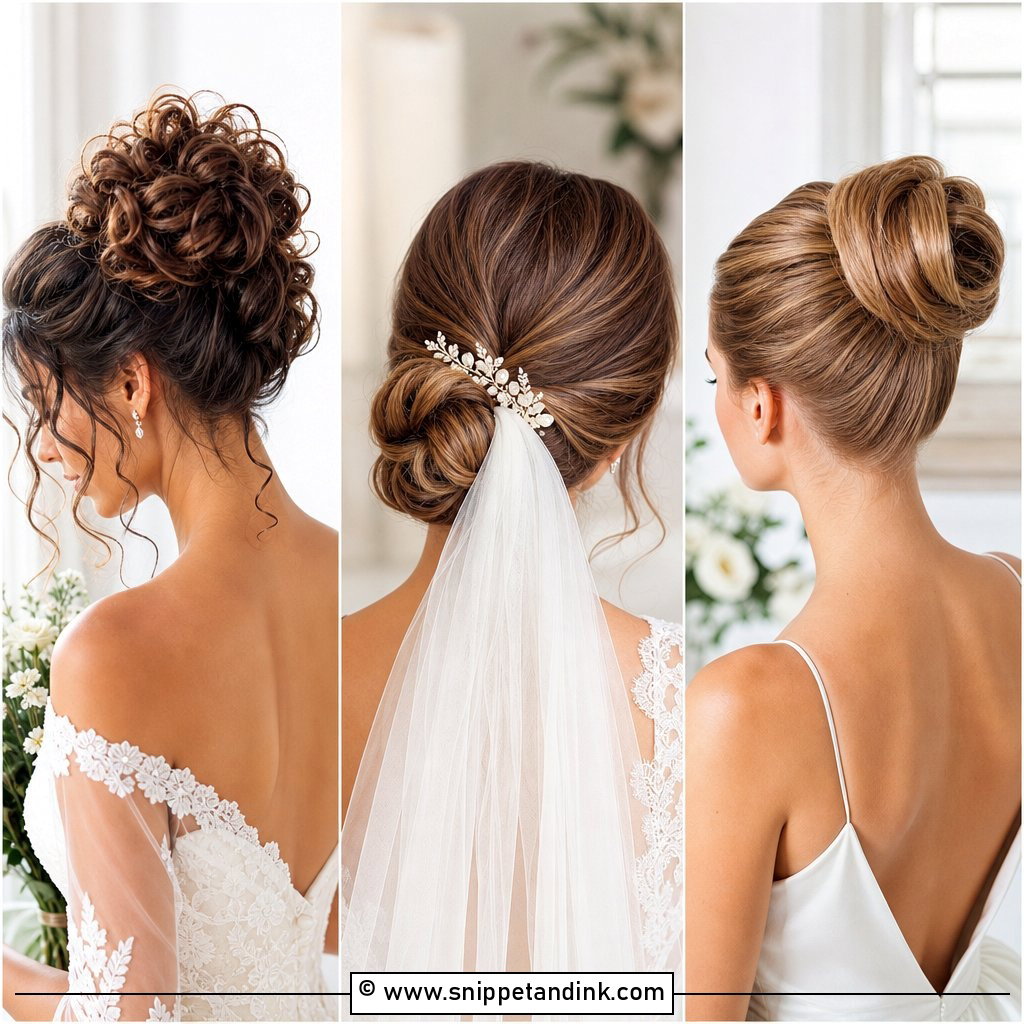
If you have natural curls, I’d rather work with them than blow them straight. I define the curls with a cream, gather them loosely and pin them into a soft knot at the nape, leaving a few around the face. Curly hair holds pins brilliantly, so this bun is often more secure than a sleek one. The catch is humidity: curls expand, so I set the bun slightly smaller than you want it to end up. Tuck flowers along one side in colours from your outfit.
9. Sleek High Bun
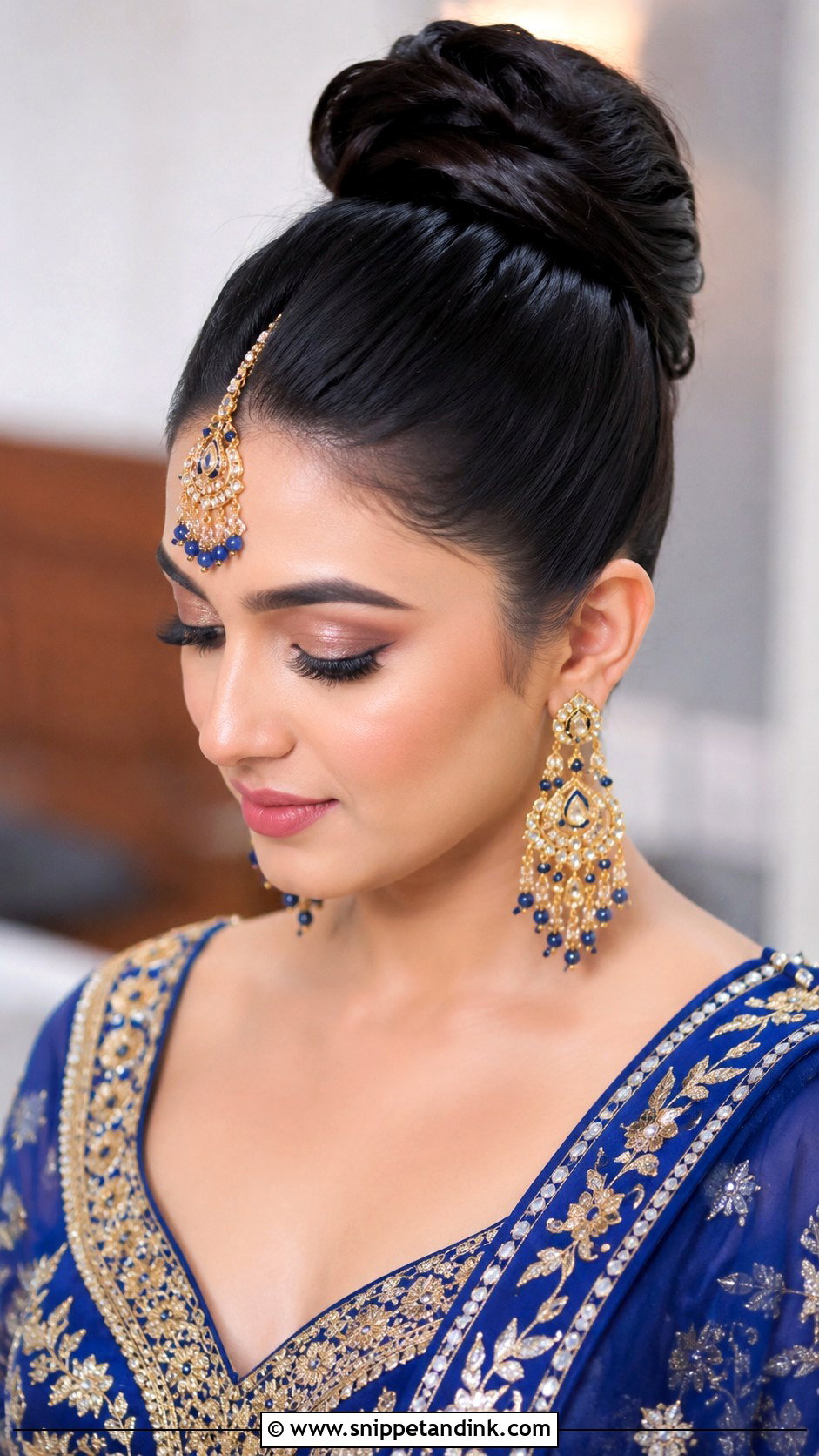
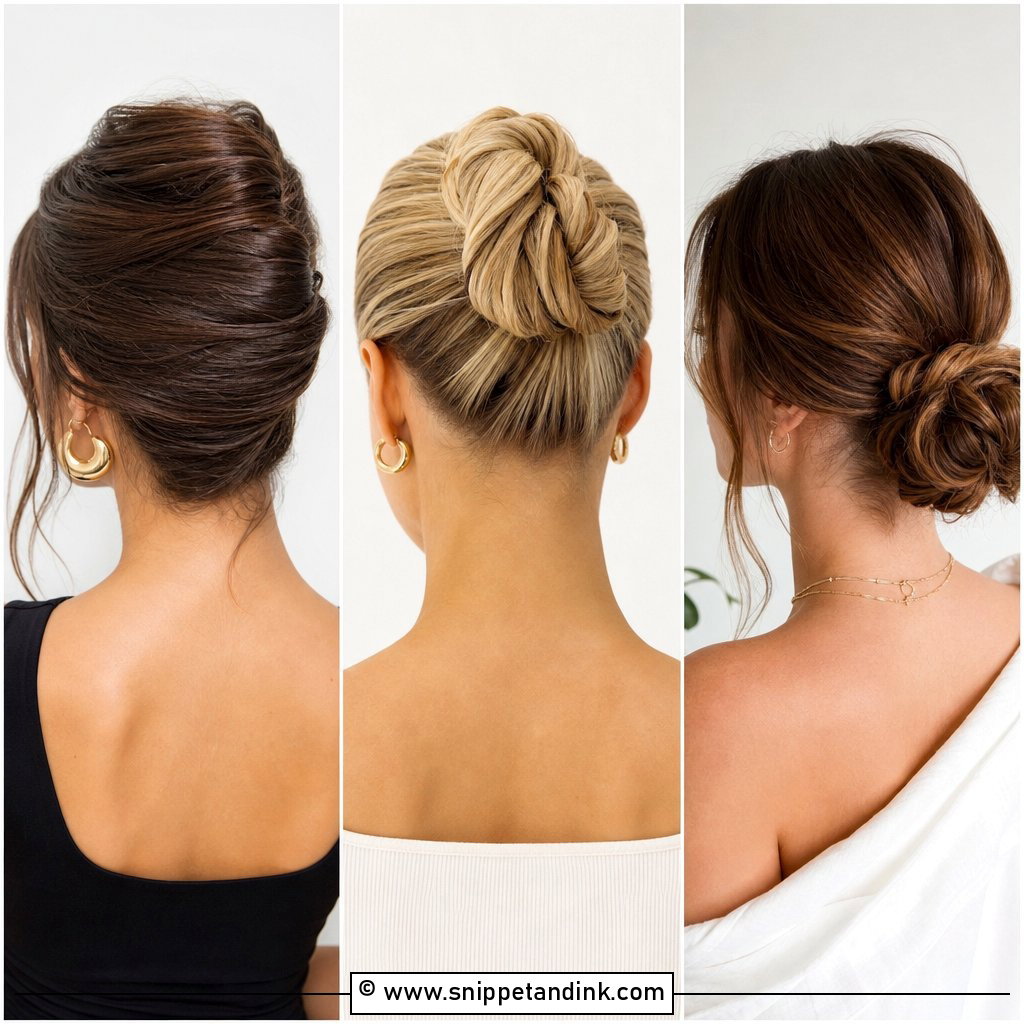
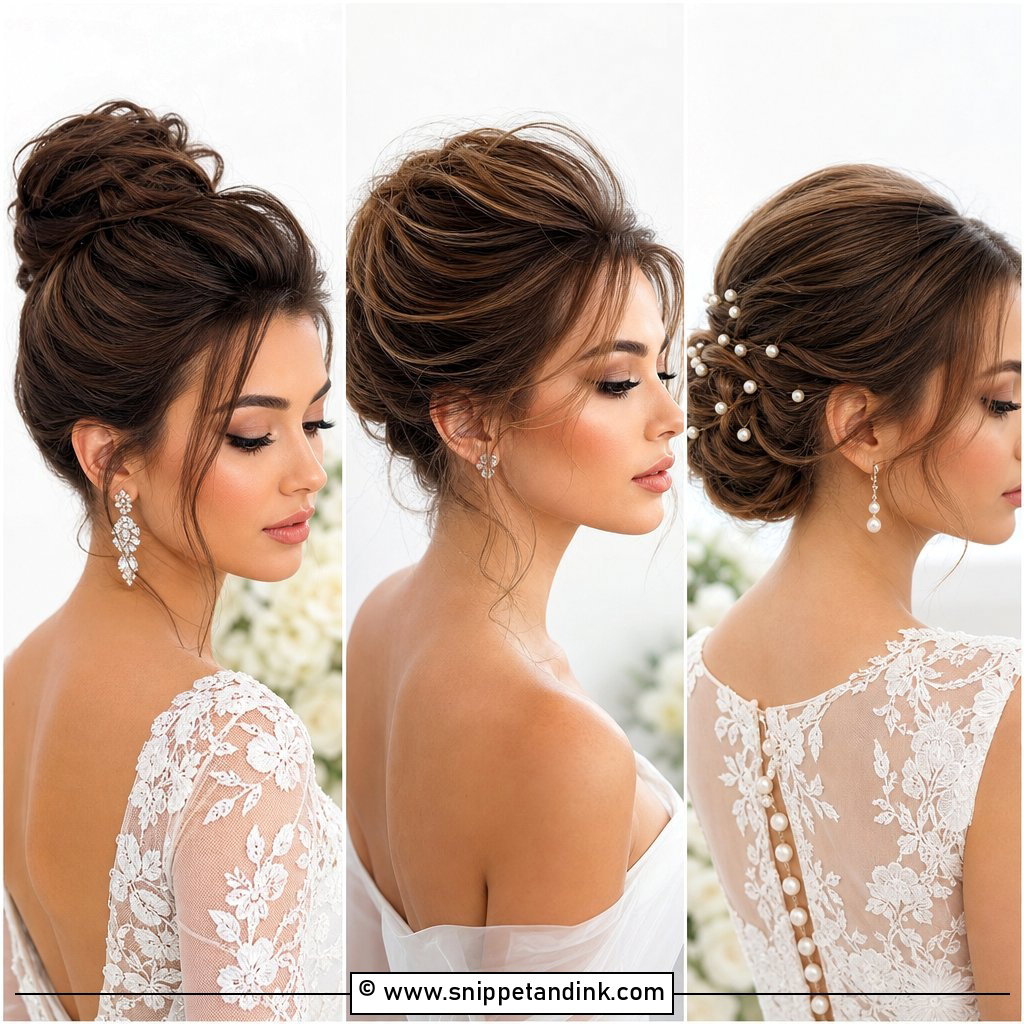
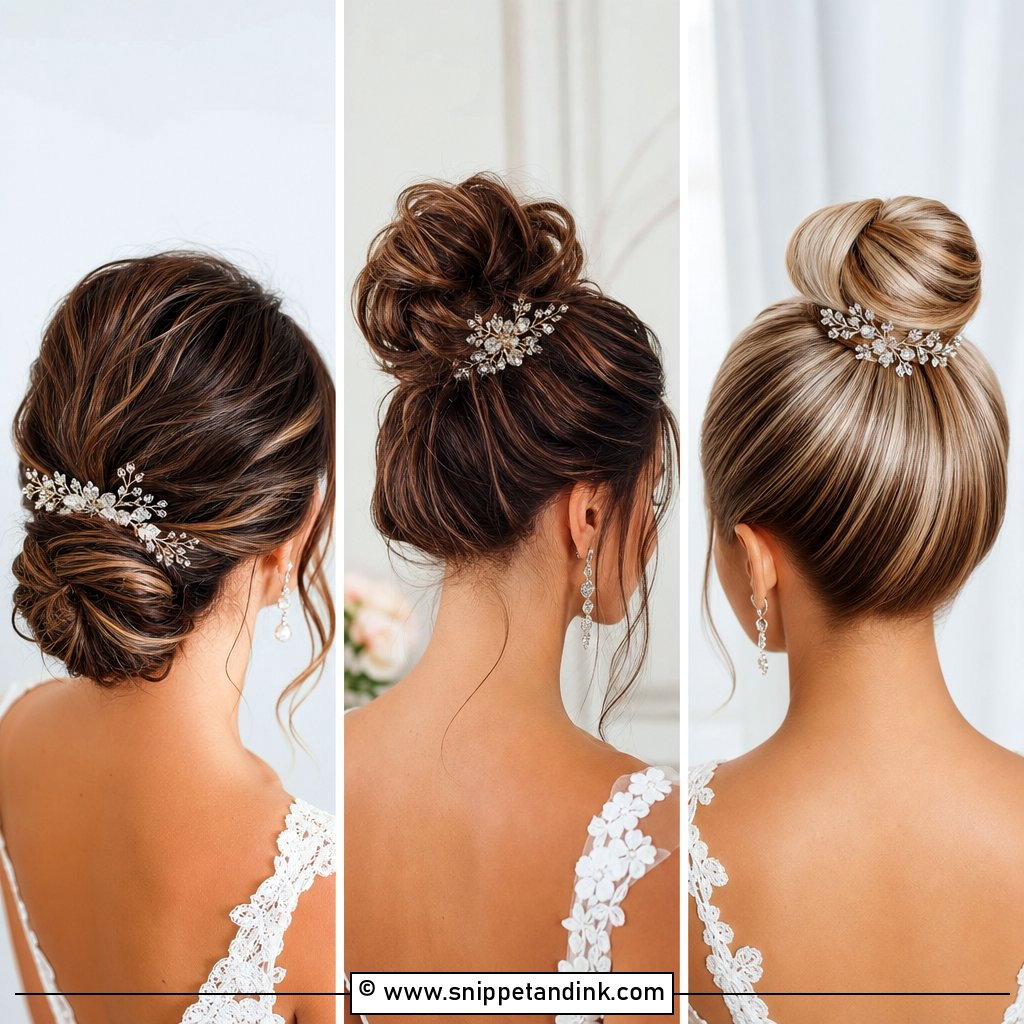
A sleek high bun shows off the neck, the earrings and a bold maang tikka better than any other style. The trade-off is weight. With a heavy dupatta pinned to a crown bun, some brides get a headache by the end of the pheras, so I anchor it with crossed pins underneath and keep the knot compact. I use a gel or smoothing cream and a fine-tooth brush for clean lines. It adds height, which flatters a round face, and a jewelled pin or thin floral band finishes it.
10. Rose-Adorned Bun
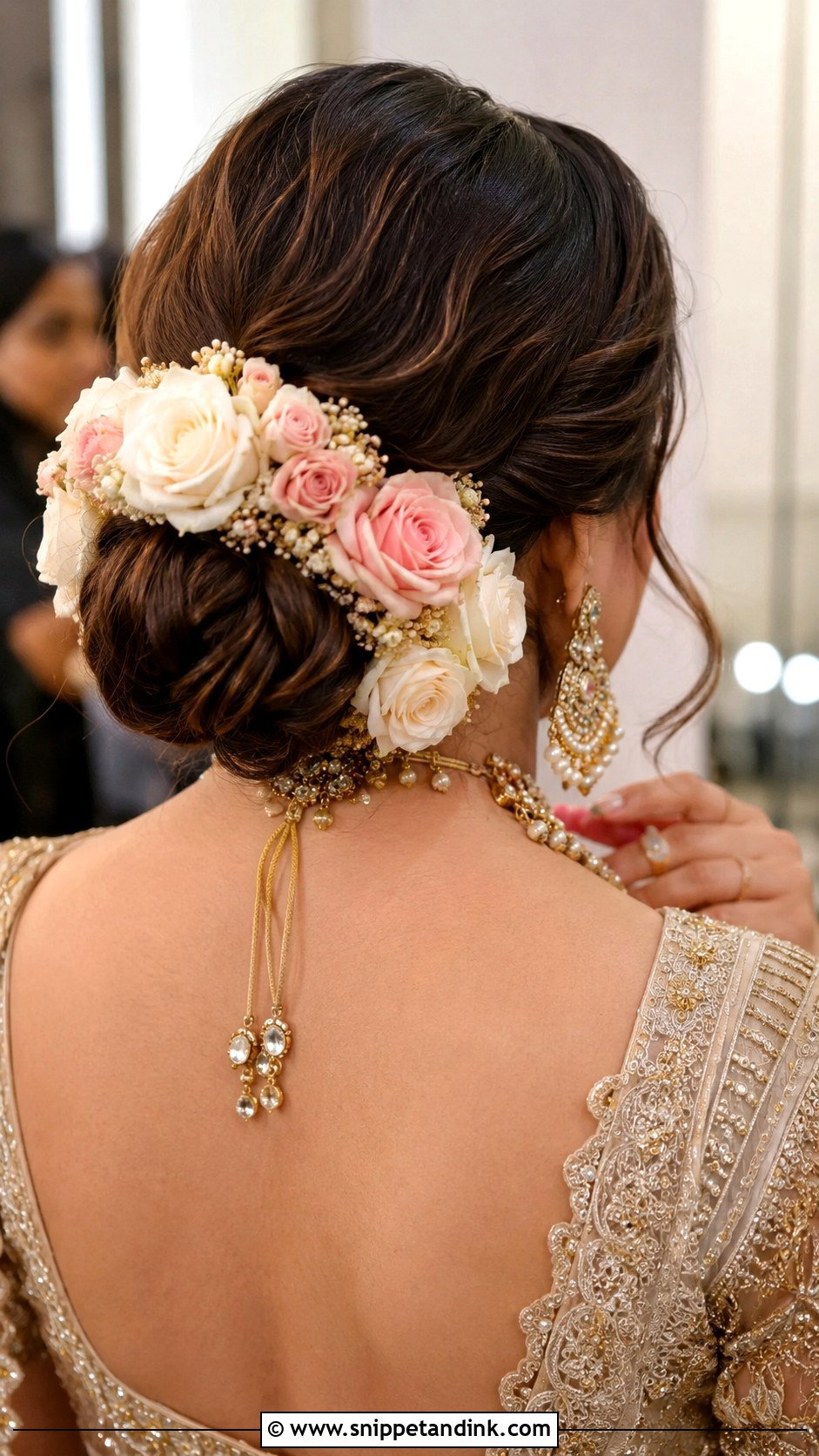
Full roses around a low knot make a rich frame, and they’re the heaviest flowers on this list. I wire each rose and place the largest ones at the base of the bun so the weight sits low and close to the head. Red is dramatic; blush and ivory read softer next to pastel outfits. Roses bruise easily if the dupatta rubs them, so I suggest a cluster to one side if you’re pinning a heavy dupatta over the back. Expect a lovely scent for the first few hours.
11. Donut Bun With Hair Accessories
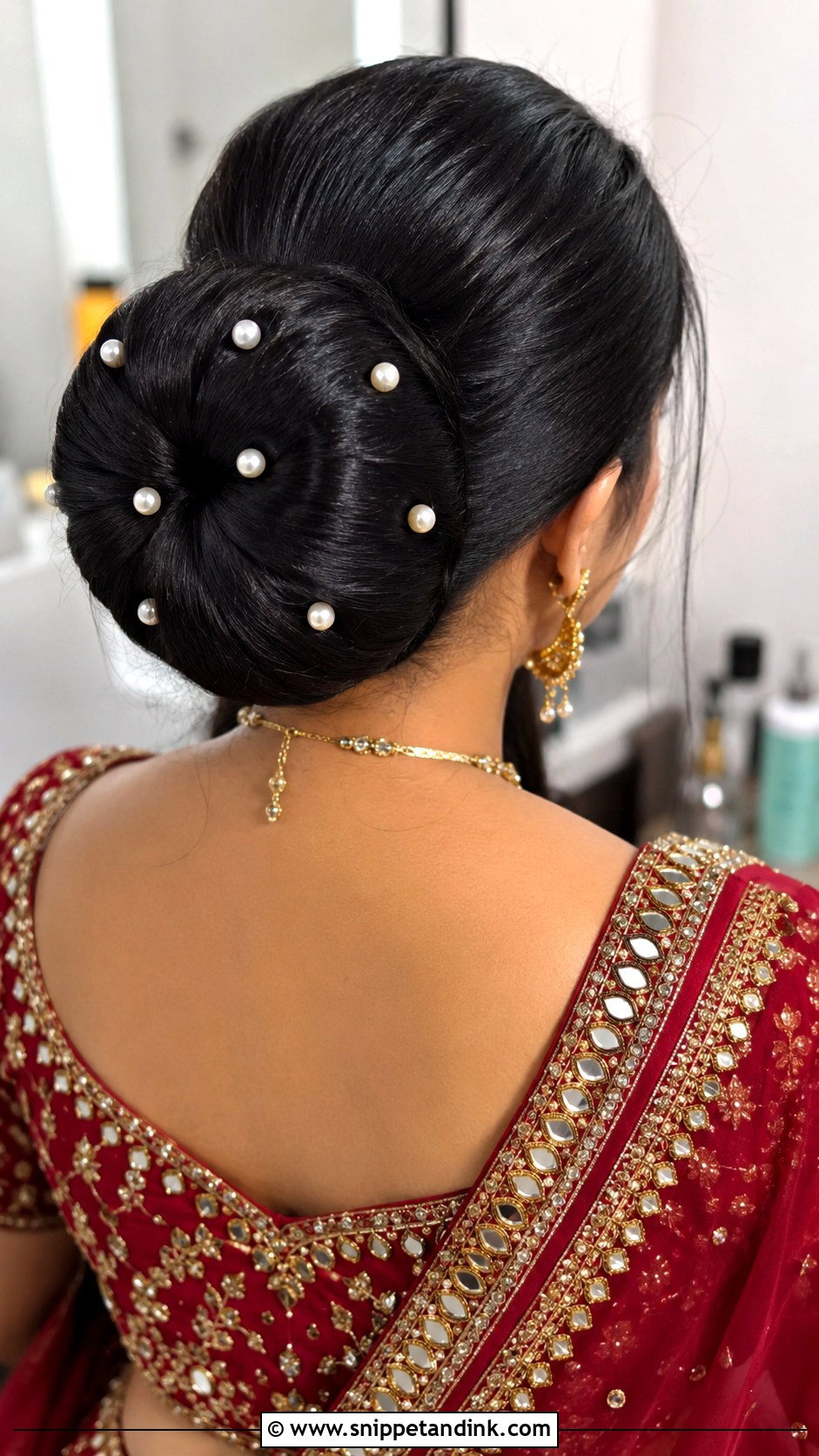
A donut shaper is my quiet fix for fine or shoulder-length hair. I pull the ponytail through the ring, spread the hair over it evenly and pin the ends underneath, which gives a full, round bun that hair alone couldn’t make. Match the shaper to your hair colour so no gaps show. Pearl pins, gold accessories or a hair vine finish it, and the sculpted shape sits well against heavy jewellery with both traditional and fusion outfits.
12. Side Bun With Wispy Strands
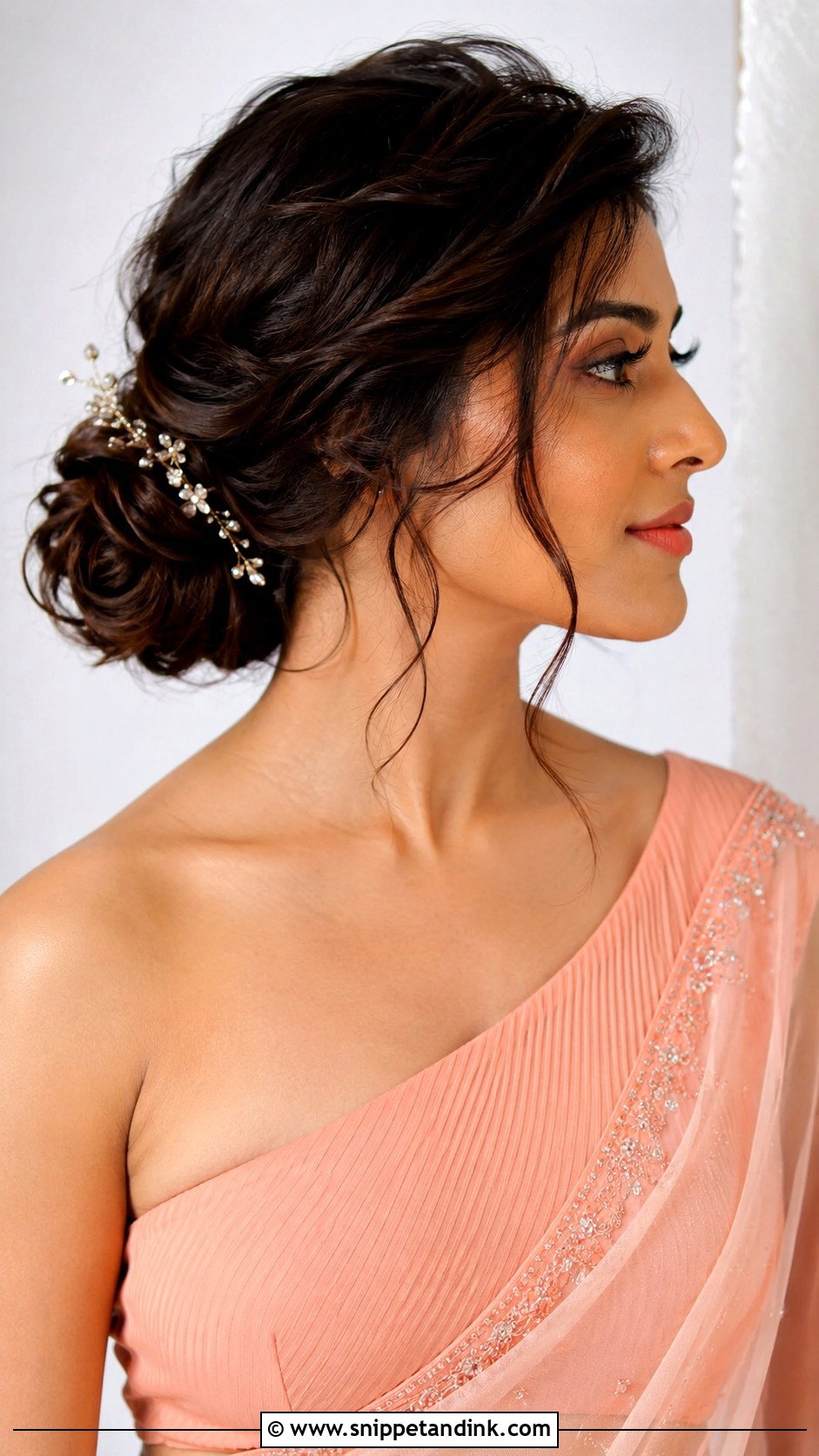
Moving the bun to one side changes the whole profile. I set it just below and behind one ear and leave wispy pieces around the face. It works with one-shoulder blouses and saree drapes that show the neckline, and it puts one statement earring on full display. The thing to sort out first is the dupatta: if it’s pinned centrally, a side bun can push it off balance, so I usually keep this for the reception or cocktail night. A few flowers or pearls by the knot finish it.
13. Braided Crown Bun
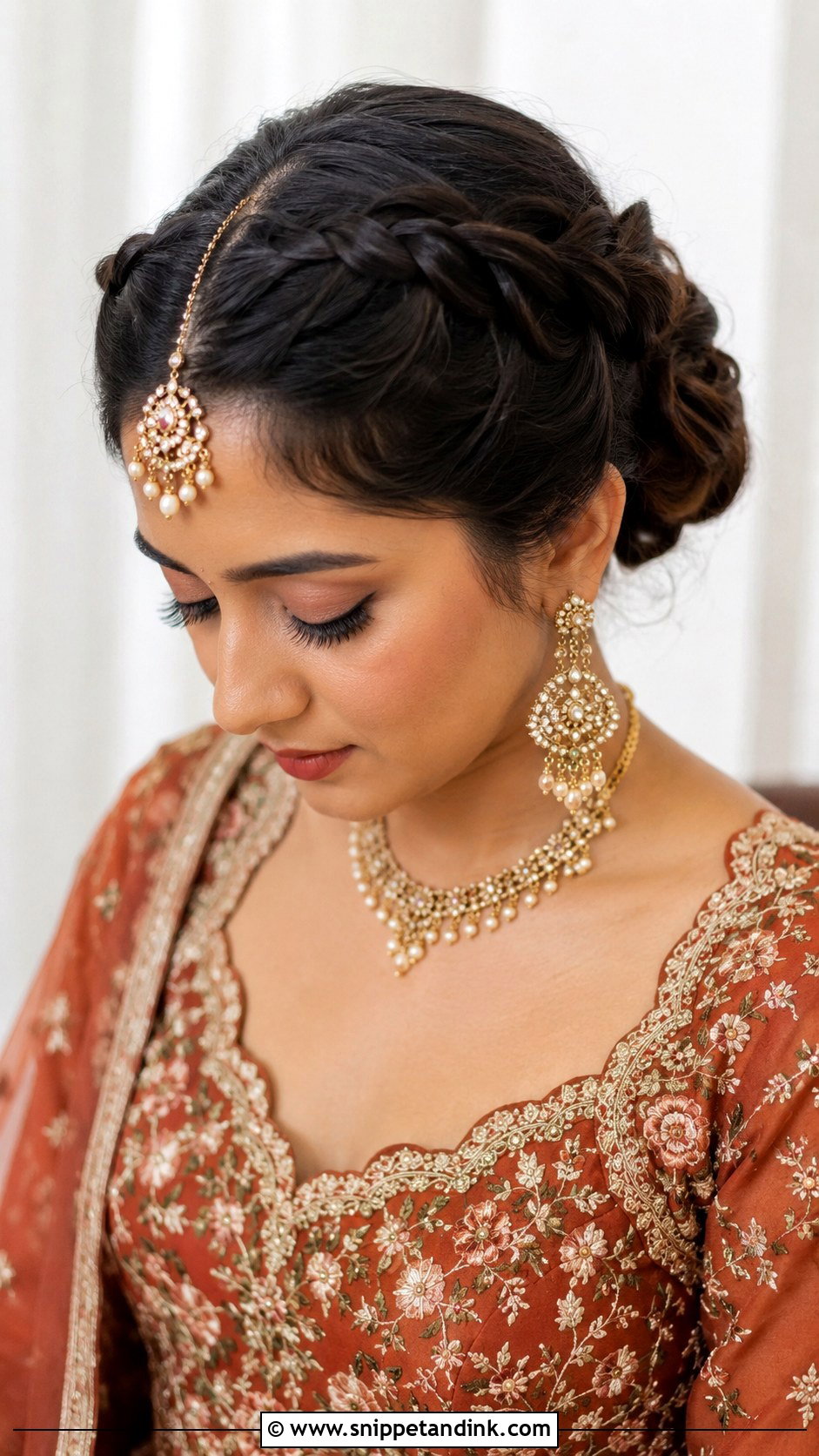
A braid wrapped around the head and gathered into a low knot gives a crown effect without any accessory. I start the braid behind one ear and pin it along the hairline, then let the tail join the bun. A maang tikka can rest right on the braid, which actually helps it stay put. The fullest version needs long, thick hair; on finer hair I braid with a clip-in piece. Tiny flowers or pearls along the braid suit both traditional and bohemian weddings.
14. Pearl-Embellished Bun
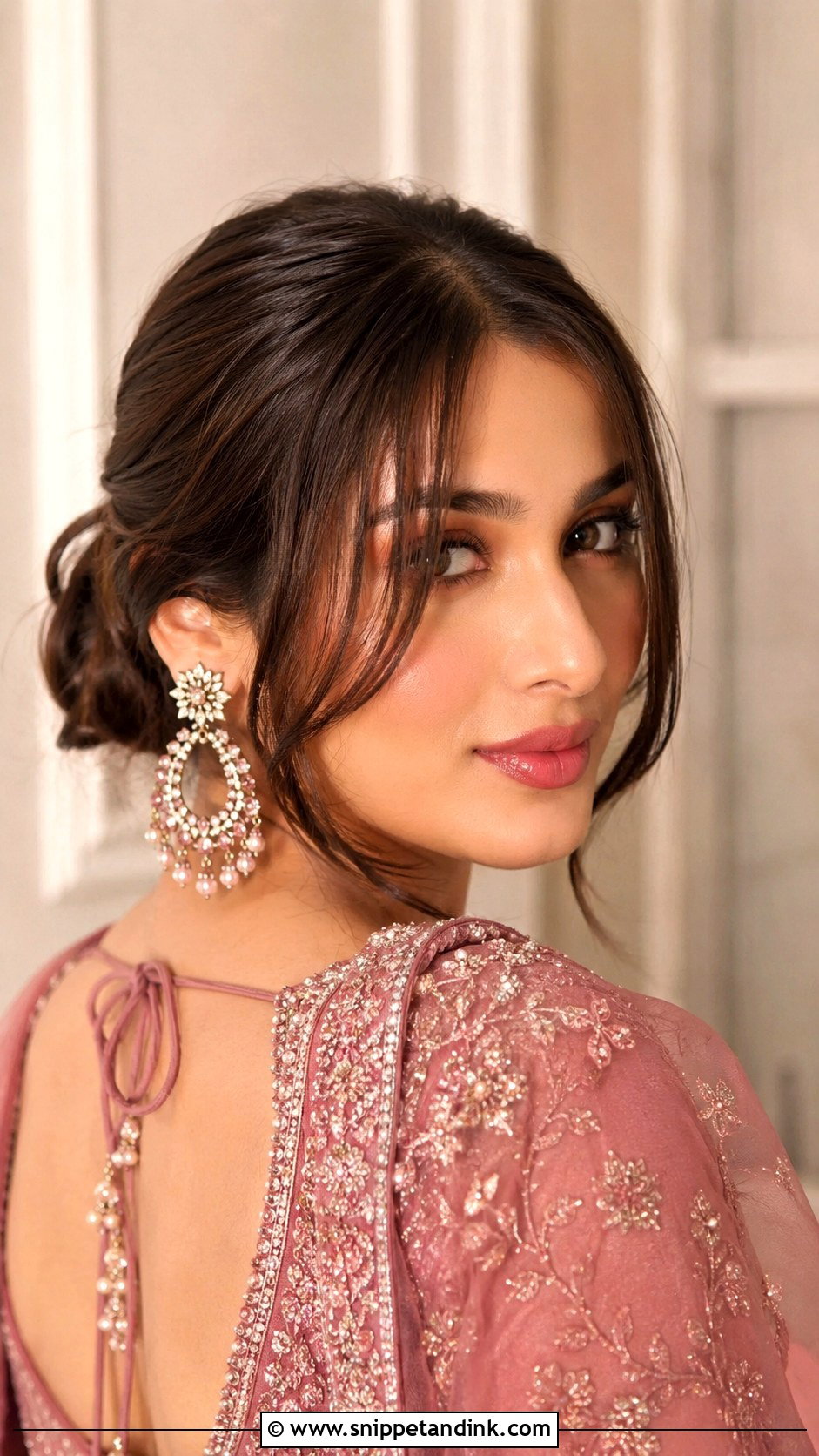
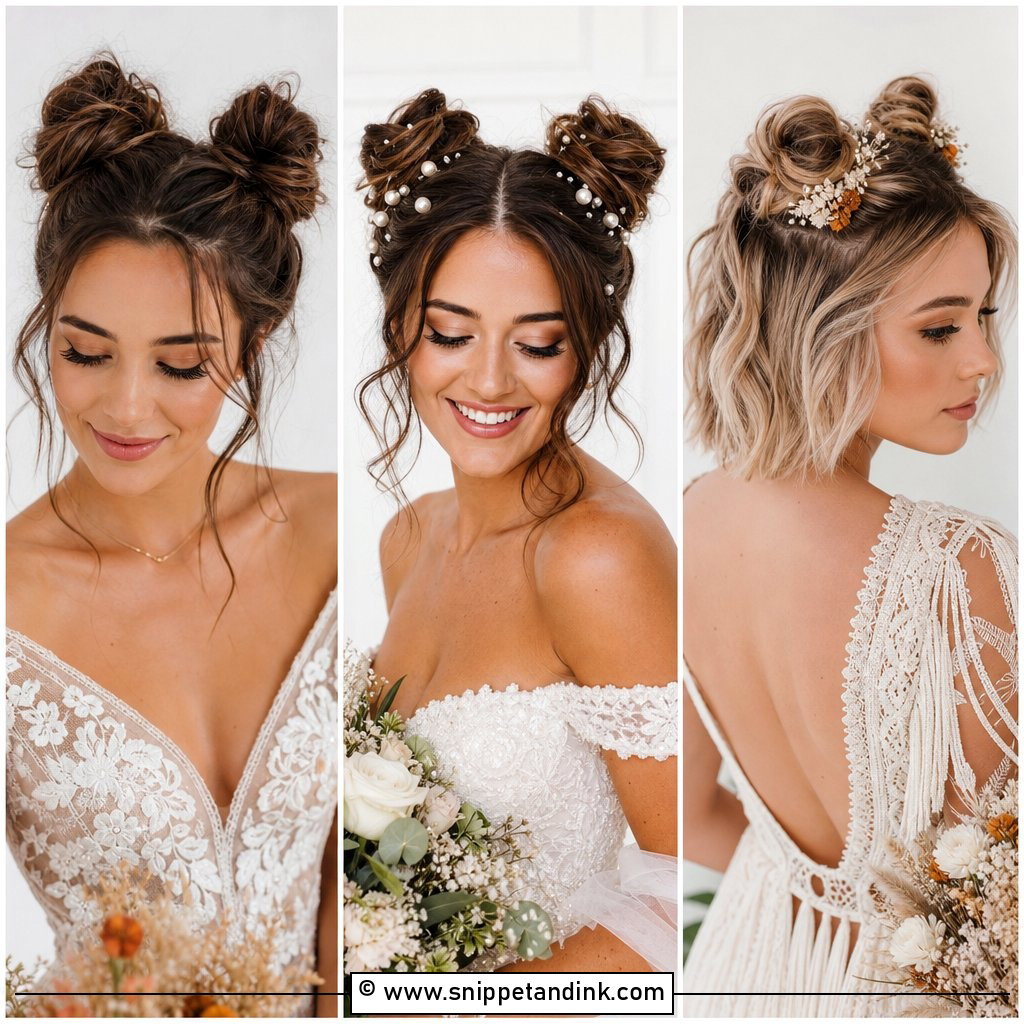
Pearls are the quiet option. I thread a strand through a smooth low or high bun, or push individual pearl pins in a loose pattern. Their soft sheen sits alongside bridal jewellery instead of fighting it. I’d point you to these if your outfit is ivory, blush or pastel, and they suit Christian-Indian fusion weddings and engagements well. Check the pins are good quality, because cheap ones lose their coating under hot tools and hairspray. A few loose curls by the face keep it soft.
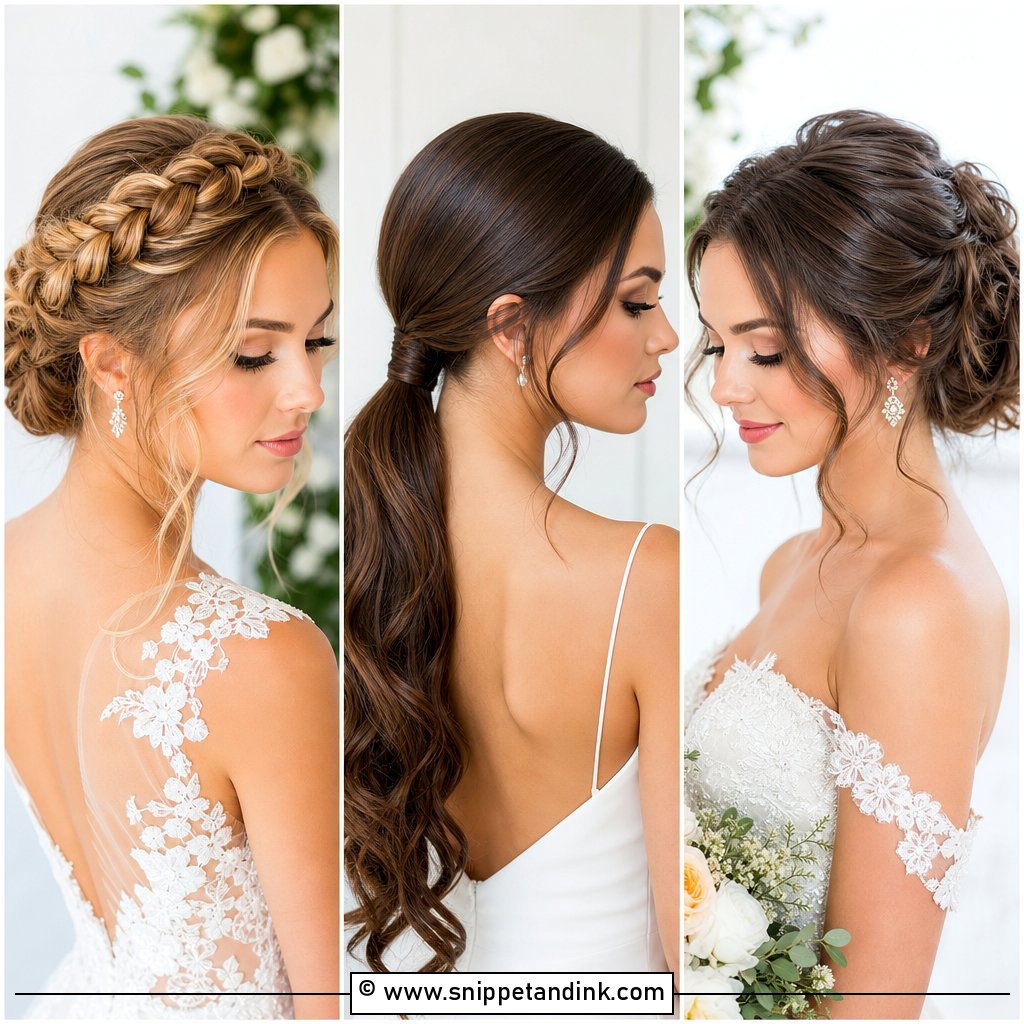
15. Messy Bun With Maang Tikka
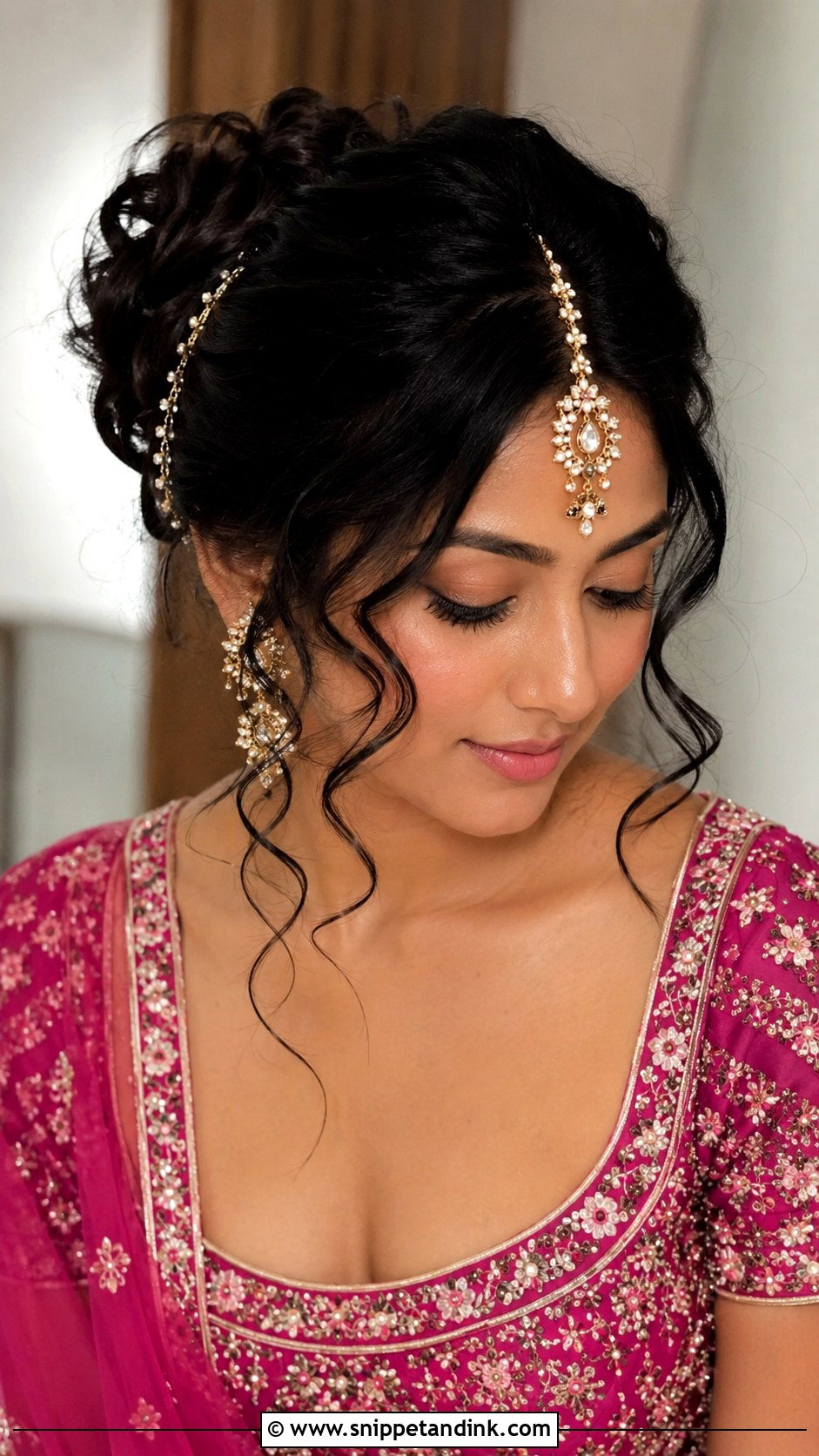
A loose bun under a striking maang tikka keeps the forehead as the focal point while the back stays relaxed. I curl the hair, gather it softly and leave a couple of strands out. The important step is the tikka itself: I clip its chain into a small, firmly pinned section at the parting before the rest of the hair goes up, so it doesn’t drag the loose hair forward. This suits mehndi, sangeet, and reception events. Small flowers or a hair chain finish it.
16. French Braid Bun
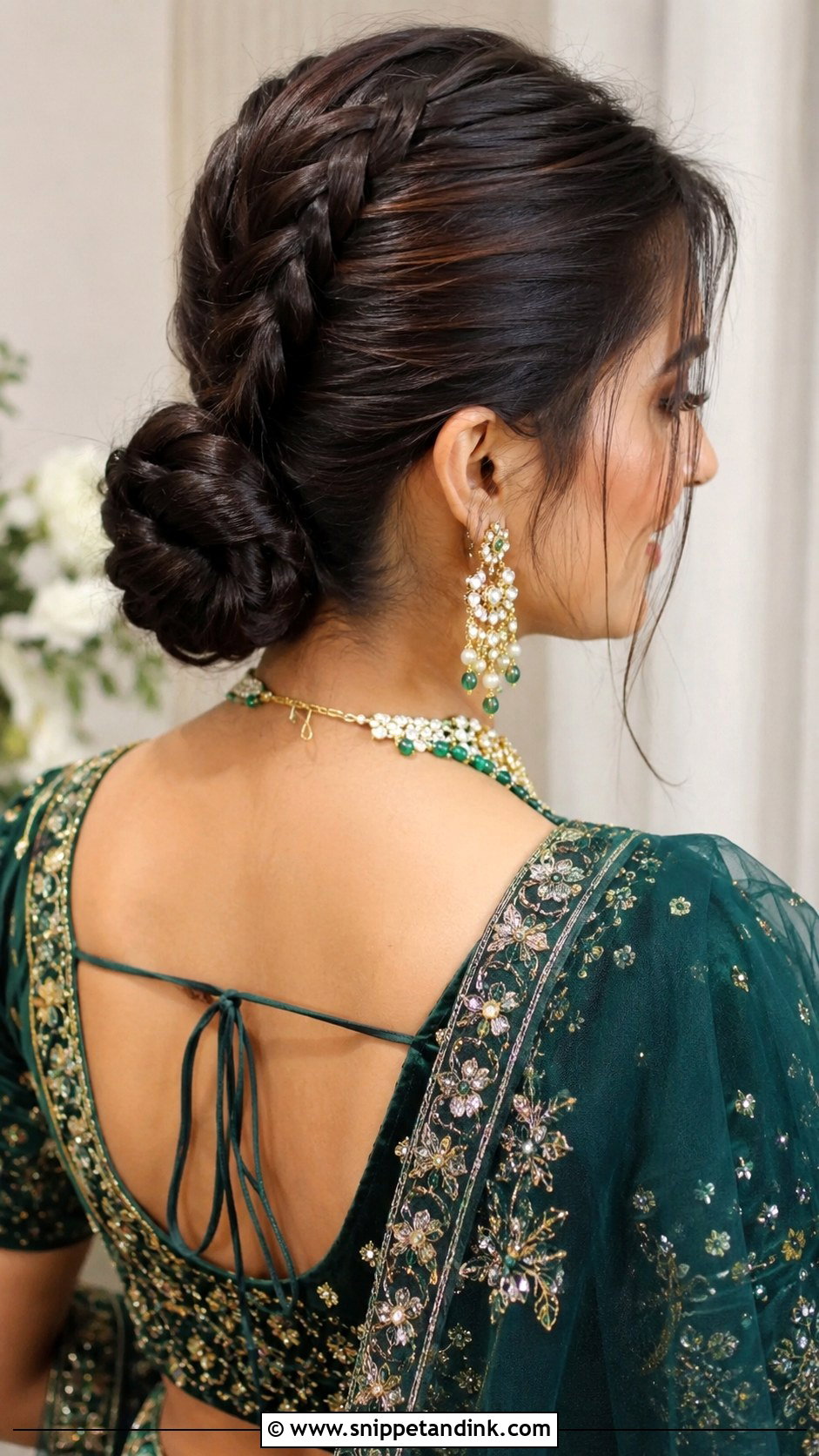
Of all the styles here, the French braid bun is what I’d choose for a long ceremony with lots of movement. The braid starts at the crown and runs down into a low or mid bun, so every section of hair is locked in. It holds through dancing better than nearly anything on this list. Flowers, pearls or a jewelled vine all sit well in the braid, and it’s equally at home under a heavy lehenga dupatta or with a saree.
17. Floral Garland Bun
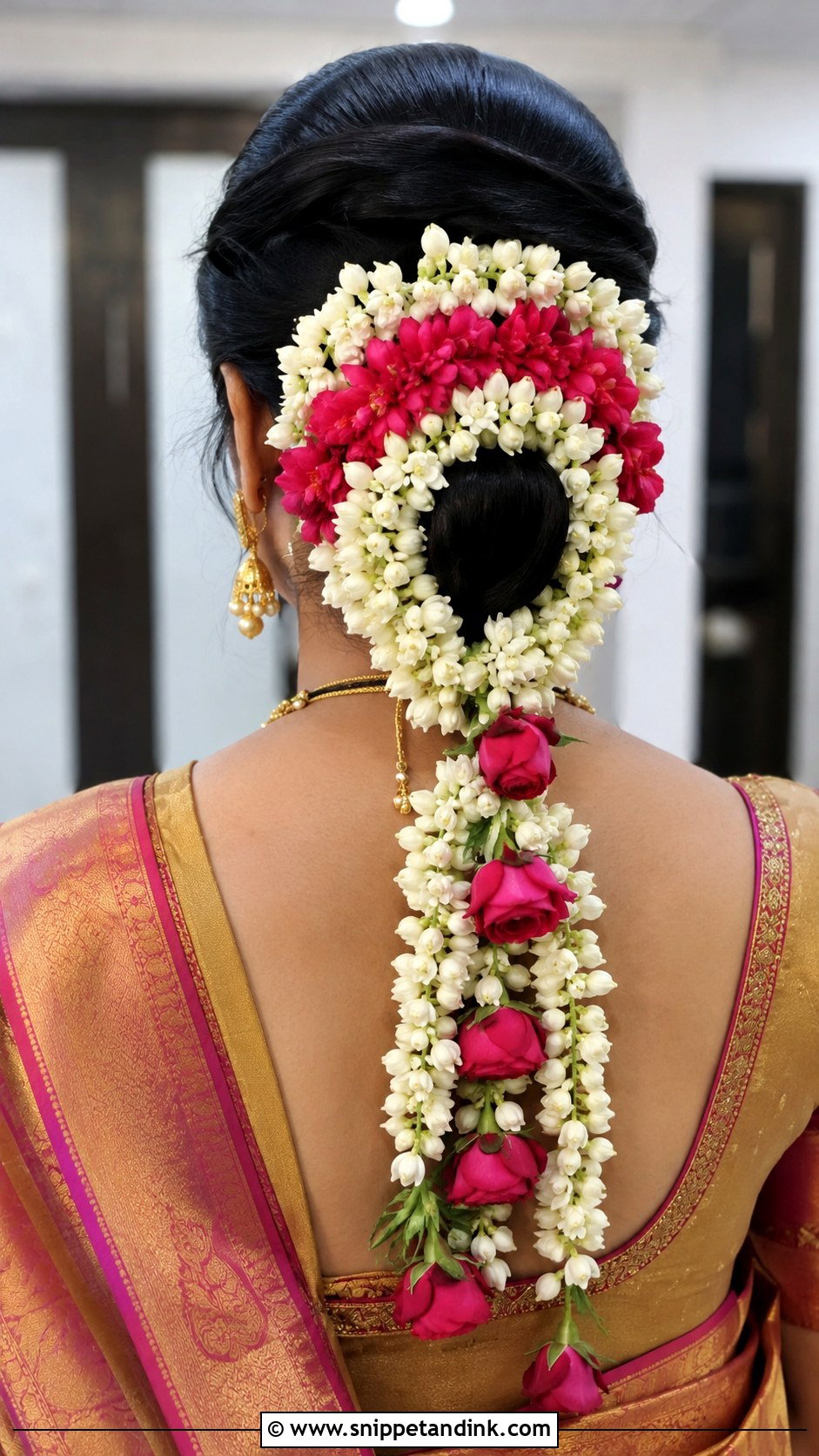
A long garland draped around and below the knot is the grandest look here, and it comes from South Indian bridal tradition. Jasmine, roses or mixed blooms are strung into a length that hangs down the back, adding volume and a cascading line. I secure the garland at several points along the bun so its weight isn’t hanging from one pin. It’s made for silk sarees and temple jewellery, and it gives a strong view from behind. Match the blooms to your saree’s colours.
18. Bridal Bun With Hair Vine
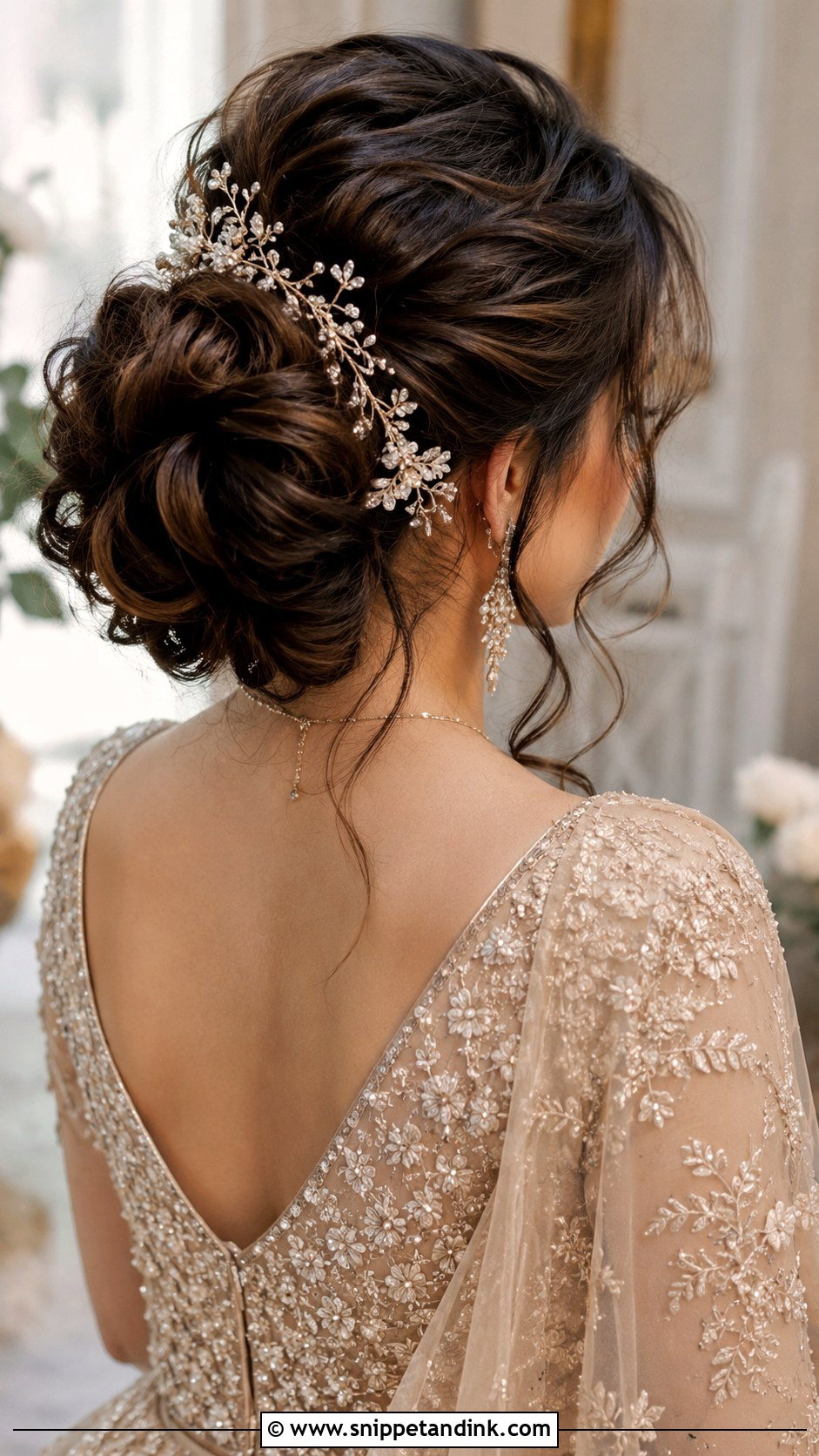
A jewelled hair vine is flexible wire with crystals or pearls attached, and I bend it around or through the bun so it catches the light. It’s a good choice for fusion outfits, gowns and lighter lehengas where real flowers would feel too heavy. I sew or pin the vine at both ends and in the middle, because a loose end will snag on lace. It works on high and low buns alike. Add a few curls at the face and let the vine do the decorating.
19. Bun With Curtain Bangs
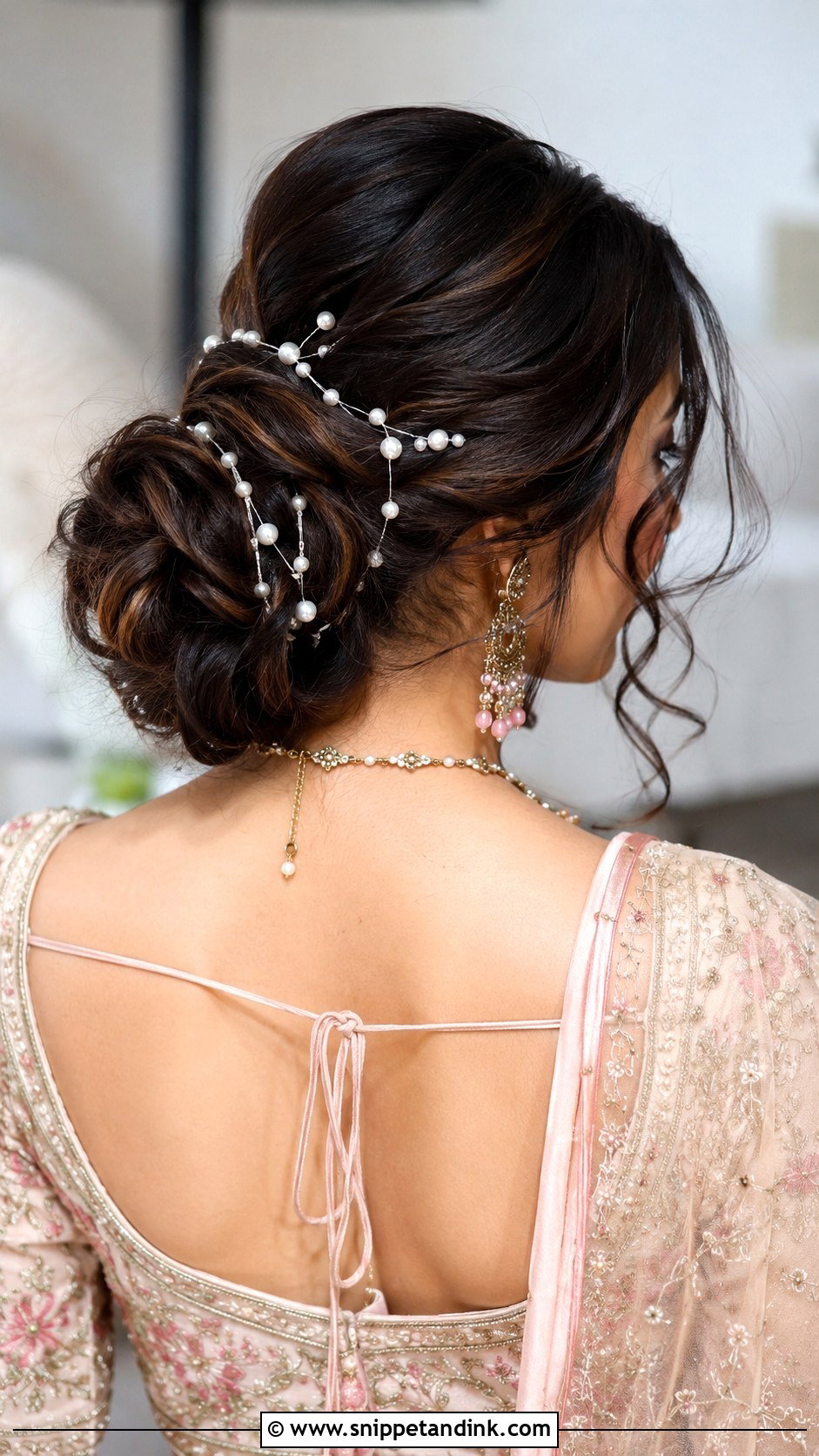
Curtain bangs soften the forehead and frame the eyes, and with a bun at the back they make the look feel current. I’d only suggest this if you already wear bangs or have them cut at least a few weeks before the wedding, so they’ve settled. Fresh bangs often sit awkwardly. Heavy jewellery balances well against them, and they suit receptions and pre-wedding events. I curl the ends away from the face so they don’t fall into the eyes or touch your makeup.
20. Knotted Bun With Gota Patti
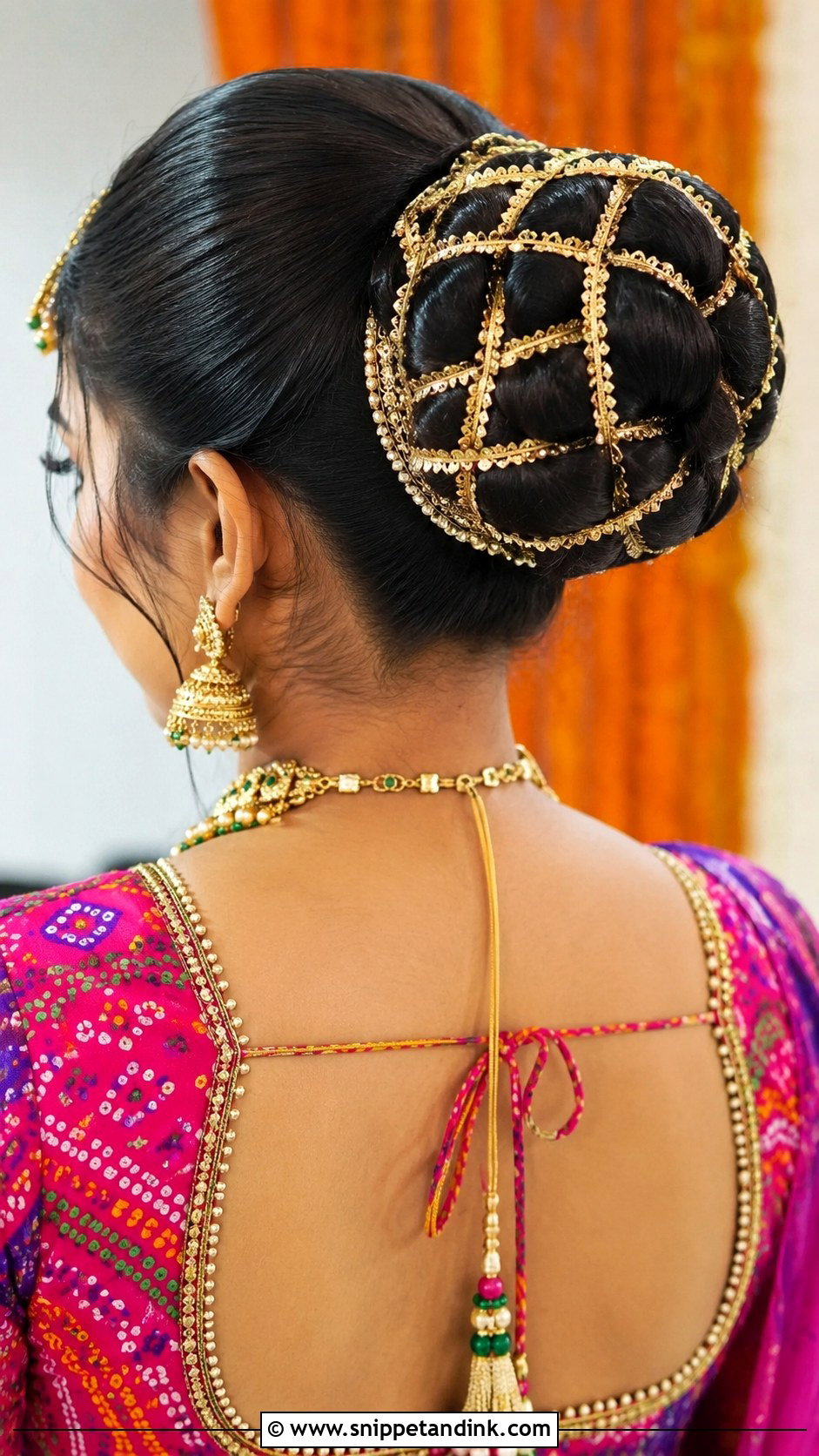
Gota patti brings regional Rajasthani charm into the hair. I tie a structured knot and then pin gold gota flowers or ribbon detail into it so the metallic work echoes the zari on your outfit. It looks right with bandhani, leheriya and heavily embroidered pieces, and it’s a cheerful pick for haldi or mehndi. Gota is light, so it stays put with fewer pins than fresh flowers. A maang tikka and matching earrings complete it.
21. Voluminous Bouffant Bun
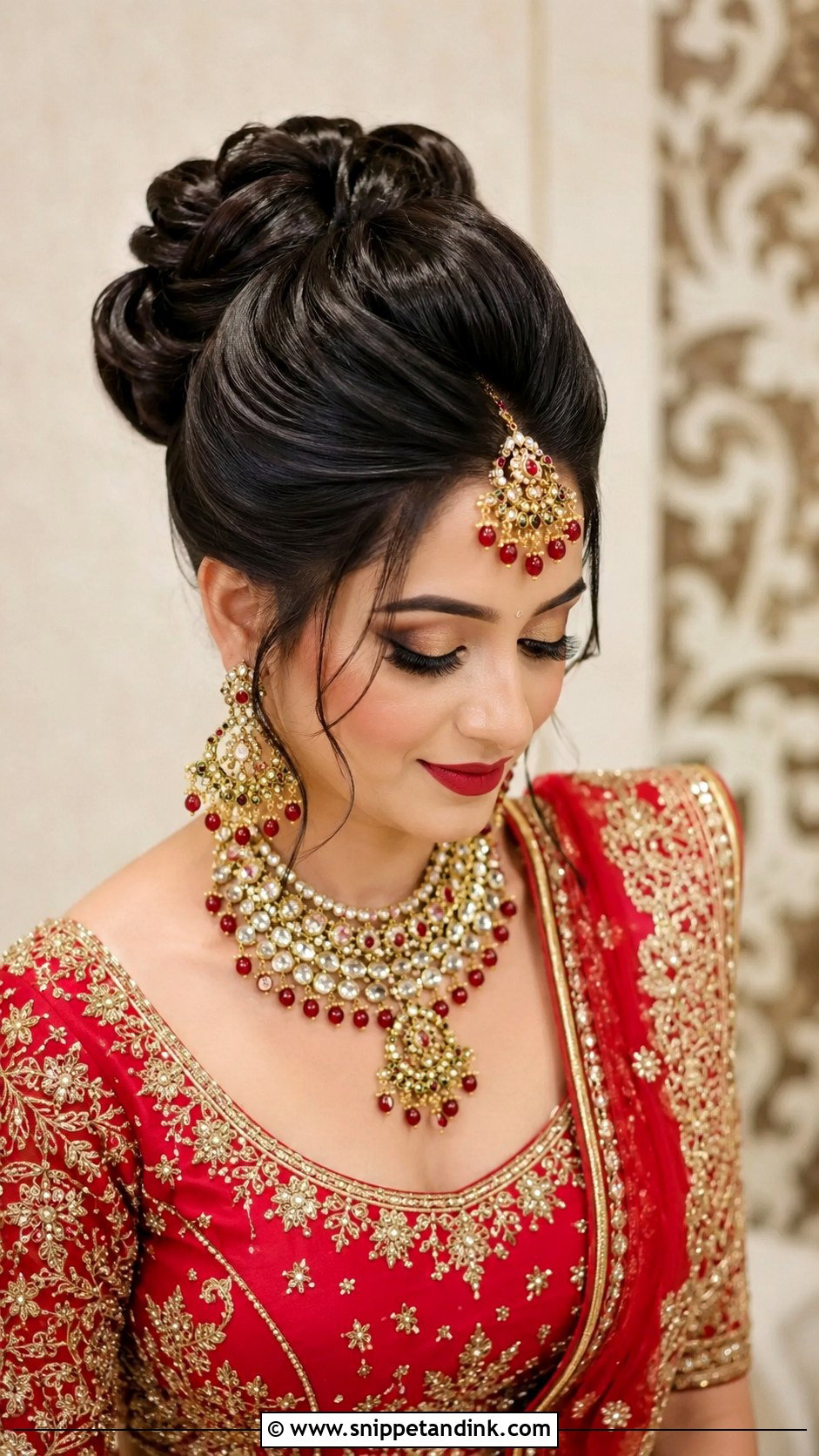
The bouffant bun gets its height from teasing at the crown, smoothed over and pinned into a knot behind. I backcomb in small sections close to the root and set each one with spray, because a bouffant built in one go collapses by mid-afternoon. It balances elaborate jewellery and heavy lehengas well and gives a regal outline. I’d hold back on a very high lift if your dupatta is pinned at the crown, since the fabric will press it flat. Flowers or a jewelled accessory finish the bun.
22. Loose Braided Bun With Flowers
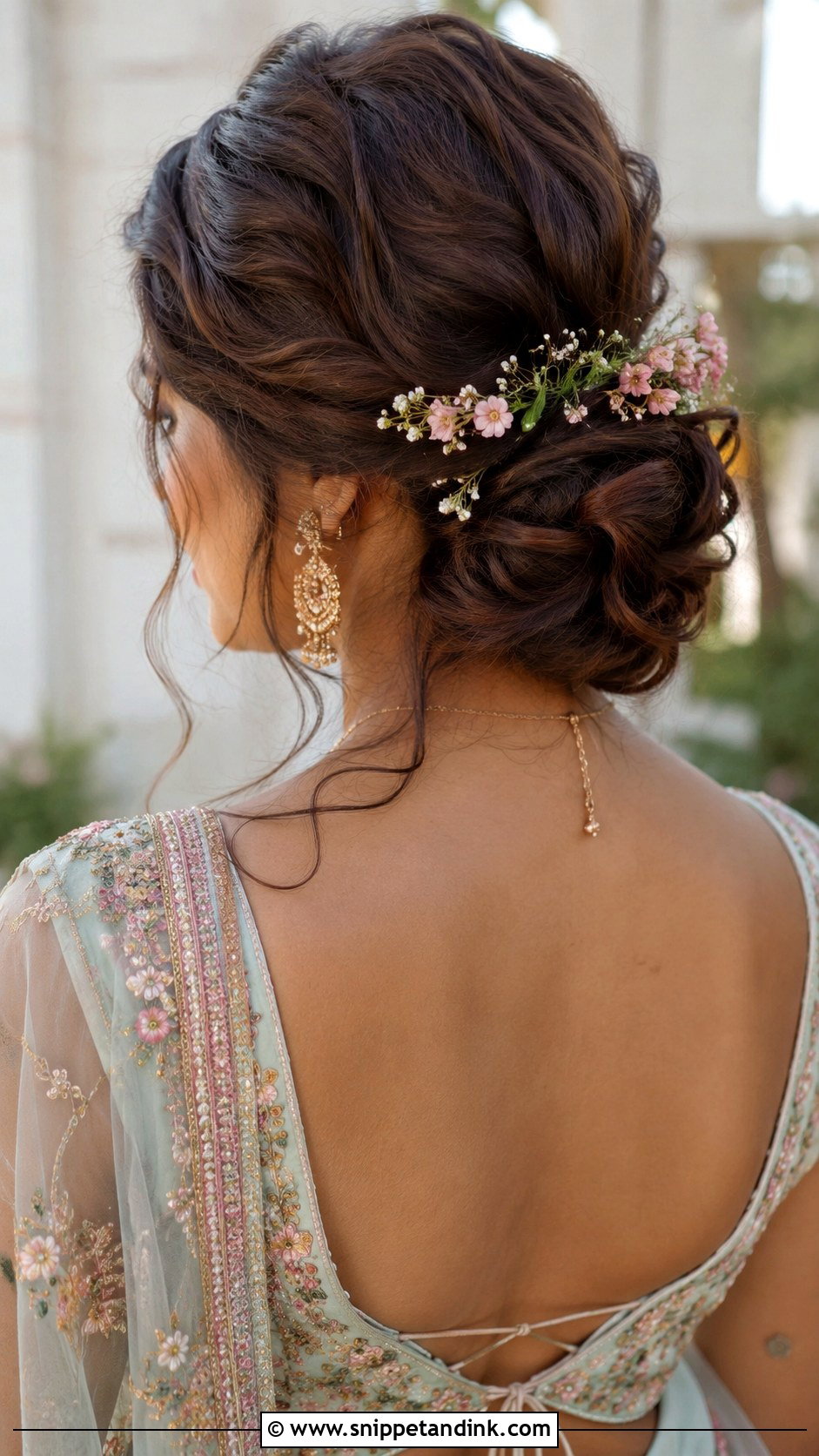
For this bun, I braid loosely, pull the braid apart for width, then coil it into a low knot and tuck small blooms between the loops. It’s relaxed and suits outdoor or daytime weddings with flowy lehengas in pastel shades. The softer braid has less grip, so I use more pins than you’d expect, hidden inside the coil. Baby’s breath or small roses fit the scale best; large flowers make it look crowded.
23. Crown Bun With Maang Tikka
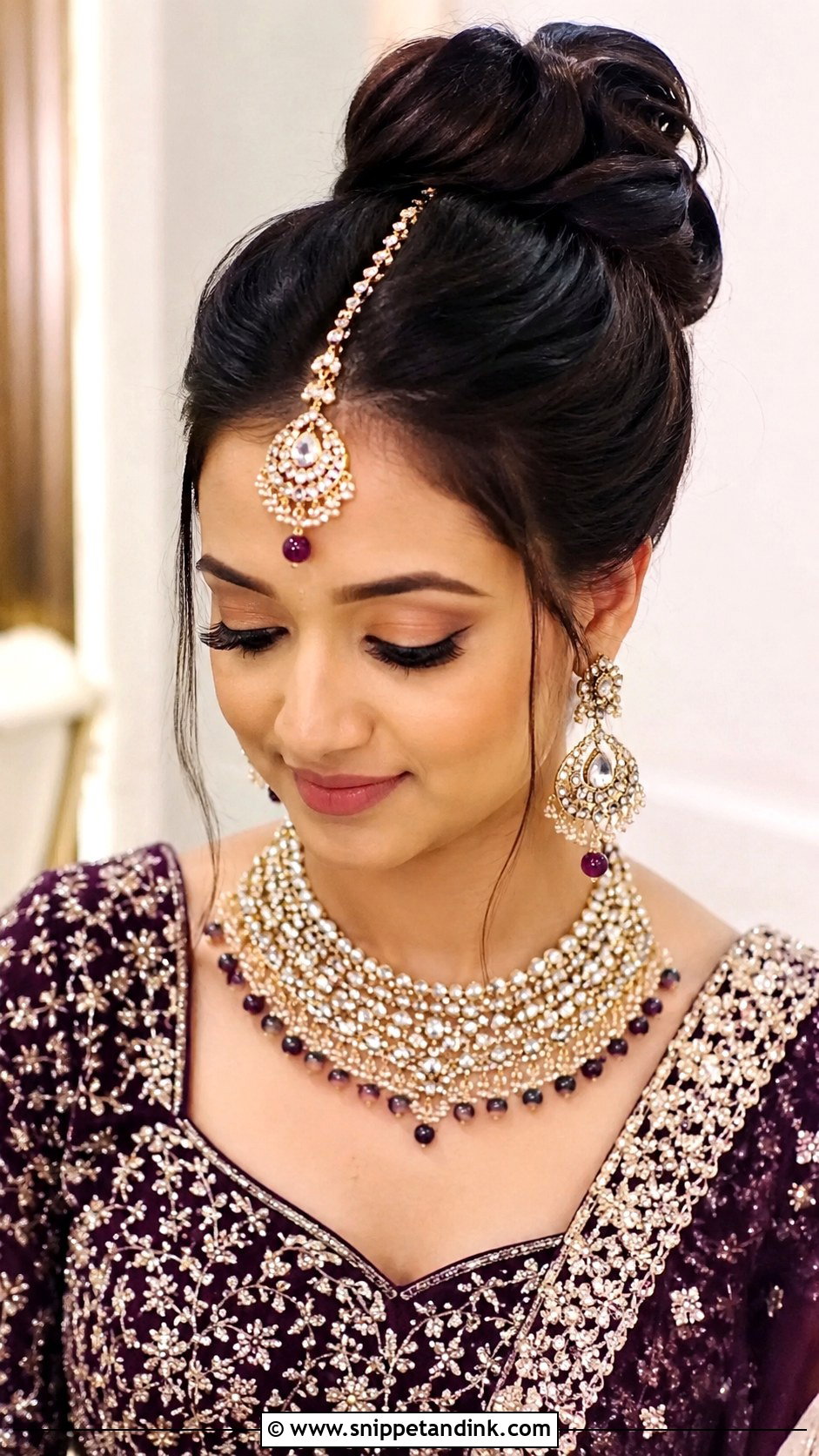
A crown bun sits high and round, and a striking maang tikka pulls the eye straight up to it. I gather the hair smoothly to the top of the head and pin it from four sides so it can’t tilt. The height suits brides who want a tall outline, and it puts statement jewellery on show. Because the bun and tikka both sit high, I keep the dupatta pinned slightly behind the knot rather than over it. Flowers or pearls around the base add detail.
24. Bun With Matha Patti
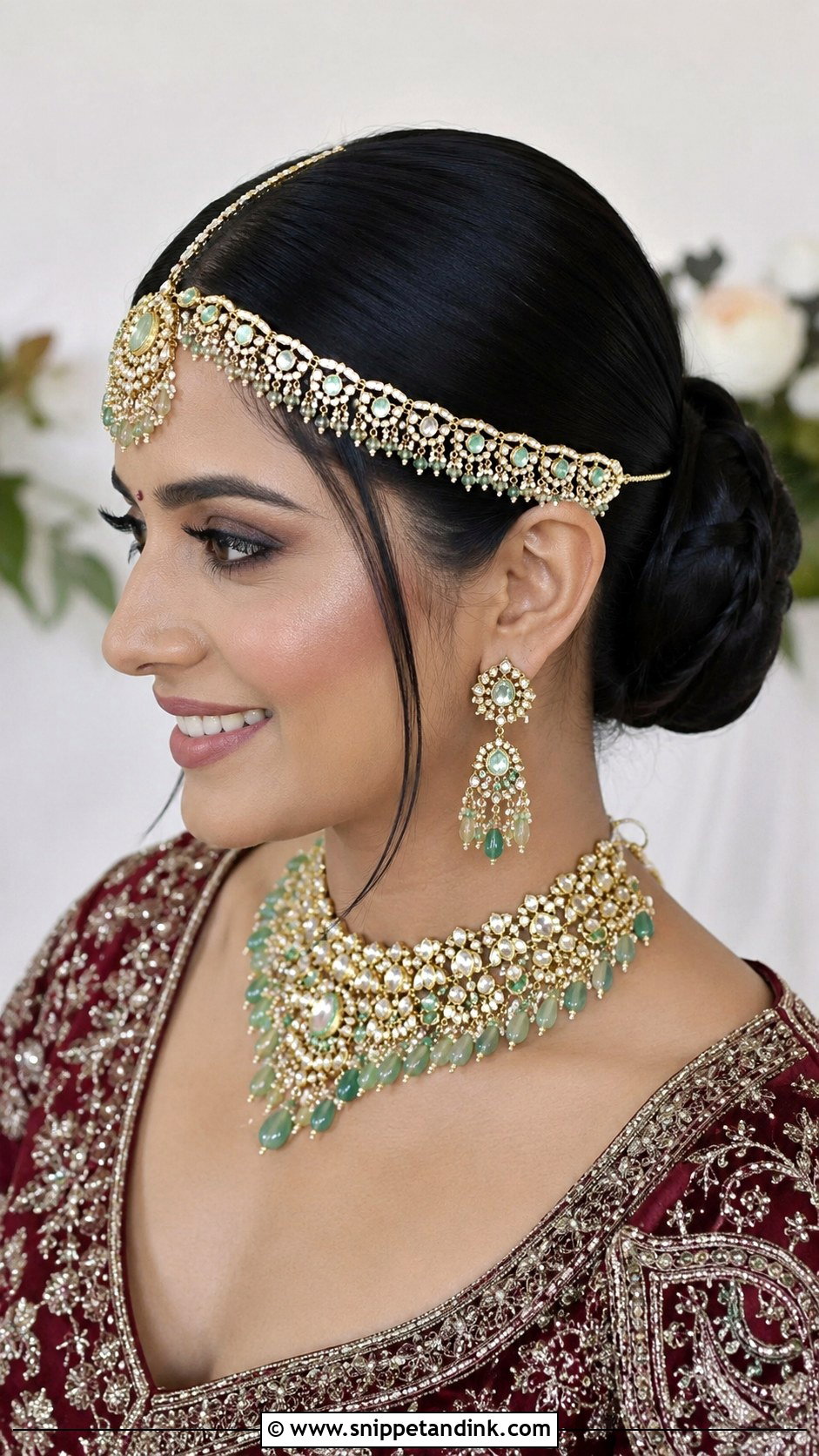
A matha patti frames the forehead and hairline in front while the bun sits behind. I fit the matha patti before finishing the front of the hair, because its side chains need to hook into pinned sections above the ears or they’ll slip down. Keep the bun smooth so the headpiece is the main focus. It suits grand weddings, heavy lehengas and big necklaces, and small flowers or pearls at the back tie the two together.
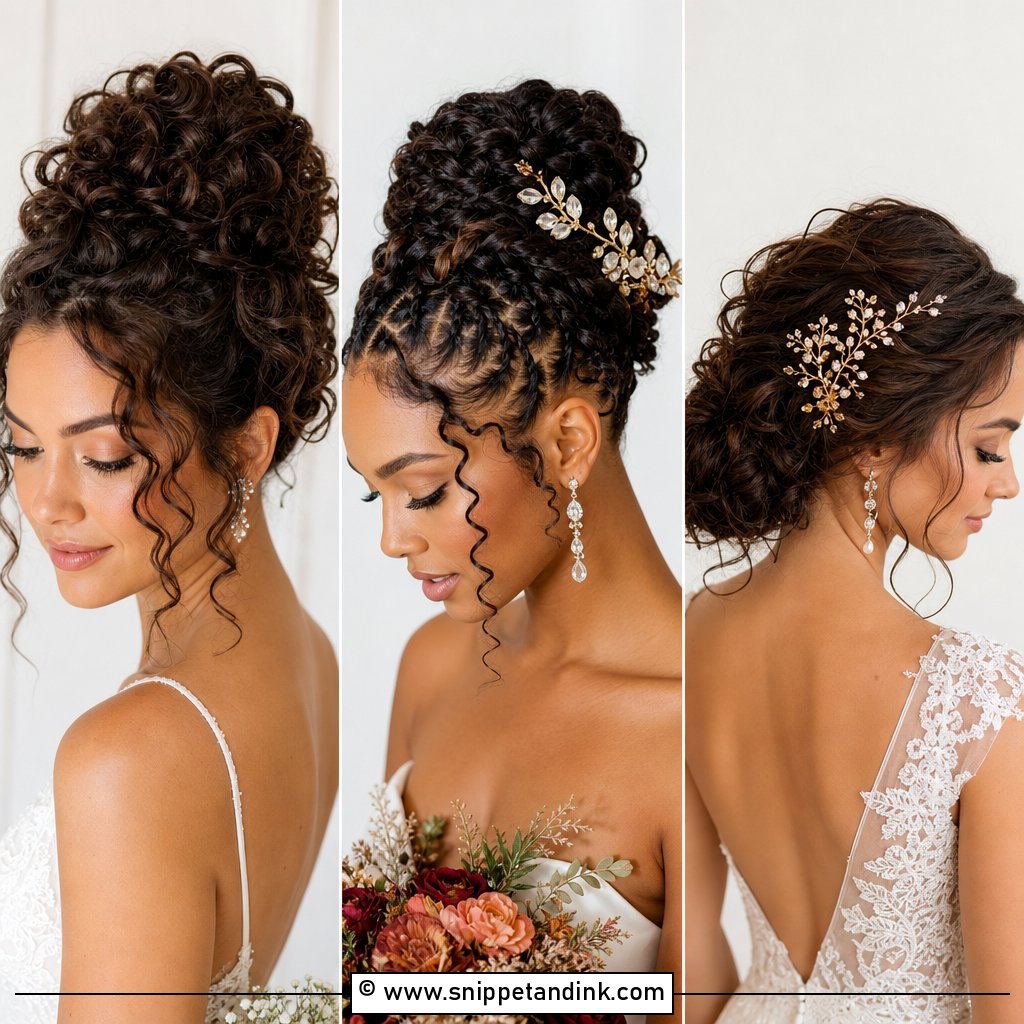
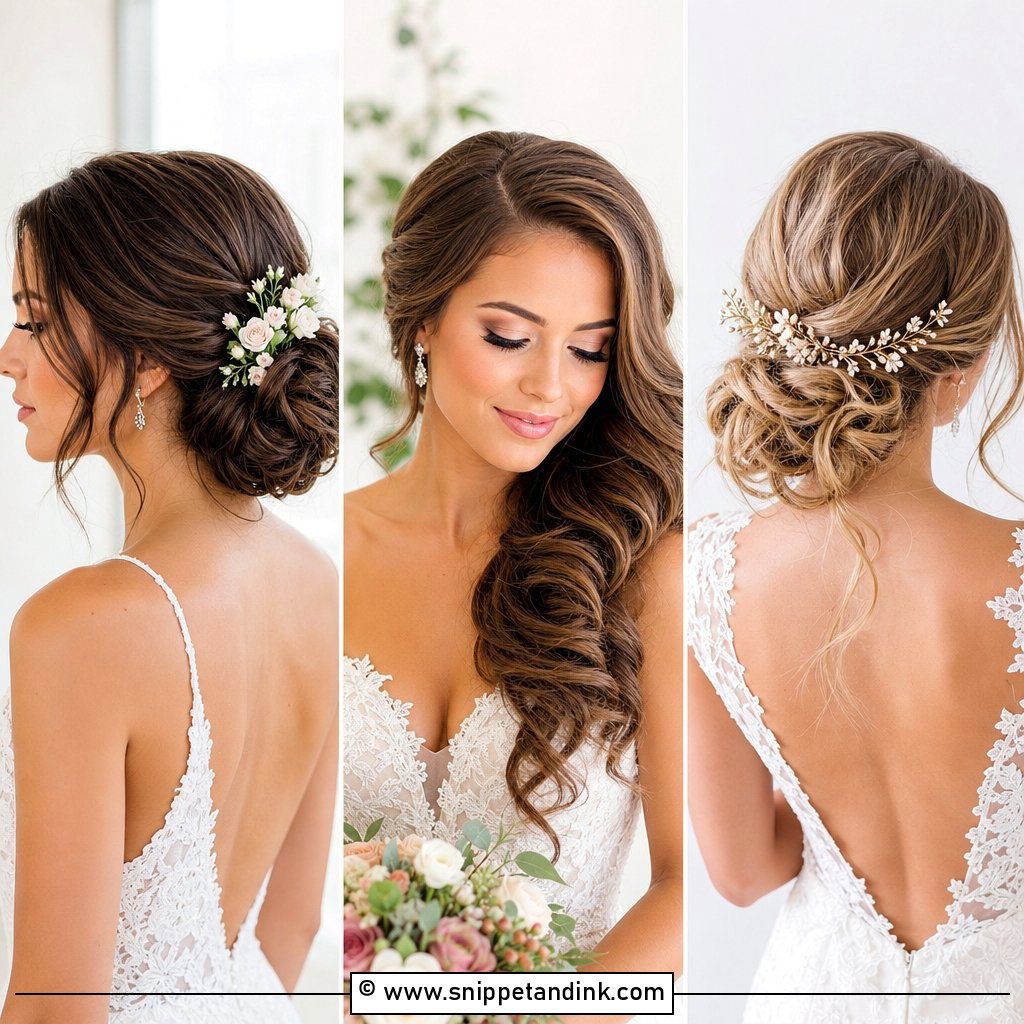
25. Fishtail Wrapped Bun
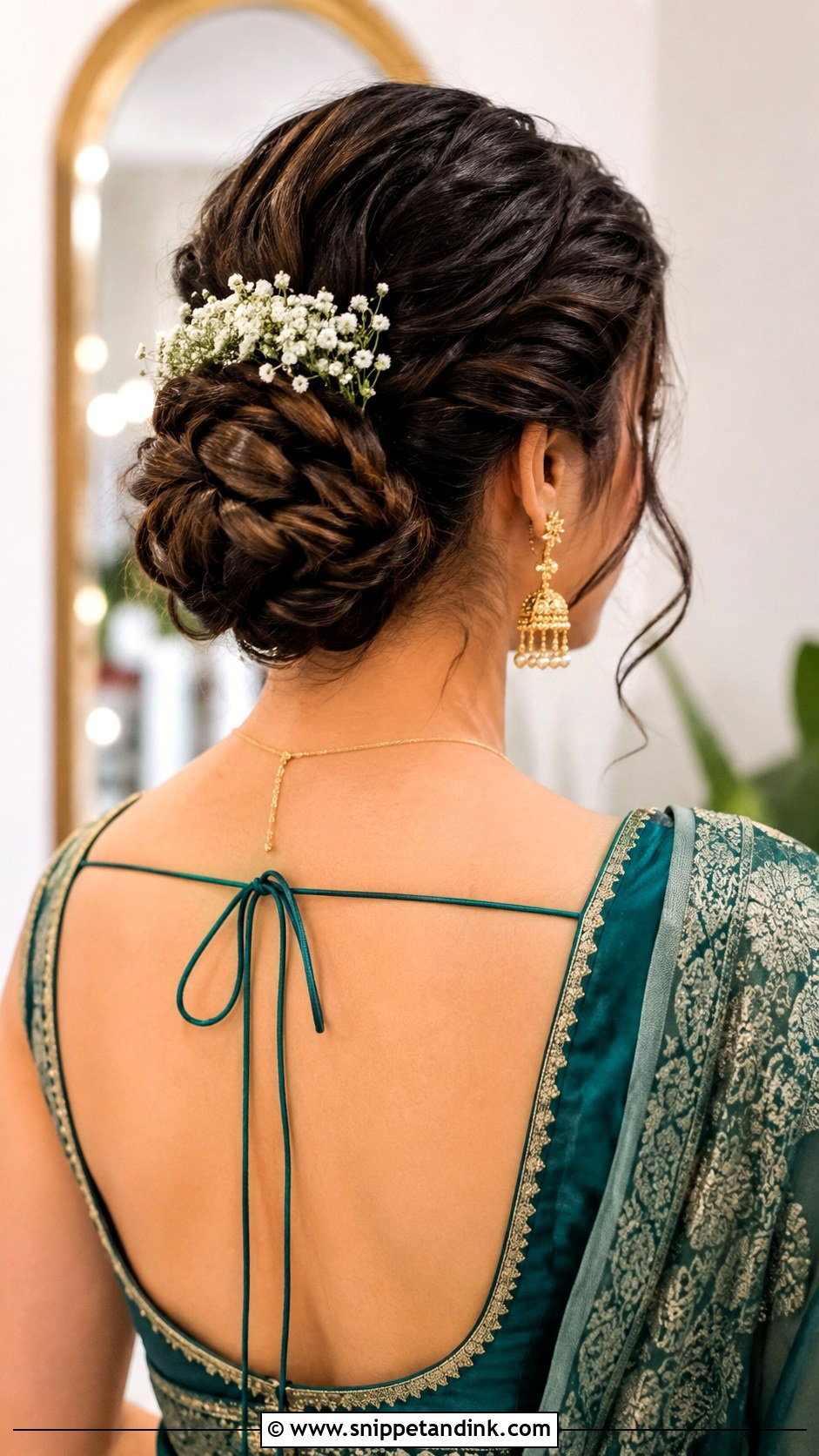
The fishtail wrapped bun is all about the back view. I coil a detailed fishtail into the knot so the weave shows clearly, which is why I’d pair it with a low-back blouse or a saree drape that shows the neckline. It needs long, thick hair to wrap fully. The tight weave keeps everything secure through long celebrations. Tiny flowers, pearls or a single jewelled pin along the braid are enough.
How Real Jasmine, Roses and Marigolds Hold Up Through a Long Muhurat
Fresh flowers are part of what makes an Indian bridal bun feel right, but they’re living material and they change during the day. Here is what I tell brides before they order.
- Jasmine opens and starts to turn cream within a few hours of being strung. I ask for gajra to be delivered just before styling and kept wrapped in a damp cloth in a cool spot, never on ice.
- Roses bruise wherever the dupatta rubs them. Place them where fabric won’t sit, or choose firmer varieties.
- Marigolds are tough and handle heat well, but crushed petals can mark pale fabric.
- Flowers add weight. A full garland on a bun can weigh a surprising amount, so the bun has to be built and pinned to carry it, not just look full.
If you change outfits between the ceremony and reception, I’d plan a second set of flowers, or switch to pearl pins or a hair vine for the evening. Wilted jasmine at the reception is the one thing brides tell me they wish they’d planned for.
Shoulder-Length or Thin Hair Under a Heavy Bun
Many of these buns are shown on very long, thick hair. That doesn’t mean they’re off the table if yours is shorter or finer, but you’ll need help.
A donut or mesh bun shaper adds volume that matches your hair colour. Clip-in extensions give a braid enough length to wrap, and I place them below the occipital bone so the clips stay hidden. Some brides use a ready-made bun piece pinned over their own knot, which is a perfectly honest shortcut. Do one thing at the trial: wear the whole style, with flowers and dupatta, for at least a couple of hours. Fine hair shows its weak spots slowly, usually as a sagging bun or pins working loose at the nape.
Taking Your Bun Shortlist to the Trial
The bun you pick should suit your hair as it really is, your dupatta and the length of your day. From gajra knots to pearl and hair vine designs, there’s a version here for most hair types and ceremonies. When you narrow it down, bring the actual tikka, a dupatta of similar weight and a few photos of your outfit to your trial, so your stylist can test how everything sits together. Then wear the trial bun for a few hours and see how it feels before you decide.
You'll Like These Ideas:


Leave a Reply