
Classic bridal hair isn’t classic by accident. Low buns, chignons and set waves have lasted because they hold a veil, survive a long day and don’t date in photographs ten years later. What has changed is the finish: less lacquer, softer edges, a bit more of your own texture left in. Below are the traditional shapes I still build most often, from the church-wedding French twist to jasmine braids and a sculpted juda, with what each one needs from your hair and what it asks of you on the day.
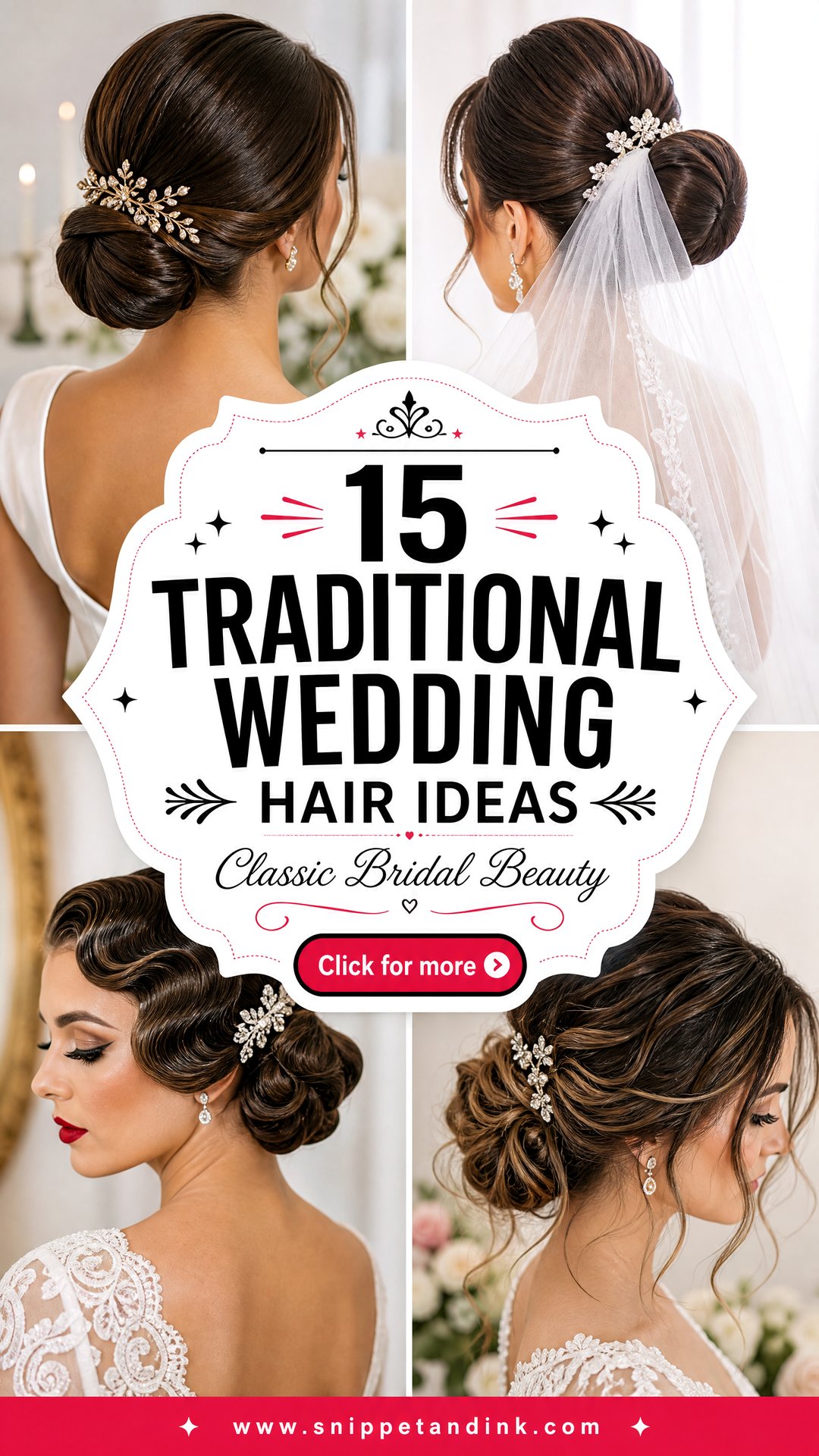
Which Decade Does Your Dress Belong To?
Traditional hair comes from specific eras, and the quickest way to a look that feels right is matching the hair to the period your dress is quoting. Get that match wrong and even a well-done style looks like a costume.
- Bias-cut satin, cowl necks, 1930s and 1940s lines: finger waves, Hollywood waves, a low side chignon.
- Structured ballgowns, high necks, long sleeves: a French twist or a high bun, the shapes of the 1950s and 1960s.
- Lace, bohemian or garden gowns: braided crowns, loose updos, half-up styles.
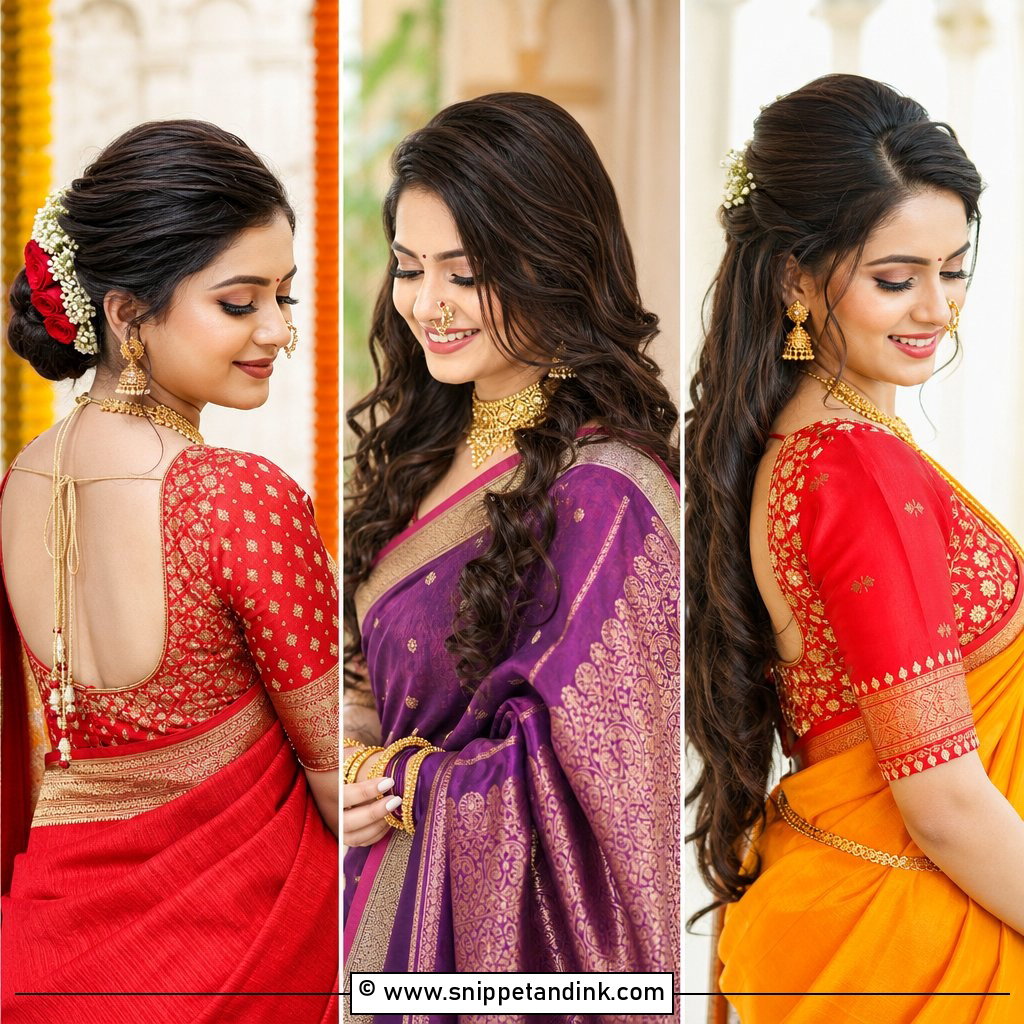
- Saree, lehenga or other cultural dress: follow the tradition first, then adjust height and finish to your face. A juda, a South Indian braid and a gajra bun each come with their own expectations from family.
- Minimal crepe or column dresses: a sleek middle-part bun, nothing else in the hair.
If your dress doesn’t fit one era, look at the neckline. High or detailed necklines want the hair up; open, strapless or one-shoulder lines can carry waves or a side sweep.
1. Traditional Wedding Low Bun
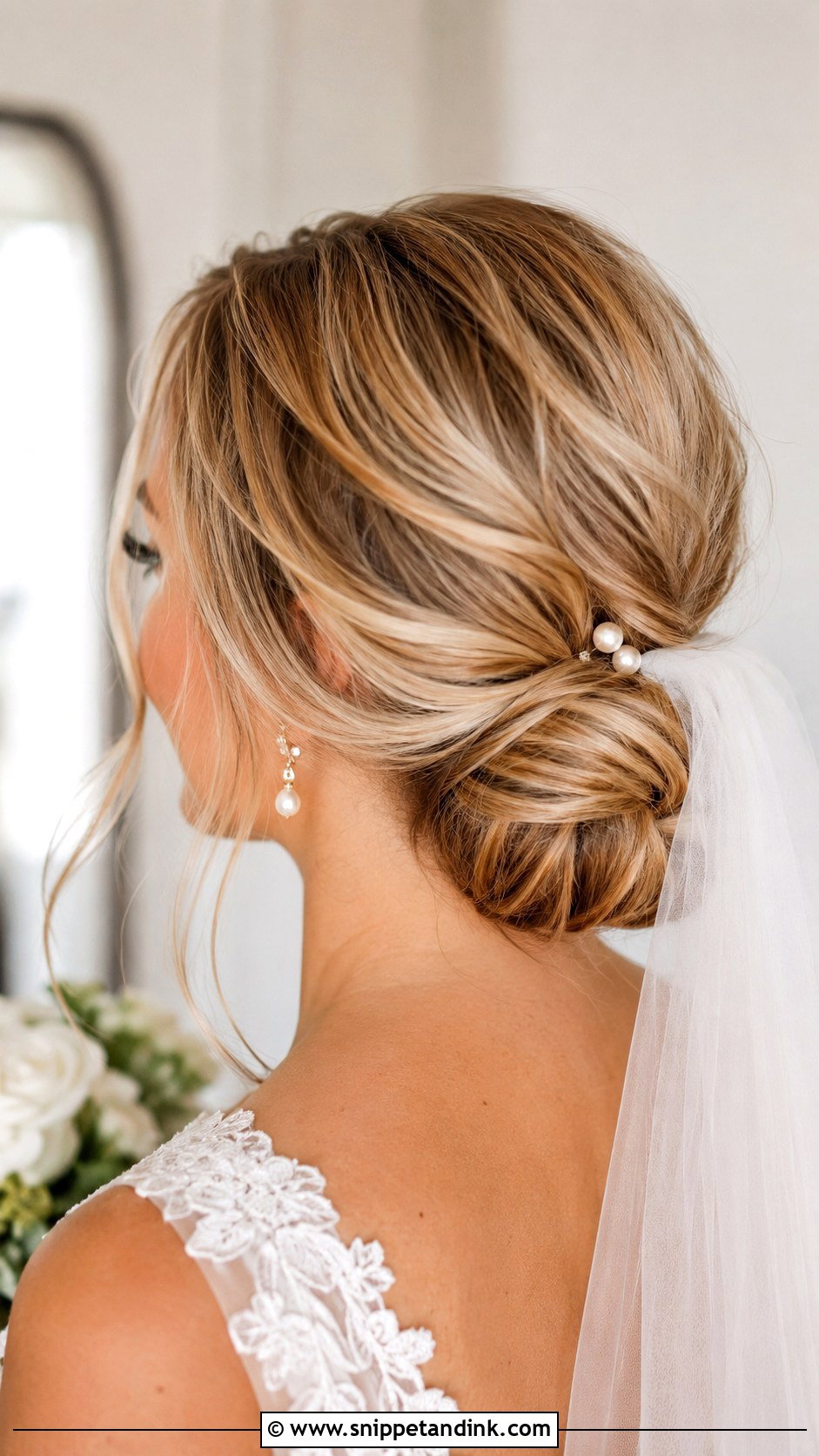
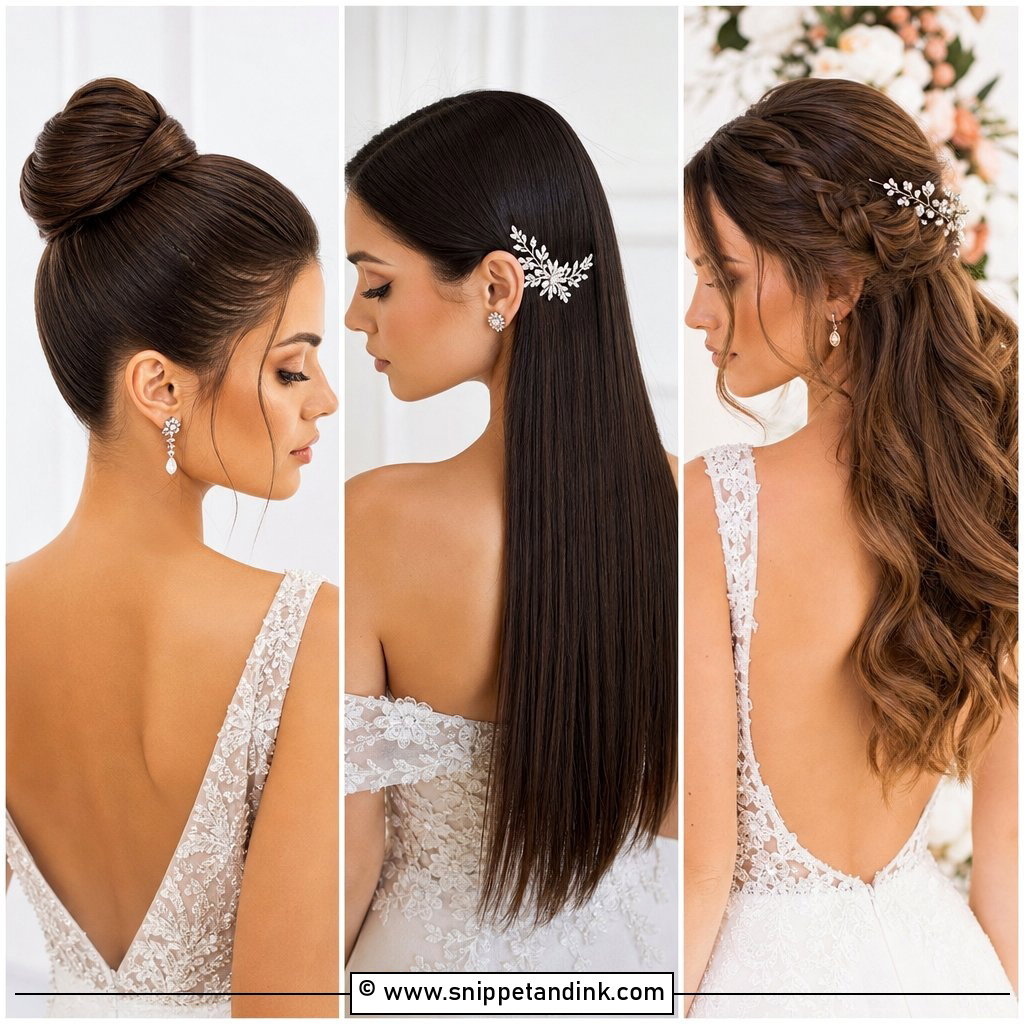
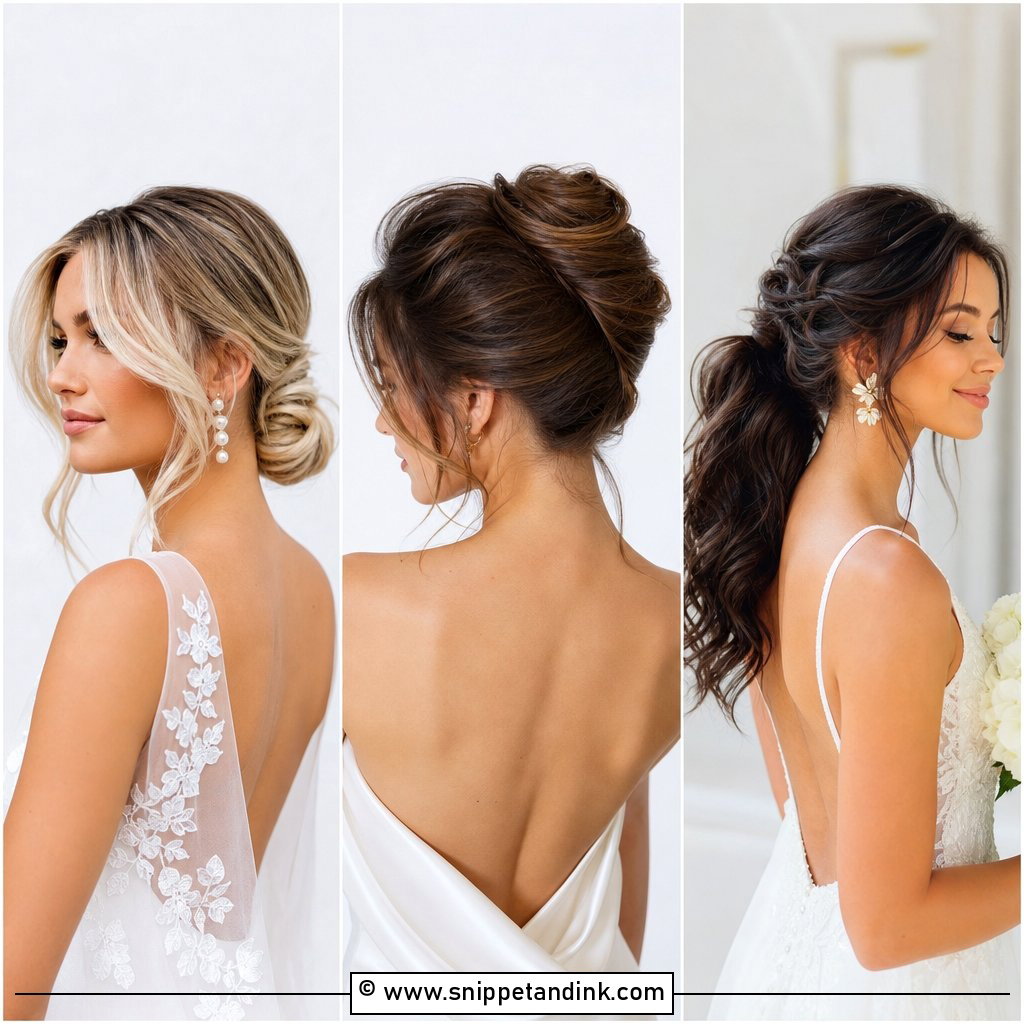
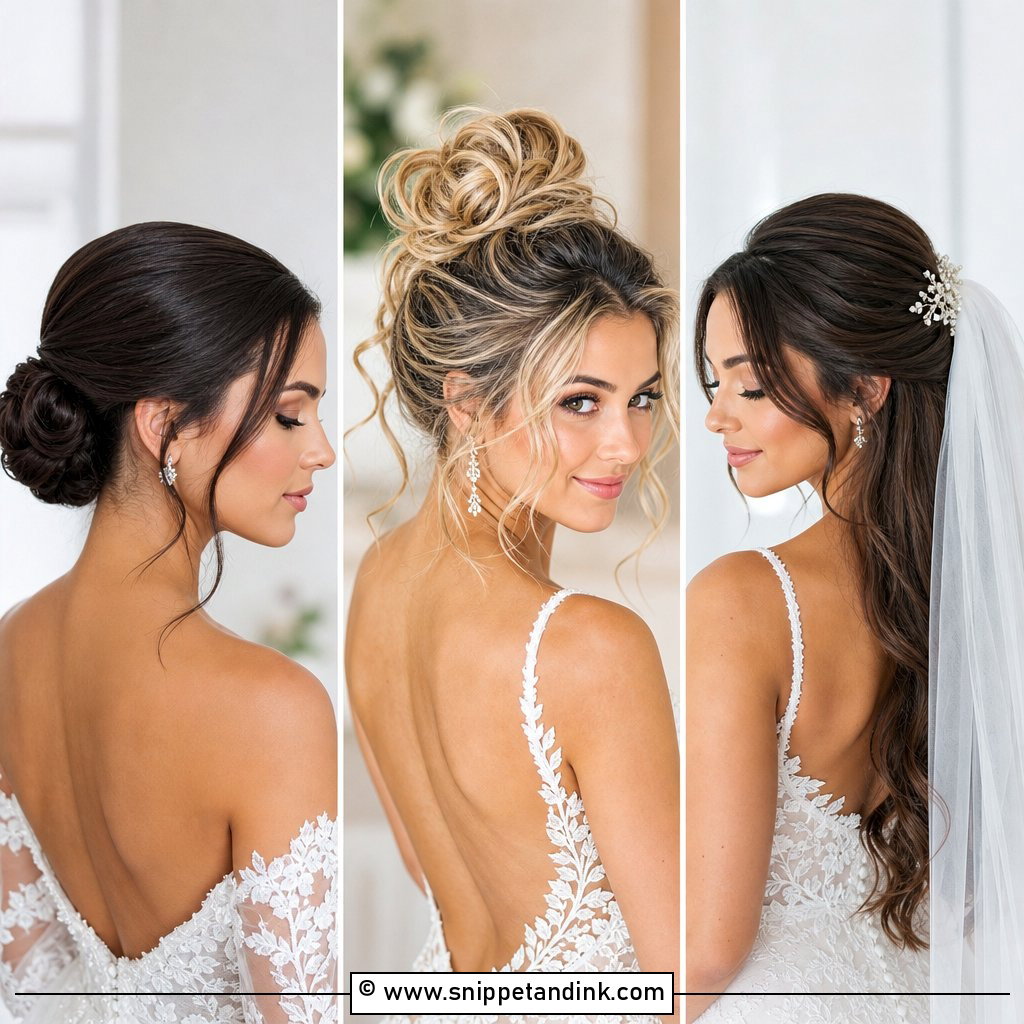
If a bride can’t decide, I usually start her trial with a low bun, because it tells me so much about her hair. It sits at the nape, supports a veil, a comb or pearl pins, and keeps the face and earrings clear. I add a little height at the crown with backcombing only at the root, since a flat crown makes a low bun look severe from the front. It sits comfortably at church services, ballrooms and formal family traditions alike. Two soft pieces at the face are optional; on oily skin they tend to stick by the reception, so I often leave them out.
2. Traditional Wedding Chignon
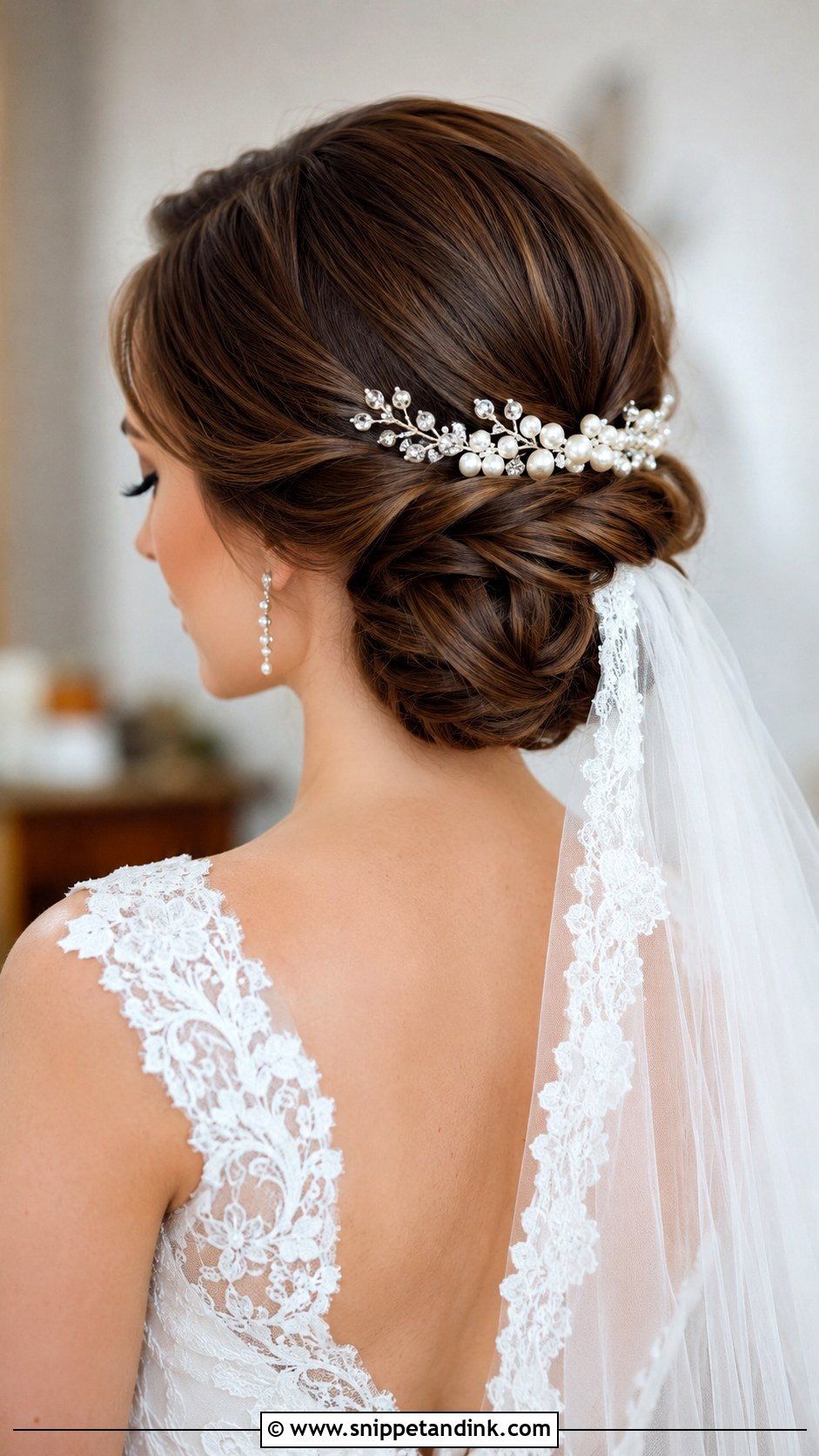
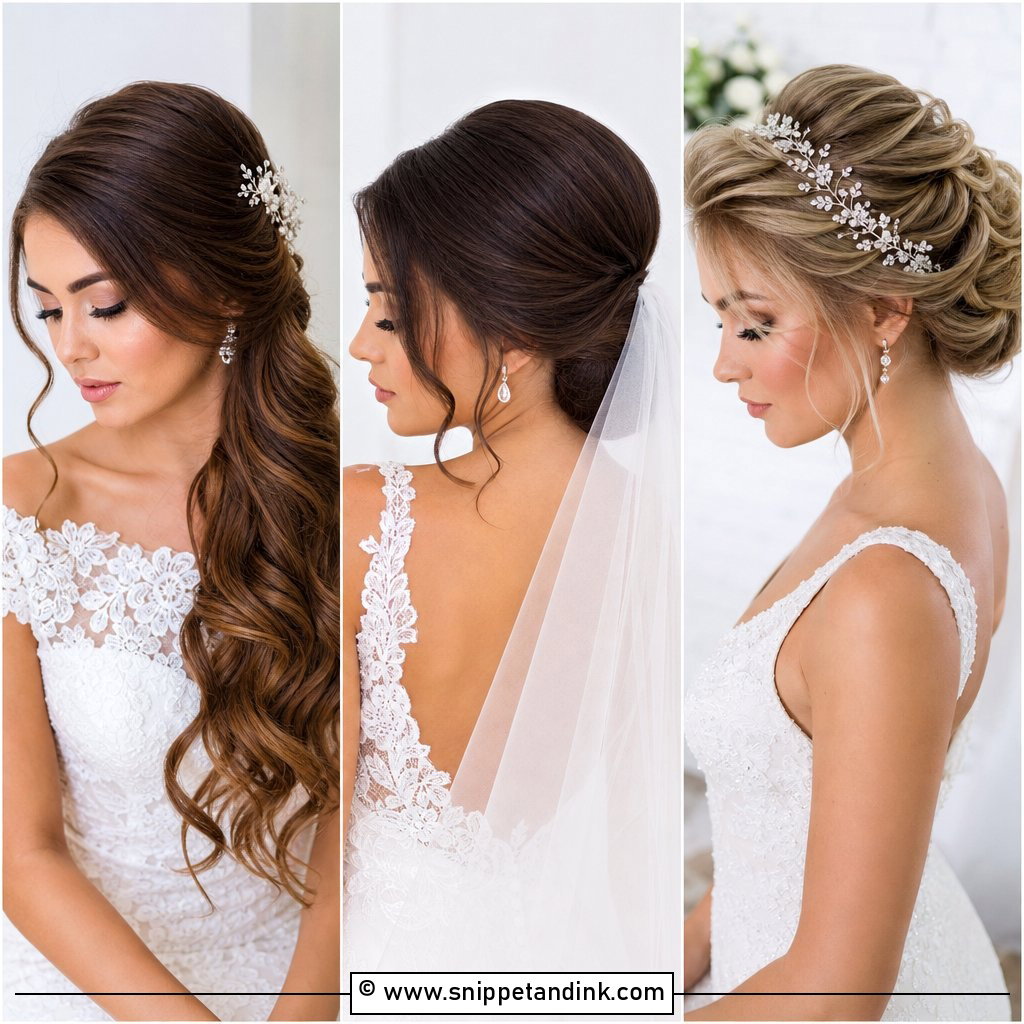
A chignon gives more shape than a simple bun: the hair is gathered low and tucked into a roll that looks deliberate from the side and back. That profile is why I steer brides in bateau necklines and lace gowns toward it. Sleek needs hair that is healthy at the ends, because any frayed tips poke out of a smooth roll. Slightly twisted or waved is more forgiving. A pearl pin or a sheer veil is enough decoration.
3. Traditional Wedding French Twist
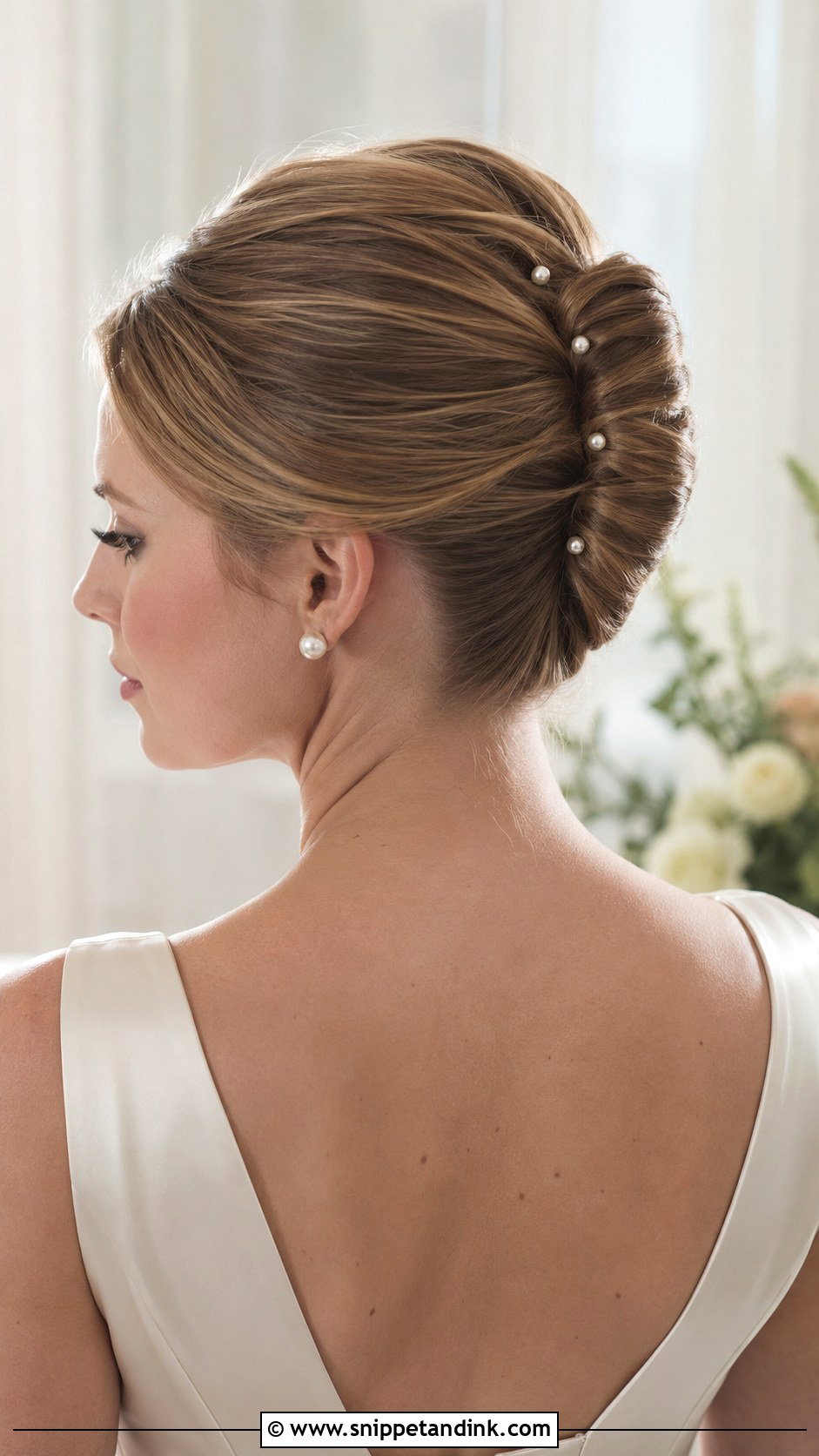
The French twist rolls the hair upward into a vertical seam and gives the neck a long line, which suits satin gowns and heirloom jewelry. It is less forgiving than it looks. Very layered hair keeps escaping from the roll, so I set the lengths with a little texture first and pin the inside of the twist before closing it. Keep some softness at the crown; a twist that is tight all the way round reads dated. Either a side part or a center part is fine.
4. Traditional Wedding Bridal Bun With Veil
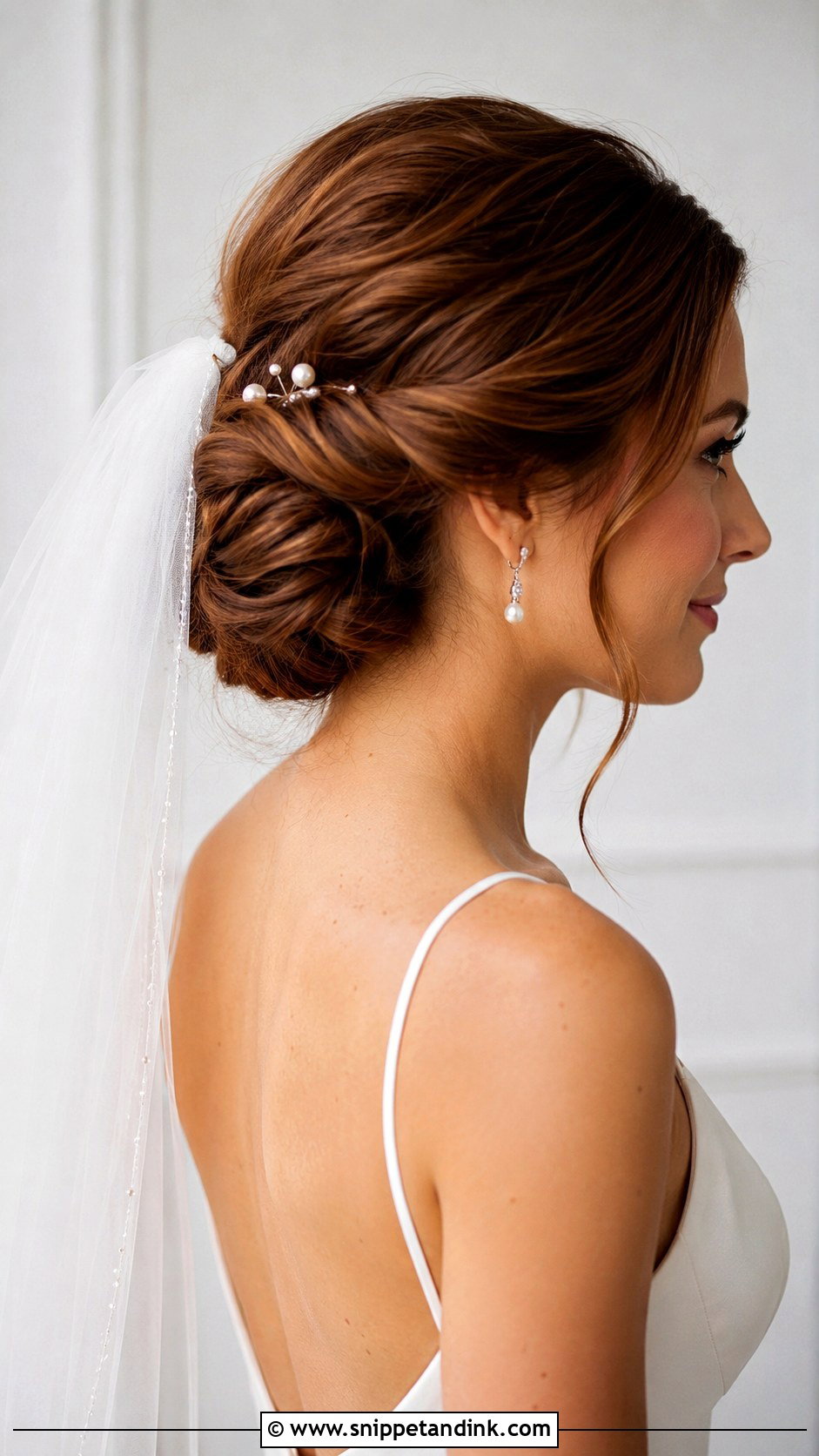
With a bun and veil, the veil decides where the bun goes, not the other way round. For a cathedral veil I place the bun low and set the comb above it, so the fabric falls cleanly over the shape. A mantilla is often worn further forward on the head, so the bun can sit higher. A fingertip veil can go almost anywhere. At the trial, walk around in the veil and turn your head quickly: if the comb shifts, we need more anchor pins before the day, not more hairspray.
5. Traditional Wedding Braided Crown
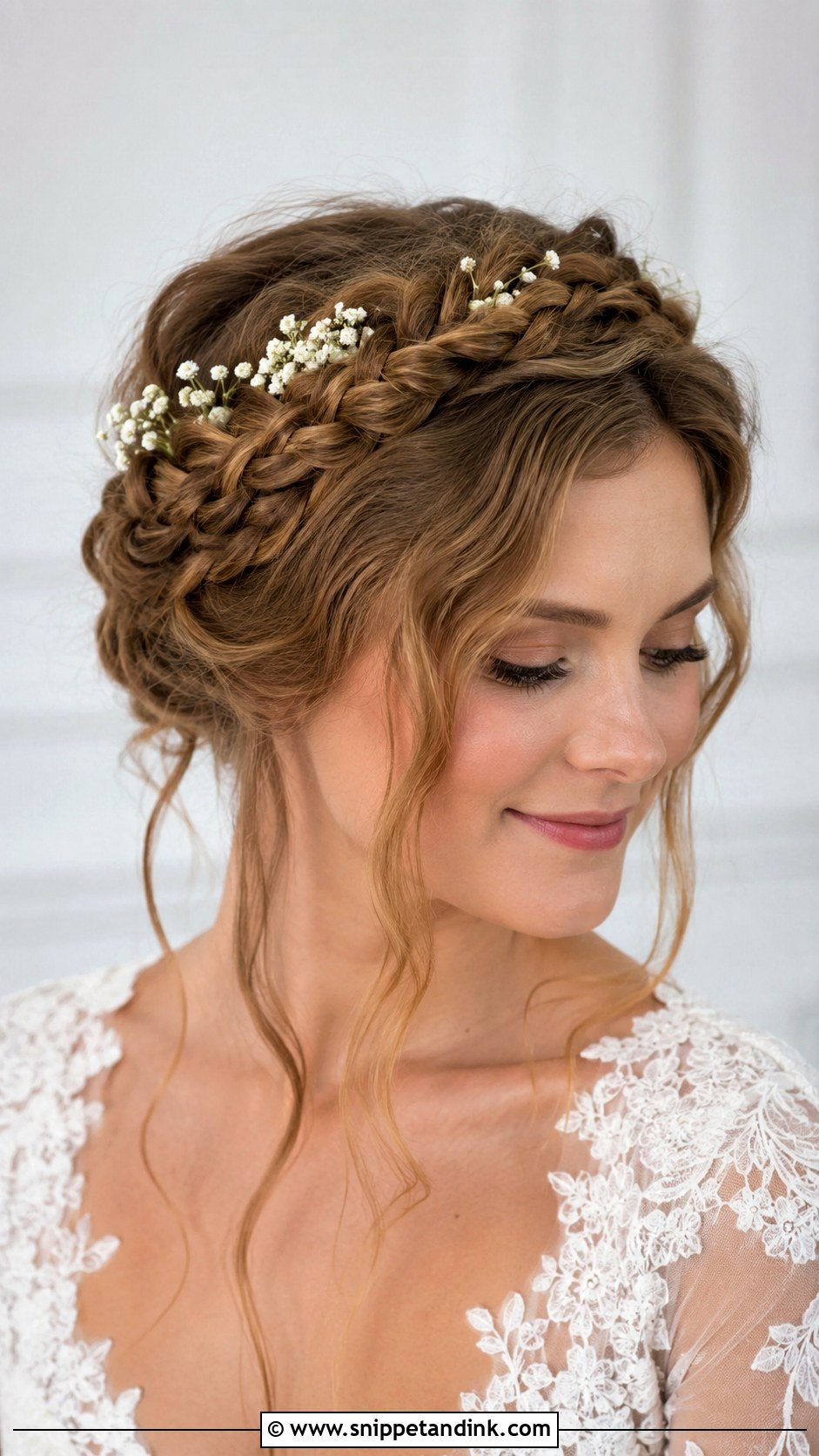
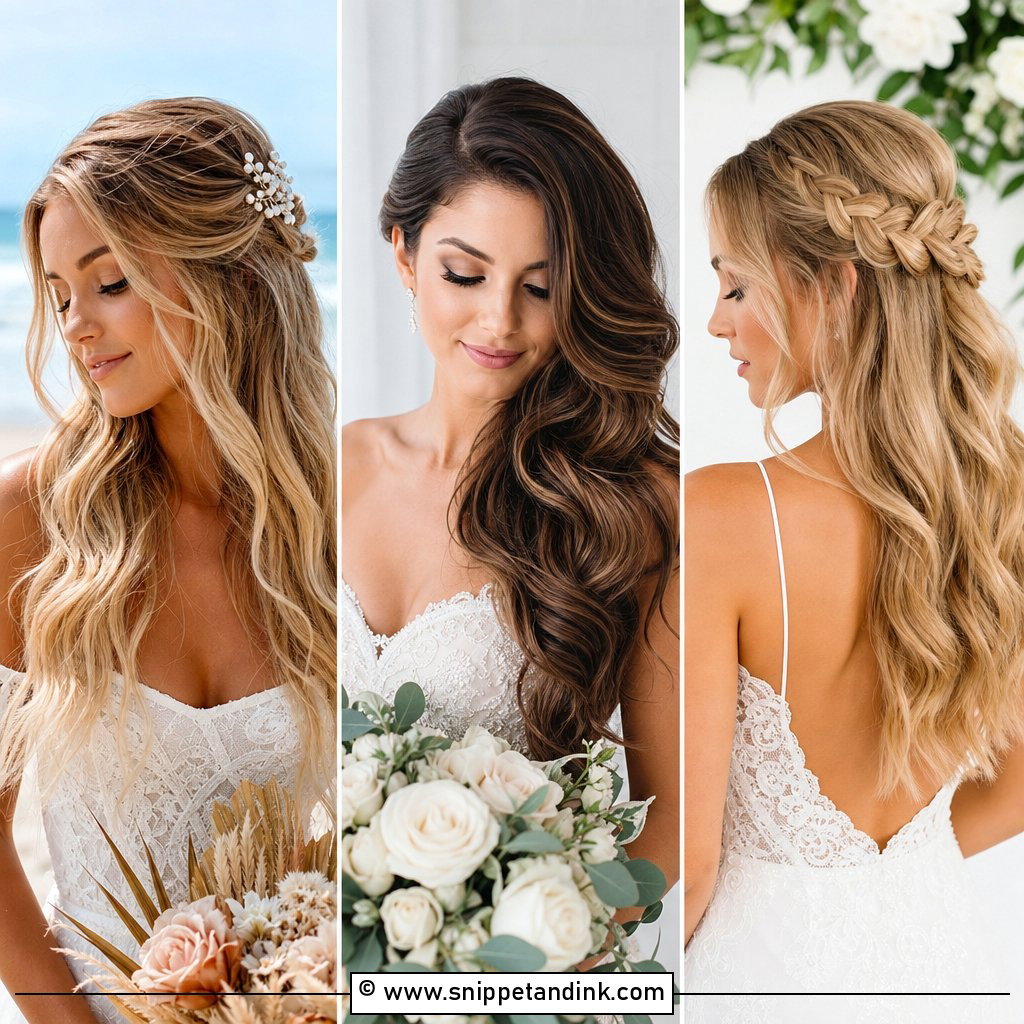
A braided crown is my answer for outdoor ceremonies, where wind will move any loose hair you leave out. It wraps the head like a soft band and needs almost no extra decoration. I’d keep the braid fairly firm and pull the edges loose only slightly. Pulled too far, it looks fluffy in the first hour and fuzzy by the fourth. Baby’s breath and pearl pins tuck neatly into the gaps, and a light veil sits just below the crown.
6. Traditional Wedding Half Up Hair
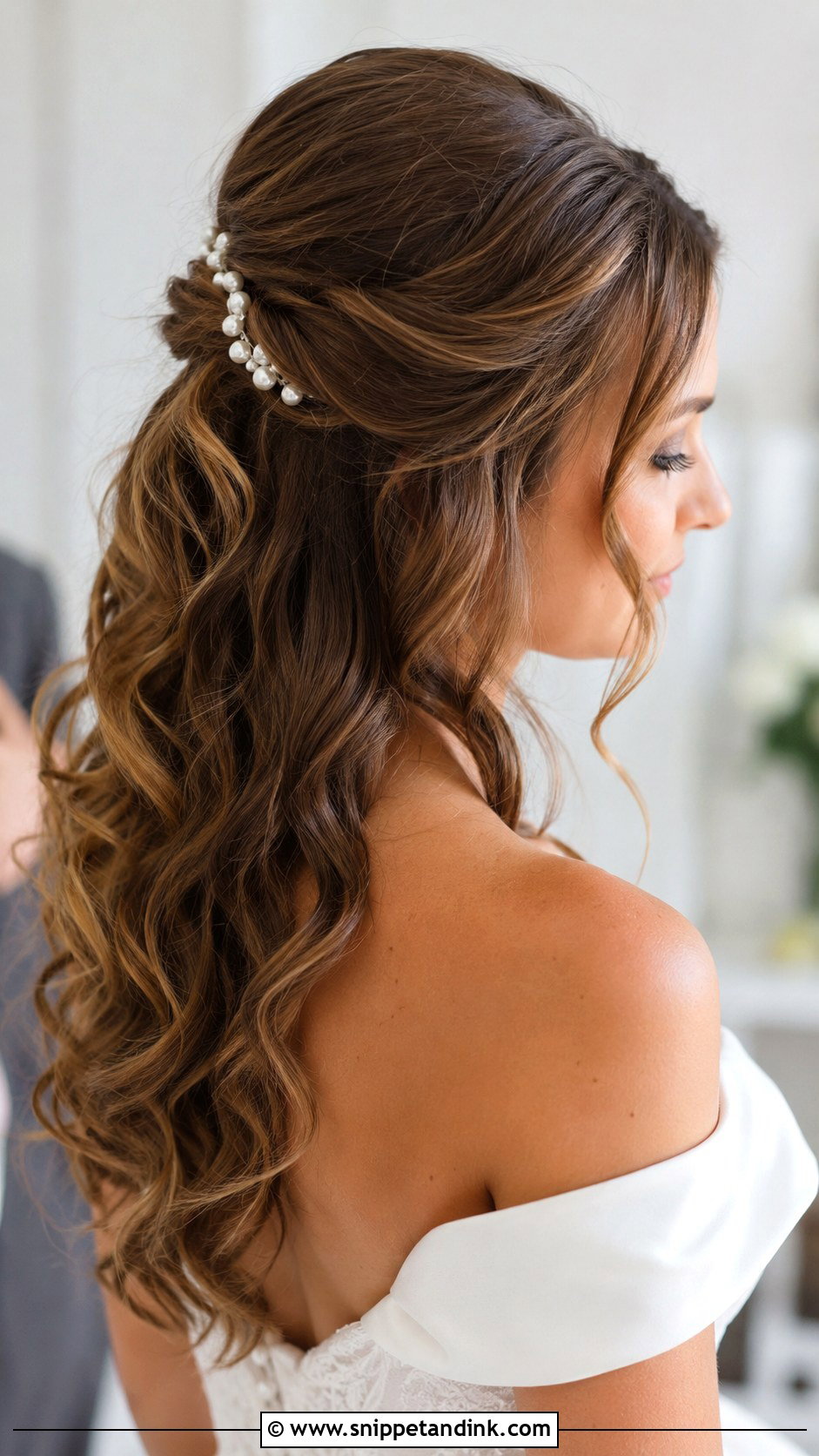
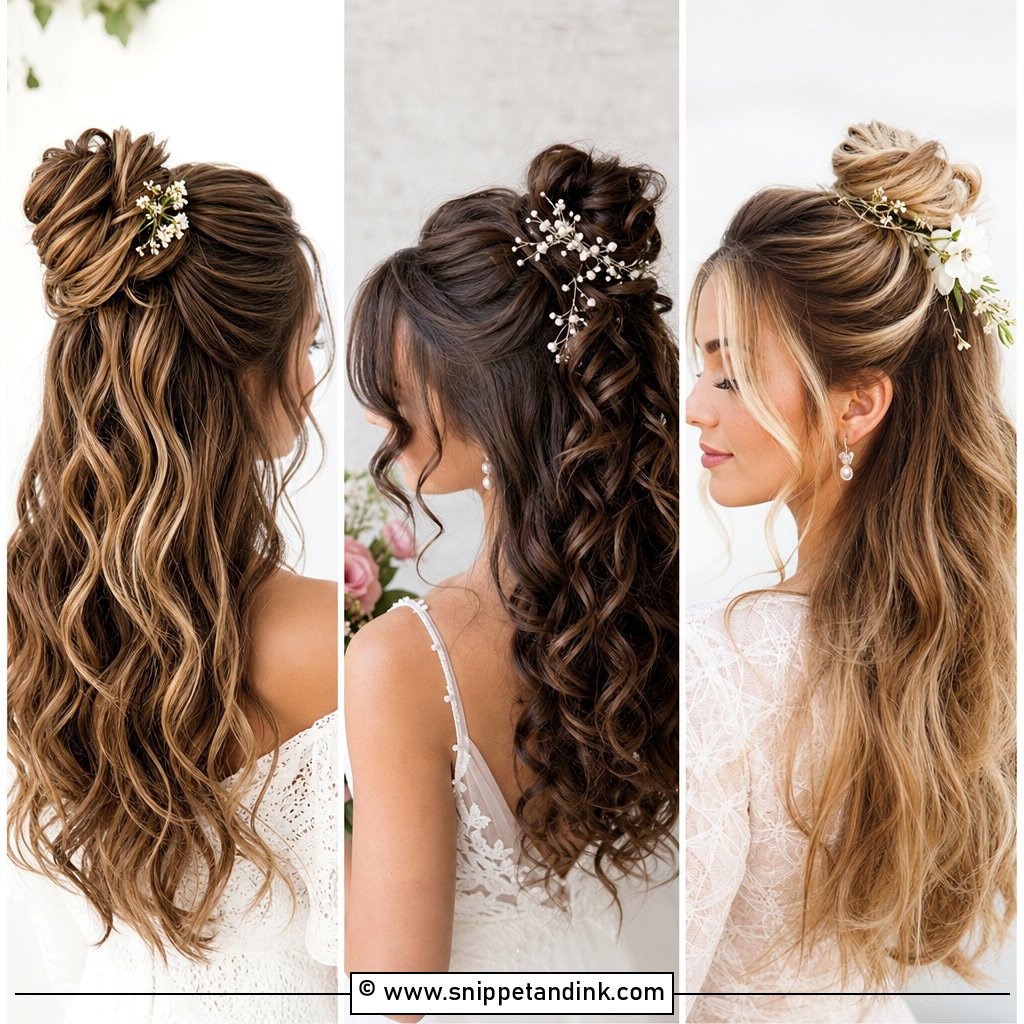
Half-up hair keeps movement through the lengths while the pinned top section carries a veil or tiara. The lift at the crown is adjustable, which is why it suits so many face shapes. Its weak point is the hanging curls, which flatten on fine or very straight hair. I’ll often add a clip-in weft under the pinned section for density and set every curl to cool before brushing. Hair below the shoulder blades works best; shorter lengths look unfinished in this shape.
7. Traditional Wedding Hollywood Waves
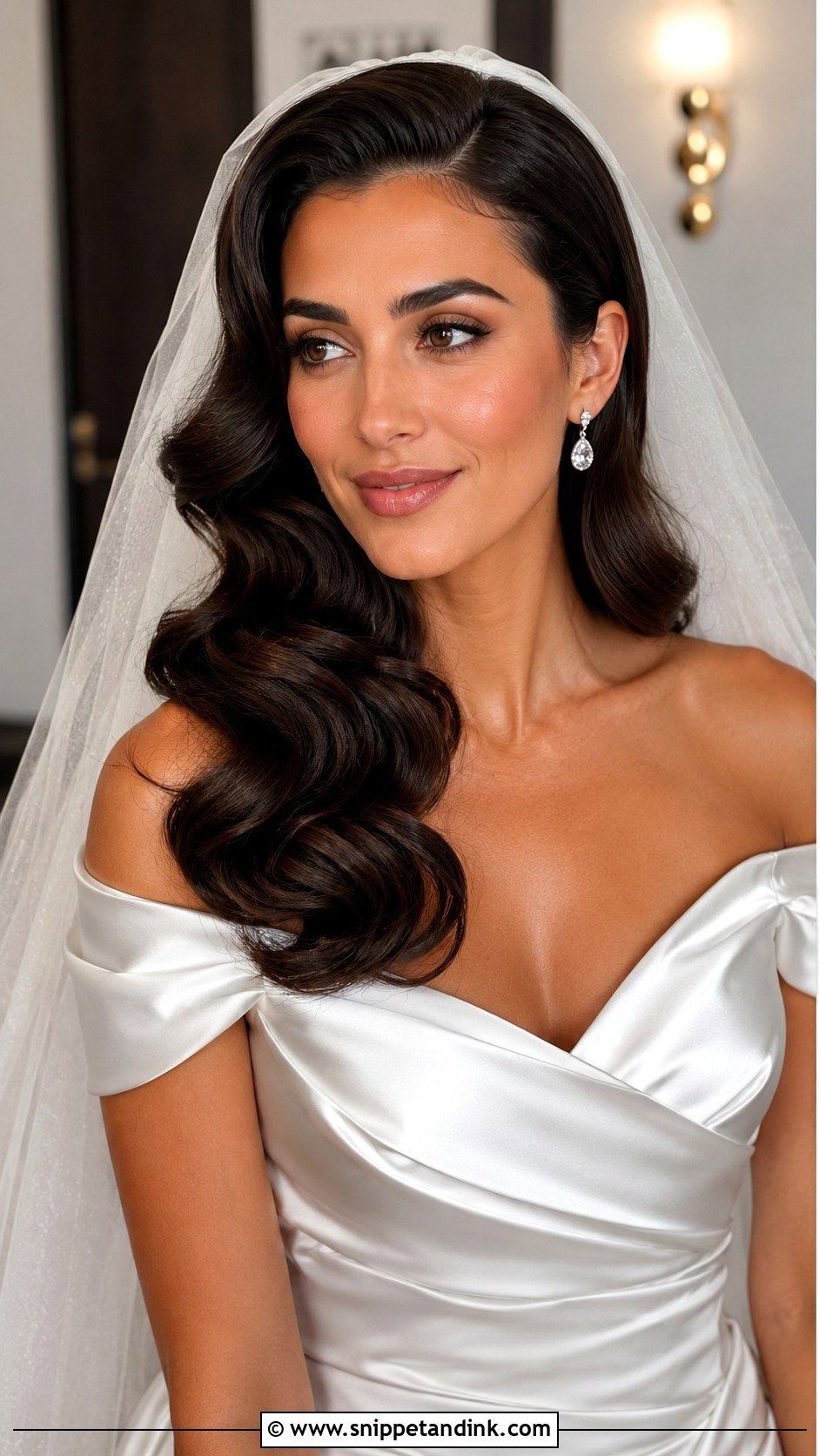
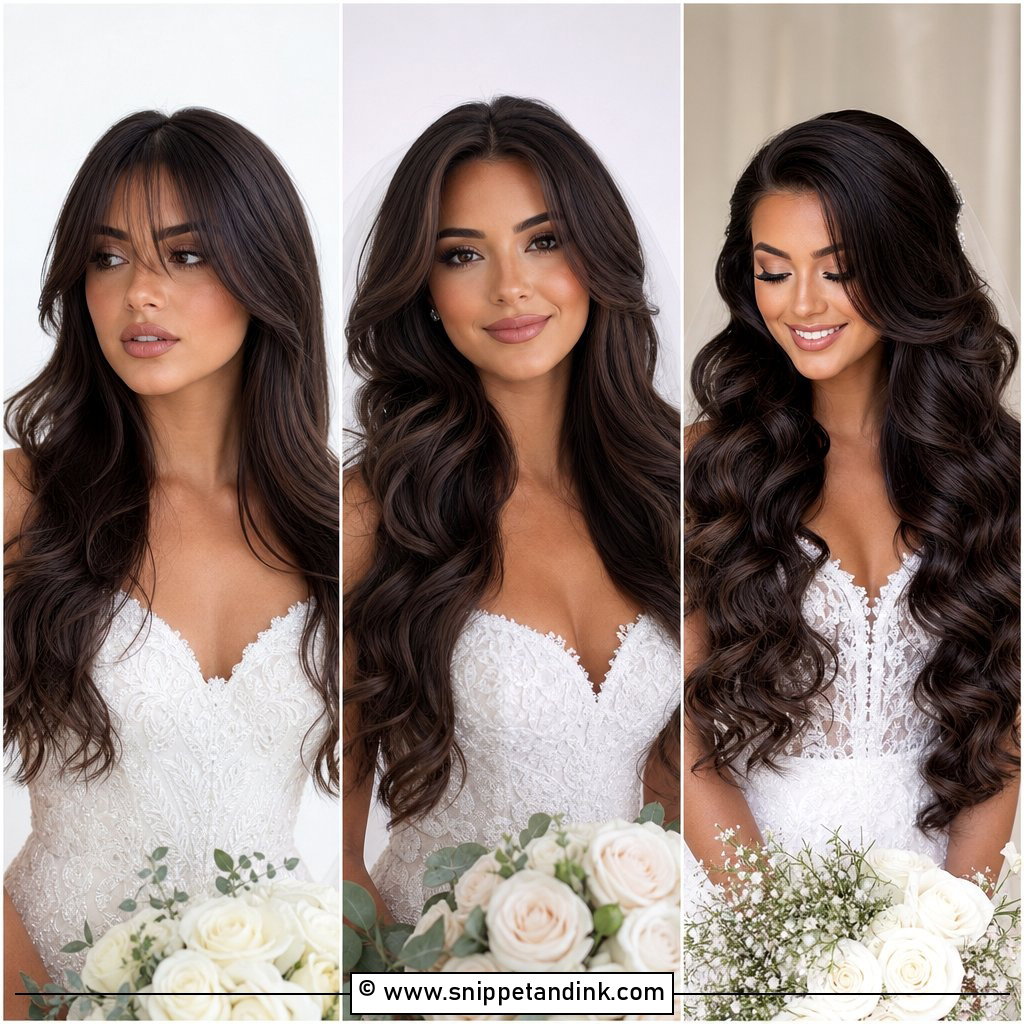
Hollywood waves are deep, glossy S-shapes that all travel in one direction from a side part. They need to be curled in the same direction, pinned to set, then brushed through with a boar-bristle brush until the sections join into one ribbon. Skip the brushing and you get ringlets, not waves. They look right with strapless and satin gowns. Plan to take the veil out after the ceremony, since a comb at the crown breaks the wave line.
8. Traditional Wedding South Indian Braid
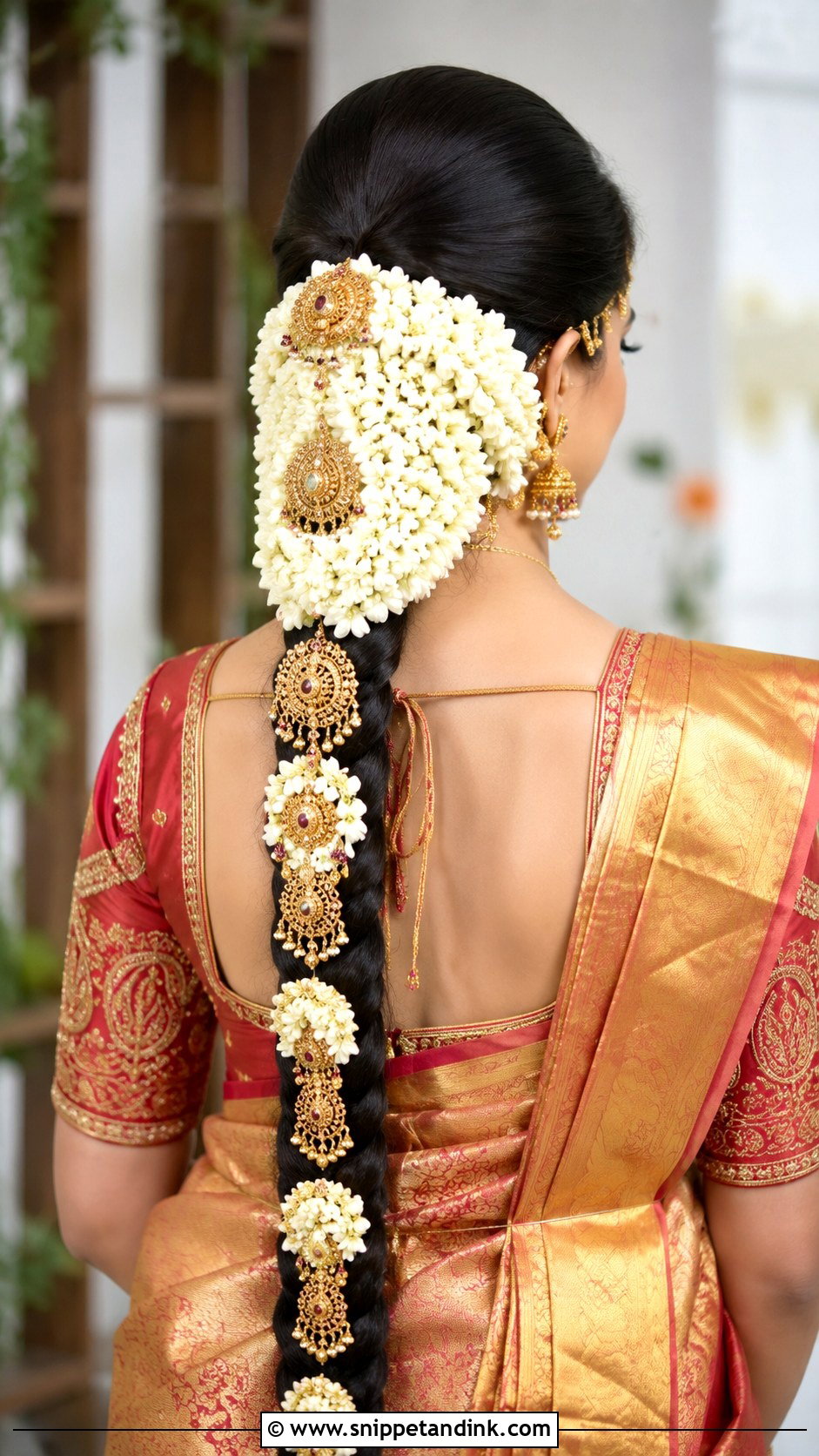
A South Indian braid is built to be seen from behind, which is how guests watch most of a Hindu ceremony. The long plait is covered with jasmine strings or a jadanagam, the gold ornament that runs down the length. That jewelry is heavy, so I braid firmly from the nape and attach it in sections rather than hanging it from the top. Many brides add a hairpiece to reach the length the ornament needs. It pairs naturally with silk sarees and temple jewelry, and it really is comfortable through a long muhurtham.
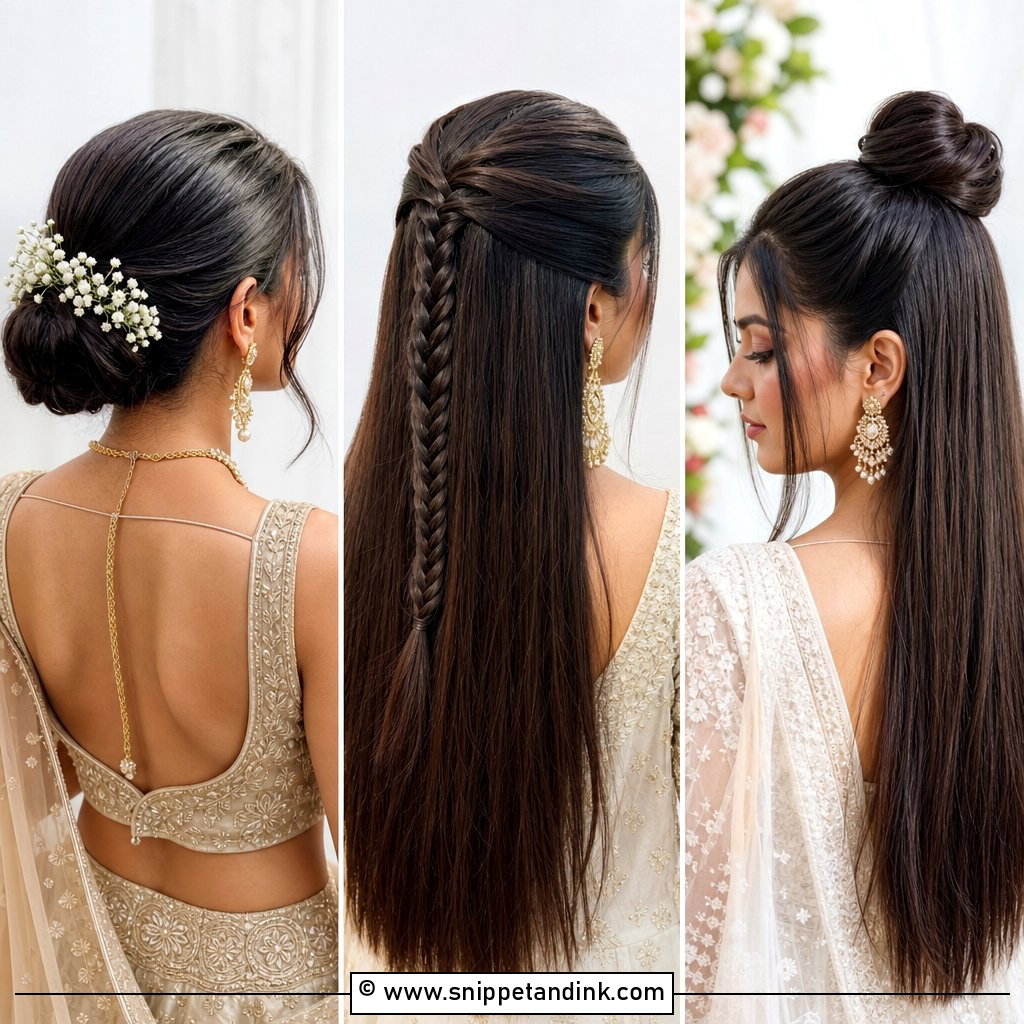
9. Traditional Wedding Indian Juda Bun
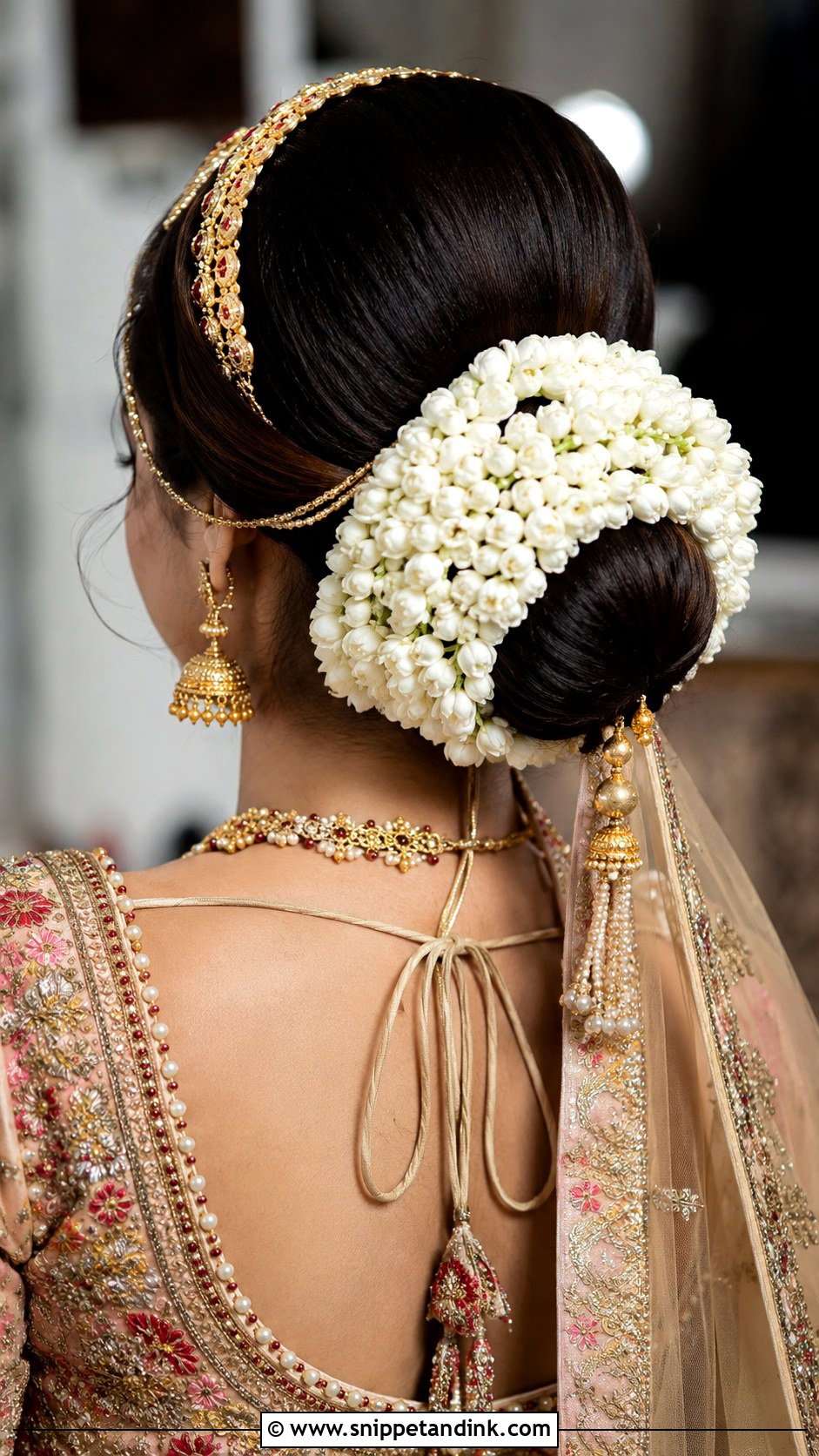
A juda bun, wrapped in flowers or under a decorative cover, is the anchor most North Indian bridal looks are built on. It usually sits low to mid-height, and that height depends on where the dupatta needs to rest. I place it with the dupatta in hand, so the fabric drapes over the bun instead of being propped up by it. It can be sleek, full or textured. A padded base keeps an Indian juda bun round even on fine hair, and takes pin weight off your scalp.
10. Traditional Wedding Sleek Middle Part Bun
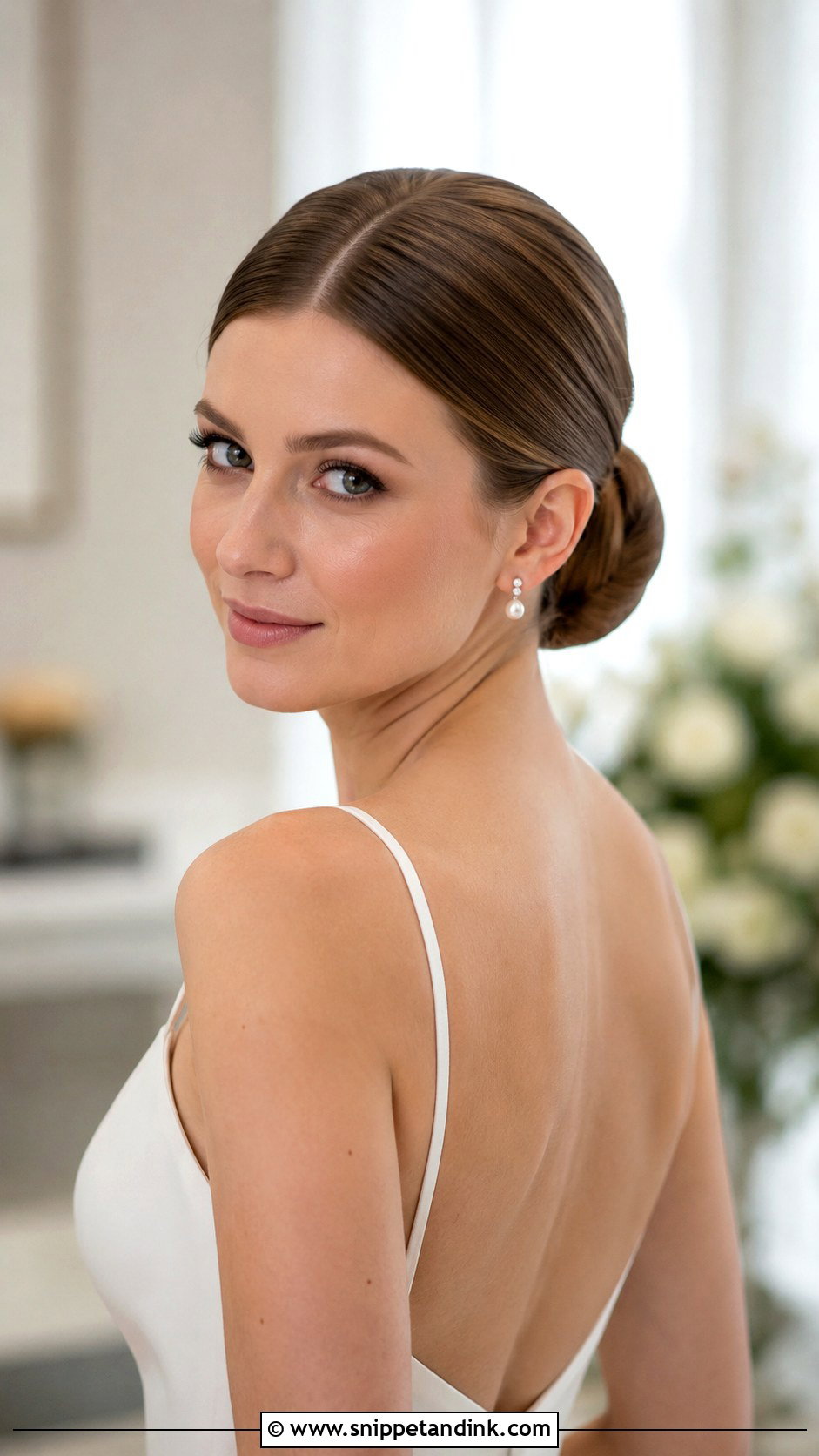
The sleek middle-part bun is symmetry, and symmetry exposes everything. Before I commit to it, I check the hairline and the natural part, because a crown cowlick or uneven density will show. If the hair cooperates, it is excellent with dramatic earrings and minimal gowns, and it stays put in heat. Ask for shine from product rather than tension, and a bun with some fullness so it doesn’t look tight from the front.
11. Traditional Wedding Side Swept Curls
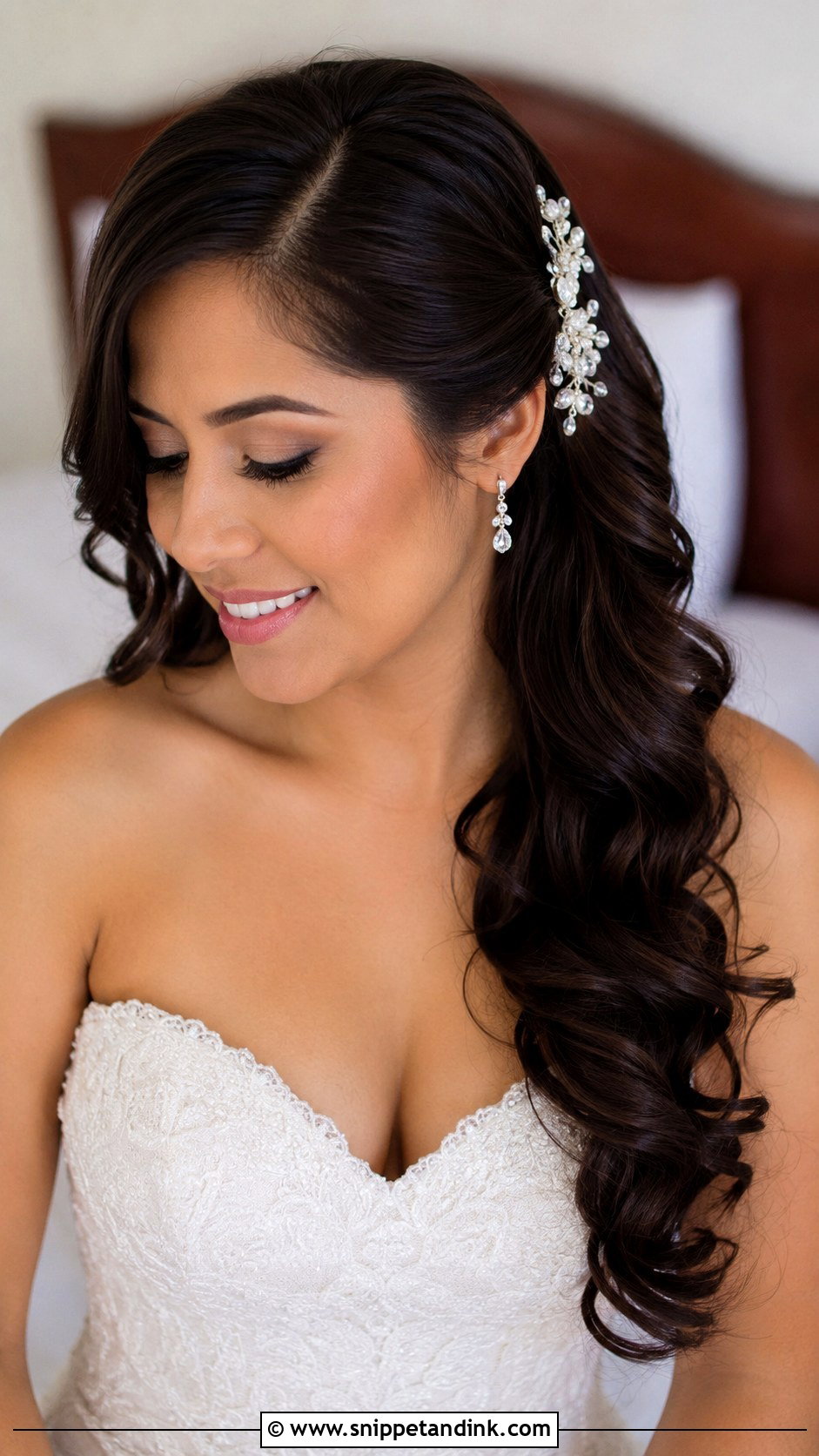
Swept to one side, curls leave the other shoulder bare and frame the earring on that side. I anchor the sweep with a hidden row of crossed pins behind the ear, which carries the weight and stops the hair sliding back to center. One-shoulder dresses and sweetheart necklines are obvious matches. Choose the swept side by your best profile, and by which side you’ll stand on during the ceremony, so the curls face the guests rather than your partner. A pearl comb or small floral pin finishes the swept side.
12. Traditional Wedding Vintage Finger Waves
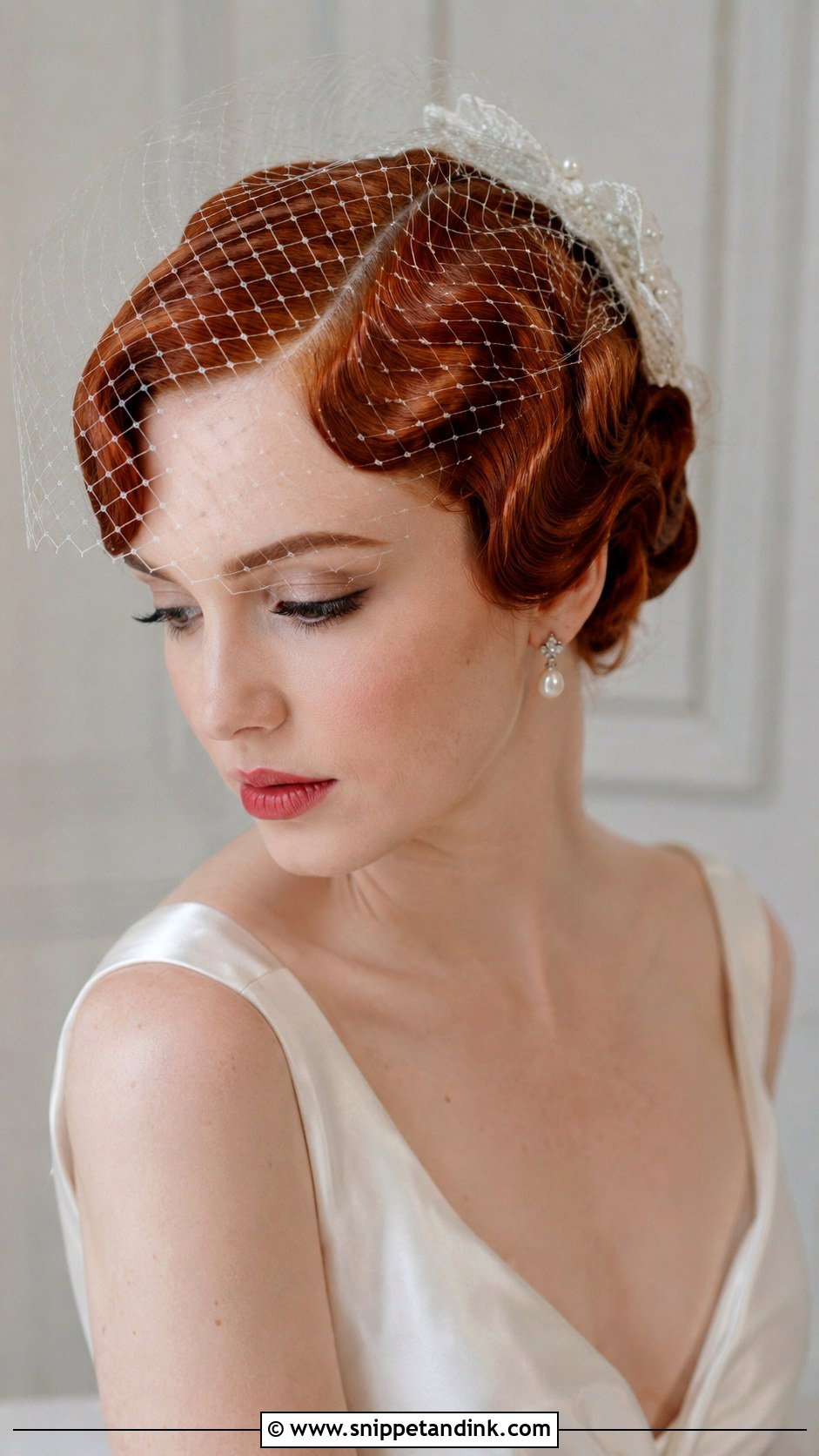
Finger waves are sculpted flat against the head with a comb, gel and fingers while the hair is wet, then left to dry in place. That technique is why they work on short hair and bobs, where most of these styles cannot. They need time, at least a hood dryer or a long drying window, so they suit a relaxed morning schedule. Pair them with birdcage veils, a red lip and pearls. Everything else should stay quiet.
13. Traditional Wedding High Bun
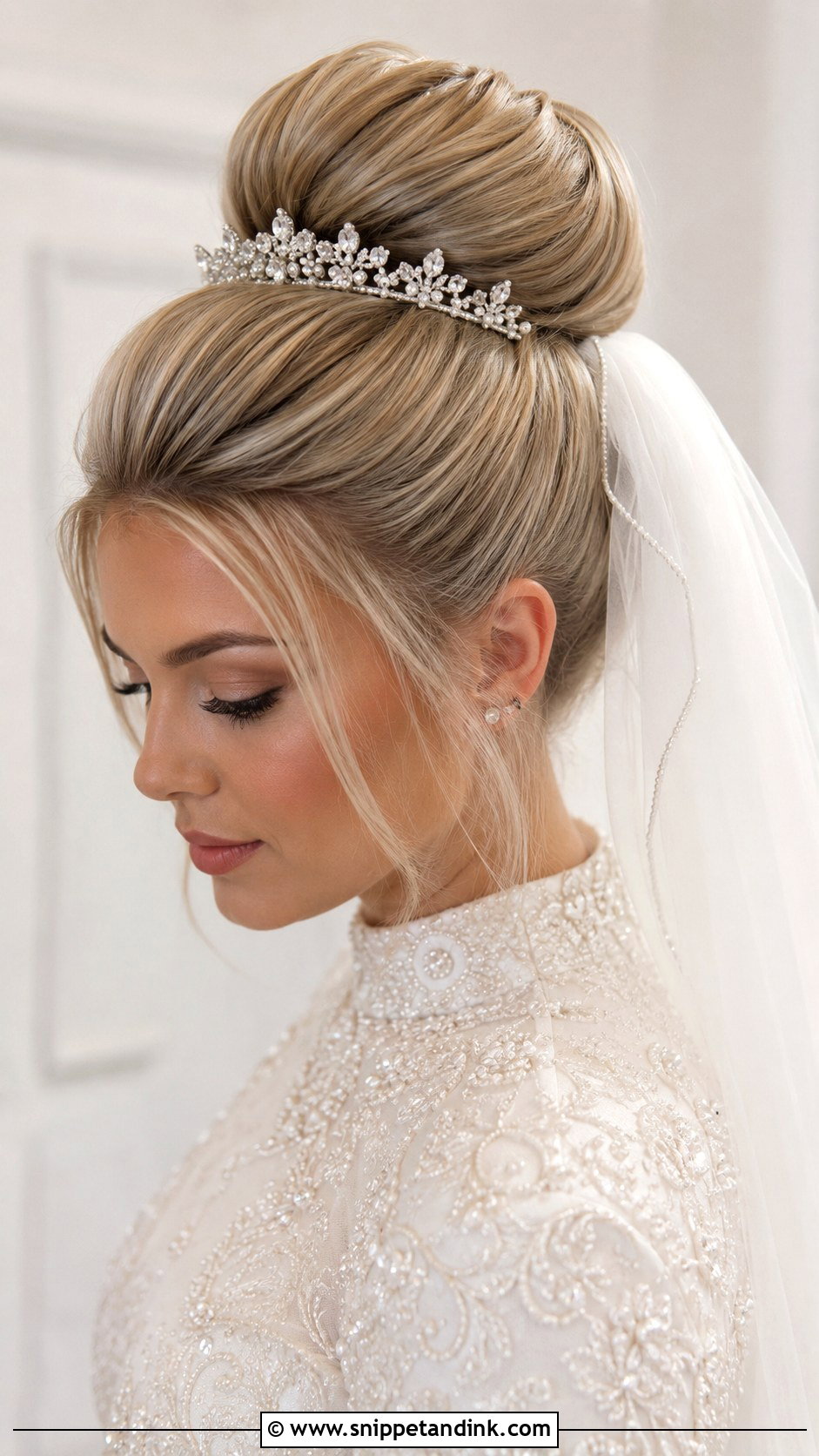
A high bun lifts everything off the neck, which shows off a detailed back and keeps you cool through hours of dancing. It suits statement veils and tiaras. On fine hair I add a padding ring or a few extensions so it isn’t small and tight at the crown. Smooth for a formal ceremony, a little textured for a garden one. If you are very tall and marrying someone shorter, I’d lower it slightly, because it adds visible height in group photos.
14. Traditional Wedding Loose Updo
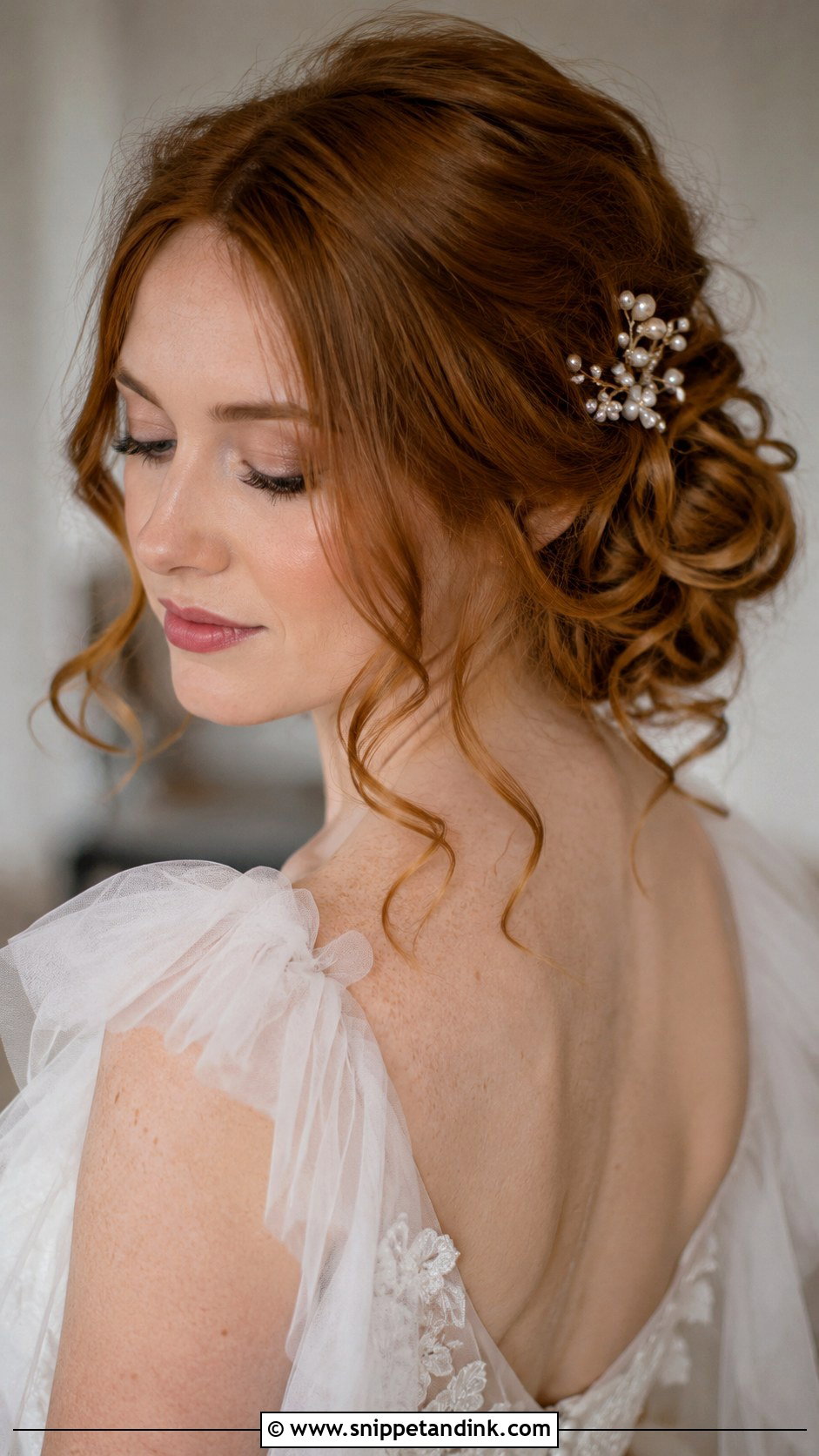
A loose updo is the hardest style here to get right, because relaxed has to be built very carefully. Each twist is pinned securely, then I gently loosen only the outer surface, so the structure underneath stays solid. Done that way it feels softer than a sleek bun but still formal enough for a traditional ceremony. Floral pins, pearl combs or a veil all suit it. Ask to see it from the back at your trial; this is the shape where gaps show.
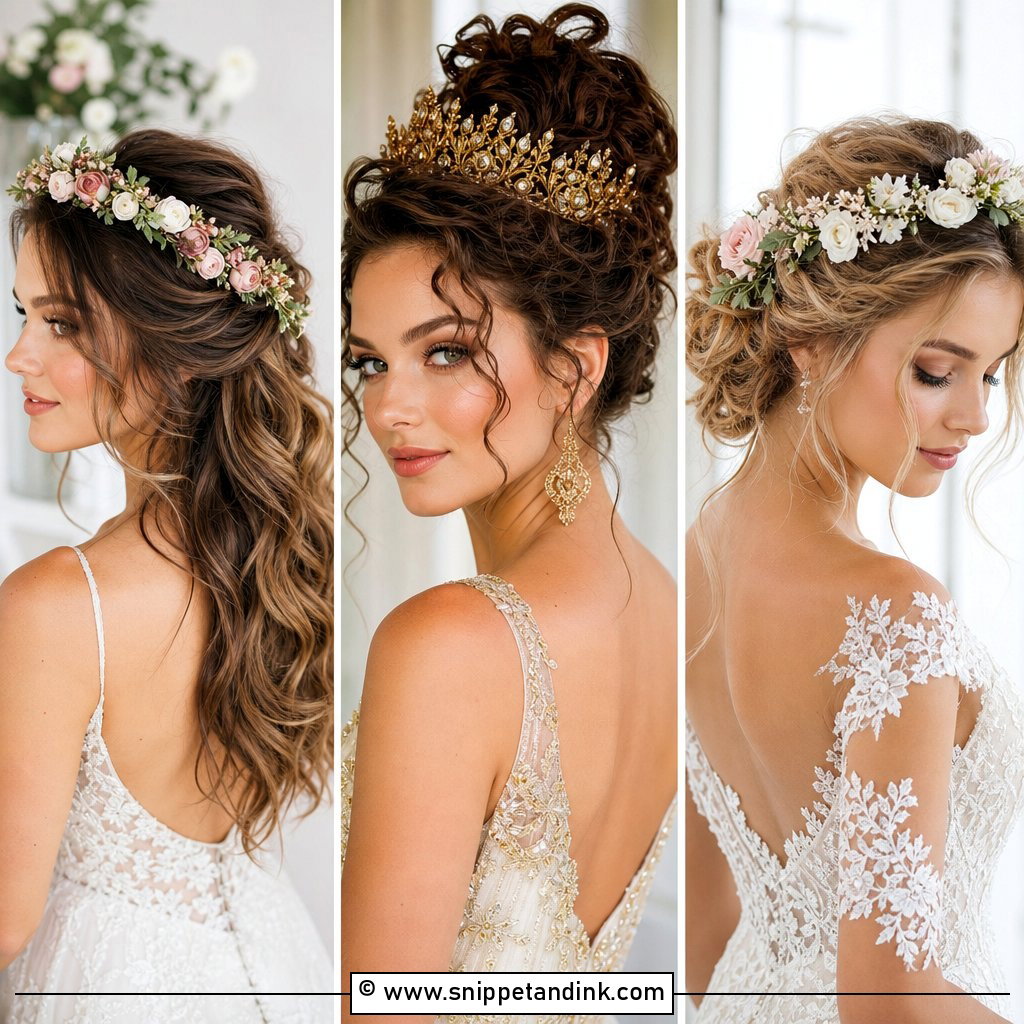
15. Traditional Wedding Natural Hair Updo
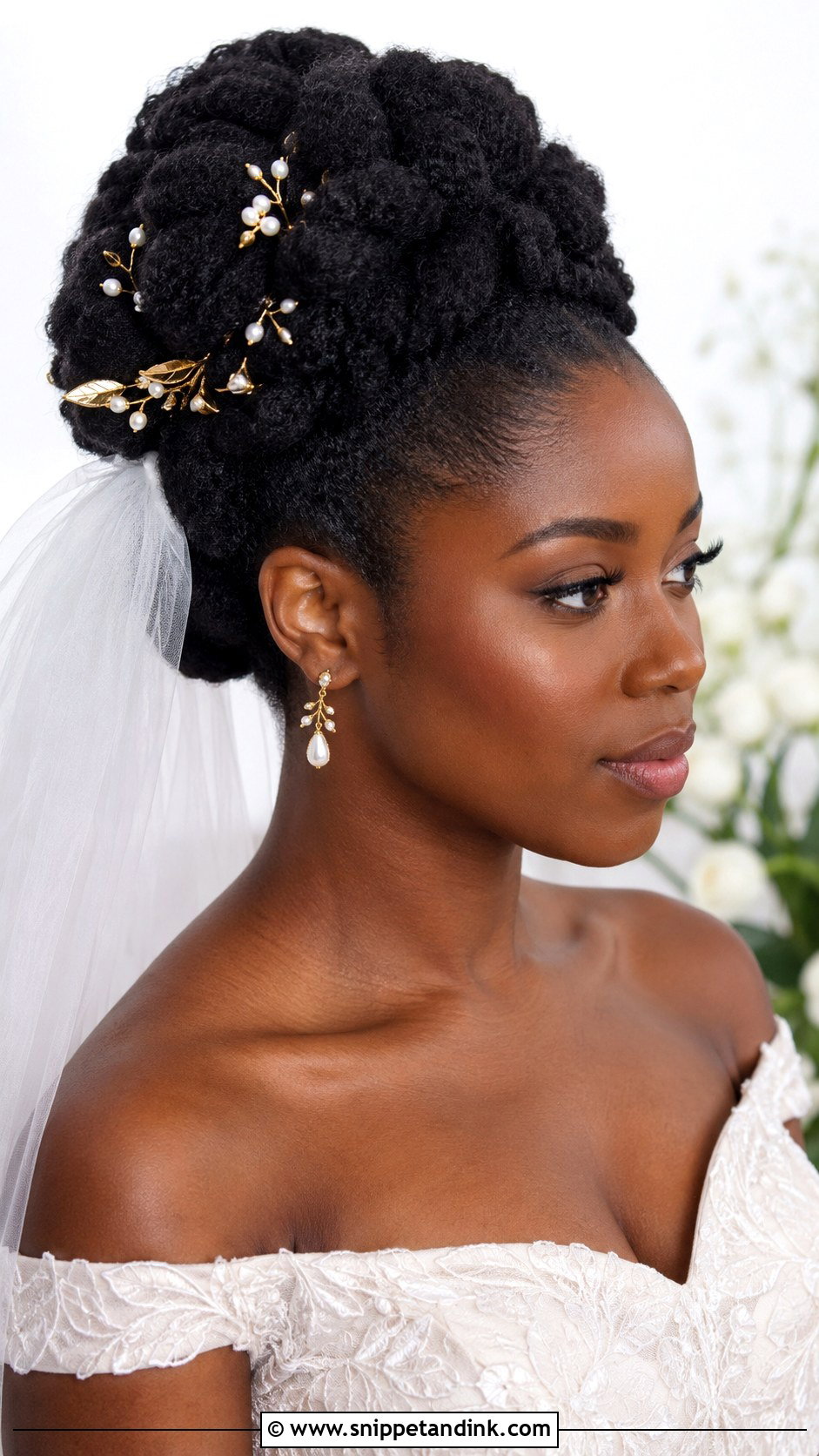
A natural hair updo lets your own texture be the detail. Coils, curls, twists or stretched hair can be shaped into a soft bun, a crown or a sculpted style. The prep matters more than the styling. I like the hair washed and deep conditioned a few days ahead, then stretched if the style needs smoothness, with a leave-in and a light hold product so it stays defined without drying out. Gold pins, pearls and a veil sit beautifully in textured hair, and lifting it off the neck keeps you comfortable at a warm reception.
A Hair Countdown From Six Weeks Out
Traditional styles are built on hair that is in good condition and has the right grip. Most problems I see on wedding mornings were set up weeks earlier, so here is the order I suggest to brides.
- Six to eight weeks before: book your trial and have any big color change done now, so there’s time to correct it.
- Four to six weeks: the trial. Bring your veil or dupatta and wear a top with a similar neckline to your dress.
- Two to three weeks: a light trim to clean the ends. Not a new cut, and nothing shorter than the length we tested.
- One week: a gloss or root touch-up if you need it, so the color is fresh but has settled.
- Two days: deep condition if your hair is dry, then nothing heavy after that.
- The day before: wash and blow-dry smooth. Skip oils and heavy serums.
- The morning: arrive with dry, product-free hair and a button-front shirt.
If your hair is fine and silky
Fine, freshly washed hair is the hardest to pin. If yours is like that, washing two days ahead often gives me a better base than the night before, and a dry texture spray at the roots does the rest. We’ll test both at the trial.
Bring Three Photos, a Veil and Your Earrings to the Trial
Low bun or jasmine braid, finger waves or a juda, the right one is the one that suits your dress, your headpiece, your hair and how long your day runs. For the trial, bring three photos you love and one you don’t, the veil or dupatta itself, and the earrings you’ll wear. The photo you dislike tells me as much as the ones you like. Wear the style home, notice where it pulls, and we’ll adjust before the morning comes.
You'll Like These Ideas:


Leave a Reply