
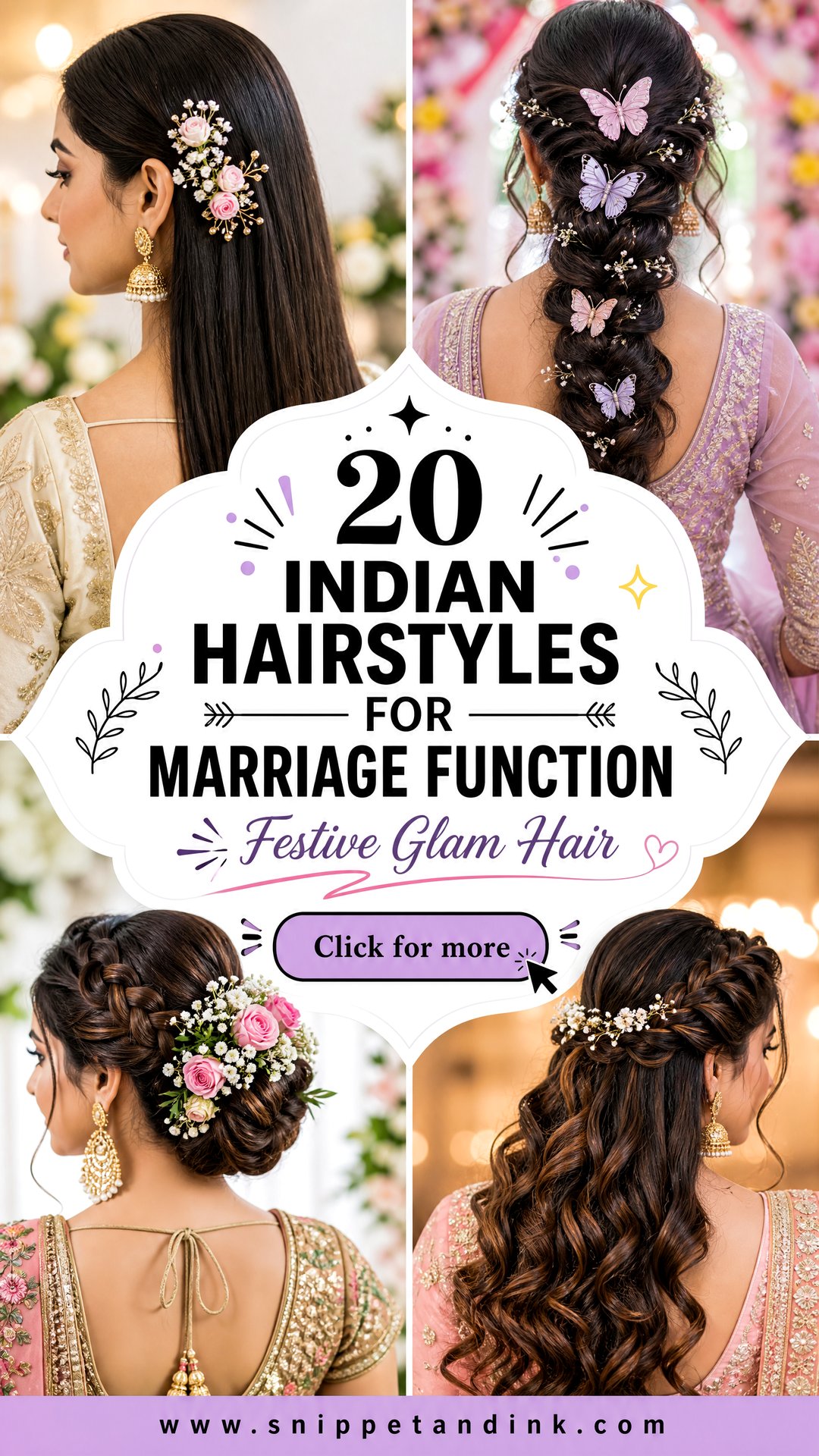
An Indian wedding is rarely one event. There’s a haldi, a mehndi, a sangeet, the pheras and often a reception, and each one asks something different of your hair: a dupatta pinned over it, hours of dancing, heat, heavy jewelry. When I plan hair for a bride’s family I start with the function and the outfit, then pick the shape. Below are 20 Indian wedding hairstyles I return to again and again, with notes on what each one needs to hold up, whose hair it suits and where it tends to go wrong.
Planning Hair Across Haldi, Mehndi, Sangeet and the Pheras
When a bride books me for several functions, the first thing we sketch is not a hairstyle but a timeline. Repeating the same style on consecutive days stresses the hair, and heavy styles stacked back to back leave the scalp sore by the wedding morning.
- Haldi: something tight and off the face, like a crown braid or a simple bun. Turmeric paste stains light hair and gets into loose ends.
- Mehndi: you’ll sit still for hours with your hands out, unable to fix anything, so choose a braid that cannot fall in your eyes.
- Sangeet: fishtails, mermaid braids and messy buns, styles built to survive dancing.
- Pheras: a low, secure bun that sits under a pinned dupatta and carries the matha patti or maang tikka.
- Reception: the night for open curls, bouffants or a high bun, often after a full change of outfit.
Leave at least one lighter style between two heavy ones. A night with hair loose and conditioned between the sangeet and the wedding day makes a real difference to how well the bridal bun holds.
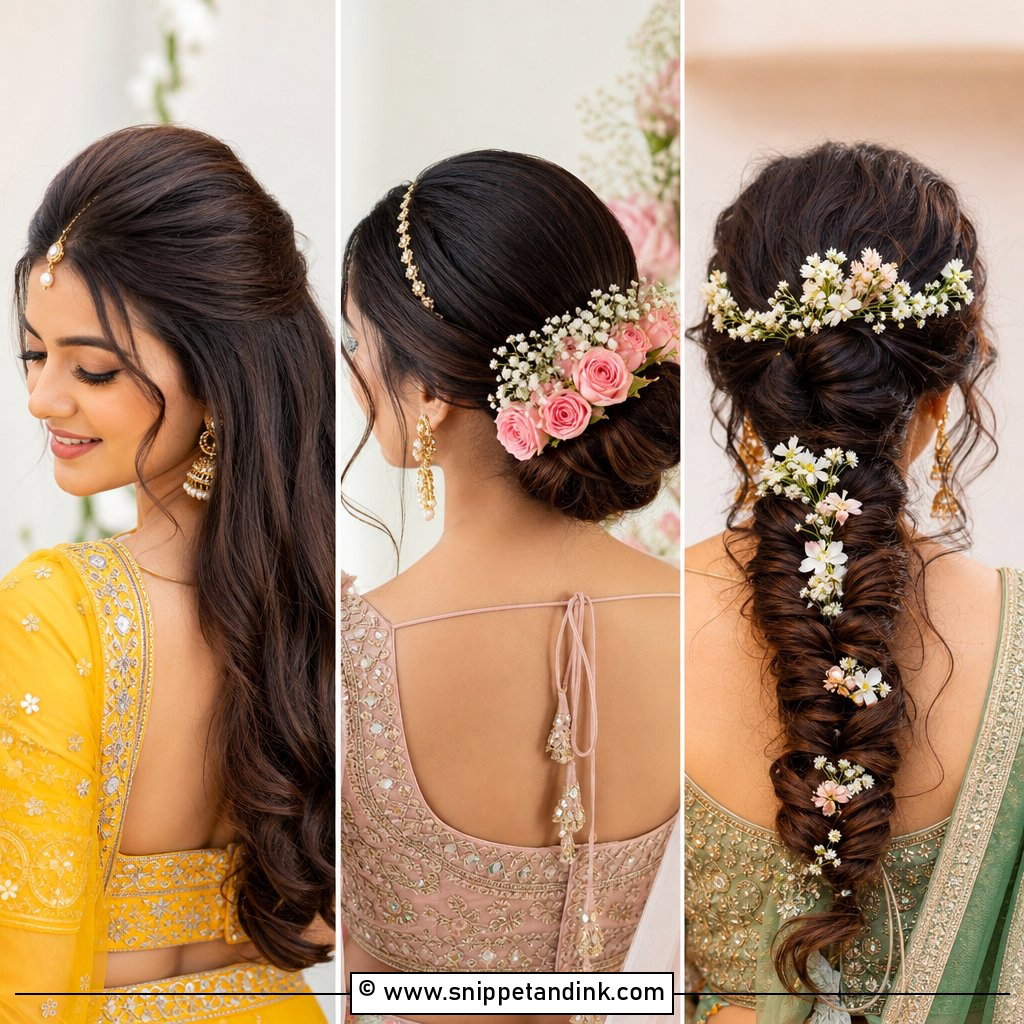
1. Floral Bun With Fresh Flowers
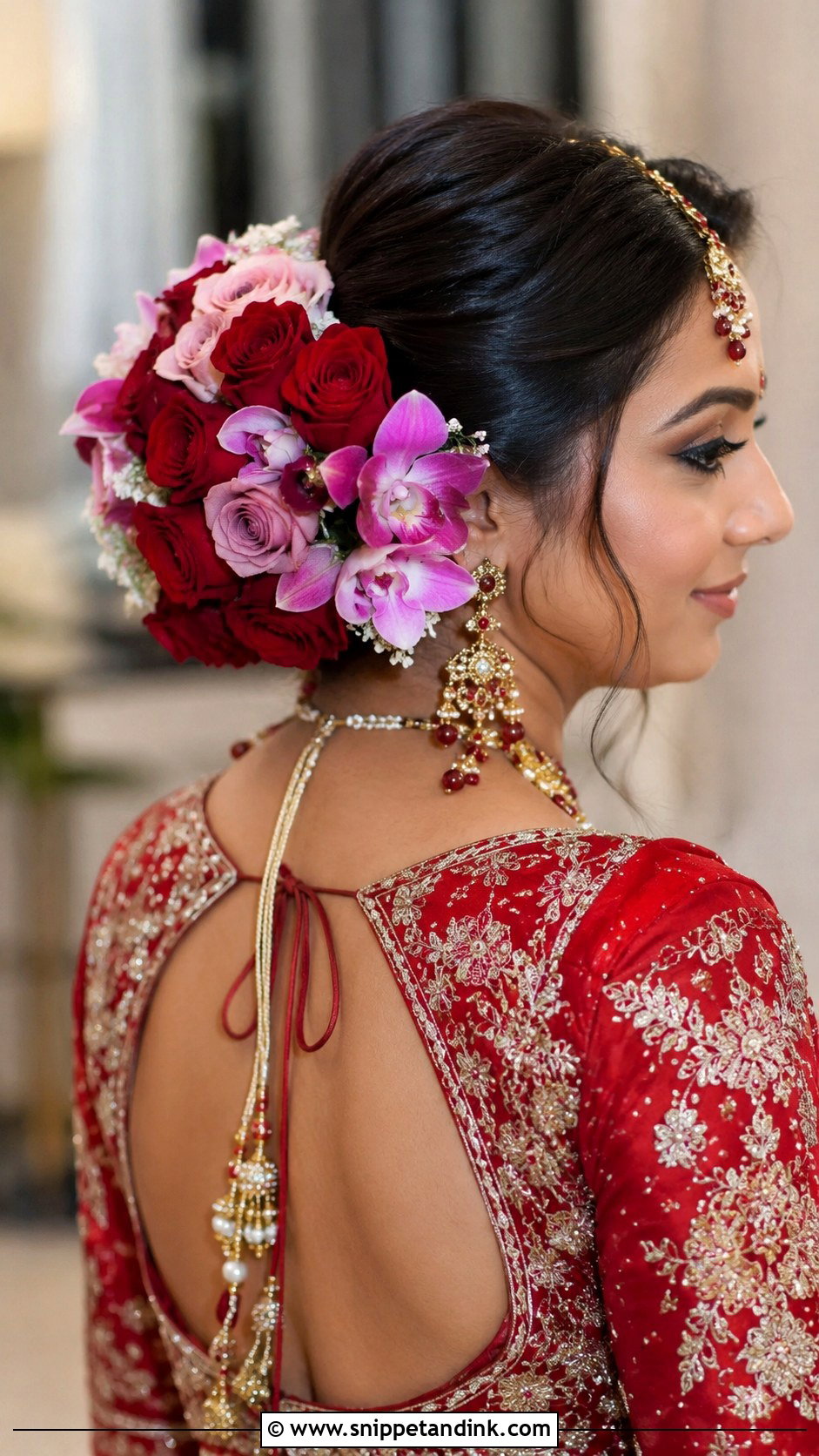
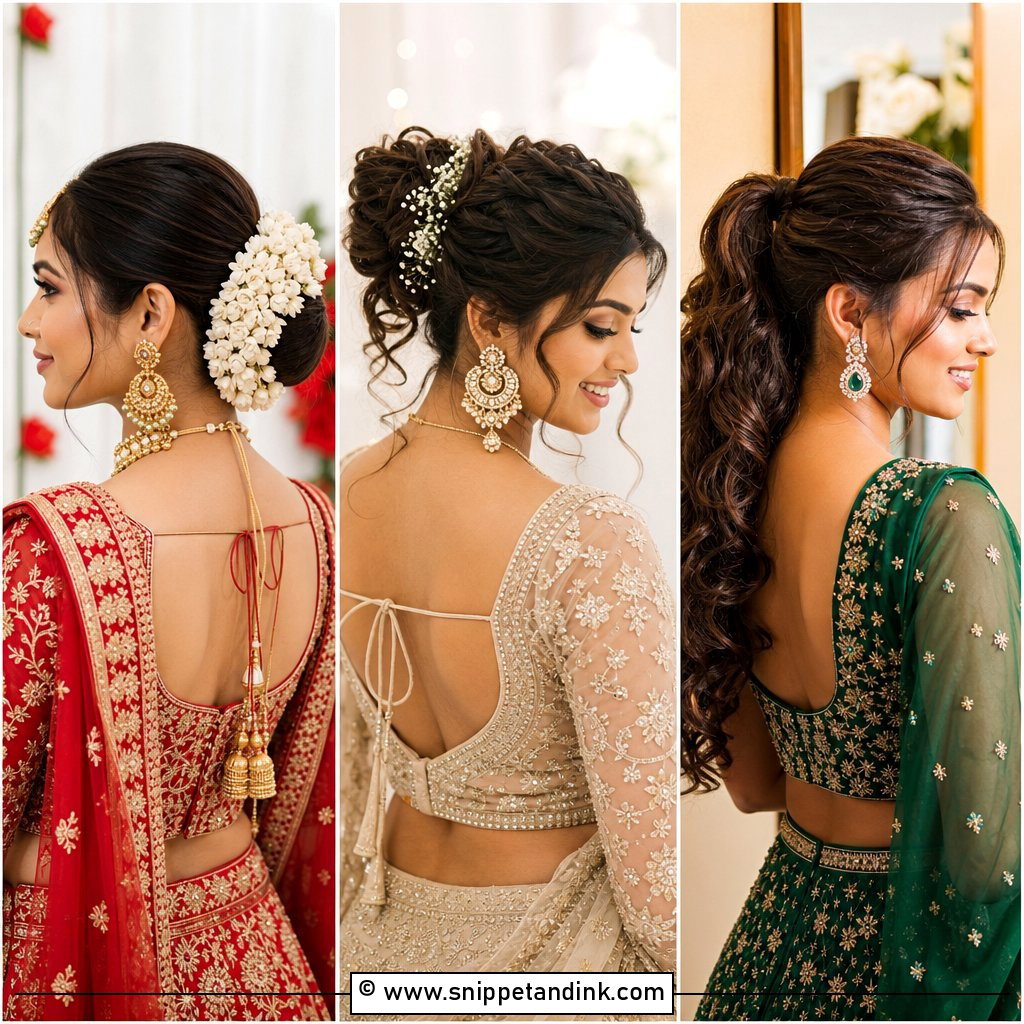
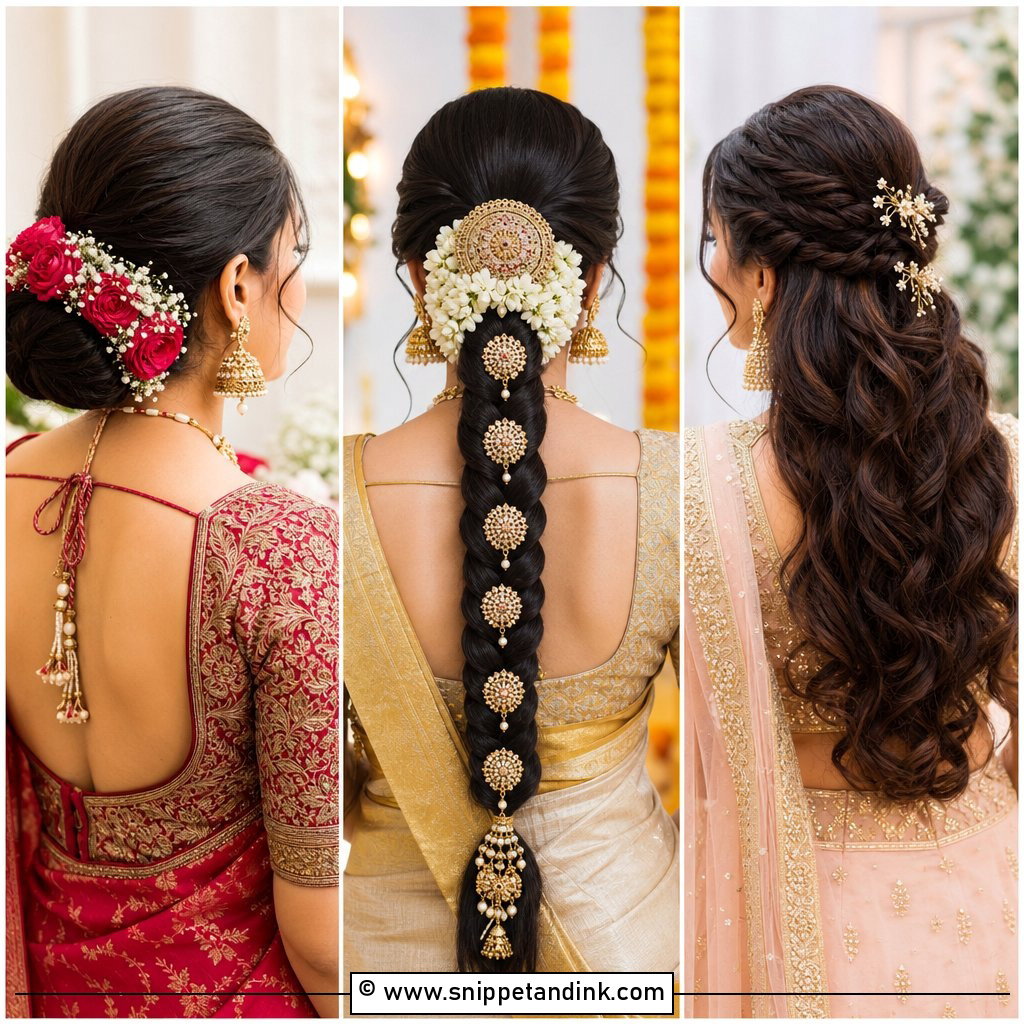
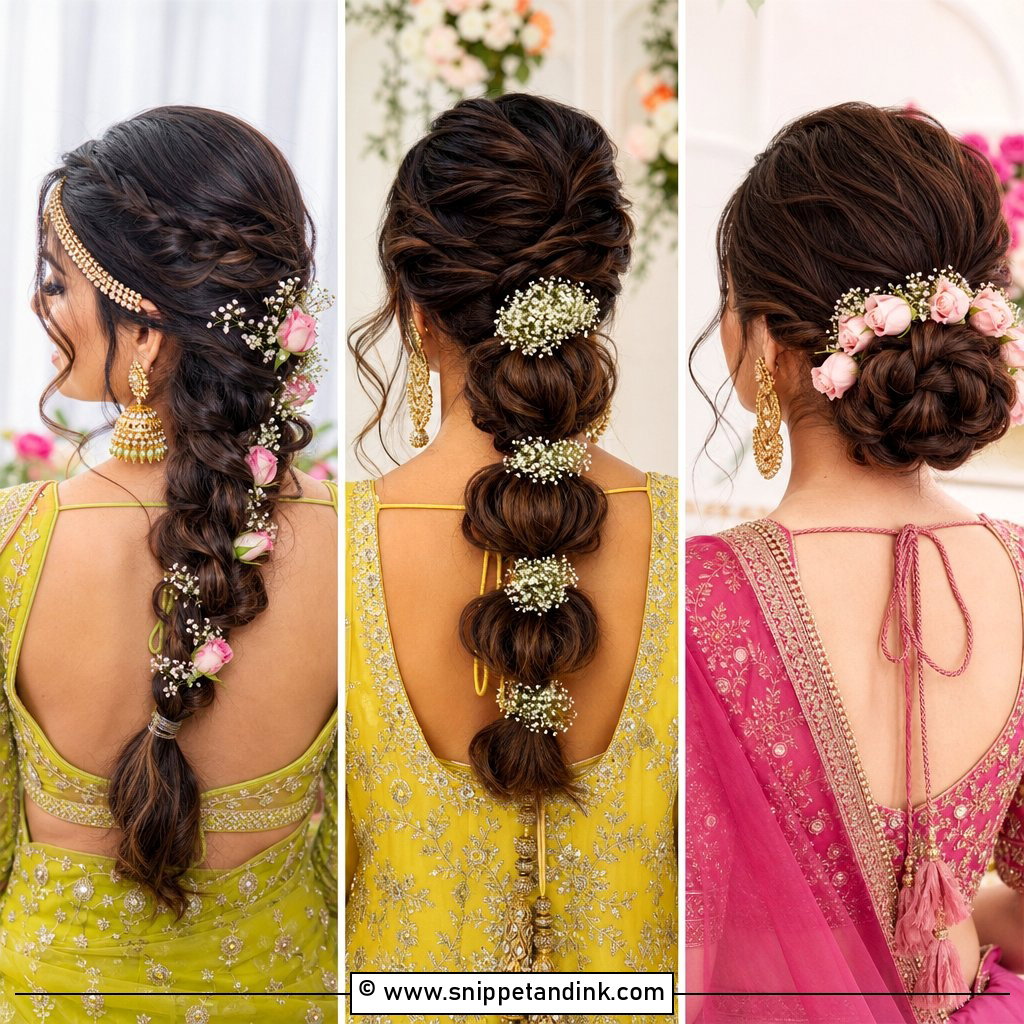
Fresh flowers around a smooth bun are still the backbone of Indian wedding glamour, and they reward good planning. I build the bun first on a padded base, then pin the blooms into the bun itself rather than into loose hair, so the weight sits on something solid. Roses and orchids hold up far better than marigold heads, which shed petals down a lehenga by the second hour. Keep the base sleek if you’re adding a maang tikka; teasing at the crown fights with the chain.
2. South Indian Jasmine Braid
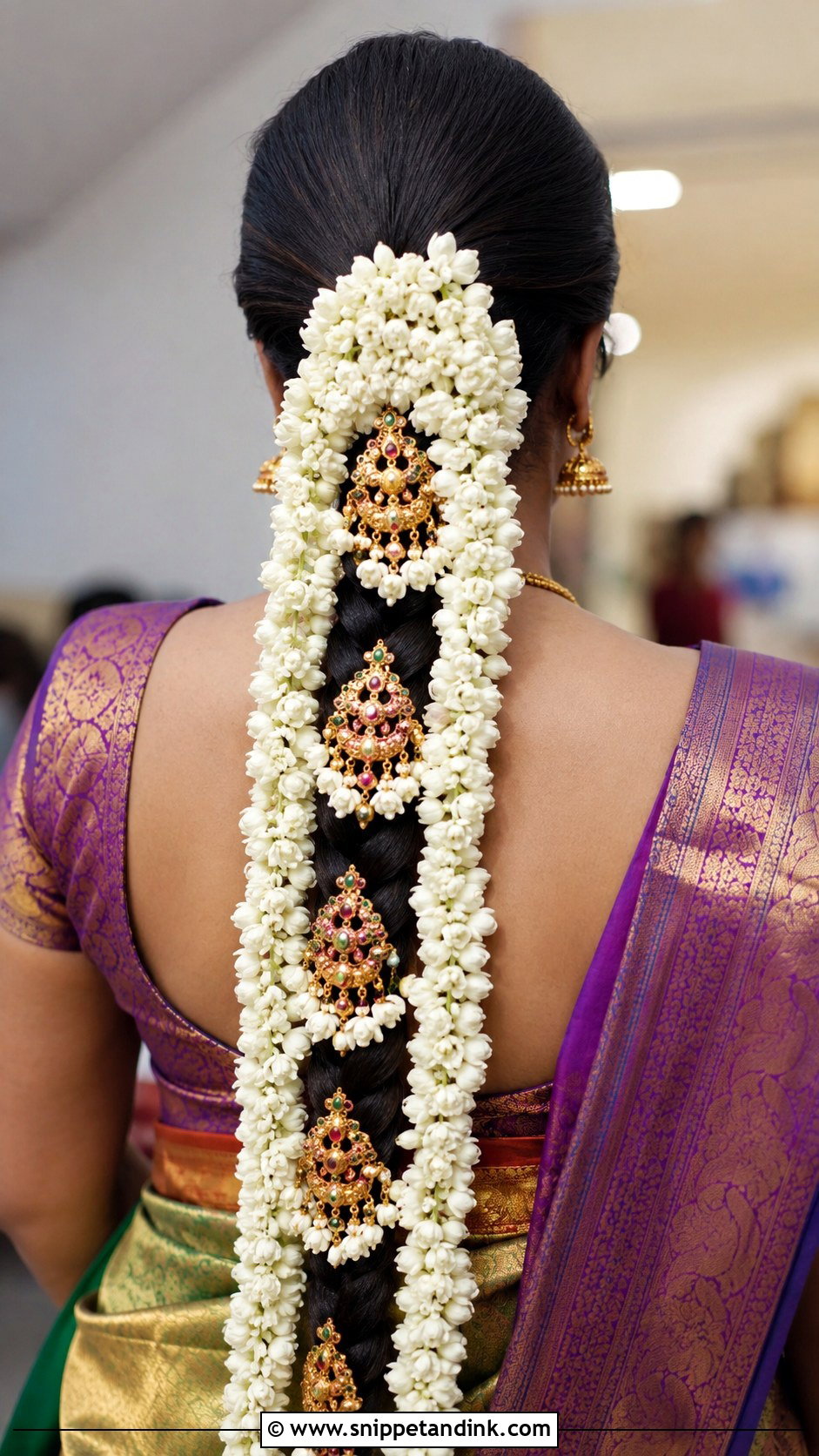
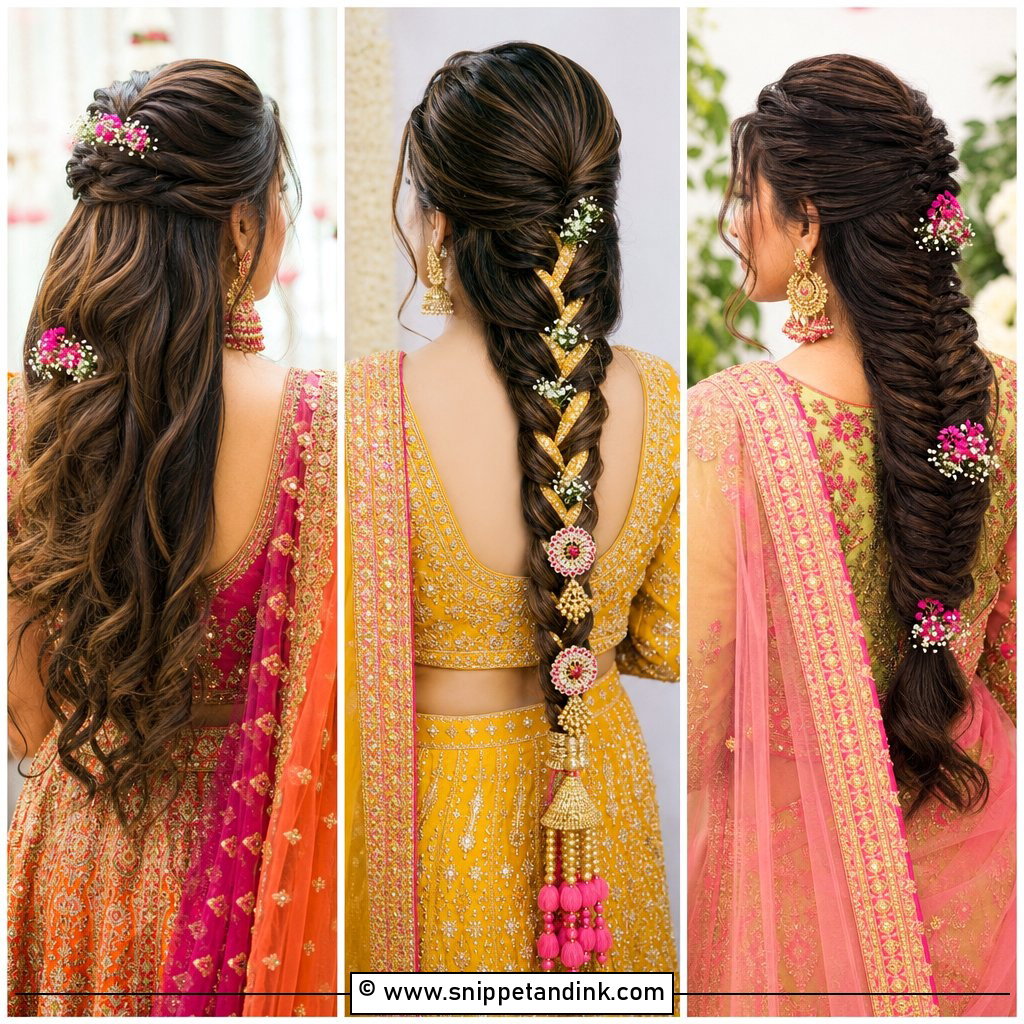
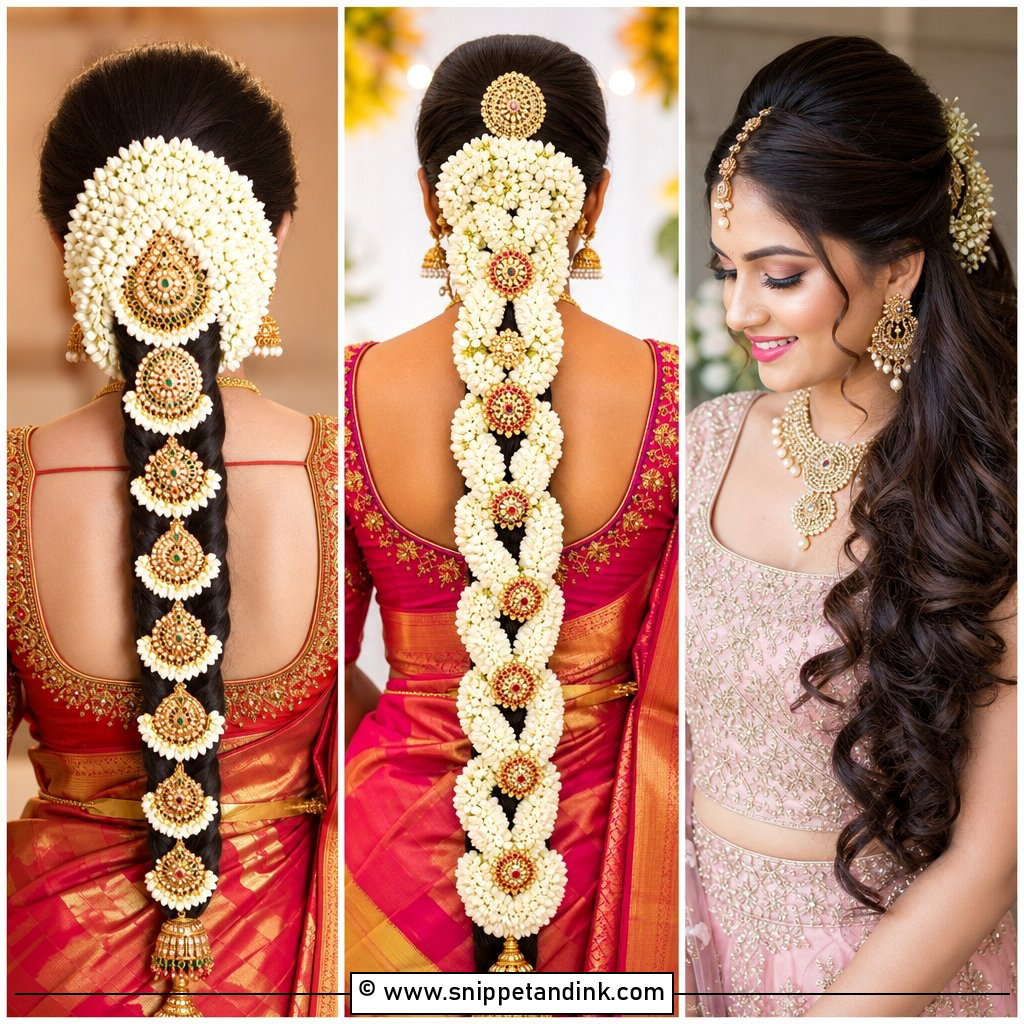
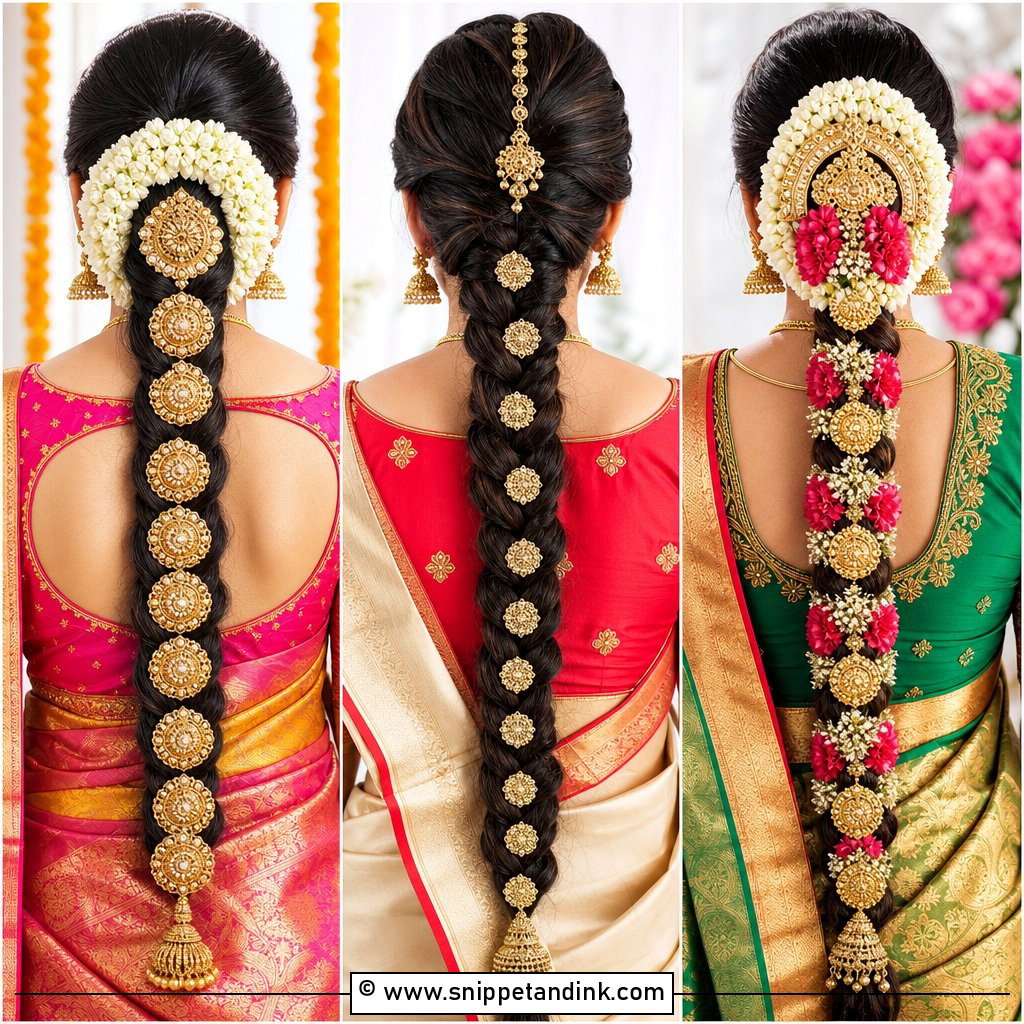
The South Indian jasmine braid is one of the most traditional looks on this list and one of the heaviest. Strings of jasmine gajra are layered down a single thick braid, often with jadai billalu ornaments set along the plait, and the whole thing can pull noticeably on the scalp by evening. I anchor the top of the braid with a hidden elastic and a few criss-crossed pins at the crown so the weight hangs from that point, not from your hairline. Long, thick hair carries it best. If yours is finer, a clip-in braid extension matched to your shade takes the strain instead.
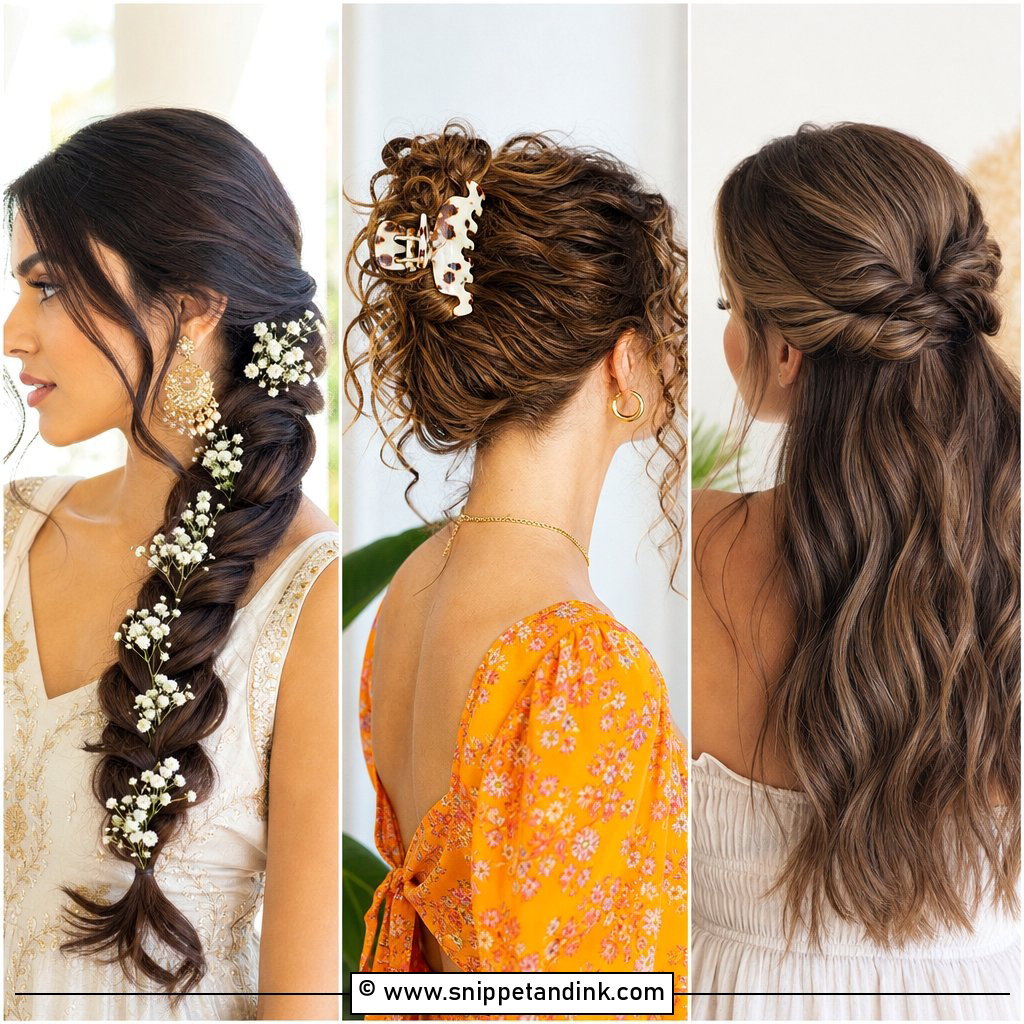
3. Fishtail Braid With Gajra
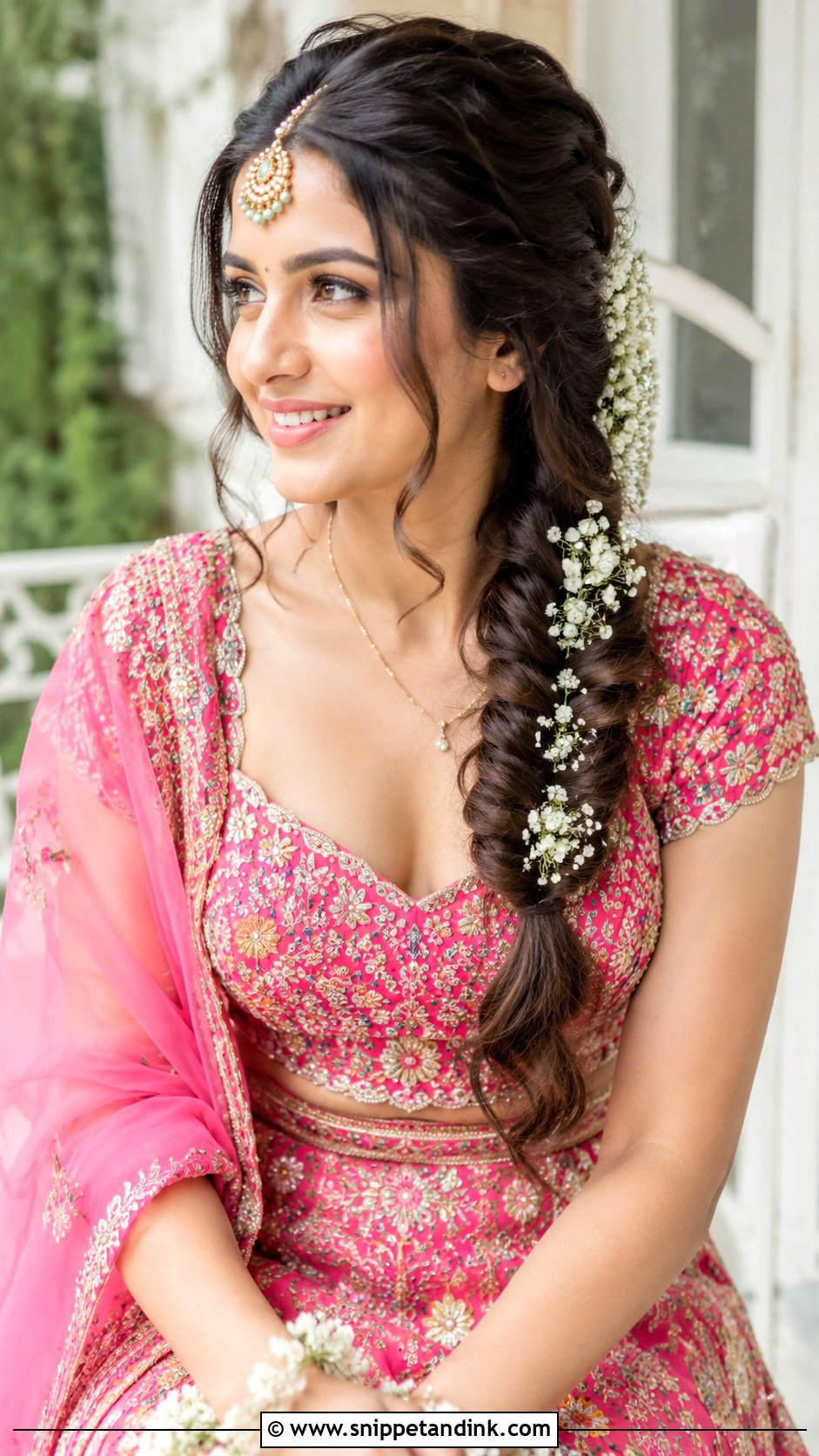
A fishtail is the braid I reach for at mehndi and sangeet functions, because thin woven sections grip each other and stay put through hours of dancing. The catch is time: a waist-length fishtail takes far longer than a three-strand plait, so it needs its own slot on the morning schedule. I tuck a short gajra along one edge only, where it won’t flatten the weave. Worn over one shoulder, it keeps the back of a bright lehenga clear.
4. Low Bun With Maang Tikka
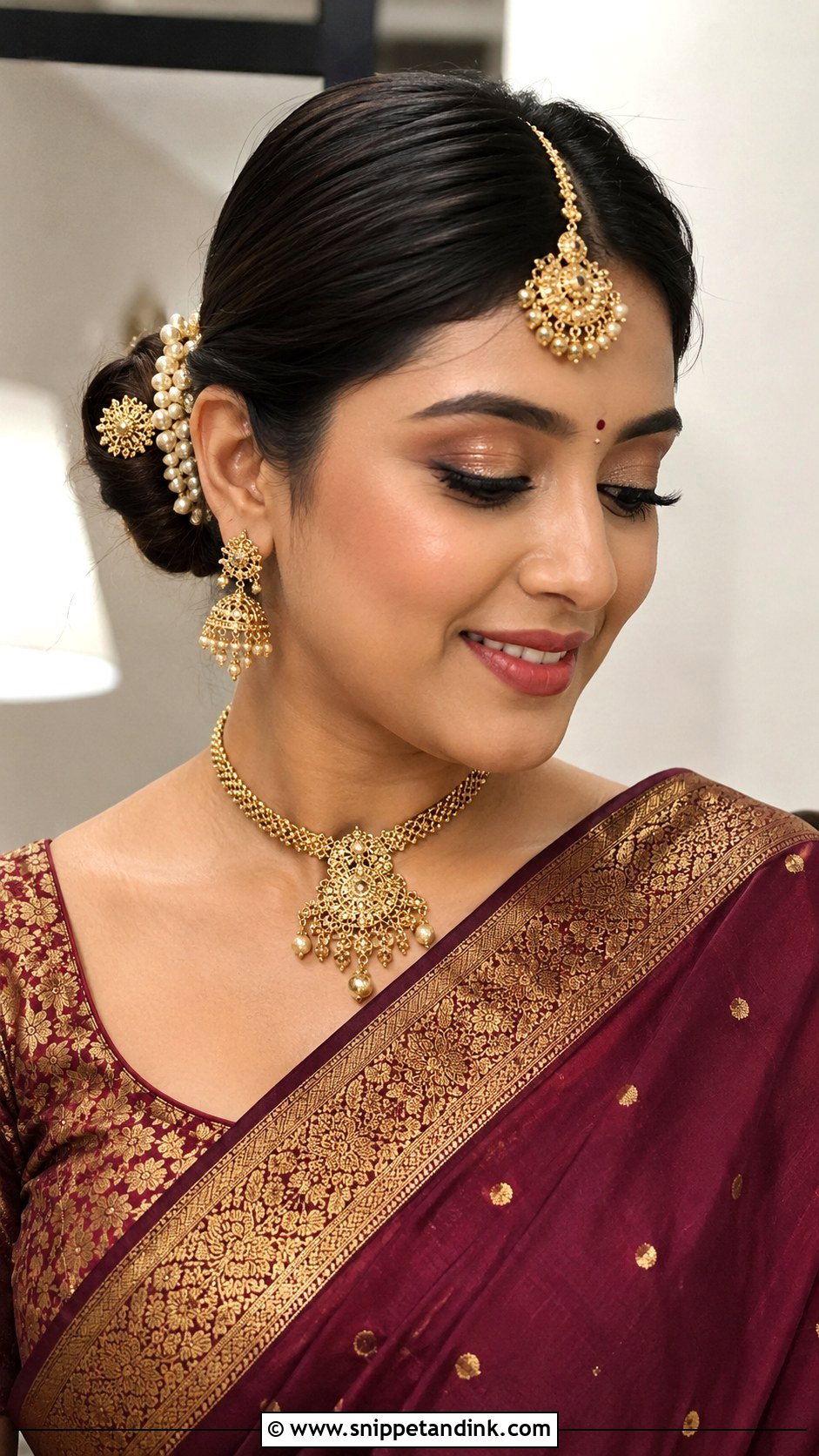
A low bun at the nape is the style I trust most for a long day in a heavy saree. Sitting low, it doesn’t fight with a pallu draped over the shoulder or a dupatta pinned over the head, and it lets the maang tikka do the talking at the front. I set it just above the collar line of the blouse so it doesn’t push forward when you sit. Pearls, a juda pin or a few blooms all sit comfortably here, and it flatters most face shapes for brides and guests.
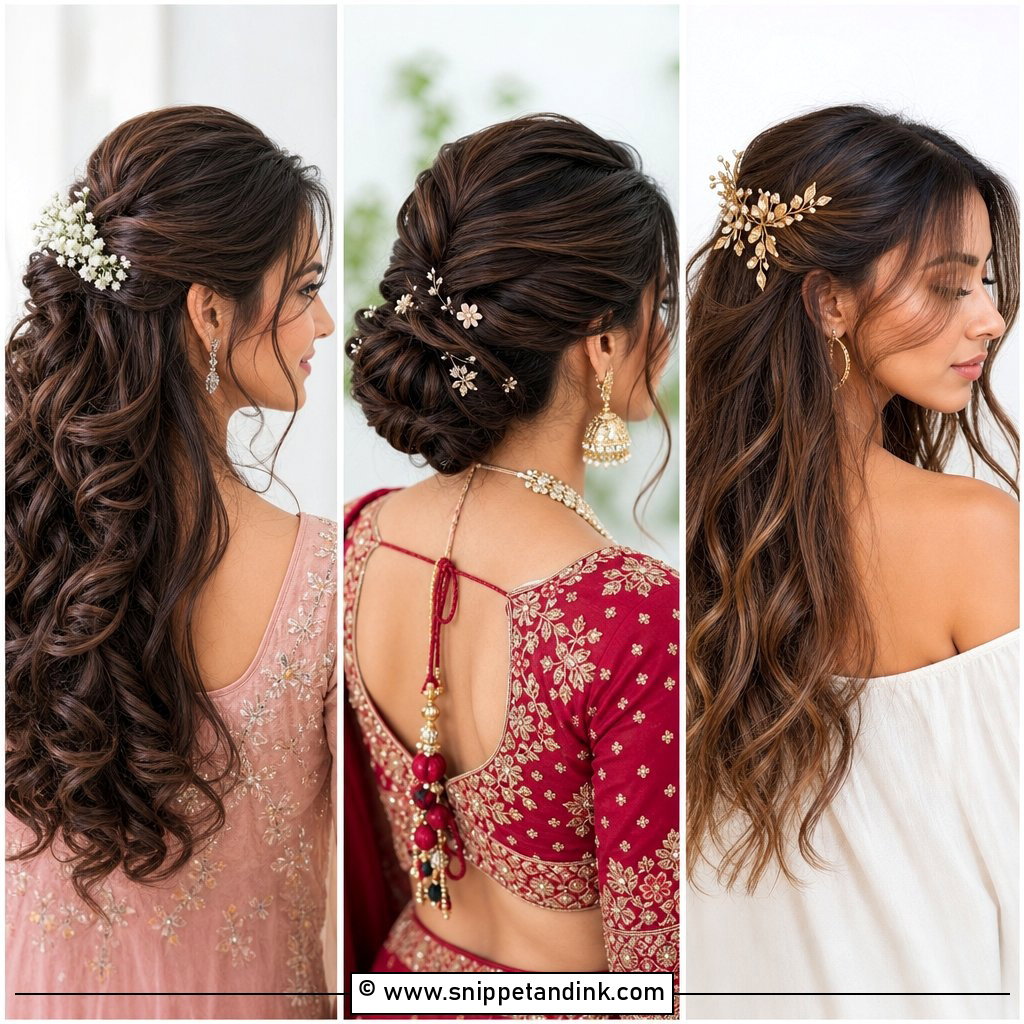
5. Open Curls With Hair Jewelry
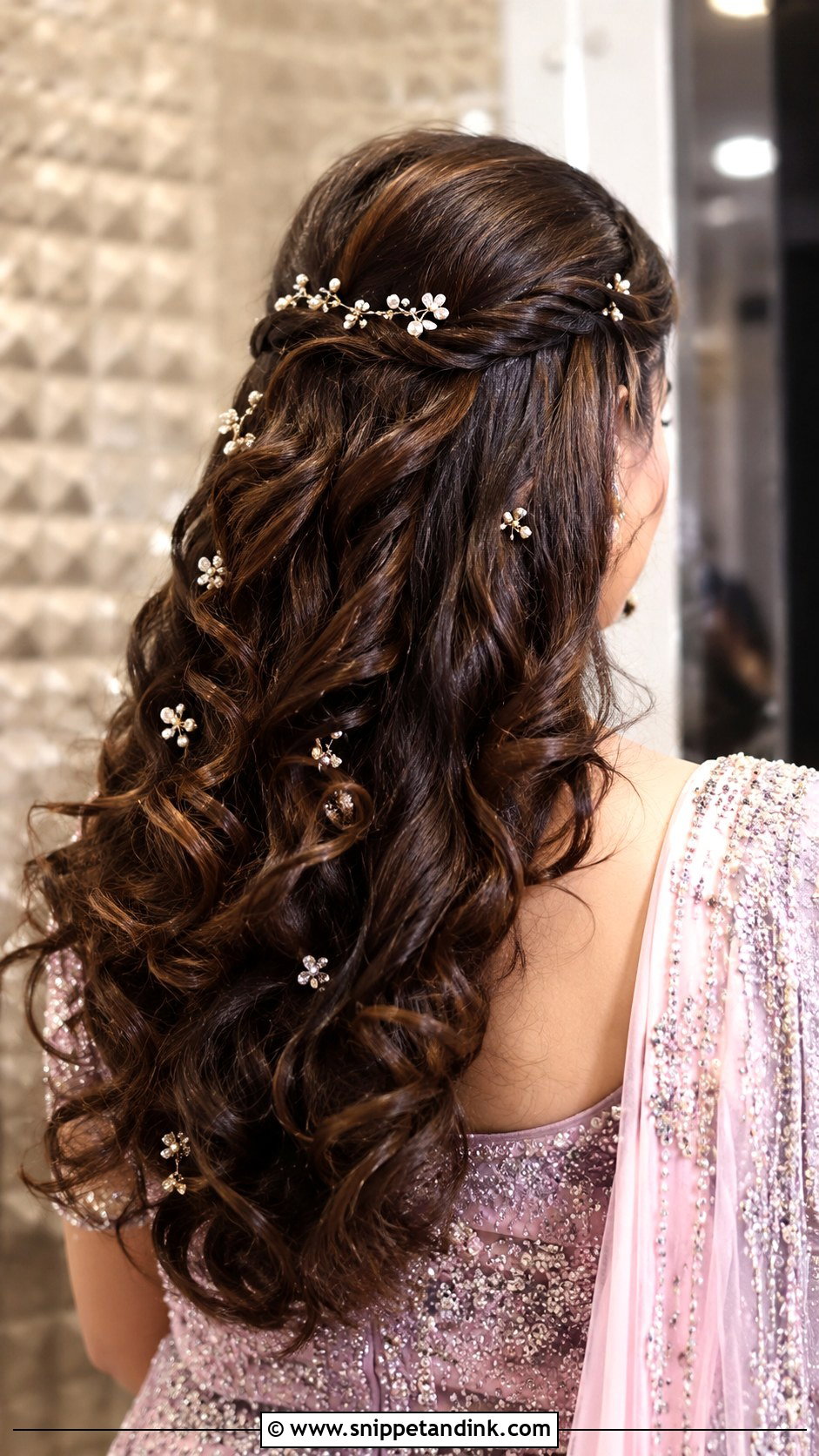
Open curls look simple in photos but are the least forgiving style in humid weather. I curl in small sections, pin each curl while it cools, and only brush out once everything has set, otherwise the waves drop within an hour. Hair jewelry like tiny pearls or diamond pins needs a little backcombing at the root to grip; on silky hair it slides straight out. This is a reception style for me, ideally indoors with air conditioning, and halo extensions help fine hair look full at the crown.
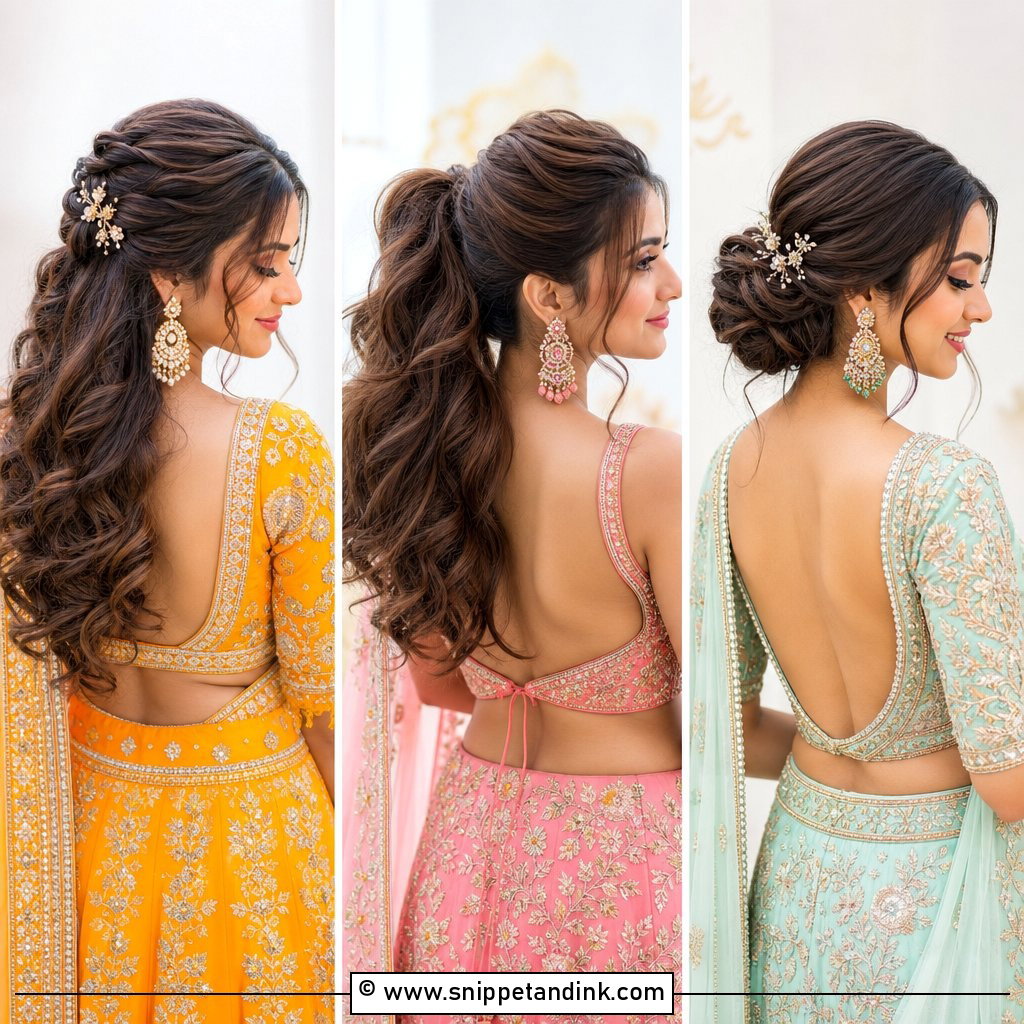
6. Half Up Half Down With Curls
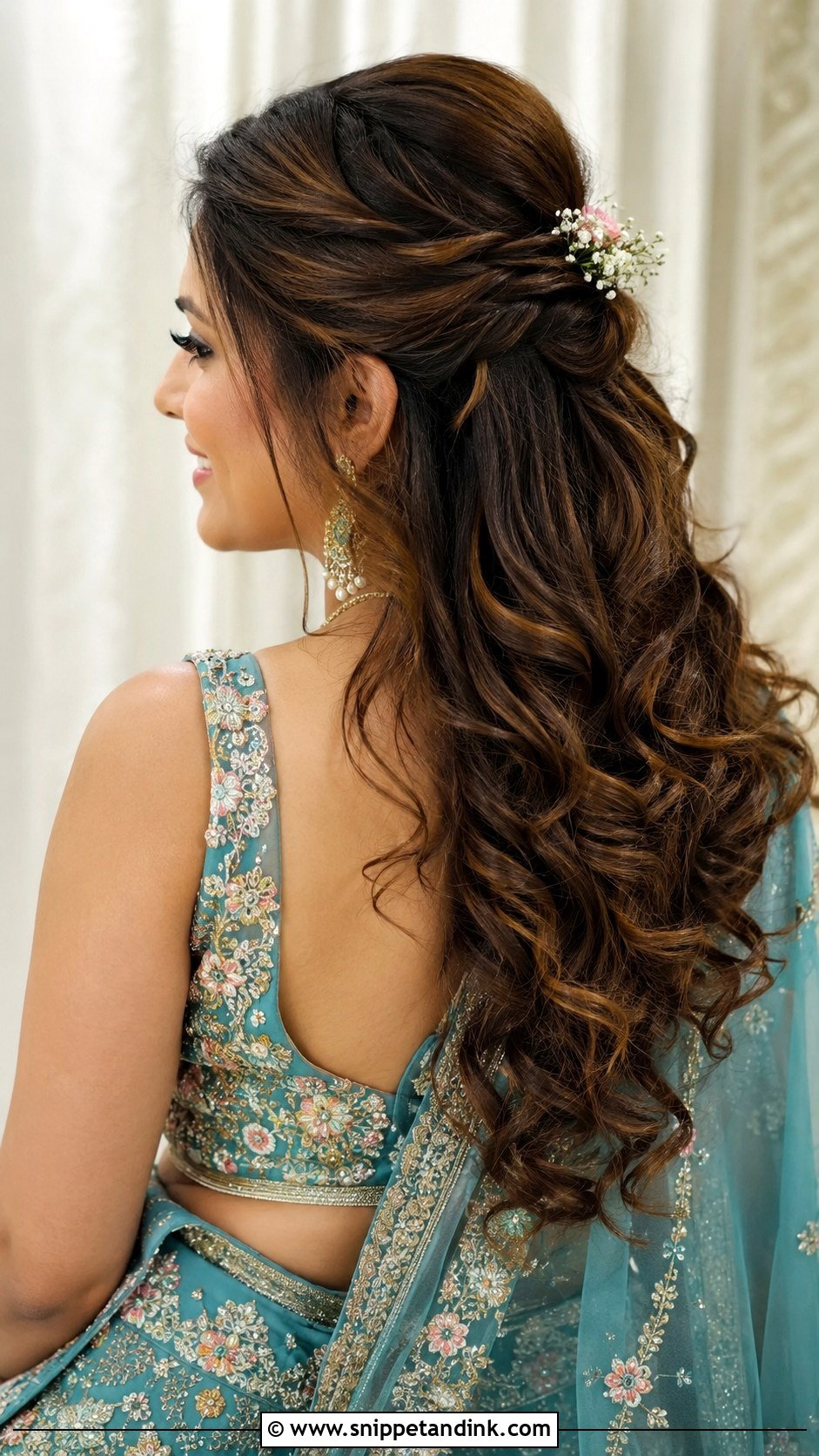
Half up, half down splits the difference: the top section is pulled back and secured, and the rest falls in loose curls. It keeps your face open, which matters if your makeup artist has worked hard on the eyes. The weak point is the join at the back of the crown, so I lock it with a small hidden braid or a pair of crossed pins before adding a maang tikka or floral clip. Bridesmaids and guests like it because nothing tugs.
7. Messy Bun With Side Braids
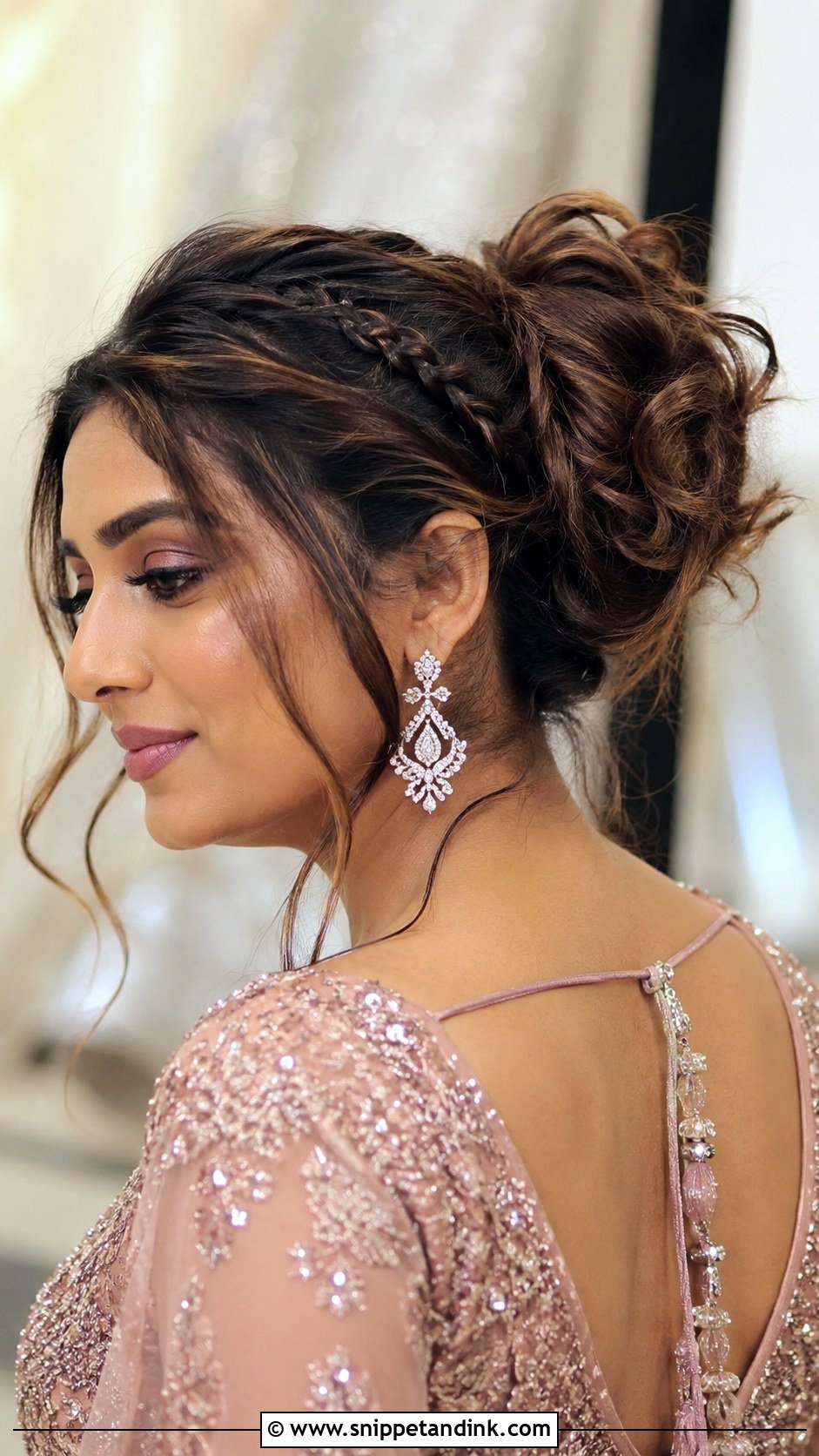
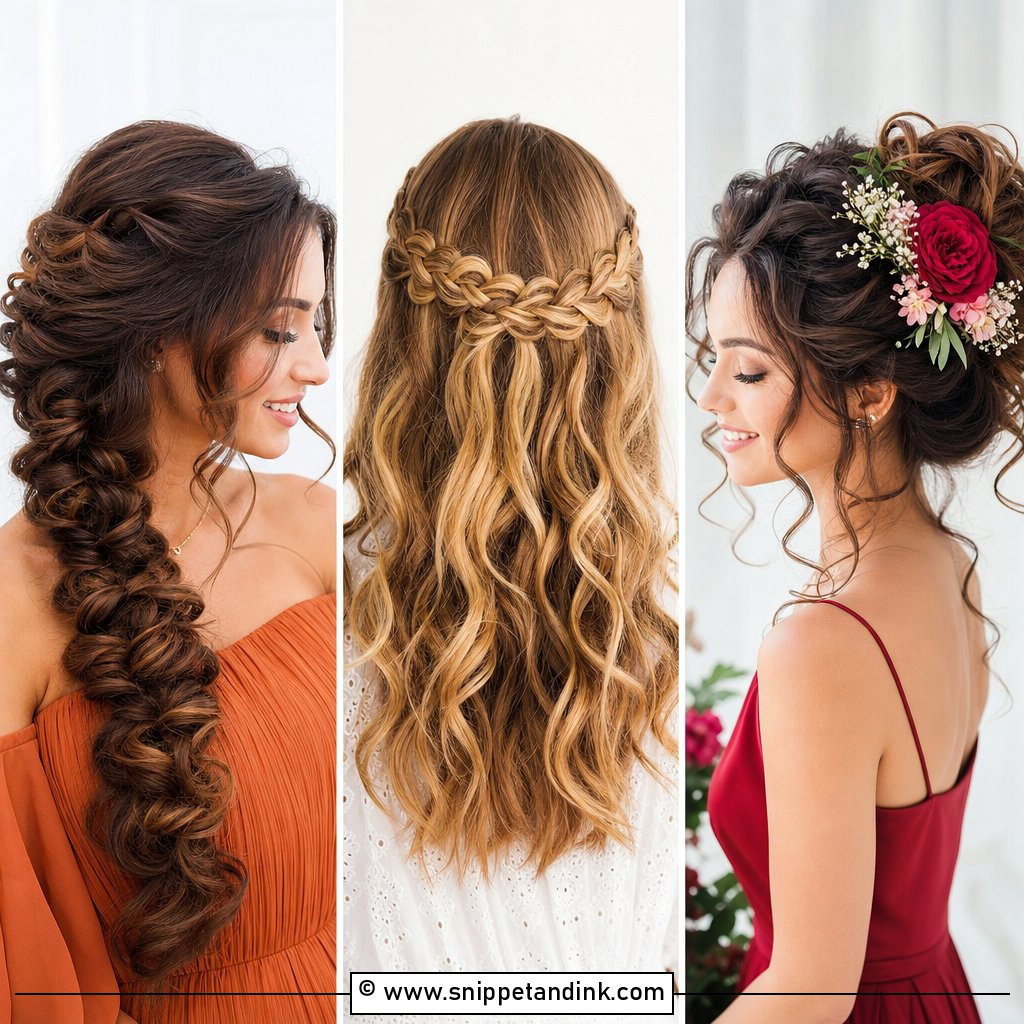
Messy buns are rarely messy. I set the hair, build the bun tight underneath, then pull the surface loose by hand so it stays put while looking relaxed. Small side braids add detail and hide shorter layers that would otherwise poke out. It’s my go-to for sangeet and cocktail nights, it forgives second-day hair, and pearl pins or a few fresh flowers dress it up without extra weight.
8. Rose Twist Hairstyle
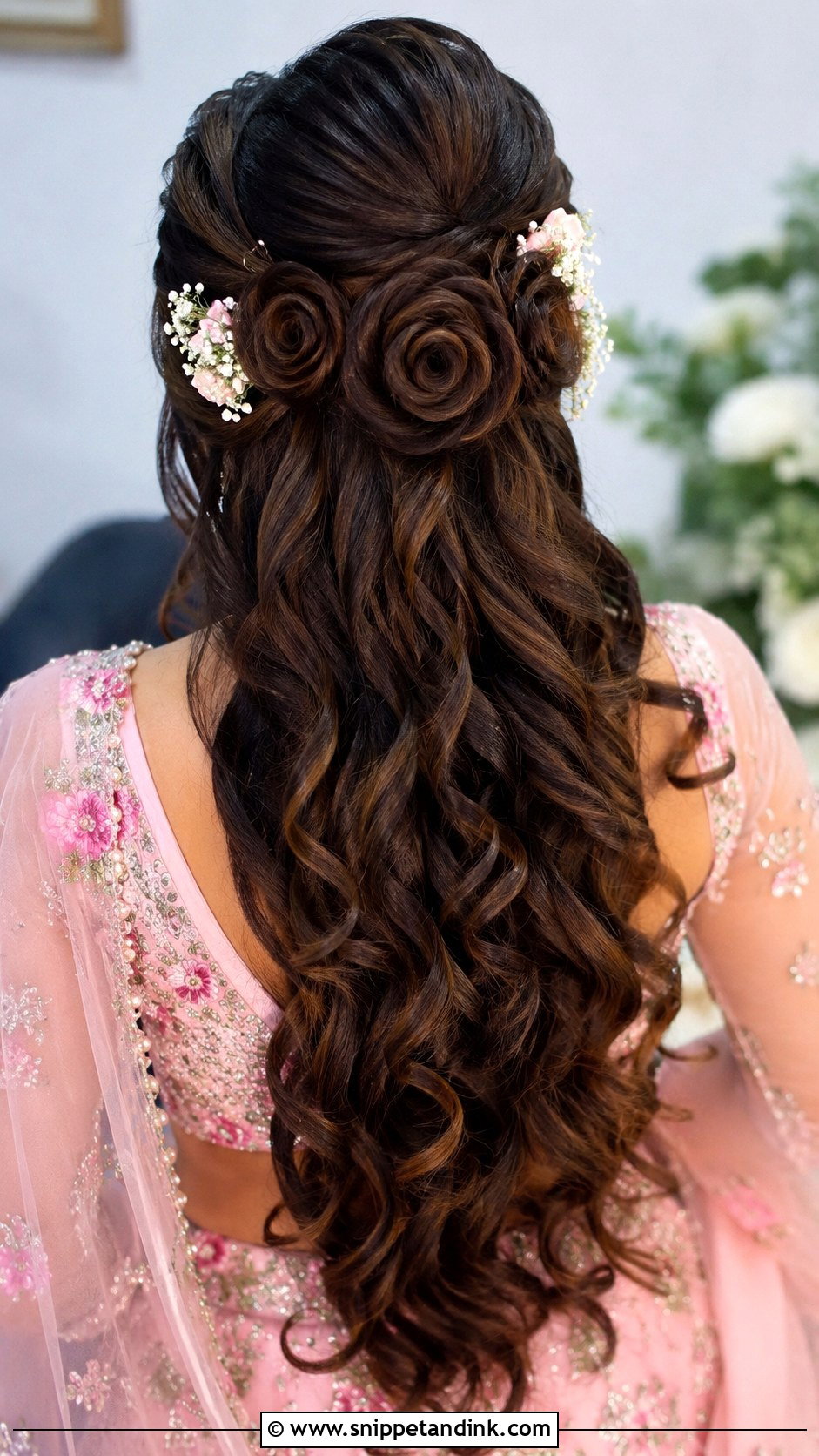
The rose twist is built from small twisted sections coiled and pinned into petal shapes. Because each twist is pinned on its own, it is one of the most secure updos I make, and the grooves give flowers and jewelry somewhere to lock in. It suits pastel lehengas and floral jewelry well. Fine, slippery hair needs texture spray first, or the twists unwind as you wear it. You can do the whole head as an updo or just the top half over loose curls.
9. Sleek Straight Hair With Floral Pins
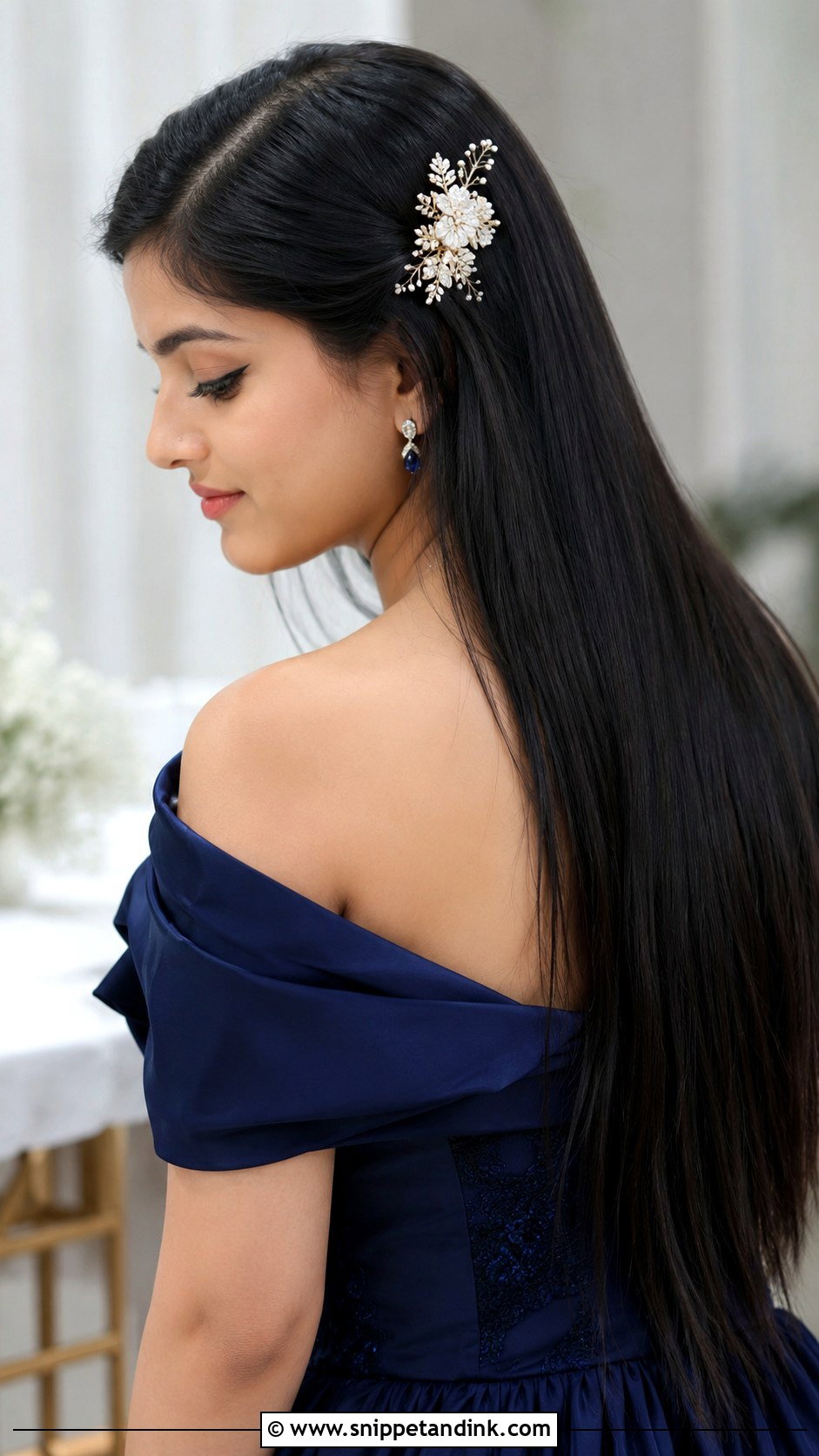
Sleek straight hair looks like the easiest option and is often the hardest to keep. Any frizz shows, and heat and dancing undo it quickly. I flat-iron in thin sections, finish with a light serum on the ends only, and keep a small comb in the bridesmaid’s bag. Floral pins or jeweled clips should go in at the sides above the ear, where the hair is thickest. It suits engagement parties and receptions with structured gowns, and a center or side part should follow your face shape rather than habit.
10. Braided Bun With Pearls
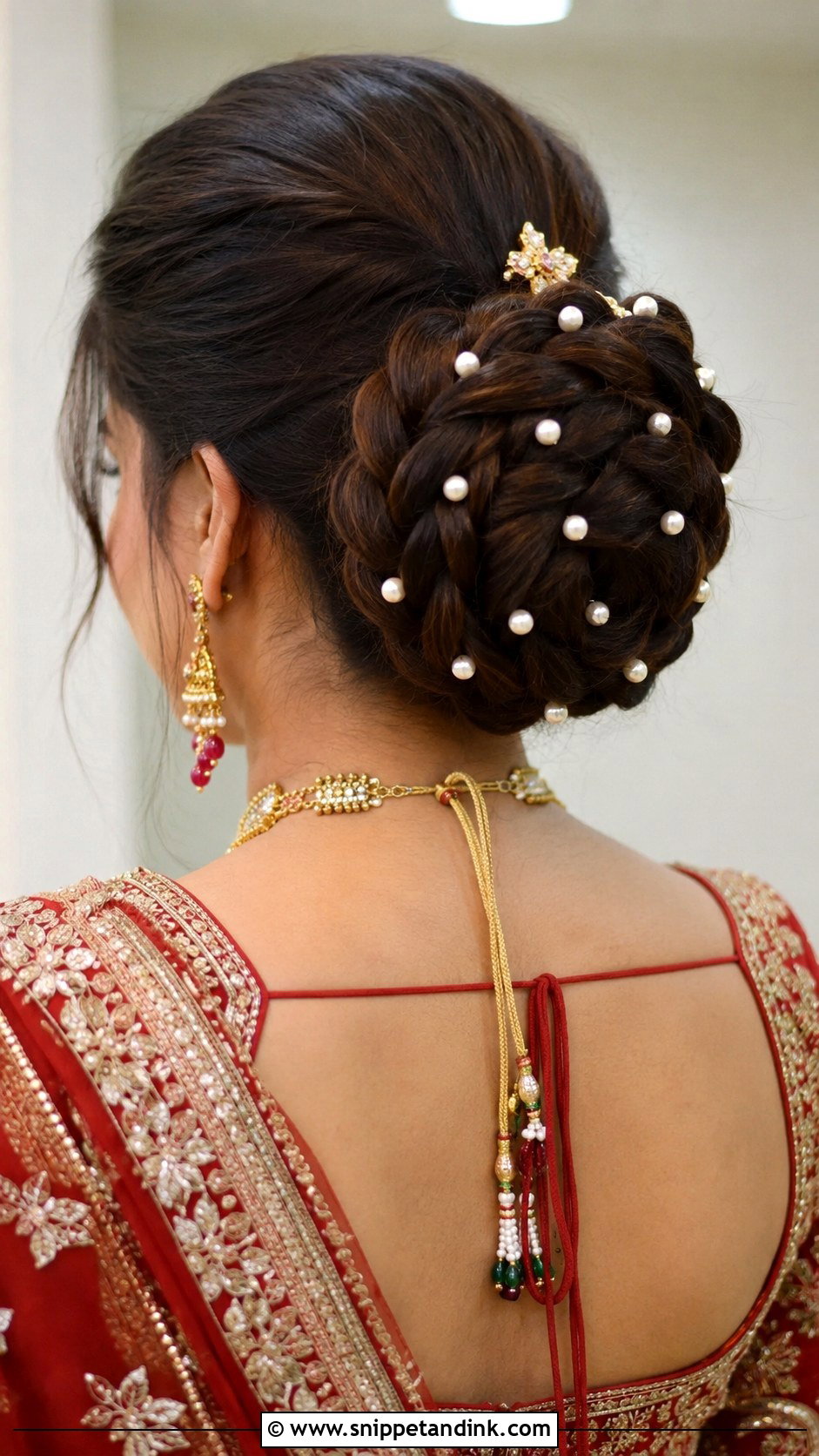
A braided bun is two techniques layered: the hair is braided first, then coiled into a round bun, and pearls are threaded through the plait. Because the braid is already locked, the coil holds its shape for hours, which is why I suggest it for the main ceremony. It sits well under heavy bridal jewelry and a pinned dupatta. Thread the pearls with a fine needle-pin as you coil, not afterwards; pushing them in at the end loosens the braid.
11. Side Swept Curls With Flowers
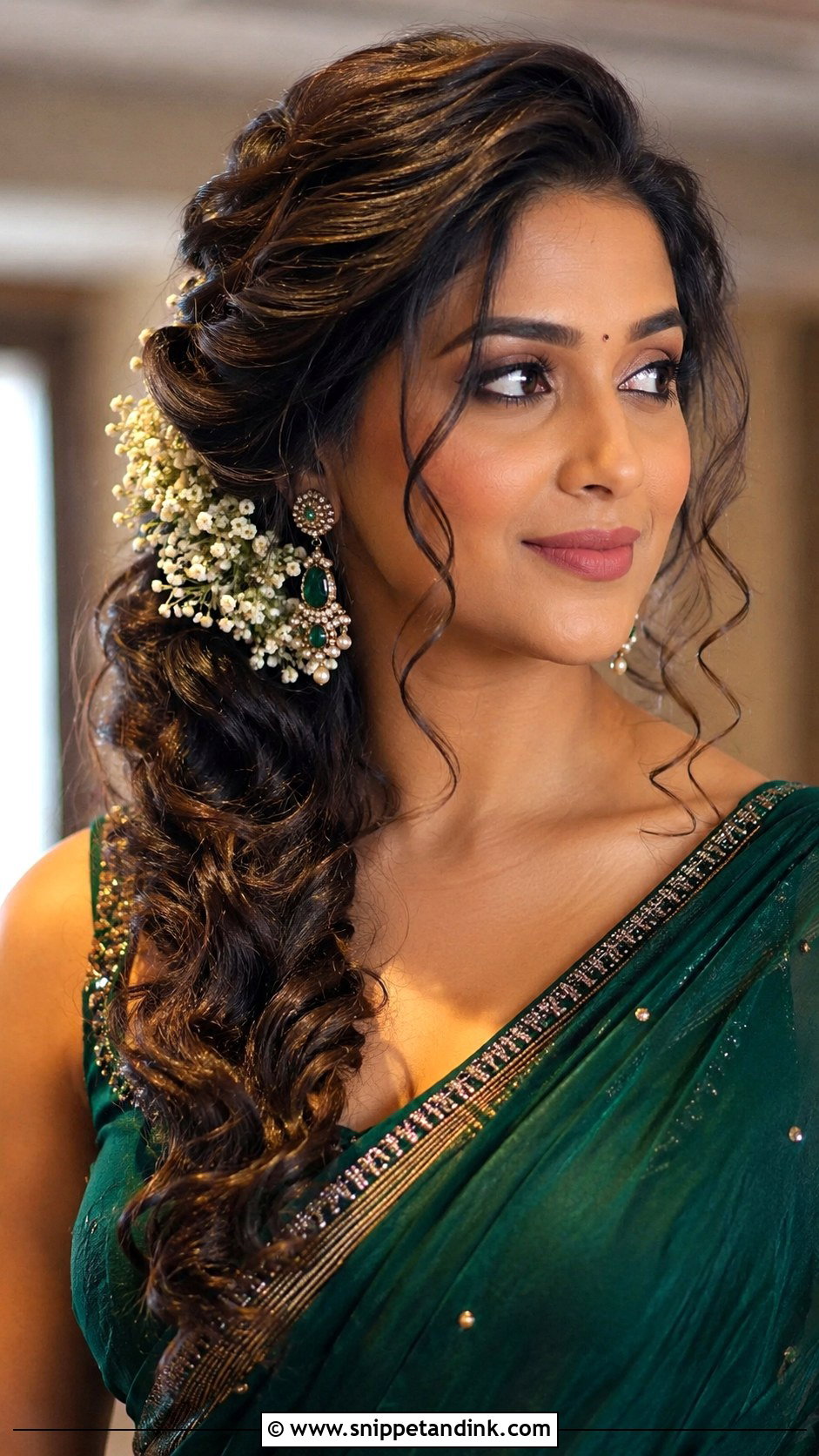
Side swept curls bring that Bollywood glamour almost instantly. The curls are gathered over one shoulder, with a small gajra or a few flowers tucked where the sweep starts. What keeps it in place is a row of pins hidden behind the ear on the opposite side; without them, the hair slides back by the first dance. Wear it with statement earrings on the open side. It’s an evening look for me, sangeet or reception, with a saree or a gown.
12. Donut Bun With Statement Juda Pin
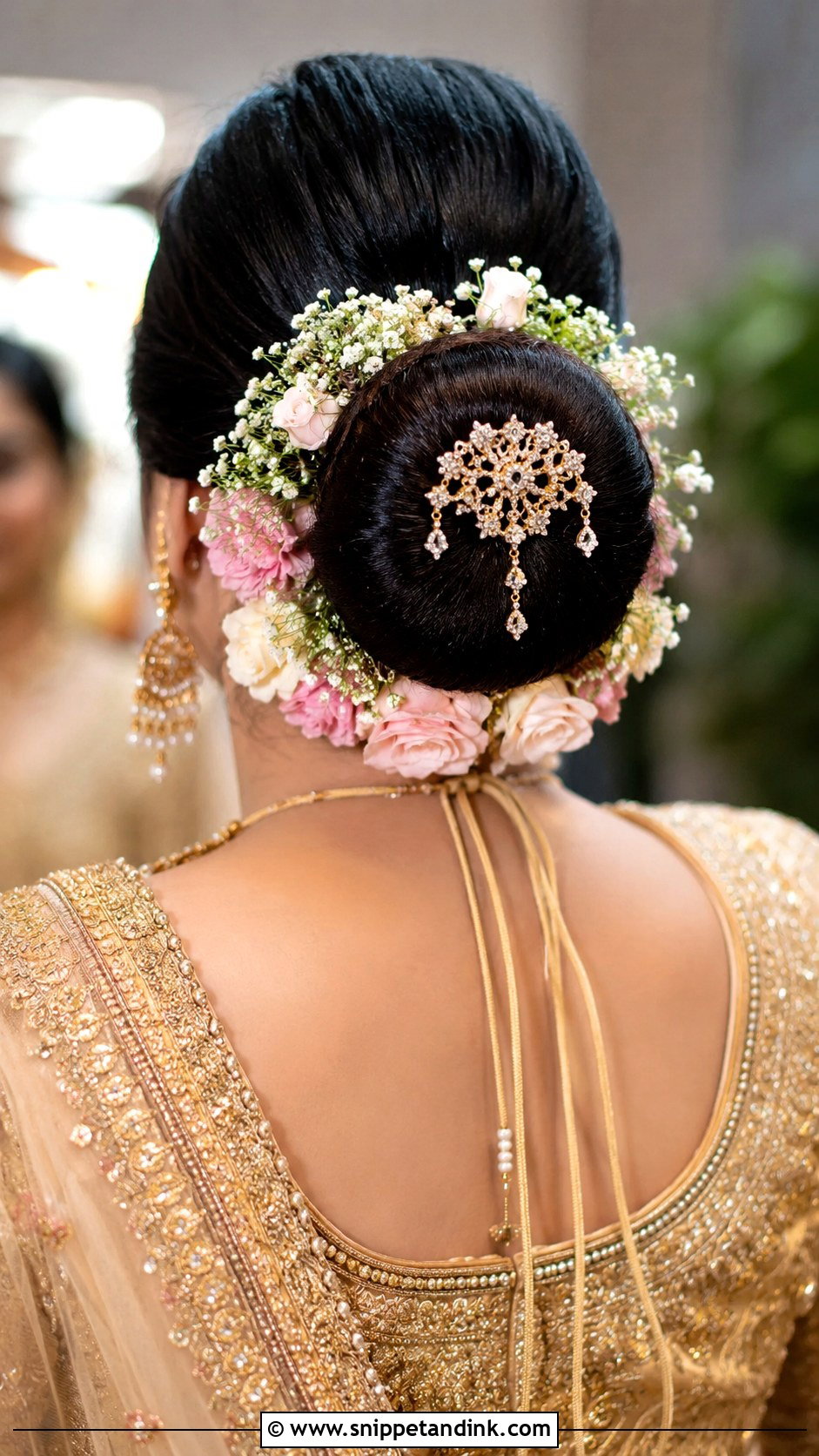
A donut form is what gives a bun that perfectly round, full outline. The hair is wrapped around the ring and pinned underneath, then a statement juda pin and flowers finish it. I match the donut colour to your hair, since a beige form peeks through dark hair in flash photos. It sits high or low and carries heavy lehengas and grand jewelry comfortably. If your hair is short or thin, a donut can look hollow, so we’d pad it with a hair piece first.
13. Mermaid Braid With Butterflies
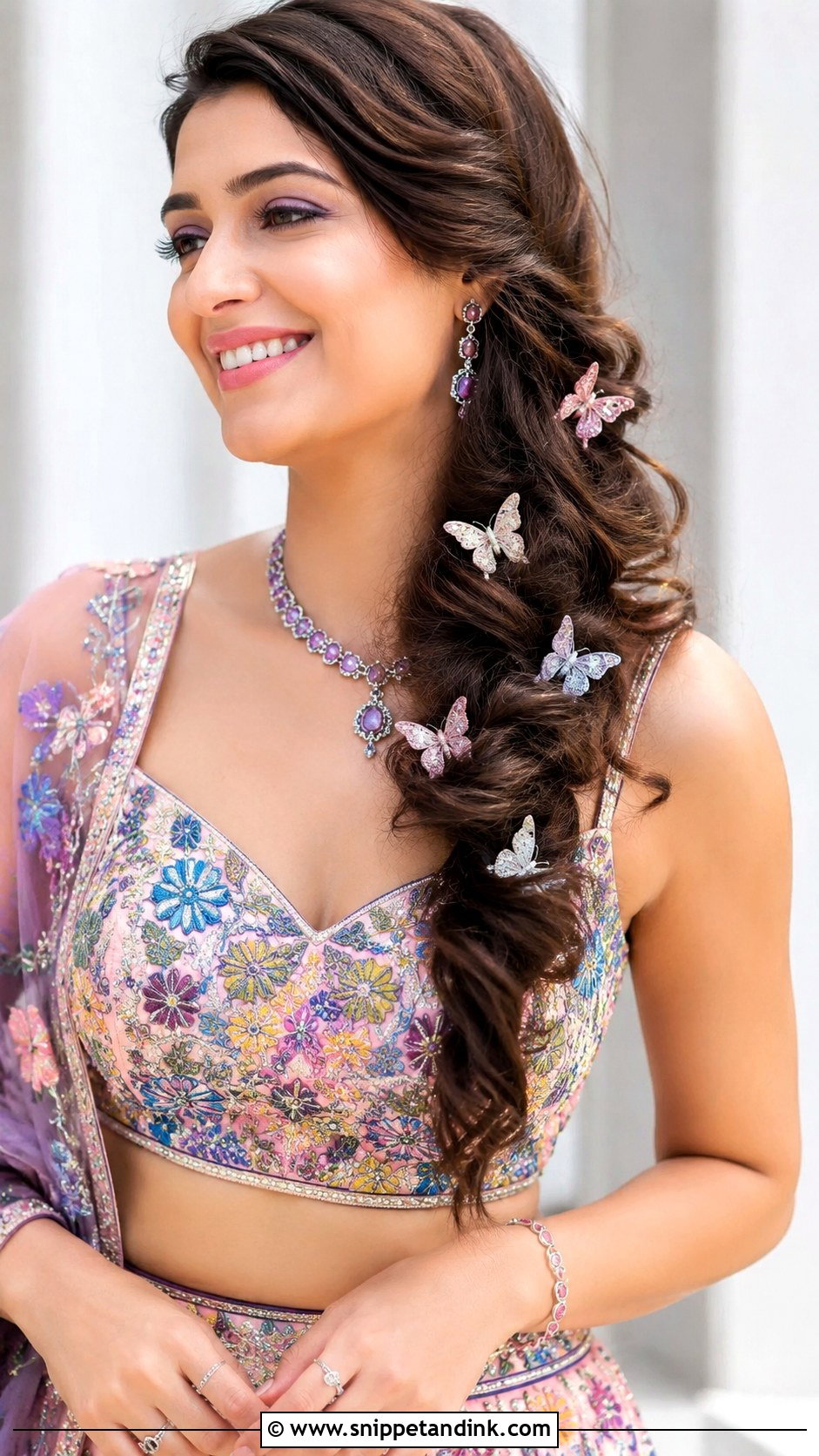
The mermaid braid is a loose, wide plait pulled apart into soft volume, scattered with tiny butterfly clips or small flowers. It’s playful, and I see it most on younger guests and on brides at mehndi and sangeet. The pulled-out sections are fragile, so a flexible hairspray between each stage matters more here than anywhere else. Drape it over one shoulder with a colourful outfit and keep the clips small, or the braid starts to sag.
14. Sleek Low Bun With Matha Patti
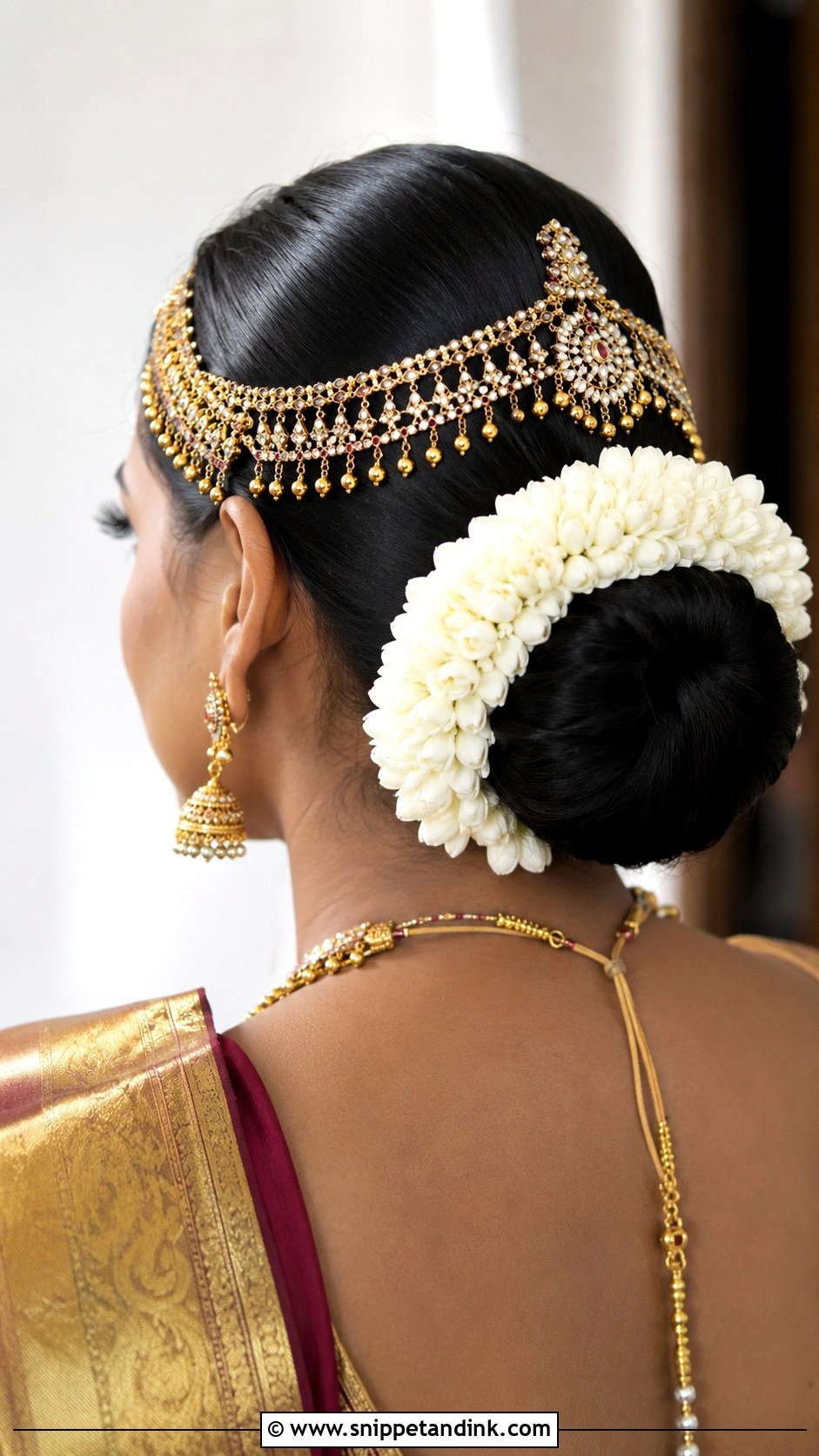
A sleek low bun with a matha patti is about clean lines. The hair is smoothed into a glossy knot at the nape and the forehead is framed with the matha patti, often with a string of jasmine around the bun. I lay the matha patti before I finish smoothing, because its side chains need to sit under the hair at the temples. It suits silk sarees and gold jewelry, and it keeps everything in place through long ceremonies. Very fine hair can look flat in this style; a little root lift under the top layer helps.
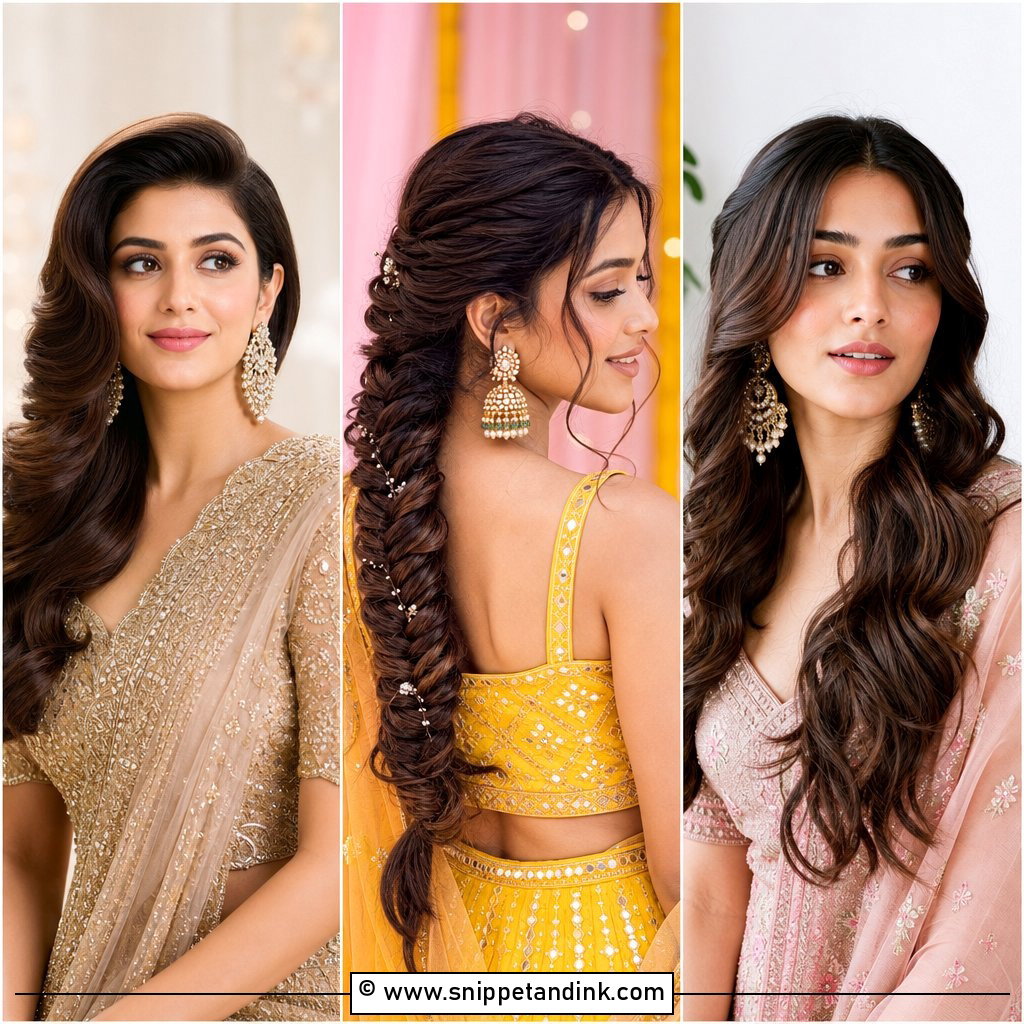
15. Loose Waves With Pearl Accents
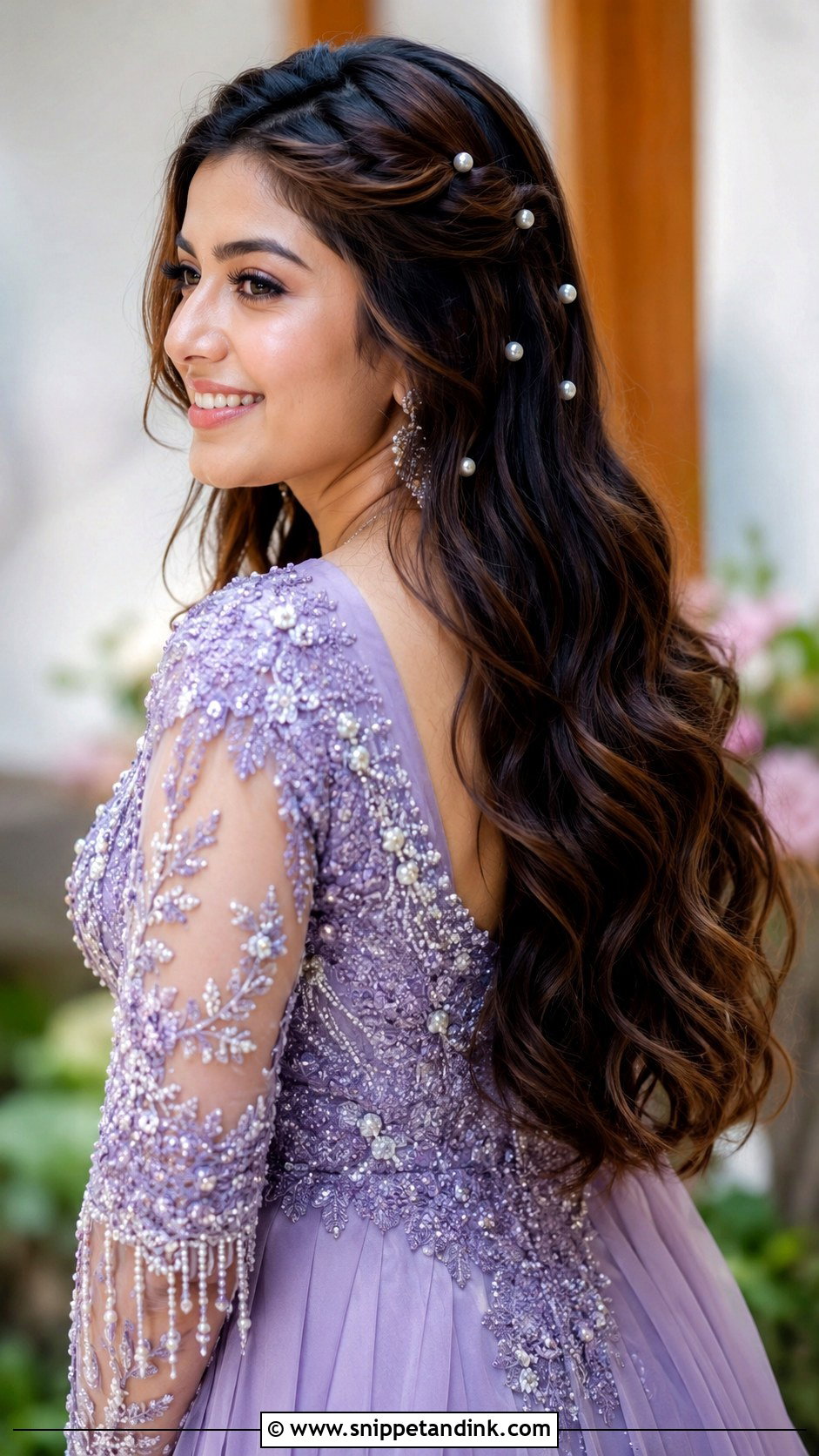
Loose waves move more than curls do, and that is both their charm and their weakness. I set them with a large barrel and pin them to cool, then break them up with fingers, never a brush. Pearl pins or small jeweled accents catch light in photos, so a few go a long way. They suit receptions and engagement parties with a flowing gown or light lehenga, and keep the part wherever your face looks most balanced.
16. Crown Braid With Fresh Flowers
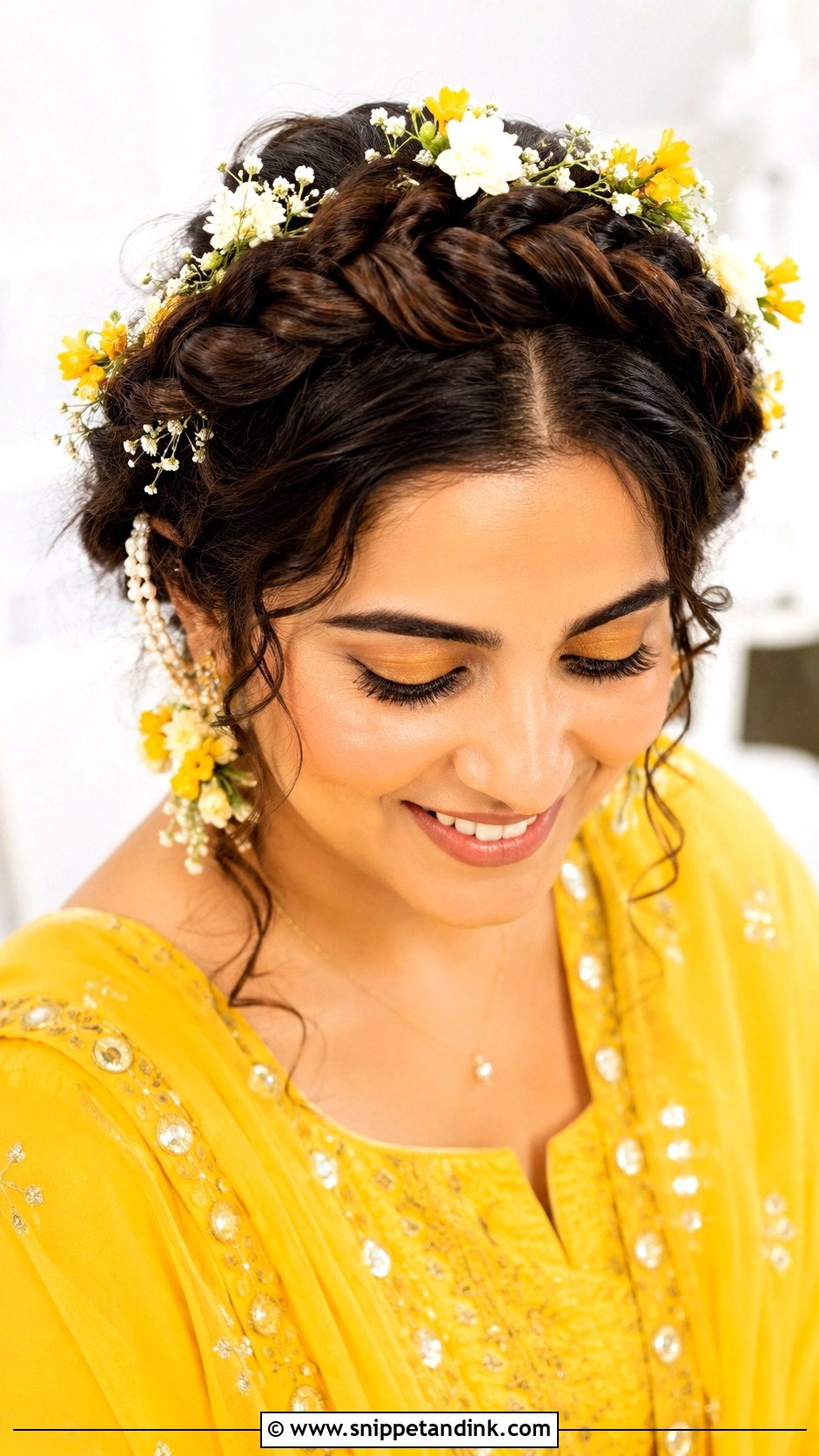
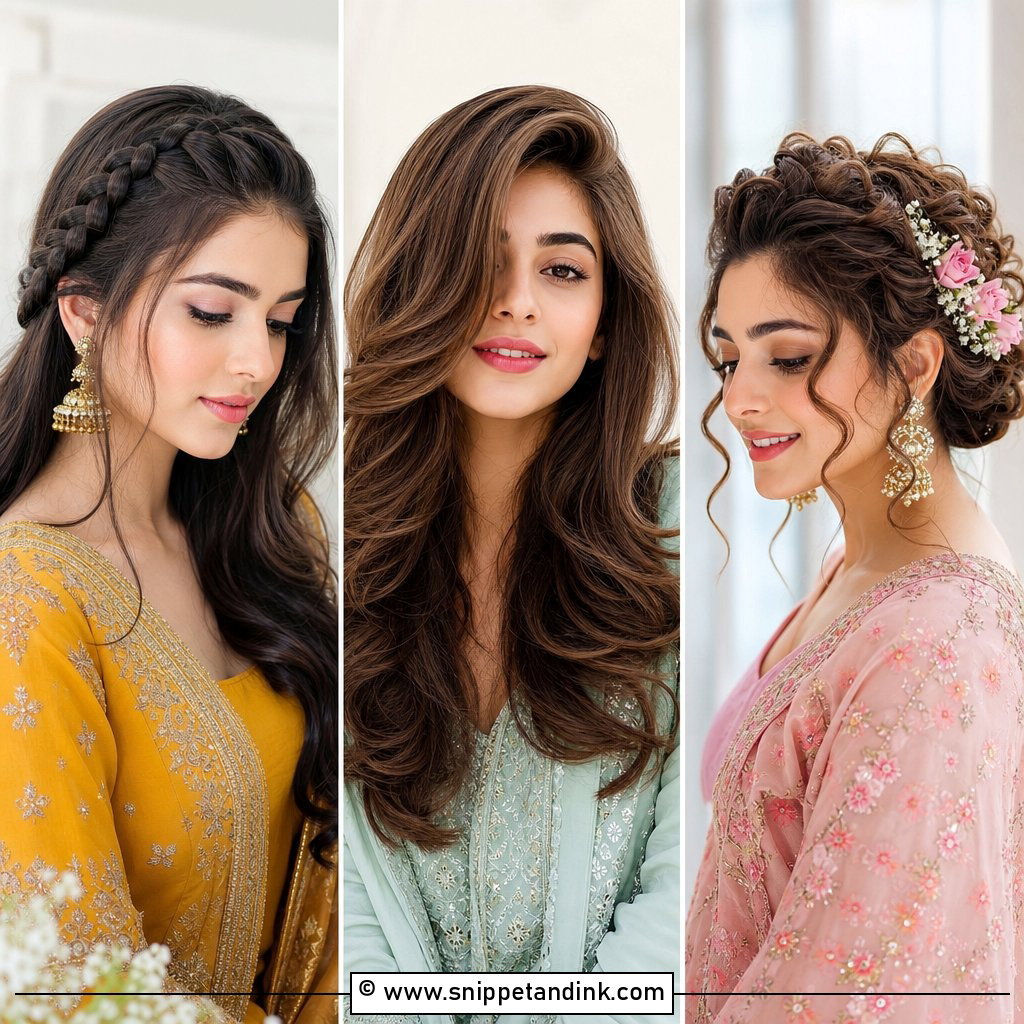
A crown braid wraps around the head like a halo, pinned in a circle, with small fresh flowers tucked in. I like it most for daytime mehndi and haldi, when it’s hot and you want hair completely off your neck. Turmeric paste and mehndi cones near the face are a real hazard, so a style with nothing loose around the hairline is practical as well as pretty. It pairs with bright floral outfits and minimal jewelry. Layered hair needs pinning at each layer, or ends escape.
17. Bouffant With Open Hair
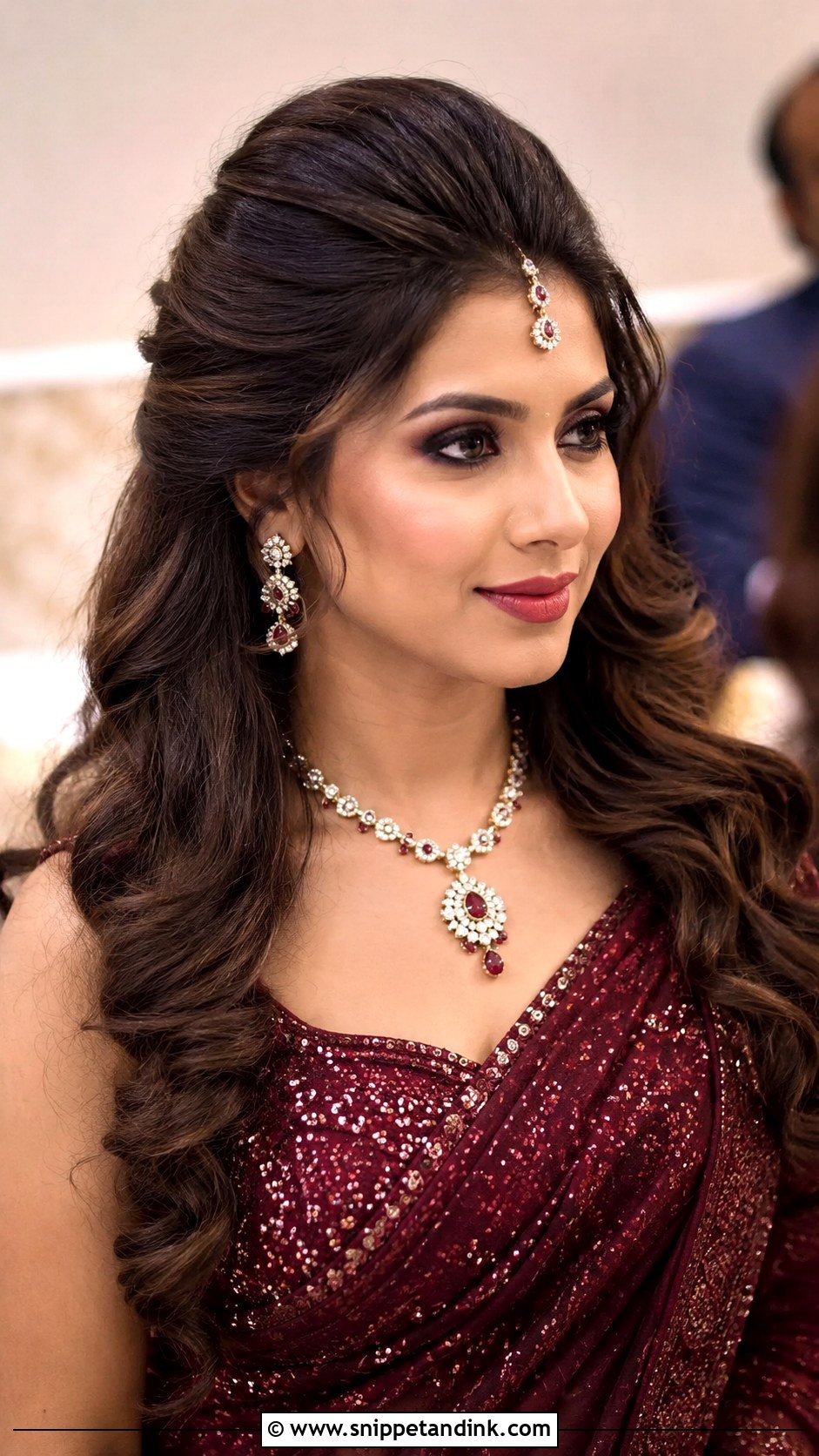
A bouffant lifts the crown: I backcomb the hair underneath, then smooth the top layer over it so no teasing shows. The rest falls in curls or straight lengths. It adds height, elongates a round face and suits receptions with heavy earrings and a statement neckline, with a maang tikka for Indian flair. Go easy on the height if you’re also wearing a dupatta over the head; a high bouffant pushes it back. For a polished, voluminous look with open hair, it’s still one of the strongest shapes.
18. Twisted Side Bun With Gajra
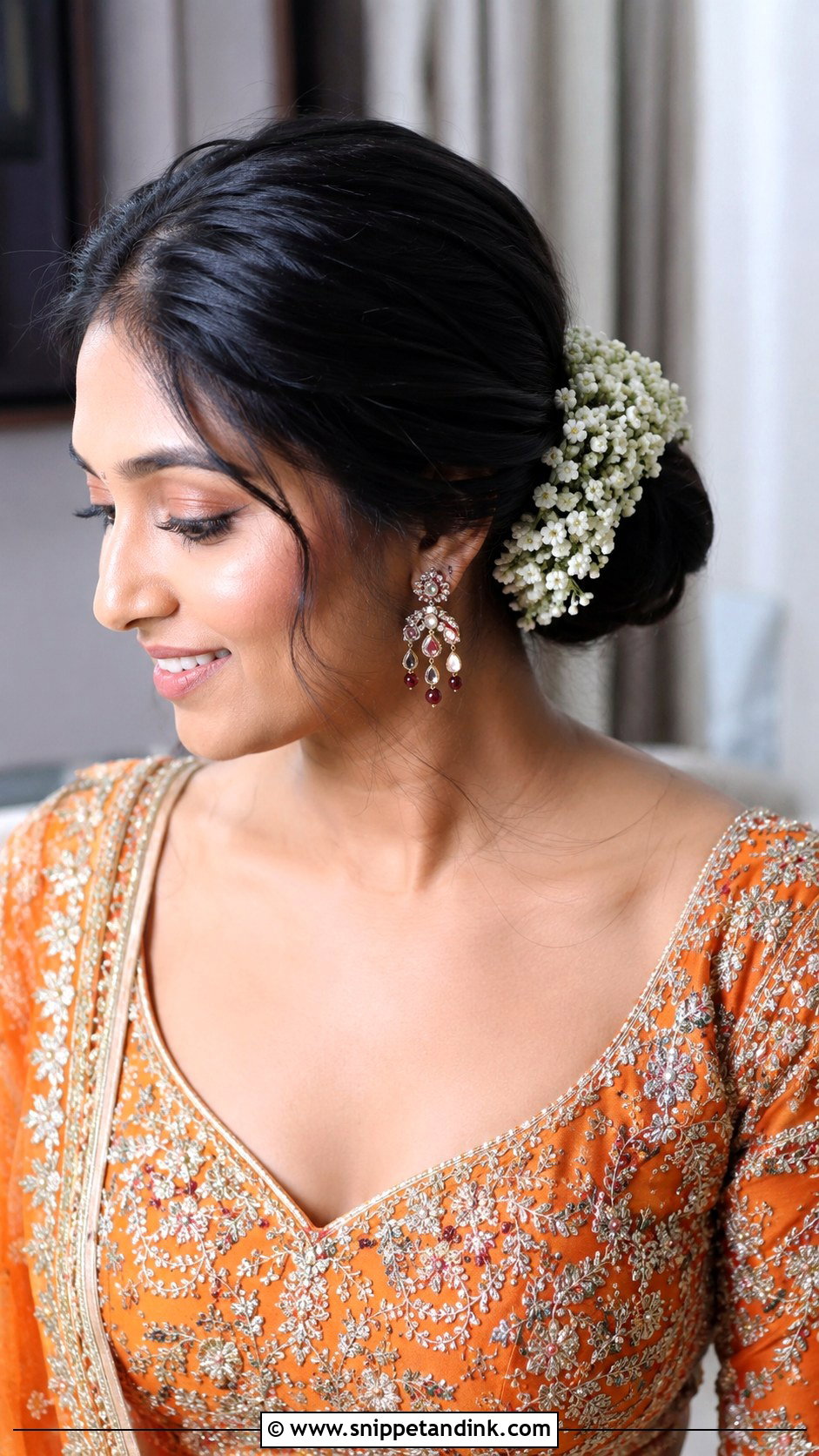
The twisted side bun is coiled low near one ear, with a jasmine gajra wrapped around its base. That off-centre placement is flattering on round faces, and it clears space for a heavy earring on the other side. I build the twists toward the bun from the opposite temple so the weight balances. It’s a natural fit with sarees, and a couple of curls loose at the front soften it for brides and guests.
19. Braided Crown With Open Curls
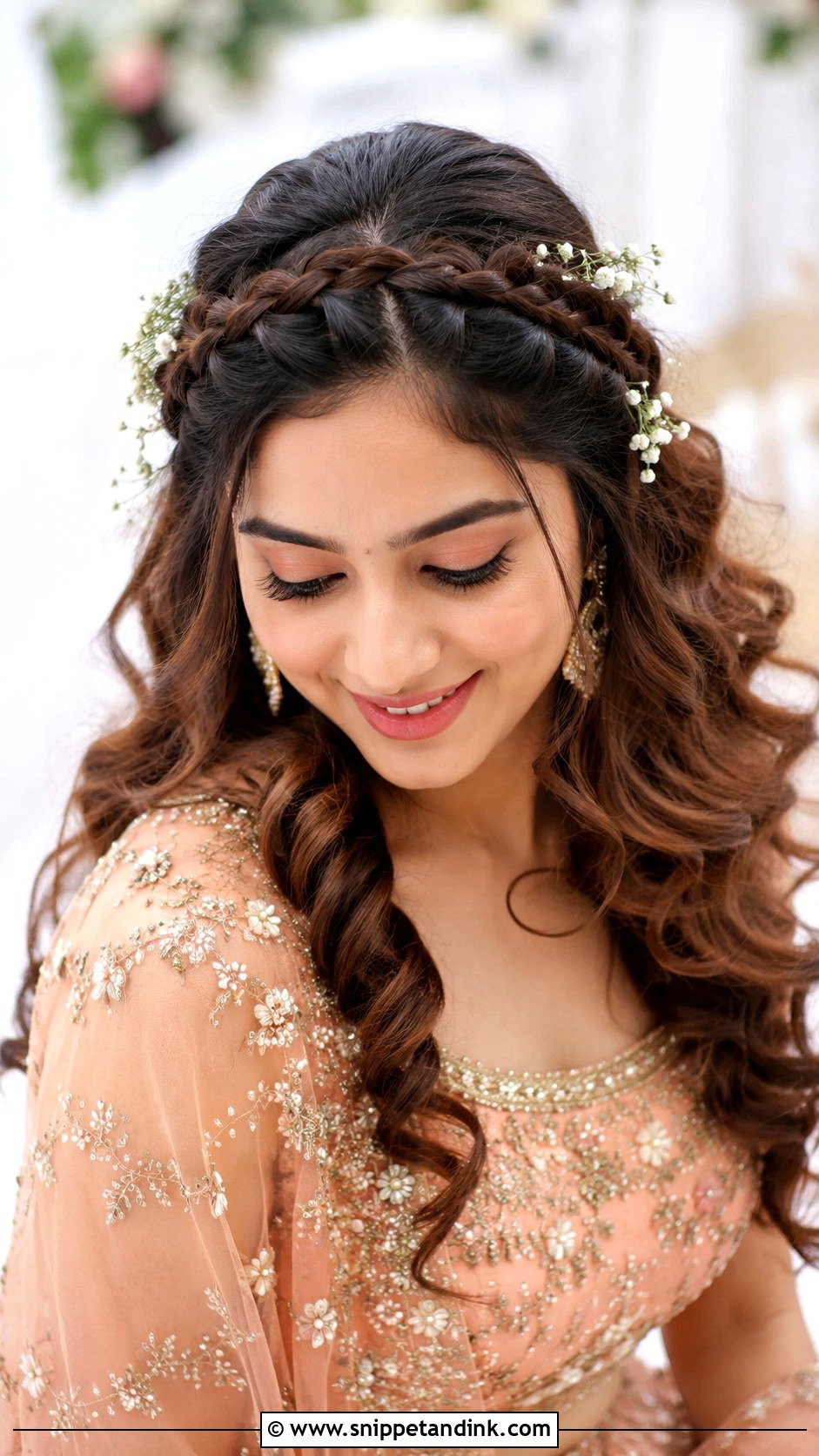
A braid across the top like a headband, with curls falling below, keeps hair off your face while giving length and volume behind. The braid also hides the pins that hold the curls’ weight. Tuck tiny flowers or pearls into the plait for an Indian touch. I suggest it for sangeet, engagements and receptions with a flowing lehenga or gown, and it’s one of the friendlier styles for hair with long layers.
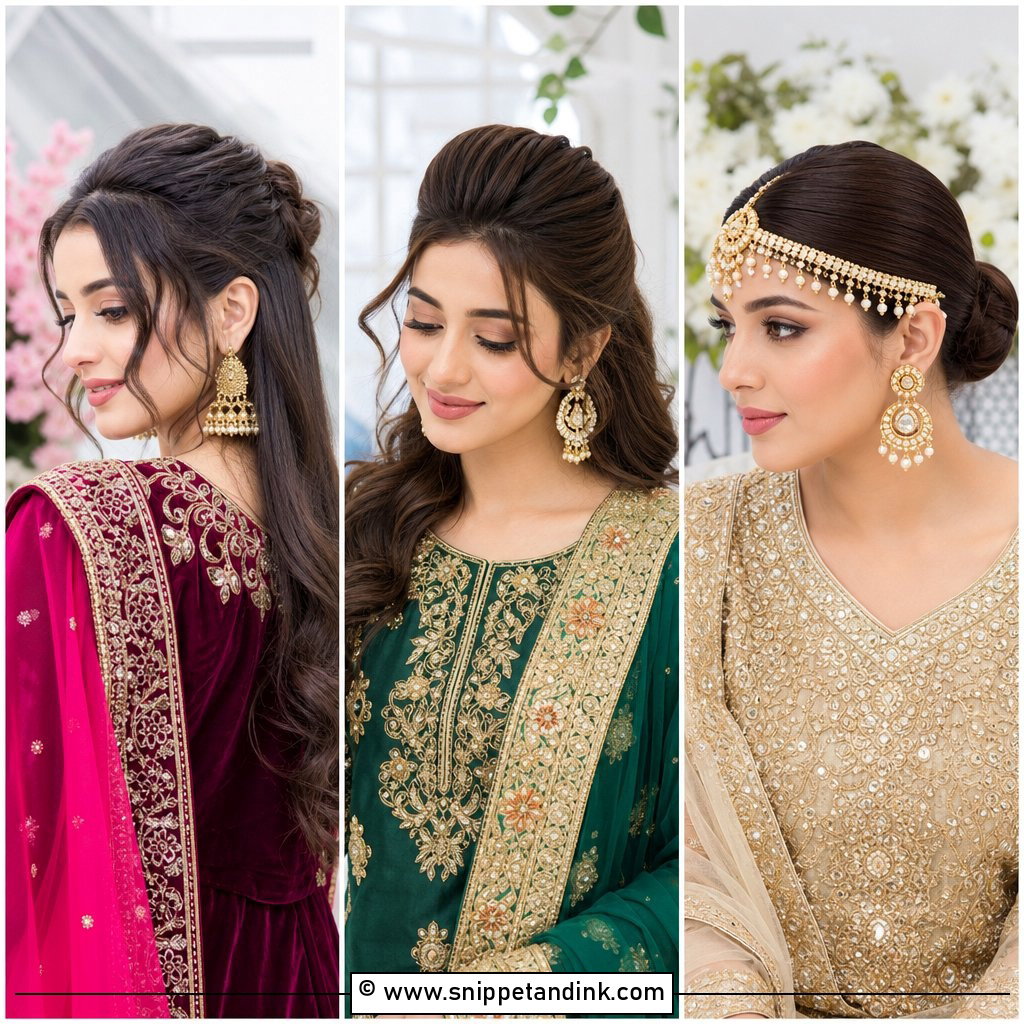
20. Sleek High Bun With Hair Jewelry
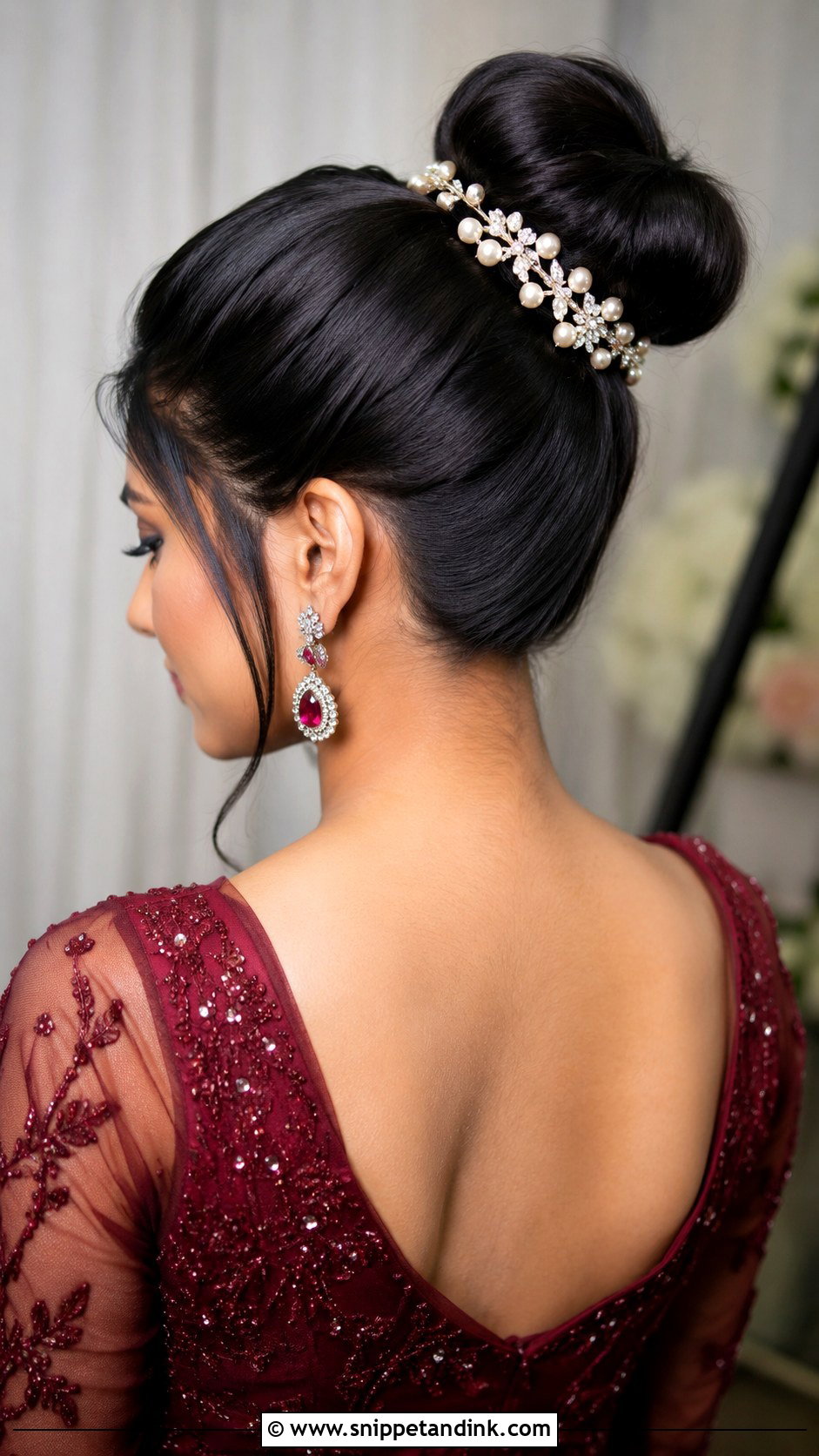
A sleek high bun at the crown lengthens the neck and clears the way for statement earrings. It’s polished and modern, and jewelry such as a jeweled pin, pearls or a small floral arrangement sits neatly around its base. I warn brides that a high, tight bun can bring on a headache by evening, so I build it on two ponytails rather than one, which spreads the tension. Wear it with a structured gown or a sleek saree for a reception or formal ceremony.
Where the Dupatta Sits Decides the Bun
Many brides cover their head with the dupatta for the ceremony, and it changes everything about bun placement. A high bun pushes the dupatta back and makes it slide. A bun at the nape lets it drape naturally and gives me a firm base to pin into.
I always ask for the actual dupatta at the trial. Heavy embroidered ones need pins through the fabric into the bun itself, usually four or five, plus two more above the ears. Lightweight net slips, so I anchor it with small combs. If you plan to switch to a lighter dupatta for the reception, tell your stylist; we may want a slightly higher bun for the second look.
Jasmine, Gajra and Heavy Pins on the Day
Fresh jasmine is fragrant and fragile. Buds open and brown within hours in heat, so I order gajras for the same morning and keep them wrapped in a damp cloth in the fridge until they go in. A light mist of water just before you leave helps.
- Pin the gajra at both ends and once in the middle; a single pin lets it swing and drag.
- Juda pins are heavy. Push them in at an angle against the direction of the bun’s coil, not straight down.
- If jasmine gives you a headache or an allergy, silk or pearl gajras look almost identical in photos.
- Ask a cousin to hold a small kit: bobby pins, a mini hairspray and a tail comb.
My honest advice: if your hair is thin, skip the heaviest ornaments for the ceremony and keep them for photos. Comfort shows on your face long after the jewelry stops being noticed.
Start With the Function, Then the Flowers
The easiest way to narrow these down is to list your functions and outfits side by side. Daytime haldi and mehndi need hair fully off the neck. Sangeet needs a style that survives dancing. The pheras need something that sits calmly under a pinned dupatta and heavy jewelry, and the reception is where open curls and high buns finally make sense. Once the function decides the shape, the gajra, maang tikka and pins become the finishing details, and you’ll feel comfortable and like yourself at every event.
You'll Like These Ideas:





Leave a Reply