
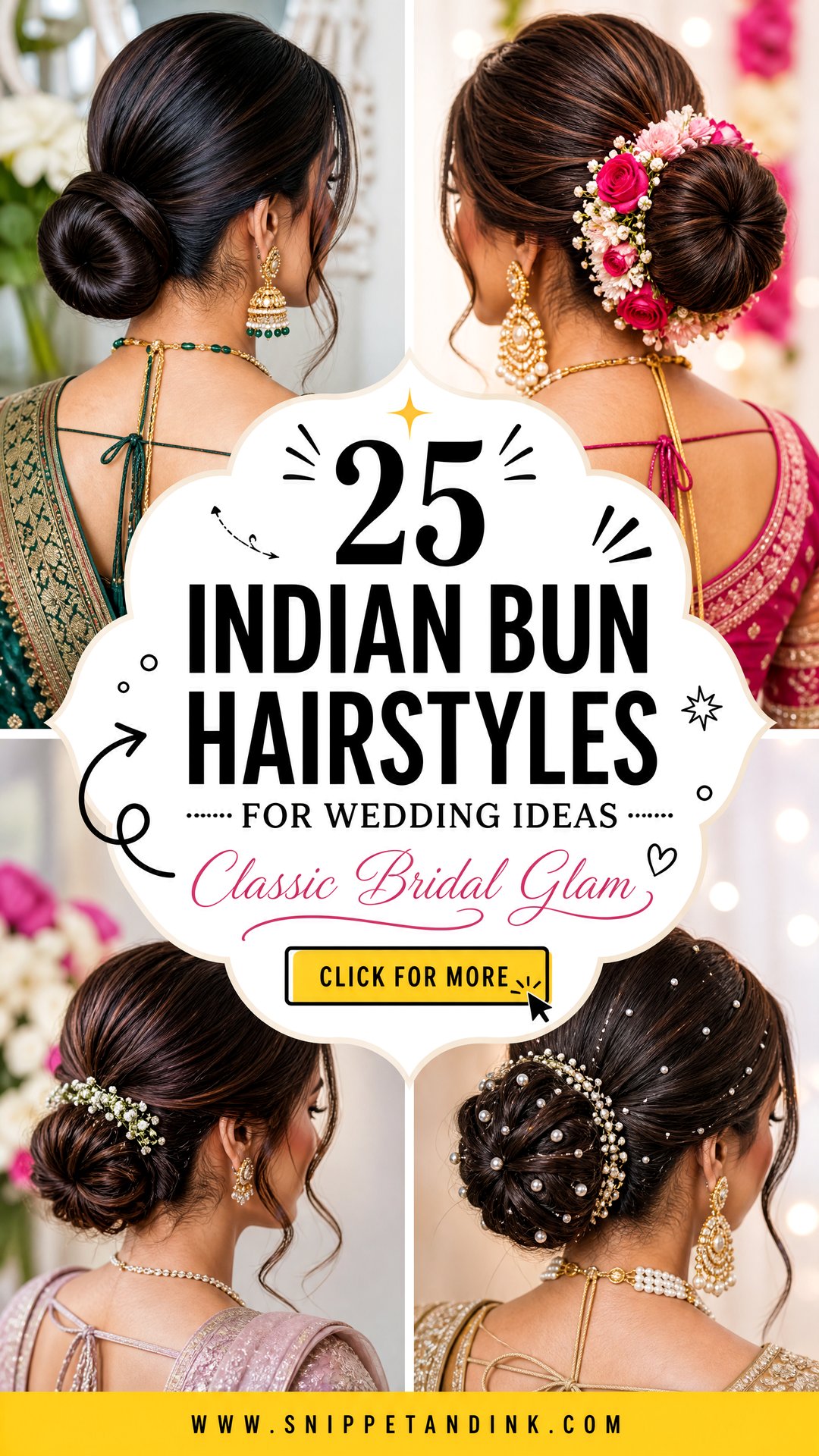
Ask me which hairstyle survives an Indian wedding best and I’ll say the bun, nearly every time. It carries a dupatta pinned on top, anchors a maang tikka, holds flowers and keeps hair off a heavy blouse through a ceremony that can run for hours in a warm mandap. The variation is huge, from a sleek chignon to a South Indian bun buried in jasmine. Below are 25 bun styles I’d consider for a bride, a bridesmaid or a guest, with notes on how each is built and who it suits.
Crown, Nape or Side: Where an Indian Bridal Bun Should Sit
Bun height is the first decision I make with a bride, and it’s rarely about what looks prettiest in a photo. It comes from three things: how the dupatta will be draped, what sits on the neck, and how the bun will be seen in the ceremony.
- Dupatta over the head: go low, at the nape or just above it. A high bun lifts the fabric into an odd peak and the dupatta slips back every time you move.
- Heavy choker or a worked blouse back: a mid-height bun keeps both visible without hair resting on the embroidery.
- No head covering at the reception: this is where a crown bun or a side bun makes sense.
- Long ceremonies seated on the floor: low buns are more comfortable when you’ll be leaning back against cushions or a chair.
Neck length matters a little too. A higher bun lengthens a short neck; a low, wide bun can make a long neck look more balanced. I’d still put the dupatta first, because a bun that fights the fabric gets pinned and repinned all day.
1. Low Messy Bun for Bride
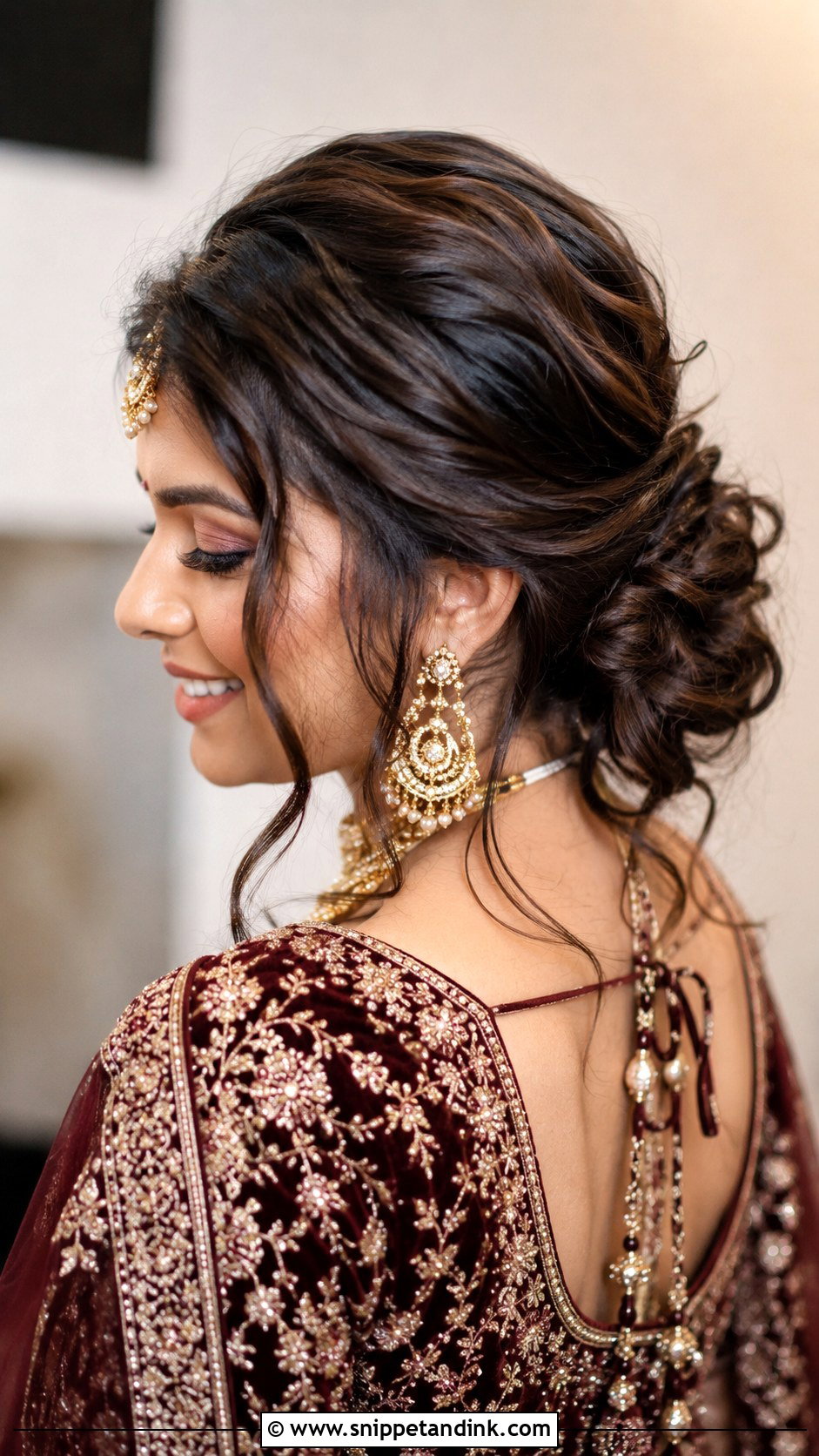
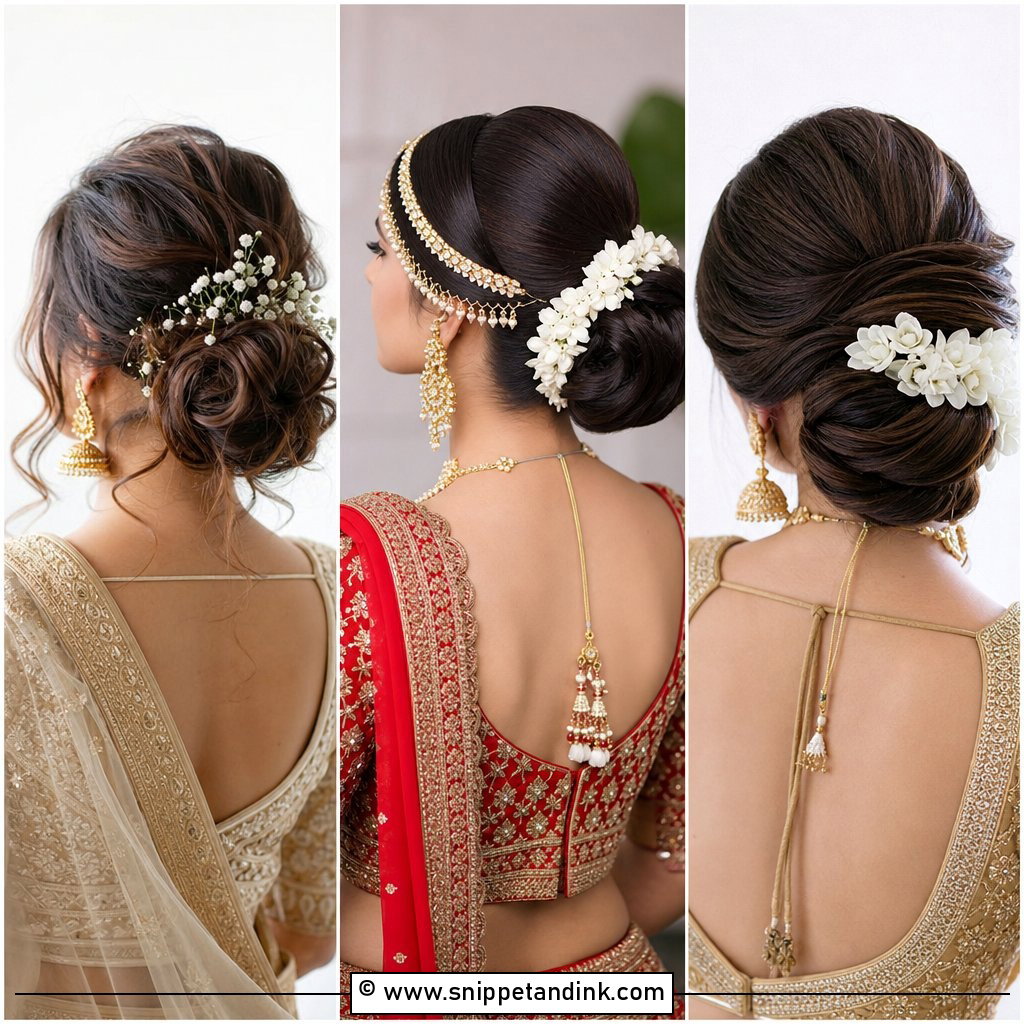
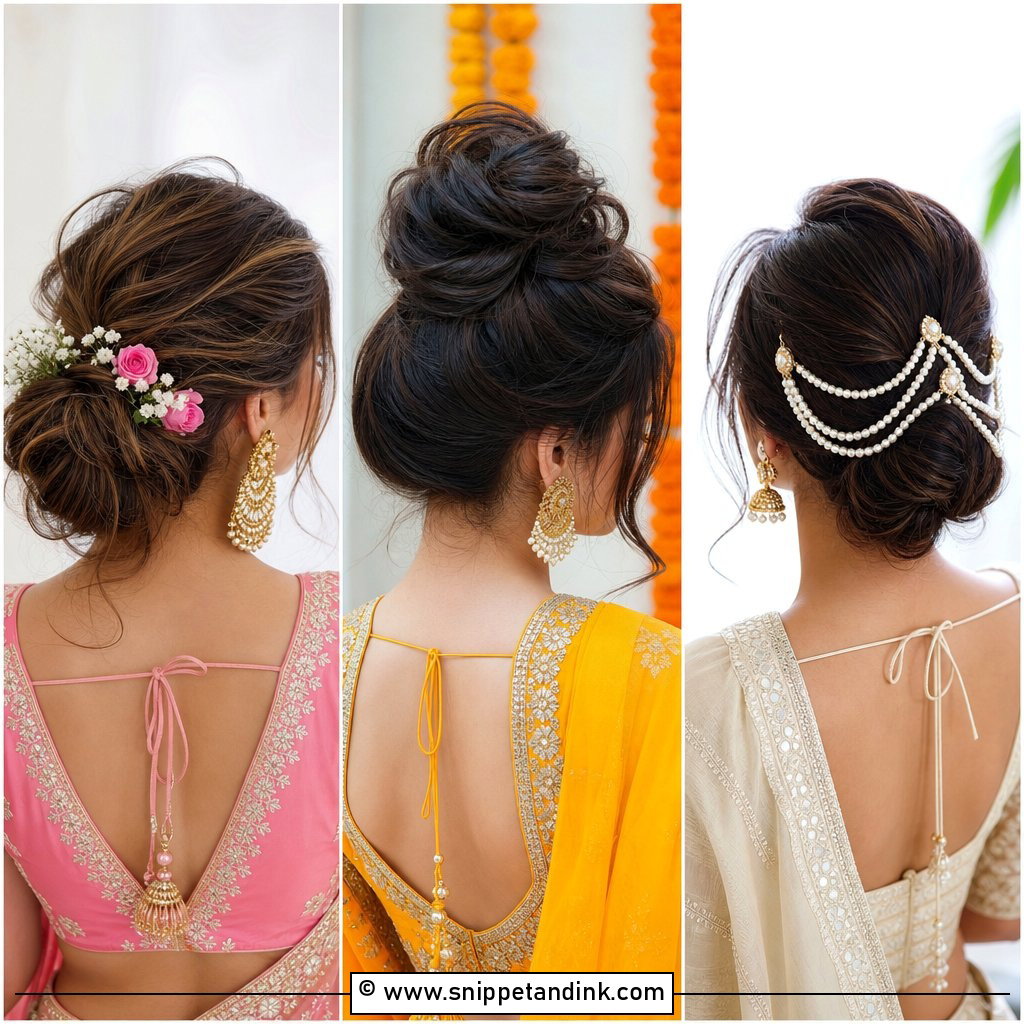
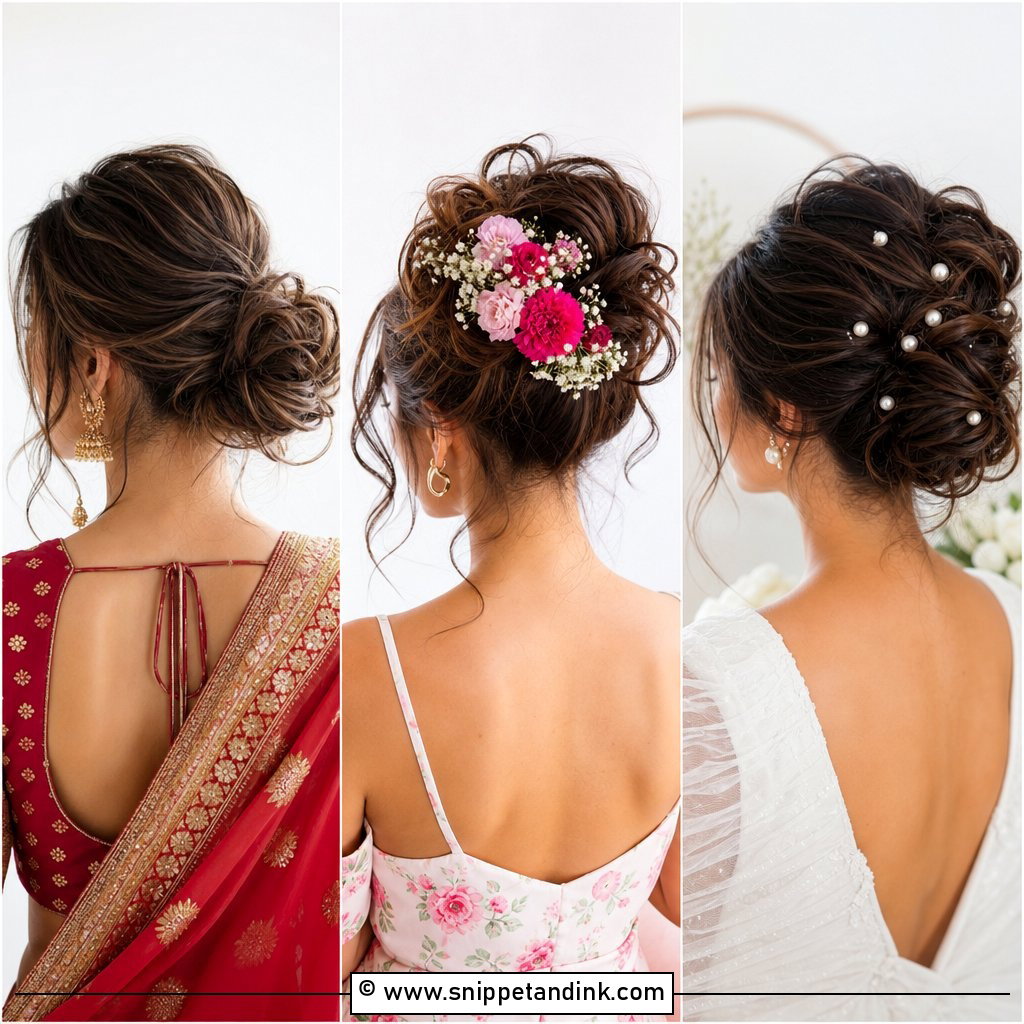
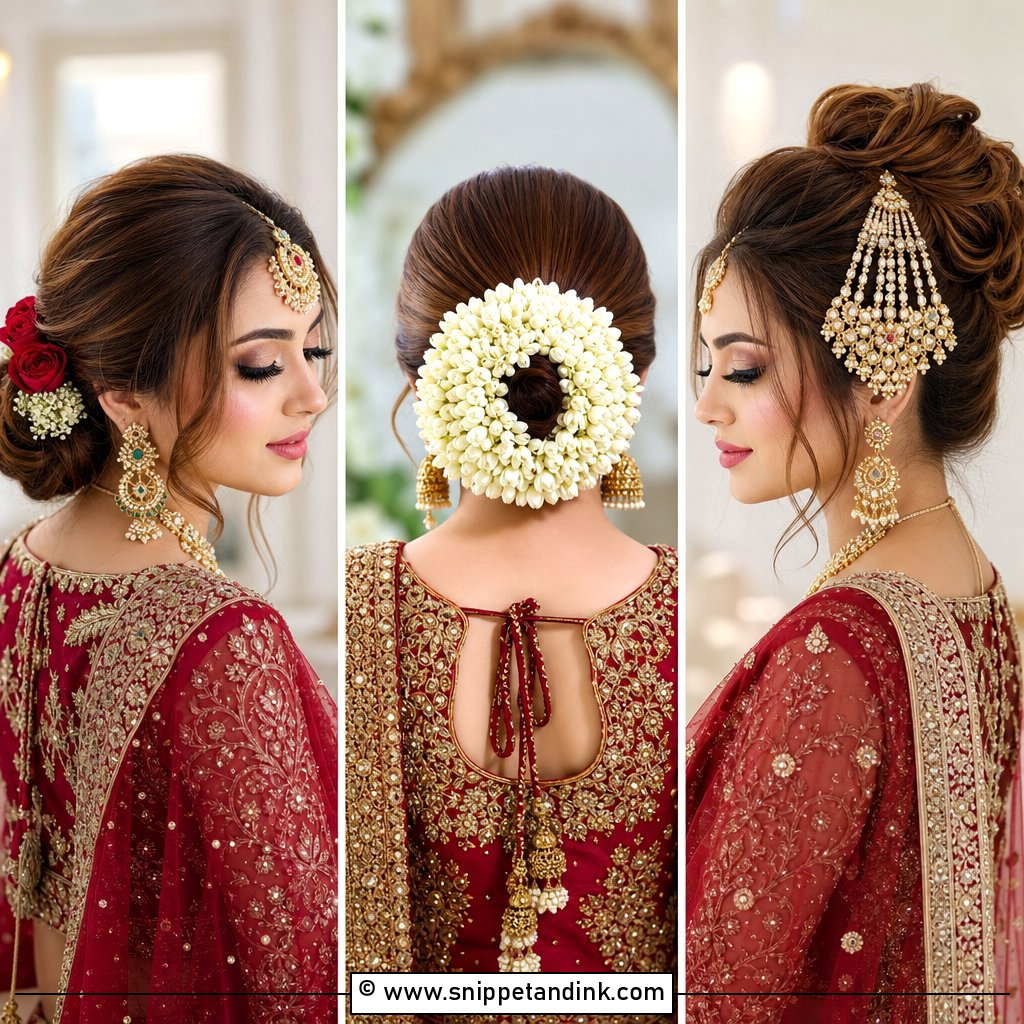
The low messy bun sits at the nape with loose pieces around the face, and it’s the bun I’m asked for most by brides who don’t want to look “done”. It pairs well with a heavy lehenga because the soft shape offsets all that embroidery. Underneath, though, it’s not messy at all: I pin it onto a firm ponytail base so the texture can stay loose without the bun sliding. Curl the face pieces and set them, or they’ll be straight again by the pheras. A small gajra or a few pearl pins tucked into the folds is plenty.
2. Sleek Low Bun With Saree
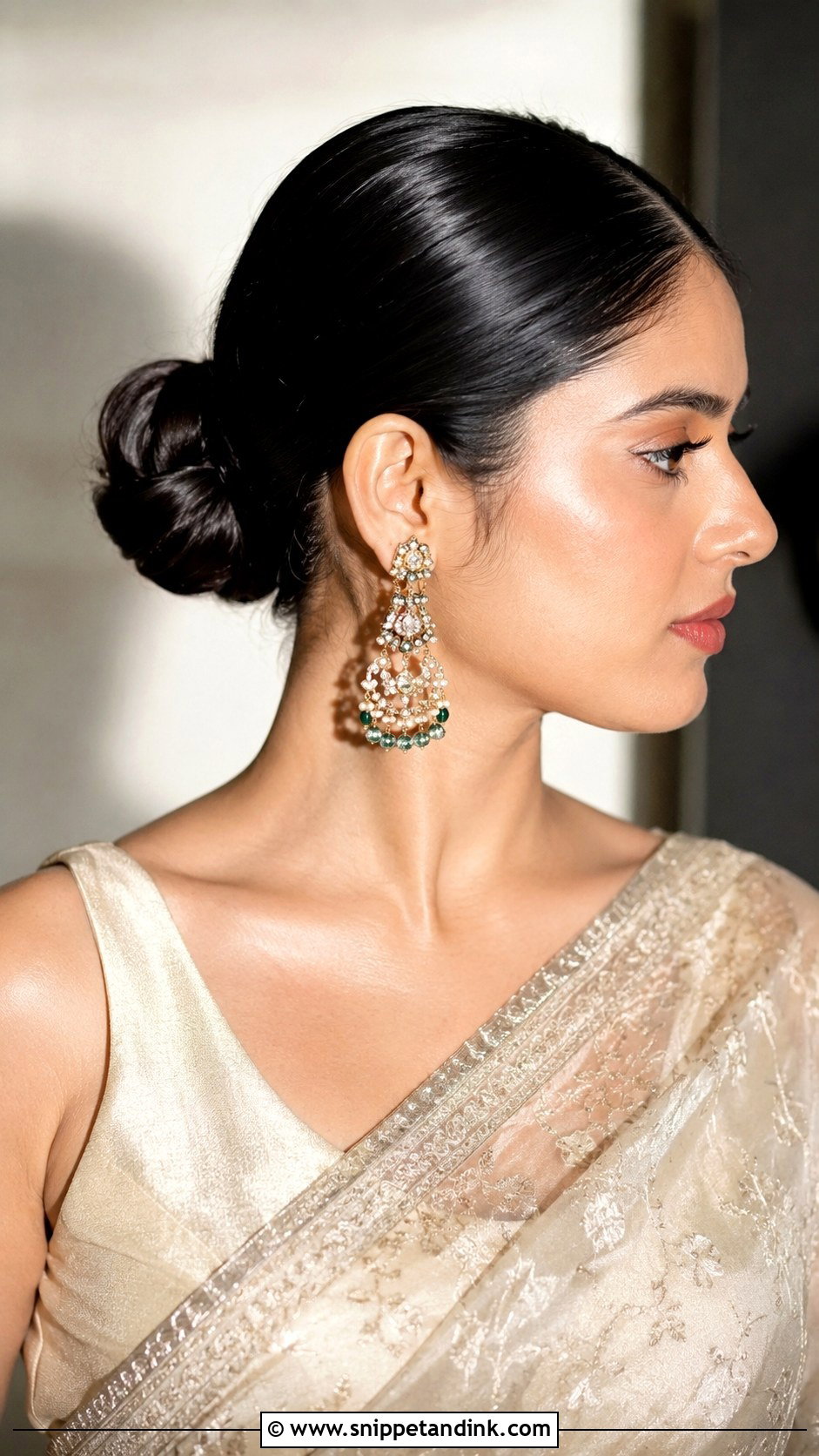
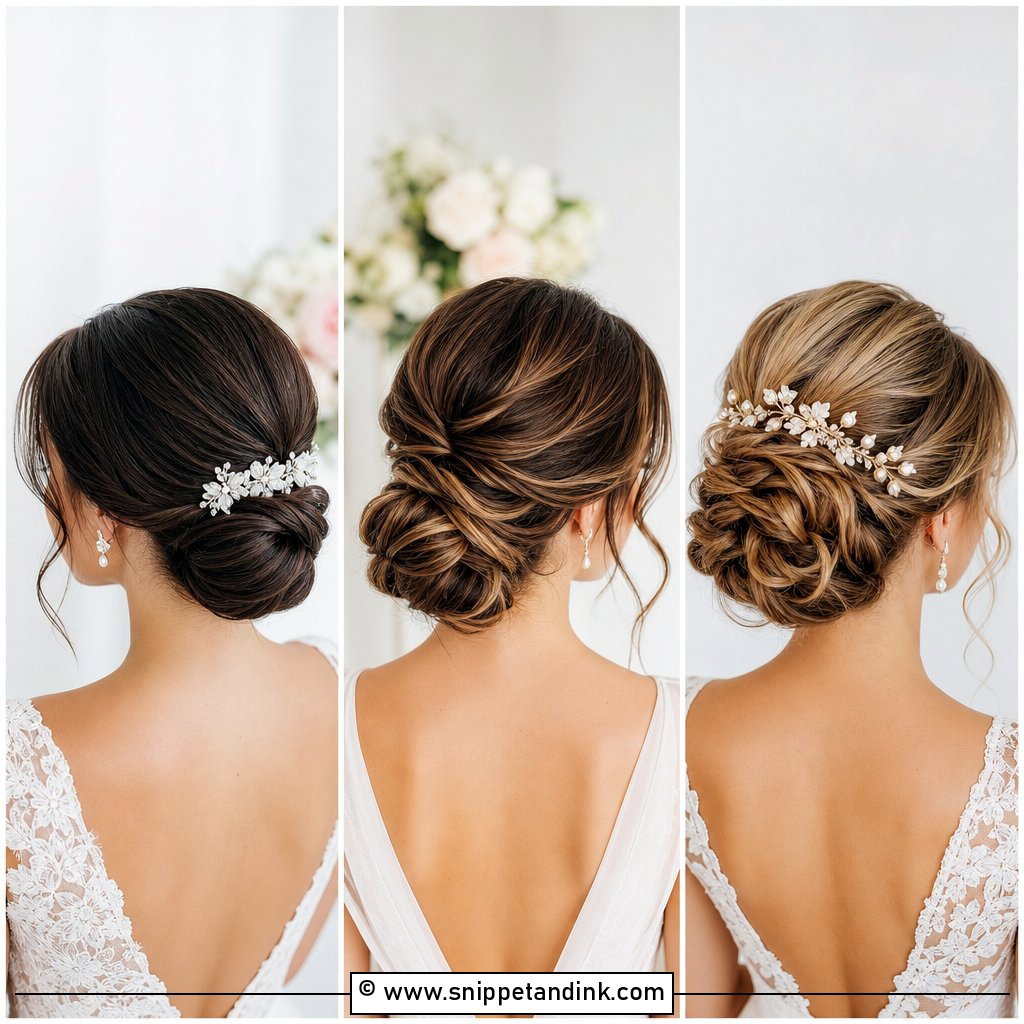
A sleek low bun is all about the blow-dry. I smooth the hair completely straight before it’s gathered, then tie it at the nape and coil it tight. It suits a saree because nothing competes with the pallu, and it lets a necklace and earrings carry the look. Where it struggles is with very curly or frizz-prone hair in humidity, which needs extra product to stay flat. A thin maang tikka or a few simple pins add just enough shine for a reception.
3. Floral Gajra Bun
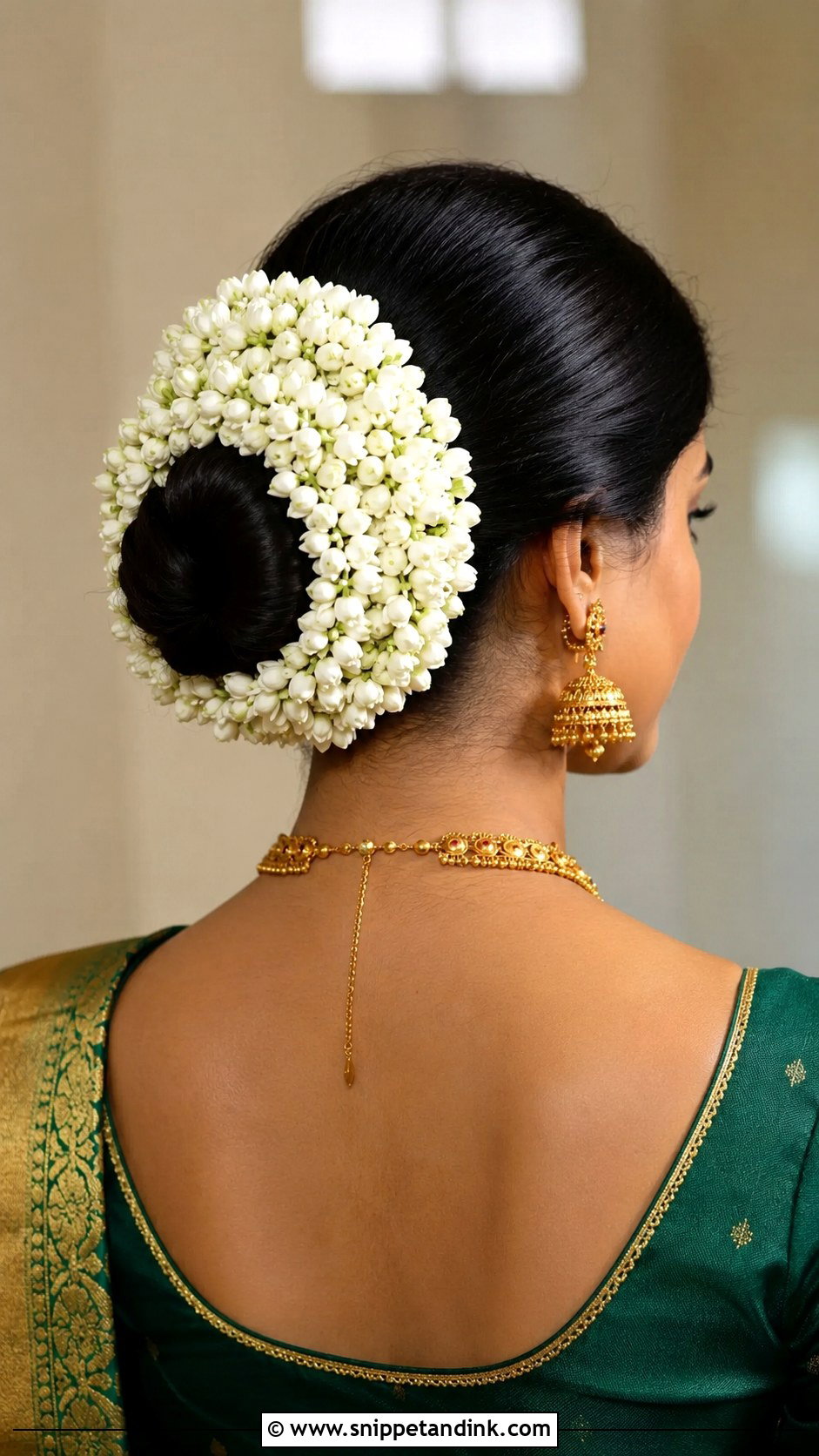
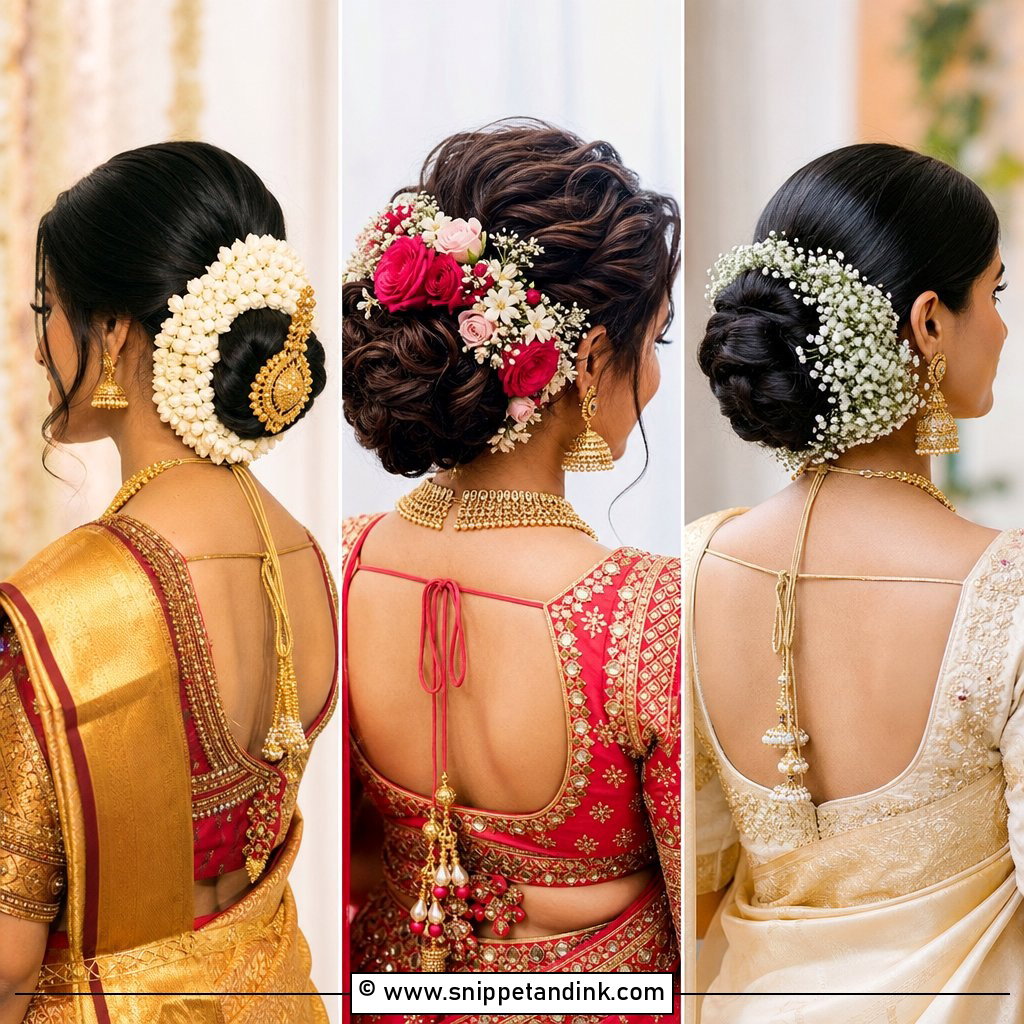
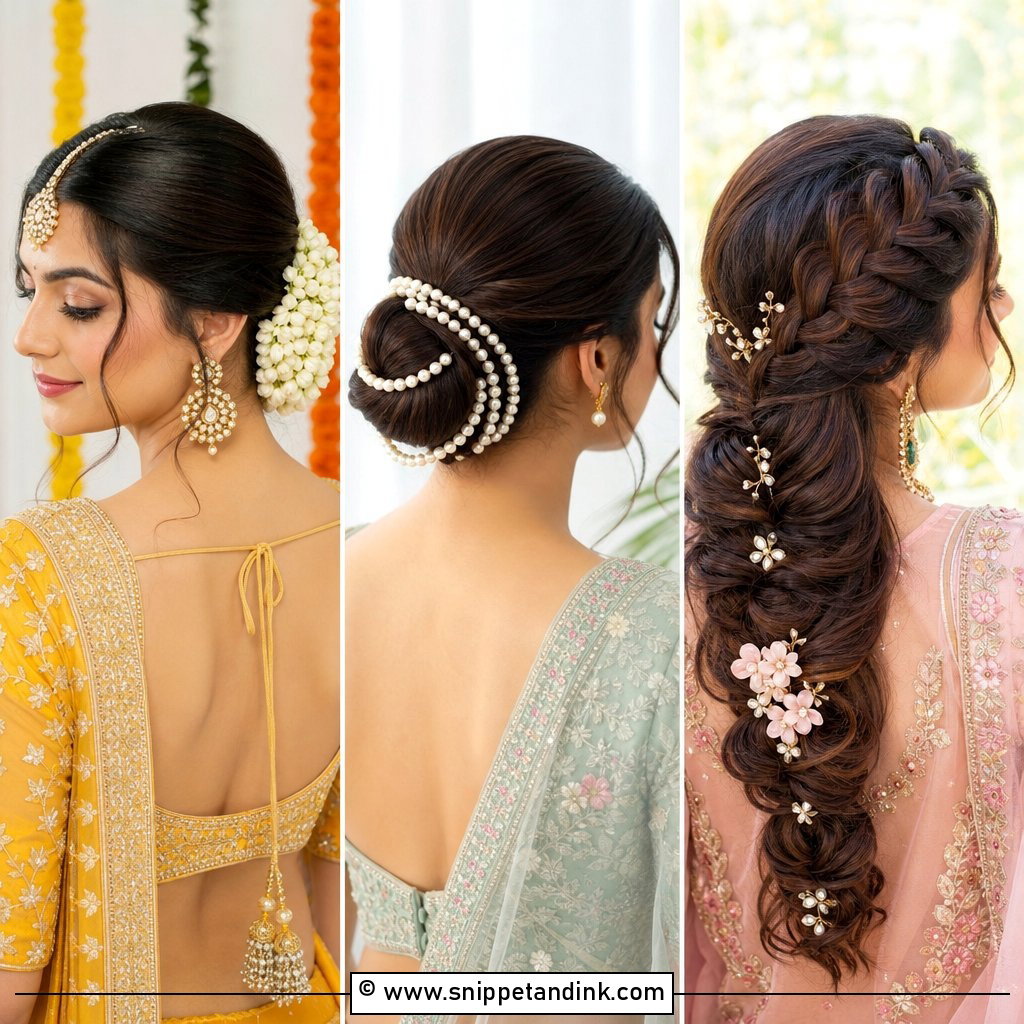
There is something deeply traditional about a bun wrapped in fresh jasmine, and I still think it’s the most fragrant thing a bride can wear. With a silk saree and a South Indian look, the white against dark hair is hard to beat. The practical side: jasmine strands are heavier than they look, so I wrap them around a bun that’s already pinned solid, and attach the gajra with U-pins every few centimeters. Keep the flowers cool and damp until the last minute, since buds open and brown quickly in a warm room.
4. Braided Bun for Wedding
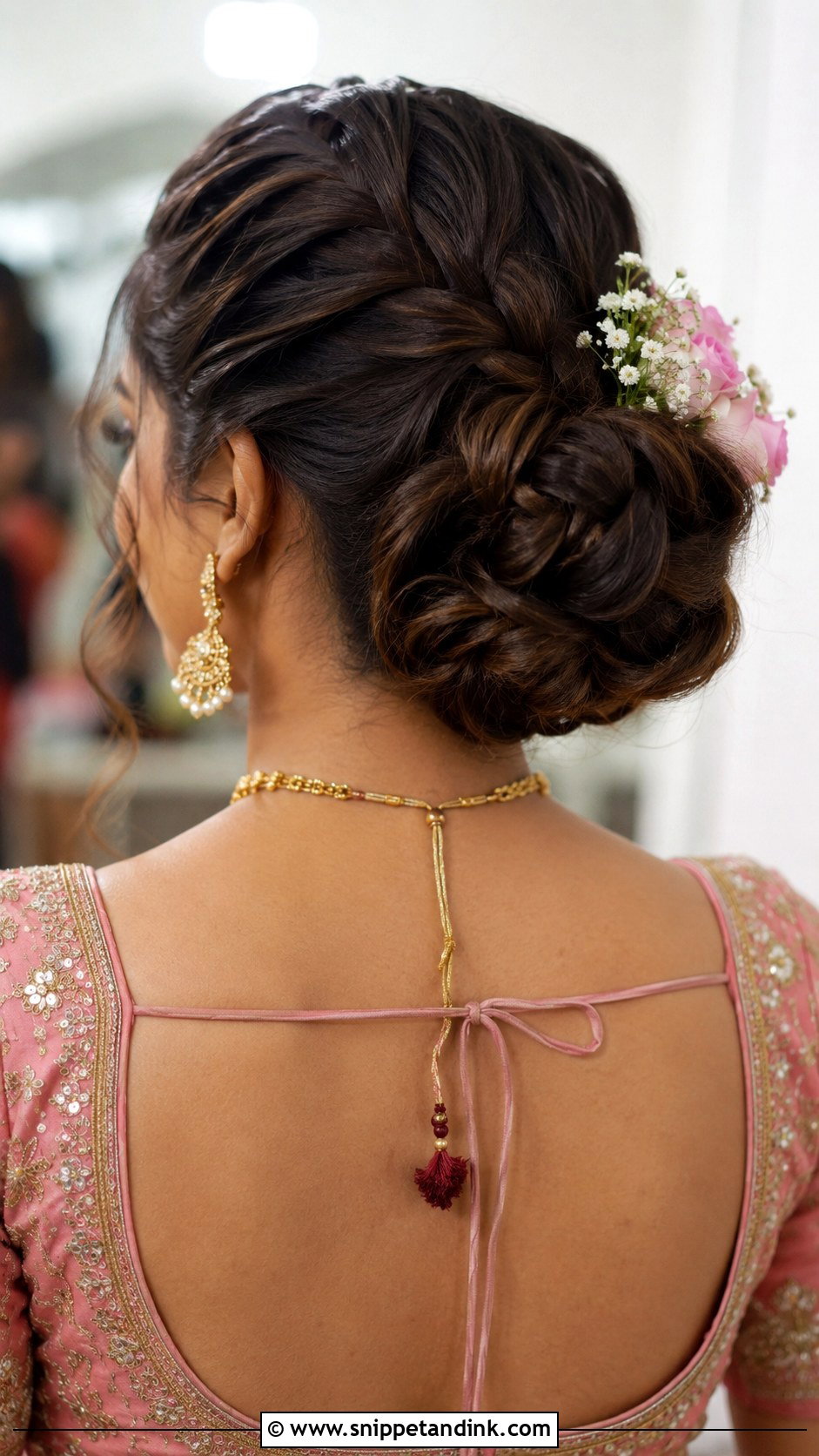
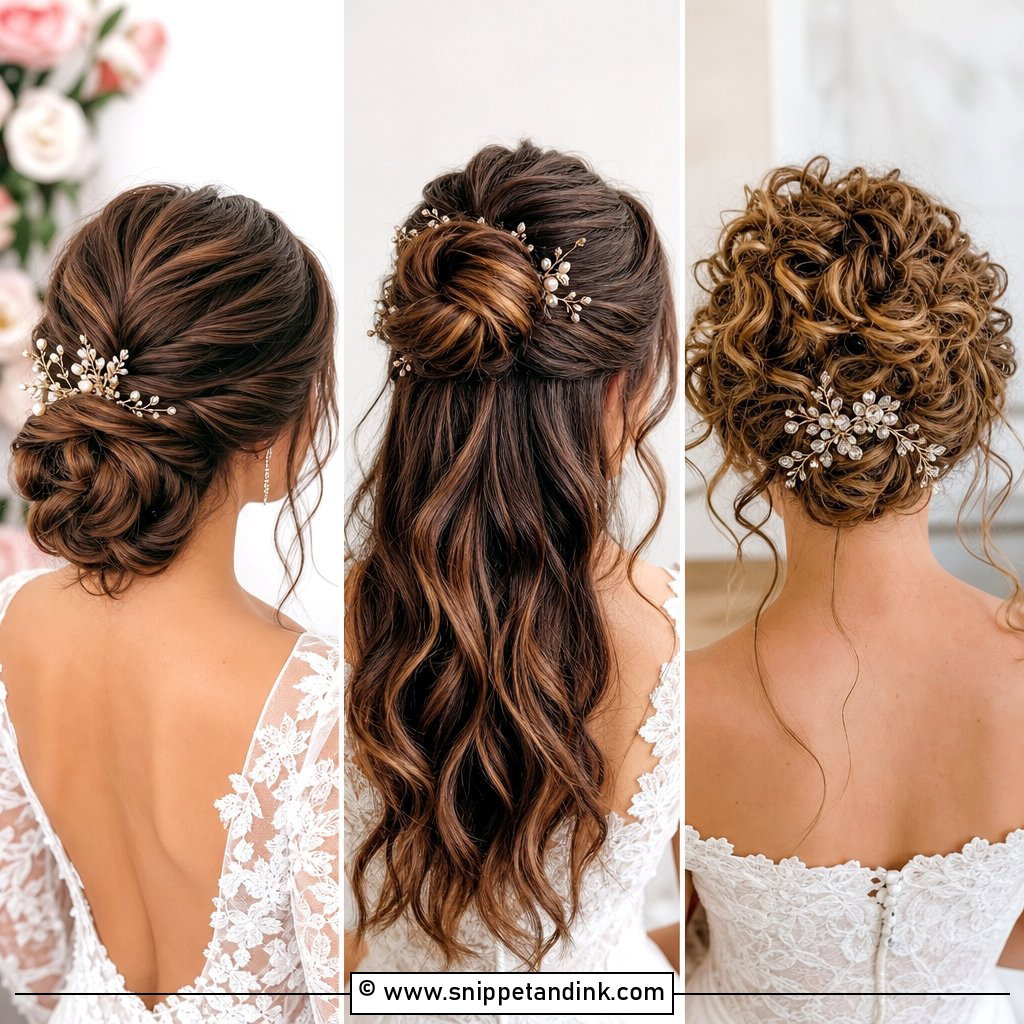
A braided bun is braided first, then coiled, and the braid does two jobs. It adds texture you can see from the back, and it shrinks thick hair into a smaller, lighter knot. A French or fishtail braid gives the most dimension. I’d steer brides with very fine hair toward a padded bun instead, because a braid on thin hair coils into something quite small. Small flowers or hair chains slot neatly into the braid’s ridges.
5. High Bun With Maang Tikka
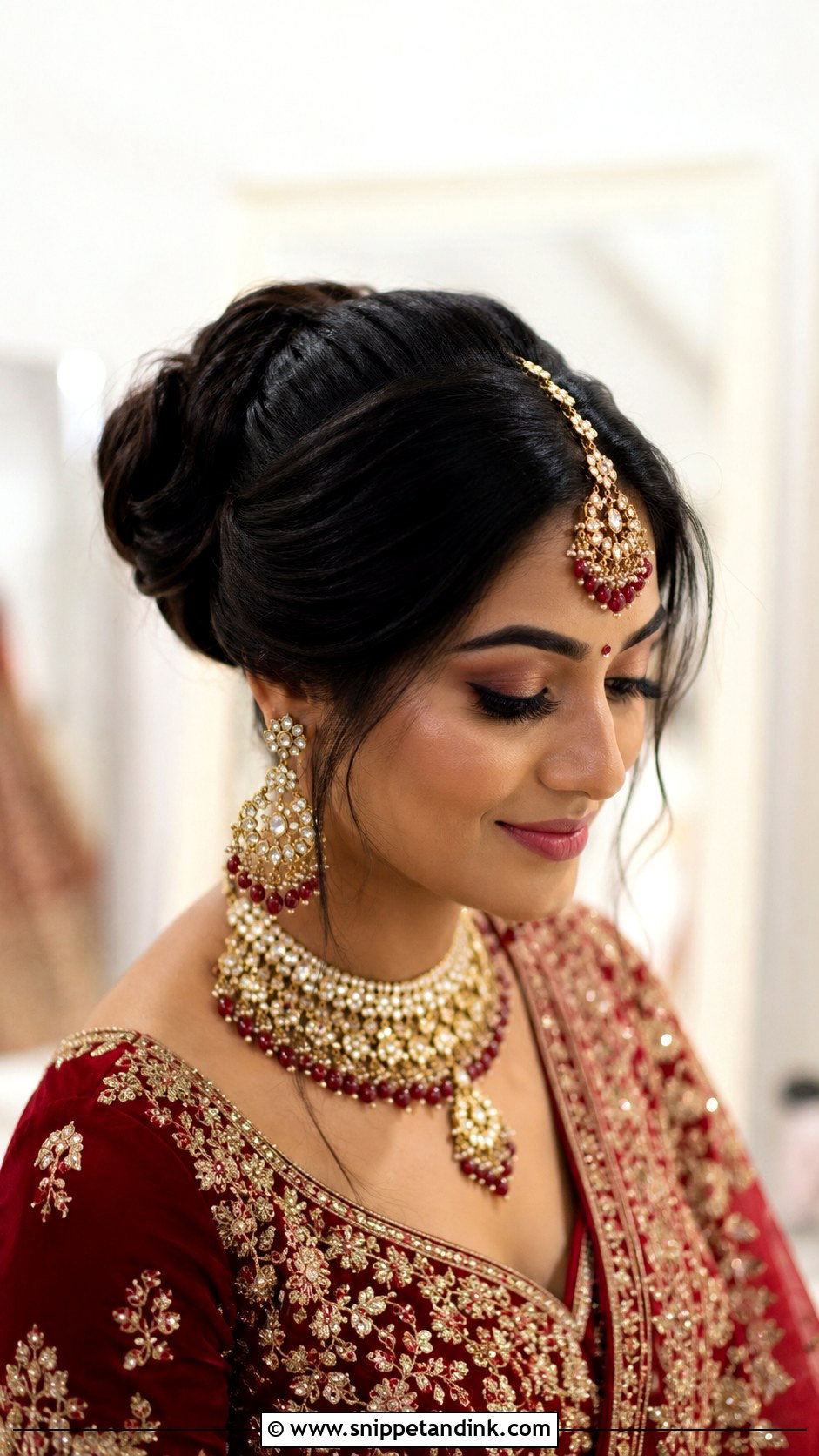
A high bun sits at the crown and lengthens the neck, which is why it suits receptions with a big necklace. With a bold maang tikka and chandelier earrings, the vertical line looks very regal. The honest catch is the dupatta: a high bun lifts the fabric and makes it sit awkwardly if it’s draped over the head, so I save this one for functions where the dupatta goes on the shoulder. Keep it sleek or add a little height at the crown, and tuck any hair jewelry around the base, not on top.
6. Side Swept Bun
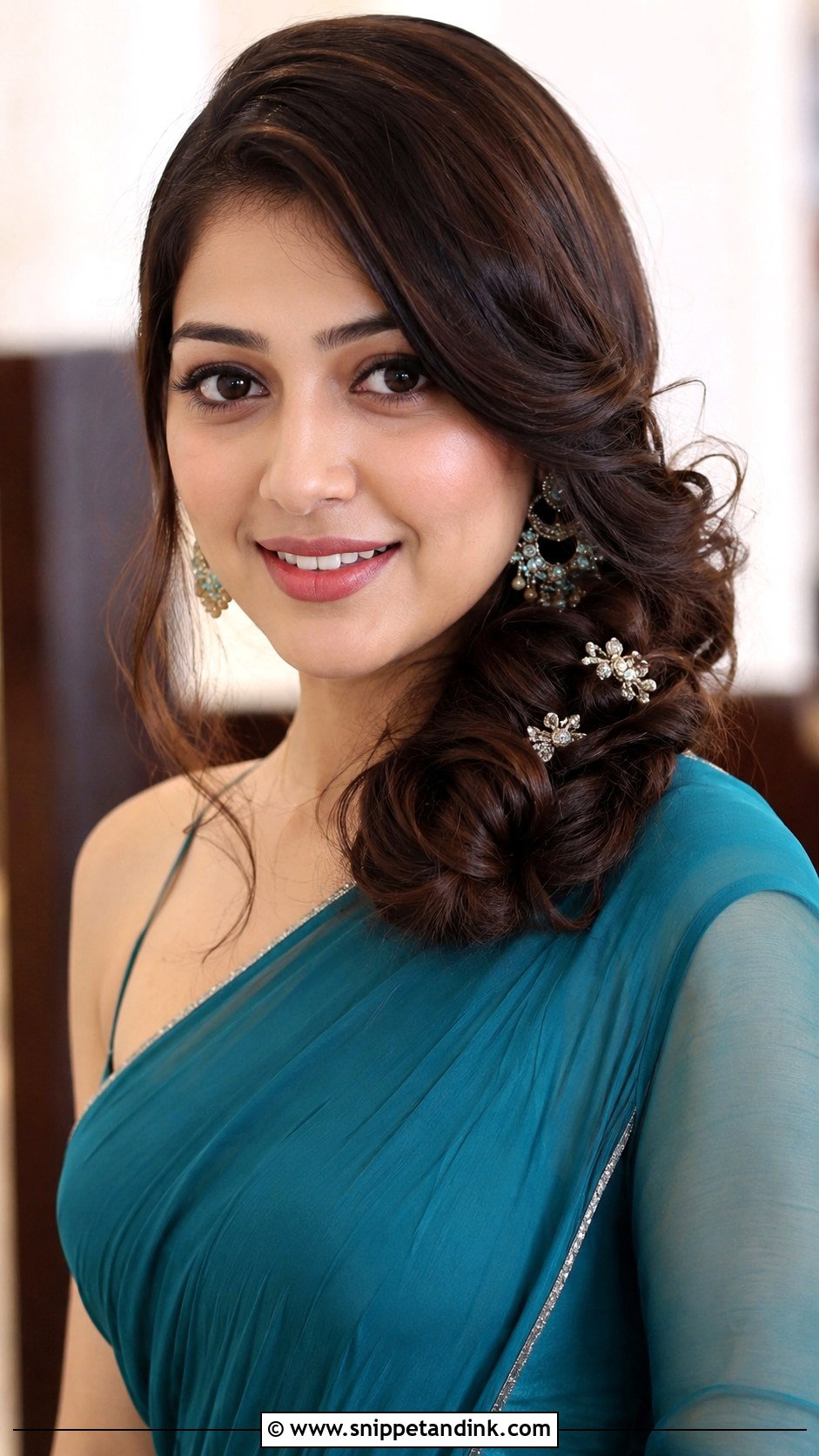
The side swept bun sits toward one shoulder so it shows up in front-facing photos. It works best when the saree pallu falls on the same side, because the hair and drape then frame the face together. I build it slightly behind the ear rather than right beside it, so it doesn’t push the earring forward. Flowers or jeweled pins along the sweep finish it.
7. Chignon Bun for Reception
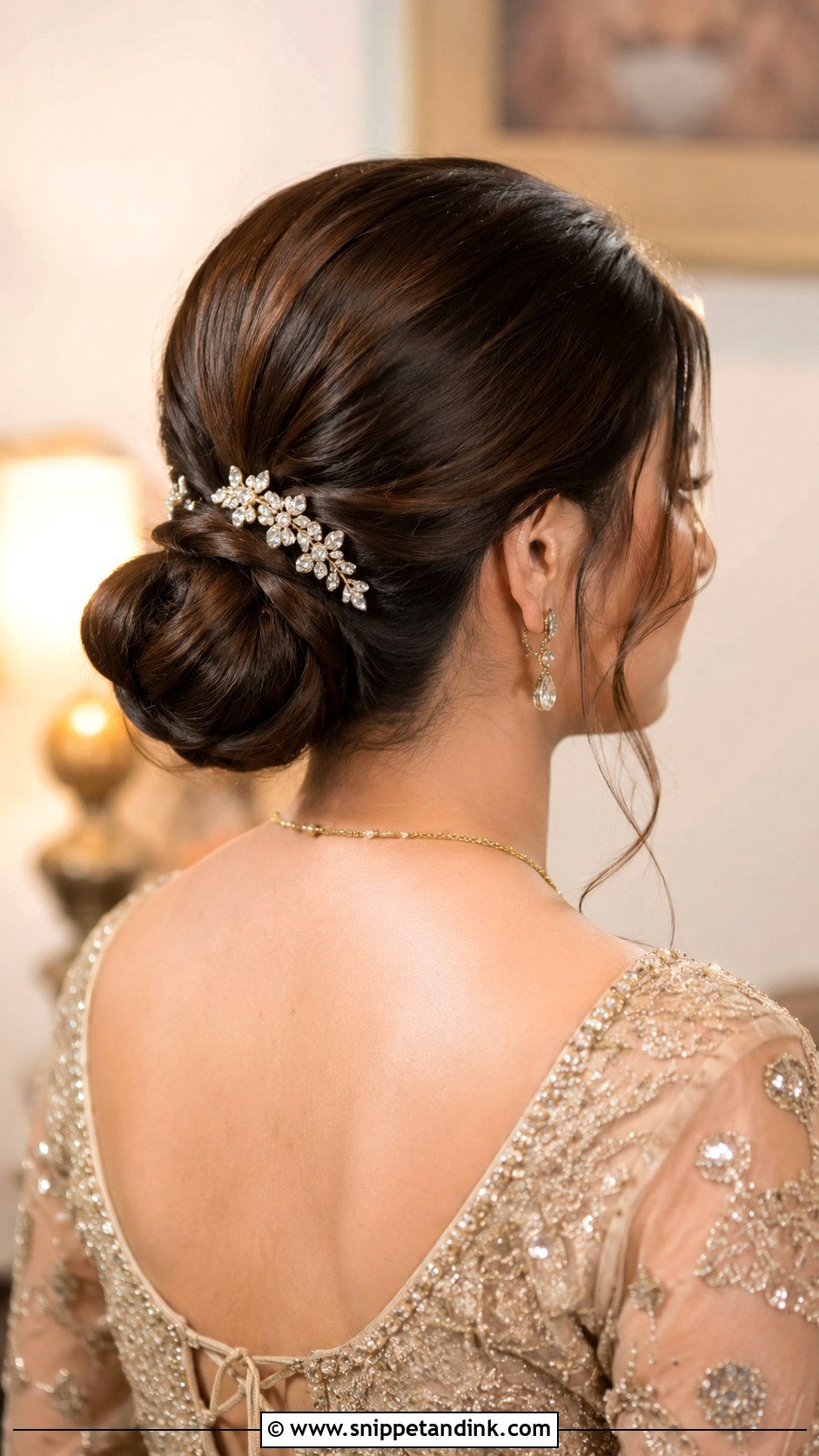
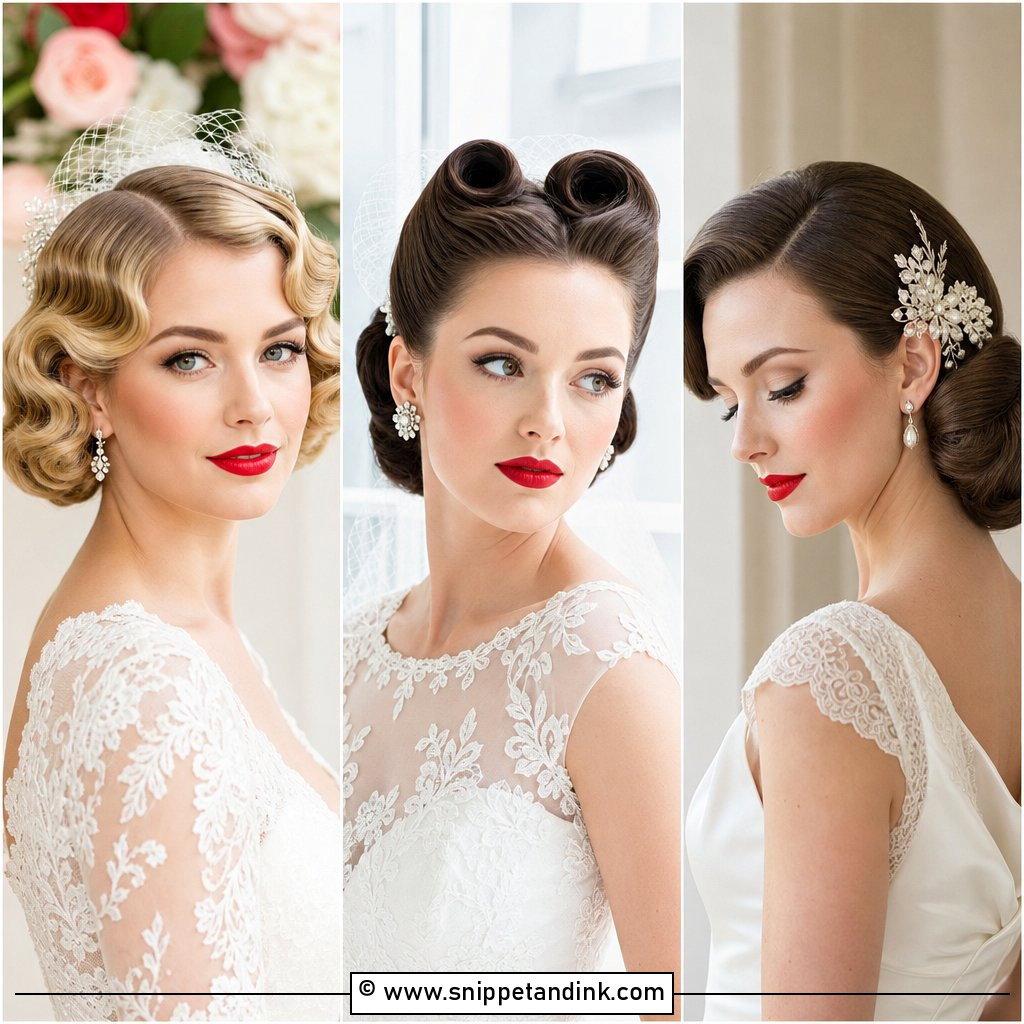
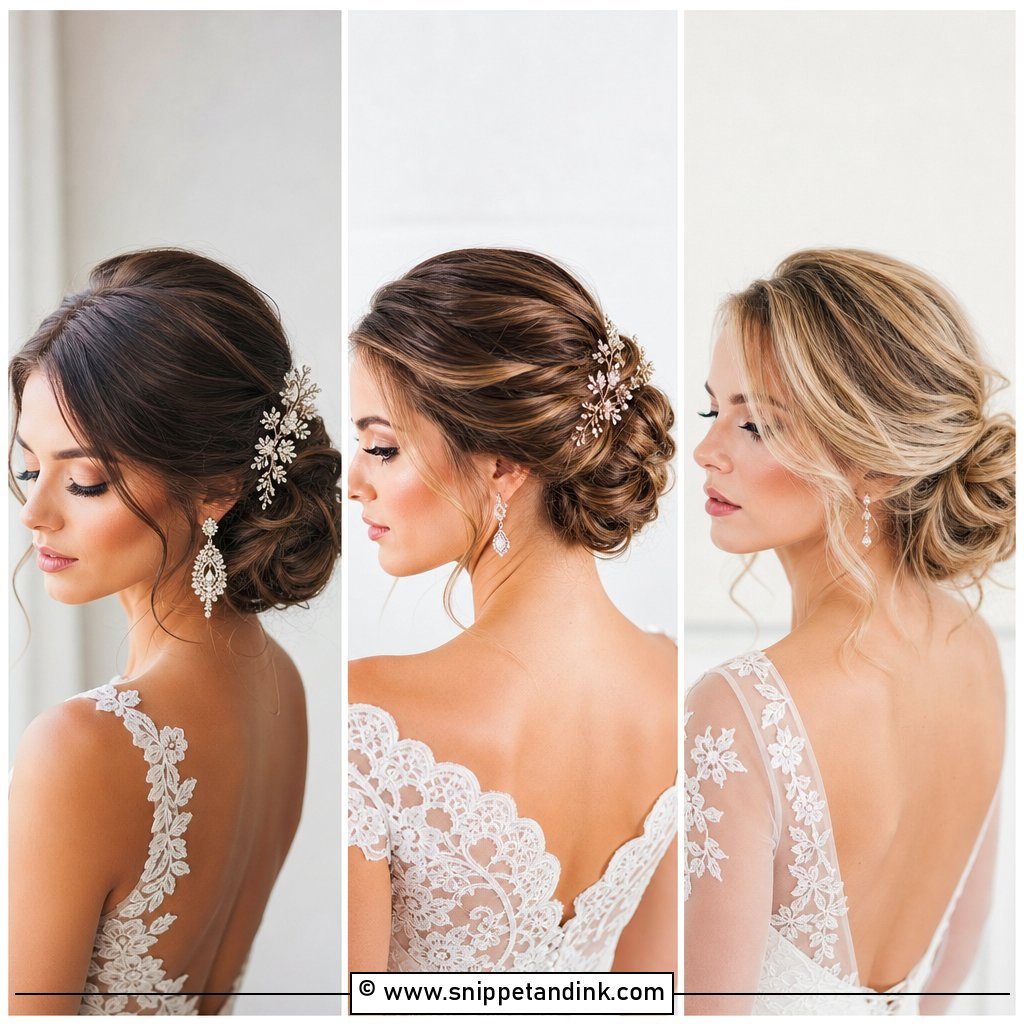
A chignon is a low, smooth bun, usually rolled or knotted at the nape, and it’s the most restrained style here. It keeps attention on makeup and outfit, which is why I like it for receptions and cocktail functions with a fusion gown or modern lehenga. It also takes a veil comb securely if you’re wearing one. A few loose strands soften it; a sparkling clip on one side is the only decoration it needs.
8. Donut Bun With Flowers
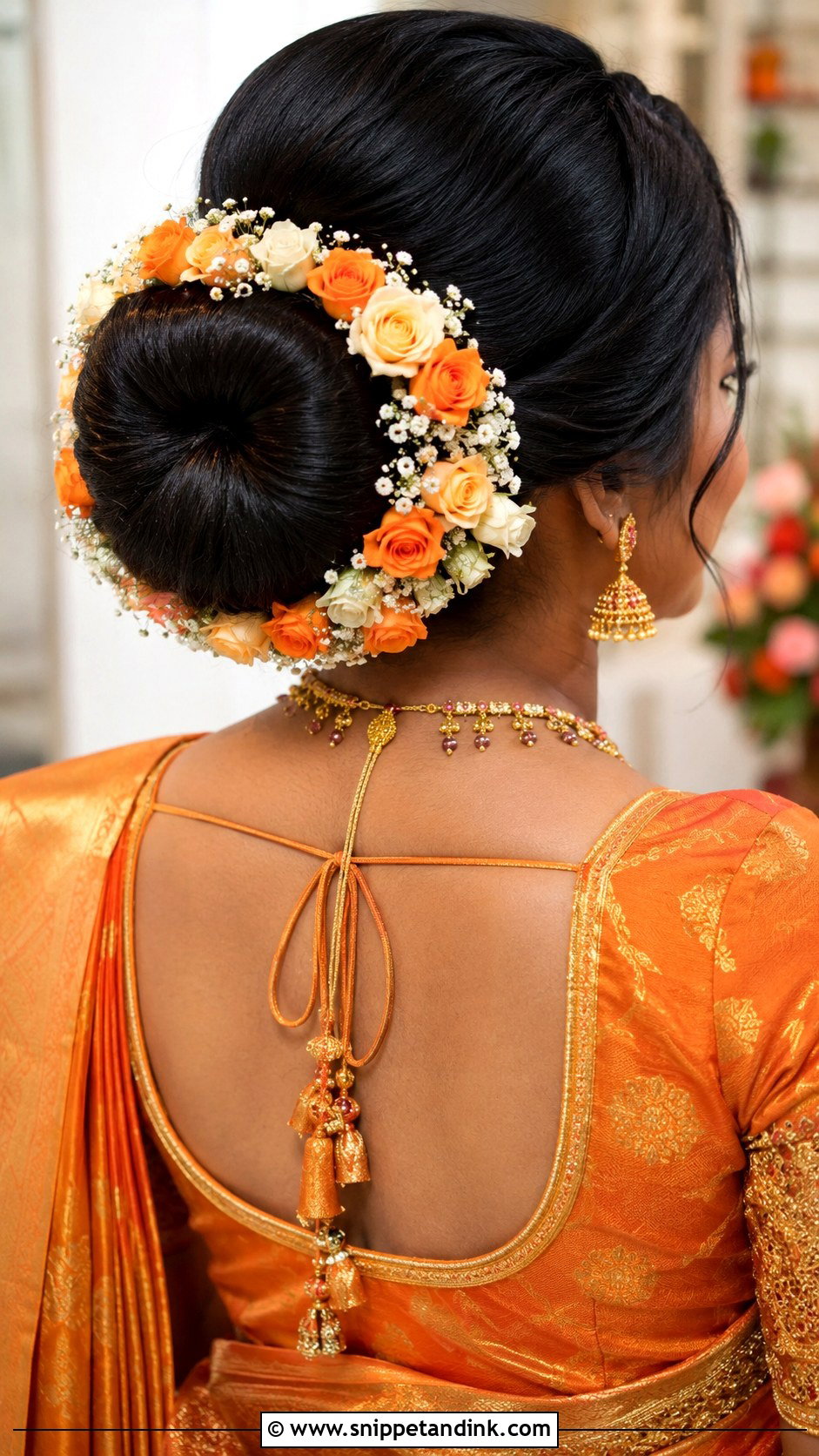
A donut bun is built around a foam ring, which gives you a full, round shape even when your own hair is thin. The trick is matching the donut to your hair color and covering it fully, because a glimpse of beige foam ruins a close-up. Once it’s done, it’s one of the sturdiest bases there is for a ring of gajra or flowers, and it holds heavy jewelry without losing shape. Pearls or small beads can be pinned into it if flowers aren’t your thing.
9. Bun With Maang Tikka and Veil
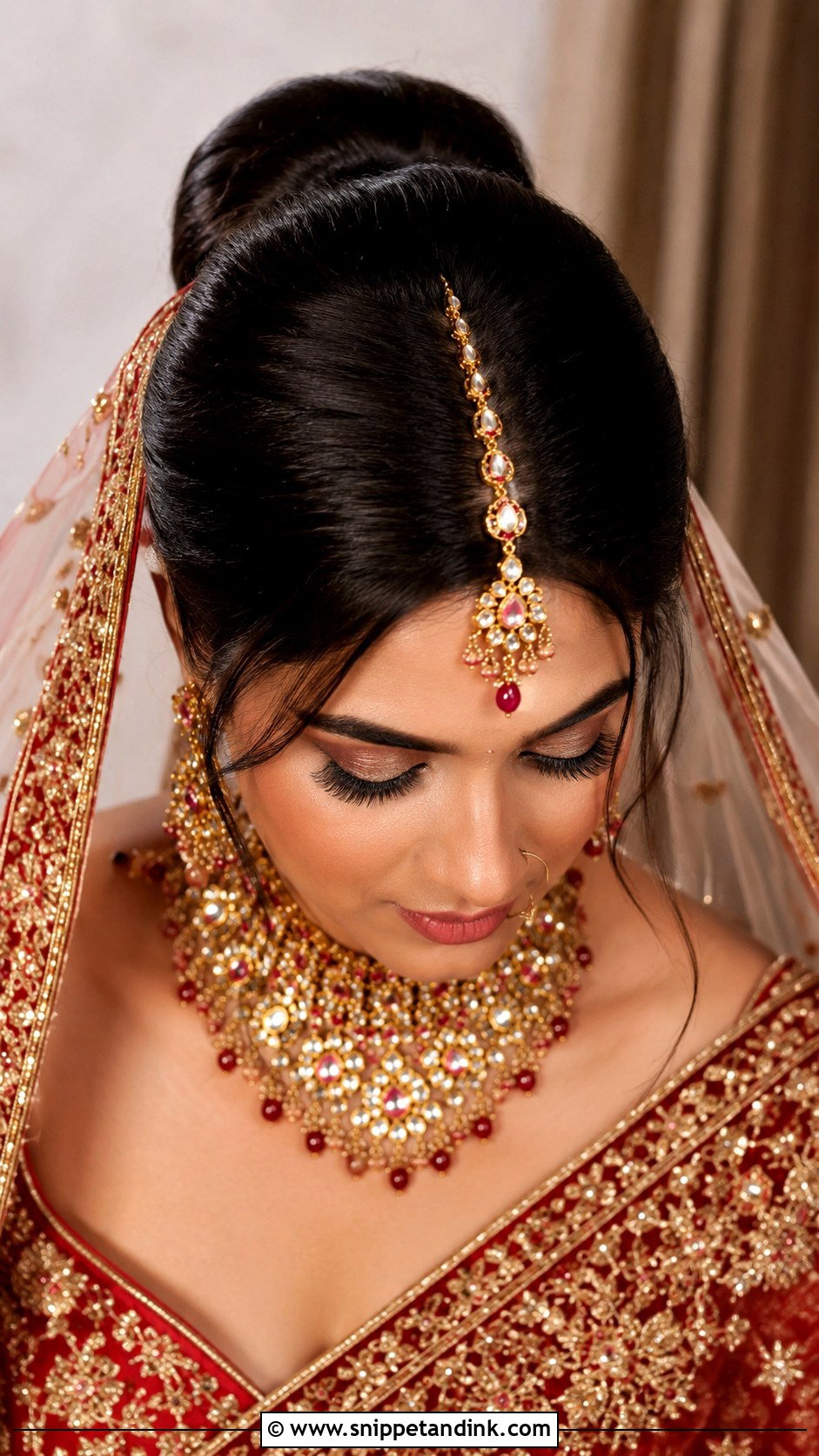
When a flowing dupatta veil sits over a bun, the bun becomes the anchor for the whole drape. I keep it smooth and slightly flat on top, then place the dupatta pins straight into the bun so the fabric’s weight rests there instead of tugging at the crown. The maang tikka goes on before the dupatta, with its hook pinned into the part. A sheer dupatta lets the bun show through, which looks lovely at the main ceremony.
10. Messy Bun With Curls
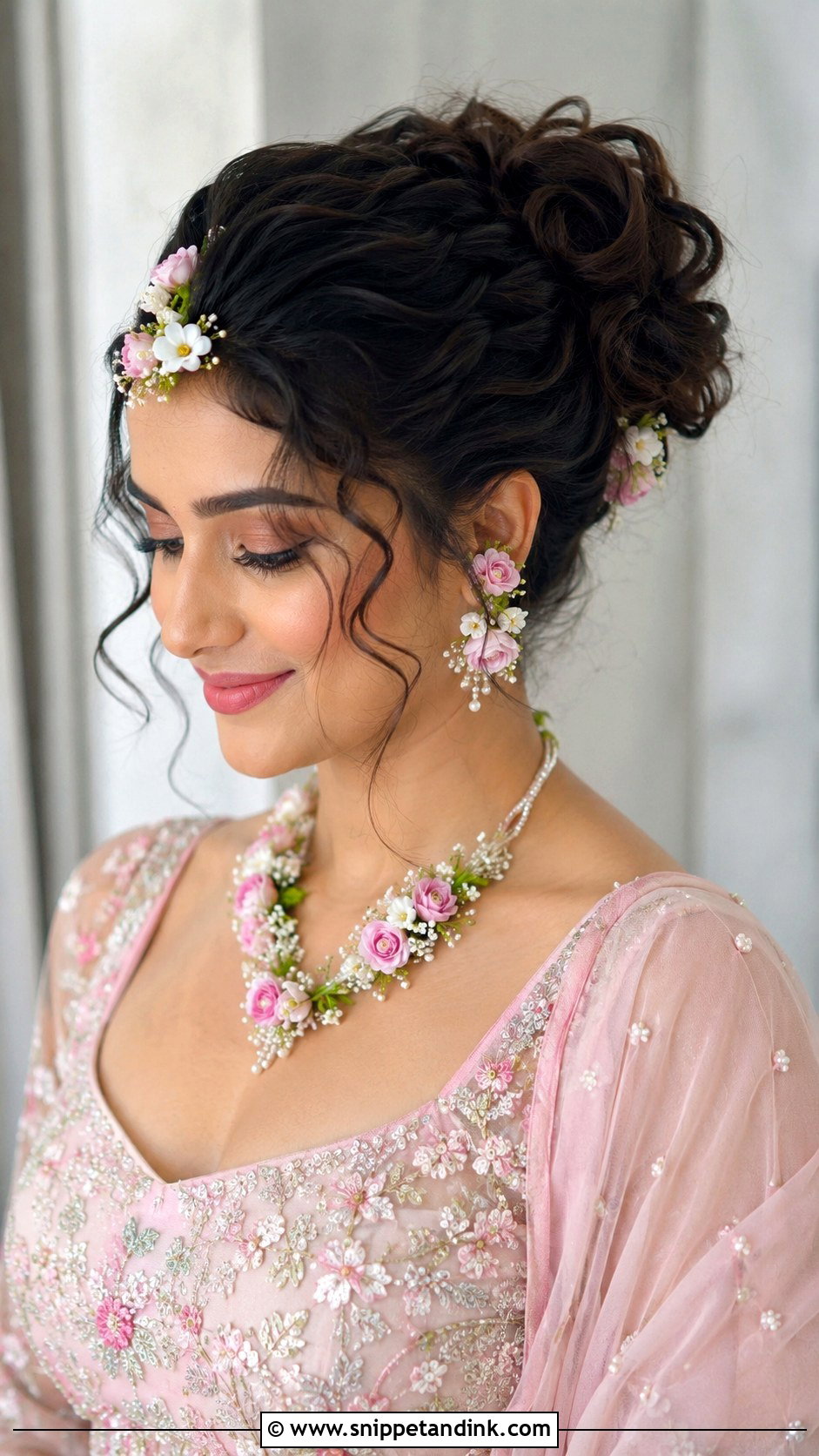
A messy bun with curls is the soft version of an updo: a loose knot at the back, with curled strands left out around the cheeks and neck. It suits lightweight lehengas and pastel outfits. To keep it from looking unfinished by evening, curl all the hair first, even the parts that go into the bun, so the texture inside the knot holds. Tiny flowers or one pin are enough. On very straight hair the curls fall faster, so I set them with more product.
11. Bun With Hair Jewelry
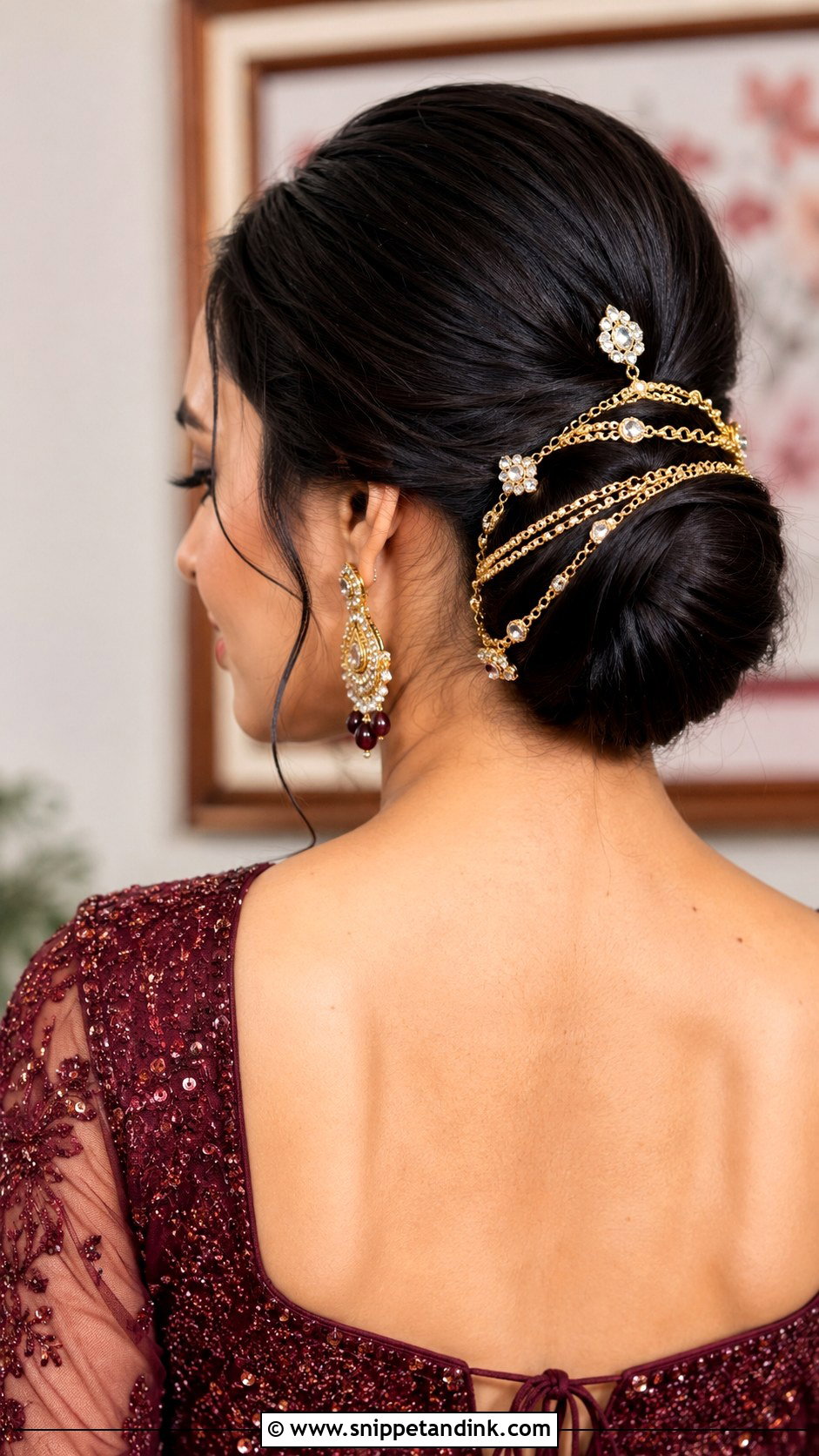
A bun covered in layered hair jewelry treats the hair like a base for ornaments: chains, jeweled pins and matha pattis wrapped around the knot. It looks rich at grand evening receptions, and the metal catches light in photos. I keep the bun sleek underneath so the jewelry reads clearly. Every piece adds weight, though, so I sew or pin chains into the bun’s base rather than letting them hang from the edges, and I check comfort at the trial before committing to five pieces.
12. Twisted Rope Bun
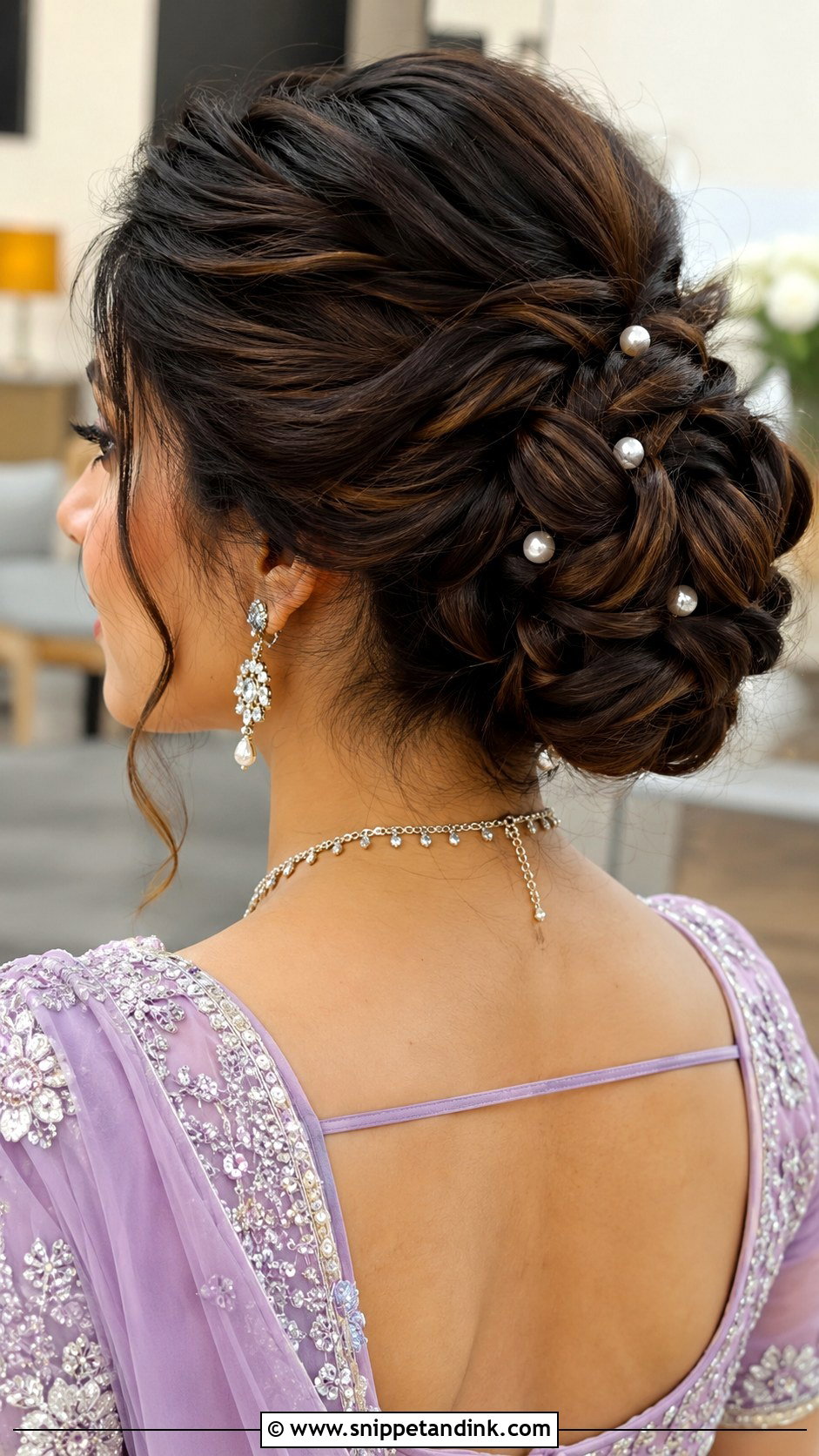
Twisting is faster than braiding and still gives texture. For a twisted rope bun, I twist two sections around each other, then wrap the rope into a knot. It looks detailed from every angle and suits both traditional outfits and fusion looks. Twists can unwind if they’re not pinned at both ends, so each rope gets a pin at the base and one at the tip. Small flowers or pearl pins work well tucked between the twists.
13. Bun for Lehenga Look
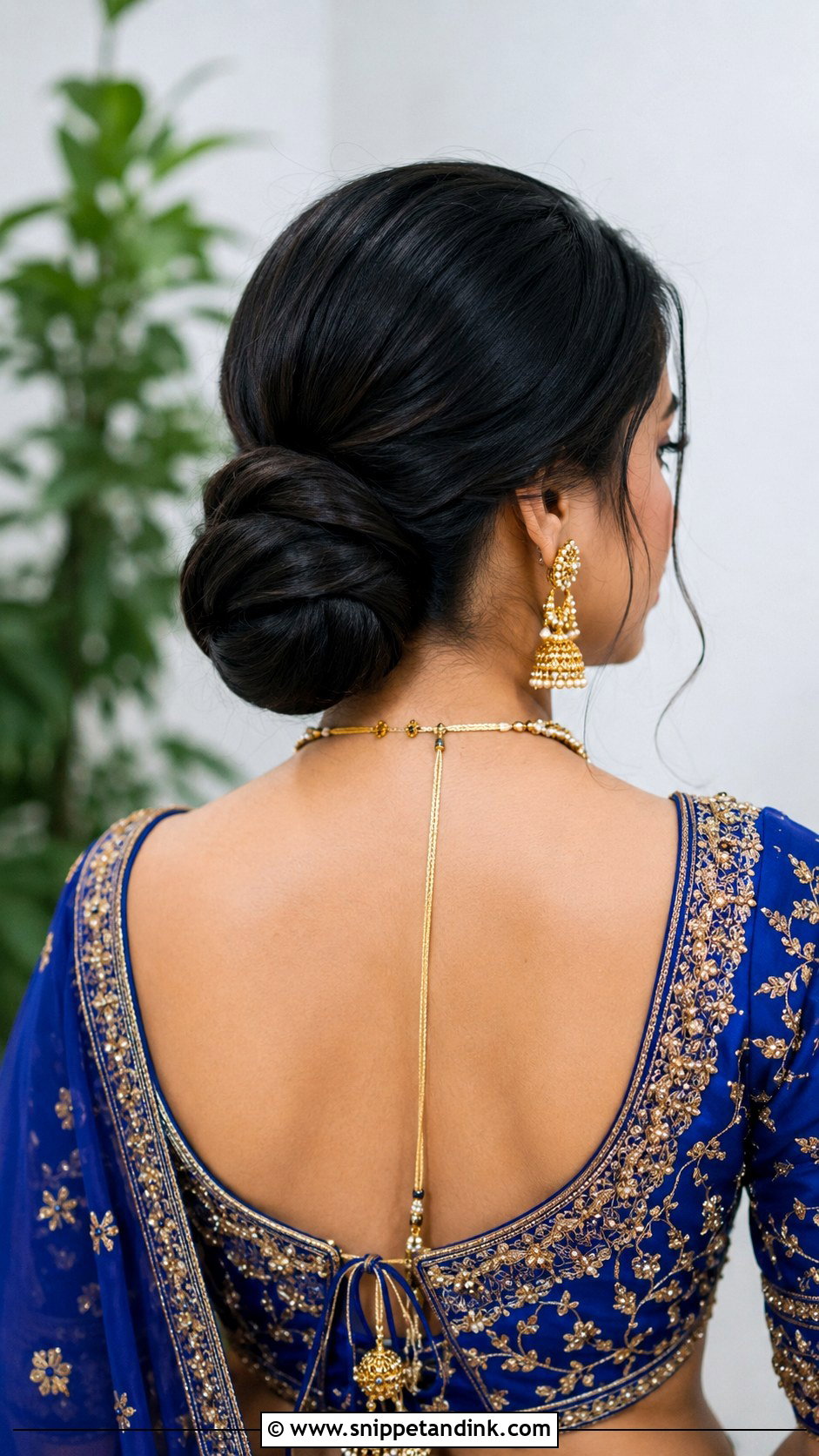
A heavy lehenga comes with a heavy dupatta, so the bun has to do structural work. I place it either at the crown or the nape depending on how the dupatta sits, and I make it solid enough to take three or four dupatta pins without moving. Sleek or voluminous depends on the outfit’s mood; a heavily embroidered lehenga usually looks better with a smoother bun. Flowers or jewelry can be added at sangeet or on the wedding day itself.
14. South Indian Bun With Flowers
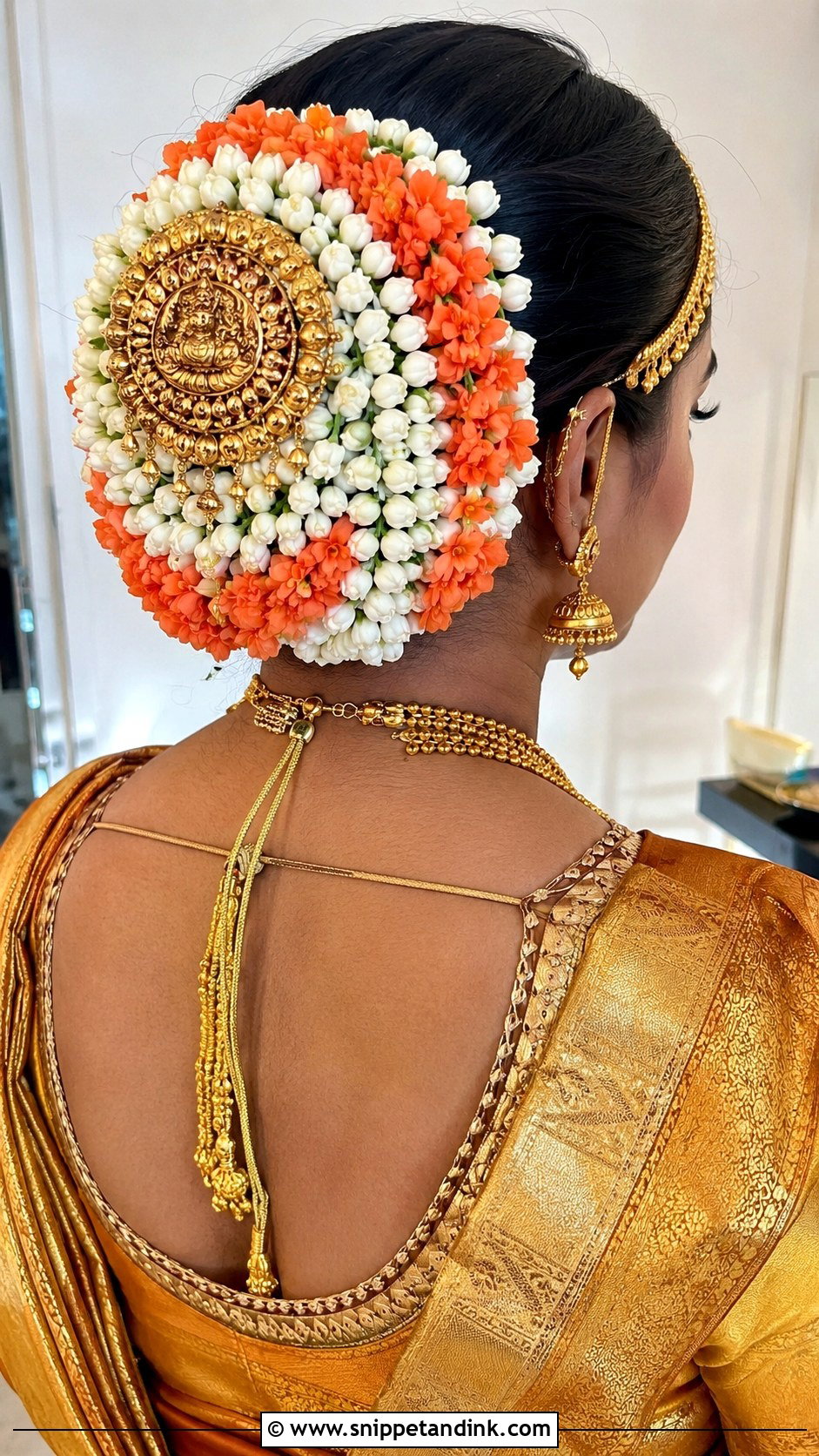
A South Indian bridal bun is set full and round, then layered with flowers, often Jasmine, roses, and kanakambaram in alternating rows. It pairs with silk sarees and temple jewelry and often a jada billa, the gold ornament that sits along the braid or bun. The flower weight is significant, so I pad the bun to give it a firm structure and pin the flower layers individually. Order the flowers to arrive the morning of the wedding, not the night before.
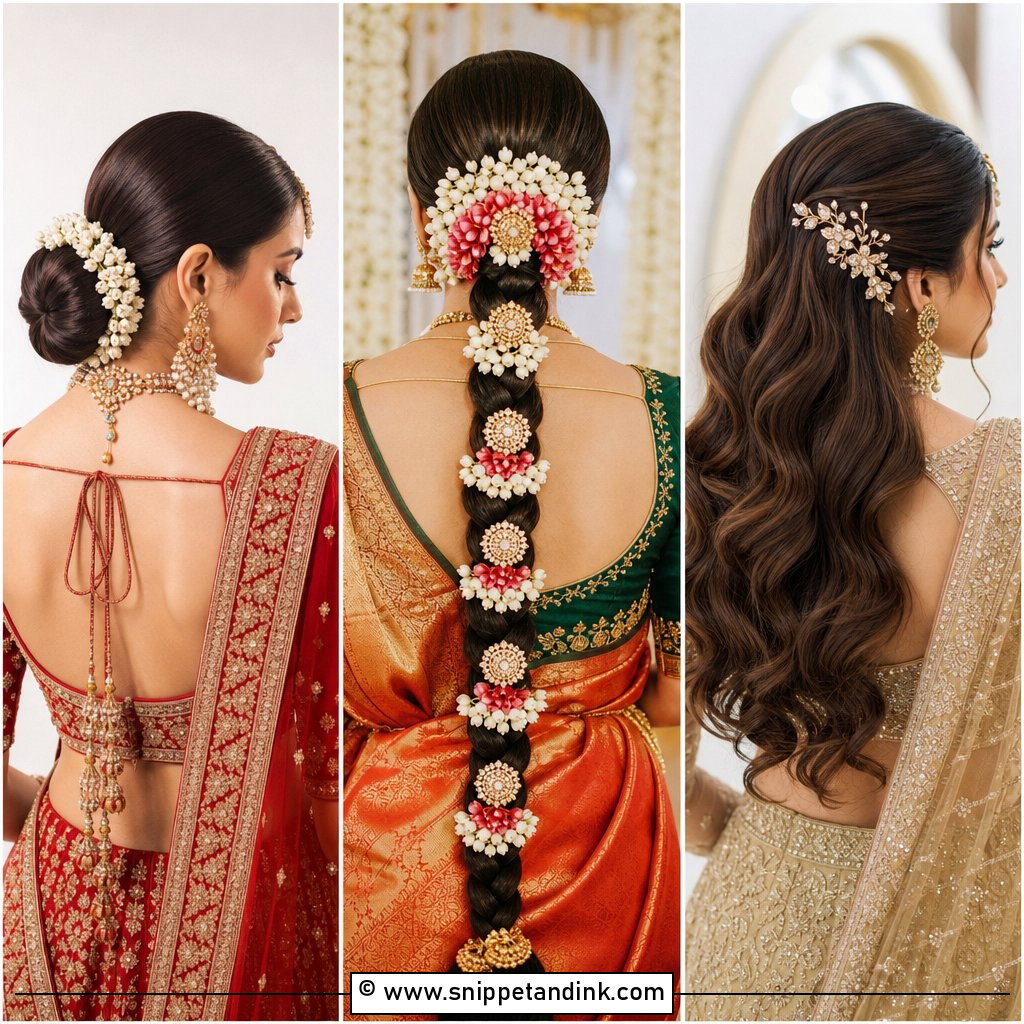

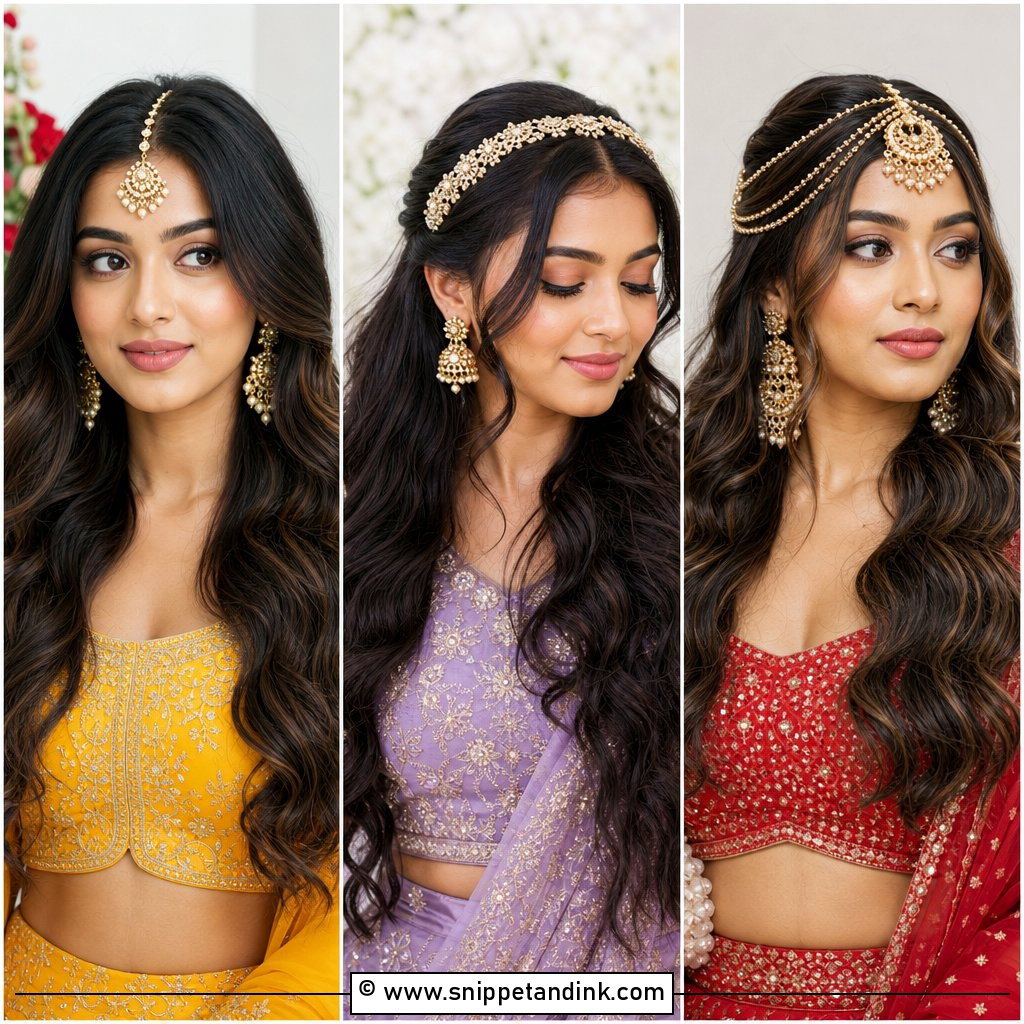
15. Bun With Front Puff
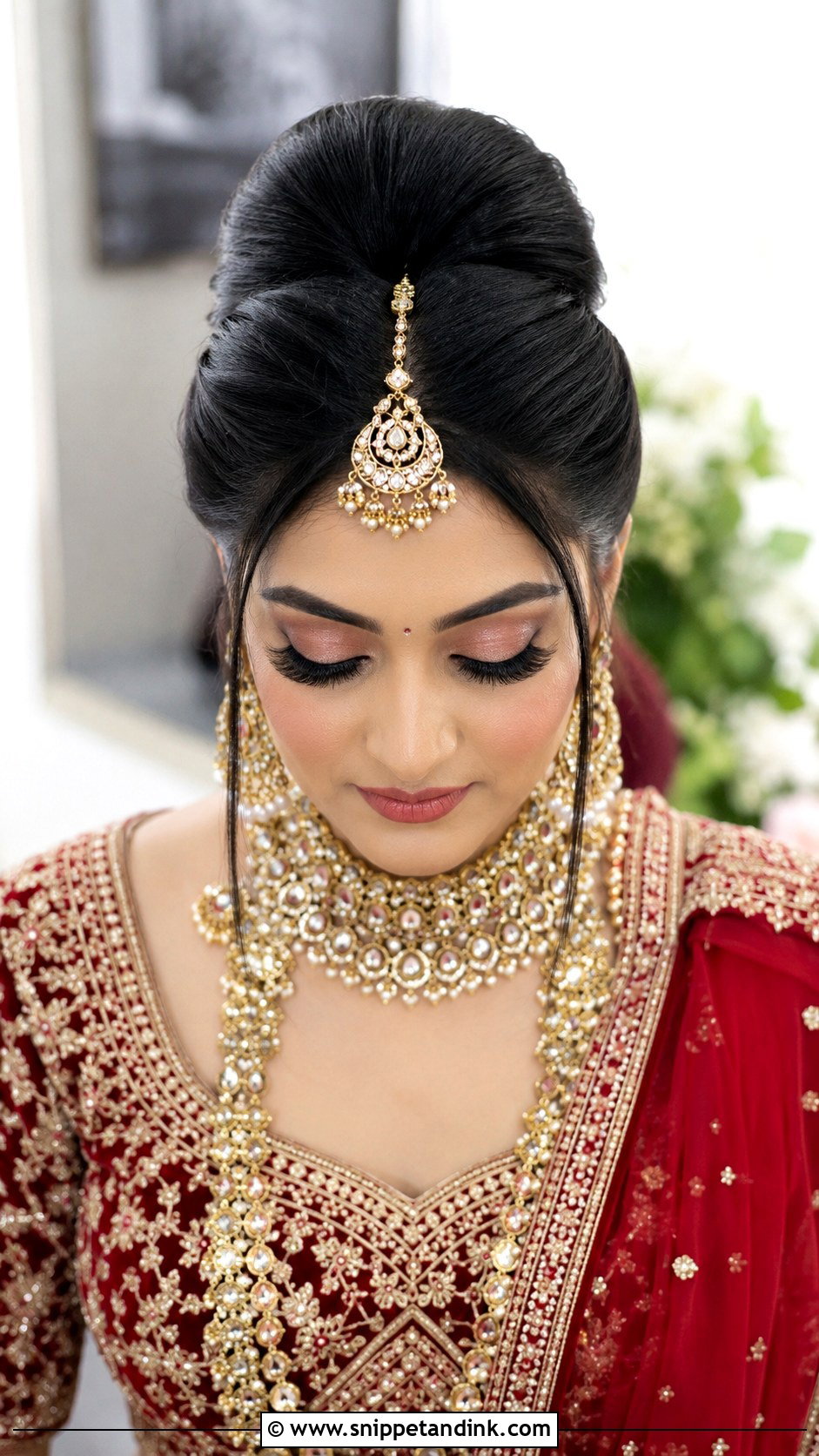
A soft puff at the front adds height above the forehead, then the hair is smoothed back into the bun. On a round face it adds length. I backcomb only the underside of the front section and smooth the top over it, so there’s no visible teasing. A maang tikka sits well on top. Size matters: a small, polished puff looks bridal; a big one can look dated in modern photos.
16. Bridesmaid Low Bun
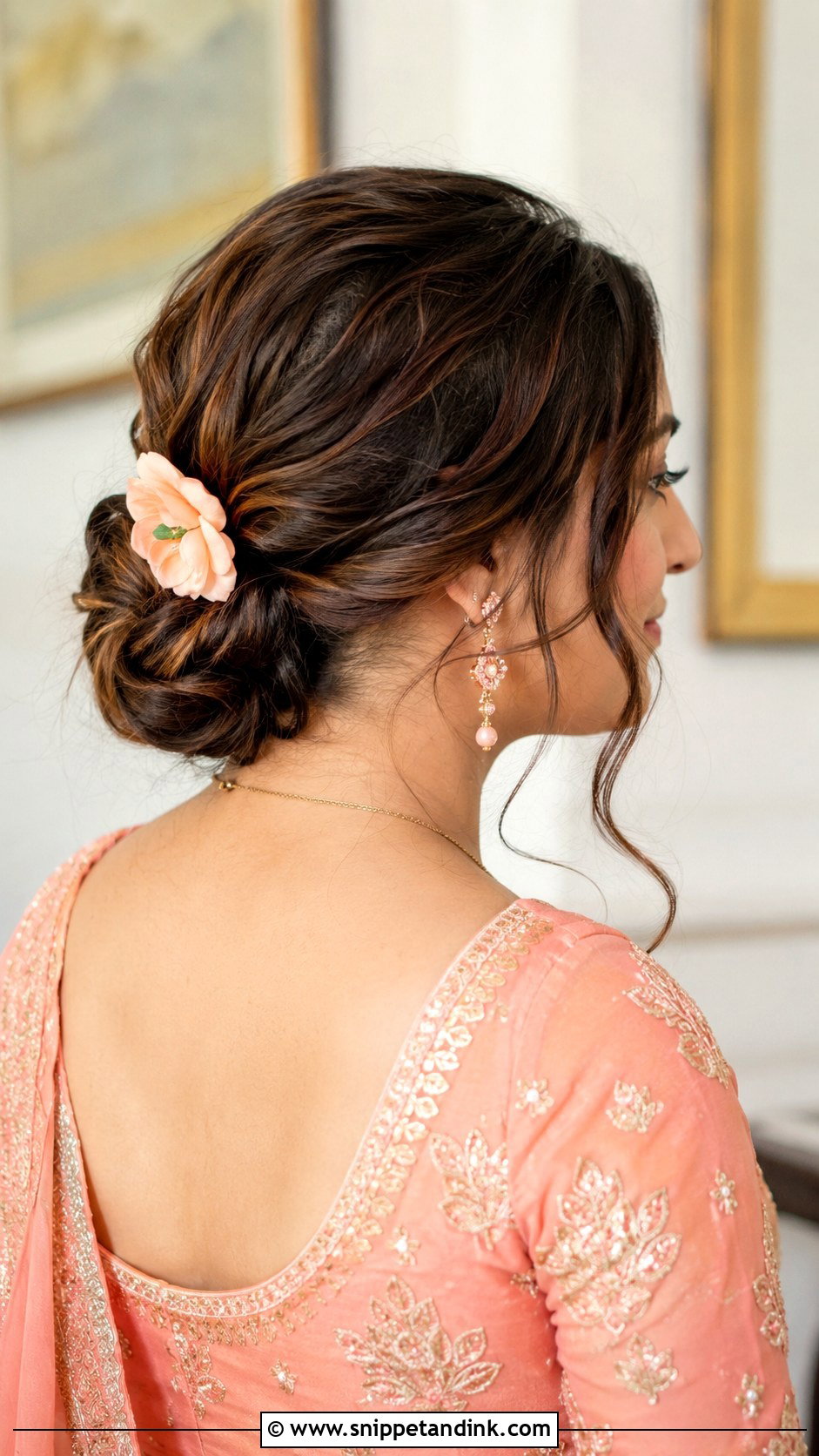
For bridesmaids, a low bun is the most practical style I know. It’s simpler than the bride’s, works with coordinated outfits and survives dancing. A few loose strands keep it from looking severe, and one flower or pin per bridesmaid keeps the group consistent. If several bridesmaids are getting their hair done by one stylist, a low bun is also quick, which helps the morning schedule.
17. Bun With Center Parting
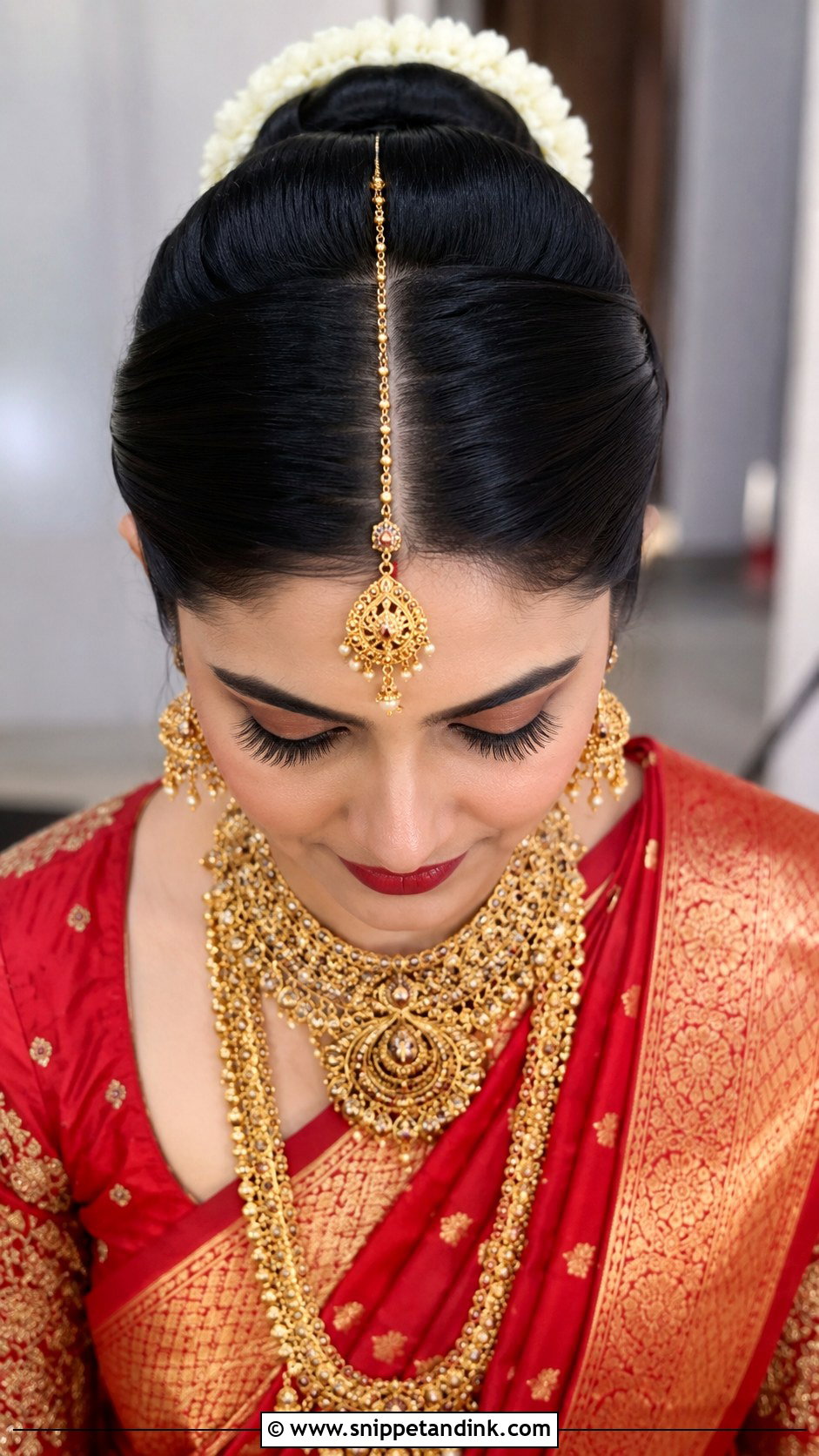
A center parting with a smooth bun is a classic Indian bridal pairing, and its strength is symmetry. It gives the maang tikka a straight line to follow. Before anything else, I find the natural center using the nose as a guide, because a part that’s even slightly off center looks crooked in close-up photos. Soft waves near the face can soften it. It works at daytime functions and evening ones.
18. Fishtail Braided Bun
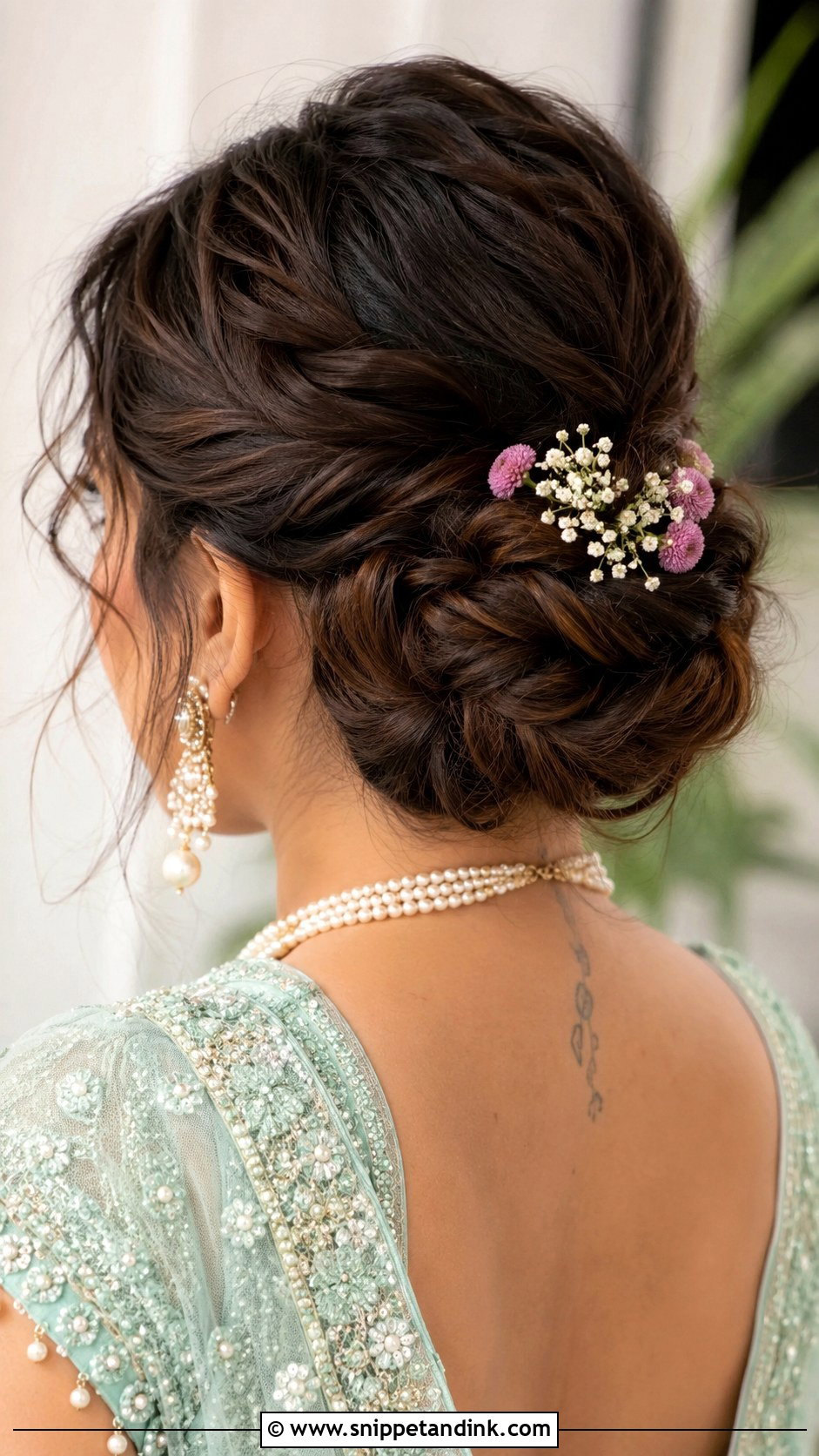
A fishtail braided bun shows a fine woven pattern when it’s coiled. I braid it tight, pull the edges loose to widen it, then wrap it. It looks detailed without being heavy, and it suits traditional and fusion outfits equally. On very layered hair, short ends can poke out of a fishtail, so I mist the braid with a little spray as I go. Tiny flowers or pearl pins along the weave finish it.
19. Bun With Baby’s Breath
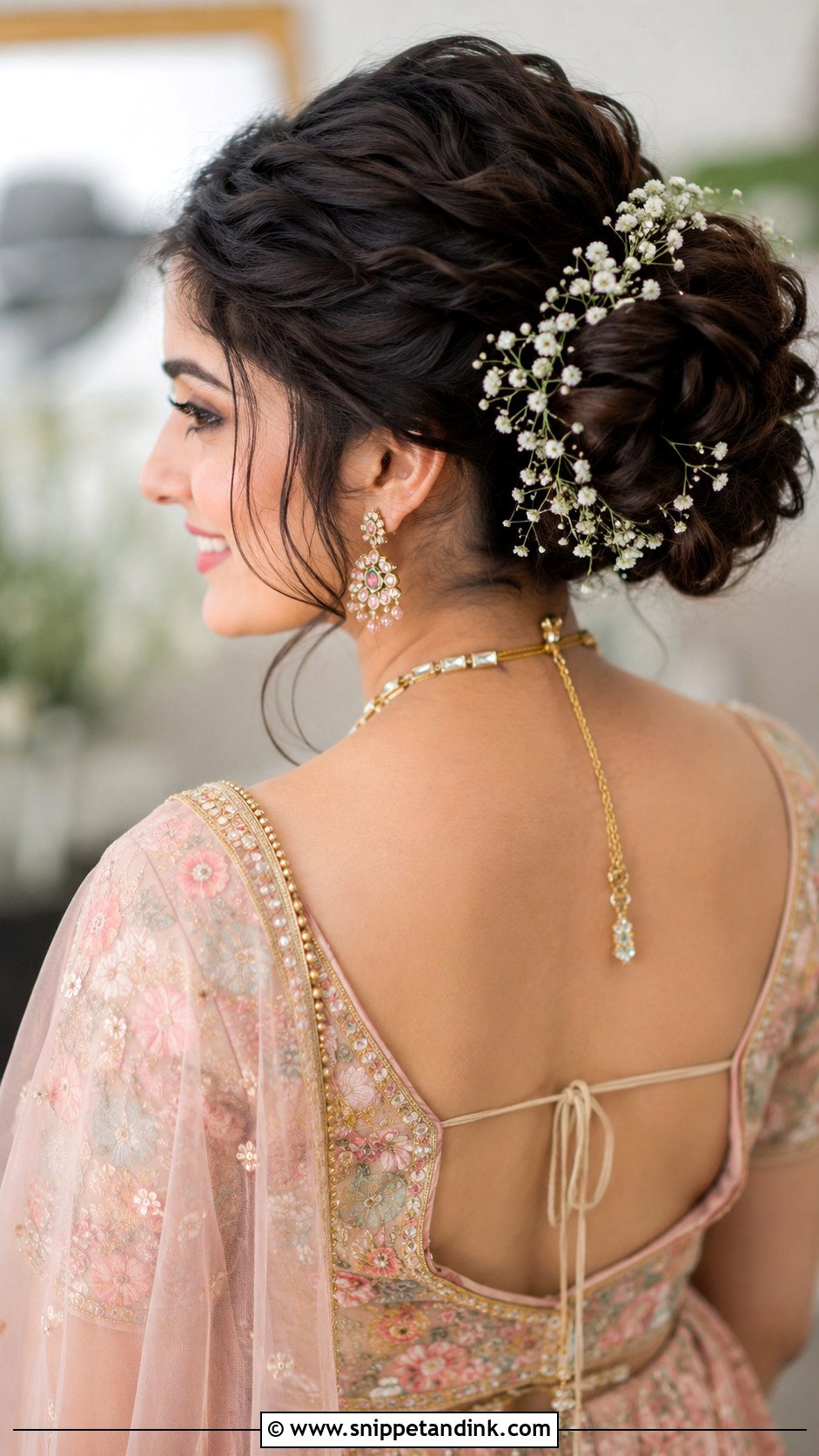
Baby’s breath is a small, sturdy flower that lasts a full day out of water, which is why I use it on outdoor and daytime weddings. Scattered around a bun, it gives a light texture without much weight. Pin the tiny clusters in individually so they don’t flatten. It suits pastel lehengas and lighter sarees, and the white looks crisp against dark hair.

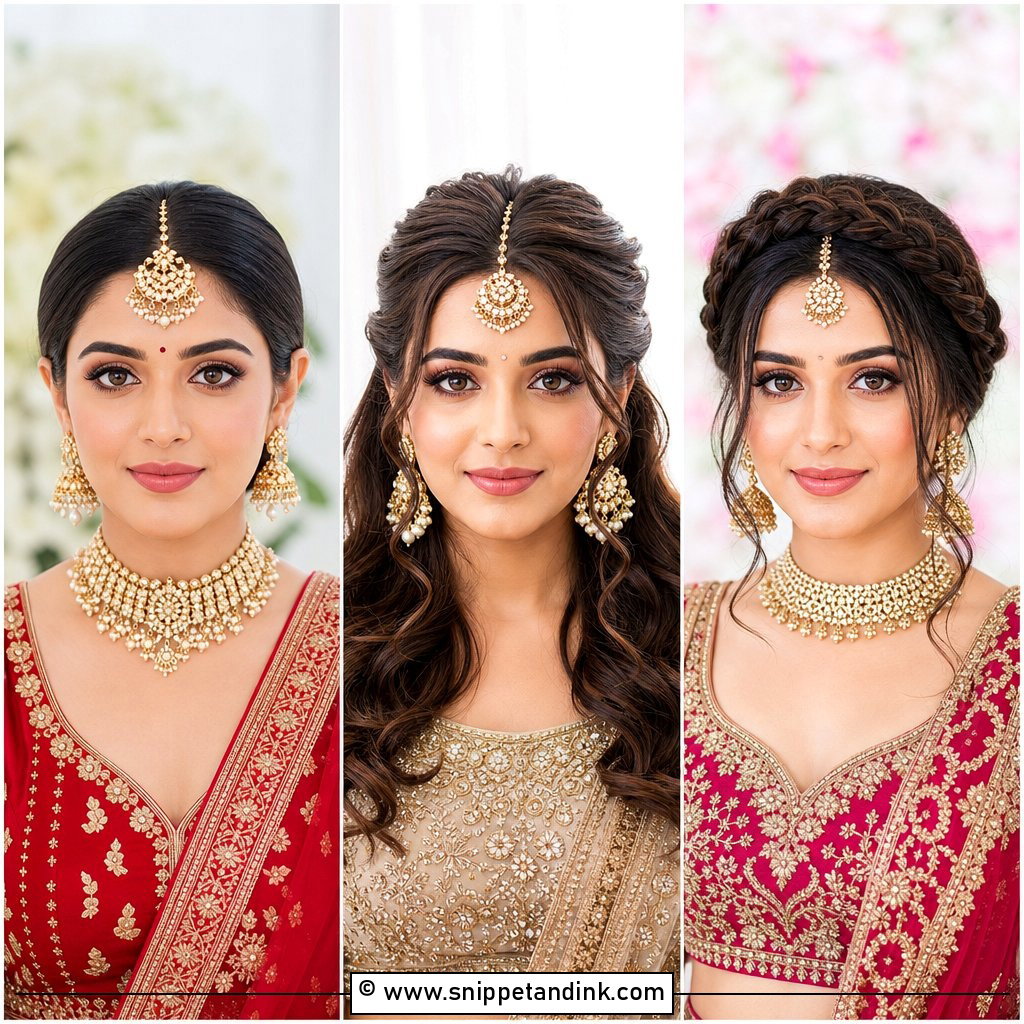
20. Bun for Engagement Function
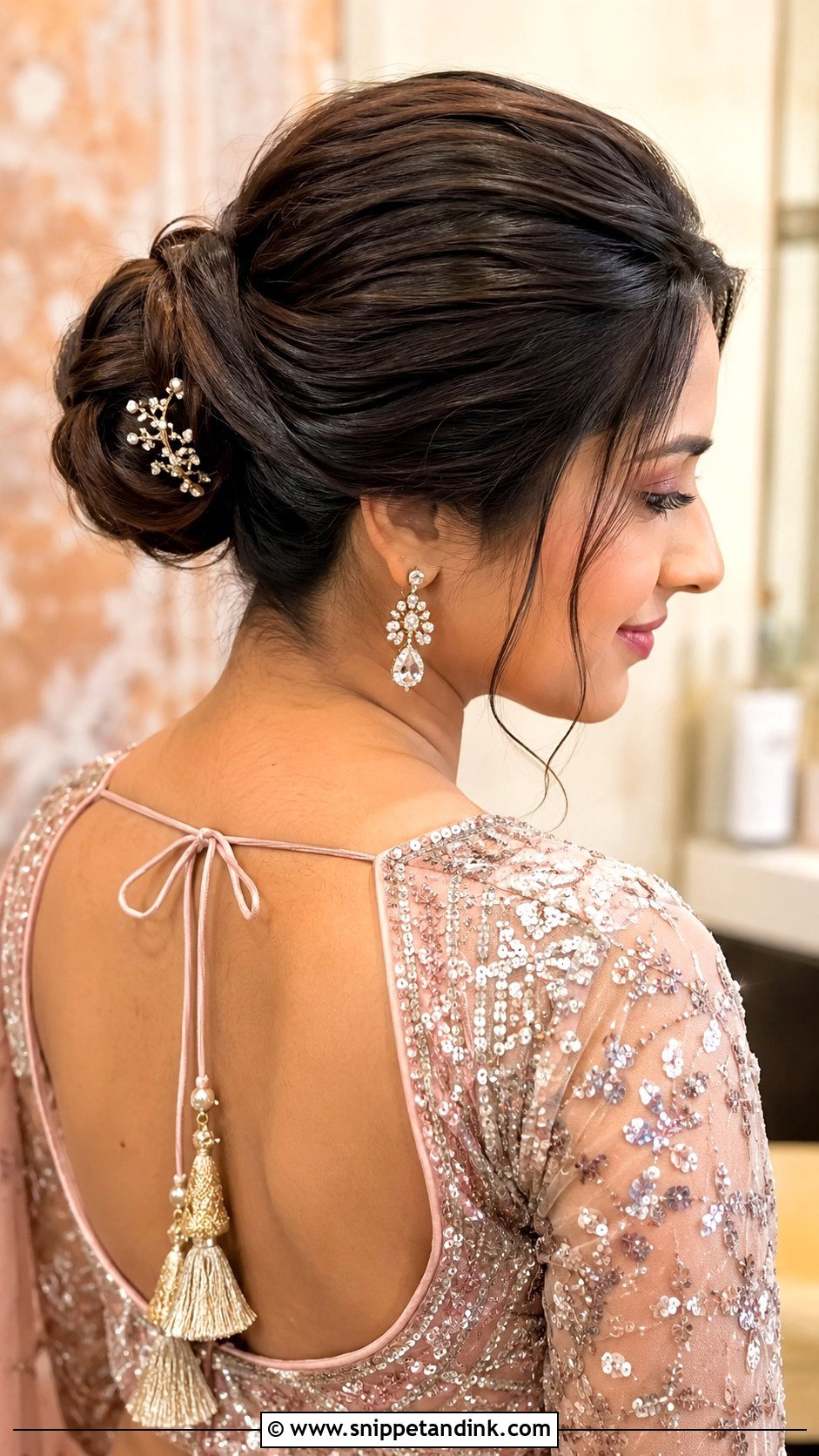
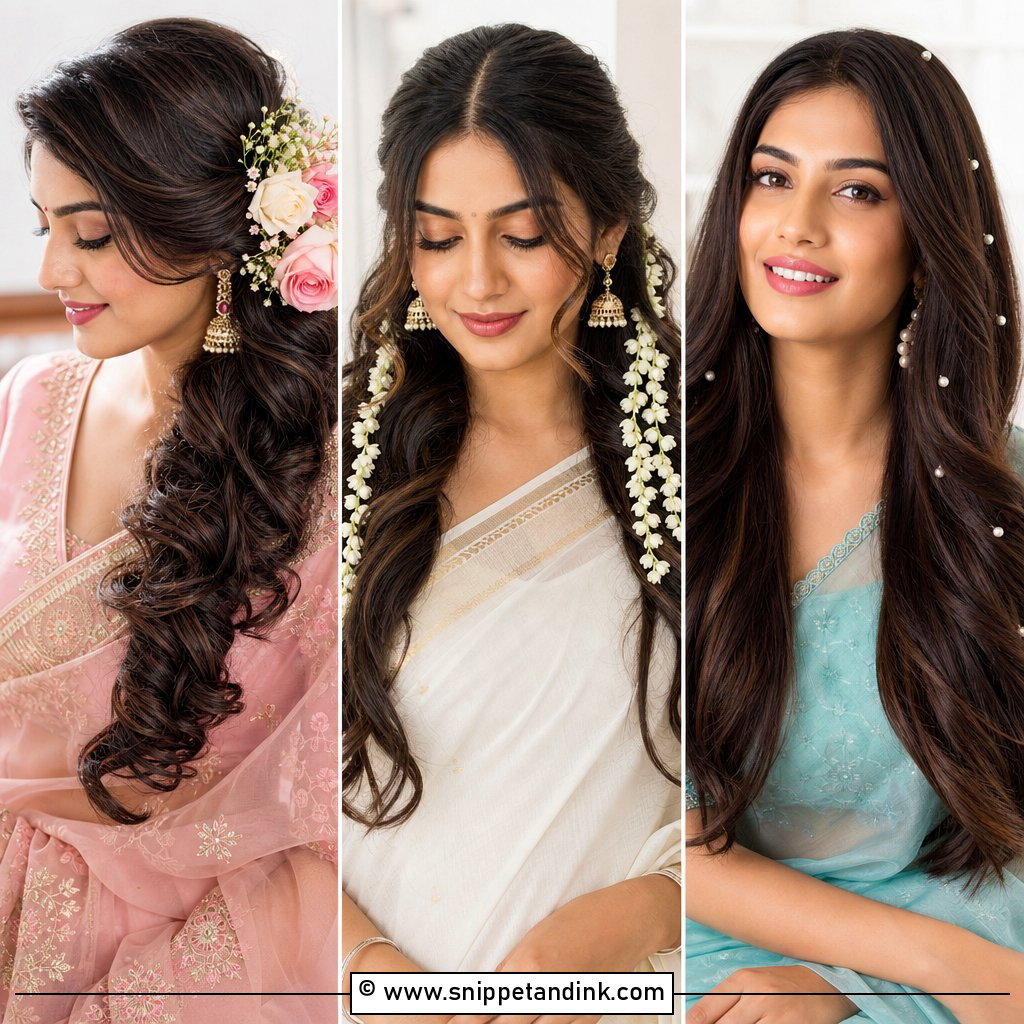
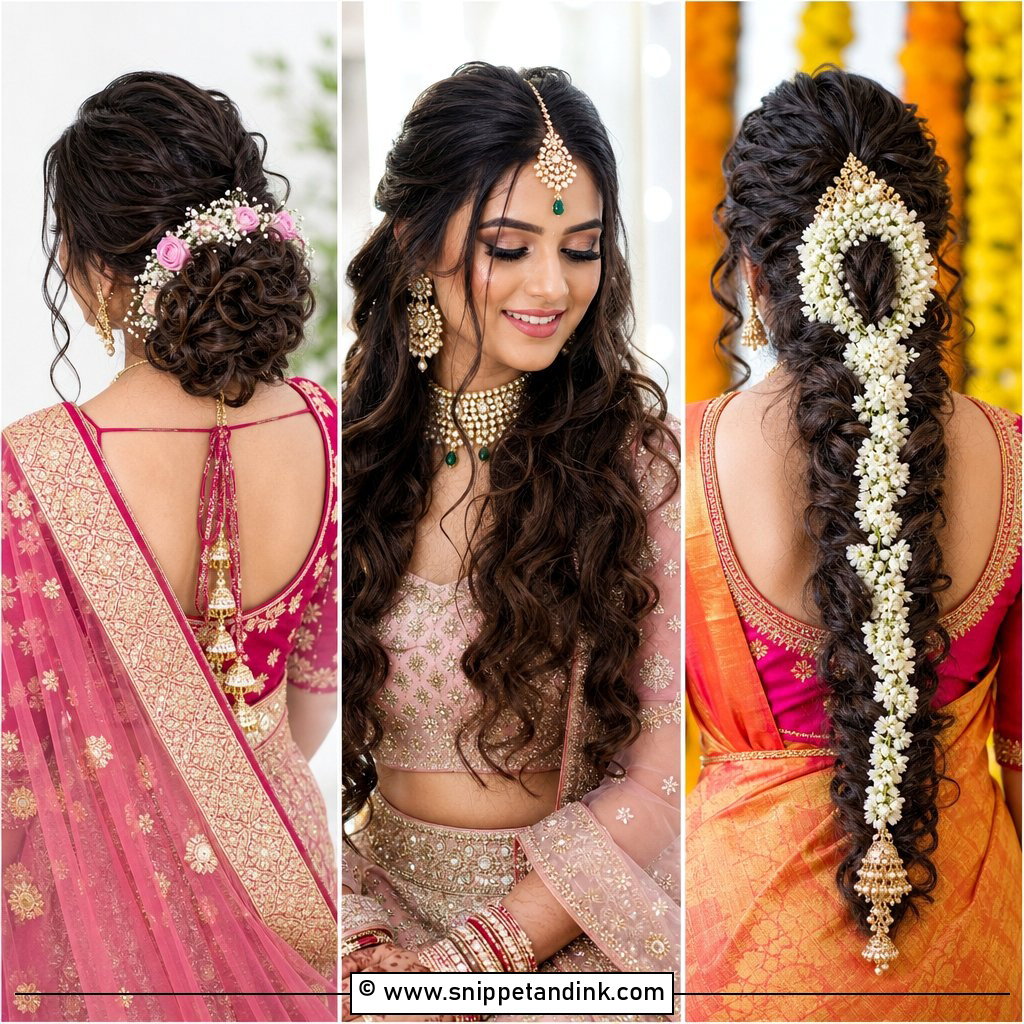
An engagement look usually wants something polished but not as heavy as the wedding. A smooth bun with a jeweled pin or small flowers fits that. It suits cocktail gowns, sarees and lehengas, and keeps the face and outfit in focus. Leave a few soft strands near the face to keep it relaxed, and if you’re exchanging rings, a bun keeps your hair out of the way in those close-up hand shots.
21. Voluminous Bun for Thin Hair
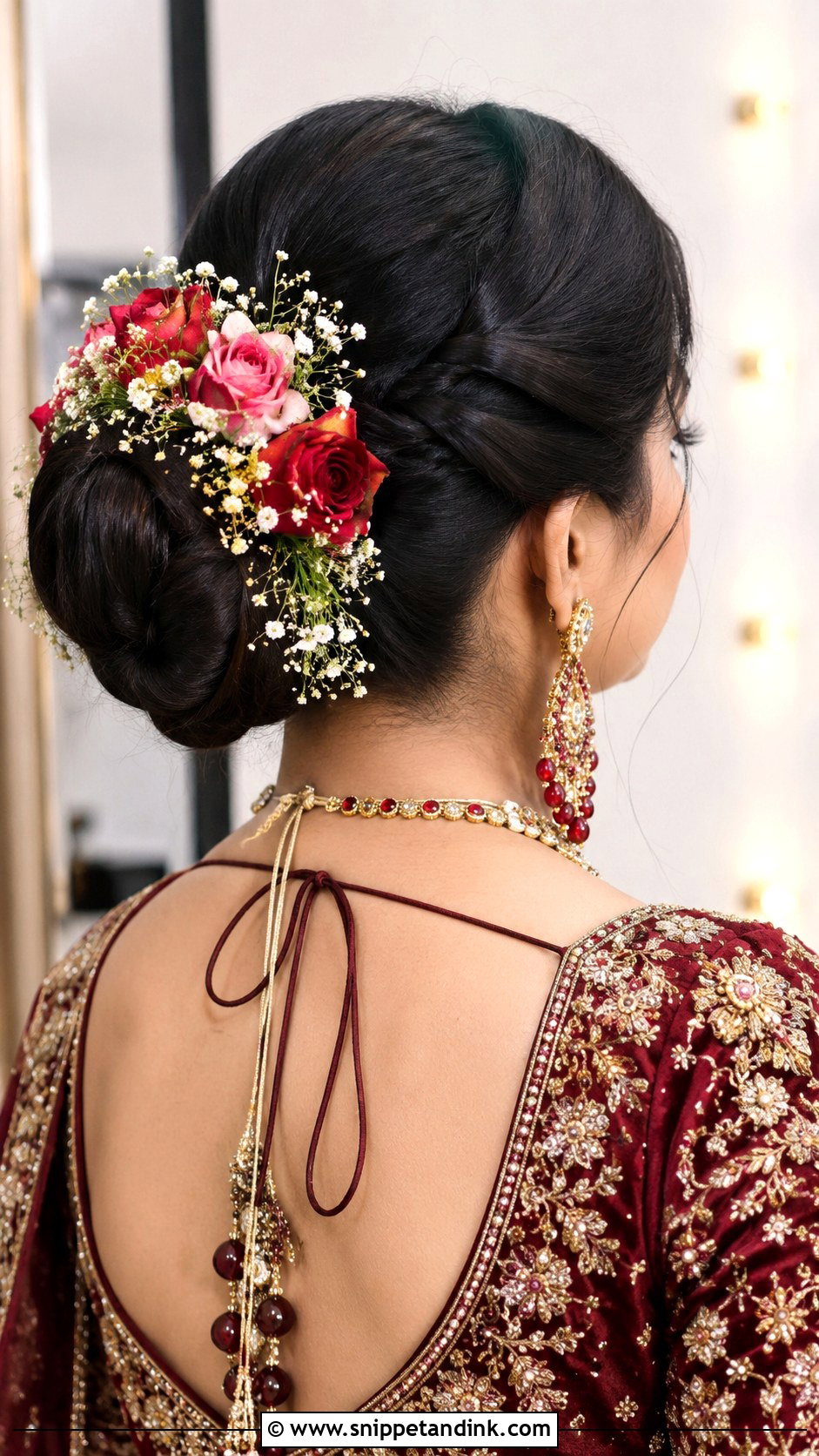
Thin hair can still carry a full bun; it just needs help. I backcomb at the base and use padding or a donut matched to the hair color, then wrap the hair around it. The result is a soft, round knot that looks much thicker than the hair actually is. It holds heavy jewelry well once it’s pinned properly. One warning: too much backcombing on fine hair causes knots and breakage when taking it down, so detangle slowly from the ends at night.
22. Bun With Loose Tendrils
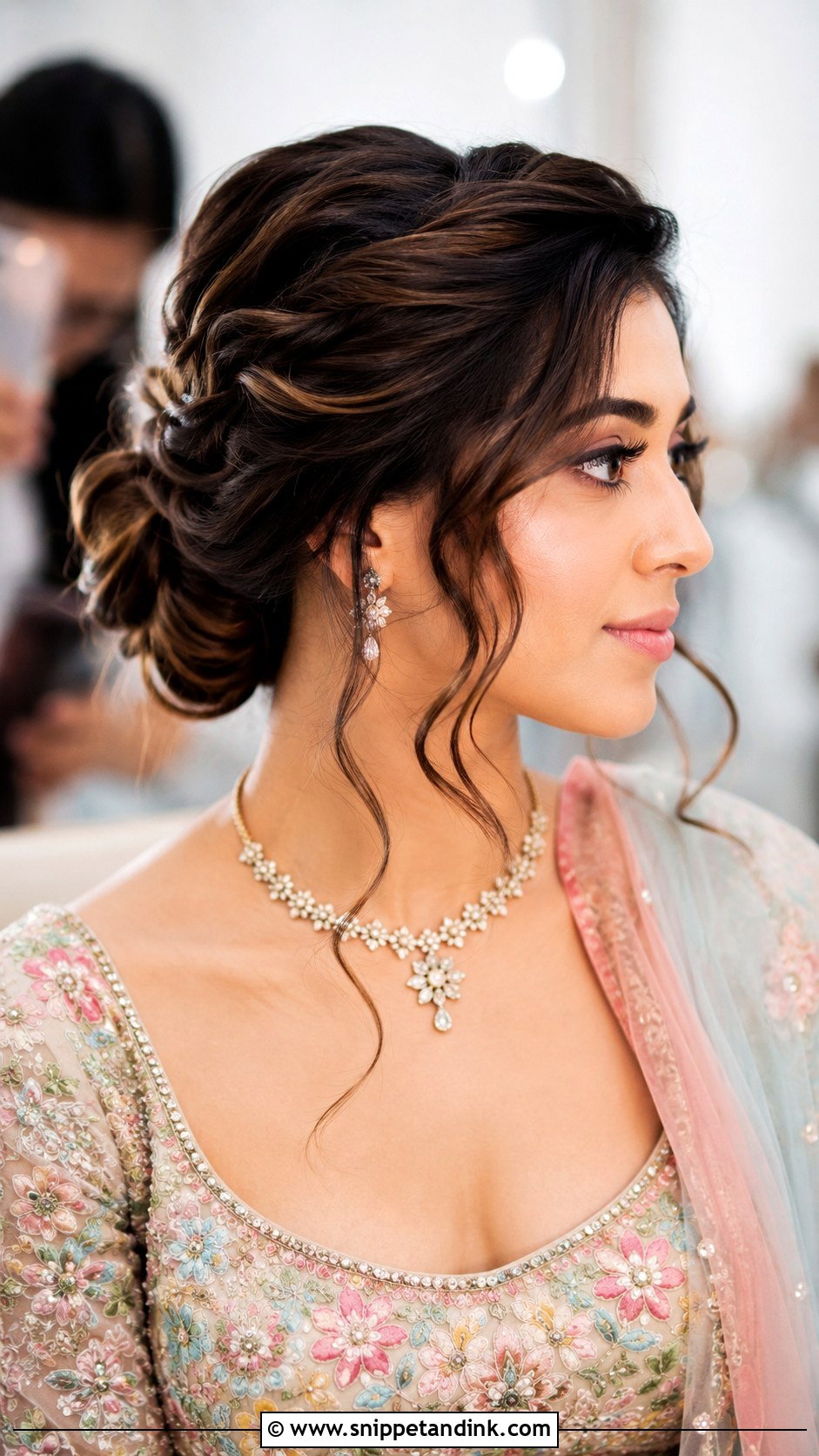
Loose tendrils turn a plain bun softer. A few strands are left out to frame the face and neck, and the rest is gathered into a smooth or textured knot. The tendrils need to be chosen carefully: I take them from just in front of the ears and at the temples, never from the hairline in the middle, which looks accidental. Curl them lightly and set them. It suits pastel and floral outfits.
23. Pearl Embellished Bun
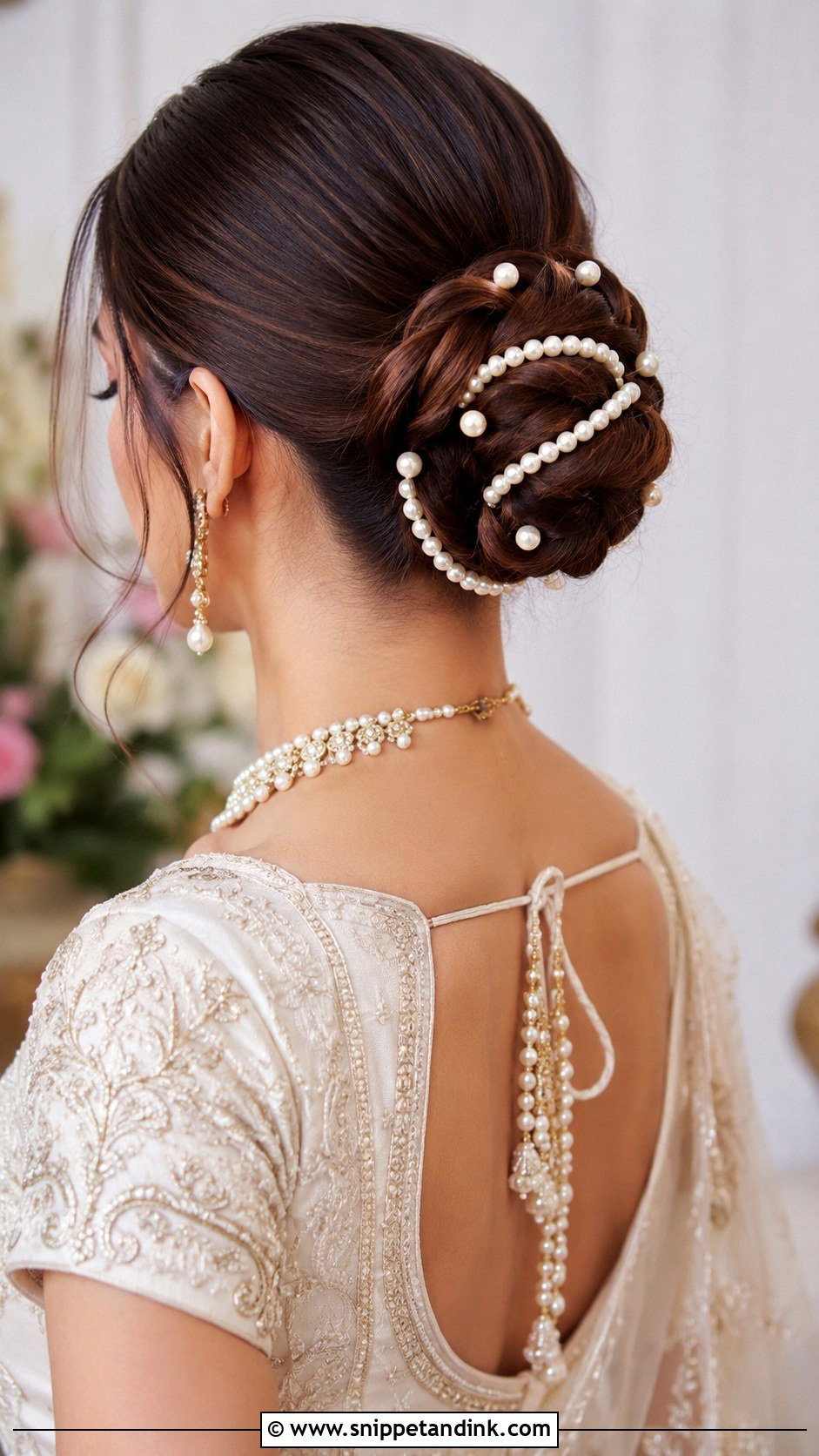
Pearls look refined on a bun, either as scattered pins or as strands wrapped around the knot. They suit ivory, pastel and pearl-accented outfits. I keep the bun sleek so the pearls read clearly, and I place them in a loose pattern rather than an even grid, which looks more natural. Under soft lighting, the shine shows up well in photos. Pearl pins are light, which makes this one of the more comfortable decorated buns.
24. Half Up Bun
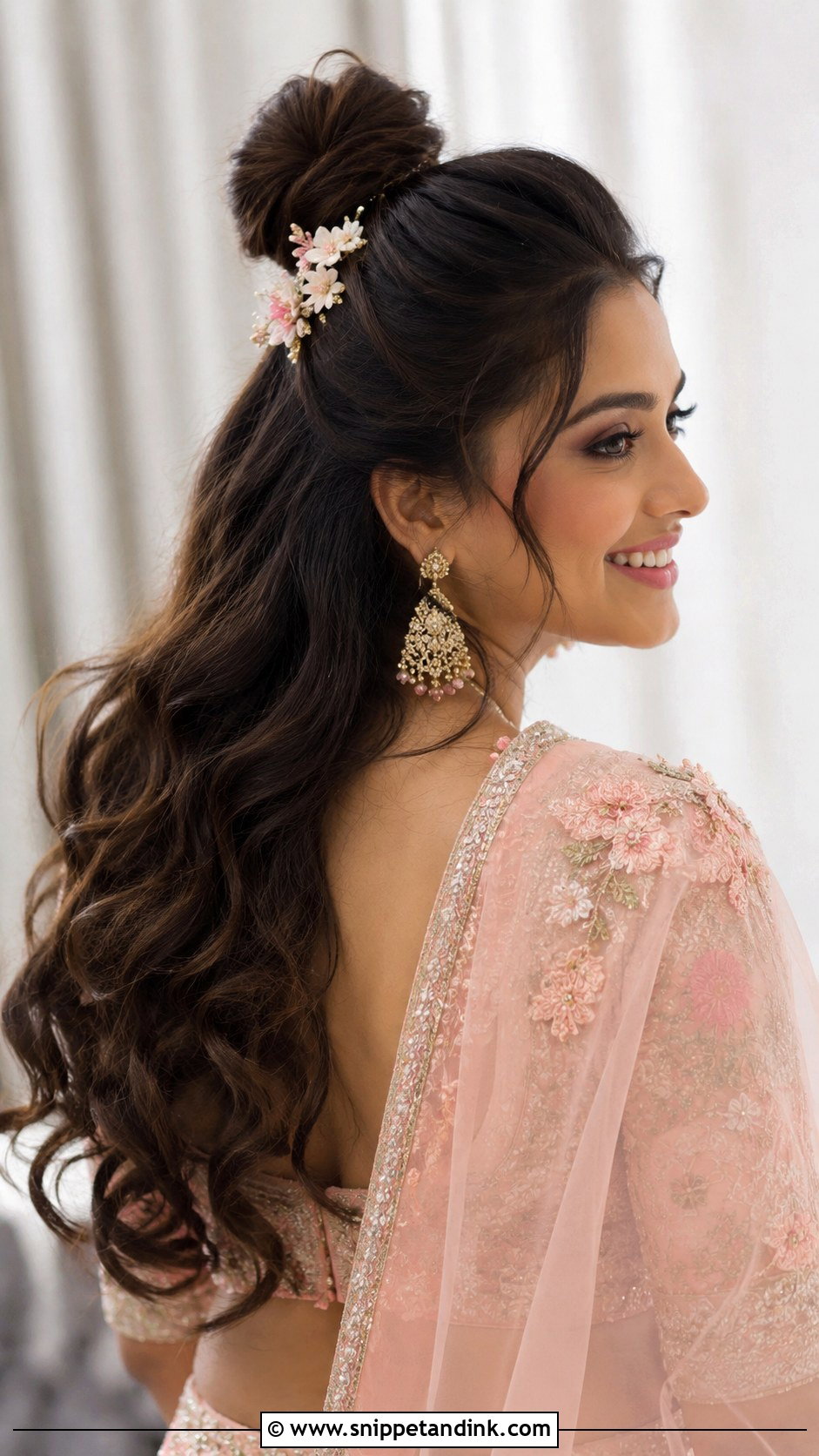
A half up bun pulls the top section into a small knot and leaves the rest down. It suits lightweight lehengas and fusion outfits, and it shows off length. The lower hair should be curled and set, or it’ll lose movement by evening. Small flowers or jeweled pins decorate the bun. It’s a good option for a guest or bridesmaid, though I’d rarely suggest it for a bride wearing a heavy dupatta, which tends to crush the top knot.

25. Bun With Statement Hair Accessory
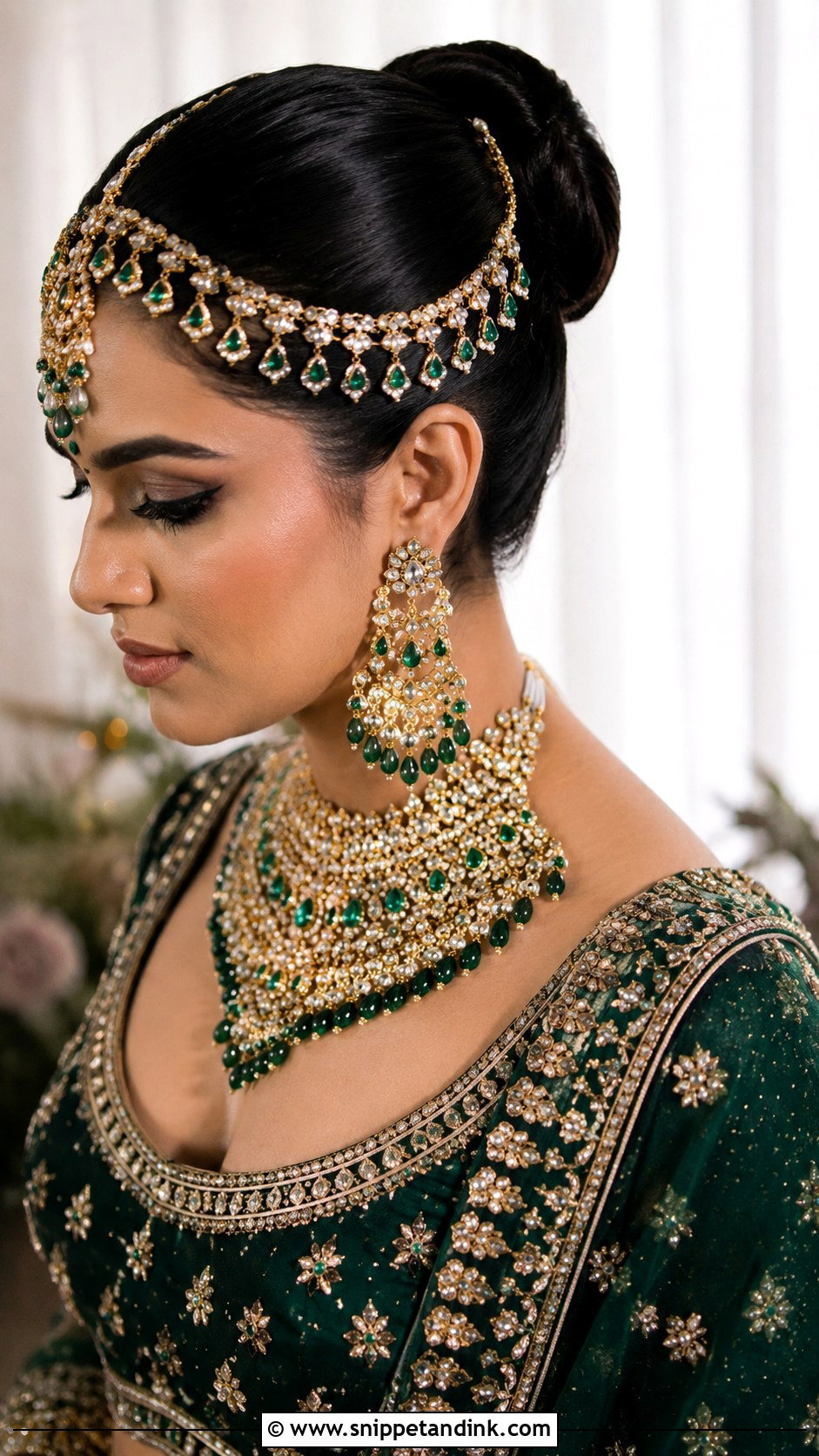
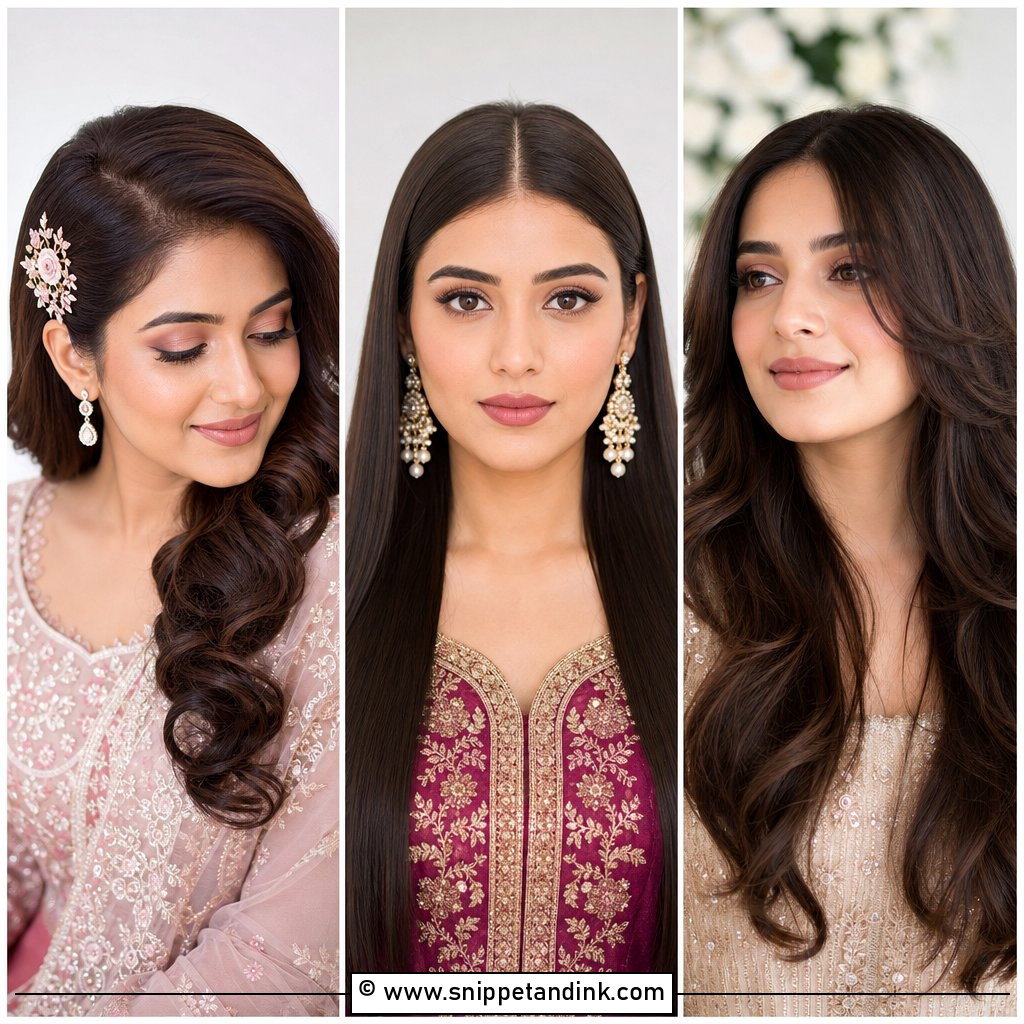
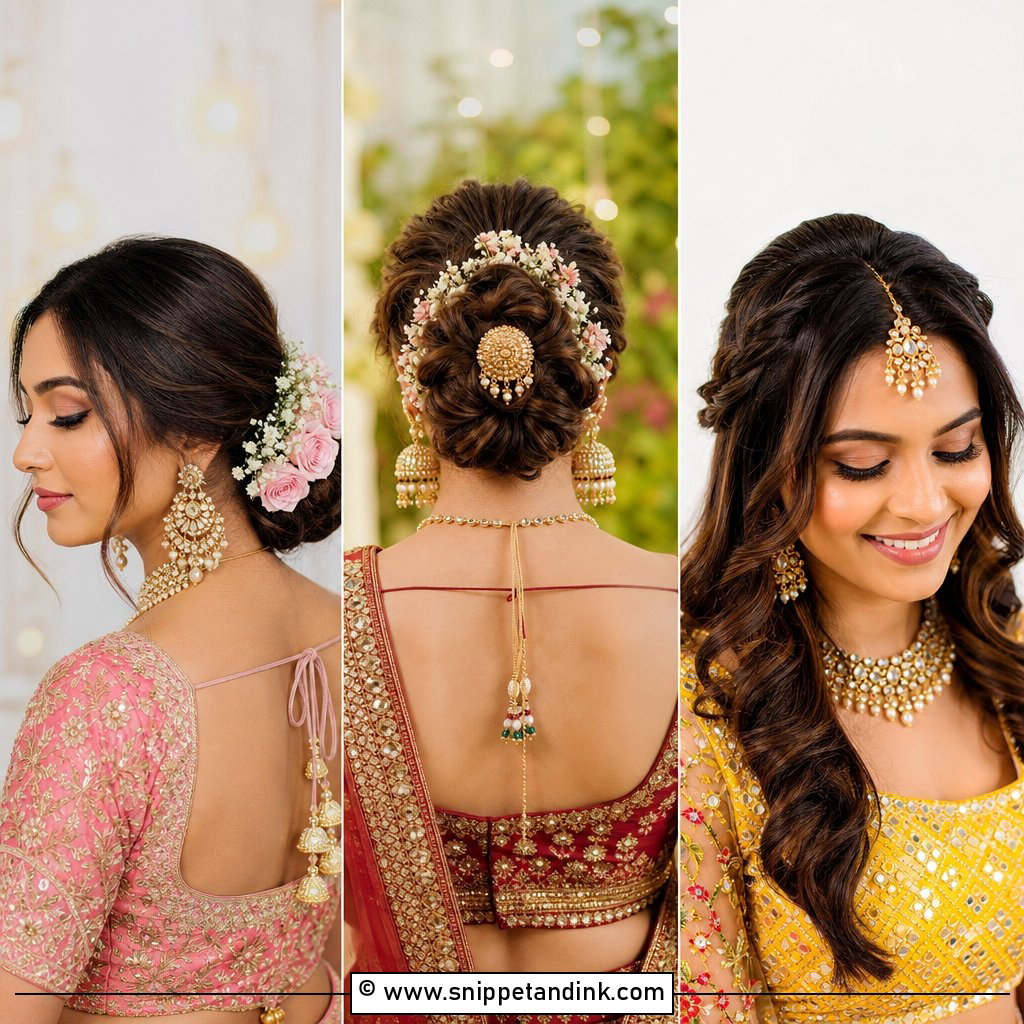
One strong accessory can be enough for a bun: a jeweled comb, a matha patti or an ornate clip. Keep the bun itself clean so the piece is the focus. I place statement combs slightly to one side for drama, and I always anchor them with an extra pin through the teeth. Under wedding lights, metal and stones photograph strongly. It pairs with heavy lehengas and rich jewelry.
What Actually Holds a Bridal Bun Up for Twelve Hours
A bun that falls apart usually wasn’t built properly underneath. The decoration gets all the attention, but the foundation does the work.
The base
Almost every bun I build starts with a firmly tied ponytail at the height the bun will sit. That ponytail takes the weight of flowers, jewelry and dupatta pins. Without it, everything hangs from loose hair and drops.
The right pins
Bobby pins grip; U-pins shape. I use bobby pins crossed in an X to lock the base, and U-pins to tuck and shape the knot itself, since they hold without flattening. Pins that match your hair color disappear in close-ups.
Padding and weight
On thin or shoulder-length hair, a padded or donut base gives volume and gives heavy flowers something to pin into. Fresh flowers can weigh much more than people expect, so I always pin them into the padding, not just the surface hair.
Taking it down
At night, remove the flowers and jewelry first, then pull pins out slowly while feeling for each one. Brush from the ends upward, and a little oil through the lengths loosens backcombing. Yanking a bun down after a long day is how hair snaps.
Is Your Bun Built for the Outfit You’re Wearing?
The right bun comes from your outfit, the dupatta, the occasion and how you want to feel in it. The low messy bun is soft; the high bun with jewelry is regal; a gajra bun is traditional, and a sleek chignon is modern. Bridesmaids and guests have just as many choices. Whatever your hair type, book a trial with the real dupatta and jewelry, and go into the wedding day knowing your bun will hold.
You'll Like These Ideas:



Leave a Reply