
A wedding rarely has one henna moment. There’s the bride’s full session, the mehndi night with a queue of cousins, maybe a lighter design for the sangeet, and guests who want something pretty in fifteen minutes before dinner. Current wedding henna trends lean toward cleaner spacing and personal details, but the real question is who is wearing the design and which function it’s for. The twenty ideas below run from dense bridal arms to quick guest trails, and for each one I’ve noted how it behaves on skin and who I’d actually draw it for.
Which Function Gets the Heaviest Henna?
Brides often ask me to do a big design at every event. I talk most of them out of it. Natural henna fades gradually over one to three weeks, and fresh paste over an old stain looks muddy, so the full bridal session needs clean hands and should land one to two days before the main ceremony, when the colour peaks.
- Engagement or roka: light fingers and a back-hand motif, especially if it falls within a few weeks of the wedding.
- Mehndi night: the bride’s full session, usually the longest sitting of the week, plus quick guest designs.
- Haldi: keep it minimal, since turmeric paste and washing will be all over your hands.
- Sangeet and reception: guests can add something fresh, while the bride’s main stain carries through.
If you have a separate walima or reception several days later, expect the bridal stain to be lighter by then. A touch-up on the fingertips is possible, but I wouldn’t redraw a whole hand.
1. Full Hand Bridal Mehndi Design
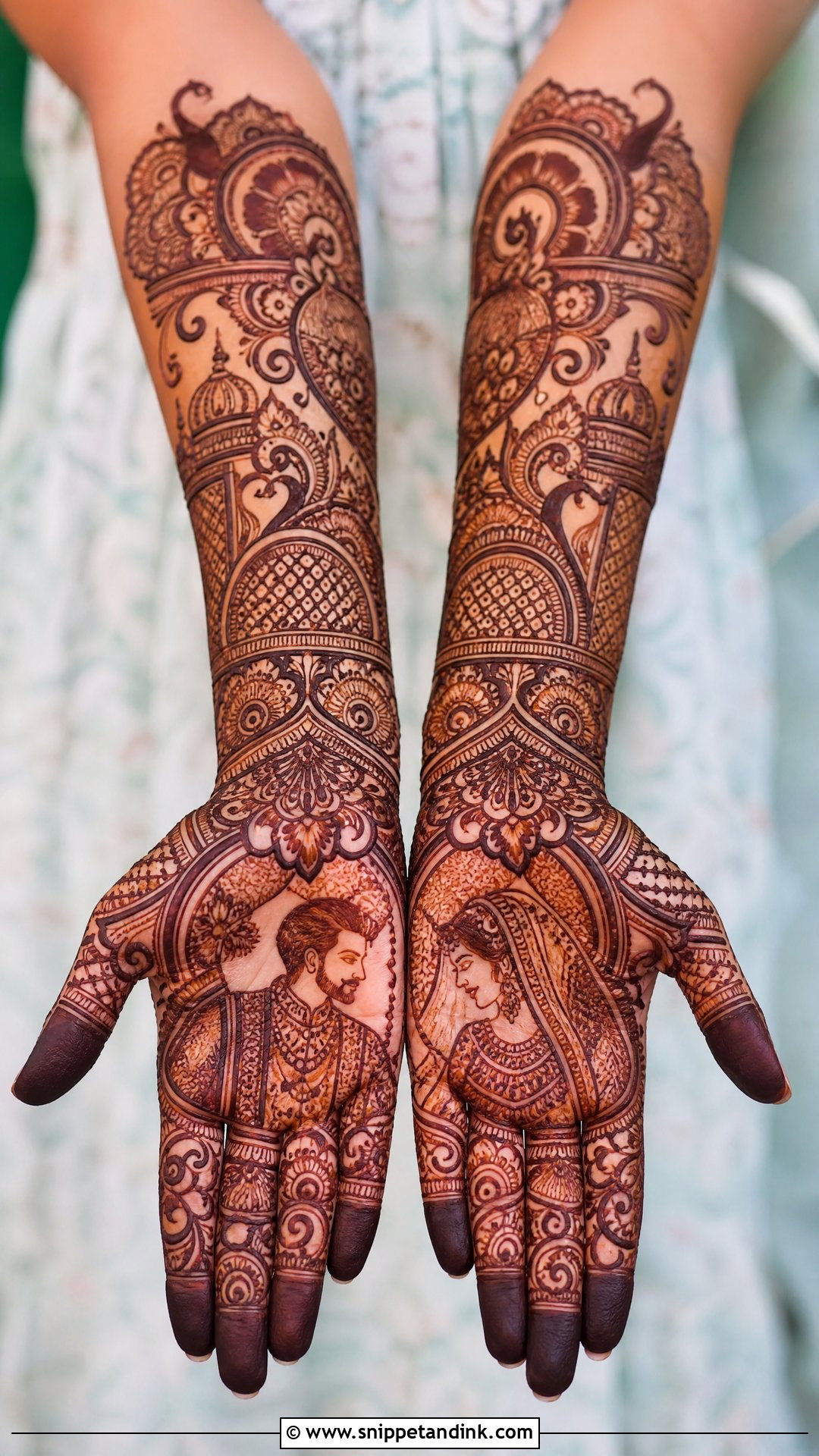
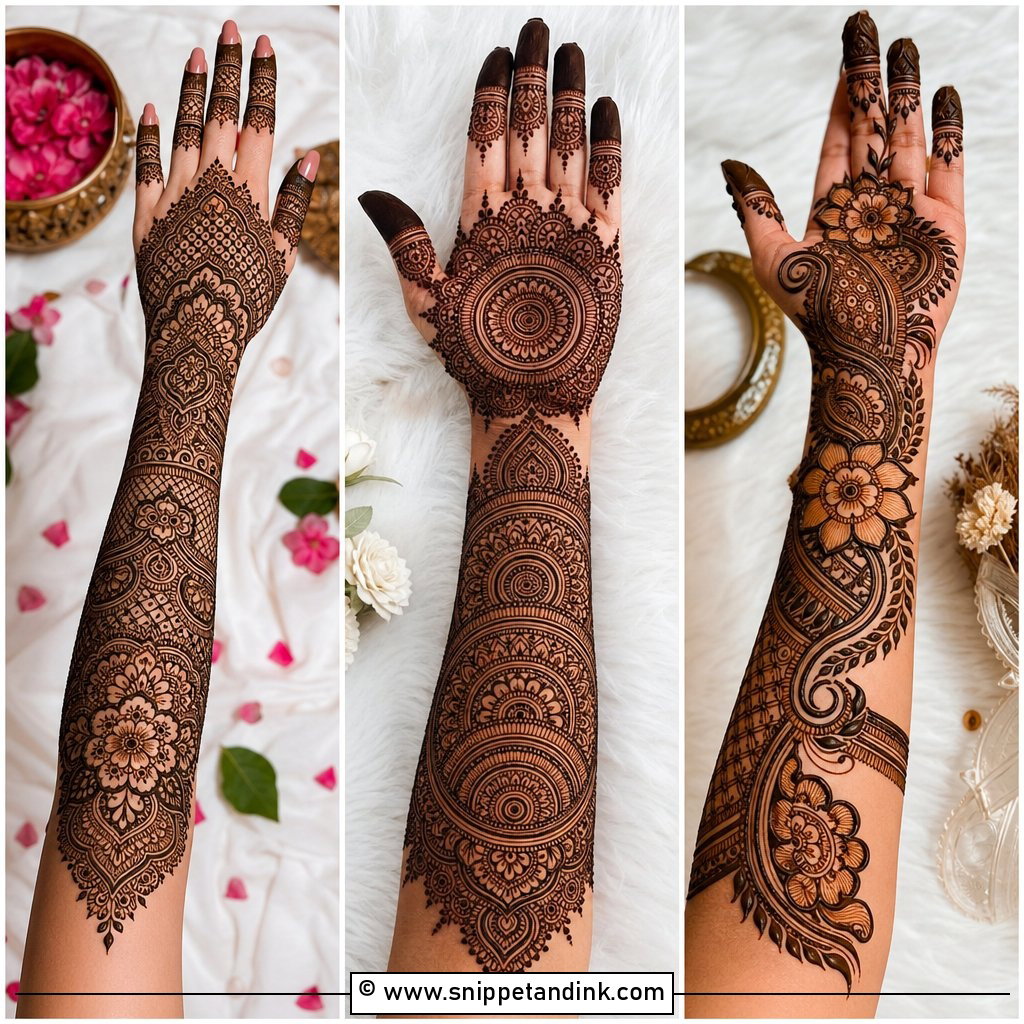
Palms, backs, wrists and forearms all covered: this is the main-day bridal classic. Paisleys, flowers, jaali, mandalas, peacocks, bride and groom figures and hidden initials all fit here. My rule is to set the two central motifs first and mirror their weight across both hands, then fill. If the filler goes in before the anchors, one hand always ends up heavier. It sits well with heavily embroidered lehengas and sarees, and it reads from any angle in photos, which is why families keep asking for it.
2. Arabic Mehndi Design For Wedding
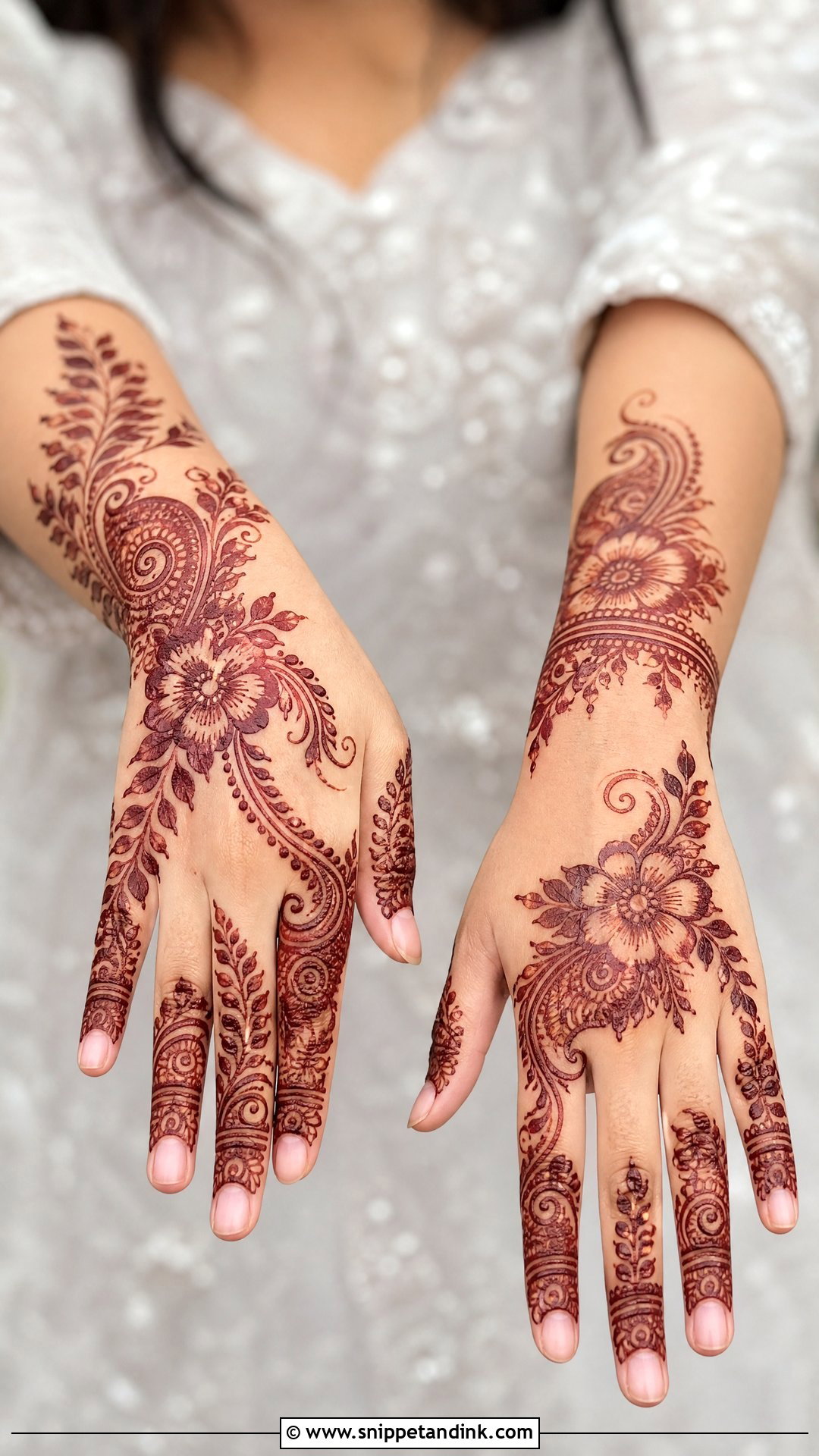
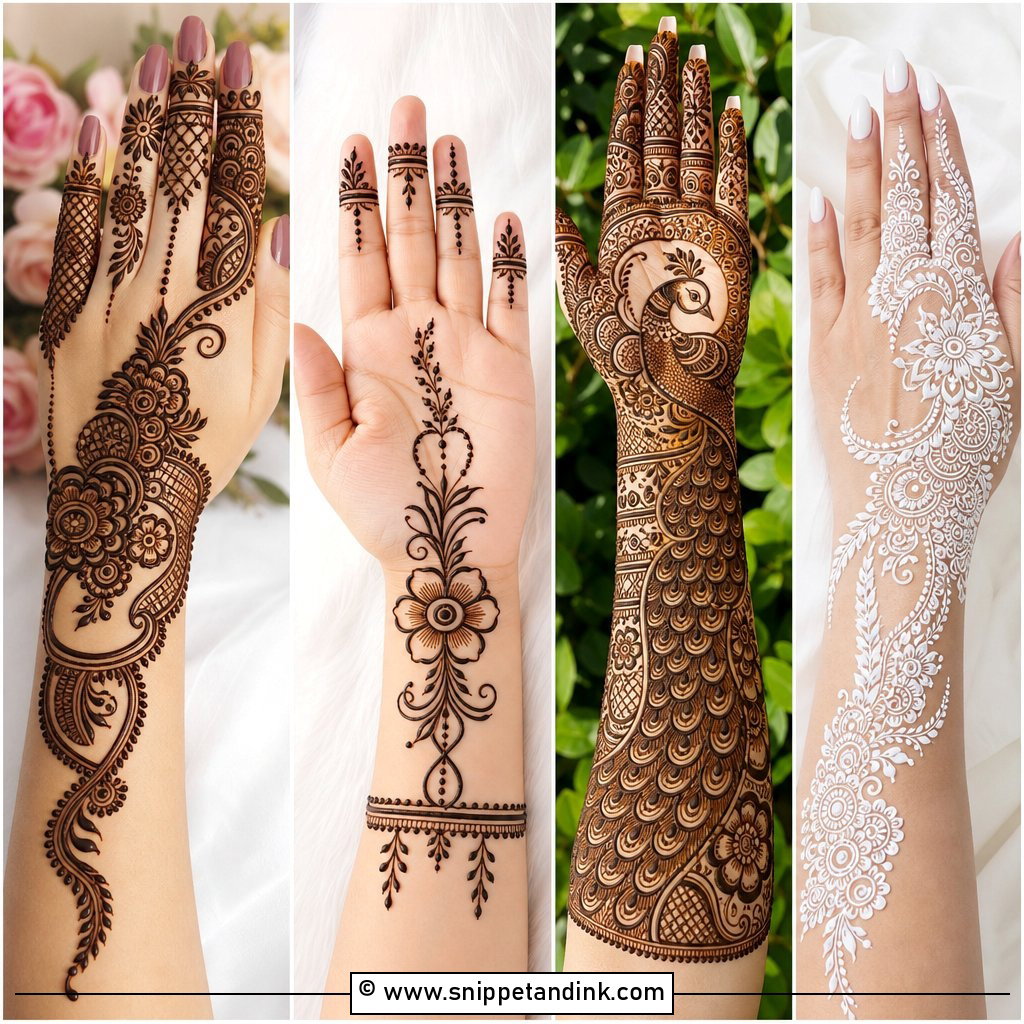
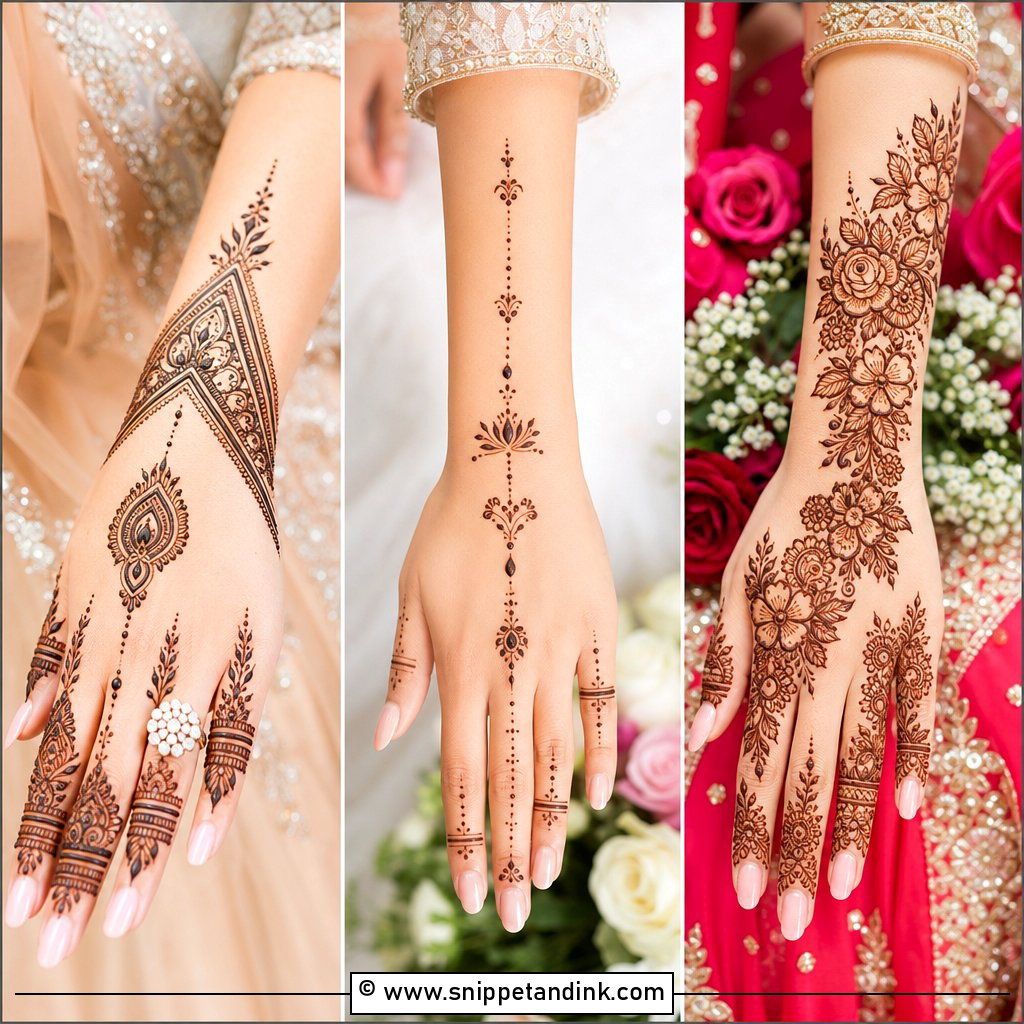
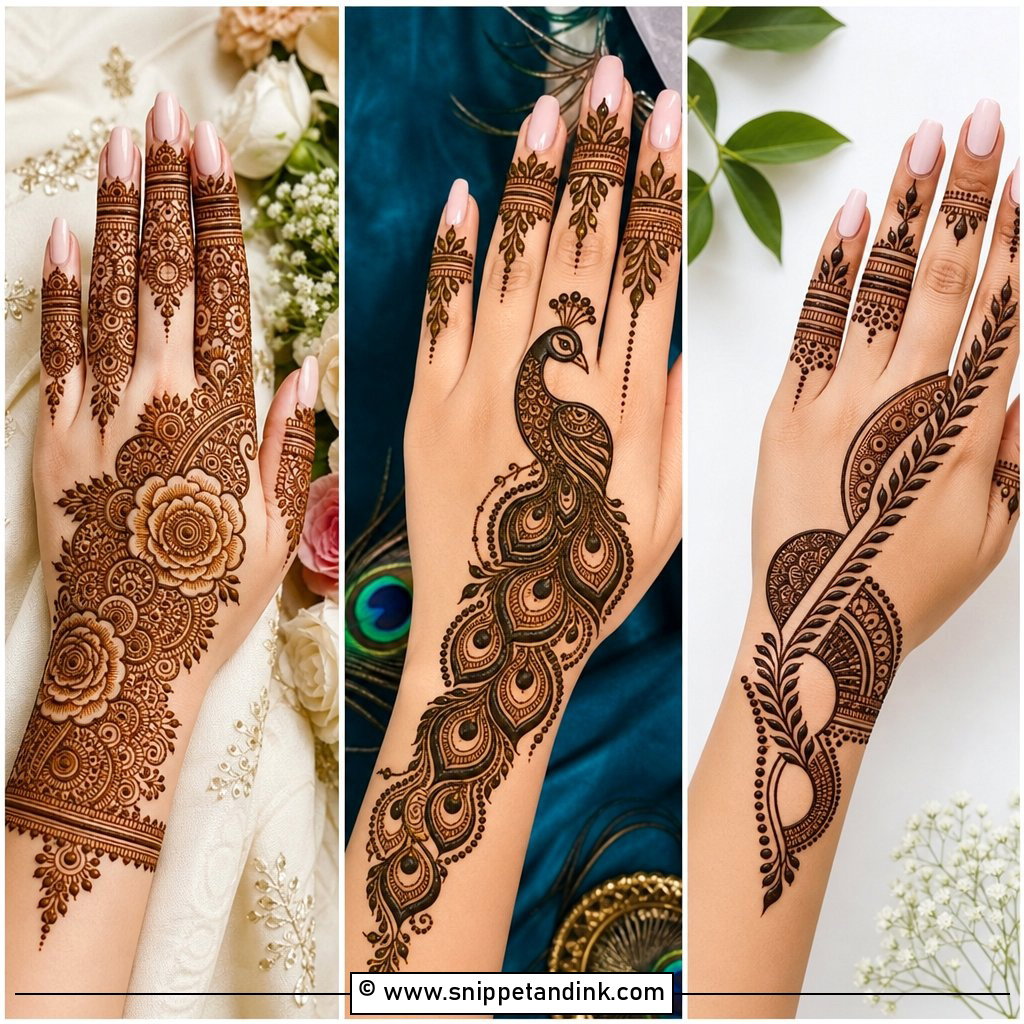
Bold flow and open skin are why bridesmaids and sisters queue for Arabic mehndi design at wedding functions. The pattern runs diagonally across the palm or back in flowers, leaves, vines and paisley curves. I draw the outline a touch thicker than the inner shading, because thin outlines can look broken once the stain settles while a firm edge stays crisp. It’s quick, so it suits engagements, haldi and receptions just as well as the mehndi night.
3. Indo Arabic Mehndi Design
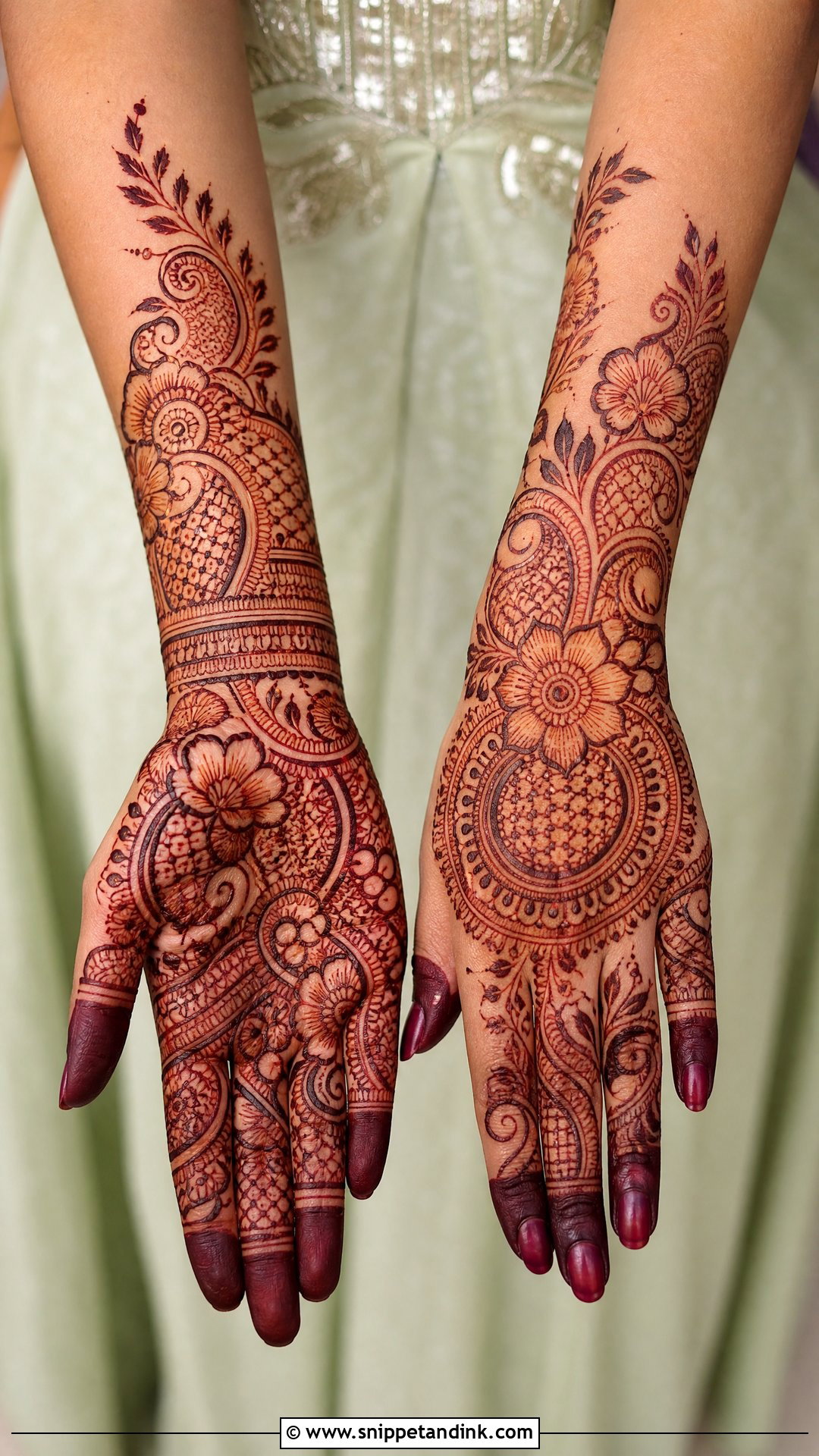
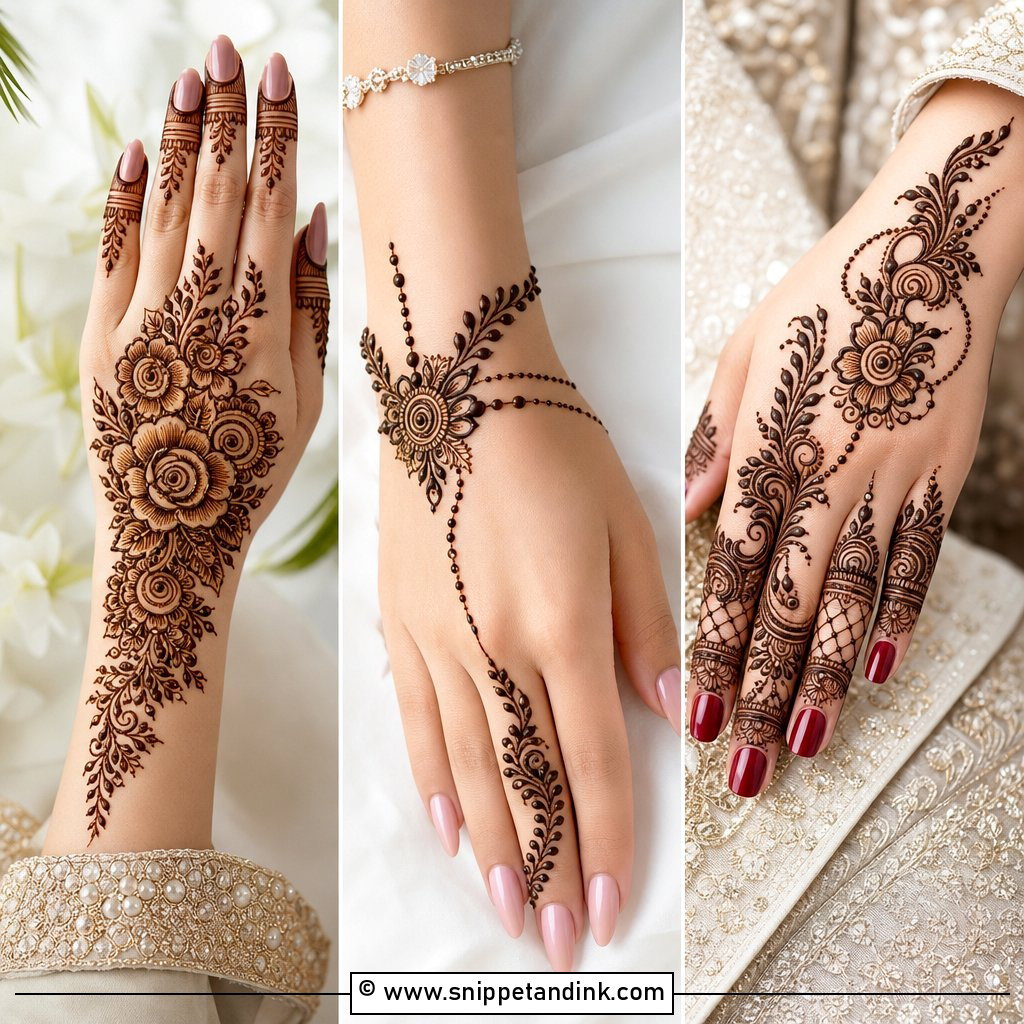
Arabic trails supply the flow, Indian fillers supply the richness. That mix gives brides a full look without packing every millimetre, and bridesmaids get something festive that still breathes. Bold flowers, paisleys, leafy vines, a mandala centre and small checks or dots can sit on the front, back or extend up the forearm. Where I slow down is the meeting point between the two styles; a clumsy join makes it look like two artists worked on one hand.
4. Simple Mehndi Design For Wedding Guests
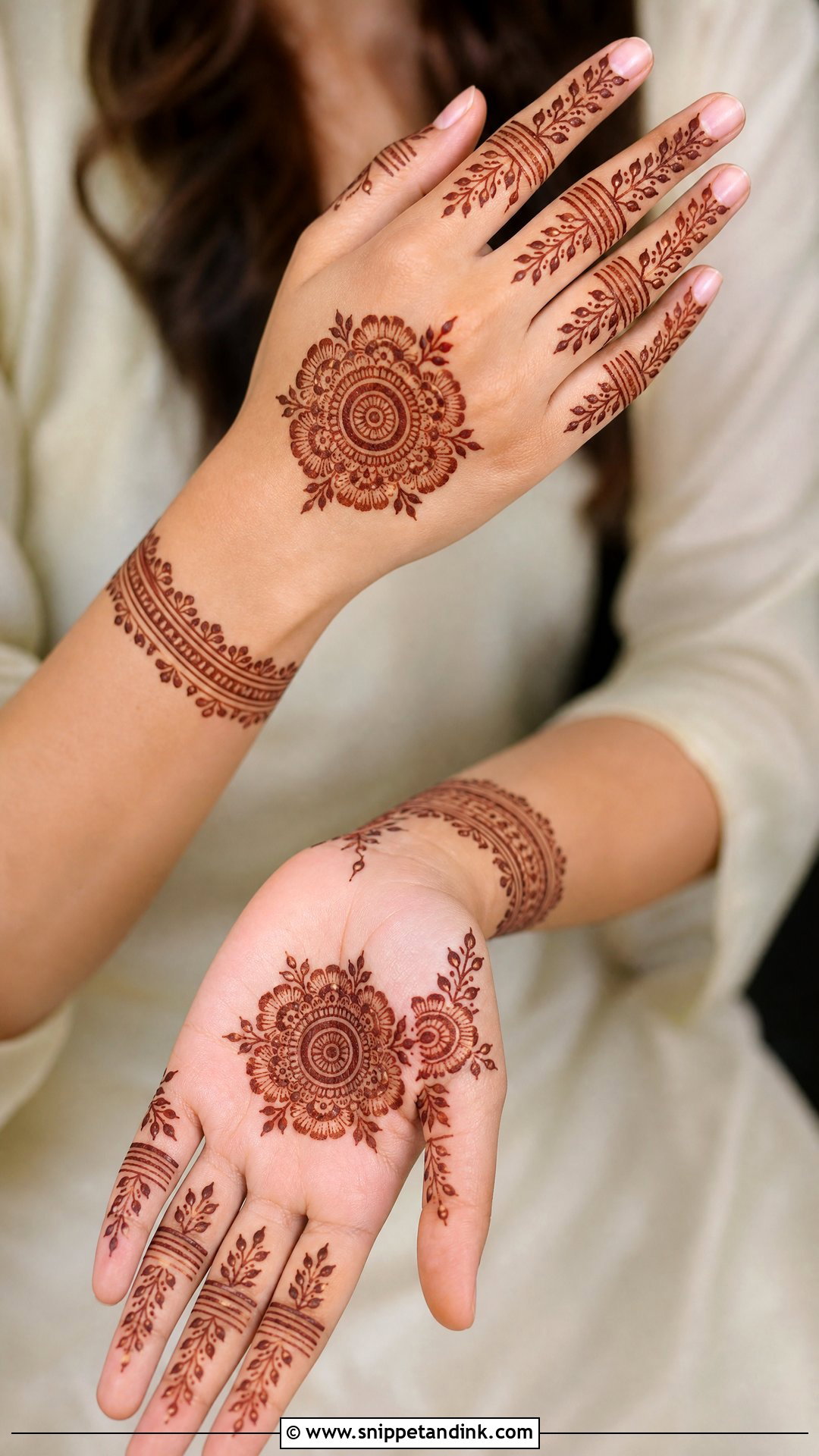
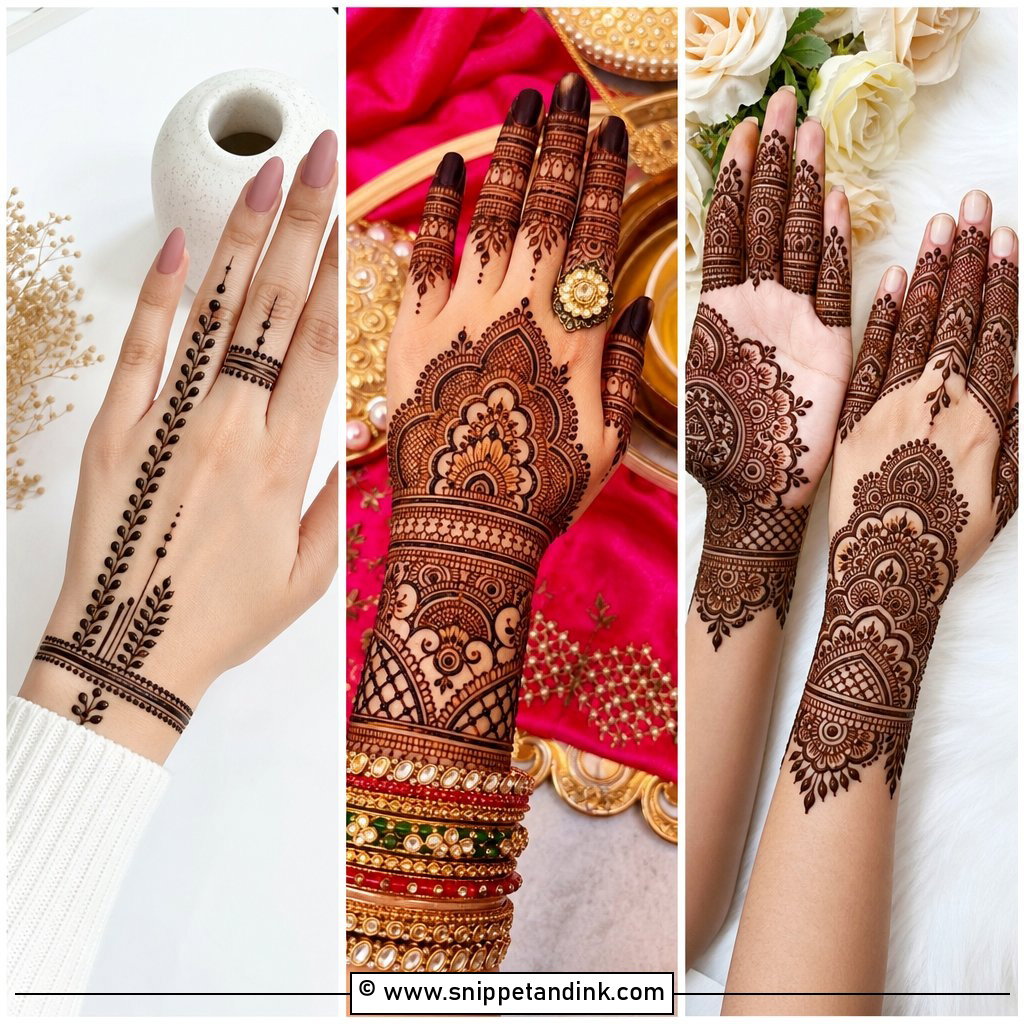
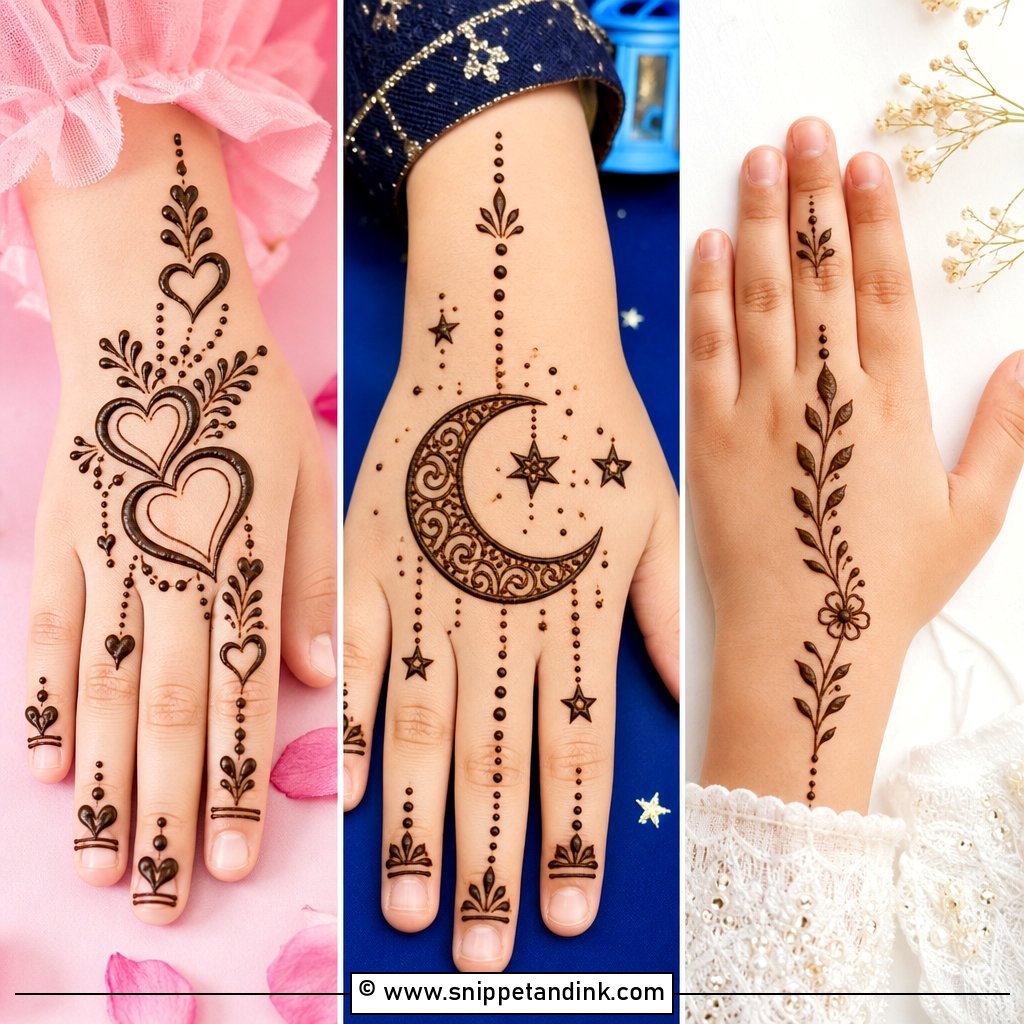
For guests, speed matters as much as looks. A clean back-hand piece with a small mandala, leafy fingers and a soft wrist border can be done quickly and stays readable even if the guest smudges it in the dinner rush. A palm with floral corners and fingertip accents is the alternative. I keep guest designs breathable so they suit jewellery, and so cousins attending three functions don’t feel weighed down by the second night.
5. Back Hand Mehndi Design For Wedding
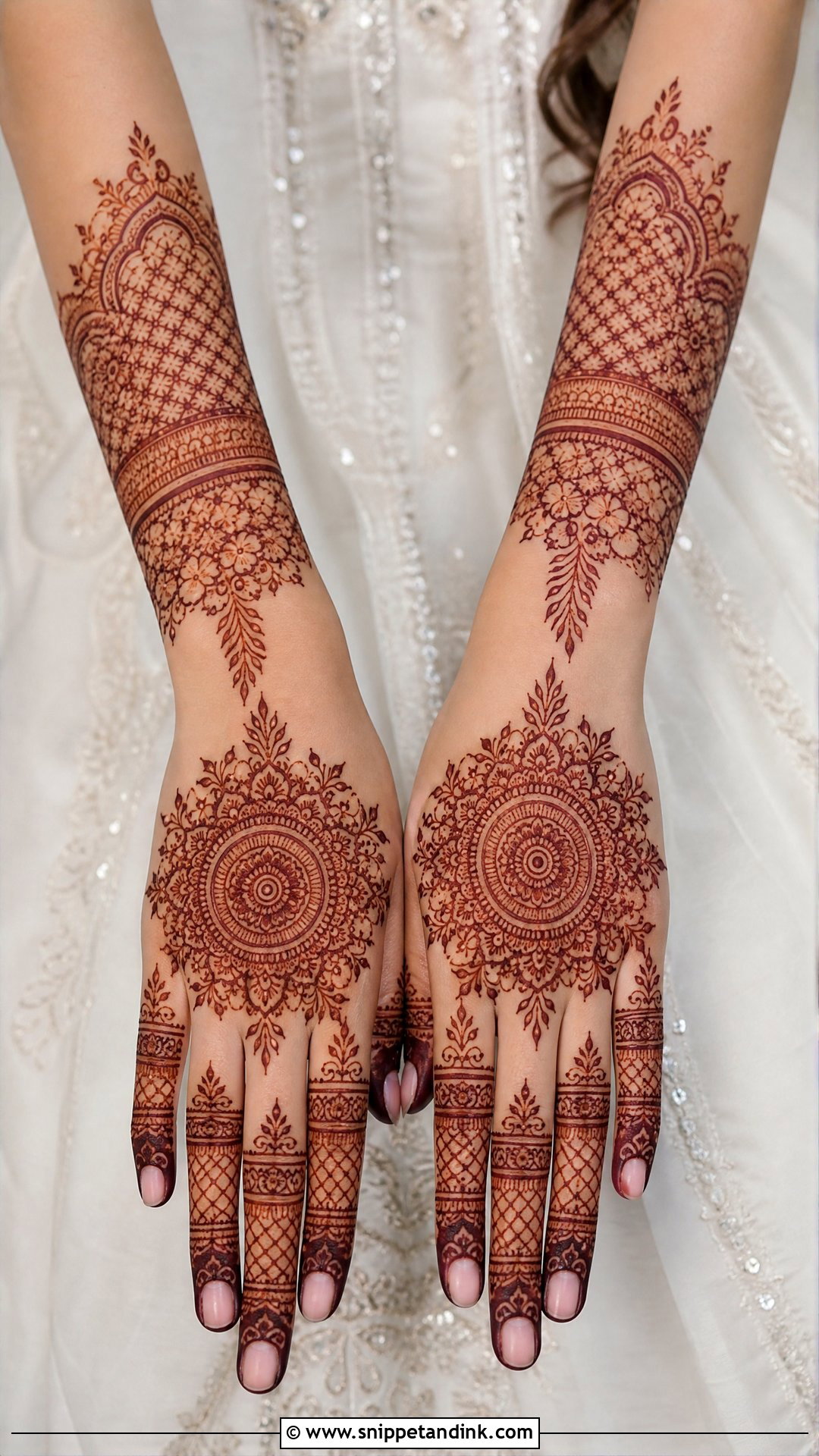
The back of the hand is in every greeting, every dance and every bangle photo. A central mandala, a floral wrist cuff, decorated fingers and light vine or jaali links make the usual layout. Bridesmaids can stop at the wrist; brides extend toward the forearm. If you’re wearing a haath phool, tell your artist. I leave a cleaner line where the chain sits, otherwise the jewellery and the henna fight over the same space.
6. Front Hand Mehndi Design For Wedding
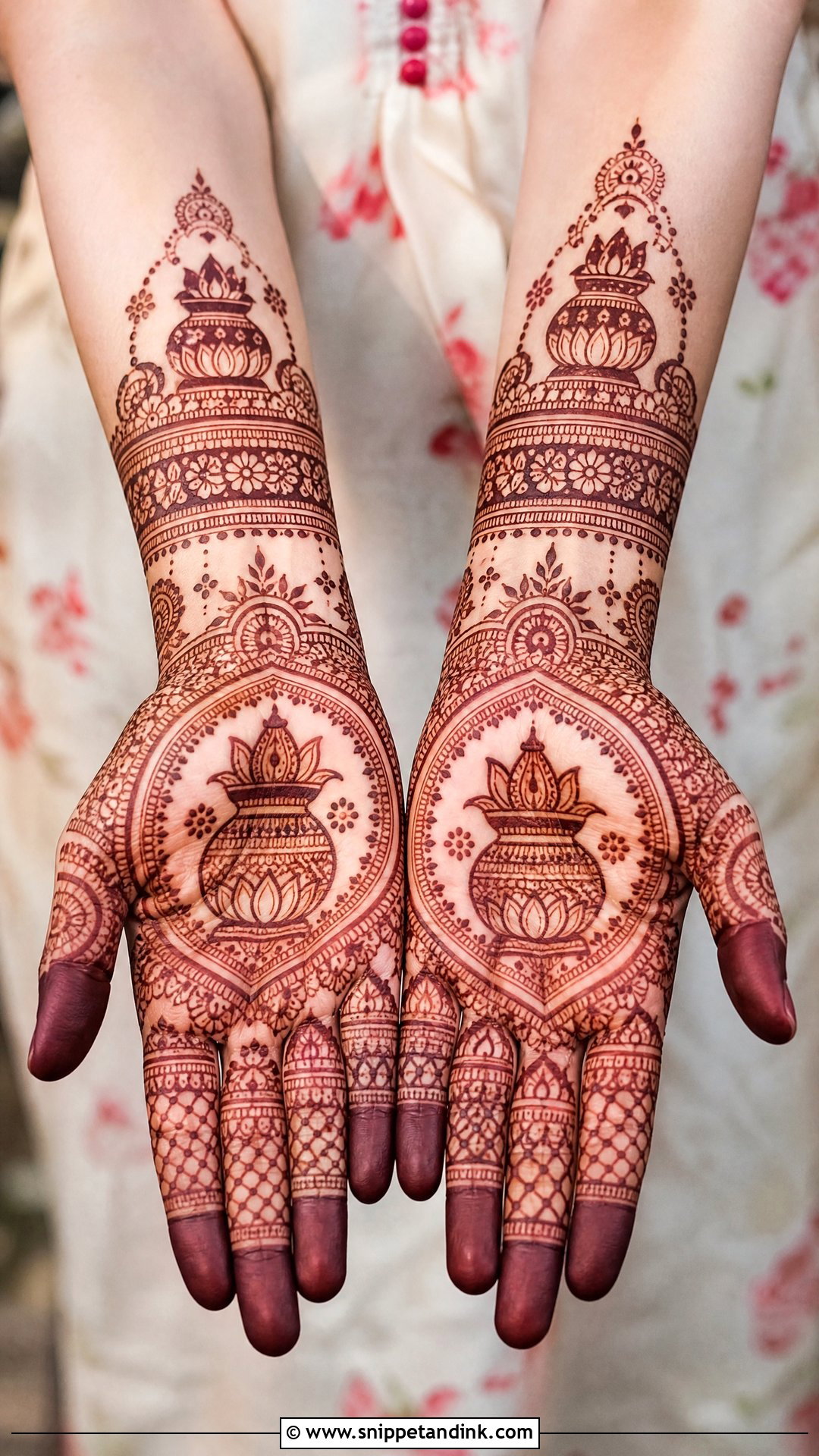
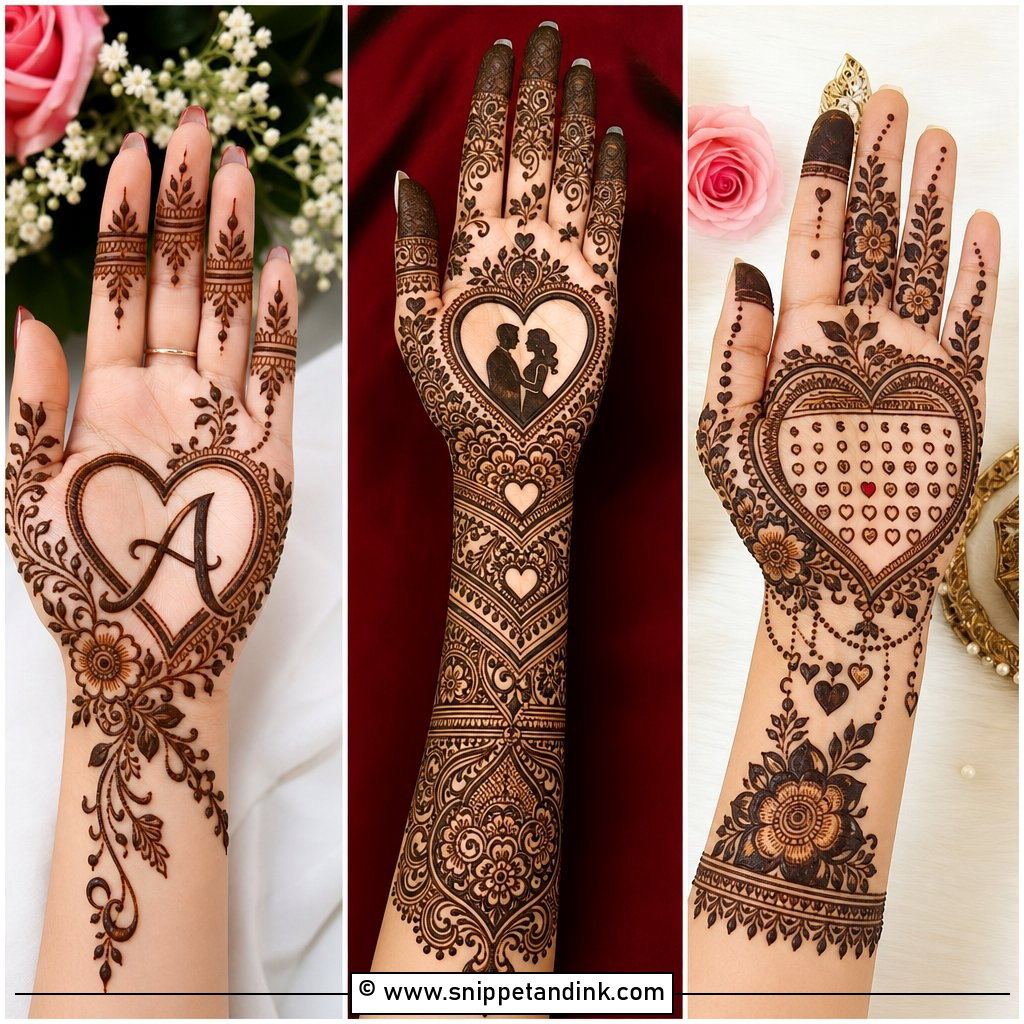
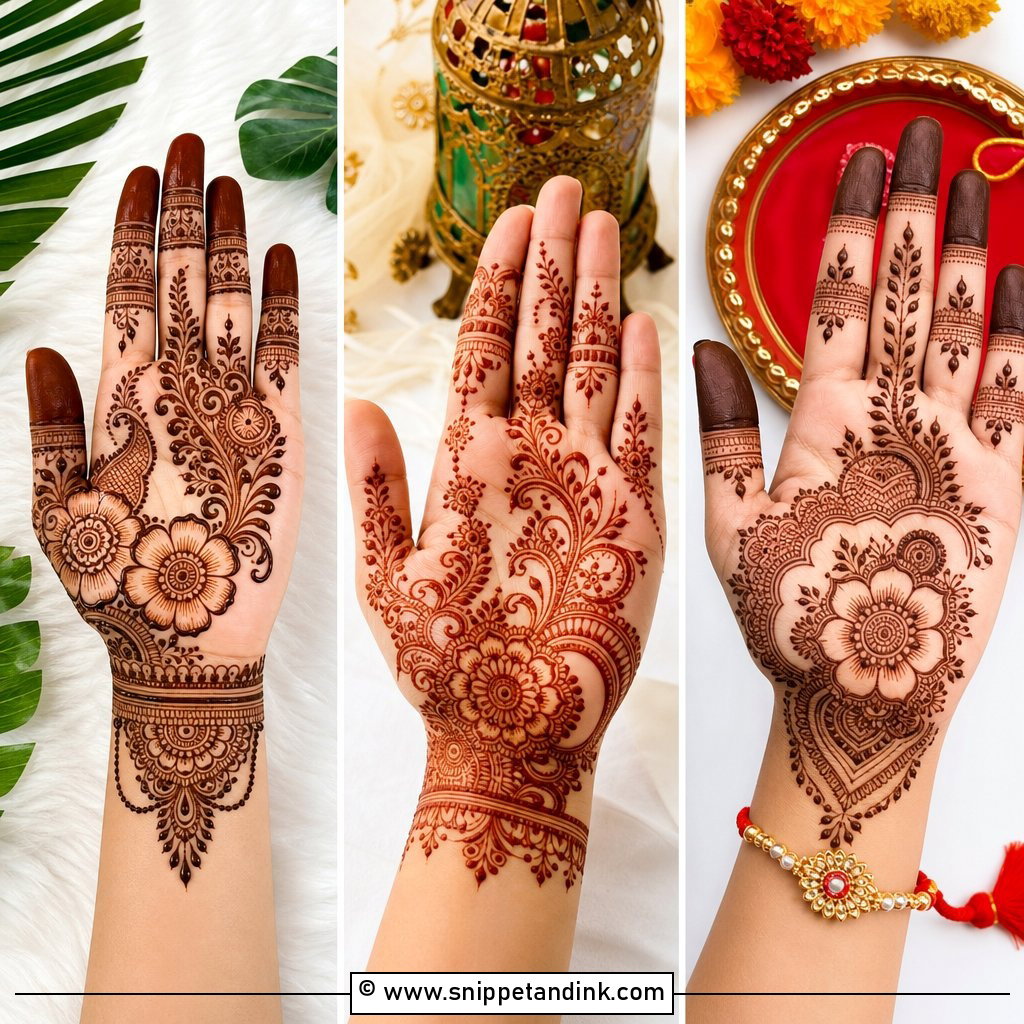
Palms hold the meaningful details: mandalas, kalash, lotus, paisleys, couple art and family symbols. They also stain the darkest, so whatever goes there will be the most visible thing on your hands at day two. A full front starts with a strong centre and runs into detailed fingers and wrist bands; a half-palm floral layout with decorated tips is the lighter route for mothers and sisters. Initials and dates fit inside the palm motifs easily.
7. Bridal Portrait Mehndi Design
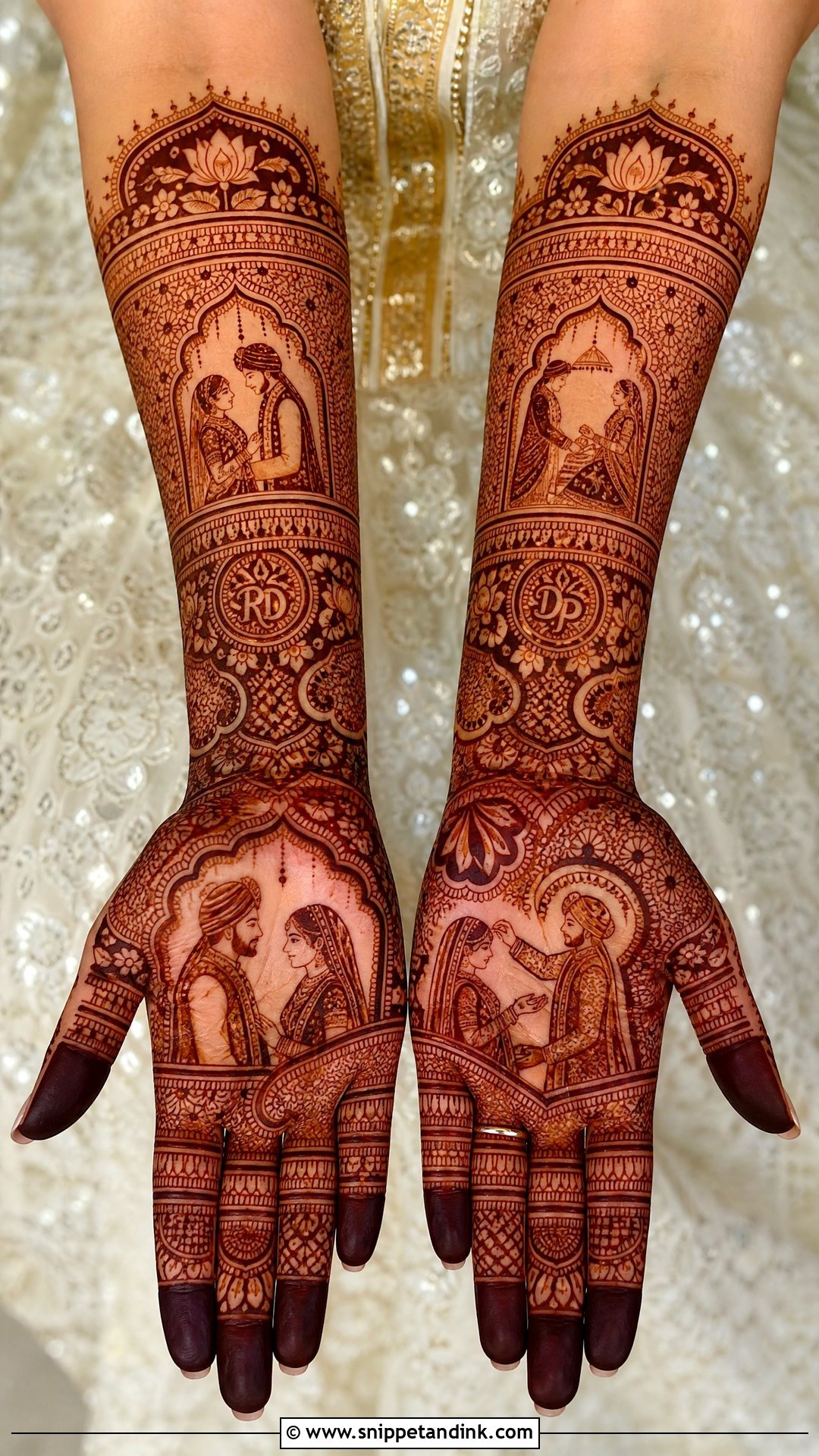
Portrait henna puts the couple, the varmala, the doli or small silhouettes onto the palms or forearms, framed by arches and fine filler. Be honest with yourself about the artist here. Faces are the hardest thing in henna, and a nose line that’s a hair too long changes the whole expression. I’d only book this with someone whose portrait work you’ve seen in real photos, and I’d budget extra sitting time because the fine lines can’t be rushed.
8. Mandala Mehndi Design For Wedding
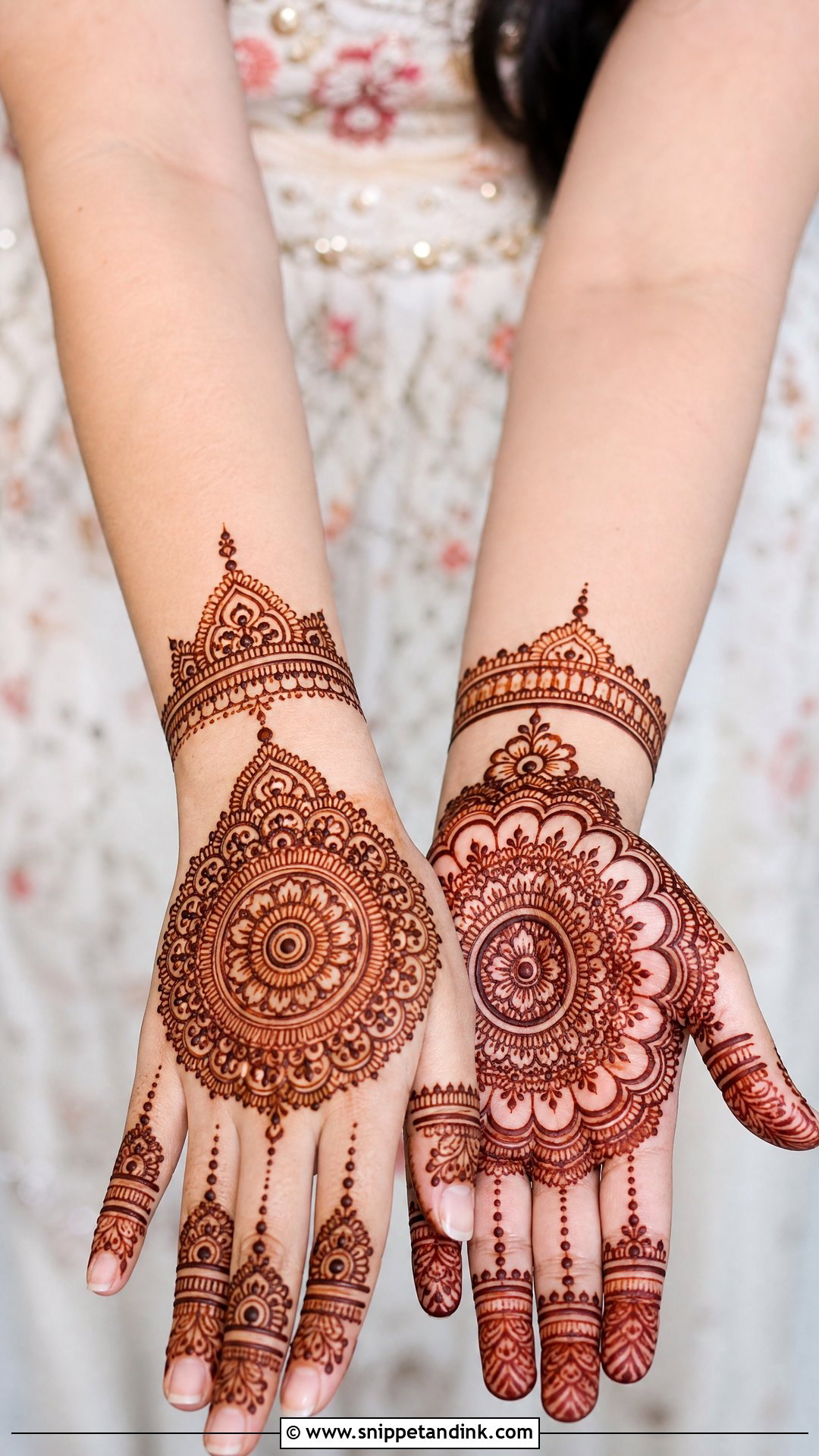
One circle, placed well, carries a whole hand. The mandala goes in the centre of the palm or back, and fingers and wrist get smaller supporting details. Brides take layered petals and fine borders; guests keep clean rings and a few leaves. I start every mandala from a dot at the exact centre and work outward, because an off-centre start can’t be corrected later. It suits slim and wide hands alike, which makes it my go-to for intimate roka and haldi gatherings.
9. Floral Mehndi Design For Wedding
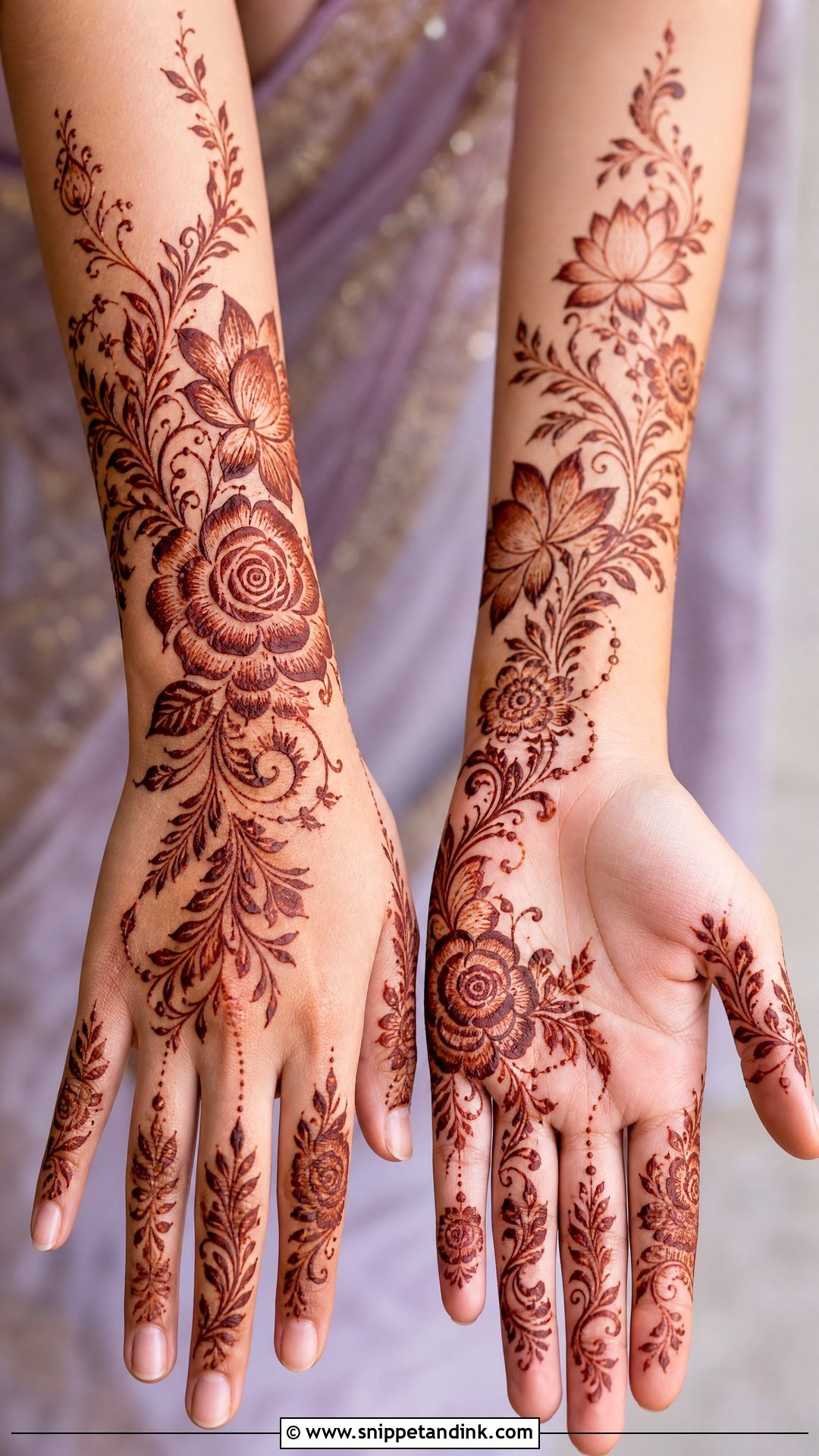
Florals adapt to anyone. Large roses, lotus flowers, buds, vines and shaded petals can fill a bridal hand or run as a single diagonal trail for a guest. Spacing is what changes the mood. Bold blooms with open skin around them look modern; add paisleys, dots and a bracelet band and the same flowers turn traditional. Whatever the version, I link the flowers with one stem so they don’t look like separate stickers.
10. Peacock Mehndi Design For Wedding
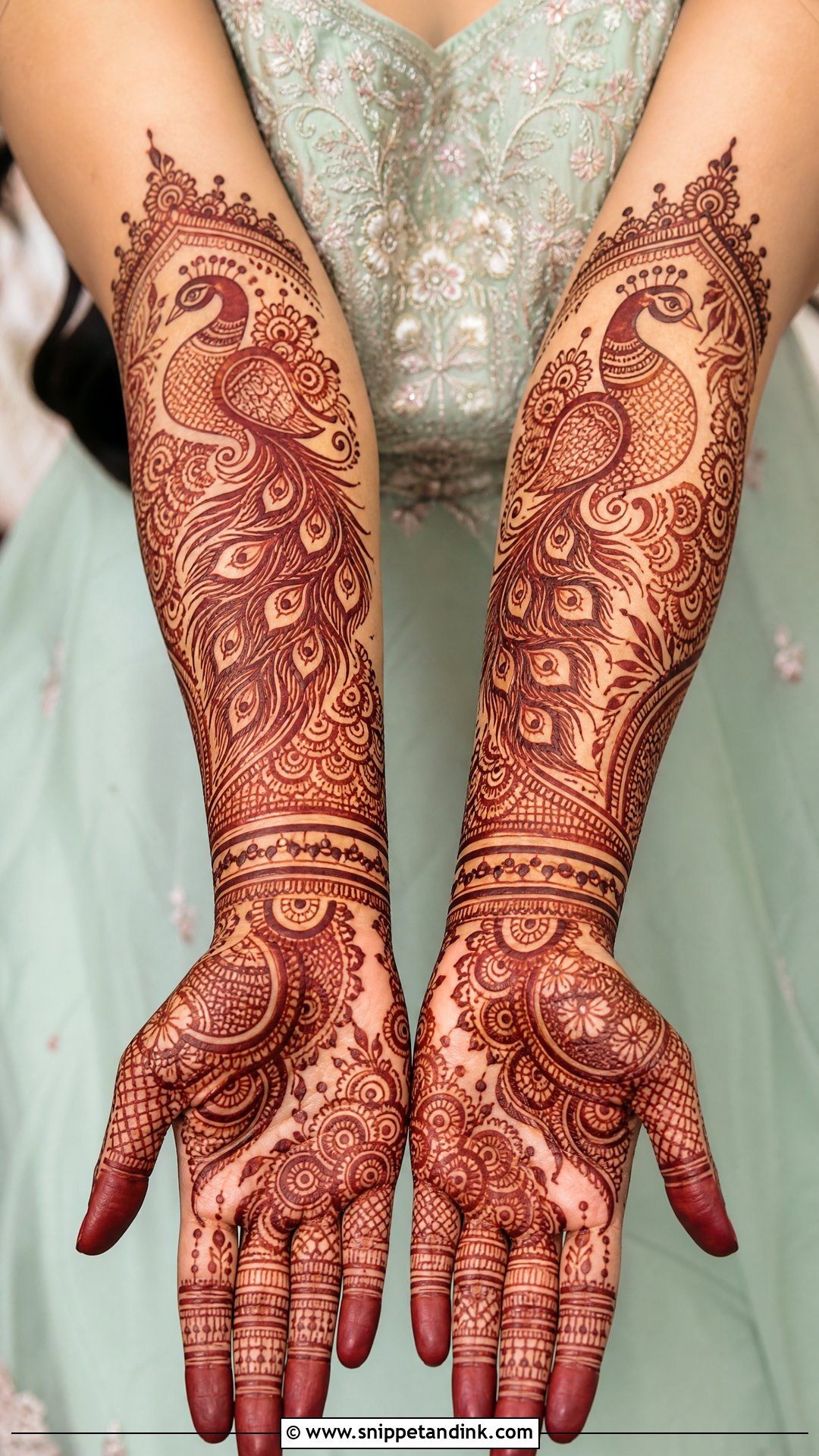
Royal and very traditional, the peacock motif sits on the palm, wrist or forearm with its feathers flowing into paisleys and curved lines. A bride might want matching birds on both hands with dense filling; a guest can carry one peacock on the back with simple fingers. The neck curve is the make-or-break line, and I draw it in one stroke so it doesn’t look stiff. Silk outfits and traditional gold sit naturally beside it.
11. Jaali Mehndi Design For Wedding
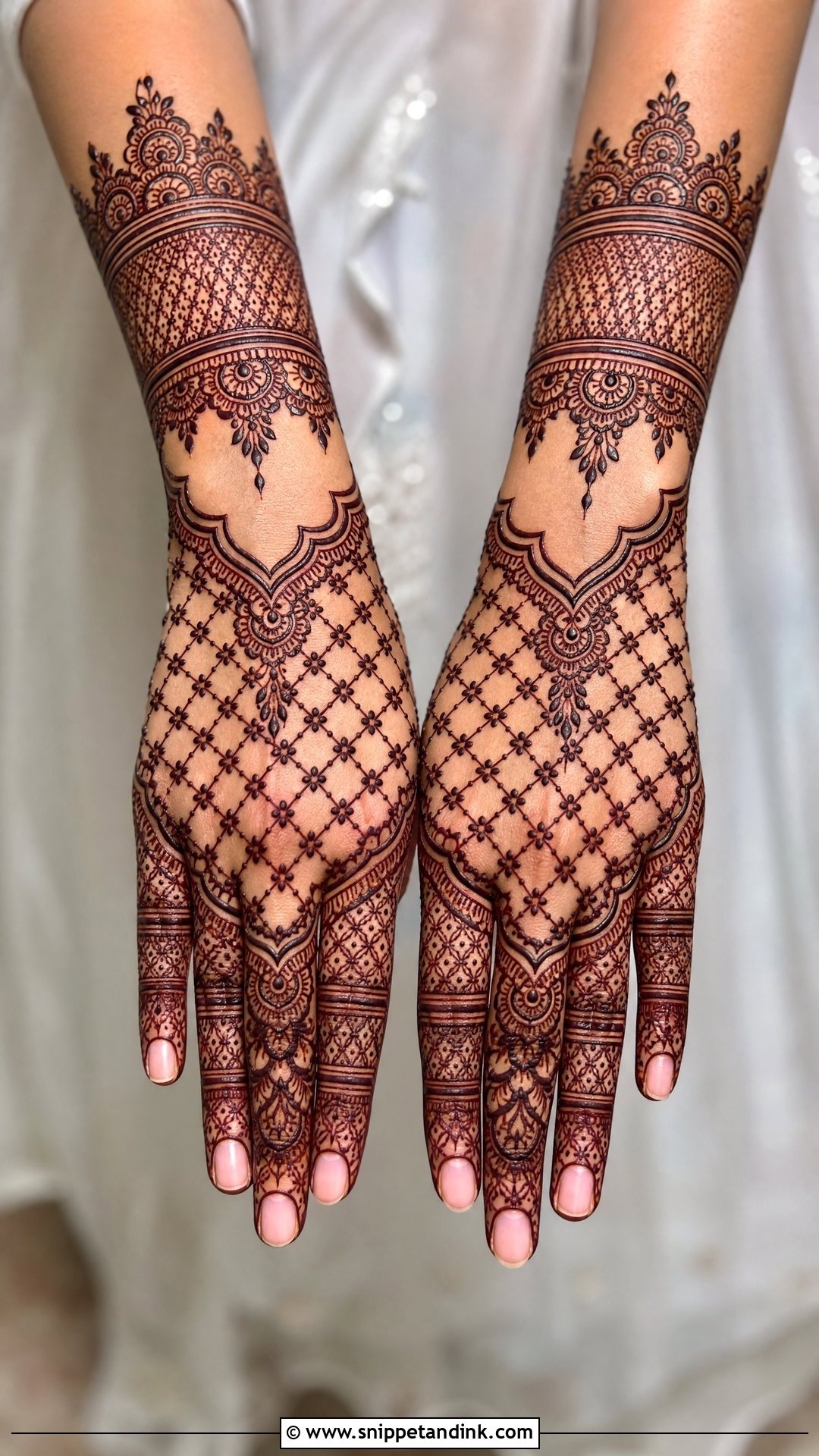
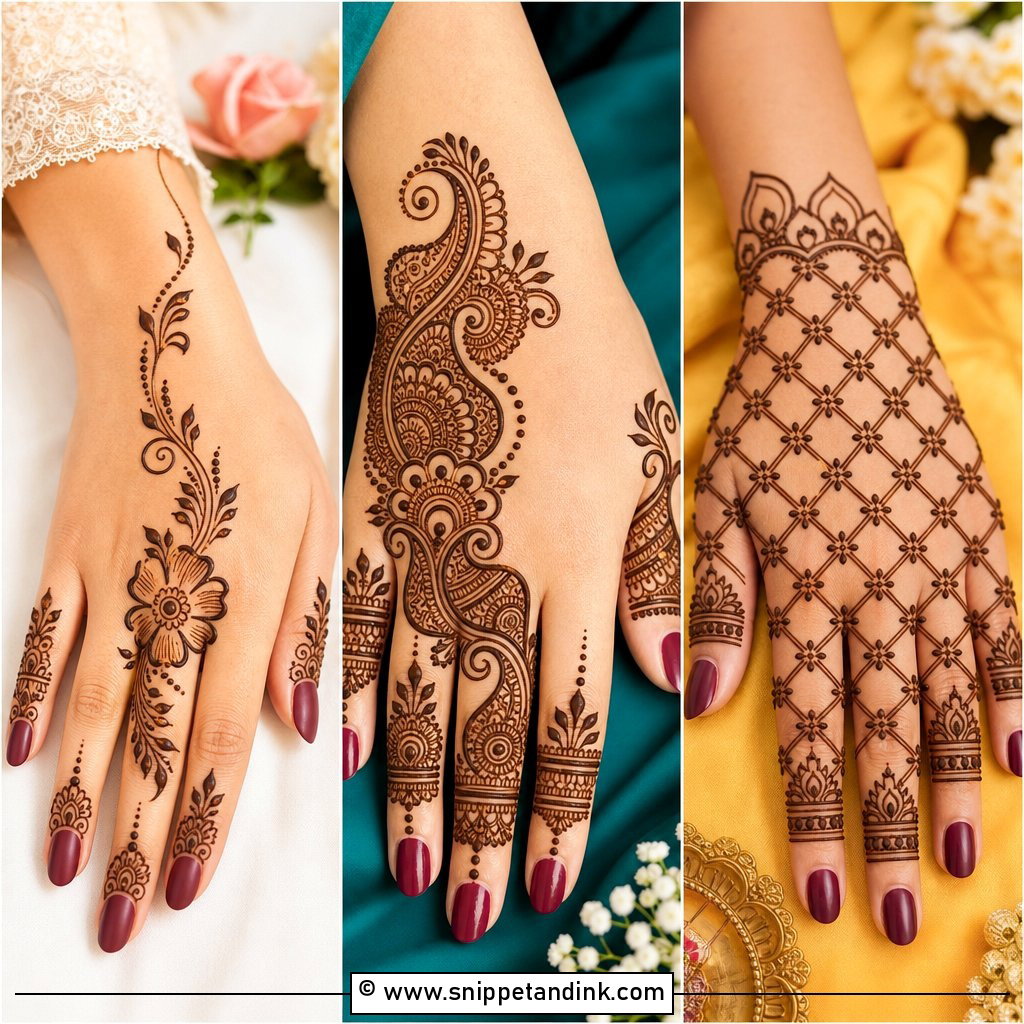
Net patterns, checks, dots and fine borders give jaali its lace finish, and on the back of the hand it can sit like a glove with floral or paisley edges. Precision is everything. The grid lines have to stay even, and wet lines must not touch or the open squares fill in. Brides combine jaali with mandalas and cuffs; a guest half-hand works well with clean fingertips. Done carefully, it holds up in close-up photos better than almost any other style.
12. Minimal Mehndi Design For Wedding
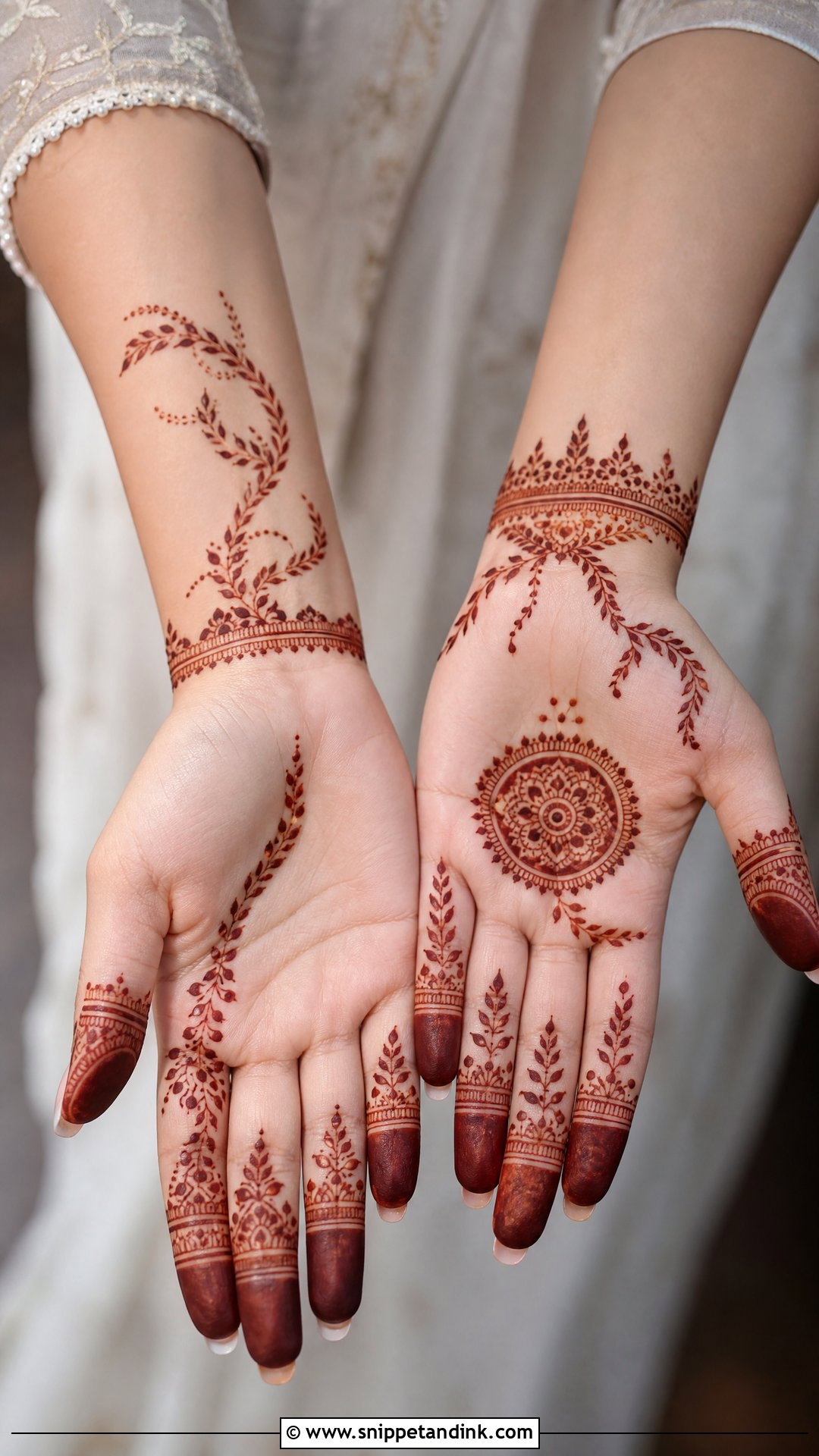
Slim vines, small mandalas, fingertip art and bracelet bands make up most minimal designs. I recommend this for engagements, civil ceremonies and destination weddings where the whole styling is lighter, and for guests who want henna without full hands. Every motif needs a clear reason for being where it is, or the hand just looks unfinished. Pale stains show more on minimal work too, so it suits people whose skin takes henna well.
13. Rajasthani Bridal Mehndi Design
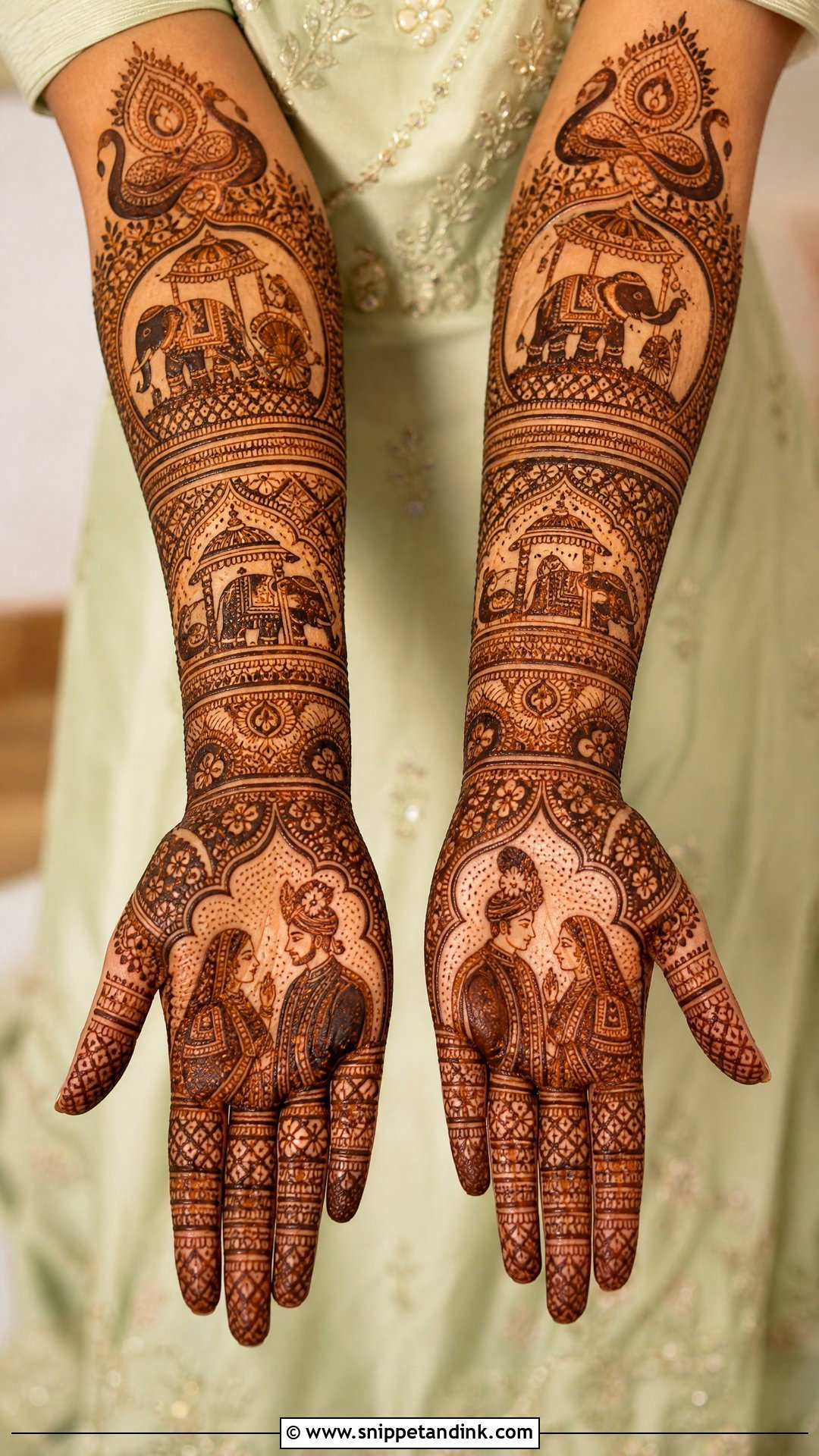
Rajasthani bridal work tells stories: bride and groom figures, elephants, peacocks, doli scenes, mirrored layouts and dense traditional filling across hands and forearms. It’s miniature work, which means patience from both of us, and an artist who can keep tiny figures clean. I usually schedule it as the longest session of the wedding week. Red, maroon and gold outfits suit the depth of the finished stain especially well.
14. Moroccan Mehndi Design For Wedding
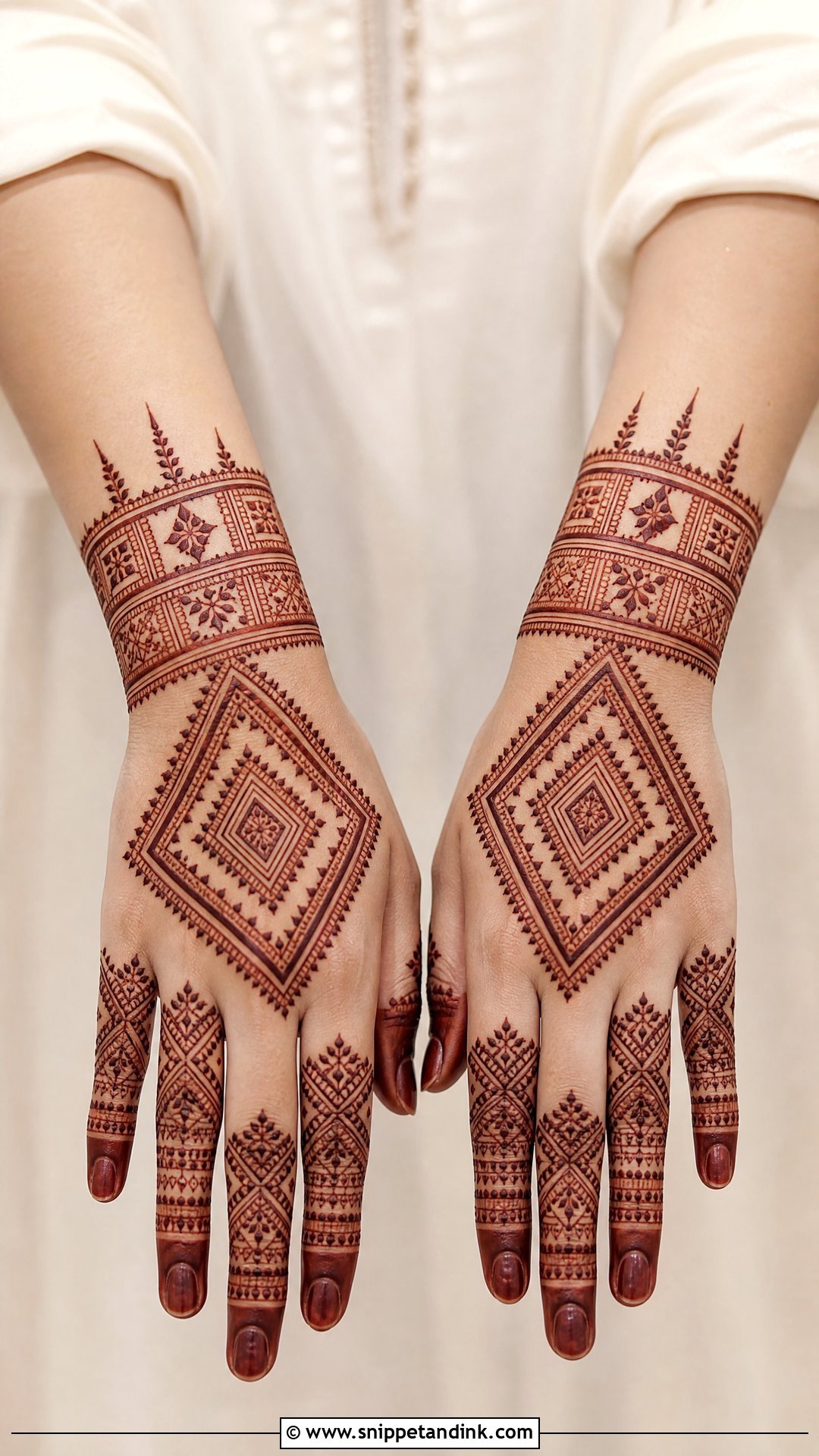
Diamonds, lines, triangles and grids replace florals in Moroccan henna. It works on the back, palm, fingers or wrist-to-forearm and suits bridesmaids and modern brides who want something unlike the usual Indian or Arabic work. Crisp lines need guide dots placed first, because a grid drifting across four fingers is obvious. A few dots or tiny leaves along the borders soften it for fusion outfits.
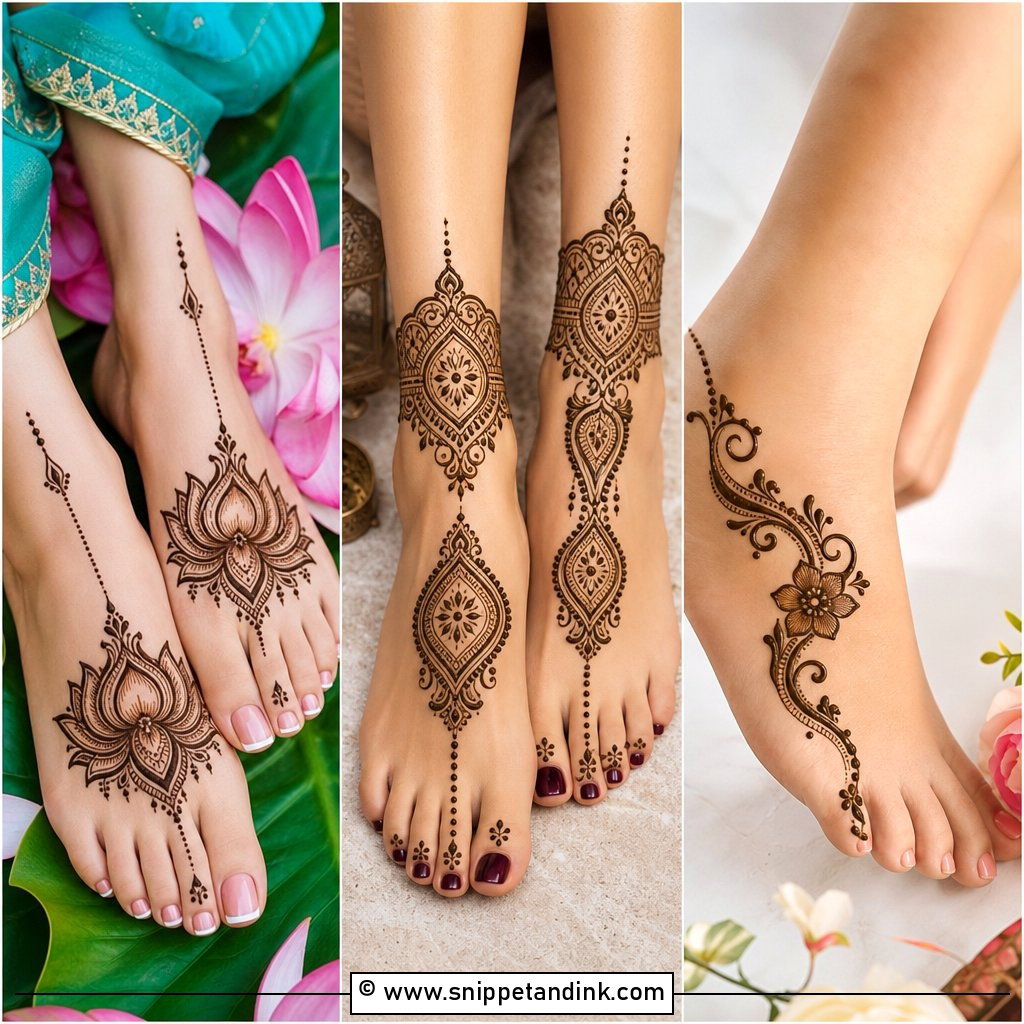

15. Gulf Khaleeji Mehndi Design
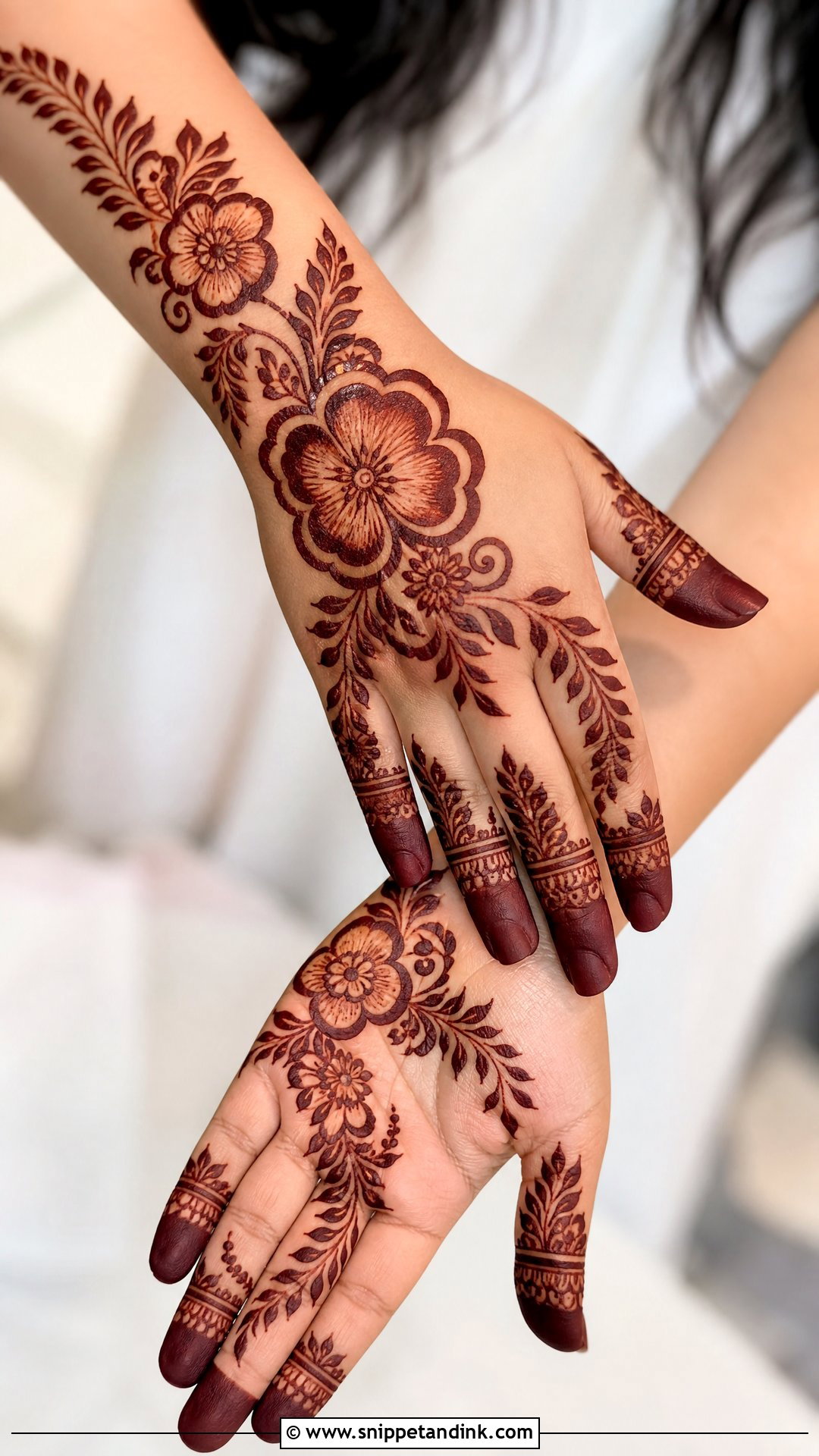
Khaleeji henna is about large flowers, thick outlines, leafy trails and generous empty skin, often sweeping from the fingers to the wrist. The larger shapes hold more paste, which usually means a clearer, more even stain than fine filling gives. Guests and bridesmaids love it because it looks generous without dense work, and it sits nicely with rings and long sleeves. I keep the outline pressure steady so the thick lines don’t blob at the curves.
16. Engagement Mehndi Design For Wedding
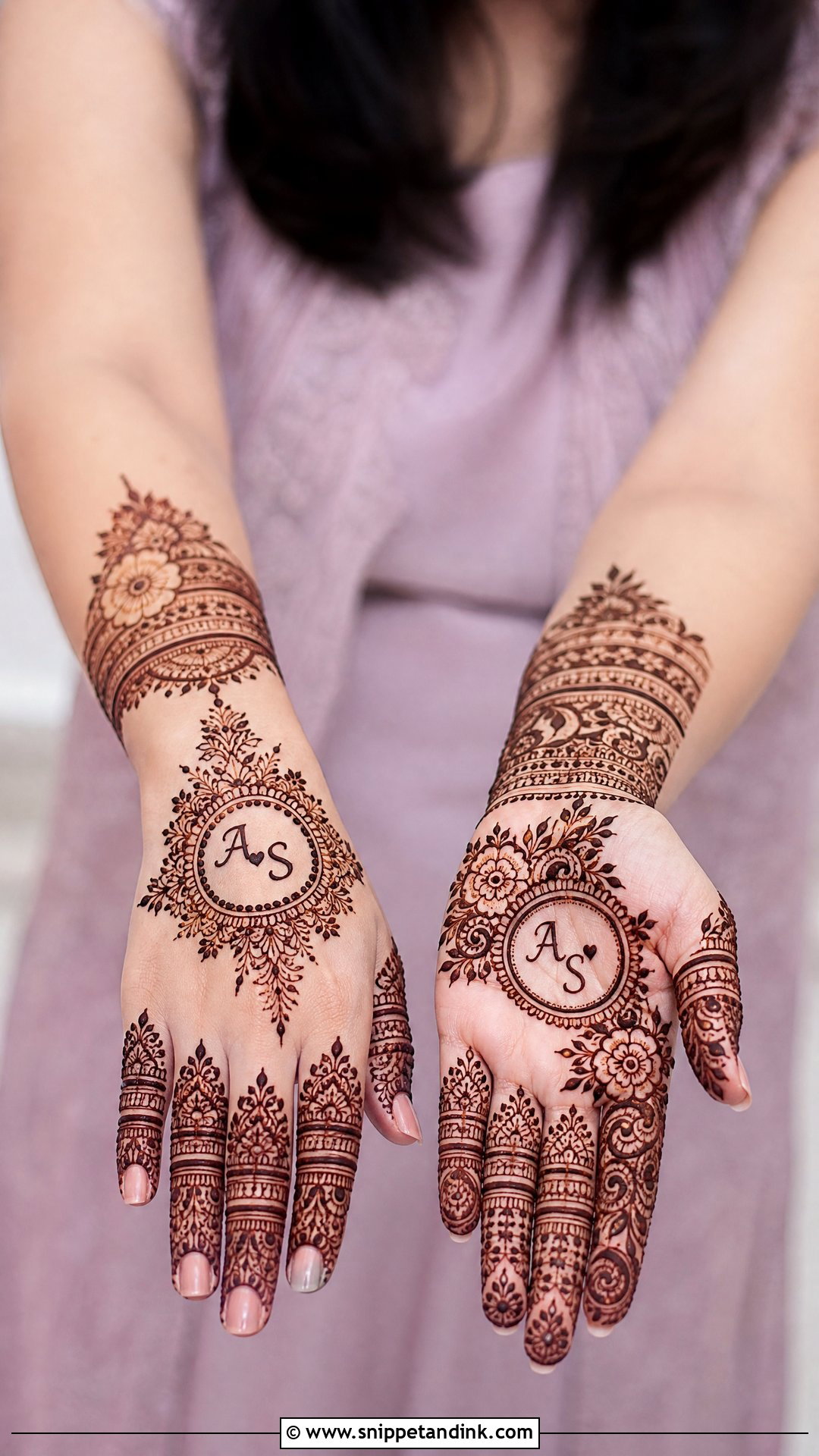
An engagement design should feel special but leave room for the main bridal session later. Ring motifs, couple initials, floral bands, small mandalas and delicate fingers make a good base. Since the ring will be photographed constantly, I keep the ring finger and the area around it fairly open so the stone stays the focus. Plan the dates, too: if engagement and wedding are close, an old stain may still be fading when your bridal henna goes on.
17. Sangeet Mehndi Design For Wedding
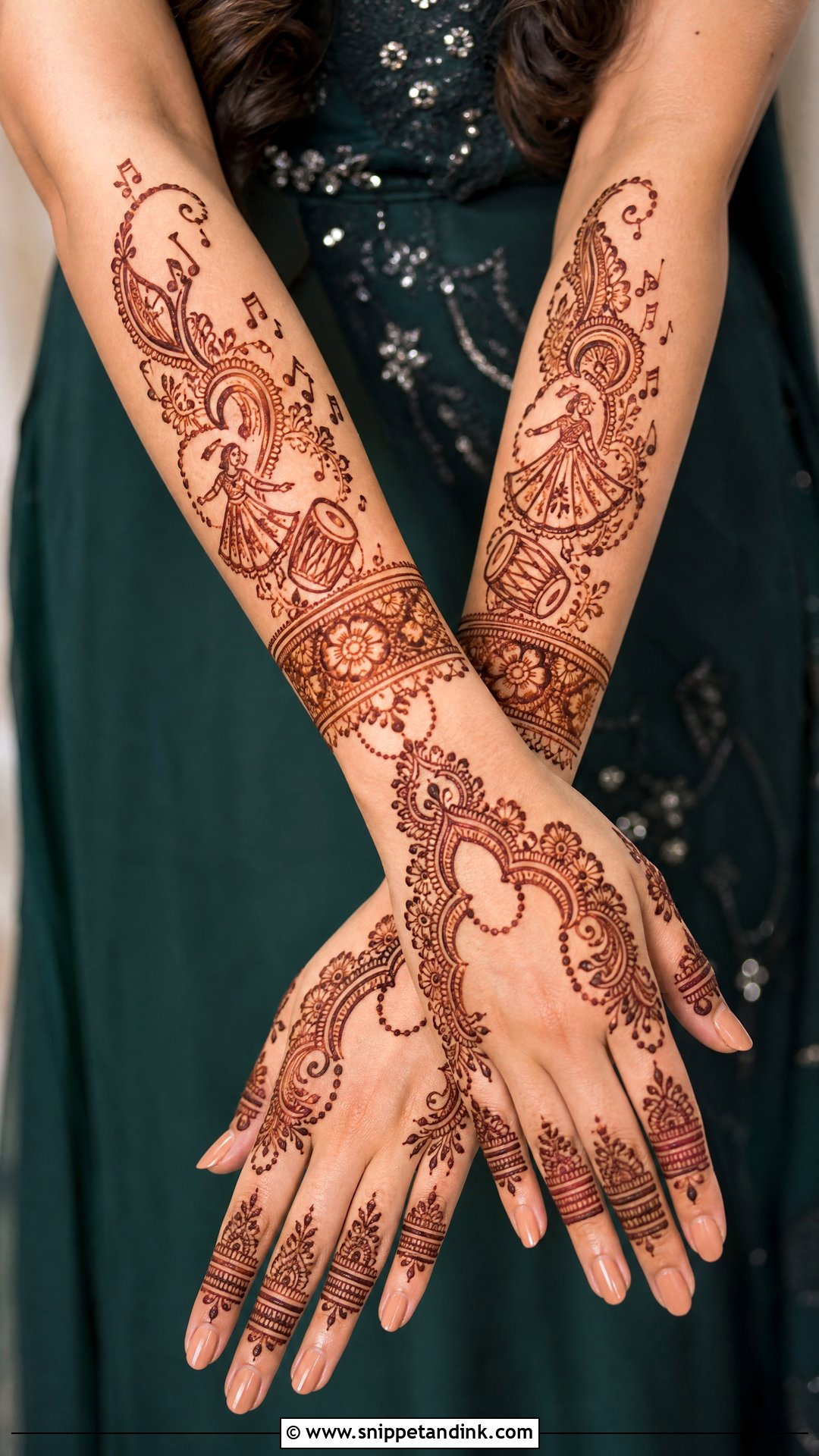
You’ll be dancing, clapping and holding a microphone, so a sangeet design should be quick and dry fast. A back-hand floral trail, a wrist cuff or a half-hand Indo Arabic piece suits most guests. Brides who are getting their main henna later can treat this as a lighter preview. Tiny dhol shapes or dancing figures add fun, but keep plenty of open skin; a design that covers every inch feels heavy at a party meant to be playful.
18. Finger Mehndi Design For Wedding
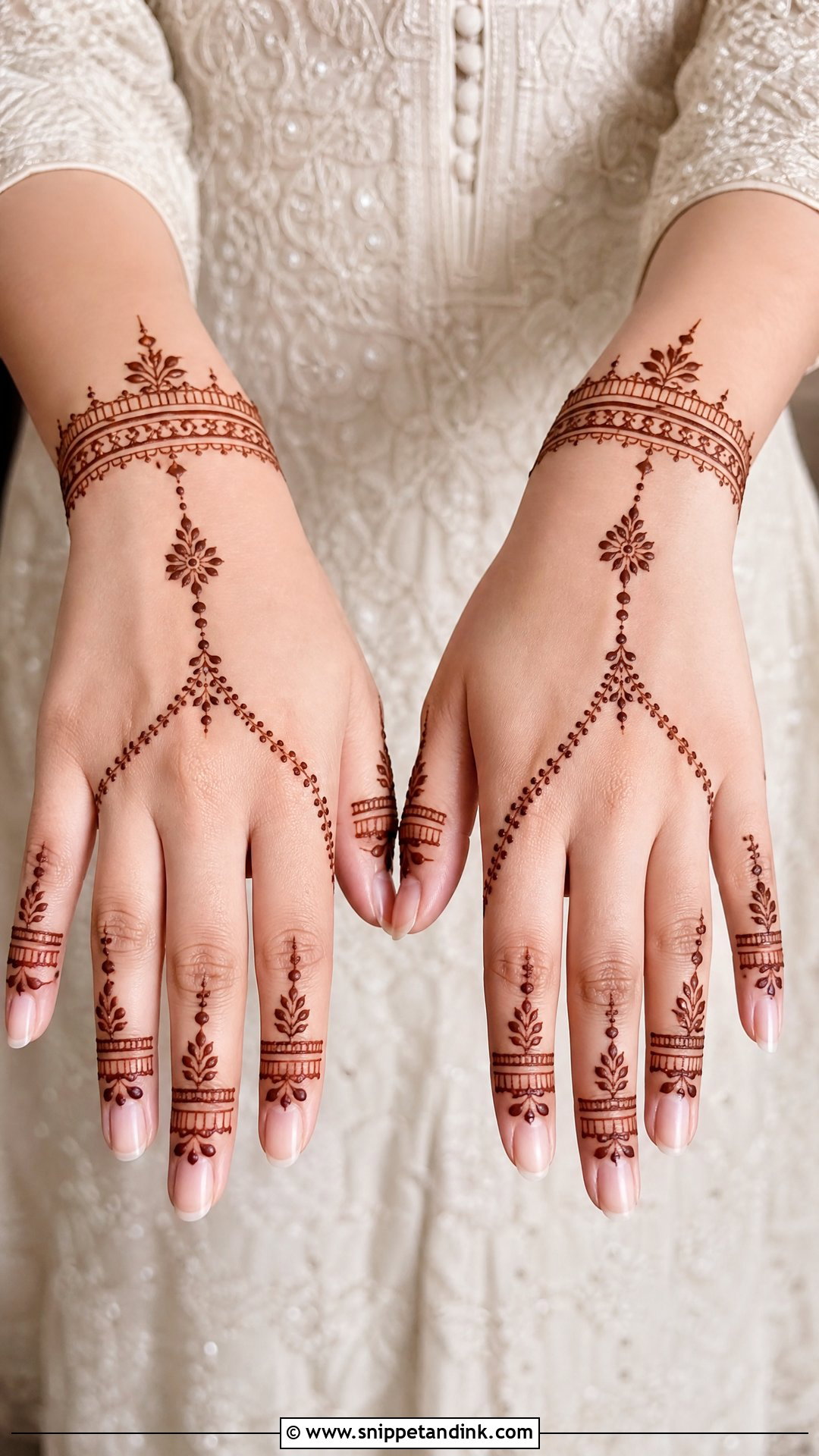
Detailed fingers, a small back-hand motif and a bracelet band, with the centre of the hand left largely open, give a chic negative-space look. It’s quick to apply and suits bridesmaids wearing statement rings or nail art. Brides sometimes choose it for haldi, where turmeric paste will be all over the palms anyway. Repeat the same family of lines and dots across each finger so the hand reads as one design.
19. Feet Mehndi Design For Wedding
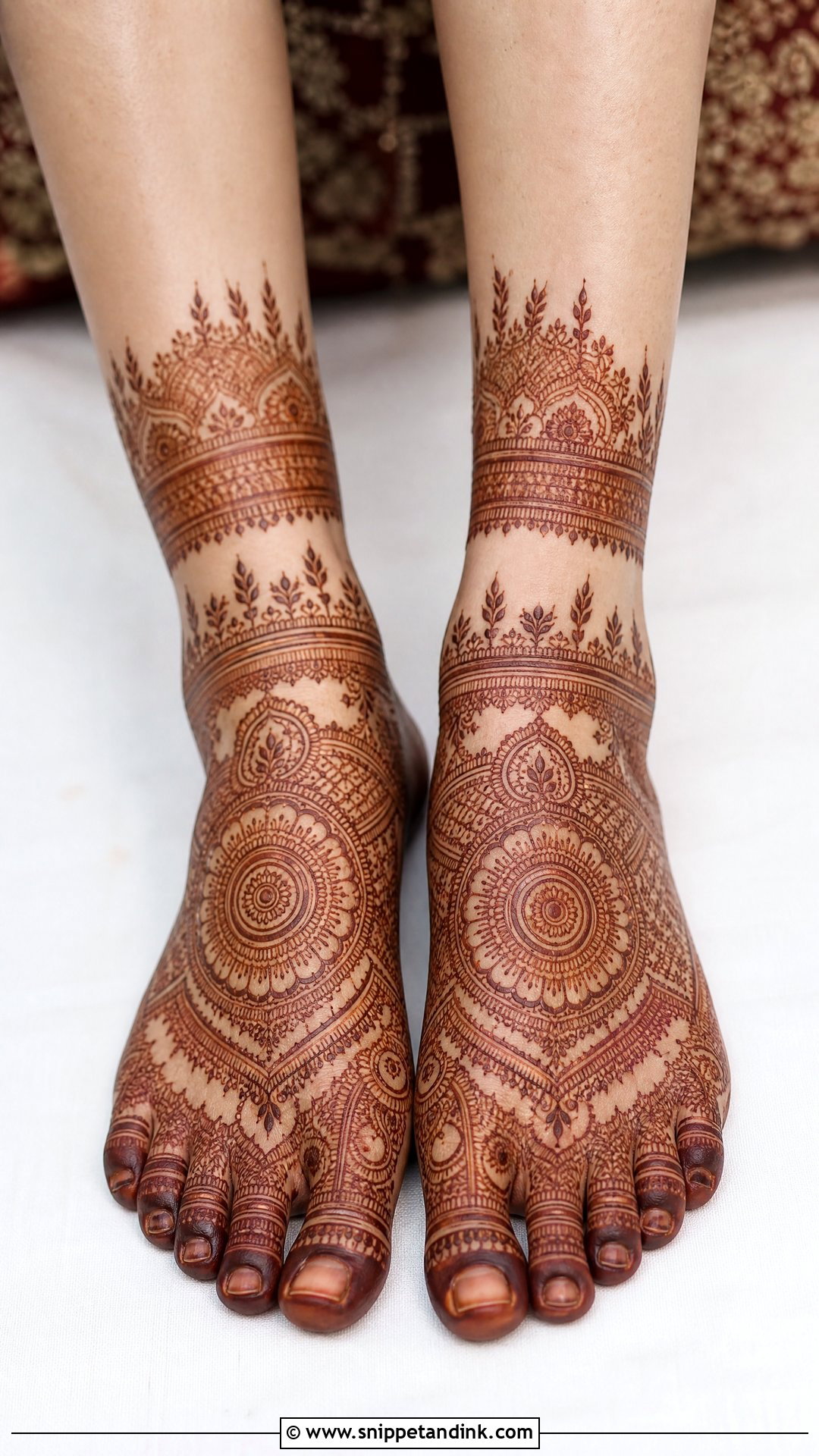
Feet complete the bridal look: anklet patterns, toe details, mandalas, paisleys and borders along the side of the foot. I follow the natural arch so the design looks balanced from the front and side, and I keep fine detail away from where sandal straps rub, because friction wears the stain off those spots within days. Full coverage suits the main wedding; a lighter ankle-to-toe design works for earlier functions. It’s worth it if you’re wearing open sandals and a payal.

20. Personalized Mehndi Design For Wedding
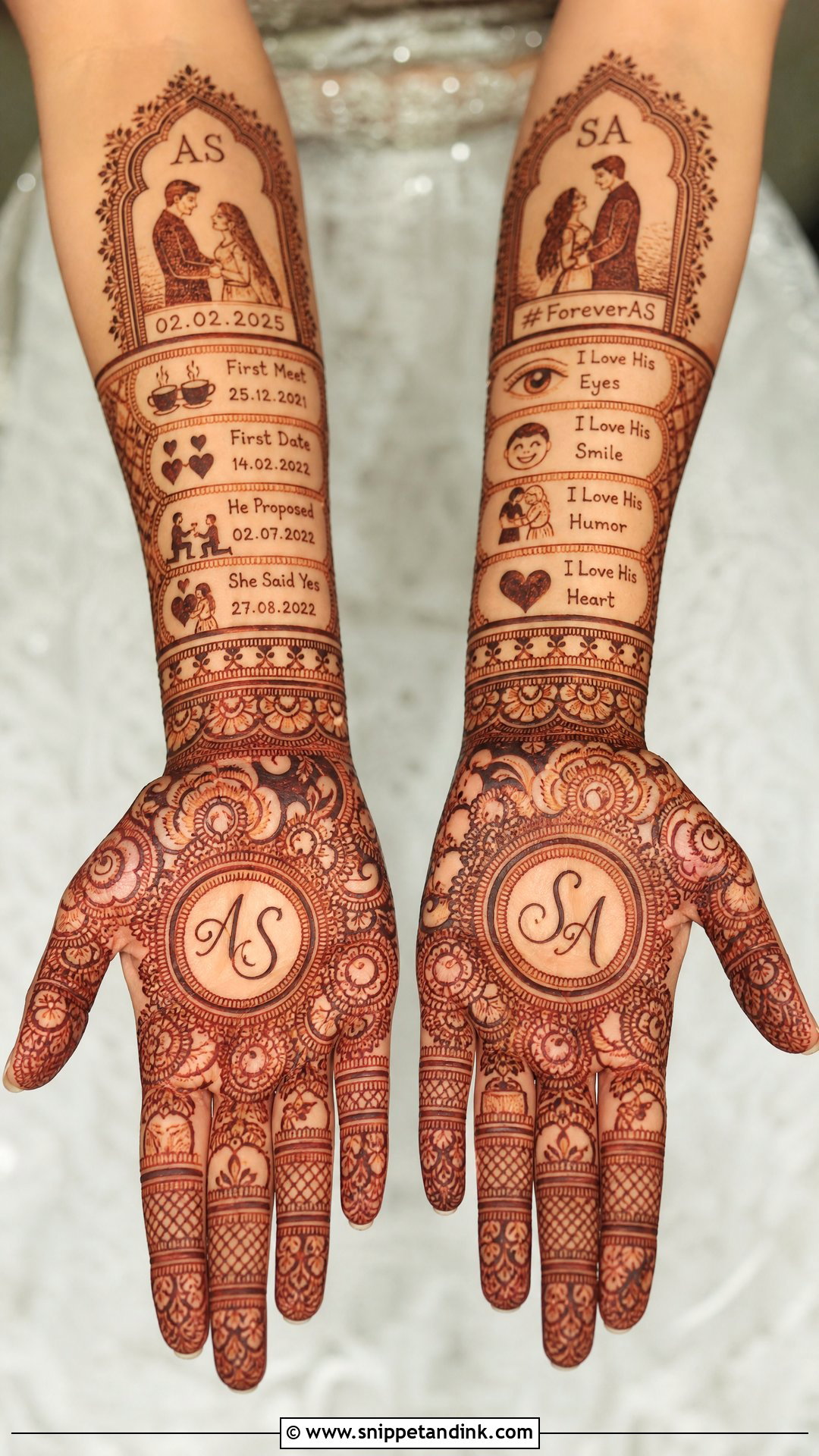
A personal design can hold initials, dates, symbols, a favourite place, a pet, the proposal or a small scene from your story. The danger is cramming. I suggest two or three details, placed where the camera can find them, with florals, paisleys, jaali or mandalas as the traditional base. Too many story elements and the hand turns into a puzzle no one can read in a photo.
One Artist, Thirty Guests: Running the Mehndi Night Queue
The guest side of a mehndi night falls apart when one artist is booked for everyone. A skilled artist can finish a simple back-hand trail fairly quickly, but the bride’s own session ties her up for hours. I tell families to book separate guest artists and to agree a design menu in advance, so nobody spends ten minutes choosing while the queue grows.
- Seat guests near a table and good light, not on floor cushions in a dim corner.
- Offer two or three set designs of different sizes and let people pick by number.
- Do older relatives and anyone leaving early first.
- Keep tissues and a lemon and sugar mix nearby, because fresh paste and buffet plates do not mix.
What Should Be Inside the Cone
Good natural paste is simple: henna powder, a mild acid such as lemon juice, sugar for stickiness and a skin-safe essential oil. It smells earthy and stains orange at first, darkening over the next day or two. Ready-made cones that stain dark brown or black within an hour almost always contain added chemicals, and so-called black henna can cause serious skin reactions. I’d ask any artist what’s in their paste, and walk away if they can’t tell you.
Your Role at the Wedding Sets the Coverage
The right design depends on who you are at the wedding and which function you’re dressing for. Brides tend to go for full hands, portraits, Rajasthani or personalised work; bridesmaids and guests are usually happier with Arabic, minimal, floral or finger-led patterns. Back-hand pieces carry the jewellery photos, while palm and feet designs keep the traditional bridal feel. Whatever you pick, good paste and a little patience afterwards matter more than the pattern itself.
You'll Like These Ideas:






Leave a Reply