
The mother of the bride or groom has one of the longest days at an Indian wedding. She greets every guest, performs rituals, poses for most of the family photos and is often still on her feet after the last dance. Her hair has to be secure, comfortable and polished, without competing with the bride. When I style mothers, I start with her outfit (saree, lehenga or salwar suit), her jewellery, her hair length and, honestly, how much fuss she’ll tolerate. From gajra buns to soft curls and braids, these Indian wedding hairstyles for mom hold up under a dupatta, flowers, pins and humid halls.
Grey Strands, Thinner Partings and Hair That Has Changed
Hair changes with age, and a mother’s wedding hairstyle should be planned for the hair she has now, not the hair she had at her own wedding. Grey hair is often coarser and more wiry than the pigmented strands around it, so it frizzes and sticks out of smooth styles. I use a little more smoothing cream on those strands and less heat, since mature hair is usually drier and more fragile.
Colour and root timing
If she colours her hair, the touch-up should be done roughly a week or two before the wedding. That gives the colour time to settle and avoids a fresh, flat look or a scalp still sensitive from the dye on the day. Leave enough gap that any mistake can be corrected.
Thinning at the crown or part
Moving the part slightly, adding root lift and choosing styles with volume at the crown all disguise thinning. Root-cover sprays or powders in her shade help for photos. I avoid very sleek, tight styles here; they pull on fragile hair and show the scalp under bright lights.
1. Low Bun With Gajra For Indian Wedding
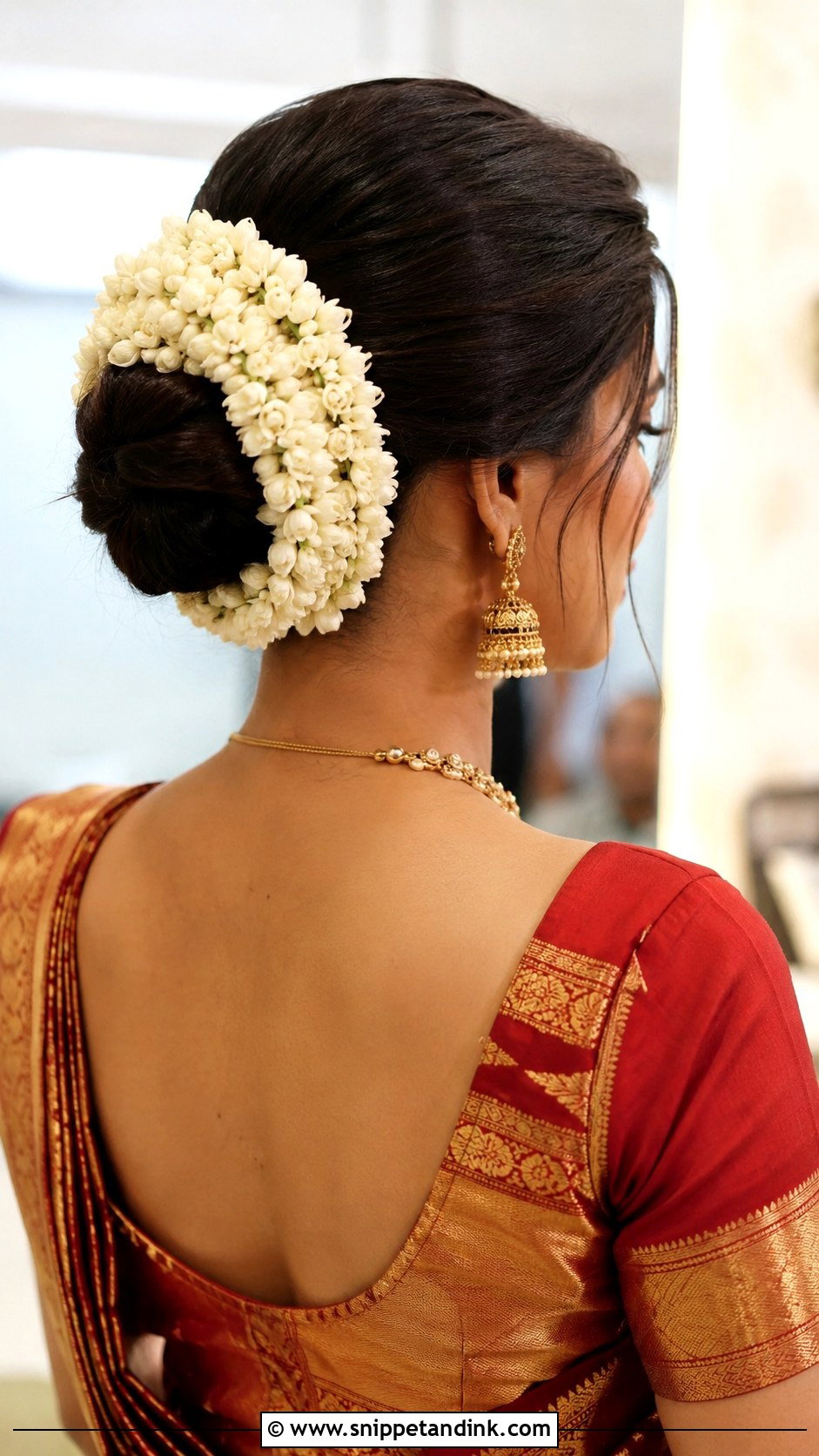
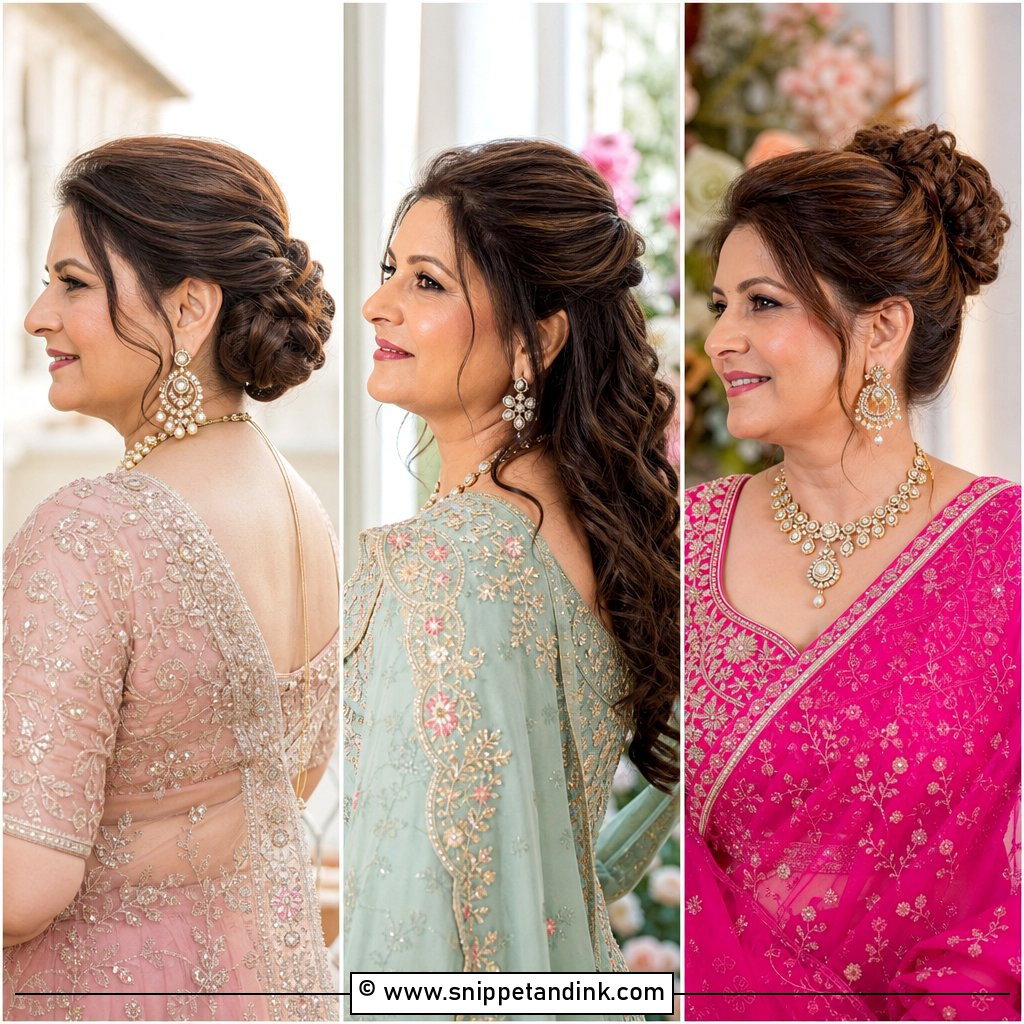
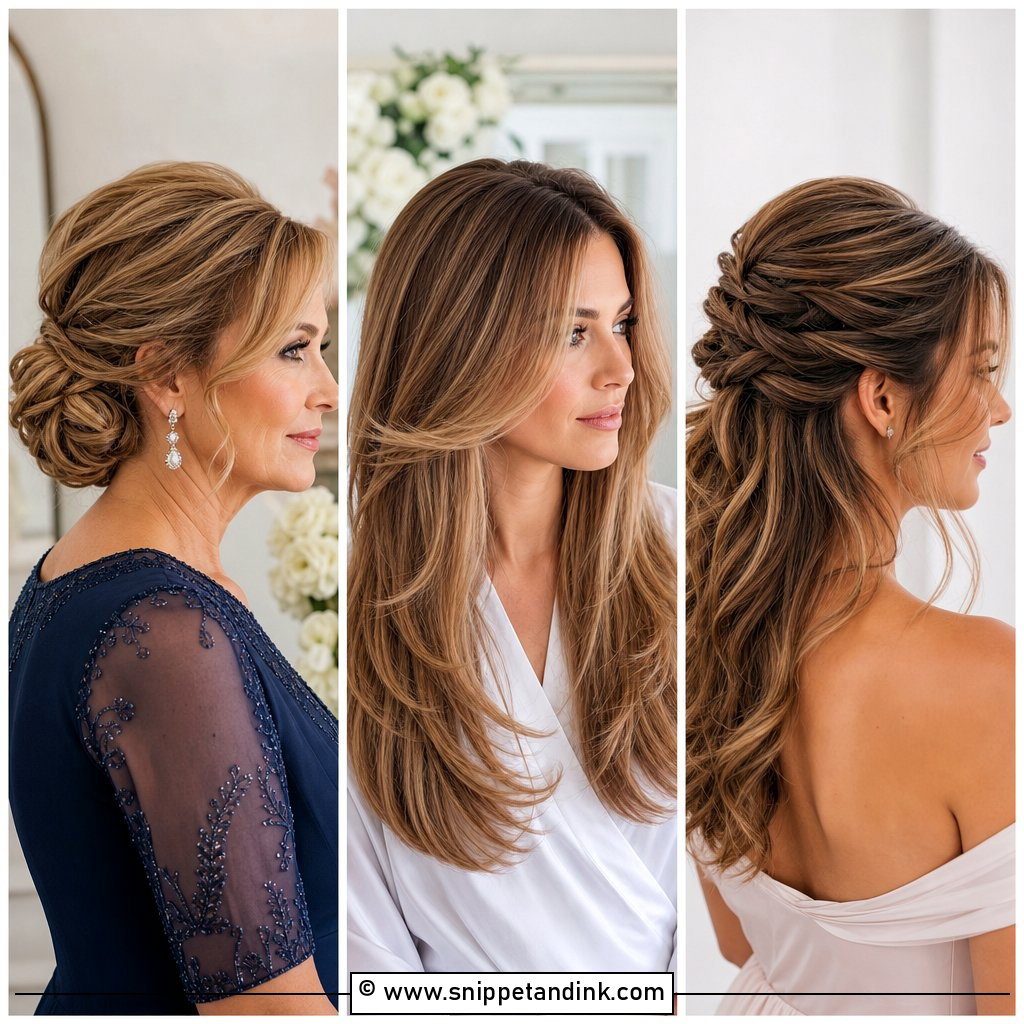
Most mothers I style end up in a low bun with gajra, and it’s easy to see why. It suits silk, Kanjeevaram and Banarasi sarees, keeps the face open and leaves earrings, necklaces and the blouse neckline in view. Fresh jasmine softens it and adds that familiar scent. Medium to long hair works best, and a few clip-in extensions fill out a thinner bun. I ask for a smooth crown with slight lift, because a completely flat crown can look severe on mature faces in photos.
2. Sleek Bun With Middle Part For Indian Wedding
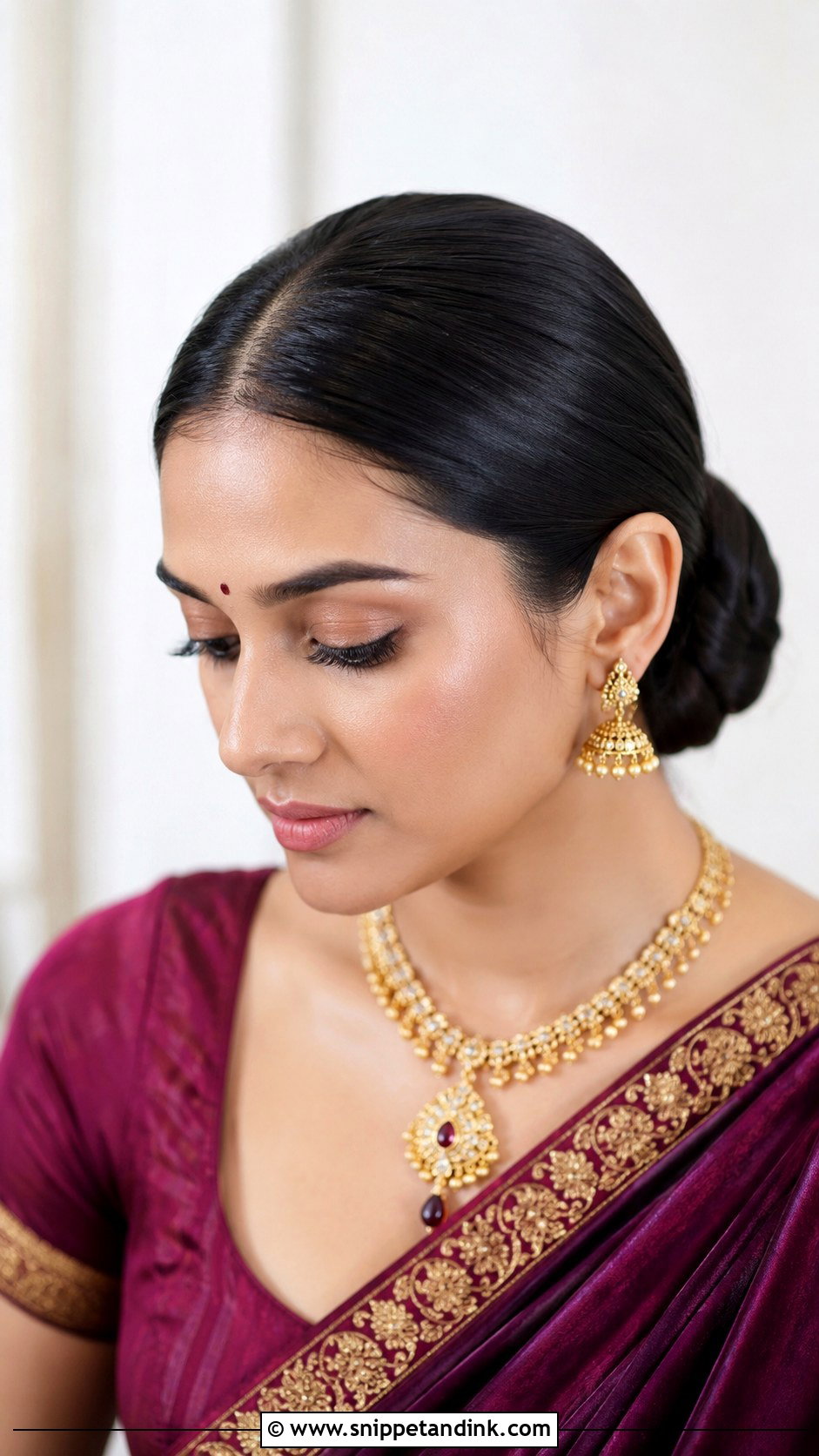
Clean and refined: that’s what a sleek middle-part bun gives. The part sits right under a bindi, maang tikka or simple forehead piece, and it suits structured sarees, embroidered blouses and reception outfits. Nothing moves, which helps in humid venues and during long rituals. One honest caution: a sleek centre part shows every grey root and any thinning along the parting. If either bothers her, a slightly zigzag or softened part hides more than a ruler-straight one. Shine spray, firm pins and a light hold finish it without making it stiff.
3. Puffy Bun With Gajra For Indian Wedding
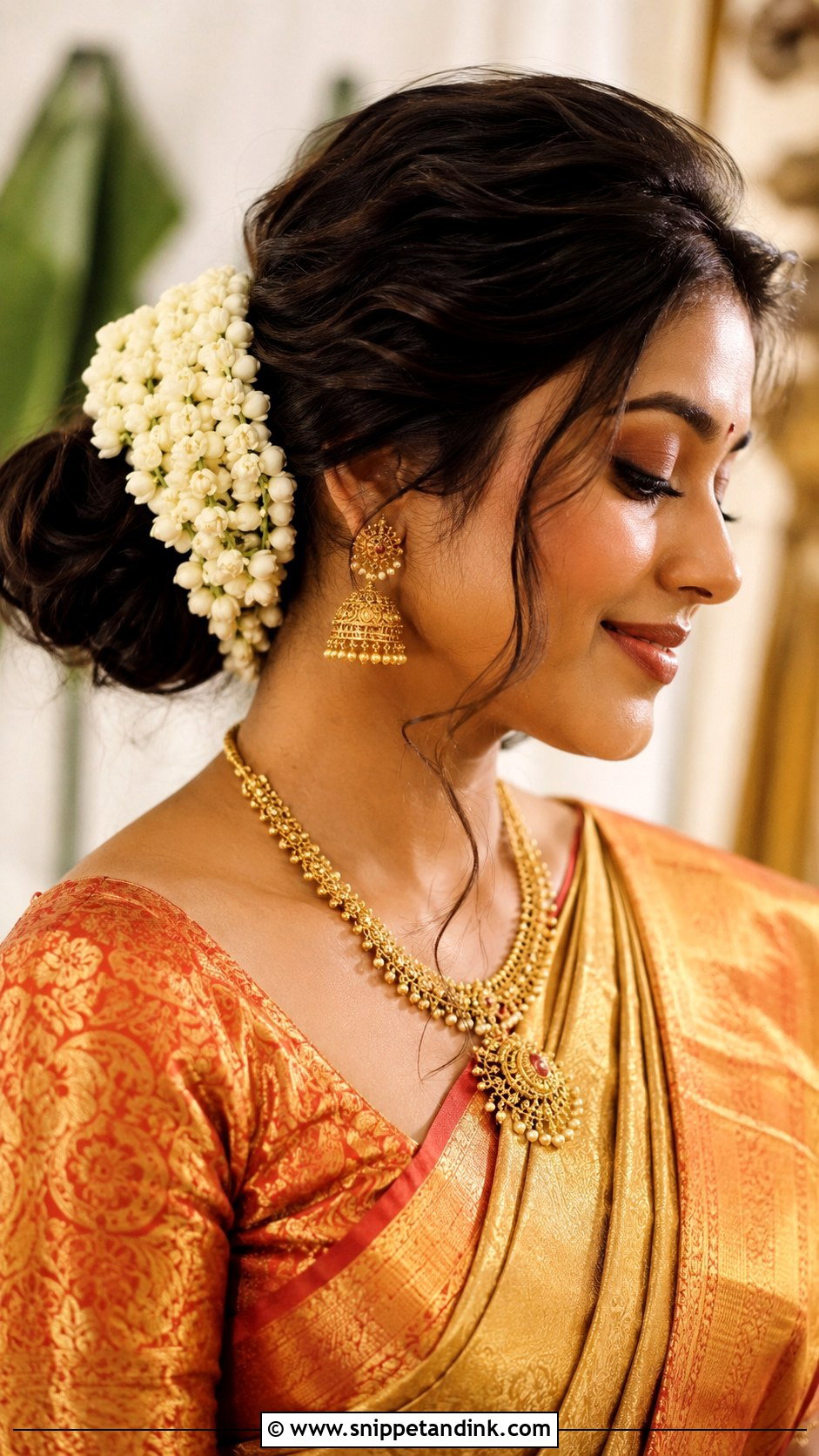
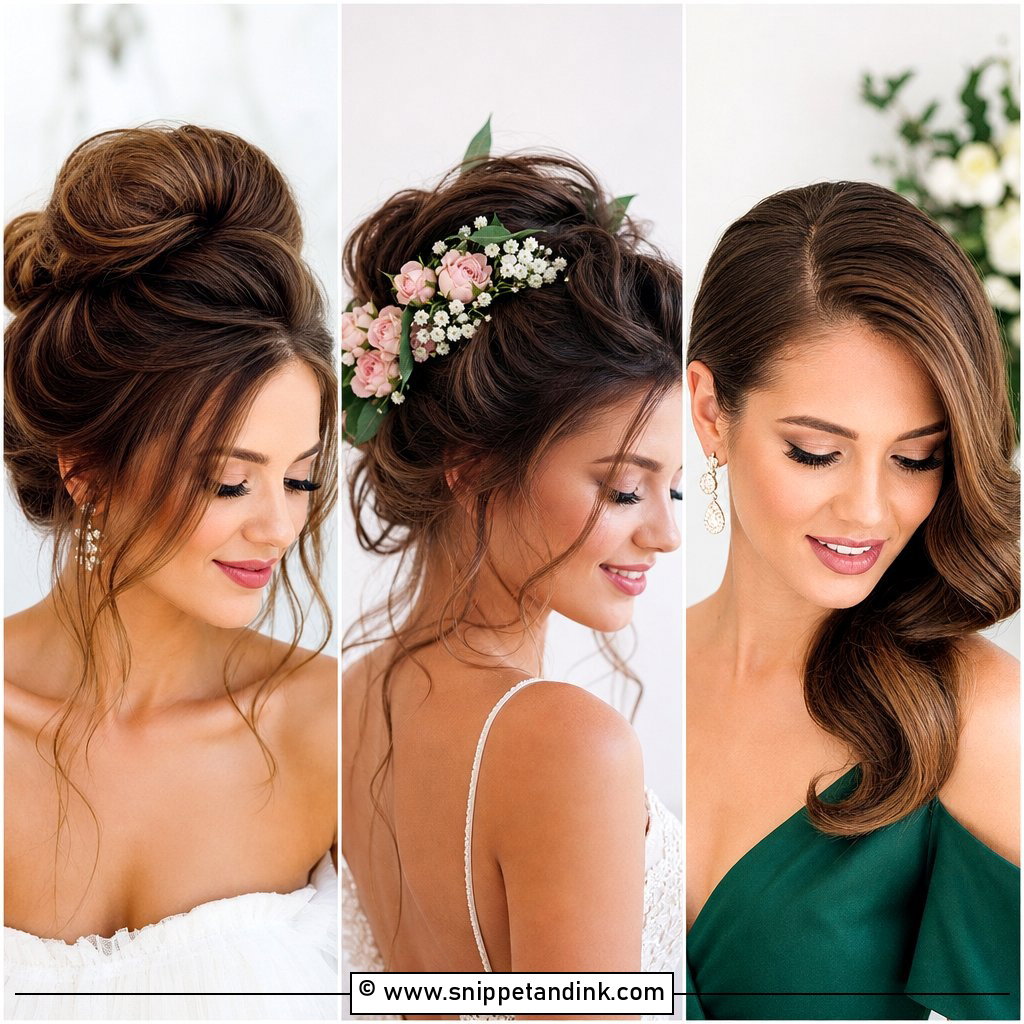
A puffy bun with gajra adds lift at the crown without the tightness some mothers dislike. That gentle volume lengthens the face and opens it up. It pairs with traditional sarees, temple jewellery and festive makeup, and the bun can be wrapped with jasmine, roses or mixed fresh flowers. This is my first suggestion for fine or thinning hair, since the puff and a padded bun create fullness the hair can’t make on its own. I backcomb lightly underneath and keep the smoothed top layer intact.
4. Side Part Bun For Indian Wedding
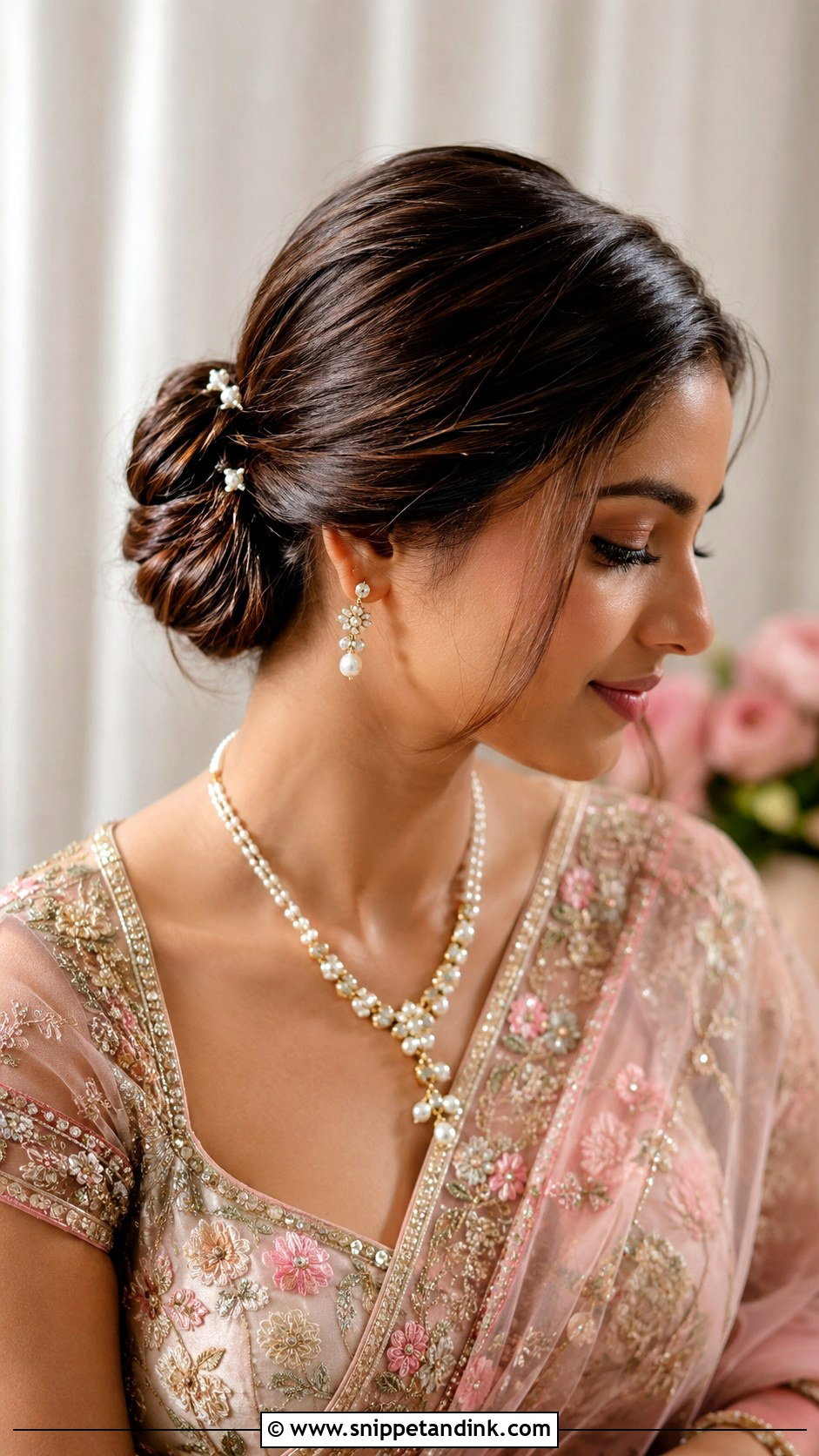
Shifting the part to one side softens the whole face, and many mothers find it less formal than a centre part. It suits chiffon and georgette sarees, pastel lehengas and salwar suits. The bun itself can be sleek, textured or trimmed with small flowers and pins. A side part also helps if her hair is thinner on one side of the crown, since the heavier side can fall over it. Leave a couple of controlled pieces at the front. Daytime or evening, it fits.
5. Braided Bun For Indian Wedding
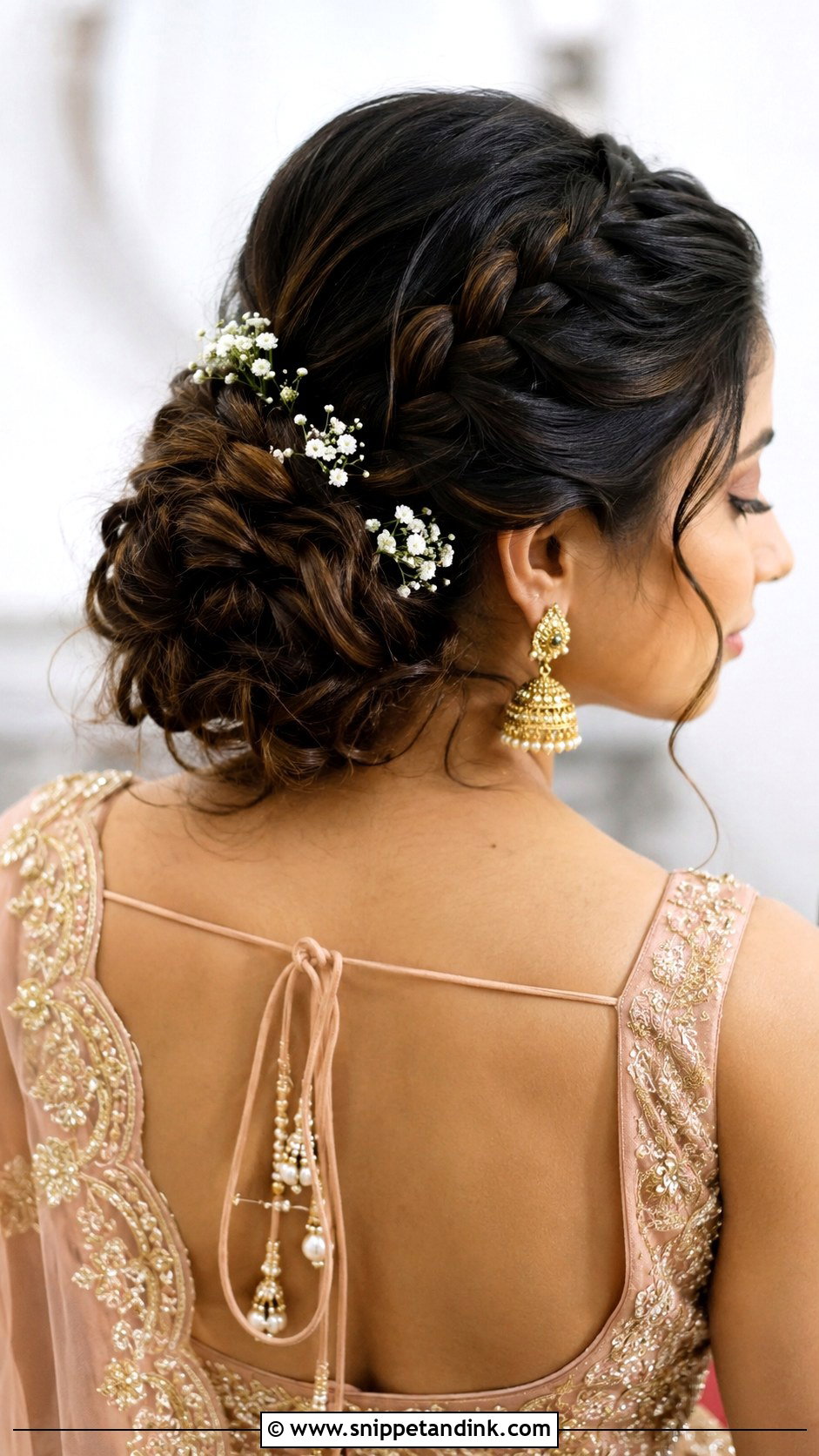
When she wants something traditional with more detail, a braided bun is my pick. The braid can start at the side, crown or back before wrapping into the bun, and it holds flowers, pearl pins and small gold accessories better than a smooth surface. It sits well with sarees, lehengas and heavily embroidered outfits, and it stays tidy through long events. Thick hair braids easily. Fine hair needs a little padding or extensions inside, and I braid it looser so the plait looks fuller.
6. French Twist For Indian Wedding
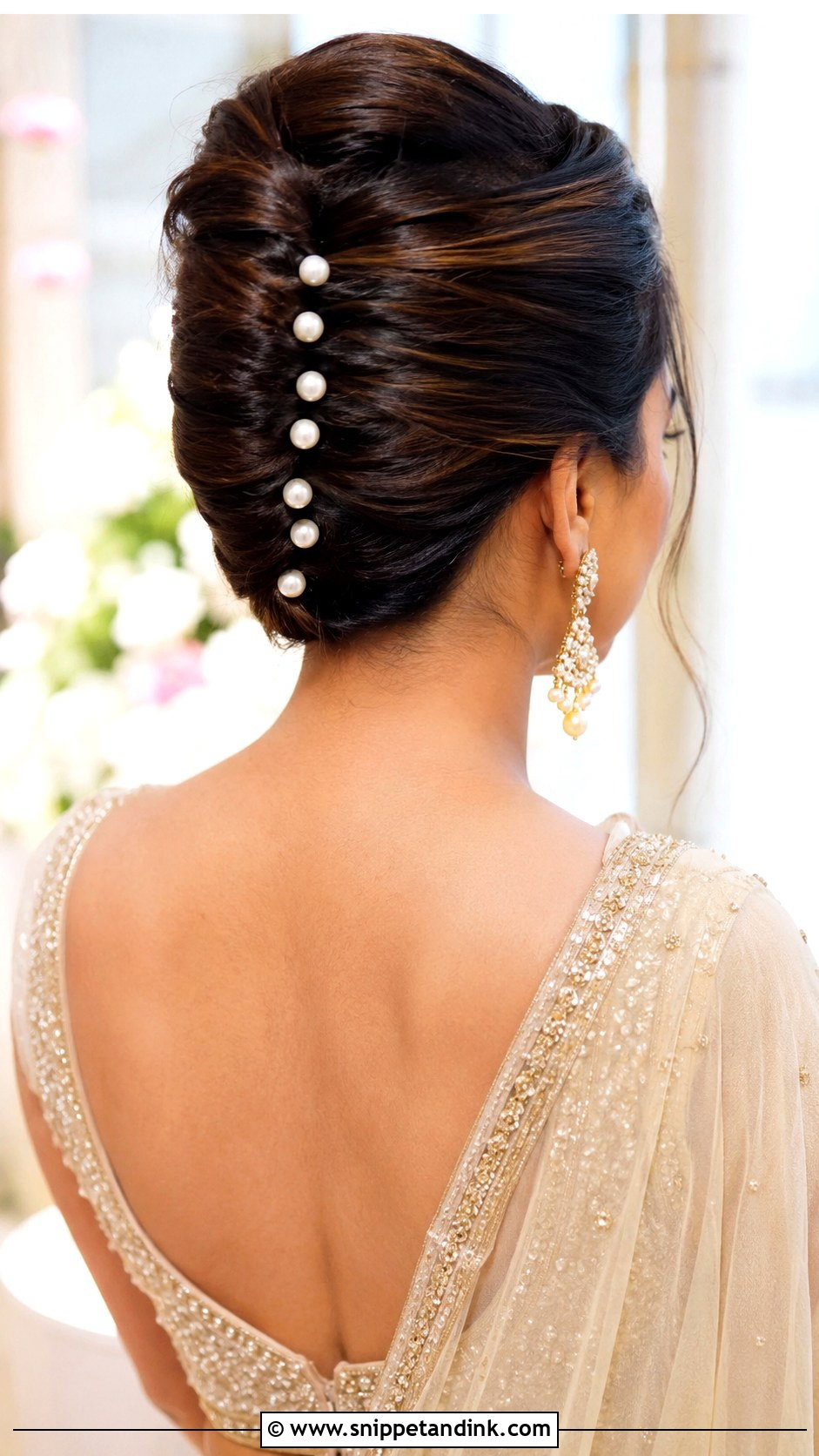
For the mother who prefers something less traditional, a French twist has a clean vertical line at the back that looks right with reception sarees, gowns and Indo-western outfits. It lifts the hair off the neck, a relief in warm, crowded venues. Smooth reads formal; light texture at the crown reads softer. Crystal pins, pearls or one floral accent are enough. The twist needs medium length to hold; on shorter hair I support it with a hidden comb and a few extensions.
7. Soft Curls With Side Pin For Indian Wedding
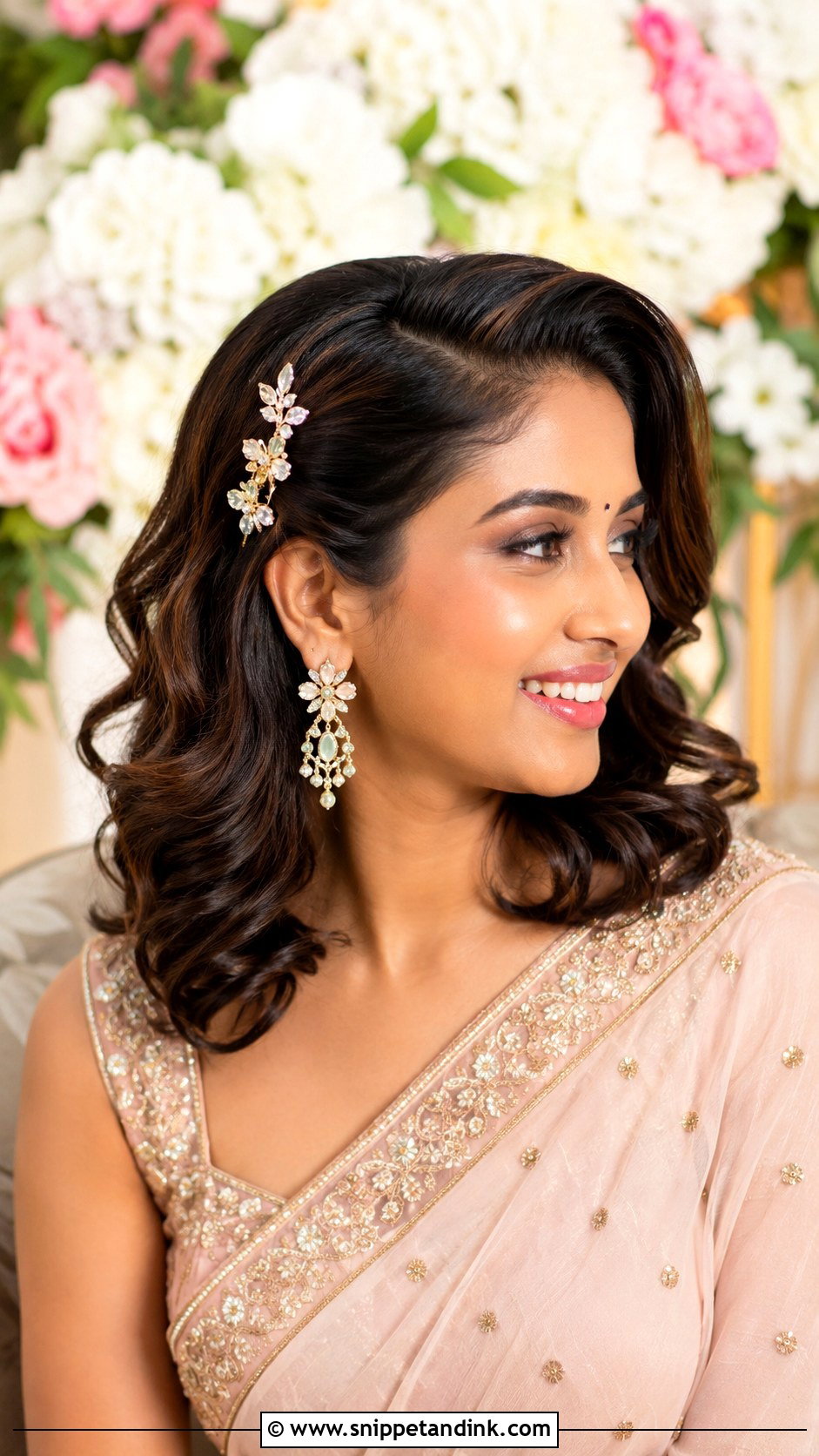
Soft curls with one side pinned back keep the hair open but off her face during greetings, aartis and photos. They suit lighter sarees, lehengas, Anarkali suits and reception wear, on shoulder-length or longer hair. The side pin can be floral, pearl, gold or stone-set to match her jewellery. I keep the roots smooth and the curls loose rather than tight, and finish with a flexible spray. A crunchy finish looks dated on mature hair and feels unpleasant to touch.
8. Half Up Curls For Indian Wedding
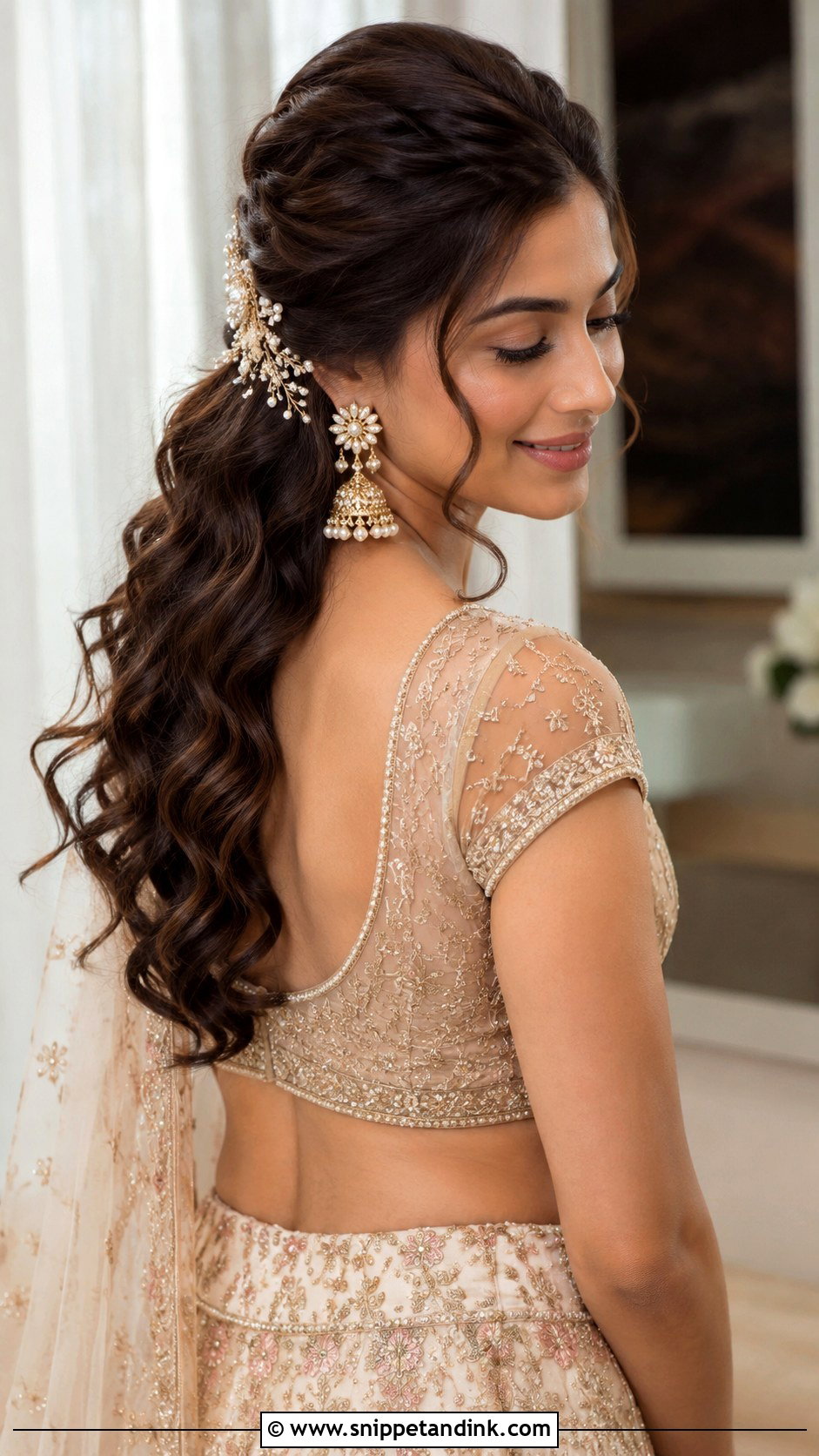
Half-up curls give the softness of open hair with some of the security of an updo. The top section is pinned back for lift and a neat front, and the lengths fall in soft curls. Engagements, sangeet nights, receptions and family portraits all suit it, and there’s room at the back for hair jewellery or small flowers. It works on medium and long hair. I keep the crown smooth and secure the pinned section with crossed pins, because this is the part that gets hugged most.
9. Open Waves For Indian Wedding
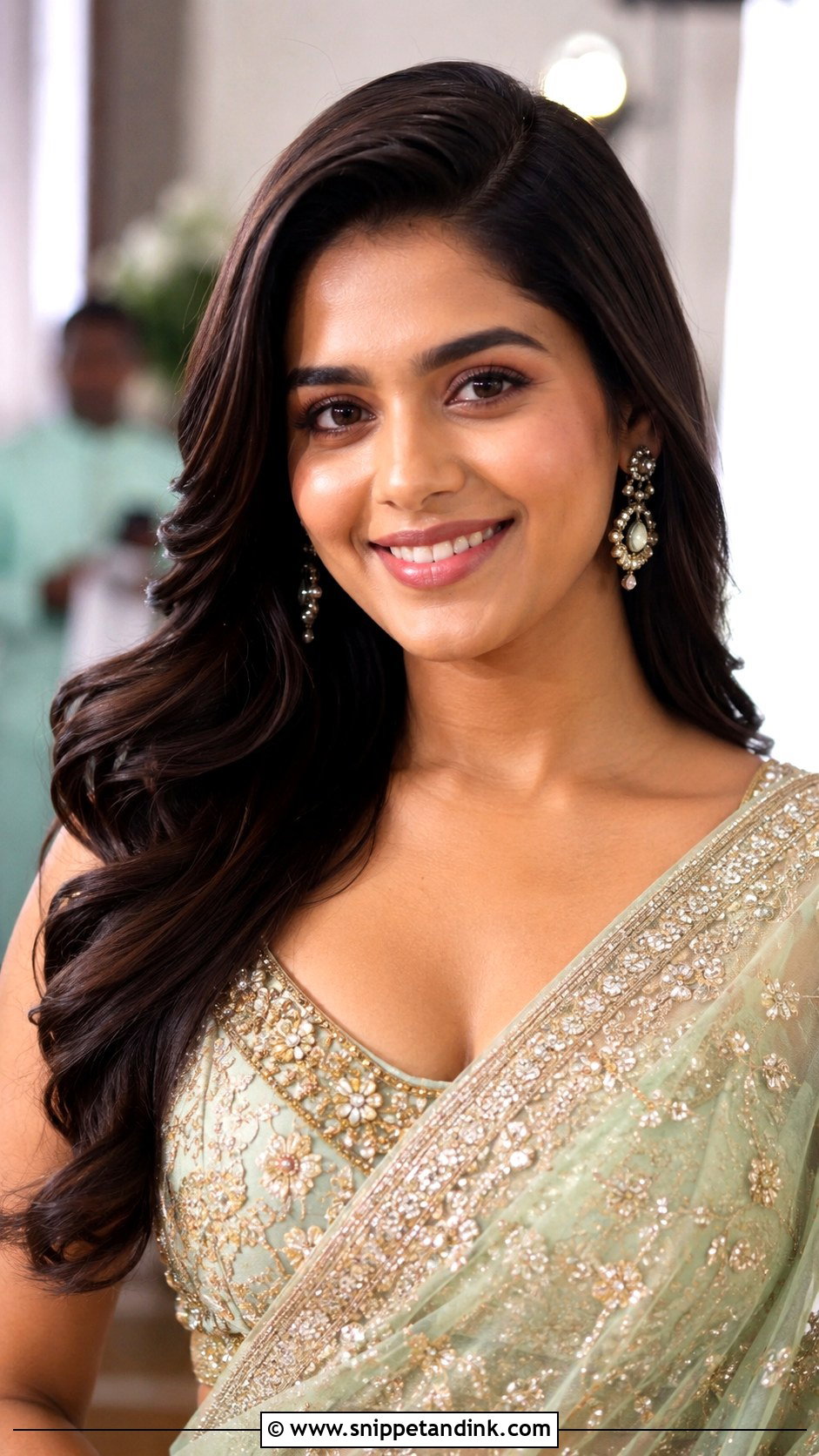
Open waves feel modern for a reception or cocktail evening, with designer sarees, embroidered gowns or lighter lehengas. They should be glossy and controlled, not beachy. This style suits mothers who are used to wearing their hair down for hours and won’t keep touching it. A deep side part adds some glamour, a middle part keeps it traditional. If a dupatta goes over the head, I secure a small anchoring section at the crown first. Anti-frizz serum and flexible spray keep the waves smooth.
10. Traditional Braid With Flowers For Indian Wedding
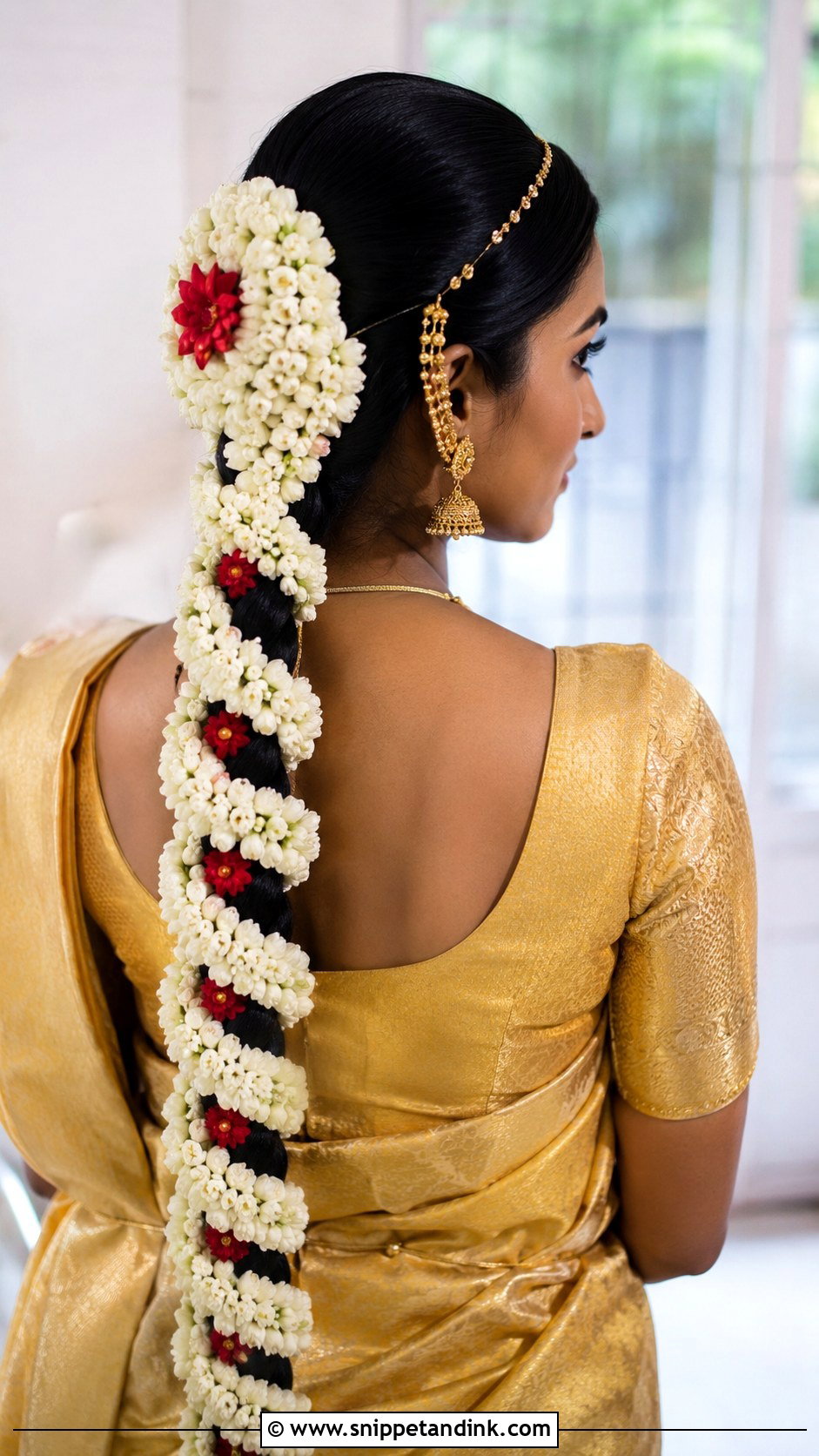
At South Indian weddings and temple ceremonies, a traditional braid with flowers carries real meaning. Thick and polished, with jasmine, roses or traditional ornaments along its length, it keeps hair off the face through long rituals and suits silk sarees and gold jewellery. Mothers with shorter or thinner hair can add braid extensions for length. I lift the crown slightly so the braid looks festive rather than scraped back.
11. Side Braid For Indian Wedding
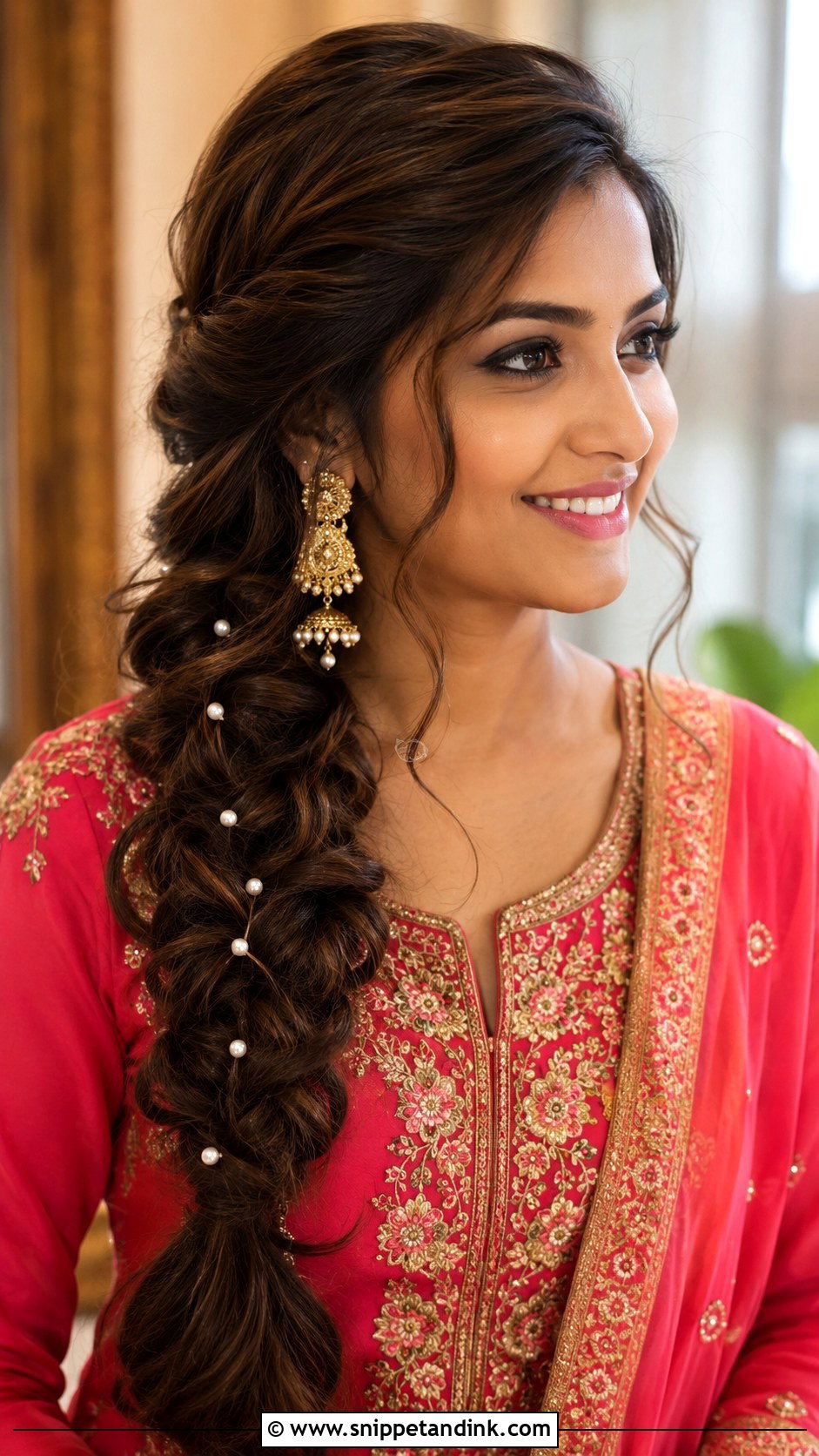
The side braid is a softer cousin of the traditional braid. Over one shoulder, it shows in front-facing photos and takes flowers, pins or small pearls easily. Sarees, lehengas and festive suits all suit it, especially when the blouse or dupatta has detailing at the back that a long braid would cover. Fishtail, rope or three-strand all work. I loosen it slightly for volume and stop there. A messy side braid can look unfinished on a mother of the bride.
12. Crown Braid Bun For Indian Wedding
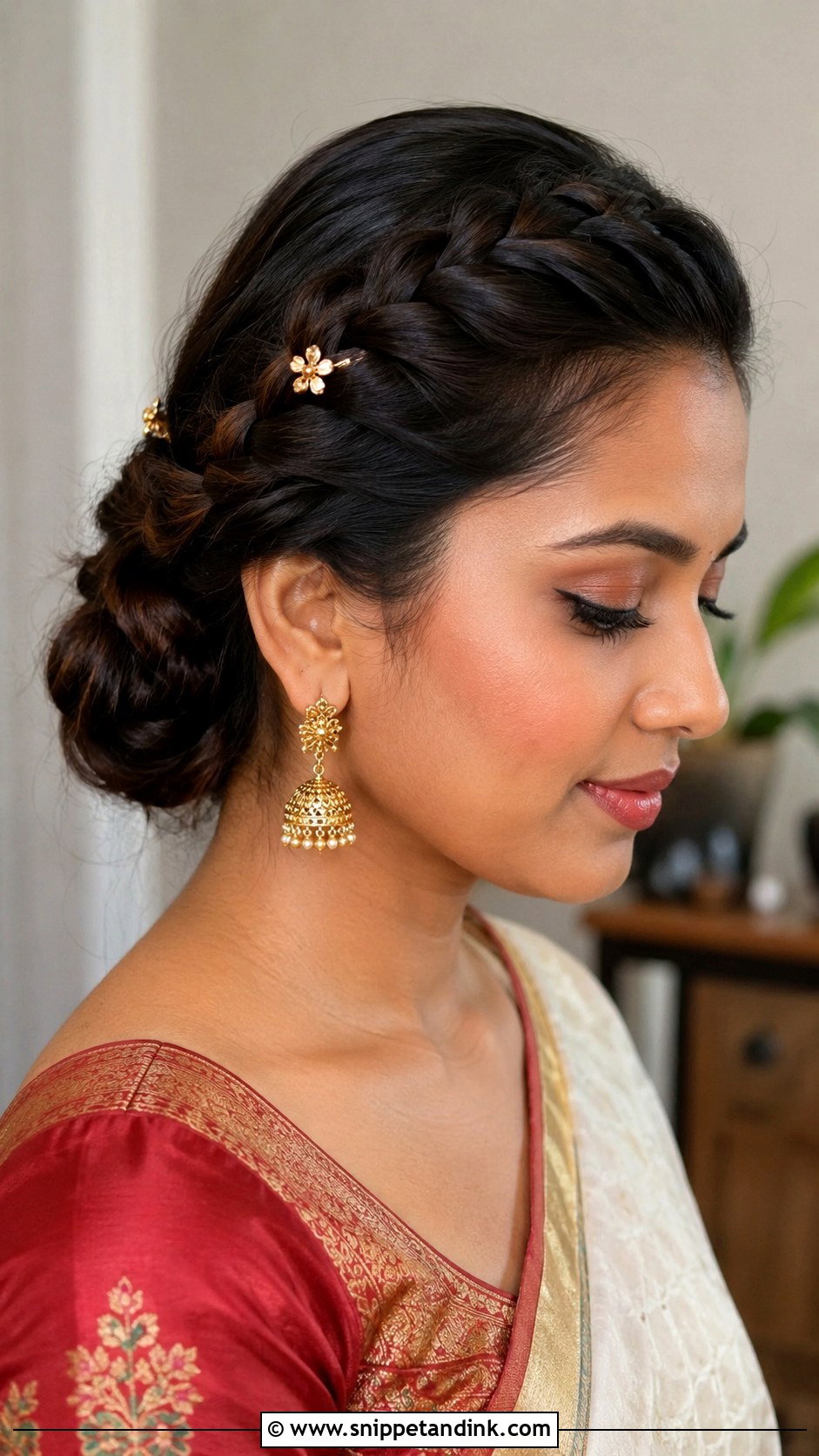
A braid circling the crown and blending into a low bun adds interest from the front and back without much weight. It’s the style I suggest when the outfit is simple and the hair should bring the festive detail. Pearl pins, small flowers or gold accessories sit neatly along the braid. The bun keeps the length tucked away and the braid softens the face. Thick hair makes this easy. Fine hair can do it too with texturising spray for grip and a little padding in the bun.
13. Messy Low Bun For Indian Wedding
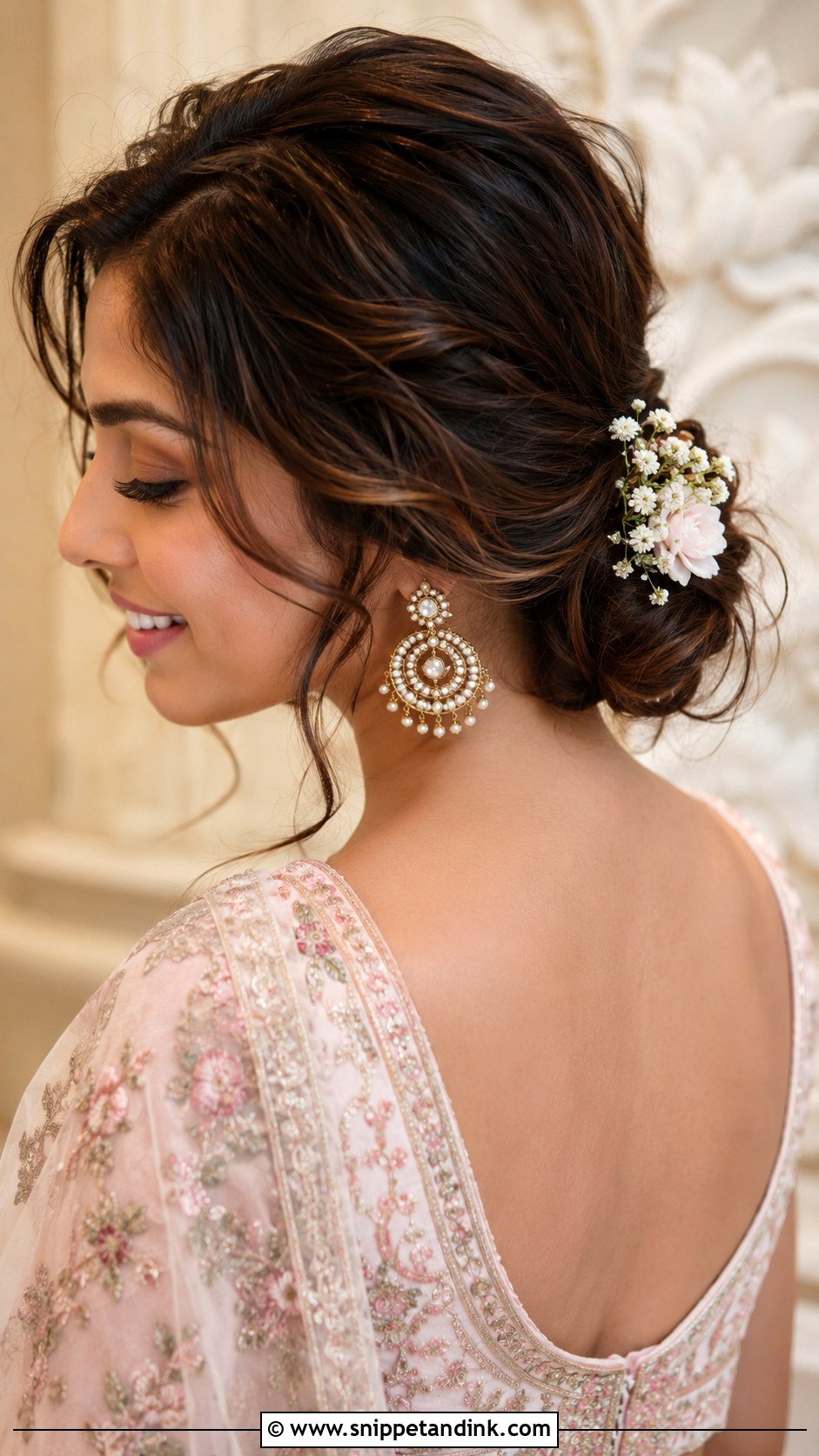
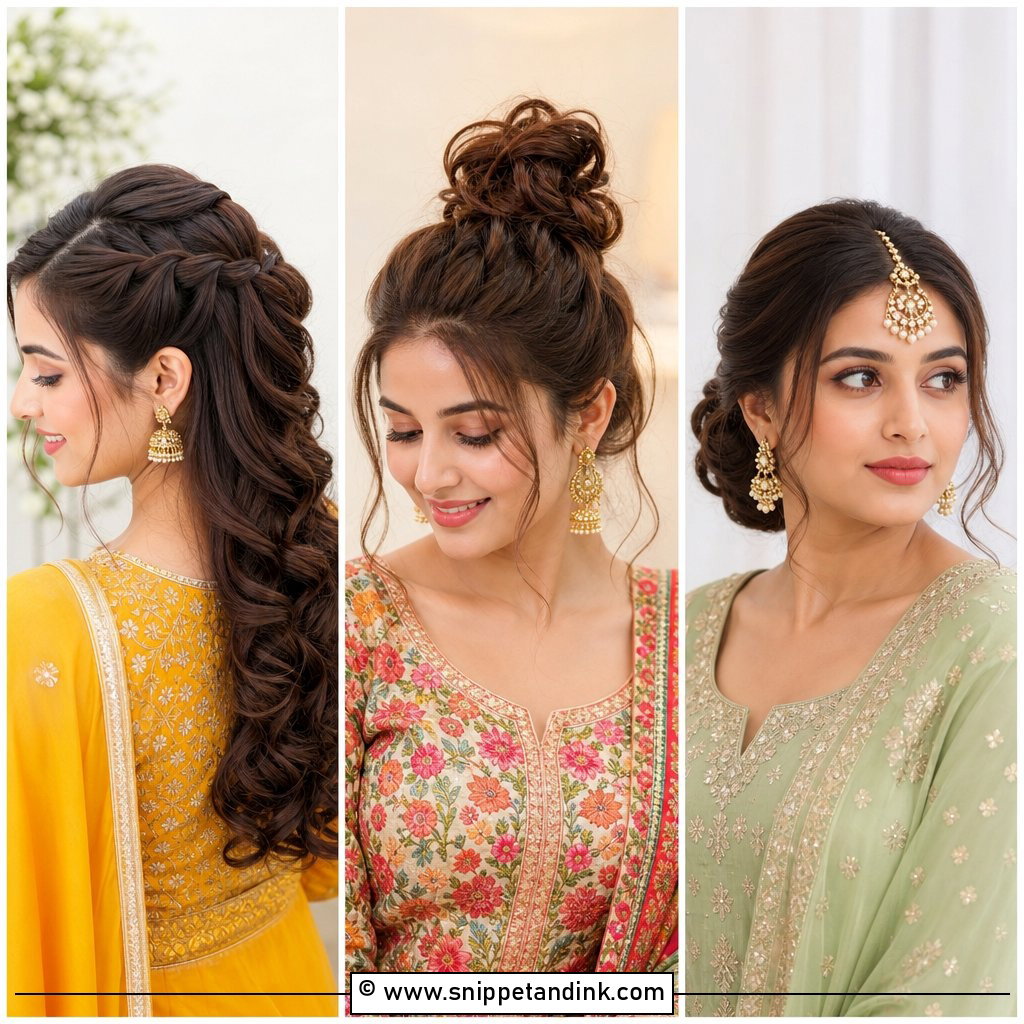
A messy low bun is the relaxed option for mehendi, haldi, sangeet and daytime events. It sits low with gentle texture and a few controlled pieces at the face, and it suits floral sarees, pastel lehengas and lighter jewellery. The texture has to look deliberate, so I curl the hair before pinning and keep the pins hidden. Volume at the crown matters more than mess at the bun. Small flowers or pearl pins add a festive note.
14. Short Hair Curls For Indian Wedding
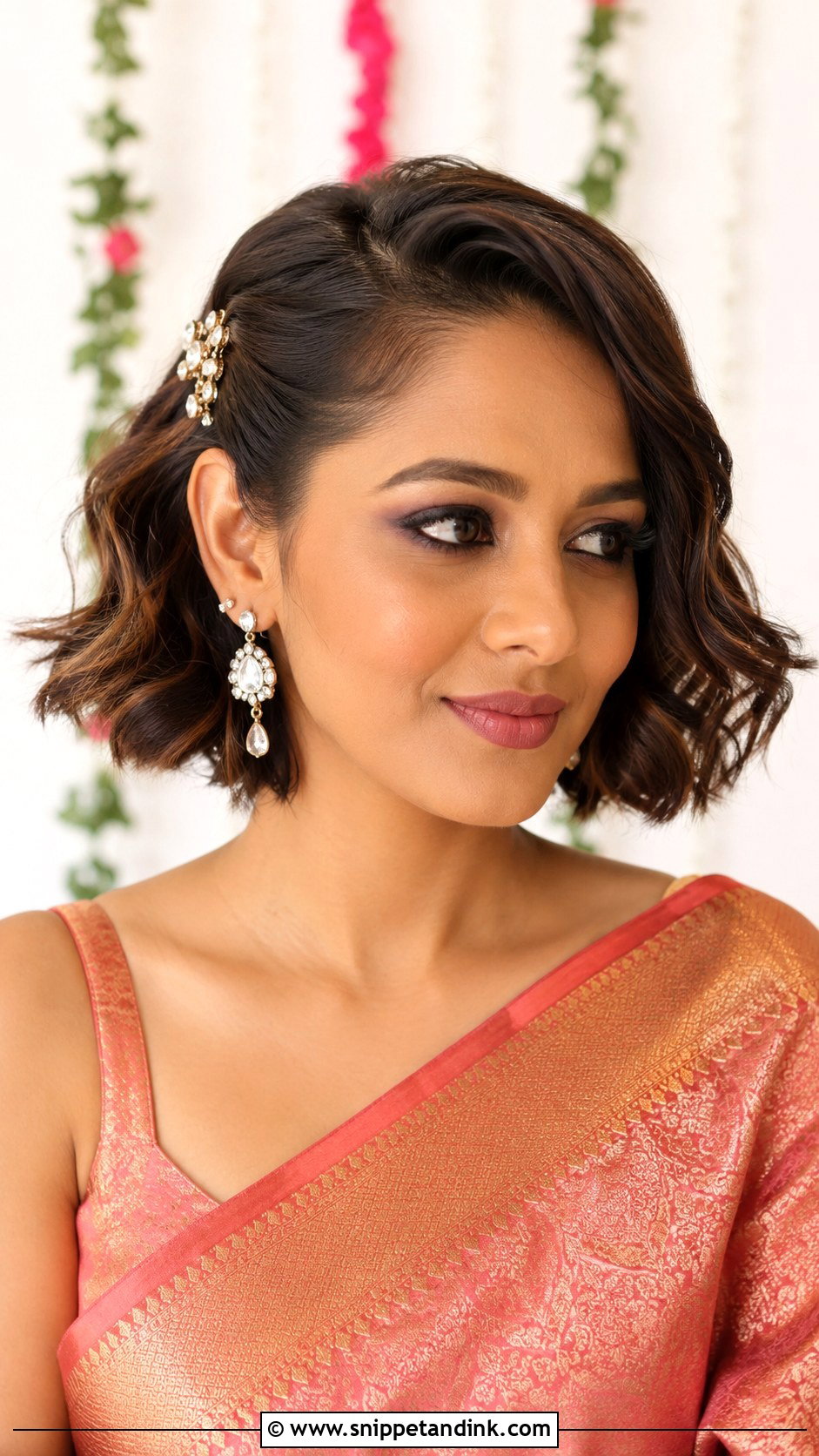
Short hair doesn’t need extensions to look festive. On bob or shoulder-length hair, soft curls add body, shine and movement, and a side part, one pinned section or a small accessory makes it formal enough for the wedding. It suits sarees, salwar suits and reception outfits, and plenty of mothers prefer it to a heavy updo. I direct the curls away from the face so earrings and makeup stay visible, and keep the roots smooth so it reads polished.
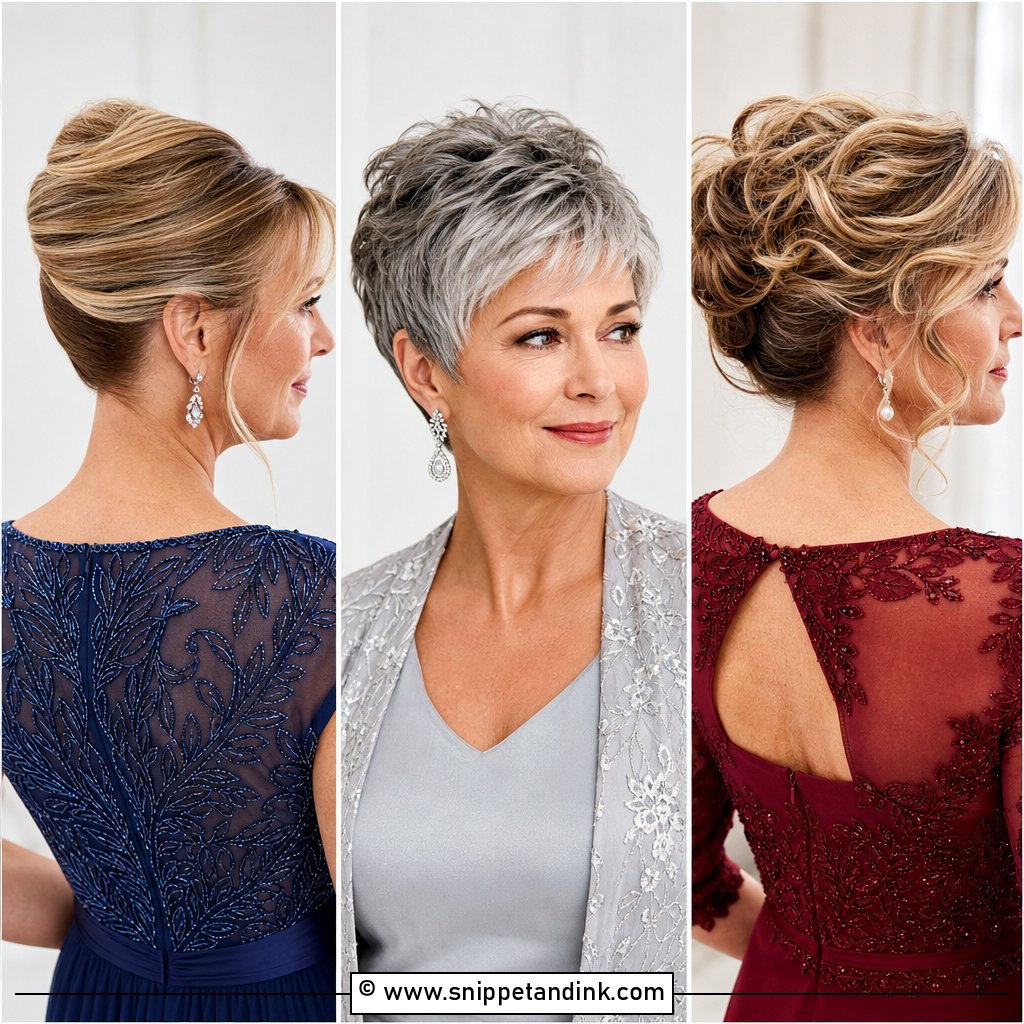
15. Shoulder Length Blowout For Indian Wedding
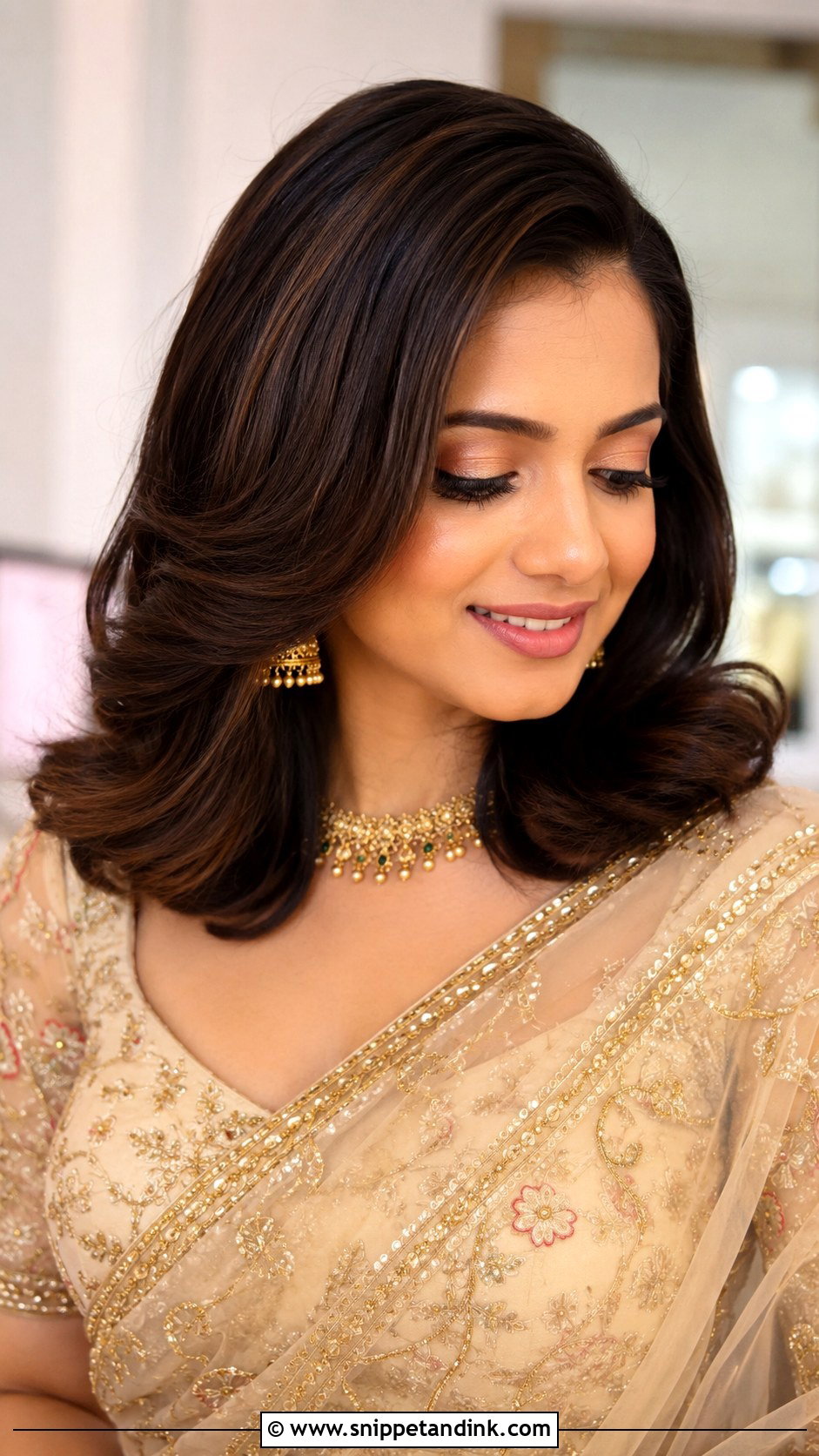
A shoulder length blowout is the simplest style here: no pins, no heavy accessories, just volume, shine and a soft bend at the ends. It’s for the mother who likes her own hair and wants it at its best. Receptions, engagements and lighter daytime functions suit it. A side part softens, a centre part modernises. I use a round brush and a lightweight smoothing product, then a firm but flexible spray so it keeps its shape without going stiff. In heavy humidity, a blowout is the first style to lose shape, so I’d keep this for air-conditioned venues.
Hugs, Glasses and a Pallu on the Shoulder
The mother’s hair takes more physical wear than the bride’s. She’s hugged by every relative, bends to touch elders’ feet, runs between rooms and often handles a pallu that keeps slipping. I secure the back of every style more firmly than looks strictly necessary, because that’s the part pressed into shoulders all day.
- If she wears glasses, style with them on. Arms tucked behind the ears can push out side curls or dig into a low bun.
- Pin the pallu to the blouse, not to the hair, unless the style has a firm bun to take it.
- If she gets headaches from tight hair, tell the stylist. A slightly looser base and fewer, well-placed pins can be just as secure.
- Give a trusted cousin a small kit: bobby pins, a comb, a travel spray and a few spare flowers.
Most of all, I want her to forget about her hair once she leaves my chair. If she can’t sit back comfortably at the trial, I change the style.
Hair for the Woman Who Greets Every Guest
A mother’s wedding hair should suit her outfit, her comfort, her hair texture, her jewellery and the function. A gajra bun fits the traditional ceremonies, while soft curls, open waves and blowouts belong at receptions and lighter events. Braids carry meaning and stay secure through long rituals. Fine, short or thinning hair can still look full with discreet extensions and padding. The aim isn’t to overstyle her; it’s to let her stop thinking about her hair and enjoy her child’s wedding.
You'll Like These Ideas:


Leave a Reply