
Haldi is the one wedding function where your outfit is expected to get dirty. There’s turmeric paste, loose petals, a lot of sitting on the floor and usually bright daytime light, so the clothes that work best are light, washable and happy to be splashed. Yellow is still the traditional colour, but modern Haldi looks take in ivory, lime, peach, mint, pink, orange and soft florals too. When I style a Haldi, I think in cotton kurta sets, light sarees, breezy lehengas, shararas, co-ords and simple dresses, finished with jhumkas, bangles, a potli and flat shoes. Here are thirty easy outfits for brides, bridesmaids, sisters and guests, with notes on what holds up once the paste starts flying.
Dressing for Paste, Petals and Sitting on the Floor
Before I look at colour, I ask what the ceremony will actually involve. At many Haldis the bride or groom sits low while relatives smear paste on the face, neck, arms and feet, and close family end up with yellow hands and sleeves. Guests at the edges stay cleaner, but everyone sits, stands and squeezes into photos for hours. That changes what I’d put people in.
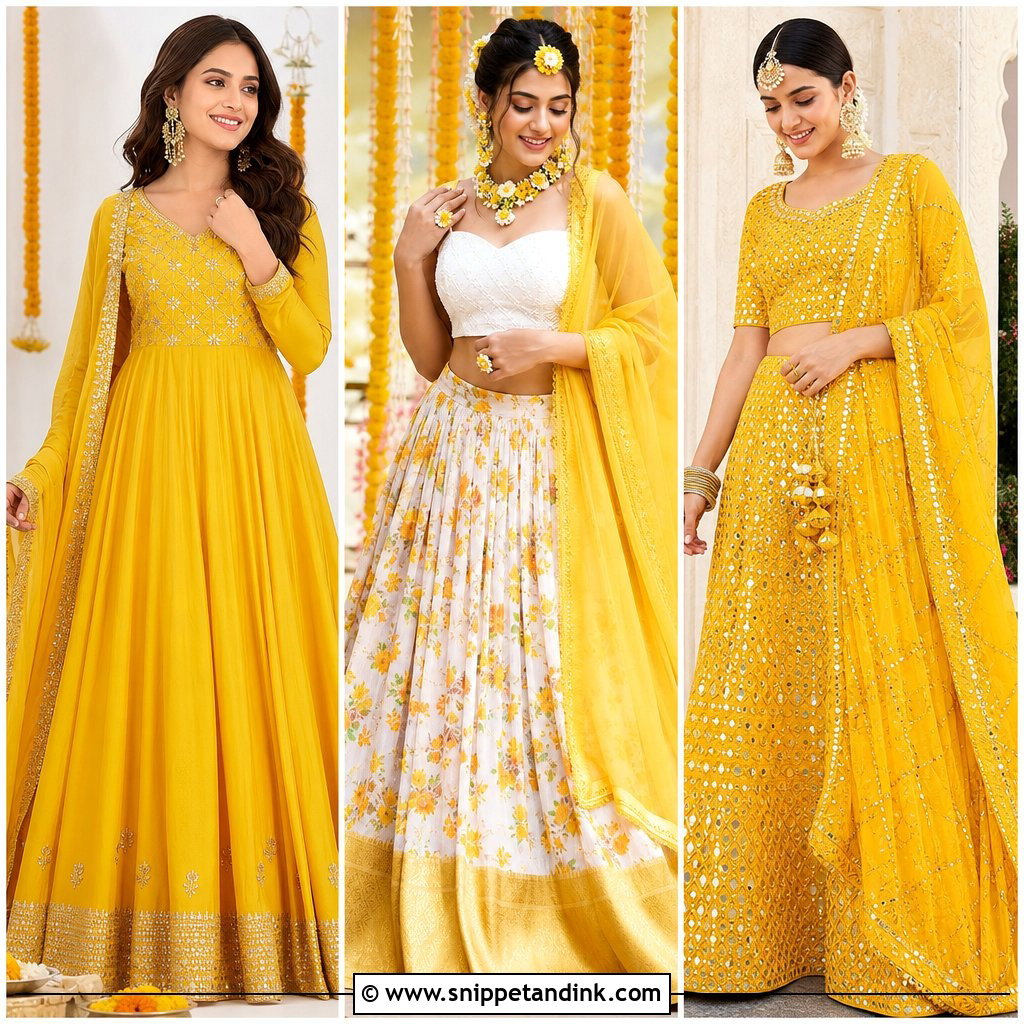
- For the person receiving the paste, short or elbow sleeves and an open neckline let relatives reach the arms and neck without soaking the fabric.
- Hems at ankle height or above stay out of wet paste and water on the floor.
- Cotton, mulmul, linen and rayon blends wash well. Zari, real silk and fine chikankari are harder to rescue.
- Pin the dupatta at the shoulder. Loose dupattas drag through bowls and slip off when people hug you.
- Keep good gold jewelry for later functions. Floral or costume pieces are easier to rinse.
Many brides change straight after the paste is washed off, so the Haldi outfit doesn’t have to be the one you’d frame. Some families even keep an older outfit just for the ritual itself, which is worth asking about before you buy something new.
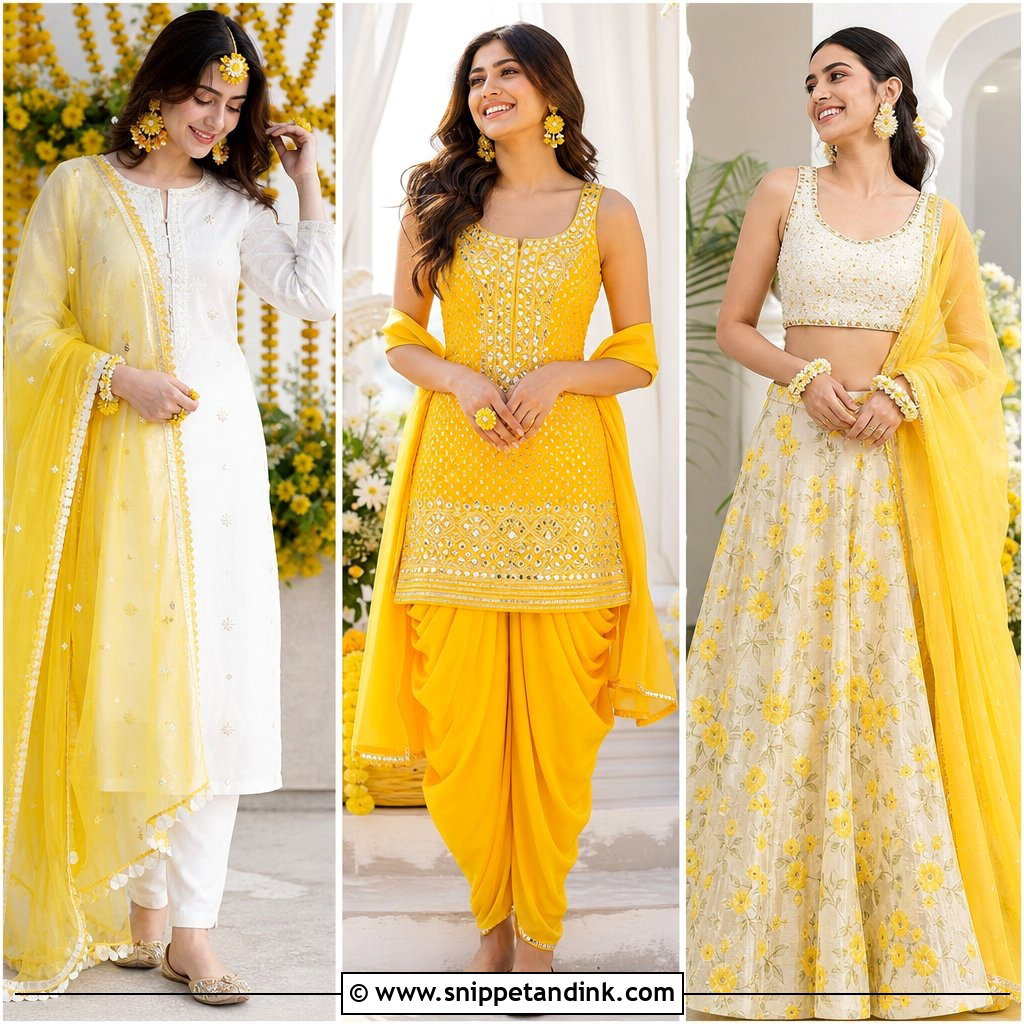
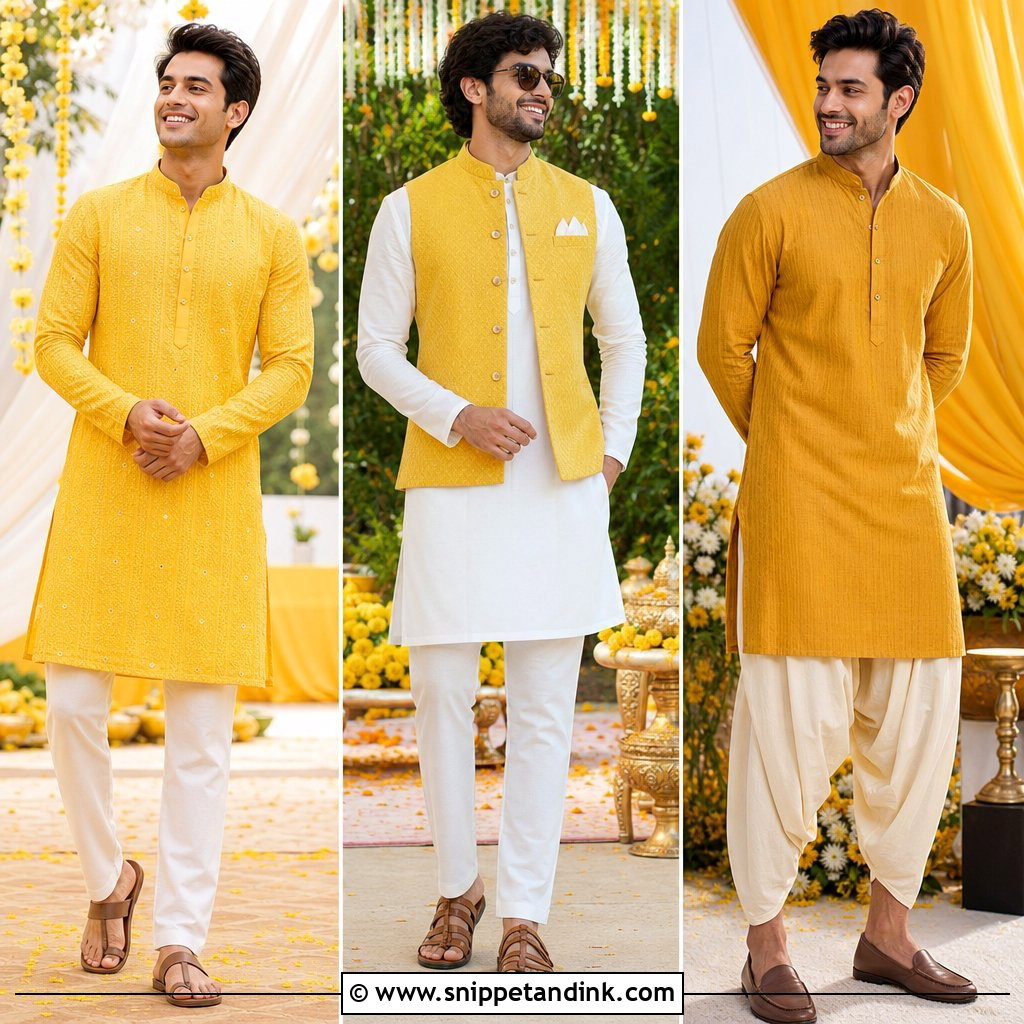
1. Yellow Cotton Kurta Set For Haldi
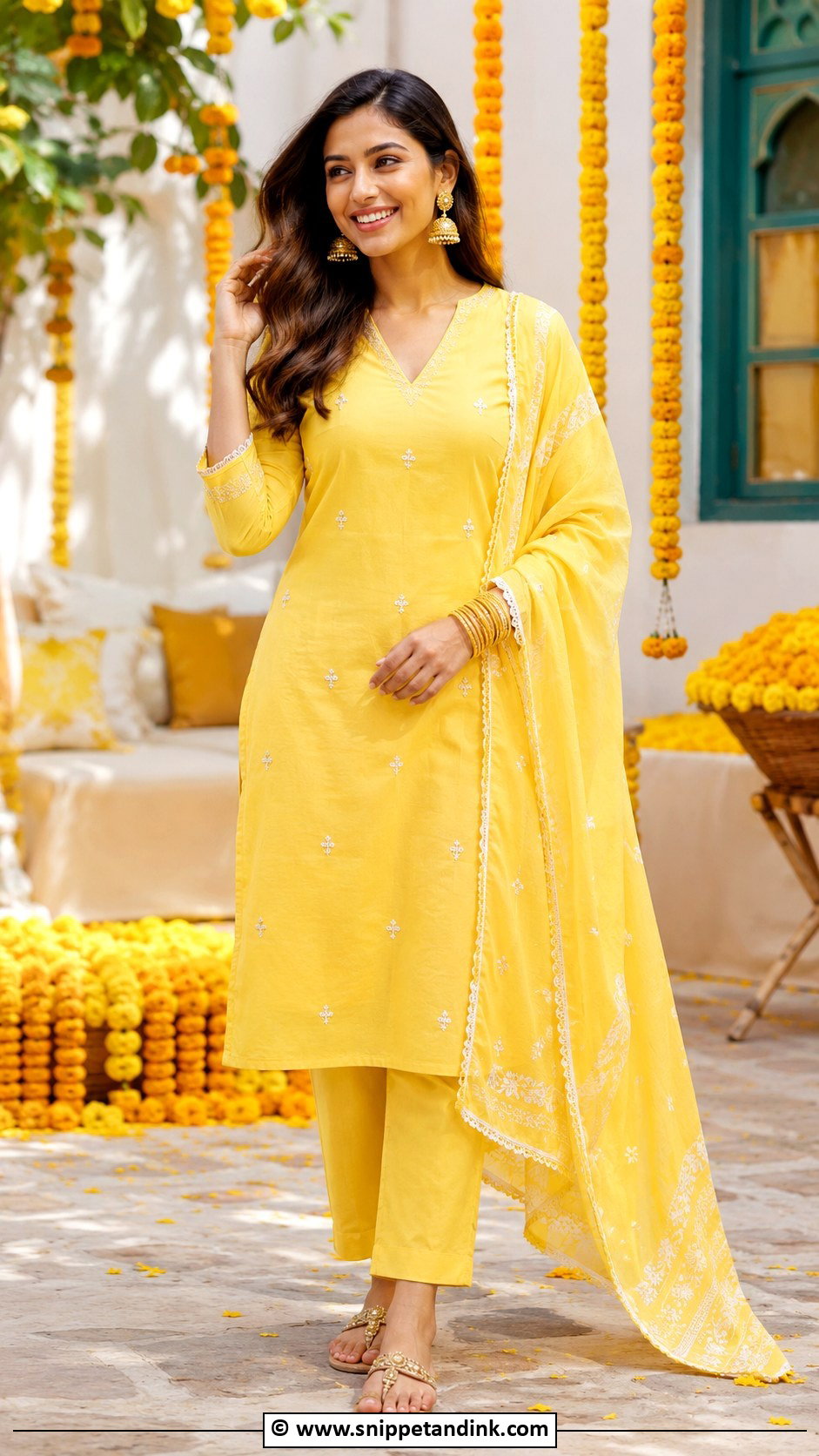
If I had to dress a whole family for one Haldi, I’d start with a yellow cotton kurta set. It breathes, it washes, and nobody minds when turmeric lands on it. A straight or slightly flared kurta over matching pants, palazzos or churidar keeps you mobile on the floor. A light dupatta with lace, mirror work or a thin gota border gives just enough festivity. Gold jhumkas, yellow bangles, flat sandals and a small potli finish it, with dewy skin and a soft lip.
2. White And Yellow Kurta Set For Haldi
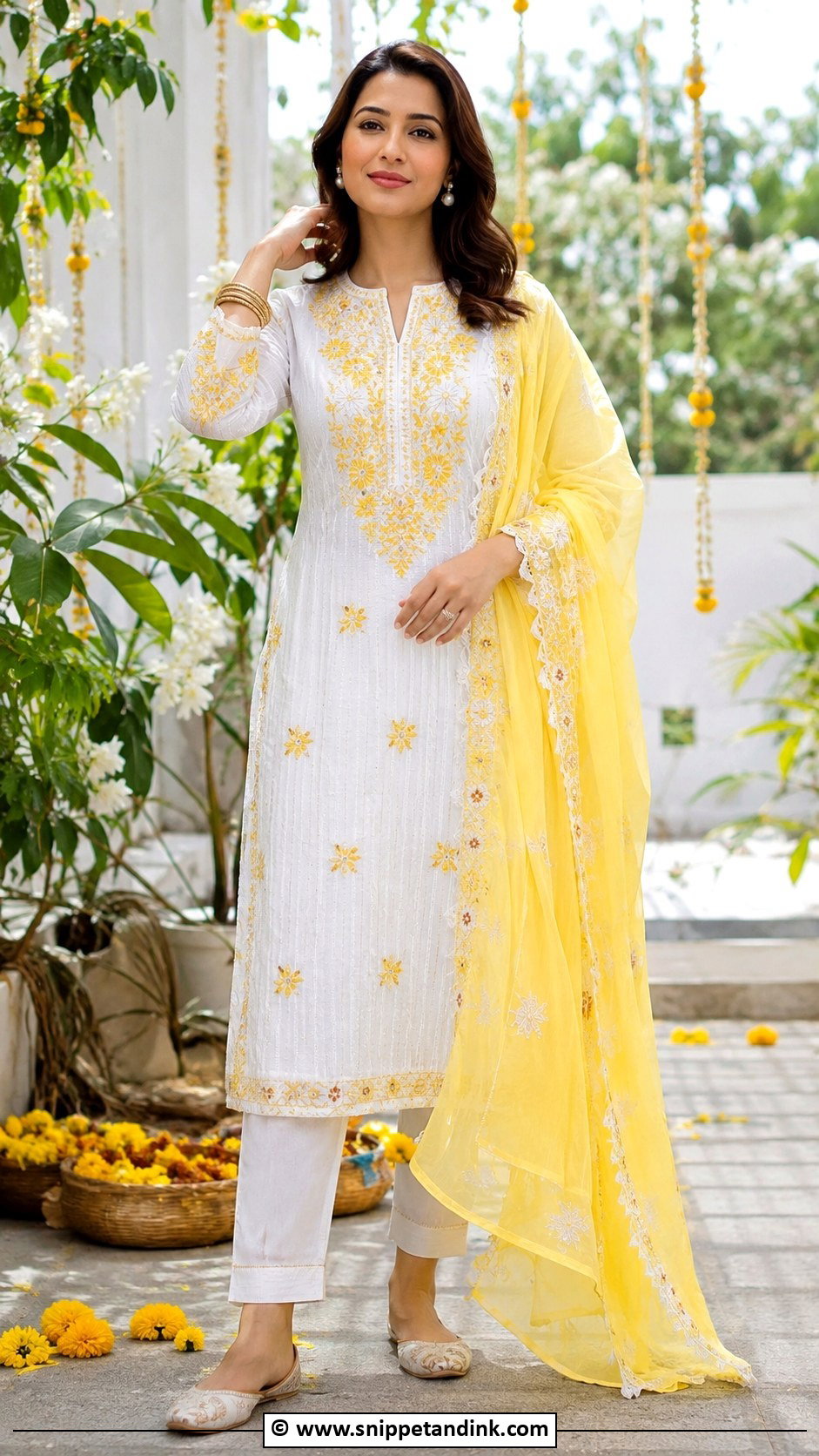
White with yellow accents keeps a guest on theme without looking like the bride. Look for a white kurta with yellow embroidery, or plain white paired with a yellow dupatta or printed yellow palazzos. The catch is obvious: white shows every smear of haldi, so choose cotton, mulmul or a rayon blend you’re happy to soak afterwards. Pearl earrings, gold bangles and comfortable juttis are enough, and a single yellow flower in the hair ties it together.
3. Mustard Anarkali Suit For Haldi
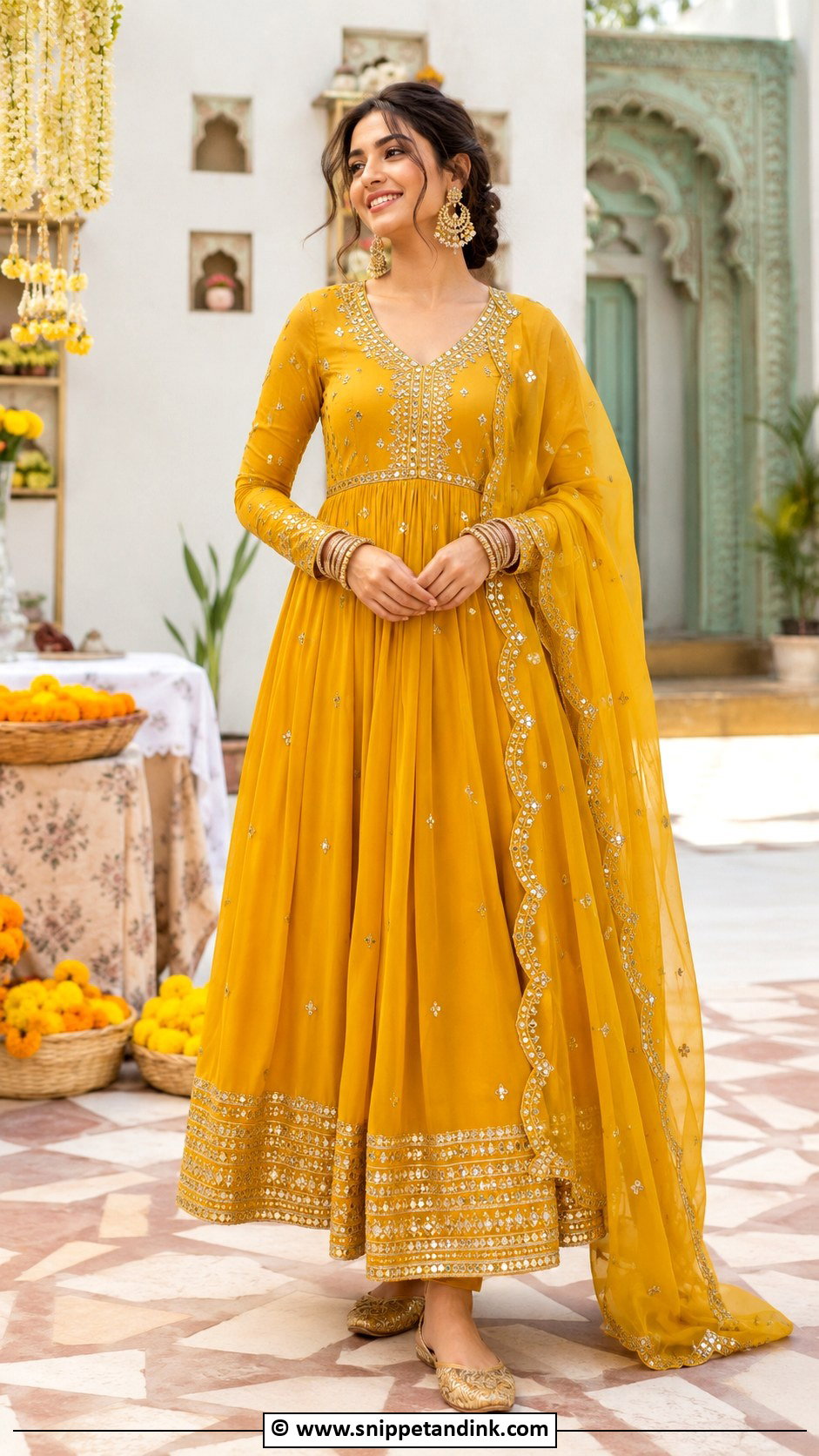
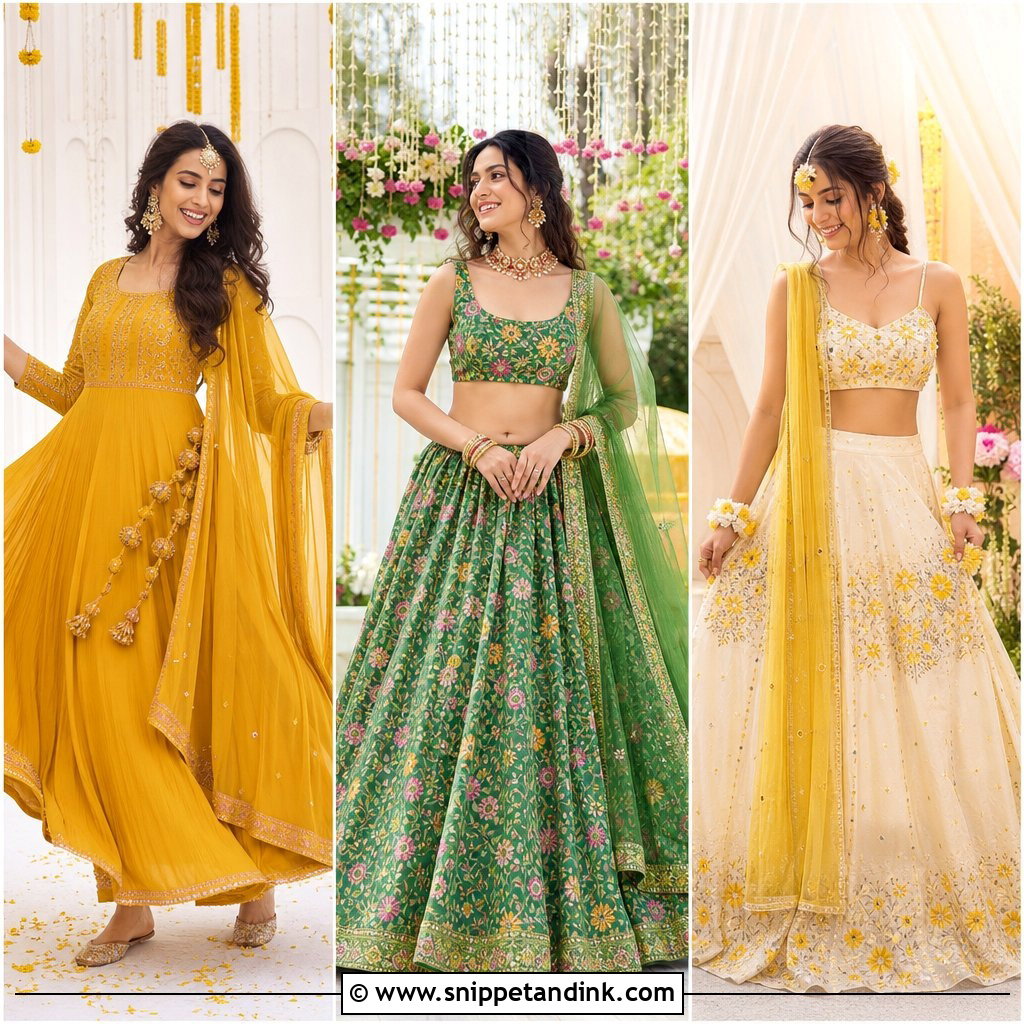
A mustard Anarkali is my pick when someone wants to look a step more dressed up without giving up comfort. The flare moves well in twirl shots and family portraits. Keep it light: cotton silk, georgette, rayon or chanderi, with embroidery only at the neckline, sleeves or hem. One thing I watch is length. A floor-length Anarkali soaks up paste and water when you sit, so ankle length is safer. Add a sheer mustard, ivory or orange dupatta, statement earrings and embellished flats.
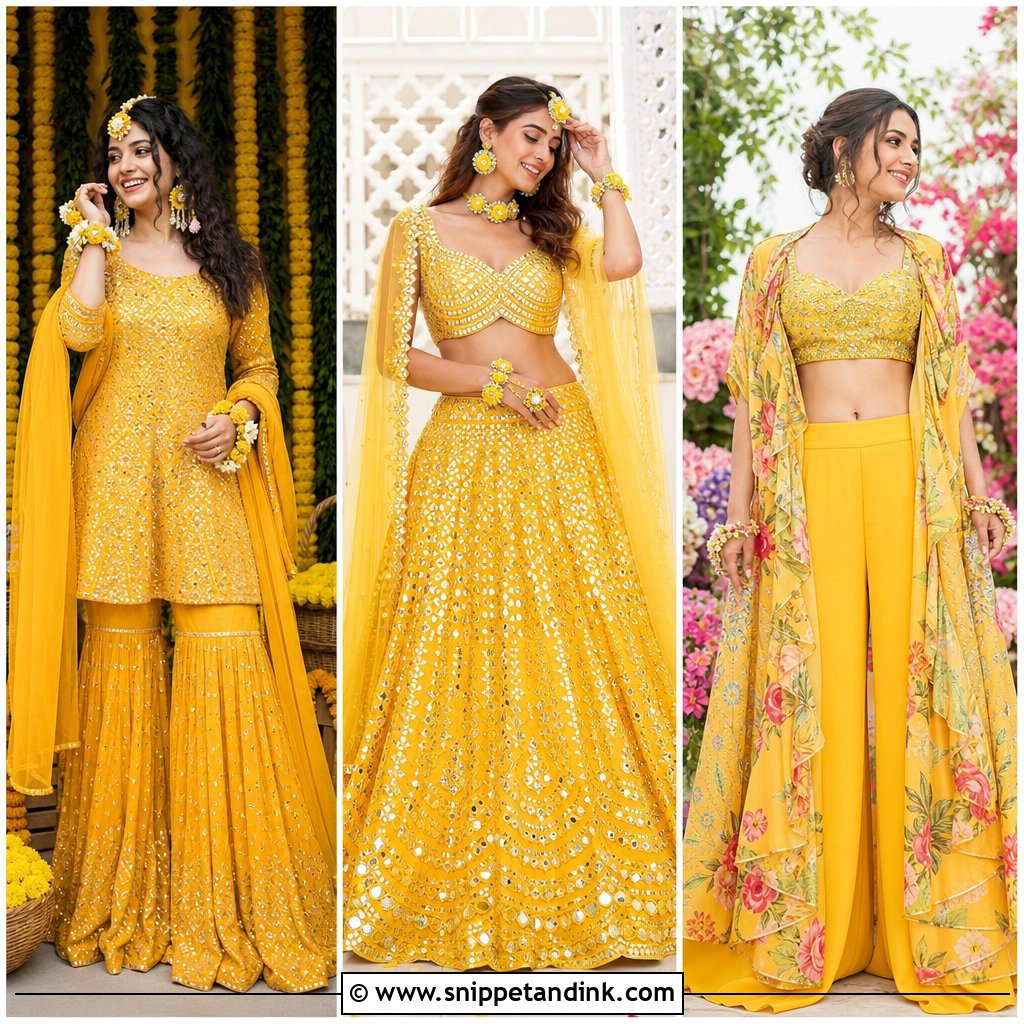
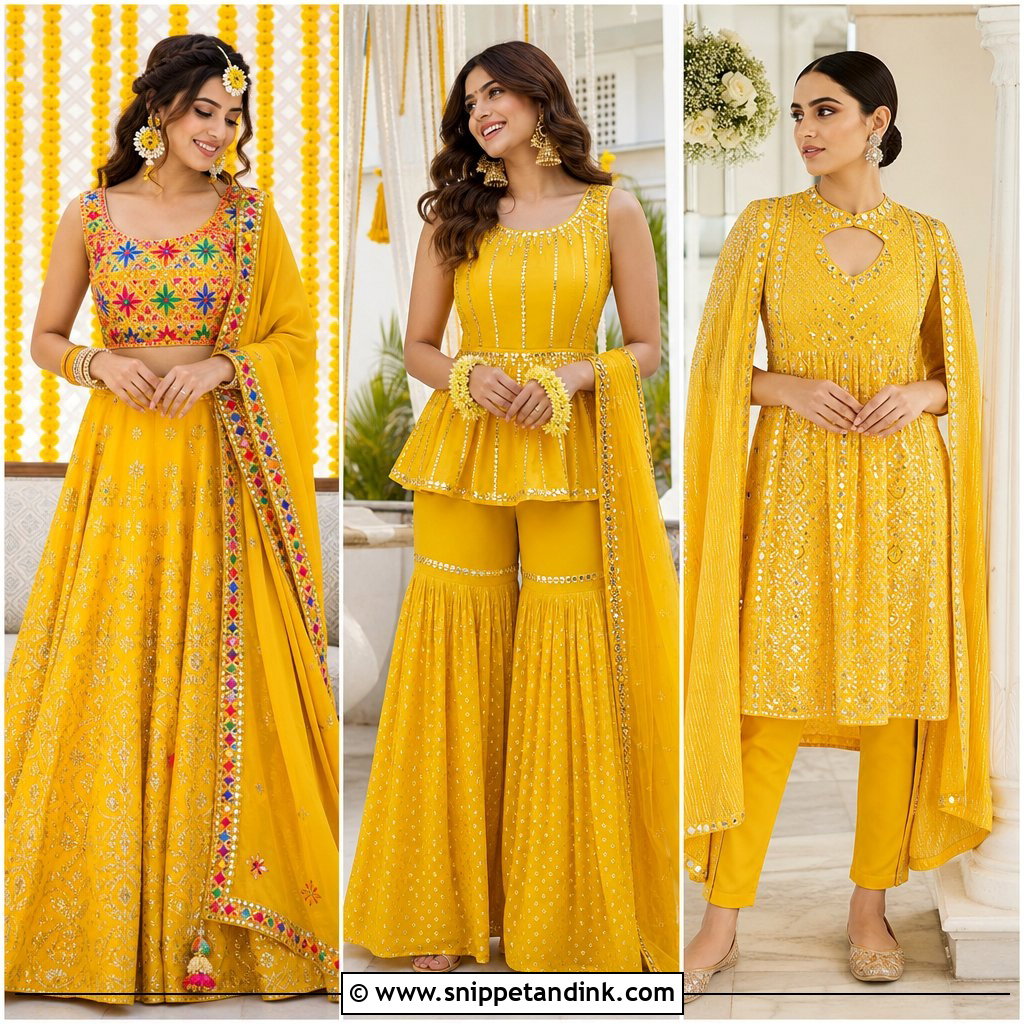
4. Yellow Sharara Set For Haldi
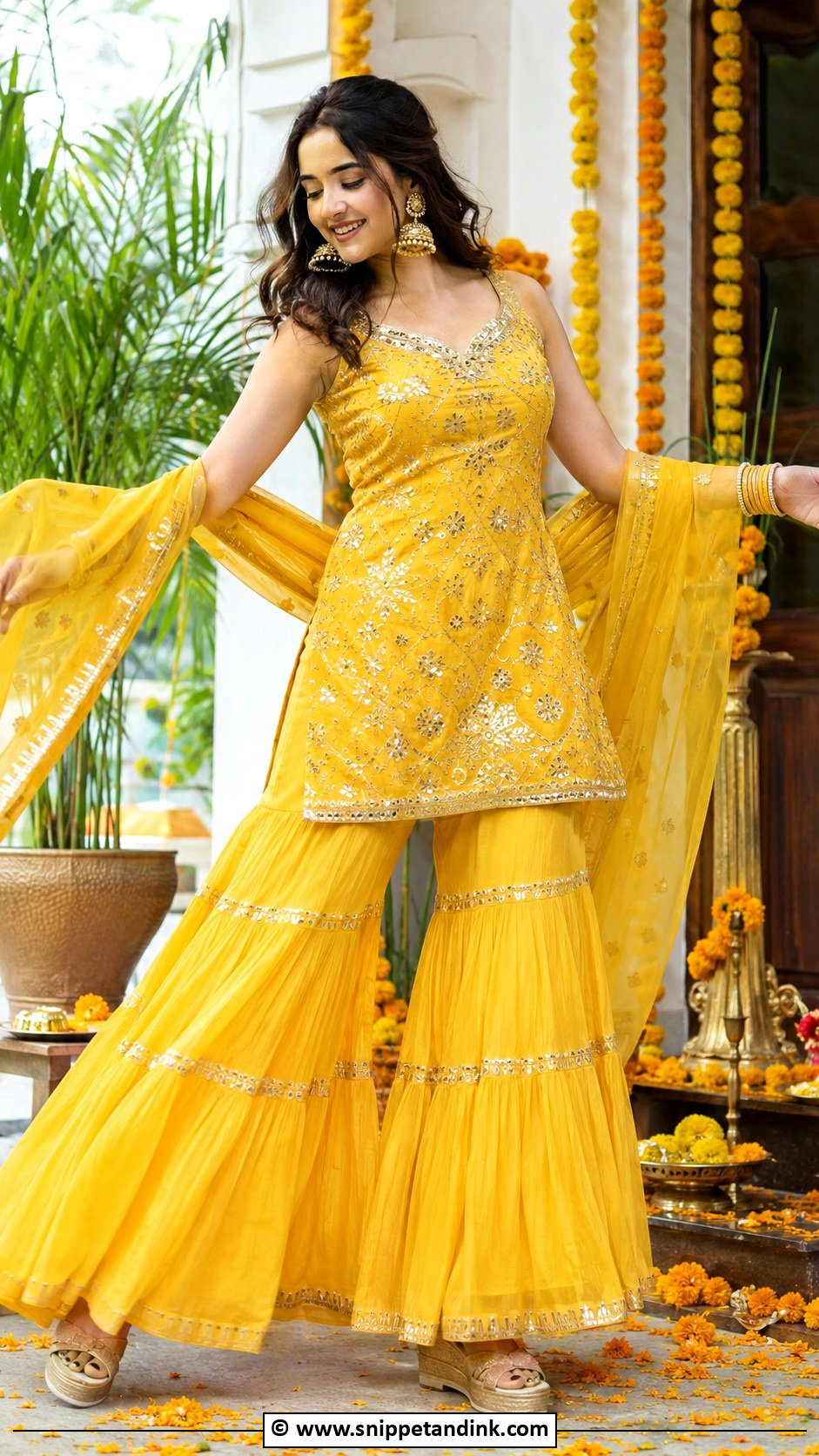
Shararas are made for the dancing half of a Haldi. The wide legs swing, and the short kurti keeps the outfit young and light. Keep the decoration simple, with a little gota, thread work or a few mirrors, and a dupatta that won’t feel bulky. It suits bridesmaids, cousins and the siblings of the couple. Wedges add height without sinking into a lawn the way stilettos do. A sleeveless kurti or peplum top makes it more modern, and a braid wound with fresh flowers holds up through the dancing.
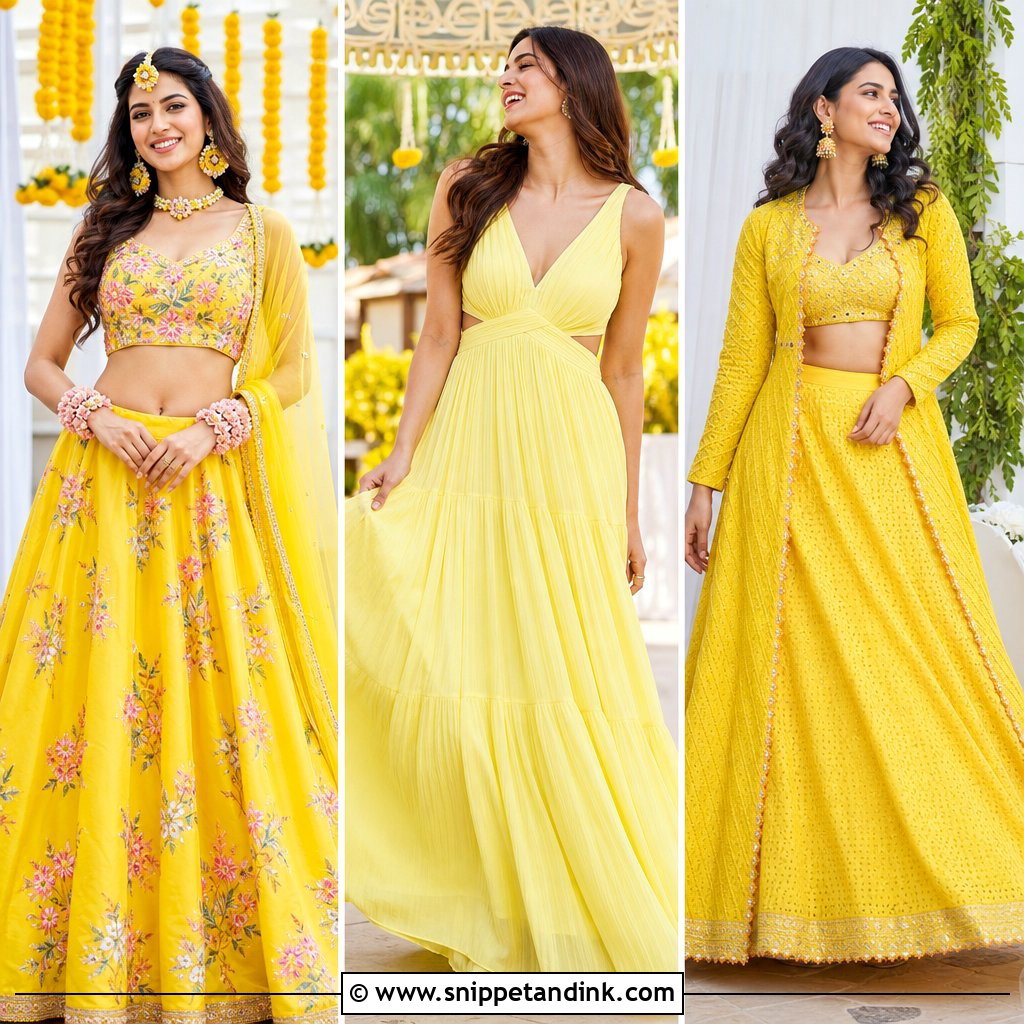
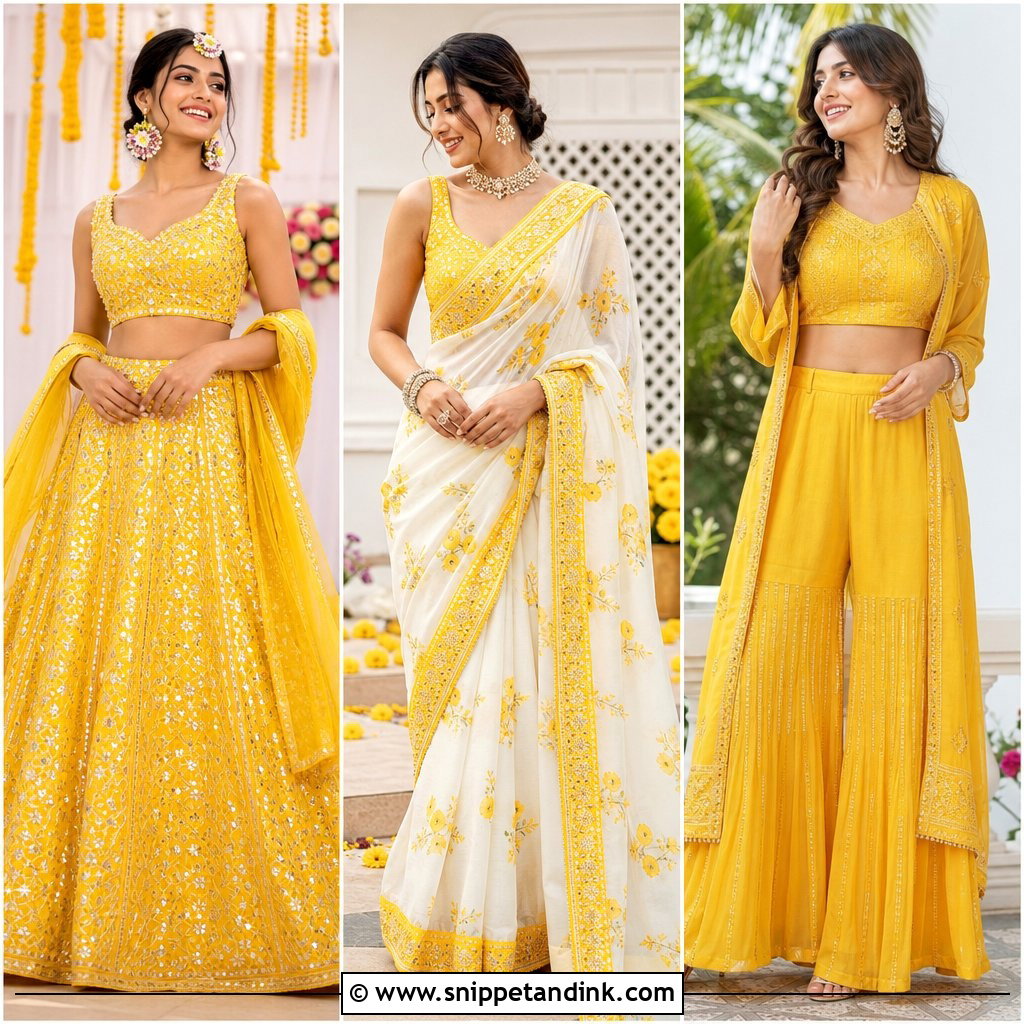
5. Yellow Lehenga Choli For Haldi
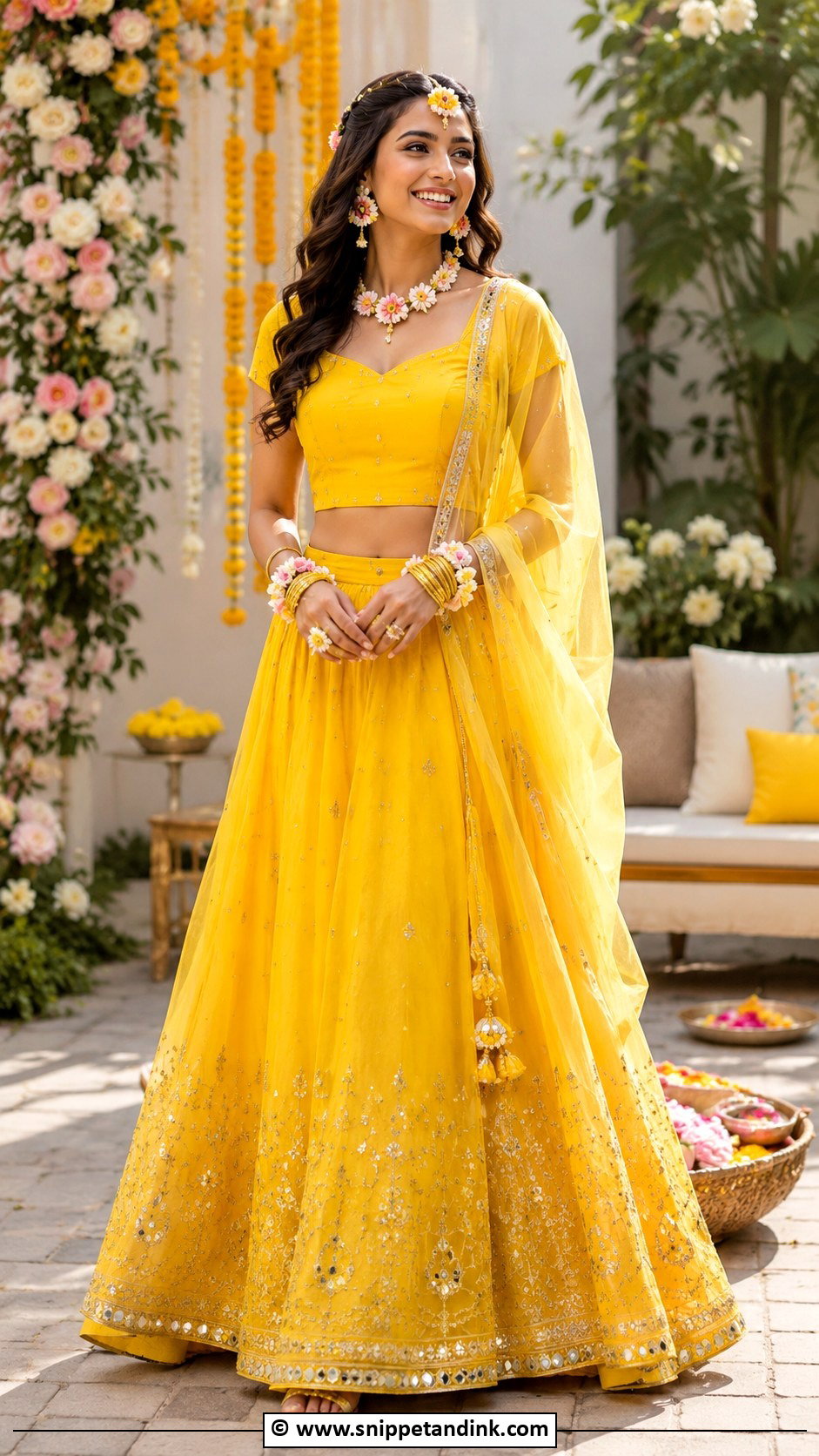
For the bride, a yellow lehenga choli is the classic, and it doesn’t need to be heavy. I’d choose a cotton, georgette, organza or chanderi lehenga with a simple blouse and soft dupatta, finished with small mirror work, floral embroidery or a scalloped border. Floral jewelry and a maang tikka suit it better than gold sets, which you’ll want to keep away from wet paste anyway. If you’d like to wear it again, go for a plain skirt and a printed blouse that can be split up later.
6. Floral Lehenga Set For Haldi
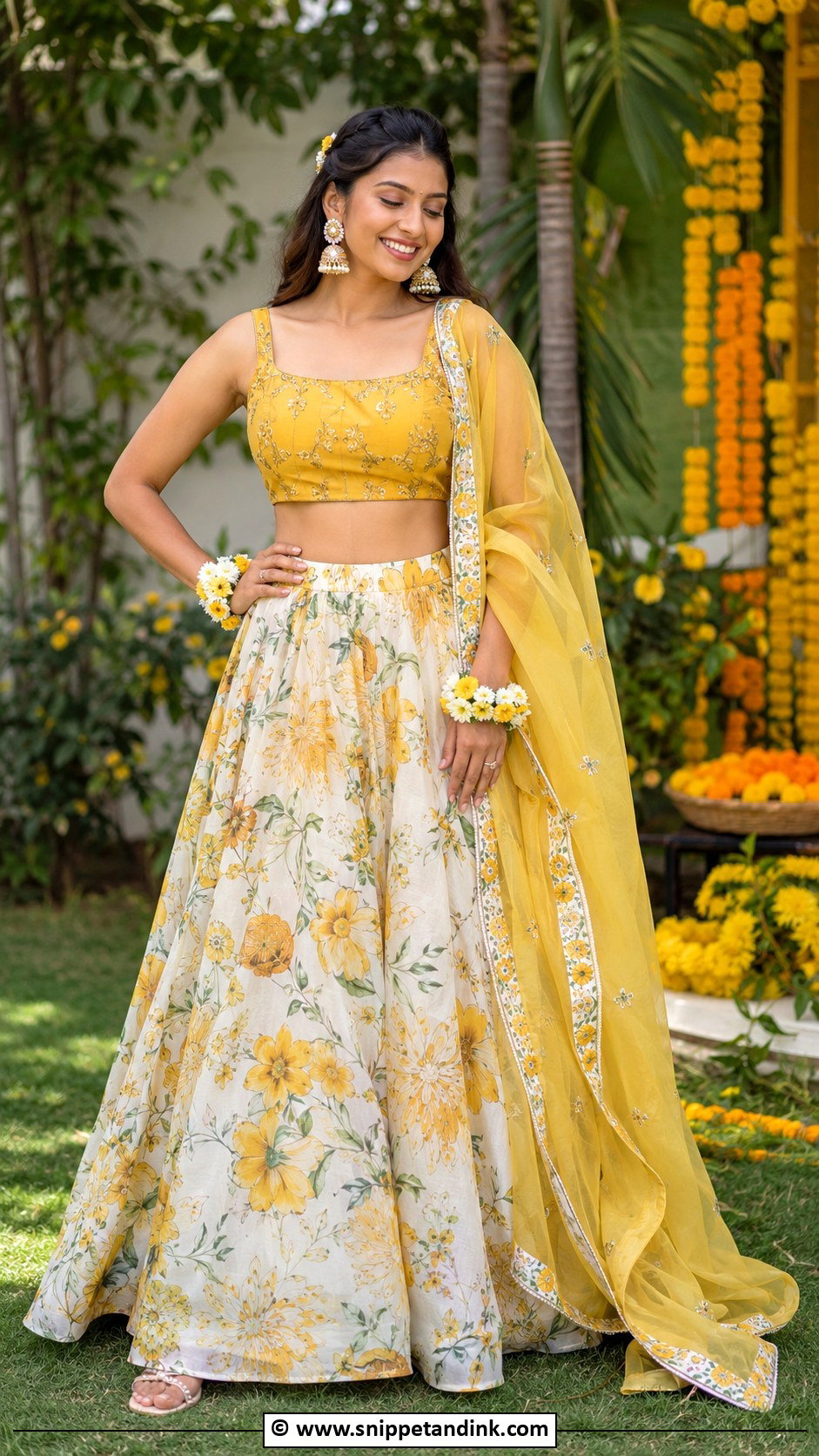
A floral lehenga is softer than solid yellow and sits naturally among marigold and rose decor. Look for yellow, ivory, peach or pastel prints on a light skirt, with a plain blouse and a dupatta pulled from one colour in the print. I’d keep the accessories small: pearl jhumkas, floral bangles or a little potli. Wear sandals you can slip on and off, because you’ll be standing, sitting cross-legged and moving between rituals all afternoon.
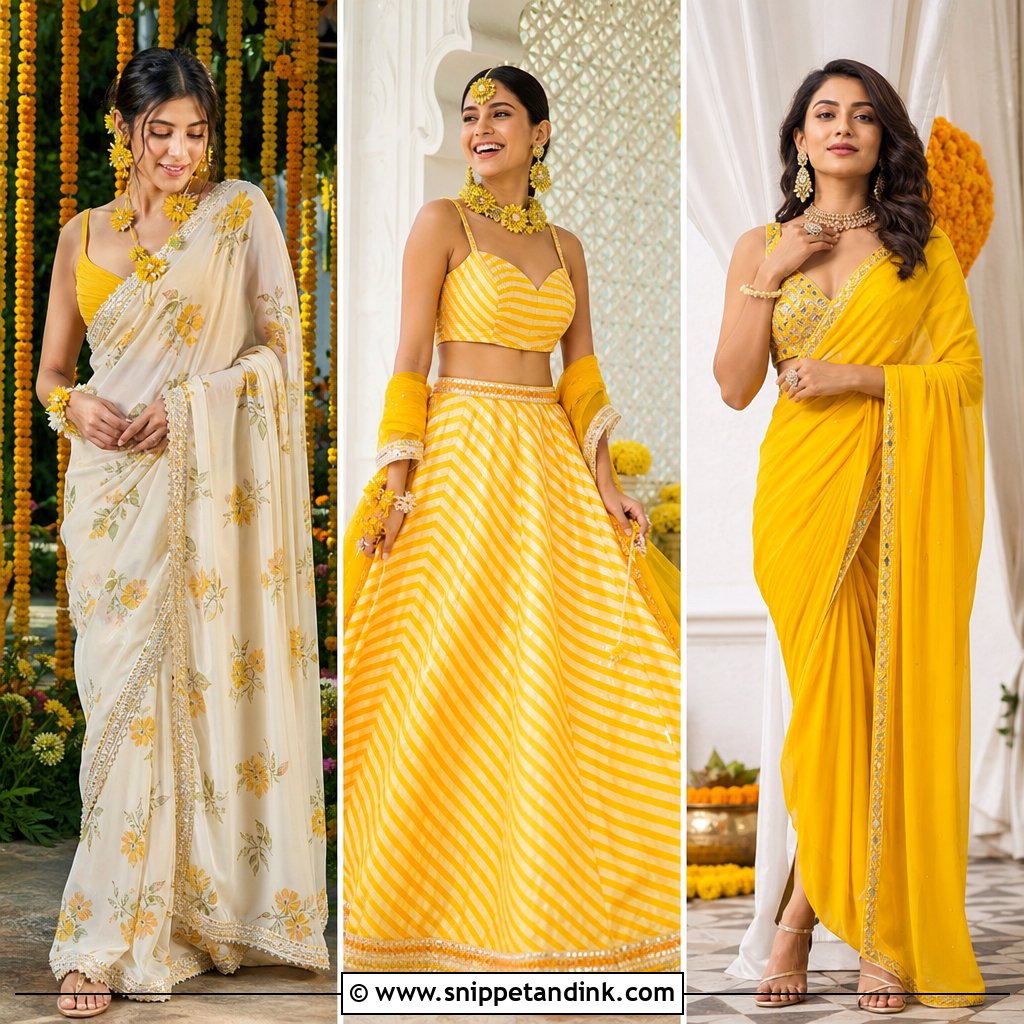
7. Yellow Saree With Simple Blouse For Haldi
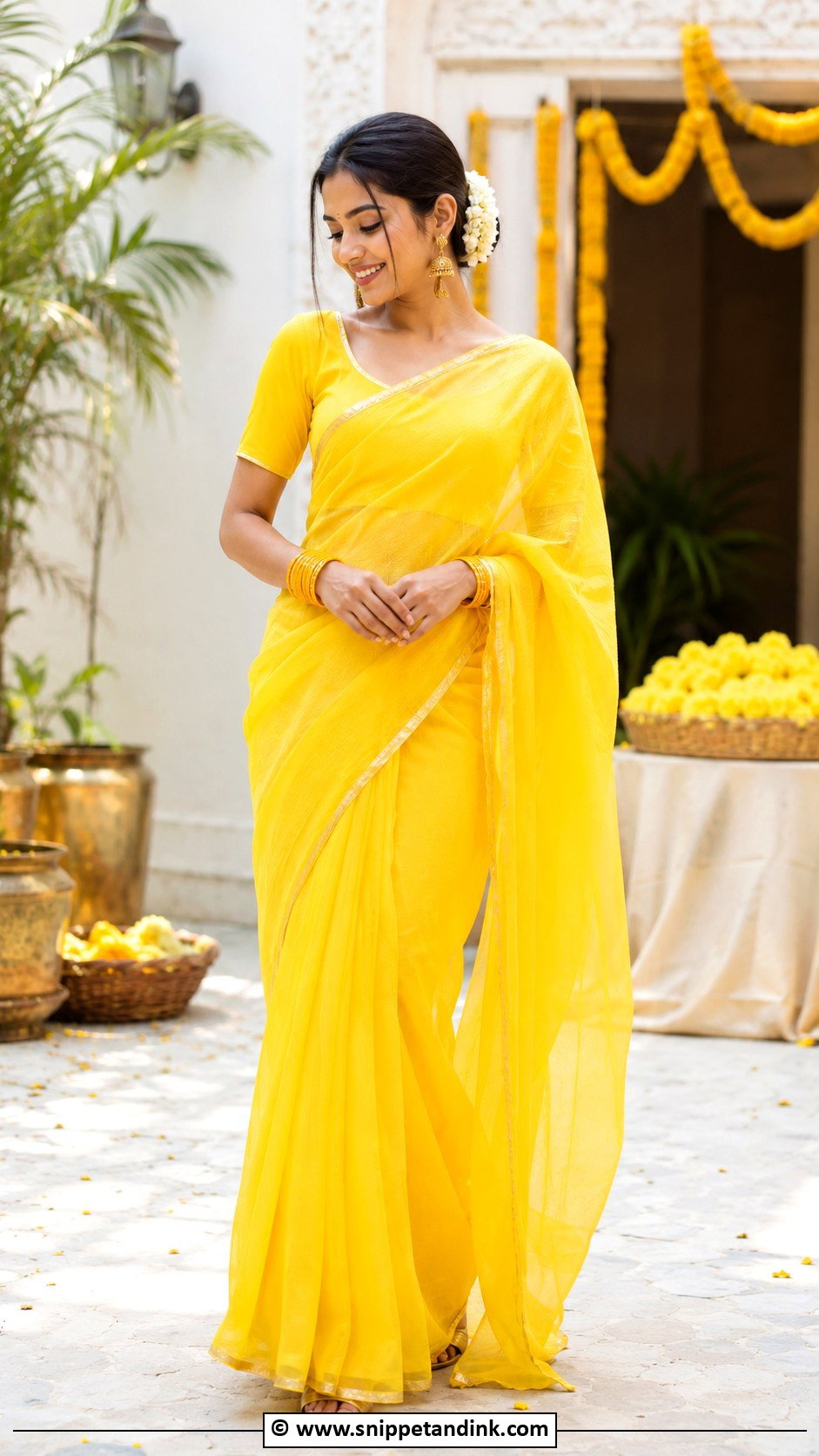
A yellow saree suits every age at a Haldi, from grandmothers to teenage cousins. The fabric sets the formality: cotton or linen for a home ceremony, chiffon, georgette or organza for something dressier. A plain saree with a thin border is the minimal version; a printed or lightly embroidered one reads more festive. If the paste will actually be applied to you, skip fragile fabrics and keep the blouse sleeves at or above the elbow. Gold earrings, glass bangles and a low bun with flowers are all it needs.
8. White Saree With Yellow Blouse For Haldi
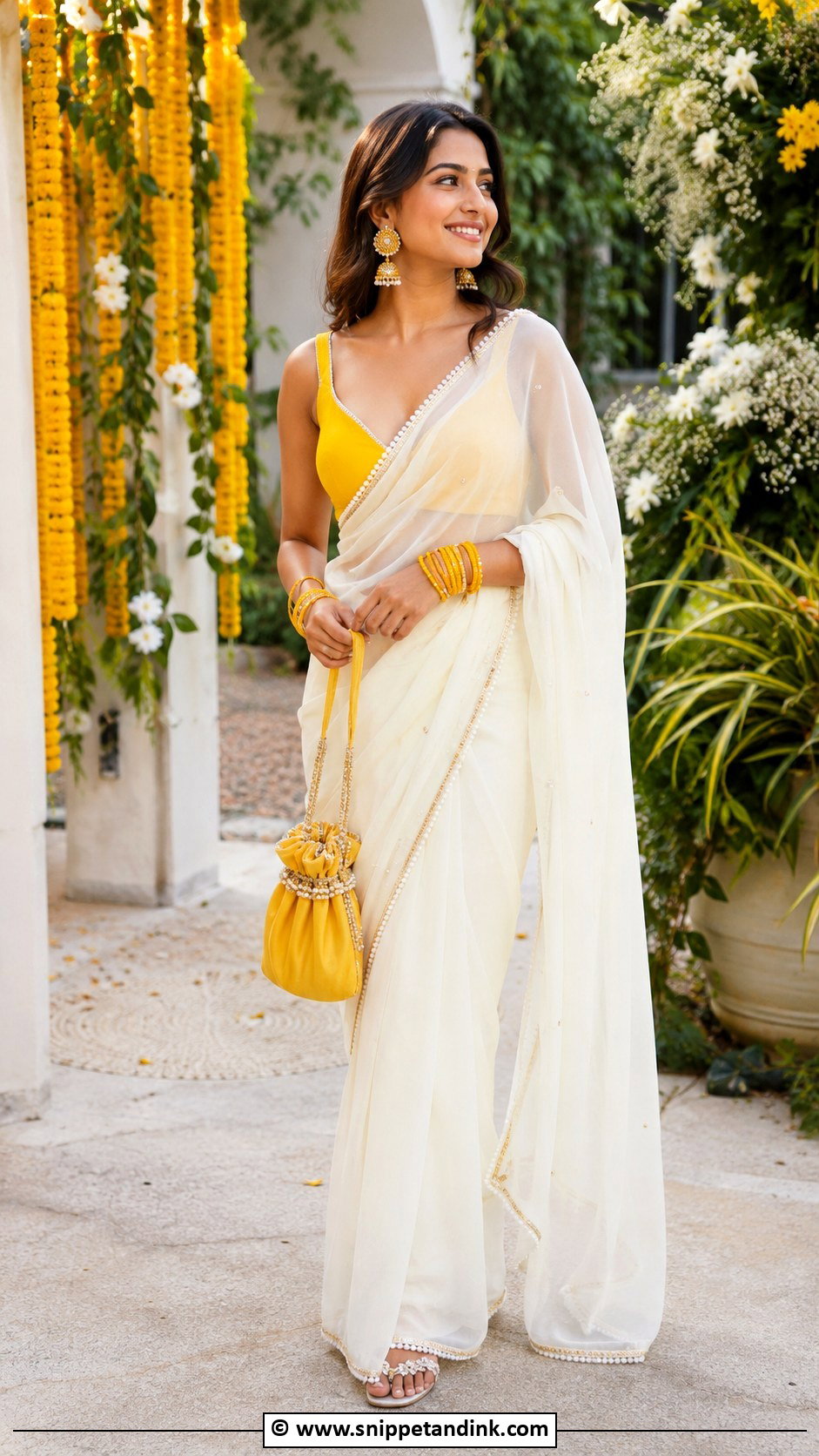
Pair a white saree with a yellow blouse and you get a crisp contrast that photographs clearly in sunlight. The white keeps it airy, and the blouse links it to the ceremony. A plain white cotton saree, an ivory organza or a white saree with a yellow border all work. I always remind guests that white saree pleats sit at floor level, so tuck them a little higher if you’ll be sitting near the paste bowls. Gold jhumkas, yellow bangles and a matching potli finish it.
9. Yellow Palazzo Suit For Haldi
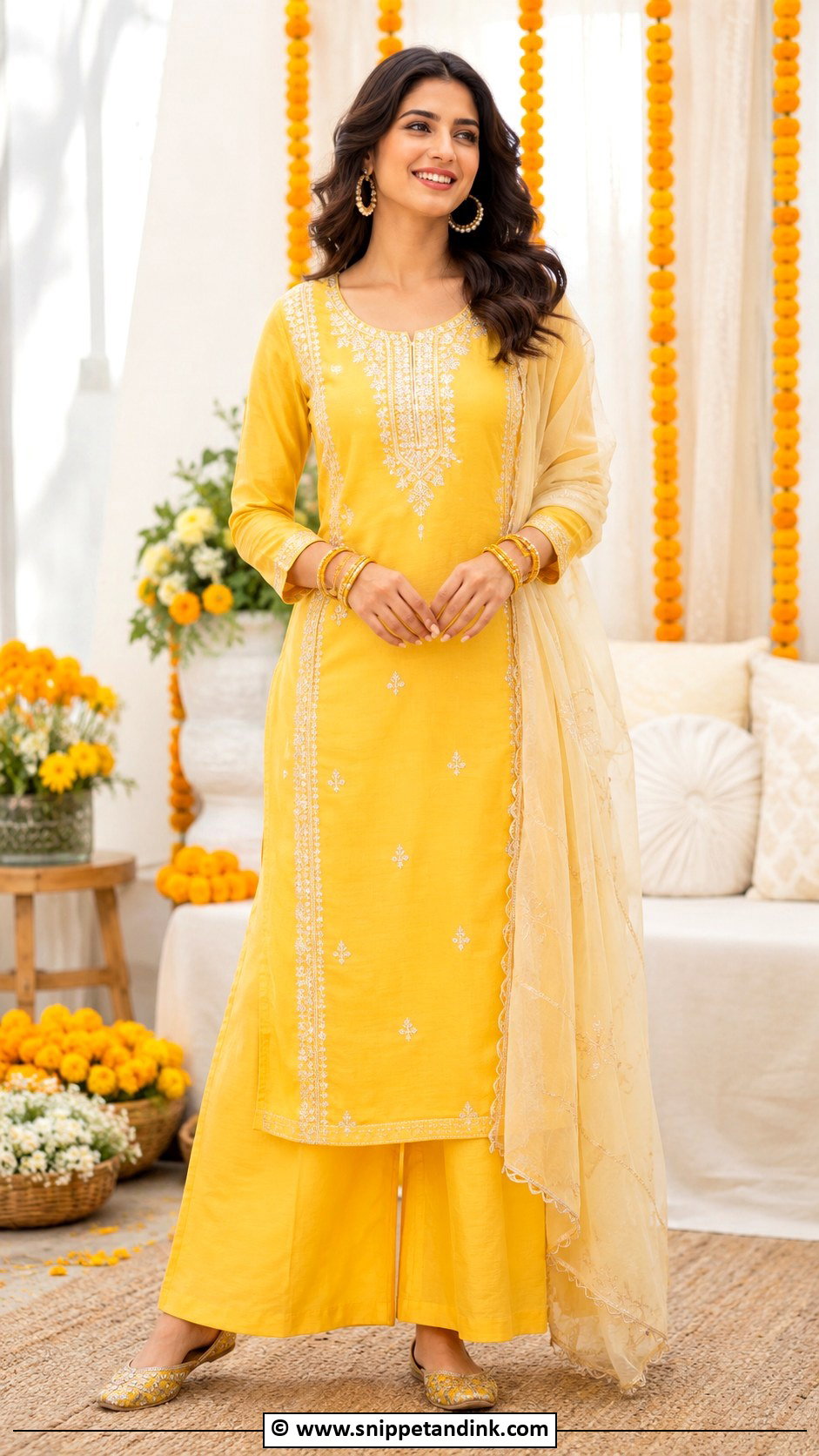
Sitting on the floor for an hour is where palazzos earn their place. The wide legs let you fold your knees without anything pulling, and a straight, A-line or short kurta sits neatly over them. A dupatta with a light border adds a festive finish. Juttis, hoop earrings and a few bangles are enough. Prefer something more modern? Try a printed palazzo under a plain kurta. Every piece goes back into your wardrobe afterwards.
10. Yellow Gharara Set For Haldi
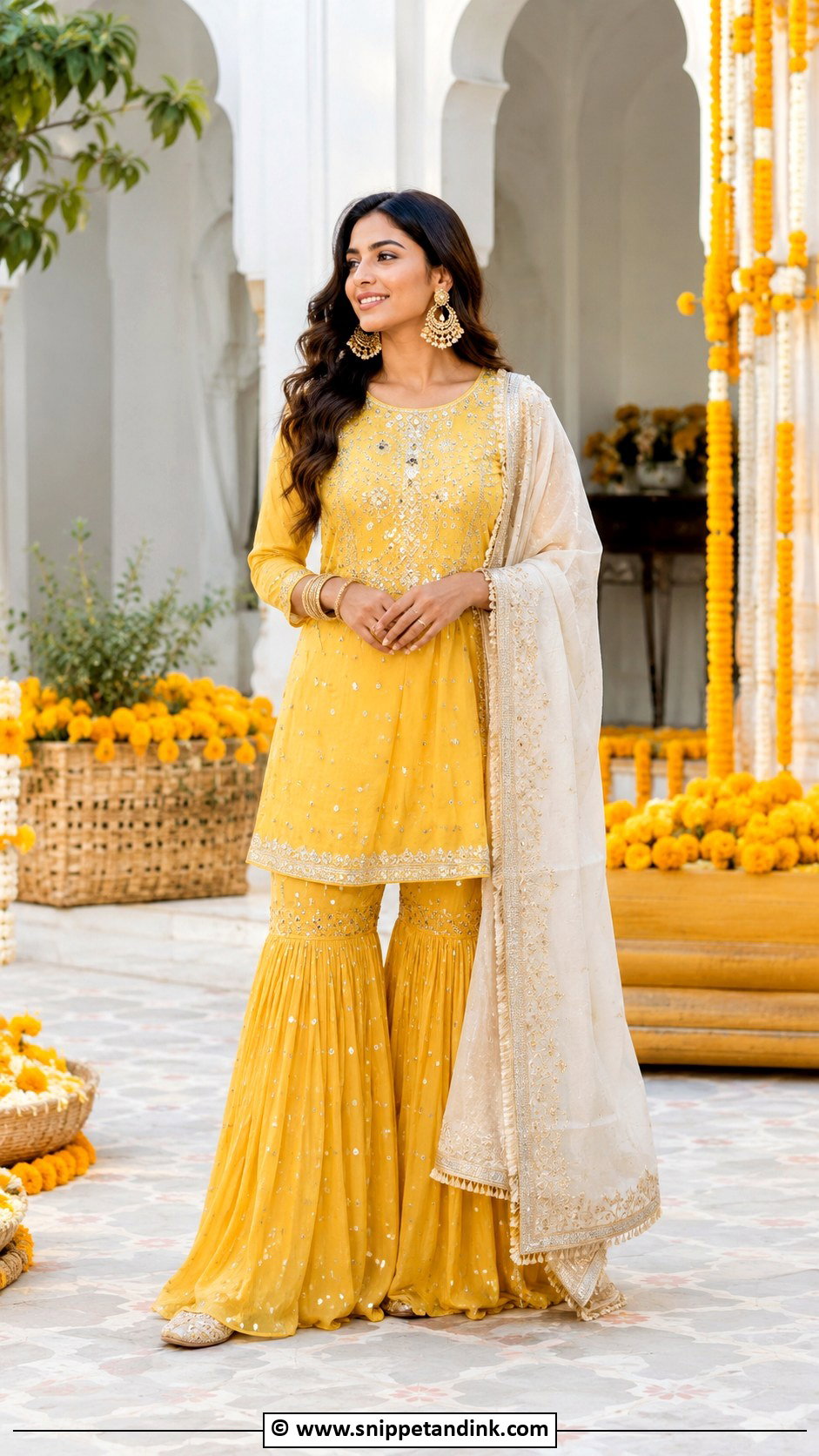
A gharara is fitted to the knee, gathered there, and then flares, which makes it look dressier than a basic suit. I like it on close family and bridesmaids. The simple version is plain yellow with a gota border; for more colour, add a pink, green or orange dupatta. Because the bottoms already carry volume, I keep the kurti short and the neckline simple. Chandbali earrings, bangles and embellished flats finish it, and you get festivity without the weight of a lehenga.
11. Yellow Co Ord Set For Haldi
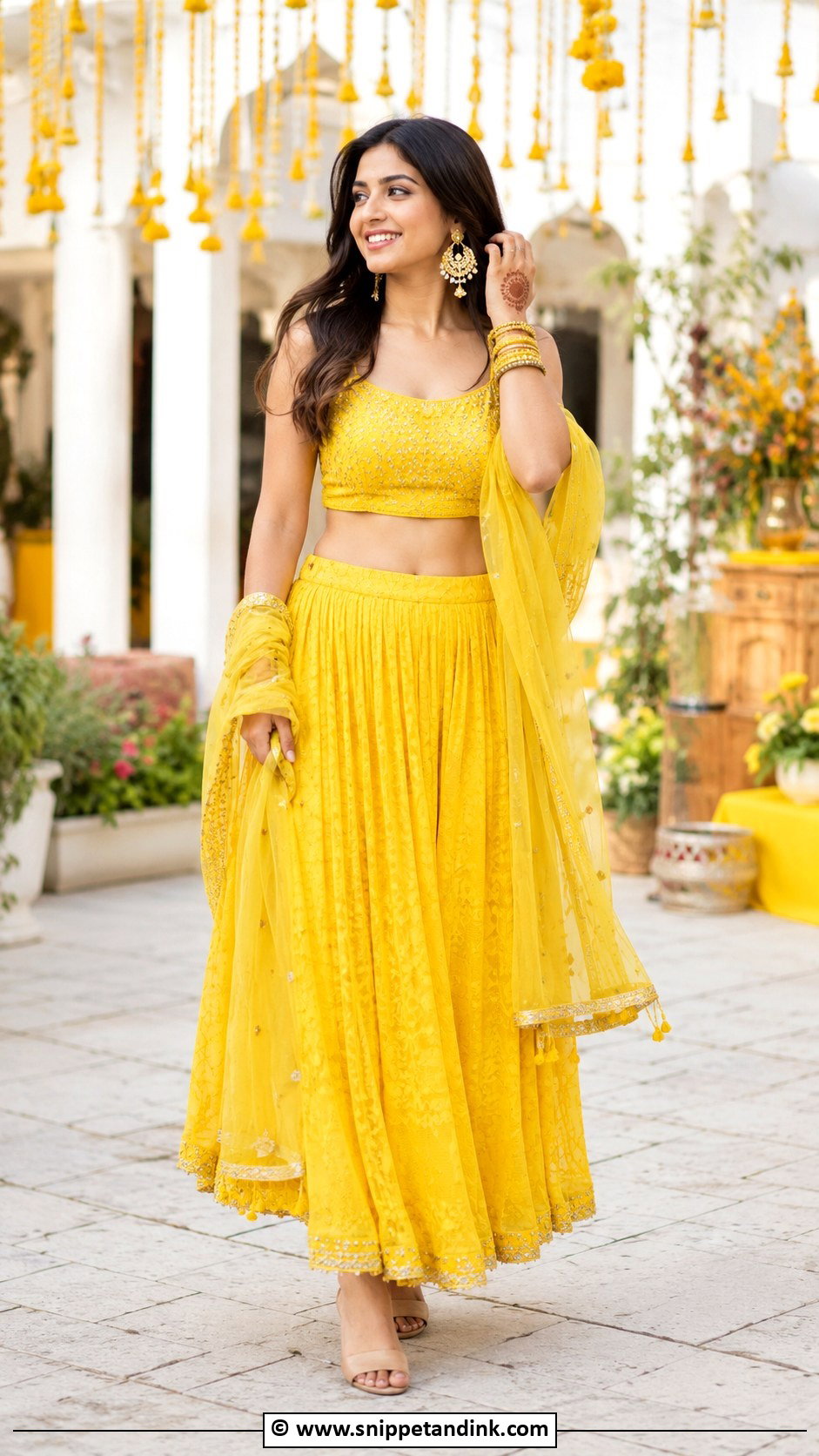
Co-ords are the quickest way to look put together with no styling effort. A crop top and skirt, a kurta and pants or a tunic and palazzo in one colour reads polished from head to toe. Cotton, linen, crepe and georgette all work in daylight. Add a light dupatta if the family leans traditional. I steer younger guests toward this one because it moves easily and suits block heels or flats, statement earrings and a small clutch.
12. Printed Kurta And Pants For Haldi
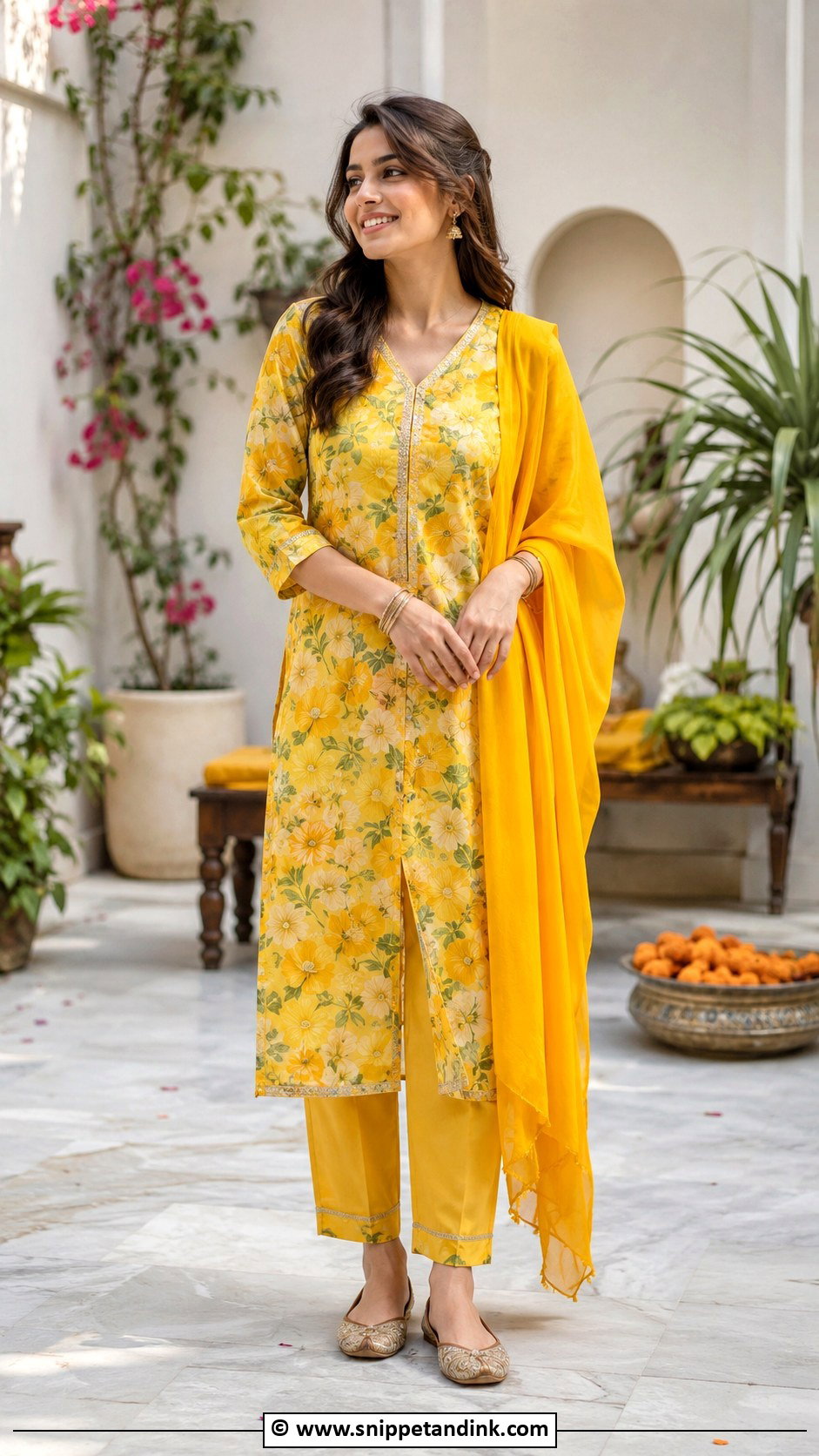
A printed kurta and pants outfit suits the guest who wants to look festive without dressing up. Florals, paisley, block prints or small ethnic motifs in yellow, mustard, ivory, orange or green all fit the mood. Straight pants look neat; palazzos feel more relaxed. My rule with dupattas: plain if the print is busy, or skip it entirely for a lighter feel. Juttis, small earrings and a wrist of bangles finish it, and the set goes on to lunches and festivals later.
13. Pastel Yellow Chikankari Suit For Haldi
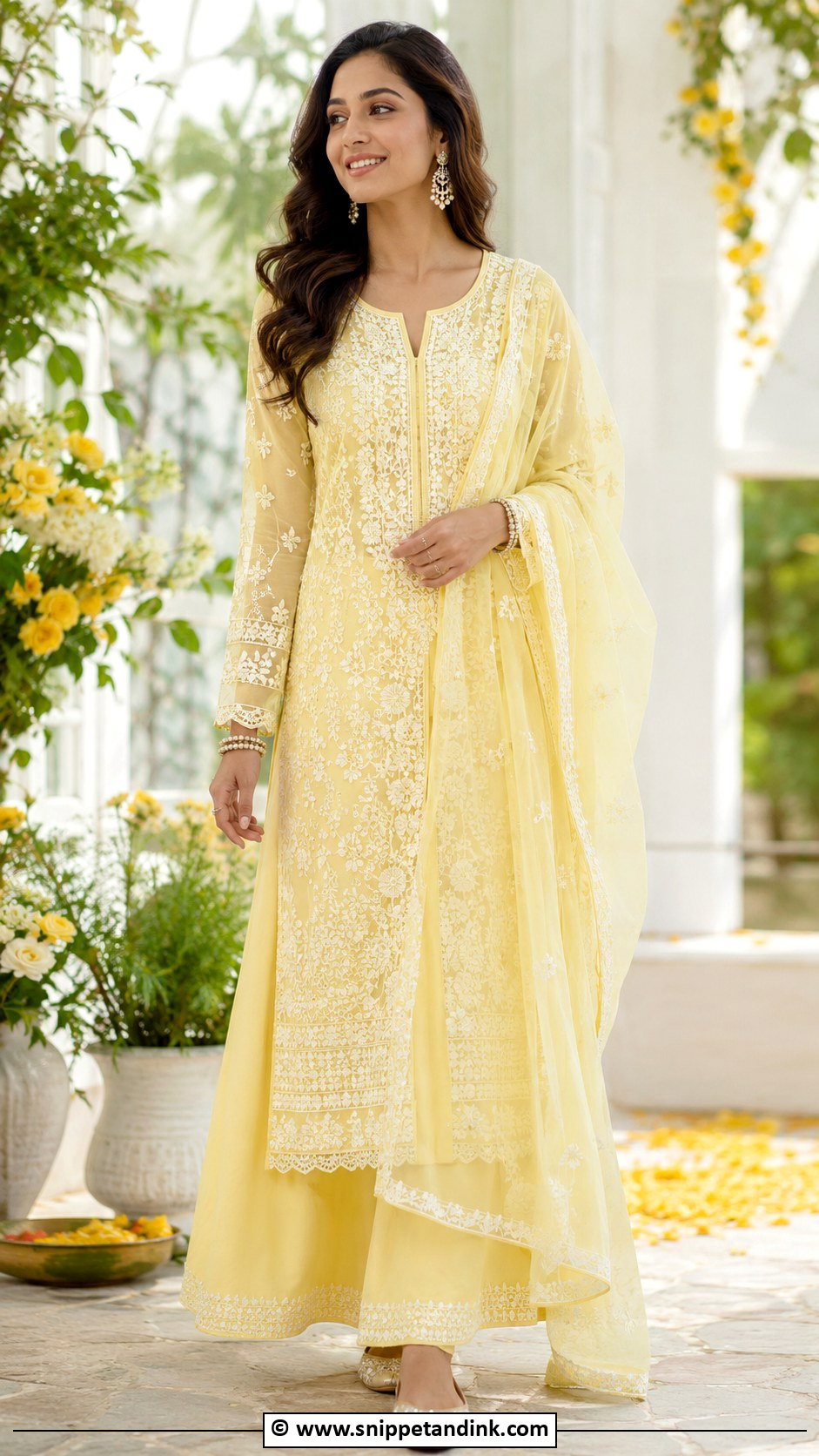
Chikankari is fine hand embroidery, often on soft cotton or georgette, and in pastel yellow it gives texture without weight. A straight kurta with matching pants or palazzos keeps the line clean, and a sheer dupatta in the same shade polishes it. The caution: good chikankari is delicate, and wet turmeric can settle into the stitching, so I’d save it for guests who won’t be in the thick of the paste. Pearls, silver jhumkas or light gold suit it, with ivory juttis and fresh, simple makeup.
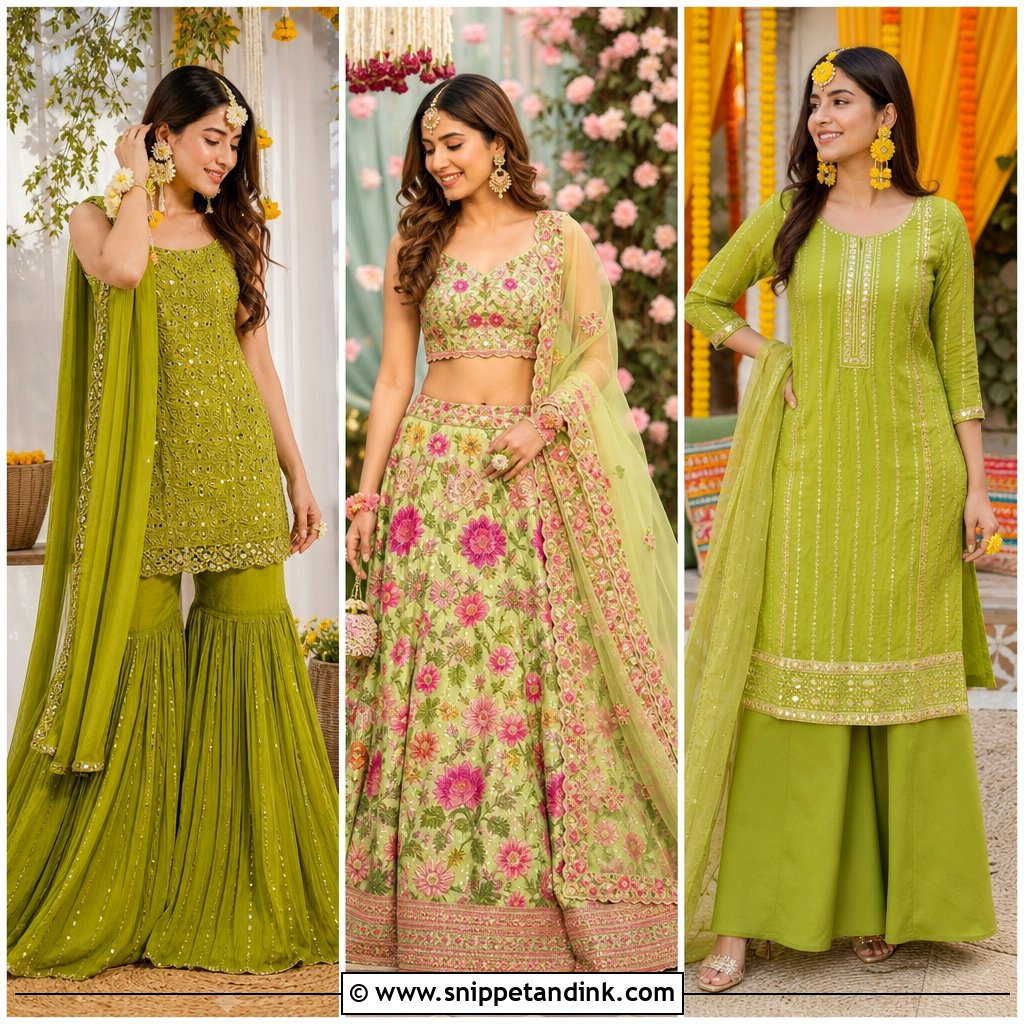
14. Lime Green Kurta Set For Haldi
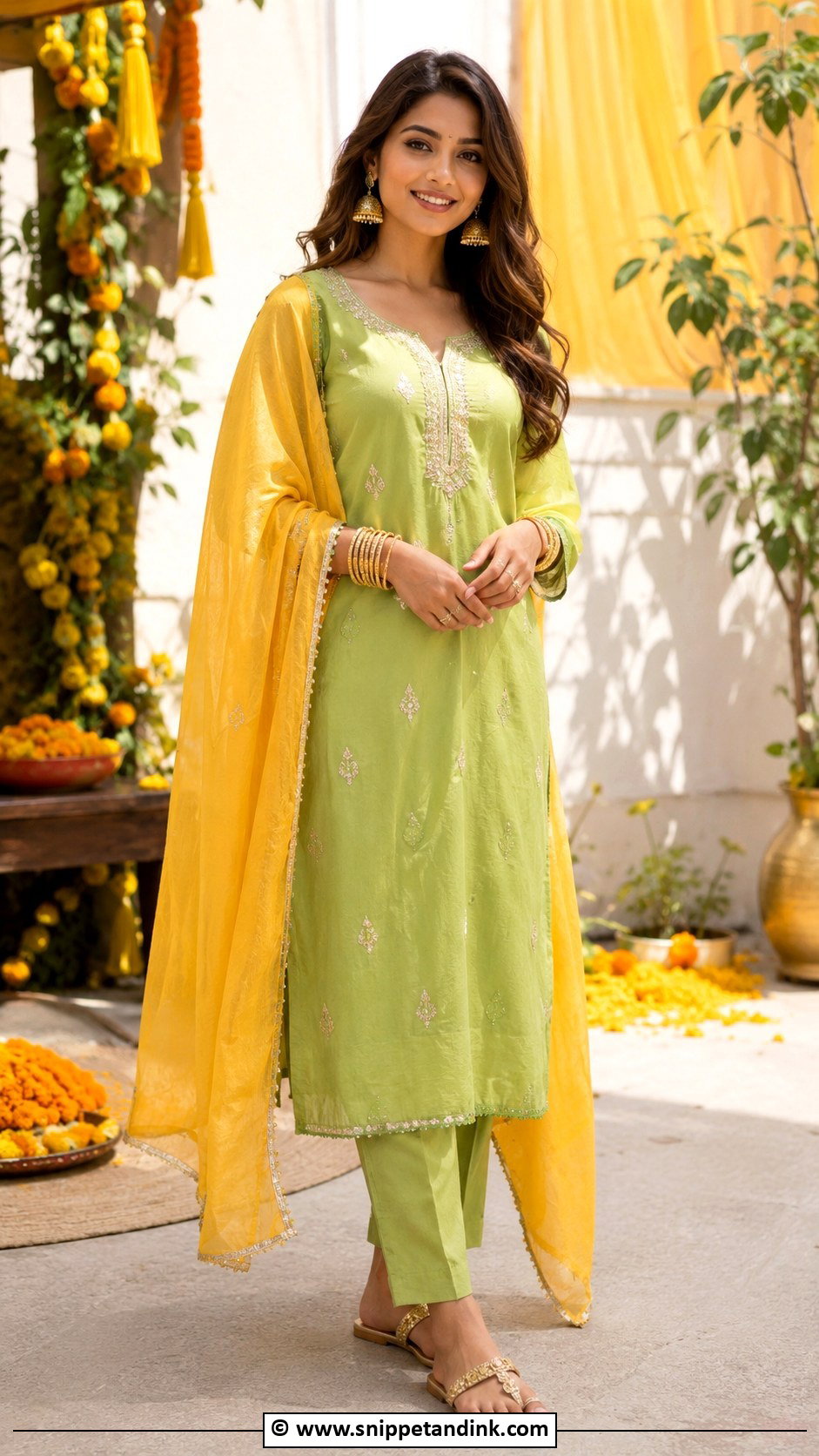
Lime green is the colour I suggest when a bridesmaid wants to stand apart without breaking the palette. It sits brightly against marigolds and looks fresh in daylight. Try a lime kurta set with a yellow or ivory dupatta, or a lime kurta over yellow palazzos for some colour blocking. Keep the fabric light for warm weather. Gold hoops, jhumkas and a few bangles are enough on a colour this lively.


15. Orange Kurta Set For Haldi
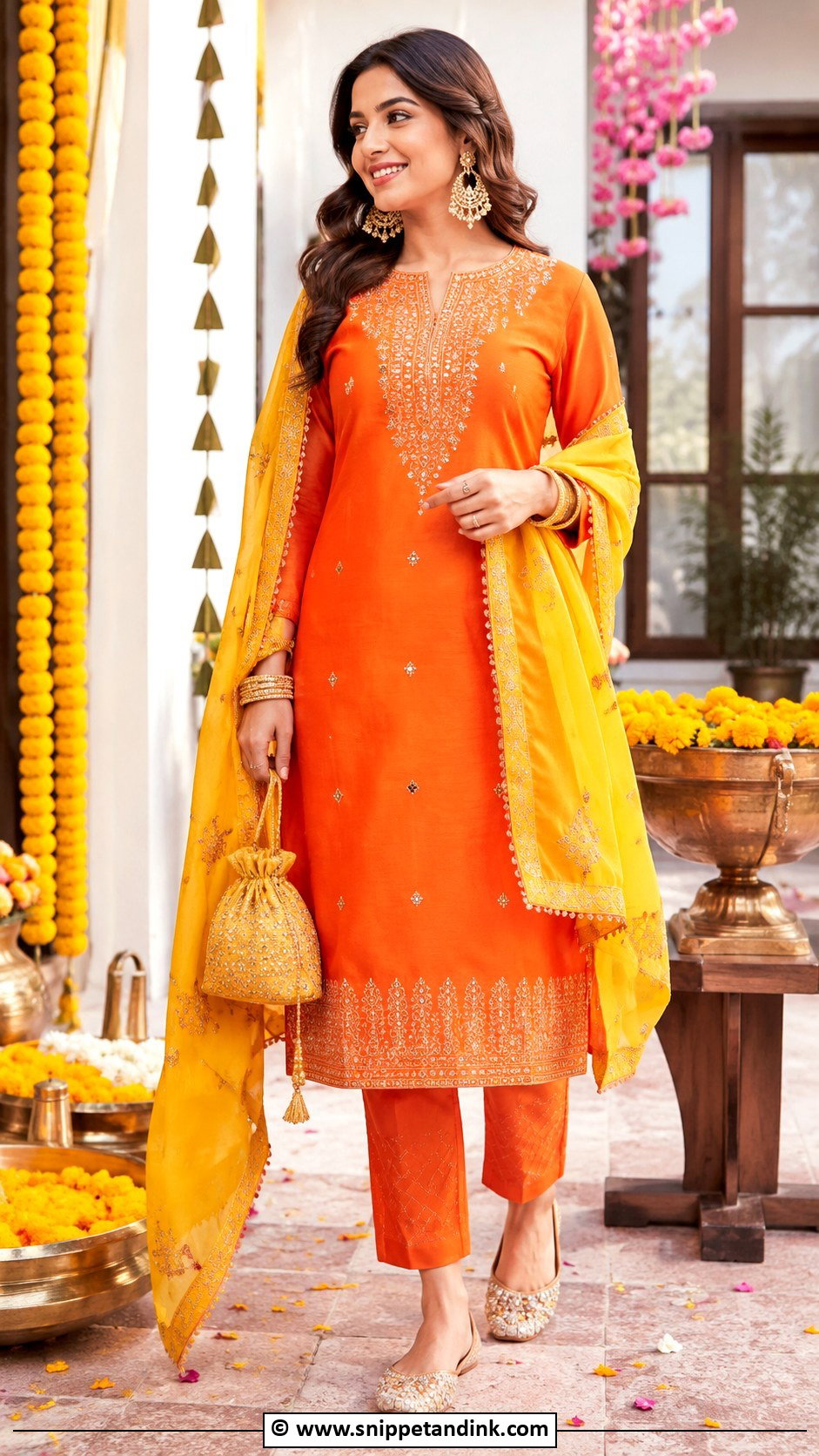
An orange kurta set glows in daylight and sits happily beside yellow, pink and gold. Choose cotton or a silk blend over pants, palazzos or a simple salwar. A yellow dupatta ties it to the Haldi theme, while ivory softens it. Since orange is already bold, I’d keep embroidery to a minimum. Gold jhumkas, flat sandals and a potli are plenty for friends and cousins who want colour without full yellow.
16. Yellow Maxi Dress For Haldi
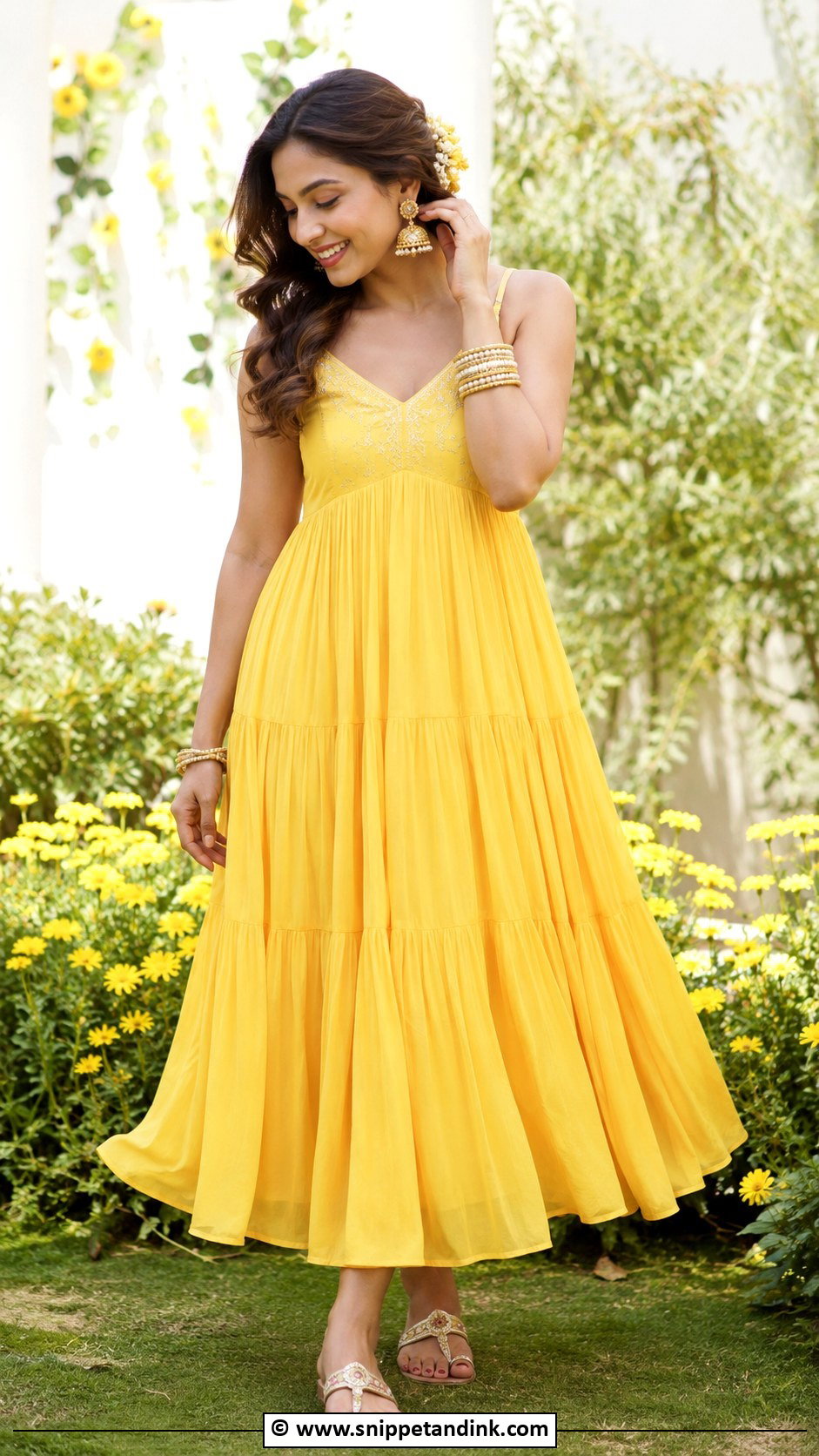
For a guest who rarely wears Indian clothes, a yellow maxi is the easiest way in. Cotton, rayon, georgette or linen in a tiered, wrap or empire-waist shape feels relaxed and moves well. I’d avoid anything bodycon, because Haldi means sitting on the floor and squeezing into group photos. Jhumkas, bangles, embellished flats and a floral hair clip make it ceremony-ready, and a light dupatta over one shoulder adds a traditional touch.
17. Yellow Skirt And Crop Top For Haldi
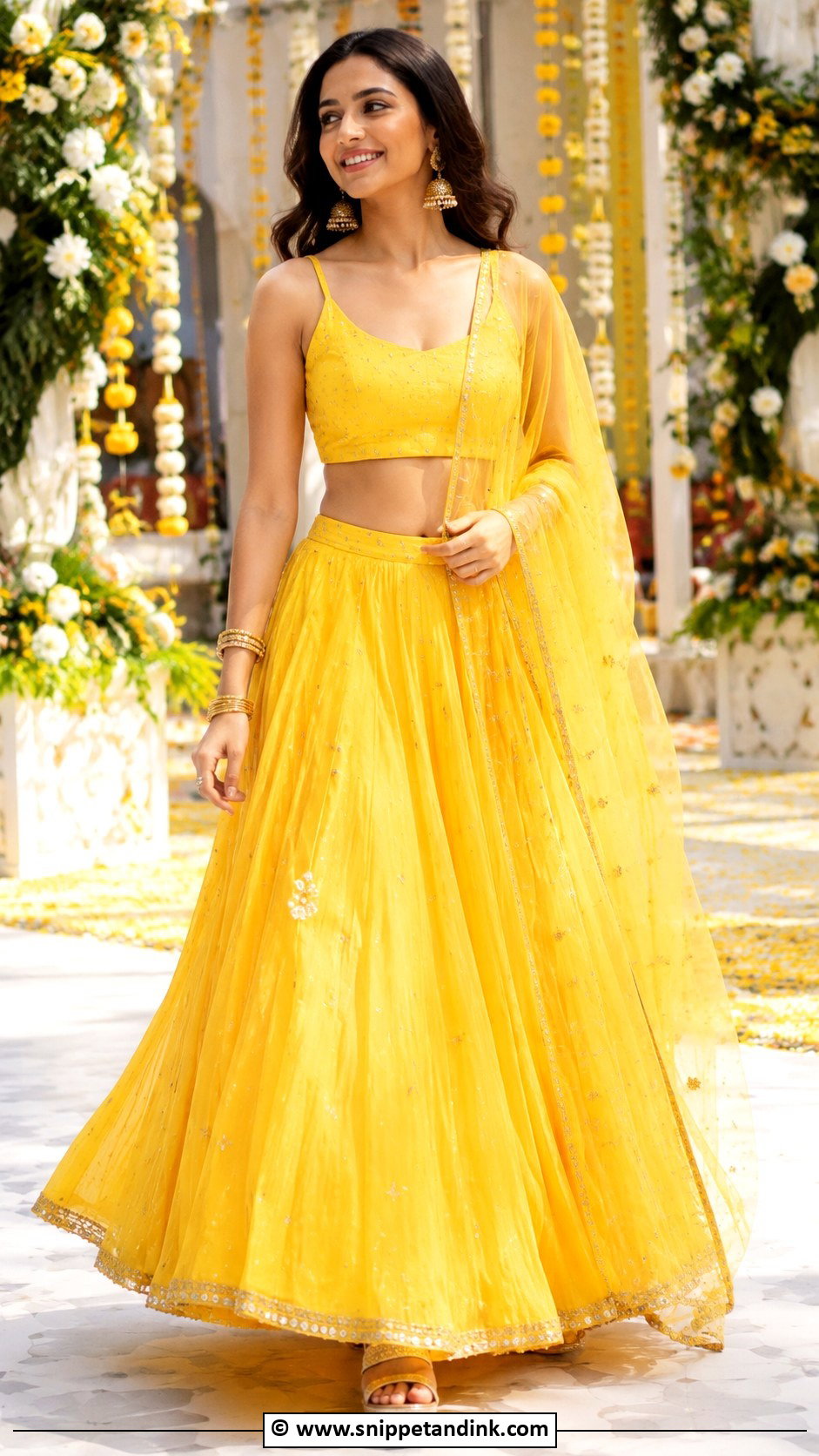
A skirt and crop top gives you the swing of a lehenga at a fraction of the weight. A light flared skirt with a simple crop top or blouse is the base; a sheer dupatta makes it more traditional. Bridesmaids and friends tend to like it because both pieces get worn again. Pair a plain skirt with a printed top or the other way round, so one piece carries the pattern. Jhumkas, bangles and flats or wedges suit it, and a braid or half-up style keeps hair out of the paste while you dance.
18. White Skirt And Yellow Top For Haldi
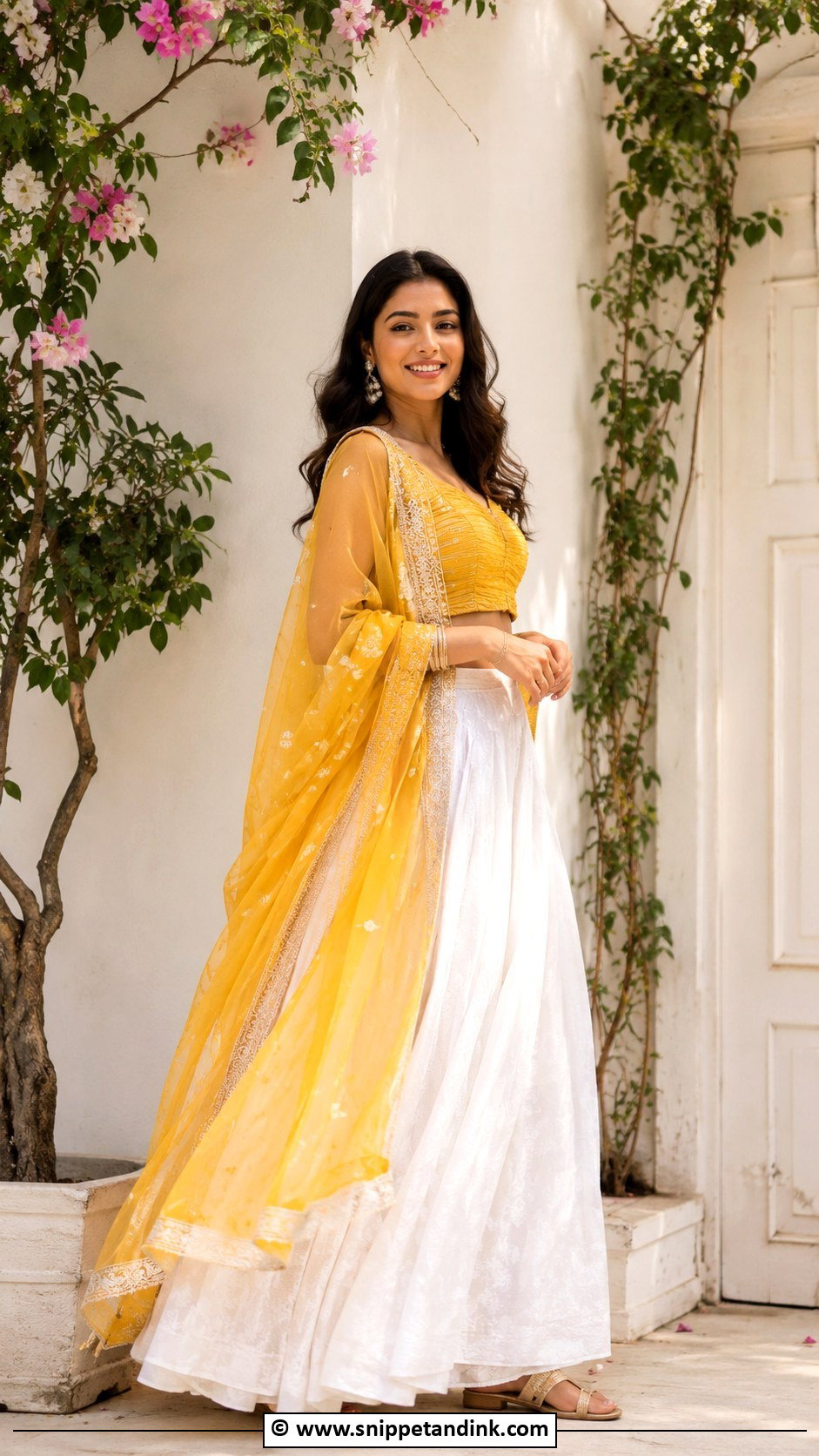
Here the yellow sits at the top, near the face, where it reads strongest in photos, and the white skirt keeps the outfit light. Choose a cotton, georgette or chanderi skirt with a simple blouse, crop top or short kurti, and add a yellow or white dupatta for a fuller ethnic look. A skirt with a small border or subtle print adds detail if you want it. Pearl earrings, gold bangles and flat sandals keep it clean.
19. Yellow Salwar Suit For Haldi
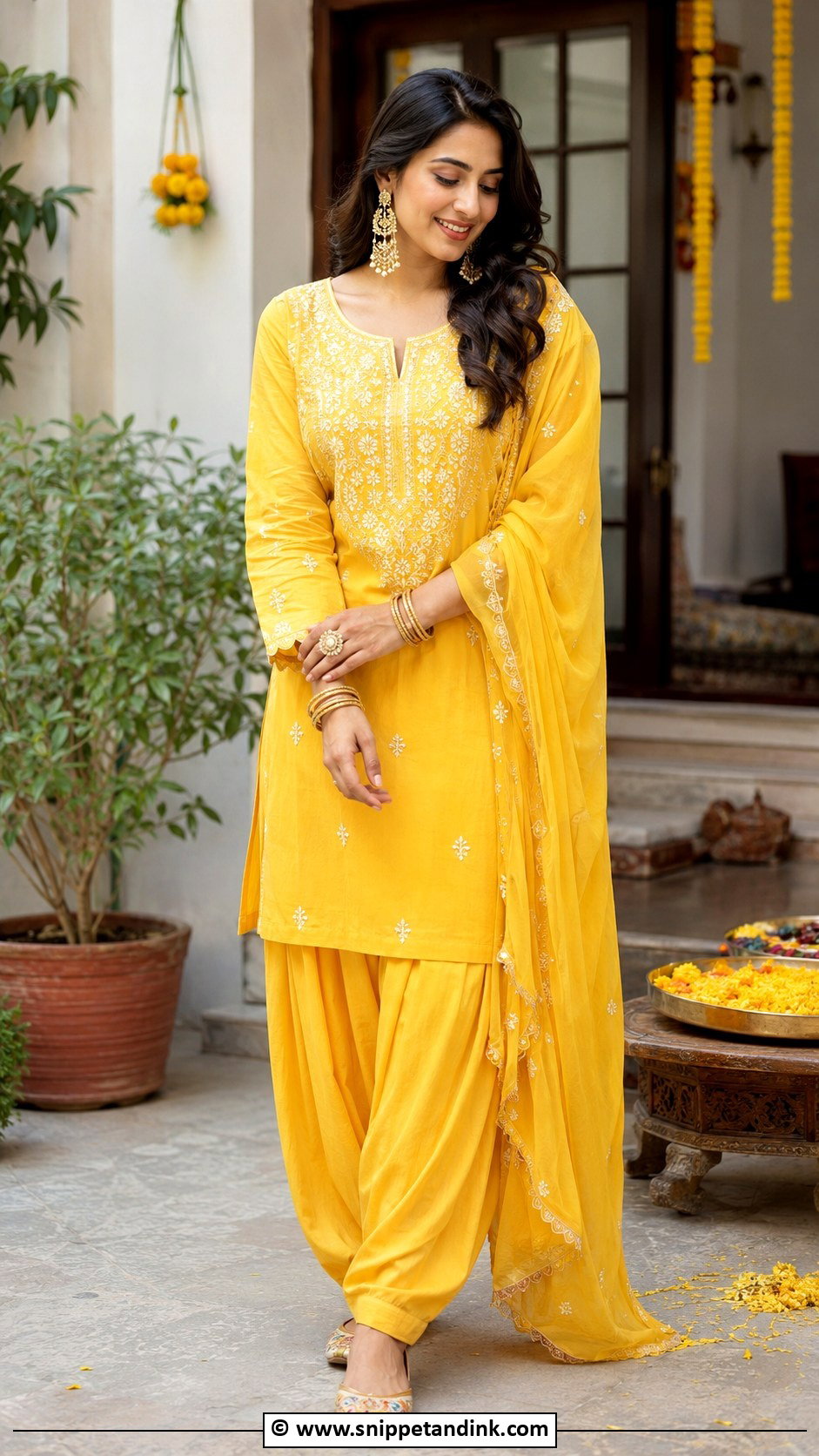
The salwar suit is the outfit I’d hand to anyone who just wants to be comfortable and take part in every ritual. The loose salwar folds easily when you sit, and a simple kameez with a light dupatta is festive enough. Small embroidery, mirror accents or a printed dupatta lift it. It suits guests, aunts and bridesmaids equally. Juttis, gold earrings and a few bangles finish it, and a soft braid or low ponytail stays tidy all day.


20. Yellow Dhoti Pants And Kurti For Haldi
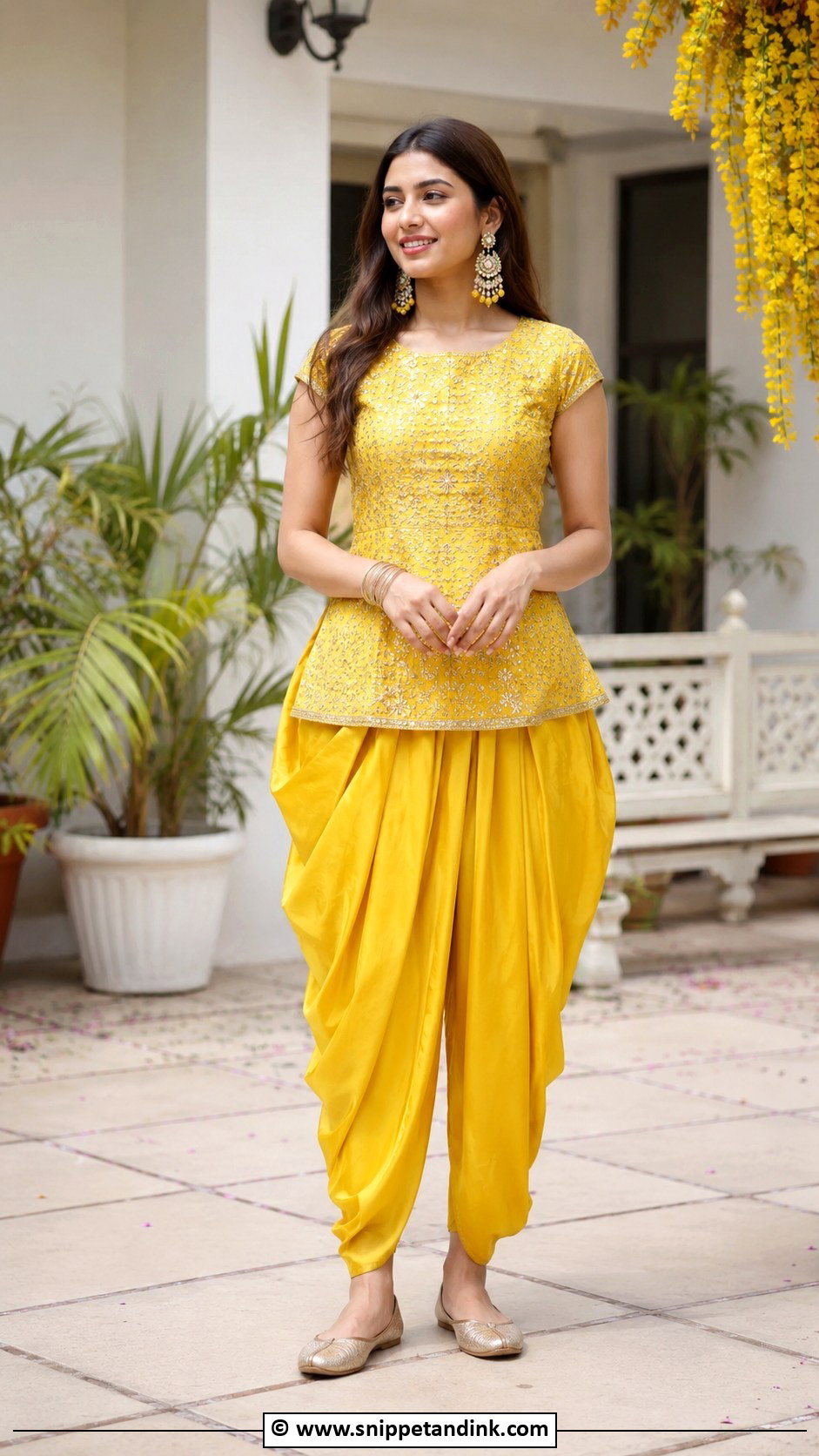
Yellow dhoti pants with a kurti read modern and still festive. The draped bottom gives shape and movement, and because it already has volume, I always pair it with a fitted or structured top, such as a short kurti, peplum or wrap style. A light dupatta softens it; leaving it off gives a cleaner Indo-western line. Statement earrings, metallic flats and a sleek ponytail suit a bridesmaid who wants something other than a suit or lehenga.
21. Yellow Kaftan Dress For Haldi
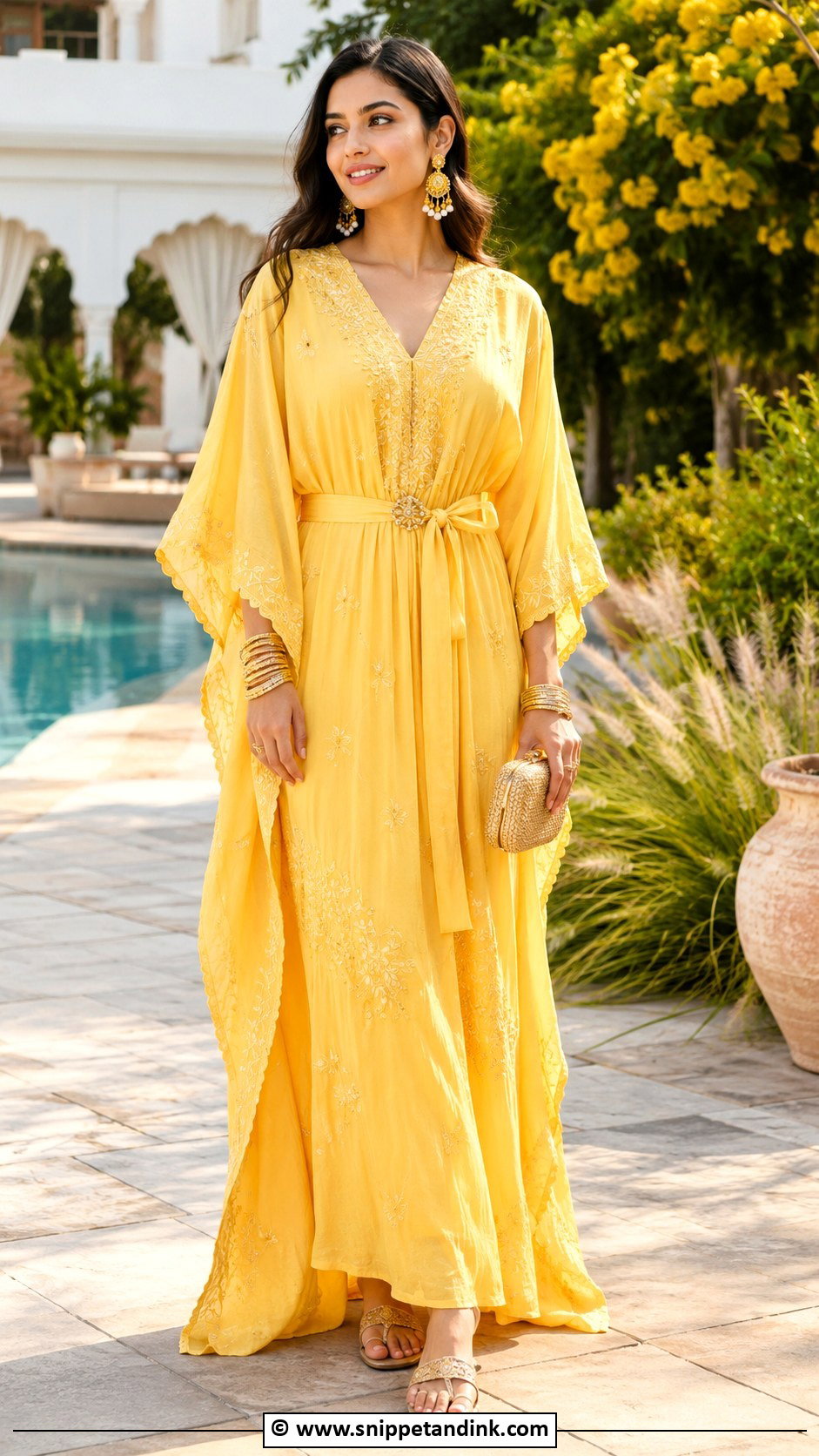
In real heat, a kaftan is the coolest thing you can wear to a Haldi. The loose shape lets air through, and light embroidery, tassels, mirror details or a printed border keep it festive. Add a slim belt if you want some waist definition. It suits beach, garden or home ceremonies. I’d keep the bag small, a potli or clutch, and go with big earrings, bangles and flat sandals. Most cotton kaftans can go straight in the wash afterwards, which matters here.
22. Yellow Jumpsuit For Haldi
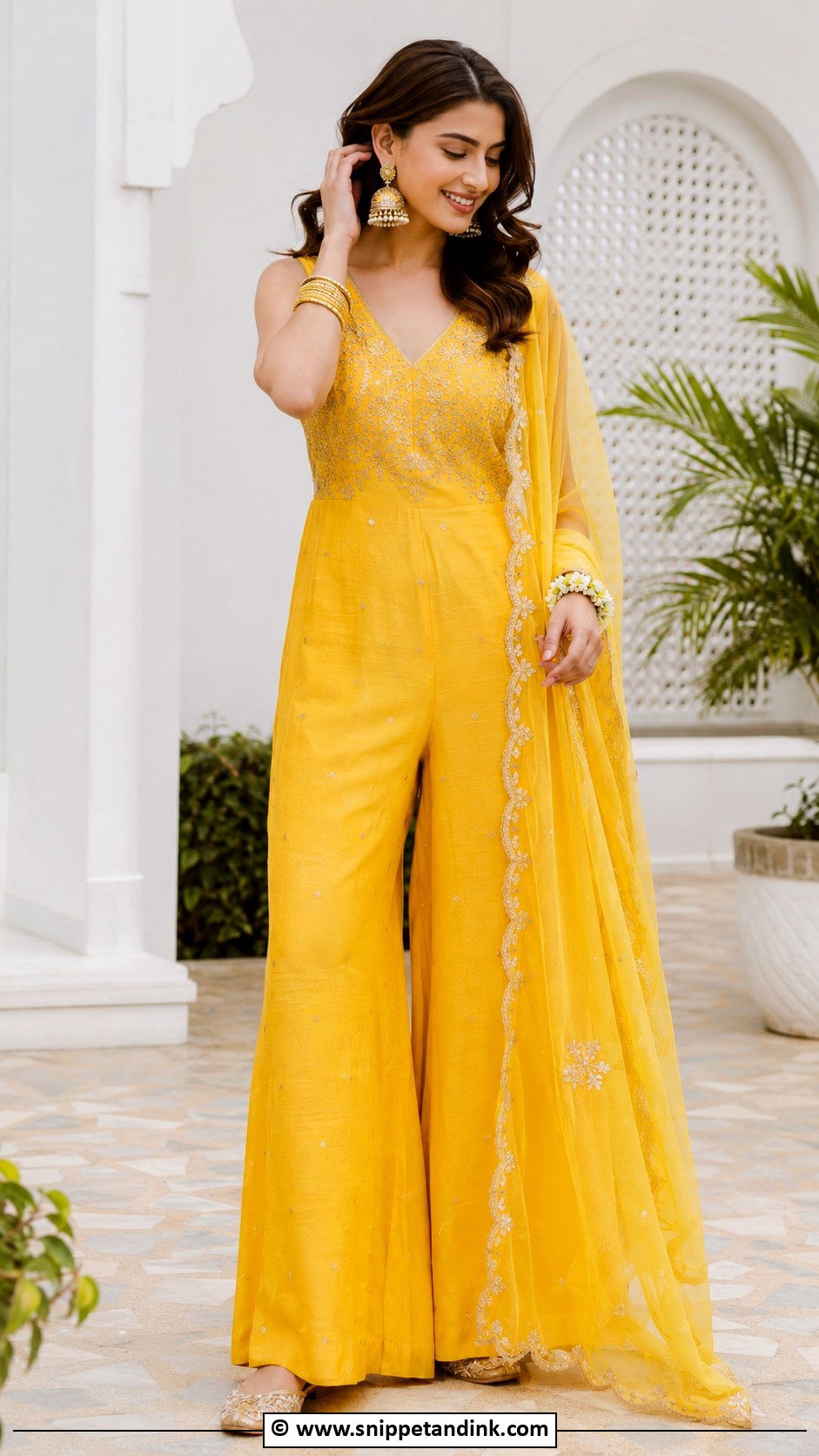
Jumpsuits work at Haldi only if they’re cut loose. A wide-leg or relaxed fit lets you sit cross-legged; a slim one won’t. A tie waist, ruffled sleeve or embroidered neckline adds festive detail, and jhumkas, bangles and embellished flats make it read as a wedding outfit. One practical point: think about bathroom trips if there’s a dupatta pinned over it. Sleek or softly curled hair keeps it polished for friends and cousins who like clean lines.
23. Yellow Peplum Top And Sharara For Haldi
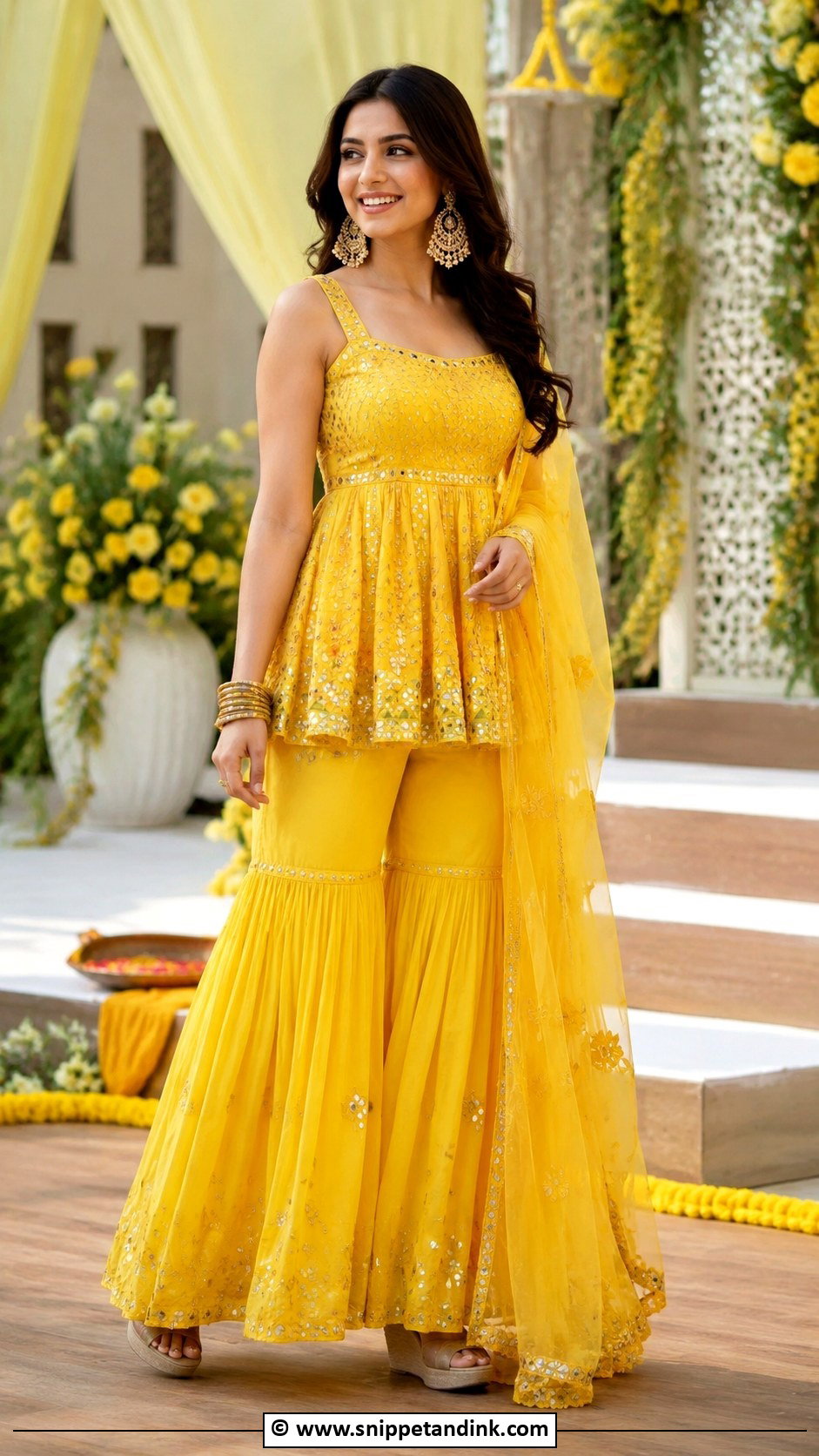
The peplum flares from a fitted waist, so it defines your shape, while the sharara adds swing below. That’s a lot of movement in one outfit, which is why I keep the fabric light and the decoration to small mirrors or a clean gota border. A matching dupatta keeps it traditional; a sheer ivory one softens it. Chandbali earrings, bangles and comfortable wedges suit bridesmaids and close friends, and a half-up style or loose waves keep the hair from competing.
24. Yellow Angrakha Suit For Haldi
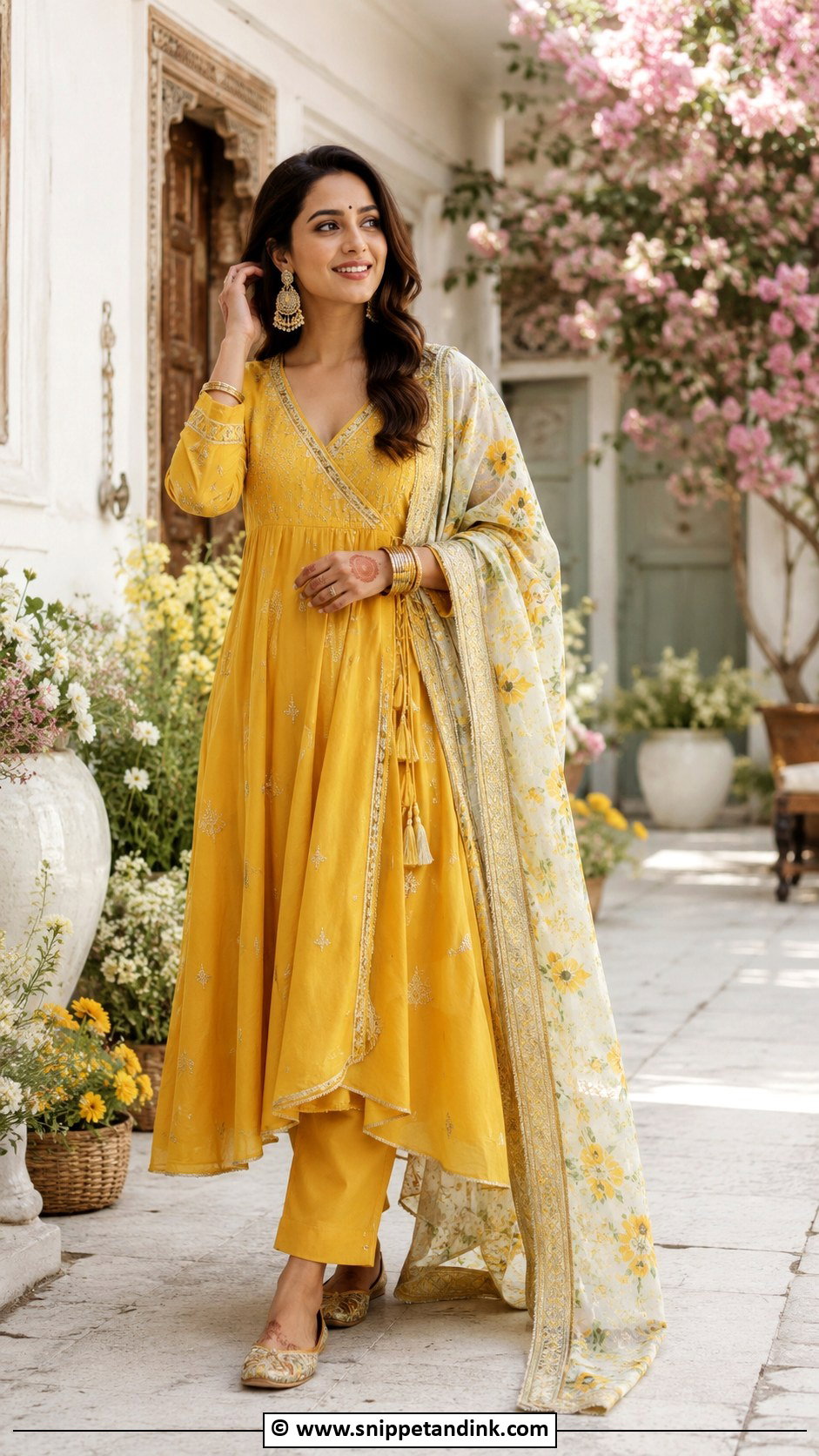
The angrakha closes with an overlapping wrap at the chest, often tied at the side, so the neckline does the decorating for you. Wear the flared angrakha kurta over straight pants, churidar or palazzos, with a printed dupatta or contrast border for colour. If the ties have tassels, I keep jewelry minimal so the front doesn’t look crowded. It suits brides, bridesmaids and guests who like classic shapes, and the wrap stays comfortable through a long ceremony.
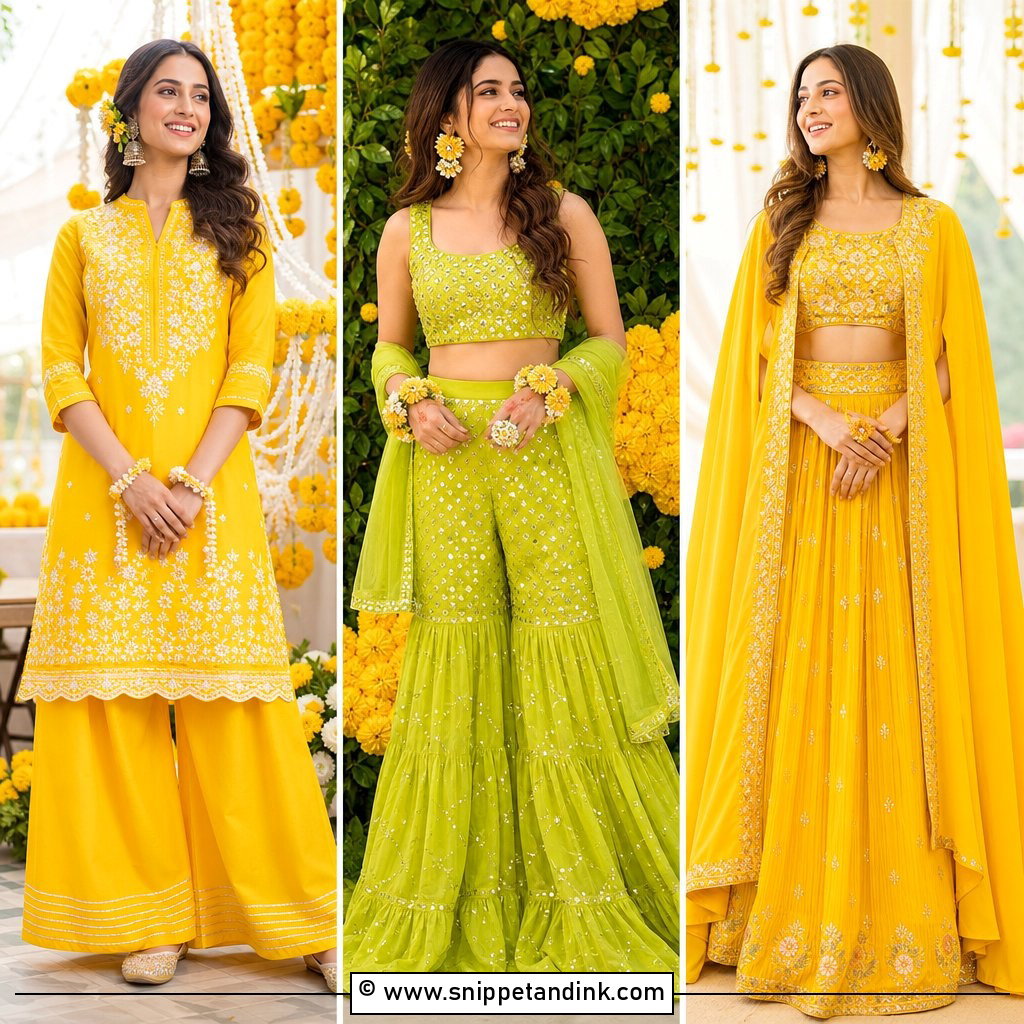



25. Yellow Flared Kurta With Pants For Haldi
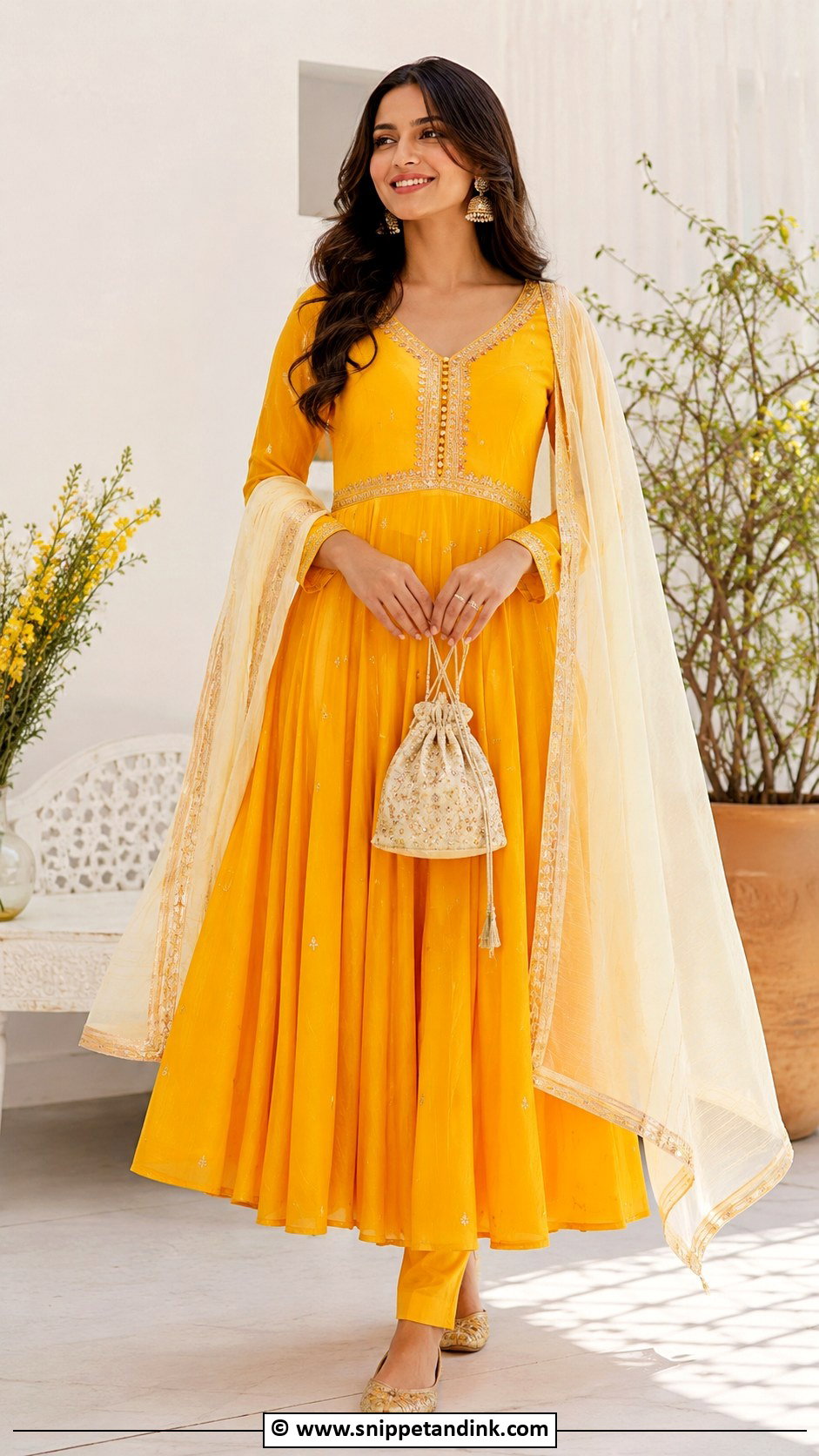
Modest, easy to repeat and neat in photos: that sums up a flared kurta with pants. Knee or calf length in cotton, chanderi, rayon or georgette gives movement without fuss, and light embroidery at the neckline or sleeves is enough for a wedding function. The dupatta is optional. I’d keep the hem above mid-calf so it doesn’t drag through wet paste on the floor. Juttis, small jhumkas and a potli finish it.
26. Yellow Organza Saree For Haldi
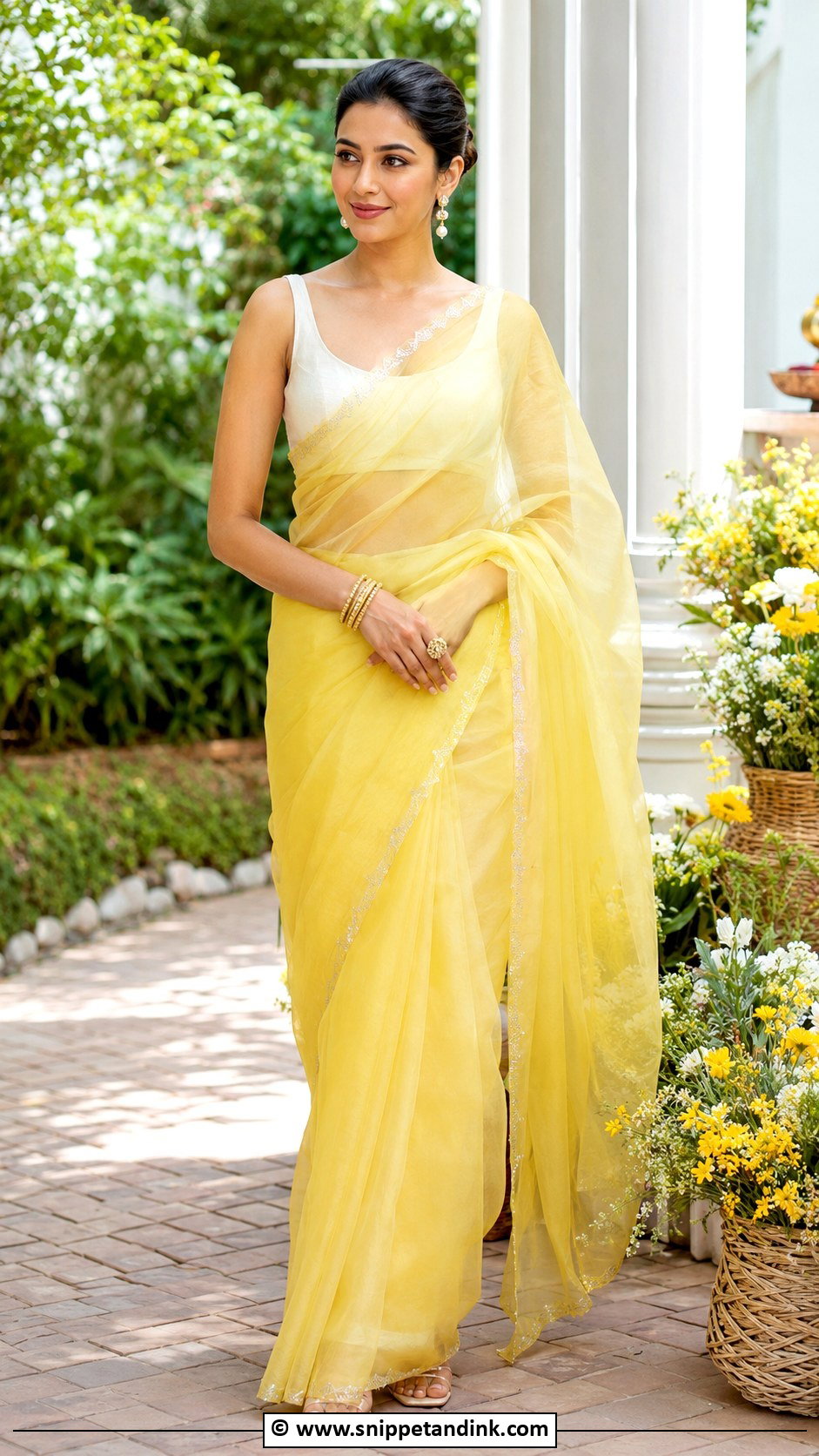
Organza holds a soft structure, so a yellow organza saree looks crisp in photos without feeling heavy. A plain one with a delicate border or a subtle floral print, over a yellow, ivory or gold blouse, is all you need. I’d be honest with the wearer, though: organza water-marks and doesn’t love wet turmeric, so it’s better for a tidier Haldi or for someone watching from the side. Pearl earrings, gold bangles and heeled sandals or wedges suit it.
27. Yellow Linen Saree For Haldi
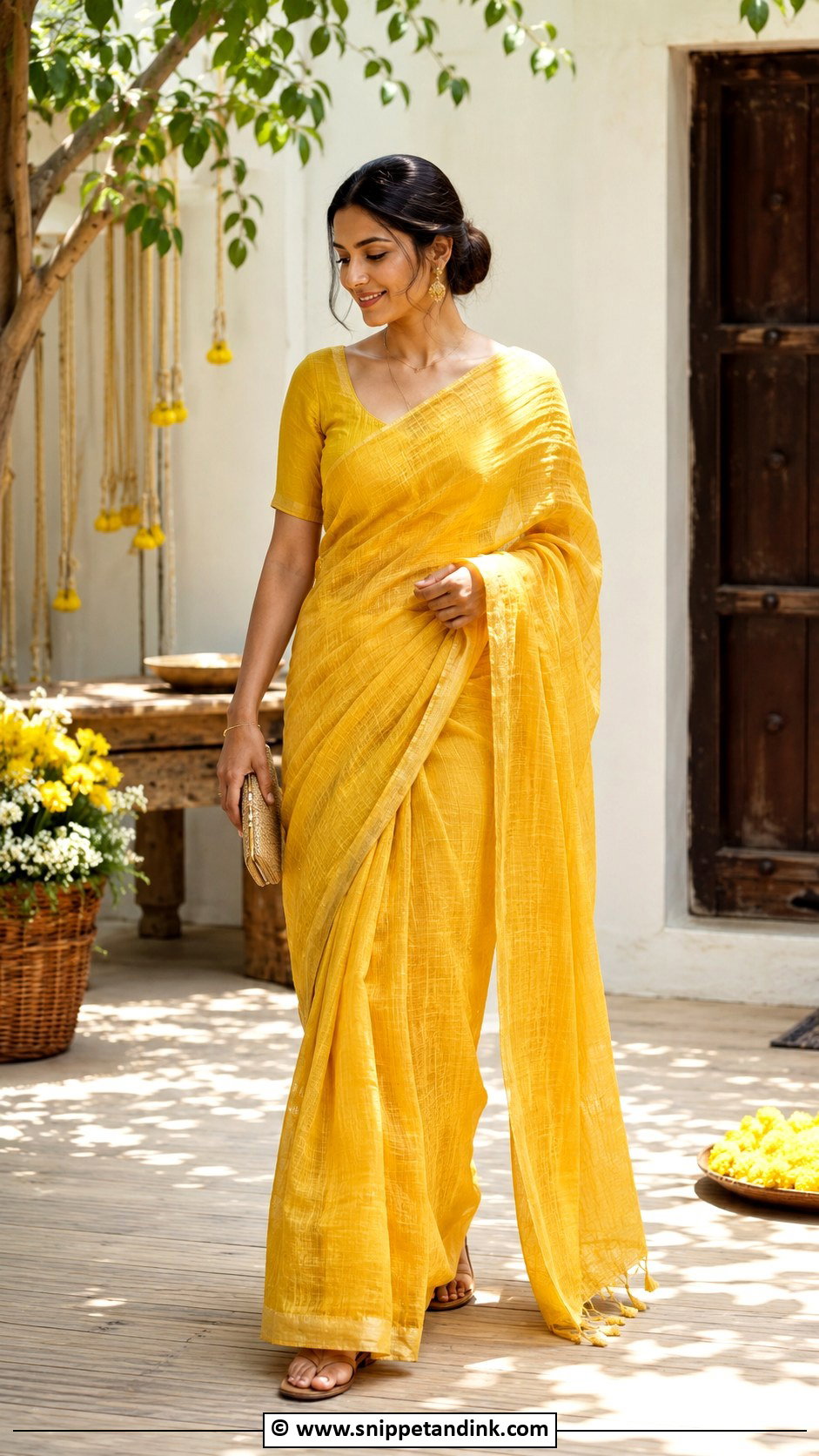
Linen breathes better than almost anything in this list, and it has a natural slub that looks good in daylight. A plain yellow, mustard or thin-bordered linen saree with a cotton blouse is quietly smart, and it suits older guests and minimalist brides especially. Linen creases, so let it; ironing it flat in the morning only lasts an hour anyway. Silver or gold jewelry, flat sandals, a small clutch and a neat bun or braid are all it needs.
28. Pink And Yellow Suit For Haldi
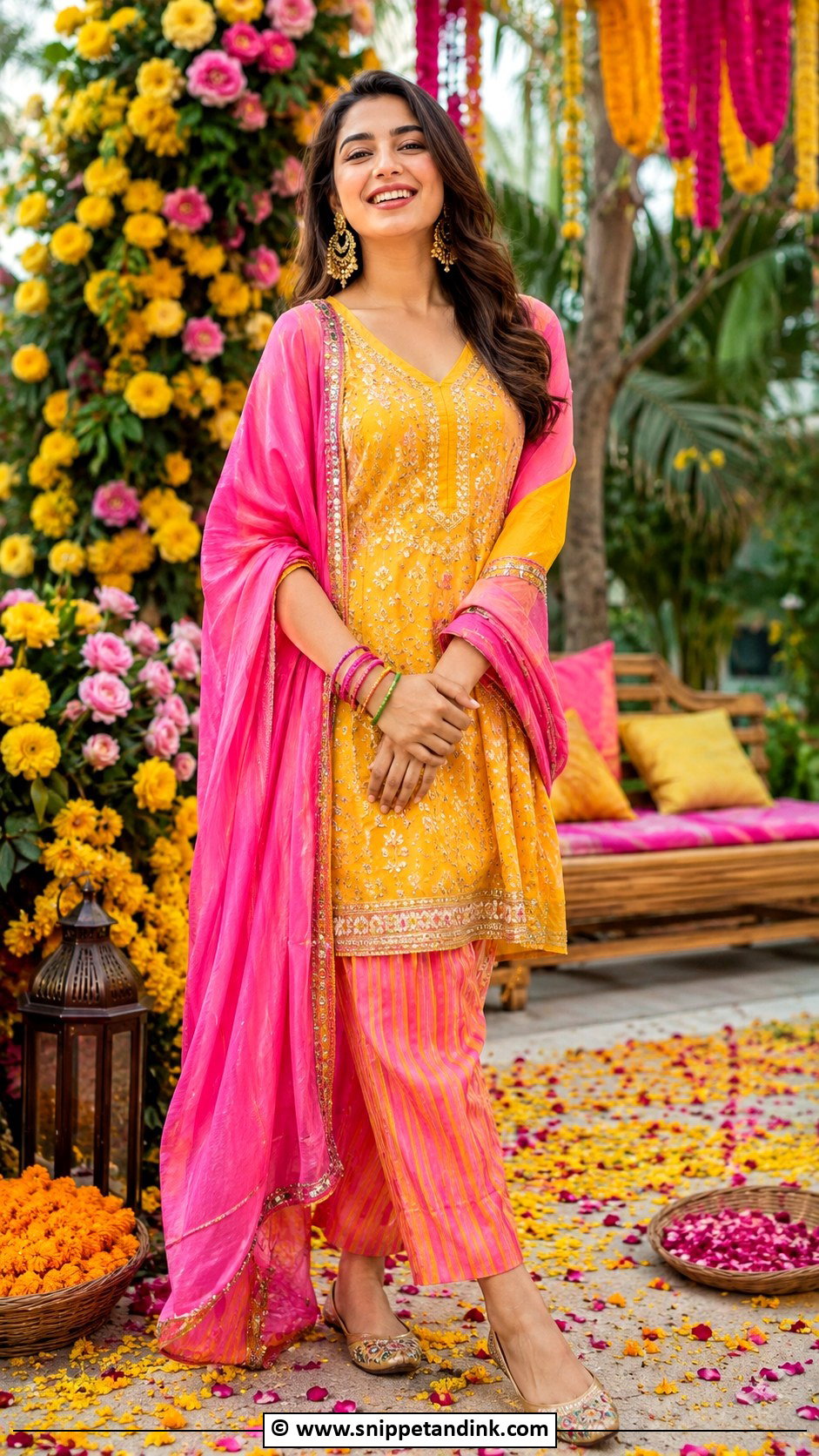
Pink and yellow together look cheerful and read well in group photos. Try a yellow kurta with a pink dupatta, or a pink kurta with yellow pants and a yellow dupatta, and keep the embroidery simple so the colours do the work. I’d match the pink to the undertone of the yellow: a warm mustard wants a coral pink, and a lemon yellow suits a cooler rose. Gold earrings, colourful bangles and juttis finish it, with soft curls or a braid with flowers.
29. Floral Saree For Haldi
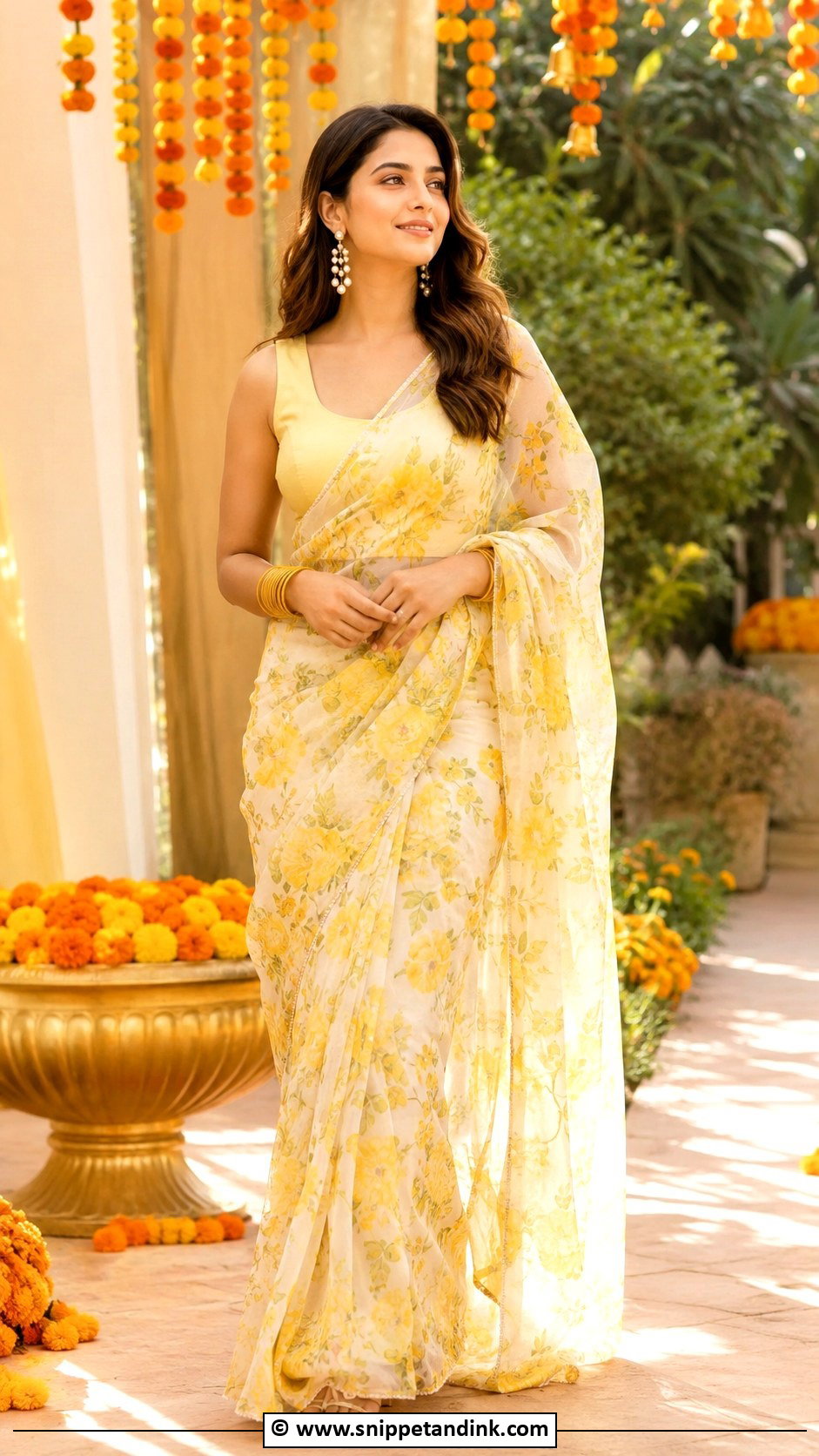
A floral saree feels fresh and right for a daytime ceremony. A yellow floral, ivory floral or pastel saree with soft yellow flowers in chiffon, georgette, organza or cotton is easy to wear for hours. I pick the blouse colour from one shade in the print rather than trying to match it all. If the print is bold, I keep the accessories minimal: pearl earrings, bangles and simple sandals. It looks lovely against marigold decor and outdoor settings.
30. Yellow Printed Dress With Dupatta For Haldi
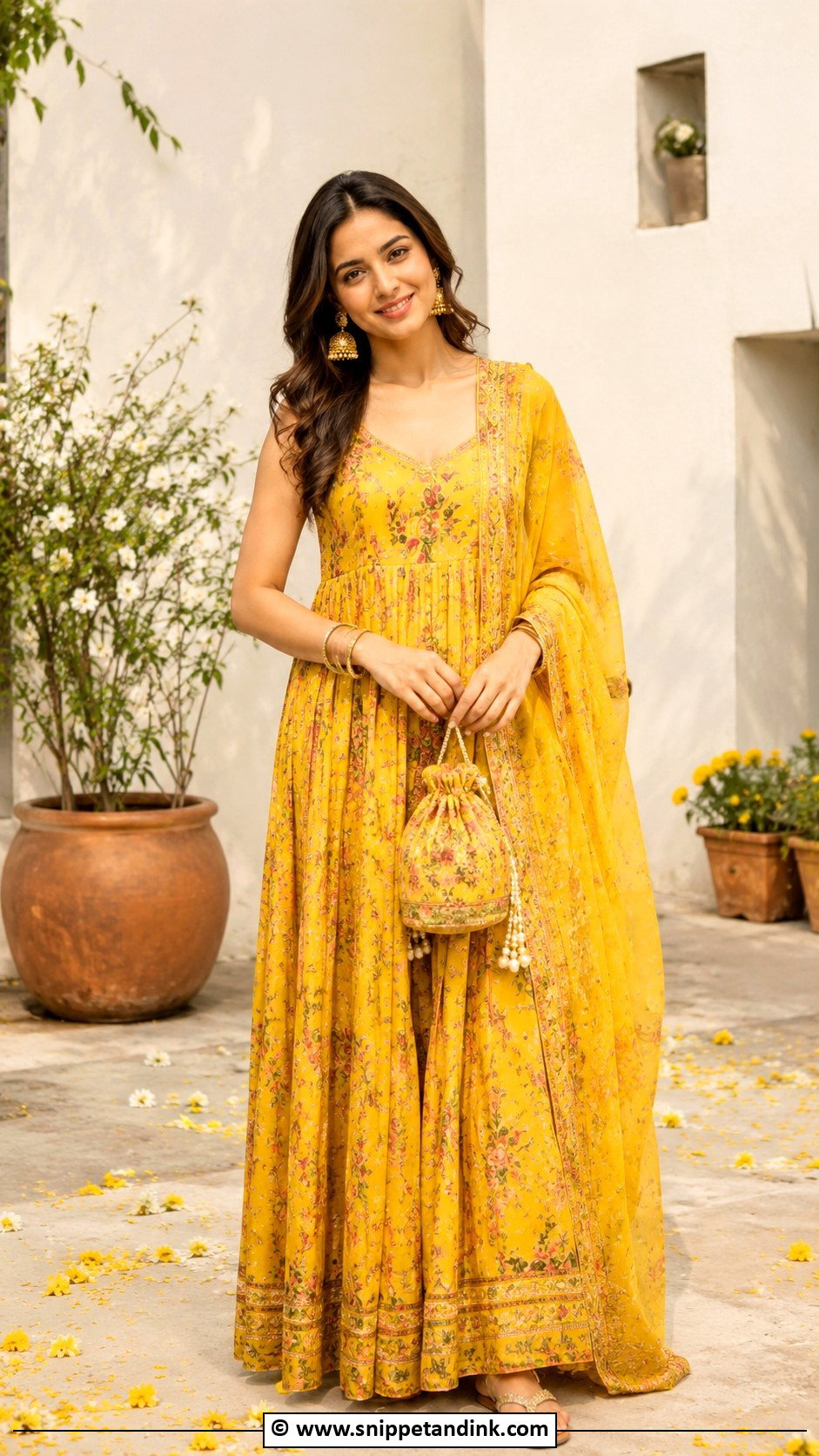
A yellow printed dress with a dupatta is the simplest fusion outfit here, and it suits a casual Haldi. Choose a midi or maxi in an ethnic, block or small floral print, then add a light dupatta in yellow, ivory or orange so it feels like a wedding look rather than a sundress. Jhumkas, bangles, flat sandals or juttis and a small potli pull it together. It respects the occasion, stays comfortable all afternoon and goes straight back into your summer wardrobe.
Turmeric Stains Come Out If You Treat Them the Same Day
Turmeric is a strong natural dye, and the longer it sits, the more it bonds with the fibre. I tell every client to deal with their outfit that evening, not after the wedding week.
- Scrape off any dried paste with a blunt knife or spoon instead of rubbing, which pushes it deeper.
- Rinse the stain from the back of the fabric under cold water. Hot water can set it.
- Work in a little liquid dish soap and let it sit before washing. Don’t panic if the yellow turns reddish; turmeric changes colour with soap and shifts back once it’s rinsed.
- Dry the piece in direct sunlight if the fabric allows. Sunlight breaks down turmeric pigment remarkably well.
- Send silk, zari and embroidered pieces to a dry cleaner and tell them it’s turmeric.
Should Guests Wear Yellow Too?
It depends entirely on the family. Some hosts send a colour code and want everyone in yellow; others prefer the bride to be the only one in deep yellow. When I’m dressing guests and nothing has been said, I’d ask the host, or pick a neighbouring shade like lime, peach, mint or soft pink so you’re on theme without matching the bride in photos. Close family who will be applying the paste should dress in something washable whatever the colour.
Comfort First, Colour Second, Stains Expected
A good Haldi outfit balances colour, comfort and a willingness to get messy. None of these looks needs heavy work to feel festive: a cotton kurta set, a breezy saree, a light lehenga, a sharara, a co-ord, a kaftan or a printed dress can all carry the day with the right accessories. Choose breathable fabric, easy shoes and jewelry that won’t catch on anything during the rituals. Yellow will always lead, but white, lime, orange, pink and florals sit just as happily in the photos.
You'll Like These Ideas:






Leave a Reply