
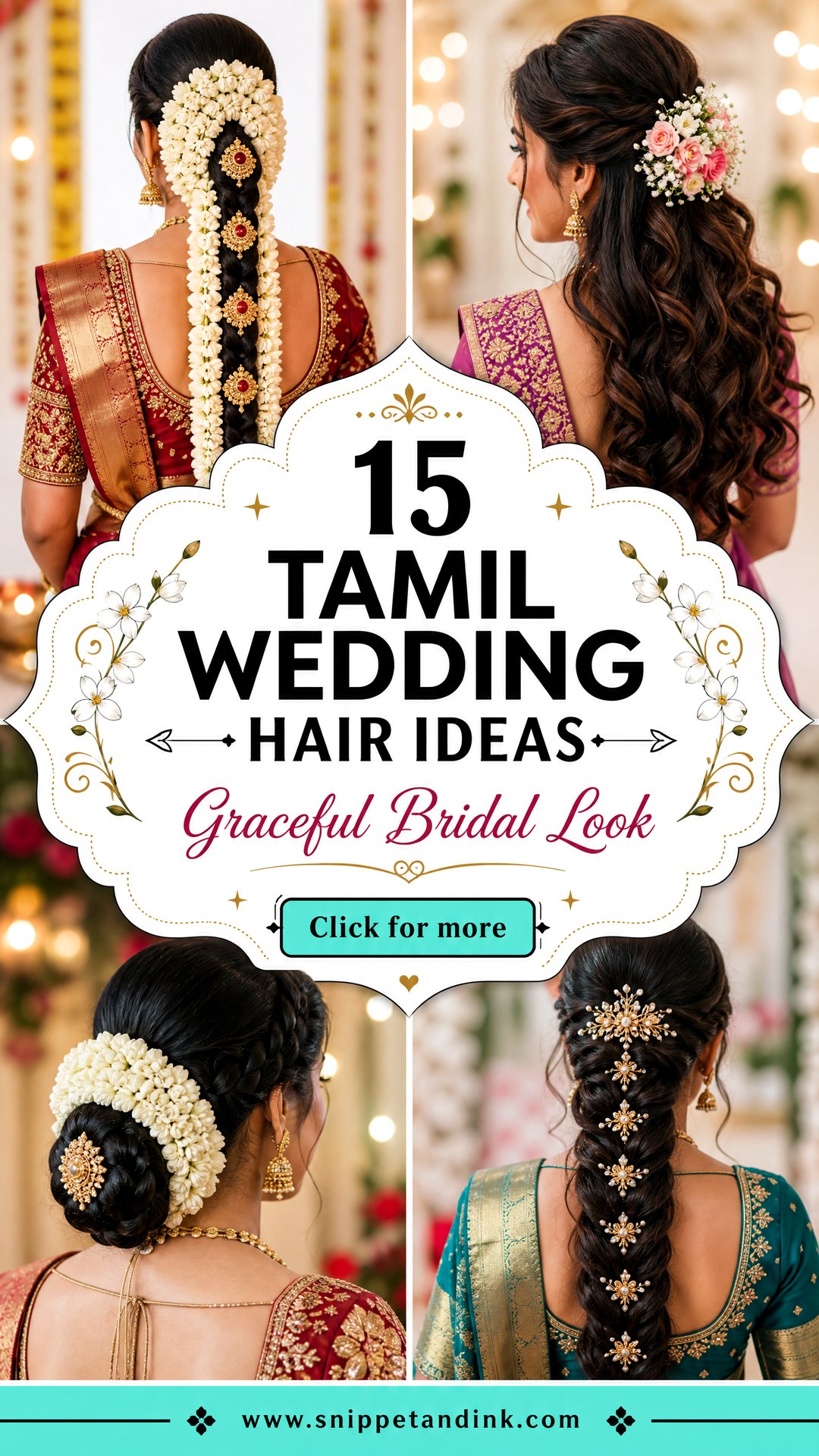
Most Tamil brides I style wear their hair for a very long day: an early muhurtham, hours of rituals in a warm hall, then often a reception in a fresh outfit. So I plan the hair around what it has to carry before I think about how it looks. The ideas below lean on classic South Indian details like jasmine, jadai and temple gold, with softer options for receptions and for the women standing beside the bride. I’ve added notes on how each one actually behaves once the pins and flowers go in.
What Your Hair Has to Carry Through a Muhurtham
Before I pick a style with a Tamil bride, I look at what will weigh on her head and for how long. A gold jadai, a full flower braid and a rakodi together pull steadily on the scalp, and an early muhurtham means the hair goes in before dawn and stays up through photos and lunch. That shapes how I build the base.
- Wash the day before, not that morning. Second-day hair grips pins and holds a braid far better than freshly washed, slippery hair.
- Skip the heavy coconut oil the night before. It’s good hair care, but oiled hair won’t hold a sleek crown and the jadai pins slide.
- Give the jadai a hidden anchor. I make a small tight ponytail at the crown and fasten the top ornament to it, so the weight sits on one secure point instead of across loose hair.
- Blend any extensions before the trial. Added length should match your shade and texture, because jet-black extensions on soft brown hair show clearly once the flowers come off.
At the trial, bring the real jadai and a string of jasmine if you can. Sit cross-legged on the floor for a few minutes, stand up, turn your head. Anything that pulls or shifts then will be worse by the afternoon.
1. Tamil Bridal Long Braid With Jasmine
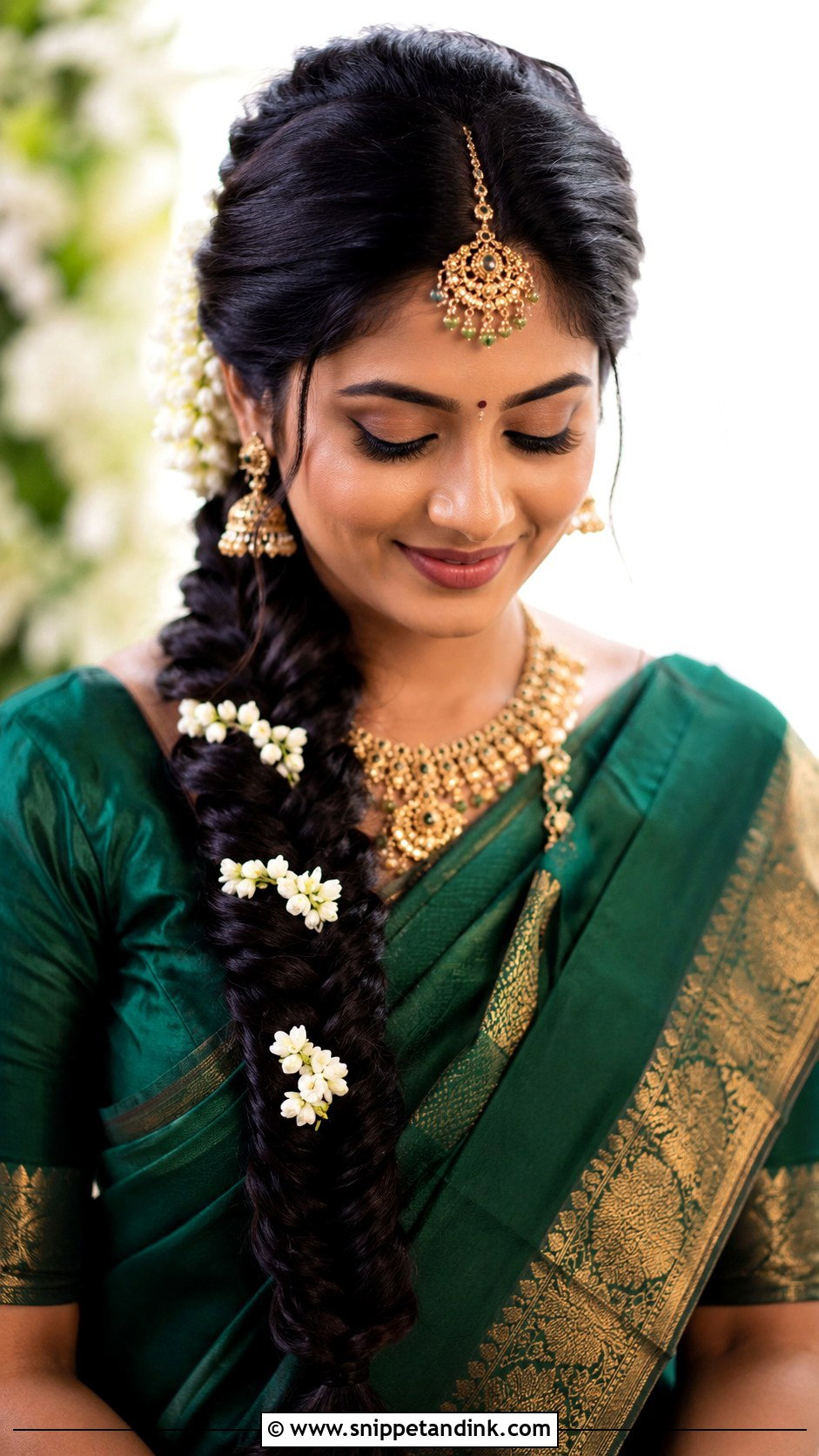
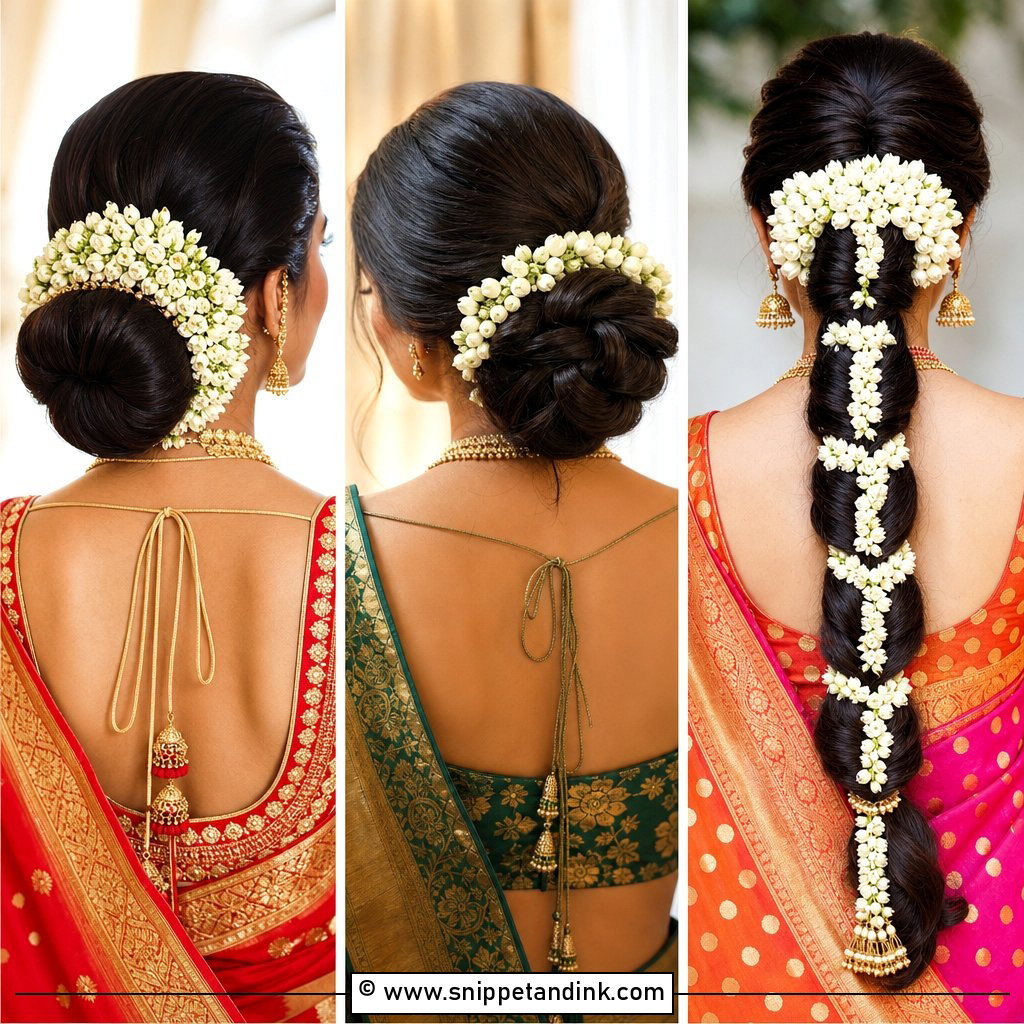
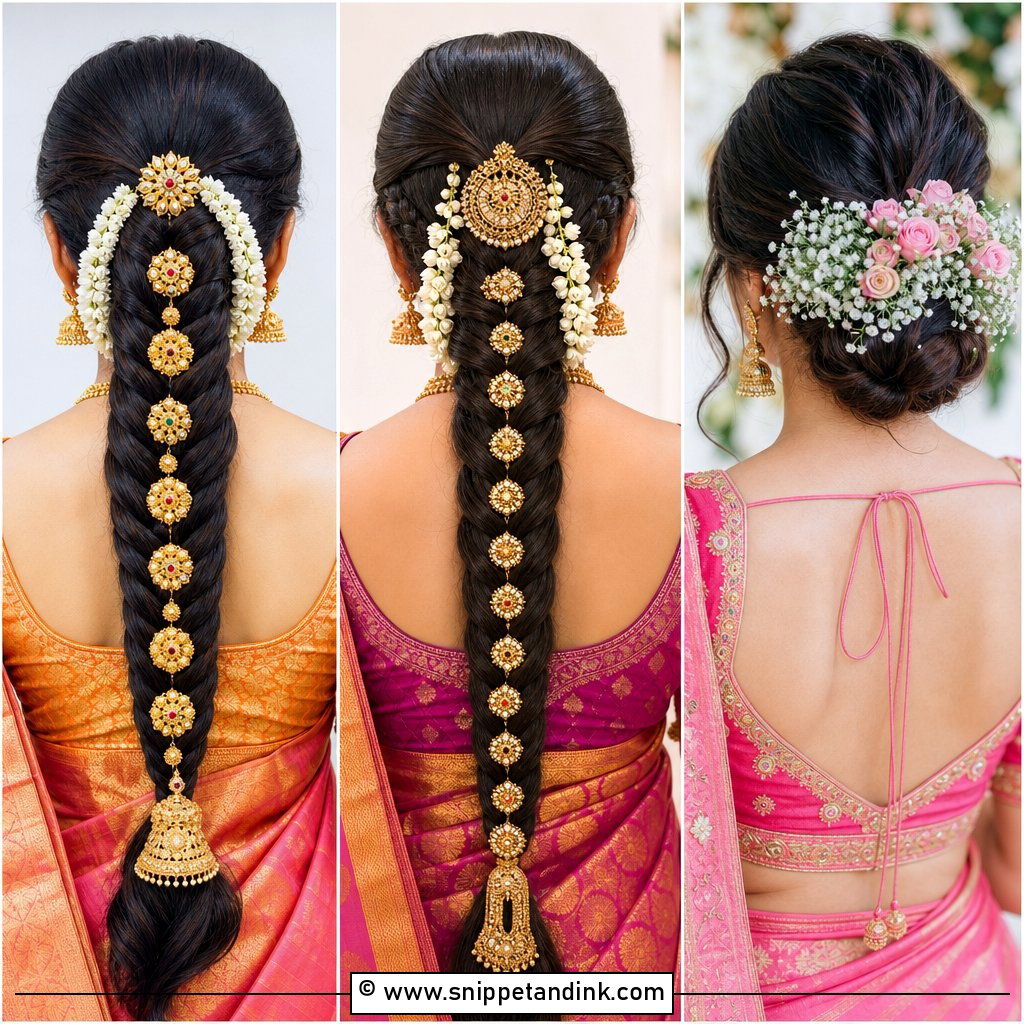
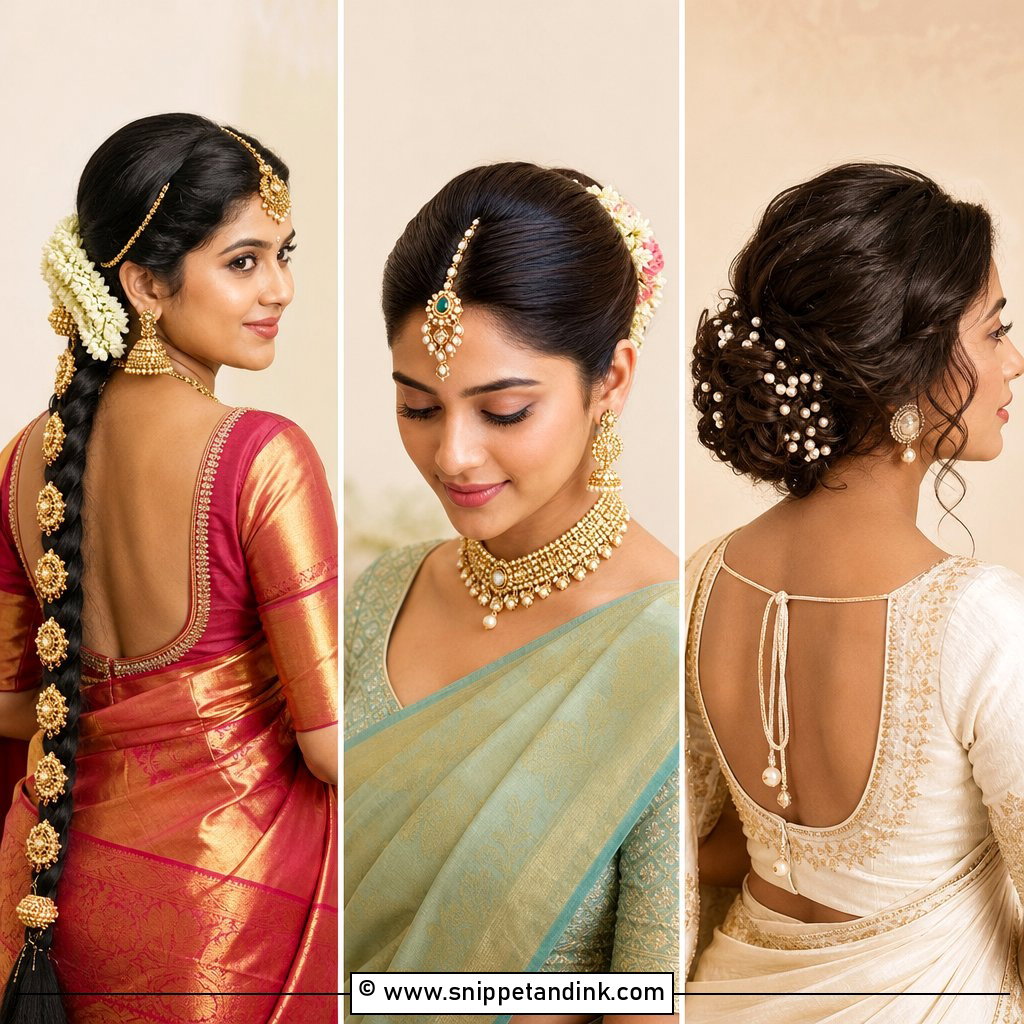
This is the look most families picture first, and it rewards preparation more than skill. I part cleanly, smooth the crown with a little cream rather than spray so nothing flakes, and plait from the nape down with even tension so the braid doesn’t narrow halfway. Fresh jasmine strings go on last, either wound around the whole length or set in bands. If your own hair stops at the shoulder blades, a clip-in braid extension matched to your shade keeps the plait thick to the tip. A thin tail end is the first thing a camera catches from behind.
2. Tamil Bridal Jadai Hairstyle
A Tamil bridal jadai hairstyle is the ceremonial option: a long braid dressed from crown to tip with jadai ornaments, flowers or gold pieces. It draws a strong vertical line down the back, which suits heavy silk and layered jewelry. The catch is weight. A full jadai set pulls on the scalp for hours, so I fasten the top piece to a small hidden ponytail rather than to loose hair, and I have the bride sit on the floor and stand again before I call it done. Finish with jasmine or a rakodi at the back so the top ornament has something to sit against.
3. Tamil Bridal Bun With Jasmine Gajra
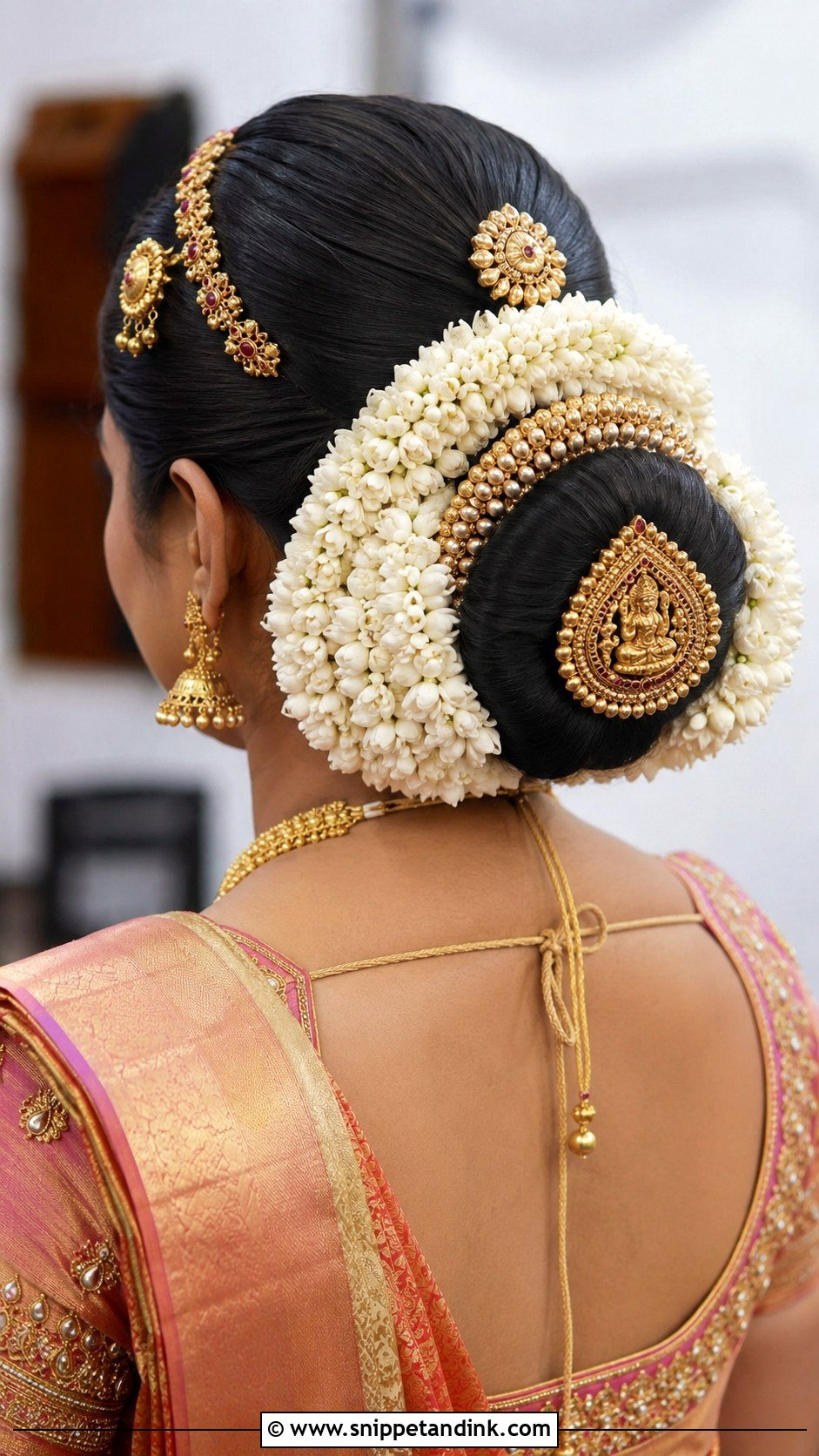
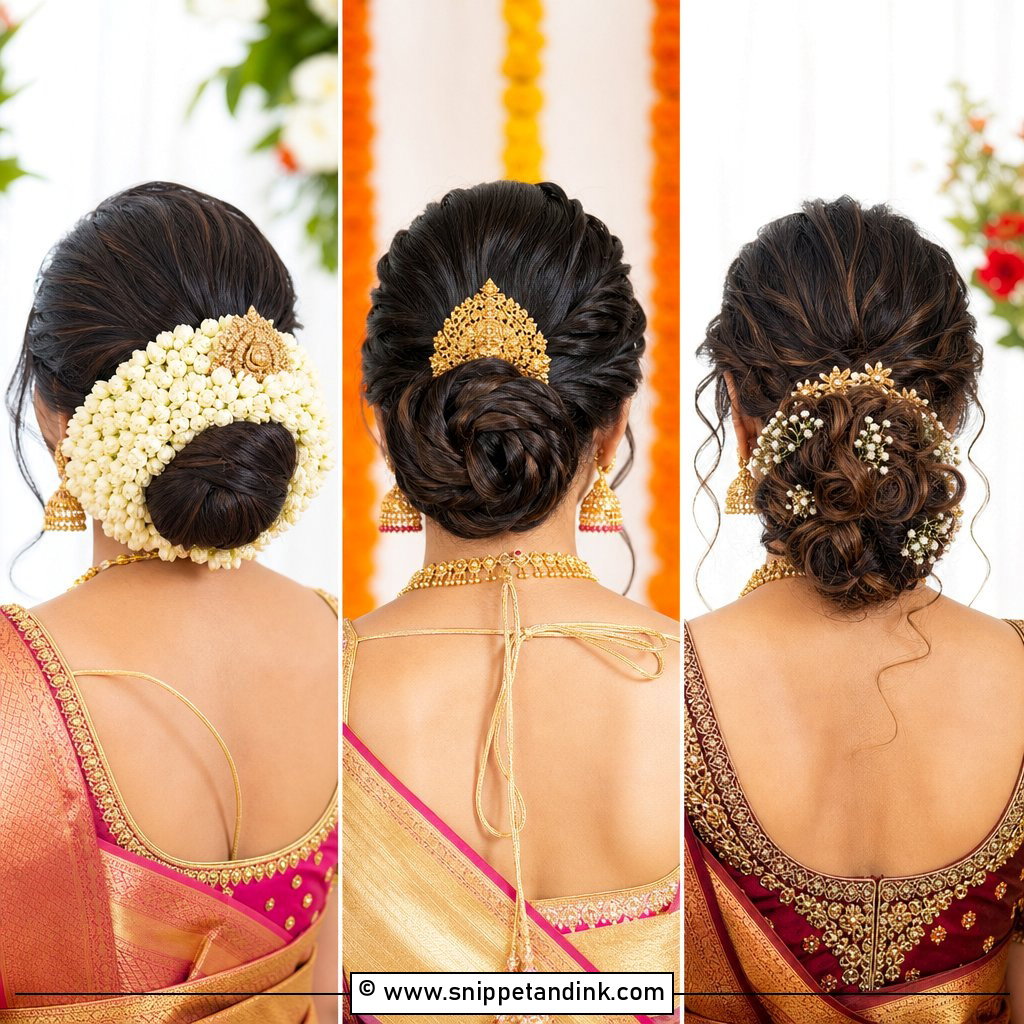
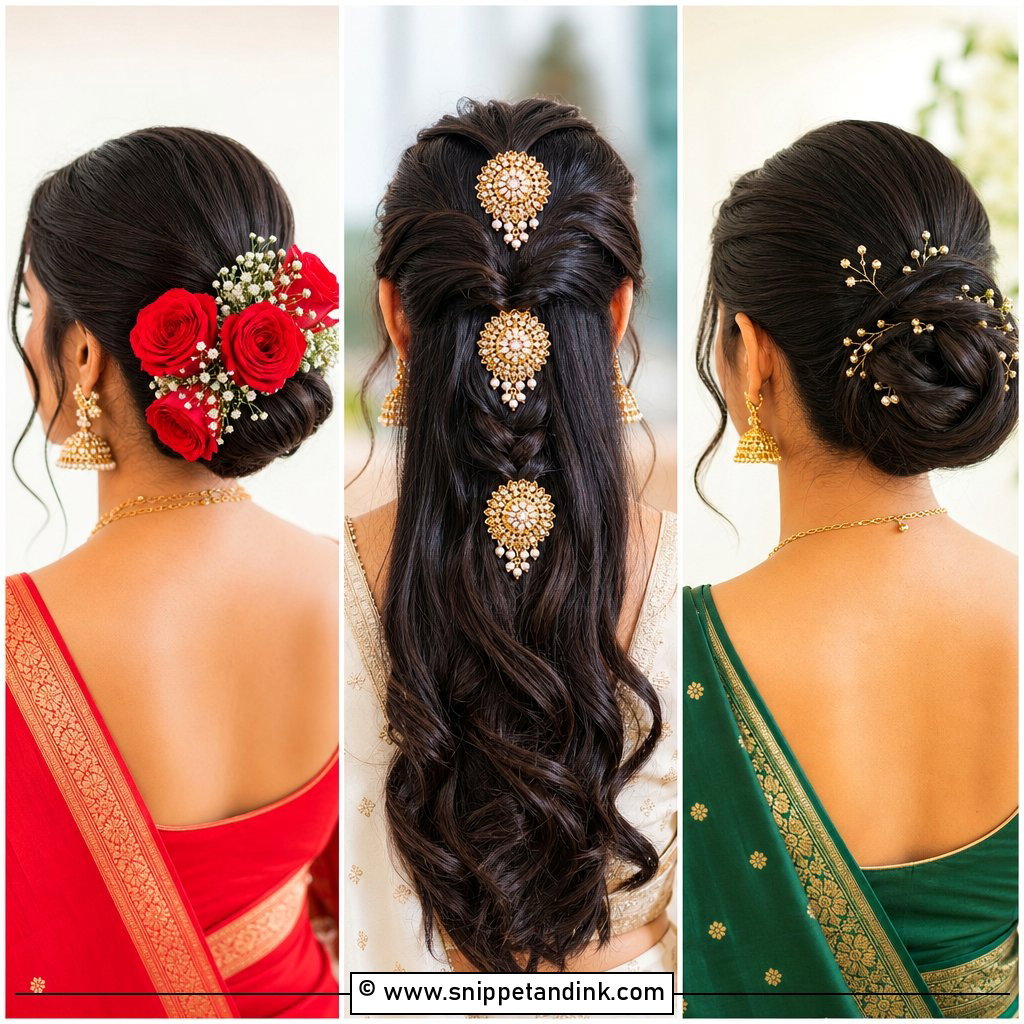
A bun wrapped in jasmine gajra is my usual suggestion when the necklaces are layered right down to the waist, because it clears the neck and shoulders completely. I set it low or mid-height, with a bit of padding inside if the hair is fine, so it doesn’t look flat once the flowers are on. The gajra goes around the base in rings and gets pinned through, not just tucked, or it slides once the hall warms up. In a hot hall, a bun is also simply cooler on the neck than a long braid.
4. Tamil Bridal Poola Jada Hairstyle
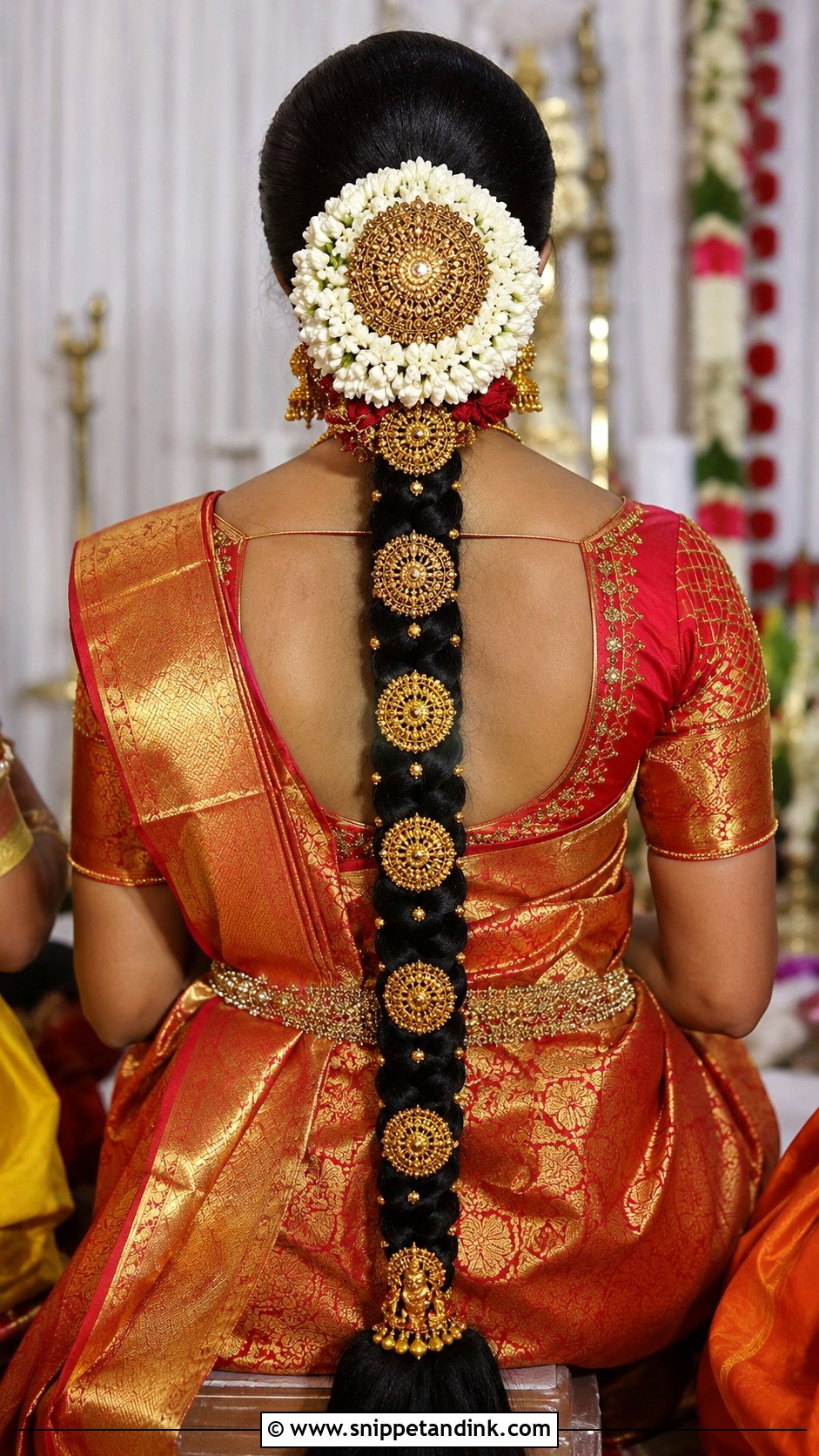
Poola jada is the flower braid, where the hair almost disappears under rows of jasmine with roses, marigolds or kanakambaram worked in. Plan it with the florist instead of leaving it to whatever arrives that morning. I ask for the flower colors to echo the saree border rather than its body, otherwise the braid fights the silk. It’s heavy, so a full poola jada is usually built on a separate base and fastened in; the bride’s own braid only has to hold it, not support every flower. A flat, sleek crown keeps the top from looking crowded.
5. Tamil Bridal Kondai Hairstyle
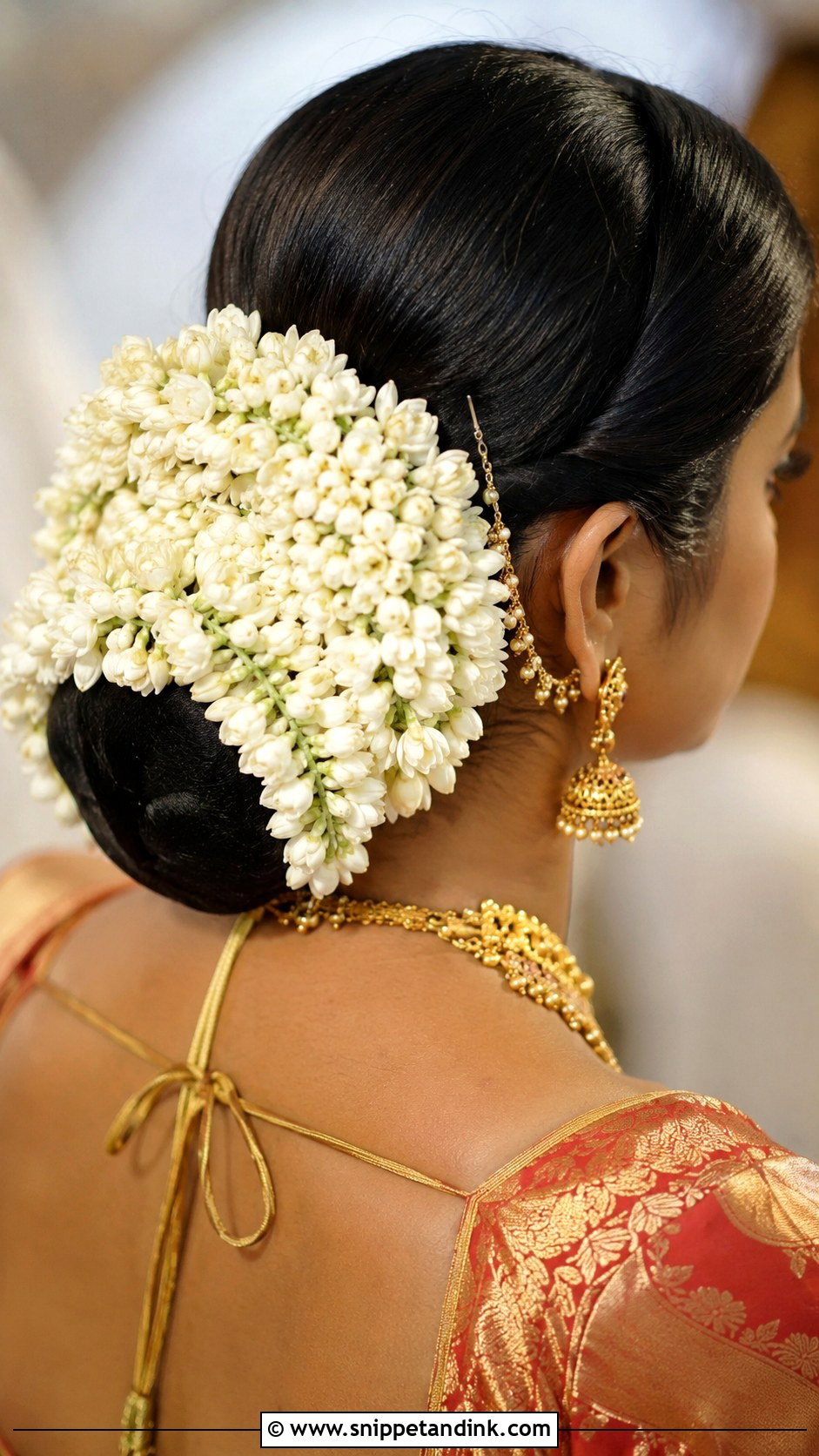
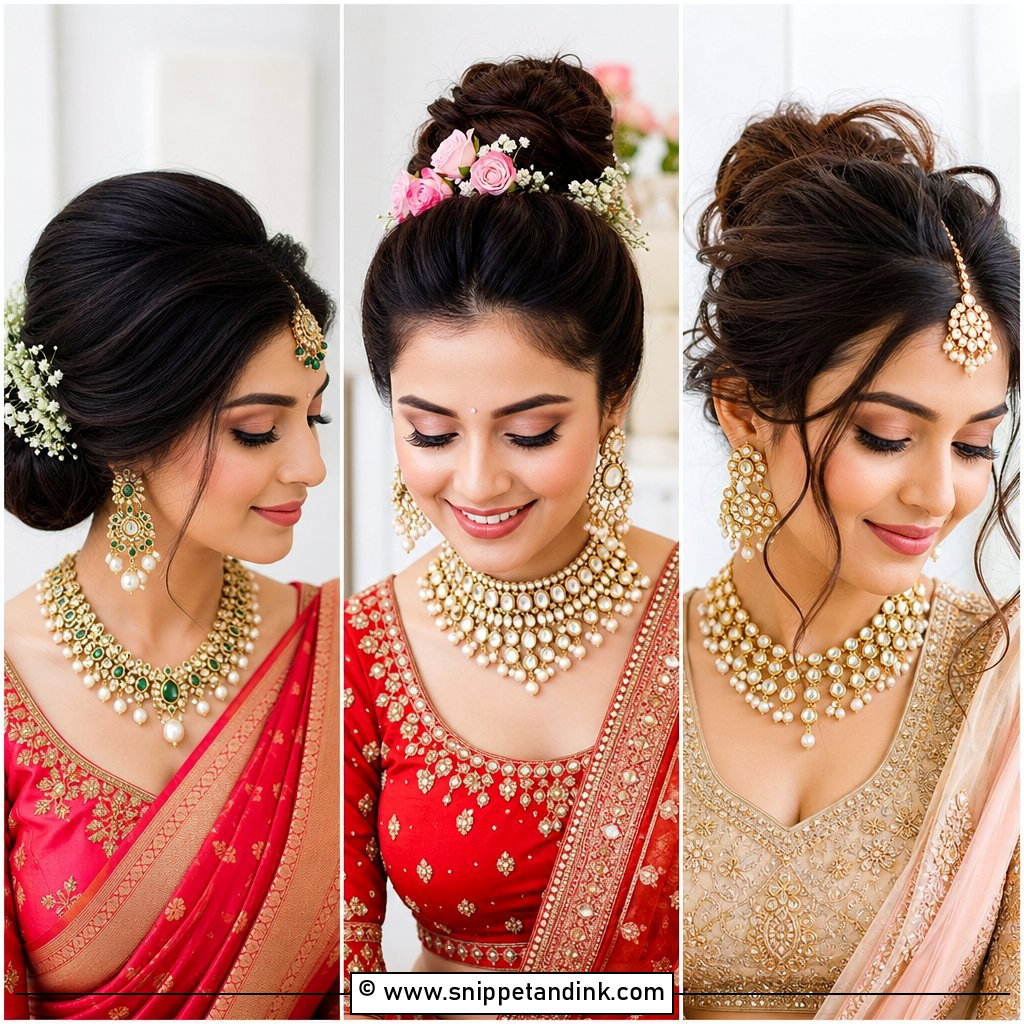
Kondai is the sculpted round bun, and its shape comes from structure, not hair length. I build it over a bun ring or padding, then dress it with flowers, gold pins, a rakodi or a full bun cover. It stays put through rituals where the bride leans forward and bows again and again. Temple jewelry and a bold bindi suit it. On a longer face I skip the tall front puff and keep a flat center part, which keeps the proportions calmer.
6. Tamil Bridal Side Braid With Flowers
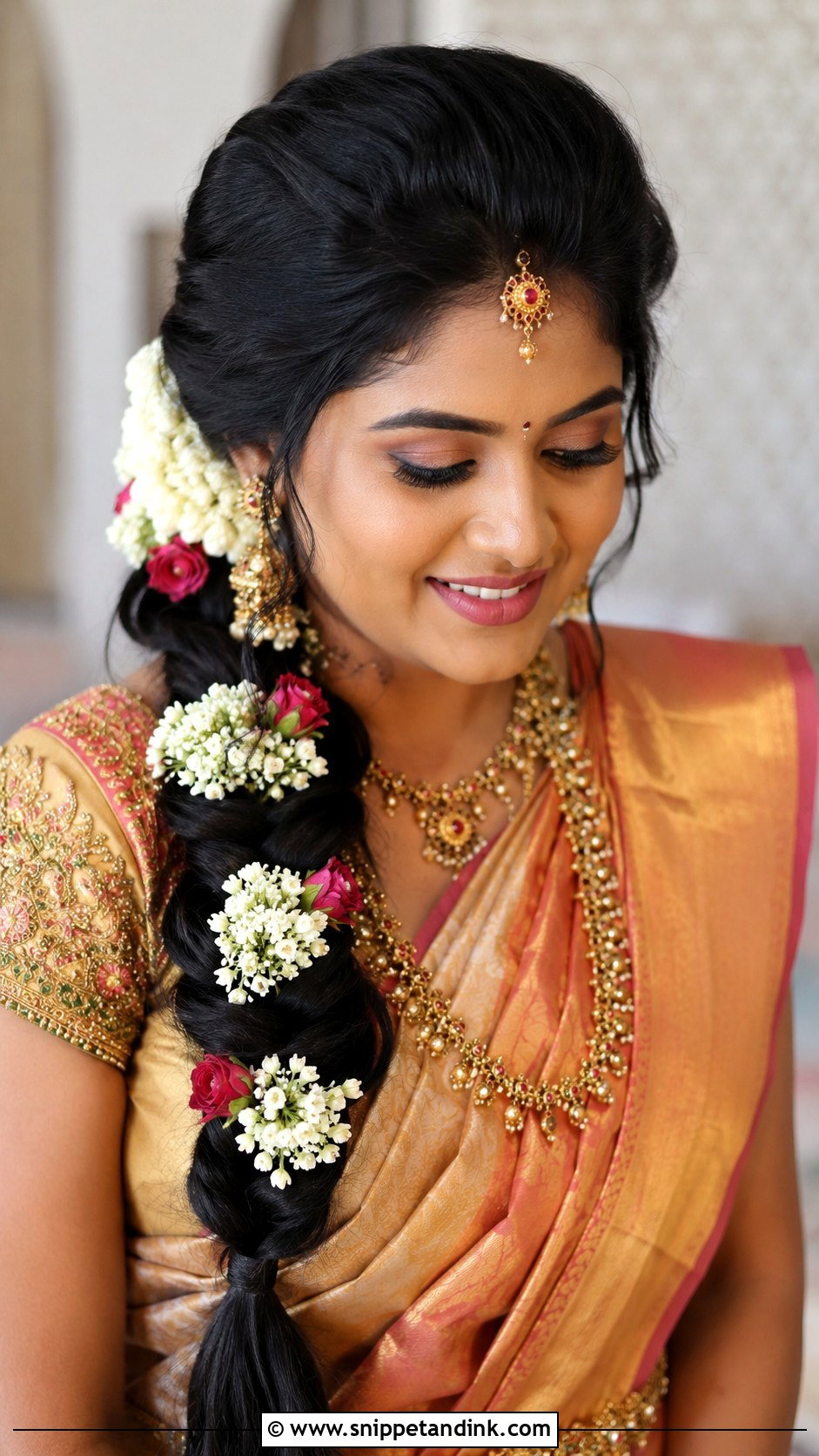
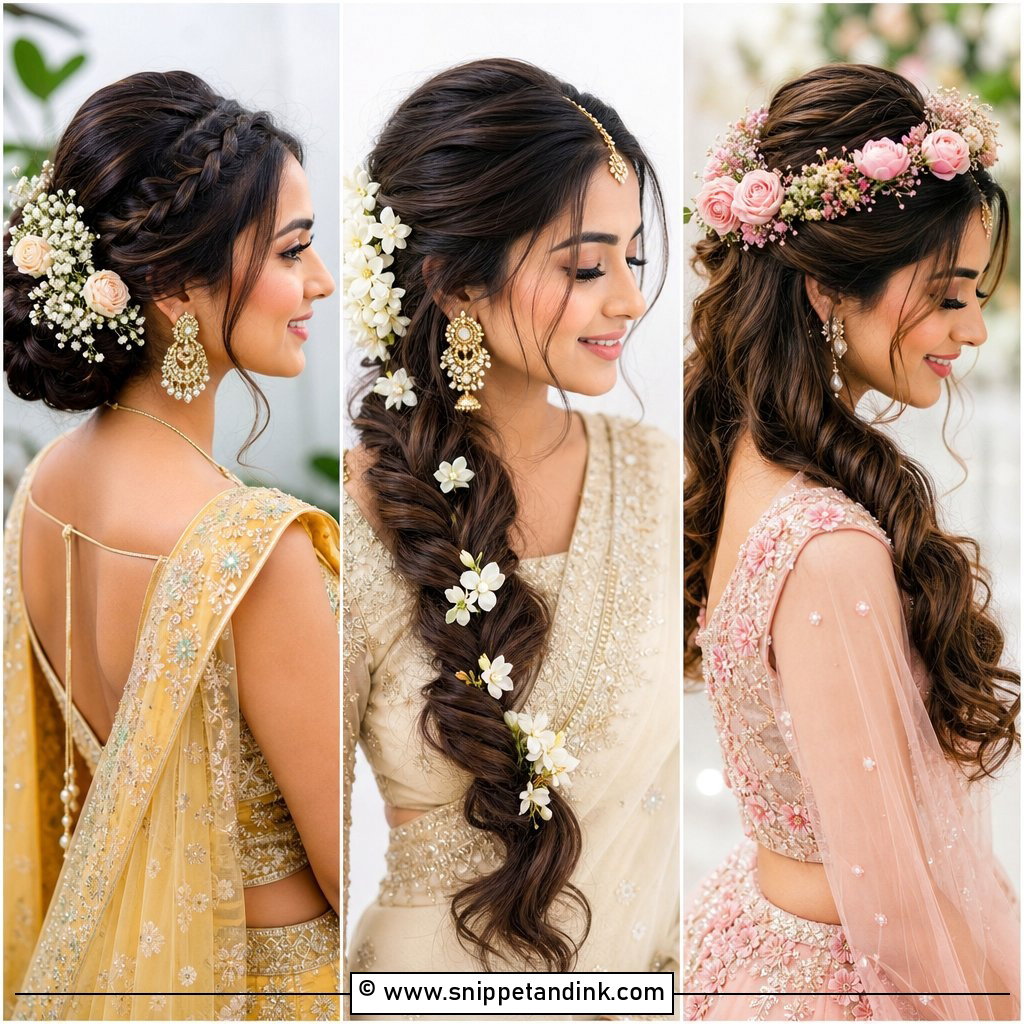
Bringing the braid over one shoulder puts the flower work where the camera sees it in front-facing portraits, something a back braid never manages. I use it more for engagement functions and receptions than for the muhurtham, where the braid usually goes back for the rituals. Space jasmine buds or small gold pins every few inches. One warning: a side braid rests on the blouse, so heavy zardosi on the shoulder will snag it. It’s at its best framing a detailed neckline rather than covering one.
7. Tamil Bridal Fishtail Braid With Jasmine
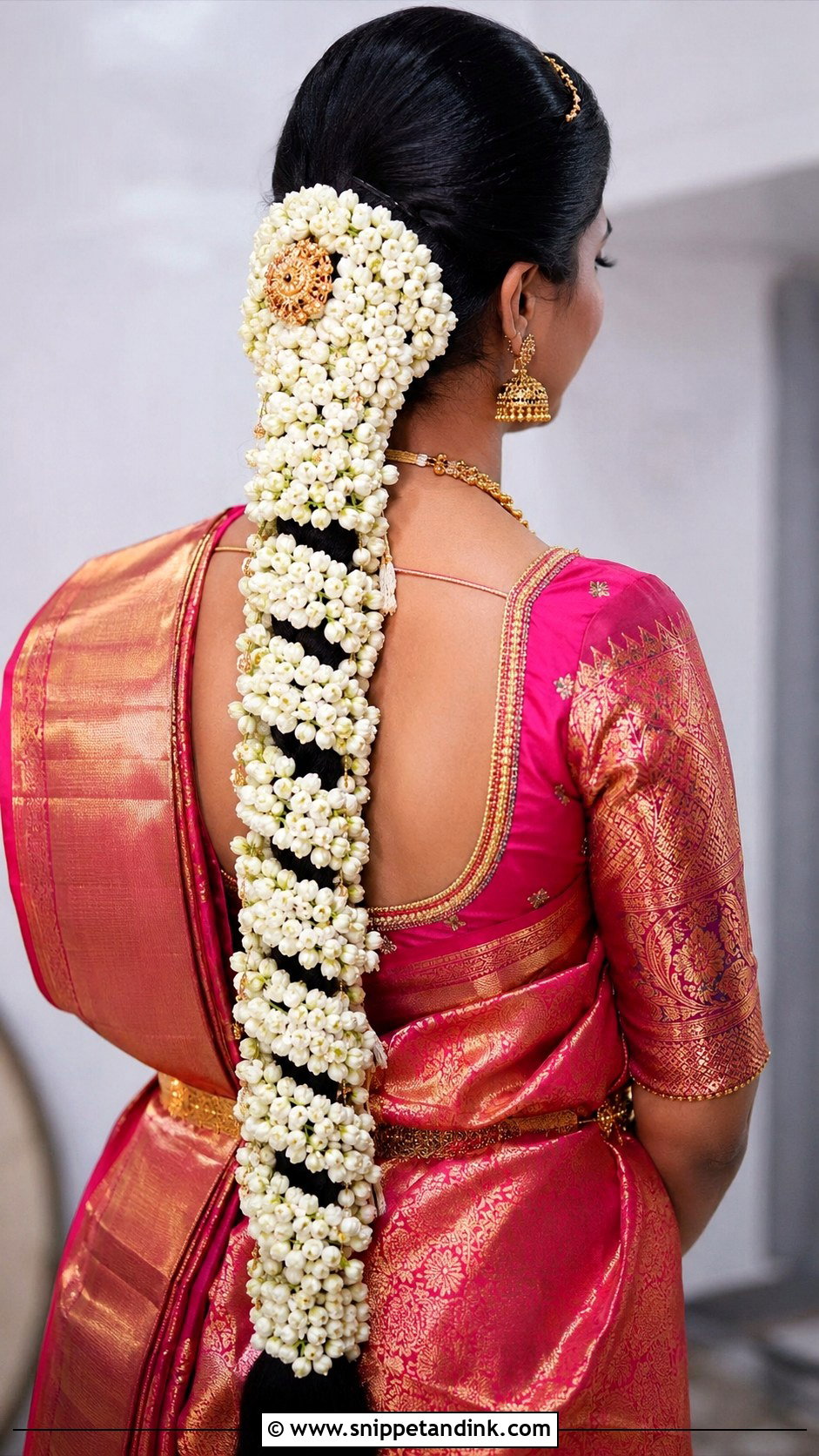
A fishtail has far more crossings than a three-strand plait, so it carries texture without much ornament. Tuck small jasmine clusters into the weave instead of wrapping the whole length, or the pattern vanishes. I braid it tight, secure the end, then pull the edges out a little from the top down; loosening it before braiding only makes frizz. With a silk saree and antique gold it reads modern but still clearly Tamil. You do need hair past the shoulder blades to show the pattern properly.
8. Tamil Bridal Low Bun With Roses
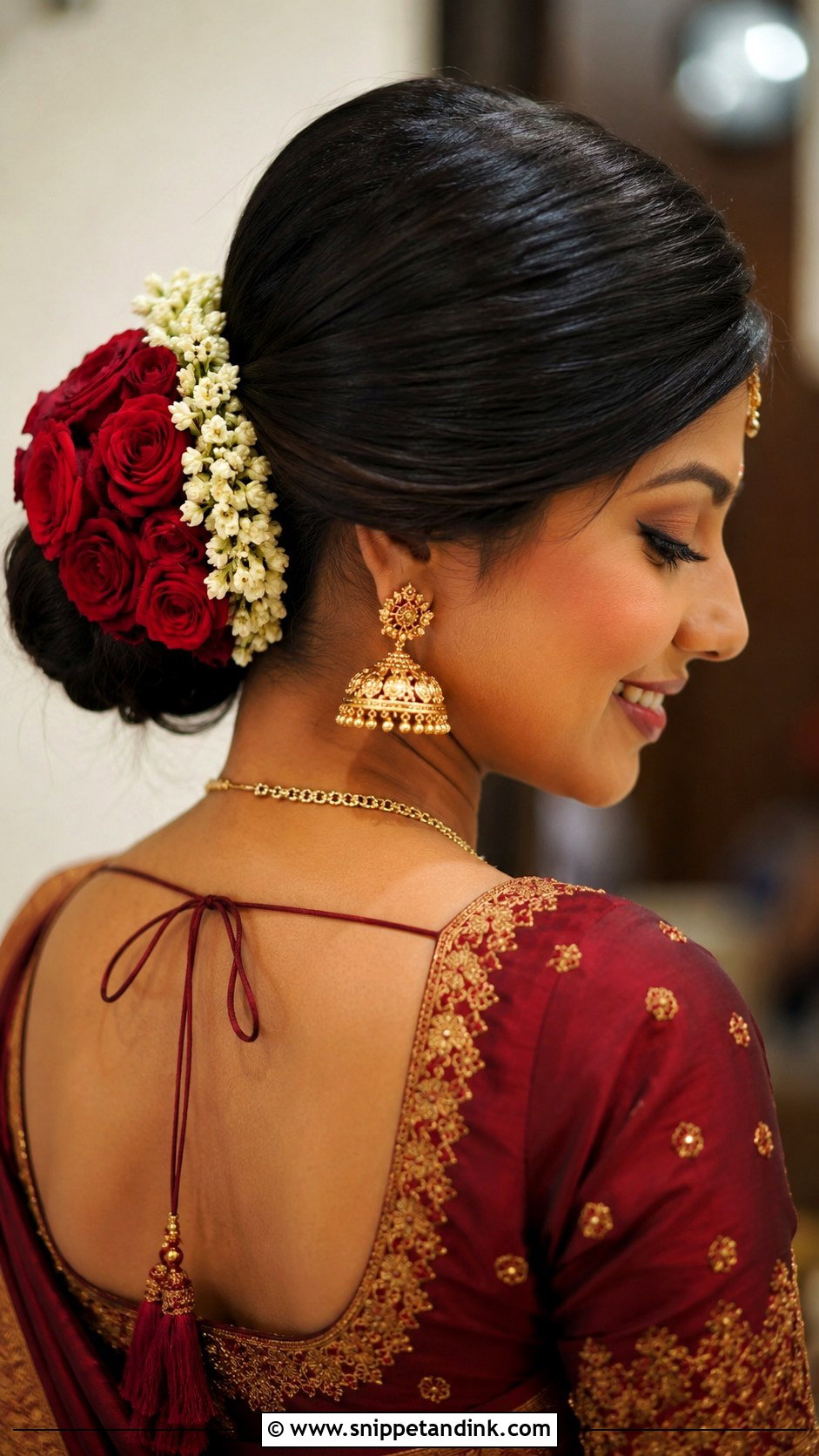
Roses at a low bun bring more color and weight than jasmine alone, and I often mix the two: roses as the focal cluster, jasmine around the edge. Ask for firm, just-opened roses. Full blooms start dropping petals well before the day is over. Red and pink sit well against maroon, deep red and gold silks, while white roses suit pastels. I leave the bun slightly textured but keep the front clean, since this is where a heavy necklace and long earrings take over the frame.
9. Tamil Bridal High Bun With Temple Jewelry
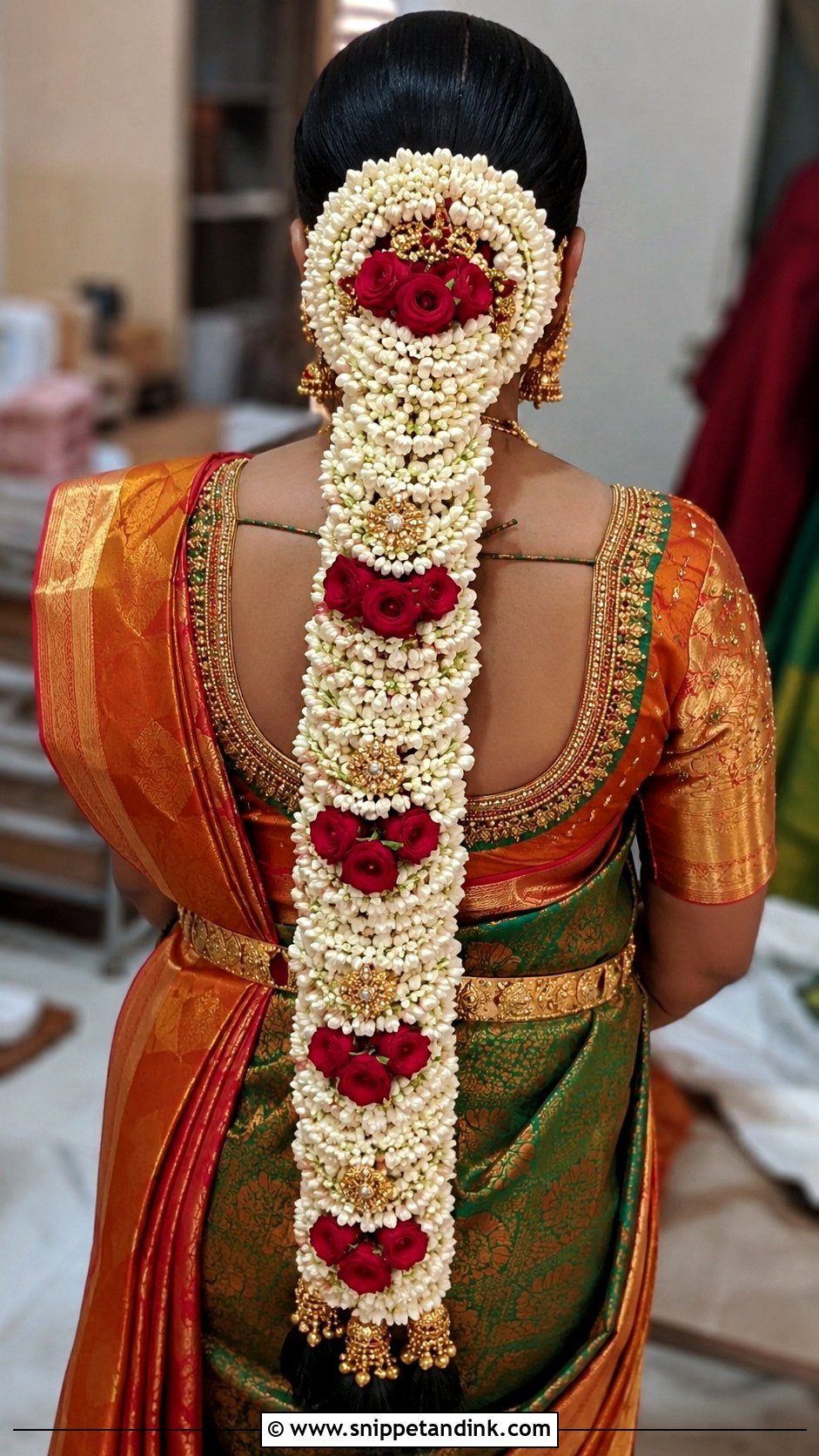
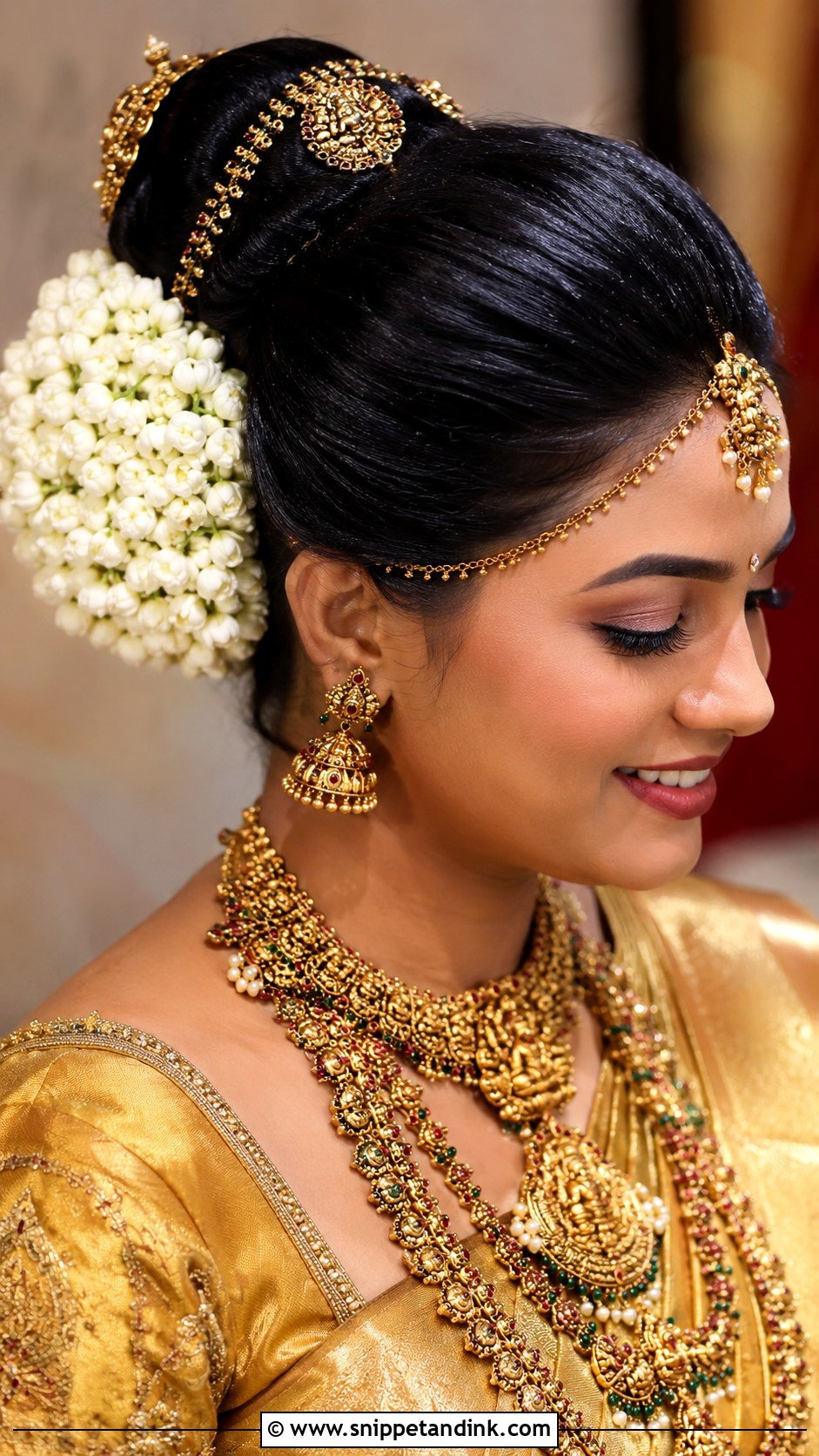
Height changes the whole silhouette here. A high bun lifts the head and makes room for gold ornaments around it, which I match to the necklace and the oddiyanam so the gold reads as one set. Jasmine below the bun softens the join. Because nothing hangs down the back, it’s a good partner for a heavy saree with a worked blouse you want seen. Smooth the sides with a fine-tooth comb and a touch of gel so the ornaments sit flat instead of lifting at the edges.
10. Tamil Bridal Half Up Curls With Flowers
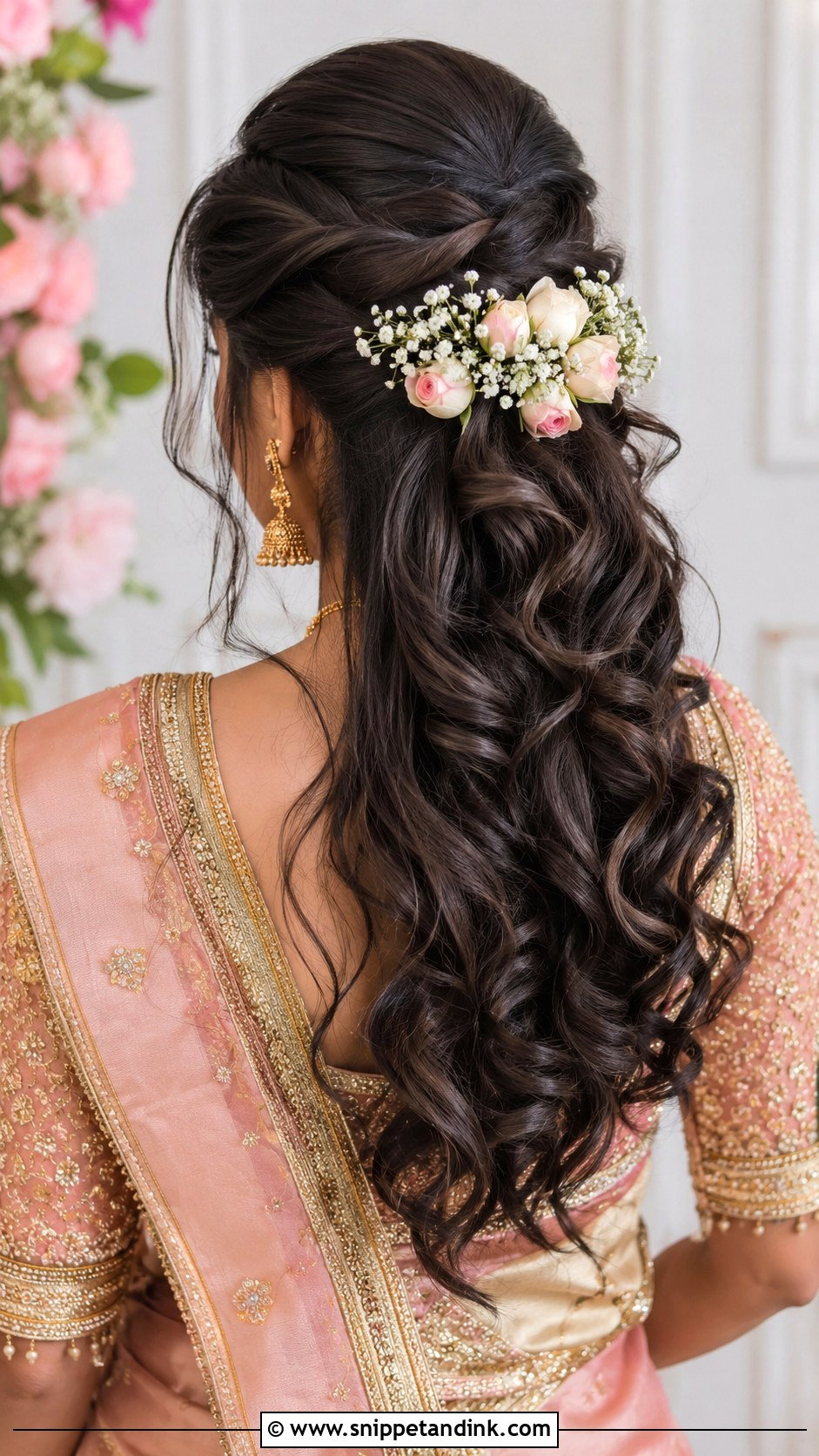
Half-up curls are the softer choice I suggest for receptions and engagements. The top section is pinned back neatly and the length falls in curls or waves, with jasmine buds, baby’s breath or small roses along the pinned line. The honest problem is humidity: curls in a warm hall drop. I curl with a smaller barrel than the final wave you want, let every curl cool completely before touching it, and set with a flexible spray. Pins go in crossed pairs, because a single pin slides straight out of freshly curled hair.
11. Tamil Bridal Loose Braid With Fresh Flowers
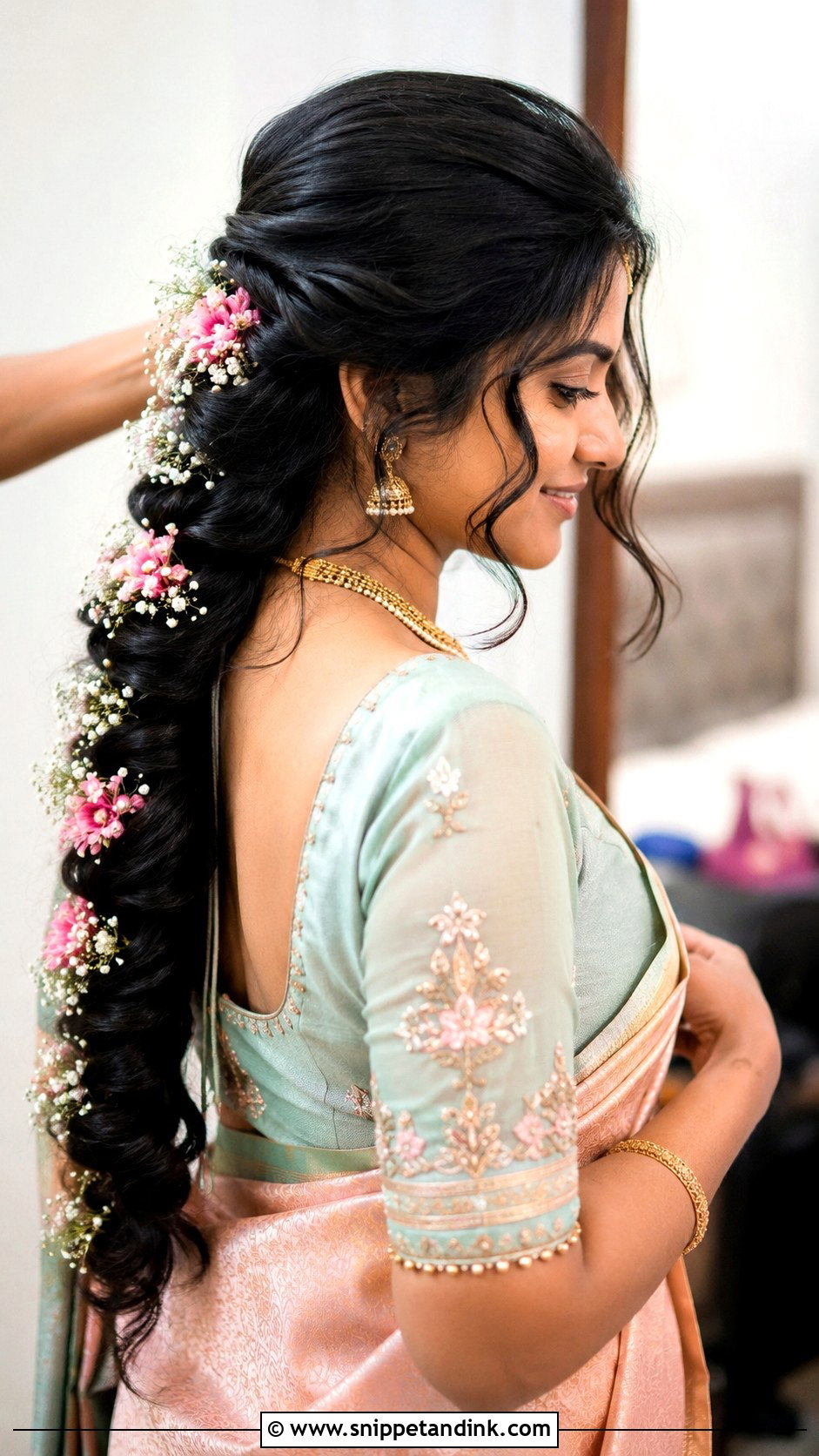
A loose braid gets its volume from gently pulling the plait wider after it’s secured, but the base at the nape still has to be tight or the whole thing slips by evening. Fresh jasmine, roses or small seasonal blooms go in scattered rather than in rows, which gives it a garden feel. I use it for pre-wedding functions like the nalangu, where the bride wants something gentler than her muhurtham braid. Face-framing pieces suit it; I curl them away from the face so they don’t stick to foundation in the heat.
12. Tamil Bridal Braided Bun With Jasmine
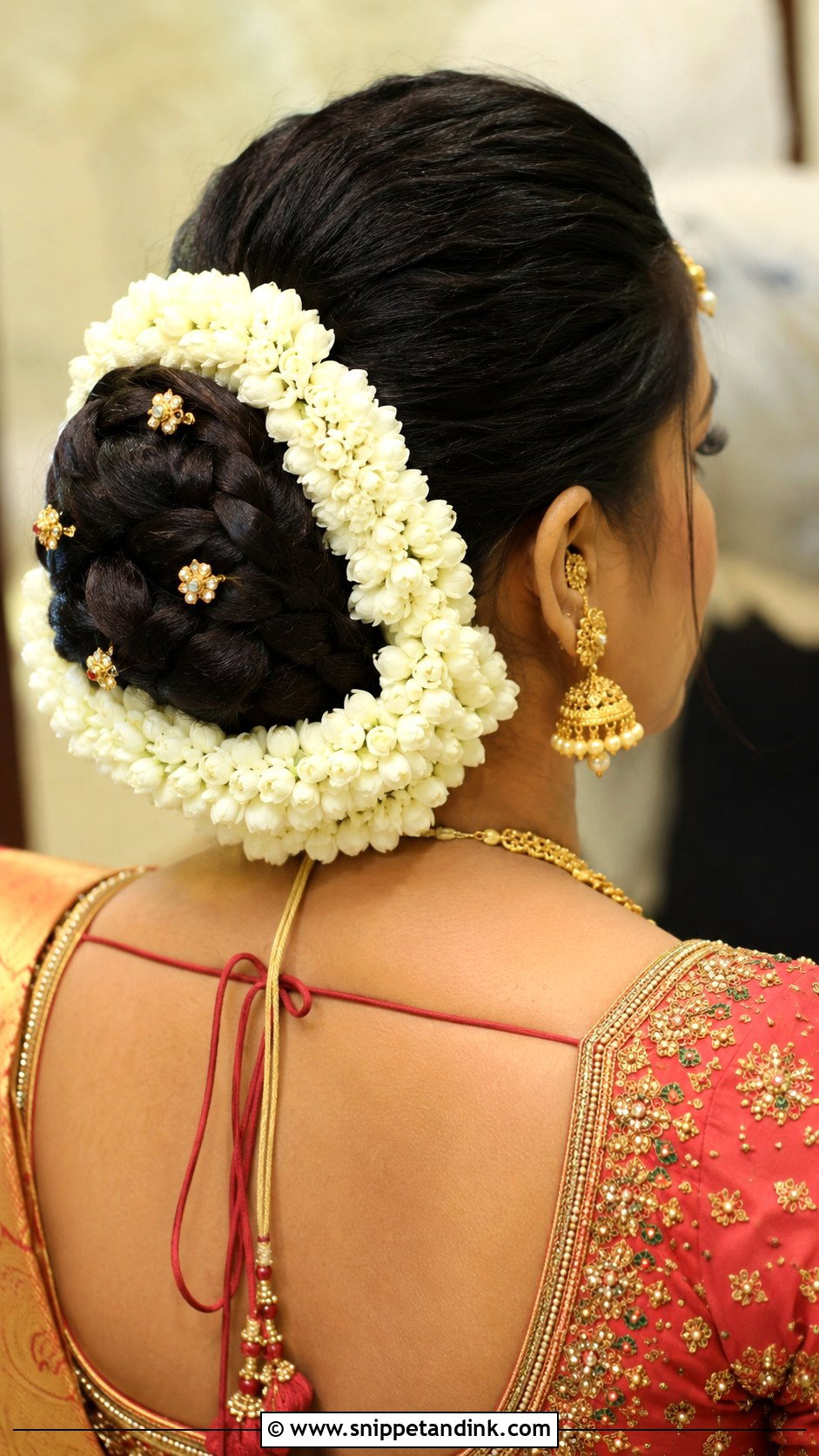
Braiding first and then coiling the braid into a bun gives the bun visible pattern and makes it look bigger than the hair really is. That’s why I reach for it on medium-length hair, where a plain bun ends up small. Gajra wraps around the outside, and gold pins go into the braid’s crossings so they actually grip. It’s one of the most secure updos I do for a long ceremony, and it sits comfortably with silk and temple jewelry without competing.
13. Tamil Wedding Guest Bun With Gajra
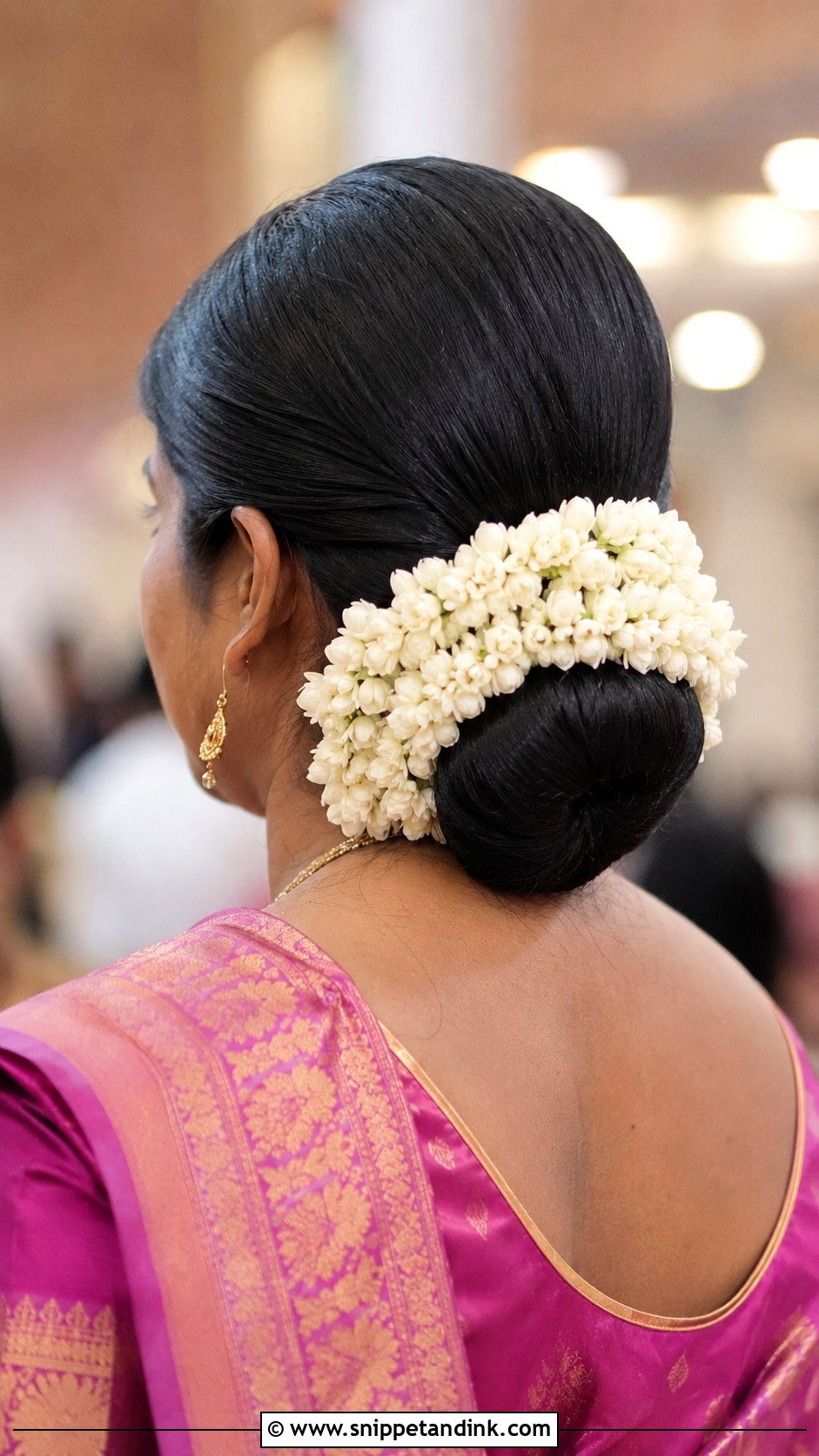
For guests, a low or mid bun with a small jasmine gajra hits the right level of festive. It’s what I recommend for sisters, cousins, friends and mothers, since it reads traditional without echoing the bride. Keep the gajra short, a round or two; a guest wearing as much jasmine as the bride stands out in group photos for the wrong reason. A side part and a couple of gold pins are enough, and the bun stays tidy under a dupatta too.
14. Tamil Bridesmaid Braid With Hair Accessories
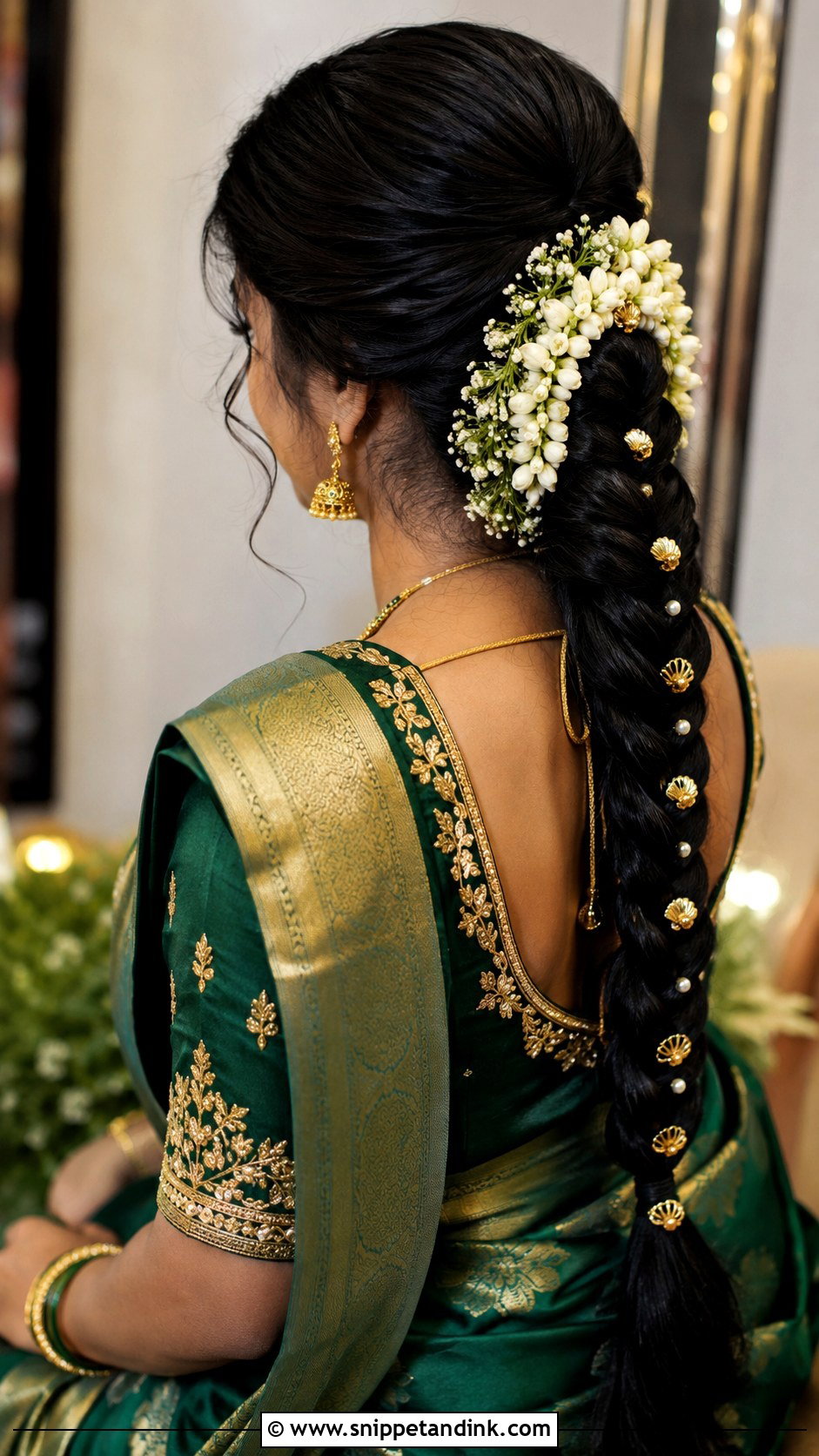
A Tamil bridesmaid braid with accessories gives the bridal party something coordinated that stays a step below the bride. Down the back or over the shoulder both work. I decide by what they’ll be doing, because bridesmaids carrying plates and helping with rituals want the braid behind them. Pearl clips or jasmine buds along the length add detail. When I style a group, I match the accessories and the part side but let each braid suit her own hair density. Forcing identical braids on fine and thick hair makes one of them look thin.
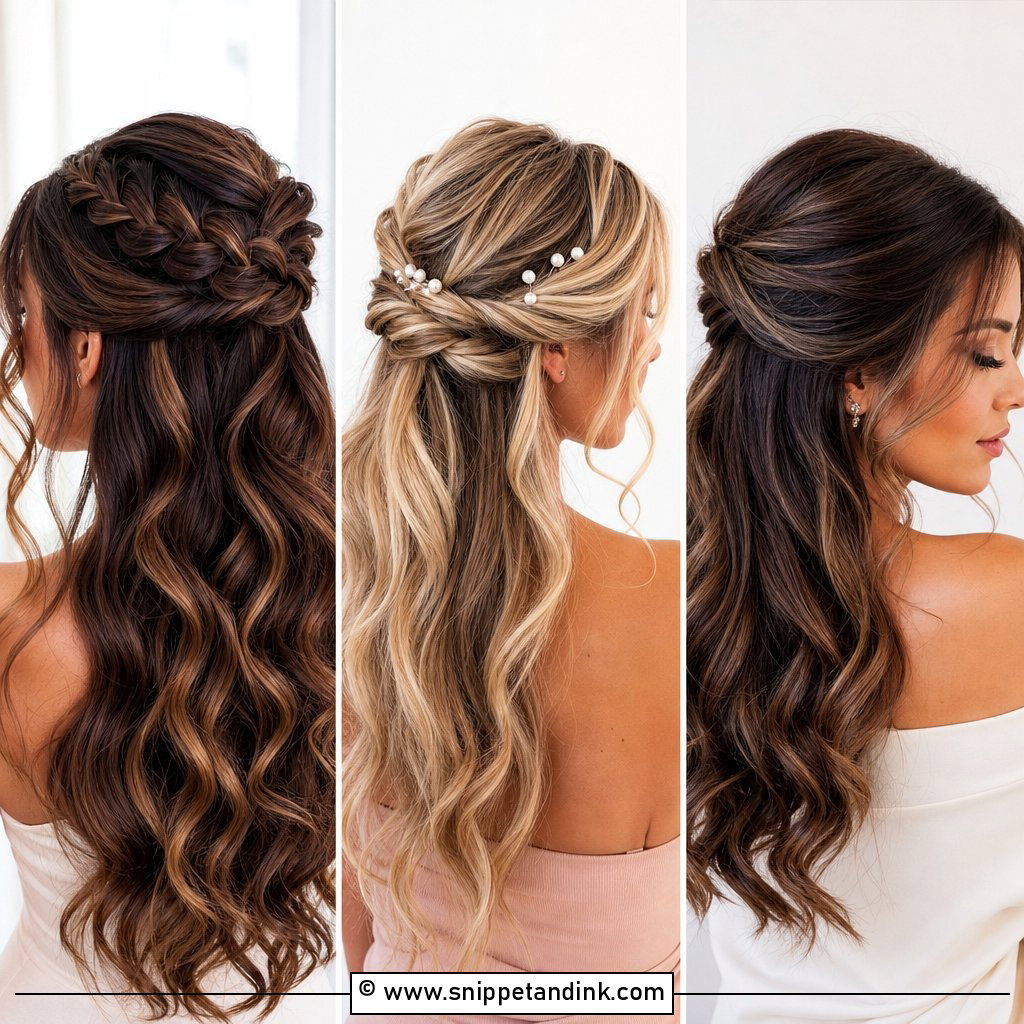
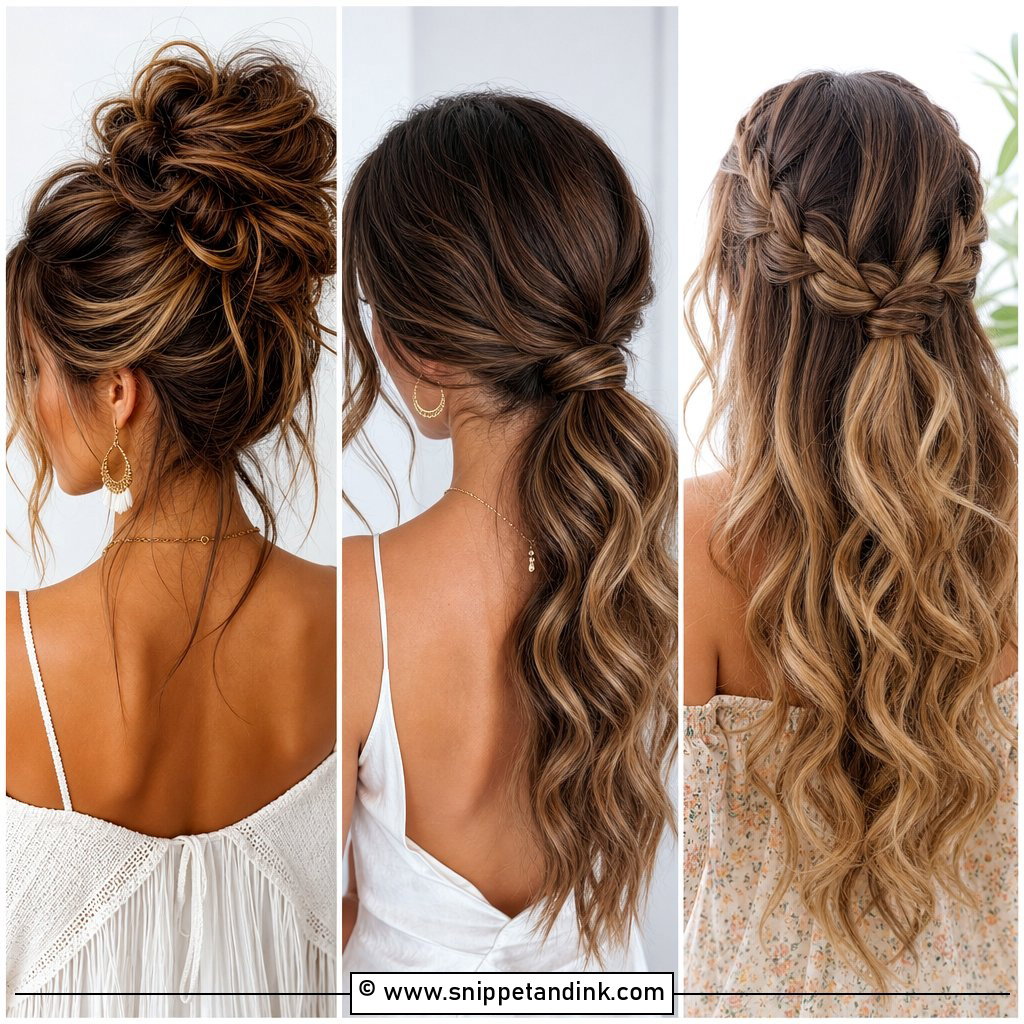
15. Tamil Reception Curls With Floral Pins
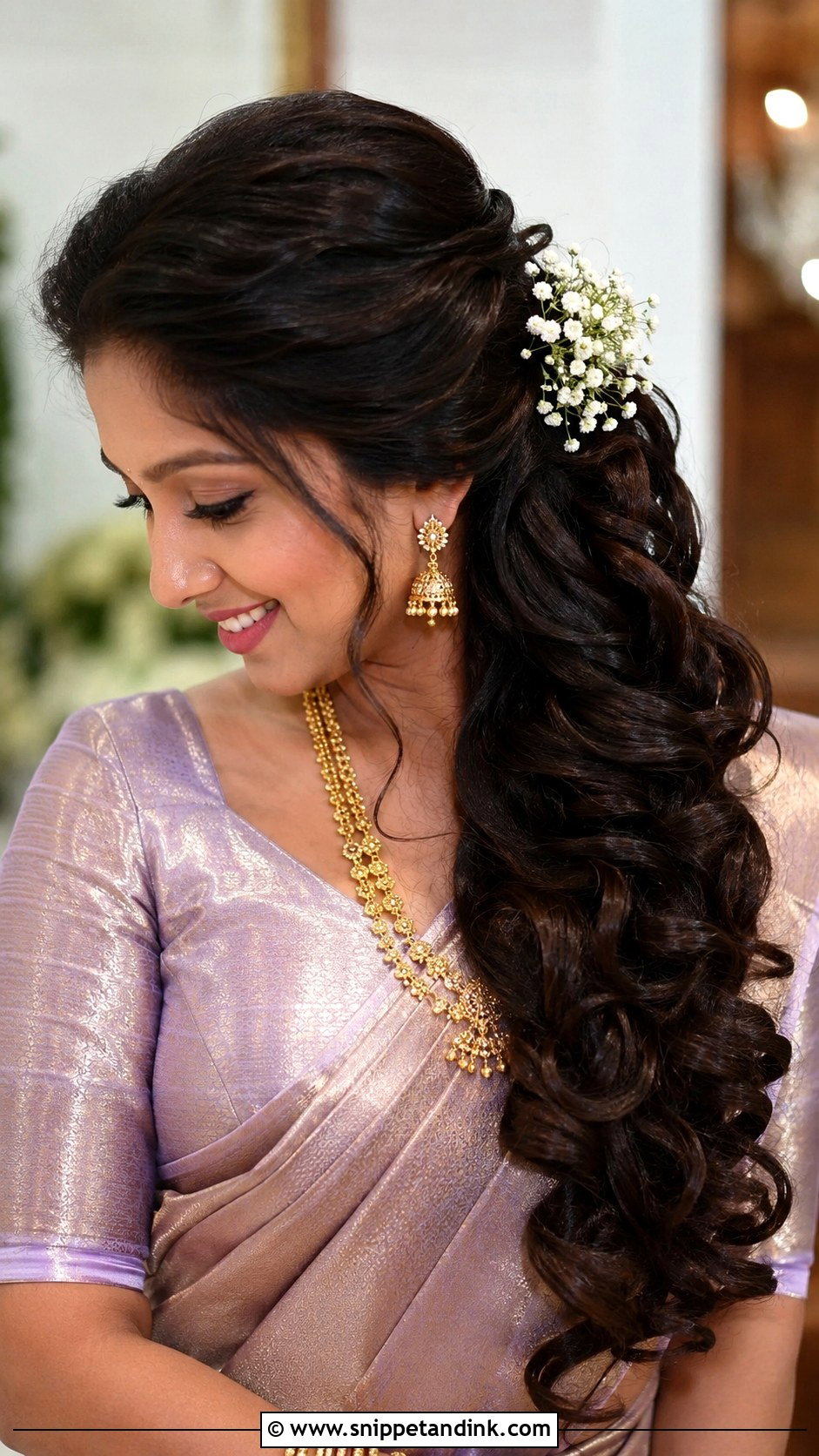
Reception curls are the change of pace after the muhurtham, usually swept to one side or worn half-up with small flowers or jeweled pins. Evening lighting picks up shine, so I finish with a light shine spray rather than oil, which looks greasy under flash. Jasmine-style pins or small roses keep a Tamil thread running through the look. Expect a few bends left from the morning braid. I use them as a wave base instead of fighting them, which saves real time when the gap between events is short.
Ordering Jasmine That Is Still White at the Thali
Jasmine is the most fragile part of the whole look. It’s picked as buds, opens over the following hours, and starts browning at the edges once it sits in a warm hall. For a morning muhurtham I ask families to have the strings delivered the evening before or at first light, wrapped in a damp cotton cloth and kept in the fridge (never the freezer) until I’m ready to pin.
- Order more than you think. Wrapping a long braid tightly uses far more string than people expect, and spares let me replace any section that bruises.
- Ask for tight buds for the ceremony, so they open on your head through the morning instead of being past their best by the time the thali is tied.
- Mist lightly, never soak. A fine spray keeps the strings plump; dripping water spots silk.
- Use roses and marigolds as accents. They last longer than jasmine but can stain pale fabric if they bruise against it.
From Ceremony Braid to Reception Curls in One Afternoon
Many Tamil brides change hair between the ceremony and the reception, and the gap is often short. Decide in advance who takes the jadai out. It comes down in reverse: ornaments first, then flowers, then the braid, so nothing tears at the anchor point. Brush out from the ends upward with a wide comb.
The braid will leave a wave behind. I mist it lightly, set a few large curls over it and pin from there, which is much quicker than straightening and starting again. If the reception is the same evening, don’t wash in between. Wet hair needs far more drying and styling time than that window usually allows.
Heavy Silk Wants Quieter Hair, and the Reverse
The muhurtham usually calls for a long jadai braid or a kondai, a jasmine bun is the practical middle ground, and curls with floral pins belong to the reception or engagement. Past that, decide by weight. A heavy saree with layered temple gold needs a clean, structured style so the jewelry has room to show. A simpler saree can carry more flowers and more braid detail. Take your actual jewelry to the trial, because that’s the only way to see whether the two work together.
You'll Like These Ideas:


Leave a Reply